EP3713245B1 - Verfahren und vorrichtung zur anzeige einer epg-benutzerschnittstelle - Google Patents
Verfahren und vorrichtung zur anzeige einer epg-benutzerschnittstelle Download PDFInfo
- Publication number
- EP3713245B1 EP3713245B1 EP19881950.0A EP19881950A EP3713245B1 EP 3713245 B1 EP3713245 B1 EP 3713245B1 EP 19881950 A EP19881950 A EP 19881950A EP 3713245 B1 EP3713245 B1 EP 3713245B1
- Authority
- EP
- European Patent Office
- Prior art keywords
- channel
- user interface
- epg
- current channel
- displaying
- Prior art date
- Legal status (The legal status is an assumption and is not a legal conclusion. Google has not performed a legal analysis and makes no representation as to the accuracy of the status listed.)
- Active
Links
Images
Classifications
-
- H—ELECTRICITY
- H04—ELECTRIC COMMUNICATION TECHNIQUE
- H04N—PICTORIAL COMMUNICATION, e.g. TELEVISION
- H04N21/00—Selective content distribution, e.g. interactive television or video on demand [VOD]
- H04N21/20—Servers specifically adapted for the distribution of content, e.g. VOD servers; Operations thereof
- H04N21/25—Management operations performed by the server for facilitating the content distribution or administrating data related to end-users or client devices, e.g. end-user or client device authentication, learning user preferences for recommending movies
- H04N21/262—Content or additional data distribution scheduling, e.g. sending additional data at off-peak times, updating software modules, calculating the carousel transmission frequency, delaying a video stream transmission, generating play-lists
- H04N21/26283—Content or additional data distribution scheduling, e.g. sending additional data at off-peak times, updating software modules, calculating the carousel transmission frequency, delaying a video stream transmission, generating play-lists for associating distribution time parameters to content, e.g. to generate electronic programme guide data
-
- H—ELECTRICITY
- H04—ELECTRIC COMMUNICATION TECHNIQUE
- H04N—PICTORIAL COMMUNICATION, e.g. TELEVISION
- H04N21/00—Selective content distribution, e.g. interactive television or video on demand [VOD]
- H04N21/40—Client devices specifically adapted for the reception of or interaction with content, e.g. set-top-box [STB]; Operations thereof
- H04N21/43—Processing of content or additional data, e.g. demultiplexing additional data from a digital video stream; Elementary client operations, e.g. monitoring of home network or synchronising decoder's clock; Client middleware
- H04N21/434—Disassembling of a multiplex stream, e.g. demultiplexing audio and video streams, extraction of additional data from a video stream; Remultiplexing of multiplex streams; Extraction or processing of SI; Disassembling of packetised elementary stream
- H04N21/4345—Extraction or processing of SI, e.g. extracting service information from an MPEG stream
-
- H—ELECTRICITY
- H04—ELECTRIC COMMUNICATION TECHNIQUE
- H04N—PICTORIAL COMMUNICATION, e.g. TELEVISION
- H04N21/00—Selective content distribution, e.g. interactive television or video on demand [VOD]
- H04N21/40—Client devices specifically adapted for the reception of or interaction with content, e.g. set-top-box [STB]; Operations thereof
- H04N21/43—Processing of content or additional data, e.g. demultiplexing additional data from a digital video stream; Elementary client operations, e.g. monitoring of home network or synchronising decoder's clock; Client middleware
- H04N21/431—Generation of visual interfaces for content selection or interaction; Content or additional data rendering
- H04N21/4312—Generation of visual interfaces for content selection or interaction; Content or additional data rendering involving specific graphical features, e.g. screen layout, special fonts or colors, blinking icons, highlights or animations
- H04N21/4316—Generation of visual interfaces for content selection or interaction; Content or additional data rendering involving specific graphical features, e.g. screen layout, special fonts or colors, blinking icons, highlights or animations for displaying supplemental content in a region of the screen, e.g. an advertisement in a separate window
-
- H—ELECTRICITY
- H04—ELECTRIC COMMUNICATION TECHNIQUE
- H04N—PICTORIAL COMMUNICATION, e.g. TELEVISION
- H04N21/00—Selective content distribution, e.g. interactive television or video on demand [VOD]
- H04N21/40—Client devices specifically adapted for the reception of or interaction with content, e.g. set-top-box [STB]; Operations thereof
- H04N21/43—Processing of content or additional data, e.g. demultiplexing additional data from a digital video stream; Elementary client operations, e.g. monitoring of home network or synchronising decoder's clock; Client middleware
- H04N21/435—Processing of additional data, e.g. decrypting of additional data, reconstructing software from modules extracted from the transport stream
-
- H—ELECTRICITY
- H04—ELECTRIC COMMUNICATION TECHNIQUE
- H04N—PICTORIAL COMMUNICATION, e.g. TELEVISION
- H04N21/00—Selective content distribution, e.g. interactive television or video on demand [VOD]
- H04N21/40—Client devices specifically adapted for the reception of or interaction with content, e.g. set-top-box [STB]; Operations thereof
- H04N21/43—Processing of content or additional data, e.g. demultiplexing additional data from a digital video stream; Elementary client operations, e.g. monitoring of home network or synchronising decoder's clock; Client middleware
- H04N21/438—Interfacing the downstream path of the transmission network originating from a server, e.g. retrieving encoded video stream packets from an IP network
- H04N21/4383—Accessing a communication channel
-
- H—ELECTRICITY
- H04—ELECTRIC COMMUNICATION TECHNIQUE
- H04N—PICTORIAL COMMUNICATION, e.g. TELEVISION
- H04N21/00—Selective content distribution, e.g. interactive television or video on demand [VOD]
- H04N21/40—Client devices specifically adapted for the reception of or interaction with content, e.g. set-top-box [STB]; Operations thereof
- H04N21/47—End-user applications
- H04N21/482—End-user interface for programme selection
- H04N21/4821—End-user interface for programme selection using a grid, e.g. sorted out by channel and broadcast time
-
- H—ELECTRICITY
- H04—ELECTRIC COMMUNICATION TECHNIQUE
- H04N—PICTORIAL COMMUNICATION, e.g. TELEVISION
- H04N21/00—Selective content distribution, e.g. interactive television or video on demand [VOD]
- H04N21/40—Client devices specifically adapted for the reception of or interaction with content, e.g. set-top-box [STB]; Operations thereof
- H04N21/47—End-user applications
- H04N21/482—End-user interface for programme selection
- H04N21/4823—End-user interface for programme selection using a channel name
-
- H—ELECTRICITY
- H04—ELECTRIC COMMUNICATION TECHNIQUE
- H04N—PICTORIAL COMMUNICATION, e.g. TELEVISION
- H04N21/00—Selective content distribution, e.g. interactive television or video on demand [VOD]
- H04N21/80—Generation or processing of content or additional data by content creator independently of the distribution process; Content per se
- H04N21/83—Generation or processing of protective or descriptive data associated with content; Content structuring
- H04N21/84—Generation or processing of descriptive data, e.g. content descriptors
Definitions
- Embodiments of the present disclosure relate to the technical field of EPG, in particular to an EPG user interface display method and device.
- EPG Electronic Program Guide
- EPG Electronic Program Guide
- a digital decoder comprising a tuner that can receive, in succession, data on several frequencies, each frequency being able to carry a data transport stream containing forthcoming events tables transmitted by service providers.
- the method consists in analyzing in succession the data received on each transport stream so as to detect the presence of forthcoming events tables and in recording in the coder a list of identifiers of the service providers transmitting forthcoming events tables.
- US 2003/0126605 A1 discloses an interactive television system designed to populate an electronic program guide (EPG), which provides Video-Clip Previews on Demand by automatically launching a video clip preview, after browsing and navigating through the EPG's grid guide to a highlighted program titled cell, and remaining at such highlighted cell for a predetermined delay.
- EPG electronic program guide
- the display process is a "No-Touch Display” process requiring no selections by the viewer while browsing.
- Embodiments of the present disclosure provide a method for displaying an EPG user interface during broadcast program playing and a device, which allows for a full display of EPG and avoiding a phenomenon of short black screen when entering or exiting the EPG, and thus the user experience is improved.
- the EPG user interface is displayed, and a broadcast program of the current channel is displayed in a window of the EPG user interface.
- embodiments of the present disclosure provide a method for displaying an EPG user interface and a device.
- the following description takes a smart TV as an example of a display device to discuss the embodiments of the present disclosure in detail.
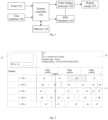
- Fig. 1 is a schematic diagram of a smart TV.
- the smart TV includes a tuner 101, a user interface 102, a system controller 103, a memory 104, an EPG generator 105, a video display processor 106, a display screen 107 and the like.
- the tuner 101 is configured to tune broadcast channels according to a user operation on the user interface 102 and control of the system controller 103;
- the memory 104 is configured for storing EPG information extracted from additional information contained in a digital broadcast signal or an analog broadcast signal received from the tuner 101;
- the EPG generator 105 may include an on screen display (OSD) generator and is configured for generating an EPG based on the EPG information stored in the memory 104; and the display screen 107 is used for displaying the EPG processed by the video display processor 106.
- OSD on screen display
- the tuner 101 receives a broadcast signal, and a decoder (not shown) extracts EPG information from the received broadcast signal and outputs the extracted EPG information to an internal bus; and thus, the system controller stores the EPG information output to the internal bus in the memory 104 for displaying the EPG user interface.
- an EPG display request signal sent from a user through the user interface 102 (such as a remote control) is input to the system controller 103, for example, by pressing an EPG button on the remote control, that is, in response to the EPG display request sent from the user, the system controller 103 controls to read the EPG information from the memory 104, so that the EPG generator 105 can construct an EPG based on the read EPG information and EPG images generated by the OSD generator with pre-stored image data, and then the EPG user interface is displayed on the display screen 107 through the video display processor 106.
- the broadcast signal is called a TS signal, and a data portion, different from an audio/video portion, of the TS signal is reconstructed to form a program information table.
- the program information table includes broadcast program information such as a program association table (PAT), a program mapping table (PMT), a network information table (NIT) and an event information table (EIT).
- PAT program association table
- PMT program mapping table
- NIT network information table
- EIT event information table
- the EIT stores multiple events, namely the above-mentioned extracted EPG information, which may include start time and end time of a broadcast program, and multiple descriptor fields, such as a short event descriptor field identifying a program name of the broadcast program, an extended event descriptor field identifying lead roles, screenwriters, profile and other information of the broadcast program, and a component descriptor field identifying the program type of the broadcast program.
- events namely the above-mentioned extracted EPG information, which may include start time and end time of a broadcast program, and multiple descriptor fields, such as a short event descriptor field identifying a program name of the broadcast program, an extended event descriptor field identifying lead roles, screenwriters, profile and other information of the broadcast program, and a component descriptor field identifying the program type of the broadcast program.
- display of the EPG user interface on the display screen is shown in Fig.2
- an area 21 in the EPG user interface shows a broadcast program menu of five channels (DC a-DC e) playing between 3:00 PM and 5:00 PM
- broadcast programs of each channel are displayed on a line according to the program play time: broadcast programs a0-a3 of a DC a channel, broadcast programs b0-b5 of a DC b channel, broadcast programs c0-c6 of a DC c channel, broadcast programs d0-d8 of a DC d channel, and broadcast programs e0-e7 of a DC e channel.
- An area 22 shows details of a selected broadcast program, such as the channel name, program name, play time, program type and content profile of the a2 broadcast program.
- An area 23 shows a broadcast program of the channel being watched before entering an EPG, for example, the broadcast program a1 which is being watched on the DC a channel at 3:50 pm.
- the EPG information of some channels is on the corresponding barker channels, if a user wants to obtain the EPG information of these channels, the user has to enter the barker channels, otherwise the user cannot obtain the EPG information. Therefore, when the user presses an EPG button on a remote control, the smart TV first needs to switch to the corresponding barker channel to obtain the corresponding EPG information of the channel, and thus, when the EPG is displayed, the broadcast program of the barker channel can be played in the window of the area 23 in Fig.2 ; and when the user presses a back button on the remote control, the smart TV exits from the EPG and is redirected to the channel before entering the EPG In this way, the EPG information of these channels can be obtained to display the EPG, but the channel switching action when entering and exiting from the EPG will cause undesirable user experience to the user. For example, the content of the broadcast programs played before and after entering the EPG is inconsistent, or obvious nearly 2-second black screen is caused due to the slow channel switching action when entering and exiting from the E
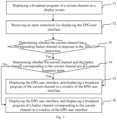
- an embodiment of the present disclosure provides a method for displaying an EPG user interface applied to a smart TV, wherein the method includes the following steps.
- a system controller While a user is watching the broadcast program of a channel, when a smart TV receives an EPG display request signal sent from the user through a remote control, a system controller first determines whether the current channel has a corresponding barker channel.
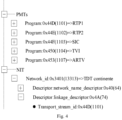
- a descriptor field "Transport_stream_id” indicates the channel identifier corresponding to the barker channel is 0x44D (1101), while in the PMT table shown in Fig.4 , the channel identifier corresponding to the barker channel is RTP1, that is, the RTP1 channel has a corresponding barker channel.
- the system controller can directly read all event information at the frequency point in the memory, and other event information in the memory except for the event information at the frequency point, and cause an EPG generator to generate a EPG user interface, the EPG user interface after being processed by a video display processor is displayed on the broadcast program image of the current channel on the display screen, so as to ensure a full display of the EPG user interface; and meanwhile, the system controller does not need to call a switch interface of the display device (for example, a smart TV channel-switch interface
- the system controller directly reads all event information at the frequency point of the current channel in the memory, and other EIT information in the memory except for all event information at the frequency point of the current channel, and cause the EPG generator to generate an EPG user interface, and the EPG user interface after being processed by the video display processor is displayed on the broadcast program image of the current channel on the display screen. Meanwhile, the window in the area 23 of the EPG user interface continues playing the broadcast program of the current channel.
- the system controller calls the smart TV channel switch interface to switch the current channel to the corresponding barker channel, event information of the current channel is obtained, thus, the EPG generator is enabled to generate an EPG user interface based on the event information of the current channel and other event information in the memory, and the EPG user interface after being processed by the video display processor is displayed on the broadcast program image of the current channel on the display screen, so that a full display of the EPG user interface is ensured; and meanwhile, a broadcast program of the switched barker channel is played in the window in the area 23 of the EPG user interface.
- the broadcast program of the current channel is displayed on the display screen in response to the input instruction.
- the system controller controls the EPG user interface to exit and back to play the broadcast program of the current channel.
- a first variable is defined to record whether the TV needs to be switched to the barker channel when entering the EPG user interface, and is set to false by default, that is, the TV does not need to switch to the barker channel;
- a second variable is defined to record the channel to be returned when exiting from the EPG user interface.
- the broadcast program a1 of the DC a channel shown in Fig.2 is being played currently.
- the first variable is kept as false, and the EPG user interface is displayed according to the event information read from the frequency point where the DC a channel belongs, wherein the window of the EPG user interface plays the broadcast program a1 of the DC a channel, as shown in the window of the area 23 in Fig.2 .
- the first variable is set to be true, and the channel switch interface is called to switch to the barker channel; meanwhile, the channel identifier (for example channel id) of the DC a channel is recorded in the second variable in case the DC a channel needs to be switched back according to the channel identifier when exiting the EPG user interface; and the EPG user interface is displayed according to the event information of the barker channel, the window of the EPG user interface plays the broadcast program of the barker channel, as shown in the window of the area 23 in Fig. 5 .
- the channel identifier for example channel id
- the EPG user interface is directly displayed according to the event information read from the frequency point where the DC a channel belongs, and a broadcast program a1 of the DC a channel is played in a window of the EPG user interface, as shown in a window of the area 23 in Fig.2 .
- the channel switch interface When exiting the EPG user interface, whether the first variable is false is determined at first. If the first variable is false, the TV goes back directly to the current channel. If the first variable is true, the channel switch interface is called to switch back to the current channel indicated by the channel identifier according to the channel identifier recorded in the second variable after exiting from the EPG user interface; and after the TV is successfully switched to the current channel, the first variable is set to be false.
- the present disclosure provides a display device, wherein the device includes:
- the determining the barker channel corresponding to the current channel includes:
- the EPG user interface is displayed according to event information at the same frequency point.
- the processor is further configured to execute the computer instructions to enable the display device to perform: in response to the current channel and the barker channel corresponding to the current channel being at different frequency points, displaying the EPG user interface and displaying a broadcast program of the barker channel corresponding to the current channel in the window of the EPG user interface.
- the EPG user interface is displayed according to the event information in the barker channel corresponding to the current channel.
- the processor is further configured to execute the computer instructions to enable the display device to perform:
- the displaying the EPG user interface and displaying the broadcast program of the current channel in a window on the EPG user interface includes:
- the displaying the EPG user interface and displaying a broadcast program of the barker channel corresponding to the current channel in the window on the EPG user interface includes:
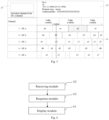
- an embodiment of the present disclosure provides a display device for displaying an EPG user interface applied to a smart TV, wherein the display device includes:
- the display module 61 is further configured to: in response to the current channel and the corresponding barker channel being at the same frequency point, display an EPG user interface; and display the broadcast program of the current channel in the window of the EPG user interface.
- the display module 61 is further configured to: in response to the current channel and the corresponding barker channel being at the same frequency point, display the EPG user interface according to the event information at the same frequency point.
- the display module 61 is further configured to: in response to the current channel and the corresponding barker channel being not at the same frequency point, display an EPG user interface; and display a broadcast program of the barker channel corresponding to the current channel in a window of the EPG user interface.
- the display module 61 is further configured to: in response to the current channel and the corresponding barker channel being not at the same frequency point, display the EPG user interface according to the event information in the barker channel corresponding to the current channel.
- the response module 63 is further configured to: searching in a NIT for a descriptor field which is used for determining information on barker channels; when the descriptor field contains information on the barker channel corresponding to the current channel, determine that there is a barker channel corresponding to the current channel.
- the receiving module 62 is further configured to receive an input instruction for exiting the EPG user interface; correspondingly, the display module 61 is further configured to exit the EPG user interface and display the broadcast program of the current channel in response to the input instruction.
Landscapes
- Engineering & Computer Science (AREA)
- Multimedia (AREA)
- Signal Processing (AREA)
- Human Computer Interaction (AREA)
- Databases & Information Systems (AREA)
- Business, Economics & Management (AREA)
- Marketing (AREA)
- Two-Way Televisions, Distribution Of Moving Picture Or The Like (AREA)
Claims (10)
- Verfahren zum Anzeigen einer Benutzerschnittstelle eines elektronischen Programmführers (EPG) einer Anzeigevorrichtung, wobei die Anzeigevorrichtung einen Tuner (101), einen Decoder, eine Systemsteuerung (103), einen internen Bus und einen Speicher (104) umfasst;
dadurch gekennzeichnet, dass das Verfahren umfasst:Anzeigen (31) eines Rundfunkprogramms eines aktuellen Kanals auf einem Anzeigeschirm der Anzeigevorrichtung; wobei in einem Prozess des Anzeigens des Rundfunkprogramms des aktuellen Kanals auf dem Anzeigeschirm der Tuner (101) ein Rundfunksignal empfängt, der Decoder EPG-Informationen aus dem empfangenen Rundfunksignal extrahiert und die extrahierten EPG-Informationen an den internen Bus ausgibt, und die Systemsteuerung (103) die an den internen Bus ausgegebenen EPG-Informationen in dem Speicher (104) speichert, um die EPG-Benutzeroberfläche anzuzeigen;Empfangen (32) eines Eingabebefehls zum Anzeigen der EPG-Benutzerschnittstelle, wobei die EPG-Benutzerschnittstelle umfasst: ein Rundfunkprogrammmenü, das in zwei Dimensionen entsprechend den Kanälen und der Rundfunkprogramm-Wiedergabezeit sortiert ist, und ein Fenster zum Anzeigen von Rundfunkprogrammen;Bestimmen, ob der aktuelle Kanal einen entsprechenden Barker-Kanal als Reaktion auf die Eingabeanweisung hat, wobei eine erste Variable definiert ist,um aufzuzeichnen, ob die Anzeigevorrichtung auf den Barker-Kanal umgeschaltet werden muss, wenn die EPG-Benutzerschnittstelle betreten wird, undstandardmäßig auf "false" gesetzt ist; eine zweite Variable ist definiert, um einen Kanal aufzuzeichnen, der beim Verlassen der EPG-Benutzerschnittstelle zurückgegeben wird;wenn festgestellt wird, dass der aktuelle Kanal einen entsprechenden Barker-Kanal hat, Bestimmen (34), ob der aktuelle Kanal und der Barker-Kanal an einem gleichen Frequenzpunkt liegen; undals Reaktion darauf, dass der aktuelle Kanal und der Barker-Kanal auf demselben Frequenzpunkt liegen, Beibehalten der ersten Variablen als falsch und Anzeigen (35) der EPG-Benutzerschnittstelle auf dem Anzeigebildschirm und Anzeigen des Rundfunkprogramms des aktuellen Kanals in dem Fenster der EPG-Benutzerschnittstelle;als Reaktion darauf, dass der aktuelle Kanal und der Barker-Kanal nicht auf demselben Frequenzpunkt sind, Setzen der ersten Variablen auf true undAnzeigen (36) der EPG-Benutzerschnittstelle auf dem Anzeigebildschirm undAnzeigen eines Rundfunkprogramms des Barker-Kanals in dem Fenster der EPG-Benutzerschnittstelle, wobei ein Kanalidentifizierer des aktuellen Kanals in der zweiten Variablen aufgezeichnet wird, für den Fall, dass der aktuelle Kanal gemäß dem Kanalidentifizierer zurückgeschaltet werden muss, wenn die EPG-Benutzerschnittstelle verlassen wird;wenn festgestellt wird, dass der aktuelle Kanal keinen Barker-Kanal hat, eine Systemsteuerung in der Anzeigevorrichtung veranlasst wird, alle Ereignisinformationen einer Ereignisinformationstabelle, EIT, am Frequenzpunkt des aktuellen Kanals im Speicher direkt zu lesen, und ein EPG-Generator veranlasst wird, eine EPG-Benutzerschnittstelle zu erzeugen, und die EPG-Benutzerschnittstelle auf dem Anzeigeschirm angezeigt wird, während das Fenster der EPG-Benutzerschnittstelle fortfährt, das Rundfunkprogramm des aktuellen Kanals zu spielen;wobei das Anzeigen (35) der EPG-Benutzeroberfläche auf dem Anzeigeschirm und das Anzeigen des Rundfunkprogramms des aktuellen Kanals in dem Fenster der EPG-Benutzeroberfläche umfasst:Lesen aller Ereignisinformationen an demselben Frequenzpunkt aus dem Speicher und anderer Ereignisinformationen als der Ereignisinformationen an demselben Frequenzpunkt;Erzeugen der EPG-Benutzeroberfläche durch den EPG-Generator gemäß den gelesenen Ereignisinformationen; undAnzeigen der EPG-Benutzeroberfläche, die durch einen Videoanzeigeprozessor verarbeitet wird, auf einem Rundfunkprogrammbild des aktuellen Kanals, das auf dem Anzeigeschirm angezeigt wird, um eine vollständige Anzeige der EPG-Benutzeroberfläche sicherzustellen;wobei das Anzeigen (36) der EPG-Benutzerschnittstelle auf dem Anzeigeschirm und das Anzeigen eines Rundfunkprogramms des Barker-Kanals in dem Fenster der EPG-Benutzerschnittstelle umfasst:Aufrufen einer Umschaltschnittstelle der Anzeigevorrichtung, um den Kanal auf den Barker-Kanal umzuschalten, der dem aktuellen Kanal entspricht;Erhalten von Ereignisinformationen des aktuellen Kanals;Erzeugen der EPG-Benutzerschnittstelle durch den EPG-Generator gemäß den Ereignisinformationen des aktuellen Kanals und anderen Ereignisinformationen im Speicher;Anzeigen der EPG-Benutzerschnittstelle, die durch den Videoanzeigeprozessor verarbeitet wird, auf einem Rundfunkprogrammbild des aktuellen Kanals auf dem Anzeigeschirm, um eine vollständige Anzeige der EPG-Benutzerschnittstelle sicherzustellen; und Anzeigen eines Rundfunkprogramms des Barker-Kanals, der dem aktuellen Kanal entspricht, im Fenster der EPG-Benutzerschnittstelle. - Verfahren nach Anspruch 1, wobei das Bestimmen, ob der aktuelle Kanal einen entsprechenden Barker-Kanal hat, umfasst:Suchen in einer Netzinformationstabelle (Network Information Table, NIT) nach einem Deskriptorfeld, das zur Bestimmung von Informationen über Barker-Kanäle verwendet wird; undBestimmen, dass es einen Barker-Kanal gibt, der dem aktuellen Kanal entspricht, wenn das Deskriptorfeld Informationen über den Barker-Kanal enthält.
- Verfahren nach Anspruch 2, wobei:
als Reaktion darauf, dass der aktuelle Kanal und der Barker-Kanal sich auf demselben Frequenzpunkt befinden, Anzeigen der EPG-Benutzeroberfläche gemäß der Ereignisinformation in dem Barker-Kanal, der dem aktuellen Kanal entspricht. - Verfahren nach Anspruch 1, wobei:
Anzeigen der EPG-Benutzeroberfläche gemäß der Ereignisinformationstabelle in dem Barker-Kanal, der zu dem aktuellen Kanal korrespondiert, als Reaktion darauf, dass der aktuelle Kanal und der Barker-Kanal, der dem aktuellen Kanal entspricht, nicht an demselben Frequenzpunkt liegen. - Verfahren nach einem der Ansprüche 1 bis 4, ferner umfassend:Empfangen einer Eingabeanweisung zum Verlassen der EPG-Benutzerschnittstelle; undBestimmen, ob die erste Variable falsch ist; wenn die erste Variable falsch ist, Veranlassen, dass die Anzeigevorrichtung auf den aktuellen Kanal umschaltet;wenn die erste Variable wahr ist, Veranlassen, dass die Anzeigevorrichtung nach dem Verlassen der EPG-Benutzerschnittstelle auf den aktuellen Kanal zurückschaltet, der durch den in der zweiten Variable aufgezeichneten Kanalidentifizierer angegeben ist.
- Eine Anzeigevorrichtung, dadurch gekennzeichnet, dass die Anzeigevorrichtung umfasst:einen Tuner, der zum Empfangen eines Rundfunksignals konfiguriert ist;einen Decoder, der zum Extrahieren von EPC-Informationen aus dem empfangenen Rundfunksignal und zum Ausgeben der extrahierten EPG-Informationen an einen internen Bus konfiguriert isteine Systemsteuerung, die zum Speichern der an den internen Bus ausgegebenen EPG-Informationen in einem Speicher konfiguriert ist;einen Anzeigebildschirm zum Anzeigen eines Rundfunkprogramms eines aktuellen Kanals;wobei der Speicher so konfiguriert ist, dass er Computerbefehle und Daten speichert, die mit dem Anzeigeinhalt des Anzeigeschirms verbunden sind; undeinen Prozessor, der so konfiguriert ist, dass er die Computerbefehle ausführt, um die Anzeigevorrichtung in die Lage zu versetzen, Folgendes auszuführen Empfangen einer Eingabeanweisung zum Anzeigen einer EPG-Benutzerschnittstelle; wobei die EPG-Benutzerschnittstelle umfasst: ein nach Kanälen und Sendeprogramm-Wiedergabezeit zweidimensional sortiertes Sendeprogrammmenü und ein Fenster zum Anzeigen von Sendeprogrammen. Bestimmen, ob der aktuelle Kanal einen korrespondierenden Barker-Kanal hat, als Reaktion auf die Eingabeanweisung, wobei eine erste Variable definiert ist, um aufzuzeichnen, ob die Anzeigevorrichtung auf den Barker-Kanal umgeschaltet werden muss, wenn die EPG-Benutzerschnittstelle betreten wird, und standardmäßig auf false gesetzt ist; eine zweite Variable ist definiert, um einen Kanal aufzuzeichnen, der zurückgegeben werden soll, wenn die EPG-Benutzerschnittstelle verlassen wird;wenn festgestellt wird, dass der aktuelle Kanal einen entsprechenden Barker-Kanal hat, Bestimmen, ob der aktuelle Kanal und der Barker-Kanal an einem gleichen Frequenzpunkt liegen; undals Reaktion darauf, dass der aktuelle Kanal und der Barker-Kanal auf demselben Frequenzpunkt liegen, Beibehalten der ersten Variablen als falsch und Anzeigen der EPG-Benutzerschnittstelle auf dem Anzeigebildschirm und Anzeigen des Rundfunkprogramms des aktuellen Kanals in dem Fenster der EPG-Benutzerschnittstelle;als Reaktion darauf, dass sich der aktuelle Kanal und der Barker-Kanal nicht am gleichen Frequenzpunkt befinden, Setzen der ersten Variablen auf true und Anzeigen der EPG-Benutzerschnittstelle auf dem Anzeigebildschirm und Anzeigen eines Rundfunkprogramms des Barker-Kanals im Fenster der EPG-Benutzerschnittstelle, wobei eine Kanalkennung des aktuellen Kanals in der zweiten Variablen aufgezeichnet wird, für den Fall, dass der aktuelle Kanal gemäß der Kanalkennung zurückgeschaltet werden muss, wenn die EPG-Benutzerschnittstelle verlassen wird;wenn festgestellt wird, dass der aktuelle Kanal keinen Barker-Kanal hat, eine Systemsteuerung in der Anzeigevorrichtung veranlasst wird, alle Ereignisinformationen in einer Ereignisinformationstabelle, EIT, am Frequenzpunkt des aktuellen Kanals im Speicher direkt zu lesen, und ein EPG-Generator veranlasst wird, eine EPG-Benutzerschnittstelle zu erzeugen, und die EPG-Benutzerschnittstelle auf dem Anzeigeschirm angezeigt wird, während das Fenster der EPG-Benutzerschnittstelle fortfährt, das Rundfunkprogramm des aktuellen Kanals zu spielen;wobei das Anzeigen der EPG-Benutzeroberfläche auf dem Anzeigeschirm und das Anzeigen des Rundfunkprogramms des aktuellen Kanals in dem Fenster der EPG-Benutzeroberfläche umfasst:Lesen aller Ereignisinformationen an demselben Frequenzpunkt aus dem Speicher und anderer Ereignisinformationen als der Ereignisinformationen an demselben Frequenzpunkt;Erzeugen der EPG-Benutzeroberfläche durch den EPG-Generator gemäß den gelesenen Ereignisinformationen; undAnzeigen der EPG-Benutzeroberfläche, die durch einen Videoanzeigeprozessor verarbeitet wird, auf einem Rundfunkprogrammbild des aktuellen Kanals, das auf dem Anzeigeschirm angezeigt wird, um eine vollständige Anzeige der EPG-Benutzeroberfläche sicherzustellen;wobei das Anzeigen der EPG-Benutzerschnittstelle auf dem Anzeigeschirm unddas Anzeigen eines Rundfunkprogramms des Barker-Kanals in dem Fenster der EPG-Benutzerschnittstelle umfasst::Aufrufen einer Umschaltschnittstelle der Anzeigevorrichtung, um den Kanal auf den Barker-Kanal umzuschalten, der dem aktuellen Kanal entspricht;Erhalten von Ereignisinformationen des aktuellen Kanals;Erzeugen der EPG-Benutzerschnittstelle durch den EPG-Generator gemäß den Ereignisinformationen am Frequenzpunkt des aktuellen Kanals und anderen Ereignisinformationen im Speicher;Anzeigen der EPG-Benutzerschnittstelle, die durch den Videoanzeigeprozessor verarbeitet wird, auf einem Rundfunkprogrammbild des aktuellen Kanals auf dem Anzeigeschirm, um eine vollständige Anzeige der EPG-Benutzerschnittstelle sicherzustellen; und Anzeigen eines Rundfunkprogramms des Barker-Kanals, der dem aktuellen Kanal entspricht, in dem Fenster der EPG-Benutzerschnittstelle.
- Vorrichtung nach Anspruch 6, wobei das Bestimmen, ob der aktuelle Kanal einen entsprechenden Barker-Kanal hat, umfasstSuchen in einer NIT nach einem Deskriptorfeld, das zur Bestimmung von Informationen über Barker-Kanäle verwendet wird; undBestimmen, dass es einen Barker-Kanal gibt, der dem aktuellen Kanal entspricht, wenn das Deskriptorfeld Informationen über den Barker-Kanal enthält.
- Vorrichtung nach Anspruch 6, wobei
als Reaktion darauf, dass der aktuelle Kanal und der Barker-Kanal auf demselben Frequenzpunkt liegen, die EPG-Benutzerschnittstelle gemäß der EIT auf demselben Frequenzpunkt angezeigt wird. - Vorrichtung nach Anspruch 6, wobei
als Reaktion darauf, dass der aktuelle Kanal und der Barker-Kanal, der dem aktuellen Kanal entspricht, nicht an demselben Frequenzpunkt liegen die EPG-Benutzeroberfläche gemäß der Ereignisinformationstabelle in dem Barker-Kanal, der zu dem aktuellen Kanal korrespondiert, angezeigt wird. - Vorrichtung nach einem der Ansprüche 6 bis 9, wobei der Prozessor ferner so konfiguriert ist, dass er die Computerbefehle ausführt, um die Anzeigevorrichtung in die Lage zu versetzen, Folgendes auszuführen Empfangen einer Eingabeanweisung zum Verlassen der EPG-Benutzeroberfläche; und
Bestimmen, ob die erste Variable falsch ist, wenn die erste Variable falsch ist, Bewirken, dass die Anzeigevorrichtung auf den aktuellen Kanal umschaltet; wenn die erste Variable wahr ist, Bewirken, dass die Anzeigevorrichtung nach dem Verlassen der EPG-Benutzerschnittstelle auf den aktuellen Kanal zurückschaltet, der durch den in der zweiten Variable aufgezeichneten Kanalidentifikator angegeben ist.
Applications Claiming Priority (2)
| Application Number | Priority Date | Filing Date | Title |
|---|---|---|---|
| CN201811308864.4A CN109474839B (zh) | 2018-11-05 | 2018-11-05 | 播放广播节目时显示epg用户界面的方法及装置 |
| PCT/CN2019/115105 WO2020093951A1 (zh) | 2018-11-05 | 2019-11-01 | Epg用户界面的显示方法及装置 |
Publications (3)
| Publication Number | Publication Date |
|---|---|
| EP3713245A1 EP3713245A1 (de) | 2020-09-23 |
| EP3713245A4 EP3713245A4 (de) | 2020-12-16 |
| EP3713245B1 true EP3713245B1 (de) | 2024-07-31 |
Family
ID=65666905
Family Applications (1)
| Application Number | Title | Priority Date | Filing Date |
|---|---|---|---|
| EP19881950.0A Active EP3713245B1 (de) | 2018-11-05 | 2019-11-01 | Verfahren und vorrichtung zur anzeige einer epg-benutzerschnittstelle |
Country Status (3)
| Country | Link |
|---|---|
| EP (1) | EP3713245B1 (de) |
| CN (1) | CN109474839B (de) |
| WO (1) | WO2020093951A1 (de) |
Families Citing this family (5)
| Publication number | Priority date | Publication date | Assignee | Title |
|---|---|---|---|---|
| CN109474839B (zh) * | 2018-11-05 | 2022-03-18 | 海信视像科技股份有限公司 | 播放广播节目时显示epg用户界面的方法及装置 |
| CN110557664A (zh) * | 2019-09-27 | 2019-12-10 | 四川长虹电器股份有限公司 | 基于智能电视epg的信息交互方法及系统 |
| CN111131871B (zh) * | 2019-12-03 | 2021-03-19 | 海信视像科技股份有限公司 | 一种播放节目时显示epg用户界面的方法及显示设备 |
| CN111405329B (zh) * | 2020-03-06 | 2022-02-01 | 青岛海信传媒网络技术有限公司 | 显示设备及epg用户界面显示的控制方法 |
| CN111464870A (zh) | 2020-03-30 | 2020-07-28 | 北京小米移动软件有限公司 | 电子节目指南的加载方法及装置、存储介质 |
Family Cites Families (20)
| Publication number | Priority date | Publication date | Assignee | Title |
|---|---|---|---|---|
| EP0673581B2 (de) * | 1992-12-09 | 2009-07-22 | Sedna Patent Services, LLC | Aufsatz-endgerät für kabelfernsehverteilsysteme |
| US6701526B1 (en) * | 1999-07-01 | 2004-03-02 | Koninklijke Philips Electronics N.V. | Method and apparatus for capturing broadcast EPG data for program title display |
| US8677413B2 (en) * | 2000-04-17 | 2014-03-18 | Lg Electronics Inc. | Information descriptor and extended information descriptor data structures for digital television signals |
| EP1325627B1 (de) * | 2000-10-11 | 2006-04-19 | United Video Properties, Inc. | Verfahren und systeme zum aufbau von benutzermedialisten |
| US20030126605A1 (en) * | 2001-12-28 | 2003-07-03 | Betz Steve Craig | Method for displaying EPG video-clip previews on demand |
| FR2851396A1 (fr) * | 2003-02-17 | 2004-08-20 | Thomson Licensing Sa | Procede d'initialisation d'un decodeur numerique et decodeur mettant en oeuvre un tel procede |
| CN100391258C (zh) * | 2003-12-31 | 2008-05-28 | 北京宽视软件技术有限公司 | 一种数字电视系统图文电子节目指南信息混合显示方法 |
| CN1832535A (zh) * | 2005-03-09 | 2006-09-13 | 深圳市迪威特数字视讯技术有限公司 | 能够控制当前或下一节目列表信息显示的机顶盒 |
| CA2603045A1 (en) * | 2005-03-28 | 2006-10-05 | The Directv Group, Inc. | Interactive mosaic channel video stream with barker channel and guide |
| KR20070026936A (ko) * | 2005-08-29 | 2007-03-09 | 삼성전자주식회사 | 지상파 dmb 방송 시스템에서 광고 정보를 포함시키는epg 정보 구성 방법 |
| US8839300B2 (en) * | 2008-02-19 | 2014-09-16 | At&T Intellectual Property I, Lp | Method and system for presenting electronic programming guides |
| CN101267515A (zh) * | 2008-04-15 | 2008-09-17 | 上海晖悦数字视频科技有限公司 | 一种数字电视上的显示电子节目指南的实现方法和界面 |
| CN101646036B (zh) * | 2008-08-07 | 2012-05-30 | 深圳Tcl新技术有限公司 | 数字电视电子节目指南搜索的方法 |
| KR20110051631A (ko) * | 2009-11-10 | 2011-05-18 | 삼성전자주식회사 | 방송수신장치 및 그 제어방법 |
| CN101909140B (zh) * | 2010-08-10 | 2012-03-07 | 福建新大陆通信科技股份有限公司 | 机顶盒快速接收epg数据的方法 |
| US20120072946A1 (en) * | 2010-09-16 | 2012-03-22 | Kevin Cranman | Customized barker channels for viewers of a cable system |
| CN101980528A (zh) * | 2010-10-22 | 2011-02-23 | 四川长虹电器股份有限公司 | 一种快速进入epg业务的方法 |
| KR102445478B1 (ko) * | 2015-12-17 | 2022-09-21 | 삼성전자주식회사 | 방송 수신 장치 및 그 제어 방법 |
| CN108419122A (zh) * | 2018-05-03 | 2018-08-17 | 深圳市茁壮网络股份有限公司 | 一种电视节目导航方法及装置 |
| CN109474839B (zh) * | 2018-11-05 | 2022-03-18 | 海信视像科技股份有限公司 | 播放广播节目时显示epg用户界面的方法及装置 |
-
2018
- 2018-11-05 CN CN201811308864.4A patent/CN109474839B/zh active Active
-
2019
- 2019-11-01 WO PCT/CN2019/115105 patent/WO2020093951A1/zh not_active Ceased
- 2019-11-01 EP EP19881950.0A patent/EP3713245B1/de active Active
Also Published As
| Publication number | Publication date |
|---|---|
| CN109474839B (zh) | 2022-03-18 |
| EP3713245A1 (de) | 2020-09-23 |
| EP3713245A4 (de) | 2020-12-16 |
| CN109474839A (zh) | 2019-03-15 |
| WO2020093951A1 (zh) | 2020-05-14 |
Similar Documents
| Publication | Publication Date | Title |
|---|---|---|
| EP3713245A1 (de) | Verfahren und vorrichtung zur anzeige einer epg-benutzerschnittstelle | |
| US7577973B1 (en) | Client terminal for displaying program guide information associated with different programs within a pop-up | |
| KR100646014B1 (ko) | 프로그램 가이드를 사용자제작하는 방법 및 프로그램 가이드를 디스플레이하고 사용자제작하기 위해 전자적으로 생성되는 인터페이스 | |
| US6499138B1 (en) | Methods and systems for providing information about programs available for viewing | |
| JP4468489B2 (ja) | 第1および第2の形式のプログラムを処理するための装置並びに方法 | |
| KR101010378B1 (ko) | 텔레비전 수신 장치 | |
| US20060020971A1 (en) | Multi channel program guide with integrated progress bars | |
| US9712883B2 (en) | Methods and systems for providing information about programs available for viewing | |
| KR20040071272A (ko) | 주문형 epg 비디오-클립 프리뷰들을 디스플레이하는 방법 | |
| US20050076389A1 (en) | Apparatus for displaying program information for a video display appliance and method thereof | |
| KR100710339B1 (ko) | 영상표시기기 및 그의 방송 정보 디스플레이 방법 | |
| EP1326434A2 (de) | Digitale Fernsehkanalauswahl | |
| US20080301730A1 (en) | Method and device for TV channel search | |
| US20110066961A1 (en) | Method and apparatus for presenting a summary of a content item | |
| US8646003B2 (en) | Method and device for displaying electronic program guide | |
| KR101127971B1 (ko) | 사용자 선호 데이터에 기반한 전자 프로그램 가이드를 제공하는 방법 | |
| JP5355729B2 (ja) | 電子機器、サーバ及び電子機器の制御方法 | |
| KR100793801B1 (ko) | 티브이의 방송 프로그램 안내 표시 방법 및 장치 | |
| US7694322B2 (en) | Efficient streamed content delivery to portable communications device | |
| CN101601284A (zh) | 用于搜索电子节目指南的方法和装置 | |
| US20020015107A1 (en) | Method and apparatus for accessing a text based information service | |
| GB2385483A (en) | Television apparatus with programme guide function | |
| US20050144639A1 (en) | Apparatus and method for controlling program | |
| KR100870599B1 (ko) | Iptv 서비스에 있어서 사용자 tv에 대한 사용자인터페이스 제공 및 표시 방법 | |
| KR101001574B1 (ko) | 행렬 형태의 전자프로그램가이드 표시 방법 |
Legal Events
| Date | Code | Title | Description |
|---|---|---|---|
| STAA | Information on the status of an ep patent application or granted ep patent |
Free format text: STATUS: THE INTERNATIONAL PUBLICATION HAS BEEN MADE |
|
| PUAI | Public reference made under article 153(3) epc to a published international application that has entered the european phase |
Free format text: ORIGINAL CODE: 0009012 |
|
| STAA | Information on the status of an ep patent application or granted ep patent |
Free format text: STATUS: REQUEST FOR EXAMINATION WAS MADE |
|
| 17P | Request for examination filed |
Effective date: 20200520 |
|
| AK | Designated contracting states |
Kind code of ref document: A1 Designated state(s): AL AT BE BG CH CY CZ DE DK EE ES FI FR GB GR HR HU IE IS IT LI LT LU LV MC MK MT NL NO PL PT RO RS SE SI SK SM TR |
|
| AX | Request for extension of the european patent |
Extension state: BA ME |
|
| A4 | Supplementary search report drawn up and despatched |
Effective date: 20201113 |
|
| RIC1 | Information provided on ipc code assigned before grant |
Ipc: H04N 5/445 20110101ALI20201109BHEP Ipc: H04N 21/262 20110101AFI20201109BHEP Ipc: H04N 5/50 20060101ALI20201109BHEP Ipc: H04N 21/434 20110101ALI20201109BHEP Ipc: H04N 21/482 20110101ALI20201109BHEP |
|
| STAA | Information on the status of an ep patent application or granted ep patent |
Free format text: STATUS: EXAMINATION IS IN PROGRESS |
|
| 17Q | First examination report despatched |
Effective date: 20210112 |
|
| DAV | Request for validation of the european patent (deleted) | ||
| DAX | Request for extension of the european patent (deleted) | ||
| GRAP | Despatch of communication of intention to grant a patent |
Free format text: ORIGINAL CODE: EPIDOSNIGR1 |
|
| STAA | Information on the status of an ep patent application or granted ep patent |
Free format text: STATUS: GRANT OF PATENT IS INTENDED |
|
| INTG | Intention to grant announced |
Effective date: 20240313 |
|
| P01 | Opt-out of the competence of the unified patent court (upc) registered |
Effective date: 20240403 |
|
| GRAS | Grant fee paid |
Free format text: ORIGINAL CODE: EPIDOSNIGR3 |
|
| GRAA | (expected) grant |
Free format text: ORIGINAL CODE: 0009210 |
|
| STAA | Information on the status of an ep patent application or granted ep patent |
Free format text: STATUS: THE PATENT HAS BEEN GRANTED |
|
| AK | Designated contracting states |
Kind code of ref document: B1 Designated state(s): AL AT BE BG CH CY CZ DE DK EE ES FI FR GB GR HR HU IE IS IT LI LT LU LV MC MK MT NL NO PL PT RO RS SE SI SK SM TR |
|
| REG | Reference to a national code |
Ref country code: CH Ref legal event code: EP Ref country code: GB Ref legal event code: FG4D |
|
| REG | Reference to a national code |
Ref country code: DE Ref legal event code: R096 Ref document number: 602019056321 Country of ref document: DE |
|
| REG | Reference to a national code |
Ref country code: IE Ref legal event code: FG4D |
|
| REG | Reference to a national code |
Ref country code: LT Ref legal event code: MG9D |
|
| REG | Reference to a national code |
Ref country code: NL Ref legal event code: MP Effective date: 20240731 |
|
| PG25 | Lapsed in a contracting state [announced via postgrant information from national office to epo] |
Ref country code: PT Free format text: LAPSE BECAUSE OF FAILURE TO SUBMIT A TRANSLATION OF THE DESCRIPTION OR TO PAY THE FEE WITHIN THE PRESCRIBED TIME-LIMIT Effective date: 20241202 |
|
| REG | Reference to a national code |
Ref country code: AT Ref legal event code: MK05 Ref document number: 1709663 Country of ref document: AT Kind code of ref document: T Effective date: 20240731 |
|
| PG25 | Lapsed in a contracting state [announced via postgrant information from national office to epo] |
Ref country code: PT Free format text: LAPSE BECAUSE OF FAILURE TO SUBMIT A TRANSLATION OF THE DESCRIPTION OR TO PAY THE FEE WITHIN THE PRESCRIBED TIME-LIMIT Effective date: 20241202 |
|
| PG25 | Lapsed in a contracting state [announced via postgrant information from national office to epo] |
Ref country code: NO Free format text: LAPSE BECAUSE OF FAILURE TO SUBMIT A TRANSLATION OF THE DESCRIPTION OR TO PAY THE FEE WITHIN THE PRESCRIBED TIME-LIMIT Effective date: 20241031 |
|
| PG25 | Lapsed in a contracting state [announced via postgrant information from national office to epo] |
Ref country code: NL Free format text: LAPSE BECAUSE OF FAILURE TO SUBMIT A TRANSLATION OF THE DESCRIPTION OR TO PAY THE FEE WITHIN THE PRESCRIBED TIME-LIMIT Effective date: 20240731 Ref country code: GR Free format text: LAPSE BECAUSE OF FAILURE TO SUBMIT A TRANSLATION OF THE DESCRIPTION OR TO PAY THE FEE WITHIN THE PRESCRIBED TIME-LIMIT Effective date: 20241101 Ref country code: FI Free format text: LAPSE BECAUSE OF FAILURE TO SUBMIT A TRANSLATION OF THE DESCRIPTION OR TO PAY THE FEE WITHIN THE PRESCRIBED TIME-LIMIT Effective date: 20240731 Ref country code: PL Free format text: LAPSE BECAUSE OF FAILURE TO SUBMIT A TRANSLATION OF THE DESCRIPTION OR TO PAY THE FEE WITHIN THE PRESCRIBED TIME-LIMIT Effective date: 20240731 |
|
| PG25 | Lapsed in a contracting state [announced via postgrant information from national office to epo] |
Ref country code: BG Free format text: LAPSE BECAUSE OF FAILURE TO SUBMIT A TRANSLATION OF THE DESCRIPTION OR TO PAY THE FEE WITHIN THE PRESCRIBED TIME-LIMIT Effective date: 20240731 |
|
| PG25 | Lapsed in a contracting state [announced via postgrant information from national office to epo] |
Ref country code: LV Free format text: LAPSE BECAUSE OF FAILURE TO SUBMIT A TRANSLATION OF THE DESCRIPTION OR TO PAY THE FEE WITHIN THE PRESCRIBED TIME-LIMIT Effective date: 20240731 |
|
| PG25 | Lapsed in a contracting state [announced via postgrant information from national office to epo] |
Ref country code: AT Free format text: LAPSE BECAUSE OF FAILURE TO SUBMIT A TRANSLATION OF THE DESCRIPTION OR TO PAY THE FEE WITHIN THE PRESCRIBED TIME-LIMIT Effective date: 20240731 Ref country code: IS Free format text: LAPSE BECAUSE OF FAILURE TO SUBMIT A TRANSLATION OF THE DESCRIPTION OR TO PAY THE FEE WITHIN THE PRESCRIBED TIME-LIMIT Effective date: 20241130 |
|
| PG25 | Lapsed in a contracting state [announced via postgrant information from national office to epo] |
Ref country code: HR Free format text: LAPSE BECAUSE OF FAILURE TO SUBMIT A TRANSLATION OF THE DESCRIPTION OR TO PAY THE FEE WITHIN THE PRESCRIBED TIME-LIMIT Effective date: 20240731 |
|
| PG25 | Lapsed in a contracting state [announced via postgrant information from national office to epo] |
Ref country code: RS Free format text: LAPSE BECAUSE OF FAILURE TO SUBMIT A TRANSLATION OF THE DESCRIPTION OR TO PAY THE FEE WITHIN THE PRESCRIBED TIME-LIMIT Effective date: 20241031 Ref country code: ES Free format text: LAPSE BECAUSE OF FAILURE TO SUBMIT A TRANSLATION OF THE DESCRIPTION OR TO PAY THE FEE WITHIN THE PRESCRIBED TIME-LIMIT Effective date: 20240731 |
|
| PG25 | Lapsed in a contracting state [announced via postgrant information from national office to epo] |
Ref country code: RS Free format text: LAPSE BECAUSE OF FAILURE TO SUBMIT A TRANSLATION OF THE DESCRIPTION OR TO PAY THE FEE WITHIN THE PRESCRIBED TIME-LIMIT Effective date: 20241031 Ref country code: PL Free format text: LAPSE BECAUSE OF FAILURE TO SUBMIT A TRANSLATION OF THE DESCRIPTION OR TO PAY THE FEE WITHIN THE PRESCRIBED TIME-LIMIT Effective date: 20240731 Ref country code: NO Free format text: LAPSE BECAUSE OF FAILURE TO SUBMIT A TRANSLATION OF THE DESCRIPTION OR TO PAY THE FEE WITHIN THE PRESCRIBED TIME-LIMIT Effective date: 20241031 Ref country code: NL Free format text: LAPSE BECAUSE OF FAILURE TO SUBMIT A TRANSLATION OF THE DESCRIPTION OR TO PAY THE FEE WITHIN THE PRESCRIBED TIME-LIMIT Effective date: 20240731 Ref country code: LV Free format text: LAPSE BECAUSE OF FAILURE TO SUBMIT A TRANSLATION OF THE DESCRIPTION OR TO PAY THE FEE WITHIN THE PRESCRIBED TIME-LIMIT Effective date: 20240731 Ref country code: IS Free format text: LAPSE BECAUSE OF FAILURE TO SUBMIT A TRANSLATION OF THE DESCRIPTION OR TO PAY THE FEE WITHIN THE PRESCRIBED TIME-LIMIT Effective date: 20241130 Ref country code: HR Free format text: LAPSE BECAUSE OF FAILURE TO SUBMIT A TRANSLATION OF THE DESCRIPTION OR TO PAY THE FEE WITHIN THE PRESCRIBED TIME-LIMIT Effective date: 20240731 Ref country code: GR Free format text: LAPSE BECAUSE OF FAILURE TO SUBMIT A TRANSLATION OF THE DESCRIPTION OR TO PAY THE FEE WITHIN THE PRESCRIBED TIME-LIMIT Effective date: 20241101 Ref country code: FI Free format text: LAPSE BECAUSE OF FAILURE TO SUBMIT A TRANSLATION OF THE DESCRIPTION OR TO PAY THE FEE WITHIN THE PRESCRIBED TIME-LIMIT Effective date: 20240731 Ref country code: ES Free format text: LAPSE BECAUSE OF FAILURE TO SUBMIT A TRANSLATION OF THE DESCRIPTION OR TO PAY THE FEE WITHIN THE PRESCRIBED TIME-LIMIT Effective date: 20240731 Ref country code: BG Free format text: LAPSE BECAUSE OF FAILURE TO SUBMIT A TRANSLATION OF THE DESCRIPTION OR TO PAY THE FEE WITHIN THE PRESCRIBED TIME-LIMIT Effective date: 20240731 Ref country code: AT Free format text: LAPSE BECAUSE OF FAILURE TO SUBMIT A TRANSLATION OF THE DESCRIPTION OR TO PAY THE FEE WITHIN THE PRESCRIBED TIME-LIMIT Effective date: 20240731 |
|
| PG25 | Lapsed in a contracting state [announced via postgrant information from national office to epo] |
Ref country code: DK Free format text: LAPSE BECAUSE OF FAILURE TO SUBMIT A TRANSLATION OF THE DESCRIPTION OR TO PAY THE FEE WITHIN THE PRESCRIBED TIME-LIMIT Effective date: 20240731 Ref country code: SM Free format text: LAPSE BECAUSE OF FAILURE TO SUBMIT A TRANSLATION OF THE DESCRIPTION OR TO PAY THE FEE WITHIN THE PRESCRIBED TIME-LIMIT Effective date: 20240731 Ref country code: RO Free format text: LAPSE BECAUSE OF FAILURE TO SUBMIT A TRANSLATION OF THE DESCRIPTION OR TO PAY THE FEE WITHIN THE PRESCRIBED TIME-LIMIT Effective date: 20240731 |
|
| PG25 | Lapsed in a contracting state [announced via postgrant information from national office to epo] |
Ref country code: EE Free format text: LAPSE BECAUSE OF FAILURE TO SUBMIT A TRANSLATION OF THE DESCRIPTION OR TO PAY THE FEE WITHIN THE PRESCRIBED TIME-LIMIT Effective date: 20240731 |
|
| PG25 | Lapsed in a contracting state [announced via postgrant information from national office to epo] |
Ref country code: CZ Free format text: LAPSE BECAUSE OF FAILURE TO SUBMIT A TRANSLATION OF THE DESCRIPTION OR TO PAY THE FEE WITHIN THE PRESCRIBED TIME-LIMIT Effective date: 20240731 |
|
| PG25 | Lapsed in a contracting state [announced via postgrant information from national office to epo] |
Ref country code: IT Free format text: LAPSE BECAUSE OF FAILURE TO SUBMIT A TRANSLATION OF THE DESCRIPTION OR TO PAY THE FEE WITHIN THE PRESCRIBED TIME-LIMIT Effective date: 20240731 Ref country code: SK Free format text: LAPSE BECAUSE OF FAILURE TO SUBMIT A TRANSLATION OF THE DESCRIPTION OR TO PAY THE FEE WITHIN THE PRESCRIBED TIME-LIMIT Effective date: 20240731 |
|
| REG | Reference to a national code |
Ref country code: DE Ref legal event code: R097 Ref document number: 602019056321 Country of ref document: DE |
|
| PLBE | No opposition filed within time limit |
Free format text: ORIGINAL CODE: 0009261 |
|
| STAA | Information on the status of an ep patent application or granted ep patent |
Free format text: STATUS: NO OPPOSITION FILED WITHIN TIME LIMIT |
|
| REG | Reference to a national code |
Ref country code: CH Ref legal event code: PL |
|
| PG25 | Lapsed in a contracting state [announced via postgrant information from national office to epo] |
Ref country code: MC Free format text: LAPSE BECAUSE OF FAILURE TO SUBMIT A TRANSLATION OF THE DESCRIPTION OR TO PAY THE FEE WITHIN THE PRESCRIBED TIME-LIMIT Effective date: 20240731 |
|
| 26N | No opposition filed |
Effective date: 20250501 |
|
| PG25 | Lapsed in a contracting state [announced via postgrant information from national office to epo] |
Ref country code: LU Free format text: LAPSE BECAUSE OF NON-PAYMENT OF DUE FEES Effective date: 20241101 |
|
| REG | Reference to a national code |
Ref country code: CH Ref legal event code: PL |
|
| PG25 | Lapsed in a contracting state [announced via postgrant information from national office to epo] |
Ref country code: CH Free format text: LAPSE BECAUSE OF NON-PAYMENT OF DUE FEES Effective date: 20241130 |
|
| REG | Reference to a national code |
Ref country code: BE Ref legal event code: MM Effective date: 20241130 |
|
| PG25 | Lapsed in a contracting state [announced via postgrant information from national office to epo] |
Ref country code: SE Free format text: LAPSE BECAUSE OF FAILURE TO SUBMIT A TRANSLATION OF THE DESCRIPTION OR TO PAY THE FEE WITHIN THE PRESCRIBED TIME-LIMIT Effective date: 20240731 |
|
| PG25 | Lapsed in a contracting state [announced via postgrant information from national office to epo] |
Ref country code: BE Free format text: LAPSE BECAUSE OF NON-PAYMENT OF DUE FEES Effective date: 20241130 |
|
| PG25 | Lapsed in a contracting state [announced via postgrant information from national office to epo] |
Ref country code: IE Free format text: LAPSE BECAUSE OF NON-PAYMENT OF DUE FEES Effective date: 20241101 |
|
| PGFP | Annual fee paid to national office [announced via postgrant information from national office to epo] |
Ref country code: DE Payment date: 20251119 Year of fee payment: 7 |
|
| PGFP | Annual fee paid to national office [announced via postgrant information from national office to epo] |
Ref country code: GB Payment date: 20251121 Year of fee payment: 7 |
|
| PGFP | Annual fee paid to national office [announced via postgrant information from national office to epo] |
Ref country code: FR Payment date: 20251126 Year of fee payment: 7 |
|
| PG25 | Lapsed in a contracting state [announced via postgrant information from national office to epo] |
Ref country code: HU Free format text: LAPSE BECAUSE OF FAILURE TO SUBMIT A TRANSLATION OF THE DESCRIPTION OR TO PAY THE FEE WITHIN THE PRESCRIBED TIME-LIMIT; INVALID AB INITIO Effective date: 20191101 |
|
| PG25 | Lapsed in a contracting state [announced via postgrant information from national office to epo] |
Ref country code: CY Free format text: LAPSE BECAUSE OF FAILURE TO SUBMIT A TRANSLATION OF THE DESCRIPTION OR TO PAY THE FEE WITHIN THE PRESCRIBED TIME-LIMIT; INVALID AB INITIO Effective date: 20191101 |
|
| PG25 | Lapsed in a contracting state [announced via postgrant information from national office to epo] |
Ref country code: TR Free format text: LAPSE BECAUSE OF FAILURE TO SUBMIT A TRANSLATION OF THE DESCRIPTION OR TO PAY THE FEE WITHIN THE PRESCRIBED TIME-LIMIT Effective date: 20240731 |
|
| PG25 | Lapsed in a contracting state [announced via postgrant information from national office to epo] |
Ref country code: SI Free format text: LAPSE BECAUSE OF FAILURE TO SUBMIT A TRANSLATION OF THE DESCRIPTION OR TO PAY THE FEE WITHIN THE PRESCRIBED TIME-LIMIT Effective date: 20240731 |
|
| PG25 | Lapsed in a contracting state [announced via postgrant information from national office to epo] |
Ref country code: LT Free format text: LAPSE BECAUSE OF FAILURE TO SUBMIT A TRANSLATION OF THE DESCRIPTION OR TO PAY THE FEE WITHIN THE PRESCRIBED TIME-LIMIT Effective date: 20240731 |