EP3709425B1 - Polymer electrolyte and method for producing same - Google Patents
Polymer electrolyte and method for producing same Download PDFInfo
- Publication number
- EP3709425B1 EP3709425B1 EP19841785.9A EP19841785A EP3709425B1 EP 3709425 B1 EP3709425 B1 EP 3709425B1 EP 19841785 A EP19841785 A EP 19841785A EP 3709425 B1 EP3709425 B1 EP 3709425B1
- Authority
- EP
- European Patent Office
- Prior art keywords
- polymer
- polymer electrolyte
- electrolyte
- peo
- seo
- Prior art date
- Legal status (The legal status is an assumption and is not a legal conclusion. Google has not performed a legal analysis and makes no representation as to the accuracy of the status listed.)
- Active
Links
Images





Classifications
-
- H—ELECTRICITY
- H01—ELECTRIC ELEMENTS
- H01M—PROCESSES OR MEANS, e.g. BATTERIES, FOR THE DIRECT CONVERSION OF CHEMICAL ENERGY INTO ELECTRICAL ENERGY
- H01M10/00—Secondary cells; Manufacture thereof
- H01M10/05—Accumulators with non-aqueous electrolyte
- H01M10/056—Accumulators with non-aqueous electrolyte characterised by the materials used as electrolytes, e.g. mixed inorganic/organic electrolytes
- H01M10/0564—Accumulators with non-aqueous electrolyte characterised by the materials used as electrolytes, e.g. mixed inorganic/organic electrolytes the electrolyte being constituted of organic materials only
- H01M10/0565—Polymeric materials, e.g. gel-type or solid-type
-
- C—CHEMISTRY; METALLURGY
- C08—ORGANIC MACROMOLECULAR COMPOUNDS; THEIR PREPARATION OR CHEMICAL WORKING-UP; COMPOSITIONS BASED THEREON
- C08F—MACROMOLECULAR COMPOUNDS OBTAINED BY REACTIONS ONLY INVOLVING CARBON-TO-CARBON UNSATURATED BONDS
- C08F8/00—Chemical modification by after-treatment
- C08F8/30—Introducing nitrogen atoms or nitrogen-containing groups
-
- C—CHEMISTRY; METALLURGY
- C08—ORGANIC MACROMOLECULAR COMPOUNDS; THEIR PREPARATION OR CHEMICAL WORKING-UP; COMPOSITIONS BASED THEREON
- C08F—MACROMOLECULAR COMPOUNDS OBTAINED BY REACTIONS ONLY INVOLVING CARBON-TO-CARBON UNSATURATED BONDS
- C08F8/00—Chemical modification by after-treatment
- C08F8/40—Introducing phosphorus atoms or phosphorus-containing groups
-
- C—CHEMISTRY; METALLURGY
- C08—ORGANIC MACROMOLECULAR COMPOUNDS; THEIR PREPARATION OR CHEMICAL WORKING-UP; COMPOSITIONS BASED THEREON
- C08G—MACROMOLECULAR COMPOUNDS OBTAINED OTHERWISE THAN BY REACTIONS ONLY INVOLVING UNSATURATED CARBON-TO-CARBON BONDS
- C08G65/00—Macromolecular compounds obtained by reactions forming an ether link in the main chain of the macromolecule
- C08G65/02—Macromolecular compounds obtained by reactions forming an ether link in the main chain of the macromolecule from cyclic ethers by opening of the heterocyclic ring
- C08G65/32—Polymers modified by chemical after-treatment
- C08G65/329—Polymers modified by chemical after-treatment with organic compounds
- C08G65/333—Polymers modified by chemical after-treatment with organic compounds containing nitrogen
-
- C—CHEMISTRY; METALLURGY
- C08—ORGANIC MACROMOLECULAR COMPOUNDS; THEIR PREPARATION OR CHEMICAL WORKING-UP; COMPOSITIONS BASED THEREON
- C08G—MACROMOLECULAR COMPOUNDS OBTAINED OTHERWISE THAN BY REACTIONS ONLY INVOLVING UNSATURATED CARBON-TO-CARBON BONDS
- C08G65/00—Macromolecular compounds obtained by reactions forming an ether link in the main chain of the macromolecule
- C08G65/02—Macromolecular compounds obtained by reactions forming an ether link in the main chain of the macromolecule from cyclic ethers by opening of the heterocyclic ring
- C08G65/32—Polymers modified by chemical after-treatment
- C08G65/329—Polymers modified by chemical after-treatment with organic compounds
- C08G65/333—Polymers modified by chemical after-treatment with organic compounds containing nitrogen
- C08G65/33365—Polymers modified by chemical after-treatment with organic compounds containing nitrogen containing cyano group
- C08G65/33368—Polymers modified by chemical after-treatment with organic compounds containing nitrogen containing cyano group acyclic
-
- C—CHEMISTRY; METALLURGY
- C08—ORGANIC MACROMOLECULAR COMPOUNDS; THEIR PREPARATION OR CHEMICAL WORKING-UP; COMPOSITIONS BASED THEREON
- C08G—MACROMOLECULAR COMPOUNDS OBTAINED OTHERWISE THAN BY REACTIONS ONLY INVOLVING UNSATURATED CARBON-TO-CARBON BONDS
- C08G65/00—Macromolecular compounds obtained by reactions forming an ether link in the main chain of the macromolecule
- C08G65/02—Macromolecular compounds obtained by reactions forming an ether link in the main chain of the macromolecule from cyclic ethers by opening of the heterocyclic ring
- C08G65/32—Polymers modified by chemical after-treatment
- C08G65/329—Polymers modified by chemical after-treatment with organic compounds
- C08G65/335—Polymers modified by chemical after-treatment with organic compounds containing phosphorus
-
- C—CHEMISTRY; METALLURGY
- C08—ORGANIC MACROMOLECULAR COMPOUNDS; THEIR PREPARATION OR CHEMICAL WORKING-UP; COMPOSITIONS BASED THEREON
- C08G—MACROMOLECULAR COMPOUNDS OBTAINED OTHERWISE THAN BY REACTIONS ONLY INVOLVING UNSATURATED CARBON-TO-CARBON BONDS
- C08G65/00—Macromolecular compounds obtained by reactions forming an ether link in the main chain of the macromolecule
- C08G65/02—Macromolecular compounds obtained by reactions forming an ether link in the main chain of the macromolecule from cyclic ethers by opening of the heterocyclic ring
- C08G65/32—Polymers modified by chemical after-treatment
- C08G65/329—Polymers modified by chemical after-treatment with organic compounds
- C08G65/335—Polymers modified by chemical after-treatment with organic compounds containing phosphorus
- C08G65/3353—Polymers modified by chemical after-treatment with organic compounds containing phosphorus containing oxygen in addition to phosphorus
- C08G65/3355—Polymers modified by chemical after-treatment with organic compounds containing phosphorus containing oxygen in addition to phosphorus having phosphorus bound to carbon and oxygen
-
- H—ELECTRICITY
- H01—ELECTRIC ELEMENTS
- H01M—PROCESSES OR MEANS, e.g. BATTERIES, FOR THE DIRECT CONVERSION OF CHEMICAL ENERGY INTO ELECTRICAL ENERGY
- H01M10/00—Secondary cells; Manufacture thereof
- H01M10/05—Accumulators with non-aqueous electrolyte
- H01M10/052—Li-accumulators
-
- H—ELECTRICITY
- H01—ELECTRIC ELEMENTS
- H01M—PROCESSES OR MEANS, e.g. BATTERIES, FOR THE DIRECT CONVERSION OF CHEMICAL ENERGY INTO ELECTRICAL ENERGY
- H01M10/00—Secondary cells; Manufacture thereof
- H01M10/05—Accumulators with non-aqueous electrolyte
- H01M10/052—Li-accumulators
- H01M10/0525—Rocking-chair batteries, i.e. batteries with lithium insertion or intercalation in both electrodes; Lithium-ion batteries
-
- H—ELECTRICITY
- H01—ELECTRIC ELEMENTS
- H01M—PROCESSES OR MEANS, e.g. BATTERIES, FOR THE DIRECT CONVERSION OF CHEMICAL ENERGY INTO ELECTRICAL ENERGY
- H01M2300/00—Electrolytes
- H01M2300/0017—Non-aqueous electrolytes
- H01M2300/0025—Organic electrolyte
- H01M2300/0028—Organic electrolyte characterised by the solvent
-
- H—ELECTRICITY
- H01—ELECTRIC ELEMENTS
- H01M—PROCESSES OR MEANS, e.g. BATTERIES, FOR THE DIRECT CONVERSION OF CHEMICAL ENERGY INTO ELECTRICAL ENERGY
- H01M2300/00—Electrolytes
- H01M2300/0017—Non-aqueous electrolytes
- H01M2300/0065—Solid electrolytes
-
- H—ELECTRICITY
- H01—ELECTRIC ELEMENTS
- H01M—PROCESSES OR MEANS, e.g. BATTERIES, FOR THE DIRECT CONVERSION OF CHEMICAL ENERGY INTO ELECTRICAL ENERGY
- H01M2300/00—Electrolytes
- H01M2300/0017—Non-aqueous electrolytes
- H01M2300/0065—Solid electrolytes
- H01M2300/0082—Organic polymers
-
- Y—GENERAL TAGGING OF NEW TECHNOLOGICAL DEVELOPMENTS; GENERAL TAGGING OF CROSS-SECTIONAL TECHNOLOGIES SPANNING OVER SEVERAL SECTIONS OF THE IPC; TECHNICAL SUBJECTS COVERED BY FORMER USPC CROSS-REFERENCE ART COLLECTIONS [XRACs] AND DIGESTS
- Y02—TECHNOLOGIES OR APPLICATIONS FOR MITIGATION OR ADAPTATION AGAINST CLIMATE CHANGE
- Y02E—REDUCTION OF GREENHOUSE GAS [GHG] EMISSIONS, RELATED TO ENERGY GENERATION, TRANSMISSION OR DISTRIBUTION
- Y02E60/00—Enabling technologies; Technologies with a potential or indirect contribution to GHG emissions mitigation
- Y02E60/10—Energy storage using batteries
Definitions
- the present invention relates to a polymer electrolyte and a method for preparing the same, and more particularly, to a polymer electrolyte having an improved lithium cation transference number.
- secondary battery which can be charged/discharged, from portable devices such as mobile phones, notebooks, and camcorders to electric vehicles is expanding day by day, secondary batteries are being actively developed.
- the research and development of battery design to improve capacity density and specific energy in the development of secondary battery are also under way.
- a liquid state electrolyte in particular, an ion conductive organic liquid electrolyte in which a salt is dissolved in a non-aqueous organic solvent has been mainly used as an electrolyte for an electrochemical device such as a battery using a conventional electrochemical reaction and an electric double layer capacitor.
- a liquid state electrolyte if such a liquid state electrolyte is used, there is a great possibility that the electrode material is degraded and the organic solvent is volatilized and also there is a problem in safety such as combustion due to ambient temperature and temperature rise of the battery itself.
- the electrolyte used in the lithium secondary battery is in a liquid state and has the risk of flammability in high temperature environments, which can be a significant burden on the application to electric vehicles.
- the organic electrolyte solution whose solvent is flammable is used, problems of ignition and burning in addition to leakage are always accompanied. For this reason, it has been studied to use an electrolyte having a flame retarding ionic liquid or gel phase, or an electrolyte having a polymer phase as an electrolyte solution. Accordingly, replacing a liquid state lithium electrolyte with a solid-state electrolyte can solve this problem. Therefore, various solid electrolytes have been researched and developed up to now.
- the solid electrolyte is mainly made of flame retarding materials and thus have high stability and is stable at high temperature because it is composed of nonvolatile materials.
- a solid electrolyte serves as a separator, a conventional separator is not necessary and there is a possibility of a thin film process.
- the most ideal form is an all-solid-state form that uses inorganic solids even in the electrolyte, from which a secondary battery with excellent safety as well as excellent stability or reliability is obtained.
- a large capacity (energy density) it is also possible to adopt the form of a laminated structure.
- the composite electrolyte of polyethylene oxide (PEO) and lithium salt which is one of the electrolytes used in such lithium ion batteries, has the advantage of having higher stability than the conventional liquid electrolyte.
- PEO used in this electrolyte is a polymer with high crystallinity and thus when crystallized below the melting point of the polymer (about 50 °C), has a problem of extremely low ion conductivity.
- the polymer having a liquid state at room temperature by extremely decreasing the molecular weight of PEO was frequently used, but it is hard to say that this is a fundamental study that reduces the crystallization characteristics of PEO.
- the electrolyte is a PEO-based polymer electrolyte comprising a lithium salt, which has excellent ion conductivity at room temperature and has also been improved in transference number of lithium cations through a polymer to which one or more new functional groups are introduced.
- the present invention provides a polymer electrolyte comprising a polymer comprising an ethylene oxide unit; and a lithium salt,
- polymer comprising an ethylene oxide unit is defined further in claim 1.
- the present invention provides a method for preparing the polymer electrolyte comprising the steps of (a) modifying a terminal of a polymer comprising an ethylene oxide unit by adding a nitrogen compound or phosphorus compound to the polymer; and (b) adding a lithium salt, wherein the method is defined further in claim 6.
- the present invention provides an all-solid-state battery comprising a positive electrode, a negative electrode, and a solid polymer electrolyte interposed therebetween, wherein the solid polymer electrolyte is the polymer electrolyte of the present invention.
- the polymer electrolyte of the present invention is applied to an all-solid-state battery, it is possible to reduce the crystallinity of the polymer through the synthesis of a polymer incorporating one to four various terminal functional groups without changing the molecular weight of the polymer comprising the ethylene oxide unit, and thus the polymer electrolyte of the present invention may have excellent ion conductivity even at room temperature.
- the molecular attraction between the terminal functional group and the lithium salt it is possible to improve the lithium cation transference number, and thus there is an effect of improving the discharging capacity and the charging/discharging rate.
- the present invention relates to a polymer electrolyte comprising a polymer comprising an ethylene oxide unit; and a lithium salt, wherein the polymer comprising an ethylene oxide unit is at least one selected from any of [Formula 1] to [Formula 10] described herein below.
- the polymer electrolyte of the present invention can improve ion conductivity property by introducing a nitrogen compound or phosphorus compound as a functional group to the terminal of the polymer comprising the ethylene oxide unit and thus inducing various interactions between the functional group introduced into polymer and the lithium salt.
- the polymer comprising the ethylene oxide unit of the present invention is one or more selected from the group consisting of Formulas 1 to 10 below. wherein 1 ⁇ n ⁇ 200, and 1 ⁇ m ⁇ 200.
- the polymer electrolyte of the present invention can reduce the crystallinity of the polymer by about 20 to 80% as compared to the unsubstituted polyethylene oxide (PEO), and thus can improve the ion conductivity.
- Formulas 9 and 10 have a gyroid structure, and the gyroid structure has a domain, in which each monomer is three-dimensionally linked, and thus can realize high mechanical strength and ion conductivity at the same time.
- polymer electrolyte of the present invention can be used as a solid electrolyte for an all-solid-state battery.
- the solid electrolyte is mainly made of flame retarding materials and is stable at high temperature because it is made of nonvolatile material with high stability.
- a solid electrolyte acts as a separator, a conventional separator is not necessary and a thin film process is possible.
- the most ideal form is an all-solid-state form that uses inorganic solids in the electrolyte, from which a secondary battery having excellent stability and reliability as well as excellent safety can be obtained.
- a large capacity (energy density) it is also possible to adopt the form of a laminated structure.
- the polymer electrolyte of the present invention is preferable for application to an all-solid-state ion battery because its ion conductivity is improved as described later.
- the present invention intends to improve ion conductivity and lithium cation transference characteristics by introducing a lithium salt into the polymer to prepare a composite electrolyte as described above.
- the present invention dopes the polymer comprising the ethylene oxide unit with a lithium salt.
- the lithium salt is not particularly limited, but preferably, may be at least one selected from the group consisting of LiTFSI, LiFSI, LiPF 6 , LiCl, LiBr, LiI, LiClO 4 LiBF 4 , LiB 10 Cl 10 , LiPF 6 , LiCF 3 SO 3 , LiCF 3 CO 2 , LiAsF 6 , LiSbF 6 , LiPF 6 , LiAlCl 4 , CH 3 SO 3 Li, CF 3 SO 3 Li, chloroborane lithium, and lithium 4-phenylborate.
- the polymer electrolyte of the present invention can reduce the crystallinity of the polymer by synthesizing the polymer having one to four various terminal functional groups connected to the alkylene group, the ether group, or the amine group without changing the molecular weight of the polymer comprising the ethylene oxide unit, the molecular weight of the polymer electrolyte can be 1 to 20 kg/mol.
- [Li + ]/[EO] value which is a ratio of [EO] in the polymer and [Li + ] of the lithium salt, may be between 0.02 and 0.08 in order to ensure practical performance of the lithium battery. If the concentration of [EO] in the polymer and [Li + ] of the lithium salt is within the above range, since the electrolyte has appropriate conductivity and viscosity, excellent electrolyte performance can be obtained and lithium ions can be effectively transferred.
- the [EO] of the polymer refers to the ethylene oxide unit.
- the ion transference characteristics of the polymer electrolyte of the present invention may be 10 -5 to 10 -3 S/cm.
- the present invention provides a method of preparing the polymer electrolyte comprising the steps of (a) modifying a terminal of a polymer comprising an ethylene oxide unit by adding a nitrogen compound or phosphorus compound to the polymer, wherein the nitrogen compound functional group is nitrile and the phosphorus compound functional group is diethyl phosphonate or phosphonic acid; and (b) adding a lithium salt.
- the terminal of the polymer can be modified by adding the nitrogen compound or phosphorus compound to the polymer comprising the ethylene oxide unit, so that the terminal of the polymer can be substituted with the nitrogen compound or the phosphorus compound functional group.
- the polymer electrolyte of the present invention can improve the ion conductivity property by introducing the nitrogen compound or phosphorus compound as a functional group into the terminal of the polymer comprising the ethylene oxide unit and thus inducing various interactions between the functional group introduced into the polymer and the lithium salt.
- the polymer comprising the ethylene oxide unit may be at least one selected from the group consisting of poly(styrene-b-ethylene oxide) and polyethylene oxide.
- the nitrogen compound or phosphorus compound may be added in a manner commonly used in the art without particular limitation.
- the nitrogen compound functional group may be nitrile, and the phosphorus compound functional group may be diethyl phosphonate or phosphonic acid.
- the method may further comprise modifying the terminal of the polymer comprising the ethylene oxide unit with a hydroxyl group or amine group.
- the polymer whose terminal is modified in step (a) may be one or more selected from the group consisting of Formulas 1 to 10 below. wherein 1 ⁇ n ⁇ 200, and 1 ⁇ m ⁇ 200.
- the molecular weight of the polymer whose terminal is modified in step (a) may be 1 to 20 kg/mol.
- the polymers of Formulas 1 to 3 may be obtained.
- the terminal of the poly(styrene-b-ethylene oxide) and the nitrogen compound functional group or the phosphorus compound functional group are connected by the alkylene group, and the polymers of Formulas 1 to 3 contain one nitrogen compound functional group or one phosphorous compound functional group.
- the polymers of Formulas 4 to 10 may be obtained.
- the terminal of the polyethylene oxide and the nitrogen compound functional group or phosphorus compound functional group are connected by an ether group or an amine group, and the polymers of Formulas 4 to 10 contain two nitrogen compound functional groups or two phosphorus compound functional groups.
- the polymer electrolyte of the present invention can reduce the crystallinity of the polymer by about 20 to 80% as compared to the unsubstituted polymer comprising the ethylene oxide unit.
- the present invention is to improve the ion conductivity and lithium cation transference characteristics by introducing the lithium salt into the polymer modified in the step (a) through the step of adding the lithium salt in step (b) to prepare a composite electrolyte.
- the polymer prepared in step (a) may be doped with a lithium salt.
- the type of lithium salt is the same as described above.
- [Li + ]/[EO] value which is a ratio of [EO] in the polymer and [Li + ] of the lithium salt, may be between 0.02 and 0.08 in order to ensure practical performance of the lithium battery. If the concentration of [EO] in the polymer and [Li + ] of the lithium salt is within the above range, since the electrolyte has appropriate conductivity and viscosity, excellent electrolyte performance can be obtained and lithium ions can be effectively transferred.
- the ion transference characteristics of the polymer electrolyte may be 10 -5 to 10 -3 S/cm.
- the present invention relates to an all-solid-state battery comprising a positive electrode, a negative electrode, and a solid polymer electrolyte interposed therebetween, wherein the solid polymer electrolyte is the polymer electrolyte of the present invention described above.
- each electrode active material may be any active material which is applied to conventional electrodes, and is not particularly limited in the present invention.
- the positive electrode active material may vary depending on the use of the lithium secondary battery, and the specific composition is a known material.
- any one lithium transition metal oxide selected from the group consisting of lithium-phosphate-iron-based compound, lithium cobalt-based oxide, lithium manganese-based oxide, lithium copper oxide, lithium nickel-based oxide and lithium manganese composite oxide, and lithium-nickel-manganese-cobalt-based oxide may be mentioned.
- lithium metal phosphates represented by Li 1+a M(PO 4-b )X b those wherein M is at least one selected from the metals of Groups 2 to 12, X is at least one selected from the group consisting of F, S, and N, and preferably, - 0.5 ⁇ a ⁇ +0.5 and 0 ⁇ b ⁇ 0.1, are preferable.
- the negative electrode active material may be one selected from the group consisting of lithium metal, a lithium alloy, a lithium metal composite oxide, a lithium-containing titanium composite oxide (LTO), and a combination thereof.
- the lithium alloy may be an alloy of lithium and at least one metal selected from Na, K, Rb, Cs, Fr, Be, Mg, Ca, Sr, Ba, Ra, Al, and Sn.
- the lithium metal composite oxide is composed of lithium (Li) and an oxide (MeO x ) of any one metal (Me) selected from the group consisting of Si, Sn, Zn, Mg, Cd, Ce, Ni, and Fe, and may be, for example, Li x Fe 2 O 3 (0 ⁇ x ⁇ 1) or Li x WO 2 (0 ⁇ x ⁇ 1).
- an electrically conductive material or a polymer electrolyte may be further added.
- the electrically conductive material comprise nickel powder, cobalt oxide, titanium oxide, carbon, and the like.
- the carbon comprise any one selected from the group consisting of Ketjen black, acetylene black, furnace black, graphite, carbon fiber and fullerene, or at least one of them.
- the all-solid-state battery is manufactured by a dry compression process in which an electrode and a solid electrolyte are prepared in powder form, and then the resulting powders are put into a predetermined mold and then pressed, or is manufactured through a slurry coating process in which slurry composition including active material, solvent, and binder is prepared, coated, and dried.
- the manufacture of the all-solid-state battery having the above-described configuration is not particularly limited in the present invention, and can be performed by a known method.
- a cell is assembled by placing a solid electrolyte between a positive electrode and a negative electrode, followed by compression-molding them. After the assembled cell is installed in the exterior material, it is sealed by heat compression or the like. Laminate packs made of aluminum, stainless steel, or the like, or cylindrical or square metal containers are very suitable for the exterior material.
- the method of coating the electrode slurry on the current collector may comprise a method of dispensing the electrode slurry on the current collector and uniformly dispersing the electrode slurry using a doctor blade or the like, and methods such as die casting, comma coating, and screen printing.
- the electrode slurry may be bonded to the current collector by pressing or lamination after molding on a separate substrate. In that case, the thickness of the coating to be finally coated can be adjusted by adjusting the concentration of the slurry solution, the number of coatings, and the like.
- the drying process is a process for removing the solvent and moisture in the slurry for drying the slurry coated on the metal current collector, and may vary depending on the solvent used.
- the drying process is carried out in a vacuum oven at 50 to 200 °C.
- the drying method may comprise a drying method by warm air, hot air, or low-humidity air, a vacuum drying method, and a drying method by irradiation with (far)-infrared radiation or electron beam.
- the drying time is not particularly limited, but is usually in the range of 30 seconds to 24 hours.
- a cooling process may be further included, and the cooling process may be a cooling process which slowly cool to room temperature so that a recrystallized structure of the binder is well formed.
- a rolling process in which the electrode is passed between two rolls heated at a high temperature and is compressed to a desired thickness can be performed.
- the rolling process is not particularly limited in the present invention, and a known rolling process is possible.
- the rolling process is carried out by passing between rotating rolls or by using a flat press machine.
- Poly(ethylene glycol) methyl ether (2.0 g, 0.96 mmol) having the terminal substituted with di-hydroxyl and acrylonitrile (20 mL) were stirred at 0 °C for 30 minutes, and then KOH (10 mg, 0.18 mmol) was added thereto. When the color of the reactant turned yellow, 5 mL of HCl was added to terminate the reaction. The obtained reactant was extracted using dichloromethane, and then a solvent was removed using a rotary evaporator. The polymer obtained was purified using ether.
- diethylvinylphosphonate (2.5 mL, 16.3 mmol) and cesium carbonate (0.5 g, 1.5 mmol) were mixed under argon (Ar) atmosphere, stirred at 90 °C for 30 minutes, and then poly(ethylene glycol) methyl ether (2.0 g, 0.96 mmol) having the terminal substituted with di-hydroxyl which was dissolved in 12 mL of acetonitrile was dropped. After reacting for 3 days, HCl was added to terminate the reaction.
- NMR data of the prepared material were measured and shown in PEO-O-2PE of FIG. 2 , and the PEO-O-2PE has the structure of Formula 5.
- Poly(ethylene glycol) methyl ether (0.5 g, 0.24 mmol) having the terminal substituted with amine, and diethylvinylphosphonate (0.3 mL, 4 mmol) were dissolved in distilled water (10 mL) and then reacted at 60 °C for 24 hours.
- the obtained reactant was extracted using dichloromethane, and then the solvent was removed using a rotary evaporator.
- the polymer obtained was purified using ether.
- Poly(ethylene glycol) methyl ether (1.0 g, 0.4 mmol) having the terminal substituted with di-phosphonate was dissolved in 25 mL of chloroform and cooled to 0 °C. Bromotrimethylsilane (0.1mL, 0.75 mmol) was slowly dropped. After reacting at 40 °C for 15 hours, methanol was added to terminate the reaction.
- Benzene to be used as a solvent was purified by stirring it in CaH 2 for one day and in sec-butyllithium for one day.
- Styrene monomer was purified in CaH 2 for one day and in di-n-butylmagnesium for one day, and ethylene oxide monomer was purified by repeatedly stirring it twice in CaH 2 for one day and in n-butyllithium for 30 minutes.
- Sec-BuLi (0.9 mL, 1.26 mmol) was added to 200 mL of purified benzene, followed by degassing to a vacuum state. After distilling the purified styrene (8.8 mL, 77 mmol) into it, the reaction was allowed to proceed at 40 °C for 4 hours.
- NMR data of the prepared material was measured and the result is shown in SEO of FIG. 1 .
- Ethylene oxide monomer was purified by repeatedly stirring it twice in CaH 2 for one day and in n-butyllithium for 30 minutes. Methanol was purified using magnesium and THF to be used as a solvent was purified using benzophenone ketyl. Methanol (0.04 mL, 1 mmol) and t-Bu-P4 (1 mL, 1 mmol) were added to 100 mL of purified THF, followed by degassing to a vacuum state. After distilling the purified ethylene oxide (5mL, 100mmol) into it, the reaction was allowed to proceed at room temperature for 3 days. The reaction was terminated by adding 0.1 mL of acetic acid. After completion of the reaction, purification was performed using hexane.
- NMR data of the prepared material was measured and the results are shown in PEO of FIGs. 2 and 3 .
- the substitution ratio of the terminals of the polymers prepared in Examples 1 to 3 was confirmed by 1 H NMR. It can be seen that in the case of the SEO-CN polymer of Example 1 to which the nitrile functional group was introduced, high substitution ratio of 99% or more were shown, and also in the case of the SEO-PE polymer of Example 2 to which the diethylphosphonate functional group was introduced, high substitution ratio of 77% or more was shown. In addition, in the case of SEO-PA of Example 3 having a phosphonic acid functional group synthesized by hydrolyzing the SEO-PE of Example 2, the hydrolysis ratio was 100%. Additionally, it was confirmed by 31 P NMR that the hydrolysis ratio of SEO-PA in Example 3 was 100% and that no side reactions also occurred.
- DSC thermograms of the polymers prepared in Examples 1 to 8 and Comparative Examples 1 and 2 were measured using TA Instruments (model Q20). About 5 mg of sample was placed in an aluminum pan in a glove box filled with argon and an empty aluminum pan was used as a reference. The thermodynamic properties between -65 °C and 120 °C were measured for a temperature rising/cooling rate of 10 °C/min.
- the polymer of Examples 1 to 3 having the functional group introduced at its terminal shows a lower heat of fusion ( ⁇ H m ) than the SEO of Comparative Example 1. If the crystallinity when the heat of fusion ( ⁇ H m ) of PEO is 215.6 J/g is calculated as 100%, the crystallinities of Comparative Example 1 (SEO), Example 1 (SEO-CN), Example 2 (SEO-PE), and Example 3 (SEO-PA) were 49%, 44%, 32%, and 20%, respectively. Since the concentration of the functional group introduced at the terminal is less than 1 mol%, it is very interesting to show these decreases in crystallinity.
- LiTFSI lithium salt
- Samples doped with the lithium salt were measured for through plane conductivity using potentiostat (VersaSTAT 3, Princeton Applied Research) in a glove box in an argon environment.
- potentiostat VersaSTAT 3, Princeton Applied Research
- Two electrode cells made in the laboratory were used, and the sample thickness was made to be 200 ⁇ m.
- Example 1 SEO-CN
- Example 2 SEO-PE
- Example 3 SEO-PA
- Example 1 SEO-CN
- Example 2 SEO-PE
- Example 3 SEO-PA
- Example 6 PET-O-2PA
- Example 8 PET-N-2PA
- T g glass transition temperature
- Example 9 Polymers of Example 9 (SEO-N-2CN) and Example 10 (SEO-N-2PE), which have relatively low crystallinity, have exhibited conductivity characteristics similar to or about 1.2 times higher than those of Comparative Example 1 (SEO), even though the glass transition temperature (T g ) was improved by introducing a functional group at the terminal.
- lithium salt LiTFSI
- lithium salt LiTFSI
- SAXS Small angle X-ray scattering
- Measurements were performed on Pohang Light Source (PLS) 4C and 9A beam lines.
- a closed cell was manufactured and used using a Kapton film. The distance from the sample to the detector was 2 m.
- Example 3 SEO-PA
- Example 3 SEO-PA
- domain spacing (d 100 ) is 23 nm
- the terminal phosphonic acid functional group causes a very large volume change.
- This phase transition is expected to be a result of the change in the crystallinity of the PEO.
- the density of crystallinity PEO is 1.21 g/cm 3
- the density of amorphous PEO is 1.12 g/cm 3 . Therefore, it can be seen that in the case of Example 3 (SEO-PA), the free volume is increased due to the large decrease of crystallinity of 80%, showing the phase transition behavior ( FIG. 12 ).
- Example 9 SEO-N-2CN
- Example 10 SEO-N-2PE
- SEO poly(styrene-b-ethylene oxide)
- SEO poly(styrene-b-ethylene oxide)
- the gyroid morphology has a domain in which each block is connected three-dimensionally, it has a structural advantage that can simultaneously achieve high mechanical strength and conductivity properties, but is known as a morphology that is difficult to implement because it is distributed in a very narrow area on the phase diagram.
- the above-described morphology could be implemented by a simple method of substituting the terminal with a functional group, and showed very high morphology reproducibility.
Landscapes
- Chemical & Material Sciences (AREA)
- Chemical Kinetics & Catalysis (AREA)
- General Chemical & Material Sciences (AREA)
- Organic Chemistry (AREA)
- Health & Medical Sciences (AREA)
- Polymers & Plastics (AREA)
- Medicinal Chemistry (AREA)
- Engineering & Computer Science (AREA)
- Manufacturing & Machinery (AREA)
- Electrochemistry (AREA)
- Dispersion Chemistry (AREA)
- Condensed Matter Physics & Semiconductors (AREA)
- General Physics & Mathematics (AREA)
- Inorganic Chemistry (AREA)
- Physics & Mathematics (AREA)
- Materials Engineering (AREA)
- Secondary Cells (AREA)
- Polyethers (AREA)
- Addition Polymer Or Copolymer, Post-Treatments, Or Chemical Modifications (AREA)
- Conductive Materials (AREA)
Description
- The present application claims the benefit of priority based on
Korean Patent Application No. 10-2018-0086287 filed on July 25, 2018 - The present invention relates to a polymer electrolyte and a method for preparing the same, and more particularly, to a polymer electrolyte having an improved lithium cation transference number.
- As the application field of secondary battery, which can be charged/discharged, from portable devices such as mobile phones, notebooks, and camcorders to electric vehicles is expanding day by day, secondary batteries are being actively developed. In addition, the research and development of battery design to improve capacity density and specific energy in the development of secondary battery are also under way.
- Generally, it is known that the safety of the battery is increased in the order of liquid electrolyte < gel polymer electrolyte < solid electrolyte, while the battery performance is reduced.
- A liquid state electrolyte, in particular, an ion conductive organic liquid electrolyte in which a salt is dissolved in a non-aqueous organic solvent has been mainly used as an electrolyte for an electrochemical device such as a battery using a conventional electrochemical reaction and an electric double layer capacitor. However, if such a liquid state electrolyte is used, there is a great possibility that the electrode material is degraded and the organic solvent is volatilized and also there is a problem in safety such as combustion due to ambient temperature and temperature rise of the battery itself.
- In particular, the electrolyte used in the lithium secondary battery is in a liquid state and has the risk of flammability in high temperature environments, which can be a significant burden on the application to electric vehicles. In addition, since the organic electrolyte solution whose solvent is flammable is used, problems of ignition and burning in addition to leakage are always accompanied. For this reason, it has been studied to use an electrolyte having a flame retarding ionic liquid or gel phase, or an electrolyte having a polymer phase as an electrolyte solution. Accordingly, replacing a liquid state lithium electrolyte with a solid-state electrolyte can solve this problem. Therefore, various solid electrolytes have been researched and developed up to now.
- The solid electrolyte is mainly made of flame retarding materials and thus have high stability and is stable at high temperature because it is composed of nonvolatile materials. In addition, since a solid electrolyte serves as a separator, a conventional separator is not necessary and there is a possibility of a thin film process.
- The most ideal form is an all-solid-state form that uses inorganic solids even in the electrolyte, from which a secondary battery with excellent safety as well as excellent stability or reliability is obtained. In order to obtain a large capacity (energy density), it is also possible to adopt the form of a laminated structure. In addition, it is unnecessary to de-solvate the solvated lithium as in the conventional electrolytic solution, and since only lithium ions need to move through the ion conductor solid electrolyte and thus unnecessary side reactions do not occur, the cycle lifetime can be greatly extended.
- With regard to the ion conductivity of the solid electrolyte, which is the biggest problem to be solved in realizing an all-solid-state secondary battery, previously, such conductivity has not been far below that of the organic electrolyte solution, but recently, a variety of techniques for improving ion conductivity have been reported, and studies on the practical use of an all-solid-state secondary battery using the same have been continued.
- The composite electrolyte of polyethylene oxide (PEO) and lithium salt, which is one of the electrolytes used in such lithium ion batteries, has the advantage of having higher stability than the conventional liquid electrolyte.
- However, PEO used in this electrolyte is a polymer with high crystallinity and thus when crystallized below the melting point of the polymer (about 50 °C), has a problem of extremely low ion conductivity. In the past, the polymer having a liquid state at room temperature by extremely decreasing the molecular weight of PEO was frequently used, but it is hard to say that this is a fundamental study that reduces the crystallization characteristics of PEO.
-
-
JP 2011 243568 A -
KR 2015 0041711 A -
- (Non-Patent Document 1) Ito, K.; Nishina, N.; Ohno, H. J. Mater. Chem. 1997, 7, 1357-1362.
- (Non-Patent Document 2) Jo, G.; Anh, H.; Park, M. J. ACS Macro Lett. 2013, 2, 990-995.
- (Non-Patent Document 3) Smaranda Iliescu et al.; Chemistry Central Journal, Biomed Central Ltd, 2012, vol.6, no. 1, 132.
- As described above, if PEO is used in electrolyte, when crystallized at about 50 °C or lower due to the low melting point of the polymer, there arises a problem that the ion conductivity can be extremely lowered. Accordingly, as a result of various studies, the inventors of the present invention have found a way to solve the problem by synthesizing a new polymer capable of reducing the intrinsic crystallinity of the PEO chain, and thus completed the present invention.
- Therefore, it is an object of the present invention to provide an electrolyte for a lithium battery wherein the electrolyte is a PEO-based polymer electrolyte comprising a lithium salt, which has excellent ion conductivity at room temperature and has also been improved in transference number of lithium cations through a polymer to which one or more new functional groups are introduced.
- In order to achieve the above object, the present invention provides a polymer electrolyte comprising a polymer comprising an ethylene oxide unit; and a lithium salt,
- Wherein the polymer comprising an ethylene oxide unit is defined further in
claim 1. - In addition, the present invention provides a method for preparing the polymer electrolyte comprising the steps of (a) modifying a terminal of a polymer comprising an ethylene oxide unit by adding a nitrogen compound or phosphorus compound to the polymer; and (b) adding a lithium salt, wherein the method is defined further in
claim 6. - In addition, the present invention provides an all-solid-state battery comprising a positive electrode, a negative electrode, and a solid polymer electrolyte interposed therebetween,
wherein the solid polymer electrolyte is the polymer electrolyte of the present invention. - If the polymer electrolyte of the present invention is applied to an all-solid-state battery, it is possible to reduce the crystallinity of the polymer through the synthesis of a polymer incorporating one to four various terminal functional groups without changing the molecular weight of the polymer comprising the ethylene oxide unit, and thus the polymer electrolyte of the present invention may have excellent ion conductivity even at room temperature. In addition, by controlling the molecular attraction between the terminal functional group and the lithium salt, it is possible to improve the lithium cation transference number, and thus there is an effect of improving the discharging capacity and the charging/discharging rate.
-
-
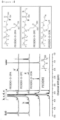
FIG. 1 is a graph showing the results of NMR data measurements of Examples 1 to 3 of the present invention and Comparative Example 1. -
FIG. 2 is a graph showing the results of NMR data measurements of Examples 4 to 6 of the present invention and Comparative Example 2. -
FIG. 3 is a graph showing the results of NMR data measurements of Examples 7 and 8 of the present invention and Comparative Examples 2 and 3. -
FIG. 4 is a graph showing the results of the differential scanning calorimeter (DSC) analysis of Examples 1 to 3 of the present invention and Comparative Example 1. -
FIG. 5 is a graph showing the results of the differential scanning calorimeter (DSC) analysis of Examples 4 to 8 of the present invention and Comparative Example 2. -
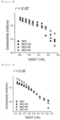
FIG. 6 is a graph showing the results of the ion conductivity analysis of Examples 1 to 3 of the present invention and Comparative Example 1 when the value of [Li+]/[EO] is 0.02 (r = 0.02). -
FIG. 7 is a graph showing the results of the ion conductivity analysis of Examples 1 to 3 of the present invention and Comparative Example 1 when the value of [Li+]/[EO] is 0.06 (r = 0.06). -
FIG. 8 is a graph showing the results of the ion conductivity analysis of Examples 4 to 8 of the present invention and Comparative Example 2 when the value of [Li+]/[EO] is 0.02 (r = 0.02). -
FIG. 9 is a graph showing the results of the ion conductivity analysis of Examples 9 and 10 of the present invention and Comparative Example 1 when the value of [Li+]/[EO] is 0.06 (r=0.06). -
FIG. 10 is a graph showing results of electrode polarization measurement of Examples 1 to 3 of the present invention and Comparative Example 1. -
FIG. 11 is a graph showing results of electrode polarization measurement of Examples 4 to 6 of the present invention and Comparative Example 2. -
FIG. 12 is a graph showing results of small angle X-ray scattering (SAXS) measurement of Examples 1 to 3 of the present invention and Comparative Example 1. -
FIG. 13 is a graph showing results of small angle X-ray scattering (SAXS) measurement of Examples 9 and 10 of the present invention and Comparative Example 1. - While the present invention is defined in the claims, hereinafter, the present invention will be described in more detail.
- The present invention relates to a polymer electrolyte comprising a polymer comprising an ethylene oxide unit; and a lithium salt,
wherein the polymer comprising an ethylene oxide unit is at least one selected from any of [Formula 1] to [Formula 10] described herein below. - The polymer electrolyte of the present invention can improve ion conductivity property by introducing a nitrogen compound or phosphorus compound as a functional group to the terminal of the polymer comprising the ethylene oxide unit and thus inducing various interactions between the functional group introduced into polymer and the lithium salt.
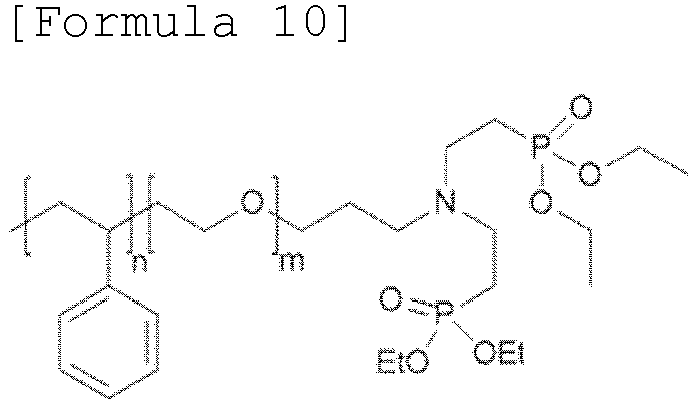
- Therefore, the polymer comprising the ethylene oxide unit of the present invention is one or more selected from the group consisting of
Formulas 1 to 10 below.


- Through the synthesis of a polymer to which one to four various terminal functional groups connected to the alkylene linker, the ether linker, or the amine linker are introduced, without changing the molecular weight of the polymer comprising the ethylene oxide unit as described above, the polymer electrolyte of the present invention can reduce the crystallinity of the polymer by about 20 to 80% as compared to the unsubstituted polyethylene oxide (PEO), and thus can improve the ion conductivity.
- In addition,
Formulas - In addition, the polymer electrolyte of the present invention can be used as a solid electrolyte for an all-solid-state battery.
- The solid electrolyte is mainly made of flame retarding materials and is stable at high temperature because it is made of nonvolatile material with high stability. In addition, since a solid electrolyte acts as a separator, a conventional separator is not necessary and a thin film process is possible.
- The most ideal form is an all-solid-state form that uses inorganic solids in the electrolyte, from which a secondary battery having excellent stability and reliability as well as excellent safety can be obtained. In order to obtain a large capacity (energy density), it is also possible to adopt the form of a laminated structure. In addition, it is unnecessary to de-solvate the solvated lithium as in the conventional electrolyte solution, and since only lithium ions need to move through the ion conductor solid electrolyte and thus unnecessary side reactions do not occur, the cycle life can be greatly extended.
- In addition, the polymer electrolyte of the present invention is preferable for application to an all-solid-state ion battery because its ion conductivity is improved as described later.
- In addition, the present invention intends to improve ion conductivity and lithium cation transference characteristics by introducing a lithium salt into the polymer to prepare a composite electrolyte as described above.
- To this end, the present invention dopes the polymer comprising the ethylene oxide unit with a lithium salt.
- The lithium salt is not particularly limited, but preferably, may be at least one selected from the group consisting of LiTFSI, LiFSI, LiPF6, LiCl, LiBr, LiI, LiClO4 LiBF4, LiB10Cl10, LiPF6, LiCF3SO3, LiCF3CO2, LiAsF6, LiSbF6, LiPF6, LiAlCl4, CH3SO3Li, CF3SO3Li, chloroborane lithium, and lithium 4-phenylborate.
- Since the polymer electrolyte of the present invention can reduce the crystallinity of the polymer by synthesizing the polymer having one to four various terminal functional groups connected to the alkylene group, the ether group, or the amine group without changing the molecular weight of the polymer comprising the ethylene oxide unit, the molecular weight of the polymer electrolyte can be 1 to 20 kg/mol.
- Also, in the polymer electrolyte of the present invention, [Li+]/[EO] value, which is a ratio of [EO] in the polymer and [Li+] of the lithium salt, may be between 0.02 and 0.08 in order to ensure practical performance of the lithium battery. If the concentration of [EO] in the polymer and [Li+] of the lithium salt is within the above range, since the electrolyte has appropriate conductivity and viscosity, excellent electrolyte performance can be obtained and lithium ions can be effectively transferred.
- The [EO] of the polymer refers to the ethylene oxide unit.
- In addition, the ion transference characteristics of the polymer electrolyte of the present invention may be 10-5 to 10-3 S/cm.
- Also, in order to prepare the polymer electrolyte as described above, the present invention provides a method of preparing the polymer electrolyte comprising the steps of (a) modifying a terminal of a polymer comprising an ethylene oxide unit by adding a nitrogen compound or phosphorus compound to the polymer, wherein the nitrogen compound functional group is nitrile and the phosphorus compound functional group is diethyl phosphonate or phosphonic acid; and (b) adding a lithium salt.
- In step (a), the terminal of the polymer can be modified by adding the nitrogen compound or phosphorus compound to the polymer comprising the ethylene oxide unit, so that the terminal of the polymer can be substituted with the nitrogen compound or the phosphorus compound functional group.
- The polymer electrolyte of the present invention can improve the ion conductivity property by introducing the nitrogen compound or phosphorus compound as a functional group into the terminal of the polymer comprising the ethylene oxide unit and thus inducing various interactions between the functional group introduced into the polymer and the lithium salt.
- The polymer comprising the ethylene oxide unit may be at least one selected from the group consisting of poly(styrene-b-ethylene oxide) and polyethylene oxide.
- The nitrogen compound or phosphorus compound may be added in a manner commonly used in the art without particular limitation.
- Specifically, the nitrogen compound functional group may be nitrile, and the phosphorus compound functional group may be diethyl phosphonate or phosphonic acid.
- In addition, before the nitrogen compound or phosphorus compound is added to the polymer in step (a), the method may further comprise modifying the terminal of the polymer comprising the ethylene oxide unit with a hydroxyl group or amine group.
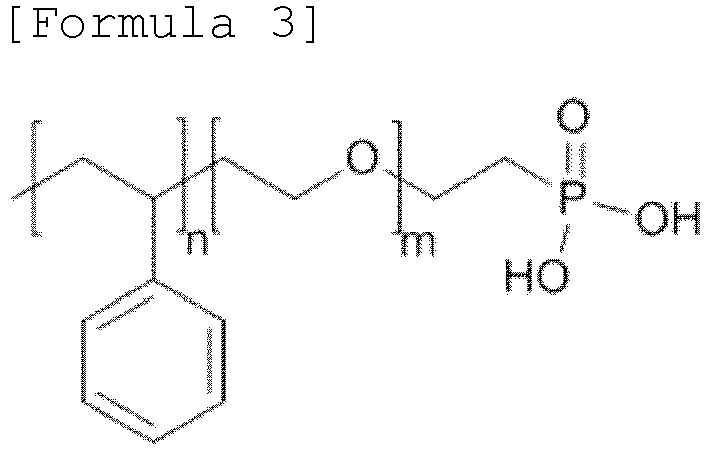
- The polymer whose terminal is modified in step (a) may be one or more selected from the group consisting of
Formulas 1 to 10 below.



- The molecular weight of the polymer whose terminal is modified in step (a) may be 1 to 20 kg/mol.
- If the terminal of the polymer is modified by adding the nitrogen compound functional group or a phosphorus compound functional group without adding a step of modifying with the hydroxyl group or the amine group, the polymers of
Formulas 1 to 3 may be obtained. - Specifically, in the case of the polymers of
Formulas 1 to 3, the terminal of the poly(styrene-b-ethylene oxide) and the nitrogen compound functional group or the phosphorus compound functional group are connected by the alkylene group, and the polymers ofFormulas 1 to 3 contain one nitrogen compound functional group or one phosphorous compound functional group. - If the step of modifying by the hydroxyl group or the amine group is added, and then the terminal of the polymer is modified by adding the nitrogen compound functional group or the phosphorus compound functional group, the polymers of Formulas 4 to 10 may be obtained.
- Specifically, in the case of the polymers of Formula 4 to 10, the terminal of the polyethylene oxide and the nitrogen compound functional group or phosphorus compound functional group are connected by an ether group or an amine group, and the polymers of Formulas 4 to 10 contain two nitrogen compound functional groups or two phosphorus compound functional groups.
- Therefore, through the synthesis of polymer to which one or two various terminal functional groups are introduced without changing the molecular weight of the polymer, the polymer electrolyte of the present invention can reduce the crystallinity of the polymer by about 20 to 80% as compared to the unsubstituted polymer comprising the ethylene oxide unit.
- In addition, the present invention is to improve the ion conductivity and lithium cation transference characteristics by introducing the lithium salt into the polymer modified in the step (a) through the step of adding the lithium salt in step (b) to prepare a composite electrolyte.
- To this end, in the present invention, the polymer prepared in step (a) may be doped with a lithium salt.
- The type of lithium salt is the same as described above.
- Also, in the polymer electrolyte of the present invention, [Li+]/[EO] value, which is a ratio of [EO] in the polymer and [Li+] of the lithium salt, may be between 0.02 and 0.08 in order to ensure practical performance of the lithium battery. If the concentration of [EO] in the polymer and [Li+] of the lithium salt is within the above range, since the electrolyte has appropriate conductivity and viscosity, excellent electrolyte performance can be obtained and lithium ions can be effectively transferred.
- In addition, the ion transference characteristics of the polymer electrolyte may be 10-5 to 10-3 S/cm.
- In addition, the present invention relates to an all-solid-state battery comprising a positive electrode, a negative electrode, and a solid polymer electrolyte interposed therebetween,
wherein the solid polymer electrolyte is the polymer electrolyte of the present invention described above. - In the present invention, if the electrode proposed in the present invention is a positive electrode, a positive electrode active material may be used as an electrode active material, and if the electrode is a negative electrode, a negative electrode active material can be used as an electrode active material. At this time, each electrode active material may be any active material which is applied to conventional electrodes, and is not particularly limited in the present invention.
- The positive electrode active material may vary depending on the use of the lithium secondary battery, and the specific composition is a known material. For example, any one lithium transition metal oxide selected from the group consisting of lithium-phosphate-iron-based compound, lithium cobalt-based oxide, lithium manganese-based oxide, lithium copper oxide, lithium nickel-based oxide and lithium manganese composite oxide, and lithium-nickel-manganese-cobalt-based oxide may be mentioned. More specifically, among the lithium metal phosphates represented by Li1+aM(PO4-b)Xb, those wherein M is at least one selected from the metals of
Groups 2 to 12, X is at least one selected from the group consisting of F, S, and N, and preferably, - 0.5≤a≤+0.5 and 0≤b≤0.1, are preferable. - In that case, the negative electrode active material may be one selected from the group consisting of lithium metal, a lithium alloy, a lithium metal composite oxide, a lithium-containing titanium composite oxide (LTO), and a combination thereof. At this time, the lithium alloy may be an alloy of lithium and at least one metal selected from Na, K, Rb, Cs, Fr, Be, Mg, Ca, Sr, Ba, Ra, Al, and Sn. Also, the lithium metal composite oxide is composed of lithium (Li) and an oxide (MeOx) of any one metal (Me) selected from the group consisting of Si, Sn, Zn, Mg, Cd, Ce, Ni, and Fe, and may be, for example, LixFe2O3 (0<x≤1) or LixWO2 (0<x≤1).
- At this time, if necessary, in addition to the active material, an electrically conductive material or a polymer electrolyte may be further added. Examples of the electrically conductive material comprise nickel powder, cobalt oxide, titanium oxide, carbon, and the like. Examples of the carbon comprise any one selected from the group consisting of Ketjen black, acetylene black, furnace black, graphite, carbon fiber and fullerene, or at least one of them.
- The all-solid-state battery is manufactured by a dry compression process in which an electrode and a solid electrolyte are prepared in powder form, and then the resulting powders are put into a predetermined mold and then pressed, or is manufactured through a slurry coating process in which slurry composition including active material, solvent, and binder is prepared, coated, and dried. The manufacture of the all-solid-state battery having the above-described configuration is not particularly limited in the present invention, and can be performed by a known method.
- For example, a cell is assembled by placing a solid electrolyte between a positive electrode and a negative electrode, followed by compression-molding them. After the assembled cell is installed in the exterior material, it is sealed by heat compression or the like. Laminate packs made of aluminum, stainless steel, or the like, or cylindrical or square metal containers are very suitable for the exterior material.
- The method of coating the electrode slurry on the current collector may comprise a method of dispensing the electrode slurry on the current collector and uniformly dispersing the electrode slurry using a doctor blade or the like, and methods such as die casting, comma coating, and screen printing. In addition, the electrode slurry may be bonded to the current collector by pressing or lamination after molding on a separate substrate. In that case, the thickness of the coating to be finally coated can be adjusted by adjusting the concentration of the slurry solution, the number of coatings, and the like.
- The drying process is a process for removing the solvent and moisture in the slurry for drying the slurry coated on the metal current collector, and may vary depending on the solvent used. For example, the drying process is carried out in a vacuum oven at 50 to 200 °C. Examples of the drying method may comprise a drying method by warm air, hot air, or low-humidity air, a vacuum drying method, and a drying method by irradiation with (far)-infrared radiation or electron beam. The drying time is not particularly limited, but is usually in the range of 30 seconds to 24 hours.
- After the drying process, a cooling process may be further included, and the cooling process may be a cooling process which slowly cool to room temperature so that a recrystallized structure of the binder is well formed.
- In addition, if necessary, in order to increase the capacity density of the electrode and to increase the adhesion between the current collector and the active materials after the drying process, a rolling process in which the electrode is passed between two rolls heated at a high temperature and is compressed to a desired thickness can be performed. The rolling process is not particularly limited in the present invention, and a known rolling process is possible. For example, the rolling process is carried out by passing between rotating rolls or by using a flat press machine.
- Hereinafter, the present invention will be described in detail with reference to examples. However, the examples according to the present invention can be modified into various other forms. The examples of the present invention are provided to enable a person skilled in the art to more fully understand the present invention.
- After stirring poly(styrene-b-ethylene oxide) (SEO, Mn=16495 g/mol, 2.0 g, 0.12 mmol) and acrylonitrile (40 mL) at 0 °C for 30 minutes, KOH (20 mg, 0.36 mmol) was added thereto. When the color of the reactant turned yellow, 10 mL of HCl was added to terminate the reaction. The obtained reactant was extracted using dichloromethane, and then a solvent was removed using a rotary evaporator to obtain a polymer. The polymer was purified using ether.
- NMR data of the prepared material were measured and shown in SEO-CN of
FIG. 1 , and the SEO-CN has the structure ofFormula 1. - 1H NMR (300 MHz, CDCl3) δ ppm: 7.10-6.40 (n × 5H, - CH2CH(C6H5)) 3.99-3.43 (n × 4H, -OCH2CH2O-), 2.59 (2H, - OCH2CH2CN), 2.21-1.20 (b, n × 3H, CH2CH(C6H5)).
- In a 50 mL round bottom flask, diethylvinylphosphonate (2.5 mL, 16.3 mmol) and cesium carbonate (0.5 g, 1.5 mmol) were mixed under argon (Ar) atmosphere, stirred at 90 °C for 30 minutes, and then SEO (Mn=16495 g/mol, 2.0 g, 0.12 mmol) dissolved in 12 mL of acetonitrile was dropped. After reacting for 3 days, HCl was added to terminate the reaction.
- NMR data of the prepared material were measured and shown in SEO-PE of
FIG. 1 , and the SEO-PE has the structure ofFormula 2. - 1H NMR (300 MHz, CDCl3) δ ppm: 7.10-6.40 (n × 5H, - CH2CH(C6H5)), 4.15 (4H, -P=O(OCH2CH3)2), 3.99-3.43 (n × 4H, - OCH2CH2O-), 2.26 (2H, -PCH2CH2O-), 2.21-1.20 (b, n × 3H, CH2CH(C6H5)), 1.33 (4H, -P=O(OCH2CH3)2).
- SEO (0.5 g, 0.03 mmol) having the terminal substituted with phosphonate was dissolved in 12 mL of chloroform and cooled to 0 °C. Bromotrimethylsilane (0.1mL, 0.75 mmol) was slowly dropped. After reacting at 40 °C for 15 hours, methanol was added to terminate the reaction.
- NMR data of the prepared material were measured and shown in SEO-PA of
FIG. 1 , and the SEO-PA has the structure ofFormula 3. - 1H NMR (300 MHz, CDCl3) δ ppm: 7.10-6.40 (n × 5H, - CH2CH(C6H5)), 3.99-3.43 (n × 4H, -OCH2CH2O-), 2.21-1.20 (b, n × 3H, CH2CH(C6H5)), 1.99 (2H, -PCH2CH2O-).
- Poly(ethylene glycol) methyl ether (2.0 g, 0.96 mmol) having the terminal substituted with di-hydroxyl and acrylonitrile (20 mL) were stirred at 0 °C for 30 minutes, and then KOH (10 mg, 0.18 mmol) was added thereto. When the color of the reactant turned yellow, 5 mL of HCl was added to terminate the reaction. The obtained reactant was extracted using dichloromethane, and then a solvent was removed using a rotary evaporator. The polymer obtained was purified using ether.
- NMR data of the prepared material were measured and shown in PEO-O-2CN of
FIG. 2 , and the PEO-O-2CN has the structure of Formula 4. - 1H NMR (300 MHz, CDCl3) δ ppm: 3.99-3.43 (n × 4H, - OCH2CH2O-), 3.37 (3H, -OCH3), 2.59 (2H, -OCH2CH2CN).
- In a 50 mL round bottom flask, diethylvinylphosphonate (2.5 mL, 16.3 mmol) and cesium carbonate (0.5 g, 1.5 mmol) were mixed under argon (Ar) atmosphere, stirred at 90 °C for 30 minutes, and then poly(ethylene glycol) methyl ether (2.0 g, 0.96 mmol) having the terminal substituted with di-hydroxyl which was dissolved in 12 mL of acetonitrile was dropped. After reacting for 3 days, HCl was added to terminate the reaction.
- NMR data of the prepared material were measured and shown in PEO-O-2PE of
FIG. 2 , and the PEO-O-2PE has the structure ofFormula 5. - 1H NMR (300 MHz, D2O) δ ppm: 4.15 (4H, -P=O(OCH2CH3)2) 3.99-3.43 (n × 4H, -OCH2CH2O-), 3.37 (3H, -OCH3), 2.26 (2H, - PCH2CH2O-), 1.33 (4H, -P=O(OCH2CH3)2).
- Poly(ethylene glycol) methyl ether (1.0 g, 0.4 mmol) substituted with di-phosphonate was dissolved in 25 mL of chloroform and cooled to 0 °C. Bromotrimethylsilane (0.1mL, 0.75 mmol) was slowly dropped. After reacting at 40 °C for 15 hours, methanol was added to terminate the reaction.
- NMR data of the prepared material were measured and shown in PEO-O-2PA of
FIG. 2 , and the PEO-O-2PA has the structure ofFormula 6. - 1H NMR (300 MHz, D2O) δ ppm: 3.99-3.43 (n × 4H, - OCH2CH2O-), 3.37 (3H, -OCH3), 1.99 (2H, -PCH2CH2O-).
- Poly(ethylene glycol) methyl ether (0.5 g, 0.24 mmol) having the terminal substituted with amine, and diethylvinylphosphonate (0.3 mL, 4 mmol) were dissolved in distilled water (10 mL) and then reacted at 60 °C for 24 hours. The obtained reactant was extracted using dichloromethane, and then the solvent was removed using a rotary evaporator. The polymer obtained was purified using ether.
- NMR data of the prepared material were measured and shown in PEO-N-2PE of
FIG. 3 , and the PEO-N-2PE has the structure ofFormula 7. - 1H NMR (300 MHz, D2O) δ ppm: 4.15 (4H, -P=O(OCH2CH3 )2) 3.99-3.43 (n × 4H, -OCH2CH2O-), 3.37 (3H, -OCH3), 2.82 (2H, - NCH2CH2-), 2.59 (2H, -CH2CH2N-), 2.12 (2H, -NCH2CH2-), 1.77 (2H, -OCH2CH2CH2-), 1.34 (4H, -P=O(OCH2CH3)2).
- Poly(ethylene glycol) methyl ether (1.0 g, 0.4 mmol) having the terminal substituted with di-phosphonate was dissolved in 25 mL of chloroform and cooled to 0 °C. Bromotrimethylsilane (0.1mL, 0.75 mmol) was slowly dropped. After reacting at 40 °C for 15 hours, methanol was added to terminate the reaction.
- NMR data of the prepared material were measured and shown in PEO-N-2PA of
FIG. 3 , and the PEO-N-2PA has the structure ofFormula 8. - 1H NMR (300 MHz, D2O) δ ppm: 3.99-3.43 (n × 4H, - OCH2CH2O-), 3.37 (3H, -OCH3), 1.99 (2H, -PCH2CH2O-).
- SEO (0.3 g, 0.018 mmol) having the terminal substituted with amine and acrylonitrile (0.5 mL, 7.6 mmol) were completely dissolved in 15 mL of THF, and then 15 mL of distilled water was added thereto. The reaction was allowed to proceed at 60 °C for 24 hours. The solvent was removed from the obtained reactant using a rotary evaporator, and the product was purified by precipitation using ether.
- NMR data of the prepared material were measured. SEO-N-2CN which is the material prepared has the structure of
Formula 9. - 1H NMR (300 MHz, CDCl3) δ ppm: 7.10-6.40 (n × 5H, - CH2CH(C6H5)), 3.99-3.43 (n × 4H, -OCH2CH2O-), 3.01 (2H, - NCH2CH2-), 2.73 (2H, -NCH2CH2-), 2.59 (2H, -CH2CH2N-), 2.21-1.20 (b, n × 3H, -CH2CH(C6H5)).
- SEO (0.3 g, 0.018 mmol) having the terminal substituted with amine and diethylvinylphosphonate (0.5 mL, 6.7 mmol) were completely dissolved in 15 mL of THF, and then 15 mL of distilled water was added thereto. The reaction was allowed to proceed at 60 °C for 24 hours. The solvent was removed from the obtained reactant using a rotary evaporator, and the product was purified by precipitation using ether.
- NMR data of the prepared material were measured. SEO-N-2PE which is the material prepared has the structure of
Formula 10. - 1H NMR (300 MHz, CDCl3) δ ppm: 7.10-6.40 (n × 5H, - CH2CH(C6H5)), 4.15 (4H, -P=O(OCH2CH3)2), 3.99-3.43 (n × 4H, - OCH2CH2O-), 2.82 (2H, -NCH2CH2-), 2.59 (2H, -CH2CH2N-), 2.21-1.20 (b, n × 3H, -CH2CH(C6H5)), 2.12 (2H, -NCH2CH2-), 1.77 (2H, -OCH2CH2CH2-), 1.34 (4H, -P=O(OCH2CH3)2) .
- Benzene to be used as a solvent was purified by stirring it in CaH2 for one day and in sec-butyllithium for one day. Styrene monomer was purified in CaH2 for one day and in di-n-butylmagnesium for one day, and ethylene oxide monomer was purified by repeatedly stirring it twice in CaH2 for one day and in n-butyllithium for 30 minutes. Sec-BuLi (0.9 mL, 1.26 mmol) was added to 200 mL of purified benzene, followed by degassing to a vacuum state. After distilling the purified styrene (8.8 mL, 77 mmol) into it, the reaction was allowed to proceed at 40 °C for 4 hours. After 1 mL of purified ethylene oxide was added and terminal-capped, the solution was transferred to a glove box and t-Bu-P4 (1.5 mL, 1.5 mmol) was added, followed by degassing to a vacuum state. After distilling the purified ethylene oxide (9 mL, 182mmol) into it, the reaction was allowed to proceed at 40 °C for 3 days. The reaction was terminated by adding 10 mL of MeOH. After completion of the reaction, purification was performed by precipitation using ether.
- NMR data of the prepared material was measured and the result is shown in SEO of
FIG. 1 . - 1H NMR (300 MHz, D2O) δ ppm: 7.10-6.40 (n × 5H, - CH2CH(C6H5)) 3.99-3.43 (n × 4H, -OCH2CH2O-), 2.21-1.20 (b, n × 3H, CH2CH(C6H5)).
- Ethylene oxide monomer was purified by repeatedly stirring it twice in CaH2 for one day and in n-butyllithium for 30 minutes. Methanol was purified using magnesium and THF to be used as a solvent was purified using benzophenone ketyl. Methanol (0.04 mL, 1 mmol) and t-Bu-P4 (1 mL, 1 mmol) were added to 100 mL of purified THF, followed by degassing to a vacuum state. After distilling the purified ethylene oxide (5mL, 100mmol) into it, the reaction was allowed to proceed at room temperature for 3 days. The reaction was terminated by adding 0.1 mL of acetic acid. After completion of the reaction, purification was performed using hexane.
- NMR data of the prepared material was measured and the results are shown in PEO of
FIGs. 2 and3 . - 1H NMR (300 MHz, D2O) δ ppm: 3.99-3.43 (n × 4H, - OCH2CH2O-), 3.37 (3H, -OCH3), 1.99.
- Borane-THF complex (5 mL, 1 M in THF, 5 mmol) was mixed with anhydrous THF (15 mL) and lowered to 0 °C. Poly(ethylene glycol) methyl ether (2.0 g, 0.97 mmol) having the terminal substituted with nitrile was dissolved in anhydrous THF (10 mL) and then the solution obtained was added dropwise to the above mixture. The reaction was allowed to proceed by reflexing for 4 hours under argon (Ar) atmosphere. The temperature was lowered to 0 °C and MeOH (5 mL) was added. HCl (0.25 mL) was added slowly, followed by reacting for 1 hour. The obtained reactant was extracted with dichloromethane and the solvent was removed using a rotary evaporator. The obtained polymer was purified using ether.
- NMR data of the prepared material was measured and the results are shown in PEO-NH2 of
FIG. 3 . - 1H NMR (300 MHz, CDCl3) δ ppm: 3.99-3.43 (n × 4H, - OCH2CH2O-), 3.37 (3H, -OCH3), 2.59 (2H, -OCH2CH2CN).
- The substitution ratio of the terminals of the polymers prepared in Examples 1 to 3 was confirmed by 1H NMR. It can be seen that in the case of the SEO-CN polymer of Example 1 to which the nitrile functional group was introduced, high substitution ratio of 99% or more were shown, and also in the case of the SEO-PE polymer of Example 2 to which the diethylphosphonate functional group was introduced, high substitution ratio of 77% or more was shown. In addition, in the case of SEO-PA of Example 3 having a phosphonic acid functional group synthesized by hydrolyzing the SEO-PE of Example 2, the hydrolysis ratio was 100%. Additionally, it was confirmed by 31P NMR that the hydrolysis ratio of SEO-PA in Example 3 was 100% and that no side reactions also occurred.
- The substitution ratio of the terminals of the polymers prepared in Examples 4 to 6 in which the terminal of PEO and two functional groups are connected by an ether group was confirmed by 1H NMR. In the case of PEO-O-2CN polymer of Example 4 having two nitrile functional groups introduced, the substitution ratio of about 62% was shown, and in the case of PEO-O-2PE of Example 5 having two diethylphosphonate functional groups introduced, substitution ratio of about 52% was shown. In addition, PEO-O-2PE of Example 5 was hydrolyzed to synthesize PEO-O-2PA of Example 6, and it was further confirmed by 31P NMR that the hydrolysis proceeded 100%.
- The substitution ratio of the terminals of the polymers prepared in Examples 7 and 8 in which the terminal of PEO and two functional groups are connected by an amine group was confirmed by 1H NMR. In the case of PEO-N-2PE of Example 7 having two diethylphosphonate functional groups introduced, substitution ratio of about 75% was shown. PEO-N-2PE of Example 7 was hydrolyzed to synthesize PEO-N-2PA of Example 8, and it was further confirmed by 31P NMR that the hydrolysis proceeded 100%.
- DSC thermograms of the polymers prepared in Examples 1 to 8 and Comparative Examples 1 and 2 were measured using TA Instruments (model Q20). About 5 mg of sample was placed in an aluminum pan in a glove box filled with argon and an empty aluminum pan was used as a reference. The thermodynamic properties between -65 °C and 120 °C were measured for a temperature rising/cooling rate of 10 °C/min.
- The effect of the terminal functional group on the crystallinity was quantitatively analyzed by a differential scanning calorimeter (DSC), and the results are shown in Table 1 and
FIG. 4 .Table 1: Tm (°C) ΔHm (J/g) Tc (°C) ΔHc (J/g) Comparative Example 1(SEO) 53.7 52.48 25.8 49.2 Example 1 (SEO-CN) 52.8 47.1 30.6 44.1 Example 2 (SEO-PE) 48.1 34.3 23.4 33.7 Example 3 (SEO-PA) 50 20.68 18.5 19.9 - It can be seen that the polymer of Examples 1 to 3 having the functional group introduced at its terminal shows a lower heat of fusion (ΔHm) than the SEO of Comparative Example 1. If the crystallinity when the heat of fusion (ΔHm) of PEO is 215.6 J/g is calculated as 100%, the crystallinities of Comparative Example 1 (SEO), Example 1 (SEO-CN), Example 2 (SEO-PE), and Example 3 (SEO-PA) were 49%, 44%, 32%, and 20%, respectively. Since the concentration of the functional group introduced at the terminal is less than 1 mol%, it is very interesting to show these decreases in crystallinity. In the case of PEO, the conductivity drops sharply due to crystallization below the melting point, resulting in very low room temperature conductivity. However, it can be seen that if a functional group is introduced at the terminal of the polymer comprising the ethylene oxide unit, the crystallinity can be significantly reduced as described above, thereby improving the conductivity characteristics at room temperature.
- The effect of the terminal functional group on the crystallinity was quantitatively analyzed by a differential scanning calorimeter (DSC), and the results are shown in Table 2 and
FIG. 5 .Table 2: Tm (°C) ΔHm (J/g) Tc (°C) ΔHc (J/g) Comparative Example 2(PEO) 55.2 178.3 33.6 161.7 Example 4 (PEO-O-2CN) 51 140.3 23.1 126.1 Example 5(PEO-O-2PE) 50.9 136 33.8 127.6 Example 6(PEO-O-2PA) 52.1 123.8 24.9 106.8 Example 7(PEO-N-2PE) 50.6 114.1 28.9 103.6 Example 8(PEO-N-2PA) 45.6 53.7 16.7 53.6 - If the crystallinity when the heat of fusion (ΔHm) of PEO is 215.6 J/g is calculated as 100%, the crystallinities of Examples 4 to 6 (PEO-O-2CN, PEO-O-2PE, PEO-O-2PA) were 79%, 76%, and 69%, respectively. On the other hand, even though two functional groups were substituted at the terminal, different conductivity properties were shown depending on the linkers connecting the terminal of the polymer and functional group. The crystallinities of Examples 7 and 8 (PEO-N-2PE, PEO-N-2PA) were 64% and 30%, respectively. This indicates that the conductivity property can be affected differently depending on the types of linkers.
- After doping a lithium salt (LiTFSI) to the polymers prepared in Examples 1 to 8 and Comparative Examples 1 to 2, the ion conductivity was analyzed using Potentiostat (
VersaSTAT 3, Princeton Applied Research). - Samples doped with the lithium salt were measured for through plane conductivity using potentiostat (
VersaSTAT 3, Princeton Applied Research) in a glove box in an argon environment. Two electrode cells made in the laboratory (composed of a stainless steel blocking electrode and 1 cm x 1 cm platinum working/counter electrode) were used, and the sample thickness was made to be 200 µm. - The result obtained by doping 2% (r = 0.02) lithium salt is shown in
FIG. 6 . - It can be clearly observed that the polymers of Example 1 (SEO-CN), Example 2 (SEO-PE), and Example 3 (SEO-PA) having the terminals substituted with functional groups have much improved conductivity near room temperature as compared to Comparative Example 1 (SEO). In particular, it can be seen that Example 3 (SEO-PA), which had the lowest crystallinity, showed the highest room temperature conductivity.
- The result obtained by doping 6% (r = 0.06) lithium salt is shown in
FIG. 7 . - It was observed that as the temperature increases, the polymers of Example 1 (SEO-CN), Example 2 (SEO-PE), and Example 3 (SEO-PA) having the terminals substituted with functional groups exhibit slightly higher conductivity. This means that the terminal can affect the crystallinity, thereby not only improving the conductivity property at room temperature but also additionally improving the conductivity due to interaction with the lithium salt.
- The result obtained by doping 2% (r = 0.02) lithium salt is shown in
FIG. 8 . - It was observed that the polymers of Example 6 (PEO-O-2PA) and Example 8 (PEO-N-2PA) which have relatively low crystallinity are 40 and 20 times higher in conductivity at room temperature than Comparative Example 2 (PEO), respectively. In addition, even although the glass transition temperature (Tg) of the polymers of Examples 4 to 8 of the present invention which have two functional groups substituted in the terminal of the polymers is improved, the polymers of Example 4 (PEO-O-2CN) and Example 7 (PEO-N-2PE) show the increased ion conductivity efficiency over the entire temperature range.
- The result obtained by doping 6% (r = 0.06) lithium salt is shown in
FIG. 9 . - Polymers of Example 9 (SEO-N-2CN) and Example 10 (SEO-N-2PE), which have relatively low crystallinity, have exhibited conductivity characteristics similar to or about 1.2 times higher than those of Comparative Example 1 (SEO), even though the glass transition temperature (Tg) was improved by introducing a functional group at the terminal.
- In order to analyze the effect of the interaction between the lithium salt and the terminal of the polymer functional group on ion diffusion in the electrolyte, the measurement of electrode polarization was performed.
- After doping 6% (r = 0.06) lithium salt (LiTFSI) to the polymers prepared in Examples 1 to 3 and Comparative Example 1, the experiment of polarization was performed by placing them between two lithium electrodes. The temperature of the sample was set to 45 °C, and the current flowing for 2 hours was observed while maintaining the polarization voltage (DV) at 0.1V. All procedures were performed in a glove box in an argon environment.
- The results are shown in
FIG. 10 and Table 3.Table 3: I∞/I0 Comparative Example 1(SEO) 0.23 Example 1 (SEO-CN) 0.64 Example 2 (SEO-PE) 0.46 Example 3 (SEO-PA) 0.37 - It was confirmed that the terminal-substituted polymers of Examples 1 to 3 (SEO-CN, SEO-PE, SEO-PA) have higher final current values than Comparative Example 1 (SEO). This is thought to be because it dissociates the lithium salt effectively and works favorably to diffuse lithium, even though the relaxation of the polymer was slowed down due to the functional group at the terminal of the polymer (raising Tg). In particular, the polymer of Example 1 (SEO-CN) substituted with nitrile functional group, which is well known to coordinate with lithium, showed the highest current retention of 0.64.
- After doping 6% (r = 0.06) lithium salt (LiTFSI) to the polymers prepared in Examples 4 to 6 and Comparative Example 2, the experiment of polarization was performed by placing them between two lithium electrodes. The temperature of the sample was set to 30 °C, and the current flowing for 2 hours was observed while maintaining the polarization voltage (DV) at 0.1V. All procedures were performed in a glove box in an argon environment.
- The results are shown in
FIG. 11 and Table 4.Table 4: T∞/T0 Comparative Example 2(PEO) 0.32 Example 4 (PEO-O-2CN) 0.81 Example 5(PEO-O-2PE) 0.51 Example 6(PEO-O-2PA) 0.57 - It was confirmed that all the polymers of Examples 4 to 6 (PEO-O-2CN, PEO-O-2PE, PEO-O-2PA), whose terminals are substituted with two functional groups, have higher final current values than Comparative Example 2 (PEO). In particular, it was found that in the case of Example 4 (PEO-O-2CN) having two substituted nitrile functional groups, the current retention was about 1.3 times higher than that of the conventional PEO-CN having one nitrile. This means that if the terminal of the polymer is substituted with multiple functional groups, the effect can be maximized.
- Small angle X-ray scattering (SAXS) of the polymers prepared in Example 1 to 3, 9, 10 and Comparative Example 1 was performed to analyze the morphology of the polymer.
- Measurements were performed on Pohang Light Source (PLS) 4C and 9A beam lines. The wavelength I of the incident X-ray is 0.118 nm (Dλ/λ = 10-4). In order to prevent the samples from absorbing oxygen and moisture during the measurement process, a closed cell was manufactured and used using a Kapton film. The distance from the sample to the detector was 2 m.
- Comparative Example 1 (SEO), Example 1 (SEO-CN), and Example 2 (SEO-PE) all showed Bragg peaks of 1q* and 2q*, indicating the formation of aligned lamellar structures. The domain spacing (d100) for Comparative Example 1 (SEO), Example 1 (SEO-CN), and Example 2 (SEO-PE) showed nearly similar phase separation behaviors of 17.4 nm, 17.7 nm, and 17 nm, respectively.
- On the other hand, Example 3 (SEO-PA) showed Bragg peaks of 1q*, √3q*, √4q*, √7q*, and √9q*, which means a hexagonal cylinder structure. It can be seen that domain spacing (d100) is 23 nm, and despite the completely same substitution ratio as Example 2 (SEO-PE), the terminal phosphonic acid functional group causes a very large volume change. This phase transition is expected to be a result of the change in the crystallinity of the PEO. The density of crystallinity PEO is 1.21 g/cm3, whereas the density of amorphous PEO is 1.12 g/cm3. Therefore, it can be seen that in the case of Example 3 (SEO-PA), the free volume is increased due to the large decrease of crystallinity of 80%, showing the phase transition behavior (
FIG. 12 ). - In the polymers of Example 9 (SEO-N-2CN) and Example 10 (SEO-N-2PE) in which poly(styrene-b-ethylene oxide) (SEO) and two terminal functional groups are linked by an amine group, a gyroid morphology was observed regardless of the type of the terminal functional group. The inverted triangles shown in
FIG. 13 represent Bragg peaks of √6q*, √8q*, √14q*, √16q*, √20q*, √22q*, √24q*, √30q*, √32q*, √38q*, √42q*, √46q*, and √48q*, indicating very well aligned gyroid morphology (FIG. 13 ). Since the gyroid morphology has a domain in which each block is connected three-dimensionally, it has a structural advantage that can simultaneously achieve high mechanical strength and conductivity properties, but is known as a morphology that is difficult to implement because it is distributed in a very narrow area on the phase diagram. However, in the present invention, the above-described morphology could be implemented by a simple method of substituting the terminal with a functional group, and showed very high morphology reproducibility. - In addition, it can be seen that in the case of the gyroid morphology, since the morphology is a morphology that appears when the substitution ratio is 70% or more, the polymers of Examples 9 and 10 were substituted at 70% or more at the terminals through the analysis of morphology.
Claims (8)
- A polymer electrolyte comprising:a polymer comprising an ethylene oxide unit; anda lithium salt,wherein the polymer comprising an ethylene oxide unit is at least one selected from:


- The polymer electrolyte of claim 1, wherein Formulas 9 and 10 have a gyroid morphology.
- The polymer electrolyte of claim 1, wherein the lithium salt is at least one selected from the group consisting of LiTFSI, LiFSI, LiPF6, LiCl, LiBr, LiI, LiClO4, LiBF4, LiB10Cl10, LiPF6, LiCF3SO3, LiCF3CO2, LiAsF6, LiSbF6, LiPF6, LiAlCl4, CH3SO3Li, CF3SO3Li, chloroborane lithium, and lithium 4-phenylborate.
- The polymer electrolyte of claim 1, wherein in the polymer electrolyte, a [Li+]/[EO] value, wherein EO represents ethylene oxide, which is a ratio of [EO] in the polymer and [Li+] of the lithium salt, is between 0.02 and 0.08.
- The polymer electrolyte of claim 1, wherein the polymer electrolyte is a solid electrolyte for an all-solid-state battery.
- A method for preparing a polymer electrolyte according to Claim 1, comprising the steps of:(a) modifying a terminal of a polymer comprising an ethylene oxide unit by adding a nitrogen compound or phosphorus compound to the polymer, wherein the nitrogen compound functional group is nitrile and the phosphorus compound functional group is diethyl phosphonate or phosphonic acid; and(b) adding a lithium salt.
- The method for preparing the polymer electrolyte of claim 6, wherein before adding the nitrogen compound or phosphorus compound to the polymer, the method further comprises a step of modifying the terminal of the polymer comprising the ethylene oxide unit with a hydroxyl group or an amine group.
- An all-solid-state battery comprising a positive electrode, a negative electrode, and a solid polymer electrolyte interposed therebetween,
wherein the solid polymer electrolyte is the polymer electrolyte of claims 1.
Applications Claiming Priority (2)
| Application Number | Priority Date | Filing Date | Title |
|---|---|---|---|
| KR1020180086287A KR102346844B1 (en) | 2018-07-25 | 2018-07-25 | Polymer electrolyte and manufacturing method thereof |
| PCT/KR2019/009179 WO2020022777A1 (en) | 2018-07-25 | 2019-07-24 | Polymer electrolyte and method for producing same |
Publications (3)
| Publication Number | Publication Date |
|---|---|
| EP3709425A1 EP3709425A1 (en) | 2020-09-16 |
| EP3709425A4 EP3709425A4 (en) | 2021-03-31 |
| EP3709425B1 true EP3709425B1 (en) | 2025-06-11 |
Family
ID=69180981
Family Applications (1)
| Application Number | Title | Priority Date | Filing Date |
|---|---|---|---|
| EP19841785.9A Active EP3709425B1 (en) | 2018-07-25 | 2019-07-24 | Polymer electrolyte and method for producing same |
Country Status (9)
| Country | Link |
|---|---|
| US (1) | US11881554B2 (en) |
| EP (1) | EP3709425B1 (en) |
| JP (1) | JP6976444B2 (en) |
| KR (1) | KR102346844B1 (en) |
| CN (1) | CN111819725B (en) |
| ES (1) | ES3035917T3 (en) |
| HU (1) | HUE072669T2 (en) |
| PL (1) | PL3709425T3 (en) |
| WO (1) | WO2020022777A1 (en) |
Families Citing this family (4)
| Publication number | Priority date | Publication date | Assignee | Title |
|---|---|---|---|---|
| WO2024070450A1 (en) * | 2022-09-27 | 2024-04-04 | パナソニックIpマネジメント株式会社 | Solid-electrolyte material, nonaqueous-electrolyte secondary battery, and method for producing solid-electrolyte material |
| CN119431767A (en) * | 2023-08-01 | 2025-02-14 | 宁德时代新能源科技股份有限公司 | Polymer, preparation method thereof, positive electrode sheet, secondary battery, and electrical device |
| WO2025025762A1 (en) * | 2023-08-01 | 2025-02-06 | 宁德时代新能源科技股份有限公司 | Polymer and preparation method therefor, positive electrode sheet, secondary battery, and electric device |
| CN118645685B (en) * | 2024-05-31 | 2026-02-10 | 比亚迪股份有限公司 | An electrolyte, its preparation method and application |
Family Cites Families (34)
| Publication number | Priority date | Publication date | Assignee | Title |
|---|---|---|---|---|
| JPS6251611A (en) * | 1985-08-30 | 1987-03-06 | Sanyo Chem Ind Ltd | Hair treating agent composition |
| KR960010255B1 (en) * | 1992-10-06 | 1996-07-26 | 한국과학기술연구원 | Polyethyeneoxide-derivative and process for producing thereof |
| JPH06236770A (en) | 1993-02-10 | 1994-08-23 | Otsuka Chem Co Ltd | Organic solid electrolyte and its use |
| KR100191305B1 (en) | 1994-09-17 | 1999-06-15 | 윤종용 | Printer |
| JP3847003B2 (en) * | 1998-07-07 | 2006-11-15 | 日東電工株式会社 | Gel composition and use thereof |
| JP2001043898A (en) | 1999-07-29 | 2001-02-16 | Sony Corp | Manufacturing method of non-aqueous electrolyte secondary battery |
| JP2001043896A (en) * | 1999-07-29 | 2001-02-16 | Hitachi Chem Co Ltd | Manufacture of polymeric solid electrolyte, polymeric solid electrolyte, and electrochemical device |
| JP2001253921A (en) | 2000-03-10 | 2001-09-18 | Nippon Chem Ind Co Ltd | Fluoroalkyl group-containing phosphonic acid oligomer, method for producing the same, and solid polymer electrolyte |
| JP2001266894A (en) * | 2000-03-22 | 2001-09-28 | Sony Corp | Battery electrode and non-aqueous electrolyte battery using the same |
| TW527745B (en) * | 2000-11-21 | 2003-04-11 | Dainichiseika Color Chem | Solidifying material for cell electrolyte solution, and cell comprising the solidifying material |
| JP4954385B2 (en) | 2001-05-07 | 2012-06-13 | 日立マクセルエナジー株式会社 | Non-aqueous electrolyte secondary battery electrode and non-aqueous electrolyte secondary battery using the same |
| US6673273B2 (en) * | 2001-10-24 | 2004-01-06 | 3M Innovative Properties Company | Crosslinked polymer electrolyte compositions |
| CN1322611C (en) * | 2003-03-26 | 2007-06-20 | 佳能株式会社 | Electrode material for lithium secondary battery, electrode structure comprising the electrode material and secondary battery comprising the electrode structure |
| JP2007184116A (en) | 2006-01-04 | 2007-07-19 | Polymatech Co Ltd | Ion conductive polymer electrolyte membrane and its manufacturing method |
| US8888470B2 (en) | 2007-02-27 | 2014-11-18 | Deka Products Limited Partnership | Pumping cassette |
| KR101364911B1 (en) | 2007-12-06 | 2014-02-19 | 바스프 에스이 | Room temperature crosslinkable ion conductive polymer system |
| WO2009092058A1 (en) * | 2008-01-16 | 2009-07-23 | Seeo, Inc | Gel polymer electrolytes for batteries |
| WO2010083325A1 (en) | 2009-01-16 | 2010-07-22 | Seeo, Inc | Polymer electrolytes having alkylene oxide pendants with polar groups |
| JP2011090957A (en) | 2009-10-23 | 2011-05-06 | Nof Corp | Ionic conductive polymer composite electrolyte |
| WO2011132717A1 (en) * | 2010-04-22 | 2011-10-27 | 日油株式会社 | Non-aqueous electrolyte for electrical device and secondary battery using same |
| JP6069821B2 (en) * | 2011-09-28 | 2017-02-01 | ソニー株式会社 | Lithium ion secondary battery |
| KR101389732B1 (en) * | 2012-08-27 | 2014-04-28 | 서강대학교산학협력단 | Polymer electrolyte for lithium secondary battery |
| KR101639839B1 (en) * | 2013-10-08 | 2016-07-25 | 포항공과대학교 산학협력단 | Methods for tuning morphology and conductivity of polymer electrolytes using end-functional group |
| CN105849194A (en) * | 2013-12-11 | 2016-08-10 | 陶氏环球技术有限责任公司 | Composition for highly conductive polymer electrolytes |
| MY181438A (en) * | 2014-12-19 | 2020-12-22 | Akzo Nobel Chemicals Int Bv | Universal dispersant |
| JP6417974B2 (en) | 2015-01-29 | 2018-11-07 | Tdk株式会社 | Ion conductive solid electrolyte |
| JP6529290B2 (en) | 2015-03-13 | 2019-06-12 | 東ソー・ファインケム株式会社 | Non-aqueous gel electrolyte and non-aqueous gel electrolyte secondary battery using the same |
| EP3285324B1 (en) * | 2015-10-30 | 2020-01-01 | LG Chem, Ltd. | Polymer electrolyte having multi-layer structure, and all-solid battery comprising same |
| FR3049114B1 (en) * | 2016-03-18 | 2018-03-09 | Blue Solutions | POLYMER LITHIUM METAL BATTERY WITH HIGH ENERGY DENSITY |
| US10135093B2 (en) * | 2016-03-30 | 2018-11-20 | Wildcat Discovery Technologies, Inc. | High voltage solid electrolyte compositions |
| KR102675772B1 (en) * | 2016-06-24 | 2024-06-18 | 삼성전자주식회사 | Polymer electrolyte, preparing method thereof, and lithium metal battery including the same |
| WO2018094266A1 (en) * | 2016-11-18 | 2018-05-24 | Ballard Power Systems Inc. | Membrane electrode assembly with improved electrode |
| KR102229457B1 (en) | 2017-09-21 | 2021-03-18 | 주식회사 엘지화학 | Polymer electrolyte and manufacturing method thereof |
| US11394056B2 (en) * | 2018-06-08 | 2022-07-19 | Solid State Battery Incorporated | Composite solid polymer electrolytes for energy storage devices |
-
2018
- 2018-07-25 KR KR1020180086287A patent/KR102346844B1/en active Active
-
2019
- 2019-07-24 CN CN201980010915.1A patent/CN111819725B/en active Active
- 2019-07-24 PL PL19841785.9T patent/PL3709425T3/en unknown
- 2019-07-24 JP JP2020535064A patent/JP6976444B2/en active Active
- 2019-07-24 ES ES19841785T patent/ES3035917T3/en active Active
- 2019-07-24 HU HUE19841785A patent/HUE072669T2/en unknown
- 2019-07-24 WO PCT/KR2019/009179 patent/WO2020022777A1/en not_active Ceased
- 2019-07-24 US US16/954,836 patent/US11881554B2/en active Active
- 2019-07-24 EP EP19841785.9A patent/EP3709425B1/en active Active
Non-Patent Citations (1)
| Title |
|---|
| PROF PREMAMOY GHOSH: "POLYMER SCIENCE FUNDAMENTALS OF POLYMER SCIENCE Molecular Weights of Polymers CONTENTS Introduction Concept of Average Molecular Weight Number Average Molecular Weight Membrane Osmometry Weight Average Molecular Weight Assessment of Shape of Polymer Molecules Viscosity Average Molecular Weight Gener", 21 September 2006 (2006-09-21), XP055608363, Retrieved from the Internet <URL:http://nsdl.niscair.res.in/jspui/bitstream/123456789/406/2/Molecular%20weights%20of%20polymers.pdf> [retrieved on 20190724] * |
Also Published As
| Publication number | Publication date |
|---|---|
| KR20200011633A (en) | 2020-02-04 |
| WO2020022777A1 (en) | 2020-01-30 |
| JP6976444B2 (en) | 2021-12-08 |
| ES3035917T3 (en) | 2025-09-11 |
| HUE072669T2 (en) | 2025-12-28 |
| KR102346844B1 (en) | 2022-01-03 |
| CN111819725A (en) | 2020-10-23 |
| CN111819725B (en) | 2024-01-26 |
| EP3709425A1 (en) | 2020-09-16 |
| PL3709425T3 (en) | 2025-09-01 |
| EP3709425A4 (en) | 2021-03-31 |
| JP2021508159A (en) | 2021-02-25 |
| US20210091410A1 (en) | 2021-03-25 |
| US11881554B2 (en) | 2024-01-23 |
Similar Documents
| Publication | Publication Date | Title |
|---|---|---|
| Wang et al. | A fluorinated polycarbonate based all solid state polymer electrolyte for lithium metal batteries | |
| EP3595070B1 (en) | Polymer electrolyte and preparation method therefor | |
| US6866963B2 (en) | Cathode active material and lithium battery employing the same | |
| JP6578085B2 (en) | Lithium battery electrolyte additive, organic electrolyte, and lithium battery | |
| EP3709425B1 (en) | Polymer electrolyte and method for producing same | |
| CN103250297B (en) | Ionic liquid, comprise described ionic liquid lithium secondary battery electrolyte and comprise described lithium secondary battery of electrolyte | |
| EP2752933B1 (en) | Battery electrolyte and method for producing same, and battery comprising electrolyte | |
| KR101139079B1 (en) | Lithium salt | |
| CN106099184A (en) | A kind of electrolyte and use the lithium ion battery of this electrolyte | |
| JP2759479B2 (en) | All-solid-state lithium secondary battery | |
| EP4449523A1 (en) | Solid material comprising li, mg, p, s and halogen elements | |
| EP2897210B1 (en) | Electrolytic solution for lithium cell and method for manufacturing same, and lithium cell provided with said electrolytic solution for lithium cell | |
| KR20240062410A (en) | Polymer for electrolyte and electrolyte comprising the same | |
| US20250055025A1 (en) | Solid material comprising li, mg, p, s and halogen elements | |
| 張策 | Study on glyme-based lithium solvate ionic liquids: fundamental properties and application to rechargeable lithium batteries |
Legal Events
| Date | Code | Title | Description |
|---|---|---|---|
| STAA | Information on the status of an ep patent application or granted ep patent |
Free format text: STATUS: THE INTERNATIONAL PUBLICATION HAS BEEN MADE |
|
| PUAI | Public reference made under article 153(3) epc to a published international application that has entered the european phase |
Free format text: ORIGINAL CODE: 0009012 |
|
| STAA | Information on the status of an ep patent application or granted ep patent |
Free format text: STATUS: REQUEST FOR EXAMINATION WAS MADE |
|
| 17P | Request for examination filed |
Effective date: 20200609 |
|
| AK | Designated contracting states |
Kind code of ref document: A1 Designated state(s): AL AT BE BG CH CY CZ DE DK EE ES FI FR GB GR HR HU IE IS IT LI LT LU LV MC MK MT NL NO PL PT RO RS SE SI SK SM TR |
|
| AX | Request for extension of the european patent |
Extension state: BA ME |
|
| A4 | Supplementary search report drawn up and despatched |
Effective date: 20210301 |
|
| RIC1 | Information provided on ipc code assigned before grant |
Ipc: C08L 53/00 20060101ALI20210223BHEP Ipc: H01M 10/0565 20100101AFI20210223BHEP Ipc: C08G 65/333 20060101ALI20210223BHEP Ipc: H01M 10/052 20100101ALI20210223BHEP Ipc: C08L 71/02 20060101ALI20210223BHEP Ipc: C08G 65/335 20060101ALI20210223BHEP |
|
| DAV | Request for validation of the european patent (deleted) | ||
| DAX | Request for extension of the european patent (deleted) | ||
| RAP1 | Party data changed (applicant data changed or rights of an application transferred) |
Owner name: POSTECH ACADEMY-INDUSTRY FOUNDATION Owner name: LG ENERGY SOLUTION, LTD. |
|
| RAP3 | Party data changed (applicant data changed or rights of an application transferred) |
Owner name: POSTECH ACADEMY-INDUSTRY FOUNDATION Owner name: LG ENERGY SOLUTION, LTD. |
|
| STAA | Information on the status of an ep patent application or granted ep patent |
Free format text: STATUS: EXAMINATION IS IN PROGRESS |
|
| 17Q | First examination report despatched |
Effective date: 20231031 |
|
| GRAP | Despatch of communication of intention to grant a patent |
Free format text: ORIGINAL CODE: EPIDOSNIGR1 |
|
| STAA | Information on the status of an ep patent application or granted ep patent |
Free format text: STATUS: GRANT OF PATENT IS INTENDED |
|
| RIC1 | Information provided on ipc code assigned before grant |
Ipc: C08F 8/40 20060101ALI20250210BHEP Ipc: C08F 8/30 20060101ALI20250210BHEP Ipc: C08G 65/333 20060101ALI20250210BHEP Ipc: C08G 65/335 20060101ALI20250210BHEP Ipc: C08L 71/02 20060101ALI20250210BHEP Ipc: C08L 53/00 20060101ALI20250210BHEP Ipc: H01M 10/052 20100101ALI20250210BHEP Ipc: H01M 10/0565 20100101AFI20250210BHEP |
|
| INTG | Intention to grant announced |
Effective date: 20250225 |
|
| GRAS | Grant fee paid |
Free format text: ORIGINAL CODE: EPIDOSNIGR3 |
|
| GRAA | (expected) grant |
Free format text: ORIGINAL CODE: 0009210 |
|
| STAA | Information on the status of an ep patent application or granted ep patent |
Free format text: STATUS: THE PATENT HAS BEEN GRANTED |
|
| AK | Designated contracting states |
Kind code of ref document: B1 Designated state(s): AL AT BE BG CH CY CZ DE DK EE ES FI FR GB GR HR HU IE IS IT LI LT LU LV MC MK MT NL NO PL PT RO RS SE SI SK SM TR |
|
| REG | Reference to a national code |
Ref country code: GB Ref legal event code: FG4D |
|
| REG | Reference to a national code |
Ref country code: CH Ref legal event code: EP |
|
| P01 | Opt-out of the competence of the unified patent court (upc) registered |
Free format text: CASE NUMBER: APP_23489/2025 Effective date: 20250516 |
|
| REG | Reference to a national code |
Ref country code: DE Ref legal event code: R096 Ref document number: 602019071098 Country of ref document: DE |
|
| REG | Reference to a national code |
Ref country code: IE Ref legal event code: FG4D |
|
| PGFP | Annual fee paid to national office [announced via postgrant information from national office to epo] |
Ref country code: GB Payment date: 20250624 Year of fee payment: 7 |
|
| PGFP | Annual fee paid to national office [announced via postgrant information from national office to epo] |
Ref country code: BE Payment date: 20250623 Year of fee payment: 7 |
|
| PGFP | Annual fee paid to national office [announced via postgrant information from national office to epo] |
Ref country code: FR Payment date: 20250624 Year of fee payment: 7 |
|
| REG | Reference to a national code |
Ref country code: SE Ref legal event code: TRGR |
|
| PGFP | Annual fee paid to national office [announced via postgrant information from national office to epo] |
Ref country code: SE Payment date: 20250624 Year of fee payment: 7 |
|
| REG | Reference to a national code |
Ref country code: ES Ref legal event code: FG2A Ref document number: 3035917 Country of ref document: ES Kind code of ref document: T3 Effective date: 20250911 |
|
| PG25 | Lapsed in a contracting state [announced via postgrant information from national office to epo] |
Ref country code: FI Free format text: LAPSE BECAUSE OF FAILURE TO SUBMIT A TRANSLATION OF THE DESCRIPTION OR TO PAY THE FEE WITHIN THE PRESCRIBED TIME-LIMIT Effective date: 20250611 |
|
| PGFP | Annual fee paid to national office [announced via postgrant information from national office to epo] |
Ref country code: ES Payment date: 20250822 Year of fee payment: 7 |
|
| PGFP | Annual fee paid to national office [announced via postgrant information from national office to epo] |
Ref country code: DE Payment date: 20250624 Year of fee payment: 7 |
|
| REG | Reference to a national code |
Ref country code: LT Ref legal event code: MG9D |
|
| PG25 | Lapsed in a contracting state [announced via postgrant information from national office to epo] |
Ref country code: GR Free format text: LAPSE BECAUSE OF FAILURE TO SUBMIT A TRANSLATION OF THE DESCRIPTION OR TO PAY THE FEE WITHIN THE PRESCRIBED TIME-LIMIT Effective date: 20250912 Ref country code: NO Free format text: LAPSE BECAUSE OF FAILURE TO SUBMIT A TRANSLATION OF THE DESCRIPTION OR TO PAY THE FEE WITHIN THE PRESCRIBED TIME-LIMIT Effective date: 20250911 |
|
| PGFP | Annual fee paid to national office [announced via postgrant information from national office to epo] |
Ref country code: PL Payment date: 20250625 Year of fee payment: 7 |
|
| REG | Reference to a national code |
Ref country code: NL Ref legal event code: MP Effective date: 20250611 |
|
| PG25 | Lapsed in a contracting state [announced via postgrant information from national office to epo] |
Ref country code: BG Free format text: LAPSE BECAUSE OF FAILURE TO SUBMIT A TRANSLATION OF THE DESCRIPTION OR TO PAY THE FEE WITHIN THE PRESCRIBED TIME-LIMIT Effective date: 20250611 |
|
| PGFP | Annual fee paid to national office [announced via postgrant information from national office to epo] |
Ref country code: HU Payment date: 20250929 Year of fee payment: 7 |
|
| PG25 | Lapsed in a contracting state [announced via postgrant information from national office to epo] |
Ref country code: HR Free format text: LAPSE BECAUSE OF FAILURE TO SUBMIT A TRANSLATION OF THE DESCRIPTION OR TO PAY THE FEE WITHIN THE PRESCRIBED TIME-LIMIT Effective date: 20250611 |
|
| PG25 | Lapsed in a contracting state [announced via postgrant information from national office to epo] |
Ref country code: RS Free format text: LAPSE BECAUSE OF FAILURE TO SUBMIT A TRANSLATION OF THE DESCRIPTION OR TO PAY THE FEE WITHIN THE PRESCRIBED TIME-LIMIT Effective date: 20250911 |
|
| PG25 | Lapsed in a contracting state [announced via postgrant information from national office to epo] |
Ref country code: LV Free format text: LAPSE BECAUSE OF FAILURE TO SUBMIT A TRANSLATION OF THE DESCRIPTION OR TO PAY THE FEE WITHIN THE PRESCRIBED TIME-LIMIT Effective date: 20250611 |
|
| PG25 | Lapsed in a contracting state [announced via postgrant information from national office to epo] |
Ref country code: NL Free format text: LAPSE BECAUSE OF FAILURE TO SUBMIT A TRANSLATION OF THE DESCRIPTION OR TO PAY THE FEE WITHIN THE PRESCRIBED TIME-LIMIT Effective date: 20250611 |
|
| PG25 | Lapsed in a contracting state [announced via postgrant information from national office to epo] |
Ref country code: PT Free format text: LAPSE BECAUSE OF FAILURE TO SUBMIT A TRANSLATION OF THE DESCRIPTION OR TO PAY THE FEE WITHIN THE PRESCRIBED TIME-LIMIT Effective date: 20251013 |
|
| REG | Reference to a national code |
Ref country code: AT Ref legal event code: MK05 Ref document number: 1802990 Country of ref document: AT Kind code of ref document: T Effective date: 20250611 |
|
| REG | Reference to a national code |
Ref country code: HU Ref legal event code: AG4A Ref document number: E072669 Country of ref document: HU |
|
| PG25 | Lapsed in a contracting state [announced via postgrant information from national office to epo] |
Ref country code: IS Free format text: LAPSE BECAUSE OF FAILURE TO SUBMIT A TRANSLATION OF THE DESCRIPTION OR TO PAY THE FEE WITHIN THE PRESCRIBED TIME-LIMIT Effective date: 20251011 |
|
| PG25 | Lapsed in a contracting state [announced via postgrant information from national office to epo] |
Ref country code: AT Free format text: LAPSE BECAUSE OF FAILURE TO SUBMIT A TRANSLATION OF THE DESCRIPTION OR TO PAY THE FEE WITHIN THE PRESCRIBED TIME-LIMIT Effective date: 20250611 Ref country code: SM Free format text: LAPSE BECAUSE OF FAILURE TO SUBMIT A TRANSLATION OF THE DESCRIPTION OR TO PAY THE FEE WITHIN THE PRESCRIBED TIME-LIMIT Effective date: 20250611 |
|
| PG25 | Lapsed in a contracting state [announced via postgrant information from national office to epo] |
Ref country code: CZ Free format text: LAPSE BECAUSE OF FAILURE TO SUBMIT A TRANSLATION OF THE DESCRIPTION OR TO PAY THE FEE WITHIN THE PRESCRIBED TIME-LIMIT Effective date: 20250611 |
|
| PG25 | Lapsed in a contracting state [announced via postgrant information from national office to epo] |
Ref country code: EE Free format text: LAPSE BECAUSE OF FAILURE TO SUBMIT A TRANSLATION OF THE DESCRIPTION OR TO PAY THE FEE WITHIN THE PRESCRIBED TIME-LIMIT Effective date: 20250611 |
|
| PG25 | Lapsed in a contracting state [announced via postgrant information from national office to epo] |
Ref country code: SK Free format text: LAPSE BECAUSE OF FAILURE TO SUBMIT A TRANSLATION OF THE DESCRIPTION OR TO PAY THE FEE WITHIN THE PRESCRIBED TIME-LIMIT Effective date: 20250611 Ref country code: RO Free format text: LAPSE BECAUSE OF FAILURE TO SUBMIT A TRANSLATION OF THE DESCRIPTION OR TO PAY THE FEE WITHIN THE PRESCRIBED TIME-LIMIT Effective date: 20250611 |
|
| REG | Reference to a national code |
Ref country code: CH Ref legal event code: H13 Free format text: ST27 STATUS EVENT CODE: U-0-0-H10-H13 (AS PROVIDED BY THE NATIONAL OFFICE) Effective date: 20260224 |
|
| REG | Reference to a national code |
Ref country code: DE Ref legal event code: R097 Ref document number: 602019071098 Country of ref document: DE |
|
| PG25 | Lapsed in a contracting state [announced via postgrant information from national office to epo] |
Ref country code: LU Free format text: LAPSE BECAUSE OF NON-PAYMENT OF DUE FEES Effective date: 20250724 |
|
| PG25 | Lapsed in a contracting state [announced via postgrant information from national office to epo] |
Ref country code: MC Free format text: LAPSE BECAUSE OF FAILURE TO SUBMIT A TRANSLATION OF THE DESCRIPTION OR TO PAY THE FEE WITHIN THE PRESCRIBED TIME-LIMIT Effective date: 20250611 |
|
| PG25 | Lapsed in a contracting state [announced via postgrant information from national office to epo] |
Ref country code: DK Free format text: LAPSE BECAUSE OF FAILURE TO SUBMIT A TRANSLATION OF THE DESCRIPTION OR TO PAY THE FEE WITHIN THE PRESCRIBED TIME-LIMIT Effective date: 20250611 |
|
| PG25 | Lapsed in a contracting state [announced via postgrant information from national office to epo] |
Ref country code: IT Free format text: LAPSE BECAUSE OF FAILURE TO SUBMIT A TRANSLATION OF THE DESCRIPTION OR TO PAY THE FEE WITHIN THE PRESCRIBED TIME-LIMIT Effective date: 20250611 |
|
| PLBE | No opposition filed within time limit |
Free format text: ORIGINAL CODE: 0009261 |
|
| STAA | Information on the status of an ep patent application or granted ep patent |
Free format text: STATUS: NO OPPOSITION FILED WITHIN TIME LIMIT |
|
| PG25 | Lapsed in a contracting state [announced via postgrant information from national office to epo] |
Ref country code: CH Free format text: LAPSE BECAUSE OF NON-PAYMENT OF DUE FEES Effective date: 20250731 |
|
| REG | Reference to a national code |
Ref country code: CH Ref legal event code: L10 Free format text: ST27 STATUS EVENT CODE: U-0-0-L10-L00 (AS PROVIDED BY THE NATIONAL OFFICE) Effective date: 20260423 |