EP3709298B1 - Improving non-speech content for low rate celp decoder - Google Patents
Improving non-speech content for low rate celp decoder Download PDFInfo
- Publication number
- EP3709298B1 EP3709298B1 EP20172813.6A EP20172813A EP3709298B1 EP 3709298 B1 EP3709298 B1 EP 3709298B1 EP 20172813 A EP20172813 A EP 20172813A EP 3709298 B1 EP3709298 B1 EP 3709298B1
- Authority
- EP
- European Patent Office
- Prior art keywords
- domain excitation
- frequency
- time
- synthesis
- excitation
- Prior art date
- Legal status (The legal status is an assumption and is not a legal conclusion. Google has not performed a legal analysis and makes no representation as to the accuracy of the status listed.)
- Active
Links
Images

Classifications
-
- H—ELECTRICITY
- H03—ELECTRONIC CIRCUITRY
- H03G—CONTROL OF AMPLIFICATION
- H03G3/00—Gain control in amplifiers or frequency changers
- H03G3/20—Automatic control
-
- G—PHYSICS
- G10—MUSICAL INSTRUMENTS; ACOUSTICS
- G10L—SPEECH ANALYSIS TECHNIQUES OR SPEECH SYNTHESIS; SPEECH RECOGNITION; SPEECH OR VOICE PROCESSING TECHNIQUES; SPEECH OR AUDIO CODING OR DECODING
- G10L19/00—Speech or audio signals analysis-synthesis techniques for redundancy reduction, e.g. in vocoders; Coding or decoding of speech or audio signals, using source filter models or psychoacoustic analysis
- G10L19/04—Speech or audio signals analysis-synthesis techniques for redundancy reduction, e.g. in vocoders; Coding or decoding of speech or audio signals, using source filter models or psychoacoustic analysis using predictive techniques
- G10L19/16—Vocoder architecture
- G10L19/18—Vocoders using multiple modes
- G10L19/20—Vocoders using multiple modes using sound class specific coding, hybrid encoders or object based coding
-
- G—PHYSICS
- G10—MUSICAL INSTRUMENTS; ACOUSTICS
- G10L—SPEECH ANALYSIS TECHNIQUES OR SPEECH SYNTHESIS; SPEECH RECOGNITION; SPEECH OR VOICE PROCESSING TECHNIQUES; SPEECH OR AUDIO CODING OR DECODING
- G10L19/00—Speech or audio signals analysis-synthesis techniques for redundancy reduction, e.g. in vocoders; Coding or decoding of speech or audio signals, using source filter models or psychoacoustic analysis
- G10L19/04—Speech or audio signals analysis-synthesis techniques for redundancy reduction, e.g. in vocoders; Coding or decoding of speech or audio signals, using source filter models or psychoacoustic analysis using predictive techniques
- G10L19/26—Pre-filtering or post-filtering
-
- G—PHYSICS
- G10—MUSICAL INSTRUMENTS; ACOUSTICS
- G10L—SPEECH ANALYSIS TECHNIQUES OR SPEECH SYNTHESIS; SPEECH RECOGNITION; SPEECH OR VOICE PROCESSING TECHNIQUES; SPEECH OR AUDIO CODING OR DECODING
- G10L19/00—Speech or audio signals analysis-synthesis techniques for redundancy reduction, e.g. in vocoders; Coding or decoding of speech or audio signals, using source filter models or psychoacoustic analysis
- G10L19/04—Speech or audio signals analysis-synthesis techniques for redundancy reduction, e.g. in vocoders; Coding or decoding of speech or audio signals, using source filter models or psychoacoustic analysis using predictive techniques
- G10L19/08—Determination or coding of the excitation function; Determination or coding of the long-term prediction parameters
-
- G—PHYSICS
- G10—MUSICAL INSTRUMENTS; ACOUSTICS
- G10L—SPEECH ANALYSIS TECHNIQUES OR SPEECH SYNTHESIS; SPEECH RECOGNITION; SPEECH OR VOICE PROCESSING TECHNIQUES; SPEECH OR AUDIO CODING OR DECODING
- G10L19/00—Speech or audio signals analysis-synthesis techniques for redundancy reduction, e.g. in vocoders; Coding or decoding of speech or audio signals, using source filter models or psychoacoustic analysis
- G10L19/04—Speech or audio signals analysis-synthesis techniques for redundancy reduction, e.g. in vocoders; Coding or decoding of speech or audio signals, using source filter models or psychoacoustic analysis using predictive techniques
- G10L19/16—Vocoder architecture
- G10L19/18—Vocoders using multiple modes
- G10L19/22—Mode decision, i.e. based on audio signal content versus external parameters
-
- G—PHYSICS
- G10—MUSICAL INSTRUMENTS; ACOUSTICS
- G10L—SPEECH ANALYSIS TECHNIQUES OR SPEECH SYNTHESIS; SPEECH RECOGNITION; SPEECH OR VOICE PROCESSING TECHNIQUES; SPEECH OR AUDIO CODING OR DECODING
- G10L25/00—Speech or voice analysis techniques not restricted to a single one of groups G10L15/00 - G10L21/00
- G10L25/78—Detection of presence or absence of voice signals
-
- G—PHYSICS
- G10—MUSICAL INSTRUMENTS; ACOUSTICS
- G10L—SPEECH ANALYSIS TECHNIQUES OR SPEECH SYNTHESIS; SPEECH RECOGNITION; SPEECH OR VOICE PROCESSING TECHNIQUES; SPEECH OR AUDIO CODING OR DECODING
- G10L25/00—Speech or voice analysis techniques not restricted to a single one of groups G10L15/00 - G10L21/00
- G10L25/78—Detection of presence or absence of voice signals
- G10L25/81—Detection of presence or absence of voice signals for discriminating voice from music
-
- G—PHYSICS
- G10—MUSICAL INSTRUMENTS; ACOUSTICS
- G10L—SPEECH ANALYSIS TECHNIQUES OR SPEECH SYNTHESIS; SPEECH RECOGNITION; SPEECH OR VOICE PROCESSING TECHNIQUES; SPEECH OR AUDIO CODING OR DECODING
- G10L25/00—Speech or voice analysis techniques not restricted to a single one of groups G10L15/00 - G10L21/00
- G10L25/93—Discriminating between voiced and unvoiced parts of speech signals
Definitions
- the present disclosure relates to a device and method for modifying a synthesis of a time-domain excitation decoded by a time-domain decoder.
- a state-of-the-art conversational codec can represent with a very good quality a clean speech signal with a bit rate of around 8 kbps and approach transparency at a bit rate of 16 kbps.
- a multi modal coding scheme may be used.
- the input sound signal is split among different categories reflecting its characteristics.
- the different categories may include voiced, unvoiced and onset.
- the codec uses different coding modes optimized for all these categories.
- United States Patent No. US 6 240 386 discloses a speech codec employing noise classification for noise compensation.
- a multi-rate speech codec supports a plurality of encoding bit rate modes by adaptively selecting encoding bit rate modes to match communication channel restrictions.
- CELP code excited linear prediction
- an accurate representation of speech through CELP (code excited linear prediction) and other associated modeling parameters are generated for higher quality decoding and reproduction.
- pluralities of fixed or innovation subcodebooks are selected for use in generating innovation vectors.
- the speech coder distinguishes various voice signals as a function of their voice content. For example, a Voice Activity Detection (VAD) algorithm selects an appropriate coding scheme depending on whether the speech signal comprises active or inactive speech.
- VAD Voice Activity Detection
- the encoder may consider varying characteristics of the speech signal including sharpness, a delay correlation, a zero-crossing rate, and a residual energy.
- code excited linear prediction is used for voice active signals whereas random excitation is used for voice inactive signals; the energy level and spectral content of the voice inactive signal may also be used for noise coding.
- the multi-rate speech codec may employ distributed detection and compensation processing the speech signal. For high quality perceptual speech reproduction, the speech codec may perform noise detection in both an encoder and a decoder. The noise detection may be coordinated between the encoder and decoder. Similarly, noise compensation may be performed in a distributed manner among both the decoder and the encoder.
- the present invention relates to device for modifying a synthesis of a time-domain excitation decoded by a time-domain decoder according to claim 1.
- the present invention relates to device for decoding a sound signal encoded by encoding parameters, comprising: a decoder of a time-domain excitation in response to the sound signal encoding parameters; a synthesis filter responsive to the decoded time-domain excitation to produce a synthesis of said time-domain excitation; and the above described device for modifying the synthesis of the time-domain excitation.
- the present invention relates to a method for modifying a synthesis of a time-domain excitation decoded by a time-domain decoder according to claim 8.
- the present invention is concerned with a method for decoding a sound signal encoded by encoding parameters, comprising: decoding a time-domain excitation in response to the sound signal encoding parameters; synthesizing the decoded time-domain excitation to produce a synthesis of said time-domain excitation; and the above described method for modifying the synthesis of the time-domain excitation.
- the present disclosure relates to an approach to implement on the decoder side a multimodal decoding such that interoperability is maintained and the perceived quality is increased.
- AMR-WB as described in reference [3GPP TS 26.190, "Adaptive Multi-Rate - Wideband (AMR-WB) speech codec; Transcoding functions] is used as illustrative example, it should be kept in mind that this approach can be applied to other types of low bit rate speech decoders as well.
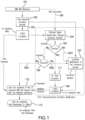
- a time-domain excitation decoder 102 first decodes entirely the received bitstream 101, for example the AMR-WB bitstream, to get a complete time-domain Code-Excited Linear Prediction (CELP) decoded excitation.
- the decoded time-domain excitation is processed through a Linear Prediction (LP) synthesis filter 103 to obtain a speech/sound signal time-domain synthesis at the inner sampling frequency of the decoder.
- this inner sampling frequency is 12.8 kHz, but for another codec it could be different.
- the time-domain synthesis of the current frame from the LP synthesis filter 103 is processed through a classifier 104-105-106-301 ( Figures 1 , 2 and 3 ) supplied with voice activity detection (VAD) information 109 from the bitstream 101.
- VAD voice activity detection
- the classifier 104-105-106-301 analyses and categorizes the time-domain synthesis either as inactive speech, active voiced speech, active unvoiced speech, or generic audio.
- Inactive speech includes all background noises between speech burst
- active voiced speech represents a frame during an active speech burst having voiced characteristics
- active unvoiced speech represents a frame during a speech burst having unvoiced characteristics
- generic audio represents music or reverberant speech.
- Other categories can be added or derived from the above categories. The disclosed approach aims at improving in particular, but not exclusively, the perceived quality of the inactive speech, the active unvoiced speech and the generic audio.
- a converter/modifier 107 converts the decoded excitation from the time-domain excitation decoder 102 into frequency domain using a non-overlap frequency transform.
- An overlap transform can be used as well, but it implies an increase of the end-to-end delay which is not desirable in most cases.
- the frequency representation of the excitation is then split into different frequency bands in the converter/modifier 107.
- the frequency bands can have fixed size, can rely on critical bands [ J. D. Johnston, "Transform coding of audio signal using perceptual noise criteria," IEEE J. Select. Areas Commun., vol. 6, pp. 314-323, Feb. 1988 ], or any other combinations.
- the energy per band is computed and kept in memory in the converter/modifier 107 for use after the reshaping process to ensure the modification does not alter the global frame energy level.
- the modification of the excitation in the frequency domain as performed by the converter/modifier 107 may differ with the classification of the synthesis.
- the reshaping may consist of a normalization of the low frequencies with an addition of noise and replacement of the high frequency content with noise only.
- a cut-off frequency of the decoded time-domain synthesis, the limit between low and high frequency, can be fixed at a value around 1 to 1.2 kHz.
- the modification process has as effect of removing the kind of electrical noise associated with the low bit rate speech codec. After the modification process, a gain matching per frequency band is applied to get back the initial energy level per frequency band with a slight increase of the energy for the frequencies above 6 kHz to compensate for an LP filter gain drop at those frequencies.
- the processing in the converter/modifier 107 is different.
- First the normalization is performed per frequency band for all the bands. In the normalization operation, all the bins inside a frequency band that are below a fraction of the maximum frequency value within the band are set to zero. For higher frequency bands, more bins are zeroed per band. This simulates a frequency quantification scheme with a high bit budget, but having more bits allocated to the lower frequencies.
- a noise fill can be applied to replace the zeroed bins with random noise but, depending on the bit rate, the noise fill is not always used.
- a gain matching per frequency band is applied to get back the initial energy level per frequency band and a tilt correction depending on the bit rate is applied along the frequency band to compensate for the systematic under estimation of the LP filter in case of generic audio input.
- Another differentiation for the generic audio path comes from the fact that the gain matching is not applied over all frequency bins. Because the spectrum of generic audio is usually more peaky than speech, the perceived quality is improved when it is possible to identify spectral pulses and to put some emphasis thereon. To do so, full gain matching with tilt correction is applied only to the highest energy bins inside a frequency band. For the lowest energy bins, only a fraction of the gain matching is applied to those bins. This results in increasing the spectral dynamic.
- the converter/modifier 107 applies an inverse frequency transform to obtain the modified time-domain excitation.
- This modified excitation is processed through the LP synthesis filter 108 to obtain a modified time-domain synthesis.
- An overwriter 110 simply overwrites the time-domain decoded synthesis from LP synthesis filter 103 with the modified time-domain synthesis from the LP synthesis filter 108 depending on the classification of the time-domain decoded synthesis before final de-emphasis and resampling to 16 kHz (for the example of AMR-WB) in a deemphasizing filter and resampler 112.
- the classifier 104-105-106-301 performs at the decoder a classification of the time-domain synthesis 1021 of the speech/sound signal as described hereinabove for the bit rates where the modification is applied.
- the LP synthesis filter 103 is not shown in Figure 2 .
- the following parameters are used for the classification of the frames at the decoder: a normalized correlation r x , a spectral tilt measure e t , a pitch stability counter pc, a relative frame energy of the sound signal at the end of the current frame E s , and a zero-crossing counter zc .
- the computation of these parameters which are used to classify the signal is explained below.
- the normalized correlation r x is computed at the end of the frame based on the speech/sound signal time-domain synthesis s out (n).
- the spectral tilt parameter e t contains the information about the frequency distribution of energy.
- the values p 0 , p 1 , p 2 and p 3 correspond to the closed-loop pitch lag from the 4 sub-frames of the current frame (in the example of AMR-WB).
- L 256 (in the example of AMR-WB) is the frame length and T is the average pitch lag of the last two sub-frames. If T is less than the sub-frame size then T is set to 2 T (the energy computed using two pitch periods for short pitch lags).
- the last parameter is the zero-crossing counter zc computed on one frame of the time-domain synthesis s out (n).
- the zero-crossing counter zc counts the number of times the sign of the time-domain synthesis changes from positive to negative during that interval.
- the classification parameters are considered together forming a function of merit fm.
- the scaled pitch stability counter pc is clipped between 0 and 1.
- the function coefficients k p and c p have been found experimentally for each of the parameters.
- Table 1 Table 1.
- Frame Classification Parameters at the decoder and the coefficients of their respective scaling functions Parameter Meaning k p c p r x Normalized Correlation 0.8547 0.2479 e t Spectral Tilt 0.8333 0.2917 pc
- f m 1 6 2 ⁇ r x s + e t s + pc s + E s s + zc s where the superscript s indicates the scaled version of the parameters.
- the information 109 on the voice activity detection (VAD) by the encoder can be transmitted into the bitstream 101 ( Figure 1 ) as it is the case with the example of AMR-WB.
- VAD voice activity detection
- the classifier portion 104, 105, 106 and 301 then overwrites the classification as UNVOICED.
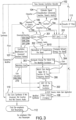
- the classification scheme also includes a generic audio detection (see classifier portion 301 of Figure 3 ).
- the generic audio category includes music, reverberant speech and can also include background music.
- a second step of classification allows the classifier 104-105-106-301 to determine with good confidence that the current frame can be categorized as generic audio. Two parameters are used to realize this second classification step. One of the parameters is the total frame energy E f as formulated in Equation (5).
- the resulting deviation ⁇ E gives an indication on the energy stability of the decoded synthesis.
- music has a higher energy stability (lower statistical deviation of the energy variation history) than speech.
- the first step classification is used to evaluate the interval between two frames classified as unvoiced N UV when the frame energy Ef, as formulated in equation (5) is higher than -12dB.
- the frame energy Ef is greater than -9dB, meaning that the signal is unvoiced but not silence
- the unvoiced interval counter is set to 16, otherwise the unvoiced interval counter N UV is decreased by 8.
- the counter N UV is also limited between 0 and 300 for active speech signal and between 0 and 125 for inactive speech signal. It is reminded that, in the illustrative example, the difference between active and inactive speech signal may be deduced from the voice activity detection VAD information included in the bitstream 101.
- the long term average is very high and the deviation ⁇ E is high, for example when N UV lt > 140 and ⁇ E > 5 in the current example of implementation, the long term average is modified as follow:
- This parameter on long term average of the number of frames between frames classified as unvoiced is used by the classifier 104-105-106-301 to determine if the frame should be considered as generic audio or not.
- the threshold to decide if a frame is considered as generic audio G A is defined as follows: A frame is G A if : N u ⁇ lt > 140 and ⁇ E t ⁇ 12
- Equation (9) The parameter ⁇ E t , defined in equation (9), is added to not classify large energy variation as generic audio, but to keep it as active speech.
- the modification performed on the excitation depends on the classification of the frame and for some type of frames there is no modification at all.
- the next table 3 summarizes the case where a modification can be performed or not.
- the generic audio category may be modified or not depending on the implementation. For example, generic audio may be modified only when inactive, or generic audio may be modified only when active, all the time or not at all.
- the excitation needs to be represented into the transform-domain.
- the time-to-frequency conversion is achieved by a time-to-frequency domain converter 201 of the converter/modifier 107 using a type II DCT (Discrete Cosine Transform) giving a frequency resolution of 25 Hz but any other suitable transform can be used.
- a type II DCT Discrete Cosine Transform
- the frequency resolution (defined above), the number of frequency bands and the number of frequency bins per bands (defined further below) may need to be revised accordingly.
- e td ( n ) is the time-domain CELP excitation
- L is the frame length.
- the frame length is 256 samples for a corresponding inner sampling frequency of 12.8 kHz.
- v(n) is the adaptive codebook contribution
- b is the adaptive codebook gain
- c(n) is the fixed codebook contribution
- g is the fixed codebook gain
- the converter/modifier 107 comprises a gain calculator 208-209-210 itself including a sub-calculator 209 to compute the energy per band E b of the frequency-domain excitation and keeps the computed energy per band E b in memory for energy adjustment after the excitation spectrum reshaping.
- the low frequency bands may correspond to the critical audio bands as described in [ Milan Jelinek and Philippe Gournay. PCT Patent application WO03102921A1 , "A method and device for efficient frame erasure concealment in linear predictive based speech codecs"], but the frequency bands above 3700 Hz may be a little shorter to better match the possible spectral energy variation in those bands. Any other configuration of spectral bands is also possible.
- the converter/modifier 107 comprises a cut-off frequency calculator 203 to determine a frequency where the time-domain contribution stop to be used, the cut-off frequency f c , having a minimum value of 1.2 kHz. This means that the first 1.2 kHz of the decoded excitation is always kept and depending on the decoded pitch value from the time-domain excitation decoder 102, this cut-off frequency can be higher.
- the 8 th harmonic is computed from the lowest pitch of all sub-frames and the time-domain contribution is kept up to this 8 th harmonic.
- the index of that frequency band in L f will be called i 8 th and it indicates the frequency band where the 8 th harmonic is likely to be located.
- the converter/modifier 107 further comprises a zeroer 204 that zeroes the frequency bins of the frequency bands above the cut-off frequency f c .
- the converter/modifier 107 comprises a random noise generator 206 to generate random noise and a simple noise fill is performed through an adder 207 to add noise over all the frequency bins at a constant level.
- Sub-calculator 208 of the gain calculator 208-209-210 determines the energy per band after the spectrum reshaping E b ' using the same method as described in above section 3.
- the energy matching consists only in adjusting the energy per band after the excitation spectrum modification to its initial value.
- the normalization is slightly different and performed by a normalizer 302.
- the normalization factor N f changes from band to band, using a higher value for low frequency bands and a lower value for high frequency bands. The idea is to allow for higher amplitude in the low frequency bands where the location of the pulses is more accurate and lower amplitude in the higher frequency bands where the location of the pulses is less accurate.
- B b is the number of bins per frequency band
- the cumulative frequency bins per bands is C Bb
- f eN ( j ) is the normalized frequency-domain excitation.
- a more aggressive zeroing can be performed by increasing the value of the vector Z f , if it is desired to increase the peakyness of the spectrum.
- Calculator portion 303 of a gain calculator 303-304-306 determines the energy per band after spectrum reshaping E b ' using the same method as described in above section 3.
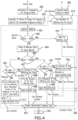
- Figure 3 shows the gain calculator 303-304-306 and Figure 4 describes in more detail calculator portion 306 of this gain calculator.
- an amplifier 402 amplifies the gain G o from the sub-calculator 413 by a factor 1.1 as shown in the upper line of Equation (28).
- a sub-calculator 403 applies the amplified gain from amplifier 402 to the normalized spectral excitation f' eN in the frequency bin according to the first line of Equation (28) to obtain the modified (de-normalized) frequency-domain excitation f' edN .
- an attenuator 405 attenuates the gain G e from the sub-calculator 413 by a factor 0.86 as shown in the lower line of Equation (28).
- a sub-calculator 406 applies the attenuated gain from attenuator 405 to the normalized spectral excitation f' eN in the frequency bin according to the lower line of Equation (28) to obtain the modified (de-normalized) frequency-domain excitation f' edN .
- ⁇ edN ′ j ⁇ 1.1 ⁇ G e i ⁇ ⁇ eN ′ j , if ⁇ eN ′ j ⁇ 0.86 ⁇ max a ⁇ j ⁇ b ⁇ eN j 0.86 ⁇ G e i ⁇ ⁇ eN ′ j , if ⁇ eN ′ j ⁇ 0.86 ⁇ max a ⁇ j ⁇ b ⁇ eN j
- the tilt is calculated by tilt calculator 407-408 and is applied to the normalized frequency-domain excitation f' eN by frequency bin according to the upper line of Equation (30) by a sub-calculator 409 to obtain the modified (denormalized) frequency-domain excitation f' odN .
- an attenuator 410 calculates an attenuation gain f ′ eN j a ⁇ j ⁇ b / max f eN j 2 applied to the normalized spectral excitation f ' eN by frequency bin according to the lower line of Equation (30) by a sub-calculator 411 to obtain the modified (de-normalized) frequency-domain excitation f' edN .
- ⁇ edN ′ j ⁇ ⁇ i ⁇ ⁇ eN ′ j , if ⁇ eN ′ j ⁇ 0.86 ⁇ max a ⁇ j ⁇ b ⁇ eN j ⁇ eN ′ j max a ⁇ j ⁇ b ⁇ eN j 2 ⁇ ⁇ eN ′ j , otherwise where a and b are described herein above. It is also possible to further increase the gain applied to the latest bands, where the energy matching of the LPC is the worst.
- a combiner 453 combines the contributions to the modified (denormalized) frequency-domain excitation f' edN from the sub-calculators 414, 403, 406, 409 and 411 to form the complete modified (de-normalized) frequency-domain excitation f' edN .
- an inverse frequency-time transform 202 is applied to the modified (de-normalized) frequency-domain excitation f' edN from combiner 453 to find the time-domain modified excitation.
- the frequency-to-time conversion is achieved with the inverse of the same type II DCT as used for the time-to-frequency conversion giving a resolution of 25 Hz. Again, any other transforms can be used.
- f edN ′ n is the frequency representation of the modified excitation
- L is the frame length.
- the frame length is 256 samples for a corresponding inner sampling frequency of 12.8 kHz (AMR-WB).
- the modified excitation is processed through the synthesis filter 108 to obtain a modified synthesis for the current frame.
- the overwriter 110 uses this modified synthesis to overwrite the decoded synthesis thus to increase the perceptual quality.
Landscapes
- Engineering & Computer Science (AREA)
- Computational Linguistics (AREA)
- Signal Processing (AREA)
- Health & Medical Sciences (AREA)
- Audiology, Speech & Language Pathology (AREA)
- Human Computer Interaction (AREA)
- Physics & Mathematics (AREA)
- Acoustics & Sound (AREA)
- Multimedia (AREA)
- Compression, Expansion, Code Conversion, And Decoders (AREA)
- Magnetic Resonance Imaging Apparatus (AREA)
- Ultra Sonic Daignosis Equipment (AREA)
- Measurement And Recording Of Electrical Phenomena And Electrical Characteristics Of The Living Body (AREA)
Priority Applications (3)
| Application Number | Priority Date | Filing Date | Title |
|---|---|---|---|
| EP24213237.1A EP4488997A3 (en) | 2011-11-03 | 2012-11-01 | Improving non-speech content for low rate celp decoder |
| HRP20241659TT HRP20241659T1 (hr) | 2011-11-03 | 2012-11-01 | Poboljšanje negovornog sadržaja za celp dekoder niske brzine |
| SI201232086T SI3709298T1 (sl) | 2011-11-03 | 2012-11-01 | Izboljšanje negovorne vsebine za CELP-dekodirnik z majhno hitrostjo |
Applications Claiming Priority (3)
| Application Number | Priority Date | Filing Date | Title |
|---|---|---|---|
| US201161555246P | 2011-11-03 | 2011-11-03 | |
| EP12844916.2A EP2774145B1 (en) | 2011-11-03 | 2012-11-01 | Improving non-speech content for low rate celp decoder |
| PCT/CA2012/001011 WO2013063688A1 (en) | 2011-11-03 | 2012-11-01 | Improving non-speech content for low rate celp decoder |
Related Parent Applications (2)
| Application Number | Title | Priority Date | Filing Date |
|---|---|---|---|
| EP12844916.2A Division-Into EP2774145B1 (en) | 2011-11-03 | 2012-11-01 | Improving non-speech content for low rate celp decoder |
| EP12844916.2A Division EP2774145B1 (en) | 2011-11-03 | 2012-11-01 | Improving non-speech content for low rate celp decoder |
Related Child Applications (1)
| Application Number | Title | Priority Date | Filing Date |
|---|---|---|---|
| EP24213237.1A Division EP4488997A3 (en) | 2011-11-03 | 2012-11-01 | Improving non-speech content for low rate celp decoder |
Publications (2)
| Publication Number | Publication Date |
|---|---|
| EP3709298A1 EP3709298A1 (en) | 2020-09-16 |
| EP3709298B1 true EP3709298B1 (en) | 2024-11-20 |
Family
ID=48191141
Family Applications (3)
| Application Number | Title | Priority Date | Filing Date |
|---|---|---|---|
| EP20172813.6A Active EP3709298B1 (en) | 2011-11-03 | 2012-11-01 | Improving non-speech content for low rate celp decoder |
| EP24213237.1A Pending EP4488997A3 (en) | 2011-11-03 | 2012-11-01 | Improving non-speech content for low rate celp decoder |
| EP12844916.2A Active EP2774145B1 (en) | 2011-11-03 | 2012-11-01 | Improving non-speech content for low rate celp decoder |
Family Applications After (2)
| Application Number | Title | Priority Date | Filing Date |
|---|---|---|---|
| EP24213237.1A Pending EP4488997A3 (en) | 2011-11-03 | 2012-11-01 | Improving non-speech content for low rate celp decoder |
| EP12844916.2A Active EP2774145B1 (en) | 2011-11-03 | 2012-11-01 | Improving non-speech content for low rate celp decoder |
Country Status (15)
| Country | Link |
|---|---|
| US (1) | US9252728B2 (https=) |
| EP (3) | EP3709298B1 (https=) |
| JP (5) | JP6239521B2 (https=) |
| KR (1) | KR102105044B1 (https=) |
| CN (3) | CN107068158B (https=) |
| CA (1) | CA2851370C (https=) |
| DK (2) | DK3709298T3 (https=) |
| ES (2) | ES3012033T3 (https=) |
| FI (1) | FI3709298T3 (https=) |
| HR (2) | HRP20241659T1 (https=) |
| HU (2) | HUE050600T2 (https=) |
| IN (1) | IN2014DN03022A (https=) |
| LT (2) | LT3709298T (https=) |
| SI (2) | SI3709298T1 (https=) |
| WO (1) | WO2013063688A1 (https=) |
Families Citing this family (12)
| Publication number | Priority date | Publication date | Assignee | Title |
|---|---|---|---|---|
| DK3709298T3 (da) * | 2011-11-03 | 2025-01-13 | Voiceage Evs Llc | Forbedring af ikke-taleindhold til celp-afkoder med lav hastighed |
| KR102237718B1 (ko) | 2013-03-04 | 2021-04-09 | 보이세지 코포레이션 | 시간 영역 디코더에서 양자화 잡음을 감소시키기 위한 디바이스 및 방법 |
| US9418671B2 (en) * | 2013-08-15 | 2016-08-16 | Huawei Technologies Co., Ltd. | Adaptive high-pass post-filter |
| US10410645B2 (en) * | 2014-03-03 | 2019-09-10 | Samsung Electronics Co., Ltd. | Method and apparatus for high frequency decoding for bandwidth extension |
| CN105336339B (zh) | 2014-06-03 | 2019-05-03 | 华为技术有限公司 | 一种语音频信号的处理方法和装置 |
| JP6401521B2 (ja) * | 2014-07-04 | 2018-10-10 | クラリオン株式会社 | 信号処理装置及び信号処理方法 |
| US10049684B2 (en) * | 2015-04-05 | 2018-08-14 | Qualcomm Incorporated | Audio bandwidth selection |
| US9972334B2 (en) * | 2015-09-10 | 2018-05-15 | Qualcomm Incorporated | Decoder audio classification |
| US10373608B2 (en) | 2015-10-22 | 2019-08-06 | Texas Instruments Incorporated | Time-based frequency tuning of analog-to-information feature extraction |
| KR102736785B1 (ko) * | 2017-09-20 | 2024-12-03 | 보이세지 코포레이션 | 씨이엘피 코덱에 있어서 서브-프레임들간에 비트-예산을 할당하는 방법 및 디바이스 |
| TWI790705B (zh) * | 2021-08-06 | 2023-01-21 | 宏正自動科技股份有限公司 | 語速調整方法及其系統 |
| CN115857614B (zh) * | 2022-11-17 | 2023-12-29 | 弘正储能(上海)能源科技有限公司 | 多路光伏mppt交错式boost控制方法及其系统 |
Family Cites Families (48)
| Publication number | Priority date | Publication date | Assignee | Title |
|---|---|---|---|---|
| JPS58220199A (ja) * | 1982-06-17 | 1983-12-21 | 日本電気株式会社 | 帯域分割型ボコ−ダ |
| JP3088121B2 (ja) * | 1991-04-12 | 2000-09-18 | 沖電気工業株式会社 | 統計励振コードベクトルの最適化方法 |
| JP2606006B2 (ja) * | 1991-05-24 | 1997-04-30 | ヤマハ株式会社 | ノイズ音発生装置 |
| JP3328080B2 (ja) * | 1994-11-22 | 2002-09-24 | 沖電気工業株式会社 | コード励振線形予測復号器 |
| US6240386B1 (en) * | 1998-08-24 | 2001-05-29 | Conexant Systems, Inc. | Speech codec employing noise classification for noise compensation |
| JP3451998B2 (ja) * | 1999-05-31 | 2003-09-29 | 日本電気株式会社 | 無音声符号化を含む音声符号化・復号装置、復号化方法及びプログラムを記録した記録媒体 |
| US7272553B1 (en) * | 1999-09-08 | 2007-09-18 | 8X8, Inc. | Varying pulse amplitude multi-pulse analysis speech processor and method |
| US7139700B1 (en) * | 1999-09-22 | 2006-11-21 | Texas Instruments Incorporated | Hybrid speech coding and system |
| JP3478209B2 (ja) * | 1999-11-01 | 2003-12-15 | 日本電気株式会社 | 音声信号復号方法及び装置と音声信号符号化復号方法及び装置と記録媒体 |
| US6704711B2 (en) * | 2000-01-28 | 2004-03-09 | Telefonaktiebolaget Lm Ericsson (Publ) | System and method for modifying speech signals |
| JP3462464B2 (ja) * | 2000-10-20 | 2003-11-05 | 株式会社東芝 | 音声符号化方法、音声復号化方法及び電子装置 |
| JP2003110429A (ja) * | 2001-09-28 | 2003-04-11 | Sony Corp | 符号化方法及び装置、復号方法及び装置、伝送方法及び装置、並びに記録媒体 |
| US20040002856A1 (en) * | 2002-03-08 | 2004-01-01 | Udaya Bhaskar | Multi-rate frequency domain interpolative speech CODEC system |
| CA2388439A1 (en) | 2002-05-31 | 2003-11-30 | Voiceage Corporation | A method and device for efficient frame erasure concealment in linear predictive based speech codecs |
| JP3861770B2 (ja) * | 2002-08-21 | 2006-12-20 | ソニー株式会社 | 信号符号化装置及び方法、信号復号装置及び方法、並びにプログラム及び記録媒体 |
| US7379866B2 (en) * | 2003-03-15 | 2008-05-27 | Mindspeed Technologies, Inc. | Simple noise suppression model |
| WO2004090870A1 (ja) * | 2003-04-04 | 2004-10-21 | Kabushiki Kaisha Toshiba | 広帯域音声を符号化または復号化するための方法及び装置 |
| UA94041C2 (ru) * | 2005-04-01 | 2011-04-11 | Квелкомм Инкорпорейтед | Способ и устройство для фильтрации, устраняющей разреженность |
| US7707034B2 (en) * | 2005-05-31 | 2010-04-27 | Microsoft Corporation | Audio codec post-filter |
| US7630882B2 (en) * | 2005-07-15 | 2009-12-08 | Microsoft Corporation | Frequency segmentation to obtain bands for efficient coding of digital media |
| RU2008114382A (ru) * | 2005-10-14 | 2009-10-20 | Панасоник Корпорэйшн (Jp) | Кодер с преобразованием и способ кодирования с преобразованием |
| US7490036B2 (en) * | 2005-10-20 | 2009-02-10 | Motorola, Inc. | Adaptive equalizer for a coded speech signal |
| US8255207B2 (en) * | 2005-12-28 | 2012-08-28 | Voiceage Corporation | Method and device for efficient frame erasure concealment in speech codecs |
| KR20080097178A (ko) * | 2006-01-18 | 2008-11-04 | 연세대학교 산학협력단 | 부호화/복호화 장치 및 방법 |
| EP1993320B1 (en) * | 2006-03-03 | 2015-01-07 | Nippon Telegraph And Telephone Corporation | Reverberation removal device, reverberation removal method, reverberation removal program, and recording medium |
| US7590523B2 (en) * | 2006-03-20 | 2009-09-15 | Mindspeed Technologies, Inc. | Speech post-processing using MDCT coefficients |
| CN101086845B (zh) * | 2006-06-08 | 2011-06-01 | 北京天籁传音数字技术有限公司 | 声音编码装置及方法以及声音解码装置及方法 |
| US7873511B2 (en) * | 2006-06-30 | 2011-01-18 | Fraunhofer-Gesellschaft Zur Foerderung Der Angewandten Forschung E.V. | Audio encoder, audio decoder and audio processor having a dynamically variable warping characteristic |
| CN101140759B (zh) * | 2006-09-08 | 2010-05-12 | 华为技术有限公司 | 语音或音频信号的带宽扩展方法及系统 |
| CN101025918B (zh) * | 2007-01-19 | 2011-06-29 | 清华大学 | 一种语音/音乐双模编解码无缝切换方法 |
| PL2132731T3 (pl) * | 2007-03-05 | 2015-12-31 | Ericsson Telefon Ab L M | Metoda i konfiguracja stosowana do wygładzania stacjonarnego szumu tła |
| CN101388214B (zh) * | 2007-09-14 | 2012-07-04 | 向为 | 一种变速率的声码器及其编码方法 |
| CN100585699C (zh) * | 2007-11-02 | 2010-01-27 | 华为技术有限公司 | 一种音频解码的方法和装置 |
| EP2259253B1 (en) * | 2008-03-03 | 2017-11-15 | LG Electronics Inc. | Method and apparatus for processing audio signal |
| KR20100134623A (ko) * | 2008-03-04 | 2010-12-23 | 엘지전자 주식회사 | 오디오 신호 처리 방법 및 장치 |
| CN101620854B (zh) * | 2008-06-30 | 2012-04-04 | 华为技术有限公司 | 频带扩展的方法、系统和设备 |
| EP2144229A1 (en) * | 2008-07-11 | 2010-01-13 | Fraunhofer-Gesellschaft zur Förderung der angewandten Forschung e.V. | Efficient use of phase information in audio encoding and decoding |
| EP2311034B1 (en) * | 2008-07-11 | 2015-11-04 | Fraunhofer-Gesellschaft zur Förderung der angewandten Forschung e.V. | Audio encoder and decoder for encoding frames of sampled audio signals |
| ES2592416T3 (es) * | 2008-07-17 | 2016-11-30 | Fraunhofer-Gesellschaft zur Förderung der angewandten Forschung e.V. | Esquema de codificación/decodificación de audio que tiene una derivación conmutable |
| KR20130069833A (ko) * | 2008-10-08 | 2013-06-26 | 프라운호퍼 게젤샤프트 쭈르 푀르데룽 데어 안겐반텐 포르슝 에. 베. | 다중 분해능 스위치드 오디오 부호화/복호화 방법 |
| KR101622950B1 (ko) * | 2009-01-28 | 2016-05-23 | 삼성전자주식회사 | 오디오 신호의 부호화 및 복호화 방법 및 그 장치 |
| ES2441069T3 (es) * | 2009-10-08 | 2014-01-31 | Fraunhofer-Gesellschaft zur Förderung der angewandten Forschung e.V. | Decodificador multimodo para señal de audio, codificador multimodo para señal de audio, procedimiento y programa de computación que usan un modelado de ruido en base a linealidad-predicción-codificación |
| JP5602769B2 (ja) * | 2010-01-14 | 2014-10-08 | パナソニック インテレクチュアル プロパティ コーポレーション オブ アメリカ | 符号化装置、復号装置、符号化方法及び復号方法 |
| US8958572B1 (en) * | 2010-04-19 | 2015-02-17 | Audience, Inc. | Adaptive noise cancellation for multi-microphone systems |
| US9047875B2 (en) * | 2010-07-19 | 2015-06-02 | Futurewei Technologies, Inc. | Spectrum flatness control for bandwidth extension |
| CN102074245B (zh) * | 2011-01-05 | 2012-10-10 | 瑞声声学科技(深圳)有限公司 | 基于双麦克风语音增强装置及语音增强方法 |
| DK3709298T3 (da) * | 2011-11-03 | 2025-01-13 | Voiceage Evs Llc | Forbedring af ikke-taleindhold til celp-afkoder med lav hastighed |
| DE102014101462B3 (de) * | 2014-02-06 | 2015-03-05 | Sartorius Lab Instruments Gmbh & Co. Kg | Verfahren zur Funktionsprüfung eines Messgerätes |
-
2012
- 2012-11-01 DK DK20172813.6T patent/DK3709298T3/da active
- 2012-11-01 CA CA2851370A patent/CA2851370C/en active Active
- 2012-11-01 CN CN201710019918.4A patent/CN107068158B/zh active Active
- 2012-11-01 HR HRP20241659TT patent/HRP20241659T1/hr unknown
- 2012-11-01 LT LTEP20172813.6T patent/LT3709298T/lt unknown
- 2012-11-01 JP JP2014539195A patent/JP6239521B2/ja active Active
- 2012-11-01 HR HRP20201070TT patent/HRP20201070T1/hr unknown
- 2012-11-01 CN CN201710020311.8A patent/CN106910509B/zh active Active
- 2012-11-01 IN IN3022DEN2014 patent/IN2014DN03022A/en unknown
- 2012-11-01 EP EP20172813.6A patent/EP3709298B1/en active Active
- 2012-11-01 CN CN201280065936.1A patent/CN104040624B/zh active Active
- 2012-11-01 ES ES20172813T patent/ES3012033T3/es active Active
- 2012-11-01 LT LTEP12844916.2T patent/LT2774145T/lt unknown
- 2012-11-01 ES ES12844916T patent/ES2805308T3/es active Active
- 2012-11-01 KR KR1020147013465A patent/KR102105044B1/ko active Active
- 2012-11-01 HU HUE12844916A patent/HUE050600T2/hu unknown
- 2012-11-01 EP EP24213237.1A patent/EP4488997A3/en active Pending
- 2012-11-01 SI SI201232086T patent/SI3709298T1/sl unknown
- 2012-11-01 WO PCT/CA2012/001011 patent/WO2013063688A1/en not_active Ceased
- 2012-11-01 HU HUE20172813A patent/HUE070390T2/hu unknown
- 2012-11-01 SI SI201231800T patent/SI2774145T1/sl unknown
- 2012-11-01 EP EP12844916.2A patent/EP2774145B1/en active Active
- 2012-11-01 FI FIEP20172813.6T patent/FI3709298T3/fi active
- 2012-11-01 DK DK12844916.2T patent/DK2774145T3/da active
- 2012-11-02 US US13/667,921 patent/US9252728B2/en active Active
-
2017
- 2017-11-01 JP JP2017211618A patent/JP6532926B2/ja active Active
- 2017-11-01 JP JP2017211617A patent/JP6513769B2/ja active Active
-
2019
- 2019-05-22 JP JP2019096082A patent/JP2019152878A/ja active Pending
-
2021
- 2021-11-18 JP JP2021188032A patent/JP7237127B2/ja active Active
Also Published As
Similar Documents
| Publication | Publication Date | Title |
|---|---|---|
| EP3709298B1 (en) | Improving non-speech content for low rate celp decoder | |
| EP3848929B1 (en) | Device and method for reducing quantization noise in a time-domain decoder | |
| US8396707B2 (en) | Method and device for efficient quantization of transform information in an embedded speech and audio codec | |
| EP4372747A2 (en) | Coding generic audio signals at low bitrates and low delay | |
| US20090070106A1 (en) | Method and system for reducing effects of noise producing artifacts in a speech signal | |
| EP3281197B1 (en) | Audio encoder and method for encoding an audio signal | |
| HK40035914B (en) | Improving non-speech content for low rate celp decoder | |
| HK40117447A (en) | Improving non-speech content for low rate celp decoder | |
| HK40035914A (en) | Improving non-speech content for low rate celp decoder | |
| Rämö et al. | Segmental speech coding model for storage applications. | |
| HK40045960B (en) | Device and method for reducing quantization noise in a time-domain decoder | |
| HK40100968B (en) | Device and method for reducing quantization noise in a time-domain decoder | |
| HK40100968A (en) | Device and method for reducing quantization noise in a time-domain decoder | |
| HK40045960A (en) | Device and method for reducing quantization noise in a time-domain decoder | |
| HK40011549B (en) | Device and method for reducing quantization noise in a time-domain decoder | |
| HK40011549A (en) | Device and method for reducing quantization noise in a time-domain decoder | |
| HK1198265B (en) | Improving non-speech content for low rate celp decoder | |
| HK1185709B (en) | Coding generic audio signals at low bitrates and low delay |
Legal Events
| Date | Code | Title | Description |
|---|---|---|---|
| REG | Reference to a national code |
Ref country code: HR Ref legal event code: TUEP Ref document number: P20241659T Country of ref document: HR |
|
| PUAI | Public reference made under article 153(3) epc to a published international application that has entered the european phase |
Free format text: ORIGINAL CODE: 0009012 |
|
| STAA | Information on the status of an ep patent application or granted ep patent |
Free format text: STATUS: THE APPLICATION HAS BEEN PUBLISHED |
|
| AC | Divisional application: reference to earlier application |
Ref document number: 2774145 Country of ref document: EP Kind code of ref document: P |
|
| AK | Designated contracting states |
Kind code of ref document: A1 Designated state(s): AL AT BE BG CH CY CZ DE DK EE ES FI FR GB GR HR HU IE IS IT LI LT LU LV MC MK MT NL NO PL PT RO RS SE SI SK SM TR |
|
| STAA | Information on the status of an ep patent application or granted ep patent |
Free format text: STATUS: REQUEST FOR EXAMINATION WAS MADE |
|
| 17P | Request for examination filed |
Effective date: 20210309 |
|
| RBV | Designated contracting states (corrected) |
Designated state(s): AL AT BE BG CH CY CZ DE DK EE ES FI FR GB GR HR HU IE IS IT LI LT LU LV MC MK MT NL NO PL PT RO RS SE SI SK SM TR |
|
| REG | Reference to a national code |
Ref country code: HK Ref legal event code: DE Ref document number: 40035914 Country of ref document: HK |
|
| STAA | Information on the status of an ep patent application or granted ep patent |
Free format text: STATUS: EXAMINATION IS IN PROGRESS |
|
| 17Q | First examination report despatched |
Effective date: 20221220 |
|
| GRAP | Despatch of communication of intention to grant a patent |
Free format text: ORIGINAL CODE: EPIDOSNIGR1 |
|
| STAA | Information on the status of an ep patent application or granted ep patent |
Free format text: STATUS: GRANT OF PATENT IS INTENDED |
|
| RIC1 | Information provided on ipc code assigned before grant |
Ipc: G10L 25/93 20130101ALN20240527BHEP Ipc: G10L 25/81 20130101ALN20240527BHEP Ipc: G10L 25/78 20130101ALN20240527BHEP Ipc: G10L 19/22 20130101ALN20240527BHEP Ipc: G10L 19/08 20130101ALN20240527BHEP Ipc: G10L 19/26 20130101ALI20240527BHEP Ipc: G10L 19/20 20130101AFI20240527BHEP |
|
| INTG | Intention to grant announced |
Effective date: 20240610 |
|
| P01 | Opt-out of the competence of the unified patent court (upc) registered |
Free format text: CASE NUMBER: APP_43357/2024 Effective date: 20240724 |
|
| GRAS | Grant fee paid |
Free format text: ORIGINAL CODE: EPIDOSNIGR3 |
|
| GRAA | (expected) grant |
Free format text: ORIGINAL CODE: 0009210 |
|
| STAA | Information on the status of an ep patent application or granted ep patent |
Free format text: STATUS: THE PATENT HAS BEEN GRANTED |
|
| AC | Divisional application: reference to earlier application |
Ref document number: 2774145 Country of ref document: EP Kind code of ref document: P |
|
| AK | Designated contracting states |
Kind code of ref document: B1 Designated state(s): AL AT BE BG CH CY CZ DE DK EE ES FI FR GB GR HR HU IE IS IT LI LT LU LV MC MK MT NL NO PL PT RO RS SE SI SK SM TR |
|
| REG | Reference to a national code |
Ref country code: GB Ref legal event code: FG4D |
|
| REG | Reference to a national code |
Ref country code: CH Ref legal event code: EP |
|
| REG | Reference to a national code |
Ref country code: DE Ref legal event code: R096 Ref document number: 602012081227 Country of ref document: DE |
|
| REG | Reference to a national code |
Ref country code: IE Ref legal event code: FG4D |
|
| REG | Reference to a national code |
Ref country code: NL Ref legal event code: FP |
|
| REG | Reference to a national code |
Ref country code: DK Ref legal event code: T3 Effective date: 20250108 |
|
| REG | Reference to a national code |
Ref country code: FI Ref legal event code: FGE |
|
| REG | Reference to a national code |
Ref country code: SE Ref legal event code: TRGR |
|
| REG | Reference to a national code |
Ref country code: HR Ref legal event code: T1PR Ref document number: P20241659 Country of ref document: HR |
|
| REG | Reference to a national code |
Ref country code: ES Ref legal event code: FG2A Ref document number: 3012033 Country of ref document: ES Kind code of ref document: T3 Effective date: 20250408 |
|
| PG25 | Lapsed in a contracting state [announced via postgrant information from national office to epo] |
Ref country code: PT Free format text: LAPSE BECAUSE OF FAILURE TO SUBMIT A TRANSLATION OF THE DESCRIPTION OR TO PAY THE FEE WITHIN THE PRESCRIBED TIME-LIMIT Effective date: 20250320 Ref country code: IS Free format text: LAPSE BECAUSE OF FAILURE TO SUBMIT A TRANSLATION OF THE DESCRIPTION OR TO PAY THE FEE WITHIN THE PRESCRIBED TIME-LIMIT Effective date: 20250320 |
|
| REG | Reference to a national code |
Ref country code: AT Ref legal event code: MK05 Ref document number: 1744338 Country of ref document: AT Kind code of ref document: T Effective date: 20241120 |
|
| PG25 | Lapsed in a contracting state [announced via postgrant information from national office to epo] |
Ref country code: BG Free format text: LAPSE BECAUSE OF FAILURE TO SUBMIT A TRANSLATION OF THE DESCRIPTION OR TO PAY THE FEE WITHIN THE PRESCRIBED TIME-LIMIT Effective date: 20241120 |
|
| PG25 | Lapsed in a contracting state [announced via postgrant information from national office to epo] |
Ref country code: NO Free format text: LAPSE BECAUSE OF FAILURE TO SUBMIT A TRANSLATION OF THE DESCRIPTION OR TO PAY THE FEE WITHIN THE PRESCRIBED TIME-LIMIT Effective date: 20250220 |
|
| PG25 | Lapsed in a contracting state [announced via postgrant information from national office to epo] |
Ref country code: AT Free format text: LAPSE BECAUSE OF FAILURE TO SUBMIT A TRANSLATION OF THE DESCRIPTION OR TO PAY THE FEE WITHIN THE PRESCRIBED TIME-LIMIT Effective date: 20241120 Ref country code: GR Free format text: LAPSE BECAUSE OF FAILURE TO SUBMIT A TRANSLATION OF THE DESCRIPTION OR TO PAY THE FEE WITHIN THE PRESCRIBED TIME-LIMIT Effective date: 20250221 |
|
| PG25 | Lapsed in a contracting state [announced via postgrant information from national office to epo] |
Ref country code: PL Free format text: LAPSE BECAUSE OF FAILURE TO SUBMIT A TRANSLATION OF THE DESCRIPTION OR TO PAY THE FEE WITHIN THE PRESCRIBED TIME-LIMIT Effective date: 20241120 |
|
| PG25 | Lapsed in a contracting state [announced via postgrant information from national office to epo] |
Ref country code: RS Free format text: LAPSE BECAUSE OF FAILURE TO SUBMIT A TRANSLATION OF THE DESCRIPTION OR TO PAY THE FEE WITHIN THE PRESCRIBED TIME-LIMIT Effective date: 20250220 |
|
| REG | Reference to a national code |
Ref country code: HU Ref legal event code: AG4A Ref document number: E070390 Country of ref document: HU |
|
| PG25 | Lapsed in a contracting state [announced via postgrant information from national office to epo] |
Ref country code: SM Free format text: LAPSE BECAUSE OF FAILURE TO SUBMIT A TRANSLATION OF THE DESCRIPTION OR TO PAY THE FEE WITHIN THE PRESCRIBED TIME-LIMIT Effective date: 20241120 |
|
| PG25 | Lapsed in a contracting state [announced via postgrant information from national office to epo] |
Ref country code: EE Free format text: LAPSE BECAUSE OF FAILURE TO SUBMIT A TRANSLATION OF THE DESCRIPTION OR TO PAY THE FEE WITHIN THE PRESCRIBED TIME-LIMIT Effective date: 20241120 |
|
| PG25 | Lapsed in a contracting state [announced via postgrant information from national office to epo] |
Ref country code: RO Free format text: LAPSE BECAUSE OF FAILURE TO SUBMIT A TRANSLATION OF THE DESCRIPTION OR TO PAY THE FEE WITHIN THE PRESCRIBED TIME-LIMIT Effective date: 20241120 |
|
| PG25 | Lapsed in a contracting state [announced via postgrant information from national office to epo] |
Ref country code: SK Free format text: LAPSE BECAUSE OF FAILURE TO SUBMIT A TRANSLATION OF THE DESCRIPTION OR TO PAY THE FEE WITHIN THE PRESCRIBED TIME-LIMIT Effective date: 20241120 |
|
| PG25 | Lapsed in a contracting state [announced via postgrant information from national office to epo] |
Ref country code: CZ Free format text: LAPSE BECAUSE OF FAILURE TO SUBMIT A TRANSLATION OF THE DESCRIPTION OR TO PAY THE FEE WITHIN THE PRESCRIBED TIME-LIMIT Effective date: 20241120 |
|
| REG | Reference to a national code |
Ref country code: DE Ref legal event code: R097 Ref document number: 602012081227 Country of ref document: DE |
|
| PLBE | No opposition filed within time limit |
Free format text: ORIGINAL CODE: 0009261 |
|
| STAA | Information on the status of an ep patent application or granted ep patent |
Free format text: STATUS: NO OPPOSITION FILED WITHIN TIME LIMIT |
|
| PGFP | Annual fee paid to national office [announced via postgrant information from national office to epo] |
Ref country code: LT Payment date: 20250922 Year of fee payment: 14 |
|
| PGFP | Annual fee paid to national office [announced via postgrant information from national office to epo] |
Ref country code: NL Payment date: 20250912 Year of fee payment: 14 |
|
| PGFP | Annual fee paid to national office [announced via postgrant information from national office to epo] |
Ref country code: BE Payment date: 20250917 Year of fee payment: 14 Ref country code: GB Payment date: 20250911 Year of fee payment: 14 |
|
| PGFP | Annual fee paid to national office [announced via postgrant information from national office to epo] |
Ref country code: HR Payment date: 20250924 Year of fee payment: 14 |
|
| PGFP | Annual fee paid to national office [announced via postgrant information from national office to epo] |
Ref country code: FR Payment date: 20250908 Year of fee payment: 14 |
|
| PGFP | Annual fee paid to national office [announced via postgrant information from national office to epo] |
Ref country code: SE Payment date: 20250910 Year of fee payment: 14 |
|
| 26N | No opposition filed |
Effective date: 20250821 |
|
| PGFP | Annual fee paid to national office [announced via postgrant information from national office to epo] |
Ref country code: IE Payment date: 20250909 Year of fee payment: 14 |
|
| PGFP | Annual fee paid to national office [announced via postgrant information from national office to epo] |
Ref country code: LV Payment date: 20250919 Year of fee payment: 14 |
|
| PGFP | Annual fee paid to national office [announced via postgrant information from national office to epo] |
Ref country code: SI Payment date: 20250923 Year of fee payment: 14 |
|
| REG | Reference to a national code |
Ref country code: HR Ref legal event code: ODRP Ref document number: P20241659 Country of ref document: HR Payment date: 20250924 Year of fee payment: 14 |
|
| PGFP | Annual fee paid to national office [announced via postgrant information from national office to epo] |
Ref country code: LU Payment date: 20251027 Year of fee payment: 14 |
|
| REG | Reference to a national code |
Ref country code: CH Ref legal event code: U11 Free format text: ST27 STATUS EVENT CODE: U-0-0-U10-U11 (AS PROVIDED BY THE NATIONAL OFFICE) Effective date: 20251201 |
|
| PGFP | Annual fee paid to national office [announced via postgrant information from national office to epo] |
Ref country code: HU Payment date: 20250929 Year of fee payment: 14 |
|
| PGFP | Annual fee paid to national office [announced via postgrant information from national office to epo] |
Ref country code: DE Payment date: 20250910 Year of fee payment: 14 |
|
| PGFP | Annual fee paid to national office [announced via postgrant information from national office to epo] |
Ref country code: MC Payment date: 20251028 Year of fee payment: 14 |
|
| PGFP | Annual fee paid to national office [announced via postgrant information from national office to epo] |
Ref country code: FI Payment date: 20251113 Year of fee payment: 14 Ref country code: DK Payment date: 20251112 Year of fee payment: 14 Ref country code: IT Payment date: 20251022 Year of fee payment: 14 |
|
| PGFP | Annual fee paid to national office [announced via postgrant information from national office to epo] |
Ref country code: TR Payment date: 20251024 Year of fee payment: 14 |
|
| PGFP | Annual fee paid to national office [announced via postgrant information from national office to epo] |
Ref country code: CH Payment date: 20251201 Year of fee payment: 14 |
|
| PGFP | Annual fee paid to national office [announced via postgrant information from national office to epo] |
Ref country code: MT Payment date: 20251120 Year of fee payment: 14 |
|
| PGFP | Annual fee paid to national office [announced via postgrant information from national office to epo] |
Ref country code: ES Payment date: 20251212 Year of fee payment: 14 |