EP3707703B1 - Training und / oder verwendung eines sprachauswahlmodells zur automatischen bestimmung der sprache zur spracherkennung von gesprochener äusserung - Google Patents
Training und / oder verwendung eines sprachauswahlmodells zur automatischen bestimmung der sprache zur spracherkennung von gesprochener äusserung Download PDFInfo
- Publication number
- EP3707703B1 EP3707703B1 EP19828380.6A EP19828380A EP3707703B1 EP 3707703 B1 EP3707703 B1 EP 3707703B1 EP 19828380 A EP19828380 A EP 19828380A EP 3707703 B1 EP3707703 B1 EP 3707703B1
- Authority
- EP
- European Patent Office
- Prior art keywords
- language
- current
- audio data
- spoken
- languages
- Prior art date
- Legal status (The legal status is an assumption and is not a legal conclusion. Google has not performed a legal analysis and makes no representation as to the accuracy of the status listed.)
- Active
Links
Images


Classifications
-
- G—PHYSICS
- G10—MUSICAL INSTRUMENTS; ACOUSTICS
- G10L—SPEECH ANALYSIS TECHNIQUES OR SPEECH SYNTHESIS; SPEECH RECOGNITION; SPEECH OR VOICE PROCESSING TECHNIQUES; SPEECH OR AUDIO CODING OR DECODING
- G10L15/00—Speech recognition
- G10L15/005—Language recognition
-
- G—PHYSICS
- G06—COMPUTING OR CALCULATING; COUNTING
- G06N—COMPUTING ARRANGEMENTS BASED ON SPECIFIC COMPUTATIONAL MODELS
- G06N3/00—Computing arrangements based on biological models
- G06N3/02—Neural networks
- G06N3/04—Architecture, e.g. interconnection topology
- G06N3/044—Recurrent networks, e.g. Hopfield networks
-
- G—PHYSICS
- G06—COMPUTING OR CALCULATING; COUNTING
- G06N—COMPUTING ARRANGEMENTS BASED ON SPECIFIC COMPUTATIONAL MODELS
- G06N3/00—Computing arrangements based on biological models
- G06N3/02—Neural networks
- G06N3/04—Architecture, e.g. interconnection topology
- G06N3/044—Recurrent networks, e.g. Hopfield networks
- G06N3/0442—Recurrent networks, e.g. Hopfield networks characterised by memory or gating, e.g. long short-term memory [LSTM] or gated recurrent units [GRU]
-
- G—PHYSICS
- G06—COMPUTING OR CALCULATING; COUNTING
- G06N—COMPUTING ARRANGEMENTS BASED ON SPECIFIC COMPUTATIONAL MODELS
- G06N3/00—Computing arrangements based on biological models
- G06N3/02—Neural networks
- G06N3/08—Learning methods
- G06N3/084—Backpropagation, e.g. using gradient descent
-
- G—PHYSICS
- G06—COMPUTING OR CALCULATING; COUNTING
- G06N—COMPUTING ARRANGEMENTS BASED ON SPECIFIC COMPUTATIONAL MODELS
- G06N3/00—Computing arrangements based on biological models
- G06N3/02—Neural networks
- G06N3/08—Learning methods
- G06N3/09—Supervised learning
-
- G—PHYSICS
- G06—COMPUTING OR CALCULATING; COUNTING
- G06N—COMPUTING ARRANGEMENTS BASED ON SPECIFIC COMPUTATIONAL MODELS
- G06N20/00—Machine learning
- G06N20/10—Machine learning using kernel methods, e.g. support vector machines [SVM]
-
- G—PHYSICS
- G06—COMPUTING OR CALCULATING; COUNTING
- G06N—COMPUTING ARRANGEMENTS BASED ON SPECIFIC COMPUTATIONAL MODELS
- G06N3/00—Computing arrangements based on biological models
- G06N3/02—Neural networks
- G06N3/08—Learning methods
- G06N3/088—Non-supervised learning, e.g. competitive learning
Definitions
- Humans may engage in human-to-computer dialogs with interactive software applications referred to herein as "automated assistants” (also referred to as “digital agents,” “chatbots,” “interactive personal assistants,” “intelligent personal assistants,” “assistant applications,” “conversational agents,” etc.).
- automated assistants also referred to as “digital agents,” “chatbots,” “interactive personal assistants,” “intelligent personal assistants,” “assistant applications,” “conversational agents,” etc.
- humans (which when they interact with automated assistants may be referred to as “users”) may provide commands and/or requests to an automated assistant using spoken natural language input (i.e. utterances), which may in some cases be converted into text and then processed, and/or by providing textual (e.g., typed) natural language input.
- An automated assistant responds to a request by providing responsive user interface output, which can include audible and/or visual user interface output.
- an automated assistant can convert audio data, corresponding to a spoken utterance of a user, into corresponding text (or other semantic representation).
- audio data can be generated based on detection of a spoken utterance of a user via one or more microphones of a client device that includes an assistant interface for enabling the user to interact with an automated assistant.
- the automated assistant can include a speech recognition engine that utilizes a speech recognition model to recognize various characteristics of the spoken utterance captured in the audio data, such as the sounds produced (e.g., phonemes) by the spoken utterance, the order of the produced sounds, rhythm of speech, intonation, etc. Further, the speech recognition engine can identify text words or phrases represented by such characteristics.
- the text can then be further processed by the automated assistant (e.g., using a natural language understanding (NLU) engine and/or a dialog state engine) in determining responsive content for the spoken utterance.
- the speech recognition engine can be implemented by the client device and/or by one or more automated assistant component(s) that are remote from, but in network communication with, the client device.
- speech recognition engines are configured to recognize speech in only a single language.
- speech recognition engines can be unsatisfactory, and can cause an automated assistant to fail and/or provide erroneous output when a spoken utterance is received in an additional language that is not the single language supported by the speech recognition engines. This can render the automated assistant unusable and/or lead to excess usage of computational and/or network resources. Excess usage of computational and/or network resources can be a result of a user needing to provide a further spoken utterance, that is in the single language supported, when the automated assistant fails or provides erroneous output. Such further spoken utterance must additionally be processed by a corresponding client device and/or remote automated assistant component(s), thereby causing additional usage of various resources.
- Other speech recognition engines may be configured to recognize speech in multiple languages, but require a user to explicitly designate which of the multiple languages should be utilized in speech recognition at a given time.
- some of the other speech recognition engines may require a user to manually designate a default language to be utilized in speech recognition of all spoken utterances received at a particular client device.
- the user can be required to interact with a graphical and/or audible interface to explicitly alter the default language.
- Such interaction can lead to excess usage of computational and/or network resources in the rendering of the interface, the processing of inputs of the user provided via the interface, etc. Further, it may often be the case that a user forgets to change the default language prior to providing a spoken utterance that is not currently the default language.
- DAVID SNYDER ET AL "Spoken Language Recognition using X-vectors " describes the application of x-vectors to the task of spoken language recognition
- Implementations described herein relate to a system and a method for training and using a trained language selection model (which is a neural network model or other machine learning model) for automatically determining a particular language of a spoken utterance captured in audio data, as described in the independent claims.
- a trained language selection model which is a neural network model or other machine learning model
- Features of the audio data can be processed using the trained language selection model to generate a predicted probability for each of N different languages, and a particular language selected based on the generated probabilities. Speech recognition results for the particular language can be utilized responsive to selecting the particular language.
- Many implementations are directed to training the language selection model utilizing tuple losses in lieu of traditional cross-entropy losses.
- Training the language selection model utilizing the tuple losses can result in more efficient training, thereby resulting in less resources being utilized during training (e.g., processor and/or memory resources utilized in processing training examples during training). Training the language selection model utilizing the tuple losses can additionally or alternatively result in a more accurate and/or robust model - thereby mitigating erroneous language selections for spoken utterances.
- multiple speech recognition models can be accessible for speech recognition, and each of the speech recognition models can be configured for a corresponding language of N supported speech recognition languages.
- a first speech recognition model can be configured for use in generating English text based on processing audio data including English spoken utterances
- a second speech recognition model can be configured for use in generating French text based on processing audio data including French spoken utterances
- a third speech recognition model can be configured for use in generating Spanish text based on processing audio data including Spanish spoken utterances, etc.
- a particular language of a spoken utterance can be selected based at least in part on processing, using a trained language selection model, of audio data that captures at least part of the spoken utterance.
- speech recognition results for the particular language can be utilized responsive to selecting the particular language. For example, speech recognition can be performed utilizing only the speech recognition model that conforms to the particular language, or speech recognition can be performed utilizing multiple speech recognition models, and the speech recognition results generated using a particular one of the models utilized based on it conforming to the particular language.
- Various implementations disclosed herein leverage the observation that most multilingual users can only speak a limited number of languages, from a set of supported speech recognition languages N.
- Those implementations can identify two or more candidate languages, M, for given audio data that captures a spoken utterance, and select a particular language for the spoken utterance based on comparing only generated probabilities for the M candidate languages.
- the trained language selection model is utilized to process at least part of the audio data and generate probabilities for N separate languages
- the selection of a particular language can be based on the probabilities for the M languages, which is a subset of the N supported speech recognition languages.
- the tuple loss utilized in training the language selection model is also utilized with the above observation in mind.
- a language selection model trained utilizing tuple losses in lieu of only cross-entropy losses, can result in generation of probabilities for the N supported speech recognition languages that are more likely to lead to selection of a correct language when only M of those languages are considered.
- the M languages can be based on, for example, an indication of the M languages provided in a transmission with the audio data (e.g., an indication of the M languages transmitted by a client device with the audio data), based on the M languages being stored in association with a user profile or other identifier associated with the audio data, and/or based on the M languages being stored in association with a client device that generated the audio data.
- Languages for a user profile and/or a device can be, for example, manually assigned by the user and/or automatically assigned based on past usage of the language(s) by the user (e.g., across one or more platforms), past usage of the language(s) at the client device, etc.
- the language selection model can be a discriminative N-class classifier, a long short-term memory (“LSTM”) network, or other neural network model.
- Other types of models such as support vector machine (SVM) models may be used.
- SVM models tuple losses can be applied with linear kernel, since linear kernel is solved with a gradient descent algorithm on primal form.
- the language selection model is trained using supervised or unsupervised learning, and utilizing the tuple losses described herein. For the sake of brevity, many implementations of training the language selection model that are described herein are described with respect to supervised learning.
- training examples can be generated for each language of the set of supported speech recognition languages N.
- Each training example can include: training example input of one or more features of audio data corresponding to a given training spoken utterance; and training example output of a labeled probability metric for each language of the set of total possible languages N.
- there can be a positive probability metric e.g., "1" and/or other indications of a positive probability metric
- a negative probability metric e.g., "0" and/or other indications of a negative probability metric
- the language selection model can be trained based on the training examples, with tuple losses being generated based on the training examples, and the tuple losses being utilized to update weights of the language selection model (e.g., through backpropagation).
- Each tuple loss can be generated as a function of one or more individual tuple losses that are each for a corresponding tuple size that is less than N (the number of probabilities predicted by the language selection model).
- the tuple loss for a given training example can be generated based at least in part on a pair-wise loss, where the pair-wise loss is for a tuple size of two, and is generated based on comparing the predicted probabilities for all pairs of the N probabilities (where the predicted probabilities are generated by processing the training example input of the given training example using the language selection model), to the labeled probabilities of the labeled probability metric for all pairs as indicated by the training example output.
- a subset S y n may be a collection of all the tuples that include the correct label y with n elements, where 1 ⁇ n ⁇ N, where the number of tuples in the subset S y n may correspond to the M languages.
- the pair-wise loss unlike cross-entropy loss, does not maximize the probability of the correct label while minimizing the probability of all others equally. Rather, the minimizing of the probability for all other (incorrect) labels is not equal utilizing the pair-wise loss.
- the tuple loss is further a function of additional individual tuple losses.
- the tuple loss for a given training example can be further generated based at least in part on a tri-wise loss (for a tuple size of three), based at least in part on a four-wise loss (for a tuple size of four), etc.
- the pair-wise loss of the above Equation 1 can be generalized as the below Equation 2 for determining a loss for producing a label from a subset of n labels:
- L n y z E S y n log ⁇ k ⁇ S y n exp z k ⁇ z y
- the language selection model may determine an individual tuple loss for each of the combination of tuples in S y n , or for 1,176 tuples.
- the language selection model may determine an individual tuple loss for each of the combination of tuples in S y n , or for 18,424 tuples.
- a total tuple loss L ( y, z ) can be determined as a weighted sum of all individual tuple losses of different sizes for all 1 ⁇ n ⁇ N based on predicted probabilities for each language.
- the probability of tuples of size n, p n can corresponds to a percentage of multilingual users, devices, and/or requests that are associated with a quantity of languages of size n. For example, if 90% of multilingual users specify only two pre-defined languages, then p 2 may be 0.9. As another example, if 7% of users specify three pre-defined languages, then then p 3 may be 0.07. Accordingly, p n effectively biases the total tuple loss toward individual tuple losses that are for tuple sizes that are more likely to occur ( e . g ., pair-wise losses biased most heavily, followed by tri-wise losses, etc.).
- the tuple loss is also based in part on an individual tuple loss for a tuple that is of size N .
- This can be viewed as a special case of an individual tuple loss, where n is equal to N, and is equivalent to cross-entropy loss.
- the weight p N for the cross-entropy loss can be minimal based on, for example, very few users actually specifying all supported languages N as candidate languages for spoken utterances.
- a total tuple loss can be a function of a cross-entropy loss, it is also a function of individual tuple losses that are for tuples that are smaller than N - and such tuple losses for tuples that are smaller than N can be collectively weighted significantly more heavily than the cross-entropy loss.
- a method implemented by one or more processors includes generating a plurality of training examples. Generating each of the training examples is based on corresponding audio data that captures a corresponding human utterance, and a corresponding label that indicates a corresponding spoken language of the corresponding human utterance.
- the corresponding spoken language is one of N different languages to be recognized, where N is an integer that is greater than ten.
- each training example includes corresponding training example input including corresponding features of the corresponding audio data, and corresponding training example output including a corresponding labeled probability metric for each of the N different languages to be recognized.
- the corresponding labeled probability metrics including, based on the corresponding label, a corresponding positive probability metric label that corresponds to the corresponding spoken language, and a corresponding negative probability metric label for all other of the corresponding labeled probability metrics.
- the method further includes training a language selection model based on the training examples. Training the language selection model includes processing the corresponding features of the corresponding training example inputs of the training examples using the language selection model to generate corresponding predicted probabilities for each of the N different languages, generating corresponding tuple losses based on the generated corresponding predicted probabilities and the corresponding labeled probability metrics, and updating weights of the language selection model using the generated corresponding tuple losses.
- Generating the corresponding tuple losses based on the generated predicated probabilities and the corresponding labeled probability metrics includes generating a given tuple loss of the tuple losses for a given training example of the training examples. Generating the given tuple loss further includes determining, based on comparison of the corresponding labeled probability metric for the given training example and the corresponding predicted probabilities for the given training example, one or more individual tuple losses that are each for a corresponding tuple size that is less than N. The one or more individual tuple losses include at least a pair-wise loss that is for a corresponding tuple size of two. Generating the given tuple loss further includes generating the given tuple loss based on the one or more individual tuple losses.
- generating the given tuple includes using only the pair-wise loss as the given tuple loss.
- the one or more individual tuple losses further includes at least a tri-wise loss that is for a corresponding tuple size of three, and a four-wise loss that is for a corresponding tuple size of four.
- generating the given tuple loss is based on a weighted combination of at least the pair-wise loss, the tri-wise loss, and the four-wise loss.
- a weighting of the pair-wise loss in the weighted combination is based on a measured probability that indicates a percentage of users that specify only two candidate languages for speech processing.
- updating the weights of the language selection model using the generated corresponding tuple losses includes backpropogating the tuple losses across the language selection model.
- the method can further include receiving, via at least one microphone of a computing device, audio data that captures a current spoken utterance from a user, extracting one or more features of the current spoken utterance, processing, using the language selection model, the one or more features of the current spoken utterance to generate current predicted probabilities for each of the N different languages, selecting a current spoken language, of the N different languages, based on the current predicted probabilities, performing speech-to-text processing of the audio data based on the selected current spoken language.
- the method can further include selecting, from a plurality of candidate speech recognition models, a particular speech recognition model that corresponds to the selected current spoken language, and processing, using the selected speech recognition model, the features of the audio data to determine one or more words corresponding to the current spoken utterance.
- the method can further include generating content that is responsive to the one or more words, and providing the content for rendering by the computing device.
- the method can further include, subsequent to training the language selection model, receiving, via at least one microphone of a computing device, current audio data that captures a current spoken utterance from the user.
- the method can further include identifying at least a first candidate spoken language and a second candidate spoken language, of the N different languages, based on the first candidate spoken language and the second candidate spoken language being designated as languages utilized at the computing device and/or utilized by a user of the computing device.
- the method can further include, based on identifying the first candidate spoken language and the second candidate spoken language, initiating first speech-to-text processing of the audio data using a first speech recognition model for the first candidate spoken language, and initiating second speech-to-text processing of the audio data using a second speech recognition model for the second candidate spoken language.
- the method can further include extracting one or more features of the current audio data.
- the method can further include, simultaneous with the first speech-to-text processing and the second speech-to-text processing, processing, using the trained language selection model, the one or more features of the audio data to generate current predicted probabilities for each of the N different languages, and determining, based on the current predicted probabilities, that the current spoken utterance is in the first candidate spoken language.
- the method can further include, based on determining that the current spoken utterance is in the first candidate spoken language, using output generated during the first speech-to-text processing in generating content responsive to the current spoken utterance.
- determining, based on the current predicted probabilities, that the current spoken utterance is in the first candidate spoken language occurs prior to completion of the first speech-to-text processing and the second speech-to-text-processing, and further includes in response to determining that the current spoken utterance is in the first candidate spoken language, halting the second speech-to-text processing prior to completion of the second speech-to-text processing, while enabling the first speech-to-text processing to be completed.
- determining that the current spoken utterance is in the first candidate spoken language is further based on a first confidence measure of the output generated during the first speech-to-text processing, the first confidence measure of the output generated during the first speech-to-text processing. In some of those implementations, determining that the current spoken utterance is in the first candidate spoken language is further based on a second confidence measure of second output generated during the second speech-to-text processing, the second confidence measure of the second output generated during the second speech-to-text processing.
- the method can further include, subsequent to training the language selection model, receiving, via at least one microphone of a computing device, current audio data that captures a current spoken utterance, determining that the current spoken utterance is from a particular user, of a plurality of candidate users of the computing device, identifying a subset of the N different languages, based on the subset being designated as languages utilized by the particular user, and extracting one or more features of the current audio data.
- the method can further include, subsequent to training the language selection model, processing, using the trained language selection model, the one or more features of the current audio data to generate current predicted probabilities for each of the N different languages, and selecting a current spoken language, from the subset, based on the current predicted probabilities, wherein the selecting is from the subset responsive to identifying the subset based on the subset being designated as languages utilized by the particular user.
- the method can further include receiving, via at least one microphone of a computing device, current audio data that captures a current spoken utterance from a user, extracting one or more features of the current audio data that captures the current spoken utterance, processing, using the language selection model the one or more features of the current audio data to generate current predicted probabilities for each of N different languages, selecting a current spoken language, of the N different languages, based on the current predicted probabilities, and performing speech-to-text processing of the audio data based on the selected current spoken language.
- implementations may include a non-transitory computer readable storage medium storing instructions executable by one or more processors (e.g., central processing unit(s) (CPU(s)), graphics processing unit(s) (GPU(s)), and/or tensor processing unit(s) (TPU(s)) to perform a method such as one or more of the methods described above and/or elsewhere herein.
- processors e.g., central processing unit(s) (CPU(s)), graphics processing unit(s) (GPU(s)), and/or tensor processing unit(s) (TPU(s)
- CPU central processing unit
- GPU graphics processing unit
- TPU tensor processing unit
- implementations may include a system of one or more computers that include one or more processors operable to execute stored instructions to perform a method such as one or more of the methods described above and/or elsewhere herein.
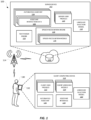
- FIG. 1 illustrates an example system 100 that utilizes a trained language selection model 150 for selecting a language for an automated assistant 104 to interact with a user 130, according to various implementations disclosed herein.
- the automated assistant 104 can operate, in part via an automated assistant 126 that is provided at one or more client devices, such as client computing device 118 ( e.g., a portable computing device 132), and in part via one or more remote computing device(s) 112, such as a server device 102 ( e.g ., which may form part of what is often referred to as “cloud infrastructure” or simply “the cloud”).
- client computing device 118 e.g., a portable computing device 132
- server device 102 e.g ., which may form part of what is often referred to as "cloud infrastructure” or simply “the cloud”
- “automated assistant 104" is used herein, it may refer to one or both of 104 and 126.
- the user 130 can interact with the automated assistant 104 via an assistant interface 128 of
- the assistant interface 128 accepts user interface inputs of the user 130 that are directed to the automated assistant 104, and renders content responsive to the user interface inputs from the automated assistant 104 for presentation to the user 130.
- the assistant interface 128 can include one or more of a microphone, speaker, a display panel, a camera, a touch screen display, and/or any other user interface device(s) of the client computing device 118.
- the assistant interface 128 can also include a display, projector, a speaker, and/or any other user interface output device(s) of the client computing device 118 that can be used to render content from the automated assistant 104.
- a user can initialize the automated assistant 104 by providing a verbal, textual, or a graphical input to the assistant interface 128 to cause the automated assistant 104 to perform a function (e . g ., provide data, control a peripheral device, access an agent, etc.).
- the client computing device 118 may include a display device, which can be a display panel that includes a touch interface for receiving touch inputs and/or gestures for allowing a user to control applications of the client computing device 118 via the touch interface.
- client computing device 118 can lack a display device, thereby providing an audible user interface output, without providing a graphical user interface output.
- the client computing device 118 can provide a user interface input device, such as a microphone(s), for receiving spoken natural language inputs from the user 130 (and from additional unillustrated users).
- the client computing device 118 can be in communication with the remote computing device 112 over one or more networks 114, such as the Internet.
- the client computing device 118 can offload computational tasks to the remote computing device 112 in order to, for example, conserve computational resources at the client device 118 and/or leverage more robust resources available at the remote computing device 112.
- the remote computing device 112 can host the automated assistant 104, and the client computing device 118 can transmit inputs received at one or more assistant interfaces to the remote computing device 112.
- the automated assistant 104 can be hosted by the automated assistant 126 at the client computing device 118.
- all or less than all aspects of the automated assistant 104 can be implemented by the automated assistant 126 at the client computing device 118.
- aspects of the automated assistant 104 are implemented via the local automated assistant 126 of the client computing device 118 and interface with the remote computing device 112 that implements other aspects of the automated assistant 104.
- the remote computing device 112 can optionally serve a plurality of users and their associated assistant applications via user profiles.
- the server device 102 may store server user profiles 120.
- the client computing device 118 may store client user profiles 122.
- the local automated assistant 126 can be an application that is separate from an operating system of the client device 118 ( e.g ., installed "on top" of the operating system) - or can alternatively be implemented directly by the operating system of the client device 118 (e.g., considered an application of, but integral with, the operating system).
- the server device 102 may include a language selection model 150 and/or the client computing device 118 can include a language selection model 160.
- the language selection model 150 and the language selection model 160 can be the same model, or the language selection model 160 can optionally be a variant that is optimized for use on the more resource-constrained client computing device 118.
- the language selection model 150 can be implemented on the server device 102 without implementation of the language selection model 160 on the client computing device 118, or the language selection model 160 can be implemented on the client computing device 118, without implementation of the language selection model 150 on the server device 102.
- the automated assistant 104 can utilize the language selection model 150 in selecting a particular language corresponding to a received spoken human utterance and/or the automated assistant 126 can utilize the language selection model 160 in selecting a particular language corresponding to a received spoken human utterance.
- the automated assistant 104 can process at least part of received audio data using the language selection model 150 to generate probabilities for each of N supported speech recognition languages. Further, the automated assistant 104 can utilize the generated probabilities to select one of those N supported languages as the particular language of a spoken utterance captured by the audio data.
- the automated assistant 104 can identify first and second languages as candidate languages for the spoken utterance, and select either the first language or the second language based at least in part of comparison of a first probability of the first language (from the N probabilities) and a second probability of the second language (from the N probabilities). It is noted that in various implementations the automated assistant 104 and/or the automated assistant 126 can also rely on one or more additional signal(s) in selecting the particular language, such as other signal(s) described herein.
- the selected particular language is utilized to select only a corresponding one of the speech recognition models 136 for performing speech-to-text ("STT") processing of the audio data.
- STT processing may already be being performed by multiple of the speech recognition models 136 in parallel with the processing using the language selection model 150.
- STT processing may be initialized for each of M candidate languages while processing is being performed using the language selection model 150.
- the selected particular language is nonetheless utilized to select output generated by only a corresponding one of the speech recognition models 136, and optionally to halt processing using the speech recognition model(s) 136 that do not correspond to the selected particular language. Example methods for training the language selection model 150 are described in more detail below with respect to FIGS. 2 and 3 .
- the remote computing device 112 can include a speech recognition engine 134 that can process audio data received at assistant interface 128 to determine text and/or other semantic representation(s) of a spoken utterance embodied in the audio data.
- the speech recognition engine 134 can utilize one or more speech recognition models 136, in determining text and/or other semantic representations of a spoken utterance embodied in audio data.
- multiple speech recognition models 136 can be provided, and each speech recognition model can be for a corresponding language. For example, a first speech recognition model can be for English, a second speech recognition model can be for French, a third for Spanish, a fourth for Mandarin, a fifth for Japanese, and so on.
- the speech recognition models 136 each include one or more machine learning models and/or statistical models for determining text (or other semantic representation) that corresponds to the spoken utterance embodied in audio data.
- the speech recognition engine 134 can utilize one of the speech recognition models 136 to determine phonemes, for a corresponding language, that are included in the audio data, and then generate text, for the corresponding language, based on the determined phonemes.
- a speech recognition model receives an audio recording of voice input, e.g., in the form of digital audio data, and converts the digital audio data into one or more text tokens (e.g ., STT processing).
- speech recognition models may be acoustic models, language models, pronunciation models, etc., as well as models combining functionality of one or more of such models.
- speech recognition models may be implemented as finite state decoding graphs including a plurality of paths or pathways.
- an additional language selection model 150 can be utilized in determining which of multiple speech recognition models 136 should be utilized in processing of audio data to generate semantic and/or textual representations, and/or in selecting which semantic and/or textual representations should be utilized.
- the language selection model 150 is used to generate predicted probabilities that a spoken utterance corresponds to each of N different languages, where the multiple speech recognition models 136 correspond to each of the N different languages.
- Each predicted probability of the predicted probabilities for a given language may constitute a "guess" or "prediction" as to what language the user spoke.
- the user 130 can provide a spoken natural language input to an assistant interface 128 of the client computing device 118.
- the spoken natural language input can be converted into audio data, which can be processed by a client language model 124, such as an invocation phrase model for identifying whether the audio data embodies an invocation phrase for invoking the automated assistant 126.
- the invocation phrase model can be employed at the client computing device 118 to determine whether the user 130 is intending to invoke the automated assistant 104.
- the client computing device 118 can cause the automated assistant 104 at the server device 102 to receive the natural language input and/or subsequent natural language inputs from the user 130.
- one or more communication channels can be established between the client computing device 118 and the server device 102. Thereafter, as the user continues to provide natural language inputs to the assistant interface 128, the natural language inputs will be converted into data that is then transmitted over the network 114 and processed by the server device 102.
- the natural language inputs may be processed by the server device 102 using the language selection model 150 to generate predicted probabilities that natural language inputs correspond to each of N different languages. Based on the predicted probabilities, one or more speech recognition models 136 may be selected as the appropriate model for each natural language input.
- only one of the one or more speech recognition models 136 corresponding to the particular spoken language may be selected for STT processing of the natural language inputs.
- STT processing of the natural language inputs may already be being performed by multiple of the one or more speech recognition models 136 corresponding to the particular spoken language and at least one additional language of the N different languages in parallel with the processing using the language selection model 150.
- STT processing may be initialized for each of M candidate languages while processing is being performed using the language selection model 150.
- the selected particular language is nonetheless utilized to select output generated by only a corresponding one of speech recognition models 136, and optionally to halt processing using the speech recognition model(s) 136 that do not correspond to the selected particular language based on a ranking.
- FIG. 2 illustrates one example of a language selection model (LSTM model 250 in the example of FIG. 2 ), an example of training the language selection model 250 utilizing tuple losses, and an example of utilizing the language selection model 250 once trained.
- Training examples 280 may be stored in one or more databases. Each of the training examples 280 correspond to a spoken human utterance in a corresponding spoken language.
- each of the training examples 280 may be processed by an acoustic model 220 to extract one or more features of audio data 260, represented as a feature sequence x, for each of the training examples 280 and a labeled probability metric 236, represented as a label y, where y ⁇ ⁇ 1, ..., N ⁇ , and where N is a set of total possible languages, indicating a target language from the set of total possible languages, N .
- the one or more features of audio data 260 may be used as training example input for a language selection model, such as the language selection model 150, 160 of FIG. 1 , which is represented as a long short-term memory (“LSTM") model 250 in FIG. 2 (although other network architectures can be utilized, as described herein).
- the labeled probability metric 236 indicates a positive probability metric for a language corresponding to a given training example, and indicates a negative probability metric for all other languages.
- the one or more features of the audio data may be run across a concatenation layer.
- the concatenation layer may allow a sliding window approach to be utilized at inference time, which is described in more detail herein ( e . g ., with reference to FIGS. 4-6 ).
- the output generated by the LSTM model 250 may be larger, but training is significantly faster and the LSTM model 250 is more robust as a result of using the concatenation layer.
- the concatenation layer may concatenate neighboring segments of the audio data such that the number of inputs is halved.
- a projection layer may be provided to reduce the size of the parameters for the LSTM model 250.
- a temporal pooling layer may be provided to map the last output of the LSTM model 250 to a linear projection for each language for the set of total possible languages, N .
- z k may be a predicted unnormalized probability of the k th language of the N different languages.
- the language selection model may be trained to output probabilities for each of the set of total possible languages, N , and a language can be selected from a subset, S, from the set of total possible languages, N .
- the subset, S may be identified utilizing techniques described herein. For example, the subset S can be selected for received audio data based on the received audio data being associated with a user profile, and the user profile indicating the subset S as the languages spoken by a speaker associated with the user profile.
- generating, by a tuple loss engine 240, a tuple loss for each training example includes comparing a labeled probability metric 236 for each training example to the predicted probabilities 238 for each training example, and determining a weighted combination on n tuples.
- the labeled probability metric 236 may be a vector of one or more values indicating which spoken language of the set of total spoken languages, N , should be recognized by the one or more features of the audio data 260 for a given training example.
- the labeled probability metric 236 may include a positive probability metric (e.g ., a value of "1”) for the spoken language captured by the one or more features of the audio data 260 for the given training example and a negative probability metric (e.g ., a value of "0") for all other spoken languages from the set of total spoken languages, N .
- a positive probability metric e.g ., a value of "1”
- a negative probability metric e.g ., a value of "0”
- a total tuple loss can be generated by comparing all of one or more n size tuples of the predicted probabilities 238 of [0.7, 0.3, 0.0, ..., 0.0] ( e.g ., “0.7” and “0.3”, “0.7” and “0.0”, “0.3” and “0.0”, etc.) and all of one or more n size tuples for the labeled probability metric 236 of [1, 0, 0, ... , 0] (e.g., "1" and "0", "0” and “0”, etc.).
- the tuple loss is based at least in part on a pair-wise loss, although this not meant to be limiting.
- a subset S y n may be a collection of all the tuples that include the correct label y with n elements, where 1 ⁇ n ⁇ N.
- Equation 2 The pair-wise loss of Equation 1 may be generalized as Equation 2 for determining a loss for producing a label from a subset of n labels:
- L n y z E S y n log ⁇ k ⁇ S y n exp z k ⁇ z y
- a total loss L ( y, z ) may be determined as a weighted sum of all tuple losses of different sizes for all 1 ⁇ n ⁇ N based on predicted probabilities for each language.
- the weighted sum of the all the tuple losses is defined by tuple loss function in Equation 3:
- L y z E S n ⁇ D
- p n is a probability of tuples of size n
- L n ( y, z ) is a loss associated with p n .
- the probability of tuple of tuples of size n, p n corresponds to percentage of users that specify the pre-defined n languages in a user profile or an additional user profile. For example, if 90% of users specify two pre-defined languages, then p n may be 0.9. As another example, if 7% of users specify three pre-defined languages, then then p n may be 0.07.
- the system may significantly speed up training and inference without hurting performance.
- the predicted probabilities 238 may each be associated with a corresponding speech recognition model 232 1 -232 N for each of the N different languages.
- a system using the LSTM model 250 can be configured to select between the speech recognition models 232 1 -232 N , based on the predicted probabilities, by processing the feature sequence x to determine one or more words that correspond to a current spoken utterance in a current spoken language from the set of total possible languages, N .
- the system using the LSTM model 250 may receive a feature sequence x that corresponds to audio data of a current spoken utterance in the English language. Based on a user profile, it may be known that a user who provided the spoken human utterance is capable of speaking both English and Spanish. Based on the feature sequence x, the system may determine there is a 0.7 predicted probability the spoken human utterance is in English, and a 0.3 predicted probability the spoken human utterance is in Spanish.
- the system using the LSTM model 250 may select a speech recognition model associated with English, such as the first speech recognition model 232 1 , based on the 0.7 predicted probability associated with English being greater than the 0.3 predicted probability associated with Spanish, over a speech recognition model associated with Spanish, such as the second speech recognition model 232 2 . If the user is capable of speaking two languages, then the two languages have a pair-wise relationship (e . g ., a pair-wise relationship between English and Spanish, Spanish and German, German and French, etc.). In some implementations, once a speech recognition model is selected, STT processing of the audio data associated with the feature sequence x may be performed to determine one or more words 234 corresponding to the spoken human utterance.
- the system may generate content responsive to the one or more words 236, and provide the content to a computing device for rendering of the content.
- STT processing of the audio data can be performed in parallel with selecting a language for a spoken utterance using LSTM model 250, and the STT output corresponding to the selected language utilized in generating responsive content.
- first predicted probability distribution of [0.3, 0.4, 0.2, 0.1] and a second predicted probability distribution of [0.3, 0.25, 0.25, 0.2], where the first predicted probability corresponds to the a first language that is the "correct" language for a spoken utterance, and where each of the predicted probabilities in each predicted probability distribution correspond to each of N different languages.
- first predicted probability distribution may correspond to a predicted probability distribution associated with a language selection model trained using a cross-entropy loss function
- the second predicted probability distribution may correspond to a predicted probability distribution associated with a language selection model trained by a tuple loss engine 240 using a tuple loss function, such as the loss function of equation (3).
- the language selection model trained using the cross-entropy loss function may provide a probability indicating the spoken human utterance corresponds to a second spoken language as evidenced by the 0.4 probability. However, this selection of the second language is incorrect.
- the language selection model trained using the tuple loss function may provide a probability indicating the spoken human utterance corresponds to the first spoken language as evidenced by the 0.3 probability. Accordingly, by using the tuple loss function during training, the language selection model may provide more accurate results at inference, which reduces a number of inputs received by a user, conservers computational resources, and provides an overall better experience for a user.
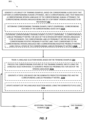
- FIG. 3 is a flowchart illustrating an example method 300 for training a language selection model according to implementations disclosed herein. For convenience, the operations of the flow chart are described with reference to a system that performs the operations. This system may include various components of various computer systems, such as one or more components depicted in FIG. 1 . Moreover, while operations of method 300 are shown in a particular order, this is not meant to be limiting. One or more operations may be reordered, omitted or added.
- the system generates a plurality of training examples based on corresponding audio data that captures a corresponding human utterance, and a corresponding label that indicates a corresponding spoken language of the corresponding human utterance.
- the corresponding spoken language of each training example is a corresponding one of N different languages to be recognized by the system.
- the system may generate a training example based on a human utterance in the English language.
- the human utterance may be associated with audio data and a label indicating that the human utterance is in the English language.
- block 352 may include one or more sub-blocks.
- the system determines corresponding training example input including corresponding features of the corresponding audio data.
- the system may determine, from the corresponding audio data, one or more features of the audio data such as Mel-frequency cepstral coefficients (MFCCs), log-mel-filterbank features, and/or other features.
- MFCCs Mel-frequency cepstral coefficients
- log-mel-filterbank features log-mel-filterbank features
- the system determines corresponding training example output including a corresponding labeled probability metric for each of the N different languages to be recognized.
- the corresponding labeled probability metric may include a corresponding positive probability metric label that corresponds to the corresponding spoken language of the corresponding training example input and a corresponding negative probability metric label for all other of the corresponding labeled probability metrics.
- the system may determine, from the human utterance in the English language, a labeled probability metric, which may be represented as a vector, such that a value of "1" corresponds to a positive probability metric for the English language and a value of "0" corresponds to a negative probability metric for all other of the N different languages.
- the system trains a language selection model based on the training examples.
- the system may receive a training example including corresponding training example input of the features of the audio data that captures the human utterance in the English language, and corresponding training example output of the labeled probability metric described herein ( e . g ., with respect to FIG. 2 ).
- block 354 may include one or more sub-blocks.
- the system may process the corresponding features of the training example input using the language selection model to generate predicted probabilities for each of the spoken languages.
- the system may process the features of the human utterance in English and to generate at least a first predicted probability of 0.7 indicating that it is likely that features of the human utterance correspond to the English language, and to generate at least a second predicted probability of 0.2 indicating that it is unlikely, but possible, that the features of the human utterance correspond to the Spanish language.
- Other probabilities can likewise be generated for other languages.
- the system generates a tuples loss based on the generated predicted probabilities and the corresponding labeled probability metric. Examples of generating the tuple loss are described herein and, as described, the tuple loss can optionally be a function of various individual tuple losses, such as pair-wise loss, tri-wise loss, etc.
- the system updates weights of the language selection model using the generated tuple loss.
- the system can update the weights of the language selection model by backpropogating the tuple loss across the language selection model.
- the system determines whether to continue training the language selection model based on additional training examples. If, at block 356, the system determines to continue training the neural network based on additional training examples, then the system performs another iteration of block 354 (e.g ., blocks 354A, 354B, and 354C). If, at block 356, the system determines not to continue training the language selection model based on additional training examples, then the system proceeds to block 358 and ends training. In some implementations, the system can determine not to continue training the language selection model based on the lack of additional training examples.
- block 354 e.g ., blocks 354A, 354B, and 354C
- the system can additionally or alternatively determine not to continue training the language selection model based on training having been performed for at least a threshold quantity of time, training having been performed for at least a threshold quantity of epochs, determining performance of the currently trained version of the language selection model satisfies one or more criteria, and/or other factor(s).
- FIGS. 4 and 6 methods for using a trained language selection model (e.g., trained using method 300 of FIG. 3 ) according to implementations disclosed herein are depicted.
- a brief overview of implementations of using a trained language selection model is provided.
- S is also referenced herein as M .
- the subset S can be determined for a given spoken utterance utilizing techniques such as those described herein ( e .
- the length of a spoken utterance received from a user may vary.
- the spoken utterance may be truncated into segments of a fixed duration, and portions of each segment may be overlapped and provided as input to the trained language selection model.
- the trained language selection model may provide a more robust system for long spoken utterances. Further, this sliding window approach lends itself to several interesting use cases described herein (e.g., with respect to FIGS. 4 and 5 ). These use cases are non-limiting and are disclosed herein for exemplary purposes.
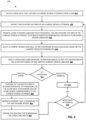
- FIG. 4 is a flowchart illustrating an example method 400 for using a trained language selection model, to select a speech recognition language, according to implementations disclosed herein.
- This system may include various components of various computer systems, such as one or more components depicted in FIG. 1 .
- operations of method 400 are shown in a particular order, this is not meant to be limiting. One or more operations may be reordered, omitted or added.
- the system receives audio data that captures a current spoken utterance from a user.
- the audio data can be captured via a microphone of a computing device, and can capture a spoken utterance from a user in the Spanish language.
- the system extracts one or more features of the current spoken utterance.
- the system can extract features such as Mel-frequency cepstral coefficients (MFCCs), log-mel-filterbank features, and/or other features.
- MFCCs Mel-frequency cepstral coefficients
- the system may, at block 454, optionally select a subset of the extracted features, where the subset of the extracted features includes features that are highly indicative of the language corresponding to the current spoken utterance.
- the system processes, using a trained language selection model, the one or more features of the current spoken utterance to generate predicted probabilities for each of N different languages.
- the system may process the current spoken utterance to generate a first predicted probability of 0.8 that the current spoken utterance corresponds to the Spanish language, to generate a second predicted probability of 0.1 that the features of the current spoken utterance corresponds to the English language, and to generate corresponding probabilities for each of the remaining N different languages.
- the system selects a current spoken language, of the N different languages, based on the current predicted probabilities generated at block 456.
- the system can select the Spanish language based on the first predicted probability of 0.8 indicating the current spoken utterance corresponds to the Spanish language, as opposed to selecting the English language based on the second predicted probability of 0.1, or selecting any other of the languages based on their probabilities.
- the system selects, at block 458, a current spoken language based on the predicted probabilities of M candidate languages associated with the current spoken utterance, where Mis a subset of N.
- an indication of the M candidate languages can be included in data transmitted with the audio data, or identified based on such data.
- one of the M candidate languages can be selected based on comparing the generated probabilities for only the M candidate languages.
- the highest probability language, of the M candidate languages can be selected - even if there is a higher probability for another language that is one of the N languages, but that is not one of the M languages.
- the system selects a speech recognition model to perform speech-to-text ("STT") processing of the audio data based on the current spoken language selected at block 458.
- STT speech-to-text
- the system selects a speech recognition model associated with the Spanish language.
- the system determines to perform STT processing using the selected speech recognition model, and to not perform STT processing using any of the non-selected speech recognition models. Accordingly, with respect to the non-selected speech recognition models, the system proceeds to block 472 where the processing ends for the other speech recognition models.
- the system performs, using the selected speech recognition model, STT processing on the audio data to determine one or more words corresponding to the current spoken utterance.
- the system performs, using the Spanish language speech recognition model, STT processing to determine one or more words of the spoken utterance in the Spanish language.
- the system generates content that is responsive to the one or more words.
- the system generates content responsive to the spoken utterance in the Spanish language.
- Content responsive to the spoken utterance may include a natural language response, a search result(s), content determined through interaction with a third party agents, content that causes launching of one or more applications installed on the computing device or a remote computing device, etc.
- the system can utilize a natural language understanding (NLU) engine and/or other engines in processing the one or more words to determine an intent of the one or more words, and optionally parameter(s) for the intent, and can generate the responsive content based on the intent and the parameters.
- NLU natural language understanding
- the system provides the content for rendering by the computing device.
- the system can provide the content for audible and/or visual presentation to the user via the computing device.
- the one or more words generated at block 464 can be determined, at a variant of block 466, to correspond to a request to control a smart device.
- a variant of block 468 can include providing one or more commands, to the smart device directly or to a third party server that controls the smart device, where the commands cause the smart device to be controlled consistent with the request.
- the system determines whether the user has provided an additional utterance. If, at block 470, the system receives an additional utterance, then the system may return to block 452. If, at block 470, the system does not receive an additional utterance from the user, then the system may proceed block 472 and the processing ends.
- FIG. 5 is a flowchart illustrating another example method 500 for using a trained language selection model, to select a speech recognition language, according to implementations disclosed herein.
- This system may include various components of various computer systems, such as one or more components depicted in FIG. 1 .
- operations of method 500 are shown in a particular order, this is not meant to be limiting. One or more operations may be reordered, omitted or added.
- the system receives audio data that captures a current spoken utterance from a user.
- the audio data can be captured via a microphone of a computing device, and can capture a spoken utterance from a user in the Spanish language.
- the system extracts one or more features of the audio data.
- the system may extract features such as one or more Mel-frequency cepstral coefficients (MFCCs), log-mel-filterbank features, and/or other features.
- MFCCs Mel-frequency cepstral coefficients
- log-mel-filterbank features log-mel-filterbank features
- the system selects, to perform STT processing of the audio data, a first speech recognition model corresponding to a first candidate spoken language and at least a second speech recognition model corresponding to a second candidate spoken language.
- the system may proceed to blocks 562A and 562B to begin performing of STT processing of the audio data.
- the system may select a first speech recognition model associated with the Spanish language for STT processing of the audio data, and select a second speech recognition model associated with the English language for STT processing of the audio data. Further, the system may perform STT processing of the audio data using both the Spanish language model and the English language model.
- the system selects, at block 556, the first and second speech recognition models based on those models being for respective of M candidate languages associated with the current spoken utterance, where M is a subset of N.
- M is a subset of N.
- English and Spanish speech recognition models can be selected and utilized for STT processing based on an indication that those are the two candidate languages for the received audio data.
- the system processes, using a trained language selection model, the one or more features of the audio data to generate predicted probabilities for each of N different languages.
- the system may process the current spoken utterance to generate a first predicted probability of 0.4 that the current spoken utterance corresponds to the Spanish language, to generate a second predicted probability of 0.1 that the features of the current spoken utterance corresponds to the English language, and to generate corresponding probabilities for each of the remaining N different languages.
- block 558 is performed in parallel with at least part of the performance of blocks 562A and 562B.
- STT processing for each of the M candidate languages can be initialized while probabilities are being generated to enable selection of a language of the spoken utterance.
- the output from the STT processing corresponding to the selected language can then be utilized and, optionally, STT processing for other language(s) can be halted if such processing has not completed by the time the language of the spoken utterance has been selected.
- STT processing for other language(s) can be halted if such processing has not completed by the time the language of the spoken utterance has been selected.
- the system selects, based on the predicted probabilities, a spoken language, of the N different languages.
- the system can select the Spanish language as the spoken language utterance based on the first predicted probability of 0.4 being the highest probability amongst all probabilities for the M candidate languages.
- the system performs, using the first speech recognition model corresponding to the first candidate spoken language, STT processing of the audio data to determine one or more words corresponding to the current spoken utterance.
- the system performs, using the Spanish language model, STT processing of the audio data to determine one or more words in the Spanish language corresponding to the current spoken utterance.
- the system performs, using the at least second speech recognition model corresponding to the second candidate spoken language, STT processing of the audio data to determine one or more words corresponding to the current spoken utterance.
- the system performs, using the English language model, STT processing of the audio data to determine one or more words in the English language corresponding to the current spoken utterance.
- the STT processing of blocks 562A and 562B may be performed in parallel with the processing of blocks 558 and 560.
- STT processing may be initialized for each of M candidate languages (e.g., the Spanish language and the English language in the continuing example) while processing is being performed using the language selection model.
- the spoken language selected at block 560 is utilized to select output generated by only one of blocks 562A and 562B (i.e ., the output generated using the speech recognition model corresponding to the selected spoken language). Further, if STT processing utilizing the non-selected language has not yet concluded, the system can optionally halt such processing upon selecting the spoken language at block 560.
- the system may perform STT processing of the audio data using both the Spanish language model and the English language model.
- the system may process, using the language selection model, the audio data corresponding to generate probabilities for each of the N different languages.
- the system can select the Spanish language and use output generated using the Spanish recognition model.
- the system can optionally halt STT processing using the English language model if it is not yet complete when the Spanish language is selected. In some implementations, halting can optionally only occur if the probability for the Spanish language satisfies threshold(s) ( e . g ., a threshold relative to the English language probability).
- the system can complete STT processing using both the Spanish language model and the English language model, and use confidence metrics and/or other metrics from the STT processing to ensure that the selected Spanish language is actually the correct language.
- the system determines whether STT processing, using the model corresponding to the selected language, is complete. If, at block 564, the system determines that STT processing is not complete, the system continues the STT processing of block 562A and/or block 562B. If, at block 564, the system determines that STT processing is not complete, the system proceeds to block 566. At block 566, the system generates content that is responsive to the one or more words generated by the STT processing using the selected language. Continuing with the above example, the system generates content responsive to the spoken utterance in the Spanish language.
- the system provides the content for rendering by the computing device.
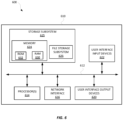
- FIG. 6 is a block diagram of an example computer system 610.
- Computer system 610 typically includes at least one processor 614 which communicates with a number of peripheral devices via bus subsystem 612. These peripheral devices may include a storage subsystem 724, including, for example, a memory 625 and a file storage subsystem 626, user interface output devices 620, user interface input devices 622, and a network interface subsystem 616. The input and output devices allow user interaction with computer system 610.
- Network interface subsystem 616 provides an interface to outside networks and is coupled to corresponding interface devices in other computer systems.
- User interface input devices 622 may include a keyboard, pointing devices such as a mouse, trackball, touchpad, or graphics tablet, a scanner, a touchscreen incorporated into the display, audio input devices such as voice recognition systems, microphones, and/or other types of input devices.
- pointing devices such as a mouse, trackball, touchpad, or graphics tablet
- audio input devices such as voice recognition systems, microphones, and/or other types of input devices.
- use of the term "input device” is intended to include all possible types of devices and ways to input information into computer system 610 or onto a communication network.
- User interface output devices 620 may include a display subsystem, a printer, a fax machine, or non-visual displays such as audio output devices.
- the display subsystem may include a cathode ray tube (CRT), a flat-panel device such as a liquid crystal display (LCD), a projection device, or some other mechanism for creating a visible image.
- the display subsystem may also provide non-visual display such as via audio output devices.
- output device is intended to include all possible types of devices and ways to output information from computer system 610 to the user or to another machine or computer system.
- Storage subsystem 624 stores programming and data constructs that provide the functionality of some or all of the modules described herein.
- the storage subsystem 624 may include the logic to perform selected aspects of method 300, 400, and 500, and/or to implement one or more of server device 102, client computing device 118, portable computing device 132, and/or any other device or operation discussed herein.
- Memory 625 used in the storage subsystem 624 can include a number of memories including a main random access memory (RAM) 630 for storage of instructions and data during program execution and a read only memory (ROM) 632 in which fixed instructions are stored.
- a file storage subsystem 626 can provide persistent storage for program and data files, and may include a hard disk drive, a floppy disk drive along with associated removable media, a CD-ROM drive, an optical drive, or removable media cartridges.
- the modules implementing the functionality of certain implementations may be stored by file storage subsystem 626 in the storage subsystem 624, or in other machines accessible by the processor(s) 614.
- Bus subsystem 612 provides a mechanism for letting the various components and subsystems of computer system 610 communicate with each other as intended. Although bus subsystem 612 is shown schematically as a single bus, alternative implementations of the bus subsystem may use multiple busses.
- Computer system 610 can be of varying types including a workstation, server, computing cluster, blade server, server farm, or any other data processing system or computing device. Due to the ever-changing nature of computers and networks, the description of computer system 610 depicted in FIG. 6 is intended only as a specific example for purposes of illustrating some implementations. Many other configurations of computer system 610 are possible having more or fewer components than the computer system depicted in FIG. 6 .
- the systems described herein collect personal information about users (or as often referred to herein, "participants"), or may make use of personal information
- the users may be provided with an opportunity to control whether programs or features collect user information (e.g., information about a user's social network, social actions or activities, profession, a user's preferences, or a user's current geographic location), or to control whether and/or how to receive content from the content server that may be more relevant to the user.
- user information e.g., information about a user's social network, social actions or activities, profession, a user's preferences, or a user's current geographic location
- certain data may be treated in one or more ways before it is stored or used, so that personal identifiable information is removed.
- a user's identity may be treated so that no personal identifiable information can be determined for the user, or a user's geographic location may be generalized where geographic location information is obtained (such as to a city, ZIP code, or state level), so that a particular geographic location of a user cannot be determined.
- geographic location information such as to a city, ZIP code, or state level
- the user may have control over how information is collected about the user and/or used.
Landscapes
- Engineering & Computer Science (AREA)
- Physics & Mathematics (AREA)
- Theoretical Computer Science (AREA)
- Computational Linguistics (AREA)
- Health & Medical Sciences (AREA)
- Computing Systems (AREA)
- General Physics & Mathematics (AREA)
- Biomedical Technology (AREA)
- Data Mining & Analysis (AREA)
- Evolutionary Computation (AREA)
- General Health & Medical Sciences (AREA)
- Molecular Biology (AREA)
- Artificial Intelligence (AREA)
- General Engineering & Computer Science (AREA)
- Biophysics (AREA)
- Mathematical Physics (AREA)
- Software Systems (AREA)
- Life Sciences & Earth Sciences (AREA)
- Audiology, Speech & Language Pathology (AREA)
- Human Computer Interaction (AREA)
- Acoustics & Sound (AREA)
- Multimedia (AREA)
- Machine Translation (AREA)
- User Interface Of Digital Computer (AREA)
Claims (15)
- Verfahren, das durch einen oder mehrere Prozessoren implementiert wird, wobei das Verfahren Folgendes umfasst:
Erzeugen einer Vielzahl von Trainingsbeispielen (280), wobei Erzeugen jedes der Trainingsbeispiele (280) auf entsprechenden Audiodaten, die eine entsprechende menschliche Äußerung erfassen, und einer entsprechenden Kennzeichnung, die eine entsprechende gesprochene Sprache der entsprechenden menschlichen Äußerung angibt, basiert, wobei die entsprechende gesprochene Sprache eine von N verschiedenen zu erkennenden Sprachen ist, wobei N eine ganze Zahl größer als zehn ist und wobei jedes der Trainingsbeispiele (280) Folgendes umfasst:
eine entsprechende Trainingsbeispieleingabe, umfassend:entsprechende Merkmale (260) der entsprechenden Audiodaten, und eine entsprechende Trainingsbeispielausgabe, umfassend: eine entsprechende gekennzeichnete Wahrscheinlichkeitsmetrik (236) für jede der N verschiedenen zu erkennenden Sprachen, wobei die entsprechenden gekennzeichneten Wahrscheinlichkeitsmetriken (236) basierend auf der entsprechenden Kennzeichnung eine entsprechende positive Wahrscheinlichkeitsmetrik-Kennzeichnung, die der entsprechenden gesprochenen Sprache entspricht, und eine entsprechende negative Wahrscheinlichkeitsmetrik-Kennzeichnung für alle anderen der entsprechenden gekennzeichneten Wahrscheinlichkeitsmetriken (236) beinhalten; undTrainieren eines Sprachauswahlmodells (150, 160) basierend auf den Trainingsbeispielen (280), Trainieren des Sprachauswahlmodells (150, 160), umfassend:Verarbeiten der entsprechenden Merkmale (260) der entsprechenden Trainingsbeispieleingaben der Trainingsbeispiele (280) unter Verwendung des Sprachauswahlmodells (150, 160), um entsprechende vorhergesagte Wahrscheinlichkeiten (238) für jede der N verschiedenen Sprachen zu erzeugen,Erzeugen entsprechender Tupelverluste basierend auf den erzeugten entsprechenden vorhergesagten Wahrscheinlichkeiten (238) und den entsprechenden gekennzeichneten Wahrscheinlichkeitsmetriken (236), undAktualisieren von Gewichten des Sprachauswahlmodells (150, 160) unter Verwendung der erzeugten entsprechenden Tupelverluste;wobei Erzeugen der entsprechenden Tupelverluste basierend auf den erzeugten vorhergesagten Wahrscheinlichkeiten (238) und den entsprechenden gekennzeichneten Wahrscheinlichkeitsmetriken (236) Folgendes umfasst:
Erzeugen eines gegebenen Tupelverlustes der entsprechenden Tupelverluste für ein gegebenes Trainingsbeispiel der Trainingsbeispiele (280), wobei Erzeugen des gegebenen Tupelverlustes Folgendes umfasst:Bestimmen eines oder mehrerer einzelner Tupelverluste, die jeweils für eine entsprechende Tupelgröße kleiner als N gelten, basierend auf dem Vergleich der entsprechenden gekennzeichneten Wahrscheinlichkeitsmetriken (236) für das gegebene Trainingsbeispiel und den entsprechenden vorhergesagten Wahrscheinlichkeiten (238) für das gegebene Trainingsbeispiel, wobei der eine oder die mehreren einzelnen Tupelverluste mindestens einen Paarverlust umfassen, der für eine entsprechende Tupelgröße von zwei gilt; undErzeugen des gegebenen Tupelverlustes basierend auf dem einen oder den mehreren einzelnen Tupelverlusten. - Verfahren nach Anspruch 1, wobei Erzeugen des gegebenen Tupels Verwenden nur des Paarverlustes als gegebenen Tupelverlust umfasst.
- Verfahren nach Anspruch 1, wobei der eine oder die mehreren einzelnen Tupelverluste ferner mindestens einen Dreierverlust, der für eine entsprechende Tupelgröße von drei gilt, und einen Viererverlust, der für eine entsprechende Tupelgröße von vier gilt, umfassen.
- Verfahren nach Anspruch 3, wobei Erzeugen des gegebenen Tupelverlustes auf einer gewichteten Kombination von mindestens dem Paarverlust, dem Dreierverlust und dem Viererverlust basiert.
- Verfahren nach Anspruch 4, wobei eine Gewichtung des Paarverlustes in der gewichteten Kombination auf einer gemessenen Wahrscheinlichkeit basiert, die einen Prozentsatz von Benutzern angibt, die nur zwei Kandidatensprachen für die Sprachverarbeitung spezifizieren.
- Verfahren nach einem der vorstehenden Ansprüche, wobei Aktualisieren der Gewichte des Sprachauswahlmodells (150, 160) unter Verwendung der erzeugten entsprechenden Tupelverluste Folgendes umfasst:
Rückläufiges Propagieren der Tupelverluste über das Sprachauswahlmodell (150, 160). - Verfahren nach einem der vorstehenden Ansprüche, nach dem Trainieren des Sprachauswahlmodells (150, 160) ferner umfassend:Empfangen von aktuellen Audiodaten, die eine aktuelle gesprochene Äußerung von einem Benutzer (130) erfassen, über mindestens ein Mikrofon einer Rechenvorrichtung;Extrahieren eines oder mehrerer Merkmale der aktuellen Audiodaten;Verarbeiten des einen oder der mehreren Merkmale der aktuellen Audiodaten unter Verwendung des Sprachauswahlmodells (150, 160), um aktuelle vorhergesagte Wahrscheinlichkeiten (238) für jede der N verschiedenen Sprachen zu erzeugen;Auswählen einer aktuellen gesprochenen Sprache der N verschiedenen Sprachen basierend auf den aktuellen vorhergesagten Wahrscheinlichkeiten (238); undDurchführen einer Sprache-zu-Text-Verarbeitung der Audiodaten basierend auf der ausgewählten aktuellen gesprochenen Sprache.
- Verfahren nach Anspruch 7, wobei Durchführen einer Sprache-zu-Text-Verarbeitung der aktuellen Audiodaten basierend auf der ausgewählten aktuellen gesprochenen Sprache Folgendes umfasst:Auswählen eines bestimmten Spracherkennungsmodells, das der ausgewählten aktuellen gesprochenen Sprache entspricht, aus einer Vielzahl von Kandidaten-Spracherkennungsmodellen (136); undVerarbeiten der Merkmale der aktuellen Audiodaten unter Verwendung des ausgewählten Spracherkennungsmodells, um ein oder mehrere Wörter (234) zu bestimmen, die der aktuellen gesprochenen Äußerung entsprechen; und optional,Erzeugen von Inhalt, der auf das eine oder die mehreren Wörter (234) reagiert; undBereitstellen des Inhalts zur Wiedergabe durch die Rechenvorrichtung.
- Verfahren nach einem der Ansprüche 1 bis 6, nach dem Trainieren des Sprachauswahlmodells (150, 160) ferner umfassend:Empfangen von aktuellen Audiodaten, die eine aktuelle gesprochene Äußerung von einem Benutzer (130) erfassen, über mindestens ein Mikrofon einer Rechenvorrichtung;Identifizieren mindestens einer ersten gesprochenen Kandidatensprache und einer zweiten gesprochenen Kandidatensprache der N verschiedenen Sprachen basierend darauf, dass die erste gesprochene Kandidatensprache und die zweite gesprochene Kandidatensprache als Sprachen bezeichnet werden, die an der Rechenvorrichtung verwendet werden und/oder von einem Benutzer (130) der Rechenvorrichtung verwendet werden;basierend auf dem Identifizieren der ersten gesprochenen Kandidatensprache und der zweiten gesprochenen Kandidatensprache:Initiieren einer ersten Sprache-zu-Text-Verarbeitung der Audiodaten unter Verwendung eines ersten Spracherkennungsmodells für die erste gesprochene Kandidatensprache undInitiieren einer zweiten Sprache-zu-Text-Verarbeitung der Audiodaten unter Verwendung eines zweiten Spracherkennungsmodells für die zweite gesprochene Kandidatensprache;Extrahieren eines oder mehrerer Merkmale der aktuellen Audiodaten;gleichzeitig mit der ersten Sprache-zu-Text-Verarbeitung und der zweiten Sprache-zu-Text-Verarbeitung:Verarbeiten des einen oder der mehreren Merkmale der Audiodaten unter Verwendung des Sprachauswahlmodells (150, 160), um aktuelle vorhergesagte Wahrscheinlichkeiten (238) für jede der N verschiedenen Sprachen zu erzeugen, undBestimmen, basierend auf den aktuellen vorhergesagten Wahrscheinlichkeiten (238), dass die aktuelle gesprochene Äußerung in der ersten gesprochenen Kandidatensprache vorliegt;basierend auf dem Bestimmen, dass die aktuelle gesprochene Äußerung in der ersten gesprochenen Sprache des Kandidaten vorliegt:
Verwenden der während der ersten Sprache-zu-Text-Verarbeitung erzeugten Ausgabe beim Erzeugen von Inhalt, der auf die aktuelle gesprochene Äußerung reagiert. - Verfahren nach Anspruch 9, wobei Bestimmen, basierend auf den aktuellen vorhergesagten Wahrscheinlichkeiten (238), dass die aktuelle gesprochene Äußerung in der ersten gesprochenen Kandidatensprache vorliegt, vor dem Abschluss der ersten Sprache-zu-Text-Verarbeitung und der zweiten Sprache-zu-Text-Verarbeitung erfolgt, und ferner umfassend:
basierend auf dem Bestimmen, dass die aktuelle gesprochene Äußerung in der ersten gesprochenen Kandidatensprache vorliegt: Stoppen der zweiten Sprache-zu-Text-Verarbeitung vor Abschluss der zweiten Sprache-zu-Text-Verarbeitung, während die erste Sprache-zu-Text-Verarbeitung abgeschlossen werden kann. - Verfahren nach Anspruch 9, wobei Bestimmen, dass die aktuelle gesprochene Äußerung in der ersten gesprochenen Kandidatensprache vorliegt, ferner auf Folgendem basiert:einem ersten Konfidenzmaß von während der ersten Sprache-zu-Text-Verarbeitung erzeugter Ausgabe, dem ersten Konfidenzmaß der während der ersten Sprache-zu-Text-Verarbeitung erzeugten Ausgabe, undeinem zweiten Konfidenzmaß von während der zweiten Sprache-zu-Text-Verarbeitung erzeugter Ausgabe, dem zweiten Konfidenzmaß der während der zweiten Sprache-zu-Text-Verarbeitung erzeugten Ausgabe.
- Verfahren nach einem der Ansprüche 1 bis 6, nach dem Trainieren des Sprachauswahlmodells (150, 160) ferner umfassend:Empfangen von aktuellen Audiodaten, die eine aktuelle gesprochene Äußerung erfassen, über mindestens ein Mikrofon einer Rechenvorrichtung;Bestimmen, dass die aktuelle gesprochene Äußerung von einem bestimmten Benutzer einer Vielzahl von Kandidatenbenutzern der Rechenvorrichtung stammt;Identifizieren einer Teilmenge der N verschiedenen Sprachen, wobei die Teilmenge als Sprachen bezeichnet wird, die von dem bestimmten Benutzer verwendet werden;Extrahieren eines oder mehrerer Merkmale der aktuellen Audiodaten;Verarbeiten des einen oder der mehreren Merkmale der aktuellen Audiodaten unter Verwendung des Sprachauswahlmodells (150, 160), um aktuelle vorhergesagte Wahrscheinlichkeiten (238) für jede der N verschiedenen Sprachen zu erzeugen, undAuswählen einer aktuellen gesprochenen Sprache aus der Teilmenge basierend auf den aktuellen vorhergesagten Wahrscheinlichkeiten (238), wobei Auswählen aus der Teilmenge als Reaktion auf das Identifizieren der Teilmenge basierend auf der Teilmenge, die als von dem bestimmten Benutzer verwendete Sprachen bezeichnet wird, erfolgt.
- Verfahren nach einem der Ansprüche 1-6, nach dem Trainieren des Sprachauswahlmodells (150, 160) ferner umfassend:Empfangen von aktuellen Audiodaten, die eine aktuelle gesprochene Äußerung von einem Benutzer (130) erfassen, über mindestens ein Mikrofon einer Rechenvorrichtung;Extrahieren eines oder mehrerer Merkmale der aktuellen Audiodaten, die die aktuelle gesprochene Äußerung erfassen;Verarbeiten des einen oder der mehreren Merkmale der aktuellen Audiodaten unter Verwendung des Sprachauswahlmodells (150, 160), um aktuelle vorhergesagte Wahrscheinlichkeiten (238) für jede von N verschiedenen Sprachen zu erzeugen;Identifizieren von M Kandidatensprachen für die gesprochene Äußerung basierend auf Daten, die den aktuellen Audiodaten, der Rechenvorrichtung und/oder dem Benutzer (130) zugeordnet sind, wobei die M Kandidatensprachen zwei oder mehr Sprachen umfassen und eine Teilmenge der N verschiedenen Sprachen sind;Auswählen einer aktuellen gesprochenen Sprache aus den M Kandidatensprachen, wobei Auswählen der aktuellen gesprochenen Sprache auf einem Vergleich der aktuellen vorhergesagten Wahrscheinlichkeiten (238) für die M Kandidatensprachen basiert; undDurchführen einer Sprache-zu-Text-Verarbeitung der Audiodaten basierend auf der ausgewählten aktuellen gesprochenen Sprache.
- Verfahren nach Anspruch 13, ferner umfassend:
Empfangen einer Angabe der M Kandidatensprachen in einer Übertragung mit den aktuellen Audiodaten, wobei Identifizieren der M Kandidatensprachen auf den Daten basiert, die den aktuellen Audiodaten zugeordnet sind, und wobei die Daten die Angabe der M Kandidatensprachen beinhalten, die in der Übertragung mit den aktuellen Audiodaten empfangen wird. - System, umfassend einen Speicher, der Anweisungen speichert, und einen oder mehrere Prozessoren, die zum Ausführen der Anweisungen betreibbar sind, die die Prozessoren veranlassen, das Verfahren nach einem vorstehenden Ansprüche durchzuführen.
Applications Claiming Priority (3)
| Application Number | Priority Date | Filing Date | Title |
|---|---|---|---|
| US201862772514P | 2018-11-28 | 2018-11-28 | |
| US201862772922P | 2018-11-29 | 2018-11-29 | |
| PCT/US2019/063643 WO2020113031A1 (en) | 2018-11-28 | 2019-11-27 | Training and/or using a language selection model for automatically determining language for speech recognition of spoken utterance |
Publications (2)
| Publication Number | Publication Date |
|---|---|
| EP3707703A1 EP3707703A1 (de) | 2020-09-16 |
| EP3707703B1 true EP3707703B1 (de) | 2025-06-11 |
Family
ID=69024607
Family Applications (1)
| Application Number | Title | Priority Date | Filing Date |
|---|---|---|---|
| EP19828380.6A Active EP3707703B1 (de) | 2018-11-28 | 2019-11-27 | Training und / oder verwendung eines sprachauswahlmodells zur automatischen bestimmung der sprache zur spracherkennung von gesprochener äusserung |
Country Status (4)
| Country | Link |
|---|---|
| US (2) | US11410641B2 (de) |
| EP (1) | EP3707703B1 (de) |
| CN (1) | CN112673421B (de) |
| WO (1) | WO2020113031A1 (de) |
Families Citing this family (21)
| Publication number | Priority date | Publication date | Assignee | Title |
|---|---|---|---|---|
| WO2020113031A1 (en) | 2018-11-28 | 2020-06-04 | Google Llc | Training and/or using a language selection model for automatically determining language for speech recognition of spoken utterance |
| US11354504B2 (en) * | 2019-07-10 | 2022-06-07 | International Business Machines Corporation | Multi-lingual action identification |
| US11423089B2 (en) * | 2019-09-25 | 2022-08-23 | Dell Products L.P. | System and method for determining application programming interface and object bindings on natural language processed inputs |
| EP3843011A1 (de) * | 2019-12-23 | 2021-06-30 | Aicura Medical GmbH | System und verfahren zur qualitätszusicherung von datenbasierten modellen |
| US12198689B1 (en) * | 2020-08-10 | 2025-01-14 | Summer Institute of Linguistics, Inc. | Systems and methods for multilingual dialogue interactions using dynamic automatic speech recognition and processing |
| GB2600987B (en) * | 2020-11-16 | 2024-04-03 | Toshiba Kk | Speech Recognition Systems and Methods |
| JP7549677B2 (ja) * | 2020-12-04 | 2024-09-11 | グーグル エルエルシー | 用例ベースのボイスボット開発技術 |
| US11902222B2 (en) * | 2021-02-08 | 2024-02-13 | Google Llc | Updating trained voice bot(s) utilizing example-based voice bot development techniques |
| CN113129870B (zh) * | 2021-03-23 | 2022-03-25 | 北京百度网讯科技有限公司 | 语音识别模型的训练方法、装置、设备和存储介质 |
| US11853712B2 (en) | 2021-06-07 | 2023-12-26 | International Business Machines Corporation | Conversational AI with multi-lingual human chatlogs |
| CN113299314B (zh) * | 2021-07-27 | 2021-11-02 | 北京世纪好未来教育科技有限公司 | 一种音频事件识别模型的训练方法、装置及其设备 |
| CN117716426A (zh) * | 2021-08-06 | 2024-03-15 | 松下知识产权经营株式会社 | 估计方法、程序及估计装置 |
| CN113744724A (zh) * | 2021-08-30 | 2021-12-03 | 苏州浪潮智能科技有限公司 | 一种语音转换方法、装置、设备及存储介质 |
| US12562180B2 (en) | 2021-11-30 | 2026-02-24 | Samsung Electronics Co., Ltd. | Method and apparatus for performing speaker diarization based on language identification |
| US12106753B2 (en) * | 2022-03-08 | 2024-10-01 | Microsoft Technology Licensing, Llc | Code-mixed speech recognition using attention and language-specific joint analysis |
| CN114758668B (zh) * | 2022-04-24 | 2025-07-04 | 北京达佳互联信息技术有限公司 | 语音增强模型的训练方法和语音增强方法 |
| US12367872B2 (en) * | 2022-06-27 | 2025-07-22 | Samsung Electronics Co., Ltd. | Personalized multi-modal spoken language identification |
| US12340794B2 (en) * | 2022-07-27 | 2025-06-24 | International Business Machines Corporation | Language identification classifier trained using encoded audio from encoder of pre-trained speech-to-text system |
| WO2024112335A1 (en) * | 2022-11-23 | 2024-05-30 | Google Llc | Application programming interfaces for on-device speech services |
| CN116386602A (zh) * | 2023-05-30 | 2023-07-04 | 中国科学院自动化研究所 | 特征提取模型的训练方法和融合发音特征的语音鉴别方法 |
| US20240404429A1 (en) * | 2023-05-31 | 2024-12-05 | International Business Machines Corporation | Artificial intelligence virtual sign language avatar interpreter |
Family Cites Families (88)
| Publication number | Priority date | Publication date | Assignee | Title |
|---|---|---|---|---|
| US6092038A (en) * | 1998-02-05 | 2000-07-18 | International Business Machines Corporation | System and method for providing lossless compression of n-gram language models in a real-time decoder |
| US6049767A (en) * | 1998-04-30 | 2000-04-11 | International Business Machines Corporation | Method for estimation of feature gain and training starting point for maximum entropy/minimum divergence probability models |
| ATE235733T1 (de) * | 1998-05-11 | 2003-04-15 | Siemens Ag | Anordnung und verfahren zur erkennung eines vorgegebenen wortschatzes in gesprochener sprache durch einen rechner |
| WO2000025299A1 (de) * | 1998-10-27 | 2000-05-04 | Siemens Aktiengesellschaft | Verfahren und anordnung zur klassenbildung für ein sprachmodell basierend auf linguistischen klassen |
| US6928404B1 (en) * | 1999-03-17 | 2005-08-09 | International Business Machines Corporation | System and methods for acoustic and language modeling for automatic speech recognition with large vocabularies |
| IT1310154B1 (it) * | 1999-09-02 | 2002-02-11 | Cselt Centro Studi Lab Telecom | Procedimento per realizzare un riconoscitore vocale, relativoriconoscitore e procedimento per il riconoscimento della voce |
| US6484136B1 (en) * | 1999-10-21 | 2002-11-19 | International Business Machines Corporation | Language model adaptation via network of similar users |
| US9076448B2 (en) * | 1999-11-12 | 2015-07-07 | Nuance Communications, Inc. | Distributed real time speech recognition system |
| US6477488B1 (en) * | 2000-03-10 | 2002-11-05 | Apple Computer, Inc. | Method for dynamic context scope selection in hybrid n-gram+LSA language modeling |
| US7860706B2 (en) * | 2001-03-16 | 2010-12-28 | Eli Abir | Knowledge system method and appparatus |
| US8874431B2 (en) * | 2001-03-16 | 2014-10-28 | Meaningful Machines Llc | Knowledge system method and apparatus |
| US7171358B2 (en) * | 2003-01-13 | 2007-01-30 | Mitsubishi Electric Research Laboratories, Inc. | Compression of language model structures and word identifiers for automated speech recognition systems |
| US20040138883A1 (en) * | 2003-01-13 | 2004-07-15 | Bhiksha Ramakrishnan | Lossless compression of ordered integer lists |
| US7324927B2 (en) * | 2003-07-03 | 2008-01-29 | Robert Bosch Gmbh | Fast feature selection method and system for maximum entropy modeling |
| WO2006076280A2 (en) * | 2005-01-11 | 2006-07-20 | Educational Testing Service | Method and system for assessing pronunciation difficulties of non-native speakers |
| US8165870B2 (en) * | 2005-02-10 | 2012-04-24 | Microsoft Corporation | Classification filter for processing data for creating a language model |
| US8027832B2 (en) * | 2005-02-11 | 2011-09-27 | Microsoft Corporation | Efficient language identification |
| WO2006099621A2 (en) * | 2005-03-17 | 2006-09-21 | University Of Southern California | Topic specific language models built from large numbers of documents |
| US20070078653A1 (en) * | 2005-10-03 | 2007-04-05 | Nokia Corporation | Language model compression |
| US8700403B2 (en) * | 2005-11-03 | 2014-04-15 | Robert Bosch Gmbh | Unified treatment of data-sparseness and data-overfitting in maximum entropy modeling |
| US7536295B2 (en) * | 2005-12-22 | 2009-05-19 | Xerox Corporation | Machine translation using non-contiguous fragments of text |
| US7877256B2 (en) * | 2006-02-17 | 2011-01-25 | Microsoft Corporation | Time synchronous decoding for long-span hidden trajectory model |
| US8442965B2 (en) * | 2006-04-19 | 2013-05-14 | Google Inc. | Query language identification |
| US20080147579A1 (en) * | 2006-12-14 | 2008-06-19 | Microsoft Corporation | Discriminative training using boosted lasso |
| US7856351B2 (en) * | 2007-01-19 | 2010-12-21 | Microsoft Corporation | Integrated speech recognition and semantic classification |
| US7873209B2 (en) * | 2007-01-31 | 2011-01-18 | Microsoft Corporation | Segment-discriminating minimum classification error pattern recognition |
| US8046221B2 (en) * | 2007-10-31 | 2011-10-25 | At&T Intellectual Property Ii, L.P. | Multi-state barge-in models for spoken dialog systems |
| US8000971B2 (en) * | 2007-10-31 | 2011-08-16 | At&T Intellectual Property I, L.P. | Discriminative training of multi-state barge-in models for speech processing |
| US8190423B2 (en) * | 2008-09-05 | 2012-05-29 | Trigent Software Ltd. | Word sense disambiguation using emergent categories |
| US20100256977A1 (en) * | 2009-04-01 | 2010-10-07 | Microsoft Corporation | Maximum entropy model with continuous features |
| JP5276610B2 (ja) * | 2010-02-05 | 2013-08-28 | 日本放送協会 | 言語モデル生成装置、そのプログラムおよび音声認識システム |
| US9031844B2 (en) * | 2010-09-21 | 2015-05-12 | Microsoft Technology Licensing, Llc | Full-sequence training of deep structures for speech recognition |
| US20120290293A1 (en) * | 2011-05-13 | 2012-11-15 | Microsoft Corporation | Exploiting Query Click Logs for Domain Detection in Spoken Language Understanding |
| US20130018650A1 (en) * | 2011-07-11 | 2013-01-17 | Microsoft Corporation | Selection of Language Model Training Data |
| US8725496B2 (en) * | 2011-07-26 | 2014-05-13 | International Business Machines Corporation | Customization of a natural language processing engine |
| US9514109B2 (en) * | 2012-01-12 | 2016-12-06 | Educational Testing Service | Computer-implemented systems and methods for scoring of spoken responses based on part of speech patterns |
| US9129591B2 (en) * | 2012-03-08 | 2015-09-08 | Google Inc. | Recognizing speech in multiple languages |
| US9275635B1 (en) * | 2012-03-08 | 2016-03-01 | Google Inc. | Recognizing different versions of a language |
| US20140035823A1 (en) * | 2012-08-01 | 2014-02-06 | Apple Inc. | Dynamic Context-Based Language Determination |
| US9218335B2 (en) * | 2012-10-10 | 2015-12-22 | Verisign, Inc. | Automated language detection for domain names |
| WO2014073206A1 (ja) * | 2012-11-07 | 2014-05-15 | 日本電気株式会社 | 情報処理装置、及び、情報処理方法 |
| KR20150091406A (ko) * | 2012-12-06 | 2015-08-10 | 사로니코스 트레이딩 앤드 서비스즈, 유니페쏘알 엘디에이 | 전화 호출의 음성-텍스트 전사를 위한 언어 결정 방법 및 디바이스들 |
| US9110880B1 (en) * | 2013-02-08 | 2015-08-18 | Google Inc. | Acoustically informed pruning for language modeling |
| US9484023B2 (en) * | 2013-02-22 | 2016-11-01 | International Business Machines Corporation | Conversion of non-back-off language models for efficient speech decoding |
| US9786269B2 (en) * | 2013-03-14 | 2017-10-10 | Google Inc. | Language modeling of complete language sequences |
| US10170114B2 (en) * | 2013-05-30 | 2019-01-01 | Promptu Systems Corporation | Systems and methods for adaptive proper name entity recognition and understanding |
| US9412365B2 (en) * | 2014-03-24 | 2016-08-09 | Google Inc. | Enhanced maximum entropy models |
| US9728185B2 (en) * | 2014-05-22 | 2017-08-08 | Google Inc. | Recognizing speech using neural networks |
| US9437189B2 (en) * | 2014-05-29 | 2016-09-06 | Google Inc. | Generating language models |
| US20150364129A1 (en) * | 2014-06-17 | 2015-12-17 | Google Inc. | Language Identification |
| US10089977B2 (en) * | 2015-07-07 | 2018-10-02 | International Business Machines Corporation | Method for system combination in an audio analytics application |
| US20170011735A1 (en) * | 2015-07-10 | 2017-01-12 | Electronics And Telecommunications Research Institute | Speech recognition system and method |
| KR102386854B1 (ko) * | 2015-08-20 | 2022-04-13 | 삼성전자주식회사 | 통합 모델 기반의 음성 인식 장치 및 방법 |
| GB2544070B (en) * | 2015-11-04 | 2021-12-29 | The Chancellor Masters And Scholars Of The Univ Of Cambridge | Speech processing system and method |
| US10789539B2 (en) * | 2015-12-31 | 2020-09-29 | Nuance Communications, Inc. | Probabilistic ranking for natural language understanding |
| US10176799B2 (en) * | 2016-02-02 | 2019-01-08 | Mitsubishi Electric Research Laboratories, Inc. | Method and system for training language models to reduce recognition errors |
| US20170364509A1 (en) * | 2016-06-16 | 2017-12-21 | Language Line Services, Inc. | Configuration that provides an augmented video remote language interpretation/translation session |
| US10679643B2 (en) * | 2016-08-31 | 2020-06-09 | Gregory Frederick Diamos | Automatic audio captioning |
| JP6712642B2 (ja) * | 2016-09-16 | 2020-06-24 | 日本電信電話株式会社 | モデル学習装置、その方法、及びプログラム |
| US10654380B2 (en) * | 2016-11-18 | 2020-05-19 | Microsoft Technology Licensing, Llc | Query rewriting and interactive inquiry framework |
| CN106782518A (zh) * | 2016-11-25 | 2017-05-31 | 深圳市唯特视科技有限公司 | 一种基于分层循环神经网络语言模型的语音识别方法 |
| US10169324B2 (en) * | 2016-12-08 | 2019-01-01 | Entit Software Llc | Universal lexical analyzers |
| US10762892B2 (en) * | 2017-02-23 | 2020-09-01 | Semantic Machines, Inc. | Rapid deployment of dialogue system |
| KR102399535B1 (ko) * | 2017-03-23 | 2022-05-19 | 삼성전자주식회사 | 음성 인식을 위한 학습 방법 및 장치 |
| US10431225B2 (en) * | 2017-03-31 | 2019-10-01 | International Business Machines Corporation | Speaker identification assisted by categorical cues |
| US10565318B2 (en) * | 2017-04-14 | 2020-02-18 | Salesforce.Com, Inc. | Neural machine translation with latent tree attention |
| US10606898B2 (en) * | 2017-04-19 | 2020-03-31 | Brown University | Interpreting human-robot instructions |
| CN107193792B (zh) * | 2017-05-18 | 2020-10-02 | 北京百度网讯科技有限公司 | 基于人工智能的生成文章的方法和装置 |
| US11056104B2 (en) * | 2017-05-26 | 2021-07-06 | International Business Machines Corporation | Closed captioning through language detection |
| US20180357998A1 (en) * | 2017-06-13 | 2018-12-13 | Intel IP Corporation | Wake-on-voice keyword detection with integrated language identification |
| US20180366110A1 (en) * | 2017-06-14 | 2018-12-20 | Microsoft Technology Licensing, Llc | Intelligent language selection |
| EP3616085A1 (de) * | 2017-06-18 | 2020-03-04 | Google LLC | Verarbeitung natürlicher sprache unter verwendung von maschinellem lernen zur bestimmung von schlitzwerten auf basis von schlitzdeskriptoren |
| US11545140B2 (en) * | 2017-07-31 | 2023-01-03 | Beijing Didi Infinity Technology And Development Co., Ltd. | System and method for language-based service hailing |
| WO2019028352A1 (en) * | 2017-08-04 | 2019-02-07 | Walmart Apollo, Llc | LANGUAGE LOCALIZATION SYSTEM |
| US20190065458A1 (en) * | 2017-08-22 | 2019-02-28 | Linkedin Corporation | Determination of languages spoken by a member of a social network |
| CN117573248A (zh) * | 2017-08-22 | 2024-02-20 | 谷歌有限责任公司 | 在通信会话期间促进用户设备和/或代理设备动作 |
| US10607604B2 (en) * | 2017-10-27 | 2020-03-31 | International Business Machines Corporation | Method for re-aligning corpus and improving the consistency |
| JP2019090942A (ja) * | 2017-11-15 | 2019-06-13 | シャープ株式会社 | 情報処理装置、情報処理システム、情報処理方法、および情報処理プログラム |
| US20190197430A1 (en) * | 2017-12-21 | 2019-06-27 | Lyft, Inc. | Personalized ride experience based on real-time signals |
| CN108389576B (zh) * | 2018-01-10 | 2020-09-01 | 苏州思必驰信息科技有限公司 | 压缩后的语音识别模型的优化方法及系统 |
| US11106690B1 (en) * | 2018-02-20 | 2021-08-31 | A9.Com, Inc. | Neural query auto-correction and completion |
| US10984784B2 (en) * | 2018-03-07 | 2021-04-20 | Google Llc | Facilitating end-to-end communications with automated assistants in multiple languages |
| JP6958723B2 (ja) * | 2018-03-15 | 2021-11-02 | 日本電気株式会社 | 信号処理システム、信号処理装置、信号処理方法、およびプログラム |
| US20190287012A1 (en) * | 2018-03-16 | 2019-09-19 | Microsoft Technology Licensing, Llc | Encoder-decoder network with intercommunicating encoder agents |
| US10909157B2 (en) * | 2018-05-22 | 2021-02-02 | Salesforce.Com, Inc. | Abstraction of text summarization |
| US10679610B2 (en) * | 2018-07-16 | 2020-06-09 | Microsoft Technology Licensing, Llc | Eyes-off training for automatic speech recognition |
| WO2020113031A1 (en) | 2018-11-28 | 2020-06-04 | Google Llc | Training and/or using a language selection model for automatically determining language for speech recognition of spoken utterance |
| US11019207B1 (en) * | 2019-11-07 | 2021-05-25 | Hithink Royalflush Information Network Co., Ltd. | Systems and methods for smart dialogue communication |
-
2019
- 2019-11-27 WO PCT/US2019/063643 patent/WO2020113031A1/en not_active Ceased
- 2019-11-27 EP EP19828380.6A patent/EP3707703B1/de active Active
- 2019-11-27 CN CN201980026087.0A patent/CN112673421B/zh active Active
- 2019-11-27 US US16/959,037 patent/US11410641B2/en active Active
-
2022
- 2022-06-22 US US17/846,287 patent/US11646011B2/en active Active
Also Published As
| Publication number | Publication date |
|---|---|
| US20200335083A1 (en) | 2020-10-22 |
| US11646011B2 (en) | 2023-05-09 |
| WO2020113031A1 (en) | 2020-06-04 |
| EP3707703A1 (de) | 2020-09-16 |
| US11410641B2 (en) | 2022-08-09 |
| CN112673421B (zh) | 2024-07-16 |
| US20220328035A1 (en) | 2022-10-13 |
| CN112673421A (zh) | 2021-04-16 |
Similar Documents
| Publication | Publication Date | Title |
|---|---|---|
| US11646011B2 (en) | Training and/or using a language selection model for automatically determining language for speech recognition of spoken utterance | |
| US12249319B2 (en) | Automatically determining language for speech recognition of spoken utterance received via an automated assistant interface | |
| US11393476B2 (en) | Automatically determining language for speech recognition of spoken utterance received via an automated assistant interface | |
| US11797772B2 (en) | Word lattice augmentation for automatic speech recognition | |
| US20240311405A1 (en) | Dynamic selection from among multiple candidate generative models with differing computational efficiencies | |
| EP3619708B1 (de) | Sprecherdiarisierung unter verwendung eines end-to-end-modells | |
| US12326889B2 (en) | Contextual estimation of link information gain | |
| US20240420687A1 (en) | Two-pass end to end speech recognition | |
| US12283278B2 (en) | Alphanumeric sequence biasing for automatic speech recognition using a rendered system prompt | |
| US11189264B2 (en) | Speech recognition hypothesis generation according to previous occurrences of hypotheses terms and/or contextual data | |
| EP4675613A2 (de) | Genaue antwort für verrauschte benutzersprache durch einfügen codierter audiomerkmale in grosse sprachmodelle mittels cross-attention | |
| KR20240154576A (ko) | 자동 스피치 인식 모델(들)에 대한 비의도적 기억화 측정치(들)를 생성 및/또는 활용 | |
| US12462793B2 (en) | Speech recognition hypothesis generation according to previous occurrences of hypotheses terms and/or contextual data | |
| WO2024191998A1 (en) | Dynamic selection from among multiple candidate generative models with differing computational efficiencies |
Legal Events
| Date | Code | Title | Description |
|---|---|---|---|
| STAA | Information on the status of an ep patent application or granted ep patent |
Free format text: STATUS: UNKNOWN |
|
| STAA | Information on the status of an ep patent application or granted ep patent |
Free format text: STATUS: THE INTERNATIONAL PUBLICATION HAS BEEN MADE |
|
| PUAI | Public reference made under article 153(3) epc to a published international application that has entered the european phase |
Free format text: ORIGINAL CODE: 0009012 |
|
| STAA | Information on the status of an ep patent application or granted ep patent |
Free format text: STATUS: REQUEST FOR EXAMINATION WAS MADE |
|
| 17P | Request for examination filed |
Effective date: 20200610 |
|
| AK | Designated contracting states |
Kind code of ref document: A1 Designated state(s): AL AT BE BG CH CY CZ DE DK EE ES FI FR GB GR HR HU IE IS IT LI LT LU LV MC MK MT NL NO PL PT RO RS SE SI SK SM TR |
|
| AX | Request for extension of the european patent |
Extension state: BA ME |
|
| RAP1 | Party data changed (applicant data changed or rights of an application transferred) |
Owner name: GOOGLE LLC |
|
| RIN1 | Information on inventor provided before grant (corrected) |
Inventor name: YU, YANG Inventor name: WAN, LI Inventor name: MORENO, IGNACIO LOPEZ Inventor name: WANG, QUAN Inventor name: SRIDHAR, PRASHANT |
|
| STAA | Information on the status of an ep patent application or granted ep patent |
Free format text: STATUS: EXAMINATION IS IN PROGRESS |
|
| 17Q | First examination report despatched |
Effective date: 20211208 |
|
| DAV | Request for validation of the european patent (deleted) | ||
| DAX | Request for extension of the european patent (deleted) | ||
| GRAP | Despatch of communication of intention to grant a patent |
Free format text: ORIGINAL CODE: EPIDOSNIGR1 |
|
| STAA | Information on the status of an ep patent application or granted ep patent |
Free format text: STATUS: GRANT OF PATENT IS INTENDED |
|
| INTG | Intention to grant announced |
Effective date: 20240610 |
|
| GRAJ | Information related to disapproval of communication of intention to grant by the applicant or resumption of examination proceedings by the epo deleted |
Free format text: ORIGINAL CODE: EPIDOSDIGR1 |
|
| STAA | Information on the status of an ep patent application or granted ep patent |
Free format text: STATUS: EXAMINATION IS IN PROGRESS |
|
| INTC | Intention to grant announced (deleted) | ||
| GRAP | Despatch of communication of intention to grant a patent |
Free format text: ORIGINAL CODE: EPIDOSNIGR1 |
|
| STAA | Information on the status of an ep patent application or granted ep patent |
Free format text: STATUS: GRANT OF PATENT IS INTENDED |
|
| INTG | Intention to grant announced |
Effective date: 20250103 |
|
| P01 | Opt-out of the competence of the unified patent court (upc) registered |
Free format text: CASE NUMBER: APP_13166/2025 Effective date: 20250317 |
|
| GRAS | Grant fee paid |
Free format text: ORIGINAL CODE: EPIDOSNIGR3 |
|
| GRAA | (expected) grant |
Free format text: ORIGINAL CODE: 0009210 |
|
| STAA | Information on the status of an ep patent application or granted ep patent |
Free format text: STATUS: THE PATENT HAS BEEN GRANTED |
|
| AK | Designated contracting states |
Kind code of ref document: B1 Designated state(s): AL AT BE BG CH CY CZ DE DK EE ES FI FR GB GR HR HU IE IS IT LI LT LU LV MC MK MT NL NO PL PT RO RS SE SI SK SM TR |
|
| REG | Reference to a national code |
Ref country code: GB Ref legal event code: FG4D |
|
| REG | Reference to a national code |
Ref country code: CH Ref legal event code: EP |
|
| REG | Reference to a national code |
Ref country code: DE Ref legal event code: R096 Ref document number: 602019071083 Country of ref document: DE |
|
| REG | Reference to a national code |
Ref country code: IE Ref legal event code: FG4D |
|
| PG25 | Lapsed in a contracting state [announced via postgrant information from national office to epo] |
Ref country code: FI Free format text: LAPSE BECAUSE OF FAILURE TO SUBMIT A TRANSLATION OF THE DESCRIPTION OR TO PAY THE FEE WITHIN THE PRESCRIBED TIME-LIMIT Effective date: 20250611 Ref country code: ES Free format text: LAPSE BECAUSE OF FAILURE TO SUBMIT A TRANSLATION OF THE DESCRIPTION OR TO PAY THE FEE WITHIN THE PRESCRIBED TIME-LIMIT Effective date: 20250611 |
|
| REG | Reference to a national code |
Ref country code: LT Ref legal event code: MG9D |
|
| PG25 | Lapsed in a contracting state [announced via postgrant information from national office to epo] |
Ref country code: GR Free format text: LAPSE BECAUSE OF FAILURE TO SUBMIT A TRANSLATION OF THE DESCRIPTION OR TO PAY THE FEE WITHIN THE PRESCRIBED TIME-LIMIT Effective date: 20250912 Ref country code: NO Free format text: LAPSE BECAUSE OF FAILURE TO SUBMIT A TRANSLATION OF THE DESCRIPTION OR TO PAY THE FEE WITHIN THE PRESCRIBED TIME-LIMIT Effective date: 20250911 |
|
| REG | Reference to a national code |
Ref country code: NL Ref legal event code: MP Effective date: 20250611 |
|
| PG25 | Lapsed in a contracting state [announced via postgrant information from national office to epo] |
Ref country code: BG Free format text: LAPSE BECAUSE OF FAILURE TO SUBMIT A TRANSLATION OF THE DESCRIPTION OR TO PAY THE FEE WITHIN THE PRESCRIBED TIME-LIMIT Effective date: 20250611 |
|
| PG25 | Lapsed in a contracting state [announced via postgrant information from national office to epo] |
Ref country code: HR Free format text: LAPSE BECAUSE OF FAILURE TO SUBMIT A TRANSLATION OF THE DESCRIPTION OR TO PAY THE FEE WITHIN THE PRESCRIBED TIME-LIMIT Effective date: 20250611 |
|
| PG25 | Lapsed in a contracting state [announced via postgrant information from national office to epo] |
Ref country code: RS Free format text: LAPSE BECAUSE OF FAILURE TO SUBMIT A TRANSLATION OF THE DESCRIPTION OR TO PAY THE FEE WITHIN THE PRESCRIBED TIME-LIMIT Effective date: 20250911 |
|
| PG25 | Lapsed in a contracting state [announced via postgrant information from national office to epo] |
Ref country code: LV Free format text: LAPSE BECAUSE OF FAILURE TO SUBMIT A TRANSLATION OF THE DESCRIPTION OR TO PAY THE FEE WITHIN THE PRESCRIBED TIME-LIMIT Effective date: 20250611 |
|
| PG25 | Lapsed in a contracting state [announced via postgrant information from national office to epo] |
Ref country code: NL Free format text: LAPSE BECAUSE OF FAILURE TO SUBMIT A TRANSLATION OF THE DESCRIPTION OR TO PAY THE FEE WITHIN THE PRESCRIBED TIME-LIMIT Effective date: 20250611 |
|
| PG25 | Lapsed in a contracting state [announced via postgrant information from national office to epo] |
Ref country code: PT Free format text: LAPSE BECAUSE OF FAILURE TO SUBMIT A TRANSLATION OF THE DESCRIPTION OR TO PAY THE FEE WITHIN THE PRESCRIBED TIME-LIMIT Effective date: 20251013 |
|
| REG | Reference to a national code |
Ref country code: AT Ref legal event code: MK05 Ref document number: 1802918 Country of ref document: AT Kind code of ref document: T Effective date: 20250611 |
|
| PG25 | Lapsed in a contracting state [announced via postgrant information from national office to epo] |
Ref country code: IS Free format text: LAPSE BECAUSE OF FAILURE TO SUBMIT A TRANSLATION OF THE DESCRIPTION OR TO PAY THE FEE WITHIN THE PRESCRIBED TIME-LIMIT Effective date: 20251011 |
|
| PGFP | Annual fee paid to national office [announced via postgrant information from national office to epo] |
Ref country code: DE Payment date: 20251128 Year of fee payment: 7 |
|
| PGFP | Annual fee paid to national office [announced via postgrant information from national office to epo] |
Ref country code: GB Payment date: 20251127 Year of fee payment: 7 |
|
| PG25 | Lapsed in a contracting state [announced via postgrant information from national office to epo] |
Ref country code: SM Free format text: LAPSE BECAUSE OF FAILURE TO SUBMIT A TRANSLATION OF THE DESCRIPTION OR TO PAY THE FEE WITHIN THE PRESCRIBED TIME-LIMIT Effective date: 20250611 Ref country code: AT Free format text: LAPSE BECAUSE OF FAILURE TO SUBMIT A TRANSLATION OF THE DESCRIPTION OR TO PAY THE FEE WITHIN THE PRESCRIBED TIME-LIMIT Effective date: 20250611 |
|
| PGFP | Annual fee paid to national office [announced via postgrant information from national office to epo] |
Ref country code: FR Payment date: 20251125 Year of fee payment: 7 |
|
| PG25 | Lapsed in a contracting state [announced via postgrant information from national office to epo] |
Ref country code: CZ Free format text: LAPSE BECAUSE OF FAILURE TO SUBMIT A TRANSLATION OF THE DESCRIPTION OR TO PAY THE FEE WITHIN THE PRESCRIBED TIME-LIMIT Effective date: 20250611 |
|
| PGFP | Annual fee paid to national office [announced via postgrant information from national office to epo] |
Ref country code: IE Payment date: 20251127 Year of fee payment: 7 |
|
| PG25 | Lapsed in a contracting state [announced via postgrant information from national office to epo] |
Ref country code: PL Free format text: LAPSE BECAUSE OF FAILURE TO SUBMIT A TRANSLATION OF THE DESCRIPTION OR TO PAY THE FEE WITHIN THE PRESCRIBED TIME-LIMIT Effective date: 20250611 |
|
| PG25 | Lapsed in a contracting state [announced via postgrant information from national office to epo] |
Ref country code: EE Free format text: LAPSE BECAUSE OF FAILURE TO SUBMIT A TRANSLATION OF THE DESCRIPTION OR TO PAY THE FEE WITHIN THE PRESCRIBED TIME-LIMIT Effective date: 20250611 |
|
| PG25 | Lapsed in a contracting state [announced via postgrant information from national office to epo] |
Ref country code: SK Free format text: LAPSE BECAUSE OF FAILURE TO SUBMIT A TRANSLATION OF THE DESCRIPTION OR TO PAY THE FEE WITHIN THE PRESCRIBED TIME-LIMIT Effective date: 20250611 Ref country code: RO Free format text: LAPSE BECAUSE OF FAILURE TO SUBMIT A TRANSLATION OF THE DESCRIPTION OR TO PAY THE FEE WITHIN THE PRESCRIBED TIME-LIMIT Effective date: 20250611 |
|
| REG | Reference to a national code |
Ref country code: DE Ref legal event code: R097 Ref document number: 602019071083 Country of ref document: DE |
|
| PG25 | Lapsed in a contracting state [announced via postgrant information from national office to epo] |
Ref country code: DK Free format text: LAPSE BECAUSE OF FAILURE TO SUBMIT A TRANSLATION OF THE DESCRIPTION OR TO PAY THE FEE WITHIN THE PRESCRIBED TIME-LIMIT Effective date: 20250611 |
|
| PG25 | Lapsed in a contracting state [announced via postgrant information from national office to epo] |
Ref country code: IT Free format text: LAPSE BECAUSE OF FAILURE TO SUBMIT A TRANSLATION OF THE DESCRIPTION OR TO PAY THE FEE WITHIN THE PRESCRIBED TIME-LIMIT Effective date: 20250611 |
|
| PLBE | No opposition filed within time limit |
Free format text: ORIGINAL CODE: 0009261 |
|
| STAA | Information on the status of an ep patent application or granted ep patent |
Free format text: STATUS: NO OPPOSITION FILED WITHIN TIME LIMIT |
|
| REG | Reference to a national code |
Ref country code: CH Ref legal event code: L10 Free format text: ST27 STATUS EVENT CODE: U-0-0-L10-L00 (AS PROVIDED BY THE NATIONAL OFFICE) Effective date: 20260423 |