EP3706845B1 - Klinisches entscheidungsunterstützungssystem für die erkennung und das management von asynchronität zwischen patient und beatmungsgerät - Google Patents
Klinisches entscheidungsunterstützungssystem für die erkennung und das management von asynchronität zwischen patient und beatmungsgerät Download PDFInfo
- Publication number
- EP3706845B1 EP3706845B1 EP18876990.5A EP18876990A EP3706845B1 EP 3706845 B1 EP3706845 B1 EP 3706845B1 EP 18876990 A EP18876990 A EP 18876990A EP 3706845 B1 EP3706845 B1 EP 3706845B1
- Authority
- EP
- European Patent Office
- Prior art keywords
- ventilator
- patient
- waveform
- asynchrony
- breath
- Prior art date
- Legal status (The legal status is an assumption and is not a legal conclusion. Google has not performed a legal analysis and makes no representation as to the accuracy of the status listed.)
- Active
Links
Images











Classifications
-
- G—PHYSICS
- G16—INFORMATION AND COMMUNICATION TECHNOLOGY [ICT] SPECIALLY ADAPTED FOR SPECIFIC APPLICATION FIELDS
- G16H—HEALTHCARE INFORMATICS, i.e. INFORMATION AND COMMUNICATION TECHNOLOGY [ICT] SPECIALLY ADAPTED FOR THE HANDLING OR PROCESSING OF MEDICAL OR HEALTHCARE DATA
- G16H50/00—ICT specially adapted for medical diagnosis, medical simulation or medical data mining; ICT specially adapted for detecting, monitoring or modelling epidemics or pandemics
- G16H50/20—ICT specially adapted for medical diagnosis, medical simulation or medical data mining; ICT specially adapted for detecting, monitoring or modelling epidemics or pandemics for computer-aided diagnosis, e.g. based on medical expert systems
-
- A—HUMAN NECESSITIES
- A61—MEDICAL OR VETERINARY SCIENCE; HYGIENE
- A61M—DEVICES FOR INTRODUCING MEDIA INTO, OR ONTO, THE BODY; DEVICES FOR TRANSDUCING BODY MEDIA OR FOR TAKING MEDIA FROM THE BODY; DEVICES FOR PRODUCING OR ENDING SLEEP OR STUPOR
- A61M16/00—Devices for influencing the respiratory system of patients by gas treatment, e.g. ventilators; Tracheal tubes
- A61M16/021—Devices for influencing the respiratory system of patients by gas treatment, e.g. ventilators; Tracheal tubes operated by electrical means
- A61M16/022—Control means therefor
- A61M16/024—Control means therefor including calculation means, e.g. using a processor
-
- A—HUMAN NECESSITIES
- A61—MEDICAL OR VETERINARY SCIENCE; HYGIENE
- A61M—DEVICES FOR INTRODUCING MEDIA INTO, OR ONTO, THE BODY; DEVICES FOR TRANSDUCING BODY MEDIA OR FOR TAKING MEDIA FROM THE BODY; DEVICES FOR PRODUCING OR ENDING SLEEP OR STUPOR
- A61M16/00—Devices for influencing the respiratory system of patients by gas treatment, e.g. ventilators; Tracheal tubes
- A61M16/021—Devices for influencing the respiratory system of patients by gas treatment, e.g. ventilators; Tracheal tubes operated by electrical means
- A61M16/022—Control means therefor
- A61M16/024—Control means therefor including calculation means, e.g. using a processor
- A61M16/026—Control means therefor including calculation means, e.g. using a processor specially adapted for predicting, e.g. for determining an information representative of a flow limitation during a ventilation cycle by using a root square technique or a regression analysis
-
- G—PHYSICS
- G16—INFORMATION AND COMMUNICATION TECHNOLOGY [ICT] SPECIALLY ADAPTED FOR SPECIFIC APPLICATION FIELDS
- G16H—HEALTHCARE INFORMATICS, i.e. INFORMATION AND COMMUNICATION TECHNOLOGY [ICT] SPECIALLY ADAPTED FOR THE HANDLING OR PROCESSING OF MEDICAL OR HEALTHCARE DATA
- G16H20/00—ICT specially adapted for therapies or health-improving plans, e.g. for handling prescriptions, for steering therapy or for monitoring patient compliance
- G16H20/40—ICT specially adapted for therapies or health-improving plans, e.g. for handling prescriptions, for steering therapy or for monitoring patient compliance relating to mechanical, radiation or invasive therapies, e.g. surgery, laser therapy, dialysis or acupuncture
-
- G—PHYSICS
- G16—INFORMATION AND COMMUNICATION TECHNOLOGY [ICT] SPECIALLY ADAPTED FOR SPECIFIC APPLICATION FIELDS
- G16H—HEALTHCARE INFORMATICS, i.e. INFORMATION AND COMMUNICATION TECHNOLOGY [ICT] SPECIALLY ADAPTED FOR THE HANDLING OR PROCESSING OF MEDICAL OR HEALTHCARE DATA
- G16H40/00—ICT specially adapted for the management or administration of healthcare resources or facilities; ICT specially adapted for the management or operation of medical equipment or devices
- G16H40/60—ICT specially adapted for the management or administration of healthcare resources or facilities; ICT specially adapted for the management or operation of medical equipment or devices for the operation of medical equipment or devices
- G16H40/63—ICT specially adapted for the management or administration of healthcare resources or facilities; ICT specially adapted for the management or operation of medical equipment or devices for the operation of medical equipment or devices for local operation
-
- A—HUMAN NECESSITIES
- A61—MEDICAL OR VETERINARY SCIENCE; HYGIENE
- A61M—DEVICES FOR INTRODUCING MEDIA INTO, OR ONTO, THE BODY; DEVICES FOR TRANSDUCING BODY MEDIA OR FOR TAKING MEDIA FROM THE BODY; DEVICES FOR PRODUCING OR ENDING SLEEP OR STUPOR
- A61M16/00—Devices for influencing the respiratory system of patients by gas treatment, e.g. ventilators; Tracheal tubes
- A61M16/0051—Devices for influencing the respiratory system of patients by gas treatment, e.g. ventilators; Tracheal tubes with alarm devices
-
- A—HUMAN NECESSITIES
- A61—MEDICAL OR VETERINARY SCIENCE; HYGIENE
- A61M—DEVICES FOR INTRODUCING MEDIA INTO, OR ONTO, THE BODY; DEVICES FOR TRANSDUCING BODY MEDIA OR FOR TAKING MEDIA FROM THE BODY; DEVICES FOR PRODUCING OR ENDING SLEEP OR STUPOR
- A61M16/00—Devices for influencing the respiratory system of patients by gas treatment, e.g. ventilators; Tracheal tubes
- A61M16/0057—Pumps therefor
-
- A—HUMAN NECESSITIES
- A61—MEDICAL OR VETERINARY SCIENCE; HYGIENE
- A61M—DEVICES FOR INTRODUCING MEDIA INTO, OR ONTO, THE BODY; DEVICES FOR TRANSDUCING BODY MEDIA OR FOR TAKING MEDIA FROM THE BODY; DEVICES FOR PRODUCING OR ENDING SLEEP OR STUPOR
- A61M16/00—Devices for influencing the respiratory system of patients by gas treatment, e.g. ventilators; Tracheal tubes
- A61M16/0003—Accessories therefor, e.g. sensors, vibrators, negative pressure
- A61M2016/0027—Accessories therefor, e.g. sensors, vibrators, negative pressure pressure meter
-
- A—HUMAN NECESSITIES
- A61—MEDICAL OR VETERINARY SCIENCE; HYGIENE
- A61M—DEVICES FOR INTRODUCING MEDIA INTO, OR ONTO, THE BODY; DEVICES FOR TRANSDUCING BODY MEDIA OR FOR TAKING MEDIA FROM THE BODY; DEVICES FOR PRODUCING OR ENDING SLEEP OR STUPOR
- A61M16/00—Devices for influencing the respiratory system of patients by gas treatment, e.g. ventilators; Tracheal tubes
- A61M16/0003—Accessories therefor, e.g. sensors, vibrators, negative pressure
- A61M2016/003—Accessories therefor, e.g. sensors, vibrators, negative pressure with a flowmeter
- A61M2016/0033—Accessories therefor, e.g. sensors, vibrators, negative pressure with a flowmeter electrical
-
- A—HUMAN NECESSITIES
- A61—MEDICAL OR VETERINARY SCIENCE; HYGIENE
- A61M—DEVICES FOR INTRODUCING MEDIA INTO, OR ONTO, THE BODY; DEVICES FOR TRANSDUCING BODY MEDIA OR FOR TAKING MEDIA FROM THE BODY; DEVICES FOR PRODUCING OR ENDING SLEEP OR STUPOR
- A61M2205/00—General characteristics of the apparatus
- A61M2205/33—Controlling, regulating or measuring
- A61M2205/3379—Masses, volumes, levels of fluids in reservoirs, flow rates
-
- A—HUMAN NECESSITIES
- A61—MEDICAL OR VETERINARY SCIENCE; HYGIENE
- A61M—DEVICES FOR INTRODUCING MEDIA INTO, OR ONTO, THE BODY; DEVICES FOR TRANSDUCING BODY MEDIA OR FOR TAKING MEDIA FROM THE BODY; DEVICES FOR PRODUCING OR ENDING SLEEP OR STUPOR
- A61M2205/00—General characteristics of the apparatus
- A61M2205/35—Communication
- A61M2205/3546—Range
- A61M2205/3561—Range local, e.g. within room or hospital
-
- A—HUMAN NECESSITIES
- A61—MEDICAL OR VETERINARY SCIENCE; HYGIENE
- A61M—DEVICES FOR INTRODUCING MEDIA INTO, OR ONTO, THE BODY; DEVICES FOR TRANSDUCING BODY MEDIA OR FOR TAKING MEDIA FROM THE BODY; DEVICES FOR PRODUCING OR ENDING SLEEP OR STUPOR
- A61M2205/00—General characteristics of the apparatus
- A61M2205/35—Communication
- A61M2205/3576—Communication with non implanted data transmission devices, e.g. using external transmitter or receiver
- A61M2205/3584—Communication with non implanted data transmission devices, e.g. using external transmitter or receiver using modem, internet or Bluetooth®
-
- A—HUMAN NECESSITIES
- A61—MEDICAL OR VETERINARY SCIENCE; HYGIENE
- A61M—DEVICES FOR INTRODUCING MEDIA INTO, OR ONTO, THE BODY; DEVICES FOR TRANSDUCING BODY MEDIA OR FOR TAKING MEDIA FROM THE BODY; DEVICES FOR PRODUCING OR ENDING SLEEP OR STUPOR
- A61M2205/00—General characteristics of the apparatus
- A61M2205/50—General characteristics of the apparatus with microprocessors or computers
- A61M2205/502—User interfaces, e.g. screens or keyboards
-
- A—HUMAN NECESSITIES
- A61—MEDICAL OR VETERINARY SCIENCE; HYGIENE
- A61M—DEVICES FOR INTRODUCING MEDIA INTO, OR ONTO, THE BODY; DEVICES FOR TRANSDUCING BODY MEDIA OR FOR TAKING MEDIA FROM THE BODY; DEVICES FOR PRODUCING OR ENDING SLEEP OR STUPOR
- A61M2205/00—General characteristics of the apparatus
- A61M2205/50—General characteristics of the apparatus with microprocessors or computers
- A61M2205/52—General characteristics of the apparatus with microprocessors or computers with memories providing a history of measured variating parameters of apparatus or patient
-
- A—HUMAN NECESSITIES
- A61—MEDICAL OR VETERINARY SCIENCE; HYGIENE
- A61M—DEVICES FOR INTRODUCING MEDIA INTO, OR ONTO, THE BODY; DEVICES FOR TRANSDUCING BODY MEDIA OR FOR TAKING MEDIA FROM THE BODY; DEVICES FOR PRODUCING OR ENDING SLEEP OR STUPOR
- A61M2205/00—General characteristics of the apparatus
- A61M2205/58—Means for facilitating use, e.g. by people with impaired vision
- A61M2205/583—Means for facilitating use, e.g. by people with impaired vision by visual feedback
-
- A—HUMAN NECESSITIES
- A61—MEDICAL OR VETERINARY SCIENCE; HYGIENE
- A61M—DEVICES FOR INTRODUCING MEDIA INTO, OR ONTO, THE BODY; DEVICES FOR TRANSDUCING BODY MEDIA OR FOR TAKING MEDIA FROM THE BODY; DEVICES FOR PRODUCING OR ENDING SLEEP OR STUPOR
- A61M2210/00—Anatomical parts of the body
- A61M2210/10—Trunk
- A61M2210/1014—Diaphragm
-
- A—HUMAN NECESSITIES
- A61—MEDICAL OR VETERINARY SCIENCE; HYGIENE
- A61M—DEVICES FOR INTRODUCING MEDIA INTO, OR ONTO, THE BODY; DEVICES FOR TRANSDUCING BODY MEDIA OR FOR TAKING MEDIA FROM THE BODY; DEVICES FOR PRODUCING OR ENDING SLEEP OR STUPOR
- A61M2210/00—Anatomical parts of the body
- A61M2210/10—Trunk
- A61M2210/1042—Alimentary tract
- A61M2210/105—Oesophagus
-
- A—HUMAN NECESSITIES
- A61—MEDICAL OR VETERINARY SCIENCE; HYGIENE
- A61M—DEVICES FOR INTRODUCING MEDIA INTO, OR ONTO, THE BODY; DEVICES FOR TRANSDUCING BODY MEDIA OR FOR TAKING MEDIA FROM THE BODY; DEVICES FOR PRODUCING OR ENDING SLEEP OR STUPOR
- A61M2230/00—Measuring parameters of the user
- A61M2230/60—Muscle strain, i.e. measured on the user
Definitions
- the computing device or devices can include one or more processor (CPU) and a computer memory.
- the computer memory can be or include a non-transitory computer storage media such as RAM which stores the set of computer-executable (also known herein as computer readable) instructions (software) for instructing the processor(s) to carry out any of the algorithms, methods, or routines described in this disclosure.
- a non-transitory computer-readable medium can include any kind of computer memory, including magnetic storage media, optical storage media, nonvolatile memory storage media, and volatile memory.
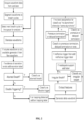
- the overall framework described herein comprises a cascade of classifiers and labeling algorithms, where a breath cycle is fed into a series of classifiers and labeling algorithms in sequence.
- the classifiers or labeling algorithms are rule-based, i.e., if a certain condition holds, the breath is classified or labeled as a certain asynchrony/respiratory event. In some embodiments, the asynchrony or event under consideration is not present.
- the classifiers or labeling algorithms use supervised learning classification algorithms, such as random forests or neural networks, where the parameters of the classifier model are identified beforehand through a training process.
- the inspiratory time T insp (i.e., duration of time from start of a breath to start of expiration) can be computed as the difference between breath cycle duration and T exp .
- a rule-based technique can then be used to detect a double triggered breath when certain conditions are satisfied.
- the rule used to detect double triggering is can be T exp ⁇ 1/2 mean T insp .
- the rule used to detect double triggering is T exp ⁇ 1/2 set T insp .
- the rule used to detect double triggering is T exp less than a defined threshold (e.g., 0.5 second). If a double triggering event is detected, that breath cycle is assigned to the double trigger class and removed from further analysis.
- p aw is the airway pressure
- q is the air flow
- t 0 is the time at the start of the breath cycle.
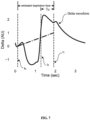
- the Delta waveform represents the synchronized morphological difference between normalized pressure (after correcting for PEEP) and normalized flow waveforms.
- the operation of subtraction of constant p e and scaling by the constant (p aw (t ⁇ ) - p e ) to each data point in p aw represents the application of normalizing constants to the ventilator pressure waveform.
- the scaling by the numerical constant q(t*) to each data point in q represents the application of normalizing constants to the ventilator flow waveform.
- the first term of equation p aw t ⁇ p e p aw t ⁇ ⁇ p e is referred to as embodiment of a normalized ventilator pressure waveform.
- the second term of equation q t q t ⁇ is referred to as an embodiment of a normalized ventilator flow waveform.
- a constant q e can also be subtracted from both the numerator and denominator.
- This constant q e can be the value of flow at end of exhalation (expiration) of the previous breath cycle or the constant q e can be the initial value of the flow waveform.
- the resultant waveform calculated from equation (2) is thus an embodiment of taking pairwise relationships between ventilator pressure and flow waveforms to generate a Delta waveform.
- normalization can be performed with respect to any time point within the inspiratory phase (mechanical inspiration).
- An inspiratory phase is defined as the interval of a breath cycle during which the ventilator is supplying inspiratory support or its inspiratory valves are open.
- An expiratory phase is defined as the interval of a breath cycle during which the ventilator's expiratory valves are open thereby allowing the connected patient to exhale.
- normalization is performed with respect to t* (i.e., time of maximum flow) because t* can be robustly detected on the waveform.
- equation (2) can be modified to define a new Delta waveform by replacing t* with t**, where t** is any time point between t 0 and the end of the inspiratory phase of the breath cycle.
- t* * can be the time elapsed into a breath cycle that is approximately the pressure rise time as set on the ventilator (i.e. time required for the ventilator-controlled pressure profile to reach a predetermined percentage of the set pressure support level).
- t** can be the time elapsed into a breath cycle that is approximately the flow rise time as set on the ventilator (i.e. time required for the ventilator-controlled flow or volume profile to reach a predetermined percentage of the set peak flow or volume level).
- PEEP positive end-expiratory pressure
- t ⁇ can be any suitable time point whereby R rs V ⁇ t ⁇ > 1 C rs V t ⁇ .
- t ⁇ can be chosen as a suitable time about the beginning of inspiratory phase whereby flow is close to its maximum value and volume is close to its minimum.
- the present disclosure can use a framework to extract a series of features from the Delta waveform that is used in the next steps of the algorithm for classification.
- the following definitions are used in the described framework:
- the second feature is defined as the maximum cross-correlation coefficient between the time derivative of the Delta waveform and the measured flow waveform.
- this feature can be defined as the maximum cross-correlation coefficient between the Delta waveform and the volume waveform (delivered tidal volume waveform) that is either calculated or received from a data source.
- the location of valley(s) detected in Feature 1 is selected as Feature 7.
- the absolute time from the start of the breath in seconds is used to quantify the location of the valley.
- the location of the valley is quantified as a fraction of the length into a breath at which the valley occurs.
- the location of the valley is quantified as a fraction of the length of inspiration.
- the location of the valley is measured from the start of expiration and is expressed as the fraction of a duration of an expiration.
- a breath cycle is classified as irregular if at least one of the features above is missing and cannot be determined. In addition, if all features can be calculated but the value of one or more features falls outside the range of typical values for such features (e.g., if the difference between the observed value and the average value of a feature based on a labeled data set is larger than a threshold value), then the corresponding breath cycle is classified as an irregular breath.
- an irregular breath can be detected by defining a distance metric between breaths to measure the similarity between waveforms of breaths (e.g., flow waveform or pressure waveform).
- the similarity metric is the cross-correlation between two time-series.
- the distance between the breath cycle under consideration and a collection of previously recorded breaths that are not considered irregular is calculated (i.e., synthetic breath cycles generated through simulation and/or previously recorded breath cycles classified or labeled as involving an asynchrony event or normal breaths with no evidence of asynchrony). If the distance of the breath under consideration from each individual breath in the collection is more than a defined threshold, then the breath is classified as irregular.
- Feature 1, Feature 2, and Feature 7 are used.
- Feature 1 and Feature 7 are modified, and the detection of a local minimum (valley) of the Delta waveform is limited to the inspiratory phase.
- Feature 2 is modified, and the maximum cross-correlation coefficient between the time derivative of the Delta waveform and the measured flow waveform in the inspiratory phase is calculated (or between the Delta waveform and calculated volume waveform in the inspiratory phase).
- a rule-based algorithm is used; if the value of the features are above or below a defined threshold, an "inadequate support during inspiration label" is added to the breath.
- Feature 1, Feature 2, and Feature 7 are used.
- Feature 1 and Feature 7 are modified, and the detection of a local minimum (valley) of the Delta waveform is limited to the expiratory phase.
- Feature 2 is modified, and the maximum cross-correlation coefficient between the time derivative of the Delta waveform and the measured flow waveform in the expiratory phase is calculated (or between the Delta waveform and calculated volume waveform in the inspiratory phase).
- Feature 7 is defined as the location of the valley is measured from the start of expiration and expressed as a fraction of a duration of expiration.
- a rule-based algorithm is used, where if Feature 7 exceeds inspiratory time by a threshold and Feature 1 is larger than a threshold an "ineffective triggering label" is added.
- a statistical classifier e.g., random forest, support vector machine, or neural network
- the breath is moved to the next step and further analyzed for other types of asynchronies.
- Ineffective triggering is considered a label and not a class.
- Each breath cycle is assigned to one class, but can have multiple labels.
- a breath cycle can include ineffective triggering and a second type of asynchrony (e.g., delayed termination).
- ineffective triggering is considered a label.
- Random forests classification is used to classify breaths into one of the following classes: i) premature termination; ii) delayed termination; and iii) no cycling asynchrony.
- other classifiers generally referred to as supervised learning classifiers such as support vector machines, Bayesian networks, or neural networks are used to classify breaths into one of the three classes described above.
- supervised learning classifiers such as support vector machines, Bayesian networks, or neural networks are used to classify breaths into one of the three classes described above.
- a probability is assigned to each class label. The class label with the highest probability, or the class label with a probability higher than some threshold value, can be selected as the predicted class label.
- the probability associated with a class label can also be used as a measure of a classifier's confidence in assigning a breath to the specific class.
- the classifier is trained on a training set of breath cycles, where each breath cycle is represented by extracted features discussed in Section 10 (Feature Extraction from the Delta Waveform) and ground truth class labels.
- class labels can be provided by a clinician or a panel of clinicians, where pressure and flow waveforms are used for labeling or pressure and flow and other signals such as esophageal pressure or diaphragm activity are used for labeling.
- synthetic pressure and flow waveforms can be generated based on different asynchrony scenarios and ground truth labels are known based on the synthetic scenario generated.
- training data for training the machine learning classifier includes both labeled data from previously collected patient data and synthetic data.
- the classifier can be used to predict class labels for new breath cycles. If the breath is assigned to the premature termination or delayed termination class, then classification for this breath is complete. If the breath is classified as no cycling asynchrony, then the breath is moved to the next step and further analyzed for a final analysis.
- the internal parameters of the classifier e.g., random forests
- a breath cycle that has been classified as no cycling asynchrony and has no labels associated with inadequate support, air trapping or ineffective triggering is classified as "no asynchrony”.
- a breath cycle that has been classified as no cycling asynchrony and has a label associated with inadequate support, air trapping and/or ineffective triggering is classified as "some form of asynchrony present" with an associated label (i.e., inadequate support, air trapping or ineffective triggering or a combination of these labels).
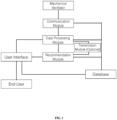
- Information on patient-ventilator asynchrony can be used within a clinical decision support system framework to display any detect asynchrony events.
- the clinical decision support system can also provide definitions for each asynchrony event and provide recommendations to the end-user to address detected asynchronies.
- the end user is a respiratory therapist.
- a fully automated mechanical ventilator can be used, and information on detected asynchronies can be sent to a mechanical ventilator's control unit to change ventilator settings or mechanical ventilation mode.
- the recommendation module can be implemented as a rule-based expert system such that if the asynchrony index exceeds a certain threshold, the end-user is notified and depending on the type of asynchronies present one or more recommendations are provided to address the asynchrony.
- the asynchrony index is the fraction of breaths (including triggered and untriggered attempted breaths) with one or more detected asynchronies over a period of time.
- the asynchrony index is determined over a period time of about 15 seconds, 30 seconds, 1 minute, about 5 minutes, about 10 minutes, about 20 minutes, about 30 minutes, about 40 minutes, about 50 minutes, about 60 minutes, about 70 minutes, about 80 minutes, about 90 minutes, about 100 minutes, about 110 minutes, about 120 minutes, about 3 hours, about 6 hours, about 12 hours, or about 24 hours.
- a graphical user interface is used for displaying prompts corresponding to detected patient-ventilator asynchrony, as shown in FIGURE 23 .
- the GUI can display educational information on the detected asynchronies when a user taps on an information icon as shown in FIGURE 23 .
- the GUI can display one or more recommendations for mitigating detected asynchronies when a user taps on an information icon as shown in FIGURE 23 .
- Classifiers and labeling algorithms can be either rule-based or based on a supervised learning machine learning algorithm (also referred to as a statistical classifier).
- a supervised learning machine learning algorithm also referred to as a statistical classifier.
- the value of one or more features extracted from waveforms are compared to one or more threshold values.
- the classifier is first trained on a training set to identify the specific parameters of the classifier. Once the training is completed, the classifier uses the trained model to classify or label new breath cycles.
- One drawback of determining optimal thresholds of a rule-based system or generating a large enough training set for a statistical classifier is that a data set from one or more patients is required. Furthermore, each breath in the data set requires a "ground truth" label or class corresponding to each asynchrony event. For example, to assign a label of class to each breath cycle, a common practice involves recording of esophageal pressure or electrical activity of the diaphragm to identify asynchrony events.
- the respiratory model in equation (17) can be represented by an equivalent electrical analogue consisting of a series arrangement of: a) a resistor element with resistance R rs representing the resistance of the total respiratory system; and b) a capacitor element with capacitance C rs representing total compliance of the respiratory system.
- FIGURE 5 illustrates an electrical analogue of the respiratory system.
- Constant p 0 of equation (17) is the sum of Extrinsic PEEP and Intrinsic PEEP in the electrical analogue.
- the respiratory system is modeled using the single-compartment lung model discussed in Section Mathematical Modeling of the Respiratory System.
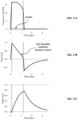
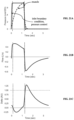
- the ventilator inlet boundary condition can be a rectangular pressure waveform such as that shown in FIGURE 12A , annotated as the inlet boundary condition.
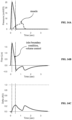
- the ventilator inlet boundary condition can be any typical pattern of flow used for ventilation such as descending ramp flow pattern shown in FIGURE 10B , annotated as the inlet boundary condition.
- the inlet boundary condition defines when the ventilator cycles from inspiration to expiration (i.e. cycling off time), such as those shown in FIGURE 10B for volume control mode and FIGURE 12A for pressure control mode.
- the pressure generated by the respiratory muscles can be any pulsatile pressure waveform typical of respiratory muscle effort.
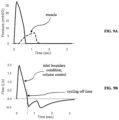
- an exponentially rising and decaying pulse as shown in the top panel of FIGURE 9A , annotated as the muscle waveform, is used.
- a plurality of variations can be made to the inlet boundary conditions, such as to their shapes, timings, and durations, as well as to the muscle pressure profile, to produce a plurality of synthetic waveforms.
- the plurality of variations can further include variations in respiratory system resistance and compliance.
- the respiratory system model can be implemented in vitro (e.g. a physical model employing elements such as actuators, valves, bellows, etc.) or in silico (e.g. a computational model simulated on a digital computer).
- an electrical analogue of the respiratory system can be implemented directly with electrical circuit components (e.g. resistors, capacitors, voltage sources, current sources).
- an in vitro representation can involve use of a breathing simulator attached to a mechanical ventilator.
- An embodiment of an in silico representation includes use of a digital computer to numerically solve the differential equations described in Section Mathematical Modeling of the Respiratory System.
- an electrical analogue model of the respiratory system can be solved with electronic circuit simulator design software. This may involve laying out each discrete electrical circuit element (e.g. resistors, capacitors, voltage sources, current sources) in a circuit schematic editor and using its supplied tools to simulate the model to output waveforms that approximate ventilator pressure (voltage waveforms) and flow waveforms (current waveforms).
- each discrete electrical circuit element e.g. resistors, capacitors, voltage sources, current sources
- an inlet ventilator waveform can be prescribed such that its cycling off time (i.e. time at which inspiratory phase ends and expiratory phase begins) exceeds the time at which the muscle pressure begins to relax from its peak value, as depicted in FIGURE 10B .
- an inlet ventilator waveform can be prescribed such that its cycling off time precedes the time at which the muscle pressure begins to relax, as depicted in FIGURE 9B .
- the time at which the muscle pressure profile rises above its baseline value can be varied to further simulate respiratory muscle activation occurring any time within the breath cycle, for instance, as shown in FIGURE 12A whereby the muscle profile rises above baseline about 0.2 seconds into the breath cycle.
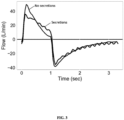
- the muscle waveform can be nullified to simulate a passive patient without respiratory muscle activity, as shown in FIGURE 11A .
- the cycling off time of the ventilator as defined by the prescribed inlet boundary condition, can be set to about the time that the muscle profile starts to decay (relax), as shown in FIGURE 12A .
- Other variations to the peak values of the muscle profile as well as inlet boundary conditions can be made without departing form the spirit of generating synthetic waveforms depicting various cycling asynchronies.
- An extensive database can be populated with a plurality of synthetic waveforms.
- stochastic perturbations can further be superimposed upon the synthetic waveforms to simulate sensor and/or process noise.
- additional synthetic data is generated by use of generative statistical models based upon features previously extracted from synthetic waveforms. Probability distributions can be placed over the extracted features that are conditioned upon the known ground truth labels (i.e. asynchrony type). Upon sampling from the probability distributions, additional synthetic feature vector can be generated and entries can be added to the database of synthetic feature vectors to further augment the amount of data available for training machine learning algorithms or tuning classifiers. A machine learning algorithm can then be trained on the database of synthetic feature vectors using the ground truth labels as the target classification in a similar manner as previously described when real labeled patient data is used for training.
Landscapes
- Health & Medical Sciences (AREA)
- Engineering & Computer Science (AREA)
- Public Health (AREA)
- Biomedical Technology (AREA)
- General Health & Medical Sciences (AREA)
- Medical Informatics (AREA)
- Epidemiology (AREA)
- Primary Health Care (AREA)
- Veterinary Medicine (AREA)
- Animal Behavior & Ethology (AREA)
- Emergency Medicine (AREA)
- Pulmonology (AREA)
- Anesthesiology (AREA)
- Heart & Thoracic Surgery (AREA)
- Hematology (AREA)
- Life Sciences & Earth Sciences (AREA)
- Surgery (AREA)
- Urology & Nephrology (AREA)
- Nuclear Medicine, Radiotherapy & Molecular Imaging (AREA)
- Pathology (AREA)
- General Business, Economics & Management (AREA)
- Business, Economics & Management (AREA)
- Databases & Information Systems (AREA)
- Data Mining & Analysis (AREA)
- Measurement Of The Respiration, Hearing Ability, Form, And Blood Characteristics Of Living Organisms (AREA)
Claims (15)
- Verfahren zur Anzeige der Interaktion zwischen Patient und Beatmungsgerät, umfassend:a) Empfang von Druck- und Flusswellenformdaten des Beatmungsgeräts;b) Anwenden einer oder mehrerer Normierungskonstanten auf die Beatmungsgerätedruck- und Flusswellenformdaten, um entsprechende normierte Beatmungsgerätedruck- und Flusswellenformdaten zu erhalten; wobei die Normierungskonstante für die Beatmungsgerätedruckwellenform der Kehrwert ist von:i) dem Wert des Drucks zum ungefähren Zeitpunkt des Spitzenflusses; oderii) dem Wert des Drucks im abgelaufenen Intervall des Atemzyklus, der ungefähr der am Beatmungsgerät eingestellten Druckanstiegszeit entspricht;und die Normierungskonstante für die Flusswellenform des Beatmungsgeräts ist der Kehrwert von:iii) dem Wert des Flusses zum ungefähren Zeitpunkt des Spitzenflusses; oderiv) dem Wert des Flusses im abgelaufenen Intervall des Atemzyklus, der ungefähr der am Beatmungsgerät eingestellten Flussanstiegszeit entspricht.c) Berechnen einer Delta-Wellenform auf der Grundlage paarweiser Beziehungen zwischen den normalisierten Beatmungsgerätedruck- und Flusswellenformdaten; undd) Verwenden des Vorhandenseins oder Nichtvorhandenseins von Spitzen und/oder Tälern der Delta-Wellenform als Hinweis auf das Vorhandensein oder Nichtvorhandensein einer oder mehrerer asynchroner Interaktionen zwischen Patient und Beatmungsgerät.
- System zur Erfassung der Interaktion zwischen Patient und Beatmungsgerät, umfassend:a) ein Erfassungsmodul, das computerausführbare Anweisungen in betriebsfähiger Kommunikation mit einem oder mehreren Computerprozessoren umfasst, wobei das Erfassungsmodul für ein Beatmungsgerät konfiguriert ist und in betriebsfähiger Kommunikation mit diesem steht, um Druck-, Fluss- und/oder Volumenwellenformdaten des mechanischen Beatmungsgeräts zu erfassen;b) ein Indikatormodul für die Interaktion zwischen Patient und Beatmungsgerät in betriebsfähiger Kommunikation mit dem Erfassungsmodul, wobei das Indikatormodul für die Interaktion zwischen Patient und Beatmungsgerät computerausführbare Anweisungen in betriebsfähiger Kommunikation mit einem oder mehreren Computerprozessoren umfasst, um:i) eine Indikator-Wellenform der Interaktion zwischen Patient und Beatmungsgerät aus den Wellenformdaten des Beatmungsgerät zu erzeugen;ii) einen Satz von Merkmalen aus der Indikator-Wellenform der Interaktion zwischen Patient und Beatmungsgerät zu extrahieren; undiii) eine Art von vorhandener oder fehlender Asynchronität zwischen Patient und Beatmungsgerät zu bestimmen und anzuzeigen, die mit einem oder mehreren Atemzyklen assoziiert ist, wobei die Asynchronität zwischen Patient und Beatmungsgerät oder deren Fehlen auf dem extrahierten Satz von Merkmalen basiert, dadurch gekennzeichnet, dass die Indikator-Wellenform der Interaktion zwischen Patient und Beatmungsgerät eine Delta-Wellenform ist, wobei die Delta-Wellenform die Differenz zwischen normalisiertem Druck, nach Korrektur des positiven endexspiratorischen Drucks (PEEP), und normalisierter Flusswellenform darstellt.
- System nach Anspruch 2, wobei das Erfassungsmodul so konfiguriert ist, dass es die Wellenformdaten des Beatmungsgeräts direkt oder indirekt von einem mechanischen Beatmungsgerät, direkt oder indirekt von einem anderen Monitor oder System zur Erzeugung der Wellenformdaten des Beatmungsgeräts oder direkt oder indirekt von einem Archiv mit In-vivo-, Ex-vivo-, In-vitro- und/oder In-silico-Daten erfasst.
- System nach Anspruch 3, wobei einer oder mehrere der Prozessoren in das mechanische Beatmungsgerät oder einen anderen Monitor oder ein System oder ein vernetztes Computersystem eingebettet ist/sind.
- System nach Anspruch 2, wobei die Indikator-Wellenform für die Interaktion zwischen Patient und Beatmungsgerät eine Delta-Wellenform ist, wie in der folgenden Gleichung definiert:a)
 b)
b)
- System nach Anspruch 5, wobei das Extrahieren des Satzes von Merkmalen das Extrahieren eines oder mehrerer der folgenden Merkmale umfasst:a) Tiefe der Täler der Delta-Wellenform;b) Höchstwert der Delta-Wellenform innerhalb der Inspirationsphase;c) Fläche unter der Kurve der Delta-Wellenform innerhalb der Inspirationsphase;d) maximale Kreuzkorrelation der Delta-Wellenform mit einer Wellenform des abgegebenen Tidalvolumens;e) Fläche unter dem Teil der Delta-Wellenform, der ungefähr im ersten Drittel der Dauer der Delta-Wellenform auftritt;f) maximaler Wert der Delta-Wellenform, der ungefähr im ersten Drittel der Dauer der Delta-Wellenform auftritt; undg) Lage und Tiefe der lokalen Minima (Täler) in der Delta-Wellenform.
- System nach Anspruch 2, wobei die computerausführbaren Anweisungen zum Bestimmen und Anzeigen der Art der vorhandenen Asynchronität, oder deren Fehlen zwischen Patient und Beatmungsgerät einen regelbasierten Algorithmus umfassen, der so konfiguriert ist, dass er einen oder mehrere der Atemzyklen in eine oder mehrere Kategorien der Asynchronität zwischen Patient und Beatmungsgerät einteilt.
- System nach Anspruch 7, wobei der regelbasierte Algorithmus einen oder mehrere der Atemzyklen in eine oder mehrere Kategorien der Asynchronität zwischen Patient und Beatmungsgerät einteilt, indem er mindestens einen Wert aus dem Satz von Merkmalen mit einem vorgegebenen Schwellenwert vergleicht.
- System nach Anspruch 2, wobei die computerausführbaren Anweisungen zum Bestimmen und Anzeigen der Art der vorhandenen Asynchronität, oder deren Fehlen zwischen Patient und Beatmungsgerät einen maschinell lernenden Klassifikator umfassen, der mit Patientendaten und/oder synthetischen Daten trainiert wurde und so konfiguriert ist, dass er einen oder mehrere der Atemzyklen in eine oder mehrere Kategorien der Asynchronität zwischen Patient und Beatmungsgerät klassifiziert.
- System nach Anspruch 9, wobei der maschinell lernende Klassifikator einen oder mehrere Atemzyklen in eine oder mehrere Kategorien der Asynchronität zwischen Patient und Beatmungsgerät klassifiziert, indem er mindestens einen Wert aus dem Satz von Merkmalen mit einem vorgegebenen Schwellenwert vergleicht.
- System nach Anspruch 2, wobei die computerausführbaren Anweisungen zum Bestimmen und Anzeigen der Art der vorhandenen Asynchronität oder deren Fehlen zwischen Patient und Beatmungsgerät einen maschinellen Lernalgorithmus umfassen, der mit Patientendaten und/oder synthetischen Daten trainiert wurde und so konfiguriert ist, dass er einen oder mehrere der Atemzyklen in eine oder mehrere Kategorien der Asynchronität zwischen Patient und Beatmungsgerät klassifiziert.
- System nach Anspruch 2, das ferner ein Übertragungsmodul umfasst, um die ermittelte und angezeigte Art der Asynchronität zwischen Patient und Beatmungsgerät oder deren Fehlen an einen entfernten Server und/oder ein Smartphone und/oder ein Tablet zu übertragen.
- System nach einem der Ansprüche 2 bis 12, das ferner eine grafische Benutzeroberfläche umfasst, umfassend:a) mindestens ein Fenster zur Anzeige der Erkennung einer oder mehrerer Asynchronitäten zwischen Patient und Beatmungsgerät;b) ein oder mehrere Elemente innerhalb des mindestens einen Fensters zur Übermittlung der erkannten Asynchronität zwischen Patient und Beatmungsgerät.
- System nach Anspruch 13, das ferner ein oder mehrere Elemente innerhalb des mindestens einen Fensters umfasst, die eine oder mehrere Empfehlungen zur Abschwächung der erkannten Asynchronität zwischen Patient und Beatmungsgerät umfassen.
- System nach Anspruch 11, wobei die synthetischen Daten von einer In-vitro-, In-silico- oder sowohl In-vitro- als auch In-silico-Darstellung eines Atmungssystems, das mit einem mechanischen Beatmungsgerät interagiert, abgeleitet sind.
Applications Claiming Priority (2)
| Application Number | Priority Date | Filing Date | Title |
|---|---|---|---|
| US201762583558P | 2017-11-09 | 2017-11-09 | |
| PCT/US2018/060056 WO2019094736A1 (en) | 2017-11-09 | 2018-11-09 | Clinical decision support system for patient-ventilator asynchrony detection and management |
Publications (3)
| Publication Number | Publication Date |
|---|---|
| EP3706845A1 EP3706845A1 (de) | 2020-09-16 |
| EP3706845A4 EP3706845A4 (de) | 2021-08-18 |
| EP3706845B1 true EP3706845B1 (de) | 2023-10-18 |
Family
ID=66438610
Family Applications (1)
| Application Number | Title | Priority Date | Filing Date |
|---|---|---|---|
| EP18876990.5A Active EP3706845B1 (de) | 2017-11-09 | 2018-11-09 | Klinisches entscheidungsunterstützungssystem für die erkennung und das management von asynchronität zwischen patient und beatmungsgerät |
Country Status (4)
| Country | Link |
|---|---|
| US (4) | US10874811B2 (de) |
| EP (1) | EP3706845B1 (de) |
| AU (1) | AU2018366291B2 (de) |
| WO (1) | WO2019094736A1 (de) |
Families Citing this family (30)
| Publication number | Priority date | Publication date | Assignee | Title |
|---|---|---|---|---|
| EP3706845B1 (de) * | 2017-11-09 | 2023-10-18 | Autonomous Healthcare, Inc. | Klinisches entscheidungsunterstützungssystem für die erkennung und das management von asynchronität zwischen patient und beatmungsgerät |
| DE102019120307A1 (de) * | 2019-07-26 | 2021-01-28 | Forschungszentrum Borstel, Leibniz Lungenzentrum | Vorrichtung zur unterstützenden Beatmung eines Lebewesens und Computerprogramm |
| US12073945B2 (en) * | 2020-06-30 | 2024-08-27 | Cerner Innovation, Inc. | Patient ventilator asynchrony detection |
| US12268811B2 (en) | 2020-09-04 | 2025-04-08 | Koninklijke Philips N.V. | Estimation of cardiogenic artefacts on ventilator airway pressure and flow for the automated detection and resolution of patient ventilator asynchronies |
| DE102020124834A1 (de) * | 2020-09-23 | 2022-03-24 | Drägerwerk AG & Co. KGaA | Ausgabevorrichtung für ein Beatmungsgerät |
| WO2022111848A1 (de) * | 2020-11-24 | 2022-06-02 | Löwenstein Medical Technology S.A. | Erkennung von asynchronien bei der beatmung |
| CN116711020A (zh) * | 2020-12-24 | 2023-09-05 | 深圳迈瑞生物医疗电子股份有限公司 | 一种通气设备及其显示方法 |
| DE102021102886A1 (de) * | 2021-02-08 | 2022-08-11 | Hamilton Medical Ag | Verfahren und Beatmungsvorrichtung zur Bestimmung eines Atemtraktinhalts an Atemgas während einer künstlichen Beatmung |
| US20220323700A1 (en) * | 2021-04-12 | 2022-10-13 | Koninklijke Philips N.V. | Tracking respiratory mechanics of a patient |
| GB2624319A (en) * | 2021-06-08 | 2024-05-15 | O2U Inc | Medical system using advanced analytics and machine learning |
| CN113539501A (zh) * | 2021-06-25 | 2021-10-22 | 中国科学院深圳先进技术研究院 | 一种呼吸机人机异步分类方法、系统、终端以及存储介质 |
| CN113539398A (zh) * | 2021-06-25 | 2021-10-22 | 中国科学院深圳先进技术研究院 | 一种呼吸机人机异步分类方法、系统、终端以及存储介质 |
| CN113689948B (zh) * | 2021-08-18 | 2024-11-29 | 深圳先进技术研究院 | 呼吸机机械通气的人机异步检测方法、装置和相关设备 |
| CN113642512B (zh) * | 2021-08-30 | 2023-10-24 | 深圳先进技术研究院 | 呼吸机人机异步检测方法、装置、设备及存储介质 |
| CN113868941A (zh) * | 2021-09-02 | 2021-12-31 | 深圳先进技术研究院 | 基于dqn增强学习的通气人机异步检测模型训练方法及装置 |
| WO2023060478A1 (zh) * | 2021-10-13 | 2023-04-20 | 中国科学院深圳先进技术研究院 | 一种人机不同步识别方法、系统、终端以及存储介质 |
| CN113963772B (zh) * | 2021-10-25 | 2024-09-17 | 杭州圣王医疗设备有限公司 | 一种供气管路的离取检测方法和系统 |
| CN114191665A (zh) * | 2021-12-01 | 2022-03-18 | 中国科学院深圳先进技术研究院 | 机械通气过程中人机异步现象的分类方法和分类装置 |
| CN114288500B (zh) * | 2021-12-02 | 2024-03-19 | 中国科学院深圳先进技术研究院 | 一种基于模糊熵特征提取的人机通气异步检测模型及装置 |
| US20230181851A1 (en) * | 2021-12-15 | 2023-06-15 | Koninklijke Philips N.V. | Use of diaphragmatic ultrasound to determine patient-specific ventilator settings and optimize patient-ventilator asynchrony detection algorithms |
| CN114534041B (zh) * | 2022-01-28 | 2024-11-15 | 中国科学院深圳先进技术研究院 | 检测人机通气不同步的呼吸波形分类模型训练方法及装置 |
| CN115068760B (zh) * | 2022-06-13 | 2025-10-03 | 北京航空航天大学 | 一种呼吸机-患者通气异步现象智能识别分类方法 |
| CN115116575B (zh) * | 2022-07-01 | 2025-04-25 | 上海术木医疗科技有限公司 | 一种机械通气治疗数据管理方法及系统 |
| CN115317739A (zh) * | 2022-08-15 | 2022-11-11 | 濡新(北京)科技发展有限公司 | 一种咳痰启动时机判断装置及咳痰机 |
| WO2024100525A1 (en) * | 2022-11-07 | 2024-05-16 | Covidien Lp | Patient-ventilator asynchrony dashboard |
| CN116028862B (zh) * | 2022-12-06 | 2025-09-02 | 上海术木医疗科技有限公司 | 一种机械通气人机不同步的单阶段识别方法与系统 |
| US12580078B2 (en) | 2022-12-12 | 2026-03-17 | Uif (University Industry Foundation), Yonsei Younversity | Method, server, and system intelligent ventilator monitoring using non-contact and non-face-to-face |
| CN115814222B (zh) * | 2023-01-17 | 2023-04-14 | 中国科学院深圳先进技术研究院 | 混合机械通气模式下人机不同步波形识别方法及相关设备 |
| WO2025117420A1 (en) * | 2023-11-27 | 2025-06-05 | Zoll Medical Corporation | Patient ventilator asynchrony management system, including asynchrony mitigation messaging and adjustments |
| CN120279954A (zh) * | 2025-05-13 | 2025-07-08 | 北京大学人民医院 | 基于人工智能的机械通气患者气道声学监测管理优化方法、系统、电子设备、介质和程序产品 |
Family Cites Families (22)
| Publication number | Priority date | Publication date | Assignee | Title |
|---|---|---|---|---|
| US7484508B2 (en) * | 2002-06-27 | 2009-02-03 | Yrt Limited | Method and device for monitoring and improving patient-ventilator interaction |
| AU2004305423B2 (en) | 2003-11-26 | 2009-03-26 | Cardionet, Inc. | System and method for processing and presenting arrhythmia information to facilitate heart arrhythmia identification and treatment |
| CN101043913B (zh) * | 2004-10-20 | 2012-02-08 | 雷斯梅德有限公司 | 用于检测无效吸气努力并改进患者-呼吸机相互作用的方法和装置 |
| AU2006343578B2 (en) | 2006-05-12 | 2012-05-03 | Yrt Limited | Method and device for generating a signal that reflects respiratory efforts in patients on ventilatory support |
| US10137266B2 (en) | 2009-02-25 | 2018-11-27 | Koninklijke Philips N.V. | Patient-ventilator dyssynchrony detection |
| WO2010121313A1 (en) | 2009-04-22 | 2010-10-28 | Resmed Ltd | Detection of asynchrony |
| US8573207B2 (en) | 2010-09-28 | 2013-11-05 | Guillermo Gutierrez | Method and system to detect respiratory asynchrony |
| US20120167885A1 (en) * | 2010-12-29 | 2012-07-05 | Nellcor Puritan Bennett Llc | Systems And Methods For Ventilation To Obtain A Predetermined Patient Effort |
| CN103182120B (zh) * | 2011-12-30 | 2016-06-15 | 北京谊安医疗系统股份有限公司 | 有创呼吸机在无创通气模式下人机同步的装置 |
| US10362967B2 (en) * | 2012-07-09 | 2019-07-30 | Covidien Lp | Systems and methods for missed breath detection and indication |
| US9027552B2 (en) * | 2012-07-31 | 2015-05-12 | Covidien Lp | Ventilator-initiated prompt or setting regarding detection of asynchrony during ventilation |
| US9295803B2 (en) * | 2012-08-31 | 2016-03-29 | General Electric Company | Ventilator sychronization indicator |
| US10165966B2 (en) * | 2013-03-14 | 2019-01-01 | University Of Florida Research Foundation, Incorporated | Methods and systems for monitoring resistance and work of breathing for ventilator-dependent patients |
| US20150013674A1 (en) * | 2013-07-15 | 2015-01-15 | Covidien Lp | System and method for monitoring and reporting status of a ventilated patient |
| US20150090258A1 (en) * | 2013-10-01 | 2015-04-02 | Covidien Lp | Ventilator-initiated prompt or setting regarding detection of asynchrony during ventilation |
| US11247009B2 (en) * | 2015-10-19 | 2022-02-15 | Koninklijke Philips N.V. | Anomaly detection device and method for respiratory mechanics parameter estimation |
| US11191447B2 (en) * | 2015-11-02 | 2021-12-07 | Koninklijke Philips N.V. | Breath by breath reassessment of patient lung parameters to improve estimation performance |
| EP3416543A1 (de) | 2016-02-18 | 2018-12-26 | Koninklijke Philips N.V. | Verbesserte schätzung von respiratorischen parametern und asynchroniedetekionsalgorithmen mittels manometrie des zentralen venendrucks |
| IT201600103298A1 (it) * | 2016-10-14 | 2018-04-14 | Univ Degli Studi Di Trieste | Apparato e metodo per il controllo dei parametri di una macchina di assistenza alla respirazione |
| WO2018089837A1 (en) * | 2016-11-11 | 2018-05-17 | The Regents Of The University Of California | Resuscitation and ventilation asynchrony monitor |
| EP3706845B1 (de) | 2017-11-09 | 2023-10-18 | Autonomous Healthcare, Inc. | Klinisches entscheidungsunterstützungssystem für die erkennung und das management von asynchronität zwischen patient und beatmungsgerät |
| US20190371460A1 (en) * | 2018-04-26 | 2019-12-05 | Respivar LLV | Detection and Display of Respiratory Rate Variability, Mechanical Ventilation Machine Learning, and Double Booking of Clinic Slots, System, Method, and Computer Program Product |
-
2018
- 2018-11-09 EP EP18876990.5A patent/EP3706845B1/de active Active
- 2018-11-09 WO PCT/US2018/060056 patent/WO2019094736A1/en not_active Ceased
- 2018-11-09 US US16/762,224 patent/US10874811B2/en active Active
- 2018-11-09 AU AU2018366291A patent/AU2018366291B2/en active Active
-
2020
- 2020-09-08 US US17/014,778 patent/US11000656B2/en active Active
-
2021
- 2021-03-15 US US17/201,684 patent/US12194237B2/en active Active
-
2024
- 2024-12-11 US US18/977,591 patent/US20250099704A1/en active Pending
Also Published As
| Publication number | Publication date |
|---|---|
| US20200261674A1 (en) | 2020-08-20 |
| AU2018366291B2 (en) | 2020-09-03 |
| WO2019094736A1 (en) | 2019-05-16 |
| US20210220587A1 (en) | 2021-07-22 |
| EP3706845A4 (de) | 2021-08-18 |
| US20250099704A1 (en) | 2025-03-27 |
| US20200405987A1 (en) | 2020-12-31 |
| US10874811B2 (en) | 2020-12-29 |
| US12194237B2 (en) | 2025-01-14 |
| EP3706845A1 (de) | 2020-09-16 |
| US11000656B2 (en) | 2021-05-11 |
| AU2018366291A1 (en) | 2020-06-11 |
Similar Documents
| Publication | Publication Date | Title |
|---|---|---|
| US20250099704A1 (en) | Clinical decision support system for patient-ventilator asynchrony detection and management | |
| JP6199312B2 (ja) | チェーンストークス呼吸パターンの判別 | |
| JP5711213B2 (ja) | 酸素測定信号を用いるチェーンストークス呼吸パターンの識別 | |
| RU2515401C2 (ru) | Система и способ обнаружения респираторной недостаточности дыхания субъекта | |
| DE102018204868A1 (de) | Verfahren, Systeme und Vorrichtung zur Detektion von Atemphasen | |
| EP2510469A1 (de) | Automatische kommentierung von klinischen daten | |
| US20230380792A1 (en) | Method and apparatus for determining lung pathologies and severity from a respiratory recording and breath flow analysis using a convolution neural network (cnn) | |
| CN111278355A (zh) | 早期鉴定慢性阻塞性肺疾病的复发的方法 | |
| Obeso et al. | A novel application of spectrograms with machine learning can detect patient ventilator dyssynchrony | |
| JP7794193B2 (ja) | 患者と人工呼吸器との非同期の自動検出及び解決のための人工呼吸器の気道圧力と流量における心原性アーチファクトの推定 | |
| US20230380719A1 (en) | Method and apparatus for simultaneous collection, processing and display of audio and flow events during breathing | |
| US20220323700A1 (en) | Tracking respiratory mechanics of a patient | |
| US20220296834A1 (en) | Analysis of mucus characteristics | |
| WO2022268931A1 (en) | Remote monitoring of respiration | |
| Joergensen et al. | Automatic segmentation to cluster patterns of breathing in sleep apnea | |
| US20260026707A1 (en) | Systems and methods for detecting pathologic breaths/breathing patterns | |
| AU2013221962C1 (en) | Discrimination of Cheyne-Stokes Breathing Patterns by Use of Oximetry Signals | |
| van de Kamp et al. | Reducing annotation effort in patient-ventilator asynchrony detection with distance-based clustering | |
| GB2624045A (en) | Methods and apparatus for classifying a capnogram and predicting a cardiorespiratory disease using a capnogram | |
| GB2624169A (en) | Methods and apparatus for classifying a capnogram and predicting a cardiorespiratory disease using a capnogram | |
| Ruiz et al. | Asynchrony Detection model Based on Frequency-Domain Analysis of Airway Pressure |
Legal Events
| Date | Code | Title | Description |
|---|---|---|---|
| STAA | Information on the status of an ep patent application or granted ep patent |
Free format text: STATUS: THE INTERNATIONAL PUBLICATION HAS BEEN MADE |
|
| PUAI | Public reference made under article 153(3) epc to a published international application that has entered the european phase |
Free format text: ORIGINAL CODE: 0009012 |
|
| STAA | Information on the status of an ep patent application or granted ep patent |
Free format text: STATUS: REQUEST FOR EXAMINATION WAS MADE |
|
| 17P | Request for examination filed |
Effective date: 20200603 |
|
| AK | Designated contracting states |
Kind code of ref document: A1 Designated state(s): AL AT BE BG CH CY CZ DE DK EE ES FI FR GB GR HR HU IE IS IT LI LT LU LV MC MK MT NL NO PL PT RO RS SE SI SK SM TR |
|
| AX | Request for extension of the european patent |
Extension state: BA ME |
|
| DAV | Request for validation of the european patent (deleted) | ||
| DAX | Request for extension of the european patent (deleted) | ||
| A4 | Supplementary search report drawn up and despatched |
Effective date: 20210715 |
|
| RIC1 | Information provided on ipc code assigned before grant |
Ipc: A61M 16/00 20060101AFI20210709BHEP Ipc: G16H 20/00 20180101ALI20210709BHEP |
|
| GRAP | Despatch of communication of intention to grant a patent |
Free format text: ORIGINAL CODE: EPIDOSNIGR1 |
|
| STAA | Information on the status of an ep patent application or granted ep patent |
Free format text: STATUS: GRANT OF PATENT IS INTENDED |
|
| RIC1 | Information provided on ipc code assigned before grant |
Ipc: G16H 20/00 20180101ALI20230406BHEP Ipc: A61M 16/00 20060101AFI20230406BHEP |
|
| INTG | Intention to grant announced |
Effective date: 20230502 |
|
| P01 | Opt-out of the competence of the unified patent court (upc) registered |
Effective date: 20230417 |
|
| GRAS | Grant fee paid |
Free format text: ORIGINAL CODE: EPIDOSNIGR3 |
|
| GRAA | (expected) grant |
Free format text: ORIGINAL CODE: 0009210 |
|
| STAA | Information on the status of an ep patent application or granted ep patent |
Free format text: STATUS: THE PATENT HAS BEEN GRANTED |
|
| AK | Designated contracting states |
Kind code of ref document: B1 Designated state(s): AL AT BE BG CH CY CZ DE DK EE ES FI FR GB GR HR HU IE IS IT LI LT LU LV MC MK MT NL NO PL PT RO RS SE SI SK SM TR |
|
| REG | Reference to a national code |
Ref country code: GB Ref legal event code: FG4D |
|
| REG | Reference to a national code |
Ref country code: CH Ref legal event code: EP |
|
| REG | Reference to a national code |
Ref country code: IE Ref legal event code: FG4D |
|
| REG | Reference to a national code |
Ref country code: DE Ref legal event code: R096 Ref document number: 602018059737 Country of ref document: DE |
|
| REG | Reference to a national code |
Ref country code: LT Ref legal event code: MG9D |
|
| REG | Reference to a national code |
Ref country code: NL Ref legal event code: MP Effective date: 20231018 |
|
| REG | Reference to a national code |
Ref country code: AT Ref legal event code: MK05 Ref document number: 1621867 Country of ref document: AT Kind code of ref document: T Effective date: 20231018 |
|
| PG25 | Lapsed in a contracting state [announced via postgrant information from national office to epo] |
Ref country code: NL Free format text: LAPSE BECAUSE OF FAILURE TO SUBMIT A TRANSLATION OF THE DESCRIPTION OR TO PAY THE FEE WITHIN THE PRESCRIBED TIME-LIMIT Effective date: 20231018 |
|
| PG25 | Lapsed in a contracting state [announced via postgrant information from national office to epo] |
Ref country code: GR Free format text: LAPSE BECAUSE OF FAILURE TO SUBMIT A TRANSLATION OF THE DESCRIPTION OR TO PAY THE FEE WITHIN THE PRESCRIBED TIME-LIMIT Effective date: 20240119 |
|
| PG25 | Lapsed in a contracting state [announced via postgrant information from national office to epo] |
Ref country code: IS Free format text: LAPSE BECAUSE OF FAILURE TO SUBMIT A TRANSLATION OF THE DESCRIPTION OR TO PAY THE FEE WITHIN THE PRESCRIBED TIME-LIMIT Effective date: 20240218 |
|
| PG25 | Lapsed in a contracting state [announced via postgrant information from national office to epo] |
Ref country code: LT Free format text: LAPSE BECAUSE OF FAILURE TO SUBMIT A TRANSLATION OF THE DESCRIPTION OR TO PAY THE FEE WITHIN THE PRESCRIBED TIME-LIMIT Effective date: 20231018 |
|
| PG25 | Lapsed in a contracting state [announced via postgrant information from national office to epo] |
Ref country code: AT Free format text: LAPSE BECAUSE OF FAILURE TO SUBMIT A TRANSLATION OF THE DESCRIPTION OR TO PAY THE FEE WITHIN THE PRESCRIBED TIME-LIMIT Effective date: 20231018 |
|
| PG25 | Lapsed in a contracting state [announced via postgrant information from national office to epo] |
Ref country code: ES Free format text: LAPSE BECAUSE OF FAILURE TO SUBMIT A TRANSLATION OF THE DESCRIPTION OR TO PAY THE FEE WITHIN THE PRESCRIBED TIME-LIMIT Effective date: 20231018 |
|
| PG25 | Lapsed in a contracting state [announced via postgrant information from national office to epo] |
Ref country code: LT Free format text: LAPSE BECAUSE OF FAILURE TO SUBMIT A TRANSLATION OF THE DESCRIPTION OR TO PAY THE FEE WITHIN THE PRESCRIBED TIME-LIMIT Effective date: 20231018 Ref country code: IS Free format text: LAPSE BECAUSE OF FAILURE TO SUBMIT A TRANSLATION OF THE DESCRIPTION OR TO PAY THE FEE WITHIN THE PRESCRIBED TIME-LIMIT Effective date: 20240218 Ref country code: GR Free format text: LAPSE BECAUSE OF FAILURE TO SUBMIT A TRANSLATION OF THE DESCRIPTION OR TO PAY THE FEE WITHIN THE PRESCRIBED TIME-LIMIT Effective date: 20240119 Ref country code: ES Free format text: LAPSE BECAUSE OF FAILURE TO SUBMIT A TRANSLATION OF THE DESCRIPTION OR TO PAY THE FEE WITHIN THE PRESCRIBED TIME-LIMIT Effective date: 20231018 Ref country code: BG Free format text: LAPSE BECAUSE OF FAILURE TO SUBMIT A TRANSLATION OF THE DESCRIPTION OR TO PAY THE FEE WITHIN THE PRESCRIBED TIME-LIMIT Effective date: 20240118 Ref country code: AT Free format text: LAPSE BECAUSE OF FAILURE TO SUBMIT A TRANSLATION OF THE DESCRIPTION OR TO PAY THE FEE WITHIN THE PRESCRIBED TIME-LIMIT Effective date: 20231018 Ref country code: PT Free format text: LAPSE BECAUSE OF FAILURE TO SUBMIT A TRANSLATION OF THE DESCRIPTION OR TO PAY THE FEE WITHIN THE PRESCRIBED TIME-LIMIT Effective date: 20240219 |
|
| PG25 | Lapsed in a contracting state [announced via postgrant information from national office to epo] |
Ref country code: SE Free format text: LAPSE BECAUSE OF FAILURE TO SUBMIT A TRANSLATION OF THE DESCRIPTION OR TO PAY THE FEE WITHIN THE PRESCRIBED TIME-LIMIT Effective date: 20231018 Ref country code: RS Free format text: LAPSE BECAUSE OF FAILURE TO SUBMIT A TRANSLATION OF THE DESCRIPTION OR TO PAY THE FEE WITHIN THE PRESCRIBED TIME-LIMIT Effective date: 20231018 Ref country code: PL Free format text: LAPSE BECAUSE OF FAILURE TO SUBMIT A TRANSLATION OF THE DESCRIPTION OR TO PAY THE FEE WITHIN THE PRESCRIBED TIME-LIMIT Effective date: 20231018 Ref country code: NO Free format text: LAPSE BECAUSE OF FAILURE TO SUBMIT A TRANSLATION OF THE DESCRIPTION OR TO PAY THE FEE WITHIN THE PRESCRIBED TIME-LIMIT Effective date: 20240118 Ref country code: LV Free format text: LAPSE BECAUSE OF FAILURE TO SUBMIT A TRANSLATION OF THE DESCRIPTION OR TO PAY THE FEE WITHIN THE PRESCRIBED TIME-LIMIT Effective date: 20231018 Ref country code: HR Free format text: LAPSE BECAUSE OF FAILURE TO SUBMIT A TRANSLATION OF THE DESCRIPTION OR TO PAY THE FEE WITHIN THE PRESCRIBED TIME-LIMIT Effective date: 20231018 |
|
| REG | Reference to a national code |
Ref country code: CH Ref legal event code: PL |
|
| PG25 | Lapsed in a contracting state [announced via postgrant information from national office to epo] |
Ref country code: DK Free format text: LAPSE BECAUSE OF FAILURE TO SUBMIT A TRANSLATION OF THE DESCRIPTION OR TO PAY THE FEE WITHIN THE PRESCRIBED TIME-LIMIT Effective date: 20231018 |
|
| PG25 | Lapsed in a contracting state [announced via postgrant information from national office to epo] |
Ref country code: LU Free format text: LAPSE BECAUSE OF NON-PAYMENT OF DUE FEES Effective date: 20231109 |
|
| PG25 | Lapsed in a contracting state [announced via postgrant information from national office to epo] |
Ref country code: CH Free format text: LAPSE BECAUSE OF NON-PAYMENT OF DUE FEES Effective date: 20231130 |
|
| REG | Reference to a national code |
Ref country code: DE Ref legal event code: R097 Ref document number: 602018059737 Country of ref document: DE |
|
| PG25 | Lapsed in a contracting state [announced via postgrant information from national office to epo] |
Ref country code: CZ Free format text: LAPSE BECAUSE OF FAILURE TO SUBMIT A TRANSLATION OF THE DESCRIPTION OR TO PAY THE FEE WITHIN THE PRESCRIBED TIME-LIMIT Effective date: 20231018 |
|
| PG25 | Lapsed in a contracting state [announced via postgrant information from national office to epo] |
Ref country code: SK Free format text: LAPSE BECAUSE OF FAILURE TO SUBMIT A TRANSLATION OF THE DESCRIPTION OR TO PAY THE FEE WITHIN THE PRESCRIBED TIME-LIMIT Effective date: 20231018 |
|
| PG25 | Lapsed in a contracting state [announced via postgrant information from national office to epo] |
Ref country code: SM Free format text: LAPSE BECAUSE OF FAILURE TO SUBMIT A TRANSLATION OF THE DESCRIPTION OR TO PAY THE FEE WITHIN THE PRESCRIBED TIME-LIMIT Effective date: 20231018 Ref country code: SK Free format text: LAPSE BECAUSE OF FAILURE TO SUBMIT A TRANSLATION OF THE DESCRIPTION OR TO PAY THE FEE WITHIN THE PRESCRIBED TIME-LIMIT Effective date: 20231018 Ref country code: RO Free format text: LAPSE BECAUSE OF FAILURE TO SUBMIT A TRANSLATION OF THE DESCRIPTION OR TO PAY THE FEE WITHIN THE PRESCRIBED TIME-LIMIT Effective date: 20231018 Ref country code: LU Free format text: LAPSE BECAUSE OF NON-PAYMENT OF DUE FEES Effective date: 20231109 Ref country code: IT Free format text: LAPSE BECAUSE OF FAILURE TO SUBMIT A TRANSLATION OF THE DESCRIPTION OR TO PAY THE FEE WITHIN THE PRESCRIBED TIME-LIMIT Effective date: 20231018 Ref country code: EE Free format text: LAPSE BECAUSE OF FAILURE TO SUBMIT A TRANSLATION OF THE DESCRIPTION OR TO PAY THE FEE WITHIN THE PRESCRIBED TIME-LIMIT Effective date: 20231018 Ref country code: DK Free format text: LAPSE BECAUSE OF FAILURE TO SUBMIT A TRANSLATION OF THE DESCRIPTION OR TO PAY THE FEE WITHIN THE PRESCRIBED TIME-LIMIT Effective date: 20231018 Ref country code: CZ Free format text: LAPSE BECAUSE OF FAILURE TO SUBMIT A TRANSLATION OF THE DESCRIPTION OR TO PAY THE FEE WITHIN THE PRESCRIBED TIME-LIMIT Effective date: 20231018 Ref country code: CH Free format text: LAPSE BECAUSE OF NON-PAYMENT OF DUE FEES Effective date: 20231130 |
|
| REG | Reference to a national code |
Ref country code: BE Ref legal event code: MM Effective date: 20231130 |
|
| PLBE | No opposition filed within time limit |
Free format text: ORIGINAL CODE: 0009261 |
|
| STAA | Information on the status of an ep patent application or granted ep patent |
Free format text: STATUS: NO OPPOSITION FILED WITHIN TIME LIMIT |
|
| PG25 | Lapsed in a contracting state [announced via postgrant information from national office to epo] |
Ref country code: MC Free format text: LAPSE BECAUSE OF FAILURE TO SUBMIT A TRANSLATION OF THE DESCRIPTION OR TO PAY THE FEE WITHIN THE PRESCRIBED TIME-LIMIT Effective date: 20231018 |
|
| PG25 | Lapsed in a contracting state [announced via postgrant information from national office to epo] |
Ref country code: MC Free format text: LAPSE BECAUSE OF FAILURE TO SUBMIT A TRANSLATION OF THE DESCRIPTION OR TO PAY THE FEE WITHIN THE PRESCRIBED TIME-LIMIT Effective date: 20231018 |
|
| REG | Reference to a national code |
Ref country code: IE Ref legal event code: MM4A |
|
| 26N | No opposition filed |
Effective date: 20240719 |
|
| PG25 | Lapsed in a contracting state [announced via postgrant information from national office to epo] |
Ref country code: IE Free format text: LAPSE BECAUSE OF NON-PAYMENT OF DUE FEES Effective date: 20231109 |
|
| PG25 | Lapsed in a contracting state [announced via postgrant information from national office to epo] |
Ref country code: BE Free format text: LAPSE BECAUSE OF NON-PAYMENT OF DUE FEES Effective date: 20231130 |
|
| PG25 | Lapsed in a contracting state [announced via postgrant information from national office to epo] |
Ref country code: SI Free format text: LAPSE BECAUSE OF FAILURE TO SUBMIT A TRANSLATION OF THE DESCRIPTION OR TO PAY THE FEE WITHIN THE PRESCRIBED TIME-LIMIT Effective date: 20231018 |
|
| PG25 | Lapsed in a contracting state [announced via postgrant information from national office to epo] |
Ref country code: SI Free format text: LAPSE BECAUSE OF FAILURE TO SUBMIT A TRANSLATION OF THE DESCRIPTION OR TO PAY THE FEE WITHIN THE PRESCRIBED TIME-LIMIT Effective date: 20231018 Ref country code: IE Free format text: LAPSE BECAUSE OF NON-PAYMENT OF DUE FEES Effective date: 20231109 Ref country code: BE Free format text: LAPSE BECAUSE OF NON-PAYMENT OF DUE FEES Effective date: 20231130 |
|
| PG25 | Lapsed in a contracting state [announced via postgrant information from national office to epo] |
Ref country code: FI Free format text: LAPSE BECAUSE OF FAILURE TO SUBMIT A TRANSLATION OF THE DESCRIPTION OR TO PAY THE FEE WITHIN THE PRESCRIBED TIME-LIMIT Effective date: 20231019 |
|
| PG25 | Lapsed in a contracting state [announced via postgrant information from national office to epo] |
Ref country code: CY Free format text: LAPSE BECAUSE OF FAILURE TO SUBMIT A TRANSLATION OF THE DESCRIPTION OR TO PAY THE FEE WITHIN THE PRESCRIBED TIME-LIMIT; INVALID AB INITIO Effective date: 20181109 |
|
| PG25 | Lapsed in a contracting state [announced via postgrant information from national office to epo] |
Ref country code: HU Free format text: LAPSE BECAUSE OF FAILURE TO SUBMIT A TRANSLATION OF THE DESCRIPTION OR TO PAY THE FEE WITHIN THE PRESCRIBED TIME-LIMIT; INVALID AB INITIO Effective date: 20181109 |
|
| PG25 | Lapsed in a contracting state [announced via postgrant information from national office to epo] |
Ref country code: TR Free format text: LAPSE BECAUSE OF FAILURE TO SUBMIT A TRANSLATION OF THE DESCRIPTION OR TO PAY THE FEE WITHIN THE PRESCRIBED TIME-LIMIT Effective date: 20231018 |
|
| PGFP | Annual fee paid to national office [announced via postgrant information from national office to epo] |
Ref country code: DE Payment date: 20251121 Year of fee payment: 8 |
|
| PGFP | Annual fee paid to national office [announced via postgrant information from national office to epo] |
Ref country code: GB Payment date: 20251120 Year of fee payment: 8 |
|
| PGFP | Annual fee paid to national office [announced via postgrant information from national office to epo] |
Ref country code: FR Payment date: 20251120 Year of fee payment: 8 |