EP3706799B1 - Peptid zur vorbeugung, modulation und / oder verminderung kardiovaskulärer erkrankungen - Google Patents
Peptid zur vorbeugung, modulation und / oder verminderung kardiovaskulärer erkrankungen Download PDFInfo
- Publication number
- EP3706799B1 EP3706799B1 EP18877124.0A EP18877124A EP3706799B1 EP 3706799 B1 EP3706799 B1 EP 3706799B1 EP 18877124 A EP18877124 A EP 18877124A EP 3706799 B1 EP3706799 B1 EP 3706799B1
- Authority
- EP
- European Patent Office
- Prior art keywords
- peptide
- cells
- seq
- protein
- mice
- Prior art date
- Legal status (The legal status is an assumption and is not a legal conclusion. Google has not performed a legal analysis and makes no representation as to the accuracy of the status listed.)
- Active
Links
Images




Classifications
-
- A—HUMAN NECESSITIES
- A61—MEDICAL OR VETERINARY SCIENCE; HYGIENE
- A61K—PREPARATIONS FOR MEDICAL, DENTAL OR TOILETRY PURPOSES
- A61K45/00—Medicinal preparations containing active ingredients not provided for in groups A61K31/00 - A61K41/00
- A61K45/06—Mixtures of active ingredients without chemical characterisation, e.g. antiphlogistics and cardiaca
-
- A—HUMAN NECESSITIES
- A61—MEDICAL OR VETERINARY SCIENCE; HYGIENE
- A61K—PREPARATIONS FOR MEDICAL, DENTAL OR TOILETRY PURPOSES
- A61K38/00—Medicinal preparations containing peptides
- A61K38/16—Peptides having more than 20 amino acids; Gastrins; Somatostatins; Melanotropins; Derivatives thereof
- A61K38/17—Peptides having more than 20 amino acids; Gastrins; Somatostatins; Melanotropins; Derivatives thereof from animals; from humans
- A61K38/177—Receptors; Cell surface antigens; Cell surface determinants
-
- C—CHEMISTRY; METALLURGY
- C07—ORGANIC CHEMISTRY
- C07K—PEPTIDES
- C07K14/00—Peptides having more than 20 amino acids; Gastrins; Somatostatins; Melanotropins; Derivatives thereof
- C07K14/435—Peptides having more than 20 amino acids; Gastrins; Somatostatins; Melanotropins; Derivatives thereof from animals; from humans
- C07K14/705—Receptors; Cell surface antigens; Cell surface determinants
- C07K14/70575—NGF/TNF-superfamily, e.g. CD70, CD95L, CD153, CD154
-
- C—CHEMISTRY; METALLURGY
- C07—ORGANIC CHEMISTRY
- C07K—PEPTIDES
- C07K14/00—Peptides having more than 20 amino acids; Gastrins; Somatostatins; Melanotropins; Derivatives thereof
- C07K14/435—Peptides having more than 20 amino acids; Gastrins; Somatostatins; Melanotropins; Derivatives thereof from animals; from humans
- C07K14/705—Receptors; Cell surface antigens; Cell surface determinants
- C07K14/70578—NGF-receptor/TNF-receptor superfamily, e.g. CD27, CD30, CD40, CD95
Definitions
- the present disclosure relates to peptides for use in methods for the reduction of LDL cholesterol, wherein the peptide inhibits the interaction of CD40 and CD154.
- CVDs cardiovascular diseases
- AHRQ Healthcare Cost and Utilization Project
- Atherosclerosis is defined by arterial plaque formation that may lead to heart attack and stroke.
- Arterial plaque formation is caused by the deposition of cells, substances, waste products, and cellular debris including, but not limited to: cholesterol, dead cells, dendritic cells, foam cells, macrophages, mast cells, monocytes, smooth muscle cells, T-cells, collagen, calcium, and fibrin.
- Inflammatory changes within the arterial wall and plaque may play a crucial and causative role in atherosclerotic disease development. Consequently, the concept of atherosclerosis as an autoimmune and inflammatory disease has been investigated; however, a therapeutic control has not been established. The importance of controlling inflammation is highlighted by current clinical trials targeting other aspects of autoimmune, inflammation, and cardiovascular disease and death.
- T cell subset has been shown to be instrumental in the development of autoimmune disease.
- These cells are phenotypically characterized as CD4loCD40+ ( Waid, D.M., et al., Eur. J. of Immunol., 34:1488, 2004 ; Vaitaitis, G.M., et al., Cutting Edge, J. Immunol., 170:3455, 2003 ; Wagner, D.H., Jr., et al., Proc. Nat'l. Acad. Sci. USA, 99:3782, 2002 ; Wagner, D.H., Jr., et al., Int'l J. of Mol. Med. 4:231, 1999 ), and are referred to as Th40 cells.
- Th40 cells comprise a proportion of the peripheral CD4+ compartment in naive, non-autoimmune mice ( Waid, D.M., et al., Eur. J. of Immunol., 34:1488, 2004 ; Wagner, D.H., Jr., et al., Int'l J. of Mol. Med., 4:231, 1999 ), and in humans ( Waid. D.M., et al., Clin. Immunol. 124:138, 2007 ), this proportion is drastically expanded to as much as 50% of the CD4+ compartment in autoimmune prone mice ( Waid, D.M., et al., Eur. J. of Immunol.
- T cells do not express early activation markers and occur in the naive phenotype of non-challenged mice.
- Th40 cells were antigen responsive or that CD40 expression is activation induced.
- CD40+ several diabetogenic T cell clones are CD40+ ( Wagner, D.H., Jr., et al., Proc. Nat'l Acad. Sci. USA 99:3782, 2002 ).
- Th40 cells infiltrate islet beta cells destroying insulin production thus suggesting islet antigen specificity ( Waid, D.M., et al., Eur. J. of Immunol. 34:1488, 2004 ; Wagner, D.H., Jr., et al., Proc. Nat'l Acad. Sci. USA 99:3782, 2002 ). It has also been shown that Th40 cells are required for diabetes transfer.
- CD154 is temporally induced on activated T-cells in response to CD3/TCR stimulation ( Lederman, S. et al., J. of Exp. Med., 175:1091, 1992 ). CD154 expression has also been demonstrated on platelets, monocytes, basophils, eosinophils, dendritic cells, fibroblasts, smooth muscle, and endothelial cells ( Russo, S. et al., J. Immunol. 171:5489, 2003 ; Stumpf, C., et al., Eur. J.
- CD154 is a member of the tumor necrosis factor (TNF) super-family and a soluble form of CD154 (sCD154) has been described ( Russo, S., et al., J. Immunol. 171:5489 2003 ; Stumpf, C., et al., Eur. J. Heart Fail 5:629, 2003 ; Toubi, E., et al., Autoimmunity 37:457, 2004 ). Therefore, sCD154 may act like a cytokine ( Stumpf, C., et al., Eur. J.
- Blocking CD40-CD154 interaction may prevent collagen induced arthritis, ( Durie, F.H., et al., Science 281:1328, 1993 ) experimental autoimmune encephalitis ( Howard, L.M., et al., Autoimmunity 37:411, 2004 ), prostatitis ( Grossman, M.E., et al., J. Immunother.
- Th40 cell subset induces RAG1 and RAG2 (Recombination-Activating Genes) transcription, translation and nuclear translocation ( Vaitaitis, G.M., et al., Cutting Edge, J. Immunol. 170:3455, 2003 ) when CD40 is engaged ( Vaitaitis, G.M. et al., Cutting Edge, J. Immunol. 170:3455, 2003 ). CD3 engagement does not induce RAG1 or RAG2 in T-cells ( Vaitaitis, G.M., et al., Cutting Edge, J. Immunol. 170:3455, 2003 ).
- TCR T-cell receptor
- CD40 is a 50-kDa integral membrane protein of the tumor necrosis factor receptor (TNF-R) family. It is constitutively expressed as a homotrimer ( Foy TM, et al., Ann. Rev. of Immunol., 14:591, 1996 ). In general, stimulation of all CD40-expressing cell types induces operations which contribute to inflammation, such as enhancement of costimulatory and adhesion molecules, and up-regulation of proteolytic enzymes ( Mach, F. et al., Atherosclerosis. 137 Suppl: S89-95, 1998 ).
- TNF-R tumor necrosis factor receptor
- CD40's ligand - CD154 - is a 39-kDa protein that belongs to the tumor necrosis factor (TNF) family.
- CD40 forms a trimer that binds CD154 at the interface of the three monomers.
- CD154 is expressed commonly on cells beyond the surface-expressed CD154, as CD154 may also exist in a soluble biologically active form (sCD154) that is shed from the cell surface after activation.
- the main source of sCD154 is platelets. ( Foy TM, et al., Ann. Rev. of Immunol., 14:591, 1996 ).
- mice are utilized for research and development concerning atherosclerosis because wild type mice are generally highly resistant to development and progression of atherosclerosis.
- Prior studies have attempted to block the CD40/CD154 interaction by using monoclonal antibodies and this approach has proven efficacious in several mouse model studies utilizing the Apoe-/- or LDLr deficient atherosclerotic models.
- these same mouse models built with a deletion of CD154 saw significant reductions in overall plaque formation and may have also contributed to production of a more stable plaque phenotype.
- stable plaques are identifiable and denoted by increased collagen and smooth muscle content, a thick fibrous cap, and an observable decrease in T cell, macrophage, and lipid accumulation.
- NSAIDS non-steroidal anti-inflammatory drugs
- Other approaches use more powerful immunosuppressant drugs such as cyclophosphamide, methotrexate and azathioprine that suppress the immune response and stop the progression of the disease.
- Still other treatments involve the use of monoclonal antibodies (mAb) designed to alter the immune responses to self-tissues, as occurs during autoimmune diseases.
- mAb monoclonal antibodies
- US 2013/0236495 discloses peptides that bind to CD40 protein so that they affect the interaction of CD40 and CD154 to reduce inflammation in diseases.
- the present developments may address this need by describing peptides for use in methods for reducing LDL cholesterol comprising the administration of a therapeutically effective amount of CD40 peptides. Further, the present developments may provide the added benefit of preventing auto-antibody generation, and thus allow the resumption of normal immune function.
- Atherosclerosis may arise as a result of chronic inflammatory response of white blood cells in the walls of arteries. It is postulated that the chronic inflammatory response may and the subsequent buildups of plaque in arteries may be caused by elevated levels of cholesterol and triglycerides in the blood, high blood pressure, and cigarette smoking.
- the present developments are based on the knowledge that interaction of CD40-ligand (CD154 protein) with CD40 protein expressed on T-cells (Th40 cells), may be important in the development of atherosclerosis and autoimmune disease.
- the present developments may be based on the elucidation of the critical residues in CD40 and CD154 that may be important for this interaction.
- the present developments relate to blocking the interaction between a CD40 protein and a CD154 protein through the use of small peptides that interact with the CD40 protein at a site where the CD154 protein would normally bind.
- Preferred peptides for use of the invention as defined herein are those that are less than 25 amino acids in length, and that bind to a CD40 protein, thereby inhibiting its interaction with a CD154 protein.
- the peptide for use may bind to a CD40 protein with a Kd of greater than 10 6 . Further, in this embodiment, the peptide for use may affect the interaction between CD40 and CD154. Additionally, a preferred embodiment may inhibit the binding of CD40 to CD154. Moreover, in this embodiment, the peptide for use binds to CD40 at the site where CD40 interacts with CD154.
- An aspect of the present developments is a peptide for use in a method to lower LDL cholesterol in a subject, wherein the peptide specifically binds CD40 presenting cell at the CD154 binding site, wherein the method comprising administering to the subject in need thereof a therapeutically effective amount of the peptide and wherein said peptide comprises an amino acid sequence selected from SEQ ID NO:3, SEQ ID NO:4, SEQ ID NO:5, SEQ ID NO:6, SEQ ID NO:8 and SEQ ID NO:9.
- the present subject matter is based on the discovery that a unique subset of T-cells, which express CD40 protein, and thus are referred to as Th40 cells, that may be instrumental in autoimmune inflammation. Moreover, involvement of Th40 cells in the autoimmune process may be dependent on the interaction between CD40 protein expressed on the surface of the T-cell, and CD154 protein. Interaction of CD40 and CD154 results in activation signals being delivered between the cells, and subsequent activation of the Th40 cell. Such activation results in propagation of the Th40 cell and an increase in inflammation (e.g., an increase in the number of immune cells and immunoregulatory molecules, present in the system). Accordingly, inhibition of the CD40/CD154 interaction can modulate Th40 cell activity, and thereby affect inflammation. Thus, the present subject matter relates to the peptides, and administration thereof, that may affect the interaction between a CD40 protein and a CD154 protein, thereby modulating inflammation.
- animal refers to a vertebrate, preferably a mammal, more preferably a human.
- Suitable mammals on which to use the methods of the present invention include but are not limited farm animals, sports animals, pets, primates, mice, rats, horses, dogs, cats, and humans.
- the term animal can be used interchangeably with the terms subject or patient.
- binding interaction means that two molecules come into sufficient physical proximity such that they cause a modulation of inflammation.
- One such type of interaction is a binding interaction.
- the peptide associates with CD40 to form a complex.
- An example of complex formation is the association of an antigen with an antibody.
- binding of a peptide hereof to a CD40 protein can be reversible (e.g., non-covalent binding interactions) or non-reversible (e.g., covalent binding interactions).
- a reversible interaction can be strong or weak, the strength of the interaction being determined by the forces (e.g., ionic charges, hydrogen binding, van der Walls interactions, etc.) exerted by each protein on the other protein in the complex.
- forces e.g., ionic charges, hydrogen binding, van der Walls interactions, etc.
- Kd dissociation constant
- Preferred peptides for use of the present invention are those that bind to a CD40 protein with a Kd of no more than about 1 x 10 -6 M, about 1 x 10 -7 M, or about 1 x 10 -8 M.
- Particularly preferred peptides for use are those having a Kd of less than about 1 x 10 -9 M.
- a peptide for use hereof binds to a CD40 protein with a Kd of less than 100 nM, less than 50 nM, less than 25 nM, less than 10 nM, less than 5 nM, less than 3 nM, less than 2 nM, or less than 1 nM.
- Methods of measuring and analyzing binding interactions between a peptide and a CD40 protein are known by those of skill in the art.
- to modulate inflammation means to change the level of Th40 cells present in an animal, or in a culture of T cells.
- level, number, count and concentration can be used interchangeably.
- Modulation of inflammation can mean an increase or decrease in the number of Th40 cells present in the inflammatory environment. Consequently, modulation can be referred to as positive or negative.
- Positive modulation (also referred to as up-regulation) of inflammation refers to an increase in the number of Th40 cells in the inflammatory environment.
- Negative modulation (also referred to as down-regulation) of inflammation refers to a reduction in the number of Th40 cells present in the inflammatory environment.
- a preferred peptide is one that down-regulates inflammation, thereby reducing the number of Th40 cells present in the inflammatory environment.
- Positive and negative modulation of inflammation may or may not result in a change in the type and amount of immunoregulatory molecules present in the inflammatory environment.
- the basal level of a type of immune cell, or an immunoregulatory molecule refers to the average level of that cell type, or immunoregulatory molecule, present in a population of cells that is non-activated.
- Those skilled in the art are capable of determining if a T-cell, or a population of such cells, is activated. For example, the expression of CD69, CD25 and/or CD154 proteins by a cell indicates that the cell has been activated.
- the basal level of a cell or molecule can be a specific amount (e.g., a specific concentration) or it can encompass a range of amounts.
- Basal levels, or ranges, of immune cells and immunoregulatory molecules are known to those in the art.
- the normal level of CD4+ T-cells present in human blood is 500-1500 cells/ml. Variability in this measurement can result from differences in the method used to determine the cell count.
- normal levels of cells can also be reported as a percentage of a total cell population. For example, in a healthy individual, Th40 cells make up less than 25% of the total T cell population.
- the term inflammation refers to an inflammatory environment in which Th40 cells make up greater than about 25%, greater than about 30%, greater than about 35%, greater than about 40%, greater than about 45% , greater than about 50%, greater than about 55%, greater than about 60%, greater than about 65%, greater than about 70%, greater than about 75%, or greater than about 80% of the total T-cell population.
- Methods of measuring different types of T-cells in the T-cell population are known to those skilled in the art.
- a novel method for detecting Th40 cells using peptides hereof is disclosed herein.
- an assay can be performed using cells in culture, or it can be performed in a whole animal. Assays can be designed to give qualitative, quantitative or semi-quantitative results, depending on how they are used and the type of result that is desired.
- the peptide can interact with the CD40 protein such that the strength of the interaction between the CD40 protein and a CD154 protein is decreased.
- Methods of measuring the strength of binding between the peptide and a CD40 protein are known to those skilled in the art.
- a preferred peptide for use hereof is one that reduces the strength of the interaction between a CD40 protein and a CD154 protein.
- Preferred peptides for use hereof reduce the strength of binding between a CD40 protein and a CD154 protein by at least 10%, at least 20%, at least 30%, at least 40%, at least 50%, at least 60%, at least 70%, at least 80%, at least 90%, or at least 95%.
- a particularly preferred peptide for use is one that completely inhibits binding of CD40 to CD154.
- peptides for use hereof interacts with the CD40 protein at the CD154 binding site.
- An example of such a peptide is a CD40 ligand competitive antagonist.
- peptides that interfere with, or inhibit, the binding of a CD154 protein to a CD40 protein are referred to as small interfering peptides (SIPs).
- a small interfering peptide is a peptide that, through physio-chemical properties, interferes with the interaction of a CD40 protein with a CD154 protein, thereby preventing activation signals from being delivered to the CD40-bearing cell, thus limiting the activation of the CD40-bearing cell, and consequently, inflammation.
- consequences of such interference are prevention of T-cell activation and propagation, and a prevention or reduction of inflammation.
- results of such inhibition or prevention of interaction between CD40 and CD154 may include observable data that demonstrates that atherosclerosis, and characteristics of diseases associated therewith, are prevented, modulated, and/or reduced.
- a small interfering peptide may, through its physio-chemical properties, interfere with the interaction of a CD40 protein with a CD154 protein, thereby preventing activation signals from being delivered to the CD40-bearing cell, thus limiting the activation of the CD40-bearing cell, and consequently, modulating, inhibiting, and preventing atherosclerosis.
- consequences of such interference are prevention of T cell activation and propagation, and a prevention, reduction, or modulation of atherosclerotic developments.
- preferred peptides for use are relatively short since they are easier and less expensive to produce.
- Preferred peptides for use are those that are less than 20 amino acids in length.
- a preferred peptide for use is one that is 4, 6, 8, 10, 13, 15, or 24 amino acids in length.
- the peptide for use is an amino acid selected from the group of SEQ ID NO:3 (Core-sequence see Table 1), SEQ ID NO:4 (6-mer see Table 1), SEQ ID NO:5 (8-mer mouse see Table 1), SEQ ID NO:6 (8-mer human see Table 1) , SEQ ID NO:8 (15-mer human see Table 1), SEQ ID NO:9 (24-mer see Table 1).
- the peptide for use is as short as possible yet comprises enough of the CD154 protein to allow interaction with a CD40 protein in such a manner as to modulate atherosclerosis.
- a peptide for use hereof comprises 6, 13 or 15 contiguous amino acids from SEQ ID NO:1 or SEQ ID NO:2, and interacts with CD40 in such a manner as to modulate atherosclerosis.
- the peptide for use comprises a core sequence of lysine-glycine-tyrosine-tyrosine (KGYY; SEQ ID NO:3), which corresponds to amino acids 142-145 of SEQ ID NO:1 and amino acids 143-146 of SEQ ID NO:2. .
- a peptide for use comprises at least one sequence selected from SEQ ID NO:3, SEQ ID NO:4, SEQ ID NO:8, and SEQID NO:9, so long as the peptide interacts with CD40 protein in such a manner as to modulate atherosclerosis.
- a peptide for use hereof is a sequence selected from SEQ ID NO:4, SEQ ID NO:8 and SEQID NO:9.
- peptides of the present subject matter may be selected entirely of or from sequences that are responsible for the interaction of the peptide with a CD40 protein, they may additionally contain amino acid sequences that do not interact with a CD40 protein, but which have other useful functions. Any useful, additional amino acid sequence can be added to the CD40-interacting sequence, so long as the additional sequences do not have an unwanted affect on the ability of the CD40 interacting sequence to interact with a CD40 protein.
- a peptide hereof can contain amino acid sequences that are useful for visualizing or purifying the peptide. Such sequences act as labels (e.g., enzymes) or tags (antibody binding sites).
- labels and tags include, but are not limited to, B-galactosidase, luciferase, glutathione-s-transferase, thioredoxin, HIS-tags, biotin tags, and fluorescent tags.
- Other useful sequences for labeling and tagging proteins are known to those of skill in the art.
- peptides hereof can be modified, so long as such modification does not significantly affect the ability of the peptide to modulate atherosclerosis.
- modifications can be made, for example, to increase the stability, solubility or absorbability of the protein. Examples of such modifications include, but are not limited to pegylation, glycosylation and chemical modification of the peptide.
- Peptides hereof may be obtained from nature (e.g., obtained from plants, animals or microorganisms) or they may be produced in a laboratory (e.g., recombinantly or synthetically). Preferred peptides for use are those that are synthesized. Also encompassed are peptides that are combinations of natural and synthetic molecules. General methods for producing and isolating recombinant or synthetic peptides are known to those skilled in the art. It should be noted that, as used herein, an isolated, or biologically pure, molecule, is one that has been removed from its natural milieu. As such the terms isolated, biologically pure, and the like, do not necessarily reflect the extent to which the protein has been purified.
- the peptide for use reduces the interaction between the CD40 protein and the CD154 protein by at least 5%, at least 10%, at least 20%, at least 30%, at least 40%, at least 50%, at least 60%, at least 70%, at least 80%, at least 90%, or at least 95%. In one embodiment, the peptide for use reduces the interaction between the CD40 protein and the CD154 protein by a factor of at least 10, at least 100, at least 1,000, at least 10,000. Methods of measuring the strength of the interaction between the CD40 protein and the CD154 protein have been discussed previously, and are also know to those of skill in the art.
- Peptides and methods hereof are suitable for use in cell culture as well as for treating a patient.
- patient refers to any animal in need of such treatment.
- the animal can be a human or a non-human animal.
- a preferred animal to treat is a mammal.
- a peptide can be administered or applied per se, or as pharmaceutical compositions.
- a peptide for use hereof, or a pharmaceutical composition for use thereof can be administered to a patient by a variety of routes, including, but limited to, by injection (e.g., intravenous, intramuscular, subcutaneous, intrathecal, intraperitoneal), by inhalation, by oral (e.g., in a pill, tablet, capsule, powder, syrup, solution, suspension, thin film, dispersion or emulsion.), transdermal, transmucosal, pulmonary, buccal, intranasal, sublingual, intracerebral, intravaginal, rectal or topical administration or by any other convenient method known to those of skill in the art.
- routes including, but limited to, by injection (e.g., intravenous, intramuscular, subcutaneous, intrathecal, intraperitoneal), by inhalation, by oral (e.g., in a pill, tablet, capsule, powder, syrup, solution, suspension, thin film, dispersion or emulsion.), transdermal, transmuco
- the amount of a peptide hereof and/or a pharmaceutical composition thereof that will be effective can be determined by standard clinical techniques known in the art. Such an amount is dependent on, among other factors, the patient being treated, including, but not limited to the weight, age, and condition of the patient, the intended effect of the compound, the manner of administration and the judgment of the prescribing physician. Also, in this context, it should be noted that in treating a patient exhibiting a disorder of interest, a therapeutically effective amount of an agent or agents such as these is administered.
- a therapeutically effective dose refers to that amount of the compound that results in amelioration of one or more symptoms or a prolongation of survival in a patient.
- a peptide for use hereof, or a pharmaceutical composition for use thereof can be administered alone or in combination with one or more other pharmaceutical agents, including other compounds of the present disclosure.
- the specific pharmaceutical composition depends on the desired mode of administration, as is well known to the skilled artisan.
- the peptides for use disclosed herein can be used to affect atherosclerosis resulting from such diseases.
- Atherosclerosis a disease that is particularly amenable to treatment using a peptide of the present developments may be atherosclerosis.
- atherosclerosis inflammatory changes of the arterial wall occur resulting in the formation and buildup of arterial plaque. Consequently, control of inflammatory cells and cell signaling via CD40-CD154 interaction may be able to be used to control, modulate, and/or reduce atherosclerotic lesions that are characterized as chronic inflammatory-fibroproliferative disease of the vessel wall.
- Several murine models of atherosclerosis have been developed.
- AHA type 1 may be characterized by early or initial lesions, may be comprised of histologically "normal" cells, macrophage infiltration, and isolated foam cells.
- AHA type V may be characterized by advanced or complicated legions, including but not limited to increased endothelial dysfunction characterized by surface defects, hematoma, hemorrhage, and/or thrombosis.
- Atherosclerosis may be particularly amenable to treatment using a peptide of the current development.
- the risk for atherosclerosis may result from familial factors (e.g., inheritance) or from other factors, such as the physical condition of the individual.
- the level of atherosclerotic activity and disease may vary from individual to individual depending on numerous factors such as level of activity, diet, smoking status, and other variable factors that are dynamic such as levels of inflammation.
- the phrase to reverse atherosclerosis means to reduce the aortic-arch infiltration, plaque, and lesions of an individual with atherosclerosis to a level comparable to that observably lower levels or in some instances to levels that may be more common in a non-atherosclerotic individual.
- an assay for detecting Th40 cells using a peptide hereof comprises (a) obtaining a sample of cells; (b) contacting a peptide hereof with said cells under condition suitable to allow binding of the peptide to Th40 cells, if present; (c) washing said cells using conditions that disrupt non-specific interactions, and that remove unbound peptide; and (d) detecting peptide bound to cells. Detection of bound peptide can be achieved directly or indirectly.
- direct detection can be achieved using a peptide labeled using a detectable marker, as disclosed herein. Following the wash step listed above, the cells are then simply screened for the presence of detectable marker. The presence of detectable marker in the cell sample indicates the presence of Th40 cells, and thus Th40-dependent atherosclerosis.
- indirect detection involves the use of a second molecule, such as an antibody, that binds to the peptide.
- a detection molecule that binds the peptide is added to the cell sample. The detection molecule is labeled with a detectable marker. After washing away unbound detection molecule, the cells are screened for the presence of detectable marker.
- detectable marker in the cell sample indicates the presence of Th40 cells.
- assays described herein are meant as examples of useful assays, and other assay techniques can be employed. Suitable assay techniques are known to those skilled in the art, and are also disclosed in, for example, Molecular Cloning: A Laboratory Manual, Sambrook, J., Fritsch, E.F., and Maniatis, T, Cold Spring Harbor Laboratory Press; 2nd Edition (December 1989 ).
- the assay technology described above can also be used to identify other molecules that affect the interaction of a CD40 protein with a CD514 protein.
- examples of such molecules include, but are not limited to, proteins, peptides and small molecules.
- assays can be designed that test the ability of molecules to compete with a peptide of the present developments for binding to a Th40 cell.
- a peptide labeled with a detectable marker can be mixed with a test molecule and a population of cells known to contain Th40 cells, under conditions that allow binding of the peptide to the Th40 cells. Following an appropriate incubation period, the cells are washed to remove unbound peptide, and the cells screened for the presence of detectable marker.
- the labeled peptide could be bound to Th40 cells first, and after a wash step to remove unbound peptide, the test molecule could be added to the cells containing bound peptide. Following an incubating period and a wash step to remove unbound molecule, or released peptide, the cells are screened for the presence of detectable marker. In either case, absence of the detectable marker in the cell sample indicates the test molecule is able to compete with the peptide for binding to the Th40 cells, while presence of the detectable marker would indicate the test molecule does not inhibit binding of the peptide to Th40 cells. Inhibition of binding need not be 100%, as such assay would also be useful for identifying molecules that partially inhibit binding of the peptide to Th40 cells. It is understood by those skilled in the art that such assays would involve the use of positive controls (e.g., unlabeled peptide) and negative controls (e.g., a protein/molecule that is known not to bind to Th40 cells).
- positive controls e.g.
- Th40 cells are associated with the development of autoimmune disease.
- the present developments can be used to identify patients at risk for developing autoimmune disease and autoimmune related atherosclerosis and/or cardiovascular disease more generally.
- This Example demonstrates the effect of various peptide fragments of CD154 on CD4/CD8 ratios and the development of diabetes in NOD mice.
- the peptides were designed based on the amino acid sequence of mouse CD154 protein (SEQ ID NO:1) in the SwissPro database.
- the peptides (8-mer (SEQ ID NO: 5; SEQ ID NO: 6), 10-mer (SEQ ID NO:24), 13-mer (SEQ ID NO:25), 15-mer (SEQ ID NO: 7), 24-mer (SEQ ID NO:26), scrambled (SEQ ID NO: 23), and RGD (arginylglycylaspartic acid) were then ordered from New England Peptide.
- the RGD peptide is a 15-amino acid sequence from the CD154 sequence that does not include the CD40 binding motif.
- the lyophilized peptides were suspended in sterile saline at 1 mg/ml.
- mice 25 ug (1mg/kg) of a particular peptide was then injected into the tail vein of 6-week old NOD mice.
- Control mice received 100 ul of sterile saline. This is well before the onset of diabetes (and atherosclerosis), but after damage to pancreatic islets has begun.
- Weekly after the initial injection another 100 ug of peptide (or 100 ul of saline in the case of the Control mice) was injected into the tail vein.
- mice were monitored for diabetes, as indicated by a blood glucose level greater than 250 mg/dL for three consecutive days. The results of this study are shown in Figure 1 .
- treatment of mice with a 15-mer peptide derived from the CD154 protein prevented the onset of diabetes.
- the 13-mer peptides derived from the CD154 protein had significant effects on the development of diabetes.
- the data demonstrates that the 15-mer peptide did not result in compromise of the immune system, as determined by the CD4/CD8 ratio.
- This Example demonstrates the effect of the 15-mer peptide on hyperglycemia in newly diabetic NOD mice.
- mice from that had received the 6-mer peptide in Example 1, and that had subsequently developed diabetes were injected intravenously with 100 ug of the 15-mer peptide. These mice were then given weekly injections of the 15-mer peptide into their tail veins, and their blood glucose levels monitored twice-weekly. The 15-mer peptide was administered for a total of ten weeks, after which the treatment was stopped. The results of this study are shown in Figure 3 .
- Total lymphocytes were isolated from 9 week old NOD mice. The lymphocytes were incubated with anti-CD, anti-CD8, and an FITC-labeled 15-mer peptide, and then analyzed by flow cytometry. Cells were gated for CD4 (both CD4hi and CD4lo populations were included) and CD4 versus the 15-mer peptide. The results of this analysis are shown in Figure 4 .
- B cells were isolated from the spleens of NOD mice. Sorted MHC-II+ cells were purified from total lymphocytes. Cells were stained with FITC-labeled 15 mer peptide, anti-CD40, and B cell markers CD19 and CD21. MHC-II+ cells were gated for CD19+ and CD21+ and then 15-mer peptide versus CD40 antibody was measured. The results of this study are shown in Figure 5 .
- This example demonstrates the level of CD40 positive cells in the blood of type-I diabetic subjects and non-diabetic (control) subjects.
- 1 ml of whole blood was obtained from each individual and incubated with biotin-conjugated, 15-mer peptide.
- the cells were then exposed to horseradish peroxidase (HRP)-avidin, washed and the absorbance at 405 nm determined using a spectrophotometer. The results of this study are shown in Figure 6 .
- This example demonstrates the level of insulin granulation observed in the pancreas of NOD mice treated with either the 15-mer peptide or a peptide from ovalbumin.
- mice At the onset of diabetes, six NOD mice were injected with 100 ug/ml of the 15-mer peptide (SEQ ID NO:7), resulting in the reversal of hyperglycemia in 80% of the recipients.
- mice Six weeks after reversal of hyperglycemia, mice were sacrificed and the pancreas removed for analysis. The pancreas was fixed, sectioned and then stained using an aldehyde/fuschsin stain that allows detection of insulin granules.
- This example demonstrates the effect of mutations in the 15-mer peptide on its ability to prevent the onset of diabetes.
- NOD mice were placed in groups of 10, and the mice in each group injected IV weekly with 50 ug of either wild-type (WT; Legend) peptide or a variant peptide (in PBD, pH 7.2) listed above.
- WT wild-type
- PBD pH 7.2
- T1D human Type 1 Diabetes
- ApoE deficient mice on a normal chow diet were selected to receive a dose of 1mg/kg of the 15-mer peptide (SEQ ID NO: 7) by IV tail injection, three times a week over a period of 26 weeks, beginning at 9 weeks of age and also utilized a control.
- the animals were euthanized, weighed, and then had blood, spleen, and pancreas removed for analysis.
- the subjects were then perfused through cardiac puncture with 4% paraformaldehyde.
- Aortic arches were dissected, dehydrated in sucrose gradient and then flash frozen. Approximately thirty-five 8um longitudinal sections were obtained per mouse for various staining procedures.
- Flow cytometry was performed utilizing a MACSQuant ® Analyzer 10 (Miltenyi Biotec Inc.). Additional analysis was performed using FlowJo ® (FlowJo, LLC wholly owned by BectonDickinson, Inc.) single-cell flow cytometry software.
- NOD mice demonstrated increased levels of Th40 cells relative to all CD3+CD4+ cells prior to hyperglycemia as demonstrated in Figure 12 .
- NOD mice tested in this study demonstrated significant Th40 infiltration in the aorta compared with control and young non-diabetic NOD mice populations, as shown in Figure 13 .
- FIG. 14 An exemplar aortic plaque of one of the longitudinal sections was observed at 200x magnification using oil-red-0, trichrome stain and immune-fluorescence, and is shown in Figure 14 .
- This microscopy and stain of the aorta showed that not only are the Th40 cells increased in the aorta similarly to the peripheral blood as demonstrated in Figs. 10-14 , but also the Th40 cells are found within the shoulder region of plaque in the ApoE-/-model (the growth region of plaque/atherosclerosis).
- 10 and 20 identify cells that represent CD3+, CD4+, and CD40+ (Th40 cells) that have significant intracellular CD40.
- 30 demonstrates Th40 cell with extracellular expression and no demonstrative CD40 intracellularly.
- 40 identifies CD3+, CD4+, CD40neg cell.
- interferon gamma production in CD3+CD4+CD40+ cells appear to produce interferon gamma (IFN ⁇ ) in abundance. Additionally, interferon gamma controls Th40 proliferation.
- ApoE deficient mice on a normal chow diet were selected to receive a dose of 1mg/kg of the 15-mer peptide (SEQ ID NO: 7) by IV tail injection, three times a week over a period of 26 weeks, beginning at 9 weeks of age and also utilized a control.
- the animals were euthanized, weighed, and then had blood, spleen, and pancreas removed for analysis.
- the subjects were then perfused through cardiac puncture with 4% paraformaldehyde.
- Aortic arches were dissected, dehydrated in sucrose gradient and then flash frozen. Approximately thirty-five 8 ⁇ m longitudinal sections were obtained per mouse for various staining procedures.
- Flow cytometry was performed utilizing a MACSQuant ® Analyzer 10 (Miltenyi Biotec Inc.). Additional analysis was performed using FlowJo ® (FlowJo, LLC wholly owned by BectonDickinson, Inc.) single-cell flow cytometry software.
- CD40 can be internal or external to the CD3+CD4+ cell.
- Flow cytometry was further performed and demonstrated that while most CD3+ cells appear to have ability to produce CD40, the CD3+CD4+CD40+ cells appear to produce interferon gamma (IFN ⁇ ) in abundance.
- IFN ⁇ interferon gamma
- FIG. 16 demonstrates that interferon gamma controls Th40 proliferation.
- Isolated Th40 cells were cross-linked by antibody to CD40.
- the graph in Figure 16 denotes proliferation of cross-linked (activated) Th40 cells (CD40 XL) vs. antibody to IFN ⁇ and non-cross linked controls (UN). Additionally, by blocking IFN ⁇ , activated Th40 cells do not proliferate.
- ApoE deficient mice on a normal chow diet were selected to receive a dose of 1mg/kg of the 15-mer peptide (SEQ ID NO: 7) by IV tail injection, three times a week over a period of 26 weeks, beginning at 9 weeks of age and also utilized a control.
- the animals were euthanized, weighed, and then had blood, spleen, and pancreas removed for analysis.
- the subjects were then perfused through cardiac puncture with 4% paraformaldehyde. Aortic arches were dissected, dehydrated in sucrose gradient and then flash frozen.
- Figure 17 provides an example of the lesser curvature of the aortic arch, defined proximally from the aortic outflow (AO).
- AO aortic outflow
- Figure 18 demonstrates the lesser curvature of the aortic arch of the control ApoE mice compared to the lesser curvature of the aortic arch of mice treated with the 15-mer peptide, in accordance with the steps outlined in this example.
- Figure 19 demonstrates the reduction of the total area achieved by peptide treatment.
- the total area of the 2.5 mm segment (as described in Figure 17 ) was substantially reduced.
- Figure 20 demonstrates the reduction of number of plaque, including early lesions and advanced plaque.
- the total number of plaque was significantly decreased in the treatment group. Plaque was subdivided based on morphology of early lesions (observable as fatty streaks containing macrophage derived foam cells with varying degrees of lipid accumulation) compared with more advanced fibroatheromas (containing varying degrees of lipid or necrotic core and fibrous caps). All plaque within the designated 2.5mm segment were included. Both the total number and type of plaque were significantly decreased in those subjects treated with the peptide.
- This example demonstrates administration of the KGYY 15 (15-mer - SEQ ID NO:7) augments cap formation while reducing advancement of existing disease.
- mice received a normal chow diet from 0 to 20 weeks of age. At 20 weeks of age, three mice were randomly assigned to receive dose of 1mg/kg of KGYY 15 (15-mer - SEQ ID NO:7) by IV tail injection, once a week for a period of 4 weeks. Control mice received vehicle only. After 4 weeks of treatment, animals were euthanized then perfused through cardiac puncture with 4% paraformaldehyde. Aortic arches were dissected in surcrose gradient and flash frozen. Approximately fifty, 8um longitudinal sections were obtained per mouse. Slides were treated with trichrome stain and analyzed using cellSens software for measurements. Total plaque was measured including 2.5mm lesser curvature and innominate artery.
- Figure 20 shows the number of individual early plaques and advanced plaques were reduced in the treated subjects compared to the control subjects.
- Figure 21 shows that the cap to core ratio of advanced plaques was reduced in the treated subjects compared to the control subjects.
- Figure 22 shows the average cap width (cap size) was greater in the treated subjects compared to the control subjects.
- Figure 23 shows the average core width (core size/plaque size) was decreased in the subjects treated with the peptide compared to the control subjects.
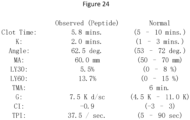
- Figure 24 provides the results of clot studies observed in humans.
- mice received a normal chow diet from 0 to 20 weeks of age. At 20 weeks of age, three mice were randomly assigned to receive dose of 1mg/kg of KGYY 6 (6-mer - SEQ ID NO:4) by IV tail injection, once a week for a period of 4 weeks. Control mice received vehicle only.
- Fig. 32A is an image of trichrome stained cells of the cross-sections of the aorta of the KGYY 6 treated subject.
- Fig. 32B is an image of trichrome stained cells of the cross-sections of the control subjects.
- 50 identifies areas characteristic of plaque formation.
- 60 identifies aortic valve leaflets.
- Fig. 32B the control (untreated) 50 areas characteristic of plaque (area under the curve) are greater than those in the subjects treated with the KGYY 6 peptide.
Landscapes
- Health & Medical Sciences (AREA)
- Life Sciences & Earth Sciences (AREA)
- Chemical & Material Sciences (AREA)
- Organic Chemistry (AREA)
- Medicinal Chemistry (AREA)
- General Health & Medical Sciences (AREA)
- Proteomics, Peptides & Aminoacids (AREA)
- Cell Biology (AREA)
- Zoology (AREA)
- Gastroenterology & Hepatology (AREA)
- Immunology (AREA)
- Biochemistry (AREA)
- Molecular Biology (AREA)
- Animal Behavior & Ethology (AREA)
- Pharmacology & Pharmacy (AREA)
- Public Health (AREA)
- Veterinary Medicine (AREA)
- Toxicology (AREA)
- Epidemiology (AREA)
- Biophysics (AREA)
- Genetics & Genomics (AREA)
- Bioinformatics & Cheminformatics (AREA)
- Engineering & Computer Science (AREA)
- Medicines That Contain Protein Lipid Enzymes And Other Medicines (AREA)
- Peptides Or Proteins (AREA)
Claims (7)
- Ein Peptid zur Verwendung in einem Verfahren zur Senkung von LDL-Cholesterin, wobei das Peptid spezifisch an eine CD40-präsentierende Zelle an der CD154-Bindungsstelle bindet, wobei das Verfahren die Verabreichung einer therapeutisch wirksamen Menge des Peptids an einen Patienten umfasst, der dies benötigt, und wobei das Peptid eine Aminosäuresequenz umfasst, die aus SEQ ID NO:3, SEQ ID NO:4, SEQ ID NO:5, SEQ ID NO:6, SEQ ID NO:8 und SEQ ID NO:9 ausgewählt ist.
- Das Peptid zur Verwendung nach Anspruch 1, wobei das Peptid eine Aminosäuresequenz umfasst, die aus SEQ ID NO:4 und SEQ ID NO:6 ausgewählt ist.
- Das Peptid zur Verwendung nach Anspruch 1, wobei das Peptid die Wechselwirkung von CD40 und CD154 beeinflusst.
- Das Peptid zur Verwendung nach Anspruch 1, wobei das Peptid die Bindung von CD40 an CD154 hemmt.
- Das Peptid zur Verwendung nach Anspruch 1, wobei das Peptid CD40 an der Stelle bindet, an der CD40 mit CD154 wechselwirkt.
- Das Peptid zur Verwendung nach Anspruch 3, wobei das Peptid das Zytokinexpressionsprofil einer mit dem Peptid behandelten Zellpopulation beeinflusst.
- Das Peptid zur Verwendung nach Anspruch 2, wobei das Peptid weniger als 20 Aminosäuren lang ist.
Applications Claiming Priority (3)
| Application Number | Priority Date | Filing Date | Title |
|---|---|---|---|
| US201762584595P | 2017-11-10 | 2017-11-10 | |
| US201862669918P | 2018-05-10 | 2018-05-10 | |
| PCT/US2018/059810 WO2019094581A1 (en) | 2017-11-10 | 2018-11-08 | Methods for preventing, modulating and/or reducing cardiovascular disease |
Publications (4)
| Publication Number | Publication Date |
|---|---|
| EP3706799A1 EP3706799A1 (de) | 2020-09-16 |
| EP3706799A4 EP3706799A4 (de) | 2021-08-25 |
| EP3706799B1 true EP3706799B1 (de) | 2025-03-12 |
| EP3706799B8 EP3706799B8 (de) | 2025-04-23 |
Family
ID=66438094
Family Applications (1)
| Application Number | Title | Priority Date | Filing Date |
|---|---|---|---|
| EP18877124.0A Active EP3706799B8 (de) | 2017-11-10 | 2018-11-08 | Peptid zur vorbeugung, modulation und / oder verminderung kardiovaskulärer erkrankungen |
Country Status (3)
| Country | Link |
|---|---|
| EP (1) | EP3706799B8 (de) |
| ES (1) | ES3031007T3 (de) |
| WO (1) | WO2019094581A1 (de) |
Families Citing this family (3)
| Publication number | Priority date | Publication date | Assignee | Title |
|---|---|---|---|---|
| US20190263888A1 (en) | 2010-10-19 | 2019-08-29 | Op-T Llc | Therapeutic peptides and methods for treating autoimmune related disease |
| US11793854B2 (en) | 2019-03-21 | 2023-10-24 | Op-T Llc | Methods for reducing symptoms of multiple sclerosis using a six-amino acid long peptide that inhibits CD40-CD150 interaction |
| EP4135742A2 (de) | 2020-04-17 | 2023-02-22 | Op-T Llc | Bioaktive peptide und verfahren zur verwendung davon |
Family Cites Families (6)
| Publication number | Priority date | Publication date | Assignee | Title |
|---|---|---|---|---|
| US2002A (en) | 1841-03-12 | Tor and planter for plowing | ||
| AP1207A (en) * | 1997-08-29 | 2003-09-20 | Pfizer Prod Inc | Combination therapy. |
| US20040072750A1 (en) * | 2001-05-03 | 2004-04-15 | David Phillips | Compounds and methods for the modulation of CD154 |
| WO2003040691A2 (en) * | 2001-11-05 | 2003-05-15 | The Brigham And Women's Hospital, Inc. | Soluble cd40l(cd154) as a prognostic marker of atherosclerotic diseases |
| CA2437639C (en) * | 2003-08-11 | 2016-07-05 | Valera Pharmaceuticals, Inc. | Long term drug delivery devices with polyurethane based polymers and their manufacture |
| EP3421487B1 (de) | 2010-10-19 | 2023-06-28 | The Regents of the University of Colorado, a body corporate | Peptide zur modulation einer t-zellen-aktivität und verwendungen davon |
-
2018
- 2018-11-08 ES ES18877124T patent/ES3031007T3/es active Active
- 2018-11-08 WO PCT/US2018/059810 patent/WO2019094581A1/en not_active Ceased
- 2018-11-08 EP EP18877124.0A patent/EP3706799B8/de active Active
Also Published As
| Publication number | Publication date |
|---|---|
| WO2019094581A1 (en) | 2019-05-16 |
| EP3706799A4 (de) | 2021-08-25 |
| ES3031007T3 (en) | 2025-07-03 |
| EP3706799B8 (de) | 2025-04-23 |
| EP3706799A1 (de) | 2020-09-16 |
Similar Documents
| Publication | Publication Date | Title |
|---|---|---|
| US20220106381A1 (en) | Cd154 peptides and methods of inhibiting cd40 interactions with cd154 | |
| AU2019205328B2 (en) | Therapeutic peptides and methods for treating autoimmune related disease | |
| US12428465B2 (en) | Therapeutic peptides and methods for treating type 2 diabetes | |
| US12226450B2 (en) | Peptides and methods for treating disease | |
| US12472223B2 (en) | Methods for reducing symptoms of multiple sclerosis using a six-amino acid long peptide that inhibits CD40-CD154 interaction | |
| US20190194290A1 (en) | Methods for preventing, modulating and/or reducing cardiovascular disease | |
| US20200072837A1 (en) | Methods for preventing, modulating and/or reducing cardiovascular disease | |
| EP3706799B1 (de) | Peptid zur vorbeugung, modulation und / oder verminderung kardiovaskulärer erkrankungen | |
| WO2002014532A2 (en) | Method for identifying modulators of 'mec'-induced functions of ccr3 and/or ccr10 | |
| HK40095385A (en) | Peptides for modulating t-cell activity and uses thereof |
Legal Events
| Date | Code | Title | Description |
|---|---|---|---|
| STAA | Information on the status of an ep patent application or granted ep patent |
Free format text: STATUS: THE INTERNATIONAL PUBLICATION HAS BEEN MADE |
|
| PUAI | Public reference made under article 153(3) epc to a published international application that has entered the european phase |
Free format text: ORIGINAL CODE: 0009012 |
|
| STAA | Information on the status of an ep patent application or granted ep patent |
Free format text: STATUS: REQUEST FOR EXAMINATION WAS MADE |
|
| 17P | Request for examination filed |
Effective date: 20200610 |
|
| AK | Designated contracting states |
Kind code of ref document: A1 Designated state(s): AL AT BE BG CH CY CZ DE DK EE ES FI FR GB GR HR HU IE IS IT LI LT LU LV MC MK MT NL NO PL PT RO RS SE SI SK SM TR |
|
| AX | Request for extension of the european patent |
Extension state: BA ME |
|
| DAV | Request for validation of the european patent (deleted) | ||
| DAX | Request for extension of the european patent (deleted) | ||
| REG | Reference to a national code |
Ref country code: HK Ref legal event code: DE Ref document number: 40038052 Country of ref document: HK |
|
| A4 | Supplementary search report drawn up and despatched |
Effective date: 20210726 |
|
| RIC1 | Information provided on ipc code assigned before grant |
Ipc: A61K 45/06 20060101AFI20210720BHEP Ipc: A61K 38/00 20060101ALI20210720BHEP Ipc: A61P 9/10 20060101ALI20210720BHEP Ipc: A61P 9/00 20060101ALI20210720BHEP |
|
| STAA | Information on the status of an ep patent application or granted ep patent |
Free format text: STATUS: EXAMINATION IS IN PROGRESS |
|
| 17Q | First examination report despatched |
Effective date: 20220809 |
|
| P01 | Opt-out of the competence of the unified patent court (upc) registered |
Effective date: 20230525 |
|
| REG | Reference to a national code |
Ref country code: DE Ref legal event code: R079 Ref country code: DE Ref legal event code: R079 Ref document number: 602018080132 Country of ref document: DE Free format text: PREVIOUS MAIN CLASS: A61K0045060000 Ipc: A61K0038170000 |
|
| GRAP | Despatch of communication of intention to grant a patent |
Free format text: ORIGINAL CODE: EPIDOSNIGR1 |
|
| STAA | Information on the status of an ep patent application or granted ep patent |
Free format text: STATUS: GRANT OF PATENT IS INTENDED |
|
| RIC1 | Information provided on ipc code assigned before grant |
Ipc: A61P 9/00 20060101ALI20240507BHEP Ipc: A61P 9/10 20060101ALI20240507BHEP Ipc: A61K 45/06 20060101ALI20240507BHEP Ipc: A61K 38/17 20060101AFI20240507BHEP |
|
| INTG | Intention to grant announced |
Effective date: 20240524 |
|
| GRAJ | Information related to disapproval of communication of intention to grant by the applicant or resumption of examination proceedings by the epo deleted |
Free format text: ORIGINAL CODE: EPIDOSDIGR1 |
|
| STAA | Information on the status of an ep patent application or granted ep patent |
Free format text: STATUS: EXAMINATION IS IN PROGRESS |
|
| GRAP | Despatch of communication of intention to grant a patent |
Free format text: ORIGINAL CODE: EPIDOSNIGR1 |
|
| STAA | Information on the status of an ep patent application or granted ep patent |
Free format text: STATUS: GRANT OF PATENT IS INTENDED |
|
| INTC | Intention to grant announced (deleted) | ||
| INTG | Intention to grant announced |
Effective date: 20241004 |
|
| GRAS | Grant fee paid |
Free format text: ORIGINAL CODE: EPIDOSNIGR3 |
|
| GRAA | (expected) grant |
Free format text: ORIGINAL CODE: 0009210 |
|
| STAA | Information on the status of an ep patent application or granted ep patent |
Free format text: STATUS: THE PATENT HAS BEEN GRANTED |
|
| GRAT | Correction requested after decision to grant or after decision to maintain patent in amended form |
Free format text: ORIGINAL CODE: EPIDOSNCDEC |
|
| AK | Designated contracting states |
Kind code of ref document: B1 Designated state(s): AL AT BE BG CH CY CZ DE DK EE ES FI FR GB GR HR HU IE IS IT LI LT LU LV MC MK MT NL NO PL PT RO RS SE SI SK SM TR |
|
| RAP3 | Party data changed (applicant data changed or rights of an application transferred) |
Owner name: OP-T LLC |
|
| REG | Reference to a national code |
Ref country code: GB Ref legal event code: FG4D |
|
| REG | Reference to a national code |
Ref country code: CH Ref legal event code: EP |
|
| RIN2 | Information on inventor provided after grant (corrected) |
Inventor name: HENRY, CHARLES W. Inventor name: YUSSMAN, MARTIN GLENN Inventor name: WAGNER, DAVID HAL, JR. |
|
| REG | Reference to a national code |
Ref country code: CH Ref legal event code: PK Free format text: BERICHTIGUNG B8 |
|
| REG | Reference to a national code |
Ref country code: DE Ref legal event code: R096 Ref document number: 602018080132 Country of ref document: DE |
|
| REG | Reference to a national code |
Ref country code: IE Ref legal event code: FG4D |
|
| REG | Reference to a national code |
Ref country code: NL Ref legal event code: FP |
|
| REG | Reference to a national code |
Ref country code: SE Ref legal event code: TRGR |
|
| REG | Reference to a national code |
Ref country code: ES Ref legal event code: FG2A Ref document number: 3031007 Country of ref document: ES Kind code of ref document: T3 Effective date: 20250703 |
|
| PG25 | Lapsed in a contracting state [announced via postgrant information from national office to epo] |
Ref country code: RS Free format text: LAPSE BECAUSE OF FAILURE TO SUBMIT A TRANSLATION OF THE DESCRIPTION OR TO PAY THE FEE WITHIN THE PRESCRIBED TIME-LIMIT Effective date: 20250612 |
|
| PG25 | Lapsed in a contracting state [announced via postgrant information from national office to epo] |
Ref country code: FI Free format text: LAPSE BECAUSE OF FAILURE TO SUBMIT A TRANSLATION OF THE DESCRIPTION OR TO PAY THE FEE WITHIN THE PRESCRIBED TIME-LIMIT Effective date: 20250312 |
|
| REG | Reference to a national code |
Ref country code: LT Ref legal event code: MG9D |
|
| PG25 | Lapsed in a contracting state [announced via postgrant information from national office to epo] |
Ref country code: NO Free format text: LAPSE BECAUSE OF FAILURE TO SUBMIT A TRANSLATION OF THE DESCRIPTION OR TO PAY THE FEE WITHIN THE PRESCRIBED TIME-LIMIT Effective date: 20250612 |
|
| PG25 | Lapsed in a contracting state [announced via postgrant information from national office to epo] |
Ref country code: HR Free format text: LAPSE BECAUSE OF FAILURE TO SUBMIT A TRANSLATION OF THE DESCRIPTION OR TO PAY THE FEE WITHIN THE PRESCRIBED TIME-LIMIT Effective date: 20250312 |
|
| PG25 | Lapsed in a contracting state [announced via postgrant information from national office to epo] |
Ref country code: LV Free format text: LAPSE BECAUSE OF FAILURE TO SUBMIT A TRANSLATION OF THE DESCRIPTION OR TO PAY THE FEE WITHIN THE PRESCRIBED TIME-LIMIT Effective date: 20250312 |
|
| PG25 | Lapsed in a contracting state [announced via postgrant information from national office to epo] |
Ref country code: GR Free format text: LAPSE BECAUSE OF FAILURE TO SUBMIT A TRANSLATION OF THE DESCRIPTION OR TO PAY THE FEE WITHIN THE PRESCRIBED TIME-LIMIT Effective date: 20250613 Ref country code: BG Free format text: LAPSE BECAUSE OF FAILURE TO SUBMIT A TRANSLATION OF THE DESCRIPTION OR TO PAY THE FEE WITHIN THE PRESCRIBED TIME-LIMIT Effective date: 20250312 |
|
| REG | Reference to a national code |
Ref country code: AT Ref legal event code: MK05 Ref document number: 1774484 Country of ref document: AT Kind code of ref document: T Effective date: 20250312 |
|
| PG25 | Lapsed in a contracting state [announced via postgrant information from national office to epo] |
Ref country code: SM Free format text: LAPSE BECAUSE OF FAILURE TO SUBMIT A TRANSLATION OF THE DESCRIPTION OR TO PAY THE FEE WITHIN THE PRESCRIBED TIME-LIMIT Effective date: 20250312 |
|
| PG25 | Lapsed in a contracting state [announced via postgrant information from national office to epo] |
Ref country code: PT Free format text: LAPSE BECAUSE OF FAILURE TO SUBMIT A TRANSLATION OF THE DESCRIPTION OR TO PAY THE FEE WITHIN THE PRESCRIBED TIME-LIMIT Effective date: 20250714 |
|
| PG25 | Lapsed in a contracting state [announced via postgrant information from national office to epo] |
Ref country code: PL Free format text: LAPSE BECAUSE OF FAILURE TO SUBMIT A TRANSLATION OF THE DESCRIPTION OR TO PAY THE FEE WITHIN THE PRESCRIBED TIME-LIMIT Effective date: 20250312 |
|
| PG25 | Lapsed in a contracting state [announced via postgrant information from national office to epo] |
Ref country code: AT Free format text: LAPSE BECAUSE OF FAILURE TO SUBMIT A TRANSLATION OF THE DESCRIPTION OR TO PAY THE FEE WITHIN THE PRESCRIBED TIME-LIMIT Effective date: 20250312 |
|
| PG25 | Lapsed in a contracting state [announced via postgrant information from national office to epo] |
Ref country code: CZ Free format text: LAPSE BECAUSE OF FAILURE TO SUBMIT A TRANSLATION OF THE DESCRIPTION OR TO PAY THE FEE WITHIN THE PRESCRIBED TIME-LIMIT Effective date: 20250312 |
|
| PG25 | Lapsed in a contracting state [announced via postgrant information from national office to epo] |
Ref country code: RO Free format text: LAPSE BECAUSE OF FAILURE TO SUBMIT A TRANSLATION OF THE DESCRIPTION OR TO PAY THE FEE WITHIN THE PRESCRIBED TIME-LIMIT Effective date: 20250312 |
|
| PG25 | Lapsed in a contracting state [announced via postgrant information from national office to epo] |
Ref country code: SK Free format text: LAPSE BECAUSE OF FAILURE TO SUBMIT A TRANSLATION OF THE DESCRIPTION OR TO PAY THE FEE WITHIN THE PRESCRIBED TIME-LIMIT Effective date: 20250312 |
|
| PG25 | Lapsed in a contracting state [announced via postgrant information from national office to epo] |
Ref country code: IS Free format text: LAPSE BECAUSE OF FAILURE TO SUBMIT A TRANSLATION OF THE DESCRIPTION OR TO PAY THE FEE WITHIN THE PRESCRIBED TIME-LIMIT Effective date: 20250712 |
|
| REG | Reference to a national code |
Ref country code: CH Ref legal event code: U11 Free format text: ST27 STATUS EVENT CODE: U-0-0-U10-U11 (AS PROVIDED BY THE NATIONAL OFFICE) Effective date: 20251201 |
|
| PGFP | Annual fee paid to national office [announced via postgrant information from national office to epo] |
Ref country code: NL Payment date: 20251126 Year of fee payment: 8 |
|
| REG | Reference to a national code |
Ref country code: DE Ref legal event code: R097 Ref document number: 602018080132 Country of ref document: DE |
|
| PGFP | Annual fee paid to national office [announced via postgrant information from national office to epo] |
Ref country code: GB Payment date: 20251127 Year of fee payment: 8 |
|
| PG25 | Lapsed in a contracting state [announced via postgrant information from national office to epo] |
Ref country code: DK Free format text: LAPSE BECAUSE OF FAILURE TO SUBMIT A TRANSLATION OF THE DESCRIPTION OR TO PAY THE FEE WITHIN THE PRESCRIBED TIME-LIMIT Effective date: 20250312 |
|
| PGFP | Annual fee paid to national office [announced via postgrant information from national office to epo] |
Ref country code: IT Payment date: 20251219 Year of fee payment: 8 |
|
| PGFP | Annual fee paid to national office [announced via postgrant information from national office to epo] |
Ref country code: FR Payment date: 20251226 Year of fee payment: 8 |
|
| PGFP | Annual fee paid to national office [announced via postgrant information from national office to epo] |
Ref country code: BE Payment date: 20251127 Year of fee payment: 8 |
|
| PLBE | No opposition filed within time limit |
Free format text: ORIGINAL CODE: 0009261 |
|
| STAA | Information on the status of an ep patent application or granted ep patent |
Free format text: STATUS: NO OPPOSITION FILED WITHIN TIME LIMIT |
|
| PGFP | Annual fee paid to national office [announced via postgrant information from national office to epo] |
Ref country code: SE Payment date: 20251127 Year of fee payment: 8 Ref country code: CH Payment date: 20251201 Year of fee payment: 8 |
|
| REG | Reference to a national code |
Ref country code: CH Ref legal event code: L10 Free format text: ST27 STATUS EVENT CODE: U-0-0-L10-L00 (AS PROVIDED BY THE NATIONAL OFFICE) Effective date: 20260121 |
|
| PGFP | Annual fee paid to national office [announced via postgrant information from national office to epo] |
Ref country code: ES Payment date: 20251201 Year of fee payment: 8 |