EP3704604B1 - Datensatzsuche mit binärer suchintegration und zwischenspeicherung - Google Patents
Datensatzsuche mit binärer suchintegration und zwischenspeicherung Download PDFInfo
- Publication number
- EP3704604B1 EP3704604B1 EP18803832.7A EP18803832A EP3704604B1 EP 3704604 B1 EP3704604 B1 EP 3704604B1 EP 18803832 A EP18803832 A EP 18803832A EP 3704604 B1 EP3704604 B1 EP 3704604B1
- Authority
- EP
- European Patent Office
- Prior art keywords
- value
- index
- range
- row
- target value
- Prior art date
- Legal status (The legal status is an assumption and is not a legal conclusion. Google has not performed a legal analysis and makes no representation as to the accuracy of the status listed.)
- Active
Links
Images





Classifications
-
- G—PHYSICS
- G06—COMPUTING OR CALCULATING; COUNTING
- G06F—ELECTRIC DIGITAL DATA PROCESSING
- G06F40/00—Handling natural language data
- G06F40/10—Text processing
- G06F40/166—Editing, e.g. inserting or deleting
- G06F40/177—Editing, e.g. inserting or deleting of tables; using ruled lines
- G06F40/18—Editing, e.g. inserting or deleting of tables; using ruled lines of spreadsheets
-
- G—PHYSICS
- G06—COMPUTING OR CALCULATING; COUNTING
- G06F—ELECTRIC DIGITAL DATA PROCESSING
- G06F16/00—Information retrieval; Database structures therefor; File system structures therefor
- G06F16/20—Information retrieval; Database structures therefor; File system structures therefor of structured data, e.g. relational data
- G06F16/22—Indexing; Data structures therefor; Storage structures
- G06F16/2228—Indexing structures
-
- G—PHYSICS
- G06—COMPUTING OR CALCULATING; COUNTING
- G06F—ELECTRIC DIGITAL DATA PROCESSING
- G06F16/00—Information retrieval; Database structures therefor; File system structures therefor
- G06F16/20—Information retrieval; Database structures therefor; File system structures therefor of structured data, e.g. relational data
- G06F16/24—Querying
- G06F16/245—Query processing
- G06F16/2455—Query execution
- G06F16/24552—Database cache management
Definitions
- Businesses and individual users utilize spreadsheets and other computer-implemented table applications to store and organize a wide variety of data. Such applications are useful in organizing data and in some cases those applications may provide mechanisms for sorting and finding specified data utilizing various functions supported by the applications.
- lookup functions such as VLOOKUP, MATCH and HLOOKUP, that are utilized in spreadsheet applications can be expensive from a processing standpoint if the data in a given spreadsheet that is applying a lookup function is sorted by a value type (e.g., number, text, logical value, etc.) that does not correspond to a value type that is included as a reference in the lookup function.
- US 2007/112795 A1 relates to scalable retrieval of data entries using an array index or a secondary key. Examples improve the lookup times and modification costs of indexing on a dynamically sorted list by using a combination of data structures to determine index values for secondary keys and vice versa. More specifically, exemplary examples provide a combination of a binary tree (e.g., a balanced binary tree) with a lookup table (e.g., linear dynamic hash table) to provide scalable retrieval of entries by either an array index or a secondary key. For example, given a key, a hash thereof returns a node placement within a balanced binary tree. This positioning can then be used at runtime to determine an index value for a data record, resulting in a near real-time lookup cost. Also note that modifications, such as reordering, insertions, and deletions, become a function of the nodes depth in the binary tree, rather than a linear function of number of records within the data array.
- a binary tree e.g., a balanced
- EP 1,164,502 A2 relates to a method and system for facilitating information exchange between individuals and entities interacting on a shared project, and more particularly to a method and system for horizontal, i.e., non-hierarchical, participation in and/or contribution to a spreadsheet-based project.
- the method and system is Web-based and utilizes conventional browser and spreadsheet technology to achieve collaborative exchanges of information on an enterprise-wide basis.
- the method and system also facilitate efficacious remote information access and exchange, e.g., over a computer network such as the Internet and/or the World Wide Web, through a caching function that combines individual queries initiated by a spreadsheet program before transmitting across a network to a server for consideration.
- US 2013/013994 A1 relates to utilizing a spreadsheet by defining a parameter external to the spreadsheet and associating the parameter with the spreadsheet to define a parameterized workbook.
- this utilization further comprises storing a location of the spreadsheet and storing the name of the parameter in the same storage module as the location.
- it includes defining a result external to the spreadsheet, the result referencing one or more cells within the spreadsheet.
- this utilization further comprises receiving a value for the parameter and generating the result based at least in part on the value and the spreadsheet.
- it further comprises associating a type with the parameter. The type can define a range of values or attributes associated with the parameter.
- Non-limiting examples of the present disclosure describe systems, methods and devices for identifying a target value in a data set.
- a determination is made regarding whether a data set is sorted according to a particular value type designated in a target value request (e.g., a VLOOKUP function, an HLOOKUP function, a MATCH function). If a determination is made that the data set is not sorted according to reference value type included in the request, a determination may be made as to whether a cached index comprising row or column numbers that are sorted based on the reference value type designated in the target value request exists. If a determination is made that no such cached index exists, a new sorted index may be generated, and a fast search may be utilized to determine the target value.
- a particular value type designated in a target value request e.g., a VLOOKUP function, an HLOOKUP function, a MATCH function.
- the identified cached index may be utilized to perform a fast search to determine the target value.
- Intermediary values obtained from a cached index may be applied to a plurality of lookup functions that rely on one or more same values that have already been sorted in creating a cached index.
- the present disclosure is directed to systems, methods and devices for performing fast searches (e.g., binary searches, hash function searches, radix sort searches, etc.) for target values in a data set.
- Lookup functions such as VLOOKUP, MATCH and HLOOKUP, allow users of spreadsheet applications to identify a value, or a location of a value, in a spreadsheet data set that they do not know, but for which they know a different value related to that value.
- a spreadsheet application user may utilize a lookup function that includes a value that they do know (i.e., a reference value), such as the last name of a particular user, to identify a piece of information, or target value, that they do not know, such as the person's social security number.
- a reference value such as the last name of a particular user
- the range that is specified in the lookup function may overlap with other spreadsheet application functions applied to a set of data.
- the information in a data set is sorted according to a value type that does not correspond to the reference value
- the lookup function the spreadsheet application must go through each value in the specified range systematically until the reference value is identified or not found in the range.
- the computing costs associated with performing the lookup functions have typically been compounded because as each of the functions are processed, the processing computing device must perform a systematic analysis of each unsorted value corresponding to each function's range until the reference value of each function is identified or not identified. That is, if a first lookup function is processed with reference X in range of cells A1:A10000, and reference X is in cell A800, the processing computing device must analyze 800 cells (cells A1 to A800) to determine if there is a matching X reference value in each of the first 800 cells.
- the processing computing device must analyze the first 800 cells during the processing of the first function, as well as re-analyzing those first 800 cells, in addition to cells A801 to A900 during the processing of the second function.
- the processing costs and time necessary to accomplish the processing of those functions has typically been intensive.
- aspects described herein provide mechanisms for decreasing processing costs (e.g., computer processing cycles, time required to process data, etc.) associated with lookup functions that share an overlapping range in a data set.
- processing costs e.g., computer processing cycles, time required to process data, etc.
- a sorted index may be generated.
- some users of spreadsheet applications may store a variety of value types in a spreadsheet (e.g., person names may be included in a first column, social security numbers may be included in a second column, birth dates may be included in a third column, etc.), and it may thus be impossible to sort all of the data in the spreadsheet at the same time.
- value types e.g., person names may be included in a first column, social security numbers may be included in a second column, birth dates may be included in a third column, etc.
- a sorted index may be generated that comprises the row numbers corresponding to the lookup range for the function, and those row numbers may be sorted according to the reference value in the lookup function.
- a sorted index may be generated that comprises the column numbers corresponding to the lookup range for the function, and those column numbers may be sorted according to the value type included in the range.
- a MATCH function is processed for a particular target value type, and the corresponding range specified in the MATCH function for the reference value type included in the request is not sorted by that value type, a sorted index may be generated that comprises the row or column numbers corresponding to the lookup range for the function, and those row or column numbers may be sorted according to the value type included in the range.
- an index generated for a lookup function range may be sorted utilizing a binary search operation that is executed for each subsequent row or column number that is included in a given lookup range. That is, an index for a lookup function may be generated by inserting row or column numbers one-by-one into an index, and a determination may be made for each row or column number that is inserted as to a correct location for that row or column number in the index based on the value type that is included in the lookup range.
- a specific example of this process as applied to a VLOOKUP function is provided below.
- row 1 may be inserted first, and as the index is currently empty, there is only one place to insert row 1.
- the current index is: Row 1
- a binary search is performed based on a value comparison between the row being inserted (e.g., first row 2, then row 3, then row 4).
- a comparison is performed between the value corresponding to row 2, and the value in row 1, because row 1 has already been inserted in the index. If the value corresponding to row 2 is less than the value for row 1, row 2 is inserted before row 1 in the index. If the value corresponding to row 2 is more than the value for row 1, row 2 is inserted after row 1 in the index.
- the current index after insertion of row 1 and row 2 into the index is:
- the value corresponding to row 3 is compared against the row value for the current midpoint of the current index. If the binary search algorithm rounds up, the value for row 3 would be compared with the value corresponding to row 2 (the second row in the index). If the value corresponding to row 3 is more than the value for row 2, row 3 would be inserted after row 2 in the index. Alternatively, if the value corresponding to row 3 is lower than the value for row 2, the value corresponding to row 3 would be compared with the value for row 1. Again, if the value corresponding to row 3 is higher than the value for row 1, row 3 would be inserted in the index between row 1 and row 2.
- row 3 would be inserted before row 1 in the index.
- the current index after row 3's insertion is:
- a position for row 4 in the index is determined through a binary search of the current index. That is, the value corresponding to row 4 is compared against the value for the current midpoint of the index. In this case, the midpoint is row 1, so the value corresponding to row 4 is compared against the value for row 1. If the value corresponding to row 4 is higher than the value for row 1, each row having corresponding values that are less than or equal to the value for row 1 are eliminated from the search (e.g., row 3 and row 1 are eliminated from the search), and the value corresponding to row 4 is then compared against a value corresponding to the midpoint row in the index that remains after elimination of row 3 and row 1.
- row 2 the value corresponding to row 4 is compared with the value for row 2. If the value corresponding to row 4 is greater than the value for row 2, row 4 is inserted after row 2 in the index. Alternatively, if the value corresponding to row 4 is less than the value for row 2, row 4 is inserted just before row 2. Assuming for example purposes that the value for row 4 is greater than the value for row 2, the generated index would be:
- the generated index for a given lookup function may only include row or column numbers sorted according to the value type for the lookup function's range.
- a call to the spreadsheet would need to be made to determine whether a value corresponding to a row that is currently being inserted is greater than or less than a value corresponding to a row midpoint value it is being compared to in the binary search utilized to position the row in the index. That is, as the row midpoint value in this scenario is not contained in the index, a call to the spreadsheet would need to be made to obtain that value, which the value corresponding to the row being inserted would be compared to.
- the generated index for a given lookup function may comprise row or column numbers sorted according to the value type for a lookup function's range, and the corresponding values for each cell in the range.
- a call back to the spreadsheet to determine values for each midpoint row or column comparison performed in generating the index is not necessary, as those values are already included in the index being generated.
- one or more computing devices associated with the spreadsheet application may perform a binary search to determine a row or column number associated with a reference value of the corresponding lookup function.
- a call back to a corresponding spreadsheet application instance may be performed to determine a value associated with a middle row or column number of the index that is being compared with a reference value.
- a binary search may be performed without a callback to a corresponding spreadsheet application instance. That is, a reference value associated with a lookup function may be compared to the values of midpoint rows or columns in a sorted index, without necessitating the additional step of calling back to a corresponding spreadsheet instance to determine the value for each midpoint row or column that is needed to perform the binary search of the sorted index.
- a sorted index that has been generated in association with a corresponding range of a lookup function may be cached or otherwise saved for use in processing additional functions that incorporate an overlapping range.
- a sorted index may be saved to a computing device running a corresponding spreadsheet application.
- a sorted index may be saved as part of a corresponding spreadsheet application file.
- a sorted index may be saved to a remote computing device. For example, if a corresponding spreadsheet application is a web-based spreadsheet application, a generated index for the web-based spreadsheet application may be saved to one or more server computing devices associated with implementing an instance of the web-based spreadsheet application from which the generated index was generated for.
- a computing device associated with that function may first make a determination as to whether an index may have already been generated that includes an overlapping range with the range specified in the function. In order for a cached index to be utilized by a subsequent function based on an overlapping range being specified in the function, a determination is made as to whether the function for which the cached index was generated has the same starting cell range as the subsequent function.
- a binary search performed for the reference value of the subsequent function may reuse the cached index corresponding to the A1:A10 VLOOKUP function, and an additional sorted index corresponding to rows A11 to A20 may then only need to be created to identify the row number associated with the reference value of the subsequent function by performing a binary search if the subsequent reference value is not identified from the cached index corresponding to the first VLOOKUP function.
- a cached index for a lookup function in a spreadsheet application may be discarded each time a full worksheet calculation is completed in a spreadsheet application.
- a sorted index may be regenerated when a corresponding lookup function is processed during a subsequent processing of that lookup function in the spreadsheet application.
- a cached index for a lookup function in a spreadsheet application may be discarded only upon detecting that a value in a range of the lookup function for the spreadsheet application has been modified.
- FIG. 1 is a schematic diagram illustrating an example distributed computing environment 100 for performing a fast search to identify one or more target values in a spreadsheet application.
- the fast search may comprise a binary search performed in association with one or more lookup functions in a spreadsheet application.
- the fast search may comprise a hash search.
- the fast search may comprise a radix sort search.
- the exemplary distributed computing environment 100 includes first spreadsheet application environment 102, network environment 114, cache and processing environment 116, and second spreadsheet application environment 122.
- the first spreadsheet application environment 102 includes user 104, computing device 106, and spreadsheet application 108.
- Spreadsheet application 108 may comprise an application running entirely on computing device 106 or spreadsheet application may be a web-based application that computing device 106 accesses via network 114.
- computing device 106 may communicate, via network 114, with one or more server computing devices, such as server computing device 120, which may host a web-based spreadsheet that is implemented on computing device 106.
- Spreadsheet application 108 may comprise a plurality of rows and a plurality of columns.
- each of the plurality of columns or each of the plurality of rows may comprise a value type that is different from one or more other rows or columns in the spreadsheet application 108.
- each column or row in the spreadsheet application 108 may represent a unique type of data that one or more users, such as user 104, would like to have their data represented as within spreadsheet application 108.
- each column or row in spreadsheet application 106 may represent data of a different value type comprising: an integer value type, a text value type, a currency value type, a real number value type, a date value type, a time value type, and a date and time value type.
- user 104 may execute a sort operation on one or more columns or rows in spreadsheet application 108; however in performing the sort operation, it may not be possible to sort each column or row in spreadsheet application 108 by its corresponding value type. That is, if one column or row is sorted according to its value type, each other column or row may then be out of order with regard to its value type after the sort operation.
- the input VLOOKUP function 110 may include a range of cells in one or more columns in spreadsheet application 108 in which to look for a reference value specified by the VLOOKUP function 110.
- the spreadsheet application 108 may determine whether a cached index comprising one or more sorted row numbers that overlap with the range in the VLOOKUP function exists.
- computing device 106 may send a cache query to a local storage device on computing device 106.
- computing device 106 may send a cache query, via network 114, to one or more remote computing devices such as cache storage device 118.
- a sorted index may be generated comprising the row numbers included in the VLOOKUP function range sorted by their corresponding values.
- the lookup range specified in the lookup function comprises a plurality of values of an integer value type
- an index may be generated comprising the plurality of row numbers in the lookup range, sorted by their corresponding integer values.
- the lookup range specified in the lookup function comprises a plurality of values of a date value type
- an index may be generated comprising the plurality of row numbers in the lookup range, sorted by their corresponding date values.
- the sorted index may include not only the row numbers corresponding to the lookup range, but also the corresponding values associated with those row numbers, which may also be sorted according to their corresponding row numbers.
- spreadsheet application 108 is a local application residing on computing device 106
- the sorting and indexing of data associated with a lookup function may be performed by computing device 106.
- the sorting and indexing of data associated with a lookup function may be performed by one or more remote computing devices, such as remote server computing device 130, which may communicate with computing device 106 via network 114.
- second spreadsheet application environment 122 includes user 124, computing device 126, spreadsheet application 128, and result 132 of VLOOKUP function 130.
- Each element included in second spreadsheet application environment 122 may be the same as the corresponding elements shown in relation to first spreadsheet application environment 102, except for result 132 corresponding to the reference value specified by VLOOKUP function 110 and VLOOKUP function 130.
- FIG. 2 illustrates an exemplary lookup function 204 in a spreadsheet application 202 that may utilize the fast search mechanisms described herein for identifying one or more target values 208 in the spreadsheet application 202.
- the spreadsheet application 202 comprises a plurality of columns with a plurality of corresponding value types.
- Column A comprises a plurality of movies corresponding to a text value type
- column B comprises a plurality of movie release years corresponding to an integer value type
- column C comprises a plurality of movie release months corresponding to a date value type
- column D comprises a plurality of movie rankings based on box office sales corresponding to an integer value type
- column E comprises a plurality of movie box office sales corresponding to a currency value type.
- Spreadsheet application 202 is sorted according to the text value type of column A (i.e., column A is sorted alphabetically from A-Z).
- column A is sorted alphabetically from A-Z.
- the information in each of columns B through E are not sorted according to their corresponding value types. For example, if column B were sorted according to its value type, 1987 in row 3 would precede 2001 in row 2, if column C were sorted according to its value type, Mar. in row 3 would precede Dec. in row 2, if column D were sorted according to its value type, 52 in row 4 would precede 675 in row 3, and if column E were sorted according to its value type, $22,248,500.00 in row 3 would precede $1,258,127,200.00 in row 2.
- a user may wish to know the box office sales of a movie that they know is included in the spreadsheet application, based on a rank number that they know for that movie.
- I3 is the known value, or reference value, (corresponding to "327" 212 in cell I3), which the user is utilizing to locate the target value based on the lookup range, or table array, "D2:E9", "2" is the column in which the reference value resides in (i.e., the second column in the range), and the "FALSE" designation provides that the user only wants exact matches corresponding to the reference value, not approximate matches.
- the entire VLOOKUP function can be shown at 204 in the spreadsheet application, corresponding to the value input in cell I4.
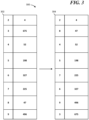
- FIG. 3 illustrates index generation environment 300 for a spreadsheet application data set that may be utilized by one or more lookup functions in the spreadsheet application to perform a fast search for one or more target values.
- index generation environment 300 includes unsorted index 302 and sorted index 304. Both of unsorted index 302 and sorted index 304 comprise values from column D and rows 2 through 9 in FIG. 2 .
- unsorted index 302 shows the values in column D as sorted according to the textual values in column A in FIG. 2
- sorted index 304 shows the values in column D sorted according to the value type in column D (i.e., according to an integer value type).
- sorted index 304 depicts the generation of a sorted index based on the VLOOKUP function that has been input into the spreadsheet application of FIG. 2 .
- sorted index 304 may include only the row numbers corresponding to column D being sorted by integer value type. In other examples, sorted index 304 may include the row numbers corresponding to column D being sorted by integer value type, and the corresponding values in each of the row numbers in column D.
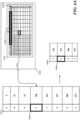
- FIG. 4A illustrates mechanisms by which a fast search for a target value may be performed utilizing a generated index 402A from a spreadsheet application 416A.
- a VLOOKUP function is entered into cell F4 at 420A.
- the exemplary VLOOKUP function is also shown in the spreadsheet bar at 418A.
- the fast search may comprise a binary search of the generated index 402A.
- Generated index 402A includes each of the rows associated with column D in FIG. 2 sorted according to the value and value type designated in column D of FIG. 2 (i.e., integer value type). As such, generated index 402A includes the row numbers of column D sorted in ascending order according to their corresponding row values. In some examples, in addition to the row numbers, generated index 402A may also include the row values from column D in FIG. 2 , also sorted according to their value type (i.e., integer value type).
- a first operation may be performed whereby the reference value is greater than or less than the middle value associated with the middle row number 404A in generated index 402A.
- a comparison must be made as to whether the reference value (i.e., 327), is greater than or less than the value associated with the middle row number 404A (i.e., 198) of the generated index 402A.
- the reference value is greater than 198, so every row in generated index 402A with a corresponding value that is less than or equal to the value corresponding to the middle row number 404A in generated index 402A, can be eliminated from generated index 402A, and a new index 406A may be utilized in the next step of the binary search.
- a determination must be made as to what row represents the middle row in the new index 406A. Because there is an even number of rows in new index 406A, the middle row number in new index 406A is calculated as (4/2 2, which is row 6 in new index 406A). Upon determining that row 6 408A is the middle row number of new index 406A, a determination is then made as to whether the reference value (i.e., 327), is equal to, or greater than or less than the value associated with the middle row number 408A of new index 406A. In this case the reference value equals the value associated with the middle row number 408A, as the middle row number has an associated value associated with it of 327.
- the reference value i.e., 327
- the reference number 327 has been matched to its corresponding row value in the spreadsheet application 416A.
- a simple operation can be performed in the spreadsheet to obtain the target value in row 6. That is, the sales figure column in spreadsheet application can be analyzed at row 6, and a box office sales figure of $48,267,300.00 can be identified as corresponding to the movie in the spreadsheet application 416A with a rank of 327.
- the sorted indexes 402A and 406A may make a call back to the spreadsheet application 416A in order to determine what the corresponding value is for each of those middle row numbers, as discussed more fully with regard to FIG. 4B .
- the values for each row number are also included with the sorted row numbers, such an operation is not necessary in order to compare the middle row number value with the reference value from the lookup function.
- FIG. 4B illustrates mechanisms by which a fast search for a target value may be performed utilizing a generated index 402B from a spreadsheet application 412B.
- the index 402B comprises a plurality of row numbers sorted according to the values and value types in column D of spreadsheet application 412B.
- column D comprises a plurality of movie rankings based on box office sales.
- the index 402B has been generated based on a VLOOKUP function being input into cell F4 of spreadsheet application 412B.
- "327” is the reference number (i.e., the number that a user knows and that the user would like to locate a sales figure for [i.e., the target value])
- "D2:E9” is the range in which the function will be applied
- 2 is the column index number in which the data corresponding to the target value is to be located (in this case the box office sales for a movie with rank 327)
- "FALSE" designates that the user only wants exact matches returned.
- index 402B The row numbers in index 402B are sorted according to an integer value corresponding to rank numbers associated with the movies in spreadsheet application 412B.
- Index 402B is utilized to perform a binary search for the reference value - in this example "327".
- the first operation in performing the binary search is to determine the middle row number in index 402B.
- the middle row number of index 402B is determined by dividing the number of rows in index 402B by two. Because there are eight rows in index 402B (i.e., rows 2-9), corresponding to the range specified in the lookup function, the middle row is the 4 th row down in index 402B (i.e., row 5 404B).
- a call 414B from index 402B to spreadsheet application 412B is made to determine the value corresponding to row 5 404B in the reference value column, which in this example corresponds to cell D5.
- the spreadsheet application 412B may send 416B the requested value back to index 402B.
- the value corresponding to cell D5 is 198.
- the value received by index 402B corresponding to its middle row (row 5 404B) is then compared against the reference value from the lookup function.
- the reference value is greater than the value corresponding to row 5 404B.
- each value that is less than or equal to the value corresponding to row 5 404B may be discarded from the index 402B, and new index 406B may be generated. That is row numbers from row 5 404B and above in the index may be discarded from index 402B and new index 406B may be generated based on the remaining rows from index 402B.
- new index 406B comprises rows 7, 6, 9, and 3, sorted in ascending order according to an integer value type corresponding to the movie ranking values in spreadsheet application 412B.
- the next step is to identify the middle row number in new index 406B.
- the middle row number is determined by dividing the number of row numbers in new index 406B by two.
- the middle row number in new index 406B is the second row from the top row of new index 406B. That is, the middle row number in new index 406B is row 6 408B.
- a call 418B from new index 406B to spreadsheet application 412B is made to determine the value corresponding to row 6 408B in the reference value column, which in this example corresponds to cell D6.
- the spreadsheet application 412B may send 420B the request value back to new index 406B.
- the value corresponding to cell D6 is 327.
- the value received by new index 406B corresponding to its middle row (row 6 408B) is then compared against the reference value from the lookup function.
- one further operation may be performed to determine the target value of the lookup function. That is, a determination may be made by the spreadsheet application as to what value corresponds to the column index number provided in the lookup function at row 6.
- the cell corresponding to the column index number provided in the lookup function at row 6 is E6, and the value in that cell is a currency value corresponding to $48,267,300.00.
- the target value of $48,267,300.00, identified through a fast binary search of generated index 402B may be caused to be displayed in association with the spreadsheet application 412B.
- the target value of the lookup function of spreadsheet application 412B may be caused to be displayed in a cell where the lookup function was entered (i.e., cell F4).
- FIG. 5 is an exemplary method 500 for identifying a target value in a data set.
- the method 500 begins at a start operation and flow moves to operation 502 where a target value request is received.
- the target value request may be comprised in a lookup function, such as a VLOOKUP function, an HLOOKUP function, or a MATCH function.
- the determination as to whether a range specified in the target value request already exists comprises determining whether a cached index exists having a starting range value that is the same as the starting range value specified in the target value request.
- the determination as to whether the range specified in the target value request already exists may also comprise determining whether the new target value request comprises the same column or row number as a cached index (depending on the function/request type).
- the determination as to whether the range specified in the target value request already exists may also comprise determining whether the new target value request comprises the same reference number value type as a request from which a cached index was generated (i.e., whether the known value type in the functions is the same). For example if a cached index comprises a sorted index of rows A1:A10, and the target value request lookup function comprises a lookup range of A1 :A20, the cached index may be utilized to perform a fast search of rows A1-A10 for the reference value included in the request.
- a fast search e.g., a binary search
- an index may be generated for rows A11:A20, and an additional binary search corresponding to the new index may be performed.
- a systematic search of A1 1 :A20, in their unsorted form as displayed in the spreadsheet application may be performed to determine whether the reference value is located in any of cells A11 :A20.
- a new sorted index may be generated for the range specified in the target value lookup request.
- the new sorted index may be generated based on a binary search performed for each row or column number that is to be inserted into the index.
- the new sorted index may be cached upon its generation.
- the new sorted index may be cached to a local computing device on which a spreadsheet application is being run, or in examples where the spreadsheet application is a web-based application, the new sorted index may be cached on a remote computing device, such as a server computing device from which the web-based spreadsheet application is being run or otherwise communicated with. In examples where the new sorted index is cached to a local computing device on which the spreadsheet application is being run, the cached index may be saved to a workbook file of the spreadsheet application corresponding to the lookup function.
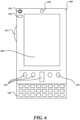
- FIGS. 6 and 7 illustrate a mobile computing device 600, for example, a mobile telephone, a smart phone, wearable computer, a tablet computer, an e-reader, a laptop computer, and an augmented reality computer, with which embodiments of the disclosure may be practiced.
- a mobile computing device 600 for example, a mobile telephone, a smart phone, wearable computer, a tablet computer, an e-reader, a laptop computer, and an augmented reality computer, with which embodiments of the disclosure may be practiced.
- the mobile computing device 600 is a handheld computer having both input elements and output elements.
- the mobile computing device 600 typically includes a display 605 and one or more input buttons 610 that allow the user to enter information into the mobile computing device 600.
- the display 605 of the mobile computing device 600 may also function as an input device (e.g., a touch screen display).
- an optional side input element 615 allows further user input.
- the side input element 615 may be a rotary switch, a button, or any other type of manual input element.
- mobile computing device 600 may incorporate more or fewer input elements.
- the display 605 may not be a touch screen in some embodiments.
- the mobile computing device 600 is a portable phone system, such as a cellular phone.
- the mobile computing device 600 may also include an optional keypad 635.
- Optional keypad 635 may be a physical keypad or a "soft" keypad generated on the touch screen display.
- the output elements include the display 605 for showing a graphical user interface (GUI), a visual indicator 620 (e.g., a light emitting diode), and/or an audio transducer 625 (e.g., a speaker).
- GUI graphical user interface
- the mobile computing device 600 incorporates a vibration transducer for providing the user with tactile feedback.
- the mobile computing device 600 incorporates input and/or output ports, such as an audio input (e.g., a microphone jack), an audio output (e.g., a headphone jack), and a video output (e.g., a HDMI port) for sending signals to or receiving signals from an external device.
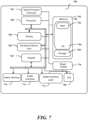
- FIG. 7 is a block diagram illustrating the architecture of one aspect of a mobile computing device. That is, the mobile computing device 700 can incorporate a system (e.g., an architecture) 702 to implement some aspects.
- the system 702 is implemented as a "smart phone" capable of running one or more applications (e.g., browser, e-mail, calendaring, contact managers, messaging clients, games, and media clients/players).
- the system 702 is integrated as a computing device, such as an integrated personal digital assistant (PDA) and wireless phone.
- PDA personal digital assistant
- One or more application programs 766 may be loaded into the memory 762 and run on or in association with the operating system 764. Examples of the application programs include phone dialer programs, e-mail programs, personal information management (PIM) programs, word processing programs, spreadsheet programs, Internet browser programs, messaging programs, and so forth.
- the system 702 also includes a non-volatile storage area 768 within the memory 762. The non-volatile storage area 768 may be used to store persistent information that should not be lost if the system 702 is powered down.
- the application programs 766 may use and store information in the non-volatile storage area 768, such as e-mail or other messages used by an e-mail application, and the like.
- a synchronization application (not shown) also resides on the system 702 and is programmed to interact with a corresponding synchronization application resident on a host computer to keep the information stored in the non-volatile storage area 768 synchronized with corresponding information stored at the host computer.
- other applications may be loaded into the memory 762 and run on the mobile computing device 700, including instructions for identifying a target value in a data set.
- the system 702 has a power supply 770, which may be implemented as one or more batteries.
- the power supply 770 might further include an external power source, such as an AC adapter or a powered docking cradle that supplements or recharges the batteries.
- the system 702 may also include a radio interface layer 772 that performs the function of transmitting and receiving radio frequency communications.
- the radio interface layer 772 facilitates wireless connectivity between the system 702 and the "outside world," via a communications carrier or service provider. Transmissions to and from the radio interface layer 772 are conducted under control of the operating system 764. In other words, communications received by the radio interface layer 772 may be disseminated to the application programs 766 via the operating system 764, and vice versa.
- the visual indicator 620 may be used to provide visual notifications, and/or an audio interface 774 may be used for producing audible notifications via the audio transducer 625.
- the visual indicator 620 is a light emitting diode (LED) and the audio transducer 625 is a speaker.
- LED light emitting diode
- the LED may be programmed to remain on indefinitely until the user takes action to indicate the powered-on status of the device.
- the audio interface 774 is used to provide audible signals to and receive audible signals from the user.
- the audio interface 774 may also be coupled to a microphone to receive audible input, such as to facilitate a telephone conversation.
- the microphone may also serve as an audio sensor to facilitate control of notifications, as will be described below.
- the system 702 may further include a video interface 776 that enables an operation of an on-board camera 630 to record still images, video stream, and the like.
- a mobile computing device 700 implementing the system 702 may have additional features or functionality.
- the mobile computing device 700 may also include additional data storage devices (removable and/or non-removable) such as, magnetic disks, optical disks, or tape.
- additional storage is illustrated in FIG. 7 by the non-volatile storage area 768.
- Data/information generated or captured by the mobile computing device 700 and stored via the system 702 may be stored locally on the mobile computing device 700, as described above, or the data may be stored on any number of storage media that may be accessed by the device via the radio interface layer 772 or via a wired connection between the mobile computing device 700 and a separate computing device associated with the mobile computing device 700, for example, a server computer in a distributed computing network, such as the Internet.
- a server computer in a distributed computing network such as the Internet.
- data/information may be accessed via the mobile computing device 700 via the radio interface layer 772 or via a distributed computing network.
- data/information may be readily transferred between computing devices for storage and use according to well-known data/information transfer and storage means, including electronic mail and collaborative data/information sharing systems.
- FIG. 8 is a block diagram illustrating physical components (e.g., hardware) of a computing device 800 with which aspects of the disclosure may be practiced.
- the computing device components described below may have computer executable instructions for identifying a target value in a data set.
- the computing device 800 may include at least one processing unit 802 and a system memory 804.
- the system memory 804 may comprise, but is not limited to, volatile storage (e.g., random access memory), non-volatile storage (e.g., read-only memory), flash memory, or any combination of such memories.
- the system memory 804 may include an operating system 805 suitable for running one or more tree ensemble model optimization programs.
- the operating system 805 may be suitable for controlling the operation of the computing device 800.
- embodiments of the disclosure may be practiced in conjunction with a graphics library, other operating systems, or any other application program and is not limited to any particular application or system.
- This basic configuration is illustrated in FIG. 8 by those components within a dashed line 808.
- the computing device 800 may have additional features or functionality.
- the computing device 800 may also include additional data storage devices (removable and/or non-removable) such as, for example, magnetic disks, optical disks, or tape.
- additional storage is illustrated in FIG. 8 by a removable storage device 809 and a non-removable storage device 810.
- a number of program modules and data files may be stored in the system memory 804. While executing on the processing unit 802, the program modules 806 (e.g., spreadsheet application 820) may perform processes including, but not limited to, the aspects, as described herein.
- the request analysis engine 811 may perform one or more operations associated with receiving a lookup function request, and determining a range associated with the lookup function request.
- the index generation engine 813 may perform one or more operations associated with generating a sorted index based on receiving a lookup function request, including performing a binary search for each subsequent row or column number that is to be inserted into a sorted index.
- the cache engine 815 may perform one or more operations associated with analyzing a cache to determine whether one or more sorted indexes correspond to a lookup range provided by a current lookup function that is being analyzed.
- Calculation engine 817 may perform one or more operations associated with performing function calculations, including utilizing intermediary values in such calculations from one or more cached indices generated from one or more previously analyzed functions of a spreadsheet application workbook.
- embodiments of the disclosure may be practiced in an electrical circuit comprising discrete electronic elements, packaged or integrated electronic chips containing logic gates, a circuit utilizing a microprocessor, or on a single chip containing electronic elements or microprocessors.
- embodiments of the disclosure may be practiced via a system-on-a-chip (SOC) where each or many of the components illustrated in FIG. 8 may be integrated onto a single integrated circuit.
- SOC system-on-a-chip
- Such an SOC device may include one or more processing units, graphics units, communications units, system virtualization units and various application functionality all of which are integrated (or "burned") onto the chip substrate as a single integrated circuit.
- the functionality, described herein, with respect to the capability of client to switch protocols may be operated via application-specific logic integrated with other components of the computing device 800 on the single integrated circuit (chip).
- Embodiments of the disclosure may also be practiced using other technologies capable of performing logical operations such as, for example, AND, OR, and NOT, including but not limited to mechanical, optical, fluidic, and quantum technologies.
- embodiments of the disclosure may be practiced within a general purpose computer or in any other circuits or systems.
- the computing device 800 may also have one or more input device(s) 812 such as a keyboard, a mouse, a pen, a sound or voice input device, a touch or swipe input device, etc.
- the output device(s) 814 such as a display, speakers, a printer, etc. may also be included.
- the aforementioned devices are examples and others may be used.
- the computing device 800 may include one or more communication connections 816 allowing communications with other computing devices 815. Examples of suitable communication connections 816 include, but are not limited to, radio frequency (RF) transmitter, receiver, and/or transceiver circuitry; universal serial bus (USB), parallel, and/or serial ports.
- RF radio frequency
- USB universal serial bus
- Computer readable media may include computer storage media.
- Computer storage media may include volatile and nonvolatile, removable and non-removable media implemented in any method or technology for storage of information, such as computer readable instructions, data structures, or program modules.
- the system memory 804, the removable storage device 809, and the non-removable storage device 810 are all computer storage media examples (e.g., memory storage).
- Computer storage media may include RAM, ROM, electrically erasable read-only memory (EEPROM), flash memory or other memory technology, CD-ROM, digital versatile disks (DVD) or other optical storage, magnetic cassettes, magnetic tape, magnetic disk storage or other magnetic storage devices, or any other article of manufacture which can be used to store information and which can be accessed by the computing device 800. Any such computer storage media may be part of the computing device 800.
- Computer storage media does not include a carrier wave or other propagated or modulated data signal.
- Communication media may be embodied by computer readable instructions, data structures, program modules, or other data in a modulated data signal, such as a carrier wave or other transport mechanism, and includes any information delivery media.
- modulated data signal may describe a signal that has one or more characteristics set or changed in such a manner as to encode information in the signal.
- communication media may include wired media such as a wired network or direct-wired connection, and wireless media such as acoustic, radio frequency (RF), infrared, and other wireless media.
- RF radio frequency
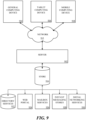
- FIG. 9 illustrates one aspect of the architecture of a system for processing data received at a computing system from a remote source, such as a personal/general computer 904, tablet computing device 906, or mobile computing device 908, as described above.
- Content displayed at server device 902 may be stored in different communication channels or other storage types. For example, various documents may be stored using a directory service 922, a web portal 924, a mailbox service 926, an instant messaging store 928, or a social networking site 930.
- the program modules 806 may be employed by a client that communicates with server device 902, and/or the program modules 806 may be employed by server device 902.
- the server device 902 may provide data to and from a client computing device such as a personal/general computer 904, a tablet computing device 906 and/or a mobile computing device 908 (e.g., a smart phone) through a network 915.
- a client computing device such as a personal/general computer 904, a tablet computing device 906 and/or a mobile computing device 908 (e.g., a smart phone) through a network 915.
- a client computing device such as a personal/general computer 904, a tablet computing device 906 and/or a mobile computing device 908 (e.g., a smart phone).
- a client computing device such as a personal/general computer 904, a tablet computing device 906 and/or a mobile computing device 908 (e.g., a smart phone).
- Any of these embodiments of the computing devices may obtain content from the store 916, in addition to receiving graphical data useable to be either pre-processed at a graphic-originating system, or post-processed
Landscapes
- Engineering & Computer Science (AREA)
- Theoretical Computer Science (AREA)
- General Engineering & Computer Science (AREA)
- General Physics & Mathematics (AREA)
- Physics & Mathematics (AREA)
- Databases & Information Systems (AREA)
- Computational Linguistics (AREA)
- Data Mining & Analysis (AREA)
- Health & Medical Sciences (AREA)
- Artificial Intelligence (AREA)
- Audiology, Speech & Language Pathology (AREA)
- General Health & Medical Sciences (AREA)
- Software Systems (AREA)
- Management, Administration, Business Operations System, And Electronic Commerce (AREA)
Claims (15)
- Verfahren zum Identifizieren eines Zielwerts in einem Datensatz, wobei das Verfahren umfasst:Empfangen (502) einer Anfrage von einer Tabellenkalkulationsanwendungsfunktion (110) für einen ersten Zielwert in einem Datenarray, wobei die Anfrage einen Referenzwert und einen Zellenbereich beinhaltet, wobei der Referenzwert einen ersten Werttyp aufweist;Bestimmen (504), ob ein zwischengespeicherter Index mit einem den Zellenbereich überlappenden Bereich bereits existiert;wenn bestimmt wird, dass ein zwischengespeicherter Index mit einem den Zellenbereich überlappenden Bereich bereits existiert, Durchführen einer binären Suche nach dem ersten Zielwert in dem zwischengespeicherten Index über den überlappenden Bereich;nur wenn ein Abschnitt des Zellenbereichs verbleibt, für welchen kein überlappender zwischengespeicherter Index existiert und der gesuchte erste Zielwert nicht in dem zwischengespeicherten Index identifiziert wurde,nach Bestimmen, dass das Datenarray in einer ersten Reihenfolge nach einem zweiten Werttyp sortiert ist, Generieren (506) eines Index, welcher eine Vielzahl von Zeilen- oder Spaltennummern umfasst, aus dem Datenarray entsprechend dem verbleibenden Abschnitt des Zellenbereichs;Sortieren der Vielzahl von Zeilen- oder Spaltennummern in dem Index nach dem ersten Werttyp in dem Datenarray; undDurchführen (508) einer binären Suche in dem generierten Index; undIdentifizieren (510) des ersten Zielwerts zumindest teilweise auf Basis der binären Suche.
- Verfahren nach Anspruch 1, wobei das Datenarray eine Vielzahl von Werten und eine Vielzahl von Werttypen umfasst, welche in einer oder mehreren Tabellen in der Tabellenkalulationsanwendung beinhaltet sind.
- Verfahren nach Anspruch 2, weiter Verursachen umfassend, dass der identifizierte erste Zielwert in einer Zelle der Tabellenkalulationsanwendung angezeigt wird, welche der Tabellenkalkulationsanwendungsfunktion zugehörig ist.
- Verfahren nach Anspruch 2, wobei die Vielzahl von Werttypen ausgewählt werden aus:
einem Ganzzahl-Werttyp, einem Text-Werttyp, einem Währung-Werttyp, einem Reelle Zahl-Werttyp, einem Datum-Werttyp, einem Uhrzeit-Werttyp und einem Datum und Uhrzeit-Werttyp. - Verfahren nach Anspruch 2, wobei der in der Anfrage angegebene Zellenbereich ein Zellenbereich in der einen oder den mehreren Tabellen ist, in welchen nach dem ersten Zielwert gesucht werden soll, und wobei jede aus der Vielzahl von sortierten Referenzzahlen in dem generierten Index auf Basis des angegebenen Bereichs identifiziert wird.
- Verfahren nach Anspruch 1, wobei Suchen in dem generierten Index nach dem ersten Zielwert Durchführen einer binären Suche des Index umfasst.
- Verfahren nach Anspruch 6, wobei der generierte Index weiter die Vielzahl von Werten in dem Datenarray umfasst, welche jeder der Vielzahl von sortierten Referenzzahlen zugehörig sind.
- Verfahren nach Anspruch 7, wobei Durchführen der binären Suche in dem generierten Index weiter Vergleichen zumindest eines der Werte in dem generierten Index mit dem Referenzwert auf Basis eines Rangs des zumindest einen Werts in dem generierten Index umfasst.
- Verfahren nach Anspruch 1, weiter umfassend:Zwischenspeichern des generierten Index;Empfangen einer Anfrage für einen zweiten Zielwert aus einer zweiten Tabellenkalkulationsanwendungsfunktion, wobei die Anfrage für den zweiten Zielwert einen zweiten Referenzwert desselben Werttyps wie der erste Referenzwert und einen Zellenbereich in dem Datenarray für die Suche des zweiten Referenzwerts umfasst;Durchführen einer binären Suche in dem zwischengespeicherten generierten Index nach dem zweiten Referenzwert;Identifizieren des zweiten Referenzwerts auf Basis der binären Suche; undIdentifizieren des zweiten Zielwerts auf Basis der Identifikation des zweiten Referenzwerts.
- Verfahren nach Anspruch 9, wobei die binäre Suche in dem zwischengespeicherten generierten Index zumindest teilweise auf Basis einer in der Anfrage für den zweiten Zielwert angegebenen ersten Zelle in dem Zellenbereich durchgeführt wird, welche dieselbe ist wie eine in der Anfrage für den ersten Zielwert angegebene erste Zelle in dem Zellenbereich.
- System zum Identifizieren eines Zielwerts in einem Datensatz, wobei das System umfasst:einen Speicher (762) zum Speichern ausführbaren Programmcodes; undeinen oder mehrere Prozessoren (760, 761), welche mit dem Speicher funktional gekoppelt sind, wobei der eine oder die mehreren Prozessoren auf computerausführbare Anweisungen reagieren, welche in dem Programmcode enthalten und funktionsfähig sind, um:eine Anfrage für einen ersten Zielwert in einem Datenarray einer Tabellenkalulationsanwendung zu empfangen, wobei die Anfrage aus einer Funktion in der Tabellenkalulationsanwendung generiert wird, und die Anfrage einen Zellenbereich in der Tabellenkalulationsanwendung festlegt, in welchem ein in der Anfrage enthaltener Referenzwert gesucht werden soll, wobei der Referenzwert einen ersten Werttyp aufweist;zu bestimmen, ob ein zwischengespeicherter Index mit einem den Zellenbereich überlappenden Bereich bereits existiert;wenn bestimmt wird, dass ein zwischengespeicherter Index mit einem den Zellenbereich überlappenden Bereich bereits existiert, eine binäre Suche nach dem ersten Zielwert in dem zwischengespeicherten Index über den überlappenden Bereich durchzuführen;nur wenn ein Abschnitt des Zellenbereichs verbleibt, für welchen kein überlappender zwischengespeicherter Index existiert und der gesuchte erste Zielwert nicht in dem zwischengespeicherten Index identifiziert wurde,nach Bestimmen, dass das Datenarray in einer ersten Reihenfolge nach einem zweiten Werttyp sortiert ist, einen Index, welcher eine Vielzahl von Zeilen- oder Spaltennummern umfasst, aus dem Datenarray entsprechend dem verbleibenden Abschnitt des Zellenbereichs zu generieren;die Vielzahl von Zeilen- oder Spaltennummern in dem Index nach dem ersten Werttyp in dem Datenarray zu sortieren; undeine binäre Suche in dem generierten Index durchzuführen; undzumindest teilweise auf Basis der binären Suche den ersten Zielwert zu identifizieren.
- System nach Anspruch 11, wobei der eine oder die mehreren Prozessoren weiter auf die computerausführbaren Anweisungen reagieren, welche in dem Programmcode enthalten und funktionsfähig sind, um:den generierten Index zwischenzuspeichern;eine Anfrage für einen zweiten Zielwert zu empfangen, wobei die Anfrage für den zweiten Zielwert einen zweiten Referenzwert desselben Werttyps wie der erste Referenzwert und einen Zellenbereich in dem Datenarray für die Suche des zweiten Referenzwerts umfasst;eine binäre Suche des zwischengespeicherten generierten Index nach dem zweiten Referenzwert durchzuführen;den zweiten Referenzwert auf Basis der binären Suche zu identifizieren;auf Basis der Identifikation des zweiten Referenzwerts den zweiten Zielwert zu identifizieren; undzu veranlassen, dass der zweite Zielwert in der Tabellenkalulationsanwendung angezeigt wird.
- System nach Anspruch 12, wobei die Anfrage für den zweiten Zielwert automatisch auf Basis einer Funktion in der Tabellenkalulationsanwendung angefragt wird welche den ersten Zielwert in der Berechnung der Funktion anwendet.
- Computerlesbares Speichervorrichtung, umfassend computerausführbaren Befehle, welche bei Ausführung durch einen oder mehrere Prozessoren beim Identifizieren angefragter Informationen aus in einer Tabellenkalulationsanwendung dargestellten Daten unterstützen, wobei die computerlesbare Speichervorrichtung Befehle beinhaltet, welche durch den einen oder die mehreren Prozessoren ausführbar sind zum:Empfangen einer Anfrage für einen ersten Zielwert in einem Datenarray einer Tabellenkalulationsanwendung, wobei die Anfrage aus einer Funktion der Tabellenkalulationsanwendung generiert wird, und die Anfrage einen Zellenbereich in der Tabellenkalulationsanwendung festlegt, in welchem ein in der Anfrage enthaltener Referenzwert gesucht werden soll, wobei der Referenzwert einen ersten Werttyp aufweist;Bestimmen (504), ob ein zwischengespeicherter Index mit einem den Zellenbereich überlappenden Bereich bereits existiert;wenn bestimmt wird, dass ein zwischengespeicherter Index mit einem den Zellenbereich überlappenden Bereich bereits existiert, Durchführen einer binären Suche nach dem ersten Zielwert in dem zwischengespeicherten Index über den überlappenden Bereich;nur wenn ein Abschnitt des Zellenbereichs verbleibt, für welchen kein überlappender zwischengespeicherter Index existiert und der gesuchte erste Zielwert nicht in dem zwischengespeicherten Index identifiziert wurde,nach Bestimmen, dass das Datenarray in einer ersten Reihenfolge nach einem zweiten Werttyp sortiert ist, Generieren eines Index, welcher eine Vielzahl von Zeilen- oder Spaltennummern umfasst, aus dem Datenarray, welche dem verbleibenden Abschnitt des Zellenbereichs zugehörig sind;Sortieren der Vielzahl von Zeilen- oder Spaltennummern in dem Index nach dem ersten Werttyp in dem Datenarray; undDurchführen einer binären Suche in dem generierten Index; und Identifizieren den ersten Zielwerts zumindest teilweise auf Basis der binären Suche.
- Computerlesbare Speichervorrichtung nach Anspruch 14, wobei die Befehle weiter durch den einen oder die mehreren Prozessoren ausführbar sind zum:Zwischenspeichern des generierten Index;Empfangen einer Anfrage für einen zweiten Zielwert, wobei die Anfrage für den zweiten Zielwert einen zweiten Referenzwert desselben Werttyps wie der erste Referenzwert und einen Zellenbereich in dem Datenarray für die Suche des zweiten Referenzwerts umfasst;Durchführen einer binären Suche in dem zwischengespeicherten generierten Index nach dem zweiten Referenzwert;Identifizieren des zweiten Referenzwerts auf Basis der binären Suche; undIdentifizieren des zweiten Zielwerts auf Basis der Identifikation des zweiten Referenzwerts.
Applications Claiming Priority (2)
| Application Number | Priority Date | Filing Date | Title |
|---|---|---|---|
| US15/803,228 US11699032B2 (en) | 2017-11-03 | 2017-11-03 | Data set lookup with binary search integration and caching |
| PCT/US2018/057902 WO2019089400A1 (en) | 2017-11-03 | 2018-10-29 | Data set lookup with binary search integration and caching |
Publications (2)
| Publication Number | Publication Date |
|---|---|
| EP3704604A1 EP3704604A1 (de) | 2020-09-09 |
| EP3704604B1 true EP3704604B1 (de) | 2023-04-19 |
Family
ID=64317000
Family Applications (1)
| Application Number | Title | Priority Date | Filing Date |
|---|---|---|---|
| EP18803832.7A Active EP3704604B1 (de) | 2017-11-03 | 2018-10-29 | Datensatzsuche mit binärer suchintegration und zwischenspeicherung |
Country Status (3)
| Country | Link |
|---|---|
| US (1) | US11699032B2 (de) |
| EP (1) | EP3704604B1 (de) |
| WO (1) | WO2019089400A1 (de) |
Families Citing this family (6)
| Publication number | Priority date | Publication date | Assignee | Title |
|---|---|---|---|---|
| US12086124B2 (en) * | 2020-05-13 | 2024-09-10 | Nec Corporation | Integration device, data table integration method, and program |
| US12321695B2 (en) * | 2021-11-17 | 2025-06-03 | Adaptam Inc. | Methods and systems for sorting spreadsheet cells with formulas |
| US12169687B2 (en) * | 2022-05-02 | 2024-12-17 | Adaptam Inc. | Methods and systems for spreadsheet function and flex copy paste control of formatting and use of selection list panels |
| CN115270690B (zh) * | 2022-09-26 | 2022-11-29 | 中科声龙科技发展(北京)有限公司 | 查找空闲存储的装置、方法及芯片 |
| CN115878129B (zh) * | 2022-12-15 | 2026-04-21 | 国科础石(重庆)软件有限公司 | 一种函数定位方法、装置、电子设备和存储介质 |
| US12511269B2 (en) | 2022-12-16 | 2025-12-30 | Adaptam Inc. | Methods and systems for flexibly linking spreadsheet cell movements and formulas |
Citations (2)
| Publication number | Priority date | Publication date | Assignee | Title |
|---|---|---|---|---|
| US20090313287A1 (en) * | 2008-06-17 | 2009-12-17 | Microsoft Corporation | Identifying objects within a multidimensional array |
| US20140250090A1 (en) * | 2007-05-21 | 2014-09-04 | Franz Faerber | Compression of tables based on occurrence of values |
Family Cites Families (11)
| Publication number | Priority date | Publication date | Assignee | Title |
|---|---|---|---|---|
| US6341292B1 (en) | 2000-05-30 | 2002-01-22 | Outlooksoft Corporation | Spreadsheet-based network information exchange with two-part cache |
| US7251776B2 (en) | 2001-07-13 | 2007-07-31 | Netview Technologies, Inc. | System and method for efficiently and flexibly utilizing spreadsheet information |
| US7031969B2 (en) * | 2002-02-20 | 2006-04-18 | Lawrence Technologies, Llc | System and method for identifying relationships between database records |
| US7171424B2 (en) * | 2004-03-04 | 2007-01-30 | International Business Machines Corporation | System and method for managing presentation of data |
| US7752536B2 (en) * | 2005-09-09 | 2010-07-06 | Microsoft Corporation | Designating, setting and discovering parameters for spreadsheet documents |
| US7505960B2 (en) | 2005-11-15 | 2009-03-17 | Microsoft Corporation | Scalable retrieval of data entries using an array index or a secondary key |
| US8005873B2 (en) * | 2006-01-25 | 2011-08-23 | Microsoft Corporation | Filtering and sorting information |
| US7917549B2 (en) * | 2007-06-21 | 2011-03-29 | Sap Ag | Database interface generator |
| US8090648B2 (en) * | 2009-03-04 | 2012-01-03 | Fair Isaac Corporation | Fraud detection based on efficient frequent-behavior sorted lists |
| US20130080298A1 (en) * | 2011-09-23 | 2013-03-28 | Deborah A. Latulipe | System and method for processing a financial account |
| US10885074B2 (en) * | 2018-08-09 | 2021-01-05 | Sap Se | Memory optimization system for inverted indexes |
-
2017
- 2017-11-03 US US15/803,228 patent/US11699032B2/en active Active
-
2018
- 2018-10-29 EP EP18803832.7A patent/EP3704604B1/de active Active
- 2018-10-29 WO PCT/US2018/057902 patent/WO2019089400A1/en not_active Ceased
Patent Citations (2)
| Publication number | Priority date | Publication date | Assignee | Title |
|---|---|---|---|---|
| US20140250090A1 (en) * | 2007-05-21 | 2014-09-04 | Franz Faerber | Compression of tables based on occurrence of values |
| US20090313287A1 (en) * | 2008-06-17 | 2009-12-17 | Microsoft Corporation | Identifying objects within a multidimensional array |
Non-Patent Citations (4)
| Title |
|---|
| ANONYMOUS: "Excel formula to check and see if a column is in ascending order - Stack Overflow", 20 August 2015 (2015-08-20), XP055923481, Retrieved from the Internet <URL:https://stackoverflow.com/questions/32125526/excel-formula-to-check-and-see-if-a-column-is-in-ascending-order> [retrieved on 20220520] * |
| ANONYMOUS: "Excel formula to check if a list is sorted - Excel Off The Grid", 9 October 2017 (2017-10-09), XP055923480, Retrieved from the Internet <URL:https://exceloffthegrid.com/excel-formula-to-check-if-a-list-is-sorted/> [retrieved on 20220520] * |
| ANONYMOUS: "python - Binary Search of an unsorted list - Stack Overflow", STACKOVERFLOW, 10 February 2017 (2017-02-10), XP055923237, Retrieved from the Internet <URL:https://web.archive.org/web/20170210092431/https://stackoverflow.com/questions/33713643/binary-search-of-an-unsorted-list> [retrieved on 20220519] * |
| FROLOV ALEXANDER: "Excel: sort by column names, sorting by row and in custom order", 1 October 2013 (2013-10-01), XP055923452, Retrieved from the Internet <URL:https://web.archive.org/web/20131001045448/https://www.ablebits.com/office-addins-blog/2013/09/04/excel-sort-column-row-custom-list/> [retrieved on 20220520] * |
Also Published As
| Publication number | Publication date |
|---|---|
| EP3704604A1 (de) | 2020-09-09 |
| US20190138590A1 (en) | 2019-05-09 |
| US11699032B2 (en) | 2023-07-11 |
| WO2019089400A1 (en) | 2019-05-09 |
Similar Documents
| Publication | Publication Date | Title |
|---|---|---|
| EP3704604B1 (de) | Datensatzsuche mit binärer suchintegration und zwischenspeicherung | |
| EP3555769B1 (de) | Zwischenspeicherung von subgraphen und integration von zwischengespeicherten subgraphen in graphabfrageergebnisse | |
| US12050601B2 (en) | Ontology-based graph query optimization | |
| US11023668B2 (en) | Enriched compound data objects | |
| US10614057B2 (en) | Shared processing of rulesets for isolated collections of resources and relationships | |
| US11188551B2 (en) | Multi-level data pagination | |
| US11093494B2 (en) | Joining tables by leveraging transformations | |
| US11650997B2 (en) | Contextual insight system | |
| US11847145B2 (en) | Aliased data retrieval for key-value stores | |
| US11762863B2 (en) | Hierarchical contextual search suggestions | |
| US11650998B2 (en) | Determining authoritative documents based on implicit interlinking and communication signals | |
| CA2986271C (en) | Privacy enhanced personal search index | |
| US20170124078A1 (en) | Single unified ranker |
Legal Events
| Date | Code | Title | Description |
|---|---|---|---|
| STAA | Information on the status of an ep patent application or granted ep patent |
Free format text: STATUS: UNKNOWN |
|
| STAA | Information on the status of an ep patent application or granted ep patent |
Free format text: STATUS: THE INTERNATIONAL PUBLICATION HAS BEEN MADE |
|
| PUAI | Public reference made under article 153(3) epc to a published international application that has entered the european phase |
Free format text: ORIGINAL CODE: 0009012 |
|
| STAA | Information on the status of an ep patent application or granted ep patent |
Free format text: STATUS: REQUEST FOR EXAMINATION WAS MADE |
|
| 17P | Request for examination filed |
Effective date: 20200409 |
|
| AK | Designated contracting states |
Kind code of ref document: A1 Designated state(s): AL AT BE BG CH CY CZ DE DK EE ES FI FR GB GR HR HU IE IS IT LI LT LU LV MC MK MT NL NO PL PT RO RS SE SI SK SM TR |
|
| AX | Request for extension of the european patent |
Extension state: BA ME |
|
| DAV | Request for validation of the european patent (deleted) | ||
| DAX | Request for extension of the european patent (deleted) | ||
| RAP3 | Party data changed (applicant data changed or rights of an application transferred) |
Owner name: MICROSOFT TECHNOLOGY LICENSING, LLC |
|
| STAA | Information on the status of an ep patent application or granted ep patent |
Free format text: STATUS: EXAMINATION IS IN PROGRESS |
|
| 17Q | First examination report despatched |
Effective date: 20211217 |
|
| REG | Reference to a national code |
Ref country code: DE Ref legal event code: R079 Ref document number: 602018048657 Country of ref document: DE Free format text: PREVIOUS MAIN CLASS: G06F0017240000 Ipc: G06F0040180000 |
|
| GRAP | Despatch of communication of intention to grant a patent |
Free format text: ORIGINAL CODE: EPIDOSNIGR1 |
|
| STAA | Information on the status of an ep patent application or granted ep patent |
Free format text: STATUS: GRANT OF PATENT IS INTENDED |
|
| RIC1 | Information provided on ipc code assigned before grant |
Ipc: G06F 40/18 20200101AFI20221118BHEP |
|
| INTG | Intention to grant announced |
Effective date: 20221205 |
|
| GRAS | Grant fee paid |
Free format text: ORIGINAL CODE: EPIDOSNIGR3 |
|
| GRAA | (expected) grant |
Free format text: ORIGINAL CODE: 0009210 |
|
| STAA | Information on the status of an ep patent application or granted ep patent |
Free format text: STATUS: THE PATENT HAS BEEN GRANTED |
|
| AK | Designated contracting states |
Kind code of ref document: B1 Designated state(s): AL AT BE BG CH CY CZ DE DK EE ES FI FR GB GR HR HU IE IS IT LI LT LU LV MC MK MT NL NO PL PT RO RS SE SI SK SM TR |
|
| REG | Reference to a national code |
Ref country code: GB Ref legal event code: FG4D |
|
| REG | Reference to a national code |
Ref country code: CH Ref legal event code: EP |
|
| REG | Reference to a national code |
Ref country code: DE Ref legal event code: R096 Ref document number: 602018048657 Country of ref document: DE |
|
| REG | Reference to a national code |
Ref country code: IE Ref legal event code: FG4D |
|
| REG | Reference to a national code |
Ref country code: AT Ref legal event code: REF Ref document number: 1561752 Country of ref document: AT Kind code of ref document: T Effective date: 20230515 |
|
| P01 | Opt-out of the competence of the unified patent court (upc) registered |
Effective date: 20230505 |
|
| REG | Reference to a national code |
Ref country code: LT Ref legal event code: MG9D |
|
| REG | Reference to a national code |
Ref country code: NL Ref legal event code: MP Effective date: 20230419 |
|
| REG | Reference to a national code |
Ref country code: AT Ref legal event code: MK05 Ref document number: 1561752 Country of ref document: AT Kind code of ref document: T Effective date: 20230419 |
|
| PG25 | Lapsed in a contracting state [announced via postgrant information from national office to epo] |
Ref country code: NL Free format text: LAPSE BECAUSE OF FAILURE TO SUBMIT A TRANSLATION OF THE DESCRIPTION OR TO PAY THE FEE WITHIN THE PRESCRIBED TIME-LIMIT Effective date: 20230419 |
|
| PG25 | Lapsed in a contracting state [announced via postgrant information from national office to epo] |
Ref country code: SE Free format text: LAPSE BECAUSE OF FAILURE TO SUBMIT A TRANSLATION OF THE DESCRIPTION OR TO PAY THE FEE WITHIN THE PRESCRIBED TIME-LIMIT Effective date: 20230419 Ref country code: PT Free format text: LAPSE BECAUSE OF FAILURE TO SUBMIT A TRANSLATION OF THE DESCRIPTION OR TO PAY THE FEE WITHIN THE PRESCRIBED TIME-LIMIT Effective date: 20230821 Ref country code: NO Free format text: LAPSE BECAUSE OF FAILURE TO SUBMIT A TRANSLATION OF THE DESCRIPTION OR TO PAY THE FEE WITHIN THE PRESCRIBED TIME-LIMIT Effective date: 20230719 Ref country code: ES Free format text: LAPSE BECAUSE OF FAILURE TO SUBMIT A TRANSLATION OF THE DESCRIPTION OR TO PAY THE FEE WITHIN THE PRESCRIBED TIME-LIMIT Effective date: 20230419 Ref country code: AT Free format text: LAPSE BECAUSE OF FAILURE TO SUBMIT A TRANSLATION OF THE DESCRIPTION OR TO PAY THE FEE WITHIN THE PRESCRIBED TIME-LIMIT Effective date: 20230419 |
|
| PG25 | Lapsed in a contracting state [announced via postgrant information from national office to epo] |
Ref country code: RS Free format text: LAPSE BECAUSE OF FAILURE TO SUBMIT A TRANSLATION OF THE DESCRIPTION OR TO PAY THE FEE WITHIN THE PRESCRIBED TIME-LIMIT Effective date: 20230419 Ref country code: PL Free format text: LAPSE BECAUSE OF FAILURE TO SUBMIT A TRANSLATION OF THE DESCRIPTION OR TO PAY THE FEE WITHIN THE PRESCRIBED TIME-LIMIT Effective date: 20230419 Ref country code: LV Free format text: LAPSE BECAUSE OF FAILURE TO SUBMIT A TRANSLATION OF THE DESCRIPTION OR TO PAY THE FEE WITHIN THE PRESCRIBED TIME-LIMIT Effective date: 20230419 Ref country code: LT Free format text: LAPSE BECAUSE OF FAILURE TO SUBMIT A TRANSLATION OF THE DESCRIPTION OR TO PAY THE FEE WITHIN THE PRESCRIBED TIME-LIMIT Effective date: 20230419 Ref country code: IS Free format text: LAPSE BECAUSE OF FAILURE TO SUBMIT A TRANSLATION OF THE DESCRIPTION OR TO PAY THE FEE WITHIN THE PRESCRIBED TIME-LIMIT Effective date: 20230819 Ref country code: HR Free format text: LAPSE BECAUSE OF FAILURE TO SUBMIT A TRANSLATION OF THE DESCRIPTION OR TO PAY THE FEE WITHIN THE PRESCRIBED TIME-LIMIT Effective date: 20230419 Ref country code: GR Free format text: LAPSE BECAUSE OF FAILURE TO SUBMIT A TRANSLATION OF THE DESCRIPTION OR TO PAY THE FEE WITHIN THE PRESCRIBED TIME-LIMIT Effective date: 20230720 Ref country code: AL Free format text: LAPSE BECAUSE OF FAILURE TO SUBMIT A TRANSLATION OF THE DESCRIPTION OR TO PAY THE FEE WITHIN THE PRESCRIBED TIME-LIMIT Effective date: 20230419 |
|
| PG25 | Lapsed in a contracting state [announced via postgrant information from national office to epo] |
Ref country code: FI Free format text: LAPSE BECAUSE OF FAILURE TO SUBMIT A TRANSLATION OF THE DESCRIPTION OR TO PAY THE FEE WITHIN THE PRESCRIBED TIME-LIMIT Effective date: 20230419 |
|
| PG25 | Lapsed in a contracting state [announced via postgrant information from national office to epo] |
Ref country code: SK Free format text: LAPSE BECAUSE OF FAILURE TO SUBMIT A TRANSLATION OF THE DESCRIPTION OR TO PAY THE FEE WITHIN THE PRESCRIBED TIME-LIMIT Effective date: 20230419 |
|
| REG | Reference to a national code |
Ref country code: DE Ref legal event code: R097 Ref document number: 602018048657 Country of ref document: DE |
|
| PG25 | Lapsed in a contracting state [announced via postgrant information from national office to epo] |
Ref country code: SM Free format text: LAPSE BECAUSE OF FAILURE TO SUBMIT A TRANSLATION OF THE DESCRIPTION OR TO PAY THE FEE WITHIN THE PRESCRIBED TIME-LIMIT Effective date: 20230419 Ref country code: SK Free format text: LAPSE BECAUSE OF FAILURE TO SUBMIT A TRANSLATION OF THE DESCRIPTION OR TO PAY THE FEE WITHIN THE PRESCRIBED TIME-LIMIT Effective date: 20230419 Ref country code: RO Free format text: LAPSE BECAUSE OF FAILURE TO SUBMIT A TRANSLATION OF THE DESCRIPTION OR TO PAY THE FEE WITHIN THE PRESCRIBED TIME-LIMIT Effective date: 20230419 Ref country code: EE Free format text: LAPSE BECAUSE OF FAILURE TO SUBMIT A TRANSLATION OF THE DESCRIPTION OR TO PAY THE FEE WITHIN THE PRESCRIBED TIME-LIMIT Effective date: 20230419 Ref country code: DK Free format text: LAPSE BECAUSE OF FAILURE TO SUBMIT A TRANSLATION OF THE DESCRIPTION OR TO PAY THE FEE WITHIN THE PRESCRIBED TIME-LIMIT Effective date: 20230419 Ref country code: CZ Free format text: LAPSE BECAUSE OF FAILURE TO SUBMIT A TRANSLATION OF THE DESCRIPTION OR TO PAY THE FEE WITHIN THE PRESCRIBED TIME-LIMIT Effective date: 20230419 |
|
| PLBE | No opposition filed within time limit |
Free format text: ORIGINAL CODE: 0009261 |
|
| STAA | Information on the status of an ep patent application or granted ep patent |
Free format text: STATUS: NO OPPOSITION FILED WITHIN TIME LIMIT |
|
| 26N | No opposition filed |
Effective date: 20240122 |
|
| PG25 | Lapsed in a contracting state [announced via postgrant information from national office to epo] |
Ref country code: SI Free format text: LAPSE BECAUSE OF FAILURE TO SUBMIT A TRANSLATION OF THE DESCRIPTION OR TO PAY THE FEE WITHIN THE PRESCRIBED TIME-LIMIT Effective date: 20230419 |
|
| PG25 | Lapsed in a contracting state [announced via postgrant information from national office to epo] |
Ref country code: SI Free format text: LAPSE BECAUSE OF FAILURE TO SUBMIT A TRANSLATION OF THE DESCRIPTION OR TO PAY THE FEE WITHIN THE PRESCRIBED TIME-LIMIT Effective date: 20230419 Ref country code: IT Free format text: LAPSE BECAUSE OF FAILURE TO SUBMIT A TRANSLATION OF THE DESCRIPTION OR TO PAY THE FEE WITHIN THE PRESCRIBED TIME-LIMIT Effective date: 20230419 Ref country code: MC Free format text: LAPSE BECAUSE OF FAILURE TO SUBMIT A TRANSLATION OF THE DESCRIPTION OR TO PAY THE FEE WITHIN THE PRESCRIBED TIME-LIMIT Effective date: 20230419 |
|
| REG | Reference to a national code |
Ref country code: CH Ref legal event code: PL |
|
| REG | Reference to a national code |
Ref country code: BE Ref legal event code: MM Effective date: 20231031 |
|
| PG25 | Lapsed in a contracting state [announced via postgrant information from national office to epo] |
Ref country code: LU Free format text: LAPSE BECAUSE OF NON-PAYMENT OF DUE FEES Effective date: 20231029 |
|
| PG25 | Lapsed in a contracting state [announced via postgrant information from national office to epo] |
Ref country code: LU Free format text: LAPSE BECAUSE OF NON-PAYMENT OF DUE FEES Effective date: 20231029 |
|
| PG25 | Lapsed in a contracting state [announced via postgrant information from national office to epo] |
Ref country code: CH Free format text: LAPSE BECAUSE OF NON-PAYMENT OF DUE FEES Effective date: 20231031 |
|
| PG25 | Lapsed in a contracting state [announced via postgrant information from national office to epo] |
Ref country code: CH Free format text: LAPSE BECAUSE OF NON-PAYMENT OF DUE FEES Effective date: 20231031 |
|
| PG25 | Lapsed in a contracting state [announced via postgrant information from national office to epo] |
Ref country code: BE Free format text: LAPSE BECAUSE OF NON-PAYMENT OF DUE FEES Effective date: 20231031 |
|
| PG25 | Lapsed in a contracting state [announced via postgrant information from national office to epo] |
Ref country code: IE Free format text: LAPSE BECAUSE OF NON-PAYMENT OF DUE FEES Effective date: 20231029 |
|
| PG25 | Lapsed in a contracting state [announced via postgrant information from national office to epo] |
Ref country code: IE Free format text: LAPSE BECAUSE OF NON-PAYMENT OF DUE FEES Effective date: 20231029 |
|
| PG25 | Lapsed in a contracting state [announced via postgrant information from national office to epo] |
Ref country code: BG Free format text: LAPSE BECAUSE OF FAILURE TO SUBMIT A TRANSLATION OF THE DESCRIPTION OR TO PAY THE FEE WITHIN THE PRESCRIBED TIME-LIMIT Effective date: 20230419 |
|
| PG25 | Lapsed in a contracting state [announced via postgrant information from national office to epo] |
Ref country code: BG Free format text: LAPSE BECAUSE OF FAILURE TO SUBMIT A TRANSLATION OF THE DESCRIPTION OR TO PAY THE FEE WITHIN THE PRESCRIBED TIME-LIMIT Effective date: 20230419 |
|
| PG25 | Lapsed in a contracting state [announced via postgrant information from national office to epo] |
Ref country code: CY Free format text: LAPSE BECAUSE OF FAILURE TO SUBMIT A TRANSLATION OF THE DESCRIPTION OR TO PAY THE FEE WITHIN THE PRESCRIBED TIME-LIMIT; INVALID AB INITIO Effective date: 20181029 |
|
| PG25 | Lapsed in a contracting state [announced via postgrant information from national office to epo] |
Ref country code: HU Free format text: LAPSE BECAUSE OF FAILURE TO SUBMIT A TRANSLATION OF THE DESCRIPTION OR TO PAY THE FEE WITHIN THE PRESCRIBED TIME-LIMIT; INVALID AB INITIO Effective date: 20181029 |
|
| PGFP | Annual fee paid to national office [announced via postgrant information from national office to epo] |
Ref country code: GB Payment date: 20250923 Year of fee payment: 8 |
|
| PGFP | Annual fee paid to national office [announced via postgrant information from national office to epo] |
Ref country code: FR Payment date: 20250924 Year of fee payment: 8 |
|
| PG25 | Lapsed in a contracting state [announced via postgrant information from national office to epo] |
Ref country code: TR Free format text: LAPSE BECAUSE OF FAILURE TO SUBMIT A TRANSLATION OF THE DESCRIPTION OR TO PAY THE FEE WITHIN THE PRESCRIBED TIME-LIMIT Effective date: 20230419 |
|
| PGFP | Annual fee paid to national office [announced via postgrant information from national office to epo] |
Ref country code: DE Payment date: 20250923 Year of fee payment: 8 |