EP3703412B1 - Verfahren zur funkressourcenanpassung und zugehörige vorrichtung - Google Patents
Verfahren zur funkressourcenanpassung und zugehörige vorrichtung Download PDFInfo
- Publication number
- EP3703412B1 EP3703412B1 EP18889148.5A EP18889148A EP3703412B1 EP 3703412 B1 EP3703412 B1 EP 3703412B1 EP 18889148 A EP18889148 A EP 18889148A EP 3703412 B1 EP3703412 B1 EP 3703412B1
- Authority
- EP
- European Patent Office
- Prior art keywords
- travel path
- path
- optimization
- base station
- user
- Prior art date
- Legal status (The legal status is an assumption and is not a legal conclusion. Google has not performed a legal analysis and makes no representation as to the accuracy of the status listed.)
- Active
Links
Images






Classifications
-
- H—ELECTRICITY
- H04—ELECTRIC COMMUNICATION TECHNIQUE
- H04W—WIRELESS COMMUNICATION NETWORKS
- H04W28/00—Network traffic management; Network resource management
- H04W28/16—Central resource management; Negotiation of resources or communication parameters, e.g. negotiating bandwidth or QoS [Quality of Service]
- H04W28/26—Resource reservation
-
- H—ELECTRICITY
- H04—ELECTRIC COMMUNICATION TECHNIQUE
- H04W—WIRELESS COMMUNICATION NETWORKS
- H04W28/00—Network traffic management; Network resource management
- H04W28/02—Traffic management, e.g. flow control or congestion control
- H04W28/0231—Traffic management, e.g. flow control or congestion control based on communication conditions
- H04W28/0236—Traffic management, e.g. flow control or congestion control based on communication conditions radio quality, e.g. interference, losses or delay
-
- G—PHYSICS
- G01—MEASURING; TESTING
- G01C—MEASURING DISTANCES, LEVELS OR BEARINGS; SURVEYING; NAVIGATION; GYROSCOPIC INSTRUMENTS; PHOTOGRAMMETRY OR VIDEOGRAMMETRY
- G01C21/00—Navigation; Navigational instruments not provided for in groups G01C1/00 - G01C19/00
- G01C21/26—Navigation; Navigational instruments not provided for in groups G01C1/00 - G01C19/00 specially adapted for navigation in a road network
- G01C21/34—Route searching; Route guidance
- G01C21/3446—Details of route searching algorithms, e.g. Dijkstra, A*, arc-flags or using precalculated routes
-
- G—PHYSICS
- G06—COMPUTING OR CALCULATING; COUNTING
- G06Q—INFORMATION AND COMMUNICATION TECHNOLOGY [ICT] SPECIALLY ADAPTED FOR ADMINISTRATIVE, COMMERCIAL, FINANCIAL, MANAGERIAL OR SUPERVISORY PURPOSES; SYSTEMS OR METHODS SPECIALLY ADAPTED FOR ADMINISTRATIVE, COMMERCIAL, FINANCIAL, MANAGERIAL OR SUPERVISORY PURPOSES, NOT OTHERWISE PROVIDED FOR
- G06Q50/00—Information and communication technology [ICT] specially adapted for implementation of business processes of specific business sectors, e.g. utilities or tourism
- G06Q50/40—Business processes related to the transportation industry
-
- H—ELECTRICITY
- H04—ELECTRIC COMMUNICATION TECHNIQUE
- H04W—WIRELESS COMMUNICATION NETWORKS
- H04W24/00—Supervisory, monitoring or testing arrangements
- H04W24/02—Arrangements for optimising operational condition
-
- H—ELECTRICITY
- H04—ELECTRIC COMMUNICATION TECHNIQUE
- H04W—WIRELESS COMMUNICATION NETWORKS
- H04W28/00—Network traffic management; Network resource management
- H04W28/02—Traffic management, e.g. flow control or congestion control
- H04W28/0268—Traffic management, e.g. flow control or congestion control using specific QoS parameters for wireless networks, e.g. QoS class identifier [QCI] or guaranteed bit rate [GBR]
-
- H—ELECTRICITY
- H04—ELECTRIC COMMUNICATION TECHNIQUE
- H04W—WIRELESS COMMUNICATION NETWORKS
- H04W28/00—Network traffic management; Network resource management
- H04W28/02—Traffic management, e.g. flow control or congestion control
- H04W28/06—Optimizing the usage of the radio link, e.g. header compression, information sizing, discarding information
-
- H—ELECTRICITY
- H04—ELECTRIC COMMUNICATION TECHNIQUE
- H04W—WIRELESS COMMUNICATION NETWORKS
- H04W4/00—Services specially adapted for wireless communication networks; Facilities therefor
-
- H—ELECTRICITY
- H04—ELECTRIC COMMUNICATION TECHNIQUE
- H04W—WIRELESS COMMUNICATION NETWORKS
- H04W4/00—Services specially adapted for wireless communication networks; Facilities therefor
- H04W4/02—Services making use of location information
- H04W4/029—Location-based management or tracking services
-
- H—ELECTRICITY
- H04—ELECTRIC COMMUNICATION TECHNIQUE
- H04W—WIRELESS COMMUNICATION NETWORKS
- H04W4/00—Services specially adapted for wireless communication networks; Facilities therefor
- H04W4/02—Services making use of location information
-
- H—ELECTRICITY
- H04—ELECTRIC COMMUNICATION TECHNIQUE
- H04W—WIRELESS COMMUNICATION NETWORKS
- H04W4/00—Services specially adapted for wireless communication networks; Facilities therefor
- H04W4/30—Services specially adapted for particular environments, situations or purposes
- H04W4/40—Services specially adapted for particular environments, situations or purposes for vehicles, e.g. vehicle-to-pedestrians [V2P]
-
- H—ELECTRICITY
- H04—ELECTRIC COMMUNICATION TECHNIQUE
- H04W—WIRELESS COMMUNICATION NETWORKS
- H04W72/00—Local resource management
- H04W72/20—Control channels or signalling for resource management
- H04W72/29—Control channels or signalling for resource management between an access point and the access point controlling device
Definitions
- This application relates to the communications field, and in particular, to a radio resource adjustment method and a related device.
- an online ride-hailing vehicle has become a new form of travel for people.
- the user uses a mobile terminal to access the Internet to deal with things or kill time.
- the user sends an email, places a call, chats by using WeChat, or plays games.
- Users of online ride-hailing vehicles are generally high-quality network users with relatively high consumption power, especially, some VIP users. Therefore, it is important to provide a better radio network service to such users.
- KPI Key Performance Indicator
- network quality is poor when a user A is at a first location during a first time period, the network quality for the first time period is analyzed, and the network quality at the location of the cell is optimized based on a result of the analysis, that is, a radio network quality for a next time period (a second time period) of the first time period is optimized.
- a radio network quality for a next time period (a second time period) of the first time period is optimized.
- the user A at the second time period may not be at the location of the cell. Therefore, a network service quality of experience may be very poor for the user A.
- a current network quality adjustment method is to optimize network quality after a user has experienced poor network service quality, and current radio communication quality cannot be fully ensured when the user is in a travelling process or a moving process.
- JP 2014 003355 A discloses a road-to-vehicle communication system which makes it possible to reserve allocation of radio resources held by base stations according to the movement of a vehicle.
- a vehicle transmits a radio resource allocation request including information on a travel schedule path to a management server.
- the management server predicts time bands when the vehicle passes through service areas of a plurality of base stations, and makes a reservation such that the base stations allocate their radio resources to the vehicle at the predicted time bands when the vehicle passes through their service areas.
- the vehicle After the completion of the reservation, the vehicle also transmits information on the travel schedule path at prescribed timing to the management server, and the management server updates the reservation of the radio resource allocation of the base stations on the basis of the information.
- Embodiments of this application provide a radio resource adjustment method and a related device, according to the attached claims, to fully ensure that radio communications experience of a user in a travelling process or a moving process.
- the configuration information mentioned in all the embodiments of the invention includes at least one of a beam width of a base station antenna, a tilt angle of the base station antenna, and a direction of the base station antenna.
- an embodiment of this application provides a radio resource adjustment method.
- the method is applied to a communications system, and the communications system includes a mobile terminal, a path planning device, an optimization processing device, a network element management device, and a network element.
- the method specifically includes: receiving, by the optimization processing device, a network quality optimization request sent by the path planning device, where the network quality optimization request carries a travel path and an estimated moment corresponding to a target location on a travel path through which the mobile terminal passes; matching the travel path with a coverage area of a radiated signal of a base station, to determine a base station set to which a signal covering the travel path belongs, where the base station set includes at least one target base station; then generating an optimization policy based on the base station set and the estimated moment, where the optimization policy includes configuration information for configuring a radio resource for the target base station in the base station set based on a corresponding estimated moment; and sending an adjustment command to the network element management device based on the optimization policy, so that the network element management device instructs, based on the adjustment command, the target base station in the base station set to adjust allocation of the radio resource at the estimated moment.
- the optimization processing device receives the network quality optimization request sent by the path planning device, where the network quality optimization request carries the travel path and the estimated moment corresponding to the target location on the travel path through which the mobile terminal passes.
- the optimization processing device pre-determines a target location and an estimated moment at which network optimization needs to be performed, matches the travel path with the coverage area of the base station, to determine a base station set to which the signal covering the travel path belongs, and generates an optimization policy based on the target base station in the base station set and the estimated moment, where the optimization policy includes configuration information for configuring the radio resource of the target base station based on an estimated moment when a vehicle arrives.
- the optimization processing device sends the adjustment command to the network element management device based on the configuration information of the target base station in the optimization policy and the estimated moment, so that the network element management device instructs, based on the adjustment command, the target base station in the base station set to adjust the allocation of the radio resource at the estimated moment.
- the generating an optimization policy based on the base station set and the estimated moment may specifically include: determining a target base station that matches each target location; performing, based on the estimated moment and the target location at which a vehicle arrives at the estimated moment, parameter configuration on the target base station that matches each target location, to obtain configuration information; and generating the optimization policy based on the estimated moment and the configuration information, where the configuration information includes but is not limited to parameters such as a beam width of a base station antenna, a tilt angle of the antenna, and a direction of the antenna, and cell coverage is adjusted by using the configuration information, so that communication quality of the mobile terminal can be improved when the user arrives in the area at the estimated moment.
- the optimization policy includes a correspondence between the travel path and configuration information corresponding to the travel path, and the method further includes: receiving a travel path cancellation request sent by the path planning device, where the travel path cancellation request includes information about a target travel path; and deleting target configuration information for the target travel path from the optimization policy based on the correspondence.
- the optimization policy is dynamically changed. If the user temporarily cancels a travel plan, the mobile terminal sends the path cancellation request to the path planning device, where the path cancellation request includes the information about the target travel path; and the optimization processing device deletes the target configuration information for the target travel path from the optimization policy based on the correspondence, to save the radio resource.
- the method may further include: determining, by the optimization processing device, an optimization result based on the optimization policy, where the optimization result carries information about the travel path, and the optimization result is used to indicate quality of a signal covering the travel path at the estimated moment; and feeding back the optimization result to the path planning device, so that the path planning device determines, based on the information about the travel path, user information corresponding to the information about the travel path, and sends the signal quality to a mobile terminal corresponding to the user information, to notify the user of a current radio network quality, to directly present the network quality to the user, so that the user is more involved.
- the present disclosure also provides a computer storage medium, configured to store computer software instructions used by the foregoing optimization processing device.
- the computer storage medium contains a program designed for executing the foregoing aspects.
- an embodiment of this application provides an optimization processing device that has a function actually performed by the optimization processing device in the foregoing method.
- the function may be implemented by hardware, or may be implemented by hardware executing corresponding software.
- the hardware or software includes one or more modules corresponding to the function.
- a structure of an optimization processing device includes a memory, a network interface, and a processor.
- the memory is configured to store computer executable program code, and is coupled to the network interface.
- the program code includes an instruction, and when the processor executes the instruction, the instruction enables the optimization processing device to execute information or an instruction used in the foregoing method.
- an embodiment of this application provides a radio resource adjustment method.
- the method includes: obtaining, by a path planning device, a travel path and an estimated moment corresponding to a target location on the travel path through which a mobile terminal passes; and sending, by the path planning device, a network quality optimization request to an optimization processing device, where the network quality optimization request includes the travel path and the estimated moment, so that the optimization processing device matches the travel path with a coverage area of a base station based on the travel path, to determine a base station set to which a signal covering the travel path belongs; generates an optimization policy based on the base station set and the estimated moment, where the optimization policy includes configuration information for configuring a radio resource of the base station set based on a corresponding estimated moment; and sends an adjustment command to a network element management device based on the optimization policy, so that the network element management device instructs, based on the adjustment command, the base station set to adjust allocation of the radio resource at the estimated moment, wherein the optimization policy comprises a correspondence between the travel path and configuration information corresponding to the travel path, and the method further comprises: sending, by the
- the obtaining a travel path and an estimated moment corresponding to a target location on a travel path through which a mobile terminal passes may include: receiving a path planning request sent by the mobile terminal, where the path planning request includes user information, a start location, a destination location, and a departure time, and in this implementation, a purpose of sending, by the mobile terminal, a vehicle use request to the path planning device is to enable the path planning device to plan a better travel path for the user; planning, by the path planning device, based on the start location and the destination location, a travel path corresponding to the user information; and determining, based on the travel path and the departure moment, the estimated moment corresponding to the target location on the travel path through which the mobile terminal passes.
- the obtaining a travel path and an estimated moment corresponding to a target location on a travel path through which a mobile terminal passes specifically includes: receiving travel path reservation information sent by the mobile terminal, where the travel path reservation information includes user information, a travel path, and information about a moment of departing from a start point of the travel path, and in this implementation, a purpose of sending, by the mobile terminal, a vehicle use request to the path planning device is to reserve a determined travel path; and determining, by the path planning device based on the travel path and the departure time, the estimated moment corresponding to the target location on the travel path through which the mobile terminal passes.
- the method further includes: establishing, by the path planning device, a correspondence between the travel path and the user information; receiving an optimization result of the optimization processing device, where the optimization result is used to indicate quality of a signal covering the travel path at the estimated moment; and feeding back, based on the correspondence between the travel path and the user information, signal quality on the travel path to a mobile terminal corresponding to the user information.
- the path planning device sends the signal quality to the mobile terminal corresponding to the user information, to notify the user of a current radio network quality, to directly present the network quality to the user, so that the user is more involved.
- the user information includes a user priority identifier
- the travel path includes a first path and at least one second path.
- the obtaining a travel path includes: when the user priority identifier indicates a first priority, determining a first path corresponding to the user information, where the first path is a path that is estimated by a user to an actual travel; and generating at least one second path, where the second path is an interference path of the first path; and the radio resource adjustment method further includes: establishing an association relationship between the user information and the at least one second path and the first path, to prevent the path planning device from being attacked, and from leaking an actual travel path of the user, thereby ensuring travel security of the user.
- the user information includes a user level identifier
- the user level identifier is used to indicate a priority of the user
- the travel path corresponds to the target user
- the path planning device may determine the target user based on the user level identifier, where the target user is a user whose priority is greater than or equal to a threshold. If there are a large quantity of users of online ride-hailing vehicles in a time period, a dynamic optimization service of radio network quality cannot be ensured for all users, and only some users can be provided with the optimization service of the radio network quality. Therefore, the path planning device may determine, based on a user level identifier in the user information, to provide the optimization service of the network quality for a user with a relatively high priority, thereby improving experience of the user with the relatively high priority.
- the present disclosure also provides a computer storage medium, configured to store computer software instructions used by the foregoing path planning device.
- the computer storage medium contains a program designed for executing the foregoing aspects.
- an embodiment of this application provides a path planning device that has a function actually performed by the path planning device in the foregoing methods.
- the function may be implemented by hardware, or may be implemented by hardware executing corresponding software.
- the hardware or software includes one or more modules corresponding to the function.
- a structure of the path planning device includes a memory, a network interface, and a processor.
- the memory is configured to store computer executable program code, and is coupled to the network interface.
- the program code includes an instruction, and when the processor executes the instruction, the instruction enables the path planning device to execute information or an instruction used in the foregoing method.
- Embodiments of this application provide a radio resource adjustment method and a related device, configured to perform dynamic optimization configuration for a radio resource, thereby fully ensuring radio communications experience of a user in a travelling process or a moving process.
- figures 2 , 8-9 and 14 and the related description paragraphs describe embodiments of the invention, whereas the remaining figures are presented for illustrative purposes, for a better comprehension of the invention.
- Embodiments of this application provide a method for optimizing network quality of an expected travel path for a mobile user, to ensure the dynamic optimization configuration of the radio resource on the path of the actual travel of the user, thereby fully ensuring radio communications experience of the user in a travelling process or a moving process.
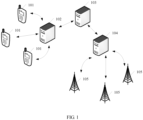
- FIG 1 is a network architecture diagram of the communications system.
- the communications system includes a mobile terminal 101, a path planning device 102, an optimization processing device 103, a network element management device 104, and a network element 105.
- the mobile terminal 101 includes but is not limited to a mobile phone, a notebook computer, a palmtop computer (for example, Personal Digital Assistant, PDA for short), and the like.
- the mobile terminal 101 is configured to send a path planning request to the path planning device 102, where the path planning request includes a departure place, a destination place, a departure moment, and the like.
- the path planning request is used to instruct the path planning device 102 to plan a travel path for a user based on information such as the departure place, the destination place, and the departure moment.
- the mobile terminal 101 may send a reserved travel path and a reserved departure time to the path planning device 102.
- the path planning device 102 may be provided by a third-party path provider, for example, an online ride-hailing vehicle management platform.
- the path planning device 102 is configured to: provide vehicle information for a user, plan a travel path for the user, and provide a travel path to be passed through by the user and total estimated duration for passing through the travel path.
- the path planning device 102 may split the path into a plurality of path segments, and provide estimated duration for passing through each path segment, in other words, provide an estimated moment of a segment point for passing through the path.
- the path planning device 102 sends generated path information and time information corresponding to the path information to the optimization processing device.
- the optimization processing device 103 may be an operations support system (operations support system, OSS for short), provides a capability of connecting to the path planning device 102, may generate a corresponding optimization policy based on the path information and the time information corresponding to the path information, decomposes the optimization policy into a radio resource adjustment command, sends the adjustment command to the network element management device 104, and sends the adjustment command based on a time period, to implement dynamic network adjustment and recovery.
- operations support system operations support system, OSS for short
- the network element management device 104 is responsible for connecting the optimization processing device 103 and the network element 105.
- a maintenance channel is established between the network element management device 104 and a base station, and the network element management device 104 may deliver a command to the network element 105 through the channel.
- the network element management device 104 also provides a command delivery channel for the optimization processing device 103, and receives the adjustment command delivered by the optimization processing device 103.
- the network element 105 is a radio communications device, including various types of base stations, base station controllers, and the like. These devices provide a network communications capability, including but not limited to a voice service and a data service.
- the network element 105 receives the radio resource adjustment command sent by the network element management device 104, and adjusts a radio resource based on the adjustment command, thereby ensuring better signal quality on a travel path of the user.
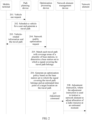
- FIG 2 is a schematic flowchart of steps of a radio resource adjustment method according to an embodiment of this application.
- FIG 3 is a schematic flowchart of a radio resource adjustment method according to an embodiment of this application. The following describes in detail the radio resource adjustment method provided in this application with reference to an embodiment. An embodiment of the radio resource adjustment method provided in this application includes the following steps.
- Step 201 A mobile terminal sends a vehicle use request to a path planning device.
- the vehicle use request carries a departure address, a destination address, a departure time, user information, and the like.
- the departure address may be an address input by a user, or may be a current location detected by the mobile terminal.
- the departure time may be a current moment detected by the mobile terminal, or may be a reserved departure moment input by the user, or an estimated departure time period input by the user.
- a purpose of sending, by the mobile terminal, the vehicle use request to the path planning device is to enable the path planning device to plan a better travel path for the user.
- the vehicle use request carries reservation information of a travel path and a reserved time, where the reserved time is a departure moment, or may be a departure time period.
- a purpose of sending, by the mobile terminal, the vehicle use request to the path planning device is to reserve a determined travel path.
- the user information includes but is not limited to a phone number of a user, a name (a nickname or a real name) of the user, and a user level identifier.
- the user level identifier is used to identify a priority of the user. For example, the user is a common user, a VIP user, and an SVIP user.
- An identifier "1" indicates a first level and is used to identify the SVIP user; an identifier "2" indicates a second level and is used to identify the VIP user; and an identifier "3" indicates a third level and is used to identify the common user.
- Step 202 The path planning device receives the vehicle use request sent by the mobile terminal, schedules a vehicle for the user, and generates a travel path.
- the vehicle whose departure address is relatively close is matched for the user based on the departure address, to obtain vehicle-related information (a vehicle license plate number and a driver's phone number) of the vehicle.
- vehicle-related information a vehicle license plate number and a driver's phone number
- At least one travel path is planned for the user based on the destination address and the departure address.
- the path planning device may plan a plurality of travel paths, and further select an optimal travel path from the plurality of the travel paths.
- the optimal travel path is a path with a shortest travel time, a shortest travel distance, unblocked travel, or the like.
- the path planning device may select an optimal travel path from the three travel paths based on a road condition of each travel path, where the road condition includes but is not limited to a predicted congestion condition and a road condition (for example, whether a road is repaired).
- the travel path (A-G-H-B) is determined as the optimal travel path. It should be noted that, in this example, a specific method for selecting the optimal travel path from the plurality of travel paths is merely an example for ease of description, and does not impose any limitation on this application.
- Step 203 The path planning device feeds back the vehicle-related information and information about the travel path to the mobile terminal.
- the path planning device sends a vehicle license plate number and a driver's phone number, and the information about the travel path of a matching vehicle to the mobile terminal, and sends the user information (for example, a user's phone number) to a vehicle terminal of the vehicle.
- step 201 to step 203 are merely for describing interaction between the mobile terminal and the path planning device.
- a plurality of mobile terminals may send path planning requests to the path planning device at a same moment, and each path planning request includes user information.
- the path planning device distinguishes, based on the user information, between path planning requests sent by mobile terminals of different users. For each path planning request, processing steps of the path planning device are described as step 201 to step 203.
- Step 204 The path planning device sends a network quality optimization request to an optimization processing device, where the network quality optimization request carries the information about the travel path and the time information corresponding to the information about the travel path, and the time information includes an estimated moment corresponding to a target location on the travel path through which the mobile terminal passes or an estimated time period between two estimated moments.
- the network quality optimization request carries the information about the travel path and the time information corresponding to the information about the travel path, and the time information includes an estimated moment corresponding to a target location on the travel path through which the mobile terminal passes or an estimated time period between two estimated moments.
- an estimated moment of passing through a first target location is 10: 25, or an estimated moment of passing through the first target location is 10: 25 to 10: 28.
- the path planning device identifies an operator (such as China Unicom, China Mobile, and China Telecom) to which a phone number in the user information belongs, and for example, sends the network quality optimization request to an optimization processing device of the target operator (such as China Unicom), where the network quality optimization request is used to request to optimize network coverage quality of the travel path.
- an operator such as China Unicom, China Mobile, and China Telecom
- the network quality optimization request is used to request to optimize network coverage quality of the travel path.
- the path planning device may determine a priority of the user based on the user level identifier in the user information. If there are a large quantity of users of online ride-hailing vehicles in a time period, a dynamic optimization service of radio network quality cannot be ensured for all users, and only some users can be provided with the optimization service of the radio network quality. Therefore, the path planning device may determine, based on the user level identifier in the user information, whether the user is a VIP user or an SVIP user, and provide the optimization service of the network quality for the VIP user or the SVIP user. Specific steps may be as follows:
- the time information includes total duration, a departure moment, and an estimated arrival moment that are of the travel path (for example, A-G-H-B).
- FIG 4 is a schematic diagram of a scenario according to the embodiment of this application.
- a travel path of the target user is (A-G-H-B), and the travel path is split into a plurality of path segments.
- the plurality of path segments include a first road segment (A-G), a second road segment (G-H), a third road segment (H-B), and an estimated moment of passing through each segment point are determined. For example, if a departure moment is 8: 00, an estimated moment of passing through a point C (the first target location) is 8: 20, an estimated moment of passing through a point H (a second target location) is 8: 40, and an estimated moment of arriving at a point B (a third target location) is 9: 00.
- the travel path is split into a plurality of segments, and an estimated moment at which a vehicle passes through a segment point may be predicted, to implement accurate segmentation.
- the estimated moment corresponding to the travel path through which the mobile terminal passes is described by using an estimated moment of a segment point as an example, and this is not a limitative description of this application.
- a larger quantity of target locations on the travel path may be determined, and estimated moments at which a vehicle passes through these target locations may be predicted.
- the target user may be dynamically set. For example, if a time period is in not a vehicle use peak time period (for example, 10: 00 to 11: 00, 14: 00 to 17: 00, or 22: 00 to 7: 00), and a threshold is a third level, the target user is a common user, a VIP user, and an SVIP user; if the time period is a vehicle use peak time period (for example, 9: 00 to 10: 00, 11: 00 to 14: 00, or 20: 00 to 22: 00), and the threshold is a second level, the target user is a VIP user and an SVIP user; and if the time period is a vehicle use extreme peak time period (for example, 7: 00 to 9: 00 or 17: 00 to 20: 00), and the threshold is a first level, the target user is an SVIP user.
- a vehicle use peak time period for example, 10: 00 to 11: 00, 14: 00 to 17:
- the network quality optimization request sent by the path planning device to the optimization processing device may include at least one travel path.
- the network quality optimization request includes five travel paths and estimated moments corresponding to target locations on the five travel paths, and information about the five travel paths respectively corresponds to user information about five SVIP users.
- the path planning device sends one network quality optimization request to the optimization processing device for each SVIP user, where the network quality optimization request includes information about a travel path corresponding to an SVIP user.
- Step 205 The optimization processing device matches each travel path with coverage areas of a plurality of base stations based on the information about the travel path in the at least one network quality optimization request, to determine a base station set to which a signal covering each travel path belongs, where the base station set includes at least one target base station.
- the optimization processing device receives the network quality optimization request, and performs information formatting and preprocessing on the information in the network quality optimization request.
- FIG 4 is a schematic diagram of a scenario according to an embodiment of this application.
- a plurality of base stations near the travel path (A-G-H-B) are found through search based on a location of the travel path (A-G-H-B), and then an area covered by the plurality of base stations is matched with an area of the travel path, to determine that a base station set that matches each path segment of the travel path includes four base stations, where the four base stations are respectively: a first base station 4051, a second base station 4052, a third base station 4053, and a fourth base station 4054. Areas of radiated signals of the four base stations may cover the entire travel path (A-G-H-B).
- one travel path is matched with a coverage area of at least one base station is used as an example for description.
- the optimization processing device may simultaneously determine a base station that matches each of the plurality of travel paths.
- a specific method may be understood with reference to a process in which one travel path is matched with the at least one base station in this step. Details are not described herein.
- Step 206 The optimization processing device generates an optimization policy based on a base station to which a signal covering each travel path belongs and an estimated moment corresponding to a target location on each travel path, where the optimization policy includes configuration information of a radio resource of the corresponding target base station based on a corresponding estimated moment.
- the optimization processing device determines, based on a base station that matches a travel path (A-M-G-L-H-N-B), that target locations on the travel path are a point A, a point M, a point G, a point L, a point H, a point N, and a point B, and determines estimated moments of passing through each target location.
- a moment of passing through the point A is 8: 00; an estimated moment of passing through the point M is 8: 10; the estimated moment of passing through the point G is 8: 20; the estimated moment of passing through the L point is 8: 30; the estimated moment of passing through the H point is 8: 40; and the estimated moment of passing through the N point is 8: 50; and the estimated time of passing through the B point is 9: 00.
- the mobile terminal accesses different cells at different time points, and each cell has a physical cell identifier (Physical Cell ID, PCI for short). Because the optimization processing device has received, from the path planning device, estimated moments at which a vehicle arrives at different target locations, the optimization processing device may also determine cells accessed by the mobile terminal at different time points. For example, the optimization processing device determines that the mobile terminal accesses a first cell of the first base station at 8: 00 and accesses a second cell of the second base station at 8: 20.
- PCI Physical Cell ID
- the optimization processing device performs parameter configuration, based on an estimated moment and a target location arrived at the estimated moment, on a target base station that matches the target location, to obtain the optimization policy.
- the optimization policy includes configuration information of a radio resource of a corresponding target base station based on a corresponding estimated moment.
- the configuration information includes but is not limited to parameters such as a beam width of a base station antenna, a tilt angle of the antenna, and a direction of the antenna, and cell coverage is adjusted by using the configuration information, so that communication quality of the mobile terminal can be improved when the user arrives in the area at the estimated moment.
- the optimization policy includes the following content: During 8: 00 to 8: 10, a beam width of an antenna of the first base station is 1 degree, and a downtilt angle of the antenna is 6 degrees; during 8: 10 to 8: 20, the degree of the antenna of the first base station is 1 degree, and the downtilt angle of the antenna is 7 degrees; and during 8: 20 to 8: 30, a degree of an antenna of the second base station is 1 degree, a downtilt angle of the antenna is 6 degrees. Details are not described herein.
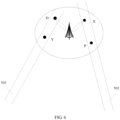
- FIG 5 is a schematic diagram of a scenario according to an embodiment of this application.
- a travel path A is a travel path corresponding to a user A
- a travel path B is a travel path corresponding to a user B.
- a network quality optimization request further includes a user level identifier. If, in a same time period, for example, the user A passes through a point O to a point Y during 8: 10 to 8: 20, and the user B passes through a point X to a point P during 8: 10 to 8: 20, directions of the travel path A and the travel path B are opposite.
- an optimization policy may be generated based on a level of the user (VIP or SVIP) or a level of a travel path (a first-level highway, a second-level highway, a third-level highway, or the like).
- the direction and the tilt angle that are of the antenna may be adjusted during 8: 10 to 8: 20 to improve signal coverage of an area of an X point to a P point on a second travel path.
- the travel path A is a second-level highway
- the travel path B is a third-level highway
- the direction and the tilt angle that are of the antenna may be adjusted during 8: 10 to 8: 20 to improve signal coverage of an area from a point O to a point Y on the travel path B.
- configuration information in the optimization policy is dynamically adjusted, and the optimization policy includes a correspondence between each travel path and configuration information corresponding to the travel path.
- the travel path A corresponds to first configuration information (8: 10 - 8: 20, and a downtilt angle of the antenna of the first base station is 6 degrees), and the travel path B corresponds to second configuration information (for example, 8: 10 - 8: 20, and a downtilt angle of the antenna of the second base station is 7 degrees).
- the optimization policy is dynamically changed.
- the optimization processing device has generated an optimization policy.
- the optimization policy includes configuration information for a plurality of travel paths. If a user temporarily cancels a travel plan, the mobile terminal sends a path cancellation request to the path planning device, where the path cancellation request includes information about the travel path A.
- the path planning device After receiving the path cancellation request, the path planning device feeds back a response to the mobile terminal, and sends a request to the optimization processing device, where the request carries information about the travel path A that needs to be canceled.
- the optimization processing device deletes, based on a correspondence between each travel path and a policy corresponding to each travel path, target configuration information for a target travel path (the travel path A) from the optimization policy.
- the configuration information may include more optimization-related parameter information, such as transmit power of a base station and a transmission parameter.
- the configuration information is described by using a tilt angle of an antenna as an example.
- Step 207 The optimization processing device sends an adjustment command to the network element management device based on the optimization policy.
- the optimization processing device delivers the adjustment command to the network element management device based on the optimization policy and a sequence, where the sequence is a time sequence, and the optimization policy includes a plurality of pieces of configuration information, for example, configuration information for the travel path A and configuration information for the travel path B.
- the optimization policy is shown in Table 1. Table 1 Travel path Configuration information Travel path A The downtilt angle of the antenna of the first base station is 6 degrees during 8: 00 to 8: 10. The downtilt angle of the antenna of the second base station is 6 degrees during 8: 10 to 8: 20. Travel path B A downtilt angle of the antenna of the third base station is 7 degrees during 9: 00 to 9: 20. A downtilt angle of the antenna of the fourth base station is 7 degrees during 9: 20 to 9: 40.
- the optimization processing device may send the adjustment command at a second estimated moment before the first estimated moment included in the optimization policy, where the first estimated moment is an earliest moment in the optimization policy, and preset duration exists between the second estimated moment and the first estimated moment.
- the preset duration is 5 minutes
- the optimization processing device may send a first adjustment command to the network element management device at 7: 55, where the first adjustment command includes: The downtilt angle of the antenna of the first base station is 6 degrees during 8: 00 to 8: 10, and the downtilt angle of the antenna of the second base station is 6 degrees during 8: 10 to 8: 20.
- the optimization processing device sends a second adjustment command to the network element management device at 8: 55, where the second adjustment command includes:
- the downtilt angle of the antenna of the third base station is 7 degrees during 9: 00 to 9: 20, and the downtilt angle of the antenna of the fourth base station is 7 degrees during 9: 20 to 9: 40.
- the adjustment command includes a first instruction and a second instruction, where the first instruction is used to adjust a radio resource of a time period during which the user passes through a target location on a travel path, and the second instruction is used to adjust a radio resource for a time period after the time period during which the user passes through the target location on the travel path.
- the configuration information includes adjustment to a radio resource of a time period during which the user passes through the travel path.
- the target base station still needs to adjust a radio resource, namely, to perform a reverse adjustment.
- the second instruction is used to re-adjust the radio resource of the target base station to a state before the first instruction is sent.
- Step 208 The network element management device sends an adjustment instruction to a corresponding network element based on the adjustment command, where the adjustment instruction is used to instruct the network element to adjust allocation of the radio resource at an estimated moment.
- the network element management device After receiving the adjustment command, the network element management device sends the adjustment command to a corresponding network element, where the adjustment command includes a first adjustment instruction and a second adjustment instruction.
- the network element management device sends the first adjustment instruction to the first base station at 8: 00, so that the first base station adjusts the downtilt angle to 6 degrees during 8: 00 to 8: 10.
- the second adjustment instruction after 8: 10, the downtilt angle is adjusted to an unadjusted state.
- the network element management device sends the first adjustment instruction to the second base station at 8: 10, so that the second base station adjusts the downtilt angle of the antenna to 6 degrees during 8: 10 to 8: 20.
- the second base station adjusts the downtilt angle to an unadjusted state after 8: 20 based on the second adjustment instruction.
- the base station After executing the adjustment command, the base station feeds back a first response to the network element management device, where the first response includes information about a travel path, the first response is used to indicate that the target base station has completed the adjustment of the radio resource, and the network element management device feeds back a second response to the optimization processing device based on the first response.
- the network element management device determines, based on the second response, that the target base station corresponding to the travel path has completed the adjustment of the radio resource.
- the optimization processing device receives the network quality optimization request sent by the path planning device, where the network quality optimization request carries the travel path and the estimated moment corresponding to the target location on the travel path through which the mobile terminal passes.
- the optimization processing device pre-determines a target location and an estimated moment at which network optimization needs to be performed, matches the travel path with the coverage area of the base station, to determine a base station set to which the signal covering the travel path belongs, and generates an optimization policy based on the target base station in the base station set and the estimated moment, where the optimization policy includes configuration information for configuring the radio resource of the target base station based on an estimated moment when a vehicle arrives.
- the optimization processing device sends the adjustment command to the network element management device based on the configuration information of the target base station in the optimization policy and the estimated moment, so that the network element management device instructs, based on the adjustment command, the target base station in the base station set to adjust the allocation of the radio resource at the estimated moment.
- the optimization processing device determines an optimization result based on the optimization policy, and the optimization result may be calculated by the optimization processing device based on the optimization policy.
- the optimization result is used to notify a user of a situation of network quality assurance.
- the optimization result may be represented by X Mbps.
- the optimization result may alternatively be carried in the first response fed back by the base station to the network element management device. Then, the second response fed back by the network element management device to the optimization processing device also carries the optimization result.
- the optimization processing device feeds back a communication quality (an optimization result) of each travel path to the path planning device in real time.
- the path planning device feeds back the optimization result to a corresponding mobile terminal, to notify the user of current radio network quality, to directly present the network quality to the user, so that the user is more involved.
- step 202 if a user priority identifier is the first priority, the path planning device determines that the user is an SVIP user based on the user information. For example, the SVIP user is a government official or a leader of a country, and the SVIP user is a user whose travel path needs to be kept strictly confidential.
- the path planning device generates at least one second path, and the travel path includes information about the first path and the at least one second path.
- the path planning device associates the at least one second path and the first path with the user information.
- the second path in this example is used to scramble the first path, where the first path is a path that is actually traveled by a user, and the second path is used to scramble the path that is actually traveled by the user.
- the path planning device associates both the first path and the at least one second path with the user information, to prevent the path planning device from being attacked, which may lead to disclosure of an actual travel path of the SVIP user, thereby ensuring security of the SVIP user.
- the travel path included in the network quality optimization request sent by the path planning device to the optimization processing device may be the first path, that is, an actual travel path of the SVIP. Because the network quality optimization request does not need to carry the user information (such as a user name and a phone number), in this step, the first path may be sent only to the optimization processing device, and a scrambled second path does not need to be sent, to save scheduling resources.
- network quality of an entire journey of a user can be ensured to a maximum extent, which will become an important service item of applications such as an online ride-hailing vehicle and navigation.
- network quality may be optimized as required based on a travel path and an estimated moment corresponding to a target location on the travel path through which the mobile terminal passes, to implement accurate optimization.
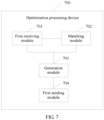
- this application provides an embodiment of an optimization processing device 700, including:
- the generation module 703 is further specifically configured to:
- an optimization processing device 800 includes:
- the optimization policy includes a correspondence between a travel path and configuration information corresponding to the travel path, and the optimization processing device further includes a second receiving module 705 and a deletion module 706.
- the second receiving module 705 is configured to receive a travel path cancellation request sent by the path planning device, where the travel path cancellation request includes information about a target travel path.
- the deletion module 706 is configured to delete, based on a correspondence, the target configuration information for the target travel path from the optimization policy generated by the generation module 703.
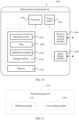
- FIG 9 another embodiment of an optimization processing device 900 provided in this application includes:
- the optimization processing device in FIG 7 to FIG 9 is presented in a form of a function module.
- the "module” herein may be an application-specific integrated circuit (application-specific integrated circuit, ASIC), a circuit, a processor and a memory that execute one or more software programs or firmware programs, an integrated logic circuit, and/or another component that can provide the foregoing function.
- ASIC application-specific integrated circuit
- the optimization processing device in FIG 7 to FIG 9 may take the form shown in FIG 10 .
- FIG 10 is a schematic structural diagram of an optimization processing device 1000 according to an embodiment of this application.
- the optimization processing device 1000 may vary greatly with different configurations or performance, and may include one or more processors 1022 and memories 1032, and one or more storage media 1030 (such as one or more mass storage devices) for storing an application program 1042 or data 1044.
- the memory 1032 and the storage medium 1030 each may be a transitory storage or a persistent storage.
- the program stored in the storage medium 1030 may include one or more modules (not shown in the figure), and each module may include a series of instruction operations for the optimization processing device.
- the processor 1022 may be configured to communicate with the storage medium 1030 and perform, in the optimization processing device 1000, the series of instruction operations in the storage medium 1030.
- the optimization processing device 1000 may further include one or more power supplies 1026, one or more wired or wireless network interfaces 1050, one or more input/output interfaces 1058, and/or one or more operating systems 1041.
- steps performed by the optimization processing device may be based on the structure of the optimization processing device shown in FIG 10 .
- the processor 1022 enables the optimization processing device to perform the steps actually performed by the optimization processing device in the method embodiment corresponding to FIG 2 .
- This disclosure provides a computer storage medium, configured to store computer software instructions used by the foregoing optimization processing device, and the computer software instructions include a program designed in a method actually performed by the optimization processing device in the method embodiment corresponding to FIG 2 .
- this application provides an embodiment of a path planning device 1100, including:
- the obtaining module 1101 is further specifically configured to:
- the establishing module 1103 is configured to establish a correspondence between a travel path and user information obtained by the obtaining module 1101.
- the second receiving module 1104 is configured to receive an optimization result fed back by an optimization processing device, where the optimization result is used to indicate quality of a signal covering the travel path at the estimated moment.
- the second sending module 1105 is configured to feed back, signal quality on the travel path received by the second receiving module 1104, to the mobile terminal corresponding to the user information based on the correspondence between the user information and the travel path established by the establishing module 1103.
- the user information includes a user priority identifier
- the travel path includes a first path and at least one second path.
- the obtaining module 1101 is further specifically configured to:
- the establishing module 1103 is further configured to establish a relationship between user information and at least one second path and a first path.
- the user information includes a user level identifier, where the user level identifier is used to indicate a priority of the user, a travel path corresponds to the target user, and the path planning device further includes a determining module; and the determining module 1104 is configured to determine a target user based on the user level identifier obtained by the obtaining module 1101, where the target user is a user whose priority is greater than or equal to a threshold.
- the path planning device in FIG 11 to FIG 13 is presented in a form of a function module.
- the "module” herein may be an application-specific integrated circuit (application-specific integrated circuit, ASIC), a circuit, a processor and a memory that execute one or more software programs or firmware programs, an integrated logic circuit, and/or another component that can provide the foregoing function.
- ASIC application-specific integrated circuit
- the path planning device in FIG 11 to FIG 13 may take the form shown in FIG 14 .
- FIG 14 is a schematic structural diagram of a path planning device according to an embodiment of this application.
- the path planning device 1400 may vary greatly with different configurations or performance, and may include one or more processors 1422 and memories 1432, and one or more storage media 1430 (such as one or more mass storage devices) for storing an application program 1442 or data 1444.
- the memory 1432 and the storage medium 1430 each may be a transitory storage or a persistent storage.
- the program stored in the storage medium 1430 may include one or more modules (not shown in the figure), and each module may include a series of instruction operations for the path planning device.
- the processor 1422 may be configured to communicate with the storage medium 1430 and perform, in the path planning device 1400, the series of instruction operations in the storage medium 1430.
- the path planning device 1400 may further include one or more power supplies 1426, one or more wired or wireless network interfaces 1450, one or more input/output interfaces 1458, and/or one or more operating systems 1441.
- steps performed by the path planning device may be based on the structure of the path planning device structure shown in FIG 14 .
- the processor 1422 enables the path planning device to perform the steps actually performed by the path planning device in the method embodiment corresponding to FIG 2 .
- An embodiment of this application provides a computer storage medium, configured to store computer software instructions used by the foregoing path planning device, and the computer software instructions include a program designed in a method actually performed by the path planning device in the method embodiment corresponding to FIG 2 .
- the disclosed system, apparatus, and method may be implemented in other manners.
- the described apparatus embodiment is merely an example.
- the unit division is merely logical function division and may be other division in actual implementation.
- a plurality of units or components may be combined or integrated into another system, or some features may be ignored or not performed.
- the displayed or discussed mutual couplings or direct couplings or communication connections may be implemented by using some interfaces.
- the indirect couplings or communication connections between the apparatuses or units may be implemented in electronic, mechanical, or other forms.
- the units described as separate parts may or may not be physically separate, and parts displayed as units may or may not be physical units, may be located in one position, or may be distributed on a plurality of network units. Some or all of the units may be selected based on actual requirements to achieve the objectives of the solutions of the embodiments.
- function units in the embodiments of this application may be integrated into one processing unit, or each of the units may exist alone physically, or two or more units are integrated into one unit.
- the integrated unit may be implemented in a form of hardware, or may be implemented in a form of a software function unit.
- the integrated unit When the integrated unit is implemented in the form of a software function unit and sold or used as an independent product, the integrated unit may be stored in a computer-readable storage medium. Based on such an understanding, the technical solutions of this application essentially, or the part contributing to the prior art, or all or some of the technical solutions may be implemented in the form of a software product.
- the computer software product is stored in a storage medium and includes several instructions for instructing a computer device (which may be a personal computer, a server, or a network device) to perform all or some of the steps of the methods described in the embodiments of this application.
- the foregoing storage medium includes: any medium that can store program code, such as a USB flash drive, a removable hard disk, a read-only memory (ROM, Read-Only Memory), a random access memory (RAM, Random Access Memory), a magnetic disk, or an optical disc.
- program code such as a USB flash drive, a removable hard disk, a read-only memory (ROM, Read-Only Memory), a random access memory (RAM, Random Access Memory), a magnetic disk, or an optical disc.
Landscapes
- Engineering & Computer Science (AREA)
- Computer Networks & Wireless Communication (AREA)
- Signal Processing (AREA)
- Radar, Positioning & Navigation (AREA)
- Remote Sensing (AREA)
- Physics & Mathematics (AREA)
- General Physics & Mathematics (AREA)
- Business, Economics & Management (AREA)
- Tourism & Hospitality (AREA)
- Automation & Control Theory (AREA)
- Human Resources & Organizations (AREA)
- Health & Medical Sciences (AREA)
- Economics (AREA)
- General Health & Medical Sciences (AREA)
- Quality & Reliability (AREA)
- Marketing (AREA)
- Primary Health Care (AREA)
- Strategic Management (AREA)
- General Business, Economics & Management (AREA)
- Theoretical Computer Science (AREA)
- Mobile Radio Communication Systems (AREA)
- Operations Research (AREA)
Claims (12)
- Verfahren zur Funkressourcenanpassung, das Folgendes umfasst:Empfangen (204), durch eine Optimierungsverarbeitungsvorrichtung, einer Netzwerkqualitätsoptimierungsanforderung, die durch eine Wegplanungsvorrichtung gesendet wird, wobei die Netzwerkqualitätsoptimierungsanforderung einen Reiseweg und einen geschätzten Zeitpunkt führt, der einer Zielposition auf dem Reiseweg entspricht, den ein mobiles Endgerät durchläuft;Abgleichen (205) des Reiseweges mit einem Abdeckungsbereich einer Basisstation durch die Optimierungsverarbeitungsvorrichtung, um einen Satz von Basisstationen zu bestimmen, zu dem ein Signal gehört, das den Reiseweg abdeckt, wobei der Satz von Basisstationen mindestens eine Zielbasisstation umfasst;Erzeugen (206), durch die Optimierungsverarbeitungsvorrichtung, einer Optimierungsrichtlinie basierend auf dem Satz von Basisstationen und dem geschätzten Zeitpunkt, wobei die Optimierungsrichtlinie Konfigurationsinformationen zum Konfigurieren einer Funkressource der Zielbasisstation in dem Satz von Basisstationen basierend auf einem entsprechenden geschätzten Zeitpunkt umfasst, wobei die Konfigurationsinformationen eine Strahlbreite einer Basisstationsantenne und/oder einen Neigungswinkel der Basisstationsantenne und/oder eine Richtung der Basisstationsantenne beinhaltet; undSenden (207), durch die Optimierungsverarbeitungsvorrichtung, eines Anpassungsbefehls an eine Netzwerkelement-Verwaltungsvorrichtung basierend auf der Optimierungsrichtlinie, so dass die Netzwerkelement-Verwaltungsvorrichtung in der Lage ist, basierend auf dem Anpassungsbefehl, die Zielbasisstation in dem Satz von Basisstationen anzuweisen, die Zuweisung der Funkressource zu dem geschätzten Zeitpunkt anzupassen, wobei die Optimierungsrichtlinie eine Entsprechung zwischen dem Reiseweg und Konfigurationsinformationen, die dem Reiseweg entsprechen, umfasst, und das Verfahren ferner Folgendes umfasst:Empfangen, durch die Optimierungsverarbeitungsvorrichtung, einer von der Wegplanungsvorrichtung gesendeten Anforderung zur Stornierung eines Reiseweges, wobei die Anforderung zur Stornierung des Reiseweges Informationen über einen Zielreiseweg umfasst; undLöschen, durch die Optimierungsverarbeitungsvorrichtung, von Zielkonfigurationsinformationen für den Zielreiseweg aus der Optimierungsrichtlinie basierend auf der Entsprechung.
- Verfahren zur Funkressourcenanpassung nach Anspruch 1, wobei das Erzeugen (206) einer Optimierungsrichtlinie basierend auf dem Satz von Basisstationen und dem geschätzten Zeitpunkt durch die Optimierungsverarbeitungsvorrichtung Folgendes umfasst:Bestimmen, durch die Optimierungsverarbeitungsvorrichtung, einer Zielbasisstation, die auf die Zielposition abgeglichen ist;Durchführen, durch die Optimierungsverarbeitungsvorrichtung, basierend auf dem geschätzten Zeitpunkt und der Zielposition, an der ein Fahrzeug zu dem geschätzten Zeitpunkt ankommt, einer Parameterkonfiguration an der Zielbasisstation, die auf die Zielposition abgeglichen ist, um Konfigurationsinformationen zu erhalten; undErzeugen, durch die Optimierungsverarbeitungsvorrichtung, der Optimierungsrichtlinie basierend auf dem geschätzten Zeitpunkt und den Konfigurationsinformationen.
- Verfahren zur Funkressourcenanpassung nach einem der Ansprüche 1 bis 2, wobei das Verfahren nach dem Erzeugen (206) einer Optimierungsrichtlinie basierend auf dem Satz von Basisstationen und dem geschätzten Zeitpunkt ferner Folgendes umfasst:Bestimmen eines Optimierungsergebnisses basierend auf der Optimierungsrichtlinie, wobei das Optimierungsergebnis Informationen über den Reiseweg führt und das Optimierungsergebnis verwendet wird, um die Qualität eines Signals anzugeben, das den Reiseweg zu dem geschätzten Zeitpunkt abdeckt; undRückführen des Optimierungsergebnisses an die Wegplanungsvorrichtung, so dass die Wegplanungsvorrichtung basierend auf den Informationen über den Reiseweg die Benutzerinformationen bestimmt, die den Informationen über den Reiseweg entsprechen, und die Signalqualität an ein mobiles Endgerät sendet, das den Benutzerinformationen entspricht.
- Verfahren zur Funkressourcenanpassung, das Folgendes umfasst:Erhalten, durch eine Wegplanungsvorrichtung, eines Reiseweges und eines geschätzten Zeitpunkts, der einer Zielposition auf dem Reiseweg entspricht, den ein mobiles Endgerät durchläuft; undSenden (204), durch die Wegplanungsvorrichtung, einer Netzwerkqualitätsoptimierungsanforderung an eine Optimierungsverarbeitungsvorrichtung, wobei die Netzwerkqualitätsoptimierungsanforderung den Reiseweg und den geschätzten Zeitpunkt umfasst, so dass die Optimierungsverarbeitungsvorrichtung in der Lage ist, den Reiseweg mit einem Abdeckungsbereich einer Basisstation basierend auf dem Reiseweg abzugleichen (205), um einen Satz von Basisstationen zu bestimmen, zu dem ein Signal gehört, das den Reiseweg abdeckt; eine Optimierungsrichtlinie basierend auf dem Satz von Basisstationen und dem geschätzten Zeitpunkt zu erzeugen (206), wobei die Optimierungsrichtlinie Konfigurationsinformationen zum Konfigurieren einer Funkressource des Satzes von Basisstationen basierend auf einem entsprechenden geschätzten Zeitpunkt umfasst, wobei die Konfigurationsinformationen eine Strahlbreite einer Basisstationsantenne und/oder einen Neigungswinkel der Basisstationsantenne und/oder einer Richtung der Basisstationsantenne beinhalten; und einen Anpassungsbefehl an eine Netzwerkelement-Verwaltungsvorrichtung basierend auf der Optimierungsrichtlinie zu senden (207), so dass die Netzwerkelement-Verwaltungsvorrichtung in der Lage ist, basierend auf dem Anpassungsbefehl, den Satz von Basisstationen anzuweisen, die Zuweisung der Funkressource zu dem geschätzten Zeitpunkt anzupassen,wobei die Optimierungsrichtlinie eine Entsprechung zwischen dem Reiseweg und dem Reiseweg entsprechenden Konfigurationsinformation umfasst, und das Verfahren ferner Folgendes umfasst:
Senden, durch die Optimierungsplanungsvorrichtung, einer Anforderung zur Stornierung eines Reiseweges an die Optimierungsverarbeitungsvorrichtung, wobei die Anforderung zur Stornierung eines Reiseweges Informationen über einen Zielreiseweg umfasst, so dass die Optimierungsverarbeitungsvorrichtung in der Lage ist, Zielkonfigurationsinformationen für den Zielreiseweg aus der Optimierungsrichtlinie basierend auf der Entsprechung zu löschen. - Verfahren zur Funkressourcenanpassung nach Anspruch 4, wobei das Erhalten eines Reiseweges und eines geschätzten Zeitpunkts, der einer Zielposition auf dem Reiseweg entspricht, den ein mobiles Endgerät durchläuft, Folgendes umfasst:Empfangen einer durch das mobile Endgerät gesendeten Wegplanungsanforderung, wobei die Wegplanungsanforderung Benutzerinformationen, eine Startposition, eine Zielposition und eine Abfahrtszeit umfasst;Planen, basierend auf der Startposition und der Zielposition, eines Reiseweges entsprechend den Benutzerinformationen; undBestimmen, basierend auf dem Reiseweg und dem Abfahrtszeitpunkt, des geschätzten Zeitpunkts, der der Zielposition auf dem Reiseweg entspricht, den das mobile Endgerät durchläuft.
- Verfahren zur Funkressourcenanpassung nach Anspruch 4, wobei das Erhalten eines Reiseweges und eines geschätzten Zeitpunkts, der einer Zielposition auf dem Reiseweg entspricht, den ein mobiles Endgerät durchläuft, Folgendes umfasst:Empfangen von Reiseweg-Reservierungsinformationen, die von dem mobilen Endgerät gesendet werden, wobei die Reiseweg-Reservierungsinformationen Benutzerinformationen, einen Reiseweg und Informationen über einen Zeitpunkt der Abfahrt von einem Startpunkt des Reiseweges umfassen; undBestimmen, basierend auf dem Reiseweg und dem Abfahrtszeitpunkt, des geschätzten Zeitpunkts, der der Zielposition auf dem Reiseweg entspricht, den das mobile Endgerät durchläuft.
- Verfahren zur Funkressourcenanpassung nach Anspruch 5 oder 6, wobei das Verfahren ferner Folgendes umfasst:Herstellen einer Entsprechung zwischen dem Reiseweg und den Benutzerinformationen,Empfangen eines Optimierungsergebnisses der Optimierungsverarbeitungsvorrichtung, wobei das Optimierungsergebnis verwendet wird, um die Qualität eines Signals anzugeben, das den Reiseweg zu dem geschätzten Zeitpunkt abdeckt; undRückführen der Signalqualität auf dem Reiseweg, basierend auf der Entsprechung zwischen dem Reiseweg und den Benutzerinformationen, zu einem mobilen Endgerät, das den Benutzerinformationen entspricht.
- Verfahren zur Funkressourcenanpassung nach Anspruch 4, wobei die Benutzerinformationen einen Identifikator für die Benutzerpriorität umfassen und der Reiseweg einen ersten Weg und mindestens einen zweiten Weg umfasst; und das Erhalten eines Reiseweges Folgendes umfasst:wenn der Identifikator für die Benutzerpriorität eine erste Priorität angibt, Bestimmen eines ersten Weges entsprechend den Benutzerinformationen, wobei der erste Weg ein Weg ist, der von einem Benutzer für eine tatsächliche Reise geschätzt wird; undErzeugen mindestens eines zweiten Weges, wobei der zweite Weg ein Interferenzweg des ersten Weges ist und der zweite Weg verwendet wird, um den ersten Weg zu verwürfeln; unddas Verfahren ferner Folgendes umfasst:
Herstellen einer Zuordnung zwischen den Benutzerinformationen und dem mindestens einen zweiten Weg und dem ersten Weg. - Verfahren zur Funkressourcenanpassung nach einem der Ansprüche 5 bis 8, wobei die Benutzerinformationen einen Identifikator der Benutzerebene umfassen, der Identifikator der Benutzerebene verwendet wird, um eine Priorität des Benutzers anzugeben, der Reiseweg dem Zielbenutzer entspricht und das Verfahren vor dem Senden einer Netzwerkqualitätsoptimierungsanforderung an eine Optimierungsverarbeitungsvorrichtung ferner Folgendes umfasst:
Bestimmen eines Zielbenutzers basierend auf dem Identifikator der Benutzerebene, wobei der Zielbenutzer ein Benutzer ist, dessen Priorität größer oder gleich einem Schwellenwert ist. - Optimierungsverarbeitungsvorrichtung (700, 800, 900), umfassend:ein erstes Empfangsmodul (701), das dazu konfiguriert ist, eine durch eine Wegplanungsvorrichtung gesendete Netzwerkqualitätsoptimierungsanforderung zu empfangen, wobei die Netzwerkqualitätsoptimierungsanforderung einen Reiseweg und einen geschätzten Zeitpunkt führt, der einer Zielposition auf dem Reiseweg entspricht, den ein mobiles Endgerät durchläuft;ein Abgleichmodul (702), das dazu konfiguriert ist, den von dem ersten Empfangsmodul empfangenen Reiseweg mit einem Abdeckungsbereich einer Basisstation abzugleichen, um einen Satz von Basisstationen zu bestimmen, zu dem ein den Reiseweg abdeckendes Signal gehört, wobei der Satz von Basisstationen mindestens eine Zielbasisstation umfasst;ein Erzeugungsmodul (703), das dazu konfiguriert ist, eine Optimierungsrichtlinie basierend auf dem Satz von Basisstationen, der durch das Abgleichmodul (702) bestimmt wurde, und dem geschätzten Zeitpunkt, der durch das erste Empfangsmodul (701) empfangen wurde, zu erzeugen, wobei die Optimierungsrichtlinie Konfigurationsinformationen zum Konfigurieren einer Funkressource des Satzes von Basisstationen basierend auf einem entsprechenden geschätzten Zeitpunkt umfasst, wobei die Konfigurationsinformationen eine Strahlbreite einer Basisstationsantenne und/oder einen Neigungswinkel der Basisstationsantenne und/oder einer Richtung der Basisstationsantenne beinhalten; undein erstes Sendemodul (704), das dazu konfiguriert ist, einen Anpassungsbefehl an eine Netzwerkelement-Verwaltungsvorrichtung basierend auf der Optimierungsrichtlinie zu senden, so dass die Netzwerkelement-Verwaltungsvorrichtung in der Lage ist, basierend auf dem Anpassungsbefehl, die Zielbasisstation in dem Satz von Basisstationen anzuweisen, die Zuweisung der Funkressource zu dem geschätzten Zeitpunkt anzupassen,wobei die Optimierungsrichtlinie eine Entsprechung zwischen dem Reiseweg und dem Reiseweg entsprechenden Konfigurationsinformationen umfasst, und die Optimierungsverarbeitungsvorrichtung ferner ein zweites Empfangsmodul (705) und ein Löschmodul (706) umfasst, wobeidas zweite Empfangsmodul (705) dazu konfiguriert ist, eine von der Wegplanungsvorrichtung gesendete Anforderung zur Stornierung eines Reiseweges zu empfangen, wobei die Anforderung zur Stornierung des Reiseweges Informationen über einen Zielreiseweg umfasst; unddas Löschmodul (706) dazu konfiguriert ist, basierend auf der Entsprechung, Zielkonfigurationsinformationen für den Zielreiseweg aus der vom Erzeugungsmodul (703) erzeugten Optimierungsrichtlinie zu löschen.
- Optimierungsverarbeitungsvorrichtung (700, 800, 900) nach Anspruch 10, wobei das Erzeugungsmodul (703) ferner insbesondere konfiguriert ist zum:Bestimmen einer Zielbasisstation, die auf die Zielposition abgeglichen ist;Durchführen basierend auf dem geschätzten Zeitpunkt und der Zielposition, an der ein Fahrzeug zu dem geschätzten Zeitpunkt ankommt, einer Parameterkonfiguration an der Zielbasisstation, die auf die Zielposition abgeglichen ist, um Konfigurationsinformationen zu erhalten; undErzeugen der Optimierungsrichtlinie basierend auf dem geschätzten Zeitpunkt und den Konfigurationsinformationen.
- Wegplanungsvorrichtung (1400), umfassend:einen Speicher (1432), der dazu konfiguriert ist, computerausführbaren Programmcode zu speichern;eine Netzwerkschnittstelle (1450), undeinen Prozessor (1422), der mit dem Speicher (1432) und der Netzwerk-Schnittstelle (1450) gekoppelt ist, wobeider Programmcode eine Anweisung umfasst, und wenn der Prozessor (1422) die Anweisung ausführt, die Anweisung die Wegplanungsvorrichtung aktiviert, das Verfahren zur Funkressourcenanpassung nach einem der Ansprüche 4 bis 9 durchzuführen.
Applications Claiming Priority (2)
| Application Number | Priority Date | Filing Date | Title |
|---|---|---|---|
| CN201711324294.3A CN109922483B (zh) | 2017-12-12 | 2017-12-12 | 一种无线资源的调整方法及相关设备 |
| PCT/CN2018/105870 WO2019114350A1 (zh) | 2017-12-12 | 2018-09-15 | 一种无线资源的调整方法及相关设备 |
Publications (3)
| Publication Number | Publication Date |
|---|---|
| EP3703412A1 EP3703412A1 (de) | 2020-09-02 |
| EP3703412A4 EP3703412A4 (de) | 2020-12-16 |
| EP3703412B1 true EP3703412B1 (de) | 2024-11-06 |
Family
ID=66818929
Family Applications (1)
| Application Number | Title | Priority Date | Filing Date |
|---|---|---|---|
| EP18889148.5A Active EP3703412B1 (de) | 2017-12-12 | 2018-09-15 | Verfahren zur funkressourcenanpassung und zugehörige vorrichtung |
Country Status (4)
| Country | Link |
|---|---|
| US (1) | US11483729B2 (de) |
| EP (1) | EP3703412B1 (de) |
| CN (1) | CN109922483B (de) |
| WO (1) | WO2019114350A1 (de) |
Families Citing this family (11)
| Publication number | Priority date | Publication date | Assignee | Title |
|---|---|---|---|---|
| CN112770338B (zh) * | 2019-10-21 | 2022-11-04 | 华为技术有限公司 | 通信方法和通信装置 |
| CN110636624B (zh) * | 2019-11-04 | 2023-04-07 | 中国联合网络通信集团有限公司 | 资源配置方法、装置、设备和存储介质 |
| CN111884694B (zh) * | 2020-07-28 | 2023-03-24 | 中国联合网络通信集团有限公司 | 波束赋形控制方法、装置、电子设备及存储介质 |
| JP7556739B2 (ja) * | 2020-10-05 | 2024-09-26 | トヨタ自動車株式会社 | 通信制御装置、方法、プログラム、及び車両 |
| CN113063433B (zh) * | 2021-03-24 | 2024-10-15 | 维沃移动通信有限公司 | 导航路线显示方法及装置 |
| CN114364012B (zh) * | 2021-12-31 | 2023-12-15 | 京信网络系统股份有限公司 | 无线时钟同步方法、装置、系统及存储介质 |
| EP4404632A1 (de) * | 2023-01-20 | 2024-07-24 | Siemens Aktiengesellschaft | Wegplanung in funkkommunikationsnetzen |
| EP4451742A1 (de) * | 2023-04-18 | 2024-10-23 | Siemens Aktiengesellschaft | Verfahren zum betreiben eines mobilfunk-zugangsnetzes durch eine netzoptimierungseinheit, netzoptimierungseinheit, autonom geführtes fahrzeug, funknetz |
| CN119946735A (zh) * | 2023-11-03 | 2025-05-06 | 华为技术有限公司 | 通信方法及装置 |
| CN118972841B (zh) * | 2024-10-14 | 2024-12-17 | 成都愿景仿视科技有限公司 | 一种5g网络中的动态密钥管理方法及系统 |
| CN119946726B (zh) * | 2024-11-29 | 2025-12-12 | 中国电信股份有限公司 | 流量负载均衡方法、装置、电子设备及存储介质 |
Citations (2)
| Publication number | Priority date | Publication date | Assignee | Title |
|---|---|---|---|---|
| US20160029370A1 (en) * | 2013-04-09 | 2016-01-28 | Smartsky Networks LLC | Position information assisted network control |
| CN105376813A (zh) * | 2014-07-10 | 2016-03-02 | 维亚威解决方案英国有限公司 | 使用地理定位和切换管理来改善网络资源分配的技术 |
Family Cites Families (20)
| Publication number | Priority date | Publication date | Assignee | Title |
|---|---|---|---|---|
| US6898432B1 (en) * | 2000-11-21 | 2005-05-24 | Daimlerchrysler Research And Technology North America, Inc. | Route-based communication planning architecture and method for wireless communication |
| US6750813B2 (en) * | 2002-07-24 | 2004-06-15 | Mcnc Research & Development Institute | Position optimized wireless communication |
| US8422460B2 (en) * | 2009-04-06 | 2013-04-16 | Robert Bosch Gmbh | Method for performing proactive wireless communication handoffs using a mobile client's route information |
| US8706131B2 (en) * | 2009-06-18 | 2014-04-22 | Empire Technology Development Llc | Device location prediction for mobile service optimization |
| US8498817B1 (en) * | 2010-09-17 | 2013-07-30 | Amazon Technologies, Inc. | Predicting location of a mobile user |
| EP2555569B1 (de) * | 2011-08-04 | 2013-10-09 | Deutsche Telekom AG | Verfahren und System zur proaktiven und dynamischen Cross-Layer-Optimierung von Datenübertragungen an Fahrzeuge |
| CN102300319B (zh) * | 2011-09-30 | 2013-10-23 | 北京交通大学 | 一种基于列车沿线蜂窝小区的无线信道分配方法 |
| DE102011118706B4 (de) * | 2011-11-16 | 2014-03-20 | Audi Ag | Verfahren zum Übertragen von Daten zwischen einem mobilen Endgerät und wenigstens einem ortsfesten Datennetzwerk, mobiles Endgerät sowie Kraftwagen mit einem mobilen Endgerät |
| JP5880302B2 (ja) * | 2012-06-15 | 2016-03-09 | トヨタ自動車株式会社 | 路車間通信システム、管理サーバ、および車両 |
| US9574887B2 (en) * | 2012-12-13 | 2017-02-21 | Lg Electronics Inc. | Method of calculating route, and method or device for obtaining route |
| CN105144262B (zh) * | 2013-04-11 | 2017-12-19 | Lg电子株式会社 | 用于传送包括多个经过地点的最优路径的方法和装置 |
| CN104602194B (zh) * | 2013-10-31 | 2019-04-12 | 国际商业机器公司 | 车联网中的数据传输方法及设备 |
| CN104640224B (zh) * | 2013-11-12 | 2018-06-19 | 华为技术有限公司 | 一种网络数据传输方法、装置及系统 |
| CN105228192B (zh) * | 2014-06-16 | 2019-06-21 | 中国移动通信集团公司 | 小区配置方法及装置 |
| CN106211332B (zh) * | 2015-05-05 | 2021-08-17 | 中兴通讯股份有限公司 | 资源分配的方法和装置 |
| KR101782283B1 (ko) * | 2015-12-14 | 2017-09-26 | 텔레폰악티에볼라겟엘엠에릭슨(펍) | 무선 네트워크 조건들에 기반한 계획된 운동의 조정 |
| CN106921939B (zh) * | 2015-12-28 | 2020-01-31 | 普天信息技术有限公司 | 一种面向自动驾驶的数据通信切换方法及系统 |
| US9992701B2 (en) * | 2016-03-18 | 2018-06-05 | Dell Products, Lp | Method and apparatus for adaptive transmission techniques with connection context aware radio communication management and path prediction |
| EP3826332B1 (de) * | 2016-05-06 | 2025-03-05 | Convida Wireless, LLC | Verkehrssteuerung auf dienstschicht |
| US10171614B2 (en) * | 2017-02-09 | 2019-01-01 | International Business Machines Corporation | Cache memory balancing based on moving object prediction |
-
2017
- 2017-12-12 CN CN201711324294.3A patent/CN109922483B/zh active Active
-
2018
- 2018-09-15 WO PCT/CN2018/105870 patent/WO2019114350A1/zh not_active Ceased
- 2018-09-15 EP EP18889148.5A patent/EP3703412B1/de active Active
-
2020
- 2020-06-03 US US16/891,199 patent/US11483729B2/en active Active
Patent Citations (2)
| Publication number | Priority date | Publication date | Assignee | Title |
|---|---|---|---|---|
| US20160029370A1 (en) * | 2013-04-09 | 2016-01-28 | Smartsky Networks LLC | Position information assisted network control |
| CN105376813A (zh) * | 2014-07-10 | 2016-03-02 | 维亚威解决方案英国有限公司 | 使用地理定位和切换管理来改善网络资源分配的技术 |
Also Published As
| Publication number | Publication date |
|---|---|
| EP3703412A4 (de) | 2020-12-16 |
| WO2019114350A1 (zh) | 2019-06-20 |
| CN109922483A (zh) | 2019-06-21 |
| EP3703412A1 (de) | 2020-09-02 |
| US20200296617A1 (en) | 2020-09-17 |
| US11483729B2 (en) | 2022-10-25 |
| CN109922483B (zh) | 2020-12-15 |
Similar Documents
| Publication | Publication Date | Title |
|---|---|---|
| EP3703412B1 (de) | Verfahren zur funkressourcenanpassung und zugehörige vorrichtung | |
| US8478265B2 (en) | System and method for adaptive/predictive location-based roaming optimization | |
| US9775001B2 (en) | Method and system of providing data service according to a user's future location | |
| US8594675B2 (en) | Multi-cell communication method and system of a mobile terminal, a micro base station, and a macro base station | |
| CN105992252B (zh) | 用户设备ue的ue上下文的处理方法和装置 | |
| CN110121161B (zh) | 一种数据传输方法、装置、系统和服务器 | |
| EP2530970A1 (de) | Verfahren und system zur übergabe basierend auf der funkressourcen-zuweisungsdatenbank | |
| CA2619837A1 (en) | Methods and systems for adaptive server selection in wireless communications | |
| EP2150081A2 (de) | Basisstation und Verfahren zur Sicherung von Ressourcen | |
| CN105117842A (zh) | 订单推送方法及装置 | |
| EP3273715B1 (de) | Layoutverfahren und -system für basisstation und computerspeichermedium | |
| EP3085158B1 (de) | Netzwerkübergabeoptimierung | |
| CN107634899B (zh) | 基于聊天群组的排队方法、装置、服务器及存储介质 | |
| CN109493591A (zh) | 一种车辆调度方法、装置、服务器及存储介质 | |
| CN106303953A (zh) | 一种人流量统计系统及方法 | |
| GB2536718A (en) | Connectivity | |
| EP4287704B1 (de) | Zellendatenübertragungsverfahren und -vorrichtung sowie elektronische vorrichtung | |
| JP5262510B2 (ja) | 配信速度制御装置および配信速度制御方法 | |
| CN102045834A (zh) | 一种TA List的分配方法及装置 | |
| US20170353839A1 (en) | Method and device for information notification | |
| CN117376922A (zh) | 一种数据分流系统的构建方法、网络设备和存储介质 | |
| JP5920111B2 (ja) | 通信制御装置、通信システム及び通信方法 | |
| US10594872B1 (en) | Systems and methods for wireless network service provider selection | |
| US20250267545A1 (en) | Information processing device | |
| GB2544811A (en) | Dynamic bandwidth allocation |
Legal Events
| Date | Code | Title | Description |
|---|---|---|---|
| STAA | Information on the status of an ep patent application or granted ep patent |
Free format text: STATUS: THE INTERNATIONAL PUBLICATION HAS BEEN MADE |
|
| PUAI | Public reference made under article 153(3) epc to a published international application that has entered the european phase |
Free format text: ORIGINAL CODE: 0009012 |
|
| STAA | Information on the status of an ep patent application or granted ep patent |
Free format text: STATUS: REQUEST FOR EXAMINATION WAS MADE |
|
| 17P | Request for examination filed |
Effective date: 20200527 |
|
| AK | Designated contracting states |
Kind code of ref document: A1 Designated state(s): AL AT BE BG CH CY CZ DE DK EE ES FI FR GB GR HR HU IE IS IT LI LT LU LV MC MK MT NL NO PL PT RO RS SE SI SK SM TR |
|
| AX | Request for extension of the european patent |
Extension state: BA ME |
|
| RIC1 | Information provided on ipc code assigned before grant |
Ipc: H04W 24/02 20090101AFI20200821BHEP Ipc: H04W 28/24 20090101ALN20200821BHEP |
|
| A4 | Supplementary search report drawn up and despatched |
Effective date: 20201112 |
|
| RIC1 | Information provided on ipc code assigned before grant |
Ipc: H04W 24/02 20090101AFI20201106BHEP Ipc: H04W 72/04 20090101ALN20201106BHEP |
|
| DAV | Request for validation of the european patent (deleted) | ||
| DAX | Request for extension of the european patent (deleted) | ||
| STAA | Information on the status of an ep patent application or granted ep patent |
Free format text: STATUS: EXAMINATION IS IN PROGRESS |
|
| 17Q | First examination report despatched |
Effective date: 20220621 |
|
| GRAP | Despatch of communication of intention to grant a patent |
Free format text: ORIGINAL CODE: EPIDOSNIGR1 |
|
| STAA | Information on the status of an ep patent application or granted ep patent |
Free format text: STATUS: GRANT OF PATENT IS INTENDED |
|
| RIC1 | Information provided on ipc code assigned before grant |
Ipc: H04W 4/40 20180101ALN20240419BHEP Ipc: H04W 72/29 20230101ALN20240419BHEP Ipc: H04W 28/26 20090101ALI20240419BHEP Ipc: H04W 24/02 20090101AFI20240419BHEP |
|
| INTG | Intention to grant announced |
Effective date: 20240510 |
|
| GRAS | Grant fee paid |
Free format text: ORIGINAL CODE: EPIDOSNIGR3 |
|
| GRAA | (expected) grant |
Free format text: ORIGINAL CODE: 0009210 |
|
| STAA | Information on the status of an ep patent application or granted ep patent |
Free format text: STATUS: THE PATENT HAS BEEN GRANTED |
|
| AK | Designated contracting states |
Kind code of ref document: B1 Designated state(s): AL AT BE BG CH CY CZ DE DK EE ES FI FR GB GR HR HU IE IS IT LI LT LU LV MC MK MT NL NO PL PT RO RS SE SI SK SM TR |
|
| REG | Reference to a national code |
Ref country code: GB Ref legal event code: FG4D |
|
| REG | Reference to a national code |
Ref country code: CH Ref legal event code: EP |
|
| REG | Reference to a national code |
Ref country code: DE Ref legal event code: R096 Ref document number: 602018076409 Country of ref document: DE |
|
| REG | Reference to a national code |
Ref country code: IE Ref legal event code: FG4D |
|
| REG | Reference to a national code |
Ref country code: LT Ref legal event code: MG9D |
|
| REG | Reference to a national code |
Ref country code: NL Ref legal event code: MP Effective date: 20241106 |
|
| PG25 | Lapsed in a contracting state [announced via postgrant information from national office to epo] |
Ref country code: HR Free format text: LAPSE BECAUSE OF FAILURE TO SUBMIT A TRANSLATION OF THE DESCRIPTION OR TO PAY THE FEE WITHIN THE PRESCRIBED TIME-LIMIT Effective date: 20241106 Ref country code: PT Free format text: LAPSE BECAUSE OF FAILURE TO SUBMIT A TRANSLATION OF THE DESCRIPTION OR TO PAY THE FEE WITHIN THE PRESCRIBED TIME-LIMIT Effective date: 20250306 Ref country code: IS Free format text: LAPSE BECAUSE OF FAILURE TO SUBMIT A TRANSLATION OF THE DESCRIPTION OR TO PAY THE FEE WITHIN THE PRESCRIBED TIME-LIMIT Effective date: 20250306 |
|
| PG25 | Lapsed in a contracting state [announced via postgrant information from national office to epo] |
Ref country code: FI Free format text: LAPSE BECAUSE OF FAILURE TO SUBMIT A TRANSLATION OF THE DESCRIPTION OR TO PAY THE FEE WITHIN THE PRESCRIBED TIME-LIMIT Effective date: 20241106 Ref country code: NL Free format text: LAPSE BECAUSE OF FAILURE TO SUBMIT A TRANSLATION OF THE DESCRIPTION OR TO PAY THE FEE WITHIN THE PRESCRIBED TIME-LIMIT Effective date: 20241106 |
|
| REG | Reference to a national code |
Ref country code: AT Ref legal event code: MK05 Ref document number: 1740745 Country of ref document: AT Kind code of ref document: T Effective date: 20241106 |
|
| PG25 | Lapsed in a contracting state [announced via postgrant information from national office to epo] |
Ref country code: BG Free format text: LAPSE BECAUSE OF FAILURE TO SUBMIT A TRANSLATION OF THE DESCRIPTION OR TO PAY THE FEE WITHIN THE PRESCRIBED TIME-LIMIT Effective date: 20241106 |
|
| PG25 | Lapsed in a contracting state [announced via postgrant information from national office to epo] |
Ref country code: ES Free format text: LAPSE BECAUSE OF FAILURE TO SUBMIT A TRANSLATION OF THE DESCRIPTION OR TO PAY THE FEE WITHIN THE PRESCRIBED TIME-LIMIT Effective date: 20241106 |
|
| PG25 | Lapsed in a contracting state [announced via postgrant information from national office to epo] |
Ref country code: NO Free format text: LAPSE BECAUSE OF FAILURE TO SUBMIT A TRANSLATION OF THE DESCRIPTION OR TO PAY THE FEE WITHIN THE PRESCRIBED TIME-LIMIT Effective date: 20250206 |
|
| PG25 | Lapsed in a contracting state [announced via postgrant information from national office to epo] |
Ref country code: AT Free format text: LAPSE BECAUSE OF FAILURE TO SUBMIT A TRANSLATION OF THE DESCRIPTION OR TO PAY THE FEE WITHIN THE PRESCRIBED TIME-LIMIT Effective date: 20241106 Ref country code: LV Free format text: LAPSE BECAUSE OF FAILURE TO SUBMIT A TRANSLATION OF THE DESCRIPTION OR TO PAY THE FEE WITHIN THE PRESCRIBED TIME-LIMIT Effective date: 20241106 Ref country code: GR Free format text: LAPSE BECAUSE OF FAILURE TO SUBMIT A TRANSLATION OF THE DESCRIPTION OR TO PAY THE FEE WITHIN THE PRESCRIBED TIME-LIMIT Effective date: 20250207 |
|
| PG25 | Lapsed in a contracting state [announced via postgrant information from national office to epo] |
Ref country code: PL Free format text: LAPSE BECAUSE OF FAILURE TO SUBMIT A TRANSLATION OF THE DESCRIPTION OR TO PAY THE FEE WITHIN THE PRESCRIBED TIME-LIMIT Effective date: 20241106 |
|
| PG25 | Lapsed in a contracting state [announced via postgrant information from national office to epo] |
Ref country code: RS Free format text: LAPSE BECAUSE OF FAILURE TO SUBMIT A TRANSLATION OF THE DESCRIPTION OR TO PAY THE FEE WITHIN THE PRESCRIBED TIME-LIMIT Effective date: 20250206 |
|
| PG25 | Lapsed in a contracting state [announced via postgrant information from national office to epo] |
Ref country code: SM Free format text: LAPSE BECAUSE OF FAILURE TO SUBMIT A TRANSLATION OF THE DESCRIPTION OR TO PAY THE FEE WITHIN THE PRESCRIBED TIME-LIMIT Effective date: 20241106 |
|
| PG25 | Lapsed in a contracting state [announced via postgrant information from national office to epo] |
Ref country code: DK Free format text: LAPSE BECAUSE OF FAILURE TO SUBMIT A TRANSLATION OF THE DESCRIPTION OR TO PAY THE FEE WITHIN THE PRESCRIBED TIME-LIMIT Effective date: 20241106 |
|
| PG25 | Lapsed in a contracting state [announced via postgrant information from national office to epo] |
Ref country code: EE Free format text: LAPSE BECAUSE OF FAILURE TO SUBMIT A TRANSLATION OF THE DESCRIPTION OR TO PAY THE FEE WITHIN THE PRESCRIBED TIME-LIMIT Effective date: 20241106 |
|
| PG25 | Lapsed in a contracting state [announced via postgrant information from national office to epo] |
Ref country code: RO Free format text: LAPSE BECAUSE OF FAILURE TO SUBMIT A TRANSLATION OF THE DESCRIPTION OR TO PAY THE FEE WITHIN THE PRESCRIBED TIME-LIMIT Effective date: 20241106 |
|
| PG25 | Lapsed in a contracting state [announced via postgrant information from national office to epo] |
Ref country code: SK Free format text: LAPSE BECAUSE OF FAILURE TO SUBMIT A TRANSLATION OF THE DESCRIPTION OR TO PAY THE FEE WITHIN THE PRESCRIBED TIME-LIMIT Effective date: 20241106 |
|
| PG25 | Lapsed in a contracting state [announced via postgrant information from national office to epo] |
Ref country code: CZ Free format text: LAPSE BECAUSE OF FAILURE TO SUBMIT A TRANSLATION OF THE DESCRIPTION OR TO PAY THE FEE WITHIN THE PRESCRIBED TIME-LIMIT Effective date: 20241106 |
|
| PG25 | Lapsed in a contracting state [announced via postgrant information from national office to epo] |
Ref country code: IT Free format text: LAPSE BECAUSE OF FAILURE TO SUBMIT A TRANSLATION OF THE DESCRIPTION OR TO PAY THE FEE WITHIN THE PRESCRIBED TIME-LIMIT Effective date: 20241106 |
|
| REG | Reference to a national code |
Ref country code: DE Ref legal event code: R097 Ref document number: 602018076409 Country of ref document: DE |
|
| PG25 | Lapsed in a contracting state [announced via postgrant information from national office to epo] |
Ref country code: SE Free format text: LAPSE BECAUSE OF FAILURE TO SUBMIT A TRANSLATION OF THE DESCRIPTION OR TO PAY THE FEE WITHIN THE PRESCRIBED TIME-LIMIT Effective date: 20241106 |
|
| PLBE | No opposition filed within time limit |
Free format text: ORIGINAL CODE: 0009261 |
|
| STAA | Information on the status of an ep patent application or granted ep patent |
Free format text: STATUS: NO OPPOSITION FILED WITHIN TIME LIMIT |
|
| PGFP | Annual fee paid to national office [announced via postgrant information from national office to epo] |
Ref country code: DE Payment date: 20250730 Year of fee payment: 8 |
|
| 26N | No opposition filed |
Effective date: 20250807 |