EP3703285A1 - Medienüberwachung unter verwendung von mehreren arten von signaturen - Google Patents
Medienüberwachung unter verwendung von mehreren arten von signaturen Download PDFInfo
- Publication number
- EP3703285A1 EP3703285A1 EP20168720.9A EP20168720A EP3703285A1 EP 3703285 A1 EP3703285 A1 EP 3703285A1 EP 20168720 A EP20168720 A EP 20168720A EP 3703285 A1 EP3703285 A1 EP 3703285A1
- Authority
- EP
- European Patent Office
- Prior art keywords
- media
- type
- signatures
- signature
- monitored
- Prior art date
- Legal status (The legal status is an assumption and is not a legal conclusion. Google has not performed a legal analysis and makes no representation as to the accuracy of the status listed.)
- Granted
Links
Images




Classifications
-
- H—ELECTRICITY
- H04—ELECTRIC COMMUNICATION TECHNIQUE
- H04H—BROADCAST COMMUNICATION
- H04H60/00—Arrangements for broadcast applications with a direct linking to broadcast information or broadcast space-time; Broadcast-related systems
- H04H60/56—Arrangements characterised by components specially adapted for monitoring, identification or recognition covered by groups H04H60/29-H04H60/54
-
- G—PHYSICS
- G06—COMPUTING OR CALCULATING; COUNTING
- G06F—ELECTRIC DIGITAL DATA PROCESSING
- G06F16/00—Information retrieval; Database structures therefor; File system structures therefor
- G06F16/10—File systems; File servers
- G06F16/14—Details of searching files based on file metadata
- G06F16/148—File search processing
- G06F16/152—File search processing using file content signatures, e.g. hash values
-
- G—PHYSICS
- G06—COMPUTING OR CALCULATING; COUNTING
- G06F—ELECTRIC DIGITAL DATA PROCESSING
- G06F16/00—Information retrieval; Database structures therefor; File system structures therefor
- G06F16/40—Information retrieval; Database structures therefor; File system structures therefor of multimedia data, e.g. slideshows comprising image and additional audio data
- G06F16/48—Retrieval characterised by using metadata, e.g. metadata not derived from the content or metadata generated manually
-
- H—ELECTRICITY
- H04—ELECTRIC COMMUNICATION TECHNIQUE
- H04H—BROADCAST COMMUNICATION
- H04H20/00—Arrangements for broadcast or for distribution combined with broadcast
- H04H20/12—Arrangements for observation, testing or troubleshooting
- H04H20/14—Arrangements for observation, testing or troubleshooting for monitoring programmes
-
- H—ELECTRICITY
- H04—ELECTRIC COMMUNICATION TECHNIQUE
- H04N—PICTORIAL COMMUNICATION, e.g. TELEVISION
- H04N21/00—Selective content distribution, e.g. interactive television or video on demand [VOD]
- H04N21/40—Client devices specifically adapted for the reception of or interaction with content, e.g. set-top-box [STB]; Operations thereof
- H04N21/43—Processing of content or additional data, e.g. demultiplexing additional data from a digital video stream; Elementary client operations, e.g. monitoring of home network or synchronising decoder's clock; Client middleware
- H04N21/44—Processing of video elementary streams, e.g. splicing a video clip retrieved from local storage with an incoming video stream or rendering scenes according to encoded video stream scene graphs
- H04N21/44008—Processing of video elementary streams, e.g. splicing a video clip retrieved from local storage with an incoming video stream or rendering scenes according to encoded video stream scene graphs involving operations for analysing video streams, e.g. detecting features or characteristics in the video stream
-
- H—ELECTRICITY
- H04—ELECTRIC COMMUNICATION TECHNIQUE
- H04N—PICTORIAL COMMUNICATION, e.g. TELEVISION
- H04N21/00—Selective content distribution, e.g. interactive television or video on demand [VOD]
- H04N21/40—Client devices specifically adapted for the reception of or interaction with content, e.g. set-top-box [STB]; Operations thereof
- H04N21/43—Processing of content or additional data, e.g. demultiplexing additional data from a digital video stream; Elementary client operations, e.g. monitoring of home network or synchronising decoder's clock; Client middleware
- H04N21/442—Monitoring of processes or resources, e.g. detecting the failure of a recording device, monitoring the downstream bandwidth, the number of times a movie has been viewed, the storage space available from the internal hard disk
- H04N21/44204—Monitoring of content usage, e.g. the number of times a movie has been viewed, copied or the amount which has been watched
-
- H—ELECTRICITY
- H04—ELECTRIC COMMUNICATION TECHNIQUE
- H04N—PICTORIAL COMMUNICATION, e.g. TELEVISION
- H04N21/00—Selective content distribution, e.g. interactive television or video on demand [VOD]
- H04N21/80—Generation or processing of content or additional data by content creator independently of the distribution process; Content per se
- H04N21/83—Generation or processing of protective or descriptive data associated with content; Content structuring
- H04N21/84—Generation or processing of descriptive data, e.g. content descriptors
-
- H—ELECTRICITY
- H04—ELECTRIC COMMUNICATION TECHNIQUE
- H04H—BROADCAST COMMUNICATION
- H04H2201/00—Aspects of broadcast communication
- H04H2201/90—Aspects of broadcast communication characterised by the use of signatures
Definitions
- This disclosure relates generally to media monitoring and, more particularly, to media monitoring using multiple types of signatures.
- An audience measurement system typically includes one or more device meters to monitor the media presented by one or more media devices located at one or more monitored sites.
- a device meter can use watermarks decoded from the presented media or signatures (also referred to as media fingerprints) generated from the presented media, or both, to monitor (e.g., identify and track) the media being presented by a media device.
- signatures are used for media monitoring, signatures of the monitored media (referred to herein as collected signatures or monitored signatures) are generated by the device meter and compared to reference signatures representative of reference media known to the audience measurement system.
- correspondingly large signatures e.g., having high resolution
- Disclosed example media monitoring methods include processing signatures of a first type to monitor media presented by a media device until a first one of the signatures of the first type is determined to match a reference signature of the first type, the reference signature of the first type being associated with first reference media.
- Such example methods also include processing signatures of a second type to monitor, with a processor, the media presented by the media device after the first one of the signatures of the first type is determined to match the reference signature of the first type and until a number of signatures of the second type is determined not to match corresponding reference signatures of the second type, the reference signatures of the second type being associated with the first reference media.
- Some such example methods further include reverting to processing the signatures of the first type to monitor the media presented by the media presentation device when the number of signatures of the second type is determined not to match the corresponding reference signatures of the second type.
- the signatures of the first type have a higher resolution than the signatures of the second type. In some such examples, the signatures of the first type and the signatures of the second type are determined based on a same signature algorithm. In some such examples, the signatures of the first type and the signatures of the second type are determined based on different signature algorithms.
- the reference signature of the first type is a first one of a plurality of reference signatures of the first type associated with a plurality of reference media.
- processing the signatures of the first type to monitor the media presented by the media device can include (1) processing a media signal corresponding to the media presented by the media device to obtain the signatures of the first type, (2) reporting the signatures of the first type to a processor for comparison with the plurality of reference signatures of the first type, (3) receiving, from the processor, an indication that the first one of the signatures of the first type has been determined to match the first one of the plurality of reference signatures of the first type, and (4) halting processing of the media signal to obtain the signatures of the first type in response to receiving the indication.
- the reference signature of the first type is a first one of a plurality of reference signatures of the first type associated with a plurality of reference media.
- processing the signatures of the first type to monitor the media presented by the media device can include (1) receiving the signatures of the first type from a meter that is to monitor the media presented by the media device, (2) comparing the signatures of the first type with the plurality of reference signatures of the first type, and (3) sending, to the meter, an indication that the first one of the signatures of the first type has been determined to match the first one of the plurality of reference signatures of the first type.
- processing the signatures of the second type to monitor the media presented by the media device includes (1) processing a media signal corresponding to the media presented by the media device to obtain the signatures of the second type in response to receiving a first indication that the first one of the signatures of the first type has been determined to match the reference signature of the first type, (2) comparing the signatures of the second type to a sequence of reference signatures of the second type, obtained from a processor, until the number of signatures of the second type is determined not to match the corresponding reference signatures of the second type, the sequence of reference signatures of the second type being associated with the first reference media, a starting reference signature in the sequence corresponding to an anchor point in the first reference media that is represented by the reference signature of the first type, and (3) reporting, to the processor, a second indication that the number of signatures of the second type have been determined not to match the corresponding reference signatures of the second type.
- processing the signatures of the second type to monitor the media presented by the media device includes (1) sending a sequence of reference signatures of the second type to a meter that is to monitor the media presented by the media device, the sequence of reference signatures of the second type being sent in response to determining that the first one of the signatures of the first type matches the reference signature of the first type, the sequence of reference signatures of the second type being associated with the first reference media, a starting reference signature in the sequence corresponding to an anchor point in the first reference media that is represented by the reference signature of the first type, and (2) receiving, from the meter, an indication that the number of signatures of the second type have been determined not to match the corresponding reference signatures of the second type.
- processing the signatures of the second type to monitor the media presented by the media device includes (1) processing a media signal corresponding to the media presented by the media device to obtain the signatures of the second type in response to receiving a first indication that the first one of the signatures of the first type has been determined to match the reference signature of the first type, (2) reporting the signatures of the second type to a processor for comparison with a sequence of reference signatures of the second type, the sequence of reference signatures of the second type being associated with the first reference media, a starting reference signature in the sequence corresponding to an anchor point in the first reference media that is represented by the reference signature of the first type, (3) receiving, from the processor, a second indication that the number of signatures of the second type have been determined not to match the corresponding reference signatures of the second type, and (4) halting processing of the media to obtain the signatures of the second type in response to receiving the second indication.
- processing the signatures of the second type to monitor the media presented by the media device comprises (1) receiving the signatures of the second type from a meter that is to monitor the media presented by the media device, (2) comparing the signatures of the second type with a sequence of reference signatures of the second type, the sequence of reference signatures of the second type being associated with the first reference media, a starting reference signature in the sequence corresponding to an anchor point in the first reference media that is represented by the reference signature of the first type, and (3) sending, to the meter, an indication that the number of signatures of the second type have been determined not to match the corresponding reference signatures of the second type.
- Some such example methods further include adjusting an interval between the signatures of the second type based on a characteristic of the media presented by the media device.
- the characteristic includes at least one of a signal strength, a signal-to-noise ratio or noise content measured in a media signal corresponding to the media presented by the media device.
- Disclosed example tangible machine readable storage medium include example machine readable instructions which, when executed, cause an example machine to process signatures of a first type to monitor media presented by a media device until a first one of the signatures of the first type is determined to match a reference signature of the first type, the reference signature of the first type being associated with first reference media.
- Such example instructions can also cause the machine to process signatures of a second type to monitor the media presented by the media device after the first one of the signatures of the first type is determined to match the reference signature of the first type and until a number of signatures of the second type is determined not to match corresponding reference signatures of the second type, the reference signatures of the second type being associated with the first reference media.
- the instructions when executed, further cause the machine to revert to processing the signatures of the first type to monitor the media presented by the media presentation device when the number of signatures of the second type is determined not to match the corresponding reference signatures of the second type.
- the signatures of the first type have a higher resolution than the signatures of the second type. In some such examples, the signatures of the first type and the signatures of the second type are determined based on a same signature algorithm. In some such examples, the signatures of the first type and the signatures of the second type are determined based on different signature algorithms.
- the reference signature of the first type is a first one of a plurality of reference signatures of the first type associated with a plurality of reference media.
- the instructions when executed, can further cause the machine to (1) process a media signal corresponding to the media presented by the media device to obtain the signatures of the first type (2) report the signatures of the first type to a processor for comparison with the plurality of reference signatures of the first type, (3) receive, from the processor, an indication that the first one of the signatures of the first type has been determined to match the first one of the plurality of reference signatures of the first type, and (4) halt processing of the media signal to obtain the signatures of the first type in response to receiving the indication.
- the reference signature of the first type is a first one of a plurality of reference signatures of the first type associated with a plurality of reference media.
- the instructions when executed, can further cause the machine to (1) receive the signatures of the first type from a meter that is to monitor the media presented by the media device, (2) compare the signatures of the first type with the plurality of reference signatures of the first type, and (3) send, to the meter, an indication that the first one of the signatures of the first type has been determined to match the first one of the plurality of reference signatures of the first type.
- the instructions when executed, can further cause the machine to (1) process a media signal corresponding to the media presented by the media device to obtain the signatures of the second type in response to receiving a first indication that the first one of the signatures of the first type has been determined to match the reference signature of the first type, (2) compare the signatures of the second type to a sequence of reference signatures of the second type, obtained from a processor, until the number of signatures of the second type is determined not to match the corresponding reference signatures of the second type, the sequence of reference signatures of the second type being associated with the first reference media, a starting reference signature in the sequence corresponding to an anchor point in the first reference media that is represented by the reference signature of the first type, and (3) report, to the processor, a second indication that the number of signatures of the second type have been determined not to match the corresponding reference signatures of the second type.
- the instructions when executed, can further cause the machine to (1) send a sequence of reference signatures of the second type to a meter that is to monitor the media presented by the media device, the sequence of reference signatures of the second type being sent in response to determining that the first one of the signatures of the first type matches the reference signature of the first type, the sequence of reference signatures of the second type being associated with the first reference media, a starting reference signature in the sequence corresponding to an anchor point in the first reference media that is represented by the reference signature of the first type, and (2) receive, from the meter, an indication that the number of signatures of the second type have been determined not to match the corresponding reference signatures of the second type.
- the instructions when executed, can further cause the machine to (1) process a media signal corresponding to the media presented by the media device to obtain the signatures of the second type in response to receiving a first indication that the first one of the signatures of the first type has been determined to match the reference signature of the first type, (2) report the signatures of the second type to a processor for comparison with a sequence of reference signatures of the second type, the sequence of reference signatures of the second type being associated with the first reference media, a starting reference signature in the sequence corresponding to an anchor point in the first reference media that is represented by the reference signature of the first type, (3) receive, from the processor, a second indication that the number of signatures of the second type have been determined not to match the corresponding reference signatures of the second type, and (4) halt processing of the media to obtain the signatures of the second type in response to receiving the second indication.
- the instructions when executed, can further cause the machine to (1) receive the signatures of the second type from a meter that is to monitor the media presented by the media device, (2) compare the signatures of the second type with a sequence of reference signatures of the second type, the sequence of reference signatures of the second type being associated with the first reference media, a starting reference signature in the sequence corresponding to an anchor point in the first reference media that is represented by the reference signature of the first type, and (3) send, to the meter, an indication that the number of signatures of the second type have been determined not to match the corresponding reference signatures of the second type.
- the instructions when executed, can further cause the machine to adjust an interval between the signatures of the second type based on a characteristic of the media presented by the media device.
- the characteristic comprises at least one of a signal strength, a signal-to-noise ratio or noise content measured in a media signal corresponding to the media presented by the media device.
- Disclosed first example apparatus to monitor media presented by a media device include an example signature processor to generate signatures of a first type from a media signal corresponding to the media presented by the media device until a first one of the signatures of the first type is determined to match a reference signature of the first type, the reference signature of the first type being associated with first reference media.
- the example signature processor also is to generate signatures of a second type from the media signal corresponding to the media presented by the media device after the first one of the signatures of the first type is determined to match the reference signature of the first type and until a number of signatures of the second type is determined not to match corresponding reference signatures of the second type, the reference signatures of the second type being associated with the first reference media.
- Such example apparatus can also include an example controller to control whether the signature processor generates the signatures of the first type or the signatures of the second type.
- Such example apparatus can further include a memory to store the signatures of the first type and the signatures of the second type.
- the signature processor is further to revert to generating the signatures of the first type from the media signal when the number of monitored signatures of the second type is determined not to match the corresponding reference signatures of the second type.
- the monitored signatures of the first type have a higher resolution than the monitored signatures of the second type.
- the reference signature of the first type is a first one of a plurality of reference signatures of the first type associated with a plurality of reference media.
- the apparatus can further include (1) an example signature reporter to report the monitored signatures of the first type to a data processor for comparison with the plurality of reference signatures of the first type, and (2) an example data receiver to receive, from the data processor, an indication that the first one of the monitored signatures of the first type has been determined to match the first one of the plurality of reference signatures of the first type.
- the signature processor is to halt generation of the monitored signatures of the first type from the media signal in response to receiving the indication.
- the signature processor is to generate the monitored signatures of the second type from the media signal in response to receiving a first indication that the first one of the monitored signatures of the first type has been determined to match the reference signature of the first type.
- the apparatus can further include (1) an example data receiver to receive a sequence of reference signatures of the second type, the sequence of reference signatures of the second type being associated with the first reference media, a starting reference signature in the sequence corresponding to an anchor point in the first reference media that is represented by the reference signature of the first type, (2) an example comparator to compare the monitored signatures of the second type to the sequence of reference signatures of the second type until the number of monitored signatures of the second type is determined not to match the corresponding reference signatures of the second type, and (3) an example data reporter to report a second indication that the number of monitored signatures of the second type have been determined not to match the corresponding reference signatures of the second type.
- the signature processor is to generate the monitored signatures of the second type from the media signal in response to receiving a first indication that the first one of the monitored signatures of the first type has been determined to match the reference signature of the first type.
- the apparatus can further include (1) an example signature reporter to report the monitored signatures of the second type to a data processor for comparison with a sequence of reference signatures of the second type, the sequence of reference signatures of the second type being associated with the first reference media, a starting reference signature in the sequence corresponding to an anchor point in the first reference media that is represented by the reference signature of the first type, and (2) an example data receiver to receive, from the data processor, a second indication that the number of monitored signatures of the second type have been determined not to match the corresponding reference signatures of the second type.
- the signature processor is to halt generation of the monitored signatures of the second type from the media signal in response to receiving the second indication.
- the signature processor is to adjust an interval between the monitored signatures of the second type based on a characteristic of the media presented by the media device.
- Disclosed second example apparatus to monitor media presented by a media device include an example comparator to compare monitored signatures of a first type with a plurality of reference signatures of the first type associated with a plurality of reference media, the monitored signatures of the first type being generated by a meter from a media signal corresponding to the media presented by the media device.
- Such example apparatus can also include an example indication processor to send a first indication to the meter indicating that a first one of the monitored signatures of the first type has been determined to match a first one of the reference signatures of the first type, the first one of the reference signatures of the first type being associated with first reference media.
- the example indication processor also is to at least one of receive or send a second indication indicating that a number of monitored signatures of a second type have been determined not to match corresponding reference signatures of the second type, the reference signatures of the second type being associated with the first reference media.
- Such example apparatus can further include memory to store the plurality of reference signatures of the first type.
- the monitored signatures of the first type have a higher resolution than the monitored signatures of the second type.
- the apparatus further include an example receiver to receive the monitored signatures of the first type from the meter.
- the apparatus further include an example signature provider to send a sequence of reference signatures of the second type to the meter.
- the sequence of reference signatures of the second type is sent in response to determining that the first one of the monitored signatures of the first type matches the first one of the reference signatures of the first type.
- the sequence of reference signatures of the second type is associated with the first reference media, and a starting reference signature in the sequence corresponds to an anchor point in the first reference media that is represented by the reference signature of the first type.
- the indication processor is to receive from the meter the second indication indicating that the number of monitored signatures of the second type has been determined not to match corresponding reference signatures of the second type.
- the comparator further is to compare the monitored signatures of the second type with a sequence of reference signatures of the second type.
- the sequence of reference signatures of the second type is associated with the first reference media, and a starting reference signature in the sequence corresponds to an anchor point in the first reference media that is represented by the reference signature of the first type.
- the indication processor is to send, to the meter, the second indication indicating that a number of monitored signatures of the second type has been determined not to match corresponding reference signatures of the second type.
- an audience measurement system can use media signatures to identify/monitor media being presented by a media device.
- monitored signatures are generated from the monitored media and compared with reference signatures representative of reference media known to the audience measurement system.
- large signatures which correspond to high resolution signatures, also referred to herein as rich signatures, may be needed to accurately and quickly identify the monitored media when the amount of reference media for comparison is large.
- it may be impractical e.g., in terms of cost, memory, bandwidth, etc.
- prior media identification techniques that employ large, rich signatures to quickly perform a single identification of a particular media presentation may not be applicable to media monitoring applications involving continuous media device monitoring.
- media monitoring in accordance with the examples disclosed herein uses multiple types of signatures for media monitoring to overcome the impracticalities of prior, single-type signature-based systems, at least in some examples.
- a first type of signature e.g., a larger, rich signature
- example disclosed audience measurement systems can be used by example disclosed audience measurement systems to initially identify (e.g., quickly) a monitored media presentation from among a potentially large amount of reference media.
- a second type of signature e.g., a smaller, lower resolution signature
- the first type of signature e.g., the larger, high resolution signature
- the second type of signature e.g., the smaller, low resolution signature
- the first and second types of signatures are derived from different signature algorithms.
- example disclosed audience measurement systems can revert to using the first type of signature (e.g., the larger, rich signature) to initially identify (e.g., quickly) this new media presentation, followed again by using the second type of signature (e.g., the smaller, lower resolution signature) to perform continuous monitoring.
- example media monitoring methods disclosed herein include processing monitored signatures (also referred to as collected signatures) of a first type to monitor media presented by a media device until a first one of the monitored signatures of the first type is determined to match a reference signature of the first type.
- the reference signature of the first type is associated with first reference media (e.g., from among a group of reference media that may include the monitored media being presented by the media device).
- the example methods also include using monitored signatures of a second type to monitor the media presented by the media device after the first one of the monitored signatures of the first type is determined to match the reference signature of the first type and until a number of monitored signatures of the second type is determined not to match corresponding reference signatures of the second type.
- the reference signatures of the second type are also associated with the first reference media (e.g., which is the same reference media associated with the matching reference signature of the first type).
- the methods further include reverting to using the monitored signatures of the first type to monitor the media presented by the media presentation device when the number of monitored signatures of the second type is determined not to match the corresponding reference signatures of the second type.
- the signatures of the first type have a higher resolution (e.g., and, thus, are larger) than the signatures of the second type.
- the methods adjust an interval between the monitored signatures of the second type based on one or more characteristics of the media presented by the media device.
- example media monitoring methods example apparatus to implement media monitoring using multiple types of signatures, and example articles of manufacture (e.g., storage media) storing machine readable instructions which, when executed, cause example machine(s) to perform media monitoring using multiple types of signatures, are also disclosed herein.
- example articles of manufacture e.g., storage media
- FIG. 1 a block diagram of an example audience metering system 100 employing media monitoring using multiple types of signatures as disclosed herein is illustrated in FIG. 1 .
- the example audience measurement system 100 supports monitoring of media exposure to audiences at one or more monitored sites, such as the example monitored site 105 illustrated in FIG. 1 .
- the monitored site 105 includes an example media device 110, which is also referred to herein as a media presentation device 110.
- FIG. 1 illustrates one monitored site 105 and one media device 110, media monitoring using multiple types of signatures as disclosed herein can be used in audience measurement systems 100 supporting any number of monitored sites 105 having any number of media devices 110.
- the audience measurement system 100 of the illustrated example includes an example device meter 125, also referred to as a site meter 125, a site unit 125, a home unit 125, etc., to monitor media presented by the media device 110.
- the device meter 125 determines metering data that may identify and/or be used to identify media exposure at the monitored site 105.
- the audience measurement meter 125 then stores and reports this metering data via an example network 135 to an example data processing facility 140.
- the data processing facility 140 performs any appropriate post-processing of the audience measurement data to, for example, determine audience ratings information, identify targeted advertising to be provided to the monitored site 105, etc.
- the network 130 can correspond to any type(s) and/or number of wired and/or wireless data networks, or any combination thereof.
- the media device 110 monitored by the device meter 125 can correspond to any type of audio, video and/or multimedia presentation device capable of presenting media audibly and/or visually.
- the media device 110 can correspond to a television and/or display device that supports the National Television Standards Committee (NTSC) standard, the Phase Alternating Line (PAL) standard, the Système Electronique pour Couleur Electro Mémoire (SECAM) standard, a standard developed by the Advanced Television Systems Committee (ATSC), such as high definition television (HDTV), a standard developed by the Digital Video Broadcasting (DVB) Project, etc.
- NTSC National Television Standards Committee
- PAL Phase Alternating Line
- SECAM Système Electronique pour Couleur Electro Mémoire
- HDTV high definition television
- DVD Digital Video Broadcasting
- the media device 110 can correspond to a multimedia computer system, a personal digital assistant, a cellular/mobile smartphone, a radio, a tablet, etc.
- the device meter 125 and the data processing facility 140 cooperate to perform media monitoring using multiple types of signatures as disclosed herein.
- signature-based media monitoring techniques generally use one or more inherent characteristics of the monitored media during a monitoring time interval to generate a substantially unique proxy for the media.
- a proxy is referred to as a signature or signature, and can take the form of a series of digital values, a waveform, etc., representative of the media signal(s), such as the audio and/or video signals, forming the media presentation being monitored.
- a good signature is usually one that is repeatable when processing the same media presentation, but that is unique when processing other presentations of other media.
- Signature-based media monitoring generally involves determining (e.g., generating) monitored signature(s) (also referred to as collected signature(s)) representative of a media signal (e.g., an audio signal and/or a video signal) output by a monitored media device and comparing the monitored signature(s) to one or more references signatures corresponding to known (e.g., reference) media sources.
- Various comparison criteria such as a cross-correlation value, a Hamming distance, etc., can be evaluated to determine whether a monitored signature matches a particular reference signature. When a substantial match between the monitored signature and one of the reference signatures is found, the monitored media can be identified as corresponding to the particular reference media source represented by the reference signature that substantially matched the monitored signature. Because attributes, such as an identifier of the media, a presentation time, a broadcast channel, etc., are collected for the reference signature, these attributes may then be associated with the monitored media whose monitored signature matched the reference signature.
- the device meter 125 may utilize invasive monitoring involving one or more physical connections to the media device 110, and/or non-invasive monitoring not involving any physical connection to the media device 110, to obtain access to one or more media signals corresponding to the media being presented by the media device 110.
- the device meter 125 may process audio signals obtained from the media device 110 via a microphone and/or a direct cable connection to generate monitored audio signatures representative of the media being presented by the media device 110.
- the device meter 125 may process video signals obtained from the media device 110 via a camera and/or a direct cable connection to generate monitored video signatures (e.g., image signatures) representative of the media being presented by the media device 110.
- the device meter 125 and/or the data processing facility 140 then compare the monitored signatures generated by the device meter 125 with known reference signatures to identify/monitor the media being presented by the media device 110.
- the device meter 125 and the data processing facility 140 of the example audience measurement system 100 employ multiple types of signatures to monitor the media being presented by the media device 110.
- a first type of signature such as a larger, higher resolution (e.g., rich) signature
- a second type of signature such as a smaller, lower resolution (e.g., light) signature
- a second type of signature can be used by the device meter 125 and the data processing facility 140 to continue monitoring of the media being presented by the monitored media device 110.
- the audience measurement system 100 can support real time media rating applications because the audience measurement system 100 can quickly identify the monitored media using, for example, high resolution signatures, and then perform continuous, efficient real-time monitoring using, for example, lower resolution signatures, which may utilize less processing power for signature matching than is utilized when matching the high resolution signatures.
- the interval at which the device meter 125 samples the media signal(s) forming the monitoring media presentation to generate the monitored signatures is varied depending on the characteristic(s) of the media signal(s), as described in greater detail below.
- the media being presented by the media device 110 later changes e.g., such as when a commercial advertisement is presented during a program broadcast, or due to a channel change, selection of a different media source, accessing of different online/on-demand media, a volume change, etc., any of which could be detected by, for example, infrared/wireless commands from a remote control device that are intercepted by the device meter 125
- the second type of signature otherwise is no longer able to accurately identify/monitor the presented media
- the device meter 125 and the data processing facility 140 can revert to using the first type of signature to identify the new media being presented by the monitored media device 110.
- This process of using the first and second types of signatures then repeats to enable the new media being presented by the monitored media device 110 to be identified/monitored in an efficient and consistent manner.
- further types of signatures can be employed the device meter 125 and/or the data processing facility 140 for media monitoring to provide further granularity for switching among using signatures having different sizes, resolution characteristics, etc.
- the device meter 125 samples and processes media signal(s) (e.g., an audio signal and/or a video signal) forming the monitored media presentation to collect (e.g., generate) monitored signatures (e.g., monitored audio signatures and/or monitored video signatures) of the first type (e.g., high resolution or otherwise rich signatures) that are representative of the media presentation.
- media signal(s) e.g., an audio signal and/or a video signal
- monitored signatures e.g., monitored audio signatures and/or monitored video signatures
- the device meter 125 reports the monitored signatures of the first type, via the network 135, to the data processing facility 140.
- the data processing facility 140 receives the monitored signatures of the first type from the device meter 125 and compares the monitored signatures to a collection of reference signatures of the first type.
- the collection of reference signatures is representative of a collection of reference media that is known to the data processing facility 140.
- the data processing facility 140 associates the media monitored at the monitored site 105 with the particular reference media corresponding to the matching reference signature.
- the data processing facility 140 also sends a success indication to the device meter 125 to indicate that a match between the reported monitored signatures and the reference signatures of the first type has been found.
- the device meter 125 switches to collecting (e.g., generating) monitored signatures (e.g., monitored audio signatures and/or monitored video signatures) of a second type (e.g., low resolution or otherwise light signatures) that are also representative of the media presentation.
- monitored signatures of the second type are then compared to a sequence of reference signatures of the second type that are associated with the particular reference media corresponding to the matching signatures of the first type.
- the monitored and reference signatures of the second type are representative of media segments sampled sequentially from the respective monitored and reference media.
- the sequence of reference signatures of the second type is selected to have a starting reference signature that is representative of a reference media segment corresponding to a time or anchor point in the reference media that also corresponds to the reference signature of the first type that was determined to match the monitored signatures of the first type previously reported by the device meter 125.
- the anchor point in the reference media that corresponds to the reference media segment represented by the matching reference signature of the first type also defines the start of the sequence of reference signatures of the second type that are to be used for subsequent (e.g., continuous) monitoring of the media being presented by the media device 110.
- the device meter 125 reports the monitored signatures of the second type to the data processing facility 140 for comparison with the sequence of reference signatures of the second type. In such examples, generation, reporting and comparison of the signatures of the second type continues until the data processing facility 140 determines that a number of monitored signature(s) of the second type have failed to match the corresponding reference signature (s) in the sequence of reference signatures of the second type. When such a match failure is detected, the data processing facility 140 sends a match failure indication to the device meter 125 to indicate that the monitored signature(s) of the second type are no longer adequately matching the sequence of reference signature of the second type. This match failure indication also indicates that the monitored media presentation at the site 105 no longer corresponds to the previously identified reference media, thereby causing the device meter 125 to revert to using the signatures of the first type to identify the new media being presented by the media device 110.
- At least some of the signature comparison processing can be performed at the device meter 125 instead of the data processing facility 140.
- Such a paradigm shift can reduce the processing load and associated costs at the data processing facility 140 in favor of spreading the processing to the device meter(s) 125, which can potentially reduce overall costs in the audience measurement system 100.
- the data processing facility 140 can further send, to the device meter 125, sequence(s) of reference signatures of the second type to be used in subsequent (e.g., continuous) monitoring of the media being presented by the media device 110.
- sequence(s) of reference signatures of the second type corresponds to an anchor point in the particular reference media that also corresponds to the reference signature of the first type that was determined to match the monitored signatures of the first type previously generated and reported by the device meter 125.
- the device meter 125 generates the monitored signatures of the second type from the media presented by the media device 110, and compares the monitored signatures to the sequence of reference signatures received from the data processing facility 140. Such signature generation and comparison continues (with further reference signatures of the second type being provided by the data processing facility 140 as needed to continue the sequence) until the device meter 125 determines that a number of monitored signature(s) of the second type have failed to match the corresponding reference signature(s) in the sequence of reference signatures of the second type. When such a match failure is detected, the device meter 125 sends a match failure indication to the data processing facility 140 to indicate that the monitored signature(s) of the second type are no longer adequately matching the sequence of reference signature of the second type. The device meter 125 also reverts to using the signatures of the first type to identify the new media being presented by the media device 110.
- the number of monitored signature(s) of the second type that result in declaration of a failure has a value, which is greater than or equal to one, that, for example, can be hardcoded, preconfigured during system initialization, specified during system operation as a configuration parameter, etc.
- the number is set to a low value to enable fast detection of a match failure, whereas in other examples, the number is set to a high value to provide robustness (e.g., such as when the second type of signature is a light signature that is susceptible to ambient noise, volume changes, etc., at the monitored site 105).
- the device meter 125 samples the media signal(s) (e.g., an audio signal and/or a video signal) forming the monitored media presentation and sends the media signal samples to the data processing facility 140, which generates and processes the different types of monitored signatures, as described above. Additionally or alternatively, in some examples, the audience measurement system 100 combines media monitoring using multiple types of signatures, as disclosed herein, with other media identification techniques, such as media identification based on (a) watermarks/codes embedded or otherwise included with the monitored media, (b) tuning data and/or device operation data obtained by monitoring operation of the media device 110, etc.
- media identification based on (a) watermarks/codes embedded or otherwise included with the monitored media, (b) tuning data and/or device operation data obtained by monitoring operation of the media device 110, etc.
- FIG. 2 A block diagram of an example implementation of the device meter 125 of FIG. 1 is illustrated in FIG. 2 .
- the example device meter 125 of FIG. 2 includes an example media interface 205 to obtain access to one or more media signals output by the media device 110.
- the media interface 205 can be implemented by one or more cable connections to electrically, optically or otherwise communicatively couple with one or more audio outputs and/or video outputs of the media device 110.
- the media interface 205 can be implemented by one or more audio sensors, such as a microphone, a transducer, etc., capable of non-invasively receiving and processing an audio signal (e.g., such as an acoustic signal) that is output by the media device 110.
- an audio signal e.g., such as an acoustic signal
- the media interface 205 can be implemented by one or more video sensors, such as a camera, a light detector, etc., capable of non-invasively receiving and processing a video signal (e.g., such as video frames) output by the media device 110.
- video sensors such as a camera, a light detector, etc.
- a video signal e.g., such as video frames
- the example device meter 125 of FIG. 2 also includes an example signature processor 210 to generate monitored signatures from the media signal(s) obtained via the media interface 205.
- Each monitored signature generated by the signature processor 210 is representative of a respective segment of the media (e.g., corresponding to several seconds of the media) being presented by the media device 110.
- Examples of signature techniques that can be implemented by the signature processor 210 include, but are not limited to, any or all of the techniques described in U.S. Patent No. 4,677,466 issued to Lert et al. on June 30, 1987 ; U.S. Patent No. 5,481,294 issued to Thomas et al. on January 2, 1996 ; U.S. Patent No.
- the signature processor 210 of the illustrated example also generates multiple types of monitored signatures from the media signal(s) obtained via the media interface 205.
- the signature processor 210 can generate monitored signatures of a first type and/or monitored signatures of a second type from the monitored media signal(s).
- the signatures of the first type can correspond to rich, high resolution signatures
- the signatures of the second type can correspond to light, low resolution signatures, which are smaller than the rich, high resolution signatures of the first type.
- An example implementation of the signature processor 210 of FIG. 2 is illustrated in FIG. 3 .
- the signature processor 210 of the illustrated example includes an example type-1 signature generator 305 and an example type-2 signature generator 310.
- the type-1 signature generator 305 generates the monitored signatures of the first type, whereas the type-2 signature generator 310 generates the monitored signatures of the second type.
- the type-1 signature generator 305 and the type-2 signature generator 310 are implemented by the same physical (e.g., hardware) processor.
- the monitored signatures of the first type and the monitored signatures of the second type are both generated by the signature processor 210 using the same signaturing procedure, but with the signatures of the first type being generated using a higher data sampling rate, more bits to represent the sampled media signal value, more signal frequencies from which the signatures are to be generated, etc., than are used when generating the signatures of the second type.
- the monitored signatures of the first type are generated to have higher resolution than the monitored signatures of the second type and, thus, the monitored signatures of the first type are typically larger (e.g., include more bits of data) than the monitored signatures of the second type.
- the type-1 signature generator 305 and the type-2 signature generator 310 are implemented by different processing elements.
- the signatures of the first type and the signatures of the second type can be generated by the signature processor 210 using different signaturing procedures.
- the type-1 signature generator 305 can implement a first signaturing procedure that yields higher resolution and, thus, larger signatures than a second signaturing procedure implemented by the type-2 signature generator 310.
- the signature processor 210 of FIG. 3 also includes an example signature interval adjuster 315 to adjust the interval between monitored signatures generated by the type-1 signature generator 305 and/or the type-2 signature generator 310.
- the signature interval adjuster 315 is included in the signature processor 210 to enable the intervals between generation of the monitored signatures to be adjusted based on one or more characteristics of the media signal(s) corresponding to the monitored media presentation.
- the type-1 signature generator 305 and the type-2 signature generator 310 (or, more generally, the signature processor 210) generate monitored signatures from sequentially sampled segments of the monitored media signal(s) to enable continuous monitoring of the media presented by the media device 110.
- the signature interval adjuster 315 can adjust the sampling interval between monitored signatures of the second type that are generated by the type-2 signature generator 310 based on characteristics of the monitored media signal. For example, if the signature interval adjuster 315 determines that strong audio and/or video signals have been obtained from the monitored media device 110, then the signature interval adjuster 315 can increase the interval between the monitored signatures of the second type (or, in other words, decrease the sampling rate) to improve the operating efficiency of the signature processor 210.
- the signature interval adjuster 315 determines that weak and/or noisy audio and/or video signals have been obtained from the monitored media device 110, then the signature interval adjuster 315 can decrease the interval between the monitored signatures of the second type (or, in other words, increase the sampling rate) to improve signature matching accuracy.
- the signature processor 210 associates timestamps with the monitored signatures to enable comparison of the monitored signatures with the respective reference signatures that are representative of the segments in the reference media that correspond to the segments of the monitored media that were used to generate the monitored signatures.
- the device meter 125 of the illustrated example also includes an example controller 215 to control operation of the signature processor 210.
- the controller 215 causes the signature processor 210 to switch among generation of monitored signatures of different types.
- the controller 215 configures the signature processor 210 to generate monitored signatures of a first type until the monitored media has been identified (e.g., which may correspond to receipt of a match success indication from the data processing facility 140). After the monitored media is identified, the controller 215 configures the signature processor 210 to generate monitored signatures of a second type to enable continuous monitoring of the media.
- the controller 215 later configures the signature processor 210 to revert to generating monitored signatures of the first type when the monitored signatures of the second type are no longer able to identify the monitored media (which may correspond to receipt of a match failure indication from the data processing facility 140 or detection of a match failure by the device meter 125, which indicates that the particular reference media that was previously identified as matching the monitored media no longer correspond to the media being monitored by the device meter 125).
- the controller 215 can then continue cycling between configuring the signature processor 210 to generate monitored signatures of the first type vs. monitored signatures of the second type depending upon whether the monitored media still matches a particular, previously identified reference media source.
- the example device meter 125 of FIG. 2 includes an example signature reporter 220.
- the signature reporter 220 retrieves the monitored signatures generated by the signature processor 210 and formats the monitored signatures into any appropriate data format according to any appropriate protocol for sending to the data processing facility 140 via an example network interface 225.
- the network interface 225 is implemented using any networking technology capable of interfacing with the network 135 and capable of sending data to and receiving data from the data processing facility 140.
- the device meter 125 includes an example data receiver 230 to receive one or more indications from the data processing facility 140 that indicate whether monitored signatures reported by the device meter 125 have been determined to successfully match or fail to match reference signatures associated with one or more reference sources known to the audience measurement system 100.
- the data receiver 230 may receive a match success indication from the data processing facility 140 when at least one of the monitored signatures of the first type that were previously generated and reported by the device meter 125 have been determined to match at least one reference signature corresponding to a particular reference media source from a collection of reference media known to the data processing facility 140.
- the received match success indication can be used by the device meter 125 to infer that the media being monitored has been identified by the data processing facility 140.
- the data processing facility 140 after the data processing facility 140 sends the match success indication to the device meter 125 (which is received by the data receiver 230), the data processing facility 140 also sends a sequence of reference signatures of the second type to the device meter 125, which are also received by the data receiver 230.
- the sequence of reference signatures of the second type can correspond to the particular reference media source previously identified as matching the monitored media (e.g., via a successful match between at least one previously reported monitored signature of the first type and a corresponding reference signature of the first type that is associated with the particular reference media source).
- the comparator 235 also includes an example comparator 235 to compare the received sequence of reference signatures of the second type with the monitored signatures of the second type that are generated by the signature processor 210.
- the comparator 235 can be used to compare a monitored signature representative of a particular segment of the monitored media with a reference signature corresponding to a similar point in the identified reference media (e.g., by comparing timestamps associated with the monitored signatures and the reference signatures).
- the comparator 235 can implement any type(s) and/or number of comparison criteria, such as a cross-correlation value, a Hamming distance, etc., to determine whether a monitored signature and a reference signature match or substantially match within a particular tolerance level (e.g., which may be predetermined, specified as a configuration parameter or input, etc.).
- a cross-correlation value e.g., a Hamming distance, etc.
- the received sequence of the reference signatures of the second type has a starting reference signature that is representative of an anchor point in the identified reference media that corresponds to the segment of the reference media represented by the reference signature of the first type that matched the previously reported monitored signature of the first type (and, thus, caused the particular reference media to be identified as corresponding to the monitored media).
- device meter 125 continues to receive successive sequences of reference signatures of the second type (e.g., each sequence corresponding to some duration of the reference media, such a several minutes of the reference media) so long as the comparator 235 determines that the reference signatures of the second type continue to match the monitored signatures of the second type (and, thus, the monitored media still corresponds to the identified reference media).
- the comparator 235 determines that a number (e.g., greater than or equal to one) of monitored signatures of the second type do not match the corresponding reference signatures of the second type (and, thus, the monitored media no longer matches the previously identified reference media)
- the comparator 235 causes an example data reporter 240 included in the device meter 125 to send a match failure indication, via the network interface 225, to the data processing facility 140.
- the data reporter 240 may include further descriptive data associated with the match failures, such as a timestamp indicating the point in the monitored media at which the monitored signatures of the second type no longer matched the corresponding reference signatures of the second type (and, thus, the point in the monitored media at which the previously identified reference media no longer matched the monitored media).
- the device meter 125 does not include the comparator 235 and, thus, does not perform the comparison of the monitored signatures of the second type with the reference signatures of the second type.
- the signature reported 220 of the device meter 125 is also used to report the monitored signatures of the second type generated by the signature processor 210 to the data processing facility 140 (e.g., via the network interface 225).
- the data processing facility 140 compares the monitored signatures of the second type with the reference signatures of the second type, and sends the match failure indication to the device meter 125 (e.g., which is received by the data receiver 230 via the network interface 225), which indicates that monitored signatures of the second type no longer match the reference signatures of the second type.
- the example device meter 125 of FIG. 2 also includes an example memory 245 to store the monitored signatures of the first and second types that are generated by the signature processor 210.
- the memory 245 also stores the sequence(s) of reference signatures of the second type that is(are) received from the data processing facility 140.
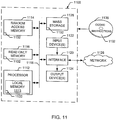
- the memory 245 may be implemented by any type of a storage or memory device, a database, etc., such as the mass storage device 1130 and/or the volatile memory 1118 included in the example processing system 1100 of FIG. 11 , which is described in greater detail below.
- FIG. 4 A block diagram of an example data facility processor 400 that may be used to implement signature processing in the example data processing facility 140 of FIG. 1 is illustrated in FIG. 4 .
- the example data facility processor 400 of FIG. 4 includes an example network interface 405 implemented using any networking technology capable of interfacing with the network 135 and capable of sending data to and receiving data from the device meter 125.
- the example data facility processor 400 of FIG. 4 also includes an example signature receiver 410 to receive, via the network interface 405, the monitored signatures reported by the device meter 125 in any appropriate data format according to any appropriate protocol.
- the example data facility processor 400 of FIG. 4 further includes an example comparator 415 to compare the monitored signatures received from the device meter 125 with reference signatures representative of the collection of reference media known to the data processing facility 140.
- the comparator 415 of FIG. 4 can implement any type(s) and/or number of comparison criteria, such as a cross-correlation value, a Hamming distance, etc., to determine whether a monitored signature and a reference signature match or substantially match within a particular tolerance level (e.g., which may be predetermined, specified as a configuration parameter or input, etc.).
- a cross-correlation value e.g., a Hamming distance, etc.
- the signature receiver 410 can receive the monitored signatures of the first type (e.g., the rich or high resolution monitored signatures), as described above, for comparison with reference signatures of the first type that are associated with reference media sources known to the data processing facility 140.
- the comparator 415 compares the monitored signatures of the first type with the reference signatures of the first type to identify a match.
- the comparator 415 causes an example indication processor 420 included in the data facility processor 400 to send a match success indication, via the network interface 405, to the device meter 125.
- the comparator 415 also identifies the particular reference media represented by the matching reference signature as corresponding to the monitored media represented by the monitored signatures of the first type that have been received from the device meter 125.
- the data facility processor 400 after the comparator 415 identifies the particular reference media corresponding to the monitored media, the data facility processor 400 also provides sequence(s) of reference signatures of a second type (e.g., the light or low resolution reference signatures) to the device meter 125 to enable continues monitoring of the now identified media being presented by the media device 110, as described above.
- the data facility processor 400 includes an example signature provider 425 to provide the sequence(s) of reference signatures of the second type, via the network interface 405, to the device meter 125.
- the signature provider 425 can format the reference signatures using any appropriate data format for sending via any appropriate data protocol.
- the signature provider 425 continues to provide successive sequences of reference signatures of the second type to the device meter 125 until a match failure indication is received by the indication processor 420 from the device meter 125 (e.g., which indicates that the previously identified reference media corresponding the reference signatures of the second type no longer corresponds to the media being monitored by the device meter 125).
- the data facility processor 400 receives the monitored signatures of the second type from the device meter, as described above. In such examples, the comparator 415 compares the monitored signatures of the second type with the sequence of reference signatures of the second type that correspond to the previously identified reference media (e.g., such as by using the processing described above in connection with the comparator 235 of FIG. 2 ).
- the comparator 415 continues to compare the received, monitored signatures of the second type with the sequence of reference signatures of the second type until the comparator 235 determines that a number (e.g., greater than or equal to one) of monitored signatures of the second type do not match the corresponding reference signatures of the second type (and, thus, the monitored media no longer matches the previously identified reference media).
- a number e.g., greater than or equal to one
- the comparator 415 causes the indication processor 420 to send a match failure indication, via the network interface 225, to the device meter 125 (e.g., which cause the device meter 125 to switch to generating and reporting monitored signatures of the first type to enable identification of a different reference media source corresponding to the new (e.g., changed) media being monitored by the device meter 125).
- the data facility processor 400 of FIG. 4 also includes an example memory 430 to store the reference signatures of the first and second types that are used for comparison with the monitored signatures of the first and second types that are generated by the device meter 125.
- the memory 430 also stores the monitored signatures of the first and second types that are received from the device meter 125.
- the memory 430 may be implemented by any type of a storage or memory device, a database, etc., such as the mass storage device 1130 and/or the volatile memory 1118 included in the example processing system 1100 of FIG. 11 , which is described in greater detail below.
- FIGS. 1-4 While example manners of implementing the audience measurement system 100 have been illustrated in FIGS. 1-4 , one or more of the elements, processes and/or devices illustrated in FIGS. 1-4 may be combined, divided, re-arranged, omitted, eliminated and/or implemented in any other way.
- the example device meter 125, the example data processing facility 140, the example media interface 205, the example signature processor 210, the example controller 215, the example signature reporter 220, the example network interface 225, the example data receiver 230, the example comparator 235, the example data reporter 240, the example type-1 signature generator 305, the example type-2 signature generator 310, the example signature interval adjuster 315, the example data facility processor 400, the example network interface 405, the example signature receiver 410, the example comparator 415, the example indication processor 420, the example signature provider 425 and/or, more generally, the example audience measurement system 100 may be implemented by hardware, software, firmware and/or any combination of hardware, software and/or firmware.
- any of the example device meter 125, the example data processing facility 140, the example media interface 205, the example signature processor 210, the example controller 215, the example signature reporter 220, the example network interface 225, the example data receiver 230, the example comparator 235, the example data reporter 240, the example type-1 signature generator 305, the example type-2 signature generator 310, the example signature interval adjuster 315, the example data facility processor 400, the example network interface 405, the example signature receiver 410, the example comparator 415, the example indication processor 420, the example signature provider 425 and/or, more generally, the example audience measurement system 100 could be implemented by one or more circuit(s), programmable processor(s), application specific integrated circuit(s) (ASIC(s)), programmable logic device(s) (PLD(s)) and/or field programmable logic device(s) (FPLD(s)), etc.
- ASIC application specific integrated circuit
- PLD programmable logic device
- FPLD field programmable logic device
- DVD digital versatile disk
- CD compact disk
- Blu-ray discTM Blu-ray discTM
- the example audience measurement system 100 of FIGS. 1-4 may include one or more elements, processes and/or devices in addition to, or instead of, those illustrated in FIGS. 1-4 , and/or may include more than one of any or all of the illustrated elements, processes and devices.
- FIGS. 5-10 Flowcharts representative of example machine readable instructions for implementing the example audience measurement system 100, the example device meter 125, the example data processing facility 140, the example media interface 205, the example signature processor 210, the example controller 215, the example signature reporter 220, the example network interface 225, the example data receiver 230, the example comparator 235, the example data reporter 240, the example type-1 signature generator 305, the example type-2 signature generator 310, the example signature interval adjuster 315, the example data facility processor 400, the example network interface 405, the example signature receiver 410, the example comparator 415, the example indication processor 420 and/or the example signature provider 425 are shown in FIGS. 5-10 .
- the machine readable instructions represented by each flowchart may comprise one or more programs for execution by a processor, such as the processor 1112 shown in the example processing system 1100 discussed below in connection with FIG. 11 .
- the one or more programs, or portion(s) thereof may be embodied in software stored on a tangible computer readable medium such as a CD-ROM, a floppy disk, a hard drive, a digital versatile disk (DVD), a Blu-ray discTM, or a memory associated with the processor 1112, but the entire program or programs and/or portions thereof could alternatively be executed by a device other than the processor 1112 (e.g., such as a controller and/or any other suitable device) and/or embodied in firmware or dedicated hardware (e.g., implemented by an ASIC, a PLD, an FPLD, discrete logic, etc.).
- firmware or dedicated hardware e.g., implemented by an ASIC, a PLD, an FPLD, discrete logic, etc.
- one or more of the machine readable instructions represented by the flowchart of FIGS. 5-10 may be implemented manually.
- the order of execution of the blocks may be changed, and/or some of the blocks described may be changed
- FIGS. 5-10 may be implemented using coded instructions (e.g., computer readable instructions) stored on a tangible computer readable medium such as a hard disk drive, a flash memory, a read-only memory (ROM), a CD, a DVD, a cache, a random-access memory (RAM) and/or any other storage media in which information is stored for any duration (e.g., for extended time periods, permanently, brief instances, for temporarily buffering, and/or for caching of the information).
- a tangible computer readable medium such as a hard disk drive, a flash memory, a read-only memory (ROM), a CD, a DVD, a cache, a random-access memory (RAM) and/or any other storage media in which information is stored for any duration (e.g., for extended time periods, permanently, brief instances, for temporarily buffering, and/or for caching of the information).
- the term tangible computer readable medium is expressly defined to include any type of computer readable storage and to exclude propagating signals. Additionally or alternatively, the
- 5-10 may be implemented using coded instructions (e.g., computer readable instructions) stored on a non-transitory computer readable medium, such as a flash memory, a ROM, a CD, a DVD, a cache, a random-access memory (RAM) and/or any other storage media in which information is stored for any duration (e.g., for extended time periods, permanently, brief instances, for temporarily buffering, and/or for caching of the information).
- a non-transitory computer readable medium is expressly defined to include any type of computer readable medium and to exclude propagating signals.
- the terms "computer readable” and “machine readable” are considered equivalent unless indicated otherwise.
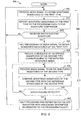
- Example machine readable instructions 500 that may be executed to implement the example audience measurement system 100 of FIG. 1 are represented by the flowchart shown in FIG. 5 .
- the machine readable instructions 500 of FIG. 5 begin execution at block 505 at which the device meter 125 and the data processing facility 140 of the audience measurement system 100 use monitored and reference signatures of a first type (e.g., corresponding to rich, high-resolution signatures) for monitoring media being presented by the media device 110 until at least one monitored signature is determined to match a reference signature, as described above.
- a first type e.g., corresponding to rich, high-resolution signatures
- the device meter 125 and the data processing facility 140 determine whether a successful match has occurred and, thus, the monitored media can be identified as corresponding to the particular reference media, from the collection of reference media, that is represented by the matching reference signature of the first type.
- the device meter 125 and the data processing facility 140 use monitored and reference signatures of a second type (e.g., corresponding to light, low-resolution signatures) for monitoring the media being presented by the media device 110 until at a number of monitored signatures fail to match their corresponding reference signatures.
- the reference signatures of the second type represent the particular reference media that was previously identified as corresponding to the monitored media.
- the device meter 125 and the data processing facility 140 determine whether the number of monitored signatures fail have failed to match their corresponding reference signatures and, thus, the media being presented by the media device 110 no longer corresponds to the previously identified reference media.
- the number of monitored signatures used to determine whether a match failure has occurred is greater than or equal to one, and may be hard-coded, preconfigured, specified, etc.
- the device meter 125 and the data processing facility 140 revert to using the monitored and reference signatures of the first type (e.g., corresponding to rich, high-resolution signatures) for monitoring the media being presented by the media device 110 (e.g., to enable the new/changed media to be initially identified). Accordingly, processing returns to block 505 and blocks subsequent thereto to enable signature processing to revert to using the monitored and reference signatures of the first type.
- the monitored and reference signatures of the first type e.g., corresponding to rich, high-resolution signatures
- First example machine readable instructions 600 that may be executed to implement the example device meter 125 of FIGS. 1-3 are represented by the flowchart shown in FIG. 6 .
- the machine readable instructions 600 of FIG. 6 begin execution at block 605 at which the signature processor 210 of the device meter 125 processes the media signal(s) forming the media being presented by the media device 110 to obtain (e.g., generate) monitored signatures of a first type (e.g., the rich, high resolution signatures).
- the signature reporter 220 of the device meter 125 reports the monitored signatures of the first type to the data processing facility 140 for comparison with reference signatures of the first type that represent a collection of reference media sources known to the audience measurement system 100.
- the data receiver 230 of the device meter 125 monitors for receipt of a match success indication, which indicates that at least one monitored signature of the first type has matched a reference signature of the first type. If a match success indication is received (block 615), then at block 620 the controller 215 of the device meter 125 causes the signature processor 210 to halt the processing to obtain monitored signatures of the first type (e.g., because the monitored media has been identified as corresponding to the particular reference media represented by the matching reference signature). As illustrated in FIG. 6 , the processing at blocks 605 through 620 corresponds to the processing at block 505 of FIG. 5 .
- the data receiver 230 receives a sequence of reference signatures of a second type (e.g., the light, low resolution signatures) that correspond (e.g., represent) the matching reference media previously identified using the signatures of the first type.
- the signature processor 210 processes the media signal(s) forming the media being presented by the media device 110 to obtain (e.g., generate) monitored signatures of the second type.
- the comparator 235 of the device meter 125 compares the monitored signatures of the second type with the sequence of reference signatures of the second type until a match failure is detected.
- the comparator 235 determines whether the match failure has been detected.
- a match failure can correspond to a number of monitored signatures of the second type failing to match their corresponding reference signatures of the second type. If the match failure is detected (block 640), then at block 645 the controller 215 causes the signature processor 210 to halt the processing to obtain monitored signatures of the second type (e.g., because the monitored media has been determined to no longer correspond to the previously matching reference media). At block 645, the data reporter 240 of the device meter 125 also reports a match failure indication and any associated information to the data processing facility 140, which indicates that the monitored media has been determined to no longer correspond to the previously matching reference media.
- Processing then returns to blocks 605 and blocks subsequent thereto to enable signature processing to revert to using the signatures of the first type to initially identify the new/changed media being presented by the media device 110.
- the processing at blocks 625 through 645 corresponds to the processing at block 515 of FIG. 5 .
- Second example machine readable instructions 700 that may be executed to implement the example device meter 125 of FIGS. 1-3 are represented by the flowchart shown in FIG. 7.
- FIG. 7 includes blocks 605-620 and 630 from FIG .6 . Accordingly, the processing performed by the example machine readable instructions 700 at these blocks is described in detail above in connection with the discussion of FIG. 6 and, in the interest of brevity, is not repeated in the discussion of FIG. 7 .
- the machine readable instructions 700 of FIG. 7 begin execution at block 605 and perform the processing at blocks 605 through 620 and 630 as described above in connection with the description of the machine readable instructions 600 of FIG. 6 .
- the signature processor 210 of the device meter 125 is obtaining (e.g., generating) monitored signatures of the second type for comparison with reference signatures of the second type that correspond to (e.g., represent) the particular reference media previously identified as matching the media being monitored by the device meter 125.
- the signature reporter 220 of the device meter 125 reports the monitored signatures of the second type to the data processing facility 140 for comparison with the sequence of reference signatures of the second type that represent the previously identified, matching reference media source.
- the data receiver 230 of the device meter 125 monitors for receipt of a match failure indication, which indicates that a number of monitored signatures of the second type have failed to match their corresponding reference signatures of the second type. If the match failure indication is received (block 615), then at block 620 the controller 215 of the device meter 125 causes the signature processor 210 to halt the processing to obtain monitored signatures of the second type (e.g., because the monitored media has been determined to no longer correspond to the previously matching reference media).
- Processing then returns to blocks 605 and blocks subsequent thereto to enable signature processing to revert to using the signatures of the first type to initially identify the new/changed media being presented by the media device 110.
- the processing at blocks 630 and 705 through 715 corresponds to the processing at block 515 of FIG. 5 .
- First example machine readable instructions 800 that may be executed to implement the example data facility processor 400 of the example data processing facility 140 of FIGS. 1 and 4 are represented by the flowchart shown in FIG. 8 .
- the machine readable instructions 800 of FIG. 8 begin execution at block 805 at which the signature receiver 410 of the data facility processor 400 receives monitored signatures of a first type (e.g., the rich, high resolution signatures) from the device meter 125, which are representative of the media being presented by the media device 110.
- the comparator 415 of the data facility processor 400 compares the received, monitored signatures of the first type with reference signatures of the first type that are representative of a collection of reference media sources known to the data processing facility 140.
- the comparator 415 determines whether a match between the monitored signatures of the first type and the reference signatures of the first type has been found. If a match has been found and, thus, the matching reference media can be used to identify the media being monitored by the device meter 125 (block 815), then at block 820 the indication processor 420 of the data facility processor 400 sends a match success indication to the device meter 125 (e.g., which causes the device meter 125 to switch to generating and reporting monitored signatures of a different type). As illustrated in FIG. 8 , the processing at blocks 805 through 820 corresponds to the processing at block 505 of FIG. 5 .
- the signature provider 425 of the data facility processor 400 sends sequence(s) of reference signatures of a second type (e.g., the light, low resolution signatures) to the device meter 125 for comparison with monitored signatures of the first type.
- the sequence(s) of reference signatures of the second type are representative of the matching reference media previously identified as corresponding to the media being monitored by the device meter 125.
- the indication processor 420 monitors for receipt of a match failure indication, which indicates that the reference signatures of the second type no longer match the monitored signatures of the second type being generated by the device meter 125 and, thus, the monitored media no longer corresponds to previously identified, matching reference media.
- the indication processor 420 also receives and processes descriptive information for the match failure, such as a timestamp indicating when the failure was detected, to enable proper crediting of the monitored media (e.g., such as by determining the duration of time over which the monitored media corresponded to the previously matching reference media). Processing then returns to blocks 805 and blocks subsequent thereto to enable signature processing to revert to using the signatures of the first type to initially identify the new/changed media being presented by the media device 110. As illustrated in FIG. 8 , the processing at blocks 825 through 840 corresponds to the processing at block 515 of FIG. 5 .
- Second example machine readable instructions 900 that may be executed to implement the example data facility processor 400 of the example data processing facility 140 of FIGS. 1 and 4 are represented by the flowchart shown in FIG. 9.
- FIG. 9 includes blocks 805 through 820 from FIG .8 . Accordingly, the processing performed by the example machine readable instructions 900 at these blocks is described in detail above in connection with the discussion of FIG. 8 and, in the interest of brevity, is not repeated in the discussion of FIG. 9 .
- the machine readable instructions 900 of FIG. 9 begin execution at block 805 and perform the processing at blocks 805 through 820 as described above in connection with the description of the machine readable instructions 800 of FIG. 8 .
- the data facility processor 400 has used the signatures of the first type to identify matching reference media that corresponds to the media being presented at the monitored site 105 by the media device 110 and that is being monitored by the device meter 125.
- the signature receiver 410 of the data facility processor 400 receives monitored signatures of the second type from the device meter 125, which are representative of the media being presented by the media device 110.
- the comparator 415 of the data facility processor 400 compares the monitored signatures of the second type with a sequence of reference signatures of the second type that are representative of the matching reference media previously identified as corresponding to the media being monitored by the device meter 125.
- the comparator 415 determines whether a match failure has been detected.
- the match failure can correspond to a number of monitored signatures of the second type failing to match their corresponding reference signatures of the second type. If the match failure is detected (block 915), then at block 920 the indication processor 420 of the data facility processor 400 sends a match failure indication to the device meter 125, which indicates that the monitored media has been determined to no longer correspond to the previously matching reference media. Processing then returns to blocks 805 and blocks subsequent thereto to enable signature processing to revert to using the signatures of the first type to initially identify the new/changed media being presented by the media device 110. As illustrated in FIG. 9 , the processing at blocks 905 through 920 corresponds to the processing at block 515 of FIG. 5 .
- Example machine readable instructions 1000 that may be executed to implement the example signature interval adjuster 315 of the example signature processor 210 of FIGS. 2 and/or 3 are represented by the flowchart shown in FIG. 10 .
- the machine readable instructions 1000 of FIG. 10 begin execution at block 1005 at which the signature interval adjuster 315 measures characteristic(s) of the media signal(s) being output by the media device 110 and that are being monitored by the device meter 125.
- the signature interval adjuster 315 can measure signal strength (e.g., such as in terms of signal power, signal energy, signal volume, signal amplitude, etc.), signal-to-noise ratio, noise content, etc.
- the signature interval adjuster 315 adjusts the sampling interval between monitored signatures of the second type (e.g., the light, low resolution signatures) that are generated by the signature processor 210 (e.g., by the type 2 signature generator 310 of the signature processor 210).
- the signature interval adjuster 315 can increase the interval between the monitored signatures of the second type (or, in other words, decrease the sampling rate) when the measured characteristic(s) indicate that the monitored media signal(s) is(are) strong and/or are not noisy, but can decrease the interval between the monitored signatures of the second type (or, in other words, increase the sampling rate) when the measured characteristic(s) indicate that the monitored media signal(s) is(are) weak and/or are noisy. Processing returns to block 1005 and blocks subsequent thereto to enable the signature interval adjuster 315 to continue to adjust the sampling intervals between the monitored signatures based on the measured characteristic(s) of the monitored media signal(s).
- FIG. 11 is a block diagram of an example processing system 1100 capable of executing the instructions of FIGS. 5-10 to implement the example audience measurement system 100, the example device meter 125, the example data processing facility 140, the example media interface 205, the example signature processor 210, the example controller 215, the example signature reporter 220, the example network interface 225, the example data receiver 230, the example comparator 235, the example data reporter 240, the example type-1 signature generator 305, the example type-2 signature generator 310, the example signature interval adjuster 315, the example data facility processor 400, the example network interface 405, the example signature receiver 410, the example comparator 415, the example indication processor 420 and/or the example signature provider 425 of FIGS. 1-4 .
- the processing system 1100 can be, for example, a server, a personal computer, a mobile phone (e.g., a smartphone, a cell phone, etc.), a personal digital assistant (PDA), an Internet appliance, a DVD player, a CD player, a digital video recorder, a Blu-ray player, a gaming console, a personal video recorder, a set top box, a digital camera, or any other type of computing device.
- a server e.g., a smartphone, a cell phone, etc.
- PDA personal digital assistant
- an Internet appliance e.g., a DVD player, a CD player, a digital video recorder, a Blu-ray player, a gaming console, a personal video recorder, a set top box, a digital camera, or any other type of computing device.
- the system 1100 of the instant example includes a processor 1112.
- the processor 1112 can be implemented by one or more microprocessors and/or controllers from any desired family or manufacturer.
- the processor 1112 includes a local memory 1113 (e.g., a cache) and is in communication with a main memory including a volatile memory 1114 and a non-volatile memory 1116 via a bus 1118.
- the volatile memory 1114 may be implemented by Static Random Access Memory (SRAM), Synchronous Dynamic Random Access Memory (SDRAM), Dynamic Random Access Memory (DRAM), RAMBUS Dynamic Random Access Memory (RDRAM) and/or any other type of random access memory device.
- the non-volatile memory 1116 may be implemented by flash memory and/or any other desired type of memory device. Access to the main memory 1114, 1116 is controlled by a memory controller.
- the processing system 1100 also includes an interface circuit 1120.
- the interface circuit 1120 may be implemented by any type of interface standard, such as an Ethernet interface, a universal serial bus (USB), and/or a PCI express interface.
- One or more input devices 1122 are connected to the interface circuit 1120.
- the input device(s) 1122 permit a user to enter data and commands into the processor 1112.
- the input device(s) can be implemented by, for example, a keyboard, a mouse, a touchscreen, a track-pad, a trackball, a trackbar (such as an isopoint), a voice recognition system and/or any other human-machine interface.
- One or more output devices 1124 are also connected to the interface circuit 1120.
- the output devices 1124 can be implemented, for example, by display devices (e.g., a liquid crystal display, a cathode ray tube display (CRT)), a printer and/or speakers.
- the interface circuit 1120 thus, typically includes a graphics driver card.
- the interface circuit 1120 also includes a communication device, such as a modem or network interface card, to facilitate exchange of data with external computers via a network 1126 (e.g., an Ethernet connection, a digital subscriber line (DSL), a telephone line, coaxial cable, a cellular telephone system, etc.).
- a network 1126 e.g., an Ethernet connection, a digital subscriber line (DSL), a telephone line, coaxial cable, a cellular telephone system, etc.
- the processing system 1100 also includes one or more mass storage devices 1128 for storing machine readable instructions and data.
- mass storage devices 1128 include floppy disk drives, hard drive disks, compact disk drives and digital versatile disk (DVD) drives.
- the mass storage device 1130 may implement the memory 245 and/or the memory 430. Additionally or alternatively, in some examples the volatile memory 1118 may implement the memory 245 and/or the memory 430.
- Coded instructions 1132 corresponding to the instructions of FIGS. 5-10 may be stored in the mass storage device 1128, in the volatile memory 1114, in the non-volatile memory 1116, in the local memory 1113 and/or on a removable storage medium, such as a CD or DVD 1136.
- the methods and or apparatus described herein may be embedded in a structure such as a processor and/or an ASIC (application specific integrated circuit).
- a structure such as a processor and/or an ASIC (application specific integrated circuit).
Landscapes
- Engineering & Computer Science (AREA)
- Databases & Information Systems (AREA)
- Theoretical Computer Science (AREA)
- Signal Processing (AREA)
- Multimedia (AREA)
- Library & Information Science (AREA)
- Physics & Mathematics (AREA)
- General Engineering & Computer Science (AREA)
- General Physics & Mathematics (AREA)
- Data Mining & Analysis (AREA)
- Computer Networks & Wireless Communication (AREA)
- Testing, Inspecting, Measuring Of Stereoscopic Televisions And Televisions (AREA)
- Information Transfer Between Computers (AREA)
- Two-Way Televisions, Distribution Of Moving Picture Or The Like (AREA)
Applications Claiming Priority (2)
| Application Number | Priority Date | Filing Date | Title |
|---|---|---|---|
| US13/430,342 US8768003B2 (en) | 2012-03-26 | 2012-03-26 | Media monitoring using multiple types of signatures |
| EP13001543.1A EP2651052B1 (de) | 2012-03-26 | 2013-03-26 | Medienüberwachung Verwendung mehrerer Arten von Signaturen |
Related Parent Applications (1)
| Application Number | Title | Priority Date | Filing Date |
|---|---|---|---|
| EP13001543.1A Division EP2651052B1 (de) | 2012-03-26 | 2013-03-26 | Medienüberwachung Verwendung mehrerer Arten von Signaturen |
Publications (2)
| Publication Number | Publication Date |
|---|---|
| EP3703285A1 true EP3703285A1 (de) | 2020-09-02 |
| EP3703285B1 EP3703285B1 (de) | 2023-06-07 |
Family
ID=48050385
Family Applications (2)
| Application Number | Title | Priority Date | Filing Date |
|---|---|---|---|
| EP20168720.9A Active EP3703285B1 (de) | 2012-03-26 | 2013-03-26 | Medienüberwachung unter verwendung von mehreren arten von signaturen |
| EP13001543.1A Not-in-force EP2651052B1 (de) | 2012-03-26 | 2013-03-26 | Medienüberwachung Verwendung mehrerer Arten von Signaturen |
Family Applications After (1)
| Application Number | Title | Priority Date | Filing Date |
|---|---|---|---|
| EP13001543.1A Not-in-force EP2651052B1 (de) | 2012-03-26 | 2013-03-26 | Medienüberwachung Verwendung mehrerer Arten von Signaturen |
Country Status (5)
| Country | Link |
|---|---|
| US (9) | US8768003B2 (de) |
| EP (2) | EP3703285B1 (de) |
| JP (2) | JP5650268B2 (de) |
| AU (1) | AU2013201983B2 (de) |
| CA (1) | CA2810961C (de) |
Families Citing this family (31)
| Publication number | Priority date | Publication date | Assignee | Title |
|---|---|---|---|---|
| US9160837B2 (en) | 2011-06-29 | 2015-10-13 | Gracenote, Inc. | Interactive streaming content apparatus, systems and methods |
| US8768003B2 (en) * | 2012-03-26 | 2014-07-01 | The Nielsen Company (Us), Llc | Media monitoring using multiple types of signatures |
| US9628829B2 (en) | 2012-06-26 | 2017-04-18 | Google Technology Holdings LLC | Identifying media on a mobile device |
| US9106953B2 (en) | 2012-11-28 | 2015-08-11 | The Nielsen Company (Us), Llc | Media monitoring based on predictive signature caching |
| US9122605B2 (en) * | 2013-09-23 | 2015-09-01 | Honeywell International Inc. | Methods for determining multiple simultaneous fault conditions |
| US9497099B2 (en) * | 2013-12-16 | 2016-11-15 | Artesyn Embedded Computing, Inc. | Voting architecture for safety and mission critical systems |
| US9668020B2 (en) | 2014-04-07 | 2017-05-30 | The Nielsen Company (Us), Llc | Signature retrieval and matching for media monitoring |
| US9836535B2 (en) * | 2015-08-25 | 2017-12-05 | TCL Research America Inc. | Method and system for content retrieval based on rate-coverage optimization |
| US10200546B2 (en) * | 2015-09-25 | 2019-02-05 | The Nielsen Company (Us), Llc | Methods and apparatus to identify media using hybrid hash keys |
| US9930406B2 (en) | 2016-02-29 | 2018-03-27 | Gracenote, Inc. | Media channel identification with video multi-match detection and disambiguation based on audio fingerprint |
| US10063918B2 (en) | 2016-02-29 | 2018-08-28 | Gracenote, Inc. | Media channel identification with multi-match detection and disambiguation based on single-match |
| US9924222B2 (en) | 2016-02-29 | 2018-03-20 | Gracenote, Inc. | Media channel identification with multi-match detection and disambiguation based on location |
| US10785329B2 (en) * | 2017-01-05 | 2020-09-22 | The Nielsen Company (Us), Llc | Methods and apparatus to facilitate meter to meter matching for media identification |
| JP7209359B2 (ja) * | 2017-04-20 | 2023-01-20 | テレビジョン・インサイツ、インコーポレイテッド | 複数テレビジョン測定のための方法および装置 |
| US10440413B2 (en) | 2017-07-31 | 2019-10-08 | The Nielsen Company (Us), Llc | Methods and apparatus to perform media device asset qualification |
| US10923133B2 (en) | 2018-03-21 | 2021-02-16 | The Nielsen Company (Us), Llc | Methods and apparatus to identify signals using a low power watermark |
| US10891971B2 (en) * | 2018-06-04 | 2021-01-12 | The Nielsen Company (Us), Llc | Methods and apparatus to dynamically generate audio signatures adaptive to circumstances associated with media being monitored |
| US10839225B2 (en) * | 2018-07-11 | 2020-11-17 | The Nielsen Company (Us), Llc | Methods and apparatus to monitor a split screen media presentation |
| US10911824B2 (en) | 2018-11-05 | 2021-02-02 | The Nielsen Company (Us), Llc | Methods and apparatus to generate reference signatures |
| CN118200632A (zh) | 2019-01-11 | 2024-06-14 | 诺基亚技术有限公司 | 用于认证和授权基于网络的媒体处理的方法和装置 |
| US11537690B2 (en) * | 2019-05-07 | 2022-12-27 | The Nielsen Company (Us), Llc | End-point media watermarking |
| US11252460B2 (en) | 2020-03-27 | 2022-02-15 | The Nielsen Company (Us), Llc | Signature matching with meter data aggregation for media identification |
| US11558660B2 (en) * | 2020-05-29 | 2023-01-17 | The Nielsen Company (Us), Llc | Methods and apparatus to reduce false crediting of exposure to video-on-demand media assets |
| US11539987B2 (en) * | 2020-06-30 | 2022-12-27 | Roku, Inc. | Content-modification system with jitter effect mitigation feature |
| US11523149B2 (en) * | 2020-06-30 | 2022-12-06 | Roku, Inc. | Content-modification system with jitter effect mitigation feature |
| US11490154B2 (en) * | 2020-06-30 | 2022-11-01 | Roku, Inc. | Content-modification system with jitter effect mitigation feature |
| US11528514B2 (en) * | 2020-06-30 | 2022-12-13 | Roku, Inc. | Content-modification system with jitter effect mitigation feature |
| US12314315B2 (en) * | 2020-07-27 | 2025-05-27 | Audio Magic Corporation | Dynamic adjustment of parameters for media content identification |
| US11501793B2 (en) * | 2020-08-14 | 2022-11-15 | The Nielsen Company (Us), Llc | Methods and apparatus to perform signature matching using noise cancellation models to achieve consensus |
| US12423346B2 (en) | 2022-07-22 | 2025-09-23 | Gracenote, Inc. | Use of mismatched query fingerprint as basis to validate media identification |
| US12363564B2 (en) | 2022-10-13 | 2025-07-15 | T-Mobile Usa, Inc. | Determining a cause of an issue associated with a wireless telecommunication network |
Citations (14)
| Publication number | Priority date | Publication date | Assignee | Title |
|---|---|---|---|---|
| US4677466A (en) | 1985-07-29 | 1987-06-30 | A. C. Nielsen Company | Broadcast program identification method and apparatus |
| US5481294A (en) | 1993-10-27 | 1996-01-02 | A. C. Nielsen Company | Audience measurement system utilizing ancillary codes and passive signatures |
| CA2293957A1 (en) * | 1999-01-07 | 2000-07-07 | Nielsen Media Research, Inc. | Detection of media links in broadcast signals |
| WO2002051063A1 (en) * | 2000-12-21 | 2002-06-27 | Digimarc Corporation | Methods, apparatus and programs for generating and utilizing content signatures |
| US20050232411A1 (en) | 1999-10-27 | 2005-10-20 | Venugopal Srinivasan | Audio signature extraction and correlation |
| US20060153296A1 (en) | 2003-09-12 | 2006-07-13 | Kevin Deng | Digital video signature apparatus and methods for use with video program identification systems |
| US20060184961A1 (en) | 2003-06-20 | 2006-08-17 | Nielsen Media Research, Inc. | Signature-based program identification apparatus and methods for use with digital broadcast systems |
| US20060195861A1 (en) | 2003-10-17 | 2006-08-31 | Morris Lee | Methods and apparatus for identifying audio/video content using temporal signal characteristics |
| US20070274537A1 (en) | 2004-08-18 | 2007-11-29 | Venugopal Srinivasan | Methods and Apparatus for Generating Signatures |
| US20080091288A1 (en) | 2006-10-11 | 2008-04-17 | Venugopal Srinivasan | Methods and apparatus for embedding codes in compressed audio data streams |
| US20080276265A1 (en) | 2007-05-02 | 2008-11-06 | Alexander Topchy | Methods and apparatus for generating signatures |
| US7460684B2 (en) | 2003-06-13 | 2008-12-02 | Nielsen Media Research, Inc. | Method and apparatus for embedding watermarks |
| US20090013414A1 (en) * | 2007-07-02 | 2009-01-08 | Ripcode, Inc. | System and Method for Monitoring Content |
| EP2315378A2 (de) * | 2009-10-09 | 2011-04-27 | The Nielsen Company (US), LLC | Verfahren und Vorrichtung zur Anpassung der Signaturübereinstimmungsergebnisse zur Publikumsmessung |
Family Cites Families (35)
| Publication number | Priority date | Publication date | Assignee | Title |
|---|---|---|---|---|
| US5594934A (en) | 1994-09-21 | 1997-01-14 | A.C. Nielsen Company | Real time correlation meter |
| US6505160B1 (en) | 1995-07-27 | 2003-01-07 | Digimarc Corporation | Connected audio and other media objects |
| US6513717B2 (en) | 2000-12-07 | 2003-02-04 | Digimarc Corporation | Integrated cursor control and scanner device |
| US5574963A (en) | 1995-07-31 | 1996-11-12 | Lee S. Weinblatt | Audience measurement during a mute mode |
| DK0887958T3 (da) | 1997-06-23 | 2003-05-05 | Liechti Ag | Fremgangsmåde til komprimering af optagelser af omgivelseslyd, fremgangsmåde til detektering af programelementer deri, indretninger og computerprogram dertil |
| US6272176B1 (en) * | 1998-07-16 | 2001-08-07 | Nielsen Media Research, Inc. | Broadcast encoding system and method |
| US7284255B1 (en) | 1999-06-18 | 2007-10-16 | Steven G. Apel | Audience survey system, and system and methods for compressing and correlating audio signals |
| US6469749B1 (en) * | 1999-10-13 | 2002-10-22 | Koninklijke Philips Electronics N.V. | Automatic signature-based spotting, learning and extracting of commercials and other video content |
| AU2001247457A1 (en) * | 2000-03-18 | 2001-10-03 | Digimarc Corporation | Transmarking, watermark embedding functions as rendering commands, and feature-based watermarking of multimedia signals |
| US6453252B1 (en) * | 2000-05-15 | 2002-09-17 | Creative Technology Ltd. | Process for identifying audio content |
| US6990453B2 (en) | 2000-07-31 | 2006-01-24 | Landmark Digital Services Llc | System and methods for recognizing sound and music signals in high noise and distortion |
| US7072487B2 (en) | 2001-01-26 | 2006-07-04 | Digimarc Corporation | Watermark detection using adaptive color projections |
| US20020133499A1 (en) | 2001-03-13 | 2002-09-19 | Sean Ward | System and method for acoustic fingerprinting |
| FI20011871L (fi) * | 2001-09-24 | 2003-03-25 | Nokia Corp | Multimediadatan prosessointi |
| JP4094841B2 (ja) | 2001-11-21 | 2008-06-04 | 東芝松下ディスプレイテクノロジー株式会社 | 液晶表示器 |
| JP2003264683A (ja) * | 2002-03-07 | 2003-09-19 | Oki Electric Ind Co Ltd | 電子透かし埋め込み装置及び電子透かし検出装置 |
| JP3834532B2 (ja) | 2002-08-09 | 2006-10-18 | 株式会社ケンウッド | 認証システム、認証装置、認証方法及びプログラム |
| US20040062520A1 (en) | 2002-09-27 | 2004-04-01 | Koninklijke Philips Electronics N.V. | Enhanced commercial detection through fusion of video and audio signatures |
| US7222071B2 (en) | 2002-09-27 | 2007-05-22 | Arbitron Inc. | Audio data receipt/exposure measurement with code monitoring and signature extraction |
| US7693222B2 (en) | 2003-08-13 | 2010-04-06 | Ericsson Television Inc. | Method and system for re-multiplexing of content-modified MPEG-2 transport streams using PCR interpolation |
| US7623823B2 (en) | 2004-08-31 | 2009-11-24 | Integrated Media Measurement, Inc. | Detecting and measuring exposure to media content items |
| JP2006139693A (ja) | 2004-11-15 | 2006-06-01 | Hitachi Ltd | 匿名証明発行システム及びその方法 |
| EP3591864B1 (de) * | 2004-11-22 | 2022-04-27 | Nielsen Media Research, Inc. | Vorrichtung und verfahren zum identifizieren einer zeitverschiebung von medien |
| CA2595634C (en) | 2005-02-08 | 2014-12-30 | Landmark Digital Services Llc | Automatic identification of repeated material in audio signals |
| GB0606680D0 (en) | 2006-04-03 | 2006-05-10 | Univ Cardiff | Method of and apparatus for detecting degradation of visual performance |
| GB2465141B (en) | 2008-10-31 | 2014-01-22 | Media Instr Sa | Simulcast resolution in content matching systems |
| US8990142B2 (en) | 2009-10-30 | 2015-03-24 | The Nielsen Company (Us), Llc | Distributed audience measurement systems and methods |
| US8514131B2 (en) | 2010-09-03 | 2013-08-20 | Qualcomm Incorporated | Methods and apparatus for increasing the reliability of signal reference maps for use in position determination |
| US8768003B2 (en) | 2012-03-26 | 2014-07-01 | The Nielsen Company (Us), Llc | Media monitoring using multiple types of signatures |
| US9280832B2 (en) * | 2014-05-08 | 2016-03-08 | The Trustees Of The University Of Pennsylvania | Methods, systems, and computer readable media for visual odometry using rigid structures identified by antipodal transform |
| US20150371440A1 (en) * | 2014-06-19 | 2015-12-24 | Qualcomm Incorporated | Zero-baseline 3d map initialization |
| US9930406B2 (en) | 2016-02-29 | 2018-03-27 | Gracenote, Inc. | Media channel identification with video multi-match detection and disambiguation based on audio fingerprint |
| US10891971B2 (en) * | 2018-06-04 | 2021-01-12 | The Nielsen Company (Us), Llc | Methods and apparatus to dynamically generate audio signatures adaptive to circumstances associated with media being monitored |
| US11145083B2 (en) * | 2019-05-21 | 2021-10-12 | Microsoft Technology Licensing, Llc | Image-based localization |
| US11363332B1 (en) | 2021-08-27 | 2022-06-14 | The Nielsen Company (Us), Llc | Methods and apparatus to identify an episode number based on fingerprint and matched viewing information |
-
2012
- 2012-03-26 US US13/430,342 patent/US8768003B2/en active Active
-
2013
- 2013-03-25 CA CA2810961A patent/CA2810961C/en active Active
- 2013-03-26 EP EP20168720.9A patent/EP3703285B1/de active Active
- 2013-03-26 AU AU2013201983A patent/AU2013201983B2/en active Active
- 2013-03-26 JP JP2013064402A patent/JP5650268B2/ja not_active Expired - Fee Related
- 2013-03-26 EP EP13001543.1A patent/EP2651052B1/de not_active Not-in-force
-
2014
- 2014-06-09 US US14/299,794 patent/US9106952B2/en active Active
- 2014-11-12 JP JP2014230101A patent/JP5870435B2/ja active Active
-
2015
- 2015-07-15 US US14/800,317 patent/US9674574B2/en active Active
-
2017
- 2017-05-12 US US15/594,175 patent/US10212477B2/en active Active
-
2018
- 2018-12-28 US US16/235,953 patent/US11044523B2/en active Active
-
2021
- 2021-06-21 US US17/353,391 patent/US11863820B2/en active Active
-
2022
- 2022-12-22 US US18/145,711 patent/US11863821B2/en active Active
-
2024
- 2024-01-01 US US18/401,655 patent/US12167079B2/en active Active
- 2024-11-04 US US18/936,687 patent/US20250133264A1/en active Pending
Patent Citations (14)
| Publication number | Priority date | Publication date | Assignee | Title |
|---|---|---|---|---|
| US4677466A (en) | 1985-07-29 | 1987-06-30 | A. C. Nielsen Company | Broadcast program identification method and apparatus |
| US5481294A (en) | 1993-10-27 | 1996-01-02 | A. C. Nielsen Company | Audience measurement system utilizing ancillary codes and passive signatures |
| CA2293957A1 (en) * | 1999-01-07 | 2000-07-07 | Nielsen Media Research, Inc. | Detection of media links in broadcast signals |
| US20050232411A1 (en) | 1999-10-27 | 2005-10-20 | Venugopal Srinivasan | Audio signature extraction and correlation |
| WO2002051063A1 (en) * | 2000-12-21 | 2002-06-27 | Digimarc Corporation | Methods, apparatus and programs for generating and utilizing content signatures |
| US7460684B2 (en) | 2003-06-13 | 2008-12-02 | Nielsen Media Research, Inc. | Method and apparatus for embedding watermarks |
| US20060184961A1 (en) | 2003-06-20 | 2006-08-17 | Nielsen Media Research, Inc. | Signature-based program identification apparatus and methods for use with digital broadcast systems |
| US20060153296A1 (en) | 2003-09-12 | 2006-07-13 | Kevin Deng | Digital video signature apparatus and methods for use with video program identification systems |
| US20060195861A1 (en) | 2003-10-17 | 2006-08-31 | Morris Lee | Methods and apparatus for identifying audio/video content using temporal signal characteristics |
| US20070274537A1 (en) | 2004-08-18 | 2007-11-29 | Venugopal Srinivasan | Methods and Apparatus for Generating Signatures |
| US20080091288A1 (en) | 2006-10-11 | 2008-04-17 | Venugopal Srinivasan | Methods and apparatus for embedding codes in compressed audio data streams |
| US20080276265A1 (en) | 2007-05-02 | 2008-11-06 | Alexander Topchy | Methods and apparatus for generating signatures |
| US20090013414A1 (en) * | 2007-07-02 | 2009-01-08 | Ripcode, Inc. | System and Method for Monitoring Content |
| EP2315378A2 (de) * | 2009-10-09 | 2011-04-27 | The Nielsen Company (US), LLC | Verfahren und Vorrichtung zur Anpassung der Signaturübereinstimmungsergebnisse zur Publikumsmessung |
Also Published As
| Publication number | Publication date |
|---|---|
| JP5650268B2 (ja) | 2015-01-07 |
| AU2013201983A1 (en) | 2013-10-10 |
| US20130251189A1 (en) | 2013-09-26 |
| CA2810961A1 (en) | 2013-09-26 |
| EP2651052A1 (de) | 2013-10-16 |
| US9674574B2 (en) | 2017-06-06 |
| US10212477B2 (en) | 2019-02-19 |
| JP2013201760A (ja) | 2013-10-03 |
| CA2810961C (en) | 2016-05-10 |
| CN103369364A (zh) | 2013-10-23 |
| JP5870435B2 (ja) | 2016-03-01 |
| JP2015092672A (ja) | 2015-05-14 |
| US20250133264A1 (en) | 2025-04-24 |
| US20240137609A1 (en) | 2024-04-25 |
| US8768003B2 (en) | 2014-07-01 |
| US20210314660A1 (en) | 2021-10-07 |
| US11863820B2 (en) | 2024-01-02 |
| AU2013201983B2 (en) | 2015-07-09 |
| US20170251252A1 (en) | 2017-08-31 |
| US20140289755A1 (en) | 2014-09-25 |
| EP3703285B1 (de) | 2023-06-07 |
| US9106952B2 (en) | 2015-08-11 |
| US20150319489A1 (en) | 2015-11-05 |
| EP2651052B1 (de) | 2020-05-06 |
| US12167079B2 (en) | 2024-12-10 |
| US11863821B2 (en) | 2024-01-02 |
| US11044523B2 (en) | 2021-06-22 |
| US20230126218A1 (en) | 2023-04-27 |
| US20190141391A1 (en) | 2019-05-09 |
Similar Documents
| Publication | Publication Date | Title |
|---|---|---|
| US12167079B2 (en) | Media monitoring using multiple types of signatures | |
| US11477501B2 (en) | Reducing signature matching uncertainty in media monitoring systems | |
| US9106953B2 (en) | Media monitoring based on predictive signature caching | |
| EP2962215B1 (de) | Verfahren und systeme zur überlaufreduzierung bei der messung eines scheitelfaktors | |
| US10200751B2 (en) | Methods, apparatus, and machine readable storage media to monitor a media presentation | |
| AU2013203410B2 (en) | Media monitoring using multiple types of signatures |
Legal Events
| Date | Code | Title | Description |
|---|---|---|---|
| PUAI | Public reference made under article 153(3) epc to a published international application that has entered the european phase |
Free format text: ORIGINAL CODE: 0009012 |
|
| STAA | Information on the status of an ep patent application or granted ep patent |
Free format text: STATUS: THE APPLICATION HAS BEEN PUBLISHED |
|
| AC | Divisional application: reference to earlier application |
Ref document number: 2651052 Country of ref document: EP Kind code of ref document: P |
|
| AK | Designated contracting states |
Kind code of ref document: A1 Designated state(s): AL AT BE BG CH CY CZ DE DK EE ES FI FR GB GR HR HU IE IS IT LI LT LU LV MC MK MT NL NO PL PT RO RS SE SI SK SM TR |
|
| STAA | Information on the status of an ep patent application or granted ep patent |
Free format text: STATUS: REQUEST FOR EXAMINATION WAS MADE |
|
| 17P | Request for examination filed |
Effective date: 20210302 |
|
| RBV | Designated contracting states (corrected) |
Designated state(s): AL AT BE BG CH CY CZ DE DK EE ES FI FR GB GR HR HU IE IS IT LI LT LU LV MC MK MT NL NO PL PT RO RS SE SI SK SM TR |
|
| GRAP | Despatch of communication of intention to grant a patent |
Free format text: ORIGINAL CODE: EPIDOSNIGR1 |
|
| STAA | Information on the status of an ep patent application or granted ep patent |
Free format text: STATUS: GRANT OF PATENT IS INTENDED |
|
| RIC1 | Information provided on ipc code assigned before grant |
Ipc: G06F 16/14 20190101ALN20221201BHEP Ipc: H04H 60/56 20080101AFI20221201BHEP |
|
| RIC1 | Information provided on ipc code assigned before grant |
Ipc: G06F 16/14 20190101ALN20221205BHEP Ipc: H04H 60/56 20080101AFI20221205BHEP |
|
| INTG | Intention to grant announced |
Effective date: 20221221 |
|
| GRAS | Grant fee paid |
Free format text: ORIGINAL CODE: EPIDOSNIGR3 |
|
| GRAA | (expected) grant |
Free format text: ORIGINAL CODE: 0009210 |
|
| STAA | Information on the status of an ep patent application or granted ep patent |
Free format text: STATUS: THE PATENT HAS BEEN GRANTED |
|
| AC | Divisional application: reference to earlier application |
Ref document number: 2651052 Country of ref document: EP Kind code of ref document: P |
|
| AK | Designated contracting states |
Kind code of ref document: B1 Designated state(s): AL AT BE BG CH CY CZ DE DK EE ES FI FR GB GR HR HU IE IS IT LI LT LU LV MC MK MT NL NO PL PT RO RS SE SI SK SM TR |
|
| REG | Reference to a national code |
Ref country code: GB Ref legal event code: FG4D |
|
| REG | Reference to a national code |
Ref country code: CH Ref legal event code: EP Ref country code: AT Ref legal event code: REF Ref document number: 1577944 Country of ref document: AT Kind code of ref document: T Effective date: 20230615 |
|
| REG | Reference to a national code |
Ref country code: DE Ref legal event code: R096 Ref document number: 602013084026 Country of ref document: DE |
|
| REG | Reference to a national code |
Ref country code: SE Ref legal event code: TRGR |
|
| REG | Reference to a national code |
Ref country code: LT Ref legal event code: MG9D |
|
| REG | Reference to a national code |
Ref country code: NL Ref legal event code: MP Effective date: 20230607 |
|
| PG25 | Lapsed in a contracting state [announced via postgrant information from national office to epo] |
Ref country code: NO Free format text: LAPSE BECAUSE OF FAILURE TO SUBMIT A TRANSLATION OF THE DESCRIPTION OR TO PAY THE FEE WITHIN THE PRESCRIBED TIME-LIMIT Effective date: 20230907 Ref country code: ES Free format text: LAPSE BECAUSE OF FAILURE TO SUBMIT A TRANSLATION OF THE DESCRIPTION OR TO PAY THE FEE WITHIN THE PRESCRIBED TIME-LIMIT Effective date: 20230607 |
|
| REG | Reference to a national code |
Ref country code: AT Ref legal event code: MK05 Ref document number: 1577944 Country of ref document: AT Kind code of ref document: T Effective date: 20230607 |
|
| PG25 | Lapsed in a contracting state [announced via postgrant information from national office to epo] |
Ref country code: RS Free format text: LAPSE BECAUSE OF FAILURE TO SUBMIT A TRANSLATION OF THE DESCRIPTION OR TO PAY THE FEE WITHIN THE PRESCRIBED TIME-LIMIT Effective date: 20230607 Ref country code: NL Free format text: LAPSE BECAUSE OF FAILURE TO SUBMIT A TRANSLATION OF THE DESCRIPTION OR TO PAY THE FEE WITHIN THE PRESCRIBED TIME-LIMIT Effective date: 20230607 Ref country code: LV Free format text: LAPSE BECAUSE OF FAILURE TO SUBMIT A TRANSLATION OF THE DESCRIPTION OR TO PAY THE FEE WITHIN THE PRESCRIBED TIME-LIMIT Effective date: 20230607 Ref country code: LT Free format text: LAPSE BECAUSE OF FAILURE TO SUBMIT A TRANSLATION OF THE DESCRIPTION OR TO PAY THE FEE WITHIN THE PRESCRIBED TIME-LIMIT Effective date: 20230607 Ref country code: HR Free format text: LAPSE BECAUSE OF FAILURE TO SUBMIT A TRANSLATION OF THE DESCRIPTION OR TO PAY THE FEE WITHIN THE PRESCRIBED TIME-LIMIT Effective date: 20230607 Ref country code: GR Free format text: LAPSE BECAUSE OF FAILURE TO SUBMIT A TRANSLATION OF THE DESCRIPTION OR TO PAY THE FEE WITHIN THE PRESCRIBED TIME-LIMIT Effective date: 20230908 |
|
| PG25 | Lapsed in a contracting state [announced via postgrant information from national office to epo] |
Ref country code: FI Free format text: LAPSE BECAUSE OF FAILURE TO SUBMIT A TRANSLATION OF THE DESCRIPTION OR TO PAY THE FEE WITHIN THE PRESCRIBED TIME-LIMIT Effective date: 20230607 |
|
| PG25 | Lapsed in a contracting state [announced via postgrant information from national office to epo] |
Ref country code: SK Free format text: LAPSE BECAUSE OF FAILURE TO SUBMIT A TRANSLATION OF THE DESCRIPTION OR TO PAY THE FEE WITHIN THE PRESCRIBED TIME-LIMIT Effective date: 20230607 |
|
| PG25 | Lapsed in a contracting state [announced via postgrant information from national office to epo] |
Ref country code: IS Free format text: LAPSE BECAUSE OF FAILURE TO SUBMIT A TRANSLATION OF THE DESCRIPTION OR TO PAY THE FEE WITHIN THE PRESCRIBED TIME-LIMIT Effective date: 20231007 |
|
| PG25 | Lapsed in a contracting state [announced via postgrant information from national office to epo] |
Ref country code: SM Free format text: LAPSE BECAUSE OF FAILURE TO SUBMIT A TRANSLATION OF THE DESCRIPTION OR TO PAY THE FEE WITHIN THE PRESCRIBED TIME-LIMIT Effective date: 20230607 Ref country code: SK Free format text: LAPSE BECAUSE OF FAILURE TO SUBMIT A TRANSLATION OF THE DESCRIPTION OR TO PAY THE FEE WITHIN THE PRESCRIBED TIME-LIMIT Effective date: 20230607 Ref country code: RO Free format text: LAPSE BECAUSE OF FAILURE TO SUBMIT A TRANSLATION OF THE DESCRIPTION OR TO PAY THE FEE WITHIN THE PRESCRIBED TIME-LIMIT Effective date: 20230607 Ref country code: PT Free format text: LAPSE BECAUSE OF FAILURE TO SUBMIT A TRANSLATION OF THE DESCRIPTION OR TO PAY THE FEE WITHIN THE PRESCRIBED TIME-LIMIT Effective date: 20231009 Ref country code: IS Free format text: LAPSE BECAUSE OF FAILURE TO SUBMIT A TRANSLATION OF THE DESCRIPTION OR TO PAY THE FEE WITHIN THE PRESCRIBED TIME-LIMIT Effective date: 20231007 Ref country code: EE Free format text: LAPSE BECAUSE OF FAILURE TO SUBMIT A TRANSLATION OF THE DESCRIPTION OR TO PAY THE FEE WITHIN THE PRESCRIBED TIME-LIMIT Effective date: 20230607 Ref country code: CZ Free format text: LAPSE BECAUSE OF FAILURE TO SUBMIT A TRANSLATION OF THE DESCRIPTION OR TO PAY THE FEE WITHIN THE PRESCRIBED TIME-LIMIT Effective date: 20230607 Ref country code: AT Free format text: LAPSE BECAUSE OF FAILURE TO SUBMIT A TRANSLATION OF THE DESCRIPTION OR TO PAY THE FEE WITHIN THE PRESCRIBED TIME-LIMIT Effective date: 20230607 |
|
| PG25 | Lapsed in a contracting state [announced via postgrant information from national office to epo] |
Ref country code: PL Free format text: LAPSE BECAUSE OF FAILURE TO SUBMIT A TRANSLATION OF THE DESCRIPTION OR TO PAY THE FEE WITHIN THE PRESCRIBED TIME-LIMIT Effective date: 20230607 |
|
| REG | Reference to a national code |
Ref country code: DE Ref legal event code: R097 Ref document number: 602013084026 Country of ref document: DE |
|
| PLBE | No opposition filed within time limit |
Free format text: ORIGINAL CODE: 0009261 |
|
| STAA | Information on the status of an ep patent application or granted ep patent |
Free format text: STATUS: NO OPPOSITION FILED WITHIN TIME LIMIT |
|
| PG25 | Lapsed in a contracting state [announced via postgrant information from national office to epo] |
Ref country code: DK Free format text: LAPSE BECAUSE OF FAILURE TO SUBMIT A TRANSLATION OF THE DESCRIPTION OR TO PAY THE FEE WITHIN THE PRESCRIBED TIME-LIMIT Effective date: 20230607 |
|
| PG25 | Lapsed in a contracting state [announced via postgrant information from national office to epo] |
Ref country code: SI Free format text: LAPSE BECAUSE OF FAILURE TO SUBMIT A TRANSLATION OF THE DESCRIPTION OR TO PAY THE FEE WITHIN THE PRESCRIBED TIME-LIMIT Effective date: 20230607 |
|
| 26N | No opposition filed |
Effective date: 20240308 |
|
| PG25 | Lapsed in a contracting state [announced via postgrant information from national office to epo] |
Ref country code: SI Free format text: LAPSE BECAUSE OF FAILURE TO SUBMIT A TRANSLATION OF THE DESCRIPTION OR TO PAY THE FEE WITHIN THE PRESCRIBED TIME-LIMIT Effective date: 20230607 Ref country code: IT Free format text: LAPSE BECAUSE OF FAILURE TO SUBMIT A TRANSLATION OF THE DESCRIPTION OR TO PAY THE FEE WITHIN THE PRESCRIBED TIME-LIMIT Effective date: 20230607 |
|
| REG | Reference to a national code |
Ref country code: CH Ref legal event code: PL |
|
| PG25 | Lapsed in a contracting state [announced via postgrant information from national office to epo] |
Ref country code: BG Free format text: LAPSE BECAUSE OF FAILURE TO SUBMIT A TRANSLATION OF THE DESCRIPTION OR TO PAY THE FEE WITHIN THE PRESCRIBED TIME-LIMIT Effective date: 20230607 |
|
| PG25 | Lapsed in a contracting state [announced via postgrant information from national office to epo] |
Ref country code: LU Free format text: LAPSE BECAUSE OF NON-PAYMENT OF DUE FEES Effective date: 20240326 |
|
| PG25 | Lapsed in a contracting state [announced via postgrant information from national office to epo] |
Ref country code: MC Free format text: LAPSE BECAUSE OF FAILURE TO SUBMIT A TRANSLATION OF THE DESCRIPTION OR TO PAY THE FEE WITHIN THE PRESCRIBED TIME-LIMIT Effective date: 20230607 |
|
| GBPC | Gb: european patent ceased through non-payment of renewal fee |
Effective date: 20240326 |
|
| PG25 | Lapsed in a contracting state [announced via postgrant information from national office to epo] |
Ref country code: MC Free format text: LAPSE BECAUSE OF FAILURE TO SUBMIT A TRANSLATION OF THE DESCRIPTION OR TO PAY THE FEE WITHIN THE PRESCRIBED TIME-LIMIT Effective date: 20230607 Ref country code: LU Free format text: LAPSE BECAUSE OF NON-PAYMENT OF DUE FEES Effective date: 20240326 Ref country code: BG Free format text: LAPSE BECAUSE OF FAILURE TO SUBMIT A TRANSLATION OF THE DESCRIPTION OR TO PAY THE FEE WITHIN THE PRESCRIBED TIME-LIMIT Effective date: 20230607 |
|
| REG | Reference to a national code |
Ref country code: BE Ref legal event code: MM Effective date: 20240331 |
|
| PG25 | Lapsed in a contracting state [announced via postgrant information from national office to epo] |
Ref country code: BE Free format text: LAPSE BECAUSE OF NON-PAYMENT OF DUE FEES Effective date: 20240331 |
|
| PG25 | Lapsed in a contracting state [announced via postgrant information from national office to epo] |
Ref country code: GB Free format text: LAPSE BECAUSE OF NON-PAYMENT OF DUE FEES Effective date: 20240326 |
|
| PG25 | Lapsed in a contracting state [announced via postgrant information from national office to epo] |
Ref country code: FR Free format text: LAPSE BECAUSE OF NON-PAYMENT OF DUE FEES Effective date: 20240331 |
|
| PG25 | Lapsed in a contracting state [announced via postgrant information from national office to epo] |
Ref country code: IE Free format text: LAPSE BECAUSE OF NON-PAYMENT OF DUE FEES Effective date: 20240326 |
|
| PG25 | Lapsed in a contracting state [announced via postgrant information from national office to epo] |
Ref country code: IE Free format text: LAPSE BECAUSE OF NON-PAYMENT OF DUE FEES Effective date: 20240326 Ref country code: GB Free format text: LAPSE BECAUSE OF NON-PAYMENT OF DUE FEES Effective date: 20240326 Ref country code: FR Free format text: LAPSE BECAUSE OF NON-PAYMENT OF DUE FEES Effective date: 20240331 Ref country code: BE Free format text: LAPSE BECAUSE OF NON-PAYMENT OF DUE FEES Effective date: 20240331 Ref country code: CH Free format text: LAPSE BECAUSE OF NON-PAYMENT OF DUE FEES Effective date: 20240331 |
|
| PG25 | Lapsed in a contracting state [announced via postgrant information from national office to epo] |
Ref country code: CY Free format text: LAPSE BECAUSE OF FAILURE TO SUBMIT A TRANSLATION OF THE DESCRIPTION OR TO PAY THE FEE WITHIN THE PRESCRIBED TIME-LIMIT; INVALID AB INITIO Effective date: 20130326 |
|
| PG25 | Lapsed in a contracting state [announced via postgrant information from national office to epo] |
Ref country code: HU Free format text: LAPSE BECAUSE OF FAILURE TO SUBMIT A TRANSLATION OF THE DESCRIPTION OR TO PAY THE FEE WITHIN THE PRESCRIBED TIME-LIMIT; INVALID AB INITIO Effective date: 20130326 |
|
| PG25 | Lapsed in a contracting state [announced via postgrant information from national office to epo] |
Ref country code: TR Free format text: LAPSE BECAUSE OF FAILURE TO SUBMIT A TRANSLATION OF THE DESCRIPTION OR TO PAY THE FEE WITHIN THE PRESCRIBED TIME-LIMIT Effective date: 20230607 |
|
| PGFP | Annual fee paid to national office [announced via postgrant information from national office to epo] |
Ref country code: SE Payment date: 20260327 Year of fee payment: 14 |
|
| PGFP | Annual fee paid to national office [announced via postgrant information from national office to epo] |
Ref country code: DE Payment date: 20260327 Year of fee payment: 14 |