EP3701975A1 - Biodegradable and biometabolic tumor sealant - Google Patents
Biodegradable and biometabolic tumor sealant Download PDFInfo
- Publication number
- EP3701975A1 EP3701975A1 EP18869827.8A EP18869827A EP3701975A1 EP 3701975 A1 EP3701975 A1 EP 3701975A1 EP 18869827 A EP18869827 A EP 18869827A EP 3701975 A1 EP3701975 A1 EP 3701975A1
- Authority
- EP
- European Patent Office
- Prior art keywords
- tumor
- superabsorbent polymer
- particle
- polymer compound
- sealant according
- Prior art date
- Legal status (The legal status is an assumption and is not a legal conclusion. Google has not performed a legal analysis and makes no representation as to the accuracy of the status listed.)
- Granted
Links
Images




Classifications
-
- A—HUMAN NECESSITIES
- A61—MEDICAL OR VETERINARY SCIENCE; HYGIENE
- A61K—PREPARATIONS FOR MEDICAL, DENTAL OR TOILETRY PURPOSES
- A61K31/00—Medicinal preparations containing organic active ingredients
- A61K31/70—Carbohydrates; Sugars; Derivatives thereof
- A61K31/715—Polysaccharides, i.e. having more than five saccharide radicals attached to each other by glycosidic linkages; Derivatives thereof, e.g. ethers, esters
- A61K31/716—Glucans
- A61K31/717—Celluloses
-
- C—CHEMISTRY; METALLURGY
- C08—ORGANIC MACROMOLECULAR COMPOUNDS; THEIR PREPARATION OR CHEMICAL WORKING-UP; COMPOSITIONS BASED THEREON
- C08B—POLYSACCHARIDES; DERIVATIVES THEREOF
- C08B15/00—Preparation of other cellulose derivatives or modified cellulose, e.g. complexes
- C08B15/10—Crosslinking of cellulose
-
- A—HUMAN NECESSITIES
- A61—MEDICAL OR VETERINARY SCIENCE; HYGIENE
- A61K—PREPARATIONS FOR MEDICAL, DENTAL OR TOILETRY PURPOSES
- A61K31/00—Medicinal preparations containing organic active ingredients
- A61K31/70—Carbohydrates; Sugars; Derivatives thereof
- A61K31/715—Polysaccharides, i.e. having more than five saccharide radicals attached to each other by glycosidic linkages; Derivatives thereof, e.g. ethers, esters
-
- A—HUMAN NECESSITIES
- A61—MEDICAL OR VETERINARY SCIENCE; HYGIENE
- A61K—PREPARATIONS FOR MEDICAL, DENTAL OR TOILETRY PURPOSES
- A61K31/00—Medicinal preparations containing organic active ingredients
- A61K31/70—Carbohydrates; Sugars; Derivatives thereof
- A61K31/715—Polysaccharides, i.e. having more than five saccharide radicals attached to each other by glycosidic linkages; Derivatives thereof, e.g. ethers, esters
- A61K31/716—Glucans
- A61K31/722—Chitin, chitosan
-
- A—HUMAN NECESSITIES
- A61—MEDICAL OR VETERINARY SCIENCE; HYGIENE
- A61K—PREPARATIONS FOR MEDICAL, DENTAL OR TOILETRY PURPOSES
- A61K31/00—Medicinal preparations containing organic active ingredients
- A61K31/74—Synthetic polymeric materials
- A61K31/765—Polymers containing oxygen
- A61K31/77—Polymers containing oxygen of oxiranes
-
- A—HUMAN NECESSITIES
- A61—MEDICAL OR VETERINARY SCIENCE; HYGIENE
- A61K—PREPARATIONS FOR MEDICAL, DENTAL OR TOILETRY PURPOSES
- A61K47/00—Medicinal preparations characterised by the non-active ingredients used, e.g. carriers or inert additives; Targeting or modifying agents chemically bound to the active ingredient
- A61K47/30—Macromolecular organic or inorganic compounds, e.g. inorganic polyphosphates
- A61K47/32—Macromolecular compounds obtained by reactions only involving carbon-to-carbon unsaturated bonds, e.g. carbomers, poly(meth)acrylates, or polyvinyl pyrrolidone
-
- A—HUMAN NECESSITIES
- A61—MEDICAL OR VETERINARY SCIENCE; HYGIENE
- A61K—PREPARATIONS FOR MEDICAL, DENTAL OR TOILETRY PURPOSES
- A61K47/00—Medicinal preparations characterised by the non-active ingredients used, e.g. carriers or inert additives; Targeting or modifying agents chemically bound to the active ingredient
- A61K47/46—Ingredients of undetermined constitution or reaction products thereof, e.g. skin, bone, milk, cotton fibre, eggshell, oxgall or plant extracts
-
- A—HUMAN NECESSITIES
- A61—MEDICAL OR VETERINARY SCIENCE; HYGIENE
- A61K—PREPARATIONS FOR MEDICAL, DENTAL OR TOILETRY PURPOSES
- A61K9/00—Medicinal preparations characterised by special physical form
- A61K9/0012—Galenical forms characterised by the site of application
- A61K9/0019—Injectable compositions; Intramuscular, intravenous, arterial, subcutaneous administration; Compositions to be administered through the skin in an invasive manner
-
- A—HUMAN NECESSITIES
- A61—MEDICAL OR VETERINARY SCIENCE; HYGIENE
- A61K—PREPARATIONS FOR MEDICAL, DENTAL OR TOILETRY PURPOSES
- A61K9/00—Medicinal preparations characterised by special physical form
- A61K9/10—Dispersions; Emulsions
- A61K9/107—Emulsions ; Emulsion preconcentrates; Micelles
- A61K9/1075—Microemulsions or submicron emulsions; Preconcentrates or solids thereof; Micelles, e.g. made of phospholipids or block copolymers
-
- A—HUMAN NECESSITIES
- A61—MEDICAL OR VETERINARY SCIENCE; HYGIENE
- A61K—PREPARATIONS FOR MEDICAL, DENTAL OR TOILETRY PURPOSES
- A61K9/00—Medicinal preparations characterised by special physical form
- A61K9/14—Particulate form, e.g. powders, Processes for size reducing of pure drugs or the resulting products, Pure drug nanoparticles
- A61K9/16—Agglomerates; Granulates; Microbeadlets ; Microspheres; Pellets; Solid products obtained by spray drying, spray freeze drying, spray congealing,(multiple) emulsion solvent evaporation or extraction
- A61K9/1605—Excipients; Inactive ingredients
- A61K9/1629—Organic macromolecular compounds
- A61K9/1652—Polysaccharides, e.g. alginate, cellulose derivatives; Cyclodextrin
-
- A—HUMAN NECESSITIES
- A61—MEDICAL OR VETERINARY SCIENCE; HYGIENE
- A61K—PREPARATIONS FOR MEDICAL, DENTAL OR TOILETRY PURPOSES
- A61K9/00—Medicinal preparations characterised by special physical form
- A61K9/14—Particulate form, e.g. powders, Processes for size reducing of pure drugs or the resulting products, Pure drug nanoparticles
- A61K9/19—Particulate form, e.g. powders, Processes for size reducing of pure drugs or the resulting products, Pure drug nanoparticles lyophilised, i.e. freeze-dried, solutions or dispersions
-
- A—HUMAN NECESSITIES
- A61—MEDICAL OR VETERINARY SCIENCE; HYGIENE
- A61L—METHODS OR APPARATUS FOR STERILISING MATERIALS OR OBJECTS IN GENERAL; DISINFECTION, STERILISATION OR DEODORISATION OF AIR; CHEMICAL ASPECTS OF BANDAGES, DRESSINGS, ABSORBENT PADS OR SURGICAL ARTICLES; MATERIALS FOR BANDAGES, DRESSINGS, ABSORBENT PADS OR SURGICAL ARTICLES
- A61L24/00—Surgical adhesives or cements; Adhesives for colostomy devices
- A61L24/001—Use of materials characterised by their function or physical properties
- A61L24/0031—Hydrogels or hydrocolloids
-
- A—HUMAN NECESSITIES
- A61—MEDICAL OR VETERINARY SCIENCE; HYGIENE
- A61L—METHODS OR APPARATUS FOR STERILISING MATERIALS OR OBJECTS IN GENERAL; DISINFECTION, STERILISATION OR DEODORISATION OF AIR; CHEMICAL ASPECTS OF BANDAGES, DRESSINGS, ABSORBENT PADS OR SURGICAL ARTICLES; MATERIALS FOR BANDAGES, DRESSINGS, ABSORBENT PADS OR SURGICAL ARTICLES
- A61L24/00—Surgical adhesives or cements; Adhesives for colostomy devices
- A61L24/04—Surgical adhesives or cements; Adhesives for colostomy devices containing macromolecular materials
- A61L24/08—Polysaccharides
-
- A—HUMAN NECESSITIES
- A61—MEDICAL OR VETERINARY SCIENCE; HYGIENE
- A61L—METHODS OR APPARATUS FOR STERILISING MATERIALS OR OBJECTS IN GENERAL; DISINFECTION, STERILISATION OR DEODORISATION OF AIR; CHEMICAL ASPECTS OF BANDAGES, DRESSINGS, ABSORBENT PADS OR SURGICAL ARTICLES; MATERIALS FOR BANDAGES, DRESSINGS, ABSORBENT PADS OR SURGICAL ARTICLES
- A61L31/00—Materials for other surgical articles, e.g. stents, stent-grafts, shunts, surgical drapes, guide wires, materials for adhesion prevention, occluding devices, surgical gloves, tissue fixation devices
- A61L31/04—Macromolecular materials
- A61L31/06—Macromolecular materials obtained otherwise than by reactions only involving carbon-to-carbon unsaturated bonds
-
- A—HUMAN NECESSITIES
- A61—MEDICAL OR VETERINARY SCIENCE; HYGIENE
- A61L—METHODS OR APPARATUS FOR STERILISING MATERIALS OR OBJECTS IN GENERAL; DISINFECTION, STERILISATION OR DEODORISATION OF AIR; CHEMICAL ASPECTS OF BANDAGES, DRESSINGS, ABSORBENT PADS OR SURGICAL ARTICLES; MATERIALS FOR BANDAGES, DRESSINGS, ABSORBENT PADS OR SURGICAL ARTICLES
- A61L31/00—Materials for other surgical articles, e.g. stents, stent-grafts, shunts, surgical drapes, guide wires, materials for adhesion prevention, occluding devices, surgical gloves, tissue fixation devices
- A61L31/14—Materials characterised by their function or physical properties, e.g. injectable or lubricating compositions, shape-memory materials, surface modified materials
-
- A—HUMAN NECESSITIES
- A61—MEDICAL OR VETERINARY SCIENCE; HYGIENE
- A61P—SPECIFIC THERAPEUTIC ACTIVITY OF CHEMICAL COMPOUNDS OR MEDICINAL PREPARATIONS
- A61P35/00—Antineoplastic agents
-
- C—CHEMISTRY; METALLURGY
- C08—ORGANIC MACROMOLECULAR COMPOUNDS; THEIR PREPARATION OR CHEMICAL WORKING-UP; COMPOSITIONS BASED THEREON
- C08B—POLYSACCHARIDES; DERIVATIVES THEREOF
- C08B15/00—Preparation of other cellulose derivatives or modified cellulose, e.g. complexes
- C08B15/005—Crosslinking of cellulose derivatives
-
- C—CHEMISTRY; METALLURGY
- C08—ORGANIC MACROMOLECULAR COMPOUNDS; THEIR PREPARATION OR CHEMICAL WORKING-UP; COMPOSITIONS BASED THEREON
- C08B—POLYSACCHARIDES; DERIVATIVES THEREOF
- C08B37/00—Preparation of polysaccharides not provided for in groups C08B1/00 - C08B35/00; Derivatives thereof
- C08B37/0006—Homoglycans, i.e. polysaccharides having a main chain consisting of one single sugar, e.g. colominic acid
- C08B37/0024—Homoglycans, i.e. polysaccharides having a main chain consisting of one single sugar, e.g. colominic acid beta-D-Glucans; (beta-1,3)-D-Glucans, e.g. paramylon, coriolan, sclerotan, pachyman, callose, scleroglucan, schizophyllan, laminaran, lentinan or curdlan; (beta-1,6)-D-Glucans, e.g. pustulan; (beta-1,4)-D-Glucans; (beta-1,3)(beta-1,4)-D-Glucans, e.g. lichenan; Derivatives thereof
- C08B37/0027—2-Acetamido-2-deoxy-beta-glucans; Derivatives thereof
- C08B37/003—Chitin, i.e. 2-acetamido-2-deoxy-(beta-1,4)-D-glucan or N-acetyl-beta-1,4-D-glucosamine; Chitosan, i.e. deacetylated product of chitin or (beta-1,4)-D-glucosamine; Derivatives thereof
-
- C—CHEMISTRY; METALLURGY
- C08—ORGANIC MACROMOLECULAR COMPOUNDS; THEIR PREPARATION OR CHEMICAL WORKING-UP; COMPOSITIONS BASED THEREON
- C08K—Use of inorganic or non-macromolecular organic substances as compounding ingredients
- C08K5/00—Use of organic ingredients
- C08K5/04—Oxygen-containing compounds
- C08K5/15—Heterocyclic compounds having oxygen in the ring
- C08K5/151—Heterocyclic compounds having oxygen in the ring having one oxygen atom in the ring
- C08K5/1535—Five-membered rings
- C08K5/1539—Cyclic anhydrides
-
- C—CHEMISTRY; METALLURGY
- C08—ORGANIC MACROMOLECULAR COMPOUNDS; THEIR PREPARATION OR CHEMICAL WORKING-UP; COMPOSITIONS BASED THEREON
- C08L—COMPOSITIONS OF MACROMOLECULAR COMPOUNDS
- C08L1/00—Compositions of cellulose, modified cellulose or cellulose derivatives
- C08L1/02—Cellulose; Modified cellulose
-
- C—CHEMISTRY; METALLURGY
- C08—ORGANIC MACROMOLECULAR COMPOUNDS; THEIR PREPARATION OR CHEMICAL WORKING-UP; COMPOSITIONS BASED THEREON
- C08L—COMPOSITIONS OF MACROMOLECULAR COMPOUNDS
- C08L5/00—Compositions of polysaccharides or of their derivatives not provided for in groups C08L1/00 or C08L3/00
- C08L5/08—Chitin; Chondroitin sulfate; Hyaluronic acid; Derivatives thereof
-
- A—HUMAN NECESSITIES
- A61—MEDICAL OR VETERINARY SCIENCE; HYGIENE
- A61K—PREPARATIONS FOR MEDICAL, DENTAL OR TOILETRY PURPOSES
- A61K9/00—Medicinal preparations characterised by special physical form
- A61K9/06—Ointments; Bases therefor; Other semi-solid forms, e.g. creams, sticks, gels
-
- A—HUMAN NECESSITIES
- A61—MEDICAL OR VETERINARY SCIENCE; HYGIENE
- A61K—PREPARATIONS FOR MEDICAL, DENTAL OR TOILETRY PURPOSES
- A61K9/00—Medicinal preparations characterised by special physical form
- A61K9/10—Dispersions; Emulsions
- A61K9/107—Emulsions ; Emulsion preconcentrates; Micelles
-
- A—HUMAN NECESSITIES
- A61—MEDICAL OR VETERINARY SCIENCE; HYGIENE
- A61L—METHODS OR APPARATUS FOR STERILISING MATERIALS OR OBJECTS IN GENERAL; DISINFECTION, STERILISATION OR DEODORISATION OF AIR; CHEMICAL ASPECTS OF BANDAGES, DRESSINGS, ABSORBENT PADS OR SURGICAL ARTICLES; MATERIALS FOR BANDAGES, DRESSINGS, ABSORBENT PADS OR SURGICAL ARTICLES
- A61L2400/00—Materials characterised by their function or physical properties
- A61L2400/12—Nanosized materials, e.g. nanofibres, nanoparticles, nanowires, nanotubes; Nanostructured surfaces
-
- A—HUMAN NECESSITIES
- A61—MEDICAL OR VETERINARY SCIENCE; HYGIENE
- A61L—METHODS OR APPARATUS FOR STERILISING MATERIALS OR OBJECTS IN GENERAL; DISINFECTION, STERILISATION OR DEODORISATION OF AIR; CHEMICAL ASPECTS OF BANDAGES, DRESSINGS, ABSORBENT PADS OR SURGICAL ARTICLES; MATERIALS FOR BANDAGES, DRESSINGS, ABSORBENT PADS OR SURGICAL ARTICLES
- A61L2430/00—Materials or treatment for tissue regeneration
- A61L2430/36—Materials or treatment for tissue regeneration for embolization or occlusion, e.g. vaso-occlusive compositions or devices
-
- B—PERFORMING OPERATIONS; TRANSPORTING
- B82—NANOTECHNOLOGY
- B82Y—SPECIFIC USES OR APPLICATIONS OF NANOSTRUCTURES; MEASUREMENT OR ANALYSIS OF NANOSTRUCTURES; MANUFACTURE OR TREATMENT OF NANOSTRUCTURES
- B82Y5/00—Nanobiotechnology or nanomedicine, e.g. protein engineering or drug delivery
Definitions
- the present invention relates to a particle device that cuts off and/or isolates tumor tissue from surrounding tissue including blood vessels by permeating through a blood vessel in a tumor site, selectively accumulating in and/or adhering to tumor tissue, swelling with water in the body, settling for a certain time to surround tumor and peritumoral cells and/or blood vessels, and covering a whole or a part of tumor, or a particle device that cuts off between blood vessels in a tumor site and tumor tissue.
- hepatic artery embolization trans-catheter arterial embolization
- TAE trans-catheter arterial embolization
- Hepatic cells are fed with nutrition and the like from the hepatic artery and portal veins, but malignantly transformed hepatic cells are fed with nutrition only from the hepatic artery.
- normal cells do not die even after the hepatic artery embolization since the bloodstream from portal veins accounts for 70% in normal hepatic cells.
- the embolus of the feeding artery with an embolic material is performed after the injection of a suspension of a contrast agent and an anticancer agent.
- the suspension may flow out into portal veins and there is a risk of causing embolus of the hepatic artery and portal veins to cause liver infarction.
- the contrast agent, the anticancer agent, and the embolic material flow into the gallbladder or the pancreas, gallbladder inflammation or pancreatitis may be caused.
- embolic materials in which an anticancer agent is adsorbed onto spherical beads (microsphere) made of a polymer as a base material having a particle size of about tens micrometers to hundreds micrometers and having the function of slowly releasing the agent in the occluded blood vessel to suppress sudden release of the agent and the like into blood vessels, but not a suspension such as that described above, have also appeared.
- spherical beads microsphere
- embolic materials There are two types of embolic materials: permanent embolic materials, which are made from a polymer as a raw material as described above and implanted permanently in the body, and transient embolic materials, which are made from a biodegradable material such as starch or gelatin as a raw material and degraded and metabolized.
- permanent embolic materials which are made from a polymer as a raw material as described above and implanted permanently in the body
- transient embolic materials which are made from a biodegradable material such as starch or gelatin as a raw material and degraded and metabolized.
- the embolus effect of many transient embolic materials is not sufficient and animal derived materials such as gelatin are regarded as contraindication in Japanese academic societies.
- the risk of permanent implanting is expected for permanent embolic materials, which has relatively large embolus effect.
- the liver function is already damaged, such as hepatic cirrhosis, metabolic disorder occurs as the hepatic energy level decreases and liver failure becomes easy to be caused.
- it is required to restart the flow of blood through the hepatic artery and portal veins.
- Patent Literature 1 proposes an embolic material consisting of a biodegradable material that completely embolizes the blood vessel at the intended site without causing clogging of a catheter or an unintended blood vessel by aggregation, the bloodstream occlusion removed after a particular duration, and is degraded in the living body and metabolized or discharged out of the body.
- Non-Patent Literature 1 in the hypoxia state, even normal cells secrete proteins that suppress the function of immune cells against cancer and a part of immune cells act on the side of cancer.
- Non-Patent Literature 1 discloses that the hypoxia state causes a dreadful situation where, even if cancer cells of low malignancy are killed, cancer cells of high malignancy such as those that infiltrate tissue and extend transfer to another organ and increase their invasive potential.
- the feeding artery of tumor can be embolized selectively among arteries around the tumor using a microcatheter, although much depends on the technique of the surgeon.
- a representative principle of the passive targeting is the Enhanced Permeability and Retention (EPR) effect.
- EPR Enhanced Permeability and Retention
- lymphatic vessels in tumor tissue are underdeveloped, and the circulation of substances is incomplete. Therefore, substances that have permeated through tumor vessels will consequently be retained and accumulated around the tumor (Retention).
- DDS Drug Delivery System
- liquid crystals As artificial synthetic chemical substances, low molecular weight liquid crystal compounds that form a self-organized non-lamella structure or the like that is superior in bioadhesiveness such as a cubic structure or a reversed hexagonal structure, but not a lamella structure, which is inferior in bioadhesiveness, such as a micellar structure, a vesicle structure, a dendrimer structure, or the like have been reported (Patent Literature 2, Patent Literature 3).
- Patent Literature 2 and 3 disclose development of a base material for injections (Patent Literature 2) and an adhesion preventing agent that makes use of bioadhesiveness (Patent Literature 3).
- Patent Literature 2 and 3 disclose development of a base material for injections (Patent Literature 2) and an adhesion preventing agent that makes use of bioadhesiveness (Patent Literature 3).
- Patent Literature 2 and 3 disclose development of a base material for injections (Patent Literature 2) and an adhesion preventing agent that makes use of bioadhesiveness (Patent Literature 3).
- Patent Literature 2 and 3 disclose development of a base material for injections (Patent Literature 2) and an adhesion preventing agent that makes use of bioadhesiveness (Patent Literature 3).
- an embolic material or a sealant or use for embolus or sealing in these Patent Literature.
- Non-Patent Literature 2 and Patent Literature 4-5 disclose embolic materials for artery emboli using non-lamella liquid crystals.
- the embolus agents described in Non-Patent Literature 2 and Patent Literature 4 to 6 involves mixtures of amphiphilic compounds and water-soluble organic solvents as precursors of non-lamella liquid crystals and are emboli limited to use in blood vessels for controlling bloodflow or embolizing a blood vessel by forming bulk liquid crystal gel in blood vessels, but not intended for direct accumulation in or sealing of tumor tissue utilizing the EPR effect.
- biodegradable tumor sealant comprising a particle comprising a low molecular weight amphiphilic compound capable of forming non-lamella liquid crystals as a base material for the purpose of direct accumulation in or sealing of tumor tissue utilizing the EPR effect (Patent Literature 7).
- the biodegradable tumor sealant has not a little cytotoxicity and there has been a concern about damage to normal tissue.
- An object of the present invention is to provide a low invasive tumor sealant that is free of side effects of pharmaceutical preparations and radiation exposure risk, can be used in combination therapies with other therapies, or can be used to improve QOL of patients and that allows avoiding malignant transformation of tumor by a therapy to lead tumor cells to cell death by starving the cells, specifically, blocking oxygen and nutrition.
- the present inventors have studied diligently to achieve the aforementioned object and have found, as a result, that particles made of superabsorbent polymer compounds as base materials permeate through gaps between endothelial cells of tumor vessels to accumulate in tumor tissue out of the blood vessels and swell by getting in contact with water in the body to form a gel composition and thereby block the supply of oxygen and nutrition to tumor and transmission of inducing factors from the tumor to lead the tumor cells to necrosis, thereby completing the present invention.
- the present invention encompasses the following.
- solid malignant tumor can be treated by a therapy involving starving tumor cells without any serious side effect of an anticancer agent or any major injury by surgery.
- the tumor sealant according to the present invention is a particle made of a superabsorbent polymer compound as a base material and having a particle size that allows the superabsorbent polymer compound to permeate through gaps between endothelial cells of tumor vessels and the particle is characterized in that this particle permeates through the gaps, then attaches to tumor tissue in the vicinity of the gaps with its high bioadhesiveness, then swells by getting in contact with water in the body, and forms a barrier of a gel composition to block the supply of oxygen and nutrition to the tumor and the transmission of inducing factors from the tumor, and thereby leads the tumor cells to necrosis and the attached particle is subsequently degraded and/or metabolized in the living body.
- the tumor sealant according to the present invention has the aforementioned characteristics, it also has the effect of reducing the blood oxygen concentration and nutrition supply at the tumor site by pressing feeding vessels to the tumor to prevent the bloodflow and causing the necrosis of tumor cells, and therefore the tumor sealant according to the present invention also functions as a bloodflow preventing agent having the above-mentioned additional effect.
- the tumor sealant according to the present invention contains a superabsorbent polymer compound that swells with water and can form a gel composition and may be biodegradable and/or biometabolizable.
- superabsorbent means a property of a material whose water absorption amount or swelling rate is at least 2 to 10000 times of the weight or volume of its dried base material.
- polymer usually means polymers composed of a repeat structure of a plurality of monomers, but herein refers to those including further cross-linked polymers.
- the molecular weight of the polymer compound is typically about 10 kDa to 2000 kDa, but not limited thereto, and may be changed as appropriate depending on the purpose of use.
- the superabsorbent polymer compound used in the present invention may be a compound represented by formula (1) described below as well as: polyacrylamide, glycosaminoglycan, cross-linked glycosaminoglycan, collagen, cross-linked collagen, polyacrylic acid, polymethylmethacrylate, polyvinyl alcohol, poly-L-lactic acid, or a derivative thereof.
- the swelling ratio of the superabsorbent polymer compound used in the present invention may be, as described above, 2 to 10000 fold in weight ratio or volume ratio and may be, for example, 2 to 1000 fold, 2 to 500 fold, 2 to 300 fold, 2 to 200 fold or 2 to 100 fold (an upper limit of 90 fold, 80 fold, 70 fold, 60 fold, 50 fold, 40 fold, 30 fold, 20 fold, 15 fold, 10 fold, 9 fold, 8 fold, 7 fold, 6 fold, 5 fold, 4 fold, 3 fold).
- X (spacer) in the compound represented by formula (1) described below is a molecule derived from a cross-linker and the swelling ratio and the swelling speed had a tendency to increase when the cross-linker was reduced in the synthesis of the compound (data not shown).
- the superabsorbent polymer compound used as the tumor sealant of the present invention is not limited as long as it has the aforementioned characteristics, and preferably has a structure typically represented by the following formula (1): PS1-X-PS2 (1) wherein PS1 and PS2 are polysaccharides and X is a spacer. More specifically, the above “PS1” and “PS2” may be the same or different and are independently selected from the group consisting of ⁇ glucan, chitin, chitosan, and derivatives thereof and mixtures thereof.
- the present invention encompasses, for example, a superabsorbent polymer compound in which "PS1" is ⁇ glycan and "PS2" is chitin or a superabsorbent polymer compound in which "PS1" is ⁇ glycan and "PS2" is chitosan.
- polysaccharides expressed as PS1 and PS2 include ⁇ glucan, chitin, chitosan, amylose, starch, glycogen and derivatives thereof and mixtures thereof.
- the ⁇ glucan is not limited, but includes cellulose and the derivative of ⁇ glucan typically includes carboxymethylcellulose and TEMP (2,2,6,6-tetramethylpiperidine-1-oxyl)-oxidized cellulose
- the spacer ("X") in the structure represented by the above formula (1) is a molecule from a cross-linker and not limited, as long as it can link the polysaccharides ("PS1" and "PS2") by cross-linking reaction. Moreover, X is not limited to be used between molecules, but may be used for cross-linking within a molecule.
- carboxylic anhydrides for example, 1,2,3,4-butanetetracarboxylic dianhydride (BTCA), polyethylene glycol diglycidyl ether (PEGDE), biphenyltetracarboxylic dianhydride (BPDA), diphenylsulfonetetracarboxylic dianhydride (DSDA), DSDA, and epichlorohydrin.
- the superabsorbent polymer compound used in the present invention to be superabsorbent, it is preferred that the superabsorbent polymer compound has the same kind or different kinds of dissociative (ionic) functional groups in the molecule.
- a typical example of the dissociative functional group is -COO-Na+, and such bound and free anions are necessary for binding and maintaining water molecules.
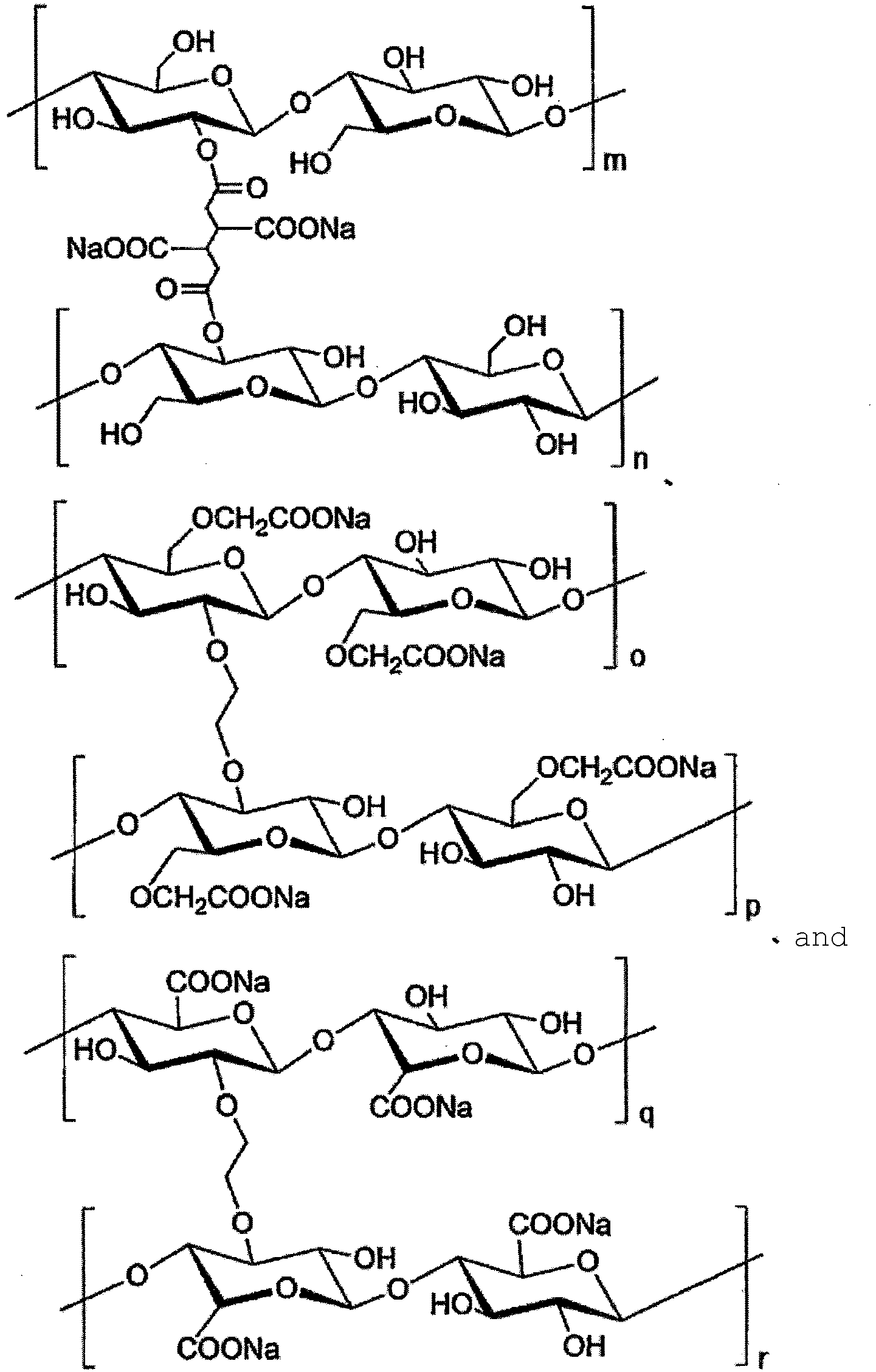
- Examples of the superabsorbent polymer compound that can form a gel composition are one or more selected from, but not limited to, the group consisting of: wherein, m to r are 100 to 200.
- compounds may be produced using a well-known technique (see, for example, WO2012/147255 , JP2012-12462A ).
- a superabsorbent polymer compound made from cellulose as a raw material has a structure having chains cross-linked with tetracarboxylic acid.
- a method for producing the superabsorbent polymer compound is in brief as follows.
- the cellulose, a starting material is dissolved in any of lithium chloride (LiCl)/N,N-dimethyl acetamide (DMAc), LiCl/N-methylpyrrolidone (NMP), tetrabutylammonium fluoride (TBAF)/dimethylsulfoxide (DMSO), and an ester-crosslinking reaction of the cellulose and a polycarboxylic anhydride is caused in the presence of N,N-dimethyl-4-aminopyridine (DMAP) as a catalyst at room temperature and atmospheric pressure.
- DMAP lithium chloride
- NMP LiCl/N-methylpyrrolidone
- TBAF tetrabutylammonium fluoride
- DMSO dimethyl
- the polycarboxylic anhydride may preferably be 1,2,3,4-butanetetracarboxylic dianhydride (BTCA) or 3,3',4,4'-diphenylsulfonetetracarboxylic dianhydride (DSDA).
- BTCA 1,2,3,4-butanetetracarboxylic dianhydride
- DSDA 3,3',4,4'-diphenylsulfonetetracarboxylic dianhydride
- the polymer chain is not limited to a naturally derived polymer chain, and derivatives thereof are also available.
- cellulose carboxymethylcellulose (CMC), sodium CMC, and ammonium CMC may be used.
- CMC carboxymethylcellulose
- sodium CMC sodium CMC
- ammonium CMC may be used.
- the superabsorbent polymer material made from CMC as a raw material may be produced in reference to Example 2 described below.
- the reaction product obtained by the aforementioned ester-crosslinking reaction is precipitated in an organic solvent such as methanol or acetone, and neutralized to pH 7 with a basic aqueous solution. By this neutralizing reaction, the carboxyl group produced is converted into carboxylate.
- an organic solvent such as methanol or acetone
- carboxyl group produced is converted into carboxylate.
- cross-linking density for example, polycarboxylic acid cross-linking density
- superabsorbent polymer compounds having properties suitable for various application can be obtained by controlling the concentration of the prepared cross-linker, a reaction solvent, the degree of polymerization of cellulose or like that is a raw material, and the like.
- a polysaccharide such as chitin, chitosan, amylose, or the like, or a mixture thereof may be used to obtain a superabsorbent polymer having similar performance.
- a mixed system of an acid aqueous solution and an organic solvent for example a mixed solvent of 10% acetic acid aqueous solution/methanol/NMP at 1:1:1, may be used as a solvent.
- Cellulose with a degree of polymerization of 1500 or higher such as cotton cellulose, among others, is preferable since biodegradable superabsorbent polymers having water-absorbing performance equal to or higher than currently commercially available products will be obtained by using such cellulose.
- the superabsorbent polymer compound used in the biodegradable and/or biometabolizable tumor sealant according to the present invention can swell and form a gel composition upon getting in contact with water.
- the superabsorbent polymer compound exhibits excellent stability under a wide range of environmental conditions, as described above.
- the phenomenon in which the superabsorbent polymer compound swells with water in the body to tens- to hundreds-fold volume of gel substance in comparison with the original volume, and thereby physically adheres to the tumor cell surface is used.
- the biodegradable and/or biometabolizable tumor sealant according to the present invention is a nano particle made of a superabsorbent polymer compound as a base material and having a particle size that allows the nano particle to permeate through gaps between endothelial cells of tumor vessels, the nano particle is characterized in that this particle permeates through the gaps, then attaches to tumor tissue in the vicinity of the gaps with its high bioadhesiveness, then swells by getting in contact with water in the body, and forms a gel composition to block the supply of oxygen and nutrition to the tumor and the transmission of inducing factors from the tumor, and thereby leads the tumor cells to necrosis and the attached particle is subsequently degraded and/or metabolized in the living body.
- the particulation in the production of the nano particle is preferably performed during the process of ester-polymerization reaction of the superabsorbent polymer compound that is the base material.
- This nano particulation is not particularly limited, but may be performed using microfluidics.
- the microfluidics is highly preferable since the microfluidics makes it possible to control the quantity of reaction by adjusting the flow rates of reaction substances and the flow velocity and therefore the particle size can be controlled by performing the particulation in accordance with the amount of polymer produced as the polymerization reaction progresses.
- the use of the microfluidics has advantages including, in addition to the relatively easy control of particle size described above, advantages of the particle shape being near spherical and addition of a chemical modification step being easy.
- the nano particle prepared by microfluidics is in a state of hydrogel containing water and therefore preferably freeze-dried to make it solid fine powder.
- the aqueous vehicle for preparing the nano particle in a form of emulsion is not particularly limited, and examples thereof include water such as sterile water, purified water, distilled water, ion exchanged water, ultra pure water; aqueous electrolyte solutions such as physiological saline, aqueous sodium chloride solutions, aqueous calcium chloride solutions, aqueous magnesium chloride solutions, aqueous sodium sulfate solutions, aqueous potassium sulfate solutions, aqueous sodium carbonate solutions, aqueous sodium acetate solutions; buffer solutions such as phosphate buffer solutions, tris hydrochloric acid buffer solutions; aqueous solutions containing water-soluble organic substances such as glycerin, ethylene glycol, ethanol; aqueous solutions containing sugar molecules
- the base material of the particle may only contain the aforementioned superabsorbent polymer compound, and may further include a functional substance (for example, a drug, a contrast agent, a dye, or the like).
- a functional substance for example, a drug, a contrast agent, a dye, or the like.
- a contrast agent and a dye may be included to visualize sealing conditions of the tumor sealant (specifically, conditions of attaching to and implanted in a tumor site after the permeation through blood vessel and/or the process of gradually degrading in the living body after adhesion).
- the tumor sealant according to the present invention may contain a contrast agent and/or a dye, as seen above, the tumor sealant may be clinically applied to diagnosis of cancer.
- Examples of a contrast agent for X-ray CT include Lipiodol, which is an iodinated hydrophobic contrast agent, Iopamiron, which is an aqueous contrast agent, and the like; examples of a contrast agent for MRI include Gd (gadolinium)-based or Fe (iron)-based magnetic materials; and examples of a contrast agent for echo include ultrasonic liposomal particles. These may include any one or mixture of two or more.
- examples of a dye for securing visibility before and during operation include fluorescent dyes such as coumalin, which is hydrophobic, fluoresceine, which is water-soluble, pyranine, cyanine; and photoluminescent dyes such as luciferin. These may include any one or mixture of two or more.
- each one or more of the contrast agent and the dye may be included simultaneously.
- the blending ratio of the aforementioned superabsorbent polymer compound and the contrast agent and/or the dye may be 100:1 to 1:100 and may be, for example, 95:5, 10:1, 90:10, 10:2, 80:20, 10:3, 70:30, 60:40, 50:50, 40:60, 30:70, 20:80, 10:90, 5:95.
- the blending ratio is preferably 100:1 to 50:50 and more preferably 10:1 to 10:3.
- tumor peripheral arteries include many neovessels and the vascular endothelial cells that constitute these blood vessels as well as cancer cells have lower adhesiveness with one another than normal cells and therefore there are several nanometers to several micrometers of gaps between the cells.
- the nano particles can be dispersed into the gaps.
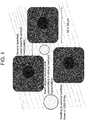
- Figure 1 illustrates the comparison of the sizes of the tumor sealant according to the present invention, cells, and gaps in extracellular microenvironment in tumor tissue.
- the gaps are called stroma and composed of collagen, fibroblasts, blood vessels (neovessels in cancer tissue), lymphatic vessels, and the like.
- Lymphatic vessels are usually not developed in cancer tissue and the fluidity of particles is inhibited by the presence of collagen, fibroblasts, and the like in stroma of cancer microenvironment.
- the present invention makes use, as one of the mechanisms of action, of the enhanced permeability and retention (EPR) effect, in which particles permeate through these gaps between vascular endothelial cells and accumulate and settle in tumor tissue.
- EPR enhanced permeability and retention
- the tumor sealant according to the present invention enters gaps between cancer cells, swells several hundred-fold with water in the body, presses neighboring cancer cells or blood vessels, and causes ischemia effect by covering the whole tumor ( Figure 2 ).
- the particles comprising a superabsorbent polymer compound as a base material are prepared using dry grinding techniques represented by jet mill; wet grinding techniques such as high pressure homogenizer, spray-drying, and freeze-drying; and emulsion polymerization techniques and microfluid techniques, as described below.
- the particle sizes are not even and various sizes are mixed, but the majority of particle sizes (which comprises preferably 70% or more and more preferably 90% or more of the total particles and may optionally comprise 100%) are from 20 nm to 500 nm and particles of less than 20 nm or particles of more than 500 nm may also be present.
- particles having a particle size of "20 nm to 500 nm” are not intended to exclude, for example, particles having a particle size of "10 nm to 200 nm", particles having a particle size of "300 nm to 700 nm", and the like.
- examples of a particle size of "20 nm to 500 nm” are intended to include “20 nm to 400 nm", “20 nm to 300 nm”, “20 nm to 200 nm”, “20 nm to 100 nm”, “30 nm to 500 nm”, “30 nm to 400 nm”, “30 nm to 300 nm”, “30 nm to 200 nm”, “30 nm to 100 nm”, “40 nm to 500 nm”, “40 nm to 400 nm”, “40 nm to 300 nm”, “40 nm to 200 nm”, “40 nm to 100 nm”, “50 nm to 500 nm”, “50 nm to 400 nm”, “50 nm to 300 nm”, “50 nm to 200 nm”, “50 nm to 100 nm”, “100 nm to 500 nm”, “100 nm to 400 nm",
- the aforementioned particle can typically be prepared by adding, in any order, one or more of the aforementioned superabsorbent polymer compound or a salt(s) thereof, a contrast agent and/or a dye (when included), a proper quantity of one or more of pharmaceutically acceptable surfactants, and a proper quantity of an aqueous vehicle (for example, physiological saline, water for injection), and the like, and stirring and homogenizing the mixture.
- aqueous vehicle for example, physiological saline, water for injection
- any surfactants used in the field of pharmaceutical or cosmetics may be used and surfactants, such as, but not limited to, for example, Pluronic (for example, Pluronic F127, polyoxyethylene polyoxypropylene (200 EO) (70 PO)), polysorbate 80 (polyoxyethylene sorbitan oleate, Tween 80) may be used.
- Pluronic for example, Pluronic F127, polyoxyethylene polyoxypropylene (200 EO) (70 PO)
- polysorbate 80 polyoxyethylene sorbitan oleate, Tween 80
- the tumor sealant according to the present invention may comprise the aforementioned particle at a dispersable concentration (for example, 0.001 to 15% by weight) but it is determined by the subject to which it is administered and the dose.
- the structure of the particle can be analyzed, for example, by small angle X-ray scattering (SAXS) and cryo-TEM.
- SAXS small angle X-ray scattering
- cryo-TEM cryo-TEM
- the particle size distribution of the particle can be measured, for example, by dynamic light scattering or zeta potential and particle size analyzer, or the like.
- the particle according to the present invention can be prepared by mixing one or more superabsorbent polymer compounds with a surfactant or the like and stirring and homogenizing the mixture, as described above, but can also be prepared using ultrasonic homogenization and a microfluid technique, as indicated in Example 1 and 2, as described below.
- the "microfluid technique” is a generic name of techniques handling fluid in microspace and devices used for the technique are called “microfluid devices”. These are devices having flow pass structure typically having a depth and a width of around several micrometers to several hundred micrometers manufactured by applying semiconductor nanofabrication technique and precision machining technique.
- particles are produced using filtering by grinding or an emulsion polymerization technique and a microfluid technique, but particles are preferably produced using the technique since it makes it possible to stability prepare particles having a desired particle size.
- the particle size of particles can be measured using a common method well known to those skilled in the art.
- the tumor sealant according to the present invention comprises an emulsion in which the aforementioned superabsorbent polymer compound is nano-particulated and dispersed in an oily vehicle, as described above. The passability through syringe or microcatheter is secured with this emulsion.
- Tumor neovessels specifically formed in tumor tissue have decreased pericytes (blood vessel pericytes), which cover the blood vessels, and therefore gaps between endothelial cells in the tumor vessels are enlarged in comparison with normal cells. There are particles that leak out through the gaps.
- the tumor sealant according to the present invention has sufficiently small particle size to pass the gaps.
- the size of gaps varies individually and depends on the type and the site of tumor, but is considered to be usually equal to or larger than 5 nm and equal to or smaller than 700 nm.
- the gaps of tumor vessels vary in size from small to large. Since the tumor sealant according to the present invention is an emulsion having particle sizes that are not even, but have distribution with a range of several hundred nanometers, the tumor sealant can increase the accumulation density by permeating through any gaps.
- the lymphatic vessel network is underdeveloped in tumor tissue unlike normal tissue. Therefore, the particles are not transferred to other sites with a body fluid via a lymphatic vessel.
- the released particle that is to say, the tumor sealant according to the present invention has an accumulating property to remain in the tumor site.
- the aforementioned (2) and (4) are collectively called the EPR effect.
- tumor sealant according to the present invention aggregates in the state of gel, tumor cells are cut off from nutrition and oxygen necessary for proliferation by sealing tumor tissue densely to lead to cell death (necrosis).
- HIF hypoxia-inducible factor
- VEGF vascular endothelial growth factor
- the tumor sealant according to the present invention can prevent the diffusion of transmitted factors released from these tumors by covering and confining tumor tissue without gaps and thereby prevent malignant transformation.
- the tumor sealant according to the present invention is excreted out from the body via degradation or solubilization with enzymes in the body and further degradation in part after enough time/period of time to necrotize tumor cells.
- the first one is visibility in viewing.
- a dye including a fluorescent dye
- reduces the risk of confusion with other pharmaceutical preparations and the surgical operation at a wrong position can be avoided by displaying as a marker the surgical site and range.
- the inclusion of a contrast agent makes it possible to confirm whether sufficient surgical operation is being provided or has been provided at correct location by monitoring with an imaging device during the operation. Furthermore, since the sealant settles in the tumor site without flowing out, dislike when only a contrast agent is used, the sealant has a visualizing property that makes it possible to monitor the state of tumor after the operation with an imaging device, without performing an operation to inject the contrast agent again.
- the tumor sealant according to the present invention can be used as an embolic material for artery emboli.
- an embolic material the risk of permanent implanting can be avoided as a transient embolic material exhibiting the embolization effect equivalent to a permanent embolic material and the synergistic effect of the tumor sealing effect and the embolization effect can be further expected.
- the tumor sealant prepared as described above can be used, for example, to diagnose and/or treat solid malignant tumor.
- solid malignant tumor includes squamous cell carcinoma, breast cancer, cutaneous lymphoma, hemangiosarcoma, hepatobiliary cancer, head and neck cancer, lung cancer, mesothelioma, mediastinal cancer, esophageal cancer, gastric cancer, pancreatic cancer, small intestinal cancer, colon cancer, colorectal cancer, large bowel cancer, anal cancer, renal cancer, urethral cancer, bladder cancer, prostate cancer, urethral cancer, penile cancer, testicular cancer, cancer of the gynecologic organ, ovarian cancer, cancer of the endocrine system, skin cancer, cancer of the central nervous system including the brain; soft tissue sarcoma and osteosarcoma; and skin and intraocular-derived melanoma.
- the tumor sealant may be used in a form of emulsion in which particles made of one or more superabsorbent polymers as a base material may be used in a form of emulsion dispersed in an oily vehicle or may be used as a pharmaceutical composition comprising the particle. Since the tumor sealant according to the present invention is not only applicable to diagnosis of cancer such as solid malignant tumor, but also applicable to treatment of cancer, as seen above, the tumor sealant can be referred to as a "theranostics device".
- the tumor sealant may be introduced to perform embolus of tumor and/or prevent bloodflow from the artery in the vicinity of the tumor using a syringe or a microcatheter.
- the biodegradable tumor sealant according to the present invention can be administered, for example, locally in the vicinity of tumor using a syringe since the biodegradable tumor sealant can be used to treat needle-accessible cancer.
- the dose, the concentration, the number and the frequency of dosing, and the like of the biodegradable tumor sealant can be determined as appropriate by surgeons and veterinarians in consideration of the sex, age, body weight of the subject (test subject), the state of the affected part, and the like.
- the subject treated by the biodegradable tumor sealant according to the present invention is preferably a mammal and examples of the mammal include, but not limited to, primates such as human and monkey, rodents such as mouse, rat, rabbit, guinea pig, cat, dog, sheep, pig, cow, horse, donkey, goat, ferret, and the like.
- Example 3 100 ⁇ L of a tumor sealant (Example 1) in an emulsion form is administered (specifically injected) to breast cancer cell-grafted mice from a blood vessel in the vicinity of tumor with a syringe, and the antitumor effect was obtained.
- a tumor sealant (Example 1) in an emulsion form is administered (specifically injected) to breast cancer cell-grafted mice from a blood vessel in the vicinity of tumor with a syringe, and the antitumor effect was obtained.
- human application it corresponds to the administration of the biodegradable tumor sealant according to the present invention at an amount of around 10 ml to 200 ml per dose to, for example, human solid malignant tumor from a blood vessel in the vicinity of the tumor, when calculated simply from the body weight on the basis of these experimental results of the breast cancer cell-grafted mice.
- the biodegradable tumor sealant according to the present invention may be administered several times (for example, 2 to 10 times) at intervals (for example, twice a day, once a day, twice a week, once a week, once in 2 weeks), as appropriate, until desired therapeutic effect is obtained.
- the dose (specifically injection volume) per dosing and the frequency of dosing of the biodegradable tumor sealant according to the present invention are not limited to those described above, but may be adjusted as appropriate and determined by a person skilled in the art (for example, a surgeon or a veterinarian).
- the pharmaceutical composition may be used in a form in which a carrier, an excipient and/or a stabilizing agent, and the like, as appropriate are incorporated in addition to the tumor sealant as an active ingredient.
- a kit comprising a tumor sealant, a solvent (physiological saline or the like), a carrier, and the like enclosed in a container (vial or the like) and an instruction, and the like is provided.
- the tumor sealant according to the present invention encompasses a medical material.
- reaction product was precipitated in 1 L of a methanol solution and then pH was adjusted to 7.0 using a 10% aqueous solution of sodium hydroxide. Subsequently, the precipitate was ground with a homogenizer and filtered with a glass filter. After the filtration, washing and filtration with methanol and water were repeated several times, and finally dried under conditions at 70 degrees Celsius and decreased pressure to obtain a cellulose superabsorbent polymer compound.
- Any of the reagents that were used was purchased from Tokyo Chemical Industry Co., Ltd, otherwise specified particularly (hereinafter, the same).
- the tumor sealant (emulsion) produced in Example 1 was locally administered at the murine tumor site where the above-mentioned breast cancer cells were grafted.
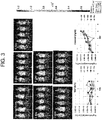
- phosphate buffered saline containing D-luciferin, which is a substrate of luciferase was administered by intraperitoneal administration to be circulated in bloodflow and the luciferase (Luc) activity of the aforementioned breast cancer cells was observed over time with an in vivo imaging device (IVIS) (Spectrum).
- IVIS in vivo imaging device
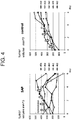
- the change of tumor volume when the emulsion was administered several times was examined. The change was observed over time using nude mice in which 4T1-Luc cells were grafted, as described in the above (1).
- the administration of the emulsion was conducted on the first time (Day 1), Day 2, Day 3, and Day 4.
- the change over time in tumor volume is illustrated in Figure 4 .
- the tumor volume of the emulsion administration mice decreased in comparison with the control given physiological saline. As to this, the decrease in tumor volume became prominent after about 4 times of administration.
- Example 3 using mice in which breast cancer cells employed in Example 3 were subcutaneously grafted as a cancer-bearing animal model, and using a commercially available polyacrylamide-based superabsorbent polymer compound (particle size: 500 to 600 nm) (Sanyo Chemical Industries, Ltd.) (which may, hereinafter, be referred to as the "MD2”) as a sealant, and a superabsorbent polymer compound (particle size: 600 to 1500 nm) (which may, hereinafter, be referred to as the "MD3”) made from carboxymethylcellulose (CMC) as a raw material, the antitumor effect based on the barrier formation by these was examined.
- a commercially available polyacrylamide-based superabsorbent polymer compound particle size: 500 to 600 nm) (Sanyo Chemical Industries, Ltd.)
- MD3 superabsorbent polymer compound
- CMC carboxymethylcellulose
- the tumor sealant (contained in physiological saline) containing the superabsorbent polymer compound and only physiological saline (control) were locally administered to the mice and the change in tumor growth was observed.
- Figure 6A illustrates the result when only physiological saline was used as vehicle.
- a tumor is extracted 8 days after administration and the tumor volumes were compared with each other.
- the tumor increased to 342%.
- the tumor volumes decreased to 69%.
- Figure 6B a result when physiological saline + Lipiodol was used as vehicle is illustrated in Figure 6B .
- the decrease in tumor volume was able to be observed, but the tumor suppressive effect was enhanced by inclusion of the Lipiodol.
- the control tumor (left side) to which no superabsorbent polymer compound was administered was confirmed to be in a state in which oxygen was abundant (red).
- the tumor (right side) to which the superabsorbent polymer compound was administered was visually recognized as a deoxygenated state (blue) and it was confirmed that the tumor site was in a hypoxia state. This indicated that the superabsorbent polymer compound according to the present invention has antitumor effect as a sealant.
- the blocking of supply of various blood substances to tumor tissue by the superabsorbent polymer compound according to the present invention is considered to be caused by swelling of the superabsorbent polymer compound due to contact with water in the body.
- a superabsorbent polymer compound was gelated in vitro and the blocking effect was examined by using the passage of protein and nutrient through the gel (permeability) as an indicator.
- gel of a superabsorbent polymer compound (MD3) was prepared using PBS (-) (final concentration: 0.01 g/mL).
- predetermined volumes (0.2, 0.5, and 1.0 ml) of the gel prepared as described above were injected into a 2.5 ml syringe with a cotton stopper at bottom.
- FBS fetal bovine serum
- the control was the FBS that passed a syringe with a cotton stopper at bottom without charging the gel.
- the amount of protein remaining in the FBS that passed the gel and was recovered was measured with an ultraviolet spectrophotometer and determined based on a standard curve.
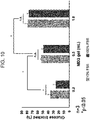
- diluted FBS (10%) was used, the protein-blocking effect was seen markedly, since the gel did not reach saturation.
- non-diluted FBS (100%) the protein-blocking effect was small in comparison with the diluted FBS since the gel was in saturation.
- MD3 with volumes of 0.5 ml and 1.0 ml was used significant difference was found.
- the superabsorbent polymer compound according to the present invention can prevent the permeation of serum components such as protein/nutrient, glucose, and hemoglobin.
- mice in which 4T1-Luc cells were grafted the ischemia effect (reduction of oxygen concentration) of the administration of the superabsorbent polymer compound on tumor vessels was further examined.
- ICG indocyanine green
- a contrast agent indocyanine green
- the change in bloodflow was measured by measuring the bloodflow in tumor tissue over time with the photoluminescent signal from the contrast agent.
- ICG Diojindo Laboratories, 2.5 mg/mL, 100 ⁇ L (320 nmol)
- LED light emitting diode
- images were obtained using a near infrared light imaging device (PerkinElmer, IVIS Spectrum), and the photoluminescence signal was measured from the images ( Figure 12 ).
- particles of the tumor sealant according to the present invention it is expected to increase new choices of low invasive therapies for preventing metastasis or infiltration of cancer. Moreover, the particles have advantages in degradability and visualization function as embolus agents and the possibilities as new embolization agents for embolotherapies will be opened up. Furthermore, since the particles can include a contrast agent and/or a dye, the application to marking materials in cancer diagnosis and surgical operations can be broaden.
Landscapes
- Health & Medical Sciences (AREA)
- Chemical & Material Sciences (AREA)
- Life Sciences & Earth Sciences (AREA)
- Medicinal Chemistry (AREA)
- General Health & Medical Sciences (AREA)
- Public Health (AREA)
- Veterinary Medicine (AREA)
- Animal Behavior & Ethology (AREA)
- Epidemiology (AREA)
- Pharmacology & Pharmacy (AREA)
- Chemical Kinetics & Catalysis (AREA)
- Organic Chemistry (AREA)
- Polymers & Plastics (AREA)
- Engineering & Computer Science (AREA)
- Molecular Biology (AREA)
- Surgery (AREA)
- Materials Engineering (AREA)
- Bioinformatics & Cheminformatics (AREA)
- Biochemistry (AREA)
- Vascular Medicine (AREA)
- Heart & Thoracic Surgery (AREA)
- Nuclear Medicine, Radiotherapy & Molecular Imaging (AREA)
- General Chemical & Material Sciences (AREA)
- Dispersion Chemistry (AREA)
- Botany (AREA)
- Biophysics (AREA)
- Inorganic Chemistry (AREA)
- Dermatology (AREA)
- Medicines Containing Antibodies Or Antigens For Use As Internal Diagnostic Agents (AREA)
- Medicinal Preparation (AREA)
- Pharmaceuticals Containing Other Organic And Inorganic Compounds (AREA)
- Materials For Medical Uses (AREA)
- Medicines That Contain Protein Lipid Enzymes And Other Medicines (AREA)
Abstract
Description
- The present invention relates to a particle device that cuts off and/or isolates tumor tissue from surrounding tissue including blood vessels by permeating through a blood vessel in a tumor site, selectively accumulating in and/or adhering to tumor tissue, swelling with water in the body, settling for a certain time to surround tumor and peritumoral cells and/or blood vessels, and covering a whole or a part of tumor, or a particle device that cuts off between blood vessels in a tumor site and tumor tissue.
- One of the minimally invasive treatments for liver cancer is hepatic artery embolization (TAE: trans-catheter arterial embolization). It is adopted in palliative care and terminal care, for example, in cases in which the liver is highly damaged and the disorder has progressed to inoperable. This is a therapy in which the feeding artery embolization is performed to stop the supply of nutrition and oxygen transported by blood and starve cancer to death. Hepatic cells are fed with nutrition and the like from the hepatic artery and portal veins, but malignantly transformed hepatic cells are fed with nutrition only from the hepatic artery. In contrast, it is said that normal cells do not die even after the hepatic artery embolization since the bloodstream from portal veins accounts for 70% in normal hepatic cells.
- Moreover, in the hepatic arterial chemo-embolization (TACE: trans-catheter chemo-embolization), in which an anticancer agent is combined with the hepatic artery embolization, the embolus of the feeding artery with an embolic material is performed after the injection of a suspension of a contrast agent and an anticancer agent. At this time, the suspension may flow out into portal veins and there is a risk of causing embolus of the hepatic artery and portal veins to cause liver infarction. Furthermore, if the contrast agent, the anticancer agent, and the embolic material flow into the gallbladder or the pancreas, gallbladder inflammation or pancreatitis may be caused.
- In view of such risk, embolic materials in which an anticancer agent is adsorbed onto spherical beads (microsphere) made of a polymer as a base material having a particle size of about tens micrometers to hundreds micrometers and having the function of slowly releasing the agent in the occluded blood vessel to suppress sudden release of the agent and the like into blood vessels, but not a suspension such as that described above, have also appeared.
- There are two types of embolic materials: permanent embolic materials, which are made from a polymer as a raw material as described above and implanted permanently in the body, and transient embolic materials, which are made from a biodegradable material such as starch or gelatin as a raw material and degraded and metabolized. However, the embolus effect of many transient embolic materials is not sufficient and animal derived materials such as gelatin are regarded as contraindication in Japanese academic societies.
- Meanwhile, the risk of permanent implanting is expected for permanent embolic materials, which has relatively large embolus effect. In the cases where the liver function is already damaged, such as hepatic cirrhosis, metabolic disorder occurs as the hepatic energy level decreases and liver failure becomes easy to be caused. To reduce the liver function damage as much as possible, it is required to restart the flow of blood through the hepatic artery and portal veins.
- To solve the problem,
Patent Literature 1 proposes an embolic material consisting of a biodegradable material that completely embolizes the blood vessel at the intended site without causing clogging of a catheter or an unintended blood vessel by aggregation, the bloodstream occlusion removed after a particular duration, and is degraded in the living body and metabolized or discharged out of the body. - In the embolotherapy (TAE/TACE), incomplete embolus situations caused by use of a transient embolic material having insufficient embolus effect or use of spherical embolus beads that generate gaps not only inhibit the bloodflow to normal cells to cause damages, but also lead the tumor environment to the hypoxia state to increase the risk to become a cause of malignant transformation.
- According to the
Non-Patent Literature 1, in the hypoxia state, even normal cells secrete proteins that suppress the function of immune cells against cancer and a part of immune cells act on the side of cancer. Non-PatentLiterature 1 discloses that the hypoxia state causes a dreadful situation where, even if cancer cells of low malignancy are killed, cancer cells of high malignancy such as those that infiltrate tissue and extend transfer to another organ and increase their invasive potential. - In the cancer treatment, in general, it is extremely difficult to treat only cancer tissue. In surgical resection, surrounding normal tissue is also surgically removed to avoid leaving any cancer cells. In chemotherapies with anticancer agents, administration by infusion or intravenous injections causes heavy damage to normal tissue in the whole body. In irradiation, the damage to normal tissue locating in the path of radiation is unavoidable, although beams such as particle ray have been narrowed. This is why therapies with which only tumor tissue and tumor cells can selectively be treated are desired.
- As described above, in therapies (TAE/TACE) using a microcatheter, the feeding artery of tumor can be embolized selectively among arteries around the tumor using a microcatheter, although much depends on the technique of the surgeon.
- In chemotherapies in which a drug is administered, designs for selective delivery only to tumor have been increasingly attempted. One is to impart the molecular targeting function at a label specific for tumor to have an agent act on only tumor cells and referred to as the active targeting approach. There is also a passive targeting approach in which an agent is delivered according to the properties and structures characteristic of tumor tissue and tumor cells in contrast thereto.
- A representative principle of the passive targeting is the Enhanced Permeability and Retention (EPR) effect.
- Since endothelial cells of blood vessels of normal tissue are aligned without gaps, a macromolecular substance or the like does not leak halfway from blood vessels. However, tumor vessels are structurally incomplete and have large gaps between endothelial cells, which are said to be 50 nm to 500 nm. Particles having a particle size equal to or smaller than 500 nm can permeate through tumor vessels (Permeability).
- Moreover, lymphatic vessels in tumor tissue are underdeveloped, and the circulation of substances is incomplete. Therefore, substances that have permeated through tumor vessels will consequently be retained and accumulated around the tumor (Retention).
- Studies of Drug Delivery System (DDS) formulations employing the aforementioned EPR effect in drug delivery have become popular, but there are few examples put to practical use. For example, Leuplin and adriamycin are known. Even if a drug is delivered to near tumor, the effect as a drug is small, unless it is delivered into cells at a proper timing. Therefore, a further elaborate design for the permeation of the drug into cells is required.
- There has been remarkable progress of medical materials in excellent biocompatibility, biodegradability, bioenvironmental responsiveness, and the like and artificial synthetic chemical substances that allow circumvention of risk of being derived from an animal have been developed.
- Among amphiphilic compounds known to form liquid crystals as artificial synthetic chemical substances, low molecular weight liquid crystal compounds that form a self-organized non-lamella structure or the like that is superior in bioadhesiveness such as a cubic structure or a reversed hexagonal structure, but not a lamella structure, which is inferior in bioadhesiveness, such as a micellar structure, a vesicle structure, a dendrimer structure, or the like have been reported (
Patent Literature 2, Patent Literature 3). - For example,
Patent Literature - Moreover,
Non-Patent Literature 2 and Patent Literature 4-5 disclose embolic materials for artery emboli using non-lamella liquid crystals. However, the embolus agents described inNon-Patent Literature 2 andPatent Literature 4 to 6 involves mixtures of amphiphilic compounds and water-soluble organic solvents as precursors of non-lamella liquid crystals and are emboli limited to use in blood vessels for controlling bloodflow or embolizing a blood vessel by forming bulk liquid crystal gel in blood vessels, but not intended for direct accumulation in or sealing of tumor tissue utilizing the EPR effect. - The present inventors have so far developed a biodegradable tumor sealant comprising a particle comprising a low molecular weight amphiphilic compound capable of forming non-lamella liquid crystals as a base material for the purpose of direct accumulation in or sealing of tumor tissue utilizing the EPR effect (Patent Literature 7). However, the biodegradable tumor sealant has not a little cytotoxicity and there has been a concern about damage to normal tissue.
-
- Patent Literature 1:
Japanese Patent Laid Open No.2004-313759 - Patent Literature 2:
International Publication No.WO 2011/078383 - Patent Literature 3:
International Publication No.WO 2014/178256 - Patent Literature 4:
Chinese Patent No.103040741 - Patent Literature 5:
Chinese Patent No.101822635 - Patent Literature 6:
Chinese Patent No.103536974 - Patent Literature 7:
International Publication No.WO 2017/104840 -
- Non Patent Literature 1:
Scientific American, Japan Edition, November, 2014, R. K. Jain, "An Indirect Way to Tame Cancer", p. 61 - Non Patent Literature 2:
Science Portal China, No. 48, 'Research and development of new drugs - Yun Bin Wu, "Development of study on "cubic liquid crystal in controlled release preparation"' (in Japanese), September 6, 2010 - An object of the present invention is to provide a low invasive tumor sealant that is free of side effects of pharmaceutical preparations and radiation exposure risk, can be used in combination therapies with other therapies, or can be used to improve QOL of patients and that allows avoiding malignant transformation of tumor by a therapy to lead tumor cells to cell death by starving the cells, specifically, blocking oxygen and nutrition.
- The present inventors have studied diligently to achieve the aforementioned object and have found, as a result, that particles made of superabsorbent polymer compounds as base materials permeate through gaps between endothelial cells of tumor vessels to accumulate in tumor tissue out of the blood vessels and swell by getting in contact with water in the body to form a gel composition and thereby block the supply of oxygen and nutrition to tumor and transmission of inducing factors from the tumor to lead the tumor cells to necrosis, thereby completing the present invention.
- Accordingly, the present invention encompasses the following.
- [1] A tumor sealant comprising a particle comprising a superabsorbent polymer compound as a base material.
- [2] The tumor sealant according to the above [1], wherein the superabsorbent polymer compound has a structure represented by the following:
PS1-X-PS2 (1)
wherein PS1 and PS2 are polysaccharides and X is a spacer. - [3] The tumor sealant according to the above [2], wherein PS1 and PS2 may be the same or different and are independently selected from the group consisting of β glucan, chitin, chitosan, and derivatives thereof and mixtures thereof.
- [4] The tumor sealant according to the above [3], wherein the β glucan or derivative thereof is cellulose, carboxymethylcellulose, or TEMPO-oxidized cellulose.
- [5] The tumor sealant according to any of the above [2] to [4], wherein X is one or more polycarboxylic acid anhydrides.
- [6] The tumor sealant according to any of the above [2] to [4], wherein X is derived from one or more cross-linkers selected from the group consisting of 1,2,3,4-butanetetracarboxylic dianhydride (BTCA), polyethylene glycol diglycidyl ether (PEGDE), biphenyltetracarboxylic dianhydride (BPDA), diphenylsulfonetetracarboxylic dianhydride (DSDA), PEG (polyethyne glycol) 400, PEG 2000, and epichlorohydrin.
- [7] The tumor sealant according to the above [1], wherein the superabsorbent polymer compound is one or more selected from the group consisting of:

- [8] The tumor sealant according to any of the above [1] to [7], wherein the particle has a particle size of 20 nm to 500 nm.
- [9] The tumor sealant according to any of the above [1] to [8], wherein the particle is in a form of emulsion.
- [10] The tumor sealant according to any of the above [1] to [9], wherein the particle comprises a contrast agent and/or a dye.
- According to the present invention, solid malignant tumor can be treated by a therapy involving starving tumor cells without any serious side effect of an anticancer agent or any major injury by surgery.
-
- [
Figure 1] Figure 1 is a schematic diagram of the nano device (superabsorbent polymer compound) according to the present invention entering gaps between cells. - [
Figure 2] Figure 2 illustrates the mechanism of action of the nano device. - [
Figure 3] Figure 3 illustrates antitumor effect of the nano device on the basis of the difference between the amounts of luminescence due to the luciferin expression in the tumor to which the nano device according to the present invention is administered and in the tumor to which it is not administered in breast cancer cell-grafted mice. - [
Figure 4] Figure 4 illustrates comparison between the change in tumor volume by the administration of the nano device according to the present invention to cancer-bearing mice ofFigure 3 and the volume change of tumor without administration. - [
Figure 5] Figure 5 illustrate the examination of antitumor effect in a cancer-bearing animal model. A polyacrylamide-based superabsorbent polymer compound (which may be also referred to as "MD2", herein) was administered as a nano device (sealant) to cancer tissue and the tumor size was measured over time. - [
Figure 6] Figure 6 illustrate the examination of antitumor effect in a cancer-bearing animal model. A superabsorbent polymer compound (which may be also referred to as "MD3", herein) made from carboxymethylcellulose (CMC) as a raw material was administered as a nano device (sealant) to cancer tissue and the tumor was extracted 8 days after the administration to measure the tumor size. - [
Figure 7] Figure 7 illustrates the effect of blocking oxygen with a nano device (MD3). - [
Figure 8] Figure 8 illustrates the effect of blocking protein/nutrient with a nano device (MD3) in vitro. The percentage of blocking transmission of protein with the nano device using FBS as a source of protein/nutrient is illustrated. - [
Figure 9] Figure 9 illustrates the effect of blocking hemoglobin with a nano device (MD3) in vitro. The percentage of blocking transmission of hemoglobin with the nano device using FBS as a source of hemoglobin is illustrated. - [
Figure 10] Figure 10 illustrates the effect of blocking glucose with a nano device (MD3) in vitro. The percentage of blocking transmission of glucose with the nano device using FBS as a source of hemoglobin is illustrated. - [
Figure 11] Figure 11 illustrates the ischemia effect (decrease in oxygen concentration) in tumor vessels with a nano device (MD3) in breast cancer cell-grafted mice. - [
Figure 12] Figure 12 illustrates a result of measurement of intratumoral bloodflow reduction by angiography using ICG. - The present invention will be described in detail below.
- The tumor sealant according to the present invention is a particle made of a superabsorbent polymer compound as a base material and having a particle size that allows the superabsorbent polymer compound to permeate through gaps between endothelial cells of tumor vessels and the particle is characterized in that this particle permeates through the gaps, then attaches to tumor tissue in the vicinity of the gaps with its high bioadhesiveness, then swells by getting in contact with water in the body, and forms a barrier of a gel composition to block the supply of oxygen and nutrition to the tumor and the transmission of inducing factors from the tumor, and thereby leads the tumor cells to necrosis and the attached particle is subsequently degraded and/or metabolized in the living body. Moreover, while the tumor sealant according to the present invention has the aforementioned characteristics, it also has the effect of reducing the blood oxygen concentration and nutrition supply at the tumor site by pressing feeding vessels to the tumor to prevent the bloodflow and causing the necrosis of tumor cells, and therefore the tumor sealant according to the present invention also functions as a bloodflow preventing agent having the above-mentioned additional effect.
- The tumor sealant according to the present invention contains a superabsorbent polymer compound that swells with water and can form a gel composition and may be biodegradable and/or biometabolizable. As used herein, the term "superabsorbent" means a property of a material whose water absorption amount or swelling rate is at least 2 to 10000 times of the weight or volume of its dried base material. Moreover, the term "polymer" compounds usually means polymers composed of a repeat structure of a plurality of monomers, but herein refers to those including further cross-linked polymers. The molecular weight of the polymer compound is typically about 10 kDa to 2000 kDa, but not limited thereto, and may be changed as appropriate depending on the purpose of use. The superabsorbent polymer compound used in the present invention may be a compound represented by formula (1) described below as well as: polyacrylamide, glycosaminoglycan, cross-linked glycosaminoglycan, collagen, cross-linked collagen, polyacrylic acid, polymethylmethacrylate, polyvinyl alcohol, poly-L-lactic acid, or a derivative thereof. Moreover, the swelling ratio of the superabsorbent polymer compound used in the present invention may be, as described above, 2 to 10000 fold in weight ratio or volume ratio and may be, for example, 2 to 1000 fold, 2 to 500 fold, 2 to 300 fold, 2 to 200 fold or 2 to 100 fold (an upper limit of 90 fold, 80 fold, 70 fold, 60 fold, 50 fold, 40 fold, 30 fold, 20 fold, 15 fold, 10 fold, 9 fold, 8 fold, 7 fold, 6 fold, 5 fold, 4 fold, 3 fold). X (spacer) in the compound represented by formula (1) described below is a molecule derived from a cross-linker and the swelling ratio and the swelling speed had a tendency to increase when the cross-linker was reduced in the synthesis of the compound (data not shown).
- The superabsorbent polymer compound used as the tumor sealant of the present invention is not limited as long as it has the aforementioned characteristics, and preferably has a structure typically represented by the following formula (1):
PS1-X-PS2 (1)
wherein PS1 and PS2 are polysaccharides and X is a spacer. More specifically, the above "PS1" and "PS2" may be the same or different and are independently selected from the group consisting of β glucan, chitin, chitosan, and derivatives thereof and mixtures thereof. Those skilled in the art would understand that the present invention encompasses, for example, a superabsorbent polymer compound in which "PS1" is β glycan and "PS2" is chitin or a superabsorbent polymer compound in which "PS1" is β glycan and "PS2" is chitosan. - Examples of the polysaccharides expressed as PS1 and PS2 include β glucan, chitin, chitosan, amylose, starch, glycogen and derivatives thereof and mixtures thereof. The β glucan is not limited, but includes cellulose and the derivative of β glucan typically includes carboxymethylcellulose and TEMP (2,2,6,6-tetramethylpiperidine-1-oxyl)-oxidized cellulose
- The spacer ("X") in the structure represented by the above formula (1) is a molecule from a cross-linker and not limited, as long as it can link the polysaccharides ("PS1" and "PS2") by cross-linking reaction. Moreover, X is not limited to be used between molecules, but may be used for cross-linking within a molecule. More specifically, preferred examples of cross-linkers that can link polysaccharides by cross-linking reaction in the present invention are one or more selected from the group consisting of: carboxylic anhydrides, for example, 1,2,3,4-butanetetracarboxylic dianhydride (BTCA), polyethylene glycol diglycidyl ether (PEGDE), biphenyltetracarboxylic dianhydride (BPDA), diphenylsulfonetetracarboxylic dianhydride (DSDA), DSDA, and epichlorohydrin. For the superabsorbent polymer compound used in the present invention to be superabsorbent, it is preferred that the superabsorbent polymer compound has the same kind or different kinds of dissociative (ionic) functional groups in the molecule. A typical example of the dissociative functional group is -COO-Na+, and such bound and free anions are necessary for binding and maintaining water molecules. Moreover, those skilled in the art would be able to select the kind, the amount used, and the ratio of the polysaccharides, and the kind, the amount added, and the ratio of the cross-linker(s) and the density of cross-linking (may simply be referred to as degree of cross-linking), and the like, as appropriate, for the purpose of adjusting the water absorption amount and the swelling rate of the superabsorbent polymer compound produced to preferred values.
- Examples of the superabsorbent polymer compound that can form a gel composition are one or more selected from, but not limited to, the group consisting of:


WO2012/147255 ,JP2012-12462A - For example, a superabsorbent polymer compound made from cellulose as a raw material has a structure having chains cross-linked with tetracarboxylic acid. A method for producing the superabsorbent polymer compound is in brief as follows. The cellulose, a starting material, is dissolved in any of lithium chloride (LiCl)/N,N-dimethyl acetamide (DMAc), LiCl/N-methylpyrrolidone (NMP), tetrabutylammonium fluoride (TBAF)/dimethylsulfoxide (DMSO), and an ester-crosslinking reaction of the cellulose and a polycarboxylic anhydride is caused in the presence of N,N-dimethyl-4-aminopyridine (DMAP) as a catalyst at room temperature and atmospheric pressure. The polycarboxylic anhydride may preferably be 1,2,3,4-butanetetracarboxylic dianhydride (BTCA) or 3,3',4,4'-diphenylsulfonetetracarboxylic dianhydride (DSDA). By this ester-crosslinking reaction, the esterification between hydroxyl groups in the cellulose and the carboxylic anhydride progresses to form ester-crosslinking between cellulose molecule chains and the carboxylic anhydride is simultaneously converted into the carboxyl group. Moreover, according to the present invention, the polymer chain is not limited to a naturally derived polymer chain, and derivatives thereof are also available. For example, as for cellulose, carboxymethylcellulose (CMC), sodium CMC, and ammonium CMC may be used. The superabsorbent polymer material made from CMC as a raw material may be produced in reference to Example 2 described below.
- The reaction product obtained by the aforementioned ester-crosslinking reaction is precipitated in an organic solvent such as methanol or acetone, and neutralized to
pH 7 with a basic aqueous solution. By this neutralizing reaction, the carboxyl group produced is converted into carboxylate. By these operations, a biodegradable superabsorbent polymer having carboxylate playing a water-absorbing role and ester-crosslinked three-dimensional crosslinked structure playing a water-holding role is obtained. - Since the water-absorbing and water-holding performances of cross-linked cellulose, cross-linked chitin, and the like depend on the cross-linking density (for example, polycarboxylic acid cross-linking density), superabsorbent polymer compounds having properties suitable for various application can be obtained by controlling the concentration of the prepared cross-linker, a reaction solvent, the degree of polymerization of cellulose or like that is a raw material, and the like.
- As for the starting raw material, besides cellulose, a polysaccharide such as chitin, chitosan, amylose, or the like, or a mixture thereof may be used to obtain a superabsorbent polymer having similar performance. However, if chitosan or a polysaccharide is used as the starting raw material, a mixed system of an acid aqueous solution and an organic solvent, for example a mixed solvent of 10% acetic acid aqueous solution/methanol/NMP at 1:1:1, may be used as a solvent. Cellulose with a degree of polymerization of 1500 or higher such as cotton cellulose, among others, is preferable since biodegradable superabsorbent polymers having water-absorbing performance equal to or higher than currently commercially available products will be obtained by using such cellulose.
- The superabsorbent polymer compound used in the biodegradable and/or biometabolizable tumor sealant according to the present invention can swell and form a gel composition upon getting in contact with water. The superabsorbent polymer compound exhibits excellent stability under a wide range of environmental conditions, as described above. In use of the aforementioned superabsorbent polymer compound as a tumor sealant, the phenomenon in which the superabsorbent polymer compound swells with water in the body to tens- to hundreds-fold volume of gel substance in comparison with the original volume, and thereby physically adheres to the tumor cell surface is used.
- Examples of aqueous vehicles that can form gel formed by swelling of the superabsorbent polymer compound according to the present invention include, but is not particularly limited to, water such as sterile water, purified water, distilled water, ion exchanged water, ultra pure water; aqueous electrolyte solutions such as physiological saline, aqueous sodium chloride solutions, aqueous calcium chloride solutions, aqueous magnesium chloride solutions, aqueous sodium sulfate solutions, aqueous potassium sulfate solutions, aqueous sodium carbonate solutions, aqueous sodium acetate solutions; buffer solutions such as phosphate buffer solutions, tris hydrochloric acid buffer solutions; aqueous solutions containing water-soluble organic substances such as glycerin, ethylene glycol, ethanol; aqueous solutions containing sugar molecules such as glucose, sucrose, maltose; aqueous solutions containing water-soluble polymers such as polyethyleneglycol, polyvinyl alcohol; aqueous solutions containing surfactants such as octyl glucoside, dodecyl maltoside, Pluronic (polyethyleneglycol/polypropyleneglycol/
polyethyleneglyco 1 copolymer); body fluids such as intracellular solutions, cell external solutions, stroma liquid, lymph, spinal fluid, blood, gastric juice, serum, plasma, saliva, tears, sperm, urine, and the like. - The biodegradable and/or biometabolizable tumor sealant according to the present invention is a nano particle made of a superabsorbent polymer compound as a base material and having a particle size that allows the nano particle to permeate through gaps between endothelial cells of tumor vessels, the nano particle is characterized in that this particle permeates through the gaps, then attaches to tumor tissue in the vicinity of the gaps with its high bioadhesiveness, then swells by getting in contact with water in the body, and forms a gel composition to block the supply of oxygen and nutrition to the tumor and the transmission of inducing factors from the tumor, and thereby leads the tumor cells to necrosis and the attached particle is subsequently degraded and/or metabolized in the living body.
- Since the tumor sealant according to the present invention is required to have a size of the nano order that allows the tumor sealant to permeate through gaps between endothelial cells of tumor vessels, as described above, the particulation in the production of the nano particle is preferably performed during the process of ester-polymerization reaction of the superabsorbent polymer compound that is the base material. This nano particulation is not particularly limited, but may be performed using microfluidics. The microfluidics is highly preferable since the microfluidics makes it possible to control the quantity of reaction by adjusting the flow rates of reaction substances and the flow velocity and therefore the particle size can be controlled by performing the particulation in accordance with the amount of polymer produced as the polymerization reaction progresses. Moreover, the use of the microfluidics has advantages including, in addition to the relatively easy control of particle size described above, advantages of the particle shape being near spherical and addition of a chemical modification step being easy. However, the nano particle prepared by microfluidics is in a state of hydrogel containing water and therefore preferably freeze-dried to make it solid fine powder.
- Since the nano particle swells when it gets in touch with water, it is preferable that the nano particle is kept in an oily solution to block water and an emulsion of the lipid and an aqueous vehicle is prepared. The aqueous vehicle for preparing the nano particle in a form of emulsion is not particularly limited, and examples thereof include water such as sterile water, purified water, distilled water, ion exchanged water, ultra pure water; aqueous electrolyte solutions such as physiological saline, aqueous sodium chloride solutions, aqueous calcium chloride solutions, aqueous magnesium chloride solutions, aqueous sodium sulfate solutions, aqueous potassium sulfate solutions, aqueous sodium carbonate solutions, aqueous sodium acetate solutions; buffer solutions such as phosphate buffer solutions, tris hydrochloric acid buffer solutions; aqueous solutions containing water-soluble organic substances such as glycerin, ethylene glycol, ethanol; aqueous solutions containing sugar molecules such as glucose, sucrose, maltose; aqueous solutions containing water-soluble polymers such as polyethyleneglycol, polyvinyl alcohol; aqueous solutions containing surfactants such as octyl glucoside, dodecyl maltoside, Pluronic (polyethyleneglycol/polypropyleneglycol/
polyethyleneglyco 1 copolymer); body fluids such as intracellular solutions, extracellular solutions, stroma liquid, lymph, spinal fluid, blood, gastric juice, serum, plasma, saliva, tears, sperm, urine, and the like. - The base material of the particle may only contain the aforementioned superabsorbent polymer compound, and may further include a functional substance (for example, a drug, a contrast agent, a dye, or the like). In practice, either or both of a contrast agent and a dye may be included to visualize sealing conditions of the tumor sealant (specifically, conditions of attaching to and implanted in a tumor site after the permeation through blood vessel and/or the process of gradually degrading in the living body after adhesion). Since the tumor sealant according to the present invention may contain a contrast agent and/or a dye, as seen above, the tumor sealant may be clinically applied to diagnosis of cancer.
- Examples of a contrast agent for X-ray CT include Lipiodol, which is an iodinated hydrophobic contrast agent, Iopamiron, which is an aqueous contrast agent, and the like; examples of a contrast agent for MRI include Gd (gadolinium)-based or Fe (iron)-based magnetic materials; and examples of a contrast agent for echo include ultrasonic liposomal particles. These may include any one or mixture of two or more.
- Moreover, examples of a dye for securing visibility before and during operation include fluorescent dyes such as coumalin, which is hydrophobic, fluoresceine, which is water-soluble, pyranine, cyanine; and photoluminescent dyes such as luciferin. These may include any one or mixture of two or more.
- Furthermore, each one or more of the contrast agent and the dye may be included simultaneously.
- The blending ratio of the aforementioned superabsorbent polymer compound and the contrast agent and/or the dye may be 100:1 to 1:100 and may be, for example, 95:5, 10:1, 90:10, 10:2, 80:20, 10:3, 70:30, 60:40, 50:50, 40:60, 30:70, 20:80, 10:90, 5:95. The blending ratio is preferably 100:1 to 50:50 and more preferably 10:1 to 10:3.
- Usually in tumor tissue, tumor peripheral arteries include many neovessels and the vascular endothelial cells that constitute these blood vessels as well as cancer cells have lower adhesiveness with one another than normal cells and therefore there are several nanometers to several micrometers of gaps between the cells. The nano particles can be dispersed into the gaps.
Figure 1 illustrates the comparison of the sizes of the tumor sealant according to the present invention, cells, and gaps in extracellular microenvironment in tumor tissue. The gaps are called stroma and composed of collagen, fibroblasts, blood vessels (neovessels in cancer tissue), lymphatic vessels, and the like. Lymphatic vessels are usually not developed in cancer tissue and the fluidity of particles is inhibited by the presence of collagen, fibroblasts, and the like in stroma of cancer microenvironment. The present invention makes use, as one of the mechanisms of action, of the enhanced permeability and retention (EPR) effect, in which particles permeate through these gaps between vascular endothelial cells and accumulate and settle in tumor tissue. Furthermore, the tumor sealant according to the present invention enters gaps between cancer cells, swells several hundred-fold with water in the body, presses neighboring cancer cells or blood vessels, and causes ischemia effect by covering the whole tumor (Figure 2 ). - The particles comprising a superabsorbent polymer compound as a base material are prepared using dry grinding techniques represented by jet mill; wet grinding techniques such as high pressure homogenizer, spray-drying, and freeze-drying; and emulsion polymerization techniques and microfluid techniques, as described below. The particle sizes are not even and various sizes are mixed, but the majority of particle sizes (which comprises preferably 70% or more and more preferably 90% or more of the total particles and may optionally comprise 100%) are from 20 nm to 500 nm and particles of less than 20 nm or particles of more than 500 nm may also be present. Therefore, when particles are herein specified with particle sizes depending on the form of use, particles having a particle size of "20 nm to 500 nm" are not intended to exclude, for example, particles having a particle size of "10 nm to 200 nm", particles having a particle size of "300 nm to 700 nm", and the like. Meanwhile, examples of a particle size of "20 nm to 500 nm" are intended to include "20 nm to 400 nm", "20 nm to 300 nm", "20 nm to 200 nm", "20 nm to 100 nm", "30 nm to 500 nm", "30 nm to 400 nm", "30 nm to 300 nm", "30 nm to 200 nm", "30 nm to 100 nm", "40 nm to 500 nm", "40 nm to 400 nm", "40 nm to 300 nm", "40 nm to 200 nm", "40 nm to 100 nm", "50 nm to 500 nm", "50 nm to 400 nm", "50 nm to 300 nm", "50 nm to 200 nm", "50 nm to 100 nm", "100 nm to 500 nm", "100 nm to 400 nm", "100 nm to 300 nm", "100 nm to 200 nm", and the like.
- The aforementioned particle can typically be prepared by adding, in any order, one or more of the aforementioned superabsorbent polymer compound or a salt(s) thereof, a contrast agent and/or a dye (when included), a proper quantity of one or more of pharmaceutically acceptable surfactants, and a proper quantity of an aqueous vehicle (for example, physiological saline, water for injection), and the like, and stirring and homogenizing the mixture.
- As for the pharmaceutically acceptable surfactants, any surfactants used in the field of pharmaceutical or cosmetics may be used and surfactants, such as, but not limited to, for example, Pluronic (for example, Pluronic F127, polyoxyethylene polyoxypropylene (200 EO) (70 PO)), polysorbate 80 (polyoxyethylene sorbitan oleate, Tween 80) may be used.
- In one embodiment, the tumor sealant according to the present invention may comprise the aforementioned particle at a dispersable concentration (for example, 0.001 to 15% by weight) but it is determined by the subject to which it is administered and the dose.
- As a method for confirming the particle, the structure of the particle can be analyzed, for example, by small angle X-ray scattering (SAXS) and cryo-TEM. Moreover, the particle size distribution of the particle can be measured, for example, by dynamic light scattering or zeta potential and particle size analyzer, or the like.
- The particle according to the present invention can be prepared by mixing one or more superabsorbent polymer compounds with a surfactant or the like and stirring and homogenizing the mixture, as described above, but can also be prepared using ultrasonic homogenization and a microfluid technique, as indicated in Example 1 and 2, as described below. Here, the "microfluid technique" is a generic name of techniques handling fluid in microspace and devices used for the technique are called "microfluid devices". These are devices having flow pass structure typically having a depth and a width of around several micrometers to several hundred micrometers manufactured by applying semiconductor nanofabrication technique and precision machining technique. Herein, particles are produced using filtering by grinding or an emulsion polymerization technique and a microfluid technique, but particles are preferably produced using the technique since it makes it possible to stability prepare particles having a desired particle size. The particle size of particles can be measured using a common method well known to those skilled in the art.
- The tumor sealant according to the present invention comprises an emulsion in which the aforementioned superabsorbent polymer compound is nano-particulated and dispersed in an oily vehicle, as described above. The passability through syringe or microcatheter is secured with this emulsion.
- Tumor neovessels specifically formed in tumor tissue have decreased pericytes (blood vessel pericytes), which cover the blood vessels, and therefore gaps between endothelial cells in the tumor vessels are enlarged in comparison with normal cells. There are particles that leak out through the gaps. The tumor sealant according to the present invention has sufficiently small particle size to pass the gaps. The size of gaps varies individually and depends on the type and the site of tumor, but is considered to be usually equal to or larger than 5 nm and equal to or smaller than 700 nm.
- The gaps of tumor vessels vary in size from small to large. Since the tumor sealant according to the present invention is an emulsion having particle sizes that are not even, but have distribution with a range of several hundred nanometers, the tumor sealant can increase the accumulation density by permeating through any gaps.
- Particles that have permeated through tumor vessels are released around tumor, as described above, but the lymphatic vessel network is underdeveloped in tumor tissue unlike normal tissue. Therefore, the particles are not transferred to other sites with a body fluid via a lymphatic vessel. Thus, the released particle, that is to say, the tumor sealant according to the present invention has an accumulating property to remain in the tumor site. The aforementioned (2) and (4) are collectively called the EPR effect.
- Since the tumor sealant according to the present invention aggregates in the state of gel, tumor cells are cut off from nutrition and oxygen necessary for proliferation by sealing tumor tissue densely to lead to cell death (necrosis).
- From tumor tissue and cells, various inducing factors are released. For example, HIF (hypoxia-inducible factor) release from cancer cells under the hypoxia stress is transmitted to VEGF (vascular endothelial growth factor) to promote tumor angiogenesis and increase the supply of nutrition and oxygen to tumor, contributing to proliferation. The tumor sealant according to the present invention can prevent the diffusion of transmitted factors released from these tumors by covering and confining tumor tissue without gaps and thereby prevent malignant transformation.
- The tumor sealant according to the present invention is excreted out from the body via degradation or solubilization with enzymes in the body and further degradation in part after enough time/period of time to necrotize tumor cells.
- Up to (5) are properties limited to basic functions of the tumor sealant according to the present invention, there are functions useful in the setting of use by surgeon added as functions in practical use.
- The first one is visibility in viewing. The inclusion of a dye (including a fluorescent dye) reduces the risk of confusion with other pharmaceutical preparations and the surgical operation at a wrong position can be avoided by displaying as a marker the surgical site and range.
- Second, the inclusion of a contrast agent makes it possible to confirm whether sufficient surgical operation is being provided or has been provided at correct location by monitoring with an imaging device during the operation. Furthermore, since the sealant settles in the tumor site without flowing out, dislike when only a contrast agent is used, the sealant has a visualizing property that makes it possible to monitor the state of tumor after the operation with an imaging device, without performing an operation to inject the contrast agent again.
- The tumor sealant according to the present invention can be used as an embolic material for artery emboli. As an embolic material, the risk of permanent implanting can be avoided as a transient embolic material exhibiting the embolization effect equivalent to a permanent embolic material and the synergistic effect of the tumor sealing effect and the embolization effect can be further expected.
- The tumor sealant prepared as described above can be used, for example, to diagnose and/or treat solid malignant tumor. As used herein, the "solid malignant tumor" includes squamous cell carcinoma, breast cancer, cutaneous lymphoma, hemangiosarcoma, hepatobiliary cancer, head and neck cancer, lung cancer, mesothelioma, mediastinal cancer, esophageal cancer, gastric cancer, pancreatic cancer, small intestinal cancer, colon cancer, colorectal cancer, large bowel cancer, anal cancer, renal cancer, urethral cancer, bladder cancer, prostate cancer, urethral cancer, penile cancer, testicular cancer, cancer of the gynecologic organ, ovarian cancer, cancer of the endocrine system, skin cancer, cancer of the central nervous system including the brain; soft tissue sarcoma and osteosarcoma; and skin and intraocular-derived melanoma. The form of use is not limited, but the tumor sealant may be used in a form of emulsion in which particles made of one or more superabsorbent polymers as a base material may be used in a form of emulsion dispersed in an oily vehicle or may be used as a pharmaceutical composition comprising the particle. Since the tumor sealant according to the present invention is not only applicable to diagnosis of cancer such as solid malignant tumor, but also applicable to treatment of cancer, as seen above, the tumor sealant can be referred to as a "theranostics device".
- According to the present invention, the tumor sealant may be introduced to perform embolus of tumor and/or prevent bloodflow from the artery in the vicinity of the tumor using a syringe or a microcatheter. In one embodiment, the biodegradable tumor sealant according to the present invention can be administered, for example, locally in the vicinity of tumor using a syringe since the biodegradable tumor sealant can be used to treat needle-accessible cancer. Here, the dose, the concentration, the number and the frequency of dosing, and the like of the biodegradable tumor sealant can be determined as appropriate by surgeons and veterinarians in consideration of the sex, age, body weight of the subject (test subject), the state of the affected part, and the like. Here, the subject treated by the biodegradable tumor sealant according to the present invention is preferably a mammal and examples of the mammal include, but not limited to, primates such as human and monkey, rodents such as mouse, rat, rabbit, guinea pig, cat, dog, sheep, pig, cow, horse, donkey, goat, ferret, and the like.
- In Example 3 described below, 100 µL of a tumor sealant (Example 1) in an emulsion form is administered (specifically injected) to breast cancer cell-grafted mice from a blood vessel in the vicinity of tumor with a syringe, and the antitumor effect was obtained. As for human application, it corresponds to the administration of the biodegradable tumor sealant according to the present invention at an amount of around 10 ml to 200 ml per dose to, for example, human solid malignant tumor from a blood vessel in the vicinity of the tumor, when calculated simply from the body weight on the basis of these experimental results of the breast cancer cell-grafted mice. Moreover, the biodegradable tumor sealant according to the present invention may be administered several times (for example, 2 to 10 times) at intervals (for example, twice a day, once a day, twice a week, once a week, once in 2 weeks), as appropriate, until desired therapeutic effect is obtained. The dose (specifically injection volume) per dosing and the frequency of dosing of the biodegradable tumor sealant according to the present invention are not limited to those described above, but may be adjusted as appropriate and determined by a person skilled in the art (for example, a surgeon or a veterinarian).
- When the tumor sealant according to the present invention is used as a pharmaceutical composition, the pharmaceutical composition may be used in a form in which a carrier, an excipient and/or a stabilizing agent, and the like, as appropriate are incorporated in addition to the tumor sealant as an active ingredient. Moreover, according to the present invention, a kit comprising a tumor sealant, a solvent (physiological saline or the like), a carrier, and the like enclosed in a container (vial or the like) and an instruction, and the like is provided. Moreover, the tumor sealant according to the present invention encompasses a medical material.
- The present invention will be described specifically with reference to Examples, below. Meanwhile, the present invention is not limited to Example described below.
- 1 g of cellulose (Sugino Machine Limited) was added to a solution of lithium chloride (LiCl)/N-methylpyrrolidone (NMP) (5 g LiCl/95g NMP) and dissolved by stirring the mixture sufficiently at room temperature for 2 days. 1.14 g of N,N-dimethyl-4-aminopyridine (DMAP) as a catalyst and 3.07 g of 1,2,3,4-butanetetracarboxylic dianhydride (BTCA) as a cross-linker were added and stirred at room temperature for 24 hours to react. By this ester-crosslinking reaction, cross-linking was formed between cellulose molecule chains. Subsequently, the reaction product was precipitated in 1 L of a methanol solution and then pH was adjusted to 7.0 using a 10% aqueous solution of sodium hydroxide. Subsequently, the precipitate was ground with a homogenizer and filtered with a glass filter. After the filtration, washing and filtration with methanol and water were repeated several times, and finally dried under conditions at 70 degrees Celsius and decreased pressure to obtain a cellulose superabsorbent polymer compound. Any of the reagents that were used was purchased from Tokyo Chemical Industry Co., Ltd, otherwise specified particularly (hereinafter, the same).
- While stirring 100 ml of a 1.5 M aqueous solution of sodium hydroxide in a beaker, 5 g of CMC (Sansho Co., Ltd.) was added little by little avoiding lumps to dissolve completely. 0.5 ml of polyethylene glycol diglycidyl ether (PEGDE) was added as a cross-linker and the mixture was stirred at room temperature for 10 minutes, and then incubated at 60°C for 3 hours for the cross-linking reaction. 200 ml of methanol was added to the reaction product hydrogel and wet-ground with a homogenizer. After grinding, granulated hydrogel particles were filtered with a glass filter. After the filtration, washing and filtration with methanol and water were repeated several times until pH of a washing solution becomes near neutral, and finally dried under conditions at 70 degrees Celsius and decreased pressure to obtain a CMC superabsorbent polymer compound.
- 4T1 breast cancer cells that stably express luciferase (4T1-Luc) were obtained and 0.04 ml of a 2.5×10⁷ cells/ml PBS/Geltrex (R) = 1/1 (vol/vol) cell suspensions was subcutaneously grafted into Balb/c nu/nu nude mice (Charles River Laboratories Japan, Inc.).
- The tumor sealant (emulsion) produced in Example 1 was locally administered at the murine tumor site where the above-mentioned breast cancer cells were grafted. After the administration, phosphate buffered saline containing D-luciferin, which is a substrate of luciferase, was administered by intraperitoneal administration to be circulated in bloodflow and the luciferase (Luc) activity of the aforementioned breast cancer cells was observed over time with an in vivo imaging device (IVIS) (Spectrum). At the tumor site, fluorescence is observed on the basis of the Luc activity due to the presence of blood luciferin. As shown in
Figure 3A , while fluorescence due to the Luc expression in grafted breast cancer cells can be observed continuously in the non-emulsion-administration mice, the fluorescence decreased immediately after the administration in the emulsion-administration mice and it has therefore been suggested that the administration of the emulsion prevents the delivery of blood D-luciferin to tumor and the emulsion administration prevents the bloodflow to the tumor site. Moreover, the ratio of the Luc activity in the administration mice to that in the non-administration mice was calculated for this observation result and the change over time is shown inFigure 3B . - The change of tumor volume when the emulsion was administered several times was examined. The change was observed over time using nude mice in which 4T1-Luc cells were grafted, as described in the above (1). The administration of the emulsion was conducted on the first time (Day 1),
Day 2,Day 3, andDay 4. The change over time in tumor volume is illustrated inFigure 4 . As apparent fromFigure 4 , the tumor volume of the emulsion administration mice decreased in comparison with the control given physiological saline. As to this, the decrease in tumor volume became prominent after about 4 times of administration. - In this Example, using mice in which breast cancer cells employed in Example 3 were subcutaneously grafted as a cancer-bearing animal model, and using a commercially available polyacrylamide-based superabsorbent polymer compound (particle size: 500 to 600 nm) (Sanyo Chemical Industries, Ltd.) (which may, hereinafter, be referred to as the "MD2") as a sealant, and a superabsorbent polymer compound (particle size: 600 to 1500 nm) (which may, hereinafter, be referred to as the "MD3") made from carboxymethylcellulose (CMC) as a raw material, the antitumor effect based on the barrier formation by these was examined.
- The tumor sealant (contained in physiological saline) containing the superabsorbent polymer compound and only physiological saline (control) were locally administered to the mice and the change in tumor growth was observed.
- As illustrated in
Figure 5 , tumor growth was observed over time in the control given only physiological saline (100 µl). In contrast with this, the administration of a solution in which a superabsorbent polymer compound was included in physiological saline (10 mg/ml) was possible to markedly suppress tumor growth. A significant difference between the both was found in the comparison onDay 6. - The results obtained by measuring the change in tumor volume between before and after the administration of the superabsorbent polymer are summarized in
Figure 6. Figure 6A illustrates the result when only physiological saline was used as vehicle. On the basis of the tumor volume just before the administration, a tumor is extracted 8 days after administration and the tumor volumes were compared with each other. In the control receiving only the physiological saline, the tumor increased to 342%. In the subject receiving the superabsorbent polymer, the tumor volumes decreased to 69%. Furthermore, a result when physiological saline + Lipiodol was used as vehicle is illustrated inFigure 6B . Like a result ofFigure 6A , the decrease in tumor volume was able to be observed, but the tumor suppressive effect was enhanced by inclusion of the Lipiodol. - The effect of blocking oxygen supply to tumor tissue with a superabsorbent polymer compound (MD3) according to the present invention was examined. To visualize the hypoxia state due to the superabsorbent polymer compound at tumor sites in laboratory animals, in vivo photoacoustic three-dimensional tomography MSOT (MultiSpectral Optoacoustic Tomography) (model name: MSOT inVision 256-TG, Summit Pharmaceuticals International Corporation) was used. This system visualizes the oxygen saturation of hemoglobin and oxyhemoglobin, which is abundant with oxygen, and deoxygenated reduced hemoglobin may thereby be distinguished and visualized in red and blue, respectively. The image in which the hypoxia state is visualized by the system is illustrated in
Figure 7 . In comparison of right and left tumors, the control tumor (left side) to which no superabsorbent polymer compound was administered was confirmed to be in a state in which oxygen was abundant (red). In contrast, the tumor (right side) to which the superabsorbent polymer compound was administered was visually recognized as a deoxygenated state (blue) and it was confirmed that the tumor site was in a hypoxia state. This indicated that the superabsorbent polymer compound according to the present invention has antitumor effect as a sealant. - The blocking of supply of various blood substances to tumor tissue by the superabsorbent polymer compound according to the present invention is considered to be caused by swelling of the superabsorbent polymer compound due to contact with water in the body. To examine this, in this Example, a superabsorbent polymer compound was gelated in vitro and the blocking effect was examined by using the passage of protein and nutrient through the gel (permeability) as an indicator. First, gel of a superabsorbent polymer compound (MD3) was prepared using PBS (-) (final concentration: 0.01 g/mL). Next, predetermined volumes (0.2, 0.5, and 1.0 ml) of the gel prepared as described above were injected into a 2.5 ml syringe with a cotton stopper at bottom. Subsequently, fetal bovine serum (FBS) (100% or 10%) was charged into the syringe on the gel. Subsequently, the FBS that passed gel is collected and the sealing effect of the gel was examined by comparing the amounts of components (protein/nutrient, hemoglobin, and hemoglobin) remained in the FBS with respective amounts of components in the control. The control was the FBS that passed a syringe with a cotton stopper at bottom without charging the gel.
- The amount of protein remaining in the FBS that passed the gel and was recovered was measured with an ultraviolet spectrophotometer and determined based on a standard curve. The ratio of the protein blocked by the gel was calculated by comparing the amount of the protein present in the control FBS and the amount remaining in the FBS after passing the gel. More specifically, the ratio was determined by the following formulas:

Figure 8 . When diluted FBS (10%) was used, the protein-blocking effect was seen markedly, since the gel did not reach saturation. When non-diluted FBS (100%) was used, the protein-blocking effect was small in comparison with the diluted FBS since the gel was in saturation. When MD3 with volumes of 0.5 ml and 1.0 ml was used, significant difference was found. - In the same manner as the protein/nutrient-blocking experiment of the above (1), hemoglobin-blocking effect of gel was examined. The result was shown in
Figure 9 . When MD3 with volumes of 0.5 ml and 1.0 ml was used, significant difference was found in the hemoglobin-blocking effect. - In the same manner as the protein/nutrient-blocking experiment of the above (1), glucose-blocking effect of the gel was examined. The result is shown in
Figure 10 . When 1.0 mL of MD3 was used, about 80% of glucose was entrapped in the gel, but the effect varied markedly depending on the amount of gel used. Moreover, there was no difference in the blocking effect due to the difference in charged FBS concentration, - As such, it was found that the superabsorbent polymer compound according to the present invention can prevent the permeation of serum components such as protein/nutrient, glucose, and hemoglobin.
- Using mice in which 4T1-Luc cells were grafted, the ischemia effect (reduction of oxygen concentration) of the administration of the superabsorbent polymer compound on tumor vessels was further examined. The measurement of the oxygen state in tumor by photoacoustic three-dimensional tomography one day after the administration of the superabsorbent polymer compound (MD3) indicated increase of reduced hemoglobin (blue) in the tumor tissue on the side (left) to which MD3 was administered (
Figure 11 ). By this, it was observed that blood oxygen concentration was decreased in the tumor tissue and blocking of bloodflow was assumed. - Furthermore, using, as a contrast agent, indocyanine green (ICG) that emits photoluminescence with a peak wavelength of 845 nm when bound to a serum protein, the change in bloodflow was measured by measuring the bloodflow in tumor tissue over time with the photoluminescent signal from the contrast agent. One day after the administration, ICG (Dojindo Laboratories, 2.5 mg/mL, 100 µL (320 nmol)) was administered to the aforementioned mice given MD3, fluorescence was excited by LED (light emitting diode) irradiation, images were obtained using a near infrared light imaging device (PerkinElmer, IVIS Spectrum), and the photoluminescence signal was measured from the images (
Figure 12 ). As a result, photoluminescence from ICG was observed in the tumor tissue to which no MD3 was administered and it was observed that there was bloodflow. In contrast, photoluminescence from ICG was not observed in the tumor tissue to which MD3 was administered and no bloodflow was observed (Figure 12A ). The result of plotting of averaged ICG signals obtained from the images and digitized over time is shown inFigure 12B . While the signal was increased from immediately after the administration of ICG in the tumor tissue to which no MD3 was administered, the ICG signal was not increased in the tumor tissue to which MD3 was administered. From the foregoing results, it was found that the superabsorbent polymer compound can block bloodflow to tumor tissue. - By using particles of the tumor sealant according to the present invention, it is expected to increase new choices of low invasive therapies for preventing metastasis or infiltration of cancer. Moreover, the particles have advantages in degradability and visualization function as embolus agents and the possibilities as new embolization agents for embolotherapies will be opened up. Furthermore, since the particles can include a contrast agent and/or a dye, the application to marking materials in cancer diagnosis and surgical operations can be broaden.
- All publications and Patent Literature cited herein are incorporated herein in entirety by reference. Specific embodiments of the present invention have been described herein for the purpose of illustration, but a person skilled in the art will readily understood that various modifications may be made without departing from the spirit and scope of the present invention.
Claims (10)
- A tumor sealant comprising a particle comprising a superabsorbent polymer compound as a base material.
- The tumor sealant according to claim 1, wherein the superabsorbent polymer compound has a structure represented by the following:
PS1-X-PS2 (1)
wherein PS1 and PS2 are polysaccharides and X is a spacer. - The tumor sealant according to claim 2, wherein PS1 and PS2 may be the same or different and are independently selected from the group consisting of β glucan, chitin, chitosan, and derivatives thereof and mixtures thereof.
- The tumor sealant according to claim 3, wherein the β glucan or derivative thereof is cellulose or carboxymethylcellulose.
- The tumor sealant according to any one of claims 2 to 4, wherein X is one or more polycarboxylic acid anhydrides.
- The tumor sealant according to any one of claims 2 to 4, wherein X is derived from one or more cross-linkers selected from the group consisting of 1,2,3,4-butanetetracarboxylic dianhydride (BTCA), polyethylene glycol diglycidyl ether (PEGDE), biphenyltetracarboxylic dianhydride (BPDA), diphenylsulfonetetracarboxylic dianhydride (DSDA), PEG (polyethyne glycol) 400, PEG 2000, and epichlorohydrin.
- The tumor sealant according to claim 1, wherein the superabsorbent polymer compound is one or more selected from the group consisting of:


- The tumor sealant according to any one of claims 1 to 7, wherein the particle has a particle size of 20 nm to 500 nm.
- The tumor sealant according to any one of claims 1 to 8, wherein the particle is in a form of emulsion.
- The tumor sealant according to any one of claims 1 to 9, wherein the particle comprises a contrast agent and/or a dye.
Applications Claiming Priority (2)
| Application Number | Priority Date | Filing Date | Title |
|---|---|---|---|
| JP2017206227 | 2017-10-25 | ||
| PCT/JP2018/039762 WO2019082991A1 (en) | 2017-10-25 | 2018-10-25 | Biodegradable and biometabolic tumor sealant |
Publications (3)
| Publication Number | Publication Date |
|---|---|
| EP3701975A1 true EP3701975A1 (en) | 2020-09-02 |
| EP3701975A4 EP3701975A4 (en) | 2021-09-22 |
| EP3701975B1 EP3701975B1 (en) | 2023-12-27 |
Family
ID=66246432
Family Applications (1)
| Application Number | Title | Priority Date | Filing Date |
|---|---|---|---|
| EP18869827.8A Active EP3701975B1 (en) | 2017-10-25 | 2018-10-25 | Biodegradable and biometabolic tumor sealant |
Country Status (5)
| Country | Link |
|---|---|
| US (1) | US20200281960A1 (en) |
| EP (1) | EP3701975B1 (en) |
| JP (4) | JP6620288B2 (en) |
| CN (1) | CN111278477A (en) |
| WO (1) | WO2019082991A1 (en) |
Family Cites Families (21)
| Publication number | Priority date | Publication date | Assignee | Title |
|---|---|---|---|---|
| EP1267839B1 (en) * | 2000-03-24 | 2007-10-03 | Biosphere Medical, Inc. | Microspheres for active embolization |
| US6878384B2 (en) * | 2001-03-13 | 2005-04-12 | Microvention, Inc. | Hydrogels that undergo volumetric expansion in response to changes in their environment and their methods of manufacture and use |
| JP2004313759A (en) | 2003-03-31 | 2004-11-11 | Toray Ind Inc | Embolization material |
| US8377484B1 (en) * | 2004-05-06 | 2013-02-19 | Maria V. Tsiper | Tumor encapsulation for prevention and treatment of metastatic cancer disease |
| CN1586624A (en) * | 2004-06-30 | 2005-03-02 | 中国人民解放军南京军区福州总医院 | Water soluble chitose intervention embolism chemical therapeutic medicine slow release gel microball |
| KR20140090270A (en) * | 2005-05-09 | 2014-07-16 | 바이오스피어 메디칼 에스.에이. | Compositions and methods using microspheres and non-ionic contrast agents |
| US7838035B2 (en) * | 2006-04-11 | 2010-11-23 | E. I. Du Pont De Nemours And Company | Microsphere powder of high density, swellable, deformable, durable occlusion-forming microspheres |
| WO2007132852A1 (en) * | 2006-05-15 | 2007-11-22 | Ebara Corporation | Poorly-water-soluble pharmaceutical agent |
| US9345809B2 (en) * | 2007-11-28 | 2016-05-24 | Fziomed, Inc. | Carboxymethylcellulose polyethylene glycol compositions for medical uses |
| JP2012100680A (en) * | 2009-03-04 | 2012-05-31 | Terumo Corp | Treatment instrument to be used in blood vessel |
| JP5207420B2 (en) | 2009-12-25 | 2013-06-12 | 株式会社ケムジェネシス | Low viscosity liquid crystal compound |
| CN101822635B (en) | 2010-04-15 | 2011-12-14 | 中山大学 | Novel in situ liquid crystal vascular embolization agent |
| JP5540319B2 (en) | 2010-06-30 | 2014-07-02 | 独立行政法人国立高等専門学校機構 | Synthesis method of biodegradable superabsorbent polymer |
| JP5937066B2 (en) * | 2011-04-27 | 2016-06-22 | 独立行政法人国立高等専門学校機構 | Water-absorbing and liquid-absorbing polymers |
| WO2013155487A1 (en) * | 2012-04-12 | 2013-10-17 | Yale University | Vehicles for controlled delivery of different pharmaceutical agents |
| JP5957610B2 (en) | 2012-08-31 | 2016-07-27 | チュンアン ユニバーシティー インダストリー アカデミック コアポレイション ファウンデイション | Method for producing microsphere for embolization and method for producing microsphere combined with drug-containing nanotransporter |
| CN103040741B (en) | 2012-12-11 | 2014-11-05 | 中山大学 | Precursor suspension of lyotropic liquid crystal and preparation method thereof |
| CN105358190A (en) | 2013-05-01 | 2016-02-24 | 法纳克斯株式会社 | Adhesion preventing agent |
| CN103536974B (en) | 2013-07-05 | 2015-07-15 | 北京大学 | Magnetic resonance imaging detectable in-situ liquid crystal precursor embolism composition, preparation and application thereof |
| JP6721907B2 (en) * | 2015-12-18 | 2020-07-15 | メディギア・インターナショナル株式会社 | Biodegradable tumor sealant |
| CN107050502B (en) * | 2016-12-20 | 2018-11-27 | 欣乐加生物科技有限公司 | A kind of super water-absorbent macromolecule hydrogel dry glue sponge and its preparation method and application |
-
2018
- 2018-10-25 JP JP2019518332A patent/JP6620288B2/en not_active Expired - Fee Related
- 2018-10-25 EP EP18869827.8A patent/EP3701975B1/en active Active
- 2018-10-25 WO PCT/JP2018/039762 patent/WO2019082991A1/en not_active Ceased
- 2018-10-25 CN CN201880069436.2A patent/CN111278477A/en active Pending
- 2018-10-25 US US16/756,670 patent/US20200281960A1/en not_active Abandoned
-
2019
- 2019-08-27 JP JP2019154939A patent/JP6867633B2/en active Active
-
2021
- 2021-03-31 JP JP2021059451A patent/JP7324965B2/en active Active
-
2023
- 2023-04-04 JP JP2023060636A patent/JP2023107245A/en active Pending
Also Published As
| Publication number | Publication date |
|---|---|
| EP3701975B1 (en) | 2023-12-27 |
| JP7324965B2 (en) | 2023-08-14 |
| JP6620288B2 (en) | 2019-12-18 |
| JPWO2019082991A1 (en) | 2019-11-14 |
| JP2021102096A (en) | 2021-07-15 |
| EP3701975A4 (en) | 2021-09-22 |
| US20200281960A1 (en) | 2020-09-10 |
| JP6867633B2 (en) | 2021-04-28 |
| CN111278477A (en) | 2020-06-12 |
| JP2020058784A (en) | 2020-04-16 |
| WO2019082991A1 (en) | 2019-05-02 |
| JP2023107245A (en) | 2023-08-02 |
Similar Documents
| Publication | Publication Date | Title |
|---|---|---|
| Ray et al. | PEG-b-poly (carbonate)-derived nanocarrier platform with pH-responsive properties for pancreatic cancer combination therapy | |
| Zhang et al. | Dual-responsive nanoparticles based on chitosan for enhanced breast cancer therapy | |
| Li et al. | Neuropeptide Y Y1 receptor-mediated biodegradable photoluminescent nanobubbles as ultrasound contrast agents for targeted breast cancer imaging | |
| Zhang et al. | Bovine serum albumin-based and dual-responsive targeted hollow mesoporous silica nanoparticles for breast cancer therapy | |
| Salis et al. | Development of thermosensitive chitosan/glicerophospate injectable in situ gelling solutions for potential application in intraoperative fluorescence imaging and local therapy of hepatocellular carcinoma: a preliminary study | |
| Hsu et al. | Hyaluronic acid-based nano-sized drug carrier-containing Gellan gum microspheres as potential multifunctional embolic agent | |
| JP6721907B2 (en) | Biodegradable tumor sealant | |
| US9675714B1 (en) | Graphene based theranostics for tumor targeted drug/gene delivery and imaging | |
| Huang et al. | Smart responsive-calcium carbonate nanoparticles for dual-model cancer imaging and treatment | |
| KR102479259B1 (en) | Injectable Hydrogels into injured tissue sites and uses thereof | |
| Viger et al. | Distinct ON/OFF fluorescence signals from dual-responsive activatable nanoprobes allows detection of inflammation with improved contrast | |
| Liu et al. | P-Selectin mediates targeting of a self-assembling phototherapeutic nanovehicle enclosing dipyridamole for managing thromboses | |
| Yang et al. | Chem-inspired synthesis of injectable metal–organic hydrogels for programmable drug carriers, hemostasis and synergistic cancer treatment | |
| Guo et al. | Tumor vessel-adaptable adhesive and absorbable microspheres for sustainable transarterial chemoembolization therapy | |
| Guo et al. | Injectable nanocomposite hydrogel with cascade drug release for treatment of uveal melanoma | |
| Li et al. | 3D-CEUS tracking of injectable chemo-sonodynamic therapy-enabled mop-up of residual renal cell carcinoma after thermal ablation | |
| Gui et al. | Systemic platelet inhibition with localized chemotherapy by an injectable ROS-scavenging gel against postsurgical breast cancer recurrence and metastasis | |
| Duan et al. | A therapeutic strategy integrating ultrasound-guided microwave ablation with nanocomposite hydrogels to enhance autophagy and suppress tumor growth in hepatocellular carcinoma | |
| EP3701975B1 (en) | Biodegradable and biometabolic tumor sealant | |
| Zhang et al. | Enhanced anti-metastatic therapy with down-regulation of heparinase expression by ROS-responsive micellar nanoparticles | |
| Yan et al. | Doxorubicin-loaded in situ gel combined with biocompatible hydroxyethyl cellulose hemostatic gauze for controlled release of drugs and prevention of breast cancer recurrence postsurgery | |
| HK40037027A (en) | Biodegradable and biometabolic tumor sealant | |
| EP3479846A1 (en) | Hydrogel-based nanoemulsion for selectively labeling cancer lesion, and preparation method therefor | |
| KR20130088081A (en) | Albumin nanoparticles containing poorly water soluble drugs and its preparation method and application thereof | |
| Li et al. | An advanced micelle-based biodegradable HPMA polymer-gadolinium contrast agent for MR imaging of murine vasculatures and tumors |
Legal Events
| Date | Code | Title | Description |
|---|---|---|---|
| STAA | Information on the status of an ep patent application or granted ep patent |
Free format text: STATUS: THE INTERNATIONAL PUBLICATION HAS BEEN MADE |
|
| PUAI | Public reference made under article 153(3) epc to a published international application that has entered the european phase |
Free format text: ORIGINAL CODE: 0009012 |
|
| STAA | Information on the status of an ep patent application or granted ep patent |
Free format text: STATUS: REQUEST FOR EXAMINATION WAS MADE |
|
| 17P | Request for examination filed |
Effective date: 20200521 |
|
| AK | Designated contracting states |
Kind code of ref document: A1 Designated state(s): AL AT BE BG CH CY CZ DE DK EE ES FI FR GB GR HR HU IE IS IT LI LT LU LV MC MK MT NL NO PL PT RO RS SE SI SK SM TR |
|
| AX | Request for extension of the european patent |
Extension state: BA ME |
|
| DAV | Request for validation of the european patent (deleted) | ||
| DAX | Request for extension of the european patent (deleted) | ||
| REG | Reference to a national code |
Ref country code: HK Ref legal event code: DE Ref document number: 40037027 Country of ref document: HK |
|
| A4 | Supplementary search report drawn up and despatched |
Effective date: 20210820 |
|
| RIC1 | Information provided on ipc code assigned before grant |
Ipc: A61K 47/36 20060101ALI20210816BHEP Ipc: A61K 9/06 20060101ALI20210816BHEP Ipc: C08L 1/02 20060101ALI20210816BHEP Ipc: C08K 5/1539 20060101ALI20210816BHEP Ipc: B82Y 5/00 20110101ALI20210816BHEP Ipc: A61P 35/00 20060101ALI20210816BHEP Ipc: A61L 31/14 20060101ALI20210816BHEP Ipc: A61L 31/06 20060101ALI20210816BHEP Ipc: A61K 49/00 20060101ALI20210816BHEP Ipc: A61K 47/46 20060101ALI20210816BHEP Ipc: A61K 31/77 20060101ALI20210816BHEP Ipc: A61K 31/722 20060101ALI20210816BHEP Ipc: A61K 31/717 20060101ALI20210816BHEP Ipc: A61K 31/716 20060101ALI20210816BHEP Ipc: A61K 31/715 20060101ALI20210816BHEP Ipc: A61K 9/14 20060101ALI20210816BHEP Ipc: A61K 9/107 20060101ALI20210816BHEP Ipc: A61L 31/04 20060101AFI20210816BHEP |
|
| RAP1 | Party data changed (applicant data changed or rights of an application transferred) |
Owner name: TANAKA, TAKEO |
|
| GRAP | Despatch of communication of intention to grant a patent |
Free format text: ORIGINAL CODE: EPIDOSNIGR1 |
|
| STAA | Information on the status of an ep patent application or granted ep patent |
Free format text: STATUS: GRANT OF PATENT IS INTENDED |
|
| RIC1 | Information provided on ipc code assigned before grant |
Ipc: C08L 5/08 20060101ALI20230628BHEP Ipc: C08B 37/08 20060101ALI20230628BHEP Ipc: C08B 15/10 20060101ALI20230628BHEP Ipc: C08B 15/00 20060101ALI20230628BHEP Ipc: A61L 24/08 20060101ALI20230628BHEP Ipc: A61L 24/00 20060101ALI20230628BHEP Ipc: A61K 47/32 20060101ALI20230628BHEP Ipc: A61K 9/19 20060101ALI20230628BHEP Ipc: A61K 9/16 20060101ALI20230628BHEP Ipc: A61K 9/00 20060101ALI20230628BHEP Ipc: A61K 47/36 20060101ALI20230628BHEP Ipc: A61K 9/06 20060101ALI20230628BHEP Ipc: C08L 1/02 20060101ALI20230628BHEP Ipc: A61P 35/00 20060101ALI20230628BHEP Ipc: A61L 31/14 20060101ALI20230628BHEP Ipc: A61L 31/06 20060101ALI20230628BHEP Ipc: A61K 47/46 20060101ALI20230628BHEP Ipc: A61K 31/77 20060101ALI20230628BHEP Ipc: A61K 9/14 20060101ALI20230628BHEP Ipc: A61L 31/04 20060101AFI20230628BHEP |
|
| INTG | Intention to grant announced |
Effective date: 20230719 |
|
| GRAS | Grant fee paid |
Free format text: ORIGINAL CODE: EPIDOSNIGR3 |
|
| GRAA | (expected) grant |
Free format text: ORIGINAL CODE: 0009210 |
|
| STAA | Information on the status of an ep patent application or granted ep patent |
Free format text: STATUS: THE PATENT HAS BEEN GRANTED |
|
| AK | Designated contracting states |
Kind code of ref document: B1 Designated state(s): AL AT BE BG CH CY CZ DE DK EE ES FI FR GB GR HR HU IE IS IT LI LT LU LV MC MK MT NL NO PL PT RO RS SE SI SK SM TR |
|
| REG | Reference to a national code |
Ref country code: GB Ref legal event code: FG4D |
|
| REG | Reference to a national code |
Ref country code: CH Ref legal event code: EP |
|
| REG | Reference to a national code |
Ref country code: DE Ref legal event code: R096 Ref document number: 602018063383 Country of ref document: DE |
|
| REG | Reference to a national code |
Ref country code: IE Ref legal event code: FG4D |
|
| PG25 | Lapsed in a contracting state [announced via postgrant information from national office to epo] |
Ref country code: GR Free format text: LAPSE BECAUSE OF FAILURE TO SUBMIT A TRANSLATION OF THE DESCRIPTION OR TO PAY THE FEE WITHIN THE PRESCRIBED TIME-LIMIT Effective date: 20240328 |
|
| REG | Reference to a national code |
Ref country code: LT Ref legal event code: MG9D |
|
| PG25 | Lapsed in a contracting state [announced via postgrant information from national office to epo] |
Ref country code: LT Free format text: LAPSE BECAUSE OF FAILURE TO SUBMIT A TRANSLATION OF THE DESCRIPTION OR TO PAY THE FEE WITHIN THE PRESCRIBED TIME-LIMIT Effective date: 20231227 |
|
| PG25 | Lapsed in a contracting state [announced via postgrant information from national office to epo] |
Ref country code: ES Free format text: LAPSE BECAUSE OF FAILURE TO SUBMIT A TRANSLATION OF THE DESCRIPTION OR TO PAY THE FEE WITHIN THE PRESCRIBED TIME-LIMIT Effective date: 20231227 |
|
| PG25 | Lapsed in a contracting state [announced via postgrant information from national office to epo] |
Ref country code: LT Free format text: LAPSE BECAUSE OF FAILURE TO SUBMIT A TRANSLATION OF THE DESCRIPTION OR TO PAY THE FEE WITHIN THE PRESCRIBED TIME-LIMIT Effective date: 20231227 Ref country code: GR Free format text: LAPSE BECAUSE OF FAILURE TO SUBMIT A TRANSLATION OF THE DESCRIPTION OR TO PAY THE FEE WITHIN THE PRESCRIBED TIME-LIMIT Effective date: 20240328 Ref country code: FI Free format text: LAPSE BECAUSE OF FAILURE TO SUBMIT A TRANSLATION OF THE DESCRIPTION OR TO PAY THE FEE WITHIN THE PRESCRIBED TIME-LIMIT Effective date: 20231227 Ref country code: ES Free format text: LAPSE BECAUSE OF FAILURE TO SUBMIT A TRANSLATION OF THE DESCRIPTION OR TO PAY THE FEE WITHIN THE PRESCRIBED TIME-LIMIT Effective date: 20231227 Ref country code: BG Free format text: LAPSE BECAUSE OF FAILURE TO SUBMIT A TRANSLATION OF THE DESCRIPTION OR TO PAY THE FEE WITHIN THE PRESCRIBED TIME-LIMIT Effective date: 20240327 |
|
| REG | Reference to a national code |
Ref country code: NL Ref legal event code: MP Effective date: 20231227 |
|
| REG | Reference to a national code |
Ref country code: AT Ref legal event code: MK05 Ref document number: 1643939 Country of ref document: AT Kind code of ref document: T Effective date: 20231227 |
|
| PG25 | Lapsed in a contracting state [announced via postgrant information from national office to epo] |
Ref country code: NL Free format text: LAPSE BECAUSE OF FAILURE TO SUBMIT A TRANSLATION OF THE DESCRIPTION OR TO PAY THE FEE WITHIN THE PRESCRIBED TIME-LIMIT Effective date: 20231227 |
|
| PG25 | Lapsed in a contracting state [announced via postgrant information from national office to epo] |
Ref country code: SE Free format text: LAPSE BECAUSE OF FAILURE TO SUBMIT A TRANSLATION OF THE DESCRIPTION OR TO PAY THE FEE WITHIN THE PRESCRIBED TIME-LIMIT Effective date: 20231227 Ref country code: RS Free format text: LAPSE BECAUSE OF FAILURE TO SUBMIT A TRANSLATION OF THE DESCRIPTION OR TO PAY THE FEE WITHIN THE PRESCRIBED TIME-LIMIT Effective date: 20231227 Ref country code: NO Free format text: LAPSE BECAUSE OF FAILURE TO SUBMIT A TRANSLATION OF THE DESCRIPTION OR TO PAY THE FEE WITHIN THE PRESCRIBED TIME-LIMIT Effective date: 20240327 Ref country code: NL Free format text: LAPSE BECAUSE OF FAILURE TO SUBMIT A TRANSLATION OF THE DESCRIPTION OR TO PAY THE FEE WITHIN THE PRESCRIBED TIME-LIMIT Effective date: 20231227 Ref country code: LV Free format text: LAPSE BECAUSE OF FAILURE TO SUBMIT A TRANSLATION OF THE DESCRIPTION OR TO PAY THE FEE WITHIN THE PRESCRIBED TIME-LIMIT Effective date: 20231227 Ref country code: HR Free format text: LAPSE BECAUSE OF FAILURE TO SUBMIT A TRANSLATION OF THE DESCRIPTION OR TO PAY THE FEE WITHIN THE PRESCRIBED TIME-LIMIT Effective date: 20231227 |
|
| PG25 | Lapsed in a contracting state [announced via postgrant information from national office to epo] |
Ref country code: IS Free format text: LAPSE BECAUSE OF FAILURE TO SUBMIT A TRANSLATION OF THE DESCRIPTION OR TO PAY THE FEE WITHIN THE PRESCRIBED TIME-LIMIT Effective date: 20240427 |
|
| PG25 | Lapsed in a contracting state [announced via postgrant information from national office to epo] |
Ref country code: CZ Free format text: LAPSE BECAUSE OF FAILURE TO SUBMIT A TRANSLATION OF THE DESCRIPTION OR TO PAY THE FEE WITHIN THE PRESCRIBED TIME-LIMIT Effective date: 20231227 Ref country code: AT Free format text: LAPSE BECAUSE OF FAILURE TO SUBMIT A TRANSLATION OF THE DESCRIPTION OR TO PAY THE FEE WITHIN THE PRESCRIBED TIME-LIMIT Effective date: 20231227 |
|
| PG25 | Lapsed in a contracting state [announced via postgrant information from national office to epo] |
Ref country code: SK Free format text: LAPSE BECAUSE OF FAILURE TO SUBMIT A TRANSLATION OF THE DESCRIPTION OR TO PAY THE FEE WITHIN THE PRESCRIBED TIME-LIMIT Effective date: 20231227 |
|
| PG25 | Lapsed in a contracting state [announced via postgrant information from national office to epo] |
Ref country code: SM Free format text: LAPSE BECAUSE OF FAILURE TO SUBMIT A TRANSLATION OF THE DESCRIPTION OR TO PAY THE FEE WITHIN THE PRESCRIBED TIME-LIMIT Effective date: 20231227 Ref country code: SK Free format text: LAPSE BECAUSE OF FAILURE TO SUBMIT A TRANSLATION OF THE DESCRIPTION OR TO PAY THE FEE WITHIN THE PRESCRIBED TIME-LIMIT Effective date: 20231227 Ref country code: RO Free format text: LAPSE BECAUSE OF FAILURE TO SUBMIT A TRANSLATION OF THE DESCRIPTION OR TO PAY THE FEE WITHIN THE PRESCRIBED TIME-LIMIT Effective date: 20231227 Ref country code: IT Free format text: LAPSE BECAUSE OF FAILURE TO SUBMIT A TRANSLATION OF THE DESCRIPTION OR TO PAY THE FEE WITHIN THE PRESCRIBED TIME-LIMIT Effective date: 20231227 Ref country code: IS Free format text: LAPSE BECAUSE OF FAILURE TO SUBMIT A TRANSLATION OF THE DESCRIPTION OR TO PAY THE FEE WITHIN THE PRESCRIBED TIME-LIMIT Effective date: 20240427 Ref country code: EE Free format text: LAPSE BECAUSE OF FAILURE TO SUBMIT A TRANSLATION OF THE DESCRIPTION OR TO PAY THE FEE WITHIN THE PRESCRIBED TIME-LIMIT Effective date: 20231227 Ref country code: CZ Free format text: LAPSE BECAUSE OF FAILURE TO SUBMIT A TRANSLATION OF THE DESCRIPTION OR TO PAY THE FEE WITHIN THE PRESCRIBED TIME-LIMIT Effective date: 20231227 Ref country code: AT Free format text: LAPSE BECAUSE OF FAILURE TO SUBMIT A TRANSLATION OF THE DESCRIPTION OR TO PAY THE FEE WITHIN THE PRESCRIBED TIME-LIMIT Effective date: 20231227 |
|
| PG25 | Lapsed in a contracting state [announced via postgrant information from national office to epo] |
Ref country code: PT Free format text: LAPSE BECAUSE OF FAILURE TO SUBMIT A TRANSLATION OF THE DESCRIPTION OR TO PAY THE FEE WITHIN THE PRESCRIBED TIME-LIMIT Effective date: 20240429 Ref country code: PL Free format text: LAPSE BECAUSE OF FAILURE TO SUBMIT A TRANSLATION OF THE DESCRIPTION OR TO PAY THE FEE WITHIN THE PRESCRIBED TIME-LIMIT Effective date: 20231227 |
|
| PG25 | Lapsed in a contracting state [announced via postgrant information from national office to epo] |
Ref country code: PT Free format text: LAPSE BECAUSE OF FAILURE TO SUBMIT A TRANSLATION OF THE DESCRIPTION OR TO PAY THE FEE WITHIN THE PRESCRIBED TIME-LIMIT Effective date: 20240429 Ref country code: PL Free format text: LAPSE BECAUSE OF FAILURE TO SUBMIT A TRANSLATION OF THE DESCRIPTION OR TO PAY THE FEE WITHIN THE PRESCRIBED TIME-LIMIT Effective date: 20231227 |
|
| REG | Reference to a national code |
Ref country code: DE Ref legal event code: R097 Ref document number: 602018063383 Country of ref document: DE |
|
| PG25 | Lapsed in a contracting state [announced via postgrant information from national office to epo] |
Ref country code: DK Free format text: LAPSE BECAUSE OF FAILURE TO SUBMIT A TRANSLATION OF THE DESCRIPTION OR TO PAY THE FEE WITHIN THE PRESCRIBED TIME-LIMIT Effective date: 20231227 |
|
| PG25 | Lapsed in a contracting state [announced via postgrant information from national office to epo] |
Ref country code: DK Free format text: LAPSE BECAUSE OF FAILURE TO SUBMIT A TRANSLATION OF THE DESCRIPTION OR TO PAY THE FEE WITHIN THE PRESCRIBED TIME-LIMIT Effective date: 20231227 |
|
| PLBE | No opposition filed within time limit |
Free format text: ORIGINAL CODE: 0009261 |
|
| STAA | Information on the status of an ep patent application or granted ep patent |
Free format text: STATUS: NO OPPOSITION FILED WITHIN TIME LIMIT |
|
| 26N | No opposition filed |
Effective date: 20240930 |
|
| PG25 | Lapsed in a contracting state [announced via postgrant information from national office to epo] |
Ref country code: SI Free format text: LAPSE BECAUSE OF FAILURE TO SUBMIT A TRANSLATION OF THE DESCRIPTION OR TO PAY THE FEE WITHIN THE PRESCRIBED TIME-LIMIT Effective date: 20231227 |
|
| PG25 | Lapsed in a contracting state [announced via postgrant information from national office to epo] |
Ref country code: MC Free format text: LAPSE BECAUSE OF FAILURE TO SUBMIT A TRANSLATION OF THE DESCRIPTION OR TO PAY THE FEE WITHIN THE PRESCRIBED TIME-LIMIT Effective date: 20231227 |
|
| PG25 | Lapsed in a contracting state [announced via postgrant information from national office to epo] |
Ref country code: LU Free format text: LAPSE BECAUSE OF NON-PAYMENT OF DUE FEES Effective date: 20241025 Ref country code: BE Free format text: LAPSE BECAUSE OF NON-PAYMENT OF DUE FEES Effective date: 20241031 |
|
| PG25 | Lapsed in a contracting state [announced via postgrant information from national office to epo] |
Ref country code: FR Free format text: LAPSE BECAUSE OF NON-PAYMENT OF DUE FEES Effective date: 20241031 |
|
| REG | Reference to a national code |
Ref country code: BE Ref legal event code: MM Effective date: 20241031 |
|
| PGFP | Annual fee paid to national office [announced via postgrant information from national office to epo] |
Ref country code: GB Payment date: 20250904 Year of fee payment: 8 |
|
| PG25 | Lapsed in a contracting state [announced via postgrant information from national office to epo] |
Ref country code: IE Free format text: LAPSE BECAUSE OF NON-PAYMENT OF DUE FEES Effective date: 20241025 |
|
| REG | Reference to a national code |
Ref country code: CH Ref legal event code: U11 Free format text: ST27 STATUS EVENT CODE: U-0-0-U10-U11 (AS PROVIDED BY THE NATIONAL OFFICE) Effective date: 20251101 |
|
| PGFP | Annual fee paid to national office [announced via postgrant information from national office to epo] |
Ref country code: DE Payment date: 20250902 Year of fee payment: 8 |
|
| PGFP | Annual fee paid to national office [announced via postgrant information from national office to epo] |
Ref country code: CH Payment date: 20251101 Year of fee payment: 8 |
|
| PG25 | Lapsed in a contracting state [announced via postgrant information from national office to epo] |
Ref country code: CY Free format text: LAPSE BECAUSE OF FAILURE TO SUBMIT A TRANSLATION OF THE DESCRIPTION OR TO PAY THE FEE WITHIN THE PRESCRIBED TIME-LIMIT; INVALID AB INITIO Effective date: 20181025 |
|
| PG25 | Lapsed in a contracting state [announced via postgrant information from national office to epo] |
Ref country code: HU Free format text: LAPSE BECAUSE OF FAILURE TO SUBMIT A TRANSLATION OF THE DESCRIPTION OR TO PAY THE FEE WITHIN THE PRESCRIBED TIME-LIMIT; INVALID AB INITIO Effective date: 20181025 |