EP3700748B1 - Laminate structure for barrier packaging - Google Patents
Laminate structure for barrier packaging Download PDFInfo
- Publication number
- EP3700748B1 EP3700748B1 EP18778948.2A EP18778948A EP3700748B1 EP 3700748 B1 EP3700748 B1 EP 3700748B1 EP 18778948 A EP18778948 A EP 18778948A EP 3700748 B1 EP3700748 B1 EP 3700748B1
- Authority
- EP
- European Patent Office
- Prior art keywords
- laminate structure
- polymer
- structure according
- astm
- copolymer
- Prior art date
- Legal status (The legal status is an assumption and is not a legal conclusion. Google has not performed a legal analysis and makes no representation as to the accuracy of the status listed.)
- Active
Links
Images

Classifications
-
- B—PERFORMING OPERATIONS; TRANSPORTING
- B32—LAYERED PRODUCTS
- B32B—LAYERED PRODUCTS, i.e. PRODUCTS BUILT-UP OF STRATA OF FLAT OR NON-FLAT, e.g. CELLULAR OR HONEYCOMB, FORM
- B32B27/00—Layered products comprising a layer of synthetic resin
- B32B27/06—Layered products comprising a layer of synthetic resin as the main or only constituent of a layer, which is next to another layer of the same or of a different material
- B32B27/08—Layered products comprising a layer of synthetic resin as the main or only constituent of a layer, which is next to another layer of the same or of a different material of synthetic resin
-
- B—PERFORMING OPERATIONS; TRANSPORTING
- B32—LAYERED PRODUCTS
- B32B—LAYERED PRODUCTS, i.e. PRODUCTS BUILT-UP OF STRATA OF FLAT OR NON-FLAT, e.g. CELLULAR OR HONEYCOMB, FORM
- B32B27/00—Layered products comprising a layer of synthetic resin
- B32B27/30—Layered products comprising a layer of synthetic resin comprising vinyl (co)polymers; comprising acrylic (co)polymers
-
- B—PERFORMING OPERATIONS; TRANSPORTING
- B32—LAYERED PRODUCTS
- B32B—LAYERED PRODUCTS, i.e. PRODUCTS BUILT-UP OF STRATA OF FLAT OR NON-FLAT, e.g. CELLULAR OR HONEYCOMB, FORM
- B32B27/00—Layered products comprising a layer of synthetic resin
- B32B27/30—Layered products comprising a layer of synthetic resin comprising vinyl (co)polymers; comprising acrylic (co)polymers
- B32B27/302—Layered products comprising a layer of synthetic resin comprising vinyl (co)polymers; comprising acrylic (co)polymers comprising aromatic vinyl (co)polymers, e.g. styrenic (co)polymers
-
- B—PERFORMING OPERATIONS; TRANSPORTING
- B32—LAYERED PRODUCTS
- B32B—LAYERED PRODUCTS, i.e. PRODUCTS BUILT-UP OF STRATA OF FLAT OR NON-FLAT, e.g. CELLULAR OR HONEYCOMB, FORM
- B32B27/00—Layered products comprising a layer of synthetic resin
- B32B27/30—Layered products comprising a layer of synthetic resin comprising vinyl (co)polymers; comprising acrylic (co)polymers
- B32B27/306—Layered products comprising a layer of synthetic resin comprising vinyl (co)polymers; comprising acrylic (co)polymers comprising vinyl acetate or vinyl alcohol (co)polymers
-
- B—PERFORMING OPERATIONS; TRANSPORTING
- B32—LAYERED PRODUCTS
- B32B—LAYERED PRODUCTS, i.e. PRODUCTS BUILT-UP OF STRATA OF FLAT OR NON-FLAT, e.g. CELLULAR OR HONEYCOMB, FORM
- B32B27/00—Layered products comprising a layer of synthetic resin
- B32B27/32—Layered products comprising a layer of synthetic resin comprising polyolefins
-
- B—PERFORMING OPERATIONS; TRANSPORTING
- B32—LAYERED PRODUCTS
- B32B—LAYERED PRODUCTS, i.e. PRODUCTS BUILT-UP OF STRATA OF FLAT OR NON-FLAT, e.g. CELLULAR OR HONEYCOMB, FORM
- B32B27/00—Layered products comprising a layer of synthetic resin
- B32B27/34—Layered products comprising a layer of synthetic resin comprising polyamides
-
- B—PERFORMING OPERATIONS; TRANSPORTING
- B32—LAYERED PRODUCTS
- B32B—LAYERED PRODUCTS, i.e. PRODUCTS BUILT-UP OF STRATA OF FLAT OR NON-FLAT, e.g. CELLULAR OR HONEYCOMB, FORM
- B32B27/00—Layered products comprising a layer of synthetic resin
- B32B27/36—Layered products comprising a layer of synthetic resin comprising polyesters
-
- B—PERFORMING OPERATIONS; TRANSPORTING
- B32—LAYERED PRODUCTS
- B32B—LAYERED PRODUCTS, i.e. PRODUCTS BUILT-UP OF STRATA OF FLAT OR NON-FLAT, e.g. CELLULAR OR HONEYCOMB, FORM
- B32B27/00—Layered products comprising a layer of synthetic resin
- B32B27/36—Layered products comprising a layer of synthetic resin comprising polyesters
- B32B27/365—Layered products comprising a layer of synthetic resin comprising polyesters comprising polycarbonates
-
- B—PERFORMING OPERATIONS; TRANSPORTING
- B32—LAYERED PRODUCTS
- B32B—LAYERED PRODUCTS, i.e. PRODUCTS BUILT-UP OF STRATA OF FLAT OR NON-FLAT, e.g. CELLULAR OR HONEYCOMB, FORM
- B32B7/00—Layered products characterised by the relation between layers; Layered products characterised by the relative orientation of features between layers, or by the relative values of a measurable parameter between layers, i.e. products comprising layers having different physical, chemical or physicochemical properties; Layered products characterised by the interconnection of layers
- B32B7/04—Interconnection of layers
- B32B7/10—Interconnection of layers at least one layer having inter-reactive properties
-
- B—PERFORMING OPERATIONS; TRANSPORTING
- B32—LAYERED PRODUCTS
- B32B—LAYERED PRODUCTS, i.e. PRODUCTS BUILT-UP OF STRATA OF FLAT OR NON-FLAT, e.g. CELLULAR OR HONEYCOMB, FORM
- B32B2250/00—Layers arrangement
- B32B2250/05—5 or more layers
-
- B—PERFORMING OPERATIONS; TRANSPORTING
- B32—LAYERED PRODUCTS
- B32B—LAYERED PRODUCTS, i.e. PRODUCTS BUILT-UP OF STRATA OF FLAT OR NON-FLAT, e.g. CELLULAR OR HONEYCOMB, FORM
- B32B2250/00—Layers arrangement
- B32B2250/42—Alternating layers, e.g. ABAB(C), AABBAABB(C)
-
- B—PERFORMING OPERATIONS; TRANSPORTING
- B32—LAYERED PRODUCTS
- B32B—LAYERED PRODUCTS, i.e. PRODUCTS BUILT-UP OF STRATA OF FLAT OR NON-FLAT, e.g. CELLULAR OR HONEYCOMB, FORM
- B32B2307/00—Properties of the layers or laminate
- B32B2307/30—Properties of the layers or laminate having particular thermal properties
- B32B2307/31—Heat sealable
-
- B—PERFORMING OPERATIONS; TRANSPORTING
- B32—LAYERED PRODUCTS
- B32B—LAYERED PRODUCTS, i.e. PRODUCTS BUILT-UP OF STRATA OF FLAT OR NON-FLAT, e.g. CELLULAR OR HONEYCOMB, FORM
- B32B2307/00—Properties of the layers or laminate
- B32B2307/40—Properties of the layers or laminate having particular optical properties
- B32B2307/412—Transparent
-
- B—PERFORMING OPERATIONS; TRANSPORTING
- B32—LAYERED PRODUCTS
- B32B—LAYERED PRODUCTS, i.e. PRODUCTS BUILT-UP OF STRATA OF FLAT OR NON-FLAT, e.g. CELLULAR OR HONEYCOMB, FORM
- B32B2307/00—Properties of the layers or laminate
- B32B2307/50—Properties of the layers or laminate having particular mechanical properties
- B32B2307/54—Yield strength; Tensile strength
-
- B—PERFORMING OPERATIONS; TRANSPORTING
- B32—LAYERED PRODUCTS
- B32B—LAYERED PRODUCTS, i.e. PRODUCTS BUILT-UP OF STRATA OF FLAT OR NON-FLAT, e.g. CELLULAR OR HONEYCOMB, FORM
- B32B2307/00—Properties of the layers or laminate
- B32B2307/50—Properties of the layers or laminate having particular mechanical properties
- B32B2307/546—Flexural strength; Flexion stiffness
-
- B—PERFORMING OPERATIONS; TRANSPORTING
- B32—LAYERED PRODUCTS
- B32B—LAYERED PRODUCTS, i.e. PRODUCTS BUILT-UP OF STRATA OF FLAT OR NON-FLAT, e.g. CELLULAR OR HONEYCOMB, FORM
- B32B2307/00—Properties of the layers or laminate
- B32B2307/50—Properties of the layers or laminate having particular mechanical properties
- B32B2307/558—Impact strength, toughness
-
- B—PERFORMING OPERATIONS; TRANSPORTING
- B32—LAYERED PRODUCTS
- B32B—LAYERED PRODUCTS, i.e. PRODUCTS BUILT-UP OF STRATA OF FLAT OR NON-FLAT, e.g. CELLULAR OR HONEYCOMB, FORM
- B32B2307/00—Properties of the layers or laminate
- B32B2307/70—Other properties
- B32B2307/724—Permeability to gases, adsorption
- B32B2307/7242—Non-permeable
-
- B—PERFORMING OPERATIONS; TRANSPORTING
- B32—LAYERED PRODUCTS
- B32B—LAYERED PRODUCTS, i.e. PRODUCTS BUILT-UP OF STRATA OF FLAT OR NON-FLAT, e.g. CELLULAR OR HONEYCOMB, FORM
- B32B2307/00—Properties of the layers or laminate
- B32B2307/70—Other properties
- B32B2307/724—Permeability to gases, adsorption
- B32B2307/7242—Non-permeable
- B32B2307/7244—Oxygen barrier
-
- B—PERFORMING OPERATIONS; TRANSPORTING
- B32—LAYERED PRODUCTS
- B32B—LAYERED PRODUCTS, i.e. PRODUCTS BUILT-UP OF STRATA OF FLAT OR NON-FLAT, e.g. CELLULAR OR HONEYCOMB, FORM
- B32B2307/00—Properties of the layers or laminate
- B32B2307/70—Other properties
- B32B2307/724—Permeability to gases, adsorption
- B32B2307/7242—Non-permeable
- B32B2307/7246—Water vapor barrier
-
- B—PERFORMING OPERATIONS; TRANSPORTING
- B32—LAYERED PRODUCTS
- B32B—LAYERED PRODUCTS, i.e. PRODUCTS BUILT-UP OF STRATA OF FLAT OR NON-FLAT, e.g. CELLULAR OR HONEYCOMB, FORM
- B32B2307/00—Properties of the layers or laminate
- B32B2307/70—Other properties
- B32B2307/724—Permeability to gases, adsorption
- B32B2307/7242—Non-permeable
- B32B2307/7248—Odour barrier
-
- B—PERFORMING OPERATIONS; TRANSPORTING
- B32—LAYERED PRODUCTS
- B32B—LAYERED PRODUCTS, i.e. PRODUCTS BUILT-UP OF STRATA OF FLAT OR NON-FLAT, e.g. CELLULAR OR HONEYCOMB, FORM
- B32B2307/00—Properties of the layers or laminate
- B32B2307/70—Other properties
- B32B2307/732—Dimensional properties
-
- B—PERFORMING OPERATIONS; TRANSPORTING
- B32—LAYERED PRODUCTS
- B32B—LAYERED PRODUCTS, i.e. PRODUCTS BUILT-UP OF STRATA OF FLAT OR NON-FLAT, e.g. CELLULAR OR HONEYCOMB, FORM
- B32B2307/00—Properties of the layers or laminate
- B32B2307/70—Other properties
- B32B2307/732—Dimensional properties
- B32B2307/734—Dimensional stability
- B32B2307/736—Shrinkable
-
- B—PERFORMING OPERATIONS; TRANSPORTING
- B32—LAYERED PRODUCTS
- B32B—LAYERED PRODUCTS, i.e. PRODUCTS BUILT-UP OF STRATA OF FLAT OR NON-FLAT, e.g. CELLULAR OR HONEYCOMB, FORM
- B32B2439/00—Containers; Receptacles
- B32B2439/40—Closed containers
- B32B2439/46—Bags
-
- B—PERFORMING OPERATIONS; TRANSPORTING
- B32—LAYERED PRODUCTS
- B32B—LAYERED PRODUCTS, i.e. PRODUCTS BUILT-UP OF STRATA OF FLAT OR NON-FLAT, e.g. CELLULAR OR HONEYCOMB, FORM
- B32B2439/00—Containers; Receptacles
- B32B2439/70—Food packaging
-
- B—PERFORMING OPERATIONS; TRANSPORTING
- B32—LAYERED PRODUCTS
- B32B—LAYERED PRODUCTS, i.e. PRODUCTS BUILT-UP OF STRATA OF FLAT OR NON-FLAT, e.g. CELLULAR OR HONEYCOMB, FORM
- B32B2439/00—Containers; Receptacles
- B32B2439/80—Medical packaging
-
- B—PERFORMING OPERATIONS; TRANSPORTING
- B32—LAYERED PRODUCTS
- B32B—LAYERED PRODUCTS, i.e. PRODUCTS BUILT-UP OF STRATA OF FLAT OR NON-FLAT, e.g. CELLULAR OR HONEYCOMB, FORM
- B32B2535/00—Medical equipment, e.g. bandage, prostheses or catheter
Definitions
- the present invention provides and generally relates to a tough, flexible and non-heat shrinkable barrier laminate structure having a plurality of alternating extruded polymeric layers.
- the plurality of layers are constructed in a way to provide superior gas, aroma and moisture barrier functions, flexibility, intrinsic transparency and toughness which are useful for medical, food and other packaging film applications.
- MAH-g-EVA or MAH-g-EMA to ensure adhesion of skin and core, resulting in a laminate structure (co)PO/tie/PA/EVOH/PA/tie/(co)PO.
- EVOH varying in ethylene content from about 23 to 50 mol-% and there are even more variants and grades of PA (e.g. PA6, PA6,6, PA4,6, PA 4,10, PA6,10, PA10,10, PA10,12, MXD6, PA11, PA12, PA6,12) so there are many variations of such seven layer structures possible.
- PEC polyethylene carbonate
- PPC polypropylene carbonate
- PBC polybutylene carbonate
- PCHC polycyclohexane carbonate
- polyamides e.g. PA11, PA 4,10, PA6,10, PA10,10 and PA10,12
- PA11, PA 4,10, PA6,10, PA10,10 and PA10,12 can be or are (largely or partly) made from renewable sources (e.g. castor beans; rapeseed oil; succinic, adipic, azelaic and sebacic acid from fermentation processes; 1,4 butanediamide from bio-succinic acid).
- renewable sources e.g. castor beans; rapeseed oil; succinic, adipic, azelaic and sebacic acid from fermentation processes; 1,4 butanediamide from bio-succinic acid.
- Another group of bio-based polyamides are PA6F, PA8F, PA10 and PA12F, which are poly(hexa, octa, deca, and dodecamethylene furanamides) made from furan-2,5-dicarboxylic acid (FDCA) as one of the mono
- micro layering of polymer layers to obtain a stack of alternating layers with a thickness below 3 ⁇ m in essence influences morphology and molecular structure of the polymers used. Thereby, they become more ductile and entangled.
- the first enhances flexibility and the second prevents delamination and/or rupture of the layers.
- AC denotes a blend of polymer A with elastomeric polymeric particles C and BD a blend of barrier polymer B with elastomeric polymeric particles D.
- the macroscopic toughening and intrinsic deformation behaviour is dependent on the rubber/elastomer content and microscopic morphology. Cavitation in the elastomer phase is essential for plastic deformation.
- Water quenching of the film bubble influences crystal growth in semi crystalline polymers.
- crystalline or semi crystalline polymers are more transparent and flexible due to smaller size crystals.
- the crystallization process can disturb an already organized microstructure, inhibit the organization of microstructures or induce a transition between two different morphologies.
- the final morphology after crystallization depends on whether the samples are cooled from a micro phase separated melt or crystallize from a homogeneous melt or solution.
- the presence of amorphous blocks affects the crystallization kinetics.
- the basic approach is that the entanglement network is retained upon quenching in the glassy state.
- the characteristics of the entanglement network can be estimated in the melt from the apparent rubber plateau modulus. Applying the classical concept of rubber elasticity, the maximum draw ratio of a network DRmax scales with M e 1/2 .
- the toughness is mainly determined by the strain at break of stretching the entanglement network to its maximum elongation, following this simple analysis, one can easily derive that for instance polystyrene possesses a DRmax of approximately 310 % and for instance polycarbonate 150 % and EVOH up to 600 % as for certain variants of polyamides. In practice most polymers do not reach their maximum DRmax level macroscopically due to uncontrolled crazing processes, impurities (like gels), and (in)organic additives.
- Orientation by aligning the polymer chains is achieved through controlling the blow up ratio.
- the orientation is done in the molten stage, in order to minimize the shrinking and creeping during usage (i.e. memory effects) of the polymer films.
- Shrinking is not desired for films undergoing some kind of sterilization, pasteurization, retort, microwaving, or cooking process. Also severe creeping of film (change in dimension under stress over a period of time) is not desired.
- Craze initiation and craze propagation are strongly influenced by the microstructure and the direction of the lamellar regions. If the lamellae are ordered perpendicular to the craze direction, i.e. parallel to the tensile direction, crazes are stopped at the borderline of stacked lamellae. In the microscopic regions, the so-called grains, the lamellar micro domains are preferentially oriented but the orientation direction differs from that in the neighbouring grains. The overall structure can be taken as an assembly of grains. Stacked lamellae oriented parallel to the applied stress field are more effective in craze stopping than a single lamella.
- the structure has a water vapor transmission rate (WVTR) of less than 5 g H 2 O per m 2 in 24 hours at 23 °C and 85 % RH (DIN 53122). Further, the structure usually has an oxygen transmission rates (OTR) of less than 10 cm 3 O 2 per m 2 in 24 hours at 23 °C and at 50 % RH (ASTM D 3985).
- WVTR water vapor transmission rate
- OTR oxygen transmission rates
- Puncture resistance (total penetration energy), testing made using a similar ASTM F1306 -90 or DIN EN 14477, should be at least 15 J, preferably more than 25 J. Flexibility means above all a tensile modulus ⁇ 400 MPa, measured as stated above.
- the laminate structure is among other suitable for use as a packaging material usable on horizontal and vertical flow-wrapper machines (HFFS & VFFS), on pouch making machines including stand-up pouch machines, on thermoforming machines as top or forming webs, skin packaging machines and on tray sealing equipment as lidding or skin packaging film. It is especially suitable for medical use, e.g. as ostomy film and for packaging of (liquid) (total) parenteral, enteral and topical medication (e.g. drugs, nutrition) and for making cell culture and storage (2D, 3D) bags and containers; and for use in food packaging applications like bag-in-box liners and lidding films. A further preferred use is the packaging of cosmetics and personal hygiene articles.
- HFFS & VFFS horizontal and vertical flow-wrapper machines
- pouch making machines including stand-up pouch machines
- thermoforming machines as top or forming webs
- skin packaging machines and on tray sealing equipment as lidding or skin packaging film.
- It is especially suitable for medical use, e.g. as
- barrier properties are provided by a stack of alternating microlayers from polymer blends AC and BD, also designated barrier stack herein.
- polymer A is a polyamide (PA) or a (partly) bio-based PA.
- PA polyamide
- the PA can be a nucleated type. Nucleation of the polyamide means adding an inorganic nucleating agent that forms a relatively large number of crystallisation starting points (nucleation sites) resulting in a polyamide with a relatively higher level of crystallinity whereby the actual spherulites are smaller than in the non-nucleated version. Such a nucleated polyamide gives a relatively high gas barrier in comparison with the non-nucleated version.
- Polymer A can also be a maleic anhydride grafted polyolefin (MAH-g-PO) or olefin copolymer (MAH-g-coPO) or a blend thereof with polyolefin or olefin copolymer.
- Polymer A can further be an olefin, preferably an ethylene, carboxylic acid or ester copolymer or a ionomer (ION). These copolymers can be grafted with an anhydride, e.g.
- EVA-g-MAH, and grafted copolymers can be used as blends with the not grafted polyolefins and/or copolymers like polyethylene, polypropylene and polyethylene or polypropylene copolymers.
- MAH-g-(co)PO is usually used as blend of a so called concentrate of grafted (co)polyolefin with the non grafted (co)polyolefin of the same type, examples are EVA with EVA-g-MAH and linear low density polyethylene (LLDPE) with LLDPE-g-MAH.
- LLDPE linear low density polyethylene
- up to 30 wt.-% grafted (co)PO is mixed with 70 wt.-% or more (co)PO.
- Especially preferred polyamides are e.g. PA11; PA4,10; PA6,10; PA10,10; and PA10,12 made from renewable sources like castor beans, rapeseed oils, carboxylic acids from fermentation processes, and 1,4 butanediamide from bio-succinic acid; as well as PA6F, PA8F, PA10 and PA12F made from furan-2,5-dicarboxylic acid as one monomeric building block.
- Polymer B is preferably an ethylene vinyl alcohol copolymer (EVOH) or a polyalkylene carbonate (PAC, e.g. PEC, PPC, PBC, PCHC), poly(1,3 glycerol carbonate) eventually mixed with polytetramethylene succinate or a polyketone (POK) or a polyvinyl alcohol (PVOH) or a mixture or blend of EVOH or POK or PVOH or PAC with PA or (partly) bio-based PA, wherein PA preferably is present in an amount of less than 40 wt.-%
- TPEs melt extrudable elastomers
- C and D being melt extrudable elastomers
- C to polymer A and D to polymer B are needed to allow reducing of the critical thickness significantly, making it possible to extrude alternating i.e. recurring layers of less than 3 ⁇ m or less than 1 ⁇ m without breaking of the layers.
- At least the TPE D used for polymer B, preferably also the TPE C used for polymer A, should be incompatible, so non adhering and evenly dispersed without severe touching of the elastomer domains with each other within the matrix.
- Suitable thermoplastic elastomers C for blending with polymer A are e.g. block copolymers of styrene with at least one of isobutylene, butylene, isoprene, hydrogenated isobutylene, hydrogenated butylene and hydrogenated isoprene.
- One preferred elastomer C is a triblock copolymer of styrene with isobutylene.
- renewably sourced elastomers or elastomeric like materials do have preference, like polytrimethylcarbonate, poly(lactate/butanediol/sebacate/itaconate) with at least 40 mol-% lactic acid, a triblock elastomer poly(L-lactide)-b-polymyrcene-b-poly(L-lactide), polyester elastomers like Hytrel RS or poly(3-hydroxybutyrate-co-4-hydroxybutyrate or co-b-hydroxyvalerate), triblock copolymer from polyitaconate and polyitaconic amide or poly(glycerol sebacate) (PGS, also called biorubber), and blends thereof.
- PPS poly(glycerol sebacate)
- elastomer C ranges from 3 to 45 wt.-%, preferably from 5 to 25 wt.-%, with respect to the total weight of polymer blend AC. If polymer A is PA then elastomer C is preferably incompatible. Suitable grades of elastomers are available e.g. from Kraton, Asahi, Kuraray, LCY, Bezwada Biomedical LC, C.J Cheil Jedang Corp, former Metabolix Inc., Dupont.
- Suitable thermoplastic elastomers D for blending with polymer B are block copolymers of styrene with isobutylene (SiBS) and renewably sourced elastomers like polytrimethylcarbonate, poly(lactate/butandiol/sebacate/itaconate) with at least 40 mol-% lactic acid, the triblock elastomer poly(L-lactide)-b-polymyrcene-b-poly(L-lactide), polyester elastomers like Hytrel RS or poly(3-hydroxybutyrate-co-4-hydroxybutyrate or co-b-hydroxyvalerate), triblock copolymers from polyitaconate and polyitaconic amide, poly(glycerol sebacate) (PGS, also called biorubber), and blends thereof.
- SiBS isobutylene
- PES poly(glycerol sebacate)
- the preferred elastomer D is SiBS, especially a triblock copolymer of styrene and isobutylene, or an elastomer preferably at least partly made from a renewable source or blends thereof.
- styrene nor isobutylene nor the renewable sourced elastomers are compatible with the ethylene part or the vinyl alcohol part of EVOH and also not with POK and PVOH and PAC and also not if either of EVOH or POK or PVOH or PAC are blended with PA as an extra component in the blend or with any combination of these polymers.
- Retorting temperatures are from 121 °C to 135 °C and EtO and pasteurization is commonly done in the range from 65 to 85 °C, as described in the European, United States, Japanese, Chinese Pharmacopoeias and in FDA CFR 21.
- the thickness of the barrier stack of alternating layers AC and BD usually ranges from 4 to 60 ⁇ m, preferably from 4 to 30 ⁇ m.
- two skin layers are added, one skin layer to allow sealing and another one to allow printing on the opposite side of the barrier stack.
- These skin layers can also be chosen such that one (or both of them) provides printability and sealability. Appropriate materials are known in the art.
- Tie layers are added to improve adhesion of the barrier layer stack with functional layers and/or between functional layers as needed.
- Useful materials for tie layers are e.g. maleic anhydride grafted polyolefin (MAH-g-PO) or polyolefin copolymer (MAH-g-coPO), or an ethylene carboxylic acid or ester copolymer like ethylene vinyl acetate (EVA), ethyl methacrylate (EMA), ethylene ethyl acrylate (EAA), or a ionomer (ION), eventually grafted with an carboxylic acid anhydride and blends thereof with e.g. polyethylene, polypropylene and polyethylene or polypropylene copolymers.
- MAH-g-PO maleic anhydride grafted polyolefin
- MAH-g-coPO polyolefin copolymer
- EVA ethylene vinyl acetate
- EMA ethyl methacrylate
- EAA
- tie layers serve to adhere e.g. a PA blend layer to a skin layer from PO.
- a PA blend layer to adhere e.g. a PA blend layer to a skin layer from PO.
- extrudable tie layers are used having a thickness in the range but not limited from 2 to about 20 ⁇ m. Although there are to date hardly any tie layer polymers available based on renewable sources, such are included in the present invention.
- the structure 1 also comprises further functional layers: a skin layer 4 of, for example, LLDPE forming the laminate structure sealing layer, an impact strength promoting layer 5 of, for example, polyolefin plastomer, like m-ULDPE; an adhesion-promoting layer 6 of, for example, MAH grafted EMA (MAH-g-EMA) tie resin promoting adhesion of the sealing skin layer 4 and the impact strength promoting layer 5 with the respective adjacent AC layers 2; and a skin layer 7 made of e.g. EVA for printability.
- a skin layer 4 of, for example, LLDPE forming the laminate structure sealing layer
- an impact strength promoting layer 5 of, for example, polyolefin plastomer, like m-ULDPE
- an adhesion-promoting layer 6 of, for example, MAH grafted EMA (MAH-g-EMA) tie resin promoting adhesion of the sealing skin layer 4 and the impact strength promoting layer 5 with the respective adjacent AC layers 2
- a skin layer 7
- the laminate structure 1 comprises a skin layer 4 forming the laminate structure sealing layer of, for example, LLDPE, an alternating stack of twenty-four sequential layers made from ten polymer layers 2 (polymer blend AC - EVA+TPE) and nine polymer layers 3 (polymer blend BD - EVOH blended with SiBS rubber).
- the structure 1 also comprises further functional layers: an impact strength promoting layer 5 of, for example, polyolefin plastomer; a laminate stiffness promoting layer 8 of, for example, HDPE; and a skin layer 7 made of EVA polymer to enhance printability.
- the present invention provides a laminate structure comprising an alternating stack of layers from polymer blends AC and BD having the sequence -AC-[BD-AC-] n with n from 4 to 36, wherein the layer thickness of layers AC and layers BD is less than 3 ⁇ m, wherein A and B are thermoplastic polymers and C and D are thermoplastic elastomers, wherein the thermoplastic polymer B has functional barrier properties, wherein the amount of the thermoplastic elastomers C and D in the polymer blends AC and BD is each from 3 to 45 wt.-%, and polymer B and elastomer D are essentially incompatible.
Landscapes
- Laminated Bodies (AREA)
- Wrappers (AREA)
Description
- The present invention provides and generally relates to a tough, flexible and non-heat shrinkable barrier laminate structure having a plurality of alternating extruded polymeric layers. The plurality of layers are constructed in a way to provide superior gas, aroma and moisture barrier functions, flexibility, intrinsic transparency and toughness which are useful for medical, food and other packaging film applications.
- It is well-known in the packaging industry to package food (e.g. meat, fish, cheese), liquid food products (such as milk or fruit juice) as well as medical and other products (such as medical devices; enteral, (total) parenteral, topical medication and fluids; living cells; personal care products such as fragrances, bandages, wipes) in packaging like containers, bags, trays, and bottles that are constructed from polymeric (i.e. plastic) material, often multi-layered film material.
- There is great interest in the development of polymers and polymer structures with a high barrier to oxygen, carbon dioxide, water (moisture), and organic vapors (aromas) for use in the packaging industry. Various proposals have been made to improve the barrier properties of polymeric substrates.
- One common approach uses coating an inorganic layer on the top of a polymer substrate, as described e.g. in
EP 1629543 B1 andUS 8486488 B2 . The formation of defects in the coating, however, like pin holes or crazes, often leads to the formation of a diffusion pathway. This ruins the barrier properties over time. Another disadvantage is that the coating must be applied to a base structure in a secondary process. - The incorporation of solid inorganic fillers to improve gas barrier properties of polymers has also been widely used and is described for instance in
WO 2001/096661 A1 . Incorporating such fillers in large amounts, however, complicates processing due to the inherent increase in melt viscosity. The incorporation also often leads to a loss of optical properties like gloss and transparency or creates inhomogeneity. - A further approach is the use of films from polymers with functional barrier properties. There are not many polymer types commercially available that have sufficient functional barrier properties against oxygen, nitrogen, carbon dioxide and organic vapors. Generally known amongst others are ethylene vinyl alcohol copolymer (EVOH), polyvinylidene chloride (PVDC), polyketone (POK), and polyamide (PA). A more special type is a film grade of polyvinylalcohol (PVOH).
- Films from these polymers are able to provide the desired barrier but almost always lack some other desired or needed property or are comparatively expensive. Other polymers providing films with barrier properties are polymers or copolymers made from e.g. ethylene, propylene, butylene, methylpentene, norbornene and the like with or without a minor ester or acrylate component like vinylacetate (EVA), methylacrylate (EMA). They have good barrier properties against water(moisture) but are lacking barrier properties against gases and aromas. An exception is polyisobutylene which has medium barrier properties against gases.
- In many cases improved barrier properties are created by using films with a plurality of layers, so called multi-layer films, to combine for instance water vapor barrier and gas barrier properties. Such films are described in many articles and patents, though not only for packaging use. In especially food packaging applications PA/EVOH/PA structures are widely used (see for instance
US 4407873 A ;US 4640852 A ;EP 1314758 A1 ;EP 1658175 B1 orUS 5154789 A ) to form the central core layers for barrier packaging. EVOH is a very good oxygen barrier material but it is brittle and has the tendency to crack (as also noticed inUS 4828915 A andEP 64330 B1 PA 4,10, PA6,10, PA10,10, PA10,12, MXD6, PA11, PA12, PA6,12) so there are many variations of such seven layer structures possible. Many patent applications have been filed for various applications including food packaging and sub-applications like shrinkable film used around bottles, or meat for instance, but also for packaging requiring odor barrier properties like film for ostomy bags and skin packaging for meat, fish, fish products, and meat products. Also blends of EVOH and PA in all kinds of variations are known (see for instanceUS 4990562 A ,US 5003002 A , andUS 5286575 A ).WO 02/056930 A2 EP 2 716 445 A1 - To make films having good barrier properties against gases, aromas and water (moisture) either by lamination or co-extrusion a certain minimum thickness of the barrier layer is required. A good barrier for oxygen has a transmission rate of it of less than 10 cm3/m2•day•bar at 85 % RH (relative humidity) at room temperature (RT; ~21 °C). Using for example a film structure with 32 mol-% ethylene in the EVOH, the EVOH layer should be about 15 µm thick to achieve good barrier property. EVOH and also PVOH however are rather stiff polymers at RT and below, at least those EVOH grades having less than 40 mol-% of ethylene in the structure of the copolymer. Its elongation at break at RT is rather low and it breaks brittle (like glass) under stress, flexing, impact and elongational forces.
- It is also known that the flexibility of the EVOH can be increased by blending with all kinds of rubbers and elastomers, wherein compatibilizers are often additionally included, see e.g.
US 8470922 B2 . The first such modification was the addition of rubber or elastomeric particles to glassy polystyrene to create high impact polystyrene (HIPS). A rubber is a crosslinkable elastomer, which after processing and curing (vulcanization) is not melt extrudable anymore. In contrast, thermoplastic elastomers (TPE) are melt extrudable polymers with properties like rubber at RT. They are not chemically permanently crosslinked, crosslinks are physical. However, transparency and homogeneity of the dispersed rubbery phase can be a problem. It is not considered in the mentioned patent since this is not relevant for the application described there. - Another point is that the rubbery and elastomeric phase only marginally contribute to the toughness of the impact modified polymer. Although not completely understood, it is believed that various parameters like rubber-phase and elastomer-phase volume fraction, their particle size, the degree of adhesion between the particles and the matrix, and the thickness of the modified polymer layers influence the achieved effects like formation of crazes, growth and breakdown around the rubbery or elastomeric particles. All these factors are usually considered in the choice of materials for a laminate structure. Toughness is determined by extrinsic variables such as sample dimensions, notch geometries, testing speed and temperature, and intrinsic parameters such as molecular structure and microstructure or morphology. One can make a tougher film by influencing the intrinsic parameters.
- It is also known e.g. for multi-layer laminates from polycarbonate and poly(styreneacrylonitrile) that properties like toughness and ductility improve when the number of layers increases, i.e. their thickness decreases, see e.g. first two pages of Ma et al., "Thickness effects in microlayer composites of polycarbonate an poly(styreneacrylonitrile)", J. Mat. Science 25 (1990) pp 2039-2040. The process of deformation only exists if the stress in the oriented film is below the breaking stress, while the stress in the not deformed connected matrix surpasses the yield stress. This principle can be generally applied to polymer systems. By lowering the layer thickness these conditions are approximated, resulting in a continuation of the process of deformation.
- Other factors that are considered in the selection of materials for a laminate structure include the cost and the recyclability, renewability, compostability and (bio)-degradability of the materials used as well as the total amount of materials necessary that determines the amount of waste produced.
- There is great interest in the development of polymers and polymer structures which are made from renewable sources, often called bio-based, which are environmental friendly (eco-friendly), e.g. not polluting land, sea or atmosphere for decades. Using innovative processing technologies is an important strategy to reduce the dependence on fossil fuels and support the transition towards a more sustainable future. The term renewable sources is herein used to designate a resource which replenishes to overcome depletion caused by usage and consumption either through biological or other naturally occurring processes in a finite amount of time in a human time scale. Specifically, renewable sources are raw materials which are derived exclusively from living organisms, preferably from microorganisms, plants, fungi, and animal products or excrements, as opposed to raw materials from fossil fuel like oil, gas and other sources that need very long times compared to human life span to form. With regard to energy sun, water and wind power as well as biogas are covered. Materials from renewable sources are also designated "bio-based" or "bio-..." herein. In the case of polymers at least one preferably more than one and most preferred all monomers are from renewable sources. The term biocompatible materials means either materials made at least partly, preferably essentially, and most preferred exclusively, from renewable sources or biodegradable materials or biodegradable materials made partly or exclusively from renewable sources. Biodegradable means that the material disintegrates into products not harmful for the environment within a time comparable to or shorter than a human lifespan when left in the environment.
- To date certain grades of PA and PVOH are degradable in soil or (sea) water in less than a couple of years and are or can be made from renewable sources. Further POK can be made from bio-ethylene and carbon monoxide. Further known are the group of polyalkylene carbonates like PEC (polyethylene carbonate), PPC (polypropylene carbonate), PBC (polybutylene carbonate), PCHC (polycyclohexane carbonate) made from alkylene(cyclohexene)oxide and carbondioxide (CO2). Especially PEC exhibits good barrier properties against gasses and aromas.
- Polyethylene can also be made commercially from renewable sources because ethylene can be made from plant based (fermentation) bio-ethanol, also iso-butylene can be made from fermentation processes to date. Feedstocks are for instance, corn, soy, wheat, canola, sugar, flax, sunflower, grasses and biomass. From these feedstocks, carbohydrates, oils and bio fibers can be obtained which after refining can deliver intermediates like citric acid, succinic acid, azelaic acid, itaconic acid, lactic acid and other carboxylic acids, lysine, fatty acids, glycerol, ethanol, propanol, iso-butanol and other alcohols, isosorbides, but also more complex substances like starches and cellulose. From these intermediates all kinds of monomers can be created by processes (mostly catalytic) well known in the art. From these monomers all kinds of thermoplastics like polyurethanes, polyamides, polyesters, polyesteramides, poly(ester)carbonates and also polyolefins are obtainable.
- Further, many polyamides, e.g. PA11,
PA 4,10, PA6,10, PA10,10 and PA10,12, can be or are (largely or partly) made from renewable sources (e.g. castor beans; rapeseed oil; succinic, adipic, azelaic and sebacic acid from fermentation processes; 1,4 butanediamide from bio-succinic acid). Another group of bio-based polyamides are PA6F, PA8F, PA10 and PA12F, which are poly(hexa, octa, deca, and dodecamethylene furanamides) made from furan-2,5-dicarboxylic acid (FDCA) as one of the monomeric building blocks. FDCA can be obtained from renewable sources. - In particular, it would be desirable to have higher performance, lower cost multi-layer polymeric films. Higher performance includes providing multi-layer films with lower basis weights while providing the necessary barrier functions that compare with or exceed the properties of existing laminates. It is therefore an object of the invention to improve upon the known art.
- We found surprisingly that it is possible to obtain laminate structures with increased barrier properties, flexibility, transparency and toughness without making a thicker overall barrier layer by combining the concepts of A: micro layering and B: introduction of an elastomer as second phase. When manufacturing the structure by a one-step blown film extrusion process preferably the concepts C: water quenching and D: controlling blow-up ratio are also relied upon.
- Accordingly, the present invention provides a laminate structure comprising an alternating stack of layers of different types of polymer blends AC and BD having the sequence -AC-[BD-AC-]n with n from 4 to 36, a layer thickness of layers AC and layers BD of less than 3 µm, typically less than 1 µm, wherein A and B are thermoplastic polymers, the thermoplastic polymer B has functional barrier properties against transmission of oxygen, nitrogen, carbon dioxide, organic vapors, the polymers A and B are each blended with a thermoplastic elastomer C and D forming the polymer blends AC and BD, in which the amount of the thermoplastic elastomers C and D in the blends is each from 3 to 45 wt.-%, and the thermoplastic polymer B and elastomer D are essentially incompatible.
- The micro layering of polymer layers to obtain a stack of alternating layers with a thickness below 3 µm in essence influences morphology and molecular structure of the polymers used. Thereby, they become more ductile and entangled. The first enhances flexibility and the second prevents delamination and/or rupture of the layers.
- Introducing a second phase in the form of dispersed elastomeric polymeric particles C and D in a polymeric layers A and B, respectively, controls local deformation mechanisms, like crazing or cracking and consequently breaking of the layers especially in thin layers below 3 µm. Therein, AC denotes a blend of polymer A with elastomeric polymeric particles C and BD a blend of barrier polymer B with elastomeric polymeric particles D. The macroscopic toughening and intrinsic deformation behaviour is dependent on the rubber/elastomer content and microscopic morphology. Cavitation in the elastomer phase is essential for plastic deformation. The cavitation events lead to a redistribution of the stresses in the surrounding matrix and promote effective plastic deformation by a shear yielding process of the matrix. Before cavitation, the stresses on the surface of an elastomeric particle are determined by its bulk modulus and its volume strain. Once a void is formed, the volume strain within the elastomeric phase, and therefore also the normal stresses at the surface of the particles, drop approximately to zero, so that the particle effectively becomes a void. Consequently, the modulus of an elastomer determines its ability to cavitation. Elastomers with a decreased modulus and hence decreasing cavitation resistance are more effective as toughening agents, whereas severe crosslinking of the rubber phase prohibits the cavitation process.
- In the preferred method of manufacturing the laminate structure, blown film extrusion is applied with water quenching and orientation of polymer chains by controlling blow-up ratio.
- Water quenching of the film bubble influences crystal growth in semi crystalline polymers. By cooling the film quickly with water, so called water quenching, crystalline or semi crystalline polymers are more transparent and flexible due to smaller size crystals. The crystallization process can disturb an already organized microstructure, inhibit the organization of microstructures or induce a transition between two different morphologies. The final morphology after crystallization depends on whether the samples are cooled from a micro phase separated melt or crystallize from a homogeneous melt or solution. Furthermore, the presence of amorphous blocks affects the crystallization kinetics. In the case of glassy, amorphous and semi crystalline polymers, the basic approach is that the entanglement network is retained upon quenching in the glassy state. The characteristics of the entanglement network, like the molecular weight between entanglements, Me, can be estimated in the melt from the apparent rubber plateau modulus. Applying the classical concept of rubber elasticity, the maximum draw ratio of a network DRmax scales with Me 1/2. The toughness is mainly determined by the strain at break of stretching the entanglement network to its maximum elongation, following this simple analysis, one can easily derive that for instance polystyrene possesses a DRmax of approximately 310 % and for instance polycarbonate 150 % and EVOH up to 600 % as for certain variants of polyamides. In practice most polymers do not reach their maximum DRmax level macroscopically due to uncontrolled crazing processes, impurities (like gels), and (in)organic additives.
- Orientation by aligning the polymer chains is achieved through controlling the blow up ratio. The orientation is done in the molten stage, in order to minimize the shrinking and creeping during usage (i.e. memory effects) of the polymer films. Shrinking is not desired for films undergoing some kind of sterilization, pasteurization, retort, microwaving, or cooking process. Also severe creeping of film (change in dimension under stress over a period of time) is not desired.
- Craze initiation and craze propagation are strongly influenced by the microstructure and the direction of the lamellar regions. If the lamellae are ordered perpendicular to the craze direction, i.e. parallel to the tensile direction, crazes are stopped at the borderline of stacked lamellae. In the microscopic regions, the so-called grains, the lamellar micro domains are preferentially oriented but the orientation direction differs from that in the neighbouring grains. The overall structure can be taken as an assembly of grains. Stacked lamellae oriented parallel to the applied stress field are more effective in craze stopping than a single lamella. Furthermore, the local orientation of the morphology in grains leads to craze diversion: crazes propagation does not occur perpendicular to the external stress field in all cases. In a toluene cast film, the grains with stacks of lamellae oriented to the direction of the stress are effective craze stoppers.
- According to the invention it is possible to provide a multi-purpose packaging laminate structure showing superior mechanical and barrier properties at low overall thickness. The laminate structure according to the invention is not only effective as to gas barrier properties but also as to aroma barrier and water vapor barrier properties and has improved mechanical properties like toughness, puncture resistance, impact strength, and tear initiation and propagation resistance. It is beneficial to use wherever possible polymer derived from renewable sources to create the laminate structure according to the invention.
- The structure has a water vapor transmission rate (WVTR) of less than 5 g H2O per m2 in 24 hours at 23 °C and 85 % RH (DIN 53122). Further, the structure usually has an oxygen transmission rates (OTR) of less than 10 cm3 O2 per m2 in 24 hours at 23 °C and at 50 % RH (ASTM D 3985).
- Typically the laminate structures are desired to have the following mechanical characteristics:
- Tensile modulus, measured according ISO 527-1,2,3/ASTM D882 (at 23 °C and 50 % RH): < 250 MPa, preferably in the range from 75 - 150 MPa.
- Tensile strength at break (or ultimate tensile strength) measured according ISO 527-1,2,3/ASTM D882: >10 MPa preferably >15 MPa but less than 40 MPa.
- Elongation at break measured according ISO527-2,3/ASTM D882: > 200 % preferably > 300 % but less than 800 %.
- Impact strength can be measured according several methods:
- Izod ASTM D256 notched at 23 °C in J/m: preferably no break
- Izod ISO 180 (1A) notched in J/m2: preferably no break
- Charpy impact strength notched measured according ISO 179 in KJ/m2: preferably no break.
- Tensile impact strength ISO 8256 A1 notched at 23 °C: preferably above 160 KJ/m2.
- Dart impact strength ASTM D1709: preferably above 250 g.
- Spencer impact measured according ASTM D3420: preferably above 30 J/mm. Elmendorf tear strength measured according ISO 6383-2/ASTM D1922 of at least about 2 N, preferably above 3 N.
- Tensile toughness can be determined by stress strain testing as described in ASTM D638, ASTM D882 and ISO 527 (e.g. the energy a sample can absorb before it breaks, which is the area under a stress-strain curve) should > 15 MJ/m3, preferably > 25 MJ/m3 and most preferably > 40 MJ/m3.
- Puncture resistance (total penetration energy), testing made using a similar ASTM F1306 -90 or DIN EN 14477, should be at least 15 J, preferably more than 25 J. Flexibility means above all a tensile modulus ≤ 400 MPa, measured as stated above.
- Thus, the laminate structure is among other suitable for use as a packaging material usable on horizontal and vertical flow-wrapper machines (HFFS & VFFS), on pouch making machines including stand-up pouch machines, on thermoforming machines as top or forming webs, skin packaging machines and on tray sealing equipment as lidding or skin packaging film. It is especially suitable for medical use, e.g. as ostomy film and for packaging of (liquid) (total) parenteral, enteral and topical medication (e.g. drugs, nutrition) and for making cell culture and storage (2D, 3D) bags and containers; and for use in food packaging applications like bag-in-box liners and lidding films. A further preferred use is the packaging of cosmetics and personal hygiene articles.
- The barrier properties are provided by a stack of alternating microlayers from polymer blends AC and BD, also designated barrier stack herein.
- Preferably, polymer A is a polyamide (PA) or a (partly) bio-based PA. The PA can be a nucleated type. Nucleation of the polyamide means adding an inorganic nucleating agent that forms a relatively large number of crystallisation starting points (nucleation sites) resulting in a polyamide with a relatively higher level of crystallinity whereby the actual spherulites are smaller than in the non-nucleated version. Such a nucleated polyamide gives a relatively high gas barrier in comparison with the non-nucleated version. Polymer A can also be a maleic anhydride grafted polyolefin (MAH-g-PO) or olefin copolymer (MAH-g-coPO) or a blend thereof with polyolefin or olefin copolymer. Polymer A can further be an olefin, preferably an ethylene, carboxylic acid or ester copolymer or a ionomer (ION). These copolymers can be grafted with an anhydride, e.g. EVA-g-MAH, and grafted copolymers can be used as blends with the not grafted polyolefins and/or copolymers like polyethylene, polypropylene and polyethylene or polypropylene copolymers. Especially, MAH-g-(co)PO is usually used as blend of a so called concentrate of grafted (co)polyolefin with the non grafted (co)polyolefin of the same type, examples are EVA with EVA-g-MAH and linear low density polyethylene (LLDPE) with LLDPE-g-MAH. Typically, up to 30 wt.-% grafted (co)PO is mixed with 70 wt.-% or more (co)PO. Especially preferred polyamides are e.g. PA11; PA4,10; PA6,10; PA10,10; and PA10,12 made from renewable sources like castor beans, rapeseed oils, carboxylic acids from fermentation processes, and 1,4 butanediamide from bio-succinic acid; as well as PA6F, PA8F, PA10 and PA12F made from furan-2,5-dicarboxylic acid as one monomeric building block.
- Polymer B is preferably an ethylene vinyl alcohol copolymer (EVOH) or a polyalkylene carbonate (PAC, e.g. PEC, PPC, PBC, PCHC), poly(1,3 glycerol carbonate) eventually mixed with polytetramethylene succinate or a polyketone (POK) or a polyvinyl alcohol (PVOH) or a mixture or blend of EVOH or POK or PVOH or PAC with PA or (partly) bio-based PA, wherein PA preferably is present in an amount of less than 40 wt.-%
- AC and BD can also comprise mixtures or blends of two or more thermoplastic resins with two or more thermoplastic elastomers. The polymers used are commercially available, e.g. PVOH and EVOH from Kuraray (EVAL) or Nippon Goshei. Suitable PAs are available e.g. from BASF, DSM, EMS-Grivory, Arkema, Evonik, Dupont, Suzhou Hipro Polymers and Solvay. POK is available e. g. from Hyosung. ION is available e. g. from Dupont under its tradename Surlyn. PACs are available e. g. from Empower Materials Inc or SK Inc or Novomer.
- An attempt to make a microlayer structure based on PA as polymer A and EVOH as polymer B failed. It was found that thin layers below 3 µm of EVOH and PA as pure polymers are not possible without breaking the recurring layer structure. So the admixture of elastomeric particles is essential in achieving the object.
- Therefore, specific kinds of rubbery particles C and D, being melt extrudable elastomers (TPEs), C to polymer A and D to polymer B, are needed to allow reducing of the critical thickness significantly, making it possible to extrude alternating i.e. recurring layers of less than 3 µm or less than 1 µm without breaking of the layers. At least the TPE D used for polymer B, preferably also the TPE C used for polymer A, should be incompatible, so non adhering and evenly dispersed without severe touching of the elastomer domains with each other within the matrix. Preferably, the size of the domains (which is the dispersed phase looking like spherical or elliptical particles, but are in fact a coagulated bunch of elastomeric chains) should be less than 400 nm, which is below the wavelength of visible light to ensure good transparency. The elastomers C, D are forming the dispersed phase in this invention.
- Suitable thermoplastic elastomers C for blending with polymer A are e.g. block copolymers of styrene with at least one of isobutylene, butylene, isoprene, hydrogenated isobutylene, hydrogenated butylene and hydrogenated isoprene. One preferred elastomer C is a triblock copolymer of styrene with isobutylene. Further, renewably sourced elastomers or elastomeric like materials do have preference, like polytrimethylcarbonate, poly(lactate/butanediol/sebacate/itaconate) with at least 40 mol-% lactic acid, a triblock elastomer poly(L-lactide)-b-polymyrcene-b-poly(L-lactide), polyester elastomers like Hytrel RS or poly(3-hydroxybutyrate-co-4-hydroxybutyrate or co-b-hydroxyvalerate), triblock copolymer from polyitaconate and polyitaconic amide or poly(glycerol sebacate) (PGS, also called biorubber), and blends thereof. Typically the amount of elastomer C ranges from 3 to 45 wt.-%, preferably from 5 to 25 wt.-%, with respect to the total weight of polymer blend AC. If polymer A is PA then elastomer C is preferably incompatible. Suitable grades of elastomers are available e.g. from Kraton, Asahi, Kuraray, LCY, Bezwada Biomedical LC, C.J Cheil Jedang Corp, former Metabolix Inc., Dupont.
- Suitable thermoplastic elastomers D for blending with polymer B are block copolymers of styrene with isobutylene (SiBS) and renewably sourced elastomers like polytrimethylcarbonate, poly(lactate/butandiol/sebacate/itaconate) with at least 40 mol-% lactic acid, the triblock elastomer poly(L-lactide)-b-polymyrcene-b-poly(L-lactide), polyester elastomers like Hytrel RS or poly(3-hydroxybutyrate-co-4-hydroxybutyrate or co-b-hydroxyvalerate), triblock copolymers from polyitaconate and polyitaconic amide, poly(glycerol sebacate) (PGS, also called biorubber), and blends thereof.
- The thermoplastic polymer B and elastomer D are essentially incompatible, that means they form separate phases which essentially do hardly mix on molecular level. In general they form a continuous phase and a dispersed phase in the form of spherical or elliptical somewhat stretched or not coagulated elastomeric chains. Typically the amount of elastomer ranges from 3 to 45 wt.-%, preferably from 5 to 30 wt.-%, with respect to the total weight of polymer blend BD. For EVOH or POK or PVOH or PAC as polymer B the preferred elastomer D is SiBS, especially a triblock copolymer of styrene and isobutylene, or an elastomer preferably at least partly made from a renewable source or blends thereof. Neither styrene nor isobutylene nor the renewable sourced elastomers are compatible with the ethylene part or the vinyl alcohol part of EVOH and also not with POK and PVOH and PAC and also not if either of EVOH or POK or PVOH or PAC are blended with PA as an extra component in the blend or with any combination of these polymers.
- EVOH, POK, PVOH, PAC and PA blended with elastomer as described exhibit ductile behaviour instead of brittle behaviour. This can be synergistically supported by controlling the size of the crystals through quenching the molten polymer film quickly with cold water in a water quenched blown film process. Further, making the layers thinner than 3 µm results in orienting the polymer blends so that they lose a freedom degree. This cannot be recovered upon reheating of the film until the beginning of its melting trajectory (onset of the melting curve in a DSC measurement, according ISO 11357-3; ISO 3146; ASTM D 3418) of the lowest melting layer. Consequently the chains are trapped in a metastable state, and a film made accordingly is not significantly shrinking and creeping anymore. This is an important property especially for medical packaging. Medical packaging typically needs to be sterilizable, most often by steam or pressurized hot water or EtO (ethyleneoxide) at elevated temperatures or pasteurizable at elevated temperatures. The shrink in all cases should not be higher than 10 % in all directions preferably less than 5 %. Sterilizing temperatures when steam is used or pressurized hot water is 121 °C (250 °F). Retorting temperatures are from 121 °C to 135 °C and EtO and pasteurization is commonly done in the range from 65 to 85 °C, as described in the European, United States, Japanese, Chinese Pharmacopoeias and in FDA CFR 21. The thickness of the barrier stack of alternating layers AC and BD usually ranges from 4 to 60 µm, preferably from 4 to 30 µm.
- The laminate structure can and often does include one or more further functional polymer (preferably from renewable sources) layers, e.g. impact strength or stiffness promoting layers or skin layers or a layer with a food approved colorant, or improving printability, or giving soft touch, or adding colour, or improving or enhancing sealing or improving biodegradability or compostability in sea or soil. These further layers can be laminated on either side of the alternating stack. Tie layers can and will be interposed to improve adhesion of adjacent layers where needed. A typical total thickness of the laminate structure with added functional layers ranges from 15 to 400 µm, preferably from 25 to 250 µm. Typically, but not limiting, the skin layers meant for sealing and printing have a thickness ranging from 5 to 35 % of the total film thickness.
- One preferred skin layer is for example a layer which is good sealable. Useful materials are homopolymers of ethylene e.g. low density polyethylene, medium density polyethylene, high density polyethylene, and more preferred copolymers from ethylene and 1-alkenes e.g. propene, 1-butene, 1-pentene, 1-hexene, 1-heptene, 1-octene, so called alpha olefins, or copolymers of ethylene with vinylacetate, methyl or ethyl or butyl acrylate, or acrylic based ionomers (ION), or copolymers of ethylene with a low amount of cyclic olefins like norbornene or blends and mixtures thereof. The materials can include a TPE, preferably in an amount of less than 30 wt.-%. The laminate structure with such a skin layer can be sealed by heat, by impulse heating, by induction and by ultrasonic or high frequency, the latter only in the case of EVA, EMA and the like containing at least 14 wt.-% of polar comonomer. Sealing of this functional layer can be done to itself or to another film skin layer of this type or to a non-woven (fabric) or (coated) paper or Tyvek®.
- A further preferred skin layer is added to provide printability. A useful material is e.g. EVA, EMA, ION and blends thereof with polyolefin elastomers (like styrene-ethylbutylene-styrene (SEBS), styrene-butadiene-styrene (SBS)) also polyolefins in which a minor amount of a grafted polyolefin or ester can enhance printability. The thickness of an extrudable skin layer is generally in the range from 5 to 30 µm. The skin layer can also be a thin coating (a few µm or less) like for instance an acrylate based coating for instance even with nanoclay particles in it. The laminate structure with such a skin layer has good printability using one or more of the different printing techniques commonly used (e.g. Flexo, Gravure, Offset).
- Often, two skin layers are added, one skin layer to allow sealing and another one to allow printing on the opposite side of the barrier stack. These skin layers can also be chosen such that one (or both of them) provides printability and sealability. Appropriate materials are known in the art.
- In one embodiment, an impact strength promoting layer is included that improves puncture resistance of the laminate structure. A preferred impact strength promoting layer can be made from e.g. polyolefin plastomers, like from very or ultra low density polyethylene copolymers with α-olefins such as butene, pentene, hexene, heptene and octene (VLDPE, ULDPE), preferably VLDPE, ULDPE made with a single site catalyst (m-VLDPE, m-ULDPE) and maybe made by using bio derived ethylene. Also ionomers exhibit good puncture resistance. Typically but not limiting such a layer can range in thickness from 10 % to 70 % of the total film thickness.
- In one embodiment a stiffness promoting layer is included to increase stiffness of the laminate structure. A preferred stiffness promoting layer can be made from e.g. high density polyethylene (HDPE), polypropylene (PP), cyclic olefin copolymer (COC) or cyclic olefin block copolymer (CBC), polyamide (PA) or other stiff but preferably tough polymers. Normally a stiffness promoting layer is not very thick most often but not limiting in the range of 2 to 15 % of the total film thickness.
- In one embodiment the skin layers are made from bio-based polymers like polybutylene succinate (PBS) (properties like LDPE) or poly(ethylene or propylene or butylene)-2,5-furandicarboxylate) (PEF, PPF, PBF) with properties comparable to poly(ethylene terephthalate) (PET) or polydihydroxyferalic acid (PHFA) with also properties comparable to PET or poly(ethylene-2,5-furandicarboxylate-co-ethylene-succinate) (PEFS), available e. g. from Canon, Avatium, Mitsubishi, Showa Denko. Skin layers can be also made from bio-based polymers like poly(hexa (or octa or deca or dodeca) methylene-furandicarboxyamide), marketed e. g. by Dupont or poly(butylene succinate-co-butylene azelate, poly(butylene-succinate-co-terephthalate) (PBST) or poly(butylene-adipate-co-terephthalate (PBAT) marketed e. g. by BASF or poly(butylene succinate-co-1,4 butanediamide) or poly(5-hydroxylevalinic acid) available e. g. from Solvay and Borregaard or poly(3-hydroxybutyrate-co-3-hydroxyhexanoate) (P3HB-co-3HH) available e. g. from Kaneka. Further of interest are polymers based on lactic acid like polylactic acid-co-glycerolmonostearate and polylactic acid-co-glycololic acid (PLGA). A polymer with similar properties to polybutylterephthalate is bio-poly(trimethylene terephthalate) marketed e. g. by Dupont with tradename Sorona EP. Also of interest is poly-p-dioxanone marketed e. g. by Evonik. Further of interest are polyurethane elastomers based on isosorbide and polycarbonatediol or polyetherimides like PEBAX marketed e. g. by Arkema or poly(oligotetramethylene succinate-co-tetramethylene carbonate) (PTMS/PTeMC) marketed e. g. by Mitsubishi or PBS with hydroxyl end groups reacted with 4,4 methylene diphenyl diisocyanate (MDI) to form a bio-based polyesterurethane. Also blends can be made from these (partly) bio-based polymers to accomplish the objectives for skin layers.
- Tie layers are added to improve adhesion of the barrier layer stack with functional layers and/or between functional layers as needed. Useful materials for tie layers are e.g. maleic anhydride grafted polyolefin (MAH-g-PO) or polyolefin copolymer (MAH-g-coPO), or an ethylene carboxylic acid or ester copolymer like ethylene vinyl acetate (EVA), ethyl methacrylate (EMA), ethylene ethyl acrylate (EAA), or a ionomer (ION), eventually grafted with an carboxylic acid anhydride and blends thereof with e.g. polyethylene, polypropylene and polyethylene or polypropylene copolymers. These serve to adhere e.g. a PA blend layer to a skin layer from PO. In general extrudable tie layers are used having a thickness in the range but not limited from 2 to about 20 µm. Although there are to date hardly any tie layer polymers available based on renewable sources, such are included in the present invention. To choose the proper tie layer suitable overviews on the internet can be relied upon: http://msdssearch.dow.com/PublishedLiteratureDOWCOM/dh_093a/0901b8038093a 259.pdf?filepath=packaging/pdfs/noreg/273-06001.pdf&fromPage=GetDoc and http://www.dupont.com/content/dam/dupont/products-and-services/packaging-materials-and-solutions/packaging-materials-and-solutions-landing/documents/Bynel_adhesion_comparitor.pdf
- All the polymers may contain additives, for example antioxidants (like Irganox 1010, 1076), antiblocking agents (like SiO2, erucamide, ethylenebis stearate), acid scavengers (like hydrotalcite, MgO), which are used in their usual amounts. For food packaging only additives which are food approved (in USA by FDA and in Europe at least) for direct or indirect food contact, preferably for direct food contact, are used for the skin layers. If used for medical applications preferably the additives are mentioned in the European pharmacopoeia edition 9
chapter 3. In the layers a colorant may be used for certain applications like a skin colour for ostomy film. The colorants used are food approved. - Also in one of the layers directing to the food or fluid or ingredient contact side, positioned between stack layer and inner skin layer an organic or inorganic oxygen scavenger material can be added, like for instance finely dispersed iron powder.
- The laminate structure according to the invention can be made in a manner known per se. Preferably a blown film extrusion process is used, wherein the different polymer resins are separately molten in one or more extruders and pumped as individual melt streams into an extrusion die which then shapes the individual melt streams into the multi-layer film. Preferably the resins for the all layers AC are molten together and also for all layers BD. To make thin alternating layers special annular die designs as described e.g. in
US 6413595 B1 andUS 5076776 A are useful. The blow-up ratio is typically 1:2 at least, preferably 1:3 or more, the bubble is cooled by water quenching. Subsequently the extruded laminate with the polymer resin layers, now the laminate structure, will be wound on a roll in a winder. - The invention shall be illustrated with the following figures, without being restricted to the specific embodiments described. The invention includes all combinations of described and especially of preferred features that do not exclude each other.
- A characterization as "approximately", "around" and similar expression in relation to a numerical value means that up to 10 % higher and lower values are included, preferably up to 5 % higher and lower values, and in any case at least up to 1 % higher and lower values, the exact value being the most preferred value or limit. If not otherwise specified any amount in % or parts is by weight and in the case of doubt referring to the total weight of the composition/mixture concerned. The term "substantially free" means that a particular material is not purposefully added to a composition, and is only present in trace amounts or as an impurity. As used herein, unless indicated otherwise, the term "free from" means that a composition does not comprise a particular material, i.e. the composition comprises 0 weight percent of such material.
- In the drawings:
-
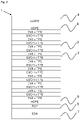
Fig. 1 shows a laminate structure according to the invention -
Fig. 2 shows a second laminate structure according to the invention -
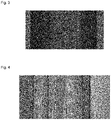
Fig 3 shows a photograph of a laminate structure according to the invention -
Fig. 4 shows a photograph of a comparison laminate structure. -
Figure 1 shows a section through alaminate structure 1 produced by an extrusion line. In this example, thelaminate structure 1 comprises an alternating stack of twenty-four sequential layers made from ten polymer layers 2 (polymer blend AC: Polyamide + TPE) and nine polymer layers 3 (polymer blend BD: EVOH + TPE). The alternating stack has an -AC-[BD-AC-]n layer sequence with n=9. Thestructure 1 also comprises further functional layers: askin layer 4 of, for example, LLDPE forming the laminate structure sealing layer, an impactstrength promoting layer 5 of, for example, polyolefin plastomer, like m-ULDPE; an adhesion-promotinglayer 6 of, for example, MAH grafted EMA (MAH-g-EMA) tie resin promoting adhesion of the sealingskin layer 4 and the impactstrength promoting layer 5 with the respective adjacent AC layers 2; and askin layer 7 made of e.g. EVA for printability. -
Figure 2 shows a section through analternative laminate structure 1. In this example, thelaminate structure 1 comprises askin layer 4 forming the laminate structure sealing layer of, for example, LLDPE, an alternating stack of twenty-four sequential layers made from ten polymer layers 2 (polymer blend AC - EVA+TPE) and nine polymer layers 3 (polymer blend BD - EVOH blended with SiBS rubber). The alternating stack has an -AC-[BD-AC-]n layer sequence with n=9. Thestructure 1 also comprises further functional layers: an impactstrength promoting layer 5 of, for example, polyolefin plastomer; a laminatestiffness promoting layer 8 of, for example, HDPE; and askin layer 7 made of EVA polymer to enhance printability. - In the laminate structures shown in
figures 1 and2 the polymer resin stack sequence typically has a thickness of from around 4 to around 60 µm while thelaminate structure 1 has an overall thickness in the range from 15 µm to 400 µm. The individual layers of polymer blend AC and polymer blend BD comprised in the stack sequence typically each have a thickness of less than 1 µm. - The laminate structures as described in
figures 1 and2 form very effective packaging laminate materials with a highly flex-crack resistant aroma and gas barrier and are suitable for use in medical, food and other packaging applications like bag-in-box liners for use in modern food and liquid food packaging systems, ostomy films, (total) parenteral, enteral, topical, cell culture and storage films and bags, lidding films. They can for example be used on thermoforming machines and in vacuum skin packaging machines. The extruded laminate as described in this invention can, if desired, also be printed at least with an appropriate skin layer included. The flexible laminates are thus preferably used as packaging film with gas, aroma and moisture barrier functions, flexibility, transparency and toughness for medical, food and other substances or items. They are useful as ostomy film; for packaging of (liquid) (total) parenteral, enteral, intravenous (IV), continuous ambulatory peritoneal dialysis (CAPD), and topical medication (e.g. drugs, nutrition); for making cell culture and storage (2D, 3D) single and multi compartment (e.g. multichamber) bags and containers; and for use in food packaging applications like bag-in-box liners and lidding films; and for packaging of cosmetics and personal hygiene articles. - A laminate structure approximately 80 µm thick according to the invention was made from an alternating stack of twenty-five microlayers of PA+SEBS and EVOH+SiBS each layer being about 0.9 µm thick, and on both sides of the AC, BD stack a tie layer of approximately 3 µm was extruded. As further functional layers one impact layer being approximately 7 µm thick made from ULDPE (POP) (right side of the photo) and two skin layers made from EVA and LLDPE respectively being approximately 25 and 20 µm thick were provided at the other side. For comparison, a laminate structure was made from twenty-five microlayers of PA and EVOH without blending them with elastomer. The further layers are the same. Both laminate structures were prepared as a microtome and then photographed with a Keyence optical microscope. The obtained photos are shown in
figure 3 and 4 . - It is immediately apparent that the laminate structure according to the invention has continuous microlayers whereas in the comparison structure without elastomer modification of PA and EVOH the microlayers are broken.
- A sealed bag was made from a laminate structure according to the invention as described in example 1 and a bag from a laminate LLDPE/tie/PA/EVOH/PA/tie/EVA was used as comparison. Chopped onions were placed inside the bags and the bags sealed and stored at RT. After a few days the onions in the comparison bag became brown and an onion smell was perceivable. In the bag made from the laminate structure according to the invention the onions remained white for months and no smell was detected. This shows that the novel structure provides a very effective barrier.
- Thus, the present invention provides a laminate structure comprising an alternating stack of layers from polymer blends AC and BD having the sequence -AC-[BD-AC-]n with n from 4 to 36, wherein the layer thickness of layers AC and layers BD is less than 3 µm, wherein A and B are thermoplastic polymers and C and D are thermoplastic elastomers, wherein the thermoplastic polymer B has functional barrier properties, wherein the amount of the thermoplastic elastomers C and D in the polymer blends AC and BD is each from 3 to 45 wt.-%, and polymer B and elastomer D are essentially incompatible.
Claims (17)
- A laminate structure comprising an alternating stack of layers of different types of polymer blends AC and BD having the sequence -AC-[BD-AC-]n with n from 4 to 36, a layer thickness of layers AC and layers BD of less than 3 µm, wherein A and B are thermoplastic polymers, the thermoplastic polymer B has functional barrier properties against transmission of oxygen, nitrogen, carbon dioxide, organic vapors and moisture, the polymers A and B are each blended with a thermoplastic elastomer C and D forming the polymer blends AC and BD, in which the amount of the thermoplastic elastomers C and D in the blends is each from 3 to 45 wt.-%, and the thermoplastic polymer B and elastomer D are essentially incompatible forming separate phases, and the structure has a water vapor transmission rate of less than 5 g H2O per m2 in 24 hours at 23 °C and 85 Vol.-% relative humidity (DIN 53122) and an oxygen transmission rate of less than 10 cm3 O2 per m2 in 24 hours at 23 °C and 50 Vol.-% relative humidity (ASTM D 3985).
- The laminate structure according to claim 1, wherein polymer A is a polyamide or nucleated polyamide or a polyamide partly based on a renewable source; a blend of a polyamide with an ethylene vinyl alcohol copolymer or a polyalkylene carbonate or a polyketone; a copolymer of an olefin with a carboxylic acid or ester or ionomer or mixture thereof; a maleic anhydride grafted polyolefin or olefin carboxylic acid or ester copolymer or ionomer; a blend of a maleic anhydride grafted polyolefin or olefin carboxylic acid or ester copolymer or ionomer with a not grafted polyolefin or olefin carboxylic acid or ester copolymer or ionomer.
- The laminate structure according to claim 2, wherein polymer A is a polyamide or a nucleated polyamide, preferably at least partly made from a renewable source.
- The laminate structure according to claim 2, wherein polymer A is a copolymer of ethylene with a carboxylic acid or ester or ionomer or mixture thereof or a maleic anhydride grafted copolymer of ethylene with a carboxylic acid or ester or ionomer or mixture thereof.
- The laminate structure according any one of claims 1 to 4, wherein at least one of the monomeric building blocks of polymer A is from a renewable source, preferably from glycerol, diols, vanillin, ferulic acid, lactic acid, levulinic acid, adipic acid, azelaic acid, succinic acid, 1,4-butanediamide, bio-1,4 butanediol, diacids, hydroxyacids, furans, esteramides, amides, esters, CO, CO2, bio-alkylenes.
- The laminate structure according to any one of claims 1 to 5, wherein polymer B is an ethylene vinyl alcohol copolymer, a polyketone, a polyvinyl alcohol, a polyalkylene carbonate, a poly(1,3 glycerol carbonate) optionally mixed with polytetramethylene succinate, or a mixture or blend of polyamide with ethylene vinyl alcohol copolymer or polyvinyl alcohol or polyketone or polyalkylene carbonate.
- The laminate structure according to any one of claims 1 to 6, wherein the thermoplastic elastomer C is a styrene block copolymer of styrene with at least one of butylene, isoprene, hydrogenated butylene, hydrogenated isoprene and isobutylene.
- The laminate structure according to any one claims 1 to 7, wherein the thermoplastic elastomer D is a styrene block copolymer of styrene with isobutylene.
- The laminate structure according to any one of claims 1 to 8, wherein the thermoplastic elastomer C and/or D is a preferably at least partly renewably sourced elastomer, preferably polytrimethylene carbonate, poly(lactate/butanediol/sebacate/itaconate) with at least 40 mol-% lactic acid, a triblock elastomer poly(L-lactide)-b-polymyrcene-b-poly(L-lactide), a polyester elastomer like poly(3-hydroxybutyrate-co-4-hydroxybutyrate or co-b-hydroxyvalerate), a triblock copolymer from polyitaconate and polyitaconic amide, poly(glycerol sebacate), polytetramethylene ether glycol or blends thereof.
- The laminate structure according to claim 1, wherein polymer A is a maleic anhydride grafted polyolefin and elastomer C is a block copolymer of styrene with at least partially hydrogenated butylene and/or isoprene or a (partly) renewable sourced elastomer according to claim 9.
- The laminate structure according to any one of claims 1 to 10, wherein polymer B is ethylene vinyl alcohol copolymer, polyketone, polyvinyl alcohol or polyalkylene carbonate and elastomer D is styrene block copolymer of styrene with isobutylene, a mixture of styrene block copolymer of styrene with isobutylene and polyamide or polyamide from renewable sources, or any of these with bio-based multiblock elastomers based on ether or etheramide building blocks.
- The laminate structure according to any one of claims 1 to 11, comprising one or more functional layers on either side of the alternating stack.
- The laminate structure according to claim 12, wherein one functional layer is a sealing layer.
- The laminate structure according to claim 12 or 13 comprising at least two functional layers, wherein one of the functional layers is a tie layer promoting adhesion between the alternating stack and the second functional layer.
- The laminate structure according to any one of claims 12 to 14, wherein one functional layer is at least partly from a polymer which has at least one monomeric building block from a renewable source.
- The laminate structure according to one of claims 1 to 15, wherein:- a tensile modulus, measured according to ISO 527-1,2,3 or ASTM D882 (at 23 °C and 50 % RH) is < 250 MPa, preferably in the range from 75 - 150 MPa, and/or- a tensile strength at break measured according to ISO 527-1,2,3 or ASTM D882 is >10 MPa, preferably >15 MPa, but less than 40 MPa, and/or- an elongation at break measured according to ISO527-2,3 or ASTM D882 is > 200% preferably > 300 %, but less than 800%, and/or- an Izod impact strength measured according to ASTM D256 at 23°C notched / ISO 180 (1A) notched results in no break, and/or- a Charpy impact strength measured according to ISO 179 notched results in no break, and/or- a tensile impact strength measured according to ISO 8256 A1 notched at 23°C is above 160 KJ/m2, and/or- a dart impact strength measured according to ASTM D1709 is above 250 g, and/or- a Spencer impact strength measured according to ASTM D3420 is above 30 J/mm, and/or- an Elmendorf tear strength measured according ISO 6383-2or ASTM D1922 of at least about 2 N, preferably above 3 N, and/or- a tensile toughness determined by stress strain testing as described in ASTM D638, ASTM D882 and ISO 527 is > 15 MJ/m3, preferably > 25 MJ/m3, and most preferred > 40 MJ/m3, and/or- a puncture resistance tested using a method similar to ASTM F1306 -90 or DIN EN 14477 is at least 15 J, preferably more than 25 J.
- Use of a laminate structure according to anyone of claims 1 to 16 as packaging film with gas, aroma and moisture barrier functions, flexibility, transparency and toughness for medical, food and other substances or items, like as ostomy film and for packaging of (liquid) (total) parenteral, enteral, IV, CAPD, and topical medication (e.g. drugs, nutrition) and for making cell culture and storage (2D, 3D) single or multi compartment (e.g. multichamber) bags and containers; and for use in food packaging applications like bag-in-box liners and lidding films and for packaging of cosmetics and personal hygiene articles.
Priority Applications (2)
| Application Number | Priority Date | Filing Date | Title |
|---|---|---|---|
| SI201830896T SI3700748T1 (en) | 2017-10-24 | 2018-10-04 | Laminate structure for barrier packaging |
| HRP20230347TT HRP20230347T1 (en) | 2017-10-24 | 2018-10-04 | Laminate structure for barrier packaging |
Applications Claiming Priority (2)
| Application Number | Priority Date | Filing Date | Title |
|---|---|---|---|
| EP17198034.5A EP3476593A1 (en) | 2017-10-24 | 2017-10-24 | Laminate structure for barrier packaging |
| PCT/EP2018/077009 WO2019081175A1 (en) | 2017-10-24 | 2018-10-04 | Laminate structure for barrier packaging |
Publications (2)
| Publication Number | Publication Date |
|---|---|
| EP3700748A1 EP3700748A1 (en) | 2020-09-02 |
| EP3700748B1 true EP3700748B1 (en) | 2023-01-11 |
Family
ID=60268191
Family Applications (2)
| Application Number | Title | Priority Date | Filing Date |
|---|---|---|---|
| EP17198034.5A Ceased EP3476593A1 (en) | 2017-10-24 | 2017-10-24 | Laminate structure for barrier packaging |
| EP18778948.2A Active EP3700748B1 (en) | 2017-10-24 | 2018-10-04 | Laminate structure for barrier packaging |
Family Applications Before (1)
| Application Number | Title | Priority Date | Filing Date |
|---|---|---|---|
| EP17198034.5A Ceased EP3476593A1 (en) | 2017-10-24 | 2017-10-24 | Laminate structure for barrier packaging |
Country Status (17)
| Country | Link |
|---|---|
| US (2) | US11654660B2 (en) |
| EP (2) | EP3476593A1 (en) |
| JP (1) | JP7256814B2 (en) |
| KR (1) | KR102480157B1 (en) |
| CN (1) | CN111511549A (en) |
| BR (1) | BR112020006153A2 (en) |
| CA (1) | CA3079616C (en) |
| DK (1) | DK3700748T3 (en) |
| ES (1) | ES2941963T3 (en) |
| FI (1) | FI3700748T3 (en) |
| HR (1) | HRP20230347T1 (en) |
| HU (1) | HUE061828T2 (en) |
| LT (1) | LT3700748T (en) |
| PL (1) | PL3700748T3 (en) |
| PT (1) | PT3700748T (en) |
| SI (1) | SI3700748T1 (en) |
| WO (1) | WO2019081175A1 (en) |
Families Citing this family (9)
| Publication number | Priority date | Publication date | Assignee | Title |
|---|---|---|---|---|
| CN114223294B (en) * | 2019-08-16 | 2025-06-13 | 上海诺基亚贝尔股份有限公司 | Phase control signal detection |
| EP4045320B1 (en) * | 2019-10-15 | 2026-05-13 | Cryovac, LLC | Elastomer containing multilayer film and method of manufacture |
| JP7552028B2 (en) * | 2020-02-19 | 2024-09-18 | 三菱ケミカル株式会社 | Polyamide resin film and packaging material using said film |
| CN112159544B (en) * | 2020-09-29 | 2023-02-07 | 上海春宜药品包装材料有限公司 | Environment-friendly high-barrier film and preparation method thereof |
| JP2024508650A (en) * | 2021-02-22 | 2024-02-28 | ソシエテ・デ・プロデュイ・ネスレ・エス・アー | Recyclable paper-based laminates and beverage cartons made therefrom |
| CN113214611B (en) * | 2021-05-13 | 2022-07-01 | 浙江汇盎新材料科技有限公司 | Biodegradable high-barrier composite film and preparation method thereof |
| EP4363218A1 (en) * | 2021-06-28 | 2024-05-08 | Amcor Flexibles North America, Inc. | Packaging film having oxygen barrier |
| WO2023234932A1 (en) * | 2022-05-31 | 2023-12-07 | Amcor Flexibles North America, Inc. | Machine direction oriented film for tear and laminates thereof |
| CN115284513B (en) * | 2022-10-09 | 2023-01-03 | 广域兴智能(南通)科技有限公司 | Light conversion film for simplifying barrier film |
Family Cites Families (55)
| Publication number | Priority date | Publication date | Assignee | Title |
|---|---|---|---|---|
| US4347332A (en) | 1980-06-19 | 1982-08-31 | American Can Company | Polyamide/polyethylene copolymer film and method for producing |
| US4828915A (en) | 1981-08-05 | 1989-05-09 | American National Can Company | Oriented evoh/nylon blend film |
| US4407873A (en) | 1982-08-06 | 1983-10-04 | American Can Company | Retortable packaging structure |
| US4640852A (en) | 1984-11-28 | 1987-02-03 | American Can Company | Multiple layer films containing oriented layers of nylon and ethylene vinyl alcohol copolymer |
| US5154789A (en) | 1984-11-28 | 1992-10-13 | American National Can Company | Multiple layer films containing oriented layers of nylon and ethylene vinyl alcohol copolymers |
| US5286575A (en) | 1987-08-24 | 1994-02-15 | E. I. Du Pont De Nemours And Company | Blends of ethylene vinyl alcohol copolymer and polyamides, and multilayer containers made therefrom |
| US4990562A (en) | 1987-08-24 | 1991-02-05 | E. I. Du Pont De Nemours And Company | Blends of ethylene vinyl alcohol copolymer and amorphous polyamide, and multilayer containers made therefrom |
| JP2674185B2 (en) | 1989-02-28 | 1997-11-12 | 三菱樹脂株式会社 | Multi-layer ring base |
| US5003002A (en) | 1989-08-14 | 1991-03-26 | Rampart Packaging Inc. | Blends of amorphous nylon and ethylene vinyl alcohol copolymers and laminates and containers made therefrom |
| CA2123809A1 (en) | 1991-12-18 | 1993-06-24 | Debra L. Wilfong | Multilayered barrier structures |
| CA2106262C (en) | 1992-10-01 | 2003-11-18 | Ralph H. Bland | Tear resistant multilayer films and articles incorporating such films |
| US5382470A (en) | 1993-04-09 | 1995-01-17 | Viskase Corporation | EVOH oxygen barrier stretched multilayer film |
| US6673403B1 (en) | 1996-09-13 | 2004-01-06 | Kureha Kagaku Kogyo K.K. | Gas-barrier, multi-layer hollow container |
| AU4804897A (en) | 1996-10-22 | 1998-05-15 | Henry G. Schirmer | Modular disk coextrusion die |
| CH692846A5 (en) | 1997-02-24 | 2002-11-29 | Baxter Biotech Tech Sarl | Multilayered co-extruded films for sterilizable containers fluids. |
| JPH10272742A (en) | 1997-03-31 | 1998-10-13 | Monteru J P O Kk | Multilayer film suitable for medical bags |
| US6371318B1 (en) | 1997-12-24 | 2002-04-16 | Owens-Illinois Closure Inc. | Plastic closure with compression molded sealing/barrier liner |
| CN1379713A (en) | 1999-10-15 | 2002-11-13 | 3M创新有限公司 | Conformable multilayer films |
| JP4889912B2 (en) * | 2000-03-02 | 2012-03-07 | ボストン サイエンティフィック リミテッド | Multi-layer medical balloon |
| WO2001096661A1 (en) | 2000-06-12 | 2001-12-20 | Simex Technologies Inc. | Formation of oriented multilayer polymeric films |
| DE10064333A1 (en) * | 2000-12-21 | 2002-06-27 | Degussa | Multi-layer composite with an EVOH layer |
| FR2832486A1 (en) | 2001-11-22 | 2003-05-23 | Atofina | Multilayer tubing useful for making automobile fuel pipes includes a binder layer between a layer of polyamide-polyolefin blend and an inner layer of polyamide containing an electrically conductive filler |
| US20040037983A1 (en) | 2002-03-25 | 2004-02-26 | International Paper Company | Non-foil barrier laminates |
| US6964816B2 (en) | 2002-09-09 | 2005-11-15 | Curwood, Inc. | Packaging films containing coextruded polyester and nylon layers |
| AU2003252855B2 (en) | 2002-10-22 | 2008-09-18 | Mitsubishi Gas Chemical Company, Inc. | Gas-barrier multi-layer structure |
| CN1791989A (en) | 2003-05-16 | 2006-06-21 | 纳幕尔杜邦公司 | Barrier film on plastic substrates formed by atomic layer deposition |
| JP4652332B2 (en) | 2004-06-25 | 2011-03-16 | 株式会社クレハ | Method for producing polyglycolic acid resin multilayer sheet |
| CH697933B1 (en) | 2005-11-03 | 2009-03-31 | Tetra Laval Holdings & Finance | Method and apparatus for coating plastic films with an oxide layer. |
| US20070202337A1 (en) | 2006-02-24 | 2007-08-30 | Curwood, Inc. | Dimensionally stable packaging film and articles made therefrom |
| JP2008155438A (en) | 2006-12-22 | 2008-07-10 | Dainippon Printing Co Ltd | Heat-sealable film having barrier properties |
| WO2008093615A1 (en) | 2007-01-31 | 2008-08-07 | The Nippon Synthetic Chemical Industry Co., Ltd. | Polyvinyl alcohol resin composition and film |
| JP5092724B2 (en) | 2007-12-11 | 2012-12-05 | 株式会社ブリヂストン | Laminated resin tubular body for hose inner pipe and refrigerant transport hose |
| CN102449062B (en) | 2009-05-28 | 2014-03-12 | 日本合成化学工业株式会社 | EVOH resin composition, and molded article and multilayer structure both comprising same |
| CA2781404A1 (en) | 2009-11-26 | 2011-06-03 | Basf Se | Method for producing 5,5-disubstituted 4,5-dihydroisoxazol-3-thiocarboxamidine salts |
| CN102115576B (en) | 2009-12-31 | 2014-09-17 | 金伯利-克拉克环球有限公司 | Natural biological polymer thermoplastic film |
| US20110220532A1 (en) | 2010-03-15 | 2011-09-15 | Bakhtiar Alam Shah | Multilayered packaging material |
| EP2578398B1 (en) | 2010-05-31 | 2016-03-30 | Sumitomo Bakelite Co., Ltd. | Multilayer film and package body |
| KR20120041974A (en) | 2010-10-22 | 2012-05-03 | 에스케이씨 주식회사 | Multi-layer biodegradable film |
| US8557372B2 (en) | 2010-12-01 | 2013-10-15 | Northern Technologies International Corp. | Laminate for preserving food |
| US8083064B2 (en) | 2011-01-25 | 2011-12-27 | The Procter & Gamble Company | Sustainable packaging for consumer products |
| US8470922B2 (en) | 2011-03-03 | 2013-06-25 | Exxonmobil Chemical Patents Inc. | Ethylene-vinyl alcohol based thermoplastic elastomers and vulcanizates |
| US9925831B2 (en) * | 2011-05-31 | 2018-03-27 | Bridgestone Corporation | Multilayer structure, inner liner for pneumatic tire, and pneumatic tire |
| JP5804776B2 (en) | 2011-05-31 | 2015-11-04 | 株式会社クラレ | Multilayer structure and manufacturing method thereof |
| EP2776246A4 (en) | 2011-11-08 | 2015-07-01 | Essel Propack Ltd | MULTILAYER LAMINATE AND METHOD THEREFOR |
| BR112014027699B1 (en) | 2012-05-14 | 2021-03-30 | Kuraray Co., Ltd | BLOW-MOLDED CONTAINER WITH CLAMPING PART |
| US20150141609A1 (en) * | 2012-06-28 | 2015-05-21 | Dow Global Technologies Llc | Polyester - polyurethane elastomers from renewable sources |
| WO2014103587A1 (en) | 2012-12-28 | 2014-07-03 | 三菱樹脂株式会社 | Wrap film |
| JP6136626B2 (en) * | 2013-06-24 | 2017-05-31 | 横浜ゴム株式会社 | Laminate, inner liner material and pneumatic tire |
| JP2016005875A (en) | 2014-06-20 | 2016-01-14 | 住友ベークライト株式会社 | Multilayer film and package |
| JP2016005878A (en) | 2014-06-20 | 2016-01-14 | トヨタ自動車株式会社 | Manufacturing method of resin fuel tank |
| JP6763133B2 (en) | 2015-12-11 | 2020-09-30 | 住友ベークライト株式会社 | Multilayer film and packaging |
| JP6981255B2 (en) | 2015-12-28 | 2021-12-15 | 三菱瓦斯化学株式会社 | Dry blend mixture |
| KR102422984B1 (en) * | 2016-10-25 | 2022-07-19 | 윌마르 트레이딩 피티이 엘티디 | Renewably Derived Polyamide and Method for Making Same |
| EP3634865B1 (en) * | 2017-06-09 | 2021-12-15 | ENVICAN GmbH | Fluid container and method for the production thereof in accordance with demand and in a timely manner at the filling location |
| EP3476594A1 (en) | 2017-10-24 | 2019-05-01 | Renolit SE | Laminate structure for biocompatible barrier packaging |
-
2017
- 2017-10-24 EP EP17198034.5A patent/EP3476593A1/en not_active Ceased
-
2018
- 2018-10-04 ES ES18778948T patent/ES2941963T3/en active Active
- 2018-10-04 CA CA3079616A patent/CA3079616C/en active Active
- 2018-10-04 EP EP18778948.2A patent/EP3700748B1/en active Active
- 2018-10-04 HR HRP20230347TT patent/HRP20230347T1/en unknown
- 2018-10-04 BR BR112020006153-0A patent/BR112020006153A2/en not_active IP Right Cessation
- 2018-10-04 KR KR1020207010755A patent/KR102480157B1/en active Active
- 2018-10-04 HU HUE18778948A patent/HUE061828T2/en unknown
- 2018-10-04 CN CN201880069648.0A patent/CN111511549A/en active Pending
- 2018-10-04 WO PCT/EP2018/077009 patent/WO2019081175A1/en not_active Ceased
- 2018-10-04 PL PL18778948.2T patent/PL3700748T3/en unknown
- 2018-10-04 JP JP2020543695A patent/JP7256814B2/en active Active
- 2018-10-04 SI SI201830896T patent/SI3700748T1/en unknown
- 2018-10-04 PT PT187789482T patent/PT3700748T/en unknown
- 2018-10-04 LT LTEPPCT/EP2018/077009T patent/LT3700748T/en unknown
- 2018-10-04 DK DK18778948.2T patent/DK3700748T3/en active
- 2018-10-04 US US16/755,218 patent/US11654660B2/en active Active
- 2018-10-04 FI FIEP18778948.2T patent/FI3700748T3/en active
-
2023
- 2023-04-13 US US18/300,085 patent/US20230249444A1/en not_active Abandoned
Also Published As
| Publication number | Publication date |
|---|---|
| CA3079616C (en) | 2023-04-25 |
| KR20200074947A (en) | 2020-06-25 |
| HUE061828T2 (en) | 2023-08-28 |
| ES2941963T3 (en) | 2023-05-29 |
| PT3700748T (en) | 2023-04-14 |
| CN111511549A (en) | 2020-08-07 |
| JP7256814B2 (en) | 2023-04-12 |
| KR102480157B1 (en) | 2022-12-22 |
| EP3700748A1 (en) | 2020-09-02 |
| JP2021508295A (en) | 2021-03-04 |
| CA3079616A1 (en) | 2019-05-02 |
| FI3700748T3 (en) | 2023-04-21 |
| NZ762661A (en) | 2025-12-19 |
| BR112020006153A2 (en) | 2020-10-20 |
| WO2019081175A1 (en) | 2019-05-02 |
| HRP20230347T1 (en) | 2023-06-09 |
| EP3476593A1 (en) | 2019-05-01 |
| LT3700748T (en) | 2023-06-12 |
| US11654660B2 (en) | 2023-05-23 |
| PL3700748T3 (en) | 2023-05-15 |
| DK3700748T3 (en) | 2023-04-03 |
| SI3700748T1 (en) | 2023-07-31 |
| US20200298538A1 (en) | 2020-09-24 |
| US20230249444A1 (en) | 2023-08-10 |
Similar Documents
| Publication | Publication Date | Title |
|---|---|---|
| US20230249444A1 (en) | Laminate structure for barrier packaging | |
| ES2992309T3 (en) | Biodegradable laminated material | |
| US9040132B2 (en) | Medical multilayer film and use thereof | |
| WO2006075634A1 (en) | Heat-shrinkable layered film, molded article comprising the film, and heat-shrinkable label and container | |
| EP2064288A2 (en) | Toughened poly(hydroxyalkanoic acid) compositions | |
| WO2006121118A1 (en) | Heat-shrinkable film, moldings and heat-shrinkable labels made by using the film, and containers made by using the moldings or fitted with the labels | |
| EP3700749B1 (en) | Laminate structure for biocompatible barrier packaging | |
| EP1507663B1 (en) | Multilayer stretched product | |
| JP2013028811A (en) | Resin composition, film using the same, and laminate | |
| NZ762665B2 (en) | Laminate structure for biocompatible barrier packaging | |
| HK40027117A (en) | Laminate structure for barrier packaging | |
| HK40027118A (en) | Laminate structure for biocompatible barrier packaging | |
| BR112020006110B1 (en) | LAMINATED STRUCTURE FOR BIOCOMPATIBLE BARRIER PACKAGING | |
| US20050214489A1 (en) | Multilayer stretched product | |
| JP2010120255A (en) | Multilayer film, sheet, and bag | |
| JP3706665B2 (en) | Self-adhesive film or sheet | |
| JP2024044616A (en) | Sheet for press-through package, press-through package, and method for manufacturing press-through package |
Legal Events
| Date | Code | Title | Description |
|---|---|---|---|
| REG | Reference to a national code |
Ref country code: HR Ref legal event code: TUEP Ref document number: P20230347T Country of ref document: HR |
|
| STAA | Information on the status of an ep patent application or granted ep patent |
Free format text: STATUS: UNKNOWN |
|
| STAA | Information on the status of an ep patent application or granted ep patent |
Free format text: STATUS: THE INTERNATIONAL PUBLICATION HAS BEEN MADE |
|
| PUAI | Public reference made under article 153(3) epc to a published international application that has entered the european phase |
Free format text: ORIGINAL CODE: 0009012 |
|
| STAA | Information on the status of an ep patent application or granted ep patent |
Free format text: STATUS: REQUEST FOR EXAMINATION WAS MADE |
|
| 17P | Request for examination filed |
Effective date: 20200428 |
|
| AK | Designated contracting states |
Kind code of ref document: A1 Designated state(s): AL AT BE BG CH CY CZ DE DK EE ES FI FR GB GR HR HU IE IS IT LI LT LU LV MC MK MT NL NO PL PT RO RS SE SI SK SM TR |
|
| AX | Request for extension of the european patent |
Extension state: BA ME |
|
| DAV | Request for validation of the european patent (deleted) | ||
| DAX | Request for extension of the european patent (deleted) | ||
| STAA | Information on the status of an ep patent application or granted ep patent |
Free format text: STATUS: EXAMINATION IS IN PROGRESS |
|
| 17Q | First examination report despatched |
Effective date: 20210325 |
|
| GRAP | Despatch of communication of intention to grant a patent |
Free format text: ORIGINAL CODE: EPIDOSNIGR1 |
|
| STAA | Information on the status of an ep patent application or granted ep patent |
Free format text: STATUS: GRANT OF PATENT IS INTENDED |
|
| INTG | Intention to grant announced |
Effective date: 20220725 |
|
| RIN1 | Information on inventor provided before grant (corrected) |
Inventor name: KARSTEN, PETRUS JOHANNES ANTONIUS Inventor name: VON KIRCHBACH, HANS PAUL HENNING Inventor name: BLOK, JAKOB ROBERT |
|
| GRAS | Grant fee paid |
Free format text: ORIGINAL CODE: EPIDOSNIGR3 |
|
| GRAA | (expected) grant |
Free format text: ORIGINAL CODE: 0009210 |
|
| STAA | Information on the status of an ep patent application or granted ep patent |
Free format text: STATUS: THE PATENT HAS BEEN GRANTED |
|
| AK | Designated contracting states |
Kind code of ref document: B1 Designated state(s): AL AT BE BG CH CY CZ DE DK EE ES FI FR GB GR HR HU IE IS IT LI LT LU LV MC MK MT NL NO PL PT RO RS SE SI SK SM TR |
|
| REG | Reference to a national code |
Ref country code: GB Ref legal event code: FG4D |
|
| REG | Reference to a national code |
Ref country code: CH Ref legal event code: EP |
|
| REG | Reference to a national code |
Ref country code: DE Ref legal event code: R096 Ref document number: 602018045325 Country of ref document: DE |
|
| REG | Reference to a national code |
Ref country code: IE Ref legal event code: FG4D |
|
| REG | Reference to a national code |
Ref country code: AT Ref legal event code: REF Ref document number: 1543185 Country of ref document: AT Kind code of ref document: T Effective date: 20230215 |
|
| REG | Reference to a national code |
Ref country code: DK Ref legal event code: T3 Effective date: 20230327 |
|
| REG | Reference to a national code |
Ref country code: NO Ref legal event code: T2 Effective date: 20230111 Ref country code: RO Ref legal event code: EPE |
|
| REG | Reference to a national code |
Ref country code: PT Ref legal event code: SC4A Ref document number: 3700748 Country of ref document: PT Date of ref document: 20230414 Kind code of ref document: T Free format text: AVAILABILITY OF NATIONAL TRANSLATION Effective date: 20230410 |
|
| REG | Reference to a national code |
Ref country code: NL Ref legal event code: FP |
|
| REG | Reference to a national code |
Ref country code: SE Ref legal event code: TRGR |
|
| REG | Reference to a national code |
Ref country code: ES Ref legal event code: FG2A Ref document number: 2941963 Country of ref document: ES Kind code of ref document: T3 Effective date: 20230529 |
|
| REG | Reference to a national code |
Ref country code: GR Ref legal event code: EP Ref document number: 20230400566 Country of ref document: GR Effective date: 20230510 |
|
| REG | Reference to a national code |
Ref country code: HR Ref legal event code: T1PR Ref document number: P20230347 Country of ref document: HR |
|
| REG | Reference to a national code |
Ref country code: SK Ref legal event code: T3 Ref document number: E 41561 Country of ref document: SK |
|
| REG | Reference to a national code |
Ref country code: EE Ref legal event code: FG4A Ref document number: E023321 Country of ref document: EE Effective date: 20230515 |
|
| PG25 | Lapsed in a contracting state [announced via postgrant information from national office to epo] |
Ref country code: RS Free format text: LAPSE BECAUSE OF FAILURE TO SUBMIT A TRANSLATION OF THE DESCRIPTION OR TO PAY THE FEE WITHIN THE PRESCRIBED TIME-LIMIT Effective date: 20230111 |
|
| REG | Reference to a national code |
Ref country code: HU Ref legal event code: AG4A Ref document number: E061828 Country of ref document: HU |
|
| PG25 | Lapsed in a contracting state [announced via postgrant information from national office to epo] |
Ref country code: IS Free format text: LAPSE BECAUSE OF FAILURE TO SUBMIT A TRANSLATION OF THE DESCRIPTION OR TO PAY THE FEE WITHIN THE PRESCRIBED TIME-LIMIT Effective date: 20230511 |
|
| REG | Reference to a national code |
Ref country code: DE Ref legal event code: R097 Ref document number: 602018045325 Country of ref document: DE |
|
| REG | Reference to a national code |
Ref country code: HR Ref legal event code: ODRP Ref document number: P20230347 Country of ref document: HR Payment date: 20230928 Year of fee payment: 6 |
|
| PG25 | Lapsed in a contracting state [announced via postgrant information from national office to epo] |
Ref country code: SM Free format text: LAPSE BECAUSE OF FAILURE TO SUBMIT A TRANSLATION OF THE DESCRIPTION OR TO PAY THE FEE WITHIN THE PRESCRIBED TIME-LIMIT Effective date: 20230111 |
|
| PLBE | No opposition filed within time limit |
Free format text: ORIGINAL CODE: 0009261 |
|
| STAA | Information on the status of an ep patent application or granted ep patent |
Free format text: STATUS: NO OPPOSITION FILED WITHIN TIME LIMIT |
|
| REG | Reference to a national code |
Ref country code: AT Ref legal event code: UEP Ref document number: 1543185 Country of ref document: AT Kind code of ref document: T Effective date: 20230111 |
|
| 26N | No opposition filed |
Effective date: 20231012 |
|
| PG25 | Lapsed in a contracting state [announced via postgrant information from national office to epo] |
Ref country code: MC Free format text: LAPSE BECAUSE OF FAILURE TO SUBMIT A TRANSLATION OF THE DESCRIPTION OR TO PAY THE FEE WITHIN THE PRESCRIBED TIME-LIMIT Effective date: 20230111 |
|
| REG | Reference to a national code |
Ref country code: HR Ref legal event code: ODRP Ref document number: P20230347 Country of ref document: HR Payment date: 20241001 Year of fee payment: 7 |
|
| PGFP | Annual fee paid to national office [announced via postgrant information from national office to epo] |
Ref country code: TR Payment date: 20240925 Year of fee payment: 7 |
|
| PG25 | Lapsed in a contracting state [announced via postgrant information from national office to epo] |
Ref country code: CY Free format text: LAPSE BECAUSE OF FAILURE TO SUBMIT A TRANSLATION OF THE DESCRIPTION OR TO PAY THE FEE WITHIN THE PRESCRIBED TIME-LIMIT; INVALID AB INITIO Effective date: 20181004 |
|
| PGFP | Annual fee paid to national office [announced via postgrant information from national office to epo] |
Ref country code: PT Payment date: 20250924 Year of fee payment: 8 |
|
| PGFP | Annual fee paid to national office [announced via postgrant information from national office to epo] |
Ref country code: LT Payment date: 20250923 Year of fee payment: 8 |
|
| PGFP | Annual fee paid to national office [announced via postgrant information from national office to epo] |
Ref country code: PL Payment date: 20250926 Year of fee payment: 8 |
|
| PGFP | Annual fee paid to national office [announced via postgrant information from national office to epo] |
Ref country code: CZ Payment date: 20250919 Year of fee payment: 8 |
|
| PGFP | Annual fee paid to national office [announced via postgrant information from national office to epo] |
Ref country code: RO Payment date: 20250930 Year of fee payment: 8 |
|
| REG | Reference to a national code |
Ref country code: HR Ref legal event code: ODRP Ref document number: P20230347 Country of ref document: HR Payment date: 20250929 Year of fee payment: 8 |
|
| PGFP | Annual fee paid to national office [announced via postgrant information from national office to epo] |
Ref country code: SK Payment date: 20250929 Year of fee payment: 8 |
|
| PGFP | Annual fee paid to national office [announced via postgrant information from national office to epo] |
Ref country code: SI Payment date: 20250923 Year of fee payment: 8 |
|
| REG | Reference to a national code |
Ref country code: CH Ref legal event code: U11 Free format text: ST27 STATUS EVENT CODE: U-0-0-U10-U11 (AS PROVIDED BY THE NATIONAL OFFICE) Effective date: 20251101 |
|
| PGFP | Annual fee paid to national office [announced via postgrant information from national office to epo] |
Ref country code: HU Payment date: 20250930 Year of fee payment: 8 |
|
| PGFP | Annual fee paid to national office [announced via postgrant information from national office to epo] |
Ref country code: NL Payment date: 20251023 Year of fee payment: 8 Ref country code: LU Payment date: 20251022 Year of fee payment: 8 |
|
| PGFP | Annual fee paid to national office [announced via postgrant information from national office to epo] |
Ref country code: DE Payment date: 20251020 Year of fee payment: 8 |
|
| PGFP | Annual fee paid to national office [announced via postgrant information from national office to epo] |
Ref country code: GB Payment date: 20251024 Year of fee payment: 8 |
|
| PGFP | Annual fee paid to national office [announced via postgrant information from national office to epo] |
Ref country code: NO Payment date: 20251022 Year of fee payment: 8 |
|
| PGFP | Annual fee paid to national office [announced via postgrant information from national office to epo] |
Ref country code: AT Payment date: 20251021 Year of fee payment: 8 |
|
| PGFP | Annual fee paid to national office [announced via postgrant information from national office to epo] |
Ref country code: FI Payment date: 20251022 Year of fee payment: 8 Ref country code: DK Payment date: 20251023 Year of fee payment: 8 Ref country code: IT Payment date: 20251031 Year of fee payment: 8 |
|
| PGFP | Annual fee paid to national office [announced via postgrant information from national office to epo] |
Ref country code: HR Payment date: 20251004 Year of fee payment: 8 Ref country code: FR Payment date: 20251029 Year of fee payment: 8 |
|
| PGFP | Annual fee paid to national office [announced via postgrant information from national office to epo] |
Ref country code: GR Payment date: 20251021 Year of fee payment: 8 Ref country code: BE Payment date: 20251022 Year of fee payment: 8 |
|
| PGFP | Annual fee paid to national office [announced via postgrant information from national office to epo] |
Ref country code: SE Payment date: 20251023 Year of fee payment: 8 Ref country code: CH Payment date: 20251101 Year of fee payment: 8 |
|
| PGFP | Annual fee paid to national office [announced via postgrant information from national office to epo] |
Ref country code: IE Payment date: 20251021 Year of fee payment: 8 |
|
| PGFP | Annual fee paid to national office [announced via postgrant information from national office to epo] |
Ref country code: LV Payment date: 20251021 Year of fee payment: 8 |
|
| PGFP | Annual fee paid to national office [announced via postgrant information from national office to epo] |
Ref country code: BG Payment date: 20251023 Year of fee payment: 8 |
|
| PGFP | Annual fee paid to national office [announced via postgrant information from national office to epo] |
Ref country code: EE Payment date: 20251020 Year of fee payment: 8 |
|
| PGFP | Annual fee paid to national office [announced via postgrant information from national office to epo] |
Ref country code: ES Payment date: 20251114 Year of fee payment: 8 |
|
| REG | Reference to a national code |
Ref country code: DE Ref legal event code: R082 Ref document number: 602018045325 Country of ref document: DE Representative=s name: BARDEHLE PAGENBERG PARTNERSCHAFT MBB PATENTANW, DE |