EP3697171B1 - Verbesserte anforderung an up-funktion für pfcp-assoziationsfreigabe - Google Patents
Verbesserte anforderung an up-funktion für pfcp-assoziationsfreigabe Download PDFInfo
- Publication number
- EP3697171B1 EP3697171B1 EP19193214.4A EP19193214A EP3697171B1 EP 3697171 B1 EP3697171 B1 EP 3697171B1 EP 19193214 A EP19193214 A EP 19193214A EP 3697171 B1 EP3697171 B1 EP 3697171B1
- Authority
- EP
- European Patent Office
- Prior art keywords
- pfcp
- association
- session
- cpe
- upe
- Prior art date
- Legal status (The legal status is an assumption and is not a legal conclusion. Google has not performed a legal analysis and makes no representation as to the accuracy of the status listed.)
- Active
Links
Images




Classifications
-
- H—ELECTRICITY
- H04—ELECTRIC COMMUNICATION TECHNIQUE
- H04W—WIRELESS COMMUNICATION NETWORKS
- H04W76/00—Connection management
- H04W76/30—Connection release
- H04W76/34—Selective release of ongoing connections
-
- H—ELECTRICITY
- H04—ELECTRIC COMMUNICATION TECHNIQUE
- H04W—WIRELESS COMMUNICATION NETWORKS
- H04W76/00—Connection management
- H04W76/30—Connection release
-
- H—ELECTRICITY
- H04—ELECTRIC COMMUNICATION TECHNIQUE
- H04L—TRANSMISSION OF DIGITAL INFORMATION, e.g. TELEGRAPHIC COMMUNICATION
- H04L12/00—Data switching networks
- H04L12/02—Details
- H04L12/14—Charging, metering or billing arrangements specially adapted for data communications, e.g. authentication, authorisation and accounting [AAA] framework
- H04L12/1403—Architecture for metering, charging or billing
- H04L12/1407—Policy-and-charging control [PCC] architecture
-
- H—ELECTRICITY
- H04—ELECTRIC COMMUNICATION TECHNIQUE
- H04M—TELEPHONIC COMMUNICATION
- H04M15/00—Arrangements for metering, time-control or time indication ; Metering, charging or billing arrangements for voice wireline or wireless communications, e.g. VoIP
- H04M15/66—Policy and charging system
-
- H—ELECTRICITY
- H04—ELECTRIC COMMUNICATION TECHNIQUE
- H04W—WIRELESS COMMUNICATION NETWORKS
- H04W4/00—Services specially adapted for wireless communication networks; Facilities therefor
- H04W4/24—Accounting or billing
-
- H—ELECTRICITY
- H04—ELECTRIC COMMUNICATION TECHNIQUE
- H04W—WIRELESS COMMUNICATION NETWORKS
- H04W76/00—Connection management
- H04W76/10—Connection setup
-
- H—ELECTRICITY
- H04—ELECTRIC COMMUNICATION TECHNIQUE
- H04W—WIRELESS COMMUNICATION NETWORKS
- H04W76/00—Connection management
- H04W76/30—Connection release
- H04W76/38—Connection release triggered by timers
-
- H—ELECTRICITY
- H04—ELECTRIC COMMUNICATION TECHNIQUE
- H04W—WIRELESS COMMUNICATION NETWORKS
- H04W88/00—Devices specially adapted for wireless communication networks, e.g. terminals, base stations or access point devices
- H04W88/16—Gateway arrangements
-
- H—ELECTRICITY
- H04—ELECTRIC COMMUNICATION TECHNIQUE
- H04W—WIRELESS COMMUNICATION NETWORKS
- H04W92/00—Interfaces specially adapted for wireless communication networks
- H04W92/16—Interfaces between hierarchically similar devices
- H04W92/24—Interfaces between hierarchically similar devices between backbone network devices
Definitions
- the present disclosure relates to a core network of a cellular communications system and, more specifically, to User Plane (UP) initiated Packet Forwarding Control Protocol (PFCP) association release in a core network utilizing an architecture having a separated control plane and user plane.
- UP User Plane
- PFCP Packet Forwarding Control Protocol
- S-GW Serving Gateway
- PDN Packet Data Network Gateway
- TDF Traffic Detection Function
- Sx The interface
- PFCP Packet Forwarding Control Protocol
- 3GPP TS 29.244 V15.4.0 3GPP TS 29.244 V15.4.0
- SMF Session Management Function
- UPF User Plane Function
- N4 3GPP TS 23.501 V15.4.0
- CUPS Control and User Plane Separation
- the core network i.e., for the Evolved Packet Core (EPC)
- EPC Evolved Packet Core
- CUPS provides architecture enhancements for the separation of the CP and UP functionality in, e.g., the EPC's S-GW, P-GW, and TDF.
- CPEs Control Plane Entities
- UEEs User Plane Entities
- FIG. 1 illustrates architecture principles for CUPS.
- CUPS introduces three network interfaces, namely, a Sxa interface, a Sxb interface, and a Sxc interface between the CP and UP functions of the S-GW, P-GW, and TDF, respectively.
- 3GPP has adopted the following high-level principles:
- 3GPP decided to define a 3GPP native protocol with Type-Length-Value (TLV) encoded messages over User Datagram Protocol (UDP) / Internet Protocol (IP) for the Sxa, Sxb, and Sxc interfaces.
- TLV Type-Length-Value
- IP Internet Protocol
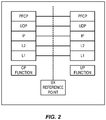
- PFCP protocol An illustration showing the PFCP protocol used in the CP function and UPF protocol stacks is provided in Figure 2 .
- PFCP has the following main properties:
- UP User Plane
- PFCP Packet Forwarding Control Protocol
- CUPS Control and User Plane Separation
- Radio Node As used herein, a "radio node” is either a radio access node or a wireless device.
- Radio Access Node As used herein, a "radio access node” or “radio network node” is any node in a radio access network of a cellular communications network that operates to wirelessly transmit and/or receive signals.
- a radio access node include, but are not limited to, a base station (e.g., a New Radio (NR) base station (gNB) in a Third Generation Partnership Project (3GPP) Fifth Generation (5G) NR network or an enhanced or evolved Node B (eNB) in a 3GPP Long Term Evolution (LTE) network), a high-power or macro base station, a low-power base station (e.g., a micro base station, a pico base station, a home eNB, or the like), and a relay node.
- a base station e.g., a New Radio (NR) base station (gNB) in a Third Generation Partnership Project (3GPP) Fifth Generation (5G) NR network or an enhanced or evolved Node B (eNB) in a
- a “core network node” is any type of node in a core network.
- Some examples of a core network node include, e.g., a Mobility Management Entity (MME), a Packet Data Network (PDN) Gateway (P-GW), a Service Capability Exposure Function (SCEF), or the like.
- MME Mobility Management Entity
- PDN Packet Data Network
- SCEF Service Capability Exposure Function
- a “wireless device” is any type of device that has access to (i.e., is served by) a cellular communications network by wirelessly transmitting and/or receiving signals to a radio access node(s).
- a wireless device include, but are not limited to, a User Equipment device (UE) in a 3GPP network and a Machine Type Communication (MTC) device.
- UE User Equipment device
- MTC Machine Type Communication
- Network Node As used herein, a "network node” is any node that is either part of the radio access network or the core network of a cellular communications network/system.
- the UP function initiates the PFCP Association Update procedure to report changes to the PFCP association to the CP function, e.g. change of optional features, change of the available user plane resources, an indication to request to release the PFCP association.
- the UP function may send an PFCP Association Update Request to request the CP function to perform the release of the PFCP association, optionally providing a Graceful Release Period. After reception of the PFCP Association Update Response, the UP function shall consider that the PFCP association is still setup until receiving an PFCP Association Release Request.
- the CP function should initiate an PFCP Association Release Request to release the PFCP association, as soon as possible if no Graceful Release Period was included in the request or before the expiry of the Graceful Release Period.
- the CP function shall use it to overwrite the User Plane IP Resource Information previously received from the UP function.
- the PFCP Association Release procedure shall be used to terminate the PFCP association between the CP Function and the UP Function due to e.g. OAM reasons.
- the PFCP Association Release Request may be initiated by the CP function.
- the CP function initiates the PFCP Association Release procedure to release an existing PFCP association, the CP function:
- the UP function When the UP function receives an PFCP Association Release Request, the UP function:
- the inventors have found that the existing UPF initiated PFCP Association Release procedure is not efficient and, to some extent, is also difficult to implement. More specifically, the use cases discussed here are for when the UPF is able to request a PFCP Association Release in a controllable manner, e.g. when the UPF is brought down by Operations and Management (O&M) personnel for a maintenance reason, i.e. not due to a failure which leads to the UPF being shut-down in a disruptive manner.
- O&M Operations and Management
- usage reports which are created for charging (including for both online and offline charging) or policy control (e.g., based accumulated usage), be sent to the CP function in order to create a Charging Data Record (CDR) or credit/quota handling before the PFCP session is torn down.
- CDR Charging Data Record
- a reasonable UPF implementation should support a Graceful Release Period (GRP), which can be used by the CP function to release (tear down) all PFCP sessions related to the PFCP Association to be released.
- GRP Graceful Release Period
- the amount of time needed by the CP function to release those affected PFCP sessions depends on the current load in the CP function, Central Processing Unit (CPU) / memory capability in the CP function, signaling bandwidth between the CP and UP, as well as the number of UPFs that are connected to the CP function, all of which are dynamically changing.
- CPU Central Processing Unit
- the UPF is configured with a static Graceful Release Period in most implementations.
- the CP function may initiate the PFCP Session Releases (for the affected PFCP sessions) in its background signaling, i.e. the PFCP Association Release procedure will take longer than necessary, which in turn negatively affects total network capacity because the CP function does not establish a new PFCP session on this UPF, which is also not acceptable.
- the CP function needs use the GRP to delete PFCP sessions to get the final usage report.
- Some of the PFCP sessions may have zero usage. In such a case, it is not required to use explicit signaling (PFCP Session Delete Request/Response) over the interface between the CP and UP to delete the PFCP session. So, in the current UPF initiated PFCP Association Release procedure, unnecessary signaling is performed to delete PFCP sessions that have zero usage, which prolongs the whole signaling process to clean up the PFCP sessions.
- explicit signaling PFCP Session Delete Request/Response
- a new process for UPF initiated PFCP association release is provided.
- a process for UPF initiated PFCP association release includes the following:
- Certain embodiments may provide one or more of the following technical advantage(s):
- FIG. 3 illustrates one example of a cellular communications network 300 in which embodiments of the present disclosure may be implemented.
- the cellular communications network 300 is a 3GPP LTE network or a 3GPP 5G NR network.
- the cellular communications network 300 includes base stations 302-1 and 302-2, which in LTE are referred to as eNBs and in 5G NR are referred to as gNBs, controlling corresponding macro cells 304-1 and 304-2.
- the base stations 302-1 and 302-2 are generally referred to herein collectively as base stations 302 and individually as base station 302.
- the macro cells 304-1 and 304-2 are generally referred to herein collectively as macro cells 304 and individually as macro cell 304.
- the cellular communications network 300 may also include a number of low power nodes 306-1 through 306-4 controlling corresponding small cells 308-1 through 308-4.
- the low power nodes 306-1 through 306-4 can be small base stations (such as pico or femto base stations) or Remote Radio Heads (RRHs), or the like.
- RRHs Remote Radio Heads
- one or more of the small cells 308-1 through 308-4 may alternatively be provided by the base stations 302.
- the low power nodes 306-1 through 306-4 are generally referred to herein collectively as low power nodes 306 and individually as low power node 306.
- the small cells 308-1 through 308-4 are generally referred to herein collectively as small cells 308 and individually as small cell 308.
- the base stations 302 (and optionally the low power nodes 306) are connected to a core network 310.
- the base stations 302 and the low power nodes 306 provide service to wireless devices 312-1 through 312-5 in the corresponding cells 304 and 308.
- the wireless devices 312-1 through 312-5 are generally referred to herein collectively as wireless devices 312 and individually as wireless device 312.
- the wireless devices 312 are also sometimes referred to herein as UEs.
- the core network 310 includes one or more Control Plane Entities (CPEs) 314 and one or more User Plane Entities (UPEs) 316.
- CPEs Control Plane Entities
- UPEs User Plane Entities
- the core network 310 utilizes a Control and User Plane Separation (CUPS) architecture (e.g., the CUPS architecture of Figure 1 ) in which the one or more CPEs 314 are separated from one or more corresponding UPEs 316 and where the CPE(s) 314 and UPE(s) 316 communicate via Sx interfaces using PFCP, as described above with respect to Figure 1 .
- CUPS Control and User Plane Separation
- the CPEs 314 may include Serving Gateway CPs (SGW-Cs) (i.e., CP functions of a Serving Gateway (S-GW)), and the UPEs 316 may include S-GW UPs (SGW-Us) (i.e., UPFs of a S-GW).
- SGW-Cs Serving Gateway CPs
- SGW-Us S-GW UPs
- the CPEs 314 may include P-GW CPs (PGW-Cs) (i.e., CP functions of a P-GW), and the UPEs 316 may include P-GW UPs (PGW-Us) (i.e., UPFs of a P-GW).
- PGW-Cs P-GW CPs
- PGW-Us P-GW UPs
- the CPE(s) 314 may include a Session Management Function(s) (SMF(s)) and the UPF(s) 316 may include a 5G UPF(s) where the SMF(s) and UPF(s) communicate via the N4 interface as illustrated in Figures 4 and 5 discussed below.
- SMF(s) Session Management Function
- UPF(s) 316 may include a 5G UPF(s) where the SMF(s) and UPF(s) communicate via the N4 interface as illustrated in Figures 4 and 5 discussed below.
- the CPEs 314 are also referred to herein as CP functions
- the UPEs 316 are also referred to herein as UPFs.
- the wireless communication system 300 is an LTE system where the core network 310 is an EPC using a CUPS architecture, such as that illustrated in Figure 1 and described above.
- the wireless communication system 300 is a 5G NR system where the core network 310 is a 5GC.
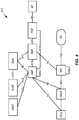
- Figure 4 illustrates a wireless communication system represented as a 5G network architecture composed of core Network Functions (NFs), where interaction between any two NFs is represented by a point-to-point reference point/interface.
- Figure 4 can be viewed as one particular implementation of the system 300 of Figure 3 .
- the 5G network architecture shown in Figure 4 comprises a plurality of UEs connected to either a Radio Access Network (RAN) or an Access Network (AN) as well as an Access and Mobility Management Function (AMF).
- the R(AN) comprises base stations, e.g. such as eNBs or gNBs or similar.
- the 5G core NFs shown in Figure 4 include a Network Slice Selection Function (NSSF), an Authentication Server Function (AUSF), a Unified Data Management (UDM), an AMF, a SMF, a Policy Control Function (PCF), and an Application Function (AF).
- NSSF Network Slice Selection Function
- AUSF Authentication Server Function
- UDM Unified Data Management
- AMF Access Management Function
- SMF Serving Mobility Management Function
- PCF Policy Control Function
- AF Application Function
- the N1 reference point is defined to carry signaling between the UE and AMF.
- the reference points for connecting between the AN and AMF and between the AN and UPF are defined as N2 and N3, respectively.
- N4 is used by the SMF and UPF so that the UPF can be set using the control signal generated by the SMF, and the UPF can report its state to the SMF.
- N9 is the reference point for the connection between different UPFs
- N14 is the reference point connecting between different AMFs, respectively.
- N15 and N7 are defined since the PCF applies policy to the AMF and SMP, respectively.
- N12 is required for the AMF to perform authentication of the UE.
- N8 and N10 are defined because the subscription data of the UE is required for the AMF and SMF.
- the 5G core network aims at separating the UP and CP.
- the UP carries user traffic while the CP carries signaling in the network.
- the UPF is in the UP and all other NFs, i.e., the AMF, SMF, PCF, AF, AUSF, and UDM, are in the CP. Separating the user and control planes guarantees each plane resource to be scaled independently. It also allows UPFs to be deployed separately from CP functions in a distributed fashion. In this architecture, UPFs may be deployed very close to UEs to shorten the Round Trip Time (RTT) between UEs and the data network for some applications requiring low latency.
- RTT Round Trip Time
- the core 5G network architecture is composed of modularized functions.
- the AMF and SMF are independent functions in the CP. Separated AMF and SMF allow independent evolution and scaling.
- Other CP functions like the PCF and AUSF can be separated as shown in Figure 4 .
- Modularized function design enables the 5G core network to support various services flexibly.
- Each NF interacts with another NF directly. It is possible to use intermediate functions to route messages from one NF to another NF.
- a set of interactions between two NFs is defined as service so that its reuse is possible. This service enables support for modularity.
- the UP supports interactions such as forwarding operations between different UPFs.
- Figure 5 illustrates a 5G network architecture using service-based interfaces between the NFs in the CP, instead of the point-to-point reference points/interfaces used in the 5G network architecture of Figure 4 .
- the NFs described above with reference to Figure 4 correspond to the NFs shown in Figure 5 .
- the service(s) etc. that a NF provides to other authorized NFs can be exposed to the authorized NFs through the service-based interface.
- the service based interfaces are indicated by the letter "N" followed by the name of the NF, e.g. Namf for the service based interface of the AMF and Nsmf for the service based interface of the SMF, etc.
- NEF Network Exposure Function
- NRF Network Repository Function
- the AMF provides UE-based authentication, authorization, mobility management, etc.
- a UE using multiple access technologies is basically connected to a single AMF because the AMF is independent of the access technologies.
- the SMF is responsible for session management and allocates Internet Protocol (IP) addresses to UEs. It also selects and controls the UPF for data transfer. If a UE has multiple sessions, different SMFs may be allocated to each session to manage them individually and possibly provide different functionalities per session.
- the AF provides information on the packet flow to the PCF responsible for policy control in order to support Quality of Service (QoS). Based on the information, the PCF determines policies about mobility and session management to make the AMF and SMF operate properly.
- the AUSF supports authentication function for UEs or similar and thus stores data for authentication of UEs or similar while the UDM stores subscription data of the UE.
- the Data Network (DN) not part of the 5G core network, provides Internet access or operator services and similar.
- a NF may be implemented either as a network element on a dedicated hardware, as a software instance running on a dedicated hardware, or as a virtualized function instantiated on an appropriate platform, e.g., a cloud infrastructure.
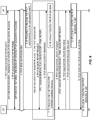
- Figure 6 illustrates the operation of a CP function and a UPF to perform a new PFCP association release procedure in accordance embodiments of the present disclosure.
- Steps 1 and 2 During a PFCP Association Setup procedure, the CP function and the UPF exchange, with each other, information that indicates whether they support Enhanced UP Function Initiated PFCP Association Release.
- the PFCP Association Setup procedure can be initiated by either the CP function or the UPF.
- the CP function may send a setup request (e.g., a PFCP Association Setup Request) to the UP function, which request comprises information indicating that the CP function supports Enhanced UP Function Initiated PFCP Association Release.
- a setup request e.g., a PFCP Association Setup Request
- the UP function may send, in response to the setup request, a setup response (e.g., a PFCP Association Setup Response) to the CP function, which response comprises information indicating that the UP function supports Enhanced UP Function Initiated PFCP Association Release.
- a setup response e.g., a PFCP Association Setup Response
- Figure 6 illustrates an UP initiated PFCP association in which the UP function sends a PFCP association setup request to the CP and the CP function responds with a PFCP association setup response.
- the PFCP association may alternatively be initiated by the CP function, in which case the UP function sends the PFCP association setup request to the CP function and the CP function responds with a PFCP association setup response.
- Step 3 The CP function establishes PFCP Sessions towards the UPF.
- Step 4 The UPF desires (e.g., is required) to release the PFCP Association towards the CP function, e.g., for upgrade or other O&M reasons, to quit service, or the like.
- the PSDBU flag indicates that the PFCP session is being removed (i.e., indicating that the UPF has decided to remove/release the PFCP session). Further, the PSDBU flag can be a message level Information Element (IE), a new value of Report Type IE, or the like. It is preferred that the UP function sets the PSDBU flag to "1" to indicate to the CP function that the PFCP Session is to be deleted and preferably also to indicate that the usage reports included in the PFCP Session Report message are the final reports for the given PFCP Session.
- the usage report may be reported by, e.g., a new report trigger, preferably called a STEBU trigger, as discussed above.
- the non-zero usage reports comprise information indicating the usage of the PFCP session, e.g. indicating that the PFCP session has been used, e.g. used for transmitting data.
- the zero usage reports (if any) comprise information indicating that the PFCP session has zero usage, e.g. indicating that the PFCP session has not been used e.g. not used for transmitting data.
- Zero usage reports are explicitly not signaled or sent, since that would cause unnecessary signaling.
- the CP function sends a PFCP Session Report response to the UPF in step 6.
- the PFCP Session Report response is an Acknowledgement (ACK).
- Steps 9 and 10 After all PFCP sessions related to the PFCP Association are deleted and/or the UPF has sent all non-zero usage reports for all the PFCP sessions affected by the release of PFCP Association to the CP function, the UP sends in step 9, to the CP function, a PFCP Association Update request, preferably with PFCP Association Release request (e.g., a PFCP Association Release request IE), to thereby request that the CP function initiates the PFCP Association release procedure.
- the PFCP Association Update request includes (or is otherwise associated with) a new indicator (e.g., flag) set by the UPF that indicates, to the CP function, that all non-zero usage reports for the affected PFCP Sessions have already been reported.
- the indicator is called non-zero Usage Reports for the affected PFCP Sessions Sent (URSS). Therefore, the CP function can safely locally delete all PFCP sessions affected by the release of PFCP association.
- the CP function returns a PFCP association update response to the UPF in step 10, e.g., to acknowledge receipt of the PFCP association update request.
- Steps 11 through 14 The CP function initiates the PFCP Association release procedure, and both the CP function and the UPF locally delete the remaining PFCP sessions if any, e.g. for those PFCP sessions without any usage (thus no usage report generated).
- the CP function sends a PFCP Association Release request towards the UP function in step 11.
- the UP function may, e.g. in response to receiving the PFCP association update response (step 10) or in response to receiving the PFCP Association Release request (step 11), delete any remaining PFCP session in step 12 (e.g. PFCP session(s) with zero usage).
- the UP function sends a PFCP Association Release response towards the CP function in step 13.
- the CP function may, in response to receiving the PFCP association update request (step 9) or in response to receiving the PFCP Association Release response (step 13), delete any remaining PFCP session in step 14 (e.g. PFCP session(s) with zero usage).
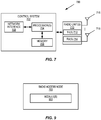
- FIG. 7 is a schematic block diagram of a network node 700 according to some embodiments of the present disclosure.
- the network node 700 is a network node that implements one or more CPEs 314 and/or one or more UPEs 316 in accordance with any of the embodiments disclosed herein.
- the network node 700 includes one or more processors 702 (e.g., CPUs, Application Specific Integrated Circuits (ASICs), Field Programmable Gate Arrays (FPGAs), and/or the like), memory 704, and a network interface 706.
- the one or more processors 702 are also referred to herein as processing circuitry.
- the one or more processors 702 operate to provide one or more functions of CPE 314 and/or a UPE 316 as described herein (e.g., one or more functions of the CP and/or the UP described above, e.g., with respect to Figure 6 ).
- the function(s) are implemented in software that is stored, e.g., in the memory 704 and executed by the one or more processors 702.
- Figure 8 is a schematic block diagram that illustrates a virtualized embodiment of the network node 700 according to some embodiments of the present disclosure. This discussion is equally applicable to other types of network nodes. Further, other types of network nodes may have similar virtualized architectures.
- a "virtualized" network node is an implementation of the network node 700 in which at least a portion of the functionality of the network node 700 is implemented as a virtual component(s) (e.g., via a virtual machine(s) executing on a physical processing node(s) in a network(s)).
- the network node 700 includes one or more processing nodes 800 coupled to or included as part of a network(s) 802 via the network interface 708.
- Each processing node 800 includes one or more processors 804 (e.g., CPUs, ASICs, FPGAs, and/or the like), memory 806, and a network interface 808.
- functions 810 of the network node 700 described herein are implemented at the one or more processing nodes 800 or distributed across the one or more processing nodes 800 in any desired manner.
- some or all of the functions 810 of the radio access node 700 described herein are implemented as virtual components executed by one or more virtual machines implemented in a virtual environment(s) hosted by the processing node(s) 800.
- a computer program including instructions which, when executed by at least one processor, causes the at least one processor to carry out the functionality of network node 700 or a node (e.g., a processing node 800) implementing one or more of the functions 810 of the network node 700 in a virtual environment according to any of the embodiments described herein (e.g., one or more functions of the CP and/or the UP described above, e.g., with respect to Figure 6 ) is provided.
- a carrier comprising the aforementioned computer program product is provided.
- the carrier is one of an electronic signal, an optical signal, a radio signal, or a computer readable storage medium (e.g., a non-transitory computer readable medium such as memory).
- FIG 9 is a schematic block diagram of the network node 700 according to some other embodiments of the present disclosure.
- the network node 700 includes one or more modules 900, each of which is implemented in software.
- the module(s) 900 provide the functionality of the network node 700 described herein and, in particular, the functionality of the CPE(s) 314 and/or the UPE(s) 316 described herein (e.g., the functions of the CPE 314 and/or the functions of the UPE 316 such as one or more functions of the CP and/or the UP described above, e.g., with respect to Figure 6 ).
- any appropriate steps, methods, features, functions, or benefits disclosed herein may be performed through one or more functional units or modules of one or more virtual apparatuses.
- Each virtual apparatus may comprise a number of these functional units.
- These functional units may be implemented via processing circuitry, which may include one or more microprocessor or microcontrollers, as well as other digital hardware, which may include DSPs, special-purpose digital logic, and the like.
- the processing circuitry may be configured to execute program code stored in memory, which may include one or several types of memory such as Read Only Memory (ROM), Random Access Memory (RAM), cache memory, flash memory devices, optical storage devices, etc.
- Program code stored in memory includes program instructions for executing one or more telecommunications and/or data communications protocols as well as instructions for carrying out one or more of the techniques described herein.
- the processing circuitry may be used to cause the respective functional unit to perform corresponding functions according one or more embodiments of the present disclosure.
Landscapes
- Engineering & Computer Science (AREA)
- Computer Networks & Wireless Communication (AREA)
- Signal Processing (AREA)
- Business, Economics & Management (AREA)
- Accounting & Taxation (AREA)
- Mobile Radio Communication Systems (AREA)
- Data Exchanges In Wide-Area Networks (AREA)
Claims (11)
- Verfahren, das in einer Benutzerebenenentität, UPE, (316) in einem Kernnetz (310) eines Mobilfunkkommunikationssystems durchgeführt wird, um eine auf Benutzerebene angeforderte Assoziationsfreigabeprozedur des Packet Forwarding Control Protocol, PFCP, durchzuführen, das Verfahren umfassend:• für jede PFCP-Sitzung mit Nichtnullnutzungsberichten, aber nicht für PFCP-Sitzungen mit Nullnutzungsberichten, einer oder mehrerer PFCP-Sitzungen, die von der Freigabe einer PFCP-Assoziation betroffen sind:o Senden (5) einer PFCP-Sitzungsberichtsanforderung für die PFCP-Sitzung an eine Steuerebenenentität, CPE, (314), die PFCP-Sitzungsberichtsanforderung umfassend:- einen oder mehrere Nichtnullnutzungsberichte für die PFCP-Sitzung; und- einen Indikator, der angibt, dass die PFCP-Sitzung entfernt wird und dass der eine oder die mehreren Nichtnullnutzungsberichte zu der gegebenen PFCP-Sitzung endgültig sind;o -Empfangen (6) einer entsprechenden PFCP-Sitzungsberichtsantwortnachricht für die PFCP-Sitzung, die von der CPE gesendet wurde, um das Empfangen des einen oder der mehreren endgültigen Nichtnullnutzungsberichte zu der PFCP-Sitzung zu bestätigen; undo Löschen (8) der PFCP-Sitzung in der UPE; und dann• Senden (9) einer PFCP-Assoziationsaktualisierungsanforderung an die CPE, in der bei der CPE das Freigeben der PFCP-Assoziation angefordert wird, wobei die PFCP-Assoziationsaktualisierungsanforderung einen Indikator umfasst, der angibt, dass alle Nichtnullnutzungsberichte zu der einen oder den mehreren PFCP-Sitzungen, die von der Freigabe der PFCP-Assoziation betroffen sind, berichtet wurden;• Empfangen (10) einer PFCP-Assoziationsaktualisierungsantwort, die von der CPE zurückgegeben wird;• Empfangen (11) einer PFCP-Assoziationsfreigabeanforderung, die von der CPE gesendet wurde;• Löschen (12) möglicher verbleibender PFCP-Sitzungen; und• Senden (13) einer PFCP-Assoziationsfreigabeanwort an die CPE.
- Verfahren nach Anspruch 1, ferner umfassend vor dem Senden der PFCP-Sitzungsberichtsanforderung für die jeweilige PFCP-Sitzung der einen oder mehreren PFCP-Sitzungen, die von der Freigabe der PFCP-Assoziation betroffen sind:Empfangen (1) einer PFCP-Assoziationseinrichtungsanforderung oder einer PFCP-Assoziationseinrichtungsantwort für die einzurichtende PFCP-Assoziation von der CPE, die einen Indikator umfasst oder anderweitig mit einem solchen verbunden ist, dass die CPE eine erweiterte, auf Benutzerebene initiierte PFCP-Assoziationsfreigabeprozedur unterstützt; undSenden einer PFCP-Assoziationseinrichtungsantwort oder einer PFCP-Assoziationseinrichtungsanforderung für die einzurichtende PFCP-Assoziation an die CPE, die einen Indikator umfasst oder anderweitig mit einem solchen verbunden ist, dass die UPE die erweiterte, auf Benutzerebene initiierte PFCP-Assoziationsfreigabeprozedur unterstützt;wobei die Schritte nach Anspruch 1 nach dem Bestimmen durch die UPE durchgeführt werden, dass die Freigabe der PFCP-Assoziation erforderlich ist; undsowohl die UPE als auch die CPE die erweiterte, auf Benutzerebene initiierte PFCP-Assoziationsfreigabeprozedur unterstützen.
- Verfahren nach einem der Ansprüche 1-2, wobei:• die UPE eine Serving Gateway-Benutzerebene, SGW-U, und die CPE eine Serving Gateway-Steuerebene, SGW-C, in einem Evolved Packet Core, EPC, mit einer Architektur mit Trennung von Steuer- und Benutzerebene, CUPS-Architektur, ist; oder• die UPE eine Packet Data Network-Benutzerebene, PGW-U, ist und die CPE eine Packet Data Network-Steuerebene, PGW-C, in einem EPC mit einer CUPS-Architektur ist; oder• die UPE eine Traffic Detection Function-Benutzerebene, TDF-U, und die CPE eine Traffic Detection Function-Steuerebene, TDF-C, in einem EPC mit einer CUPS-Architektur ist; oder• die UPE eine User Plane Function, eine UPF, und die CPF eine Session Management Function, SMF, in 5GC ist.
- Verfahren nach einem der Ansprüche 1-3, wobei die UPE eine User Plane Function, UPF, in einem Fifth Generation Core, 5GC, oder in dem Evolved Packet Core, EPC, ist und die CPE eine Network Function, NF, der Steuerebene in dem 5GC oder in dem Evolved Packet Core, EPC, ist.
- Verfahren, das in einer Steuerebenenentität, CPE, (314) in einem Kernnetz eines Mobilfunkkommunikationssystems durchgeführt wird, um eine auf Benutzerebene angeforderte Assoziationsfreigabeprozedur des Packet Forwarding Control Protocol, PFCP, durchzuführen, das Verfahren umfassend:• für jede PFCP-Sitzung mit Nichtnullnutzungsberichten, aber nicht für PFCP-Sitzungen mit Nullnutzungsberichten, einer oder mehrerer PFCP-Sitzungen, die von der Freigabe einer PFCP-Assoziation betroffen sind:∘ Empfangen (5) einer PFCP-Sitzungsberichtsanforderung für die PFCP-Sitzung, die von einer Benutzerebenenentität, UPE, (3316) gesendet wurde, wobei die PFCP-Sitzungsberichtsanforderung umfasst:- einen oder mehrere Nichtnullnutzungsberichte zu der PFCP-Sitzung; und- einen Indikator, der angibt, dass die PFCP-Sitzung entfernt wird und dass der eine oder die mehreren Nichtnullnutzungsberichte zu der gegebenen PFCP-Sitzung endgültig sind;∘ Senden (6) einer PFCP-Sitzungsberichtsantwortnachricht an die UPE, um das Empfangen des einen oder der mehreren endgültigen Nichtnullnutzungsberichte zur der PFCP-Sitzung zu bestätigen; und∘ Löschen (7) der PFCP-Sitzung in der CPE; und dann• Empfangen (9) einer PFCP-Assoziationsaktualisierungsanforderung von der UPE, in der bei der CPE das Freigeben der PFCP-Assoziation angefordert wird, wobei die PFCP-Assoziationsaktualisierungsanforderung einen Indikator umfasst, der angibt, dass alle Nichtnullnutzungsberichte zu der einen oder den mehreren PFCP-Sitzungen, die von der Freigabe der PFCP-Assoziation betroffen sind, berichtet wurden;• Zurückgeben (10) einer PFCP-Assoziationsaktualisierungsantwort an die UPE;• Senden (11) einer PFCP-Assoziationsfreigabeanforderung an die UPE;• Empfangen (13) einer PFCP-Assoziationsfreigabeantwort, die von der CPE gesendet wurde.
- Verfahren nach Anspruch 5, ferner für jede PFCP-Sitzung von einer oder mehreren PFCP-Sitzungen, die von der Freigabe einer PFCP-Assoziation betroffen sind, das Beenden (7) einer Packet Data Network-Verbindung, PDN-Verbindung, für die PFCP-Sitzung umfassend.
- Verfahren nach Anspruch 5-6, ferner umfassend vor dem Empfangen der PFCP-Sitzungsberichtsanforderung für die jeweilige PFCP-Sitzung der einen oder mehreren PFCP-Sitzungen, die von der Freigabe der PFCP-Assoziation betroffen sind:Senden einer PFCP-Assoziationseinrichtungsanforderung oder einer PFCP-Assoziationseinrichtungsantwort für die einzurichtende PFCP-Assoziation an die UPE, die einen Indikator umfasst oder anderweitig mit einem solchen verbunden ist, dass die CPE eine erweiterte, auf Benutzerebene initiierte PFCP-Assoziationsfreigabeprozedur unterstützt; undEmpfangen einer PFCP-Assoziationseinrichtungsantwort oder einer PFCP-Assoziationseinrichtungsanforderung für die einzurichtende PFCP-Assoziation von der CPE, die einen Indikator umfasst oder anderweitig mit einem solchen verbunden ist, dass die UPE die erweiterte, auf Benutzerebene initiierte PFCP-Assoziationsfreigabeprozedur unterstützt;wobei die Schritte nach Anspruch 5 oder 6 nach dem Bestimmen durch die CPE durchgeführt werden, dass sowohl die UPE als auch die CPE die erweiterte, auf Benutzerebene initiierte PFCP-Assoziationsfreigabeprozedur unterstützen.
- Verfahren nach einem der Ansprüche 5-7, wobei:• die UPE eine Serving Gateway-Benutzerebene, SGW-U, und die CPE eine Serving Gateway-Steuerebene, SGW-C, in einem Evolved Packet Core, EPC, mit einer Architektur mit Trennung von Steuer- und Benutzerebene, CUPS-Architektur, ist; oder• die UPE eine PDN-Gateway-Benutzerebene, PGW-U, und die CPE eine PDN-Gateway-Steuerebene, PGW-C, in einer EPC mit einer CUPS-Architektur ist; oder• die UPE eine Traffic Detection Function-Benutzerebene, TDF-U, und die CPE eine Traffic Detection Function-Steuerebene, TDF-C, in einem EPC mit einer CUPS-Architektur ist; oder• die UPE eine User Plane Function, eine UPF, und die CPF eine Session Management Function, SMF, in 5GC ist.
- Verfahren nach einem der Ansprüche 5-7, wobei die UPE eine User Plane Function, UPF, in einem Fifth Generation Core, 5GC, oder in einem Evolved Packet Core, EPC, ist und die CPE eine Network Function, NF, der Steuerebene in dem 5GC oder in einem Evolved Packet Core, EPC, ist.
- Netzknoten, durch den eine Benutzerebenenentität, UPE, zum Durchführen einer von der Benutzerebene angeforderte Assoziationsfreigabeprozedur des Request Packet Forwarding Control Protocol, PFCP, in einem Kernnetz eines Mobilfunkkommunikationssystems implementiert wird, wobei die UPE dazu geeignet ist, das Verfahren nach einem der Ansprüche 1-4 durchzuführen.
- Netzknoten, durch den eine Steuerebenenentität, CPE, zum Durchführen einer von der Benutzerebene angeforderte Assoziationsfreigabeprozedur des Request Packet Forwarding Control Protocol, PFCP, in einem Kernnetz eines Mobilfunkkommunikationssystems implementiert wird, wobei die CPE dazu geeignet ist, das Verfahren nach einem der Ansprüche 5-9 durchzuführen.
Priority Applications (1)
| Application Number | Priority Date | Filing Date | Title |
|---|---|---|---|
| EP21192385.9A EP3955698B1 (de) | 2019-02-14 | 2019-08-22 | Verbesserte anforderung an up-funktion für pfcp-assoziationsfreigabe |
Applications Claiming Priority (1)
| Application Number | Priority Date | Filing Date | Title |
|---|---|---|---|
| CN2019075050 | 2019-02-14 |
Related Child Applications (2)
| Application Number | Title | Priority Date | Filing Date |
|---|---|---|---|
| EP21192385.9A Division EP3955698B1 (de) | 2019-02-14 | 2019-08-22 | Verbesserte anforderung an up-funktion für pfcp-assoziationsfreigabe |
| EP21192385.9A Division-Into EP3955698B1 (de) | 2019-02-14 | 2019-08-22 | Verbesserte anforderung an up-funktion für pfcp-assoziationsfreigabe |
Publications (2)
| Publication Number | Publication Date |
|---|---|
| EP3697171A1 EP3697171A1 (de) | 2020-08-19 |
| EP3697171B1 true EP3697171B1 (de) | 2021-10-06 |
Family
ID=67770353
Family Applications (2)
| Application Number | Title | Priority Date | Filing Date |
|---|---|---|---|
| EP19193214.4A Active EP3697171B1 (de) | 2019-02-14 | 2019-08-22 | Verbesserte anforderung an up-funktion für pfcp-assoziationsfreigabe |
| EP21192385.9A Active EP3955698B1 (de) | 2019-02-14 | 2019-08-22 | Verbesserte anforderung an up-funktion für pfcp-assoziationsfreigabe |
Family Applications After (1)
| Application Number | Title | Priority Date | Filing Date |
|---|---|---|---|
| EP21192385.9A Active EP3955698B1 (de) | 2019-02-14 | 2019-08-22 | Verbesserte anforderung an up-funktion für pfcp-assoziationsfreigabe |
Country Status (10)
| Country | Link |
|---|---|
| US (1) | US12213207B2 (de) |
| EP (2) | EP3697171B1 (de) |
| JP (1) | JP7209105B2 (de) |
| KR (1) | KR102779703B1 (de) |
| CN (1) | CN113454948B (de) |
| DK (1) | DK3697171T3 (de) |
| ES (2) | ES2900460T3 (de) |
| PL (1) | PL3955698T3 (de) |
| WO (1) | WO2020164541A1 (de) |
| ZA (1) | ZA202106763B (de) |
Families Citing this family (15)
| Publication number | Priority date | Publication date | Assignee | Title |
|---|---|---|---|---|
| CN112055422B (zh) * | 2020-09-18 | 2022-03-08 | 电信科学技术第十研究所有限公司 | 一种5g信令与用户面数据的关联方法及装置 |
| WO2022106064A1 (en) * | 2020-11-18 | 2022-05-27 | Telefonaktiebolaget Lm Ericsson (Publ) | Methods and apparatus for differentiated charging in a communication network |
| CN114745375B (zh) * | 2020-12-23 | 2023-08-22 | 成都鼎桥通信技术有限公司 | 业务功能实现方法、装置及电子设备 |
| US20240114081A1 (en) * | 2021-02-09 | 2024-04-04 | Nokia Technologies Oy | Method and apparatus for use in multi-protocol communication techniques |
| CN115002836B (zh) * | 2021-03-01 | 2025-05-16 | 大唐移动通信设备有限公司 | 负荷处理方法、设备、装置及存储介质 |
| US11743953B2 (en) * | 2021-05-26 | 2023-08-29 | Amazon Technologies, Inc. | Distributed user plane functions for radio-based networks |
| US11929906B2 (en) * | 2021-07-29 | 2024-03-12 | Cisco Technology, Inc. | Source-provisioned services infrastructure |
| US11570080B1 (en) | 2021-08-09 | 2023-01-31 | Juniper Networks, Inc. | Multiple state control interfaces between a control plane and a user plane in a disaggregated broadband network gateway architecture |
| CN113747493B (zh) * | 2021-09-17 | 2024-04-05 | 杭州阿里云飞天信息技术有限公司 | 数据传输方法、设备、系统及存储介质 |
| CN115296818A (zh) * | 2022-08-05 | 2022-11-04 | 中国电信股份有限公司 | 认证方法及装置、存储介质及电子设备 |
| CN120712799A (zh) * | 2023-02-06 | 2025-09-26 | 瑞典爱立信有限公司 | 5g架构中upf和smf之间的使用报告的改进传递 |
| US12563398B2 (en) | 2023-05-12 | 2026-02-24 | Arrcus Inc. | Prevention of subscriber identity module spoofing for mobile user plane |
| US12526633B2 (en) | 2023-05-12 | 2026-01-13 | Arrcus Inc. | Prevention of subscriber identity module spoofing for mobile user plane |
| CN121753367A (zh) * | 2023-08-10 | 2026-03-27 | 诺基亚通信(上海)股份有限公司 | 用户设备虚拟网络组管理 |
| CN117201457B (zh) * | 2023-09-21 | 2024-08-13 | 之江实验室 | 一种地址分配管理方法、装置、存储介质及电子设备 |
Family Cites Families (12)
| Publication number | Priority date | Publication date | Assignee | Title |
|---|---|---|---|---|
| JP5924096B2 (ja) * | 2012-04-18 | 2016-05-25 | 富士通株式会社 | 通信システムの制御方法、通信装置、通信システム及びプログラム |
| US9370037B2 (en) * | 2013-08-23 | 2016-06-14 | Verizon Patent And Licensing Inc. | Intelligent policy and charging rule function (PCRF) restoration |
| WO2018066799A1 (ko) * | 2016-10-07 | 2018-04-12 | 엘지전자(주) | 무선 통신 시스템에서 세션 및 서비스 연속성 모드 선택 방법 및 이를 위한 장치 |
| ES2929669T3 (es) * | 2017-01-09 | 2022-11-30 | Lg Electronics Inc | Método para el interfuncionamiento entre redes en un sistema de comunicación inalámbrica y aparatos para el mismo |
| WO2019024981A1 (en) * | 2017-08-01 | 2019-02-07 | Telefonaktiebolaget Lm Ericsson (Publ) | RESOURCE ALLOCATION SUPPORT IN A RADIO COMMUNICATION NETWORK |
| US10966115B2 (en) * | 2018-03-29 | 2021-03-30 | Verizon Patent And Licensing Inc. | Resource management for interworking between LTE and next generation mobile networks |
| EP3554053A1 (de) * | 2018-04-09 | 2019-10-16 | Daniel Nathan Frydman | User plane function im edge netzwerk |
| CN109167670B (zh) * | 2018-07-09 | 2022-04-05 | 中兴通讯股份有限公司 | Pfcp连接处理方法、装置、网元、系统及存储介质 |
| US10574670B1 (en) * | 2018-09-27 | 2020-02-25 | Palo Alto Networks, Inc. | Multi-access distributed edge security in mobile networks |
| EP3871091B1 (de) * | 2018-10-22 | 2023-09-06 | Microsoft Technology Licensing, LLC | Verteilte, datenbankgesteuerte ressourcenverwaltung und -sperrung in einer cloud-nativen mobilen kernnetzwerkknotenarchitektur |
| CN111182657B (zh) * | 2018-11-09 | 2023-09-22 | 中兴通讯股份有限公司 | 一种隧道协商建立方法及装置 |
| US10448268B1 (en) * | 2019-01-30 | 2019-10-15 | Cisco Technology, Inc. | Preservation of policy and charging for a subscriber following a user-plane element failover |
-
2019
- 2019-08-22 EP EP19193214.4A patent/EP3697171B1/de active Active
- 2019-08-22 DK DK19193214.4T patent/DK3697171T3/da active
- 2019-08-22 EP EP21192385.9A patent/EP3955698B1/de active Active
- 2019-08-22 ES ES19193214T patent/ES2900460T3/es active Active
- 2019-08-22 PL PL21192385.9T patent/PL3955698T3/pl unknown
- 2019-08-22 ES ES21192385T patent/ES2956543T3/es active Active
-
2020
- 2020-02-13 CN CN202080014428.5A patent/CN113454948B/zh active Active
- 2020-02-13 US US17/431,297 patent/US12213207B2/en active Active
- 2020-02-13 KR KR1020217025917A patent/KR102779703B1/ko active Active
- 2020-02-13 WO PCT/CN2020/075071 patent/WO2020164541A1/en not_active Ceased
- 2020-02-13 JP JP2021544924A patent/JP7209105B2/ja active Active
-
2021
- 2021-09-13 ZA ZA2021/06763A patent/ZA202106763B/en unknown
Also Published As
| Publication number | Publication date |
|---|---|
| DK3697171T3 (da) | 2021-10-25 |
| US12213207B2 (en) | 2025-01-28 |
| CN113454948B (zh) | 2024-03-22 |
| KR20210116555A (ko) | 2021-09-27 |
| JP2022520040A (ja) | 2022-03-28 |
| WO2020164541A1 (en) | 2020-08-20 |
| EP3955698C0 (de) | 2023-08-09 |
| KR102779703B1 (ko) | 2025-03-10 |
| EP3955698B1 (de) | 2023-08-09 |
| CN113454948A (zh) | 2021-09-28 |
| JP7209105B2 (ja) | 2023-01-19 |
| ES2900460T3 (es) | 2022-03-17 |
| ES2956543T3 (es) | 2023-12-22 |
| ZA202106763B (en) | 2022-12-21 |
| PL3955698T3 (pl) | 2024-02-05 |
| EP3697171A1 (de) | 2020-08-19 |
| US20220132623A1 (en) | 2022-04-28 |
| EP3955698A1 (de) | 2022-02-16 |
Similar Documents
| Publication | Publication Date | Title |
|---|---|---|
| EP3697171B1 (de) | Verbesserte anforderung an up-funktion für pfcp-assoziationsfreigabe | |
| US11641611B2 (en) | Conditional packets forward control rules | |
| EP4014430B1 (de) | Vorrichtungen und verfahren zur messung der anzahl von paketen in bechern | |
| CN114631397A (zh) | 无线网络中的信令传送 | |
| US12108284B2 (en) | Enhanced PFCP association procedure for session restoration | |
| KR102897874B1 (ko) | Gtp-u 엔티티 재시작에 대한 향상 | |
| US11468425B1 (en) | Asynchronously initiating online charging triggers in mobile networks | |
| WO2020002031A1 (en) | Sx PROTOCOL EXTENSION TO SUPPORT MAINTAINING THE MEASUREMENT COUNTERS | |
| WO2020013750A1 (en) | Sx protocol extension to indicate start of time measurement on up | |
| EP4416987B1 (de) | Durch netzwerkschicht-zulassungssteuerungsfunktion (nsacf) ausgelöste ue-deregistrierung | |
| WO2024231867A1 (en) | Method to handle registration and deregistration of authenticable non-3gpp devices behind 5g-rg | |
| OA20853A (en) | Report application programming interface (API) capability change based on API filter. |
Legal Events
| Date | Code | Title | Description |
|---|---|---|---|
| PUAI | Public reference made under article 153(3) epc to a published international application that has entered the european phase |
Free format text: ORIGINAL CODE: 0009012 |
|
| STAA | Information on the status of an ep patent application or granted ep patent |
Free format text: STATUS: THE APPLICATION HAS BEEN PUBLISHED |
|
| AK | Designated contracting states |
Kind code of ref document: A1 Designated state(s): AL AT BE BG CH CY CZ DE DK EE ES FI FR GB GR HR HU IE IS IT LI LT LU LV MC MK MT NL NO PL PT RO RS SE SI SK SM TR |
|
| AX | Request for extension of the european patent |
Extension state: BA ME |
|
| STAA | Information on the status of an ep patent application or granted ep patent |
Free format text: STATUS: REQUEST FOR EXAMINATION WAS MADE |
|
| STAA | Information on the status of an ep patent application or granted ep patent |
Free format text: STATUS: EXAMINATION IS IN PROGRESS |
|
| 17P | Request for examination filed |
Effective date: 20210209 |
|
| RBV | Designated contracting states (corrected) |
Designated state(s): AL AT BE BG CH CY CZ DE DK EE ES FI FR GB GR HR HU IE IS IT LI LT LU LV MC MK MT NL NO PL PT RO RS SE SI SK SM TR |
|
| 17Q | First examination report despatched |
Effective date: 20210310 |
|
| RIC1 | Information provided on ipc code assigned before grant |
Ipc: H04W 76/34 20180101AFI20210415BHEP Ipc: H04W 76/38 20180101ALI20210415BHEP Ipc: H04W 88/16 20090101ALI20210415BHEP Ipc: H04W 92/24 20090101ALI20210415BHEP Ipc: H04L 12/14 20060101ALI20210415BHEP Ipc: H04M 15/00 20060101ALI20210415BHEP Ipc: H04W 4/24 20180101ALI20210415BHEP |
|
| GRAP | Despatch of communication of intention to grant a patent |
Free format text: ORIGINAL CODE: EPIDOSNIGR1 |
|
| STAA | Information on the status of an ep patent application or granted ep patent |
Free format text: STATUS: GRANT OF PATENT IS INTENDED |
|
| INTG | Intention to grant announced |
Effective date: 20210616 |
|
| GRAS | Grant fee paid |
Free format text: ORIGINAL CODE: EPIDOSNIGR3 |
|
| GRAA | (expected) grant |
Free format text: ORIGINAL CODE: 0009210 |
|
| STAA | Information on the status of an ep patent application or granted ep patent |
Free format text: STATUS: THE PATENT HAS BEEN GRANTED |
|
| AK | Designated contracting states |
Kind code of ref document: B1 Designated state(s): AL AT BE BG CH CY CZ DE DK EE ES FI FR GB GR HR HU IE IS IT LI LT LU LV MC MK MT NL NO PL PT RO RS SE SI SK SM TR |
|
| REG | Reference to a national code |
Ref country code: GB Ref legal event code: FG4D |
|
| REG | Reference to a national code |
Ref country code: CH Ref legal event code: EP Ref country code: AT Ref legal event code: REF Ref document number: 1437407 Country of ref document: AT Kind code of ref document: T Effective date: 20211015 |
|
| REG | Reference to a national code |
Ref country code: DE Ref legal event code: R096 Ref document number: 602019008136 Country of ref document: DE |
|
| REG | Reference to a national code |
Ref country code: DK Ref legal event code: T3 Effective date: 20211021 |
|
| REG | Reference to a national code |
Ref country code: IE Ref legal event code: FG4D |
|
| REG | Reference to a national code |
Ref country code: SE Ref legal event code: TRGR |
|
| REG | Reference to a national code |
Ref country code: NL Ref legal event code: FP |
|
| REG | Reference to a national code |
Ref country code: LT Ref legal event code: MG9D |
|
| REG | Reference to a national code |
Ref country code: AT Ref legal event code: MK05 Ref document number: 1437407 Country of ref document: AT Kind code of ref document: T Effective date: 20211006 |
|
| REG | Reference to a national code |
Ref country code: ES Ref legal event code: FG2A Ref document number: 2900460 Country of ref document: ES Kind code of ref document: T3 Effective date: 20220317 |
|
| PG25 | Lapsed in a contracting state [announced via postgrant information from national office to epo] |
Ref country code: RS Free format text: LAPSE BECAUSE OF FAILURE TO SUBMIT A TRANSLATION OF THE DESCRIPTION OR TO PAY THE FEE WITHIN THE PRESCRIBED TIME-LIMIT Effective date: 20211006 Ref country code: LT Free format text: LAPSE BECAUSE OF FAILURE TO SUBMIT A TRANSLATION OF THE DESCRIPTION OR TO PAY THE FEE WITHIN THE PRESCRIBED TIME-LIMIT Effective date: 20211006 Ref country code: FI Free format text: LAPSE BECAUSE OF FAILURE TO SUBMIT A TRANSLATION OF THE DESCRIPTION OR TO PAY THE FEE WITHIN THE PRESCRIBED TIME-LIMIT Effective date: 20211006 Ref country code: BG Free format text: LAPSE BECAUSE OF FAILURE TO SUBMIT A TRANSLATION OF THE DESCRIPTION OR TO PAY THE FEE WITHIN THE PRESCRIBED TIME-LIMIT Effective date: 20220106 Ref country code: AT Free format text: LAPSE BECAUSE OF FAILURE TO SUBMIT A TRANSLATION OF THE DESCRIPTION OR TO PAY THE FEE WITHIN THE PRESCRIBED TIME-LIMIT Effective date: 20211006 |
|
| PG25 | Lapsed in a contracting state [announced via postgrant information from national office to epo] |
Ref country code: IS Free format text: LAPSE BECAUSE OF FAILURE TO SUBMIT A TRANSLATION OF THE DESCRIPTION OR TO PAY THE FEE WITHIN THE PRESCRIBED TIME-LIMIT Effective date: 20220206 Ref country code: PT Free format text: LAPSE BECAUSE OF FAILURE TO SUBMIT A TRANSLATION OF THE DESCRIPTION OR TO PAY THE FEE WITHIN THE PRESCRIBED TIME-LIMIT Effective date: 20220207 Ref country code: PL Free format text: LAPSE BECAUSE OF FAILURE TO SUBMIT A TRANSLATION OF THE DESCRIPTION OR TO PAY THE FEE WITHIN THE PRESCRIBED TIME-LIMIT Effective date: 20211006 Ref country code: NO Free format text: LAPSE BECAUSE OF FAILURE TO SUBMIT A TRANSLATION OF THE DESCRIPTION OR TO PAY THE FEE WITHIN THE PRESCRIBED TIME-LIMIT Effective date: 20220106 Ref country code: LV Free format text: LAPSE BECAUSE OF FAILURE TO SUBMIT A TRANSLATION OF THE DESCRIPTION OR TO PAY THE FEE WITHIN THE PRESCRIBED TIME-LIMIT Effective date: 20211006 Ref country code: HR Free format text: LAPSE BECAUSE OF FAILURE TO SUBMIT A TRANSLATION OF THE DESCRIPTION OR TO PAY THE FEE WITHIN THE PRESCRIBED TIME-LIMIT Effective date: 20211006 Ref country code: GR Free format text: LAPSE BECAUSE OF FAILURE TO SUBMIT A TRANSLATION OF THE DESCRIPTION OR TO PAY THE FEE WITHIN THE PRESCRIBED TIME-LIMIT Effective date: 20220107 |
|
| REG | Reference to a national code |
Ref country code: DE Ref legal event code: R097 Ref document number: 602019008136 Country of ref document: DE |
|
| PG25 | Lapsed in a contracting state [announced via postgrant information from national office to epo] |
Ref country code: SM Free format text: LAPSE BECAUSE OF FAILURE TO SUBMIT A TRANSLATION OF THE DESCRIPTION OR TO PAY THE FEE WITHIN THE PRESCRIBED TIME-LIMIT Effective date: 20211006 Ref country code: SK Free format text: LAPSE BECAUSE OF FAILURE TO SUBMIT A TRANSLATION OF THE DESCRIPTION OR TO PAY THE FEE WITHIN THE PRESCRIBED TIME-LIMIT Effective date: 20211006 Ref country code: RO Free format text: LAPSE BECAUSE OF FAILURE TO SUBMIT A TRANSLATION OF THE DESCRIPTION OR TO PAY THE FEE WITHIN THE PRESCRIBED TIME-LIMIT Effective date: 20211006 Ref country code: EE Free format text: LAPSE BECAUSE OF FAILURE TO SUBMIT A TRANSLATION OF THE DESCRIPTION OR TO PAY THE FEE WITHIN THE PRESCRIBED TIME-LIMIT Effective date: 20211006 |
|
| PLBE | No opposition filed within time limit |
Free format text: ORIGINAL CODE: 0009261 |
|
| STAA | Information on the status of an ep patent application or granted ep patent |
Free format text: STATUS: NO OPPOSITION FILED WITHIN TIME LIMIT |
|
| 26N | No opposition filed |
Effective date: 20220707 |
|
| PG25 | Lapsed in a contracting state [announced via postgrant information from national office to epo] |
Ref country code: AL Free format text: LAPSE BECAUSE OF FAILURE TO SUBMIT A TRANSLATION OF THE DESCRIPTION OR TO PAY THE FEE WITHIN THE PRESCRIBED TIME-LIMIT Effective date: 20211006 |
|
| PG25 | Lapsed in a contracting state [announced via postgrant information from national office to epo] |
Ref country code: SI Free format text: LAPSE BECAUSE OF FAILURE TO SUBMIT A TRANSLATION OF THE DESCRIPTION OR TO PAY THE FEE WITHIN THE PRESCRIBED TIME-LIMIT Effective date: 20211006 |
|
| PG25 | Lapsed in a contracting state [announced via postgrant information from national office to epo] |
Ref country code: MC Free format text: LAPSE BECAUSE OF FAILURE TO SUBMIT A TRANSLATION OF THE DESCRIPTION OR TO PAY THE FEE WITHIN THE PRESCRIBED TIME-LIMIT Effective date: 20211006 |
|
| PG25 | Lapsed in a contracting state [announced via postgrant information from national office to epo] |
Ref country code: LU Free format text: LAPSE BECAUSE OF NON-PAYMENT OF DUE FEES Effective date: 20220822 |
|
| P01 | Opt-out of the competence of the unified patent court (upc) registered |
Effective date: 20230523 |
|
| PG25 | Lapsed in a contracting state [announced via postgrant information from national office to epo] |
Ref country code: CY Free format text: LAPSE BECAUSE OF FAILURE TO SUBMIT A TRANSLATION OF THE DESCRIPTION OR TO PAY THE FEE WITHIN THE PRESCRIBED TIME-LIMIT Effective date: 20211006 |
|
| PG25 | Lapsed in a contracting state [announced via postgrant information from national office to epo] |
Ref country code: MK Free format text: LAPSE BECAUSE OF FAILURE TO SUBMIT A TRANSLATION OF THE DESCRIPTION OR TO PAY THE FEE WITHIN THE PRESCRIBED TIME-LIMIT Effective date: 20211006 Ref country code: HU Free format text: LAPSE BECAUSE OF FAILURE TO SUBMIT A TRANSLATION OF THE DESCRIPTION OR TO PAY THE FEE WITHIN THE PRESCRIBED TIME-LIMIT; INVALID AB INITIO Effective date: 20190822 |
|
| PG25 | Lapsed in a contracting state [announced via postgrant information from national office to epo] |
Ref country code: MT Free format text: LAPSE BECAUSE OF FAILURE TO SUBMIT A TRANSLATION OF THE DESCRIPTION OR TO PAY THE FEE WITHIN THE PRESCRIBED TIME-LIMIT Effective date: 20211006 |
|
| PGFP | Annual fee paid to national office [announced via postgrant information from national office to epo] |
Ref country code: NL Payment date: 20250826 Year of fee payment: 7 |
|
| PGFP | Annual fee paid to national office [announced via postgrant information from national office to epo] |
Ref country code: ES Payment date: 20250901 Year of fee payment: 7 |
|
| PGFP | Annual fee paid to national office [announced via postgrant information from national office to epo] |
Ref country code: DE Payment date: 20250827 Year of fee payment: 7 Ref country code: DK Payment date: 20250825 Year of fee payment: 7 |
|
| PGFP | Annual fee paid to national office [announced via postgrant information from national office to epo] |
Ref country code: TR Payment date: 20250814 Year of fee payment: 7 Ref country code: IT Payment date: 20250820 Year of fee payment: 7 |
|
| PGFP | Annual fee paid to national office [announced via postgrant information from national office to epo] |
Ref country code: BE Payment date: 20250827 Year of fee payment: 7 Ref country code: GB Payment date: 20250827 Year of fee payment: 7 |
|
| PGFP | Annual fee paid to national office [announced via postgrant information from national office to epo] |
Ref country code: FR Payment date: 20250825 Year of fee payment: 7 |
|
| PGFP | Annual fee paid to national office [announced via postgrant information from national office to epo] |
Ref country code: CH Payment date: 20250901 Year of fee payment: 7 Ref country code: SE Payment date: 20250827 Year of fee payment: 7 |
|
| PGFP | Annual fee paid to national office [announced via postgrant information from national office to epo] |
Ref country code: CZ Payment date: 20250807 Year of fee payment: 7 Ref country code: IE Payment date: 20250827 Year of fee payment: 7 |