EP3694239B1 - Verfahren zum teilen eines mobilbetriebsprofils in integrierten schaltkarten und entsprechendes system- und computerprogramm-produkt - Google Patents
Verfahren zum teilen eines mobilbetriebsprofils in integrierten schaltkarten und entsprechendes system- und computerprogramm-produkt Download PDFInfo
- Publication number
- EP3694239B1 EP3694239B1 EP20153543.2A EP20153543A EP3694239B1 EP 3694239 B1 EP3694239 B1 EP 3694239B1 EP 20153543 A EP20153543 A EP 20153543A EP 3694239 B1 EP3694239 B1 EP 3694239B1
- Authority
- EP
- European Patent Office
- Prior art keywords
- mobile device
- mobile
- enabled
- profile
- card
- Prior art date
- Legal status (The legal status is an assumption and is not a legal conclusion. Google has not performed a legal analysis and makes no representation as to the accuracy of the status listed.)
- Active
Links
Images



Classifications
-
- H—ELECTRICITY
- H04—ELECTRIC COMMUNICATION TECHNIQUE
- H04W—WIRELESS COMMUNICATION NETWORKS
- H04W8/00—Network data management
- H04W8/22—Processing or transfer of terminal data, e.g. status or physical capabilities
- H04W8/24—Transfer of terminal data
- H04W8/245—Transfer of terminal data from a network towards a terminal
-
- H—ELECTRICITY
- H04—ELECTRIC COMMUNICATION TECHNIQUE
- H04W—WIRELESS COMMUNICATION NETWORKS
- H04W12/00—Security arrangements; Authentication; Protecting privacy or anonymity
- H04W12/06—Authentication
-
- H—ELECTRICITY
- H04—ELECTRIC COMMUNICATION TECHNIQUE
- H04W—WIRELESS COMMUNICATION NETWORKS
- H04W12/00—Security arrangements; Authentication; Protecting privacy or anonymity
- H04W12/06—Authentication
- H04W12/065—Continuous authentication
-
- H—ELECTRICITY
- H04—ELECTRIC COMMUNICATION TECHNIQUE
- H04W—WIRELESS COMMUNICATION NETWORKS
- H04W12/00—Security arrangements; Authentication; Protecting privacy or anonymity
- H04W12/30—Security of mobile devices; Security of mobile applications
-
- H—ELECTRICITY
- H04—ELECTRIC COMMUNICATION TECHNIQUE
- H04W—WIRELESS COMMUNICATION NETWORKS
- H04W12/00—Security arrangements; Authentication; Protecting privacy or anonymity
- H04W12/30—Security of mobile devices; Security of mobile applications
- H04W12/35—Protecting application or service provisioning, e.g. securing SIM application provisioning
-
- H—ELECTRICITY
- H04—ELECTRIC COMMUNICATION TECHNIQUE
- H04W—WIRELESS COMMUNICATION NETWORKS
- H04W12/00—Security arrangements; Authentication; Protecting privacy or anonymity
- H04W12/40—Security arrangements using identity modules
- H04W12/43—Security arrangements using identity modules using shared identity modules, e.g. SIM sharing
-
- H—ELECTRICITY
- H04—ELECTRIC COMMUNICATION TECHNIQUE
- H04W—WIRELESS COMMUNICATION NETWORKS
- H04W60/00—Affiliation to network, e.g. registration; Terminating affiliation with the network, e.g. de-registration
- H04W60/04—Affiliation to network, e.g. registration; Terminating affiliation with the network, e.g. de-registration using triggered events
-
- H—ELECTRICITY
- H04—ELECTRIC COMMUNICATION TECHNIQUE
- H04W—WIRELESS COMMUNICATION NETWORKS
- H04W8/00—Network data management
- H04W8/02—Processing of mobility data, e.g. registration information at HLR [Home Location Register] or VLR [Visitor Location Register]; Transfer of mobility data, e.g. between HLR, VLR or external networks
- H04W8/04—Registration at HLR or HSS [Home Subscriber Server]
-
- H—ELECTRICITY
- H04—ELECTRIC COMMUNICATION TECHNIQUE
- H04W—WIRELESS COMMUNICATION NETWORKS
- H04W8/00—Network data management
- H04W8/02—Processing of mobility data, e.g. registration information at HLR [Home Location Register] or VLR [Visitor Location Register]; Transfer of mobility data, e.g. between HLR, VLR or external networks
- H04W8/06—Registration at serving network Location Register, VLR or user mobility server
-
- H—ELECTRICITY
- H04—ELECTRIC COMMUNICATION TECHNIQUE
- H04W—WIRELESS COMMUNICATION NETWORKS
- H04W8/00—Network data management
- H04W8/18—Processing of user or subscriber data, e.g. subscribed services, user preferences or user profiles; Transfer of user or subscriber data
- H04W8/20—Transfer of user or subscriber data
- H04W8/205—Transfer to or from user equipment or user record carrier
-
- H—ELECTRICITY
- H04—ELECTRIC COMMUNICATION TECHNIQUE
- H04W—WIRELESS COMMUNICATION NETWORKS
- H04W12/00—Security arrangements; Authentication; Protecting privacy or anonymity
- H04W12/60—Context-dependent security
- H04W12/63—Location-dependent; Proximity-dependent
-
- H—ELECTRICITY
- H04—ELECTRIC COMMUNICATION TECHNIQUE
- H04W—WIRELESS COMMUNICATION NETWORKS
- H04W8/00—Network data management
- H04W8/18—Processing of user or subscriber data, e.g. subscribed services, user preferences or user profiles; Transfer of user or subscriber data
- H04W8/183—Processing at user equipment or user record carrier
Definitions
- Embodiments of the present disclosure relate to solutions for sharing a same profile on different integrated circuit cards.
- Embodiments of the present disclosure relate in particular to the technical context of Remote SIM Provisioning technology, also known as the Embedded UICC (Universal Integrated Circuit Card).
- Embedded UICC Universal Integrated Circuit Card
- UICC Universal Integrated Circuit Card
- Soldering presents distinct advantages such as the possibility of reducing the size of the UICC device and hence of the modem, the improvement of the robustness of the contacts (soldered contacts are typically more reliable than interfaces between replaceable components), the increased antitheft protection.
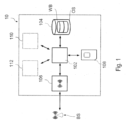
- Figure 1 shows a possible architecture of a "user equipment" 10, such as a mobile device, e.g. a smartphone or a tablet, or a mobile communication module usually to be used in embedded systems.
- a "user equipment” 10 such as a mobile device, e.g. a smartphone or a tablet, or a mobile communication module usually to be used in embedded systems.
- the device 10 comprises one or more processors 102 connected to one or more memories 104.
- the device 10 comprises moreover at least one mobile communication interface 106 for communication with a base station BS.
- the mobile communication interface 106 may comprise a GSM (Global System for Mobile Communications), CDMA (Code Division Multiple Access) transceiver, W-CDMA (Wideband Code Division Multiple Access), UMTS (Universal Mobile Telecommunications System), HSPA (High-Speed Packet Access) and/or LTE (Long Term Evolution) transceiver.
- GSM Global System for Mobile Communications
- CDMA Code Division Multiple Access
- W-CDMA Wideband Code Division Multiple Access
- UMTS Universal Mobile Telecommunications System
- HSPA High-Speed Packet Access
- LTE Long Term Evolution
- a mobile device comprises often also a user interface 110, such as a touchscreen.
- a communication module to be used e.g., in embedded systems, such as alarm systems, gas meters or other types of remote monitoring and/or control systems, often does not comprise a user interface 110, but a communication interface 112 in order to exchange data with a further processing unit of an embedded system.
- the interface 112 may be a digital communication interface, such as a UART (Universal Asynchronous Receiver-Transmitter), SPI (Serial Peripheral Interface) and/or USB (Universal Serial Bus) communication interface.
- the processing unit 102 may also be directly the main processor of an embedded system.
- the interface 112 may be used to exchange data with one or more sensors and/or actuators.
- the interface 112 may be implemented by means of one or more analog interfaces and/or digital input/output ports of the processing unit 102.
- the memory 104 may be stored e.g. an operating system OS being executed by the processor 102 and which manages the general functions of the device 10, such as the management of the user interface 110 and/or the communication interface 112 and the establishment of a connection to the base station BS via the interface 106.
- the memory 104 may also contain applications being executed by the operating system OS.
- the memory 104 often comprises a web browser application WB.
- the device 10 is coupled to a processing unit 108 configured to manage the identity identification of the user.
- a mobile device comprises a card holder for receiving a card comprising a Subscriber Identity Module (SIM), which is usually called SIM card.
- SIM Subscriber Identity Module
- a corresponding SIM module may also be installed directly within the device 10.
- UICC Universal Integrated Circuit Card
- the UICC ensures the integrity and security of all kinds of personal data and typically holds a few hundred kilobytes.
- a UICC may be integrated directly in the device 10 and is in this case often called embedded UICC (eUICC).
- the UICC 108 contains a SIM application and in a UMTS network a USIM application.
- a UICC may contain several applications, making it possible for the same smart card to give access to both GSM and UMTS networks, and may also provide storage of a phone book and other applications.
- a SIM module in the following of the present description is intended to include both 2G, 3G, 4G and 5G SIM modules and further generations of mobile communications to which the solution here described is applicable. Such reference applies also the case in which such a SIM module is provided on a SIM card.
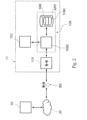
- a SIM module 108 often comprises one and more processors 1082 and one or more memories 1084 for executing applications stored in the memory 1084 of the module 108.
- the SIM module 108 may comprise in addition to the Subscriber Identity Module application (reference sign SIM in Figure 2 ) at least one further application APP.
- this application APP may be configured to communicate (directly, or indirectly via the processor 102 and possibly the operating system OS) with the mobile communication interface 106 in order to send data to and/or receive data from a remote host 30.
- the host 30 may be connected via a network 20, such as a Local Area Network (LAN) or a Wide Area Network (WAN), such as the internet, to the base station BS.
- LAN Local Area Network
- WAN Wide Area Network
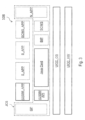
- the Java Card System JCS comprises usually a SIM and/or USIM API (identified with the reference sign (U)SIM API) which manages the basic Subscriber Identity Module commands and provides functions to higher level SIM or USIM applets (identified with the reference sign (U)SIM_APP).
- UICC cards in particular SIM modules, can also have installed applications provided by different mobile phone operators, i.e. a so called multisubscription SIM, which is preferably an embedded multi-subscription SIM module, preferably a multisubscription eUICC.
- multisubscription SIM modules may be used as embedded SIM modules, e.g. eUICC, or as SIM cards to be installed in automated machines, which often are not easily reachable, such as remote monitoring and/or control systems, such as a gas meters.
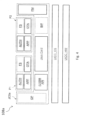
- Figure 4 shows an embodiment of a multisubscription SIM module 108a, which comprises the same modules and components shown with respect to figure 2 .
- the SIM module 108a supports at least two profiles P1 and P2 of two mobile network operators. In general the SIM module 108a can support also more than two profiles, i.e. a plurality of profiles.
- the software architecture is based on the Java Card System described with respect to Figure 3 .
- a Java Card System JCSa is executed by an operating system UICC_OS, which manages and runs applets, i.e. applications using the APIs (Application Programming Interface) provided by the Java Card System JCSa.
- the Java Card System JCS may comprise a SIM and/or USIM API (identified with the reference sign (U)SIM API) which manages the basic Subscriber Identity Module commands and provides functions to higher level SIM and/or USIM applets.
- the Java Card TM Platform may provide a JAVA TM runtime environment.
- the Java Card System JCSa may also comprises a GlobalPlatform module GP according to the "GlobalPlatform Card specification", e.g. version 2.2.1.
- the above mentioned API functions may then be used by the applets, such as the SIM and/or USIM applet (U)SIM_APP, a basic applet B_APP and/or a secure applet S_APP.
- Each profile P1/P2 is represented by a memory area in the memory 1084 of the SIM card for storing applets APP, such as a respective (U)SIM_APP applet for each profile P1/P2.
- applets APP such as a respective (U)SIM_APP applet for each profile P1/P2.
- the memory area may also be stored the respective authentication data AUTH of the SIM card used to access the mobile network of the mobile network operator.
- each profile P1/P2 may also have associated a respective Over The Air (OTA) Key, which are usually used to encrypt (e.g. according to the SCP80 protocol) the remote management commands sent by a mobile network operator to a given SIM card.
- OTA Over The Air
- each profile P1/P2 may have associated a respective file system area FS, e.g. in order to store user data, such as the user's contact list, or the above mentioned preferred roaming partner list.
- each profile may also comprise applications and/or API in the Java Card System JCSa.
- the profile data may also include configuration data which influence directly the API layer.
- the multi-subscription SIM module 108a may comprise moreover a profile manager application PM, for example provided in the API layer, or at the applet layer, or distributed between the API and the applet layers.
- the memory of the UICC may contain also a configuration application configured for communicating with such profile manager of the SIM module 108a in order to manage the profiles installed in the SIM module 108a.
- a configuration application configured for communicating with such profile manager of the SIM module 108a in order to manage the profiles installed in the SIM module 108a.
- such application is configured for communicating with the profile manager PM in order to select or enable one of the profiles P1/P2 installed in the SIM card 108a.
- the SIM module 108a may have preinstalled the profiles of a plurality of mobile network operators and when the device 10 is started for the first time (or generally during a configuration phase), the user may activate by means of the configuration application one of the of the profiles.
- the profiles may be downloaded through remote protocol (OTA) after card issuance; profiles may also be deleted.
- OTA remote protocol
- the profiles can be downloaded locally by the so-called production machines, which produce a batch of integrated circuit cards, in particular SIM card, and then load in the memory of the card the required profile.
- the UICCs are property of the mobile operator.
- the mobile operator does not own the ⁇ whole card, but rather owns a profile on the eUICC, which means substantially owning only a small part of the memory of the eUICC.
- the profile however is permanently stored on only one eUICC, making impossible for the user to switch mobile phone on a day base.
- Reasons that can induce a user to switch mobile phone include that modern smartphones are even more prone to breakage, due e.g. to the big display or the aluminum case, and in case of breakage of a smartphone equipped with an eUICC the user would be required to reach/call the operator in order to download the profile on another mobile phone (e.g. a backup phone).
- Embodiments moreover concerns a related system as well as a corresponding related computer program product, loadable in the memory of at least one computer and including software code portions for performing the steps of the method when the product is run on a computer.
- a computer program product is intended to be equivalent to reference to a computer-readable medium containing instructions for controlling a computer system to coordinate the performance of the method.
- Reference to "at least one computer” is evidently intended to highlight the possibility for the present disclosure to be implemented in a distributed/modular fashion.
- said sending identifier information includes sending to a node configured to manage subscribers currently present in a given service area in which is positioned said mobile device to be enabled, in particular a MME or Visitor Location Register, and to a node storing said authentication data for a mobile device authentication procedure between the mobile network and the mobile device to be enabled, in particular a HSS or Authentication Center, said location update operation includes updating at said node storing authentication data, on the basis of the received identifier information with the location corresponding to mobile device to be enabled, and providing updated authentication data to said node configured to manage subscribers currently present in a given service area in which is positioned said new mobile device .
- said setup phase includes
- said procedure enabling the given profile on a new mobile device in said plurality of devices includes
- said identifier information includes a subscriber identifier of the other mobile device and a subscriber identifier of the currently enabled device.
- said cancellation of the location of the currently enabled mobile device includes
- said mobile communication network is a LTE network.
- the present disclosure provides also solutions regarding a system for sharing a same profile on different integrated circuit cards, including in a plurality of mobile devices having stored in respective integrated circuit cards a given profile enabled for operation on only one device in said plurality of devices and a mobile communication network with which said plurality of mobile devices is configured to operate, said system being configured to implement the method of any of the previous embodiments.
- FIG. 5 illustrates the architecture of a mobile communication network 200, specifically a LTE/SAE (Long Term Evolution/System Architecture Evolution) architecture, in which the method here described operates.
- LTE/SAE Long Term Evolution/System Architecture Evolution
- Such architecture includes the mobile device 10, or user equipment, to which a user U can access.
- the mobile device 10 includes the integrated circuit card 108, which is a preferably an eUICC SIM card.
- eUICC SIM card In variant embodiments can be a multisubscription euiCC card 108a, but also a simple, not embedded, UICC card or integrated circuit card.
- the integrated circuit card 108 is configured to communicate with a radio access network 205, including a radio access node represented for the LTE by eNodeB (evolved NodeB) BS.
- eNodeB evolved NodeB
- the eNodeB BS is the element in E-UTR_AN, e.g. the radio access network of LTE, that is the evolution of the radio access node represented by Node B in UTRA, the radio access network of UMTS, or the base station in GSM.
- the eNodeB BS is the hardware element that is connected to the mobile phone network that communicates directly wirelessly with mobile handsets 10, like a base transceiver station (BTS) in GSM networks.
- BTS base transceiver station
- the mobile device 10 accesses through a E-UTRAN Uu interface (LTE Uu), however for further details regarding the interfaces between entities and nodes of the LTE and their operation reference can be made to LTE 3GPP TS 36.XXX specification series Release 8.
- the eNodeB BS accesses a core network 210 of the LTE network, in particular access an entity 212 configured to manage subscribers currently present in a given service area in which is positioned the mobile device pertaining to a radio access node, e.g. eNodeB BS, which in LTE is specifically the MME (Mobility Management Entity) node 212, by a respective interface.
- the MME node 212 represents the key control-node for the LTE access network. It works in conjunction with the evolved NodeB (eNodeB) BS and a Serving Gateway 216 within the EvolvedPacket Core (EPC), or LTE/SAE core network.
- EPC EvolvedPacket Core
- the MME node 212 is also responsible for authenticating the user by interacting with a HSS (Home Subscriber Server) 214.
- the MME node is also responsible for generation and allocation of temporary identities, such as TMSI (Temporary Mobile Subscriber Identity), to user equipments, e.g. mobile devices 10, present in a service area served by the eNodes associated to the MME.
- TMSI Temporal Mobile Subscriber Identity
- the entity configured to perform mobility management corresponds instead to a Mobile Switching Center, which registers users to a database in the Visitor Location Register and authenticates the devices in cooperation with the Home Location Register.
- the Visitor Location Register 212 contains the exact location of all mobile subscribers currently present in the service area of the Mobile Switching Center. This information is necessary to route a call to the right base station.
- the Home Subscriber Server 214 contains users' subscription data, in particular SAE subscription data such as the EPS-subscribed QoS (Quality of Service) profile and any access restrictions for roaming.
- SAE subscription data such as the EPS-subscribed QoS (Quality of Service) profile and any access restrictions for roaming.
- the HSS 216 holds dynamic information such as the identity of the MME 212 to which the user U is currently attached or registered.
- the HSS 214 may also integrate the authentication center (AUC), which generates the vectors for authentication and security keys.
- AUC authentication center
- the Serving Gateway 216 is then coupled to a Packed Data Network Gateway 218 which allows access to an interconnect network 220 which may include a Public Switched Telephone Network ("PSTN") or the Internet 221, as shown in the figure.
- the Packed Data Network Gateway 218 access also a Policy and Charging Rules Function node 219, interconnected by a respective interface to the interconnect network 220, which manages the service policy and sends QoS setting information for each user session and accounting rule information.
- FIG 6 it is shown a schematic diagram, representing partially the mobile network of figure 5 , in which a user U has a number p of mobile devices 10 1 ...10 p , on which a given profile P1 is loaded.
- Each of the mobile devices 10 1 ...10 p has a respective integrated card, preferably an eUICC, 108a 1 ...108a p on only one of the mobile devices 10 1 ...10 p , and it is shown associated to a respective eNodeB BS 1 ...BS p which in its turn is associated to a respective MME 212 1 ...212 p , such MME 212 1 ...212 p communicating with a same HSS 214 in the core network.
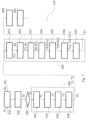
- figure 7 it is shown a flow diagram representing an embodiment of the method sharing a same profile on different integrated circuit cards here described, indicated as a whole by the numerical reference 500.
- Said different integrated circuit cards are different UICC cards 108j, in particular SIM cards of a user/subscriber U which has, as shown in figure 6 , a plurality of mobile devices 10 1 ...10 p , where p is the number of mobile devices, e.g. one or more smartphone and/or tablet and/or other mobile communication module, also a IoT device, usually to be used in embedded systems.
- the method 500 includes a first operation 510 of providing, in particular downloading a given profile, for instance the profile P1, on all the devices 10 1 ...10 p of the user U. This is preferably performed at the time of the contract subscription with the mobile network operator MNO.
- Operations 510 and 520 thus define a setup procedure, or setup phase of the mobile devices 10 1 ...10 p , in which a profile P1 to be shared among such mobile devices 10 1 ...10 p is loaded on all the mobile devices 10 1 ...10 p , but enabled on only one of them, e.g. currently enabled device 10 j .
- the block 530 is indicated the occurring of a condition in which the user U desires using, i.e. enabling, another of the mobile devices 10 1 ...10 p , e.g. another smartphone or IoT device, e.g. a new device 10 k , k different from j.
- another of the mobile devices 10 1 ...10 p e.g. another smartphone or IoT device, e.g. a new device 10 k , k different from j.
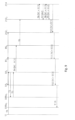
- Such profile enable procedure 540 and a network attach procedure 550 described in the following are described also with reference to the sequence diagram of Figure 8 , which represents actions T1...T10 performed by some of the objects or nodes of the mobile communication network 200 schematically represented in Figure 5 .
- the HSS 214 performs the requested update and replies with an Update Location Response T9.
- the HSS 214 since it is the master database in which the subscribers identifiers are stored, is configured to store also different alias subscriber identity SC1, SC2,....SCp and their status of alias of a same subscriber identity. So the HSS 214 is configured to recognize that subscriber identifiers SC1 and SC2 are alias of a same subscription SC referring to a given profile P. If the HSS 214 receives an authentication request, e.g. Authentication Info Request T6, and a location update request, e.g. Update Location Request T8 from a subscriber identifier, e.g.
- the HSS 214 signals to the current MME 212 1 associated to the current mobile device 10 j , that another device 10 i has "stolen” the connection. This may for example be signaled using a Cancel Request message directed to the MME 212 1 , using as Cancellation Request field either a new defined one, or one of the well-known values (e.g. SUBSCRIPTION_WITHDRAWAL). It is underlined that it may be possible that the first MME 212 1 corresponds to the second MME 212 2 (e.g. in case the mobile devices 10 j and 10 k are connected to the same cell). The HSS 214 is therefore configured to handle this possibility.
- the first MME 212 1 upon reception of the latter cancellation message T10, is configured to signal to the current mobile device 10 j that the connection was stolen by the new mobile device 10 k .
- This performed by sending 556 a reject message T11 in the case of E-UTRAN here exemplified an Attach Reject message T11, or TRACKING AREA UPDATE REJECT message.
- a reject message T11 in the case of E-UTRAN here exemplified an Attach Reject message T11, or TRACKING AREA UPDATE REJECT message.
- a LOCATION UPDATING REJECT message or a GPRS ATTACH REJECT message or a ROUTING AREA UPDATE REJECT message (as defined in TS 24.008 [9]) is sent.
- the Attach Reject Message T10 is sent to the eNodeB BS 1 of the current device 10 j , which in turn forwards a corresponding Attach Reject Message T12 to the currently enable mobile device 10 j .
- the current MME may choose small time values for some timer in order to receive adequately frequent attach/update messages from the mobile equipment. For example the current MME may choose a sufficiently small value for the timer T3412 in order to receive at adequate times ROUTING AREA UPDATE messages. Each ROUTING AREA UPDATE message from the mobile equipment, may follow a cancellation message T10, and may trigger for this reason a ROUTING AREA UPDATE REJECT message.
- a proprietary message may be used to signal to the mobile equipment 10 j that a Network Rejection event must be sent to the card 108a j .
- an ENVELOPE EVENT DOWNLOAD - Network Rejection Event
- the Java Card operating system of the currently enabled card 108a 1 once received the event, triggers in a step 560 the processToolkit() function of the ISD-R of the first card 108a1.
- Each ISD-R of each integrated card interprets a network rejection event that occurred after a normal service (i.e. the phone was correctly connected to the network and then the network rejected it) as the fact that some other mobile equipment has taken the subscription.
- the ISD-R of the integrated card in this case 108a 1 , disables in a step 561 the currently enabled profile.
- the second integrated card 108a 2 has correctly taken the subscription corresponding to a certain profile, e.g. P1, from the first card 108a 1 and such profile is correctly enabled and working only on the second card 108a 2 .
- a certain profile e.g. P1
- the solution here described provides thus that a same profile is in at least two integrated cards, in particular eUICC, in particular with reference to the example of figure 8 , indicated with 108a 1 and 108a 2 .
- the only difference is that the two profiles in the two integrated cards 108a 1 and 108a 2 have different subscriber identifiers, IMSI, indicated as SC1 and SC2 respectively.
- the two different values of the subscriber identifiers SC1 and SC2 associated are used by the mobile network to identify which of the cards 108a 1 and 108a 2 is currently connected to the mobile network.
- figure 8 it is thus shown a sequence diagram representing the actions and signals exchanged between the nodes of the mobile communication network 200 of figure 5 according to the method here described.
- nodes or objects the user U, the current or first mobile device 10 1 , the new mobile device 10 2 , the respective UICC cards 108a 1 and 108a 2 , the respective MME 212 1 and 212 2 and the HSS 214.
- the profile is enabled on the integrated card 108a 1 .
- the user U by means e.g. of the eUICC User Interface (e.g. LUI in eUICC Consumer) in its other mobile equipment 10 2 , performs the action T1 of enabling the profile (step 520), the second mobile device 10 2 sends the Enable Request T2 (step 541) to the second integrated card 108a 2 which confirms replying an Enable Response T3 (step 543).
- the eUICC User Interface e.g. LUI in eUICC Consumer
- the second mobile device 10 2 launch the attach request T4 (step 544), relayed by the eNodeB BS 1 to the respective MME 212 2 triggering the attach procedure 550, which includes an authentication portion (actions T6, T7) which is performed using, as in the previous actions or messages T4, T5 (steps 551, 552), the subscriber identity of the new or second mobile device 10 2 , SC2, so that the new or second mobile device 10 2 is authenticated by the HSS 214, and includes a location update portion, using actions T8, T9, still with the subscriber identity of the new or second mobile device 10 2 , SC2 as an argument.
- an authentication portion actions T6, T7 which is performed using, as in the previous actions or messages T4, T5 (steps 551, 552), the subscriber identity of the new or second mobile device 10 2 , SC2, so that the new or second mobile device 10 2 is authenticated by the HSS 214, and includes a location update portion, using actions T8, T9, still with the subscriber identity of the new or
- action T10, step 555 which generates rejection messages T11 from the MME to the BS and T12 from the BS to the mobile device 10 1 (step 556)
- Messages of actions T10, T11, T12 have as argument the subscriber identity of the current enabled or first mobile device 10 1 , SC1.
- Step 557 The action T13 is performed internally at the first mobile device 10 1 (step 557). Steps 560 and 561 which involve the ISD-R of the first card 108a 1 are not represented here.
- FIG. 9 it is described a variant embodiment, in which instead of using the first subscriber identity SC1 and the second subscriber identity SC2, i.e. two IMSI values which are assigned to a same profile installed over several user equipment 10 1 ...10 p to differentiate them, the equipments 10 1 ....10 p are differentiated by using their device identity EC, e.g. the IMEI code, which represents an unique identifier of the user equipment 10i.
- the IMEI code is currently mainly used to block stolen phones, i.e. each operator maintains a black list of IMSI which are not allowed to connect to the network.
- the IMEI code i.e. identity EC of the new device, the second device 10 2 in the example, so EC2
- the subscriber identity SC e.g. the IMSI of the user U
- the HSS 214 receives an authentication info request from the second MME2, it understands that a new device is trying to connect to the network (because currently the device with the first device identity EC1 is connected using the profile identified by the subscriber identity SC).
- Operations 510 and 520 define a setup procedure, or setup phase of the mobile devices 10 1 ...10 p , in which a profile P1 to be shared among such mobile devices 10 1 ...10 p is loaded on all the mobile devices 10 1 ...10 p , but enabled on only one of them.
- the operation of sending identifier information of the new mobile device includes sending 551 to the node 212 configured to manage subscribers currently present in a given service area in which is positioned the mobile device to be enabled 10 k , in particular a MME for TE or Visitor Location Register for UMTS, and to a node 214 storing the authentication data, authentication vectors AV, for a mobile device authentication procedure between the mobile network 200 and the mobile device to be enabled 10 k , in particular a HSS for LTE or a Authentication Center node for UMTS; the node 212 sends in particular a authentication request in the operation 551 to the node 214.
- the location update operation 553 includes updating at the node 214 storing authentication data, on the basis of the received identifier information with the location corresponding to mobile device to be enabled 10 k , and providing updated authentication data AV, the authentication vectors, to the node 212 configured to manage subscribers currently present in a given service area in which is positioned the new mobile device 10 k .
- Such authentication data include keys for encryption such as at least an Authentication key K a and sequence number SQN needed for the authentication of the mobile equipment encryption keys K, SQN, provided in records for each IMSI identifiers SC in a database.
- the cancellation 555 of the location of the currently enabled mobile device 10 j includes registering a ISD-R of the card 108aj of the currently enabled to network rejection event,
- the method and system here described allows the users to switch mobile phones on the fly, even in case of mobile phone breakage.
- an internet connection with an IoT device, e.g. sharing the connection with the car when driving.
- This can be useful in autonomous cars, i.e. self-driving cars.
- Sharing connection is even easier than inserting a SIM. Operators can charge the number of mobile equipment where the profile is loaded.
Landscapes
- Engineering & Computer Science (AREA)
- Computer Networks & Wireless Communication (AREA)
- Signal Processing (AREA)
- Computer Security & Cryptography (AREA)
- Databases & Information Systems (AREA)
- Mobile Radio Communication Systems (AREA)
- Telephone Function (AREA)
- Telephonic Communication Services (AREA)
Claims (12)
- Verfahren zur gemeinsamen Nutzung desselben Profils (P1) auf verschiedenen Karten mit integrierter Schaltung, die in mobilen Vorrichtungen (101...10p) enthalten sind, wobei das Verfahren die folgenden Vorgänge einschließt:in der Vielzahl von mobilen Vorrichtungen (101...10p), die so konfiguriert sind, dass sie mit einem mobilen Kommunikationsnetzwerk (200) arbeiten, und während einer Einrichtungsphase (510, 520) das Profil (P1), das unter solchen mobilen Vorrichtungen (101...10p) gemeinsam genutzt werden soll, auf alle mobilen Vorrichtungen (101...10p) geladen wird, das für den Betrieb auf nur einer aktuell aktivierten mobilen Vorrichtung (10j) in der Vielzahl von Vorrichtungen (101...10p) freigegeben ist,wobei die mobilen Vorrichtungen (101...10p) auf eine Benutzeranfrage hin jeweils unterschiedliche Identifizierungsinformationen (SC1, SC2) aufweisen,Durchführen einer Prozedur (540), die das gegebene Profil (P1) auf einer zu aktivierenden mobilen Vorrichtung (10k) in der Vielzahl von Vorrichtungen (101...10p) ermöglicht, die sich von der aktuell aktivierten mobilen Vorrichtung (10j) unterscheidet,Durchführen einer Netzanbindungsprozedur (550), die das Senden mindestens der Identifizierungsinformationen (SC2; SC, EC2) der zu aktivierenden mobilen Vorrichtung (10k), die mindestens Teilnehmerinformationen umfassen, an das mobile Netzwerk (200) einschließt,Durchführen (551) einer Authentifizierungsprozedur (T10) der mobilen Vorrichtung zwischen dem Kommunikationsnetzwerk (200) und der zu aktivierenden mobilen Vorrichtung (10k),Durchführen (552, 553) in dem mobilen Kommunikationsnetzwerk (200) auf der Grundlage der empfangenen Identifizierungsinformationen (SC2; SC, EC2) einer Ortsaktualisierungsoperation unter Verwendung der Identifizierungsinformationen (SC2; SC, EC2) der zu aktivierenden mobilen Vorrichtung (10k), wobei die Ortsaktualisierungsoperation dann das Durchführen der Löschung (555) des Ortes der aktuell aktivierten mobilen Vorrichtung (10j) umfasst.
- Verfahren nach Anspruch 1, wobei das Senden von Identifizierungsinformationen (SC2; SC, EC2) das Senden an einen Knoten (212), der so konfiguriert ist, dass er Teilnehmer verwaltet, die sich derzeit in einem gegebenen Service-Bereich befinden, in dem die zu aktivierende mobile Vorrichtung (10k) positioniert ist, insbesondere ein MME oder ein Besucher-Ortsregister, und an einen Knoten (214), der die Authentifizierungsdaten für ein Verfahren zur Authentifizierung einer mobilen Vorrichtung (559) zwischen dem mobilen Netzwerk (200) und der zu aktivierenden mobilen Vorrichtung (10k) speichert, insbesondere ein HSS oder ein Authentifizierungszentrum, einschließt,
wobei der Ortsaktualisierungsvorgang (553) das Aktualisieren von in dem Knoten (214) gespeicherten Authentifizierungsdaten auf der Grundlage der empfangenen Identifizierungsinformationen (SC2, SC, EC2) mit dem Ort, der der zu aktivierenden mobilen Vorrichtung (10k) entspricht, und das Bereitstellen von aktualisierten Authentifizierungsdaten (AV) an den Knoten (212) einschließt, der dafür konfiguriert ist, Teilnehmer zu verwalten, die sich derzeit in einem gegebenen Service-Bereich befinden, in dem die neue mobile Vorrichtung (10k) positioniert ist. - Verfahren nach einem der vorstehenden Ansprüche, dadurch gekennzeichnet, dass die Einrichtungsphase (510, 520) Folgendes einschließtBereitstellen (510) eines bestimmten Profils (P1) auf allen Vorrichtungen (101...10p) des Benutzers (U),Ermöglichen (520) des gegebenen Profils (P1) auf nur einer Vorrichtung (10j) in der Vielzahl der mobilen Vorrichtungen 101...10p.
- Verfahren nach einem der vorstehenden Ansprüche, dadurch gekennzeichnet, dass die Prozedur (540), die das gegebene Profil (P1) auf einer neuen mobilen Vorrichtung (10k) in der Vielzahl von Vorrichtungen (101...10p) aktiviert, Folgendes einschließtSenden (542) einer Anfrage (T1) an die neue mobile Vorrichtung (10k), um das Profil (P1) auf dieser neuen mobilen Vorrichtung (10k) zu aktivieren,Senden (544) einer Anfrage (T2) zur Freigabe des Profils von der neuen mobilen Vorrichtung (10k) an die Karte mit integrierter Schaltung (108), um das gegebene Profil (P1) für den Betrieb zu aktivieren,Ermöglichen (546) des vorgegebenen Profils (P1) auf der Karte (108).
- Verfahren nach einem der Ansprüche 1 bis 4, wobei die Kennungsinformation (SC2; SC, EC2) eine Vorrichtungskennung (EC2) und eine Teilnehmerkennung (SC) der anderen mobilen Vorrichtung (10k) einschließt.
- Verfahren nach einem der Ansprüche 1 bis 4, wobei die Kennungsinformation (SC2; SC, EC2) eine Teilnehmerkennung (SC2) der anderen mobilen Vorrichtung (10k) und eine Teilnehmerkennung (SC1) der aktuell aktivierten Vorrichtung (10j) einschließt.
- Verfahren nach Anspruch 6, wobei in dem Knoten (214) eine Datenbank unterhalten wird, in der Authentifizierungsdaten gespeichert werden, die die Authentifizierungsdaten umfassen, wobei die Datenbank mit der Hinzufügung eines Feldes, das der Gerätekennung (EC) der aktuell aktivierten mobilen Vorrichtung (10j) entspricht, in jedem ihrer Datensätze, der einer Teilnehmerkennung (SC) entspricht, bereitgestellt wird.
- Verfahren nach Anspruch 6 oder 7, wobei die Löschung (555) des Ortes der aktuell aktivierten mobilen Vorrichtung (10j) Folgendes einschließtRegistrieren einer ISD-R der Karte (108aj) des aktuell aktivierten Netzwerk-Ablehnungsereignisses,Senden (556) einer Löschungsnachricht über den Knoten (212), der konfiguriert ist, um Teilnehmer an der aktuell aktivierten mobilen Vorrichtung (10j) zu verwalten, Senden (557) eines Ablehnungsereignisses (T13) von der Vorrichtung an die Karte, nachdem die Ablehnungsnachricht empfangen wurde,Deaktivieren des aktuell aktivierten Profils durch das ISD-R der Karte bei Empfang des Ablehnungsereignisses (T13).
- Verfahren nach Anspruch 3, wobei das mobile Kommunikationsnetzwerk (200) ein LTE-Netzwerk ist.
- Verfahren nach einem der vorstehenden Ansprüche, wobei die integrierte Schaltungskarte (108) eine eUICC-Karte ist.
- System zur gemeinsamen Nutzung desselben Profils (p1) auf verschiedenen integrierten Schaltungskarten, das in einer Vielzahl von mobilen Vorrichtungen (101...10p), die in jeweiligen integrierten Schaltungskarten (108s) das gleiche gegebene Profil (P1) gespeichert haben, das für den Betrieb auf nur einer Vorrichtung (10j) in der Vielzahl von Vorrichtungen (101...10p) freigegeben ist, und ein Kommunikationsnetzwerk (200) aufweist, mit dem die Vielzahl von mobilen Vorrichtungen (101...10p) konfiguriert ist, um zu arbeiten, wobei das System konfiguriert ist, um das Verfahren eines der vorstehenden Ansprüche 1 bis 8 zu implementieren.
- Computerprogrammprodukt, das in den Speicher mindestens eines Prozessors geladen werden kann und Abschnitte von Softwarecode zur Implementierung des Verfahrens nach einem der Ansprüche 1 bis 10 umfasst.
Applications Claiming Priority (1)
| Application Number | Priority Date | Filing Date | Title |
|---|---|---|---|
| IT102019000001669A IT201900001669A1 (it) | 2019-02-05 | 2019-02-05 | Procedimento per condividere un profilo di operatore di comunicazioni mobile in carte a circuito integrato e corrispondente sistema e prodotto informatico |
Publications (2)
| Publication Number | Publication Date |
|---|---|
| EP3694239A1 EP3694239A1 (de) | 2020-08-12 |
| EP3694239B1 true EP3694239B1 (de) | 2025-02-26 |
Family
ID=66589653
Family Applications (1)
| Application Number | Title | Priority Date | Filing Date |
|---|---|---|---|
| EP20153543.2A Active EP3694239B1 (de) | 2019-02-05 | 2020-01-24 | Verfahren zum teilen eines mobilbetriebsprofils in integrierten schaltkarten und entsprechendes system- und computerprogramm-produkt |
Country Status (4)
| Country | Link |
|---|---|
| US (2) | US11019485B2 (de) |
| EP (1) | EP3694239B1 (de) |
| CN (1) | CN111526508B (de) |
| IT (1) | IT201900001669A1 (de) |
Families Citing this family (1)
| Publication number | Priority date | Publication date | Assignee | Title |
|---|---|---|---|---|
| WO2024072387A1 (en) * | 2022-09-29 | 2024-04-04 | Rakuten Symphony Singapore Pte. Ltd. | Systems and methods enabling seamless sim profile transmission at subscription management data preparation (smdp+) |
Citations (2)
| Publication number | Priority date | Publication date | Assignee | Title |
|---|---|---|---|---|
| US20100085937A1 (en) * | 2008-10-03 | 2010-04-08 | Todd A Pressley | System and method for inbound roaming in ip multimedia subsystem networks |
| US10187784B1 (en) * | 2018-06-11 | 2019-01-22 | Verizon Patent And Licensing Inc. | Systems and methods for transferring SIM profiles between eUICC devices |
Family Cites Families (14)
| Publication number | Priority date | Publication date | Assignee | Title |
|---|---|---|---|---|
| US8767595B2 (en) * | 2005-08-02 | 2014-07-01 | L-3 Communications Corporation | Enhanced methods of cellular environment detection when interoperating with timed interfers |
| US9009475B2 (en) * | 2011-04-05 | 2015-04-14 | Apple Inc. | Apparatus and methods for storing electronic access clients |
| JP5987707B2 (ja) * | 2013-01-25 | 2016-09-07 | ソニー株式会社 | 端末装置、プログラム及び通信システム |
| EP3075180B1 (de) * | 2013-11-29 | 2018-04-11 | Telefonaktiebolaget LM Ericsson (publ) | Verfahren und entsprechende vorrichtung, computerprogrammprodukt zur validierung einer euicc-subskriptionsänderung |
| CN106416329B (zh) * | 2014-06-03 | 2019-11-22 | 德国电信股份公司 | 提供漫游服务的方法、移动通信网络和归属订户服务器功能节点 |
| KR102311027B1 (ko) * | 2014-08-14 | 2021-10-08 | 삼성전자 주식회사 | 그룹단말의 프로파일 설치 방법 |
| KR102272838B1 (ko) * | 2014-11-11 | 2021-07-06 | 삼성전자주식회사 | 이동통신 네트워크를 통한 데이터 서비스 제공 방법 및 장치 |
| CN105049259A (zh) * | 2015-08-20 | 2015-11-11 | 北京星网锐捷网络技术有限公司 | 网络设备及用于网络设备的服务器、系统及方法 |
| US20170094501A1 (en) * | 2015-09-30 | 2017-03-30 | Mediatek Inc. | Method of Enhanced Timer Handling for SIM/USIM Change |
| EP3253172B1 (de) * | 2016-06-01 | 2019-12-11 | Intel IP Corporation | Vorrichtung und verfahren zur rückgewinnung von diensten aus netzwerkabweisungen an drahtloskommunikationsvorrichtungen |
| CN114615655B (zh) * | 2016-07-05 | 2024-10-25 | 三星电子株式会社 | 用于接入蜂窝网络来获得sim简档的方法和设备 |
| KR102589503B1 (ko) * | 2017-01-02 | 2023-10-16 | 삼성전자 주식회사 | 데이터 사용량을 공유 받는 공유 대상 장치를 설정하는 방법과, 이를 위한 전자 장치 |
| EP3603142B1 (de) * | 2017-03-28 | 2023-12-13 | Telit Technologies (Cyprus) Ltd. | Virtuelle sim mit mehreren mobilfunknetzwerkbetreiberprofilen zum betrieb über mehrere drahtlose ip-netzwerke |
| US9949113B1 (en) * | 2017-06-02 | 2018-04-17 | Apple Inc. | Updating profiles for secondary wireless devices |
-
2019
- 2019-02-05 IT IT102019000001669A patent/IT201900001669A1/it unknown
-
2020
- 2020-01-24 EP EP20153543.2A patent/EP3694239B1/de active Active
- 2020-02-04 US US16/781,278 patent/US11019485B2/en active Active
- 2020-02-04 CN CN202010079817.8A patent/CN111526508B/zh active Active
-
2021
- 2021-04-19 US US17/233,846 patent/US20210243591A1/en not_active Abandoned
Patent Citations (2)
| Publication number | Priority date | Publication date | Assignee | Title |
|---|---|---|---|---|
| US20100085937A1 (en) * | 2008-10-03 | 2010-04-08 | Todd A Pressley | System and method for inbound roaming in ip multimedia subsystem networks |
| US10187784B1 (en) * | 2018-06-11 | 2019-01-22 | Verizon Patent And Licensing Inc. | Systems and methods for transferring SIM profiles between eUICC devices |
Also Published As
| Publication number | Publication date |
|---|---|
| US20200252790A1 (en) | 2020-08-06 |
| CN111526508B (zh) | 2023-03-24 |
| US11019485B2 (en) | 2021-05-25 |
| US20210243591A1 (en) | 2021-08-05 |
| CN111526508A (zh) | 2020-08-11 |
| EP3694239A1 (de) | 2020-08-12 |
| IT201900001669A1 (it) | 2020-08-05 |
Similar Documents
| Publication | Publication Date | Title |
|---|---|---|
| CN106211122B (zh) | 用于管理sim模块中的多个简档的方法、sim模块以及计算机可读介质 | |
| KR102371357B1 (ko) | 모바일 네트워크 오퍼레이터로부터 보안 요소로 기존 서브스크립션 프로파일을 송신하는 방법, 대응하는 서버들 및 보안 요소 | |
| US12401976B2 (en) | IMEI binding and dynamic IMEI provisioning for wireless devices | |
| KR102817041B1 (ko) | 복수의 별도의 링크들을 이용한 euicc 카드에서의 동시에 활성인 가입자 프로파일들의 관리 | |
| US20160285493A1 (en) | Methods for performing a remote management of a multi-subscription sim module, and corresponding sim module and computer program product | |
| US10389848B2 (en) | Message transmission method and core network interface device | |
| KR102017442B1 (ko) | 이동 단말기 상에 가입자 정보를 제공하기 위한 방법 및 장치들 | |
| EP3171662B1 (de) | Verfahren und vorrichtung für eine duale radiobenutzerausrüstung | |
| EP2601802B1 (de) | Telefon und steuerverfahren zum abonnieren einer anrufweiterleitung | |
| US10901716B2 (en) | Implicit file creation in APDU scripts | |
| EP3534562B1 (de) | Datenübertragungsverfahren, vorrichtung und system sowie speichermedium | |
| JP2013524556A (ja) | 通信システム | |
| CN111107597B (zh) | 一种通讯模组网络的可靠切换方法和装置 | |
| EP3694239B1 (de) | Verfahren zum teilen eines mobilbetriebsprofils in integrierten schaltkarten und entsprechendes system- und computerprogramm-produkt | |
| CN105682079B (zh) | 用户识别卡控制方法及终端 | |
| CN205283827U (zh) | Sim模块 | |
| WO2001019120A1 (en) | Automatic deregistration of wireless communications devices having variable identity | |
| US20220224521A1 (en) | Managing a secure element | |
| WO2025012021A1 (en) | Method for activating a subscription and corresponding secure elements | |
| WO2025101245A1 (en) | Subscription service file management for esim transfer | |
| KR20220115256A (ko) | 가입자 인증 모듈의 초기화 방법 및 가입자 인증 모듈을 초기화하는 사용자 단말 |
Legal Events
| Date | Code | Title | Description |
|---|---|---|---|
| PUAI | Public reference made under article 153(3) epc to a published international application that has entered the european phase |
Free format text: ORIGINAL CODE: 0009012 |
|
| STAA | Information on the status of an ep patent application or granted ep patent |
Free format text: STATUS: THE APPLICATION HAS BEEN PUBLISHED |
|
| AK | Designated contracting states |
Kind code of ref document: A1 Designated state(s): AL AT BE BG CH CY CZ DE DK EE ES FI FR GB GR HR HU IE IS IT LI LT LU LV MC MK MT NL NO PL PT RO RS SE SI SK SM TR |
|
| AX | Request for extension of the european patent |
Extension state: BA ME |
|
| STAA | Information on the status of an ep patent application or granted ep patent |
Free format text: STATUS: REQUEST FOR EXAMINATION WAS MADE |
|
| 17P | Request for examination filed |
Effective date: 20210118 |
|
| RBV | Designated contracting states (corrected) |
Designated state(s): AL AT BE BG CH CY CZ DE DK EE ES FI FR GB GR HR HU IE IS IT LI LT LU LV MC MK MT NL NO PL PT RO RS SE SI SK SM TR |
|
| STAA | Information on the status of an ep patent application or granted ep patent |
Free format text: STATUS: EXAMINATION IS IN PROGRESS |
|
| 17Q | First examination report despatched |
Effective date: 20211004 |
|
| GRAP | Despatch of communication of intention to grant a patent |
Free format text: ORIGINAL CODE: EPIDOSNIGR1 |
|
| STAA | Information on the status of an ep patent application or granted ep patent |
Free format text: STATUS: GRANT OF PATENT IS INTENDED |
|
| RIN1 | Information on inventor provided before grant (corrected) |
Inventor name: CASERTA, FRANCESCO |
|
| INTG | Intention to grant announced |
Effective date: 20241030 |
|
| GRAS | Grant fee paid |
Free format text: ORIGINAL CODE: EPIDOSNIGR3 |
|
| GRAA | (expected) grant |
Free format text: ORIGINAL CODE: 0009210 |
|
| STAA | Information on the status of an ep patent application or granted ep patent |
Free format text: STATUS: THE PATENT HAS BEEN GRANTED |
|
| AK | Designated contracting states |
Kind code of ref document: B1 Designated state(s): AL AT BE BG CH CY CZ DE DK EE ES FI FR GB GR HR HU IE IS IT LI LT LU LV MC MK MT NL NO PL PT RO RS SE SI SK SM TR |
|
| REG | Reference to a national code |
Ref country code: GB Ref legal event code: FG4D |
|
| REG | Reference to a national code |
Ref country code: CH Ref legal event code: EP |
|
| REG | Reference to a national code |
Ref country code: DE Ref legal event code: R096 Ref document number: 602020046625 Country of ref document: DE |
|
| REG | Reference to a national code |
Ref country code: IE Ref legal event code: FG4D |
|
| REG | Reference to a national code |
Ref country code: NL Ref legal event code: MP Effective date: 20250226 |
|
| PG25 | Lapsed in a contracting state [announced via postgrant information from national office to epo] |
Ref country code: RS Free format text: LAPSE BECAUSE OF FAILURE TO SUBMIT A TRANSLATION OF THE DESCRIPTION OR TO PAY THE FEE WITHIN THE PRESCRIBED TIME-LIMIT Effective date: 20250526 |
|
| PG25 | Lapsed in a contracting state [announced via postgrant information from national office to epo] |
Ref country code: FI Free format text: LAPSE BECAUSE OF FAILURE TO SUBMIT A TRANSLATION OF THE DESCRIPTION OR TO PAY THE FEE WITHIN THE PRESCRIBED TIME-LIMIT Effective date: 20250226 |
|
| PG25 | Lapsed in a contracting state [announced via postgrant information from national office to epo] |
Ref country code: PL Free format text: LAPSE BECAUSE OF FAILURE TO SUBMIT A TRANSLATION OF THE DESCRIPTION OR TO PAY THE FEE WITHIN THE PRESCRIBED TIME-LIMIT Effective date: 20250226 |
|
| PG25 | Lapsed in a contracting state [announced via postgrant information from national office to epo] |
Ref country code: ES Free format text: LAPSE BECAUSE OF FAILURE TO SUBMIT A TRANSLATION OF THE DESCRIPTION OR TO PAY THE FEE WITHIN THE PRESCRIBED TIME-LIMIT Effective date: 20250226 |
|
| REG | Reference to a national code |
Ref country code: LT Ref legal event code: MG9D |
|
| PG25 | Lapsed in a contracting state [announced via postgrant information from national office to epo] |
Ref country code: NO Free format text: LAPSE BECAUSE OF FAILURE TO SUBMIT A TRANSLATION OF THE DESCRIPTION OR TO PAY THE FEE WITHIN THE PRESCRIBED TIME-LIMIT Effective date: 20250526 Ref country code: IS Free format text: LAPSE BECAUSE OF FAILURE TO SUBMIT A TRANSLATION OF THE DESCRIPTION OR TO PAY THE FEE WITHIN THE PRESCRIBED TIME-LIMIT Effective date: 20250626 |
|
| PG25 | Lapsed in a contracting state [announced via postgrant information from national office to epo] |
Ref country code: NL Free format text: LAPSE BECAUSE OF FAILURE TO SUBMIT A TRANSLATION OF THE DESCRIPTION OR TO PAY THE FEE WITHIN THE PRESCRIBED TIME-LIMIT Effective date: 20250226 |
|
| PG25 | Lapsed in a contracting state [announced via postgrant information from national office to epo] |
Ref country code: HR Free format text: LAPSE BECAUSE OF FAILURE TO SUBMIT A TRANSLATION OF THE DESCRIPTION OR TO PAY THE FEE WITHIN THE PRESCRIBED TIME-LIMIT Effective date: 20250226 |
|
| PG25 | Lapsed in a contracting state [announced via postgrant information from national office to epo] |
Ref country code: LV Free format text: LAPSE BECAUSE OF FAILURE TO SUBMIT A TRANSLATION OF THE DESCRIPTION OR TO PAY THE FEE WITHIN THE PRESCRIBED TIME-LIMIT Effective date: 20250226 Ref country code: PT Free format text: LAPSE BECAUSE OF FAILURE TO SUBMIT A TRANSLATION OF THE DESCRIPTION OR TO PAY THE FEE WITHIN THE PRESCRIBED TIME-LIMIT Effective date: 20250626 |
|
| PG25 | Lapsed in a contracting state [announced via postgrant information from national office to epo] |
Ref country code: BG Free format text: LAPSE BECAUSE OF FAILURE TO SUBMIT A TRANSLATION OF THE DESCRIPTION OR TO PAY THE FEE WITHIN THE PRESCRIBED TIME-LIMIT Effective date: 20250226 Ref country code: GR Free format text: LAPSE BECAUSE OF FAILURE TO SUBMIT A TRANSLATION OF THE DESCRIPTION OR TO PAY THE FEE WITHIN THE PRESCRIBED TIME-LIMIT Effective date: 20250527 |
|
| REG | Reference to a national code |
Ref country code: AT Ref legal event code: MK05 Ref document number: 1771862 Country of ref document: AT Kind code of ref document: T Effective date: 20250226 |
|
| PG25 | Lapsed in a contracting state [announced via postgrant information from national office to epo] |
Ref country code: SE Free format text: LAPSE BECAUSE OF FAILURE TO SUBMIT A TRANSLATION OF THE DESCRIPTION OR TO PAY THE FEE WITHIN THE PRESCRIBED TIME-LIMIT Effective date: 20250226 |
|
| PG25 | Lapsed in a contracting state [announced via postgrant information from national office to epo] |
Ref country code: SM Free format text: LAPSE BECAUSE OF FAILURE TO SUBMIT A TRANSLATION OF THE DESCRIPTION OR TO PAY THE FEE WITHIN THE PRESCRIBED TIME-LIMIT Effective date: 20250226 |
|
| PG25 | Lapsed in a contracting state [announced via postgrant information from national office to epo] |
Ref country code: DK Free format text: LAPSE BECAUSE OF FAILURE TO SUBMIT A TRANSLATION OF THE DESCRIPTION OR TO PAY THE FEE WITHIN THE PRESCRIBED TIME-LIMIT Effective date: 20250226 |
|
| PG25 | Lapsed in a contracting state [announced via postgrant information from national office to epo] |
Ref country code: IT Free format text: LAPSE BECAUSE OF FAILURE TO SUBMIT A TRANSLATION OF THE DESCRIPTION OR TO PAY THE FEE WITHIN THE PRESCRIBED TIME-LIMIT Effective date: 20250226 |
|
| PG25 | Lapsed in a contracting state [announced via postgrant information from national office to epo] |
Ref country code: AT Free format text: LAPSE BECAUSE OF FAILURE TO SUBMIT A TRANSLATION OF THE DESCRIPTION OR TO PAY THE FEE WITHIN THE PRESCRIBED TIME-LIMIT Effective date: 20250226 |
|
| PG25 | Lapsed in a contracting state [announced via postgrant information from national office to epo] |
Ref country code: CZ Free format text: LAPSE BECAUSE OF FAILURE TO SUBMIT A TRANSLATION OF THE DESCRIPTION OR TO PAY THE FEE WITHIN THE PRESCRIBED TIME-LIMIT Effective date: 20250226 Ref country code: EE Free format text: LAPSE BECAUSE OF FAILURE TO SUBMIT A TRANSLATION OF THE DESCRIPTION OR TO PAY THE FEE WITHIN THE PRESCRIBED TIME-LIMIT Effective date: 20250226 |
|
| PG25 | Lapsed in a contracting state [announced via postgrant information from national office to epo] |
Ref country code: RO Free format text: LAPSE BECAUSE OF FAILURE TO SUBMIT A TRANSLATION OF THE DESCRIPTION OR TO PAY THE FEE WITHIN THE PRESCRIBED TIME-LIMIT Effective date: 20250226 |
|
| PG25 | Lapsed in a contracting state [announced via postgrant information from national office to epo] |
Ref country code: SK Free format text: LAPSE BECAUSE OF FAILURE TO SUBMIT A TRANSLATION OF THE DESCRIPTION OR TO PAY THE FEE WITHIN THE PRESCRIBED TIME-LIMIT Effective date: 20250226 |
|
| REG | Reference to a national code |
Ref country code: DE Ref legal event code: R097 Ref document number: 602020046625 Country of ref document: DE |
|
| PLBE | No opposition filed within time limit |
Free format text: ORIGINAL CODE: 0009261 |
|
| STAA | Information on the status of an ep patent application or granted ep patent |
Free format text: STATUS: NO OPPOSITION FILED WITHIN TIME LIMIT |