EP3690648B1 - Resource scheduling method, scheduling server, cloud computing system and storage medium - Google Patents
Resource scheduling method, scheduling server, cloud computing system and storage medium Download PDFInfo
- Publication number
- EP3690648B1 EP3690648B1 EP18863245.9A EP18863245A EP3690648B1 EP 3690648 B1 EP3690648 B1 EP 3690648B1 EP 18863245 A EP18863245 A EP 18863245A EP 3690648 B1 EP3690648 B1 EP 3690648B1
- Authority
- EP
- European Patent Office
- Prior art keywords
- host machine
- resource
- information
- scheduling server
- resource information
- Prior art date
- Legal status (The legal status is an assumption and is not a legal conclusion. Google has not performed a legal analysis and makes no representation as to the accuracy of the status listed.)
- Active
Links
Images



Classifications
-
- G—PHYSICS
- G06—COMPUTING OR CALCULATING; COUNTING
- G06F—ELECTRIC DIGITAL DATA PROCESSING
- G06F9/00—Arrangements for program control, e.g. control units
- G06F9/06—Arrangements for program control, e.g. control units using stored programs, i.e. using an internal store of processing equipment to receive or retain programs
- G06F9/46—Multiprogramming arrangements
- G06F9/50—Allocation of resources, e.g. of the central processing unit [CPU]
- G06F9/5061—Partitioning or combining of resources
- G06F9/5077—Logical partitioning of resources; Management or configuration of virtualized resources
-
- G—PHYSICS
- G06—COMPUTING OR CALCULATING; COUNTING
- G06F—ELECTRIC DIGITAL DATA PROCESSING
- G06F9/00—Arrangements for program control, e.g. control units
- G06F9/06—Arrangements for program control, e.g. control units using stored programs, i.e. using an internal store of processing equipment to receive or retain programs
- G06F9/44—Arrangements for executing specific programs
- G06F9/455—Emulation; Interpretation; Software simulation, e.g. virtualisation or emulation of application or operating system execution engines
- G06F9/45533—Hypervisors; Virtual machine monitors
- G06F9/45558—Hypervisor-specific management and integration aspects
-
- G—PHYSICS
- G06—COMPUTING OR CALCULATING; COUNTING
- G06F—ELECTRIC DIGITAL DATA PROCESSING
- G06F8/00—Arrangements for software engineering
- G06F8/60—Software deployment
- G06F8/65—Updates
- G06F8/658—Incremental updates; Differential updates
-
- G—PHYSICS
- G06—COMPUTING OR CALCULATING; COUNTING
- G06F—ELECTRIC DIGITAL DATA PROCESSING
- G06F9/00—Arrangements for program control, e.g. control units
- G06F9/06—Arrangements for program control, e.g. control units using stored programs, i.e. using an internal store of processing equipment to receive or retain programs
- G06F9/44—Arrangements for executing specific programs
- G06F9/455—Emulation; Interpretation; Software simulation, e.g. virtualisation or emulation of application or operating system execution engines
- G06F9/45533—Hypervisors; Virtual machine monitors
- G06F9/45545—Guest-host, i.e. hypervisor is an application program itself, e.g. VirtualBox
-
- G—PHYSICS
- G06—COMPUTING OR CALCULATING; COUNTING
- G06F—ELECTRIC DIGITAL DATA PROCESSING
- G06F9/00—Arrangements for program control, e.g. control units
- G06F9/06—Arrangements for program control, e.g. control units using stored programs, i.e. using an internal store of processing equipment to receive or retain programs
- G06F9/46—Multiprogramming arrangements
- G06F9/48—Program initiating; Program switching, e.g. by interrupt
- G06F9/4806—Task transfer initiation or dispatching
- G06F9/4843—Task transfer initiation or dispatching by program, e.g. task dispatcher, supervisor, operating system
- G06F9/4881—Scheduling strategies for dispatcher, e.g. round robin, multi-level priority queues
-
- G—PHYSICS
- G06—COMPUTING OR CALCULATING; COUNTING
- G06F—ELECTRIC DIGITAL DATA PROCESSING
- G06F9/00—Arrangements for program control, e.g. control units
- G06F9/06—Arrangements for program control, e.g. control units using stored programs, i.e. using an internal store of processing equipment to receive or retain programs
- G06F9/46—Multiprogramming arrangements
- G06F9/50—Allocation of resources, e.g. of the central processing unit [CPU]
- G06F9/5005—Allocation of resources, e.g. of the central processing unit [CPU] to service a request
- G06F9/5011—Allocation of resources, e.g. of the central processing unit [CPU] to service a request the resources being hardware resources other than CPUs, Servers and Terminals
-
- G—PHYSICS
- G06—COMPUTING OR CALCULATING; COUNTING
- G06F—ELECTRIC DIGITAL DATA PROCESSING
- G06F9/00—Arrangements for program control, e.g. control units
- G06F9/06—Arrangements for program control, e.g. control units using stored programs, i.e. using an internal store of processing equipment to receive or retain programs
- G06F9/44—Arrangements for executing specific programs
- G06F9/455—Emulation; Interpretation; Software simulation, e.g. virtualisation or emulation of application or operating system execution engines
- G06F9/45533—Hypervisors; Virtual machine monitors
- G06F9/45558—Hypervisor-specific management and integration aspects
- G06F2009/45562—Creating, deleting, cloning virtual machine instances
-
- G—PHYSICS
- G06—COMPUTING OR CALCULATING; COUNTING
- G06F—ELECTRIC DIGITAL DATA PROCESSING
- G06F9/00—Arrangements for program control, e.g. control units
- G06F9/06—Arrangements for program control, e.g. control units using stored programs, i.e. using an internal store of processing equipment to receive or retain programs
- G06F9/44—Arrangements for executing specific programs
- G06F9/455—Emulation; Interpretation; Software simulation, e.g. virtualisation or emulation of application or operating system execution engines
- G06F9/45533—Hypervisors; Virtual machine monitors
- G06F9/45558—Hypervisor-specific management and integration aspects
- G06F2009/4557—Distribution of virtual machine instances; Migration and load balancing
-
- G—PHYSICS
- G06—COMPUTING OR CALCULATING; COUNTING
- G06F—ELECTRIC DIGITAL DATA PROCESSING
- G06F9/00—Arrangements for program control, e.g. control units
- G06F9/06—Arrangements for program control, e.g. control units using stored programs, i.e. using an internal store of processing equipment to receive or retain programs
- G06F9/44—Arrangements for executing specific programs
- G06F9/455—Emulation; Interpretation; Software simulation, e.g. virtualisation or emulation of application or operating system execution engines
- G06F9/45533—Hypervisors; Virtual machine monitors
- G06F9/45558—Hypervisor-specific management and integration aspects
- G06F2009/45595—Network integration; Enabling network access in virtual machine instances
-
- G—PHYSICS
- G06—COMPUTING OR CALCULATING; COUNTING
- G06F—ELECTRIC DIGITAL DATA PROCESSING
- G06F2209/00—Indexing scheme relating to G06F9/00
- G06F2209/50—Indexing scheme relating to G06F9/50
- G06F2209/503—Resource availability
Definitions
- This application relates to the field of cloud technologies, and specifically, to a resource scheduling method, a scheduling server, a cloud computing system, and a storage medium.
- a cloud computing system generally includes schedulers, host machines, and the like.
- a scheduler may create one or more virtual machines (VM) on a host machine by using VM software.
- VM virtual machines
- resource scheduling a process of selecting a host machine on which the VM is created.
- a component performing resource scheduling is called a scheduler.
- the scheduler when the scheduler is performing resource scheduling and a scale of the host machines and resource scheduling requests increase to a certain degree, the time for which the scheduler processes a single resource scheduling request obviously increases. In addition, subsequent requests always queue up to be processed.
- a two-level scheduling architecture is used, where a central resource manager first provides a host machine resource to the scheduler by using a resource invitation, and the scheduler selects a host machine within a range of the resource invitation, to complete the resource scheduling process. Moreover, only after the scheduler completes the resource scheduling, the central resource manager provides the host machine resource to another scheduler by using the resource invitation.
- the entire data center of the cloud computing system includes a host machine A, a host machine B, a host machine C, a host machine D, a host machine E, and the like.
- the central resource manager provides the host machine A and the host machine B to a scheduler 1 by using the resource invitation.
- the scheduler 1 can select one host machine only from the host machine A and the host machine B.
- the central resource manager provides the host machine resource to a scheduler 2 by using the resource invitation.
- a scheduler can only select a host machine within a range of the resource invitation, which reduces a scale of selectable host machines, and consequently a better resource scheduling result cannot be ensured.
- the central resource manager provides the host machine resource to a scheduler first, and after the scheduler completes the resource scheduling, the central resource manager provides the host machine resource to another scheduler. Consequently, the scheduler needs to wait when performing resource scheduling, resulting in high latency and a low throughput rate of the resource scheduling.
- CN 106 020 937 A discusses a method for selecting a plurality of candidate host machines from a plurality of host machines based on the virtual machine creation request and attribute information corresponding to the candidate host machines.
- US 2011/214123 A1 discusses job distribution within a grid environment.
- US 2013/346993 A1 discusses a mechanism for optimal placement of virtual machines to reduce memory consumption based on shared images.
- Embodiments of this application provide a resource scheduling method, a scheduling server, a cloud computing system, and a storage medium, which are capable of achieving a better resource scheduling result and improving the efficiency of resource scheduling.
- a resource scheduling method includes:
- a scheduling server includes: a processor; a memory; and one or more programs, stored in the memory, when executed by the processor, causing the processor to perform the resource scheduling method.
- a cloud computing system includes at least one scheduling server according this application and at least one host machine; the host machine being configured to create at least one VM.
- a storage medium stores a plurality of instructions, the instructions being configured to be loaded by a processor, to perform the foregoing resource scheduling method.
- VM information corresponding to a to-be-created VM is obtained and common resource information is obtained.
- the common resource information includes host machine information corresponding to all host machines in a cloud computing system.
- a preset resource information private copy is updated according to the common resource information and the VM information.
- the resource information private copy includes host machine information corresponding to a preset host machine.
- at least one candidate host machine meeting the VM information is obtained, a target host machine is obtained from the at least one candidate host machine, and the VM is created on the target host machine.
- the resource information private copy can be updated in time before the resource scheduling is performed, which ensures synchronization of the resource information private copy and the common resource information, so that a better resource scheduling result is achieved, and there is no need to wait during the resource scheduling, improving the efficiency of the resource scheduling.
- Embodiments of this application provide a resource scheduling method, a scheduling server, a cloud computing system, and a storage medium.
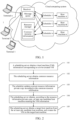
- FIG. 1 is a schematic diagram of a scenario of a resource scheduling system according to an embodiment of this application.
- the resource scheduling system may be a cloud computing system.
- the cloud computing system includes a resource scheduling apparatus.
- the resource scheduling apparatus may be specifically integrated into a scheduling server.
- the scheduling server may be a scheduler in the cloud computing system.
- each scheduler may include a resource scheduling apparatus.
- There may be one or more schedulers in the cloud computing system, for example, a scheduler 1, a scheduler 2, ..., and a scheduler n shown in FIG. 1 .
- the scheduler is configured to obtain virtual machine (VM) information corresponding to a to-be-created VM and obtain common resource information.
- the common resource information may include host machine information corresponding to all host machines in the cloud computing system.
- the scheduler updates a preset resource information private copy according to the common resource information and the VM information.
- the resource information private copy includes host machine information corresponding to a preset host machine.
- the resource information private copy maintained by the scheduler is used for selecting an appropriate host machine for the to-be-created VM.
- the scheduler further obtains, according to the resource information private copy, at least one candidate host machine meeting the VM information; and obtain a target host machine from the at least one candidate host machine, create the VM on the target host machine, and the like.
- the cloud computing system may further include one or more host machines, for example, a host machine A, a host machine B, ..., and a host machine n shown in FIG. 1 .
- the host machine may be configured to receive a request of creating a VM sent by the scheduler, and create one or more VMs according to the request.
- the cloud computing system may further include a receiver.
- the receiver is mainly configured to receive a VM creation request sent by one or more terminals.
- the VM creation request may carry VM information.
- the receiver may encapsulate each received VM creation request into a message, and store the message into a preset message queue, so that the scheduler may obtain the message from the message queue and extract the VM information of the to-be-created VM from the message.
- a plurality of schedulers may concurrently obtain the messages and select host machines for different to-be-created VMs.
- the cloud computing system may further include a resource manager.
- the resource manager is mainly configured to maintain the common resource information, so that the scheduler may obtain the common resource information from the resource manager.
- the common resource information is used for storing and maintaining host machine information corresponding to all host machines in the cloud computing system.
- the schematic diagram of the scenario of the resource scheduling system shown in FIG. 1 is merely an example.
- the resource scheduling system and the scenario described in the embodiments of this application are for more clearly describing the technical solutions in the embodiments of this application, and do not constitute a limitation on the technical solutions provided in the embodiments of this application.
- Persons of ordinary skill in the art may learn that, with evolution of a cloud computing system and appearance of a new service scenario, the technical solutions provided in the embodiments of this application also apply to a similar technical problem.
- the resource scheduling apparatus may be specifically integrated into a network device such as a scheduling server or a gateway.
- a resource scheduling method is performed by the scheduling server.
- the resource scheduling method includes: obtaining VM information corresponding to a to-be-created VM; obtaining common resource information, the common resource information including host machine information corresponding to all host machines in a cloud computing system; updating a preset resource information private copy according to the common resource information and the VM information, the resource information private copy including host machine information corresponding to a preset host machine; obtaining, according to the resource information private copy, at least one candidate host machine meeting the VM information; and obtaining a target host machine from the at least one candidate host machine, and creating the VM on the target host machine.
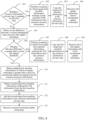
- FIG. 2 is a schematic flowchart of a resource scheduling method according to a first embodiment of this application.
- the resource scheduling method shown in FIG. 2 may be performed by, for example, a scheduling server.
- the resource scheduling method includes the following steps: In step 101, the scheduling server obtains VM information corresponding to a to-be-created VM.
- the scheduling server may obtain the VM information corresponding to the to-be-created VM from a preset message queue in a cloud computing system.
- the VM is an entire computer system that is simulated through software, has a hardware system function and is run in an isolated environment.
- a message in the message queue may be an asynchronous task.
- a message in the message queue flows in the message queue.
- Each component in the cloud computing system has an identity of a producer or a consumer.
- the producer transmits a message to the message queue.
- the consumer receives a message from the message queue.
- a receiver is used as a producer in the cloud computing system.
- the receiver After receiving a VM creation request carrying the VM information sent by a terminal, the receiver encapsulates the VM information into a message, and stores the message into the message queue.
- the VM information is queued in the message queue to wait for the scheduling server to perform resource scheduling.
- the scheduling server extracts the VM information from the message queue, and selects a host machine for the to-be-created VM corresponding to the VM information.
- the VM information may include processor information, internal memory information, and disk information required by the to-be-created VM.
- the VM information may include at least one of resource requirements of the to-be-created VM for a solid state drive, a cloud disk, a private network, a network adapter, a router, a network structure, a data center, a rack, a type of a host machine, a resource pool to which a host machine belongs, and a type of a VM. It may be understood that, the type of the VM information may be flexibly set according to actual requirements, and the specific content is not limited herein.
- step 102 the scheduling server obtains common resource information.
- the common resource information is resource data of the entire data center stored and maintained by the cloud computing system.
- the common resource information includes host machine information corresponding to all host machines in the cloud computing system. It may be understood that, the common resource information may be maintained by a resource manager, or may be maintained by another device in the cloud computing system.
- the scheduling server may obtain the common resource information from the device maintaining the common resource information. For example, if the common resource information is maintained by the resource manager in the cloud computing system, the scheduling server may obtain the common resource information from the resource manager.
- the resource manager maintaining the common resource information is used as an example for description.
- the common resource information is globally unique in the cloud computing system, and may be maintained in a form of a logic data table.
- each row in the data table represents a host machine
- each column in the data table represents a type of resource included in the host machine.
- Resources may include an Internet protocol (IP) address of the host machine, an available central processing unit (CPU), an available internal memory, and an available disk.
- IP Internet protocol
- CPU central processing unit
- an available disk an operation such as adding, reading, updating, or deleting may be performed on the common resource information.
- the operation corresponds to a process such as getting online, changing, or getting offline of a host machine resource in the data center.
- a host machine is a physical computer configured to install VM software.
- One or more VMs may be created on one host machine through the VM software.
- the host machine information may include a host machine identifier, an IP address, a machine type, an operating system name, a kernel version, a CPU type, a virtualization manner, a logical area number, an Internet data center number, a state of the host machine, whether to support a cloud disk, whether to support a solid state drive (SSD), a network version, a CPU node resource quota, an available internal memory resource, and an available disk resource, and the specific content is not limited herein.
- the host machine reports its host machine information to the resource manager, and the resource manager may store the host machine information into the common resource information.
- the host machine may alternatively report its host machine information to the scheduling server.
- the scheduling server may store the host machine information into a resource information private copy.
- the scheduling server may transmit an information obtaining request to the resource manager in real time or at a preset interval, receive the common resource information fed back by the resource manager based on the information obtaining request, and update the resource information private copy according to the common resource information.
- the resource manager actively transmits updated host machine information to the scheduling server.
- step 103 the scheduling server updates a preset resource information private copy according to the common resource information.
- the scheduling server maintains a resource information private copy in a form of a buffer that is of the common resource information in an internal memory of the scheduling server.
- the resource information private copy includes host machine information corresponding to a preset host machine.
- the preset host machine may be some or all host machines of the host machines in the cloud computing system.
- the scheduling server needs to synchronize the resource information private copy with the common resource information, and obtains the common resource information and update the resource information private copy according to the common resource information, to ensure consistency between the resource information private copy and the common resource information.
- the resource information private copy is updated according to the common resource information and the VM information.
- the step of updating the preset resource information private copy according to the common resource information and the VM information includes: performing screening to obtain target host machine information meeting the VM information from the common resource information, and adding the target host machine information to the preset resource information private copy.
- the step of performing screening to obtain target host machine information meeting the VM information from the common resource information, and adding the target host machine information to the preset resource information private copy includes the following steps:
- the scheduling server first determines whether the resource information private copy is updated for the first time, for example, may determine whether the resource information private copy is empty. If so, it is determined that the resource information private copy is updated for the first time; and if not, it is determined that the resource information private copy is not updated for the first time.
- the resource information private copy is updated for the first time
- the current resource information private copy is empty, and in this case, full update needs to be performed, that is, performing screening to obtain target host machine information meeting the VM information from the common resource information, and copying the target host machine information to the resource information private copy.
- the common resource information may alternatively be directly fully copied as the resource information private copy.
- the scheduling server obtains a current timestamp, and sets the current timestamp as the full update timestamp and the incremental update timestamp.
- the current timestamp is 11:00 a.m. on September 15, 2017, and in this case, the full update timestamp and the incremental update timestamp both are 11:00 a.m. on September 15, 2017.
- the full update timestamp and the incremental update timestamp are stored into the resource information private copy, to complete the current update.
- the step of performing screening to obtain target host machine information meeting the VM information from the common resource information, and adding the target host machine information to the preset resource information private copy includes the following steps:
- Step S11 The scheduling server obtains a time difference between a current timestamp and a previous full update timestamp in a case that the resource information private copy is not updated for the first time.
- Step S12 The scheduling server determines whether the time difference is greater than a preset full update threshold.
- Step S13 The scheduling server performs screening to obtain first target host machine information meeting the VM information from the common resource information in a case that the time difference is greater than the full update threshold.
- Step S14 The scheduling server copies the first target host machine information to the resource information private copy.
- Step S15 The scheduling server sets the current timestamp to a first full update timestamp and a first incremental update timestamp.
- Step S16 The scheduling server stores the first full update timestamp and the first incremental update timestamp to the resource information private copy.
- step S11 the scheduling server obtains a time difference between a current timestamp and a previous full update timestamp in a case that the resource information private copy is not updated for the first time, where the previous full update timestamp is a full update timestamp previously recorded relative to the current timestamp.
- the scheduling server determines whether the time difference is greater than a preset full update threshold.
- the full update threshold may be flexibly set according to actual requirements, and the specific value is not limited herein. For example, to achieve a relatively low full update frequency, the full update threshold may be set to a relatively large value.
- Step S13 the scheduling server performs screening to obtain first target host machine information meeting the VM information from the common resource information in a case that the time difference is greater than the full update threshold.
- the scheduling server may perform step S14, that is, copy the first target host machine information to the resource information private copy.
- the current common resource information may alternatively be fully copied as the resource information private copy.
- the scheduling server records the first full update timestamp and the first incremental update timestamp, to accurately record the full update timestamp and the incremental update timestamp.
- the current timestamp may be set to the first full update timestamp and the first incremental update timestamp.
- the current timestamp is 8:00 a.m. on September 16, 2017, and in this case, the full update timestamp and the incremental update timestamp both are 8:00 a.m. on September 16, 2017.
- the first full update timestamp and the first incremental update timestamp are stored into the resource information private copy, to complete the current update.
- the scheduling server may perform step S17, that is, obtain updated host machine information of which an update timestamp is greater than a previous incremental update timestamp from the common resource information in a case that the time difference is less than or equal to the full update threshold.
- step S18 the scheduling server obtains second target host machine information meeting the VM information from the host machine information.
- step S19 the scheduling server adds the second target host machine information to the resource information private copy.
- step S20 the scheduling server sets the current timestamp to a second incremental update timestamp.
- step S21 the scheduling server stores the second incremental update timestamp to the resource information private copy.
- a scale of the host machines in the cloud computing system is relatively large, for example, the scale of the host machines has an order of magnitude of 10000, and the scale of the scheduling servers has an order of magnitude of 100. Therefore, if the full update is performed, that is, the common resource information is fully copied as the resource information private copy each time the resource information private copy is updated, much time is consumed. To reduce time consumed by the update, the incremental update may be performed on the resource information, that is, part resource information of the common resource information is added to the resource information private copy.
- the update timestamp is recorded, to obtain an accurate update time.
- the scheduling server obtains the time difference between the current timestamp and the previous full update timestamp, if the time difference is less than or equal to the full update threshold, the scheduling server obtains updated host machine information from the common resource information and obtains the updated update timestamps of the host machine information, and then, performs screening to obtain, from the updated host machine information, the host machine information of which an update timestamp is greater than the previous incremental update timestamp. That is, the common resource information is queried according to the previous incremental update timestamp, to obtain all host machine information of which update timestamps are greater than or equal to the previous incremental update timestamp.
- the previous incremental update timestamp is a last incremental update timestamp relative to the current timestamp.
- the host machine information After the host machine information that is updated and of which an update timestamp is greater than the previous incremental update timestamp is obtained from the common resource information, the host machine information is screened.
- the second target host machine information meeting the VM information is obtained from the host machine information, and is added to the resource information private copy.
- the second incremental update timestamp is recorded, to accurately record the incremental update timestamp. That is, the current timestamp is set to the second incremental update timestamp, and the second incremental update timestamp is stored into the resource information private copy, to complete the current update.
- the resource information private copy is substantially a buffer run in the internal memory. In most cases, the scheduling server only needs to perform incremental update. The data volume and the consumed time of the update are both less. In some embodiments, the host machine that gets offline before the current incremental update is deleted from the resource information private copy.
- the "first” and “second” in the first target host machine information, the second target host machine information, the first full update timestamp, the first incremental update timestamp, and the second incremental update timestamp are merely used for distinguishing the target host machine information, the incremental update timestamps, or the full update timestamps, and do not mean to limit their importance.
- step 104 the scheduling server obtains, according to the resource information private copy, at least one candidate host machine meeting the VM information.
- the scheduling server screens the host machines for the to-be-created VM based on the resource information private copy.
- the scheduling server filters a set of the host machines in the resource information private copy according to the resource requirement in the VM information and the host machine information in the resource information private copy, reserve a qualified host machine, and remove an unqualified host machine, to obtain at least one candidate host machine.
- the scheduling server may control, according to the VM information and series-connected filters established based on the host machine information, each filter to perform corresponding filtering on the plurality of host machines, to obtain the at least one candidate host machine meeting the VM information.
- the scheduling server may deduct the resource requirement of the to-be-created VM from the candidate host machines, to obtain remaining resources of the candidate host machines, and submit the remaining resources to the common resource information until the remaining resource of one candidate host machine of the candidate host machines is successfully submitted.
- the scheduling server sets, in a case that the remaining resource corresponding to one candidate host machine of the candidate host machines is successfully submitted, the candidate host machine on which submission succeeds to the target host machine.
- a series filtering model may be established according to the host machine information.
- the series filtering model includes a plurality of series-connected filters. Each filter is responsible for one filtering function, and makes a corresponding judgment according to the VM information and then performs the corresponding filtering. For example, a first series-connected filter is responsible for filtering out the host machine that does not meet the resource requirement according to the resource requirement such as a CPU resource, an internal memory resource, and a disk resource required by the VM, and only reserves the host machine meeting the resource requirement.
- a second series-connected filter is responsible for filtering out the host machine that supports or does not support the SSD. If the host machine is required to support the SSD in the resource requirement, the second filter filters out the host machine that does not support the SSD according to the resource requirement, and reserves the host machine supporting the SSD.
- filters for functions of other filters, reference may be made to the filter for understanding, except that other filters are responsible for other filtering functions.
- the functions of the filters in the specific filtering model may be set according to the resource requirement of the to-be-created VM, and the specific content is not limited herein.
- step 105 the scheduling server obtains a target host machine from the at least one candidate host machine, and creates the VM on the target host machine.
- the scheduling server may determine the target host machine in the at least one candidate host machine.
- the target host machine may be randomly selected.
- priority values of each candidate host machine in respective dimensions may be determined, and the at least one candidate host machine is ranked according to the priority values.
- the step of obtaining the target host machine from the at least one candidate host machine may include the following steps:
- the priorities in the dimensions may include: a private network priority (vpcPrio), a concurrent task priority (taskPrio), a historical error priority (errorPrio), an anti-affinity priority (affinityPrio), an idleness priority (freePrio), an image cache priority (imgPrio), a fragmentation ratio priority (fragmentPrio), and the like.
- a smaller value of the vpcPrio indicates a higher priority.
- the value of the private network priority may be determined for each host machine. For example, 0 may be assigned to the vpcPrio of the host machine supporting the private network, and 1 may be assigned to the vpcPrio of the host machine that does not support the private network; alternatively, 1 may be assigned to the vpcPrio of the host machine supporting the private network, and 0 may be assigned to the vpcPrio of the host machine that does not support the private network, and the like.
- An IP address of the private network does not depend on a physical network topology, and is easier to migrate in future.
- the effect of the private network priority is preferentially placing the VM on the host machine that supports the private network, so that future migration is more convenient and flexible.
- a concurrent task priority may be determined for each host machine.
- the quantity of current tasks on the host machine is determined, and if the quantity of tasks is less than a preset threshold, 0 is assigned to the taskPrio; otherwise, the quantity of current tasks is assigned to the taskPrio.
- the preset threshold is 3 by default. Certainly, the preset threshold may be flexibly configured according to actual requirements.
- the concurrent tasks on the host machine may be performed simultaneously, and the concurrency is excessively high. Therefore, the creation of the VM may be slow or even fail.
- the effect of the concurrent task priority is preferentially placing the VM on a host machine with a smaller quantity of concurrent tasks, to ensure the success rate and the real-time performance of creating the VM.
- a historical error priority may be calculated for each host machine.
- the quantity of historical errors of the host machine in a last period of time (for example, 24 hours by default) is determined. If the quantity of historical errors is less than an error threshold, 0 is assigned to the errorPrio; otherwise, the quantity of historical errors is assigned to the errorPrio.
- the error threshold may be 5 by default, and the error threshold may be flexibly configured according to actual requirements.
- a host machine in which a plurality of errors occur in a short period of time may suffer from some type of fault, and before the host machine is processed, if the VM continues to be placed on the host machine, the task of creating the VM may fail, and the success rate is reduced.
- the effect of the historical error priority is preferentially placing the VM on a host machine in which no excessive errors occur, thereby improving the success rate of creating the VM.
- an anti-affinity priority may be calculated for each host machine.
- the quantity of existing VMs of a VM user on the host machine is determined, and if the quantity of VMs is less than an affinity threshold, 0 is assigned to the affinityPrio; otherwise, the quantity of existing VMs is assigned to the affinityPrio.
- the affinity threshold is 3, and certainly, the affinity threshold may be flexibly configured according to actual requirements.
- VMs of a user are clustered on one or more host machines the VMs on the host machines are all affected when the host machines are faulty, severely affecting the availability of the user's entire application.
- the effect of the anti-affinity priority is making VMs of a same user be widely distributed on different host machines, to perform distributed disaster recovery, so that a fault of a single host machine has a relatively limited impact on the availability of the entire application, thereby improving the stability and the availability of the user's application.
- a smaller value of the freePrio indicates a higher priority. For example, whether each host machine is completely idle may be determined. If each host machine is completely idle, 0 is assigned to the freePrio; otherwise, 1 is assigned to the freePrio. Alternatively, if each host machine is completely idle, 1 is assigned to the freePrio; otherwise, 0 is assigned to the freePrio, and the like. For ease of description, in the embodiments of this application, an example in which if each host machine is completely idle, 0 is assigned to the freePrio; otherwise, 1 is assigned to the freePrio is used for description.
- the effect of the idleness priority is protecting an idle host machine, and preferentially placing the VM on a non-idle host machine, to fully use resources on the non-idle host machine, thereby improving the resource utilization.
- the candidate host machine list may be traversed to determine whether each host machine has an image file required by the VM. For example, if each host machine has the image file, 0 is assigned to the imgPrio; otherwise, 1 is assigned to the imgPrio.
- the effect of the image cache priority is preferentially placing the VM on a host machine that has stored a VM image, so that a step of image downloading may be omitted when the VM is actually produced, to reduce a production time, and improve the real-time performance of the VM production process.
- a fragmentation ratio priority may be calculated for each host machine. The priority is calculated according to resources in two dimensions: CPU and internal memory. In a default case, the fragmentation ratio priority is equal to a fragmentation ratio of the CPU multiplied by a fragmentation ratio of the internal memory.
- the effect of the fragmentation ratio priority is fully using the resources of the host machine to reduce the resource fragmentation ratio, to further improve the resource utilization and reduce the operational costs.
- the host machines are ranked in descending order of the priority values in the dimensions to obtain a candidate host machine list, and a most suitable candidate host machine in the candidate host machine list may be determined as the target host machine.
- a specific determining process may be as follows:
- the host machines are ranked in descending order of the priority values in the same dimension based on the descending order of the priorities of the dimensions. Host machines with a same priority value in one dimension are ranked again according to respective priority values in a next dimension, thus obtaining the candidate host machine list in which the host machines are ranked in descending order of the priorities.
- the candidate host machine ranked first is optimal. Another creation task may exist in the optimal candidate host machine. Therefore, the success of the creation cannot be necessarily ensured, and the target host machine needs to be determined in a manner of simulating deduction of resources.
- the resource requirement of the to-be-created VM is deducted from the candidate host machines one by one according to rankings of the ranked candidate host machines in the candidate host machine list, to obtain a remaining resource corresponding to each candidate host machine, thereby completing the simulation of deduction of resources on the host machine.
- the resource requirement of the VM is included in the VM information corresponding to the VM. That is, the resource requirement of the to-be-created VM is deducted one by one from the candidate host machines starting from the candidate host machine ranked first in descending order of the ranked candidate host machines.
- the candidate host machine on which the deduction succeeds is used as the target host machine.
- the ranking order may be preset.
- a default ranking standard i.e., a descending order of priorities may be: a private network priority (vpcPrio), a concurrent task priority (taskPrio), a historical error priority (errorPrio), an anti-affinity priority (affinityPrio), an idleness priority (freePrio), an image cache priority (imgPrio), and a fragmentation ratio priority (fragmentPrio).
- the ranking standard may also be selected in a default standard range, and the order may be adjusted and configured flexibly according to actual requirements.
- the remaining resource of the candidate host machine is obtained, the remaining resource is submitted to the common resource information.
- the candidate host machine on which submission succeeds is set to the target host machine.
- the remaining resource of the candidate host machine is written to a database used for maintaining remaining resource data of each host machine. When the write succeeds, the candidate host machine on which the write succeeds is used as the target host machine.
- the VM may be created on the target host machine.
- the host machine information in the resource information private copy may be updated, and the cloud computing system may be further instructed to update the common resource information.
- the remaining resource corresponding to the candidate host machine fails to be submitted, it indicates that a scheduling conflict possibly occurs, that is, a plurality of resource scheduling processes simultaneously select the same host machine.
- the first host machine may be directly determined as the target host machine without performing the deduction operation on the second host machine.
- the deduction operation needs to be performed on the second host machine until the deduction succeeds on a host machine.
- the method may further include: re-ranking a preset quantity of top candidate host machines in the candidate host machine list, to generate a candidate host machine target list.
- the step of deducting the resource requirement of the to-be-created VM from candidate host machines one by one according to the rankings of the candidate host machines in the candidate host machine list, to obtain remaining resources includes: deducting the resource requirement of the to-be-created VM from candidate host machines in the candidate host machine target list one by one according to the rankings of the candidate host machines in the candidate host machine target list, to obtain remaining resources.
- the preset quantity may be flexibly set according to actual requirements.
- the preset quantity of top candidate host machines in the candidate host machine list may be randomly re-ranked, or may be re-ranked according to a preset rule.
- the specific re-ranking manner is not limited herein.
- An objective of re-ranking the preset quantity of top candidate host machines in the candidate host machine list is to randomly scatter the first k (k is the preset quantity) candidate host machines in the candidate host machine list for re-ranking, and obtain the candidate host machine target list, so that a plurality of resource scheduling processes can be prevented from selecting the same target host machine in a concurrency scenario, effectively avoiding scheduling conflicts.
- VM information corresponding to a to-be-created VM is obtained and common resource information is obtained.
- the common resource information includes host machine information corresponding to all host machines in a cloud computing system.
- a preset resource information private copy is updated according to the common resource information and the VM information.
- the resource information private copy includes host machine information corresponding to a preset host machine.
- at least one candidate host machine meeting the VM information is obtained, a target host machine is obtained from the at least one candidate host machine, and the VM is created on the target host machine.
- the resource information private copy can be updated in time before the resource scheduling is performed, which ensures synchronization of the resource information private copy and the common resource information, so that a better resource scheduling result is achieved, and there is no need to wait during the resource scheduling, improving the efficiency of the resource scheduling.
- a scheduler is used as an example. When there are a plurality of VM creation requests, a message corresponding to each VM creation request is stored in the message queue.
- a plurality of schedulers can concurrently extract the VM creation request from the message in the message queue, select a suitable host machine for each VM creation request according to the VM information carried in the VM creation request, and create a corresponding VM on the host machine. Because the plurality of schedulers concurrently perform resource scheduling, host machines may be selected for different VMs concurrently, so that the throughput and the concurrency capability of the cloud computing system can be improved, to prevent the scheduler from becoming a performance bottleneck of the entire system.
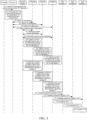
- FIG. 3 is a schematic flowchart of concurrently performing, by a plurality of schedulers, resource scheduling in a resource scheduling method according to an embodiment of this application. It is assumed that the cloud computing system has three schedulers and three host machines, and certainly, it is impossible that the cloud computing system only has three schedulers and three host machines. This embodiment is only for ease of describing a given example, but is not to be understood as limiting the quantity of schedulers and the quantity of host machines. However, regardless of the quantity of schedulers and the quantity of host machines, the resource scheduling processes are similar, and may all be understood according to the example.
- the method process may include the following steps: 201.
- a terminal transmits a VM creation request carrying VM information to a receiver in the cloud computing system.
- the terminal transmits the VM creation request carrying the VM information to the receiver in the cloud computing system.
- the terminal may be a terminal device used by a user responsible for creating the VM.
- the VM information is similar to the VM information described above, and is not described herein.
- the receiver encapsulates the received VM creation request into a message, and stores the message into a message queue.
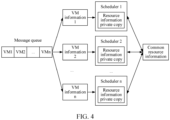
- the receiver maintains the message queue. After receiving the VM creation request, the receiver encapsulates the VM creation request into a message. A format of the message may be flexibly set according to actual requirements, for example, a key-value or json message format. Then, the receiver stores the message into the message queue, so that the scheduler may extract the VM information corresponding to the to-be-created VM from the message queue. When the receiver receives a large quantity of VM creation requests within a certain period of time, the message queue can store a plurality of messages. As shown in FIG. 4 , the message queue stores a message VM1 to a message VMn in FIG. 4 , where n is a positive integer and n>1.
- a scheduler 1 obtains VM information 1.
- a scheduler 2 obtains VM information 2.
- a scheduler 3 obtains VM information 3.
- Step 203 to step 205 may be performed simultaneously, or may be performed in order.
- step 205 may be first performed, then step 203 may be performed, and step 204 is finally performed.
- step 204 may be first performed, then step 205 may be performed, and step 203 is finally performed; or the like.
- the specific order of the steps is not limited herein.
- the scheduler selects a suitable host machine for the VM. If the scheduler is considered as a function black-box, its input may be the host machine information and the VM information, and its output may be a matching pair of a VM ID and a host machine ID, that is, ⁇ VM ID, HOST ID>.
- the scheduler 1, the scheduler 2, and the scheduler 3 may concurrently perform resource scheduling, and respectively obtain the corresponding VM information, thereby improving a concurrency level and a throughput rate of the system.
- the manner in which the scheduler 1 obtains the VM information 1 may include: Manner 1: The scheduler 1 transmits a request for obtaining the VM information 1 to the receiver, the receiver transmits a message 1 carrying the VM information 1 to the scheduler 1 according to the received request for obtaining the VM information 1, where the request is transmitted by the scheduler 1, and the scheduler 1 may extract the VM information 1 from the received message 1.
- Manner 2 The scheduler 1 directly reads the message stored in the message queue, and obtains the VM information 1 from the message.
- the manner in which the scheduler 2 obtains the VM information 2 and the manner in which the scheduler 3 obtains the VM information 3 are similar to the manner in which the scheduler 1 obtains the VM information 1, and are not described herein.
- the scheduler 1 obtains common resource information.
- the scheduler 2 obtains the common resource information.
- the scheduler 3 obtains the common resource information.
- Step 206 to step 208 may be performed simultaneously, or may be performed in order. Alternatively, step 208 may be first performed, then step 206 may be performed, and step 207 is finally performed; or the like. The specific order of the steps is not limited herein.
- the resource manager in the cloud computing system maintains the common resource information, and the common resource information includes the host machine information corresponding to all host machines in the cloud computing system.
- the host machine enters the cloud computing system, necessary initialization needs to be performed through a host machine introducing process.
- the host machine reports its host machine information to the resource manager, and the resource manager may store the host machine information into the common resource information.
- the resource manager may also update the common resource information in time.
- the manner in which the scheduler 1 obtains the common resource information may include the following manners: Manner 1: The scheduler 1 transmits a common resource information obtaining request to the resource manager, the resource manager transmits corresponding common resource information to the scheduler 1 according to the received common resource information obtaining request transmitted by the scheduler 1. Manner 2: The scheduler 1 directly reads a database storing the common resource information, and obtains the common resource information from the database.
- the manner in which the scheduler 2 obtains the common resource information and the manner in which the scheduler 3 obtains the common resource information are similar to the manner in which the scheduler 1 obtains the common resource information, and are not described herein.
- the scheduler 1, the scheduler 2, and the scheduler 3 may obtain the common resource information concurrently or at a preset interval.
- the scheduler 1 updates, according to the received common resource information and the VM information 1, a resource information private copy 1 maintained by itself.
- the scheduler 2 updates, according to the received common resource information and the VM information 2, a resource information private copy 2 maintained by itself.
- the scheduler 3 updates, according to the received common resource information and the VM information 3, a resource information private copy 3 maintained by itself.
- step 209 to step 211 may be flexibly set according to actual situations, and the specific order of the steps is not limited herein.
- the scheduler 1 maintains the resource information private copy 1 by itself
- the scheduler 2 maintains the resource information private copy 2 by itself
- the scheduler 3 maintains the resource information private copy 3 by itself.
- the resource information private copy 1, the resource information private copy 2, and the resource information private copy 3 each include host machine information corresponding to a preset host machine.
- the preset host machine may be some or all host machines of the host machines in the cloud computing system.
- the resource information private copy is updated through the common resource information, to ensure consistency of the resource information and accuracy of the information.
- the step of updating, by the scheduler 1, a resource information private copy 1 maintained by itself according to the received common resource information and the VM information 1 may include the following steps:
- the scheduler 1 may obtain a current timestamp, and set the current timestamp to the full update timestamp and the incremental update timestamp; and stores the full update timestamp and the incremental update timestamp to the resource information private copy.
- the scheduler 1 obtains a time difference between the current timestamp and a previous full update timestamp.
- the scheduler 1 determines whether the time difference is greater than a preset full update threshold. If so, step 307 to step 309 are performed in order; and if not, step 310 is performed.
- the scheduler 1 performs screening to obtain first target host machine information meeting the VM information from the common resource information.
- the scheduler 1 copies the first target host machine information to the resource information private copy.
- the scheduler 1 records a first full update timestamp and a first incremental update timestamp.
- the scheduler 1 may set the current timestamp to the first full update timestamp and the first incremental update timestamp; and stores the first full update timestamp and the first incremental update timestamp to the resource information private copy.
- the scheduler 1 obtains updated host machine information of which an update timestamp is greater than a previous incremental update timestamp from the common resource information.
- the scheduler 1 obtains second target host machine information meeting the VM information from the host machine information.
- the scheduler 1 adds the second target host machine information to the resource information private copy.
- the scheduler 1 records a second incremental update timestamp.
- the scheduler 1 may set the current timestamp to the second incremental update timestamp; and stores the second incremental update timestamp to the resource information private copy.
- incremental update may be performed on the resource information private copy, to significantly reduce time consumed by resource information synchronization.
- the scheduler 2 updates the resource information private copy 2 according to the common resource information and the VM information 2
- the scheduler 3 updates the resource information private copy 3 according to the common resource information and the VM information 3.
- the update manners of the scheduler 2 and the scheduler 3 are similar to the update manner of the scheduler 1, and are not described herein.
- schedulers may concurrently extract the VM information from the messages in the message queue, and respectively update, according to the common resource information, the resource information private copies maintained by the schedulers.
- the scheduler 1 determines at least one candidate host machine according to the resource information private copy 1, and determines a target host machine A in the at least one candidate host machine.
- the scheduler 2 determines at least one candidate host machine according to the resource information private copy 2, and determines a target host machine B in the at least one candidate host machine.
- the scheduler 3 determines at least one candidate host machine according to the resource information private copy 3, and determines a target host machine C in the at least one candidate host machine.
- step 212 to step 214 may be flexibly set according to actual situations, and the specific order of the steps is not limited herein.
- the scheduler 1 may filter a set of the host machines in the resource information private copy according to the resource requirement in the VM information and the host machine information in the resource information private copy, reserve a qualified host machine, and remove an unqualified host machine, to obtain at least one candidate host machine.
- the scheduler 1 may control, according to established series-connected filters, each filter to perform corresponding filtering on the plurality of host machines, to obtain the at least one candidate host machine meeting the VM information.
- Eight host machines are used as an example. The eight host machines are filtered according to the host machine information and the VM information of the to-be-created VM.
- the filter A is responsible for filtering out host machines that do not meet the hardware resource requirements that can be provided by the host machines, such as the CPU resources, the internal memory resources, and the disk resources required by the VM, to reserve host machines that meet the resource requirements
- two host machines are filtered out through the round of filtering. The remaining six host machines then enter a filter B.
- the filter B is responsible for filtering out the host machine that does not support the SSD according to the VM information, one more host machine is filtered out after the filtering performed by the filter B, and five host machines remain. Then, the five host machines sequentially pass through other filters.
- the other filters may be responsible for filtering out a host machine that does not support the cloud disk, and responsible for filtering out a host machine that does not support a private network, or the like.
- the filter X is responsible for filtering out one host machine that does not meet the virtualization type, for example, if the virtualization type of the host machine needs to be KVM, a host machine whose virtualization type is Xen is filtered out.
- three candidate host machines are obtained, that is, a candidate host machine A, a candidate host machine B, and a candidate host machine C.
- the scheduler 1 may determine the target host machine in the at least one candidate host machine, and specific execution steps may include the following steps: 401.
- the scheduler 1 determines priority values of each host machine of the at least one candidate host machine in respective dimensions.
- the manner of calculating the priority values of each host machine in the dimensions is similar to the manner of calculating the priority values described in the foregoing embodiment, and is not described herein.
- the priority values of the candidate host machine A, the candidate host machine B, and the candidate host machine C in the dimensions may be separately calculated.
- the scheduler 1 performs ranking in descending order of the priority values in the dimensions, to generate a candidate host machine list.
- the ranking manner is similar to the ranking manner described in the foregoing embodiment, and is not described herein.
- the candidate host machines are ranked as the candidate host machine A, the candidate host machine B, and the candidate host machine C sequentially in descending order of the priority values.
- the scheduler 1 selects a host machine from the candidate host machine list according to the ranking order.
- the scheduler 1 selects the candidate host machine A from the generated candidate host machine list 1.
- the scheduler 1 calculates, according to a resource requirement of the VM, a remaining resource of the host machine on which deduction is performed.
- the resource requirement of the VM is resources of 8-core and 8G
- the host machine information of the candidate host machine A includes resources of 10-core and 10G
- resources of 8-core and 8G need to be deducted for creating the VM, so that remaining resources of the candidate host machine A after the deduction are resources of 2-core and 2G.
- the scheduler 1 submits the remaining resource to common resource information.
- step 407 and step 408 are performed in order; and if not, step 409 is performed.
- the scheduler 1 determines that the host machine is the target host machine.
- the scheduler 1 sets, in a case that the remaining resource corresponding to one candidate host machine is successfully submitted, the candidate host machine on which submission succeeds to the target host machine.
- the scheduler 1 updates the resource information private copy.
- the scheduler 1 updates the resource information private copy 1.
- the scheduler 1 determines whether a quantity of submission times exceeds a scheduling conflict threshold. If not, step 410 is performed; and if yes, step 411 is performed.
- the reason may be that a plurality of schedulers attempt to concurrently submit the resources to the same host machine. In this case, only one scheduler can successfully submit the resources, and other schedulers fail to submit the resources.
- the scheduling conflict threshold may be flexibly set according to actual situations.
- the scheduling conflict threshold may be set in a range of three times to eight times, so as to avoid the case that a plurality of VMs are created on the same host machine in a short time, to cause excessively great pressure on the host machine.
- the scheduler 1 obtains resource data of the host machine again, and performs step 404.
- the scheduling conflict may occur when a plurality of schedulers concurrently operate to submit the remaining resource. Therefore, the scheduler may query for latest resource data of the host machine, and initiate a new round of operations such as deduction and submission of remaining resources. If a quantity of scheduling conflicts for the same host machine exceeds the threshold, a next host machine in the candidate host machine list is selected, that is, a suboptimal host machine. In this way, the cost of the scheduling conflict is lower and the scheduling conflict is effectively handled.
- step 403 is performed; and if not, step 412 is performed.
- the scheduler 1 may re-rank the preset quantity of top candidate host machines in the candidate host machine list to obtain the candidate host machine target list, select the host machine according to the rankings of the candidate host machines in the candidate host machine target list, and calculate the remaining resource of the host machine after deduction according to the resource requirement of the VM, so that a plurality of schedulers can be prevented from selecting the same host machine in a scenario in which resource scheduling is performed concurrently, effectively avoiding scheduling conflicts.
- the scheduling server may determine, in a case of failing to submit the remaining resource of a candidate host machine, whether a quantity of submission times of the remaining resource of the candidate host machine exceeds the scheduling conflict threshold.
- the scheduling server obtains latest resource data of the candidate host machine, and re-determines the remaining resource corresponding to the candidate host machine in a case of determining that the quantity of submission times of the remaining resource of the candidate host machine does not exceed the scheduling conflict threshold.
- the scheduling server may deduct the resource requirement of the to-be-created VM from a next candidate host machine in the candidate host machine list to obtain a corresponding remaining resource, and submit the corresponding remaining resource in a case of determining that the quantity of submission times of the remaining resource of the candidate host machine exceeds the scheduling conflict threshold.
- the scheduler 1 determines that there is no unselected host machine.
- the scheduler 2 determines at least one candidate host machine according to the resource information private copy 2, and determines the target host machine B in the at least one candidate host machine.
- the scheduler 3 determines at least one candidate host machine according to the resource information private copy 3, and determines the target host machine C in the at least one candidate host machine.
- the determining manners of the two schedulers are similar to that of the scheduler 1, and are not described herein.
- the scheduler 1 transmits a request for creating a VM 1 to the host machine A after determining the target host machine A.
- the scheduler 2 transmits a request for creating a VM 2 to the host machine B after determining the target host machine B.
- the scheduler 3 transmits a request for creating a VM 3 to the host machine C after determining the target host machine C.
- the host machine A creates the VM 1 after receiving the request for creating the VM 1.
- the host machine B creates the VM 2 after receiving the request for creating the VM 2.
- the host machine C creates the VM 3 after receiving the request for creating the VM 3.
- candidate host machines are sequentially a candidate host machine A, a candidate host machine B, and a candidate host machine C in descending order of priority values in a candidate host machine list 1 obtained by a scheduler 1; candidate host machines are sequentially a candidate host machine A, a candidate host machine C, and a candidate host machine B in descending order of priority values in a candidate host machine list 2 obtained by a scheduler 2; and candidate host machines are sequentially a candidate host machine B, a candidate host machine A, and a candidate host machine C in descending order of priority values in a candidate host machine list 3 obtained by a scheduler 3.
- the scheduler 1 selects the candidate host machine A ranked first from the candidate host machine list 1, calculates a remaining resource of the candidate host machine A according to a resource requirement of the VM 1 after deduction is performed, and submits the remaining resource to the common resource information, so that it may be determined that the candidate host machine A is the target host machine if the submission succeeds.
- the scheduler 1 transmits the request for creating the VM 1 to the host machine A, and the host machine A creates the VM 1 after receiving the request.
- the scheduler 2 selects the candidate host machine A ranked first from the candidate host machine list 2, calculates a remaining resource of the candidate host machine A according to a resource requirement of the VM 2 after deduction is performed, and submits the remaining resource to the common resource information. If the submission fails and the quantity of submission times reaches the threshold, the scheduler 2 needs to select the candidate host machine C ranked second from the candidate host machine list 2, calculates the remaining resource of the candidate host machine C according to the resource requirement of the VM 2 after deduction is performed, and submits the remaining resource to the common resource information, so that it may be determined that the candidate host machine C is the target host machine if the submission succeeds.
- the scheduler 2 transmits the request for creating the VM 2 to the host machine C, and the host machine C creates the VM 2 after receiving the request.
- the scheduler 3 selects the candidate host machine B ranked first from the candidate host machine list 3, calculates a remaining resource of the candidate host machine B according to a resource requirement of the VM 3 after deduction is performed, and submits the remaining resource to the common resource information, so that it may be determined that the candidate host machine B is the target host machine if the submission succeeds.
- the scheduler 3 transmits the request for creating the VM 3 to the host machine B, and the host machine B creates the VM 3 after receiving the request.
- FIG. 5 is merely an example.
- the resource scheduling scenario described in FIG. 5 is for more clearly describing the technical solutions of the embodiments of this application, and does not constitute a limitation on the technical solutions provided in the embodiments of this application.
- FIG. 5 may further include a scheduler 4, candidate host machines are sequentially a candidate host machine Y, a candidate host machine X, and a candidate host machine D in descending order of priority values in a candidate host machine list 4 obtained by the scheduler 4.
- the scheduler 4 selects the candidate host machine Y ranked first from the candidate host machine list 4, calculates a remaining resource of the candidate host machine Y according to a resource requirement of the VM 4 after deduction is performed, and submits the remaining resource to the common resource information, so that it may be determined that the scheduler 4 may create the VM 4 on the candidate host machine Y if the submission succeeds.
- a plurality of schedulers can concurrently extract the VM creation request from the message in the message queue, select a suitable target host machine for each VM creation request according to the VM information carried in the VM creation request, and create a corresponding VM on the target host machine.
- a buffering mechanism for resource information including setting the common resource information and the resource information private copy
- a plurality of schedulers can concurrently perform resource scheduling, which can effectively improve a concurrency level and a throughput rate of resource scheduling, reduce scheduling latency, and improve scalability of an entire system.
- an embodiment of this application further provides an apparatus based on the foregoing resource scheduling method.
- Terms have meanings the same as those in the foregoing resource scheduling method, and for specific implementation details, reference may be made to the description in the method embodiments.
- FIG. 8 is a schematic structural diagram of a resource scheduling apparatus according to an embodiment of this application.
- the resource scheduling apparatus may include a first obtaining unit 501, a second obtaining unit 502, an update unit 503, a third obtaining unit 504, and a creation unit 505.
- the first obtaining unit 501 is configured to obtain VM information corresponding to a to-be-created VM.
- the first obtaining unit 501 may obtain the VM information corresponding to the to-be-created VM from a preset message queue in a cloud computing system.
- the VM is an entire computer system that is simulated through software, has a hardware system function and is run in an isolated environment.
- a message in the message queue may be an asynchronous task, a message in the message queue flows in the message queue, and each component in the cloud computing system has an identity of a producer or a consumer.
- the producer transmits a message to the message queue, and the consumer receives a message from the message queue.
- a receiver is used as a producer in the cloud computing system.
- the receiver After receiving a VM creation request carrying the VM information sent by a terminal, the receiver encapsulates the VM information into a message, and stores the message into the message queue.
- the VM information is queued in the message queue to wait for the first obtaining unit 501 to perform resource scheduling.
- the first obtaining unit 501 extracts the VM information from the message queue, and selects a host machine for the to-be-created VM corresponding to the VM information.
- the VM information may include processor information, internal memory information, and disk information required by the to-be-created VM, and at least one of resource requirements of the to-be-created VM for a solid state drive, a cloud disk, a private network, a network adapter, a router, a network structure, a data center, a rack, a type of a host machine, a resource pool to which a host machine belongs, and a type of a VM. It may be understood that, the type of the VM information may be flexibly set according to actual requirements, and the specific content is not limited herein.
- the second obtaining unit 502 is configured to obtain common resource information.
- the common resource information is resource data of the entire data center stored and maintained by the cloud computing system.
- the common resource information includes host machine information corresponding to all host machines in the cloud computing system. It may be understood that, the common resource information may be maintained by a resource manager, or may be maintained by another device in the cloud computing system.
- the second obtaining unit 502 obtains the common resource information from the device maintaining the common resource information. For example, if the common resource information is maintained by the resource manager in the cloud computing system, the second obtaining unit 502 may obtain the common resource information from the resource manager.
- the resource manager maintaining the common resource information is used as an example for description.
- the common resource information is globally unique in the cloud computing system, and may be maintained in a form of a logic data table.
- each row in the data table represents a host machine, and columns in the data table represent different types of resources included in the host machine.
- the different types of resources may include an Internet protocol (IP) address of the host machine, an available central processing unit (CPU), an available internal memory, and an available disk.
- IP Internet protocol
- CPU central processing unit
- an available disk an operation such as adding, reading, updating, or deleting may be performed on the common resource information.
- the operation corresponds to a process such as getting online, changing, or getting offline of a host machine resource in the data center.
- a host machine is a physical computer configured to install VM software.
- One or more VMs may be created on one host machine through the VM software.
- the host machine information may include a host machine identifier, an IP address, a machine type, an operating system name, a kernel version, a CPU type, a virtualization manner, a logical area number, an Internet data center number, a state of the host machine, whether to support a cloud disk, whether to support a solid state drive (SSD), a network version, a CPU node resource quota, an available internal memory resource, and an available disk resource, and the specific content is not limited herein.
- the host machine reports its host machine information to the resource manager, and the resource manager may store the host machine information into the common resource information.
- the host machine may report the host machine information to the resource scheduling apparatus, and the resource scheduling apparatus may store the host machine information into a preset resource information private copy.
- the resource scheduling apparatus transmits an information obtaining request to the resource manager in real time or at a preset interval, receives the common resource information fed back by the resource manager based on the information obtaining request, and updates the resource information private copy according to the common resource information.
- the resource manager actively transmits the updated host machine information to the resource scheduling apparatus in a case that the common resource information is updated.
- the update unit 503 is configured to update the preset resource information private copy according to the common resource information and the VM information.
- the resource scheduling apparatus maintains a resource information private copy in a form of a buffer that is of the common resource information in an internal memory of the resource scheduling apparatus.
- the resource information private copy includes host machine information corresponding to a preset host machine.
- the preset host machine may be some or all host machines of the host machines in the cloud computing system.
- the update unit 503 needs to synchronize the resource information private copy with the common resource information, and may obtain the common resource information and update the resource information private copy according to the common resource information, to ensure consistency between the resource information private copy and the common resource information.
- the update unit 503 may update the resource information private copy according to the common resource information and the VM information.
- the update unit 503 includes an update subunit 5031, configured to perform screening to obtain target host machine information meeting the VM information from the common resource information, and add the target host machine information to the preset resource information private copy.
- the update subunit 5031 is specifically configured to: perform screening to obtain the target host machine information meeting the VM information from the common resource information in a case that the resource information private copy is updated for the first time; copy the target host machine information to the resource information private copy; obtain a current timestamp, and set the current timestamp to a full update timestamp and an incremental update timestamp; and store the full update timestamp and the incremental update timestamp into the resource information private copy.
- the update subunit 5031 determines whether the resource information private copy is updated for the first time, for example, may determine whether the resource information private copy is empty. If so, it is determined that the resource information private copy is updated for the first time; and if not, it is determined that the resource information private copy is not updated for the first time. In a case that the resource information private copy is updated for the first time, the current resource information private copy is empty, and in this case, full update needs to be performed, that is, performing screening to obtain target host machine information meeting the VM information from the common resource information, and copying the target host machine information to the resource information private copy.
- the common resource information may alternatively be directly fully copied as the resource information private copy.
- the update subunit 5031 obtains a current timestamp, and sets the current timestamp as the full update timestamp and the incremental update timestamp.
- the current timestamp is 11:00 a.m. on September 15, 2017, and in this case, the full update timestamp and the incremental update timestamp both are 11:00 a.m. on September 15, 2017.
- the full update timestamp and the incremental update timestamp are stored into the resource information private copy, to complete the current update.
- the update subunit 5031 is specifically configured to: obtain a time difference between the current timestamp and a previous full update timestamp in a case that the resource information private copy is not updated for the first time; determine whether the time difference is greater than a preset full update threshold; perform screening to obtain first target host machine information meeting the VM information from the common resource information in a case that the time difference is greater than the full update threshold; copy the first target host machine information to the resource information private copy; set the current timestamp to a first full update timestamp and a first incremental update timestamp; and store the first full update timestamp and the first incremental update timestamp into the resource information private copy.
- the update subunit 5031 obtains the time difference between the current timestamp and the previous full update timestamp in a case that the resource information private copy is not updated for the first time, where the previous full update timestamp is a full update timestamp previously recorded relative to the current timestamp.
- the update subunit 5031 determines whether the time difference is greater than a preset full update threshold.
- the full update threshold may be flexibly set according to actual requirements, and the specific value is not limited herein. For example, to achieve a relatively low full update frequency, the full update threshold may be set to a relatively large value.
- full update is performed, that is, performing screening to obtain the first target host machine information meeting the VM information from the common resource information, and copying the first target host machine information to the resource information private copy.
- the current common resource information may alternatively be fully copied as the resource information private copy.
- the update subunit 5031 records the first full update timestamp and the first incremental update timestamp, to accurately record the full update timestamp and the incremental update timestamp.
- the current timestamp may be set to the first full update timestamp and the first incremental update timestamp. For example, the current timestamp is 8:00 a.m. on September 16, 2017, and in this case, the full update timestamp and the incremental update timestamp both are 8:00 a.m. on September 16, 2017. Then, the first full update timestamp and the first incremental update timestamp are stored into the resource information private copy, to complete the current update.
- the update subunit 5031 is further specifically configured to: obtain updated host machine information of which an update timestamp is greater than a previous incremental update timestamp from the common resource information in a case that the time difference is less than or equal to the full update threshold; obtain second target host machine information meeting the VM information from the host machine information; add the second target host machine information to the resource information private copy; set the current timestamp to a second incremental update timestamp; and store the second incremental update timestamp into the resource information private copy.
- a scale of the host machines in the cloud computing system is relatively large, for example, the scale of the host machines has an order of magnitude of 10000, and the scale of the resource scheduling apparatuses has an order of magnitude of 100. Therefore, if the full update is performed, that is, the common resource information is fully copied as the resource information private copy each time the resource information private copy is updated, much time is consumed. To reduce time consumed by the update, the incremental update may be performed on the resource information, that is, part resource information of the common resource information is added to the resource information private copy.
- the update timestamp is recorded, to obtain an accurate update time.
- the update subunit 5031 obtains the time difference between the current timestamp and the previous full update timestamp, if the time difference is less than or equal to the full update threshold, the update subunit 5031 obtains updated host machine information from the common resource information and obtains the updated update timestamps of the host machine information, and then, performs screening to obtain, from the updated host machine information, the host machine information of which an update timestamp is greater than the previous incremental update timestamp.
- the common resource information is queried according to the previous incremental update timestamp, to obtain all host machine information of which update timestamps are greater than or equal to the previous incremental update timestamp.
- the previous incremental update timestamp is a last incremental update timestamp relative to the current timestamp.
- the host machine information After the host machine information that is updated and of which an update timestamp is greater than the previous incremental update timestamp is obtained from the common resource information, the host machine information is screened.
- the second target host machine information meeting the VM information is obtained from the host machine information, and is added to the resource information private copy.
- the update subunit 5031 records the second incremental update timestamp, to accurately record the incremental update timestamp. That is, the current timestamp is set to the second incremental update timestamp, and the second incremental update timestamp is stored into the resource information private copy, to complete the current update.
- the resource information private copy is substantially a buffer run in the internal memory. In most cases, the update subunit 5031 only needs to perform incremental update. The data volume and the consumed time of the update are both less. In some embodiments, the host machine that gets offline before the current incremental update is deleted from the resource information private copy.
- the "first” and “second” in the first target host machine information, the second target host machine information, the first full update timestamp, the first incremental update timestamp, and the second incremental update timestamp are merely used for distinguishing the target host machine information, the incremental update timestamps, or the full update timestamps, and do not mean to limit their importance.
- the third obtaining unit 504 is configured to obtain, according to the resource information private copy, at least one candidate host machine meeting the VM information.
- the third obtaining unit 504 screens the host machines for the to-be-created VM based on the resource information private copy.
- the third obtaining unit 504 may filter a set of the host machines in the resource information private copy according to the resource requirement in the VM information and the host machine information in the resource information private copy, reserve a qualified host machine, and remove an unqualified host machine, to obtain at least one candidate host machine.
- the third obtaining unit 504 may control, according to the VM information and series-connected filters established based on the host machine information, each filter to perform corresponding filtering on the plurality of host machines, to obtain the at least one candidate host machine meeting the VM information.
- a series filtering model may be established according to the host machine information.
- the series filtering model includes a plurality of series-connected filters. Each filter is responsible for one filtering function, and makes a corresponding judgment according to the VM information and then performs the corresponding filtering. For example, a first series-connected filter is responsible for filtering out the host machine that does not meet the resource requirement according to the resource requirement such as a CPU resource, an internal memory resource, and a disk resource required by the VM, and only reserves the host machine meeting the resource requirement.
- a second series-connected filter is responsible for filtering out the host machine that supports or does not support the SSD. If the host machine is required to support the SSD in the resource requirement, the second filter filters out the host machine that does not support the SSD according to the resource requirement, and reserves the host machine supporting the SSD.
- filters for functions of other filters, reference may be made to the filter for understanding, except that other filters are responsible for other filtering functions.
- the functions of the filters in the specific filtering model may be set according to the resource requirement of the to-be-created VM, and the specific content is not limited herein.
- the creation unit 505 is configured to obtain a target host machine from the at least one candidate host machine, and create the VM on the target host machine.
- the creation unit 505 may determine the target host machine in the at least one candidate host machine.
- the target host machine may be randomly selected.
- priority values of each candidate host machine in respective dimensions may be determined, and the at least one candidate host machine is ranked according to the priority values.
- the creation unit 505 includes:
- the determining subunit 5051 calculates the priority values of each host machine in the dimensions.
- the priorities in the dimensions may include: a private network priority (vpcPrio), a concurrent task priority (taskPrio), a historical error priority (errorPrio), an anti-affinity priority (affinityPrio), an idleness priority (freePrio), an image cache priority (imgPrio), a fragmentation ratio priority (fragmentPrio), and the like.
- a smaller value of the vpcPrio indicates a higher priority.
- the value of the private network priority may be determined for each host machine. For example, 0 may be assigned to the vpcPrio of the host machine supporting the private network, and 1 may be assigned to the vpcPrio of the host machine that does not support the private network; alternatively, 1 may be assigned to the vpcPrio of the host machine supporting the private network, and 0 may be assigned to the vpcPrio of the host machine that does not support the private network, and the like.
- An IP address of the private network does not depend on a physical network topology, and is easier to migrate in future.
- the effect of the private network priority is preferentially placing the VM on the host machine that supports the private network, so that future migration is more convenient and flexible.
- a concurrent task priority may be determined for each host machine.
- the quantity of current tasks on the host machine is determined, and if the quantity of tasks is less than a preset threshold, 0 is assigned to the taskPrio; otherwise, the quantity of current tasks is assigned to the taskPrio.
- the preset threshold is 3 by default. Certainly, the preset threshold may be flexibly configured according to actual requirements.
- the concurrent tasks on the host machine may be performed simultaneously, and the concurrency is excessively high. Therefore, the creation of the VM may be slow or even fail.
- the effect of the concurrent task priority is preferentially placing the VM on a host machine with a smaller quantity of concurrent tasks, to ensure the success rate and the real-time performance of creating the VM.
- a historical error priority may be calculated for each host machine.
- the quantity of historical errors of the host machine in a last period of time (for example, 24 hours by default) is determined. If the quantity of historical errors is less than an error threshold, 0 is assigned to the errorPrio; otherwise, the quantity of historical errors is assigned to the errorPrio.
- the error threshold may be 5 by default, and the error threshold may be flexibly configured according to actual requirements.
- a host machine in which a plurality of errors occur in a short period of time may suffer from some type of fault, and before the host machine is processed, if the VM continues to be placed on the host machine, the task of creating the VM may fail, and the success rate is reduced.
- the effect of the historical error priority is preferentially placing the VM on a host machine in which no excessive errors occur, thereby improving the success rate of creating the VM.
- an anti-affinity priority may be calculated for each host machine.
- the quantity of existing VMs of a VM user on the host machine is determined, and if the quantity of VMs is less than an affinity threshold, 0 is assigned to the affinityPrio; otherwise, the quantity of existing VMs is assigned to the affinityPrio.
- the affinity threshold is 3, and certainly, the affinity threshold may be flexibly configured according to actual requirements.
- VMs of a user are clustered on one or more host machines the VMs on the host machines are all affected when the host machines are faulty, severely affecting the availability of the user's entire application.
- the effect of the anti-affinity priority is making VMs of a same user be widely distributed on different host machines, to perform distributed disaster recovery, so that a fault of a single host machine has a relatively limited impact on the availability of the entire application, thereby improving the stability and the availability of the user's application.
- a smaller value of the freePrio indicates a higher priority. For example, whether each host machine is completely idle may be determined. If each host machine is completely idle, 0 is assigned to the freePrio; otherwise, 1 is assigned to the freePrio. Alternatively, if each host machine is completely idle, 1 is assigned to the freePrio; otherwise, 0 is assigned to the freePrio, and the like. For ease of description, in the embodiments of this application, an example in which if each host machine is completely idle, 0 is assigned to the freePrio; otherwise, 1 is assigned to the freePrio is used for description.
- the effect of the idleness priority is protecting an idle host machine, and preferentially placing the VM on a non-idle host machine, to fully use resources on the non-idle host machine, thereby improving the resource utilization.
- the candidate host machine list may be traversed to determine whether each host machine has an image file required by the VM. For example, if each host machine has the image file, 0 is assigned to the imgPrio; otherwise, 1 is assigned to the imgPrio.
- the effect of the image cache priority is preferentially placing the VM on a host machine that has stored a VM image, so that a step of image downloading may be omitted when the VM is actually produced, to reduce a production time, and improve the real-time performance of the VM production process.
- a fragmentation ratio priority may be calculated for each host machine. The priority is calculated according to resources in two dimensions: CPU and internal memory. In a default case, the fragmentation ratio priority is equal to a fragmentation ratio of the CPU multiplied by a fragmentation ratio of the internal memory.
- the effect of the fragmentation ratio priority is fully using the resources of the host machine to reduce the resource fragmentation ratio, to further improve the resource utilization and reduce the operational costs.
- the determining subunit 5051 determines the priority values of each candidate host machine in the dimensions
- the generating subunit 5052 ranks the host machines in descending order of the priority values in the dimensions to obtain a candidate host machine list
- the creation subunit 5055 determines a most suitable candidate host machine in the candidate host machine list as the target host machine.
- a specific determining process may be as follows:
- the generating subunit 5052 may rank the host machines in descending order of the priority values in the same dimension based on the descending order of the priorities of the dimensions, and rank host machines with a same priority value in one dimension again according to respective priority values in a next dimension, thus obtaining the candidate host machine list in which the host machines are ranked in descending order of the priorities.
- the candidate host machine ranked first is optimal. Another creation task may exist in the optimal candidate host machine. Therefore, the success of the creation cannot be necessarily ensured, and the target host machine needs to be determined in a manner of simulating deduction of resources.
- the deduction subunit 5053 deducts the resource requirement of the to-be-created VM from candidate host machines one by one according to rankings of the ranked candidate host machines in the candidate host machine list, to obtain a remaining resource corresponding to each candidate host machine, thereby completing the simulation of deduction of resources on the host machine.
- the resource requirement of the VM is included in the VM information corresponding to the VM. That is, the resource requirement of the to-be-created VM is deducted one by one from the candidate host machines starting from the candidate host machine ranked first in descending order of the ranked candidate host machines.
- the candidate host machine on which the deduction succeeds is used as the target host machine.
- the ranking order may be preset.
- a default ranking standard and a descending order of priorities may be: a private network priority (vpcPrio), a concurrent task priority (taskPrio), a historical error priority (errorPrio), an anti-affinity priority (affinityPrio), an idleness priority (freePrio), an image cache priority (imgPrio), and a fragmentation ratio priority (fragmentPrio).
- the ranking standard may also be selected in a default standard range, and the order may be adjusted and configured flexibly according to actual requirements.
- the submitting subunit 5054 submits the remaining resource to the common resource information, and in a case that the remaining resource corresponding to one candidate host machine is successfully submitted, the candidate host machine on which submission succeeds is set to the target host machine.
- the remaining resource of the candidate host machine is written to a database used for maintaining remaining resource data of each host machine. When the write succeeds, the candidate host machine on which the write succeeds is used as the target host machine.
- the creation subunit 5055 may create the VM on the target host machine.
- the host machine information in the resource information private copy may be updated, and the cloud computing system may be further instructed to update the common resource information.
- the remaining resource corresponding to the candidate host machine fails to be submitted, it indicates that a scheduling conflict possibly occurs, that is, a plurality of resource scheduling processes simultaneously select the same host machine. In this case, it is determined whether the quantity of submission times exceeds a quantity threshold. If not, the host machine information of the candidate host machine is obtained again, and the resource requirement of the to-be-created VM is deducted, to obtain the remaining resource again. Then, the remaining resource obtained again is submitted to the common resource information again. If the quantity of submission times exceeds the quantity threshold, a next candidate host machine is obtained from the candidate host machine list to perform the simulation of deduction of the resource.
- the first host machine may be directly determined as the target host machine without performing the deduction operation on the second host machine.
- the deduction operation needs to be performed on the second host machine until the deduction succeeds on a host machine.
- the creation unit 505 further includes:
- the preset quantity may be flexibly set according to actual requirements.
- the ranking subunit 5056 may randomly re-rank the preset quantity of top candidate host machines in the candidate host machine list, or may re-rank the preset quantity of top candidate host machines in the candidate host machine list according to a preset rule.
- the specific re-ranking manner is not limited herein.
- An objective of re-ranking the preset quantity of top candidate host machines in the candidate host machine list is to randomly scatter the first k (k is the preset quantity) candidate host machines in the candidate host machine list for re-ranking, and obtain the candidate host machine target list, so that a plurality of resource scheduling processes can be prevented from selecting the same target host machine in a concurrency scenario, effectively avoiding scheduling conflicts.
- the first obtaining unit 501 obtains VM information corresponding to a to-be-created VM
- the second obtaining unit 502 obtains common resource information.
- the common resource information includes host machine information corresponding to all host machines in a cloud computing system.
- the update unit 503 updates a preset resource information private copy according to the common resource information and the VM information.
- the resource information private copy includes host machine information corresponding to a preset host machine.
- the third obtaining unit 504 obtains, according to the resource information private copy, at least one candidate host machine meeting the VM information
- the creation unit 505 obtains a target host machine from the at least one candidate host machine, and creates the VM on the target host machine.
- the resource information private copy can be updated in time before the resource scheduling is performed, which ensures synchronization of the resource information private copy and the common resource information, so that a better resource scheduling result is achieved, and there is no need to wait during the resource scheduling, improving the efficiency of the resource scheduling.
- an embodiment of this application further provides a cloud computing system, including at least one scheduler and at least one host machine.
- the scheduler includes any resource scheduling apparatus provided in the embodiments of this application.
- the resource scheduling apparatus may be specifically integrated into a scheduling server. For example, details may be as follows:
- the scheduling server is configured to: obtain VM information corresponding to a to-be-created VM; obtain common resource information, the common resource information including host machine information corresponding to all host machines in a cloud computing system; update a preset resource information private copy according to the common resource information and the VM information, the resource information private copy including host machine information corresponding to a preset host machine; obtain, according to the resource information private copy, at least one candidate host machine meeting the VM information; and obtain a target host machine from the at least one candidate host machine, and create the VM on the target host machine.
- the cloud computing system may include any resource scheduling apparatus provided in the embodiments of this application, and therefore, can achieve the beneficial effects that can be achieved by any resource scheduling apparatus provided in the embodiments of this application.
- any resource scheduling apparatus provided in the embodiments of this application.
- An embodiment of this application further provides a scheduling server.
- the scheduling server may be any scheduler described in the embodiments of this application.
- FIG. 12 is a schematic structural diagram of a scheduling server involved in the embodiments of this application. Details are as follows:
- the scheduling server may include components such as a processor 601 including one or more processing cores, a memory 602 including one or more computer-readable storage mediums, a power supply 603, and an input unit 604.
- a person skilled in the art may understand that the structure of the scheduling server shown in FIG. 12 does not constitute a limitation on the scheduling server.
- the scheduling server may include more or fewer parts than those shown in the figure, may combine some parts, or may have different part arrangements.
- the processor 601 is a control center of the scheduling server, and is connected to various parts of the entire scheduling server by using various interfaces and lines. By running or executing a software program and/or module stored in the memory 602, and invoking data stored in the memory 602, the processor 601 executes various functions of the scheduling server and performs data processing, thereby monitoring the entire scheduling server.
- the processor 601 may include one or more processing cores.
- the processor 601 may integrate an application processor and a modem processor.
- the application processor mainly processes an operating system, a user interface, an application program, and the like.
- the modem processor mainly processes wireless communication. It may be understood that the foregoing modem processor may alternatively not be integrated into the processor 601.
- the memory 602 may be configured to store a software program and module.
- the processor 601 runs one or more programs and modules stored in the memory 602, to execute various functional applications and data processing.
- the memory 602 may mainly include a program storage area and a data storage area.
- the program storage area may store an operating system, an application program required by at least one function (such as a sound playing function and an image display function), and the like.
- the data storage area may store data created according to use of the scheduling server, and the like.
- the memory 602 may include a high speed random access memory, and may further include a nonvolatile memory, such as at least one magnetic disk storage device, a flash memory, or another volatile solid-state storage device.
- the memory 602 may further include a memory controller, to provide access of the processor 601 to the memory 602.
- the scheduling server further includes the power supply 603 for supplying power to the components.
- the power supply 603 may be logically connected to the processor 601 by using a power management system, thereby implementing functions such as charging, discharging, and power consumption management by using the power management system.
- the power supply 603 may further include one or more of a direct current or alternate current power supply, a re-charging system, a power fault detection circuit, a power converter or inverter, a power state indicator, or any other components.
- the scheduling server may further include the input unit 604 configured to receive input digit or character information, and generate a keyboard, mouse, joystick, optical, or track ball signal input related to the user setting and function control.
- the scheduling server may further include a display unit. Details are not further described herein.
- the processor 601 in the scheduling server may load executable files corresponding to processes of the one or more application programs to the memory 602 according to the following instructions, and runs the application programs stored in the memory 602, so as to implement the following various functions: obtaining VM information corresponding to a to-be-created VM; obtaining common resource information, the common resource information including host machine information corresponding to all host machines in a cloud computing system; updating a preset resource information private copy according to the common resource information and the VM information, the resource information private copy including host machine information corresponding to a preset host machine; obtaining, according to the resource information private copy, at least one candidate host machine meeting the VM information; and obtaining a target host machine from the at least one candidate host machine, and creating the VM on the target host machine.
- the scheduling server may obtain VM information corresponding to a to-be-created VM and obtain common resource information, the common resource information including host machine information corresponding to all host machines in a cloud computing system; then, update a preset resource information private copy according to the common resource information and the VM information, the resource information private copy including host machine information corresponding to a preset host machine; and finally, obtain, according to the resource information private copy, at least one candidate host machine meeting the VM information, obtain a target host machine from the at least one candidate host machine, and create the VM on the target host machine.
- the resource information private copy can be updated in time before the resource scheduling is performed, which ensures synchronization of the resource information private copy and the common resource information, so that a better resource scheduling result is achieved, and there is no need to wait during the resource scheduling, improving the efficiency of the resource scheduling.
- an embodiment of this application provides a storage medium, storing a plurality of instructions, the instructions being suitable to be loaded by the processor, to perform the steps in any resource scheduling method according to the embodiments of this application.
- the instructions may perform the following steps: obtaining VM information corresponding to a to-be-created VM; obtaining common resource information, the common resource information including host machine information corresponding to all host machines in a cloud computing system; updating a preset resource information private copy according to the common resource information and the VM information, the resource information private copy including host machine information corresponding to a preset host machine; obtaining, according to the resource information private copy, at least one candidate host machine meeting the VM information; and obtaining a target host machine from the at least one candidate host machine, and creating the VM on the target host machine.
- the storage medium may include: a read-only memory (ROM), a random access memory (RAM), a magnetic disk, an optical disc, or the like.
- the instructions stored in the storage medium may perform the steps of any resource scheduling method in the embodiments of this application, the instructions can achieve beneficial effects that may be achieved by any resource scheduling method in the embodiments of this application.
- the instructions can achieve beneficial effects that may be achieved by any resource scheduling method in the embodiments of this application.
Landscapes
- Engineering & Computer Science (AREA)
- Software Systems (AREA)
- Theoretical Computer Science (AREA)
- General Engineering & Computer Science (AREA)
- Physics & Mathematics (AREA)
- General Physics & Mathematics (AREA)
- Computer Security & Cryptography (AREA)
- Information Retrieval, Db Structures And Fs Structures Therefor (AREA)
- Computer And Data Communications (AREA)
- Information Transfer Between Computers (AREA)
- Debugging And Monitoring (AREA)
Applications Claiming Priority (2)
| Application Number | Priority Date | Filing Date | Title |
|---|---|---|---|
| CN201710911639.9A CN109582433B (zh) | 2017-09-29 | 2017-09-29 | 一种资源调度方法、装置、云计算系统及存储介质 |
| PCT/CN2018/107275 WO2019062699A1 (zh) | 2017-09-29 | 2018-09-25 | 资源调度方法、调度服务器、云计算系统及存储介质 |
Publications (3)
| Publication Number | Publication Date |
|---|---|
| EP3690648A1 EP3690648A1 (en) | 2020-08-05 |
| EP3690648A4 EP3690648A4 (en) | 2020-12-09 |
| EP3690648B1 true EP3690648B1 (en) | 2023-08-02 |
Family
ID=65900727
Family Applications (1)
| Application Number | Title | Priority Date | Filing Date |
|---|---|---|---|
| EP18863245.9A Active EP3690648B1 (en) | 2017-09-29 | 2018-09-25 | Resource scheduling method, scheduling server, cloud computing system and storage medium |
Country Status (6)
| Country | Link |
|---|---|
| US (1) | US11372688B2 (enExample) |
| EP (1) | EP3690648B1 (enExample) |
| JP (1) | JP6893284B2 (enExample) |
| KR (1) | KR102281739B1 (enExample) |
| CN (1) | CN109582433B (enExample) |
| WO (1) | WO2019062699A1 (enExample) |
Families Citing this family (20)
| Publication number | Priority date | Publication date | Assignee | Title |
|---|---|---|---|---|
| CN109522088A (zh) * | 2018-09-30 | 2019-03-26 | 华为技术有限公司 | 一种虚拟机迁移方法及装置 |
| CN112882820B (zh) * | 2019-11-29 | 2025-01-07 | 北京百度网讯科技有限公司 | 用于配置资源的方法及装置 |
| CN111399983B (zh) * | 2020-03-18 | 2024-05-14 | 北京达佳互联信息技术有限公司 | 基于容器编排调度服务的调度方法及装置 |
| CN111459684A (zh) * | 2020-04-24 | 2020-07-28 | 中国人民解放军国防科技大学 | 面向多处理器架构的云计算资源融合调度管理方法、系统及介质 |
| CN111562985B (zh) * | 2020-05-09 | 2024-03-22 | 上海商汤智能科技有限公司 | 资源管理方法及装置、电子设备和存储介质 |
| CN111666158A (zh) * | 2020-06-23 | 2020-09-15 | 中信银行股份有限公司 | 一种基于Kubernetes的容器调度方法、装置、存储介质及电子设备 |
| CN113850558A (zh) * | 2020-06-28 | 2021-12-28 | 华为技术有限公司 | 一种工作流程编排方法及装置 |
| CN113971078B (zh) * | 2020-07-24 | 2025-08-01 | 中移(苏州)软件技术有限公司 | 基于云平台的资源调度方法、装置、电子设备及存储介质 |
| CN111857237B (zh) * | 2020-07-27 | 2023-09-08 | 超越科技股份有限公司 | 一种时钟同步方法、系统、设备以及介质 |
| US11726816B2 (en) * | 2020-07-30 | 2023-08-15 | Vmware, Inc. | Scheduling workloads on a common set of resources by multiple schedulers operating independently |
| CN112527449B (zh) * | 2020-11-19 | 2024-07-02 | 北京浪潮数据技术有限公司 | 一种集群节点标签创建方法、系统及电子设备和存储介质 |
| CN112631780B (zh) * | 2020-12-28 | 2025-03-14 | 浙江大华技术股份有限公司 | 资源调度方法和装置、存储介质及电子设备 |
| CN112988377B (zh) * | 2021-01-05 | 2023-08-04 | 腾讯科技(深圳)有限公司 | 用于云服务的资源分配方法、系统和介质 |
| US12190140B2 (en) | 2021-01-21 | 2025-01-07 | VMware LLC | Scheduling workloads in a container orchestrator of a virtualized computer system |
| CN113760446B (zh) * | 2021-01-22 | 2025-09-12 | 北京沃东天骏信息技术有限公司 | 资源调度方法、装置、设备及介质 |
| CN118093144A (zh) * | 2021-03-22 | 2024-05-28 | 福建随行软件有限公司 | 一种基于峰值访问的资源分发及数据中心 |
| CN113961314B (zh) * | 2021-12-16 | 2022-03-04 | 苏州浪潮智能科技有限公司 | 一种容器应用调度方法、装置、电子设备及存储介质 |
| CN114338694B (zh) * | 2022-03-04 | 2022-05-31 | 广州鹏捷科技股份有限公司 | 一站式云数据中心服务器调度方法及系统 |
| CN115292024B (zh) * | 2022-10-09 | 2023-03-24 | 苏州市中地行信息技术有限公司 | 一种多目标导向的数据筛选方法与系统 |
| CN116132498B (zh) * | 2022-12-22 | 2025-03-07 | 北京蔚领时代科技有限公司 | 适用于应用更新期间的云渲染调度方法、系统及存储介质 |
Family Cites Families (43)
| Publication number | Priority date | Publication date | Assignee | Title |
|---|---|---|---|---|
| US20070271560A1 (en) * | 2006-05-18 | 2007-11-22 | Microsoft Corporation | Deploying virtual machine to host based on workload characterizations |
| US20080089338A1 (en) * | 2006-10-13 | 2008-04-17 | Robert Campbell | Methods for remotely creating and managing virtual machines |
| US8205208B2 (en) * | 2007-07-24 | 2012-06-19 | Internaitonal Business Machines Corporation | Scheduling grid jobs using dynamic grid scheduling policy |
| US7970903B2 (en) * | 2007-08-20 | 2011-06-28 | Hitachi, Ltd. | Storage and server provisioning for virtualized and geographically dispersed data centers |
| US8037032B2 (en) * | 2008-08-25 | 2011-10-11 | Vmware, Inc. | Managing backups using virtual machines |
| JP5504651B2 (ja) * | 2009-03-06 | 2014-05-28 | 日本電気株式会社 | 仮想マシンシステム、情報処理装置、リソース管理方法、プログラム及び記録媒体 |
| US8650563B2 (en) * | 2010-02-26 | 2014-02-11 | Red Hat Israel, Ltd. | Identification and placement of new virtual machines to reduce memory consumption based on shared images with hosted virtual machines |
| US8478878B2 (en) * | 2010-03-11 | 2013-07-02 | International Business Machines Corporation | Placement of virtual machines based on server cost and network cost |
| JP5772127B2 (ja) * | 2011-03-25 | 2015-09-02 | 富士通株式会社 | 仮想マシン管理方法、情報処理装置および仮想マシン管理プログラム |
| US8990824B2 (en) * | 2011-04-28 | 2015-03-24 | Dell Products L.P. | System and method for automated virtual network configuration |
| JP2013061700A (ja) * | 2011-09-12 | 2013-04-04 | Sony Corp | 情報処理装置、情報処理方法、記録媒体および情報処理システム |
| US9292350B1 (en) * | 2011-12-15 | 2016-03-22 | Symantec Corporation | Management and provisioning of virtual machines |
| US20130238785A1 (en) * | 2012-03-06 | 2013-09-12 | Rackspace Us, Inc. | System and Method for Metadata Discovery and Metadata-Aware Scheduling |
| US8843935B2 (en) * | 2012-05-03 | 2014-09-23 | Vmware, Inc. | Automatically changing a pre-selected datastore associated with a requested host for a virtual machine deployment based on resource availability during deployment of the virtual machine |
| US9477529B2 (en) * | 2012-06-20 | 2016-10-25 | International Business Machines Corporation | Job distributed within a grid environment using mega-host groupings of execution hosts based on resource attributes |
| US10387201B2 (en) * | 2012-06-26 | 2019-08-20 | Vmware, Inc. | Storage performance-based virtual machine placement |
| US9047129B2 (en) * | 2012-07-23 | 2015-06-02 | Adobe Systems Incorporated | Systems and methods for load balancing of time-based tasks in a distributed computing system |
| JP6213053B2 (ja) * | 2012-09-04 | 2017-10-18 | 富士通株式会社 | プログラム、情報処理装置およびスケジュール決定方法 |
| CN103002010B (zh) * | 2012-10-29 | 2016-09-28 | 北京奇虎科技有限公司 | 一种基于增量数据的数据更新方法、装置和系统 |
| US8923320B2 (en) * | 2012-12-10 | 2014-12-30 | Dell Products L.P. | Systems and methods for automating virtual network interface controller configuration during workload provisioning |
| US9213646B1 (en) * | 2013-06-20 | 2015-12-15 | Seagate Technology Llc | Cache data value tracking |
| CA2928801A1 (en) * | 2013-12-24 | 2015-07-02 | Intel Corporation | Cloud compute scheduling using a heuristic contention model |
| US9348709B2 (en) * | 2013-12-27 | 2016-05-24 | Sybase, Inc. | Managing nodes in a distributed computing environment |
| CN104793982A (zh) * | 2014-01-20 | 2015-07-22 | 联想(北京)有限公司 | 一种创建虚拟机的方法和设备 |
| US20190173770A1 (en) * | 2014-06-04 | 2019-06-06 | Nutanix, Inc. | Method and system for placement of virtual machines using a working set computation |
| US9781055B2 (en) * | 2014-08-18 | 2017-10-03 | Cisco Technology, Inc. | Dynamic cascaded clustering for dynamic VNF |
| US9699085B2 (en) * | 2014-11-13 | 2017-07-04 | Cisco Technology, Inc. | Periodic advertisements of host capabilities in virtual cloud computing infrastructure |
| CN106339254B (zh) * | 2015-07-15 | 2020-06-12 | 中兴通讯股份有限公司 | 一种虚拟机快速启动方法、装置及管理节点 |
| US10613887B2 (en) * | 2015-10-21 | 2020-04-07 | International Business Machines Corporation | Ordering optimization of host machines in a computing environment based on policies |
| CN105260229A (zh) * | 2015-10-28 | 2016-01-20 | 北京百度网讯科技有限公司 | 拉取虚拟机镜像文件的方法和装置 |
| US11003476B2 (en) * | 2016-02-12 | 2021-05-11 | Nutanix, Inc. | Entity database historical data |
| CN107479950B (zh) * | 2016-06-08 | 2021-03-05 | 阿里巴巴集团控股有限公司 | 一种虚拟机调度方法、设备及系统 |
| CN106020937A (zh) * | 2016-07-07 | 2016-10-12 | 腾讯科技(深圳)有限公司 | 一种创建虚拟机的方法、装置及系统 |
| CN110089120B (zh) * | 2016-08-25 | 2022-07-15 | 迪泽Sa | 用于在多个远程设备上同步播放媒体项的系统和方法 |
| US10296389B2 (en) * | 2016-09-15 | 2019-05-21 | Red Hat, Inc. | Time-bound conditional resource deallocation |
| US10241840B2 (en) * | 2016-09-30 | 2019-03-26 | Vmware, Inc. | Resource based virtual computing instance scheduling |
| US20180191859A1 (en) * | 2016-12-29 | 2018-07-05 | Ranjan Sharma | Network resource schedulers and scheduling methods for cloud deployment |
| US20200026576A1 (en) * | 2017-01-19 | 2020-01-23 | Nutanix, Inc. | Determining a number of nodes required in a networked virtualization system based on increasing node density |
| US10296367B2 (en) * | 2017-02-03 | 2019-05-21 | Microsoft Technology Licensing, Llc | Resource management for virtual machines in cloud computing systems |
| US10942760B2 (en) * | 2017-02-03 | 2021-03-09 | Microsoft Technology Licensing, Llc | Predictive rightsizing for virtual machines in cloud computing systems |
| EP3593494B1 (en) * | 2017-03-09 | 2021-10-06 | Telefonaktiebolaget LM Ericsson (publ.) | Configuration generation for virtual network functions (vnfs) with requested service availability |
| US10599480B2 (en) * | 2017-05-05 | 2020-03-24 | Red Hat, Inc. | Cascading job scheduling in guests |
| US10761869B2 (en) * | 2017-06-26 | 2020-09-01 | Wangsu Science & Technology Co., Ltd. | Cloud platform construction method and cloud platform storing image files in storage backend cluster according to image file type |
-
2017
- 2017-09-29 CN CN201710911639.9A patent/CN109582433B/zh active Active
-
2018
- 2018-09-25 WO PCT/CN2018/107275 patent/WO2019062699A1/zh not_active Ceased
- 2018-09-25 KR KR1020207012439A patent/KR102281739B1/ko active Active
- 2018-09-25 JP JP2020518085A patent/JP6893284B2/ja active Active
- 2018-09-25 EP EP18863245.9A patent/EP3690648B1/en active Active
-
2020
- 2020-02-24 US US16/799,652 patent/US11372688B2/en active Active
Also Published As
| Publication number | Publication date |
|---|---|
| CN109582433B (zh) | 2022-02-01 |
| KR102281739B1 (ko) | 2021-07-27 |
| JP6893284B2 (ja) | 2021-06-23 |
| WO2019062699A1 (zh) | 2019-04-04 |
| US11372688B2 (en) | 2022-06-28 |
| EP3690648A4 (en) | 2020-12-09 |
| US20200192724A1 (en) | 2020-06-18 |
| EP3690648A1 (en) | 2020-08-05 |
| CN109582433A (zh) | 2019-04-05 |
| JP2020535559A (ja) | 2020-12-03 |
| KR20200061393A (ko) | 2020-06-02 |
Similar Documents
| Publication | Publication Date | Title |
|---|---|---|
| US11372688B2 (en) | Resource scheduling method, scheduling server, cloud computing system, and storage medium | |
| US11194620B2 (en) | Virtual machine migration task management | |
| US9817606B1 (en) | System and methods for dynamically adjusting between asynchronous and synchronous data replication policies in a networked virtualization environment | |
| US9933956B2 (en) | Systems and methods for implementing stretch clusters in a virtualization environment | |
| CN103049334B (zh) | 一种任务处理的方法和虚拟机 | |
| KR20220001008A (ko) | 분산 훈련 방법, 시스템, 기기, 저장 매체 및 프로그램 | |
| US11809901B2 (en) | Migrating the runtime state of a container between two nodes | |
| US20160147549A1 (en) | Optimizing virtual machine allocation to cluster hosts | |
| CN115280283B (zh) | 在kubernets中运行pbs作业 | |
| US20240061712A1 (en) | Method, apparatus, and system for creating training task on ai training platform, and medium | |
| CN112328365A (zh) | 一种虚拟机迁移方法、装置、设备及存储介质 | |
| CN104281492A (zh) | 一种异构环境下的Hadoop任务公平调度方法 | |
| US10127270B1 (en) | Transaction processing using a key-value store | |
| Gopalakrishna et al. | Untangling cluster management with Helix | |
| CN113535087A (zh) | 数据迁移过程中的数据处理方法、服务器及存储系统 | |
| CN109558214B (zh) | 异构环境下宿主机资源管理方法、装置和存储介质 | |
| WO2025103006A1 (zh) | 基于服务器无感知计算的数据处理方法和电子设备 | |
| CN109617954B (zh) | 一种创建云主机的方法和装置 | |
| US20190227837A1 (en) | Hot-swapping storage pool backend functional modules | |
| WO2016109743A1 (en) | Systems and methods for implementing stretch clusters in a virtualization environment | |
| Xie et al. | A resource scheduling algorithm based on trust degree in cloud computing | |
| US20250208773A1 (en) | Method for managing distributed database, device, and storage medium | |
| Gu | Efficient Resource Management for Deep Learning Clusters | |
| JP2025056903A (ja) | 管理装置、管理方法及びプログラム | |
| CN119449799A (zh) | 一种数据通信的管理方法、计算集群和服务器 |
Legal Events
| Date | Code | Title | Description |
|---|---|---|---|
| STAA | Information on the status of an ep patent application or granted ep patent |
Free format text: STATUS: THE INTERNATIONAL PUBLICATION HAS BEEN MADE |
|
| PUAI | Public reference made under article 153(3) epc to a published international application that has entered the european phase |
Free format text: ORIGINAL CODE: 0009012 |
|
| STAA | Information on the status of an ep patent application or granted ep patent |
Free format text: STATUS: REQUEST FOR EXAMINATION WAS MADE |
|
| 17P | Request for examination filed |
Effective date: 20200302 |
|
| AK | Designated contracting states |
Kind code of ref document: A1 Designated state(s): AL AT BE BG CH CY CZ DE DK EE ES FI FR GB GR HR HU IE IS IT LI LT LU LV MC MK MT NL NO PL PT RO RS SE SI SK SM TR |
|
| AX | Request for extension of the european patent |
Extension state: BA ME |
|
| A4 | Supplementary search report drawn up and despatched |
Effective date: 20201110 |
|
| RIC1 | Information provided on ipc code assigned before grant |
Ipc: G06F 9/455 20180101AFI20201104BHEP Ipc: G06F 9/50 20060101ALI20201104BHEP |
|
| DAV | Request for validation of the european patent (deleted) | ||
| DAX | Request for extension of the european patent (deleted) | ||
| STAA | Information on the status of an ep patent application or granted ep patent |
Free format text: STATUS: EXAMINATION IS IN PROGRESS |
|
| 17Q | First examination report despatched |
Effective date: 20220309 |
|
| RAP3 | Party data changed (applicant data changed or rights of an application transferred) |
Owner name: TENCENT TECHNOLOGY (SHENZHEN) COMPANY LIMITED |
|
| GRAP | Despatch of communication of intention to grant a patent |
Free format text: ORIGINAL CODE: EPIDOSNIGR1 |
|
| STAA | Information on the status of an ep patent application or granted ep patent |
Free format text: STATUS: GRANT OF PATENT IS INTENDED |
|
| INTG | Intention to grant announced |
Effective date: 20230509 |
|
| GRAS | Grant fee paid |
Free format text: ORIGINAL CODE: EPIDOSNIGR3 |
|
| GRAA | (expected) grant |
Free format text: ORIGINAL CODE: 0009210 |
|
| STAA | Information on the status of an ep patent application or granted ep patent |
Free format text: STATUS: THE PATENT HAS BEEN GRANTED |
|
| AK | Designated contracting states |
Kind code of ref document: B1 Designated state(s): AL AT BE BG CH CY CZ DE DK EE ES FI FR GB GR HR HU IE IS IT LI LT LU LV MC MK MT NL NO PL PT RO RS SE SI SK SM TR |
|
| REG | Reference to a national code |
Ref country code: GB Ref legal event code: FG4D |
|
| REG | Reference to a national code |
Ref country code: CH Ref legal event code: EP |
|
| REG | Reference to a national code |
Ref country code: DE Ref legal event code: R096 Ref document number: 602018054752 Country of ref document: DE |
|
| REG | Reference to a national code |
Ref country code: IE Ref legal event code: FG4D |
|
| REG | Reference to a national code |
Ref country code: LT Ref legal event code: MG9D |
|
| REG | Reference to a national code |
Ref country code: NL Ref legal event code: MP Effective date: 20230802 |
|
| REG | Reference to a national code |
Ref country code: AT Ref legal event code: MK05 Ref document number: 1595563 Country of ref document: AT Kind code of ref document: T Effective date: 20230802 |
|
| PG25 | Lapsed in a contracting state [announced via postgrant information from national office to epo] |
Ref country code: GR Free format text: LAPSE BECAUSE OF FAILURE TO SUBMIT A TRANSLATION OF THE DESCRIPTION OR TO PAY THE FEE WITHIN THE PRESCRIBED TIME-LIMIT Effective date: 20231103 |
|
| PG25 | Lapsed in a contracting state [announced via postgrant information from national office to epo] |
Ref country code: IS Free format text: LAPSE BECAUSE OF FAILURE TO SUBMIT A TRANSLATION OF THE DESCRIPTION OR TO PAY THE FEE WITHIN THE PRESCRIBED TIME-LIMIT Effective date: 20231202 |
|
| PG25 | Lapsed in a contracting state [announced via postgrant information from national office to epo] |
Ref country code: SE Free format text: LAPSE BECAUSE OF FAILURE TO SUBMIT A TRANSLATION OF THE DESCRIPTION OR TO PAY THE FEE WITHIN THE PRESCRIBED TIME-LIMIT Effective date: 20230802 Ref country code: RS Free format text: LAPSE BECAUSE OF FAILURE TO SUBMIT A TRANSLATION OF THE DESCRIPTION OR TO PAY THE FEE WITHIN THE PRESCRIBED TIME-LIMIT Effective date: 20230802 Ref country code: PT Free format text: LAPSE BECAUSE OF FAILURE TO SUBMIT A TRANSLATION OF THE DESCRIPTION OR TO PAY THE FEE WITHIN THE PRESCRIBED TIME-LIMIT Effective date: 20231204 Ref country code: NO Free format text: LAPSE BECAUSE OF FAILURE TO SUBMIT A TRANSLATION OF THE DESCRIPTION OR TO PAY THE FEE WITHIN THE PRESCRIBED TIME-LIMIT Effective date: 20231102 Ref country code: NL Free format text: LAPSE BECAUSE OF FAILURE TO SUBMIT A TRANSLATION OF THE DESCRIPTION OR TO PAY THE FEE WITHIN THE PRESCRIBED TIME-LIMIT Effective date: 20230802 Ref country code: LV Free format text: LAPSE BECAUSE OF FAILURE TO SUBMIT A TRANSLATION OF THE DESCRIPTION OR TO PAY THE FEE WITHIN THE PRESCRIBED TIME-LIMIT Effective date: 20230802 Ref country code: LT Free format text: LAPSE BECAUSE OF FAILURE TO SUBMIT A TRANSLATION OF THE DESCRIPTION OR TO PAY THE FEE WITHIN THE PRESCRIBED TIME-LIMIT Effective date: 20230802 Ref country code: IS Free format text: LAPSE BECAUSE OF FAILURE TO SUBMIT A TRANSLATION OF THE DESCRIPTION OR TO PAY THE FEE WITHIN THE PRESCRIBED TIME-LIMIT Effective date: 20231202 Ref country code: HR Free format text: LAPSE BECAUSE OF FAILURE TO SUBMIT A TRANSLATION OF THE DESCRIPTION OR TO PAY THE FEE WITHIN THE PRESCRIBED TIME-LIMIT Effective date: 20230802 Ref country code: GR Free format text: LAPSE BECAUSE OF FAILURE TO SUBMIT A TRANSLATION OF THE DESCRIPTION OR TO PAY THE FEE WITHIN THE PRESCRIBED TIME-LIMIT Effective date: 20231103 Ref country code: FI Free format text: LAPSE BECAUSE OF FAILURE TO SUBMIT A TRANSLATION OF THE DESCRIPTION OR TO PAY THE FEE WITHIN THE PRESCRIBED TIME-LIMIT Effective date: 20230802 Ref country code: AT Free format text: LAPSE BECAUSE OF FAILURE TO SUBMIT A TRANSLATION OF THE DESCRIPTION OR TO PAY THE FEE WITHIN THE PRESCRIBED TIME-LIMIT Effective date: 20230802 |
|
| PG25 | Lapsed in a contracting state [announced via postgrant information from national office to epo] |
Ref country code: PL Free format text: LAPSE BECAUSE OF FAILURE TO SUBMIT A TRANSLATION OF THE DESCRIPTION OR TO PAY THE FEE WITHIN THE PRESCRIBED TIME-LIMIT Effective date: 20230802 |
|
| PG25 | Lapsed in a contracting state [announced via postgrant information from national office to epo] |
Ref country code: ES Free format text: LAPSE BECAUSE OF FAILURE TO SUBMIT A TRANSLATION OF THE DESCRIPTION OR TO PAY THE FEE WITHIN THE PRESCRIBED TIME-LIMIT Effective date: 20230802 |
|
| PG25 | Lapsed in a contracting state [announced via postgrant information from national office to epo] |
Ref country code: SM Free format text: LAPSE BECAUSE OF FAILURE TO SUBMIT A TRANSLATION OF THE DESCRIPTION OR TO PAY THE FEE WITHIN THE PRESCRIBED TIME-LIMIT Effective date: 20230802 Ref country code: RO Free format text: LAPSE BECAUSE OF FAILURE TO SUBMIT A TRANSLATION OF THE DESCRIPTION OR TO PAY THE FEE WITHIN THE PRESCRIBED TIME-LIMIT Effective date: 20230802 Ref country code: ES Free format text: LAPSE BECAUSE OF FAILURE TO SUBMIT A TRANSLATION OF THE DESCRIPTION OR TO PAY THE FEE WITHIN THE PRESCRIBED TIME-LIMIT Effective date: 20230802 Ref country code: EE Free format text: LAPSE BECAUSE OF FAILURE TO SUBMIT A TRANSLATION OF THE DESCRIPTION OR TO PAY THE FEE WITHIN THE PRESCRIBED TIME-LIMIT Effective date: 20230802 Ref country code: DK Free format text: LAPSE BECAUSE OF FAILURE TO SUBMIT A TRANSLATION OF THE DESCRIPTION OR TO PAY THE FEE WITHIN THE PRESCRIBED TIME-LIMIT Effective date: 20230802 Ref country code: CZ Free format text: LAPSE BECAUSE OF FAILURE TO SUBMIT A TRANSLATION OF THE DESCRIPTION OR TO PAY THE FEE WITHIN THE PRESCRIBED TIME-LIMIT Effective date: 20230802 Ref country code: SK Free format text: LAPSE BECAUSE OF FAILURE TO SUBMIT A TRANSLATION OF THE DESCRIPTION OR TO PAY THE FEE WITHIN THE PRESCRIBED TIME-LIMIT Effective date: 20230802 |
|
| REG | Reference to a national code |
Ref country code: CH Ref legal event code: PL |
|
| REG | Reference to a national code |
Ref country code: DE Ref legal event code: R097 Ref document number: 602018054752 Country of ref document: DE |
|
| PG25 | Lapsed in a contracting state [announced via postgrant information from national office to epo] |
Ref country code: LU Free format text: LAPSE BECAUSE OF NON-PAYMENT OF DUE FEES Effective date: 20230925 |
|
| REG | Reference to a national code |
Ref country code: BE Ref legal event code: MM Effective date: 20230930 |
|
| PG25 | Lapsed in a contracting state [announced via postgrant information from national office to epo] |
Ref country code: MC Free format text: LAPSE BECAUSE OF FAILURE TO SUBMIT A TRANSLATION OF THE DESCRIPTION OR TO PAY THE FEE WITHIN THE PRESCRIBED TIME-LIMIT Effective date: 20230802 Ref country code: LU Free format text: LAPSE BECAUSE OF NON-PAYMENT OF DUE FEES Effective date: 20230925 Ref country code: IT Free format text: LAPSE BECAUSE OF FAILURE TO SUBMIT A TRANSLATION OF THE DESCRIPTION OR TO PAY THE FEE WITHIN THE PRESCRIBED TIME-LIMIT Effective date: 20230802 |
|
| PLBE | No opposition filed within time limit |
Free format text: ORIGINAL CODE: 0009261 |
|
| STAA | Information on the status of an ep patent application or granted ep patent |
Free format text: STATUS: NO OPPOSITION FILED WITHIN TIME LIMIT |
|
| REG | Reference to a national code |
Ref country code: IE Ref legal event code: MM4A |
|
| PG25 | Lapsed in a contracting state [announced via postgrant information from national office to epo] |
Ref country code: IE Free format text: LAPSE BECAUSE OF NON-PAYMENT OF DUE FEES Effective date: 20230925 |
|
| 26N | No opposition filed |
Effective date: 20240503 |
|
| PG25 | Lapsed in a contracting state [announced via postgrant information from national office to epo] |
Ref country code: CH Free format text: LAPSE BECAUSE OF NON-PAYMENT OF DUE FEES Effective date: 20230930 |
|
| PG25 | Lapsed in a contracting state [announced via postgrant information from national office to epo] |
Ref country code: IE Free format text: LAPSE BECAUSE OF NON-PAYMENT OF DUE FEES Effective date: 20230925 Ref country code: CH Free format text: LAPSE BECAUSE OF NON-PAYMENT OF DUE FEES Effective date: 20230930 Ref country code: SI Free format text: LAPSE BECAUSE OF FAILURE TO SUBMIT A TRANSLATION OF THE DESCRIPTION OR TO PAY THE FEE WITHIN THE PRESCRIBED TIME-LIMIT Effective date: 20230802 |
|
| PG25 | Lapsed in a contracting state [announced via postgrant information from national office to epo] |
Ref country code: BE Free format text: LAPSE BECAUSE OF NON-PAYMENT OF DUE FEES Effective date: 20230930 |
|
| PG25 | Lapsed in a contracting state [announced via postgrant information from national office to epo] |
Ref country code: BG Free format text: LAPSE BECAUSE OF FAILURE TO SUBMIT A TRANSLATION OF THE DESCRIPTION OR TO PAY THE FEE WITHIN THE PRESCRIBED TIME-LIMIT Effective date: 20230802 |
|
| PG25 | Lapsed in a contracting state [announced via postgrant information from national office to epo] |
Ref country code: BG Free format text: LAPSE BECAUSE OF FAILURE TO SUBMIT A TRANSLATION OF THE DESCRIPTION OR TO PAY THE FEE WITHIN THE PRESCRIBED TIME-LIMIT Effective date: 20230802 |
|
| PG25 | Lapsed in a contracting state [announced via postgrant information from national office to epo] |
Ref country code: CY Free format text: LAPSE BECAUSE OF FAILURE TO SUBMIT A TRANSLATION OF THE DESCRIPTION OR TO PAY THE FEE WITHIN THE PRESCRIBED TIME-LIMIT; INVALID AB INITIO Effective date: 20180925 |
|
| PG25 | Lapsed in a contracting state [announced via postgrant information from national office to epo] |
Ref country code: HU Free format text: LAPSE BECAUSE OF FAILURE TO SUBMIT A TRANSLATION OF THE DESCRIPTION OR TO PAY THE FEE WITHIN THE PRESCRIBED TIME-LIMIT; INVALID AB INITIO Effective date: 20180925 |
|
| PGFP | Annual fee paid to national office [announced via postgrant information from national office to epo] |
Ref country code: DE Payment date: 20250919 Year of fee payment: 8 |
|
| PGFP | Annual fee paid to national office [announced via postgrant information from national office to epo] |
Ref country code: GB Payment date: 20250923 Year of fee payment: 8 |
|
| PGFP | Annual fee paid to national office [announced via postgrant information from national office to epo] |
Ref country code: FR Payment date: 20250924 Year of fee payment: 8 |