EP3688595B1 - Binding, in an api registry, backend services endpoints to api functions - Google Patents
Binding, in an api registry, backend services endpoints to api functions Download PDFInfo
- Publication number
- EP3688595B1 EP3688595B1 EP18793725.5A EP18793725A EP3688595B1 EP 3688595 B1 EP3688595 B1 EP 3688595B1 EP 18793725 A EP18793725 A EP 18793725A EP 3688595 B1 EP3688595 B1 EP 3688595B1
- Authority
- EP
- European Patent Office
- Prior art keywords
- service
- api
- registry
- services
- functions
- Prior art date
- Legal status (The legal status is an assumption and is not a legal conclusion. Google has not performed a legal analysis and makes no representation as to the accuracy of the status listed.)
- Active
Links
Images



Classifications
-
- G—PHYSICS
- G06—COMPUTING OR CALCULATING; COUNTING
- G06F—ELECTRIC DIGITAL DATA PROCESSING
- G06F9/00—Arrangements for program control, e.g. control units
- G06F9/06—Arrangements for program control, e.g. control units using stored programs, i.e. using an internal store of processing equipment to receive or retain programs
- G06F9/46—Multiprogramming arrangements
- G06F9/54—Interprogram communication
- G06F9/547—Remote procedure calls [RPC]; Web services
-
- G—PHYSICS
- G06—COMPUTING OR CALCULATING; COUNTING
- G06F—ELECTRIC DIGITAL DATA PROCESSING
- G06F11/00—Error detection; Error correction; Monitoring
- G06F11/07—Responding to the occurrence of a fault, e.g. fault tolerance
- G06F11/16—Error detection or correction of the data by redundancy in hardware
- G06F11/20—Error detection or correction of the data by redundancy in hardware using active fault-masking, e.g. by switching out faulty elements or by switching in spare elements
- G06F11/202—Error detection or correction of the data by redundancy in hardware using active fault-masking, e.g. by switching out faulty elements or by switching in spare elements where processing functionality is redundant
- G06F11/2023—Failover techniques
- G06F11/203—Failover techniques using migration
-
- G—PHYSICS
- G06—COMPUTING OR CALCULATING; COUNTING
- G06F—ELECTRIC DIGITAL DATA PROCESSING
- G06F11/00—Error detection; Error correction; Monitoring
- G06F11/36—Prevention of errors by analysis, debugging or testing of software
- G06F11/362—Debugging of software
-
- G—PHYSICS
- G06—COMPUTING OR CALCULATING; COUNTING
- G06F—ELECTRIC DIGITAL DATA PROCESSING
- G06F11/00—Error detection; Error correction; Monitoring
- G06F11/36—Prevention of errors by analysis, debugging or testing of software
- G06F11/362—Debugging of software
- G06F11/3644—Debugging of software by instrumenting at runtime
-
- G—PHYSICS
- G06—COMPUTING OR CALCULATING; COUNTING
- G06F—ELECTRIC DIGITAL DATA PROCESSING
- G06F21/00—Security arrangements for protecting computers, components thereof, programs or data against unauthorised activity
- G06F21/60—Protecting data
- G06F21/602—Providing cryptographic facilities or services
-
- G—PHYSICS
- G06—COMPUTING OR CALCULATING; COUNTING
- G06F—ELECTRIC DIGITAL DATA PROCESSING
- G06F8/00—Arrangements for software engineering
- G06F8/60—Software deployment
-
- G—PHYSICS
- G06—COMPUTING OR CALCULATING; COUNTING
- G06F—ELECTRIC DIGITAL DATA PROCESSING
- G06F9/00—Arrangements for program control, e.g. control units
- G06F9/06—Arrangements for program control, e.g. control units using stored programs, i.e. using an internal store of processing equipment to receive or retain programs
- G06F9/44—Arrangements for executing specific programs
- G06F9/448—Execution paradigms, e.g. implementations of programming paradigms
- G06F9/4488—Object-oriented
- G06F9/449—Object-oriented method invocation or resolution
-
- G—PHYSICS
- G06—COMPUTING OR CALCULATING; COUNTING
- G06F—ELECTRIC DIGITAL DATA PROCESSING
- G06F9/00—Arrangements for program control, e.g. control units
- G06F9/06—Arrangements for program control, e.g. control units using stored programs, i.e. using an internal store of processing equipment to receive or retain programs
- G06F9/44—Arrangements for executing specific programs
- G06F9/455—Emulation; Interpretation; Software simulation, e.g. virtualisation or emulation of application or operating system execution engines
-
- G—PHYSICS
- G06—COMPUTING OR CALCULATING; COUNTING
- G06F—ELECTRIC DIGITAL DATA PROCESSING
- G06F9/00—Arrangements for program control, e.g. control units
- G06F9/06—Arrangements for program control, e.g. control units using stored programs, i.e. using an internal store of processing equipment to receive or retain programs
- G06F9/46—Multiprogramming arrangements
- G06F9/48—Program initiating; Program switching, e.g. by interrupt
- G06F9/4806—Task transfer initiation or dispatching
- G06F9/4843—Task transfer initiation or dispatching by program, e.g. task dispatcher, supervisor, operating system
- G06F9/4881—Scheduling strategies for dispatcher, e.g. round robin, multi-level priority queues
-
- G—PHYSICS
- G06—COMPUTING OR CALCULATING; COUNTING
- G06F—ELECTRIC DIGITAL DATA PROCESSING
- G06F9/00—Arrangements for program control, e.g. control units
- G06F9/06—Arrangements for program control, e.g. control units using stored programs, i.e. using an internal store of processing equipment to receive or retain programs
- G06F9/46—Multiprogramming arrangements
- G06F9/50—Allocation of resources, e.g. of the central processing unit [CPU]
- G06F9/5005—Allocation of resources, e.g. of the central processing unit [CPU] to service a request
- G06F9/5027—Allocation of resources, e.g. of the central processing unit [CPU] to service a request the resource being a machine, e.g. CPUs, Servers, Terminals
- G06F9/505—Allocation of resources, e.g. of the central processing unit [CPU] to service a request the resource being a machine, e.g. CPUs, Servers, Terminals considering the load
-
- G—PHYSICS
- G06—COMPUTING OR CALCULATING; COUNTING
- G06F—ELECTRIC DIGITAL DATA PROCESSING
- G06F9/00—Arrangements for program control, e.g. control units
- G06F9/06—Arrangements for program control, e.g. control units using stored programs, i.e. using an internal store of processing equipment to receive or retain programs
- G06F9/46—Multiprogramming arrangements
- G06F9/50—Allocation of resources, e.g. of the central processing unit [CPU]
- G06F9/5061—Partitioning or combining of resources
- G06F9/5072—Grid computing
-
- G—PHYSICS
- G06—COMPUTING OR CALCULATING; COUNTING
- G06F—ELECTRIC DIGITAL DATA PROCESSING
- G06F9/00—Arrangements for program control, e.g. control units
- G06F9/06—Arrangements for program control, e.g. control units using stored programs, i.e. using an internal store of processing equipment to receive or retain programs
- G06F9/46—Multiprogramming arrangements
- G06F9/50—Allocation of resources, e.g. of the central processing unit [CPU]
- G06F9/5083—Techniques for rebalancing the load in a distributed system
-
- H—ELECTRICITY
- H04—ELECTRIC COMMUNICATION TECHNIQUE
- H04L—TRANSMISSION OF DIGITAL INFORMATION, e.g. TELEGRAPHIC COMMUNICATION
- H04L67/00—Network arrangements or protocols for supporting network services or applications
- H04L67/01—Protocols
- H04L67/10—Protocols in which an application is distributed across nodes in the network
-
- G—PHYSICS
- G06—COMPUTING OR CALCULATING; COUNTING
- G06F—ELECTRIC DIGITAL DATA PROCESSING
- G06F9/00—Arrangements for program control, e.g. control units
- G06F9/06—Arrangements for program control, e.g. control units using stored programs, i.e. using an internal store of processing equipment to receive or retain programs
- G06F9/44—Arrangements for executing specific programs
- G06F9/455—Emulation; Interpretation; Software simulation, e.g. virtualisation or emulation of application or operating system execution engines
- G06F9/45533—Hypervisors; Virtual machine monitors
- G06F9/45558—Hypervisor-specific management and integration aspects
- G06F2009/45562—Creating, deleting, cloning virtual machine instances
-
- G—PHYSICS
- G06—COMPUTING OR CALCULATING; COUNTING
- G06F—ELECTRIC DIGITAL DATA PROCESSING
- G06F3/00—Input arrangements for transferring data to be processed into a form capable of being handled by the computer; Output arrangements for transferring data from processing unit to output unit, e.g. interface arrangements
- G06F3/01—Input arrangements or combined input and output arrangements for interaction between user and computer
- G06F3/048—Interaction techniques based on graphical user interfaces [GUI]
- G06F3/0481—Interaction techniques based on graphical user interfaces [GUI] based on specific properties of the displayed interaction object or a metaphor-based environment, e.g. interaction with desktop elements like windows or icons, or assisted by a cursor's changing behaviour or appearance
- G06F3/0482—Interaction with lists of selectable items, e.g. menus
-
- G—PHYSICS
- G06—COMPUTING OR CALCULATING; COUNTING
- G06F—ELECTRIC DIGITAL DATA PROCESSING
- G06F8/00—Arrangements for software engineering
- G06F8/60—Software deployment
- G06F8/61—Installation
- G06F8/63—Image based installation; Cloning; Build to order
-
- G—PHYSICS
- G06—COMPUTING OR CALCULATING; COUNTING
- G06F—ELECTRIC DIGITAL DATA PROCESSING
- G06F8/00—Arrangements for software engineering
- G06F8/70—Software maintenance or management
- G06F8/71—Version control; Configuration management
-
- G—PHYSICS
- G06—COMPUTING OR CALCULATING; COUNTING
- G06F—ELECTRIC DIGITAL DATA PROCESSING
- G06F9/00—Arrangements for program control, e.g. control units
- G06F9/06—Arrangements for program control, e.g. control units using stored programs, i.e. using an internal store of processing equipment to receive or retain programs
- G06F9/44—Arrangements for executing specific programs
- G06F9/455—Emulation; Interpretation; Software simulation, e.g. virtualisation or emulation of application or operating system execution engines
- G06F9/45533—Hypervisors; Virtual machine monitors
- G06F9/45558—Hypervisor-specific management and integration aspects
Definitions
- containers in any form represent a standardized method of packaging and interacting with information. Containers can be isolated from each other and used in parallel without any risk of cross-contamination.
- a software container such as a Docker ® container, is a software construct the logically encapsulates and defines a piece of software.
- the most common type of software to be encapsulated in the container is an application, service, or microservice.
- Modern containers also include all of the software support required for the application/service to operate, such as an operating system, libraries, storage volumes, configuration files, application binaries, and other parts of a technology stack that would be found in a typical computing environment.
- Containers can be deployed in a production data center, an on-premises data center, a cloud computing platform, and so forth without any changes. Spinning up a container on the cloud is the same as spinning up a container on a local workstation.
- a non-transitory, computer-readable medium may include instructions that, when executed by one or more processors, causes the one or more processors to perform operations including receiving, at an API registry, an API definition that may include an endpoint of a first service that is encapsulated in a container that is deployed in a container environment and one or more API functions.
- the operations may also include creating, by the API registry, a binding between the one or more API functions and the endpoint of the service; receiving, by the API registry, a request from a second service to use the first service; and providing, by the API registry, the one or more API functions to the second service.
- a system may include one or more processors and one or more memory devices comprising instructions that, when executed by the one or more processors, cause the one or more processors to perform operations including receiving, at an API registry, an API definition that may include an endpoint of a first service that is encapsulated in a container that is deployed in a container environment and one or more API functions.
- the operations also includes creating, by the API registry, a binding between the one or more API functions and the endpoint of the service; receiving, by the API registry, a request from a second service to use the first service; and providing, by the API registry, the one or more API functions to the second service.
- the method/operations also includes generating a client library for the second service that includes the one or more API functions.
- the client library may include an object class with member functions that implement the API functions.
- the client library includes a direct call to the endpoint of the first service.
- the client library may include code that updates the endpoint of the first service at runtime when one of the one or more API functions is called by the second service.
- the client library may reformat data received as one or more parameters of the one or more API functions into an HTTP call to the endpoint of the first service.
- the client library may request additional information from a third service to add to the HTTP call of the endpoint of the first service.
- the client library includes code that retries unsuccessful calls to the first service.
- the client library may include code that extracts a result value from a result set of the first service and packages the result value as a return value for the one or more API functions.
- the endpoint of the first service may include an IP address and a port number.
- the container environment includes a plurality of services encapsulated in containers.
- the API registry may be deployed as a service encapsulated in a container in the container environment.
- the API registry is available to services in development in an Integrated Development Environment (IDE) and services already deployed in the container environment.
- IDE Integrated Development Environment
- the method/operations may also include identifying, by the API registry, any available endpoints for containerized services that have been deployed to the container environment.
- the method/operations may further include causing a list of API functions for all services registered with the API registry to be displayed in a user interface.
- the request from the second service to use the first service may be received by receiving a selection of one of the one or more API functions displayed in the user interface.
- the user interface may
- API registry that is part of an Integrated Development Environment (IDE) that allows developers to register services during development and make those services available to other services both during and after deployment.
- the API registry can be deployed as part of an orchestrated container platform, operating as a containerized application on the container platform. As services or microservices are developed and deployed into containers on the container platform, the API registry can execute a discovery process to locate available endpoints (e.g., IP addresses and port numbers) within the container platform that correspond to available services.
- the API registry can also accept an upload of an API definition file that can be used to turn the raw service endpoint into an API function made available through the API registry.
- the API registry can dynamically bind the discovered endpoint to an API function that be kept up-to-date and made available to other services in the container platform. This provides a stable endpoint that other services can statically call while the API registry manages any changes to the binding between the API function in the service endpoint. This also simplifies the process for using services in the container platform. Instead of writing code for an HTTP call, new services can simply use the API interface to access registered services.
- the API registry can also accept an upload of a set of properties that may define the runtime execution of the registered service.
- This set of properties can be uploaded during development along with the API definition file.
- These properties can define runtime characteristics, such as end-to-end encryption, usage/logging requirements, user authentication, on-demand service instantiation, multiple service deployment instances for high availability, rate/usage limiting, and other runtime characteristics.
- the API registry can ensure that these properties are met by interacting with the container environment during development, during deployment, and during runtime.
- the automatically generated client libraries for calling services can include code that may be required to execute these properties, such as encryption code, usage logging code, and/or interaction with a user authentication service.
- the API registry can instruct the container platform to instantiate multiple instances of the service and/or additional load-balancing modules to ensure high reliability of the service during runtime.
- the API registry can cause the service to be instantiated for on-demand instantiation, limit the number of API calls that can be made to throttle usage, and perform other runtime functions.
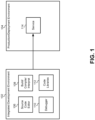
- FIG. 1 illustrates a software structure and logical arrangement of development and runtime environments for services in a container platform, according to some embodiments.
- the environments may include an IDE 102 that may be used to develop services and microservices to be deployed on a container platform.
- An IDE is a software suite that consolidates and provides all of the basic tools that service developers can use to write and test new services.
- the IDE 102 may include a source code editor 106 with a graphical user interface (GUI), code completion functions, and navigate/browse interfaces that allow a developer to write, navigate, integrate, and visualize the source-code-writing process.
- GUI graphical user interface
- Services can be developed and thoroughly tested within the IDE 102 until they are ready for deployment. The services can then be deployed to a production/deployment environment 104.
- the production/development environment 104 may include many different hardware and/or software structures, including dedicated hardware, virtual machines, and containerized platforms. Prior to this disclosure, when a service 114 was deployed into the production/deployment environment 104, the service 114 would no longer have runtime access to many of the tools used in the IDE 102. Any functionality needed by the service 114 to run in the production/development environment 104 needed to be packaged from the code libraries 112 and deployed with the service 114 into the production/deployment environment 104.
- the service 114 would typically be deployed without any of the functionality for the debugger 110 or a copy of the source code from the source code editor 106. Essentially, the service 114 would be deployed to the production/deployment environment 104 with all of the functionality required for runtime operation, but would be stripped of the information that was only used during development.
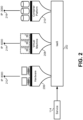
- FIG. 2 illustrates a specialized computer hardware system that is specifically designed to run the embodiments described herein.
- the service 114 can be deployed into an Infrastructure as a Service (IaaS) cloud computing environment 202.
- IaaS Infrastructure as a Service
- the IaaS cloud computing environment 202 may also include or be coupled with other cloud computing environments arranged as Software as a Service (SaaS) and/or Platform as a Service (PaaS) architetures.
- the cloud provider can host an infrastructure of hardware and/or software components that were traditionally present in an on-premises data center.
- This hardware may include servers, storage, networking hardware, disk arrays, software libraries, and virtualization utilities such as a hypervisor layer.
- the IaaS environment 202 can be provided by a commercial source, such as Oracle ® or other publicly available cloud platforms.
- the IaaS environment 202 may also be deployed as a private cloud using a private infrastructure of hardware and software.
- the service 114 can be deployed onto a number of different types of hardware/software systems.
- the service 114 can be deployed to dedicated hardware 206.
- the dedicated hardware 206 may include hardware resources, such as servers, disks, operating systems, software packages, and so forth, that are specifically assigned to the service 114.
- a specific server may be allocated to handle traffic flowing to and from the service 114.
- the service 114 can be deployed to hardware/software that is operated as one or more virtual machines 208.
- a virtual machine is an emulation of a computer system that provides the functionality of the dedicated computer hardware 206.
- the physical hardware can be shared by number of different virtual machines. Each virtual machine can provide all the functionality needed to execute including a complete operating system. This allows virtual machines having different operating systems to run on the same physical hardware and allows multiple services to share a single piece of hardware.
- the service 114 can be deployed to a container platform 210.
- the container platform differs from the virtual machines 208 in a number of important ways.
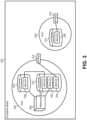
- the container platform 210 packages individual services into containers as described in greater detail below in FIG. 3 .
- Each container shares a host operating system kernel, and they also share binaries, libraries, and other read-only components. This allows containers to be exceptionally light - often only a few megabytes in size. Additionally, a lightweight container is very efficient, taking just seconds to start versus the minutes required to boot up a virtual machine. Containers also reduce management overhead by sharing the operating system and other libraries that can be maintained together for the entire set of containers in the container platform 210.
- Container technologies may include Docker ® containers, the Linux Libcontainer ® , the Open Container Initiative (OCI), Kubernetes ® , CoeOS, Apache ® Mesos, along with others. These containers can be deployed to a container orchestration platform, which may be referred to herein as simply the "container platform" 210.
- a container platform manages the automated arrangement, coordination, and management of deployed software containers.
- the container platform 210 can provide service discovery, load-balancing, health checks, multiple deployments, and so forth.
- the container platform 210 may be implemented by any publicly available container platform, such as Kubernetes, that runs containers organized in nodes and pods.
- each of the platforms 206, 208, 210 can provide service endpoints 212, 214, 216 that provide public access for calling the service 114.
- these endpoints can be accessed through an HTTP call and are associated with an IP address and a port number.
- IP address and port number By connecting to the correct IP address and port number, other services can call services deployed to any of the platforms 206, 208, 210 when they are made publicly available.
- Each service, such as service 114 may include its own proprietary formats and data requirements for calling the service. Similarly, each service may return results that are specific in format and data type to that service 114.
- service 326 in container 310 can utilize the resource 308 and call service 320 in container 312.
- Service 320 can also call service 322, which in turn calls service 324, each of which are deployed to container 312.
- the output of service 324 can be provided to a network IP address and port 318, which is another common resource shared by the pod 304.
- the services 320, 322, 324, 326 all work together with the shared resource 308 to provide a single service that can be accessed by the IP address and port numbe 318 by services run in other containers.
- the service can also be accessed through the IP address and port 318 by computer systems that are external to the container platform, such as a workstation, a laptop computer, a smart phone, or other computing device that is not part of the container platform or IaaS environment.
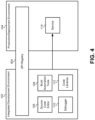
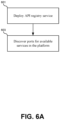
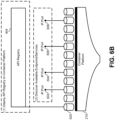
- the API registry 404 can execute a discovery process.
- the discovery process can use a directory listing for nodes in the container platform to identify pods that implement services with an IP address and port number.
- the API registry 404 can then access a unique identifier, such as a number or name for each available service, and store an identifier with each IP address and port number in the container platform 210.
- This discovery process can be periodically executed to detect new services that are added to the container platform 210, as well as to identify existing services that are removed from the container platform 210. As described below, this discovery process can also be used to detect when an IP address and port number change for an existing service.
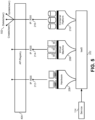
- the API registry 404 can discover services having endpoints 602, 604, 606, 608.
- the API registry 404 can use the discovery process to detect when endpoints are no longer available, and then remove the API functions associated with the service.
- the API registry 404 can provide a mock response to any service calling the corresponding API functions. For example, if an API has been registered for the service corresponding to endpoint 604, but endpoint 604 is not currently available, the API registry 404 can intercept a call made to endpoint 604 and provide default or dummy data in response. This allows services that call the service associated with endpoint 604 to maintain functionality and/or continue the design process without "breaking" the connection to this particular service. Mock/testing data scenarios will be described in greater detail below.
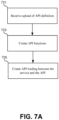
- FIG. 7A illustrates a flowchart of a method for registering a service with the API registry 404, according to some embodiments.
- the method may include receiving an upload of an API definition (701).
- the API definition may be provided in the form of a data packet, file, or a link to an information repository.
- the API definition may include any information that can be used to identify and define API functions that should be bound to endpoints associated with the service.
- some embodiments of the API definition may include the following data: a service name or other unique identifier; function names corresponding to service endpoints and calls, data inputs required to call the service with corresponding descriptions and data types; result data formats and data types; a current IP address and/or port number; documentation that describes the functionality of the API functions that will be associated with the endpoint; default or dummy data values that should be returned during mock/test scenarios; and any other information that may be used by the API registry 404 to translate the HTTP request received by the endpoint into a client library that uses API function calls of class data objects.
- the method may also include creating corresponding API functions based on the uploaded API definitions (703). These API functions can be generated automatically based on the API definition.
- Each endpoint for a service may be associated with a plurality of different API functions.
- an endpoint implementing a RESTful interface may receive HTTP calls for POST, GET, PUT, and DELETE functions at the same IP address and port number. This may result in, for example, for different API functions.
- the interface represents a list of users, this can correspond to at least four different API functions, such as GetUser(), AddUser( ), RemoveUser( ), and UpdateUser().
- the method may additionally include creating a binding in the API registry between the API function and the corresponding endpoint of the service (705).
- the API registry can now create a dynamic binding between an endpoint for a service in the container platform and the API function created by the API registry.
- the API registry can now store a corresponding function or set of functions for each endpoint.
- this binding can be constantly updated as the discovery process determines when services are updated, moved, replaced, or added to the container platform. This allows the client libraries created in a calling service to first check with the API registry to verify or receive a current IP address and port number for the service.
- FIG. 7B illustrates a hardware/software diagram of the steps for registering an API with the API registry 404, according to some embodiments.
- the API registry 404 can be instantiated and running in a container 620 in the container platform 210. Even though the container platform 210 represents a production/deployment environment, the API registry 404 can still be accessed by the IDE 102 used to develop the service.
- the IDE 102 can provide a mechanism for uploading the API definition files 702 to the API registry 404.
- the user interface of the IDE 102 may include a window or interface that allows the developer to define and/or populate fields for the API definition files 702.
- This information described above may include function names, parameter lists, data types, field lengths, object class definitions, an IP address and port number, a service name or other unique identifier, and so forth.
- This information can be uploaded to the API registry 404 and linked in a dynamic binding to a particular IP address and port number for the endpoint 602.
- the API registry 404 can generate one or more API functions 704 that can be made available through the API registry 404.
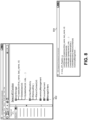
- FIG. 8 illustrates examples of a graphical interface 802 and a command line interface 804 for browsing and selecting APIs that are registered with the API registry 804, according to some embodiments.
- the developer can access the graphical interface 802 to browse and select API functions that can be used in their service.
- This graphical interface 802 is merely an example and not meant to be limiting of the types of graphical interfaces that can be used to browse and select API functions.
- the IDE 102 can summon the graphical interface 802 to provide a list of APIs that are registered with the API registry.
- the APIs are categorized based on endpoint. For example, one endpoint corresponding to a service may offer a RESTful interface for storing user records (e.g., "UserStorage”).
- the graphical interface 802 can display all of the API functions (e.g., "CreateUser”, "DeleteUser”, “UpdateUser”, etc.) that are available through the selected endpoint. Other embodiments may group functions based on the overall service in cases where the service offers multiple endpoints.
- the graphical interface 802 can receive a selection of one or more API functions to be used in a calling the service.
- the API registry can then provide documentation that illustrates how to use the API function, including required parameters and return values.
- the command line interface 804 can provide similar information and can receive similar inputs as the graphical interface 802.
- the interfaces 802, 804 illustrated in FIG. 8 provide a number of technical benefits.
- these interfaces 802, 804 provide an up-to-date listing of all APIs that are registered with the API registry. This corresponds to a list of all services currently available in the container platform. Instead of being required to look up documentation, contact a service developer, and/or perform other inefficient tasks for locating a list of available services, a service developer can retrieve and display this information in real-time. Additionally, as services are updated, the API definition files can be updated in a corresponding fashion. This then updates the display illustrated in FIG. 8 to provide up-to-date availability information for each API function.
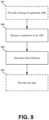
- FIG. 9 illustrates a flowchart of a method for using a service and its corresponding function registered with the API registry, according to some embodiments.
- the method may include providing a listing of registered APIs (901). This step may be omitted in cases where the desired service is already known. However, generally the services can be displayed for browsing and navigation using the interfaces described above in FIG. 8 .
- the method may also include receiving a selection of an API function (901). This selection may be received by the API registry from a developer of the service. For example, a developer may decide to update a database of user records using the CreateUser( ) function described above.
- FIG. 10 illustrates how a selection 1002 may be received by the API registry through the graphical interface 802 for the CreateUser( ) function. Other embodiments may receive the selection through the command line interface or through other input methods provided by the IDE.
- the API registry can generate one or more client libraries for the calling service (905).
- Generating client libraries may provide the calling service with the service endpoint that is dynamically bound to the API function.
- the IDE can generate a set of class objects in the IDE that encapsulate the functionality required to interface directly with the service endpoint in the container platform.
- client libraries may include object classes that can be instantiated or used to call member functions that embody the code required to communicate with the service. Examples of these client libraries will be described in greater detail below.
- the method may additionally include providing test data (907).
- test data 907
- a service When a service is registered with the API registry, it need not be complete. Instead, the service can indicate to the API registry that it is not yet ready to provide functional responses to calling services.
- the API definition file that is uploaded to the API registry can include a specification of the type of information that should be returned before the service is functional.
- the client library generated by the API registry can route requests to the API registry instead of the service endpoint. The API registry can then provide a response using dummy, null, or default values. Alternatively, the code within the client libraries themselves can generate the default data to be returned to the calling service.
- FIG. 9 provides particular methods of using an API registry according to various embodiments of the present invention. Other sequences of steps may also be performed according to alternative embodiments. For example, alternative embodiments of the present invention may perform the steps outlined above in a different order. Moreover, the individual steps illustrated in FIG. 9 may include multiple sub-steps that may be performed in various sequences as appropriate to the individual step. Furthermore, additional steps may be added or removed depending on the particular applications.
- One of ordinary skill in the art would recognize many variations, modifications, and alternatives.
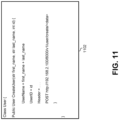
- FIG. 11 illustrates an example of a client library generated for a service automatically by the API registry, according to some embodiments.
- This client library 1102 may correspond to a service that stores user records.
- This client library 1102 and the corresponding class and service are provided merely by way of example and not meant to be limiting.
- each API function and service can specify how client libraries should be generated by virtue of the API definition file uploaded to the API registry. Therefore, the principles described below in relation to the "User" service may be applied to other services.
- the API registry can generate a class for a User.
- the calling service requests client libraries to be generated by the API registry
- the calling service can specify a programming language being used by the calling service. For example, if the calling service is being written in Java in the IDE, then the API registry can generate class libraries in the Java programming language. Alternatively, if the calling service is being written in C#, then the API registry can generate class libraries in the C# programming language.
- the User class can be generated to have member functions that correspond to different operations that may be performed through the service endpoint. These member functions can be static such that they do not require an instantiated instance of the User class, or they may be used with instantiated User objects.
- the User service may use a RESTful interface to edit individual user records that are stored by the service.
- the API registry can generate the CreateUser( ) function to implement a POST call to the User service.
- One of the functions that can be performed by the class library is to parse, filter, and format data provided as parameters to the API function to be sent as a data packet directly to the service.
- the CreateUser( ) function can accept parameters that are formatted for the convenience of the calling service.
- the calling service may separately store strings for the user first name and the user last.
- the POST command may require a concatenated string of the first name in the last name together.
- the client library 1102 can perform a set operations that format the data received as parameters to the function into a format that is compatible with the service endpoint. This may include generating header information, altering the format of certain data fields, concatenating data fields, requesting addional data from other sources, performing calculations or data transforms, and so forth. This may also include packaging the reformatted parameters into a format, such as JSON, XML, etc.
- the client library 1102 can also handle the POST call to the service.
- the IP address and port number for the service can be inserted into the CreateUser( ) function to be used in an HTTP request to the service.
- the details of the HTTP request are encapsulated in the CreateUser( ) function.
- FIG. 12 illustrates an embodiment of a client library 1202 that accommodates dynamic binding between service endpoints and API functions, according to some embodiments.
- the CreateUser( ) function can include code 1204 that dynamically retrieves the IP address and port number for the service.
- the calling service 114 can use the GetIPPort( ) function to send a request to the API registry 404 at run time when the calling service 114 is operating in the production/deployment environment 104, such as the container platform.
- the API registry 404 can access its internal table that is consistently updated to maintain up-to-date bindings between the API functions and the service endpoints.
- the API registry 404 can then return a current IP address and port number to the calling service 114.
- the client library 1202 can then insert the IP address and port number into the HTTP POST code that connects to the service. Because the API registry 404 can be accessed at run time by any calling service in the container platform, none of these services need to be updated or patched when the IP address for port number for the service being called changes. Instead, the API registry 404 can provide up-to-date information every time a service is called. In some embodiments, the GetIPPort( ) function may only need to call the API registry 404 once an hour, once a day, once a week, and so forth, to minimize the number of function calls made outside of the container for the service 114 under the assumption that the service endpoints do not change frequently in the production environment.
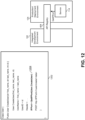
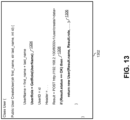
- FIG. 13 illustrates an embodiment of a client library 1302 that can marshal additional data to complete an input data set for a service call, according to some embodiments.
- the client library 1302 may minimize the number of parameters required from the service developer. Additional data that may be required to make the service call can be retrieved from other sources and thus may be omitted from the parameter list. These additional parameters can instead be retrieved directly by the client library 1302 from these other sources. For example, creating a new user may include specifying a user role for the user. Instead of requiring the service developer to provide a user role as one of the parameters, the client library 1302 can instead include code 1304 that automatically retrieves a role for the user from some other source.
- the user role can be retrieved from a database, from another service in the container platform, or from another class storing user roles within the calling service.
- the code 1304 can automatically retrieve the user role and package it as part of the input data for the HTTP POST command sent to the service.
- the client library 1302 can also parse and return data received from the service and handle error conditions.
- the POST command may return a data packet into the Result variable.
- a service may return a data packet that includes more information than the calling service needs. Therefore, the client library 1302 can parse the data fields in the Result variable and extract, format, and package data from the Result variable into a format that is more usable and expected by the User class.
- the code 1306 can extract fields from the Result variable and use them to create a new User object that is returned from the API function.
- individual API functions can be generated in the User class that extract different fields from the Result variable from the GET command.
- the User class could provide a GetFirstName(id) function, a GetLastName(id) function, a GetRole(id) function, and so forth. Each of these functions may include very similar code while returning different fields from the Result variable.
- the client library 1302 may also generate code 1308 that handles error conditions associated with using the service.
- the code 1308 can test a status field in the Result variable to determine whether the POST command was successful. If the command was successful, then the CreateUser( ) function can return a new User object. In cases where the Post command failed, the function can instead return a null object and/or retry the call to the service.
- FIG. 14 illustrates a client library 1402 that can handle retries when calling a service.
- the client library 1402 uses a status in a Result variable populated by the POST HTTP call to determine whether the call was successful or not. While the result is unsuccessful, the client library 1402 can continue to retry until the call is successful. Some embodiments may use a counter or other mechanism to limit the number of retries or add a wait time between retries.
- Each of the methods described herein may be implemented by a specialized computer system. Each step of these methods may be executed automatically by the computer system, and/or may be provided with inputs/outputs involving a user. For example, a user may provide inputs for each step in a method, and each of these inputs may be in response to a specific output requesting such an input, wherein the output is generated by the computer system. Each input may be received in response to a corresponding requesting output. Furthermore, inputs may be received from a user, from another computer system as a data stream, retrieved from a memory location, retrieved over a network, requested from a web service, and/or the like.
- each step of the methods described herein may be performed by a computer system, and may involve any number of inputs, outputs, and/or requests to and from the computer system which may or may not involve a user. Those steps not involving a user may be said to be performed automatically by the computer system without human intervention. Therefore, it will be understood in light of this disclosure, that each step of each method described herein may be altered to include an input and output to and from a user, or may be done automatically by a computer system without human intervention where any determinations are made by a processor. Furthermore, some embodiments of each of the methods described herein may be implemented as a set of instructions stored on a tangible, non-transitory storage medium to form a tangible software product.
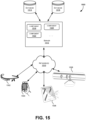
- FIG. 15 depicts a simplified diagram of a distributed system 1500 that may interact with any of the embodiments described above.
- distributed system 1500 includes one or more client computing devices 1502, 1504, 1506, and 1508, which are configured to execute and operate a client application such as a web browser, proprietary client (e.g., Oracle Forms), or the like over one or more network(s) 1510.
- Server 1512 may be communicatively coupled with remote client computing devices 1502, 1504, 1506, and 1508 via network 1510.
- server 1512 may be adapted to run one or more services or software applications provided by one or more of the components of the system.
- these services may be offered as web-based or cloud services or under a Software as a Service (SaaS) model to the users of client computing devices 1502, 1504, 1506, and/or 1508.
- SaaS Software as a Service
- Users operating client computing devices 1502, 1504, 1506, and/or 1508 may in turn utilize one or more client applications to interact with server 1512 to utilize the services provided by these components.
- the software components 1518, 1520 and 1522 of system 1500 are shown as being implemented on server 1512.
- one or more of the components of system 1500 and/or the services provided by these components may also be implemented by one or more of the client computing devices 1502, 1504, 1506, and/or 1508. Users operating the client computing devices may then utilize one or more client applications to use the services provided by these components.
- These components may be implemented in hardware, firmware, software, or combinations thereof. It should be appreciated that various different system configurations are possible, which may be different from distributed system 1500.
- the embodiment shown in the figure is thus one example of a distributed system for implementing an embodiment system and is not intended to be limiting.
- Client computing devices 1502, 1504, 1506, and/or 1508 may be portable handheld devices (e.g., an iPhone ® , cellular telephone, an iPad ® , computing tablet, a personal digital assistant (PDA)) or wearable devices (e.g., a Google Glass ® head mounted display), running software such as Microsoft Windows Mobile ® , and/or a variety of mobile operating systems such as iOS, Windows Phone, Android, BlackBerry 10, Palm OS, and the like, and being Internet, e-mail, short message service (SMS), Blackberry ® , or other communication protocol enabled.
- the client computing devices can be general purpose personal computers including, by way of example, personal computers and/or laptop computers running various versions of Microsoft Windows ® , Apple Macintosh ® , and/or Linux operating systems.
- the client computing devices can be workstation computers running any of a variety of commercially-available UNIX ® or UNIX-like operating systems, including without limitation the variety of GNU/Linux operating systems, such as for example, Google Chrome OS.
- client computing devices 1502, 1504, 1506, and 1508 may be any other electronic device, such as a thin-client computer, an Internet-enabled gaming system (e.g., a Microsoft Xbox gaming console with or without a Kinect ® gesture input device), and/or a personal messaging device, capable of communicating over network(s) 1510.
- exemplary distributed system 1500 is shown with four client computing devices, any number of client computing devices may be supported.
- Other devices such as devices with sensors, etc., may interact with server 1512.
- Network(s) 1510 in distributed system 1500 may be any type of network familiar to those skilled in the art that can support data communications using any of a variety of commercially-available protocols, including without limitation TCP/IP (transmission control protocol/Internet protocol), SNA (systems network architecture), IPX (Internet packet exchange), AppleTalk, and the like.
- network(s) 1510 can be a local area network (LAN), such as one based on Ethernet, Token-Ring and/or the like.
- LAN local area network
- Network(s) 1510 can be a wide-area network and the Internet.
- a virtual network including without limitation a virtual private network (VPN), an intranet, an extranet, a public switched telephone network (PSTN), an infra-red network, a wireless network (e.g., a network operating under any of the Institute of Electrical and Electronics (IEEE) 802.11 suite of protocols, Bluetooth ® , and/or any other wireless protocol); and/or any combination of these and/or other networks.
- VPN virtual private network
- PSTN public switched telephone network
- IEEE Institute of Electrical and Electronics 802.11 suite of protocols
- Bluetooth ® Bluetooth ®
- any other wireless protocol any combination of these and/or other networks.
- infrastructure services may be provided by an IaaS platform in the cloud infrastructure system.
- the infrastructure services facilitate the management and control of the underlying computing resources, such as storage, networks, and other fundamental computing resources for customers utilizing services provided by the SaaS platform and the PaaS platform.
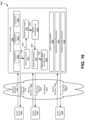
- cloud infrastructure system 1602 may also include infrastructure resources 1630 for providing the resources used to provide various services to customers of the cloud infrastructure system.
- infrastructure resources 1630 may include pre-integrated and optimized combinations of hardware, such as servers, storage, and networking resources to execute the services provided by the PaaS platform and the SaaS platform.
- resources in cloud infrastructure system 1602 may be shared by multiple users and dynamically re-allocated per demand. Additionally, resources may be allocated to users in different time zones. For example, cloud infrastructure system 1630 may enable a first set of users in a first time zone to utilize resources of the cloud infrastructure system for a specified number of hours and then enable the re-allocation of the same resources to another set of users located in a different time zone, thereby maximizing the utilization of resources.
- a number of internal shared services 1632 may be provided that are shared by different components or modules of cloud infrastructure system 1602 and by the services provided by cloud infrastructure system 1602.
- These internal shared services may include, without limitation, a security and identity service, an integration service, an enterprise repository service, an enterprise manager service, a virus scanning and white list service, a high availability, backup and recovery service, service for enabling cloud support, an email service, a notification service, a file transfer service, and the like.
- the order information is received via the cloud UIs, 1612, 1614 and/or 1616.
- order management module 1620 may be configured to perform billing and accounting functions related to the order, such as verifying the order, and upon verification, booking the order.
- Order orchestration module 1622 may utilize the order information to orchestrate the provisioning of services and resources for the order placed by the customer. In some instances, order orchestration module 1622 may orchestrate the provisioning of resources to support the subscribed services using the services of order provisioning module 1624.
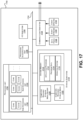
- FIG. 17 illustrates an exemplary computer system 1700, in which various embodiments of the present invention may be implemented.
- the system 1700 may be used to implement any of the computer systems described above.
- computer system 1700 includes a processing unit 1704 that communicates with a number of peripheral subsystems via a bus subsystem 1702. These peripheral subsystems may include a processing acceleration unit 1706, an I/O subsystem 1708, a storage subsystem 1718 and a communications subsystem 1724.
- Storage subsystem 1718 includes tangible computer-readable storage media 1722 and a system memory 1710.
- Bus subsystem 1702 provides a mechanism for letting the various components and subsystems of computer system 1700 communicate with each other as intended.
- Bus subsystem 1702 is shown schematically as a single bus, alternative embodiments of the bus subsystem may utilize multiple buses.
- Bus subsystem 1702 may be any of several types of bus structures including a memory bus or memory controller, a peripheral bus, and a local bus using any of a variety of bus architectures.
- bus architectures may include an Industry Standard Architecture (ISA) bus, Micro Channel Architecture (MCA) bus, Enhanced ISA (EISA) bus, Video Electronics Standards Association (VESA) local bus, and Peripheral Component Interconnect (PCI) bus, which can be implemented as a Mezzanine bus manufactured to the IEEE P1386.1 standard.
- ISA Industry Standard Architecture
- MCA Micro Channel Architecture
- EISA Enhanced ISA
- VESA Video Electronics Standards Association
- PCI Peripheral Component Interconnect
- I/O subsystem 1708 may include user interface input devices and user interface output devices.
- User interface input devices may include a keyboard, pointing devices such as a mouse or trackball, a touchpad or touch screen incorporated into a display, a scroll wheel, a click wheel, a dial, a button, a switch, a keypad, audio input devices with voice command recognition systems, microphones, and other types of input devices.
- User interface input devices may include, for example, motion sensing and/or gesture recognition devices such as the Microsoft Kinect ® motion sensor that enables users to control and interact with an input device, such as the Microsoft Xbox ® 360 game controller, through a natural user interface using gestures and spoken commands.
- User interface input devices may also include eye gesture recognition devices such as the Google Glass ® blink detector that detects eye activity (e.g., 'blinking' while taking pictures and/or making a menu selection) from users and transforms the eye gestures as input into an input device (e.g., Google Glass ® ). Additionally, user interface input devices may include voice recognition sensing devices that enable users to interact with voice recognition systems (e.g., Siri ® navigator), through voice commands.
- voice recognition systems e.g., Siri ® navigator
- User interface input devices may also include, without limitation, three dimensional (3D) mice, joysticks or pointing sticks, gamepads and graphic tablets, and audio/visual devices such as speakers, digital cameras, digital camcorders, portable media players, webcams, image scanners, fingerprint scanners, barcode reader 3D scanners, 3D printers, laser rangefinders, and eye gaze tracking devices.
- user interface input devices may include, for example, medical imaging input devices such as computed tomography, magnetic resonance imaging, position emission tomography, medical ultrasonography devices.
- User interface input devices may also include, for example, audio input devices such as MIDI keyboards, digital musical instruments and the like.
- Computer system 1700 may comprise a storage subsystem 1718 that comprises software elements, shown as being currently located within a system memory 1710.
- System memory 1710 may store program instructions that are loadable and executable on processing unit 1704, as well as data generated during the execution of these programs.
- system memory 1710 may be volatile (such as random access memory (RAM)) and/or non-volatile (such as read-only memory (ROM), flash memory, etc.)
- RAM random access memory
- ROM read-only memory
- system memory 1710 may include multiple different types of memory, such as static random access memory (SRAM) or dynamic random access memory (DRAM).
- SRAM static random access memory
- DRAM dynamic random access memory
- BIOS basic input/output system
- BIOS basic input/output system
- BIOS basic routines that help to transfer information between elements within computer system 1700, such as during start-up, may typically be stored in the ROM.
- Storage subsystem 1718 may also provide a tangible computer-readable storage medium for storing the basic programming and data constructs that provide the functionality of some embodiments.
- Software programs, code modules, instructions that when executed by a processor provide the functionality described above may be stored in storage subsystem 1718. These software modules or instructions may be executed by processing unit 1704.
- Storage subsystem 1718 may also provide a repository for storing data used in accordance with the present invention.
- Storage subsystem 1700 may also include a computer-readable storage media reader 1720 that can further be connected to computer-readable storage media 1722. Together and, optionally, in combination with system memory 1710, computer-readable storage media 1722 may comprehensively represent remote, local, fixed, and/or removable storage devices plus storage media for temporarily and/or more permanently containing, storing, transmitting, and retrieving computer-readable information.
- Computer-readable storage media 1722 containing code, or portions of code can also include any appropriate media known or used in the art, including storage media and communication media, such as but not limited to, volatile and non-volatile, removable and non-removable media implemented in any method or technology for storage and/or transmission of information.
- This can include tangible computer-readable storage media such as RAM, ROM, electronically erasable programmable ROM (EEPROM), flash memory or other memory technology, CD-ROM, digital versatile disk (DVD), or other optical storage, magnetic cassettes, magnetic tape, magnetic disk storage or other magnetic storage devices, or other tangible computer readable media.
- This can also include nontangible computer-readable media, such as data signals, data transmissions, or any other medium which can be used to transmit the desired information and which can be accessed by computing system 1700.
- computer-readable storage media 1722 may include a hard disk drive that reads from or writes to non-removable, nonvolatile magnetic media, a magnetic disk drive that reads from or writes to a removable, nonvolatile magnetic disk, and an optical disk drive that reads from or writes to a removable, nonvolatile optical disk such as a CD ROM, DVD, and Blu-Ray ® disk, or other optical media.
- Computer-readable storage media 1722 may include, but is not limited to, Zip ® drives, flash memory cards, universal serial bus (USB) flash drives, secure digital (SD) cards, DVD disks, digital video tape, and the like.
- computer-readable medium includes, but is not limited to portable or fixed storage devices, optical storage devices, wireless channels and various other mediums capable of storing, containing, or carrying instruction(s) and/or data.
- a code segment or machine-executable instructions may represent a procedure, a function, a subprogram, a program, a routine, a subroutine, a module, a software package, a class, or any combination of instructions, data structures, or program statements.
- a code segment may be coupled to another code segment or a hardware circuit by passing and/or receiving information, data, arguments, parameters, or memory contents. Information, arguments, parameters, data, etc., may be passed, forwarded, or transmitted via any suitable means including memory sharing, message passing, token passing, network transmission, etc.
Landscapes
- Engineering & Computer Science (AREA)
- Theoretical Computer Science (AREA)
- Software Systems (AREA)
- General Engineering & Computer Science (AREA)
- Physics & Mathematics (AREA)
- General Physics & Mathematics (AREA)
- Quality & Reliability (AREA)
- Computer Hardware Design (AREA)
- Computer Networks & Wireless Communication (AREA)
- Signal Processing (AREA)
- Mathematical Physics (AREA)
- Health & Medical Sciences (AREA)
- Computer Security & Cryptography (AREA)
- General Health & Medical Sciences (AREA)
- Bioethics (AREA)
- Stored Programmes (AREA)
- Debugging And Monitoring (AREA)
Applications Claiming Priority (2)
| Application Number | Priority Date | Filing Date | Title |
|---|---|---|---|
| US201762566351P | 2017-09-30 | 2017-09-30 | |
| PCT/US2018/053612 WO2019068024A1 (en) | 2017-09-30 | 2018-09-28 | CONNECTING INTO AN API REGISTER END POINTS OF DORSAL SERVICES WITH API FUNCTIONS |
Publications (2)
| Publication Number | Publication Date |
|---|---|
| EP3688595A1 EP3688595A1 (en) | 2020-08-05 |
| EP3688595B1 true EP3688595B1 (en) | 2025-07-02 |
Family
ID=63963482
Family Applications (5)
| Application Number | Title | Priority Date | Filing Date |
|---|---|---|---|
| EP18793725.5A Active EP3688595B1 (en) | 2017-09-30 | 2018-09-28 | Binding, in an api registry, backend services endpoints to api functions |
| EP18792687.8A Active EP3688592B1 (en) | 2017-09-30 | 2018-09-28 | Dynamic migration of groups of containers |
| EP18795839.2A Ceased EP3688579A1 (en) | 2017-09-30 | 2018-09-28 | Deployment of containers based on environment requirements |
| EP18793087.0A Active EP3688594B1 (en) | 2017-09-30 | 2018-09-28 | Api repository enabling microservices configuration and management |
| EP18792690.2A Active EP3688593B1 (en) | 2017-09-30 | 2018-09-28 | Real-time debugging instances in a deployed container platform |
Family Applications After (4)
| Application Number | Title | Priority Date | Filing Date |
|---|---|---|---|
| EP18792687.8A Active EP3688592B1 (en) | 2017-09-30 | 2018-09-28 | Dynamic migration of groups of containers |
| EP18795839.2A Ceased EP3688579A1 (en) | 2017-09-30 | 2018-09-28 | Deployment of containers based on environment requirements |
| EP18793087.0A Active EP3688594B1 (en) | 2017-09-30 | 2018-09-28 | Api repository enabling microservices configuration and management |
| EP18792690.2A Active EP3688593B1 (en) | 2017-09-30 | 2018-09-28 | Real-time debugging instances in a deployed container platform |
Country Status (5)
| Country | Link |
|---|---|
| US (8) | US10599500B2 (enExample) |
| EP (5) | EP3688595B1 (enExample) |
| JP (9) | JP7203096B2 (enExample) |
| CN (7) | CN111279321B (enExample) |
| WO (5) | WO2019068031A1 (enExample) |
Families Citing this family (243)
| Publication number | Priority date | Publication date | Assignee | Title |
|---|---|---|---|---|
| US8560604B2 (en) | 2009-10-08 | 2013-10-15 | Hola Networks Ltd. | System and method for providing faster and more efficient data communication |
| US9225638B2 (en) | 2013-05-09 | 2015-12-29 | Vmware, Inc. | Method and system for service switching using service tags |
| US9241044B2 (en) | 2013-08-28 | 2016-01-19 | Hola Networks, Ltd. | System and method for improving internet communication by using intermediate nodes |
| US10129077B2 (en) | 2014-09-30 | 2018-11-13 | Nicira, Inc. | Configuring and operating a XaaS model in a datacenter |
| US9531590B2 (en) | 2014-09-30 | 2016-12-27 | Nicira, Inc. | Load balancing across a group of load balancers |
| US10257095B2 (en) | 2014-09-30 | 2019-04-09 | Nicira, Inc. | Dynamically adjusting load balancing |
| US10594743B2 (en) | 2015-04-03 | 2020-03-17 | Nicira, Inc. | Method, apparatus, and system for implementing a content switch |
| US11023846B2 (en) | 2015-04-24 | 2021-06-01 | United Parcel Service Of America, Inc. | Location-based pick up and delivery services |
| US11057446B2 (en) | 2015-05-14 | 2021-07-06 | Bright Data Ltd. | System and method for streaming content from multiple servers |
| US11824863B2 (en) * | 2016-11-03 | 2023-11-21 | Nicira, Inc. | Performing services on a host |
| US10447811B2 (en) * | 2017-07-18 | 2019-10-15 | Citrix Systems, Inc. | Cloud to on-premises debug service routing |
| EP4648362A2 (en) | 2017-08-28 | 2025-11-12 | Bright Data Ltd. | Content fetching by selecting tunnel devices |
| US11947489B2 (en) | 2017-09-05 | 2024-04-02 | Robin Systems, Inc. | Creating snapshots of a storage volume in a distributed storage system |
| US10599500B2 (en) | 2017-09-30 | 2020-03-24 | Oracle International Corporation | API registry in a container platform for automatically generating client code libraries |
| US10797966B2 (en) | 2017-10-29 | 2020-10-06 | Nicira, Inc. | Service operation chaining |
| US12375573B1 (en) | 2017-11-27 | 2025-07-29 | Fortinet, Inc. | Container event monitoring using kernel space communication |
| US11792284B1 (en) * | 2017-11-27 | 2023-10-17 | Lacework, Inc. | Using data transformations for monitoring a cloud compute environment |
| US12130878B1 (en) | 2017-11-27 | 2024-10-29 | Fortinet, Inc. | Deduplication of monitored communications data in a cloud environment |
| US11392363B2 (en) | 2018-01-11 | 2022-07-19 | Robin Systems, Inc. | Implementing application entrypoints with containers of a bundled application |
| US11582168B2 (en) | 2018-01-11 | 2023-02-14 | Robin Systems, Inc. | Fenced clone applications |
| US11748203B2 (en) * | 2018-01-11 | 2023-09-05 | Robin Systems, Inc. | Multi-role application orchestration in a distributed storage system |
| US10805192B2 (en) | 2018-03-27 | 2020-10-13 | Nicira, Inc. | Detecting failure of layer 2 service using broadcast messages |
| US11128530B2 (en) | 2018-03-29 | 2021-09-21 | Hewlett Packard Enterprise Development Lp | Container cluster management |
| US10812337B2 (en) | 2018-06-15 | 2020-10-20 | Vmware, Inc. | Hierarchical API for a SDDC |
| US10942788B2 (en) | 2018-06-15 | 2021-03-09 | Vmware, Inc. | Policy constraint framework for an sddc |
| US11023328B2 (en) | 2018-07-30 | 2021-06-01 | Robin Systems, Inc. | Redo log for append only storage scheme |
| US11086700B2 (en) | 2018-08-24 | 2021-08-10 | Vmware, Inc. | Template driven approach to deploy a multi-segmented application in an SDDC |
| US11595250B2 (en) | 2018-09-02 | 2023-02-28 | Vmware, Inc. | Service insertion at logical network gateway |
| US10805154B2 (en) * | 2018-10-16 | 2020-10-13 | Hartford Fire Insurance Company | Secure configuration management system |
| US10747556B2 (en) * | 2018-10-18 | 2020-08-18 | Sap Se | Serverless function as a service (FAAS) |
| US11036439B2 (en) | 2018-10-22 | 2021-06-15 | Robin Systems, Inc. | Automated management of bundled applications |
| US10846078B2 (en) * | 2018-11-06 | 2020-11-24 | Sap Se | Synchronization of master data across multiple cloud-based systems |
| US11457080B1 (en) * | 2018-11-23 | 2022-09-27 | Amazon Technologies, Inc. | Service mesh management |
| US11243813B2 (en) * | 2018-11-28 | 2022-02-08 | International Business Machines Corporation | Process as a network service hub |
| US20200167215A1 (en) * | 2018-11-28 | 2020-05-28 | Centurylink Intellectual Property Llc | Method and System for Implementing an Application Programming Interface Automation Platform |
| US10715388B2 (en) * | 2018-12-10 | 2020-07-14 | Sap Se | Using a container orchestration service for dynamic routing |
| US11212366B2 (en) | 2018-12-11 | 2021-12-28 | Sap Se | Kubernetes as a distributed operating system for multitenancy/multiuser |
| US11381476B2 (en) | 2018-12-11 | 2022-07-05 | Sap Se | Standardized format for containerized applications |
| US10700949B1 (en) * | 2018-12-13 | 2020-06-30 | Sap Se | Stacking of tentant-aware services |
| CN109743367B (zh) * | 2018-12-24 | 2021-08-17 | 青岛海信智能商用系统股份有限公司 | 服务处理方法、装置、电子设备及可读存储介质 |
| US10962946B2 (en) * | 2018-12-31 | 2021-03-30 | Johnson Controls Technology Company | Building automation system with microservice architecture to support multi-node on-premise bas server |
| US11018956B2 (en) | 2019-01-18 | 2021-05-25 | Fidelity Information Services, Llc | Systems and methods for rapid booting and deploying of an enterprise system in a cloud environment |
| US11038926B2 (en) * | 2019-01-23 | 2021-06-15 | Vmware, Inc. | System and method for embedding infrastructure security services into management nodes |
| US10860364B2 (en) * | 2019-01-23 | 2020-12-08 | Vmware, Inc. | Containerized management services with high availability |
| US11119804B2 (en) | 2019-02-22 | 2021-09-14 | Vmware, Inc. | Segregated service and forwarding planes |
| EP4075304B1 (en) * | 2019-02-25 | 2023-06-28 | Bright Data Ltd. | System and method for url fetching retry mechanism |
| US11019157B2 (en) * | 2019-03-06 | 2021-05-25 | At&T Intellectual Property I, L.P. | Connectionless service and other services for devices using microservices in 5G or other next generation communication systems |
| US10942855B2 (en) * | 2019-03-18 | 2021-03-09 | Microsoft Technology Licensing, Llc | Contextual loading based on dynamic context |
| US11086725B2 (en) | 2019-03-25 | 2021-08-10 | Robin Systems, Inc. | Orchestration of heterogeneous multi-role applications |
| EP4428717A3 (en) | 2019-04-02 | 2024-11-27 | Bright Data Ltd. | Managing a non-direct url fetching service |
| CN110018962A (zh) * | 2019-04-11 | 2019-07-16 | 重庆猪八戒知识产权服务有限公司 | 基于分布式服务框架和注册中心的服务调试方法及系统 |
| US11256434B2 (en) | 2019-04-17 | 2022-02-22 | Robin Systems, Inc. | Data de-duplication |
| US11416285B1 (en) * | 2019-04-30 | 2022-08-16 | Splunk Inc. | Efficient and secure scalable-two-stage data collection |
| DE102019112485A1 (de) * | 2019-05-13 | 2020-11-19 | Eberhard-Karls-Universität Tübingen | Verfahren zum selektiven Ausführen eines Containers |
| US10911558B1 (en) * | 2019-05-15 | 2021-02-02 | Pivotal Software, Inc. | On-demand network segmentation |
| WO2020234792A1 (en) * | 2019-05-21 | 2020-11-26 | Politecnico Di Milano | An fpga-as-a-service system for accelerated serverless computing |
| CN110162405A (zh) * | 2019-05-31 | 2019-08-23 | 福建南威软件有限公司 | 一种自动服务发现与负载均衡的方法及系统 |
| CN110266679B (zh) * | 2019-06-14 | 2023-02-28 | 腾讯科技(成都)有限公司 | 容器网络隔离方法及装置 |
| US11681278B2 (en) * | 2019-06-19 | 2023-06-20 | Honeywell International Inc. | High availability for container based control execution |
| TW202101322A (zh) * | 2019-06-19 | 2021-01-01 | 和碩聯合科技股份有限公司 | 管理軟體服務的方法及伺服器 |
| US11507880B2 (en) * | 2019-06-25 | 2022-11-22 | Kyndryl, Inc. | Automatic and continuous monitoring and remediation of API integrations |
| CN112187841B (zh) * | 2019-07-02 | 2022-07-08 | 北京百度网讯科技有限公司 | 基于SaaS平台的服务托管方法、装置、电子设备及存储介质 |
| US12019613B2 (en) * | 2019-07-18 | 2024-06-25 | EMC IP Holding Company LLC | Data integrity and consensuses with blockchain |
| US11422785B2 (en) * | 2019-07-23 | 2022-08-23 | Paypal, Inc. | Container orchestration framework |
| US11411733B1 (en) * | 2019-08-08 | 2022-08-09 | Citibank, N.A. | Systems and methods for identity and access control |
| US11226847B2 (en) | 2019-08-29 | 2022-01-18 | Robin Systems, Inc. | Implementing an application manifest in a node-specific manner using an intent-based orchestrator |
| US11520650B2 (en) | 2019-09-05 | 2022-12-06 | Robin Systems, Inc. | Performing root cause analysis in a multi-role application |
| US11249851B2 (en) | 2019-09-05 | 2022-02-15 | Robin Systems, Inc. | Creating snapshots of a storage volume in a distributed storage system |
| US11556321B2 (en) * | 2019-09-06 | 2023-01-17 | International Business Machines Corporation | Deploying microservices across a service infrastructure |
| US10972548B2 (en) * | 2019-09-09 | 2021-04-06 | International Business Machines Corporation | Distributed system deployment |
| US10965752B1 (en) * | 2019-09-13 | 2021-03-30 | Google Llc | Live migration of clusters in containerized environments |
| US11714638B2 (en) * | 2019-09-18 | 2023-08-01 | International Business Machines Corporation | Availability level-based service management |
| US11176245B2 (en) * | 2019-09-30 | 2021-11-16 | International Business Machines Corporation | Protecting workloads in Kubernetes |
| US11347684B2 (en) | 2019-10-04 | 2022-05-31 | Robin Systems, Inc. | Rolling back KUBERNETES applications including custom resources |
| US11113158B2 (en) | 2019-10-04 | 2021-09-07 | Robin Systems, Inc. | Rolling back kubernetes applications |
| US11140218B2 (en) | 2019-10-30 | 2021-10-05 | Vmware, Inc. | Distributed service chain across multiple clouds |
| US11157304B2 (en) * | 2019-11-01 | 2021-10-26 | Dell Products L.P. | System for peering container clusters running on different container orchestration systems |
| CN112783642B (zh) * | 2019-11-11 | 2024-09-13 | 阿里巴巴集团控股有限公司 | 容器内逻辑配置方法、设备以及计算机可读介质 |
| US11347491B2 (en) * | 2019-11-15 | 2022-05-31 | Mastercard International Incorporated | Containerized application deployment |
| WO2021095943A1 (ko) * | 2019-11-15 | 2021-05-20 | 대구대학교 산학협력단 | 서비스 프로파일을 고려한 컨테이너의 배치 방법 |
| US12131197B2 (en) * | 2019-11-25 | 2024-10-29 | Kyndryl, Inc. | Container load balancing and availability |
| CN110888714B (zh) * | 2019-11-26 | 2023-06-23 | 北京京东尚科信息技术有限公司 | 容器的调度方法、装置和计算机可读存储介质 |
| US11403188B2 (en) | 2019-12-04 | 2022-08-02 | Robin Systems, Inc. | Operation-level consistency points and rollback |
| EP3836051A1 (en) * | 2019-12-13 | 2021-06-16 | Basf Se | Industrial plant optimization |
| CN111193783B (zh) * | 2019-12-19 | 2022-08-26 | 新浪网技术(中国)有限公司 | 一种服务访问的处理方法及装置 |
| CN114846444A (zh) * | 2019-12-19 | 2022-08-02 | 皇家飞利浦有限公司 | 基于动态要求的动态个性化平台生成 |
| US11397630B2 (en) | 2020-01-02 | 2022-07-26 | Kyndryl, Inc. | Fault detection and correction of API endpoints in container orchestration platforms |
| US11216155B2 (en) * | 2020-01-06 | 2022-01-04 | Fmr Llc | Systems and methods for data processing |
| US11223494B2 (en) | 2020-01-13 | 2022-01-11 | Vmware, Inc. | Service insertion for multicast traffic at boundary |
| US11659061B2 (en) | 2020-01-20 | 2023-05-23 | Vmware, Inc. | Method of adjusting service function chains to improve network performance |
| US11301285B1 (en) * | 2020-01-30 | 2022-04-12 | Parallels International Gmbh | Methods and systems for seamless virtual machine changing for software applications |
| CN111615066B (zh) * | 2020-02-07 | 2021-07-16 | 中国海洋大学 | 一种基于广播的分布式微服务注册及调用方法 |
| CN111367659B (zh) * | 2020-02-24 | 2022-07-12 | 苏州浪潮智能科技有限公司 | 一种Kubernetes中节点的资源管理方法、设备以及介质 |
| US11210205B2 (en) * | 2020-02-28 | 2021-12-28 | Sap Se | Application debugging |
| US11409555B2 (en) * | 2020-03-12 | 2022-08-09 | At&T Intellectual Property I, L.P. | Application deployment in multi-cloud environment |
| US11762742B2 (en) | 2020-03-31 | 2023-09-19 | Honeywell International Inc. | Process control system with different hardware architecture controller backup |
| EP4078901B1 (en) * | 2020-04-01 | 2024-11-27 | VMware LLC | Auto deploying network elements for heterogeneous compute elements |
| US11368387B2 (en) | 2020-04-06 | 2022-06-21 | Vmware, Inc. | Using router as service node through logical service plane |
| CN111541746B (zh) * | 2020-04-09 | 2022-04-15 | 哈尔滨工业大学 | 面向用户需求变化的多版本并存的微服务自适应方法 |
| US11853330B1 (en) * | 2020-04-30 | 2023-12-26 | Splunk Inc. | Data structure navigator |
| US11144362B1 (en) * | 2020-05-05 | 2021-10-12 | International Business Machines Corporation | Container scheduling in a container orchestration system |
| US11108638B1 (en) | 2020-06-08 | 2021-08-31 | Robin Systems, Inc. | Health monitoring of automatically deployed and managed network pipelines |
| US11528186B2 (en) | 2020-06-16 | 2022-12-13 | Robin Systems, Inc. | Automated initialization of bare metal servers |
| US11336588B2 (en) | 2020-06-26 | 2022-05-17 | Red Hat, Inc. | Metadata driven static determination of controller availability |
| US11645193B2 (en) * | 2020-07-07 | 2023-05-09 | International Business Machines Corporation | Heterogeneous services for enabling collaborative logic design and debug in aspect oriented hardware designing |
| US11501026B2 (en) * | 2020-07-13 | 2022-11-15 | Avaya Management L.P. | Method to encrypt the data at rest for data residing on Kubernetes persistent volumes |
| US10901704B1 (en) * | 2020-07-19 | 2021-01-26 | Xmodn Security, Llc | Computer-aided design, simulation, and code generation for cryptography |
| CN111858370B (zh) * | 2020-07-28 | 2023-12-26 | 浪潮云信息技术股份公司 | DevOps的实现方法、装置、计算机可读介质 |
| US20220036206A1 (en) * | 2020-07-29 | 2022-02-03 | Red Hat, Inc. | Containerized distributed rules engine |
| US11803408B2 (en) | 2020-07-29 | 2023-10-31 | Vmware, Inc. | Distributed network plugin agents for container networking |
| US11863352B2 (en) | 2020-07-30 | 2024-01-02 | Vmware, Inc. | Hierarchical networking for nested container clusters |
| US11153227B1 (en) | 2020-08-05 | 2021-10-19 | International Business Machines Corporation | Managing communication between microservices |
| US11805076B2 (en) * | 2020-08-21 | 2023-10-31 | Kyndryl, Inc. | Microservice placement in hybrid multi-cloud using graph matching |
| US12050946B2 (en) | 2020-09-21 | 2024-07-30 | International Business Machines Corporation | Just in time assembly of transactions |
| CN111857977B (zh) * | 2020-09-21 | 2020-12-25 | 腾讯科技(深圳)有限公司 | 弹性伸缩方法、装置、服务器和存储介质 |
| US11740980B2 (en) | 2020-09-22 | 2023-08-29 | Robin Systems, Inc. | Managing snapshot metadata following backup |
| CN112256384B (zh) * | 2020-09-22 | 2023-10-24 | 杭州指令集智能科技有限公司 | 基于容器技术的服务集合处理方法、装置和计算机设备 |
| US11989084B2 (en) | 2020-09-23 | 2024-05-21 | Honeywell International Inc. | Self-healing process control system |
| CN112130880B (zh) * | 2020-09-27 | 2022-12-02 | 深圳平安医疗健康科技服务有限公司 | 微服务的发布方法、装置、计算机设备及存储介质 |
| CN112035220B (zh) * | 2020-09-30 | 2025-02-14 | 北京百度网讯科技有限公司 | 开发机操作任务的处理方法、装置、设备以及存储介质 |
| EP3979081B1 (de) | 2020-09-30 | 2023-06-07 | Siemens Aktiengesellschaft | Verfahren zum testen einer microservice-anwendung |
| US11743188B2 (en) | 2020-10-01 | 2023-08-29 | Robin Systems, Inc. | Check-in monitoring for workflows |
| US11321217B1 (en) * | 2020-10-06 | 2022-05-03 | Splunk Inc. | Generating metrics values at component levels of a monolithic application and of a microservice of a microservices-based architecture |
| US11347622B1 (en) | 2020-10-06 | 2022-05-31 | Splunk Inc. | Generating metrics values for teams of microservices of a microservices-based architecture |
| US11271895B1 (en) | 2020-10-07 | 2022-03-08 | Robin Systems, Inc. | Implementing advanced networking capabilities using helm charts |
| US11456914B2 (en) | 2020-10-07 | 2022-09-27 | Robin Systems, Inc. | Implementing affinity and anti-affinity with KUBERNETES |
| US11475078B2 (en) * | 2020-10-19 | 2022-10-18 | Clearwater Analytics, Llc | Endpoint identifier for application programming interfaces and web services |
| CN112269738B (zh) * | 2020-10-26 | 2023-04-07 | 杭州光通天下网络科技有限公司 | Ctf靶场调试方法、装置、电子设备及介质 |
| CN112349165A (zh) * | 2020-10-29 | 2021-02-09 | 国网甘肃省电力公司 | 基于调控云的电网调度员仿真培训方法、装置及系统 |
| CN112328359B (zh) * | 2020-10-30 | 2022-06-17 | 烽火通信科技股份有限公司 | 避免容器集群启动拥塞的调度方法和容器集群管理平台 |
| US11874938B2 (en) | 2020-11-03 | 2024-01-16 | Honeywell International Inc. | Admittance mechanism |
| US11750451B2 (en) | 2020-11-04 | 2023-09-05 | Robin Systems, Inc. | Batch manager for complex workflows |
| EP4002098B1 (de) * | 2020-11-18 | 2025-12-31 | Deutsche Telekom AG | Verfahren zur bereitstellung der funktionalität von mehreren mikrodiensten und/oder der funktionalität von mehreren software-containern mittels einer cloud-infrastruktur, system, verwendungssystem, computerprogramm und computerlesbares medium |
| CN112486495A (zh) * | 2020-11-23 | 2021-03-12 | 珠海格力电器股份有限公司 | 一种工业视觉算法部署方法、系统及存储介质 |
| KR102439056B1 (ko) * | 2020-11-24 | 2022-09-01 | 주식회사 솔박스 | 노드 레이블링 방법 및 장치 |
| US11748153B2 (en) * | 2020-11-25 | 2023-09-05 | International Business Machines Corporation | Anticipated containerized infrastructure used in performing cloud migration |
| CN112328297B (zh) * | 2020-11-30 | 2021-04-20 | 北京技德系统技术有限公司 | 一种在Linux上兼容运行的Android系统的升级方法与装置 |
| KR102480731B1 (ko) * | 2020-12-09 | 2022-12-22 | 대구대학교 산학협력단 | 클라우드 컴퓨팅의 다중 노드 환경을 위한 배치 스케줄링 장치 및 배치 스케줄링 방법 |
| US11556361B2 (en) | 2020-12-09 | 2023-01-17 | Robin Systems, Inc. | Monitoring and managing of complex multi-role applications |
| KR102466231B1 (ko) * | 2020-12-09 | 2022-11-10 | 대구대학교 산학협력단 | 오케스트레이터 환경에서의 프로세스 마이그레이션을 위한 컨테이너 관리 장치 및 관리 방법 |
| US11734043B2 (en) | 2020-12-15 | 2023-08-22 | Vmware, Inc. | Providing stateful services in a scalable manner for machines executing on host computers |
| US11611625B2 (en) * | 2020-12-15 | 2023-03-21 | Vmware, Inc. | Providing stateful services in a scalable manner for machines executing on host computers |
| US20220188089A1 (en) * | 2020-12-15 | 2022-06-16 | Baker Hughes Holdings Llc | Framework for industrial analytics |
| CN112579199A (zh) * | 2020-12-15 | 2021-03-30 | 北京动力机械研究所 | 基于开放式数据平台的处理方法及装置 |
| JP2022095016A (ja) * | 2020-12-16 | 2022-06-28 | 株式会社日立製作所 | 演算装置、共通リソース生成方法 |
| CN112511560B (zh) * | 2020-12-21 | 2021-10-22 | 北京云思畅想科技有限公司 | 一种基于服务网格的混合云环境下数据安全保障方法 |
| CN112698970B (zh) * | 2020-12-31 | 2024-07-12 | 北京千方科技股份有限公司 | 用于微服务架构的服务调用方法、装置及计算机存储介质 |
| CN112732245B (zh) * | 2021-01-11 | 2025-08-19 | 苏州众钺科技有限公司 | 跨平台应用的开发方法、装置及存储介质 |
| US11223522B1 (en) * | 2021-01-15 | 2022-01-11 | Dell Products L.P. | Context-based intelligent re-initiation of microservices |
| US11567740B2 (en) * | 2021-02-11 | 2023-01-31 | Oracle International Corporation | Techniques for building and optimizing contact service centers |
| AU2022225210A1 (en) * | 2021-02-23 | 2023-09-28 | Orchard Holding | A system, device, process and method of measuring food, food consumption and food waste |
| CN112631739A (zh) * | 2021-03-09 | 2021-04-09 | 北京世纪好未来教育科技有限公司 | 容器控制方法及装置、介质、计算机设备 |
| US11671401B2 (en) | 2021-03-25 | 2023-06-06 | Cisco Technology, Inc. | Providing persistent external internet protocol address for extra-cluster services |
| WO2022203937A1 (en) | 2021-03-25 | 2022-09-29 | Cisco Technology, Inc. | Providing persistent external internet protocol address for extra-cluster services |
| US20220309164A1 (en) * | 2021-03-29 | 2022-09-29 | International Business Machines Corporation | Secure placement of processing elements |
| US11456931B1 (en) | 2021-04-06 | 2022-09-27 | Amdocs Development Limited | System, method and computer program for orchestrating loosely coupled services |
| CN113067890B (zh) * | 2021-04-07 | 2022-08-19 | 武汉光庭信息技术股份有限公司 | 一种适用于智能座舱的动态注册服务方法及智能座舱 |
| CN112802457A (zh) * | 2021-04-14 | 2021-05-14 | 北京世纪好未来教育科技有限公司 | 语音识别的方法、装置、设备和存储介质 |
| US11768713B2 (en) | 2021-04-19 | 2023-09-26 | Microsoft Technology Licensing, Llc | Dynamic relocation of pods to optimize inter-pod networking |
| US11645055B2 (en) * | 2021-04-29 | 2023-05-09 | Sap Se | Custom integration flow step for integration service |
| US12206559B2 (en) * | 2021-05-05 | 2025-01-21 | International Business Machines Corporation | Adapting microservices to multi-platform deployments |
| US11797282B2 (en) * | 2021-05-06 | 2023-10-24 | Red Hat, Inc. | Optimizing services deployment in a cloud computing environment |
| US12106082B2 (en) | 2021-05-20 | 2024-10-01 | International Business Machines Corporation | Generative experiments for application deployment in 5G networks |
| US11606254B2 (en) | 2021-06-11 | 2023-03-14 | Vmware, Inc. | Automatic configuring of VLAN and overlay logical switches for container secondary interfaces |
| US11418550B1 (en) * | 2021-07-12 | 2022-08-16 | Sap Se | Service-mesh session prioritization |
| CN113821299A (zh) * | 2021-07-23 | 2021-12-21 | 邢利力 | 一种多版本控制的微服务开发部署系统 |
| US20230031434A1 (en) * | 2021-07-28 | 2023-02-02 | Hewlett-Packard Development Company, L.P. | Exclusion registry |
| IT202100021161A1 (it) * | 2021-08-04 | 2023-02-04 | Marco Simoncini | Sistema di containerizzazione di workstation aziendali con interfacce utente remote a basso costo |
| CN113392034B (zh) * | 2021-08-17 | 2021-10-15 | 北京安普诺信息技术有限公司 | Api自发现方法和基于此的测试覆盖率统计方法及装置 |
| US20230058959A1 (en) * | 2021-08-19 | 2023-02-23 | Pepperdata, Inc. | Systems, methods, and devices for capacity optimization in a cluster system |
| US11847412B2 (en) * | 2021-09-01 | 2023-12-19 | Capital One Services, Llc | Enforcing data ownership at gateway registration using natural language processing |
| US12328296B2 (en) * | 2021-09-09 | 2025-06-10 | Beijing Bytedance Network Technology Co., Ltd. | Multifunctional application gateway for security and privacy |
| US12367320B2 (en) * | 2021-09-22 | 2025-07-22 | Ridgeline, Inc. | Mechanism for real-time identity resolution in a distributed system |
| US12254020B2 (en) | 2021-09-24 | 2025-03-18 | Sap Se | Container plugin for legacy on-premise application |
| US11841731B2 (en) | 2021-09-24 | 2023-12-12 | Sap Se | Cloud plugin for legacy on-premise application |
| US12026496B2 (en) | 2021-09-24 | 2024-07-02 | Sap Se | Cloud upgrade for legacy on-premise application |
| US12386801B2 (en) | 2021-09-24 | 2025-08-12 | Sap Se | Cloud application management using instance metadata |
| US11922163B2 (en) * | 2021-09-24 | 2024-03-05 | Sap Se | Cloud version management for legacy on-premise application |
| US12210909B2 (en) | 2021-09-29 | 2025-01-28 | Sap Se | Autoscaling GPU applications in Kubernetes based on GPU utilization |
| US11880296B2 (en) * | 2021-10-04 | 2024-01-23 | International Business Machines Corporation | Generating a test cluster for testing a container orchestration system |
| US12367067B2 (en) * | 2021-10-04 | 2025-07-22 | UiPath, Inc. | Cloud migration |
| US12271758B2 (en) * | 2021-10-06 | 2025-04-08 | Sap Se | Multi-tenancy interference model for scaling in container orchestration systems |
| CN113672273B (zh) * | 2021-10-21 | 2022-04-15 | 阿里云计算有限公司 | 数据处理方法、系统及设备 |
| CN113709707B (zh) * | 2021-10-29 | 2022-03-15 | 中兴通讯股份有限公司 | 服务网格中边车部署的方法、装置、电子设备和存储介质 |
| US11893373B2 (en) * | 2021-11-05 | 2024-02-06 | Microsoft Technology Licensing, Llc | Exposure and de-duplication of input parameters for complex Helm chart deployment |
| CN114047931B (zh) * | 2021-11-15 | 2025-03-18 | 湖南快乐阳光互动娱乐传媒有限公司 | 一种脚本的上线方法及开发平台 |
| WO2022072953A1 (en) * | 2021-11-17 | 2022-04-07 | Innopeak Technology, Inc. | Automatic app resource adaptation |
| CN114090126A (zh) * | 2021-11-23 | 2022-02-25 | 浩云科技股份有限公司 | 一种自定义系统变量方法、装置、终端设备及存储介质 |
| US12348507B2 (en) * | 2021-11-29 | 2025-07-01 | Salesforce, Inc. | Administration of services executing in cloud platform based datacenters for web-based applications |
| US20230168872A1 (en) * | 2021-11-29 | 2023-06-01 | Salesforce.Com, Inc. | Generating user interfaces for administration of services executing in cloud platforms |
| US11907687B2 (en) * | 2021-12-03 | 2024-02-20 | Sap Se | Re-usable integration component configuration in a microservice based integration service |
| CN114205342B (zh) * | 2021-12-10 | 2023-05-16 | 易保网络技术(上海)有限公司 | 服务调试的路由方法、电子设备及介质 |
| CN114253854B (zh) * | 2021-12-21 | 2024-05-14 | 四川启睿克科技有限公司 | 基于多类型设备模拟上报数据的自动化测试方法 |
| US20220121470A1 (en) * | 2021-12-23 | 2022-04-21 | Intel Corporation | Optimizing deployment and security of microservices |
| US11659027B1 (en) * | 2022-01-06 | 2023-05-23 | Vmware, Inc. | Multi-network/domain service discovery in a container orchestration platform |
| US12231398B2 (en) | 2022-01-14 | 2025-02-18 | VMware LLC | Per-namespace IP address management method for container networks |
| DE102022200460A1 (de) * | 2022-01-17 | 2023-07-20 | Siemens Aktiengesellschaft | Verfahren zur Verteilung von Rechendiensten verteilter Softwareapplikationen auf Rechenknoten eines Rechenknotennetzwerks, Verteileinrichtung und Rechenknotennetzwerk |
| US12373245B2 (en) * | 2022-03-04 | 2025-07-29 | Jpmorgan Chase Bank, N.A. | Systems and methods for configuration driven integration of services in business process models agnostic of workflow systems |
| EP4494314A1 (en) | 2022-03-18 | 2025-01-22 | VMware LLC | Mapping vlan of container network to logical network in hypervisor to support flexible ipam and routing container traffic |
| US11915063B2 (en) | 2022-04-05 | 2024-02-27 | Red Hat, Inc. | Managing a presentation mode for application programming interface functions |
| CN114706596B (zh) * | 2022-04-11 | 2023-12-01 | 中国电信股份有限公司 | 容器部署方法、资源调度方法、装置、介质和电子设备 |
| WO2023201179A1 (en) * | 2022-04-12 | 2023-10-19 | Netapp, Inc. | Distributed control plane for reformatting communication between a container orchestration platform and a distributed storage architecture |
| US11775204B1 (en) | 2022-04-12 | 2023-10-03 | Netapp, Inc. | Distributed control plane for facilitating communication between a container orchestration platform and a distributed storage architecture |
| CN114938396B (zh) * | 2022-05-09 | 2024-09-10 | 阿里巴巴(中国)有限公司 | 服务调用请求的路由方法、创建服务的方法及装置 |
| DE102022111836A1 (de) | 2022-05-11 | 2023-11-16 | Cariad Se | Verfahren und Kraftfahrzeug-Steuergerät zum Betreiben einer Containervirtualisierung mit Logging-Funktion sowie computerlesbares Speichermedium |
| US11711315B1 (en) | 2022-05-24 | 2023-07-25 | Red Hat, Inc. | Dynamic endpoint resources discovery in Kubernetes clusters via stable URI locator for workflow services |
| EP4293512A1 (de) * | 2022-06-14 | 2023-12-20 | Siemens Aktiengesellschaft | Verfahren zum bereitstellen einer mehrzahl von anwendungen und kommunikationssystem |
| KR20230174137A (ko) * | 2022-06-20 | 2023-12-27 | 삼성전자주식회사 | 컨테이너 기반 다중 클러스터 환경에서 데이터 동기화를 위한 방법 및 장치 |
| US20240031229A1 (en) * | 2022-07-20 | 2024-01-25 | Vmware, Inc. | Synchronization of logical network configuration between multi-tenant network manager and local network manager |
| CN115048087A (zh) * | 2022-08-15 | 2022-09-13 | 江苏博云科技股份有限公司 | Kubernetes环境下实现在线IDE工具的方法、设备及存储介质 |
| US12086579B2 (en) | 2022-08-31 | 2024-09-10 | Red Hat, Inc. | Deriving a container from a package set |
| US12346246B2 (en) | 2022-09-12 | 2025-07-01 | Bank Of America Corporation | System and method for dynamic debugging of data in a triage environment integration with use of a virtual assistant graphical user interface |
| CN115391753B (zh) * | 2022-09-13 | 2025-05-23 | 中电信数智科技有限公司 | 一种兼容不同部署环境的软件授权方法和系统 |
| US12210863B2 (en) | 2022-09-26 | 2025-01-28 | Dell Products L.P. | Automatic canary deployments with analyzing third party libraries |
| US12175232B2 (en) | 2022-09-26 | 2024-12-24 | Dell Products L.P. | Automatic canary deployments with static analysis and code instrumentation |
| US12254306B2 (en) * | 2022-09-26 | 2025-03-18 | Dell Products L.P. | Automatic canary deployments with dynamically updating call thresholds |
| CN117857548A (zh) * | 2022-09-30 | 2024-04-09 | 华为技术有限公司 | 一种通信方法及装置 |
| US12177124B2 (en) | 2022-10-04 | 2024-12-24 | VMware LLC | Using CRDs to create externally routable addresses and route records for pods |
| US12289380B2 (en) * | 2022-10-27 | 2025-04-29 | Dell Products L.P. | Generation and deployment of custom microservices for orchestration of multiple source services |
| US11848910B1 (en) | 2022-11-11 | 2023-12-19 | Vmware, Inc. | Assigning stateful pods fixed IP addresses depending on unique pod identity |
| US12199833B2 (en) | 2022-11-29 | 2025-01-14 | VMware LLC | Network controller as a service (NCaaS) to define network policies for third-party container clusters |
| US12267212B2 (en) | 2022-11-29 | 2025-04-01 | VMware LLC | Implementing defined service policies in a third-party container cluster |
| US12261828B2 (en) * | 2022-12-08 | 2025-03-25 | International Business Machines Corporation | Modifying security of microservices in a chain based on predicted confidential data flow through the microservices |
| WO2024136908A1 (en) * | 2022-12-19 | 2024-06-27 | Rakuten Mobile Usa Llc | Micro frontend framework for redeployment of specific chunks of existing application build |
| US11831511B1 (en) | 2023-01-17 | 2023-11-28 | Vmware, Inc. | Enforcing network policies in heterogeneous systems |
| US20240289111A1 (en) * | 2023-02-28 | 2024-08-29 | Gm Cruise Holdings Llc | Low-disruption maintenance of cluster infrastructure |
| TWI846382B (zh) * | 2023-03-15 | 2024-06-21 | 緯創資通股份有限公司 | 主機及其存取服務的方法 |
| US20240311171A1 (en) * | 2023-03-16 | 2024-09-19 | Qualcomm Incorporated | Arbitrary destination callback invocation between a trusted execution environment and a virtual machine |
| CN116149628A (zh) * | 2023-03-31 | 2023-05-23 | 重庆长安汽车股份有限公司 | 一种车端服务装配方法、架构、装置、设备及介质 |
| US20240370351A1 (en) * | 2023-05-05 | 2024-11-07 | Red Hat, Inc. | Automatically retrieving debugging information based on a declarative specification for debugging a software application |
| WO2024235480A1 (en) * | 2023-05-12 | 2024-11-21 | NEC Laboratories Europe GmbH | A computer-implemented method and system for operating at least one application in a trusted computing enabled platform and a corresponding application |
| US20240403032A1 (en) * | 2023-06-05 | 2024-12-05 | Dell Products L.P. | Physical node optimizer in a containerized application management system |
| WO2024254734A1 (en) | 2023-06-12 | 2024-12-19 | Vmware Information Technology (China) Co., Ltd. | Layer 7 network security for container workloads |
| CN117112074B (zh) * | 2023-06-19 | 2024-03-12 | 领悦数字信息技术有限公司 | 将http应用自动转换成无服务器函数的方法、系统和介质 |
| CN116939016B (zh) * | 2023-07-17 | 2025-09-26 | 北京火山引擎科技有限公司 | 微服务治理服务控制方法、装置、电子设备及存储介质 |
| US20250028628A1 (en) * | 2023-07-21 | 2025-01-23 | VMware LLC | Automated debugging of kubernetes application |
| US12288045B2 (en) | 2023-07-25 | 2025-04-29 | Bank Of America Corporation | Methods and systems for self-optimizing library functions |
| US20250077214A1 (en) * | 2023-08-29 | 2025-03-06 | Mastercard Technologies Canada ULC | Serverless containerization of collaboration applications for automatic installation and version updates |
| CN117041330B (zh) * | 2023-10-10 | 2023-12-15 | 三峡高科信息技术有限责任公司 | 一种基于强化学习的边缘微服务细粒度部署方法及系统 |
| CN117390105B (zh) * | 2023-12-11 | 2024-03-01 | 中核武汉核电运行技术股份有限公司 | 一种工业服务开放平台的服务录入方法及系统 |
| US12423187B1 (en) | 2024-04-24 | 2025-09-23 | Dell Products L.P. | Detecting configuration issues during pre-canary deployment |
| JP7656756B1 (ja) | 2024-05-09 | 2025-04-03 | 株式会社大和総研 | 証券基幹業務システムおよびプログラム |
| US12393461B1 (en) * | 2024-10-16 | 2025-08-19 | Citigroup Inc. | Context-aware application provisioning |
Family Cites Families (102)
| Publication number | Priority date | Publication date | Assignee | Title |
|---|---|---|---|---|
| US7472349B1 (en) | 1999-06-01 | 2008-12-30 | Oracle International Corporation | Dynamic services infrastructure for allowing programmatic access to internet and other resources |
| US7401131B2 (en) * | 2000-05-22 | 2008-07-15 | Verizon Business Global Llc | Method and system for implementing improved containers in a global ecosystem of interrelated services |
| US7159224B2 (en) | 2002-04-09 | 2007-01-02 | Sun Microsystems, Inc. | Method, system, and articles of manufacture for providing a servlet container based web service endpoint |
| US7870241B2 (en) | 2002-11-27 | 2011-01-11 | International Business Machines Corporation | Automated power control policies based on application-specific redundancy characteristics |
| US7284054B2 (en) | 2003-04-11 | 2007-10-16 | Sun Microsystems, Inc. | Systems, methods, and articles of manufacture for aligning service containers |
| US7698398B1 (en) | 2003-08-18 | 2010-04-13 | Sun Microsystems, Inc. | System and method for generating Web Service architectures using a Web Services structured methodology |
| US8346929B1 (en) | 2003-08-18 | 2013-01-01 | Oracle America, Inc. | System and method for generating secure Web service architectures using a Web Services security assessment methodology |
| US7822826B1 (en) | 2003-12-30 | 2010-10-26 | Sap Ag | Deployment of a web service |
| US7500225B2 (en) * | 2004-02-10 | 2009-03-03 | Microsoft Corporation | SQL server debugging in a distributed database environment |
| US8200823B1 (en) | 2004-03-30 | 2012-06-12 | Oracle America, Inc. | Technique for deployment and management of network system management services |
| JP2007538313A (ja) | 2004-04-29 | 2007-12-27 | インターナショナル・ビジネス・マシーンズ・コーポレーション | 分散ネットワーキング・アーキテクチャ内にサービスをモデル化し、動的にデプロイするためのシステムおよび方法 |
| US7877735B2 (en) | 2004-05-25 | 2011-01-25 | Sap Ag | Application cloning |
| US7702779B1 (en) * | 2004-06-30 | 2010-04-20 | Symantec Operating Corporation | System and method for metering of application services in utility computing environments |
| JP2006146434A (ja) * | 2004-11-17 | 2006-06-08 | Hitachi Ltd | 分散アプリケーションテスト方法及び分散アプリケーションテスト装置 |
| US7634759B2 (en) | 2004-12-01 | 2009-12-15 | Microsoft Corporation | Distributed debugger environment |
| US9009181B2 (en) | 2007-08-23 | 2015-04-14 | International Business Machines Corporation | Accessing objects in a service registry and repository |
| US20140201218A1 (en) * | 2008-06-19 | 2014-07-17 | Servicemesh, Inc. | Systems and methods for providing ranked deployment options |
| MY164485A (en) | 2009-07-20 | 2017-12-29 | Mimos Berhad | A method and system for an intelligent framework of a service orientated architecture |
| US8707171B2 (en) | 2009-08-04 | 2014-04-22 | International Business Machines Corporation | Service registry policy editing user interface |
| US9274848B2 (en) | 2009-12-03 | 2016-03-01 | International Business Machines Corporation | Optimizing cloud service delivery within a cloud computing environment |
| US8245083B2 (en) | 2009-12-24 | 2012-08-14 | At&T Intellectual Property I, L.P. | Systems, methods, and apparatus to debug a network application |
| US9201762B1 (en) | 2010-04-21 | 2015-12-01 | Marvell International Ltd. | Processor implemented systems and methods for reversible debugging using a replicate process system call |
| US9459925B2 (en) | 2010-06-23 | 2016-10-04 | Twilio, Inc. | System and method for managing a computing cluster |
| US8479211B1 (en) | 2010-06-29 | 2013-07-02 | Amazon Technologies, Inc. | Dynamic resource commitment management |
| JP2012037935A (ja) | 2010-08-03 | 2012-02-23 | Fujitsu Ltd | 情報処理装置 |
| US9483312B2 (en) | 2010-08-16 | 2016-11-01 | International Business Machines Corporation | Locating service endpoints from a service registry |
| US8862933B2 (en) * | 2011-02-09 | 2014-10-14 | Cliqr Technologies, Inc. | Apparatus, systems and methods for deployment and management of distributed computing systems and applications |
| US10225335B2 (en) | 2011-02-09 | 2019-03-05 | Cisco Technology, Inc. | Apparatus, systems and methods for container based service deployment |
| US8701128B2 (en) | 2011-02-14 | 2014-04-15 | General Electric Company | Method, system and computer program product for a client application programming interface (API) in a service oriented architecture |
| CN102681825A (zh) | 2011-03-09 | 2012-09-19 | 北京航空航天大学 | 服务运行容器管理系统和方法 |
| US20120271949A1 (en) * | 2011-04-20 | 2012-10-25 | International Business Machines Corporation | Real-time data analysis for resource provisioning among systems in a networked computing environment |
| CN102223398B (zh) | 2011-05-30 | 2013-09-11 | 北京航空航天大学 | 一种部署在云计算环境中部署服务的方法 |
| US8924542B1 (en) | 2011-05-31 | 2014-12-30 | Amazon Technologies, Inc. | Methods and apparatus for scalable private services |
| US9781205B2 (en) | 2011-09-12 | 2017-10-03 | Microsoft Technology Licensing, Llc | Coordination engine for cloud selection |
| GB2502998A (en) | 2012-06-13 | 2013-12-18 | Ibm | Automatic creation of endpoint definition documents for different environments |
| GB2504491A (en) * | 2012-07-30 | 2014-02-05 | Ibm | Remote debug service in a cloud environment |
| US9563480B2 (en) | 2012-08-21 | 2017-02-07 | Rackspace Us, Inc. | Multi-level cloud computing system |
| US8825550B2 (en) | 2012-08-23 | 2014-09-02 | Amazon Technologies, Inc. | Scaling a virtual machine instance |
| US10419524B2 (en) | 2012-09-07 | 2019-09-17 | Oracle International Corporation | System and method for workflow orchestration for use with a cloud computing environment |
| US8938053B2 (en) | 2012-10-15 | 2015-01-20 | Twilio, Inc. | System and method for triggering on platform usage |
| US10178154B2 (en) * | 2012-10-23 | 2019-01-08 | Telefonaktiebolaget Lm Ericsson (Publ) | Method and system for cloud service deployment |
| AU2014232562B2 (en) * | 2013-03-15 | 2019-11-21 | Servicemesh, Inc. | Systems and methods for providing ranked deployment options |
| JP2014197340A (ja) | 2013-03-29 | 2014-10-16 | 富士ゼロックス株式会社 | 分散処理システム及びプログラム |
| US9904266B2 (en) | 2013-04-25 | 2018-02-27 | General Electric Company | Real-time debugging systems and methods |
| US9201759B2 (en) | 2013-07-26 | 2015-12-01 | Sap Se | Debugging applications in the cloud |
| EP3103239B1 (en) | 2014-02-07 | 2023-10-11 | Oracle International Corporation | Cloud service custom execution environment |
| US9678731B2 (en) | 2014-02-26 | 2017-06-13 | Vmware, Inc. | Methods and apparatus to generate a customized application blueprint |
| US9984158B2 (en) | 2014-03-18 | 2018-05-29 | Axis Ab | Finding services in a service-oriented architecture (SOA) network |
| US9270553B1 (en) | 2014-03-26 | 2016-02-23 | Amazon Technologies, Inc. | Dynamic service debugging in a virtual environment |
| JP6207463B2 (ja) | 2014-05-28 | 2017-10-04 | Kddi株式会社 | Itシステムにおけるサーバの性能の抽象化方法および資源管理方法 |
| WO2015197564A1 (en) | 2014-06-23 | 2015-12-30 | Getclouder Ltd. | Cloud hosting systems featuring scaling and load balancing with containers |
| CN104125275B (zh) * | 2014-07-21 | 2017-08-25 | 浪潮电子信息产业股份有限公司 | 一种基于动态可扩展安全服务总线和引擎容器套件体系的安全服务系统 |
| US10362059B2 (en) | 2014-09-24 | 2019-07-23 | Oracle International Corporation | Proxy servers within computer subnetworks |
| US9396091B2 (en) | 2014-09-29 | 2016-07-19 | Sap Se | End-to end, lifecycle aware, API management |
| US10230571B2 (en) * | 2014-10-30 | 2019-03-12 | Equinix, Inc. | Microservice-based application development framework |
| US9256467B1 (en) | 2014-11-11 | 2016-02-09 | Amazon Technologies, Inc. | System for managing and scheduling containers |
| US9672123B2 (en) * | 2014-12-31 | 2017-06-06 | Oracle International Corporation | Deploying services on application server cloud with high availability |
| US9775008B2 (en) | 2015-01-14 | 2017-09-26 | Kodiak Networks, Inc. | System and method for elastic scaling in a push to talk (PTT) platform using user affinity groups |
| US10007584B2 (en) * | 2015-01-28 | 2018-06-26 | Red Hat, Inc. | Automated container migration in a platform-as-a-service system |
| US9930103B2 (en) | 2015-04-08 | 2018-03-27 | Amazon Technologies, Inc. | Endpoint management system providing an application programming interface proxy service |
| US9727374B2 (en) * | 2015-04-21 | 2017-08-08 | International Business Machines Corporation | Temporary virtual machine migration for improved software application warmup |
| US9515993B1 (en) * | 2015-05-13 | 2016-12-06 | International Business Machines Corporation | Automated migration planning for moving into a setting of multiple firewalls |
| US9632914B2 (en) | 2015-05-21 | 2017-04-25 | International Business Machines Corporation | Error diagnostic in a production environment |
| US10042697B2 (en) | 2015-05-28 | 2018-08-07 | Oracle International Corporation | Automatic anomaly detection and resolution system |
| US10503532B2 (en) | 2015-06-26 | 2019-12-10 | Vmware, Inc. | Creating a virtual machine clone of the host computing device and handling of virtual machine clone requests via an I/O filter |
| JP6374845B2 (ja) | 2015-08-07 | 2018-08-15 | 株式会社日立製作所 | 計算機システム及びコンテナ管理方法 |
| US10656929B2 (en) | 2015-08-11 | 2020-05-19 | International Business Machines Corporation | Autonomously healing microservice-based applications |
| US9965261B2 (en) | 2015-08-18 | 2018-05-08 | International Business Machines Corporation | Dependency-based container deployment |
| JP6387330B2 (ja) | 2015-08-21 | 2018-09-05 | 日本電信電話株式会社 | 管理サーバ装置及び管理プログラム |
| US10623514B2 (en) * | 2015-10-13 | 2020-04-14 | Home Box Office, Inc. | Resource response expansion |
| CN106603594B (zh) | 2015-10-15 | 2019-07-09 | 中国电信股份有限公司 | 一种分布式服务的管理方法和系统 |
| US10348808B2 (en) * | 2015-10-30 | 2019-07-09 | International Business Machines Corporation | Hybrid cloud applications |
| CN105893010A (zh) | 2015-11-17 | 2016-08-24 | 乐视云计算有限公司 | 用于容器部署的主机调度方法及系统 |
| US11182140B2 (en) | 2015-11-25 | 2021-11-23 | Red Hat, Inc. | Active representation of a composite application |
| US10261782B2 (en) | 2015-12-18 | 2019-04-16 | Amazon Technologies, Inc. | Software container registry service |
| US10002247B2 (en) * | 2015-12-18 | 2018-06-19 | Amazon Technologies, Inc. | Software container registry container image deployment |
| US10409657B2 (en) | 2016-01-15 | 2019-09-10 | Google Llc | Identifiers across application instances |
| US9733834B1 (en) * | 2016-01-28 | 2017-08-15 | Weka.IO Ltd. | Congestion mitigation in a distributed storage system |
| US10114732B2 (en) | 2016-01-29 | 2018-10-30 | Ca, Inc. | Debugging in-cloud distributed code in live load environment |
| US11388037B2 (en) | 2016-02-25 | 2022-07-12 | Open Text Sa Ulc | Systems and methods for providing managed services |
| WO2017152178A1 (en) * | 2016-03-04 | 2017-09-08 | Bladelogic, Inc. | Provisioning of containers for virtualized applications |
| US10574584B1 (en) * | 2016-03-22 | 2020-02-25 | Amazon Technologies, Inc. | Controlling network device capacity |
| KR102092721B1 (ko) * | 2016-03-23 | 2020-04-23 | 포그혼 시스템스 인코포레이티드 | 실시간 데이터플로우 프로그래밍에서 패턴 구동형 반응의 구성 |
| JP6680028B2 (ja) | 2016-03-24 | 2020-04-15 | 日本電気株式会社 | 監視システム、監視方法および監視プログラム |
| US9942354B1 (en) * | 2016-03-29 | 2018-04-10 | Amazon Technologies, Inc. | Managing service message rates in a computing service environment |
| CN105959138B (zh) * | 2016-04-29 | 2019-05-17 | 深圳大数点科技有限公司 | 基于云计算的微服务动态部署的系统及方法 |
| US10594838B2 (en) * | 2016-04-29 | 2020-03-17 | Intuit Inc. | Configuration data as code |
| US10496987B2 (en) | 2016-09-13 | 2019-12-03 | Verizon Patent And Licensing Inc. | Containerization of network services |
| US10498625B1 (en) * | 2016-10-14 | 2019-12-03 | Amazon Technologies, Inc. | Distributed testing service |
| US10942839B2 (en) * | 2016-10-28 | 2021-03-09 | Ingram Micro Inc. | System and method for debugging applications on a developer workstation |
| US10489215B1 (en) * | 2016-11-02 | 2019-11-26 | Nutanix, Inc. | Long-range distributed resource planning using workload modeling in hyperconverged computing clusters |
| US20180165177A1 (en) | 2016-12-08 | 2018-06-14 | Nutanix, Inc. | Debugging distributed web service requests |
| CN106776212B (zh) | 2016-12-09 | 2020-02-25 | 中电科华云信息技术有限公司 | 容器集群部署多进程应用的监管系统及方法 |
| US10574736B2 (en) * | 2017-01-09 | 2020-02-25 | International Business Machines Corporation | Local microservice development for remote deployment |
| US10601871B2 (en) * | 2017-01-18 | 2020-03-24 | International Business Machines Corporation | Reconfiguration of security requirements for deployed components of applications |
| WO2018177506A1 (en) * | 2017-03-28 | 2018-10-04 | Telefonaktiebolaget Lm Ericsson (Publ) | Technique for allocating radio resources in a radio access network |
| US10356214B2 (en) * | 2017-03-29 | 2019-07-16 | Ca, Inc. | Composing monolithic applications based on multi-container applications |
| US11038947B2 (en) * | 2017-04-21 | 2021-06-15 | Microsoft Technology Licensing, Llc | Automated constraint-based deployment of microservices to cloud-based server sets |
| US10225140B2 (en) | 2017-04-26 | 2019-03-05 | Oracle International Corporation | Portable instance provisioning framework for cloud services |
| US11343352B1 (en) * | 2017-06-21 | 2022-05-24 | Amazon Technologies, Inc. | Customer-facing service for service coordination |
| US10599500B2 (en) | 2017-09-30 | 2020-03-24 | Oracle International Corporation | API registry in a container platform for automatically generating client code libraries |
| US10521246B1 (en) * | 2018-06-13 | 2019-12-31 | International Business Machines Corporation | Application programming interface endpoint analysis and modification |
-
2018
- 2018-09-28 US US16/147,334 patent/US10599500B2/en active Active
- 2018-09-28 WO PCT/US2018/053620 patent/WO2019068031A1/en not_active Ceased
- 2018-09-28 EP EP18793725.5A patent/EP3688595B1/en active Active
- 2018-09-28 US US16/147,305 patent/US10599499B2/en active Active
- 2018-09-28 EP EP18792687.8A patent/EP3688592B1/en active Active
- 2018-09-28 CN CN201880069226.3A patent/CN111279321B/zh active Active
- 2018-09-28 US US16/147,332 patent/US12450110B2/en active Active
- 2018-09-28 JP JP2020518500A patent/JP7203096B2/ja active Active
- 2018-09-28 WO PCT/US2018/053626 patent/WO2019068036A1/en not_active Ceased
- 2018-09-28 EP EP18795839.2A patent/EP3688579A1/en not_active Ceased
- 2018-09-28 CN CN202111007894.3A patent/CN113641460B/zh active Active
- 2018-09-28 JP JP2020518526A patent/JP7246381B2/ja active Active
- 2018-09-28 JP JP2020518487A patent/JP7182618B2/ja active Active
- 2018-09-28 WO PCT/US2018/053612 patent/WO2019068024A1/en not_active Ceased
- 2018-09-28 WO PCT/US2018/053628 patent/WO2019068037A1/en not_active Ceased
- 2018-09-28 JP JP2020518513A patent/JP7493450B2/ja active Active
- 2018-09-28 WO PCT/US2018/053618 patent/WO2019068029A1/en not_active Ceased
- 2018-09-28 EP EP18793087.0A patent/EP3688594B1/en active Active
- 2018-09-28 US US16/147,343 patent/US10824489B2/en active Active
- 2018-09-28 CN CN201880069171.6A patent/CN111279319B/zh active Active
- 2018-09-28 CN CN201880069219.3A patent/CN111279320B/zh active Active
- 2018-09-28 EP EP18792690.2A patent/EP3688593B1/en active Active
- 2018-09-28 JP JP2020518519A patent/JP7196164B2/ja active Active
- 2018-09-28 CN CN201880069160.8A patent/CN111263933B/zh active Active
- 2018-09-28 CN CN202111208805.1A patent/CN114035975B/zh active Active
- 2018-09-28 CN CN201880069178.8A patent/CN111279309B/zh active Active
- 2018-09-28 US US16/147,351 patent/US10838788B2/en active Active
-
2020
- 2020-03-23 US US16/826,629 patent/US11132241B2/en active Active
- 2020-03-23 US US16/827,090 patent/US11681573B2/en active Active
-
2021
- 2021-09-27 US US17/485,689 patent/US11755393B2/en active Active
-
2022
- 2022-11-21 JP JP2022185721A patent/JP7562619B2/ja active Active
- 2022-12-14 JP JP2022199646A patent/JP7481421B2/ja active Active
-
2023
- 2023-07-13 JP JP2023115382A patent/JP7777565B2/ja active Active
-
2024
- 2024-04-24 JP JP2024070583A patent/JP7774093B2/ja active Active
Non-Patent Citations (1)
| Title |
|---|
| ARTAIL H ET AL: "A proxy-based architecture for dynamic discovery and invocation of web services from mobile devices", IEEE TRANSACTIONS ON SERVICES COMPUTING, IEEE, USA, vol. 5, no. 1, 1 January 2012 (2012-01-01), pages 99 - 115, XP011451157, ISSN: 1939-1374, DOI: 10.1109/TSC.2010.49 * |
Also Published As
Similar Documents
| Publication | Publication Date | Title |
|---|---|---|
| US11755393B2 (en) | API registry in a container platform for automatically generating client code libraries |
Legal Events
| Date | Code | Title | Description |
|---|---|---|---|
| STAA | Information on the status of an ep patent application or granted ep patent |
Free format text: STATUS: UNKNOWN |
|
| STAA | Information on the status of an ep patent application or granted ep patent |
Free format text: STATUS: THE INTERNATIONAL PUBLICATION HAS BEEN MADE |
|
| PUAI | Public reference made under article 153(3) epc to a published international application that has entered the european phase |
Free format text: ORIGINAL CODE: 0009012 |
|
| STAA | Information on the status of an ep patent application or granted ep patent |
Free format text: STATUS: REQUEST FOR EXAMINATION WAS MADE |
|
| 17P | Request for examination filed |
Effective date: 20200319 |
|
| AK | Designated contracting states |
Kind code of ref document: A1 Designated state(s): AL AT BE BG CH CY CZ DE DK EE ES FI FR GB GR HR HU IE IS IT LI LT LU LV MC MK MT NL NO PL PT RO RS SE SI SK SM TR |
|
| AX | Request for extension of the european patent |
Extension state: BA ME |
|
| DAV | Request for validation of the european patent (deleted) | ||
| DAX | Request for extension of the european patent (deleted) | ||
| STAA | Information on the status of an ep patent application or granted ep patent |
Free format text: STATUS: EXAMINATION IS IN PROGRESS |
|
| 17Q | First examination report despatched |
Effective date: 20211123 |
|
| P01 | Opt-out of the competence of the unified patent court (upc) registered |
Effective date: 20230523 |
|
| REG | Reference to a national code |
Ref country code: DE Ref legal event code: R079 Free format text: PREVIOUS MAIN CLASS: G06F0011360000 Ipc: G06F0011362000 Ref document number: 602018083221 Country of ref document: DE |
|
| GRAP | Despatch of communication of intention to grant a patent |
Free format text: ORIGINAL CODE: EPIDOSNIGR1 |
|
| STAA | Information on the status of an ep patent application or granted ep patent |
Free format text: STATUS: GRANT OF PATENT IS INTENDED |
|
| RIC1 | Information provided on ipc code assigned before grant |
Ipc: G06F 8/61 20180101ALI20250107BHEP Ipc: G06F 11/20 20060101ALI20250107BHEP Ipc: G06F 9/50 20060101ALI20250107BHEP Ipc: G06F 9/455 20180101ALI20250107BHEP Ipc: G06F 8/60 20180101ALI20250107BHEP Ipc: G06F 8/71 20180101ALI20250107BHEP Ipc: G06F 11/362 20250101AFI20250107BHEP |
|
| INTG | Intention to grant announced |
Effective date: 20250131 |
|
| GRAS | Grant fee paid |
Free format text: ORIGINAL CODE: EPIDOSNIGR3 |
|
| GRAA | (expected) grant |
Free format text: ORIGINAL CODE: 0009210 |
|
| STAA | Information on the status of an ep patent application or granted ep patent |
Free format text: STATUS: THE PATENT HAS BEEN GRANTED |
|
| AK | Designated contracting states |
Kind code of ref document: B1 Designated state(s): AL AT BE BG CH CY CZ DE DK EE ES FI FR GB GR HR HU IE IS IT LI LT LU LV MC MK MT NL NO PL PT RO RS SE SI SK SM TR |
|
| REG | Reference to a national code |
Ref country code: GB Ref legal event code: FG4D |
|
| REG | Reference to a national code |
Ref country code: CH Ref legal event code: EP |
|
| REG | Reference to a national code |
Ref country code: DE Ref legal event code: R096 Ref document number: 602018083221 Country of ref document: DE |
|
| REG | Reference to a national code |
Ref country code: IE Ref legal event code: FG4D |
|
| PGFP | Annual fee paid to national office [announced via postgrant information from national office to epo] |
Ref country code: DE Payment date: 20250805 Year of fee payment: 8 |
|
| PGFP | Annual fee paid to national office [announced via postgrant information from national office to epo] |
Ref country code: GB Payment date: 20250807 Year of fee payment: 8 |
|
| REG | Reference to a national code |
Ref country code: NL Ref legal event code: MP Effective date: 20250702 |
|
| PG25 | Lapsed in a contracting state [announced via postgrant information from national office to epo] |
Ref country code: PT Free format text: LAPSE BECAUSE OF FAILURE TO SUBMIT A TRANSLATION OF THE DESCRIPTION OR TO PAY THE FEE WITHIN THE PRESCRIBED TIME-LIMIT Effective date: 20251103 |
|
| PG25 | Lapsed in a contracting state [announced via postgrant information from national office to epo] |
Ref country code: NL Free format text: LAPSE BECAUSE OF FAILURE TO SUBMIT A TRANSLATION OF THE DESCRIPTION OR TO PAY THE FEE WITHIN THE PRESCRIBED TIME-LIMIT Effective date: 20250702 |
|
| REG | Reference to a national code |
Ref country code: AT Ref legal event code: MK05 Ref document number: 1810025 Country of ref document: AT Kind code of ref document: T Effective date: 20250702 |