EP3687779B1 - A method of repairing a vehicle windscreen - Google Patents
A method of repairing a vehicle windscreen Download PDFInfo
- Publication number
- EP3687779B1 EP3687779B1 EP18779007.6A EP18779007A EP3687779B1 EP 3687779 B1 EP3687779 B1 EP 3687779B1 EP 18779007 A EP18779007 A EP 18779007A EP 3687779 B1 EP3687779 B1 EP 3687779B1
- Authority
- EP
- European Patent Office
- Prior art keywords
- resin
- light
- windscreen
- repair
- wavelength
- Prior art date
- Legal status (The legal status is an assumption and is not a legal conclusion. Google has not performed a legal analysis and makes no representation as to the accuracy of the status listed.)
- Active
Links
Images

Classifications
-
- B—PERFORMING OPERATIONS; TRANSPORTING
- B29—WORKING OF PLASTICS; WORKING OF SUBSTANCES IN A PLASTIC STATE IN GENERAL
- B29C—SHAPING OR JOINING OF PLASTICS; SHAPING OF MATERIAL IN A PLASTIC STATE, NOT OTHERWISE PROVIDED FOR; AFTER-TREATMENT OF THE SHAPED PRODUCTS, e.g. REPAIRING
- B29C73/00—Repairing of articles made from plastics or substances in a plastic state, e.g. of articles shaped or produced by using techniques covered by this subclass or subclass B29D
- B29C73/02—Repairing of articles made from plastics or substances in a plastic state, e.g. of articles shaped or produced by using techniques covered by this subclass or subclass B29D using liquid or paste-like material
- B29C73/025—Repairing of articles made from plastics or substances in a plastic state, e.g. of articles shaped or produced by using techniques covered by this subclass or subclass B29D using liquid or paste-like material fed under pressure
-
- B—PERFORMING OPERATIONS; TRANSPORTING
- B29—WORKING OF PLASTICS; WORKING OF SUBSTANCES IN A PLASTIC STATE IN GENERAL
- B29C—SHAPING OR JOINING OF PLASTICS; SHAPING OF MATERIAL IN A PLASTIC STATE, NOT OTHERWISE PROVIDED FOR; AFTER-TREATMENT OF THE SHAPED PRODUCTS, e.g. REPAIRING
- B29C35/00—Heating, cooling or curing, e.g. crosslinking or vulcanising; Apparatus therefor
- B29C35/02—Heating or curing, e.g. crosslinking or vulcanizing during moulding, e.g. in a mould
- B29C35/08—Heating or curing, e.g. crosslinking or vulcanizing during moulding, e.g. in a mould by wave energy or particle radiation
-
- B—PERFORMING OPERATIONS; TRANSPORTING
- B29—WORKING OF PLASTICS; WORKING OF SUBSTANCES IN A PLASTIC STATE IN GENERAL
- B29C—SHAPING OR JOINING OF PLASTICS; SHAPING OF MATERIAL IN A PLASTIC STATE, NOT OTHERWISE PROVIDED FOR; AFTER-TREATMENT OF THE SHAPED PRODUCTS, e.g. REPAIRING
- B29C35/00—Heating, cooling or curing, e.g. crosslinking or vulcanising; Apparatus therefor
- B29C35/02—Heating or curing, e.g. crosslinking or vulcanizing during moulding, e.g. in a mould
- B29C35/08—Heating or curing, e.g. crosslinking or vulcanizing during moulding, e.g. in a mould by wave energy or particle radiation
- B29C35/0805—Heating or curing, e.g. crosslinking or vulcanizing during moulding, e.g. in a mould by wave energy or particle radiation using electromagnetic radiation
-
- B—PERFORMING OPERATIONS; TRANSPORTING
- B29—WORKING OF PLASTICS; WORKING OF SUBSTANCES IN A PLASTIC STATE IN GENERAL
- B29C—SHAPING OR JOINING OF PLASTICS; SHAPING OF MATERIAL IN A PLASTIC STATE, NOT OTHERWISE PROVIDED FOR; AFTER-TREATMENT OF THE SHAPED PRODUCTS, e.g. REPAIRING
- B29C73/00—Repairing of articles made from plastics or substances in a plastic state, e.g. of articles shaped or produced by using techniques covered by this subclass or subclass B29D
- B29C73/02—Repairing of articles made from plastics or substances in a plastic state, e.g. of articles shaped or produced by using techniques covered by this subclass or subclass B29D using liquid or paste-like material
-
- B—PERFORMING OPERATIONS; TRANSPORTING
- B32—LAYERED PRODUCTS
- B32B—LAYERED PRODUCTS, i.e. PRODUCTS BUILT-UP OF STRATA OF FLAT OR NON-FLAT, e.g. CELLULAR OR HONEYCOMB, FORM
- B32B17/00—Layered products essentially comprising sheet glass, or glass, slag, or like fibres
- B32B17/06—Layered products essentially comprising sheet glass, or glass, slag, or like fibres comprising glass as the main or only constituent of a layer, next to another layer of a specific material
- B32B17/10—Layered products essentially comprising sheet glass, or glass, slag, or like fibres comprising glass as the main or only constituent of a layer, next to another layer of a specific material of synthetic resin
- B32B17/10005—Layered products essentially comprising sheet glass, or glass, slag, or like fibres comprising glass as the main or only constituent of a layer, next to another layer of a specific material of synthetic resin laminated safety glass or glazing
- B32B17/10807—Making laminated safety glass or glazing; Apparatus therefor
- B32B17/10963—Making laminated safety glass or glazing; Apparatus therefor specially adapted for repairing the layered products
-
- C—CHEMISTRY; METALLURGY
- C08—ORGANIC MACROMOLECULAR COMPOUNDS; THEIR PREPARATION OR CHEMICAL WORKING-UP; COMPOSITIONS BASED THEREON
- C08K—Use of inorganic or non-macromolecular organic substances as compounding ingredients
- C08K5/00—Use of organic ingredients
- C08K5/04—Oxygen-containing compounds
- C08K5/09—Carboxylic acids; Metal salts thereof; Anhydrides thereof
- C08K5/092—Polycarboxylic acids
-
- C—CHEMISTRY; METALLURGY
- C08—ORGANIC MACROMOLECULAR COMPOUNDS; THEIR PREPARATION OR CHEMICAL WORKING-UP; COMPOSITIONS BASED THEREON
- C08L—COMPOSITIONS OF MACROMOLECULAR COMPOUNDS
- C08L33/00—Compositions of homopolymers or copolymers of compounds having one or more unsaturated aliphatic radicals, each having only one carbon-to-carbon double bond, and only one being terminated by only one carboxyl radical, or of salts, anhydrides, esters, amides, imides or nitriles thereof; Compositions of derivatives of such polymers
- C08L33/04—Homopolymers or copolymers of esters
- C08L33/06—Homopolymers or copolymers of esters of esters containing only carbon, hydrogen and oxygen, which oxygen atoms are present only as part of the carboxyl radical
- C08L33/10—Homopolymers or copolymers of methacrylic acid esters
-
- C—CHEMISTRY; METALLURGY
- C09—DYES; PAINTS; POLISHES; NATURAL RESINS; ADHESIVES; COMPOSITIONS NOT OTHERWISE PROVIDED FOR; APPLICATIONS OF MATERIALS NOT OTHERWISE PROVIDED FOR
- C09J—ADHESIVES; NON-MECHANICAL ASPECTS OF ADHESIVE PROCESSES IN GENERAL; ADHESIVE PROCESSES NOT PROVIDED FOR ELSEWHERE; USE OF MATERIALS AS ADHESIVES
- C09J11/00—Features of adhesives not provided for in group C09J9/00, e.g. additives
- C09J11/02—Non-macromolecular additives
- C09J11/06—Non-macromolecular additives organic
-
- C—CHEMISTRY; METALLURGY
- C09—DYES; PAINTS; POLISHES; NATURAL RESINS; ADHESIVES; COMPOSITIONS NOT OTHERWISE PROVIDED FOR; APPLICATIONS OF MATERIALS NOT OTHERWISE PROVIDED FOR
- C09J—ADHESIVES; NON-MECHANICAL ASPECTS OF ADHESIVE PROCESSES IN GENERAL; ADHESIVE PROCESSES NOT PROVIDED FOR ELSEWHERE; USE OF MATERIALS AS ADHESIVES
- C09J4/00—Adhesives based on organic non-macromolecular compounds having at least one polymerisable carbon-to-carbon unsaturated bond ; adhesives, based on monomers of macromolecular compounds of groups C09J183/00 - C09J183/16
-
- F—MECHANICAL ENGINEERING; LIGHTING; HEATING; WEAPONS; BLASTING
- F21—LIGHTING
- F21V—FUNCTIONAL FEATURES OR DETAILS OF LIGHTING DEVICES OR SYSTEMS THEREOF; STRUCTURAL COMBINATIONS OF LIGHTING DEVICES WITH OTHER ARTICLES, NOT OTHERWISE PROVIDED FOR
- F21V21/00—Supporting, suspending, or attaching arrangements for lighting devices; Hand grips
- F21V21/08—Devices for easy attachment to any desired place, e.g. clip, clamp, magnet
-
- B—PERFORMING OPERATIONS; TRANSPORTING
- B29—WORKING OF PLASTICS; WORKING OF SUBSTANCES IN A PLASTIC STATE IN GENERAL
- B29C—SHAPING OR JOINING OF PLASTICS; SHAPING OF MATERIAL IN A PLASTIC STATE, NOT OTHERWISE PROVIDED FOR; AFTER-TREATMENT OF THE SHAPED PRODUCTS, e.g. REPAIRING
- B29C35/00—Heating, cooling or curing, e.g. crosslinking or vulcanising; Apparatus therefor
- B29C35/02—Heating or curing, e.g. crosslinking or vulcanizing during moulding, e.g. in a mould
- B29C35/08—Heating or curing, e.g. crosslinking or vulcanizing during moulding, e.g. in a mould by wave energy or particle radiation
- B29C35/0805—Heating or curing, e.g. crosslinking or vulcanizing during moulding, e.g. in a mould by wave energy or particle radiation using electromagnetic radiation
- B29C2035/0827—Heating or curing, e.g. crosslinking or vulcanizing during moulding, e.g. in a mould by wave energy or particle radiation using electromagnetic radiation using UV radiation
-
- B—PERFORMING OPERATIONS; TRANSPORTING
- B29—WORKING OF PLASTICS; WORKING OF SUBSTANCES IN A PLASTIC STATE IN GENERAL
- B29L—INDEXING SCHEME ASSOCIATED WITH SUBCLASS B29C, RELATING TO PARTICULAR ARTICLES
- B29L2031/00—Other particular articles
- B29L2031/30—Vehicles, e.g. ships or aircraft, or body parts thereof
- B29L2031/3052—Windscreens
-
- C—CHEMISTRY; METALLURGY
- C08—ORGANIC MACROMOLECULAR COMPOUNDS; THEIR PREPARATION OR CHEMICAL WORKING-UP; COMPOSITIONS BASED THEREON
- C08K—Use of inorganic or non-macromolecular organic substances as compounding ingredients
- C08K5/00—Use of organic ingredients
- C08K5/0008—Organic ingredients according to more than one of the "one dot" groups of C08K5/01 - C08K5/59
- C08K5/0025—Crosslinking or vulcanising agents; including accelerators
-
- C—CHEMISTRY; METALLURGY
- C08—ORGANIC MACROMOLECULAR COMPOUNDS; THEIR PREPARATION OR CHEMICAL WORKING-UP; COMPOSITIONS BASED THEREON
- C08K—Use of inorganic or non-macromolecular organic substances as compounding ingredients
- C08K5/00—Use of organic ingredients
- C08K5/0008—Organic ingredients according to more than one of the "one dot" groups of C08K5/01 - C08K5/59
- C08K5/005—Stabilisers against oxidation, heat, light, ozone
-
- C—CHEMISTRY; METALLURGY
- C08—ORGANIC MACROMOLECULAR COMPOUNDS; THEIR PREPARATION OR CHEMICAL WORKING-UP; COMPOSITIONS BASED THEREON
- C08K—Use of inorganic or non-macromolecular organic substances as compounding ingredients
- C08K5/00—Use of organic ingredients
- C08K5/04—Oxygen-containing compounds
- C08K5/10—Esters; Ether-esters
- C08K5/101—Esters; Ether-esters of monocarboxylic acids
-
- C—CHEMISTRY; METALLURGY
- C08—ORGANIC MACROMOLECULAR COMPOUNDS; THEIR PREPARATION OR CHEMICAL WORKING-UP; COMPOSITIONS BASED THEREON
- C08K—Use of inorganic or non-macromolecular organic substances as compounding ingredients
- C08K5/00—Use of organic ingredients
- C08K5/54—Silicon-containing compounds
- C08K5/541—Silicon-containing compounds containing oxygen
- C08K5/5415—Silicon-containing compounds containing oxygen containing at least one Si—O bond
- C08K5/5419—Silicon-containing compounds containing oxygen containing at least one Si—O bond containing at least one Si—C bond
Definitions
- the present invention relates to a method for curing resin used to repair cracks or breaks in a vehicle windscreen, including resin compositions for use in repairing windscreens.
- Vehicle windscreens often become damaged due to the deflection of small projectiles or debris, such as rocks, from a road onto the windscreen.
- the impact of these small projectiles or debris can cause a crack, break or chip to form in the windscreen. If the damaged zone meets certain requirements, for example the break is not too large or too deep, then the windscreen can be repaired rather than replaced. The repair is cheaper and more convenient for the user.
- the repair resin generally comprises an oligomer base material that gives the resin its structure, a monomer used to adjust viscosity and provide the desired physical properties of the resin and a photoinitiator which starts the curing process.
- a photoinitiator is a molecule or compound which creates reactive particles, such as free radicals, when exposed to light of a particular wavelength, which may be called the activation wavelength.
- the reactive particles released then cause the monomers and oligomers in the resin to combine and form larger compounds. This results in the liquid resin becoming a solid.
- the curing process is usually carried out by a curing unit positioned above the damaged area of the windscreen.
- the curing unit emits light of the activation wavelength which initiates the curing of the resin.
- the light needs to be of the correct activation wavelength and intensity to initiate curing of the specific resin used and to ensure sufficient transmission of the light through the windscreen.
- curing units used in windscreen repair use UV light having a wavelength of between 300nm to 350nm.
- WO2011109602 specifies an LED curing unit arranged to emit 2 separate wavelengths, a first at 365nm, and a second at 395 nm.
- the 395nm wavelength is stated as enabling the curing unit to be used from the inside surface of the windscreen although the document does not disclose the composition of a resin that would be practically suitable for use with such a wavelength.
- the resin described in the document appears also suitable for curing at the 365nm wavelength.
- the present invention therefore uses a resin comprising a photoinitiator which activates upon exposure to light of a longer wavelength than photoinitiators in known windscreen repair resins. This means that more of the light emitted from the curing unit within the same activation wavelength range of the photoinitiator is transmitted to penetrate deeper into the windscreen, whilst the light still has sufficient energy to cure the resin in a short exposure time.
- the method of the present invention provides more effective curing and consequently a higher quality repair of the windscreen.
- the higher than normal wavelength selected in accordance with the present invention penetrates to the resin in the base of the crack or break and enables the entire volume of the resin in the crack or break to be cured rather than preferentially only the resin in the uppermost portion of the crack or break which is typically the situation for conventional curing techniques using lower UV wavelengths.
- curing at 365nm from the exterior of the windscreen as described in WO20110962 would less preferentially cure resin situated in the base of the crack or break (i.e. that portion of the crack or break positioned furthest from the exterior surface of the windscreen).
- the activation wavelength is defined as the wavelength of light which excites the photoinitiator and causes the photoinitiator to release particles which initiate curing of the resin.
- the photoinitiator may be excited by light of a range of activation wavelengths between 370nm and 425nm.
- an LED light emitter which has a single rated activation wavelength within the specified range.
- rated activation wavelength we mean that the rating (or technical specification) of the LED is a single wavelength (or narrow wavelength band) within the specified range. There may be of course leakage or trace wavelengths emitted slightly above or below the rated LED activation wavelength (or narrow wavelength band).
- At least 80 %wt of the resin is not reactive to UV light. In other words, only 20 %wt or less of the resin absorbs UV light.
- Ultraviolet (UV) light has a wavelength of between 310nm to 400nm.
- 1 to 5%wt of the resin activates upon exposure to light of the activation wavelength.
- the resin does not comprise any components that absorb UV light other than the photoinitiator.
- the activation wavelength is between 370nm to 400nm.
- the activation wavelength is between 380nm and 390nm.
- the activation wavelength may be 385nm.
- the light emitted onto the repair zone may have an intensity of at least 10mW/cm 2 .
- the light intensity is at least 15mW/cm 2 . It is important that the correct intensity of light is delivered to the repair zone. To this end the arm mounting the light is fixed with respect to the windscreen mount and non-deflectable.
- the light is applied to the repair zone using at least one LED (Light Emitting Diode).
- the light source used to cure the resin may comprise at least one LED.
- LEDs rather than conventional filament or vapour lightbulbs, as these have a lower power consumption, do not require warm up time and produce less waste heat.
- the at least one LED is spaced at least 15mm away from the repair zone in a perpendicular direction.
- the method may include positioning the at least one LED at least 15mm above or below the repair zone.
- the at least one LED is spaced less than 10cm away from the repair zone in a perpendicular direction. If the light source is too far away from the repair zone then the intensity of the light on the repair zone decreases, which can reduce the efficiency of the curing process.
- the repair zone may have a diameter of 50mm or less. This may ensure that the light emitted onto the windscreen has a sufficient exposure area to cover the repair zone. In addition, larger repair areas may require replacement of the windscreen, rather than repair.
- the step of curing the resin comprises emitting the light onto the repair zone for a predetermined exposure period of at least 60 seconds.
- the predetermined exposure period is 180 seconds. This may ensure optimum curing of the resin.
- the method may include automatically stopping light emission upon expiry of the predetermined exposure period.
- the method may comprise the initial step of mounting a curing unit to the windscreen using a mount apparatus spaced at least 10cm from the centre of the repair zone.
- the spacing of at least 10cm may minimise any stress applied to the repair zone from the mount apparatus, thereby increasing the quality of the repair.
- the curing unit is configured to emit the light of the activation wavelength onto the repair zone.
- the mount apparatus may comprise a suction mount. This allows the curing unit to be suctioned onto the windscreen.
- the suction mount may apply less pressure to the windscreen than many known suction mounts.
- the suction mount may be of a lower durometer number.
- the method may comprise mounting the curing unit on the interior surface of the windscreen.
- the interior surface is defined as the surface which faces into the vehicle (i.e. the driver's side of the windscreen).
- the step of curing the resin comprises emitting the light onto the repair zone from the interior surface of the windscreen.
- the method may further comprise applying pressure to the resin inserted into the repair zone during the curing of the resin.
- the method may include applying pressure to the repair zone.
- the pressure may advantageously force the resin to completely fill the repair zone. Any air remaining in the repair zone will also be compressed, making it smaller and less noticeable. This may improve the quality of the curing and thus the repair process.
- the method may comprise using a device positioned on the exterior side of the windscreen to apply the pressure to the resin.
- a device configured to apply pressure to the resin in the repair zone and the curing unit may be mounted on opposing sides of the windscreen. This allows both devices to communicate with the repair zone simultaneously.
- the method of the invention may be implemented using a curing unit comprising:
- the light source is generally positioned above or below the repair zone.
- the spacing of at least 10cm between the light source and the mount apparatus means that the mount apparatus is mounted to the windscreen at least 10cm away from the repair zone. This separation has been found to minimise any stress applied to the repair zone by the mount apparatus. Applying stress or force to resin which in uncured or partially cured can cause displacement of the resin. This is undesirable as the resin may then not fill the repair zone correctly, resulting in a lower quality repair.
- the mount apparatus comprises a suction mount.
- the light source comprises one or more LEDs.
- the light source may comprise an array or plurality of LEDs.
- an LED light emitter is used which has a single rated activation wavelength within the specified range.
- rated activation wavelength we mean that the rating (or technical specification) of the LED is a single wavelength (or narrow wavelength band) within the specified range. There may be of course leakage or trace wavelengths emitted slightly above or below the rated LED activation wavelength (or narrow wavelength band).
- the mount apparatus and the light source are attached to a support arm.
- the support arm may extend in a substantially transverse or horizontal direction. In use the support arm may extend substantially parallel to the windscreen.
- the support arm is spaced at least 15mm away from a base of the mount apparatus in a perpendicular direction.
- the support arm may be at least 15mm above or below the windscreen. This may ensure that the light emitted from the light source can cover a sufficient area of the windscreen to encompass the repair zone.
- the curing unit weighs less than 500g. It is advantageous for the curing unit to weight as little as possible as this reduces stress applied to the windscreen via the mount apparatus.
- the curing unit may comprise a timer configured to determine a predetermined exposure time of the curing unit.
- the predetermined exposure time is the duration for which the curing unit emits light.
- the light source may be configured to automatically turn off.
- the curing unit may comprise a power source configured to supply power to the light source.
- the power source may comprise one or more batteries which may be rechargeable, such as lithium batteries.
- the power source may comprise a mains power connection.
- the method may be implemented by:
- the present invention may cure the resin whilst the resin in held under pressure.
- the device which applies pressure or pressure cycling to the resin is removed from the windscreen before the curing process is initiated. This can allow air to get into the repair zone before the resin is cured.
- any stress or tension applied to the windscreen or the repair zone while setting up the curing unit, or during curing, can displace the resin and therefore also result in the resin not completely filling the repair zone.
- more of the light emitted from the curing unit within the same activation wavelength range of the photoinitiator is transmitted to penetrate deeper into the windscreen, whilst the light still has sufficient energy to cure the resin in a short exposure time.
- the method of the present invention provides more effective curing and consequently a higher quality repair of the windscreen.
- the higher than normal wavelength selected in accordance with the present invention penetrates to the resin in the base of the crack or break and enables the entire volume of the resin in the crack or break to be cured rather than preferentially only the resin in the uppermost portion of the crack or break which is typically the situation for conventional curing techniques using lower UV wavelengths.
- the present invention maintains the pressure applied to the resin until it is completely cured (i.e. solid). This ensures that the cured resin fills the repair zone and compresses any air gaps to minimise their effects, thus resulting in a higher quality repair.
- the first side of the windscreen is the exterior of the windscreen and the second side of the windscreen is the interior of the windscreen.
- the windscreen repair resin composition may comprise:
- This composition provides the required structure and viscosity of the resin whilst ensuring that it cures rapidly and effectively upon activation of the photoinitiator.
- the windscreen repair resin composition may comprise:
- the given components may comprise 100% of the composition.
- the remaining balance of the composition may be made up of one or more acceptable fillers or adjuvants/ingredients.
- the 1 to 7%wt UV activated photoinitiator may comprise more than one type of molecule or compound.
- the photoinitiator may be naturally occurring or manufactured.
- the photoinitiator is benzyl dimethyl ketal and/or 2,2-dimethoxy-1,2-diphenyl ethanone.
- benzyl dimethyl ketal is also known as 2,2-Dimethoxy-2-phenylacetophenone.
- the photoinitiator activates when exposed to light of a wavelength between 370nm and 425nm.
- the photoinitiator may be configured or engineered to activate when exposed to a specific wavelength of light or to a specific range of wavelengths, or it may be a naturally occurring property of the molecule or compound.
- the photoinitiator activates when exposed to light of a wavelength between 370nm and 400nm, or between 380nm and 390nm.
- the resin composition comprises 15 to 20 %wt methacrylates.
- the 30 to 80 %wt or 40 to 70 %wt acrylates may comprise 15 to 20 %wt methacrylates.
- the resin composition comprises 6 to 18 %wt dicarboxylic acid.
- the acid may comprise, or consist of, dicarboxylic acid.
- the resin composition comprises:
- the resin composition comprises:
- the resin composition comprises:
- the composition may comprise between 1 to 5 %wt of benzyl dimethyl ketal, or between 1 to 5 %wt of 2,2-dimethoxy-1,2-diphenyl ethanone, or between 1 to 5 %wt of a combination of 2,2-dimethoxy-1,2-diphenyl ethanone and benzyl dimethyl ketal.
- the composition may comprise 1 %wt 2,2-dimethoxy-1,2-diphenyl ethanone and 4 %wt benzyl dimethyl ketal.
- the resin composition may comprise one or more acceptable adjuvants/ingredients up to 100%.
- the remaining balance of the composition may be made up of acceptable fillers or adjuvants/ingredients.
- the resin composition may not comprise any components that absorb UV light other than the photoinitiator.
- the resin may not comprise any components that absorb light of the activation wavelength of the photoinitiator, other than the photoinitiator itself.
- the windscreen repair resin composition comprises a photoinitiator that activates when exposed to light of an activation wavelength, wherein the activation wavelength is between 370nm and 425nm.
- This resin composition can only be cured using light which includes light of the activation wavelength, between 370nm and 425nm.
- This activation wavelength is longer than the activation wavelength range of known windscreen repair resins. This is advantageous as, due to the longer wavelength, more of the light of the activation wavelength(s) is transmitted through the windscreen, whilst the light still has sufficient energy to cure the resin in a short exposure time.
- the resin of the present invention is more effective cured and consequently results in a higher quality repair of the windscreen.
- the resin composition of the fifth aspect of the invention may comprise any features of the fourth aspect of the invention.
- the optimum wavelength is 385nm ⁇ 5nm. This must also be the activation wavelength of the photoinitiator used in the corresponding repair resin. Almost 90% of light with this wavelength is transmitted through a vehicle windscreen, as shown in Figure 1 . In comparison, the mercury vapour bulbs used in known curing units for windscreen repair processes only have about 60% to 70% transmission through the windscreen.
- FIG. 2 An embodiment of a curing unit according to the present invention is shown in Figure 2 .
- the curing unit 10 comprises an LED array 11 connected to the underside of a support arm 13.
- a suction mount 12 is also attached to the support arm 13.
- the suction mount 12 is configured to securely mount the curing unit 10 onto a vehicle windscreen.
- a handle 14 s attached to the curing unit 10 to be gripped by the user. This aids in removing the suction mount 12 from the windscreen after the curing process has been completed.
- the LED array 11 comprises a plurality of LEDs (not shown), each LED configured to emit light of a single specific wavelength between 370nm to 420nm.
- the intensity of the light emitted by the LED array is at least 15mw/cm 2 in order to ensure that sufficient area of the windscreen is illuminated at the required from the emitter positioned above the windscreen.
- an LED light emitter is used which has a single rated activation wavelength within the specified range.
- rated activation wavelength we mean that the rating (or technical specification) of the LED is a single wavelength (or narrow wavelength band) within the specified range. There may be of course leakage or trace wavelengths emitted slightly above or below the rated LED activation wavelength (or narrow wavelength band).
- the wavelength may be between 370nm to 425nm, or between 380nm to 390nm.
- the curing unit 10 is configured to be used to cure a windscreen repair resin after the resin has been inserted into a break in the windscreen.
- the activation wavelength of the resin must be in the range of 370nm to 425nm to ensure that it is correctly cured by the light emitted from the curing unit 10. As detailed in relation to Figure 1 , this wavelength range was selected as it provides optimum curing of the resin by obtaining a balance between ensuring sufficient light from the curing unit is transmitted through the windscreen and that the curing light has a high enough energy to activate the resin in an acceptable exposure time.
- the repair resin When cured, the repair resin should ideally have the same mechanical and optical properties as the windscreen itself.
- the repair resin comprises a photoinitiator substance which triggers the curing of the other components of the repair resin from a liquid to a solid substance.
- the photoinitiator must absorb and be activated by the light emitted from the curing unit.
- the other components of the resin are selected to ensure that they can be cured by the photoinitiator when it is activated and that, upon curing, the solid repair resin has the desired mechanical and optical properties.
- the repair resin may comprise benzyl dimethyl ketal and/or 2,2-dimethoxy-1,2-diphenyl ethanone as the photoinitiator(s). These photoinitiators are activated by curing light in the wavelength range of 370nm to 400nm, which corresponds to the wavelength of the LED array 11. It will be appreciated by the skilled person that there may be other suitable photoinitiators which could be used in the resin.
- the photoinitiator activation wavelength is matched to the single rated wavelength emitted by the LED emitter.
- the composition of the resin is substantially such that the bulk of the resin will not cure in an enhanced manner at activation wavelengths of 365nm or less but rather at wavelengths is between 370nm and 425nm.
- at least 80 %wt of the resin is not reactive to UV light, but typically 1 to 5%wt of the resin (i.e. the photoinitiator) activates upon exposure to light of the activation wavelength.
- the resin does not effectively comprise any components that absorb the LED emitted wavelength other than the photoinitiator.
- the resin does not effectively comprise any components that absorb light of 365nm or less.
- the resin composition may comprise: 40 to 70 %wt acrylates; 6 to 18 %wt acids; 1 to 5 %wt oxysilanes; and 1 to 7 %wt of the photoinitiator(s).
- This composition provides the required structure and viscosity of the resin whilst ensuring that it cures rapidly and effectively upon activation of the photoinitiator.
- the resin composition may comprise: 15 to 20 %wt 2-hydroxyethyl methacrylate; 25 to 49 %wt isobornyl acrylate; 1 to 4 %wt maleic acid; 5 to 14 %wt decanedioic acid; 1 to 4 %wt glycidoxypropyltrimethoxysilane; and 1 to 5% wt of the photoinitiator(s), wherein the photoinitiator(s) is/are benzyl dimethyl ketal and/or 2,2-dimethoxy-1,2-diphenyl ethanone.
- a plurality of slots or apertures 15 are provided in an upper surface of the support arm 13 above the LED array 11. These slots or apertures 15 are provided to cool the LED array 11 during operation, by allowing waste heat to escape.
- the LED array 11 is positioned at least 15mm above the base of the suction mount 13. This ensures that the light emitted from the LED array 11 creates a large enough exposure area to cover a typical repair zone on a windscreen.
- the exposure area has a diameter of 50mm or less.
- the curing unit 10 After inserting the repair resin into the repair zone on the windscreen, the curing unit 10 is used.
- the LED array 11 When the user turns the LED array 11 on, for example by pressing a start or power button (not shown), the LED array 11 emits light for a predetermined exposure time of 180 seconds.
- An internal timer device (not shown) controls the predetermined exposure time and automatically switches off the LED array 11 on expiry of the predetermined exposure time.
- the predetermined exposure time may be any duration of 60 seconds or more.
- the curing unit 20 comprises a light source 21 and a suction mount 22, both attached to a support arm 23.
- the support arm 23 is rigidly fixed with respect to the suction mount and this is important to ensure fixed and consistent positioning of the LED emitter above the windscreen.
- the support arm 23 extends in a substantially transverse or horizontal direction. The support arm 23 therefore extends substantially parallel to the vehicle windscreen during use. In essence it is important to ensure that the LED emitter is in a fixed positional relationship with respect the suction mount and cannot be varied intentionally or by accident.
- the light source 21 is spaced a distance x away from the suction mount 22 along the support arm 23.
- the distance x is at least 10cm. In a particular example, the distance x is 6 inches (15.24cm).
- the light source 21 is aligned above or below the damaged portion of the windscreen that needs to be repaired (i.e. the repair zone) (see Figure 4 ).
- the spacing x ensures that the suction mount 22 does not apply stress to the repair zone, which improves the quality of the repair.
- the curing unit 20 may be configured to be used to cure a windscreen repair resin according to any resin composition detailed above.
- the curing unit 20 may be configured to cure a repair resin having the following composition: 30 to 80 %wt acrylates; 4 to 25 %wt acids; 0.5 to 10 %wt oxysilanes; and 1 to 10 %wt UV activated photoinitiator.
- Figure 4 shows the curing unit 20 of Figure 3 positioned above a glazing panel 30 with the light source 21 turned on so that light 26 is emitted.
- the light source 21 is positioned a distance y above the exterior surface of the glazing panel 30.
- the distance y is selected to ensure that the light 26 is emitted onto an exposure area on the glazing panel 30 that is sufficient to cover a repair zone 33.
- the optimum distance y depends on the properties of the light source 21.
- the repair zone 33 is the area of the windscreen into which a resin is inserted to repair damage, such as crack or a break. Typically, this is less than 50mm in diameter. Larger damaged areas or breaks usually necessitate replacement of the windscreen, rather than repair.
- the curing unit 10, 20 can be placed on the interior surface of the windscreen.
- the windscreen 30 has an exterior surface 31 and an interior surface 32.
- the interior surface 32 is the driver's side of the windscreen 30.
- the degree of curvature of the windscreen 30 in Figure 5 is for illustrative purposes only.
- the windscreen may be flat or of any degree of curvature.
- a device 40 is secured on the exterior surface 31 of the windscreen over the repair zone 33.
- the device 40 is configured to (or to allow the user to) insert a resin into the repair zone 33 and apply pressure, or pressure cycling to the resin.
- the device 40 may be of the type described in WO2015/040073 or EP1227927 .
- both devices can communicate with the repair zone 33 simultaneously. This allows the resin to be cured whilst under pressure.
- the device 40 may be secured to the interior surface 32 of the windscreen and the curing unit 10, 20 may be secured to the exterior surface 31 of the windscreen.
Landscapes
- Health & Medical Sciences (AREA)
- Chemical & Material Sciences (AREA)
- Physics & Mathematics (AREA)
- Engineering & Computer Science (AREA)
- Organic Chemistry (AREA)
- Mechanical Engineering (AREA)
- Toxicology (AREA)
- Oral & Maxillofacial Surgery (AREA)
- Thermal Sciences (AREA)
- Medicinal Chemistry (AREA)
- Chemical Kinetics & Catalysis (AREA)
- Polymers & Plastics (AREA)
- Electromagnetism (AREA)
- General Engineering & Computer Science (AREA)
- Polymerisation Methods In General (AREA)
- Application Of Or Painting With Fluid Materials (AREA)
- Body Structure For Vehicles (AREA)
- Heating, Cooling, Or Curing Plastics Or The Like In General (AREA)
- Processes Of Treating Macromolecular Substances (AREA)
- Polyoxymethylene Polymers And Polymers With Carbon-To-Carbon Bonds (AREA)
- Automobile Manufacture Line, Endless Track Vehicle, Trailer (AREA)
- Lighting Device Outwards From Vehicle And Optical Signal (AREA)
- Lining Or Joining Of Plastics Or The Like (AREA)
- Vehicle Cleaning, Maintenance, Repair, Refitting, And Outriggers (AREA)
- Paints Or Removers (AREA)
Description
- The present invention relates to a method for curing resin used to repair cracks or breaks in a vehicle windscreen, including resin compositions for use in repairing windscreens.
- Vehicle windscreens often become damaged due to the deflection of small projectiles or debris, such as rocks, from a road onto the windscreen. The impact of these small projectiles or debris can cause a crack, break or chip to form in the windscreen. If the damaged zone meets certain requirements, for example the break is not too large or too deep, then the windscreen can be repaired rather than replaced. The repair is cheaper and more convenient for the user.
- It is known to insert resin into a break in a vehicle windscreen to fill and repair it. Manually and automatically operated devices for repairing a windscreen using resin are disclosed in
WO2015/040073 orEP1227927 . These devices at least partially evacuate the repair area before inserting the resin and then apply pressure to force the resin into the repair zone. - After the resin has been inserted into the break the resin is usually cured to cure it from a liquid into a solid, thereby completing the repair process. The repair resin generally comprises an oligomer base material that gives the resin its structure, a monomer used to adjust viscosity and provide the desired physical properties of the resin and a photoinitiator which starts the curing process.
- A photoinitiator is a molecule or compound which creates reactive particles, such as free radicals, when exposed to light of a particular wavelength, which may be called the activation wavelength. The reactive particles released then cause the monomers and oligomers in the resin to combine and form larger compounds. This results in the liquid resin becoming a solid.
- The curing process is usually carried out by a curing unit positioned above the damaged area of the windscreen. The curing unit emits light of the activation wavelength which initiates the curing of the resin.
- The light needs to be of the correct activation wavelength and intensity to initiate curing of the specific resin used and to ensure sufficient transmission of the light through the windscreen. Typically, curing units used in windscreen repair use UV light having a wavelength of between 300nm to 350nm.
WO2011109602 specifies an LED curing unit arranged to emit 2 separate wavelengths, a first at 365nm, and a second at 395 nm. The 395nm wavelength is stated as enabling the curing unit to be used from the inside surface of the windscreen although the document does not disclose the composition of a resin that would be practically suitable for use with such a wavelength. The resin described in the document appears also suitable for curing at the 365nm wavelength. - If the resin is incorrectly or inadequately cured then the repair will be of lower quality. This may then result in the windscreen subsequently needing to be replaced, which is costly and inconvenient.
- It is also important to minimise any stress applied to the repair (or damaged) area of the windscreen during the curing process. An increase in stress will also make the repair less effective.
- There is therefore a need for an improved resin curing process which increases the quality of vehicle windscreen repairs.
- According to the present invention there is provided a method of repairing a vehicle windscreen as set out in the appended claims.
- The present invention therefore uses a resin comprising a photoinitiator which activates upon exposure to light of a longer wavelength than photoinitiators in known windscreen repair resins. This means that more of the light emitted from the curing unit within the same activation wavelength range of the photoinitiator is transmitted to penetrate deeper into the windscreen, whilst the light still has sufficient energy to cure the resin in a short exposure time. Thus, the method of the present invention provides more effective curing and consequently a higher quality repair of the windscreen. The higher than normal wavelength selected in accordance with the present invention penetrates to the resin in the base of the crack or break and enables the entire volume of the resin in the crack or break to be cured rather than preferentially only the resin in the uppermost portion of the crack or break which is typically the situation for conventional curing techniques using lower UV wavelengths. For example curing at 365nm from the exterior of the windscreen as described in
WO20110962 - The activation wavelength is defined as the wavelength of light which excites the photoinitiator and causes the photoinitiator to release particles which initiate curing of the resin. The photoinitiator may be excited by light of a range of activation wavelengths between 370nm and 425nm.
- Typically, an LED light emitter is used which has a single rated activation wavelength within the specified range. By rated activation wavelength we mean that the rating (or technical specification) of the LED is a single wavelength (or narrow wavelength band) within the specified range. There may be of course leakage or trace wavelengths emitted slightly above or below the rated LED activation wavelength (or narrow wavelength band).
- At least 80 %wt of the resin is not reactive to UV light. In other words, only 20 %wt or less of the resin absorbs UV light. Ultraviolet (UV) light has a wavelength of between 310nm to 400nm.
- 1 to 5%wt of the resin activates upon exposure to light of the activation wavelength.
- In some embodiments, the resin does not comprise any components that absorb UV light other than the photoinitiator.
- Optionally, the activation wavelength is between 370nm to 400nm.
- Optionally, the activation wavelength is between 380nm and 390nm. For example, the activation wavelength may be 385nm.
- The light emitted onto the repair zone may have an intensity of at least 10mW/cm2. Optionally, the light intensity is at least 15mW/cm2. It is important that the correct intensity of light is delivered to the repair zone. To this end the arm mounting the light is fixed with respect to the windscreen mount and non-deflectable.
- Optionally, the light is applied to the repair zone using at least one LED (Light Emitting Diode). In other words, the light source used to cure the resin may comprise at least one LED.
- It may be advantageous to use LEDs rather than conventional filament or vapour lightbulbs, as these have a lower power consumption, do not require warm up time and produce less waste heat.
- Optionally, the at least one LED is spaced at least 15mm away from the repair zone in a perpendicular direction. For example, the method may include positioning the at least one LED at least 15mm above or below the repair zone.
- Optionally, the at least one LED is spaced less than 10cm away from the repair zone in a perpendicular direction. If the light source is too far away from the repair zone then the intensity of the light on the repair zone decreases, which can reduce the efficiency of the curing process.
- The repair zone may have a diameter of 50mm or less. This may ensure that the light emitted onto the windscreen has a sufficient exposure area to cover the repair zone. In addition, larger repair areas may require replacement of the windscreen, rather than repair.
- Optionally, the step of curing the resin comprises emitting the light onto the repair zone for a predetermined exposure period of at least 60 seconds.
- Optionally, the predetermined exposure period is 180 seconds. This may ensure optimum curing of the resin.
- The method may include automatically stopping light emission upon expiry of the predetermined exposure period.
- The method may comprise the initial step of mounting a curing unit to the windscreen using a mount apparatus spaced at least 10cm from the centre of the repair zone. The spacing of at least 10cm may minimise any stress applied to the repair zone from the mount apparatus, thereby increasing the quality of the repair.
- The curing unit is configured to emit the light of the activation wavelength onto the repair zone.
- Optionally, the mount apparatus may comprise a suction mount. This allows the curing unit to be suctioned onto the windscreen.
- Optionally, the suction mount may apply less pressure to the windscreen than many known suction mounts. For example, the suction mount may be of a lower durometer number.
- In some embodiments, the method may comprise mounting the curing unit on the interior surface of the windscreen. The interior surface is defined as the surface which faces into the vehicle (i.e. the driver's side of the windscreen).
- Optionally, the step of curing the resin comprises emitting the light onto the repair zone from the interior surface of the windscreen.
- The method may further comprise applying pressure to the resin inserted into the repair zone during the curing of the resin. In other words, the method may include applying pressure to the repair zone. The pressure may advantageously force the resin to completely fill the repair zone. Any air remaining in the repair zone will also be compressed, making it smaller and less noticeable. This may improve the quality of the curing and thus the repair process.
- The method may comprise using a device positioned on the exterior side of the windscreen to apply the pressure to the resin. Thus, a device configured to apply pressure to the resin in the repair zone and the curing unit may be mounted on opposing sides of the windscreen. This allows both devices to communicate with the repair zone simultaneously.
- The method of the invention may be implemented using a curing unit comprising:
- a mount apparatus for securing the curing unit to the windscreen; and
- a light source configured to emit light onto a repair zone, wherein the mount apparatus is spaced at least 10cm away from the light source.
- In use, the light source is generally positioned above or below the repair zone. Thus, the spacing of at least 10cm between the light source and the mount apparatus means that the mount apparatus is mounted to the windscreen at least 10cm away from the repair zone. This separation has been found to minimise any stress applied to the repair zone by the mount apparatus. Applying stress or force to resin which in uncured or partially cured can cause displacement of the resin. This is undesirable as the resin may then not fill the repair zone correctly, resulting in a lower quality repair.
- In addition, applying stress to the repair zone can worsen the damage to the windscreen, which should be avoided.
- Optionally, the mount apparatus comprises a suction mount.
- Optionally, the light source comprises one or more LEDs. For example, the light source may comprise an array or plurality of LEDs. Typically an LED light emitter is used which has a single rated activation wavelength within the specified range. By rated activation wavelength we mean that the rating (or technical specification) of the LED is a single wavelength (or narrow wavelength band) within the specified range. There may be of course leakage or trace wavelengths emitted slightly above or below the rated LED activation wavelength (or narrow wavelength band).
- In some embodiments, the mount apparatus and the light source are attached to a support arm. The support arm may extend in a substantially transverse or horizontal direction. In use the support arm may extend substantially parallel to the windscreen.
- Optionally, the support arm is spaced at least 15mm away from a base of the mount apparatus in a perpendicular direction. Thus, in use, the support arm may be at least 15mm above or below the windscreen. This may ensure that the light emitted from the light source can cover a sufficient area of the windscreen to encompass the repair zone.
- Optionally, the curing unit weighs less than 500g. It is advantageous for the curing unit to weight as little as possible as this reduces stress applied to the windscreen via the mount apparatus.
- The curing unit may comprise a timer configured to determine a predetermined exposure time of the curing unit. The predetermined exposure time is the duration for which the curing unit emits light. Upon expiry of the predetermined exposure time the light source may be configured to automatically turn off.
- Optionally, the curing unit may comprise a power source configured to supply power to the light source. The power source may comprise one or more batteries which may be rechargeable, such as lithium batteries. Alternatively, the power source may comprise a mains power connection.
- It should be appreciated that any features of the first aspect of the invention also form part of the second aspect of the invention.
- The method may be implemented by:
- inserting a resin into a repair zone;
- applying pressure to the resin in the repair zone using a device disposed on a first side of the windscreen; and
- curing the resin by emitting light onto the repair zone from a second side of the windscreen, whilst maintaining the pressure applied to the resin.
- Thus, the present invention may cure the resin whilst the resin in held under pressure. Conventionally, the device which applies pressure or pressure cycling to the resin is removed from the windscreen before the curing process is initiated. This can allow air to get into the repair zone before the resin is cured. Also, any stress or tension applied to the windscreen or the repair zone while setting up the curing unit, or during curing, can displace the resin and therefore also result in the resin not completely filling the repair zone. As a result of the invention more of the light emitted from the curing unit within the same activation wavelength range of the photoinitiator is transmitted to penetrate deeper into the windscreen, whilst the light still has sufficient energy to cure the resin in a short exposure time. Thus, the method of the present invention provides more effective curing and consequently a higher quality repair of the windscreen. The higher than normal wavelength selected in accordance with the present invention penetrates to the resin in the base of the crack or break and enables the entire volume of the resin in the crack or break to be cured rather than preferentially only the resin in the uppermost portion of the crack or break which is typically the situation for conventional curing techniques using lower UV wavelengths.
- In contrast, the present invention maintains the pressure applied to the resin until it is completely cured (i.e. solid). This ensures that the cured resin fills the repair zone and compresses any air gaps to minimise their effects, thus resulting in a higher quality repair.
- Optionally, the first side of the windscreen is the exterior of the windscreen and the second side of the windscreen is the interior of the windscreen.
- It will be appreciated that any features of the first of second embodiments of the invention may also form part of the third aspect of the invention.
- The windscreen repair resin composition may comprise:
- 30 to 80 %wt acrylates;
- 4 to 25 %wt acids;
- 0.5 to 10 %wt oxysilanes; and
- 1 to 10 %wt UV activated photoinitiator.
- This composition provides the required structure and viscosity of the resin whilst ensuring that it cures rapidly and effectively upon activation of the photoinitiator.
- Optionally, the windscreen repair resin composition may comprise:
- 40 to 70 %wt acrylates;
- 6 to 18 %wt acids;
- 1 to 5 %wt oxysilanes; and
- 1 to 7 %wt UV activated photoinitiator.
- The given components may comprise 100% of the composition. Alternatively, the remaining balance of the composition may be made up of one or more acceptable fillers or adjuvants/ingredients.
- It should be appreciated that the 1 to 7%wt UV activated photoinitiator may comprise more than one type of molecule or compound. The photoinitiator may be naturally occurring or manufactured.
- Optionally, the photoinitiator is benzyl dimethyl ketal and/or 2,2-dimethoxy-1,2-diphenyl ethanone. For completeness, benzyl dimethyl ketal is also known as 2,2-Dimethoxy-2-phenylacetophenone.
- Optionally, the photoinitiator activates when exposed to light of a wavelength between 370nm and 425nm. The photoinitiator may be configured or engineered to activate when exposed to a specific wavelength of light or to a specific range of wavelengths, or it may be a naturally occurring property of the molecule or compound.
- Optionally, the photoinitiator activates when exposed to light of a wavelength between 370nm and 400nm, or between 380nm and 390nm.
- Optionally, the resin composition comprises 15 to 20 %wt methacrylates. In other words, the 30 to 80 %wt or 40 to 70 %wt acrylates may comprise 15 to 20 %wt methacrylates.
- Optionally, the resin composition comprises 6 to 18 %wt dicarboxylic acid. In other words, the acid may comprise, or consist of, dicarboxylic acid.
- Optionally, the resin composition comprises:
- 15 to 20 %wt 2-hydroxyethyl methacrylate;
- 25 to 49 %wt isobornyl acrylate;
- 1 to 4 %wt maleic acid;
- 5 to 14 %wt decanedioic acid;
- 1 to 4 %wt glycidoxypropyltrimethoxysilane; and
- 1 to 5% wt benzyl dimethyl ketal.
- Optionally, the resin composition comprises:
- 15 to 20 %wt 2-hydroxyethyl methacrylate;
- 25 to 49 %wt isobornyl acrylate;
- 1 to 4 %wt maleic acid;
- 5 to 14 %wt decanedioic acid;
- 1 to 4 %wt glycidoxypropyltrimethoxysilane; and
- 1 to 5 %wt 2,2-dimethoxy-1,2-diphenyl ethanone.
- Optionally, the resin composition comprises:
- 15 to 20 %wt 2-hydroxyethyl methacrylate;
- 25 to 49 %wt isobornyl acrylate;
- 1 to 4 %wt maleic acid;
- 5 to 14 %wt decanedioic acid;
- 1 to 4 %wt glycidoxypropyltrimethoxysilane; and
- 1 to 5 %wt in total of a combination of 2,2-dimethoxy-1,2-diphenyl ethanone and benzyl dimethyl ketal.
- Thus, the composition may comprise between 1 to 5 %wt of benzyl dimethyl ketal, or between 1 to 5 %wt of 2,2-dimethoxy-1,2-diphenyl ethanone, or between 1 to 5 %wt of a combination of 2,2-dimethoxy-1,2-diphenyl ethanone and benzyl dimethyl ketal. For example, the composition may comprise 1 %wt 2,2-dimethoxy-1,2-diphenyl ethanone and 4 %wt benzyl dimethyl ketal.
- The resin composition may comprise one or more acceptable adjuvants/ingredients up to 100%. In other words, the remaining balance of the composition may be made up of acceptable fillers or adjuvants/ingredients.
- The resin composition may not comprise any components that absorb UV light other than the photoinitiator. Optionally, the resin may not comprise any components that absorb light of the activation wavelength of the photoinitiator, other than the photoinitiator itself.
- The windscreen repair resin composition comprises a photoinitiator that activates when exposed to light of an activation wavelength, wherein the activation wavelength is between 370nm and 425nm.
- This resin composition can only be cured using light which includes light of the activation wavelength, between 370nm and 425nm. This activation wavelength is longer than the activation wavelength range of known windscreen repair resins. This is advantageous as, due to the longer wavelength, more of the light of the activation wavelength(s) is transmitted through the windscreen, whilst the light still has sufficient energy to cure the resin in a short exposure time. Thus, the resin of the present invention is more effective cured and consequently results in a higher quality repair of the windscreen.
- The resin composition of the fifth aspect of the invention may comprise any features of the fourth aspect of the invention.
- Illustrative embodiments of the invention will now be described in relation to the accompanying drawings, in which:
-
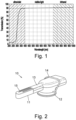
Figure 1 - shows a graph of the transmission of light through a vehicle glazing panel as a function of the wavelength of the light; -
Figure 2 - shows a perspective view of a curing unit according to the present invention; -
Figure 3 - shows a diagram of a side on view of a curing unit according to the present invention; -
Figure 4 - shows the curing unit ofFigure 3 when turned on; and -
Figure 5 - is a diagram illustrating the curing units ofFigure 2 or3 in use repairing a vehicle windscreen. - The skilled person would appreciate that none of these figures are drawn to scale, nor are the relative sizes of any features depicted accurately. The drawings are for illustrative purposes only.
-
Figure 1 is a diagram showing how the percentage of light transmitted through a vehicle windscreen varies in accordance with the wavelength of the light. As demonstrated, the longer the wavelength of the light, the more light penetrates through the windscreen. However, as the wavelength (λ) of light increases the energy (e) of the light decreases, as per the below equation:
- The higher the energy of the light the quicker the curing process will be. In order to obtain optimum curing of the resin there needs to be a balance between ensuring sufficient light is transmitted through the windscreen and that the curing light has a high enough energy to activate the resin in an acceptable exposure time.
- In one embodiment of the present invention the optimum wavelength is 385nm ± 5nm. This must also be the activation wavelength of the photoinitiator used in the corresponding repair resin. Almost 90% of light with this wavelength is transmitted through a vehicle windscreen, as shown in
Figure 1 . In comparison, the mercury vapour bulbs used in known curing units for windscreen repair processes only have about 60% to 70% transmission through the windscreen. - An embodiment of a curing unit according to the present invention is shown in
Figure 2 . The curingunit 10 comprises anLED array 11 connected to the underside of asupport arm 13. Asuction mount 12 is also attached to thesupport arm 13. Thesuction mount 12 is configured to securely mount thecuring unit 10 onto a vehicle windscreen. - A handle 14 s attached to the
curing unit 10 to be gripped by the user. This aids in removing thesuction mount 12 from the windscreen after the curing process has been completed. - The
LED array 11 comprises a plurality of LEDs (not shown), each LED configured to emit light of a single specific wavelength between 370nm to 420nm. The intensity of the light emitted by the LED array is at least 15mw/cm2 in order to ensure that sufficient area of the windscreen is illuminated at the required from the emitter positioned above the windscreen. Typically an LED light emitter is used which has a single rated activation wavelength within the specified range. By rated activation wavelength we mean that the rating (or technical specification) of the LED is a single wavelength (or narrow wavelength band) within the specified range. There may be of course leakage or trace wavelengths emitted slightly above or below the rated LED activation wavelength (or narrow wavelength band). - In some embodiments the wavelength may be between 370nm to 425nm, or between 380nm to 390nm.
- The curing
unit 10 is configured to be used to cure a windscreen repair resin after the resin has been inserted into a break in the windscreen. The activation wavelength of the resin must be in the range of 370nm to 425nm to ensure that it is correctly cured by the light emitted from the curingunit 10. As detailed in relation toFigure 1 , this wavelength range was selected as it provides optimum curing of the resin by obtaining a balance between ensuring sufficient light from the curing unit is transmitted through the windscreen and that the curing light has a high enough energy to activate the resin in an acceptable exposure time. - When cured, the repair resin should ideally have the same mechanical and optical properties as the windscreen itself. As described in the background section, the repair resin comprises a photoinitiator substance which triggers the curing of the other components of the repair resin from a liquid to a solid substance. The photoinitiator must absorb and be activated by the light emitted from the curing unit. The other components of the resin are selected to ensure that they can be cured by the photoinitiator when it is activated and that, upon curing, the solid repair resin has the desired mechanical and optical properties.
- The repair resin may comprise benzyl dimethyl ketal and/or 2,2-dimethoxy-1,2-diphenyl ethanone as the photoinitiator(s). These photoinitiators are activated by curing light in the wavelength range of 370nm to 400nm, which corresponds to the wavelength of the
LED array 11. It will be appreciated by the skilled person that there may be other suitable photoinitiators which could be used in the resin. The photoinitiator activation wavelength is matched to the single rated wavelength emitted by the LED emitter. - The composition of the resin is substantially such that the bulk of the resin will not cure in an enhanced manner at activation wavelengths of 365nm or less but rather at wavelengths is between 370nm and 425nm. Typically at least 80 %wt of the resin is not reactive to UV light, but typically 1 to 5%wt of the resin (i.e. the photoinitiator) activates upon exposure to light of the activation wavelength. Put another way, the resin does not effectively comprise any components that absorb the LED emitted wavelength other than the photoinitiator. Also the resin does not effectively comprise any components that absorb light of 365nm or less.
- The resin composition may comprise: 40 to 70 %wt acrylates; 6 to 18 %wt acids; 1 to 5 %wt oxysilanes; and 1 to 7 %wt of the photoinitiator(s). This composition provides the required structure and viscosity of the resin whilst ensuring that it cures rapidly and effectively upon activation of the photoinitiator.
- In some embodiments, the resin composition may comprise: 15 to 20 %wt 2-hydroxyethyl methacrylate; 25 to 49 %wt isobornyl acrylate; 1 to 4 %wt maleic acid; 5 to 14 %wt decanedioic acid; 1 to 4 %wt glycidoxypropyltrimethoxysilane; and 1 to 5% wt of the photoinitiator(s), wherein the photoinitiator(s) is/are benzyl dimethyl ketal and/or 2,2-dimethoxy-1,2-diphenyl ethanone.
- A plurality of slots or
apertures 15 are provided in an upper surface of thesupport arm 13 above theLED array 11. These slots orapertures 15 are provided to cool theLED array 11 during operation, by allowing waste heat to escape. - The
LED array 11 is positioned at least 15mm above the base of thesuction mount 13. This ensures that the light emitted from theLED array 11 creates a large enough exposure area to cover a typical repair zone on a windscreen. In this embodiment, the exposure area has a diameter of 50mm or less. - After inserting the repair resin into the repair zone on the windscreen, the curing
unit 10 is used. When the user turns theLED array 11 on, for example by pressing a start or power button (not shown), theLED array 11 emits light for a predetermined exposure time of 180 seconds. An internal timer device (not shown) controls the predetermined exposure time and automatically switches off theLED array 11 on expiry of the predetermined exposure time. In other embodiments the predetermined exposure time may be any duration of 60 seconds or more. - Another example of a
curing unit 20 is shown inFigure 3 . The curingunit 20 comprises alight source 21 and asuction mount 22, both attached to asupport arm 23. Thesupport arm 23 is rigidly fixed with respect to the suction mount and this is important to ensure fixed and consistent positioning of the LED emitter above the windscreen. Thesupport arm 23 extends in a substantially transverse or horizontal direction. Thesupport arm 23 therefore extends substantially parallel to the vehicle windscreen during use. In essence it is important to ensure that the LED emitter is in a fixed positional relationship with respect the suction mount and cannot be varied intentionally or by accident. - The
light source 21 is spaced a distance x away from thesuction mount 22 along thesupport arm 23. In this example, the distance x is at least 10cm. In a particular example, the distance x is 6 inches (15.24cm). In use, thelight source 21 is aligned above or below the damaged portion of the windscreen that needs to be repaired (i.e. the repair zone) (seeFigure 4 ). The spacing x ensures that thesuction mount 22 does not apply stress to the repair zone, which improves the quality of the repair. - The curing
unit 20 may be configured to be used to cure a windscreen repair resin according to any resin composition detailed above. For example, the curingunit 20 may be configured to cure a repair resin having the following composition: 30 to 80 %wt acrylates; 4 to 25 %wt acids; 0.5 to 10 %wt oxysilanes; and 1 to 10 %wt UV activated photoinitiator. -
Figure 4 shows the curingunit 20 ofFigure 3 positioned above aglazing panel 30 with thelight source 21 turned on so that light 26 is emitted. Thelight source 21 is positioned a distance y above the exterior surface of theglazing panel 30. - The distance y is selected to ensure that the light 26 is emitted onto an exposure area on the
glazing panel 30 that is sufficient to cover arepair zone 33. The optimum distance y depends on the properties of thelight source 21. - The
repair zone 33 is the area of the windscreen into which a resin is inserted to repair damage, such as crack or a break. Typically, this is less than 50mm in diameter. Larger damaged areas or breaks usually necessitate replacement of the windscreen, rather than repair. - Alternatively, as shown in
Figure 5 , the curingunit Figure 5 thewindscreen 30 has anexterior surface 31 and aninterior surface 32. Theinterior surface 32 is the driver's side of thewindscreen 30. - The degree of curvature of the
windscreen 30 inFigure 5 is for illustrative purposes only. The windscreen may be flat or of any degree of curvature. - A
device 40 is secured on theexterior surface 31 of the windscreen over therepair zone 33. Thedevice 40 is configured to (or to allow the user to) insert a resin into therepair zone 33 and apply pressure, or pressure cycling to the resin. For example, thedevice 40 may be of the type described inWO2015/040073 orEP1227927 . - By mounting the
device 40 and the curingunit repair zone 33 simultaneously. This allows the resin to be cured whilst under pressure. - In other embodiments, the
device 40 may be secured to theinterior surface 32 of the windscreen and the curingunit exterior surface 31 of the windscreen.
Claims (14)
- A method of repairing a vehicle windscreen, comprising:inserting a repair resin into a repair zone (33), wherein the resin includes a photoinitiator that activates when exposed to light of an activation wavelength, wherein the activation wavelength is between 370nm and 425nm; andcuring the resin by emitting light including light within the activation wavelength range onto the repair zone; characterised in that; at least 80 %wt of the resin is not reactive to UV light; and 1 to 5%wt of the resin activates upon exposure to light of the activation wavelength; providing for enhanced curing of the resin.
- The method of claim 1, wherein the resin will not cure in an enhanced manner at activation wavelengths of 365nm or less but rather at wavelengths between 370nm and 425nm
- The method of claim 1, wherein the light is emitted by an LED device (11) rated to emit light at a single rated wavelength, wherein the LED device (11) is capable of only emitting light at that rated wavelength, with the exception of any leakage wavelengths above and below the rated wavelength.
- The method of any of claims 1 to 3, wherein the resin does not comprise any components that absorb UV light other than the photoinitiator.
- The method of any preceding claim, wherein the activation wavelength is between 370nm to 400nm.
- The method of any preceding claim, wherein the activation wavelength is in the range between 380nm and 390nm.
- The method of any preceding claim, wherein the light emitted onto the repair zone has an intensity of at least 10mW/cm2.
- The method of any preceding claim, wherein the light is applied to the repair zone using at least one LED.
- The method of claim 8, wherein the at least one LED is spaced at least 15mm away from the repair zone in a perpendicular direction.
- The method of claim 8 or claim 9, wherein the at least one LED is spaced less than 10cm away from the repair zone in a perpendicular direction.
- The method of any preceding claim, comprising the initial step of mounting a curing unit (10) to the windscreen using a mount apparatus (12) spaced at least 10cm from a centre of the repair zone.
- The method of claim 11, wherein the mount apparatus (12) comprises a suction mount (12).
- The method of any preceding claim, further comprising applying pressure to the resin inserted into the repair zone during the curing of the resin.
- The method of claim 13, comprising using a device (40) positioned on the exterior side of the windscreen to apply the pressure to the resin.
Priority Applications (6)
| Application Number | Priority Date | Filing Date | Title |
|---|---|---|---|
| RS20250081A RS66444B1 (en) | 2017-09-26 | 2018-09-25 | VEHICLE WINDSHIELD REPAIR PROCEDURE |
| SI201831215T SI3687779T1 (en) | 2017-09-26 | 2018-09-25 | A method of repairing a vehicle windscreen |
| EP24214307.1A EP4488022A3 (en) | 2017-09-26 | 2018-09-25 | Curing repair resin |
| EP24214323.8A EP4488023B8 (en) | 2017-09-26 | 2018-09-25 | Curing repair resin |
| HRP20250107TT HRP20250107T1 (en) | 2017-09-26 | 2018-09-25 | VEHICLE WINDSHIELD REPAIR PROCEDURE |
| MA50649A MA50649B1 (en) | 2017-09-26 | 2018-09-25 | CURABLE REPAIR RESIN |
Applications Claiming Priority (3)
| Application Number | Priority Date | Filing Date | Title |
|---|---|---|---|
| GBGB1715588.8A GB201715588D0 (en) | 2017-09-26 | 2017-09-26 | Curing repair resin |
| GBGB1717463.2A GB201717463D0 (en) | 2017-09-26 | 2017-10-24 | Curing repair resin |
| PCT/GB2018/052719 WO2019063986A2 (en) | 2017-09-26 | 2018-09-25 | Curing repair resin |
Related Child Applications (2)
| Application Number | Title | Priority Date | Filing Date |
|---|---|---|---|
| EP24214323.8A Division EP4488023B8 (en) | 2017-09-26 | 2018-09-25 | Curing repair resin |
| EP24214307.1A Division EP4488022A3 (en) | 2017-09-26 | 2018-09-25 | Curing repair resin |
Publications (2)
| Publication Number | Publication Date |
|---|---|
| EP3687779A2 EP3687779A2 (en) | 2020-08-05 |
| EP3687779B1 true EP3687779B1 (en) | 2024-11-27 |
Family
ID=60244291
Family Applications (3)
| Application Number | Title | Priority Date | Filing Date |
|---|---|---|---|
| EP18779007.6A Active EP3687779B1 (en) | 2017-09-26 | 2018-09-25 | A method of repairing a vehicle windscreen |
| EP24214307.1A Pending EP4488022A3 (en) | 2017-09-26 | 2018-09-25 | Curing repair resin |
| EP24214323.8A Active EP4488023B8 (en) | 2017-09-26 | 2018-09-25 | Curing repair resin |
Family Applications After (2)
| Application Number | Title | Priority Date | Filing Date |
|---|---|---|---|
| EP24214307.1A Pending EP4488022A3 (en) | 2017-09-26 | 2018-09-25 | Curing repair resin |
| EP24214323.8A Active EP4488023B8 (en) | 2017-09-26 | 2018-09-25 | Curing repair resin |
Country Status (26)
| Country | Link |
|---|---|
| US (2) | US11673354B2 (en) |
| EP (3) | EP3687779B1 (en) |
| CN (3) | CN114939994B (en) |
| AR (1) | AR113179A1 (en) |
| AU (3) | AU2018343112B2 (en) |
| BR (3) | BR122022021261B1 (en) |
| CA (3) | CA3228853A1 (en) |
| CL (3) | CL2020000680A1 (en) |
| DK (1) | DK3687779T3 (en) |
| ES (2) | ES3001189T3 (en) |
| FI (1) | FI3687779T3 (en) |
| GB (6) | GB201715588D0 (en) |
| HR (1) | HRP20250107T1 (en) |
| HU (1) | HUE070164T2 (en) |
| JO (1) | JOP20180085A1 (en) |
| LT (1) | LT3687779T (en) |
| MA (1) | MA50649B1 (en) |
| MX (3) | MX2020001804A (en) |
| PL (1) | PL3687779T3 (en) |
| PT (1) | PT3687779T (en) |
| RS (1) | RS66444B1 (en) |
| SI (1) | SI3687779T1 (en) |
| TW (1) | TW201920538A (en) |
| UA (1) | UA128862C2 (en) |
| WO (1) | WO2019063986A2 (en) |
| ZA (3) | ZA202000967B (en) |
Families Citing this family (2)
| Publication number | Priority date | Publication date | Assignee | Title |
|---|---|---|---|---|
| EP3997172A4 (en) * | 2019-07-12 | 2023-01-18 | Mondofix Inc. | THIOL-BASED ADHESIVE FORMULATIONS FOR WINDSHIELD REPAIR |
| WO2023069550A1 (en) * | 2021-10-19 | 2023-04-27 | Spoo Shiloh Judah | Curing system for glass repair |
Citations (3)
| Publication number | Priority date | Publication date | Assignee | Title |
|---|---|---|---|---|
| WO2011109602A2 (en) | 2010-03-04 | 2011-09-09 | Tcg International. Inc. | Led curing lamp and method |
| US20140065254A1 (en) | 2012-08-30 | 2014-03-06 | Glasweld Systems, Inc. | Lamp system for curing resin in laminated safety glass |
| CN106281176A (en) | 2016-07-28 | 2017-01-04 | 孙涛 | A kind of windshield renovation agent and preparation method thereof |
Family Cites Families (24)
| Publication number | Priority date | Publication date | Assignee | Title |
|---|---|---|---|---|
| US3765975A (en) * | 1971-12-17 | 1973-10-16 | Minnesota Mining & Mfg | Windshield repair |
| US4975690A (en) | 1988-11-07 | 1990-12-04 | Ibm Corporation | Method for concurrent data entry and manipulation in multiple applications |
| JP2778826B2 (en) * | 1990-11-28 | 1998-07-23 | 株式会社東芝 | Contact material for vacuum valve |
| JPH11246242A (en) * | 1998-03-03 | 1999-09-14 | Kansai Paint Co Ltd | Method of repairing glass face |
| JP2000235351A (en) | 1998-12-18 | 2000-08-29 | Hitachi Ltd | Image display device, method of correcting the same, and correction device |
| GB2358424B (en) | 1999-11-12 | 2004-04-28 | Carglass Luxembourg Sarl | Improvements in apparatus for and methods of damage repair |
| US6898372B2 (en) * | 2003-04-09 | 2005-05-24 | Glas-Weld Systems, Inc. | Lamp system for curing resin in glass |
| JP2008512281A (en) * | 2004-09-13 | 2008-04-24 | ダウ・コーニング・コーポレイション | Lithographic techniques using silicone molds |
| US7131752B2 (en) | 2004-11-12 | 2006-11-07 | Tcg International Inc. | Articulating crack curing lamp and method |
| WO2007008426A2 (en) * | 2005-07-07 | 2007-01-18 | Arkema Inc. | Method of strengthening a brittle oxide substrate with a weatherable coating |
| TW200730584A (en) * | 2005-11-11 | 2007-08-16 | Shinetsu Chemical Co | Method for curing ultraviolet ray-curable resin, method for manufacturing flat panel and ultraviolet ray radiating apparatus |
| US8268104B1 (en) * | 2008-03-24 | 2012-09-18 | Hybrid Windshield Repair, LLC | Methods of using UV curing cationic epoxy for windshield repair |
| US8378315B2 (en) * | 2008-06-25 | 2013-02-19 | Glass Technology Inc. | Windshield repair device and method for repairing windshield |
| KR101280828B1 (en) * | 2008-07-02 | 2013-07-02 | 엘지디스플레이 주식회사 | Method for repairing defect in substrate |
| UA38420U (en) | 2008-08-26 | 2009-01-12 | Богдан Федорович Бородюк | method of removal of chip from surface of multilayer glass |
| JP5052534B2 (en) | 2009-01-08 | 2012-10-17 | 株式会社ブリヂストン | Photocurable transfer sheet and method for forming uneven pattern using the same |
| US20120327345A1 (en) * | 2010-03-12 | 2012-12-27 | Sharp Kabushiki Kaisha | Display panel and process for production thereof |
| CN101831269B (en) * | 2010-05-14 | 2012-12-12 | 上海鼎道科技发展有限公司 | Light curable adhesive for mending sand holes and cracks of automobile glass and preparation method thereof |
| CN101864265B (en) * | 2010-05-18 | 2014-10-15 | 上海鼎道科技发展有限公司 | Photocured adhesive for repairing micro cracks of automotive glass and preparation method thereof |
| WO2012124833A1 (en) * | 2011-03-11 | 2012-09-20 | 인산디지켐 주식회사 | Method for manufacturing composite film on which optical film is laminated |
| GB2518407B (en) | 2013-09-20 | 2018-08-29 | Belron Int Ltd | Glazing panel repair |
| US9567474B2 (en) * | 2013-12-18 | 2017-02-14 | Aie Finsol Pty Limited | Sprayable composition for stabilising broken glass and method of applying same |
| EP3694695B1 (en) * | 2017-10-11 | 2024-11-13 | Mondofix Inc. | Articulating crack curing lamp and method |
| JP7194198B2 (en) | 2018-11-26 | 2022-12-21 | 京セラ株式会社 | Light source device and lighting device |
-
2017
- 2017-09-26 GB GBGB1715588.8A patent/GB201715588D0/en not_active Ceased
- 2017-10-24 GB GBGB1717463.2A patent/GB201717463D0/en not_active Ceased
- 2017-10-24 JO JOP/2018/0085A patent/JOP20180085A1/en unknown
-
2018
- 2018-09-25 EP EP18779007.6A patent/EP3687779B1/en active Active
- 2018-09-25 CN CN202210358054.XA patent/CN114939994B/en active Active
- 2018-09-25 BR BR122022021261-1A patent/BR122022021261B1/en active IP Right Grant
- 2018-09-25 HR HRP20250107TT patent/HRP20250107T1/en unknown
- 2018-09-25 PL PL18779007.6T patent/PL3687779T3/en unknown
- 2018-09-25 LT LTEPPCT/GB2018/052719T patent/LT3687779T/en unknown
- 2018-09-25 CA CA3228853A patent/CA3228853A1/en active Pending
- 2018-09-25 BR BR112020002108-3A patent/BR112020002108B1/en active IP Right Grant
- 2018-09-25 RS RS20250081A patent/RS66444B1/en unknown
- 2018-09-25 EP EP24214307.1A patent/EP4488022A3/en active Pending
- 2018-09-25 PT PT187790076T patent/PT3687779T/en unknown
- 2018-09-25 ES ES18779007T patent/ES3001189T3/en active Active
- 2018-09-25 WO PCT/GB2018/052719 patent/WO2019063986A2/en not_active Ceased
- 2018-09-25 SI SI201831215T patent/SI3687779T1/en unknown
- 2018-09-25 GB GB1815595.2A patent/GB2568589B/en active Active
- 2018-09-25 MX MX2020001804A patent/MX2020001804A/en unknown
- 2018-09-25 EP EP24214323.8A patent/EP4488023B8/en active Active
- 2018-09-25 AU AU2018343112A patent/AU2018343112B2/en active Active
- 2018-09-25 FI FIEP18779007.6T patent/FI3687779T3/en active
- 2018-09-25 CN CN202210358051.6A patent/CN114874703A/en active Pending
- 2018-09-25 GB GB2203025.8A patent/GB2602897B/en active Active
- 2018-09-25 CA CA3071222A patent/CA3071222A1/en active Pending
- 2018-09-25 ES ES24214323T patent/ES3064047T3/en active Active
- 2018-09-25 GB GB2205966.1A patent/GB2603093A/en not_active Withdrawn
- 2018-09-25 GB GB2203024.1A patent/GB2601451B/en active Active
- 2018-09-25 CN CN201880061788.3A patent/CN111107984B/en active Active
- 2018-09-25 UA UAA202000590A patent/UA128862C2/en unknown
- 2018-09-25 CA CA3228827A patent/CA3228827A1/en active Pending
- 2018-09-25 TW TW107133650A patent/TW201920538A/en unknown
- 2018-09-25 MA MA50649A patent/MA50649B1/en unknown
- 2018-09-25 HU HUE18779007A patent/HUE070164T2/en unknown
- 2018-09-25 BR BR122022021256-5A patent/BR122022021256B1/en active IP Right Grant
- 2018-09-25 US US16/650,379 patent/US11673354B2/en active Active
- 2018-09-25 DK DK18779007.6T patent/DK3687779T3/en active
- 2018-09-26 AR ARP180102758A patent/AR113179A1/en unknown
-
2020
- 2020-02-14 ZA ZA2020/00967A patent/ZA202000967B/en unknown
- 2020-02-14 MX MX2024012454A patent/MX2024012454A/en unknown
- 2020-02-14 MX MX2024012455A patent/MX2024012455A/en unknown
- 2020-03-16 CL CL2020000680A patent/CL2020000680A1/en unknown
-
2022
- 2022-05-04 CL CL2022001188A patent/CL2022001188A1/en unknown
- 2022-05-04 CL CL2022001187A patent/CL2022001187A1/en unknown
-
2023
- 2023-02-22 ZA ZA2023/02241A patent/ZA202302241B/en unknown
- 2023-02-22 ZA ZA2023/02240A patent/ZA202302240B/en unknown
- 2023-04-27 US US18/140,524 patent/US20230311437A1/en active Pending
- 2023-11-23 AU AU2023270317A patent/AU2023270317B2/en active Active
- 2023-11-23 AU AU2023270316A patent/AU2023270316B2/en active Active
Patent Citations (3)
| Publication number | Priority date | Publication date | Assignee | Title |
|---|---|---|---|---|
| WO2011109602A2 (en) | 2010-03-04 | 2011-09-09 | Tcg International. Inc. | Led curing lamp and method |
| US20140065254A1 (en) | 2012-08-30 | 2014-03-06 | Glasweld Systems, Inc. | Lamp system for curing resin in laminated safety glass |
| CN106281176A (en) | 2016-07-28 | 2017-01-04 | 孙涛 | A kind of windshield renovation agent and preparation method thereof |
Non-Patent Citations (20)
| Title |
|---|
| "Doctoral Dissertation, Karlsruher Institut für Technologie (KIT)", 1 January 2009, ISBN: 978-3-86644-452-2, article PIEKE STEFAN: "Experimentelle Untersuchungen zur effizienten Vernetzung von Oberflächenbeschichtungen mit UV-Strahlung", XP093311995 |
| ANONYMOUS: "Actinic BL TL(-K)/TL- D(-K) - Actinic BL TL 6W/10 1FM/10X25CC (Datasheet)", PHILIPS LIGHTING, 7 February 2025 (2025-02-07), XP093312032 |
| ANONYMOUS: "Actinic BL TL(-K)/TL-D(-K) - Actinic BL TL TL 6W/10 1FM/10X25CC", PHILIPS, 24 December 2015 (2015-12-24), XP093312022 |
| ANONYMOUS: "Autoglas-Zubehör Katalog", PMA TOOLS, 1 August 2016 (2016-08-01), XP093312010 |
| ANONYMOUS: "Autoglas-Zubehör Katalog", PMA TOOLS, 1 March 2014 (2014-03-01), XP093312008 |
| ANONYMOUS: "Ciba® IRGACURE® 184 Photoinitiator", CIBA SPECIALTY CHEMICALS INC., 4 September 2001 (2001-09-04), pages 1 - 2, XP055834695 |
| ANONYMOUS: "Ciba® IRGACURE® 819", CIBASPECIALTY CHEMICALS, 30 August 2001 (2001-08-30), pages 1, XP055631377 |
| ANONYMOUS: "Finishharz - Sicherheitsdatenblatt", 22 January 2022 (2022-01-22), XP093312044 |
| ANONYMOUS: "Finishharz - Sicherheitsdatenblatt", 22 November 2017 (2017-11-22), XP093312039 |
| ANONYMOUS: "Finishharz - Sicherheitsdatenblatt", 7 July 2015 (2015-07-07), XP093312026 |
| D10 - INTERNE RECHNUNG PMA/TOOLS ÜBER AUSGABE "ROGERS GLASREPARATURKOFFER" ("KOFFER 2015") AUS EIGENEN LAGERBESTAND RG.NR. 755507 |
| D11 - INTERNE RECHNUNG PMA/TOOLS ÜBER AUSGABE "ROGERS GLASREPARATURKOFFER" ("KOFFER 2020") AUS EIGENEN LAGERBESTAND RG.NR. 897929 |
| D12 - SCAN DER DEM "KOFFER 2015" BEILIEGENDEN VERARBEITUNGSANLEITUNG (NO DATE FOUND) |
| D15 - ERSTER LABORBERICHT VON HERRN MICHAEL MÜNTER VOM 7. AUGUST 2025 ZU VERSUCHEN MIT "ORIGINAL-FINISHHARZ" AUS DEM "KOFFER 2020" |
| D16 - ZWEITER LABORBERICHT VON HERRN MICHAEL MÜNTER VOM 19. JUNI 2024 ZU VERSUCHEN MIT "SNYTHETISCHEM FINISHHARZ" |
| D17 - ZUSAMMENSTELLUNG DES INHALTS DER AUF DER CD-ROM ENTHALTENEN VIDEOANLEITUNG AUS DEM "KOFFER 2015" |
| D6 - Anlage VB1: Eidesstattliche Versicherung des Herrn Roger Koop, abgegeben am 22. August 2025 |
| D9 - RECHNUNGEN DER PMA/TOOLS ÜBER DEN ARTIKEL "ROGERS GLASREPARATURKOFFER" (ART.NR.: 10453850) AUS DEN JAHREN 2013 BIS 2015 |
| NN: "Photoinitiators for UV Curing", CIBA SPECIALTY CHEMICALS, XX, XX, 1 January 2003 (2003-01-01), XX , pages 1 - 8, XP002413391 |
| RICCI ANDREA, DIETLIKER KURT: "Radical Photoinitiators for UV-Curing In Industrial Applications", THE SPECTRUM, vol. 19, no. 1, 1 January 2006 (2006-01-01), pages 12 - 15, XP093311998 |
Also Published As
Similar Documents
| Publication | Publication Date | Title |
|---|---|---|
| AU2023270316B2 (en) | Curing repair resin | |
| CN1946775A (en) | Method for photocuring of resin compositions | |
| JPH08141001A (en) | Optical irradiator | |
| HK40003030A (en) | Curing repair resin | |
| US7410667B2 (en) | Method of applying a radiation cured resin with a transparent, removable overlay | |
| RU2793034C2 (en) | Repair resin curing | |
| US20140065254A1 (en) | Lamp system for curing resin in laminated safety glass | |
| KR102236234B1 (en) | Window holding module and laminating apparatus including the same | |
| JP2022125390A (en) | Resin composition, method for protecting surface, and method for processing workpiece | |
| US10308841B2 (en) | Process and apparatus for detaching a display module bonded by a liquid optically clear adhesive | |
| CA3148551A1 (en) | Method for repairing structured surfaces | |
| JPH05338027A (en) | Repairing method of inside of laid pipe | |
| CN120221401A (en) | How to repair the long strip deformation | |
| KR101420336B1 (en) | spangle film producing method using mold for spangle transcription |
Legal Events
| Date | Code | Title | Description |
|---|---|---|---|
| REG | Reference to a national code |
Ref country code: HR Ref legal event code: TUEP Ref document number: P20250107T Country of ref document: HR |
|
| STAA | Information on the status of an ep patent application or granted ep patent |
Free format text: STATUS: UNKNOWN |
|
| STAA | Information on the status of an ep patent application or granted ep patent |
Free format text: STATUS: THE INTERNATIONAL PUBLICATION HAS BEEN MADE |
|
| PUAI | Public reference made under article 153(3) epc to a published international application that has entered the european phase |
Free format text: ORIGINAL CODE: 0009012 |
|
| STAA | Information on the status of an ep patent application or granted ep patent |
Free format text: STATUS: REQUEST FOR EXAMINATION WAS MADE |
|
| 17P | Request for examination filed |
Effective date: 20200109 |
|
| AK | Designated contracting states |
Kind code of ref document: A2 Designated state(s): AL AT BE BG CH CY CZ DE DK EE ES FI FR GB GR HR HU IE IS IT LI LT LU LV MC MK MT NL NO PL PT RO RS SE SI SK SM TR |
|
| AX | Request for extension of the european patent |
Extension state: BA ME |
|
| DAX | Request for extension of the european patent (deleted) | ||
| RAV | Requested validation state of the european patent: fee paid |
Extension state: MA Effective date: 20200109 |
|
| STAA | Information on the status of an ep patent application or granted ep patent |
Free format text: STATUS: EXAMINATION IS IN PROGRESS |
|
| 17Q | First examination report despatched |
Effective date: 20220630 |
|
| P01 | Opt-out of the competence of the unified patent court (upc) registered |
Effective date: 20230518 |
|
| GRAP | Despatch of communication of intention to grant a patent |
Free format text: ORIGINAL CODE: EPIDOSNIGR1 |
|
| STAA | Information on the status of an ep patent application or granted ep patent |
Free format text: STATUS: GRANT OF PATENT IS INTENDED |
|
| INTG | Intention to grant announced |
Effective date: 20240130 |
|
| GRAJ | Information related to disapproval of communication of intention to grant by the applicant or resumption of examination proceedings by the epo deleted |
Free format text: ORIGINAL CODE: EPIDOSDIGR1 |
|
| STAA | Information on the status of an ep patent application or granted ep patent |
Free format text: STATUS: EXAMINATION IS IN PROGRESS |
|
| GRAP | Despatch of communication of intention to grant a patent |
Free format text: ORIGINAL CODE: EPIDOSNIGR1 |
|
| STAA | Information on the status of an ep patent application or granted ep patent |
Free format text: STATUS: GRANT OF PATENT IS INTENDED |
|
| INTC | Intention to grant announced (deleted) | ||
| INTG | Intention to grant announced |
Effective date: 20240621 |
|
| GRAS | Grant fee paid |
Free format text: ORIGINAL CODE: EPIDOSNIGR3 |
|
| GRAA | (expected) grant |
Free format text: ORIGINAL CODE: 0009210 |
|
| STAA | Information on the status of an ep patent application or granted ep patent |
Free format text: STATUS: THE PATENT HAS BEEN GRANTED |
|
| AK | Designated contracting states |
Kind code of ref document: B1 Designated state(s): AL AT BE BG CH CY CZ DE DK EE ES FI FR GB GR HR HU IE IS IT LI LT LU LV MC MK MT NL NO PL PT RO RS SE SI SK SM TR |
|
| REG | Reference to a national code |
Ref country code: GB Ref legal event code: FG4D |
|
| REG | Reference to a national code |
Ref country code: CH Ref legal event code: EP |
|
| REG | Reference to a national code |
Ref country code: IE Ref legal event code: FG4D |
|
| REG | Reference to a national code |
Ref country code: DE Ref legal event code: R096 Ref document number: 602018077008 Country of ref document: DE |
|
| REG | Reference to a national code |
Ref country code: FI Ref legal event code: FGE |
|
| REG | Reference to a national code |
Ref country code: DK Ref legal event code: T3 Effective date: 20250116 |
|
| REG | Reference to a national code |
Ref country code: SE Ref legal event code: TRGR |
|
| REG | Reference to a national code |
Ref country code: NL Ref legal event code: FP |
|
| REG | Reference to a national code |
Ref country code: SK Ref legal event code: T3 Ref document number: E 45668 Country of ref document: SK |
|
| REG | Reference to a national code |
Ref country code: ES Ref legal event code: FG2A Ref document number: 3001189 Country of ref document: ES Kind code of ref document: T3 Effective date: 20250304 |
|
| REG | Reference to a national code |
Ref country code: PT Ref legal event code: SC4A Ref document number: 3687779 Country of ref document: PT Date of ref document: 20250310 Kind code of ref document: T Free format text: AVAILABILITY OF NATIONAL TRANSLATION Effective date: 20250226 |
|
| REG | Reference to a national code |
Ref country code: MA Ref legal event code: VAGR Ref document number: 50649 Country of ref document: MA Kind code of ref document: B1 Ref country code: HR Ref legal event code: T1PR Ref document number: P20250107 Country of ref document: HR |
|
| PG25 | Lapsed in a contracting state [announced via postgrant information from national office to epo] |
Ref country code: IS Free format text: LAPSE BECAUSE OF FAILURE TO SUBMIT A TRANSLATION OF THE DESCRIPTION OR TO PAY THE FEE WITHIN THE PRESCRIBED TIME-LIMIT Effective date: 20250327 |
|
| PG25 | Lapsed in a contracting state [announced via postgrant information from national office to epo] |
Ref country code: BG Free format text: LAPSE BECAUSE OF FAILURE TO SUBMIT A TRANSLATION OF THE DESCRIPTION OR TO PAY THE FEE WITHIN THE PRESCRIBED TIME-LIMIT Effective date: 20241127 |
|
| REG | Reference to a national code |
Ref country code: GR Ref legal event code: EP Ref document number: 20250400367 Country of ref document: GR Effective date: 20250409 |
|
| REG | Reference to a national code |
Ref country code: EE Ref legal event code: FG4A Ref document number: E024954 Country of ref document: EE Effective date: 20250213 |
|
| REG | Reference to a national code |
Ref country code: HU Ref legal event code: AG4A Ref document number: E070164 Country of ref document: HU |
|
| PG25 | Lapsed in a contracting state [announced via postgrant information from national office to epo] |
Ref country code: SM Free format text: LAPSE BECAUSE OF FAILURE TO SUBMIT A TRANSLATION OF THE DESCRIPTION OR TO PAY THE FEE WITHIN THE PRESCRIBED TIME-LIMIT Effective date: 20241127 |
|
| PG25 | Lapsed in a contracting state [announced via postgrant information from national office to epo] |
Ref country code: RO Free format text: LAPSE BECAUSE OF FAILURE TO SUBMIT A TRANSLATION OF THE DESCRIPTION OR TO PAY THE FEE WITHIN THE PRESCRIBED TIME-LIMIT Effective date: 20241127 |
|
| REG | Reference to a national code |
Ref country code: DE Ref legal event code: R026 Ref document number: 602018077008 Country of ref document: DE |
|
| PLBI | Opposition filed |
Free format text: ORIGINAL CODE: 0009260 |
|
| PLAX | Notice of opposition and request to file observation + time limit sent |
Free format text: ORIGINAL CODE: EPIDOSNOBS2 |
|
| REG | Reference to a national code |
Ref country code: HR Ref legal event code: ODRP Ref document number: P20250107 Country of ref document: HR Payment date: 20250911 Year of fee payment: 8 |
|
| 26 | Opposition filed |
Opponent name: PMA/TOOLS GMBH Effective date: 20250827 |
|
| REG | Reference to a national code |
Ref country code: CH Ref legal event code: U11 Free format text: ST27 STATUS EVENT CODE: U-0-0-U10-U11 (AS PROVIDED BY THE NATIONAL OFFICE) Effective date: 20251001 |
|
| PGFP | Annual fee paid to national office [announced via postgrant information from national office to epo] |
Ref country code: FI Payment date: 20250929 Year of fee payment: 8 Ref country code: PT Payment date: 20250911 Year of fee payment: 8 |
|
| PGFP | Annual fee paid to national office [announced via postgrant information from national office to epo] |
Ref country code: LT Payment date: 20250827 Year of fee payment: 8 Ref country code: DK Payment date: 20250923 Year of fee payment: 8 Ref country code: DE Payment date: 20250919 Year of fee payment: 8 |
|
| PGFP | Annual fee paid to national office [announced via postgrant information from national office to epo] |
Ref country code: NO Payment date: 20250923 Year of fee payment: 8 Ref country code: GR Payment date: 20250922 Year of fee payment: 8 |
|
| PGFP | Annual fee paid to national office [announced via postgrant information from national office to epo] |
Ref country code: TR Payment date: 20250916 Year of fee payment: 8 Ref country code: PL Payment date: 20250911 Year of fee payment: 8 Ref country code: NL Payment date: 20250918 Year of fee payment: 8 Ref country code: IT Payment date: 20250918 Year of fee payment: 8 Ref country code: LU Payment date: 20250919 Year of fee payment: 8 |
|
| PGFP | Annual fee paid to national office [announced via postgrant information from national office to epo] |
Ref country code: BE Payment date: 20250918 Year of fee payment: 8 Ref country code: HU Payment date: 20250922 Year of fee payment: 8 Ref country code: GB Payment date: 20250919 Year of fee payment: 8 |
|
| PGFP | Annual fee paid to national office [announced via postgrant information from national office to epo] |
Ref country code: HR Payment date: 20250911 Year of fee payment: 8 |
|
| PGFP | Annual fee paid to national office [announced via postgrant information from national office to epo] |
Ref country code: FR Payment date: 20250922 Year of fee payment: 8 Ref country code: AT Payment date: 20250919 Year of fee payment: 8 |
|
| PGFP | Annual fee paid to national office [announced via postgrant information from national office to epo] |
Ref country code: SE Payment date: 20250918 Year of fee payment: 8 |
|
| PGFP | Annual fee paid to national office [announced via postgrant information from national office to epo] |
Ref country code: RS Payment date: 20250912 Year of fee payment: 8 Ref country code: EE Payment date: 20250930 Year of fee payment: 8 Ref country code: CZ Payment date: 20250916 Year of fee payment: 8 Ref country code: IE Payment date: 20250918 Year of fee payment: 8 |
|
| PGFP | Annual fee paid to national office [announced via postgrant information from national office to epo] |
Ref country code: SK Payment date: 20250916 Year of fee payment: 8 |
|
| PGFP | Annual fee paid to national office [announced via postgrant information from national office to epo] |
Ref country code: LV Payment date: 20250916 Year of fee payment: 8 |
|
| PGFP | Annual fee paid to national office [announced via postgrant information from national office to epo] |
Ref country code: SI Payment date: 20250911 Year of fee payment: 8 |
|
| VSFP | Annual fee paid to validation state [announced via postgrant information from national office to epo] |
Ref country code: MA Payment date: 20250926 Year of fee payment: 8 |
|
| PGFP | Annual fee paid to national office [announced via postgrant information from national office to epo] |
Ref country code: CH Payment date: 20251001 Year of fee payment: 8 |
|
| PGFP | Annual fee paid to national office [announced via postgrant information from national office to epo] |
Ref country code: ES Payment date: 20251030 Year of fee payment: 8 |
|
| REG | Reference to a national code |
Ref country code: AT Ref legal event code: UEP Ref document number: 1745335 Country of ref document: AT Kind code of ref document: T Effective date: 20241127 |