EP3687667B1 - Catalyst comprising ceria-zirconia-oxygen storage material and process for its production - Google Patents
Catalyst comprising ceria-zirconia-oxygen storage material and process for its production Download PDFInfo
- Publication number
- EP3687667B1 EP3687667B1 EP19705250.9A EP19705250A EP3687667B1 EP 3687667 B1 EP3687667 B1 EP 3687667B1 EP 19705250 A EP19705250 A EP 19705250A EP 3687667 B1 EP3687667 B1 EP 3687667B1
- Authority
- EP
- European Patent Office
- Prior art keywords
- oxygen storage
- osm
- storage material
- hours
- mmol
- Prior art date
- Legal status (The legal status is an assumption and is not a legal conclusion. Google has not performed a legal analysis and makes no representation as to the accuracy of the status listed.)
- Active
Links
Images

Classifications
-
- B—PERFORMING OPERATIONS; TRANSPORTING
- B01—PHYSICAL OR CHEMICAL PROCESSES OR APPARATUS IN GENERAL
- B01D—SEPARATION
- B01D53/00—Separation of gases or vapours; Recovering vapours of volatile solvents from gases; Chemical or biological purification of waste gases, e.g. engine exhaust gases, smoke, fumes, flue gases, aerosols
- B01D53/34—Chemical or biological purification of waste gases
- B01D53/74—General processes for purification of waste gases; Apparatus or devices specially adapted therefor
- B01D53/86—Catalytic processes
- B01D53/8621—Removing nitrogen compounds
- B01D53/8625—Nitrogen oxides
-
- B—PERFORMING OPERATIONS; TRANSPORTING
- B01—PHYSICAL OR CHEMICAL PROCESSES OR APPARATUS IN GENERAL
- B01J—CHEMICAL OR PHYSICAL PROCESSES, e.g. CATALYSIS OR COLLOID CHEMISTRY; THEIR RELEVANT APPARATUS
- B01J23/00—Catalysts comprising metals or metal oxides or hydroxides, not provided for in group B01J21/00
- B01J23/70—Catalysts comprising metals or metal oxides or hydroxides, not provided for in group B01J21/00 of the iron group metals or copper
- B01J23/76—Catalysts comprising metals or metal oxides or hydroxides, not provided for in group B01J21/00 of the iron group metals or copper combined with metals, oxides or hydroxides provided for in groups B01J23/02 - B01J23/36
- B01J23/83—Catalysts comprising metals or metal oxides or hydroxides, not provided for in group B01J21/00 of the iron group metals or copper combined with metals, oxides or hydroxides provided for in groups B01J23/02 - B01J23/36 with rare earths or actinides
-
- B—PERFORMING OPERATIONS; TRANSPORTING
- B01—PHYSICAL OR CHEMICAL PROCESSES OR APPARATUS IN GENERAL
- B01D—SEPARATION
- B01D53/00—Separation of gases or vapours; Recovering vapours of volatile solvents from gases; Chemical or biological purification of waste gases, e.g. engine exhaust gases, smoke, fumes, flue gases, aerosols
- B01D53/34—Chemical or biological purification of waste gases
- B01D53/74—General processes for purification of waste gases; Apparatus or devices specially adapted therefor
- B01D53/86—Catalytic processes
- B01D53/8643—Removing mixtures of carbon monoxide or hydrocarbons and nitrogen oxides
- B01D53/8646—Simultaneous elimination of the components
- B01D53/865—Simultaneous elimination of the components characterised by a specific catalyst
-
- B—PERFORMING OPERATIONS; TRANSPORTING
- B01—PHYSICAL OR CHEMICAL PROCESSES OR APPARATUS IN GENERAL
- B01D—SEPARATION
- B01D53/00—Separation of gases or vapours; Recovering vapours of volatile solvents from gases; Chemical or biological purification of waste gases, e.g. engine exhaust gases, smoke, fumes, flue gases, aerosols
- B01D53/34—Chemical or biological purification of waste gases
- B01D53/92—Chemical or biological purification of waste gases of engine exhaust gases
- B01D53/94—Chemical or biological purification of waste gases of engine exhaust gases by catalytic processes
- B01D53/944—Simultaneously removing carbon monoxide, hydrocarbons or carbon making use of oxidation catalysts
-
- B—PERFORMING OPERATIONS; TRANSPORTING
- B01—PHYSICAL OR CHEMICAL PROCESSES OR APPARATUS IN GENERAL
- B01D—SEPARATION
- B01D53/00—Separation of gases or vapours; Recovering vapours of volatile solvents from gases; Chemical or biological purification of waste gases, e.g. engine exhaust gases, smoke, fumes, flue gases, aerosols
- B01D53/34—Chemical or biological purification of waste gases
- B01D53/92—Chemical or biological purification of waste gases of engine exhaust gases
- B01D53/94—Chemical or biological purification of waste gases of engine exhaust gases by catalytic processes
- B01D53/9445—Simultaneously removing carbon monoxide, hydrocarbons or nitrogen oxides making use of three-way catalysts [TWC] or four-way-catalysts [FWC]
- B01D53/945—Simultaneously removing carbon monoxide, hydrocarbons or nitrogen oxides making use of three-way catalysts [TWC] or four-way-catalysts [FWC] characterised by a specific catalyst
-
- B—PERFORMING OPERATIONS; TRANSPORTING
- B01—PHYSICAL OR CHEMICAL PROCESSES OR APPARATUS IN GENERAL
- B01J—CHEMICAL OR PHYSICAL PROCESSES, e.g. CATALYSIS OR COLLOID CHEMISTRY; THEIR RELEVANT APPARATUS
- B01J21/00—Catalysts comprising the elements, oxides, or hydroxides of magnesium, boron, aluminium, carbon, silicon, titanium, zirconium, or hafnium
- B01J21/06—Silicon, titanium, zirconium or hafnium; Oxides or hydroxides thereof
- B01J21/066—Zirconium or hafnium; Oxides or hydroxides thereof
-
- B—PERFORMING OPERATIONS; TRANSPORTING
- B01—PHYSICAL OR CHEMICAL PROCESSES OR APPARATUS IN GENERAL
- B01J—CHEMICAL OR PHYSICAL PROCESSES, e.g. CATALYSIS OR COLLOID CHEMISTRY; THEIR RELEVANT APPARATUS
- B01J37/00—Processes, in general, for preparing catalysts; Processes, in general, for activation of catalysts
- B01J37/02—Impregnation, coating or precipitation
- B01J37/03—Precipitation; Co-precipitation
-
- B—PERFORMING OPERATIONS; TRANSPORTING
- B01—PHYSICAL OR CHEMICAL PROCESSES OR APPARATUS IN GENERAL
- B01J—CHEMICAL OR PHYSICAL PROCESSES, e.g. CATALYSIS OR COLLOID CHEMISTRY; THEIR RELEVANT APPARATUS
- B01J37/00—Processes, in general, for preparing catalysts; Processes, in general, for activation of catalysts
- B01J37/04—Mixing
-
- B—PERFORMING OPERATIONS; TRANSPORTING
- B01—PHYSICAL OR CHEMICAL PROCESSES OR APPARATUS IN GENERAL
- B01J—CHEMICAL OR PHYSICAL PROCESSES, e.g. CATALYSIS OR COLLOID CHEMISTRY; THEIR RELEVANT APPARATUS
- B01J37/00—Processes, in general, for preparing catalysts; Processes, in general, for activation of catalysts
- B01J37/06—Washing
-
- B—PERFORMING OPERATIONS; TRANSPORTING
- B01—PHYSICAL OR CHEMICAL PROCESSES OR APPARATUS IN GENERAL
- B01J—CHEMICAL OR PHYSICAL PROCESSES, e.g. CATALYSIS OR COLLOID CHEMISTRY; THEIR RELEVANT APPARATUS
- B01J37/00—Processes, in general, for preparing catalysts; Processes, in general, for activation of catalysts
- B01J37/08—Heat treatment
-
- F—MECHANICAL ENGINEERING; LIGHTING; HEATING; WEAPONS; BLASTING
- F01—MACHINES OR ENGINES IN GENERAL; ENGINE PLANTS IN GENERAL; STEAM ENGINES
- F01N—GAS-FLOW SILENCERS OR EXHAUST APPARATUS FOR MACHINES OR ENGINES IN GENERAL; GAS-FLOW SILENCERS OR EXHAUST APPARATUS FOR INTERNAL-COMBUSTION ENGINES
- F01N3/00—Exhaust or silencing apparatus having means for purifying, rendering innocuous, or otherwise treating exhaust
- F01N3/08—Exhaust or silencing apparatus having means for purifying, rendering innocuous, or otherwise treating exhaust for rendering innocuous
- F01N3/10—Exhaust or silencing apparatus having means for purifying, rendering innocuous, or otherwise treating exhaust for rendering innocuous by thermal or catalytic conversion of noxious components of exhaust
- F01N3/101—Three-way catalysts
-
- F—MECHANICAL ENGINEERING; LIGHTING; HEATING; WEAPONS; BLASTING
- F01—MACHINES OR ENGINES IN GENERAL; ENGINE PLANTS IN GENERAL; STEAM ENGINES
- F01N—GAS-FLOW SILENCERS OR EXHAUST APPARATUS FOR MACHINES OR ENGINES IN GENERAL; GAS-FLOW SILENCERS OR EXHAUST APPARATUS FOR INTERNAL-COMBUSTION ENGINES
- F01N3/00—Exhaust or silencing apparatus having means for purifying, rendering innocuous, or otherwise treating exhaust
- F01N3/08—Exhaust or silencing apparatus having means for purifying, rendering innocuous, or otherwise treating exhaust for rendering innocuous
- F01N3/10—Exhaust or silencing apparatus having means for purifying, rendering innocuous, or otherwise treating exhaust for rendering innocuous by thermal or catalytic conversion of noxious components of exhaust
- F01N3/103—Oxidation catalysts for HC and CO only
-
- F—MECHANICAL ENGINEERING; LIGHTING; HEATING; WEAPONS; BLASTING
- F01—MACHINES OR ENGINES IN GENERAL; ENGINE PLANTS IN GENERAL; STEAM ENGINES
- F01N—GAS-FLOW SILENCERS OR EXHAUST APPARATUS FOR MACHINES OR ENGINES IN GENERAL; GAS-FLOW SILENCERS OR EXHAUST APPARATUS FOR INTERNAL-COMBUSTION ENGINES
- F01N3/00—Exhaust or silencing apparatus having means for purifying, rendering innocuous, or otherwise treating exhaust
- F01N3/08—Exhaust or silencing apparatus having means for purifying, rendering innocuous, or otherwise treating exhaust for rendering innocuous
- F01N3/10—Exhaust or silencing apparatus having means for purifying, rendering innocuous, or otherwise treating exhaust for rendering innocuous by thermal or catalytic conversion of noxious components of exhaust
- F01N3/24—Exhaust or silencing apparatus having means for purifying, rendering innocuous, or otherwise treating exhaust for rendering innocuous by thermal or catalytic conversion of noxious components of exhaust characterised by constructional aspects of converting apparatus
- F01N3/28—Construction of catalytic reactors
-
- B—PERFORMING OPERATIONS; TRANSPORTING
- B01—PHYSICAL OR CHEMICAL PROCESSES OR APPARATUS IN GENERAL
- B01D—SEPARATION
- B01D2255/00—Catalysts
- B01D2255/20—Metals or compounds thereof
- B01D2255/206—Rare earth metals
- B01D2255/2061—Yttrium
-
- B—PERFORMING OPERATIONS; TRANSPORTING
- B01—PHYSICAL OR CHEMICAL PROCESSES OR APPARATUS IN GENERAL
- B01D—SEPARATION
- B01D2255/00—Catalysts
- B01D2255/20—Metals or compounds thereof
- B01D2255/206—Rare earth metals
- B01D2255/2063—Lanthanum
-
- B—PERFORMING OPERATIONS; TRANSPORTING
- B01—PHYSICAL OR CHEMICAL PROCESSES OR APPARATUS IN GENERAL
- B01D—SEPARATION
- B01D2255/00—Catalysts
- B01D2255/20—Metals or compounds thereof
- B01D2255/206—Rare earth metals
- B01D2255/2065—Cerium
-
- B—PERFORMING OPERATIONS; TRANSPORTING
- B01—PHYSICAL OR CHEMICAL PROCESSES OR APPARATUS IN GENERAL
- B01D—SEPARATION
- B01D2255/00—Catalysts
- B01D2255/20—Metals or compounds thereof
- B01D2255/207—Transition metals
- B01D2255/20715—Zirconium
-
- B—PERFORMING OPERATIONS; TRANSPORTING
- B01—PHYSICAL OR CHEMICAL PROCESSES OR APPARATUS IN GENERAL
- B01D—SEPARATION
- B01D2255/00—Catalysts
- B01D2255/20—Metals or compounds thereof
- B01D2255/207—Transition metals
- B01D2255/20738—Iron
-
- B—PERFORMING OPERATIONS; TRANSPORTING
- B01—PHYSICAL OR CHEMICAL PROCESSES OR APPARATUS IN GENERAL
- B01D—SEPARATION
- B01D2255/00—Catalysts
- B01D2255/20—Metals or compounds thereof
- B01D2255/207—Transition metals
- B01D2255/20761—Copper
-
- B—PERFORMING OPERATIONS; TRANSPORTING
- B01—PHYSICAL OR CHEMICAL PROCESSES OR APPARATUS IN GENERAL
- B01D—SEPARATION
- B01D2255/00—Catalysts
- B01D2255/40—Mixed oxides
- B01D2255/407—Zr-Ce mixed oxides
-
- B—PERFORMING OPERATIONS; TRANSPORTING
- B01—PHYSICAL OR CHEMICAL PROCESSES OR APPARATUS IN GENERAL
- B01D—SEPARATION
- B01D2255/00—Catalysts
- B01D2255/90—Physical characteristics of catalysts
- B01D2255/908—O2-storage component incorporated in the catalyst
-
- F—MECHANICAL ENGINEERING; LIGHTING; HEATING; WEAPONS; BLASTING
- F01—MACHINES OR ENGINES IN GENERAL; ENGINE PLANTS IN GENERAL; STEAM ENGINES
- F01N—GAS-FLOW SILENCERS OR EXHAUST APPARATUS FOR MACHINES OR ENGINES IN GENERAL; GAS-FLOW SILENCERS OR EXHAUST APPARATUS FOR INTERNAL-COMBUSTION ENGINES
- F01N2370/00—Selection of materials for exhaust purification
- F01N2370/02—Selection of materials for exhaust purification used in catalytic reactors
-
- Y—GENERAL TAGGING OF NEW TECHNOLOGICAL DEVELOPMENTS; GENERAL TAGGING OF CROSS-SECTIONAL TECHNOLOGIES SPANNING OVER SEVERAL SECTIONS OF THE IPC; TECHNICAL SUBJECTS COVERED BY FORMER USPC CROSS-REFERENCE ART COLLECTIONS [XRACs] AND DIGESTS
- Y02—TECHNOLOGIES OR APPLICATIONS FOR MITIGATION OR ADAPTATION AGAINST CLIMATE CHANGE
- Y02T—CLIMATE CHANGE MITIGATION TECHNOLOGIES RELATED TO TRANSPORTATION
- Y02T10/00—Road transport of goods or passengers
- Y02T10/10—Internal combustion engine [ICE] based vehicles
- Y02T10/12—Improving ICE efficiencies
Definitions
- This disclosure relates generally to oxygen storage material that can be used for catalytic applications.
- Cerium-zirconium mixed oxides are widely used as oxygen storage materials (OSM) in three-way catalysts for treatment of vehicle exhaust gases.
- OSM oxygen storage materials
- the OSM made by a precipitation/co-precipitation technique have high resistance for sintering and, in some cases, their surface area after ageing at 1100°C could exceed 15-25 m 2 /g. Further prior art in this technical field is disclosed in documents U6,585,944 B1 and US 2016/296910 A1 .
- High oxidation-reduction activity of an OSM is a cooperative phenomenon that depends on the OSM composition, crystalline phase, surface area, type of porosity, and platinum group metal (PGM) dispersion, among other features.
- PGM platinum group metal
- the oxygen storage capacity of severely aged (>1100°C) ceria-zirconia based materials depends on CeO 2 content. More specifically, oxygen storage capacity (OSC) increases up to 1.0-1.1 mmol H 2 /g with a CeO 2 content increase up to 30-35 wt.%. Further increase in CeO 2 content does not result in an OSC increase, which means that only a fraction of the CeO 2 in ceria-rich mixed oxides is available for oxygen storage.
- OSC oxygen storage capacity
- an oxygen storage material that meet the requirements of a three-way catalyst (TWC) and four-way catalyst with high oxygen storage capacity and enhanced reducibility is desirable.
- This disclosure relates generally to an oxygen storage material (OSM) with enhanced redox properties, developed mesoporosity, and resistance to sintering. More specifically, the present disclosure generally provides an oxygen storage material (OSM) exhibiting high oxygen storage capacity (i.e., OSC > 1.5 mmol H 2 /g) and enhanced reducibility (i.e., bimodal TPR-H 2 profile with two T max in the temperature range from 150°C to 550°C).
- the OSM is suitable for use as a catalyst and a catalyst support.
- the method of making the oxygen storage material comprises the preparation of a solution containing zirconium, cerium, rare earth and transition metal salts, followed by the coprecipitation of all constituent metal hydroxides with a base.
- the present disclosure generally provides an oxygen storage material (OSM) that comprises, consists of, or consists essentially of oxides of zirconium, cerium, at least one rare earth metal other than cerium, and at least one transition metal.
- the OSM has a zirconium oxide content and a transition metal oxide content as defined in claim 1.
- the OSM exhibits 100% CeO 2 reducibility and an oxygen storage capacity (OSC) after ageing at 1100°C for 4 hours that is at least 1.5 mmol H 2 /g with a bimodal TPR-H 2 profile.
- the rare earth metals present in the OSM are selected to include lanthanum neodymium, praseodymium, yttrium, or combination of thereof.
- the content of these rare earth metals in the OSM range from 5 wt.% to 10 wt.%, relative to the overall weight of the OSM.
- the amount of rare earth metals present in the OSM is sufficient for stabilization of the crystalline lattice of the OSM.
- the transition metals present in the OSM are selected from copper, iron, nickel, cobalt, manganese or combination of thereof.
- the amount of transition metals present in the OSM range from 2% up to 8% by weight.
- the oxygen storage material exhibits 100% CeO 2 reducibility after ageing at 1100°C for 4 hours, which is significantly higher that has been reported previously for conventional materials.
- the OSM may be further characterized by having an oxygen storage capacity (OSC) after ageing at 1100°C for 4 hours that is at least 1.5 mmol H 2 /g; alternatively, ranging from about 1.5 mmol H 2 /g up to about 2.5 mmol H 2 /g along with a bimodal TPR-H 2 profile.
- the bimodal TPR-H 2 profile is characterized by two distinct peaks having a T max at 350-400°C and at 450-550°C or two peaks with a T max at 150-250°C and at 350-450°C.
- a method 1 for making an oxygen storage material includes the steps of (a) preparing 5 a solution containing zirconium, cerium, rare earth and transition metal salts, (b) adding 10 the polyvalent metal containing solution into a base solution to form a mixed hydroxide coprecipitate; (c) ageing 15 the precipitated mixed hydroxide; (d) washing 20 the precipitated mixed hydroxide with water to remove anion and cation admixtures; (e) drying 25 the washed mixed oxide; and (f) calcining 30 the mixed oxide in an inert or reducing atmosphere.
- the method 1 uses water soluble polyvalent metal nitrates, chlorides, sulfates salts of zirconium, rare earth metals, transition metals and combination of thereof.
- the base used for precipitation 10 is chosen from alkali hydroxides, aqueous ammonia or tetraalkylammonium hydroxide.
- the calcination 30 of air-dried material is done in an inert or reducing atmosphere. The calcination 30 s carried out at temperature ranging from 500°C up to 900°C for time from 2 to 5 hours; alternatively, at a temperature in the range of 600°C to 800°C and/or a time between 3 hours to 5 hours.
- weight refers to a mass value, such as having the units of grams, kilograms, and the like.
- concentration ranging from 40% by weight to 60% by weight includes concentrations of 40% by weight, 60% by weight, and all concentrations there between (e.g., 40.1%, 41%, 45%, 50%, 52.5%, 55%, 59%, etc.).
- the terms "at least one” and “one or more of' an element are used interchangeably and may have the same meaning. These terms, which refer to the inclusion of a single element or a plurality of the elements, may also be represented by the suffix "(s)"at the end of the element. For example, “at least one polyurethane”, “one or more polyurethanes”, and “polyurethane(s)” may be used interchangeably and are intended to have the same meaning.
- a solution containing Zr, Ce, La, Y, and Fe salts is prepared by mixing 90.5 g of ZrOCl 2 *8H 2 O, 64.5 g of a 27.9% cerium (III) nitrate solution, 15.55 g of a 19.3% yttrium nitrate solution, 11.85 g of a 18.3 % lanthanum nitrate solution, and 18.2 g of an Fe(NO 3 ) 3 *6H 2 O with 200 g of deionized (DI) water.
- DI deionized
- the solution containing the polyvalent metals is added dropwise into a one liter beaker with 700 g of a 25% NH 4 OH solution.
- the formed precipitate is filtered using a Buchner filter and washed with deionized water to remove any excess of chloride, nitrate and ammonium ions.
- the wet collected precipitate is dried in electric oven at 130°C for 12 hours. Then the dried precipitate is calcined at 800°C for 2 hours in a nitrogen atmosphere. The calcined sample is additionally aged at 1100°C in air for 4 hours.
- the redox activity of aged OSM is tested using a conventional temperature programmed reduction (TPR-H 2 ) method.
- Theoretical oxygen storage capacity (OSC) is 1.75 mMol H 2 /g.
- OSC Theoretical oxygen storage capacity
- a solution containing Zr, Ce, La, Y, and Cu salts is prepared by mixing 58.1 g of ZrOCl 2 *8H 2 O, 96.8 g of a 27.9% cerium (III) nitrate solution, 15.55 g of a 19.3% yttrium nitrate solution, 11.85 g of a 18.3 % lanthanum nitrate solution, and 14.46 g of Cu(NO 3 ) 2 *3H 2 O with 200 g of deionized (DI) water.
- DI deionized
- the solution containing the polyvalent metals is added dropwise into a one liter beaker containing 700 g of a 10% NaOH solution.
- the formed precipitate is filtered using a Buchner filter and washed with deionized water to remove any excess of chloride, nitrate and sodium ions.
- the wet collected precipitate is dried in electric oven at 130°C for 12 hours and then calcined in a nitrogen atmosphere at 800°C for 2 hours.
- the calcined sample is additionally aged at 1100°C in air for 4 hours.
- the redox activity of the aged OSM is tested using a conventional TPR-H2 method.
- the theoretical OSC is 2.15 mMol H 2 /g.
- the available OSC of 2.15 mMol H 2 /g indicates that 100% Ce is available for redox reactions.
- a solution containing Zr, Ce, La, Y, Cu and Fe salts is prepared by mixing 50.25 g of ZrOCl 2 *8H 2 O, 107.5 g of a 27.9% cerium (III) nitrate solution, 15.55 g of a 19.3% yttrium nitrate solution, 11.85 g of a 18.3 % lanthanum nitrate solution, 0.9 g of Cu(NO 3 ) 2 *3H 2 O and 22.7 g of Fe(NO 3 ) 3 *6H 2 O with 200 g of deionized (DI) water.
- DI deionized
- the wet collected precipitate is dried in electric oven at 130°C for 12 hours and then calcined at 800°C for 2 hours in a 5 wt.% CO atmosphere.
- the calcined sample is additionally aged at 1100°C in air for 4 hours.
- the redox activity of the aged OSM is tested using a conventional TPR-H 2 method.
- the theoretical OSC is 2.50 mMol H 2 /g.
- the available OSC of 2.5 mMol H 2 /g indicates that 100% Ce is available for redox reactions.
Landscapes
- Chemical & Material Sciences (AREA)
- Engineering & Computer Science (AREA)
- Chemical Kinetics & Catalysis (AREA)
- Materials Engineering (AREA)
- Organic Chemistry (AREA)
- Health & Medical Sciences (AREA)
- Combustion & Propulsion (AREA)
- Environmental & Geological Engineering (AREA)
- General Chemical & Material Sciences (AREA)
- Biomedical Technology (AREA)
- Oil, Petroleum & Natural Gas (AREA)
- Analytical Chemistry (AREA)
- Toxicology (AREA)
- Mechanical Engineering (AREA)
- General Engineering & Computer Science (AREA)
- Physics & Mathematics (AREA)
- Thermal Sciences (AREA)
- Catalysts (AREA)
- Exhaust Gas Treatment By Means Of Catalyst (AREA)
- Exhaust Gas After Treatment (AREA)
- Solid-Sorbent Or Filter-Aiding Compositions (AREA)
- Inorganic Compounds Of Heavy Metals (AREA)
Description
- This disclosure relates generally to oxygen storage material that can be used for catalytic applications.
- The statements in this section merely provide background information related to the present disclosure and may not constitute prior art.
- Cerium-zirconium mixed oxides are widely used as oxygen storage materials (OSM) in three-way catalysts for treatment of vehicle exhaust gases. There are several requirements that OSM should meet for successful application. These requirements include high thermal stability, resistance to sintering, and compatibility with precious metals, thereby, enabling the high dispersion of these metals on the surface of the OSM.
- Different methods are used to make conventional ceria-zirconia based OSM. These methods include sol-gel techniques as described in
JP-A-5-193948 JP-A-5-155622 U.S. Patent 6,139,814 . The most common and widely used processes for making thermally stable OSM are precipitation/co-precipitation based onU.S. Patent No.'s 6,171,572 ;6,214,306 ;6,255,242 ;6,387,338 ;7,431,910 ; and7,919,429 ; as well asU.S. Publication No. 2016/0207027 . The OSM made by a precipitation/co-precipitation technique have high resistance for sintering and, in some cases, their surface area after ageing at 1100°C could exceed 15-25 m2/g. Further prior art in this technical field is disclosed in documentsU6,585,944 B1 andUS 2016/296910 A1 . - High oxidation-reduction activity of an OSM is a cooperative phenomenon that depends on the OSM composition, crystalline phase, surface area, type of porosity, and platinum group metal (PGM) dispersion, among other features. In
U.S. Patent No. 6,468,941 the oxygen storage capacity of severely aged (>1100°C) ceria-zirconia based materials depends on CeO2 content. More specifically, oxygen storage capacity (OSC) increases up to 1.0-1.1 mmol H2/g with a CeO2 content increase up to 30-35 wt.%. Further increase in CeO2 content does not result in an OSC increase, which means that only a fraction of the CeO2 in ceria-rich mixed oxides is available for oxygen storage.U.S. Patent No. 8,187,995 andU.S. Publication No. 2013/0029840 describes ceria-zirconia mixed oxides with a specific cubic pyrochlore structure that exhibits an oxygen storage capacity up to 1.3-1.5 mmol H2/g. High oxygen storage capacity allows a reduced amount of OSM to be used, minimizes the thickness of a coated layer, reduces backpressure, and lowers the weight and cost of a catalytic converter. - Besides high total oxygen storage capacity (OSC), another important feature of mixed oxides is the temperature at which oxidation-reduction reactions occur. Materials that enable oxidation-reduction reactions at low temperatures (e.g., high redox active materials) are important for solving cold-start emission problems by lowering the "light-off" temperature of the catalyst, thereby, reducing the amount of untreated exhaust gases.
U.S. Patent No. 7,943,104 describes the use of indium (In) and tin (Sn) dopants to facilitate oxygen mobility. The maximum temperature (Tmax) for the operation of an aged OSM shifts from 550-600°C to 350-450°C. A similar effect of facilitating the redox function by using Sn as a dopant was disclosed inU.S. Publication No. 2015/0375203 . InU.S. Patent No. 6,585,944 various transition metals, e.g., Ni, Cu, Fe, and Mn, as well as Ag and Bi are proposed for redox properties enhancement. The use of these promoters allows for an increase in OSC up to 1.5 mmol H2/g and a shift in Tmax to 300-350°C. - Thus, an oxygen storage material that meet the requirements of a three-way catalyst (TWC) and four-way catalyst with high oxygen storage capacity and enhanced reducibility is desirable.
- The essential technical features of the invention are explicitly defined in the wordings of
independent claims 1, 7 and 11 on file. Further embodiments of the invention are explicilty defined in the wordings of the dependent claims on file. - This disclosure relates generally to an oxygen storage material (OSM) with enhanced redox properties, developed mesoporosity, and resistance to sintering. More specifically, the present disclosure generally provides an oxygen storage material (OSM) exhibiting high oxygen storage capacity (i.e., OSC > 1.5 mmol H2/g) and enhanced reducibility (i.e., bimodal TPR-H2 profile with two Tmax in the temperature range from 150°C to 550°C). The OSM is suitable for use as a catalyst and a catalyst support. The method of making the oxygen storage material comprises the preparation of a solution containing zirconium, cerium, rare earth and transition metal salts, followed by the coprecipitation of all constituent metal hydroxides with a base.
- Further areas of applicability will become apparent from the description provided herein. It should be understood that the description and specific examples are intended for purposes of illustration only and are not intended to limit the scope of the present disclosure.
- In order that the disclosure may be well understood, there will now be described various forms thereof, given by way of example, reference being made to the accompanying drawings, in which:
-
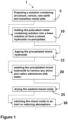
Figure 1 is a schematic representation of a flowchart that illustrates a method for forming an oxygen storage material (OSM) according to the teachings of the present disclosure; -
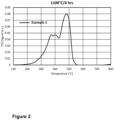
Figure 2 is a graphical representation of a TPR-H2 profile of the OSM of Example 1 after ageing at 1,100°C for 4 hours; -
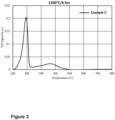
Figure 3 is a graphical representation of a TPR-H2 profile of the OSM of Example 2 after ageing at 1,100°C for 4 hours; and -
Figure 4 is a graphical representation of a TPR-H2 profile of the OSM of Example 3 after ageing at 1,100°C for 4 hours. - The drawings described herein are for illustration purposes only and are not intended to limit the scope of the present disclosure in any way.
- The following description is merely exemplary in nature and is in no way intended to limit the present disclosure or its application or uses. For example, the oxygen storage material (OSM) made and used according to the teachings contained herein is described throughout the present disclosure in conjunction with a three-way catalyst (TWC) used to reduce vehicle emission gases in order to more fully illustrate the composition and the use thereof. The incorporation and use of such an OSM in other catalysts, such as four-way catalysts, diesel oxidation catalysts, and oxidation catalysts, or in other catalytic applications is contemplated to be within the scope of the present disclosure. It should be understood that throughout the description, corresponding reference numerals indicate like or corresponding parts and features.
- The present disclosure generally provides an oxygen storage material (OSM) that comprises, consists of, or consists essentially of oxides of zirconium, cerium, at least one rare earth metal other than cerium, and at least one transition metal. The OSM has a zirconium oxide content and a transition metal oxide content as defined in
claim 1. The OSM exhibits 100% CeO2 reducibility and an oxygen storage capacity (OSC) after ageing at 1100°C for 4 hours that is at least 1.5 mmol H2/g with a bimodal TPR-H2 profile. - According to the invention, the rare earth metals present in the OSM are selected to include lanthanum neodymium, praseodymium, yttrium, or combination of thereof. The content of these rare earth metals in the OSM range from 5 wt.% to 10 wt.%, relative to the overall weight of the OSM. The amount of rare earth metals present in the OSM is sufficient for stabilization of the crystalline lattice of the OSM.
- The transition metals present in the OSM are selected from copper, iron, nickel, cobalt, manganese or combination of thereof. The amount of transition metals present in the OSM range from 2% up to 8% by weight.
- According to another aspect of the present disclosure, the oxygen storage material exhibits 100% CeO2 reducibility after ageing at 1100°C for 4 hours, which is significantly higher that has been reported previously for conventional materials. The OSM may be further characterized by having an oxygen storage capacity (OSC) after ageing at 1100°C for 4 hours that is at least 1.5 mmol H2/g; alternatively, ranging from about 1.5 mmol H2/g up to about 2.5 mmol H2/g along with a bimodal TPR-H2 profile. The bimodal TPR-H2 profile is characterized by two distinct peaks having a Tmax at 350-400°C and at 450-550°C or two peaks with a Tmax at 150-250°C and at 350-450°C.
- Referring now to
Figure 1 , amethod 1 for making an oxygen storage material (OSM) is provided. Themethod 1 includes the steps of (a) preparing 5 a solution containing zirconium, cerium, rare earth and transition metal salts, (b) adding 10 the polyvalent metal containing solution into a base solution to form a mixed hydroxide coprecipitate; (c) ageing 15 the precipitated mixed hydroxide; (d) washing 20 the precipitated mixed hydroxide with water to remove anion and cation admixtures; (e) drying 25 the washed mixed oxide; and (f) calcining 30 the mixed oxide in an inert or reducing atmosphere. - In preparing 5 the salt solution, the
method 1 uses water soluble polyvalent metal nitrates, chlorides, sulfates salts of zirconium, rare earth metals, transition metals and combination of thereof. The base used forprecipitation 10 is chosen from alkali hydroxides, aqueous ammonia or tetraalkylammonium hydroxide. Thecalcination 30 of air-dried material is done in an inert or reducing atmosphere. The calcination 30 s carried out at temperature ranging from 500°C up to 900°C for time from 2 to 5 hours; alternatively, at a temperature in the range of 600°C to 800°C and/or a time between 3 hours to 5 hours. - For the purpose of this disclosure the terms "about" and "substantially" are used herein with respect to measurable values and ranges due to expected variations known to those skilled in the art (e.g., limitations and variability in measurements).
- For the purpose of this disclosure, the term "weight" refers to a mass value, such as having the units of grams, kilograms, and the like. Further, the recitations of numerical ranges by endpoints include the endpoints and all numbers within that numerical range. For example, a concentration ranging from 40% by weight to 60% by weight includes concentrations of 40% by weight, 60% by weight, and all concentrations there between (e.g., 40.1%, 41%, 45%, 50%, 52.5%, 55%, 59%, etc.).
- For the purpose of this disclosure, the terms "at least one" and "one or more of' an element are used interchangeably and may have the same meaning. These terms, which refer to the inclusion of a single element or a plurality of the elements, may also be represented by the suffix "(s)"at the end of the element. For example, "at least one polyurethane", "one or more polyurethanes", and "polyurethane(s)" may be used interchangeably and are intended to have the same meaning.
- The following specific examples are given to illustrate the oxygen storage material (OSM), formed according to the teachings of the present disclosure, as well as the properties thereof and should not be construed to limit the scope of the disclosure. Those skilled-in-the-art, in light of the present disclosure, will appreciate that many changes can be made in the specific embodiments which are disclosed herein and still obtain alike or similar result. One skilled in the art will further understand that any properties reported herein represent properties that are routinely measured and can be obtained by multiple different methods. The methods described herein represent one such method and other methods may be utilized without exceeding the scope of the present disclosure.
- A solution containing Zr, Ce, La, Y, and Fe salts is prepared by mixing 90.5 g of ZrOCl2*8H2O, 64.5 g of a 27.9% cerium (III) nitrate solution, 15.55 g of a 19.3% yttrium nitrate solution, 11.85 g of a 18.3 % lanthanum nitrate solution, and 18.2 g of an Fe(NO3)3*6H2O with 200 g of deionized (DI) water. The solution containing the polyvalent metals is added dropwise into a one liter beaker with 700 g of a 25% NH4OH solution. The formed precipitate is filtered using a Buchner filter and washed with deionized water to remove any excess of chloride, nitrate and ammonium ions.
- The wet collected precipitate is dried in electric oven at 130°C for 12 hours. Then the dried precipitate is calcined at 800°C for 2 hours in a nitrogen atmosphere. The calcined sample is additionally aged at 1100°C in air for 4 hours.
- The redox activity of aged OSM is tested using a conventional temperature programmed reduction (TPR-H2) method. Theoretical oxygen storage capacity (OSC) is 1.75 mMol H2/g. Thus, the available OSC of 1.75 mMol H2/g indicates that all Ce is available for redox reactions. The TPR-H2 profile exhibits two peaks at Tmax= 370°C and Tmax= 480°C as shown in
Figure 2 . - A solution containing Zr, Ce, La, Y, and Cu salts is prepared by mixing 58.1 g of ZrOCl2*8H2O, 96.8 g of a 27.9% cerium (III) nitrate solution, 15.55 g of a 19.3% yttrium nitrate solution, 11.85 g of a 18.3 % lanthanum nitrate solution, and 14.46 g of Cu(NO3)2*3H2O with 200 g of deionized (DI) water. The solution containing the polyvalent metals is added dropwise into a one liter beaker containing 700 g of a 10% NaOH solution. The formed precipitate is filtered using a Buchner filter and washed with deionized water to remove any excess of chloride, nitrate and sodium ions.
- The wet collected precipitate is dried in electric oven at 130°C for 12 hours and then calcined in a nitrogen atmosphere at 800°C for 2 hours. The calcined sample is additionally aged at 1100°C in air for 4 hours.
- The redox activity of the aged OSM is tested using a conventional TPR-H2 method. The theoretical OSC is 2.15 mMol H2/g. The available OSC of 2.15 mMol H2/g indicates that 100% Ce is available for redox reactions. The TPR-H2 profile exhibits two peaks at Tmax= 190°C and Tmax= 350°C as shown in
Figure 3 . - A solution containing Zr, Ce, La, Y, Cu and Fe salts is prepared by mixing 50.25 g of ZrOCl2*8H2O, 107.5 g of a 27.9% cerium (III) nitrate solution, 15.55 g of a 19.3% yttrium nitrate solution, 11.85 g of a 18.3 % lanthanum nitrate solution, 0.9 g of Cu(NO3)2*3H2O and 22.7 g of Fe(NO3)3*6H2O with 200 g of deionized (DI) water. The solution containing the polyvalent metals is then added dropwise into a one liter beaker containing 700 g of a 10% NaOH solution. The formed precipitate is filtered using a Buchner filter and washed with deionized water to remove any excess chloride, nitrate and sodium ions.
- The wet collected precipitate is dried in electric oven at 130°C for 12 hours and then calcined at 800°C for 2 hours in a 5 wt.% CO atmosphere. The calcined sample is additionally aged at 1100°C in air for 4 hours.
- The redox activity of the aged OSM is tested using a conventional TPR-H2 method. The theoretical OSC is 2.50 mMol H2/g. The available OSC of 2.5 mMol H2/g indicates that 100% Ce is available for redox reactions. The TPR-H2 profile exhibits two peaks at Tmax= 225°C and Tmax= 440°C as shown in
Figure 3 .
Claims (11)
- An Oxygen Storage Material (OSM) consisting of oxides of zirconium, cerium, at least one rare earth metal other than cerium, and at least one transition metal with the sum of the oxides equal to 100% of the overall weight of the OSM;wherein the OSM has a cerium oxide content from 15% to 35% by weight, a zirconium oxide content from 40% to 70% by weight, a rare earth metal oxide content other than cerium oxide of 5% to 10% by weight, and a transition metal oxide content from 2% to 8% by weight relative to the overall weight of the OSM;wherein the rare earth metal is selected from lanthanum, neodymium, praseodymium, yttrium, or combination of thereof;wherein the transition metal is selected from copper, iron nickel, cobalt, manganese or combination of thereof;the OSM obtainable by(a) preparing a solution containing zirconium, cerium, rare earth and transition metal salts,(b) adding the polyvalent metal containing solution dropwise into a base solution to form a mixed hydroxide precipitate;(c) washing the precipitated mixed hydroxide with water to remove any anion and cation admixtures;(d) drying the washed mixed oxide;(e) calcining the mixed oxide in an inert or reducing atmosphere; and(f) ageing the calcined mixed oxide at 1100°C in air for 4 hours;the OSM thus having 100% CeO2 reducibility and an oxygen storage capacity (OSC) that is at least 1.5 mmol H2/g with bimodal TPR-H2 profile.
- The Oxygen Storage Material according to claim 1, wherein the rare earth metal is lanthanum, yttrium or combination of thereof.
- The Oxygen Storage Material according to any of claims 1-2, wherein the transition metal is copper, iron, or combination of thereof.
- The Oxygen Storage Material according to any of claims 1-3, wherein the OSM has 100% CeO2 reducibility after ageing at 1100°C for 4 hours
- The Oxygen Storage Material according to any of claims 1-4, wherein the OSM has oxygen storage capacity after ageing at 1100°C for 4 hours ranging from 1.5 mmol H2/g up to 2.5 mmol H2/g with a bimodal TPR-H2 profile exhibiting a low temperature Tmax at 350 - 400°C and a high temperature Tmax at 450 - 550°C.
- The Oxygen Storage Material according to any of claims 1-5, wherein the OSM has oxygen storage capacity after ageing at 1100°C for 4 hours ranging from 1.5 mmol H2/g up to 2.5 mmol H2/g with bimodal TPR-H2 profile exhibiting a low temperature Tmax at 150 - 250°C and a high temperature Tmax at 350 - 450°C.
- Method for making the oxygen storage material (OSM) of claim 1, the method comprising the steps of:(a) preparing a solution containing zirconium, cerium, rare earth and transition metal salts,(b) adding the polyvalent metal containing solution dropwise into a base solution to form a mixed hydroxide precipitate;(c) washing the precipitated mixed hydroxide with water to remove any anion and cation admixtures;(d) drying the washed mixed oxide;(e) calcining the mixed oxide in an inert or reducing atmosphere; and(f) ageing the calcined mixed oxide at 1100°C in air for 4 hours;wherein the resulting OSM thus having 100% CeO2 reducibility and an oxygen storage capacity (OSC) that is at least 1.5 mmol H2/g with bimodal TPR-H2 profile.
- The method for making Oxygen Storage Material according to claim 7 wherein the polyvalent metal-containing solution consists of water soluble nitrate, chloride, or sulfate salts of zirconium, rare earth metals, transition metals, and a combination thereof.
- The method for making Oxygen Storage Material according to any of claims 7 or 8, wherein the base is selected from the group of alkali metal hydroxides, aqueous ammonia, or tetraalkylammonium hydroxide.
- The method for making Oxygen Storage Material according to any of claims 7-9, wherein the calcination in the inert or reducing atmosphere is carried out at temperature ranging from 500°C up to 900°C for a time ranging from 2 up to 5 hours.
- The use of the OSM of any of claims 1-6 in a three-way catalyst, a four-way catalyst, a diesel oxidation catalyst, or an oxidation catalyst for treatment of vehicles exhaust gases.
Applications Claiming Priority (2)
| Application Number | Priority Date | Filing Date | Title |
|---|---|---|---|
| US201862614594P | 2018-01-08 | 2018-01-08 | |
| PCT/US2019/012476 WO2019136340A1 (en) | 2018-01-08 | 2019-01-07 | Catalyst comprising ceria-zirconia-oxygen storage material and process for its production |
Publications (2)
| Publication Number | Publication Date |
|---|---|
| EP3687667A1 EP3687667A1 (en) | 2020-08-05 |
| EP3687667B1 true EP3687667B1 (en) | 2023-03-01 |
Family
ID=65411927
Family Applications (1)
| Application Number | Title | Priority Date | Filing Date |
|---|---|---|---|
| EP19705250.9A Active EP3687667B1 (en) | 2018-01-08 | 2019-01-07 | Catalyst comprising ceria-zirconia-oxygen storage material and process for its production |
Country Status (7)
| Country | Link |
|---|---|
| US (1) | US11224863B2 (en) |
| EP (1) | EP3687667B1 (en) |
| JP (1) | JP7506602B2 (en) |
| KR (1) | KR102706190B1 (en) |
| CN (1) | CN111417452B (en) |
| PL (1) | PL3687667T3 (en) |
| WO (1) | WO2019136340A1 (en) |
Families Citing this family (4)
| Publication number | Priority date | Publication date | Assignee | Title |
|---|---|---|---|---|
| EP4069641A1 (en) * | 2020-01-28 | 2022-10-12 | Pacific Industrial Development Corporation | Cerium-zirconium oxide-based oxygen ion conductor (czoic) materials with high oxygen mobility |
| BR112022010726A2 (en) * | 2020-03-30 | 2022-10-18 | Johnson Matthey Plc | MATERIAL WITH OXYGEN STORAGE CAPACITY, CATALYST COMPOSITION, CATALYST ARTICLE, EMISSIONS TREATMENT SYSTEM FOR TREATMENT OF AN EXHAUST GAS FLOW, AND, EXHAUST GAS TREATMENT METHOD |
| JP2023055681A (en) * | 2021-10-06 | 2023-04-18 | 学校法人神奈川大学 | Merrillite-type oxide, method for producing the same, oxygen storage material, and catalyst |
| CN117599795A (en) * | 2023-09-26 | 2024-02-27 | 太原理工大学 | Three-way catalyst and preparation method and application thereof |
Citations (1)
| Publication number | Priority date | Publication date | Assignee | Title |
|---|---|---|---|---|
| US20070244002A1 (en) * | 2006-04-13 | 2007-10-18 | Kozlov Alexandr I | Ce-Zr based solid solutions and methods for making and using the same |
Family Cites Families (30)
| Publication number | Priority date | Publication date | Assignee | Title |
|---|---|---|---|---|
| JP3368507B2 (en) | 1991-11-06 | 2003-01-20 | 東ソー株式会社 | Zirconia powder and method for producing the same |
| JP3146578B2 (en) | 1991-12-04 | 2001-03-19 | 東ソー株式会社 | Manufacturing method of zirconia fine powder |
| FR2736343B1 (en) | 1995-07-03 | 1997-09-19 | Rhone Poulenc Chimie | COMPOSITION BASED ON ZIRCONIUM OXIDE AND CERIUM OXIDE, METHOD OF PREPARATION AND USE |
| JP4053623B2 (en) | 1996-12-27 | 2008-02-27 | 阿南化成株式会社 | Zirconium-cerium composite oxide and method for producing the same |
| US6139814A (en) | 1997-11-10 | 2000-10-31 | Ford Global Technologies, Inc. | Thermally stable, high-surface-area metal oxides made by organic templating |
| JP3595874B2 (en) | 1999-03-05 | 2004-12-02 | 第一稀元素化学工業株式会社 | Zirconium-cerium composite oxide and method for producing the same |
| EP1035074B1 (en) | 1999-03-05 | 2007-02-14 | Daiichi Kigenso Kagaku Co., Ltd. | Zirconium- and cerium-based mixed oxide, method of production thereof, catalyst material comprising the mixed oxide and use of the catalyst in exhaust gas purification |
| US6387338B1 (en) | 2000-03-15 | 2002-05-14 | Delphi Technologies, Inc. | Preparation of multi-component Ce, Zr, Mox high oxygen-ion-conduct/oxygen-storage-capacity materials |
| US6468941B1 (en) | 2000-10-17 | 2002-10-22 | Delphi Technologies, Inc. | Niobium containing zirconium-cerium based soild solutions |
| US6585944B1 (en) | 2000-10-17 | 2003-07-01 | Delphi Technologies, Inc. | Enhancement of the OSC properties of Ce-Zr based solid solutions |
| JP3946982B2 (en) | 2001-11-01 | 2007-07-18 | ニッケイ・メル株式会社 | Method for producing zirconia-ceria based composite oxide |
| WO2006030763A1 (en) | 2004-09-16 | 2006-03-23 | Daiichi Kigenso Kagaku Kogyo Co., Ltd. | Cerium-zirconium-base composite oxide, process for producing the same, oxygen storage/release material using said cerium-zirconium-base composite oxide, exhaust gas purification catalyst, and exhaust gas purification method |
| CN101484240B (en) * | 2006-07-06 | 2012-10-24 | 卡塔勒公司 | Oxygen storage material |
| EP1894620B2 (en) | 2006-08-22 | 2023-06-07 | Daiichi Kigenso Kagaku Kogyo Co., Ltd. | Method to produce a porous zirconia powder |
| JP5100244B2 (en) | 2006-10-12 | 2012-12-19 | 第一稀元素化学工業株式会社 | Zirconia / ceria / yttria composite oxide and method for producing the same |
| EP2259870A4 (en) | 2008-03-27 | 2017-11-15 | Umicore AG & Co. KG | Continuous diesel soot control with minimal back pressure penality using conventional flow substrates and active direct soot oxidation catalyst disposed thereon |
| JP5547539B2 (en) | 2010-04-13 | 2014-07-16 | 株式会社豊田中央研究所 | Ceria-zirconia composite oxide, production method thereof, and exhaust gas purification catalyst using the ceria-zirconia composite oxide |
| CN102463034A (en) * | 2010-11-15 | 2012-05-23 | 温州大学 | Oxygen storage material for purifying motorcycle tail gas |
| CN102553653B (en) * | 2010-12-22 | 2016-09-14 | 太平洋工业发展公司 | There is catalyst carrier material and the manufacture method thereof of oxygen storage capacity |
| US10232348B2 (en) | 2010-12-22 | 2019-03-19 | Pacific Industrial Development Corporation | Doped catalyst support materials having oxygen storage capacity (OSC) and method of making thereof |
| FR2973793A1 (en) * | 2011-04-08 | 2012-10-12 | Rhodia Operations | COMPOSITION BASED ON ZIRCONIUM OXIDES, CERIUM, AT LEAST ONE RARE EARTH OTHER THAN CERIUM AND SILICON, PROCESSES FOR PREPARATION AND USE IN CATALYSIS |
| CN102430403B (en) * | 2011-08-29 | 2013-09-11 | 重庆海特汽车排气系统有限公司 | Low-precious metal content high-efficiency ternary catalyst and preparation method thereof |
| CN102744074A (en) * | 2012-07-10 | 2012-10-24 | 江苏高淳陶瓷股份有限公司 | Oxygen storage material for catalytic purification of automobile exhaust and preparation method of oxygen storage matrial |
| WO2014121813A1 (en) | 2013-02-05 | 2014-08-14 | Rhodia Operations | Precipitated and calcinated composition based on zirconium oxide and cerium oxide |
| JP5744274B1 (en) | 2014-03-28 | 2015-07-08 | 第一稀元素化学工業株式会社 | Zirconia-based porous body and method for producing the same |
| US20160136618A1 (en) * | 2014-11-19 | 2016-05-19 | Clean Diesel Technologies, Inc. | Sulfur-Resistant Synergized PGM Catalysts for Diesel Oxidation Application |
| CN105983403B (en) * | 2015-02-09 | 2019-01-01 | 有研稀土新材料股份有限公司 | A kind of application of cerium zirconium compound oxide, preparation method and catalyst |
| EP3266519B1 (en) | 2016-06-16 | 2025-11-12 | Pacific Industrial Development Corporation | Doped ceria-zirconia-alumina catalyst support materials with oxygen storage capacity (osc) and wash coat thereof |
| JP2019529068A (en) | 2016-07-28 | 2019-10-17 | ビーエーエスエフ コーポレーション | Catalysts containing bimetallic platinum group metal nanoparticles |
| WO2018154463A1 (en) | 2017-02-22 | 2018-08-30 | Basf Corporation | Exhaust gas treatment catalyst for abatement of nitrogen oxides |
-
2019
- 2019-01-07 US US16/959,460 patent/US11224863B2/en active Active
- 2019-01-07 JP JP2020537619A patent/JP7506602B2/en active Active
- 2019-01-07 PL PL19705250.9T patent/PL3687667T3/en unknown
- 2019-01-07 CN CN201980006149.1A patent/CN111417452B/en active Active
- 2019-01-07 EP EP19705250.9A patent/EP3687667B1/en active Active
- 2019-01-07 WO PCT/US2019/012476 patent/WO2019136340A1/en not_active Ceased
- 2019-01-07 KR KR1020207022831A patent/KR102706190B1/en active Active
Patent Citations (1)
| Publication number | Priority date | Publication date | Assignee | Title |
|---|---|---|---|---|
| US20070244002A1 (en) * | 2006-04-13 | 2007-10-18 | Kozlov Alexandr I | Ce-Zr based solid solutions and methods for making and using the same |
Also Published As
| Publication number | Publication date |
|---|---|
| KR102706190B1 (en) | 2024-09-12 |
| JP7506602B2 (en) | 2024-06-26 |
| US20210069680A1 (en) | 2021-03-11 |
| KR20200104401A (en) | 2020-09-03 |
| PL3687667T3 (en) | 2023-06-26 |
| WO2019136340A1 (en) | 2019-07-11 |
| EP3687667A1 (en) | 2020-08-05 |
| CN111417452A (en) | 2020-07-14 |
| JP2021510119A (en) | 2021-04-15 |
| US11224863B2 (en) | 2022-01-18 |
| CN111417452B (en) | 2023-04-04 |
Similar Documents
| Publication | Publication Date | Title |
|---|---|---|
| US11224863B2 (en) | Catalyst comprising ceria-zirconia-oxygen storage material and process for its production | |
| CN101406829B (en) | Zirconia-ceria-yttria-based mixed oxide and process for producing the same | |
| KR101685044B1 (en) | Complex metal oxides catalyst based multi-component ceria-zirconia for removal of volatile organic compounds and the preparation method thereof | |
| US9314775B2 (en) | Exhaust gas purifying catalyst and method for producing same | |
| US20140336044A1 (en) | Copper-Manganese Spinel Catalysts and Methods of Making Same | |
| JP2023536048A (en) | Core-shell structure cerium-zirconium composite oxide and preparation method thereof | |
| EP2994228A1 (en) | Copper-manganese spinel catalysts and methods of making same | |
| CN101980778A (en) | Basic exchange for enhanced redox OS materials for emission control applications | |
| CN101479037A (en) | Exhaust gas purifying catalyst and its manufacturing method | |
| CN116618040B (en) | A rare earth manganese zirconium composite compound doped with grain boundaries and surfaces, its preparation method and application | |
| WO2007007889A1 (en) | Exhaust gas purifying catalyst and process for producing it | |
| KR101593683B1 (en) | Composite oxide | |
| JP5915520B2 (en) | Exhaust gas purification catalyst | |
| WO2013073381A1 (en) | Composite oxide | |
| CN105080530A (en) | Preparation method for cerium-zirconium composite oxide with high performance | |
| KR102301754B1 (en) | Oxygen storage materials | |
| CN117582971A (en) | A Pr-containing cerium-zirconium-based composite oxide and its preparation method and catalyst | |
| JP4867794B2 (en) | Exhaust gas purification catalyst and method for producing the same | |
| JP3251009B2 (en) | Exhaust gas purification catalyst | |
| JP5910486B2 (en) | Exhaust gas purification catalyst | |
| JPH0586259B2 (en) | ||
| US11633723B2 (en) | Exhaust gas purging composition | |
| JP4450763B2 (en) | Precious metal-containing composite metal oxide for exhaust gas purification catalyst and method for producing the same | |
| JP2017503634A (en) | Use of mixed oxides as oxygen storage components | |
| JP5967015B2 (en) | Exhaust gas purification catalyst |
Legal Events
| Date | Code | Title | Description |
|---|---|---|---|
| STAA | Information on the status of an ep patent application or granted ep patent |
Free format text: STATUS: UNKNOWN |
|
| STAA | Information on the status of an ep patent application or granted ep patent |
Free format text: STATUS: THE INTERNATIONAL PUBLICATION HAS BEEN MADE |
|
| PUAI | Public reference made under article 153(3) epc to a published international application that has entered the european phase |
Free format text: ORIGINAL CODE: 0009012 |
|
| STAA | Information on the status of an ep patent application or granted ep patent |
Free format text: STATUS: REQUEST FOR EXAMINATION WAS MADE |
|
| 17P | Request for examination filed |
Effective date: 20200430 |
|
| AK | Designated contracting states |
Kind code of ref document: A1 Designated state(s): AL AT BE BG CH CY CZ DE DK EE ES FI FR GB GR HR HU IE IS IT LI LT LU LV MC MK MT NL NO PL PT RO RS SE SI SK SM TR |
|
| AX | Request for extension of the european patent |
Extension state: BA ME |
|
| DAV | Request for validation of the european patent (deleted) | ||
| DAX | Request for extension of the european patent (deleted) | ||
| STAA | Information on the status of an ep patent application or granted ep patent |
Free format text: STATUS: EXAMINATION IS IN PROGRESS |
|
| 17Q | First examination report despatched |
Effective date: 20220104 |
|
| GRAP | Despatch of communication of intention to grant a patent |
Free format text: ORIGINAL CODE: EPIDOSNIGR1 |
|
| STAA | Information on the status of an ep patent application or granted ep patent |
Free format text: STATUS: GRANT OF PATENT IS INTENDED |
|
| INTG | Intention to grant announced |
Effective date: 20220905 |
|
| GRAS | Grant fee paid |
Free format text: ORIGINAL CODE: EPIDOSNIGR3 |
|
| GRAA | (expected) grant |
Free format text: ORIGINAL CODE: 0009210 |
|
| STAA | Information on the status of an ep patent application or granted ep patent |
Free format text: STATUS: THE PATENT HAS BEEN GRANTED |
|
| AK | Designated contracting states |
Kind code of ref document: B1 Designated state(s): AL AT BE BG CH CY CZ DE DK EE ES FI FR GB GR HR HU IE IS IT LI LT LU LV MC MK MT NL NO PL PT RO RS SE SI SK SM TR |
|
| REG | Reference to a national code |
Ref country code: GB Ref legal event code: FG4D |
|
| REG | Reference to a national code |
Ref country code: CH Ref legal event code: EP Ref country code: AT Ref legal event code: REF Ref document number: 1550596 Country of ref document: AT Kind code of ref document: T Effective date: 20230315 |
|
| REG | Reference to a national code |
Ref country code: DE Ref legal event code: R096 Ref document number: 602019025824 Country of ref document: DE |
|
| REG | Reference to a national code |
Ref country code: IE Ref legal event code: FG4D |
|
| REG | Reference to a national code |
Ref country code: LT Ref legal event code: MG9D |
|
| REG | Reference to a national code |
Ref country code: NL Ref legal event code: MP Effective date: 20230301 |
|
| PG25 | Lapsed in a contracting state [announced via postgrant information from national office to epo] |
Ref country code: RS Free format text: LAPSE BECAUSE OF FAILURE TO SUBMIT A TRANSLATION OF THE DESCRIPTION OR TO PAY THE FEE WITHIN THE PRESCRIBED TIME-LIMIT Effective date: 20230301 Ref country code: NO Free format text: LAPSE BECAUSE OF FAILURE TO SUBMIT A TRANSLATION OF THE DESCRIPTION OR TO PAY THE FEE WITHIN THE PRESCRIBED TIME-LIMIT Effective date: 20230601 Ref country code: LV Free format text: LAPSE BECAUSE OF FAILURE TO SUBMIT A TRANSLATION OF THE DESCRIPTION OR TO PAY THE FEE WITHIN THE PRESCRIBED TIME-LIMIT Effective date: 20230301 Ref country code: LT Free format text: LAPSE BECAUSE OF FAILURE TO SUBMIT A TRANSLATION OF THE DESCRIPTION OR TO PAY THE FEE WITHIN THE PRESCRIBED TIME-LIMIT Effective date: 20230301 Ref country code: HR Free format text: LAPSE BECAUSE OF FAILURE TO SUBMIT A TRANSLATION OF THE DESCRIPTION OR TO PAY THE FEE WITHIN THE PRESCRIBED TIME-LIMIT Effective date: 20230301 Ref country code: ES Free format text: LAPSE BECAUSE OF FAILURE TO SUBMIT A TRANSLATION OF THE DESCRIPTION OR TO PAY THE FEE WITHIN THE PRESCRIBED TIME-LIMIT Effective date: 20230301 |
|
| REG | Reference to a national code |
Ref country code: AT Ref legal event code: MK05 Ref document number: 1550596 Country of ref document: AT Kind code of ref document: T Effective date: 20230301 |
|
| PG25 | Lapsed in a contracting state [announced via postgrant information from national office to epo] |
Ref country code: SE Free format text: LAPSE BECAUSE OF FAILURE TO SUBMIT A TRANSLATION OF THE DESCRIPTION OR TO PAY THE FEE WITHIN THE PRESCRIBED TIME-LIMIT Effective date: 20230301 Ref country code: NL Free format text: LAPSE BECAUSE OF FAILURE TO SUBMIT A TRANSLATION OF THE DESCRIPTION OR TO PAY THE FEE WITHIN THE PRESCRIBED TIME-LIMIT Effective date: 20230301 Ref country code: GR Free format text: LAPSE BECAUSE OF FAILURE TO SUBMIT A TRANSLATION OF THE DESCRIPTION OR TO PAY THE FEE WITHIN THE PRESCRIBED TIME-LIMIT Effective date: 20230602 Ref country code: FI Free format text: LAPSE BECAUSE OF FAILURE TO SUBMIT A TRANSLATION OF THE DESCRIPTION OR TO PAY THE FEE WITHIN THE PRESCRIBED TIME-LIMIT Effective date: 20230301 |
|
| REG | Reference to a national code |
Ref country code: CH Ref legal event code: PK Free format text: TITEL |
|
| PG25 | Lapsed in a contracting state [announced via postgrant information from national office to epo] |
Ref country code: SM Free format text: LAPSE BECAUSE OF FAILURE TO SUBMIT A TRANSLATION OF THE DESCRIPTION OR TO PAY THE FEE WITHIN THE PRESCRIBED TIME-LIMIT Effective date: 20230301 Ref country code: RO Free format text: LAPSE BECAUSE OF FAILURE TO SUBMIT A TRANSLATION OF THE DESCRIPTION OR TO PAY THE FEE WITHIN THE PRESCRIBED TIME-LIMIT Effective date: 20230301 Ref country code: PT Free format text: LAPSE BECAUSE OF FAILURE TO SUBMIT A TRANSLATION OF THE DESCRIPTION OR TO PAY THE FEE WITHIN THE PRESCRIBED TIME-LIMIT Effective date: 20230703 Ref country code: EE Free format text: LAPSE BECAUSE OF FAILURE TO SUBMIT A TRANSLATION OF THE DESCRIPTION OR TO PAY THE FEE WITHIN THE PRESCRIBED TIME-LIMIT Effective date: 20230301 Ref country code: CZ Free format text: LAPSE BECAUSE OF FAILURE TO SUBMIT A TRANSLATION OF THE DESCRIPTION OR TO PAY THE FEE WITHIN THE PRESCRIBED TIME-LIMIT Effective date: 20230301 Ref country code: AT Free format text: LAPSE BECAUSE OF FAILURE TO SUBMIT A TRANSLATION OF THE DESCRIPTION OR TO PAY THE FEE WITHIN THE PRESCRIBED TIME-LIMIT Effective date: 20230301 |
|
| PG25 | Lapsed in a contracting state [announced via postgrant information from national office to epo] |
Ref country code: SK Free format text: LAPSE BECAUSE OF FAILURE TO SUBMIT A TRANSLATION OF THE DESCRIPTION OR TO PAY THE FEE WITHIN THE PRESCRIBED TIME-LIMIT Effective date: 20230301 Ref country code: IS Free format text: LAPSE BECAUSE OF FAILURE TO SUBMIT A TRANSLATION OF THE DESCRIPTION OR TO PAY THE FEE WITHIN THE PRESCRIBED TIME-LIMIT Effective date: 20230701 |
|
| REG | Reference to a national code |
Ref country code: DE Ref legal event code: R097 Ref document number: 602019025824 Country of ref document: DE |
|
| PLBE | No opposition filed within time limit |
Free format text: ORIGINAL CODE: 0009261 |
|
| STAA | Information on the status of an ep patent application or granted ep patent |
Free format text: STATUS: NO OPPOSITION FILED WITHIN TIME LIMIT |
|
| PG25 | Lapsed in a contracting state [announced via postgrant information from national office to epo] |
Ref country code: SI Free format text: LAPSE BECAUSE OF FAILURE TO SUBMIT A TRANSLATION OF THE DESCRIPTION OR TO PAY THE FEE WITHIN THE PRESCRIBED TIME-LIMIT Effective date: 20230301 Ref country code: DK Free format text: LAPSE BECAUSE OF FAILURE TO SUBMIT A TRANSLATION OF THE DESCRIPTION OR TO PAY THE FEE WITHIN THE PRESCRIBED TIME-LIMIT Effective date: 20230301 |
|
| 26N | No opposition filed |
Effective date: 20231204 |
|
| PG25 | Lapsed in a contracting state [announced via postgrant information from national office to epo] |
Ref country code: IT Free format text: LAPSE BECAUSE OF FAILURE TO SUBMIT A TRANSLATION OF THE DESCRIPTION OR TO PAY THE FEE WITHIN THE PRESCRIBED TIME-LIMIT Effective date: 20230301 |
|
| PG25 | Lapsed in a contracting state [announced via postgrant information from national office to epo] |
Ref country code: MC Free format text: LAPSE BECAUSE OF FAILURE TO SUBMIT A TRANSLATION OF THE DESCRIPTION OR TO PAY THE FEE WITHIN THE PRESCRIBED TIME-LIMIT Effective date: 20230301 |
|
| PG25 | Lapsed in a contracting state [announced via postgrant information from national office to epo] |
Ref country code: MC Free format text: LAPSE BECAUSE OF FAILURE TO SUBMIT A TRANSLATION OF THE DESCRIPTION OR TO PAY THE FEE WITHIN THE PRESCRIBED TIME-LIMIT Effective date: 20230301 |
|
| REG | Reference to a national code |
Ref country code: CH Ref legal event code: PL |
|
| PG25 | Lapsed in a contracting state [announced via postgrant information from national office to epo] |
Ref country code: LU Free format text: LAPSE BECAUSE OF NON-PAYMENT OF DUE FEES Effective date: 20240107 |
|
| GBPC | Gb: european patent ceased through non-payment of renewal fee |
Effective date: 20240107 |
|
| PG25 | Lapsed in a contracting state [announced via postgrant information from national office to epo] |
Ref country code: LU Free format text: LAPSE BECAUSE OF NON-PAYMENT OF DUE FEES Effective date: 20240107 |
|
| PG25 | Lapsed in a contracting state [announced via postgrant information from national office to epo] |
Ref country code: GB Free format text: LAPSE BECAUSE OF NON-PAYMENT OF DUE FEES Effective date: 20240107 |
|
| PG25 | Lapsed in a contracting state [announced via postgrant information from national office to epo] |
Ref country code: BE Free format text: LAPSE BECAUSE OF NON-PAYMENT OF DUE FEES Effective date: 20240131 |
|
| PG25 | Lapsed in a contracting state [announced via postgrant information from national office to epo] |
Ref country code: CH Free format text: LAPSE BECAUSE OF NON-PAYMENT OF DUE FEES Effective date: 20240131 |
|
| PG25 | Lapsed in a contracting state [announced via postgrant information from national office to epo] |
Ref country code: GB Free format text: LAPSE BECAUSE OF NON-PAYMENT OF DUE FEES Effective date: 20240107 Ref country code: CH Free format text: LAPSE BECAUSE OF NON-PAYMENT OF DUE FEES Effective date: 20240131 Ref country code: BE Free format text: LAPSE BECAUSE OF NON-PAYMENT OF DUE FEES Effective date: 20240131 |
|
| REG | Reference to a national code |
Ref country code: BE Ref legal event code: MM Effective date: 20240131 |
|
| PG25 | Lapsed in a contracting state [announced via postgrant information from national office to epo] |
Ref country code: BG Free format text: LAPSE BECAUSE OF FAILURE TO SUBMIT A TRANSLATION OF THE DESCRIPTION OR TO PAY THE FEE WITHIN THE PRESCRIBED TIME-LIMIT Effective date: 20230301 |
|
| PG25 | Lapsed in a contracting state [announced via postgrant information from national office to epo] |
Ref country code: BG Free format text: LAPSE BECAUSE OF FAILURE TO SUBMIT A TRANSLATION OF THE DESCRIPTION OR TO PAY THE FEE WITHIN THE PRESCRIBED TIME-LIMIT Effective date: 20230301 |
|
| PG25 | Lapsed in a contracting state [announced via postgrant information from national office to epo] |
Ref country code: IE Free format text: LAPSE BECAUSE OF NON-PAYMENT OF DUE FEES Effective date: 20240107 |
|
| PG25 | Lapsed in a contracting state [announced via postgrant information from national office to epo] |
Ref country code: IE Free format text: LAPSE BECAUSE OF NON-PAYMENT OF DUE FEES Effective date: 20240107 |
|
| PG25 | Lapsed in a contracting state [announced via postgrant information from national office to epo] |
Ref country code: CY Free format text: LAPSE BECAUSE OF FAILURE TO SUBMIT A TRANSLATION OF THE DESCRIPTION OR TO PAY THE FEE WITHIN THE PRESCRIBED TIME-LIMIT; INVALID AB INITIO Effective date: 20190107 |
|
| PG25 | Lapsed in a contracting state [announced via postgrant information from national office to epo] |
Ref country code: HU Free format text: LAPSE BECAUSE OF FAILURE TO SUBMIT A TRANSLATION OF THE DESCRIPTION OR TO PAY THE FEE WITHIN THE PRESCRIBED TIME-LIMIT; INVALID AB INITIO Effective date: 20190107 |
|
| PG25 | Lapsed in a contracting state [announced via postgrant information from national office to epo] |
Ref country code: TR Free format text: LAPSE BECAUSE OF FAILURE TO SUBMIT A TRANSLATION OF THE DESCRIPTION OR TO PAY THE FEE WITHIN THE PRESCRIBED TIME-LIMIT Effective date: 20230301 |
|
| PGFP | Annual fee paid to national office [announced via postgrant information from national office to epo] |
Ref country code: PL Payment date: 20251218 Year of fee payment: 8 |
|
| PGFP | Annual fee paid to national office [announced via postgrant information from national office to epo] |
Ref country code: DE Payment date: 20260128 Year of fee payment: 8 |
|
| PGFP | Annual fee paid to national office [announced via postgrant information from national office to epo] |
Ref country code: FR Payment date: 20260126 Year of fee payment: 8 |