EP3682039B1 - Verfahren zur selektiven extraktion von metallen durch mechanische synthese und laugung - Google Patents
Verfahren zur selektiven extraktion von metallen durch mechanische synthese und laugung Download PDFInfo
- Publication number
- EP3682039B1 EP3682039B1 EP18769361.9A EP18769361A EP3682039B1 EP 3682039 B1 EP3682039 B1 EP 3682039B1 EP 18769361 A EP18769361 A EP 18769361A EP 3682039 B1 EP3682039 B1 EP 3682039B1
- Authority
- EP
- European Patent Office
- Prior art keywords
- metals
- sample
- amine
- process according
- metal
- Prior art date
- Legal status (The legal status is an assumption and is not a legal conclusion. Google has not performed a legal analysis and makes no representation as to the accuracy of the status listed.)
- Active
Links
Images
Classifications
-
- C—CHEMISTRY; METALLURGY
- C22—METALLURGY; FERROUS OR NON-FERROUS ALLOYS; TREATMENT OF ALLOYS OR NON-FERROUS METALS
- C22B—PRODUCTION AND REFINING OF METALS; PRETREATMENT OF RAW MATERIALS
- C22B1/00—Preliminary treatment of ores or scrap
-
- C—CHEMISTRY; METALLURGY
- C22—METALLURGY; FERROUS OR NON-FERROUS ALLOYS; TREATMENT OF ALLOYS OR NON-FERROUS METALS
- C22B—PRODUCTION AND REFINING OF METALS; PRETREATMENT OF RAW MATERIALS
- C22B3/00—Extraction of metal compounds from ores or concentrates by wet processes
- C22B3/04—Extraction of metal compounds from ores or concentrates by wet processes by leaching
- C22B3/16—Extraction of metal compounds from ores or concentrates by wet processes by leaching in organic solutions
- C22B3/1608—Leaching with acyclic or carbocyclic agents
- C22B3/1616—Leaching with acyclic or carbocyclic agents of a single type
- C22B3/1625—Leaching with acyclic or carbocyclic agents of a single type with amines
-
- C—CHEMISTRY; METALLURGY
- C22—METALLURGY; FERROUS OR NON-FERROUS ALLOYS; TREATMENT OF ALLOYS OR NON-FERROUS METALS
- C22B—PRODUCTION AND REFINING OF METALS; PRETREATMENT OF RAW MATERIALS
- C22B59/00—Obtaining rare earth metals
-
- C—CHEMISTRY; METALLURGY
- C22—METALLURGY; FERROUS OR NON-FERROUS ALLOYS; TREATMENT OF ALLOYS OR NON-FERROUS METALS
- C22B—PRODUCTION AND REFINING OF METALS; PRETREATMENT OF RAW MATERIALS
- C22B60/00—Obtaining metals of atomic number 87 or higher, i.e. radioactive metals
-
- Y—GENERAL TAGGING OF NEW TECHNOLOGICAL DEVELOPMENTS; GENERAL TAGGING OF CROSS-SECTIONAL TECHNOLOGIES SPANNING OVER SEVERAL SECTIONS OF THE IPC; TECHNICAL SUBJECTS COVERED BY FORMER USPC CROSS-REFERENCE ART COLLECTIONS [XRACs] AND DIGESTS
- Y02—TECHNOLOGIES OR APPLICATIONS FOR MITIGATION OR ADAPTATION AGAINST CLIMATE CHANGE
- Y02P—CLIMATE CHANGE MITIGATION TECHNOLOGIES IN THE PRODUCTION OR PROCESSING OF GOODS
- Y02P10/00—Technologies related to metal processing
- Y02P10/20—Recycling
Definitions
- the present invention relates to the field of processes for the selective extraction of metals from a given sample.
- This process is of particular interest in the pre-purification, refining or separation of so-called “strategic” metals, such as rare earths, actinides and transition metals, which come from ores or technological waste, as well as in the decontamination of solid samples.
- strategic metals such as rare earths, actinides and transition metals
- metals such as rare earths, actinides or certain transition metals are the subject of increasing demand from manufacturers. Indeed, they are widely used for numerous technological applications, particularly cutting-edge ones, such as batteries and even magnets. Thus, the development of processes for the selective capture and recycling of these metals appears to be an important issue.
- WO 2014/188115 a method suitable for the detection, capture and/or selective release of chemical elements chosen from poor metals, alkalis, alkaline earths, actinides and rare earths.
- This process consists of selectively precipitating metals contained in a sample into a solid which can then undergo selective leaching under mild conditions. It includes bringing the metal into contact in soluble form (for example under form of nitrate, chloride, trifluoroacetate or acetate) with preferably an adduct of amine and CO 2 , in a solvent such as methanol, ethanol, water or mixtures thereof, to form a complex metallic amine carbamate (or “molecular assembly”).
- the solid phase which forms by precipitation is then recovered by filtration or centrifugation.
- the solid may comprise only one of the metals contained in the sample, which is thus selectively precipitated.
- the metal which is found in the form of complex can then be released by heating and hydrolysis, generally resulting in a salt of this metal.
- the Applicants have also developed a variant of the aforementioned process, in which the gaseous and liquid reagents and the metals in solution are brought into contact under particular conditions generating a segmented flow which allows continuous selective precipitation of the metals, and the The possible subsequent release step is also optimized.
- Such a process has higher productivity (at the same degree of purity) and possibly better selectivity than the aforementioned discontinuous process, thus allowing its use on an industrial scale.
- it also has the disadvantage of requiring the use of strong acids and/or bases, the use of which is sought to be limited.
- the invention also relates to the use of the aforementioned process to separate two chemical elements contained in a sample containing a mixture of metal salts of these chemical elements.
- one of these elements is a rare earth or an actinide and the other is a transition metal.
- one of these elements is a metal belonging to group d or f (transition metal, rare earth or actinide), preferably a transition metal, and the other is a metal belonging to group s ( alkali or alkaline earth metal).
- the method according to the invention aims to selectively extract at least one metal in a sample containing a mixture of inorganic salts containing said metal.
- mixture of salts also means polymetallic salts, such as mixed sulphides.
- This sample will also be designated subsequently by "binary solid", since it contains only two types of constituents: metal cations and inorganic anions. Examples of such samples are nickel mine slag, oxides of sodium, iron and silicon (aegirine), and mixed sulphides of iron and copper (chalcopyrite).
- This sample can be a sample of any origin in solid form, in particular a sample from technological waste (for example fluorescent tubes, magnets or battery electrodes) or from natural deposits (ore).
- This sample comprises at least two metals chosen from the group comprising poor metals, alkalis, alkaline earths, actinides, rare earths and transition metals, from which it is sought to extract at least one metal chosen from metals poor, actinides, rare earths and transition metals.
- poor metals designate the metallic elements of block p of the periodic table.
- the group of poor metals includes Aluminum 13 Al, Gallium 31 Ga, Indium 49 In, Tin 50 Sn, Thallium 81 Tl, Lead 82 Pb, Bismuth 83 Bi, Polonium 84 Po and Flerovium 114 Fl.
- alkaline earths designate the elements of the second column of the periodic table.
- the alkaline earth group includes beryllium 4 Be, magnesium 12 Mg, calcium 20 Ca, strontium 38 Sr, barium 56 Ba and radium 88 Ra.
- actinides designate actinium 89 Ac, thorium 90 Th, protactinium 91 Pa, uranium 92 U, neptunium 93 Np, plutonium 94 Pu, americium 95 Am, curium 96 Cm, berkelium 97 Bk, californium 98 Cf, einsteinium 99 Es, fermium 100 Fm, mendelevium 101 Md, nobelium 102 No, and lawrencium 103 Lr.
- rare earths designate scandium 21 Sc, yttrium 39 Y and the fifteen lanthanides.
- Lanthanides designate lanthanum 57 La, cerium 58 Ce, praseodymium 59 Pr, neodymium 60 Nd, promethium 61 Pm, samarium 62 Sm, europium 63 Eu, gadolinium 64 Gd, terbium 65 Tb, dysprosium 66 Dy, holmium 67 Ho, erbium 68 Er, thulium 69 Tm, ytterbium 70 Yb and lutetium 71 Lu.
- transition metals designate the d-block elements. These are the 38 elements from periods 4 to 7 and groups 3 to 12 except lutetium 71 Lu and lawrencium 103 Lr.
- the aforementioned metals are generally found in the form of oxide, carbonate, phosphate, sulfide, vanadate, silicate and/or sulfate, in the sample used according to the invention.
- the sample is brought into contact, in a grinding device, with at least one amine and at least one reactive gas, or with an adduct previously formed by reaction of the amine with the reactive gas.
- an adduct can be easily prepared by capture of CO 2 by the amine in a solvent such as ethanol, recovery of the precipitate by filtration and washing of the latter.
- reactive gases which can be used according to the invention are CO 2 , COS, CS 2 , H 2 S, SO 2 , NO 2 and CH 2 O. It is preferred according to the invention to use carbon dioxide (CO 2 ) as gas reagent.
- the metal to be extracted binds with one or more adducts obtained in situ between the amine and the reactive gas by coordination. More preferably, when the reactive gas is CO 2 , this adduct consists of an amine at least partially carbamate or generally of a mixture of free amine and mono- and polycarbamate amines.
- the quantity of amine used is generally between 1 and 400% by weight, and preferably between 10 and 200% by weight, for example between 100 and 200% by weight, and preferably from 10 to 60% by weight. , relative to the total dry weight of the sample. It is also preferred that the molar ratio of the reactive gas to the amine functions of the amine is between 0 and 150%, for example between 0 and 100%, and preferably between 0 and 100%, for example between 0 and 20%. .
- amine is meant a compound comprising at least one, preferably two or three primary or secondary amine functions, and optionally at least one tertiary amine function.
- the amine according to the invention may be of general formula R2-NH-R3, in which R2 is chosen from alkyl, alkenyl, alkynyl, cycloalkyl, cycloalkenyl, cycloalkynyl groups and aromatic groups, the hydrocarbon chain of which is optionally interrupted by at least one heteroatom chosen from N, O and S, and optionally substituted by at least one substituent, such as a phosphonate, phosphate, oxime, amide, carboxylic acid and/or thiol group;
- R3 is chosen from a hydrogen atom, alkyl, alkenyl, alkynyl, cycloalkyl, cycloalkenyl, cycloalkynyl groups and aromatic groups, the hydrocarbon chain of which is optionally interrupted by at least one heteroatom chosen from N
- the amine comprises at least two amine functions, preferably at least three, or even at least four or at least five amine functions.
- the amine is such that R3 is a hydrogen atom and R2 is an alkyl group whose hydrocarbon chain is interrupted by at least one nitrogen atom, in particular terminated by an NH 2 group.
- the amine according to the invention is chosen from the following compounds:
- the amine may be an amino acid.
- the amine is chosen from ethylenediamine, diethylenetriamine, triethylenetetramine and tris-(2-aminoethyl)amine.
- Diethylenetriamine (DETA) is particularly preferred for use in the present invention.
- the sample treated according to the invention can also be brought into contact with at least one acid, such as trifluoroacetic acid, or a base, in order to facilitate the reaction, in particular when it contains at least one metal oxide.
- at least one acid such as trifluoroacetic acid, or a base
- the use of an acid makes it possible to modify the surface of the sample to make it more reactive.
- the use of a base may, however, be preferable in the case where the sample contains certain metals such as uranium.
- the quantity of acid or base can represent from 0 to 10,000 mol%, and preferably from 0 to 300 mol%, relative to the number of moles of metal to be extracted from the sample. However, it is preferred that the process according to the invention be carried out in the absence of acid and base other than amine.
- aqueous or organic solvents such as water, methanol, ethanol, bioethanol, acetonitrile.
- aqueous or organic solvents such as water, methanol, ethanol, bioethanol, acetonitrile.
- aqueous or organic solvents such as water, methanol, ethanol, bioethanol, acetonitrile.
- DMSO dimethylsulfoxide
- DMF dimethylformamide
- DMA dimethylacetamide
- the reagents are brought into contact in the absence of solvent.
- the reagents are brought into contact in the presence of water.
- a quantity of water representing 0.1 to 10 mass equivalents of water, preferably 0.5 to 1.5 mass equivalents of water, is used for one mass equivalent of dry sample.
- the reagents can be introduced into the grinding device in any order. However, we prefer to introduce the metal sample first, then the amine. Any acid or base used can be added to the mill before or after the amine.
- the grinding device suitable for use in the present invention may be any equipment making it possible to apply high mechanical forces, conventionally used in mechanosynthesis processes, chosen for example from ball, ball, hammer or rotor mills. , impact, grinding wheel, air jet, knives, mortar, disc or bars. According to the invention, it is preferred to use a ball mill and in particular attritor mills, vibrating mills and planetary mills.
- the grinding bowls and balls can be made of any suitable material, in particular stainless steel, hardened steel, zirconium oxide, tungsten carbide, silicon nitride, sintered corundum, agate, glass, polypropylene, polyamide, polyurethane, polytetrafluoroethylene, polyalkyl methacrylate and more generally any material having a density and hardness greater than the materials to be ground. Natural or synthetic rubber balls can also be used.
- a stainless steel bowl and balls are preferred for use in the present invention.
- the size of the bowl is adapted to the quantity of sample to be ground. This can vary from 1 mL to several hundred m 3 .
- the diameter of the balls is adapted to the size of the grinding bowl and the particle size of the sample to be ground. This can vary from 0.5mm to 50cm.
- the filling rate of the grinding bowl by the balls and by the sample to be ground, as well as the frequency of agitation, depend on the type of grinder and those skilled in the art will know how to adjust them accordingly. In the case of using a planetary type mill, the filling rate of the bowl by the balls can range from 10 to 60% by volume. Preferably, this rate will be between 20 and 40% by volume.
- the filling rate of the grinding bowl with all the materials to be ground (sample and solid and liquid reagents) can range from 0.1 to 60% by volume. Preferably, this rate will be between 0.5 and 10% by volume.
- the stirring frequency of the grinding bowls is generally between 10 and 1,100 rpm, preferably between 500 and 900 rpm.
- This product is subjected to at least one particular reactive leaching sequence, making it possible to extract selectively (and sequentially, in the case of a plurality of leaching steps) the metals having a preferential affinity with the washing solution involved and thus extracting the metals present in the sample, for example separating rare earths from transition metals.
- this reactive leaching step also makes it possible to subsequently recover some of the chemical species (amine and reactive gas) which originally contributed to the formation of the quaternary organometallic solid and which we possibly seek to recycle.
- the quaternary organometallic solid is washed using at least one organic and/or aqueous solvent, preferably organic.
- the organic solvent can be chosen from those mentioned above, preferably methanol. It may contain at least one amine, chosen from those mentioned above, and optionally a reactive gas such as those mentioned above, preferably CO 2 .
- the amine and/or the reactive gas may be identical to those used upstream in the process, or different from them.
- the washing solution contains the three aforementioned constituents (solvent, amine and reactive gas), these can be present in a molar ratio of reactive gas to amine functions of 1 to 100%, for example from 1 to 15 % and preferably 3 to 5%.
- the amine concentration in the solvent can be between 10 -3 and 10 mol/L and preferably between 0.1 and 2 mol/L, for example 0.5 mol/L. It is possible to carry out one or more washing cycles of the organometallic solid, the number of washes being able to vary between 1 and 6, preferably between 2 and 3. More preferably, the organometallic solid is washed three times.
- This reactive leaching step makes it possible, by playing on the ratio of the dissociation constants of the metal complex present in the solid and on the association constant of the metals with the adduct provided by the washing solution, to separate the extracted metals more finely. to obtain, on the one hand, washing waters containing at least one of the metals contained in the sample, in uncomplexed form, and, on the other hand, a solid residue enriched in at least one other metal contained in the sample, in the form of a metal complex.
- enriched we mean that the molar proportion of this metal, relative to all the metals present in the solid residue, is greater than the molar proportion of this metal relative to all the metals present in the solid. organometallic. It is thus possible to separate the rare earths (which will remain in the solid) from the transition metals (which will have more affinity for the washing solution), for example.
- the solid residue resulting from the reactive washing step is generally a complex of the metal to be extracted. It can be separated from the washing water by any technique known to those skilled in the art, in particular by filtration or centrifugation. Those skilled in the art will know how to adapt the parameters of the separation step so as to obtain optimal separation. In the case, for example, of separation by filtration, those skilled in the art know how to determine the nature of the filter and/or the size of the pores. Likewise, in the case of separation by centrifugation, those skilled in the art will be able to determine the parameters such as the centrifugation speed in order to obtain the desired result.
- a reactive gas such as those mentioned above, advantageously CO 2
- a complex such as an amine polycarbamate
- the purified solid is a rare earth complex
- the mother liquors contain in particular a solution of salts transition metals and these other possible metals.
- the purified solid can be added to the solid residue resulting from the reactive washing step, while the mother liquors can be treated to recover the metals they contain, in particular by evaporation of the solvent (which also allows the recovery of the reactive gas , if applicable) then calcination.
- a co-solvent which is miscible with the solvent used in the reactive and not very polar washing solution is added to the mother liquors, so as to precipitate the metal salts and then separate them, in particular by centrifugation, of the amine in solution.
- the amine can thus be recycled in the process.
- An example of such a co-solvent is n-pentane.
- the pure quaternary solid can for its part be suspended in a hydro-alcoholic solution containing a chosen quantity of acid which is then thermolyzed (moderate heating).
- the reactive gas can thus be recovered in pure form, if necessary.
- a co-solvent as described above can be added to the mother liquors thus produced, in order to precipitate a metal salt which can then be separated, in particular by centrifugation, from the amine in solution.
- the amine can thus be recycled in the process.
- the solid obtained at the end of the grinding step initially contains, on the one hand, mono - and/or polycarbamates of oxophilic metals (such as rare earths and alkaline earth metals) which, in the presence of water in the mill, form carbonates of these metals and, on the other hand, molecular assemblies between the amine and aminophilic metals (such as transition metals).
- oxophilic metals such as rare earths and alkaline earth metals
- the reactive leaching step thus uses a washing solution consisting of water and optionally also of at least one amine, chosen from those mentioned above, and/or of at least a reactive gas such as those mentioned above, preferably CO 2 .
- the amine and/or the reactive gas may be identical to those used upstream in the process, or different from them. It is possible to carry out one or more washing cycles of the solid, the number of washes being able to vary between 1 and 10, preferably between 2 and 3.
- Silica may possibly also be present in solid form at the end of the reaction, in the case where the sample used contains metal silicates. It can then be easily separated from the metal carbonates by particle size separation.
- DETA diethylenetriamine
- TSA trifluoroacetic acid
- M binary solid
- 80 stainless steel balls of 5 mm diameter were introduced into the reactor which was then hermetically closed.
- the reactor was then placed under 3 bars of carbon dioxide and then purged.
- the CO 2 addition/purge cycles were repeated twice, then the reactor was placed under 3 bars of CO 2 .
- the reaction mixture was stirred at 800 rpm for one hour.
- the contents of the reactor were then recovered in 3 mL of methanol. After centrifugation and collection of the supernatant, the solid was dried under vacuum.
- the mass fractions of DETA in the solid obtained were quantified by 1 H and 19 F NMR, using 4-p-fluorophenol as an internal reference.
- the metal mass fraction was quantified by high-frequency induced argon plasma mass spectrometry (ICP OES).
- the mass fraction of CO 2 was quantified by gasimetry during acid digestion.
- the contents of the reactor were then recovered in 3 mL of methanol. After centrifugation and collection of the supernatant, the solid was washed with 3 mL of methanol, centrifuged again, and the solid was dried under vacuum.
- the mass fractions of DETA in the solid obtained were quantified by 1 H and 19 F NMR, using 4-p-fluorophenol as an internal reference.
- the metal mass fraction was quantified by high-frequency induced argon plasma mass spectrometry (ICP OES).
- a known quantity of the chosen metal salt (approximately 250 mg) is added to a 125 mL agate grinding reactor. 12 molar equivalents of diethylenetriamine previously loaded with 0.35 equivalents of CO 2 are added. 42 agate beads of 10 mm in diameter are added. The reactor is stirred for 1 hour at 500 revolutions per minute. The reactor is rinsed with 10 mL of methanol. The solid is recovered by centrifugation then dried.
- a known quantity of the chosen metal salt (approximately 25 mg) is added to a 10 mL tube and washed three consecutive times with 3 mL of the appropriate solution. Separation is carried out by centrifugation and collection of the supernatant. The liquid phases are collected and gathered then evaluated by inductively coupled plasma spectrometry, coupled with an optical emission spectrometer (ICP OES) to quantify the corresponding metals. Using this method, we obtain the molar ratio between the quantity of metal extracted in the liquid phase and the initial quantity of the metallic element in the solid.
- ICP OES optical emission spectrometer
- neodymium oxide and carbonate are not susceptible to leaching; it is therefore not possible to directly recover neodymium from a sample containing these salts.
- the solid obtained by reactive grinding of neodymium oxide and carbonate is very sensitive to leaching.
- terbium carbonate is much more sensitive to leaching after reactive grinding. It will be noted that the leaching rate depends on the composition of the washing solution, which can be easily determined by those skilled in the art.
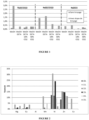
- Nickel mine slag obtained from Koniambo Nickel SAS was pre-ground using an agate mortar and pestle. For each of the tests, 1 g of these pre-crushed slag was added to a 20 mL stainless acid reactor equipped with 80 stainless steel balls having a diameter of 5 mm. Either an adduct of DETA and CO 2 , in a molar ratio of 1:1, or DETA alone, as well as water, in the quantities indicated in the table below were introduced into the reactor. The mill was operated for several 10 min cycles, each followed by a 15 min rest period to avoid heat buildup potentially detrimental to the selective leaching process. The temperature of the sample thus remained close to the temperature ambient. The oscillation speed of the reactor was set at 500 rpm.
- the supernatant was collected and analyzed by ICP-OES (inductively coupled plasma spectrometry, coupled to an optical emission spectrometer) to determine its metal content.
- ICP-OES inductively coupled plasma spectrometry, coupled to an optical emission spectrometer
- the results of this analysis are presented in Figure 2 .
- the process according to the invention made it possible to selectively extract the transition metals present in the sample (manganese, nickel, zinc, cobalt). This extraction is all the more effective as the number of grinding cycles is higher, as shown by the comparison of tests 10L and 11L, and as the ratio of the weight quantity of amine to the total dry weight of the sample is lower, as shown by the comparison of test 13L with tests 10L and 14L.
Landscapes
- Engineering & Computer Science (AREA)
- Chemical & Material Sciences (AREA)
- Mechanical Engineering (AREA)
- Manufacturing & Machinery (AREA)
- Materials Engineering (AREA)
- Life Sciences & Earth Sciences (AREA)
- Metallurgy (AREA)
- Organic Chemistry (AREA)
- Geology (AREA)
- General Life Sciences & Earth Sciences (AREA)
- Environmental & Geological Engineering (AREA)
- Geochemistry & Mineralogy (AREA)
- Proteomics, Peptides & Aminoacids (AREA)
- Manufacture And Refinement Of Metals (AREA)
- Gas Separation By Absorption (AREA)
Claims (12)
- Verfahren zur Extraktion mindestens eines Metalls, das in einer Probe enthalten ist, die eine Mischung aus Metallsalzen von mindestens zwei unterschiedlichen Metallen enthält, umfassend die aufeinanderfolgenden Schritte, bestehend aus:a) Inkontaktbringen dieser Probe in einer Mahlvorrichtung mit mindestens einem Amin, das mindestens eine primäre oder sekundäre Aminfunktion umfasst und mindestens einem reaktiven Gas, oder mit einem Addukt, das durch Reaktion diese mindestens einen solchen Amins mit einem reaktiven Gas gebildet wird,b) Zurückgewinnen des so gebildeten Feststoffs,c) Unterwerfen dieses Feststoffs unter mindestens eine Auslaugungssequenz unter Verwendung einer Waschlösung, die aus mindestens einem organischen oder wässrigen Lösungsmittel gebildet ist, das optional mindestens ein Amin und/oder ein reaktives Gas enthält, um so Waschwasser zu erzeugen, das mindestens eines der Metalle in der Probe enthält und einen festen Rückstand, der mit mindestens einem anderen in der Probe enthaltenen Metall angereichert ist, undd) Zurückgewinnen des in diesem Waschwasser und/oder in diesem festen Rückstand enthaltenen Metalls.
- Verfahren nach Anspruch 1, dadurch gekennzeichnet, dass es sich bei dieser Probe um einen Feststoff aus technologischen Abfällen oder natürlichen Ablagerungen handelt.
- Verfahren nach Anspruch 1 oder 2, dadurch gekennzeichnet, dass die Probe mindestens zwei Metalle ausgewählt aus der Gruppe der Post-Übergangsmetalle, Alkalimetalle, Erdalkalimetalle, Aktiniden, seltenen Erden und Übergangsmetalle enthält.
- Verfahren nach einem der Ansprüche 1 bis 3, dadurch gekennzeichnet, dass diese Metalle in der Probe in Form von Oxiden, Carbonaten, Phosphaten, Sulfiden, Vanadaten, Silikaten und/oder Sulfaten vorliegen.
- Verfahren nach einem der Ansprüche 1 bis 4, dadurch gekennzeichnet, dass eines der Metalle eine seltene Erde oder ein Aktinid und das andere ein Übergangsmetall ist.
- Verfahren nach einem der Ansprüche 1 bis 4, dadurch gekennzeichnet, dass eines der Metalle ein Übergangsmetall, eine seltene Erde oder ein Aktinid, vorzugsweise ein Übergangsmetall, und das andere ein Alkali- oder Erdalkalimetall ist.
- Verfahren nach einem der Ansprüche 1 bis 6, dadurch gekennzeichnet, dass die Mahlvorrichtung ausgewählt ist aus Kugel-, Hammer-, Rotor-, Prall-, Schleifscheiben-, Luftstrahl-, Messer-, Mörser-, Scheiben- oder Stabmühlen, vorzugsweise Kugelmühlen.
- Verfahren nach einem der Ansprüche 1 bis 7, dadurch gekennzeichnet, dass die in Schritt a) und/oder c) verwendeten reaktiven Gase unabhängig voneinander ausgewählt sind aus CO2, COS, CS2, H2S, SO2, NO2 und CH2O, vorzugsweise dass das reaktive Gas CO2 ist.
- Verfahren nach einem der Ansprüche 1 bis 8, dadurch gekennzeichnet, dass die in Schritt a) und gegebenenfalls c) verwendeten Amine unabhängig voneinander ausgewählt sind aus Ethylendiamin, Diethylentriamin, Triethylentetramin und Tris-(2-aminoethyl)amin, vorzugsweise dass das Amin Diethylentriamin (DETA) ist.
- Verfahren nach einem der Ansprüche 1 bis 9, dadurch gekennzeichnet, dass Schritt a) in Abwesenheit von Lösungsmittel durchgeführt wird.
- Verfahren nach einem der Ansprüche 1 bis 9, dadurch gekennzeichnet, dass Schritt a) in Gegenwart von Wasser durchgeführt wird.
- Verwendung des Verfahrens nach einem der Ansprüche 1 bis 11 zur Trennung zweier chemischer Elemente, die in einer Probe enthalten sind, die eine Mischung aus Metallsalzen dieser chemischen Elemente enthält.
Priority Applications (2)
| Application Number | Priority Date | Filing Date | Title |
|---|---|---|---|
| RS20240119A RS65192B1 (sr) | 2017-09-14 | 2018-09-13 | Postupak za selektivnu ekstrakciju metala putem mehaničke sinteze i izluživanja |
| HRP20240148TT HRP20240148T1 (hr) | 2017-09-14 | 2018-09-13 | Postupak selektivne ekstrakcije metala mehanosintezom i ispiranjem |
Applications Claiming Priority (2)
| Application Number | Priority Date | Filing Date | Title |
|---|---|---|---|
| FR1758538A FR3070985B1 (fr) | 2017-09-14 | 2017-09-14 | Procede d'extraction selective de metaux par mecanosynthese et lixiviation |
| PCT/EP2018/074789 WO2019053148A1 (fr) | 2017-09-14 | 2018-09-13 | Procédé d'extraction sélective de métaux par mécanosynthèse et lixiviation |
Publications (3)
| Publication Number | Publication Date |
|---|---|
| EP3682039A1 EP3682039A1 (de) | 2020-07-22 |
| EP3682039C0 EP3682039C0 (de) | 2023-11-01 |
| EP3682039B1 true EP3682039B1 (de) | 2023-11-01 |
Family
ID=61521540
Family Applications (1)
| Application Number | Title | Priority Date | Filing Date |
|---|---|---|---|
| EP18769361.9A Active EP3682039B1 (de) | 2017-09-14 | 2018-09-13 | Verfahren zur selektiven extraktion von metallen durch mechanische synthese und laugung |
Country Status (8)
| Country | Link |
|---|---|
| EP (1) | EP3682039B1 (de) |
| ES (1) | ES2970489T3 (de) |
| FR (1) | FR3070985B1 (de) |
| HR (1) | HRP20240148T1 (de) |
| HU (1) | HUE065775T2 (de) |
| PL (1) | PL3682039T3 (de) |
| RS (1) | RS65192B1 (de) |
| WO (1) | WO2019053148A1 (de) |
Families Citing this family (1)
| Publication number | Priority date | Publication date | Assignee | Title |
|---|---|---|---|---|
| MX2022016256A (es) * | 2020-07-01 | 2023-05-17 | Yeda Res & Dev | Recuperación de metales de tierras raras a partir de aleaciones ferromagnéticas. |
Family Cites Families (4)
| Publication number | Priority date | Publication date | Assignee | Title |
|---|---|---|---|---|
| DE3226894A1 (de) * | 1982-07-17 | 1984-01-19 | Bayer Ag, 5090 Leverkusen | Verfahren zur herstellung einer titanylsulfatloesung |
| US9499881B2 (en) * | 2012-12-04 | 2016-11-22 | Lixivia, Inc. | Refining methods and agents for rare earth production |
| FR3005741B1 (fr) * | 2013-05-20 | 2017-11-24 | Univ Aix Marseille | Procede pour la detection, la capture et/ou le relargage d'elements chimiques |
| CA2824769A1 (en) * | 2013-05-22 | 2014-11-22 | The Royal Institution For The Advancement Of Learning/Mcgill University | Method for separating metals |
-
2017
- 2017-09-14 FR FR1758538A patent/FR3070985B1/fr active Active
-
2018
- 2018-09-13 HR HRP20240148TT patent/HRP20240148T1/hr unknown
- 2018-09-13 HU HUE18769361A patent/HUE065775T2/hu unknown
- 2018-09-13 ES ES18769361T patent/ES2970489T3/es active Active
- 2018-09-13 EP EP18769361.9A patent/EP3682039B1/de active Active
- 2018-09-13 PL PL18769361.9T patent/PL3682039T3/pl unknown
- 2018-09-13 RS RS20240119A patent/RS65192B1/sr unknown
- 2018-09-13 WO PCT/EP2018/074789 patent/WO2019053148A1/fr not_active Ceased
Also Published As
| Publication number | Publication date |
|---|---|
| EP3682039C0 (de) | 2023-11-01 |
| HUE065775T2 (hu) | 2024-06-28 |
| RS65192B1 (sr) | 2024-03-29 |
| FR3070985B1 (fr) | 2021-12-24 |
| PL3682039T3 (pl) | 2024-07-01 |
| ES2970489T3 (es) | 2024-05-29 |
| HRP20240148T1 (hr) | 2024-04-12 |
| FR3070985A1 (fr) | 2019-03-15 |
| WO2019053148A1 (fr) | 2019-03-21 |
| EP3682039A1 (de) | 2020-07-22 |
Similar Documents
| Publication | Publication Date | Title |
|---|---|---|
| EP0418125A1 (de) | Verfahren zur Behandlung von Erzen der seltenen Erden | |
| FR2717188A1 (fr) | Procédé de récupération de métaux de valeur d'un catalyseur usagé. | |
| EP2532759A1 (de) | Verfahren zur Trennung von Metallen aus Batterien, die Lithium enthalten | |
| EP0046437A1 (de) | Verfahren zur selektiven Extraktion von Germanium | |
| EP0487368B1 (de) | Verfahren zur umweltfreundlichen Behandlung eines Raffinierungskatalysators sowie Rückgewinnung von Metallen | |
| FR2535305A1 (fr) | Procede d'extraction d'uranium a partir de tetrafluorure d'uranium | |
| KR20220024995A (ko) | 탄소질 재료의 처리 및 정제 | |
| EP0061193A1 (de) | Verfahren zur Rückgewinnung von Schwefelsäure | |
| EP3682039B1 (de) | Verfahren zur selektiven extraktion von metallen durch mechanische synthese und laugung | |
| JPH08503879A (ja) | プロセス残留物からの金属有価物の回収 | |
| FR2842535A1 (fr) | Procede d'elimination d'impuretes de solutions d'extraction par solvant. | |
| FR2593829A1 (fr) | Procede pour extraire selectivement du zinc d'une saumure aqueuse | |
| EP3310713B1 (de) | Verfahren zur stabilisierung von metallischem quecksilber | |
| EP0216687B1 (de) | Verfahren zur Aufbereitung von Erzen der seltenen Erden | |
| CA1160459A (fr) | Procede de valorisation de l'uranium a partir d'un minerai uranifere contenant de l'arsenic | |
| EP4355544B1 (de) | Verfahren zur wiederverwertung und aufwärtsverwertung von verbundstoffabfällen auf polycarbonatbasis | |
| EP3452824B1 (de) | Verfahren zum bestimmen und/oder zum nachweis einer chemischen substanz und vorrichtung zum durchführen des verfahrens | |
| FR2624879A1 (fr) | Procede de regeneration d'un additif de piegeage du soufre utilise dans la preparation d'une emulsion d'hydrocarbure dans l'eau formant un combustible et procede de recuperation de l'additif de piegeage du soufre a partir d'une cendre de combustion | |
| FR2668938A1 (fr) | Nouveau procede de traitement antipollution d'un catalyseur de raffinage a l'etat use et recuperation total des differents constituants metalliques dudit catalyseur. | |
| EP1678337B1 (de) | Verfahren zur dekontaminierung hexavalentes chrom enthaltender feuerfestmaterialien | |
| US4214046A (en) | Method of extracting a liquid electrolyte and other products from coal | |
| EP2050099A1 (de) | Verfahren zur stabilisierung von radium in einer feststoffeffluenz oder einer effluenz mit gehaltenen substanzen | |
| EP1307400A1 (de) | Verfahren zur erzeugung von phosphorsäure | |
| EP0266272A1 (de) | Verfahren zur Rückgewinnung von Organophosphorsäuren und/oder Organophosphorionen aus einer wässerigen Lösung und Verwendung zur Aufbereitung von wässerigen Abfallösungen | |
| OA20559A (fr) | Procédé de désextraction de l'uranium contenu dans un solvant. |
Legal Events
| Date | Code | Title | Description |
|---|---|---|---|
| REG | Reference to a national code |
Ref country code: HR Ref legal event code: TUEP Ref document number: P20240148T Country of ref document: HR |
|
| STAA | Information on the status of an ep patent application or granted ep patent |
Free format text: STATUS: UNKNOWN |
|
| STAA | Information on the status of an ep patent application or granted ep patent |
Free format text: STATUS: THE INTERNATIONAL PUBLICATION HAS BEEN MADE |
|
| PUAI | Public reference made under article 153(3) epc to a published international application that has entered the european phase |
Free format text: ORIGINAL CODE: 0009012 |
|
| STAA | Information on the status of an ep patent application or granted ep patent |
Free format text: STATUS: REQUEST FOR EXAMINATION WAS MADE |
|
| 17P | Request for examination filed |
Effective date: 20200406 |
|
| AK | Designated contracting states |
Kind code of ref document: A1 Designated state(s): AL AT BE BG CH CY CZ DE DK EE ES FI FR GB GR HR HU IE IS IT LI LT LU LV MC MK MT NL NO PL PT RO RS SE SI SK SM TR |
|
| AX | Request for extension of the european patent |
Extension state: BA ME |
|
| DAV | Request for validation of the european patent (deleted) | ||
| DAX | Request for extension of the european patent (deleted) | ||
| STAA | Information on the status of an ep patent application or granted ep patent |
Free format text: STATUS: EXAMINATION IS IN PROGRESS |
|
| RIN1 | Information on inventor provided before grant (corrected) |
Inventor name: METRO, THOMAS-XAVIER Inventor name: SEPTAVAUX, JEAN Inventor name: LECLAIRE, JULIEN |
|
| 17Q | First examination report despatched |
Effective date: 20210329 |
|
| 111L | Licence recorded |
Designated state(s): AL AT BE BG CH CY CZ DE DK EE ES FI FR GB GR HR HU IE IS IT LT LU LV MC MK MT NL NO PL PT RO RS SE SI SK SM TR Free format text: EXCLUSIVE LICENSE Name of requester: MECAWARE, FR Effective date: 20211224 Designated state(s): AL AT BE BG CH CY CZ DE DK EE ES FI FR GB GR HR HU IE IS IT LT LU LV MC MK MT NL NO PL PT RO RS SE SI SK SM TR Free format text: EXCLUSIVE LICENSE Name of requester: PULSALYS, FR Effective date: 20211021 |
|
| GRAP | Despatch of communication of intention to grant a patent |
Free format text: ORIGINAL CODE: EPIDOSNIGR1 |
|
| STAA | Information on the status of an ep patent application or granted ep patent |
Free format text: STATUS: GRANT OF PATENT IS INTENDED |
|
| INTG | Intention to grant announced |
Effective date: 20230526 |
|
| GRAS | Grant fee paid |
Free format text: ORIGINAL CODE: EPIDOSNIGR3 |
|
| GRAA | (expected) grant |
Free format text: ORIGINAL CODE: 0009210 |
|
| STAA | Information on the status of an ep patent application or granted ep patent |
Free format text: STATUS: THE PATENT HAS BEEN GRANTED |
|
| 111L | Licence recorded |
Designated state(s): AL AT BE BG CH CY CZ DE DK EE ES FI FR GB GR HR HU IE IS IT LT LU LV MC MK MT NL NO PL PT RO RS SE SI SK SM TR Free format text: EXCLUSIVE LICENSE Name of requester: MECAWARE, FR Effective date: 20211224 Designated state(s): AL AT BE BG CH CY CZ DE DK EE ES FI FR GB GR HR HU IE IS IT LT LU LV MC MK MT NL NO PL PT RO RS SE SI SK SM TR Free format text: EXCLUSIVE LICENSE Name of requester: PULSALYS, FR Effective date: 20211021 |
|
| AK | Designated contracting states |
Kind code of ref document: B1 Designated state(s): AL AT BE BG CH CY CZ DE DK EE ES FI FR GB GR HR HU IE IS IT LI LT LU LV MC MK MT NL NO PL PT RO RS SE SI SK SM TR |
|
| REG | Reference to a national code |
Ref country code: GB Ref legal event code: FG4D Free format text: NOT ENGLISH |
|
| REG | Reference to a national code |
Ref country code: CH Ref legal event code: EP |
|
| REG | Reference to a national code |
Ref country code: IE Ref legal event code: FG4D Free format text: LANGUAGE OF EP DOCUMENT: FRENCH |
|
| REG | Reference to a national code |
Ref country code: DE Ref legal event code: R096 Ref document number: 602018060424 Country of ref document: DE |
|
| U01 | Request for unitary effect filed |
Effective date: 20231201 |
|
| U07 | Unitary effect registered |
Designated state(s): AT BE BG DE DK EE FI FR IT LT LU LV MT NL PT SE SI Effective date: 20231207 |
|
| REG | Reference to a national code |
Ref country code: NO Ref legal event code: T2 Effective date: 20231101 |
|
| REG | Reference to a national code |
Ref country code: GR Ref legal event code: EP Ref document number: 20240400293 Country of ref document: GR Effective date: 20240312 |
|
| REG | Reference to a national code |
Ref country code: SK Ref legal event code: T3 Ref document number: E 43456 Country of ref document: SK |
|
| REG | Reference to a national code |
Ref country code: HR Ref legal event code: T1PR Ref document number: P20240148 Country of ref document: HR |
|
| REG | Reference to a national code |
Ref country code: ES Ref legal event code: FG2A Ref document number: 2970489 Country of ref document: ES Kind code of ref document: T3 Effective date: 20240529 |
|
| REG | Reference to a national code |
Ref country code: HU Ref legal event code: AG4A Ref document number: E065775 Country of ref document: HU |
|
| PG25 | Lapsed in a contracting state [announced via postgrant information from national office to epo] |
Ref country code: SM Free format text: LAPSE BECAUSE OF FAILURE TO SUBMIT A TRANSLATION OF THE DESCRIPTION OR TO PAY THE FEE WITHIN THE PRESCRIBED TIME-LIMIT Effective date: 20231101 |
|
| REG | Reference to a national code |
Ref country code: DE Ref legal event code: R097 Ref document number: 602018060424 Country of ref document: DE |
|
| PLBE | No opposition filed within time limit |
Free format text: ORIGINAL CODE: 0009261 |
|
| STAA | Information on the status of an ep patent application or granted ep patent |
Free format text: STATUS: NO OPPOSITION FILED WITHIN TIME LIMIT |
|
| REG | Reference to a national code |
Ref country code: HR Ref legal event code: ODRP Ref document number: P20240148 Country of ref document: HR Payment date: 20240905 Year of fee payment: 7 |
|
| 26N | No opposition filed |
Effective date: 20240802 |
|
| U20 | Renewal fee for the european patent with unitary effect paid |
Year of fee payment: 7 Effective date: 20240925 |
|
| PG25 | Lapsed in a contracting state [announced via postgrant information from national office to epo] |
Ref country code: MC Free format text: LAPSE BECAUSE OF FAILURE TO SUBMIT A TRANSLATION OF THE DESCRIPTION OR TO PAY THE FEE WITHIN THE PRESCRIBED TIME-LIMIT Effective date: 20231101 |
|
| REG | Reference to a national code |
Ref country code: HR Ref legal event code: ODRP Ref document number: P20240148 Country of ref document: HR Payment date: 20250904 Year of fee payment: 8 |
|
| REG | Reference to a national code |
Ref country code: CH Ref legal event code: U11 Free format text: ST27 STATUS EVENT CODE: U-0-0-U10-U11 (AS PROVIDED BY THE NATIONAL OFFICE) Effective date: 20251001 |
|
| PGFP | Annual fee paid to national office [announced via postgrant information from national office to epo] |
Ref country code: GR Payment date: 20250922 Year of fee payment: 8 Ref country code: NO Payment date: 20250923 Year of fee payment: 8 |
|
| PGFP | Annual fee paid to national office [announced via postgrant information from national office to epo] |
Ref country code: TR Payment date: 20250908 Year of fee payment: 8 Ref country code: PL Payment date: 20250905 Year of fee payment: 8 |
|
| PGFP | Annual fee paid to national office [announced via postgrant information from national office to epo] |
Ref country code: GB Payment date: 20250919 Year of fee payment: 8 Ref country code: HU Payment date: 20250922 Year of fee payment: 8 |
|
| PGFP | Annual fee paid to national office [announced via postgrant information from national office to epo] |
Ref country code: HR Payment date: 20250904 Year of fee payment: 8 |
|
| PGFP | Annual fee paid to national office [announced via postgrant information from national office to epo] |
Ref country code: AL Payment date: 20250922 Year of fee payment: 8 |
|
| PGFP | Annual fee paid to national office [announced via postgrant information from national office to epo] |
Ref country code: CZ Payment date: 20250908 Year of fee payment: 8 Ref country code: RS Payment date: 20250905 Year of fee payment: 8 Ref country code: IE Payment date: 20250918 Year of fee payment: 8 |
|
| PGFP | Annual fee paid to national office [announced via postgrant information from national office to epo] |
Ref country code: RO Payment date: 20250910 Year of fee payment: 8 |
|
| PGFP | Annual fee paid to national office [announced via postgrant information from national office to epo] |
Ref country code: SK Payment date: 20250909 Year of fee payment: 8 |
|
| PGFP | Annual fee paid to national office [announced via postgrant information from national office to epo] |
Ref country code: IS Payment date: 20250911 Year of fee payment: 8 |
|
| U20 | Renewal fee for the european patent with unitary effect paid |
Year of fee payment: 8 Effective date: 20250924 |
|
| PGFP | Annual fee paid to national office [announced via postgrant information from national office to epo] |
Ref country code: CH Payment date: 20251001 Year of fee payment: 8 |
|
| PG25 | Lapsed in a contracting state [announced via postgrant information from national office to epo] |
Ref country code: CY Free format text: LAPSE BECAUSE OF FAILURE TO SUBMIT A TRANSLATION OF THE DESCRIPTION OR TO PAY THE FEE WITHIN THE PRESCRIBED TIME-LIMIT; INVALID AB INITIO Effective date: 20180913 |
|
| PGFP | Annual fee paid to national office [announced via postgrant information from national office to epo] |
Ref country code: ES Payment date: 20251030 Year of fee payment: 8 |