EP3680220B1 - Verfahren zur behandlung von abfällen aus der tierhaltung - Google Patents
Verfahren zur behandlung von abfällen aus der tierhaltung Download PDFInfo
- Publication number
- EP3680220B1 EP3680220B1 EP20151401.5A EP20151401A EP3680220B1 EP 3680220 B1 EP3680220 B1 EP 3680220B1 EP 20151401 A EP20151401 A EP 20151401A EP 3680220 B1 EP3680220 B1 EP 3680220B1
- Authority
- EP
- European Patent Office
- Prior art keywords
- carried out
- stripping
- process according
- ammonia
- liquid
- Prior art date
- Legal status (The legal status is an assumption and is not a legal conclusion. Google has not performed a legal analysis and makes no representation as to the accuracy of the status listed.)
- Active
Links
Images


Classifications
-
- C—CHEMISTRY; METALLURGY
- C02—TREATMENT OF WATER, WASTE WATER, SEWAGE, OR SLUDGE
- C02F—TREATMENT OF WATER, WASTE WATER, SEWAGE, OR SLUDGE
- C02F9/00—Multistage treatment of water, waste water or sewage
-
- B—PERFORMING OPERATIONS; TRANSPORTING
- B01—PHYSICAL OR CHEMICAL PROCESSES OR APPARATUS IN GENERAL
- B01D—SEPARATION
- B01D53/00—Separation of gases or vapours; Recovering vapours of volatile solvents from gases; Chemical or biological purification of waste gases, e.g. engine exhaust gases, smoke, fumes, flue gases, aerosols
- B01D53/14—Separation of gases or vapours; Recovering vapours of volatile solvents from gases; Chemical or biological purification of waste gases, e.g. engine exhaust gases, smoke, fumes, flue gases, aerosols by absorption
- B01D53/1418—Recovery of products
-
- B—PERFORMING OPERATIONS; TRANSPORTING
- B01—PHYSICAL OR CHEMICAL PROCESSES OR APPARATUS IN GENERAL
- B01D—SEPARATION
- B01D53/00—Separation of gases or vapours; Recovering vapours of volatile solvents from gases; Chemical or biological purification of waste gases, e.g. engine exhaust gases, smoke, fumes, flue gases, aerosols
- B01D53/14—Separation of gases or vapours; Recovering vapours of volatile solvents from gases; Chemical or biological purification of waste gases, e.g. engine exhaust gases, smoke, fumes, flue gases, aerosols by absorption
- B01D53/18—Absorbing units; Liquid distributors therefor
-
- B—PERFORMING OPERATIONS; TRANSPORTING
- B01—PHYSICAL OR CHEMICAL PROCESSES OR APPARATUS IN GENERAL
- B01D—SEPARATION
- B01D53/00—Separation of gases or vapours; Recovering vapours of volatile solvents from gases; Chemical or biological purification of waste gases, e.g. engine exhaust gases, smoke, fumes, flue gases, aerosols
- B01D53/34—Chemical or biological purification of waste gases
- B01D53/46—Removing components of defined structure
- B01D53/54—Nitrogen compounds
- B01D53/58—Ammonia
-
- B—PERFORMING OPERATIONS; TRANSPORTING
- B01—PHYSICAL OR CHEMICAL PROCESSES OR APPARATUS IN GENERAL
- B01D—SEPARATION
- B01D53/00—Separation of gases or vapours; Recovering vapours of volatile solvents from gases; Chemical or biological purification of waste gases, e.g. engine exhaust gases, smoke, fumes, flue gases, aerosols
- B01D53/34—Chemical or biological purification of waste gases
- B01D53/74—General processes for purification of waste gases; Apparatus or devices specially adapted therefor
- B01D53/77—Liquid phase processes
- B01D53/78—Liquid phase processes with gas-liquid contact
-
- B—PERFORMING OPERATIONS; TRANSPORTING
- B01—PHYSICAL OR CHEMICAL PROCESSES OR APPARATUS IN GENERAL
- B01D—SEPARATION
- B01D2251/00—Reactants
- B01D2251/50—Inorganic acids
-
- B—PERFORMING OPERATIONS; TRANSPORTING
- B01—PHYSICAL OR CHEMICAL PROCESSES OR APPARATUS IN GENERAL
- B01D—SEPARATION
- B01D2258/00—Sources of waste gases
- B01D2258/02—Other waste gases
- B01D2258/0266—Other waste gases from animal farms
-
- B—PERFORMING OPERATIONS; TRANSPORTING
- B01—PHYSICAL OR CHEMICAL PROCESSES OR APPARATUS IN GENERAL
- B01D—SEPARATION
- B01D2258/00—Sources of waste gases
- B01D2258/05—Biogas
-
- C—CHEMISTRY; METALLURGY
- C02—TREATMENT OF WATER, WASTE WATER, SEWAGE, OR SLUDGE
- C02F—TREATMENT OF WATER, WASTE WATER, SEWAGE, OR SLUDGE
- C02F1/00—Treatment of water, waste water, or sewage
- C02F1/001—Processes for the treatment of water whereby the filtration technique is of importance
- C02F1/004—Processes for the treatment of water whereby the filtration technique is of importance using large scale industrial sized filters
-
- C—CHEMISTRY; METALLURGY
- C02—TREATMENT OF WATER, WASTE WATER, SEWAGE, OR SLUDGE
- C02F—TREATMENT OF WATER, WASTE WATER, SEWAGE, OR SLUDGE
- C02F1/00—Treatment of water, waste water, or sewage
- C02F1/02—Treatment of water, waste water, or sewage by heating
-
- C—CHEMISTRY; METALLURGY
- C02—TREATMENT OF WATER, WASTE WATER, SEWAGE, OR SLUDGE
- C02F—TREATMENT OF WATER, WASTE WATER, SEWAGE, OR SLUDGE
- C02F1/00—Treatment of water, waste water, or sewage
- C02F1/20—Treatment of water, waste water, or sewage by degassing, i.e. liberation of dissolved gases
-
- C—CHEMISTRY; METALLURGY
- C02—TREATMENT OF WATER, WASTE WATER, SEWAGE, OR SLUDGE
- C02F—TREATMENT OF WATER, WASTE WATER, SEWAGE, OR SLUDGE
- C02F11/00—Treatment of sludge; Devices therefor
- C02F11/02—Biological treatment
- C02F11/04—Anaerobic treatment; Production of methane by such processes
-
- C—CHEMISTRY; METALLURGY
- C02—TREATMENT OF WATER, WASTE WATER, SEWAGE, OR SLUDGE
- C02F—TREATMENT OF WATER, WASTE WATER, SEWAGE, OR SLUDGE
- C02F11/00—Treatment of sludge; Devices therefor
- C02F11/12—Treatment of sludge; Devices therefor by de-watering, drying or thickening
- C02F11/121—Treatment of sludge; Devices therefor by de-watering, drying or thickening by mechanical de-watering
- C02F11/125—Treatment of sludge; Devices therefor by de-watering, drying or thickening by mechanical de-watering using screw filters
-
- C—CHEMISTRY; METALLURGY
- C02—TREATMENT OF WATER, WASTE WATER, SEWAGE, OR SLUDGE
- C02F—TREATMENT OF WATER, WASTE WATER, SEWAGE, OR SLUDGE
- C02F11/00—Treatment of sludge; Devices therefor
- C02F11/12—Treatment of sludge; Devices therefor by de-watering, drying or thickening
- C02F11/121—Treatment of sludge; Devices therefor by de-watering, drying or thickening by mechanical de-watering
- C02F11/128—Treatment of sludge; Devices therefor by de-watering, drying or thickening by mechanical de-watering using batch processes
-
- C—CHEMISTRY; METALLURGY
- C02—TREATMENT OF WATER, WASTE WATER, SEWAGE, OR SLUDGE
- C02F—TREATMENT OF WATER, WASTE WATER, SEWAGE, OR SLUDGE
- C02F2101/00—Nature of the contaminant
- C02F2101/10—Inorganic compounds
- C02F2101/16—Nitrogen compounds, e.g. ammonia
-
- C—CHEMISTRY; METALLURGY
- C02—TREATMENT OF WATER, WASTE WATER, SEWAGE, OR SLUDGE
- C02F—TREATMENT OF WATER, WASTE WATER, SEWAGE, OR SLUDGE
- C02F2103/00—Nature of the water, waste water, sewage or sludge to be treated
- C02F2103/06—Contaminated groundwater or leachate
-
- C—CHEMISTRY; METALLURGY
- C02—TREATMENT OF WATER, WASTE WATER, SEWAGE, OR SLUDGE
- C02F—TREATMENT OF WATER, WASTE WATER, SEWAGE, OR SLUDGE
- C02F2103/00—Nature of the water, waste water, sewage or sludge to be treated
- C02F2103/20—Nature of the water, waste water, sewage or sludge to be treated from animal husbandry
-
- C—CHEMISTRY; METALLURGY
- C02—TREATMENT OF WATER, WASTE WATER, SEWAGE, OR SLUDGE
- C02F—TREATMENT OF WATER, WASTE WATER, SEWAGE, OR SLUDGE
- C02F2103/00—Nature of the water, waste water, sewage or sludge to be treated
- C02F2103/32—Nature of the water, waste water, sewage or sludge to be treated from the food or foodstuff industry, e.g. brewery waste waters
-
- C—CHEMISTRY; METALLURGY
- C02—TREATMENT OF WATER, WASTE WATER, SEWAGE, OR SLUDGE
- C02F—TREATMENT OF WATER, WASTE WATER, SEWAGE, OR SLUDGE
- C02F2303/00—Specific treatment goals
- C02F2303/10—Energy recovery
-
- C—CHEMISTRY; METALLURGY
- C02—TREATMENT OF WATER, WASTE WATER, SEWAGE, OR SLUDGE
- C02F—TREATMENT OF WATER, WASTE WATER, SEWAGE, OR SLUDGE
- C02F2303/00—Specific treatment goals
- C02F2303/24—Separation of coarse particles, e.g. by using sieves or screens
-
- C—CHEMISTRY; METALLURGY
- C02—TREATMENT OF WATER, WASTE WATER, SEWAGE, OR SLUDGE
- C02F—TREATMENT OF WATER, WASTE WATER, SEWAGE, OR SLUDGE
- C02F3/00—Biological treatment of water, waste water, or sewage
- C02F3/28—Anaerobic digestion processes
-
- C—CHEMISTRY; METALLURGY
- C02—TREATMENT OF WATER, WASTE WATER, SEWAGE, OR SLUDGE
- C02F—TREATMENT OF WATER, WASTE WATER, SEWAGE, OR SLUDGE
- C02F3/00—Biological treatment of water, waste water, or sewage
- C02F3/28—Anaerobic digestion processes
- C02F3/2866—Particular arrangements for anaerobic reactors
-
- Y—GENERAL TAGGING OF NEW TECHNOLOGICAL DEVELOPMENTS; GENERAL TAGGING OF CROSS-SECTIONAL TECHNOLOGIES SPANNING OVER SEVERAL SECTIONS OF THE IPC; TECHNICAL SUBJECTS COVERED BY FORMER USPC CROSS-REFERENCE ART COLLECTIONS [XRACs] AND DIGESTS
- Y02—TECHNOLOGIES OR APPLICATIONS FOR MITIGATION OR ADAPTATION AGAINST CLIMATE CHANGE
- Y02E—REDUCTION OF GREENHOUSE GAS [GHG] EMISSIONS, RELATED TO ENERGY GENERATION, TRANSMISSION OR DISTRIBUTION
- Y02E50/00—Technologies for the production of fuel of non-fossil origin
- Y02E50/30—Fuel from waste, e.g. synthetic alcohol or diesel
-
- Y—GENERAL TAGGING OF NEW TECHNOLOGICAL DEVELOPMENTS; GENERAL TAGGING OF CROSS-SECTIONAL TECHNOLOGIES SPANNING OVER SEVERAL SECTIONS OF THE IPC; TECHNICAL SUBJECTS COVERED BY FORMER USPC CROSS-REFERENCE ART COLLECTIONS [XRACs] AND DIGESTS
- Y02—TECHNOLOGIES OR APPLICATIONS FOR MITIGATION OR ADAPTATION AGAINST CLIMATE CHANGE
- Y02W—CLIMATE CHANGE MITIGATION TECHNOLOGIES RELATED TO WASTEWATER TREATMENT OR WASTE MANAGEMENT
- Y02W10/00—Technologies for wastewater treatment
- Y02W10/30—Wastewater or sewage treatment systems using renewable energies
Definitions
- the present invention finds application in the field of purification of waste from zootechnical sources or from OFMSW treatment plants or from food companies or landfill leachate.
- the Community Directive 94/676/EEC dictated the fundamental principles for the use of effluents of zootechnical origin and waste water from small food companies.
- the fundamental principles of this directive have been implemented at national level with Legislative Decree no. 152/1999 and the Ministerial Decree 07 April 2006. The legislation then has regional application.
- the available techniques are: i) biological/anoxic process of nitrification and denitrification, ii) solid/liquid separation with ex-post treatment of the solid fraction, iii) stripping of ammonia with recovery of the same in the form of ammonium salts (sulphates, phosphates and nitrates). Examples of prior art processes are disclosed in US2015/0329399 , US2005/0139546 and US6464875 .
- the solid/liquid separation process is a constant of each treatment chain; in fact, it is always present, with different levels of efficiency, upstream of the sections of both nitrification/denitrification and stripping/adsorption.
- the ratio between inorganic-reduced nitrogen and organic-reduced nitrogen in the "liquid" fraction changes considerably; low levels of separation efficiency leave the 2:1 ratio substantially unchanged, while high levels of solid/liquid separation, obtainable for example by using centrifugal decanters, can raise this ratio up to 9:1.
- the nitro/denitro biological process has been largely abandoned, as it requires a significant consumption of electricity and, above all, leads to the transformation of bioavailable nitrogen into molecular nitrogen, that is, it does not allow the recovery of a resource such as the ammonium ion present in the manure.
- ammonia stripping/absorption process is able to respond correctly to this need; some problems due to the dependence of the ammonia-ammonium ion balance on temperature and pH remain to be overcome.
- the inventors of the present patent application have developed a process which solves the problems of the prior art and which comprises a batch stripping step and a continuous ammonia absorption step.
- Object of the invention is therefore a process for the purification of wastewater from farms and wastewater from small food companies.
- a plant which implements the process of the invention is also described, but is not part of the present invention.
- waste means waste water from farms or waste water from small food companies or waste contaminated with ammonia, as it could be for digestion from OFMSW and landfill leachate, located upstream of the possible chemical/physical and biological purification process, or as a single step if the conditions required for discharge allow it.
- the described technology can also find application for the purification of wastewater similar to the water listed above.
- gas develops in the digestion step a).
- this mixture mainly includes methane and carbon dioxide, the so-called biogas.
- the loading of the equipment takes place at set times, as are the discharges; the digester always works full and at temperatures of between 36 and 42 °C.
- the gas is sent to a cogeneration system, as described below, and the liquid discharge to the solid phase separation system contained therein.
- step b) can comprise a step b1) and a step b2).
- step b1) the filtration is obtained with a filtering system consisting of a vertical liquid-solid separator of the auger type.
- step b1) the solid part with dimensions greater than 250-300 um is removed.
- step b2) this is carried out on the liquid part discharged from step b1) and is obtained by means of a vibrating screen.
- step b2) the fraction of suspended solids is further reduced, removing the solid part with dimensions greater than 50-100 um.
- a dosing step can be possibly carried out, with which the desired quantity of digestate is dosed to the stripping tanks of step c).
- this step takes place in a suitable tank, which can be replaced with other equivalent weighing and dosing methods.
- stripping step c this is carried out in suitable tanks, inside which the separated liquid, normally at a temperature of 30-35°C, is thermostatically controlled by means of continuous circulation on exchangers.
- the heat used is represented by the decaying heat from the electrical cogeneration process.
- the stripping tanks are two, so that the plant can be operated continuously.
- the process works by alternating the tanks in the filling and stripping steps; emptying is irrelevant since it only lasts a few minutes.
- the temperature at which the separated liquid is kept during the stripping process is about 55-65°C and preferably about 60°C.
- this temperature corresponds to that necessary to be able to have the ammonia available as a gaseous phase dispersed in the liquid mass in a percentage equal to or slightly higher than 90% of the total ammonia present in the input digestate, at the pH value reached spontaneously by the digestate subjected to the process.
- This pH value is about 9.8 pH units, compared to a value of about 7.8 of the digestate during the feeding step, measured after the separation stages.
- the increase in the pH of the solution being treated is due to the decomposition of the carbonate salts, a decomposition, which releases carbonic acid in the gas phase, which is removed with the air introduced from the bottom of the tanks during the process.
- the process of the invention does not require the addition of chemical additives such as sodium hydroxide (soda) or calcium hydroxide (lime).
- chemical additives such as sodium hydroxide (soda) or calcium hydroxide (lime).
- ammonia which is gradually released converting from the ionic form of ammonium ion (NH 4 + ) to the molecular form in the gas phase (NH 3 ), is removed from the tank by the flow of air introduced from the bottom.
- the process time is a function of the result required by the digestate manufacturer, which can be different in relation to the needs of the same to respond to the law requirements.
- Figure 2 shows the diagram illustrating a typical removal curve.
- a control of the foams can be maintained by means of special sensors and/or by the addition of the antifoam agent.
- the choice of the antifoam agent and the quantity used depends on the quality of the starting product and the degree of filtration achieved; in general, the lower the SST value present, the lower the tendency to form persistent foams.
- the compressor is represented by a volumetric compressor with a supply system of medium and medium-fine bubbles connected to the tank bottom.
- this compressor operates at low pressure and preferably at a pressure of about 300 mbar.
- the flow rate is about 800-900 m 3 /h at the pressure mentioned above.
- ammonia absorption step d this is carried out continuously (and not in batch, as for the other steps).
- an ammonium salt is formed, which represents a valorizable product, which can be sold to companies that produce fertilizers.
- the management of acid addition takes place in pH control and the extraction of the ammonium salt takes place in simultaneous control of level and pH, to meet both thresholds.
- the purified air virtually free of ammonia, is discharged to the atmosphere according to the limits of the law.
- the gas phase (biogas) coming from the anaerobic digesters of step a) is sent to the cogeneration step c).
- Cogeneration is possible thanks to an internal combustion engine, connected to a generator that produces electricity.
- this is disposed of through a hot water circuit and partly ends up in the combustion fumes from which it is partially recovered.
- the heat thus recovered is used for the operation of the digesters and for the operation of the ammonia removal plant.
- the plant comprises:
- the separators may comprise a screw-type vertical solid-liquid separator, to remove the solid part with dimensions greater than 250-300 um and/or a vibrating screen, to separate the solid part with dimensions greater than 100 um.
- the described process does not use chemical additives such as soda or lime, thus avoiding its spreading in the fields and, therefore, pollution and damage to them.
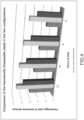
- a batch time of 8 hours corresponds to an ammonia removal yield of about 80%, whereas a yield of 70% is however obtainable with a batch time of 6 hours.
- the graph of figure 4 clearly shows how a plant according to the present invention is able to provide much higher yields than the stripping plants of the CSTR (Completely Stirred Tank Reactor) type, also providing for the use of soda.
- CSTR Completely Stirred Tank Reactor
- the process of the invention provides a treated product which, when leaving the plant, is not free of pathogenic microorganisms, since, in fact, it has undergone a slow pasteurization, for a time that is greater than 2-3 times that typical of slow pasteurization processes.
- the solution of the present patent application does not require energy sources to meet its thermal needs and, moreover, it has modest electrical consumption; for example, for plants that treat 60-70 m 3 /day, an absorbed consumption of about 20 kWh was noted.
- the proposed technology does not require a pH control, thus avoiding the relative problems of periodic calibration of the instrument, which normally occur every week; in fact, maintenance requires periodic cleaning of some parts, such as the exchanger.
- an automatic washing system can be provided which also reduces the task of cleaning to practically zero, significantly reducing ordinary maintenance costs.
Landscapes
- Chemical & Material Sciences (AREA)
- Engineering & Computer Science (AREA)
- Environmental & Geological Engineering (AREA)
- Analytical Chemistry (AREA)
- Chemical Kinetics & Catalysis (AREA)
- Oil, Petroleum & Natural Gas (AREA)
- General Chemical & Material Sciences (AREA)
- Water Supply & Treatment (AREA)
- Organic Chemistry (AREA)
- Life Sciences & Earth Sciences (AREA)
- Hydrology & Water Resources (AREA)
- Health & Medical Sciences (AREA)
- Biomedical Technology (AREA)
- Physical Water Treatments (AREA)
- Hydroponics (AREA)
- Separation Of Suspended Particles By Flocculating Agents (AREA)
- Fertilizers (AREA)
Claims (6)
- Verfahren für die Reinigung von Abfällen aus zootechnischen Quellen, oder aus OFMSW-Behandlungsanlagen, oder aus Lebensmittelbetrieben oder Deponiesickerwasser, umfassend die folgenden Schritte:a) anaerobe Vergärung,b) Fest/Flüssig-Trennung von einem Flüssigkeitsaustrag aus Schritt a),c) Strippen, das in der abgetrennten Flüssigkeit durchgeführt wird,d) Absorption von Ammoniak aus dem Stripp-Gas aus Schritt c),e) Kraft-Wärme-Kopplung unter Nutzung von in Schritt a) erhaltenem Biogas, wobei eine zurückgewonnene Wärme erhalten wird,wobei kein Natriumhydroxid oder Calciumhydroxid in dem Stripping-Schritt c) und dem Vergärungsschritt a) verwendet wird, der Fest/Flüssig-Trennschritt b) und der Stripping-Schritt c) im Chargenbetrieb durchgeführt werden, während der Ammoniakabsorptionsschritt d) kontinuierlich durchgeführt wird und der Stripping-Schritt c) bei einer Temperatur von etwa 55-65 °C für etwa 6-9 Stunden bei einem Druck von etwa 300 mbar durchgeführt wird, wobei Luft mit einer Durchflussrate von etwa 800-900 m3/h eingeblasen wird.
- Verfahren nach dem vorhergehenden Anspruch, wobei Schritt b) einen Schritt b1) umfasst, wobei der Anteil an Feststoffen mit Abmessungen größer als 250-300 µm entfernt wird, und einen Schritt b2) umfasst, der an dem aus Schritt b1) ausgetragenen flüssigen Teil durchgeführt wird, wobei der Anteil an Feststoffen mit Abmessungen größer als 50-100 µm entfernt wird.
- Verfahren nach einem der vorhergehenden Ansprüche, wobei der Stripping-Schritt c) bei einer Temperatur von 60°C durchgeführt wird.
- Verfahren nach einem der vorhergehenden Ansprüche, wobei der Stripping-Schritt c) für etwa 8 Stunden durchgeführt wird.
- Verfahren nach einem der vorhergehenden Ansprüche, wobei der aus Schritt c) kommende gasartige Fluss in einem Schritt d) in einem Gegenstrom mit einer sauren Lösung in einer Füllkolonne (Wäscher) gewaschen wird.
- Verfahren nach einem der vorhergehenden Ansprüche, wobei die zurückgewonnene Wärme aus Schritt e) in Schritt d) verwendet wird.
Applications Claiming Priority (1)
| Application Number | Priority Date | Filing Date | Title |
|---|---|---|---|
| IT102019000000553A IT201900000553A1 (it) | 2019-01-14 | 2019-01-14 | Processo e impianto per la depurazione di reflui zootecnici |
Publications (3)
| Publication Number | Publication Date |
|---|---|
| EP3680220A1 EP3680220A1 (de) | 2020-07-15 |
| EP3680220C0 EP3680220C0 (de) | 2024-05-01 |
| EP3680220B1 true EP3680220B1 (de) | 2024-05-01 |
Family
ID=66589623
Family Applications (1)
| Application Number | Title | Priority Date | Filing Date |
|---|---|---|---|
| EP20151401.5A Active EP3680220B1 (de) | 2019-01-14 | 2020-01-13 | Verfahren zur behandlung von abfällen aus der tierhaltung |
Country Status (4)
| Country | Link |
|---|---|
| US (1) | US11453606B2 (de) |
| EP (1) | EP3680220B1 (de) |
| CA (1) | CA3067594A1 (de) |
| IT (1) | IT201900000553A1 (de) |
Families Citing this family (1)
| Publication number | Priority date | Publication date | Assignee | Title |
|---|---|---|---|---|
| EP4197974A1 (de) * | 2021-12-16 | 2023-06-21 | Idro Group S.r.l. | Verfahren zur extraktion und rückgewinnung von in zootechnischem abwasser enthaltenem stickstoff durch eine abschöpfanlage |
Family Cites Families (8)
| Publication number | Priority date | Publication date | Assignee | Title |
|---|---|---|---|---|
| US5273572A (en) * | 1992-05-29 | 1993-12-28 | Membrane Technology And Research, Inc. | Process for removing an organic compound from water |
| US6464875B1 (en) * | 1999-04-23 | 2002-10-15 | Gold Kist, Inc. | Food, animal, vegetable and food preparation byproduct treatment apparatus and process |
| US7153427B2 (en) * | 2002-07-22 | 2006-12-26 | Environmental Energy & Engineering Co. | Nitrogen recovery system and method using heated air as stripping gas |
| MY143253A (en) * | 2002-08-01 | 2011-04-15 | Gfe Patent As | Method and device for stripping ammonia from liquids |
| US7811455B2 (en) * | 2007-06-07 | 2010-10-12 | Burke Dennis A | Removal of ammonia from fermentation effluent and sequestration as ammonium bicarbonate and/or carbonate |
| US20110048230A1 (en) * | 2009-08-28 | 2011-03-03 | Vittorio Sturla | Process for stripping and recovering ammonia from digested wastes and plant for carrying out said process |
| US9045355B2 (en) * | 2013-03-15 | 2015-06-02 | Anaergia Inc. | Nutrient recovery process |
| US9822020B2 (en) * | 2012-12-18 | 2017-11-21 | Anaergia Inc. | Nutrient recovery process |
-
2019
- 2019-01-14 IT IT102019000000553A patent/IT201900000553A1/it unknown
-
2020
- 2020-01-13 EP EP20151401.5A patent/EP3680220B1/de active Active
- 2020-01-13 CA CA3067594A patent/CA3067594A1/en active Pending
- 2020-01-14 US US16/742,136 patent/US11453606B2/en active Active
Also Published As
| Publication number | Publication date |
|---|---|
| US20200223730A1 (en) | 2020-07-16 |
| EP3680220C0 (de) | 2024-05-01 |
| EP3680220A1 (de) | 2020-07-15 |
| US11453606B2 (en) | 2022-09-27 |
| CA3067594A1 (en) | 2020-07-14 |
| IT201900000553A1 (it) | 2020-07-14 |
Similar Documents
| Publication | Publication Date | Title |
|---|---|---|
| US8470567B2 (en) | Apparatus and process for production of biogas | |
| EP2580167B1 (de) | Nährstoffwiederherstellungssysteme und -verfahren | |
| KR102056559B1 (ko) | 인산염의 회수 방법 | |
| US10781143B2 (en) | Method and plant for treatment of organic waste | |
| US20120135491A1 (en) | Method for producing biogas or sewage gas | |
| KR101616323B1 (ko) | 가축분뇨 및 음식물의 바이오메스를 통한 전기, 액비 및 퇴비의 제조시스템 | |
| US8641902B2 (en) | Method for wastewater treatment and wastewater treatment system | |
| CN1284938A (zh) | 处理液体有机废料的方法和设备 | |
| WO2017173708A1 (zh) | 一种一体式养殖场废水生物处理反应器 | |
| JP4793829B2 (ja) | 家畜糞尿の処理装置 | |
| RU2006130425A (ru) | Способ комплексного использования послеспиртовой барды заводов по производству биоэтанола | |
| EP2844617A1 (de) | Verfahren und systeme zur umwandlung von biomasse | |
| EP2619144A1 (de) | Verfahren zur reinigung von abwasser mit ammoniumentfernung | |
| CN102775026B (zh) | 一种利用改性粉煤灰处理沼液的方法 | |
| US11453606B2 (en) | Process and plant for purification of waste from zootechnical sources | |
| CN101898841A (zh) | 与动物粪便厌氧发酵配套的复合营养物回收和沼气净化系统 | |
| KR100723066B1 (ko) | 가축분뇨 비료화 방법 및 그 장치 | |
| EP3834593B1 (de) | Verfahren zur verarbeitung von tiergülle | |
| CN109081473A (zh) | 厌氧发酵液处理系统及处理方法 | |
| JP4257961B2 (ja) | 有機廃棄物の嫌気消化法 | |
| CN208964685U (zh) | 厌氧发酵液处理系统 | |
| KR102315202B1 (ko) | 소화슬러지의 탈수성 개선을 위한 슬러지 숙성 장치 및 방법 | |
| CN109956622A (zh) | 一种畜牧污水处理系统及方法 | |
| CN208649147U (zh) | 能源自给型污泥资源循环系统 | |
| JP4570608B2 (ja) | 有機性排水の処理方法および装置 |
Legal Events
| Date | Code | Title | Description |
|---|---|---|---|
| PUAI | Public reference made under article 153(3) epc to a published international application that has entered the european phase |
Free format text: ORIGINAL CODE: 0009012 |
|
| STAA | Information on the status of an ep patent application or granted ep patent |
Free format text: STATUS: THE APPLICATION HAS BEEN PUBLISHED |
|
| AK | Designated contracting states |
Kind code of ref document: A1 Designated state(s): AL AT BE BG CH CY CZ DE DK EE ES FI FR GB GR HR HU IE IS IT LI LT LU LV MC MK MT NL NO PL PT RO RS SE SI SK SM TR |
|
| AX | Request for extension of the european patent |
Extension state: BA ME |
|
| STAA | Information on the status of an ep patent application or granted ep patent |
Free format text: STATUS: REQUEST FOR EXAMINATION WAS MADE |
|
| 17P | Request for examination filed |
Effective date: 20201211 |
|
| RBV | Designated contracting states (corrected) |
Designated state(s): AL AT BE BG CH CY CZ DE DK EE ES FI FR GB GR HR HU IE IS IT LI LT LU LV MC MK MT NL NO PL PT RO RS SE SI SK SM TR |
|
| STAA | Information on the status of an ep patent application or granted ep patent |
Free format text: STATUS: EXAMINATION IS IN PROGRESS |
|
| 17Q | First examination report despatched |
Effective date: 20220622 |
|
| RIC1 | Information provided on ipc code assigned before grant |
Ipc: C02F 11/128 20190101ALN20221219BHEP Ipc: C02F 1/02 20060101ALN20221219BHEP Ipc: C02F 3/28 20060101ALN20221219BHEP Ipc: C02F 11/125 20190101ALN20221219BHEP Ipc: C02F 11/04 20060101ALN20221219BHEP Ipc: C02F 1/00 20060101ALN20221219BHEP Ipc: C02F 1/20 20060101ALN20221219BHEP Ipc: B01D 53/78 20060101ALI20221219BHEP Ipc: B01D 53/58 20060101ALI20221219BHEP Ipc: B01D 51/00 20060101ALI20221219BHEP Ipc: B01D 53/14 20060101ALI20221219BHEP Ipc: C02F 9/00 20060101AFI20221219BHEP |
|
| GRAP | Despatch of communication of intention to grant a patent |
Free format text: ORIGINAL CODE: EPIDOSNIGR1 |
|
| STAA | Information on the status of an ep patent application or granted ep patent |
Free format text: STATUS: GRANT OF PATENT IS INTENDED |
|
| RIC1 | Information provided on ipc code assigned before grant |
Ipc: C02F 11/128 20190101ALN20230906BHEP Ipc: C02F 1/02 20060101ALN20230906BHEP Ipc: C02F 3/28 20060101ALN20230906BHEP Ipc: C02F 11/125 20190101ALN20230906BHEP Ipc: C02F 11/04 20060101ALN20230906BHEP Ipc: C02F 1/00 20060101ALN20230906BHEP Ipc: C02F 1/20 20060101ALN20230906BHEP Ipc: B01D 53/78 20060101ALI20230906BHEP Ipc: B01D 53/58 20060101ALI20230906BHEP Ipc: B01D 51/00 20060101ALI20230906BHEP Ipc: B01D 53/14 20060101ALI20230906BHEP Ipc: C02F 9/00 20060101AFI20230906BHEP |
|
| INTG | Intention to grant announced |
Effective date: 20231010 |
|
| GRAS | Grant fee paid |
Free format text: ORIGINAL CODE: EPIDOSNIGR3 |
|
| GRAA | (expected) grant |
Free format text: ORIGINAL CODE: 0009210 |
|
| STAA | Information on the status of an ep patent application or granted ep patent |
Free format text: STATUS: THE PATENT HAS BEEN GRANTED |
|
| AK | Designated contracting states |
Kind code of ref document: B1 Designated state(s): AL AT BE BG CH CY CZ DE DK EE ES FI FR GB GR HR HU IE IS IT LI LT LU LV MC MK MT NL NO PL PT RO RS SE SI SK SM TR |
|
| REG | Reference to a national code |
Ref country code: GB Ref legal event code: FG4D |
|
| REG | Reference to a national code |
Ref country code: CH Ref legal event code: EP |
|
| REG | Reference to a national code |
Ref country code: DE Ref legal event code: R096 Ref document number: 602020029847 Country of ref document: DE |
|
| REG | Reference to a national code |
Ref country code: IE Ref legal event code: FG4D |
|
| U01 | Request for unitary effect filed |
Effective date: 20240531 |
|
| U07 | Unitary effect registered |
Designated state(s): AT BE BG DE DK EE FI FR IT LT LU LV MT NL PT SE SI Effective date: 20240612 |
|
| PG25 | Lapsed in a contracting state [announced via postgrant information from national office to epo] |
Ref country code: IS Free format text: LAPSE BECAUSE OF FAILURE TO SUBMIT A TRANSLATION OF THE DESCRIPTION OR TO PAY THE FEE WITHIN THE PRESCRIBED TIME-LIMIT Effective date: 20240901 |
|
| PG25 | Lapsed in a contracting state [announced via postgrant information from national office to epo] |
Ref country code: HR Free format text: LAPSE BECAUSE OF FAILURE TO SUBMIT A TRANSLATION OF THE DESCRIPTION OR TO PAY THE FEE WITHIN THE PRESCRIBED TIME-LIMIT Effective date: 20240501 |
|
| PG25 | Lapsed in a contracting state [announced via postgrant information from national office to epo] |
Ref country code: GR Free format text: LAPSE BECAUSE OF FAILURE TO SUBMIT A TRANSLATION OF THE DESCRIPTION OR TO PAY THE FEE WITHIN THE PRESCRIBED TIME-LIMIT Effective date: 20240802 |
|
| PG25 | Lapsed in a contracting state [announced via postgrant information from national office to epo] |
Ref country code: ES Free format text: LAPSE BECAUSE OF FAILURE TO SUBMIT A TRANSLATION OF THE DESCRIPTION OR TO PAY THE FEE WITHIN THE PRESCRIBED TIME-LIMIT Effective date: 20240501 |
|
| PG25 | Lapsed in a contracting state [announced via postgrant information from national office to epo] |
Ref country code: PL Free format text: LAPSE BECAUSE OF FAILURE TO SUBMIT A TRANSLATION OF THE DESCRIPTION OR TO PAY THE FEE WITHIN THE PRESCRIBED TIME-LIMIT Effective date: 20240501 |
|
| PG25 | Lapsed in a contracting state [announced via postgrant information from national office to epo] |
Ref country code: PL Free format text: LAPSE BECAUSE OF FAILURE TO SUBMIT A TRANSLATION OF THE DESCRIPTION OR TO PAY THE FEE WITHIN THE PRESCRIBED TIME-LIMIT Effective date: 20240501 Ref country code: NO Free format text: LAPSE BECAUSE OF FAILURE TO SUBMIT A TRANSLATION OF THE DESCRIPTION OR TO PAY THE FEE WITHIN THE PRESCRIBED TIME-LIMIT Effective date: 20240801 Ref country code: IS Free format text: LAPSE BECAUSE OF FAILURE TO SUBMIT A TRANSLATION OF THE DESCRIPTION OR TO PAY THE FEE WITHIN THE PRESCRIBED TIME-LIMIT Effective date: 20240901 Ref country code: HR Free format text: LAPSE BECAUSE OF FAILURE TO SUBMIT A TRANSLATION OF THE DESCRIPTION OR TO PAY THE FEE WITHIN THE PRESCRIBED TIME-LIMIT Effective date: 20240501 Ref country code: GR Free format text: LAPSE BECAUSE OF FAILURE TO SUBMIT A TRANSLATION OF THE DESCRIPTION OR TO PAY THE FEE WITHIN THE PRESCRIBED TIME-LIMIT Effective date: 20240802 Ref country code: ES Free format text: LAPSE BECAUSE OF FAILURE TO SUBMIT A TRANSLATION OF THE DESCRIPTION OR TO PAY THE FEE WITHIN THE PRESCRIBED TIME-LIMIT Effective date: 20240501 Ref country code: RS Free format text: LAPSE BECAUSE OF FAILURE TO SUBMIT A TRANSLATION OF THE DESCRIPTION OR TO PAY THE FEE WITHIN THE PRESCRIBED TIME-LIMIT Effective date: 20240801 |
|
| PG25 | Lapsed in a contracting state [announced via postgrant information from national office to epo] |
Ref country code: CZ Free format text: LAPSE BECAUSE OF FAILURE TO SUBMIT A TRANSLATION OF THE DESCRIPTION OR TO PAY THE FEE WITHIN THE PRESCRIBED TIME-LIMIT Effective date: 20240501 |
|
| PG25 | Lapsed in a contracting state [announced via postgrant information from national office to epo] |
Ref country code: RO Free format text: LAPSE BECAUSE OF FAILURE TO SUBMIT A TRANSLATION OF THE DESCRIPTION OR TO PAY THE FEE WITHIN THE PRESCRIBED TIME-LIMIT Effective date: 20240501 Ref country code: SK Free format text: LAPSE BECAUSE OF FAILURE TO SUBMIT A TRANSLATION OF THE DESCRIPTION OR TO PAY THE FEE WITHIN THE PRESCRIBED TIME-LIMIT Effective date: 20240501 |
|
| PG25 | Lapsed in a contracting state [announced via postgrant information from national office to epo] |
Ref country code: SM Free format text: LAPSE BECAUSE OF FAILURE TO SUBMIT A TRANSLATION OF THE DESCRIPTION OR TO PAY THE FEE WITHIN THE PRESCRIBED TIME-LIMIT Effective date: 20240501 |
|
| PG25 | Lapsed in a contracting state [announced via postgrant information from national office to epo] |
Ref country code: SM Free format text: LAPSE BECAUSE OF FAILURE TO SUBMIT A TRANSLATION OF THE DESCRIPTION OR TO PAY THE FEE WITHIN THE PRESCRIBED TIME-LIMIT Effective date: 20240501 Ref country code: SK Free format text: LAPSE BECAUSE OF FAILURE TO SUBMIT A TRANSLATION OF THE DESCRIPTION OR TO PAY THE FEE WITHIN THE PRESCRIBED TIME-LIMIT Effective date: 20240501 Ref country code: RO Free format text: LAPSE BECAUSE OF FAILURE TO SUBMIT A TRANSLATION OF THE DESCRIPTION OR TO PAY THE FEE WITHIN THE PRESCRIBED TIME-LIMIT Effective date: 20240501 Ref country code: CZ Free format text: LAPSE BECAUSE OF FAILURE TO SUBMIT A TRANSLATION OF THE DESCRIPTION OR TO PAY THE FEE WITHIN THE PRESCRIBED TIME-LIMIT Effective date: 20240501 |
|
| REG | Reference to a national code |
Ref country code: DE Ref legal event code: R097 Ref document number: 602020029847 Country of ref document: DE |
|
| U20 | Renewal fee for the european patent with unitary effect paid |
Year of fee payment: 6 Effective date: 20250122 |
|
| PLBE | No opposition filed within time limit |
Free format text: ORIGINAL CODE: 0009261 |
|
| STAA | Information on the status of an ep patent application or granted ep patent |
Free format text: STATUS: NO OPPOSITION FILED WITHIN TIME LIMIT |
|
| 26N | No opposition filed |
Effective date: 20250204 |
|
| REG | Reference to a national code |
Ref country code: CH Ref legal event code: PL |
|
| PG25 | Lapsed in a contracting state [announced via postgrant information from national office to epo] |
Ref country code: MC Free format text: LAPSE BECAUSE OF FAILURE TO SUBMIT A TRANSLATION OF THE DESCRIPTION OR TO PAY THE FEE WITHIN THE PRESCRIBED TIME-LIMIT Effective date: 20240501 |
|
| GBPC | Gb: european patent ceased through non-payment of renewal fee |
Effective date: 20250113 |
|
| PG25 | Lapsed in a contracting state [announced via postgrant information from national office to epo] |
Ref country code: GB Free format text: LAPSE BECAUSE OF NON-PAYMENT OF DUE FEES Effective date: 20250113 |
|
| PG25 | Lapsed in a contracting state [announced via postgrant information from national office to epo] |
Ref country code: CH Free format text: LAPSE BECAUSE OF NON-PAYMENT OF DUE FEES Effective date: 20250131 |
|
| PG25 | Lapsed in a contracting state [announced via postgrant information from national office to epo] |
Ref country code: IE Free format text: LAPSE BECAUSE OF NON-PAYMENT OF DUE FEES Effective date: 20250113 |
|
| U20 | Renewal fee for the european patent with unitary effect paid |
Year of fee payment: 7 Effective date: 20260122 |