EP3679952A1 - Nanoemulsionen zur verkapselung von prodrugs - Google Patents
Nanoemulsionen zur verkapselung von prodrugs Download PDFInfo
- Publication number
- EP3679952A1 EP3679952A1 EP19305035.8A EP19305035A EP3679952A1 EP 3679952 A1 EP3679952 A1 EP 3679952A1 EP 19305035 A EP19305035 A EP 19305035A EP 3679952 A1 EP3679952 A1 EP 3679952A1
- Authority
- EP
- European Patent Office
- Prior art keywords
- group
- formula
- nanoemulsion
- prodrug
- chosen
- Prior art date
- Legal status (The legal status is an assumption and is not a legal conclusion. Google has not performed a legal analysis and makes no representation as to the accuracy of the status listed.)
- Withdrawn
Links
Images



Classifications
-
- A—HUMAN NECESSITIES
- A61—MEDICAL OR VETERINARY SCIENCE; HYGIENE
- A61K—PREPARATIONS FOR MEDICAL, DENTAL OR TOILETRY PURPOSES
- A61K47/00—Medicinal preparations characterised by the non-active ingredients used, e.g. carriers or inert additives; Targeting or modifying agents chemically bound to the active ingredient
- A61K47/50—Medicinal preparations characterised by the non-active ingredients used, e.g. carriers or inert additives; Targeting or modifying agents chemically bound to the active ingredient the non-active ingredient being chemically bound to the active ingredient, e.g. polymer-drug conjugates
- A61K47/51—Medicinal preparations characterised by the non-active ingredients used, e.g. carriers or inert additives; Targeting or modifying agents chemically bound to the active ingredient the non-active ingredient being chemically bound to the active ingredient, e.g. polymer-drug conjugates the non-active ingredient being a modifying agent
- A61K47/54—Medicinal preparations characterised by the non-active ingredients used, e.g. carriers or inert additives; Targeting or modifying agents chemically bound to the active ingredient the non-active ingredient being chemically bound to the active ingredient, e.g. polymer-drug conjugates the non-active ingredient being a modifying agent the modifying agent being an organic compound
- A61K47/543—Lipids, e.g. triglycerides; Polyamines, e.g. spermine or spermidine
-
- A—HUMAN NECESSITIES
- A61—MEDICAL OR VETERINARY SCIENCE; HYGIENE
- A61K—PREPARATIONS FOR MEDICAL, DENTAL OR TOILETRY PURPOSES
- A61K47/00—Medicinal preparations characterised by the non-active ingredients used, e.g. carriers or inert additives; Targeting or modifying agents chemically bound to the active ingredient
- A61K47/50—Medicinal preparations characterised by the non-active ingredients used, e.g. carriers or inert additives; Targeting or modifying agents chemically bound to the active ingredient the non-active ingredient being chemically bound to the active ingredient, e.g. polymer-drug conjugates
- A61K47/51—Medicinal preparations characterised by the non-active ingredients used, e.g. carriers or inert additives; Targeting or modifying agents chemically bound to the active ingredient the non-active ingredient being chemically bound to the active ingredient, e.g. polymer-drug conjugates the non-active ingredient being a modifying agent
- A61K47/54—Medicinal preparations characterised by the non-active ingredients used, e.g. carriers or inert additives; Targeting or modifying agents chemically bound to the active ingredient the non-active ingredient being chemically bound to the active ingredient, e.g. polymer-drug conjugates the non-active ingredient being a modifying agent the modifying agent being an organic compound
- A61K47/554—Medicinal preparations characterised by the non-active ingredients used, e.g. carriers or inert additives; Targeting or modifying agents chemically bound to the active ingredient the non-active ingredient being chemically bound to the active ingredient, e.g. polymer-drug conjugates the non-active ingredient being a modifying agent the modifying agent being an organic compound the modifying agent being a steroid plant sterol, glycyrrhetic acid, enoxolone or bile acid
-
- A—HUMAN NECESSITIES
- A61—MEDICAL OR VETERINARY SCIENCE; HYGIENE
- A61K—PREPARATIONS FOR MEDICAL, DENTAL OR TOILETRY PURPOSES
- A61K47/00—Medicinal preparations characterised by the non-active ingredients used, e.g. carriers or inert additives; Targeting or modifying agents chemically bound to the active ingredient
- A61K47/50—Medicinal preparations characterised by the non-active ingredients used, e.g. carriers or inert additives; Targeting or modifying agents chemically bound to the active ingredient the non-active ingredient being chemically bound to the active ingredient, e.g. polymer-drug conjugates
- A61K47/69—Medicinal preparations characterised by the non-active ingredients used, e.g. carriers or inert additives; Targeting or modifying agents chemically bound to the active ingredient the non-active ingredient being chemically bound to the active ingredient, e.g. polymer-drug conjugates the conjugate being characterised by physical or galenical forms, e.g. emulsion, particle, inclusion complex, stent or kit
- A61K47/6905—Medicinal preparations characterised by the non-active ingredients used, e.g. carriers or inert additives; Targeting or modifying agents chemically bound to the active ingredient the non-active ingredient being chemically bound to the active ingredient, e.g. polymer-drug conjugates the conjugate being characterised by physical or galenical forms, e.g. emulsion, particle, inclusion complex, stent or kit the form being a colloid or an emulsion
- A61K47/6907—Medicinal preparations characterised by the non-active ingredients used, e.g. carriers or inert additives; Targeting or modifying agents chemically bound to the active ingredient the non-active ingredient being chemically bound to the active ingredient, e.g. polymer-drug conjugates the conjugate being characterised by physical or galenical forms, e.g. emulsion, particle, inclusion complex, stent or kit the form being a colloid or an emulsion the form being a microemulsion, nanoemulsion or micelle
-
- A—HUMAN NECESSITIES
- A61—MEDICAL OR VETERINARY SCIENCE; HYGIENE
- A61P—SPECIFIC THERAPEUTIC ACTIVITY OF CHEMICAL COMPOUNDS OR MEDICINAL PREPARATIONS
- A61P35/00—Antineoplastic agents
-
- C—CHEMISTRY; METALLURGY
- C07—ORGANIC CHEMISTRY
- C07D—HETEROCYCLIC COMPOUNDS
- C07D305/00—Heterocyclic compounds containing four-membered rings having one oxygen atom as the only ring hetero atoms
- C07D305/14—Heterocyclic compounds containing four-membered rings having one oxygen atom as the only ring hetero atoms condensed with carbocyclic rings or ring systems
-
- C—CHEMISTRY; METALLURGY
- C07—ORGANIC CHEMISTRY
- C07D—HETEROCYCLIC COMPOUNDS
- C07D309/00—Heterocyclic compounds containing six-membered rings having one oxygen atom as the only ring hetero atom, not condensed with other rings
- C07D309/02—Heterocyclic compounds containing six-membered rings having one oxygen atom as the only ring hetero atom, not condensed with other rings having no double bonds between ring members or between ring members and non-ring members
- C07D309/08—Heterocyclic compounds containing six-membered rings having one oxygen atom as the only ring hetero atom, not condensed with other rings having no double bonds between ring members or between ring members and non-ring members with hetero atoms or with carbon atoms having three bonds to hetero atoms with at the most one bond to halogen, e.g. ester or nitrile radicals, directly attached to ring carbon atoms
- C07D309/14—Nitrogen atoms not forming part of a nitro radical
-
- C—CHEMISTRY; METALLURGY
- C07—ORGANIC CHEMISTRY
- C07D—HETEROCYCLIC COMPOUNDS
- C07D405/00—Heterocyclic compounds containing both one or more hetero rings having oxygen atoms as the only ring hetero atoms, and one or more rings having nitrogen as the only ring hetero atom
- C07D405/02—Heterocyclic compounds containing both one or more hetero rings having oxygen atoms as the only ring hetero atoms, and one or more rings having nitrogen as the only ring hetero atom containing two hetero rings
- C07D405/04—Heterocyclic compounds containing both one or more hetero rings having oxygen atoms as the only ring hetero atoms, and one or more rings having nitrogen as the only ring hetero atom containing two hetero rings directly linked by a ring-member-to-ring-member bond
Definitions
- the present invention concerns lipid nanoemulsions encapsulating a prodrug, their uses and their methods of preparation.
- Lipid nanoemulsions constitute highly promising tool for drug delivery because they are (1) inexpensive and easy to produce; (2) composed of GRAS (generally recognized as safe) elements; and (3) biodegradable ( McClements et al., Soft Matter, 2012; 8 (6): 1719-1729 ; Anton et al., Pharm Res. 2011; 28(5):978-985 ).
- a drug having medium lipophilicity such as doxorubicin (DOX)
- DOX doxorubicin
- encapsulation of drugs without leakage and their release under pH control constitute key challenges in application of nano-emulsions for cancer therapy.
- the existing technologies of delivery of drugs mainly use polymer nanoparticles ( Kumari et al., Colloids Surf B Biointerfaces. 2010; 75(1):1-18 ) or liposomes ( Barenholz et al., J Control Release. 2012; 160(2): 117-134 ; Allen et al., Adv Drug Deliv Rev. 2013; 65(1):36-48 .).
- Li et al. J Vis Exp. 2016 Aug 2; (114): 10.3791/54338 ) disclosed a doxorubicin lipophilic pro-drug, doxorubicin-palmitic acid (DOX-PA). Said pro-drug is encapsulated in DSPE-PEG micelles. This method utilizes the self-assembly properties of the amphiphilic polymer (DSPE-PEG) to form core-shell structured micelles in an aqueous environment.
- DSPE-PEG amphiphilic polymer
- the Inventors of the present application have developed a new approach to solve the problem of insufficient lipophilicity of currently used drugs by synthesizing a prodrug bearing at least two long alkyl chains or a sterol moiety.
- said prodrug displays better loading efficiency in lipid nanoemulsion and is prone to remain inside lipid nanoemulsion without leakage in neutral pH condition.
- the release of the moiety having pharmaceutical or cosmetic activity can however be triggered at low pH, thanks to the presence of a biodegradable bond in said prodrug.
- the nanoemulsion containing said prodrug displays a better stability over time compared to nanoemulsion containing a prodrug bearing a single alkyl chain.
- the present invention makes it possible to use lipid nanoemulsions as controlled vehicles for drug delivery into target tissues, such as tumors.
- the Inventors also propose for the first time an in situ method "drug sponge" for formulating lipid nanoemulsion encapsulating a prodrug, wherein a lipid nanoemulsion encapsulating a lipophilic reactive compound acts as a sponge that accumulates the drug directly added to the medium and wherein the prodrug in reversible form is directly synthesized inside the nanoemulsion oily core.
- drug sponge for formulating lipid nanoemulsion encapsulating a prodrug, wherein a lipid nanoemulsion encapsulating a lipophilic reactive compound acts as a sponge that accumulates the drug directly added to the medium and wherein the prodrug in reversible form is directly synthesized inside the nanoemulsion oily core.
- the first aspect of the present invention is to provide a nanoemulsion encapsulating a prodrug, said nanoemulsion comprising a natural oil and/or a synthetic oil and at least an amphiphilic surfactant, said prodrug being represented by formula I, D-L-G Formula I wherein:
- the prodrug of formula I of the present invention displays better loading efficiency in lipid nanoemulsion and better stability in nanoemulsion.
- moiety G in a prodrug of formula I significantly increases the lipophilicity of the prodrug and maintains it encapsulated inside the oily core of a nanoemulsion, and thus prevents the drug to leak from nanoemulsions in neutral pH conditions.
- nanoemulsion refers to oil-in-water dispersions comprising nanometer scale oil phase droplets in an aqueous phase.
- the diameter of the nanoemulsion is from 20 to 300 nm, preferably from 25 to 100 nm, more preferably from 30 to 80 nm.
- Size distributions can be determined for example by the method of dynamic light scattering.
- nanoemulsion and “nanodroplet” are interchangeable in the present application.
- the oily core in nanoemulsions can be formed by a natural oil, which is a vegetable oil or an animal oil, or be formed by a synthetic oil, or a mixture thereof.
- Suitable animal oil are any natural lipid material extracted from animal and in liquid form at room temperature. Suitable animal oils can be fish oil.
- Suitable vegetable oils are any natural lipid material that can be extracted from a plant and in liquid form at room temperature. Suitable vegetable oils include, but are not limited to Castor oil, Olive oil, Sunflower oil, Soybean oil, Colza oil, Peanut oil, Sesame oil, cotton oil.
- the vegetable oil used in nanoemulsion formulation is rich in triglyceride derived from short-chain fatty acids or medium-chain fatty acids.
- short-chain fatty acid is referred to fatty acid with aliphatic tails of 2 to 6 carbon atoms.
- intermediate-chain fatty acid is referred to fatty acid with aliphatic tails of 7 to 12 carbons.
- synthetic oil as used herein is referred to triglycerides artificially synthetized by a chemical method or fatty acid esters artificially synthetized by a chemical method.
- synthetic oil examples include, but are not limited to medium chain triglycerides, polyoxylglycerides, glyceryl monocaprylates, and Vitamine E acetate.
- synthetic oil which can be cited are Labrafac® oil (medium chain triglyceride), Labrafil M1944CS (oleoyl polyoxyl-6 glycerides), Labrasol® (Caprylocaproyl polyoxyl-8 glycerides), Capmul MCM C8 (glyceryl monocaprylates.
- amphiphilic surfactant as used herein is referred to a compound of bipolar structure having at least a lipophilic portion and at least a hydrophilic portion. In nanoemulsion, amphiphilic surfactant forms the interface membrane between oil phase droplet and aqueous phase.
- Said surfactant can be an anionic surfactant (e.g. sodium dodecyl sulfate), a cationic surfactant (e.g. hexadecyltrimethylammonium bromide), a non-ionic surfactant, or a phospholipid (e.g. lecithins).
- anionic surfactant e.g. sodium dodecyl sulfate
- a cationic surfactant e.g. hexadecyltrimethylammonium bromide
- non-ionic surfactant e.g. lecithins
- said surfactant is a PEGlygated non-ionic surfactant, such as polyoxyethylene esters of 12-hydroxystearic acid, polyethylene glycol stearyl ether, polyoxyl hydrogenated castor oil, or polysorbates, castor oil PEG30 (Kolliphor® ELP), castor oil PEG40 (Kolliphor® RH40), hydroxystearate PEG15 (Kolliphor® HS15), Vitamine E TPGS, lecithins of soy, sunflower and egg yolk.
- PEGlygated non-ionic surfactant such as polyoxyethylene esters of 12-hydroxystearic acid, polyethylene glycol stearyl ether, polyoxyl hydrogenated castor oil, or polysorbates, castor oil PEG30 (Kolliphor® ELP), castor oil PEG40 (Kolliphor® RH40), hydroxystearate PEG15 (Kolliphor® HS15), Vitamine E TPGS, lecithins of soy, sunflower and egg yolk.
- prodrug of formula (I) is meant to a compound that can release in suitable condition, for example in low pH condition, a moiety having pharmaceutical, cosmetic or biological activity, by the degradation of biodegradable covalent bond L.
- Examples of a moiety having biological activity can be but not limited to a molecule recognized by targeted cells, an antibody, an oligonucleotide, an agonist or antagonist of a natural biological molecule.
- biodegradable covalent bond is meant to a covalent bond which can be broken down under certain physiological conditions in human body, tissues and cells.
- hydrazone bond can be broken down in low pH condition that is often the case in tumoral cells.
- said prodrug is a prodrug of a drug bearing a keto group, a hydroxyl group or an amino group.
- said prodrug is a prodrug of an anticancer drug, in particular a prodrug of doxorubicin, paclitaxel, gemcitabine, rucaparib, docetaxel, decitabine, épirubicine, capecitabine, capecitabine, bendamustine, palbociclib, cytarabine, dabrafenib (GSK2118436), ribociclib, topotecan hcl, niraparib, ribociclib, lorlatinib, daunorubicin HCl, ibrutinib, mitomycin C, niraparib, methotrexate, amonafide, belizatinib, apitolisib (GDC-0980, RG7422), NU1025.
- an anticancer drug in particular a prodrug of doxorubicin, paclitaxel, gemcitabine, rucaparib, docetaxel, decitabine,
- the nanoemulsions of the present invention encapsulate a prodrug of formula I: D-L-G Formula I Wherein G is a derivative of sterol.
- sterol is meant to a group of lipids possessing a sterane ring with a hydroxyl group at the 3-position of the sterane ring.
- derivatives of sterol which can be cited are cholesterol, phytosterols, ergosterol, or hydroxysteroid.
- prodrugs of formula I A particular example of prodrugs of formula I is given below.
- Said compound named Chol-Pax is a prodrug of paclitaxel.
- the nanoemulsions of the present invention encapsulate a prodrug of formula I'
- a 1 is a spacer chosen from:
- cyclo(C 3 -C 7 )alkyl is meant to a cyclic saturated carbon-based ring composed of from 3 to 7 carbon atoms.
- examples of these cycloalkyl include cyclopropyl, cyclobutyl, cyclopentyl, cyclohexyl, cycloheptyl.
- monocyclic non-aromatic heterocyclic group is meant to a monocyclic saturated group which ring is formed by 3 to 10 atoms, wherein at least one atom besides carbon atoms is chosen from N, S, O.
- Examples of monocyclic non-aromatic heterocyclic groups that can be envisaged are pyrrolidine, piperidine, tetrahydrofuran, tetrahydropyran, thiolane.
- monocyclic aromatic group as used herein is referred to an aromatic group consisting only of one conjugated planar ring. Said monocyclic aromatic group can be heterocyclic.
- Examples of monocyclic aromatic group likely to be used in the present invention include, but not limited to, phenyl, tolyl, phyridinyl, pyrazinyl, pyrimidinyl, pyridazynyl, pyrrolyl, thiophenyl, imidazolyl, oxazolyl, thiazolyl, pyrazolyl, furyl.
- (C 4 -C 20 )alkyl is meant to a branched or unbranched saturated hydrocarbon group having from 4 to 20 carbon atoms.
- Examples of “(C 4 -C 20 )alkyl” can be, but not limited to, n-butyl, sec-butyl, iso-butyl, tert-butyl, n-pentyl, isopentyl, neopentyl, n-hexyl, n-heptyl, n-octyl, n-nonyl, n-decyl, n-undecyl, n-docenyl, n-tridecyl, n-tetradecyl, n-pentadecyl, n-hexadecyl, n-heptadecyl, n-octadecyl, n-nonadecyl, n-icosyl
- R 1 , R2, R3 and R4 are hydrogen on the same time
- the prodrug of formula I' contains at least two (C 4 -C 20 )alkyl chains which are identical or different.
- a 1 of formula I' represents a linear or branched (C 1 -C 4 ) alkyl comprising:
- (C 1 -C 4 )alkyl is meant to a branched or unbranched saturated hydrocarbon group having from 1 to 4 carbon atoms.
- Examples of “(C 1 -C 4 )alkyl” can be, but not limited to methyl, ethyl, propyl, n-butyl, sec-butyl, iso-butyl, tert-butyl.
- the prodrug is represent by the formula I' wherein:
- a 1 in the formula I' is a spacer
- the prodrug of the invention is represented by formula (I'a) or formula (I'b) Wherein D, L, R 1 and R 2 are as defined above.
- said prodrug is a prodrug of doxorubicin of formula (I'a1)
- said prodrug is one of the compounds below:
- the compounds Lipo-N-Gem and Lipo-O-Gem are prodrugs of gemcitabine.
- the compound Lipo-Pax is the prodrug of paclitaxel.
- the nanoemulsion described above of the present invention further comprises a surface functionalisation component of formula (III): M-S-L-G Formula (III) Wherein:
- the surface functionalisation component of formula III is stably integrated in the nanoemulsion and the moiety M is exposed on the surface of nanoemulsion, which allows to functionalize said nanoemulsion.
- Said hydrophilic spacer S can be a polyethylene glycol (PEG) chain of formula -(CH 2 -CH 2 -O) n -, wherein n is an integer chosen from 1 to 300, or an oligopeptide.
- PEG polyethylene glycol
- the term "functionalize said nanoemulsion” used herein is meant to enable said nanoemulsion to be recognized by a target molecule, particularly a target cell, or enable said nanoemulsion to enter into a target cell.
- the moiety M is a targeting ligand which can be recognized by a targeted molecule, particularly a target cell.
- moiety M examples include but not limited to, an antibody, a nanobody, an aptamer, an oligonucleotide, a peptide or small biologically active organic molecule.
- the nanoemulsions encapsulating a prodrug of formula I of the present invention is further be functionalized by antibodies, which enables said nanoemulsion to be recognized by target cells, such as a specific type of tumor.
- the present invention concerns also a nanoemulsion encapsulating a prodrug of formula I as described above for its use as medicament.
- the present invention concerns also a pharmaceutical composition
- a pharmaceutical composition comprising the nanoemulsion encapsulating a prodrug of formula I as described above.
- Said pharmaceutical composition can further comprise a pharmaceutical acceptable carrier.
- the carriers may be chosen based on the route of administration as described below, the location of the target issue, the drug being delivered, the time course of delivery of the drug, etc.
- sterile injectable aqueous may be formulated according to the known art using suitable dispersing or wetting agents and suspending agents.
- the sterile injectable preparation may also be a sterile injectable solution, suspension, or emulsion in a nontoxic parentally acceptable diluent or solvent.
- acceptable vehicles and solvents that may be employed are water, phosphate buffered saline, Ringer's solution, and isotonic sodium chloride solution.
- Said pharmaceutical composition can be an injectable pharmaceutical composition comprising a prodrug of formula I which can release a therapeutically effective amount of a drug.
- the therapeutically effective amount of said drug can be determined by common knowledge and conventional methods by a person skilled in drug development.
- Another aspect of the present invention is to provide a nanoemulsion comprising a natural oil and/or a synthetic oil, and an amphiphilic surfactant, said nanoemulsion encapsulating:
- carbonyl as used herein is meant to any aldehyde, ketone or carboxyl group.
- active ester as used herein is meant to an ester capable to spontaneously react with amino and hydroxyl groups. Examples can be cited are N-hydroxysuccinimidyl active ester.
- compound of formula II brings several advantages. Firstly, the conjugation of this compound with a drug having only medium lipophilicity, such as doxorubicin, enables to improve lipophilicity of said drug by introducing into said drug an extremely lipophilic moiety G, and thus to prevent undesirable release of this drug from nanoemulsions.
- a drug having only medium lipophilicity such as doxorubicin
- the compound of formula II through its reactive group E, can form a biodegradable covalent bond with a drug bearing a keto group, an aldehyde group, a carboxyl group, a hydroxyl group, a primary amine group or a secondary amine group, thus make it possible to in vivo release the drug in a suitable physiological condition.
- hydrazone bond which can be degraded in low pH condition (pH2 to 4), can be formed between a compound of formula II bearing a hydrazine group and a drug bearing a keto group or an aldehyde group.
- formulation of nanoemulsion encapsulating highly lipophilic compound of formula II makes it possible to directly conjugate in situ said compound with a drug.
- This approach avoids prior synthesis of a prodrug in organic solvent that further needs purification and/or the detoxification of the medium from solvents, reactive reagents and ketone-containing drugs.
- the nanoemulsions encapsulating said lipophilic compound of formula II can be used as a platform to directly in situ synthesize a prodrug inside the oily core of nanoemulsions.
- the nanoemulsion of the invention encapsulates a lipophilic compound of formula II' Wherein E, A 1 , R 1 R 2 , R 3 , and R 4 are defined as before.
- a 1 of formula II' represents a linear or branched (C 1 -C 4 ) alkyl comprising:
- the lipophilic compound is represent by the formula II', wherein
- a 1 in the formula II' is a spacer
- the nanoemulsion of the invention encapsulates a lipophilic compound of formula (II'a) or formula (II'b) Wherein E, R 1 , R 2 are defined as before.
- Nanoemulsions encapsulating a compound of formula II of the present invention can be produced by any conventional nanoemulsification methods, for example by spontaneous nanoemulsification ( Anton et al., Pharm Res. 2011;28(5):978-85 .; Mason et al., J. Phys.: Condens. Matter 2006; 18: R635-R666 ).
- the compound of formula II is dissolved in oily phase, then the surfactant is added.
- the nanoemulsions are generated with the addition of water or an appropriate aqueous buffer, such as phosphate buffered saline.
- the nanoemulsion comprising lipophilic compound of formula II further comprises a surface functionalisation component of formula III as described above: M-S-L-G Formula (III)
- Said functionalized nanoemulsions provide a target-specified platform which can be used to directly in situ produce a functionalized nanoemulsion comprising a prodrug of formula I stably encapsulated inside the oily core of nanoemulsions.
- the third aspect of the present invention is to provide a method for preparing a nanoemulsion encapsulating a prodrug, said nanoemulsion comprising a natural oil and/or a synthetic oil and an amphiphilic surfactant, said prodrug being represented by formula I, D-L-G Formula I wherein:
- the step (a) of above-mentioned method can be carried out at a pH from 3 to 10 and at room temperature, especially from 15-25°C.
- the buffer used in step (a) can be any conventional buffer which has a suitable pH value to favourite the reaction of step (a).
- Said buffer can be for example an acetate buffer of pH4.
- the method of the present invention can also be applied to a drug which does not bear a group susceptible to react with the group E of the lipophilic compound of formula II.
- the method of the invention further comprises, before the step (a), a step to introduce into said drug a group which can react with the group E of the lipophilic compound of formula II, said group can be a keto group, an aldehyde group, a hydroxyl group, a primary amine group or secondary amine group, a carboxyl group.
- nanoemulsion encapsulating a prodrug of formula I according to the present invention can also be obtained by another method.
- Said method comprises the following steps:
- the compound Lipo-HD was dissolved firstly into the oil Labrafac® at 10 wt%. Then 65 mg of surfactant Solutol was added to 35 mg of above solution. The mixture was homogenized under magnetic stirring at 90°C for 10 min up to complete homogenisation. Finally, nanoemulsions were generated with the addition of ultrapure (Milli-Q) water (230 mg). The size of nanoemulsions could be monitored by the variation of the ratio between oil (labrafac) and surfactant (solutol).
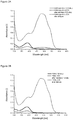
- a donor dye F888 is added respectively to Labrafac® containing or not 10 wt% of Lipo-HD. Then the nanoemulsions were prepared as described above. F888 was used for monitoring the encapsulation, release and stability of the nanoemulsion by looking on the intensity variation between F888 and DOX.
- the chemical structure of compound F888 is given below ( Klymchenko et al., RSC Adv., 2012, 2(31): 11876-11886 ):
- Size distributions were determined by dynamic light scattering using Zetasizer Nano ZSP (Malvern Instruments S.A).
- FRET technique allows monitoring the leakage of loaded dyes, because this process separate donor from acceptor ( Klymchenko et al, RSC Adv., 2012, 2(31):11876-11886 ).
- the dye-loaded nanoemulsion was mixed with 100-fold excess of blank particles, which acted as the acceptor medium for the released dyes.
- Fluorescence spectra were recorded by a Fluorologue (Jobin Yvon, Horiba) spectrofluoremeter. Fluorescence emission spectra were performed at room temperature with 390 excitation wavelengths for the donor F888.
- the loading could be calculated as 1.6 wt% with respect to labrafac ® oil. Without Lipo-HD, the loading was ⁇ 0.06% and could be neglected.
- Lipo-HD-Dox can be formed in situ after addition of DOX to nanoemulsions containing Lipo-HD.
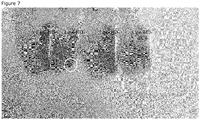
- the experimental results show that Lipo-HD-Dox is much better soluble in oil than DOX alone and that Lipo-HD-Dox remain inside nanoemulsions after dialysis, while DOX alone is leaked out from the nanoemulsions containing DOX.
- Fluorescence spectra of the nanoemulsions were studied.
- the fluorescence intensity of the reference dye F888 was not affected by the presence of 10 wt% of Lipo-HD ( Fig. 4A ).
- the fluorescence intensity of F888 decreased and a shoulder around 580-590 nm appeared ( Fig 4B ). This result indicates the presence of FRET from F888 to DOX, which is known to emit around 560-590 nm ( Motlagh et al., Biomed Opt Express. 2016 Jun 1; 7(6): 2400-2406 ).
- DOX can be encapsulated efficiently inside nanoemulsions and can be released under pH control (at low pH).
- the results of the present invention illustrate the application of nanoemulsions with Lipo-HD as carrier of anti-cancer drug DOX that can be released specifically in acidic compartments of cancer tissues.
- Corresponding compounds of formula II'a were respectively dissolved first into the oil Labrafac® at 5 wt%. Then 45 mg of surfactant Cremophore ® was added to 55 mg of above solution. The mixture was homogenized under magnetic stirring at 40°C for 10 min up to complete homogenisation. Finally, nanoemulsions were generated with the addition of phosphate buffered saline (230 mg).
- the sample was dialysed for 24h at NaHCO 3 buffer (0.1 M) at pH8 and then centrifugation at 6000 rpm for 1 minute was carried out.
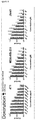
- Lipo-HD-Dox having two C18-alkyl chains give the best result for loading efficiency and encapsulation loading (Table 2).
- the achieved loading for Lipo-HD is significantly higher than the analogue bearing a single octadecyl chain.
- nanoemulsions containing a compound of Lipo-HD-C18 with DOX having a single C18-alkyl chain shows signs of precipitation already 4 days after preparation.
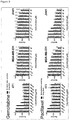
- MTS assay is based on the reduction of the MTS tetrazolium compound by viable mammalian cells (here, by tumor cells) to generate a colored formazan dye that is soluble in cell culture media.
- the formazan dye is quantified by measuring the absorbance at 490-500 nm. Briefly, tumor cells (MDA-MB-231, Jimt1 or 4T1 cells) were seeded (5000) in a 96 wells plate. After 24h, the medium was removed and replaced by drug-containing (LipoHD-DOX nanoemulsion or DOX alone) medium.
- the medium was removed and replaced with MTS-containing medium (0,5 mg/ml). After 4h of incubation, the medium was removed, replaced with 100 ⁇ l of DMSO (agitation, 20 min) and the absorbance was read at 570 nm.
- Example 4 In vitro toxicity evaluation of prodrugs Lipo-PAX and Lipo-N-Gem in nanoemulsions
- Lipo-PAX and Lipo-N-Gem were formulated with nanoemulsions using similar protocol as described in example 2.
- Corresponding prodrugs Lipo-PAX and Lipo-N-Gem were respectively dissolved first into the oil Labrafac® at 15 and 20 wt%, respectively. Then 45 mg of surfactant Cremophore ® was added to 55 mg of above solution. The mixture was homogenized under magnetic stirring at 40°C for 10 min up to complete homogenisation. Finally, nanoemulsions were generated with the addition of phosphate buffered saline (230 mg).
Landscapes
- Chemical & Material Sciences (AREA)
- Health & Medical Sciences (AREA)
- Organic Chemistry (AREA)
- Life Sciences & Earth Sciences (AREA)
- Animal Behavior & Ethology (AREA)
- Veterinary Medicine (AREA)
- Public Health (AREA)
- Medicinal Chemistry (AREA)
- Pharmacology & Pharmacy (AREA)
- General Health & Medical Sciences (AREA)
- Bioinformatics & Cheminformatics (AREA)
- Epidemiology (AREA)
- Engineering & Computer Science (AREA)
- Molecular Biology (AREA)
- Biophysics (AREA)
- Nanotechnology (AREA)
- Dispersion Chemistry (AREA)
- Chemical Kinetics & Catalysis (AREA)
- General Chemical & Material Sciences (AREA)
- Nuclear Medicine, Radiotherapy & Molecular Imaging (AREA)
- Botany (AREA)
- Medicinal Preparation (AREA)
- Pharmaceuticals Containing Other Organic And Inorganic Compounds (AREA)
Priority Applications (2)
| Application Number | Priority Date | Filing Date | Title |
|---|---|---|---|
| EP19305035.8A EP3679952A1 (de) | 2019-01-10 | 2019-01-10 | Nanoemulsionen zur verkapselung von prodrugs |
| PCT/EP2020/050465 WO2020144297A1 (en) | 2019-01-10 | 2020-01-09 | Nanoemulsions encapsulating prodrugs |
Applications Claiming Priority (1)
| Application Number | Priority Date | Filing Date | Title |
|---|---|---|---|
| EP19305035.8A EP3679952A1 (de) | 2019-01-10 | 2019-01-10 | Nanoemulsionen zur verkapselung von prodrugs |
Publications (1)
| Publication Number | Publication Date |
|---|---|
| EP3679952A1 true EP3679952A1 (de) | 2020-07-15 |
Family
ID=65200753
Family Applications (1)
| Application Number | Title | Priority Date | Filing Date |
|---|---|---|---|
| EP19305035.8A Withdrawn EP3679952A1 (de) | 2019-01-10 | 2019-01-10 | Nanoemulsionen zur verkapselung von prodrugs |
Country Status (2)
| Country | Link |
|---|---|
| EP (1) | EP3679952A1 (de) |
| WO (1) | WO2020144297A1 (de) |
Citations (3)
| Publication number | Priority date | Publication date | Assignee | Title |
|---|---|---|---|---|
| FR3001154A1 (fr) * | 2013-01-23 | 2014-07-25 | Guerbet Sa | Magneto-emulsion vectorisee |
| WO2017106957A1 (en) * | 2015-12-23 | 2017-06-29 | The University Of British Columbia | Lipid-linked prodrugs |
| WO2018002739A1 (en) * | 2016-06-28 | 2018-01-04 | Cellix Bio Private Limited | Compositions and methods for the treatment of cancer |
Family Cites Families (3)
| Publication number | Priority date | Publication date | Assignee | Title |
|---|---|---|---|---|
| FR2807323A1 (fr) * | 2000-04-10 | 2001-10-12 | Oreal | Composition, notamment cosmetique, renfermant un steroide et un 2-alkyl alcanol ou un ester |
| FR2968999B1 (fr) * | 2010-12-20 | 2013-01-04 | Guerbet Sa | Nanoemulsion de chelate pour irm |
| WO2017187343A2 (en) * | 2016-04-29 | 2017-11-02 | Thome Kreutz Fernando | Nanoemulsions and methods for cancer therapy |
-
2019
- 2019-01-10 EP EP19305035.8A patent/EP3679952A1/de not_active Withdrawn
-
2020
- 2020-01-09 WO PCT/EP2020/050465 patent/WO2020144297A1/en not_active Ceased
Patent Citations (3)
| Publication number | Priority date | Publication date | Assignee | Title |
|---|---|---|---|---|
| FR3001154A1 (fr) * | 2013-01-23 | 2014-07-25 | Guerbet Sa | Magneto-emulsion vectorisee |
| WO2017106957A1 (en) * | 2015-12-23 | 2017-06-29 | The University Of British Columbia | Lipid-linked prodrugs |
| WO2018002739A1 (en) * | 2016-06-28 | 2018-01-04 | Cellix Bio Private Limited | Compositions and methods for the treatment of cancer |
Non-Patent Citations (17)
| Title |
|---|
| ALLEN ET AL., ADV DRUG DELIV REV., vol. 65, no. 1, 2013, pages 36 - 48 |
| ANA LYGIA DOS SANTOS CÂMARA ET AL: "Acid-sensitive lipidated doxorubicin prodrug entrapped in nanoemulsion impairs lung tumor metastasis in a breast cancer model", NANOMEDICINE, vol. 12, no. 15, 13 July 2017 (2017-07-13), GB, pages 1751 - 1765, XP055595688, ISSN: 1743-5889, DOI: 10.2217/nnm-2017-0091 * |
| ANTON ET AL., PHARM RES., vol. 28, no. 5, 2011, pages 978 - 85 |
| ANTON ET, PHARM RES., vol. 28, no. 5, 2011, pages 978 - 985 |
| BARENHOLZ ET AL., J CONTROL RELEASE, vol. 160, no. 2, 2012, pages 117 - 134 |
| BROMBERG ET AL., LANGMUIR, vol. 18, no. 12, 2002, pages 4944 - 4952 |
| CAMARA ET AL., NANOMEDICINE, vol. 12, no. 15, 2017 |
| KILIN ET AL., BIOMATERIALS, vol. 35, no. 18, 2014, pages 4950 - 7 |
| KLYMCHENKO ET AL., RSC ADV., vol. 2, no. 31, 2012, pages 11876 - 11886 |
| KLYMCHENKO ET AL., RSCADV., vol. 2, no. 31, 2012, pages 11876 - 11886 |
| KLYMCHENKO, RSC ADV., vol. 2, no. 31, 2012, pages 11876 - 11886 |
| KUMARI ET AL., COLLOIDS SURF B BIOINTERFACES, vol. 75, no. 1, 2010, pages 1 - 18 |
| LI ET AL., J VIS EXP., vol. 114, 2 August 2016 (2016-08-02) |
| MASON ET AL., J. PHYS.: CONDENS. MATTER, vol. 18, 2006, pages R635 - R666 |
| MCCLEMENTS ET AL., SOFT MATTER, vol. 8, no. 6, 2012, pages 1719 - 1729 |
| MOTLAGH ET AL., BIOMED OPT EXPRESS, vol. 7, no. 6, 1 June 2016 (2016-06-01), pages 2400 - 2406 |
| STEVEN M. ANSELL ET AL: "Modulating the Therapeutic Activity of Nanoparticle Delivered Paclitaxel by Manipulating the Hydrophobicity of Prodrug Conjugates", JOURNAL OF MEDICINAL CHEMISTRY, vol. 51, no. 11, 1 June 2008 (2008-06-01), pages 3288 - 3296, XP055221499, ISSN: 0022-2623, DOI: 10.1021/jm800002y * |
Also Published As
| Publication number | Publication date |
|---|---|
| WO2020144297A1 (en) | 2020-07-16 |
Similar Documents
| Publication | Publication Date | Title |
|---|---|---|
| Singh et al. | RGD-TPGS decorated theranostic liposomes for brain targeted delivery | |
| Irby et al. | Lipid–drug conjugate for enhancing drug delivery | |
| Agrawal et al. | Bioadhesive micelles of d-α-tocopherol polyethylene glycol succinate 1000: Synergism of chitosan and transferrin in targeted drug delivery | |
| Yang et al. | Light-activatable dual-source ROS-responsive prodrug nanoplatform for synergistic chemo-photodynamic therapy | |
| DK2286795T3 (en) | PROCEDURE FOR PREPARING A Cationic LIPOSOMAL PREPARATION INCLUDING A LIPOPHIL COMPOUND | |
| Wang et al. | Reduction responsive liposomes based on paclitaxel-ss-lysophospholipid with high drug loading for intracellular delivery | |
| CN110506035B (zh) | 生物降解性化合物、脂质粒子、含有脂质粒子的组合物、和试剂盒 | |
| He et al. | Redox-sensitive dimeric camptothecin phosphatidylcholines-based liposomes for improved anticancer efficacy | |
| WO2011044671A1 (en) | Porphyrin nanovesicles | |
| JP2011516472A (ja) | 微小管相互作用薬の脂質−油−水型ナノエマルジョンデリバリシステム | |
| Goldenbogen et al. | Reduction-sensitive liposomes from a multifunctional lipid conjugate and natural phospholipids: reduction and release kinetics and cellular uptake | |
| Du et al. | Disulfide phosphatidylcholines: alternative phospholipids for the preparation of functional liposomes | |
| Habib et al. | Synthesis of lactobionic acid based bola-amphiphiles and its application as nano-carrier for curcumin delivery to cancer cell cultures in-vitro | |
| Wang et al. | Endoplasmic reticulum-targeted glutathione and pH dual responsive vitamin lipid nanovesicles for tocopheryl DM1 delivery and cancer therapy | |
| Yang et al. | TPGS and Doca dual-modified mesoporous silica nanoparticle-supported lipid bilayers enhance the efficient delivery and in vivo absorption of Coenzyme Q10 | |
| Yang et al. | A computer-aided, heterodimer-based “triadic” carrier-free drug delivery platform to mitigate multidrug resistance in lung cancer and enhance efficiency | |
| Risaliti et al. | Preparation and characterization of ascosome vesicles loaded with khellin | |
| Pendhari et al. | Mitochondria targeted liposomes of metformin for improved anticancer activity: Preparation and evaluation | |
| Roy et al. | Novel delivery strategy: finasteride-loaded solid lipid nanoparticles for improved androgenetic alopecia therapy | |
| AU2024339588A1 (en) | Formulated and/or co-formulated liposome compositions containing tgfb antagonist prodrugs useful in the treatment of cancer and methods thereof | |
| EP2830591A1 (de) | Material, verfahren zur herstellung davon und verwendungen davon | |
| CN104710433B (zh) | 苯丁酸氮芥衍生物、制备方法及应用 | |
| CN105939707B (zh) | 含有溶血卵磷脂和二氢卟吩e6的缀合物的用于治疗痤疮的脂质体组合物 | |
| EP3784681A1 (de) | Gemcitabin-amphiphil-prodrugs | |
| WO2020144297A1 (en) | Nanoemulsions encapsulating prodrugs |
Legal Events
| Date | Code | Title | Description |
|---|---|---|---|
| PUAI | Public reference made under article 153(3) epc to a published international application that has entered the european phase |
Free format text: ORIGINAL CODE: 0009012 |
|
| STAA | Information on the status of an ep patent application or granted ep patent |
Free format text: STATUS: THE APPLICATION HAS BEEN PUBLISHED |
|
| AK | Designated contracting states |
Kind code of ref document: A1 Designated state(s): AL AT BE BG CH CY CZ DE DK EE ES FI FR GB GR HR HU IE IS IT LI LT LU LV MC MK MT NL NO PL PT RO RS SE SI SK SM TR |
|
| AX | Request for extension of the european patent |
Extension state: BA ME |
|
| STAA | Information on the status of an ep patent application or granted ep patent |
Free format text: STATUS: THE APPLICATION IS DEEMED TO BE WITHDRAWN |
|
| 18D | Application deemed to be withdrawn |
Effective date: 20210116 |