EP3674665A1 - Route planning algorithm for efficiently searching through meaningful links within a defined topology - Google Patents
Route planning algorithm for efficiently searching through meaningful links within a defined topology Download PDFInfo
- Publication number
- EP3674665A1 EP3674665A1 EP19218987.6A EP19218987A EP3674665A1 EP 3674665 A1 EP3674665 A1 EP 3674665A1 EP 19218987 A EP19218987 A EP 19218987A EP 3674665 A1 EP3674665 A1 EP 3674665A1
- Authority
- EP
- European Patent Office
- Prior art keywords
- links
- zero
- nodes
- link
- establishing
- Prior art date
- Legal status (The legal status is an assumption and is not a legal conclusion. Google has not performed a legal analysis and makes no representation as to the accuracy of the status listed.)
- Granted
Links
Images


Classifications
-
- G—PHYSICS
- G01—MEASURING; TESTING
- G01C—MEASURING DISTANCES, LEVELS OR BEARINGS; SURVEYING; NAVIGATION; GYROSCOPIC INSTRUMENTS; PHOTOGRAMMETRY OR VIDEOGRAMMETRY
- G01C21/00—Navigation; Navigational instruments not provided for in groups G01C1/00 - G01C19/00
- G01C21/26—Navigation; Navigational instruments not provided for in groups G01C1/00 - G01C19/00 specially adapted for navigation in a road network
- G01C21/34—Route searching; Route guidance
- G01C21/36—Input/output arrangements for on-board computers
- G01C21/3679—Retrieval, searching and output of POI information, e.g. hotels, restaurants, shops, filling stations, parking facilities
- G01C21/3685—Retrieval, searching and output of POI information, e.g. hotels, restaurants, shops, filling stations, parking facilities the POI's being parking facilities
-
- G—PHYSICS
- G01—MEASURING; TESTING
- G01C—MEASURING DISTANCES, LEVELS OR BEARINGS; SURVEYING; NAVIGATION; GYROSCOPIC INSTRUMENTS; PHOTOGRAMMETRY OR VIDEOGRAMMETRY
- G01C21/00—Navigation; Navigational instruments not provided for in groups G01C1/00 - G01C19/00
- G01C21/26—Navigation; Navigational instruments not provided for in groups G01C1/00 - G01C19/00 specially adapted for navigation in a road network
- G01C21/34—Route searching; Route guidance
- G01C21/3453—Special cost functions, i.e. other than distance or default speed limit of road segments
-
- G—PHYSICS
- G01—MEASURING; TESTING
- G01C—MEASURING DISTANCES, LEVELS OR BEARINGS; SURVEYING; NAVIGATION; GYROSCOPIC INSTRUMENTS; PHOTOGRAMMETRY OR VIDEOGRAMMETRY
- G01C21/00—Navigation; Navigational instruments not provided for in groups G01C1/00 - G01C19/00
- G01C21/26—Navigation; Navigational instruments not provided for in groups G01C1/00 - G01C19/00 specially adapted for navigation in a road network
- G01C21/34—Route searching; Route guidance
- G01C21/3446—Details of route searching algorithms, e.g. Dijkstra, A*, arc-flags or using precalculated routes
-
- G—PHYSICS
- G01—MEASURING; TESTING
- G01C—MEASURING DISTANCES, LEVELS OR BEARINGS; SURVEYING; NAVIGATION; GYROSCOPIC INSTRUMENTS; PHOTOGRAMMETRY OR VIDEOGRAMMETRY
- G01C21/00—Navigation; Navigational instruments not provided for in groups G01C1/00 - G01C19/00
- G01C21/20—Instruments for performing navigational calculations
-
- G—PHYSICS
- G01—MEASURING; TESTING
- G01C—MEASURING DISTANCES, LEVELS OR BEARINGS; SURVEYING; NAVIGATION; GYROSCOPIC INSTRUMENTS; PHOTOGRAMMETRY OR VIDEOGRAMMETRY
- G01C21/00—Navigation; Navigational instruments not provided for in groups G01C1/00 - G01C19/00
- G01C21/26—Navigation; Navigational instruments not provided for in groups G01C1/00 - G01C19/00 specially adapted for navigation in a road network
- G01C21/28—Navigation; Navigational instruments not provided for in groups G01C1/00 - G01C19/00 specially adapted for navigation in a road network with correlation of data from several navigational instruments
- G01C21/30—Map- or contour-matching
- G01C21/32—Structuring or formatting of map data
Definitions
- a system and method for determining a route to a location within a parking area More particularly, a method for planning a route to a location within a parking area utilizing a new and novel method for efficiently searching through meaningful links within a defined topology.
- Searching for an empty parking space in a parking area such as a parking lot is a unique routing problem that is not well-defined. Parking areas have many different sizes, shapes, configurations, and are consistently changing as vehicles enter, park, or exit. Drivers generally employ a variety of approaches, for example: 1) choosing a row and selecting a visibly open parking space that is closest to an entrance of a destination, 2) cycling through multiple rows to identify parking spaces that are close to the entrance, or even 3) park away from other vehicles or moveable objects such as shopping carts.
- a method for identifying a route within a parking area for a vehicle includes generating a topographic map of the parking area having a plurality of parking spaces and a plurality of paths/roads or paths extending between and adjacent to the parking spaces.
- the method also includes establishing a plurality of nodes on the topographic map, wherein the nodes are located along the plurality of paths/roads, and wherein each of the nodes has latitude and longitudinal coordinates.
- the method also includes establishing a plurality of links on the topographic map, wherein the links each extend between two of the nodes, and wherein at least one of the links extends along one or more of the parking spaces.
- Each of the links has a length determined by the latitude and longitudinal coordinates of the nodes that comprise the link.
- the method continues with establishing one of the nodes as a starting node at which the vehicle starts and establishing one of the nodes as a target node.
- the method continues with establishing a route to the target node that follows a series of the links to the target node using Dijkstra's algorithm.
- All of the links that have a non-zero number of parking spaces are non-zero links, and the adjacency of each of the non-zero links is zero. Any of the links that have zero parking spaces are zero links, and the adjacency of the zero links is based on a number of zero links between the subject zero link and the closest non-zero link.
- the adjacency of the zero links may for example be equal to a sum of the number of zero links between the subject zero link and the closest non-zero link.
- f ( LinkLength, ParkingSpaces ) for zero links is a predetermined constant
- f ( LinkLength, ParkingSpaces) for non-zero links is a function of a length of the subject non-zero link and a number of parking spaces that border the subject non-zero link.
- the function of the length of the subject non-zero link and the number of parking spaces that border the subject non-zero link may for example be equal to the length of the link divided by the number of parking spaces that border the link.
- the function may be equal to a factor multiplied by the length of the link divided by the number of parking spaces.
- a parking space that borders a non-zero link may be understood as a parking space located adjacent to the non-zero link.
- the parking space that borders the non-zero link is parking space whose point of entry is accessible by the vehicle from the link.
- a non-transitory computer-readable storage media storing computer-executable instructions that, when executed by a processor, instruct a device to perform actions including generating a topographic map of a parking area having a plurality of parking spaces and a plurality of roads extending between and adjacent to the parking spaces.
- the actions may further include displaying the topographic map on an electronic display.
- the actions also include establishing a plurality of nodes on the topographic map, wherein the nodes are located along the plurality of paths/roads, and wherein each of the nodes has latitude and longitudinal coordinates.
- the actions also include establishing a plurality of links on the topographic map, wherein the links each extend between two of the nodes, and wherein at least one of the links extends along one or more of the parking spaces.
- Each of the links has a length that may be based on the latitude and longitudinal coordinates of the nodes which comprise the link (i.e. the nodes between which the link extends).
- the actions also include establishing one of the nodes as a starting node at which the vehicle starts and establishing one of the nodes as a target node.
- any of the links that have a non-zero number of parking spaces are non-zero links, and the adjacency of the non-zero links is zero.
- Any of the links that have zero parking spaces are zero links, and the adjacency of the zero links is based on a number of zero links between the subject zero link and the closest non-zero link.
- the adjacency of the zero links may for example be equal to a sum of the number of zero links between the subject zero link and the closest non-zero link.
- Links that "have a non-zero number of parking spaces" may be understood as links that extend adjacent to one or more parking spaces.
- f ( LinkLength, ParkingSpaces ) for zero links is a predetermined constant.
- LinkLength, ParkingSpaces for non-zero links is a function of a length of the link and a number of parking spaces that border the link (i.e. the number of parking spaces that the link "has").
- the function of the length of the subject non-zero link and the number of parking spaces that border the subject non-zero link may for example be equal to the length of the link divided by the number of parking spaces that border the link.
- the actions further include displaying the established route on the electronic display.
- non-transitory is intended to describe a computer-readable storage medium (or “memory”) excluding propagating electromagnetic signals, but are not intended to otherwise limit the type of physical computer-readable storage device that is encompassed by the phrase computer-readable medium or memory.
- the terms “non-transitory computer readable medium” or “tangible memory” are intended to encompass types of storage devices that do not necessarily store information permanently, including for example, random access memory (RAM).
- Program instructions and data stored on a tangible computer-accessible storage medium in non-transitory form may further be transmitted by transmission media or signals such as electrical, electromagnetic, or digital signals, which may be conveyed via a communication medium such as a network and/or a wireless link.
- the term “non-transitory”, as used herein is a limitation of the medium itself (i.e., tangible, not a signal) as opposed to a limitation on data storage persistency (e.g., RAM vs. ROM).
- a method for identifying a parking space for a vehicle includes generating a topographic map of a parking area having a plurality of parking spaces and a plurality of roads extending between and adjacent to the parking spaces.
- the method also includes establishing a plurality of nodes on the topographic map, wherein the nodes are located along the plurality of roads.
- the method also includes establishing a plurality of links on the topographic map, wherein the links each extend between two of the nodes, and wherein at least one of the links extends along a plurality of the parking spaces.
- the method also includes establishing one of the nodes as a starting node at which the vehicle starts and establishing one of the nodes as a target node, wherein the target node is adjacent to predetermined parking space.
- the method also includes establishing a route to the target node that follows a series of the links to the target node using Dijkstra's algorithm.
- a cost associated with each link for purposes of establishing the route with Dijkstra's algorithm is equal to a distance between the pair of the nodes that comprise the link, and wherein the distance of each link is generated based on latitude and longitudinal coordinates of the nodes which establish the link.
- a vehicle control device for identifying a route within a parking area having a plurality of parking spaces for a vehicle.
- the control device comprises control circuitry configured to display a topographic map on an electronic display of the vehicle.
- the control circuitry is further configured to establish a plurality of nodes on a topographic map.
- the nodes are located along a plurality of paths extending between and adjacent to the parking spaces, and wherein each of the nodes has latitude and longitudinal coordinates.
- the control circuitry is configured to establish a plurality of links on the topographic map, wherein the links each extend between two of the nodes, and wherein at least one of the links extends along at least one of the plurality of parking spaces.
- control circuitry is configured to establish a first node of the plurality of nodes as a starting node at which the vehicle starts and establishing a second node of the plurality nodes as a target node, and establish a route from the starting node to the target node that follows a series of at least a portion of the plurality of links to the target node using Dijkstra's algorithm.
- any of the links that are associated with a non-zero number of parking spaces are non-zero links, and wherein the Adjacency of the non-zero links is zero.
- Any of the links that are associated with zero parking spaces are zero links, and wherein the Adjacency of the zero links is based on a number of zero links between the subject zero link and the closest non-zero link.
- f(LinkLength, ParkingSpaces) for zero links is a predetermined constant
- f(LinkLength, ParkingSpaces) for non-zero links is a function of a length of the subject non-zero link and a number of parking spaces that border the link.
- the control circuitry is further configured to display the established route on the electronic display.
- a vehicle comprising an electronic display and a vehicle control device according to any one of the embodiments disclosed herein.
- a system and methods for establishing a route to a parking space or other feature of a parking area for a vehicle are provided.
- the subject system and methods may be employed for vehicles which are driven by an operator or self-driven.
- a generated route can be displayed on a computer generated map.
- the vehicle may be configured to automatically follow routes generated by the subject system and methods and also display the generated route on a computer generated map.
- the system includes a topographic map 10A that is generated and displayed by a computer and associated display device.
- the topographic map 10A includes a parking area 12, such as a parking lot, with a plurality of parking spaces 14 and a road network 16, 18.
- images of the parking area 12, including specific parking spaces 14 and road networks may be provided by way of satellite images, probe sourcing or other image creating technologies.
- the subject system and methods may be employed for finding parking spaces 14 in various types of parking areas, including but not limited to, traditional parking lots or street parking areas.
- the road network 16, 18 may include a plurality of rows 16 extending between and bordering the parking spaces 14, and ingress and egress roads 18 that are connected to the rows 16.
- the topographic map 10A is arranged as a graph with a plurality of vertices 20 and a plurality of edges 22.
- the topographic map 10A may be available in a format specified by widely used commercial mapping companies. It should be appreciated that various types of computers may be employed, as would be understood by one of ordinary skill in the art.
- the computer may include a non-transitory computer-readable storage media storing computer-executable instructions and processor for executing the methods of the subject disclosure.
- the computer is further configured to establish a plurality of nodes N1-N24 on the topographic map 10A.
- the nodes N1-N24 are each comprised of one of the vertices 20 of the topographic map 10A defined by latitude and longitudinal coordinates obtained by the topographic map 10A.
- the nodes N1-N24 each are assigned a node number (N1-N24).
- the nodes N1-N24 are each located at one of: where a road lane starts forming, where a forming road lane finishes forming, where a road lane begins merging, where a merging road lane finishes merging, where a road approaches an intersection where multiple vehicle maneuvers are possible from at least one lane of the road bed in either direction, where a link length is greater than two kilometers, or at specific parking spaces. It should be appreciated that the nodes N1-N24 could be located at other areas of the topographic map 10A.
- the computer is further configured to establish a plurality of links L1-L40 on the topographic map 10A.
- Each of the links L1-L40 extends between two of the nodes N1-N24, and may be defined by edges 22 of the topographic map 10A.
- the links L1-L40 may span the length of rows 16 of the parking area, or as shown in FIG. 2 , may extend between nodes N1-N40 within an intersection of two or more rows and/or roads.
- FIG. 2 shows an example of nodes N1-N3 and links L1-L3 at a typical junction.
- each link L1-L40 has a cost associated with it.
- the links L1-L40 further represent a particular path that can be driven within the parking area and also serves as a container for path information.
- Parameters associated with each links L1-L40 may include a start node number, an end node number, a number of parking spaces along the link, a link length, and a direction of travel.
- the nodes N1-N24 and links L1-L40 may be generated prior to loading the topographic map 10A in the vehicle's computer. More particularly, the nodes N1-N24 and links L1-L40 may be pre-programmed into the topographic map 10A prior to access of the topographic map 10A by the vehicle's computer. Alternatively, the nodes N1-N24 and links L1-L40 may be added to a less developed topographic map 10A by the vehicle's computer / cloud server during and/or after loading of the topographic map 10A by the vehicle's computer / cloud. Such new, added, information may be shared with other users / maps such as by way of a cloud network.
- the subject disclosure includes two methods 24, 26 for optimizing the process of finding a parking space 14, or other feature within a parking area 12 utilizing the aforementioned arrangement of a topographic map 10A.
- the first method 24 determines the most efficient path to a predetermined feature of the parking area 12, such as a parking space 14 or pickup location of a user.
- the second method 26 determines an optimal route within the parking area 12 for navigating past a maximum number of parking spaces 14.
- Each method 24, 26 utilizes Dijkstra's algorithm to output a sequence of the links L1-L40 which the vehicle should traverse between a starting node and a targeted node. For purposes of using Dijkstra's algorithm, a cost associated with each link L1-L40 is determined depending on which method 24, 26 is employed.
- the first method 24 includes the step 100 of establishing a first cost for each of the links for purposes of using Dijkstra's algorithm.
- the first cost associated with each of the links L1-L40 is equal to a geographical length of each link L1-L40 as determined by the latitude and longitudinal coordinates from the topographic map 10A.
- the method continues with 102 establishing one of the nodes N1-N24 as a starting node from which the vehicle starts, and 104 establishing another of the nodes N1-N24 as a target node at which the vehicle finishes.
- the method continues with 106 utilizing Dijkstra's algorithm to determine the most efficient path from the starting node to the target node, wherein the first cost is used as the value of each link.
- FIG. 4 further illustrates the step 106 of utilizing Dijkstra's algorithm to determine the most efficient path to the target node.
- Step 106 further includes 108 establishing all of the nodes N1-N24 as unvisited.
- the method continues with 110 establishing a node value for the starting node as zero and 112 declaring the starting node as visited.
- the method proceeds with 114 establishing a node value of infinity for each of the intermediate nodes and the target node.
- the method continues with 116 establishing one of the intermediate nodes as a current node and establishing all of the unvisited nodes that are within one link of the current node as neighbor nodes.
- the method continues with 118, for each of the neighbor nodes, adding the node value of the current node to the cost of the link between the current node and the neighbor node to determine a tentative node value for the neighbor node.
- the node value for the first current node that is analyzed is equal to the cost of the link between the starting node and the current node. If the tentative node value for the neighbor node is less than the present node value, then the method continues with 120 establishing the node value for the neighbor node as the tentative node value. After all of the neighboring nodes of the current node have been analyzed, the method continues with 122 establishing the current node as visited and establishing another of the intermediate or target node as the current node.
- the method proceeds by 124 repeating step 118 for the new current node and subsequent intermediate and target nodes until all of the intermediate nodes and the target node have been established as visited. Finally, the method includes 126 establishing a route to the target node that follows a series of the links between nodes to the target node that add to the smallest node values. The established route may be displayed on the topographic map 10A for a driver of a self-driven vehicle to follow and/or may be followed by a self-driven vehicle to the target destination.
- the second method 26 is similar to the first method 24 except a second cost that is different than the first cost is utilized for each link L1-L40. Utilizing the second cost causes the route to follow links L1-L40 between the starting node and target node that passes a maximum number of the parking spaces 14.
- the second method includes the step of 200 establishing a second cost of each of the links.
- Step 200 of calculating the second cost will be explained in further detail below.
- the method continues with 202 establishing one of the nodes N1-N24 as a starting node from which the vehicle starts, and 204 establishing another of the nodes N1-N24 as a target node at which the vehicle finishes.
- the target node is established as one of a plurality of critical nodes.
- the critical nodes are each one of the corners of the parking area, however, other nodes N1-N24 may be chosen.
- the method proceeds with using Dijkstra's algorithm in accordance with step 106 above to determine a path to the target node, except the second cost is utilized for each link (instead of the first cost as in the first method).
- the method continues by 208 establishing the first target / critical node as the starting node and establishing another critical node as a target node.
- the method continues by 210 returning to step 106 of utilizing Dijkstra's algorithm in accordance with step 106 above to determine a path to the target node until an available parking space is found.
- the cost associated with each of the links L1-L40 is a second cost which is calculated based on by the following equation.
- Cost 2 Adjacency + f LinkLength ParkingSpaces
- the adjacency value is equal to zero.
- the adjacency value is equal to a sum of the number of zero links between the subject zero link and the closest non-zero link (including the subject link). For example, a zero link that is directly adjacent to a non-zero link has an adjacency value of one, and a zero links that is one link away from the closest non-zero link has an adjacency value of two.
- a function, f LinkLength, ParkingSpaces
- f LinkLength, ParkingSpaces
- a first function is employed, which is a predetermined constant.
- the predetermined constant is 5, however, other numbers may be utilized depending on the specific arrangement of the parking area 12.
- a second function is utilized for each of the non-zero links.
- the second function is equal to a link length divided by number of parking spaces. For example, for a non-zero link having a link length of 20 meters and which borders 4 parking spaces, the second function would equal 5. As such, the second cost for the same link is 5 because its adjacency value is 0.
- FIGS. 6A-6D graphically illustrate execution of the second method 26.
- FIG. 6A presents a sample parking area 12 with a starting node N28 and a target node N30.
- the target node N30 is one of the critical nodes at a corner of the parking area.
- a search route is generated to the target node N30 using the second method with each link employing the second cost value.
- FIG. 6C after the first route is calculated and the vehicle has reached the first target node, a second target node N32 is selected as another of the critical nodes, and the previous target node N30 is selected as a second starting node N34.
- FIG. 4D illustrates a search route from the second starting node N34 to the new target node N32.
- FIG. 7A illustrates another example parking area 12 in which the second method 26 was utilized to generate a route to cover a maximum number of parking spaces between a starting node N36 and a target node N38.
- FIG. 7B illustrates an example parking area 12 in which the first route was utilized to calculate the fastest route between a starting node N40 and a target node N42.
Landscapes
- Engineering & Computer Science (AREA)
- Radar, Positioning & Navigation (AREA)
- Remote Sensing (AREA)
- Automation & Control Theory (AREA)
- Physics & Mathematics (AREA)
- General Physics & Mathematics (AREA)
- Navigation (AREA)
Abstract
Description
- A system and method for determining a route to a location within a parking area. More particularly, a method for planning a route to a location within a parking area utilizing a new and novel method for efficiently searching through meaningful links within a defined topology.
- Searching for an empty parking space in a parking area such as a parking lot is a unique routing problem that is not well-defined. Parking areas have many different sizes, shapes, configurations, and are consistently changing as vehicles enter, park, or exit. Drivers generally employ a variety of approaches, for example: 1) choosing a row and selecting a visibly open parking space that is closest to an entrance of a destination, 2) cycling through multiple rows to identify parking spaces that are close to the entrance, or even 3) park away from other vehicles or moveable objects such as shopping carts. Although advances have been made in vehicle navigation systems for both operator-driven and self-driving vehicles to assist drivers in determining an optimal route along roads to a destination, there remains a need to further assist drivers in efficiently identifying open parking spaces within a parking area. Autonomous vehicles, in particular, need to have the capability of executing the task of searching for a parking space in an efficient and well-defined manner.
- It is an objective of the disclosure to provide a system and method for searching for a parking space or other destination in a parking area in an efficient and well-defined manner.
- It is another objective of the present disclosure to provide a generalized approach for searching for a parking space or other destination in a parking area that can be applied for different topographic maps of parking areas.
- According to these and other objectives/aspects of the disclosure, a method for identifying a route within a parking area for a vehicle is provided. The method includes generating a topographic map of the parking area having a plurality of parking spaces and a plurality of paths/roads or paths extending between and adjacent to the parking spaces. The method also includes establishing a plurality of nodes on the topographic map, wherein the nodes are located along the plurality of paths/roads, and wherein each of the nodes has latitude and longitudinal coordinates. The method also includes establishing a plurality of links on the topographic map, wherein the links each extend between two of the nodes, and wherein at least one of the links extends along one or more of the parking spaces. Each of the links has a length determined by the latitude and longitudinal coordinates of the nodes that comprise the link. The method continues with establishing one of the nodes as a starting node at which the vehicle starts and establishing one of the nodes as a target node. The method continues with establishing a route to the target node that follows a series of the links to the target node using Dijkstra's algorithm. A cost associated with each link for purposes of establishing the route with Dijkstra's algorithm is based on the equation:

- All of the links that have a non-zero number of parking spaces are non-zero links, and the adjacency of each of the non-zero links is zero. Any of the links that have zero parking spaces are zero links, and the adjacency of the zero links is based on a number of zero links between the subject zero link and the closest non-zero link. The adjacency of the zero links may for example be equal to a sum of the number of zero links between the subject zero link and the closest non-zero link. Moreover, f(LinkLength, ParkingSpaces) for zero links is a predetermined constant, and f(LinkLength, ParkingSpaces) for non-zero links is a function of a length of the subject non-zero link and a number of parking spaces that border the subject non-zero link. The function of the length of the subject non-zero link and the number of parking spaces that border the subject non-zero link may for example be equal to the length of the link divided by the number of parking spaces that border the link. However, other functions based on these factors are feasible and dependent on specific scenarios and specifications. For example the function may be equal to a factor multiplied by the length of the link divided by the number of parking spaces. A parking space that borders a non-zero link may be understood as a parking space located adjacent to the non-zero link. In some embodiments, the parking space that borders the non-zero link is parking space whose point of entry is accessible by the vehicle from the link.
- According to the above and other objectives/aspects of the disclosure, there is provided a non-transitory computer-readable storage media storing computer-executable instructions that, when executed by a processor, instruct a device to perform actions including generating a topographic map of a parking area having a plurality of parking spaces and a plurality of roads extending between and adjacent to the parking spaces. The actions may further include displaying the topographic map on an electronic display. The actions also include establishing a plurality of nodes on the topographic map, wherein the nodes are located along the plurality of paths/roads, and wherein each of the nodes has latitude and longitudinal coordinates. The actions also include establishing a plurality of links on the topographic map, wherein the links each extend between two of the nodes, and wherein at least one of the links extends along one or more of the parking spaces. Each of the links has a length that may be based on the latitude and longitudinal coordinates of the nodes which comprise the link (i.e. the nodes between which the link extends). The actions also include establishing one of the nodes as a starting node at which the vehicle starts and establishing one of the nodes as a target node. The actions also include establishing a route to the target node that follows a series of the links to the target node using Dijkstra's algorithm. A cost associated with each link for purposes of establishing the route with Dijkstra's algorithm is based on the equation:

- Any of the links that have a non-zero number of parking spaces are non-zero links, and the adjacency of the non-zero links is zero. Any of the links that have zero parking spaces are zero links, and the adjacency of the zero links is based on a number of zero links between the subject zero link and the closest non-zero link. The adjacency of the zero links may for example be equal to a sum of the number of zero links between the subject zero link and the closest non-zero link. Links that "have a non-zero number of parking spaces" may be understood as links that extend adjacent to one or more parking spaces. Moreover, f(LinkLength, ParkingSpaces) for zero links is a predetermined constant. f(LinkLength, ParkingSpaces) for non-zero links is a function of a length of the link and a number of parking spaces that border the link (i.e. the number of parking spaces that the link "has"). The function of the length of the subject non-zero link and the number of parking spaces that border the subject non-zero link may for example be equal to the length of the link divided by the number of parking spaces that border the link. The actions further include displaying the established route on the electronic display. With this aspect of the disclosure, similar advantages and preferred features are present as in the previously discussed first aspect of the disclosure.
- The term "non-transitory," as used herein, is intended to describe a computer-readable storage medium (or "memory") excluding propagating electromagnetic signals, but are not intended to otherwise limit the type of physical computer-readable storage device that is encompassed by the phrase computer-readable medium or memory. For instance, the terms "non-transitory computer readable medium" or "tangible memory" are intended to encompass types of storage devices that do not necessarily store information permanently, including for example, random access memory (RAM). Program instructions and data stored on a tangible computer-accessible storage medium in non-transitory form may further be transmitted by transmission media or signals such as electrical, electromagnetic, or digital signals, which may be conveyed via a communication medium such as a network and/or a wireless link. Thus, the term "non-transitory", as used herein, is a limitation of the medium itself (i.e., tangible, not a signal) as opposed to a limitation on data storage persistency (e.g., RAM vs. ROM).
- According to the above and other aspects of the disclosure, a method for identifying a parking space for a vehicle is provided. The method includes generating a topographic map of a parking area having a plurality of parking spaces and a plurality of roads extending between and adjacent to the parking spaces. The method also includes establishing a plurality of nodes on the topographic map, wherein the nodes are located along the plurality of roads. The method also includes establishing a plurality of links on the topographic map, wherein the links each extend between two of the nodes, and wherein at least one of the links extends along a plurality of the parking spaces. The method also includes establishing one of the nodes as a starting node at which the vehicle starts and establishing one of the nodes as a target node, wherein the target node is adjacent to predetermined parking space. The method also includes establishing a route to the target node that follows a series of the links to the target node using Dijkstra's algorithm. A cost associated with each link for purposes of establishing the route with Dijkstra's algorithm is equal to a distance between the pair of the nodes that comprise the link, and wherein the distance of each link is generated based on latitude and longitudinal coordinates of the nodes which establish the link.
- In accordance with another aspect of the present disclosure there is provided a vehicle control device for identifying a route within a parking area having a plurality of parking spaces for a vehicle. The control device comprises control circuitry configured to display a topographic map on an electronic display of the vehicle. The control circuitry is further configured to establish a plurality of nodes on a topographic map. The nodes are located along a plurality of paths extending between and adjacent to the parking spaces, and wherein each of the nodes has latitude and longitudinal coordinates. Further the control circuitry is configured to establish a plurality of links on the topographic map, wherein the links each extend between two of the nodes, and wherein at least one of the links extends along at least one of the plurality of parking spaces. Further, the control circuitry is configured to establish a first node of the plurality of nodes as a starting node at which the vehicle starts and establishing a second node of the plurality nodes as a target node, and establish a route from the starting node to the target node that follows a series of at least a portion of the plurality of links to the target node using Dijkstra's algorithm. A cost associated with each link for purposes of establishing the route with Dijkstra's algorithm is based on the equation:

- Any of the links that are associated with a non-zero number of parking spaces are non-zero links, and wherein the Adjacency of the non-zero links is zero. Any of the links that are associated with zero parking spaces are zero links, and wherein the Adjacency of the zero links is based on a number of zero links between the subject zero link and the closest non-zero link. Moreover, f(LinkLength, ParkingSpaces) for zero links is a predetermined constant, and f(LinkLength, ParkingSpaces) for non-zero links is a function of a length of the subject non-zero link and a number of parking spaces that border the link. The control circuitry is further configured to display the established route on the electronic display. With this aspect of the disclosure, similar advantages and preferred features are present as in the previously discussed first aspect of the disclosure.
- Further, according to another aspect of the present disclosure there is provided a vehicle comprising an electronic display and a vehicle control device according to any one of the embodiments disclosed herein.
- Other advantages of the present invention will be readily appreciated, as the same becomes better understood by reference to the following detailed description when considered in connection with the accompanying drawings wherein:
-
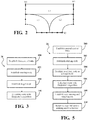
FIG. 1 is a top schematic view of a first example topographic map of a parking area including a plurality of links and nodes; -
FIG. 2 is an example arrangement of a plurality of nodes and links at the intersection of two roads on a topographic map; -
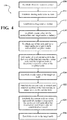
FIG. 3 is a flow diagram of a first example method of determining a route to a predetermined parking space or other feature of a parking area; -
FIG. 4 is a flow diagram of an example method of using Dijkstra's algorithm to determine a route to a predetermined parking space or other feature of a parking space; -
FIG. 5 is a flow diagram of a second example method of determining a route to a predetermined parking space or other feature of a parking area; -
FIGS. 6A-6D are top schematic views of a second example topographic map of a parking area illustrating the generation of a route in accordance with the second method; -
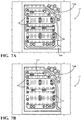
FIG. 7A is a top schematic view of a third example topographic map of a parking area illustrating the generation of a route in accordance with the second method; and -
FIG. 7B is a top schematic view of the third example topographic map of a parking area illustrating the generation of a route in accordance with the first method. - Referring to the Figures, wherein like numerals indicate corresponding parts throughout the several views, a system and methods for establishing a route to a parking space or other feature of a parking area for a vehicle are provided. It should be appreciated that the subject system and methods may be employed for vehicles which are driven by an operator or self-driven. In situations in which the subject system and methods are employed for a vehicle driven by an operator, a generated route can be displayed on a computer generated map. In situations in which the subject system and methods are employed on a self-driven vehicle, the vehicle may be configured to automatically follow routes generated by the subject system and methods and also display the generated route on a computer generated map.
- As best shown in
FIG. 1 , the system includes atopographic map 10A that is generated and displayed by a computer and associated display device. Thetopographic map 10A includes aparking area 12, such as a parking lot, with a plurality ofparking spaces 14 and aroad network parking area 12, includingspecific parking spaces 14 and road networks may be provided by way of satellite images, probe sourcing or other image creating technologies. It should be appreciated that the subject system and methods may be employed for findingparking spaces 14 in various types of parking areas, including but not limited to, traditional parking lots or street parking areas. Theroad network rows 16 extending between and bordering theparking spaces 14, and ingress andegress roads 18 that are connected to therows 16. Thetopographic map 10A is arranged as a graph with a plurality ofvertices 20 and a plurality ofedges 22. Thetopographic map 10A may be available in a format specified by widely used commercial mapping companies. It should be appreciated that various types of computers may be employed, as would be understood by one of ordinary skill in the art. The computer may include a non-transitory computer-readable storage media storing computer-executable instructions and processor for executing the methods of the subject disclosure. - The computer is further configured to establish a plurality of nodes N1-N24 on the
topographic map 10A. The nodes N1-N24 are each comprised of one of thevertices 20 of thetopographic map 10A defined by latitude and longitudinal coordinates obtained by thetopographic map 10A. The nodes N1-N24 each are assigned a node number (N1-N24). According to the example embodiment, the nodes N1-N24 are each located at one of: where a road lane starts forming, where a forming road lane finishes forming, where a road lane begins merging, where a merging road lane finishes merging, where a road approaches an intersection where multiple vehicle maneuvers are possible from at least one lane of the road bed in either direction, where a link length is greater than two kilometers, or at specific parking spaces. It should be appreciated that the nodes N1-N24 could be located at other areas of thetopographic map 10A. - The computer is further configured to establish a plurality of links L1-L40 on the
topographic map 10A. Each of the links L1-L40 extends between two of the nodes N1-N24, and may be defined byedges 22 of thetopographic map 10A. As shown inFIG. 1 , the links L1-L40 may span the length ofrows 16 of the parking area, or as shown inFIG. 2 , may extend between nodes N1-N40 within an intersection of two or more rows and/or roads.FIG. 2 shows an example of nodes N1-N3 and links L1-L3 at a typical junction. As will be discussed in further detail below, each link L1-L40 has a cost associated with it. The links L1-L40 further represent a particular path that can be driven within the parking area and also serves as a container for path information. Parameters associated with each links L1-L40 may include a start node number, an end node number, a number of parking spaces along the link, a link length, and a direction of travel. - It should be appreciated that the nodes N1-N24 and links L1-L40 may be generated prior to loading the
topographic map 10A in the vehicle's computer. More particularly, the nodes N1-N24 and links L1-L40 may be pre-programmed into thetopographic map 10A prior to access of thetopographic map 10A by the vehicle's computer. Alternatively, the nodes N1-N24 and links L1-L40 may be added to a less developedtopographic map 10A by the vehicle's computer / cloud server during and/or after loading of thetopographic map 10A by the vehicle's computer / cloud. Such new, added, information may be shared with other users / maps such as by way of a cloud network. - As presented in
FIGS. 3-5 , the subject disclosure includes twomethods parking space 14, or other feature within aparking area 12 utilizing the aforementioned arrangement of atopographic map 10A. Thefirst method 24 determines the most efficient path to a predetermined feature of theparking area 12, such as aparking space 14 or pickup location of a user. Thesecond method 26 determines an optimal route within theparking area 12 for navigating past a maximum number ofparking spaces 14. Eachmethod method - With reference to
FIG. 3 , thefirst method 24 includes thestep 100 of establishing a first cost for each of the links for purposes of using Dijkstra's algorithm. According to the first method, the first cost associated with each of the links L1-L40 is equal to a geographical length of each link L1-L40 as determined by the latitude and longitudinal coordinates from thetopographic map 10A. The method continues with 102 establishing one of the nodes N1-N24 as a starting node from which the vehicle starts, and 104 establishing another of the nodes N1-N24 as a target node at which the vehicle finishes. The method continues with 106 utilizing Dijkstra's algorithm to determine the most efficient path from the starting node to the target node, wherein the first cost is used as the value of each link. -
FIG. 4 further illustrates thestep 106 of utilizing Dijkstra's algorithm to determine the most efficient path to the target node. Step 106 further includes 108 establishing all of the nodes N1-N24 as unvisited. The method continues with 110 establishing a node value for the starting node as zero and 112 declaring the starting node as visited. The method proceeds with 114 establishing a node value of infinity for each of the intermediate nodes and the target node. The method continues with 116 establishing one of the intermediate nodes as a current node and establishing all of the unvisited nodes that are within one link of the current node as neighbor nodes. The method continues with 118, for each of the neighbor nodes, adding the node value of the current node to the cost of the link between the current node and the neighbor node to determine a tentative node value for the neighbor node. The node value for the first current node that is analyzed is equal to the cost of the link between the starting node and the current node. If the tentative node value for the neighbor node is less than the present node value, then the method continues with 120 establishing the node value for the neighbor node as the tentative node value. After all of the neighboring nodes of the current node have been analyzed, the method continues with 122 establishing the current node as visited and establishing another of the intermediate or target node as the current node. The method proceeds by 124 repeatingstep 118 for the new current node and subsequent intermediate and target nodes until all of the intermediate nodes and the target node have been established as visited. Finally, the method includes 126 establishing a route to the target node that follows a series of the links between nodes to the target node that add to the smallest node values. The established route may be displayed on thetopographic map 10A for a driver of a self-driven vehicle to follow and/or may be followed by a self-driven vehicle to the target destination. - With reference to
FIG. 5 , thesecond method 26 is similar to thefirst method 24 except a second cost that is different than the first cost is utilized for each link L1-L40. Utilizing the second cost causes the route to follow links L1-L40 between the starting node and target node that passes a maximum number of theparking spaces 14. - More particularly, similar to the first method, the second method includes the step of 200 establishing a second cost of each of the links. Step 200 of calculating the second cost will be explained in further detail below. The method continues with 202 establishing one of the nodes N1-N24 as a starting node from which the vehicle starts, and 204 establishing another of the nodes N1-N24 as a target node at which the vehicle finishes. Rather than establishing the target node as a predetermined location like a parking space as in the
first method 24, the target node is established as one of a plurality of critical nodes. According to the subject embodiment, the critical nodes are each one of the corners of the parking area, however, other nodes N1-N24 may be chosen. The method proceeds with using Dijkstra's algorithm in accordance withstep 106 above to determine a path to the target node, except the second cost is utilized for each link (instead of the first cost as in the first method). Once the first target / critical node is reached, the method continues by 208 establishing the first target / critical node as the starting node and establishing another critical node as a target node. The method continues by 210 returning to step 106 of utilizing Dijkstra's algorithm in accordance withstep 106 above to determine a path to the target node until an available parking space is found. - With reference back to step 200, the cost associated with each of the links L1-L40 is a second cost which is calculated based on by the following equation.

- For links L1-L40 that have a non-zero number of parking spaces (a non-zero link), the adjacency value is equal to zero. For links L1-L40 that have zero parking spaces (zero links), the adjacency value is equal to a sum of the number of zero links between the subject zero link and the closest non-zero link (including the subject link). For example, a zero link that is directly adjacent to a non-zero link has an adjacency value of one, and a zero links that is one link away from the closest non-zero link has an adjacency value of two.
- Furthermore, a function, f (LinkLength, ParkingSpaces), is determined for each of the links L1-L40. For each of the zero links, a first function is employed, which is a predetermined constant. According to the example embodiment, the predetermined constant is 5, however, other numbers may be utilized depending on the specific arrangement of the
parking area 12. A second function is utilized for each of the non-zero links. The second function is equal to a link length divided by number of parking spaces. For example, for a non-zero link having a link length of 20 meters and which borders 4 parking spaces, the second function would equal 5. As such, the second cost for the same link is 5 because its adjacency value is 0. -
FIGS. 6A-6D graphically illustrate execution of thesecond method 26.FIG. 6A presents asample parking area 12 with a starting node N28 and a target node N30. The target node N30 is one of the critical nodes at a corner of the parking area. As shown inFIG. 6B , a search route is generated to the target node N30 using the second method with each link employing the second cost value. As shown inFIG. 6C , after the first route is calculated and the vehicle has reached the first target node, a second target node N32 is selected as another of the critical nodes, and the previous target node N30 is selected as a second starting node N34.FIG. 4D illustrates a search route from the second starting node N34 to the new target node N32. -
FIG. 7A illustrates anotherexample parking area 12 in which thesecond method 26 was utilized to generate a route to cover a maximum number of parking spaces between a starting node N36 and a target node N38.FIG. 7B illustrates anexample parking area 12 in which the first route was utilized to calculate the fastest route between a starting node N40 and a target node N42. - Exemplary methods and computer-readable storage media are set out in the following items:
- 1. A method for identifying a route within a parking area for a vehicle, comprising: establishing a plurality of nodes on a topographic map, wherein the nodes are located along the plurality of roads, and wherein each of the nodes has latitude and longitudinal coordinates; establishing a plurality of links on the topographic map, wherein the links each extend between two of the nodes, and wherein at least one of the links extends along a plurality of the parking spaces; wherein each of the links has a length determined by the latitude and longitudinal coordinates of the nodes which comprise the link; establishing one of the nodes as a starting node at which the vehicle starts and establishing one of the nodes as a target node; and establishing a route from the starting node to the target node that follows a series of the links to the target node using Dijkstra's algorithm; wherein a cost associated with each link for purposes of establishing the route with Dijkstra's algorithm is based on the equation:

wherein any of the links that have a non-zero number of parking spaces are non-zero links, and wherein the Adjacency of the non-zero links is zero; wherein any of the links that have zero parking spaces are zero links, and wherein the Adjacency of the zero links is equal to a sum of the number of zero links between the subject zero link and the closest non-zero link; wherein f (LinkLength/ParkingSpaces) for zero links is a predetermined constant; and wherein f (LinkLength/ParkingSpaces) for non-zero links is equal to the length of the link divided by a number of parking spaces that border the link. - 2. A method as set forth in item 1 further including a step of generating a topographic map of a parking area having a plurality of parking spaces and a plurality of roads extending between and adjacent to the parking spaces.
- 3. A method as set forth in item 1 wherein the predetermined constant is five.
- 4. A method as set forth in item 1 wherein the nodes are each located at one of: where a road lane starts forming, where a forming road lane finishes forming, where a road lane begins merging, where a merging road lane finishes merging, where a road approaches an intersection where multiple vehicle maneuvers are possible from at least one lane of the road bed in either direction, where a link length is greater than two kilometers, or at a parking space.
- 5. A method as set forth in item 1 wherein the target node is one of a plurality of critical nodes, and wherein the critical nodes are each located at a corner of the parking area.
- 6. A method as set forth in item 5 wherein after the route to the target node is established, the method continues with establishing a second target node, wherein the second target node is another of the critical nodes, and the method continues with establishing a route to the second target node that follows a series of the links to the second target node using Dijkstra's algorithm.
- 7. A non-transitory computer-readable storage media storing computer-executable instructions that, when executed by a processor, instruct a device to perform actions comprising: generating a topographic map of a parking area having a plurality of parking spaces and a plurality of roads extending between and adjacent to the parking spaces; displaying the topographic map on an electronic display; establishing a plurality of nodes on the topographic map, wherein the nodes are located along the plurality of roads, and wherein each of the nodes has latitude and longitudinal coordinates; establishing a plurality of links on the topographic map, wherein the links each extend between two of the nodes, and wherein at least one of the links extends along a plurality of the parking spaces; wherein each of the links has a length determined by the latitude and longitudinal coordinates of the nodes which comprise the link; establishing one of the nodes as a starting node at which the vehicle starts and establishing one of the nodes as a target node; and establishing a route to the target node that follows a series of the links to the target node using Dijkstra's algorithm; wherein a cost associated with each link for purposes of establishing the route with Dijkstra's algorithm is based on the equation:

wherein any of the links that have a non-zero number of parking spaces are non-zero links, and wherein the Adjacency of the non-zero links is zero; wherein any of the links that have zero parking spaces are zero links, and wherein the Adjacency of the zero links is equal to a sum of the number of zero links between the subject zero link and the closest non-zero link; wherein f (LinkLength/ParkingSpaces) for zero links is a predetermined constant; wherein f (LinkLength/ParkingSpaces) for non-zero links is equal to the length of the link divided by a number of parking spaces that border the link; and displaying the established route on the electronic display. - 8. The non-transitory computer-readable storage media storing computer-executable instructions as set forth in item 7, wherein the predetermined constant is five.
- 9. The non-transitory computer-readable storage media storing computer-executable instructions as set forth in item 7, wherein the nodes are each located at one of: where a road lane starts forming, where a forming road lane finishes forming, where a road lane begins merging, where a merging road lane finishes merging, where a road approaches an intersection where multiple vehicle maneuvers are possible from at least one lane of the road bed in either direction, where a link length is greater than two kilometers, or at a parking space.
- 10. The non-transitory computer-readable storage media storing computer-executable instructions as set forth in item 7, wherein the target node is one of a plurality of critical nodes, and wherein the critical nodes are each located at a corner of the parking area.
- 11. The non-transitory computer-readable storage media storing computer-executable instructions as set forth in item 10, wherein after the route to the target node is established, and wherein the instructions, when executed by the processor, further include establishing a second target node, wherein the second target node is another of the critical nodes, and the method continues with establishing a route to the second target node that follows a series of the links to the second target node using Dijkstra's algorithm.
- 12. A method for identifying a parking space for a vehicle, comprising: establishing a plurality of nodes on a topographic map, wherein the nodes are located along the plurality of roads; establishing a plurality of links on the topographic map, wherein the links each extend between two of the nodes, and wherein at least one of the links extends along a plurality of the parking spaces; establishing one of the nodes as a starting node at which the vehicle starts and establishing one of the nodes as a target node, wherein the target node is adjacent to predetermined parking space; and establishing a route to the target node that follows a series of the links to the target node using Dijkstra's algorithm; wherein a cost associated with each link for purposes of establishing the route with Dijkstra's algorithm is equal to a distance between the pair of the nodes that comprise each link, and wherein the distance of each link is generated based on latitude and longitudinal coordinates of the nodes which establish the link.
- 13. A method as set forth in
item 12 further including the step of generating a topographic map of a parking area having a plurality of parking spaces and a plurality of roads extending between and adjacent to the parking spaces. - 14. A method as set forth in item 13 wherein the topographic map is generated and displayed by a computer.
- 15. A method as set forth in
item 12 wherein the nodes are each located at one of: where a road lane starts forming, where a forming road lane finishes forming, where a road lane begins merging, where a merging road lane finishes merging, where a road approaches an intersection where multiple vehicle maneuvers are possible from at least one lane of the road bed in either direction, where a link length is greater than two kilometers, or at a parking space. - Obviously, many modifications and variations of the present invention are possible in light of the above teachings and may be practiced otherwise than as specifically described while within the scope of the appended claims. The term exemplary is in the present context to be understood as serving as an instance, example or illustration. These antecedent recitations should be interpreted to cover any combination in which the inventive novelty exercises its utility. The use of the word "said" in the apparatus claims refers to an antecedent that is a positive recitation meant to be included in the coverage of the claims whereas the word "the" precedes a word not meant to be included in the coverage of the claims.
Claims (14)
- A method for identifying a route within a parking area having a plurality of parking spaces for a vehicle, comprising:establishing a plurality of nodes on a topographic map, wherein the nodes are located along a plurality of paths extending between and adjacent to the parking spaces, and wherein each of the nodes has latitude and longitudinal coordinates;establishing a plurality of links on the topographic map, wherein the links each extend between two of the nodes, and wherein at least one of the links extends along at least one of the plurality of parking spaces;establishing a first node of the plurality of nodes as a starting node at which the vehicle starts and establishing a second node of the plurality nodes as a target node; andestablishing a route from the starting node to the target node that follows a series of at least a portion of the plurality of links to the target node using Dijkstra's algorithm;wherein a cost associated with each link for purposes of establishing the route with Dijkstra's algorithm is based on the equation:
 wherein any of the links that are associated with a non-zero number of parking spaces are non-zero links, and wherein the Adjacency of the non-zero links is zero;wherein any of the links that are associated with zero parking spaces are zero links, and wherein the Adjacency of the zero links is based on a number of zero links between the subject zero link and the closest non-zero link;wherein f (LinkLength, ParkingSpaces) for zero links is a predetermined constant; andwherein f (LinkLength, ParkingSpaces) for non-zero links is a function of a length of the subject non-zero link and a number of parking spaces that border the link.
 - A method as set forth in Claim 1 further including a step of generating a topographic map of a parking area having the plurality of parking spaces and the plurality of paths extending between and adjacent to the parking spaces.
- A method as set forth in claim 1 wherein the predetermined constant is five.
- A method as set forth in claim 1 wherein the nodes are each located at one of: where a road lane starts forming, where a forming road lane finishes forming, where a road lane begins merging, where a merging road lane finishes merging, where a road approaches an intersection where multiple vehicle maneuvers are possible from at least one lane of the road bed in either direction, where a link length is greater than two kilometers, or at a parking space.
- A method as set forth in claim 1 wherein the target node is one of a plurality of critical nodes, and wherein the plurality of critical nodes are each located at a corner of the parking area.
- A method as set forth in claim 5 wherein after the route to the target node is established, the method continues with establishing a second target node, wherein the second target node is another of the critical nodes, and the method continues with establishing a route to the second target node that follows a series of the links to the second target node using Dijkstra's algorithm.
- A non-transitory computer-readable storage media storing computer-executable instructions that, when executed by a processor, instruct a device to perform actions comprising:displaying a topographic map on an electronic display;establishing a plurality of nodes on a topographic map, wherein the nodes are located along a plurality of paths extending between and adjacent to a plurality of parking spaces, and wherein each of the nodes has latitude and longitudinal coordinates;establishing a plurality of links on the topographic map, wherein the links each extend between two of the nodes, and wherein at least one of the links extends along at least one of the plurality of parking spaces;establishing a first node of the plurality of nodes as a starting node at which the vehicle starts and establishing a second node of the plurality nodes as a target node; andestablishing a route from the starting node to the target node that follows a series of at least a portion of the plurality of links to the target node using Dijkstra's algorithm;wherein a cost associated with each link for purposes of establishing the route with Dijkstra's algorithm is based on the equation:
 wherein any of the links that are associated with a non-zero number of parking spaces are non-zero links, and wherein the Adjacency of the non-zero links is zero;wherein any of the links that are associated with zero parking spaces are zero links, and wherein the Adjacency of the zero links is based on a number of zero links between the subject zero link and the closest non-zero link;wherein f (LinkLength, ParkingSpaces) for zero links is a predetermined constant; andwherein f (LinkLength, ParkingSpaces) for non-zero links is a function of a length of the subject non-zero link and a number of parking spaces that border the link; anddisplaying the established route on the electronic display.
 - The non-transitory computer readable storage media storing computer-executable instructions as set forth in claim 7, wherein the instructions, when executed by the processor, further comprise:
generating a topographic map of a parking area having the plurality of parking spaces and the plurality of paths extending between and adjacent to the parking spaces. - The non-transitory computer-readable storage media storing computer-executable instructions as set forth in Claim 7, wherein the predetermined constant is five.
- The non-transitory computer-readable storage media storing computer-executable instructions as set forth in Claim 7, wherein the nodes are each located at one of: where a road lane starts forming, where a forming road lane finishes forming, where a road lane begins merging, where a merging road lane finishes merging, where a road approaches an intersection where multiple vehicle maneuvers are possible from at least one lane of the road bed in either direction, where a link length is greater than two kilometers, or at a parking space.
- The non-transitory computer-readable storage media storing computer-executable instructions as set forth in Claim 7, wherein the target node is one of a plurality of critical nodes, and wherein the critical nodes are each located at a corner of the parking area.
- The non-transitory computer-readable storage media storing computer-executable instructions as set forth in Claim 11, wherein after the route to the target node is established, and wherein the instructions, when executed by the processor, further include establishing a second target node, wherein the second target node is another of the critical nodes, and the method continues with establishing a route to the second target node that follows a series of the links to the second target node using Dijkstra's algorithm.
- A vehicle control device for identifying a route within a parking area having a plurality of parking spaces for a vehicle, the control device comprising control circuitry configured to:display a topographic map on an electronic display of the vehicle;establish a plurality of nodes on a topographic map, wherein the nodes are located along a plurality of paths extending between and adjacent to the parking spaces, and wherein each of the nodes has latitude and longitudinal coordinates;establish a plurality of links on the topographic map, wherein the links each extend between two of the nodes, and wherein at least one of the links extends along at least one of the plurality of parking spaces;establish a first node of the plurality of nodes as a starting node at which the vehicle starts and establishing a second node of the plurality nodes as a target node; andestablish a route from the starting node to the target node that follows a series of at least a portion of the plurality of links to the target node using Dijkstra's algorithm;wherein a cost associated with each link for purposes of establishing the route with Dijkstra's algorithm is based on the equation:
 wherein any of the links that are associated with a non-zero number of parking spaces are non-zero links, and wherein the Adjacency of the non-zero links is zero;wherein any of the links that are associated with zero parking spaces are zero links, and wherein the Adjacency of the zero links is based on a number of zero links between the subject zero link and the closest non-zero link;wherein f (LinkLength, ParkingSpaces) for zero links is a predetermined constant; andwherein f (LinkLength, ParkingSpaces) for non-zero links is a function of a length of the subject non-zero link and a number of parking spaces that border the link; anddisplay the established route on the electronic display.
 - A vehicle comprising an electronic display and a vehicle control device according to claim 13.
Applications Claiming Priority (1)
| Application Number | Priority Date | Filing Date | Title |
|---|---|---|---|
| US16/235,691 US11035685B2 (en) | 2018-12-28 | 2018-12-28 | Route planning algorithm for efficiently searching through meaningful links within a defined topology |
Publications (2)
| Publication Number | Publication Date |
|---|---|
| EP3674665A1 true EP3674665A1 (en) | 2020-07-01 |
| EP3674665B1 EP3674665B1 (en) | 2021-12-01 |
Family
ID=69005398
Family Applications (1)
| Application Number | Title | Priority Date | Filing Date |
|---|---|---|---|
| EP19218987.6A Active EP3674665B1 (en) | 2018-12-28 | 2019-12-20 | Route planning algorithm for efficiently searching through meaningful links within a defined topology |
Country Status (3)
| Country | Link |
|---|---|
| US (1) | US11035685B2 (en) |
| EP (1) | EP3674665B1 (en) |
| CN (1) | CN111380554B (en) |
Families Citing this family (7)
| Publication number | Priority date | Publication date | Assignee | Title |
|---|---|---|---|---|
| KR20210121595A (en) * | 2020-03-30 | 2021-10-08 | 삼성전자주식회사 | Optimal route finding device and operating method thereof |
| CN111998869B (en) * | 2020-09-29 | 2021-05-04 | 北京嘀嘀无限科技发展有限公司 | Route generation method and device, electronic equipment and computer-readable storage medium |
| US12300105B2 (en) * | 2021-04-21 | 2025-05-13 | Waymo Llc | Identifying parkable areas for autonomous vehicles |
| CN113447039B (en) * | 2021-07-03 | 2022-06-21 | 湖南汇视威智能科技有限公司 | High-precision road shortest path calculation method based on mapping information |
| CN114046794B (en) | 2021-09-27 | 2024-01-26 | 高德软件有限公司 | Route planning method, route planning device, navigation method and computer readable storage medium |
| JP7747483B2 (en) * | 2021-10-14 | 2025-10-01 | 日本信号株式会社 | Driving route creation system, driving assistance system, and driving route creation program |
| CN118036838B (en) * | 2024-01-10 | 2024-08-27 | 高速铁路建造技术国家工程研究中心 | Method, storage medium and equipment for optimizing railway line in dense constraint environment |
Family Cites Families (20)
| Publication number | Priority date | Publication date | Assignee | Title |
|---|---|---|---|---|
| US20040215387A1 (en) * | 2002-02-14 | 2004-10-28 | Matsushita Electric Industrial Co., Ltd. | Method for transmitting location information on a digital map, apparatus for implementing the method, and traffic information provision/reception system |
| JP4375234B2 (en) * | 2005-01-11 | 2009-12-02 | 株式会社デンソー | Route calculator |
| DE102011015775A1 (en) * | 2011-04-01 | 2012-10-04 | Volkswagen Aktiengesellschaft | Method and apparatus for carrying out itinerary planning for a vehicle |
| EP2972096B1 (en) * | 2013-03-15 | 2019-01-09 | Volkswagen Aktiengesellschaft | Automatic driving route planning application |
| KR101915162B1 (en) * | 2016-12-30 | 2019-01-07 | 현대자동차주식회사 | Automatically parking system and automatically parking method |
| KR102395879B1 (en) * | 2015-12-14 | 2022-05-09 | 현대모비스 주식회사 | method and system for generating optimized parking path |
| US10338586B2 (en) * | 2016-08-19 | 2019-07-02 | Dura Operating, Llc | Method for controlling autonomous valet system pathing for a motor vehicle |
| CN107179078B (en) * | 2017-05-24 | 2020-04-03 | 合肥工业大学 | An AGV path planning method based on time window optimization |
| CN107036618A (en) * | 2017-05-24 | 2017-08-11 | 合肥工业大学(马鞍山)高新技术研究院 | A kind of AGV paths planning methods based on shortest path depth optimization algorithm |
| CN107452226B (en) * | 2017-07-31 | 2020-05-05 | 北京经纬恒润科技有限公司 | Method and system for recommending roadside parking space during midway parking |
| CN107560615B (en) * | 2017-08-11 | 2021-04-23 | 清华大学苏州汽车研究院(吴江) | Parking path planning method for automatic driving system in parking lot |
| US20190120640A1 (en) * | 2017-10-19 | 2019-04-25 | rideOS | Autonomous vehicle routing |
| CN108053679A (en) * | 2017-12-05 | 2018-05-18 | 北京千方城市信息科技有限公司 | A kind of parking position guiding method and system based on crowdsourcing data |
| US11162797B2 (en) * | 2018-06-11 | 2021-11-02 | Here Global B.V. | Map matching method and apparatus |
| CN108648492A (en) * | 2018-06-26 | 2018-10-12 | 深兰科技(上海)有限公司 | A kind of method, apparatus, server and the readable storage medium storing program for executing of vehicle guiding |
| US11015937B2 (en) * | 2018-07-12 | 2021-05-25 | Here Global B.V. | Method and system for guiding users in a parking facility |
| CN108958257A (en) * | 2018-07-25 | 2018-12-07 | 深圳市集大自动化有限公司 | The collaboration paths planning method of more AGV integrated navigations |
| US11017669B2 (en) * | 2018-11-20 | 2021-05-25 | Here Global B.V. | Methods and systems for providing parking assistance for vehicles |
| US10809073B2 (en) * | 2018-12-05 | 2020-10-20 | Here Global B.V. | Local window-based 2D occupancy grids for localization of autonomous vehicles |
| US20200209010A1 (en) * | 2018-12-26 | 2020-07-02 | Here Global B.V. | Method and apparatus for rendering a parking search route |
-
2018
- 2018-12-28 US US16/235,691 patent/US11035685B2/en active Active
-
2019
- 2019-12-20 EP EP19218987.6A patent/EP3674665B1/en active Active
- 2019-12-30 CN CN201911391606.1A patent/CN111380554B/en active Active
Non-Patent Citations (3)
| Title |
|---|
| CHENG LIPING ET AL: "Improved hierarchical A-star algorithm for optimal parking path planning of the large parking lot", 2014 IEEE INTERNATIONAL CONFERENCE ON INFORMATION AND AUTOMATION (ICIA), IEEE, 28 July 2014 (2014-07-28), pages 695 - 698, XP032667761, DOI: 10.1109/ICINFA.2014.6932742 * |
| WANG HAIJING ET AL: "A parking lot induction method based on Dijkstra algorithm", 2017 CHINESE AUTOMATION CONGRESS (CAC), IEEE, 20 October 2017 (2017-10-20), pages 5247 - 5251, XP033290300, DOI: 10.1109/CAC.2017.8243712 * |
| YUJIN ET AL: "Optimal Route Planning of Parking Lot Based on Dijkstra Algorithm", 2017 INTERNATIONAL CONFERENCE ON ROBOTS & INTELLIGENT SYSTEM (ICRIS), IEEE, 15 October 2017 (2017-10-15), pages 221 - 224, XP033250231, DOI: 10.1109/ICRIS.2017.62 * |
Also Published As
| Publication number | Publication date |
|---|---|
| CN111380554A (en) | 2020-07-07 |
| US11035685B2 (en) | 2021-06-15 |
| US20200209001A1 (en) | 2020-07-02 |
| CN111380554B (en) | 2024-03-15 |
| EP3674665B1 (en) | 2021-12-01 |
Similar Documents
| Publication | Publication Date | Title |
|---|---|---|
| EP3674665B1 (en) | Route planning algorithm for efficiently searching through meaningful links within a defined topology | |
| US11802771B2 (en) | Standard-definition to high-definition navigation route determination | |
| US9430940B2 (en) | Regulation information analysis system | |
| US20090125229A1 (en) | Corridor mapping with alternative routes | |
| CN112444263A (en) | Global path planning method and device | |
| US8706389B2 (en) | Range- and/or consumption calculation with energy costs associated with area segments | |
| US9752885B2 (en) | Time-efficient traffic routing system | |
| US11062154B2 (en) | Non-transitory storage medium storing image transmission program, image transmission device, and image transmission method | |
| CN114637284A (en) | U-turn lane generation method and device, computer readable storage medium and terminal | |
| US20210333112A1 (en) | Route search system and route search program | |
| JP2011215049A (en) | Device, method, and system for obtaining parking-lot information | |
| EP3779363B1 (en) | Method and system for vehicle routing based on parking probabilities | |
| CN110530382A (en) | Method, device and equipment for acquiring travel information | |
| JP6912859B2 (en) | Map update device, map update method, computer program, and recording medium on which the computer program is recorded. | |
| EP2631594B1 (en) | Navigation system and method for navigation | |
| JP2010054754A (en) | Data structure of map data | |
| Rachmawati et al. | Implementation of best first search algorithm in determining best route based on traffic jam level in medan city | |
| JP2013050411A (en) | Vehicle itself position recognition system, vehicle itself position recognition program, and vehicle itself position recognition method | |
| US20160054127A1 (en) | Short-path fuzzy navigation method | |
| CN114783200B (en) | A dynamic and static linkage vehicle path guidance method, device and storage medium | |
| CN116820074A (en) | Method and device for determining congestion point position of robot, robot and storage medium | |
| KR100968463B1 (en) | Road information providing apparatus and method in vehicle navigation system | |
| JP2018044902A (en) | Navigation system and computer program | |
| JP4677767B2 (en) | Navigation device and information presentation method | |
| JP2016145775A (en) | MAP DATA STRUCTURE, MAP DATA STORAGE MEDIUM, NAVIGATION DEVICE, AND NAVIGATION METHOD |
Legal Events
| Date | Code | Title | Description |
|---|---|---|---|
| PUAI | Public reference made under article 153(3) epc to a published international application that has entered the european phase |
Free format text: ORIGINAL CODE: 0009012 |
|
| STAA | Information on the status of an ep patent application or granted ep patent |
Free format text: STATUS: THE APPLICATION HAS BEEN PUBLISHED |
|
| AK | Designated contracting states |
Kind code of ref document: A1 Designated state(s): AL AT BE BG CH CY CZ DE DK EE ES FI FR GB GR HR HU IE IS IT LI LT LU LV MC MK MT NL NO PL PT RO RS SE SI SK SM TR |
|
| AX | Request for extension of the european patent |
Extension state: BA ME |
|
| STAA | Information on the status of an ep patent application or granted ep patent |
Free format text: STATUS: REQUEST FOR EXAMINATION WAS MADE |
|
| 17P | Request for examination filed |
Effective date: 20201228 |
|
| RBV | Designated contracting states (corrected) |
Designated state(s): AL AT BE BG CH CY CZ DE DK EE ES FI FR GB GR HR HU IE IS IT LI LT LU LV MC MK MT NL NO PL PT RO RS SE SI SK SM TR |
|
| RIC1 | Information provided on ipc code assigned before grant |
Ipc: G01C 21/34 20060101AFI20210526BHEP Ipc: G01C 21/36 20060101ALI20210526BHEP |
|
| GRAP | Despatch of communication of intention to grant a patent |
Free format text: ORIGINAL CODE: EPIDOSNIGR1 |
|
| STAA | Information on the status of an ep patent application or granted ep patent |
Free format text: STATUS: GRANT OF PATENT IS INTENDED |
|
| INTG | Intention to grant announced |
Effective date: 20210705 |
|
| GRAS | Grant fee paid |
Free format text: ORIGINAL CODE: EPIDOSNIGR3 |
|
| GRAA | (expected) grant |
Free format text: ORIGINAL CODE: 0009210 |
|
| STAA | Information on the status of an ep patent application or granted ep patent |
Free format text: STATUS: THE PATENT HAS BEEN GRANTED |
|
| AK | Designated contracting states |
Kind code of ref document: B1 Designated state(s): AL AT BE BG CH CY CZ DE DK EE ES FI FR GB GR HR HU IE IS IT LI LT LU LV MC MK MT NL NO PL PT RO RS SE SI SK SM TR |
|
| REG | Reference to a national code |
Ref country code: GB Ref legal event code: FG4D |
|
| REG | Reference to a national code |
Ref country code: AT Ref legal event code: REF Ref document number: 1452170 Country of ref document: AT Kind code of ref document: T Effective date: 20211215 Ref country code: CH Ref legal event code: EP |
|
| REG | Reference to a national code |
Ref country code: IE Ref legal event code: FG4D |
|
| REG | Reference to a national code |
Ref country code: DE Ref legal event code: R096 Ref document number: 602019009736 Country of ref document: DE |
|
| REG | Reference to a national code |
Ref country code: LT Ref legal event code: MG9D |
|
| REG | Reference to a national code |
Ref country code: NL Ref legal event code: MP Effective date: 20211201 |
|
| REG | Reference to a national code |
Ref country code: AT Ref legal event code: MK05 Ref document number: 1452170 Country of ref document: AT Kind code of ref document: T Effective date: 20211201 |
|
| PG25 | Lapsed in a contracting state [announced via postgrant information from national office to epo] |
Ref country code: RS Free format text: LAPSE BECAUSE OF FAILURE TO SUBMIT A TRANSLATION OF THE DESCRIPTION OR TO PAY THE FEE WITHIN THE PRESCRIBED TIME-LIMIT Effective date: 20211201 Ref country code: LT Free format text: LAPSE BECAUSE OF FAILURE TO SUBMIT A TRANSLATION OF THE DESCRIPTION OR TO PAY THE FEE WITHIN THE PRESCRIBED TIME-LIMIT Effective date: 20211201 Ref country code: FI Free format text: LAPSE BECAUSE OF FAILURE TO SUBMIT A TRANSLATION OF THE DESCRIPTION OR TO PAY THE FEE WITHIN THE PRESCRIBED TIME-LIMIT Effective date: 20211201 Ref country code: BG Free format text: LAPSE BECAUSE OF FAILURE TO SUBMIT A TRANSLATION OF THE DESCRIPTION OR TO PAY THE FEE WITHIN THE PRESCRIBED TIME-LIMIT Effective date: 20220301 Ref country code: AT Free format text: LAPSE BECAUSE OF FAILURE TO SUBMIT A TRANSLATION OF THE DESCRIPTION OR TO PAY THE FEE WITHIN THE PRESCRIBED TIME-LIMIT Effective date: 20211201 |
|
| PG25 | Lapsed in a contracting state [announced via postgrant information from national office to epo] |
Ref country code: SE Free format text: LAPSE BECAUSE OF FAILURE TO SUBMIT A TRANSLATION OF THE DESCRIPTION OR TO PAY THE FEE WITHIN THE PRESCRIBED TIME-LIMIT Effective date: 20211201 Ref country code: PL Free format text: LAPSE BECAUSE OF FAILURE TO SUBMIT A TRANSLATION OF THE DESCRIPTION OR TO PAY THE FEE WITHIN THE PRESCRIBED TIME-LIMIT Effective date: 20211201 Ref country code: NO Free format text: LAPSE BECAUSE OF FAILURE TO SUBMIT A TRANSLATION OF THE DESCRIPTION OR TO PAY THE FEE WITHIN THE PRESCRIBED TIME-LIMIT Effective date: 20220301 Ref country code: LV Free format text: LAPSE BECAUSE OF FAILURE TO SUBMIT A TRANSLATION OF THE DESCRIPTION OR TO PAY THE FEE WITHIN THE PRESCRIBED TIME-LIMIT Effective date: 20211201 Ref country code: HR Free format text: LAPSE BECAUSE OF FAILURE TO SUBMIT A TRANSLATION OF THE DESCRIPTION OR TO PAY THE FEE WITHIN THE PRESCRIBED TIME-LIMIT Effective date: 20211201 Ref country code: GR Free format text: LAPSE BECAUSE OF FAILURE TO SUBMIT A TRANSLATION OF THE DESCRIPTION OR TO PAY THE FEE WITHIN THE PRESCRIBED TIME-LIMIT Effective date: 20220302 Ref country code: ES Free format text: LAPSE BECAUSE OF FAILURE TO SUBMIT A TRANSLATION OF THE DESCRIPTION OR TO PAY THE FEE WITHIN THE PRESCRIBED TIME-LIMIT Effective date: 20211201 |
|
| PG25 | Lapsed in a contracting state [announced via postgrant information from national office to epo] |
Ref country code: NL Free format text: LAPSE BECAUSE OF FAILURE TO SUBMIT A TRANSLATION OF THE DESCRIPTION OR TO PAY THE FEE WITHIN THE PRESCRIBED TIME-LIMIT Effective date: 20211201 |
|
| PG25 | Lapsed in a contracting state [announced via postgrant information from national office to epo] |
Ref country code: SM Free format text: LAPSE BECAUSE OF FAILURE TO SUBMIT A TRANSLATION OF THE DESCRIPTION OR TO PAY THE FEE WITHIN THE PRESCRIBED TIME-LIMIT Effective date: 20211201 Ref country code: SK Free format text: LAPSE BECAUSE OF FAILURE TO SUBMIT A TRANSLATION OF THE DESCRIPTION OR TO PAY THE FEE WITHIN THE PRESCRIBED TIME-LIMIT Effective date: 20211201 Ref country code: RO Free format text: LAPSE BECAUSE OF FAILURE TO SUBMIT A TRANSLATION OF THE DESCRIPTION OR TO PAY THE FEE WITHIN THE PRESCRIBED TIME-LIMIT Effective date: 20211201 Ref country code: PT Free format text: LAPSE BECAUSE OF FAILURE TO SUBMIT A TRANSLATION OF THE DESCRIPTION OR TO PAY THE FEE WITHIN THE PRESCRIBED TIME-LIMIT Effective date: 20220401 Ref country code: EE Free format text: LAPSE BECAUSE OF FAILURE TO SUBMIT A TRANSLATION OF THE DESCRIPTION OR TO PAY THE FEE WITHIN THE PRESCRIBED TIME-LIMIT Effective date: 20211201 Ref country code: CZ Free format text: LAPSE BECAUSE OF FAILURE TO SUBMIT A TRANSLATION OF THE DESCRIPTION OR TO PAY THE FEE WITHIN THE PRESCRIBED TIME-LIMIT Effective date: 20211201 |
|
| PG25 | Lapsed in a contracting state [announced via postgrant information from national office to epo] |
Ref country code: MC Free format text: LAPSE BECAUSE OF FAILURE TO SUBMIT A TRANSLATION OF THE DESCRIPTION OR TO PAY THE FEE WITHIN THE PRESCRIBED TIME-LIMIT Effective date: 20211201 |
|
| REG | Reference to a national code |
Ref country code: DE Ref legal event code: R097 Ref document number: 602019009736 Country of ref document: DE |
|
| REG | Reference to a national code |
Ref country code: BE Ref legal event code: MM Effective date: 20211231 |
|
| PG25 | Lapsed in a contracting state [announced via postgrant information from national office to epo] |
Ref country code: IS Free format text: LAPSE BECAUSE OF FAILURE TO SUBMIT A TRANSLATION OF THE DESCRIPTION OR TO PAY THE FEE WITHIN THE PRESCRIBED TIME-LIMIT Effective date: 20220401 |
|
| PLBE | No opposition filed within time limit |
Free format text: ORIGINAL CODE: 0009261 |
|
| STAA | Information on the status of an ep patent application or granted ep patent |
Free format text: STATUS: NO OPPOSITION FILED WITHIN TIME LIMIT |
|
| PG25 | Lapsed in a contracting state [announced via postgrant information from national office to epo] |
Ref country code: LU Free format text: LAPSE BECAUSE OF NON-PAYMENT OF DUE FEES Effective date: 20211220 Ref country code: IE Free format text: LAPSE BECAUSE OF NON-PAYMENT OF DUE FEES Effective date: 20211220 Ref country code: DK Free format text: LAPSE BECAUSE OF FAILURE TO SUBMIT A TRANSLATION OF THE DESCRIPTION OR TO PAY THE FEE WITHIN THE PRESCRIBED TIME-LIMIT Effective date: 20211201 Ref country code: AL Free format text: LAPSE BECAUSE OF FAILURE TO SUBMIT A TRANSLATION OF THE DESCRIPTION OR TO PAY THE FEE WITHIN THE PRESCRIBED TIME-LIMIT Effective date: 20211201 |
|
| 26N | No opposition filed |
Effective date: 20220902 |
|
| PG25 | Lapsed in a contracting state [announced via postgrant information from national office to epo] |
Ref country code: SI Free format text: LAPSE BECAUSE OF FAILURE TO SUBMIT A TRANSLATION OF THE DESCRIPTION OR TO PAY THE FEE WITHIN THE PRESCRIBED TIME-LIMIT Effective date: 20211201 Ref country code: BE Free format text: LAPSE BECAUSE OF NON-PAYMENT OF DUE FEES Effective date: 20211231 |
|
| PG25 | Lapsed in a contracting state [announced via postgrant information from national office to epo] |
Ref country code: IT Free format text: LAPSE BECAUSE OF FAILURE TO SUBMIT A TRANSLATION OF THE DESCRIPTION OR TO PAY THE FEE WITHIN THE PRESCRIBED TIME-LIMIT Effective date: 20211201 |
|
| PG25 | Lapsed in a contracting state [announced via postgrant information from national office to epo] |
Ref country code: CY Free format text: LAPSE BECAUSE OF FAILURE TO SUBMIT A TRANSLATION OF THE DESCRIPTION OR TO PAY THE FEE WITHIN THE PRESCRIBED TIME-LIMIT Effective date: 20211201 |
|
| P01 | Opt-out of the competence of the unified patent court (upc) registered |
Effective date: 20230525 |
|
| PG25 | Lapsed in a contracting state [announced via postgrant information from national office to epo] |
Ref country code: HU Free format text: LAPSE BECAUSE OF FAILURE TO SUBMIT A TRANSLATION OF THE DESCRIPTION OR TO PAY THE FEE WITHIN THE PRESCRIBED TIME-LIMIT; INVALID AB INITIO Effective date: 20191220 |
|
| REG | Reference to a national code |
Ref country code: CH Ref legal event code: PL |
|
| PG25 | Lapsed in a contracting state [announced via postgrant information from national office to epo] |
Ref country code: LI Free format text: LAPSE BECAUSE OF NON-PAYMENT OF DUE FEES Effective date: 20221231 Ref country code: CH Free format text: LAPSE BECAUSE OF NON-PAYMENT OF DUE FEES Effective date: 20221231 |
|
| PG25 | Lapsed in a contracting state [announced via postgrant information from national office to epo] |
Ref country code: MK Free format text: LAPSE BECAUSE OF FAILURE TO SUBMIT A TRANSLATION OF THE DESCRIPTION OR TO PAY THE FEE WITHIN THE PRESCRIBED TIME-LIMIT Effective date: 20211201 |
|
| GBPC | Gb: european patent ceased through non-payment of renewal fee |
Effective date: 20231220 |
|
| PG25 | Lapsed in a contracting state [announced via postgrant information from national office to epo] |
Ref country code: MT Free format text: LAPSE BECAUSE OF FAILURE TO SUBMIT A TRANSLATION OF THE DESCRIPTION OR TO PAY THE FEE WITHIN THE PRESCRIBED TIME-LIMIT Effective date: 20211201 |
|
| PG25 | Lapsed in a contracting state [announced via postgrant information from national office to epo] |
Ref country code: GB Free format text: LAPSE BECAUSE OF NON-PAYMENT OF DUE FEES Effective date: 20231220 |
|
| PG25 | Lapsed in a contracting state [announced via postgrant information from national office to epo] |
Ref country code: GB Free format text: LAPSE BECAUSE OF NON-PAYMENT OF DUE FEES Effective date: 20231220 |
|
| PG25 | Lapsed in a contracting state [announced via postgrant information from national office to epo] |
Ref country code: TR Free format text: LAPSE BECAUSE OF FAILURE TO SUBMIT A TRANSLATION OF THE DESCRIPTION OR TO PAY THE FEE WITHIN THE PRESCRIBED TIME-LIMIT Effective date: 20211201 |
|
| PGFP | Annual fee paid to national office [announced via postgrant information from national office to epo] |
Ref country code: DE Payment date: 20251118 Year of fee payment: 7 |
|
| PGFP | Annual fee paid to national office [announced via postgrant information from national office to epo] |
Ref country code: FR Payment date: 20251013 Year of fee payment: 7 |