EP3672151B1 - Ladeverfahren, -vorrichtung und -system - Google Patents
Ladeverfahren, -vorrichtung und -system Download PDFInfo
- Publication number
- EP3672151B1 EP3672151B1 EP18878201.5A EP18878201A EP3672151B1 EP 3672151 B1 EP3672151 B1 EP 3672151B1 EP 18878201 A EP18878201 A EP 18878201A EP 3672151 B1 EP3672151 B1 EP 3672151B1
- Authority
- EP
- European Patent Office
- Prior art keywords
- service
- charging
- resource
- request
- service resource
- Prior art date
- Legal status (The legal status is an assumption and is not a legal conclusion. Google has not performed a legal analysis and makes no representation as to the accuracy of the status listed.)
- Active
Links
Images



Classifications
-
- H—ELECTRICITY
- H04—ELECTRIC COMMUNICATION TECHNIQUE
- H04L—TRANSMISSION OF DIGITAL INFORMATION, e.g. TELEGRAPHIC COMMUNICATION
- H04L12/00—Data switching networks
- H04L12/02—Details
- H04L12/14—Charging, metering or billing arrangements specially adapted for data communications, e.g. authentication, authorisation and accounting [AAA] framework
- H04L12/1403—Architecture for metering, charging or billing
- H04L12/1407—Policy-and-charging control [PCC] architecture
-
- H—ELECTRICITY
- H04—ELECTRIC COMMUNICATION TECHNIQUE
- H04L—TRANSMISSION OF DIGITAL INFORMATION, e.g. TELEGRAPHIC COMMUNICATION
- H04L12/00—Data switching networks
- H04L12/02—Details
- H04L12/14—Charging, metering or billing arrangements specially adapted for data communications, e.g. authentication, authorisation and accounting [AAA] framework
-
- H—ELECTRICITY
- H04—ELECTRIC COMMUNICATION TECHNIQUE
- H04L—TRANSMISSION OF DIGITAL INFORMATION, e.g. TELEGRAPHIC COMMUNICATION
- H04L12/00—Data switching networks
- H04L12/02—Details
- H04L12/14—Charging, metering or billing arrangements specially adapted for data communications, e.g. authentication, authorisation and accounting [AAA] framework
- H04L12/1403—Architecture for metering, charging or billing
-
- H—ELECTRICITY
- H04—ELECTRIC COMMUNICATION TECHNIQUE
- H04L—TRANSMISSION OF DIGITAL INFORMATION, e.g. TELEGRAPHIC COMMUNICATION
- H04L12/00—Data switching networks
- H04L12/02—Details
- H04L12/14—Charging, metering or billing arrangements specially adapted for data communications, e.g. authentication, authorisation and accounting [AAA] framework
- H04L12/1453—Methods or systems for payment or settlement of the charges for data transmission involving significant interaction with the data transmission network
-
- H—ELECTRICITY
- H04—ELECTRIC COMMUNICATION TECHNIQUE
- H04L—TRANSMISSION OF DIGITAL INFORMATION, e.g. TELEGRAPHIC COMMUNICATION
- H04L12/00—Data switching networks
- H04L12/02—Details
- H04L12/14—Charging, metering or billing arrangements specially adapted for data communications, e.g. authentication, authorisation and accounting [AAA] framework
- H04L12/1485—Tariff-related aspects
-
- H—ELECTRICITY
- H04—ELECTRIC COMMUNICATION TECHNIQUE
- H04L—TRANSMISSION OF DIGITAL INFORMATION, e.g. TELEGRAPHIC COMMUNICATION
- H04L67/00—Network arrangements or protocols for supporting network services or applications
- H04L67/14—Session management
- H04L67/146—Markers for unambiguous identification of a particular session, e.g. session cookie or URL-encoding
-
- H—ELECTRICITY
- H04—ELECTRIC COMMUNICATION TECHNIQUE
- H04L—TRANSMISSION OF DIGITAL INFORMATION, e.g. TELEGRAPHIC COMMUNICATION
- H04L67/00—Network arrangements or protocols for supporting network services or applications
- H04L67/50—Network services
- H04L67/56—Provisioning of proxy services
- H04L67/568—Storing data temporarily at an intermediate stage, e.g. caching
- H04L67/5682—Policies or rules for updating, deleting or replacing the stored data
-
- H—ELECTRICITY
- H04—ELECTRIC COMMUNICATION TECHNIQUE
- H04M—TELEPHONIC COMMUNICATION
- H04M15/00—Arrangements for metering, time-control or time indication ; Metering, charging or billing arrangements for voice wireline or wireless communications, e.g. VoIP
- H04M15/41—Billing record details, i.e. parameters, identifiers, structure of call data record [CDR]
-
- H—ELECTRICITY
- H04—ELECTRIC COMMUNICATION TECHNIQUE
- H04M—TELEPHONIC COMMUNICATION
- H04M15/00—Arrangements for metering, time-control or time indication ; Metering, charging or billing arrangements for voice wireline or wireless communications, e.g. VoIP
- H04M15/60—Arrangements for metering, time-control or time indication ; Metering, charging or billing arrangements for voice wireline or wireless communications, e.g. VoIP based on actual use of network resources
-
- H—ELECTRICITY
- H04—ELECTRIC COMMUNICATION TECHNIQUE
- H04M—TELEPHONIC COMMUNICATION
- H04M15/00—Arrangements for metering, time-control or time indication ; Metering, charging or billing arrangements for voice wireline or wireless communications, e.g. VoIP
- H04M15/61—Arrangements for metering, time-control or time indication ; Metering, charging or billing arrangements for voice wireline or wireless communications, e.g. VoIP based on the service used
-
- H—ELECTRICITY
- H04—ELECTRIC COMMUNICATION TECHNIQUE
- H04M—TELEPHONIC COMMUNICATION
- H04M15/00—Arrangements for metering, time-control or time indication ; Metering, charging or billing arrangements for voice wireline or wireless communications, e.g. VoIP
- H04M15/62—Arrangements for metering, time-control or time indication ; Metering, charging or billing arrangements for voice wireline or wireless communications, e.g. VoIP based on trigger specification
-
- H—ELECTRICITY
- H04—ELECTRIC COMMUNICATION TECHNIQUE
- H04M—TELEPHONIC COMMUNICATION
- H04M15/00—Arrangements for metering, time-control or time indication ; Metering, charging or billing arrangements for voice wireline or wireless communications, e.g. VoIP
- H04M15/64—On-line charging system [OCS]
-
- H—ELECTRICITY
- H04—ELECTRIC COMMUNICATION TECHNIQUE
- H04M—TELEPHONIC COMMUNICATION
- H04M15/00—Arrangements for metering, time-control or time indication ; Metering, charging or billing arrangements for voice wireline or wireless communications, e.g. VoIP
- H04M15/65—Off-line charging system
-
- H—ELECTRICITY
- H04—ELECTRIC COMMUNICATION TECHNIQUE
- H04M—TELEPHONIC COMMUNICATION
- H04M15/00—Arrangements for metering, time-control or time indication ; Metering, charging or billing arrangements for voice wireline or wireless communications, e.g. VoIP
- H04M15/66—Policy and charging system
-
- H—ELECTRICITY
- H04—ELECTRIC COMMUNICATION TECHNIQUE
- H04M—TELEPHONIC COMMUNICATION
- H04M15/00—Arrangements for metering, time-control or time indication ; Metering, charging or billing arrangements for voice wireline or wireless communications, e.g. VoIP
- H04M15/70—Administration or customization aspects; Counter-checking correct charges
- H04M15/785—Reserving amount on the account
-
- H—ELECTRICITY
- H04—ELECTRIC COMMUNICATION TECHNIQUE
- H04M—TELEPHONIC COMMUNICATION
- H04M15/00—Arrangements for metering, time-control or time indication ; Metering, charging or billing arrangements for voice wireline or wireless communications, e.g. VoIP
- H04M15/82—Criteria or parameters used for performing billing operations
- H04M15/8228—Session based
-
- H—ELECTRICITY
- H04—ELECTRIC COMMUNICATION TECHNIQUE
- H04M—TELEPHONIC COMMUNICATION
- H04M15/00—Arrangements for metering, time-control or time indication ; Metering, charging or billing arrangements for voice wireline or wireless communications, e.g. VoIP
- H04M15/83—Notification aspects
- H04M15/85—Notification aspects characterised by the type of condition triggering a notification
- H04M15/853—Calculate maximum communication time or volume
-
- H—ELECTRICITY
- H04—ELECTRIC COMMUNICATION TECHNIQUE
- H04M—TELEPHONIC COMMUNICATION
- H04M15/00—Arrangements for metering, time-control or time indication ; Metering, charging or billing arrangements for voice wireline or wireless communications, e.g. VoIP
- H04M15/83—Notification aspects
- H04M15/85—Notification aspects characterised by the type of condition triggering a notification
- H04M15/854—Available credit
-
- H—ELECTRICITY
- H04—ELECTRIC COMMUNICATION TECHNIQUE
- H04W—WIRELESS COMMUNICATION NETWORKS
- H04W4/00—Services specially adapted for wireless communication networks; Facilities therefor
- H04W4/24—Accounting or billing
Definitions
- This disclosure relates to the field of communications technologies, and in particular, to a charging method, an apparatus, and a system.
- a charging trigger apparatus in a communications system communicates with an online charging system through an Ro interface, and communicates with an offline charging system through an Rf interface.
- the online charging system is configured to perform charging for an online charging service
- the offline charging system is configured to perform charging for an offline charging service.
- US 2011/270722 A1 discloses a method for PCEF (Policy and Charging Enforcement Function) to request and apply PCC (Policy and Charging Control) rules from the PCRF (Policy and Charging Rules Function).
- PCEF Policy and Charging Enforcement Function
- PCC Policy and Charging Control
- CN 101 132 289 A discloses a combined charging system in which the charging control mode (online charging or offline charging) are dynamically decided and fed back.
- US 9,479,917 B1 describes a charging method for multi-service subscriber session by differentiating rating group in the session.
- US 2009/264097 describes charging in LTE/EPC communication networks for non-roaming and roaming scenarios.
- a charging method, an apparatus, and a system that are provided in embodiments of this disclosure help simplify a manner of charging for a service.
- the invention is defined in the independent claims. Additional features of the invention are provided in the dependent claims. In the following, parts of the description and drawings referring to embodiments which are not covered by the claims are not presented as embodiments of the invention, but as examples useful for understanding the invention.
- an embodiment of this disclosure provides a charging method, including: sending, by a charging trigger apparatus through a service-based interface, a service resource create request to a charging system, and then receiving through the service-based interface a service resource create response sent by the charging system; wherein the service resource create request is used to request the charging system to create a service resource corresponding to a service in a session, the session is used to provide a data connection service to user equipment; when the service corresponding to the service resource includes an online charging service, the service resource is used to manage requesting for a quota for the online charging service and manage reporting of usage information of the online charging service, when the service corresponding to the service resource comprises an offline charging service, the service resource is used to manage reporting of usage information of the offline charging service; the service resource create response includes a first resource identifier, and the first resource identifier is used to identify the service resource.
- the charging method further includes sending, by the charging trigger apparatus through the service-based interface, a service resource update request to the charging system to request the
- the service resource is introduced, so that by operating the service resource, both charging for an online charging service and charging for an offline charging service can be performed, thereby integration of both online charging and offline charging is achieved.
- a manner of charging for a service is simplified to some extent.
- the charging trigger apparatus when the charging trigger apparatus needs to request a quota for the service in the session or report usage information of the service in the session and there is no available service resource, the charging trigger apparatus sends the service resource create request to the charging system.
- the service resource create request includes a session identifier and a user identifier corresponding to the user equipment, and the session identifier is used to identify the session.
- the service resource create request is used to request the charging system to create a first service resource, and the first service resource corresponds to all services in the session, wherein all the services in the session are online charging services; or all the services in the session are offline charging services; or all the services in the session include an online charging service and an offline charging service.
- the service resource create request is used to request the charging system to create a second service resource and a third service resource, wherein the second service resource corresponds to an online charging service in the session, and the third service resource corresponds to an offline charging service in the session; or in a possible design, the service resource create request is used to request the charging system to create a service resource corresponding to an online charging service in the session; or in a possible design, the service resource create request is used to request the charging system to create a service resource corresponding to an offline charging service in the session.
- the service resource create request is used to request the charging system to create at least one service resource, and each of the at least one service resource corresponds to a service, in the session, that belongs to a same rating group.
- the service resource create request includes first usage information and first indication information indicating that the first usage information is that of an online charging service or an offline charging service.
- the service resource create request when the service corresponding to the service resource includes an online charging service, the service resource create request further includes first quota request information for the online charging service and a rating group corresponding to the first quota request information; and / or when the service corresponding to the service resource includes an offline charging service, the service resource create request further includes second usage information of the offline charging service, a rating group corresponding to the second usage information and second indication information indicating that the second usage information is that of an offline charging service.
- This technical solution helps improve accuracy of service charging performed by the charging system.
- the charging trigger apparatus sends through the service-based interface a service resource update request to the charging system, wherein the service resource update request includes a second resource identifier, and the second resource identifier is the first resource identifier, or the second resource identifier is used to identify a service resource, in the service resource identified by the first resource identifier, that the charging system is requested to update.
- the service resource update request includes a second resource identifier
- the second resource identifier is the first resource identifier
- the second resource identifier is used to identify a service resource, in the service resource identified by the first resource identifier, that the charging system is requested to update.
- the service resource update request includes third usage information and third indication information indicating that the third usage information is that of an online charging service or an offline charging service.
- the service resource update request when the service corresponding to the service resource includes an online charging service, the service resource update request further includes second quota request information for the online charging service, a rating group corresponding to the second quota request information; and/or fourth usage information of the online charging service, a rating group corresponding to the fourth usage information and fourth indication information indicating that the fourth usage information is that of an online charging service; and / or when the service corresponding to the service resource includes an offline charging service, the service resource update request further includes fifth usage information of the offline charging service, a rating group corresponding to the fifth usage information and fifth indication information indicating that the fifth usage information is that of an offline charging service.
- the service resource update request further includes a rating group to which a service for which the charging system requests a service resource to be updated belongs, and the service is in the services corresponding to a service resource identified by the third resource identifier.
- Another possible manner of triggering the charging trigger apparatus to send the service resource update request to the charging system is: When a first charging trigger condition is met, the charging trigger apparatus sends the service resource update request to the charging system.
- the charging trigger apparatus sends through the service-based interface a service resource delete request to the charging system, wherein the service resource delete request is used to request the charging system to delete the service resource.
- the service resource delete request is used to request the charging system to delete the service resource.
- the charging trigger apparatus sends the service resource delete request to the charging system.
- the service resource delete request includes sixth usage information and sixth indication information indicating that the sixth usage information is that of an online charging service or an offline charging service.
- the service resource delete request when the service corresponding to the service resource includes an online charging service, the service resource delete request further includes seventh usage information of the online charging service, a rating group corresponding to the seventh usage information and seventh indication information indicating that the seventh usage information is that of an online charging service; or when the service corresponding to the service resource includes an offline charging service, the service resource delete request further includes eighth usage information of the offline charging service, a rating group corresponding to the eighth usage information and eighth indication information indicating that the eighth usage information is that of an offline charging service.
- an embodiment of this disclosure provides a charging method, including: receiving, by a charging system through a service-based interface, a service resource create request sent by a charging trigger apparatus, and then sending through the service-based interface a service resource create response to the charging trigger apparatus; wherein the service resource create request is used to request the charging system to create a service resource corresponding to a service in a session, the session is used to provide a data connection service to user equipment; when the service corresponding to the service resource includes an online charging service, the service resource is used to manage requesting for a quota for the online charging service and manage reporting of usage information of the online charging service, when the service corresponding to the service resource comprises an offline charging service, the service resource is used to manage reporting of usage information of the offline charging service; the service resource create response includes a first resource identifier, and the first resource identifier is used to identify the service resource, which is created by the charging system.
- the charging method further includes receiving, by the charging system through the service-based interface, a service resource update request from the charging trigger apparatus, wherein the service resource update request comprises the first resource identifier; and updating, by the charging system based on the service resource update request, the service resource.
- the service resource is introduced, so that by operating the service resource, both charging for an online charging service and charging for an offline charging service can be performed, thereby a same interface for both online charging and offline charging is achieved.
- a manner of charging for a service is simplified to some extent and maintaining of the charging trigger apparatus and the charging system is eased.
- the service resource create request includes a session identifier and a user identifier corresponding to the user equipment, and the session identifier is used to identify the session.
- the service resource create request is used to request the charging system to create a first service resource, wherein the first service resource corresponds to all services in the session, wherein all the services in the session are online charging services, or all the services in the session are offline charging services, or all the services in the session include an online charging service and an offline charging service.
- the service resource create request is used to request the charging system to create a second service resource and a third service resource, wherein the second service resource corresponds to an online charging service in the session, and the third service resource corresponds to an offline charging service in the session; or in a possible design, the service resource create request is used to request the charging system to create a service resource corresponding to an online charging service in the session; or in a possible design, the service resource create request is used to request the charging system to create a service resource corresponding to an offline charging service in the session.
- the service resource create request is used to request the charging system to create at least one service resource, and each of the at least one service resource corresponds to a service, in the session, that belongs to a same rating group.
- the service resource create request includes first usage information and first indication information indicating that the first usage information is that of an online charging service or an offline charging service.
- the service resource create request when the service corresponding to the service resource includes an online charging service, the service resource create request further includes first quota request information for the online charging service and a rating group corresponding to the first quota request information; or when the service corresponding to the service resource includes an offline charging service, the service resource create request further includes second usage information of the offline charging service, a rating group corresponding to the second usage information and second indication information indicating that the second usage information is that of an offline charging service.
- This technical solution helps improve accuracy of service charging performed by the charging system.
- the charging system reserves, from account balance of the user equipment, a quota that corresponds to the rating group and that is requested by using the service resource create request, and allocates the quota to the online charging service may be applied to a case in which the service resource create request further includes the quota request information for the online charging service and the rating group corresponding to the quota request information.
- the charging system generates a charging data record based on the usage information of the offline charging service and the rating group corresponding to the usage information may be applied to a case in which the service resource create request further includes the second usage information of the offline charging service and the rating group corresponding to the second usage information.
- the charging system receives through the service-based interface a service resource update request sent by the charging trigger apparatus, and updates, based on the service resource update request, the service resource identified by the first resource identifier or a service resource corresponding to a second resource identifier, wherein the service resource update request includes the second resource identifier, and the second resource identifier is the first resource identifier, or the second resource identifier is used to identify a service resource, in the service resource identified by the first resource identifier, that the charging system is requested to update.
- This technical solution helps further improve the accuracy of charging performed by the charging system for a service.
- the service resource update request comprises third usage information and third indication information indicating that the third usage information is that of an online charging service or an offline charging service.
- the service resource update request when the service corresponding to the service resource includes an online charging service, the service resource update request further includes second quota request information for the online charging service, a rating group corresponding to the quota request information; and / or fourth usage information of the online charging service, a rating group corresponding to the fourth usage information and fourth indication information indicating that the fourth usage information is that of an online charging service; or when the service corresponding to the service resource includes an offline charging service, the service resource update request further includes fifth usage information of the offline charging service and a rating group corresponding to the fifth usage information and fifth indication information indicating that the fifth usage information is that of an offline charging service.
- the charging system may update, based on the service resource update request in the following manners, the service resource corresponding to the second resource identifier:
- the charging system reserves, from account balance of the user equipment, a quota that corresponds to the rating group and that is requested by using the service resource create request, allocates the quota to the online charging service, and subtracts, from the quota allocated to the online charging service based on the usage information of the online charging service and the rating group corresponding to the usage information, a part used by the online charging service may be applied to a case in which the service resource update request further includes the quota request information for the online charging service and the rating group corresponding to the quota request information, and the usage information of the online charging service and the rating group corresponding to the usage information.
- the charging system reserves, from account balance of the user equipment, a quota that corresponds to the rating group and that is applied for by using the service resource create request, and allocates the quota to the online charging service may be applied to a case in which the service resource create request further includes the quota request information for the online charging service and the rating group corresponding to the quota request information.
- the charging system subtracts, from a quota allocated to the online charging service based on the usage information of the online charging service and the rating group corresponding to the usage information, a part used by the online charging service may be applied to a case in which the service resource update request further includes the usage information of the online charging service and the rating group corresponding to the usage information.
- the charging system generates a charging data record based on the usage information of the offline charging service and the rating group corresponding to the usage information may be applied to a case in which the service resource create request further includes the usage information of the offline charging service and the rating group corresponding to the usage information.
- the service resource update request further includes a rating group to which a service for which the charging system requests a service resource to be updated belongs, and the service is in the services corresponding to a service resource identified by the third resource identifier.
- the charging system automatically deletes the service resource.
- the charging system receives through the service-based interface a service resource delete request sent by the charging trigger apparatus, and deletes, based on the service resource delete request, wherein the service resource delete request is used to request the charging system to delete the service resource, and wherein the deleting of the service resource is based on the service resource delete request.
- the foregoing manner helps the charging system release the created service resource, to improve resource utilization in the charging system.
- the service resource delete request includes sixth usage information and sixth indication information indicating that the sixth usage information is that of an online charging service or an offline charging service.
- the service resource delete request when the service corresponding to the service resource includes an online charging service, the service resource delete request further includes seventh usage information of the online charging service and a rating group corresponding to the seventh usage information and seventh indication information indicating that the seventh usage information is that of an online charging service; or when the service corresponding to the service resource includes an offline charging service, the service resource delete request further includes eighth usage information of the offline charging service, a rating group corresponding to the eighth usage information and eighth indication information indicating that the eighth usage information is that of an offline charging service.
- the charging system subtracts, from a quota for the online charging service based on the usage information of the online charging service and the rating group corresponding to the usage information, a part used by the online charging service.
- Such technical solution may be applied to a case in which the service resource delete request further includes the usage information of the online charging service and the rating group corresponding to the usage information. That the charging system generates a charging data record based on the usage information of the offline charging service and the rating group corresponding to the usage information may be applied to a case in which the service resource delete request further includes the usage information of the offline charging service and the rating group corresponding to the usage information.
- a charging trigger apparatus provided in an embodiment of this disclosure may be a network device, or may be a chip in a network device.
- the charging trigger apparatus has a function of implementing the technical solutions of the first aspect and the possible designs of the first aspect.
- the function may be implemented by using hardware, or may be implemented by hardware executing corresponding software.
- the hardware or the software includes one or more modules corresponding to the foregoing function.
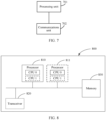
- the charging trigger apparatus includes a processing unit and a communications unit.
- the processing unit may be, for example, a processor.
- the communications unit may be, for example, a communications interface.
- the processor may be connected to the communications interface in a wired manner such as an optical fiber or a twisted pair.
- the communications unit may alternatively be a transceiver, and the transceiver may include a radio frequency circuit.
- the processor may be connected to the transceiver in a wireless manner such as wireless fidelity (wireless fidelity, Wi-Fi).
- the processing unit is configured to generate a service resource create request; and the communications unit is configured to: send through the service-based interface the service resource create request to a charging system, and then receive through the service-based interface a service resource create response sent by the charging system.
- the service resource create request is used to request the charging system to create a service resource corresponding to a service in a session, the session is used to provide a data connection service to user equipment, the service resource is used to manage requesting for a quota for the service in the session and/or manage reporting of usage information of the service in the session, the service resource create response includes a first resource identifier, and the first resource identifier is used to identify the service resource that corresponds to the service in the session and that is created by the charging system.
- the charging trigger apparatus includes a processor and a memory.
- the memory is configured to store a program
- the processor is configured to invoke the program stored in the memory, to implement the charging method in any one of the first aspect or the possible designs of the first aspect.
- the processor may send or receive data by using an input/output interface, a pin, a circuit, or the like.
- the memory may be a register, a cache, or the like in the chip.
- the memory may alternatively be a storage unit, such as a read-only memory (read-only memory, ROM), another type of static storage device that can store static information and an instruction, or a random access memory (random access memory, RAM), located outside of the chip in the network device.
- the processor mentioned in any one of the foregoing possible designs may be a general-purpose central processing unit (central processing unit, CPU), a microprocessor, an application-specific integrated circuit (application-specific integrated circuit, ASIC), or one or more integrated circuits that are configured to control the program of implementing the charging method in any one of the first aspect or the possible designs of the first aspect.
- CPU central processing unit
- ASIC application-specific integrated circuit
- a charging system provided in an embodiment of this disclosure may be a network device, or may be a chip in a network device.
- the charging system has a function of implementing the technical solutions of the second aspect and the possible designs of the second aspect.
- the function may be implemented by using hardware, or may be implemented by hardware executing corresponding software.
- the hardware or the software includes one or more modules corresponding to the foregoing function.
- the charging system includes a processing unit and a communications unit.
- the processing unit may be, for example, a processor.
- the communications unit may be, for example, a communications interface.
- the processor may be connected to the communications interface in a wired manner such as an optical fiber or a twisted pair.
- the communications unit may alternatively be a transceiver, and the transceiver may include a radio frequency circuit.
- the processor may be connected to the transceiver in a wireless manner such as Wi-Fi.
- the communications unit is configured to receive through the service-based interface a service resource create request sent by a charging trigger apparatus.
- the service resource create request is used to request the charging system to create a service resource corresponding to a service in a session, the session is used to provide a data connection service to user equipment, and the service resource is used to manage requesting for a quota for the service in the session and/or manage reporting of usage information of the service in the session.
- the processing unit is configured to: after the communications unit receives the service resource create request, generate a service resource create response.
- the service resource create response includes a first resource identifier, and the first resource identifier is used to identify the service resource that corresponds to the service in the session and that is created by the charging system.
- the communications unit is further configured to send through the service-based interface the service resource create response to the charging trigger apparatus.
- the charging system includes a processor and a memory.
- the memory is configured to store a program
- the processor is configured to invoke the program stored in the memory, to implement the charging method in any one of the second aspect or the possible designs of the second aspect.
- the processor may send or receive data by using an input/output interface, a pin, a circuit, or the like.
- the memory may be a register, a cache, or the like in the chip.
- the memory may alternatively be a storage unit, such as a ROM, another type of static storage device that can store static information and an instruction, or a RAM, located outside of the chip in the network device.
- the processor mentioned in any of the foregoing possible designs may be a general-purpose CPU, a microprocessor, an ASIC, or one or more integrated circuits that are configured to control the program of implementing the charging method in any one of the second aspect or the possible designs of the second aspect.
- an embodiment of this disclosure further provides a computer-readable storage medium.
- the computer-readable storage medium stores a program, and when the program is run on a computer, the computer is enabled to perform the method in the foregoing aspects.
- this disclosure further provides a computer program product including an instruction.
- the computer program product When the computer program product is run on a computer, the computer is enabled to perform the method in the foregoing aspects.
- an embodiment of this disclosure further provides a communications system, including the charging trigger apparatus in any one of the third aspect or the possible designs of the third aspect, and the charging system in any one of the fourth aspect or the possible designs of the fourth aspect.
- FIG. 2 is a schematic diagram of a possible network architecture to which an embodiment of this disclosure is applicable.
- the network architecture is a 4th generation mobile communication technology (4th Generation mobile communication technology, 4G) network architecture.
- Network elements in the 4G architecture include user equipment, a mobility management entity (mobility management entity, MME), a serving GPRS support node (serving GPRS support node, SGSN), a home subscriber server (home subscriber server, HSS), a serving gateway (serving gateway, S-GW), a packet data network gateway (packet data network gateway, PDN gateway, P-GW), a policy and charging rules function (policy and charging rules function, PCRF) entity, an evolved universal terrestrial radio access network (evolved universal terrestrial radio access network, E-TURAN), and the like.
- MME mobility management entity
- MME mobility management entity
- serving GPRS support node serving GPRS support node
- HSS home subscriber server
- serving gateway serving gateway
- packet data network gateway packet data network gateway
- the E-UTRAN includes a plurality of evolved NodeBs (evolved NodeB, eNodeB).
- the eNodeBs are interconnected to each other by using an X2 interface
- the eNodeBs are interconnected to an evolved packet core (evolved packet core, EPC) by using an S1 interface
- the eNodeBs are interconnected to the user equipment by using LTE-Uu interface.
- Main functions of the MME are: supporting a non-access stratum (non-access stratum, NAS) message and security thereof, track area (track area, TA) list management, P-GW and S-GW selection, MME selection when a cross-MME handover is performed, selection of an SGSN during a handover to a 2G/3G access system, user authentication, roaming control and bearer management, and mobility management between core network nodes of different 3rd generation partnership project (3rd generation partnership project, 3GPP) access networks.
- 3rd generation partnership project 3rd generation partnership project
- the S-GW is a gateway terminated at an E-UTRAN interface, and main functions of the S-GW include: When user equipment is handed over between base stations, the S-GW is used as a local anchor point and assists in completing a reordering function of the base stations. When a handover is performed between different 3GPP access systems, the S-GW is used as a mobility anchor point; performs a lawful interception function, data packet routing and forwarding, and packet marking on uplink and downlink transmission layers; and is used, for example, for charging between operators.
- the P-GW is a gateway oriented to a PDN and terminated at an SGi interface. If the user equipment accesses a plurality of PDNs, the user equipment corresponds to one or more P-GWs.
- Main functions of the P-GW include: a user equipment-based packet filtering function, a lawful interception function, an internet protocol (internet protocol, IP) address allocation function for the user equipment, packet-transfer level marking performed in uplink, uplink and downlink service-level charging and control of a service level threshold, control of service-based uplink and downlink rates, and the like.
- the HSS is a database configured to store subscription information of the user equipment, and a home network may include one or more HSSs.
- the HSS is responsible for storing information related to the user equipment, for example, a user identifier, a number and routing information, security information, location information, and profile (profile) information.
- the SGSN may be configured to exchange signaling when user equipment is handed over between a 2G/3G access network and an E-UTRAN 3GPP access network.
- Functions of the SGSN include P-GW and S-GW selection, and MME selection for the user equipment that is handed over to the E-UTRAN 3GPP access network.
- the PCRF entity is terminated at an Rx interface and a Gx interface.
- IP-connectivity access network IP-connectivity access network
- HPLMN home public land mobile network
- PCRFs IP-connectivity access network
- the user equipment is a device having a wireless sending and receiving function, and may be deployed on the land, including an indoor or outdoor device, a hand-held device, or an in-vehicle device; or may be deployed on the water (for example, on a steamer); or may be deployed in the air (for example, on an air plane, a balloon, or a satellite).
- the user equipment may be user equipment (user equipment, UE) that is accessible to a mobile network, a mobile phone (mobile phone), a tablet computer (pad), a computer having a wireless sending and receiving function, a virtual reality (virtual reality, VR) terminal, an augmented reality (augmented reality, AR) terminal, a wireless terminal in industrial control (industrial control), a wireless terminal in self driving (self driving), a wireless terminal in telemedicine or remote medical, a wireless terminal in a smart grid (smart grid), a wireless terminal in transportation safety (transportation safety), a wireless terminal in a smart city (smart city), a wireless terminal in a smart home (smart home), or the like.
- a virtual reality virtual reality
- AR augmented reality
- industrial control industrial control
- self driving self driving
- a wireless terminal in telemedicine or remote medical a wireless terminal in a smart grid (smart grid), a wireless terminal in transportation safety (transportation safety), a wireless terminal in
- FIG. 3 is a schematic diagram of another possible network architecture to which an embodiment of this disclosure is applicable.
- the network architecture is a 5th generation mobile communication technology (5th Generation mobile communication technology, 5G) network architecture.
- the 5G architecture may include user equipment, a radio access network (radio access network, RAN), an AMF entity, a session management function (session management function, SMF) entity, a user plane function (user plane function, UPF) entity, a UDM entity, an authentication server function (authentication server function, AUSF) entity, and a data network (data network, DN).
- the 5G network architecture may further include an authentication credential repository and processing function (Authentication Credential Repository and Processing Function, ARPF) entity, a security anchor function (security anchor function, SEAF) entity, and the like.
- ARPF Authentication Credential Repository and Processing Function
- SEAF security anchor function
- a main function of the RAN is controlling the user equipment to wirelessly connect to a mobile communications network.
- the RAN is a part of a mobile communications system, and implements a radio access technology.
- the RAN resides in a device (such as a mobile phone, a computer, or any remote control machine) and provides a connection to a core network thereof.
- a RAN device includes but is not limited to: an NR (New Radio, new radio) in 5G, an evolved NodeB (evolved NodeB, eNB), a radio network controller (radio network controller, RNC), a NodeB (node B, NB), a base station controller (base station controller, BSC), a base transceiver station (base transceiver station, BTS), a home base station (for example, a home evolved NodeB or a home NodeB, HNB), a base band unit (base band unit, BBU), a transmitting and receiving point (transmitting and receiving point, TRP), a transmitting point (transmitting point, TP), a mobile switching center, and the like.
- the RAN device may further include a wireless fidelity (wireless fidelity, Wi-Fi) access point (access point, AP) and the like.
- the AMF entity is responsible for access management and mobility management of the user equipment.
- the AMF entity includes a mobility management function of an MME in a 4G network architecture, and an access management function is added.
- the SMF entity is responsible for session management, such as user session establishment.
- the UPF entity is a user plane function network element and is mainly responsible for connecting to an external network.
- the UPF entity includes related functions of an S-GW and a P-GW in the 4G network architecture.
- the DN is a network responsible for providing a service to the user equipment. For example, some DNs provide an internet access function to the user equipment, and other DNs provide an SMS message function to the user equipment, and the like.
- the AUSF entity has an authentication server function and is configured to terminate an authentication function requested by the SEAF.
- the UDM entity may store subscription information of the user equipment, and may implement a function similar to that of a backend of an HSS in 4G.
- the ARPF entity has an authentication credential repository and processing function and is configured to store a long-term authentication credential of the user equipment, such as a permanent key K.
- a long-term authentication credential of the user equipment such as a permanent key K.
- the function of the ARPF may be integrated into the UDM entity.
- the SEAF entity is configured to complete a process of authenticating the user equipment.
- the function of the SEAF may be integrated into the AMF entity.
- For the user equipment refer to the user equipment in the network architecture shown in FIG. 2 .
- the embodiments of this disclosure are applicable to both the 4G network architecture shown in FIG. 2 and the 5G network architecture shown in FIG. 3 .
- a charging trigger apparatus in the embodiments of this disclosure may be a policy and charging enforcement function (Policy and Charging Enforcement Function, PCEF) in the P-GW shown in FIG. 2 , or may be the SMF entity shown in FIG. 3 . This is not limited in the embodiments of this disclosure.
- Policy and Charging Enforcement Function PCEF
- PCEF Policy and Charging Enforcement Function
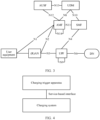
- FIG. 4 is a schematic diagram of a charging architecture according to an embodiment of this disclosure.
- the charging architecture includes a charging trigger apparatus and a charging system.
- the charging trigger apparatus and the charging system may communicate with each other through a service-based interface, and the service-based interface is a resource-based capability exposure interface.
- a specific service-based interface may be a RESTful interface, a remote procedure call (Remote Procedure Call, RPC) interface, or the like.
- FIG. 5 is a schematic flowchart of a charging method according to an embodiment of this disclosure.
- the charging method includes the following steps.
- Step 501 A charging trigger apparatus sends a service resource create request to a charging system, wherein the service resource create request is used to request the charging system to create a service resource corresponding to a service in a session, the session is used to provide a data connection service to user equipment, and the service resource is used to manage requesting for a quota for the service in the session and/or manage reporting of usage information of the service in the session.
- the service resource create request is used to request the charging system to create a service resource corresponding to a service in a session
- the session is used to provide a data connection service to user equipment
- the service resource is used to manage requesting for a quota for the service in the session and/or manage reporting of usage information of the service in the session.
- the session may be a packet data unit session (packet data unit session, PDU session).
- PDU session packet data unit session
- the PDU session is a session between the user equipment and a data network, and is used to provide a data connection service to the user equipment; or when the charging method shown in FIG. 5 is applied to the 4G network architecture shown in FIG. 2 , the session may be a IP-connectivity access network session (IP-connectivity access network session, IP-CAN session).
- IP-connectivity access network session IP-connectivity access network session, IP-CAN session.
- IP-CAN session IP-connectivity access network session
- the charging trigger apparatus may be triggered, in the following manner, to send the service resource create request to the charging system:
- the charging trigger apparatus sends, according to a charging policy, the service resource create request to the charging system.
- the charging policy may be a local charging policy of the charging trigger apparatus, or may be sent by a charging policy apparatus to the charging trigger apparatus.
- the charging policy apparatus may be the PCRF; or in the network architecture shown in FIG. 3 , the charging policy apparatus may be a policy control function (policy control function, PCF).
- the charging trigger apparatus when the charging trigger apparatus needs to request a quota for the service in the session or report usage information of the service in the session and there is no available service resource, the charging trigger apparatus sends the service resource create request to the charging system. For another example, when the charging trigger apparatus determines to create a new session, and the session includes a service for which charging needs to be performed, the charging trigger apparatus sends the service resource create request to the charging system.
- Step 502 After receiving the service resource create request sent by the charging trigger apparatus, the charging system sends a service resource create response to the charging trigger apparatus, where the service resource create response includes a first resource identifier, and the first resource identifier is used to identify the service resource that corresponds to the service in the session and that is created by the charging system.
- the service resource create request includes a session identifier and a user identifier corresponding to the user equipment, and the session identifier is used to identify the session.
- the session identifier is an identifier (identifier, ID) of the PDU session.
- the user identifier may be an international mobile subscriber identity (international mobile subscriber identity number, IMSI), a user number (such as a mobile station international ISDN number (mobile station international ISDN number, MSISDN)), a user internet protocol version 6 (internet protocol version 6, IPv6) address, or the like.
- the service resource create request is specifically described below.
- Case 1 One service resource create request corresponds to one service resource, and the one service resource corresponds to one session.
- the charging trigger apparatus sends a service resource create request to the charging system for one session, where the service resource create request is used to request the charging system to create a first service resource, and the first service resource corresponds to all services in the session.
- all the services in the session are online charging services; or all the services in the session are offline charging services; or all the services in the session include both an online charging service and an offline charging service.
- each service resource create request includes a user identifier and a PDU session ID.
- One service resource create request corresponds to two service resources, wherein one service resource corresponds to an online charging service in a session, and the other service resource corresponds to an offline charging service in the session.
- the charging trigger apparatus sends a service resource create request to the charging system for one session.
- the service resource create request is used to request the charging system to create a second service resource and a third service resource, wherein the second service resource corresponds to an online charging service in the session, and the third service resource corresponds to an offline charging service in the session.
- the charging system may identify the second service resource and the third service resource by using different resource identifiers.
- Case 3 When the services in the session include an online charging service and an offline charging service, the charging trigger apparatus sends two service resource create requests to the charging system, wherein one service resource create request is used to request the charging system to create a service resource corresponding to the online charging service in the session, and the other service resource create request is used to request the charging system to create a service resource corresponding to the offline charging service in the session.
- One service resource create request corresponds to a plurality of service resources, and the plurality of service resources corresponding to the service resource create request are service resources corresponding to services in one session.
- the charging trigger apparatus sends a service resource create request to the charging system, the service resource create request is used to create a plurality of service resources, and each service resource corresponds to a service, in the session, that belongs to a same rating group. For example, if one session includes a service belonging to a rating group 1 and a service belonging to a rating group 2, the charging trigger apparatus sends a service resource create request for the session.
- the service resource create request is used to request to create two service resources, one service resource corresponds to the rating group 1, and the other service resource corresponds to the rating group 2.
- the charging system may identify the service resources by using different resource identifiers.
- the service resource create request may be used to create a service resource, and the service resource is used to manage requesting for a quota for the service in the session and/or manage reporting of usage information of the service in the session. Specifically, requesting for a quota for an online charging service, reporting of usage information of an offline charging service, or requesting for a virtual quota for an offline charging service is subsequently completed through a service resource update operation.
- the service resource create request may further include quota request information for the online charging service and a rating group corresponding to the quota request information.
- the service resource create request when the service corresponding to the service resource that the charging system is requested to create by the service resource create request includes an offline charging service, the service resource create request may further include a requested virtual quota for the offline charging service and a rating group corresponding to the requested virtual quota; or when the service corresponding to the service resource that the charging system is requested to create by the service resource create request includes an offline charging service, the service resource create request may further include usage information of the offline charging service and a rating group corresponding to the usage information.
- the quota request information for the online charging service and the rating group corresponding to the quota request information, the usage information of the offline charging service and the rating group corresponding to the usage information, and the requested virtual quota for the offline charging service and the rating group corresponding to the requested virtual quota, all of which are carried in the service resource create request are identified by using different attributes or flags, so that the charging system can distinguish among them for processing.
- the rating group (rating group) is used to aggregate one or more services having a same charging rate, to help the charging system perform rating.
- the service resource create request may further include quota request information for the online charging service and a rating group corresponding to the quota request information, and usage information of the offline charging service and a rating group corresponding to the usage information.
- the charging trigger apparatus may distinguish, by using different attribute or flag information, between the quota request information for the online charging service and the rating group corresponding to the quota request information, and the usage information of the offline charging service and the rating group corresponding to the usage information.
- Table 1 Table 1
- the service resource create request implemented by using a RESTful interface is shown in Table 2.
- the attribute "serviceResource” indicates the service resource and "subscriber IMSI” indicates the user identifier. Table 2
- the service resource create request may further include quota request information for the online charging service , a rating group corresponding to the quota request information, a requested virtual quota for the offline charging service and a rating group corresponding to the requested virtual quota.
- Table 3 A specific implementation of the service resource create request is shown in Table 3: Table 3
- the charging system reserves, from account balance of the user equipment, a quota that corresponds to the rating group and that is requested by using the service resource create request, and allocates the quota to the online charging service may be applied to a case in which the service resource create request further includes the quota request information for the online charging service and the rating group corresponding to the quota request information.
- the charging system allocates, to the offline charging service, a virtual quota that corresponds to the rating group and that is requested by using the service resource create request, without reserving the virtual quota from account balance of the user equipment may be applied to a case in which the service resource create request further includes the requested virtual quota for the offline charging service and the rating group corresponding to the requested virtual quota.
- the charging system generates a charging data record, based on the usage information of the offline charging service and the rating group corresponding to the usage information may be applied to a case in which the service resource create request further includes the usage information of the offline charging service and the rating group corresponding to the usage information.
- the charging system reserves a quota of "10 M traffic volume” from the account balance for the online charging service whose user identifier is the IMSI, session identifier is "023152120", flag “opType” is “Requested”, and rating group is "001"; and generates a charging data record with the usage information "25 M traffic volume” for the offline charging service whose user identifier is the IMSI, session identifier is "023152120”, flag “opType” is "Reported”, and rating group is "002".
- the charging system may perform corresponding processing for the service resource create request according to a locally configured policy, or may perform corresponding processing for the service resource create request according to a configuration policy delivered by the charging policy apparatus such as the PCF.
- the charging system creates, based on a request of the charging trigger apparatus, a service resource corresponding to the event or the event group of the service, specifies a validity period for the service resource, subtracts, from a user account, charges spent by the service, and generates a resource identifier.
- the resource identifier is used to identify the service resource. If the service fails, the charging trigger apparatus sends a service resource delete request, and the service resource delete request includes the resource identifier and identification information instructing the charging system to return, to the user account, the charges that are spent by the service corresponding to the service resource identified by the resource identifier and that are subtracted from the user account. If the service succeeds, the charging trigger apparatus does not need to send the service resource delete request, and after the validity period expires, the charging system automatically deletes the service resource.
- the service resource create response sent by the charging system to the charging trigger apparatus may further include a user identifier and a session identifier, so that the charging trigger apparatus can distinguish among services corresponding to the service resource identified by the first service resource identifier.
- the service resource create response may further include granted quota information or granted virtual quota information.
- the quota granted to the online charging service and the virtual quota granted to the offline charging service correspond to different attribute or flag information in the response message, so that the charging trigger apparatus can distinguish between them.
- the charging system may further generate a re-authentication trigger condition, and send the re-authentication trigger condition to the charging trigger apparatus, so that the charging trigger apparatus reports corresponding information when the re-authentication trigger condition is met.
- a specific re-authentication trigger condition may correspond to the service resource, or may correspond to a service corresponding to the service resource.
- the re-authentication trigger condition may alternatively be sent to the charging trigger apparatus by using the service resource create response.
- the re-authentication trigger condition is that a usage amount of the online charging service is greater than or equal to the quota granted to the online charging service, or that the session is interrupted.
- the charging system may further determine whether to grant the quota or whether to allow user equipment to directly use the service without any quota granted. If a determining result is that the service is an offline charging service that can be directly used without any quota granted, the service resource create response may further include an indication indicating that no granting needs to be performed.
- the service resource create response further carries flow information corresponding to the granted quota (for example, a flow identifier or a flow feature information of the quota), so that the charging trigger apparatus separately manages, for the same rating group based on the flow identifier or the flow information, use of the actual quota and the virtual quota that are granted by the charging system.
- flow information corresponding to the granted quota for example, a flow identifier or a flow feature information of the quota
- the service resource create response may be shown in Table 4.
- Table 4
- the charging system if the charging system fails to create the service resource, the charging system sends a response indicating that the service resource fails to be created, to notify the charging trigger apparatus that the service resource fails to be created. In this case, to ensure successful use and charging of the service, the charging trigger apparatus may resend the service resource create request to another charging system.
- the charging trigger apparatus sends a service resource update request to the charging system, the service resource update request includes a second resource identifier, and the second resource identifier is used to identify a service resource, in the service resource identified by the first resource identifier, that the charging system is requested to update.
- the charging system After receiving the service resource update request sent by the charging trigger apparatus, the charging system correspondingly updates the service resource based on the service resource update request.
- the second resource identifier may be the first resource identifier, or may be an identifier of part of the resource identified by first resource identifier. Specifically, whether the second resource identifier is the first resource identifier or an identifier of part of the resource identified by first resource identifier may be determined by the charging system based on an actual case.
- the first resource includes a service resource identified by a resource identifier 1 and a service resource identified by a resource identifier 2, if the service resource identified by the resource identifier 2 needs to be updated while the service resource identified by the resource identifier 1 remains unchanged, the second resource identifier is the resource identifier 2.
- the second resource identifier is the first resource identifier.
- the service resource update request may further include quota request information for the online charging service, a rating group corresponding to the quota request information, usage information of the online charging service and a rating group corresponding to the usage information.
- the charging system may further reserve, from account balance of the user equipment, a quota that corresponds to the rating group and that is requested by using the service resource create request, allocates the quota to the online charging service, and subtract, from the quota allocated to the online charging service based on the usage information of the online charging service and the rating group corresponding to the usage information, a part used by the online charging service.
- a quota that corresponds to the rating group and that is requested by using the service resource create request
- the charging system may further reserve, from account balance of the user equipment, a quota that corresponds to the rating group and that is requested by using the service resource create request, allocates the quota to the online charging service, and subtract, from the quota allocated to the online charging service based on the usage information of the online charging service and the rating group corresponding to the usage information, a part used by the online charging service.
- the service resource update request may further include quota request information for the online charging service and a rating group corresponding to the quota request information.
- the charging system may further reserve, from account balance of the user equipment, a quota that corresponds to the rating group and that is requested by using the service resource create request, and allocates the quota to the online charging service.
- the service resource update request may further include usage information of the online charging service and a rating group corresponding to the usage information.
- the charging system may further subtract a part used by the online charging service from a quota allocated to the online charging service.
- the service resource update request may further include a requested virtual quota for the offline charging service, a rating group corresponding to the requested virtual quota, usage information of the offline charging service and a rating group corresponding to the usage information.
- the charging system may further allocate, to the offline charging service, a virtual quota that corresponds to the rating group and that is requested by using the service resource create request, and generate a charging data record based on the usage information of the offline charging service and the rating group corresponding to the usage information.
- Such technical solution may be applied to a case in which the granted virtual quota of the offline charging service in the session is used up.
- the service resource update request may further include a requested virtual quota for the offline charging service and a rating group corresponding to the requested virtual quota.
- the charging system may further allocate, to the offline charging service, a virtual quota that corresponds to the rating group and that is requested by using the service resource create request.
- the service resource create request may further include usage information of the offline charging service and a rating group corresponding to the usage information.
- the charging system may further generate a charging data record based on the usage information of the offline charging service and the rating group corresponding to the usage information.
- the quota request information for the online charging service and the rating group corresponding to the quota request information are identified by using different attribute or flag information, so that the charging system can distinguish among them for processing.
- the service resource update request when the service resource update request includes the usage information (such as the usage information of the online charging service or the usage information of the offline charging service) of the service, the service resource update request may further include a reason for reporting the usage information of the service, for example, the granted quota of the online charging service is used up, or the session is interrupted.
- the service resource update request may further include a reason for reporting the usage information of the service, for example, the granted quota of the online charging service is used up, or the session is interrupted.
- the service resource update request includes information such as the quota request information for the service or the usage information of the service
- the information may be carried in a uniform resource locator (uniform resource locator, URL) of the service resource update request, or may be carried in a message header of the service resource update request, or may be carried in a message body of the service resource update request.
- uniform resource locator uniform resource locator, URL
- the place where the information is carried is not limited in this disclosure.
- the service resource update request implemented by using the RESTful interface is shown in Table 7.
- the attribute "serviceResource” indicates the service resource and "subscriber” indicates a user.
- this embodiment of this disclosure further provides a manner of triggering the charging trigger apparatus to send the service resource update request to the charging system:
- a possible triggering manner is: When a first trigger condition is met, the charging trigger apparatus sends the service resource update request to the charging system.
- the first charging trigger condition may be that the charging trigger apparatus determines that the quota granted to the online charging service is used up.
- the first charging trigger condition is the re-authentication condition delivered by the charging system.
- the first charging trigger condition is that a status of the service satisfies a preconfigured reporting condition (for example, the service is ended or a network type is changed).
- the charging system sends a service resource update notification to the charging trigger apparatus, the notification includes a third resource identifier, and the third resource identifier is used to identify a service resource, in the service resource identified by the first resource identifier, that the charging system requests to be updated.
- the charging trigger apparatus reports the service resource update request to the charging system.
- the service resource update request includes the second resource identifier, and the second resource identifier may be the third resource identifier; or may include the third service resource identifier and an identifier of another to-be-updated service resource determined by the charging trigger apparatus.
- the service resource update request further includes a rating group to which a service for which the charging system requests a service resource to be updated belongs, and the service is in the services corresponding to a service resource identified by the third resource identifier.
- the service resource update notification implemented by using the RESTful interface is shown in Table 9, the attribute "subscriber” indicates the user and “pdusessionID” indicates the session identifier. Table 9
- the charging system may further return a service resource update response to the charging trigger apparatus.
- the service resource update response is used to indicate, to the charging trigger apparatus, whether the charging system has updated the service resource.
- the service resource update response may further include information such as the quota granted to the online charging service or the virtual quota granted to the offline charging service.
- the service resource update response includes both the quota granted to the online charging service and the virtual quota granted to the offline charging service, the quota granted to the online charging service and the virtual quota granted to the offline charging service correspond to different flags or attributes, so that the charging trigger apparatus can distinguish between them.
- the service resource update response implemented by using the RESTful interface is shown in Table 11.
- the attribute "serviceResource” indicates the service resource and "subscriber” indicates the user. Table 11
- the charging trigger apparatus sends a service resource delete request to the charging system, the service resource delete request includes a fourth resource identifier, and the fourth resource identifier is used to identify a service resource to be deleted from the service resource identified by the first resource identifier.
- the charging system deletes the service resource identified by the fourth resource identifier.
- the second charging trigger condition may be sent by the charging policy apparatus to the charging trigger apparatus, or may be a policy configured by the charging trigger apparatus locally.
- the second charging trigger condition is that a service corresponding to the service resource is interrupted, or the session is ended.
- the service resource delete request may further include usage information of the online charging service and a rating group corresponding to the usage information.
- the charging system subtracts, from a quota for the online charging service based on the usage information of the online charging service and the rating group corresponding to the usage information, a part used by the online charging service. Such subtraction may be applied to a case in which the service resource delete request further includes the usage information of the online charging service and the rating group corresponding to the usage information.
- the service resource delete request may further include usage information of the offline charging service and a rating group corresponding to the usage information.
- the charging system generates a charging data record based on the usage information of the offline charging service and the rating group corresponding to the usage information, and such technical solution may be applied to a case in which the service resource delete request further includes the usage information of the offline charging service and the rating group corresponding to the usage information.
- the service resource delete request may include a reason for reporting the usage information of the service.
- the foregoing content may be carried in a URL of the service resource delete request, or may be carried in a message header of the service resource delete request, or may be carried in a message body of the service resource delete request.
- a service resource corresponding to an online charging service is different from a service resource corresponding to an offline charging service
- different service resource delete requests may be used to request the charging system to delete the service resource corresponding to the online charging service and the service resource corresponding to the offline charging service.
- a service resource delete request includes usage information of a service
- usage information of an online charging service and usage information of an offline charging service may be carried in different service resource delete requests.
- the service resource delete request implemented by using the RESTful interface is shown in Table 13.
- the attribute "serviceResource” indicates the service resource and "subscriber” indicates the user. Table 13
- the charging system may further send a service resource delete response to the charging trigger apparatus, and the service resource delete response is used to notify the charging trigger apparatus of the deleted service resource.
- different messages such as the service resource create request, the service resource update request, and the service resource delete request, may be distinguished by a name of a hypertext transfer protocol (hypertext transfer protocol, HTTP) method, a name of an application programming interface (application programming interface, API), a specific identifier in an API, or the like, used by an application.
- hypertext transfer protocol hypertext transfer protocol, HTTP
- API application programming interface
- the network elements include corresponding hardware structures and/or software modules for performing the functions.
- a person of ordinary skill in the art should easily be aware that, in combination with the example units, algorithms, and steps described in the embodiments disclosed in this disclosure, this disclosure may be implemented by using hardware or a combination of hardware and computer software. Whether a function is performed by hardware or hardware driven by computer software depends on particular applications and design constraints of the technical solutions. A person skilled in the art may use different methods to implement the described functions for each particular application, but it should not be considered that the implementation goes beyond the scope of this disclosure.
- FIG. 6 is a schematic diagram of a charging trigger apparatus 600 according to this disclosure.
- the charging trigger apparatus may be a network device, or may be a chip or a system on chip in a network device, and may perform the method performed by the charging trigger apparatus in the embodiment shown in FIG. 5 .
- the charging trigger apparatus 600 includes at least one processor 610 and a memory 630.
- the memory 630 is configured to store a program.
- the memory 630 may be a ROM, another type of static storage device, such as a RAM, that can store static information and an instruction, or another type of dynamic storage device that can store information and an instruction; or may be an electrically erasable programmable read-only memory (Electrically erasable programmable read-only memory, EEPROM), a compact disc read-only memory (compact disc read-only memory, CD-ROM) or another compact disc storage, a disc storage (including a compact disc, a laser disc, an optical disc, a digital versatile disc, a Blu-ray disc, or the like), a magnetic disk storage medium or another magnetic disk storage device, or any other medium that can be configured to carry or store an expected program in a form of an instruction or a data structure and that can be accessed by a computer.
- the memory 630 may exist independently and is connected to the processor 610. Alternatively, the memory 630 may be integrated with the processor 610.
- the processor 610 is configured to execute the program in the memory 630, to implement the steps performed by the charging trigger apparatus in the charging method in the embodiments of this disclosure.
- the processor 610 may be a general-purpose CPU, a microprocessor, an ASIC, or one or more integrated circuits that are configured to control execution of the program of the technical solutions of this disclosure.
- the processor 610 may include one or more CPUs, for example, a CPU 0 and a CPU 1 in FIG. 6 .
- the charging trigger apparatus 600 may include a plurality of processors, for example, a processor 610 and a processor 611 in FIG. 6 .
- Each of the processors may be a single-core (single-CPU) processor, or may be a multi-core (multi-CPU) processor.
- the processor herein may be one or more devices, a circuit, and/or a processing core configured to process data (for example, a computer program instruction).
- the charging trigger apparatus 600 may further include a transceiver 620 shown in FIG. 6 , the transceiver 620 is configured to communicate with another device or a communications network, and the transceiver 620 includes a radio frequency circuit.
- the processor 610, the transceiver 620, and the memory 630 may be connected by using a communications bus.
- the communications bus may include a path for information transmission between the foregoing units.
- the processor 610 may send or receive data by using an input/output interface, a pin, a circuit, or the like.
- FIG. 7 is a schematic diagram of another charging trigger apparatus according to an embodiment of this disclosure.
- the apparatus may be a network device, or may be a chip or a system on chip in a network device, and may perform the method performed by the charging trigger apparatus in the embodiment shown in FIG. 5 .
- the apparatus includes a processing unit 701 and a communications unit 702.
- the processing unit 701 is configured to generate a service resource create request; and the communications unit 702 is configured to: send the service resource create request to a charging system, and then receive a service resource create response sent by the charging system.
- the service resource create request is used to request the charging system to create a service resource corresponding to a service in a session, the session is used to provide a data connection service to user equipment, the service resource is used to manage requesting for a quota for the service in the session and/or manage reporting of usage information of the service in the session, the service resource create response includes a first resource identifier, and the first resource identifier is used to identify the service resource that corresponds to the service in the session and that is created by the charging system.
- the communications unit 702 is configured to send the service resource create request to the charging system.
- the service resource create request includes a session identifier and a user identifier corresponding to the user equipment, and the session identifier is used to identify the session.
- the service resource create request is used to request the charging system to create a first service resource, and the first service resource corresponds to all services in the session.
- All the services in the session are online charging services; or all the services in the session are offline charging services; or all the services in the session include an online charging service and an offline charging service.
- the service resource create request is used to request the charging system to create a second service resource and a third service resource, where the second service resource corresponds to an online charging service in the session, and the third service resource corresponds to an offline charging service in the session.
- the service resource create request is used to request the charging system to create a service resource corresponding to an online charging service in the session.
- the service resource create request is used to request the charging system to create a service resource corresponding to an offline charging service in the session.
- the service resource create request is used to request the charging system to create at least one service resource, and each of the at least one service resource corresponds to a service, in the session, that belongs to a same rating group.
- the service resource create request further includes quota request information for the online charging service and a rating group corresponding to the quota request information; or when the service corresponding to the service resource that the charging system is requested to create by the service resource create request includes an offline charging service, the service resource create request further includes a requested virtual quota for the offline charging service and a rating group corresponding to the requested virtual quota; or when the service corresponding to the service resource that the charging system is requested to create by the service resource create request includes an offline charging service, the service resource create request further includes usage information of the offline charging service and a rating group corresponding to the usage information.
- the communications unit 702 is further configured to send a service resource update request to the charging system.
- the service resource update request includes a second resource identifier, and the second resource identifier is used to identify a service resource, in the service resource identified by the first resource identifier, that the charging system is requested to update.
- the service resource update request further includes quota request information for the online charging service, a rating group corresponding to the quota request information, usage information of the online charging service and a rating group corresponding to the usage information; or when the service corresponding to the service resource identified by the second resource identifier include an online charging service, the service resource update request further includes quota request information for the online charging service and a rating group corresponding to the quota request information; or when the service corresponding to the service resource identified by the second resource identifier includes an online charging service, the service resource update request further includes usage information of the online charging service and a rating group corresponding to the usage information; or when the service corresponding to the service resource identified by the second resource identifier includes an offline charging service, the service resource update request further includes a requested virtual quota for the offline charging service, a rating group corresponding to the requested virtual quota, usage information of the offline charging service and a rating group corresponding
- the communications unit 702 is configured to: after receiving a service resource update notification sent by the charging system, send the service resource update request to the charging system.
- the service resource update notification includes a third resource identifier, and the third resource identifier is used to identify a service resource, in the service resource identified by the first resource identifier, that the charging system requests to be updated.
- the service resource update request further includes a rating group to which a service for which the charging system requests a service resource to be updated belongs, and the service is in the services corresponding to a service resource identified by the third resource identifier.
- the communications unit 702 is configured to send the service resource update request to the charging system.
- the communications unit 702 is further configured to send a service resource delete request to the charging system.
- the service resource delete request includes a fourth resource identifier, and the fourth resource identifier is used to identify a service resource to be deleted from the service resource identified by the first resource identifier.
- the service resource delete request further includes usage information of the online charging service and a rating group corresponding to the usage information; or when the service corresponding to the service resource identified by the fourth resource identifier includes an offline charging service, the service resource delete request further includes usage information of the offline charging service and a rating group corresponding to the usage information.
- the charging trigger apparatus may be configured to implement the steps performed by the charging trigger apparatus in the charging method in the embodiments of this disclosure.
- the charging trigger apparatus may be configured to implement the steps performed by the charging trigger apparatus in the charging method in the embodiments of this disclosure.
- FIG. 8 is a schematic diagram of a charging system 800 according to this disclosure.
- the charging system may be a network device, or may be a chip or a system on chip in a network device, and may perform the method performed by the charging system in the embodiment shown in FIG. 5 .
- the charging system 800 includes at least one processor 810 and a memory 830.
- the memory 830 is configured to store a program.
- the memory 830 may be a ROM, another type of static storage device, such as a RAM, that can store static information and an instruction, or another type of dynamic storage device that can store information and an instruction; or may be an EEPROM, a CD-ROM or another compact disc storage, a disc storage (including a compact disc, a laser disc, an optical disc, a digital versatile disc, a Blu-ray disc, or the like), a magnetic disk storage medium or another magnetic disk storage device, or any other medium that can be configured to carry or store an expected program in a form of an instruction or a data structure and that can be accessed by a computer.
- this disclosure is not limited thereto.
- the memory 830 may exist independently and is connected to the processor 810. Alternatively, the memory 830 may be integrated with the processor 810.
- the processor 810 is configured to execute the program in the memory 830, to implement the steps performed by the charging system in the charging method in the embodiments of this disclosure.
- the processor 810 may be a general-purpose CPU, a microprocessor, an ASIC, or one or more integrated circuits that are configured to control execution of the program of the technical solutions of this disclosure.
- the processor 810 may include one or more CPUs, for example, a CPU 0 and a CPU 1 in FIG. 8 .
- the charging system communications apparatus 800 may include a plurality of processors, for example, a processor 810 and a processor 811 in FIG. 8 .
- Each of the processors may be a single-core (single-CPU) processor, or may be a multi-core (multi-CPU) processor.
- the processor herein may be one or more devices, a circuit, and/or a processing core configured to process data (for example, a computer program instruction).
- the charging system 800 may further include a transceiver 820 shown in FIG. 8 , the transceiver 820 is configured to communicate with another device or a communications network, and the transceiver 820 includes a radio frequency circuit.
- the processor 810, the transceiver 820, and the memory 830 may be connected by using a communications bus.
- the communications bus may include a path for information transmission between the foregoing units.
- the processor 810 may send or receive data by using an input/output interface, a pin, a circuit, or the like.
- FIG. 9 is a schematic diagram of another charging system according to an embodiment of this disclosure.
- the charging system may be a network device, or may be a chip or a system on chip in a network device, and may perform the method performed by the charging system in the embodiment shown in FIG. 5 .
- the charging system includes a processing unit 901 and a communications unit 902.
- the communications unit 902 is configured to receive a service resource create request sent by a charging trigger apparatus; then the processing unit 901 is configured to: after the communications unit 902 receives the service resource create request, generate a service resource create response; and the communications unit 902 is further configured to send the service resource create response to the charging trigger apparatus.
- the service resource create request is used to request the charging system to create a service resource corresponding to a service in a session, the session is used to provide a data connection service to user equipment, and the service resource is used to manage requesting for a quota for the service in the session and/or manage reporting of usage information of the service in the session.
- the service resource create response includes a first resource identifier, and the first resource identifier is used to identify the service resource that corresponds to the service in the session and that is created by the charging system.
- the service resource create request includes a session identifier and a user identifier corresponding to the user equipment, and the session identifier is used to identify the session.
- This technical solution helps the charging system be able to distinguish among different types of services of different users when performing service charging.
- the service resource create request is used to request the charging system to create a first service resource, and the first service resource corresponds to all services in the session.
- All the services in the session are online charging services; or all the services in the session are offline charging services; or all the services in the session include an online charging service and an offline charging service.
- the service resource create request is used to request the charging system to create a second service resource and a third service resource, where the second service resource corresponds to an online charging service in the session, and the third service resource corresponds to an offline charging service in the session.
- the service resource create request is used to request the charging system to create a service resource corresponding to an online charging service in the session.
- the service resource create request is used to request the charging system to create a service resource corresponding to an offline charging service in the session.
- the service resource create request is used to request the charging system to create at least one service resource, and each of the at least one service resource corresponds to a service, in the session, that belongs to a same rating group.
- the service resource create request further includes quota request information for the online charging service and a rating group corresponding to the quota request information; or when the service corresponding to the service resource that the charging system is requested to create by the service resource create request includes an offline charging service, the service resource create request further includes a requested virtual quota for the offline charging service and a rating group corresponding to the requested virtual quota; or when the service corresponding to the service resource that the charging system is requested to create by the service resource create request includes an offline charging service, the service resource create request further includes usage information of the offline charging service and a rating group corresponding to the usage information.
- the communications unit 902 is further configured to receive a service resource update request sent by the charging trigger apparatus, and the processing unit 901 is further configured to update, based on the service resource update request, a service resource corresponding to a second resource identifier.
- the service resource update request includes the second resource identifier, and the second resource identifier is used to identify a service resource, in the service resource identified by the first resource identifier, that the charging system is requested to update.
- the service resource update request further includes quota request information for the online charging service, a rating group corresponding to the quota request information, usage information of the online charging service and a rating group corresponding to the usage information; or when the service corresponding to the service resource identified by the second resource identifier includes an online charging service, the service resource update request further includes quota request information for the online charging service and a rating group corresponding to the quota request information; or when the service corresponding to the service resource identified by the second resource identifier includes an online charging service, the service resource update request further includes use information of the online charging service and a rating group corresponding to the online charging service; when the service corresponding to the service resource identified by the second resource identifier includes an offline charging service, the service resource update request further includes a requested virtual quota for the offline charging service, a rating group corresponding to the requested virtual quota, usage information of the offline charging service and a rating group corresponding
- the communications unit 902 is further configured to: after sending a service resource update notification to the charging trigger apparatus, receive the service resource update request sent by the charging trigger apparatus.
- the service resource update notification includes a third resource identifier, and the third resource identifier is used to identify a service resource, in the service resource identified by the first resource identifier, that the charging system requests to be updated.
- the service resource update request further includes a rating group to which a service for which the charging system requests a service resource to be updated belongs, and the service is in the services corresponding to a service resource identified by the third resource identifier.
- the communications unit 902 is further configured to receive a service resource delete request sent by the charging trigger apparatus, and the processing unit 901 is further configured to delete, based on the service resource delete request, a service resource identified by a fourth resource identifier.
- the service resource delete request includes the fourth resource identifier, and the fourth resource identifier is used to identify a service resource to be deleted from the service resource identified by the first resource identifier.
- the service resource delete request further includes usage information of the online charging service and a rating group corresponding to the usage information; or when the service corresponding to the service resource identified by the fourth resource identifier includes an offline charging service, the service resource delete request further includes usage information of the offline charging service and a rating group corresponding to the usage information.
- the charging system may be configured to implement the steps performed by the charging system in the charging method in the embodiments of this disclosure.
- the charging system may be configured to implement the steps performed by the charging system in the charging method in the embodiments of this disclosure.
- the division manner of the modules in the charging trigger apparatus and the charging system shown in FIG. 7 and FIG. 9 is only an example, and is merely logical function division. There may be another division manner during actual implementation.
- the communications unit is divided into a receiving unit and a sending unit.
- an embodiment of this disclosure further provides a communications system, and the communications system includes the charging trigger apparatus 600 and the charging system 800.
- All or some of the foregoing embodiments may be implemented by using software, hardware, firmware, or any combination thereof.
- the embodiments may be all or partially implemented in a form of a computer program product.
- the computer program product includes one or more computer instructions.
- the computer may be a general-purpose computer, a dedicate computer, a computer network, or another programmable apparatus.
- the computer instructions may be stored in a computer-readable storage medium or may be transmitted from a computer-readable storage medium to another computer-readable storage medium.
- the computer instructions may be transmitted from a website, computer, server, or data center to another website, computer, server, or data center in a wired (for example, a coaxial cable, an optical fiber, or a digital subscriber line (DSL)) or wireless (for example, infrared, radio, or microwave) manner.
- the computer-readable storage medium may be any usable medium accessible by a computer, or a data storage device, such as a server or a data center, integrating one or more usable media.
- the usable medium may be a magnetic medium (for example, a floppy disk, a hard disk, or a magnetic tape), an optical medium (for example, a DVD), a semiconductor medium (for example, a solid state disk (Solid State Disk, SSD)), or the like.
- a magnetic medium for example, a floppy disk, a hard disk, or a magnetic tape
- an optical medium for example, a DVD
- a semiconductor medium for example, a solid state disk (Solid State Disk, SSD)
- These computer program instructions may be provided for a general-purpose computer, a dedicated computer, an embedded processor, or a processor of another programmable data processing device to generate a machine, so that the instructions executed by the computer or the processor of the another programmable data processing device generate an apparatus for implementing a specific function in one or more processes in the flowcharts and/or in one or more blocks in the block diagrams.
- These computer program instructions may also be stored in a computer-readable memory that can instruct the computer or another programmable data processing device to work in a specific manner, so that the instructions stored in the computer-readable memory generate an artifact that includes an instruction apparatus.
- the instruction apparatus implements a specific function in one or more processes in the flowcharts and/or in one or more blocks in the block diagrams.
- These computer program instructions may also be loaded onto a computer or another programmable data processing device, so that a series of operations and steps are performed on the computer or the another programmable device, thereby generating computer-implemented processing. Therefore, the instructions executed on the computer or the another programmable device provide steps for implementing a specific function in one or more processes in the flowcharts and/or in one or more blocks in the block diagrams.
Landscapes
- Engineering & Computer Science (AREA)
- Computer Networks & Wireless Communication (AREA)
- Signal Processing (AREA)
- Business, Economics & Management (AREA)
- Accounting & Taxation (AREA)
- Mobile Radio Communication Systems (AREA)
- Data Exchanges In Wide-Area Networks (AREA)
- Meter Arrangements (AREA)
- Charge And Discharge Circuits For Batteries Or The Like (AREA)
- Telephonic Communication Services (AREA)
- Management, Administration, Business Operations System, And Electronic Commerce (AREA)
Claims (25)
- Abrechnungsverfahren, umfassend:Senden, mittels einer Abrechnungsauslösereinrichtung (600) durch eine dienst-basierte Schnittstelle, einer Dienstressourcenerstellungsanforderung an ein Abrechnungssystem (800), wobei die Dienstressourcenerstellungsanforderung verwendet wird, um von dem Abrechnungssystem (800) anzufordern, eine Dienstressource zu erstellen, die einem Dienst in einer Sitzung entspricht, wobei die Sitzung verwendet wird, um einen Datenverbindungsdienst an eine Benutzereinrichtung bereitzustellen, und wobei, wenn der Dienst, der der Dienstressource entspricht, einen Online-Abrechnungsdienst umfasst, die Dienstressource verwendet wird, um das Anfordern einer Quote für den Online-Abrechnungsdienst zu regeln, und das Melden von Verwendungsinformationen des Online-Abrechnungsdienstes zu regeln, und wenn der Dienst, der der Dienstressource entspricht, einen Offline-Abrechnungsdienst umfasst, die Dienstressource verwendet wird, um das Melden von Verwendungsinformationen des Offline-Abrechnungsdienstes zu regeln; undEmpfangen, mittels der Abrechnungsauslösereinrichtung (600) durch die dienst-basierte Schnittstelle, einer Dienstressourcenerstellungsantwort von dem Abrechnungssystem (800), wobei die Dienstressourcenerstellungsantwort einen ersten Ressourcenbezeichner umfasst, und der erste Ressourcenbezeichner verwendet wird, um die Dienstressource zu identifizieren;wobei das Verfahren ferner umfasst:
Senden, mittels einer Abrechnungsauslösereinrichtung (600) durch die dienst-basierte Schnittstelle, einer Dienstressourcenaktualisierungsanforderung an das Abrechnungssystem (800), um von dem Abrechnungssystem (800) anzufordern, die Dienstressource zu aktualisieren, wobei die Dienstressourcenaktualisierungsanforderung den ersten Ressourcenbezeichner umfasst. - Abrechnungsverfahren nach Anspruch 1, wobei, dass die Dienstressourcenerstellungsanforderung verwendet wird, um von dem Abrechnungssystem (800) anzufordern, eine Dienstressource zu erstellen, die einem Dienst in einer Sitzung entspricht, umfasst:
dass die Dienstressourcenerstellungsanforderung verwendet wird, um von dem Abrechnungssystem (800) anzufordern, eine erste Dienstressource zu erstellen, wobei die erste Dienstressource allen Diensten in der Sitzung entspricht, wobei alle Dienste in der Sitzung Online-Abrechnungsdienste sind, oder alle Dienste in der Sitzung Offline-Abrechnungsdienste sind, oder alle Dienste in der Sitzung einen Online-Abrechnungsdienst und einen Offline-Abrechnungsdienst umfassen. - Abrechnungsverfahren nach Anspruch 1 oder 2, wobei die Dienstressourcenerstellungsanforderung erste Verwendungsinformationen und erste Angabeinformationen umfasst, die angeben, dass die ersten Verwendungsinformationen die eines Online-Abrechnungsdienstes oder eines Offline-Abrechnungsdienstes sind.
- Abrechnungsverfahren nach Anspruch 1 oder 2,wobei, wenn der Dienst, der der Dienstressource entspricht, den Online-Abrechnungsdienst umfasst, die Dienstressourcenerstellungsanforderung ferner erste Quotenanforderungsinformationen für den Online-Abrechnungsdienst und eine Bewertungsgruppe, die den ersten Quotenanforderungsinformationen entspricht, umfasst;
und/oderwobei, wenn der Dienst, der der Dienstressource entspricht, den Offline-Abrechnungsdienst umfasst, die Dienstressourcenerstellungsanforderung ferner zweite Verwendungsinformationen des Offline-Abrechnungsdienstes, eine Bewertungsgruppe, die den zweiten Verwendungsinformationen entspricht und zweite Angabeinformationen, umfasst, die angeben, dass die zweiten Verwendungsinformationen die eines Offline-Abrechnungsdienstes sind. - Abrechnungsverfahren nach einem der Ansprüche 1 bis 4, wobei die Dienstressourcenaktualisierungsanforderung dritte Verwendungsinformationen und dritte Angabeinformationen umfasst, die angeben, dass die dritten Verwendungsinformationen die eines Online-Abrechnungsdienstes oder eines Offline-Abrechnungsdienstes sind.
- Abrechnungsverfahren nach einem der Ansprüche 1 bis 4,
wobei, wenn der Dienst, der der Dienstressource entspricht, den Online-Abrechnungsdienst umfasst, die Dienstressourcenaktualisierungsanforderung ferner umfasst:zweite Quotenanforderungsinformationen für den Online-Abrechnungsdienst und eine Bewertungsgruppe, die den zweiten Quotenanforderungsinformationen entspricht;
und/odervierte Verwendungsinformationen des Online-Abrechnungsdienstes, eine Bewertungsgruppe, die den vierten Verwendungsinformationen entspricht, und vierte Angabeinformationen, die angeben, dass die vierten Verwendungsinformationen die eines Online-Abrechnungsdienstes sind;
und/oderwobei, wenn der Dienst, der der Dienstressource entspricht, den Offline-Abrechnungsdienst umfasst, die Dienstressourcenaktualisierungsanforderung ferner fünfte Verwendungsinformationen des Offline-Abrechnungsdienstes, eine Bewertungsgruppe, die den fünften Verwendungsinformationen entspricht, und fünfte Angabeinformationen umfasst, die angeben, dass die fünften Verwendungsinformationen die eines Offline-Abrechnungsdienstes sind. - Abrechnungsverfahren nach einem der Ansprüche 1 bis 6, ferner umfassend:
Senden, mittels der Abrechnungsauslösereinrichtung (600) durch die dienst-basierte Schnittstelle, einer Dienstressourcenlöschanforderung an das Abrechnungssystem (800), wobei die Dienstressourcenlöschanforderung verwendet wird, um von dem Abrechnungssystem (800) anzufordern, die Dienstressource zu löschen. - Abrechnungsverfahren nach Anspruch 7, wobei die Dienstressourcenlöschanforderung sechste Verwendungsinformationen und sechste Angabeinformationen umfasst, die angeben, dass die sechsten Verwendungsinformationen die eines Online-Abrechnungsdienstes oder eines Offline-Abrechnungsdienstes sind.
- Verfahren nach Anspruch 7,wobei, wenn der Dienst, der der Dienstressource entspricht, den Online-Abrechnungsdienst umfasst, die Dienstressourcenlöschanforderung ferner siebte Verwendungsinformationen des Online-Abrechnungsdienstes, eine Bewertungsgruppe, die den siebten Verwendungsinformationen entspricht, und siebte Angabeinformationen umfasst, die angeben, dass die siebten Verwendungsinformationen die eines Online-Abrechnungsdienstes sind; oderwobei, wenn der Dienst, der der Dienstressource entspricht, den Offline-Abrechnungsdienst umfasst, die Dienstressourcenlöschanforderung ferner achte Verwendungsinformationen des Offline-Abrechnungsdienstes, eine Bewertungsgruppe, die den achten Verwendungsinformationen entspricht, und achte Angabeinformationen umfasst, die angeben, dass die achten Verwendungsinformationen die eines Offline-Abrechnungsdienstes sind.
- Abrechnungsverfahren, umfassend:Empfangen, mittels eines Abrechnungssystems (800) durch eine dienst-basierte Schnittstelle, einer Dienstressourcenerstellungsanforderung, die mittels einer Abrechnungsauslösereinrichtung (600) gesendet wird, wobei die Dienstressourcenerstellungsanforderung verwendet wird, um von dem Abrechnungssystem (800) anzufordern, eine Dienstressource zu erstellen, die einem Dienst in einer Sitzung entspricht, wobei die Sitzung verwendet wird, um einen Datenverbindungsdienst an eine Benutzereinrichtung bereitzustellen, und wobei, wenn der Dienst, der der Dienstressource entspricht, einen Online-Abrechnungsdienst umfasst, die Dienstressource verwendet wird, um das Anfordern einer Quote für den Online-Abrechnungsdienst zu regeln, und das Melden von Verwendungsinformationen des Online-Abrechnungsdienstes zu regeln, und wenn der Dienst, der der Dienstressource entspricht, einen Offline-Abrechnungsdienst umfasst, die Dienstressource verwendet wird, um das Melden von Verwendungsinformationen des Offline-Abrechnungsdienstes zu regeln; undSenden, mittels des Abrechnungssystems (800) durch die dienst-basierte Schnittstelle, einer Dienstressourcenerstellungsantwort an die Abrechnungsauslösereinrichtung (600), wobei die Dienstressourcenerstellungsantwort einen ersten Ressourcenbezeichner umfasst, und der erste Ressourcenbezeichner verwendet wird, um die Dienstressource zu identifizieren, die mittels des Abrechnungssystems (800) erstellt wird;wobei das Verfahren ferner umfasst:
Empfangen, mittels des Abrechnungssystems (800) durch die dienst-basierte Schnittstelle, einer Dienstressourcenaktualisierungsanforderung von der Abrechnungsauslösereinrichtung (600), wobei die Dienstressourcenaktualisierungsanforderung den ersten Ressourcenbezeichner umfasst; und Aktualisieren, mittels des Abrechnungssystems (800) basierend auf der Dienstressourcenaktualisierungsanforderung, der Dienstressource. - Abrechnungsverfahren nach Anspruch 10, wobei, dass die Dienstressourcenerstellungsanforderung verwendet wird, um von dem Abrechnungssystem (800) anzufordern, eine Dienstressource zu erstellen, die einem Dienst in einer Sitzung entspricht, umfasst:dass die Dienstressourcenerstellungsanforderung verwendet wird, um von dem Abrechnungssystem (800) anzufordern, eine erste Dienstressource zu erstellen, wobei die erste Dienstressource allen Diensten in der Sitzung entspricht, wobeialle Dienste in der Sitzung Online-Abrechnungsdienste sind, oder alle Dienste in der Sitzung Offline-Abrechnungsdienste sind, oder alle Dienste in der Sitzung einen Online-Abrechnungsdienst und einen Offline-Abrechnungsdienst umfassen.
- Abrechnungsverfahren nach Anspruch 10 oder 11, wobei die Dienstressourcenerstellungsanforderung erste Verwendungsinformationen und erste Angabeinformationen umfasst, die angeben, dass die ersten Verwendungsinformationen die eines Online-Abrechnungsdienstes oder eines Offline-Abrechnungsdienstes sind.
- Verfahren nach Anspruch 10 oder 11,wobei, wenn der Dienst, der der Dienstressource entspricht, den Online-Abrechnungsdienst umfasst, die Dienstressourcenerstellungsanforderung ferner erste Quotenanforderungsinformationen für den Online-Abrechnungsdienst und eine Bewertungsgruppe, die den ersten Quotenanforderungsinformationen entspricht, umfasst;
und/oderwobei, wenn der Dienst, der der Dienstressource entspricht, den Offline-Abrechnungsdienst umfasst, die Dienstressourcenerstellungsanforderung ferner zweite Verwendungsinformationen des Offline-Abrechnungsdienstes, eine Bewertungsgruppe, die den zweiten Verwendungsinformationen entspricht und zweite Angabeinformationen, umfasst, die angeben, dass die zweiten Verwendungsinformationen die eines Offline-Abrechnungsdienstes sind. - Abrechnungsverfahren nach einem der Ansprüche 10 bis 13, wobei die Dienstressourcenaktualisierungsanforderung dritte Verwendungsinformationen und dritte Angabeinformationen umfasst, die angeben, dass die dritten Verwendungsinformationen die eines Online-Abrechnungsdienstes oder eines Offline-Abrechnungsdienstes sind.
- Abrechnungsverfahren nach einem der Ansprüche 10 bis 13,
wobei, wenn der Dienst, der der Dienstressource entspricht, den Online-Abrechnungsdienst umfasst, die Dienstressourcenaktualisierungsanforderung ferner umfasst:zweite Quotenanforderungsinformationen für den Online-Abrechnungsdienst und eine Bewertungsgruppe, die den zweiten Quotenanforderungsinformationen entspricht;
und/odervierte Verwendungsinformationen, eine Bewertungsgruppe, die den vierten Verwendungsinformationen entspricht und vierte erste Angabeinformationen, die angeben, dass die vierten Verwendungsinformationen die eines Online-Abrechnungsdienstes sind;
und/oderwobei, wenn der Dienst, der der Dienstressource entspricht, den Offline-Abrechnungsdienst umfasst, die Dienstressourcenaktualisierungsanforderung ferner fünfte Verwendungsinformationen des Offline-Abrechnungsdienstes, eine Bewertungsgruppe, die den fünften Verwendungsinformationen entspricht, und fünfte Angabeinformationen umfasst, die angeben, dass die fünften Verwendungsinformationen die eines Offline-Abrechnungsdienstes sind. - Abrechnungsverfahren nach einem der Ansprüche 10 bis 15, ferner umfassend:
Löschen, mittels des Abrechnungssystems (800), der Dienstressource. - Abrechnungsverfahren nach Anspruch 16, wobei vor dem Löschen der Dienstressource, das Verfahren ferner umfasst:
Empfangen, mittels des Abrechnungssystems (800) durch die dienst-basierte Schnittstelle, einer Dienstressourcenlöschanforderung, die mittels der Abrechnungsauslösereinrichtung (600) gesendet wird, wobei die Dienstressourcenlöschanforderung verwendet wird, um von dem Abrechnungssystem (800) anzufordern, die Dienstressource zu löschen, und wobei das Löschen der Dienstressource auf der Dienstressourcenlöschanforderung basiert. - Abrechnungsverfahren nach Anspruch 17, wobei die Dienstressourcenlöschanforderung sechste Verwendungsinformationen und sechste Angabeinformationen umfasst, die angeben, dass die sechsten Verwendungsinformationen die eines Online-Abrechnungsdienstes oder eines Offline-Abrechnungsdienstes sind.
- Abrechnungsverfahren nach Anspruch 17,wobei, wenn der Dienst, der der Dienstressource entspricht, den Online-Abrechnungsdienst umfasst, die Dienstressourcenlöschanforderung ferner siebte Verwendungsinformationen des Online-Abrechnungsdienstes, eine Bewertungsgruppe, die den siebten Verwendungsinformationen entspricht, und siebte Angabeinformationen umfasst, die angeben, dass die siebten Verwendungsinformationen die eines Online-Abrechnungsdienstes sind; oderwobei, wenn der Dienst, der der Dienstressource entspricht, den Offline-Abrechnungsdienst umfasst, die Dienstressourcenlöschanforderung ferner achte Verwendungsinformationen des Offline-Abrechnungsdienstes, eine Bewertungsgruppe, die den achten Verwendungsinformationen entspricht, und achte Angabeinformationen umfasst, die angeben, dass die achten Verwendungsinformationen die eines Offline-Abrechnungsdienstes sind.
- Abrechnungsverfahren nach einem der Ansprüche 10 bis 19, ferner umfassend:Senden, mittels der Abrechnungsauslösereinrichtung (600) durch die dienst-basierte Schnittstelle, der Dienstressourcenerstellungsanforderung;Empfangen, mittels der Abrechnungsauslösereinrichtung (600) durch die dienst-basierte Schnittstelle, einer Dienstressourcenerstellungsantwort von dem Abrechnungssystem (800).
- Abrechnungsverfahren nach einem der Ansprüche 10 bis 20, ferner umfassend:
Senden, mittels der Abrechnungsauslösereinrichtung (600) durch die dienst-basierte Schnittstelle, der Dienstressourcenaktualisierungsanforderung an das Abrechnungssystem (800). - Abrechnungsverfahren nach einem der Ansprüche 17 bis 21, ferner umfassend:
Senden, mittels der Abrechnungsauslösereinrichtung (600) durch die dienst-basierte Schnittstelle, der Dienstressourcenlöschanforderung an das Abrechnungssystem (800). - Abrechnungsauslösereinrichtung (600), umfassend Mittel, die konfiguriert sind, um das Abrechnungsverfahren nach einem der Ansprüche 1 bis 9 durchzuführen.
- Abrechnungssystem (800), umfassend Mittel, die konfiguriert sind, um das Abrechnungsverfahren nach einem der Ansprüche 10 bis 19 durchzuführen.
- Kommunikationssystem, umfassend eine Abrechnungsauslösereinrichtung (600) nach Anspruch 23 und ein Abrechnungssystem (800) nach Anspruch 24.
Priority Applications (2)
| Application Number | Priority Date | Filing Date | Title |
|---|---|---|---|
| EP22211571.9A EP4221096A1 (de) | 2017-11-16 | 2018-08-02 | Ladeverfahren, -vorrichtung und -system |
| EP22211578.4A EP4221097A1 (de) | 2017-11-16 | 2018-08-02 | Ladeverfahren, -vorrichtung und -system |
Applications Claiming Priority (2)
| Application Number | Priority Date | Filing Date | Title |
|---|---|---|---|
| CN201711139728.2A CN109802839B9 (zh) | 2017-11-16 | 2017-11-16 | 一种计费方法、装置及系统 |
| PCT/CN2018/098208 WO2019095725A1 (zh) | 2017-11-16 | 2018-08-02 | 一种计费方法、装置及系统 |
Related Child Applications (4)
| Application Number | Title | Priority Date | Filing Date |
|---|---|---|---|
| EP22211571.9A Division EP4221096A1 (de) | 2017-11-16 | 2018-08-02 | Ladeverfahren, -vorrichtung und -system |
| EP22211571.9A Division-Into EP4221096A1 (de) | 2017-11-16 | 2018-08-02 | Ladeverfahren, -vorrichtung und -system |
| EP22211578.4A Division EP4221097A1 (de) | 2017-11-16 | 2018-08-02 | Ladeverfahren, -vorrichtung und -system |
| EP22211578.4A Division-Into EP4221097A1 (de) | 2017-11-16 | 2018-08-02 | Ladeverfahren, -vorrichtung und -system |
Publications (3)
| Publication Number | Publication Date |
|---|---|
| EP3672151A1 EP3672151A1 (de) | 2020-06-24 |
| EP3672151A4 EP3672151A4 (de) | 2020-07-29 |
| EP3672151B1 true EP3672151B1 (de) | 2023-07-05 |
Family
ID=66538487
Family Applications (3)
| Application Number | Title | Priority Date | Filing Date |
|---|---|---|---|
| EP22211578.4A Pending EP4221097A1 (de) | 2017-11-16 | 2018-08-02 | Ladeverfahren, -vorrichtung und -system |
| EP18878201.5A Active EP3672151B1 (de) | 2017-11-16 | 2018-08-02 | Ladeverfahren, -vorrichtung und -system |
| EP22211571.9A Pending EP4221096A1 (de) | 2017-11-16 | 2018-08-02 | Ladeverfahren, -vorrichtung und -system |
Family Applications Before (1)
| Application Number | Title | Priority Date | Filing Date |
|---|---|---|---|
| EP22211578.4A Pending EP4221097A1 (de) | 2017-11-16 | 2018-08-02 | Ladeverfahren, -vorrichtung und -system |
Family Applications After (1)
| Application Number | Title | Priority Date | Filing Date |
|---|---|---|---|
| EP22211571.9A Pending EP4221096A1 (de) | 2017-11-16 | 2018-08-02 | Ladeverfahren, -vorrichtung und -system |
Country Status (5)
| Country | Link |
|---|---|
| US (3) | US10958794B2 (de) |
| EP (3) | EP4221097A1 (de) |
| JP (3) | JP6957753B2 (de) |
| CN (3) | CN109802839B9 (de) |
| WO (1) | WO2019095725A1 (de) |
Families Citing this family (6)
| Publication number | Priority date | Publication date | Assignee | Title |
|---|---|---|---|---|
| CN109802839B9 (zh) * | 2017-11-16 | 2020-12-22 | 华为技术有限公司 | 一种计费方法、装置及系统 |
| US11343111B2 (en) * | 2018-03-20 | 2022-05-24 | Nokia Solutions And Networks Oy | Quota management in mobile edge computing (MEC) |
| EP4078898B1 (de) | 2019-12-16 | 2025-07-23 | Telefonaktiebolaget Lm Ericsson (Publ) | Verfahren und vorrichtung zur dienstleistungsverrechnung in einem kommunikationsnetzwerk |
| US11336471B2 (en) * | 2019-12-20 | 2022-05-17 | Cisco Technology, Inc. | Achieving seamless service during unreachability of charging function entity |
| US12513496B2 (en) | 2020-07-02 | 2025-12-30 | Telefonaktiebolaget Lm Ericsson (Publ) | Method and apparatus for managing charging operations for a communication network |
| JP7144636B1 (ja) * | 2022-03-22 | 2022-09-29 | Kddi株式会社 | 通信システム、車載通信端末、中継装置、通信方法およびプログラム |
Citations (1)
| Publication number | Priority date | Publication date | Assignee | Title |
|---|---|---|---|---|
| US20090264097A1 (en) * | 2008-04-22 | 2009-10-22 | Yigang Cai | Charging in lte/epc communication networks |
Family Cites Families (45)
| Publication number | Priority date | Publication date | Assignee | Title |
|---|---|---|---|---|
| CN101009572B (zh) * | 2006-01-24 | 2012-07-04 | 朗迅科技公司 | 对于ims会话期间的媒体改变的ims预算控制 |
| CN100395983C (zh) * | 2006-02-27 | 2008-06-18 | 华为技术有限公司 | 计费系统和计费方法 |
| CN1859533A (zh) * | 2006-03-20 | 2006-11-08 | 华为技术有限公司 | 电信业务计费系统和方法 |
| CN100550748C (zh) * | 2006-05-10 | 2009-10-14 | 华为技术有限公司 | 计费报文生成方法、通信计费方法和系统 |
| CN101132289B (zh) * | 2006-08-24 | 2011-04-13 | 华为技术有限公司 | 融合计费方法及计费系统及应用服务器及融合计费系统 |
| US8289885B2 (en) * | 2006-10-27 | 2012-10-16 | Alcatel Lucent | Third party charging for SIP sessions |
| CN101005384A (zh) * | 2007-01-30 | 2007-07-25 | 华为技术有限公司 | 一种计费过程中的处理方法、系统及装置 |
| CN101425908A (zh) * | 2007-11-01 | 2009-05-06 | 华为技术有限公司 | 业务计费的方法及应用服务器和计费系统 |
| CN101488864B (zh) * | 2008-01-14 | 2011-12-21 | 朗讯科技公司 | 用于通信网络的计费系统和计费方法 |
| EP2107464A1 (de) * | 2008-01-23 | 2009-10-07 | Comptel Corporation | Konvergentes Vermittlungssystem mit dynamischer Ressourcenzuweisung |
| US8175575B2 (en) * | 2008-04-16 | 2012-05-08 | Alcatel Lucent | Online charging for roaming users in a proxy online charging system of a visited network |
| CN101316175B (zh) * | 2008-06-11 | 2011-03-02 | 中兴通讯股份有限公司 | 在线计费方法 |
| EP2335377A1 (de) * | 2008-09-03 | 2011-06-22 | Alcatel-Lucent USA Inc. | Online-vergebührungs-korrelation in ims-netzen |
| CN101645782B (zh) * | 2009-02-10 | 2012-05-23 | 中国科学院声学研究所 | 一种基于用户业务量的在线计费方法及系统 |
| WO2011060815A1 (en) | 2009-11-18 | 2011-05-26 | Telefonaktiebolaget Lm Ericsson (Publ) | Method and apparatus for use in a communications network |
| EP2543159B1 (de) * | 2010-03-02 | 2016-05-11 | Telefonaktiebolaget LM Ericsson (publ) | Hochverfügbare policy und abrechnungskontrolle in geographisch redundanten pcrf konfigurationen |
| US9077816B2 (en) * | 2010-03-30 | 2015-07-07 | Alcatel Lucent | Local roaming charging in LTE/EPC networks |
| US8831560B2 (en) * | 2010-05-03 | 2014-09-09 | Alcatel Lucent | Charging method selection for service data flows based on the data services being requested |
| CN102264056B (zh) * | 2010-05-28 | 2014-03-05 | 华为技术有限公司 | 策略控制方法、系统和相关装置 |
| CN102547640B (zh) * | 2010-12-10 | 2015-09-16 | 中兴通讯股份有限公司 | 一种消费限制业务的签约和执行方法及系统 |
| EP2698946B1 (de) * | 2011-05-06 | 2019-02-20 | Huawei Technologies Co., Ltd. | Verfahren zur verarbeitung von ratengruppen sowie zugehörige gateway vorrichtung |
| US9461829B2 (en) * | 2011-12-27 | 2016-10-04 | Telefonaktiebolaget Lm Ericsson (Publ) | Method and apparatus for controlling charging in a communication network |
| CN103428666A (zh) * | 2012-05-24 | 2013-12-04 | 华为技术有限公司 | 一种计费的方法及装置 |
| WO2014022992A1 (zh) * | 2012-08-08 | 2014-02-13 | 华为技术有限公司 | 计费控制的方法及计费触发装置、在线计费系统 |
| US9231774B2 (en) | 2012-09-27 | 2016-01-05 | Alcatel Lucent | Congestion control for radio access networks (RAN) |
| CN104221418B (zh) * | 2013-01-15 | 2018-07-31 | 华为技术有限公司 | 计费的方法及设备 |
| WO2014172858A1 (zh) * | 2013-04-24 | 2014-10-30 | 华为技术有限公司 | 一种进行应用计费的方法、计费设备和系统 |
| US9479917B1 (en) * | 2013-05-24 | 2016-10-25 | Juniper Networks, Inc. | Rating group-specific actions for mobile networks |
| WO2015013485A2 (en) * | 2013-07-24 | 2015-01-29 | Convida Wireless, Llc | Service domain charging systems and methods |
| EP3474527B1 (de) * | 2014-03-04 | 2021-06-30 | Huawei Technologies Co., Ltd. | Verfahren und vorrichtung zur verwaltung von abrechnungszeiten |
| US10271296B2 (en) * | 2014-10-23 | 2019-04-23 | Lg Electronics Inc. | Method for changing schedule information in wireless communication system and device therefor |
| WO2016064235A2 (ko) * | 2014-10-24 | 2016-04-28 | 엘지전자 주식회사 | 무선 통신 시스템에서 그룹 멤버의 자식 자원을 관리하기 위한 방법 및 이를 위한 장치 |
| KR20170074861A (ko) * | 2014-10-27 | 2017-06-30 | 엘지전자 주식회사 | 무선 통신 시스템에서 제어 메시지의 동작을 보장하기 위한 방법 및 이를 위한 장치 |
| CN104468135B (zh) | 2014-11-18 | 2018-01-23 | 华为技术有限公司 | 一种在线计费中交互信息的方法及装置 |
| JP6508660B2 (ja) | 2014-11-21 | 2019-05-08 | 華為技術有限公司Huawei Technologies Co.,Ltd. | 課金制御装置、方法、およびシステム |
| US10555151B2 (en) * | 2014-12-01 | 2020-02-04 | Convida Wireless, Llc | Method for supporting negotiation service at a service layer |
| EP3509381B1 (de) * | 2015-05-12 | 2020-02-12 | Telefonaktiebolaget LM Ericsson (publ) | Verfahren und knoten zur handhabung des zugriffs auf epc-dienste über ein nicht-3gpp-netzwerk |
| WO2017073876A1 (ko) * | 2015-10-30 | 2017-05-04 | 엘지전자 주식회사 | 무선 통신 시스템에서 서비스 요청을 처리하기 위한 방법 및 이를 위한 장치 |
| CN107464107A (zh) * | 2016-06-06 | 2017-12-12 | 阿尔卡特朗讯 | 用于云系统的在线计费的方法、系统和设备 |
| CN109417486B (zh) * | 2016-07-13 | 2022-03-29 | 瑞典爱立信有限公司 | 网络节点中的配额的聚集处理 |
| EP3556052B1 (de) * | 2016-12-13 | 2022-02-16 | Microsoft Technology Licensing, LLC | Online-abrechnungsmechanismus während ocs-nichtreaktion |
| US10498657B2 (en) * | 2017-03-10 | 2019-12-03 | Verizon Patent And Licensing Inc. | System and method for account level maximum bit rate enforcement |
| US10581928B2 (en) * | 2017-04-21 | 2020-03-03 | Oracle International Corporation | Methods, systems, and computer readable media for sharing identification information of network nodes in an internet protocol multimedia subsystem (IMS) network |
| US20200252763A1 (en) * | 2017-10-06 | 2020-08-06 | Telefonaktiebolaget Lm Ericsson (Publ) | Differentiated Abatement of Charging Requests in Case of Overload at Online Charging System |
| CN109802839B9 (zh) * | 2017-11-16 | 2020-12-22 | 华为技术有限公司 | 一种计费方法、装置及系统 |
-
2017
- 2017-11-16 CN CN201711139728.2A patent/CN109802839B9/zh active Active
- 2017-11-16 CN CN202011134588.1A patent/CN112398662B9/zh active Active
- 2017-11-16 CN CN202010057303.2A patent/CN111277720B/zh active Active
-
2018
- 2018-08-02 WO PCT/CN2018/098208 patent/WO2019095725A1/zh not_active Ceased
- 2018-08-02 EP EP22211578.4A patent/EP4221097A1/de active Pending
- 2018-08-02 JP JP2020526978A patent/JP6957753B2/ja active Active
- 2018-08-02 EP EP18878201.5A patent/EP3672151B1/de active Active
- 2018-08-02 EP EP22211571.9A patent/EP4221096A1/de active Pending
-
2020
- 2020-03-17 US US16/821,541 patent/US10958794B2/en active Active
-
2021
- 2021-02-24 US US17/184,488 patent/US11489969B2/en active Active
- 2021-10-05 JP JP2021163855A patent/JP7212119B2/ja active Active
-
2022
- 2022-09-28 US US17/955,305 patent/US12609844B2/en active Active
-
2023
- 2023-01-12 JP JP2023002798A patent/JP7478267B2/ja active Active
Patent Citations (1)
| Publication number | Priority date | Publication date | Assignee | Title |
|---|---|---|---|---|
| US20090264097A1 (en) * | 2008-04-22 | 2009-10-22 | Yigang Cai | Charging in lte/epc communication networks |
Also Published As
| Publication number | Publication date |
|---|---|
| CN112398662B (zh) | 2021-09-21 |
| US20210185177A1 (en) | 2021-06-17 |
| EP4221096A1 (de) | 2023-08-02 |
| US20200220982A1 (en) | 2020-07-09 |
| JP2021503812A (ja) | 2021-02-12 |
| EP4221097A1 (de) | 2023-08-02 |
| EP3672151A1 (de) | 2020-06-24 |
| US11489969B2 (en) | 2022-11-01 |
| CN111277720B (zh) | 2023-08-04 |
| WO2019095725A1 (zh) | 2019-05-23 |
| JP7478267B2 (ja) | 2024-05-02 |
| CN109802839A (zh) | 2019-05-24 |
| JP2022008852A (ja) | 2022-01-14 |
| CN109802839B (zh) | 2020-11-06 |
| CN112398662A (zh) | 2021-02-23 |
| CN112398662B9 (zh) | 2021-12-03 |
| JP7212119B2 (ja) | 2023-01-24 |
| CN111277720A (zh) | 2020-06-12 |
| US20230023239A1 (en) | 2023-01-26 |
| US12609844B2 (en) | 2026-04-21 |
| CN109802839B9 (zh) | 2020-12-22 |
| US10958794B2 (en) | 2021-03-23 |
| JP6957753B2 (ja) | 2021-11-02 |
| JP2023058491A (ja) | 2023-04-25 |
| EP3672151A4 (de) | 2020-07-29 |
Similar Documents
| Publication | Publication Date | Title |
|---|---|---|
| US12609844B2 (en) | Charging method, apparatus, and system | |
| US11463946B2 (en) | System and method for UE context and PDU session context management | |
| JP7560206B2 (ja) | 課金方法、装置およびシステム | |
| KR101508571B1 (ko) | 단일 apn을 이용하여 로컬 브레이크아웃 서비스들을 제공하도록 구성되는 방법 및 장치 | |
| CN114946268A (zh) | 对网络切片的控制 | |
| EP2528406B1 (de) | Verfahren auf basis einer maschine-zu-maschine-anwendung | |
| JP6406259B2 (ja) | 通信装置、制御装置、通信方法、制御方法およびプログラム | |
| CN111511042B (zh) | 用于在无线通信系统中生成连接的方法和装置 | |
| EP3996331A1 (de) | Verfahren und vorrichtung zur verwaltungsdatenerfassung | |
| US11902325B2 (en) | Session configuration method and apparatus | |
| US11902892B2 (en) | Systems and methods for providing on-demand quality of service with radio access network control | |
| CN115665822B (zh) | 流量异常处理方法、装置、用户面功能实体及存储介质 | |
| JPWO2015033579A1 (ja) | 通信装置、制御装置、通信システム、通信方法、制御方法およびプログラム | |
| JPWO2015033581A1 (ja) | 通信装置、制御装置、管理装置、通信方法、制御方法、管理方法およびプログラム |
Legal Events
| Date | Code | Title | Description |
|---|---|---|---|
| STAA | Information on the status of an ep patent application or granted ep patent |
Free format text: STATUS: THE INTERNATIONAL PUBLICATION HAS BEEN MADE |
|
| PUAI | Public reference made under article 153(3) epc to a published international application that has entered the european phase |
Free format text: ORIGINAL CODE: 0009012 |
|
| STAA | Information on the status of an ep patent application or granted ep patent |
Free format text: STATUS: REQUEST FOR EXAMINATION WAS MADE |
|
| 17P | Request for examination filed |
Effective date: 20200316 |
|
| AK | Designated contracting states |
Kind code of ref document: A1 Designated state(s): AL AT BE BG CH CY CZ DE DK EE ES FI FR GB GR HR HU IE IS IT LI LT LU LV MC MK MT NL NO PL PT RO RS SE SI SK SM TR |
|
| AX | Request for extension of the european patent |
Extension state: BA ME |
|
| A4 | Supplementary search report drawn up and despatched |
Effective date: 20200701 |
|
| RIC1 | Information provided on ipc code assigned before grant |
Ipc: H04L 12/14 20060101AFI20200625BHEP Ipc: H04L 29/08 20060101ALI20200625BHEP Ipc: H04M 15/00 20060101ALI20200625BHEP |
|
| DAV | Request for validation of the european patent (deleted) | ||
| DAX | Request for extension of the european patent (deleted) | ||
| STAA | Information on the status of an ep patent application or granted ep patent |
Free format text: STATUS: EXAMINATION IS IN PROGRESS |
|
| 17Q | First examination report despatched |
Effective date: 20210526 |
|
| GRAP | Despatch of communication of intention to grant a patent |
Free format text: ORIGINAL CODE: EPIDOSNIGR1 |
|
| STAA | Information on the status of an ep patent application or granted ep patent |
Free format text: STATUS: GRANT OF PATENT IS INTENDED |
|
| RIC1 | Information provided on ipc code assigned before grant |
Ipc: H04L 65/40 20220101ALI20230119BHEP Ipc: H04M 15/00 20060101ALI20230119BHEP Ipc: H04L 12/14 20060101AFI20230119BHEP |
|
| INTG | Intention to grant announced |
Effective date: 20230207 |
|
| GRAS | Grant fee paid |
Free format text: ORIGINAL CODE: EPIDOSNIGR3 |
|
| GRAA | (expected) grant |
Free format text: ORIGINAL CODE: 0009210 |
|
| STAA | Information on the status of an ep patent application or granted ep patent |
Free format text: STATUS: THE PATENT HAS BEEN GRANTED |
|
| P01 | Opt-out of the competence of the unified patent court (upc) registered |
Effective date: 20230514 |
|
| AK | Designated contracting states |
Kind code of ref document: B1 Designated state(s): AL AT BE BG CH CY CZ DE DK EE ES FI FR GB GR HR HU IE IS IT LI LT LU LV MC MK MT NL NO PL PT RO RS SE SI SK SM TR |
|
| REG | Reference to a national code |
Ref country code: CH Ref legal event code: EP |
|
| REG | Reference to a national code |
Ref country code: AT Ref legal event code: REF Ref document number: 1585837 Country of ref document: AT Kind code of ref document: T Effective date: 20230715 |
|
| REG | Reference to a national code |
Ref country code: DE Ref legal event code: R096 Ref document number: 602018053009 Country of ref document: DE |
|
| REG | Reference to a national code |
Ref country code: IE Ref legal event code: FG4D |
|
| REG | Reference to a national code |
Ref country code: LT Ref legal event code: MG9D |
|
| REG | Reference to a national code |
Ref country code: NL Ref legal event code: MP Effective date: 20230705 |
|
| REG | Reference to a national code |
Ref country code: AT Ref legal event code: MK05 Ref document number: 1585837 Country of ref document: AT Kind code of ref document: T Effective date: 20230705 |
|
| PG25 | Lapsed in a contracting state [announced via postgrant information from national office to epo] |
Ref country code: NL Free format text: LAPSE BECAUSE OF FAILURE TO SUBMIT A TRANSLATION OF THE DESCRIPTION OR TO PAY THE FEE WITHIN THE PRESCRIBED TIME-LIMIT Effective date: 20230705 |
|
| PG25 | Lapsed in a contracting state [announced via postgrant information from national office to epo] |
Ref country code: GR Free format text: LAPSE BECAUSE OF FAILURE TO SUBMIT A TRANSLATION OF THE DESCRIPTION OR TO PAY THE FEE WITHIN THE PRESCRIBED TIME-LIMIT Effective date: 20231006 |
|
| PG25 | Lapsed in a contracting state [announced via postgrant information from national office to epo] |
Ref country code: ES Free format text: LAPSE BECAUSE OF FAILURE TO SUBMIT A TRANSLATION OF THE DESCRIPTION OR TO PAY THE FEE WITHIN THE PRESCRIBED TIME-LIMIT Effective date: 20230705 |
|
| PG25 | Lapsed in a contracting state [announced via postgrant information from national office to epo] |
Ref country code: IS Free format text: LAPSE BECAUSE OF FAILURE TO SUBMIT A TRANSLATION OF THE DESCRIPTION OR TO PAY THE FEE WITHIN THE PRESCRIBED TIME-LIMIT Effective date: 20231105 |
|
| PG25 | Lapsed in a contracting state [announced via postgrant information from national office to epo] |
Ref country code: SE Free format text: LAPSE BECAUSE OF FAILURE TO SUBMIT A TRANSLATION OF THE DESCRIPTION OR TO PAY THE FEE WITHIN THE PRESCRIBED TIME-LIMIT Effective date: 20230705 Ref country code: RS Free format text: LAPSE BECAUSE OF FAILURE TO SUBMIT A TRANSLATION OF THE DESCRIPTION OR TO PAY THE FEE WITHIN THE PRESCRIBED TIME-LIMIT Effective date: 20230705 Ref country code: PT Free format text: LAPSE BECAUSE OF FAILURE TO SUBMIT A TRANSLATION OF THE DESCRIPTION OR TO PAY THE FEE WITHIN THE PRESCRIBED TIME-LIMIT Effective date: 20231106 Ref country code: NO Free format text: LAPSE BECAUSE OF FAILURE TO SUBMIT A TRANSLATION OF THE DESCRIPTION OR TO PAY THE FEE WITHIN THE PRESCRIBED TIME-LIMIT Effective date: 20231005 Ref country code: LV Free format text: LAPSE BECAUSE OF FAILURE TO SUBMIT A TRANSLATION OF THE DESCRIPTION OR TO PAY THE FEE WITHIN THE PRESCRIBED TIME-LIMIT Effective date: 20230705 Ref country code: LT Free format text: LAPSE BECAUSE OF FAILURE TO SUBMIT A TRANSLATION OF THE DESCRIPTION OR TO PAY THE FEE WITHIN THE PRESCRIBED TIME-LIMIT Effective date: 20230705 Ref country code: IS Free format text: LAPSE BECAUSE OF FAILURE TO SUBMIT A TRANSLATION OF THE DESCRIPTION OR TO PAY THE FEE WITHIN THE PRESCRIBED TIME-LIMIT Effective date: 20231105 Ref country code: HR Free format text: LAPSE BECAUSE OF FAILURE TO SUBMIT A TRANSLATION OF THE DESCRIPTION OR TO PAY THE FEE WITHIN THE PRESCRIBED TIME-LIMIT Effective date: 20230705 Ref country code: GR Free format text: LAPSE BECAUSE OF FAILURE TO SUBMIT A TRANSLATION OF THE DESCRIPTION OR TO PAY THE FEE WITHIN THE PRESCRIBED TIME-LIMIT Effective date: 20231006 Ref country code: FI Free format text: LAPSE BECAUSE OF FAILURE TO SUBMIT A TRANSLATION OF THE DESCRIPTION OR TO PAY THE FEE WITHIN THE PRESCRIBED TIME-LIMIT Effective date: 20230705 Ref country code: ES Free format text: LAPSE BECAUSE OF FAILURE TO SUBMIT A TRANSLATION OF THE DESCRIPTION OR TO PAY THE FEE WITHIN THE PRESCRIBED TIME-LIMIT Effective date: 20230705 Ref country code: AT Free format text: LAPSE BECAUSE OF FAILURE TO SUBMIT A TRANSLATION OF THE DESCRIPTION OR TO PAY THE FEE WITHIN THE PRESCRIBED TIME-LIMIT Effective date: 20230705 |
|
| PG25 | Lapsed in a contracting state [announced via postgrant information from national office to epo] |
Ref country code: PL Free format text: LAPSE BECAUSE OF FAILURE TO SUBMIT A TRANSLATION OF THE DESCRIPTION OR TO PAY THE FEE WITHIN THE PRESCRIBED TIME-LIMIT Effective date: 20230705 |
|
| REG | Reference to a national code |
Ref country code: CH Ref legal event code: PL |
|
| REG | Reference to a national code |
Ref country code: DE Ref legal event code: R097 Ref document number: 602018053009 Country of ref document: DE |
|
| PG25 | Lapsed in a contracting state [announced via postgrant information from national office to epo] |
Ref country code: LU Free format text: LAPSE BECAUSE OF NON-PAYMENT OF DUE FEES Effective date: 20230802 |
|
| PG25 | Lapsed in a contracting state [announced via postgrant information from national office to epo] |
Ref country code: SM Free format text: LAPSE BECAUSE OF FAILURE TO SUBMIT A TRANSLATION OF THE DESCRIPTION OR TO PAY THE FEE WITHIN THE PRESCRIBED TIME-LIMIT Effective date: 20230705 Ref country code: RO Free format text: LAPSE BECAUSE OF FAILURE TO SUBMIT A TRANSLATION OF THE DESCRIPTION OR TO PAY THE FEE WITHIN THE PRESCRIBED TIME-LIMIT Effective date: 20230705 Ref country code: LU Free format text: LAPSE BECAUSE OF NON-PAYMENT OF DUE FEES Effective date: 20230802 Ref country code: EE Free format text: LAPSE BECAUSE OF FAILURE TO SUBMIT A TRANSLATION OF THE DESCRIPTION OR TO PAY THE FEE WITHIN THE PRESCRIBED TIME-LIMIT Effective date: 20230705 Ref country code: DK Free format text: LAPSE BECAUSE OF FAILURE TO SUBMIT A TRANSLATION OF THE DESCRIPTION OR TO PAY THE FEE WITHIN THE PRESCRIBED TIME-LIMIT Effective date: 20230705 Ref country code: CZ Free format text: LAPSE BECAUSE OF FAILURE TO SUBMIT A TRANSLATION OF THE DESCRIPTION OR TO PAY THE FEE WITHIN THE PRESCRIBED TIME-LIMIT Effective date: 20230705 Ref country code: CH Free format text: LAPSE BECAUSE OF NON-PAYMENT OF DUE FEES Effective date: 20230831 Ref country code: MC Free format text: LAPSE BECAUSE OF FAILURE TO SUBMIT A TRANSLATION OF THE DESCRIPTION OR TO PAY THE FEE WITHIN THE PRESCRIBED TIME-LIMIT Effective date: 20230705 Ref country code: SK Free format text: LAPSE BECAUSE OF FAILURE TO SUBMIT A TRANSLATION OF THE DESCRIPTION OR TO PAY THE FEE WITHIN THE PRESCRIBED TIME-LIMIT Effective date: 20230705 |
|
| REG | Reference to a national code |
Ref country code: BE Ref legal event code: MM Effective date: 20230831 |
|
| PLBE | No opposition filed within time limit |
Free format text: ORIGINAL CODE: 0009261 |
|
| STAA | Information on the status of an ep patent application or granted ep patent |
Free format text: STATUS: NO OPPOSITION FILED WITHIN TIME LIMIT |
|
| REG | Reference to a national code |
Ref country code: IE Ref legal event code: MM4A |
|
| PG25 | Lapsed in a contracting state [announced via postgrant information from national office to epo] |
Ref country code: IT Free format text: LAPSE BECAUSE OF FAILURE TO SUBMIT A TRANSLATION OF THE DESCRIPTION OR TO PAY THE FEE WITHIN THE PRESCRIBED TIME-LIMIT Effective date: 20230705 |
|
| 26N | No opposition filed |
Effective date: 20240408 |
|
| PG25 | Lapsed in a contracting state [announced via postgrant information from national office to epo] |
Ref country code: IE Free format text: LAPSE BECAUSE OF NON-PAYMENT OF DUE FEES Effective date: 20230802 |
|
| PG25 | Lapsed in a contracting state [announced via postgrant information from national office to epo] |
Ref country code: IE Free format text: LAPSE BECAUSE OF NON-PAYMENT OF DUE FEES Effective date: 20230802 Ref country code: SI Free format text: LAPSE BECAUSE OF FAILURE TO SUBMIT A TRANSLATION OF THE DESCRIPTION OR TO PAY THE FEE WITHIN THE PRESCRIBED TIME-LIMIT Effective date: 20230705 |
|
| PG25 | Lapsed in a contracting state [announced via postgrant information from national office to epo] |
Ref country code: BE Free format text: LAPSE BECAUSE OF NON-PAYMENT OF DUE FEES Effective date: 20230831 |
|
| PG25 | Lapsed in a contracting state [announced via postgrant information from national office to epo] |
Ref country code: BG Free format text: LAPSE BECAUSE OF FAILURE TO SUBMIT A TRANSLATION OF THE DESCRIPTION OR TO PAY THE FEE WITHIN THE PRESCRIBED TIME-LIMIT Effective date: 20230705 |
|
| PG25 | Lapsed in a contracting state [announced via postgrant information from national office to epo] |
Ref country code: BG Free format text: LAPSE BECAUSE OF FAILURE TO SUBMIT A TRANSLATION OF THE DESCRIPTION OR TO PAY THE FEE WITHIN THE PRESCRIBED TIME-LIMIT Effective date: 20230705 |
|
| PG25 | Lapsed in a contracting state [announced via postgrant information from national office to epo] |
Ref country code: CY Free format text: LAPSE BECAUSE OF FAILURE TO SUBMIT A TRANSLATION OF THE DESCRIPTION OR TO PAY THE FEE WITHIN THE PRESCRIBED TIME-LIMIT; INVALID AB INITIO Effective date: 20180802 |
|
| PG25 | Lapsed in a contracting state [announced via postgrant information from national office to epo] |
Ref country code: HU Free format text: LAPSE BECAUSE OF FAILURE TO SUBMIT A TRANSLATION OF THE DESCRIPTION OR TO PAY THE FEE WITHIN THE PRESCRIBED TIME-LIMIT; INVALID AB INITIO Effective date: 20180802 |
|
| PGFP | Annual fee paid to national office [announced via postgrant information from national office to epo] |
Ref country code: DE Payment date: 20250702 Year of fee payment: 8 |
|
| PGFP | Annual fee paid to national office [announced via postgrant information from national office to epo] |
Ref country code: GB Payment date: 20250703 Year of fee payment: 8 |
|
| PGFP | Annual fee paid to national office [announced via postgrant information from national office to epo] |
Ref country code: FR Payment date: 20250703 Year of fee payment: 8 |
|
| PG25 | Lapsed in a contracting state [announced via postgrant information from national office to epo] |
Ref country code: TR Free format text: LAPSE BECAUSE OF FAILURE TO SUBMIT A TRANSLATION OF THE DESCRIPTION OR TO PAY THE FEE WITHIN THE PRESCRIBED TIME-LIMIT Effective date: 20230705 |