EP3666370A1 - Fluorine-based porous membrane and manufacturing method therefor - Google Patents
Fluorine-based porous membrane and manufacturing method therefor Download PDFInfo
- Publication number
- EP3666370A1 EP3666370A1 EP18871269.9A EP18871269A EP3666370A1 EP 3666370 A1 EP3666370 A1 EP 3666370A1 EP 18871269 A EP18871269 A EP 18871269A EP 3666370 A1 EP3666370 A1 EP 3666370A1
- Authority
- EP
- European Patent Office
- Prior art keywords
- porous film
- fluororesin porous
- preform
- fluororesin
- thickness
- Prior art date
- Legal status (The legal status is an assumption and is not a legal conclusion. Google has not performed a legal analysis and makes no representation as to the accuracy of the status listed.)
- Granted
Links
Images

Classifications
-
- C—CHEMISTRY; METALLURGY
- C08—ORGANIC MACROMOLECULAR COMPOUNDS; THEIR PREPARATION OR CHEMICAL WORKING-UP; COMPOSITIONS BASED THEREON
- C08J—WORKING-UP; GENERAL PROCESSES OF COMPOUNDING; AFTER-TREATMENT NOT COVERED BY SUBCLASSES C08B, C08C, C08F, C08G or C08H
- C08J9/00—Working-up of macromolecular substances to porous or cellular articles or materials; After-treatment thereof
- C08J9/28—Working-up of macromolecular substances to porous or cellular articles or materials; After-treatment thereof by elimination of a liquid phase from a macromolecular composition or article, e.g. drying of coagulum
-
- B—PERFORMING OPERATIONS; TRANSPORTING
- B01—PHYSICAL OR CHEMICAL PROCESSES OR APPARATUS IN GENERAL
- B01D—SEPARATION
- B01D71/00—Semi-permeable membranes for separation processes or apparatus characterised by the material; Manufacturing processes specially adapted therefor
- B01D71/06—Organic material
- B01D71/30—Polyalkenyl halides
- B01D71/32—Polyalkenyl halides containing fluorine atoms
-
- B—PERFORMING OPERATIONS; TRANSPORTING
- B01—PHYSICAL OR CHEMICAL PROCESSES OR APPARATUS IN GENERAL
- B01D—SEPARATION
- B01D39/00—Filtering material for liquid or gaseous fluids
- B01D39/14—Other self-supporting filtering material ; Other filtering material
- B01D39/16—Other self-supporting filtering material ; Other filtering material of organic material, e.g. synthetic fibres
- B01D39/1669—Cellular material
- B01D39/1676—Cellular material of synthetic origin
-
- B—PERFORMING OPERATIONS; TRANSPORTING
- B01—PHYSICAL OR CHEMICAL PROCESSES OR APPARATUS IN GENERAL
- B01D—SEPARATION
- B01D46/00—Filters or filtering processes specially modified for separating dispersed particles from gases or vapours
- B01D46/0001—Making filtering elements
-
- B—PERFORMING OPERATIONS; TRANSPORTING
- B01—PHYSICAL OR CHEMICAL PROCESSES OR APPARATUS IN GENERAL
- B01D—SEPARATION
- B01D46/00—Filters or filtering processes specially modified for separating dispersed particles from gases or vapours
- B01D46/54—Particle separators, e.g. dust precipitators, using ultra-fine filter sheets or diaphragms
- B01D46/543—Particle separators, e.g. dust precipitators, using ultra-fine filter sheets or diaphragms using membranes
-
- B—PERFORMING OPERATIONS; TRANSPORTING
- B01—PHYSICAL OR CHEMICAL PROCESSES OR APPARATUS IN GENERAL
- B01D—SEPARATION
- B01D67/00—Processes specially adapted for manufacturing semi-permeable membranes for separation processes or apparatus
- B01D67/0002—Organic membrane manufacture
- B01D67/0023—Organic membrane manufacture by inducing porosity into non porous precursor membranes
- B01D67/0025—Organic membrane manufacture by inducing porosity into non porous precursor membranes by mechanical treatment, e.g. pore-stretching
- B01D67/0027—Organic membrane manufacture by inducing porosity into non porous precursor membranes by mechanical treatment, e.g. pore-stretching by stretching
-
- B—PERFORMING OPERATIONS; TRANSPORTING
- B29—WORKING OF PLASTICS; WORKING OF SUBSTANCES IN A PLASTIC STATE IN GENERAL
- B29C—SHAPING OR JOINING OF PLASTICS; SHAPING OF MATERIAL IN A PLASTIC STATE, NOT OTHERWISE PROVIDED FOR; AFTER-TREATMENT OF THE SHAPED PRODUCTS, e.g. REPAIRING
- B29C48/00—Extrusion moulding, i.e. expressing the moulding material through a die or nozzle which imparts the desired form; Apparatus therefor
- B29C48/001—Combinations of extrusion moulding with other shaping operations
- B29C48/0018—Combinations of extrusion moulding with other shaping operations combined with shaping by orienting, stretching or shrinking, e.g. film blowing
-
- B—PERFORMING OPERATIONS; TRANSPORTING
- B29—WORKING OF PLASTICS; WORKING OF SUBSTANCES IN A PLASTIC STATE IN GENERAL
- B29C—SHAPING OR JOINING OF PLASTICS; SHAPING OF MATERIAL IN A PLASTIC STATE, NOT OTHERWISE PROVIDED FOR; AFTER-TREATMENT OF THE SHAPED PRODUCTS, e.g. REPAIRING
- B29C48/00—Extrusion moulding, i.e. expressing the moulding material through a die or nozzle which imparts the desired form; Apparatus therefor
- B29C48/25—Component parts, details or accessories; Auxiliary operations
- B29C48/88—Thermal treatment of the stream of extruded material, e.g. cooling
- B29C48/91—Heating, e.g. for cross linking
-
- B—PERFORMING OPERATIONS; TRANSPORTING
- B29—WORKING OF PLASTICS; WORKING OF SUBSTANCES IN A PLASTIC STATE IN GENERAL
- B29C—SHAPING OR JOINING OF PLASTICS; SHAPING OF MATERIAL IN A PLASTIC STATE, NOT OTHERWISE PROVIDED FOR; AFTER-TREATMENT OF THE SHAPED PRODUCTS, e.g. REPAIRING
- B29C55/00—Shaping by stretching, e.g. drawing through a die; Apparatus therefor
- B29C55/02—Shaping by stretching, e.g. drawing through a die; Apparatus therefor of plates or sheets
- B29C55/04—Shaping by stretching, e.g. drawing through a die; Apparatus therefor of plates or sheets uniaxial, e.g. oblique
- B29C55/06—Shaping by stretching, e.g. drawing through a die; Apparatus therefor of plates or sheets uniaxial, e.g. oblique parallel with the direction of feed
-
- B—PERFORMING OPERATIONS; TRANSPORTING
- B29—WORKING OF PLASTICS; WORKING OF SUBSTANCES IN A PLASTIC STATE IN GENERAL
- B29C—SHAPING OR JOINING OF PLASTICS; SHAPING OF MATERIAL IN A PLASTIC STATE, NOT OTHERWISE PROVIDED FOR; AFTER-TREATMENT OF THE SHAPED PRODUCTS, e.g. REPAIRING
- B29C55/00—Shaping by stretching, e.g. drawing through a die; Apparatus therefor
- B29C55/02—Shaping by stretching, e.g. drawing through a die; Apparatus therefor of plates or sheets
- B29C55/04—Shaping by stretching, e.g. drawing through a die; Apparatus therefor of plates or sheets uniaxial, e.g. oblique
- B29C55/08—Shaping by stretching, e.g. drawing through a die; Apparatus therefor of plates or sheets uniaxial, e.g. oblique transverse to the direction of feed
-
- C—CHEMISTRY; METALLURGY
- C08—ORGANIC MACROMOLECULAR COMPOUNDS; THEIR PREPARATION OR CHEMICAL WORKING-UP; COMPOSITIONS BASED THEREON
- C08J—WORKING-UP; GENERAL PROCESSES OF COMPOUNDING; AFTER-TREATMENT NOT COVERED BY SUBCLASSES C08B, C08C, C08F, C08G or C08H
- C08J5/00—Manufacture of articles or shaped materials containing macromolecular substances
- C08J5/18—Manufacture of films or sheets
-
- B—PERFORMING OPERATIONS; TRANSPORTING
- B01—PHYSICAL OR CHEMICAL PROCESSES OR APPARATUS IN GENERAL
- B01D—SEPARATION
- B01D2239/00—Aspects relating to filtering material for liquid or gaseous fluids
- B01D2239/10—Filtering material manufacturing
-
- B—PERFORMING OPERATIONS; TRANSPORTING
- B01—PHYSICAL OR CHEMICAL PROCESSES OR APPARATUS IN GENERAL
- B01D—SEPARATION
- B01D2239/00—Aspects relating to filtering material for liquid or gaseous fluids
- B01D2239/12—Special parameters characterising the filtering material
- B01D2239/1216—Pore size
-
- B—PERFORMING OPERATIONS; TRANSPORTING
- B01—PHYSICAL OR CHEMICAL PROCESSES OR APPARATUS IN GENERAL
- B01D—SEPARATION
- B01D2239/00—Aspects relating to filtering material for liquid or gaseous fluids
- B01D2239/12—Special parameters characterising the filtering material
- B01D2239/1258—Permeability
-
- B—PERFORMING OPERATIONS; TRANSPORTING
- B01—PHYSICAL OR CHEMICAL PROCESSES OR APPARATUS IN GENERAL
- B01D—SEPARATION
- B01D2279/00—Filters adapted for separating dispersed particles from gases or vapours specially modified for specific uses
- B01D2279/35—Filters adapted for separating dispersed particles from gases or vapours specially modified for specific uses for venting arrangements
-
- B—PERFORMING OPERATIONS; TRANSPORTING
- B01—PHYSICAL OR CHEMICAL PROCESSES OR APPARATUS IN GENERAL
- B01D—SEPARATION
- B01D2323/00—Details relating to membrane preparation
- B01D2323/08—Specific temperatures applied
- B01D2323/081—Heating
-
- B—PERFORMING OPERATIONS; TRANSPORTING
- B01—PHYSICAL OR CHEMICAL PROCESSES OR APPARATUS IN GENERAL
- B01D—SEPARATION
- B01D2323/00—Details relating to membrane preparation
- B01D2323/42—Details of membrane preparation apparatus
-
- B—PERFORMING OPERATIONS; TRANSPORTING
- B01—PHYSICAL OR CHEMICAL PROCESSES OR APPARATUS IN GENERAL
- B01D—SEPARATION
- B01D2325/00—Details relating to properties of membranes
- B01D2325/38—Hydrophobic membranes
-
- B—PERFORMING OPERATIONS; TRANSPORTING
- B29—WORKING OF PLASTICS; WORKING OF SUBSTANCES IN A PLASTIC STATE IN GENERAL
- B29K—INDEXING SCHEME ASSOCIATED WITH SUBCLASSES B29B, B29C OR B29D, RELATING TO MOULDING MATERIALS OR TO MATERIALS FOR MOULDS, REINFORCEMENTS, FILLERS OR PREFORMED PARTS, e.g. INSERTS
- B29K2027/00—Use of polyvinylhalogenides or derivatives thereof as moulding material
- B29K2027/12—Use of polyvinylhalogenides or derivatives thereof as moulding material containing fluorine
- B29K2027/18—PTFE, i.e. polytetrafluoroethylene, e.g. ePTFE, i.e. expanded polytetrafluoroethylene
-
- C—CHEMISTRY; METALLURGY
- C08—ORGANIC MACROMOLECULAR COMPOUNDS; THEIR PREPARATION OR CHEMICAL WORKING-UP; COMPOSITIONS BASED THEREON
- C08J—WORKING-UP; GENERAL PROCESSES OF COMPOUNDING; AFTER-TREATMENT NOT COVERED BY SUBCLASSES C08B, C08C, C08F, C08G or C08H
- C08J2201/00—Foams characterised by the foaming process
- C08J2201/02—Foams characterised by the foaming process characterised by mechanical pre- or post-treatments
- C08J2201/03—Extrusion of the foamable blend
-
- C—CHEMISTRY; METALLURGY
- C08—ORGANIC MACROMOLECULAR COMPOUNDS; THEIR PREPARATION OR CHEMICAL WORKING-UP; COMPOSITIONS BASED THEREON
- C08J—WORKING-UP; GENERAL PROCESSES OF COMPOUNDING; AFTER-TREATMENT NOT COVERED BY SUBCLASSES C08B, C08C, C08F, C08G or C08H
- C08J2201/00—Foams characterised by the foaming process
- C08J2201/04—Foams characterised by the foaming process characterised by the elimination of a liquid or solid component, e.g. precipitation, leaching out, evaporation
- C08J2201/05—Elimination by evaporation or heat degradation of a liquid phase
- C08J2201/0502—Elimination by evaporation or heat degradation of a liquid phase the liquid phase being organic
-
- C—CHEMISTRY; METALLURGY
- C08—ORGANIC MACROMOLECULAR COMPOUNDS; THEIR PREPARATION OR CHEMICAL WORKING-UP; COMPOSITIONS BASED THEREON
- C08J—WORKING-UP; GENERAL PROCESSES OF COMPOUNDING; AFTER-TREATMENT NOT COVERED BY SUBCLASSES C08B, C08C, C08F, C08G or C08H
- C08J2205/00—Foams characterised by their properties
- C08J2205/04—Foams characterised by their properties characterised by the foam pores
- C08J2205/044—Micropores, i.e. average diameter being between 0,1 micrometer and 0,1 millimeter
-
- C—CHEMISTRY; METALLURGY
- C08—ORGANIC MACROMOLECULAR COMPOUNDS; THEIR PREPARATION OR CHEMICAL WORKING-UP; COMPOSITIONS BASED THEREON
- C08J—WORKING-UP; GENERAL PROCESSES OF COMPOUNDING; AFTER-TREATMENT NOT COVERED BY SUBCLASSES C08B, C08C, C08F, C08G or C08H
- C08J2327/00—Characterised by the use of homopolymers or copolymers of compounds having one or more unsaturated aliphatic radicals, each having only one carbon-to-carbon double bond, and at least one being terminated by a halogen; Derivatives of such polymers
- C08J2327/02—Characterised by the use of homopolymers or copolymers of compounds having one or more unsaturated aliphatic radicals, each having only one carbon-to-carbon double bond, and at least one being terminated by a halogen; Derivatives of such polymers not modified by chemical after-treatment
- C08J2327/12—Characterised by the use of homopolymers or copolymers of compounds having one or more unsaturated aliphatic radicals, each having only one carbon-to-carbon double bond, and at least one being terminated by a halogen; Derivatives of such polymers not modified by chemical after-treatment containing fluorine atoms
- C08J2327/18—Homopolymers or copolymers of tetrafluoroethylene
Definitions
- the present invention relates to a fluororesin porous film and a method for preparing the same, and more specifically, to a fluororesin porous film which allows only a surface to have reduced porosity by heat and thus reduces penetration of water while maintaining internal porosity and air permeability, a method for preparing the same, and a vent filter including the porous film.
- Vent filters using a porous body are used for cases of various devices, and for example, are mainly applied to electrical parts for automobiles such as lamps, motors, various sensors, and pressure switches.
- the vent filter is also applied to mobile phones, cameras, electric razors, electric toothbrushes, outdoor lamps, and the like.
- vent filters have excellent air permeability and thus are mainly used for preventing deformation of internal protection spaces due to pressure changes and the surrounding environment.
- a vent filter is provided using a generally porous film.
- the porous film is essential for preventing penetration of water, while maintaining high filtration efficiency and air permeability.
- the air permeability of the porous film is increased, the size of a formed pore becomes larger, which tends to deteriorate the performance of preventing penetration of water.
- a PTFE multilayer film used as a porous film is commonly known in the art, but according to previously known methods, since a general hot air system is used at the time of thermal firing, the effect of preventing penetration of water relative to air permeability is insufficient.
- the present invention provides a fluororesin porous film in which, based on a total thickness of the fluororesin porous film composed of a single 5 ⁇ m to 300 ⁇ m layer, a thickness ratio of nodes distributed on one surface shows a difference of 5 % or more compared to a thickness ratio of nodes distributed on the other surface forming the remaining part.
- the present invention also provides a method for preparing the above-described fluororesin porous film, including the steps of:
- a fluororesin porous film may be provided, in which, based on a total thickness of the fluororesin porous film composed of a single 5 ⁇ m to 300 ⁇ m layer, a thickness ratio of nodes distributed on any one surface shows a difference of 5 % or more compared to a thickness ratio of nodes distributed on the other surface forming the remaining part.
- the fluororesin porous film is a structure formed by changing node distribution ratios on the top and bottom surfaces of a porous film composed of a single layer, which includes a film configured to have a difference in node thickness of the porous film.
- the fluororesin porous film of the present invention exhibits a node ratio difference on both surfaces, it may include a porous film having a node thickness difference between the inside and the outside.
- the porous film shows a difference in node size and thickness on both surfaces, it also shows a difference in porosity, which can be effective in preventing penetration of water.
- the term "node” as used herein means a nodule formed in a porous film produced by stretching a fluorine resin such as PTFE.
- the porous film has a fine structure composed of a plurality of fine fibrils (fine fibers) and a plurality of nodes (nodules) connected to each other by the fibrils, which is a structure where these fine structures are continuously connected.
- a method for measuring and confirming nodes distributed in the fluororesin porous film can be carried out by observing a SEM image, distinguishing thin fibrils and thick nodes, confirming the thickness of thickly formed nodes, and then calculating the ratio of an average thickness of the nodes.
- the fluororesin porous film may refer to including a first layer in which nodes having a diameter of 0.1 ⁇ m to 10 ⁇ m are distributed, and a second layer in which nodes of 0.105 ⁇ m to 15 ⁇ m are distributed.
- the first layer may be a layer of which porosity is reduced by a heat treatment described later, and the second layer may be a layer of which porosity is maintained.
- the thickness of nodes on any one surface may be in the range of 0.1 ⁇ m to 10 ⁇ m, and the thickness of nodes on the other surface forming the remaining part may be in the range of 0.105 ⁇ m to 15 ⁇ m.
- the diameter distribution of any one surface of pores distributed at the inside is precisely and uniformly made in comparison with the relatively different other surface, and it can prevent the penetration of water passing through the porous film per unit time under a predetermined pressure.
- the thickness ratio of nodes distributed on any one surface shows a difference of 5 % to 40 % compared to the thickness ratio of nodes distributed on the other surface forming the remaining part.
- the porous film of the present invention as described above may have water pressure resistance of 10 to 300 kPa under a condition where the air permeability is 0.5 to 100 s/100 cc.
- the porous film may have an average pore size of 150 nm to 900 nm and a maximum pore size of 300 nm to 2500 nm.
- Such fluororesin porous film may have a density of 0.10 to 1.00 g/cm 3 and a total thickness of 5 ⁇ m to 300 ⁇ m.
- the fluororesin porous film may be a uniaxially or biaxially stretched laminate.
- the fluororesin porous film can be produced by using various means.
- the fluororesin porous film can be produced by a preparation method such as using a heating means equipped with a roll after stretching, a method of applying pressure to one surface by an external force by tension control during stretching, or a method of increasing the heating temperature of the contacting roll on the one surface in the stretching section.
- a method using a heating means equipped with a roll after stretching may be preferable.
- a method for preparing a fluororesin porous film including the steps of: preparing a preform by using a fluorine resin-containing composition; extruding and stretching the preform; and positioning one surface of the stretched preform in contact with the heating means and then firing it at 300 °C to 500 °C for 1 second to 120 seconds.
- the fluororesin porous film of the present invention does not control the node thickness and the pore ratio by a general lamination method but uses a porous film formed of a single layer, a film having excellent performance can be provided by an easy method. Therefore, the porous film according to the method of the present invention consists of a single layer.
- a firing method using a heating means such as a roll may be applied to the preform which has undergone extrusion and stretching steps.
- the distribution of nodes on one surface forming the single-layer fluorine-based porous film can be differentiated by 5 % or more relative to the other side in accordance with the above-described method.
- the present invention was completed by confirming that as compared with a conventional method, the water pressure resistance is superior in a state of maintaining the same air permeability, and penetration of water can be prevented when used as a vent filter.
- the fluororesin porous film of the present invention has excellent air permeability, and can effectively prevent penetration of water while having high permeability to a liquid excluding gas and water.
- a preform is produced by using a fluorine resin-containing composition, and is formed into a sheet form through extrusion and stretching steps, or the like, and then fired in a state where any one surface of the sheet is positioned in contact with a heating means.
- a method that allows only a surface to have reduced porosity by heat and thus reduce penetration of water while maintaining internal porosity and air permeability is provided.
- the porosity on one surface of the obtained porous film is deformed, and the thickness of nodes on any one surface shows a difference compared to that of nodes on the other surface (i.e., the remaining part side of the porous film) based on the total thickness of the porous film ( FIG. 1 ).
- the thickness of nodes on the other surface i.e., the remaining part side of the porous film
- heat is applied only onto the surface of the porous film, and the porosity is reduced in the longitudinal direction.
- the thickness ratio of nodes on any one surface shows a difference of 5 % or more compared to a thickness ratio of nodes on the other surface forming the remaining part. Therefore, the porous film of the present invention can more strongly prevent penetration of water while maintaining excellent air permeability, and thus can provide a vent filter having improved performance.
- any firing steps are possible as long as a heating means equipped with a roll is used.
- the firing step may be carried out by using a heating means including a heating roll, a nipping roll, or a roll equipped with a tension adjusting means capable of applying a force in the Z-axis direction.
- the firing step can be carried out by increasing a force in the Z-axis direction when making contact with one side of the preform for producing the porous film.
- the firing step is preferably carried out at 300 °C to 500 °C for 1 second to 120 seconds using a heating means. More preferably, it is carried out at 320 °C to 380 °C for 1 second to 60 seconds. If the temperature at the firing step is less than 300 °C, there is a problem in dimensional stability due to insufficient firing. If the temperature exceeds 500 °C, there is a problem that the melting temperature is greatly exceeded and thus all the surface pores are clogged. In addition, if the firing time at the firing step is less than 1 second, there is a problem in dimensional stability due to insufficient firing. If the firing time exceeds 120 seconds, there is a problem that surface pores are clogged due to an increase in melting contact time.
- the preform before undergoing the firing step can be produced by extruding in the form of an extruded sheet by a conventional rolling method or the like using the above-described fluorine resin-containing composition.
- the fluorine resin-containing composition basically contains a fluorine resin, and may further contain a liquid lubricant.
- a hydrophobic liquid lubricant which is an alkane having a carbon number of 5 to 12 and a mixture thereof may be used, but the type thereof is not particularly limited.
- Specific examples of the liquid lubricant include IsoPar, ISOL-C, ISOL-G, and the like.
- the amount of the liquid lubricant used when preforming is not particularly limited and varies depending on the type of lubricant, molding conditions, and the like.
- the liquid lubricant may be used in an amount of 5 to 50 parts by weight, or 10 to 40 parts by weight based on 100 parts by weight of the fluorine-based resin to be used or its fine powder.
- the step of extruding the preform may be carried out at a temperature of 30 °C to 100 °C.
- each layer of the multi-layered preform can be produced into a porous structure in which fine pores are uniformly present.
- the stretching may be carried out between rolls rotating at different speeds or may be carried out using a tenter in an oven.
- the stretching of the extruded preform may be carried out uniaxially or biaxially, and the stretching ratio can be determined depending on the use of the film to be produced.
- the step of stretching the extruded preform may include i) uniaxially stretching the extruded preform under the condition where the longitudinal or transverse stretch ratio is 2 to 50 times; or ii) uniaxially stretching the extruded preform under the condition where the longitudinal and transverse stretch ratio is 2 to 50 times, and biaxially stretching the uniaxially stretched formed article one or more times under the condition where the longitudinal or transverse stretch ratio is 2 to 50 times.
- each stretch ratio is preferably 2 to 10 times, more preferably 2 to 5 times, or 2 to 3 times.
- the vent filter product of the present invention can be provided by only uniaxial stretching, and biaxial stretching may be carried out if necessary.
- the longitudinal direction may be referred to as a machine direction or MD
- the thickness of the film and the direction perpendicular to MD can be referred to as a transverse direction or TD.
- the temperature at the step of stretching the extruded preform may be close to or lower than the melting point of the preform.
- the step of stretching the extruded preform may be carried out at a temperature of 100 °C to 400 °C.
- the method may further include a step of sintering the preform.
- the sintering of the preform can be carried out, for example, at a temperature of 200 °C to 400 °C.
- the method may further include a step of drying the extruded preform at a temperature of 100 °C to 300 °C. Through this drying step, the liquid lubricant can be completely removed from the extruded preform.
- the fluorine-based resin may be at least one fluorine-based compound selected from the group consisting of polytetrafluoroethylene (PTFE), a tetrafluoroethylene-perfluoroalkylvinylether copolymer (PFA), a tetrafluoroethylene-hexafluoropropylene copolymer (FEP), an ethylene-tetrafluoroethylene copolymer resin (ETFE), a tetrafluoroethylene-chlorotrifluoroethylene copolymer (TFE/CTFE), and an ethylene-chlorotrifluoroethylene resin (ECTFE).
- PTFE polytetrafluoroethylene
- PFA tetrafluoroethylene-perfluoroalkylvinylether copolymer
- FEP tetrafluoroethylene-hexafluoropropylene copolymer
- ETFE ethylene-tetrafluoroethylene copolymer resin
- the fluorine-based resin such as polytetrafluoroethylene (PTFE) is a plastic having excellent heat resistance and chemical resistance.
- the porous film made of the fluorine-based resin can be widely used as a filter medium for corrosive gas and liquid, a permeable membrane for electrolysis, and a battery separator. Further, it can be used to precisely filter various gases and liquids used in the semiconductor industry.
- the fluororesin porous film produced according to the preparation method of the embodiment only the surface of one side has reduced porosity by heat compared to the conventional one, and so the node distribution of the porous film may show a difference of 5 % or more as compared with the other surface.
- the diameter distribution of pores distributed inside the surface of one side of the porous film of the present invention is changed, and thus can become precise and uniform. Therefore, since the porous film can effectively prevent penetration of water while maintaining excellent air permeability, it is possible to prevent deformation of the internal protection space due to the pressure change and the surrounding environment.
- the shape and the diameter of pores distributed at the inside become large due to the applied pressure during filtration, and filtration characteristics may be greatly deteriorated due to rupture of the film itself.
- the fluororesin porous film produced according to the preparation method of the embodiment not only has excellent mechanical properties, and also the form and shape of the internal pores and the like do not change greatly during the preparation process and the filtration operation.
- a vent filter including the fluororesin porous film is provided.
- the performance of the vent filter product including the same is improved.
- the vent filter includes the fluororesin porous film of the present invention described above, and thus can be provided and used according to a method that is well known in the art.
- a fluororesin porous film which is formed by changing the node and pore ratios of any one surface (upper surface) forming the porous film and the other surface (lower surface) forming the remaining part can be provided.
- the fluororesin porous film may be provided by allowing only one surface to have reduced porosity by heat using a heating roll while maintaining the porosity and air permeability of the inside, and can also increase the role of reducing penetration of water. Accordingly, the present invention can provide a fluororesin porous film having excellent air permeability and improved water pressure resistance, and a vent filter including the same.
- the single-layer preform was extruded at a temperature of 50 °C at a rate of 50 mm/min to prepare a sheet having a thickness of about 300 ⁇ m.
- the sheet thus prepared was heated at a temperature of about 200 °C to completely dry the liquid lubricant.
- the preform was uniaxially stretched under the conditions shown in Table 1 below.
- the stretched preform was fired at a temperature of 360 °C for 10 seconds by using a heating roll to obtain a PTFE porous film.
- the single-layer preform was extruded at a temperature of 50 °C at a rate of 50 mm/min to prepare a sheet having a thickness of about 300 ⁇ m.
- the sheet thus prepared was heated at a temperature of about 200 °C to completely dry the liquid lubricant.
- the preform was uniaxially stretched under the conditions shown in Table 1 below.
- the stretched preform was fired at a temperature of 360 °C for 10 seconds by using a heating roll to obtain a PTFE porous film.
- the single-layer preform was extruded at a temperature of 50 °C at a rate of 50 mm/min to prepare a sheet having a thickness of about 300 ⁇ m.
- the sheet thus prepared was heated at a temperature of about 200 °C to completely dry the liquid lubricant.
- the preform was uniaxially stretched under the conditions shown in Table 1 below.
- the stretched preform was fired at a temperature of 360 °C for 10 seconds by using a heating roll to obtain a PTFE porous film.
- a PTFE porous film was obtained in the same manner as in Example 1, except that in the firing step, a hot air system was used instead of a heating roll.
- a PTFE porous film was obtained in the same manner as in Example 2, except that in the firing step, a hot air system was used instead of a heating roll.
- a PTFE porous film was obtained in the same manner as in Example 3, except that in the firing step, a hot air system was used instead of a heating roll.
- Example 1 Example 2
- Kind of resin CD145E CD145E 6J CD145E CD145E 6J Isopar content (parts by weight) 22 26 22 22 26 22
- the present invention can effectively prevent penetration of water because the thickness of nodes on one surface shows a difference of 14.5 % to 39.4 % compared to the thickness on the other surface (second surface) in forming of the porous film.
Landscapes
- Chemical & Material Sciences (AREA)
- Engineering & Computer Science (AREA)
- Chemical Kinetics & Catalysis (AREA)
- Manufacturing & Machinery (AREA)
- Mechanical Engineering (AREA)
- Polymers & Plastics (AREA)
- Health & Medical Sciences (AREA)
- Medicinal Chemistry (AREA)
- Materials Engineering (AREA)
- Organic Chemistry (AREA)
- Physics & Mathematics (AREA)
- Thermal Sciences (AREA)
- Manufacture Of Porous Articles, And Recovery And Treatment Of Waste Products (AREA)
- Separation Using Semi-Permeable Membranes (AREA)
- Shaping By String And By Release Of Stress In Plastics And The Like (AREA)
- Molding Of Porous Articles (AREA)
- Compositions Of Macromolecular Compounds (AREA)
Abstract
Description
- This application claims priority to and the benefits of Korean Patent Application No.
10-2017-0140284 filed on October 26, 2017 - The present invention relates to a fluororesin porous film and a method for preparing the same, and more specifically, to a fluororesin porous film which allows only a surface to have reduced porosity by heat and thus reduces penetration of water while maintaining internal porosity and air permeability, a method for preparing the same, and a vent filter including the porous film.
- Vent filters using a porous body are used for cases of various devices, and for example, are mainly applied to electrical parts for automobiles such as lamps, motors, various sensors, and pressure switches. The vent filter is also applied to mobile phones, cameras, electric razors, electric toothbrushes, outdoor lamps, and the like.
- Such vent filters have excellent air permeability and thus are mainly used for preventing deformation of internal protection spaces due to pressure changes and the surrounding environment. A vent filter is provided using a generally porous film. The porous film is essential for preventing penetration of water, while maintaining high filtration efficiency and air permeability. However, when the air permeability of the porous film is increased, the size of a formed pore becomes larger, which tends to deteriorate the performance of preventing penetration of water.
- In addition, a PTFE multilayer film used as a porous film is commonly known in the art, but according to previously known methods, since a general hot air system is used at the time of thermal firing, the effect of preventing penetration of water relative to air permeability is insufficient.
- Therefore, there is a need to develop a new vent filter which prevents degradation of water permeability while having excellent air permeability of the porous film.
- It is an object of the present invention to provide a method for preparing a fluororesin porous film which is not only excellent in air permeability but is also excellent in water pressure resistance for preventing penetration of water, a fluororesin porous film produced by the above preparation method, and a vent filter including the same.
- The present invention provides a fluororesin porous film in which, based on a total thickness of the fluororesin porous film composed of a single 5 µm to 300 µm layer, a thickness ratio of nodes distributed on one surface shows a difference of 5 % or more compared to a thickness ratio of nodes distributed on the other surface forming the remaining part.
- The present invention also provides a method for preparing the above-described fluororesin porous film, including the steps of:
- preparing a preform by using a fluorine resin-containing composition;
- extruding and stretching the preform; and
- positioning any one surface of the stretched preform in contact with a heating means and then firing it at 300 °C to 500 °C for 1 second to 120 seconds.
- Hereinafter, a fluororesin porous film and a preparation method according to a specific embodiment of the present invention will be described in more detail.
- According to one embodiment of the invention, a fluororesin porous film may be provided, in which, based on a total thickness of the fluororesin porous film composed of a single 5 µm to 300 µm layer, a thickness ratio of nodes distributed on any one surface shows a difference of 5 % or more compared to a thickness ratio of nodes distributed on the other surface forming the remaining part.
- That is, the fluororesin porous film is a structure formed by changing node distribution ratios on the top and bottom surfaces of a porous film composed of a single layer, which includes a film configured to have a difference in node thickness of the porous film. Further, since the fluororesin porous film of the present invention exhibits a node ratio difference on both surfaces, it may include a porous film having a node thickness difference between the inside and the outside. In addition, since the porous film shows a difference in node size and thickness on both surfaces, it also shows a difference in porosity, which can be effective in preventing penetration of water. In this case, the term "node" as used herein means a nodule formed in a porous film produced by stretching a fluorine resin such as PTFE. In addition, the porous film has a fine structure composed of a plurality of fine fibrils (fine fibers) and a plurality of nodes (nodules) connected to each other by the fibrils, which is a structure where these fine structures are continuously connected. Further, in the present invention, a method for measuring and confirming nodes distributed in the fluororesin porous film can be carried out by observing a SEM image, distinguishing thin fibrils and thick nodes, confirming the thickness of thickly formed nodes, and then calculating the ratio of an average thickness of the nodes.
- In the present specification, the fluororesin porous film may refer to including a first layer in which nodes having a diameter of 0.1 µm to 10 µm are distributed, and a second layer in which nodes of 0.105 µm to 15 µm are distributed. The first layer may be a layer of which porosity is reduced by a heat treatment described later, and the second layer may be a layer of which porosity is maintained.
- Therefore, in the fluororesin porous film according to the present invention, based on the total thickness of the fluororesin porous film composed of a single 5 µm to 300 µm layer, the thickness of nodes on any one surface may be in the range of 0.1 µm to 10 µm, and the thickness of nodes on the other surface forming the remaining part may be in the range of 0.105 µm to 15 µm.
- In the fluororesin porous film, depending on the distribution difference of nodes on both surfaces constituting the film, the diameter distribution of any one surface of pores distributed at the inside is precisely and uniformly made in comparison with the relatively different other surface, and it can prevent the penetration of water passing through the porous film per unit time under a predetermined pressure.
- More preferably, based on the total thickness of the fluororesin porous film, the thickness ratio of nodes distributed on any one surface shows a difference of 5 % to 40 % compared to the thickness ratio of nodes distributed on the other surface forming the remaining part.
- The porous film of the present invention as described above may have water pressure resistance of 10 to 300 kPa under a condition where the air permeability is 0.5 to 100 s/100 cc.
- The porous film may have an average pore size of 150 nm to 900 nm and a maximum pore size of 300 nm to 2500 nm.
- Such fluororesin porous film may have a density of 0.10 to 1.00 g/cm3 and a total thickness of 5 µm to 300 µm.
- The fluororesin porous film may be a uniaxially or biaxially stretched laminate.
- The fluororesin porous film can be produced by using various means.
- As an example, the fluororesin porous film can be produced by a preparation method such as using a heating means equipped with a roll after stretching, a method of applying pressure to one surface by an external force by tension control during stretching, or a method of increasing the heating temperature of the contacting roll on the one surface in the stretching section.
- Among these methods, for maintaining dimensional stability most effectively and allowing a difference in node ratio, a method using a heating means equipped with a roll after stretching may be preferable.
- Thus, according to another preferred embodiment of the invention, a method of using a heating means equipped with a roll after stretching will be described.
- According to the present invention, a method for preparing a fluororesin porous film may be provided, including the steps of: preparing a preform by using a fluorine resin-containing composition; extruding and stretching the preform; and positioning one surface of the stretched preform in contact with the heating means and then firing it at 300 °C to 500 °C for 1 second to 120 seconds.
- Since the fluororesin porous film of the present invention does not control the node thickness and the pore ratio by a general lamination method but uses a porous film formed of a single layer, a film having excellent performance can be provided by an easy method. Therefore, the porous film according to the method of the present invention consists of a single layer.
- Specifically, according to the present invention, in the process of producing the preform, in order to reduce the porosity and increase the water pressure resistance only on the surface of any one side of the porous film formed of a single layer, a firing method using a heating means such as a roll may be applied to the preform which has undergone extrusion and stretching steps.
- In the present invention, the distribution of nodes on one surface forming the single-layer fluorine-based porous film can be differentiated by 5 % or more relative to the other side in accordance with the above-described method. In view of the above, the present invention was completed by confirming that as compared with a conventional method, the water pressure resistance is superior in a state of maintaining the same air permeability, and penetration of water can be prevented when used as a vent filter.
- The fluororesin porous film of the present invention has excellent air permeability, and can effectively prevent penetration of water while having high permeability to a liquid excluding gas and water.
- More specifically, in the method for producing a fluorine-based porous film of the present invention, a preform is produced by using a fluorine resin-containing composition, and is formed into a sheet form through extrusion and stretching steps, or the like, and then fired in a state where any one surface of the sheet is positioned in contact with a heating means.
- In particular, according to the present invention, a method that allows only a surface to have reduced porosity by heat and thus reduce penetration of water while maintaining internal porosity and air permeability is provided.
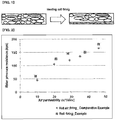
- According to the above method, the porosity on one surface of the obtained porous film is deformed, and the thickness of nodes on any one surface shows a difference compared to that of nodes on the other surface (i.e., the remaining part side of the porous film) based on the total thickness of the porous film (
FIG. 1 ). In this case, at the portion where the thickness of nodes changes, heat is applied only onto the surface of the porous film, and the porosity is reduced in the longitudinal direction. - Preferably, as described above, based on the total thickness of the fluororesin porous film of 5 µm to 300 µm, the thickness ratio of nodes on any one surface shows a difference of 5 % or more compared to a thickness ratio of nodes on the other surface forming the remaining part. Therefore, the porous film of the present invention can more strongly prevent penetration of water while maintaining excellent air permeability, and thus can provide a vent filter having improved performance.
- Further, in one preferred embodiment, any firing steps are possible as long as a heating means equipped with a roll is used. As an example, the firing step may be carried out by using a heating means including a heating roll, a nipping roll, or a roll equipped with a tension adjusting means capable of applying a force in the Z-axis direction. When the roll equipped with the tension adjusting means is used, the firing step can be carried out by increasing a force in the Z-axis direction when making contact with one side of the preform for producing the porous film.
- Further, in the method of the present invention, the firing step is preferably carried out at 300 °C to 500 °C for 1 second to 120 seconds using a heating means. More preferably, it is carried out at 320 °C to 380 °C for 1 second to 60 seconds. If the temperature at the firing step is less than 300 °C, there is a problem in dimensional stability due to insufficient firing. If the temperature exceeds 500 °C, there is a problem that the melting temperature is greatly exceeded and thus all the surface pores are clogged. In addition, if the firing time at the firing step is less than 1 second, there is a problem in dimensional stability due to insufficient firing. If the firing time exceeds 120 seconds, there is a problem that surface pores are clogged due to an increase in melting contact time.
- On the other hand, the preform before undergoing the firing step can be produced by extruding in the form of an extruded sheet by a conventional rolling method or the like using the above-described fluorine resin-containing composition.
- The fluorine resin-containing composition basically contains a fluorine resin, and may further contain a liquid lubricant. For example, a hydrophobic liquid lubricant which is an alkane having a carbon number of 5 to 12 and a mixture thereof may be used, but the type thereof is not particularly limited. Specific examples of the liquid lubricant include IsoPar, ISOL-C, ISOL-G, and the like.
- The amount of the liquid lubricant used when preforming is not particularly limited and varies depending on the type of lubricant, molding conditions, and the like. For example, the liquid lubricant may be used in an amount of 5 to 50 parts by weight, or 10 to 40 parts by weight based on 100 parts by weight of the fluorine-based resin to be used or its fine powder.
- The step of extruding the preform may be carried out at a temperature of 30 °C to 100 °C.
- Through the step of drying and stretching the extruded preform, each layer of the multi-layered preform can be produced into a porous structure in which fine pores are uniformly present.
- In the step of stretching the extruded preform, the stretching may be carried out between rolls rotating at different speeds or may be carried out using a tenter in an oven.
- The stretching of the extruded preform may be carried out uniaxially or biaxially, and the stretching ratio can be determined depending on the use of the film to be produced. For example, the step of stretching the extruded preform may include i) uniaxially stretching the extruded preform under the condition where the longitudinal or transverse stretch ratio is 2 to 50 times; or ii) uniaxially stretching the extruded preform under the condition where the longitudinal and transverse stretch ratio is 2 to 50 times, and biaxially stretching the uniaxially stretched formed article one or more times under the condition where the longitudinal or transverse stretch ratio is 2 to 50 times. Preferably, in the case of the uniaxial or biaxial stretching, each stretch ratio is preferably 2 to 10 times, more preferably 2 to 5 times, or 2 to 3 times.
- That is, the vent filter product of the present invention can be provided by only uniaxial stretching, and biaxial stretching may be carried out if necessary. In this case, the longitudinal direction may be referred to as a machine direction or MD, and the thickness of the film and the direction perpendicular to MD can be referred to as a transverse direction or TD.
- The temperature at the step of stretching the extruded preform may be close to or lower than the melting point of the preform. For example, the step of stretching the extruded preform may be carried out at a temperature of 100 °C to 400 °C.
- On the other hand, before the step of stretching the extruded preform, the method may further include a step of sintering the preform. The sintering of the preform can be carried out, for example, at a temperature of 200 °C to 400 °C.
- Before the step of stretching the extruded preform, the method may further include a step of drying the extruded preform at a temperature of 100 °C to 300 °C. Through this drying step, the liquid lubricant can be completely removed from the extruded preform.
- Specific examples of the fluorine-based resin are not limited, and for example, it may be at least one fluorine-based compound selected from the group consisting of polytetrafluoroethylene (PTFE), a tetrafluoroethylene-perfluoroalkylvinylether copolymer (PFA), a tetrafluoroethylene-hexafluoropropylene copolymer (FEP), an ethylene-tetrafluoroethylene copolymer resin (ETFE), a tetrafluoroethylene-chlorotrifluoroethylene copolymer (TFE/CTFE), and an ethylene-chlorotrifluoroethylene resin (ECTFE).
- The fluorine-based resin such as polytetrafluoroethylene (PTFE) is a plastic having excellent heat resistance and chemical resistance. The porous film made of the fluorine-based resin can be widely used as a filter medium for corrosive gas and liquid, a permeable membrane for electrolysis, and a battery separator. Further, it can be used to precisely filter various gases and liquids used in the semiconductor industry.
- In particular, as shown in
FIG. 1 , in the fluororesin porous film produced according to the preparation method of the embodiment, only the surface of one side has reduced porosity by heat compared to the conventional one, and so the node distribution of the porous film may show a difference of 5 % or more as compared with the other surface. - Accordingly, the diameter distribution of pores distributed inside the surface of one side of the porous film of the present invention is changed, and thus can become precise and uniform. Therefore, since the porous film can effectively prevent penetration of water while maintaining excellent air permeability, it is possible to prevent deformation of the internal protection space due to the pressure change and the surrounding environment.
- In addition, in the conventional porous film, the shape and the diameter of pores distributed at the inside become large due to the applied pressure during filtration, and filtration characteristics may be greatly deteriorated due to rupture of the film itself. However, the fluororesin porous film produced according to the preparation method of the embodiment not only has excellent mechanical properties, and also the form and shape of the internal pores and the like do not change greatly during the preparation process and the filtration operation.
- According to another embodiment of the present invention, a vent filter including the fluororesin porous film is provided.
- That is, in forming the fluororesin porous film of the present invention, since the thickness ratio of nodes distributed on one surface shows a difference of 5 % or more compared to the thickness ratio of nodes distributed on the other surface forming the remaining part, the performance of the vent filter product including the same is improved.
- The vent filter includes the fluororesin porous film of the present invention described above, and thus can be provided and used according to a method that is well known in the art.
- According to the present invention, a fluororesin porous film which is formed by changing the node and pore ratios of any one surface (upper surface) forming the porous film and the other surface (lower surface) forming the remaining part can be provided. The fluororesin porous film may be provided by allowing only one surface to have reduced porosity by heat using a heating roll while maintaining the porosity and air permeability of the inside, and can also increase the role of reducing penetration of water. Accordingly, the present invention can provide a fluororesin porous film having excellent air permeability and improved water pressure resistance, and a vent filter including the same.
-
-
FIG. 1 schematically shows a method of reducing porosity by firing only the surface with heat in the porous film of the present invention. -
FIG. 2 is a graph showing the relationship between the water pressure resistance and the air permeability according to examples of the present invention and comparative examples. -
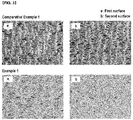
FIG. 3 is a scanning electron microscope image showing differences in node distribution on a first surface and a second surface of the surface of the porous film of Comparative Example 1 and Example 1. -
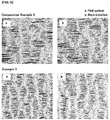
FIG. 4 is a scanning electron microscope image showing differences in node distribution on a first surface and a second surface of the surface of the porous film of Comparative Example 2 and Example 2. -
FIG. 5 is a scanning electron microscope image showing differences in node distribution on a first surface and a second surface of the surface of the porous film of Comparative Example 3 and Example 3. - Hereinafter, the present invention will be described in more detail by way of the following examples. However, these examples are set forth to illustrate the invention, and the scope of the invention is not limited thereto.
- 100 parts by weight of polytetrafluoroethylene powder (CD145E, AGC) was mixed with 22 parts by weight of a liquid lubricant (trade name: "Isopar H", Exxon Co.) to prepare a single-layer preform.
- Then, the single-layer preform was extruded at a temperature of 50 °C at a rate of 50 mm/min to prepare a sheet having a thickness of about 300 µm. The sheet thus prepared was heated at a temperature of about 200 °C to completely dry the liquid lubricant.
- After the drying step, the preform was uniaxially stretched under the conditions shown in Table 1 below.
- Subsequently, the stretched preform was fired at a temperature of 360 °C for 10 seconds by using a heating roll to obtain a PTFE porous film.
- 100 parts by weight of polytetrafluoroethylene powder (CD145E, AGC) was mixed with 26 parts by weight of a liquid lubricant (trade name: "Isopar H", Exxon Co.) to prepare a single-layer preform.
- Then, the single-layer preform was extruded at a temperature of 50 °C at a rate of 50 mm/min to prepare a sheet having a thickness of about 300 µm. The sheet thus prepared was heated at a temperature of about 200 °C to completely dry the liquid lubricant.
- After the drying step, the preform was uniaxially stretched under the conditions shown in Table 1 below.
- Subsequently, the stretched preform was fired at a temperature of 360 °C for 10 seconds by using a heating roll to obtain a PTFE porous film.
- 100 parts by weight of polytetrafluoroethylene powder (6J, MDF) was mixed with 22 parts by weight of a liquid lubricant (trade name: "Isopar H", Exxon Co.) to prepare a single-layer preform.
- Then, the single-layer preform was extruded at a temperature of 50 °C at a rate of 50 mm/min to prepare a sheet having a thickness of about 300 µm. The sheet thus prepared was heated at a temperature of about 200 °C to completely dry the liquid lubricant.
- After the drying step, the preform was uniaxially stretched under the conditions shown in Table 1 below.
- Subsequently, the stretched preform was fired at a temperature of 360 °C for 10 seconds by using a heating roll to obtain a PTFE porous film.
- A PTFE porous film was obtained in the same manner as in Example 1, except that in the firing step, a hot air system was used instead of a heating roll.
- A PTFE porous film was obtained in the same manner as in Example 2, except that in the firing step, a hot air system was used instead of a heating roll.
- A PTFE porous film was obtained in the same manner as in Example 3, except that in the firing step, a hot air system was used instead of a heating roll.
- The air permeability, the maximum pore size, the node thickness, and the water pressure resistance were measured for the examples and comparative examples according to an ordinary method, and the results are shown in Table 1 and
FIGS. 2 to 5 .[Table 1] Example 1 Example 2 Example 3 Comparati ve Example 1 Comparati ve Example 2 Comparat ive Example 3 Kind of resin CD145E CD145E 6J CD145E CD145E 6J Isopar content (parts by weight) 22 26 22 22 26 22 Stretch temperature (°C) 200 200 300 200 200 300 Stretch ratio X2.5 X2.5 X3 X2.5 X2.5 X3 Heat setting method 360 °C firing system by heating roll 360 °C firing system by heating roll 360 °C firing system by heating roll 360 °C Hot air system 360 °C Hot air system 360 °C Hot air system Air permeability (s/100 cc) 46 21 9 46 20 10 Max. Pore size 690 998 1353 790 1178 1903 (nm) First surface vs. second surface node thickness difference 39.4 % 34 % 14.5 % 4.5 % 3 % 0.5 % Water pressure resistance (kPa) 180 125 60 165 105 45 - As can be seen in Table 1 and
FIGS. 2 to 6 above, it can be confirmed that the PTFE porous films prepared in Examples 1 to 3 have improved water pressure resistance characteristics under the same air permeability condition as compared to Comparative Examples 1 to 3. - In particular, it can be confirmed that the present invention can effectively prevent penetration of water because the thickness of nodes on one surface shows a difference of 14.5 % to 39.4 % compared to the thickness on the other surface (second surface) in forming of the porous film.
Claims (10)
- A fluororesin porous film in which, based on the total thickness of the fluororesin porous film composed of a single 5 µm to 300 µm layer, a thickness ratio of nodes distributed on any one surface shows a difference of 5 % or more compared to a thickness ratio of nodes distributed on the other surface forming the remaining part.
- The fluororesin porous film according to claim 1, wherein based on the total thickness of the fluororesin porous film, a thickness ratio of nodes distributed on any one surface shows a difference of 5 % to 40 % compared to a thickness ratio of nodes distributed on the other surface forming the remaining part.
- The fluororesin porous film according to claim 1, wherein based on the total thickness of the fluororesin porous film of 5 µm to 300 µm, the thickness of nodes on one surface is in the range of 0.1 µm to 10 µm, and the thickness of nodes on the other surface forming the remaining part is in the range of 0.105 µm to 15 µm.
- The fluororesin porous film according to claim 1, wherein the porous film has water pressure resistance of 10 to 300 kPa under a condition of air permeability of 0.5 to 100 s/100 cc.
- The fluororesin porous film according to claim 1, wherein the porous film has an average pore size of 150 nm to 900 nm and a maximum pore size of 300 nm to 2500 nm.
- A method for preparing a fluororesin porous film comprising the steps of:preparing a preform by using a fluorine resin-containing composition;extruding and stretching the preform; andpositioning any one surface of the stretched preform in contact with a heating means and then firing it at 300 to 500 °C for 1 second to 120 seconds.
- The method for preparing a fluororesin porous film according to claim 6, wherein the firing step is carried out by using a heating means including a heating roll, a nipping roll, or a roll equipped with a tension adjusting means capable of applying a force in the Z-axis direction.
- The method for preparing a fluororesin porous film according to claim 6, wherein the step of stretching the extruded preform includes:i) uniaxially stretching the extruded preform under the condition where the longitudinal or transverse stretch ratio is 2 to 50 times; orii) uniaxially stretching the extruded preform under the condition where the longitudinal or transverse stretch ratio is 2 to 50 times, and biaxially stretching the uniaxially stretched formed article one or more times under the condition where the longitudinal or transverse stretch ratio is 2 to 50 times.
- The method for preparing a fluororesin porous film according to claim 1, wherein the fluororesin includes at least one fluorine-based compound selected from the group consisting of polytetrafluoroethylene (PTFE), a tetrafluoroethylene-perfluoroalkylvinylether copolymer (PFA), a tetrafluoroethylene-hexafluoropropylene copolymer (FEP), an ethylene-tetrafluoroethylene copolymer resin (ETFE), a tetrafluoroethylene-chlorotrifluoroethylene copolymer (TFE/CTFE), and an ethylene-chlorotrifluoroethylene resin (ECTFE).
- A vent filter comprising the fluororesin porous film of claim 1.
Applications Claiming Priority (2)
| Application Number | Priority Date | Filing Date | Title |
|---|---|---|---|
| KR1020170140284A KR102160201B1 (en) | 2017-10-26 | 2017-10-26 | POROUS Fluorine resin film AND PREPARARION METHOD THEREOF |
| PCT/KR2018/009113 WO2019083140A1 (en) | 2017-10-26 | 2018-08-09 | Fluorine-based porous membrane and manufacturing method therefor |
Publications (3)
| Publication Number | Publication Date |
|---|---|
| EP3666370A1 true EP3666370A1 (en) | 2020-06-17 |
| EP3666370A4 EP3666370A4 (en) | 2020-10-28 |
| EP3666370B1 EP3666370B1 (en) | 2026-02-18 |
Family
ID=66246988
Family Applications (1)
| Application Number | Title | Priority Date | Filing Date |
|---|---|---|---|
| EP18871269.9A Active EP3666370B1 (en) | 2017-10-26 | 2018-08-09 | Fluorine-based porous membrane and manufacturing method therefor |
Country Status (7)
| Country | Link |
|---|---|
| US (1) | US20200172695A1 (en) |
| EP (1) | EP3666370B1 (en) |
| JP (1) | JP7060201B2 (en) |
| KR (1) | KR102160201B1 (en) |
| CN (1) | CN111050890A (en) |
| TW (1) | TWI778119B (en) |
| WO (1) | WO2019083140A1 (en) |
Families Citing this family (9)
| Publication number | Priority date | Publication date | Assignee | Title |
|---|---|---|---|---|
| KR102729761B1 (en) * | 2019-11-20 | 2024-11-12 | 주식회사 엘지화학 | Porous fluorine resin sheet and method for prepararing the same |
| DE112020005959T5 (en) | 2019-12-05 | 2022-09-22 | Nitto Denko Corporation | EXTENDED POROUS POLYTETRAFLUORETHYLENE MEMBRANE, AIR PERMEABLE MEDIUM USING SAME AND FILTER ELEMENT USING SAME |
| KR20220104724A (en) * | 2019-12-05 | 2022-07-26 | 닛토덴코 가부시키가이샤 | Polytetrafluoroethylene stretched porous membrane, air filtration media and filter member using same |
| KR102752606B1 (en) * | 2019-12-13 | 2025-01-10 | 주식회사 엘지에너지솔루션 | Pouch-type Battery Cell Having Venting Part and Method for Preparing the Same |
| CN115551625A (en) * | 2020-05-22 | 2022-12-30 | 住友电工超效能高分子股份有限公司 | Porous membrane laminate, filter element, and method for producing porous membrane laminate |
| CN114247396B (en) * | 2020-09-23 | 2022-11-08 | 中国科学院大连化学物理研究所 | Polytetrafluoroethylene hollow fiber membrane microchannel reactor and preparation and application thereof |
| EP4242289A1 (en) * | 2020-11-05 | 2023-09-13 | Junkosha Inc. | Gas-permeable container, and culture apparatus and culture system each using same |
| CN117861465B (en) * | 2022-12-19 | 2025-03-07 | 飞潮(上海)新材料股份有限公司 | Polytetrafluoroethylene membrane with gradient pore structure and preparation method thereof |
| KR102641988B1 (en) * | 2023-09-27 | 2024-02-29 | 에이치디현대오일뱅크 주식회사 | Method of preparing fluorine-based resin porous membrane and fluorine-based resin porous membrane prepared thereby |
Family Cites Families (17)
| Publication number | Priority date | Publication date | Assignee | Title |
|---|---|---|---|---|
| US3962153A (en) * | 1970-05-21 | 1976-06-08 | W. L. Gore & Associates, Inc. | Very highly stretched polytetrafluoroethylene and process therefor |
| US4482516A (en) * | 1982-09-10 | 1984-11-13 | W. L. Gore & Associates, Inc. | Process for producing a high strength porous polytetrafluoroethylene product having a coarse microstructure |
| JPS61171505A (en) * | 1985-11-25 | 1986-08-02 | Sumitomo Electric Ind Ltd | Preparation of asymmetric pore size membrane material |
| US5596450A (en) * | 1995-01-06 | 1997-01-21 | W. L. Gore & Associates, Inc. | Light reflectant surface and method for making and using same |
| JP3580790B2 (en) * | 2001-10-31 | 2004-10-27 | 宇明泰化工股▲ふん▼有限公司 | Asymmetric porous polytetrafluoroethylene membrane and method for producing the same |
| CA2494545A1 (en) | 2002-08-14 | 2004-02-26 | Pall Corporation | Fluoropolymer membrane |
| JP4963185B2 (en) * | 2006-03-28 | 2012-06-27 | 日東電工株式会社 | Polytetrafluoroethylene porous membrane production method, filter medium and filter unit |
| JP5204384B2 (en) | 2006-05-19 | 2013-06-05 | 富士フイルム株式会社 | Crystalline polymer microporous membrane, method for producing the same, and filter for filtration |
| US20130083528A1 (en) * | 2010-02-02 | 2013-04-04 | EF-Materials Industries Inc. | Water-proof and dust-proof membrane assembly and apparatus using the same |
| KR20120007743A (en) * | 2010-07-15 | 2012-01-25 | 웅진케미칼 주식회사 | Method for producing PTF-based porous membrane and porous membrane thereby |
| WO2012082261A1 (en) * | 2010-12-16 | 2012-06-21 | Dow Global Technologies Llc | Silane-containing thermoplastic polyolefin copolymer resins, films, processes for their preparation and photovoltaic module laminate structure comprising such resins and films |
| JP2012161741A (en) | 2011-02-07 | 2012-08-30 | Fujifilm Corp | Microporous crystalline polymer membrane, production method therefor, and filtration filter |
| US20130319924A1 (en) * | 2012-06-05 | 2013-12-05 | General Electric Company | ASYMMETRIC ePTFE MEMBRANE |
| KR20140073331A (en) * | 2012-12-06 | 2014-06-16 | 도레이케미칼 주식회사 | Manufacturing method of PTFE membrane having porosity using blowing agent |
| KR101426000B1 (en) * | 2012-12-06 | 2014-08-07 | 도레이케미칼 주식회사 | PTFE hollow fibertype membrane for membrane distillation and manufacturing method thereof |
| US20140231340A1 (en) * | 2013-02-15 | 2014-08-21 | Pall Corporation | Composite including ptfe membrane |
| US10245545B2 (en) * | 2013-10-23 | 2019-04-02 | Daikin Industries, Ltd. | Embossed air filter filtration medium, filter pack, air filter unit, and method for manufacturing filtration medium for embossed air filter |
-
2017
- 2017-10-26 KR KR1020170140284A patent/KR102160201B1/en active Active
-
2018
- 2018-08-09 US US16/640,943 patent/US20200172695A1/en not_active Abandoned
- 2018-08-09 JP JP2020503806A patent/JP7060201B2/en active Active
- 2018-08-09 WO PCT/KR2018/009113 patent/WO2019083140A1/en not_active Ceased
- 2018-08-09 CN CN201880053242.3A patent/CN111050890A/en active Pending
- 2018-08-09 EP EP18871269.9A patent/EP3666370B1/en active Active
- 2018-08-23 TW TW107129383A patent/TWI778119B/en active
Also Published As
| Publication number | Publication date |
|---|---|
| EP3666370A4 (en) | 2020-10-28 |
| JP7060201B2 (en) | 2022-04-26 |
| JP2020528483A (en) | 2020-09-24 |
| TW201922883A (en) | 2019-06-16 |
| KR20190046461A (en) | 2019-05-07 |
| US20200172695A1 (en) | 2020-06-04 |
| WO2019083140A1 (en) | 2019-05-02 |
| CN111050890A (en) | 2020-04-21 |
| TWI778119B (en) | 2022-09-21 |
| KR102160201B1 (en) | 2020-09-25 |
| EP3666370B1 (en) | 2026-02-18 |
Similar Documents
| Publication | Publication Date | Title |
|---|---|---|
| EP3666370B1 (en) | Fluorine-based porous membrane and manufacturing method therefor | |
| JPWO2010092938A1 (en) | Porous multilayer filter and method for producing the same | |
| JP5100213B2 (en) | Microporous multilayer film and method for forming the same | |
| JPWO2007010878A1 (en) | Polyolefin multilayer microporous membrane and battery separator | |
| EP2848643A1 (en) | Porous polytetrafluoroethylene film and waterproof air-permeable member | |
| KR20150079108A (en) | PTFE hollow fiber membrane and production method thereof | |
| KR102177292B1 (en) | Porous fluorine resin sheet and method for prepararing0 the same | |
| KR20190060586A (en) | Preparation method of porous fluorine resin sheet | |
| KR102641990B1 (en) | Method of preparing fluorine-based resin porous membrane and fluorine-based resin porous membrane prepared thereby | |
| KR102218062B1 (en) | Porous fluorine resin film and method for preparing the same | |
| KR102102460B1 (en) | Preparation method of porous fluorine resin film | |
| US11344836B2 (en) | Porous fluorine resin film and preparation method thereof | |
| KR102729761B1 (en) | Porous fluorine resin sheet and method for prepararing the same | |
| KR20200020460A (en) | Porous fluorine resin film | |
| KR102730264B1 (en) | Porous fluorine resin sheet and method for prepararing the same | |
| JP3914302B2 (en) | Method for producing porous film made of polytetrafluoroethylene | |
| KR102642489B1 (en) | Method of preparing fluorine-based resin porous membrane and fluorine-based resin porous membrane prepared thereby | |
| KR102285993B1 (en) | Porous fluorine resin sheet and method for prepararing the same | |
| KR102145535B1 (en) | Preparation method of porous fluorine resin sheet and porous fluorine resin sheet | |
| KR102610907B1 (en) | Fluorine resin membrane | |
| KR102610908B1 (en) | Fluorine resin membrane | |
| KR102267597B1 (en) | Porous fluorine resin film and method for preparing the same | |
| KR102160652B1 (en) | Porous fluorine resin film | |
| KR102851191B1 (en) | Method of preparing fluorine-based resin porous membrane, fluorine-based resin porous membrane prepared thereby and electrochemical system | |
| KR20140074750A (en) | Cross-linked porous PTFE filter membrane |
Legal Events
| Date | Code | Title | Description |
|---|---|---|---|
| STAA | Information on the status of an ep patent application or granted ep patent |
Free format text: STATUS: THE INTERNATIONAL PUBLICATION HAS BEEN MADE |
|
| PUAI | Public reference made under article 153(3) epc to a published international application that has entered the european phase |
Free format text: ORIGINAL CODE: 0009012 |
|
| STAA | Information on the status of an ep patent application or granted ep patent |
Free format text: STATUS: REQUEST FOR EXAMINATION WAS MADE |
|
| 17P | Request for examination filed |
Effective date: 20200311 |
|
| AK | Designated contracting states |
Kind code of ref document: A1 Designated state(s): AL AT BE BG CH CY CZ DE DK EE ES FI FR GB GR HR HU IE IS IT LI LT LU LV MC MK MT NL NO PL PT RO RS SE SI SK SM TR |
|
| AX | Request for extension of the european patent |
Extension state: BA ME |
|
| A4 | Supplementary search report drawn up and despatched |
Effective date: 20200924 |
|
| RIC1 | Information provided on ipc code assigned before grant |
Ipc: B01D 67/00 20060101ALI20200918BHEP Ipc: B01D 69/06 20060101ALI20200918BHEP Ipc: B01D 71/32 20060101AFI20200918BHEP |
|
| DAV | Request for validation of the european patent (deleted) | ||
| DAX | Request for extension of the european patent (deleted) | ||
| TPAC | Observations filed by third parties |
Free format text: ORIGINAL CODE: EPIDOSNTIPA |
|
| STAA | Information on the status of an ep patent application or granted ep patent |
Free format text: STATUS: EXAMINATION IS IN PROGRESS |
|
| 17Q | First examination report despatched |
Effective date: 20230621 |
|
| GRAP | Despatch of communication of intention to grant a patent |
Free format text: ORIGINAL CODE: EPIDOSNIGR1 |
|
| STAA | Information on the status of an ep patent application or granted ep patent |
Free format text: STATUS: GRANT OF PATENT IS INTENDED |
|
| INTG | Intention to grant announced |
Effective date: 20251031 |
|
| GRAS | Grant fee paid |
Free format text: ORIGINAL CODE: EPIDOSNIGR3 |
|
| GRAA | (expected) grant |
Free format text: ORIGINAL CODE: 0009210 |
|
| STAA | Information on the status of an ep patent application or granted ep patent |
Free format text: STATUS: THE PATENT HAS BEEN GRANTED |
|
| P01 | Opt-out of the competence of the unified patent court (upc) registered |
Free format text: CASE NUMBER: UPC_APP_0016918_3666370/2025 Effective date: 20251210 |
|
| AK | Designated contracting states |
Kind code of ref document: B1 Designated state(s): AL AT BE BG CH CY CZ DE DK EE ES FI FR GB GR HR HU IE IS IT LI LT LU LV MC MK MT NL NO PL PT RO RS SE SI SK SM TR |
|
| REG | Reference to a national code |
Ref country code: CH Ref legal event code: F10 Free format text: ST27 STATUS EVENT CODE: U-0-0-F10-F00 (AS PROVIDED BY THE NATIONAL OFFICE) Effective date: 20260218 Ref country code: GB Ref legal event code: FG4D |
|
| REG | Reference to a national code |
Ref country code: IE Ref legal event code: FG4D |
|
| REG | Reference to a national code |
Ref country code: DE Ref legal event code: R096 Ref document number: 602018089281 Country of ref document: DE |