EP3664557A1 - Datenübertragungsverfahren, netzwerkvorrichtung und endgerät - Google Patents
Datenübertragungsverfahren, netzwerkvorrichtung und endgerät Download PDFInfo
- Publication number
- EP3664557A1 EP3664557A1 EP18843503.6A EP18843503A EP3664557A1 EP 3664557 A1 EP3664557 A1 EP 3664557A1 EP 18843503 A EP18843503 A EP 18843503A EP 3664557 A1 EP3664557 A1 EP 3664557A1
- Authority
- EP
- European Patent Office
- Prior art keywords
- time period
- network device
- symbol
- signaling
- time
- Prior art date
- Legal status (The legal status is an assumption and is not a legal conclusion. Google has not performed a legal analysis and makes no representation as to the accuracy of the status listed.)
- Withdrawn
Links
- 230000005540 biological transmission Effects 0.000 title claims abstract description 167
- 238000000034 method Methods 0.000 title claims abstract description 122
- 230000011664 signaling Effects 0.000 claims description 429
- 238000012545 processing Methods 0.000 claims description 158
- 230000004044 response Effects 0.000 claims description 53
- 230000006854 communication Effects 0.000 claims description 35
- 238000004891 communication Methods 0.000 claims description 33
- 238000005259 measurement Methods 0.000 claims description 26
- 238000004590 computer program Methods 0.000 claims description 8
- 238000001228 spectrum Methods 0.000 abstract description 55
- 108091006146 Channels Proteins 0.000 description 192
- 238000010586 diagram Methods 0.000 description 40
- 238000013461 design Methods 0.000 description 31
- 230000008569 process Effects 0.000 description 17
- 238000007726 management method Methods 0.000 description 11
- 230000006870 function Effects 0.000 description 10
- 230000008054 signal transmission Effects 0.000 description 10
- 239000002699 waste material Substances 0.000 description 10
- 101000741965 Homo sapiens Inactive tyrosine-protein kinase PRAG1 Proteins 0.000 description 8
- 102100038659 Inactive tyrosine-protein kinase PRAG1 Human genes 0.000 description 8
- 238000005516 engineering process Methods 0.000 description 6
- 230000009471 action Effects 0.000 description 4
- 230000003287 optical effect Effects 0.000 description 3
- 230000003595 spectral effect Effects 0.000 description 3
- 230000007774 longterm Effects 0.000 description 2
- 239000013307 optical fiber Substances 0.000 description 2
- RYGMFSIKBFXOCR-UHFFFAOYSA-N Copper Chemical compound [Cu] RYGMFSIKBFXOCR-UHFFFAOYSA-N 0.000 description 1
- 229910052802 copper Inorganic materials 0.000 description 1
- 239000010949 copper Substances 0.000 description 1
- 238000013500 data storage Methods 0.000 description 1
- 230000000694 effects Effects 0.000 description 1
- 230000009467 reduction Effects 0.000 description 1
- 239000004065 semiconductor Substances 0.000 description 1
- 239000007787 solid Substances 0.000 description 1
Images






Classifications
-
- H—ELECTRICITY
- H04—ELECTRIC COMMUNICATION TECHNIQUE
- H04W—WIRELESS COMMUNICATION NETWORKS
- H04W72/00—Local resource management
- H04W72/12—Wireless traffic scheduling
- H04W72/1263—Mapping of traffic onto schedule, e.g. scheduled allocation or multiplexing of flows
- H04W72/1268—Mapping of traffic onto schedule, e.g. scheduled allocation or multiplexing of flows of uplink data flows
-
- H—ELECTRICITY
- H04—ELECTRIC COMMUNICATION TECHNIQUE
- H04L—TRANSMISSION OF DIGITAL INFORMATION, e.g. TELEGRAPHIC COMMUNICATION
- H04L5/00—Arrangements affording multiple use of the transmission path
- H04L5/003—Arrangements for allocating sub-channels of the transmission path
- H04L5/0053—Allocation of signalling, i.e. of overhead other than pilot signals
-
- H—ELECTRICITY
- H04—ELECTRIC COMMUNICATION TECHNIQUE
- H04L—TRANSMISSION OF DIGITAL INFORMATION, e.g. TELEGRAPHIC COMMUNICATION
- H04L27/00—Modulated-carrier systems
- H04L27/26—Systems using multi-frequency codes
-
- H—ELECTRICITY
- H04—ELECTRIC COMMUNICATION TECHNIQUE
- H04L—TRANSMISSION OF DIGITAL INFORMATION, e.g. TELEGRAPHIC COMMUNICATION
- H04L27/00—Modulated-carrier systems
- H04L27/26—Systems using multi-frequency codes
- H04L27/2601—Multicarrier modulation systems
- H04L27/2602—Signal structure
- H04L27/26025—Numerology, i.e. varying one or more of symbol duration, subcarrier spacing, Fourier transform size, sampling rate or down-clocking
-
- H—ELECTRICITY
- H04—ELECTRIC COMMUNICATION TECHNIQUE
- H04L—TRANSMISSION OF DIGITAL INFORMATION, e.g. TELEGRAPHIC COMMUNICATION
- H04L27/00—Modulated-carrier systems
- H04L27/26—Systems using multi-frequency codes
- H04L27/2601—Multicarrier modulation systems
- H04L27/2602—Signal structure
- H04L27/2605—Symbol extensions, e.g. Zero Tail, Unique Word [UW]
-
- H—ELECTRICITY
- H04—ELECTRIC COMMUNICATION TECHNIQUE
- H04L—TRANSMISSION OF DIGITAL INFORMATION, e.g. TELEGRAPHIC COMMUNICATION
- H04L5/00—Arrangements affording multiple use of the transmission path
- H04L5/0001—Arrangements for dividing the transmission path
- H04L5/0003—Two-dimensional division
- H04L5/0005—Time-frequency
- H04L5/0007—Time-frequency the frequencies being orthogonal, e.g. OFDM(A) or DMT
-
- H—ELECTRICITY
- H04—ELECTRIC COMMUNICATION TECHNIQUE
- H04L—TRANSMISSION OF DIGITAL INFORMATION, e.g. TELEGRAPHIC COMMUNICATION
- H04L5/00—Arrangements affording multiple use of the transmission path
- H04L5/0091—Signalling for the administration of the divided path, e.g. signalling of configuration information
- H04L5/0094—Indication of how sub-channels of the path are allocated
-
- H—ELECTRICITY
- H04—ELECTRIC COMMUNICATION TECHNIQUE
- H04W—WIRELESS COMMUNICATION NETWORKS
- H04W72/00—Local resource management
- H04W72/50—Allocation or scheduling criteria for wireless resources
- H04W72/535—Allocation or scheduling criteria for wireless resources based on resource usage policies
-
- H—ELECTRICITY
- H04—ELECTRIC COMMUNICATION TECHNIQUE
- H04W—WIRELESS COMMUNICATION NETWORKS
- H04W80/00—Wireless network protocols or protocol adaptations to wireless operation
- H04W80/02—Data link layer protocols
-
- H—ELECTRICITY
- H04—ELECTRIC COMMUNICATION TECHNIQUE
- H04L—TRANSMISSION OF DIGITAL INFORMATION, e.g. TELEGRAPHIC COMMUNICATION
- H04L27/00—Modulated-carrier systems
- H04L27/26—Systems using multi-frequency codes
- H04L27/2601—Multicarrier modulation systems
- H04L27/2602—Signal structure
- H04L27/261—Details of reference signals
-
- H—ELECTRICITY
- H04—ELECTRIC COMMUNICATION TECHNIQUE
- H04L—TRANSMISSION OF DIGITAL INFORMATION, e.g. TELEGRAPHIC COMMUNICATION
- H04L5/00—Arrangements affording multiple use of the transmission path
- H04L5/003—Arrangements for allocating sub-channels of the transmission path
- H04L5/0048—Allocation of pilot signals, i.e. of signals known to the receiver
Definitions
- This application relates to the field of communications technologies, and in particular, to a data transmission method, a network device, and a terminal device.
- next-generation wireless communications system for example, a new radio (New Radio, NR) access network
- NR New Radio
- An implementation of reducing a communication latency is a self-contained operation mode (Self-Contained Operation Mode).
- downlink signal transmission is used as an example.
- a base station sends downlink data in a slot, and the base station receives, in the slot, a feedback signal sent by a terminal.
- the base station may carry downlink control signaling by using a physical downlink control channel (Physical Downlink Control Channel, PDCCH), and the base station carries the downlink data by using a physical downlink shared channel (Physical Downlink Shared Channel, PDSCH).
- PDCCH Physical Downlink Control Channel
- PDSCH Physical Downlink shared channel
- scheduling information of a PDSCH is indicated in a PDCCH in a current slot, and certainly, indication across slots is not excluded.
- One slot usually includes 14 orthogonal frequency division multiplexing (Orthogonal Frequency Division Multiplexing, OFDM) symbols.
- OFDM Orthogonal Frequency Division Multiplexing
- three symbols may be used to carry a PDCCH
- six symbols may be used to carry a PDSCH
- three symbols may be spared for a terminal device to process the downlink data
- one symbol may be used for air-interface transmission
- the last symbol is used to carry a feedback signal.
- the base station needs to spare a time of a plurality of OFDM symbols for a terminal device to process downlink data. Consequently, spectrum resources are severely wasted, and spectrum resource utilization is reduced.
- Embodiments of this application provide a data transmission method, a network device, and a terminal device, to improve spectrum resource utilization.
- an embodiment of this application provides a data transmission method, including: determining, by a first network device, to send first downlink data to a first terminal device in a first time period in a first time unit, and receiving, in a second time period in the first time unit, a feedback signal of the first terminal device in response to a status of receiving the first downlink data; sending, by the first network device, first signaling to the first terminal device, where the first signaling is used to indicate that the first network device sends the first downlink data in the first time period in the first time unit, and receives the feedback signal in the second time period in the first time unit; determining, by the first network device, a third time period from the first time unit, where a start point of the third time period is an end time of the first time period, and an end point of the third time period is a start time of the second time period; and performing, by the first network device, at least one of the following operations: sending, by the first network device, second signaling to a target device, where
- the third time period includes at least one of the following time periods: the fourth time period, the fifth time period, and the sixth time period;
- the target device includes at least one of the following devices: the first terminal device, a second terminal device, and a second network device;
- the first network device provides a communications service for the second terminal device and the first terminal device;
- the second network device is a neighboring network device of the first network device.
- the first network device sends the first downlink data to the first terminal device in the first time period in the first time unit, the first network device receives, in the second time period in the first time unit, the feedback signal sent by the first terminal device, and the first network device determines the third time period from the first time unit.
- the start point of the third time period is the end time of the first time period
- the end point of the third time period is the start time of the second time period
- the third time period may be divided into at least one of the following time periods: the fourth time period, the fifth time period, and the sixth time period.
- the first network device may perform uplink transmission and downlink transmission or keep silent in the time periods in the third time period, so that the first network device can transmit data in the fourth time period or the fifth time period. In this way, spectrum resource utilization is improved.
- an embodiment of this application provides a data transmission method, including: sending, by a first network device, first signaling to a first terminal device in a first time period in a first time unit, where the first signaling indicates that the first network device receives first uplink data in a second time period in the first time unit; determining, by the first network device, a third time period from the first time unit, where a start point of the third time period is an end time of the first time period, and an end point of the third time period is a start time of the second time period; and performing, by the first network device, at least one of the following operations: sending, by the first network device, second signaling to a target device, where the second signaling indicates that the first network device sends a first target signal in a fourth time period in the third time period; sending, by the first network device, third signaling to a target device, where the third signaling indicates that the first network device receives, in a fifth time period in the third time period, a second target signal sent by
- the third time period includes at least one of the following time periods: the fourth time period, the fifth time period, and the sixth time period;
- the target device includes at least one of the following devices: the first terminal device, a second terminal device, and a second network device;
- the first network device provides a communications service for the second terminal device and the first terminal device;
- the second network device is a neighboring network device of the first network device.
- the first network device may instruct the first terminal device to send the first signaling in the first time period in the first time unit, the first network device may further receive, in the second time period in the first time unit, the first uplink data sent by the first terminal device, and the first network device determines the third time period from the first time unit.
- the start point of the third time period is the end time of the first time period
- the end point of the third time period is the start time of the second time period
- the third time period may be divided into at least one of the following time periods: the fourth time period, the fifth time period, and the sixth time period.
- the first network device may perform uplink transmission and downlink transmission or keep silent in the time periods in the third time period, so that the first network device can transmit data in the fourth time period or the fifth time period. In this way, spectrum resource utilization is improved.
- the determining, by the first network device, a third time period from the first time unit includes: determining the third time period based on a downlink processing time period for processing the first downlink data by the first terminal device.
- the third time period may be determined by using the downlink processing time period for processing the first downlink data by the first terminal device.
- the first network device may perform uplink transmission and downlink transmission or keep silent when the first terminal device processes the first downlink data. In this way, spectrum resource utilization can be improved.
- the determining, by the first network device, a third time period from the first time unit includes: determining, by the first network device, the third time period based on an uplink processing time period for processing the first uplink data by the first terminal device.
- the third time period may be determined by using the downlink processing time period for processing the first uplink data by the first terminal device.
- the first network device may perform uplink transmission and downlink transmission or keep silent when the first terminal device processes the first uplink data. In this way, spectrum resource utilization can be improved.
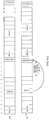
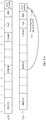
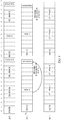
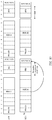
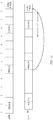
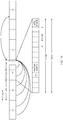
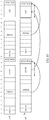
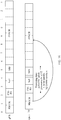
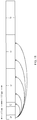
- the first time unit includes L symbols
- the end time of the first time period is a k th symbol in the L symbols
- the start time of the second time period is a j th symbol in the L symbols
- the third time period includes all symbols from a (k + 1) th symbol to a (j - 1) th symbol in the L symbols.
- the method further includes: when the fourth time period includes the (k + 1) th symbol to a (k + X) th symbol, sending, by the first network device in the (k + 1) th symbol to the (k + X) th symbol, a first target signal to the target device; when the fifth time period includes a (j - Y) th symbol to the (j - 1) th symbol, receiving, by the first network device in the (j - Y) th symbol to the (j - 1) th symbol, a second target signal sent by the target device; and/or when the sixth time period includes a (k + X + 1) th symbol to a (j - Y - 1) th symbol, skipping transmitting, by the first network device, any signal in the (k + X + 1) th symbol to the (j - Y - 1) th symbol, and skipping configuring, by the first network device in the (k + X + 1) th symbol to the (j - Y - 1) th symbol
- the downlink processing time period is N1 symbols, and (j - k - 1) is greater than N1; or the uplink processing time period is N2 symbols, and (j - k - 1) is greater than N2.
- duration of the time periods in the third time period may be obtained by setting the downlink processing time period and the uplink processing time period.
- duration of the time periods in the third time period may be obtained by setting values of X and Y.
- the first signaling includes: physical layer control signaling, semi-persistent scheduling SPS signaling, media access control MAC layer signaling, or higher layer signaling;
- the second signaling includes: physical layer control signaling, SPS signaling, MAC layer signaling, or higher layer signaling;
- the third signaling includes: physical layer control signaling, SPS signaling, MAC layer signaling, or higher layer signaling;
- the fourth signaling includes: physical layer control signaling, SPS signaling, MAC layer signaling, higher layer signaling, or interface signaling between base stations.
- the network device may flexibly select frame structures and transmission modes of the signaling.
- the method further includes: separately obtaining a parameter of a downlink control channel used to carry the first signaling, a parameter of a downlink shared channel used to carry the first downlink data, and a parameter of an uplink channel used to carry the feedback signal; and when the first time period, the second time period, the third time period, the fourth time period, the fifth time period, and the sixth time period are counted in a form of orthogonal frequency division multiplexing OFDM symbols, determining, by the first network device, duration of a single symbol that is in the first time unit, based on at least one of the following parameters: the parameter of the downlink control channel used to carry the first signaling, the parameter of the downlink shared channel used to carry the first downlink data, the parameter of the uplink channel used to carry the feedback signal, or a predefined reference parameter.
- the first network device may set the duration of the single symbol in the first time unit in the foregoing manner, so that duration of the time periods
- the determining, by the first network device, duration of a single symbol that is in the first time unit, based on at least one of the following parameters: the parameter of the downlink control channel used to carry the first signaling, the parameter of the downlink shared channel used to carry the first downlink data, the parameter of the uplink channel used to carry the feedback signal, or a predefined reference parameter, includes: when the parameter of the downlink control channel, the parameter of the downlink shared channel, and the parameter of the uplink channel include a same subcarrier spacing, using, by the first network device, duration of an orthogonal frequency division multiplexing OFDM symbol corresponding to the same subcarrier spacing as the duration of the single symbol in the first time unit; when the parameter of the downlink shared channel and the parameter of the uplink channel include different subcarrier spacings, determining, by the first network device, a maximum subcarrier spacing from the parameter of the downlink shared channel and the parameter of the uplink channel, and using, by the first network device, duration
- the first target signal includes: a channel state information reference signal CSI-RS used for beam management, a CSI-RS used for channel quality feedback, a CSI-RS used for mobility management, a reference signal used for phase tracking, a reference signal used for time synchronization, and a reference signal used for frequency synchronization.
- the first target signal sent by the first network device may be implemented in a plurality of manners, and the first network device may select, based on an actual scenario, a specific signal that needs to be sent.
- the first target signal includes: second downlink data sent to the second terminal device or third downlink data that is sent to the first terminal device and for which feedback does not need to be performed in the first time unit.
- the first target signal sent by the first network device may be implemented in a plurality of manners, and the first network device may select, based on an actual scenario, a specific signal that needs to be sent.
- the second target signal includes: an uplink signal that is sent by the target device and that is different from the feedback signal, or another uplink signal that is sent by the target device and that is different from the first uplink data.
- the second target signal received by the first network device may be implemented in a plurality of manners, and the first terminal device or the second terminal device may select, based on an actual scenario, a specific signal that needs to be sent.
- the method further includes: when the first target signal is a CSI-RS, receiving, by the first network device in a seventh time period in a second time unit, channel quality feedback information from the target device in response to the CSI-RS.
- the second time unit is a time unit that is after the first time unit and that includes uplink and downlink switching
- the seventh time period is a time period that is in the second time unit and that is before an uplink feedback signal is sent.
- the first network device selects, as the second time unit, the time unit that is after the first time unit and that includes uplink and downlink switching, the first network device may select, from the second time unit as the fifth time period, the time period that is before the uplink feedback signal is transmitted, and the first network device receives, in the seventh time period in the second time unit, the channel quality feedback information sent by the first terminal device in response to the CSI-RS.
- the first network device may complete channel quality measurement by using the channel quality feedback information.
- an embodiment of this application further provides a data transmission method, including: determining, by a first terminal device, a first time unit used to receive first downlink data; receiving, by the first terminal device, first signaling sent by a first network device, where the first signaling indicates that the first terminal device receives the first downlink data in a first time period in the first time unit, and sends a feedback signal in a second time period in the first time unit, and the feedback signal is a feedback signal of the first terminal device for a status of receiving the first downlink data; and determining, by the first terminal device, a third time period from the first time unit, where a start point of the third time period is an end time of the first time period, and an end point of the third time period is a start time of the second time period; and the third time period is greater than or equal to a downlink processing time period for processing the first downlink data by the first terminal device.
- the first terminal device receives the first downlink data in the first time period in the first time unit, and sends the feedback signal in the second time period in the first time unit.
- the first terminal device may further perform uplink transmission and downlink transmission in the third time period indicated by the first network device, so that the first terminal device may transmit data in the fourth time period or the fifth time period. In this way, spectrum resource utilization can be improved.
- an embodiment of this application further provides a data transmission method, including: determining, by a first terminal device, a first time unit used to send uplink data; receiving, by the first terminal device in a first time period in the first time unit, first signaling sent by a first network device, where the first signaling indicates that the first terminal device sends first uplink data in a second time period in the first time unit; and determining, by the first terminal device, a third time period in the first time unit, where a start point of the third time period is an end time of the first time period, and an end point of the third time period is a start time of the second time period; and the third time period is greater than or equal to an uplink processing time period for processing the first uplink data by the first terminal device.
- the first terminal device receives the first downlink data in the first time period in the first time unit, and sends the feedback signal in the second time period in the first time unit.
- the first terminal device may further perform uplink transmission and downlink transmission in the third time period indicated by the first network device, so that the first terminal device may transmit data in the fourth time period or the fifth time period. In this way, spectrum resource utilization can be improved.
- the first time unit includes L symbols
- the end time of the first time period is a k th symbol in the L symbols
- the start time of the second time period is a j th symbol in the L symbols
- the third time period includes all symbols from a (k + 1) th symbol to a (j - 1) th symbol in the L symbols; and L, k, and j all are non-negative integers, and j is greater than k.
- an embodiment of this application further provides a data transmission method, including: determining, by a terminal device, a third time period in a first time unit, where the third time period is a time period in the first time unit; and performing, by the terminal device, at least one of the following operations: receiving, by the terminal device, second signaling sent by the first network device, and determining, based on the second signaling, that the terminal device receives a first target signal in a fourth time period in the third time period; receiving, by the terminal device, third signaling sent by the first network device, and determining, based on the third signaling, that the terminal device send a second target signal in a fifth time period in the third time period; or receiving, by the terminal device, fourth signaling sent by the first network device, and determining, based on the fourth signaling, that the first network device does not transmit any signal in a sixth time period in the third time period, and that the first network device does not configure a terminal device served by the first network device to send any signal in the
- the terminal device receives first downlink data in a first time period in the first time unit, and sends a feedback signal in a second time period in the first time unit.
- the terminal device may further perform uplink transmission and downlink transmission in the third time period indicated by the first network device.
- the terminal device may transmit data in the fourth time period or the fifth time period. This can improve spectrum resource utilization.
- the first time unit includes L symbols
- the third time period includes all symbols from a (k + 1) th symbol to a (j - 1) th symbol in the L symbols.
- the method further includes: when the fourth time period includes the (k + 1) th symbol to a (k + X) th symbol, receiving, by the terminal device in the (k + 1) th symbol to the (k + X) th symbol, a first target signal sent by the first network device; and/or when the fifth time period includes a (j - Y) th symbol to the (j - 1) th symbol, sending, by the terminal device in the (j - Y) th symbol to the (j - 1) th symbol, a second target signal to the first network device.
- L, k, j, X, and Y all are non-negative integers, and j is greater than k.
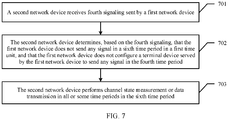
- an embodiment of this application further provides a data transmission method, including: receiving, by a second network device, fourth signaling sent by a first network device; determining, by the second network device based on the fourth signaling, that the first network device does not send any signal in a sixth time period in the first time unit, and that the first network device does not configure a terminal device served by the first network device to send any signal in the fourth time period; and performing, by the second network device, channel state measurement or data transmission in all or some time periods in the sixth time period.
- the second network device may determine, based on the fourth signaling, that the first network device does not send any signal in the sixth time period in the first time unit. In this case, the second network device is not interfered with by a neighboring network device, and the second network device may perform channel state measurement or data transmission in all or some time periods in the sixth time period. This improves spectrum resource utilization.
- the first time unit includes L symbols
- the sixth time period includes all symbols from a (k + 1) th symbol to a (j - 1) th symbol in the L symbols.
- the determining, by the second network device based on the fourth signaling, that the first network device does not send any signal in a sixth time period in the first time unit, and that the first network device does not configure a terminal device served by the first network device to send any signal in the fourth time period includes: when the sixth time period includes a (k + X + 1) th symbol to a (j - Y - 1) th symbol, determining, by the second network device, that the first network device does not transmit any signal in the (k + X + 1) th symbol to the (j - Y - 1) th symbol, and that the first network device does not configure a terminal device served by the first network device to send any signal in the (k + X + 1) th symbol to the (j - Y - 1) th symbol.
- L
- an embodiment of this application further provides a network device.
- the network device is specifically a first network device.
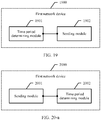
- the first network device includes: a time period determining module, configured to: determine to send first downlink data to a first terminal device in a first time period in a first time unit, and receive, in a second time period in the first time unit, a feedback signal sent by the first terminal device in response to a status of receiving the first downlink data; and a sending module, configured to: send first signaling to the first terminal device, where the first signaling is used to indicate that the first network device sends the first downlink data in the first time period in the first time unit, and receives, in the second time period in the first time unit, the feedback signal sent by the first terminal in response to the first downlink data.
- the time period determining module is further configured to determine a third time period from the first time unit.
- a start point of the third time period is an end time of the first time period, and an end point of the third time period is a start time of the second time period.
- the sending module is further configured to perform at least one of the following steps: sending second signaling to a target device, where the second signaling indicates that the first network device sends a first target signal in a fourth time period in the third time period; sending third signaling to a target device, where the third signaling indicates that the first network device receives, in a fifth time period in the third time period, a second target signal sent by the target device; or sending fourth signaling to a target device, where the fourth signaling indicates that the first network device does not send any signal in a sixth time period in the third time period, and that the first network device does not configure a terminal device served by the first network device to send any signal in the fourth time period.
- the third time period includes at least one of the following time periods: the fourth time period, the fifth time period, and the sixth time period;
- the target device includes at least one of the following devices: the first terminal device, a second terminal device, and a second network device;
- the first network device provides a communications service for the second terminal device and the first terminal device;
- the second network device is a neighboring network device of the first network device.
- the first network device sends the first downlink data to the first terminal device in the first time period in the first time unit, the first network device receives, in the second time period in the first time unit, the feedback signal sent by the first terminal device, and the first network device determines the third time period from the first time unit.
- the start point of the third time period is the end time of the first time period
- the end point of the third time period is the start time of the second time period
- the third time period may be divided into at least one of the following time periods: the fourth time period, the fifth time period, and the sixth time period.
- the first network device may perform uplink transmission and downlink transmission or keep silent in the time periods in the third time period, so that the first network device can transmit data in the fourth time period or the fifth time period. In this way, spectrum resource utilization is improved.
- an embodiment of this application provides a network device.
- the network device is specifically a first network device.
- the first network device includes: a sending module, configured to send first signaling to a first terminal device in a first time period in a first time unit, where the first signaling indicates that the first network device receives first uplink data in a second time period in the first time unit; and a time period determining module, configured to determine a third time period from the first time unit, where a start point of the third time period is an end time of the first time period, and an end point of the third time period is a start time of the second time period.
- the sending module is further configured to perform at least one of the following operations: sending second signaling to a target device, where the second signaling indicates that the first network device sends a first target signal in a fourth time period in the third time period; sending third signaling to a target device, where the third signaling indicates that the first network device receives, in a fifth time period in the third time period, a second target signal sent by the target device; or sending fourth signaling to a target device, where the fourth signaling indicates that the first network device does not send any signal in a sixth time period in the third time period, and that the first network device does not configure a terminal device served by the first network device to send any signal in the sixth time period.
- the third time period includes at least one of the following time periods: the fourth time period, the fifth time period, and the sixth time period;
- the target device includes at least one of the following devices: the first terminal device, a second terminal device, and a second network device;
- the first network device provides a communications service for the second terminal device and the first terminal device;
- the second network device is a neighboring network device of the first network device.
- the first network device may instruct the first terminal device to send the first signaling in the first time period in the first time unit, the first network device may further receive, in the second time period in the first time unit, the first uplink data sent by the first terminal device, and the first network device determines the third time period from the first time unit.
- the start point of the third time period is the end time of the first time period
- the end point of the third time period is the start time of the second time period
- the third time period may be divided into at least one of the following time periods: the fourth time period, the fifth time period, and the sixth time period.
- the first network device may perform uplink transmission and downlink transmission or keep silent in the time periods in the third time period, so that the first network device can transmit data in the fourth time period or the fifth time period. In this way, spectrum resource utilization is improved.
- the time period determining module is specifically configured to determine the third time period based on a downlink processing time period for processing the first downlink data by the first terminal device.
- the third time period may be determined by using the downlink processing time period for processing the first downlink data by the first terminal device.
- the first network device may perform uplink transmission and downlink transmission or keep silent when the first terminal device processes the first downlink data. In this way, spectrum resource utilization can be improved.
- the time period determining module is specifically configured to determine the third time period based on an uplink processing time period for processing the first uplink data by the first terminal device.
- the third time period may be determined by using the downlink processing time period for processing the first uplink data by the first terminal device.
- the first network device may perform uplink transmission and downlink transmission or keep silent when the first terminal device processes the first uplink data. In this way, spectrum resource utilization can be improved.
- the first time unit includes L symbols
- the end time of the first time period is a k th symbol in the L symbols
- the start time of the second time period is a j th symbol in the L symbols
- the third time period includes all symbols from a (k + 1) th symbol to a (j - 1) th symbol in the L symbols.
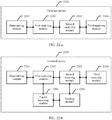
- the first network device further includes: a first receiving module and a silence module.
- the sending module is further configured to: when the fourth time period includes the (k + 1) th symbol to a (k + X) th symbol, send, in the (k + 1) th symbol to the (k + X) th symbol, a first target signal to the target device; the first receiving module is configured to: when the fifth time period includes a (j - Y) th symbol to the (j - 1) th symbol, receive, in the (j - Y) th symbol to the (j - 1) th symbol, a second target signal sent by the target device; and/or the silence module is configured to: when the sixth time period includes a (k + X + 1) th symbol to a (j - Y - 1) th symbol, that the first network device does not transmit any signal in the (k + X + 1) th symbol to the (j - Y - 1) th symbol, and that the first network device does not configure a terminal device served by the first network device to send any signal in the (k + X + 1)
- the downlink processing time period is N1 symbols, and (j - k - 1) is greater than N1; or the uplink processing time period is N2 symbols, and (j - k - 1) is greater than N2.
- duration of the time periods in the third time period may be obtained by setting the downlink processing time period and the uplink processing time period.
- X is equal to N1; Y is equal to N1; X is equal to N2; or Y is equal to N2.
- duration of the time periods in the third time period may be obtained by setting values of X and Y.
- the first signaling includes: physical layer control signaling, semi-persistent scheduling SPS signaling, media access control MAC layer signaling, or higher layer signaling;
- the second signaling includes: physical layer control signaling, SPS signaling, MAC layer signaling, or higher layer signaling;
- the third signaling includes: physical layer control signaling, SPS signaling, MAC layer signaling, or higher layer signaling;
- the fourth signaling includes: physical layer control signaling, SPS signaling, MAC layer signaling, higher layer signaling, or interface signaling between base stations.
- the network device may flexibly select frame structures and transmission modes of the signaling.
- the first network device further includes: a symbol duration determining module, configured to: separately obtain a parameter of a downlink control channel used to carry the first signaling, a parameter of a downlink shared channel used to carry the first downlink data, and a parameter of an uplink channel used to carry the feedback signal; and when the first time period, the second time period, the third time period, the fourth time period, the fifth time period, and the sixth time period are counted in a form of orthogonal frequency division multiplexing OFDM symbols, determine duration of a single symbol that is in the first time unit, based on at least one of the following parameters: the parameter of the downlink control channel used to carry the first signaling, the parameter of the downlink shared channel used to carry the first downlink data, the parameter of the uplink channel used to carry the feedback signal, or a predefined reference parameter.
- the first network device may set the duration of the single symbol in the first time unit in the foregoing manner, so that duration
- the symbol duration determining module is specifically configured to: when the parameter of the downlink control channel, the parameter of the downlink shared channel, and the parameter of the uplink channel include a same subcarrier spacing, use duration of an orthogonal frequency division multiplexing OFDM symbol corresponding to the same subcarrier spacing as the duration of the single symbol in the first time unit; when the parameter of the downlink shared channel and the parameter of the uplink channel include different subcarrier spacings, determine a maximum subcarrier spacing from the parameter of the downlink shared channel and the parameter of the uplink channel, and use, by the first network device, duration of an OFDM symbol corresponding to the maximum subcarrier spacing as the duration of the single symbol in the first time unit; when the parameter of the downlink shared channel and the parameter of the uplink channel include different subcarrier spacings, use duration of an OFDM symbol corresponding to a subcarrier spacing of the downlink shared channel as the duration of the single symbol in the first time unit; when the parameter of the downlink shared channel and the parameter of the uplink channel include different subcarrier
- the first target signal includes: a channel state information reference signal CSI-RS used for beam management, a CSI-RS used for channel quality feedback, a CSI-RS used for mobility management, a reference signal used for phase tracking, a reference signal used for time synchronization, and a reference signal used for frequency synchronization.
- the first target signal sent by the first network device may be implemented in a plurality of manners, and the first network device may select, based on an actual scenario, a specific signal that needs to be sent.
- the first target signal includes: second downlink data sent to the second terminal device or third downlink data that is sent to the first terminal device and for which feedback does not need to be performed in the first time unit.
- the first target signal sent by the first network device may be implemented in a plurality of manners, and the first network device may select, based on an actual scenario, a specific signal that needs to be sent.
- the second target signal includes: another uplink signal that is sent by the target device and that is different from the feedback signal, or another uplink signal that is sent by the target device and that is different from the first uplink data.
- the second target signal received by the first network device may be implemented in a plurality of manners, and the first terminal device or the second terminal device may select, based on an actual scenario, a specific signal that needs to be sent.
- the first network device further includes a second receiving module.
- the second receiving module is further configured to: when the first target signal is a CSI-RS, receive, in a seventh time period in a second time unit, channel quality feedback information from the target device in response to the CSI-RS.
- the second time unit is a time unit that is after the first time unit and that includes uplink and downlink switching
- the seventh time period is a time period that is in the second time unit and that is before an uplink feedback signal is sent.
- composition modules of the first network device may further perform the steps described in the first aspect, the second aspect, or the possible implementations.
- steps described in the first aspect, the second aspect, or the possible implementations may further perform the steps described in the first aspect, the second aspect, or the possible implementations.
- an embodiment of this application further provides a terminal device.
- the terminal device is specifically a first terminal device.
- the first terminal device includes: a determining module, configured to determine a first time unit used to receive first downlink data; and a receiving module, configured to receive first signaling sent by a first network device, where the first signaling indicates that the first terminal receives, in a first time period in the first time unit, the first downlink data sent by the first network device, and sends, in a second time period in the first time unit, a feedback signal in response to the first downlink data.
- the determining module is configured to determine a third time period from the first time unit.
- a start point of the third time period is an end time of the first time period, and an end point of the third time period is a start time of the second time period; and the third time period is greater than or equal to a downlink processing time period for processing the first downlink data by the first terminal device.
- the first terminal device receives the first downlink data in the first time period in the first time unit, and sends the feedback signal in the second time period in the first time unit.
- the first terminal device may further perform uplink transmission and downlink transmission in the third time period indicated by the first network device, so that the first terminal device may transmit data in the fourth time period or the fifth time period. In this way, spectrum resource utilization can be improved.
- an embodiment of this application further provides a terminal device.
- the terminal device is specifically a first terminal device.
- the first terminal device includes: a determining module, configured to determine a first time unit used to send uplink data; and a receiving module, configured to receive, in a first time period in the first time unit, first signaling sent by a first network device, where the first signaling indicates that the first terminal device sends first uplink data in a second time period in the first time unit.
- the determining module is further configured to determine a third time period from the first time unit.
- a start point of the third time period is an end time of the first time period, and an end point of the third time period is a start time of the second time period; and the third time period is greater than or equal to an uplink processing time period for processing the first uplink data by the first terminal device.
- the first terminal device receives the first downlink data in the first time period in the first time unit, and sends the feedback signal in the second time period in the first time unit.
- the first terminal device may further perform uplink transmission and downlink transmission in the third time period indicated by the first network device, so that the first terminal device may transmit data in the fourth time period or the fifth time period. In this way, spectrum resource utilization can be improved.
- the first time unit includes L symbols
- the end time of the first time period is a k th symbol in the L symbols
- the start time of the second time period is a j th symbol in the L symbols
- the third time period includes all symbols from a (k + 1) th symbol to a (j - 1) th symbol in the L symbols.
- L, k, and j all are non-negative integers, and j is greater than k.
- composition modules of the first terminal device may further perform the steps described in the third aspect, the fourth aspect, or the possible implementations.
- steps described in the third aspect, the fourth aspect, or the possible implementations may further perform the steps described in the third aspect, the fourth aspect, or the possible implementations.
- an embodiment of this application provides a terminal device.
- the terminal device includes: a determining module, configured to determine a third time period from a first time unit, where the third time period is a time period in the first time unit; and a first receiving module, configured to: receive second signaling sent by a first network device, and determine, based on the second signaling, that the first network device sends a first target signal in a fourth time period in the third time period; a second receiving module, configured to: receive third signaling sent by the first network device, and determine, based on the third signaling, that the terminal device sends a second target signal in a fifth time period in the third time period; or a third receiving module, configured to: receive fourth signaling sent by the first network device, and determine, based on the fourth signaling, that the first network device does not transmit any signal in a sixth time period in the third time period.
- the third time period includes at least one of the following time periods: the fourth time period, the fifth time period, and the sixth time period.
- the terminal device receives first downlink data in the first time period in the first time unit, and sends a feedback signal in a second time period in the first time unit.
- the terminal device may further perform uplink transmission and downlink transmission in the third time period indicated by the first network device.
- the terminal device may transmit data in the fourth time period or the fifth time period. This can improve spectrum resource utilization.
- the first time unit includes L symbols
- the third time period includes all symbols from a (k + 1) th symbol to a (j - 1) th symbol in the L symbols.
- the terminal device further includes a fourth receiving module and a sending module.
- the fourth receiving module is configured to: when the fourth time period includes the (k + 1) th symbol to a (k + X) th symbol, receive, in the (k + 1) th symbol to the (k + X) th symbol, a first target signal sent by the first network device; and/or the sending module is configured to: when the fifth time period includes a (j - Y) th symbol to the (j - 1) th symbol, send the second target signal to the first network device in the (j - Y) th symbol to the (j - 1) th symbol.
- L, k, j, X, and Y all are non-negative integers, and j is greater than k.
- an embodiment of this application further provides a network device.
- the network device is specifically a second network device, and the second network device includes: a receiving module, configured to receive fourth signaling sent by a first network device; a determining module, configured to determine, based on the fourth signaling, that the first network device does not send any signal in a sixth time period in a first time unit, and that the first network device does not configure a terminal device served by the first network device to send any signal in the fourth time period; and a processing module, configured to perform channel state measurement or data transmission in all or some time periods in the sixth time period.
- the second network device may determine, based on the fourth signaling, that the first network device does not send any signal in the sixth time period in the first time unit. In this case, the second network device is not interfered with by a neighboring network device, and the second network device may perform channel state measurement or data transmission in all or some time periods in the sixth time period. This improves spectrum resource utilization.
- the first time unit includes L symbols
- the sixth time period includes all symbols from a (k + 1) th symbol to a (j - 1) th symbol in the L symbols.
- the determining module is specifically configured to: when the sixth time period includes a (k + X + 1) th symbol to a (j - Y - 1) th symbol, determine that the first network device does not transmit any signal in the (k + X + 1) th symbol to the (j - Y - 1) th symbol, and that the first network device does not configure a terminal device served by the first network device to send any signal in the (k + X + 1) th symbol to the (j - Y - 1) th symbol.
- L, k, j, X, and Y all are non-negative integers, and j is greater than k.
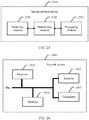
- an embodiment of this application further provides a network device, including: a processor, a memory, a transmitter, and a receiver.
- the memory is configured to store data and an instruction of the receiver and the processor; and the processor is configured to execute the instruction in the memory, so that the terminal device performs the method according to any one of the first aspect, the second aspect, or the sixth aspect.
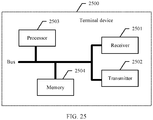
- an embodiment of this application further provides a terminal device, including: a processor, a memory, a transmitter, and a receiver.
- the memory is configured to store data and an instruction of the receiver and the processor; and the processor is configured to execute the instruction in the memory, so that the terminal device performs the method according to any one of the third aspect, the fourth aspect, or the fifth aspect.
- an embodiment of this application provides a communications apparatus.
- the communications apparatus may include an entity such as a terminal device or a chip.
- the communications apparatus includes a processor and a memory.
- the memory is configured to store an instruction.
- the processor is configured to execute the instruction in the memory, so that the communications apparatus performs the method according to any one of the first aspect to the sixth aspect.
- a computer readable storage medium stores an instruction, and when the instruction is run on a computer, the computer is enabled to perform the methods according to the foregoing aspects.
- a computer program product including an instruction is provided.
- the computer program product is run on a computer, the computer is enabled to perform the methods according to the foregoing aspects.
- an embodiment of this application provides a chip system.
- the chip system includes a processor, configured to support a terminal device or a network device in implementing the methods according to the aspects, for example, generating or processing data and/or information in the foregoing methods.
- the chip system further includes a memory.
- the memory is configured to save program instructions and data that are necessary for the terminal device or the network device.
- the chip system may include a chip, or may include a chip and another discrete device.
- Embodiments of this application provide a data transmission method, a network device, and a terminal device, to improve spectrum resource utilization.
- a technology described in this application is applicable to a long term evolution (Long Term Evolution, LTE for short) system or another wireless communications system using various wireless access technologies, for example, a system using an access technology such as code division multiple access, frequency division multiple access, time division multiple access, orthogonal frequency division multiple access, or single-carrier frequency division multiple access.
- LTE Long Term Evolution
- the technology may also be applied to an evolved system subsequent to an LTE system, for example, a fifth-generation 5G (the fifth generation, 5G) system, including a new radio (New Radio, NR) system, an evolved LTE (evolved LTE) system, or the like.
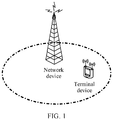
- FIG. 1 is a schematic diagram of a composition structure of a system according to an embodiment of this application.
- the system may include a network device and a terminal device, and there may be one or more terminal devices.
- the communications system in the embodiments of this application is mainly a wireless communications system.
- transmission between an access point and a terminal may be performed by using a radio wave; or may be performed by using visible light, laser, infrared, optical photon, a power line, an optical fiber, a coaxial cable, a twisted copper line, or the like.
- the terminal device is a party that uses a communications resource in a communication process.
- the terminal device may be a mobile phone terminal or an intelligent mobile terminal.
- the terminal device in this application may include various handheld devices, vehicle-mounted devices, wearable devices, or computing devices that have a wireless communication function, or other processing devices connected to a wireless modem, and various forms of user equipments (User Equipment, UE), mobile stations (Mobile station, MS), terminals (terminal), terminal equipments (Terminal Equipment), and the like.
- user equipment User Equipment
- UE User Equipment
- MS mobile stations
- terminal terminal
- Terminal Equipment Terminal Equipment
- the network device is a party configured to manage a communication resource and provide a communication service in a communication process.
- the network device may be a base station, or may be a device such as a server or an access point that provides a communication service.
- the network device in this application may include a base station (base station, BS for short), and the network device is an apparatus that is deployed in a radio access network and that is configured to provide a wireless communication function for a UE.
- the base station may include a macro base station, a micro base station, a relay station, an access point, and the like in various forms.
- devices having functions of a base station may have different names.
- the device is referred to as an evolved NodeB (evolved NodeB, eNB or eNodeB for short) in an LTE system, is referred to as a gNB in an NR system, and is referred to as a NodeB (NodeB) in a third-generation 3G system.
- eNB evolved NodeB
- NodeB NodeB
- the network device may send downlink data to the terminal device, the terminal device needs to receive the downlink data and send a feedback signal to the network device, and the terminal device generates a downlink processing time period when processing the downlink data.
- the network device instructs the terminal device to send uplink data, the terminal device needs to send the uplink data to the network device according to an instruction of the network device, and the terminal device generates an uplink processing time period between receiving the instruction of the network device by the terminal device and starting to send the uplink data by the terminal device.
- the network device performs signal transmission by using the downlink processing time period and/or the uplink processing time period, to improve spectrum resource utilization.
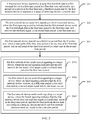
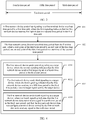
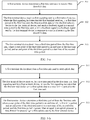
- FIG. 2 shows an embodiment of a data transmission method in this application. The method may include the following steps.
- a first network device determines to send first downlink data to a first terminal device in a first time period in a first time unit, and receive, in a second time period in the first time unit, a feedback signal sent by the first terminal device in response to a status of receiving the first downlink data.
- the first network device may send the first downlink data to the first terminal device in the first time unit.
- the time unit may be a combination of time periods with a specific duration, and the time unit may be a slot (slot), a subframe, or a mini-slot (mini-slot); or may be a plurality of slots or a plurality of subframes. This is not limited in this application.
- a time unit may include at least two time periods, where a first time period is used by the first network device to send downlink data, and a second time period is used by the first network device to receive uplink data.
- the first network device sends first signaling to the first terminal device, where the first signaling is used to indicate that the first network device sends the first downlink data in the first time period in the first time unit, and receives the feedback signal in the second time period in the first time unit.
- the data transmission method further includes the following steps:
- the first network device determines a third time period from the first time unit, where a start point of the third time period is an end time of the first time period, and an end point of the third time period is a start time of the second time period.
- the first network device after determining the first time unit used to send the first downlink data, the first network device needs to determine a time period in which the first downlink data is sent in the first time unit. In this case, the first terminal device needs to process the first downlink data in the third time period from an end time at which the first downlink data is sent to a start time of receiving the feedback signal. For example, the first terminal device needs to receive and parse signaling that carries downlink scheduling and that is sent in the first time unit, and the first terminal needs to receive and decode the first downlink data, and then the first terminal further needs to generate a feedback signal that is sent to the first network device and that indicates whether the first downlink data is correctly received.
- the first network device determines that a time period for sending the first downlink data is the first time period, and that a time for receiving the feedback signal is the second time period; and determines the third time period based on a downlink processing time period of the first terminal.
- the third time period is greater than or equal to the downlink processing time period, and in the third time period, the first network device requests the first terminal device to process the first downlink data.
- the first network device may perform step 204, to improve spectrum resource utilization.
- the first network device sends first signaling to the first terminal device.
- the first signaling is used to indicate that the first terminal device receives the first downlink data in the first time unit, and sends the feedback signal in the first time unit.
- the first signaling indicates that the first terminal device receives the first downlink data in the first time period, and sends the downlink data in the second time period.
- the determining, by the first network device, a third time period from the first time unit includes: determining, by the first network device, the third time period based on the downlink processing time period for processing the first downlink data by the first terminal device.
- the first network device determines the third time period based on the downlink processing time period for processing the first downlink data by the first terminal device.
- the start point of the third time period is the end time at which the first downlink data is sent, and the end point of the third time period is a start time at which the feedback signal is received.
- the feedback signal is a signal, received by the first network device from the first terminal device in the first time unit, in response to a status of receiving the first downlink data.
- the first network device performs at least one of the following operations:
- the third time period includes at least one of the following time periods: the fourth time period, the fifth time period, and the sixth time period;
- the target device includes at least one of the following devices: the first terminal device, a second terminal device, and a second network device;
- the first network device provides a communications service for the second terminal device and the first terminal device;
- the second network device is a neighboring network device of the first network device.
- the first network device In step 202, the first network device generates the first signaling, where the first signaling is used to indicate that the first terminal device receives the first downlink data in the first time unit, and sends the feedback signal in the first time unit; the first network device sends the first signaling to the first terminal device; and the first terminal device receives and parses the first signaling to determine to: receive the first downlink data in the first time unit, and receive the feedback signal in the first time unit.
- the first network device may send the first signaling to the first terminal device in the first time unit, or the first network device may send the first signaling to the first terminal device in a time unit that is before the first time unit.
- the first signaling includes physical layer control signaling, semi-persistent scheduling SPS signaling, media access control MAC layer signaling, or higher layer signaling
- the second signaling includes physical layer control signaling, SPS signaling, MAC layer signaling, or higher layer signaling
- the third signaling includes physical layer control signaling, SPS signaling, MAC layer signaling, or higher layer signaling
- the fourth signaling includes physical layer control signaling, SPS signaling, MAC layer signaling, higher layer signaling, or interface signaling between base stations.
- the first signaling includes downlink control (Downlink Control Information, DCI) signaling, semi-static scheduling (Semi-Persistent Scheduling, SPS) signaling, MAC layer scheduling signaling, or higher layer scheduling signaling.
- DCI Downlink Control Information
- SPS Semi-Persistent Scheduling
- the signaling may be combined in a plurality of manners.
- the first network device instructs, by using the physical layer control signaling, the first terminal to receive the first downlink data in the first time unit, and instructs, by using the higher layer signaling, the first terminal device to feed back signaling in the first time unit.
- the signaling is collectively referred to as the first signaling, the second signaling, the third signaling, or the fourth signaling. This is not limited in this application.
- the third time period may include at least one of the following time periods: the fourth time period, the fifth time period, and the sixth time period.
- the third time period may include the fourth time period
- the third time period may include the fifth time period
- the third time period includes the sixth time period
- the third time period may include the fourth time period and the fifth time period
- the third time period includes the fourth time period and the fifth time period
- the third time period includes the fifth time period and the sixth time period
- the third time period includes the fourth time period, the fifth time period and the sixth time period
- the third time period includes the fourth time period, the fifth time period, and the sixth time period.
- description is provided by using an example in which the third time period includes the fourth time period, the fifth time period, and the sixth time period.
- Duration of all of the fourth time period, the fifth time period, and the sixth time period, target signals in the time periods, and target devices in the time periods may be flexibly configured based on actual scenarios.
- the third time period includes the fourth time period, the fifth time period, and the sixth time period
- the target device in the fourth time period is the second terminal device
- the target device in the fifth time period is the first terminal device
- the target device in the sixth time period is a neighboring base station.
- the third time period includes the fourth time period and the fifth time period
- the target device in the fourth time period is the first terminal device
- the target device in the fifth time period is the first terminal device.
- the first network device When the third time period includes the fourth time period, the first network device performs downlink transmission by using the fourth time period. For example, the first network device may send the first target signal to the target device in the fourth time period, so that the first network device uses the fourth time period in the third time period for downlink transmission. In this way, spectrum resource utilization is improved.
- the first network device sends second signaling to the target device.
- the target device may determine, based on the second signaling, that the first network device sends a first target signal in the fourth time period in the third time period.
- the first target signal is a signal different from the first downlink data.
- the target device may include the first terminal device and/or the second terminal device.
- the first network device provides a communications service for both the second terminal device and the first terminal device.
- the first target signal includes: a channel state information reference signal CSI-RS used for beam management, a CSI-RS used for channel quality feedback, a CSI-RS used for mobility management, a reference signal used for phase tracking, a reference signal used for time synchronization, and a reference signal used for frequency synchronization.
- CSI-RS channel state information reference signal
- the first target signal sent by the first network device may be implemented in a plurality of forms.
- the first target signal may be downlink data sent to the second terminal device, or the first target signal may include various types of reference signals sent to the first terminal device and/or the second terminal device, including: a channel state information reference signal (Channel State Information-Reference Signal, CSI-RS), a reference signal used for phase tracking, a reference signal used for time synchronization, and a reference signal used for frequency synchronization.
- CSI-RS may be a CSI-RS of the first terminal device, a CSI-RS of another terminal device, a cell-specific CSI-RS, or a beam-specific CSI-RS.
- the CSI-RS may be a CSI-RS used for beam management, a CSI-RS used for channel quality feedback, or a CSI-RS used for mobility management.
- the first target signal may be a reference signal used for phase tracking, a reference signal used for time synchronization, or a reference signal used for frequency synchronization.
- the first network device may implement corresponding functions by using a plurality of different reference signals. A specific implementation of the first target signal is used for description only, and is not intended to limit the first target signal.
- the data transmission method provided in this embodiment of this application further includes the following step.
- the first network device receives, in a seventh time period in a second time unit, channel quality feedback (Channel Quality Indicator, CQI) information of the target device for the CSI-RS, where the second time unit is a time unit that is after the first time unit and that includes uplink and downlink switching, and the seventh time period is a time period that is before the uplink feedback signal is transmitted in the second time unit.
- CQI Channel Quality Indicator
- the first network device selects, as the second time unit, the time unit that is after the first time unit and that includes uplink and downlink switching; the first network device may select, from the second time unit as the seventh time period, the time period that is before the uplink feedback signal is transmitted; and the first network device receives, in the seventh time period in the second time unit, the channel quality feedback information from the target device in response to the CSI-RS.
- the target device may be specifically the first terminal device or the second terminal device.
- the first network device may complete channel quality measurement by using the channel quality feedback information.
- the first target signal when the target device is specifically the second terminal device, includes: second downlink data sent to the second terminal device or third downlink data that is sent to the first terminal device and for which feedback does not need to be performed in the first time unit. Therefore, the first network device can send the second downlink data to the second terminal device in the fourth time period. This can improve spectrum resource utilization.
- the first target signal includes: third downlink data that is sent to the first terminal device and for which feedback does not need to be performed in the first time unit. Therefore, the first network device can send the third downlink data to the first terminal device in the fourth time period. This can improve spectrum resource utilization.
- the first network device When the third time period includes the fifth time period, the first network device performs uplink transmission in the fifth time period. For example, the first network device may instruct the target device to send the second target signal to the first network device in the fifth time period, so that the first network device uses the fifth time period in the third time period for uplink transmission. In this way, spectrum resource utilization is improved.
- the first network device sends the third signaling to the target device.
- the target device may determine, based on the third signaling, to send the second target signal to the first network device in the fifth time period in the third time period.
- the second target signal may include: an uplink signal that is sent by the target device and that is different from the feedback signal, or another uplink signal that is sent by the target device and that is different from the first uplink data.
- the second target signal may be an uplink signal sent by the second terminal device, or may be an uplink signal that is sent by the first terminal device and that is different from the feedback signal, for example, a channel quality measurement signal.
- the second network device may determine, according to the sixth instruction, that the first network device does not send any signal in the sixth time period in the third time period, and that the first network device does not configure a terminal device served by the first network device to send any signal in the sixth time period. Therefore, there is no interference to the second network device in the sixth time period, and the terminal device served by the first network device and/or the terminal device served by the second network device may perform channel quality measurement or data transmission in the sixth time period. This improves spectrum resource utilization.
- the data transmission method provided in this embodiment of this application may further include the following steps:
- L, k, j, X, and Y all are non-negative integers, and j is greater than k.
- the first network device may send the first target signal to the target device in the (k + 1) th symbol to the (k + X) th symbol, and the target device may include the first terminal device or the second terminal device.
- the target device may receive, in the (k + 1) th symbol to the (k + X) th symbol, the first target signal sent by the first network device, and the first network device may perform downlink transmission in the fourth time period.
- a value of X may be zero symbols, one symbol, or a plurality of symbols. If X is zero, it indicates that the third time period does not include the fourth time period.
- the first network device may receive, in the (j - Y) th symbol to the (j - 1) th symbol, the second target signal sent by the target device, and the target device may include the first terminal device or the second terminal device.
- the target device may send the second target signal to the first network device in the (j - Y) th symbol to the (j - 1) th symbol, and the first network device may perform uplink transmission in the fifth time period.
- a value of Y may be zero symbols, one symbol, or a plurality of symbols. If Y is zero, it indicates that the third time period does not include the fifth time period.
- step B3 the first network device does not transmit any signal in the (k + X + 1) th symbol to the (j - Y - 1) th symbol, that is, the first network device keeps a silent state in the (k + X + 1) th symbol to the (j - Y - 1) th symbol, so that the second network device can perform channel state measurement or data transmission in the (k + X + 1) th symbol to the (j - Y - 1) th symbol. Because the first network device is in the silent state in the (k + X + 1) th symbol to the (j - Y - 1) th symbol, there is no interference to the second network device. In this way, a channel state can be accurately measured, or high-reliability data signal transmission can be implemented.
- the downlink processing time period is N1 symbols, and (j - k - 1) is greater than N1.
- X is equal to N1; or Y is equal to N1.
- the first network device may send the first target signal to the target device in the (k + 1) th symbol to a (k + N1) th symbol. In this case, all processing time periods of the first terminal device may be used to send the first target signal, so that spectrum resource utilization can be improved.
- the first network device may receive, in a (j - N1) th symbol to the (j - 1) th symbol, the second target signal sent by the target device. In this case, all processing time periods of the first terminal device may be used to receive the second target signal, so that spectrum resource utilization can be improved.
- FIG. 4 shows an embodiment of a data transmission method in this application. The method may include the following steps.
- a first network device sends first signaling to a first terminal device in a first time period in a first time unit, where the first signaling indicates that the first network device receives first uplink data in a second time period in the first time unit.
- the first network device may receive, in the first time unit, the first uplink data sent by the first terminal device.
- the time unit may be a combination of time periods with specific duration, the time unit may be a slot or a subframe; or may be one mini-slot mini-slot, a plurality of slots, or a plurality of subframes. This is not limited in this application.
- a time unit may include at least two time periods, where a first time period is used by the first network device to send uplink scheduling signaling for scheduling the first terminal to send the first uplink data, and the second time period is used by the first network device to receive the first uplink data.
- the first signaling is scheduling signaling for scheduling the first terminal to send the first uplink data, the first signaling is sent in the first time period in the first time unit, and the first signaling is used to indicate that the first terminal device sends the first uplink data in the second time period in the first time unit.
- the first network device determines a third time period from the first time unit, where a start point of the third time period is an end time of the first time period, and an end point of the third time period is a start time of the second time period.
- the determining, by the first network device, a third time period from the first time unit includes: determining, by the first network device, the third time period based on an uplink processing time period for processing the first uplink data by the first terminal device.
- the first network device determines the third time period based on the processing time period for processing the first uplink data by the first terminal device.
- a start point of the third time period is an end time of the first time period, that is, a receiving end time at which the first terminal device receives the first signaling
- an end point of the third time period is a start time of the second time period, that is, a sending start time at which the first terminal device starts to send the first uplink data scheduled by using the first signaling.
- the first network device determines the third time period based on the uplink processing time period for processing the first uplink data by the first terminal device. Specifically, the third time period is greater than or equal to the uplink processing time period for processing the first uplink data by the first terminal device.
- the data transmission method further includes the following step: receiving, by the first network device, second uplink data in the second time period.
- the first network device after determining the first time unit used by the first terminal device to send the first uplink data, the first network device needs to determine a time period in which the first uplink data is received in the first time unit. In this case, the first terminal device needs to process the first uplink data in the first time period from the receiving end time at which the first terminal device receives the first signaling to the start time at which the first uplink signal is received. For example, the first terminal device needs to receive and parse the first signaling, and then the first terminal device further generates the first uplink data. The first network device determines the third time period. In the third time period, the first network device requests the first terminal device to process the first uplink data. In this embodiment of this application, the first network device may perform step 403, to improve spectrum resource utilization.
- the first network device performs at least one of the following operations:
- the third time period includes at least one of the following time periods: the fourth time period, the fifth time period, and the sixth time period;
- the target device includes at least one of the following devices: the first terminal device, a second terminal device, and a second network device;
- the first network device provides a communications service for the second terminal device and the first terminal device;
- the second network device is a neighboring network device of the first network device.
- the first network device In step 401, the first network device generates the first signaling, where the first signaling is used to indicate that the first terminal device sends the first uplink data in the first time unit; the first network device sends the first signaling to the first terminal device; the first terminal device receives the first signaling; and the first terminal device parses the first signaling to determine to send the first uplink data in the first time unit.
- the first network device may send the first signaling to the first terminal device in the first time unit.
- the first signaling includes SPS signaling, MAC layer signaling, higher layer signaling, or physical layer control signaling, for example, uplink scheduling signaling.
- step 4031 to step 4033 are similar to the example descriptions in step 2041 to step 2043 in the foregoing embodiment.
- the first time unit if the first time unit is counted in a form of symbols, the first time unit includes L symbols, the end time of the first time period is a k th symbol in the L symbols, the start time of the second time period is a j th symbol in the L symbols, and the third time period includes all symbols from a (k + 1) th symbol to a (j - 1) th symbol in the L symbols.
- the data transmission method provided in this embodiment of this application may further include the following steps:
- L, k, j, X, and Y all are non-negative integers, and j is greater than k.
- a start point of the third time period is a k th symbol in the L symbols
- an end point of the third time period is a j th symbol in the L symbols.
- the k th symbol to the j th symbol in the L symbols may be used by the first network device to perform uplink transmission or downlink transmission or keep a silent state.
- the first network device may send the first target signal to the target device in the (k + 1) th symbol to the (k + X) th symbol, and the target device may include the first terminal device or the second terminal device.
- the target device may receive, in the (k + 1) th symbol to the (k + X) th symbol, the first target signal sent by the first network device, and the first network device may perform downlink transmission in the fourth time period.
- a value of X may be zero symbols, one symbol, or a plurality of symbols. If X is zero, it indicates that the third time period does not include the fourth time period.
- the first network device may receive, in the (j - Y) th symbol to the (j - 1) th symbol, the second target signal sent by the target device, and the target device may include the first terminal device or the second terminal device.
- the target device may send the second target signal to the first network device in the (j - Y) th symbol to the (j - 1) th symbol, and the first network device may perform uplink transmission in the third time period.
- a value of Y may be zero symbols, one symbol, or a plurality of symbols. If Y is zero, it indicates that the third time period does not include the fifth time period.
- step C3 the first network device does not transmit any signal in the (k + X + 1) th symbol to the (j - Y - 1) th symbol, that is, the first network device keeps a silent state in the (k + X + 1) th symbol to the (j - Y - 1) th symbol, so that the second network device can perform channel state measurement or data transmission in the (k + X + 1) th symbol to the (j - Y - 1) th symbol. Because the first network device is in the silent state in the (k + X + 1) th symbol to the (j - Y - 1) th symbol, there is no interference to the second network device. In this way, a channel state can be accurately measured, or high-reliability data signal transmission can be implemented.
- X is equal to N2; or Y is equal to N2.
- the data transmission method provided in this embodiment of this application may further include the following steps:
- duration of each of the first time period, the second time period, the third time period, the fourth time period, the fifth time period, and the sixth time period may be obtained by multiplying duration of a single symbol by a quantity of symbols.
- the duration of the single symbol may be determined based on at least one of the following parameters: the parameter of the downlink control channel used to carry the first signaling, the parameter of the downlink shared channel used to carry the first downlink data, the parameter of the uplink channel used to carry the feedback signal, or the predefined reference parameter.
- the downlink control channel is a channel used to carry the first signaling
- the downlink shared channel is a channel used to carry the first downlink data
- the uplink channel is a channel used to carry the feedback signal
- the reference parameter is a predefined reference value used to determine the duration of the single symbol.
- the first network device may determine the duration of the single symbol by using at least one of the parameter of the downlink control channel, the parameter of the downlink shared channel, the parameter of the uplink channel, and the reference parameter, and there may be a plurality of implementations for determining the duration of the single symbol based on at least one of the parameter of the downlink control channel, the parameter of the downlink shared channel, the parameter of the uplink channel, and the reference parameter.
- the determining duration of a single symbol that is in the first time unit includes any one of the following steps:
- the duration of the single symbol in the first time unit may be determined based on the same subcarrier spacing. For example, if the parameter of the downlink control channel, the parameter of the downlink shared channel, and the parameter of the uplink channel all include a subcarrier spacing of 15 kHz, one OFDM symbol is an OFDM symbol corresponding to one 15 kHz subcarrier spacing.
- the first network device uses the duration of the OFDM symbol corresponding to the same subcarrier spacing as the duration of the single symbol in the first time unit. This can reduce parameter configuration complexity.
- the first network device determines the maximum subcarrier spacing from the parameter of the downlink shared channel and the parameter of the uplink channel; and uses the duration of the OFDM symbol corresponding to the maximum subcarrier spacing as the duration of the single symbol in the first time unit.
- the duration of the OFDM symbol corresponding to the maximum subcarrier spacing is smallest, that is, the single symbol in the first time unit is defined based on the shortest duration of the OFDM symbol. In this way, a resource waste caused by a granularity mismatch can be avoided by defining a smaller granularity.
- the first network device may further use duration of an OFDM symbol corresponding to a subcarrier spacing of the downlink shared channel as the duration of the single symbol in the first time unit.
- the processing time period of the first terminal device is related to the subcarrier spacing of the downlink shared channel. A larger subcarrier spacing of the downlink shared channel indicates a shorter processing time period of the first terminal device. Therefore, the processing time period can be accurately estimated.
- the first network device may use the OFDM symbol corresponding to the reference parameter as the duration of the single symbol in the first time unit.
- the reference parameter may be a reference subcarrier spacing
- the first network device may define the duration of the single symbol in the first time unit based on the OFDM symbol corresponding to a reference subcarrier spacing. In this way, the duration of the single symbol can be defined based on a signal transmitted in an actual processing time period of the first terminal device, to facilitate resource sharing.
- the first network device may use the duration of the OFDM symbol corresponding to the subcarrier spacing in the parameter of the uplink channel as the duration of the single symbol in the first time unit. This can reduce parameter configuration complexity of the first terminal device.
- FIG. 5-a shows a data transmission method provided in an embodiment of this application. The method may include the following steps:
- the third time period is greater than or equal to a downlink processing time period for processing the first downlink data by the first terminal device.
- the first network device generates the first signaling, where the first signaling is used to indicate that the first terminal device receives the first downlink data in the first time unit, and sends the feedback signal in the first time unit; the first network device sends the first signaling to the first terminal device; and the first terminal device receives and parses the first signaling to determine to: receive the first downlink data in the first time unit, and send the feedback signal in the first time unit.
- the first network device may send the first signaling to the first terminal device in the first time unit, or the first network device may send the first signaling to the first terminal device in a time unit that is before the first time unit.
- the first signaling includes downlink physical layer control signaling, semi-persistent scheduling signaling, MAC layer signaling, or higher layer signaling.
- the first signaling may be SPS signaling.
- FIG. 5-a describes a data transmission method performed by a first terminal device in a downlink transmission process.
- the following describes a data transmission method performed by a first terminal in an uplink transmission process.
- a data transmission method provided in an embodiment of this application may include the following steps:
- the third time period is greater than or equal to an uplink processing time period for processing the first uplink data by the first terminal device.
- the first time unit includes L symbols
- the end time of the first time period is a k th symbol in the L symbols
- the start time of the second time period is a j th symbol in the L symbols
- the third time period includes all symbols from a (k + 1) th symbol to a (j - 1) th symbol in the L symbols.
- L, k, and j all are non-negative integers, and j is greater than k.
- a data transmission method provided in an embodiment of this application may include the following steps:
- the third time period includes at least one of the following time periods: the fourth time period, the fifth time period, and the sixth time period.
- the first time unit includes L symbols
- the third time period includes all symbols from a (k + 1) th symbol to a (j - 1) th symbol in the L symbols.
- L, k, j, X, and Y all are non-negative integers, and j is greater than k.
- duration of all of the fourth time period, the fifth time period, and the sixth time period, target signals in the time periods, and target devices in the time periods may be flexibly configured based on actual scenarios.
- the third time period includes the fourth time period, the fifth time period, and the sixth time period
- the target device in the fourth time period is a second terminal device
- the target device in the fifth time period is a first terminal
- the target device in the sixth time period is a neighboring base station.
- the third time period includes the fourth time period and the fifth time period
- the target device in the fourth time period is a first terminal device
- the target device in the fifth time period is the first terminal device.
- the target device may receive one or more of the second control signaling, the third control signaling, and the fourth control signaling.
- the target device performs a corresponding operation based on the received control signaling.
- a sending or receiving action after the target device receives the control signaling may be subsequently processed based on a specific scenario. Details are not described in this application.
- the second terminal device performs downlink receiving in the fourth time period.
- the first network device may send the first target signal to the second terminal device in the fourth time period, so that the second terminal device uses the fourth time period in the third time period for downlink receiving.
- spectrum resource utilization is improved.
- the target device is the first terminal device, and the third time period includes the fourth time period
- the first terminal device may receive second signaling sent by the first network device.
- the first terminal device may determine, based on the second signaling, that the first network device sends a first target signal in the fourth time period in the third time period.
- the first target signal is a signal different from the first downlink data.
- the first target signal received by the first terminal device may be implemented in a plurality of forms.
- the first target signal may include a CSI-RS, a reference signal used for phase tracking, a reference signal used for time synchronization, or a reference signal used for frequency synchronization.
- the CSI-RS may be a CSI-RS of the first terminal device, a CSI-RS of another terminal device, a cell-specific CSI-RS, or a beam-specific CSI-RS.
- the first target signal may be a reference signal used for phase tracking, a reference signal used for time synchronization, or a reference signal used for frequency synchronization.
- the first network device may implement corresponding functions by using a plurality of different reference signals. A specific implementation of the first target signal is used for description only, and is not intended to limit the first target signal.
- the data transmission method provided in this embodiment of this application further includes the following step.
- the first terminal device sends, to the first network device in a seventh time period in a second time unit, channel quality feedback information that is in response to the CSI-RS, where the second time unit is a time unit that is after the first time unit and that includes uplink and downlink switching, and the seventh time period is a time period that is in the second time unit and that is before an uplink feedback signal is sent.
- the first network device selects, as the second time unit, the time unit that is after the first time unit and that includes uplink and downlink switching, the first network device may select, from the second time unit as the fifth time period, the time period that is before the uplink feedback signal is transmitted, and the first network device receives, in the seventh time period in the second time unit, the channel quality feedback information sent by the first terminal device in response to the CSI-RS.
- the first network device may complete channel quality measurement by using the channel quality feedback information.
- the first target signal includes: the third downlink data that is sent to the first terminal device and for which feedback does not need to be performed in the first time unit.
- the first terminal device may receive, in the fourth time period, the third downlink data sent by the first network device. This can improve spectrum resource utilization.
- the first terminal device When the third time period includes the fifth time period, and the target device is the first terminal device, the first terminal device performs uplink transmission in the fifth time period. For example, the first network device may instruct the first terminal device to send the second target signal to the first network device in the fifth time period, so that the first terminal device uses the fifth time period in the third time period for uplink transmission. In this way, spectrum resource utilization is improved.
- the first network device sends the third signaling to the first terminal device.
- the first terminal device may determine, based on the third signaling, to send the second target signal to the first network device in the third time period in a first time period.
- the second target signal may include: an uplink signal that is sent by the target device and that is different from the feedback signal.
- the second target signal may be an uplink signal that is sent by the first terminal device and that is different from the feedback signal, or another uplink signal that is sent by the target device and that is different from the first uplink data.
- the sixth time period is a silent time period of the first network device and the terminal device served by the first network device, and the first network device remains in a silent state in the sixth time period, that is, the first network device does not perform downlink transmission in the fourth time period, or instruct the terminal device served by the first network device to perform uplink transmission.
- the first network device sends sixth signaling to the first terminal device, and the first terminal device may keep the silent state in the sixth time period according to the fourth instruction. In this case, there is no interference to the second network device in the fourth time period, and the second network device may perform channel quality measurement or data transmission in the sixth time period. This improves utilization efficiency of spectrum resources.
- the first network device obtains a quantity of symbols included in the first time unit.
- the first time unit includes L symbols
- the end time of the first time period is a k th symbol in the L symbols
- the start time of a second time period is a j th symbol in the L symbols
- the third time period includes all symbols from a (k + 1) th symbol to a (j - 1) th symbol in the L symbols.
- the data transmission method provided in this embodiment of this application may further include the following steps:
- L, k, j, X, and Y all are non-negative integers, and j is greater than k.
- the terminal device may be the first terminal device or the second terminal device.
- the first network device may send the first target signal to the terminal device in the (k + 1) th symbol to the (k + X) th symbol.
- the terminal device may receive, in the (k + 1) th symbol to the (k + X) th symbol, the first target signal sent by the first network device, and the first network device may perform downlink transmission in the fourth time period.
- a value of X may be zero symbols, one symbol, or a plurality of symbols. If X is zero, it indicates that the third time period does not include the fourth time period.
- the first network device may receive, in the (j - Y) th symbol to the (j - 1) th symbol, the second target signal sent by the terminal device, the terminal device may send the second target signal to the first network device in the (j - Y) th symbol to the (j - 1) th symbol, and the first network device may perform uplink transmission in the fifth time period.
- a value of Y may be zero symbols, one symbol, or a plurality of symbols. If Y is zero, it indicates that the third time period does not include the fourth time period. If X is zero, it indicates that the third time period does not include the fifth time period.
- step 602 is specifically a second terminal device.
- the third time period may include at least one of the following time periods: the fourth time period, the fifth time period, and the sixth time period.
- the third time period may include the fourth time period
- the third time period may include the fifth time period
- the third time period includes the sixth time period
- the third time period may include the fourth time period and the fifth time period
- the third time period includes the fifth time period and the sixth time period
- the third time period includes the fifth time period and the sixth time period
- the third time period includes the fifth time period and the sixth time period
- the third time period includes the fourth time period, the fifth time period, and the sixth time period.
- the second terminal device When the third time period includes the fourth time period, the second terminal device performs downlink receiving in the fourth time period.
- the first network device may send the first target signal to the second terminal device in the fourth time period, that is, the second terminal device receives the first target signal in the fourth time period, so that the second terminal device uses the fourth time period in the third time period for downlink receiving.
- the second terminal device may receive the second signaling sent by the first network device, and the second terminal device may determine, based on the second signaling, that the first network device sends the first target signal in the fourth time period in the third time period.
- the first target signal is a signal different from the first downlink data.
- the first target signal received by the first terminal device may be implemented in a plurality of forms.
- the first target signal may include a CSI-RS, a reference signal used for phase tracking, a reference signal used for time synchronization, or a reference signal used for frequency synchronization.
- the CSI-RS may be a CSI-RS of the second terminal device, a CSI-RS of another terminal device, a cell-specific CSI-RS, or a beam-specific CSI-RS.
- the first target signal may be a reference signal used for phase tracking, a reference signal used for time synchronization, or a reference signal used for frequency synchronization.
- the first network device may implement corresponding functions by using a plurality of different reference signals. A specific implementation of the first target signal is used for description only, and is not intended to limit the first target signal.
- the data transmission method provided in this embodiment of this application further includes the following step.
- the second terminal device sends, to the first network device in a seventh time period in a second time unit, channel quality feedback information that is in response to the CSI-RS, where the second time unit is a time unit that is after the first time unit and that includes uplink and downlink switching, and the seventh time period is a time period that is in the second time unit and that is before an uplink feedback signal is sent.
- the first network device selects, as the second time unit, the time unit that is after the first time unit and that includes uplink and downlink switching, the first network device may select, from the second time unit as the seventh time period, the time period that is before the uplink feedback signal is transmitted, and the first network device receives, in the seventh time period in the second time unit, the channel quality feedback information sent by the second terminal device in response to the CSI-RS.
- the first network device may complete channel quality measurement by using the channel quality feedback information.
- the first target signal includes: the third downlink data that is sent to the second terminal device and for which feedback does not need to be performed in the first time unit.
- the first terminal device may receive, in the fourth time period, the third downlink data sent by the first network device. This can improve spectrum resource utilization.
- the second terminal device When the third time period includes the fifth time period, the second terminal device performs uplink transmission in the fifth time period.
- the first network device may instruct the second terminal device to send the second target signal to the first network device in the fifth time period, so that the second terminal device uses the fifth time period in the third time period for uplink transmission. In this way, spectrum resource utilization is improved.
- the first network device sends the third signaling to the second terminal device.
- the second terminal device may determine, based on the third signaling, to send the second target signal to the first network device in the fifth time period in the third time period.
- the second target signal may include: another uplink signal that is sent by the second terminal device and that is different from the feedback signal.
- the second target signal may be an uplink signal that is sent by the second terminal device and that is different from the feedback signal, or another uplink signal that is sent by the target device and that is different from the first uplink data.
- the sixth time period is a silent time period of the first network device and a terminal device served by the first network device, and the first network device remains in a silent state in the sixth time period, that is, the first network device does not perform downlink transmission in the sixth time period, or instruct the terminal device served by the first network device to perform uplink transmission.
- the first network device sends sixth signaling to the second terminal device, and the second terminal device may keep the silent state in the sixth time period according to the sixth instruction. In this case, there is no interference to the second network device in the sixth time period, and the second network device may perform channel quality measurement or data transmission in the sixth time period. This improves spectrum resource utilization.
- the first network device obtains a quantity of symbols included in the first time unit.
- the first time unit includes L symbols
- the end time of the first time period is a k th symbol in the L symbols
- the start time of the second time period is a j th symbol in the L symbols
- the third time period includes all symbols from a (k + 1) th symbol to a (j - 1) th symbol in the L symbols.
- the data transmission method provided in this embodiment of this application may further include the following steps:
- L, k, j, X, and Y all are non-negative integers, j is greater than k, and (j - k - 1) is greater than a processing time period.
- the first network device may send the first target signal to the second terminal device in the (k + 1) th symbol to the (k + X) th symbol.
- the second terminal device may receive, in the (k + 1) th symbol to the (k + X) th symbol, the first target signal sent by the first network device, and the first network device may perform downlink transmission in the fourth time period.
- a value of X may be zero symbols, one symbol, or a plurality of symbols. If X is zero, it indicates that the third time period does not include the fourth time period.
- the first network device may receive, in the (j - Y) th symbol to the (j - 1) th symbol, the second target signal sent by the terminal device, the terminal device may send the second target signal to the first network device in the (j - Y) th symbol to the (j - 1) th symbol, and the first network device may perform uplink transmission in the fifth time period.
- a value of Y may be zero symbols, one symbol, or a plurality of symbols. If X is zero, it indicates that the third time period does not include the fourth time period.
- FIG. 7 shows an embodiment of a data transmission method in this application. The method may include the following steps:
- the third time period in the first time unit may include at least one of the following time periods: the fourth time period, the fifth time period, and the sixth time period.
- the third time period may include the fourth time period
- the third time period may include the fifth time period
- the third time period includes the sixth time period
- the third time period may include the fourth time period and the fifth time period
- the third time period includes the fifth time period and the sixth time period
- the third time period includes the fifth time period and the sixth time period
- the third time period includes the fifth time period and the sixth time period
- the third time period includes the fourth time period, the fifth time period, and the sixth time period.
- the sixth time period is a silent time period of the first network device and a terminal device served by the first network device, and the first network device remains in a silent state in the sixth time period, that is, the first network device does not perform downlink transmission in the sixth time period, or instruct the terminal device served by the first network device to perform uplink transmission.
- the first network device sends the fourth signaling to a target device.
- the target device may be specifically the second network device, and the second network device is a neighboring network device of the first network device.
- the second network device may determine, according to the fourth instruction, that the first network device does not send any signal in the sixth time period in the third time period, and that the first network device does not configure a terminal device served by the first network device to send any signal in the sixth time period. In this case, there is no interference to the second network device in the fourth time period, and the second network device may perform channel quality measurement or data transmission in the fourth time period. This improves spectrum resource utilization.
- the first network device obtains a quantity of symbols included in the first time unit.
- the first time unit includes L symbols
- the end time of the first time period is a k th symbol in the L symbols
- the start time of the second time period is a j th symbol in the L symbols
- the third time period includes all symbols from a (k + 1) th symbol to a (j - 1) th symbol in the L symbols.
- step 702 may further include the following step:
- the second network device determines that the first network device does not transmit any signal in the (k + X + 1) th symbol to the (j - Y - 1) th symbol, or configure a terminal device served by the first network device to send any signal in the fourth time period.
- L, k, j, X, and Y all are non-negative integers, and j is greater than k.
- the first network device does not transmit any signal in the (k + X + 1) th symbol to the (j - Y - 1) th symbol, or configure the terminal device served by the first network device to send any signal in the fourth time period, that is, the first network device keeps a silent state in the (k + X + 1) th symbol to the (j - Y - 1) th symbol, so that the second network device can perform channel state measurement or data transmission in the (k + X + 1) th symbol to the (j - Y - 1) th symbol. Because the first network device is in the silent state in the (k + X + 1) th symbol to the (j - Y- 1) th symbol, there is no interference to the second network device. In this way, a channel state can be accurately measured, or high-reliability data signal transmission can be implemented.
- a processing time period is N1 symbols, and X is equal to N1, or Y is equal to N1.
- the first network device does not send any signal in a (k + N1 + 1) th symbol to a (j - N1 - 1) th symbol, or instruct the terminal device to send any signal in a (k + N1 + 1) th symbol to a (j - N1 - 1) th symbol.
- the first network device keeps a silent state, there is no interference to the second network device. In this way, a channel state can be accurately measured, or high-reliability data signal transmission can be implemented.
- FIG. 8-a is a schematic diagram of an example in which an n th slot includes uplink and downlink switching of a terminal device according to an embodiment of this application.
- scheduling information of a PDSCH is indicated in a PDCCH in a current slot, and certainly, indication across slots is not excluded.
- a slot includes 14 OFDM symbols.
- a PDSCH is transmitted in a symbol 2 to a symbol 8, that is, in a first time period; and in a subsequent processing time period of a terminal device including about three symbols, one symbol is used for air interface transmission, and a last symbol is used to carry a feedback signal.
- a propagation delay occurs relative to the frame structure on the gNB side, and a last symbol in a slot is used to carry a feedback signal in response to the PDSCH, that is, a second time period.
- FIG. 8-b is a schematic diagram of an n th slot including a processing time period of a UE 1 according to an embodiment of this application.
- description is provided by using an example of a data transmission process on a side of a cell (or a base station, which is not distinguished in this application). The following steps are included.
- Step 1 A first cell (a base station) determines to send downlink data to a first terminal in an n th slot, and determines to receive, in the n th slot, a feedback signal sent by the first terminal in response to the downlink data.
- Step 2 The first cell notifies a terminal of information indicating that the first cell sends the downlink data to the first terminal in the n th slot, and instructs the terminal to send a feedback signal for the downlink data to the base station in the n th slot.
- the first cell may further notify the first terminal of a specific symbol or specific symbols in the n th slot that is or are used to send downlink data and a specific symbol or specific symbols in the n th slot that is or are used to send a feedback signal.
- a (0 - k) th OFDM symbol is a symbol for receiving the downlink data, that is, a first time period.
- a j th symbol to an (L - 1) th symbol are symbols for sending the feedback signal, that is, a second time period.
- the third time period is greater than N1 OFDM symbols, and N1 is greater than or equal to 1.
- the N1 OFDM symbols are greater than or equal to a processing time period for receiving the downlink data by the first terminal.
- the processing time period includes a demodulation time and a decoding time of the downlink data and a generation time of the feedback signal in response to the downlink data.
- the processing time period when the base station notifies the terminal of information indicating that the downlink data is sent to the first terminal in the n th slot by using downlink control signaling, the processing time period further includes a time for receiving and parsing the downlink control signaling by the first terminal.
- the first cell notifies the first terminal of j and k.
- Step 3 The first cell sends, in downlink in a (k + 1) th symbol to a (k + X) th symbol, a downlink signal different from the downlink data for the first terminal; receives, in a (j - Y) th symbol to a (j - 1) th symbol, an uplink signal different from the feedback signal that is fed back by the first terminal in response to the downlink data in the n th slot; and does not send any information in remaining symbols, that is, the (k + X) th symbol to the (j - Y) th symbol.
- a value of X is any value of 0 to N1, X may include an endpoint value N1, a value of Y is 0 to N1, and Y may include an endpoint value N1.
- Step 4 The first cell notifies an information receiving node of information indicating that a signal is sent or received in the (k + 1) th symbol to the (j - 1) th symbol.
- the information receiving node may be the first terminal, another terminal served by the current cell, another cell, or another base station.
- the another cell may determine specific symbols in which the first cell does not send any information, to determine that the symbols are low-interference symbols, and perform measurement by using the symbols or perform high-reliability transmission.
- the following provides description by using an example of the first terminal (for example, the UE 1). The following steps are included:
- a time period between the k th OFDM symbol and the j th OFDM symbol is greater than N1 OFDM symbols, and N1 is greater than or equal to 1.
- the N1 OFDM symbols are greater than or equal to a processing time period for receiving the downlink data packet by the terminal.
- FIG. 9 is another schematic diagram of an n th slot including a processing time period of a UE 1 according to an embodiment of this application.
- description is provided by using an example of a data transmission process on a side of a base station (or a cell). The following steps are included:
- a time period between the k th OFDM symbol and the j th OFDM symbol is greater than N1 OFDM symbols, and N1 is greater than or equal to 1.
- the N1 OFDM symbols are greater than or equal to a processing time period for receiving the downlink data packet by the terminal.
- FIG. 10 is another schematic diagram of an n th slot including a processing time period of a UE 1 according to an embodiment of this application.
- description is provided by using an example of a data transmission process on a side of a base station. The following steps are included.
- Step 1 Abase station determines to send downlink data to a first terminal in an n th slot, and determines to receive, in the n th slot, a feedback signal sent by the first terminal in response to the downlink data.
- Step 2 The base station notifies a terminal of information indicating that the base station sends the downlink data to the first terminal in the n th slot, and instructs the terminal to send a feedback signal for the downlink data to the base station in the n th slot.
- a time period between an end time (a k th OFDM symbol) at which the downlink data is sent and a start time (a j th OFDM symbol) at which the feedback signal in response to the downlink data is received is greater than N1 OFDM symbols, and N1 is greater than or equal to 1.
- the N1 OFDM symbols are greater than or equal to a processing time period for receiving the downlink data by the first terminal.
- the processing time period includes a demodulation time and a decoding time of the downlink data and a generation time of the feedback signal in response to the downlink data.
- Step 3 The base station determines to receive, in a (j - N1) th symbol to a (j - 1) th symbol, another signal different from the feedback signal that is sent by the first terminal in response to the downlink data.
- the signal may be an uplink reference signal, another uplink signal of the first terminal, or an uplink signal of another terminal.
- the uplink reference signal may be an uplink demodulation reference signal DMRS, or may be an uplink sounding reference signal SRS.
- the uplink reference signal may be sent by the first terminal, or may be sent by another terminal.
- the another uplink signal of the first terminal includes, for example, uplink data of the first terminal and an uplink channel state information feedback of the first terminal.
- the uplink signal of the another terminal includes, for example, a reference signal, uplink data, uplink channel state feedback information, and an uplink feedback signal.
- Step 4 The base station notifies a corresponding terminal of information indicating that a signal is to be received in the (j - N1) th symbol to the (j - 1) th symbol in the n th slot.
- the first terminal starts to feed back, in a j th symbol in the n th slot, the feedback signal in response to the downlink data to the base station.
- a time period between the k th OFDM symbol and the j th OFDM symbol is greater than N1 OFDM symbols, and N1 is greater than or equal to 1.
- the N1 OFDM symbols are greater than or equal to a processing time period for receiving the downlink data packet by the terminal.
- FIG. 11 is another schematic diagram of an n th slot including a processing time period of a UE 1 according to an embodiment of this application.
- description is provided by using an example of a data transmission process on a side of a base station. The following steps are included.
- Step 1 Abase station determines to send downlink data to a first terminal in an n th slot, and determines to receive, in the n th slot, a feedback signal sent by the first terminal in response to the downlink data.
- Step 2 The base station notifies a terminal of information indicating that the base station sends the downlink data to the first terminal in the n th slot, and instructs the terminal to send a feedback signal for the downlink data to the base station in the n th slot.
- a time period between an end time (a k th OFDM symbol) at which the downlink data is sent and a start time (a j th OFDM symbol) at which the feedback signal in response to the downlink data is received is greater than N1 OFDM symbols, and N1 is greater than or equal to 1.
- the N1 OFDM symbols are greater than or equal to a processing time period for receiving the downlink data by the first terminal.
- the processing time period includes a demodulation time and a decoding time of the downlink data and a generation time of the feedback signal in response to the downlink data.
- Step 3 The base station sends a reference signal in downlink in a (k + 1) th symbol to a (k + N1) th symbol.
- the reference signal may be a CSI-RS signal, for example, a CSI-RS signal of the first terminal, a CSI-RS signal of another terminal, a cell-specific CSI-RS signal, or a beam-specific CSI-RS signal.
- the reference signal may be a reference signal used for phase tracking, a reference signal used for timing, or a reference signal used for frequency synchronization.
- the reference signal may be a reference signal to be sent to one terminal, or may be a reference signal to be sent to a plurality of terminals.
- Step 4 The base station notifies the terminal of information about a reference signal sending location.
- the terminal may be the first terminal or another terminal.
- the base station may notify the terminal by using UE-specific dynamic signaling or higher layer signaling, or according to a predefined rule.
- the predefined rule may be a rule pre-agreed on by the base station with the terminal. For example, the base station and the terminal agree on that, if the base station works in a self-contained mode, after the downlink PDSCH, N1 OFDM symbols are used by default to carry the CSI-RS.
- the first terminal starts to feed back, in a j th symbol in the n th slot, the feedback signal in response to the downlink data to the base station.
- a time period between the k th OFDM symbol and the j th OFDM symbol is greater than N1 OFDM symbols, and N1 is greater than or equal to 1.
- the N1 OFDM symbols are greater than or equal to a processing time period for receiving the downlink data packet by the terminal.
- N1 OFDM symbols are used to indicate a processing time period of a first terminal, duration of one OFDM symbol is related to a parameter used in the slot, and a value of the OFDM symbol is determined in the following manner:
- One OFDM duration is defined based on at least one of a parameter of a PDCCH carrying downlink control signaling, a parameter of a PDSCH carrying downlink data, or a parameter of an uplink channel carrying ACK/NACK.
- the terminal determines processing time periods of the terminal in different scenarios, and reports the processing time periods to the base station in a unit of OFDM symbols.
- the OFDM symbol may be determined based on one or more of the parameter of the PDCCH carrying the downlink control signaling, the parameter of the PDSCH carrying the downlink data, or the parameter of the uplink channel carrying the ACK/NACK.
- the scenario includes one or a combination of the parameter of the PDCCH carrying the downlink control signaling, the parameter of the PDSCH carrying the downlink data, and the parameter of the uplink channel carrying the ACK/NACK.
- FIG. 12 is a schematic diagram of CSI-RS transmission in an n th slot according to an embodiment of this application. If a base station is configured with an operation mode of a self-contained frame structure, in a slot including uplink and downlink switching, a CSI-RS is transmitted in K1 symbols (OFDM Symbol, OS) between uplink and downlink switching.
- K1 symbols OFDM Symbol, OS
- FIG. 13 is a schematic diagram of SRS transmission in an n th slot according to an embodiment of this application. If a base station is configured with an operation mode of a self-contained frame structure, in a slot including uplink and downlink switching, an SRS signal is transmitted in K2 symbols that elapse after uplink and downlink switching starts.
- FIG. 14 is a schematic diagram of a case of no signal transmission in K3 symbols in an n th slot according to an embodiment of this application. If a base station is configured with an operation mode of a self-contained frame structure, in a slot including uplink and downlink switching, no signal transmission is performed in K3 symbols between uplink and downlink switching, and K3 is notified to a neighboring base station, to be used for low-interference measurement.
- the base station may notify the terminal and/or another base station of the configuration.
- a notification method is as follows: In the n th slot, a symbol 0 to a symbol (j1 - 1) are symbols for a DL PDCCH/PDSCH.
- a symbol j 1 to a symbol (j2 - 1) are symbols for a CSI-RS, that is, symbols in which CSI-RS transmission is performed in K1 symbols.
- a symbol j2 to a symbol (j3 - 1) are null symbols, no signal transmission is performed, that is, K3 symbols are null symbols.
- a symbol j3 to a symbol j4 are symbols for an SRS, that is, symbols in which SRS transmission is performed in K2 symbols.
- a symbol j4 to a symbol (j5 - 1) are symbols for an uplink PUCCH.
- the base station may notify the configuration in a semi-static notification manner by using higher layer signaling, or may notify the configuration by using dynamic signaling.
- the foregoing plurality of options may be notified in one piece of signaling/one message or more pieces of signaling/more messages.
- different numbers are defined for different parameter combinations, and identification is performed by using the numbers.
- one format or a set of several formats is predefined, and when the base station determines that the base station is in a self-contained operation mode, the format is notified to the terminal and/or the another base station.
- a signal is sent in a time for processing by a first terminal device. This avoids a resource waste.
- the base station preset frame structure configuration of a self-contained mode, and some signaling redundancy can be reduced by using configuration information.
- FIG. 15 is a schematic diagram of CSI-RS transmission in an n th slot and CQI transmission in an (n + 1) th slot according to an embodiment of this application. If a base station is configured with an operation mode of a self-contained frame structure, a CSI-RS is sent in at least N1 OFDM symbols in an n th uplink and downlink switching slot, and at least N1 OFDM symbols in an uplink and downlink switching slot that is immediately after the n th uplink and downlink switching slot are used to transmit a channel measurement feedback signal in response to the CSI-RS.
- a signal is sent in a time for processing by a first terminal device. This avoids a resource waste.
- one uplink and downlink switching slot is used for downlink transmission, and another uplink and downlink switching slot is used for uplink transmission. This reduces a CQI feedback delay while implementing the self-contained operation mode.
- FIG. 16 is a schematic diagram of a processing time period for uplink processing by a UE 1 in an n th slot according to an embodiment of this application.
- N1 is defined as a processing time period between receiving downlink data by a terminal and sending an uplink feedback by the terminal.
- this embodiment of this application is not limited to this scenario.
- N2 is defined as a processing time period between receiving uplink scheduling signaling by the terminal and sending, by the terminal, uplink data scheduled by using the uplink scheduling signaling.
- other data different from the scheduled uplink data may be transmitted in N2 OFDM symbols.
- a reference signal is sent in a time for processing by a first terminal device. This avoids a resource waste. If the processing time period of the first terminal is N1 OFDM symbols, the N1 OFDM symbols are used to transmit downlink data for the first terminal and another signal different from the feedback signal that is sent by the first terminal in response to the downlink data; or a first cell does not transmit information in the N1 OFDM symbols, and information indicating no transmission is notified to another terminal or a base station, for interference measurement. A low-delay self-contained operation is performed without reducing spectral efficiency.
- FIG. 17 is a schematic diagram of downlink transmission in a plurality of slots according to an embodiment of this application. For example, transmission is performed in a plurality of consecutive downlink slots. For example, when downlink transmission is performed in both an (n1) th slot and an (n2) th slot, a base station sends downlink channel signaling in the (n1) th slot, and sends a feedback signal in the (n2) th slot.
- FIG. 18 is a schematic diagram of transmission in a plurality of consecutive uplink slots according to an embodiment of this application. A base station may schedule a plurality of uplink transmissions in uplink control signaling in an (n1) th slot.
- the base station may send uplink scheduling in the (n1) th slot, and transmit uplink data in the (n1) th slot and the (n2) th slot.
- the following further provides a related apparatus configured to implement the foregoing solutions.
- an embodiment of this application provides a network device.
- the network device is specifically a first network device 1900, and the first network device 1900 includes a time period determining module 1901 and a sending module 1902.
- the time period determining module 1901 is configured to: determine to send first downlink data to a first terminal device in a first time period in a first time unit, and receive, in a second time period in the first time unit, a feedback signal sent by the first terminal device in response to a status of receiving the first downlink data.
- the sending module 1902 is configured to: send first signaling to the first terminal device.
- the first signaling is used to indicate that the first network device sends the first downlink data in the first time period in the first time unit, and receives, in the second time period in the first time unit, the feedback signal sent by the first terminal in response to the first downlink data.
- the time period determining module 1901 is further configured to determine a third time period from the first time unit.
- a start point of the third time period is an end time of the first time period, and an end point of the third time period is a start time of the second time period.
- the sending module 1902 is further configured to perform at least one of the following operations:
- the third time period includes at least one of the following time periods: the fourth time period, the fifth time period, and the sixth time period;
- the target device includes at least one of the following devices: the first terminal device, a second terminal device, and a second network device;
- the first network device provides a communications service for the second terminal device and the first terminal device;
- the second network device is a neighboring network device of the first network device.
- the time period determining module 1901 is specifically configured to determine the third time period based on a downlink processing time period for processing the first downlink data by the first terminal device.
- an embodiment of this application provides a network device.
- the network device is specifically a first network device 2000, and the first network device 2000 includes a sending module 2001 and a time period determining module 2002.
- the sending module 2001 is configured to send first signaling to a first terminal device in a first time period in a first time unit, where the first signaling indicates that the first network device receives first uplink data in a second time period in the first time unit.
- the time period determining module 2002 is configured to determine a third time period from the first time unit, where a start point of the third time period is an end time of the first time period, and an end point of the third time period is a start time of the second time period.
- the sending module 2001 is further configured to perform at least one of the following operations:
- the third time period includes at least one of the following time periods: the fourth time period, the fifth time period, and the sixth time period;
- the target device includes at least one of the following devices: the first terminal device, a second terminal device, and a second network device;
- the first network device provides a communications service for the second terminal device and the first terminal device;
- the second network device is a neighboring network device of the first network device.
- the time period determining module 2002 is specifically configured to determine the third time period based on an uplink processing time period for processing the first uplink data by the first terminal device.
- the first time unit includes L symbols
- the end time of the first time period is a k th symbol in the L symbols
- the start time of the second time period is a j th symbol in the L symbols
- the third time period includes all symbols from a (k + 1) th symbol to a (j - 1) th symbol in the L symbols.
- the first network device 2000 further includes a first receiving module 2003 and a silence module 2004.
- the sending module 2001 is further configured to: when the fourth time period includes a (k + 1) th symbol to a (k + X) th symbol, send the first target signal to the target device in the (k + 1) th symbol to the (k + X) th symbol.
- the first receiving module 2003 is configured to: when the fifth time period includes a (j - Y) th symbol to a (j - 1) th symbol, send a second target signal to the first network device in the (j - Y) th symbol to the (j - 1) th symbol.
- the silence module 2004 is configured to: when the sixth time period includes a (k + X + 1) th symbol to a (j - Y - 1) th symbol, determine that the first network device does not transmit any signal in the (k + X + 1) th symbol to the (j - Y - 1) th symbol, and that the first network device does not configure a terminal device served by the first network device to send any signal in the (k + X + 1) th symbol to the (j - Y - 1) th symbol.
- L, k, j, X, and Y all are non-negative integers, and j is greater than k.
- the downlink processing time period is N1 symbols, and (j - k - 1) is greater than N1; or the uplink processing time period is N2 symbols, and (j - k - 1) is greater than N2.
- X is equal to N1; Y is equal to N1; X is equal to N2; or Y is equal to N2.
- the first signaling includes physical layer control signaling, semi-persistent scheduling SPS signaling, media access control MAC layer signaling, or higher layer signaling
- the second signaling includes physical layer control signaling, SPS signaling, MAC layer signaling, or higher layer signaling
- the third signaling includes physical layer control signaling, SPS signaling, MAC layer signaling, or higher layer signaling
- the fourth signaling includes physical layer control signaling, SPS signaling, MAC layer signaling, higher layer signaling, or interface signaling between base stations.
- the first network device 2000 further includes: a symbol duration determining module 2005, configured to: separately obtain a parameter of a downlink control channel used to carry the first signaling, a parameter of a downlink shared channel used to carry the first downlink data, and a parameter of an uplink channel used to carry the feedback signal; and when the first time period, the second time period, the third time period, the fourth time period, the fifth time period, and the sixth time period are counted in a form of orthogonal frequency division multiplexing OFDM symbols, determine duration of a single symbol that is in the first time unit, based on at least one of the following parameters: the parameter of the downlink control channel used to carry the first signaling, the parameter of the downlink shared channel used to carry the first downlink data, the parameter of the uplink channel used to carry the feedback signal, or a predefined reference parameter.
- a symbol duration determining module 2005 configured to: separately obtain a parameter of a downlink control channel used to carry the first signaling, a parameter of a downlink shared channel used to
- the symbol duration determining module 2005 is specifically configured to: when the parameter of the downlink control channel, the parameter of the downlink shared channel, and the parameter of the uplink channel include a same subcarrier spacing, use duration of an orthogonal frequency division multiplexing OFDM symbol corresponding to the same subcarrier spacing as the duration of the single symbol in the first time unit; when the parameter of the downlink shared channel and the parameter of the uplink channel include different subcarrier spacings, determine a maximum subcarrier spacing from the parameter of the downlink shared channel and the parameter of the uplink channel, and use, by the first network device, duration of an OFDM symbol corresponding to the maximum subcarrier spacing as the duration of the single symbol in the first time unit; when the parameter of the downlink shared channel and the parameter of the uplink channel include different subcarrier spacings, use duration of an OFDM symbol corresponding to a subcarrier spacing of the downlink shared channel as the duration of the single symbol in the first time unit; when the parameter of the downlink shared channel and the parameter of the uplink channel include different subcar
- the first target signal includes: a channel state information reference signal CSI-RS used for beam management, a CSI-RS used for channel quality feedback, a CSI-RS used for mobility management, a reference signal used for phase tracking, a reference signal used for time synchronization, and a reference signal used for frequency synchronization.
- CSI-RS channel state information reference signal
- the first target signal includes: second downlink data sent to the second terminal device or third downlink data that is sent to the first terminal device and for which feedback does not need to be performed in the first time unit.
- the second target signal includes: an uplink signal that is sent by the target device and that is different from the feedback signal, or another uplink signal that is sent by the target device and that is different from the first uplink data.
- the first network device 2000 further includes a second receiving module 2006.
- the second receiving module 2006 is further configured to: when the first target signal is a CSI-RS, receive, in a seventh time period in a second time unit, channel quality feedback information from the target device in response to the CSI-RS.
- the second time unit is a time unit that is after the first time unit and that includes uplink and downlink switching; and the seventh time period is a time period that is in a second time unit and that is before an uplink feedback signal is sent.
- an embodiment of this application provides a terminal device.
- the terminal device is specifically a first terminal device 2100, and the first terminal device includes a determining module 2101 and a receiving module 2102.
- the determining module 2101 is configured to determine a first time unit used to receive first downlink data.
- the receiving module 2102 is configured to receive first signaling sent by a first network device.
- the first signaling indicates that the first terminal receives, in a first time period in the first time unit, first downlink data sent by a first network device, and sends, in a second time period in the first time unit, a feedback signal in response to the first downlink data.
- the determining module 2101 is configured to determine a third time period from the first time unit.
- a start point of the third time period is an end time of the first time period, and an end point of the third time period is a start time of the second time period.
- the third time period is greater than or equal to a downlink processing time period for processing the first downlink data by the first terminal device.
- An embodiment of this application provides a terminal device.
- the terminal device is specifically a first terminal device, and the first terminal device includes a determining module and a receiving module.
- the determining module is configured to determine a first time unit used to receive uplink data.
- the sending module is configured to receive, in a first time period in the first time unit, first signaling sent by a first terminal device.
- the first signaling indicates that the first terminal device sends first uplink data in a second time period in the first time unit.
- the determining module is further configured to determine a third time period from the first time unit.
- a start point of the third time period is an end time of the first time period, and an end point of the third time period is a start time of the second time period.
- the third time period is greater than or equal to an uplink processing time period for processing the first uplink data by the first terminal device.
- the first time unit includes L symbols
- the end time of the first time period is a k th symbol in the L symbols
- the start time of the second time period is a j th symbol in the L symbols
- the third time period includes all symbols from a (k + 1) th symbol to a (j - 1) th symbol in the L symbols.
- L, k, and j all are non-negative integers, and j is greater than k.
- an embodiment of this application provides a terminal device 2200.
- the terminal device 2200 includes a determining module 2201, a first receiving module 2202, a second receiving module 2203, and a third receiving module 2204.
- the determining module 2201 is configured to determine a third time period from a first time unit.
- the third time period is a period of time in the first time unit.
- the first receiving module 2202 is configured to: receive second signaling sent by a first network device, and determine, based on the second signaling, that the first network device sends a first target signal in a fourth time period in the third time period.
- the second receiving module 2203 is configured to: receive third signaling sent by the first network device, and determine, based on the third signaling, that the terminal device sends a second target signal in a fifth time period in the third time period.
- the third receiving module 2204 is configured to: receive fourth signaling sent by the first network device, and determine, based on the fourth signaling, that the first network device does not transmit a signal in a sixth time period in the third time period.
- the third time period includes at least one of the following time periods: the fourth time period, the fifth time period, and the sixth time period.
- the first time unit includes L symbols
- the third time period includes all symbols from a (k + 1) th symbol to a (j - 1) th symbol in the L symbols.
- the terminal device 2200 further includes a fourth receiving module 2205 and a sending module 2206.
- the fourth receiving module 2205 is configured to: when the fourth time period includes a (k + 1) th symbol to a (k + X) th symbol, receive, in the (k + 1) th symbol to the (k + X) th symbol, the first target signal sent by the first network device.
- the sending module 2206 is configured to: when the fifth time period includes a (j - Y) th symbol to a (j - 1) th symbol, send a second target signal to the first network device in the (j - Y) th symbol to the (j - 1) th symbol.
- L, k, j, X, and Y all are non-negative integers, and j is greater than k.
- an embodiment of this application provides a network device.
- the network device is specifically a second network device 2300, and the second network device includes a receiving module 2301, a determining module 2302, and a processing module 2303.
- the receiving module 2301 is configured to receive fourth signaling sent by a first network device.
- the determining module 2302 is configured to determine, based on the fourth signaling, that the first network device does not send any signal in a sixth time period in the first time period, and that the first network device does not configure a terminal device served by the first network device to send any signal in the fourth time period.
- the processing module 2303 is configured to perform channel state measurement or data transmission in all or some time periods in the sixth time period.
- the first time unit includes L symbols
- the sixth time period includes all symbols from a (k + 1) th symbol to a (j - 1) th symbol in the L symbols.
- the determining module 2302 is specifically configured to: when the sixth time period includes a (k + X + 1) th symbol to a (j - Y - 1) th symbol, determine that the first network device does not transmit any signal in the (k + X + 1) th symbol to the (j - Y - 1) th symbol, and that the first network device does not configure a terminal device served by the first network device to send any signal in the (k + X + 1) th symbol to the (j - Y - 1) th symbol.
- L, k, j, X, and Y all are non-negative integers, and j is greater than k.
- An embodiment of this application further provides a computer storage medium.
- the computer storage medium stores a program. During execution of the program, some or all of the steps recorded in the foregoing method embodiments are performed.
- a network device 2400 includes: a receiver 2401, a transmitter 2402, a processor 2403, and a memory 2404 (there may be one or more processors 2403 in the network device 2400, and an example in which there is one processor is used in FIG. 24 ).
- the receiver 2401, the transmitter 2402, the processor 2403, and the memory 2404 may be connected by using a bus or in another manner.
- FIG. 24 shows an example of a connection by using the bus.
- the memory 2404 may include a read-only memory and a random access memory, and provide an instruction and data to the processor 2403. A part of the memory 2404 may further include a non-volatile random access memory (English full name: Non-Volatile Random Access Memory, NVRAM for short).
- the memory 2404 stores an operating system and an operation instruction, an executable module or a data structure, a subnet thereof, or an extended set thereof.
- the operation instruction may include various operation instructions to implement various operations.
- the operating system may include various system programs to implement various basic services and process hardware-based tasks.
- the processor 2403 controls operations of the network device, and the processor 2403 may also be referred to as a central processing unit (English full name: Central Processing Unit, CPU for short).
- a central processing unit International Processing Unit, CPU for short.
- components of the network device are coupled together by using a bus system.
- the bus system may further include a power bus, a control bus, a status signal bus, and the like.
- various types of buses in the figure are marked as the bus system.
- the method disclosed in the embodiments of this application may be applied to a processor 2403 or may be implemented by a processor 2403.
- the processor 2403 may be an integrated circuit chip and has a signal processing capability.
- the steps in the foregoing methods can be implemented by using a hardware integrated logic circuit in the processor 2403, or by using instructions in a form of software.
- the processor 2403 may be a general purpose processor, a digital signal processor (English full name: digital signal processing, DSP for short), an application-specific integrated circuit (English full name: Application Specific Integrated Circuit, ASIC for short), a field-programmable gate array (English full name: Field-Programmable Gate Array, FPGA for short) or another programmable logic device, a discrete gate or transistor logic device, or a discrete hardware component; and may implement or perform the methods, the steps, and logical block diagrams that are disclosed in the embodiments of this application.
- the general purpose processor may be a microprocessor, or the processor may be any conventional processor or the like.
- Steps of the methods disclosed with reference to the embodiments of this application may be directly executed and accomplished by using a hardware decoding processor, or may be executed and accomplished by using a combination of hardware and software modules in the decoding processor.
- a software module may be located in a storage medium mature in the art, such as a random access memory, a flash memory, a read-only memory, a programmable read-only memory, an electrically erasable programmable memory, or a register.
- the storage medium is located in the memory 2404, and the processor 2403 reads information in the memory 2404 and completes the steps in the foregoing methods in combination with hardware of the processor 2403.
- the receiver 2401 may be configured to: receive input digital or character information, and generate a signal input related to a related setting and function control of a network device.
- the transmitter 2402 may include a display device such as a display screen, and the transmitter 2402 may be configured to output digital or character information by using an external interface.
- the processor 2403 is configured to perform the foregoing data transmission method performed by the first network device or the second network device.
- a terminal device 2500 includes: a receiver 2501, a transmitter 2502, a processor 2503, and a memory 2504 (there may be one or more processors 2503 in the terminal device 2500, and an example in which there is one processor is used in FIG. 25 ).
- the receiver 2501, the transmitter 2502, the processor 2503, and the memory 2504 may be connected by using a bus or in another manner.
- FIG. 25 shows an example of a connection by using the bus.
- the memory 2504 may include a read-only memory and a random access memory, and provide an instruction and data for the processor 2503. A part of the memory 2504 may further include an NVRAM.
- the memory 2504 stores an operating system and an operation instruction, an executable module or a data structure, a subnet thereof, or an extended set thereof.
- the operation instruction may include various operation instructions to implement various operations.
- the operating system may include various system programs to implement various basic services and process hardware-based tasks.
- the processor 2503 controls operations of the terminal device, and the processor 2503 may also be referred to as a CPU.
- components of the terminal device are coupled together by using a bus system.
- the bus system includes a power bus, a control bus, a status signal bus, and the like.
- various types of buses in the figure are marked as the bus system.
- the method disclosed in the embodiments of this application may be applied to a processor 2503 or may be implemented by a processor 2503.
- the processor 2503 may be an integrated circuit chip and has a signal processing capability. In an implementation process, steps in the foregoing methods can be implemented by using a hardware integrated logic circuit in the processor 2503, or by using instructions in a form of software.
- the foregoing processor 2503 may be a general purpose processor, a DSP, an ASIC, an FPGA or another programmable logic device, a discrete gate or transistor logic device, or a discrete hardware component. It may implement or perform the methods, the steps, and logical block diagrams that are disclosed in the embodiments of this application.
- the general purpose processor may be a microprocessor, or the processor may be any conventional processor or the like.
- Steps of the methods disclosed with reference to the embodiments of this application may be directly executed and accomplished by using a hardware decoding processor, or may be executed and accomplished by using a combination of hardware and software modules in the decoding processor.
- a software module may be located in a storage medium mature in the art, such as a random access memory, a flash memory, a read-only memory, a programmable read-only memory, an electrically erasable programmable memory, or a register.
- the storage medium is located in the memory 2504, and the processor 2503 reads information in the memory 2504 and completes the steps in the foregoing methods in combination with hardware of the processor.
- the processor 2503 is configured to perform the foregoing data transmission method performed by the first terminal device or the second terminal device.
- connection relationships between modules indicate that the modules are in communication connections with each other, which may be specifically implemented as one or more communications buses or signal cables.
- this application may be implemented by software in addition to necessary universal hardware, or by dedicated hardware, including a dedicated integrated circuit, a dedicated CPU, a dedicated memory, a dedicated component, and the like.
- any functions that can be performed by a computer program can be easily implemented by using corresponding hardware.
- specific hardware structures used to achieve a same function may be in various forms, for example, in a form of an analog circuit, a digital circuit, and a dedicated circuit.
- software program implementation is a better implementation in most cases. Based on such an understanding, the technical solutions of this application essentially or the part contributing to the prior art may be implemented in a form of a software product.
- the software product is stored in a readable storage medium, such as a floppy disk, a USB flash drive, a removable hard disk, a read-only memory (ROM, Read-Only Memory), a random access memory (RAM, Random Access Memory), a magnetic disk, or an optical disc of a computer, and includes several instructions for instructing a computer device (which may be a personal computer, a server, a network device, or the like) to perform the methods described in the embodiments of this application.
- a computer device which may be a personal computer, a server, a network device, or the like
- All or some of the foregoing embodiments may be implemented by using software, hardware, firmware, or any combination thereof.
- the embodiments may be implemented completely or partially in a form of a computer program product.
- the computer program product includes one or more computer instructions.
- the computer may be a general-purpose computer, a dedicated computer, a computer network, or another programmable apparatus.
- the computer instructions may be stored in a computer-readable storage medium or may be transmitted from a computer-readable storage medium to another computer-readable storage medium.
- the computer instructions may be transmitted from a website, computer, server, or data center to another website, computer, server, or data center in a wired (for example, a coaxial cable, an optical fiber, or a digital subscriber line (DSL)) or wireless (for example, infrared, radio, or microwave) manner.
- a wired for example, a coaxial cable, an optical fiber, or a digital subscriber line (DSL)
- wireless for example, infrared, radio, or microwave
- the computer-readable storage medium may be any usable medium accessible by a computer, or a data storage device, such as a server or a data center, integrating one or more usable media.
- the usable medium may be a magnetic medium (for example, a floppy disk, a hard disk, or a magnetic tape), an optical medium (for example, a DVD), a semiconductor medium (for example, a solid-state drive Solid State Disk (SSD)), or the like.
Landscapes
- Engineering & Computer Science (AREA)
- Signal Processing (AREA)
- Computer Networks & Wireless Communication (AREA)
- Physics & Mathematics (AREA)
- Mathematical Physics (AREA)
- Mobile Radio Communication Systems (AREA)
Applications Claiming Priority (2)
| Application Number | Priority Date | Filing Date | Title |
|---|---|---|---|
| CN201710687932.1A CN109391450B (zh) | 2017-08-11 | 2017-08-11 | 一种数据传输方法和网络设备以及终端设备 |
| PCT/CN2018/099920 WO2019029693A1 (zh) | 2017-08-11 | 2018-08-10 | 一种数据传输方法和网络设备以及终端设备 |
Publications (2)
| Publication Number | Publication Date |
|---|---|
| EP3664557A1 true EP3664557A1 (de) | 2020-06-10 |
| EP3664557A4 EP3664557A4 (de) | 2020-08-12 |
Family
ID=65273229
Family Applications (1)
| Application Number | Title | Priority Date | Filing Date |
|---|---|---|---|
| EP18843503.6A Withdrawn EP3664557A4 (de) | 2017-08-11 | 2018-08-10 | Datenübertragungsverfahren, netzwerkvorrichtung und endgerät |
Country Status (4)
| Country | Link |
|---|---|
| US (1) | US20200178276A1 (de) |
| EP (1) | EP3664557A4 (de) |
| CN (1) | CN109391450B (de) |
| WO (1) | WO2019029693A1 (de) |
Families Citing this family (7)
| Publication number | Priority date | Publication date | Assignee | Title |
|---|---|---|---|---|
| EP3836620A4 (de) * | 2018-09-19 | 2021-09-15 | Guangdong Oppo Mobile Telecommunications Corp., Ltd. | Datenübertragungsverfahren und -vorrichtung sowie speichermedium |
| CN111030956B (zh) * | 2019-10-30 | 2021-06-08 | 华为技术有限公司 | 一种通信方法及装置 |
| CN113472489A (zh) * | 2020-03-31 | 2021-10-01 | 华为技术有限公司 | 信息传输方法、装置及系统 |
| CN117336863A (zh) * | 2022-06-22 | 2024-01-02 | 华为技术有限公司 | 一种通信方法和通信装置 |
| CN115988662B (zh) * | 2023-03-13 | 2023-07-25 | 新华三技术有限公司 | 一种数据反馈方法、装置、电子设备及存储介质 |
| WO2024197545A1 (en) * | 2023-03-27 | 2024-10-03 | Nec Corporation | Devices and methods for communication |
| CN121753444A (zh) * | 2023-08-21 | 2026-03-27 | Oppo广东移动通信有限公司 | 信号传输方法及装置、终端设备、网络设备 |
Family Cites Families (11)
| Publication number | Priority date | Publication date | Assignee | Title |
|---|---|---|---|---|
| CN101051851B (zh) * | 2007-05-16 | 2012-10-03 | 贵州大学 | Tdd系统中射频模块的可编程/自动时延补偿方法及装置 |
| US9386535B2 (en) * | 2011-10-26 | 2016-07-05 | Lg Electronics Inc. | Method for determining transmission power information of downlink subframe and apparatus therefor |
| CN103166745B (zh) * | 2011-12-12 | 2016-08-10 | 中国移动通信集团公司 | 一种载波聚合系统中反馈应答指令的方法以及装置 |
| CN104601302B (zh) * | 2013-10-31 | 2018-05-15 | 普天信息技术有限公司 | 多通道无线通信系统上行数据传输方法及设备 |
| EP3101983B1 (de) * | 2014-01-29 | 2021-05-26 | Huawei Technologies Co., Ltd. | Datenübertragungsverfahren und -system |
| CN104468030B (zh) * | 2014-08-26 | 2018-06-05 | 上海华为技术有限公司 | 一种数据传输方法、用户设备及基站 |
| CN106358299B (zh) * | 2015-07-16 | 2019-09-17 | 电信科学技术研究院 | 一种下行数据的反馈信息的发送及接收处理方法、装置 |
| US9992790B2 (en) * | 2015-07-20 | 2018-06-05 | Qualcomm Incorporated | Time division duplex (TDD) subframe structure supporting single and multiple interlace modes |
| US10098093B2 (en) * | 2015-12-15 | 2018-10-09 | Qualcomm Incorporated | Partitioned control channel techniques for time division duplexing subframe processing |
| CN106656421B (zh) * | 2016-12-29 | 2019-09-20 | 珠海市魅族科技有限公司 | 下行数据的解调方法、解调装置及终端 |
| CN106533632B (zh) * | 2016-12-29 | 2019-12-06 | 珠海市魅族科技有限公司 | 下行控制信息的管理方法、管理装置、基站及终端 |
-
2017
- 2017-08-11 CN CN201710687932.1A patent/CN109391450B/zh active Active
-
2018
- 2018-08-10 WO PCT/CN2018/099920 patent/WO2019029693A1/zh not_active Ceased
- 2018-08-10 EP EP18843503.6A patent/EP3664557A4/de not_active Withdrawn
-
2020
- 2020-02-10 US US16/786,124 patent/US20200178276A1/en not_active Abandoned
Also Published As
| Publication number | Publication date |
|---|---|
| CN109391450B (zh) | 2021-06-01 |
| WO2019029693A1 (zh) | 2019-02-14 |
| EP3664557A4 (de) | 2020-08-12 |
| US20200178276A1 (en) | 2020-06-04 |
| CN109391450A (zh) | 2019-02-26 |
Similar Documents
| Publication | Publication Date | Title |
|---|---|---|
| US11985688B2 (en) | Transmission direction configuration method, device, and system | |
| EP3664557A1 (de) | Datenübertragungsverfahren, netzwerkvorrichtung und endgerät | |
| US10959230B2 (en) | Subframe processing method and device | |
| US11146370B2 (en) | Wireless communication method and wireless communications apparatus | |
| US11363575B2 (en) | Uplink information sending method and apparatus and uplink information receiving method and apparatus | |
| US11006410B2 (en) | Method and apparatus for transmitting uplink information | |
| US12273901B2 (en) | Communication method and communications apparatus | |
| EP3661271A1 (de) | Verfahren zur aktivierung einer sekundärzelle, kommunikationsvorrichtung und netzwerkvorrichtung | |
| EP3840447B1 (de) | Datenübertragungsverfahren und -vorrichtung | |
| EP3672342A1 (de) | Signalverarbeitungsverfahren und -vorrichtung | |
| EP3451560B1 (de) | Datenübertragungsverfahren und -vorrichtung | |
| US11632763B2 (en) | Retuning method and apparatus | |
| CN106162897B (zh) | 传输控制信息的方法、基站和用户设备 | |
| US11284390B2 (en) | Data communication method, terminal device, and network device | |
| CN114126057A (zh) | 传输方法、装置、通信设备及终端 | |
| EP4412355A1 (de) | Verfahren zum senden von uplink-informationen, verfahren zum empfangen von uplink-informationen, endgerät und netzwerkvorrichtung | |
| CN120712884A (zh) | 随机接入过程 |
Legal Events
| Date | Code | Title | Description |
|---|---|---|---|
| STAA | Information on the status of an ep patent application or granted ep patent |
Free format text: STATUS: THE INTERNATIONAL PUBLICATION HAS BEEN MADE |
|
| PUAI | Public reference made under article 153(3) epc to a published international application that has entered the european phase |
Free format text: ORIGINAL CODE: 0009012 |
|
| STAA | Information on the status of an ep patent application or granted ep patent |
Free format text: STATUS: REQUEST FOR EXAMINATION WAS MADE |
|
| 17P | Request for examination filed |
Effective date: 20200302 |
|
| AK | Designated contracting states |
Kind code of ref document: A1 Designated state(s): AL AT BE BG CH CY CZ DE DK EE ES FI FR GB GR HR HU IE IS IT LI LT LU LV MC MK MT NL NO PL PT RO RS SE SI SK SM TR |
|
| AX | Request for extension of the european patent |
Extension state: BA ME |
|
| A4 | Supplementary search report drawn up and despatched |
Effective date: 20200715 |
|
| RIC1 | Information provided on ipc code assigned before grant |
Ipc: H04W 92/20 20090101ALI20200709BHEP Ipc: H04L 27/26 20060101ALI20200709BHEP Ipc: H04W 72/04 20090101ALI20200709BHEP Ipc: H04L 5/00 20060101ALI20200709BHEP Ipc: H04W 72/12 20090101AFI20200709BHEP |
|
| DAV | Request for validation of the european patent (deleted) | ||
| DAX | Request for extension of the european patent (deleted) | ||
| STAA | Information on the status of an ep patent application or granted ep patent |
Free format text: STATUS: THE APPLICATION HAS BEEN WITHDRAWN |
|
| 18W | Application withdrawn |
Effective date: 20210607 |