EP3664547B1 - Verfahren und vorrichtung zur übertragung von informationen - Google Patents
Verfahren und vorrichtung zur übertragung von informationen Download PDFInfo
- Publication number
- EP3664547B1 EP3664547B1 EP18843595.2A EP18843595A EP3664547B1 EP 3664547 B1 EP3664547 B1 EP 3664547B1 EP 18843595 A EP18843595 A EP 18843595A EP 3664547 B1 EP3664547 B1 EP 3664547B1
- Authority
- EP
- European Patent Office
- Prior art keywords
- reg
- cce
- bundle
- regs
- control channel
- Prior art date
- Legal status (The legal status is an assumption and is not a legal conclusion. Google has not performed a legal analysis and makes no representation as to the accuracy of the status listed.)
- Active
Links
Images




Classifications
-
- H—ELECTRICITY
- H04—ELECTRIC COMMUNICATION TECHNIQUE
- H04W—WIRELESS COMMUNICATION NETWORKS
- H04W72/00—Local resource management
- H04W72/20—Control channels or signalling for resource management
- H04W72/23—Control channels or signalling for resource management in the downlink direction of a wireless link, i.e. towards a terminal
-
- H—ELECTRICITY
- H04—ELECTRIC COMMUNICATION TECHNIQUE
- H04L—TRANSMISSION OF DIGITAL INFORMATION, e.g. TELEGRAPHIC COMMUNICATION
- H04L5/00—Arrangements affording multiple use of the transmission path
- H04L5/003—Arrangements for allocating sub-channels of the transmission path
- H04L5/0048—Allocation of pilot signals, i.e. of signals known to the receiver
-
- H—ELECTRICITY
- H04—ELECTRIC COMMUNICATION TECHNIQUE
- H04L—TRANSMISSION OF DIGITAL INFORMATION, e.g. TELEGRAPHIC COMMUNICATION
- H04L5/00—Arrangements affording multiple use of the transmission path
- H04L5/0001—Arrangements for dividing the transmission path
- H04L5/0003—Two-dimensional division
- H04L5/0005—Time-frequency
- H04L5/0007—Time-frequency the frequencies being orthogonal, e.g. OFDM(A) or DMT
-
- H—ELECTRICITY
- H04—ELECTRIC COMMUNICATION TECHNIQUE
- H04L—TRANSMISSION OF DIGITAL INFORMATION, e.g. TELEGRAPHIC COMMUNICATION
- H04L5/00—Arrangements affording multiple use of the transmission path
- H04L5/003—Arrangements for allocating sub-channels of the transmission path
- H04L5/0053—Allocation of signalling, i.e. of overhead other than pilot signals
-
- H—ELECTRICITY
- H04—ELECTRIC COMMUNICATION TECHNIQUE
- H04L—TRANSMISSION OF DIGITAL INFORMATION, e.g. TELEGRAPHIC COMMUNICATION
- H04L5/00—Arrangements affording multiple use of the transmission path
- H04L5/0091—Signalling for the administration of the divided path, e.g. signalling of configuration information
- H04L5/0092—Indication of how the channel is divided
-
- H—ELECTRICITY
- H04—ELECTRIC COMMUNICATION TECHNIQUE
- H04L—TRANSMISSION OF DIGITAL INFORMATION, e.g. TELEGRAPHIC COMMUNICATION
- H04L27/00—Modulated-carrier systems
- H04L27/26—Systems using multi-frequency codes
- H04L27/2601—Multicarrier modulation systems
- H04L27/2602—Signal structure
-
- H—ELECTRICITY
- H04—ELECTRIC COMMUNICATION TECHNIQUE
- H04W—WIRELESS COMMUNICATION NETWORKS
- H04W72/00—Local resource management
- H04W72/04—Wireless resource allocation
- H04W72/044—Wireless resource allocation based on the type of the allocated resource
Definitions
- This application relates to the field of wireless communications technologies, and in particular, to an information sending method, an information receiving method, a network device, a terminal device, and a computer-readable storage medium.
- a physical downlink control channel (physical downlink control channel, PDCCH) is mainly used to carry scheduling and other control information, such as a transport format, resource allocation, an uplink scheduling grant, and power control.
- PDCCH physical downlink control channel
- the PDCCH mainly includes a plurality of control channel elements (control channel element, CCE), and the CCE is used to carry control information.
- the CCE usually includes a plurality of resource element groups (resource element group, REG).
- REG resource element group
- a REG usually refers to a time-frequency resource that occupies P consecutive subcarriers in frequency domain and one consecutive OFDM symbol in time domain, and P is an integer greater than 1.
- a control resource set includes a plurality of REG groups, and each REG group includes a plurality of REGs.
- a control resource set may include three REG groups: a REG group 1, a REG group 2, and a REG group 3.
- Each REG group includes 16 REGs: a REG 1, a REG 2, a REG 3, a REG 4, a REG 5, a REG 6, a REG 7, a REG 8, a REG 9, a REG 10, a REG 11, a REG 12, a REG 13, a REG 14, a REG 15, and a REG 16.
- determining REGs that form a CCE of a PDCCH is specifically a mapping process. Interleaved mapping is taken as an example.
- the REGs of the CCE may be uniformly distributed in each REG group of a control channel resource set. For example, as shown in FIG. 2 , if a CCE includes six REGs, the six REGs may be distributed in a REG group 1, a REG group 2, and a REG group 3 of a control resource set.
- each CCE of the PDCCH is mapped within all the REG groups of the control resource set, leading to a high fragmentation rate and low utilization rate of the control resource set.
- This application provides an information sending method, an information receiving method, a network device, a terminal device, and a computer-readable storage medium, as defined by the appended independent claims, which may reduce the degree of fragmentation and improve the resource utilization rate of a control resource set. Further embodiments are defined in their respective dependent claims.
- the CCE included in the physical downlink control channel is mapped to one REG bundle set in a plurality of REG bundle sets included in the control resource set, the CCE can occupy only REG resources in the REG bundle set.
- the method provided in this application can reduce the degree of fragmentation of the physical downlink control channel and improve the resource utilization rate.
- a base station (base station, BS) device also referred to as a base station, is an apparatus deployed on a radio access network to provide a wireless communication function.
- devices providing a base station function in a 2G network include a base transceiver station (base transceiver station, BTS) and a base station controller (base station controller, BSC)
- devices providing a base station function in a 3G network include a NodeB (NodeB) and a radio network controller (radio network controller, RNC)
- devices providing a base station function in a 4G network include an evolved NodeB (evolved NodeB, eNB), and a device providing a base station function in a WLAN is an access point (access point, AP).
- BTS base transceiver station
- BSC base station controller
- devices providing a base station function in a 3G network include a NodeB (NodeB) and a radio network controller (radio network controller, RNC)
- devices providing a base station function include a next generation NodeB (gNB), a TRP (transmission and reception point, transmission and reception point), or a TP (transmission point, transmission point).
- gNB next generation NodeB
- TRP transmission and reception point, transmission and reception point
- TP transmission point, transmission point
- the TRP or TP may exclude a baseband part and include a radio frequency part, or may include a baseband part and a radio frequency part.
- User equipment is a terminal device, which may be either a movable terminal device or an immovable terminal device.
- the equipment is mainly configured to receive or send service data.
- the user equipment may be distributed in a network, and the user equipment has different names in different networks, such as a terminal, a mobile station, a subscriber unit, a station, a cellular phone, a personal digital assistant, a wireless modem, a wireless communications device, a handheld device, a laptop computer, a cordless phone, a wireless local loop, or an in-vehicle device.
- the user equipment may communicate with one or more core networks via a radio access network (radio access network, RAN) (an access part of a wireless communications network), for example, exchange voice and/or data with the radio access network.
- radio access network radio access network
- a network-side device refers to a device deployed on a network side in a wireless communications network, and may be an access network network element, such as a base station or a controller (if any), or may be a core network network element or another network element.
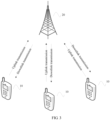
- FIG. 3 is a schematic diagram of a possible system network according to this application.
- a communications system in FIG. 3 may include UE 10 and a base station 20.
- the base station 20 is configured to provide a communication service for the UE 10 and connect the UE 10 to a core network.
- the UE 10 accesses the network by searching for a synchronization signal, a broadcast signal, or the like sent by the base station 20, to communicate with the network.
- An arrow shown in FIG. 3 may indicate uplink/downlink transmission through a wireless communications network between the UE 10 and the base station 20.
- the wireless communications network may use different communications technologies, such as code division multiple access (code division multiple access, CDMA), wideband code division multiple access (wideband code division multiple access, WCDMA), time division multiple access (time division multiple access, TDMA), frequency division multiple access (frequency division multiple access, FDMA), orthogonal frequency division multiple access (orthogonal frequency-division multiple access, OFDMA), single carrier frequency division multiple access (single Carrier FDMA, SC-FDMA), and carrier sense multiple access with collision avoidance (carrier sense multiple access with collision avoidance).
- code division multiple access code division multiple access
- CDMA code division multiple access
- wideband code division multiple access wideband code division multiple access
- WCDMA wideband code division multiple access
- time division multiple access time division multiple access
- FDMA frequency division multiple access
- OFDMA orthogonal frequency division multiple access
- single carrier frequency division multiple access single Carrier FDMA, SC-FDMA
- carrier sense multiple access with collision avoidance carrier sense multiple access with collision avoidance
- the networks may be classified into a 2G (generation) network, a 3G network, a 4G network, or a future evolved network, such as a 5G network.
- a typical 2G network includes a global system for mobile communications (global system for mobile communications/general packet radio service, GSM) network or a general packet radio service (general packet radio service, GPRS) network
- GSM global system for mobile communications/general packet radio service
- GPRS general packet radio service
- a typical 3G network includes a universal mobile telecommunications system (Universal Mobile Telecommunications System, UMTS) network
- UMTS Universal Mobile Telecommunications System
- UMTS Universal Mobile Telecommunications System
- LTE Long Term Evolution
- the UMTS network may sometimes be referred to as a universal terrestrial radio access network (universal terrestrial radio access network, UTRAN), and the LTE network may sometimes be referred to as an evolved universal terrestrial radio access network (evolved universal terrestrial radio access network, E-UTRAN).
- the networks may be classified into a cellular communications network and a wireless local area network (wireless local area network, WLAN).
- the cellular communications network is dominated by scheduling, and the WLAN is dominated by competition.
- 2G, 3G and 4G networks are all cellular communications networks.
- FIG. 4 shows a procedure of sending a physical downlink control channel according to this application.
- a network device in the procedure corresponds to the base station 20 in FIG. 3
- a terminal device corresponds to the UE 10 in FIG. 3 .
- the procedure includes the following steps.
- Step S41 The network device determines a physical downlink control channel (physical downlink control channel, PDCCH).
- PDCCH physical downlink control channel
- a control resource set (control resource set, CORESET) includes a plurality of physical resource blocks in frequency domain and one or more OFDM symbols in time domain.
- the control resource set includes a plurality of resource element group (resource element group, REG) clusters.
- a control resource set may include eight REG clusters: a REG cluster 1, a REG cluster 2, a REG cluster 3, a REG cluster 4, a REG cluster 5, a REG cluster 6, a REG cluster 7, and a REG cluster 8.
- Each REG cluster includes a plurality of consecutive physical resource blocks in frequency domain, and the plurality of physical resource blocks may correspond to a plurality of REGs. For example, still referring to FIG.
- a REG cluster may include six REGs in frequency domain: a REG 1, a REG 2, a REG 3, a REG 4, a REG 5, and a REG 6.
- a REG occupies 12 consecutive subcarriers in frequency domain and one consecutive OFDM symbol in time domain.
- a control resource set is divided into a plurality of REG bundle sets, each REG bundle set includes a plurality of REG clusters, and the plurality of REG clusters are discrete in frequency domain. That the plurality of REG clusters are discrete in frequency domain may mean that any two REG clusters in the plurality of REG clusters are not adjacent in frequency domain, or that the plurality of REG clusters are discrete in frequency domain may mean that numbers of REGs included in any two REG clusters in the plurality of REG clusters are discontinuous.
- the numbers of the REGs are numbers of REGs in the control resource set in a time domain first or frequency domain first order.
- Each REG cluster includes a plurality of physical resource blocks that are consecutive in frequency domain.
- a REG bundle includes a plurality of REGs that are consecutive in time domain or frequency domain.
- a same precoder is used in a REG bundle.
- a quantity of REGs included in the REG cluster that are consecutive in frequency domain is a configurable or predefined value, and the value is a multiple of 6.
- the REG cluster may include six consecutive REGs, 12 consecutive REGs, or 18 consecutive REGs in frequency domain; or the quantity of the REGs included in the REG cluster in frequency domain is a least common multiple of one REG, two REGs, three REGs, and six REGs, or is an integral multiple of a least common multiple of one REG, two REGs, three REGs, and six REGs.
- the value may be configured by using higher layer signaling such as RRC signaling.
- a size of the REG cluster is applicable to REG bundle configurations in a plurality of CCE mapping methods. Therefore, a same interleaved mapping method may be used for different REG bundle configurations to simplify implementation complexity.
- a quantity N of REG clusters included in the REG bundle set is predefined, and a frequency-domain spacing between adjacent REG clusters in the REG bundle set is proportional to a quantity of REG clusters included in the control resource set. For example, a smaller quantity of the REG clusters included in the control resource set indicates a smaller frequency-domain spacing between the adjacent REG clusters in the REG bundle set. On the contrary, a larger quantity of the REG clusters included in the control resource set indicates a larger frequency-domain spacing between the adj acent REG clusters in the REG bundle set.
- the spacing between the adjacent REG clusters in the REG bundle set is proportional to the quantity of the REG clusters included in the control resource set in frequency domain
- the spacing between the adjacent REG clusters in the REG bundle set increases with the quantity of the REG clusters included in the control resource set, and more frequency diversity gains may be obtained.
- the REG bundle set may specifically include N REG clusters, and N is associated with the quantity of the REG clusters included in the control resource set.
- N is associated with the quantity of the REG clusters included in the control resource set.
- a larger quantity of the REG clusters included in the control resource set indicates a smaller quantity of the REG clusters included in the REG bundle set.
- a larger quantity of the REG clusters included in the control resource set may alternatively indicate a larger quantity of the REG clusters included in the REG bundle set.
- the quantity N of the REG clusters included in the REG bundle set may alternatively be derived from a quantity M of the REG clusters included in the control resource set. In other words, a value of N may be determined based on a quantity M of the REG clusters included in the control resource set.
- a control resource set includes M REG clusters, a REG bundle set includes N REG clusters, and both M and N are integers.
- N may be set to 2.
- the condition 1 may be that M is a multiple of 2.
- N may be set to 2 because 8 is a multiple of 2.
- a control resource set includes eight REG clusters, the entire control resource set may be divided into four REG bundle sets, and each REG bundle set includes two REG clusters.
- a control resource set includes M REG clusters
- a REG bundle set includes N REG clusters
- both M and N are integers.
- N may be set to 3.
- the condition 2 may be that M is a multiple of 3 but is not a multiple of 2.
- N may be set to 3 because 9 is a multiple of 3 but is not a multiple of 2.
- a control resource set includes nine REG clusters, the entire control resource set may be divided into three REG bundle sets, and each REG bundle set includes three REG clusters.
- the value of N is dynamically configured based on the quantity of the REG clusters included in the control resource set in frequency domain.
- the two cases are configurable. Therefore, different configurations may be implemented in different scenarios, the frequency diversity gain may be increased when clusters are completely dispersed, and resource fragmentation may be reduced when clusters are partly dispersed.
- a system may achieve more flexible configuration and support a plurality of application scenarios.
- a control resource set includes eight REG clusters: a REG cluster 1, a REG cluster 2, a REG cluster 3, a REG cluster 4, a REG cluster 5, a REG cluster 6, a REG cluster 7, and a REG cluster 8.
- the control resource set shown in FIG. 6 may be specifically divided into four REG bundle sets: a first REG bundle set, a second REG bundle set, a third REG bundle set, and a fourth REG bundle set.
- the first REG bundle set may include the REG cluster 1 and the REG cluster 5
- the second REG bundle set may include the REG cluster 2 and the REG cluster 6
- the third REG bundle set may include the REG cluster 3 and the REG cluster 7
- the fourth REG bundle set may include the REG cluster 4 and the REG cluster 8.
- each CCE included in the physical downlink control channel may be specifically mapped to a REG cluster in a REG bundle set. Manners of mapping a CCE to a REG cluster may be specifically classified into an interleaved mapping manner and a non-interleaved mapping manner, and both the interleaved mapping and the non-interleaved mapping are performed in a unit of a REG bundle.
- the REG bundle includes a plurality of REGs that are consecutive in frequency domain and/or time domain. A same precoder is used in a same REG bundle. For example, a unit that includes one REG in time domain and two consecutive REGs in frequency domain may be referred to as a 1 ⁇ 2 REG bundle.
- the quantity of the REGs included in the REG cluster in frequency domain may be set to an integral multiple of a quantity of REGs included in all REG bundles in frequency domain, to reduce the complexity of resource mapping.
- a size of the REG bundle is represented as [A ⁇ B], where A represents a quantity of REGs that are consecutive in time domain, and B represents a quantity of REGs that are consecutive in frequency domain.
- a size of a corresponding REG bundle for the interleaved mapping may be specifically [1 ⁇ 2], [2 ⁇ 1], or [3 ⁇ 1].
- a size of a corresponding REG bundle for the non-interleaved mapping may be specifically [1 ⁇ 6], [2 ⁇ 3], or [3 ⁇ 2].
- the size of the corresponding REG bundle for the interleaved mapping may alternatively be shown in FIG. 7b
- the size of the corresponding REG bundle for the non-interleaved mapping may alternatively be shown in FIG. 7a .
- a corresponding CCE is a first CCE
- a corresponding CCE is a second CCE
- a quantity of REGs included in the first REG bundle is the same as a quantity of REGs included in the second REG bundle
- the REG bundle includes a plurality of REGs that are consecutive in time domain and/or frequency domain.
- a same type of REG bundles is used for the interleaved mapping and the non-interleaved mapping, thereby reducing the complexity in the interleaved mapping manner.
- An execution procedure of the interleaved mapping manner is specifically as follows:
- the network device obtains a first CCE, where the first CCE is a CCE when the physical downlink control channel is formed in the interleaved mapping manner.
- the network device maps the first CCE to a plurality of REG clusters in the REG bundle set in an interleaved manner, where quantities of REG bundles that are used to map the CCE and that are in any two REG clusters in the plurality of REG clusters are different, or quantities of REGs that are used to map the CCE and that are in any two REG clusters in the plurality of REG clusters are different.
- a CCE includes six REGs
- a REG bundle set includes a REG cluster 1 and a REG cluster 5
- a size of a REG bundle for interleaved mapping is [1 ⁇ 2].
- Two REG bundles in the CCE may be mapped to the REG cluster 1, for example, mapped to a REG bundle 0 and a REG bundle 1 in the REG cluster 1.
- One REG bundle in the CCE is mapped to a REG bundle in the REG cluster 5, for example, mapped to a REG bundle 13 in the REG cluster 5.
- two REG bundles in the CCE may be mapped to the REG cluster 5, and one REG bundle may be mapped to the REG cluster 1. Details are not described herein again.
- a procedure of specifically mapping a CCE in the physical downlink control channel to REG clusters in the REG bundle set is as follows: Obtain a number of the CCE in the physical downlink control channel, for example, a number of the CCE 0 in the physical downlink control channel may be 0, and a number of the CCE 1 in the physical downlink control channel may be 1. Then, determine, based on the number of the CCE and a preset interleaved mapping rule, a location to which the CCE is mapped in the REG cluster in the REG bundle set, for example, as shown in FIG. 8 , locations to which the CCE is mapped in the REG cluster in the REG bundle set may be specifically the REG bundle 0 and the REG bundle 2 in the REG cluster 1, and the REG bundle 13 in the REG cluster 5.
- the foregoing interleaved mapping rule may include selecting, at equal spacings from a plurality of REG bundles in the REG bundle set, REG bundles to which the CCE is mapped.
- a REG bundle set includes 12 REGs, and a REG bundle includes one REG in time domain and two consecutive REGs in frequency domain. Therefore, a REG bundle set includes six REG bundles.
- the six REG bundles may be denoted as a REG bundle 0, a REG bundle 1, a REG bundle 2, a REG bundle 12, a REG bundle 13, and a REG bundle 14. Because the CCE includes six REGs, the CCE includes three REG bundles.
- REG bundles corresponding to the CCE that are obtained by extracting from the six REG bundles at equal spacings in ascending order of numbers of the REG bundles are the REG bundle 0, the REG bundle 2, and the REG bundle 13.
- the numbers of the REG bundles included in the REG bundle set are interleaved, and an interleaving method may be bit flipping, inputting the numbers of the REG bundles into an interleaving matrix, or another method, to obtain an interleaved REG bundle number.
- the numbers of the REG bundles included in the REG bundle set are ⁇ 0, 1, 2, 12, 13, 14 ⁇ .
- the numbers of the REG bundles may be input into the interleaving matrix by row and output by column, a null (null) value is filled for an unfilled part in the interleaving matrix.
- Columns of an interleaver are rearranged.
- a rearrangement method is to perform bit flipping on numbers of columns of the interleaving matrix to obtain new column numbers, and output REG bundle numbers by column. The previously filled null value is removed.
- column numbers of the matrix may be denoted as ⁇ 0, 1, 2, 3, 4, 5, 6, 7 ⁇ . After bit flipping, corresponding column numbers are ⁇ 0, 4, 2, 6, 1, 5, 3, 7 ⁇ .
- the columns of the interleaving matrix are rearranged based on the new column numbers.
- REG bundle numbers output in a matrix column-major order are ⁇ 0, 13, 2, 1, 14, 12 ⁇ . Therefore, resources that are of the first CCE and that are included in the REG bundle set are the REG bundle 0, the REG bundle 13, and the REG bundle 2; and resources that are of the second CCE and that are included in the REG bundle set are the REG bundle 1, the REG bundle 14, and the REG bundle 12.
- a CCE is mapped to each REG cluster in a REG bundle set in an interleaved manner may maintain a specific frequency diversity gain.
- the dispersion degree of REGs that are mapped in the interleaved manner may be restricted, and a quantity of resource fragments is reduced. Therefore, the method maintains a specific frequency diversity gain, and reduces the degree of resource fragmentation.
- the non-interleaved mapping procedure is specifically as follows:
- the network device obtains a second CCE, where the second CCE is a CCE when the physical downlink control channel is formed in the non-interleaved mapping manner.
- the network device maps the second CCE to a REG cluster in the REG bundle set in a non-interleaved manner, where the REG cluster includes X REG resources, the CCE needs to occupy Y REG resources, X and Y are integers, and X is an integral multiple of Y
- a control resource set includes a REG cluster 1, a REG cluster 2, a REG cluster 3, a REG cluster 4, a REG cluster 5, a REG cluster 6, a REG cluster 7, and a REG cluster 8, and the REG cluster 1 and the REG cluster 5 form a REG bundle set.
- a physical downlink control channel includes at least a CCE 0 and a CCE 1, and sizes of REG bundles included in the CCE 0 and the CCE 1 are [2 x 3].
- the CCE 0 may be mapped to a REG bundle 0 in the REG cluster 1, and the CCE 1 may be mapped to another REG bundle in the REG cluster 1.
- a CCE is mapped to each REG cluster in a REG bundle set in an interleaved manner may maintain a specific frequency diversity gain.
- the dispersion degree of REGs that are mapped in the interleaved manner may be restricted, and a quantity of resource fragments is reduced. Therefore, the method maintains a specific frequency diversity gain, and reduces the degree of resource fragmentation.
- Step S42 The network device sends downlink control information by using the physical downlink control channel.
- Step S43 The terminal device determines the physical downlink control channel.
- Step S44 The terminal device receives the downlink control information through the physical downlink control channel.
- the terminal device may perform the following processing, for example: The terminal device determines, based on the control information, a time-frequency resource at which a downlink data channel is located, and receives data information on the time-frequency resource of the downlink data channel; or the terminal device determines, based on the control information, a time-frequency resource at which an uplink data channel is located, and sends data information on the time-frequency resource of the uplink channel.
- the CCE included in the physical downlink control channel is mapped to a REG bundle set in a plurality of REG bundle sets included in the control resource set, the CCE can occupy only REG resources in the REG bundle set.
- the method provided in this application can reduce the degree of fragmentation of the physical downlink control channel and improve the resource utilization rate.
- a 2-symbol control resource set includes 24 REG bundles numbered from 0 to 23.
- Each REG bundle includes two REGs, for example, a REG bundle 0 includes a REG 0 and a REG 1.
- a physical downlink control channel includes eight CCEs: a CCE 0 to a CCE 7.
- the CCE 0 may be mapped to the REG bundle 0, a REG bundle 2, and a REG bundle 7, the CCE 1 may be mapped to a REG bundle 1, a REG bundle 6, a REG bundle 8, and the like.
- FIG. 11 is a possible schematic structural diagram of a based station in the foregoing embodiments of this application.
- the base station may be the base station 20 in FIG. 3 or the network device in FIG. 4 .
- the base station includes a transceiver 101 and a controller/processor 102.
- the transceiver 101 may be configured to support information receiving and sending between the base station and the terminal device in the foregoing embodiments, and support radio communication between the base station and a core network device.
- the controller/processor 102 is configured to perform various functions used for communication with the terminal device and the core network device.
- On an uplink an uplink signal from the terminal device is received by using an antenna, demodulated by the transceiver 101, and is further processed by the controller/processor 102 to restore service data and signaling information that are sent by the terminal device.
- On a downlink the controller/processor 102 processes service data and a signaling message, the transceiver 101 performs modulation to generate a downlink signal, and the downlink signal is sent to UE by using the antenna.
- the controller/processor 102 is further configured to perform the information sending method described in the foregoing embodiments, determine a physical downlink control channel, and send control information through the physical downlink control channel.
- the controller/processor 102 is further configured to perform processing processes of the network device in FIG. 4 and/or is configured to perform other processes of technologies described in this application.
- the base station may further include a memory 103 that may be configured to store program code and data of the base station.
- the base station may further include a communications unit 104, configured to support communication between the base station and another network entity, for example, configured to support communication between the base station and the core network device that is shown in FIG. 5 or FIG. 9 .
- FIG. 11 merely shows a simplified design of the base station.
- the base station may include any quantity of transmitters, receivers, processors, controllers, memories, communications units, or the like. All base stations that can implement this application fall within the protection scope of this application.
- FIG. 12 is a simplified schematic diagram of a possible design structure of a terminal device in the embodiments of this application.
- the terminal device may be the UE 20 shown in FIG. 3 or the terminal device shown in FIG. 4 .
- the terminal device includes a transceiver 111 and a controller/processor 112, and may further include a memory 113 and a modem processor 114.
- the transceiver 111 adjusts (for example, performs analog conversion, filtering, amplification, up-conversion, and the like on) the output sample and generates an uplink signal, and the uplink signal is transmitted to the base station in the foregoing embodiments by using an antenna. On a downlink, the antenna receives a downlink signal transmitted by the base station in the foregoing embodiments.
- the transceiver 111 adjusts (for example, performs filtering, amplification, down-conversion, digitalization, and the like on) the signal received from the antenna, and provides an input sample.
- an encoder 1141 receives service data and a signaling message that are to be sent on an uplink, and processes (for example, performs formatting, encoding, and interleaving on) the service data and the signaling message.
- a modulator 1142 further processes (for example, performs symbol mapping and modulation on) encoded service data and an encoded signaling message, and provides an output sample.
- a decoder 1143 processes (for example, performs de-interleaving and decoding on) the symbol estimate, and provides decoded data and a decoded signaling message that are sent to the terminal device.
- a demodulator 1144 processes (for example, performs demodulation on) the input sample and provides a symbol estimate.
- the encoder 1141, the modulator 1142, the decoder 1143, and the demodulator 1144 may be implemented by a combined modem processor 114. These units perform processing according to radio technologies (for example, access technologies of an LTE system and another evolved system) used by a radio access network.
- radio technologies for example, access technologies of an LTE system and another evolved system
- the controller/processor 112 performs control and management on an action of the terminal device, and is configured to perform processing performed by the terminal device in the foregoing embodiments.
- the terminal device may determine a physical downlink control channel and receive downlink control information through the physical downlink control channel.
- the controller/processor 112 may be configured to support the terminal device in performing the content of the terminal device in FIG. 4 .
- the memory 113 is configured to store program code and data of the terminal device.
- This application further provides a readable storage medium, including an instruction.
- the instruction When the instruction is run on a communications device, the communications device is enabled to perform the information sending method in the foregoing embodiments.
- this application further provides a chip not being part of the claimed invention.
- the chip is connected to a memory, and is configured to read and execute a software program stored in the memory, to implement the information sending method in the foregoing embodiments.
- All or some of the foregoing embodiments may be implemented by means of software, hardware, firmware, or any combination thereof.
- the embodiments may be implemented completely or partly in a form of a computer program product.
- the computer program product includes one or more computer instructions.
- the computer program instructions are loaded and executed on a computer, to implement some or all of the procedure or functions according to the embodiments.
- the computer may be a general-purpose computer, a special-purpose computer, a computer network, or another programmable apparatus.
- the computer instructions may be stored in a computer readable storage medium or may be transmitted from one computer readable storage medium to another computer readable storage medium.
- the computer instructions may be transmitted from a website, computer, server, or data center to another website, computer, server, or data center in a wired (for example, a coaxial cable, an optical fiber, or a digital subscriber line) or wireless (for example, infrared, radio, or microwave) manner.
- the computer readable storage medium may be any usable medium accessible to a computer, or a data storage device, such as a server or a data center, integrating one or more usable media.
- the usable medium may be a magnetic medium (for example, a floppy disk, a hard disk, or a magnetic tape), an optical medium (for example, a DVD), a semiconductor medium (for example, a solid-state drive), or the like.
- These computer program instructions may be provided for a general-purpose computer, a special-purpose computer, an embedded processor, or a processor of any other programmable data processing device to generate a machine, so that the instructions executed by the computer or the processor of the any other programmable data processing device generate an apparatus for implementing a specific function in one or more processes in the flowcharts and/or in one or more blocks in the block diagrams.
- These computer program instructions may be stored in a computer readable memory that can instruct the computer or the any other programmable data processing device to work in a specific manner, so that the instructions stored in the computer readable memory generate an artifact that includes an instruction apparatus.
- the instruction apparatus implements a specific function in one or more processes in the flowcharts and/or in one or more blocks in the block diagrams.
- These computer program instructions may be loaded onto a computer or another programmable data processing device, so that a series of operations and steps are performed on the computer or the another programmable device, thereby generating computer-implemented processing. Therefore, the instructions executed on the computer or the another programmable device provide steps for implementing a specific function in one or more processes in the flowcharts and/or in one or more blocks in the block diagrams.
Landscapes
- Engineering & Computer Science (AREA)
- Signal Processing (AREA)
- Computer Networks & Wireless Communication (AREA)
- Mobile Radio Communication Systems (AREA)
Claims (15)
- Verfahren zum Senden von Informationen, umfassend:Bestimmen (S41) eines physischen Downlink-Steuerkanals durch eine Netzwerkvorrichtung (20), wobei der physische Downlink-Steuerkanal mindestens ein erstes Steuerkanalelement (control channel element - CCE) umfasst, wobei das mindestens eine erste CCE einem Bündelsatz von Ressourcenelementgruppen (resource element group - REG) in einer Vielzahl von REG-Bündelsätzen zugeordnet ist, die in einem Steuerressourcensatz beinhaltet ist, wobei der REG-Bündelsatz N REG-Cluster umfasst, die im Frequenzbereich diskret sind, wobei jedes REG-Cluster eine Vielzahl von aufeinanderfolgenden physischen Ressourcenblöcken im Frequenzbereich umfasst, N kleiner als M ist, M eine Menge von REG-Clustern ist, die in dem Steuerressourcensatz enthalten ist, und sowohl N als auch M positive ganze Zahlen sind und das mindestens eine erste CCE nur REGs in dem zugewiesenen REG-Bündelsatz belegt; undSenden (S42) von Downlink-Steuerinformationen durch die Netzwerkvorrichtung (20) unter Verwendung des physischen Downlink-Steuerkanals,wobei das Bestimmen (S41) des physischen Downlink-Steuerkanals durch die Netzwerkvorrichtung (20) Folgendes umfasst:Bestimmen des mindestens einen ersten CCE, das in dem physischen Downlink-Steuerkanal enthalten ist; undZuordnen des mindestens einen ersten CCE zu jedem der N REG-Cluster in dem zugewiesenen REG-Bündelsatz in einer verschachtelten Weise,wobei sich Mengen von REGs des Steuerressourcensatzes, die zum Zuordnen des mindestens einen ersten CCE verwendet werden und in mindestens zwei der N REG-Cluster vorliegen, unterscheiden.
- Verfahren nach Anspruch 1, wobei das Zuordnen des mindestens einen ersten CCE zu jedem der N REG-Cluster in dem zugewiesenen REG-Bündelsatz in der verschachtelten Weise Folgendes umfasst:
Verteilen von REG-Bündeln des mindestens einen ersten CCE in den zugewiesenen REG-Bündelsatz des Steuerressourcensatzes in gleichen Abständen, wobei die REG-Bündel in dem mindestens einen ersten CCE jeweils eine Vielzahl von REGs umfassen, die im Zeitbereich und/oder Frequenzbereich aufeinanderfolgend sind. - Verfahren nach einem der Ansprüche 1 oder 2, wobei das Bestimmen (S41) des physischen Downlink-Steuerkanals durch die Netzwerkvorrichtung (20) Folgendes umfasst:Erlangen eines zweiten CCE, das in dem physischen Downlink-Steuerkanal enthalten ist; undZuordnen des zweiten CCE zu einem REG-Cluster in dem zugewiesenen REG-Bündelsatz auf eine nicht verschachtelte Weise, wobei das REG-Cluster X REG-Ressourcen im Frequenzbereich umfasst, das zweite CCE Y REG-Ressourcen im Frequenzbereich belegt, X und Y ganze Zahlen sind und X ein ganzzahliges Vielfaches von Y ist.
- Verfahren nach einem der Ansprüche 1 bis 3, wobei das REG-Cluster P REGs im Frequenzbereich umfasst und P ein Vielfaches von 6 ist.
- Verfahren nach Anspruch 3, wobei das mindestens eine erste CCE in der verschachtelten Weise in einer Einheit eines ersten REG-Bündels zugeordnet ist, das zweite CCE in einer Einheit eines zweiten REG-Bündels zugeordnet ist, eine Menge von REGs, die in dem ersten REG-Bündel enthalten ist, gleich einer Menge von REGs ist, die in dem zweiten REG-Bündel enthalten ist, und das erste REG-Bündel und das zweite REG-Bündel jeweils eine Vielzahl von REGs umfassen, die im Zeitbereich und/oder Frequenzbereich aufeinanderfolgend sind.
- Verfahren zum Empfangen von Informationen, umfassend:Bestimmen (S43) eines physischen Downlink-Steuerkanals durch eine Endgerätevorrichtung (10), wobei der physische Downlink-Steuerkanal mindestens ein erstes Steuerkanalelement, CCE, umfasst, das mindestens eine erste CCE einem Bündelsatz von Ressourcenelementgruppen, REG, in einer Vielzahl von REG-Bündelsätzen zugeordnet ist, die in einem Steuerressourcensatz beinhaltet ist, wobei der REG-Bündelsatz N REG-Cluster umfasst, die im Frequenzbereich diskret sind, wobei jedes REG-Cluster eine Vielzahl von aufeinanderfolgenden physischen Ressourcenblöcken im Frequenzbereich umfasst, N kleiner als M ist, M eine Menge von REG-Clustern ist, die in dem Steuerressourcensatz enthalten ist, und sowohl N als auch M positive ganze Zahlen sind, das mindestens eine erste CCE nur REGs in dem zugewiesenen REG-Bündelsatz belegt; undEmpfangen (S44) von Downlink-Steuerinformationen durch die Endgerätevorrichtung (10) durch den physischen Downlink-Steuerkanal hindurch,wobei der physische Downlink-Steuerkanal das mindestens eine erste CCE umfasst, das erste CCE jedem der N REG-Cluster in dem zugewiesenen REG-Bündelsatz in einer verschachtelten Weise zugeordnet ist und sich Mengen von REGs des Steuerressourcensatzes, die zum Zuordnen des mindestens einen ersten CCE verwendet werden und in mindestens zwei der N REG-Cluster vorliegen, unterscheiden.
- Verfahren nach Anspruch 6, wobei REG-Bündel des mindestens einen ersten CCE in dem zugewiesenen REG-Bündelsatz des Steuerressourcensatzes in gleichen Abständen verteilt sind und die REG-Bündel in dem mindestens einen ersten CCE jeweils eine Vielzahl von REGs umfassen, die im Zeitbereich und/oder Frequenzbereich aufeinanderfolgend sind.
- Verfahren nach Anspruch 6, wobei der physische Downlink-Steuerkanal ein zweites CCE umfasst, das zweite CCE einem REG-Cluster in dem zugewiesenen REG-Bündelsatz auf nicht verschachtelte Weise zugeordnet ist, das REG-Cluster X REG-Ressourcen im Frequenzbereich umfasst, das zweite CCE Y REG-Ressourcen im Frequenzbereich belegt, X und Y ganze Zahlen sind und X ein ganzzahliges Vielfaches von Y ist.
- Verfahren nach einem der Ansprüche 6 bis 8, wobei das REG-Cluster P REGs im Frequenzbereich umfasst und P ein Vielfaches von 6 ist.
- Verfahren nach einem der Ansprüche 6 bis 9, wobei ein Wert von N basierend auf der Menge von REG-Clustern bestimmt wird, die in dem Steuerressourcensatz enthalten ist.
- Verfahren nach einem der Ansprüche 6 bis 10, wobei das erste CCE in einer verschachtelten Weise in einer Einheit eines ersten REG-Bündels zugeordnet ist, das zweite CCE in einer Einheit eines zweiten REG-Bündels zugeordnet ist, eine Menge von REGs, die in dem ersten REG-Bündel enthalten ist, gleich einer Menge von REGs ist, die in dem zweiten REG-Bündel enthalten ist, und das erste REG-Bündel und das zweite REG-Bündel jeweils eine Vielzahl von REGs umfassen, die im Zeitbereich und/oder Frequenzbereich aufeinanderfolgend sind.
- Netzwerkvorrichtung (20), die dazu konfiguriert ist, das Verfahren nach einem der Ansprüche 1 bis 5 durchzuführen.
- Endgerätevorrichtung (10), die dazu konfiguriert ist, das Verfahren nach einem der Ansprüche 6 bis 11 durchzuführen.
- Computerlesbares Speichermedium, umfassend Anweisungen, welche bei Ausführung durch einen Computer den Computer dazu veranlassen, das Verfahren nach einem der Ansprüche 1 bis 5 auszuführen.
- Computerlesbares Speichermedium, umfassend Anweisungen, welche bei Ausführung durch einen Computer den Computer dazu veranlassen, das Verfahren nach einem der Ansprüche 6 bis 11 auszuführen.
Applications Claiming Priority (2)
| Application Number | Priority Date | Filing Date | Title |
|---|---|---|---|
| CN201710687765.0A CN109392011B (zh) | 2017-08-11 | 2017-08-11 | 一种信息的发送方法及设备 |
| PCT/CN2018/100084 WO2019029734A1 (zh) | 2017-08-11 | 2018-08-10 | 一种信息的发送方法及设备 |
Publications (3)
| Publication Number | Publication Date |
|---|---|
| EP3664547A1 EP3664547A1 (de) | 2020-06-10 |
| EP3664547A4 EP3664547A4 (de) | 2020-07-29 |
| EP3664547B1 true EP3664547B1 (de) | 2023-11-29 |
Family
ID=65272775
Family Applications (1)
| Application Number | Title | Priority Date | Filing Date |
|---|---|---|---|
| EP18843595.2A Active EP3664547B1 (de) | 2017-08-11 | 2018-08-10 | Verfahren und vorrichtung zur übertragung von informationen |
Country Status (7)
| Country | Link |
|---|---|
| US (1) | US11212789B2 (de) |
| EP (1) | EP3664547B1 (de) |
| JP (1) | JP7027543B2 (de) |
| CN (2) | CN109392011B (de) |
| BR (1) | BR112020002909A2 (de) |
| MY (1) | MY205316A (de) |
| WO (1) | WO2019029734A1 (de) |
Families Citing this family (6)
| Publication number | Priority date | Publication date | Assignee | Title |
|---|---|---|---|---|
| FI3996440T3 (fi) * | 2019-08-15 | 2026-05-26 | Huawei Tech Co Ltd | Ohjauskanavan lähetysmenetelmä ja -laite |
| WO2021203356A1 (en) * | 2020-04-09 | 2021-10-14 | Qualcomm Incorporated | Control resource interleaving for 6 ghz band communications |
| WO2021212286A1 (zh) * | 2020-04-20 | 2021-10-28 | 北京小米移动软件有限公司 | 物理下行控制信道传输方法、装置及存储介质 |
| US12213132B2 (en) * | 2020-09-24 | 2025-01-28 | Qualcomm Incorporated | Transmission configuration indicator (TCI) state- based control channel element (CCE)-to-resource element group (REG) bundle mapping |
| CN113645705B (zh) * | 2021-08-30 | 2023-11-21 | 中信科移动通信技术股份有限公司 | 频域资源分配方法及装置 |
| US12014071B2 (en) * | 2021-12-20 | 2024-06-18 | Micron Technology, Inc. | Separation of parity columns in bit-flip decoding of low-density parity-check codes with pipelining and column parallelism |
Family Cites Families (32)
| Publication number | Priority date | Publication date | Assignee | Title |
|---|---|---|---|---|
| JP2000078375A (ja) * | 1998-09-03 | 2000-03-14 | Toshiba Corp | 画像形成装置 |
| CN102711253B (zh) * | 2012-03-21 | 2015-02-18 | 电信科学技术研究院 | E-pdcch的资源映射方法及装置 |
| MX336451B (es) * | 2012-05-09 | 2016-01-20 | Panasonic Ip Corp America | Aparato de transmision, aparato de recepcion, metodo de transmision y metodo de recepcion. |
| WO2013183956A1 (ko) * | 2012-06-07 | 2013-12-12 | 엘지전자 주식회사 | 무선 통신 시스템에서 epdcch를 통한 제어정보 수신 방법 및 장치 |
| CN103580834B (zh) * | 2012-07-31 | 2018-06-22 | 中兴通讯股份有限公司 | ePDCCH发送、接收方法及装置、基站、用户设备 |
| WO2014019202A1 (zh) * | 2012-08-02 | 2014-02-06 | 华为技术有限公司 | 增强型物理下行控制信道传输方法及设备 |
| WO2014019208A1 (zh) * | 2012-08-02 | 2014-02-06 | 华为技术有限公司 | 传输控制信息的方法、装置及系统 |
| CN103580838B (zh) * | 2012-08-03 | 2016-09-14 | 电信科学技术研究院 | 增强的物理下行控制信道的发送及检测方法和设备 |
| WO2014038904A1 (en) * | 2012-09-07 | 2014-03-13 | Samsung Electronics Co., Ltd. | Multiplexing resource element groups for control channel elements of control channels |
| CN104798330B (zh) * | 2012-09-14 | 2018-06-12 | 谷歌有限责任公司 | 传输接收点的控制信息传输方法及此传输接收点、终端的控制信息接收方法及此终端 |
| CN106850157B (zh) * | 2012-10-31 | 2020-08-18 | Lg 电子株式会社 | 用于发送和接收控制信息的方法及其设备 |
| KR20150100832A (ko) * | 2013-01-21 | 2015-09-02 | 후지쯔 가부시끼가이샤 | 채널 상태 정보 기준 신호의 전송 방법, 기지국, 단말기, 시스템, 기계 판독가능 프로그램 및 기계 판독가능 프로그램을 저장하는 기억 매체 |
| WO2015137719A1 (ko) * | 2014-03-12 | 2015-09-17 | 엘지전자 주식회사 | 반송파 집성 기법이 적용된 무선 통신 시스템에서 하향링크 제어 채널을 수신하는 방법 및 이를 위한 장치 |
| CN109511167B (zh) * | 2014-05-15 | 2020-07-14 | 华为技术有限公司 | 一种基站、用户设备及通信信号的发送、接收方法 |
| US20160014718A1 (en) * | 2014-07-14 | 2016-01-14 | Sierra Wireless, Inc. | Quick paging method and apparatus in lte |
| CN107005376B (zh) * | 2014-09-15 | 2020-08-28 | 诺基亚技术有限公司 | 用于单载波传输的下行链路控制信道的方法和装置 |
| US9622241B2 (en) * | 2014-09-26 | 2017-04-11 | Alcatel Lucent | Method and apparatus for preventing message collision |
| WO2017065826A1 (en) * | 2015-10-16 | 2017-04-20 | Intel IP Corporation | Enhanced resource mapping scheme |
| KR101901955B1 (ko) * | 2016-01-13 | 2018-09-28 | 엘지전자 주식회사 | 하향링크 채널 수신 방법 및 사용자기기와, 하향링크 채널 전송 방법 및 기지국 |
| RU2729208C2 (ru) * | 2016-03-31 | 2020-08-05 | Сони Корпорейшн | Терминал, базовая станция и способ связи |
| EP3439395B1 (de) * | 2016-03-31 | 2021-10-27 | Sony Group Corporation | Endgerätevorrichtung, basisstation und kommunikationsverfahren |
| CN109076584B (zh) * | 2016-06-29 | 2021-05-18 | 华为技术有限公司 | 通信方法、装置和系统 |
| US11005637B2 (en) * | 2016-07-21 | 2021-05-11 | Lg Electronics Inc. | Method and user equipment for receiving downlink channel, and method and base station for transmitting downlink channel |
| CN108633010A (zh) * | 2017-03-21 | 2018-10-09 | 株式会社Ntt都科摩 | 一种下行控制信息的传输方法及装置 |
| US10757581B2 (en) * | 2017-03-22 | 2020-08-25 | Mediatek Inc. | Physical downlink control channel design for NR systems |
| CN110476377B (zh) * | 2017-04-05 | 2022-09-13 | 苹果公司 | 用于配置控制资源集的装置以及机器可读存储介质 |
| CN114696957B (zh) * | 2017-04-24 | 2024-11-08 | Lg电子株式会社 | 在无线通信系统中发射或接收信号的方法及其装置 |
| RU2721680C1 (ru) * | 2017-04-28 | 2020-05-21 | ЭлДжи ЭЛЕКТРОНИКС ИНК. | Способ и устройство для приема канала управления нисходящей линии связи |
| KR20180122904A (ko) * | 2017-05-06 | 2018-11-14 | 주식회사 윌러스표준기술연구소 | 무선 통신시스템의 물리 하향링크 제어 채널 전송 및 수신방법, 장치 및 시스템 |
| KR102072589B1 (ko) * | 2017-08-11 | 2020-03-02 | 엘지전자 주식회사 | Coreset에서 제어 채널을 수신/전송하는 방법 및 이를 위한 장치 |
| US10992433B2 (en) * | 2017-10-25 | 2021-04-27 | Qualcomm Incorporated | Symbol mapping for a downlink control channel |
| US10863511B2 (en) * | 2018-04-10 | 2020-12-08 | FG Innovation Company Limited | Methods and related devices for performing cross-carrier scheduling with beam operations |
-
2017
- 2017-08-11 CN CN201710687765.0A patent/CN109392011B/zh active Active
- 2017-08-11 CN CN202211008093.3A patent/CN115567974A/zh active Pending
-
2018
- 2018-08-10 EP EP18843595.2A patent/EP3664547B1/de active Active
- 2018-08-10 MY MYPI2020000740A patent/MY205316A/en unknown
- 2018-08-10 JP JP2020529804A patent/JP7027543B2/ja active Active
- 2018-08-10 WO PCT/CN2018/100084 patent/WO2019029734A1/zh not_active Ceased
- 2018-08-10 BR BR112020002909-2A patent/BR112020002909A2/pt unknown
-
2020
- 2020-02-11 US US16/787,572 patent/US11212789B2/en active Active
Also Published As
| Publication number | Publication date |
|---|---|
| CN109392011B (zh) | 2022-09-02 |
| JP7027543B2 (ja) | 2022-03-01 |
| WO2019029734A9 (zh) | 2019-06-06 |
| WO2019029734A1 (zh) | 2019-02-14 |
| US20200178234A1 (en) | 2020-06-04 |
| US11212789B2 (en) | 2021-12-28 |
| MY205316A (en) | 2024-10-12 |
| JP2020530744A (ja) | 2020-10-22 |
| CN109392011A (zh) | 2019-02-26 |
| BR112020002909A2 (pt) | 2020-08-04 |
| EP3664547A4 (de) | 2020-07-29 |
| CN115567974A (zh) | 2023-01-03 |
| EP3664547A1 (de) | 2020-06-10 |
Similar Documents
| Publication | Publication Date | Title |
|---|---|---|
| US10764884B2 (en) | Method for sending or receiving physical downlink control channel and device | |
| US11212789B2 (en) | Information sending method and device | |
| US11206054B2 (en) | Communication method and device | |
| CN108347778B (zh) | 通信方法及装置 | |
| CN111201822B (zh) | 终端装置、基站装置以及通信方法 | |
| US20110206147A1 (en) | Resource block mapping for symbols with repetition | |
| EP3836695A1 (de) | Kommunikationsverfahren und -vorrichtung sowie computerspeichermedium | |
| EP4593493A1 (de) | Uplink-übertragungsverfahren und kommunikationsvorrichtung | |
| EP3621236B1 (de) | Zeitschlitzanzeigeverfahren, zugangsnetzwerkvorrichtung und benutzergerät | |
| CN108809571B (zh) | 一种控制信息传输方法、相关装置及计算机存储介质 | |
| WO2019158092A1 (zh) | 通信过程中获知资源单元数量的方法和相关装置 | |
| CN113708904A (zh) | 通信方法、终端设备和网络设备 | |
| EP3567964B1 (de) | Kommunikationsverfahren und -vorrichtung | |
| EP3570452B1 (de) | Signalübertragungsverfahren und -vorrichtung | |
| CN106559890B (zh) | 传输控制信令的方法和装置 | |
| CN107579808A (zh) | 无线通信的方法和装置 | |
| WO2018126870A1 (en) | Resource block waveform transmission structures for uplink communications | |
| CN115334663A (zh) | 信息发送的方法和装置 | |
| WO2018081973A1 (zh) | 传输信号的方法、终端设备和网络设备 | |
| EP2870811B1 (de) | Verfahren und netzwerkknoten zur zuweisung von ressourcen eines uplink-subframes | |
| EP4418578A1 (de) | Erweiterte uplink-konfigurierte berechtigung | |
| WO2019047902A1 (zh) | 一种通信方法及设备 | |
| WO2018205990A1 (zh) | 一种数据处理方法及其装置 | |
| EP3836684A1 (de) | Ressourcenzuweisungsverfahren sowie zugehörige vorrichtung und gerät | |
| CN110856217A (zh) | 一种资源配置及上行传输方法、基站及终端 |
Legal Events
| Date | Code | Title | Description |
|---|---|---|---|
| STAA | Information on the status of an ep patent application or granted ep patent |
Free format text: STATUS: THE INTERNATIONAL PUBLICATION HAS BEEN MADE |
|
| PUAI | Public reference made under article 153(3) epc to a published international application that has entered the european phase |
Free format text: ORIGINAL CODE: 0009012 |
|
| STAA | Information on the status of an ep patent application or granted ep patent |
Free format text: STATUS: REQUEST FOR EXAMINATION WAS MADE |
|
| 17P | Request for examination filed |
Effective date: 20200302 |
|
| AK | Designated contracting states |
Kind code of ref document: A1 Designated state(s): AL AT BE BG CH CY CZ DE DK EE ES FI FR GB GR HR HU IE IS IT LI LT LU LV MC MK MT NL NO PL PT RO RS SE SI SK SM TR |
|
| AX | Request for extension of the european patent |
Extension state: BA ME |
|
| A4 | Supplementary search report drawn up and despatched |
Effective date: 20200701 |
|
| RIC1 | Information provided on ipc code assigned before grant |
Ipc: H04L 5/00 20060101ALI20200625BHEP Ipc: H04W 72/04 20090101AFI20200625BHEP |
|
| DAV | Request for validation of the european patent (deleted) | ||
| DAX | Request for extension of the european patent (deleted) | ||
| STAA | Information on the status of an ep patent application or granted ep patent |
Free format text: STATUS: EXAMINATION IS IN PROGRESS |
|
| 17Q | First examination report despatched |
Effective date: 20211222 |
|
| REG | Reference to a national code |
Ref country code: DE Ref legal event code: R079 Ipc: H04L0005000000 Ref country code: DE Ref legal event code: R079 Ref document number: 602018061948 Country of ref document: DE Free format text: PREVIOUS MAIN CLASS: H04W0072040000 Ipc: H04L0005000000 |
|
| GRAP | Despatch of communication of intention to grant a patent |
Free format text: ORIGINAL CODE: EPIDOSNIGR1 |
|
| STAA | Information on the status of an ep patent application or granted ep patent |
Free format text: STATUS: GRANT OF PATENT IS INTENDED |
|
| RIC1 | Information provided on ipc code assigned before grant |
Ipc: H04L 27/26 20060101ALN20230525BHEP Ipc: H04W 72/23 20230101ALI20230525BHEP Ipc: H04L 5/00 20060101AFI20230525BHEP |
|
| INTG | Intention to grant announced |
Effective date: 20230615 |
|
| GRAS | Grant fee paid |
Free format text: ORIGINAL CODE: EPIDOSNIGR3 |
|
| GRAA | (expected) grant |
Free format text: ORIGINAL CODE: 0009210 |
|
| STAA | Information on the status of an ep patent application or granted ep patent |
Free format text: STATUS: THE PATENT HAS BEEN GRANTED |
|
| AK | Designated contracting states |
Kind code of ref document: B1 Designated state(s): AL AT BE BG CH CY CZ DE DK EE ES FI FR GB GR HR HU IE IS IT LI LT LU LV MC MK MT NL NO PL PT RO RS SE SI SK SM TR |
|
| REG | Reference to a national code |
Ref country code: GB Ref legal event code: FG4D |
|
| REG | Reference to a national code |
Ref country code: CH Ref legal event code: EP |
|
| REG | Reference to a national code |
Ref country code: DE Ref legal event code: R096 Ref document number: 602018061948 Country of ref document: DE |
|
| REG | Reference to a national code |
Ref country code: IE Ref legal event code: FG4D |
|
| REG | Reference to a national code |
Ref country code: NL Ref legal event code: FP |
|
| REG | Reference to a national code |
Ref country code: LT Ref legal event code: MG9D |
|
| PG25 | Lapsed in a contracting state [announced via postgrant information from national office to epo] |
Ref country code: GR Free format text: LAPSE BECAUSE OF FAILURE TO SUBMIT A TRANSLATION OF THE DESCRIPTION OR TO PAY THE FEE WITHIN THE PRESCRIBED TIME-LIMIT Effective date: 20240301 |
|
| PG25 | Lapsed in a contracting state [announced via postgrant information from national office to epo] |
Ref country code: IS Free format text: LAPSE BECAUSE OF FAILURE TO SUBMIT A TRANSLATION OF THE DESCRIPTION OR TO PAY THE FEE WITHIN THE PRESCRIBED TIME-LIMIT Effective date: 20240329 |
|
| PG25 | Lapsed in a contracting state [announced via postgrant information from national office to epo] |
Ref country code: LT Free format text: LAPSE BECAUSE OF FAILURE TO SUBMIT A TRANSLATION OF THE DESCRIPTION OR TO PAY THE FEE WITHIN THE PRESCRIBED TIME-LIMIT Effective date: 20231129 |
|
| PG25 | Lapsed in a contracting state [announced via postgrant information from national office to epo] |
Ref country code: ES Free format text: LAPSE BECAUSE OF FAILURE TO SUBMIT A TRANSLATION OF THE DESCRIPTION OR TO PAY THE FEE WITHIN THE PRESCRIBED TIME-LIMIT Effective date: 20231129 |
|
| PG25 | Lapsed in a contracting state [announced via postgrant information from national office to epo] |
Ref country code: LT Free format text: LAPSE BECAUSE OF FAILURE TO SUBMIT A TRANSLATION OF THE DESCRIPTION OR TO PAY THE FEE WITHIN THE PRESCRIBED TIME-LIMIT Effective date: 20231129 Ref country code: IS Free format text: LAPSE BECAUSE OF FAILURE TO SUBMIT A TRANSLATION OF THE DESCRIPTION OR TO PAY THE FEE WITHIN THE PRESCRIBED TIME-LIMIT Effective date: 20240329 Ref country code: GR Free format text: LAPSE BECAUSE OF FAILURE TO SUBMIT A TRANSLATION OF THE DESCRIPTION OR TO PAY THE FEE WITHIN THE PRESCRIBED TIME-LIMIT Effective date: 20240301 Ref country code: ES Free format text: LAPSE BECAUSE OF FAILURE TO SUBMIT A TRANSLATION OF THE DESCRIPTION OR TO PAY THE FEE WITHIN THE PRESCRIBED TIME-LIMIT Effective date: 20231129 Ref country code: BG Free format text: LAPSE BECAUSE OF FAILURE TO SUBMIT A TRANSLATION OF THE DESCRIPTION OR TO PAY THE FEE WITHIN THE PRESCRIBED TIME-LIMIT Effective date: 20240229 |
|
| REG | Reference to a national code |
Ref country code: AT Ref legal event code: MK05 Ref document number: 1637222 Country of ref document: AT Kind code of ref document: T Effective date: 20231129 |
|
| PG25 | Lapsed in a contracting state [announced via postgrant information from national office to epo] |
Ref country code: SE Free format text: LAPSE BECAUSE OF FAILURE TO SUBMIT A TRANSLATION OF THE DESCRIPTION OR TO PAY THE FEE WITHIN THE PRESCRIBED TIME-LIMIT Effective date: 20231129 Ref country code: RS Free format text: LAPSE BECAUSE OF FAILURE TO SUBMIT A TRANSLATION OF THE DESCRIPTION OR TO PAY THE FEE WITHIN THE PRESCRIBED TIME-LIMIT Effective date: 20231129 Ref country code: PL Free format text: LAPSE BECAUSE OF FAILURE TO SUBMIT A TRANSLATION OF THE DESCRIPTION OR TO PAY THE FEE WITHIN THE PRESCRIBED TIME-LIMIT Effective date: 20231129 Ref country code: NO Free format text: LAPSE BECAUSE OF FAILURE TO SUBMIT A TRANSLATION OF THE DESCRIPTION OR TO PAY THE FEE WITHIN THE PRESCRIBED TIME-LIMIT Effective date: 20240229 Ref country code: LV Free format text: LAPSE BECAUSE OF FAILURE TO SUBMIT A TRANSLATION OF THE DESCRIPTION OR TO PAY THE FEE WITHIN THE PRESCRIBED TIME-LIMIT Effective date: 20231129 Ref country code: HR Free format text: LAPSE BECAUSE OF FAILURE TO SUBMIT A TRANSLATION OF THE DESCRIPTION OR TO PAY THE FEE WITHIN THE PRESCRIBED TIME-LIMIT Effective date: 20231129 |
|
| PG25 | Lapsed in a contracting state [announced via postgrant information from national office to epo] |
Ref country code: DK Free format text: LAPSE BECAUSE OF FAILURE TO SUBMIT A TRANSLATION OF THE DESCRIPTION OR TO PAY THE FEE WITHIN THE PRESCRIBED TIME-LIMIT Effective date: 20231129 |
|
| PG25 | Lapsed in a contracting state [announced via postgrant information from national office to epo] |
Ref country code: AT Free format text: LAPSE BECAUSE OF FAILURE TO SUBMIT A TRANSLATION OF THE DESCRIPTION OR TO PAY THE FEE WITHIN THE PRESCRIBED TIME-LIMIT Effective date: 20231129 Ref country code: CZ Free format text: LAPSE BECAUSE OF FAILURE TO SUBMIT A TRANSLATION OF THE DESCRIPTION OR TO PAY THE FEE WITHIN THE PRESCRIBED TIME-LIMIT Effective date: 20231129 |
|
| PG25 | Lapsed in a contracting state [announced via postgrant information from national office to epo] |
Ref country code: SK Free format text: LAPSE BECAUSE OF FAILURE TO SUBMIT A TRANSLATION OF THE DESCRIPTION OR TO PAY THE FEE WITHIN THE PRESCRIBED TIME-LIMIT Effective date: 20231129 |
|
| PG25 | Lapsed in a contracting state [announced via postgrant information from national office to epo] |
Ref country code: SM Free format text: LAPSE BECAUSE OF FAILURE TO SUBMIT A TRANSLATION OF THE DESCRIPTION OR TO PAY THE FEE WITHIN THE PRESCRIBED TIME-LIMIT Effective date: 20231129 Ref country code: SK Free format text: LAPSE BECAUSE OF FAILURE TO SUBMIT A TRANSLATION OF THE DESCRIPTION OR TO PAY THE FEE WITHIN THE PRESCRIBED TIME-LIMIT Effective date: 20231129 Ref country code: RO Free format text: LAPSE BECAUSE OF FAILURE TO SUBMIT A TRANSLATION OF THE DESCRIPTION OR TO PAY THE FEE WITHIN THE PRESCRIBED TIME-LIMIT Effective date: 20231129 Ref country code: IT Free format text: LAPSE BECAUSE OF FAILURE TO SUBMIT A TRANSLATION OF THE DESCRIPTION OR TO PAY THE FEE WITHIN THE PRESCRIBED TIME-LIMIT Effective date: 20231129 Ref country code: EE Free format text: LAPSE BECAUSE OF FAILURE TO SUBMIT A TRANSLATION OF THE DESCRIPTION OR TO PAY THE FEE WITHIN THE PRESCRIBED TIME-LIMIT Effective date: 20231129 Ref country code: DK Free format text: LAPSE BECAUSE OF FAILURE TO SUBMIT A TRANSLATION OF THE DESCRIPTION OR TO PAY THE FEE WITHIN THE PRESCRIBED TIME-LIMIT Effective date: 20231129 Ref country code: CZ Free format text: LAPSE BECAUSE OF FAILURE TO SUBMIT A TRANSLATION OF THE DESCRIPTION OR TO PAY THE FEE WITHIN THE PRESCRIBED TIME-LIMIT Effective date: 20231129 Ref country code: AT Free format text: LAPSE BECAUSE OF FAILURE TO SUBMIT A TRANSLATION OF THE DESCRIPTION OR TO PAY THE FEE WITHIN THE PRESCRIBED TIME-LIMIT Effective date: 20231129 |
|
| PG25 | Lapsed in a contracting state [announced via postgrant information from national office to epo] |
Ref country code: PT Free format text: LAPSE BECAUSE OF FAILURE TO SUBMIT A TRANSLATION OF THE DESCRIPTION OR TO PAY THE FEE WITHIN THE PRESCRIBED TIME-LIMIT Effective date: 20240401 |
|
| PG25 | Lapsed in a contracting state [announced via postgrant information from national office to epo] |
Ref country code: PT Free format text: LAPSE BECAUSE OF FAILURE TO SUBMIT A TRANSLATION OF THE DESCRIPTION OR TO PAY THE FEE WITHIN THE PRESCRIBED TIME-LIMIT Effective date: 20240401 |
|
| REG | Reference to a national code |
Ref country code: DE Ref legal event code: R097 Ref document number: 602018061948 Country of ref document: DE |
|
| PLBE | No opposition filed within time limit |
Free format text: ORIGINAL CODE: 0009261 |
|
| STAA | Information on the status of an ep patent application or granted ep patent |
Free format text: STATUS: NO OPPOSITION FILED WITHIN TIME LIMIT |
|
| PG25 | Lapsed in a contracting state [announced via postgrant information from national office to epo] |
Ref country code: SI Free format text: LAPSE BECAUSE OF FAILURE TO SUBMIT A TRANSLATION OF THE DESCRIPTION OR TO PAY THE FEE WITHIN THE PRESCRIBED TIME-LIMIT Effective date: 20231129 |
|
| PG25 | Lapsed in a contracting state [announced via postgrant information from national office to epo] |
Ref country code: SI Free format text: LAPSE BECAUSE OF FAILURE TO SUBMIT A TRANSLATION OF THE DESCRIPTION OR TO PAY THE FEE WITHIN THE PRESCRIBED TIME-LIMIT Effective date: 20231129 |
|
| 26N | No opposition filed |
Effective date: 20240830 |
|
| REG | Reference to a national code |
Ref country code: CH Ref legal event code: PL |
|
| PG25 | Lapsed in a contracting state [announced via postgrant information from national office to epo] |
Ref country code: LU Free format text: LAPSE BECAUSE OF NON-PAYMENT OF DUE FEES Effective date: 20240810 |
|
| PG25 | Lapsed in a contracting state [announced via postgrant information from national office to epo] |
Ref country code: CH Free format text: LAPSE BECAUSE OF NON-PAYMENT OF DUE FEES Effective date: 20240831 Ref country code: MC Free format text: LAPSE BECAUSE OF FAILURE TO SUBMIT A TRANSLATION OF THE DESCRIPTION OR TO PAY THE FEE WITHIN THE PRESCRIBED TIME-LIMIT Effective date: 20231129 |
|
| REG | Reference to a national code |
Ref country code: BE Ref legal event code: MM Effective date: 20240831 |
|
| PG25 | Lapsed in a contracting state [announced via postgrant information from national office to epo] |
Ref country code: BE Free format text: LAPSE BECAUSE OF NON-PAYMENT OF DUE FEES Effective date: 20240831 |
|
| PG25 | Lapsed in a contracting state [announced via postgrant information from national office to epo] |
Ref country code: FR Free format text: LAPSE BECAUSE OF NON-PAYMENT OF DUE FEES Effective date: 20240831 |
|
| PG25 | Lapsed in a contracting state [announced via postgrant information from national office to epo] |
Ref country code: IE Free format text: LAPSE BECAUSE OF NON-PAYMENT OF DUE FEES Effective date: 20240810 |
|
| PGFP | Annual fee paid to national office [announced via postgrant information from national office to epo] |
Ref country code: NL Payment date: 20250704 Year of fee payment: 8 |
|
| PG25 | Lapsed in a contracting state [announced via postgrant information from national office to epo] |
Ref country code: FI Free format text: LAPSE BECAUSE OF FAILURE TO SUBMIT A TRANSLATION OF THE DESCRIPTION OR TO PAY THE FEE WITHIN THE PRESCRIBED TIME-LIMIT Effective date: 20231129 |
|
| PGFP | Annual fee paid to national office [announced via postgrant information from national office to epo] |
Ref country code: DE Payment date: 20250702 Year of fee payment: 8 |
|
| PGFP | Annual fee paid to national office [announced via postgrant information from national office to epo] |
Ref country code: GB Payment date: 20250703 Year of fee payment: 8 |
|
| PG25 | Lapsed in a contracting state [announced via postgrant information from national office to epo] |
Ref country code: CY Free format text: LAPSE BECAUSE OF FAILURE TO SUBMIT A TRANSLATION OF THE DESCRIPTION OR TO PAY THE FEE WITHIN THE PRESCRIBED TIME-LIMIT; INVALID AB INITIO Effective date: 20180810 |
|
| PG25 | Lapsed in a contracting state [announced via postgrant information from national office to epo] |
Ref country code: HU Free format text: LAPSE BECAUSE OF FAILURE TO SUBMIT A TRANSLATION OF THE DESCRIPTION OR TO PAY THE FEE WITHIN THE PRESCRIBED TIME-LIMIT; INVALID AB INITIO Effective date: 20180810 |
|
| PG25 | Lapsed in a contracting state [announced via postgrant information from national office to epo] |
Ref country code: TR Free format text: LAPSE BECAUSE OF FAILURE TO SUBMIT A TRANSLATION OF THE DESCRIPTION OR TO PAY THE FEE WITHIN THE PRESCRIBED TIME-LIMIT Effective date: 20231129 |