EP3662833B1 - Retrospektive nachrüstverfahren zur erzeugung eines kontinuierlichen glucosekonzentrationsprofils - Google Patents
Retrospektive nachrüstverfahren zur erzeugung eines kontinuierlichen glucosekonzentrationsprofils Download PDFInfo
- Publication number
- EP3662833B1 EP3662833B1 EP20154398.0A EP20154398A EP3662833B1 EP 3662833 B1 EP3662833 B1 EP 3662833B1 EP 20154398 A EP20154398 A EP 20154398A EP 3662833 B1 EP3662833 B1 EP 3662833B1
- Authority
- EP
- European Patent Office
- Prior art keywords
- cgm
- glucose
- data regarding
- signal
- preprocessed
- Prior art date
- Legal status (The legal status is an assumption and is not a legal conclusion. Google has not performed a legal analysis and makes no representation as to the accuracy of the status listed.)
- Active
Links
Images
Classifications
-
- A—HUMAN NECESSITIES
- A61—MEDICAL OR VETERINARY SCIENCE; HYGIENE
- A61B—DIAGNOSIS; SURGERY; IDENTIFICATION
- A61B5/00—Measuring for diagnostic purposes; Identification of persons
- A61B5/72—Signal processing specially adapted for physiological signals or for diagnostic purposes
- A61B5/7203—Signal processing specially adapted for physiological signals or for diagnostic purposes for noise prevention, reduction or removal
- A61B5/7207—Signal processing specially adapted for physiological signals or for diagnostic purposes for noise prevention, reduction or removal of noise induced by motion artifacts
-
- A—HUMAN NECESSITIES
- A61—MEDICAL OR VETERINARY SCIENCE; HYGIENE
- A61B—DIAGNOSIS; SURGERY; IDENTIFICATION
- A61B5/00—Measuring for diagnostic purposes; Identification of persons
- A61B5/145—Measuring characteristics of blood in vivo, e.g. gas concentration or pH-value ; Measuring characteristics of body fluids or tissues, e.g. interstitial fluid or cerebral tissue
- A61B5/14507—Measuring characteristics of blood in vivo, e.g. gas concentration or pH-value ; Measuring characteristics of body fluids or tissues, e.g. interstitial fluid or cerebral tissue specially adapted for measuring characteristics of body fluids other than blood
- A61B5/1451—Measuring characteristics of blood in vivo, e.g. gas concentration or pH-value ; Measuring characteristics of body fluids or tissues, e.g. interstitial fluid or cerebral tissue specially adapted for measuring characteristics of body fluids other than blood for interstitial fluid
-
- A—HUMAN NECESSITIES
- A61—MEDICAL OR VETERINARY SCIENCE; HYGIENE
- A61B—DIAGNOSIS; SURGERY; IDENTIFICATION
- A61B5/00—Measuring for diagnostic purposes; Identification of persons
- A61B5/145—Measuring characteristics of blood in vivo, e.g. gas concentration or pH-value ; Measuring characteristics of body fluids or tissues, e.g. interstitial fluid or cerebral tissue
- A61B5/14532—Measuring characteristics of blood in vivo, e.g. gas concentration or pH-value ; Measuring characteristics of body fluids or tissues, e.g. interstitial fluid or cerebral tissue for measuring glucose, e.g. by tissue impedance measurement
-
- A—HUMAN NECESSITIES
- A61—MEDICAL OR VETERINARY SCIENCE; HYGIENE
- A61B—DIAGNOSIS; SURGERY; IDENTIFICATION
- A61B5/00—Measuring for diagnostic purposes; Identification of persons
- A61B5/145—Measuring characteristics of blood in vivo, e.g. gas concentration or pH-value ; Measuring characteristics of body fluids or tissues, e.g. interstitial fluid or cerebral tissue
- A61B5/1495—Calibrating or testing of in-vivo probes
-
- A—HUMAN NECESSITIES
- A61—MEDICAL OR VETERINARY SCIENCE; HYGIENE
- A61B—DIAGNOSIS; SURGERY; IDENTIFICATION
- A61B5/00—Measuring for diagnostic purposes; Identification of persons
- A61B5/72—Signal processing specially adapted for physiological signals or for diagnostic purposes
- A61B5/7203—Signal processing specially adapted for physiological signals or for diagnostic purposes for noise prevention, reduction or removal
-
- A—HUMAN NECESSITIES
- A61—MEDICAL OR VETERINARY SCIENCE; HYGIENE
- A61B—DIAGNOSIS; SURGERY; IDENTIFICATION
- A61B5/00—Measuring for diagnostic purposes; Identification of persons
- A61B5/72—Signal processing specially adapted for physiological signals or for diagnostic purposes
- A61B5/7235—Details of waveform analysis
- A61B5/7264—Classification of physiological signals or data, e.g. using neural networks, statistical classifiers, expert systems or fuzzy systems
-
- A—HUMAN NECESSITIES
- A61—MEDICAL OR VETERINARY SCIENCE; HYGIENE
- A61B—DIAGNOSIS; SURGERY; IDENTIFICATION
- A61B5/00—Measuring for diagnostic purposes; Identification of persons
- A61B5/72—Signal processing specially adapted for physiological signals or for diagnostic purposes
- A61B5/7271—Specific aspects of physiological measurement analysis
- A61B5/7275—Determining trends in physiological measurement data; Predicting development of a medical condition based on physiological measurements, e.g. determining a risk factor
-
- A—HUMAN NECESSITIES
- A61—MEDICAL OR VETERINARY SCIENCE; HYGIENE
- A61B—DIAGNOSIS; SURGERY; IDENTIFICATION
- A61B5/00—Measuring for diagnostic purposes; Identification of persons
- A61B5/72—Signal processing specially adapted for physiological signals or for diagnostic purposes
- A61B5/7271—Specific aspects of physiological measurement analysis
- A61B5/7285—Specific aspects of physiological measurement analysis for synchronizing or triggering a physiological measurement or image acquisition with a physiological event or waveform, e.g. an ECG signal
- A61B5/7289—Retrospective gating, i.e. associating measured signals or images with a physiological event after the actual measurement or image acquisition, e.g. by simultaneously recording an additional physiological signal during the measurement or image acquisition
-
- G—PHYSICS
- G16—INFORMATION AND COMMUNICATION TECHNOLOGY [ICT] SPECIALLY ADAPTED FOR SPECIFIC APPLICATION FIELDS
- G16H—HEALTHCARE INFORMATICS, i.e. INFORMATION AND COMMUNICATION TECHNOLOGY [ICT] SPECIALLY ADAPTED FOR THE HANDLING OR PROCESSING OF MEDICAL OR HEALTHCARE DATA
- G16H10/00—ICT specially adapted for the handling or processing of patient-related medical or healthcare data
- G16H10/40—ICT specially adapted for the handling or processing of patient-related medical or healthcare data for data related to laboratory analysis, e.g. patient specimen analysis
-
- G—PHYSICS
- G16—INFORMATION AND COMMUNICATION TECHNOLOGY [ICT] SPECIALLY ADAPTED FOR SPECIFIC APPLICATION FIELDS
- G16H—HEALTHCARE INFORMATICS, i.e. INFORMATION AND COMMUNICATION TECHNOLOGY [ICT] SPECIALLY ADAPTED FOR THE HANDLING OR PROCESSING OF MEDICAL OR HEALTHCARE DATA
- G16H50/00—ICT specially adapted for medical diagnosis, medical simulation or medical data mining; ICT specially adapted for detecting, monitoring or modelling epidemics or pandemics
- G16H50/20—ICT specially adapted for medical diagnosis, medical simulation or medical data mining; ICT specially adapted for detecting, monitoring or modelling epidemics or pandemics for computer-aided diagnosis, e.g. based on medical expert systems
-
- G—PHYSICS
- G16—INFORMATION AND COMMUNICATION TECHNOLOGY [ICT] SPECIALLY ADAPTED FOR SPECIFIC APPLICATION FIELDS
- G16H—HEALTHCARE INFORMATICS, i.e. INFORMATION AND COMMUNICATION TECHNOLOGY [ICT] SPECIALLY ADAPTED FOR THE HANDLING OR PROCESSING OF MEDICAL OR HEALTHCARE DATA
- G16H50/00—ICT specially adapted for medical diagnosis, medical simulation or medical data mining; ICT specially adapted for detecting, monitoring or modelling epidemics or pandemics
- G16H50/30—ICT specially adapted for medical diagnosis, medical simulation or medical data mining; ICT specially adapted for detecting, monitoring or modelling epidemics or pandemics for calculating health indices; for individual health risk assessment
Definitions
- the present invention relates to continuous glucose monitoring (CGM) and, more specifically, to a retrospective "retrofitting" algorithm to improve accuracy and precision of glucose concentration levels by exploiting available reference glucose measurements in the blood ad a new constrained regularized deconvolution method.
- the inputs of the retrofitting algorithm are: a CGM time series; some reference blood glucose (BG) measurements; a model of blood to interstitial glucose kinetics; and a model of the deterioration in time of sensor accuracy.
- the outputs are: an improved ("retrofitted”) quasi-continuous glucose concentration signal that is better (in terms of both accuracy and precision) than the CGM trace originally measured by the sensor, together with its confidence interval; a retrospectively calibrated CGM time series; and a set of CGM and BG references data that are discarded from the analysis because labeled as unreliable data or outliers.
- Diabetes is a disease that causes abnormal glycemic values due to the inability of the pancreas to produce insulin (Type 1 diabetes) or to the inefficiency of insulin secretion and action (Type 2 diabetes).
- Patients affected by diabetes need to monitor their blood glucose (BG) level during all day in order to control it and take countermeasures to keep it inside the normal range of 70-180 mg/dl as much as possible.
- BG blood glucose
- Diabetic patients are forced to take exogenous insulin infusions or drugs, whose scheduling and dosages are calculated on the basis of BG measurements.
- BG measurements can be collected in two main ways: i) during daily life by means of capillary finger-pricks, i.e. self monitoring blood glucose (SMBG) 4-5 times per day at most; ii) during hospitalized clinical trials, by means of gold standard laboratory instruments. Both these BG monitoring systems are reasonably accurate. However, sampling in the blood can be done only sporadically, and, as a result, fast fluctuations of the patient's glucose concentrations can result invisible.
- SMBG blood glucose
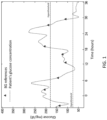
- FIG. 1 shows a conceptual simulated example where the sparseness of SMBG measurements (triangles) does not allow to fully capture glucose variations evident in the continuous-time glycemic profile (dashed line) and even impair the detection of some hypo/hyperglycemic events (e.g. around times 10 and 30).
- CGM continuous glucose monitoring
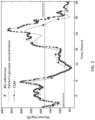
- CGM time series (dots) is compared to the same SMBG references (triangles) and true simulated glycemia (dashed line) already presented in FIG.1 .
- a 1 st order interpolation of CGM values (dots) is reported to facilitate visual comparison.
- CGM has a much higher temporal resolution (5 min sampling) than SMBG, but sometimes exhibits systematic under/ overestimations of the true concentration.
- CGM allows a fair assessment of glucose fluctuations.
- systematic overestimation of CGM is visible from hour 20 to 30, together with a transient underestimation at time 12.
- lack of accuracy of CGM is detrimental to its clinical use and, at present time, is recognized in the research community as a bottleneck for several practical applications.
- the methods under i) address the problem of precision of CGM data, but not that of the possible lack/loss of accuracy.
- the methods under ii) consider the problem of possible lack of accuracy, but not that of lack of precision.
- the methods of the second class are fed with average/population parameters, which could make them suboptimal.
- all the methods above described are causal and are thus unable to take into account also future data, a possibility that should be usefully exploited in a retrospective analysis setting.
- US2012/215087 discloses, in a method of recalibrating continuous glucose monitoring data from a user, operable on a digital processor, an indication from the user that the user has taken a meal is received.
- a glucose signal is received from a continuous glucose monitoring sensor at times corresponding to the two separate times that the user has taken a meal.
- Two reconstructed blood glucose values based on the glucose signal from the continuous monitoring sensor at times when the at least two self-monitored of blood glucose levels are received from the user.
- a recalibration signal including the estimation of a and b, is transmitted to the continuous glucose monitoring sensor based on the linear regression.
- US2008/033254 discloses systems and methods for detecting noise episodes and processing analyte sensor data responsive thereto.
- processing analyte sensor data includes filtering the sensor data to reduce or eliminate the effects of the noise episode on the signal.
- the "retrofitting" method that we describe here is able to improve both precision and accuracy of CGM data simultaneously.
- An additional key feature is that it is conceived to work retrospectively, so that all information collected during the monitoring, consisting in CGM values and BG reference measurements, can be used.
- all the parameters employed in the "retrofitting” algorithm e.g. the parameters of the calibration law and the time-constant of the model used to describe the plasma-to-interstitial fluid glucose kinetics, are optimized on patient data, so that possible sub-optimality of real-time approaches is avoided.
- the invention is a glucose monitoring system as defined by claim 1 and a method for monitoring a glucose level in a user as defined in claim 8.
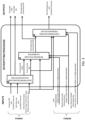
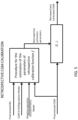
- the invention employs an algorithm, hereafter named as retrofitting procedure, which receives in input (as shown in FIG.3 , left): a continuous glucose monitoring (CGM) time series; some reference blood glucose (BG) measurements together with their confidence interval; other relevant inputs that could help in describing fluctuations in glucose dynamics, such as meals quantity and scheduling, hypo treatments, drugs, physical activity and stress information; a model of blood-to-interstitial glucose kinetics; a model of CGM sensor drift-in-time/degradation of accuracy, together with a priori information (e.g.
- the algorithm first checks for the presence of possible artifacts or outliers on both CGM and BG data, and then rescales the CGM time series exploiting a retrospective calibration technique based on regularized deconvolution approach subject to the constraint that the deconvoluted profile should stay within the confidence interval of the BG references.
- the retrofitting procedure produces, as output: an improved "retrofitted" quasi-continuous glucose concentration signal that is better (in terms of both accuracy and precision) than the CGM trace originally measured by the sensor, together with its confidence interval; a retrospectively calibrated CGM time series; and a set of CGM and BG references data that are discarded from the analysis because labeled as unreliable data or outliers.
- the retrofitted quasi-continuous glucose concentration signal can be interpreted as an estimation of the BG profile of the patient occurred during the monitoring.
- the retrofitting procedure is based on three main steps (labelled as sub-blocks A, B and C in the figure):
- FIG. 3 is a block scheme representing how the retrofitting algorithm works.
- signals and models giving an input to the retrofitting algorithm as shown.
- the core of the retrofitting procedure comprising three main sub-blocks is depicted: A. data preprocessing and outlier detection, B. retrospective CGM calibration, and C. constrained inverse problem solver.
- A. data preprocessing and outlier detection B. retrospective CGM calibration
- C. constrained inverse problem solver On the left side these signals returned in output all shown.
- Sub-block A Data preprocessing and outlier detection.
- the aim of this sub-block is to detect unreliable data and outliers.
- the block receives in input CGM and BG time series that will be used to create the retrofitting profile.
- the block contains an algorithm that is employed to detect outliers and/or unreliable values on both BG and CGM time series.
- An example of outlier is a single sample that is not consistent with the trends of the time series.
- An example of unreliable values is two, or more, consecutive values whose distance in time is not able to explain, from a physiological or technological point of view, their distance in glucose space.
- Outliers and anomalous data are identified and excluded from the successive steps of analysis. The outputs are: discarded BG, discarded CGM, preprocessed BG, and preprocessed CGM data.
- a possible algorithm for this sub-block should calculate the first-order time derivative of the time series, using finite differences or any statistically-based estimation procedure (e.g. a Bayesian smoothing procedure).
- the time series of the first-order differences is inspected for the presence of outliers and unreliable values following a given criterion.
- a possible criterion for the detection of outliers checks any couple of two consecutive derivatives. If both amplitudes are greater than a given threshold X and have opposite sign, then the value in the middle is labeled as outlier.
- a possible criterion checks every couple of two consecutive values.
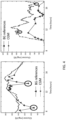
- FIG.4 shows examples of BG (triangles) and CGM (dots) outliers or unreliable values that are eliminated in this step.
- BG triangles
- CGM dots
- the detection of outliers or unreliable data can be improved also exploiting other relevant inputs that could help in describing fluctuations in glucose dynamics (e.g. meals quantity and scheduling, hypo treatments, drugs, physical activity and stress information, etc.) opportunely modeled by other relevant models (e.g. models for meal absorption, insulin action, etc.), when available.
- other relevant models e.g. models for meal absorption, insulin action, etc.
- Sub-block B Retrospective CGM calibration.
- the sub-block (sub-block B in FIG.3 ) is aimed to compensate for systematic under/overestimation of CGM time series with respect to reference BG values due to e.g. drift in time, errors in CGM sensor calibration, and changes in sensor sensitivity. This is done by performing a retrospective calibration of the CGM time series. From the sub-block A previously described, the sub-block B receives in input the preprocessed BG and preprocessed CGM data and returns in output a retrospectively calibrated CGM profile which is more accurate (e.g. closer to the reference BG data) than the measured CGM one, since errors due to drifts, suboptimal calibration, etc. have been mitigated.
- a possible algorithm to perform the retrospective calibration divides the CGM time series history into several intervals using the times of calibration events as separators.
- the history of the available BG references is divided in the same temporal intervals.
- each portion of CGM data is calibrated against all the BG references falling in the same temporal interval.
- the calibration rule is a regression law f that receives in input the preprocessed CGM time series and returns in output the retrospectively calibrated CGM time series.
- f f ( a,b,c )
- a a gain parameter
- b an offset
- c a parameter that takes into account the temporal trend of the data.
- the parameters of the regression law f are estimated from available data exploiting a model of the blood-to-interstitial fluid glucose transportation dynamics and a model for sensor drift/degradation.
- the estimation procedure could be able to exploit, if available, a priori information (e.g. probabilistic distribution) on the parameters of the model (e.g. Bayesian estimation).
- a schematization of the algorithm of sub-block B is reported in FIG.5 .
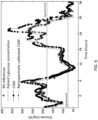
- FIG.6 An example of the retrospectively calibrated CGM time series given in output in this step is shown in FIG.6 , in which the retrospectively calibrated CGM is apparently closer (in terms of absolute error) to the reference BG measurements than the originally measured CGM.
- FIG. 6 shows the same data as in FIG. 1 and FIG.2 , and an example of retrospectively calibrated CGM (dots) vs originally measured CGM (squares) time series is depicted.
- the retrospective CGM calibration can be improved also exploiting other relevant inputs that could help in describing fluctuations in glucose dynamics (e.g. meals quantity and scheduling, hypo treatments, drugs, physical activity and stress information, etc.) opportunely modeled by other relevant models (e.g. models for meal absorption, insulin action, etc.), when available. If available, a priori information (e.g. probabilistic distribution) on the parameters of the model can be provided.
- other relevant models e.g. models for meal absorption, insulin action, etc.
- a priori information e.g. probabilistic distribution
- Sub-block C Constrained inverse problem solver.
- the third sub-block of the retrofitting procedure (sub-block C in FIG.3 , middle) performs constrained deconvolution.
- the inputs of this sub-block are the retrospectively calibrated CGM data given in output by sub-block B, all the BG reference measurements that have not been labeled as outliers or unreliable values together with their confidence interval (e.g., the coefficient of variation or the standard deviation), given in output by sub-block A, and a model of blood-to-interstitium glucose kinetics, e.g. the two-compartment model presented by Rebrin et al. (Am J Physiol 1999). If available, a priori information (e.g. probabilistic distribution) on the parameters of the model can be provided.
- a priori information e.g. probabilistic distribution
- the block contains an algorithm that performs the constrained deconvolution of the retrospectively calibrated CGM profile, and allows estimating, at (quasi) continuous time the profile of glucose concentration in blood that should have generated that CGM profile.
- Deconvolution can be based on the regularization approach, see De Nicolao et al. (Automatica 1997).
- CGM retrocalibrated is a Nx1 vector containing samples of the retrospectively calibrated CGM profile produced by sub-block B
- G is the NxN matrix obtained by discretizing the blood-to-interstitial fluid glucose kinetics model
- ⁇ v -1 is the inverse of the CGM measurement error covariance NxN matrix
- F is a NxN Toeplitz lower triangular matrix that acts as a discrete differentiator
- BG is a Nx1 vector containing all the BG values received in input
- toll is the confidence interval on them
- û is the vector containing the samples of the retrofitted (quasi) continuous glucose concentration time series.
- the constrained deconvolution can be improved also exploiting other relevant inputs that could help in describing fluctuations in glucose dynamics (e.g. meals quantity and scheduling, hypo treatments, drugs, physical activity and stress information, etc.) opportunely modeled by other relevant models (e.g. models for meal absorption, insulin action, etc.), when available. If available, a priori information (e.g. probabilistic distribution) on the parameters of the model can be provided.
- other relevant models e.g. models for meal absorption, insulin action, etc.
- a priori information e.g. probabilistic distribution
- the retrofitting procedure has been validated on 43 datasets of type 1 diabetic patients. For each patient at least 72 hours of CGM monitoring and frequent BG references were available. BG references have been divided into training-set references, used by the retrofitting algorithm, and test-set references, not used by the retrofitting algorithm and exploited to assess the accuracy of the retrofitted continuous glucose concentration profile.
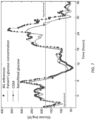
- FIG. 7 shows the same subject as FIGS. 1 , 2 , and 6 .
- Retrofitted glucose concentration time series is shown by a line vs originally measured CGM time series shown in dots.
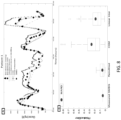
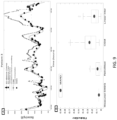
- FIGS. 8 and 9 (top) show the outcomes of the retrofitting technique in two representative subjects of the dataset (#1 and #3, respectively).
- CGM trace is depicted in dots, triangles are the BG measurements assigned to the training-set and therefore provided to the retrofitting method.
- the output of the retrofitting method is the continuous line (the grey area is its confidence interval) and has to be compared with the test BG references (diamonds, depicted with their confidence intervals).
- FIGS. 8 and 9 show, for each of the representative patients, a boxplot of the relative errors on test-set.
- the profile obtained by the retrofitting algorithm is compared with the original CGM values and with linear interpolation of the training-set references. Nominal finger-stick accuracy is also reported for comparison.
- the relative error is significantly reduced with respect to CGM and linear interpolation, resulting in about a 3 -fold reduction of the MARD (mean absolute relative deviation), now comparable with that of finger-stick measurements, and a similar reduction of both the 90 th and 75 th percentiles of error distributions.
- MARD mean absolute relative deviation
Landscapes
- Health & Medical Sciences (AREA)
- Life Sciences & Earth Sciences (AREA)
- Engineering & Computer Science (AREA)
- Public Health (AREA)
- Medical Informatics (AREA)
- Physics & Mathematics (AREA)
- Biomedical Technology (AREA)
- General Health & Medical Sciences (AREA)
- Pathology (AREA)
- Heart & Thoracic Surgery (AREA)
- Biophysics (AREA)
- Molecular Biology (AREA)
- Surgery (AREA)
- Animal Behavior & Ethology (AREA)
- Veterinary Medicine (AREA)
- Signal Processing (AREA)
- Artificial Intelligence (AREA)
- Computer Vision & Pattern Recognition (AREA)
- Physiology (AREA)
- Psychiatry (AREA)
- Optics & Photonics (AREA)
- Epidemiology (AREA)
- Primary Health Care (AREA)
- Data Mining & Analysis (AREA)
- Databases & Information Systems (AREA)
- Emergency Medicine (AREA)
- Evolutionary Computation (AREA)
- Fuzzy Systems (AREA)
- Mathematical Physics (AREA)
- Investigating Or Analysing Biological Materials (AREA)
- Measurement Of The Respiration, Hearing Ability, Form, And Blood Characteristics Of Living Organisms (AREA)
Claims (14)
- Glukoseüberwachungssystem zum Überwachen eines Glukosespiegels bei einem Benutzer, umfassend:(a) eine Vorrichtung zur kontinuierlichen Glukoseüberwachung (CGM), die konfiguriert ist, um Glukosespiegel in der interstitiellen Flüssigkeit des Benutzers zu überwachen und eine dafür repräsentative CGM-Zeitreihe zu generieren;(b) eine Blutglukose- (BG)-Datenquelle, die konfiguriert ist, um in diskreten Zeitintervallen BG-Referenzen repräsentativ für Blutglukosespiegel des Benutzers zu generieren;(c) ein Datenvorverarbeitungsmodul, das auf die CGM-Zeitreihe und die Blutglukosedaten reagiert und konfiguriert ist, um Ausreißer und Artefakte in beiden, der CGM-Zeitreihe und den BG-Referenzen zu erkennen, und konfiguriert ist, um ein vorverarbeitetes CGM-Signal zu generieren, das der CGM-Zeitreihe entspricht, aus der alle Ausreißer und Artefakte verworfen sind, und ein vorverarbeitetes BG-Signal zu generieren, das den BG-Referenzen entspricht, aus denen alle Ausreißer und Artefakte verworfen sind;(d) ein retrospektives CGM-Kalibrierungsmodul, das auf das vorverarbeitete CGM-Signal und das vorverarbeitete BG-Signal reagiert, das konfiguriert ist, um eine retrospektive Kalibrierung des vorverarbeiteten CGM-Signals durchzuführen, um eine systematische Unterschätzung und Überschätzung einer CGM-Zeitreihe in Bezug auf Referenz-BG-Werte zu kompensieren, aufgrund von: Blut-zu-interstitielle-Glukose-Kinetik, Sensordrift, Fehler bei der CGM-Sensorkalibrierung und Änderungen der Sensorempfindlichkeit, wobei das retrospektive CGM-Kalibrierungsmodul auch konfiguriert ist, um ein repräsentatives retrospektiv kalibriertes CGM-Signal dafür durch erneutes Skalieren des kalibrierten CGM-Signals zu generieren, um innerhalb eines Konfidenzintervalls der BG-Werte zu bleiben;
dadurch gekennzeichnet, dass das Glukoseüberwachungssystem weiter umfasst(e) ein Modul zur Lösung eingeschränkter inverser Probleme, das auf das retrospektiv kalibrierte CGM-Signal reagiert, konfiguriert, um:das retrospektiv kalibrierte CGM-Signal basierend auf einem Blut-zu-interstitielle-Glukose-Kinetikmodell zu entfalten,einen Konfidenzbereich des vorverarbeiteten BG-Signals zu definieren, wobei der Konfidenzbereich innerhalb eines vorbestimmten Konfidenzintervalls des vorverarbeiteten BG-Signals liegt;ein nachgerüstetes Glukosekonzentrationsprofil mit dem Konfidenzbereich des vorverarbeiteten BG-Signals zu generieren, wobei das nachgerüstete Glukosekonzentrationsprofil eingeschränkt ist, um innerhalb des Konfidenzbereichs zu verlaufen. - Glukoseüberwachungssystem nach Anspruch 1, wobei das Datenvorverarbeitungsmodul auch auf andere ausgewählte relevante Eingaben reagiert, wobei die anderen ausgewählten relevanten Eingaben aus einer Gruppe ausgewählt sind, bestehend aus: Daten in Bezug auf verzehrte Mahlzeiten, Daten in Bezug auf Behandlungen bei Hypoglykämie, Daten in Bezug auf eingenommene Medikamente, Daten in Bezug auf körperliche Aktivität und Daten in Bezug auf Stress.
- Glukoseüberwachungssystem nach Anspruch 1, wobei das retrospektives CGM-Kalibrierungsmodul auch auf andere ausgewählte relevante Eingaben reagiert, wobei die anderen ausgewählten relevanten Eingaben aus einer Gruppe ausgewählt sind, bestehend aus: Daten in Bezug auf verzehrte Mahlzeiten, Daten in Bezug auf Behandlungen bei Hypoglykämie, Daten in Bezug auf eingenommene Medikamente, Daten in Bezug auf körperliche Aktivität und Daten in Bezug auf Stress.
- Glukoseüberwachungssystem nach Anspruch 1, wobei das retrospektive CGM-Kalibrierungsmodul auch reagiert auf: ein CGM-Drift-/Degradationsmodell und A-priori-Informationen zu Modellparametern.
- Glukoseüberwachungssystem nach Anspruch 1, wobei das retrospektive CGM-Kalibrierungsmodul auch auf ein Blut-zu-interstitielle-Glukose-Kinetikmodell reagiert.
- Glukoseüberwachungssystem nach Anspruch 1, wobei das Modul zur Lösung eingeschränkter inverser Probleme auch auf andere ausgewählte relevante Eingaben reagiert, wobei die anderen ausgewählten relevanten Eingaben aus einer Gruppe ausgewählt sind, bestehend aus: Daten in Bezug auf verzehrte Mahlzeiten, Daten in Bezug auf Behandlungen bei Hypoglykämie, Daten in Bezug auf eingenommene Medikamente, Daten in Bezug auf körperliche Aktivität und Daten in Bezug auf Stress.
- Glukoseüberwachungssystem nach Anspruch 1, wobei das Modul zur Lösung eingeschränkter inverser Probleme auch auf ein Blut-zu-interstitielle-Glukose-Kinetikmodell reagiert.
- Verfahren zum Überwachen des Glukosespiegels eines Benutzers, das die Schritte umfasst zum:(a) kontinuierlichen Überwachen von Glukosespiegeln in den interstitiellen Flüssigkeiten des Benutzers und Generieren einer repräsentativen Zeitreihe zur kontinuierlichen Glukoseüberwachung (CGM) davon;(b) Generieren von Blutglukose- (BG)-Referenzen, repräsentativ für Blutglukosespiegel des Benutzers in diskreten Zeitintervallen;(c) Erkennen von Ausreißern und Artefakten in beiden, der CGM-Zeitreihe als und den BG-Referenzen und Generieren eines vorverarbeiteten CGM-Signals, das der CGM-Zeitreihe entspricht, aus der alle Ausreißer und Artefakte verworfen sind, und Generieren eines vorverarbeiteten BG-Signals, das den BG-Referenzen entspricht, aus denen alle Ausreißer und Artefakte verworfen sind;(d) Durchführen einer retrospektiven Kalibrierung des vorverarbeiteten CGM-Signals unter Einsatz des vorverarbeiteten BG-Signals, wodurch eine systematische Unterschätzung und Überschätzung einer CGM-Zeitreihe in Bezug auf Referenz-BG-Werte kompensiert werden, aufgrund von: Blut-zu-interstitielle-Glukose-Kinetik, Sensordrift, Fehler bei der CGM-Sensorkalibrierung und Änderungen der Sensorempfindlichkeit, wobei das retrospektive CGM-Kalibrierungsmodul ein repräsentatives retrospektiv kalibriertes CGM-Signal dafür durch erneutes Skalieren des kalibrierten CGM-Signals generiert, um innerhalb eines Konfidenzintervalls der BG-Werte zu bleiben;
dadurch gekennzeichnet, dass das Verfahren weiter umfasst(e) Entfalten des retrospektiv kalibrierten CGM-Signals basierend auf einem Blut-zu-interstitielle-Glukose-Kinetikmodell, Definieren eines Konfidenzbereichs des vorverarbeiteten BG-Signals, wobei der Konfidenzbereich innerhalb eines vorbestimmten Konfidenzintervalls des vorverarbeiteten BG-Signals liegt, und dadurch Generieren eines nachgerüsteten Glukosekonzentrationsprofils mit dem Konfidenzbereich des vorverarbeiteten BG-Signals, wobei das nachgerüstete Glukosekonzentrationsprofil beschränkt ist, um innerhalb des vorbestimmten Konfidenzbereichs zu verlaufen. - Verfahren zum Überwachen eines Glukosespiegels bei einem Benutzer nach Anspruch 8, das weiter den Schritt zum Einsetzen anderer ausgewählter relevanter Eingaben im Schritt zum Erkennen von Ausreißern und Artefakten umfasst, wobei die anderen ausgewählten relevanten Eingaben aus einer Gruppe ausgewählt sind, bestehend aus: Daten in Bezug auf verzehrte Mahlzeiten, Daten in Bezug auf Behandlungen bei Hypoglykämie, Daten in Bezug auf eingenommene Medikamente, Daten in Bezug auf körperliche Aktivität und Daten in Bezug auf Stress.
- Verfahren zum Überwachen eines Glukosespiegels bei einem Benutzer nach Anspruch 8, das weiter den Schritt zum Einsetzen anderer ausgewählter relevanter Eingaben im Schritt zum Durchführen einer retrospektiven Kalibrierung umfasst, wobei die anderen ausgewählten relevanten Eingaben aus einer Gruppe ausgewählt sind, bestehend aus: Daten in Bezug auf verzehrte Mahlzeiten, Daten in Bezug auf Behandlungen bei Hypoglykämie, Daten in Bezug auf eingenommene Medikamente, Daten in Bezug auf körperliche Aktivität und Daten in Bezug auf Stress.
- Verfahren zum Überwachen eines Glukosespiegels bei einem Benutzer nach Anspruch 8, das weiter den Schritt zum Einsetzen eines CGM-Drift-/Degradationsmodells und von A-priori-Informationen zu Modellparametern beim Durchführen des Schritts zum Durchführen einer retrospektiven Kalibrierung umfasst.
- Verfahren zum Überwachen eines Glukosespiegels bei einem Benutzer nach Anspruch 8, das weiter den Schritt zum Einsetzen eines Blut-zu-Interstitielle-Glukose-Kinetikmodells beim Durchführen des Schritts zum Durchführen einer retrospektiven Kalibrierung umfasst.
- Verfahren zum Überwachen eines Glukosespiegels bei einem Benutzer nach Anspruch 8, das weiter den Schritt zum Einsetzen anderer ausgewählter relevanter Eingaben im Schritt zum Entfalten des retrospektiv kalibrierten CGM-Signals umfasst, wobei die anderen ausgewählten relevanten Eingaben aus einer Gruppe ausgewählt sind, bestehend aus: Daten in Bezug auf verzehrte Mahlzeiten, Daten in Bezug auf Behandlungen bei Hypoglykämie, Daten in Bezug auf eingenommene Medikamente, Daten in Bezug auf körperliche Aktivität und Daten in Bezug auf Stress.
- Verfahren zum Überwachen eines Glukosespiegels bei einem Benutzer nach Anspruch 8, das weiter den Schritt zum Einsetzen eines Blut-zu-Interstitielle-Glukose-Kinetikmodells beim Durchführen des Schritts zum Entfalten des retrospektiv kalibrierten CGM-Signals umfasst.
Priority Applications (1)
| Application Number | Priority Date | Filing Date | Title |
|---|---|---|---|
| EP25173369.7A EP4603003A3 (de) | 2013-02-20 | 2014-02-20 | Retrospektive nachrüstverfahren zur erzeugung eines kontinuierlichen glucosekonzentrationsprofils |
Applications Claiming Priority (3)
| Application Number | Priority Date | Filing Date | Title |
|---|---|---|---|
| US201361767032P | 2013-02-20 | 2013-02-20 | |
| EP14714784.7A EP2986214B1 (de) | 2013-02-20 | 2014-02-20 | Retrospektive nachrüstverfahren zur erzeugung eines kontinuierlichen glucosekonzentrationsprofils |
| PCT/IB2014/059121 WO2014128638A1 (en) | 2013-02-20 | 2014-02-20 | Retrospective retrofitting method to generate a continuous glucose concentration profile |
Related Parent Applications (1)
| Application Number | Title | Priority Date | Filing Date |
|---|---|---|---|
| EP14714784.7A Division EP2986214B1 (de) | 2013-02-20 | 2014-02-20 | Retrospektive nachrüstverfahren zur erzeugung eines kontinuierlichen glucosekonzentrationsprofils |
Related Child Applications (2)
| Application Number | Title | Priority Date | Filing Date |
|---|---|---|---|
| EP25173369.7A Division EP4603003A3 (de) | 2013-02-20 | 2014-02-20 | Retrospektive nachrüstverfahren zur erzeugung eines kontinuierlichen glucosekonzentrationsprofils |
| EP25173369.7A Division-Into EP4603003A3 (de) | 2013-02-20 | 2014-02-20 | Retrospektive nachrüstverfahren zur erzeugung eines kontinuierlichen glucosekonzentrationsprofils |
Publications (2)
| Publication Number | Publication Date |
|---|---|
| EP3662833A1 EP3662833A1 (de) | 2020-06-10 |
| EP3662833B1 true EP3662833B1 (de) | 2025-06-04 |
Family
ID=50424668
Family Applications (3)
| Application Number | Title | Priority Date | Filing Date |
|---|---|---|---|
| EP25173369.7A Pending EP4603003A3 (de) | 2013-02-20 | 2014-02-20 | Retrospektive nachrüstverfahren zur erzeugung eines kontinuierlichen glucosekonzentrationsprofils |
| EP14714784.7A Active EP2986214B1 (de) | 2013-02-20 | 2014-02-20 | Retrospektive nachrüstverfahren zur erzeugung eines kontinuierlichen glucosekonzentrationsprofils |
| EP20154398.0A Active EP3662833B1 (de) | 2013-02-20 | 2014-02-20 | Retrospektive nachrüstverfahren zur erzeugung eines kontinuierlichen glucosekonzentrationsprofils |
Family Applications Before (2)
| Application Number | Title | Priority Date | Filing Date |
|---|---|---|---|
| EP25173369.7A Pending EP4603003A3 (de) | 2013-02-20 | 2014-02-20 | Retrospektive nachrüstverfahren zur erzeugung eines kontinuierlichen glucosekonzentrationsprofils |
| EP14714784.7A Active EP2986214B1 (de) | 2013-02-20 | 2014-02-20 | Retrospektive nachrüstverfahren zur erzeugung eines kontinuierlichen glucosekonzentrationsprofils |
Country Status (3)
| Country | Link |
|---|---|
| US (4) | US10299733B2 (de) |
| EP (3) | EP4603003A3 (de) |
| WO (1) | WO2014128638A1 (de) |
Families Citing this family (23)
| Publication number | Priority date | Publication date | Assignee | Title |
|---|---|---|---|---|
| EP3906842A1 (de) | 2011-07-26 | 2021-11-10 | Glysens Incorporated | Gewebeimplantierbarer sensor mit hermetisch versiegeltem gehäuse |
| US10660550B2 (en) | 2015-12-29 | 2020-05-26 | Glysens Incorporated | Implantable sensor apparatus and methods |
| US10561353B2 (en) | 2016-06-01 | 2020-02-18 | Glysens Incorporated | Biocompatible implantable sensor apparatus and methods |
| EP4603003A3 (de) | 2013-02-20 | 2025-10-29 | DexCom, Inc. | Retrospektive nachrüstverfahren zur erzeugung eines kontinuierlichen glucosekonzentrationsprofils |
| WO2016102227A1 (en) | 2014-12-23 | 2016-06-30 | Roche Diabetes Care Gmbh | Method and system for determining a blood glucose level for a patient |
| US10638962B2 (en) | 2016-06-29 | 2020-05-05 | Glysens Incorporated | Bio-adaptable implantable sensor apparatus and methods |
| EP3562380A4 (de) * | 2016-12-30 | 2020-08-12 | Medtrum Technologies Inc. | System und verfahren zur algorithmusanpassung unter anwendung eines bewegungssensors in cgm-system |
| CA3059985C (en) | 2017-05-05 | 2023-08-08 | Eli Lilly And Company | Closed loop control of physiological glucose |
| US10638979B2 (en) * | 2017-07-10 | 2020-05-05 | Glysens Incorporated | Analyte sensor data evaluation and error reduction apparatus and methods |
| EP4699530A3 (de) * | 2017-09-26 | 2026-04-29 | Senseonics, Incorporated | Analytüberwachungsverfahren und -system |
| CA3085930A1 (en) | 2017-12-21 | 2019-06-27 | Eli Lilly And Company | Closed loop control of physiological glucose |
| US11278668B2 (en) | 2017-12-22 | 2022-03-22 | Glysens Incorporated | Analyte sensor and medicant delivery data evaluation and error reduction apparatus and methods |
| US11255839B2 (en) | 2018-01-04 | 2022-02-22 | Glysens Incorporated | Apparatus and methods for analyte sensor mismatch correction |
| EP3531110B1 (de) | 2018-02-23 | 2025-04-02 | Samsung Electronics Co., Ltd. | Vorrichtung und verfahren zur bestimmung der konzentration einer blutverbindung |
| JP2021528758A (ja) | 2018-06-22 | 2021-10-21 | イーライ リリー アンド カンパニー | インスリンとプラムリンタイドの送達システム、方法、およびデバイス |
| KR102179203B1 (ko) * | 2018-07-09 | 2020-11-16 | 주식회사 필로시스 | 혈당 센싱 데이터 판별 방법 및 장치 |
| CN113490454A (zh) | 2019-02-05 | 2021-10-08 | 安晟信医疗科技控股公司 | 用于探测连续分析物感测及自动更正的传感器操作的设备及方法 |
| CN113646625A (zh) | 2019-02-22 | 2021-11-12 | 安晟信医疗科技控股公司 | 用于使用谐波关系监测分析物浓度的方法和设备 |
| DE102019205430A1 (de) * | 2019-04-15 | 2020-10-15 | Eyesense Gmbh | Verfahren zum Bestimmen eines aktuellen Glukosewerts in einem Transportfluid |
| US11678820B2 (en) * | 2019-09-10 | 2023-06-20 | Ascensia Diabetes Care Holdings Ag | Methods and apparatus for information gathering, error detection and analyte concentration determination during continuous analyte sensing |
| CN114081484B (zh) * | 2021-11-24 | 2024-02-27 | 上海微创生命科技有限公司 | 连续血糖检测方法、系统及可读存储介质 |
| CN114557690B (zh) * | 2022-02-28 | 2023-10-13 | 南京晶捷生物科技有限公司 | 一种用于连续葡萄糖监测的校准系统及方法 |
| US20250204816A1 (en) * | 2023-12-22 | 2025-06-26 | I-Sens, Inc | Apparatus for monitoring glucose and method thereof |
Family Cites Families (11)
| Publication number | Priority date | Publication date | Assignee | Title |
|---|---|---|---|---|
| US7806886B2 (en) | 1999-06-03 | 2010-10-05 | Medtronic Minimed, Inc. | Apparatus and method for controlling insulin infusion with state variable feedback |
| US6895263B2 (en) * | 2000-02-23 | 2005-05-17 | Medtronic Minimed, Inc. | Real time self-adjusting calibration algorithm |
| US6788965B2 (en) * | 2001-08-03 | 2004-09-07 | Sensys Medical, Inc. | Intelligent system for detecting errors and determining failure modes in noninvasive measurement of blood and tissue analytes |
| US8260393B2 (en) * | 2003-07-25 | 2012-09-04 | Dexcom, Inc. | Systems and methods for replacing signal data artifacts in a glucose sensor data stream |
| CA2620586A1 (en) | 2005-08-31 | 2007-03-08 | Boris P. Kovatchev | Improving the accuracy of continuous glucose sensors |
| EP2425209A4 (de) * | 2009-04-29 | 2013-01-09 | Abbott Diabetes Care Inc | Verfahren und system für die echtzeit-kalibrierung eines analytsensors mit rückwirkender füllung |
| US9858386B2 (en) * | 2009-11-02 | 2018-01-02 | Universita Degli Studi Di Padova | Method to recalibrate continuous glucose monitoring data on-line |
| US9848809B2 (en) * | 2011-04-15 | 2017-12-26 | Dexcom, Inc. | Advanced analyte sensor calibration and error detection |
| US20130231543A1 (en) | 2012-03-05 | 2013-09-05 | Andrea Facchinetti | Method to improve safety monitoring in type-1 diabetic patients by detecting in real-time failures of the glucose |
| US9211092B2 (en) * | 2013-01-03 | 2015-12-15 | Dexcom, Inc. | End of life detection for analyte sensors |
| EP4603003A3 (de) | 2013-02-20 | 2025-10-29 | DexCom, Inc. | Retrospektive nachrüstverfahren zur erzeugung eines kontinuierlichen glucosekonzentrationsprofils |
-
2014
- 2014-02-20 EP EP25173369.7A patent/EP4603003A3/de active Pending
- 2014-02-20 EP EP14714784.7A patent/EP2986214B1/de active Active
- 2014-02-20 WO PCT/IB2014/059121 patent/WO2014128638A1/en not_active Ceased
- 2014-02-20 US US14/770,803 patent/US10299733B2/en active Active
- 2014-02-20 EP EP20154398.0A patent/EP3662833B1/de active Active
-
2019
- 2019-04-02 US US16/373,454 patent/US11633156B2/en active Active
-
2023
- 2023-03-13 US US18/182,444 patent/US12226234B2/en active Active
-
2025
- 2025-01-27 US US19/038,112 patent/US20250169764A1/en active Pending
Also Published As
| Publication number | Publication date |
|---|---|
| US20250169764A1 (en) | 2025-05-29 |
| US20160073964A1 (en) | 2016-03-17 |
| US10299733B2 (en) | 2019-05-28 |
| WO2014128638A1 (en) | 2014-08-28 |
| EP2986214B1 (de) | 2020-02-12 |
| EP4603003A2 (de) | 2025-08-20 |
| EP3662833A1 (de) | 2020-06-10 |
| EP2986214A1 (de) | 2016-02-24 |
| EP4603003A3 (de) | 2025-10-29 |
| US12226234B2 (en) | 2025-02-18 |
| US20190223807A1 (en) | 2019-07-25 |
| US11633156B2 (en) | 2023-04-25 |
| US20230210412A1 (en) | 2023-07-06 |
Similar Documents
| Publication | Publication Date | Title |
|---|---|---|
| US12226234B2 (en) | Retrospective retrofitting method to generate a continuous glucose concentration profile by exploiting continuous glucose monitoring sensor data and blood glucose measurements | |
| US12102454B2 (en) | Analysis of glucose median, variability, and hypoglycemia risk for therapy guidance | |
| US11896371B2 (en) | Method and apparatus for improving lag correction during in vivo measurement of analyte concentration with analyte concentration variability and range data | |
| US10709392B2 (en) | Sensor fault detection using analyte sensor data pattern comparison | |
| EP2890297B1 (de) | Ausfallerkennung bei kontinuierlichen analytüberwachungsdaten bei datenabweichungen | |
| US20210113122A1 (en) | Accuracy continuous glucose monitoring method, system, and device | |
| Facchinetti et al. | Real-time improvement of continuous glucose monitoring accuracy: the smart sensor concept | |
| AU2022291499A1 (en) | Analysis of glucose median, variability, and hypoglycemia risk for therapy guidance | |
| US20120215087A1 (en) | Method to recalibrate continuous glucose monitoring data on-line | |
| EP4026496B1 (de) | Analytkonzentrationskalibrierung mit ausgangswertanalytkonzentration | |
| Jensen et al. | Real-time hypoglycemia detection from continuous glucose monitoring data of subjects with type 1 diabetes | |
| EP2710951A1 (de) | System und verfahren zur bestimmung des glukosegehalts in einem plasma | |
| Camerlingo et al. | Bayesian denoising algorithm dealing with colored, non-stationary noise in continuous glucose monitoring timeseries | |
| Zhao et al. | An automatic glucose monitoring signal denoising method with noise level estimation and responsive filter updating | |
| JP7635996B2 (ja) | 搬送流体中の現在のグルコース濃度を測定する方法 | |
| Reiterer et al. | Algorithm for offline recalibration of recorded CGM traces | |
| Del Favero et al. | Retrofitting CGM traces | |
| HK40059990A (en) | Method for determining a current glucose value in a transported fluid |
Legal Events
| Date | Code | Title | Description |
|---|---|---|---|
| PUAI | Public reference made under article 153(3) epc to a published international application that has entered the european phase |
Free format text: ORIGINAL CODE: 0009012 |
|
| STAA | Information on the status of an ep patent application or granted ep patent |
Free format text: STATUS: THE APPLICATION HAS BEEN PUBLISHED |
|
| AC | Divisional application: reference to earlier application |
Ref document number: 2986214 Country of ref document: EP Kind code of ref document: P |
|
| AK | Designated contracting states |
Kind code of ref document: A1 Designated state(s): AL AT BE BG CH CY CZ DE DK EE ES FI FR GB GR HR HU IE IS IT LI LT LU LV MC MK MT NL NO PL PT RO RS SE SI SK SM TR |
|
| STAA | Information on the status of an ep patent application or granted ep patent |
Free format text: STATUS: REQUEST FOR EXAMINATION WAS MADE |
|
| 17P | Request for examination filed |
Effective date: 20201208 |
|
| RBV | Designated contracting states (corrected) |
Designated state(s): AL AT BE BG CH CY CZ DE DK EE ES FI FR GB GR HR HU IE IS IT LI LT LU LV MC MK MT NL NO PL PT RO RS SE SI SK SM TR |
|
| STAA | Information on the status of an ep patent application or granted ep patent |
Free format text: STATUS: EXAMINATION IS IN PROGRESS |
|
| 17Q | First examination report despatched |
Effective date: 20210517 |
|
| P01 | Opt-out of the competence of the unified patent court (upc) registered |
Free format text: CASE NUMBER: APP_42373/2024 Effective date: 20240718 |
|
| GRAP | Despatch of communication of intention to grant a patent |
Free format text: ORIGINAL CODE: EPIDOSNIGR1 |
|
| STAA | Information on the status of an ep patent application or granted ep patent |
Free format text: STATUS: GRANT OF PATENT IS INTENDED |
|
| INTG | Intention to grant announced |
Effective date: 20250113 |
|
| GRAS | Grant fee paid |
Free format text: ORIGINAL CODE: EPIDOSNIGR3 |
|
| GRAA | (expected) grant |
Free format text: ORIGINAL CODE: 0009210 |
|
| STAA | Information on the status of an ep patent application or granted ep patent |
Free format text: STATUS: THE PATENT HAS BEEN GRANTED |
|
| AC | Divisional application: reference to earlier application |
Ref document number: 2986214 Country of ref document: EP Kind code of ref document: P |
|
| AK | Designated contracting states |
Kind code of ref document: B1 Designated state(s): AL AT BE BG CH CY CZ DE DK EE ES FI FR GB GR HR HU IE IS IT LI LT LU LV MC MK MT NL NO PL PT RO RS SE SI SK SM TR |
|
| REG | Reference to a national code |
Ref country code: GB Ref legal event code: FG4D |
|
| REG | Reference to a national code |
Ref country code: CH Ref legal event code: EP |
|
| REG | Reference to a national code |
Ref country code: DE Ref legal event code: R096 Ref document number: 602014092018 Country of ref document: DE |
|
| REG | Reference to a national code |
Ref country code: IE Ref legal event code: FG4D |
|
| REG | Reference to a national code |
Ref country code: NL Ref legal event code: FP |
|
| PG25 | Lapsed in a contracting state [announced via postgrant information from national office to epo] |
Ref country code: FI Free format text: LAPSE BECAUSE OF FAILURE TO SUBMIT A TRANSLATION OF THE DESCRIPTION OR TO PAY THE FEE WITHIN THE PRESCRIBED TIME-LIMIT Effective date: 20250604 Ref country code: ES Free format text: LAPSE BECAUSE OF FAILURE TO SUBMIT A TRANSLATION OF THE DESCRIPTION OR TO PAY THE FEE WITHIN THE PRESCRIBED TIME-LIMIT Effective date: 20250604 |
|
| REG | Reference to a national code |
Ref country code: LT Ref legal event code: MG9D |
|
| PG25 | Lapsed in a contracting state [announced via postgrant information from national office to epo] |
Ref country code: GR Free format text: LAPSE BECAUSE OF FAILURE TO SUBMIT A TRANSLATION OF THE DESCRIPTION OR TO PAY THE FEE WITHIN THE PRESCRIBED TIME-LIMIT Effective date: 20250905 |
|
| PG25 | Lapsed in a contracting state [announced via postgrant information from national office to epo] |
Ref country code: PL Free format text: LAPSE BECAUSE OF FAILURE TO SUBMIT A TRANSLATION OF THE DESCRIPTION OR TO PAY THE FEE WITHIN THE PRESCRIBED TIME-LIMIT Effective date: 20250604 |
|
| PG25 | Lapsed in a contracting state [announced via postgrant information from national office to epo] |
Ref country code: BG Free format text: LAPSE BECAUSE OF FAILURE TO SUBMIT A TRANSLATION OF THE DESCRIPTION OR TO PAY THE FEE WITHIN THE PRESCRIBED TIME-LIMIT Effective date: 20250604 |
|
| PG25 | Lapsed in a contracting state [announced via postgrant information from national office to epo] |
Ref country code: HR Free format text: LAPSE BECAUSE OF FAILURE TO SUBMIT A TRANSLATION OF THE DESCRIPTION OR TO PAY THE FEE WITHIN THE PRESCRIBED TIME-LIMIT Effective date: 20250604 |
|
| PG25 | Lapsed in a contracting state [announced via postgrant information from national office to epo] |
Ref country code: RS Free format text: LAPSE BECAUSE OF FAILURE TO SUBMIT A TRANSLATION OF THE DESCRIPTION OR TO PAY THE FEE WITHIN THE PRESCRIBED TIME-LIMIT Effective date: 20250904 |
|
| PG25 | Lapsed in a contracting state [announced via postgrant information from national office to epo] |
Ref country code: LV Free format text: LAPSE BECAUSE OF FAILURE TO SUBMIT A TRANSLATION OF THE DESCRIPTION OR TO PAY THE FEE WITHIN THE PRESCRIBED TIME-LIMIT Effective date: 20250604 |
|
| PG25 | Lapsed in a contracting state [announced via postgrant information from national office to epo] |
Ref country code: PT Free format text: LAPSE BECAUSE OF FAILURE TO SUBMIT A TRANSLATION OF THE DESCRIPTION OR TO PAY THE FEE WITHIN THE PRESCRIBED TIME-LIMIT Effective date: 20251006 |
|
| REG | Reference to a national code |
Ref country code: AT Ref legal event code: MK05 Ref document number: 1799555 Country of ref document: AT Kind code of ref document: T Effective date: 20250604 |
|
| PG25 | Lapsed in a contracting state [announced via postgrant information from national office to epo] |
Ref country code: IS Free format text: LAPSE BECAUSE OF FAILURE TO SUBMIT A TRANSLATION OF THE DESCRIPTION OR TO PAY THE FEE WITHIN THE PRESCRIBED TIME-LIMIT Effective date: 20251004 |
|
| PG25 | Lapsed in a contracting state [announced via postgrant information from national office to epo] |
Ref country code: SM Free format text: LAPSE BECAUSE OF FAILURE TO SUBMIT A TRANSLATION OF THE DESCRIPTION OR TO PAY THE FEE WITHIN THE PRESCRIBED TIME-LIMIT Effective date: 20250604 Ref country code: AT Free format text: LAPSE BECAUSE OF FAILURE TO SUBMIT A TRANSLATION OF THE DESCRIPTION OR TO PAY THE FEE WITHIN THE PRESCRIBED TIME-LIMIT Effective date: 20250604 |
|
| PG25 | Lapsed in a contracting state [announced via postgrant information from national office to epo] |
Ref country code: CZ Free format text: LAPSE BECAUSE OF FAILURE TO SUBMIT A TRANSLATION OF THE DESCRIPTION OR TO PAY THE FEE WITHIN THE PRESCRIBED TIME-LIMIT Effective date: 20250604 |
|
| PG25 | Lapsed in a contracting state [announced via postgrant information from national office to epo] |
Ref country code: EE Free format text: LAPSE BECAUSE OF FAILURE TO SUBMIT A TRANSLATION OF THE DESCRIPTION OR TO PAY THE FEE WITHIN THE PRESCRIBED TIME-LIMIT Effective date: 20250604 |
|
| PG25 | Lapsed in a contracting state [announced via postgrant information from national office to epo] |
Ref country code: SK Free format text: LAPSE BECAUSE OF FAILURE TO SUBMIT A TRANSLATION OF THE DESCRIPTION OR TO PAY THE FEE WITHIN THE PRESCRIBED TIME-LIMIT Effective date: 20250604 Ref country code: RO Free format text: LAPSE BECAUSE OF FAILURE TO SUBMIT A TRANSLATION OF THE DESCRIPTION OR TO PAY THE FEE WITHIN THE PRESCRIBED TIME-LIMIT Effective date: 20250604 |
|
| PG25 | Lapsed in a contracting state [announced via postgrant information from national office to epo] |
Ref country code: IT Free format text: LAPSE BECAUSE OF FAILURE TO SUBMIT A TRANSLATION OF THE DESCRIPTION OR TO PAY THE FEE WITHIN THE PRESCRIBED TIME-LIMIT Effective date: 20250604 |
|
| REG | Reference to a national code |
Ref country code: DE Ref legal event code: R097 Ref document number: 602014092018 Country of ref document: DE |
|
| PGFP | Annual fee paid to national office [announced via postgrant information from national office to epo] |
Ref country code: GB Payment date: 20260122 Year of fee payment: 13 |
|
| PLBE | No opposition filed within time limit |
Free format text: ORIGINAL CODE: 0009261 |
|
| STAA | Information on the status of an ep patent application or granted ep patent |
Free format text: STATUS: NO OPPOSITION FILED WITHIN TIME LIMIT |
|
| PG25 | Lapsed in a contracting state [announced via postgrant information from national office to epo] |
Ref country code: DK Free format text: LAPSE BECAUSE OF FAILURE TO SUBMIT A TRANSLATION OF THE DESCRIPTION OR TO PAY THE FEE WITHIN THE PRESCRIBED TIME-LIMIT Effective date: 20250604 |
|
| PGFP | Annual fee paid to national office [announced via postgrant information from national office to epo] |
Ref country code: DE Payment date: 20260121 Year of fee payment: 13 |
|
| REG | Reference to a national code |
Ref country code: CH Ref legal event code: L10 Free format text: ST27 STATUS EVENT CODE: U-0-0-L10-L00 (AS PROVIDED BY THE NATIONAL OFFICE) Effective date: 20260416 |
|
| 26N | No opposition filed |
Effective date: 20260305 |