EP3661218A1 - Verfahren und endgerät zur bereitstellung von inhalt - Google Patents
Verfahren und endgerät zur bereitstellung von inhalt Download PDFInfo
- Publication number
- EP3661218A1 EP3661218A1 EP18857308.3A EP18857308A EP3661218A1 EP 3661218 A1 EP3661218 A1 EP 3661218A1 EP 18857308 A EP18857308 A EP 18857308A EP 3661218 A1 EP3661218 A1 EP 3661218A1
- Authority
- EP
- European Patent Office
- Prior art keywords
- information
- images
- terminal
- content
- reaction information
- Prior art date
- Legal status (The legal status is an assumption and is not a legal conclusion. Google has not performed a legal analysis and makes no representation as to the accuracy of the status listed.)
- Pending
Links
Images







Classifications
-
- H—ELECTRICITY
- H04—ELECTRIC COMMUNICATION TECHNIQUE
- H04N—PICTORIAL COMMUNICATION, e.g. TELEVISION
- H04N21/00—Selective content distribution, e.g. interactive television or video on demand [VOD]
- H04N21/20—Servers specifically adapted for the distribution of content, e.g. VOD servers; Operations thereof
- H04N21/23—Processing of content or additional data; Elementary server operations; Server middleware
- H04N21/236—Assembling of a multiplex stream, e.g. transport stream, by combining a video stream with other content or additional data, e.g. inserting a URL [Uniform Resource Locator] into a video stream, multiplexing software data into a video stream; Remultiplexing of multiplex streams; Insertion of stuffing bits into the multiplex stream, e.g. to obtain a constant bit-rate; Assembling of a packetised elementary stream
- H04N21/23614—Multiplexing of additional data and video streams
-
- H—ELECTRICITY
- H04—ELECTRIC COMMUNICATION TECHNIQUE
- H04N—PICTORIAL COMMUNICATION, e.g. TELEVISION
- H04N21/00—Selective content distribution, e.g. interactive television or video on demand [VOD]
- H04N21/40—Client devices specifically adapted for the reception of or interaction with content, e.g. set-top-box [STB]; Operations thereof
- H04N21/41—Structure of client; Structure of client peripherals
- H04N21/4104—Peripherals receiving signals from specially adapted client devices
- H04N21/4126—The peripheral being portable, e.g. PDAs or mobile phones
-
- G—PHYSICS
- G06—COMPUTING OR CALCULATING; COUNTING
- G06F—ELECTRIC DIGITAL DATA PROCESSING
- G06F18/00—Pattern recognition
- G06F18/20—Analysing
- G06F18/21—Design or setup of recognition systems or techniques; Extraction of features in feature space; Blind source separation
- G06F18/214—Generating training patterns; Bootstrap methods, e.g. bagging or boosting
-
- G—PHYSICS
- G06—COMPUTING OR CALCULATING; COUNTING
- G06N—COMPUTING ARRANGEMENTS BASED ON SPECIFIC COMPUTATIONAL MODELS
- G06N20/00—Machine learning
-
- G—PHYSICS
- G06—COMPUTING OR CALCULATING; COUNTING
- G06N—COMPUTING ARRANGEMENTS BASED ON SPECIFIC COMPUTATIONAL MODELS
- G06N3/00—Computing arrangements based on biological models
- G06N3/02—Neural networks
- G06N3/04—Architecture, e.g. interconnection topology
- G06N3/045—Combinations of networks
-
- G—PHYSICS
- G06—COMPUTING OR CALCULATING; COUNTING
- G06N—COMPUTING ARRANGEMENTS BASED ON SPECIFIC COMPUTATIONAL MODELS
- G06N3/00—Computing arrangements based on biological models
- G06N3/02—Neural networks
- G06N3/04—Architecture, e.g. interconnection topology
- G06N3/0464—Convolutional networks [CNN, ConvNet]
-
- G—PHYSICS
- G06—COMPUTING OR CALCULATING; COUNTING
- G06N—COMPUTING ARRANGEMENTS BASED ON SPECIFIC COMPUTATIONAL MODELS
- G06N3/00—Computing arrangements based on biological models
- G06N3/02—Neural networks
- G06N3/08—Learning methods
- G06N3/09—Supervised learning
-
- G—PHYSICS
- G06—COMPUTING OR CALCULATING; COUNTING
- G06N—COMPUTING ARRANGEMENTS BASED ON SPECIFIC COMPUTATIONAL MODELS
- G06N3/00—Computing arrangements based on biological models
- G06N3/02—Neural networks
- G06N3/08—Learning methods
- G06N3/092—Reinforcement learning
-
- G—PHYSICS
- G06—COMPUTING OR CALCULATING; COUNTING
- G06V—IMAGE OR VIDEO RECOGNITION OR UNDERSTANDING
- G06V20/00—Scenes; Scene-specific elements
- G06V20/40—Scenes; Scene-specific elements in video content
- G06V20/41—Higher-level, semantic clustering, classification or understanding of video scenes, e.g. detection, labelling or Markovian modelling of sport events or news items
-
- G—PHYSICS
- G06—COMPUTING OR CALCULATING; COUNTING
- G06V—IMAGE OR VIDEO RECOGNITION OR UNDERSTANDING
- G06V20/00—Scenes; Scene-specific elements
- G06V20/40—Scenes; Scene-specific elements in video content
- G06V20/46—Extracting features or characteristics from the video content, e.g. video fingerprints, representative shots or key frames
-
- G—PHYSICS
- G06—COMPUTING OR CALCULATING; COUNTING
- G06V—IMAGE OR VIDEO RECOGNITION OR UNDERSTANDING
- G06V20/00—Scenes; Scene-specific elements
- G06V20/40—Scenes; Scene-specific elements in video content
- G06V20/49—Segmenting video sequences, i.e. computational techniques such as parsing or cutting the sequence, low-level clustering or determining units such as shots or scenes
-
- H—ELECTRICITY
- H04—ELECTRIC COMMUNICATION TECHNIQUE
- H04N—PICTORIAL COMMUNICATION, e.g. TELEVISION
- H04N21/00—Selective content distribution, e.g. interactive television or video on demand [VOD]
- H04N21/20—Servers specifically adapted for the distribution of content, e.g. VOD servers; Operations thereof
- H04N21/23—Processing of content or additional data; Elementary server operations; Server middleware
- H04N21/236—Assembling of a multiplex stream, e.g. transport stream, by combining a video stream with other content or additional data, e.g. inserting a URL [Uniform Resource Locator] into a video stream, multiplexing software data into a video stream; Remultiplexing of multiplex streams; Insertion of stuffing bits into the multiplex stream, e.g. to obtain a constant bit-rate; Assembling of a packetised elementary stream
- H04N21/2368—Multiplexing of audio and video streams
-
- H—ELECTRICITY
- H04—ELECTRIC COMMUNICATION TECHNIQUE
- H04N—PICTORIAL COMMUNICATION, e.g. TELEVISION
- H04N21/00—Selective content distribution, e.g. interactive television or video on demand [VOD]
- H04N21/40—Client devices specifically adapted for the reception of or interaction with content, e.g. set-top-box [STB]; Operations thereof
- H04N21/43—Processing of content or additional data, e.g. demultiplexing additional data from a digital video stream; Elementary client operations, e.g. monitoring of home network or synchronising decoder's clock; Client middleware
- H04N21/4302—Content synchronisation processes, e.g. decoder synchronisation
-
- H—ELECTRICITY
- H04—ELECTRIC COMMUNICATION TECHNIQUE
- H04N—PICTORIAL COMMUNICATION, e.g. TELEVISION
- H04N21/00—Selective content distribution, e.g. interactive television or video on demand [VOD]
- H04N21/40—Client devices specifically adapted for the reception of or interaction with content, e.g. set-top-box [STB]; Operations thereof
- H04N21/43—Processing of content or additional data, e.g. demultiplexing additional data from a digital video stream; Elementary client operations, e.g. monitoring of home network or synchronising decoder's clock; Client middleware
- H04N21/4302—Content synchronisation processes, e.g. decoder synchronisation
- H04N21/4307—Synchronising the rendering of multiple content streams or additional data on devices, e.g. synchronisation of audio on a mobile phone with the video output on the TV screen
- H04N21/43074—Synchronising the rendering of multiple content streams or additional data on devices, e.g. synchronisation of audio on a mobile phone with the video output on the TV screen of additional data with content streams on the same device, e.g. of EPG data or interactive icon with a TV program
-
- H—ELECTRICITY
- H04—ELECTRIC COMMUNICATION TECHNIQUE
- H04N—PICTORIAL COMMUNICATION, e.g. TELEVISION
- H04N21/00—Selective content distribution, e.g. interactive television or video on demand [VOD]
- H04N21/40—Client devices specifically adapted for the reception of or interaction with content, e.g. set-top-box [STB]; Operations thereof
- H04N21/43—Processing of content or additional data, e.g. demultiplexing additional data from a digital video stream; Elementary client operations, e.g. monitoring of home network or synchronising decoder's clock; Client middleware
- H04N21/4302—Content synchronisation processes, e.g. decoder synchronisation
- H04N21/4307—Synchronising the rendering of multiple content streams or additional data on devices, e.g. synchronisation of audio on a mobile phone with the video output on the TV screen
- H04N21/43079—Synchronising the rendering of multiple content streams or additional data on devices, e.g. synchronisation of audio on a mobile phone with the video output on the TV screen of additional data with content streams on multiple devices
-
- H—ELECTRICITY
- H04—ELECTRIC COMMUNICATION TECHNIQUE
- H04N—PICTORIAL COMMUNICATION, e.g. TELEVISION
- H04N21/00—Selective content distribution, e.g. interactive television or video on demand [VOD]
- H04N21/40—Client devices specifically adapted for the reception of or interaction with content, e.g. set-top-box [STB]; Operations thereof
- H04N21/43—Processing of content or additional data, e.g. demultiplexing additional data from a digital video stream; Elementary client operations, e.g. monitoring of home network or synchronising decoder's clock; Client middleware
- H04N21/434—Disassembling of a multiplex stream, e.g. demultiplexing audio and video streams, extraction of additional data from a video stream; Remultiplexing of multiplex streams; Extraction or processing of SI; Disassembling of packetised elementary stream
- H04N21/4341—Demultiplexing of audio and video streams
-
- H—ELECTRICITY
- H04—ELECTRIC COMMUNICATION TECHNIQUE
- H04N—PICTORIAL COMMUNICATION, e.g. TELEVISION
- H04N21/00—Selective content distribution, e.g. interactive television or video on demand [VOD]
- H04N21/40—Client devices specifically adapted for the reception of or interaction with content, e.g. set-top-box [STB]; Operations thereof
- H04N21/43—Processing of content or additional data, e.g. demultiplexing additional data from a digital video stream; Elementary client operations, e.g. monitoring of home network or synchronising decoder's clock; Client middleware
- H04N21/435—Processing of additional data, e.g. decrypting of additional data, reconstructing software from modules extracted from the transport stream
-
- H—ELECTRICITY
- H04—ELECTRIC COMMUNICATION TECHNIQUE
- H04N—PICTORIAL COMMUNICATION, e.g. TELEVISION
- H04N21/00—Selective content distribution, e.g. interactive television or video on demand [VOD]
- H04N21/40—Client devices specifically adapted for the reception of or interaction with content, e.g. set-top-box [STB]; Operations thereof
- H04N21/43—Processing of content or additional data, e.g. demultiplexing additional data from a digital video stream; Elementary client operations, e.g. monitoring of home network or synchronising decoder's clock; Client middleware
- H04N21/44—Processing of video elementary streams, e.g. splicing a video clip retrieved from local storage with an incoming video stream or rendering scenes according to encoded video stream scene graphs
- H04N21/44008—Processing of video elementary streams, e.g. splicing a video clip retrieved from local storage with an incoming video stream or rendering scenes according to encoded video stream scene graphs involving operations for analysing video streams, e.g. detecting features or characteristics in the video stream
-
- H—ELECTRICITY
- H04—ELECTRIC COMMUNICATION TECHNIQUE
- H04N—PICTORIAL COMMUNICATION, e.g. TELEVISION
- H04N21/00—Selective content distribution, e.g. interactive television or video on demand [VOD]
- H04N21/40—Client devices specifically adapted for the reception of or interaction with content, e.g. set-top-box [STB]; Operations thereof
- H04N21/45—Management operations performed by the client for facilitating the reception of or the interaction with the content or administrating data related to the end-user or to the client device itself, e.g. learning user preferences for recommending movies, resolving scheduling conflicts
- H04N21/466—Learning process for intelligent management, e.g. learning user preferences for recommending movies
- H04N21/4662—Learning process for intelligent management, e.g. learning user preferences for recommending movies characterized by learning algorithms
- H04N21/4666—Learning process for intelligent management, e.g. learning user preferences for recommending movies characterized by learning algorithms using neural networks, e.g. processing the feedback provided by the user
-
- H—ELECTRICITY
- H04—ELECTRIC COMMUNICATION TECHNIQUE
- H04N—PICTORIAL COMMUNICATION, e.g. TELEVISION
- H04N21/00—Selective content distribution, e.g. interactive television or video on demand [VOD]
- H04N21/80—Generation or processing of content or additional data by content creator independently of the distribution process; Content per se
- H04N21/81—Monomedia components thereof
- H04N21/8106—Monomedia components thereof involving special audio data, e.g. different tracks for different languages
- H04N21/8113—Monomedia components thereof involving special audio data, e.g. different tracks for different languages comprising music, e.g. song in MP3 format
-
- H—ELECTRICITY
- H04—ELECTRIC COMMUNICATION TECHNIQUE
- H04N—PICTORIAL COMMUNICATION, e.g. TELEVISION
- H04N21/00—Selective content distribution, e.g. interactive television or video on demand [VOD]
- H04N21/80—Generation or processing of content or additional data by content creator independently of the distribution process; Content per se
- H04N21/85—Assembly of content; Generation of multimedia applications
- H04N21/858—Linking data to content, e.g. by linking an URL to a video object, by creating a hotspot
-
- G—PHYSICS
- G06—COMPUTING OR CALCULATING; COUNTING
- G06N—COMPUTING ARRANGEMENTS BASED ON SPECIFIC COMPUTATIONAL MODELS
- G06N3/00—Computing arrangements based on biological models
- G06N3/02—Neural networks
- G06N3/08—Learning methods
Definitions
- the disclosure relates to a method of providing content, a terminal for providing content, and a recording medium having recorded thereon a program for executing the method of providing content on a computer.
- An artificial intelligence (Al) system is a computer system with human level intelligence, and unlike a previous rule-based smart system, the AI system is a system that trains itself, decides, and becomes increasingly smarter. The more the AI system is used, the higher the recognition rate of the AI system and the AI system may more accurately understand the user's taste. Thus, the previous rule-based smart system has been gradually replaced by a deep learning-based AI system.
- AI technologies are composed of machine learning (for example, deep learning) and element technologies using the machine learning.
- Machine learning is an algorithm technology that classifies/learns characteristics of input data on its own.
- the element technology is a technology that simulates functions of the human brain, such as recognition, determination, etc., by using machine learning algorithms, such as deep learning, etc., and includes technical fields of linguistic understanding, visual comprehension, inference/prediction, knowledge representation, operation control, etc.
- AI technology is applied to various fields as follows.
- Linguistic understanding is a technology to recognize and apply/process human language/characters and includes processing of natural language, machine translation, a conversation system, query response, speech recognition/synthesis, etc.
- Visual comprehension is a technology to recognize and process objects as in human vision and includes object recognition, object detection, image search, human recognition, scene understanding, spatial understanding, image enhancement, etc.
- Inference prediction is a technology to examine and logically infer and predict information and includes inference based on knowledge/probabilities, optimization prediction, preference-based planning, recommendation, etc.
- Knowledge representation is a technology to automatically process human experience data into knowledge data and includes knowledge establishment (data generation/classification), knowledge management (data usage), etc.
- Operation control is a technology to control autonomous driving of a vehicle and motions of a robot and includes motion control (navigation, collision avoidance, driving), manipulation control (behavior control), etc.
- the disclosure provides a method of providing content, a terminal, and a recording medium, whereby, when content is reproduced, additional content including reaction information corresponding to one or more images of the content is provided in synchronization with the one or more images, and thus, when the content is repeatedly reproduced, deterioration of user immersion is prevented.
- the present disclosure relates to an artificial intelligence (Al) system and an application thereof, the AI system simulating functions of the human brain, such as recognition, determination, etc., by using machine learning algorithms, such as deep learning, etc. More particularly, the present disclosure relates to an artificial intelligence (Al) system and a method of providing content according to an application of the AI system, the method including: obtaining one or more images included in the content; generating additional content for guiding user information, the additional content corresponding to the one or more images, based on feature information extracted from the one or more images; when receiving a request for reproducing the content, synchronizing the generated additional content with the one or more images; and reproducing the content and the additional content, according to a result of the synchronizing.
- a method of providing content includes: obtaining one or more images included in the content; generating additional content for guiding user information, the additional content corresponding to the one or more images, based on feature information extracted from the one or more images; when receiving a request for reproducing the content, synchronizing the generated additional content with the one or more images; and reproducing the content and the additional content, according to a result of the synchronizing.
- the generating of the additional content may include: recognizing an object included in the one or more images, based on the extracted feature information; obtaining, from the one or more images, information about a location of the recognized object and information about a change of the recognized object between the one or more images; and determining reaction information corresponding to the one or more images, based on the obtained information about the location of the recognized object and the obtained information about the change of the recognized object between the one or more images.
- the generating of the additional content may include: determining a scene category of the one or more images, based on the extracted feature information, by using a pre-generated learning network model; and obtaining, from a reaction information database, reaction information corresponding to the determined scene category.
- the scene category of the one or more images may be classified according to at least one of a type of an object included in the one or more images and a type of an activity performed by the object.
- the method may further include obtaining information about a genre of the content, and the determining of the scene category of the one or more images may include determining the scene category of the one or more images based on the extracted feature information and the information about the genre of the content, by using a pre-generated learning network model.
- the method may further include obtaining profile information including at least one of a gender, an age, and preference of a user, and the obtaining of the reaction information corresponding to the determined scene category of the image may include obtaining the reaction information corresponding to the one or more images based on the recognized scene category and the profile information.
- the generating of the additional content may include determining reaction information corresponding to the one or more images, based on the extracted feature information, by using a pre-generated learning network model.
- the method may further include: obtaining user feedback information with respect to the additional content that is reproduced in synchronization with the content; determining a weight for each of a plurality of pieces of pre-stored reaction information, based on the obtained user feedback information; and modifying and refining, based on the determined weight, reaction information corresponding to the one or more images, from among the plurality of pieces of pre-stored reaction information.
- the method may further include: obtaining history information of reaction information selected with respect to the one or more images; determining a weight for each of a plurality of pieces of pre-stored reaction information, based on the history information; and modifying and refining, based on the determined weight, the reaction information corresponding to the one or more images, from among the plurality of pieces of pre-stored reaction information, wherein the weights for the plurality of pieces of pre-stored reaction information are set to be lower as the number of times the plurality of pieces of pre-stored reaction information are previously selected is decreased.
- the method may further include, when reaction information is sound data, selecting a sound model corresponding to the reaction information from a sound database including a plurality of sound models, and the reproducing of the content and the additional content may include reproducing the additional content, to which the selected sound model is applied, in synchronization with the one or more images.
- a terminal for providing content may include: a memory storing one or more instructions; a display; and a processor configured to execute the one or more instructions stored in the memory to: obtain one or more images included in the content; generate additional content including reaction information corresponding to the one or more images, based on feature information extracted from the one or more images; when a request for reproducing the content is received, reproduce the generated additional content in synchronization with the one or more images; and control the display to display the one or more images.
- unit used in the specification means a software component or hardware components such as a field-programmable gate array (FPGA) or an application-specific integrated circuit (ASIC), and performs a specific function.
- FPGA field-programmable gate array
- ASIC application-specific integrated circuit
- unit is not limited to software or hardware.
- the “unit” may be formed so as to be in an addressable storage medium, or may be formed so as to operate one or more processors.
- unit may refer to components such as software components, object-oriented software components, class components, and task components, and may include processes, functions, attributes, procedures, subroutines, segments of program code, drivers, firmware, micro codes, circuits, data, a database, data structures, tables, arrays, or variables.
- a function provided by the components and “units” may be associated with the smaller number of components and “units,” or may be divided into additional components and “units.”
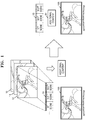
- FIG. 1 is a conceptual view for describing a method, performed by a terminal 100, of providing content, according to an embodiment.
- the terminal 100 may obtain content 10 including one or more images 12, 14, and 16.
- the content 10 may include, for example, multimedia content, such as cartoons, movies, dramas, etc.
- An image included in the content indicates a portion of the content that is displayed on a screen unit, and in this specification, an image may be used as having the same meaning as a frame, etc.
- a scene category of the image may be determined based on a type of an object included in the image or an activity performed by the object.
- the scene category of the image may be determined as a food image, a robot image, etc., based on the type of the object, or as a transformation image, a playing image, a singing image, etc., based on the activity of the object.
- the terminal 100 may generate additional content 20 including reaction information about the one or more images 12, 14, and 16 of the content 10.
- the reaction information includes content, such as evaluation, empathy, etc., with respect to the one or more images 12, 14, and 16.
- the reaction information may be provided in the form of at least one of sound data, text data, and image data.
- the terminal 100 may generate the additional content including the reaction information in the form of the sound data of "nice! with respect to the one or more images 12, 14, and 16. Also, the terminal 100 may generate additional content including identification information of the one or more images 12, 14, and 16 together with the reaction information, so that the reaction information of "nice! may be reproduced in synchronization with the one or more images 12, 14, and 16.
- the identification information of the one or more images 12, 14, and 16 corresponding to the reaction information may be provided as separate metadata.
- the terminal 100 may use a learning network model in order to determine the reaction information corresponding to the one or more images 12, 14, and 16.
- the learning network model may indicate a group of algorithms for determining the scene category of the one or more images 12, 14, and 16 or determining the reaction information corresponding to the one or more images 12, 14, and 16 by extracting and using various features in the one or more images 12, 14, and 16 by using results of statistical mechanical learning.
- the learning network model may be realized as software, engines, or the like for executing the described group of algorithms.
- the learning network model realized as software, engines, or the like may be executed by a processor in the terminal 100 or a processor of a server (not shown).
- the terminal 100 may obtain the reaction information corresponding to the one or more images 12, 14, and 16 as output data, by applying the one or more images 12, 14, and 16 or at least one of the one or more images 12, 14, and 16 as input data of the learning network model. This aspect will be described in more detail below with reference to FIGS. 4 through 8 .
- the terminal 100 may include, but is not limited to, a smartphone, a tablet personal computer (PC), a PC, a smart television (TV), a cellular phone, a personal digital assistant (PDA), a laptop, a media player, a micro server, an electronic book terminal, a digital broadcasting terminal, a kiosk, an MP3 player, a digital camera, a home appliance device, and other mobile or non-mobile computing devices.
- the terminal 100 may include wearable devices, such as a watch, glasses, a hair band, a ring, etc. having communication functions and data processing functions.
- FIG. 2 is a flowchart of a method, performed by a terminal, of providing content, according to an embodiment.
- the terminal may obtain one or more images included in the content.
- the terminal may obtain one or more images included in content that is stored in the terminal.
- the terminal may obtain the one or more images included in the pre-stored content, by executing a video reproducing application, etc.
- the terminal may receive an image from an external server.
- the external server may include at least one of a social network server, a cloud server, a web server, and a content providing server.
- the terminal may obtain one or more images included in content, by accessing an external server supporting the application executed by the terminal.
- SNS social network service
- the terminal may generate additional content for guiding user reaction corresponding to the one or more images, based on feature information extracted from the one or more images.
- the terminal may determine the reaction information corresponding to the one or more images by using a learning network model.
- the terminal may use the learning network model to detect the feature information of the one or more images and determine the reaction information corresponding to the one or more images based on the detected feature information.
- the terminal may determine a scene category of the one or more images by detecting the feature information of the one or more images by using the learning network model.
- the terminal may obtain the reaction information corresponding to the one or more images, from a reaction information database that is pre-stored.
- the reaction information database may store a plurality of pieces of reaction information classified for each scene category of the image.
- the feature information of the image may indicate information which may be applied as an input parameter of the learning network model.
- the feature information of the image may include a color, an edge, a polygon, saturation, brightness, color temperature, blur, sharpness, contrast, etc., but is not limited thereto.
- the feature information of the image may include sound data (for example, a theme song or a dialogue) in content corresponding to the image.
- the terminal may generate additional content including the reaction information.
- the additional content may include identification information of the at least image corresponding to the reaction information as synchronization information, so that the one or more images and the additional content are displayed in synchronization.
- the synchronization information may be separately provided as metadata of the additional content.
- the terminal may synchronize the generated additional content with the one or more images.
- the terminal may synchronize reproduction times of the content and the additional content.
- the terminal may reproduce the content and the additional content according to a result of the synchronization.
- the one or more images included in the content and the additional content may be reproduced in synchronization with each other.
- the terminal may reproduce the sound data of "Nice! in synchronization with the one or more images, at a time point in which the one or more images is reproduced.
- the terminal may modify and refine the additional content in order to prevent repeated reproduction of the same additional content. This aspect will be described in detail below with reference to FIG. 5 .
- FIG. 3 is a flowchart of a method, performed by a terminal, of generating additional content based on information about a change of an object obtained from one or more images and information about a location of the object, according to an embodiment.
- the terminal may recognize at least one object included in each of a plurality of images, based on feature information of the plurality of images included in content.
- the terminal may recognize the at least one object included in each of the plurality of images, by comparing information about a color, a polygon, etc. that is obtained as the feature information of each image with pre-stored information about colors, polygons, etc. of a plurality of objects.
- the terminal may recognize the object included in each of the plurality of images, by applying each image to a learning network model trained with respect to a feature for each type of an object, as input data.
- the terminal may obtain information about a location of the at least one object from each image.
- the information about the location of the at least one object may be obtained as information of coordinates of the at least one object on a two-dimensional plane.
- the information about the location of the at least one object is not limited thereto.
- the information about the location of the at least one object may be obtained as information of relative location values of a plurality of objects included in the image.
- the terminal may obtain information about a change of an object between a plurality of images by comparing objects included in the plurality of images.
- the information about the change of the object may include information about a change of an object between predetermined images, in terms of a shape, a location, a color, etc.
- the information about the change of the object may include information about an event where a new object is added to a predetermined image or an event where an object included in a previous image disappears in a predetermined image.
- the terminal may generate the additional content corresponding to the plurality of images based on the information about the location of the object and the information about the change of the object.
- the terminal may obtain reaction information corresponding to the plurality of images as output data, by applying, as input data, the information about the location of the object and the information about the change of the object to a learning network model trained for outputting reaction information.
- the terminal may obtain a scene category of each of the plurality of images as output data by applying, as input data, the information about the location of the object and the information about the change of the object to a learning network model trained for determining a scene category of an image.
- the terminal may determine the reaction information corresponding to each image, by comparing the scene category of each image with a pre-stored reaction information database.
- the terminal may reproduce the generated additional content and the one or more images by synchronizing the generated additional content and the one or more images.
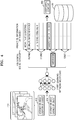
- FIG. 4 is a view for describing a method, performed by a terminal, of determining a scene category of an image by using a learning network model based on information about a location of an object of the image and information about a change of an object of the image.
- the terminal may obtain information 412 about a location of an object and information 414 about a change of an object, from a plurality of images 410 included in content.
- a method, performed by the terminal, of obtaining the information 412 about the location of the object and the information 414 about the change of the object from the plurality of images 410 may correspond to the method described with reference to operations S310 through S330 of FIG. 3 .
- the terminal may apply the information 412 about the location of the object and the information 414 about the change of the object to a first learning network model 420 as input data.
- the first learning network model 420 may be generated by being trained with respect to a standard for determining a scene category of an image from information about a location of one or more objects and information about a change of the one or more objects.
- the first learning network model 420 may be a pre-established model.
- the first learning network model 420 may be a model that is pre-established to receive basic learning data (for example, information about a location of an object of a sample image and information about a change of the object) and output a scene category of an image.
- the terminal may determine a scene category of the plurality of images 410 as a transformation image, according to output data obtained by inputting the information 412 about the location of the object and the information 414 about the change of the object to the first learning network model 420.
- the terminal may compare the determined scene category of the images with pieces of information stored in a reaction information database 430 that is pre-stored.
- the reaction information database 430 may store a plurality of pieces of reaction information classified for each scene category of the images. As a result of the comparison, the terminal may obtain sound data of "transformation into OOO! as the reaction information corresponding to the transformation image.
- the terminal may generate additional content 440 including the obtained reaction information.
- FIG. 4 describes the example in which the information 412 about the location of the object and the information 414 about the change of the object are applied as the input data of the first learning network model 420.
- sound data in content corresponding to an image may also be applied as input data.
- sound data including a song, a voice, etc. which are set to be reproduced together at a time point in which one or more images in content are reproduced may also be applied as sound data of the first learning network model 420.
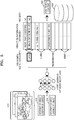
- FIG. 5 is a view for describing a method, performed by a terminal, of generating additional content by applying a weight to reaction information according to a situation in which content is provided, according to an embodiment.
- the terminal may obtain information 512 about a location of an object and information 514 about a change of an object, from a plurality of images 510 included in content.
- a method of obtaining the information 512 about the location of the object and the information 514 about the change of the object from the plurality of images 510 may correspond to the method described with reference to operations S310 through S330 of FIG. 3 .
- the terminal may apply the information 512 about the location of the object and the information 514 about the change of the object to a first learning network model 520 as input data.
- the first learning network model 520 may correspond to the first learning network model 420 described above with reference to FIG. 4 .
- the terminal may determine a scene category of the plurality of images 510 as a playing image, according to output data obtained by inputting the information 512 about the location of the object and the information 514 about the change of the object to the first learning network model 520. Also, the terminal may obtain a plurality of pieces of reaction information corresponding to the playing image, from a reaction information database 530 that is pre-stored.
- the terminal may select any one of the plurality of pieces of reaction information, based on content reproducing history.
- the terminal may set a low weight for reaction information previously reproduced as additional content, from among the plurality of pieces of reaction information. In order to prevent deterioration of user immersion when the same additional content is repeatedly reproduced whenever content is reproduced, the terminal may set the low weight for the reaction information previously determined as the additional content.
- the terminal may apply weights w1 and w2 to pieces of reaction information of "Wow! That's exciting” and “OO, shall we play together with OO?", respectively, the pieces of reaction information corresponding to the playing image.
- the reaction information of "Wow! That's exciting” is previously selected as the additional content.
- the weight w1 set for the reaction information of "Wow! That's exciting” may be lower than the weight w2 for the reaction information of "OO, shall we play together with OO?"
- the terminal may generate additional content 540 including the reaction information of "OO, shall we play together with OO?" according to a result of selecting one of the plurality of pieces of reaction information based on the set weights.
- FIG. 6 is a view for describing a method, performed by a terminal, of generating a learning network model taking into account a genre of content, according to an embodiment.
- the terminal may determine a scene category of an image by applying information about a location of an object of the image and information about a change of the object to a learning network model as an input.
- the terminal may generate the learning network model trained with respect to a feature of an image for each genre of content, in order to increase the accuracy of determination of the scene category of the image.
- the content may have a different plot for each genre.
- transformation content may have a plot of an introduction
- robot content may have a plot of an introduction, a danger, the appearance of a robot, and confrontation. That is, because each genre of content has a unique plot, when information about the genre of the content is recognized, the scene category of the image that is determined by the terminal may have increased accuracy.
- the terminal may input learning images 610 for which genres are determined to the learning network model.
- the learning images 610 may be images included in a plurality of genres g1, g2, and g3, respectively.
- the terminal may detect features from the learning images 510 and generate a feature space 620 consisting of the detected features, by using the learning network model.
- the terminal may learn a standard 630 (illustrated as lines) by analyzing correlation between the features distributed on the feature space 620 and the genres of the learning images 610.
- the terminal may generate the learning network model for determining a scene category of each image by taking into account the image feature for each genre of the content.
- the terminal may obtain the scene category of one or more images as output data, by applying information about a location of an object of the one or more images and information about a change of the object, together with information about a genre of content to the generated learning network model as input data.
- the input data that is input into the learning network model is not limited thereto.
- FIG. 7 is a view for describing a method, performed by a terminal, of determining reaction information by using a learning network model based on information about a location of an object of an image and information about a change of an object of the image, according to an embodiment.
- the terminal may obtain information 712 about a location of an object and information 714 about a change of an object, from a plurality of images 710 included in content.
- a method, performed by the terminal, of obtaining the information 712 about the location of the object and the information 714 about the change of the object from the plurality of images 710 may correspond to the method described with reference to operations S310 through S330 of FIG. 3 .
- the terminal may apply the information 712 about the location of the object and the information 714 about the change of the object to a second learning network model 720 as input data.
- the second learning network model 720 may be generated by being trained with respect to a standard for determining the reaction information from information about a location of one or more objects and information about a change of the one or more objects.
- the second learning network model 720 may be a pre-established model.
- the second learning network model 720 may be a model that is pre-established to receive basic learning data (for example, information about a location of an object of a sample image and information about a change of the object) and output the reaction information.
- the terminal may determine the reaction information corresponding to an image as sound data of "Transformation into OOO! according to output data obtained by inputting the information 712 about the location of the object and the information 714 about the change of the object to the second learning network model 720.
- the output data may be output as a probability value of the reaction information with respect to each of the information 712 about the location of the object and the information 714 about the change of the object that are input.
- the terminal may generate additional content 740 including the determined reaction information.
- FIG. 7 describes the example in which the information 712 about the location of the object and the information 714 about the change of the object are applied as the input data of the first learning network model 720. However, it is only an embodiment and sound data in content corresponding to an image may also be applied as input data.
- FIG. 8 is a view for describing a method, performed by a terminal, of determining reaction information by using a learning network model based on information about a location of an object of an image and information about a change of an object of the image, according to another embodiment.
- the terminal may obtain information 812 about a location of an object and information 814 about a change of an object, from a plurality of images 810 included in content.
- a method, performed by the terminal, of obtaining the information 812 about the location of the object and the information 814 about the change of the object from the plurality of images 810 may correspond to the method described with reference to operations S310 through S330 of FIG. 3 .
- the terminal may apply the information 812 about the location of the object and the information 814 about the change of the object to a third learning network model 820 as input data.
- the third learning network model 820 may include a first network 822 including a plurality of layers for determining a scene category of the plurality of images 810 and a second network 824 including a plurality of layers for determining reaction information corresponding to the scene category.
- the terminal may use the first network 822 to detect one or more image features from the information 812 about the location of the object and the information 814 about the change of the object.
- an image feature detected from each layer of the first network 822 may be different from each other.
- the terminal may use the plurality of layers of the first network 822 to detect at least one of a change in a location of an object, a change in a motion of the object, and a change in a shape of the object from the information 812 about the location of the object and the information 814 about the change of the object.
- the image features extracted by the first network 822 are not limited thereto.
- the terminal may determine the scene category of the image by using pre-stored learning results, by combining (or connecting) the information about the location of the object and the information about the change of the object (or result vectors) by using the first network 822. Also, the terminal may verify the determined scene category of the image.
- the terminal may use the second network 824 to detect the reaction information corresponding to the scene category of the image.
- Information indicating the determined scene category of the image may be applied as an input with respect to the second network 824.
- the terminal may reproduce additional content 830 including the reaction information that is output from the third learning network model 820 including the first network 822 and the second network 824, in synchronization with the plurality of images 810.
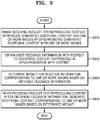
- FIG. 9 is a flowchart of a method, performed by a terminal, of modifying and refining additional content based on user feedback information, according to an embodiment.
- the terminal may reproduce generated additional content and one or more images by synchronizing the generated additional content and the one or more images.
- Operation S910 may correspond to operation S230 described above with reference to FIG. 2 .
- the terminal may obtain user feedback information with respect to the additional content reproduced in synchronization with the content.
- the terminal may obtain user gesture or utterance during the reproduction of the additional content as the feedback information.
- the feedback information is not limited to the described example.
- the terminal may determine a weight for reaction information corresponding to the one or more images based on the obtained feedback information.
- the terminal may set a high weight for the reaction information, when a user reacts in substantially the same way as the reaction information provided by the additional content, according to a result of analyzing the feedback information. For example, when it is identified that the user shouts according to sound data provided as the reaction information, according to the result of analyzing the feedback information, the terminal may set the high weight for the corresponding reaction information.
- the terminal may set the high weight for the reaction information with respect to the specific object. For example, when, with respect to character A and character B included in the images, a user response to the reaction information of "Shall we play together with character B?” is higher than a user response to the reaction information of "Shall we play together with character A?”, the terminal may set a higher weight for the reaction information of "Shall we play together with character B?”
- the method, performed by the terminal, of determining the weight for the reaction information is not limited to the described example.
- the terminal may generate the additional content corresponding to the one or more images based on the determined weight.
- the terminal may modify and refine reaction information having a low weight from among the pieces of reaction information included in the additional content as reaction information having a high weight.
- the terminal may repeatedly perform described operations S910 through S940 based on the new feedback information.
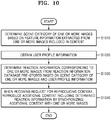
- FIG. 10 is a flowchart of a method, performed by a terminal, of generating additional content based on user profile information, according to an embodiment.
- the terminal may determine a scene category of one or more images based on feature information extracted from the one or more images included in content.
- the terminal may determine the scene category of the one or more images by using a learning network model generated by being trained with respect to a standard for determining a scene category of one or more images from a feature of the one or more images.
- the one or more images may be applied as input data or information about a location of an object obtained from the one or more images and information about a change of the object may be applied as the input data.
- the terminal may obtain information about a user profile.
- the user profile may include information about an age, a gender, jobs, hobbies, preferences, etc. of a user.
- the terminal may obtain the information about the user profile by receiving the user profile stored in an SNS account, etc. with user approval, or by directly receiving a user input.
- the method, performed by the terminal, of obtaining the information about the user profile is not limited to the example described above.
- the terminal may determine reaction information corresponding to the one or more images from a reaction information database that is pre-stored, based on the scene category of the one or more images and the information about the user profile.
- the reaction information database may store a plurality of pieces of reaction information classified for each scene category of the image.
- the terminal may obtain a plurality of pieces of reaction information corresponding to the scene category of the image determined from the reaction information database. Also, the terminal may select reaction information appropriate for a user from among the plurality of pieces of reaction information, based on the information about the user profile. For example, when the user is female and when the plurality of pieces of reaction information include reaction information with respect to an object preferred by female users, the terminal may select this reaction information as the reaction information corresponding to the one or more images.
- the method of determining the reaction information based on the information about the user profile is not limited to the example described above.
- the terminal may reproduce additional content including the determined reaction information and the one or more images by synchronizing the additional content and the one or more images.
- Operation S1040 may correspond to operation S230 described above with reference to FIG. 2 .
- FIG. 11 is a view for describing a method, performed by a terminal, of providing additional content by applying a voice model to reaction information, according to an embodiment.
- the terminal may determine reaction information 1120 corresponding to one or more images 1110, by using any one of the methods described above with reference to FIGS. 1 through 10 .
- the terminal may apply a specific sound model (for example, 1132) to the reaction information 1120, in order to more effectively provide the determined reaction information 1120 to a user.
- a specific sound model for example, 1132
- the terminal may apply any one of sound models, such as an acquaintance of the user, a favorite actor/actress of the user, and a favorite character of the user, to the reaction information 1120 and provide the reaction information 1120 to additional content 1140.
- the terminal may pre-store a sound database 1130 including a plurality of sound models 1132, 1134, and 1136.
- the terminal may provide the additional content 1140 by using a sound model preferred by the user from among the plurality of sound models 1132, 1134, and 1136 stored in the sound database 1130.
- the terminal may increase user immersion with respect to content, by providing the additional content 1140 by using the sound model preferred by the user.
- Information about the sound model preferred by the user may be obtained by using the feedback information as described above with reference to FIG. 9 and may also be obtained by using the information about the user profile as described above with reference to FIG. 10 .
- FIG. 12 is a block diagram of the terminal 100 for providing content, according to an embodiment.
- the terminal 100 may include a memory 110, a processor 120, and a display 130.
- the memory 110 may store programs (one or more instructions) for processing and controlling of the processor 120.
- the programs stored in the memory 110 may be divided into a plurality of modules according to functions thereof.
- the memory 110 may include a data learner and a data recognizer to be described below with reference to FIG. 13 , the data learner and the data recognizer being realized as software modules. Also, the data learner and the data recognizer each may include a separate learning network model or may share one learning network model.
- the processor 120 may include one or more cores (not shown) and one or more graphics processing units (not shown) and/or connection paths (for example, buses, etc.) for transmitting and receiving signals to and from other components
- the processor 120 may perform the operations of the terminal described above with reference to FIGS. 1 through 11 .
- the processor 120 may obtain one or more images included in content.
- the processor 120 may obtain feature information from the one or more images included in the content, by using a learning network model.
- the processor 120 may determine a scene category of the one or more images by inputting the one or more images, or information about a location of an object of the one or more images and information about a change of the object to the learning network model.
- the processor 120 may determine reaction information of the one or more images by inputting the one or more images, or the information about the location of the object of the one or more images and the information about the change of the object to the learning network model.
- the processor 120 may obtain user feedback information with respect to additional content reproduced in synchronization with the content.
- the processor 120 may provide the additional content by modifying and refining the reaction information corresponding to the one or more images based on the feedback information.
- the processor 120 may obtain information about a user profile.
- the processor 120 may determine the reaction information corresponding to the one or more images based on the feature information extracted from the one or more images and the obtained information about the user profile.
- the processor 120 may further include random-access memory (RAM) (not shown) and read-only memory (ROM) (not shown) temporarily and/or permanently storing signals (or data) processed in the processor 120.
- the processor 120 may be realized in the form of a system on chip (SoC) including at least one of a graphics processor, RAM, and ROM.
- SoC system on chip
- the display 130 may display the one or more images included in the content. Also, the display 130 may display the additional content synchronized with the content, when the generated additional content has the form of an image or text.
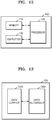
- FIG. 13 is a block diagram for describing the processor 120 according to an embodiment.
- the processor 120 may include a data learner 1310 and a data recognizer 1320.
- the data learner 1310 may learn a standard for determining the scene category of the one or more images. Also, according to another embodiment, the data learner 1310 may learn a standard for determining the reaction information corresponding to the one or more images.
- the data recognizer 1320 may determine the scene category of the one or more images or determine the reaction information corresponding to the one or more images, based on the standards learned by using the data learner 1310.
- At least one of the data learner 1310 and the data recognizer 1320 may be formed in the form of at least one hardware chip and mounted in the terminal.
- at least one of the data learner 1310 and the data recognizer 1320 may be formed in the form of an exclusive hardware chip for AI or may be formed as part of a previous general-purpose processor (for example, a central processing unit (CPU) or an application processor) or a graphics exclusive processor (for example, a graphics processing unit (GPU)) and mounted in various terminals described above.
- a previous general-purpose processor for example, a central processing unit (CPU) or an application processor
- a graphics exclusive processor for example, a graphics processing unit (GPU)
- the data learner 1310 and the data recognizer 1320 may be mounted in one terminal or each may be mounted in a different terminal.
- one of the data learner 1310 and the data recognizer 1320 may be included in the terminal and the other may be included in a server.
- the data learner 1310 and the data recognizer 1320 may communicate with each other in a wired or wireless manner to provide model information established by the data learner 1310 to the data recognizer 1320 or provide input data into the data recognizer 1320 to the data learner 1310 as additional learning data.
- At least one of the data learner 1310 and the data recognizer 1320 may be realized as a software module.
- the software module may be stored in a non-transitory computer-readable recording medium.
- the at least one software module may be provided by an operating system (OS) or a certain application.
- OS operating system
- a portion of the at least one software module may be provided by the OS and the other portion of the at least one software module may be provided by a certain application.
- FIG. 14 is a block diagram of the data learner 1310 according to an embodiment.
- the data learner 1310 may include a data obtainer 1410, a pre-processor 1420, a learning data selector 1430, a model learner 1440, and a model evaluator 1450.
- the data learner 1310 may include fewer components than the described components, or other components may further be included in the data learner 1310, in addition to the described components.
- the data obtainer 1410 may obtain the one or more images included in the content as learning data.
- the data obtainer 1410 may obtain the one or more images from the terminal including the data learner 1310 or an external terminal capable of communicating with the terminal including the data learner 1310.
- the one or more images obtained by the data obtainer 1410 may be any of the plurality of images included in the content classified according to a genre.
- the data obtainer 1410 may obtain one or more images included in at least one piece of content classified according to the genre.
- the pre-processor 1420 may pre-process the obtained images such that the obtained images may be used for learning for determining the scene category of the one or more images or determining the reaction information of the one or more images.
- the pre-processor 1420 may process the obtained one or more images into a predetermined format so that the model learner 1440 to be described below may use the obtained one or more images for learning.
- the learning data selector 1430 may select an image required for learning from pre-processed data.
- the selected image may be provided to the model learner 1440.
- the learning data selector 1430 may select the image required for learning from the pre-processed images based on a predetermined standard.
- the model learner 1440 may learn the standard as to which piece of information from pieces of the feature information of the one or more images from a plurality of layers in the learning network model is to be used in order to determine the scene category of the one or more images or determine the reaction information of the one or more images.
- the model learner 1440 may learn a first standard indicating from which layer of the plurality of layers included in the learning network model the feature information, which is used to determine the scene category of the one or more images, is to be extracted.
- the first standard may include the type, the numbers, or the level of features of the one or more images used by the terminal to determine the scene category of the one or more images by using the learning network model.
- the model learner 1440 may determine a data recognition model having a great relevance between input learning data and basic learning data as the data recognition model for learning.
- the basic learning data may be pre-classified into types of the data and the data recognition model may be pre-established for the types of the data.
- the basic learning data may be pre-classified based on various references, such as a region in which the learning data is generated, a time in which the learning data is generated, a size of the learning data, a genre of the learning data, a generator of the learning data, a type of an object in the learning data, etc.
- model learner 1440 may train the data recognition model by using, for example, reinforcement learning using feedback about whether a scene category of an image or reaction information of the image, which are determined based on learning, is correct or not.
- the model learner 1440 may store the trained data recognition model.
- the model learner 1440 may store the trained data recognition model in the memory of the terminal including the data recognizer 1320.
- the model learner 1440 may store the trained data recognition model in the memory of the terminal including the data recognizer 1320 to be described below.
- the model learner 1440 may store the trained data recognition model in a memory of a server connected with the terminal in a wired or wireless network.
- the memory on which the trained data recognition model is stored may also store, for example, commands or data related to at least another component of the terminal.
- the memory may store software and/or programs.
- the programs may include, for example, kernel, middleware, an application programming interface (API) and/or an application program (or an "application").
- the model evaluator 1450 may input evaluation data in the data recognition model and when a recognition result output from the evaluation data does not meet a predetermined reference, may have the model learner 1440 re-learn.
- the evaluation data may be the data predetermined for evaluating the data recognition model.
- the evaluation data may include a consistency ratio between a scene category of the images, identified based on the learning network model, and an actual scene category of the images.
- the evaluation data may include a consistency ratio between reaction information of the images, identified based on the learning network model, and actually appropriate reaction information.
- the model evaluator 1450 may evaluate whether each of the learning network models satisfies a certain criteria and may determine a model satisfying the certain criteria as an ultimate learning network model.
- At least one of the data obtainer 1410, the pre-processor 1420, the learning data selector 1430, the model learner 1440, and the model evaluator 1450 in the data learner 1310 may be formed in the form of at least one hardware chip and may be mounted in the terminal.
- at least one of the data obtainer 1410, the pre-processor 1420, the learning data selector 1430, the model learner 1440, and the model evaluator 1450 may be formed in the form of an exclusive hardware chip for Al, or may be formed as a part of a previous general-purpose processor (for example, a CPU or an application processor) or a graphics exclusive processor (for example, a GPU) and may be mounted in various terminals described above.
- the data obtainer 1410, the pre-processor 1420, the learning data selector 1430, the model learner 1440, and the model evaluator 1450 may be mounted in one terminal or each may be mounted in a separate terminal.
- some of the data obtainer 1410, the pre-processor 1420, the learning data selector 1430, the model learner 1440, and the model evaluator 1450 may be included in the terminal and the others may be included in a server.
- At least one of the data obtainer 1410, the pre-processor 1420, the learning data selector 1430, the model learner 1440, and the model evaluator 1450 may be realized as a software module.
- the software module may be stored in a non-transitory computer-readable recording medium.
- the at least one software module may be provided by an operating system (OS) or a certain application.
- OS operating system
- a portion of the at least one software module may be provided by the OS and the other portion of the at least one software module may be provided by a certain application.
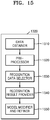
- FIG. 15 is a block diagram of the data recognizer 1320 according to an embodiment.
- the data recognizer 1320 may include a data obtainer 1510, a pre-processor 1520, a recognition data selector 1530, a recognition result provider 1540, and a model modifier and refiner 1550.
- the data obtainer 1510 may obtain one or more images required for determining a scene category of an image or reaction information of the image, and the pre-processor 1520 may pre-process the obtained one or more images so that the obtained one or more images may be used for determining the scene category of the image or the reaction information of the image.
- the pre-processor 1520 may process the obtained image into a predetermined format so that the recognition result provider 1540 to be described below may use the obtained image to determine the scene category of the image or the reaction information of the image.
- the recognition data selector 1530 may select an image required for determining the scene category of the image or the reaction information of the image from the pre-processed data. The selected data may be provided to the recognition result provider 1540.
- the recognition result provider 1540 may apply the selected image to the learning network model according to an embodiment to determine the scene category of the image or the reaction information of the image.
- a method of inputting at least one image to the learning network model and determining a scene category or reaction information of the at least one image may correspond to the methods described above with reference to FIGS. 1 through 11 .
- the recognition result provider 1540 may provide information about the scene category or the reaction in formation of an image, with respect to at least one image.
- the model modifier and refiner 1550 may provide information about the evaluation to the model learner 1440 described above with reference to FIG. 14 , so that a type classification network included in the learning network model or a parameter of at least one feature extraction layer may be modified and refined.
- At least one of the data obtainer 1510, the pre-processor 1520, the recognition data selector 1530, the recognition result provider 1540, and the model modifier and refiner 1550 in the data recognizer 1320 may be formed in the form of at least one hardware chip and may be mounted in the terminal.
- at least one of the data obtainer 1510, the pre-processor 1520, the recognition data selector 1530, the recognition result provider 1540, and the model modifier and refiner 1550 may be formed in the form of an exclusive hardware chip for AI or may be formed as a part of a previous general-purpose processor (for example, a CPU or an application processor) or a graphics exclusive processor (for example, a GPU) and may be mounted in various terminals described above.
- the data obtainer 1510, the pre-processor 1520, the recognition data selector 1530, the recognition result provider 1540, and the model modifier and refiner 1550 may be mounted in one terminal or each may be mounted in a separate terminal.
- some of the data obtainer 1510, the pre-processor 1520, the recognition data selector 1530, the recognition result provider 1540, and the model modifier and refiner 1550 may be included in the terminal and the others may be included in a server.
- At least one of the data obtainer 1510, the pre-processor 1520, the recognition data selector 1530, the recognition result provider 1540, and the model modifier and refiner 1550 may be realized as a software module.
- the software module may be stored in a non-transitory computer-readable recording medium.
- the at least one software module may be provided by an operating system (OS) or a certain application.
- OS operating system
- a portion of the at least one software module may be provided by the OS and the other portion of the at least one software module may be provided by a certain application.
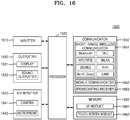
- FIG. 16 is a block diagram of a terminal 1600 for providing content, according to another embodiment.
- the terminal 1600 may further include an inputter 1610, an audio/video (A/V) inputter 1640, and a communicator 1650, in addition to a memory 1660, a processor 1620, and an outputter 1630 corresponding to the memory 110, the processor 120, and the display of FIG. 12 .
- A/V audio/video
- communicator 1650 in addition to a memory 1660, a processor 1620, and an outputter 1630 corresponding to the memory 110, the processor 120, and the display of FIG. 12 .
- the inputter 1610 denotes a device for a user to input data for controlling the terminal 1600.
- the inputter 1610 may include a key pad, a dome switch, a touch pad (a touch capacitance method, a pressure resistive method, an infrared detection method, a surface ultrasonic conductive method, a integral tension measuring method, a piezo effect method, etc.), a jog wheel, a jog switch, etc., but it is not limited thereto.
- the inputter 1610 may receive a user input for requesting reproduction of content, by using a touch pad.
- the inputter 1610 may receive a user input for requesting reproduction of content from a user via an inputting device, such as a remote controller.
- the processor 1620 may, in general, control general operations of the terminal 1600 and signal flows between internal components in the terminal 1000, and process data.
- the processor 1620 may execute programs (one or more instructions) stored in the memory 1660 to generally control the inputter 1610, the outputter 1630, the A/V inputter 1640, and the communicator 1650.
- the processor 1620 may determine a scene category of an image and reaction information corresponding to the scene category of the image, by using a learning network model, thereby performing the functions of the terminal 100 described above with reference to FIGS. 1 through 11 . Accordingly, the processor 1620 may control the components of the terminal 1600 to determine reaction information corresponding to an image.
- the processor 1620 corresponds to the processor 120 of FIG. 12 , and thus, its detailed description is omitted.
- the outputter 1630 may output one or more images in content and additional content in the form of an audio signal or a video signal, and the outputter 1630 may include the display 1631 and the sound outputter 1632.
- the display 1631 may display information processed by the terminal 1600.
- the display 1631 and a touch pad are layered to form a touch screen, the display 1631 may be used as an inputting device as well as an outputting device.
- the sound outputter 1632 may output audio data received from the communicator 1650 or stored in the memory 1660.
- the reaction information included in additional content has the form of sound data
- the sound outputter 1632 may output the additional content.
- the A/V inputter 1640 is a device for an input of an audio signal or a video signal and may include a camera 1641 and a microphone 1642.
- the camera 1641 may capture an image within a camera recognition range. According to an embodiment, the image captured by the camera 1641 may be image-processed by the processor 1620 and may be displayed on the display 1631.
- the communicator 1650 may include one or more components to enable an external server (for example, an SNS server, a cloud server, a content providing server, etc.) to communicate with other external devices.
- the communicator 1650 may include a short-range wireless communicator 1651, a mobile communicator 1652, and a broadcasting receiver 1653.
- the short-range wireless communicator 1651 may include a Bluetooth communication interface, a Bluetooth low energy (BLE) communication interface, a near-field communication interface, a WLAN (Wi-Fi) communication interface, a Zigbee communication interface, an infrared data association (IrDA) communication interface, a Wi-Fi direct (WFD) communication interface, an ultra wideband (UWB) communication interface, an Ant+ communication interface, etc., but it is not limited thereto.
- the mobile communicator 1652 may transmit and receive wireless signals to and from at least one of a base station, an external terminal, and a server, in a mobile communication network.
- the wireless signals may include various types of data according to exchange of content.
- the broadcasting receiver 1653 may receive broadcasting signals and/or information related to broadcasting from the outside via broadcasting channels. According to an embodiment, the terminal 1600 may not include the broadcasting receiver 1653.
- the communicator 1650 may receive content from an external server and provide the received content to the processor 1620.
- the memory 1660 may store programs (for example, one or more instructions, learning network models) for processing and controlling of the processor 1620 and may store data that is input to the terminal 1600 or is output from the terminal 1600.
- programs for example, one or more instructions, learning network models
- the programs stored in the memory 1660 may be divided into a plurality of modules according to their functions.
- the programs may be divided into a UI module 1661, a touch screen module 1662, etc.
- the UI module 1661 may provide a specialized Ul, a GUI, etc. associated with the terminal 1600 for each application.
- the touch screen module 1662 may sense a touch gesture of a user on the touch screen and transmit information about the touch gesture to the processor 1620.
- the touch screen module 1662 according to one or more embodiments of the disclosure may recognize and analyze a touch code.
- the touch screen module 1662 may be formed as additional hardware including a controller.
- the memory 1660 may include a memory of a flash memory type, a hard disk type, a multimedia card micro type, or a card type (for example, an SD or XD memory) and at least one type of storage medium from among random-access memory (RAM), static RAM (SRAM), read-only memory (ROM), electrically erasable programmable ROM (EEPROM), programmable ROM (PROM), magnetic memory, magnetic disks, or optical disks.
- RAM random-access memory
- SRAM static RAM
- ROM read-only memory
- EEPROM electrically erasable programmable ROM
- PROM programmable ROM
- each component of the terminal 1600 may be integrated, added, or omitted according to the specification of a terminal that is realized. That is, according to necessity, two or more components may be combined into one component or one component may be divided into two or more components. Also, a function performed by each component (or each module) is described to describe embodiments, and a specific operation or a device related thereto does not limit the scope of the present disclosure.
- FIG. 17 is a conceptual view of a method, performed by a terminal 1740, of providing additional content, according to another embodiment.
- a terminal 1710 may generate the additional content by using a learning network model 1730, based on at least one image 1720, according to another embodiment.
- a method, performed by the terminal 1710, of generating the additional content may correspond to the method described above with reference to FIGS. 1 through 11 .
- the terminal 1710 may transmit the generated additional content to another terminal 1740.
- the additional content may include identification information of the at least one image corresponding to reaction information together with the reaction information, in order to synchronize the additional content with content.
- the other terminal 1740 may reproduce the received additional content in synchronization with the content. For example, before the terminal 1710 reproduces the content, the terminal 1710 may transmit, to the other terminal 1740, a control signal for notifying reproduction of the content. Thus, the other terminal 1740 may identify that the reproduction of the content is started and reproduce the additional content in synchronization with the content.
- the other terminal 1740 may be a computing device capable of reproducing the additional content and may include, for example, a PC, a laptop, a cellular phone, a micro server, a global positioning system (GPS) device, a smart phone, a wearable terminal, an electronic book terminal, a home appliance device, an electronic device in a vehicle, and other mobile or non-mobile computing devices.
- a PC personal computer
- laptop a laptop
- a cellular phone a micro server
- GPS global positioning system
- smart phone a wearable terminal
- an electronic book terminal a home appliance device
- an electronic device in a vehicle and other mobile or non-mobile computing devices.
- the other terminal 1740 may include all types of devices including a communication function and a data processing function.
- the terminal 1710 may be connected for communication with the other terminal 1740 via a network.
- the network may include a local area network (LAN), a wide area network (WAN), a value added network (VAN), a mobile radio communication network, a satellite network, and a combination thereof, and may be a comprehensive data communication network for enabling smooth communication between the terminal 1710 and the other terminal 1740 and may include the wired Internet, the wireless Internet, and a mobile radio communication network.
- FIG. 18 is a flowchart of a method, performed by a first terminal and a second terminal, of providing content, according to another embodiment.
- the first terminal may obtain one or more images included in the content.
- Operation S1810 may correspond to operation S210 described above with reference to FIG. 2 .
- the first terminal may generate additional content corresponding to the one or more images, based on feature information extracted from the one or more images.
- Operation S1820 may correspond to operation S220 described above with reference to FIG. 2 .
- the first terminal may transmit the generated additional content to the second terminal.
- the first terminal may be communicatively connected with the second terminal through a network.
- the first terminal may transmit the additional content to the second terminal through a network.
- the first terminal may store the generated additional content in a cloud server and may transmit URL information indicating a location in the cloud server, in which the generated additional content is stored, to the second terminal.
- the second terminal may reproduce the received additional content in synchronization with the content.
- the second terminal may reproduce the additional content in synchronization with the reproduction of the content.
- inventions of the present disclosure may be implemented as an executable program, and may be executed by a general-purpose digital computer that runs the program by using a computer-readable recording medium.
- the computer-readable recording medium includes storage media, such as magnetic storage media (for example, ROM, floppy disks, hard disks, etc.), optical reading media (for example, CD-ROM, DVD, etc.), and carrier waves (for example, transmission through the Internet).
- storage media such as magnetic storage media (for example, ROM, floppy disks, hard disks, etc.), optical reading media (for example, CD-ROM, DVD, etc.), and carrier waves (for example, transmission through the Internet).
Landscapes
- Engineering & Computer Science (AREA)
- Theoretical Computer Science (AREA)
- Multimedia (AREA)
- Physics & Mathematics (AREA)
- Signal Processing (AREA)
- General Physics & Mathematics (AREA)
- Software Systems (AREA)
- Artificial Intelligence (AREA)
- Data Mining & Analysis (AREA)
- Evolutionary Computation (AREA)
- General Engineering & Computer Science (AREA)
- Computing Systems (AREA)
- Mathematical Physics (AREA)
- Life Sciences & Earth Sciences (AREA)
- Computational Linguistics (AREA)
- General Health & Medical Sciences (AREA)
- Molecular Biology (AREA)
- Biophysics (AREA)
- Biomedical Technology (AREA)
- Health & Medical Sciences (AREA)
- Databases & Information Systems (AREA)
- Computer Vision & Pattern Recognition (AREA)
- Medical Informatics (AREA)
- Bioinformatics & Computational Biology (AREA)
- Evolutionary Biology (AREA)
- Bioinformatics & Cheminformatics (AREA)
- Image Analysis (AREA)
- User Interface Of Digital Computer (AREA)
- Electrically Operated Instructional Devices (AREA)
Applications Claiming Priority (2)
| Application Number | Priority Date | Filing Date | Title |
|---|---|---|---|
| KR1020170118850A KR102449877B1 (ko) | 2017-09-15 | 2017-09-15 | 컨텐트를 제공하는 방법 및 단말기 |
| PCT/KR2018/010823 WO2019054792A1 (ko) | 2017-09-15 | 2018-09-14 | 컨텐트를 제공하는 방법 및 단말기 |
Publications (2)
| Publication Number | Publication Date |
|---|---|
| EP3661218A1 true EP3661218A1 (de) | 2020-06-03 |
| EP3661218A4 EP3661218A4 (de) | 2020-07-15 |
Family
ID=65722908
Family Applications (1)
| Application Number | Title | Priority Date | Filing Date |
|---|---|---|---|
| EP18857308.3A Pending EP3661218A4 (de) | 2017-09-15 | 2018-09-14 | Verfahren und endgerät zur bereitstellung von inhalt |
Country Status (5)
| Country | Link |
|---|---|
| US (1) | US11210525B2 (de) |
| EP (1) | EP3661218A4 (de) |
| KR (1) | KR102449877B1 (de) |
| CN (1) | CN111095934B (de) |
| WO (1) | WO2019054792A1 (de) |
Families Citing this family (7)
| Publication number | Priority date | Publication date | Assignee | Title |
|---|---|---|---|---|
| KR102243275B1 (ko) * | 2019-07-18 | 2021-04-22 | 주식회사 누아 | 오프라인 오브젝트에 관한 콘텐츠 자동 생성 방법, 장치 및 컴퓨터 판독가능 저장 매체 |
| EP3963896B1 (de) | 2019-08-14 | 2024-07-17 | Samsung Electronics Co., Ltd. | Eintauchbares anzeigesystem und verfahren dafür |
| KR102281298B1 (ko) * | 2020-04-22 | 2021-07-23 | 이정현 | 인공지능 기반 동영상 합성을 위한 시스템 및 방법 |
| KR20210144443A (ko) | 2020-05-22 | 2021-11-30 | 삼성전자주식회사 | 인공지능 가상 비서 서비스에서의 텍스트 출력 방법 및 이를 지원하는 전자 장치 |
| KR102908489B1 (ko) | 2020-06-10 | 2026-01-06 | 삼성전자주식회사 | 멀티미디어 컨텐츠를 생성하는 디스플레이 장치 및 그 동작방법 |
| KR102884546B1 (ko) | 2021-06-09 | 2025-11-11 | 삼성전자주식회사 | 플렉서블 디스플레이를 통해 배경 이미지를 표시하는 방법 및 그 전자 장치 |
| KR102737806B1 (ko) * | 2021-11-10 | 2024-12-03 | 정소영 | 증강현실 콘텐츠를 제공하기 위한 플랫폼 서비스 방법 |
Family Cites Families (24)
| Publication number | Priority date | Publication date | Assignee | Title |
|---|---|---|---|---|
| PT1947858E (pt) * | 2000-10-11 | 2014-07-28 | United Video Properties Inc | Sistemas e métodos para complementar meios de comunicação a pedido |
| US8856641B2 (en) * | 2008-09-24 | 2014-10-07 | Yahoo! Inc. | Time-tagged metainformation and content display method and system |
| JP5630983B2 (ja) * | 2009-09-30 | 2014-11-26 | Necパーソナルコンピュータ株式会社 | 再生装置、コンテンツの再生方法 |
| JP5609160B2 (ja) | 2010-02-26 | 2014-10-22 | ソニー株式会社 | 情報処理システム、コンテンツ合成装置および方法、並びに記録媒体 |
| JP2011217197A (ja) | 2010-03-31 | 2011-10-27 | Sony Corp | 電子機器、再生制御システム、再生制御方法及びプログラム |
| JP5406813B2 (ja) | 2010-10-05 | 2014-02-05 | 株式会社ソニー・コンピュータエンタテインメント | パノラマ画像表示装置およびパノラマ画像表示方法 |
| WO2013027628A1 (ja) * | 2011-08-24 | 2013-02-28 | ソニー株式会社 | 情報処理装置、情報処理方法及びプログラム |
| US20130347018A1 (en) * | 2012-06-21 | 2013-12-26 | Amazon Technologies, Inc. | Providing supplemental content with active media |
| US20140351838A1 (en) * | 2013-05-22 | 2014-11-27 | Andrew Dunmore | System and method for providing a secure access-controlled enterprise content repository |
| KR101516995B1 (ko) | 2013-08-22 | 2015-05-15 | 주식회사 엘지유플러스 | 컨텍스트 기반 브이오디 검색 시스템 및 이를 이용한 브이오디 검색 방법 |
| KR101523349B1 (ko) * | 2013-09-16 | 2015-05-28 | 오드컨셉 주식회사 | 피사체의 시각적 정보 기반 소셜 네트워크 서비스 시스템 |
| US9363551B2 (en) | 2013-10-31 | 2016-06-07 | Tencent Technology (Shenzhen) Company Limited | TV program identification method, apparatus, terminal, server and system |
| JP5646033B2 (ja) | 2013-11-01 | 2014-12-24 | 株式会社ソニー・コンピュータエンタテインメント | 画像表示装置および画像表示方法 |
| JP2015115892A (ja) | 2013-12-13 | 2015-06-22 | シャープ株式会社 | コメント作成装置およびその制御方法 |
| CN104333809A (zh) * | 2013-12-24 | 2015-02-04 | 乐视网信息技术(北京)股份有限公司 | 一种节目信息交流方法、装置及系统 |
| US20150271571A1 (en) * | 2014-03-18 | 2015-09-24 | Vixs Systems, Inc. | Audio/video system with interest-based recommendations and methods for use therewith |
| CN104113768A (zh) | 2014-06-26 | 2014-10-22 | 小米科技有限责任公司 | 关联信息生成方法和装置 |
| CN105303904A (zh) | 2014-06-27 | 2016-02-03 | 江苏睿泰数字产业园有限公司 | 一种移动学习方法及系统 |
| US10318575B2 (en) | 2014-11-14 | 2019-06-11 | Zorroa Corporation | Systems and methods of building and using an image catalog |
| KR101968908B1 (ko) | 2015-01-22 | 2019-04-15 | 한국전자통신연구원 | 시각지식 제공 장치 및 방법 |
| JP2016189158A (ja) | 2015-03-30 | 2016-11-04 | 富士フイルム株式会社 | 画像処理装置、画像処理方法、プログラムおよび記録媒体 |
| US10127945B2 (en) * | 2016-03-15 | 2018-11-13 | Google Llc | Visualization of image themes based on image content |
| CN105898561B (zh) | 2016-04-13 | 2019-06-18 | 腾讯科技(深圳)有限公司 | 一种视频图像处理方法和装置 |
| KR101900471B1 (ko) * | 2017-03-23 | 2018-09-19 | 주식회사 아이티엑스엠투엠 | 반응 효과가 삽입된 방송 시스템 |
-
2017
- 2017-09-15 KR KR1020170118850A patent/KR102449877B1/ko active Active
-
2018
- 2018-09-14 CN CN201880060004.5A patent/CN111095934B/zh not_active Expired - Fee Related
- 2018-09-14 EP EP18857308.3A patent/EP3661218A4/de active Pending
- 2018-09-14 WO PCT/KR2018/010823 patent/WO2019054792A1/ko not_active Ceased
- 2018-09-14 US US16/643,778 patent/US11210525B2/en active Active
Also Published As
| Publication number | Publication date |
|---|---|
| CN111095934A (zh) | 2020-05-01 |
| EP3661218A4 (de) | 2020-07-15 |
| KR20190031033A (ko) | 2019-03-25 |
| WO2019054792A1 (ko) | 2019-03-21 |
| US11210525B2 (en) | 2021-12-28 |
| KR102449877B1 (ko) | 2022-10-04 |
| CN111095934B (zh) | 2022-04-19 |
| US20200210710A1 (en) | 2020-07-02 |
Similar Documents
| Publication | Publication Date | Title |
|---|---|---|
| US11210525B2 (en) | Method and terminal for providing content | |
| US11216694B2 (en) | Method and apparatus for recognizing object | |
| KR102453169B1 (ko) | 디바이스가 이미지를 보정하는 방법 및 그 디바이스 | |
| CN114766016B (zh) | 用于通过迭代生成增强输出内容的设备、方法和程序 | |
| US20190066158A1 (en) | Method and electronic device for providing advertisement | |
| US11170201B2 (en) | Method and apparatus for recognizing object | |
| US11934953B2 (en) | Image detection apparatus and operation method thereof | |
| KR20220140673A (ko) | 디바이스가 이미지를 보정하는 방법 및 그 디바이스 | |
| US20210065685A1 (en) | Apparatus and method for providing voice assistant service | |
| EP3690644B1 (de) | Elektronische vorrichtung und betriebsverfahren dafür | |
| US11146859B2 (en) | Method and apparatus for executing content | |
| US11568875B2 (en) | Artificial intelligence apparatus and method for recognizing plurality of wake-up words | |
| US12430549B2 (en) | First neural network processing item usage history data and second neural network processing item usage and user taste history data to determine user-preferred item candidates and user taste information | |
| KR102574477B1 (ko) | 사운드 데이터를 변환하는 방법, 단말기 및 이를 위한 단말기 케이스 | |
| US11249871B2 (en) | Device and method for providing response to device usage inquiry | |
| US20240394837A1 (en) | Method for correcting image by device and device therefor | |
| US20220083882A1 (en) | Electronic device and operating method for providing information about why response has changed | |
| KR20200036092A (ko) | 전자 장치 및 그 제어 방법 | |
| US20210350797A1 (en) | System and method for providing voice assistance service | |
| CN118076956A (zh) | 电子设备和用于电子设备的控制方法 | |
| KR20220036781A (ko) | 응답이 변화된 이유에 관한 정보를 제공하는 전자 장치 및 그 동작 방법 |
Legal Events
| Date | Code | Title | Description |
|---|---|---|---|
| STAA | Information on the status of an ep patent application or granted ep patent |
Free format text: STATUS: THE INTERNATIONAL PUBLICATION HAS BEEN MADE |
|
| PUAI | Public reference made under article 153(3) epc to a published international application that has entered the european phase |
Free format text: ORIGINAL CODE: 0009012 |
|
| STAA | Information on the status of an ep patent application or granted ep patent |
Free format text: STATUS: REQUEST FOR EXAMINATION WAS MADE |
|
| 17P | Request for examination filed |
Effective date: 20200225 |
|
| AK | Designated contracting states |
Kind code of ref document: A1 Designated state(s): AL AT BE BG CH CY CZ DE DK EE ES FI FR GB GR HR HU IE IS IT LI LT LU LV MC MK MT NL NO PL PT RO RS SE SI SK SM TR |
|
| AX | Request for extension of the european patent |
Extension state: BA ME |
|
| A4 | Supplementary search report drawn up and despatched |
Effective date: 20200615 |
|
| RIC1 | Information provided on ipc code assigned before grant |
Ipc: H04N 21/2368 20110101ALI20200608BHEP Ipc: H04N 21/43 20110101ALI20200608BHEP Ipc: H04N 21/434 20110101ALI20200608BHEP Ipc: H04N 21/236 20110101AFI20200608BHEP Ipc: G06N 99/00 20190101ALI20200608BHEP Ipc: H04N 21/435 20110101ALI20200608BHEP |
|
| DAV | Request for validation of the european patent (deleted) | ||
| DAX | Request for extension of the european patent (deleted) | ||
| STAA | Information on the status of an ep patent application or granted ep patent |
Free format text: STATUS: EXAMINATION IS IN PROGRESS |
|
| 17Q | First examination report despatched |
Effective date: 20210311 |