EP3661155B1 - Autonomes kontextbewusstes hierarchisches kognitives edge-netzwerk mit zustandsaustausch - Google Patents
Autonomes kontextbewusstes hierarchisches kognitives edge-netzwerk mit zustandsaustausch Download PDFInfo
- Publication number
- EP3661155B1 EP3661155B1 EP19211728.1A EP19211728A EP3661155B1 EP 3661155 B1 EP3661155 B1 EP 3661155B1 EP 19211728 A EP19211728 A EP 19211728A EP 3661155 B1 EP3661155 B1 EP 3661155B1
- Authority
- EP
- European Patent Office
- Prior art keywords
- asset
- nodes
- groups
- node
- assets
- Prior art date
- Legal status (The legal status is an assumption and is not a legal conclusion. Google has not performed a legal analysis and makes no representation as to the accuracy of the status listed.)
- Active
Links
Images

Classifications
-
- H—ELECTRICITY
- H04—ELECTRIC COMMUNICATION TECHNIQUE
- H04L—TRANSMISSION OF DIGITAL INFORMATION, e.g. TELEGRAPHIC COMMUNICATION
- H04L63/00—Network architectures or network communication protocols for network security
- H04L63/10—Network architectures or network communication protocols for network security for controlling access to devices or network resources
- H04L63/104—Grouping of entities
-
- G—PHYSICS
- G06—COMPUTING OR CALCULATING; COUNTING
- G06Q—INFORMATION AND COMMUNICATION TECHNOLOGY [ICT] SPECIALLY ADAPTED FOR ADMINISTRATIVE, COMMERCIAL, FINANCIAL, MANAGERIAL OR SUPERVISORY PURPOSES; SYSTEMS OR METHODS SPECIALLY ADAPTED FOR ADMINISTRATIVE, COMMERCIAL, FINANCIAL, MANAGERIAL OR SUPERVISORY PURPOSES, NOT OTHERWISE PROVIDED FOR
- G06Q10/00—Administration; Management
- G06Q10/06—Resources, workflows, human or project management; Enterprise or organisation planning; Enterprise or organisation modelling
-
- G—PHYSICS
- G16—INFORMATION AND COMMUNICATION TECHNOLOGY [ICT] SPECIALLY ADAPTED FOR SPECIFIC APPLICATION FIELDS
- G16Y—INFORMATION AND COMMUNICATION TECHNOLOGY SPECIALLY ADAPTED FOR THE INTERNET OF THINGS [IoT]
- G16Y10/00—Economic sectors
- G16Y10/25—Manufacturing
-
- G—PHYSICS
- G16—INFORMATION AND COMMUNICATION TECHNOLOGY [ICT] SPECIALLY ADAPTED FOR SPECIFIC APPLICATION FIELDS
- G16Y—INFORMATION AND COMMUNICATION TECHNOLOGY SPECIALLY ADAPTED FOR THE INTERNET OF THINGS [IoT]
- G16Y30/00—IoT infrastructure
-
- G—PHYSICS
- G16—INFORMATION AND COMMUNICATION TECHNOLOGY [ICT] SPECIALLY ADAPTED FOR SPECIFIC APPLICATION FIELDS
- G16Y—INFORMATION AND COMMUNICATION TECHNOLOGY SPECIALLY ADAPTED FOR THE INTERNET OF THINGS [IoT]
- G16Y30/00—IoT infrastructure
- G16Y30/10—Security thereof
-
- H—ELECTRICITY
- H04—ELECTRIC COMMUNICATION TECHNIQUE
- H04L—TRANSMISSION OF DIGITAL INFORMATION, e.g. TELEGRAPHIC COMMUNICATION
- H04L63/00—Network architectures or network communication protocols for network security
- H04L63/06—Network architectures or network communication protocols for network security for supporting key management in a packet data network
- H04L63/065—Network architectures or network communication protocols for network security for supporting key management in a packet data network for group communications
-
- H—ELECTRICITY
- H04—ELECTRIC COMMUNICATION TECHNIQUE
- H04L—TRANSMISSION OF DIGITAL INFORMATION, e.g. TELEGRAPHIC COMMUNICATION
- H04L67/00—Network arrangements or protocols for supporting network services or applications
- H04L67/34—Network arrangements or protocols for supporting network services or applications involving the movement of software or configuration parameters
-
- H—ELECTRICITY
- H04—ELECTRIC COMMUNICATION TECHNIQUE
- H04L—TRANSMISSION OF DIGITAL INFORMATION, e.g. TELEGRAPHIC COMMUNICATION
- H04L67/00—Network arrangements or protocols for supporting network services or applications
- H04L67/50—Network services
- H04L67/60—Scheduling or organising the servicing of application requests, e.g. requests for application data transmissions using the analysis and optimisation of the required network resources
- H04L67/62—Establishing a time schedule for servicing the requests
-
- H—ELECTRICITY
- H04—ELECTRIC COMMUNICATION TECHNIQUE
- H04L—TRANSMISSION OF DIGITAL INFORMATION, e.g. TELEGRAPHIC COMMUNICATION
- H04L67/00—Network arrangements or protocols for supporting network services or applications
- H04L67/50—Network services
- H04L67/60—Scheduling or organising the servicing of application requests, e.g. requests for application data transmissions using the analysis and optimisation of the required network resources
- H04L67/63—Routing a service request depending on the request content or context
Definitions
- the disclosure herein generally relates to distributed state management systems, and, more particularly, to systems and computer implemented methods for creating an autonomous context aware state exchanging hierarchical cognitive edge network.
- Industrial IoT In today's age of connected devices and sophisticated protocols for device communication, one of the fields of significant importance and growth is Industrial Internet-of-Things (IoT).
- Industrial IoT in an industry or plant context, refers to a huge network of devices ranging from programmable logic controller (PLC) based devices in machine components to level control and monitoring systems. In such a diverse scenario, an edge network, as a middleware between the devices and cloud is not sufficient.
- PLC programmable logic controller
- Document US 2018/006 829 A1 discloses a method for establishing secure communication between a plurality of IoT devices in one or more vehicles include: provisioning the plurality of IoT devices by providing a unique identification, a digital identity token and a crypto graphic key to each of the plurality of IoT devices; establishing a secure communication line between the plurality of IoT devices by authenticating respective communication lines between respective IoT devices and issuing a digital certificate to the respective communication lines; grouping the plurality of IoT devices into different groups based on a predetermined criteria; and including a group membership for a group of the different groups in an attribute certificate indicating group characterization.
- Document US 2016/0 094 592 A1 discloses concepts and technologies for creating and using groups for task collaboration.
- a computing device can include a processor.
- the computing device can detect an opportunity to initiate collaboration on a task by a group of devices that includes a collaborating device.
- the computing device can create the group of devices, provide collaboration data to the collaborating device, and obtain input generated by the collaborating device based upon the collaboration data.
- the computing device can terminate the group.
- Embodiments of the present disclosure present technological improvements as solutions to one or more of the above-mentioned technical problems recognized by the inventors in conventional systems.
- a processor implemented method for creating an autonomous context aware state exchanging cognitive edge network in an ecosystem comprising the steps of: receiving periodically or when triggered by a change in the ecosystem, state information pertaining to each of a plurality of Internet of things (IoT) nodes representing a corresponding asset from a plurality of assets and associated processes required to complete an identified task in accordance with a pre-defined ontology, the state information comprising physical properties, logical properties, property values, context information and capability definitions of each asset from the plurality of assets, rules defining safe operating limits for operation of each asset from the plurality of assets, and lifecycle process definition of each asset from the plurality of assets, wherein at least some of the plurality of IoT nodes are identified as certifying nodes and the remaining are identified as asset nodes, wherein the certifying nodes are configured to validate and certify the asset nodes; modeling a plurality of asset shadows based on the received state information, each asset shadow being a node associated with a corresponding
- a system for creating an autonomous context aware state exchanging cognitive edge network in an ecosystem comprising: one or more data storage devices operatively coupled to one or more hardware processors and configured to store instructions configured for execution by the one or more hardware processors to: receive periodically or when triggered by a change in the ecosystem, state information pertaining to each of a plurality of Internet of things (IoT) nodes representing a corresponding asset from a plurality of assets and associated processes required to complete an identified task in accordance with a pre-defined ontology, the state information comprising physical properties, logical properties, property values, context information and capability definitions of each asset from the plurality of assets; rules defining safe operating limits for operation of each asset from the plurality of assets; and lifecycle process definition of each asset from the plurality of assets, wherein at least some of the plurality of IoT nodes are identified as certifying nodes and the remaining are identified as asset nodes, wherein the certifying nodes are configured to validate and certify the asset nodes; model
- the hybrid trust group comprises at least one full trust group having a certifying node and one or more independent asset nodes; and update, in response to the received state information, a state machine corresponding to each of the plurality of assets; wherein each of the plurality of IoT nodes publish the updated state information pertaining to the updated state machine associated thereof, to one or more of the plurality of IoT nodes of the one or more groups based on a subscription for a context by each of the plurality of IoT nodes, the context comprising the published updated state information of the plurality of assets and the associated processes across the hierarchy and the identified task in accordance with the pre-defined ontology; and wherein a new sub-task towards completing the identified task is autonomously selected, upon completion of the identified sub-task by either the one or more groups or by one or more of the plurality of IoT nodes based on the context.
- a computer program product comprising a non-transitory computer readable medium having a computer readable program embodied therein, wherein the computer readable program, when executed on a computing device, causes the computing device to: receive periodically or when triggered by a change in the ecosystem, state information pertaining to each of a plurality of Internet of things (IoT) nodes representing a corresponding asset from a plurality of assets and associated processes required to complete an identified task in accordance with a pre-defined ontology, the state information comprising physical properties, logical properties, property values, context information and capability definitions of each asset from the plurality of assets; rules defining safe operating limits for operation of each asset from the plurality of assets; and lifecycle process definition of each asset from the plurality of assets, wherein at least some of the plurality of IoT nodes are identified as certifying nodes and the remaining are identified as asset nodes, wherein the certifying nodes are configured to validate and certify the asset nodes; model a plurality of
- the asset nodes form part of the one or more groups of the plurality of IoT nodes based on the received information, and wherein the asset nodes forming part of more than one group maintain a discrete subordinate CA certificate and a discrete key pair for each group the asset nodes belongs but maintains the same unique identity in the cognitive edge network.
- the certifying node of a group joins another group from the one or more groups at any point in time as the asset node.
- the asset node forms part of the one or more groups of the plurality of IoT nodes by using either the unique identity associated thereof or the unique identity along with the public key and private key associated thereof.
- the asset node joins or leaves the one or more groups of the plurality of IoT nodes by broadcasting to one or more of the plurality of IoT nodes.
- FIG. 1 through FIG.3 where similar reference characters denote corresponding features consistently throughout the figures, there are shown preferred embodiments and these embodiments are described in the context of the following exemplary system and/or method.
- FIG. 1 illustrates an exemplary block diagram of a system 100 for creating an autonomous context aware state exchanging hierarchical cognitive edge network in an ecosystem, in accordance with an embodiment of the present disclosure.
- the system 100 includes one or more processors 104, communication interface device(s) or input/output (I/O) interface(s) 106, and one or more data storage devices or memory 102 operatively coupled to the one or more processors 104.
- the one or more processors 104 that are hardware processors can be implemented as one or more microprocessors, microcomputers, microcontrollers, digital signal processors, central processing units, state machines, graphics controllers, logic circuitries, and/or any devices that manipulate signals based on operational instructions.
- the processor(s) are configured to fetch and execute computer-readable instructions stored in the memory.
- the expressions 'processors' and 'hardware processors' may be used interchangeably.
- the system 100 can be implemented in a variety of computing systems, such as laptop computers, notebooks, hand-held devices, workstations, mainframe computers, servers, a network cloud and the like.
- the I/O interface(s) 106 can include a variety of software and hardware interfaces, for example, a web interface, a graphical user interface, and the like and can facilitate multiple communications within a wide variety of networks N/W and protocol types, including wired networks, for example, LAN, cable, etc., and wireless networks, such as WLAN, cellular, or satellite.
- the I/O interface(s) can include one or more ports for connecting a number of devices to one another or to another server.
- the memory 102 may include any computer-readable medium known in the art including, for example, volatile memory, such as static random access memory (SRAM) and dynamic random access memory (DRAM), and/or non-volatile memory, such as read only memory (ROM), erasable programmable ROM, flash memories, hard disks, optical disks, and magnetic tapes.
- volatile memory such as static random access memory (SRAM) and dynamic random access memory (DRAM)
- non-volatile memory such as read only memory (ROM), erasable programmable ROM, flash memories, hard disks, optical disks, and magnetic tapes.
- ROM read only memory
- erasable programmable ROM erasable programmable ROM
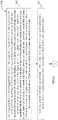
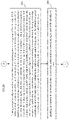
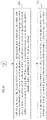
- FIG.2A through FIG.2C illustrates an exemplary flow diagram for a computer implemented method 200 for creating an autonomous context aware state exchanging hierarchical cognitive edge network in an ecosystem, in accordance with an embodiment of the present disclosure.
- the system 100 includes one or more data storage devices or memory 102 operatively coupled to the one or more processors 104 and is configured to store instructions configured for execution of steps of the method 200 by the one or more processors 104.
- the steps of the method 200 will now be explained in detail with reference to the components of the system 100 of FIG. 1 .
- process steps, method steps, techniques or the like may be described in a sequential order, such processes, methods and techniques may be configured to work in alternate orders. In other words, any sequence or order of steps that may be described does not necessarily indicate a requirement that the steps be performed in that order.
- the steps of processes described herein may be performed in any order practical. Further, some steps may be performed simultaneously.
- the one or more processors 104 are configured to receive either periodically or when triggered by a change in the ecosystem, at step 202, state information pertaining to each of a plurality of Internet of things (IoT) nodes representing a corresponding asset from a plurality of assets and associated processes required to complete an identified task in accordance with a pre-defined ontology.
- IoT Internet of things
- the pre-defined ontology may be custom defined for a particular domain. Relationships between the plurality of assets and associated processes for each domain defines an ontology.
- the state information comprises not only the physical properties of each asset from the plurality of assets, but also the logical properties, values associated with these properties, context information and capability definitions of each asset from the plurality of assets, rules defining safe operating limits for operation of each asset and lifecycle process definition of each asset.
- the logical properties may include process properties, threshold values to meet some rules, parameters of order, values from other sub systems, and the like.
- the state information received forms an information model for each of the plurality of assets.
- the model is a local copy of the properties and values of a corresponding asset.
- the modeling may be done in both online and offline mode.
- the online mode requires connectivity to the internet.
- the offline mode enables importing a local structure of the asset and storing the same in local.
- Values associated with some of the state information may be more dynamically changing unlike information associated with some like the capability definitions or the rules. Again, lifecycle process is typically stable for a given task.
- the state of an asset determines evaluation of the rules. For instance, if rotation speed of a spindle load is 300 rotations per minute (rpm) and an associated rule states the rotation speed needs to be limited to 250 rpm, then the state of the associated asset may be 'dangerous'.
- At least some of the plurality of IoT nodes are identified as certifying nodes and remaining are identified as asset nodes, wherein the certifying nodes are configured to validate and certify the asset nodes.
- the information model gets initialized during the validation process.
- Each of the plurality of IoT nodes has its own state and completion of the identified task depends on the cumulative state of the ecosystem.
- the one or more processors 104 are configured to model, at step 204, a plurality of asset shadows based on the received state information, each asset shadow being associated with a corresponding asset from the plurality of assets and the associated processes. For easy access to current state of each of the asset nodes, a snapshot of the corresponding information model is stored in memory persistent storage.
- the one or more processors 104 are configured to form, at step 206, a cognitive edge network of the asset shadows comprising one or more groups of the plurality of IoT nodes, wherein at least some of the one or more groups form a hierarchy within the cognitive edge network for completing the identified task, and wherein each of the one or more groups are associated with an identified sub-task towards completing the identified task.
- the formed one or more groups may have a composition forming one or more of a full trust group, a no trust group or a hybrid trust group, wherein the no trust group comprises at least one asset node having a unique identity in the cognitive edge network; the full trust group comprises at least one asset node having a unique identity in the cognitive edge network, a subordinate Certifying Authority (CA) certificate and a key pair comprising a public key and a private key, and a certifying node having a unique identity in the cognitive edge network and a root CA certificate for validating the at least one asset node in the group; and the hybrid trust group comprises at least one full trust group having a certifying node and one or more independent asset nodes.
- CA Certifying Authority
- an asset node may form part of one or more groups of the plurality of IoT nodes based on the received information. Joining or leaving a group may be necessitated by functional failure or intentional shutdown of one or more asset nodes based on process requirements.
- an asset when an asset forms part of more than one group, it maintains a discrete subordinate CA certificate and a discrete key pair for each group it belongs to, but maintains the same unique identify in the cognitive edge network.
- the certifying node of a group may join another group at any point in time as the asset node.
- the asset node forms part of the one or more groups of the plurality of IoT nodes by using either the unique identify, in case of no trust group or the unique identify along with the public key and the private key, in case of joining a full trust group having a certifying node.
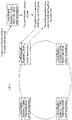
- FIG.3 illustrates registration of a new asset shadow into a full trust group, in accordance with an embodiment of the present disclosure.
- the new asset shadow When a new asset shadow needs to join a group, the new asset shadow generates the key pair comprising the public key and the private key.
- the public key of the new asset shadow is sent to the certifying node of the group that the new asset shadow needs to join.
- the certifying node validates the new asset shadow and issues the subordinate CA certificate based on the public key.
- the new asset shadow when the new asset shadow needs to join a no trust group, only the unique identifier is used and the new asset shadow joins the group without any formal validation.
- Such a scenario occurs in the case of machines (asset) having no engagement with any other machine and is hence capable of operating independently as part of a no trust group.
- an asset shadow when it needs to leave a full trust group, it informs the certifying node by sending a request for de-registration using its public key.
- the certifying node validates the subordinate CA certificate and upon validation, revokes the subordinate certificate assigned to the asset shadow.
- the certifying node then broadcasts the information to all the asset nodes in each of the one or more groups of the plurality of IoT nodes and requests all other certified asset shadows to revoke the leaving asset node's subordinate CA certificate, post which the asset shadow leaves the full trust group.
- the asset shadow that needs to leave a full trust group broadcasts the information to all the nodes in the group and leaves.
- the certifying node of the group then relays the information to all the groups it is connected with. When an asset shadow needs to leave a no trust group, it broadcasts the information to the other asset nodes in the group and leaves.
- the asset node joins or leaves the one or more groups of the plurality of IoT nodes by broadcasting to one or more of the plurality of IoT nodes.
- the one or more processors 104 are configured to update, in response to the received state information, at step 208, a state machine corresponding to each of the plurality of assets.
- the received state information includes updates received as part of the broadcasts when the asset node joins or leaves the one or more groups of the plurality of IoT nodes.
- each time an update happens a set point gets defined for the corresponding asset before a state change is triggered.
- a secure hashed log of each change associated with the asset shadow is maintained to facilitate life cycle simulation of the asset shadow, if needed, which guarantees integrity of the system and its distributed state by making the system tamper proof.
- each of the plurality of IoT nodes are configured to publish, the updated state information pertaining to the associated updated state machine, to one or more of the plurality of IoT nodes of the one or more groups based on a subscription for a context by each of the plurality of IoT nodes.
- the context comprises the published updated state information of the plurality of assets and the associated processes across the hierarchy and the identified task in accordance with the pre-defined ontology.
- an asset node A of group A needs the state information from an asset node B of group B
- the asset node A may have to raise a request for a subscription of the state information to the certifying node of group B to ensure that any change in the state information of the asset node B is published to the asset node A via the certifying node of the group A.
- publishing of the state information is configurable and controlled across the hierarchy for a given task and a given set of assets from the plurality of assets.
- a new sub-task towards completing the identified task may be autonomously selected by either the one or more groups or by one or more of the plurality of IoT nodes based on the context. Since the state information is published across the plurality of IoT nodes, the context aware nodes or the groups may pick up and execute a task based on associated capability of the nodes or the groups picking up the task and also the state of the entire ecosystem to complete the identified task. In accordance with the present disclosure, the system 100 is thus autonomous and obviates any need for centralized scheduling.
- systems and methods of the present disclosure provides a framework that sustains a digital twin of the physical assets along with the real-time state that includes the capabilities associated with the assets. It also provides extensibility for the business context and logic to facilitate autonomic decision making capabilities.
- the generic framework of the present disclosure may be used for any domain specific application with support for multiple communication protocols and extensions for business logic, as required, thus implementing autonomic asset digitization.
- the cognitive edge network is configured to be context aware with each node having a local copy of its current state and states of its neighbors. Any change in the ecosystem (self or neighbor) is communicated to all the nodes and the local copy is refreshed.
- the protocol for communication may be either peer-to-peer (P2P) based real-time publish subscribe (RTPS) or Message Queuing Telemetry Transport (MQTT) bus to which all the state information updates happen in real time.
- P2P peer-to-peer
- RTPS real-time publish subscribe
- MQTT Message Queuing Telemetry Transport
- Each asset node is integrated with a message bus which acts as a reservoir of all the state changes and actions performed by on any asset.
- the ecosystem state is reflected like a system of asset shadows trying to maintain the context automatically in real time and managed in such a manner that the system operates autonomously as per the pre-defined ontology.
- the hardware device can be any kind of device which can be programmed including e.g. any kind of computer like a server or a personal computer, or the like, or any combination thereof.
- the device may also include means which could be e.g. hardware means like e.g. an application-specific integrated circuit (ASIC), a field-programmable gate array (FPGA), or a combination of hardware and software means, e.g.
- ASIC application-specific integrated circuit
- FPGA field-programmable gate array
- the means can include both hardware means and software means.
- the method embodiments described herein could be implemented in hardware and software.
- the device may also include software means.
- the embodiments may be implemented on different hardware devices, e.g. using a plurality of CPUs.
- the embodiments herein can comprise hardware and software elements.
- the embodiments that are implemented in software include but are not limited to, firmware, resident software, microcode, etc.
- the functions performed by various modules described herein may be implemented in other modules or combinations of other modules.
- a computer-usable or computer readable medium can be any apparatus that can comprise, store, communicate, propagate, or transport the program for use by or in connection with the instruction execution system, apparatus, or device.
- a computer-readable storage medium refers to any type of physical memory on which information or data readable by a processor may be stored.
- a computer-readable storage medium may store instructions for execution by one or more processors, including instructions for causing the processor(s) to perform steps or stages consistent with the embodiments described herein.
- the term "computer-readable medium” should be understood to include tangible items and exclude carrier waves and transient signals, i.e., be non-transitory. Examples include random access memory (RAM), read-only memory (ROM), volatile memory, nonvolatile memory, hard drives, CD ROMs, DVDs, flash drives, disks, and any other known physical storage media.
Landscapes
- Engineering & Computer Science (AREA)
- Computer Networks & Wireless Communication (AREA)
- Signal Processing (AREA)
- Computing Systems (AREA)
- Computer Security & Cryptography (AREA)
- Business, Economics & Management (AREA)
- Computer Hardware Design (AREA)
- General Engineering & Computer Science (AREA)
- Economics (AREA)
- General Business, Economics & Management (AREA)
- Entrepreneurship & Innovation (AREA)
- Development Economics (AREA)
- Strategic Management (AREA)
- Human Resources & Organizations (AREA)
- Marketing (AREA)
- Game Theory and Decision Science (AREA)
- Educational Administration (AREA)
- Manufacturing & Machinery (AREA)
- Accounting & Taxation (AREA)
- Operations Research (AREA)
- Quality & Reliability (AREA)
- Tourism & Hospitality (AREA)
- Physics & Mathematics (AREA)
- General Physics & Mathematics (AREA)
- Theoretical Computer Science (AREA)
- Information Retrieval, Db Structures And Fs Structures Therefor (AREA)
Claims (11)
- Prozessorimplementiertes Verfahren zum Erzeugen eines autonomen, kontextbewussten, Status austauschenden kognitiven Edge-Netzwerks in einem Ökosystem (200), wobei das Verfahren die folgenden Schritte umfasst:periodisches oder durch eine Veränderung in dem Ökosystem ausgelöstes Empfangen von Statusinformationen durch einen oder mehrere Hardwareprozessoren, die jeden von einer Mehrzahl von Internet-der-Dinge-Knoten, IoT-Knoten, betreffen, die ein entsprechendes Asset aus einer Mehrzahl von Assets und zugehörige Prozesse repräsentieren, die erforderlich sind, um eine identifizierte Aufgabe in Übereinstimmung mit einer vordefinierten Ontologie zu vollenden, wobei die Statusinformationen physikalische Eigenschaften, logische Eigenschaften, Eigenschaftswerte, Kontextinformationen und Fähigkeitsdefinitionen jedes Assets aus der Mehrzahl von Assets, Regeln, die sichere Betriebsgrenzen für den Betrieb jedes Assets aus der Mehrzahl von Assets definieren, und Lebenszyklus-Prozessdefinitionen jedes Assets aus der Mehrzahl von Assets umfassen, wobei zumindest einige der Mehrzahl von IoT-Knoten als Zertifizierungsknoten identifiziert werden und die übrigen als Asset-Knoten identifiziert werden,wobei die Zertifizierungsknoten dazu ausgelegt sind, die Asset-Knoten (202) zu validieren und zu zertifizieren;Modellieren einer Mehrzahl von Asset-Schatten basierend auf den empfangenen Statusinformationen durch den oder die Hardwareprozessoren, wobei jeder Asset-Schatten ein Knoten ist, der einem entsprechenden Asset aus der Mehrzahl von Assets und den zugehörigen Prozessen (204) zugeordnet ist;Bilden eines kognitiven Edge-Netzwerks der Asset-Schatten durch den oder die Hardwareprozessoren, das eine oder mehrere Gruppen der Mehrzahl von IoT-Knoten umfasst, wobei mindestens einige der Gruppe oder Gruppen eine Hierarchie innerhalb des kognitiven Edge-Netzwerks zum Vollenden der identifizierten Aufgabe bilden und wobei jede der Gruppe oder Gruppen einer identifizierten Teilaufgabe zum Vollenden der identifizierten Aufgabe zugeordnet ist, wobei die Gruppe oder Gruppen eine Zusammensetzung aufweisen, die eine oder mehrere aus einer Gruppe mit vollem Vertrauen, einer Gruppe ohne Vertrauen oder einer hybriden Gruppe mit Vertrauen bildet, wobei die Gruppe ohne Vertrauen mindestens einen Asset-Knoten mit einer eindeutigen Identität in dem kognitiven Edge-Netzwerk umfasst, die Gruppe mit vollem Vertrauen mindestens einen Asset-Knoten mit einer eindeutigen Identität in dem kognitiven Edge-Netzwerk, ein untergeordnetes Zertifikat einer Zertifizierungsstelle, CA, und ein Schlüsselpaar, das einen öffentlichen Schlüssel und einen privaten Schlüssel umfasst, sowie einen Zertifizierungsknoten mit einer eindeutigen Identität in dem kognitiven Edge-Netzwerk und ein Root-CA-Zertifikat zum Validieren des mindestens einen Asset-Knotens in der Gruppe umfasst, und die hybride Gruppe mit Vertrauen mindestens eine Gruppe mit vollem Vertrauen mit einem Zertifizierungsknoten und einem oder mehreren unabhängigen Asset-Knoten (206) umfasst;Aktualisieren einer Statusmaschine, die jedem der Mehrzahl von Assets (208) entspricht, durch den oder die Hardwareprozessoren als Reaktion auf die empfangenen Statusinformationen;Veröffentlichen der aktualisierten Statusinformationen, die die zugeordnete aktualisierte Statusmaschine betreffen, für einen oder mehrere der Mehrzahl von IoT-Knoten der Gruppe oder Gruppen durch jeden der Mehrzahl von IoT-Knoten,basierend auf einer Subskription für einen Kontext durch jeden der Mehrzahl von IoT-Knoten, wobei der Kontext die veröffentlichten aktualisierten Statusinformationen der Mehrzahl von Assets und der zugeordneten Prozesse über der Hierarchie und die identifizierte Aufgabe in Übereinstimmung mit der vordefinierten Ontologie (210) umfasst; undautonomes Auswählen einer neuen Teilaufgabe zum Vollenden der identifizierten Aufgabe, nach Abschluss der identifizierten Teilaufgabe entweder durch die Gruppe oder Gruppen oder durch einen oder mehrere der Mehrzahl von IoT-Knoten basierend auf dem Kontext (212).
- Prozessorimplementiertes Verfahren nach Anspruch 1, wobei zumindest einige der Asset-Knoten basierend auf den empfangenen Informationen Teil einer oder mehrerer Gruppen der Mehrzahl von IoT-Knoten bilden, und wobei die Asset-Knoten, die Teil von mehr als einer Gruppe bilden, ein diskretes untergeordnetes CA-Zertifikat und ein diskretes Schlüsselpaar für jede Gruppe, zu der die Asset-Knoten gehören, aufrechterhalten, aber dieselbe eindeutige Identität in dem kognitiven Edge-Netzwerk beibehalten.
- Prozessorimplementiertes Verfahren nach Anspruch 1, wobei der Zertifizierungsknoten einer Gruppe zu einem beliebigen Zeitpunkt als Asset-Knoten einer anderen Gruppe aus der Gruppe oder Gruppen beitritt.
- Prozessorimplementiertes Verfahren nach Anspruch 2, wobei der Asset-Knoten Teil der Gruppe oder Gruppen der Mehrzahl von IoT-Knoten unter Verwendung entweder der ihm zugeordneten eindeutigen Identität oder der eindeutigen Identität zusammen mit dem ihm zugeordneten öffentlichen Schlüssel und privaten Schlüssel bildet.
- Prozessorimplementiertes Verfahren nach Anspruch 2, wobei der Asset-Knoten der Gruppe oder Gruppen der Mehrzahl von IoT-Knoten durch Ausstrahlen an einen oder mehrere der Mehrzahl von IoT-Knoten beitritt oder diese verlässt.
- System (100) zum Erzeugen eines autonomen, kontextbewussten, Status austauschenden kognitiven Edge-Netzwerks in einem Ökosystem, wobei das System umfasst: eine oder mehrere Datenspeichervorrichtungen (102), die operativ mit einem oder mehreren Hardwareprozessoren (104) gekoppelt und dazu ausgelegt sind, Anweisungen zu speichern, die zur Ausführung durch den oder die Hardwareprozessoren ausgelegt sind, um:periodisch oder durch eine Veränderung in dem Ökosystem ausgelöst Statusinformationen zu empfangen, die jeden einer Mehrzahl von Internet-der-Dinge-Knoten, IoT-Knoten, betreffen, die ein entsprechendes Asset aus einer Mehrzahl von Assets und zugeordnete Prozesse repräsentieren, die erforderlich sind, um eine identifizierte Aufgabe in Übereinstimmung mit einer vordefinierten Ontologie zu vollenden, wobei die Statusinformationen physikalische Eigenschaften, logische Eigenschaften, Eigenschaftswerte, Kontextinformationen und Fähigkeitsdefinitionen jedes Assets aus der Mehrzahl von Assets, Regeln, die sichere Betriebsgrenzen für den Betrieb jedes Assets aus der Mehrzahl von Assets definieren, und Lebenszyklus-Prozessdefinitionen jedes Assets aus der Mehrzahl von Assets umfassen, wobei zumindest einige der Mehrzahl von IoT-Knoten als Zertifizierungsknoten identifiziert werden und die übrigen als Asset-Knoten identifiziert werden, wobei die Zertifizierungsknoten dazu ausgelegt sind, die Asset-Knoten zu validieren und zu zertifizieren;eine Mehrzahl von Asset-Schatten basierend auf den empfangenen Statusinformationen zu modellieren, wobei jeder Asset-Schatten ein Knoten ist, der einem entsprechenden Asset aus der Mehrzahl von Assets und den zugeordneten Prozessen zugeordnet ist;ein kognitives Edge-Netzwerk der Asset-Schatten zu bilden, das eine oder mehrere Gruppen der Mehrzahl von IoT-Knoten umfasst, wobei mindestens einige der Gruppe oder Gruppen eine Hierarchie innerhalb des kognitiven Edge-Netzwerks zum Vollenden der identifizierten Aufgabe bilden und wobei jede der Gruppe oder Gruppen einer identifizierten Teilaufgabe zum Vollenden der identifizierten Aufgabe zugeordnet ist, wobei die Gruppe oder Gruppen eine Zusammensetzung aufweisen, die eine oder mehrere aus einer Gruppe mit vollem Vertrauen, einer Gruppe ohne Vertrauen oder einer hybriden Gruppe mit Vertrauen bildet, wobei die Gruppe ohne Vertrauen mindestens einen Asset-Knoten mit einer eindeutigen Identität in dem kognitiven Edge-Netzwerk umfasst, die Gruppe mit vollem Vertrauen mindestens einen Asset-Knoten mit einer eindeutigen Identität in dem kognitiven Edge-Netzwerk, ein untergeordnetes Zertifikat einer Zertifizierungsstelle, CA, und ein Schlüsselpaar, das einen öffentlichen Schlüssel und einen privaten Schlüssel umfasst, sowie einen Zertifizierungsknoten mit einer eindeutigen Identität in dem kognitiven Edge-Netzwerk und ein Root-CA-Zertifikat zum Validieren des mindestens einen Asset-Knotens in der Gruppe umfasst, und die hybride Gruppe mit Vertrauen mindestens eine Gruppe mit vollem Vertrauen mit einem Zertifizierungsknoten und einem oder mehreren unabhängigen Asset-Knoten umfasst; undals Reaktion auf die empfangenen Statusinformationen eine Statusmaschine zu aktualisieren, die jedem der Mehrzahl von Assets entspricht;wobei jeder der Mehrzahl von IoT-Knoten die aktualisierten Statusinformationen, die die zugeordnete aktualisierte Statusmaschine betreffen, für einen oder mehrere der Mehrzahl von IoT-Knoten der Gruppe oder Gruppen basierend auf einer Subskription für einen Kontext durch jeden der Mehrzahl von IoT-Knoten veröffentlicht, wobei der Kontext die veröffentlichten aktualisierten Statusinformationen der Mehrzahl von Assets und der zugeordneten Prozesse über der Hierarchie und die identifizierte Aufgabe in Übereinstimmung mit der vordefinierten Ontologie umfasst und wobei eine neue Teilaufgabe zum Vollenden der identifizierten Aufgabe nach Abschluss der identifizierten Teilaufgabe entweder durch die Gruppe oder Gruppen oder durch einen oder mehrere der Mehrzahl von IoT-Knoten basierend auf dem Kontext autonom ausgewählt wird.
- System nach Anspruch 6, wobei zumindest einige der Asset-Knoten basierend auf den empfangenen Informationen Teil einer oder mehrerer Gruppen der Mehrzahl von IoT-Knoten bilden und wobei die Asset-Knoten, die Teil von mehr als einer Gruppe bilden, ein diskretes untergeordnetes CA-Zertifikat und ein diskretes Schlüsselpaar für jede Gruppe, zu der die Asset-Knoten gehören, aufrechterhalten, aber dieselbe eindeutige Identität in dem kognitiven Edge-Netzwerk beibehalten.
- System nach Anspruch 6, wobei der Zertifizierungsknoten einer Gruppe zu einem beliebigen Zeitpunkt als Asset-Knoten einer anderen Gruppe aus der Gruppe oder Gruppen beitritt.
- System nach Anspruch 7, wobei der Asset-Knoten Teil der Gruppe oder Gruppen der Mehrzahl von IoT-Knoten unter Verwendung entweder der ihm zugeordneten eindeutigen Identität oder der eindeutigen Identität zusammen mit dem öffentlichen Schlüssel und dem ihm zugeordneten privaten Schlüssel bilden.
- System nach Anspruch 7, wobei der Asset-Knoten der Gruppe oder Gruppen der Mehrzahl von IoT-Knoten durch Ausstrahlen an einen oder mehrere der Mehrzahl von IoT-Knoten beitritt oder diese verlässt.
- Computerprogrammprodukt, umfassend ein nichtflüchtiges computerlesbares Medium mit einem darin verkörperten computerlesbaren Programm, wobei das computerlesbare Programm, wenn es auf einer Rechenvorrichtung ausgeführt wird, die Rechenvorrichtung veranlasst zum:periodisch oder ausgelöst durch eine Veränderung in dem Ökosystem, Statusinformationen zu empfangen, die jeden einer Mehrzahl von Internet-der-Dinge-Knoten, IoT-Knoten, betreffen, die ein entsprechendes Asset aus einer Mehrzahl von Assets und zugeordnete Prozesse repräsentieren, die erforderlich sind, um eine identifizierte Aufgabe in Übereinstimmung mit einer vordefinierten Ontologie zu vollenden, wobei die Statusinformationen physikalische Eigenschaften, logische Eigenschaften, Eigenschaftswerte, Kontextinformationen und Fähigkeitsdefinitionen jedes Assets aus der Mehrzahl von Assets, Regeln, die sichere Betriebsgrenzen für den Betrieb jedes Assets aus der Mehrzahl von Assets definieren, und Lebenszyklus-Prozessdefinitionen jedes Assets aus der Mehrzahl von Assets umfassen, wobei zumindest einige der Mehrzahl von IoT-Knoten als Zertifizierungsknoten identifiziert werden und die übrigen als Asset-Knoten identifiziert werden, wobei die Zertifizierungsknoten dazu ausgelegt sind, die Asset-Knoten zu validieren und zu zertifizieren;eine Mehrzahl von Asset-Schatten basierend auf den empfangenen Statusinformationen zu modellieren, wobei jeder Asset-Schatten ein Knoten ist, der einem entsprechenden Asset aus der Mehrzahl von Assets und den zugeordneten Prozessen zugeordnet ist;ein kognitives Edge-Netzwerk der Asset-Schatten zu bilden, das eine oder mehrere Gruppen der Mehrzahl von IoT-Knoten umfasst, wobei mindestens einige der Gruppe oder Gruppen eine Hierarchie innerhalb des kognitiven Edge-Netzwerks zum Vollenden der identifizierten Aufgabe bilden, und wobei jede der Gruppe oder Gruppen einer identifizierten Teilaufgabe zum Vollenden der identifizierten Aufgabe zugeordnet ist, wobei die Gruppe oder Gruppen eine Zusammensetzung aufweisen, die eine oder mehrere aus einer Gruppe mit vollem Vertrauen, einer Gruppe ohne Vertrauen oder einer hybriden Gruppe mit Vertrauen bildet, wobei die Gruppe ohne Vertrauen mindestens einen Asset-Knoten mit einer eindeutigen Identität in dem kognitiven Edge-Netzwerk umfasst, die Gruppe mit vollem Vertrauen mindestens einen Asset-Knoten mit einer eindeutigen Identität in dem kognitiven Edge-Netzwerk, ein untergeordnetes Zertifikat einer Zertifizierungsstelle, CA, und ein Schlüsselpaar, das einen öffentlichen Schlüssel und einen privaten Schlüssel umfasst, sowie einen Zertifizierungsknoten mit einer eindeutigen Identität in dem kognitiven Edge-Netzwerk und ein Root-CA-Zertifikat zur Validierung des mindestens einen Asset-Knotens in der Gruppe umfasst, und die hybride Gruppe mit Vertrauen mindestens eine Gruppe mit vollem Vertrauen mit einem Zertifizierungsknoten und einem oder mehreren unabhängigen Asset-Knoten umfasst; undeine Statusmaschine als Reaktion auf die empfangenen Statusinformationen zu aktualisieren, die jedem der Mehrzahl von Assets entspricht;wobei jeder der Mehrzahl von IoT-Knoten die aktualisierten Statusinformationen, die die zugeordnete aktualisierte Statusmaschine betreffen, für einen oder mehrere der Mehrzahl von IoT-Knoten der Gruppe oder Gruppen basierend auf einer Subskription für einen Kontext durch jeden der Mehrzahl von IoT-Knoten veröffentlicht, wobei der Kontext die veröffentlichten aktualisierten Statusinformationen der Mehrzahl von Assets und der zugeordneten Prozesse über der Hierarchie und die identifizierte Aufgabe in Übereinstimmung mit der vordefinierten Ontologie umfasst und wobei eine neue Teilaufgabe zum Vollenden der identifizierten Aufgabe nach Abschluss der identifizierten Teilaufgabe entweder durch die Gruppe oder Gruppen oder durch einen oder mehrere der Mehrzahl von IoT-Knoten basierend auf dem Kontext autonom ausgewählt wird.
Applications Claiming Priority (1)
| Application Number | Priority Date | Filing Date | Title |
|---|---|---|---|
| IN201821045109 | 2018-11-29 |
Publications (2)
| Publication Number | Publication Date |
|---|---|
| EP3661155A1 EP3661155A1 (de) | 2020-06-03 |
| EP3661155B1 true EP3661155B1 (de) | 2022-07-20 |
Family
ID=68699277
Family Applications (1)
| Application Number | Title | Priority Date | Filing Date |
|---|---|---|---|
| EP19211728.1A Active EP3661155B1 (de) | 2018-11-29 | 2019-11-27 | Autonomes kontextbewusstes hierarchisches kognitives edge-netzwerk mit zustandsaustausch |
Country Status (3)
| Country | Link |
|---|---|
| US (1) | US10880403B2 (de) |
| EP (1) | EP3661155B1 (de) |
| DK (1) | DK3661155T3 (de) |
Families Citing this family (8)
| Publication number | Priority date | Publication date | Assignee | Title |
|---|---|---|---|---|
| WO2021121674A1 (en) * | 2019-12-17 | 2021-06-24 | Abb Schweiz Ag | Updating an edge node of a process control system |
| US12688003B2 (en) * | 2020-07-15 | 2026-07-21 | Shure Acquisition Holdings, Inc. | Systems and methods for scalable management of audio system devices |
| US12225017B2 (en) | 2020-07-27 | 2025-02-11 | Unisys Corporation | Method of creating secure endpoints on a network |
| WO2022240321A1 (en) * | 2021-05-10 | 2022-11-17 | Telefonaktiebolaget Lm Ericsson (Publ) | Methods and systems for mass device handling in the internet of things (iot) |
| CN114866286B (zh) * | 2022-04-07 | 2023-10-27 | 水利部信息中心 | 一种基于网络流量的梳理影子资产的方法 |
| US12598186B2 (en) | 2022-05-16 | 2026-04-07 | Bank Of America Corporation | Intelligent resource allocation based on security profile of edge device network |
| EP4529116A4 (de) * | 2022-06-16 | 2025-07-30 | Huawei Cloud Computing Tech Co Ltd | Edge-knoten-einsatzverfahren auf basis von cloud-computing-technologie und cloud-verwaltungsplattform |
| US12238117B2 (en) * | 2022-10-20 | 2025-02-25 | Dell Products L.P. | Autonomous compute storage device signature/application system |
Family Cites Families (14)
| Publication number | Priority date | Publication date | Assignee | Title |
|---|---|---|---|---|
| US20030088659A1 (en) | 2001-11-08 | 2003-05-08 | Susarla Hanumantha Rao | System and method for distributed state management |
| US6721907B2 (en) * | 2002-06-12 | 2004-04-13 | Zambeel, Inc. | System and method for monitoring the state and operability of components in distributed computing systems |
| US8769019B2 (en) | 2006-05-04 | 2014-07-01 | Citrix Systems, Inc. | Methods and systems for managing shared state within a distributed system with varying consistency and consensus semantics |
| US10153908B2 (en) * | 2010-04-30 | 2018-12-11 | T-Central, Inc. | Secure communication of IOT devices for vehicles |
| US20130307702A1 (en) * | 2011-01-13 | 2013-11-21 | Tata Consultancy Services Limited | Method and system for effective management of energy consumption by household appliances |
| EP2804410B1 (de) * | 2013-05-16 | 2019-10-02 | Tata Consultancy Services Limited | Intelligenter kommunikations- und werbemechanismus |
| IN2013MU04061A (de) | 2013-12-26 | 2015-07-31 | Tata Consultancy Services Ltd | |
| US9892140B2 (en) * | 2014-09-30 | 2018-02-13 | At&T Intellectual Property I, L.P. | Creating and using groups for task collaboration |
| US10547666B2 (en) | 2015-03-27 | 2020-01-28 | Rockwell Automation Technologies, Inc. | Systems and methods for exchanging information between devices in an industrial automation environment |
| DE112016006827T5 (de) * | 2016-07-01 | 2019-03-07 | Intel Corporation | Gruppenverwaltung in rekonfigurierbaren maschine-zu-maschine-systemen |
| US10397303B1 (en) * | 2016-08-29 | 2019-08-27 | Amazon Technologies, Inc. | Semantic annotation and translations for devices |
| WO2018126076A1 (en) * | 2016-12-30 | 2018-07-05 | Intel Corporation | Data packaging protocols for communications between iot devices |
| US10992711B2 (en) * | 2017-04-13 | 2021-04-27 | At&T Intellectual Property I, L.P. | Network aware data driven internet of things service engine |
| TW202016743A (zh) * | 2018-10-25 | 2020-05-01 | 財團法人資訊工業策進會 | 用於物聯網系統之資料處理裝置及資料處理方法 |
-
2019
- 2019-11-27 EP EP19211728.1A patent/EP3661155B1/de active Active
- 2019-11-27 DK DK19211728.1T patent/DK3661155T3/da active
- 2019-11-27 US US16/698,241 patent/US10880403B2/en active Active
Also Published As
| Publication number | Publication date |
|---|---|
| US10880403B2 (en) | 2020-12-29 |
| EP3661155A1 (de) | 2020-06-03 |
| US20200177703A1 (en) | 2020-06-04 |
| DK3661155T3 (da) | 2022-09-05 |
Similar Documents
| Publication | Publication Date | Title |
|---|---|---|
| US10880403B2 (en) | Autonomous context aware state exchanging hierarchical cognitive edge network | |
| US10938856B2 (en) | Systems and methods for security protocol execution in a hierarchical state machine-driven execution plan | |
| Viriyasitavat et al. | Managing qos of internet-of-things services using blockchain | |
| DE102022114301A1 (de) | Software-definiertes prozesssteuerungssystem für industrielle prozessanlagen | |
| US10448454B1 (en) | Self-organizing distributed task coordination for ad-hoc computing environment | |
| DE102022114380A1 (de) | Sicherheitsdienste in einem softwaredefinierten steuerungssystem | |
| DE102022114391A1 (de) | Suchdienst in einem softwaredefinierten Steuerungssystem | |
| DE102022114542A1 (de) | Suchdienst in einem softwaredefinierten steuerungssystem | |
| US7869887B2 (en) | Discoverable services | |
| DE102022114302A1 (de) | Softwaredefiniertes prozesssteuerungssystem und verfahren für industrielle prozessanlagen | |
| DE102022114256A1 (de) | Systeme und verfahren zur dynamisch aufrechterhaltenen redundanz und zum lastausgleich in softwaredefinierten steuerungssystemen für industrielle prozessanlagen | |
| DE102022114267A1 (de) | Systeme und verfahren zur dynamischen aufrechterhaltung der redundanz und des lastausgleichs in softwaredefinierten steuerungssystemen für industrielle prozessanlagen | |
| DE102022114375A1 (de) | Sicherheitsdienste in einem softwaredefiniertensteuerungssystem | |
| CN116915827A (zh) | 物联网边缘网关的数据传输方法、装置、电子设备及介质 | |
| US10826771B2 (en) | State identity vector for system self awareness | |
| DE102022114799A1 (de) | Systeme und verfahren zur zuordnung von modulen in einem softwaredefinierten steuerungssystem für industrielle prozessanlagen | |
| DE102022115152A1 (de) | Visualisierung eines softwaredefinierten prozesssteuerungssystems für industrielle prozessanlagen | |
| DE102022114307A1 (de) | Nutzung von dienstqualitätsmetriken zur erleichterung von übergängen zwischen e/a-kanälen für e/a-serverdienste | |
| Jameel et al. | Optimizing blockchain networks with artificial intelligence: Towards efficient and reliable IoT applications | |
| DE102022114303A1 (de) | Systeme und verfahren zur dynamischen aufrechterhaltung von redundanz und lastausgleich in softwaredefinierten steuerungssystemen für industrielle prozessanlagen | |
| De et al. | BCoT: introduction to blockchain-based internet of things for industry 5.0 | |
| CN110098938B (zh) | 一种可信任委托式链下加速解决方法及系统 | |
| Cristescu et al. | DEW: A new edge computing component for distributed dynamic networks | |
| Yen et al. | Game-theoretic approach to self-stabilizing distributed formation of minimal multi-dominating sets | |
| US12388734B2 (en) | Cluster availability monitoring and alerting |
Legal Events
| Date | Code | Title | Description |
|---|---|---|---|
| PUAI | Public reference made under article 153(3) epc to a published international application that has entered the european phase |
Free format text: ORIGINAL CODE: 0009012 |
|
| STAA | Information on the status of an ep patent application or granted ep patent |
Free format text: STATUS: THE APPLICATION HAS BEEN PUBLISHED |
|
| AK | Designated contracting states |
Kind code of ref document: A1 Designated state(s): AL AT BE BG CH CY CZ DE DK EE ES FI FR GB GR HR HU IE IS IT LI LT LU LV MC MK MT NL NO PL PT RO RS SE SI SK SM TR |
|
| AX | Request for extension of the european patent |
Extension state: BA ME |
|
| STAA | Information on the status of an ep patent application or granted ep patent |
Free format text: STATUS: REQUEST FOR EXAMINATION WAS MADE |
|
| 17P | Request for examination filed |
Effective date: 20201203 |
|
| RBV | Designated contracting states (corrected) |
Designated state(s): AL AT BE BG CH CY CZ DE DK EE ES FI FR GB GR HR HU IE IS IT LI LT LU LV MC MK MT NL NO PL PT RO RS SE SI SK SM TR |
|
| REG | Reference to a national code |
Ref country code: DE Ref legal event code: R079 Ref document number: 602019017164 Country of ref document: DE Free format text: PREVIOUS MAIN CLASS: H04L0029060000 Ipc: G06Q0010060000 |
|
| RIC1 | Information provided on ipc code assigned before grant |
Ipc: G16Y 30/10 20200101ALI20211221BHEP Ipc: G16Y 30/00 20200101ALI20211221BHEP Ipc: G16Y 10/25 20200101ALI20211221BHEP Ipc: G06Q 10/06 20120101ALI20211221BHEP Ipc: H04L 29/06 20060101AFI20211221BHEP |
|
| GRAP | Despatch of communication of intention to grant a patent |
Free format text: ORIGINAL CODE: EPIDOSNIGR1 |
|
| STAA | Information on the status of an ep patent application or granted ep patent |
Free format text: STATUS: GRANT OF PATENT IS INTENDED |
|
| RIC1 | Information provided on ipc code assigned before grant |
Ipc: G16Y 30/10 20200101ALI20220107BHEP Ipc: G16Y 30/00 20200101ALI20220107BHEP Ipc: G16Y 10/25 20200101ALI20220107BHEP Ipc: G06Q 10/06 20120101AFI20220107BHEP |
|
| INTG | Intention to grant announced |
Effective date: 20220202 |
|
| GRAS | Grant fee paid |
Free format text: ORIGINAL CODE: EPIDOSNIGR3 |
|
| GRAA | (expected) grant |
Free format text: ORIGINAL CODE: 0009210 |
|
| STAA | Information on the status of an ep patent application or granted ep patent |
Free format text: STATUS: THE PATENT HAS BEEN GRANTED |
|
| AK | Designated contracting states |
Kind code of ref document: B1 Designated state(s): AL AT BE BG CH CY CZ DE DK EE ES FI FR GB GR HR HU IE IS IT LI LT LU LV MC MK MT NL NO PL PT RO RS SE SI SK SM TR |
|
| REG | Reference to a national code |
Ref country code: CH Ref legal event code: EP |
|
| REG | Reference to a national code |
Ref country code: SE Ref legal event code: TRGR |
|
| REG | Reference to a national code |
Ref country code: DE Ref legal event code: R096 Ref document number: 602019017164 Country of ref document: DE |
|
| REG | Reference to a national code |
Ref country code: AT Ref legal event code: REF Ref document number: 1506018 Country of ref document: AT Kind code of ref document: T Effective date: 20220815 |
|
| REG | Reference to a national code |
Ref country code: NO Ref legal event code: T2 Effective date: 20220720 |
|
| REG | Reference to a national code |
Ref country code: IE Ref legal event code: FG4D |
|
| REG | Reference to a national code |
Ref country code: DK Ref legal event code: T3 Effective date: 20220829 |
|
| REG | Reference to a national code |
Ref country code: NL Ref legal event code: FP |
|
| REG | Reference to a national code |
Ref country code: LT Ref legal event code: MG9D |
|
| PG25 | Lapsed in a contracting state [announced via postgrant information from national office to epo] |
Ref country code: RS Free format text: LAPSE BECAUSE OF FAILURE TO SUBMIT A TRANSLATION OF THE DESCRIPTION OR TO PAY THE FEE WITHIN THE PRESCRIBED TIME-LIMIT Effective date: 20220720 Ref country code: PT Free format text: LAPSE BECAUSE OF FAILURE TO SUBMIT A TRANSLATION OF THE DESCRIPTION OR TO PAY THE FEE WITHIN THE PRESCRIBED TIME-LIMIT Effective date: 20221121 Ref country code: LV Free format text: LAPSE BECAUSE OF FAILURE TO SUBMIT A TRANSLATION OF THE DESCRIPTION OR TO PAY THE FEE WITHIN THE PRESCRIBED TIME-LIMIT Effective date: 20220720 Ref country code: LT Free format text: LAPSE BECAUSE OF FAILURE TO SUBMIT A TRANSLATION OF THE DESCRIPTION OR TO PAY THE FEE WITHIN THE PRESCRIBED TIME-LIMIT Effective date: 20220720 Ref country code: FI Free format text: LAPSE BECAUSE OF FAILURE TO SUBMIT A TRANSLATION OF THE DESCRIPTION OR TO PAY THE FEE WITHIN THE PRESCRIBED TIME-LIMIT Effective date: 20220720 Ref country code: ES Free format text: LAPSE BECAUSE OF FAILURE TO SUBMIT A TRANSLATION OF THE DESCRIPTION OR TO PAY THE FEE WITHIN THE PRESCRIBED TIME-LIMIT Effective date: 20220720 |
|
| REG | Reference to a national code |
Ref country code: AT Ref legal event code: MK05 Ref document number: 1506018 Country of ref document: AT Kind code of ref document: T Effective date: 20220720 |
|
| PG25 | Lapsed in a contracting state [announced via postgrant information from national office to epo] |
Ref country code: PL Free format text: LAPSE BECAUSE OF FAILURE TO SUBMIT A TRANSLATION OF THE DESCRIPTION OR TO PAY THE FEE WITHIN THE PRESCRIBED TIME-LIMIT Effective date: 20220720 Ref country code: IS Free format text: LAPSE BECAUSE OF FAILURE TO SUBMIT A TRANSLATION OF THE DESCRIPTION OR TO PAY THE FEE WITHIN THE PRESCRIBED TIME-LIMIT Effective date: 20221120 Ref country code: HR Free format text: LAPSE BECAUSE OF FAILURE TO SUBMIT A TRANSLATION OF THE DESCRIPTION OR TO PAY THE FEE WITHIN THE PRESCRIBED TIME-LIMIT Effective date: 20220720 Ref country code: GR Free format text: LAPSE BECAUSE OF FAILURE TO SUBMIT A TRANSLATION OF THE DESCRIPTION OR TO PAY THE FEE WITHIN THE PRESCRIBED TIME-LIMIT Effective date: 20221021 |
|
| REG | Reference to a national code |
Ref country code: DE Ref legal event code: R097 Ref document number: 602019017164 Country of ref document: DE |
|
| PG25 | Lapsed in a contracting state [announced via postgrant information from national office to epo] |
Ref country code: SM Free format text: LAPSE BECAUSE OF FAILURE TO SUBMIT A TRANSLATION OF THE DESCRIPTION OR TO PAY THE FEE WITHIN THE PRESCRIBED TIME-LIMIT Effective date: 20220720 Ref country code: RO Free format text: LAPSE BECAUSE OF FAILURE TO SUBMIT A TRANSLATION OF THE DESCRIPTION OR TO PAY THE FEE WITHIN THE PRESCRIBED TIME-LIMIT Effective date: 20220720 Ref country code: CZ Free format text: LAPSE BECAUSE OF FAILURE TO SUBMIT A TRANSLATION OF THE DESCRIPTION OR TO PAY THE FEE WITHIN THE PRESCRIBED TIME-LIMIT Effective date: 20220720 Ref country code: AT Free format text: LAPSE BECAUSE OF FAILURE TO SUBMIT A TRANSLATION OF THE DESCRIPTION OR TO PAY THE FEE WITHIN THE PRESCRIBED TIME-LIMIT Effective date: 20220720 |
|
| PLBE | No opposition filed within time limit |
Free format text: ORIGINAL CODE: 0009261 |
|
| STAA | Information on the status of an ep patent application or granted ep patent |
Free format text: STATUS: NO OPPOSITION FILED WITHIN TIME LIMIT |
|
| PG25 | Lapsed in a contracting state [announced via postgrant information from national office to epo] |
Ref country code: SK Free format text: LAPSE BECAUSE OF FAILURE TO SUBMIT A TRANSLATION OF THE DESCRIPTION OR TO PAY THE FEE WITHIN THE PRESCRIBED TIME-LIMIT Effective date: 20220720 Ref country code: EE Free format text: LAPSE BECAUSE OF FAILURE TO SUBMIT A TRANSLATION OF THE DESCRIPTION OR TO PAY THE FEE WITHIN THE PRESCRIBED TIME-LIMIT Effective date: 20220720 |
|
| 26N | No opposition filed |
Effective date: 20230421 |
|
| PG25 | Lapsed in a contracting state [announced via postgrant information from national office to epo] |
Ref country code: MC Free format text: LAPSE BECAUSE OF FAILURE TO SUBMIT A TRANSLATION OF THE DESCRIPTION OR TO PAY THE FEE WITHIN THE PRESCRIBED TIME-LIMIT Effective date: 20220720 Ref country code: AL Free format text: LAPSE BECAUSE OF FAILURE TO SUBMIT A TRANSLATION OF THE DESCRIPTION OR TO PAY THE FEE WITHIN THE PRESCRIBED TIME-LIMIT Effective date: 20220720 |
|
| REG | Reference to a national code |
Ref country code: CH Ref legal event code: PL |
|
| P01 | Opt-out of the competence of the unified patent court (upc) registered |
Effective date: 20230526 |
|
| REG | Reference to a national code |
Ref country code: BE Ref legal event code: MM Effective date: 20221130 |
|
| PG25 | Lapsed in a contracting state [announced via postgrant information from national office to epo] |
Ref country code: LI Free format text: LAPSE BECAUSE OF NON-PAYMENT OF DUE FEES Effective date: 20221130 Ref country code: CH Free format text: LAPSE BECAUSE OF NON-PAYMENT OF DUE FEES Effective date: 20221130 |
|
| PG25 | Lapsed in a contracting state [announced via postgrant information from national office to epo] |
Ref country code: SI Free format text: LAPSE BECAUSE OF FAILURE TO SUBMIT A TRANSLATION OF THE DESCRIPTION OR TO PAY THE FEE WITHIN THE PRESCRIBED TIME-LIMIT Effective date: 20220720 Ref country code: LU Free format text: LAPSE BECAUSE OF NON-PAYMENT OF DUE FEES Effective date: 20221127 |
|
| PG25 | Lapsed in a contracting state [announced via postgrant information from national office to epo] |
Ref country code: IE Free format text: LAPSE BECAUSE OF NON-PAYMENT OF DUE FEES Effective date: 20221127 |
|
| PG25 | Lapsed in a contracting state [announced via postgrant information from national office to epo] |
Ref country code: BE Free format text: LAPSE BECAUSE OF NON-PAYMENT OF DUE FEES Effective date: 20221130 |
|
| PG25 | Lapsed in a contracting state [announced via postgrant information from national office to epo] |
Ref country code: HU Free format text: LAPSE BECAUSE OF FAILURE TO SUBMIT A TRANSLATION OF THE DESCRIPTION OR TO PAY THE FEE WITHIN THE PRESCRIBED TIME-LIMIT; INVALID AB INITIO Effective date: 20191127 |
|
| PG25 | Lapsed in a contracting state [announced via postgrant information from national office to epo] |
Ref country code: CY Free format text: LAPSE BECAUSE OF FAILURE TO SUBMIT A TRANSLATION OF THE DESCRIPTION OR TO PAY THE FEE WITHIN THE PRESCRIBED TIME-LIMIT Effective date: 20220720 |
|
| PG25 | Lapsed in a contracting state [announced via postgrant information from national office to epo] |
Ref country code: MK Free format text: LAPSE BECAUSE OF FAILURE TO SUBMIT A TRANSLATION OF THE DESCRIPTION OR TO PAY THE FEE WITHIN THE PRESCRIBED TIME-LIMIT Effective date: 20220720 Ref country code: IT Free format text: LAPSE BECAUSE OF FAILURE TO SUBMIT A TRANSLATION OF THE DESCRIPTION OR TO PAY THE FEE WITHIN THE PRESCRIBED TIME-LIMIT Effective date: 20220720 |
|
| PG25 | Lapsed in a contracting state [announced via postgrant information from national office to epo] |
Ref country code: BG Free format text: LAPSE BECAUSE OF FAILURE TO SUBMIT A TRANSLATION OF THE DESCRIPTION OR TO PAY THE FEE WITHIN THE PRESCRIBED TIME-LIMIT Effective date: 20220720 |
|
| PG25 | Lapsed in a contracting state [announced via postgrant information from national office to epo] |
Ref country code: MT Free format text: LAPSE BECAUSE OF FAILURE TO SUBMIT A TRANSLATION OF THE DESCRIPTION OR TO PAY THE FEE WITHIN THE PRESCRIBED TIME-LIMIT Effective date: 20220720 |
|
| PG25 | Lapsed in a contracting state [announced via postgrant information from national office to epo] |
Ref country code: TR Free format text: LAPSE BECAUSE OF FAILURE TO SUBMIT A TRANSLATION OF THE DESCRIPTION OR TO PAY THE FEE WITHIN THE PRESCRIBED TIME-LIMIT Effective date: 20220720 |
|
| PGFP | Annual fee paid to national office [announced via postgrant information from national office to epo] |
Ref country code: NL Payment date: 20251124 Year of fee payment: 7 |
|
| PGFP | Annual fee paid to national office [announced via postgrant information from national office to epo] |
Ref country code: DE Payment date: 20251126 Year of fee payment: 7 |
|
| PGFP | Annual fee paid to national office [announced via postgrant information from national office to epo] |
Ref country code: GB Payment date: 20251125 Year of fee payment: 7 |
|
| PGFP | Annual fee paid to national office [announced via postgrant information from national office to epo] |
Ref country code: NO Payment date: 20251120 Year of fee payment: 7 |
|
| PGFP | Annual fee paid to national office [announced via postgrant information from national office to epo] |
Ref country code: DK Payment date: 20251124 Year of fee payment: 7 |
|
| PGFP | Annual fee paid to national office [announced via postgrant information from national office to epo] |
Ref country code: FR Payment date: 20251124 Year of fee payment: 7 |
|
| PGFP | Annual fee paid to national office [announced via postgrant information from national office to epo] |
Ref country code: SE Payment date: 20251124 Year of fee payment: 7 |