EP3658138B1 - Substituted-3h-imidazo(4,5-c)pyridine and 1h-pyrrolo(2,3-c)pyridine series of novel ectonucleotide pyrophsphatase/phosphodiestrase-1 (enpp1) and stimulator for interferon genes (sting) modulator as cancer immunotherapeutics - Google Patents
Substituted-3h-imidazo(4,5-c)pyridine and 1h-pyrrolo(2,3-c)pyridine series of novel ectonucleotide pyrophsphatase/phosphodiestrase-1 (enpp1) and stimulator for interferon genes (sting) modulator as cancer immunotherapeutics Download PDFInfo
- Publication number
- EP3658138B1 EP3658138B1 EP18837593.5A EP18837593A EP3658138B1 EP 3658138 B1 EP3658138 B1 EP 3658138B1 EP 18837593 A EP18837593 A EP 18837593A EP 3658138 B1 EP3658138 B1 EP 3658138B1
- Authority
- EP
- European Patent Office
- Prior art keywords
- mmol
- compound
- acetamide
- chloro
- imidazo
- Prior art date
- Legal status (The legal status is an assumption and is not a legal conclusion. Google has not performed a legal analysis and makes no representation as to the accuracy of the status listed.)
- Active
Links
Images


Classifications
-
- C—CHEMISTRY; METALLURGY
- C07—ORGANIC CHEMISTRY
- C07D—HETEROCYCLIC COMPOUNDS
- C07D471/00—Heterocyclic compounds containing nitrogen atoms as the only ring hetero atoms in the condensed system, at least one ring being a six-membered ring with one nitrogen atom, not provided for by groups C07D451/00 - C07D463/00
- C07D471/02—Heterocyclic compounds containing nitrogen atoms as the only ring hetero atoms in the condensed system, at least one ring being a six-membered ring with one nitrogen atom, not provided for by groups C07D451/00 - C07D463/00 in which the condensed system contains two hetero rings
- C07D471/04—Ortho-condensed systems
-
- A—HUMAN NECESSITIES
- A61—MEDICAL OR VETERINARY SCIENCE; HYGIENE
- A61P—SPECIFIC THERAPEUTIC ACTIVITY OF CHEMICAL COMPOUNDS OR MEDICINAL PREPARATIONS
- A61P35/00—Antineoplastic agents
Definitions
- Ectonucleotide Pyrophophatase/Phosphodiesterase (ENPP) family members include seven isoforms, ENPP1-7, which are type II transmembrane glycoproteins or ectoenzymes. Mass spectrometry and proteomics analysis from more than 370 protein targets led to the identification of an extracellular protein ENPP1 as one of the top hit which exhibited high hydrolytic activity.
- ATP is an identified substrate of ENPP1, which is hydrolyzed to AMP and PPi.
- CD73 converts AMP to adenosine and inorganic phosphate (Pi). The kinetic experimental data indicates that the ENPP1 is capable of hydrolyzing ATP.
- ectonucleotide enzymes are involved in the hydrolysis of pyrophosphate (PPi) and phosphodiester bonds in extracellular nucleotides; such as triphosphates, oligonucleotides and that generates nucleoside 5'-monophosphates.
- PPi pyrophosphate
- phosphodiester bonds in extracellular nucleotides; such as triphosphates, oligonucleotides and that generates nucleoside 5'-monophosphates.
- ENPP1 Plasma cell membrane glycoprotein-1, PC-1
- ENPP1 inhibition of STING pathway activation is critical for tumor control, similar to that of checkpoint inhibitors such as anti PD-1 or PD-L1 which are promising immunotherapeutics for various cancers.
- mutations in ENPP1 were associated with several disorders including infantile arterial calcification (generalized arterial calcification of infancy or GACI), ossification of the posterior longitudinal ligament of the spine and insulin signaling and resistance.
- ENPP1 expression is high in bone and cartilage and is implicated in lung and kidney fibrosis.
- ENPP 1 is an attractive druggable target for the development of novel anticancer, cardiovascular, diabetes, obesity and anti-fibrotic therapeutics.
- ENPP1 expression is prominent in human primary breast tumors relative to normal mammary epithelium, with highest levels observed in breast-bone metastasis. These data not only support a potential role for ENPP1 in breast-bone metastasis, but also support as a potential prognostic marker for breast cancer. These results from target validation experiments clearly support the pharmacological role of ENPP1 for the development of novel immunotherapeutics for cancers.
- ENPP1 activity has also been implicated in diseases caused by bacteria and/or viruses, and therefore modulators of ENPP1 can be used to treat bacterial and/or viral diseases and conditions.
- L. Chang et al., J. Med. Chem. 2014, (57), 23, 10080-10100 discloses ENPP1 inhibitors based on 2-(3H-imidazo[4,5-b]pyridin-2-ylthio)-N-(3,4-dimethoxyphenyl)acetamide (5a), a so-called "hit" compound with a K i value of 217 nM.
- Other ENPP1 inhibitors were also disclosed based on further structure-activity relationship studies.
- the invention relates to a compound having the formula:
- the invention also includes a pharmaceutically acceptable salt of the compound.
- the invention also provides a pharmaceutical composition a compound of the invention for use in a method for the treatment of a disorder of uncontrolled cellular proliferation in a mammal and a compound of the invention for use in a method for treating cancer in a mammal.
- the compounds of the disclosure were identified by structure-based, computational docking and binding free energies.
- compositions comprising a therapeutically effective amount of a disclosed compound and a pharmaceutically acceptable carrier.
- Also disclosed are methods for the treatment of a disorder associated with an ENPP1 activity dysfunction in a mammal comprising the step of administering to the mammal a therapeutically effective amount of a disclosed compound, or a pharmaceutically acceptable salt thereof.
- Also disclosed are methods for inhibition of ENPP1 activity in a mammal comprising the step of administering to the mammal a therapeutically effective amount of least one disclosed compound, or a pharmaceutically acceptable salt thereof.
- Also disclosed are methods for inhibiting ENPP1 activity in at least one cell comprising the step of contacting the at least one cell with an effective amount of least one disclosed compound, or a pharmaceutically acceptable salt thereof.
- a disorder associated with an ENPP1 activity dysfunction in a mammal through eliciting an immunotherapeutic response in the mammal, comprising administering to the mammal a therapeutically effective amount of a disclosed compound, or a pharmaceutically acceptable salt thereof, wherein this compound causes an immunotherapeutic response beneficial in the treatment of the disorder associated with an ENPP1 activity.
- Such disorder can be, but is not limited to, any type of cancer or any disease caused by bacteria and/or viruses wherein ENPP1 activity has been implicated.
- compositions comprising a pharmaceutically acceptable carrier and an effective amount of a disclosed compound, or a pharmaceutically acceptable salt thereof.
- kits comprising at least one disclosed compound, or a pharmaceutically acceptable salt thereof.
- Also disclosed are methods for manufacturing a medicament comprising, combining at least one disclosed compound or at least one disclosed product with a pharmaceutically acceptable carrier or diluent.
- the invention relates to the use of a disclosed compound in the manufacture of a medicament for the treatment of a a disorder associated with an ENPP1 activity dysfunction.
- the invention relatees to the uses of disclosed compounds in the manufacture of a medicament for the treatment of a a disorder of uncontrolled cellular proliferation.
- Ranges can be expressed herein as from “about” one particular value, and/or to "about” another particular value. When such a range is expressed, a further aspect includes from the one particular value and/or to the other particular value. Similarly, when values are expressed as approximations, by use of the antecedent "about,” it will be understood that the particular value forms a further aspect. It will be further understood that the endpoints of each of the ranges are significant both in relation to the other endpoint, and independently of the other endpoint. It is also understood that there are a number of values disclosed herein, and that each value is also herein disclosed as "about” that particular value in addition to the value itself. For example, if the value “10” is disclosed, then “about 10" is also disclosed. It is also understood that each unit between two particular units are also disclosed. For example, if 10 and 15 are disclosed, then 11, 12, 13, and 14 are also disclosed.
- references in the specification and concluding claims to parts by weight of a particular element or component in a composition denotes the weight relationship between the element or component and any other elements or components in the composition or article for which a part by weight is expressed.
- X and Y are present at a weight ratio of 2:5, and are present in such ratio regardless of whether additional components are contained in the compound.
- a weight percent (wt. %) of a component is based on the total weight of the formulation or composition in which the component is included.
- ENPP1 refers to Ectonucleotide Pyrophophatase/Phosphodiesterase.
- the terms "optional” or “optionally” means that the subsequently described event or circumstance can or can not occur, and that the description includes instances where said event or circumstance occurs and instances where it does not.
- the term "subject” can be a vertebrate, such as a mammal, a fish, a bird, a reptile, or an amphibian.
- the subject of the herein disclosed methods can be a human, non-human primate, horse, pig, rabbit, dog, sheep, goat, cow, cat, guinea pig or rodent.
- the term does not denote a particular age or sex. Thus, adult and newborn subjects, as well as fetuses, whether male or female, are intended to be covered.
- the subject is a mammal.
- a patient refers to a subject afflicted with a disease or disorder.
- patient includes human and veterinary subjects.
- the subject has been diagnosed with a need for treatment of a disorder of uncontrolled cellular proliferation associated with an ENPP1 dysfunction prior to the administering step. In some aspects of the disclosed method, the subject has been diagnosed with a need for inhibition of ENPP1 prior to the administering step.
- treatment refers to the medical management of a patient with the intent to cure, ameliorate, stabilize, or prevent a disease, pathological condition, or disorder.
- This term includes active treatment, that is, treatment directed specifically toward the improvement of a disease, pathological condition, or disorder, and also includes causal treatment, that is, treatment directed toward removal of the cause of the associated disease, pathological condition, or disorder.
- this term includes palliative treatment, that is, treatment designed for the relief of symptoms rather than the curing of the disease, pathological condition, or disorder; preventative treatment, that is, treatment directed to minimizing or partially or completely inhibiting the development of the associated disease, pathological condition, or disorder; and supportive treatment, that is, treatment employed to supplement another specific therapy directed toward the improvement of the associated disease, pathological condition, or disorder.
- the term covers any treatment of a subject, including a mammal (e.g., a human), and includes: (i) preventing the disease from occurring in a subject that can be predisposed to the disease but has not yet been diagnosed as having it; (ii) inhibiting the disease, i.e., arresting its development; or (iii) relieving the disease, i.e., causing regression of the disease.
- the subject is a mammal such as a primate, and, in a further aspect, the subject is a human.
- subject also includes domesticated animals (e.g., cats, dogs, etc.), livestock (e.g., cattle, horses, pigs, sheep, goats, etc.), and laboratory animals (e.g., mouse, rabbit, rat, guinea pig, fruit fly, zebra fish etc.).
- domesticated animals e.g., cats, dogs, etc.
- livestock e.g., cattle, horses, pigs, sheep, goats, etc.
- laboratory animals e.g., mouse, rabbit, rat, guinea pig, fruit fly, zebra fish etc.
- prevent refers to precluding, averting, obviating, forestalling, stopping, or hindering something from happening, especially by advance action. It is understood that where reduce, inhibit or prevent are used herein, unless specifically indicated otherwise, the use of the other two words is also expressly disclosed.
- diagnosisd means having been subjected to a physical examination by a person of skill, for example, a physician, and found to have a condition that can be diagnosed or treated by the compounds, compositions, or methods disclosed herein.
- diagnosis with a disorder of uncontrolled cellular proliferation means having been subjected to a physical examination by a person of skill, for example, a physician, and found to have a condition that can be diagnosed or treated by a compound or composition that can inhibit ENPP1.
- diagnosis with a need for inhibition of ENPP1 refers to having been subjected to a physical examination by a person of skill, for example, a physician, and found to have a condition characterized by an ENPP1 dysfunction.
- a diagnosis can be in reference to a disorder, such as a disorder of uncontrolled cellular proliferation, cancer and the like, as discussed herein.
- diagnosis with a need for treatment of one or more disorders of uncontrolled cellular proliferation associated with an ENPP1 dysfunction means having been subjected to a physical examination by a person of skill, for example, a physician, and found to have one or more disorders of uncontrolled cellular proliferation associated with an ENPP1 dysfunction.
- the phrase "identified to be in need of treatment for a disorder," or the like, refers to selection of a subject based upon need for treatment of the disorder.
- a subject can be identified as having a need for treatment of a disorder (e.g., a disorder related to a dysfunction of ENPP1) based upon an earlier diagnosis by a person of skill and thereafter subjected to treatment for the disorder.
- the identification can, in one aspect, be performed by a person different from the person making the diagnosis.
- the administration can be performed by one who subsequently performed the administration.
- administering refers to any method of providing a pharmaceutical preparation to a subject. Such methods are well known to those skilled in the art and include, but are not limited to, oral administration, transdermal administration, administration by inhalation, nasal administration, topical administration, intravaginal administration, ophthalmic administration, intraaural administration, intracerebral administration, rectal administration, sublingual administration, buccal administration, intraurethral administration, and parenteral administration, including injectable such as intravenous administration, intra-arterial administration, intramuscular administration, and subcutaneous administration. Administration can be continuous or intermittent.
- a preparation can be administered therapeutically; that is, administered to treat an existing disease or condition.
- a preparation can be administered prophylactically; that is, administered for prevention of a disease or condition.
- contacting refers to bringing a disclosed compound and a cell, target receptor, or other biological entity together in such a manner that the compound can affect the activity of the target (e.g., receptor, cell, etc.), either directly; i.e., by interacting with the target itself, or indirectly; i.e., by interacting with another molecule, co-factor, factor, or protein on which the activity of the target is dependent.
- the target e.g., receptor, cell, etc.
- the terms “effective amount” and “amount effective” refer to an amount that is sufficient to achieve the desired result or to have an effect on an undesired condition.
- a “therapeutically effective amount” refers to an amount that is sufficient to achieve the desired therapeutic result or to have an effect on undesired symptoms, but is generally insufficient to cause adverse side affects.
- the specific therapeutically effective dose level for any particular patient will depend upon a variety of factors including the disorder being treated and the severity of the disorder; the specific composition employed; the age, body weight, general health, sex, and diet of the patient; the time of administration; the route of administration; the rate of excretion of the specific compound employed; the duration of the treatment; drugs used in combination or coincidental with the specific compound employed and like factors well known in the medical arts. For example, it is well within the skill of the art to start doses of a compound at levels lower than those required to achieve the desired therapeutic effect and to gradually increase the dosage until the desired effect is achieved. If desired, the effective daily dose can be divided into multiple doses for purposes of administration.
- compositions can contain such amounts or submultiples thereof to make up the daily dose.
- the dosage can be adjusted by the individual physician in the event of any contraindications. Dosage can vary, and can be administered in one or more dose administrations daily, for one or several days. Guidance can be found in the literature for appropriate dosages for given classes of pharmaceutical products.
- a preparation can be administered in a "prophylactically effective amount"; that is, an amount effective for prevention of a disease or condition.
- EC 50 is intended to refer to the concentration of a substance (e.g., a compound or a drug) that is required for 50% agonism or activation of a biological process, or component of a process, including a protein, subunit, organelle, ribonucleoprotein, etc.
- a substance e.g., a compound or a drug
- an EC 50 can refer to the concentration of a substance that is required for 50% agonism or activation in vivo, as further defined elsewhere herein.
- EC 50 refers to the concentration of agonist or activator that provokes a response halfway between the baseline and maximum response.
- IC 50 is intended to refer to the concentration of a substance (e.g., a compound or a drug) that is required for 50% inhibition of a biological process, or component of a process, including a protein, subunit, organelle, ribonucleoprotein, etc.
- a substance e.g., a compound or a drug
- an IC 50 can refer to the concentration of a substance that is required for 50% inhibition in vivo or the inhibition is measured in vitro, as further defined elsewhere herein.
- IC 50 refers to the half maximal (50%) inhibitory concentration (IC) of a substance.
- the inhibition can be measured in a cell-line such as AN3 CA, BT-20, BT-549, HCT 116, HER218, MCF7, MDA-MB-231, MDA-MB-235, MDA-MB-435S, MDA-MB-468, PANC-1, PC-3, SK-N-MC, T-47D, and U-87 MG.
- a cell-line such as AN3 CA, BT-20, BT-549, HCT 116, HER218, MCF7, MDA-MB-231, MDA-MB-235, MDA-MB-435S, MDA-MB-468, PANC-1, PC-3, SK-N-MC, T-47D, and U-87 MG.
- pharmaceutically acceptable describes a material that is not biologically or otherwise undesirable, i.e., without causing an unacceptable level of undesirable biological effects or interacting in a deleterious manner.
- stable refers to compounds that are not substantially altered when subjected to conditions to allow for their production, detection, and, in certain aspects, their recovery, purification, and use for one or more of the purposes disclosed herein.
- derivative refers to a compound having a structure derived from the structure of a parent compound (e.g., a compound disclosed herein) and whose structure is sufficiently similar to those disclosed herein and based upon that similarity, would be expected by one skilled in the art to exhibit the same or similar activities and utilities as the claimed compounds, or to induce, as a precursor, the same or similar activities and utilities as the claimed compounds.
- exemplary derivatives include salts, esters, amides, salts of esters or amides, and N-oxides of a parent compound.
- aqueous and nonaqueous carriers include water, ethanol, polyols (such as glycerol, propylene glycol, polyethylene glycol and the like), carboxymethylcellulose and suitable mixtures thereof, vegetable oils (such as olive oil) and injectable organic esters such as ethyl oleate.
- Proper fluidity can be maintained, for example, by the use of coating materials such as lecithin, by the maintenance of the required particle size in the case of dispersions and by the use of surfactants.
- These compositions can also contain adjuvants such as preservatives, wetting agents, emulsifying agents and dispersing agents.
- Prevention of the action of microorganisms can be ensured by the inclusion of various antibacterial and antifungal agents such as paraben, chlorobutanol, phenol, sorbic acid and the like. It can also be desirable to include isotonic agents such as sugars, sodium chloride and the like.
- Prolonged absorption of the injectable pharmaceutical form can be brought about by the inclusion of agents, such as aluminum monostearate and gelatin, which delay absorption.
- Injectable depot forms are made by forming microencapsule matrices of the drug in biodegradable polymers such as polylactide-polyglycolide, poly(orthoesters) and poly(anhydrides). Depending upon the ratio of drug to polymer and the nature of the particular polymer employed, the rate of drug release can be controlled. Depot injectable formulations are also prepared by entrapping the drug in liposomes or microemulsions which are compatible with body tissues.
- the injectable formulations can be sterilized, for example, by filtration through a bacterial-retaining filter or by incorporating sterilizing agents in the form of sterile solid compositions which can be dissolved or dispersed in sterile water or other sterile injectable media just prior to use.
- Suitable inert carriers can include sugars such as lactose. Desirably, at least 95% by weight of the particles of the active ingredient have an effective particle size in the range of 0.01 to 10 micrometers.
- a residue of a chemical species refers to the moiety that is the resulting product of the chemical species in a particular reaction scheme or subsequent formulation or chemical product, regardless of whether the moiety is actually obtained from the chemical species.
- an ethylene glycol residue in a polyester refers to one or more - OCH 2 CH 2 O- units in the polyester, regardless of whether ethylene glycol was used to prepare the polyester.
- a sebacic acid residue in a polyester refers to one or more -CO(CH 2 ) 8 CO-moieties in the polyester, regardless of whether the residue is obtained by reacting sebacic acid or an ester thereof to obtain the polyester.
- the term "substituted" is contemplated to include all permissible substituents of organic compounds.
- the permissible substituents include acyclic and cyclic, branched and unbranched, carbocyclic and heterocyclic, and aromatic and nonaromatic substituents of organic compounds.
- Illustrative substituents include, for example, those described below.
- the permissible substituents can be one or more and the same or different for appropriate organic compounds.
- the heteroatoms, such as nitrogen can have hydrogen substituents and/or any permissible substituents of organic compounds described herein which satisfy the valences of the heteroatoms.
- substitution or “substituted with” include the implicit proviso that such substitution is in accordance with permitted valence of the substituted atom and the substituent, and that the substitution results in a stable compound, e.g., a compound that does not spontaneously undergo transformation such as by rearrangement, cyclization, elimination, etc. It is also contemplated that, in certain aspects, unless expressly indicated to the contrary, individual substituents can be further optionally substituted (i.e., further substituted or unsubstituted).
- a 1 ,” “A 2 ,” “A 3 ,” and “A 4 " are used herein as generic symbols to represent various specific substituents. These symbols can be any substituent, not limited to those disclosed herein, and when they are defined to be certain substituents in one instance, they can, in another instance, be defined as some other substituents.
- a formula with chemical bonds shown only as solid lines and not as wedges or dashed lines contemplates each possible isomer, e.g., each enantiomer and diastereomer, and a mixture of isomers, such as a racemic or scalemic mixture.
- Compounds described herein can contain one or more asymmetric centers and, thus, potentially give rise to diastereomers and optical isomers.
- the present invention includes all such possible diastereomers as well as their racemic mixtures, their substantially pure resolved enantiomers, all possible geometric isomers, and pharmaceutically acceptable salts thereof. Mixtures of stereoisomers, as well as isolated specific stereoisomers, are also included.
- the products of such procedures can be a mixture of stereoisomers.
- one of the bonds to the chiral carbon can be depicted as a wedge (bonds to atoms above the plane) and the other can be depicted as a series or wedge of short parallel lines is (bonds to atoms below the plane).
- the Cahn-Inglod-Prelog system can be used to assign the (R) or (S) configuration to a chiral carbon.
- Compounds described herein comprise atoms in both their natural isotopic abundance and in non-natural abundance.
- the disclosed compounds can be isotopically-labelled or isotopically-substituted compounds identical to those described, but for the fact that one or more atoms are replaced by an atom having an atomic mass or mass number different from the atomic mass or mass number typically found in nature.
- isotopes that can be incorporated into the compound of the invention include isotopes of hydrogen, carbon, nitrogen, oxygen, phosphorous, fluorine and chlorine, such as 2 H, 3 H, 13 C, 14 C, 15 N, 18 O, 17 O, 35 S, 18 F and 36 Cl, respectively.
- Compounds further comprise prodrugs thereof, and pharmaceutically acceptable salts of said compounds or of said prodrugs which contain the aforementioned isotopes and/or other isotopes of other atoms are within the scope of this invention.
- Certain isotopically-labelled compounds of the present invention for example those into which radioactive isotopes such as 3 H and 14 C are incorporated, are useful in drug and/or substrate tissue distribution assays. Tritiated, i.e., 3 H, and carbon-14, i.e., 14 C, isotopes are particularly preferred for their ease of preparation and detectability.
- Isotopically labelled compounds of the present invention and prodrugs thereof can generally be prepared by carrying out the procedures below, by substituting a readily available isotopically labelled reagent for a non-isotopically labelled reagent.
- a compound can be present as a solvate.
- the solvent used to prepare the solvate is an aqueous solution, and the solvate is then often referred to as a hydrate.
- the compound can be present as a hydrate, which can be obtained, for example, by crystallization from a solvent or from aqueous solution.
- one, two, three or any arbitrary number of solvate or water molecules can combine with the compound to form solvates and hydrates.
- polymorphic forms or modifications It is known that chemical substances form solids which are present in different states of order which are termed polymorphic forms or modifications.
- the different modifications of a polymorphic substance can differ greatly in their physical properties.
- a compound can be present in different polymorphic forms, with it being possible for particular modifications to be metastable.
- Certain materials, compounds, compositions, and components disclosed herein can be obtained commercially or readily synthesized using techniques generally known to those of skill in the art.
- the starting materials and reagents used in preparing the disclosed compounds and compositions are either available from commercial suppliers such as Sigma-Aldrich Chemical Co., (Milwaukee, WI.), Acros Organics (Morris Plains, NJ), Fisher Scientific (Pittsburgh, PA.), or Sigma (St.
- compositions of the invention Disclosed are the components to be used to prepare the compositions of the invention as well as the compositions themselves to be used within the methods disclosed herein.
- these and other materials are disclosed herein, and it is understood that when combinations, subsets, interactions, groups, etc. of these materials are disclosed that while specific reference of each various individual and collective combinations and permutation of these compounds can not be explicitly disclosed, each is specifically contemplated and described herein. For example, if a particular compound is disclosed and discussed and a number of modifications that can be made to a number of molecules including the compounds are discussed, specifically contemplated is each and every combination and permutation of the compound and the modifications that are possible unless specifically indicated to the contrary.
- compositions disclosed herein have certain functions. Disclosed herein are certain structural requirements for performing the disclosed functions, and it is understood that there are a variety of structures that can perform the same function that are related to the disclosed structures, and that these structures will typically achieve the same result.
- the invention relates to a compound useful an inhibitor of ENPP1.
- the compound of the invention is useful in the treatment of disorders of uncontrolled cellular proliferations.
- the disorder of uncontrolled cellular proliferation is a cancer or a tumor.
- the disorder of uncontrolled cellular proliferation is associated with an ENPP1 dysfunction, as further described herein.
- the compound of the invention is useful in the treatment of diseases of bacterial or viral origin. Accordingly, the invention may relate to a method of treating a disease caused by bacteria or viruses, comprising administering to a subject a therapeutically effective amount of a compound of the invention.
- a disclosed compound can be provided by the disclosed methods. It is also understood that the disclosed compounds can be employed in the disclosed methods of using.
- the invention relates to a compound having the formula: or a pharemaeutically acceptable salt thereof.
- the invention also provides a pharmaceutical composition
- a pharmaceutical composition comprising a therapeutically effective amount of a compound of the invention and a pharmaceutically acceptable carrier.
- the invention also provides a compound of the invention for use in a method for the treatment of a disorder of uncontrolled cellular proliferation in a mammal, the method comprising the step of administering to the mammal an effective amount of the compound of the invention.
- the invention also provides a compound of the invention for use in a method for treating cancer in a mammal, the method comprising the step of administering to the mammal an effective amount of the compound of the invention.
- the invention may also relate to methods for decreasing or inhibiting ENPP1 activity in a mammal, the method comprising the step of administering to the mammal an effective amount of the compound of the invention.
- the invention relates to methods of making compounds useful as inhibitors of ENPP1.
- the products of disclosed methods of making are modulators of ENPP1 activity.
- Reactions used to generate the compounds disclosed are prepared by employing reactions as shown in the following Reaction Schemes, in addition to other standard manipulations known in the literature or to one skilled in the art.
- the following examples are provided so that the invention might be more fully understood, are illustrative only, and should not be construed as limiting.
- the disclosed compounds comprise the products of the synthetic methods described herein.
- the disclosed compounds comprise a compound produced by a synthetic method described herein.
- the invention comprises a pharmaceutical composition comprising a therapeutically effective amount of the product of the disclosed methods and a pharmaceutically acceptable carrier.
- the invention may relate to a method for manufacturing a medicament comprising combining at least one compound of any of disclosed compounds or at least one product of the disclosed methods with a pharmaceutically acceptable carrier or diluent.
- reaction conditions and amounts of ingredients are not stated, it is believed that it is within a skill in the art to determine them. It is contemplated that each disclosed methods can further comprise additional steps, manipulations, and/or components. It is also contemplated that any one or more step, manipulation, and/or component can be optionally omitted from the invention. It is understood that a disclosed methods can be used to provide the disclosed compounds. It is also understood that the products of the disclosed methods can be employed in the disclosed methods of using.
- the invention relates to pharmaceutical compositions comprising the disclosed compounds. That is, a pharmaceutical composition can be provided comprising a therapeutically effective amount of a disclosed compound or at least one product of a disclosed method and a pharmaceutically acceptable carrier.
- the invention relates to pharmaceutical compositions comprising a pharmaceutically acceptable carrier and an effective amount of the product of a disclosed synthetic method.
- the effective amount is a therapeutically effective amount.
- the effective amount is a prophylactically effective amount.
- the compound is a disclosed compound.
- the disclosed pharmaceutical compositions comprise a disclosed compound (including pharmaceutically acceptable salt(s) thereof) as an active ingredient, a pharmaceutically acceptable carrier, and, optionally, other therapeutic ingredients or adjuvants.
- the instant compositions include those suitable for oral, rectal, topical, and parenteral (including subcutaneous, intramuscular, and intravenous) administration, although the most suitable route in any given case will depend on the particular host, and nature and severity of the conditions for which the active ingredient is being administered.
- the pharmaceutical compositions can be conveniently presented in unit dosage form and prepared by any of the methods well known in the art of pharmacy.
- salts refers to salts prepared from pharmaceutically acceptable non-toxic bases or acids.
- the compound of the present invention is acidic, its corresponding salt can be conveniently prepared from pharmaceutically acceptable non-toxic bases, including inorganic bases and organic bases.
- Salts derived from such inorganic bases include aluminum, ammonium, calcium, copper (-ic and -ous), ferric, ferrous, lithium, magnesium, manganese (-ic and -ous), potassium, sodium, zinc and the like salts. Particularly preferred are the ammonium, calcium, magnesium, potassium and sodium salts.
- Salts derived from pharmaceutically acceptable organic non-toxic bases include salts of primary, secondary, and tertiary amines, as well as cyclic amines and substituted amines such as naturally occurring and synthesized substituted amines.
- Other pharmaceutically acceptable organic non-toxic bases from which salts can be formed include ion exchange resins such as, for example, arginine, betaine, caffeine, choline, N,N - dibenzylethylenediamine, diethylamine, 2-diethylaminoethanol, 2-dimethylaminoethanol, ethanolamine, ethylenediamine, N-ethylmorpholine, N-ethylpiperidine, glucamine, glucosamine, histidine, hydrabamine, isopropylamine, lysine, methylglucamine, morpholine, piperazine, piperidine, polyamine resins, procaine, purines, theobromine, triethylamine, trimethylamine, trip
- the term "pharmaceutically acceptable non-toxic acids” includes inorganic acids, organic acids, and salts prepared therefrom, for example, acetic, benzenesulfonic, benzoic, camphorsulfonic, citric, ethanesulfonic, fumaric, gluconic, glutamic, hydrobromic, hydrochloric, isethionic, lactic, maleic, malic, mandelic, methanesulfonic, mucic, nitric, pamoic, pantothenic, phosphoric, succinic, sulfuric, tartaric, p-toluenesulfonic acid and the like.
- the compound of the invention, or pharmaceutically acceptable salts thereof, of this invention can be combined as the active ingredient in intimate admixture with a pharmaceutical carrier according to conventional pharmaceutical compounding techniques.
- the carrier can take a wide variety of forms depending on the form of preparation desired for administration, e.g., oral or parenteral (including intravenous).
- the pharmaceutical compositions of the present invention can be presented as discrete units suitable for oral administration such as capsules, cachets or tablets each containing a predetermined amount of the active ingredient.
- compositions can be presented as a powder, as granules, as a solution, as a suspension in an aqueous liquid, as a non-aqueous liquid, as an oil-in-water emulsion or as a water-in-oil liquid emulsion.
- the compound of the invention, and/or pharmaceutically acceptable salt(s) thereof can also be administered by controlled release means and/or delivery devices.
- the compositions can be prepared by any of the methods of pharmacy. In general, such methods include a step of bringing into association the active ingredient with the carrier that constitutes one or more necessary ingredients. In general, the compositions are prepared by uniformly and intimately admixing the active ingredient with liquid carriers or finely divided solid carriers or both. The product can then be conveniently shaped into the desired presentation.
- compositions of this invention can include a pharmaceutically acceptable carrier and a compound or a pharmaceutically acceptable salt of the compound of the invention.
- a compound of the invention, or pharmaceutically acceptable salts thereof, can also be included in pharmaceutical compositions in combination with one or more other therapeutically active compounds.
- the pharmaceutical carrier employed can be, for example, a solid, liquid, or gas.
- solid carriers include lactose, terra alba, sucrose, talc, gelatin, agar, pectin, acacia, magnesium stearate, and stearic acid.
- liquid carriers are sugar syrup, peanut oil, olive oil, and water.
- gaseous carriers include carbon dioxide and nitrogen.
- any convenient pharmaceutical media can be employed.
- water, glycols, oils, alcohols, flavoring agents, preservatives, coloring agents and the like can be used to form oral liquid preparations such as suspensions, elixirs and solutions; while carriers such as starches, sugars, microcrystalline cellulose, diluents, granulating agents, lubricants, binders, disintegrating agents, and the like can be used to form oral solid preparations such as powders, capsules and tablets.
- carriers such as starches, sugars, microcrystalline cellulose, diluents, granulating agents, lubricants, binders, disintegrating agents, and the like
- oral solid preparations such as powders, capsules and tablets.
- tablets and capsules are the preferred oral dosage units whereby solid pharmaceutical carriers are employed.
- tablets can be coated by standard aqueous or nonaqueous techniques
- a tablet containing the composition of this invention can be prepared by compression or molding, optionally with one or more accessory ingredients or adjuvants.
- Compressed tablets can be prepared by compressing, in a suitable machine, the active ingredient in a free-flowing form such as powder or granules, optionally mixed with a binder, lubricant, inert diluent, surface active or dispersing agent. Molded tablets can be made by molding in a suitable machine, a mixture of the powdered compound moistened with an inert liquid diluent.
- compositions of the present invention comprise a compound of the invention (or pharmaceutically acceptable salts thereof) as an active ingredient, a pharmaceutically acceptable carrier, and optionally one or more additional therapeutic agents or adjuvants.
- the instant compositions include compositions suitable for oral, rectal, topical, and parenteral (including subcutaneous, intramuscular, and intravenous) administration, although the most suitable route in any given case will depend on the particular host, and nature and severity of the conditions for which the active ingredient is being administered.
- the pharmaceutical compositions can be conveniently presented in unit dosage form and prepared by any of the methods well known in the art of pharmacy.
- compositions of the present invention suitable for parenteral administration can be prepared as solutions or suspensions of the active compounds in water.
- a suitable surfactant can be included such as, for example, hydroxypropylcellulose.
- Dispersions can also be prepared in glycerol, liquid polyethylene glycols, and mixtures thereof in oils. Further, a preservative can be included to prevent the detrimental growth of microorganisms.
- compositions of the present invention suitable for injectable use include sterile aqueous solutions or dispersions.
- the compositions can be in the form of sterile powders for the extemporaneous preparation of such sterile injectable solutions or dispersions.
- the final injectable form must be sterile and must be effectively fluid for easy syringability.
- the pharmaceutical compositions must be stable under the conditions of manufacture and storage; thus, preferably should be preserved against the contaminating action of microorganisms such as bacteria and fungi.
- the carrier can be a solvent or dispersion medium containing, for example, water, ethanol, polyol (e.g., glycerol, propylene glycol and liquid polyethylene glycol), vegetable oils, and suitable mixtures thereof.
- compositions of the present invention can be in a form suitable for topical use such as, for example, an aerosol, cream, ointment, lotion, dusting powder, mouth washes, gargles, and the like. Further, the compositions can be in a form suitable for use in transdermal devices. These formulations can be prepared, utilizing a compound of the invention, or pharmaceutically acceptable salts thereof, via conventional processing methods. As an example, a cream or ointment is prepared by mixing hydrophilic material and water, together with about 5 wt% to about 10 wt% of the compound, to produce a cream or ointment having a desired consistency.
- compositions of this invention can be in a form suitable for rectal administration wherein the carrier is a solid. It is preferable that the mixture forms unit dose suppositories. Suitable carriers include cocoa butter and other materials commonly used in the art. The suppositories can be conveniently formed by first admixing the composition with the softened or melted carrier(s) followed by chilling and shaping in moulds.
- the pharmaceutical formulations described above can include, as appropriate, one or more additional carrier ingredients such as diluents, buffers, flavoring agents, binders, surface-active agents, thickeners, lubricants, preservatives (including anti-oxidants) and the like.
- additional carrier ingredients such as diluents, buffers, flavoring agents, binders, surface-active agents, thickeners, lubricants, preservatives (including anti-oxidants) and the like.
- additional carrier ingredients such as diluents, buffers, flavoring agents, binders, surface-active agents, thickeners, lubricants, preservatives (including anti-oxidants) and the like.
- additional carrier ingredients such as diluents, buffers, flavoring agents, binders, surface-active agents, thickeners, lubricants, preservatives (including anti-oxidants) and the like.
- other adjuvants can be included to render the formulation isotonic with the blood of the intended recipient
- an appropriate dosage level will generally be about 0.01 to 500 mg per kg patient body weight per day and can be administered in single or multiple doses.
- the dosage level will be about 0.1 to about 250 mg/kg per day; more preferably 0.5 to 100 mg/kg per day.
- a suitable dosage level can be about 0.01 to 250 mg/kg per day, about 0.05 to 100 mg/kg per day, or about 0.1 to 50 mg/kg per day. Within this range the dosage can be 0.05 to 0.5, 0.5 to 5.0 or 5.0 to 50 mg/kg per day.
- compositions are preferably provided in the from of tablets containing 1.0 to 1000 miligrams of the active ingredient, particularly 1.0, 5.0, 10, 15, 20, 25, 50, 75, 100, 150, 200, 250, 300, 400, 500, 600, 750, 800, 900 and 1000 milligrams of the active ingredient for the symptomatic adjustment of the dosage of the patient to be treated.
- the compound can be administered on a regimen of 1 to 4 times per day, preferably once or twice per day. This dosing regimen can be adjusted to provide the optimal therapeutic response.
- the specific dose level for any particular patient will depend upon a variety of factors. Such factors include the age, body weight, general health, sex, and diet of the patient. Other factors include the time and route of administration, rate of excretion, drug combination, and the type and severity of the particular disease undergoing therapy.
- the present invention may also relate to a method for the manufacture of a medicament for inhibiting or negatively modulating ENPP1 protein activity (e.g., treatment of a disorder of uncontrolled cellular proliferation, or one or more neurodegenerative disorders associated with ENPP1 dysfunction) in mammals (e.g., humans) comprising combining one or more disclosed compounds, products, or compositions with a pharmaceutically acceptable carrier or diluent.
- the invention may relate to a method for manufacturing a medicament comprising combining at least one disclosed compound or at least one disclosed product with a pharmaceutically acceptable carrier or diluent.
- compositions can further comprise other therapeutically active compounds, which are usually applied in the treatment of the above mentioned pathological conditions.
- compositions can be prepared from the disclosed compounds. It is also understood that the disclosed compositions can be employed in the disclosed methods of using.
- the disclosed compounds can be used as single agents or in combination with one or more other drugs in the treatment, prevention, control, amelioration or reduction of risk of the aforementioned diseases, disorders and conditions for which compounds of formula I or the other drugs have utility, where the combination of drugs together are safer or more effective than either drug alone.
- the other drug(s) can be administered by a route and in an amount commonly used therefore, contemporaneously or sequentially with a disclosed compound.
- a pharmaceutical composition in unit dosage form containing such drugs and the disclosed compound is preferred.
- the combination therapy can also be administered on overlapping schedules. It is also envisioned that the combination of one or more active ingredients and a disclosed compound will be more efficacious than either as a single agent.
- compositions and methods of the present invention can further comprise other therapeutically active compounds as noted herein which are usually applied in the treatment of the above mentioned pathological conditions.
- the compounds disclosed herein are useful for treating, preventing, ameliorating, controlling or reducing the risk of a variety of disorders wherein the patient or subject would benefit from inhibition or negative modulation of ENPP1.
- the invention relates to a method of treating or preventing a disorder in a subject comprising the step of administering to the subject at least one disclosed compound; at least one disclosed pharmaceutical composition; and/or at least one disclosed product in a dosage and amount effective to treat the disorder in the subject.
- the invention also relates to a method for the treatment of one or more disorders, for which ENPP1 inhibtion is predicted to be beneficial, in a subject comprising the step of administering to the subject at least one disclosed compound; at least one disclosed pharmaceutical composition; and/or at least one disclosed product in a dosage and amount effective to treat the disorder in the subject.
- the invention is a compound of the invention for use in a method for the treatment of a disorder of uncontrolled cellular proliferation in a mammal, the method comprising the step of administering to the mammal an effective amount of a compound of the invention.
- the invention may also relate to a method for treating or preventing a neurodegenerative disorder, comprising: administering to a subject at least one disclosed compound; at least one disclosed pharmaceutical composition; and/or at least one disclosed product in a dosage and amount effective to treat the disorder in the subject..
- the invention is directed at the use of described chemical compositions to treat diseases or disorders in patients (preferably human) wherein wherein ENPP1 inhibition would be predicted to have a therapeutic effect, such as disorders of uncontrolled cellular proliferation (e.g. cancers) and neurodegenerative disorders such as Alzheimer's disease, Huntington's disease, and Parkinson's disease, diseases caused by bacteria and/or viruses, by administering one or more disclosed compounds or products.
- diseases or disorders in patients (preferably human) wherein wherein ENPP1 inhibition would be predicted to have a therapeutic effect, such as disorders of uncontrolled cellular proliferation (e.g. cancers) and neurodegenerative disorders such as Alzheimer's disease, Huntington's disease, and Parkinson's disease, diseases caused by bacteria and/or viruses, by administering one or more disclosed compounds or products.
- a compound of the invention can also be used for immunotherapy.
- the invention is a compound of the invention for use in a method for the treatment of a disorder of uncontrolled cellular proliferation in a mammal.
- the invention may also relate to diseases caused by bacteria and/or viruses through immunotherapy, meaning that the compound elicits immunotherapeutic response which results in the treatment of these diseases.
- the compounds disclosed herein are useful for treating, preventing, ameliorating, controlling or reducing the risk of a variety of disorders of uncontrolled cellular proliferation.
- the invention is a compound of the invention for use in a method for the treatment of a mammal.
- the invention is a compound of the invention for use in a method for the treatment of a disorder.
- the disclosed compound can be used as a single agent or in combination with one or more other drugs in the treatment, prevention, control, amelioration or reduction of risk of the aforementioned diseases, disorders and conditions for which the compound or the other drugs have utility, where the combination of drugs together are safer or more effective than either drug alone.
- the other drug(s) can be administered by a route and in an amount commonly used therefore, contemporaneously or sequentially with a disclosed compound.
- a pharmaceutical composition in unit dosage form containing such drugs and the disclosed compound is preferred.
- the combination therapy can also be administered on overlapping schedules. It is also envisioned that the combination of one or more active ingredients and a disclosed compound can be more efficacious than either as a single agent.
- the disorder is a disorder of uncontrolled cellular proliferation.
- the disorder of uncontrolled cellular proliferation is cancer.
- the cancer is a leukemia.
- the cancer is a sarcoma.
- the cancer is a solid tumor.
- the cancer is a lymphoma.
- cancer refer to or describe the physiological condition in mammals that is typically characterized by unregulated cell growth.
- the cancer may be multi-drug resistant (MDR) or drug-sensitive.
- MDR multi-drug resistant
- cancer include but are not limited to, carcinoma, lymphoma, blastoma, sarcoma, and leukemia. More particular examples of such cancers include breast cancer, prostate cancer, colon cancer, squamous cell cancer, small-cell lung cancer, non-small cell lung cancer, gastrointestinal cancer, pancreatic cancer, cervical cancer, ovarian cancer, peritoneal cancer, liver cancer, e.g., hepatic carcinoma, bladder cancer, colorectal cancer, endometrial carcinoma, kidney cancer, and thyroid cancer.
- cancers are basal cell carcinoma, biliary tract cancer; bone cancer; brain and CNS cancer; choriocarcinoma; connective tissue cancer; esophageal cancer; eye cancer; cancer of the head and neck; gastric cancer; intra-epithelial neoplasm; larynx cancer; lymphoma including Hodgkin's and Non-Hodgkin's lymphoma; melanoma; myeloma; neuroblastoma; oral cavity cancer (e.g., lip, tongue, mouth, and pharynx); retinoblastoma; rhabdomyosarcoma; rectal cancer; cancer of the respiratory system; sarcoma; skin cancer; stomach cancer; testicular cancer; uterine cancer; cancer of the urinary system, as well as other carcinomas and sarcomas
- lymphoma including Hodgkin's and Non-Hodgkin's lymphoma
- melanoma myelom
- the cancer is a hematological cancer.
- the hematological cancer is selected from acute myeloid leukemia (AML), acute lymphoblastic leukemia (ALL), chronic myeloid leukemia (CML), chronic lymphocytic leukemia (CLL), hairy cell leukemia, chronic myelomonocytic leukemia (CMML), juvenile myelomonocytic leukemia (JMML), Hodgkin lymphoma, Non-Hodgkin lymphoma, multiple myeloma, solitary myeloma, localized myeloma, and extramedullary myeloma.
- the cancer is selected from chronic lymphocytic leukemia, small lymphocytic lymphoma, B-cell non-Hodgkin lymphoma, and large B-cell lymphoma.
- the cancer is a cancer of the brain.
- the cancer of the brain is selected from a glioma, medulloblastoma, primitive neuroectodermal tumor (PNET), acoustic neuroma, glioma, meningioma, pituitary adenoma, schwannoma, CNS lymphoma, primitive neuroectodermal tumor, craniopharyngioma, chordoma, medulloblastoma, cerebral neuroblastoma, central neurocytoma, pineocytoma, pineoblastoma, atypical teratoid rhabdoid tumor, chondrosarcoma, chondroma, choroid plexus carcinoma, choroid plexus papilloma, craniopharyngioma, dysembryoplastic neuroepithelial tumor, gangliocytoma, germinoma, hemangioblasto
- PNET neuroectodermal
- the glioma is selected from ependymoma, astrocytoma, oligodendroglioma, and oligoastrocytoma.
- the glioma is selected from juvenile pilocytic astrocytoma, subependymal giant cell astrocytoma, ganglioglioma, subependymoma, pleomorphic xanthoastrocytom, anaplastic astrocytoma, glioblastoma multiforme, brain stem glioma, oligodendroglioma, ependymoma, oligoastrocytoma, cerebellar astrocytoma, desmoplastic infantile astrocytoma, subependymal giant cell astrocytoma, diffuse astrocytoma, mixed glioma, optic glioma, gliomatosis cerebri,
- the cancer can be a cancer selected from cancers of the blood, brain, genitourinary tract, gastrointestinal tract, colon, rectum, breast, kidney, lymphatic system, stomach, lung, pancreas, and skin.
- the cancer is selected from prostate cancer, glioblastoma multiforme, endometrial cancer, breast cancer, and colon cancer.
- the cancer is selected from a cancer of the breast, ovary, prostate, head, neck, and kidney.
- the cancer is selected from cancers of the blood, brain, genitourinary tract, gastrointestinal tract, colon, rectum, breast, livery, kidney, lymphatic system, stomach, lung, pancreas, and skin.
- the cancer is selected from a cancer of the lung and liver. In an even further aspect, the cancer is selected from a cancer of the breast, ovary, testes and prostate. In a still further aspect, the cancer is a cancer of the breast. In a yet further aspect, the cancer is a cancer of the ovary. In an even further aspect, the cancer is a cancer of the prostate. In a still further aspect, the cancer is a cancer of the testes.
- the invention may also relate to disorders associated with an ENPP1 dysfunction include neurodegenerative disorders.
- the neurodegenerative disease may be selected from Alzheimer's disease, Parkinson's disease, and Huntington's disease.
- the compounds are further useful in a method for the prevention, treatment, control, amelioration, or reducation of risk of the diseases, disorders and conditions noted herein.
- the compounds are further useful in a method for the prevention, treatment, control, amelioration, or reduction of risk of the aforementioned diseases, disorders and conditions in combination with other agents.
- the present invention further relates to administration of an ENPP1 inhibitor for improving treatment outcomes in the context of disorders of uncontrolled cellular proliferation, including cancer. That is, the invention may relate to a cotherapeutic method comprising the step of administering to a mammal an effective amount and dosage of at least one compound of the invention in connection with cancer therapy.
- adminstration improves treatment outcomes in the context of cancer therapy.
- Adminstration in connection with cancer therapy can be continuous or intermittent.
- Adminstration need not be simultaneous with therapy and can be before, during, and/or after therapy.
- cancer therapy can be provided within 1, 2, 3, 4, 5, 6, 7 days before or after administration of the compound.
- cancer therapy can be provided within 1, 2, 3, or 4 weeks before or after administration of the compound.
- cognitive or behavioral therapy can be provided before or after administration within a period of time of 1, 2, 3, 4, 5, 6, 7, 8, 9, or 10 half-lives of the administered compound.
- the disclosed compounds can be used in combination with one or more other drugs in the treatment, prevention, control, amelioration, or reduction of risk of diseases or conditions for which disclosed compounds or the other drugs can have utility, where the combination of the drugs together are safer or more effective than either drug alone.
- Such other drug(s) can be administered, by a route and in an amount commonly used therefor, contemporaneously or sequentially with a compound of the present invention.
- a pharmaceutical composition in unit dosage form containing such other drugs and a disclosed compound is preferred.
- the combination therapy can also include therapies in which a disclosed compound and one or more other drugs are administered on different overlapping schedules. It is also contemplated that when used in combination with one or more other active ingredients, the disclosed compounds and the other active ingredients can be used in lower doses than when each is used singly.
- compositions include those that contain one or more other active ingredients, in addition to a compound of the present invention.
- the above combinations include combinations of a disclosed compound not only with one other active compound, but also with two or more other active compounds.
- disclosed compounds can be used in combination with other drugs that are used in the prevention, treatment, control, amelioration, or reduction of risk of the diseases or conditions for which disclosed compounds are useful.
- Such other drugs can be administered, by a route and in an amount commonly used therefor, contemporaneously or sequentially with a compound of the present invention.
- a pharmaceutical composition containing such other drugs in addition to a disclosed compound is preferred.
- the pharmaceutical compositions include those that also contain one or more other active ingredients, in addition to a compound of the present invention.
- the weight ratio of a disclosed compound to the second active ingredient can be varied and will depend upon the effective dose of each ingredient. Generally, an effective dose of each will be used. Thus, for example, when a compound of the present invention is combined with another agent, the weight ratio of a disclosed compound to the other agent will generally range from about 1000:1 to about 1;1000, preferably about 200:1 to about 1:200. Combinations of a compound of the present invention and other active ingredients will generally also be within the aforementioned range, but in each case, an effective dose of each active ingredient should be used.
- a disclosed compound and other active agents can be administered separately or in conjunction.
- the administration of one element can be prior to, concurrent to, or subsequent to the administration of other agent(s).
- the subject compounds can be used alone or in combination with other agents which are known to be beneficial in the subject indications or other drugs that affect receptors or enzymes that either increase the efficacy, safety, convenience, or reduce unwanted side effects or toxicity of the disclosed compounds.
- the subject compound and the other agent can be coadministered, either in concomitant therapy or in a fixed combination.
- the compound can be employed in combination with anti-cancer therapeutic agents or other known therapeutic agents.
- an appropriate dosage level will generally be about 0.01 to 1000 mg per kg patient body weight per day which can be administered in single or multiple doses.
- the dosage level will be about 0.1 to about 250 mg/kg per day; more preferably about 0.5 to about 100 mg/kg per day.
- a suitable dosage level can be about 0.01 to 250 mg/kg per day, about 0.05 to 100 mg/kg per day, or about 0.1 to 50 mg/kg per day. Within this range the dosage can be 0.05 to 0.5, 0.5 to 5 or 5 to 50 mg/kg per day.
- compositions are preferably provided in the form of tablets containing 1.0 to 1000 milligrams of the active ingredient, particularly 1.0, 5.0, 10, 15, 20, 25, 50, 75, 100, 150, 200, 250, 300, 400, 500, 600, 750, 800, 900, and 1000 milligrams of the active ingredient for the symptomatic adjustment of the dosage to the patient to be treated.
- the compounds can be administered on a regimen of 1 to 4 times per day, preferably once or twice per day. This dosage regimen can be adjusted to provide the optimal therapeutic response.
- the invention may relate to methods for inhibiting or negatively modulating ENPP1 in at least one cell, comprising the step of contacting the at least one cell with at least one compound of the invention, in an amount effective to modulate or activate ENPP1 activity response, e.g. in the at least one cell.
- the cell may be mammalian, for example human.
- the cell may have been isolated from a subject prior to the contacting step. Contacting may be via administration to a subject.
- the invention relates to a compound of the invention for use in a method for the treatment of a disorder of uncontrolled cellular proliferation in a mammal, the method comprising the step of administering to the mammal an effective amount of a compound of the invention or a pharmaceutically acceptable salt thereof.
- the effective amount is a therapeutically effective amount. In a yet still further aspect, the effective amount is a prophylactically effective amount.
- the mammal is a human.
- the method further comprises the step of identifying a mammal in need of treatment of a disorder of uncontrolled cellular proliferation.
- the mammal has been diagnosed with a need for treatment of a disorder of uncontrolled cellular proliferation prior to the administering step.
- the disorder of uncontrolled cellular proliferation is a cancer.
- the cancer is a leukemia.
- the cancer is a sarcoma.
- the cancer is a solid tumor.
- the cancer is a lymphoma.
- the cancer is selected from chronic lymphocytic leukemia, small lymphocytic lymphoma, B-cell non-Hodgkin lymphoma, and large B-cell lymphoma.
- the cancer is selected from cancers of the blood, brain, genitourinary tract, gastrointestinal tract, colon, rectum, breast, livery, kidney, lymphatic system, stomach, lung, pancreas, and skin.
- the cancer is selected from a cancer of the lung and liver.
- the cancer is selected from a cancer of the breast, ovary, testes and prostate.
- the cancer is a cancer of the breast.
- the cancer is a cancer of the ovary.
- the cancer is a cancer of the prostate.
- the cancer is a cancer of the testes.
- the compounds may be separated by one skilled in the art to isolate individual enantiomers. Separation can be carried out by the coupling of a racemic mixture of compounds to an enantiomerically pure compound to form a diastereomeric mixture, followed by separation of the individual diastereomers by standard methods, such as fractional crystallization or chromatography. A racemic or diastereomeric mixture of the compounds can also be separated directly by chromatographic methods using chiral stationary phases.
- N-(3-Amino-4-methoxyphenyl)-2-chloroacetamide (Compound 81): A mixture of 2-chloro-N-(4-methoxy-3-nitrophenyl)acetamide (50 mg, 0.204 mmol) and iron (34.2 mg, 0.613 mmol) in EtOH as added a solution of ammonium chloride (32.8 mg, 0.613 mmol) and the mixture was stirred at 65 °C for 1 h. The reaction was filtered through celite and the solvents were removed. The crude brown solid, N-(3-amino-4-methoxyphenyl)-2-chloroacetamide (30 mg, 68%), was used in the next step without further purification.
- N-(3-Amino-4-methoxyphenyl)-2-((6-chloro-3H-imidazo[4,5-c]pyridin-2-yl)thio)acetamide (Compound 82): A mixture of N-(3-amino-4-methoxyphenyl)-2-chloroacetamide (15 mg, 0.070 mmol),6-chloro-3H-imidazo[4,5-c]pyridine-2-thiol (10.81 mg, 0.058 mmol)and sodium iodide (4.36 mg, 0.029 mmol) in MeCN was added triethylamine (12.18 ⁇ l, 0.087 mmol) and stirred at 65 °C for 1 h.
- 6-Amino-2-methoxypyridin-3-ol (Compound 94): To a cooled solution of 5,6-dimethoxypyridin-2-amine (70 mg, 0.454 mmol) in DCM, tribromoborane (1.362 ml, 1.362 mmol) (1M in DCM) was slowly added and the mixture was stirred at room temperature for 3 hr. The reaction mixture was quenched with sat.Na 2 CO 3 followed by the addition of water. The aqueous layer was extracted with DCM, and the combined organic layers were washed with water, brine, dried over Na 2 SO 4 and concentrated under reduced pressure.
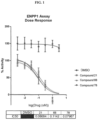
- An eight point serial dilution of drugs was prepared in 10x in assay buffer with the final assay concentrations starting at 10 ⁇ M, 3 ⁇ M, 1 ⁇ M, 0.3 ⁇ M...0 ⁇ M.
- a dilution of DMSO was included as a control.
- the assay plate was set up as follows with each well in duplicate: 81 ⁇ L assay buffer + 10 ⁇ L ENPP1 inhibitor or DMSO + 5 ⁇ L Substrate + 4 ⁇ L Enzyme. Both the enzyme and substrate were added to opposite sides of the well to ensure that there was no interaction until all wells had both components. The plate was then centrifuged gently for 10 seconds, followed by an incubation at 37°C for 45 minutes. The reaction was quantified by measuring absorbance at 405 nm using the Envision.
- IC 50 values are determined using GraphPad Prism 5 software. The data were entered as an X-Y plot into the software as percent inhibition for each concentration of the drug. The concentration values of the drug were log transformed and the nonlinear regression was carried out using the "sigmoidal dose-response (variable slope)" option within the GraphPad software to model the data and calculate IC 50 values. The IC 50 values reported are the concentration of drug at which 50% inhibition was reached.
- Figure 1 demonstrates that compounds 21, 68 and 78 were effective in inhibiting the activity of ENPP1.
- An eight point serial dilution of drugs was prepared in 10x in assay buffer with the final assay concentrations starting at 10 ⁇ M, 3 ⁇ M, 1 ⁇ M, 0.3 ⁇ M...0 ⁇ M.
- a dilution of DMSO was included as a control.
- the assay plate was set up as follows with each well in duplicate: 15 ⁇ L assay buffer + 10 ⁇ L ENPP1 inhibitor or DMSO + 50 ⁇ L Substrate + 25 ⁇ L Enzyme. Both the enzyme and substrate were added to opposite sides of the well to ensure that there was no interaction until all wells had both components. The plate was then centrifuged gently for 10 seconds, followed by an incubation at 37°C for 45 minutes. The reaction was quantified by measuring absorbance at 405 nm using the Envision.
- IC 50 values are determined using GraphPad Prism 5 software. The data were entered as an X-Y plot into the software as percent inhibition for each concentration of the drug. The concentration values of the drug were log transformed and the nonlinear regression was carried out using the "sigmoidal dose-response (variable slope)" option within the GraphPad software to model the data and calculate IC 50 values. The IC 50 values reported are the concentration of drug at which 50% inhibition was reached.
- Figures 2A and 2B The results of this experiment are shown in Figures 2A and 2B.
- Figures 2A and 2B demonstrat that compounds 21 and 78 and their respective sodium salts were ineffective in inhibiting the activity of ENPP2. These results indicate that compounds 21 and 78 were selective at inhibiting ENPP1 but not ENPP2.
- Each drug was prepared as a 10x solution in the assay buffer and SYPRO Orange was diluted to 10x concentration in water.
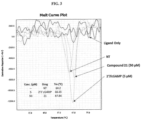
- Wells were set up in duplicate in a 384-well PCR plate as follows: 14 ⁇ L assay buffer, 2 ⁇ L ENPP1 Inhibitor or DMSO, 2 ⁇ L (0. 5 ⁇ g) ENPP1 protein. Each well was mixed and incubated on ice for 5 minutes. Post incubation, 2 ⁇ L of SYPRO Orange was mixed into each well and followed by a gentle centrifugation. The protein melt reaction was run using ViiA7 software with temperatures beginning at 25°C and increasing by 0.05 °C/s to the maximum temperature of 99 °C.
- Figure 3 demonstrates that compound 21 was effective in increasing the stability of recombinant ENPP1 protein.
- the Tm (midpoint of the protein unfolding transition) of ENPP1 was 64.2°C and this was increased to 67.84°C in the presence of compound 21.
- Saos-2 cells were plated at a density of 1.5 x10⁶ cells/well and allowed to grow to 100% confluency over the following 1-2 days. Once completely confluent, the media was replaced with fresh media supplemented with 1x ascorbic acid, 1x ⁇ -glycerophosphate, and varying concentrations of ENPP 1 inhibitor (if applicable). The addition of the mineralization components was considered Day 1. On Day 3, the media was gently aspirated with no wash followed by the addition of fresh media, mineralization components, and ENPP1 inhibitor (if applicable). On day 5, the media was gently aspirated and the cells were washed twice with PBS. The cells were then fixed with ice cold 70% ethanol for 1 hour at 4°C.
- IC 50 ( ⁇ M) for inhibition of either ENPP1 activity are shown in Tables 1 and 2.
- Active ingredient as used throughout these examples relates to one or more of the compounds disclosed, or a pharmaceutically acceptable salt, solvate, polymorph, hydrate and the stereochemically isomeric form thereof.
- the following examples of the formulation of the compounds of the present invention in tablets, suspension, injectables and ointments are prophetic.
- Typical examples of recipes for the formulation of the invention are as given below.
- Various other dosage forms can be applied herein such as a filled gelatin capsule, liquid emulsion/suspension, ointments, suppositories or chewable tablet form employing the disclosed compounds in desired dosage amounts in accordance with the present invention.
- Various conventional techniques for preparing suitable dosage forms can be used to prepare the prophetic pharmaceutical compositions, such as those disclosed herein and in standard reference texts, for example the British and US Pharmacopoeias, Remington's Pharmaceutical Sciences (Mack Publishing Co.) and Martindale The Extra Pharmacopoeia (London The Pharmaceutical Press).
- a tablet can be prepared as follows: Component Amount Active ingredient 10 to 500 mg Lactose 100 mg Crystalline cellulose 60 mg Magnesium stearate 5 Starch (e.g. potato starch) Amount necessary to yield total weight indicated below Total (per capsule) 1000 mg
- a disclosed compound 50 mg of lactose (monohydrate), 50 mg of maize starch (native), 10 mg of polyvinylpyrrolidone (PVP 25) (e.g. from BASF, Ludwigshafen, Germany) and 2 mg of magnesium stearate are used per tablet.
- the mixture of active component, lactose and starch is granulated with a 5% solution (m/m) of the PVP in water. After drying, the granules are mixed with magnesium stearate for 5 min.
- This mixture is moulded using a customary tablet press (e.g. tablet format: diameter 8 mm, curvature radius 12 mm).
- the moulding force applied is typically about 15 kN.
- a disclosed compound can be administered in a suspension formulated for oral use.
- a suspension formulated for oral use for example, about 100-5000 mg of the desired disclosed compound, 1000 mg of ethanol (96%), 400 mg of xanthan gum, and 99 g of water are combined with stirring.
- a single dose of about 10-500 mg of the desired disclosed compound according can be provided by 10 ml of oral suspension.
- active ingredient can be replaced with the same amount of a compound according to the present invention.
- a capsule e.g. a filled gelatin capsule, instead of a tablet form.
- the choice of tablet or capsule will depend, in part, upon physicochemical characteristics of the particular disclosed compound used.
- alternative useful carriers for making oral preparations are lactose, sucrose, starch, talc, magnesium stearate, crystalline cellulose, methyl cellulose, hydroxypropyl cellulose, hydroxypropylmethyl cellulose, carboxymethyl cellulose, glycerin, sodium alginate, gum arabic, etc. These alternative carriers can be substituted for those given above as required for desired dissolution, absorption, and manufacturing characteristics.
- the amount of a disclosed compound per tablet for use in a pharmaceutical composition for human use is determined from both toxicological and pharmacokinetic data obtained in suitable animal models, e.g. rat and at least one non-rodent species, and adjusted based upon human clinical trial data. For example, it could be appropriate that a disclosed compound is present at a level of about 10 to 1000 mg per tablet dosage unit.
- a parenteral composition can be prepared as follows: Component Amount Active ingredient 10 to 500 mg Sodium carbonate 560 mg ⁇ Sodium hydroxide 80 mg ⁇ Distilled, sterile water Quantity sufficient to prepare total volumen indicated below. Total (per capsule) 10 ml per ampule ⁇ Amount adjusted as required to maintain physiological pH in the context of the amount of active ingredient, and form of active ingredient, e.g. a particular salt form of the active ingredient.
- a pharmaceutical composition for intravenous injection can be used, with composition comprising about 100-5000 mg of a disclosed compound, 15 g polyethylenglycol 400 and 250 g water in saline with optionally up to about 15% Cremophor EL, and optionally up to 15% ethyl alcohol, and optionally up to 2 equivalents of a pharmaceutically suitable acid such as citric acid or hydrochloric acid are used.
- the preparation of such an injectable composition can be accomplished as follows: The disclosed compound and the polyethylenglycol 400 are dissolved in the water with stirring. The solution is sterile filtered (pore size 0.22 ⁇ m) and filled into heat sterilized infusion bottles under aseptic conditions. The infusion bottles are sealed with rubber seals.
- a pharmaceutical composition for intravenous injection can be used, with composition comprising about 10-500 mg of a disclosed compound, standard saline solution, optionally with up to 15% by weight of Cremophor EL, and optionally up to 15% by weight of ethyl alcohol, and optionally up to 2 equivalents of a pharmaceutically suitable acid such as citric acid or hydrochloric acid.
- Preparation can be accomplished as follows: a desired disclosed compound is dissolved in the saline solution with stirring.
- Cremophor EL, ethyl alcohol or acid are added.
- the solution is sterile filtered (pore size 0.22 ⁇ m) and filled into heat sterilized infusion bottles under aseptic conditions. The infusion bottles are sealed with rubber seals.
- active ingredient can be replaced with the same amount of the compound according to the present invention.
- the amount of a disclosed compound per ampule for use in a pharmaceutical composition for human use is determined from both toxicological and pharmacokinetic data obtained in suitable animal models, e.g. rat and at least one non-rodent species, and adjusted based upon human clinical trial data. For example, it could be appropriate that a disclosed compound is present at a level of about 10 to 1000 mg per tablet dosage unit.
- Carriers suitable for parenteral preparations are, for example, water, physiological saline solution, etc. which can be used with tris(hydroxymethyl)aminomethane, sodium carbonate, sodium hydroxide or the like serving as a solubilizer or pH adjusting agent.
- the parenteral preparations contain preferably 50 to 1000 mg of a disclosed compound per dosage unit.
Landscapes
- Chemical & Material Sciences (AREA)
- Organic Chemistry (AREA)
- Health & Medical Sciences (AREA)
- General Chemical & Material Sciences (AREA)
- Medicinal Chemistry (AREA)
- Nuclear Medicine, Radiotherapy & Molecular Imaging (AREA)
- Chemical Kinetics & Catalysis (AREA)
- Pharmacology & Pharmacy (AREA)
- Life Sciences & Earth Sciences (AREA)
- Animal Behavior & Ethology (AREA)
- General Health & Medical Sciences (AREA)
- Public Health (AREA)
- Veterinary Medicine (AREA)
- Pharmaceuticals Containing Other Organic And Inorganic Compounds (AREA)
- Nitrogen Condensed Heterocyclic Rings (AREA)
Applications Claiming Priority (2)
| Application Number | Priority Date | Filing Date | Title |
|---|---|---|---|
| US201762537758P | 2017-07-27 | 2017-07-27 | |
| PCT/US2018/044183 WO2019023635A1 (en) | 2017-07-27 | 2018-07-27 | SUBSTITUTED 3 H-IMIDAZO (4,5-C) PYRIDINE AND 1H-PYRROLO (2,3-C) PYRIDINE SERIES OF A NOVEL ECTONUCLEOTIDE PYROPHOSPHATASE / PHOSPHODIESTERASE-1 (ENPP1) AND STIMULATOR FOR A GENE MODULATOR INTERFERON (STING) AS IMMUNOTHERAPEUTIC AGENTS AGAINST CANCER |
Publications (3)
| Publication Number | Publication Date |
|---|---|
| EP3658138A1 EP3658138A1 (en) | 2020-06-03 |
| EP3658138A4 EP3658138A4 (en) | 2021-03-31 |
| EP3658138B1 true EP3658138B1 (en) | 2023-04-19 |
Family
ID=65040330
Family Applications (1)
| Application Number | Title | Priority Date | Filing Date |
|---|---|---|---|
| EP18837593.5A Active EP3658138B1 (en) | 2017-07-27 | 2018-07-27 | Substituted-3h-imidazo(4,5-c)pyridine and 1h-pyrrolo(2,3-c)pyridine series of novel ectonucleotide pyrophsphatase/phosphodiestrase-1 (enpp1) and stimulator for interferon genes (sting) modulator as cancer immunotherapeutics |
Country Status (5)
| Country | Link |
|---|---|
| US (1) | US10689376B2 (enExample) |
| EP (1) | EP3658138B1 (enExample) |
| JP (1) | JP7274478B2 (enExample) |
| CN (1) | CN111615388B (enExample) |
| WO (1) | WO2019023635A1 (enExample) |
Families Citing this family (20)
| Publication number | Priority date | Publication date | Assignee | Title |
|---|---|---|---|---|
| EP3807264A1 (en) | 2018-06-12 | 2021-04-21 | Ryvu Therapeutics S.A. | Modulators of stimulator of interferon genes (sting) |
| EP3829561A4 (en) | 2018-08-01 | 2021-12-29 | Stingray Therapeutics, Inc. | Substituted-3h-imidazo[4,5-c]pyridine and 1h pyrrolo[2,3-c]pyridine series of novel ectonucleotide pyrophosphatase/phosphodiesterase-1 (enpp1) and stimulator for interferon genes (sting) modulators as cancer immunotherapeutics |
| MA54879A (fr) * | 2019-02-01 | 2021-12-08 | Univ Leland Stanford Junior | Inhibiteurs d'enpp1 et méthodes de modulation de réponse immunitaire |
| CN113795267A (zh) | 2019-03-12 | 2021-12-14 | 艾库斯生物科学有限公司 | 致癌基因驱动的癌症的治疗 |
| BR112021018947A2 (pt) | 2019-03-28 | 2022-02-08 | Lupin Ltd | Compostos macrocíclicos como agonistas de sting |
| CN113874397A (zh) | 2019-03-29 | 2021-12-31 | 艾库斯生物科学有限公司 | 利用鉴定的腺苷指纹治疗癌症 |
| AU2020291796B2 (en) | 2019-06-12 | 2024-01-18 | Ryvu Therapeutics S.A. | Next-generation modulators of stimulator of interferon genes (STING) |
| GEP20247627B (en) | 2019-07-22 | 2024-05-27 | Lupin Ltd | Macrocyclic compounds as sting agonists and methods and uses thereof |
| US20230002387A1 (en) | 2019-09-16 | 2023-01-05 | Aten Porus Lifesciences Pvt. Ltd. | 2-amino-s6-substituted thiopurine compounds as inhibitors of the enpp1 protein |
| KR102915463B1 (ko) * | 2019-12-11 | 2026-01-19 | 리부 세라퓨틱스 에스.에이. | 인터페론 유전자 자극제(sting)의 조절제인 헤테로사이클릭 화합물 |
| GB202006382D0 (en) | 2020-04-30 | 2020-06-17 | Spermatech As | Use |
| US20230159469A1 (en) | 2020-05-08 | 2023-05-25 | Txinno Bioscience Inc. | Novel phthalazine derivative having ectonucloeotide pyrophosphatase/phosphodieste rase inhibitory activity, and use thereof |
| KR102682428B1 (ko) | 2020-05-08 | 2024-07-05 | 주식회사 티씨노바이오사이언스 | 엑토뉴클레오티드 피로포스파타아제-포스포디에스터라아제의 저해 활성을 갖는 신규한 프탈라진 유도체 및 이들의 용도 |
| KR102720206B1 (ko) | 2020-12-29 | 2024-10-21 | 주식회사 티씨노바이오사이언스 | 엑토뉴클레오티드 피로포스파타아제-포스포디에스터라아제의 저해 활성을 갖는 신규한 나프티리딘온 유도체 및 이들의 용도 |
| WO2022146022A1 (ko) | 2020-12-29 | 2022-07-07 | 주식회사 티씨노바이오사이언스 | 엑토뉴클레오티드 피로포스파타아제-포스포디에스터라아제의 저해 활성을 갖는 신규한 나프티리딘온 유도체 및 이들의 용도 |
| KR102686866B1 (ko) | 2021-01-29 | 2024-07-19 | 주식회사 티씨노바이오사이언스 | 엑토뉴클레오티드 피로포스파타아제-포스포디에스터라아제의 저해 활성을 갖는 신규한 벤조트리아졸 유도체 및 이들의 용도 |
| US20240116882A1 (en) | 2021-01-29 | 2024-04-11 | Txinno Bioscience Inc. | Novel benzotriazole derivative having inhibitory activity against ectonucleotide pyrophosphatase-phosphodiesterase, and use thereof |
| AU2023213905A1 (en) * | 2022-01-28 | 2024-07-11 | Insilico Medicine Ip Limited | Ectonucleotide pyrophosphatase-phosphodiesterase 1 (enpp1) inhibitors and uses thereof |
| US20230346771A1 (en) | 2022-04-29 | 2023-11-02 | Petragen, Inc. | Inhibitors of enpp1 and modulation of bone growth |
| WO2026006739A1 (en) * | 2024-06-28 | 2026-01-02 | Riboscience Llc | Bicyclic heteroaryl derivatives as ectonucleotide pyrophosphatase phosphodiesterase 1 inhibitors for the treatment of certain diseases |
Family Cites Families (3)
| Publication number | Priority date | Publication date | Assignee | Title |
|---|---|---|---|---|
| US5081253A (en) | 1989-12-21 | 1992-01-14 | American Home Products Corporation | Imidazo(4,5-c)pyridines as antiosteoporotic agents |
| EP1020451B1 (en) | 1997-03-25 | 2005-06-15 | Kowa Co., Ltd. | Anilide compounds and drugs containing the same |
| US9643933B2 (en) * | 2013-04-23 | 2017-05-09 | The General Hospital Corporation | Compounds useful as antibiotic tolerance inhibitors |
-
2018
- 2018-07-27 EP EP18837593.5A patent/EP3658138B1/en active Active
- 2018-07-27 WO PCT/US2018/044183 patent/WO2019023635A1/en not_active Ceased
- 2018-07-27 US US16/047,915 patent/US10689376B2/en active Active
- 2018-07-27 JP JP2020527860A patent/JP7274478B2/ja active Active
- 2018-07-27 CN CN201880063421.5A patent/CN111615388B/zh active Active
Also Published As
| Publication number | Publication date |
|---|---|
| WO2019023635A8 (en) | 2020-02-20 |
| CN111615388B (zh) | 2023-11-14 |
| WO2019023635A1 (en) | 2019-01-31 |
| EP3658138A4 (en) | 2021-03-31 |
| US10689376B2 (en) | 2020-06-23 |
| CN111615388A (zh) | 2020-09-01 |
| JP7274478B2 (ja) | 2023-05-16 |
| EP3658138A1 (en) | 2020-06-03 |
| JP2020532578A (ja) | 2020-11-12 |
| US20190031655A1 (en) | 2019-01-31 |
Similar Documents
| Publication | Publication Date | Title |
|---|---|---|
| EP3658138B1 (en) | Substituted-3h-imidazo(4,5-c)pyridine and 1h-pyrrolo(2,3-c)pyridine series of novel ectonucleotide pyrophsphatase/phosphodiestrase-1 (enpp1) and stimulator for interferon genes (sting) modulator as cancer immunotherapeutics | |
| US11142524B2 (en) | Substituted-3H-imidazo[4,5-c]pyridine and 1H-pyrrolo[2,3-c]pyridine series of novel Ectonucleotide Pyrophosphatase/Phosphodiesterase-1 (ENPP1) and stimulator for interferon genes (STING) modulators as cancer immunotherapeutics | |
| US11407729B2 (en) | Quinoline and quinazoline compounds and methods of use thereof | |
| US12152015B2 (en) | Inhibitors of ectonucleotide pyrophosphatase/phosphodiesterase 1 (ENPP1) and methods of use thereof | |
| EP2693881B1 (en) | Substituted n-phenylpyrimidin-2-amine analogs as inhibitors of the axl kinase | |
| US9296703B2 (en) | Substituted N-(3-(pyrimidin-4-yl)phenyl)acrylamide analogs as tyrosine receptor kinase BTK inhibitors | |
| AU2012296639A1 (en) | Substituted (E)-N'-(1-phenylethylidene) benzohydrazide analogs as histone demethylase inhibitors | |
| US20240390350A1 (en) | Phenyl core compounds as mglu5 negative allosteric modulators and methods of making and using the same | |
| US20220119425A1 (en) | Phosphonate conjugates and uses thereof | |
| WO2024059210A2 (en) | 6,5 western core compounds as mglu5 negative allosteric modulators and methods of making and using the same | |
| WO2024059212A2 (en) | 6,6 western core compounds as mglu5 negative allosteric modulators and methods of making and using the same | |
| WO2024059220A2 (en) | 6,5 southwestern core compounds as mglu5 negative allosteric modulators and methods of making and using the same | |
| WO2024059216A2 (en) | 6,6 southwestern core compounds as mglu5 negative allosteric modulators and methods of making and using the same |
Legal Events
| Date | Code | Title | Description |
|---|---|---|---|
| STAA | Information on the status of an ep patent application or granted ep patent |
Free format text: STATUS: THE INTERNATIONAL PUBLICATION HAS BEEN MADE |
|
| PUAI | Public reference made under article 153(3) epc to a published international application that has entered the european phase |
Free format text: ORIGINAL CODE: 0009012 |
|
| STAA | Information on the status of an ep patent application or granted ep patent |
Free format text: STATUS: REQUEST FOR EXAMINATION WAS MADE |
|
| 17P | Request for examination filed |
Effective date: 20200213 |
|
| AK | Designated contracting states |
Kind code of ref document: A1 Designated state(s): AL AT BE BG CH CY CZ DE DK EE ES FI FR GB GR HR HU IE IS IT LI LT LU LV MC MK MT NL NO PL PT RO RS SE SI SK SM TR |
|
| AX | Request for extension of the european patent |
Extension state: BA ME |
|
| DAV | Request for validation of the european patent (deleted) | ||
| DAX | Request for extension of the european patent (deleted) | ||
| REG | Reference to a national code |
Ref country code: DE Ref legal event code: R079 Ref document number: 602018048696 Country of ref document: DE Free format text: PREVIOUS MAIN CLASS: A61K0031395000 Ipc: C07D0471040000 |
|
| A4 | Supplementary search report drawn up and despatched |
Effective date: 20210226 |
|
| RIC1 | Information provided on ipc code assigned before grant |
Ipc: C07D 471/04 20060101AFI20210219BHEP Ipc: A61P 35/00 20060101ALI20210219BHEP Ipc: A61K 31/437 20060101ALI20210219BHEP |
|
| STAA | Information on the status of an ep patent application or granted ep patent |
Free format text: STATUS: EXAMINATION IS IN PROGRESS |
|
| 17Q | First examination report despatched |
Effective date: 20211123 |
|
| GRAP | Despatch of communication of intention to grant a patent |
Free format text: ORIGINAL CODE: EPIDOSNIGR1 |
|
| STAA | Information on the status of an ep patent application or granted ep patent |
Free format text: STATUS: GRANT OF PATENT IS INTENDED |
|
| INTG | Intention to grant announced |
Effective date: 20220727 |
|
| GRAS | Grant fee paid |
Free format text: ORIGINAL CODE: EPIDOSNIGR3 |
|
| GRAA | (expected) grant |
Free format text: ORIGINAL CODE: 0009210 |
|
| STAA | Information on the status of an ep patent application or granted ep patent |
Free format text: STATUS: THE PATENT HAS BEEN GRANTED |
|
| AK | Designated contracting states |
Kind code of ref document: B1 Designated state(s): AL AT BE BG CH CY CZ DE DK EE ES FI FR GB GR HR HU IE IS IT LI LT LU LV MC MK MT NL NO PL PT RO RS SE SI SK SM TR |
|
| REG | Reference to a national code |
Ref country code: GB Ref legal event code: FG4D |
|
| REG | Reference to a national code |
Ref country code: CH Ref legal event code: EP |
|
| REG | Reference to a national code |
Ref country code: DE Ref legal event code: R096 Ref document number: 602018048696 Country of ref document: DE |
|
| REG | Reference to a national code |
Ref country code: IE Ref legal event code: FG4D |
|
| REG | Reference to a national code |
Ref country code: AT Ref legal event code: REF Ref document number: 1561116 Country of ref document: AT Kind code of ref document: T Effective date: 20230515 |
|
| P01 | Opt-out of the competence of the unified patent court (upc) registered |
Effective date: 20230530 |
|
| REG | Reference to a national code |
Ref country code: LT Ref legal event code: MG9D |
|
| REG | Reference to a national code |
Ref country code: NL Ref legal event code: MP Effective date: 20230419 |
|
| REG | Reference to a national code |
Ref country code: AT Ref legal event code: MK05 Ref document number: 1561116 Country of ref document: AT Kind code of ref document: T Effective date: 20230419 |
|
| PG25 | Lapsed in a contracting state [announced via postgrant information from national office to epo] |
Ref country code: NL Free format text: LAPSE BECAUSE OF FAILURE TO SUBMIT A TRANSLATION OF THE DESCRIPTION OR TO PAY THE FEE WITHIN THE PRESCRIBED TIME-LIMIT Effective date: 20230419 |
|
| PG25 | Lapsed in a contracting state [announced via postgrant information from national office to epo] |
Ref country code: SE Free format text: LAPSE BECAUSE OF FAILURE TO SUBMIT A TRANSLATION OF THE DESCRIPTION OR TO PAY THE FEE WITHIN THE PRESCRIBED TIME-LIMIT Effective date: 20230419 Ref country code: PT Free format text: LAPSE BECAUSE OF FAILURE TO SUBMIT A TRANSLATION OF THE DESCRIPTION OR TO PAY THE FEE WITHIN THE PRESCRIBED TIME-LIMIT Effective date: 20230821 Ref country code: NO Free format text: LAPSE BECAUSE OF FAILURE TO SUBMIT A TRANSLATION OF THE DESCRIPTION OR TO PAY THE FEE WITHIN THE PRESCRIBED TIME-LIMIT Effective date: 20230719 Ref country code: ES Free format text: LAPSE BECAUSE OF FAILURE TO SUBMIT A TRANSLATION OF THE DESCRIPTION OR TO PAY THE FEE WITHIN THE PRESCRIBED TIME-LIMIT Effective date: 20230419 Ref country code: AT Free format text: LAPSE BECAUSE OF FAILURE TO SUBMIT A TRANSLATION OF THE DESCRIPTION OR TO PAY THE FEE WITHIN THE PRESCRIBED TIME-LIMIT Effective date: 20230419 |
|
| PG25 | Lapsed in a contracting state [announced via postgrant information from national office to epo] |
Ref country code: RS Free format text: LAPSE BECAUSE OF FAILURE TO SUBMIT A TRANSLATION OF THE DESCRIPTION OR TO PAY THE FEE WITHIN THE PRESCRIBED TIME-LIMIT Effective date: 20230419 Ref country code: PL Free format text: LAPSE BECAUSE OF FAILURE TO SUBMIT A TRANSLATION OF THE DESCRIPTION OR TO PAY THE FEE WITHIN THE PRESCRIBED TIME-LIMIT Effective date: 20230419 Ref country code: LV Free format text: LAPSE BECAUSE OF FAILURE TO SUBMIT A TRANSLATION OF THE DESCRIPTION OR TO PAY THE FEE WITHIN THE PRESCRIBED TIME-LIMIT Effective date: 20230419 Ref country code: LT Free format text: LAPSE BECAUSE OF FAILURE TO SUBMIT A TRANSLATION OF THE DESCRIPTION OR TO PAY THE FEE WITHIN THE PRESCRIBED TIME-LIMIT Effective date: 20230419 Ref country code: IS Free format text: LAPSE BECAUSE OF FAILURE TO SUBMIT A TRANSLATION OF THE DESCRIPTION OR TO PAY THE FEE WITHIN THE PRESCRIBED TIME-LIMIT Effective date: 20230819 Ref country code: HR Free format text: LAPSE BECAUSE OF FAILURE TO SUBMIT A TRANSLATION OF THE DESCRIPTION OR TO PAY THE FEE WITHIN THE PRESCRIBED TIME-LIMIT Effective date: 20230419 Ref country code: GR Free format text: LAPSE BECAUSE OF FAILURE TO SUBMIT A TRANSLATION OF THE DESCRIPTION OR TO PAY THE FEE WITHIN THE PRESCRIBED TIME-LIMIT Effective date: 20230720 Ref country code: AL Free format text: LAPSE BECAUSE OF FAILURE TO SUBMIT A TRANSLATION OF THE DESCRIPTION OR TO PAY THE FEE WITHIN THE PRESCRIBED TIME-LIMIT Effective date: 20230419 |
|
| PG25 | Lapsed in a contracting state [announced via postgrant information from national office to epo] |
Ref country code: FI Free format text: LAPSE BECAUSE OF FAILURE TO SUBMIT A TRANSLATION OF THE DESCRIPTION OR TO PAY THE FEE WITHIN THE PRESCRIBED TIME-LIMIT Effective date: 20230419 |
|
| PG25 | Lapsed in a contracting state [announced via postgrant information from national office to epo] |
Ref country code: SK Free format text: LAPSE BECAUSE OF FAILURE TO SUBMIT A TRANSLATION OF THE DESCRIPTION OR TO PAY THE FEE WITHIN THE PRESCRIBED TIME-LIMIT Effective date: 20230419 |
|
| REG | Reference to a national code |
Ref country code: DE Ref legal event code: R097 Ref document number: 602018048696 Country of ref document: DE |
|
| PG25 | Lapsed in a contracting state [announced via postgrant information from national office to epo] |
Ref country code: SM Free format text: LAPSE BECAUSE OF FAILURE TO SUBMIT A TRANSLATION OF THE DESCRIPTION OR TO PAY THE FEE WITHIN THE PRESCRIBED TIME-LIMIT Effective date: 20230419 Ref country code: SK Free format text: LAPSE BECAUSE OF FAILURE TO SUBMIT A TRANSLATION OF THE DESCRIPTION OR TO PAY THE FEE WITHIN THE PRESCRIBED TIME-LIMIT Effective date: 20230419 Ref country code: RO Free format text: LAPSE BECAUSE OF FAILURE TO SUBMIT A TRANSLATION OF THE DESCRIPTION OR TO PAY THE FEE WITHIN THE PRESCRIBED TIME-LIMIT Effective date: 20230419 Ref country code: EE Free format text: LAPSE BECAUSE OF FAILURE TO SUBMIT A TRANSLATION OF THE DESCRIPTION OR TO PAY THE FEE WITHIN THE PRESCRIBED TIME-LIMIT Effective date: 20230419 Ref country code: DK Free format text: LAPSE BECAUSE OF FAILURE TO SUBMIT A TRANSLATION OF THE DESCRIPTION OR TO PAY THE FEE WITHIN THE PRESCRIBED TIME-LIMIT Effective date: 20230419 Ref country code: CZ Free format text: LAPSE BECAUSE OF FAILURE TO SUBMIT A TRANSLATION OF THE DESCRIPTION OR TO PAY THE FEE WITHIN THE PRESCRIBED TIME-LIMIT Effective date: 20230419 |
|
| PLBE | No opposition filed within time limit |
Free format text: ORIGINAL CODE: 0009261 |
|
| STAA | Information on the status of an ep patent application or granted ep patent |
Free format text: STATUS: NO OPPOSITION FILED WITHIN TIME LIMIT |
|
| PG25 | Lapsed in a contracting state [announced via postgrant information from national office to epo] |
Ref country code: MC Free format text: LAPSE BECAUSE OF FAILURE TO SUBMIT A TRANSLATION OF THE DESCRIPTION OR TO PAY THE FEE WITHIN THE PRESCRIBED TIME-LIMIT Effective date: 20230419 |
|
| PG25 | Lapsed in a contracting state [announced via postgrant information from national office to epo] |
Ref country code: MC Free format text: LAPSE BECAUSE OF FAILURE TO SUBMIT A TRANSLATION OF THE DESCRIPTION OR TO PAY THE FEE WITHIN THE PRESCRIBED TIME-LIMIT Effective date: 20230419 |
|
| REG | Reference to a national code |
Ref country code: CH Ref legal event code: PL |
|
| REG | Reference to a national code |
Ref country code: BE Ref legal event code: MM Effective date: 20230731 |
|
| PG25 | Lapsed in a contracting state [announced via postgrant information from national office to epo] |
Ref country code: LU Free format text: LAPSE BECAUSE OF NON-PAYMENT OF DUE FEES Effective date: 20230727 |
|
| 26N | No opposition filed |
Effective date: 20240122 |
|
| PG25 | Lapsed in a contracting state [announced via postgrant information from national office to epo] |
Ref country code: LU Free format text: LAPSE BECAUSE OF NON-PAYMENT OF DUE FEES Effective date: 20230727 |
|
| REG | Reference to a national code |
Ref country code: IE Ref legal event code: MM4A |
|
| PG25 | Lapsed in a contracting state [announced via postgrant information from national office to epo] |
Ref country code: CH Free format text: LAPSE BECAUSE OF NON-PAYMENT OF DUE FEES Effective date: 20230731 |
|
| PG25 | Lapsed in a contracting state [announced via postgrant information from national office to epo] |
Ref country code: SI Free format text: LAPSE BECAUSE OF FAILURE TO SUBMIT A TRANSLATION OF THE DESCRIPTION OR TO PAY THE FEE WITHIN THE PRESCRIBED TIME-LIMIT Effective date: 20230419 |
|
| PG25 | Lapsed in a contracting state [announced via postgrant information from national office to epo] |
Ref country code: SI Free format text: LAPSE BECAUSE OF FAILURE TO SUBMIT A TRANSLATION OF THE DESCRIPTION OR TO PAY THE FEE WITHIN THE PRESCRIBED TIME-LIMIT Effective date: 20230419 Ref country code: IT Free format text: LAPSE BECAUSE OF FAILURE TO SUBMIT A TRANSLATION OF THE DESCRIPTION OR TO PAY THE FEE WITHIN THE PRESCRIBED TIME-LIMIT Effective date: 20230419 Ref country code: FR Free format text: LAPSE BECAUSE OF NON-PAYMENT OF DUE FEES Effective date: 20230731 Ref country code: BE Free format text: LAPSE BECAUSE OF NON-PAYMENT OF DUE FEES Effective date: 20230731 |
|
| PG25 | Lapsed in a contracting state [announced via postgrant information from national office to epo] |
Ref country code: IE Free format text: LAPSE BECAUSE OF NON-PAYMENT OF DUE FEES Effective date: 20230727 |
|
| PG25 | Lapsed in a contracting state [announced via postgrant information from national office to epo] |
Ref country code: IE Free format text: LAPSE BECAUSE OF NON-PAYMENT OF DUE FEES Effective date: 20230727 |
|
| PG25 | Lapsed in a contracting state [announced via postgrant information from national office to epo] |
Ref country code: BG Free format text: LAPSE BECAUSE OF FAILURE TO SUBMIT A TRANSLATION OF THE DESCRIPTION OR TO PAY THE FEE WITHIN THE PRESCRIBED TIME-LIMIT Effective date: 20230419 |
|
| PG25 | Lapsed in a contracting state [announced via postgrant information from national office to epo] |
Ref country code: BG Free format text: LAPSE BECAUSE OF FAILURE TO SUBMIT A TRANSLATION OF THE DESCRIPTION OR TO PAY THE FEE WITHIN THE PRESCRIBED TIME-LIMIT Effective date: 20230419 |
|
| PG25 | Lapsed in a contracting state [announced via postgrant information from national office to epo] |
Ref country code: CY Free format text: LAPSE BECAUSE OF FAILURE TO SUBMIT A TRANSLATION OF THE DESCRIPTION OR TO PAY THE FEE WITHIN THE PRESCRIBED TIME-LIMIT; INVALID AB INITIO Effective date: 20180727 |
|
| PG25 | Lapsed in a contracting state [announced via postgrant information from national office to epo] |
Ref country code: HU Free format text: LAPSE BECAUSE OF FAILURE TO SUBMIT A TRANSLATION OF THE DESCRIPTION OR TO PAY THE FEE WITHIN THE PRESCRIBED TIME-LIMIT; INVALID AB INITIO Effective date: 20180727 |
|
| PGFP | Annual fee paid to national office [announced via postgrant information from national office to epo] |
Ref country code: DE Payment date: 20250729 Year of fee payment: 8 |
|
| PGFP | Annual fee paid to national office [announced via postgrant information from national office to epo] |
Ref country code: GB Payment date: 20250728 Year of fee payment: 8 |
|
| PG25 | Lapsed in a contracting state [announced via postgrant information from national office to epo] |
Ref country code: TR Free format text: LAPSE BECAUSE OF FAILURE TO SUBMIT A TRANSLATION OF THE DESCRIPTION OR TO PAY THE FEE WITHIN THE PRESCRIBED TIME-LIMIT Effective date: 20230419 |