EP3649336B1 - Vehicle system and method for injecting an aqueous solution in the combustion chamber of the internal combustion engine - Google Patents
Vehicle system and method for injecting an aqueous solution in the combustion chamber of the internal combustion engine Download PDFInfo
- Publication number
- EP3649336B1 EP3649336B1 EP18737604.1A EP18737604A EP3649336B1 EP 3649336 B1 EP3649336 B1 EP 3649336B1 EP 18737604 A EP18737604 A EP 18737604A EP 3649336 B1 EP3649336 B1 EP 3649336B1
- Authority
- EP
- European Patent Office
- Prior art keywords
- weight
- vehicle system
- antimicrobial agent
- aqueous solution
- antimicrobial
- Prior art date
- Legal status (The legal status is an assumption and is not a legal conclusion. Google has not performed a legal analysis and makes no representation as to the accuracy of the status listed.)
- Active
Links
Images



Classifications
-
- F—MECHANICAL ENGINEERING; LIGHTING; HEATING; WEAPONS; BLASTING
- F02—COMBUSTION ENGINES; HOT-GAS OR COMBUSTION-PRODUCT ENGINE PLANTS
- F02M—SUPPLYING COMBUSTION ENGINES IN GENERAL WITH COMBUSTIBLE MIXTURES OR CONSTITUENTS THEREOF
- F02M25/00—Engine-pertinent apparatus for adding non-fuel substances or small quantities of secondary fuel to combustion-air, main fuel or fuel-air mixture
- F02M25/022—Adding fuel and water emulsion, water or steam
- F02M25/025—Adding water
-
- C—CHEMISTRY; METALLURGY
- C02—TREATMENT OF WATER, WASTE WATER, SEWAGE, OR SLUDGE
- C02F—TREATMENT OF WATER, WASTE WATER, SEWAGE, OR SLUDGE
- C02F1/00—Treatment of water, waste water, or sewage
- C02F1/50—Treatment of water, waste water, or sewage by addition or application of a germicide or by oligodynamic treatment
-
- F—MECHANICAL ENGINEERING; LIGHTING; HEATING; WEAPONS; BLASTING
- F02—COMBUSTION ENGINES; HOT-GAS OR COMBUSTION-PRODUCT ENGINE PLANTS
- F02M—SUPPLYING COMBUSTION ENGINES IN GENERAL WITH COMBUSTIBLE MIXTURES OR CONSTITUENTS THEREOF
- F02M25/00—Engine-pertinent apparatus for adding non-fuel substances or small quantities of secondary fuel to combustion-air, main fuel or fuel-air mixture
- F02M25/022—Adding fuel and water emulsion, water or steam
- F02M25/0221—Details of the water supply system, e.g. pumps or arrangement of valves
- F02M25/0222—Water recovery or storage
-
- F—MECHANICAL ENGINEERING; LIGHTING; HEATING; WEAPONS; BLASTING
- F02—COMBUSTION ENGINES; HOT-GAS OR COMBUSTION-PRODUCT ENGINE PLANTS
- F02M—SUPPLYING COMBUSTION ENGINES IN GENERAL WITH COMBUSTIBLE MIXTURES OR CONSTITUENTS THEREOF
- F02M25/00—Engine-pertinent apparatus for adding non-fuel substances or small quantities of secondary fuel to combustion-air, main fuel or fuel-air mixture
- F02M25/022—Adding fuel and water emulsion, water or steam
- F02M25/0221—Details of the water supply system, e.g. pumps or arrangement of valves
- F02M25/0224—Water treatment or cleaning
-
- F—MECHANICAL ENGINEERING; LIGHTING; HEATING; WEAPONS; BLASTING
- F02—COMBUSTION ENGINES; HOT-GAS OR COMBUSTION-PRODUCT ENGINE PLANTS
- F02M—SUPPLYING COMBUSTION ENGINES IN GENERAL WITH COMBUSTIBLE MIXTURES OR CONSTITUENTS THEREOF
- F02M25/00—Engine-pertinent apparatus for adding non-fuel substances or small quantities of secondary fuel to combustion-air, main fuel or fuel-air mixture
- F02M25/022—Adding fuel and water emulsion, water or steam
- F02M25/025—Adding water
- F02M25/028—Adding water into the charge intakes
-
- B—PERFORMING OPERATIONS; TRANSPORTING
- B60—VEHICLES IN GENERAL
- B60K—ARRANGEMENT OR MOUNTING OF PROPULSION UNITS OR OF TRANSMISSIONS IN VEHICLES; ARRANGEMENT OR MOUNTING OF PLURAL DIVERSE PRIME-MOVERS IN VEHICLES; AUXILIARY DRIVES FOR VEHICLES; INSTRUMENTATION OR DASHBOARDS FOR VEHICLES; ARRANGEMENTS IN CONNECTION WITH COOLING, AIR INTAKE, GAS EXHAUST OR FUEL SUPPLY OF PROPULSION UNITS IN VEHICLES
- B60K15/00—Arrangement in connection with fuel supply of combustion engines or other fuel consuming energy converters, e.g. fuel cells; Mounting or construction of fuel tanks
- B60K15/03—Fuel tanks
- B60K2015/03309—Tanks specially adapted for particular fuels
-
- C—CHEMISTRY; METALLURGY
- C02—TREATMENT OF WATER, WASTE WATER, SEWAGE, OR SLUDGE
- C02F—TREATMENT OF WATER, WASTE WATER, SEWAGE, OR SLUDGE
- C02F2303/00—Specific treatment goals
- C02F2303/04—Disinfection
Definitions
- the present disclosure relates to a vehicle system for injecting an aqueous solution in the combustion chamber of the internal combustion engine.
- a further aspect of the disclosure relates to a method for injecting an aqueous solution by means of a system according to the disclosure.
- a known problem with water injection systems is that water can contain impurities that, in turn, promote the growth of microbial species such as bacteria, algae, fungi or other microorganisms. Microbial contamination is particularly possible in the water tank when the vehicle is immobilized for a long period of time. Such contamination can lead to a malfunction of the system up to the failure as well as clogging of filters which are arranged in the water injection system. To prevent microbial contamination or to eradicate an already present contamination, one could think about using chemical products. However, the injection of such chemicals into the combustion chamber can lead to other problems. An example of such systems is shown in US 2003/168025 .
- WO2016/177556 A1 proposes to decontaminate water contained in a water tank for a water injection system by exposing the water to UV radiation.
- This solution is not optimal for several reasons.
- Second, the growth of microbial species, such as bacteria, algae, fungi or other microorganisms is not inhibited when the vehicle is immobilized for a long period and the UV radiator not energized. This has a further deleterious effect on the water system in that the microorganisms contaminating water alter the chemical properties of the water by releasing ionic species. The chemical properties of the water cannot be later reversed to the initial state even if the water is later decontaminated (for example with chemicals or UV radiations).
- UV radiators are expensive and complex. They are also relatively fragile so that they must be replaced periodically. Their location in the water tank makes the replacement operation difficult and costly. These factors make the use of UV radiators impractical.
- US 6 511 052 discloses a humidifying gas induction or supply system for a combustion chamber with parts made of a polymer material and an antimicrobial agent.
- An equivalent approach is described in EP 1 938 690 , which proposes an Ag complex as antimicrobial agent which can be immobilized in the polymeric matrix or coated thereon.
- the present disclosure provides an improved vehicle system for injecting an aqueous solution into the combustion chamber of an internal combustion engine, which overcomes the foregoing problems heretofore existing in the industry.
- a second objective of the present disclosure is to provide an aqueous solution injection system that is less expensive and which does not require extensive, expensive and frequent maintenance operations.
- a vehicle system configured for injecting an aqueous solution into an air intake line upstream of a combustion chamber of an internal combustion engine, or in the combustion chamber of the internal combustion engine, said vehicle system comprising the following vehicle system constituents:
- At least a portion of at least one of the vehicle system constituents, or a tank component is made of polymer material, and the polymer material:
- an “antimicrobial agent” refers to any agent that prevents the development of microbial species such as bacteria, algae and/or fungi. It is preferred within the present disclosure that the antimicrobial agent be a chemical compound. The antimicrobial effect of the antimicrobial agent is measured according to the norm ISO22196:2011 or to the norm ISO 16869:2008 depending on the nature of the microbial species.
- An effective amount is an amount that will produce the effect of inhibiting the growth of microbial species by at least 80% as measured according to the norm ISO22196:2011 or will give a ratio of 0 (no growth) preferably, or 1 (initial growth) according to the norm ISO 16869:2008 depending on the nature of the microbial species.
- the inventors have noted that the microbial species contaminating aqueous solutions in an aqueous solution injection system tend to adhere to the surfaces constituting the tank rather than remaining suspended in the aqueous solution. Consequently, the concept of decontaminating the aqueous solution via the surfaces of the system constituents is particularly operative.
- the polymer material constituting the vehicle system constituents or a tank component comprises at least 0.0002% by weight, preferably at least 0.0015% by weight, more preferably at least 0.01% by weight, the most preferably at least 0.03% by weight, of at least one antimicrobial agent.
- the % by weight is the ratio between the mass of the antimicrobial agent and the polymer material.
- the polymer material constituting the vehicle system constituents or a tank component comprises at most 5% by weight, preferably at most 0.5% by weight, more preferably at most 0.4% by weight, more preferably at most 0.3% by weight, more preferably at most 0.27% by weight, the most preferably at most 0.25% by weight, of at least one antimicrobial agent.
- the inventors have surprisingly found that, in addition to an effective antimicrobial effect, the foregoing content of the antimicrobial agent in the polymer material will also allow ice resistance while still permitting weldable walls.
- weldingable wall it is meant that the wall made of a polymer material comprising at least one antimicrobial agent according to the present disclosure is weldable to an element made of the same polymer material containing or not containing the at least one antimicrobial agent.
- the welding phenomenon is defined as follows: Once polymer-to-polymer contact is achieved at the interface, intermolecular diffusion and entanglement is needed to complete the process and form a good weld. Autohesion is the phenomenon describing the intermolecular diffusion and chain entanglement across a thermoplastic polymer interface forming a strong bond.
- Ice resistance is also a key property of the polymer material.
- the volume of the water increases. This volume increase generates high stresses on the walls of the tank.
- the mechanical properties of the polymer material are important and, in particular, the stress at yield and strain at yield must be high enough to accommodate this stress. These properties are measured according to ISO 527 standard at 10mm/min (and 1mm/min for the Young modulus).
- the amount of the antimicrobial agent is in the range of 0.0002% by weight to 5% of weight, preferably from 0.0015% by weight to 0.4% by weight, more preferably from 0.005% by weight to 0.3% by weight, the most preferably from 0.01% by weight to 0.25%. These amounts allow an antimicrobial effect, ice resistance and weldable walls.
- the antimicrobial agent is an organic or an inorganic antimicrobial agent.
- the organic or inorganic antimicrobial agent may be selected from, for example, the group consisting of antimicrobial minerals such as natural clays (for example bentonite) containing soluble reduced metals, expandable clay minerals that absorb cations, providing a capacity for extended metal release and production of toxic hydroxyl radicals; chitosan ,10,10'-oxybisphenoxarsine (OBPA); 2-octyl-2H-isothiazol-3-one (OIT); 2-butyl-1,2-benzisothiazolin-3-one; iodo-propylbutyl carbamate (IPBC); titanium dioxide nanoparticles metal; 4,5-dichloro-2-octyl-4-isothiazolin-3-one (DCOIT).
- antimicrobial minerals such as natural clays (for example bentonite) containing soluble reduced metals, expandable clay minerals that absorb cations, providing
- the amount is preferably comprised within the range of 0.0002% by weight to 5% by weight, more preferably from 0.0015% by weight to 0.4% by weight, more preferably from 0.005% by weight to 0.3% by weight, more preferably from 0.01% by weight to 0.25% by weight, the most preferably 0.25% by weight.
- one of the antimicrobial agents is an antimicrobial metallic compound.
- Said antimicrobial metallic compound contains at least one metallic atom.
- the metallic part of the antimicrobial metallic compound has antimicrobial properties.
- the antimicrobial metallic compound may be selected from the group consisting of metals, metallic alloys, metallic solutions, metallic salts, metallic oxides and metallic complexes.
- the at least one antimicrobial metallic compound is preferably a nanomaterial.
- nanomaterial means an antimicrobial metallic compound in the form of particles in an unbound state or as an aggregate or as an agglomerate and where, for 50 % or more of the particles in the number size distribution, one or more external dimensions is in the size range 1-100 nm.
- the antimicrobial metallic compound is in the form of nanoparticles having a diameter in the range of 1 to 10 nm.
- the antimicrobial metallic compound nanomaterial may be supported or dispersed on silicon oxide particles, aluminum oxide particle or zeolite.
- the at least one antimicrobial metallic compound comprises a metal selected from the group consisting of copper, silver, zinc, aluminum, nickel, gold, barium, tin, bore, thallium, antimony, cobalt, zirconium and molybdenum, preferably selected from the group consisting of copper, zinc and silver, the most preferably zinc and silver. Zinc and silver are more efficient against the targeted microbial species.
- the at least one antimicrobial metallic compound is an antimicrobial metallic compound of copper selected from the group consisting of copper, brass, bronze, cupronickel alloy, copper-nickel-zinc alloy, copper sulphate (I, II), coper oxide (I, II), copper hydroxide (I, II), copper pyrithione (I).
- the at least one antimicrobial metallic compound is an antimicrobial metallic compound of zinc and/or an antimicrobial metallic compound of silver.
- the antimicrobial metallic compound of zinc is selected from the group consisting of zinc, zinc oxide and zinc pyrithione.
- the antimicrobial metallic compound of silver is preferably selected from the group consisting of silver, silver oxide, silver nitrate, silver chloride and silver carbonate.
- the antimicrobial metallic compound is zinc pyrithione it is preferred that the zinc pyrithione is present in an amount of 0,0002% by weight and 5% of weight, preferably between 0.0015% by weight and 0.4% by weight, more preferably between 0.005% by weight and 0.3% by weight, more preferably between 0.01% by weight and 0.25% by weight, the most preferably 0.2% by weight.
- the antimicrobial agent is an organometallic compound. Indeed, the inventors have realized that by appropriately selecting the organic part of the compound, release of the agent or metal part (ions) thereof in water is prevented.
- the at least one antimicrobial metallic compound is zinc pyrithione or a silver salt or silver or a combination thereof.
- the inventors have surprisingly observed that even though pyrithione is hardly miscible in polymers, for example polyolefin, it appears that zinc pyrithione or silver salts or silver, preferably silver nanoparticles, are well encapsulated in the polyolefin matrix and that only an insignificant amount of metal ions is released into water.
- the polymer constituting the vehicle system constituents or a tank component is a mixture of polymers.
- suitable polymers are polyolefin and polyamides.
- the polymer is a high density polyethylene.
- the constituent is easier to weld and/or assemble and has increased resistance to ice expansion.
- the high-density polyethylene is not a water absorbent polymer.
- the polymer can be prepared either by applying a surface coating comprising an antimicrobial agent on the polymer surface which is in contact with the aqueous solution or by embedding an antimicrobial agent into the polymer bulk.
- the antimicrobial agent is embedded in the polymer, permitting long term effectivity and durability compared to biocide coating which can leach out the biocide agent more rapidly.
- the antimicrobial agent comprised in the polymer material is zinc pyrithione at an amount of about 0.02% by weight, a leaching rate (quantity of zinc cations released into the aqueous solution) between 1 and 8 x 10 -3 mg/dm 2 /day into a non-stirred aqueous solution stored in a tank made of this polymer material was observed at 50°C.
- the antimicrobial agent comprised in the polymer material is silver metal nanoparticles at an amount of about 0.2% by weight, a leaching rate between 1 and 10 x 10 -5 mg/dm 2 /day into a non-stirred aqueous solution stored in a tank made of this polymer material was observed at 50°C.
- the surface coating comprises between 0.001 % by weight and 0.25 % by weight of the at least one antimicrobial agent.
- the surface coating may contain 100-1000ppm (0.01% by weight - 0.1% by weight) when the antimicrobial agent is zinc pyrithione or DCOIT, and minimum 15 ppm (0.0015% by weight) when the antimicrobial agent is silver.
- the antimicrobial metallic compound is homogeneously dispersed in the polymer material.
- homogeneously dispersed it is meant that the concentration of the antimicrobial metallic compounds within the polymer remains the same in average independently of the elementary volume of polymer material considered.
- concentration of the antimicrobial metallic compound in the polymer material of a same vehicle system constituent can vary from an elementary volume of 1mm 3 to another of at most 30%, preferably of at most 10% by weight, most preferably of at most 5%.
- the antimicrobial agent is present in any part of the water injection system that is in contact with water.
- such antimicrobial agent can be present in walls of the tank for storing the aqueous solution or in elements included in the tank.
- water is supposed to remain in contact with the tank walls and with elements included in the tank for a longer time than in any other part of the system so that the antimicrobial agent is able to operate continuously.
- elements included in the tank i.e., tank components
- elements included in the tank comprise baffles, supports for sensors, floaters and filters.
- the tank contains a heater for heating the aqueous solution and the antimicrobial agent is contained in the heater.
- the heat is indeed expected to promote the growth of microbial species such as bacteria, algae, fungi or other microorganisms so that these will concentrate in hotter spots in the tank. Thanks to the present disclosure, the contamination on or around the heater can also be eliminated.
- the vehicle system configured for injecting the aqueous solution contains a filter for filtering the aqueous solution and the antimicrobial agent is contained in or on the filter.
- the vehicle system configured for injecting the aqueous solution contains a water delivery module and the antimicrobial agent is contained in or on the surface of the water delivery module.
- such antimicrobial agent can be present in the pump. Stirring effect of the pump is indeed increasing the contact of water with the building elements of the pump and thereby the antimicrobial effect of the agent.
- the antimicrobial agent is present in a plurality of constituents of the system to maximize the antimicrobial effect.
- one or more of the constituents that may contain the antimicrobial agent are made of several layers. Therefore, it is envisioned that, advantageously, at least a layer being in contact with the aqueous solution will contain the antimicrobial agent.
- the at least one antimicrobial metallic compound is silver, preferably silver nanoparticles in an amount comprised in the range of 0,0002% by weight to 5% by weight, preferably from 0.0015% by weight to 0.4% by weight, more preferably from 0.005% by weight to 0.3% by weight, the most preferably from 0.01% by weight to 0.25% by weight.
- the surface of the vehicle system constituent (such as for example a tank wall or a pump) or of the component included in the tank is textured so as to promote interactions between the aqueous solution and the antimicrobial agent by offering a larger contact area between the aqueous solution and the surface of the constituent or of the component.
- the vehicle system for injecting an aqueous solution also contains an UV radiator.
- the combination of both the antimicrobial agent contained in at least a portion of at least one of the vehicle system constituents and of the UV radiator permits complete inhibition of growth of microbial species, such as bacteria, algae, fungi or other microorganisms, as measured according to the norm ISO22196:2011 or to the norm ISO 16869:2008.
- the UV radiator acts when the vehicle is active and eradicates most of the microbial species present in the system while the antimicrobial agent will prevent the growth of the microbial species when the vehicle is immobilized, even for a long period.
- a method for injecting an aqueous solution into an air intake line upstream of a combustion chamber of an internal combustion engine, or into the combustion chamber of the internal combustion engine comprising:
- At least a portion of the pump, tank, intake line, injector or feeding line or a component of the tank is made of a polymer:
- At least a portion of the pump, tank, intake line, injector or feeding line is made of a polyolefin comprises an effective amount of antimicrobial agent.
- the water tank according to the present disclosure is manufactured by injection molding, by blow molding or by thermoforming.
- a vehicle system 100 configured for injecting an aqueous solution into an air intake line 12 upstream of a combustion chamber 14 of an internal combustion engine
- vehicle system 80, 90 configured for injecting an aqueous solution, preferably demineralized water, in the combustion chamber 14 of the internal combustion engine.
- Said vehicle systems comprise the following vehicle system constituents: a tank 16 to store an aqueous solution, a pump 18, an air intake line 12 upstream of a combustion chamber 14, one or more injectors 20 to inject aqueous solution into the air intake line 12, into the combustion chamber 14 or both; and a feed line 22 to feed said injector 20 with aqueous solution pumped by the pump 18.
- At least a portion of at least one of the vehicle system constituents 12, 16, 18, 20, 22 of the system 80, 90, 100, or of a tank component, for example a flexible heater 24 is made of polymer material, the polymer material comprising an effective amount of at least one antimicrobial agent.
- the system 100 further comprises a UV radiator 26.
- the UV radiator acts synergistically with the antimicrobial agent.
- one wall of the tank 16 in contact with the aqueous solution is made of a polymer material comprising at least one antimicrobial metallic compound.
- the one or more injectors 20 and the feed line(s) 22 are often purged before parking of the vehicle to prevent any damage due to possible freezing of the aqueous solution, preferably demineralized water.
- microbial species such as bacteria and/or algae and/or fungi and nutriments could be sucked inside the aqueous tank 16, preferably the demineralized tank 16.
- the polymer material constituting at least one wall of the tank 16 in contact with the aqueous solution comprises at least one antimicrobial metallic compound.
- the antimicrobial metallic compound is in an amount comprised in the range of 0.0002% by weight to 5% by weight, preferably from 0.0015% by weight to 0.4% by weight, more preferably from 0.005% by weight to 0.3% by weight, the most preferably from 0.01% by weight to 0.25% by weight.
- the tested tanks have a capacity of 24 liters and were filled with 15 liters of non-sterile demineralized water containing less than 1000 bacteria/ml and having a conductivity of less than 1 ⁇ S/cm and a turbidity of 0.
- a nutrient aqueous solution of 15 ml of an aqueous solution containing 2 g/l of tryptone, 1 g/l of yeast extract and 2 g/l 40% of NaCl was introduced in the tank according to the following cycle, that simulates also a park/drive park condition:
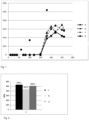
- Fig. 1 shows the evolution of the turbidity (Y axis) at O.D. 600 nm of the solution contained in samples a, b, c and d with the amount of nutrients added over the time, whose concentration in mg/l is represented in axis X.
- a turbidity increase corresponds to an increase of the bacterial amount in the solution.
- the evolution of the curve shows the effect of the antimicrobial metallic compound present in the wall of the tank.
- the turbidity is lower in tanks (b) and (c), containing antimicrobial agents than in control tank (a).
- the antimicrobial activity was measured on vehicle systems depicted on figures 8 and 9 , where at least a portion of at least one of the vehicle system constituents 12, 16, 18, 20, 22 or of a tank component 24, is made of polymer material comprising an effective amount of at least one antimicrobial agent.
- the antimicrobial effect of the antimicrobial agent was measured according to the norm ISO22196:2011.
- vehicle system 100 depicted on figure 10 further comprising a UV radiator 26.
- the antimicrobial activity was reduced by 99%.
- system on figure 10 with a UV radiator, the antimicrobial activity was reduced by (99.999%). Therefore, the combination of both the antimicrobial agent contained in at least a portion of at least one of the vehicle system constituents and of the UV radiator permits an almost complete inhibition of growth of microbial species.
- Traction tests were also conducted to evaluate the impact of the antimicrobial metallic compounds on the resistance of a polymer.
- Said polymer being for instance HDPE and more particularly HDPE GX5038.
- Said tests were conducted with concentration in metallic compounds of 0.2%weight zinc (in light grey) and 0.034%weight silver (in black) samples.
- Samples were submitted to traction tests consisting of increasing stresses to samples by pulling on one side of it while the other extremity was blocked mechanically whilst the tensile modulus (Young modulus), tensile stress at yield, tensile stress at break and strain at break are measured. Measurements were performed according to ISO 527, i.e.
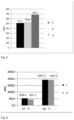
- Measured values for polymers according to the present disclosure are in the same order as for a control polymer regarding tensile modulus ( fig. 2 , Y axis expressed in MPa), tensile stress at yield comparison ( fig. 3 , Y axis expressed in MPa), tensile strain at yield comparison ( fig. 4 , Y axis expressed in %) and tensile strain at break comparison ( fig. 5 , Y axis expressed in MPa), which demonstrates that polymers according to the present disclosure have a good resistance.
Landscapes
- Engineering & Computer Science (AREA)
- Water Supply & Treatment (AREA)
- Chemical & Material Sciences (AREA)
- Mechanical Engineering (AREA)
- General Engineering & Computer Science (AREA)
- Combustion & Propulsion (AREA)
- Public Health (AREA)
- Health & Medical Sciences (AREA)
- Life Sciences & Earth Sciences (AREA)
- Hydrology & Water Resources (AREA)
- Environmental & Geological Engineering (AREA)
- Organic Chemistry (AREA)
- Agricultural Chemicals And Associated Chemicals (AREA)
- Paints Or Removers (AREA)
Description
- The present disclosure relates to a vehicle system for injecting an aqueous solution in the combustion chamber of the internal combustion engine. A further aspect of the disclosure relates to a method for injecting an aqueous solution by means of a system according to the disclosure.
- Due to increasing requirements for reduced carbon dioxide emissions, substantial focus has been paid to optimization of fuel consumption of internal combustion engines. However, this optimization is limited by premature ignition of the fuel and high exhaust gas temperatures. One possible measure for reducing the exhaust gas temperatures and the premature ignition is the injection of water into the combustion chamber. In internal combustion engines, water injection system can spray water into the incoming air or fuel-air mixture, or directly into the combustion chamber to cool certain parts of the combustion chamber where "hot points" could produce premature ignition. Many water injection systems use a mixture of water and alcohol or other additives. The water provides the primary cooling effect due to its great density and high heat absorption properties. The alcohol is combustible and serves as an antifreezing for the water. One known example of where a separate water injection system can be provided for enabling water injection into the combustion chamber of an internal combustion engine is
WO 2014/080266 A1 . - A known problem with water injection systems is that water can contain impurities that, in turn, promote the growth of microbial species such as bacteria, algae, fungi or other microorganisms. Microbial contamination is particularly possible in the water tank when the vehicle is immobilized for a long period of time. Such contamination can lead to a malfunction of the system up to the failure as well as clogging of filters which are arranged in the water injection system. To prevent microbial contamination or to eradicate an already present contamination, one could think about using chemical products. However, the injection of such chemicals into the combustion chamber can lead to other problems. An example of such systems is shown in
US 2003/168025 . -
WO2016/177556 A1 proposes to decontaminate water contained in a water tank for a water injection system by exposing the water to UV radiation. This solution is not optimal for several reasons. First, the UV radiator must be energized to produce a decontaminating effect. Second, the growth of microbial species, such as bacteria, algae, fungi or other microorganisms is not inhibited when the vehicle is immobilized for a long period and the UV radiator not energized. This has a further deleterious effect on the water system in that the microorganisms contaminating water alter the chemical properties of the water by releasing ionic species. The chemical properties of the water cannot be later reversed to the initial state even if the water is later decontaminated (for example with chemicals or UV radiations). - Moreover, UV radiators are expensive and complex. They are also relatively fragile so that they must be replaced periodically. Their location in the water tank makes the replacement operation difficult and costly. These factors make the use of UV radiators impractical. Alternatively,
US 6 511 052 discloses a humidifying gas induction or supply system for a combustion chamber with parts made of a polymer material and an antimicrobial agent. An equivalent approach is described inEP 1 938 690 - The present disclosure provides an improved vehicle system for injecting an aqueous solution into the combustion chamber of an internal combustion engine, which overcomes the foregoing problems heretofore existing in the industry.
- In particular, it is a first objective of the present disclosure to provide an aqueous solution injection system that does not require to be energized in order to be operational, which prevents contamination even in case of extended periods of parking or other inactivity of the vehicle in which the aqueous solution injection system is installed.
- A second objective of the present disclosure is to provide an aqueous solution injection system that is less expensive and which does not require extensive, expensive and frequent maintenance operations.
- According to a first embodiment of the present disclosure, these objectives are achieved with a vehicle system configured for injecting an aqueous solution into an air intake line upstream of a combustion chamber of an internal combustion engine, or in the combustion chamber of the internal combustion engine, said vehicle system comprising the following vehicle system constituents:
- a tank to store an aqueous solution;
- a pump;
- an air intake line upstream of a combustion chamber of an internal combustion engine;
- one or more injectors to inject aqueous solution into the air intake line, into the combustion chamber or both;
- a feed line to feed said injector with aqueous solution pumped by the pump.
- According to the present disclosure, at least a portion of at least one of the vehicle system constituents, or a tank component is made of polymer material, and the polymer material:
- comprises an effective amount of at least one antimicrobial agent, or
- has on its surface a surface coating comprising at least one antimicrobial agent, the surface coating comprising between 10 to 2500 ppm (0.001 % by weight and 0.25 % by weight) of the at least one antimicrobial agent. By way of example, the surface coating may contain 100-1000ppm (0.01% by weight - 0.1 % by weight) when the antimicrobial agent is zinc pyrithione or 4,5-dichloro-2-octyl-4-isothiazolin-3-one (DCOIT), and minimum 15 ppm (0.0015 % by weight) when the antimicrobial agent is silver.
- An "antimicrobial agent" refers to any agent that prevents the development of microbial species such as bacteria, algae and/or fungi. It is preferred within the present disclosure that the antimicrobial agent be a chemical compound. The antimicrobial effect of the antimicrobial agent is measured according to the norm ISO22196:2011 or to the norm ISO 16869:2008 depending on the nature of the microbial species.
- "An effective amount" is an amount that will produce the effect of inhibiting the growth of microbial species by at least 80% as measured according to the norm ISO22196:2011 or will give a ratio of 0 (no growth) preferably, or 1 (initial growth) according to the norm ISO 16869:2008 depending on the nature of the microbial species.
- The inventors have noted that the microbial species contaminating aqueous solutions in an aqueous solution injection system tend to adhere to the surfaces constituting the tank rather than remaining suspended in the aqueous solution. Consequently, the concept of decontaminating the aqueous solution via the surfaces of the system constituents is particularly operative.
- The polymer material constituting the vehicle system constituents or a tank component comprises at least 0.0002% by weight, preferably at least 0.0015% by weight, more preferably at least 0.01% by weight, the most preferably at least 0.03% by weight, of at least one antimicrobial agent. Within the context of the present disclosure, the % by weight is the ratio between the mass of the antimicrobial agent and the polymer material.
- Preferably, the polymer material constituting the vehicle system constituents or a tank component comprises at most 5% by weight, preferably at most 0.5% by weight, more preferably at most 0.4% by weight, more preferably at most 0.3% by weight, more preferably at most 0.27% by weight, the most preferably at most 0.25% by weight, of at least one antimicrobial agent.
- The inventors have surprisingly found that, in addition to an effective antimicrobial effect, the foregoing content of the antimicrobial agent in the polymer material will also allow ice resistance while still permitting weldable walls.
- By the expression "weldable wall", it is meant that the wall made of a polymer material comprising at least one antimicrobial agent according to the present disclosure is weldable to an element made of the same polymer material containing or not containing the at least one antimicrobial agent. The welding phenomenon is defined as follows: Once polymer-to-polymer contact is achieved at the interface, intermolecular diffusion and entanglement is needed to complete the process and form a good weld. Autohesion is the phenomenon describing the intermolecular diffusion and chain entanglement across a thermoplastic polymer interface forming a strong bond. Unlike adhesion, which relies on surface energetics (or secondary chemical bonds between (dis)similar materials), autohesion relies on chain entanglement and secondary bonds for polymer chains of similar materials. As shown in Plastics and Composites Welding handbook, Grewell / Benatar / Park, page 23, "under ideal conditions, the diffusion is complete when the interface is no longer discernible from the bulk".
- Ice resistance is also a key property of the polymer material. By changing from liquid stage to solid stage, the volume of the water increases. This volume increase generates high stresses on the walls of the tank. The mechanical properties of the polymer material are important and, in particular, the stress at yield and strain at yield must be high enough to accommodate this stress. These properties are measured according to ISO 527 standard at 10mm/min (and 1mm/min for the Young modulus).
- More preferably, the amount of the antimicrobial agent is in the range of 0.0002% by weight to 5% of weight, preferably from 0.0015% by weight to 0.4% by weight, more preferably from 0.005% by weight to 0.3% by weight, the most preferably from 0.01% by weight to 0.25%. These amounts allow an antimicrobial effect, ice resistance and weldable walls.
- In an embodiment, the antimicrobial agent is an organic or an inorganic antimicrobial agent. The organic or inorganic antimicrobial agent may be selected from, for example, the group consisting of antimicrobial minerals such as natural clays (for example bentonite) containing soluble reduced metals, expandable clay minerals that absorb cations, providing a capacity for extended metal release and production of toxic hydroxyl radicals; chitosan ,10,10'-oxybisphenoxarsine (OBPA); 2-octyl-2H-isothiazol-3-one (OIT); 2-butyl-1,2-benzisothiazolin-3-one; iodo-propylbutyl carbamate (IPBC); titanium dioxide nanoparticles metal; 4,5-dichloro-2-octyl-4-isothiazolin-3-one (DCOIT). When the antimicrobial agent comprised in the polymer material that makes at least one portion of at least one of the vehicle system constituents or of a tank component is DCOIT, the amount is preferably comprised within the range of 0.0002% by weight to 5% by weight, more preferably from 0.0015% by weight to 0.4% by weight, more preferably from 0.005% by weight to 0.3% by weight, more preferably from 0.01% by weight to 0.25% by weight, the most preferably 0.25% by weight.
- In an embodiment, one of the antimicrobial agents is an antimicrobial metallic compound. Said antimicrobial metallic compound contains at least one metallic atom. The metallic part of the antimicrobial metallic compound has antimicrobial properties.
- The antimicrobial metallic compound may be selected from the group consisting of metals, metallic alloys, metallic solutions, metallic salts, metallic oxides and metallic complexes. The at least one antimicrobial metallic compound is preferably a nanomaterial. The term "nanomaterial" means an antimicrobial metallic compound in the form of particles in an unbound state or as an aggregate or as an agglomerate and where, for 50 % or more of the particles in the number size distribution, one or more external dimensions is in the size range 1-100 nm. Preferably the antimicrobial metallic compound is in the form of nanoparticles having a diameter in the range of 1 to 10 nm. The antimicrobial metallic compound nanomaterial may be supported or dispersed on silicon oxide particles, aluminum oxide particle or zeolite.
- According to an embodiment, the at least one antimicrobial metallic compound comprises a metal selected from the group consisting of copper, silver, zinc, aluminum, nickel, gold, barium, tin, bore, thallium, antimony, cobalt, zirconium and molybdenum, preferably selected from the group consisting of copper, zinc and silver, the most preferably zinc and silver. Zinc and silver are more efficient against the targeted microbial species.
- According to an embodiment, the at least one antimicrobial metallic compound is an antimicrobial metallic compound of copper selected from the group consisting of copper, brass, bronze, cupronickel alloy, copper-nickel-zinc alloy, copper sulphate (I, II), coper oxide (I, II), copper hydroxide (I, II), copper pyrithione (I).
- According to an embodiment, the at least one antimicrobial metallic compound is an antimicrobial metallic compound of zinc and/or an antimicrobial metallic compound of silver. Preferably, the antimicrobial metallic compound of zinc is selected from the group consisting of zinc, zinc oxide and zinc pyrithione. The antimicrobial metallic compound of silver is preferably selected from the group consisting of silver, silver oxide, silver nitrate, silver chloride and silver carbonate. Where the antimicrobial metallic compound is zinc pyrithione it is preferred that the zinc pyrithione is present in an amount of 0,0002% by weight and 5% of weight, preferably between 0.0015% by weight and 0.4% by weight, more preferably between 0.005% by weight and 0.3% by weight, more preferably between 0.01% by weight and 0.25% by weight, the most preferably 0.2% by weight.
- In an embodiment, the antimicrobial agent is an organometallic compound. Indeed, the inventors have realized that by appropriately selecting the organic part of the compound, release of the agent or metal part (ions) thereof in water is prevented.
- In an embodiment, the at least one antimicrobial metallic compound is zinc pyrithione or a silver salt or silver or a combination thereof. The inventors have surprisingly observed that even though pyrithione is hardly miscible in polymers, for example polyolefin, it appears that zinc pyrithione or silver salts or silver, preferably silver nanoparticles, are well encapsulated in the polyolefin matrix and that only an insignificant amount of metal ions is released into water.
- According to the present disclosure, the polymer constituting the vehicle system constituents or a tank component is a mixture of polymers. Examples of suitable polymers are polyolefin and polyamides. According to the invention, the polymer is a high density polyethylene. Thereby the constituent is easier to weld and/or assemble and has increased resistance to ice expansion. Moreover, the high-density polyethylene is not a water absorbent polymer.
- The polymer can be prepared either by applying a surface coating comprising an antimicrobial agent on the polymer surface which is in contact with the aqueous solution or by embedding an antimicrobial agent into the polymer bulk. Preferably, the antimicrobial agent is embedded in the polymer, permitting long term effectivity and durability compared to biocide coating which can leach out the biocide agent more rapidly. When the antimicrobial agent comprised in the polymer material is zinc pyrithione at an amount of about 0.02% by weight, a leaching rate (quantity of zinc cations released into the aqueous solution) between 1 and 8 x 10⁻³ mg/dm2/day into a non-stirred aqueous solution stored in a tank made of this polymer material was observed at 50°C. When the antimicrobial agent comprised in the polymer material is silver metal nanoparticles at an amount of about 0.2% by weight, a leaching rate between 1 and 10 x 10-5 mg/dm2/day into a non-stirred aqueous solution stored in a tank made of this polymer material was observed at 50°C.
- Wherein when the polymer material has a surface coating comprising at least one antimicrobial agent, the surface coating comprises between 0.001 % by weight and 0.25 % by weight of the at least one antimicrobial agent. By way of example, the surface coating may contain 100-1000ppm (0.01% by weight - 0.1% by weight) when the antimicrobial agent is zinc pyrithione or DCOIT, and minimum 15 ppm (0.0015% by weight) when the antimicrobial agent is silver.
- According to an embodiment, the antimicrobial metallic compound is homogeneously dispersed in the polymer material. By the expression "homogeneously dispersed", it is meant that the concentration of the antimicrobial metallic compounds within the polymer remains the same in average independently of the elementary volume of polymer material considered. For instance, the concentration of the antimicrobial metallic compound in the polymer material of a same vehicle system constituent can vary from an elementary volume of 1mm3 to another of at most 30%, preferably of at most 10% by weight, most preferably of at most 5%.
- Advantageously, the antimicrobial agent is present in any part of the water injection system that is in contact with water. Very advantageously, such antimicrobial agent can be present in walls of the tank for storing the aqueous solution or in elements included in the tank. Indeed, water is supposed to remain in contact with the tank walls and with elements included in the tank for a longer time than in any other part of the system so that the antimicrobial agent is able to operate continuously. Examples of elements included in the tank (i.e., tank components) comprise baffles, supports for sensors, floaters and filters.
- In a particular embodiment, the tank contains a heater for heating the aqueous solution and the antimicrobial agent is contained in the heater. The heat is indeed expected to promote the growth of microbial species such as bacteria, algae, fungi or other microorganisms so that these will concentrate in hotter spots in the tank. Thanks to the present disclosure, the contamination on or around the heater can also be eliminated.
- In a particular embodiment, the vehicle system configured for injecting the aqueous solution contains a filter for filtering the aqueous solution and the antimicrobial agent is contained in or on the filter.
- In a particular embodiment, the vehicle system configured for injecting the aqueous solution contains a water delivery module and the antimicrobial agent is contained in or on the surface of the water delivery module.
- In another advantageous embodiment, such antimicrobial agent can be present in the pump. Stirring effect of the pump is indeed increasing the contact of water with the building elements of the pump and thereby the antimicrobial effect of the agent.
- In a preferred embodiment, the antimicrobial agent is present in a plurality of constituents of the system to maximize the antimicrobial effect.
- In the present disclosure one or more of the constituents that may contain the antimicrobial agent are made of several layers. Therefore, it is envisioned that, advantageously, at least a layer being in contact with the aqueous solution will contain the antimicrobial agent.
- According to a preferred embodiment, the at least one antimicrobial metallic compound is silver, preferably silver nanoparticles in an amount comprised in the range of 0,0002% by weight to 5% by weight, preferably from 0.0015% by weight to 0.4% by weight, more preferably from 0.005% by weight to 0.3% by weight, the most preferably from 0.01% by weight to 0.25% by weight.
- Advantageously, the surface of the vehicle system constituent (such as for example a tank wall or a pump) or of the component included in the tank is textured so as to promote interactions between the aqueous solution and the antimicrobial agent by offering a larger contact area between the aqueous solution and the surface of the constituent or of the component.
- In a particular embodiment of the invention, the vehicle system for injecting an aqueous solution also contains an UV radiator. The combination of both the antimicrobial agent contained in at least a portion of at least one of the vehicle system constituents and of the UV radiator permits complete inhibition of growth of microbial species, such as bacteria, algae, fungi or other microorganisms, as measured according to the norm ISO22196:2011 or to the norm ISO 16869:2008. The UV radiator acts when the vehicle is active and eradicates most of the microbial species present in the system while the antimicrobial agent will prevent the growth of the microbial species when the vehicle is immobilized, even for a long period.
- According to a second aspect, there is provided a method for injecting an aqueous solution into an air intake line upstream of a combustion chamber of an internal combustion engine, or into the combustion chamber of the internal combustion engine, comprising :
- pumping the aqueous solution out of a tank with a pump,
- feeding with a feeding line an injector with aqueous solution pumped by the pump, and
- injecting said aqueous solution into the air intake line or into the combustion chamber with the injector.
- According to the present disclosure, at least a portion of the pump, tank, intake line, injector or feeding line or a component of the tank is made of a polymer:
- comprising an effective amount of at least one antimicrobial agent, or
- having on its surface a surface coating comprising at least one antimicrobial agent, the surface coating between 0.001 % by weight and 0.25 % by weight of the at least one antimicrobial agent.
- According to the present disclosure, at least a portion of the pump, tank, intake line, injector or feeding line is made of a polyolefin comprises an effective amount of antimicrobial agent.
- Finally, the water tank according to the present disclosure is manufactured by injection molding, by blow molding or by thermoforming.
- The present disclosure will be better understood on reading the following examples, including figures, which are given by way of example.
-
Fig. 1 presents the measure of turbidity of water incubated with nutriments in a control tank (a) and in three tanks according to the invention (b, c and d). -
Fig. 2 ,3 ,4 , and5 present, for a control polymer (in grey) and polymers according to the invention (in black and light grey), respectively the tensile modulus, the tensile stress at yield comparison, the tensile strain at yield comparison, and the tensile strain at break comparison. -
Fig. 6 and7 present the effect of temperature on respectively the tensile modulus and the stress at yield of polymers according to the present disclosure. -
Figs. 8-10 depicts three vehicle systems according to embodiments of the present disclosure. - In
figures 8 to 10 , one can see avehicle system 100 configured for injecting an aqueous solution into anair intake line 12 upstream of acombustion chamber 14 of an internal combustion engine, orvehicle system combustion chamber 14 of the internal combustion engine. Said vehicle systems comprise the following vehicle system constituents: atank 16 to store an aqueous solution, apump 18, anair intake line 12 upstream of acombustion chamber 14, one ormore injectors 20 to inject aqueous solution into theair intake line 12, into thecombustion chamber 14 or both; and afeed line 22 to feed saidinjector 20 with aqueous solution pumped by thepump 18. - At least a portion of at least one of the
vehicle system constituents system flexible heater 24 is made of polymer material, the polymer material comprising an effective amount of at least one antimicrobial agent. - In
figure 10 , thesystem 100 further comprises aUV radiator 26. The UV radiator acts synergistically with the antimicrobial agent. - Preferably, one wall of the
tank 16 in contact with the aqueous solution is made of a polymer material comprising at least one antimicrobial metallic compound. The one ormore injectors 20 and the feed line(s) 22 are often purged before parking of the vehicle to prevent any damage due to possible freezing of the aqueous solution, preferably demineralized water. During the purge, microbial species such as bacteria and/or algae and/or fungi and nutriments could be sucked inside theaqueous tank 16, preferably thedemineralized tank 16. In order to prevent any microbial species growth, and biofilm formation and to protect thevehicle system combustion chamber 14 of the internal combustion engine, the polymer material constituting at least one wall of thetank 16 in contact with the aqueous solution comprises at least one antimicrobial metallic compound. The antimicrobial metallic compound is in an amount comprised in the range of 0.0002% by weight to 5% by weight, preferably from 0.0015% by weight to 0.4% by weight, more preferably from 0.005% by weight to 0.3% by weight, the most preferably from 0.01% by weight to 0.25% by weight. Such an amount of antimicrobial metallic compounds results simultaneously in a weldable wall tank needed for the manufacturing of the tank, ice resistance, and antimicrobial property permitting to avoid a clogging of vehicle system for injecting the aqueous solution in the combustion chamber of the internal combustion engine. Therefore, the amount of antimicrobial agent is effective. - In order to reproduce the effect of a bacterial contamination in the tank and to study the antimicrobial effect of the addition of an antimicrobial metallic compound in the walls of tank, the following experiments were performed.
- 4 water tanks were tested:
- a reference tank (a) made of High Density Polyethylene (HDPE) without antimicrobial metallic compound (control),
- a tank (b) made of HDPE containing 0.2% by weight of an antimicrobial metallic compound of zinc, said antimicrobial metallic compound of zinc being zinc pyrithione,
- a tank (c) made of HDPE containing 0.034% by weight of an antimicrobial metallic compound of silver, said antimicrobial metallic compound of silver being silver metal nanoparticles,
- a tank (d) made of HDPE containing 0.1% by weight of an antimicrobial metallic compound of zinc, said antimicrobial metallic compound of zinc being zinc pyrithione, and 0.017% by weight of an antimicrobial metallic compound of silver, said antimicrobial metallic compound of silver being silver metal nanoparticles.
- All the tanks tested were manufactured by injection molding and were made of 2 half shells, welded together by hot plate. It has been observed that the tanks comprising antimicrobial agents according to the present disclosure contain weldable walls.
- The tested tanks have a capacity of 24 liters and were filled with 15 liters of non-sterile demineralized water containing less than 1000 bacteria/ml and having a conductivity of less than 1 µS/cm and a turbidity of 0.
- To reproduce an introduction of nutrients into the tank due to the purge effect, a nutrient aqueous solution of 15 ml of an aqueous solution containing 2 g/l of tryptone, 1 g/l of yeast extract and 2 g/
l 40% of NaCl, was introduced in the tank according to the following cycle, that simulates also a park/drive park condition: - a. Filling the tank with demineralized water
- b. Agitation of the solution during 1H
- c. Addition of 15 ml of the nutrient aqueous solution
- d. Agitation stopped during 6H
- e. Agitation of the solution during 1H
- f. Addition of 15 ml of a nutrient aqueous solution
- g. Agitation stopped during 16H.
- All the compounds used were provided by VWR chemicals. Samples of the solution contained in the tanks were taken for analysis after step e, the turbidity and the conductivity of said samples being measured with the spectrophotometer SPECTROstar nano from BMG LABTECH using a wavelength of 600nm (visible light) for the turbidity and the Versa Star meter from Thermo Fischer equipped with a VSTAR-ISE module and Orion™ DuraProbe™ 4-Electrode Conductivity Cell for conductivity. The temperature of the solution contained in the tank was maintained at 37 °C.
-
Fig. 1 shows the evolution of the turbidity (Y axis) at O.D. 600 nm of the solution contained in samples a, b, c and d with the amount of nutrients added over the time, whose concentration in mg/l is represented in axis X. A turbidity increase corresponds to an increase of the bacterial amount in the solution. The evolution of the curve shows the effect of the antimicrobial metallic compound present in the wall of the tank. The turbidity is lower in tanks (b) and (c), containing antimicrobial agents than in control tank (a). In addition, with half the amount of each antimicrobial agent used in tanks (b) and (c), the turbidity is even lower in tank (d), which shows a synergetic effect of the combination of an antimicrobial metallic compound of zinc with an antimicrobial metallic compound of silver was observed. - Furthermore, the antimicrobial activity was measured on vehicle systems depicted on
figures 8 and 9 , where at least a portion of at least one of thevehicle system constituents tank component 24, is made of polymer material comprising an effective amount of at least one antimicrobial agent. The antimicrobial effect of the antimicrobial agent was measured according to the norm ISO22196:2011. The same measurement was conducted onvehicle system 100 depicted onfigure 10 , further comprising aUV radiator 26. As for systems onfigures 8 and 9 , the antimicrobial activity was reduced by 99%. As for system onfigure 10 , with a UV radiator, the antimicrobial activity was reduced by (99.999%). Therefore, the combination of both the antimicrobial agent contained in at least a portion of at least one of the vehicle system constituents and of the UV radiator permits an almost complete inhibition of growth of microbial species. - Release of metal ions in water was analyzed in tanks b), c) and d) after demineralized water was left for 105 days at ambient temperature (between 18 and 25°C). Measures by ICP AES (Inductively Coupled Plasma Atomic Emission Spectroscopy) showed no release of Ag and release of Zn limited in a range of 1 mg/l. Therefore, only an insignificant amount of metal ions was released into water.
- Traction tests were also conducted to evaluate the impact of the antimicrobial metallic compounds on the resistance of a polymer. Said polymer being for instance HDPE and more particularly HDPE GX5038. Said tests were conducted with concentration in metallic compounds of 0.2%weight zinc (in light grey) and 0.034%weight silver (in black) samples. Samples were submitted to traction tests consisting of increasing stresses to samples by pulling on one side of it while the other extremity was blocked mechanically whilst the tensile modulus (Young modulus), tensile stress at yield, tensile stress at break and strain at break are measured. Measurements were performed according to ISO 527, i.e. 1BA at 23°C and at 10 mm/min for tensile stress at yield, tensile stress at break and strain at break, and 1BA at 23°C and at 1 mm/min for tensile modulus. The results of these tests are shown on
figures 2 to 5 , said results being an average taken on three samples. Results for a control polymer are shown in grey, and results for polymers according to the invention are shown in black (0.034 % by weight silver nanoparticles) and light grey (0.2 % by weight zinc pyrithione). Similar tests were conducted to study the influence of temperature on the resistance of the polymer. For these tests, the conditions were the same except that temperature varied. - Measured values for polymers according to the present disclosure are in the same order as for a control polymer regarding tensile modulus (
fig. 2 , Y axis expressed in MPa), tensile stress at yield comparison (fig. 3 , Y axis expressed in MPa), tensile strain at yield comparison (fig. 4 , Y axis expressed in %) and tensile strain at break comparison (fig. 5 , Y axis expressed in MPa), which demonstrates that polymers according to the present disclosure have a good resistance. - Tensile modulus and tensile stress at yield comparison were also measured for polymers according to the present disclosure at -40°C (
Fig. 6 , Y axis expressed in MPa,fig. 7 , Y axis expressed in MPa). Results for polymers according to the present disclosure are shown in black (0.034 % by weight silver nanoparticles) and light grey (0.2 % by weight zinc pyrithione). These results confirm that tensile modulus and stress at yield are even higher at -40°C and show that polymer materials according to the present disclosure behaves very similarly to pure ethylene material which ensures its good response to ice formation.
Claims (15)
- A vehicle system (80, 90, 100) configured for injecting an aqueous solution into an air intake line (12) upstream of a combustion chamber (14) of an internal combustion engine, or in the combustion chamber (14) of the internal combustion engine, said vehicle system (80, 90, 100) comprising the following vehicle system constituents:a tank (16) to store an aqueous solution;a pump (18);an air intake line (12) upstream of a combustion chamber (14) of an internal combustion engine;one or more injectors (20) to inject aqueous solution into the air intake line (12), into the combustion chamber (14) or both; anda feed line (22) configured for feeding said injector (20) with aqueous solution pumped by the pump (18),characterized in that at least a portion of at least one of the vehicle system constituents (16, 18, 12, 20, 22) or of a tank (16) component (24) is made of polymer material, the polymer material- comprising an effective amount of at least one antimicrobial agent, or- having on its surface a surface coating containing at least one antimicrobial agent, the surface coating comprising between 0.001 % by weight and 0.25 % by weight of the at least one antimicrobial agent,and the polymer material is high density polyethylene.
- The vehicle system (80, 90, 100) according to claim 1, wherein the polymer material comprises at least 0.0002% by weight %, preferably at least 0.0015% by weight %, more preferably at least 0.01% by weight, the most preferably at least 0.03% by weight, of the at least one antimicrobial agent.
- The vehicle system (80, 90, 100) according to claim 2, wherein the polymer material comprises at most 5% by weight, preferably at most 0.5% by weight, more preferably at most 0.4% by weight, more preferably at most 0.3% by weight, more preferably at most 0.27% by weight, the most preferably at most 0.25% by weight, of at least one antimicrobial agent.
- The vehicle system (80, 90, 100) according to claims 2 and 3, wherein the polymer material comprises between 0,0002% by weight and 5% of weight, preferably between 0.0015% by weight and 0.4% by weight, more preferably between 0.005% by weight and 0.3% by weight, the most preferably between 0.01% by weight and 0.25% of at least one antimicrobial agent.
- The vehicle system (80, 90, 100) according to any one of the preceding claims, wherein one antimicrobial agent is an antimicrobial metallic compound.
- The vehicle system (80, 90, 100) according to claim 5, wherein the antimicrobial metallic compound is selected from a group consisting of a metal, a metallic alloy, a metallic solution, a metallic salt, a metallic oxide and a metallic complex.
- The vehicle system (80, 90, 100) according to any one of claims 5 or 6, wherein the metallic part of the at least one antimicrobial metallic compound is selected from a group consisting of copper, silver, zinc, aluminum, nickel, gold, barium, tin, bore, thallium, antimony, cobalt, zirconium and molybdenum, preferably the metallic part of the at least one metallic compounds is selected from the group consisting of copper, zinc and silver, the most preferably zinc and silver.
- The vehicle system (80, 90, 100) according to any one of claims 5 to 7, wherein the antimicrobial metallic compound is zinc pyrithione or a silver salt, or silver or a combination thereof.
- The vehicle system (80, 90, 100) according to any one of the preceding claims, wherein the antimicrobial agent is present in at least one wall of the tank in contact with the aqueous solution and/or in a tank component .
- The vehicle system (80, 90, 100) according to any one of the preceding claims, wherein the antimicrobial agent is present in the pump (18).
- The vehicle system (80, 90, 100) according to any one of the preceding claims, comprising, as a further constituent, a heater (24) to heat the aqueous solution and wherein the antimicrobial agent is present in the heater (24).
- The vehicle system (80, 90, 100) according to any one of the preceding claims wherein the vehicle system constituent or the further constituent is made of several layers, at least a layer being in contact with the aqueous solution, wherein the antimicrobial agent is present in said layer in contact with the aqueous solution.
- The vehicle system (80, 90, 100) according to any one of the preceding claims, wherein the antimicrobial agent is present in one of the vehicle system constituents (16, 18, 12, 20, 22) having a textured surface.
- The vehicle system (100) according to any one of the preceding claims wherein the system further comprises a ultraviolet (UV) radiator (26).
- A method for injecting an aqueous solution into an air intake line (12) upstream of a combustion chamber (14) of an internal combustion engine, or into the combustion chamber (14) of the internal combustion engine, comprising:pumping the aqueous solution out of a tank (16) with a pump (18),feeding with a feeding line (22) an injector (20) with aqueous solution pumped by the pump (18),injecting said aqueous solution into the air intake line (12) or into the combustion chamber (14) with the injector (20),characterized in thatat least a portion of the pump (18), tank (16), intake line (12), injector (20) or feeding line (22) or a component (24) of the tank (16) is made of polymer material- comprising an effective amount of at least one antimicrobial agent, or- having on its surface a surface coating containing at least one antimicrobial agent, the surface coating containing between 0.001 % by weight and 0.25 % by weight of the at least one antimicrobial agentand the polymer material being high density polyethylene.
Priority Applications (1)
| Application Number | Priority Date | Filing Date | Title |
|---|---|---|---|
| EP25164014.0A EP4545494A3 (en) | 2017-07-05 | 2018-07-04 | Vehicle system and method for injecting an aqueous solution in the combustion chamber of the internal combustion engine |
Applications Claiming Priority (4)
| Application Number | Priority Date | Filing Date | Title |
|---|---|---|---|
| EP17305868 | 2017-07-05 | ||
| EP17306329 | 2017-10-04 | ||
| EP18164802 | 2018-03-28 | ||
| PCT/EP2018/068128 WO2019008058A1 (en) | 2017-07-05 | 2018-07-04 | Vehicle system and method for injecting an aqueous solution in the combustion chamber of the internal combustion engine |
Related Child Applications (1)
| Application Number | Title | Priority Date | Filing Date |
|---|---|---|---|
| EP25164014.0A Division EP4545494A3 (en) | 2017-07-05 | 2018-07-04 | Vehicle system and method for injecting an aqueous solution in the combustion chamber of the internal combustion engine |
Publications (3)
| Publication Number | Publication Date |
|---|---|
| EP3649336A1 EP3649336A1 (en) | 2020-05-13 |
| EP3649336B1 true EP3649336B1 (en) | 2025-03-19 |
| EP3649336C0 EP3649336C0 (en) | 2025-03-19 |
Family
ID=62837931
Family Applications (2)
| Application Number | Title | Priority Date | Filing Date |
|---|---|---|---|
| EP25164014.0A Pending EP4545494A3 (en) | 2017-07-05 | 2018-07-04 | Vehicle system and method for injecting an aqueous solution in the combustion chamber of the internal combustion engine |
| EP18737604.1A Active EP3649336B1 (en) | 2017-07-05 | 2018-07-04 | Vehicle system and method for injecting an aqueous solution in the combustion chamber of the internal combustion engine |
Family Applications Before (1)
| Application Number | Title | Priority Date | Filing Date |
|---|---|---|---|
| EP25164014.0A Pending EP4545494A3 (en) | 2017-07-05 | 2018-07-04 | Vehicle system and method for injecting an aqueous solution in the combustion chamber of the internal combustion engine |
Country Status (4)
| Country | Link |
|---|---|
| US (1) | US11415085B2 (en) |
| EP (2) | EP4545494A3 (en) |
| CN (1) | CN110753788A (en) |
| WO (1) | WO2019008058A1 (en) |
Families Citing this family (4)
| Publication number | Priority date | Publication date | Assignee | Title |
|---|---|---|---|---|
| KR102654432B1 (en) * | 2018-03-19 | 2024-04-03 | 플라스틱 옴니엄 어드벤스드 이노베이션 앤드 리서치 | A vehicle system for spraying an aqueous solution into the combustion chamber of an internal combustion engine and a method for spraying an aqueous solution into the combustion chamber of an internal combustion engine |
| DE102018109522A1 (en) * | 2018-04-20 | 2019-10-24 | Veritas Ag | Liquid tank with an antimicrobial agent |
| IT201800009869A1 (en) * | 2018-10-29 | 2020-04-29 | Magneti Marelli Spa | WATER SUPPLY SYSTEM TO AT LEAST ONE COMBUSTION CHAMBER IN AN INTERNAL COMBUSTION ENGINE AND CORRESPONDING HEATER DEVICE |
| DE102018132119A1 (en) | 2018-12-13 | 2020-06-18 | Veritas Ag | Vehicle liquid tank with a surface-modifying substance |
Citations (21)
| Publication number | Priority date | Publication date | Assignee | Title |
|---|---|---|---|---|
| US5360145A (en) | 1992-07-21 | 1994-11-01 | L'oreal | Dispenser for at least one liquid or pasty product comprising a closure system that allows no ingress of air, and preservation process using the said dispenser |
| US5939087A (en) | 1995-03-14 | 1999-08-17 | Hagiwara Research Corporation | Antimicrobial polymer composition |
| JP2000239968A (en) | 1999-02-22 | 2000-09-05 | Nicca Chemical Co Ltd | Processing method for imparting antibacterial and mildew resistant property to textile product, antibacterial fungicide for textile product and antibacterial and mildew resistant textile product |
| CN1386422A (en) | 2001-05-19 | 2002-12-25 | 洛阳玻璃股份有限公司 | Antimildew liquid for glass |
| US6511052B1 (en) | 1999-08-06 | 2003-01-28 | E. I. Du Pont De Nemours And Company | Humidifying gas induction or supply system |
| US20030168025A1 (en) | 2002-03-11 | 2003-09-11 | Edward J. Lesniak | Electronic controlled emission and fluid injection system for an internal combustion engine |
| JP2004068800A (en) | 2002-08-06 | 2004-03-04 | Mikio Okamoto | Fuel consumption reduction method of automobile |
| US20050273921A1 (en) | 2002-08-02 | 2005-12-15 | Mattson Roy W Jr | Hydromassage antimicrobial whirlpool bathtub |
| US7179418B2 (en) | 2001-06-13 | 2007-02-20 | Quikwater, Inc. | Device and method for minimizing pathogens in heated water |
| EP1938690A1 (en) | 2006-12-22 | 2008-07-02 | Preentec AG | Sterilising and preserving fluids |
| EP1946638A2 (en) | 2007-01-17 | 2008-07-23 | Behr GmbH & Co. KG | Method for treating a component with a biocide |
| CN103232774A (en) | 2013-05-31 | 2013-08-07 | 滁州市宏源喷涂有限公司 | Corrosion-resisting and rust-resisting paint |
| WO2014155156A1 (en) | 2013-03-28 | 2014-10-02 | Parx Plastics Bv | Antibacterial polymers and method for obtaining the same |
| US20150068123A1 (en) | 2012-11-12 | 2015-03-12 | Mcalister Technologies, Llc | Systems and methods for utilizing alcohol fuels |
| CN104673042A (en) | 2015-02-04 | 2015-06-03 | 苏州康华净化系统工程有限公司 | Flame-retardant steel surface coating material and preparation method thereof |
| KR20150093035A (en) | 2014-02-06 | 2015-08-17 | 주식회사 신도이엔브이 | A method for producing antibiotic and antifungal tank and the product by using zinc pyrithione |
| US20160227973A1 (en) | 2014-10-16 | 2016-08-11 | Intelliclean Solutions, Llc | Liquid filtration vacuum |
| WO2016177556A1 (en) | 2015-05-07 | 2016-11-10 | Robert Bosch Gmbh | Device and method for injecting water of an internal combustion engine |
| ITUA20162167A1 (en) | 2016-03-31 | 2017-10-01 | Bio Eco Active S R L | Manufactured product comprising an antioxidant agent and a bacteriostatic action agent and related production process. |
| WO2018050895A1 (en) * | 2016-09-16 | 2018-03-22 | Plastic Omnium Advanced Innovation And Research | Demineralized water tank on board of a vehicle |
| WO2018050394A1 (en) * | 2016-09-16 | 2018-03-22 | Robert Bosch Gmbh | Water injection device for an internal combustion engine of a motor vehicle |
Family Cites Families (10)
| Publication number | Priority date | Publication date | Assignee | Title |
|---|---|---|---|---|
| US4584843A (en) * | 1984-11-05 | 1986-04-29 | Chicago Bridge & Iron Company | Method and apparatus of storing ice slurry and its use for cooling purposes |
| US6630106B1 (en) * | 2001-03-13 | 2003-10-07 | Selecto, Inc. | Compositions and methods for controlling microorganism growth in water processing systems |
| AU2005269545A1 (en) * | 2004-07-26 | 2006-02-09 | Kci Licensing, Inc. | Method for coating substrate with antimicrobial agent and product formed thereby |
| EP3441591B1 (en) | 2011-04-11 | 2020-03-18 | Nostrum Energy Pte. Ltd. | Internally cooled high compression lean-burning internal combustion engine |
| WO2013102795A1 (en) * | 2012-01-02 | 2013-07-11 | Sas Spirience | Antimicrobial polymer compounds, process for the preparation and uses thereof |
| GB201218005D0 (en) * | 2012-10-08 | 2012-11-21 | Mentum As | Treatment of combustion emissions |
| MX2015006382A (en) | 2012-11-20 | 2016-02-16 | Nostrum Energy Pte Ltd | Internally cooled exhaust gas recirculation system for internal combustion engine and method thereof. |
| EP2846013B1 (en) | 2013-09-10 | 2017-05-31 | Inergy Automotive Systems Research (Société Anonyme) | Delivery module for use in a system for purifying the exhaust gases of a combustion engine |
| DE102014204509A1 (en) * | 2014-03-12 | 2015-09-17 | Bayerische Motoren Werke Aktiengesellschaft | Water injection system for an internal combustion engine |
| US20170260466A1 (en) | 2014-08-17 | 2017-09-14 | Avocet Solutions Inc. | Enhanced fuel and method of producing enhanced fuel for operating internal combustion engine |
-
2018
- 2018-07-04 WO PCT/EP2018/068128 patent/WO2019008058A1/en not_active Ceased
- 2018-07-04 CN CN201880039847.7A patent/CN110753788A/en active Pending
- 2018-07-04 US US16/627,625 patent/US11415085B2/en active Active
- 2018-07-04 EP EP25164014.0A patent/EP4545494A3/en active Pending
- 2018-07-04 EP EP18737604.1A patent/EP3649336B1/en active Active
Patent Citations (22)
| Publication number | Priority date | Publication date | Assignee | Title |
|---|---|---|---|---|
| US5360145A (en) | 1992-07-21 | 1994-11-01 | L'oreal | Dispenser for at least one liquid or pasty product comprising a closure system that allows no ingress of air, and preservation process using the said dispenser |
| US5939087A (en) | 1995-03-14 | 1999-08-17 | Hagiwara Research Corporation | Antimicrobial polymer composition |
| JP2000239968A (en) | 1999-02-22 | 2000-09-05 | Nicca Chemical Co Ltd | Processing method for imparting antibacterial and mildew resistant property to textile product, antibacterial fungicide for textile product and antibacterial and mildew resistant textile product |
| US6511052B1 (en) | 1999-08-06 | 2003-01-28 | E. I. Du Pont De Nemours And Company | Humidifying gas induction or supply system |
| CN1386422A (en) | 2001-05-19 | 2002-12-25 | 洛阳玻璃股份有限公司 | Antimildew liquid for glass |
| US7179418B2 (en) | 2001-06-13 | 2007-02-20 | Quikwater, Inc. | Device and method for minimizing pathogens in heated water |
| US20030168025A1 (en) | 2002-03-11 | 2003-09-11 | Edward J. Lesniak | Electronic controlled emission and fluid injection system for an internal combustion engine |
| US20050273921A1 (en) | 2002-08-02 | 2005-12-15 | Mattson Roy W Jr | Hydromassage antimicrobial whirlpool bathtub |
| JP2004068800A (en) | 2002-08-06 | 2004-03-04 | Mikio Okamoto | Fuel consumption reduction method of automobile |
| EP1938690A1 (en) | 2006-12-22 | 2008-07-02 | Preentec AG | Sterilising and preserving fluids |
| EP1946638A2 (en) | 2007-01-17 | 2008-07-23 | Behr GmbH & Co. KG | Method for treating a component with a biocide |
| US20150068123A1 (en) | 2012-11-12 | 2015-03-12 | Mcalister Technologies, Llc | Systems and methods for utilizing alcohol fuels |
| WO2014155156A1 (en) | 2013-03-28 | 2014-10-02 | Parx Plastics Bv | Antibacterial polymers and method for obtaining the same |
| CN103232774A (en) | 2013-05-31 | 2013-08-07 | 滁州市宏源喷涂有限公司 | Corrosion-resisting and rust-resisting paint |
| KR20150093035A (en) | 2014-02-06 | 2015-08-17 | 주식회사 신도이엔브이 | A method for producing antibiotic and antifungal tank and the product by using zinc pyrithione |
| US20160227973A1 (en) | 2014-10-16 | 2016-08-11 | Intelliclean Solutions, Llc | Liquid filtration vacuum |
| CN104673042A (en) | 2015-02-04 | 2015-06-03 | 苏州康华净化系统工程有限公司 | Flame-retardant steel surface coating material and preparation method thereof |
| WO2016177556A1 (en) | 2015-05-07 | 2016-11-10 | Robert Bosch Gmbh | Device and method for injecting water of an internal combustion engine |
| ITUA20162167A1 (en) | 2016-03-31 | 2017-10-01 | Bio Eco Active S R L | Manufactured product comprising an antioxidant agent and a bacteriostatic action agent and related production process. |
| EP3436507B1 (en) | 2016-03-31 | 2021-03-17 | Benvic SAS | Article comprising an antioxidizing agent and a bacteriostatic agent and a production process thereof |
| WO2018050895A1 (en) * | 2016-09-16 | 2018-03-22 | Plastic Omnium Advanced Innovation And Research | Demineralized water tank on board of a vehicle |
| WO2018050394A1 (en) * | 2016-09-16 | 2018-03-22 | Robert Bosch Gmbh | Water injection device for an internal combustion engine of a motor vehicle |
Also Published As
| Publication number | Publication date |
|---|---|
| US20210148308A1 (en) | 2021-05-20 |
| EP3649336A1 (en) | 2020-05-13 |
| WO2019008058A1 (en) | 2019-01-10 |
| EP4545494A3 (en) | 2025-07-16 |
| EP3649336C0 (en) | 2025-03-19 |
| CN110753788A (en) | 2020-02-04 |
| US11415085B2 (en) | 2022-08-16 |
| EP4545494A2 (en) | 2025-04-30 |
Similar Documents
| Publication | Publication Date | Title |
|---|---|---|
| EP3649336B1 (en) | Vehicle system and method for injecting an aqueous solution in the combustion chamber of the internal combustion engine | |
| Thakur et al. | Recent trends in the characterization and application progress of nano-modified coatings in corrosion mitigation of metals and alloys | |
| US7824557B2 (en) | Method for controlling microbial biofilm in aqueous systems | |
| Michailidis et al. | Highly effective functionalized coatings with antibacterial and antifouling properties | |
| Rao et al. | Microbially influenced corrosion and its control measures: A critical review | |
| EP2693886A1 (en) | Methods and compositions for remediating microbial induced corrosion and environmental damage and for improving wastewater treatment processes | |
| TW201219317A (en) | Method for controlling microbial biofilm in aqueous systems | |
| WO2011090830A1 (en) | Stable biocidal delivery systems and treatment against biofouling | |
| Petrucci et al. | Chlorine dioxide in seawater for fouling control and post-disinfection in potable waterworks | |
| CA3127862C (en) | Compositions for controlling phytoplankton contamination | |
| US20190257270A1 (en) | Water Injection Device for an Internal Combustion Engine of a Motor Vehicle | |
| Wang et al. | Mitigation of carbon steel biocorrosion using a green biocide enhanced by a nature-mimicking anti-biofilm peptide in a flow loop | |
| CN104365668A (en) | Environment-friendly long-acting composite antifouling material | |
| AU2010226257A1 (en) | Biodelivery systems | |
| CN110714858B (en) | System for supplying water to at least one combustion chamber in an internal combustion engine | |
| US20200224609A1 (en) | Device for injecting water into an internal combustion engine | |
| JP5523777B2 (en) | Aquatic organism adhesion prevention member and method for producing the same | |
| Eduok | 23 MOFs-Based Systems for | |
| GAYLARDE | Design, selection and | |
| US20240293789A1 (en) | Encapsulation of Functional Additives in Partially-Open Microcapsules | |
| CN114980991B (en) | Improved volume/velocity flow biofouling protection | |
| CN109399768A (en) | It is sustained chemicals dosing plant and the unpowered sustained release method for disinfection in oil field water injection wellhead end | |
| Kumar et al. | Polymeric corrosion inhibitors for microbiologically influenced corrosion | |
| US20100239651A1 (en) | Nitrilopropionamide delivery systems | |
| US20160289105A1 (en) | Oilfield water storage systems, methods of managing the same, and film-forming compositions |
Legal Events
| Date | Code | Title | Description |
|---|---|---|---|
| STAA | Information on the status of an ep patent application or granted ep patent |
Free format text: STATUS: UNKNOWN |
|
| STAA | Information on the status of an ep patent application or granted ep patent |
Free format text: STATUS: THE INTERNATIONAL PUBLICATION HAS BEEN MADE |
|
| PUAI | Public reference made under article 153(3) epc to a published international application that has entered the european phase |
Free format text: ORIGINAL CODE: 0009012 |
|
| STAA | Information on the status of an ep patent application or granted ep patent |
Free format text: STATUS: REQUEST FOR EXAMINATION WAS MADE |
|
| 17P | Request for examination filed |
Effective date: 20200124 |
|
| AK | Designated contracting states |
Kind code of ref document: A1 Designated state(s): AL AT BE BG CH CY CZ DE DK EE ES FI FR GB GR HR HU IE IS IT LI LT LU LV MC MK MT NL NO PL PT RO RS SE SI SK SM TR |
|
| AX | Request for extension of the european patent |
Extension state: BA ME |
|
| RIN1 | Information on inventor provided before grant (corrected) |
Inventor name: DUEZ, LAURENT Inventor name: LEONARD, STEPHANE Inventor name: MONGE-BONINI, BEATRIZ Inventor name: RELAVE-NOIRAY, ARTHUR Inventor name: DE KEYZER, PIERRE |
|
| RIN1 | Information on inventor provided before grant (corrected) |
Inventor name: LEONARD, STEPHANE Inventor name: DUEZ, LAURENT Inventor name: MONGE-BONINI, BEATRIZ Inventor name: DE KEYZER, PIERRE Inventor name: RELAVE-NOIRAY, ARTHUR |
|
| DAV | Request for validation of the european patent (deleted) | ||
| DAX | Request for extension of the european patent (deleted) | ||
| STAA | Information on the status of an ep patent application or granted ep patent |
Free format text: STATUS: EXAMINATION IS IN PROGRESS |
|
| 17Q | First examination report despatched |
Effective date: 20201111 |
|
| P01 | Opt-out of the competence of the unified patent court (upc) registered |
Effective date: 20230515 |
|
| GRAP | Despatch of communication of intention to grant a patent |
Free format text: ORIGINAL CODE: EPIDOSNIGR1 |
|
| STAA | Information on the status of an ep patent application or granted ep patent |
Free format text: STATUS: GRANT OF PATENT IS INTENDED |
|
| INTG | Intention to grant announced |
Effective date: 20241029 |
|
| GRAS | Grant fee paid |
Free format text: ORIGINAL CODE: EPIDOSNIGR3 |
|
| GRAA | (expected) grant |
Free format text: ORIGINAL CODE: 0009210 |
|
| STAA | Information on the status of an ep patent application or granted ep patent |
Free format text: STATUS: THE PATENT HAS BEEN GRANTED |
|
| RAP3 | Party data changed (applicant data changed or rights of an application transferred) |
Owner name: PLASTIC OMNIUM ADVANCED INNOVATION AND RESEARCH |
|
| AK | Designated contracting states |
Kind code of ref document: B1 Designated state(s): AL AT BE BG CH CY CZ DE DK EE ES FI FR GB GR HR HU IE IS IT LI LT LU LV MC MK MT NL NO PL PT RO RS SE SI SK SM TR |
|
| REG | Reference to a national code |
Ref country code: GB Ref legal event code: FG4D |
|
| REG | Reference to a national code |
Ref country code: CH Ref legal event code: EP |
|
| REG | Reference to a national code |
Ref country code: IE Ref legal event code: FG4D |
|
| REG | Reference to a national code |
Ref country code: DE Ref legal event code: R096 Ref document number: 602018080257 Country of ref document: DE |
|
| U01 | Request for unitary effect filed |
Effective date: 20250415 |
|
| U07 | Unitary effect registered |
Designated state(s): AT BE BG DE DK EE FI FR IT LT LU LV MT NL PT RO SE SI Effective date: 20250423 |
|
| P04 | Withdrawal of opt-out of the competence of the unified patent court (upc) registered |
Free format text: CASE NUMBER: APP_18704/2025 Effective date: 20250416 |
|
| PG25 | Lapsed in a contracting state [announced via postgrant information from national office to epo] |
Ref country code: RS Free format text: LAPSE BECAUSE OF FAILURE TO SUBMIT A TRANSLATION OF THE DESCRIPTION OR TO PAY THE FEE WITHIN THE PRESCRIBED TIME-LIMIT Effective date: 20250619 |
|
| PG25 | Lapsed in a contracting state [announced via postgrant information from national office to epo] |
Ref country code: NO Free format text: LAPSE BECAUSE OF FAILURE TO SUBMIT A TRANSLATION OF THE DESCRIPTION OR TO PAY THE FEE WITHIN THE PRESCRIBED TIME-LIMIT Effective date: 20250619 |
|
| PG25 | Lapsed in a contracting state [announced via postgrant information from national office to epo] |
Ref country code: HR Free format text: LAPSE BECAUSE OF FAILURE TO SUBMIT A TRANSLATION OF THE DESCRIPTION OR TO PAY THE FEE WITHIN THE PRESCRIBED TIME-LIMIT Effective date: 20250319 |
|
| PG25 | Lapsed in a contracting state [announced via postgrant information from national office to epo] |
Ref country code: GR Free format text: LAPSE BECAUSE OF FAILURE TO SUBMIT A TRANSLATION OF THE DESCRIPTION OR TO PAY THE FEE WITHIN THE PRESCRIBED TIME-LIMIT Effective date: 20250620 |
|
| RAP4 | Party data changed (patent owner data changed or rights of a patent transferred) |
Owner name: OPMOBILITY C-POWER BELGIUM RESEARCH |
|
| U1H | Name or address of the proprietor changed after the registration of the unitary effect |
Owner name: OPMOBILITY C-POWER BELGIUM RESEARCH; BE |
|
| U20 | Renewal fee for the european patent with unitary effect paid |
Year of fee payment: 8 Effective date: 20250730 |
|
| PG25 | Lapsed in a contracting state [announced via postgrant information from national office to epo] |
Ref country code: SM Free format text: LAPSE BECAUSE OF FAILURE TO SUBMIT A TRANSLATION OF THE DESCRIPTION OR TO PAY THE FEE WITHIN THE PRESCRIBED TIME-LIMIT Effective date: 20250319 |
|
| PG25 | Lapsed in a contracting state [announced via postgrant information from national office to epo] |
Ref country code: ES Free format text: LAPSE BECAUSE OF FAILURE TO SUBMIT A TRANSLATION OF THE DESCRIPTION OR TO PAY THE FEE WITHIN THE PRESCRIBED TIME-LIMIT Effective date: 20250319 |
|
| PG25 | Lapsed in a contracting state [announced via postgrant information from national office to epo] |
Ref country code: PL Free format text: LAPSE BECAUSE OF FAILURE TO SUBMIT A TRANSLATION OF THE DESCRIPTION OR TO PAY THE FEE WITHIN THE PRESCRIBED TIME-LIMIT Effective date: 20250319 |
|
| PG25 | Lapsed in a contracting state [announced via postgrant information from national office to epo] |
Ref country code: CZ Free format text: LAPSE BECAUSE OF FAILURE TO SUBMIT A TRANSLATION OF THE DESCRIPTION OR TO PAY THE FEE WITHIN THE PRESCRIBED TIME-LIMIT Effective date: 20250319 |
|
| PG25 | Lapsed in a contracting state [announced via postgrant information from national office to epo] |
Ref country code: SK Free format text: LAPSE BECAUSE OF FAILURE TO SUBMIT A TRANSLATION OF THE DESCRIPTION OR TO PAY THE FEE WITHIN THE PRESCRIBED TIME-LIMIT Effective date: 20250319 |
|
| PG25 | Lapsed in a contracting state [announced via postgrant information from national office to epo] |
Ref country code: IS Free format text: LAPSE BECAUSE OF FAILURE TO SUBMIT A TRANSLATION OF THE DESCRIPTION OR TO PAY THE FEE WITHIN THE PRESCRIBED TIME-LIMIT Effective date: 20250719 |
|
| PLBI | Opposition filed |
Free format text: ORIGINAL CODE: 0009260 |