EP3647465A1 - Zink-based sacrificial anode alloy, use of a zink-based alloy, and a sacrificial anode - Google Patents
Zink-based sacrificial anode alloy, use of a zink-based alloy, and a sacrificial anode Download PDFInfo
- Publication number
- EP3647465A1 EP3647465A1 EP18204382.8A EP18204382A EP3647465A1 EP 3647465 A1 EP3647465 A1 EP 3647465A1 EP 18204382 A EP18204382 A EP 18204382A EP 3647465 A1 EP3647465 A1 EP 3647465A1
- Authority
- EP
- European Patent Office
- Prior art keywords
- weight
- maximum
- zinc
- alloy
- sacrificial anode
- Prior art date
- Legal status (The legal status is an assumption and is not a legal conclusion. Google has not performed a legal analysis and makes no representation as to the accuracy of the status listed.)
- Withdrawn
Links
- 229910045601 alloy Inorganic materials 0.000 title claims abstract description 38
- 239000000956 alloy Substances 0.000 title claims abstract description 38
- HCHKCACWOHOZIP-UHFFFAOYSA-N Zinc Chemical compound [Zn] HCHKCACWOHOZIP-UHFFFAOYSA-N 0.000 title claims abstract description 32
- 229910052725 zinc Inorganic materials 0.000 claims abstract description 29
- 239000011701 zinc Substances 0.000 claims abstract description 29
- PXHVJJICTQNCMI-UHFFFAOYSA-N Nickel Chemical compound [Ni] PXHVJJICTQNCMI-UHFFFAOYSA-N 0.000 claims abstract description 24
- 229910052751 metal Inorganic materials 0.000 claims abstract description 21
- 239000002184 metal Substances 0.000 claims abstract description 21
- 150000002739 metals Chemical class 0.000 claims abstract description 14
- 229910052782 aluminium Inorganic materials 0.000 claims abstract description 13
- XAGFODPZIPBFFR-UHFFFAOYSA-N aluminium Chemical compound [Al] XAGFODPZIPBFFR-UHFFFAOYSA-N 0.000 claims abstract description 13
- 229910052802 copper Inorganic materials 0.000 claims abstract description 13
- 239000010949 copper Substances 0.000 claims abstract description 13
- 229910052738 indium Inorganic materials 0.000 claims abstract description 13
- 229910052718 tin Inorganic materials 0.000 claims abstract description 13
- RYGMFSIKBFXOCR-UHFFFAOYSA-N Copper Chemical compound [Cu] RYGMFSIKBFXOCR-UHFFFAOYSA-N 0.000 claims abstract description 12
- ATJFFYVFTNAWJD-UHFFFAOYSA-N Tin Chemical compound [Sn] ATJFFYVFTNAWJD-UHFFFAOYSA-N 0.000 claims abstract description 12
- APFVFJFRJDLVQX-UHFFFAOYSA-N indium atom Chemical compound [In] APFVFJFRJDLVQX-UHFFFAOYSA-N 0.000 claims abstract description 12
- 229910052759 nickel Inorganic materials 0.000 claims abstract description 12
- 229910052716 thallium Inorganic materials 0.000 claims abstract description 12
- BKVIYDNLLOSFOA-UHFFFAOYSA-N thallium Chemical compound [Tl] BKVIYDNLLOSFOA-UHFFFAOYSA-N 0.000 claims abstract description 12
- 238000005266 casting Methods 0.000 abstract description 7
- 238000003754 machining Methods 0.000 abstract description 4
- 238000005336 cracking Methods 0.000 abstract description 2
- 238000010276 construction Methods 0.000 description 6
- CWYNVVGOOAEACU-UHFFFAOYSA-N Fe2+ Chemical compound [Fe+2] CWYNVVGOOAEACU-UHFFFAOYSA-N 0.000 description 4
- 239000000463 material Substances 0.000 description 4
- 230000006866 deterioration Effects 0.000 description 2
- 238000003487 electrochemical reaction Methods 0.000 description 2
- XLYOFNOQVPJJNP-ZSJDYOACSA-N heavy water Substances [2H]O[2H] XLYOFNOQVPJJNP-ZSJDYOACSA-N 0.000 description 2
- 229910021506 iron(II) hydroxide Inorganic materials 0.000 description 2
- 150000003839 salts Chemical class 0.000 description 2
- 239000013535 sea water Substances 0.000 description 2
- XLYOFNOQVPJJNP-UHFFFAOYSA-N water Substances O XLYOFNOQVPJJNP-UHFFFAOYSA-N 0.000 description 2
- 229910001297 Zn alloy Inorganic materials 0.000 description 1
- 239000011149 active material Substances 0.000 description 1
- 230000007797 corrosion Effects 0.000 description 1
- 238000005260 corrosion Methods 0.000 description 1
- 229910001448 ferrous ion Inorganic materials 0.000 description 1
- -1 hydroxide ions Chemical class 0.000 description 1
- JEIPFZHSYJVQDO-UHFFFAOYSA-N iron(III) oxide Inorganic materials O=[Fe]O[Fe]=O JEIPFZHSYJVQDO-UHFFFAOYSA-N 0.000 description 1
- NCNCGGDMXMBVIA-UHFFFAOYSA-L iron(ii) hydroxide Chemical compound [OH-].[OH-].[Fe+2] NCNCGGDMXMBVIA-UHFFFAOYSA-L 0.000 description 1
- 229910052745 lead Inorganic materials 0.000 description 1
- 229910001092 metal group alloy Inorganic materials 0.000 description 1
- 238000007254 oxidation reaction Methods 0.000 description 1
Images
Classifications
-
- C—CHEMISTRY; METALLURGY
- C23—COATING METALLIC MATERIAL; COATING MATERIAL WITH METALLIC MATERIAL; CHEMICAL SURFACE TREATMENT; DIFFUSION TREATMENT OF METALLIC MATERIAL; COATING BY VACUUM EVAPORATION, BY SPUTTERING, BY ION IMPLANTATION OR BY CHEMICAL VAPOUR DEPOSITION, IN GENERAL; INHIBITING CORROSION OF METALLIC MATERIAL OR INCRUSTATION IN GENERAL
- C23F—NON-MECHANICAL REMOVAL OF METALLIC MATERIAL FROM SURFACE; INHIBITING CORROSION OF METALLIC MATERIAL OR INCRUSTATION IN GENERAL; MULTI-STEP PROCESSES FOR SURFACE TREATMENT OF METALLIC MATERIAL INVOLVING AT LEAST ONE PROCESS PROVIDED FOR IN CLASS C23 AND AT LEAST ONE PROCESS COVERED BY SUBCLASS C21D OR C22F OR CLASS C25
- C23F13/00—Inhibiting corrosion of metals by anodic or cathodic protection
- C23F13/02—Inhibiting corrosion of metals by anodic or cathodic protection cathodic; Selection of conditions, parameters or procedures for cathodic protection, e.g. of electrical conditions
- C23F13/06—Constructional parts, or assemblies of cathodic-protection apparatus
- C23F13/08—Electrodes specially adapted for inhibiting corrosion by cathodic protection; Manufacture thereof; Conducting electric current thereto
- C23F13/12—Electrodes characterised by the material
- C23F13/14—Material for sacrificial anodes
-
- C—CHEMISTRY; METALLURGY
- C22—METALLURGY; FERROUS OR NON-FERROUS ALLOYS; TREATMENT OF ALLOYS OR NON-FERROUS METALS
- C22C—ALLOYS
- C22C18/00—Alloys based on zinc
- C22C18/04—Alloys based on zinc with aluminium as the next major constituent
-
- H—ELECTRICITY
- H01—ELECTRIC ELEMENTS
- H01M—PROCESSES OR MEANS, e.g. BATTERIES, FOR THE DIRECT CONVERSION OF CHEMICAL ENERGY INTO ELECTRICAL ENERGY
- H01M4/00—Electrodes
- H01M4/02—Electrodes composed of, or comprising, active material
- H01M4/36—Selection of substances as active materials, active masses, active liquids
- H01M4/38—Selection of substances as active materials, active masses, active liquids of elements or alloys
- H01M4/42—Alloys based on zinc
-
- Y—GENERAL TAGGING OF NEW TECHNOLOGICAL DEVELOPMENTS; GENERAL TAGGING OF CROSS-SECTIONAL TECHNOLOGIES SPANNING OVER SEVERAL SECTIONS OF THE IPC; TECHNICAL SUBJECTS COVERED BY FORMER USPC CROSS-REFERENCE ART COLLECTIONS [XRACs] AND DIGESTS
- Y02—TECHNOLOGIES OR APPLICATIONS FOR MITIGATION OR ADAPTATION AGAINST CLIMATE CHANGE
- Y02E—REDUCTION OF GREENHOUSE GAS [GHG] EMISSIONS, RELATED TO ENERGY GENERATION, TRANSMISSION OR DISTRIBUTION
- Y02E60/00—Enabling technologies; Technologies with a potential or indirect contribution to GHG emissions mitigation
- Y02E60/10—Energy storage using batteries
Definitions
- the present invention relates to a zink-based sacrificial anode alloy, use of a zinc-based alloy, and a sacrificial anode.
- Know alloys such as those e.g. known from WO 00/26426 , can be used for casting anodes.
- the inventor has realised that a tendency of breaking or crack development can be observed in such anodes, especially in connection with machining, e.g. threading or boring, after casting of the anodes.
- Sacrificial anodes also known as galvanic anodes, are made from highly active metals that are used to prevent a less active material surface from corroding. Sacrificial anodes are typically used in salt water to prevent corrosion of the hulls of ships, offshore pipelines and offshore platforms. Instead of the metal of e.g. the hull of a ship being corroded, the sacrificial anode will be corroded instead. Hereby the term "sacrificial" anode.
- the sacrificial anode works by introducing another metal surface with a more negative electronegative and a much more anodic surface.
- the current will flow from the newly introduced anode, and the protected metal becomes cathodic, creating a galvanic cell.
- the oxidation reactions are transferred from the metal surface to the galvanic anode and will be sacrificed in favor of the protected metal structure.
- the electrochemical reaction taking place is generally along the following scheme for a ferrous material: Fe ⁇ Fe 2+ + 2e - O 2 + 2H 2 O + 4e - ⁇ 4OH - 2H 2 O + 2e - ⁇ H 2 + 2OH -
- ferrous hydroxide also known as rust: F e 2+ + 2OH - ⁇ Fe(OH) 2
- Zinc and aluminum are generally used in salt water, where the resistivity is generally lower.
- the applicant company has been producing and developing sacrificial anodes for years, and when sacrificial anodes are produced especially in large sizes, with a length ranging up to a couple of meters, the anodes, upon casting and later during machining, have a tendency to crack and break. This results in loss of profits, as a cracked anode cannot be used and has to be discarded.
- the alloy comprises:
- the alloy comprises:
- the alloy comprises:
- the alloy comprises:
- a sacrificial anode according to the above mentioned aspect, and having less than 0,001% by weight of other materials, has according to tests proven to be especially mature in achieving the objectives of the invention.
- a sacrificial anode comprising an anode body and a support element, where said anode body comprises a zinc-based alloy according to any of the claim 1-5.
- the invention is further illustrated by means of the following test results obtained with an alloy according to the present invention, the test having been carried out according to the directions in the 'Det Norske Veritas' Offshore-standard RP.B.401; the potentials have been measured vs. Ag/AgCI/seawater.
- the support element 14 is a one-piece element extending through the anode bode, but in an alternative embodiment it may be arranged as separate support elements 14 connected to the anode body 12 at different locations.
Landscapes
- Chemical & Material Sciences (AREA)
- Engineering & Computer Science (AREA)
- Materials Engineering (AREA)
- Mechanical Engineering (AREA)
- Metallurgy (AREA)
- Organic Chemistry (AREA)
- Chemical Kinetics & Catalysis (AREA)
- Electrochemistry (AREA)
- General Chemical & Material Sciences (AREA)
- Prevention Of Electric Corrosion (AREA)
- Battery Electrode And Active Subsutance (AREA)
Abstract
A zinc-based alloy suitable as a sacrificial anode comprises 0.1 - 1.0% by weight of aluminum, preferably more than 0,6% and maximum 1.0%; 0.008 - 0.3% by weight of indium, more than 0.005% and maximum 1.0% by weight of tin, maximum 0.005% by weight of lead, and preferably less than 0,001%; maximum 0.005% by weight of copper, and preferably less than 0,001%; maximum 0.005% by weight of other metals, in particular nickel and thallium; and balance zinc having a purity of about 99.995%. The alloy shows advantageous properties with respect to resistance to cracking and breaking during post machining of the casting, especially when producing sacrificial anodes having relatively large dimensions.
Description
- The present invention relates to a zink-based sacrificial anode alloy, use of a zinc-based alloy, and a sacrificial anode.
- Know alloys, such as those e.g. known from
WO 00/26426 - Sacrificial anodes, also known as galvanic anodes, are made from highly active metals that are used to prevent a less active material surface from corroding. Sacrificial anodes are typically used in salt water to prevent corrosion of the hulls of ships, offshore pipelines and offshore platforms. Instead of the metal of e.g. the hull of a ship being corroded, the sacrificial anode will be corroded instead. Hereby the term "sacrificial" anode.
- Since the sacrificial anode works by introducing another metal surface with a more negative electronegative and a much more anodic surface. The current will flow from the newly introduced anode, and the protected metal becomes cathodic, creating a galvanic cell. The oxidation reactions are transferred from the metal surface to the galvanic anode and will be sacrificed in favor of the protected metal structure.
- The electrochemical reaction taking place is generally along the following scheme for a ferrous material:
Fe → Fe2+ + 2e-
O2 + 2H2O + 4e- → 4OH-
2H2O + 2e- → H2 + 2OH-
- In most environments, the hydroxide ions and ferrous ions combine to form ferrous hydroxide, also known as rust:
Fe 2+ + 2OH- → Fe(OH)2
- It is desired to prevent, or at least reduce, the deterioration of the ferrous material, as this is the main structural material of the construction in question. Therefore a sacrificial metal ranking lower in the electrochemical scheme (more negative electrochemical potential), and accordingly being more prone to the electrochemical reaction, is placed in electrical connection with the main construction and protecting this from deterioration.
- Zinc and aluminum are generally used in salt water, where the resistivity is generally lower.
- The applicant company has been producing and developing sacrificial anodes for years, and when sacrificial anodes are produced especially in large sizes, with a length ranging up to a couple of meters, the anodes, upon casting and later during machining, have a tendency to crack and break. This results in loss of profits, as a cracked anode cannot be used and has to be discarded.
- Further, in order to establish the aimed casting properties of the anode alloy, it is extremely difficult to establish an anode with the desired efficiency, especially an efficiency above 800Ah/kg.
- Based on this prior art, it is an object of the present invention to provide a new zinc-based alloy which is suitable as a sacrificial anode alloy and which can be cast in relatively large dimensions, such as up to a couple of meters, and to prevent crack development in the anode. Further, it is an object of the invention to provide a zinc-alloy by arranging the sacrificial anode with an efficiency higher than approx. 800 Ah/kg.
- The above objects and advantages, which will be evident from the description of the present invention, are according to a first aspect of the present invention obtained by:
- A zinc-based alloy for a sacrificial anode, the alloy comprising:
- 0.1 - 1.0% by weight of aluminum, preferably more than 0,6% and maximum 1.0%;
- 0.008 - 0.3% by weight of indium,
- more than 0.005% and maximum 1.0% by weight of tin,
- maximum 0.005% by weight of lead, and preferably less than 0,001%;
- maximum 0.005% by weight of copper, and preferably less than 0,001%;
- maximum 0.005% by weight of other metals, in particular nickel and thallium; and
- balance zinc having a purity of about 99.995%.
- Surprisingly, experiments made by the inventor have revealed that an alloy comprising
- 0.1 - 1.0% by weight of aluminum, preferably more than 0,6% and maximum 1.0%;
- 0.008 - 0.3% by weight of indium;
- more than 0.005% and maximum 1.0% by weight of tin;
- maximum 0.005% by weight of lead, and preferably less than 0,001%;
- maximum 0.005% by weight of copper, and preferably less than 0,001%;
- maximum 0.005% by weight of other metals, in particular nickel and thallium; and
- balance zinc having a purity of about 99.995 %, makes it possible to cast relatively large sacrificial anodes with a length of up to a couple of meters without the tendency of breaking or crack development in connection with casting and post-machining of the castings. Furthermore, experiments by the inventor have shown that the efficiency of the sacrificial anode incorporating the above-mentioned alloy is above 800 Ah/kg.
- According to a further embodiment of the first aspect, the alloy comprises:
- 0.1 - 1.0% by weight of aluminum, preferably more than 0,6% and maximum 1.0%; more than 0,008% and less than 0,2% by weight of indium;
- more than 0.005% and maximum 1.0% by weight of tin;
- maximum 0.005% by weight of lead, and preferably less than 0,001%;
- maximum 0.005% by weight of copper, and preferably less than 0,001%;
- maximum 0.005% by weight of other metals, in particular nickel and thallium; and
- balance zinc having a purity of about 99.995%.
- According to a further embodiment of the first aspect, the alloy comprises:
- 0.1 - 1.0% by weight of aluminum, preferably more than 0,6% and maximum 1.0%;
- 0.008 - 0.3% by weight of indium;
- 0,01% - 0,05% by weight of tin;
- maximum 0.005% by weight of lead, and preferably less than 0,001%;
- maximum 0.005% by weight of copper, and preferably less than 0,001%;
- maximum 0.005% by weight of other metals, in particular nickel and thallium; and
- balance zinc having a purity of about 99.995%.
- The above mentioned embodiments have, according to tests performed by the inventor, proven to be especially prosperous in avoiding crack development and arranging the anode with a high efficiency.
- According to a further embodiment of the first aspect, the alloy comprises:
- 0.1 - 1.0% by weight of aluminum, preferably more than 0,6% and maximum 1.0%;
- more than 0,008% and less than 0,2% by weight of indium;
- 0,01% - 0,05% by weight of tin;
- maximum 0.005% by weight of lead, and preferably less than 0,001%;
- maximum 0.005% by weight of copper, and preferably less than 0,001%
- maximum 0.005% by weight of other metals, in particular nickel and thallium; and
- balance zinc having a purity of about 99.995%.
- According to a further embodiment of the first aspect, the alloy comprises:
- 0.1 - 1.0% by weight of aluminum, preferably more than 0,6% and maximum 1.0%;
- more than 0,008% and less than 0,2% by weight of indium;
- 0,01% - 0,05% by weight of tin;
- maximum 0.005% by weight of lead, and preferably less than 0,001%;
- maximum 0.005% by weight of copper, and preferably less than 0,001%;
- less than 0.001% by weight of other metals, in particular nickel and thallium; and
- balance zinc having a purity of about 99.995 %.
- A sacrificial anode according to the above mentioned aspect, and having less than 0,001% by weight of other materials, has according to tests proven to be especially prosperous in achieving the objectives of the invention.
- According to a second aspect of the present invention, the above objects and advantages are obtained by:
Use of a zinc-based alloy according to any of the claims 1-5 as the active part of a sacrificial anode. - According to a third aspect of the present invention, the above objects and advantages are obtained by:
A sacrificial anode, comprising an anode body and a support element, where said anode body comprises a zinc-based alloy according to any of the claim 1-5. - The invention is further illustrated by means of the following test results obtained with an alloy according to the present invention, the test having been carried out according to the directions in the 'Det Norske Veritas' Offshore-standard RP.B.401; the potentials have been measured vs. Ag/AgCI/seawater.
-
Al: 0.28% Sn: 0.019% In: 0,008% Pb: <0,001% Cu: <0.001% Other metals: <0.001% -
Capacity: 806 Ah/kg Consumption rate: 0,045 kg/A year Closed circuit potential: -940 mV vs. Ag/AgCI/seawater - Using this alloy, it has been possible to cast anodes of different sizes, including relatively large dimensions such as up to a couple of meters, and to prevent the anode from cracking. Further, tests by the inventor have shown that when using the above mentioned alloy, sacrificial anodes with an efficiency higher than approx. 800 Ah/kg are obtained.
-
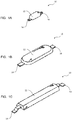
Fig. 1A-1C show perspective views of a sacrificial anode. -
Fig. 1A-1C show perspective views of three possible embodiments of asacrificial anode 10 comprising the zinc-based alloy according to claim 1. The construction of thesacrificial anode 10 according to claim 4 should however not be limited to such constructions as shown in the figures, as the skilled person is well aware that sacrificial anodes come in a variety of sizes and forms. - In a preferred embodiment, the
support element 14 is a one-piece element extending through the anode bode, but in an alternative embodiment it may be arranged asseparate support elements 14 connected to theanode body 12 at different locations. - In the following is given a list of reference signs that are used in the detailed description of the invention and the drawings referred to in the detailed description of the invention.
- 10
- Sacrificial anode
- 12
- Anode body
- 14
- Support element
Claims (7)
- A zinc-based alloy for a sacrificial anode, said alloy comprising:0.1 - 1.0% by weight of aluminum, preferably more than 0,6% and maximum 1.0%;0.008 - 0.3% by weight of indium;more than 0.005% and maximum 1.0% by weight of tin;maximum 0.005% by weight of lead, and preferably less than 0,001%;maximum 0.005% by weight of copper, and preferably less than 0,001%;maximum 0.005% by weight of other metals, in particular nickel and thallium; andbalance zinc having a purity of about 99.995%.
- A zinc-based alloy according to claim 1, where said alloy comprises:0.1 - 1.0% by weight of aluminum, preferably more than 0,6% and maximum 1.0%;more than 0,008% and less than 0,2% by weight of indium;more than 0.005% and maximum 1.0% by weight of tin;maximum 0.005% by weight of lead, and preferably less than 0,001%;maximum 0.005% by weight of copper, and preferably less than 0,001%;maximum 0.005% by weight of other metals, in particular nickel and thallium; andbalance zinc having a purity of about 99.995%.
- A zinc-based alloy according to claim 1, where said alloy comprises:0.1 - 1.0% by weight of aluminum, preferably more than 0,6% and maximum 1.0%;0.008 - 0.3% by weight of indium;0,01% - 0,05% by weight of tin;maximum 0.005% by weight of lead, and preferably less than 0,001%;maximum 0.005% by weight of copper, and preferably less than 0,001%;maximum 0.005% by weight of other metals, in particular nickel and thallium; andbalance zinc having a purity of about 99.995%.
- A zinc-based alloy according to claim 1 or 2, said alloy comprising:0.1 - 1.0% by weight of aluminum, preferably more than 0,6% and maximum 1.0%;more than 0,008% and less than 0,2% by weight of indium;0,01% - 0,05% by weight of tin;maximum 0.005% by weight of lead, and preferably less than 0,001%;maximum 0.005% by weight of copper, and preferably less than 0,001%;maximum 0.005% by weight of other metals, in particular nickel and thallium; andbalance zinc having a purity of about 99.995%.
- A zinc-based alloy according to claim 1 or 3, said alloy comprising:0.1 - 1.0% by weight of aluminum, preferably more than 0.6% and maximum 1.0%;more than 0,008% and less than 0,2% by weight of indium;0,01% - 0,05% by weight of tin;maximum 0.005% by weight of lead, and preferably less than 0,001%;maximum 0.005% by weight of copper, and preferably less than 0,001%;less than 0.001% by weight of other metals, in particular nickel and thallium; andbalance zinc having a purity of about 99.995%.
- Use of a zinc-based alloy according to any of the claims 1-5 as the active part of a sacrificial anode.
- A sacrificial anode, comprising an anode body and a support element, where said anode body comprises a zinc-based alloy according to any of the claims 1-5.
Priority Applications (1)
| Application Number | Priority Date | Filing Date | Title |
|---|---|---|---|
| EP18204382.8A EP3647465A1 (en) | 2018-11-05 | 2018-11-05 | Zink-based sacrificial anode alloy, use of a zink-based alloy, and a sacrificial anode |
Applications Claiming Priority (1)
| Application Number | Priority Date | Filing Date | Title |
|---|---|---|---|
| EP18204382.8A EP3647465A1 (en) | 2018-11-05 | 2018-11-05 | Zink-based sacrificial anode alloy, use of a zink-based alloy, and a sacrificial anode |
Publications (1)
| Publication Number | Publication Date |
|---|---|
| EP3647465A1 true EP3647465A1 (en) | 2020-05-06 |
Family
ID=64172392
Family Applications (1)
| Application Number | Title | Priority Date | Filing Date |
|---|---|---|---|
| EP18204382.8A Withdrawn EP3647465A1 (en) | 2018-11-05 | 2018-11-05 | Zink-based sacrificial anode alloy, use of a zink-based alloy, and a sacrificial anode |
Country Status (1)
| Country | Link |
|---|---|
| EP (1) | EP3647465A1 (en) |
Citations (3)
| Publication number | Priority date | Publication date | Assignee | Title |
|---|---|---|---|---|
| WO2000026426A1 (en) | 1998-11-03 | 2000-05-11 | Bac Corrosion Control A/S | Zinc-based alloy, its use as a sacrificial anode, a sacrificial anode, and a method for cathodic protection of corrosion-threatened constructions in aggressive environment |
| WO2009118693A1 (en) * | 2008-03-28 | 2009-10-01 | Bac Corrosion Control A/S | Cadmium-free zinc-based alloy, its use as a sacrificial anode, a sacrificial anode, and a method for cathodic protection of corrosion-threatened constructions in aggressive environment |
| FR2989386A1 (en) * | 2012-04-12 | 2013-10-18 | A M P E R E Ind | Zinc-based alloy, useful for manufacturing a sacrificial anode used for the protection of boat hulls, comprises aluminum, gallium, and zinc |
-
2018
- 2018-11-05 EP EP18204382.8A patent/EP3647465A1/en not_active Withdrawn
Patent Citations (3)
| Publication number | Priority date | Publication date | Assignee | Title |
|---|---|---|---|---|
| WO2000026426A1 (en) | 1998-11-03 | 2000-05-11 | Bac Corrosion Control A/S | Zinc-based alloy, its use as a sacrificial anode, a sacrificial anode, and a method for cathodic protection of corrosion-threatened constructions in aggressive environment |
| WO2009118693A1 (en) * | 2008-03-28 | 2009-10-01 | Bac Corrosion Control A/S | Cadmium-free zinc-based alloy, its use as a sacrificial anode, a sacrificial anode, and a method for cathodic protection of corrosion-threatened constructions in aggressive environment |
| FR2989386A1 (en) * | 2012-04-12 | 2013-10-18 | A M P E R E Ind | Zinc-based alloy, useful for manufacturing a sacrificial anode used for the protection of boat hulls, comprises aluminum, gallium, and zinc |
Non-Patent Citations (2)
| Title |
|---|
| WPI WORLD PATENT INF, 1 July 1974 (1974-07-01), XP002129987 * |
| WPI WORLD PATENT INF, 15 October 1993 (1993-10-15), XP002129986 * |
Similar Documents
| Publication | Publication Date | Title |
|---|---|---|
| Xu et al. | Challenges and solutions of cathodic protection for marine ships | |
| Song | Corrosion behavior and prevention strategies for magnesium (Mg) alloys | |
| Burleigh et al. | Intergranular corrosion of an aluminum-magnesium-silicon-copper alloy | |
| EP2592175A2 (en) | A sacrificial anode | |
| NO772608L (en) | CATODIC SHIPHOOD PROTECTION SYSTEM, AND SACRIFICE ANOD | |
| JPS5941430A (en) | Antifouling metallic material | |
| Qureshi et al. | Development of an Al-Zn-Bi alloy sacrificial anode for the protection of steel in artificial seawater: an electrochemical analysis | |
| EP3647465A1 (en) | Zink-based sacrificial anode alloy, use of a zink-based alloy, and a sacrificial anode | |
| US5667649A (en) | Corrosion-resistant ferrous alloys for use as impressed current anodes | |
| WO2000026426A1 (en) | Zinc-based alloy, its use as a sacrificial anode, a sacrificial anode, and a method for cathodic protection of corrosion-threatened constructions in aggressive environment | |
| US2805198A (en) | Cathodic protection system and anode therefor | |
| CN212229192U (en) | Underwater detection equipment | |
| Song | Corrosion behavior of magnesium alloys and protection techniques | |
| US4468310A (en) | Aluminum marine anode with core activator | |
| TW200422229A (en) | System and method for protecting metals | |
| US4191625A (en) | Aluminum marine anode assembly with low resistance surface mountings | |
| JP5047395B1 (en) | Corrosion-proof aluminum alloy galvanic anode with no corrosion products | |
| US20250146107A1 (en) | Alloy for use in a sacrificial anode and a sacrificial anode | |
| Mrdović et al. | Applications impressed current cathodic protection of the ship hull | |
| EP3835442A1 (en) | Alloy for use in a sacrificial anode and a sacrificial anode | |
| Vianco | Corrosion issues in solder joint design and service | |
| Palraj et al. | Bio‐fouling and corrosion characteristics of 60/40 brass in Mandapam waters | |
| NO840467L (en) | GALVANIC OFFER ANODE ON ALUMINUM ALLOY BASE | |
| O’Reilly | Galvanic Corrosion Potential of ChromX Reinforcement | |
| Leheta et al. | Cathodic Protection design procedure for steel offshore structures |
Legal Events
| Date | Code | Title | Description |
|---|---|---|---|
| PUAI | Public reference made under article 153(3) epc to a published international application that has entered the european phase |
Free format text: ORIGINAL CODE: 0009012 |
|
| STAA | Information on the status of an ep patent application or granted ep patent |
Free format text: STATUS: THE APPLICATION HAS BEEN PUBLISHED |
|
| AK | Designated contracting states |
Kind code of ref document: A1 Designated state(s): AL AT BE BG CH CY CZ DE DK EE ES FI FR GB GR HR HU IE IS IT LI LT LU LV MC MK MT NL NO PL PT RO RS SE SI SK SM TR |
|
| AX | Request for extension of the european patent |
Extension state: BA ME |
|
| STAA | Information on the status of an ep patent application or granted ep patent |
Free format text: STATUS: THE APPLICATION IS DEEMED TO BE WITHDRAWN |
|
| 18D | Application deemed to be withdrawn |
Effective date: 20201107 |