EP3646784A1 - Elektroenzephalographisches verfahren und vorrichtung zur messung der sensorischen stimulationssalienz - Google Patents
Elektroenzephalographisches verfahren und vorrichtung zur messung der sensorischen stimulationssalienz Download PDFInfo
- Publication number
- EP3646784A1 EP3646784A1 EP18020575.9A EP18020575A EP3646784A1 EP 3646784 A1 EP3646784 A1 EP 3646784A1 EP 18020575 A EP18020575 A EP 18020575A EP 3646784 A1 EP3646784 A1 EP 3646784A1
- Authority
- EP
- European Patent Office
- Prior art keywords
- macrostate
- stimulation
- during
- sensory stimulus
- topographic
- Prior art date
- Legal status (The legal status is an assumption and is not a legal conclusion. Google has not performed a legal analysis and makes no representation as to the accuracy of the status listed.)
- Granted
Links
Images


Classifications
-
- A—HUMAN NECESSITIES
- A61—MEDICAL OR VETERINARY SCIENCE; HYGIENE
- A61B—DIAGNOSIS; SURGERY; IDENTIFICATION
- A61B5/00—Measuring for diagnostic purposes; Identification of persons
- A61B5/16—Devices for psychotechnics; Testing reaction times ; Devices for evaluating the psychological state
- A61B5/168—Evaluating attention deficit, hyperactivity
-
- A—HUMAN NECESSITIES
- A61—MEDICAL OR VETERINARY SCIENCE; HYGIENE
- A61B—DIAGNOSIS; SURGERY; IDENTIFICATION
- A61B5/00—Measuring for diagnostic purposes; Identification of persons
- A61B5/24—Detecting, measuring or recording bioelectric or biomagnetic signals of the body or parts thereof
- A61B5/316—Modalities, i.e. specific diagnostic methods
- A61B5/369—Electroencephalography [EEG]
- A61B5/372—Analysis of electroencephalograms
- A61B5/374—Detecting the frequency distribution of signals, e.g. detecting delta, theta, alpha, beta or gamma waves
-
- A—HUMAN NECESSITIES
- A61—MEDICAL OR VETERINARY SCIENCE; HYGIENE
- A61B—DIAGNOSIS; SURGERY; IDENTIFICATION
- A61B5/00—Measuring for diagnostic purposes; Identification of persons
- A61B5/24—Detecting, measuring or recording bioelectric or biomagnetic signals of the body or parts thereof
- A61B5/316—Modalities, i.e. specific diagnostic methods
- A61B5/369—Electroencephalography [EEG]
- A61B5/377—Electroencephalography [EEG] using evoked responses
-
- A—HUMAN NECESSITIES
- A61—MEDICAL OR VETERINARY SCIENCE; HYGIENE
- A61B—DIAGNOSIS; SURGERY; IDENTIFICATION
- A61B5/00—Measuring for diagnostic purposes; Identification of persons
- A61B5/72—Signal processing specially adapted for physiological signals or for diagnostic purposes
- A61B5/7235—Details of waveform analysis
- A61B5/7264—Classification of physiological signals or data, e.g. using neural networks, statistical classifiers, expert systems or fuzzy systems
-
- G—PHYSICS
- G16—INFORMATION AND COMMUNICATION TECHNOLOGY [ICT] SPECIALLY ADAPTED FOR SPECIFIC APPLICATION FIELDS
- G16H—HEALTHCARE INFORMATICS, i.e. INFORMATION AND COMMUNICATION TECHNOLOGY [ICT] SPECIALLY ADAPTED FOR THE HANDLING OR PROCESSING OF MEDICAL OR HEALTHCARE DATA
- G16H50/00—ICT specially adapted for medical diagnosis, medical simulation or medical data mining; ICT specially adapted for detecting, monitoring or modelling epidemics or pandemics
- G16H50/20—ICT specially adapted for medical diagnosis, medical simulation or medical data mining; ICT specially adapted for detecting, monitoring or modelling epidemics or pandemics for computer-aided diagnosis, e.g. based on medical expert systems
Definitions
- the present invention relates to a method and an apparatus for determining a salient reactivity of at least one target sensory stimulus applied to a subject.
- salience also called saliency
- a sensory stimulus refers to its ability to stand-out and direct (grab) attention.
- Salience detection is considered to be a key attentional mechanism that facilitates learning and survival by focusing on the most relevant sensory data.
- Salience is mostly studied in vision, although the concepts could be generalized to other sensory modalities. Attentional redirection towards a visually-salient stimulus can be measured by eye-tracking technologies. Such behavioral measurements can give information about the perceptual ("physical") salience of a sensory stimulus which typically arises from contrasts between items (targets) and their neighbors such as a red dot surrounded by white dots, although it is also likely that some of the physical features of the stimuli have evolved as special behavioral signals, like seeing the red color (Ioan et al. , 2007, Ilie et al. , 2008).
- Perceptual salience reaches awareness rapidly and effortlessly. Nevertheless, perceptual salience detection is in competition with slower memory-dependent, or anticipatory mechanisms, such as when looking ahead of moving objects before crossing streets, referred to as attentional salience. Moreover, such attentional salience integrates perceptual salience - if something is perceptually salient, it is likely to draw attention as well. Thus, from the point of view of salience measurements, it is most advantageous to assess the slow attentional salience mechanisms, referred to as "top-down", although this cannot be addressed in behavioral measures.
- RSNs resting state networks
- DNN low-power mode network
- SN salience network anchored by dorsal anterior cingulate and orbital fronto-insular cortices with robust connectivity to subcortical and limbic structures
- ECN executes-control network
- a first aspect of the present invention provides a method for determining a salient reactivity of at least one target sensory stimulus applied to a subject, the method comprising:
- the physiological signals are EEG signals.
- the plurality of channels may correspond to a plurality of locations of the EEG electrodes.
- the method is carried out over a plurality of trials, wherein further preferably the kind of stimulus may be varied over the plurality of trials (e.g. alternating between different kinds of sensory stimulation).
- Obtaining the physiological signals may be performed by measuring the physiological signals, for example by measuring voltages of acquired EEG signals.
- Determining the topographic spectral power maps may involve applying a Fast Fourier transformation.
- clustering may refer to any unsupervised method of determining reference states based on a topographic spectral power maps.
- individual topographic spectral power maps may be assigned to one of the determined clusters based on a similarity measure, preferably the same similarity measure that is used for determining the clusters.
- TSP maps for all channels as an entirety is also referred to as TSP matrix.
- Identifying the , among the plurality of macrostates, a default macrostate as the macrostate which shows a largest suppression during stimulation is preferably carried out by considering both the target stimulation and the reference stimulation.
- the determined salient reactivity may be output as a by a numeric index, in the following also referred to as salient EEG reactivity (SER).
- SER salient EEG reactivity
- the target sensory stimuli could be applied in alternating sequence with reference sensory stimuli, not necessarily of the same sensory modality or complexity.
- the oscillatory electrical activity of the brain measured by multi-channel EEG
- the method of the first aspect can be applied to a broad range of fields interested in measuring sensory stimulation salience such as, but not limited to, neurology, psychiatry, neuroscience, and psychology. For validation purposes, an embodiment will be presented below comparing SER to auditory stimulation by the subject's own name (SON) in healthy volunteers and post-stroke comatose patients.
- SON auditory stimulation by the subject's own name
- embodiments of the method of the first aspect can quantify the contribution of stimulus salience to EEG reactivity, by a numeric index termed salient EEG reactivity (SER).
- SER salient EEG reactivity
- the method of the first aspect can be applied to a broad range of fields interested in measuring sensory stimulation salience such as, but not limited to, neurology (e.g. disorders of consciousness), psychiatry (e.g. schizophrenia), neuroscience (e.g. brain networks), and psychology (e.g. attentional models).
- a suppression of a macrostate during a sensory stimulus is determined as a difference between a frequency of occurrence of the macrostate during the sensory stimulus compared to a frequency of occurrence of the macrostate in a period before the sensory stimulus.
- the frequency of occurrence of the macrostate may be seen as a measure of the probability of this macrostate.
- the target sensory stimulus is applied during a stimulation period which comes after a first period without stimulation and before a second period without stimulation, wherein a duration of the first period and a duration of the second period are at least as long as a duration of the stimulation period.
- the frequency bands include the delta, theta, alpha and beta frequency bands.
- the method further comprises a step of determining the plurality of time points as time points that correspond to extremes of a variation within the topographic spectral power maps. For example, it can be determined at which time points the standard deviation of the topographic spectral power maps is highest and these time points can be used as the plurality of time points.
- This embodiment has the advantage that a computational effort for the processing of the data is reduced.
- the clustering the topographic spectral power maps comprises performing hierarchical clustering using a cosine distance metric.
- the method is performed for a plurality of trials, and the clustering is performed across the plurality of trials.
- topographic spectral power maps, TSP, maps may be determined for time points of a plurality of trials and then clustering may be performed over the entire set of TSP maps.
- the at least one target sensory stimulus comprises a plurality of stimuli, preferably of different sensory modalities.
- the sensory modalities may include audio stimuli, visual stimuli, haptic stimuli and smell stimuli.
- the plurality of stimuli comprise target and reference stimuli.
- the plurality of stimuli of different sensory modalities is applied in an alternating manner.
- the method further comprises optimizing an average of the salient reactivity across trials of a stimulus type, to determine an optimum number of classes for the clustering.
- a clustering algorithm may require that the number of classes to be clustered is provided as input to the clustering algorithm.
- Different clustering levels (corresponding to different maximum numbers of clusters) may give results of different quality.
- this embodiment has the advantage that an optimum clustering level can be determined.
- the method further comprises displaying the default macrostate as a sequence of Z-scaled topographic power maps, which is also referred to as the Default EEG macrostate spectral fingerprint.
- This embodiment has the advantage that a user can visually inspect the topographic power maps.
- a second aspect of the present invention provides an apparatus for determining a salient reactivity of at least one target sensory stimulus applied to a subject, the apparatus comprising:
- the apparatus of the second aspect can be configured to carry out the method of the first aspect or of one of the embodiments of the first aspect.
- a further aspect of the present invention provides a computer-readable storage medium storing program code, the program code comprising instructions that when executed by a processor carry out the method of the first aspect or of one of the embodiments of the method of the first aspect.
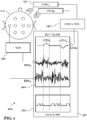
- FIG. 1 is a block diagram of an apparatus 100 used for SER measurements.
- the apparatus comprises a multi-channel EEG electrode recording montage 110. For illustration purposes only two channels are indicated, referred to as EEG 1 and EEG 2 .
- the recorded signals are amplified and digitized in an amplifier 120 for a central processing unit 130 which can control programmatically, via a stimulus control unit 140, a multimodal stimulator 150 that can deliver alternatingly target stimuli (STIM T ) and reference stimuli (STIM R ).
- the central processing unit 130 e.g. a personal computer
- an additional analysis software 170 is used to compute SER T-R of the STIM T as compared to STIM R .
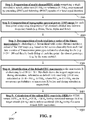
- FIG. 2 shows a flow chart of a method 200 for SER calculation.
- the method comprises a first step 210 of preparing multi-channel EEG trials comprising a single stimulation epoch.
- the method comprises a second step 220 of computing the topographic spectral power (TSP) maps for each trial.
- TSP topographic spectral power
- each trial is decomposed into a series of the binary macrostates.
- the default EEG macrostate is identified, wherein the default EEG macrostate may be shared across trials.
- SER salient EEG reactivity
- the method comprises the following five consecutive steps:
- the EEG decomposition is introduced in power-domain states with distinct topographic power distributions, herein also referred to as "macrostates", as a way to identify large-scale electrophysiological correlates of mental states.
- the EEG activity can be described as a sequence of "frames" where task-related macrostates alternate with resting macrostates, in keeping with the experimental findings that both perception and RSN activity occur fragmented in time.
- each macrostate can be described as a binary signal, where the occurrence probability in a certain time epoch can be measured similarly to the suppression ratio of the alternating burst-suppression EEG patterns observed in deep comatose states.
- a macrostate reactivity to sensory stimulation could be described similarly to a measure of burst-suppression reactivity as the decrease in occurrence probability during sensory stimulation as compared to the occurrence probability prior to stimulation.
- DMN is largely task-negative (e.g. suppressed by sensory activity)
- the macrostate which shows the largest decrease in occurrence probability is referred to as default EEG macrostate, and consequently, its reactivity is referred to as default EEG reactivity (DER).
- salience is a relative term - the salience of a target stimulus (STIM T ) should therefore be considered relative to (or in the context of) a reference stimulus (STIM R ).
- STIM T target stimulus
- STIM R reference stimulus
- the general principle is the decomposition of multichannel EEG into into a series of N alternating clusters of similar topographic power spectral distribution also referred to as EEG macrostates. Then, the macrostate showing the largest suppression during stimulation for both STIM T and STIM R , referred to as the default EEG macrostate is identified.
- SER T-R DER T - DER R .
- SER EEG reactivity
- SER synchronized EEG responses are delivered and compared to a sequence of alternating sensory stimuli, not necessarily of the same modality or complexity.
- a suitable apparatus for SER recording could readily be assembled by combining currently available technologies ( FIG. 1 ), ensuring the wide availability and reduced implementation costs of the proposed invention.
- Clinical EEG recording, and sensory stimulation should be carried out in agreement with current safety and methodological practices.
- the resulting recording from each subject should be presented as a multichannel EEG recording with a synchronized "STIM" channel where the timing and type of stimuli used could be accurately identified.
- Prior art methods are primarily data-driven so that a combination of quantitative EEG measures are optimized to discriminate a particular reactive brain behavior.
- embodiments of the presented method provide an algorithm-driven approach to measure EEG reactivity, referred to as DER.
- EEG reactivity measures are either sensory-modality specific or they rely on direct brain stimulation which does not discriminate between stimuli and does not allow for salience measurements.
- embodiments focus on suppression of a resting EEG feature, rather than activation by a specific sensory modality, thus enabling salience measurements of stimuli of different sensory modality or complexity.
- Previously proposed DER indices were measured independently for each stimulation trial and did not provide a shared default EEG reactivity macrostate among trials that is required to calculate SER. Also, the present invention focuses the TSP clustering on broad frequency bands, rather than considering all independent spectral components which has the advantage of increasing the physiological significance whereas reducing the computational load on multi-channel EEG. Finally, embodiments of the presented method provide an automatic method to select the optimal number of clustering levels by maximizing DER among trials rather than assuming an empirical decomposition level, which also makes it more robust to recording artefacts.
- Step 3 can involve topographic clustering of multi-channel EEG relates to microstate EEG analysis. Nevertheless, microstates are clustered in the voltage-domain which are not correlated with measurements in the power-domain. Furthermore, the microstates are identified based on their topographic features and the ability to explain EEG variance, whereas the default EEG macrostate is defined based on its behavior during sensory stimulation.
- the salience network is particularly linked to consciousness especially in the context of auditory stimuli.
- Accumulating EEG evidence suggest that one of the most salient stimuli across different states of consciousness is the subjects own name (SON), responses to which seem to fade latest during sleep.
- SON subjects own name
- EEG changes to SON were also found to have prognostic value in brain injury, although the single subject variability was large.
- Studies with SON stimuli were typically carried out using novelty event-related potentials and the subsequent analysis of post-stimulus time-frequency analysis. Nevertheless, such task-dependent alterations found in background EEG oscillations, classically referred to as event-related synchronization and desynchronization, were investigated over short time scales (up to a couple of seconds) and could not distinguish salience from stimulus awareness.
- a validation of embodiments of the presented method involves measuring SER of a SON target stimulus versus a reference stimulus comprised of a meaningless noise of the same energy obtained by reversing SON (rSON), in healthy volunteers and comatose patients.
- rSON reversing SON
- Neurophysiological recordings were obtained from 15 healthy control volunteers and 15 deeply comatose post-stroke patients (mostly acute ischemic middle cerebral artery stroke) by the Glasgow Coma Scale and with different hemispheric injury localizations. Most included patients deceased within 7 days after their stroke so that establishing the prognostic value of SER was beyond the scope of this cohort.
- Auditory target SON stimuli were generated using a commercial Bulgarian language text-to-speech synthesizer to avoid emotional salience confounders to familiar voices.
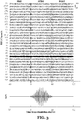
- the stimuli ( FIG. 3B ) were repeated over a 1-minute stimulation epoch (STIM SON ) to minimize novelty effect, consistent with our previous studies of coma reactivity.
- the stimulation intensity was windowed over STIM SON ( FIG. 3B ) to minimize the confounding effects of auditory startle.
- the refence 1-minute stimulation epoch was obtained by inversing the target SON epoch (STIMr SON ).
- the stimuli were delivered over a pair of bone conduction headphones.
- the STIM SON epochs were presented in alternation with STIMr SON epochs with at least 2-minute intervals, to ensure the ability to segment each trial to include PRE and POST epochs of at least 1-minute ( FIG. 2 , step 1).
- Electroencephalographic (EEG) recordings were obtained from scalp electrodes comprised in a suitable 32 channels “EASY-CAP” (EASYCAP GmbH, DE) in agreement with the international standards for EEG electrode placement.
- the electrode contact impedance was decreased using "Signa gel” (SignaGel Electrode Gel: Parker Laboratories, Inc, USA) electrode-or "Ten20" conductive paste (Weaver and Company Inc, USA).
- NERMO Neurophysiological EEG Reactivity Monitor
- FIG. 3 presents a multichannel EEG recording ( FIG. 3A ) of the SON stimulation trial ( FIG. 3B ) with largest DER comprised of PRE, STIM and POST epochs of 1-minute, prepared after Step 1 in FIG.2 .
- the EEG is presented in unipolar montage using the ear as reference, at 256 Hz sampling rate and filtered in the 1-30Hz band.
- FIG. 4 is detailed the power analysis for the right occipital channel O 2 in FIG. 3 .
- the EEG in FIG. 4A is presented normalized to its standard deviation (SD) across the trial, which ensures equal weight to all the channels/trials.
- FIG.4B presents the time-frequency power spectral density spectrogram (measured over a sliding 2-second window with no overlap) of the recording in FIG.4A . Note the very robust Alpha band activity appearing as a horizontal line.
- the corresponding recording cumulated in 4 power bands for Delta, Theta, Alpha and Beta activities is presented in Fig. 4B .
- These powers are further cumulated for all channels in a topographic spectral power (TSP) matrix ( FIG. 5A ).
- TSP topographic spectral power
- TSP maps are included in clusterization.
- GFP Global Field Power
- FIG. 6 is presented the resulting clustering of the combined reference TSP matrix across trials ( FIG. 2 , step 3) by hierarchical clustering which is independent on randomization as the measures used for microstate clustering (Pascual-Marqui et al. , 1995).
- Class prototypes macrostates
- These shared TSP map prototypes were then back-fitted to each time-sample of the trials.
- the time-course of a macrostate X is assimilated to a binary signal, where its logical 1 (depicted upwards) indicates the occurrence of that macrostate.
- the BRs are then averaged across trials and clustering levels for both SON and rSON stimuli.
- the maximum average BR for each clustering level (DER) is presented in FIG. 6A .
- the overall maximum DER, in this case occurring at clustering level N 4, is indicated with a circle. It should be emphasized that the method does not enforce that this maximum should occur for SON stimuli.
- FIG. 6B the corresponding time-course of each of the four macrostates is presented in FIG. 6B , ordered by BR from top (smallest) to bottom (largest).
- the occurrence of the default EEG macrostate (with the largest DER) is depicted in black.
- FIG. 6C for analogy with the microstate analysis presentation, the macrostates are presented in time sequence based on the topographic SD of the trial ( FIG. 5B ) referred to as the "macrostate strip representation", using the same color code as in FIG 6B .
- FIG. 7 the DER analysis is summarized for all the 6 trials (T 1 ,..., T 6 ) recorded for the subject.
- the time-course of the binary class corresponding to the default EEG macrostate is presented in FIG. 7A .
- the corresponding DER for each SON and rSON trial is presented in FIG. 7B .
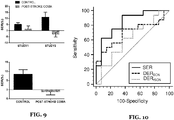
- SER measurements for Study 1 were similar to SER measurements in Study 2 which were carried out in different subjects, using a different hardware, and a different SON/rSON alternance ( FIG. 9A ).
- SER SON-rSON a receiver operating characteristic (ROC) analysis was carried out. It was found that SER SON-rSON ROC curve at maximal Youden index J of 0.58 indicated a very high discriminative sensitivity of 93.75 and a good specificity of 64.29. The relatively lower specificity was consistent with the theory that there are different levels of conscious awareness. Furthermore, it was found that SER SON-rSON had an Area under the ROC curve (AUC) of 0.84 which was higher ( FIG. 10 ) than either DER SON and DERr SON (P ⁇ 0.05). This indicated that SER measurements are more discriminative than DER measurements, possibly by reducing individual variation factors.
- AUC Area under the ROC curve
- Embodiments of the present invention provide a theoretically based electroencephalographic (EEG) method and apparatus for measuring sensory stimulation salience of a target sensory stimulus (STIM T ) versus a reference sensory stimulus (STIM R ) comprising:
- the apparatus can deliver alternating stimuli of different sensory modalities and complexity synchronized to multi-channel EEG recording.
- the EEG can be decomposed in a series of classes with similar topographic power distribution referred to as macrostates.
- macrostate showing the largest occurrence suppression during sensory stimulation is referred to as the Default EEG macrostate.
- the default EEG reactivity (DER) for STIM T (DER T ) and STIM R (DER R ) can be calculated in the following steps:
- the trials the STIM epoch is encompassed by preceding (PRE) and following (POST) epoch of at least equal duration.
- the TSP is calculated by combining the broad band spectrograms for each EEG channel.
- reference TSPs for each channel are identified according to topographic variation.
- the reference TSPs from each trial are clustered across trials to determine macrostate prototypes.
- the macrostate prototypes are back-fitted to the trials to derive time-course of occurrence of each macrostate depicted as binary signals.
- the default EEG macrostate is identified as the macrostate with the largest decrease in occurrence probability from PRE to STIM epochs, referred to as DER.
- the average DER across all the trials of a stimulus type (DER T or DER R ) can be maximized across a series of clustering levels (maximum number of classes).
- the default EEG macrostate can be displayed as a sequence of Z-scaled topographic power maps referred to as "default EEG macrostate spectral fingerprint”.
Landscapes
- Health & Medical Sciences (AREA)
- Life Sciences & Earth Sciences (AREA)
- Engineering & Computer Science (AREA)
- Physics & Mathematics (AREA)
- General Health & Medical Sciences (AREA)
- Biophysics (AREA)
- Pathology (AREA)
- Biomedical Technology (AREA)
- Heart & Thoracic Surgery (AREA)
- Medical Informatics (AREA)
- Molecular Biology (AREA)
- Surgery (AREA)
- Animal Behavior & Ethology (AREA)
- Psychiatry (AREA)
- Public Health (AREA)
- Veterinary Medicine (AREA)
- Psychology (AREA)
- Artificial Intelligence (AREA)
- Developmental Disabilities (AREA)
- Evolutionary Computation (AREA)
- Fuzzy Systems (AREA)
- Mathematical Physics (AREA)
- Computer Vision & Pattern Recognition (AREA)
- Physiology (AREA)
- Signal Processing (AREA)
- Child & Adolescent Psychology (AREA)
- Educational Technology (AREA)
- Hospice & Palliative Care (AREA)
- Social Psychology (AREA)
- Measurement And Recording Of Electrical Phenomena And Electrical Characteristics Of The Living Body (AREA)
Priority Applications (2)
| Application Number | Priority Date | Filing Date | Title |
|---|---|---|---|
| DK18020575.9T DK3646784T3 (da) | 2018-11-05 | 2018-11-05 | Elektroencefalografisk metode og apparat til måling af sensorisk stimuleringssynlighed |
| EP18020575.9A EP3646784B1 (de) | 2018-11-05 | 2018-11-05 | Elektroenzephalographisches verfahren und vorrichtung zur messung der sensorischen stimulationssalienz |
Applications Claiming Priority (1)
| Application Number | Priority Date | Filing Date | Title |
|---|---|---|---|
| EP18020575.9A EP3646784B1 (de) | 2018-11-05 | 2018-11-05 | Elektroenzephalographisches verfahren und vorrichtung zur messung der sensorischen stimulationssalienz |
Publications (2)
| Publication Number | Publication Date |
|---|---|
| EP3646784A1 true EP3646784A1 (de) | 2020-05-06 |
| EP3646784B1 EP3646784B1 (de) | 2020-12-16 |
Family
ID=64401952
Family Applications (1)
| Application Number | Title | Priority Date | Filing Date |
|---|---|---|---|
| EP18020575.9A Active EP3646784B1 (de) | 2018-11-05 | 2018-11-05 | Elektroenzephalographisches verfahren und vorrichtung zur messung der sensorischen stimulationssalienz |
Country Status (2)
| Country | Link |
|---|---|
| EP (1) | EP3646784B1 (de) |
| DK (1) | DK3646784T3 (de) |
Cited By (1)
| Publication number | Priority date | Publication date | Assignee | Title |
|---|---|---|---|---|
| CN113425297A (zh) * | 2021-07-19 | 2021-09-24 | 山东女子学院 | 基于脑电信号的儿童注意力专注度训练方法及系统 |
Citations (1)
| Publication number | Priority date | Publication date | Assignee | Title |
|---|---|---|---|---|
| RO132025A0 (ro) * | 2016-11-25 | 2017-07-28 | Termobit Prod S.R.L. | Tehnologie de diagnosticare neurofiziologică a severităţii comelor de baza cuantificării reactvităţii electroencefalografice () implicite |
-
2018
- 2018-11-05 EP EP18020575.9A patent/EP3646784B1/de active Active
- 2018-11-05 DK DK18020575.9T patent/DK3646784T3/da active
Patent Citations (1)
| Publication number | Priority date | Publication date | Assignee | Title |
|---|---|---|---|---|
| RO132025A0 (ro) * | 2016-11-25 | 2017-07-28 | Termobit Prod S.R.L. | Tehnologie de diagnosticare neurofiziologică a severităţii comelor de baza cuantificării reactvităţii electroencefalografice () implicite |
Non-Patent Citations (11)
| Title |
|---|
| *ERBAN C-A; BARBORICA A; ROCEANU A-M; MINDRUTA I-R; CIUREA J; ZAGREAN A-M ET AL.: "The Physics of the Mind and Brain Disorders", 2017, SPRINGER, article "EEG Assessment of Consciousness Rebooting from Coma", pages: 361 - 81 |
| BRAINARD DH.: "The Psychophysics Toolbox", SPAT VIS., vol. 10, 1997, pages 433 - 6 |
| BRITZ J; VAN DE VILLE D; MICHEL CM: "BOLD correlates of EEG topography reveal rapid resting - state network dynamics", NEUROLMAGE, vol. 2, 2010, pages 1162 - 70 |
| DELORME A; MAKEIG S: "EEGLAB: an open source toolbox for analysis of single-trial EEG dynamics including independent component analysis", JNEUROSCI METHODS, vol. 134, 2004, pages 9 - 21, XP055015351, DOI: doi:10.1016/j.jneumeth.2003.10.009 |
| ILIE A; LOAN S; ZAGREAN L; MOLDOVAN M: "Better to be red than blue in virtual competition", CYBERPSYCHOL BEHAV, vol. 11, 2008, pages 375 - 7 |
| LOAN S; SANDULACHE M; AVRAMESCU S; ILIE A; NEACSU A; ZAGREAN L ET AL.: "Red is a distractor for men in competition", EVOLUTION AND HUMAN BEHAVIOR, vol. 28, 2007, pages 285 - 93 |
| MANTINI D; PERRUCCI MG; DEL GRATTA C; ROMANI GL; CORBETTA M: "Electrophysiological signatures of resting state networks in the human brain", PROC NATL ACAD SET U S A, vol. 104, 2007, pages 13170 - 5 |
| NITA D; MOLDOVAN M; SHARMA R; AVRAMESCU S; OTSUBO H; HAHN C: "The burst-suppression EEG pattern in comatose children is reactive to photic stimulation", EUROPEAN JOURNAL OF NEUROLOGY, vol. 23, 2016, pages 273 |
| PASCUAL-MARQUI RD; MICHEL CM; LEHMANN D: "Segmentation of brain electrical activity into microstates: model estimation and validation", IEEE TRANS BIOMED ENG., vol. 42, 1995, pages 658 - 65, XP000523556, DOI: doi:10.1109/10.391164 |
| TOMAS ROS ET AL: "Mind over chatter: Plastic up-regulation of the fMRI salience network directly after EEG neurofeedback", NEUROIMAGE, vol. 65, 26 September 2012 (2012-09-26), AMSTERDAM, NL, pages 324 - 335, XP055578181, ISSN: 1053-8119, DOI: 10.1016/j.neuroimage.2012.09.046 * |
| ZHEN LIANG ET AL: "Characterization of electroencephalography signals for estimating saliency features in videos", NEURAL NETWORKS., vol. 105, 12 May 2018 (2018-05-12), GB, pages 52 - 64, XP055582430, ISSN: 0893-6080, DOI: 10.1016/j.neunet.2018.04.013 * |
Cited By (1)
| Publication number | Priority date | Publication date | Assignee | Title |
|---|---|---|---|---|
| CN113425297A (zh) * | 2021-07-19 | 2021-09-24 | 山东女子学院 | 基于脑电信号的儿童注意力专注度训练方法及系统 |
Also Published As
| Publication number | Publication date |
|---|---|
| EP3646784B1 (de) | 2020-12-16 |
| DK3646784T3 (da) | 2021-02-01 |
Similar Documents
| Publication | Publication Date | Title |
|---|---|---|
| Buettner et al. | High-performance exclusion of schizophrenia using a novel machine learning method on EEG data | |
| Asha et al. | Analysis of EEG microstates as biomarkers in neuropsychological processes–Review | |
| US7570991B2 (en) | Method for real time attitude assessment | |
| WO2021237429A1 (en) | A systematic device and scheme to assess the level of consciousness disorder by using language related brain activity | |
| Lehembre et al. | Electrophysiological investigations of brain function in coma, vegetative and minimally conscious patients. | |
| Gaurav et al. | EEG based cognitive task classification using multifractal detrended fluctuation analysis | |
| Keitel et al. | Early visual and auditory processing rely on modality-specific attentional resources | |
| JP2018521830A (ja) | 注意欠陥を監視し改善する方法およびシステム | |
| US20180279938A1 (en) | Method of diagnosing dementia and apparatus for performing the same | |
| KR101768332B1 (ko) | 우울 정도를 실시간으로 분석하는 방법 및 그 시스템 | |
| Charupanit et al. | Detection of anomalous high‐frequency events in human intracranial EEG | |
| Mari et al. | External validation of binary machine learning models for pain intensity perception classification from EEG in healthy individuals | |
| ElShafei et al. | Age‐related differences in bottom‐up and top‐down attention: Insights from EEG and MEG | |
| US20210022638A1 (en) | Method of generation of a state indicator of a person in coma | |
| US20210315507A1 (en) | System and methods for consciousness evaluation in non-communicating subjects | |
| US11559244B2 (en) | System and methods for consciousness evaluation in non-communicating subjects | |
| Takayanagi et al. | Efficient detection of high-frequency biomarker signals of epilepsy by a transfer-learning-based Convolutional Neural Network | |
| Shoushtarian et al. | Multimodal assessment of tinnitus using functional near-infrared spectroscopy and psychophysiological measures | |
| EP3646784B1 (de) | Elektroenzephalographisches verfahren und vorrichtung zur messung der sensorischen stimulationssalienz | |
| Zhang et al. | The accuracy of different mismatch negativity amplitude representations in predicting the levels of consciousness in patients with disorders of consciousness | |
| Dapit et al. | A Computational Model for Stress Intervention using Affective Brain-Computer Interfaces | |
| da Silva Júnior et al. | Using artificial neural networks on multi-channel EEG data to detect the effect of binaural stimuli in resting state | |
| Hidalgo-Muñoz et al. | Affective Valence Detection from EEG Signals Using | |
| Shim et al. | Altered cortical activation and functional network in post-traumatic stress disorder (PTSD) during an auditory cognitive processing | |
| Bhuvaneswari et al. | A note on methods used for deception analysis and influence of thinking stimulus in deception detection |
Legal Events
| Date | Code | Title | Description |
|---|---|---|---|
| PUAI | Public reference made under article 153(3) epc to a published international application that has entered the european phase |
Free format text: ORIGINAL CODE: 0009012 |
|
| STAA | Information on the status of an ep patent application or granted ep patent |
Free format text: STATUS: THE APPLICATION HAS BEEN PUBLISHED |
|
| AK | Designated contracting states |
Kind code of ref document: A1 Designated state(s): AL AT BE BG CH CY CZ DE DK EE ES FI FR GB GR HR HU IE IS IT LI LT LU LV MC MK MT NL NO PL PT RO RS SE SI SK SM TR |
|
| AX | Request for extension of the european patent |
Extension state: BA ME |
|
| STAA | Information on the status of an ep patent application or granted ep patent |
Free format text: STATUS: REQUEST FOR EXAMINATION WAS MADE |
|
| 17P | Request for examination filed |
Effective date: 20200604 |
|
| RBV | Designated contracting states (corrected) |
Designated state(s): AL AT BE BG CH CY CZ DE DK EE ES FI FR GB GR HR HU IE IS IT LI LT LU LV MC MK MT NL NO PL PT RO RS SE SI SK SM TR |
|
| RIC1 | Information provided on ipc code assigned before grant |
Ipc: A61B 5/16 20060101ALI20200710BHEP Ipc: A61B 5/048 20060101AFI20200710BHEP Ipc: A61B 5/0484 20060101ALI20200710BHEP |
|
| GRAP | Despatch of communication of intention to grant a patent |
Free format text: ORIGINAL CODE: EPIDOSNIGR1 |
|
| STAA | Information on the status of an ep patent application or granted ep patent |
Free format text: STATUS: GRANT OF PATENT IS INTENDED |
|
| INTG | Intention to grant announced |
Effective date: 20200921 |
|
| RIN1 | Information on inventor provided before grant (corrected) |
Inventor name: CIUREA, JAN Inventor name: ZAGREAN, ANA-MARIA Inventor name: SERBAN, COSMIN-ANDREI Inventor name: MINDRUTA, IOANA-RALUCA Inventor name: ROCEANU, ADINA-MARIA Inventor name: MOLDOVAN, MIHAI Inventor name: ZAGREAN, LEON Inventor name: BARBORICA, ANDREI |
|
| GRAS | Grant fee paid |
Free format text: ORIGINAL CODE: EPIDOSNIGR3 |
|
| GRAA | (expected) grant |
Free format text: ORIGINAL CODE: 0009210 |
|
| STAA | Information on the status of an ep patent application or granted ep patent |
Free format text: STATUS: THE PATENT HAS BEEN GRANTED |
|
| REG | Reference to a national code |
Ref country code: DE Ref legal event code: R079 Ref document number: 602018010721 Country of ref document: DE Free format text: PREVIOUS MAIN CLASS: A61B0005048000 Ipc: A61B0005374000 |
|
| AK | Designated contracting states |
Kind code of ref document: B1 Designated state(s): AL AT BE BG CH CY CZ DE DK EE ES FI FR GB GR HR HU IE IS IT LI LT LU LV MC MK MT NL NO PL PT RO RS SE SI SK SM TR |
|
| REG | Reference to a national code |
Ref country code: GB Ref legal event code: FG4D |
|
| REG | Reference to a national code |
Ref country code: IE Ref legal event code: FG4D |
|
| REG | Reference to a national code |
Ref country code: DE Ref legal event code: R096 Ref document number: 602018010721 Country of ref document: DE |
|
| REG | Reference to a national code |
Ref country code: AT Ref legal event code: REF Ref document number: 1344823 Country of ref document: AT Kind code of ref document: T Effective date: 20210115 |
|
| REG | Reference to a national code |
Ref country code: CH Ref legal event code: NV Representative=s name: COSMOVICI INTELLECTUAL PROPERTY SARL, CH |
|
| REG | Reference to a national code |
Ref country code: DK Ref legal event code: T3 Effective date: 20210126 |
|
| REG | Reference to a national code |
Ref country code: NL Ref legal event code: FP |
|
| PG25 | Lapsed in a contracting state [announced via postgrant information from national office to epo] |
Ref country code: NO Free format text: LAPSE BECAUSE OF FAILURE TO SUBMIT A TRANSLATION OF THE DESCRIPTION OR TO PAY THE FEE WITHIN THE PRESCRIBED TIME-LIMIT Effective date: 20210316 Ref country code: GR Free format text: LAPSE BECAUSE OF FAILURE TO SUBMIT A TRANSLATION OF THE DESCRIPTION OR TO PAY THE FEE WITHIN THE PRESCRIBED TIME-LIMIT Effective date: 20210317 Ref country code: FI Free format text: LAPSE BECAUSE OF FAILURE TO SUBMIT A TRANSLATION OF THE DESCRIPTION OR TO PAY THE FEE WITHIN THE PRESCRIBED TIME-LIMIT Effective date: 20201216 Ref country code: RS Free format text: LAPSE BECAUSE OF FAILURE TO SUBMIT A TRANSLATION OF THE DESCRIPTION OR TO PAY THE FEE WITHIN THE PRESCRIBED TIME-LIMIT Effective date: 20201216 |
|
| REG | Reference to a national code |
Ref country code: AT Ref legal event code: MK05 Ref document number: 1344823 Country of ref document: AT Kind code of ref document: T Effective date: 20201216 |
|
| PG25 | Lapsed in a contracting state [announced via postgrant information from national office to epo] |
Ref country code: BG Free format text: LAPSE BECAUSE OF FAILURE TO SUBMIT A TRANSLATION OF THE DESCRIPTION OR TO PAY THE FEE WITHIN THE PRESCRIBED TIME-LIMIT Effective date: 20210316 Ref country code: LV Free format text: LAPSE BECAUSE OF FAILURE TO SUBMIT A TRANSLATION OF THE DESCRIPTION OR TO PAY THE FEE WITHIN THE PRESCRIBED TIME-LIMIT Effective date: 20201216 Ref country code: SE Free format text: LAPSE BECAUSE OF FAILURE TO SUBMIT A TRANSLATION OF THE DESCRIPTION OR TO PAY THE FEE WITHIN THE PRESCRIBED TIME-LIMIT Effective date: 20201216 |
|
| PG25 | Lapsed in a contracting state [announced via postgrant information from national office to epo] |
Ref country code: HR Free format text: LAPSE BECAUSE OF FAILURE TO SUBMIT A TRANSLATION OF THE DESCRIPTION OR TO PAY THE FEE WITHIN THE PRESCRIBED TIME-LIMIT Effective date: 20201216 |
|
| REG | Reference to a national code |
Ref country code: LT Ref legal event code: MG9D |
|
| PG25 | Lapsed in a contracting state [announced via postgrant information from national office to epo] |
Ref country code: SM Free format text: LAPSE BECAUSE OF FAILURE TO SUBMIT A TRANSLATION OF THE DESCRIPTION OR TO PAY THE FEE WITHIN THE PRESCRIBED TIME-LIMIT Effective date: 20201216 Ref country code: LT Free format text: LAPSE BECAUSE OF FAILURE TO SUBMIT A TRANSLATION OF THE DESCRIPTION OR TO PAY THE FEE WITHIN THE PRESCRIBED TIME-LIMIT Effective date: 20201216 Ref country code: CZ Free format text: LAPSE BECAUSE OF FAILURE TO SUBMIT A TRANSLATION OF THE DESCRIPTION OR TO PAY THE FEE WITHIN THE PRESCRIBED TIME-LIMIT Effective date: 20201216 Ref country code: EE Free format text: LAPSE BECAUSE OF FAILURE TO SUBMIT A TRANSLATION OF THE DESCRIPTION OR TO PAY THE FEE WITHIN THE PRESCRIBED TIME-LIMIT Effective date: 20201216 Ref country code: RO Free format text: LAPSE BECAUSE OF FAILURE TO SUBMIT A TRANSLATION OF THE DESCRIPTION OR TO PAY THE FEE WITHIN THE PRESCRIBED TIME-LIMIT Effective date: 20201216 Ref country code: PT Free format text: LAPSE BECAUSE OF FAILURE TO SUBMIT A TRANSLATION OF THE DESCRIPTION OR TO PAY THE FEE WITHIN THE PRESCRIBED TIME-LIMIT Effective date: 20210416 Ref country code: SK Free format text: LAPSE BECAUSE OF FAILURE TO SUBMIT A TRANSLATION OF THE DESCRIPTION OR TO PAY THE FEE WITHIN THE PRESCRIBED TIME-LIMIT Effective date: 20201216 |
|
| PG25 | Lapsed in a contracting state [announced via postgrant information from national office to epo] |
Ref country code: PL Free format text: LAPSE BECAUSE OF FAILURE TO SUBMIT A TRANSLATION OF THE DESCRIPTION OR TO PAY THE FEE WITHIN THE PRESCRIBED TIME-LIMIT Effective date: 20201216 Ref country code: AT Free format text: LAPSE BECAUSE OF FAILURE TO SUBMIT A TRANSLATION OF THE DESCRIPTION OR TO PAY THE FEE WITHIN THE PRESCRIBED TIME-LIMIT Effective date: 20201216 |
|
| REG | Reference to a national code |
Ref country code: DE Ref legal event code: R097 Ref document number: 602018010721 Country of ref document: DE |
|
| PG25 | Lapsed in a contracting state [announced via postgrant information from national office to epo] |
Ref country code: IS Free format text: LAPSE BECAUSE OF FAILURE TO SUBMIT A TRANSLATION OF THE DESCRIPTION OR TO PAY THE FEE WITHIN THE PRESCRIBED TIME-LIMIT Effective date: 20210416 |
|
| PLBE | No opposition filed within time limit |
Free format text: ORIGINAL CODE: 0009261 |
|
| STAA | Information on the status of an ep patent application or granted ep patent |
Free format text: STATUS: NO OPPOSITION FILED WITHIN TIME LIMIT |
|
| PG25 | Lapsed in a contracting state [announced via postgrant information from national office to epo] |
Ref country code: AL Free format text: LAPSE BECAUSE OF FAILURE TO SUBMIT A TRANSLATION OF THE DESCRIPTION OR TO PAY THE FEE WITHIN THE PRESCRIBED TIME-LIMIT Effective date: 20201216 Ref country code: IT Free format text: LAPSE BECAUSE OF FAILURE TO SUBMIT A TRANSLATION OF THE DESCRIPTION OR TO PAY THE FEE WITHIN THE PRESCRIBED TIME-LIMIT Effective date: 20201216 |
|
| 26N | No opposition filed |
Effective date: 20210917 |
|
| PG25 | Lapsed in a contracting state [announced via postgrant information from national office to epo] |
Ref country code: ES Free format text: LAPSE BECAUSE OF FAILURE TO SUBMIT A TRANSLATION OF THE DESCRIPTION OR TO PAY THE FEE WITHIN THE PRESCRIBED TIME-LIMIT Effective date: 20201216 |
|
| PG25 | Lapsed in a contracting state [announced via postgrant information from national office to epo] |
Ref country code: SI Free format text: LAPSE BECAUSE OF FAILURE TO SUBMIT A TRANSLATION OF THE DESCRIPTION OR TO PAY THE FEE WITHIN THE PRESCRIBED TIME-LIMIT Effective date: 20201216 |
|
| PG25 | Lapsed in a contracting state [announced via postgrant information from national office to epo] |
Ref country code: MC Free format text: LAPSE BECAUSE OF FAILURE TO SUBMIT A TRANSLATION OF THE DESCRIPTION OR TO PAY THE FEE WITHIN THE PRESCRIBED TIME-LIMIT Effective date: 20201216 |
|
| PG25 | Lapsed in a contracting state [announced via postgrant information from national office to epo] |
Ref country code: LU Free format text: LAPSE BECAUSE OF NON-PAYMENT OF DUE FEES Effective date: 20211105 |
|
| PG25 | Lapsed in a contracting state [announced via postgrant information from national office to epo] |
Ref country code: IE Free format text: LAPSE BECAUSE OF NON-PAYMENT OF DUE FEES Effective date: 20211105 |
|
| PG25 | Lapsed in a contracting state [announced via postgrant information from national office to epo] |
Ref country code: CY Free format text: LAPSE BECAUSE OF FAILURE TO SUBMIT A TRANSLATION OF THE DESCRIPTION OR TO PAY THE FEE WITHIN THE PRESCRIBED TIME-LIMIT Effective date: 20201216 |
|
| PG25 | Lapsed in a contracting state [announced via postgrant information from national office to epo] |
Ref country code: HU Free format text: LAPSE BECAUSE OF FAILURE TO SUBMIT A TRANSLATION OF THE DESCRIPTION OR TO PAY THE FEE WITHIN THE PRESCRIBED TIME-LIMIT; INVALID AB INITIO Effective date: 20181105 |
|
| PG25 | Lapsed in a contracting state [announced via postgrant information from national office to epo] |
Ref country code: MK Free format text: LAPSE BECAUSE OF FAILURE TO SUBMIT A TRANSLATION OF THE DESCRIPTION OR TO PAY THE FEE WITHIN THE PRESCRIBED TIME-LIMIT Effective date: 20201216 |
|
| PG25 | Lapsed in a contracting state [announced via postgrant information from national office to epo] |
Ref country code: MT Free format text: LAPSE BECAUSE OF FAILURE TO SUBMIT A TRANSLATION OF THE DESCRIPTION OR TO PAY THE FEE WITHIN THE PRESCRIBED TIME-LIMIT Effective date: 20201216 |
|
| REG | Reference to a national code |
Ref country code: CH Ref legal event code: U11 Free format text: ST27 STATUS EVENT CODE: U-0-0-U10-U11 (AS PROVIDED BY THE NATIONAL OFFICE) Effective date: 20251201 |
|
| PG25 | Lapsed in a contracting state [announced via postgrant information from national office to epo] |
Ref country code: TR Free format text: LAPSE BECAUSE OF FAILURE TO SUBMIT A TRANSLATION OF THE DESCRIPTION OR TO PAY THE FEE WITHIN THE PRESCRIBED TIME-LIMIT Effective date: 20201216 |
|
| PGFP | Annual fee paid to national office [announced via postgrant information from national office to epo] |
Ref country code: NL Payment date: 20251104 Year of fee payment: 8 |
|
| PGFP | Annual fee paid to national office [announced via postgrant information from national office to epo] |
Ref country code: DE Payment date: 20251104 Year of fee payment: 8 |
|
| PGFP | Annual fee paid to national office [announced via postgrant information from national office to epo] |
Ref country code: GB Payment date: 20251027 Year of fee payment: 8 |
|
| PGFP | Annual fee paid to national office [announced via postgrant information from national office to epo] |
Ref country code: DK Payment date: 20251104 Year of fee payment: 8 |
|
| PGFP | Annual fee paid to national office [announced via postgrant information from national office to epo] |
Ref country code: FR Payment date: 20251027 Year of fee payment: 8 |
|
| PGFP | Annual fee paid to national office [announced via postgrant information from national office to epo] |
Ref country code: BE Payment date: 20251104 Year of fee payment: 8 |
|
| PGFP | Annual fee paid to national office [announced via postgrant information from national office to epo] |
Ref country code: CH Payment date: 20251201 Year of fee payment: 8 |