EP3643444B1 - Surface laser remelting treatment method for aluminum alloy of vehicle wheel hub - Google Patents
Surface laser remelting treatment method for aluminum alloy of vehicle wheel hub Download PDFInfo
- Publication number
- EP3643444B1 EP3643444B1 EP19196295.0A EP19196295A EP3643444B1 EP 3643444 B1 EP3643444 B1 EP 3643444B1 EP 19196295 A EP19196295 A EP 19196295A EP 3643444 B1 EP3643444 B1 EP 3643444B1
- Authority
- EP
- European Patent Office
- Prior art keywords
- treated
- laser
- remelting
- aluminum alloy
- treatment method
- Prior art date
- Legal status (The legal status is an assumption and is not a legal conclusion. Google has not performed a legal analysis and makes no representation as to the accuracy of the status listed.)
- Active
Links
Images


Classifications
-
- C—CHEMISTRY; METALLURGY
- C23—COATING METALLIC MATERIAL; COATING MATERIAL WITH METALLIC MATERIAL; CHEMICAL SURFACE TREATMENT; DIFFUSION TREATMENT OF METALLIC MATERIAL; COATING BY VACUUM EVAPORATION, BY SPUTTERING, BY ION IMPLANTATION OR BY CHEMICAL VAPOUR DEPOSITION, IN GENERAL; INHIBITING CORROSION OF METALLIC MATERIAL OR INCRUSTATION IN GENERAL
- C23C—COATING METALLIC MATERIAL; COATING MATERIAL WITH METALLIC MATERIAL; SURFACE TREATMENT OF METALLIC MATERIAL BY DIFFUSION INTO THE SURFACE, BY CHEMICAL CONVERSION OR SUBSTITUTION; COATING BY VACUUM EVAPORATION, BY SPUTTERING, BY ION IMPLANTATION OR BY CHEMICAL VAPOUR DEPOSITION, IN GENERAL
- C23C26/00—Coating not provided for in groups C23C2/00 - C23C24/00
- C23C26/02—Coating not provided for in groups C23C2/00 - C23C24/00 applying molten material to the substrate
-
- B—PERFORMING OPERATIONS; TRANSPORTING
- B23—MACHINE TOOLS; METAL-WORKING NOT OTHERWISE PROVIDED FOR
- B23K—SOLDERING OR UNSOLDERING; WELDING; CLADDING OR PLATING BY SOLDERING OR WELDING; CUTTING BY APPLYING HEAT LOCALLY, e.g. FLAME CUTTING; WORKING BY LASER BEAM
- B23K26/00—Working by laser beam, e.g. welding, cutting or boring
- B23K26/352—Working by laser beam, e.g. welding, cutting or boring for surface treatment
- B23K26/354—Working by laser beam, e.g. welding, cutting or boring for surface treatment by melting
-
- C—CHEMISTRY; METALLURGY
- C22—METALLURGY; FERROUS OR NON-FERROUS ALLOYS; TREATMENT OF ALLOYS OR NON-FERROUS METALS
- C22B—PRODUCTION AND REFINING OF METALS; PRETREATMENT OF RAW MATERIALS
- C22B9/00—General processes of refining or remelting of metals; Apparatus for electroslag or arc remelting of metals
- C22B9/16—Remelting metals
- C22B9/22—Remelting metals with heating by wave energy or particle radiation
- C22B9/221—Remelting metals with heating by wave energy or particle radiation by electromagnetic waves, e.g. by gas discharge lamps
- C22B9/223—Remelting metals with heating by wave energy or particle radiation by electromagnetic waves, e.g. by gas discharge lamps by laser beams
-
- B—PERFORMING OPERATIONS; TRANSPORTING
- B23—MACHINE TOOLS; METAL-WORKING NOT OTHERWISE PROVIDED FOR
- B23K—SOLDERING OR UNSOLDERING; WELDING; CLADDING OR PLATING BY SOLDERING OR WELDING; CUTTING BY APPLYING HEAT LOCALLY, e.g. FLAME CUTTING; WORKING BY LASER BEAM
- B23K26/00—Working by laser beam, e.g. welding, cutting or boring
- B23K26/18—Working by laser beam, e.g. welding, cutting or boring using absorbing layers on the workpiece, e.g. for marking or protecting purposes
-
- B—PERFORMING OPERATIONS; TRANSPORTING
- B23—MACHINE TOOLS; METAL-WORKING NOT OTHERWISE PROVIDED FOR
- B23K—SOLDERING OR UNSOLDERING; WELDING; CLADDING OR PLATING BY SOLDERING OR WELDING; CUTTING BY APPLYING HEAT LOCALLY, e.g. FLAME CUTTING; WORKING BY LASER BEAM
- B23K26/00—Working by laser beam, e.g. welding, cutting or boring
- B23K26/70—Auxiliary operations or equipment
- B23K26/702—Auxiliary equipment
-
- C—CHEMISTRY; METALLURGY
- C22—METALLURGY; FERROUS OR NON-FERROUS ALLOYS; TREATMENT OF ALLOYS OR NON-FERROUS METALS
- C22F—CHANGING THE PHYSICAL STRUCTURE OF NON-FERROUS METALS AND NON-FERROUS ALLOYS
- C22F1/00—Changing the physical structure of non-ferrous metals or alloys by heat treatment or by hot or cold working
- C22F1/002—Changing the physical structure of non-ferrous metals or alloys by heat treatment or by hot or cold working by rapid cooling or quenching; cooling agents used therefor
-
- C—CHEMISTRY; METALLURGY
- C22—METALLURGY; FERROUS OR NON-FERROUS ALLOYS; TREATMENT OF ALLOYS OR NON-FERROUS METALS
- C22F—CHANGING THE PHYSICAL STRUCTURE OF NON-FERROUS METALS AND NON-FERROUS ALLOYS
- C22F1/00—Changing the physical structure of non-ferrous metals or alloys by heat treatment or by hot or cold working
- C22F1/02—Changing the physical structure of non-ferrous metals or alloys by heat treatment or by hot or cold working in inert or controlled atmosphere or vacuum
-
- C—CHEMISTRY; METALLURGY
- C22—METALLURGY; FERROUS OR NON-FERROUS ALLOYS; TREATMENT OF ALLOYS OR NON-FERROUS METALS
- C22F—CHANGING THE PHYSICAL STRUCTURE OF NON-FERROUS METALS AND NON-FERROUS ALLOYS
- C22F1/00—Changing the physical structure of non-ferrous metals or alloys by heat treatment or by hot or cold working
- C22F1/04—Changing the physical structure of non-ferrous metals or alloys by heat treatment or by hot or cold working of aluminium or alloys based thereon
-
- C—CHEMISTRY; METALLURGY
- C23—COATING METALLIC MATERIAL; COATING MATERIAL WITH METALLIC MATERIAL; CHEMICAL SURFACE TREATMENT; DIFFUSION TREATMENT OF METALLIC MATERIAL; COATING BY VACUUM EVAPORATION, BY SPUTTERING, BY ION IMPLANTATION OR BY CHEMICAL VAPOUR DEPOSITION, IN GENERAL; INHIBITING CORROSION OF METALLIC MATERIAL OR INCRUSTATION IN GENERAL
- C23C—COATING METALLIC MATERIAL; COATING MATERIAL WITH METALLIC MATERIAL; SURFACE TREATMENT OF METALLIC MATERIAL BY DIFFUSION INTO THE SURFACE, BY CHEMICAL CONVERSION OR SUBSTITUTION; COATING BY VACUUM EVAPORATION, BY SPUTTERING, BY ION IMPLANTATION OR BY CHEMICAL VAPOUR DEPOSITION, IN GENERAL
- C23C24/00—Coating starting from inorganic powder
- C23C24/08—Coating starting from inorganic powder by application of heat or pressure and heat
- C23C24/10—Coating starting from inorganic powder by application of heat or pressure and heat with intermediate formation of a liquid phase in the layer
- C23C24/103—Coating with metallic material, i.e. metals or metal alloys, optionally comprising hard particles, e.g. oxides, carbides or nitrides
-
- B—PERFORMING OPERATIONS; TRANSPORTING
- B23—MACHINE TOOLS; METAL-WORKING NOT OTHERWISE PROVIDED FOR
- B23K—SOLDERING OR UNSOLDERING; WELDING; CLADDING OR PLATING BY SOLDERING OR WELDING; CUTTING BY APPLYING HEAT LOCALLY, e.g. FLAME CUTTING; WORKING BY LASER BEAM
- B23K2103/00—Materials to be soldered, welded or cut
- B23K2103/08—Non-ferrous metals or alloys
- B23K2103/10—Aluminium or alloys thereof
Definitions
- the invention relates to the field of metal surface treatment, in particular to a surface laser remelting treatment method for aluminum alloy.
- the edge of the treated aluminum alloy materials is prone to produce corrosion defects such as filiform corrosion and foaming. Therefore, in order to remove the corrosion defects of these edge portions, the treatment of rounding by wind-driven polishing, scraping or increasing the thickness of the coating or plating is often used to solve the corrosion defects and make the rounded corners more rounded.
- the edge portion of the aluminum alloy treated by the treatment method is not high in hardness, and is poor in wear resistance and corrosion resistance, and the process of the treatment method is complicated, difficult to operate, and high in cost.
- JP 3397904 B2 relates to a transparent substance which absorbs a laser wavelength.
- JANEZ SUSNIK ET AL "Influence of Laser Surface Remelting on Al-Si Alloy Properties", STROJNISKI VESTNIK - JOURNAL OF MECHANICAL ENGINEERING, vol. 58, no. 10, 15 October 2012 (2012-10-15), pages 614-620, XP055642419, SI ISSN: 0039-2480, DOI: 10.5545/sv-jme.2012.696 , discloses a surface laser melting process for aluminum alloys (Al-Si alloy).
- CN 101 012 561 A also disclose a surface laser melting process for aluminum alloys.
- the object of the present invention is to provide a surface laser remelting treatment method for aluminum alloy, as specified in any one of claims 1-7, which can solve the problem that the conventional treatment of aluminum alloy surface is easy to produce corrosion defects such as filiform corrosion and foaming in the treated edge, and has high hardness, wear resistance and corrosion resistance.
- a surface laser remelting treatment method for aluminum alloy according to the present invention comprises: cleaning the surface to be treated of the aluminum alloy; spraying isolating light absorbing agent on the surface to be treated which has been cleaned; and using a laser to scan the surface to be treated which has been sprayed with the isolating light absorbing agent to perform remelting.
- the surface to be treated of the aluminum alloy is irradiated by laser, so that the surface material is rapidly melted, and then is rapidly condensed, thereby forming a layer of homogeneous structure on the surface of the remelted aluminum alloy, which can remove burrs, change the rounded corners to make the rounded corners more rounded, and achieve a complete paint film coverage, and the remelted structure has higher hardness, wear resistance and corrosion resistance.
- no alloying elements are added when the surface of aluminum alloy is melted, and the molten layer is thin and the thermal acting zone is small, so that the treatment process is simplified and easy to operate, and is more suitable for mass production, which greatly reduces the processing cost.
- Embodiments of the present invention provide a surface laser remelting treatment method for aluminum alloy of a vehicle wheel hub which comprises: cleaning the surface to be treated of the aluminum alloy; spraying isolating light absorbing agent on the surface to be treated which has been cleaned; and using a laser to scan the surface to be treated which has been sprayed with the isolating light absorbing agent to perform remelting.
- the surface to be treated of the aluminum alloy is irradiated by laser, so that the surface material is rapidly melted, and then is rapidly condensed, thereby forming a layer of homogeneous structure on the surface of the remelted aluminum alloy, which can remove burrs, change the rounded corners to make the rounded corners more rounded, and achieve a complete paint film coverage, and the remelted structure has higher hardness, wear resistance and corrosion resistance.
- no alloying elements are added when the surface of aluminum alloy is melted, and the molten layer is thin and the thermal acting zone is small, so that the treatment process is simplified and easy to operate, and is more suitable for mass production, which greatly reduces the processing cost.
- the aluminum alloy is mainly cast aluminum alloy A356.2, deformation aluminum alloy 6061 or deformation aluminum alloy 6068 series, etc., but those skilled in the art can understand that the aluminum alloy can also be other types of aluminum alloy.
- the surface laser remelting treatment method for aluminum alloy comprises:
- the step of using a laser to scan the surface to be treated which has been sprayed with the isolating light absorbing agent to perform remelting comprises: remelting the surface to be treated by a laser with a power of 3-8 kW, a rectangular spot having a side length of 1.5-2 cm, and a scanning rate of 7-30 mm/s.
- the laser remelting process has better effect and higher efficiency.
- the laser in the embodiment of the present invention is emitted by a fiber laser or a semiconductor laser, but it should be understood that other lasers are also possible.
- the overlap ratio between the two remelting zones can also be set to 10% to 20% during laser remelting. Setting the overlap ratio can effectively reduce the occurrence of pore defects at the edge of the remelting zone, and make the entire remelting zone have stronger hardness and better corrosion resistance. However, it should be understood that it is also possible to set other proportions of overlap ratios.
- the step of using a laser to scan the surface to be treated which has been sprayed with the isolating light absorbing agent to perform remelting further comprises: remelting the surface to be treated under the protection of inert gas which is any one of nitrogen, argon and helium, wherein the inert gas has an oxygen content of less than 200 ppm.
- the inert gas can effectively isolate the contact of the laser remelted molten pool with air, preventing the aluminum alloy from chemically reacting with substances such as oxygen in the air during rapid melting and rapid condensation, so that the material obtained after laser remelting has more stable structure, firmer hardness and better corrosion resistance.
- the method before using a laser to scan the surface to be treated which has been sprayed with the isolating light absorbing agent to perform remelting, the method further comprises: heating the surface temperature of the surface to be treated to 50-80 degrees Celsius.
- Preheating the surface to be treated in advance not only accelerates the melting of the aluminum alloy of the surface to be treated, but also avoids defects such as cracks after condensation, which is a preferred mode.
- the step of cleaning the surface to be treated of the aluminum alloy comprises: polishing the surface to be treated to remove the aluminum oxide layer on the surface.
- the step of polishing the surface to be treated to remove the aluminum oxide layer of the surface comprises: polishing the surface to be treated by a pneumatic polisher to polish away a thickness 0.5-1.0 mm.
- the embodiment of the present invention is polished by a pneumatic polisher, because the pneumatic polisher has high grinding efficiency, small volume and convenient use, but the present invention is not limited thereto, and it is also possible to use for example an electric angle grinder or a magnetic grinder to polish.
- the method before polishing the surface to be treated to remove the aluminum oxide layer of the surface, the method further comprises: washing the surface to be treated with water to remove impurities and dirt on the surface to be treated.
- the method further comprises: drying and degassing the surface to be treated which has been removed the aluminum oxide layer of the surface; and degreasing the surface to be treated which has been dried and degassed.
- Drying, degassing and degreasing the surface to be treated can prevent chemical reaction of the aluminum alloy with water vapor and grease on the surface during laser remelting to cause defects, thereby affecting the hardness and corrosion resistance of the remelted mechanism, which is a preferred way.
- the step of degreasing may use a dilute acid solution such as dilute hydrochloric acid or dilute acetic acid, or a dilute alkali solution such as sodium hydroxide, but the present invention is not limited thereto.
- a dilute acid solution such as dilute hydrochloric acid or dilute acetic acid
- a dilute alkali solution such as sodium hydroxide
- the step of drying and degassing the surface to be treated which has been removed the aluminum oxide layer of the surface comprises: placing the aluminum alloy whose surface to be treated has been removed the aluminum oxide layer of the surface into an electric blast drying oven for drying and degassing; wherein the electric blast drying oven is set to have a temperature of 150-200 degrees Celsius, a relatively humidity of 5-10% and a duration of 2-5 minutes.
- step of spraying isolating light absorbing agent on the surface to be treated which has been cleaned comprises: spraying one or more of phosphate, titanium oxide, zirconium oxide, graphite and carbon black on the surface to be treated which has been cleaned with a thickness of 0.15-0.25 mm.
- the laser light can be better guided into the metallographic structure of the surface to be treated to maximize the energy of the laser; the isolating light absorbing agent is an optical medium material.
- the edge portion of the aluminum alloy vehicle wheel hub (hereinafter referred to as the hub) is subjected to laser remelting treatment, specifically the spoke edge and the window edge of the aluminum alloy vehicle hub, that is, the surface to be treated is the spoke edge and the window edge of the aluminum alloy vehicle hub.
- the hub in the present embodiment is made of cast aluminum alloy A356.2.
- the method for performing laser remelting treatment on the hub edge of the present embodiment comprises the following steps:
- a copper salt accelerated acetate spray (CASS) corrosion test is performed on the surface of the hub after laser remelting.
- the test conditions of the CASS corrosion test are as follows: the concentration of sodium chloride in the test solution used is 50 ⁇ 5 g/L, the concentration of copper dichloride (CuCl2.2H2O) is 0.26 ⁇ 0.02 g/L, the pH value of the test solution is 3.1-3.3, the temperature of the test chamber is set to 50 ⁇ 2 °C, the spray amount is set to 1.0-2.0 ml/h, and the test time is set to 240 hours.
- an approximately semi-circular laser remelting zone is formed on the cross section of the hub edge, and the outer surface of the laser remelting zone has a circular arc shape.
- the grain size of the laser remelting zone is significantly increased from the outside to the inside (that is, from the upper part to the lower part of the laser remelting zone shown in Fig. 3 ).
- the laser remelting zone of the hub can be divided into three zones, i.e., a fine grain zone located on the surface layer of the laser remelting zone, a matrix zone which is not remelted, and an intermediate zone between the fine grain zone and the matrix zone.
- the maximum depth of the laser remelting zone is about 1657 ⁇ m, and the thickness of the transition zone between the fine grain zone and the matrix zone is about 130 ⁇ m.
- the laser remelting zone is composed of ⁇ -Al dendrites and Al-Si eutectics. Compared to the matrix zone, the dendrites in the laser remelting zone are finer. It can also be seen from the drawing that some pore defects are generated in the laser remelting zone, and the pores are mainly distributed along the surface layer and the transition zone of the laser remelting zone.
- the zone 1 is the laser remelting zone of the hub surface
- the zone 2 is the laser remelting zone of the hub surface. It can be clearly seen from the drawing that there are no obvious corrosion points in zone 1, but there are pore defects on the surface, and almost the entire surface of zone 2 is covered with corrosion points.
- the test results also show that both the laser remelting zone and the non-laser remelting zone have corrosion, but the corrosion points of the non-laser remelting zone are almost continuous, and only a few corrosion points appear in the laser remelting zone, and all the corrosion points occur at the position of the surface pores, thus it can be seen that the hub surface treated by the laser remelting treatment method for aluminum alloy surface of the embodiment of the present invention has stronger corrosion resistance.
- the surface of the laser remelting zone of the hub of Embodiment 1 is very smooth, and no large projections or depressions are observed, and the projection height of the maximum convex position is only 55.49 ⁇ m. It can be seen that the laser remelting treatment of the embodiment of the present invention can remove burrs, change the rounded corners to make the rounded corners more rounded, achieve a complete paint film coverage and enhance the anti-corrosion effect.
- Embodiment 1 The present embodiment is the same as Embodiment 1 except that the following content is different from Embodiment 1:
- Embodiment 1 The present embodiment is the same as Embodiment 1 except that the following content is different from Embodiment 1:
- the zone after laser remelting treatment has fewer surface corrosion points and shallower corrosion depth than the surface of non-laser remelting treatment, and the surface of the aluminum alloy after laser remelting is more resistant to corrosion.
- the edge material of the aluminum alloy is recrystallized by rapid melting and condensation, so that the microstructure obtained by recrystallization has relatively high hardness, wear resistance and corrosion resistance, and the laser remelting can remove the edge burrs of aluminum alloy, change the rounded corners to make the rounded corners more round, and achieve a complete paint film coverage, which is convenient for post-processing of aluminum alloy products.
- the edge surface of the aluminum alloy after the laser remelting of the edge surface of the aluminum alloy, it is also required to be grinded, and be coated after polishing, or be coated after machining treatment, in order to beautify the appearance of the aluminum alloy product, and make the anticorrosive effect better.
- the surface laser remelting treatment method for aluminum alloy of the present invention has the following advantages:
Landscapes
- Engineering & Computer Science (AREA)
- Chemical & Material Sciences (AREA)
- Physics & Mathematics (AREA)
- Mechanical Engineering (AREA)
- Materials Engineering (AREA)
- Organic Chemistry (AREA)
- Metallurgy (AREA)
- Plasma & Fusion (AREA)
- Optics & Photonics (AREA)
- Thermal Sciences (AREA)
- Crystallography & Structural Chemistry (AREA)
- Chemical Kinetics & Catalysis (AREA)
- Manufacturing & Machinery (AREA)
- Electromagnetism (AREA)
- Coating By Spraying Or Casting (AREA)
- Other Surface Treatments For Metallic Materials (AREA)
- Laser Beam Processing (AREA)
Description
- The invention relates to the field of metal surface treatment, in particular to a surface laser remelting treatment method for aluminum alloy.
- In the existing design, in order to protect and decorate the surface of aluminum alloy materials, it is generally treated by coating, vacuum coating, electroplating, etc., but the edge of the treated aluminum alloy materials is prone to produce corrosion defects such as filiform corrosion and foaming. Therefore, in order to remove the corrosion defects of these edge portions, the treatment of rounding by wind-driven polishing, scraping or increasing the thickness of the coating or plating is often used to solve the corrosion defects and make the rounded corners more rounded. However, the edge portion of the aluminum alloy treated by the treatment method is not high in hardness, and is poor in wear resistance and corrosion resistance, and the process of the treatment method is complicated, difficult to operate, and high in cost.
-
JP 3397904 B2 - WOLDETINSAY G. JIRU ET AL: "Investigation of microstructure and microhardness in laser surface alloyed aluminium with , discloses a surface laser melting process for aluminum alloys.
- JANEZ SUSNIK ET AL: "Influence of Laser Surface Remelting on Al-Si Alloy Properties", STROJNISKI VESTNIK - JOURNAL OF MECHANICAL ENGINEERING, vol. 58, no. 10, 15 October 2012 (2012-10-15), pages 614-620, XP055642419, SI ISSN: 0039-2480, DOI: 10.5545/sv-jme.2012.696, discloses a surface laser melting process for aluminum alloys (Al-Si alloy).
- R. STURM ET AL: "Influence of the alloying elements in Al-Si alloys on the laser remelting process", LASERS IN ENGINEERING, vol. 22, no. 1-2, 1 January 2012 (2012-01-01), pages 47-61, XP055642441, US ISSN: 0898-1507, disclose a surface laser melting process for aluminum alloys.
-
CN 101 012 561 A also disclose a surface laser melting process for aluminum alloys. - In view of this, the object of the present invention is to provide a surface laser remelting treatment method for aluminum alloy, as specified in any one of claims 1-7, which can solve the problem that the conventional treatment of aluminum alloy surface is easy to produce corrosion defects such as filiform corrosion and foaming in the treated edge, and has high hardness, wear resistance and corrosion resistance.
- In order to achieve the above object, the technical solution of the present invention is achieved according to the appended claims.
- A surface laser remelting treatment method for aluminum alloy according to the present invention comprises: cleaning the surface to be treated of the aluminum alloy; spraying isolating light absorbing agent on the surface to be treated which has been cleaned; and using a laser to scan the surface to be treated which has been sprayed with the isolating light absorbing agent to perform remelting. It can be seen that in the surface laser remelting treatment method for aluminum alloy of the present invention, the surface to be treated of the aluminum alloy is irradiated by laser, so that the surface material is rapidly melted, and then is rapidly condensed, thereby forming a layer of homogeneous structure on the surface of the remelted aluminum alloy, which can remove burrs, change the rounded corners to make the rounded corners more rounded, and achieve a complete paint film coverage, and the remelted structure has higher hardness, wear resistance and corrosion resistance. Moreover, no alloying elements are added when the surface of aluminum alloy is melted, and the molten layer is thin and the thermal acting zone is small, so that the treatment process is simplified and easy to operate, and is more suitable for mass production, which greatly reduces the processing cost.
- Other advantageous effects of the present invention will be further illustrated in the detailed description in conjunction with the specific technical solutions.
-
-
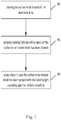
Fig. 1 is a schematic diagram of the laser remelting processing method according to an embodiment of the present invention; -
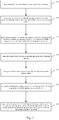
Fig. 2 is a schematic diagram of the laser remelting processing method according toEmbodiment 1 of the present invention; -
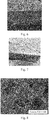
Fig. 3 is a schematic structural view of the aluminum alloy material after laser remelting treatment according toEmbodiment 1 of the present invention; -
Fig. 4 is a microstructural view of the laser remelting zone and the nearby substrate of the hub inEmbodiment 1 of the present invention; -
Fig. 5 is a view showing the aluminum alloy material after laser remelting and CASS test treatment inEmbodiment 1 of the present invention; -
Fig. 6 is a partial enlarged view of the surface of the laser remelting zone ofFig. 5 ; -
Fig. 7 is a partial enlarged view of the surface of the non-laser remelting zone ofFig. 5 ; -
Fig. 8 is a topographical view of the non-laser remelting zone inEmbodiment 1 of the present invention; -
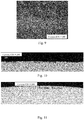
Fig. 9 is a topographical view of the laser remelting zone inEmbodiment 1 of the present invention; -
Fig. 10 is a microscopic view showing the corrosion state and the depth of the non-laser remelting zone inEmbodiment 1 of the present invention; -
Fig. 11 is a microscopic view showing the corrosion state and the depth of a laser remelting zone inEmbodiment 1 of the present invention; -
Fig. 12 is a microscopic topographical view of the surface of the sample block at the edge of the hub inEmbodiment 1 of the present invention; -
Fig. 13 is the view showing the surface profile detection result of the laser remelting zone of theZone 1 inFig. 12 . - Embodiments of the present invention provide a surface laser remelting treatment method for aluminum alloy of a vehicle wheel hub which comprises: cleaning the surface to be treated of the aluminum alloy; spraying isolating light absorbing agent on the surface to be treated which has been cleaned; and using a laser to scan the surface to be treated which has been sprayed with the isolating light absorbing agent to perform remelting.
- In the surface laser remelting treatment method for aluminum alloy of the present invention, the surface to be treated of the aluminum alloy is irradiated by laser, so that the surface material is rapidly melted, and then is rapidly condensed, thereby forming a layer of homogeneous structure on the surface of the remelted aluminum alloy, which can remove burrs, change the rounded corners to make the rounded corners more rounded, and achieve a complete paint film coverage, and the remelted structure has higher hardness, wear resistance and corrosion resistance. Moreover, no alloying elements are added when the surface of aluminum alloy is melted, and the molten layer is thin and the thermal acting zone is small, so that the treatment process is simplified and easy to operate, and is more suitable for mass production, which greatly reduces the processing cost.
- In the embodiment of the present invention, the aluminum alloy is mainly cast aluminum alloy A356.2, deformation aluminum alloy 6061 or deformation aluminum alloy 6068 series, etc., but those skilled in the art can understand that the aluminum alloy can also be other types of aluminum alloy.
- Specifically, as shown in
FIG. 1 , the surface laser remelting treatment method for aluminum alloy comprises: - Step 101: cleaning the surface to be treated of the aluminum alloy;
- Step 102: spraying isolating light absorbing agent on the surface to be treated which has been cleaned;
- Step 103: using a laser to scan the surface to be treated which has been sprayed with the isolating light absorbing agent to perform remelting.
- According to the invention, the step of using a laser to scan the surface to be treated which has been sprayed with the isolating light absorbing agent to perform remelting comprises:
remelting the surface to be treated by a laser with a power of 3-8 kW, a rectangular spot having a side length of 1.5-2 cm, and a scanning rate of 7-30 mm/s. In this way, the laser remelting process has better effect and higher efficiency. Specifically, the laser in the embodiment of the present invention is emitted by a fiber laser or a semiconductor laser, but it should be understood that other lasers are also possible. - Preferably, the overlap ratio between the two remelting zones can also be set to 10% to 20% during laser remelting. Setting the overlap ratio can effectively reduce the occurrence of pore defects at the edge of the remelting zone, and make the entire remelting zone have stronger hardness and better corrosion resistance. However, it should be understood that it is also possible to set other proportions of overlap ratios.
- In one embodiment, the step of using a laser to scan the surface to be treated which has been sprayed with the isolating light absorbing agent to perform remelting further comprises:
remelting the surface to be treated under the protection of inert gas which is any one of nitrogen, argon and helium, wherein the inert gas has an oxygen content of less than 200 ppm. - When the laser scans the surface to be treated, the inert gas can effectively isolate the contact of the laser remelted molten pool with air, preventing the aluminum alloy from chemically reacting with substances such as oxygen in the air during rapid melting and rapid condensation, so that the material obtained after laser remelting has more stable structure, firmer hardness and better corrosion resistance.
- In one embodiment, before using a laser to scan the surface to be treated which has been sprayed with the isolating light absorbing agent to perform remelting, the method further comprises:
heating the surface temperature of the surface to be treated to 50-80 degrees Celsius. - Preheating the surface to be treated in advance not only accelerates the melting of the aluminum alloy of the surface to be treated, but also avoids defects such as cracks after condensation, which is a preferred mode.
- According to the invention, the step of cleaning the surface to be treated of the aluminum alloy comprises:
polishing the surface to be treated to remove the aluminum oxide layer on the surface. - In one embodiment, the step of polishing the surface to be treated to remove the aluminum oxide layer of the surface comprises:
polishing the surface to be treated by a pneumatic polisher to polish away a thickness 0.5-1.0 mm. - Since an aluminum oxide layer is formed on the metal surface of the product during the production process of the aluminum alloy product, and the heat resistance temperature of the aluminum oxide layer is high, so that the melting rate of the aluminum alloy of the surface to be treated is lowered, thereby polishing away the aluminum oxide layer of the surface to be treated can effectively improve the processing effect of laser remelting. The embodiment of the present invention is polished by a pneumatic polisher, because the pneumatic polisher has high grinding efficiency, small volume and convenient use, but the present invention is not limited thereto, and it is also possible to use for example an electric angle grinder or a magnetic grinder to polish.
- In one embodiment, before polishing the surface to be treated to remove the aluminum oxide layer of the surface, the method further comprises:
washing the surface to be treated with water to remove impurities and dirt on the surface to be treated. - In one embodiment, after polishing the surface to be treated to remove the aluminum oxide layer of the surface, the method further comprises:
drying and degassing the surface to be treated which has been removed the aluminum oxide layer of the surface; and degreasing the surface to be treated which has been dried and degassed. - Drying, degassing and degreasing the surface to be treated can prevent chemical reaction of the aluminum alloy with water vapor and grease on the surface during laser remelting to cause defects, thereby affecting the hardness and corrosion resistance of the remelted mechanism, which is a preferred way.
- In one embodiment, the step of degreasing may use a dilute acid solution such as dilute hydrochloric acid or dilute acetic acid, or a dilute alkali solution such as sodium hydroxide, but the present invention is not limited thereto.
- In one embodiment, the step of drying and degassing the surface to be treated which has been removed the aluminum oxide layer of the surface comprises:
placing the aluminum alloy whose surface to be treated has been removed the aluminum oxide layer of the surface into an electric blast drying oven for drying and degassing; wherein the electric blast drying oven is set to have a temperature of 150-200 degrees Celsius, a relatively humidity of 5-10% and a duration of 2-5 minutes. - According to the invention, step of spraying isolating light absorbing agent on the surface to be treated which has been cleaned comprises:
spraying one or more of phosphate, titanium oxide, zirconium oxide, graphite and carbon black on the surface to be treated which has been cleaned with a thickness of 0.15-0.25 mm. In this way, the laser light can be better guided into the metallographic structure of the surface to be treated to maximize the energy of the laser; the isolating light absorbing agent is an optical medium material. - The present invention will be further described in detail below in conjunction with the drawings and specific embodiments. It is understood that the specific embodiments described herein are merely illustrative of the invention and are not intended to limit the invention.
- In the present embodiment, the edge portion of the aluminum alloy vehicle wheel hub (hereinafter referred to as the hub) is subjected to laser remelting treatment, specifically the spoke edge and the window edge of the aluminum alloy vehicle hub, that is, the surface to be treated is the spoke edge and the window edge of the aluminum alloy vehicle hub. The hub in the present embodiment is made of cast aluminum alloy A356.2.
- As shown in
FIG. 2 , the method for performing laser remelting treatment on the hub edge of the present embodiment comprises the following steps: - Step 201: first cleaning the dirt and impurities on the hub edge surface with water;
- Step 202: using a pneumatic polisher to polish the hub edge surface to remove the aluminum oxide layer on the surface, wherein the thickness to be polished away is 0.5 mm;
- Step 203: placing the polished hub in an electric blast drying oven for drying and degassing; wherein the electric blast drying oven is set to have a temperature of 150 degrees Celsius, a relatively humidity of 7% and a duration of 4 minutes;
- Step 204: using a dilute alkali solution to degrease the hub edge surface after drying and degassing;
- Step 205: heating the surface temperature of the hub edge after degreasing to 50-80 degrees Celsius;
- Step 206: spraying the isolating light absorbing agent zirconia on the edge of the hub after degreasing, wherein the spraying thickness is 0.15 mm;
- Step 207: using a laser with a power of 5 kW, a rectangular spot having a side length of 1.5 cm, and a scanning rate of 20 mm/s to scan the hub edge surface, which has been sprayed isolating light absorbing agent, under the protection of the inert gas nitrogen, to perform remelting. The overlap ratio during laser remelting is set to 10% to 15%. The inert gas nitrogen has an oxygen content of less than 200 ppm.
- A copper salt accelerated acetate spray (CASS) corrosion test is performed on the surface of the hub after laser remelting.
- The test conditions of the CASS corrosion test are as follows: the concentration of sodium chloride in the test solution used is 50±5 g/L, the concentration of copper dichloride (CuCl2.2H2O) is 0.26±0.02 g/L, the pH value of the test solution is 3.1-3.3, the temperature of the test chamber is set to 50±2 °C, the spray amount is set to 1.0-2.0 ml/h, and the test time is set to 240 hours.
- Those skilled in the art should understand the test process and steps of the CASS corrosion test, therefore the present embodiment will repeat them here.
- The results after the test are detailed as follows:
As shown inFigures 3 and 4 , an approximately semi-circular laser remelting zone is formed on the cross section of the hub edge, and the outer surface of the laser remelting zone has a circular arc shape. The grain size of the laser remelting zone is significantly increased from the outside to the inside (that is, from the upper part to the lower part of the laser remelting zone shown inFig. 3 ). According to the size of the grain, the laser remelting zone of the hub can be divided into three zones, i.e., a fine grain zone located on the surface layer of the laser remelting zone, a matrix zone which is not remelted, and an intermediate zone between the fine grain zone and the matrix zone. It can be seen from the drawing that the maximum depth of the laser remelting zone is about 1657 µm, and the thickness of the transition zone between the fine grain zone and the matrix zone is about 130 µm. The laser remelting zone is composed of α-Al dendrites and Al-Si eutectics. Compared to the matrix zone, the dendrites in the laser remelting zone are finer. It can also be seen from the drawing that some pore defects are generated in the laser remelting zone, and the pores are mainly distributed along the surface layer and the transition zone of the laser remelting zone. - As shown in
Fig. 5 to Fig. 9 , after the CASS test, there is a significant difference in the non-laser remelting zone and the laser remelting zone on the surface of the hub. The non-laser remelting zone has severe corrosion and the corrosion points are almost continuous. However, only a few corrosion points appear in the laser remelting zone, and all the corrosion points occur at the location of the surface pores. - At the same time, under the 200X microscopic observation to the sample after the test, it is found that, as shown in
Fig. 10 , the non-laser remelting zone is severely corroded, the corrosions points are almost continuous, and the corrosion depth is about 110 µm. As shown inFig. 11 , the laser remelting zone is also corroded, but only a few corrosion points appear, and all the corrosion points occur at the position of the surface pores, and the corrosion depth is about 60 µm. - As shown in
Fig. 12 , thezone 1 is the laser remelting zone of the hub surface, and thezone 2 is the laser remelting zone of the hub surface. It can be clearly seen from the drawing that there are no obvious corrosion points inzone 1, but there are pore defects on the surface, and almost the entire surface ofzone 2 is covered with corrosion points. - From the above observations, it can be concluded that impurities and gases can be eliminated during the laser remelting process, even if gas defects are generated, the number thereof is small, and the gas defects are distributed in the surface and transition zone of the laser remelting zone, while the crystals of the structure obtained by quench recrystallization are finer, which in turn makes the hardness of the structure after laser remelting higher. At the same time, the test results also show that both the laser remelting zone and the non-laser remelting zone have corrosion, but the corrosion points of the non-laser remelting zone are almost continuous, and only a few corrosion points appear in the laser remelting zone, and all the corrosion points occur at the position of the surface pores, thus it can be seen that the hub surface treated by the laser remelting treatment method for aluminum alloy surface of the embodiment of the present invention has stronger corrosion resistance.
- As shown in
Fig. 13 , the surface of the laser remelting zone of the hub ofEmbodiment 1 is very smooth, and no large projections or depressions are observed, and the projection height of the maximum convex position is only 55.49 µm. It can be seen that the laser remelting treatment of the embodiment of the present invention can remove burrs, change the rounded corners to make the rounded corners more rounded, achieve a complete paint film coverage and enhance the anti-corrosion effect. - The present embodiment is the same as
Embodiment 1 except that the following content is different from Embodiment 1: - 1) The hub is made of deformation aluminum alloy 6061; the deformation aluminum alloy 6061 has higher strength and toughness than the cast aluminum alloy A356.2, but the corrosion resistance thereof is slightly poor;
- 2) The thickness polished away of the surface of the hub edge is 0.7 mm; due to the slightly poor corrosion resistance, the thickness polished away is greater, the clean effect of the surface to be treated is better;
- 3) The settings of the electric blast drying oven are as follows: the temperature is 170 degrees Celsius, the relative humidity is 5%, and the duration is 4 minutes; because of the more polishing, the higher drying temperature and lower humidity are required, so that the drying is more thorough;
- 4) Titanium oxide is selected as the isolating light absorbing agent, and the thickness of the spray coating is 0.2 mm; a laser with a power of 7 kW, a rectangular spot having a side length of 1.5 cm, and a scanning rate of 25 mm/s is used. In this way, the energy of the laser can be maximized and the laser remelting effect can be improved.
- The present embodiment is the same as
Embodiment 1 except that the following content is different from Embodiment 1: - 1) The hub used is made of deformation aluminum alloy 6068; the deformation aluminum alloy 6068 has higher strength and toughness than cast aluminum alloy A356.2, but the corrosion resistance thereof is slightly poor;
- 2) The thickness polished away of the surface of the hub edge is 0.9 mm; due to the slightly poor corrosion resistance, the thickness polished away is greater, the clean effect of the surface to be treated is better;
- 3) The settings of the electric blast drying oven are as follows: the temperature is 200 degrees Celsius, the relative humidity is 8%, and the duration is 5 minutes; because of the more polishing, the higher drying temperature and lower humidity are required, so that the drying is more thorough;
- 4) Carbon black is selected as the isolating light absorbing agent, and the thickness of the spray coating is 0.18 mm; a laser with a power of 6 kW, a rectangular spot having a side length of 1.5 cm, and a scanning rate of 25 mm/s is used. In this way, by increasing the laser power and simultaneously adjusting the isolating light absorbing agent, the laser remelting effect is improved, so that the corrosion resistance is better.
- The CASS corrosion tests were carried out on the hub surface after laser remelting of
Embodiment 2 and Embodiment 3, respectively. The test results are similar to those ofEmbodiment 1. The specific test results are shown in the following table:corrosion state corrosion depth non-laser remelting zone large area continuous corrosion 80-110 µm laser remelting zone small amount of corrosion points on the surface 70-110 µm - It can be seen from the test data that the zone after laser remelting treatment has fewer surface corrosion points and shallower corrosion depth than the surface of non-laser remelting treatment, and the surface of the aluminum alloy after laser remelting is more resistant to corrosion.
- In summary, through using the laser remelting treatment method of the present invention to perform laser remelting treatment on the edge surface of the aluminum alloy, the edge material of the aluminum alloy is recrystallized by rapid melting and condensation, so that the microstructure obtained by recrystallization has relatively high hardness, wear resistance and corrosion resistance, and the laser remelting can remove the edge burrs of aluminum alloy, change the rounded corners to make the rounded corners more round, and achieve a complete paint film coverage, which is convenient for post-processing of aluminum alloy products.
- In addition, after the laser remelting of the edge surface of the aluminum alloy, it is also required to be grinded, and be coated after polishing, or be coated after machining treatment, in order to beautify the appearance of the aluminum alloy product, and make the anticorrosive effect better.
- Compared with other aluminum alloy edge surface treatment methods, the surface laser remelting treatment method for aluminum alloy of the present invention has the following advantages:
- 1. Compared with surface surfacing, laser remelting requires less protection for the molten pool and has faster speed because it does not need to convert the welding material into a high-temperature liquid form and then migrates it into the arc molten pool.
- 2. Since laser remelting is more environmentally friendly than electroplating or electroless plating, it has minimal environmental pollution, and because it does not require anti-pollution treatment, it is conducive to environmental protection and can reduce costs.
- 3. Compared with thermal spraying, plasma spraying and other spraying technologies, laser remelting greatly reduces noise pollution during processing. The prepared coating has low porosity and little influence on the matrix, and hardly affects the structure of the matrix.
- 4. Compared with chemical heat treatment technologies such as surface nitriding, carburizing and boronizing, laser remelting does not need to heat the matrix to a high temperature and keep it warm for a long time, therefore the production process is simpler and faster.
- 5. Compared with laser cladding technology, laser remelting does not need to add other metal powders on the surface of the material. The remelted layer and the matrix material will form a natural metallurgical bond.
- 6. Because both the laser heating speed and the cooling speed are extremely fast during the laser remelting process, the molten layer is relatively thin, the thermal action zone is small, and the workpiece deformation is small, therefore it is suitable for a wide range of complex types of components.
- 7. The optimization effect on the surface properties of the material is remarkable, the coating having special structural properties can be prepared, and the microstructure obtained by recrystallization has relatively high hardness, wear resistance and corrosion resistance.
- The above is only a specific description of the preferred embodiments of the present invention, while the present invention is defined by the scope of the appended claims.
Claims (7)
- A surface laser remelting treatment method for aluminum alloy of a vehicle wheel hub, characterized in that the method comprises:cleaning the surface to be treated of the aluminum alloy, wherein the step of cleaning the surface to be treated of the aluminum alloy comprises: polishing the surface to be treated to remove the aluminum oxide layer on the surface;spraying isolating light absorbing agent on the surface to be treated which has been cleaned, wherein the step of spraying isolating light absorbing agent on the surface to be treated which has been cleaned comprises: spraying one or more of phosphate, titanium oxide, zirconium oxide, graphite and carbon black on the surface to be treated which has been cleaned with a thickness of 0.15-0.25 mm; andusing a laser to scan the surface to be treated which has been sprayed with the isolating light absorbing agent to perform remelting, wherein the step of using a laser to scan the surface to be treated which has been sprayed with the isolating light absorbing agent to perform remelting comprises: remelting the surface to be treated by a laser with a power of 3-8 kW, a rectangular spot having a side length of 1.5-2 cm, and a scanning rate of 7-30 mm/s.
- The laser remelting treatment method according to claim 1, characterized in that the step of using a laser to scan the surface to be treated which has been sprayed with the isolating light absorbing agent to perform remelting further comprises:
remelting the surface to be treated under the protection of inert gas which is any one of nitrogen, argon and helium, wherein the inert gas has an oxygen content of less than 200 ppm. - The laser remelting treatment method according to claim 1, characterized in that before using a laser to scan the surface to be treated which has been sprayed with the isolating light absorbing agent to perform remelting, the method further comprises:
heating the surface temperature of the surface to be treated to 50-80 degrees Celsius. - The laser remelting treatment method according to claim 1, characterized in that before polishing the surface to be treated to remove the aluminum oxide layer of the surface, the method further comprises:
washing the surface to be treated with water. - The laser remelting treatment method according to claim 1, characterized in that after polishing the surface to be treated to remove the aluminum oxide layer of the surface, the method further comprises:drying and degassing the surface to be treated which has been removed the aluminum oxide layer of the surface; anddegreasing the surface to be treated which has been dried and degassed.
- The laser remelting treatment method according to claim 1, characterized in that the step of polishing the surface to be treated to remove the aluminum oxide layer of the surface comprises:
polishing the surface to be treated by a pneumatic polisher to polish away a thickness 0.5-1.0 mm. - The laser remelting treatment method according to claim 5 is characterized in that the step of drying and degassing the surface to be treated which has been removed the aluminum oxide layer of the surface comprises:
placing the aluminum alloy whose surface to be treated has removed the aluminum oxide layer of the surface into an electric blast drying oven for drying and degassing; wherein the electric blast drying oven is set to have a temperature of 150-200 degrees Celsius, a relatively humidity of 5-10% and a duration of 2-5 minutes.
Applications Claiming Priority (1)
| Application Number | Priority Date | Filing Date | Title |
|---|---|---|---|
| CN201811253422.4A CN109136923A (en) | 2018-10-25 | 2018-10-25 | A kind of surface laser re melting process method of aluminium alloy |
Publications (2)
| Publication Number | Publication Date |
|---|---|
| EP3643444A1 EP3643444A1 (en) | 2020-04-29 |
| EP3643444B1 true EP3643444B1 (en) | 2021-11-03 |
Family
ID=64810066
Family Applications (1)
| Application Number | Title | Priority Date | Filing Date |
|---|---|---|---|
| EP19196295.0A Active EP3643444B1 (en) | 2018-10-25 | 2019-09-09 | Surface laser remelting treatment method for aluminum alloy of vehicle wheel hub |
Country Status (3)
| Country | Link |
|---|---|
| US (1) | US20200130104A1 (en) |
| EP (1) | EP3643444B1 (en) |
| CN (1) | CN109136923A (en) |
Families Citing this family (11)
| Publication number | Priority date | Publication date | Assignee | Title |
|---|---|---|---|---|
| JP7392387B2 (en) * | 2019-10-23 | 2023-12-06 | 株式会社デンソー | bonded structure |
| CN110846654A (en) * | 2019-11-18 | 2020-02-28 | 中信戴卡股份有限公司 | A kind of surface treatment method of magnesium alloy wheel hub |
| MX2022010162A (en) * | 2020-02-19 | 2022-09-12 | Novelis Inc | Metal products with improved bond durability and related methods. |
| CN111349930A (en) * | 2020-03-23 | 2020-06-30 | 北京工业大学 | Aluminum alloy laser surface composite modification method |
| CN112247358B (en) * | 2020-11-07 | 2024-08-27 | 齐齐哈尔金车工业有限责任公司 | Laser forming process method for aluminum alloy component |
| CN114540735B (en) * | 2022-03-24 | 2022-12-20 | 浙江苏泊尔股份有限公司 | Aluminum alloy surface strengthening treatment process and cooker |
| CN114952009B (en) * | 2022-04-18 | 2024-02-02 | 哈尔滨工大焊接科技有限公司 | Vacuum laser remelting surface modification method |
| CN117328057A (en) * | 2022-06-23 | 2024-01-02 | 北京车和家汽车科技有限公司 | Modified aluminum profiles and preparation methods, vehicles and applications |
| CN115401351B (en) * | 2022-08-16 | 2024-07-02 | 浙江鸿昌铝业有限公司 | Welding process of aluminum alloy profile |
| CN119328311B (en) * | 2024-08-05 | 2025-08-12 | 中国建筑第四工程局有限公司 | A laser surface remelting method to improve the corrosion resistance of low alloy steel welds |
| CN119870813A (en) * | 2025-03-27 | 2025-04-25 | 海斯坦普汽车组件(北京)有限公司 | Welding auxiliary error proofing device for welding part of new energy automobile |
Family Cites Families (5)
| Publication number | Priority date | Publication date | Assignee | Title |
|---|---|---|---|---|
| US4208395A (en) * | 1978-12-05 | 1980-06-17 | Continental Oil Company | Removal of sulfur dioxide from flue gas |
| JP3397904B2 (en) * | 1994-09-19 | 2003-04-21 | 岡山県 | Pretreatment method of metal workpiece in laser processing |
| CN100491593C (en) * | 2007-02-01 | 2009-05-27 | 天津工业大学 | Aluminum alloy surface strengthening method using laser melting and coating |
| CN102277552A (en) * | 2010-06-09 | 2011-12-14 | 上海工程技术大学 | Metal surface treatment method employing arc-plasma spraying-laser remelting |
| CN106367707B (en) * | 2016-09-23 | 2019-10-11 | 常州大学 | A Laser Remelting Method of Supersonic Spraying WC-12Co Coating |
-
2018
- 2018-10-25 CN CN201811253422.4A patent/CN109136923A/en active Pending
-
2019
- 2019-06-25 US US16/451,142 patent/US20200130104A1/en not_active Abandoned
- 2019-09-09 EP EP19196295.0A patent/EP3643444B1/en active Active
Also Published As
| Publication number | Publication date |
|---|---|
| CN109136923A (en) | 2019-01-04 |
| EP3643444A1 (en) | 2020-04-29 |
| US20200130104A1 (en) | 2020-04-30 |
Similar Documents
| Publication | Publication Date | Title |
|---|---|---|
| EP3643444A1 (en) | Surface laser remelting treatment method for aluminum alloy | |
| CN105331973B (en) | A kind of method that titanium alloy surface prepares high Nb titanium aluminium base alloys antioxidant coating | |
| CN118726971B (en) | A method for improving the corrosion resistance of aluminide cladding coatings | |
| US5900102A (en) | Method for repairing a thermal barrier coating | |
| CN112779533B (en) | Method for preparing metal-based composite coating on surface of stainless steel | |
| CN103866319A (en) | Laser cladding method for preparing nickel-based heat-resisting and wear-resisting coating on surface of zirconium alloy | |
| CN113667974B (en) | Preparation method of wear-resistant metal-multi-component ceramic composite modified coating on titanium alloy surface | |
| CN106148644A (en) | A kind of metallic hardfacing method of short-pulse laser | |
| CN107824971A (en) | A kind of method of galvanized steel plain sheet laser assembly solder welding | |
| JP2006118053A (en) | Member for semiconductor fabrication equipment | |
| CN113481448B (en) | Titanium alloy member and heat treatment method for titanium alloy member | |
| CN107177843A (en) | A kind of laser melting coating composite powder and application | |
| CN112575283A (en) | Method for local carburization of a metal workpiece and metal workpiece | |
| CN106119845A (en) | A kind of preparation method of rub resistance Corrosion-resistant magnesia alloy | |
| CN120193272A (en) | High-hardness and corrosion-resistant laser cladding coating on titanium-zirconium alloy surface and preparation method thereof | |
| CN112548103B (en) | A composite treatment process of titanium alloy laser additive repair and surface nitriding | |
| CN114774822B (en) | Method for preparing high temperature oxidation resistant coating on 316L stainless steel surface | |
| KR100383270B1 (en) | Manufacturing method of Ta films by magnetron sputtering | |
| CN116970944A (en) | A kind of surface modification method of aluminum alloy | |
| CN116043155A (en) | Liquid lead-bismuth erosion-resistant composite coating and its preparation method and application | |
| Xue et al. | Laser gas nitriding of Ti-6AI-4V alloy | |
| US4403828A (en) | Damage resistant coated laser mirror | |
| CN116770294B (en) | Methods to reduce crack defects in nickel-based cladding layers formed on aluminum substrate surfaces | |
| CN1672849A (en) | B4C+Al bead welding remelting method for magnesium alloy surface | |
| CN116694956B (en) | A laser cladding powder and a method for laser cladding on aluminum alloy surfaces |
Legal Events
| Date | Code | Title | Description |
|---|---|---|---|
| PUAI | Public reference made under article 153(3) epc to a published international application that has entered the european phase |
Free format text: ORIGINAL CODE: 0009012 |
|
| STAA | Information on the status of an ep patent application or granted ep patent |
Free format text: STATUS: REQUEST FOR EXAMINATION WAS MADE |
|
| 17P | Request for examination filed |
Effective date: 20190909 |
|
| AK | Designated contracting states |
Kind code of ref document: A1 Designated state(s): AL AT BE BG CH CY CZ DE DK EE ES FI FR GB GR HR HU IE IS IT LI LT LU LV MC MK MT NL NO PL PT RO RS SE SI SK SM TR |
|
| AX | Request for extension of the european patent |
Extension state: BA ME |
|
| GRAP | Despatch of communication of intention to grant a patent |
Free format text: ORIGINAL CODE: EPIDOSNIGR1 |
|
| STAA | Information on the status of an ep patent application or granted ep patent |
Free format text: STATUS: GRANT OF PATENT IS INTENDED |
|
| GRAS | Grant fee paid |
Free format text: ORIGINAL CODE: EPIDOSNIGR3 |
|
| INTG | Intention to grant announced |
Effective date: 20210602 |
|
| GRAA | (expected) grant |
Free format text: ORIGINAL CODE: 0009210 |
|
| STAA | Information on the status of an ep patent application or granted ep patent |
Free format text: STATUS: THE PATENT HAS BEEN GRANTED |
|
| AK | Designated contracting states |
Kind code of ref document: B1 Designated state(s): AL AT BE BG CH CY CZ DE DK EE ES FI FR GB GR HR HU IE IS IT LI LT LU LV MC MK MT NL NO PL PT RO RS SE SI SK SM TR |
|
| REG | Reference to a national code |
Ref country code: GB Ref legal event code: FG4D |
|
| REG | Reference to a national code |
Ref country code: AT Ref legal event code: REF Ref document number: 1443530 Country of ref document: AT Kind code of ref document: T Effective date: 20211115 Ref country code: CH Ref legal event code: EP |
|
| REG | Reference to a national code |
Ref country code: DE Ref legal event code: R096 Ref document number: 602019008896 Country of ref document: DE |
|
| REG | Reference to a national code |
Ref country code: IE Ref legal event code: FG4D |
|
| REG | Reference to a national code |
Ref country code: MA Ref legal event code: VAGR Ref document number: 47525 Country of ref document: MA Kind code of ref document: B1 |
|
| REG | Reference to a national code |
Ref country code: LT Ref legal event code: MG9D |
|
| REG | Reference to a national code |
Ref country code: NL Ref legal event code: MP Effective date: 20211103 |
|
| REG | Reference to a national code |
Ref country code: AT Ref legal event code: MK05 Ref document number: 1443530 Country of ref document: AT Kind code of ref document: T Effective date: 20211103 |
|
| PG25 | Lapsed in a contracting state [announced via postgrant information from national office to epo] |
Ref country code: RS Free format text: LAPSE BECAUSE OF FAILURE TO SUBMIT A TRANSLATION OF THE DESCRIPTION OR TO PAY THE FEE WITHIN THE PRESCRIBED TIME-LIMIT Effective date: 20211103 Ref country code: LT Free format text: LAPSE BECAUSE OF FAILURE TO SUBMIT A TRANSLATION OF THE DESCRIPTION OR TO PAY THE FEE WITHIN THE PRESCRIBED TIME-LIMIT Effective date: 20211103 Ref country code: FI Free format text: LAPSE BECAUSE OF FAILURE TO SUBMIT A TRANSLATION OF THE DESCRIPTION OR TO PAY THE FEE WITHIN THE PRESCRIBED TIME-LIMIT Effective date: 20211103 Ref country code: BG Free format text: LAPSE BECAUSE OF FAILURE TO SUBMIT A TRANSLATION OF THE DESCRIPTION OR TO PAY THE FEE WITHIN THE PRESCRIBED TIME-LIMIT Effective date: 20220203 Ref country code: AT Free format text: LAPSE BECAUSE OF FAILURE TO SUBMIT A TRANSLATION OF THE DESCRIPTION OR TO PAY THE FEE WITHIN THE PRESCRIBED TIME-LIMIT Effective date: 20211103 |
|
| PG25 | Lapsed in a contracting state [announced via postgrant information from national office to epo] |
Ref country code: IS Free format text: LAPSE BECAUSE OF FAILURE TO SUBMIT A TRANSLATION OF THE DESCRIPTION OR TO PAY THE FEE WITHIN THE PRESCRIBED TIME-LIMIT Effective date: 20220303 Ref country code: SE Free format text: LAPSE BECAUSE OF FAILURE TO SUBMIT A TRANSLATION OF THE DESCRIPTION OR TO PAY THE FEE WITHIN THE PRESCRIBED TIME-LIMIT Effective date: 20211103 Ref country code: PT Free format text: LAPSE BECAUSE OF FAILURE TO SUBMIT A TRANSLATION OF THE DESCRIPTION OR TO PAY THE FEE WITHIN THE PRESCRIBED TIME-LIMIT Effective date: 20220303 Ref country code: PL Free format text: LAPSE BECAUSE OF FAILURE TO SUBMIT A TRANSLATION OF THE DESCRIPTION OR TO PAY THE FEE WITHIN THE PRESCRIBED TIME-LIMIT Effective date: 20211103 Ref country code: NO Free format text: LAPSE BECAUSE OF FAILURE TO SUBMIT A TRANSLATION OF THE DESCRIPTION OR TO PAY THE FEE WITHIN THE PRESCRIBED TIME-LIMIT Effective date: 20220203 Ref country code: NL Free format text: LAPSE BECAUSE OF FAILURE TO SUBMIT A TRANSLATION OF THE DESCRIPTION OR TO PAY THE FEE WITHIN THE PRESCRIBED TIME-LIMIT Effective date: 20211103 Ref country code: LV Free format text: LAPSE BECAUSE OF FAILURE TO SUBMIT A TRANSLATION OF THE DESCRIPTION OR TO PAY THE FEE WITHIN THE PRESCRIBED TIME-LIMIT Effective date: 20211103 Ref country code: HR Free format text: LAPSE BECAUSE OF FAILURE TO SUBMIT A TRANSLATION OF THE DESCRIPTION OR TO PAY THE FEE WITHIN THE PRESCRIBED TIME-LIMIT Effective date: 20211103 Ref country code: GR Free format text: LAPSE BECAUSE OF FAILURE TO SUBMIT A TRANSLATION OF THE DESCRIPTION OR TO PAY THE FEE WITHIN THE PRESCRIBED TIME-LIMIT Effective date: 20220204 Ref country code: ES Free format text: LAPSE BECAUSE OF FAILURE TO SUBMIT A TRANSLATION OF THE DESCRIPTION OR TO PAY THE FEE WITHIN THE PRESCRIBED TIME-LIMIT Effective date: 20211103 |
|
| PG25 | Lapsed in a contracting state [announced via postgrant information from national office to epo] |
Ref country code: SM Free format text: LAPSE BECAUSE OF FAILURE TO SUBMIT A TRANSLATION OF THE DESCRIPTION OR TO PAY THE FEE WITHIN THE PRESCRIBED TIME-LIMIT Effective date: 20211103 Ref country code: SK Free format text: LAPSE BECAUSE OF FAILURE TO SUBMIT A TRANSLATION OF THE DESCRIPTION OR TO PAY THE FEE WITHIN THE PRESCRIBED TIME-LIMIT Effective date: 20211103 Ref country code: RO Free format text: LAPSE BECAUSE OF FAILURE TO SUBMIT A TRANSLATION OF THE DESCRIPTION OR TO PAY THE FEE WITHIN THE PRESCRIBED TIME-LIMIT Effective date: 20211103 Ref country code: EE Free format text: LAPSE BECAUSE OF FAILURE TO SUBMIT A TRANSLATION OF THE DESCRIPTION OR TO PAY THE FEE WITHIN THE PRESCRIBED TIME-LIMIT Effective date: 20211103 Ref country code: DK Free format text: LAPSE BECAUSE OF FAILURE TO SUBMIT A TRANSLATION OF THE DESCRIPTION OR TO PAY THE FEE WITHIN THE PRESCRIBED TIME-LIMIT Effective date: 20211103 Ref country code: CZ Free format text: LAPSE BECAUSE OF FAILURE TO SUBMIT A TRANSLATION OF THE DESCRIPTION OR TO PAY THE FEE WITHIN THE PRESCRIBED TIME-LIMIT Effective date: 20211103 |
|
| REG | Reference to a national code |
Ref country code: DE Ref legal event code: R097 Ref document number: 602019008896 Country of ref document: DE |
|
| PLBE | No opposition filed within time limit |
Free format text: ORIGINAL CODE: 0009261 |
|
| STAA | Information on the status of an ep patent application or granted ep patent |
Free format text: STATUS: NO OPPOSITION FILED WITHIN TIME LIMIT |
|
| 26N | No opposition filed |
Effective date: 20220804 |
|
| PG25 | Lapsed in a contracting state [announced via postgrant information from national office to epo] |
Ref country code: AL Free format text: LAPSE BECAUSE OF FAILURE TO SUBMIT A TRANSLATION OF THE DESCRIPTION OR TO PAY THE FEE WITHIN THE PRESCRIBED TIME-LIMIT Effective date: 20211103 |
|
| PG25 | Lapsed in a contracting state [announced via postgrant information from national office to epo] |
Ref country code: SI Free format text: LAPSE BECAUSE OF FAILURE TO SUBMIT A TRANSLATION OF THE DESCRIPTION OR TO PAY THE FEE WITHIN THE PRESCRIBED TIME-LIMIT Effective date: 20211103 |
|
| PG25 | Lapsed in a contracting state [announced via postgrant information from national office to epo] |
Ref country code: MC Free format text: LAPSE BECAUSE OF FAILURE TO SUBMIT A TRANSLATION OF THE DESCRIPTION OR TO PAY THE FEE WITHIN THE PRESCRIBED TIME-LIMIT Effective date: 20211103 |
|
| REG | Reference to a national code |
Ref country code: CH Ref legal event code: PL |
|
| REG | Reference to a national code |
Ref country code: BE Ref legal event code: MM Effective date: 20220930 |
|
| PG25 | Lapsed in a contracting state [announced via postgrant information from national office to epo] |
Ref country code: IT Free format text: LAPSE BECAUSE OF FAILURE TO SUBMIT A TRANSLATION OF THE DESCRIPTION OR TO PAY THE FEE WITHIN THE PRESCRIBED TIME-LIMIT Effective date: 20211103 |
|
| PG25 | Lapsed in a contracting state [announced via postgrant information from national office to epo] |
Ref country code: LU Free format text: LAPSE BECAUSE OF NON-PAYMENT OF DUE FEES Effective date: 20220909 |
|
| PG25 | Lapsed in a contracting state [announced via postgrant information from national office to epo] |
Ref country code: LI Free format text: LAPSE BECAUSE OF NON-PAYMENT OF DUE FEES Effective date: 20220930 Ref country code: IE Free format text: LAPSE BECAUSE OF NON-PAYMENT OF DUE FEES Effective date: 20220909 Ref country code: CH Free format text: LAPSE BECAUSE OF NON-PAYMENT OF DUE FEES Effective date: 20220930 |
|
| PG25 | Lapsed in a contracting state [announced via postgrant information from national office to epo] |
Ref country code: BE Free format text: LAPSE BECAUSE OF NON-PAYMENT OF DUE FEES Effective date: 20220930 |
|
| PG25 | Lapsed in a contracting state [announced via postgrant information from national office to epo] |
Ref country code: HU Free format text: LAPSE BECAUSE OF FAILURE TO SUBMIT A TRANSLATION OF THE DESCRIPTION OR TO PAY THE FEE WITHIN THE PRESCRIBED TIME-LIMIT; INVALID AB INITIO Effective date: 20190909 |
|
| PG25 | Lapsed in a contracting state [announced via postgrant information from national office to epo] |
Ref country code: CY Free format text: LAPSE BECAUSE OF FAILURE TO SUBMIT A TRANSLATION OF THE DESCRIPTION OR TO PAY THE FEE WITHIN THE PRESCRIBED TIME-LIMIT Effective date: 20211103 |
|
| GBPC | Gb: european patent ceased through non-payment of renewal fee |
Effective date: 20230909 |
|
| PG25 | Lapsed in a contracting state [announced via postgrant information from national office to epo] |
Ref country code: MK Free format text: LAPSE BECAUSE OF FAILURE TO SUBMIT A TRANSLATION OF THE DESCRIPTION OR TO PAY THE FEE WITHIN THE PRESCRIBED TIME-LIMIT Effective date: 20211103 |
|
| PG25 | Lapsed in a contracting state [announced via postgrant information from national office to epo] |
Ref country code: GB Free format text: LAPSE BECAUSE OF NON-PAYMENT OF DUE FEES Effective date: 20230909 |
|
| PG25 | Lapsed in a contracting state [announced via postgrant information from national office to epo] |
Ref country code: GB Free format text: LAPSE BECAUSE OF NON-PAYMENT OF DUE FEES Effective date: 20230909 |
|
| PG25 | Lapsed in a contracting state [announced via postgrant information from national office to epo] |
Ref country code: MT Free format text: LAPSE BECAUSE OF FAILURE TO SUBMIT A TRANSLATION OF THE DESCRIPTION OR TO PAY THE FEE WITHIN THE PRESCRIBED TIME-LIMIT Effective date: 20211103 |
|
| PGFP | Annual fee paid to national office [announced via postgrant information from national office to epo] |
Ref country code: DE Payment date: 20250916 Year of fee payment: 7 |
|
| PGFP | Annual fee paid to national office [announced via postgrant information from national office to epo] |
Ref country code: FR Payment date: 20250929 Year of fee payment: 7 |
|
| VS25 | Lapsed in a validation state [announced via postgrant information from nat. office to epo] |
Ref country code: MA Free format text: LAPSE BECAUSE OF NON-PAYMENT OF DUE FEES Effective date: 20230910 |
|
| VSFP | Annual fee paid to validation state [announced via postgrant information from national office to epo] |
Ref country code: MA Payment date: 20220909 Year of fee payment: 4 |
|
| PG25 | Lapsed in a contracting state [announced via postgrant information from national office to epo] |
Ref country code: TR Free format text: LAPSE BECAUSE OF FAILURE TO SUBMIT A TRANSLATION OF THE DESCRIPTION OR TO PAY THE FEE WITHIN THE PRESCRIBED TIME-LIMIT Effective date: 20211103 |