EP3640825B1 - Umwandlungsverfahren, vorrichtung, computervorrichtung und speichermedium - Google Patents
Umwandlungsverfahren, vorrichtung, computervorrichtung und speichermedium Download PDFInfo
- Publication number
- EP3640825B1 EP3640825B1 EP19790111.9A EP19790111A EP3640825B1 EP 3640825 B1 EP3640825 B1 EP 3640825B1 EP 19790111 A EP19790111 A EP 19790111A EP 3640825 B1 EP3640825 B1 EP 3640825B1
- Authority
- EP
- European Patent Office
- Prior art keywords
- model
- attribute information
- computer device
- offline model
- target
- Prior art date
- Legal status (The legal status is an assumption and is not a legal conclusion. Google has not performed a legal analysis and makes no representation as to the accuracy of the status listed.)
- Active
Links
Images



Classifications
-
- G—PHYSICS
- G06—COMPUTING OR CALCULATING; COUNTING
- G06N—COMPUTING ARRANGEMENTS BASED ON SPECIFIC COMPUTATIONAL MODELS
- G06N3/00—Computing arrangements based on biological models
- G06N3/02—Neural networks
-
- G—PHYSICS
- G06—COMPUTING OR CALCULATING; COUNTING
- G06F—ELECTRIC DIGITAL DATA PROCESSING
- G06F9/00—Arrangements for program control, e.g. control units
- G06F9/06—Arrangements for program control, e.g. control units using stored programs, i.e. using an internal store of processing equipment to receive or retain programs
- G06F9/30—Arrangements for executing machine instructions, e.g. instruction decode
- G06F9/30003—Arrangements for executing specific machine instructions
- G06F9/3004—Arrangements for executing specific machine instructions to perform operations on memory
-
- G—PHYSICS
- G06—COMPUTING OR CALCULATING; COUNTING
- G06F—ELECTRIC DIGITAL DATA PROCESSING
- G06F8/00—Arrangements for software engineering
- G06F8/30—Creation or generation of source code
- G06F8/35—Creation or generation of source code model driven
-
- G—PHYSICS
- G06—COMPUTING OR CALCULATING; COUNTING
- G06F—ELECTRIC DIGITAL DATA PROCESSING
- G06F9/00—Arrangements for program control, e.g. control units
- G06F9/06—Arrangements for program control, e.g. control units using stored programs, i.e. using an internal store of processing equipment to receive or retain programs
- G06F9/44—Arrangements for executing specific programs
- G06F9/445—Program loading or initiating
- G06F9/44505—Configuring for program initiating, e.g. using registry, configuration files
-
- G—PHYSICS
- G06—COMPUTING OR CALCULATING; COUNTING
- G06F—ELECTRIC DIGITAL DATA PROCESSING
- G06F9/00—Arrangements for program control, e.g. control units
- G06F9/06—Arrangements for program control, e.g. control units using stored programs, i.e. using an internal store of processing equipment to receive or retain programs
- G06F9/46—Multiprogramming arrangements
- G06F9/50—Allocation of resources, e.g. of the central processing unit [CPU]
- G06F9/5005—Allocation of resources, e.g. of the central processing unit [CPU] to service a request
- G06F9/5011—Allocation of resources, e.g. of the central processing unit [CPU] to service a request the resources being hardware resources other than CPUs, Servers and Terminals
- G06F9/5016—Allocation of resources, e.g. of the central processing unit [CPU] to service a request the resources being hardware resources other than CPUs, Servers and Terminals the resource being the memory
-
- G—PHYSICS
- G06—COMPUTING OR CALCULATING; COUNTING
- G06F—ELECTRIC DIGITAL DATA PROCESSING
- G06F9/00—Arrangements for program control, e.g. control units
- G06F9/06—Arrangements for program control, e.g. control units using stored programs, i.e. using an internal store of processing equipment to receive or retain programs
- G06F9/46—Multiprogramming arrangements
- G06F9/50—Allocation of resources, e.g. of the central processing unit [CPU]
- G06F9/5005—Allocation of resources, e.g. of the central processing unit [CPU] to service a request
- G06F9/5027—Allocation of resources, e.g. of the central processing unit [CPU] to service a request the resource being a machine, e.g. CPUs, Servers, Terminals
-
- G—PHYSICS
- G06—COMPUTING OR CALCULATING; COUNTING
- G06N—COMPUTING ARRANGEMENTS BASED ON SPECIFIC COMPUTATIONAL MODELS
- G06N20/00—Machine learning
-
- G—PHYSICS
- G06—COMPUTING OR CALCULATING; COUNTING
- G06N—COMPUTING ARRANGEMENTS BASED ON SPECIFIC COMPUTATIONAL MODELS
- G06N3/00—Computing arrangements based on biological models
- G06N3/02—Neural networks
- G06N3/08—Learning methods
-
- Y—GENERAL TAGGING OF NEW TECHNOLOGICAL DEVELOPMENTS; GENERAL TAGGING OF CROSS-SECTIONAL TECHNOLOGIES SPANNING OVER SEVERAL SECTIONS OF THE IPC; TECHNICAL SUBJECTS COVERED BY FORMER USPC CROSS-REFERENCE ART COLLECTIONS [XRACs] AND DIGESTS
- Y02—TECHNOLOGIES OR APPLICATIONS FOR MITIGATION OR ADAPTATION AGAINST CLIMATE CHANGE
- Y02D—CLIMATE CHANGE MITIGATION TECHNOLOGIES IN INFORMATION AND COMMUNICATION TECHNOLOGIES [ICT], I.E. INFORMATION AND COMMUNICATION TECHNOLOGIES AIMING AT THE REDUCTION OF THEIR OWN ENERGY USE
- Y02D10/00—Energy efficient computing, e.g. low power processors, power management or thermal management
Definitions
- the present disclosure relates to the field of computer technology, and specifically to a conversion method, an apparatus, a computer device, and a storage medium.
- Deep learning With the development of artificial intelligence technology, deep learning has become everywhere and indispensable. Many extensible deep learning systems, such as TensorFlow, MXNet, Caffe and PyTorch, have emerged therefrom.
- the deep learning systems can be used for providing various neural network models or other machine learning models that can be run on a processor such as CPU or GPU.
- processors such as CPU or GPU.
- neural network models and other machine learning models are to run on different processors, they are often required to be converted.
- a traditional method of conversion is as follows: developers configure multiple different conversion models for a neural network model, and the multiple conversion models can be applied to different processors; in practical terms, a computer device needs to receive a neural network model and multiple corresponding conversion models at the same time, then users are required to select one model from the multiple models according to the type of the computer device so that the neural network model can be run on the computer device.
- the conversion method may have large data input and a large amount of data processing, which can easily lead to a situation where the memory capacity and the processing limit of the computer device are exceeded, the processing speed of the computer device decreases, and the computer device malfunctions.
- a hardware neural network conversion method for converting a neural network application into a hardware neural network that satisfies hardware constraints, which may include: a neural network connection graph obtaining step, obtaining a neural network connection graph corresponding to the neural network application, the neural network connection graph being a directed graph, each node in the graph representing a layer of neurons, and each edge representing a connection relationship between layers; a neural network connection graph splitting step, splitting the neural network connection graph into neural network basic units, each neural network basic unit having only an input node and an output node, no intermediate layer nodes, the input nodes and the output nodes being fully connected, and all the out-degrees of the neurons in the input node are within the basic unit, and all the in-degrees of each neuron in the output node are within the basic unit; a neural network basic unit conversion step, converting each neural network basic unit into a network connected by basic module virtual bodies of neural network hardware that is functionally
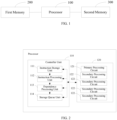
- FIG. 1 is a block diagram of a computer device, according to some embodiments.
- the computer device can be a mobile terminal such as a mobile phone or a tablet, or a terminal such as a desktop computer, a board card, or a cloud server.
- the computer device can be applied to robots, printers, scanners, traffic recorders, navigators, cameras, video cameras, projectors, watches, portable storage devices, wearable devices, vehicles, household appliances, and/or medical equipment.
- the vehicles can include airplanes, ships, and/or vehicles.
- the household electrical appliances can include televisions, air conditioners, microwave ovens, refrigerators, electric rice cookers, humidifiers, washing machines, electric lamps, gas cookers, and range hoods.
- the medical equipment can include nuclear magnetic resonance spectrometers, B-ultrasonic scanners, and/or electrocardiographs.
- the computer device can include a processor 100, and a first memory 200 and second memory 300 that can be connected to the processor 100.
- the processor 100 can be a general processor, such as a CPU (Central Processing Unit), a GPU (Graphics Processing Unit), or a DSP (Digital Signal Processing).
- the processor 100 can also be a network model processor such as an IPU (Intelligence Processing Unit).
- the processor 100 can further be an instruction set processor, a related chipset, a dedicated microprocessor such as an ASIC (Application Specific Integrated Circuit), an onboard memory for caching, or the like.
- ASIC Application Specific Integrated Circuit
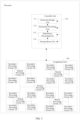
- the processor 100 can include a controller unit 110 and a computation unit 120, where the controller unit 110 can be connected to the computation unit 120, and the computation unit 120 can include a primary processing circuit 121 and a plurality of secondary processing circuits 122.
- the controller unit 110 can be configured to obtain data, a machine learning model, and an operation instruction.
- the machine learning model can specifically include a network model, where the network model can be a neural network model and/or a non-neural network model.
- the controller unit 110 can be further configured to parse a received operation instruction to obtain a plurality of computation instructions, and send the plurality of computation instructions and data to the primary processing circuit.
- the primary processing circuit can be configured to perform preprocessing on the data as well as data and computation instructions transmitted among the primary processing circuit and the plurality of secondary processing circuits.
- the plurality of secondary processing circuits can be configured to perform intermediate computation in parallel according to data and computation instructions transmitted by the primary processing circuit to obtain a plurality of intermediate results, and transmit the plurality of intermediate results to the primary processing circuit; and the primary processing circuit can be further configured to perform postprocessing on the plurality of intermediate results to obtain an operation result of the operation instruction.
- the controller unit 110 can include an instruction storage unit 111, an instruction processing unit 112, and a storage queue unit 114; the instruction storage unit 111 can be configured to store an operation instruction associated with a machine learning model; the instruction processing unit 112 can be configured to parse an operation instruction to obtain a plurality of computation instructions; the storage queue unit 114 can be configured to store an instruction queue where the instruction queue can include: a plurality of computation instructions or operation instructions that are to be performed and are sorted in sequential order. According to some embodiments, the controller unit 110 can further include a dependency processing unit 113.
- the dependency processing unit 113 can be configured to, when a plurality of computation instructions exist, determine whether a first computation instruction and a zero-th computation instruction preceding the first computation instruction are associated, for instance, if the first computation instruction and the zero-th computation instruction are associated, the first computation instruction can be cached in the instruction storage unit, and after the zero-th computation instruction is completed, the first computation instruction can be fetched from the instruction storage unit and transmitted to the computation unit. According to some embodiments, the dependency processing unit 113 can fetch a first memory address of required data (e.g., a matrix) of the first computation instruction according to the first computation instruction, and can fetch a zero-th memory address of a required matrix of the zero-th computation instruction according to the zero-th computation instruction.
- required data e.g., a matrix
- the first computation instruction and the zero-th computation instruction are associated; if there is no overlap between the first memory address and the zero-th memory address, then it can be determined that the first computation instruction and the zero-th computation instruction are not associated.
- the computation unit 120 can further include a branch processing circuit 123, where the primary processing circuit 121 can be connected to the branch processing circuit 123, and the branch processing circuit 123 can be connected to the plurality of secondary processing circuits 122; the branch processing circuit 123 can be configured to forward data or instructions among the primary processing circuit 121 and the secondary processing circuits 122.
- the primary processing circuit 121 can be configured to divide one input neuron into a plurality of data blocks, and send at least one data blocks of the plurality of data blocks, a weight, and at least one computation instruction of the plurality of computation instructions to the branch processing circuit;
- the branch processing circuit 123 can be configured to forward the data block, the weight, and the computation instruction among the primary processing circuit 121 and the plurality of secondary processing circuits 122;
- the plurality of secondary processing circuits 122 can be configured to perform computation on the received data block and weight according to the computation instruction to obtain an intermediate result, and transmit the intermediate result to the branch processing circuit 123;
- the primary processing circuit 121 can further be configured to perform postprocessing on the intermediate result transmitted by the branch processing circuit to obtain an operation result of the operation instruction, and transmit the operation result to the controller unit.
- the computation unit 120 can include one primary processing circuit 121 and a plurality of secondary processing circuits 122.
- the plurality of secondary processing circuits can be arranged in the form of an array.
- Each of the secondary processing circuits can be connected to other adjacent secondary processing circuits, and the primary processing circuit can be connected to k secondary processing circuits of the plurality of secondary processing circuits, where the k secondary processing circuits can be: n secondary processing circuits in a first line, n secondary processing circuits in an m-th line, and m secondary processing circuits in a first column. It should be noted that, k secondary processing circuits shown in FIG.
- the k secondary processing circuits can be secondary processing circuits that are connected to the primary processing circuit directly.
- the k secondary processing circuits can be configured to forward data and instructions among the primary processing circuit and the plurality of secondary processing circuits.
- the primary processing circuit 121 can include one or any combination of a conversion processing circuit, an activation processing circuit, and an addition processing circuit.
- the conversion processing circuit can be configured to perform an interconversion between a first data structure and a second data structure (e.g., an interconversion between continuous data and discrete data) on a received data block or intermediate result of the primary processing circuit, or the conversion processing circuit can be configured to perform an interconversion between a first data type and a second data type (e.g., an interconversion between a fixed point type and a floating point type) on a received data block or intermediate result of the primary processing circuit.
- the activation processing circuit can be configured to perform activation operation on data in the primary processing circuit.
- the addition processing circuit can be configured to perform addition operation or accumulation operation.
- a computer program can be stored in the first memory 200 or the second memory 300.
- the computer program can be used for implementing a model conversion method provided in an example of the disclosure.
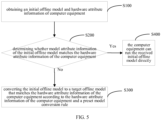
- the conversion method can be used for, if model attribute information of an initial offline model received by a computer device does not match hardware attribute information of the computer device, converting the initial offline model to a target offline model that matches the hardware attribute information of the computer device so that the computer device can be able to run the initial offline model.
- the model conversion method data input of a computer device can be reduced, and an initial offline model can be automatically converted to a target offline model without any manual intervention.
- the method can have a simple process and high conversion efficiency.
- the computer program stored in the first memory 200 or the second memory 300 can also be able to implement an offline model generation method provided by embodiments of the present disclosure.
- the computer device can further include a processor and a memory, and the computer device can furthermore include a processor and a memory that can be connected to the processor.
- the processor can be a processor shown in FIGs. 2-4 , for a specific structure of the processor, see the description above about the processor 100.
- the memory can include a plurality of storage units.
- the memory can include a first storage unit, a second storage unit, and a third storage unit.
- the first storage unit can be configured to store a computer program, where the computer program can be used for implementing a model conversion method provided in an example of the disclosure.
- the second memory unit can be configured to store related data in running of an original network.
- the initial offline model refers to an offline model obtained directly by the computer device, and the initial offline model can be stored in the second memory 300.
- the offline model can include necessary network structure information, such as network weights and instructions of respective compute nodes in an original network, where the instructions can be configured to represent computational functions that the respective compute nodes can be configured to perform.
- the instructions can specifically include computational attributes of the respective compute nodes in the original network, connections among the respective compute nodes, and other information.
- the original network can be a network model, such as a neural network model, see FIG. 9 for reference.
- the computer device can realize a computational function of the original network by running the offline model corresponding to the original network without the need of performing operation, such as compiling, repeatedly on the same original network.
- the initial offline model of the example can be an offline model generated according to the original network directly, and can also be an offline model obtained through an offline model having other model attribute information being converted for once or a plurality of times, which is not restricted here.
- the model attribute information of the initial offline model can include a data structure, a data type, and the like, of the initial offline model.
- the model attribute information can include an arrangement manner of each network weight and instruction, a type of each network weight, a type of each instruction, and the like, in the initial offline model.
- the hardware attribute information of the computer device can include an equipment model of the computer device, a data type (e.g., fixed point, floating point, and the like) and a data structure that the computer device can be able to process.
- the computer device if the computer device is able to support the running of the initial offline model, it can be determined that the model attribute information of the initial offline model matches the hardware attribute information of the computer device. If the computer device is not able to support the running of the initial offline model, it can be determined that the model attribute information of the initial offline model does not match the hardware attribute information of the computer device.
- the computer device can determine the data type and the data structure that the computer device can be able to process according to the hardware attribute information, and determine the data type and the data structure of the initial offline model according to the model attribute information of the initial offline model. If the computer device determines that the computer device is able to support the data type and the data structure of the initial offline model according to the hardware attribute information of the computer device and the model attribute information of the initial offline model, the computer device can determine that the model attribute information of the initial offline model matches the hardware attribute information of the computer device.
- the computer device determines that the computer device is not able to support the data type and the data structure of the initial offline model according to the hardware attribute information of the computer device and the model attribute information of the initial offline model, the computer device can determine that the model attribute information of the initial offline model does not match the hardware attribute information of the computer device.
- the initial offline model can be converted to a target offline model that matches the hardware attribute information of the computer device according to the hardware attribute information of the computer device and a preset model conversion rule.
- the initial offline model can need to be converted so that the computer device can be able to use the initial offline model to realize corresponding computation.
- the model attribute information of the initial offline model does not match the hardware attribute information of the computer device
- the initial offline model can be converted to the target offline model that matches the hardware attribute information of the computer device according to the hardware attribute information of the computer device and the preset model conversion rule, where model attribute information of the target offline model can match the hardware attribute information of the computer device, and the computer device can be able to support running of the target offline model.
- the target offline model can also include the necessary network structure information, such as the network weights and the instructions of the respective compute nodes in the original network.
- the computer device can run the received initial offline model directly.
- the computer device can perform computation according to the network weights and the instructions included in the initial offline model, so as to realize the computational function of the original network.
- the model attribute information of the initial offline model matches the hardware attribute information of the computer device, which indicates that the computer device can be able to support the running of the initial offline model, the initial offline model cannot need to be converted, and the computer device can be able to run the initial offline model.
- running the initial offline model directly refers to that, using the initial offline model to run a corresponding machine learning algorithm (e.g., a neural network algorithm) of the original network, and to realize a target application (e.g., an artificial intelligence application such as speech recognition) of the algorithm by performing forward computation.
- a corresponding machine learning algorithm e.g., a neural network algorithm
- a target application e.g., an artificial intelligence application such as speech recognition
- the computer device can convert the initial offline model into the target offline model according to the preset model conversion rule and the hardware attribute information of the computer device without the need of obtaining multiple different versions of the initial offline models matching with different computer devices.
- Data input of the computer device can thus be greatly reduced, problems such as excessive data input exceeding a memory capacity of the computer device can be avoided, and normal functioning of the computer device can be ensured.
- the model conversion method can reduce an amount of data processing of the computer device, and can thus improve the processing speed as well as reduce power consumption.
- the model conversion method can require no manual intervention. With a relatively high level of automation, the model conversion method can be easy to use.
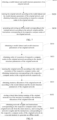
- S300 can include: S310, determining the model attribute information of the target offline model according to the hardware attribute information of the computer device.
- the computer device can determine the data type and the data structure that the computer device can be able to support according to the hardware attribute information of the computer device, and determine the model attribute information, including the data type and the data structure, of the target offline model.
- the computer device can determine the model attribute information of the target offline model according to the hardware attribute information of the computer device, where the model attribute information of the target offline model can include information, including the data structure and the data type, of the target offline model.
- the target model conversion rule can be determined according to the model attribute information of the initial offline model and the model attribute information of the target offline model, where the model conversion rules can include a data type conversion method, a data structure conversion method, and the like.
- the computer device can convert the initial offline model to the target offline model according to a conversion method provided by the target model conversion rule, so that the computer device can be able to run the target offline model and perform computation.
- the computer device can select the target offline model automatically according to a preset algorithm.
- S320 can further include:
- the computer device can obtain process parameters of the respective applicable model conversion rules, and prioritize the more than one applicable model conversion rules according to the process parameters of the respective applicable model conversion rules.
- the process parameters can be performance parameters of the computer device that are involved when using the model conversion rules to convert the initial offline model to the target offline model.
- the process parameters can include one or more of conversion speed, power consumption, memory occupancy rate, and magnetic disk I/O occupancy rate.
- the computer device can score the respective applicable model conversion rules (e.g., obtaining scores by performing weighted computation on respective reference factors) according to a combination of one or more of the process parameters, including conversion speed, conversion power consumption, memory occupancy rate, and magnetic disk I/O occupancy rate, during the conversion of the initial offline model to the target offline model, and serve an applicable model conversion rule with a highest score as the applicable model conversion rule with the highest priority.
- the applicable model conversion rule with the highest score can be used as the target conversion rule.
- S330 can be performed, and the initial offline model can be converted to the target offline model according to the model attribute information of the initial offline model and the target model conversion rule. In this way, a better model conversion rule can be selected by considering performance factors of equipment during a model conversion process, and processing speed and efficiency of the computer device can thus be improved.
- the method above can further include: S500, storing the target offline model in the first memory or the second memory of the computer device.
- the computer device can store the obtained target offline model in a local memory (e.g., the first memory) of the computer device.
- the computer device can further store the obtained target offline model in an external memory (e.g., the second memory) connected to the computer device, where the external memory can be a cloud memory or another memory.
- the computer device can realize the corresponding computation merely by reading the target offline model directly without the need of repeating the above-mentioned conversion operation.
- a process that the computer device performs the target offline model can include: Obtaining the target offline model, and running the target offline model to execute the original network.
- the target offline model can include necessary network structure information, including network weights and instructions corresponding to respective offline nodes in the original network, and interface data among the respective offline nodes and other compute nodes in the original network.
- the computer device when the computer device needs to use the target offline model to realize computation, the computer device can obtain the target offline model from the first memory or the second memory directly, and perform computation according to the network weights, the instructions, and the like, in the target offline model, so as to realize the computational function of the original network. In this way, when the computer device needs to use the target offline model repeatedly, the computer device can realize the corresponding computation by merely reading the target offline model without the need of repeating the above-mentioned conversion operation.
- running the target offline model directly refers to that, using the target off-line model to run a corresponding machine learning algorithm (e.g., a neural network algorithm) of the original network, and realize a target application (e.g., an artificial intelligence application such as speech recognition) of the algorithm by performing forward computation.
- a corresponding machine learning algorithm e.g., a neural network algorithm
- a target application e.g., an artificial intelligence application such as speech recognition
- an application can be installed on the computer device.
- An initial offline model can be obtained via the application on the computer device.
- the application can provide an interface for obtaining the initial offline model from the first memory 200 or an external memory, so that the initial offline model can be obtained via the application.
- the application can further provide an interface for reading hardware attribute information of the computer device, so that the hardware attribute information of the computer device can be obtained via the application.
- the application can further provide an interface for reading a preset model conversion rule, so that the preset model conversion rule can be obtained via the application.
- the computer device can provide an input/output interface (e.g., an I/O interface), and the like, where the input/output interface can be configured to obtain an initial offline model, or output a target offline model.
- Hardware attribute information of the computer device can be preset to be stored in the computer device.
- an example of the present disclosure further provides a method of generating an offline model according to an original network model.
- the method can be configured to generate and store an offline model of an original network according to obtained related data of the original network, so that when a processor runs the original network again, the processor can run the offline model corresponding to the original network directly without the need of performing operation, such as compiling, repeatedly on the same original network. Time for running the network by the processor can thus be reduced, and then processing speed and efficiency of the processor can be improved.
- the original network can be a network model such as a neural network or a non-neural network.
- the original network can be a network shown in FIG. 9 .
- the method above can include: S010, obtaining a model dataset and model structure parameters of an original network.
- a processor of a computer device can obtain the model dataset and the model structure parameters of the original network, and can obtain a diagram of network structure of the original network according to the model dataset and the model structure parameters of the original network.
- the model dataset can include data such as network weights corresponding to respective compute nodes in the original network.
- W1 ⁇ W6 in a neural network shown in FIG. 9 are used for representing network weights of compute nodes.
- the model structure parameters can include connections among a plurality of compute nodes in the original network, and computational attributes of the respective compute nodes, where the connections among the compute nodes can be used for indicating whether data is transmitted among the compute nodes.
- the plurality of compute nodes when a data stream is transmitted among a plurality of compute nodes, the plurality of compute nodes can have connections among them. Further, the connections among the compute nodes can include an input relation, an output relation, and the like. According to some embodiments, as shown in FIG. 9 , if output of compute node F1 serves as input of compute nodes F4 and F5, then the compute node F1 can have a connection with the compute node F4, and the compute node F1 can have a connection relation with the compute node F5. According to some embodiments, if no data is transmitted between the compute node F1 and compute node F2, then the compute node F1 can have no connection with the compute node F2.
- the computational attributes of the respective computes node can include a computational type and computation parameters corresponding to a compute node.
- the computational type of the compute node refers to a kind of computation to be fulfilled by the compute node.
- the computational type of the compute node can include addition operation, subtraction operation, and convolution operation, etc.
- the compute node can be a compute node configured to implement addition operation, a compute node configured to implement subtraction operation, a compute node configured to implement convolution operation, or the like.
- the computation parameters of the compute node can be necessary parameters for completing the type of computation corresponding to the compute node.
- a computational type of a compute node can be addition operation, and accordingly, computation parameters of the compute node can be an added in addition operation, and an augend in the addition operation can be obtained, as input data, via an obtaining unit, or the augend in the addition operation can be output data of a compute node prior to this compute node, etc.
- the processor of the computer device can run the original network according to the model dataset and the model structure parameters of the original network, and obtaining the instructions corresponding to the respective compute nodes in the original network.
- the processor can further obtain input data of the original network, and run the original network according to the input data, the network model dataset and the model structure parameters of the original network, and obtain the instructions corresponding to the respective compute nodes in the original network.
- the above-mentioned process of running the original network to obtain the instructions of the respective compute nodes can in fact be a process of compiling.
- the process of compiling can be realized by the processor or a virtual device of the computer device.
- the processor or the virtual device of the computer device can run the original network according to the model dataset and the model structure parameters of the original network.
- the virtual device refers to virtualizing an amount of processor running space virtualized in memory space of a memory.
- running the original network refers to, the processor uses artificial neural network model data to run a machine learning algorithm (e.g., a neural network algorithm), and realize a target application (e.g., an artificial intelligence application such as speech recognition) of the algorithm by performing forward operation.
- a machine learning algorithm e.g., a neural network algorithm
- a target application e.g., an artificial intelligence application such as speech recognition
- the processor can generate the offline model corresponding to the original network according to the network weights and the instructions corresponding to the respective compute nodes of the original network.
- the processor can store the network weights and the instructions corresponding to the respective compute nodes of the original network in the nonvolatile memory to realize the generating and storing of offline model. For each compute node of the original network, the weight and the instruction of the compute node can be stored in one-to-one correspondence.
- the offline model corresponding to the original network can be obtained from the nonvolatile memory directly, and the original network can be run according to the corresponding offline model without the need of compiling the respective compute nodes of the original network to obtain the instructions, thus, running speed and efficiency of a system can be improved.
- S200 can include: S021, obtaining order of execution of the respective compute nodes in the original network according to the model structure parameters of the original network.
- the compute nodes F1, F2, and F3 can be performed in parallel, and the compute nodes F4 and F5 can also be performed in parallel.
- the instances are given here merely for the purpose of explanation, and are not to be considered limiting of the order of execution.
- the processor can run the original network according to the order of execution of the respective compute nodes in the original network, so as to obtain the corresponding instructions of the respective compute nodes in the original network.
- the processor can compile data such as the model dataset of the original network to obtain the corresponding instructions of the respective compute nodes.
- computational functions fulfilled by the compute nodes can be known.
- computational attributes such as computational types and computation parameters of the compute nodes can be known.
- S300 can further include: S031, obtaining memory allocation of the original network according to the model dataset and the model structure parameters of the original network.
- the processor can obtain the memory allocation of the original network according to the model dataset and the model structure parameters of the original network, obtain the order of execution of the respective compute nodes in the original network according to the model structure parameters of the original network, and can obtain the memory allocation of the current network according to the order of execution of the respective compute nodes in the original network.
- related data during running of the respective compute nodes can be stored in a stack according to the order of execution of the respective compute nodes.
- the memory allocation refers to determining a position where the related data (including input data, output data, network weight data, and intermediate result data) of the respective compute nodes in the original network are stored in memory space (e.g., the first memory).
- a data table can be used for storing mappings between the related data (input data, output data, network weight data, intermediate result data, etc.) of the respective compute nodes and the memory space.
- X1 and X2 represent input data of the neural network
- Y represent output data of the neural network.
- the processor can convert the output data of the neural network into control commands for controlling a robot or a different digital interface.
- the second memory can be a nonvolatile memory such as an external memory.
- FIG. 10 shows a specific generating process of the offline model, and the offline model corresponding to the original network can be stored in memory space shown in the right half of FIG. 10 .
- the processor can obtain the model dataset, the model structure parameters, and the input data of the original network, so that the diagram of network structure of the original network can be obtained according to the model dataset and the model structure parameters of the original network, which is shown in FIG. 9 .
- the processor can obtain the connections of the respective compute nodes in the original network according to the model structure parameters of the original network, and obtain the order of execution of the respective compute nodes in the original network as well as the memory allocation during the running of the original network according to the connections of the respective compute nodes, so that the position where the related data during the running of the original network are stored can be obtained.
- the related data during the running of the original network can be stored in a stack according to the order of execution of the respective compute nodes.
- the processor can store the network weights and the instructions corresponding to the respective compute nodes of the original network in the second memory, which is nonvolatile, to generate the offline model.
- the offline model can only include data such as the necessary network weights and instructions for running the original network, and input data, output data, intermediate results, etc., during the running of the original network cannot be stored. Consumption of memory space of the second memory can thus be reduced.
- the offline model can also include node interface data, where the node interface data can be configured to indicate the connections among the respective compute nodes of the original network.
- the node interface data can further include input data sources and output data sources of the respective compute nodes.
- the node interface data can include the compute nodes F1, F2, and F3 as start nodes, input of these compute nodes can be preset input data, output data of the compute node F1 can serve as input data of the compute nodes F4 and F5, and the like.
- FIGs. 5 ⁇ 8 can include a plurality of sub-steps or a plurality of phases. These sub-steps or phases cannot necessarily be performed and completed at the same time, instead, they can be performed at a different time. According to some embodiments, these sub-steps or phases cannot necessarily be performed sequentially, instead, they can be performed in turn or alternately with other steps, the sub-steps of other steps, or at least part of the phases.
- the computer program can be stored in a nonvolatile computer readable storage medium.
- Any reference to the memory, storage, database, or any other medium can include a nonvolatile and/or volatile memory, where the reference can be used in the examples provided in the present disclosure.
- the nonvolatile memory can include a ROM (Read Only Memory), a PROM (Programmable ROM), an EPROM (Electrically PROM), an EEPROM (Electrically Erasable PROM), or a flash memory.
- the volatile memory can include a RAM (Random Access Memory) or an external cache memory.
- the RAM can be obtained in various forms, such as a SRAM (Static RAM), a DRAM (Dynamic RAM), a SDRAM (Synchronous DRAM), a DDRSDRAM (Double Data Rate SDRAM), an ESDRAM (Enhanced SDRAM), a SLDRAM (Synchlink DRAM), a RDRAM (Rambus Direct RAM), a DRDRAM (Direct Rambus Dynamic RAM), and a RDRAM (Rambus Dynamic RAM).
- the model conversion device can include an obtaining unit, a determination unit, and a conversion unit, where
- the model conversion device can be an application installed on the computer device.
- the application can provide an interface for reading the initial offline model from the first memory 200 or an external memory, so that the initial offline model can be obtained via the application.
- the application can further provide an interface for reading the hardware attribute information of the computer device, so that the hardware attribute information of the computer device can be obtained via the application.
- the application can further provide an interface for reading the preset model conversion rule, so that the preset model conversion rule can be obtained via the application.
- the application can be configured to, when the model attribute information of the initial offline model does not match the hardware attribute information of the computer device, convert the initial offline model to the target offline model that matches the hardware attribute information of the computer device according to the initial offline model, the hardware attribute information of the computer device, and the preset model conversion rule, and store the target offline model in the first memory or the second memory.
- Each of the units in the model conversion device above can be wholly or partially implemented through software, hardware, and a combination thereof.
- Each of the units can be embedded or independently arranged in a processor of a computer device in a form hardware, and can also be stored in a memory of the computer device in a form of software, so that the processor can call and perform an operation corresponding to each of the units.
- an example of the present disclosure further provides a computer readable storage medium.
- a computer program can be stored in the computer readable storage medium. The steps of the method in any example mentioned above can be implemented when a processor executes the computer program.
- the computer readable storage medium can include a nonvolatile memory and/or a volatile memory.
- the nonvolatile memory can include a ROM (Read Only Memory), a PROM (Programmable ROM), an EPROM (Electrically PROM), an EEPROM (Electrically Erasable PROM), or a flash memory.
- the volatile memory can include a RAM (Random Access Memory) or an external cache memory.
- the RAM can be obtained in various forms, such as a SRAM (Static RAM), a DRAM (Dynamic RAM), a SDRAM (Synchronous DRAM), a DDRSDRAM (Double Data Rate SDRAM), an ESDRAM (Enhanced SDRAM), a SLDRAM (Synchlink DRAM), a RDRAM (Rambus Direct RAM), a DRDRAM (Direct Rambus Dynamic RAM), and a RDRAM (Rambus Dynamic RAM).
- the steps below can be implemented when the computer program is executed by the processor: S100, obtaining an initial offline model and hardware attribute information of a computer device.
- the initial offline model refers to an offline model obtained directly by the computer device, and the initial offline model can be stored in the second memory 300.
- the offline model can include necessary network structure information, such as network weights and instructions of respective compute nodes in an original network, where the instructions can be configured to represent computational functions that the respective compute nodes can be configured to fulfill.
- the instructions can include information such as computational attributes of the respective compute nodes in the original network and connections among the respective compute nodes.
- the initial offline model of the example of the disclosure can be an offline model generated according to the original network directly, and can also be an offline model obtained through an offline model having other model attribute information being converted for once or a plurality of times, which is not restricted here.
- the model attribute information of the initial offline model can include a data structure, a data type, and the like, of the initial offline model.
- the model attribute information of the initial offline model can include an arrangement manner of each network weight and instruction, a type of each network weight, a type of each instruction, and the like, in the initial offline model.
- the hardware attribute information of the computer device can include an equipment model of the computer device, a data type (e.g., fixed point, floating point, and the like) and a data structure the computer device can be able to process.
- the computer device can determine the data type and the data structure that the computer device can be able to process according to the hardware attribute information, and determine the data type and the data structure of the initial offline model according to the model attribute information of the initial offline model. According to the hardware attribute information of the computer device and the model attribute information of the initial offline model, if the computer device determines the computer device as being able to support the data type and the data structure of the initial offline model, then the computer device can determine that the model attribute information of the initial offline model matches the hardware attribute information of the computer device.
- the computer device determines the computer device as not being able to support the data type and the data structure of the initial offline model, then the computer device can determine that the model attribute information of the initial offline model does not match the hardware attribute information of the computer device.
- the initial offline model can be converted to a target offline model that matches the hardware attribute information of the computer device according to the hardware attribute information of the computer device and a preset model conversion rule.
- the initial offline model can need to be converted so that the computer device can be able to use the initial offline model to realize corresponding computation.
- the model attribute information of the initial offline model does not match the hardware attribute information of the computer device
- the initial offline model can be converted to the target offline model that matches the hardware attribute information of the computer device according to the hardware attribute information of the computer device and the preset model conversion rule, where model attribute information of the target offline model matches the hardware attribute information of the computer device, and the computer device can be able to support running of the target offline model.
- the target offline model can also include necessary network structure information, such as network weights and instructions of respective compute nodes in an original network.
- the computer device can run the received initial offline model directly.
- the computer device can perform computation according to the network weights and the instructions included in the initial offline model, so as to realize a computational function of the original network.
- the model attribute information of the initial offline model matches the hardware attribute information of the computer device, which indicates that the computer device can be able to support the running of the initial offline model, then the initial offline model does not need to be converted, and the computer device can be able to run the initial offline model.
- each functional unit in each embodiment of the present application may be integrated into one processing module, or each unit may exist physically separately, or two or more units may be integrated into one module.
- the above-mentioned integrated modules can be implemented in the form of hardware or in the form of software functional modules.
- the integrated modules, if implemented in the form of software functional modules and sold or used as stand-alone products, may also be stored in a computer readable storage medium.
- the above-mentioned storage medium may be a read only memory, a magnetic disk, an optical disk, or the like.
Landscapes
- Engineering & Computer Science (AREA)
- Theoretical Computer Science (AREA)
- Software Systems (AREA)
- Physics & Mathematics (AREA)
- General Engineering & Computer Science (AREA)
- General Physics & Mathematics (AREA)
- Data Mining & Analysis (AREA)
- Mathematical Physics (AREA)
- Artificial Intelligence (AREA)
- Computing Systems (AREA)
- Evolutionary Computation (AREA)
- Health & Medical Sciences (AREA)
- Computer Vision & Pattern Recognition (AREA)
- Biophysics (AREA)
- General Health & Medical Sciences (AREA)
- Molecular Biology (AREA)
- Biomedical Technology (AREA)
- Life Sciences & Earth Sciences (AREA)
- Computational Linguistics (AREA)
- Medical Informatics (AREA)
- Stored Programmes (AREA)
- Management, Administration, Business Operations System, And Electronic Commerce (AREA)
- Power Sources (AREA)
- Supply And Distribution Of Alternating Current (AREA)
- Devices For Executing Special Programs (AREA)
- Advance Control (AREA)
Claims (12)
- Computerimplementiertes Modellumwandlungsverfahren zum Erhalten eines Offline-Zielmodells, das von einer Computervorrichtung auszuführen ist, umfassend:Erhalten eines anfänglichen Offline-Modells, das einem ursprünglichen Netzwerk und Hardware-Attributinformationen der Computervorrichtung entspricht; wobei das anfängliche Offline-Modell ein Modell eines neuronalen Netzwerks ist und Netzwerkgewichtungen und Anweisungen der jeweiligen Rechenknoten in dem ursprünglichen Netzwerk beinhaltet;Bestimmen, ob Modellattributinformationen des anfänglichen Offline-Modells mit den Hardware-Attributinformationen der Computervorrichtung übereinstimmen, gemäß dem anfänglichen Offline-Modell und den Hardware-Attributinformationen der Computervorrichtung, wobei die Modellattributinformationen des anfänglichen Offline-Modells eine Datenstruktur und einen Datentyp des anfänglichen Offline-Modells beinhalten; was Folgendes beinhaltet:Bestimmen, dass die Modellattributinformationen des anfänglichen Offline-Modells mit den Hardware-Attributinformationen der Computervorrichtung übereinstimmen, wenn bestimmt wird, dass die Computervorrichtung dazu in der Lage ist, den Datentyp und die Datenstruktur des anfänglichen Offline-Modells gemäß den Hardware-Attributinformationen der Computervorrichtung und den Modellattributinformationen des anfänglichen Offline-Modells zu unterstützen;
undin dem Fall, dass die Modellattributinformationen des anfänglichen Offline-Modells nicht mit den Hardware-Attributinformationen der Computervorrichtung übereinstimmen, Umwandeln des anfänglichen Offline-Modells in das Offline-Zielmodell, das mit den Hardware-Attributinformationen der Computervorrichtung übereinstimmt, gemäß den Hardware-Attributinformationen der Computervorrichtung und einer Zielmodell-Umwandlungsregel,wobei das Offline-Zielmodell ebenfalls ein Modell eines neuronalen Netzwerks ist und außerdem die Netzwerkgewichtungen und die Anweisungen der jeweiligen Rechenknoten in dem ursprünglichen Netzwerk beinhaltet, wobei die Zielmodell-Umwandlungsregel ein Datentyp-Umwandlungsverfahren und ein Datenstruktur-Umwandlungsverfahren beinhaltet,wobei der Schritt des Umwandelns des anfänglichen Offline-Modells in das Offline-Zielmodell Folgendes beinhaltet: Umwandeln des anfänglichen Offline-Modells in das Offline-Zielmodell gemäß dem Datentyp-Umwandlungsverfahren und dem Datenstruktur-Umwandlungsverfahren, die durch die Zielmodell-Umwandlungsregel bereitgestellt werden,sodass die Modellattributinformationen des Offline-Zielmodells mit den Hardware-Attributinformationen der Computervorrichtung übereinstimmen und die Computervorrichtung dazu in der Lage sein kann, eine Ausführung des Offline-Zielmodells zu unterstützen,wobei der Datentyp und die Datenstruktur, welche die Computervorrichtung in der Lage ist, zu unterstützen, gemäß den Hardware-Attributinformationen der Computervorrichtung bestimmt werden,um die Modellattributinformationen des Offline-Zielmodells zu bestimmen, wobei die Modellattributinformationen des Offline-Zielmodells einen Datentyp und eine Datenstruktur des Offline-Zielmodells beinhalten,wobei die Zielmodell-Umwandlungsregel aus einer Vielzahl voreingestellter Modellumwandlungsregeln gemäß den Modellattributinformationen des anfänglichen Offline-Modells und den Modellattributinformationen des Offline-Zielmodells ausgewählt wird. - Modellumwandlungsverfahren nach Anspruch 1, wobei es sich bei dem Datentyp um Gleitkomma oder Festkomma handelt.
- Modellumwandlungsverfahren nach Anspruch 1 oder 2, wobei es sich bei der Datenstruktur um kontinuierliche Daten oder diskrete Daten handelt.
- Modellumwandlungsverfahren nach Anspruch 1, wobei das Auswählen einer Modellumwandlungsregel als Ziel-Modellumwandlungsregel aus der Vielzahl der voreingestellten Modellumwandlungsregeln gemäß den Modellattributinformationen des anfänglichen Offline-Modells und den Modellattributinformationen des Offline-Zielmodells Folgendes umfasst:Auswählen von mehr als einer anwendbaren Modellumwandlungsregel aus der Vielzahl der voreingestellten Modellumwandlungsregeln gemäß den Modellattributinformationen des anfänglichen Offline-Modells und den Modellattributinformationen des Offline-Zielmodells; undPriorisieren der mehr als einen anwendbaren Modellumwandlungsregel und zur Verfügung Stellen einer anwendbaren Modellumwandlungsregel mit der höchsten Priorität als Zielmodell-Umwandlungsregel.
- Modellumwandlungsverfahren nach Anspruch 4, wobei das Priorisieren der mehr als einen anwendbaren Modellumwandlungsregel Folgendes umfasst:Erhalten von Prozessparametern zum Verwenden jeder der anwendbaren Modellumwandlungsregeln, um das anfängliche Offline-Modell jeweils in das Offline-Zielmodell umzuwandeln, wobei die Prozessparameter eines oder mehrere von einer Umwandlungsgeschwindigkeit, einem Stromverbrauch, einer Speicherbelegungsrate und einer Magnetplatten-E/A-Belegungsrate beinhalten; undPriorisieren der mehr als einen anwendbaren Modellumwandlungsregel gemäß den Prozessparametern jeder der anwendbaren Modellumwandlungsregeln.
- Modellumwandlungsverfahren nach Anspruch 4, wobei die Modellattributinformationen des anfänglichen Offline-Modells, die Modellattributinformationen des Offline-Zielmodells und die anwendbaren Modellumwandlungsregeln in einer Eins-zu-eins-Entsprechung gespeichert werden.
- Modellumwandlungsverfahren nach einem der Ansprüche 1-5, wobei das Erhalten des anfänglichen Offline-Modells ferner Folgendes umfasst:
Erhalten des anfänglichen Offline-Modells und der Hardware-Attributinformationen der Computervorrichtung über eine Anwendung in der Computervorrichtung. - Modellumwandlungsverfahren nach einem der Ansprüche 1-5, ferner umfassend:
Speichern des Offline-Zielmodells auf einem ersten Speicher oder einem zweiten Speicher der Computervorrichtung. - Modellumwandlungsverfahren nach Anspruch 8, ferner umfassend:Erhalten des Offline-Zielmodells; undAusführen des Offline-Zielmodells, wobei das Offline-Zielmodell Netzgewichtungen und Anweisungen, die den j eweiligen Offline-Knoten in einem ursprünglichen Netzwerk entsprechen, sowie Schnittstellendaten zwischen den jeweiligen Offline-Knoten und anderen Rechenknoten in dem ursprünglichen Netz beinhaltet.
- Computervorrichtung, umfassend einen Speicher und einen Prozessor, wobei ein Computerprogramm auf dem Speicher gespeichert ist und, wenn der Prozessor das Computerprogramm exekutiert, der Prozessor die Schritte des Verfahrens in einem der Ansprüche 1-7 implementiert.
- Computervorrichtung nach Anspruch 10, wobei der Prozessor eine Recheneinheit und eine Steuereinheit umfasst, wobei die Recheneinheit ferner eine primäre Verarbeitungsschaltung und eine Vielzahl von sekundären Verarbeitungsschaltungen umfasst,wobei die Steuereinheit dazu konfiguriert ist, Daten, ein Modell des maschinellen Lernens und eine Betriebsanweisung zu erhalten;wobei die Steuereinheit ferner dazu konfiguriert ist, die Betriebsanweisung zu parsen, um eine Vielzahl von Berechnungsanweisungen zu erhalten, und die Vielzahl von Berechnungsanweisungen und die Daten an die primäre Verarbeitungsschaltung zu senden;wobei die primäre Verarbeitungsschaltung ferner dazu konfiguriert ist, eine Vorverarbeitung der Daten sowie der zwischen der primären Verarbeitungsschaltung und der Vielzahl von sekundären Verarbeitungsschaltungen übertragenen Daten und Rechenanweisungen durchzuführen;wobei die Vielzahl von sekundären Verarbeitungsschaltungen ferner dazu konfiguriert ist, eine Zwischenberechnung parallel gemäß von der primären Verarbeitungsschaltung übertragenen Daten und Berechnungsanweisungen durchzuführen, um eine Vielzahl von Zwischenergebnissen zu erhalten, und die Vielzahl von Zwischenergebnissen an die primäre Verarbeitungsschaltung zu übertragen, undwobei die primäre Verarbeitungsschaltung ferner dazu konfiguriert ist, eine Nachbearbeitung der Vielzahl von Zwischenergebnissen durchzuführen, um ein Betriebsergebnis der Betriebsanweisung zu erhalten.
- Computerlesbares Speichermedium, wobei ein Computerprogramm auf dem computerlesbaren Speichermedium gespeichert ist und, wenn ein Prozessor das Computerprogramm exekutiert, der Prozessor die Schritte des Verfahrens nach einem der Ansprüche 1-7 implementiert.
Applications Claiming Priority (2)
| Application Number | Priority Date | Filing Date | Title |
|---|---|---|---|
| CN201810913895.6A CN109492241B (zh) | 2018-08-10 | 2018-08-10 | 转换方法、装置、计算机设备和存储介质 |
| PCT/CN2019/080510 WO2020029592A1 (zh) | 2018-08-10 | 2019-03-29 | 转换方法、装置、计算机设备及存储介质 |
Publications (5)
| Publication Number | Publication Date |
|---|---|
| EP3640825A1 EP3640825A1 (de) | 2020-04-22 |
| EP3640825A4 EP3640825A4 (de) | 2020-08-26 |
| EP3640825C0 EP3640825C0 (de) | 2025-03-05 |
| EP3640825B1 true EP3640825B1 (de) | 2025-03-05 |
| EP3640825B8 EP3640825B8 (de) | 2025-04-09 |
Family
ID=65690403
Family Applications (1)
| Application Number | Title | Priority Date | Filing Date |
|---|---|---|---|
| EP19790111.9A Active EP3640825B8 (de) | 2018-08-10 | 2019-03-29 | Umwandlungsverfahren, vorrichtung, computervorrichtung und speichermedium |
Country Status (8)
| Country | Link |
|---|---|
| US (2) | US11314507B2 (de) |
| EP (1) | EP3640825B8 (de) |
| JP (1) | JP6829327B2 (de) |
| KR (1) | KR20210033874A (de) |
| CN (2) | CN109492241B (de) |
| AU (1) | AU2019268193B2 (de) |
| CA (1) | CA3062949C (de) |
| WO (1) | WO2020029592A1 (de) |
Families Citing this family (23)
| Publication number | Priority date | Publication date | Assignee | Title |
|---|---|---|---|---|
| CN109492241B (zh) | 2018-08-10 | 2020-03-10 | 中科寒武纪科技股份有限公司 | 转换方法、装置、计算机设备和存储介质 |
| CN109754072B (zh) * | 2018-12-29 | 2020-06-23 | 中科寒武纪科技股份有限公司 | 网络离线模型的处理方法、人工智能处理装置及相关产品 |
| CN109976751B (zh) * | 2019-03-28 | 2022-12-27 | 中科寒武纪科技股份有限公司 | 模型操作方法、相关装置及计算机可读存储介质 |
| CN111832739B (zh) | 2019-04-18 | 2024-01-09 | 中科寒武纪科技股份有限公司 | 一种数据处理方法及相关产品 |
| US11934940B2 (en) | 2019-04-18 | 2024-03-19 | Cambricon Technologies Corporation Limited | AI processor simulation |
| CN111832356B (zh) * | 2019-04-19 | 2024-12-03 | 中科寒武纪科技股份有限公司 | 信息处理装置、方法及相关产品 |
| CN112396186B (zh) * | 2019-08-12 | 2024-05-03 | 上海寒武纪信息科技有限公司 | 执行方法、装置及相关产品 |
| CN110532291B (zh) * | 2019-07-25 | 2022-07-12 | 中国科学院计算技术研究所 | 基于最小执行代价的深度学习框架间模型转换方法及系统 |
| CN110458286B (zh) * | 2019-08-14 | 2022-02-08 | 中科寒武纪科技股份有限公司 | 数据处理方法、装置、计算机设备和存储介质 |
| CN110458285B (zh) * | 2019-08-14 | 2021-05-14 | 中科寒武纪科技股份有限公司 | 数据处理方法、装置、计算机设备和存储介质 |
| CN111967568B (zh) * | 2020-06-29 | 2023-09-01 | 北京百度网讯科技有限公司 | 深度学习模型的适配方法、装置及电子设备 |
| KR102840299B1 (ko) * | 2020-06-29 | 2025-07-30 | 베이징 바이두 넷컴 사이언스 앤 테크놀로지 코., 엘티디. | 딥 러닝 모델의 적응 방법, 장치 및 전자 기기 |
| CN111783642B (zh) * | 2020-06-30 | 2023-10-13 | 北京百度网讯科技有限公司 | 一种图像识别方法、装置、电子设备及存储介质 |
| CN111966361B (zh) * | 2020-09-25 | 2024-04-05 | 北京百度网讯科技有限公司 | 用于确定待部署模型的方法、装置、设备及其存储介质 |
| CN112256279B (zh) * | 2020-09-29 | 2024-05-14 | 深圳市广和通无线股份有限公司 | 源码转换方法、装置、计算机设备及可读存储介质 |
| CN114529005A (zh) * | 2020-11-03 | 2022-05-24 | 华为技术有限公司 | 机器学习模型管理方法、装置和系统 |
| CN112799895B (zh) * | 2021-01-27 | 2024-07-26 | 北京嘀嘀无限科技发展有限公司 | 硬件评测方法、装置、电子设备、存储介质和程序产品 |
| KR102760500B1 (ko) * | 2021-11-01 | 2025-01-24 | 고려대학교 산학협력단 | 인공 신경망 분석 장치 및 방법 |
| US12517725B2 (en) * | 2022-02-28 | 2026-01-06 | Palantir Technologies Inc. | Systems and methods of application builders for offline-capable application |
| CN115511060A (zh) * | 2022-10-14 | 2022-12-23 | 浙江大华技术股份有限公司 | 模型的转换方法、装置、存储介质及电子装置 |
| CN115827595A (zh) * | 2022-11-08 | 2023-03-21 | 深圳市有方科技股份有限公司 | 数据管理方法、装置及计算机设备 |
| KR102645690B1 (ko) * | 2023-06-13 | 2024-03-11 | 주식회사 노타 | 노드에 대응되는 인공지능 기반의 모델을 제공하기 위한 방법 및 디바이스 |
| CN119963279A (zh) * | 2023-11-08 | 2025-05-09 | 北京京东乾石科技有限公司 | 一种分拣方法、装置、电子设备及存储介质 |
Family Cites Families (35)
| Publication number | Priority date | Publication date | Assignee | Title |
|---|---|---|---|---|
| US7222302B2 (en) * | 2003-06-05 | 2007-05-22 | International Business Machines Corporation | Method and apparatus for generating it level executable solution artifacts from the operational specification of a business |
| WO2006043012A1 (en) * | 2004-10-22 | 2006-04-27 | New Technology/Enterprise Limited | Data processing system and method |
| US8538786B2 (en) * | 2006-06-07 | 2013-09-17 | International Business Machines Corporation | Method, system and program product for generating an implementation of a business rule including a volatile portion |
| US8516435B2 (en) * | 2008-06-19 | 2013-08-20 | International Business Machines Corporation | System and method for generating implementation artifacts for contextually-aware business applications |
| US8495559B2 (en) * | 2008-09-09 | 2013-07-23 | International Business Machines Corporation | Extracting platform independent models from composite applications |
| US8813024B2 (en) * | 2008-09-22 | 2014-08-19 | International Business Machines Corporation | System and a method for cross-platform porting of business application and making them contextually-aware on target platforms |
| US8826225B2 (en) * | 2008-10-21 | 2014-09-02 | Accenture Global Services Limited | Model transformation unit |
| CN101430647A (zh) * | 2008-12-02 | 2009-05-13 | 北京中星微电子有限公司 | 一种硬件设备及其驱动安装方法 |
| CN101937351B (zh) * | 2010-09-15 | 2013-07-31 | 任子行网络技术股份有限公司 | 一种自动安装应用软件的方法和系统 |
| KR101770292B1 (ko) * | 2014-11-27 | 2017-08-22 | 주식회사 엘지씨엔에스 | 컴퓨터 수행 가능한 모델 역공학 방법 및 장치 |
| CN104679511A (zh) * | 2015-02-10 | 2015-06-03 | 北京系统工程研究所 | 基于MDE模型转换的MapReduce代码生成方法 |
| US20160328644A1 (en) * | 2015-05-08 | 2016-11-10 | Qualcomm Incorporated | Adaptive selection of artificial neural networks |
| US10366687B2 (en) * | 2015-12-10 | 2019-07-30 | Nuance Communications, Inc. | System and methods for adapting neural network acoustic models |
| CN105930354B (zh) * | 2016-04-08 | 2020-02-14 | 四川师范大学 | 存储模型转换方法和装置 |
| CN107622427B (zh) * | 2016-07-13 | 2021-04-06 | 阿里巴巴集团控股有限公司 | 深度学习的方法、装置及系统 |
| JP2018018451A (ja) * | 2016-07-29 | 2018-02-01 | 富士通株式会社 | 機械学習方法、機械学習プログラム及び情報処理装置 |
| CN106331858A (zh) * | 2016-09-08 | 2017-01-11 | 北京奇虎科技有限公司 | 程序安装适配性的检测方法、装置及系统 |
| CN106650922B (zh) * | 2016-09-29 | 2019-05-03 | 清华大学 | 硬件神经网络转换方法、计算装置、软硬件协作系统 |
| US11106969B2 (en) * | 2017-01-19 | 2021-08-31 | International Business Machines Corporation | Method and apparatus for driver identification leveraging telematics data |
| KR102292349B1 (ko) * | 2017-04-19 | 2021-08-20 | 상하이 캠브리콘 인포메이션 테크놀로지 컴퍼니 리미티드 | 처리 장치 및 처리 방법 |
| WO2019051658A1 (en) * | 2017-09-13 | 2019-03-21 | Intel Corporation | INCREMENTAL NETWORK QUANTIFICATION |
| US10469327B1 (en) * | 2017-10-18 | 2019-11-05 | Vulcan Inc. | Operations environment model and simulation to reduce operator error |
| CN108038544B (zh) * | 2017-12-04 | 2020-11-13 | 华南师范大学 | 基于大数据和深度学习的神经网络深度学习方法和系统 |
| JP7299846B2 (ja) * | 2017-12-29 | 2023-06-28 | カンブリコン テクノロジーズ コーポレイション リミティド | ニューラルネットワーク処理方法、コンピュータシステム及び記憶媒体 |
| CN108053031A (zh) * | 2018-01-02 | 2018-05-18 | 安徽大学 | 一种深度学习系统及深度学习识别方法 |
| CN108205708A (zh) * | 2018-01-02 | 2018-06-26 | 安徽大学 | 一种新型可扩展的深度学习系统及数据识别方法 |
| US20190286973A1 (en) * | 2018-03-14 | 2019-09-19 | Microsoft Technology Licensing, Llc | Hardware accelerated neural network subgraphs |
| CN109716288A (zh) * | 2018-04-17 | 2019-05-03 | 深圳鲲云信息科技有限公司 | 网络模型编译器及相关产品 |
| CN109313673A (zh) * | 2018-04-17 | 2019-02-05 | 深圳鲲云信息科技有限公司 | 网络模型的运行方法及相关产品 |
| WO2019216938A1 (en) * | 2018-05-07 | 2019-11-14 | Google Llc | Application development platform and software development kits that provide comprehensive machine learning services |
| CN109492241B (zh) * | 2018-08-10 | 2020-03-10 | 中科寒武纪科技股份有限公司 | 转换方法、装置、计算机设备和存储介质 |
| CN112016668A (zh) * | 2019-05-31 | 2020-12-01 | 苹果公司 | 机器学习模型在运行时期间的可变参数 |
| US20210117859A1 (en) * | 2019-10-20 | 2021-04-22 | Nvidia Corporation | Live updating of machine learning models |
| US11625592B2 (en) * | 2020-07-09 | 2023-04-11 | Femtosense, Inc. | Methods and apparatus for thread-based scheduling in multicore neural networks |
| KR102656567B1 (ko) * | 2021-12-30 | 2024-04-12 | 주식회사 에임퓨처 | 다양한 유형의 신경망 모델을 변환 및 활용할 수 있도록 하는 방법 및 장치 |
-
2018
- 2018-08-10 CN CN201810913895.6A patent/CN109492241B/zh active Active
- 2018-08-10 CN CN202010147559.2A patent/CN111309486B/zh active Active
-
2019
- 2019-03-29 AU AU2019268193A patent/AU2019268193B2/en active Active
- 2019-03-29 CA CA3062949A patent/CA3062949C/en active Active
- 2019-03-29 WO PCT/CN2019/080510 patent/WO2020029592A1/zh not_active Ceased
- 2019-03-29 KR KR1020197034745A patent/KR20210033874A/ko active Pending
- 2019-03-29 JP JP2019564530A patent/JP6829327B2/ja active Active
- 2019-03-29 EP EP19790111.9A patent/EP3640825B8/de active Active
- 2019-10-29 US US16/667,593 patent/US11314507B2/en active Active
-
2022
- 2022-03-24 US US17/703,757 patent/US11853760B2/en active Active
Also Published As
| Publication number | Publication date |
|---|---|
| US11314507B2 (en) | 2022-04-26 |
| AU2019268193B2 (en) | 2022-04-21 |
| CN109492241B (zh) | 2020-03-10 |
| EP3640825C0 (de) | 2025-03-05 |
| KR20210033874A (ko) | 2021-03-29 |
| CN111309486B (zh) | 2024-01-12 |
| EP3640825A1 (de) | 2020-04-22 |
| CA3062949C (en) | 2023-01-24 |
| EP3640825A4 (de) | 2020-08-26 |
| JP6829327B2 (ja) | 2021-02-10 |
| US20220214875A1 (en) | 2022-07-07 |
| EP3640825B8 (de) | 2025-04-09 |
| CA3062949A1 (en) | 2020-02-10 |
| CN109492241A (zh) | 2019-03-19 |
| US11853760B2 (en) | 2023-12-26 |
| CN111309486A (zh) | 2020-06-19 |
| US20200104129A1 (en) | 2020-04-02 |
| AU2019268193A1 (en) | 2020-02-27 |
| JP2020532778A (ja) | 2020-11-12 |
| WO2020029592A1 (zh) | 2020-02-13 |
Similar Documents
| Publication | Publication Date | Title |
|---|---|---|
| EP3640825B1 (de) | Umwandlungsverfahren, vorrichtung, computervorrichtung und speichermedium | |
| KR102225822B1 (ko) | 인공지능 수행을 위한 학습 데이터 생성장치 및 방법 | |
| WO2020042739A1 (zh) | 数据预处理方法、装置、计算机设备和存储介质 | |
| CN111966361B (zh) | 用于确定待部署模型的方法、装置、设备及其存储介质 | |
| CN110717584A (zh) | 神经网络编译方法、编译器、计算机设备及可读存储介质 | |
| CN114201107A (zh) | 存储装置、操作存储装置的方法以及电子装置 | |
| CN116185378B (zh) | 计算图的优化方法、数据处理方法及相关产品 | |
| CN111667060B (zh) | 深度学习算法的编译方法、装置及相关产品 | |
| CN110458286B (zh) | 数据处理方法、装置、计算机设备和存储介质 | |
| CN116627662A (zh) | 边缘计算的资源处理方法、装置、存储介质及电子设备 | |
| CN110865950B (zh) | 数据预处理方法、装置、计算机设备和存储介质 | |
| CN118363754A (zh) | 单个算子在多核处理器上的拆分方法及相关产品 | |
| CN118674051A (zh) | 深度学习模型推理参数寻优方法、装置、设备及介质 | |
| WO2024096974A1 (en) | Hardware-aware generation of machine learning models | |
| CN111026440B (zh) | 运算方法、装置、计算机设备和存储介质 | |
| CN113469328A (zh) | 执行转数穿过的装置、板卡、方法及可读存储介质 | |
| CN114691589B (zh) | 一种处理装置及相关产品 | |
| CN115373646A (zh) | 扩展信息方法、装置和相关产品 | |
| CN114648437B (zh) | 对图片数据进行卷积的方法、装置、存储介质以及板卡 | |
| CN118261206A (zh) | 涉及优化神经网络模型的方法及设备 | |
| CN117742778A (zh) | 程序优化方法、装置、终端和计算机可读存储介质 | |
| CN119886381A (zh) | 计算图的优化方法、计算装置及相关产品 | |
| CN115543329A (zh) | 对运行于人工智能芯片上的区域候选网络进行优化的编译方法及其相关产品 | |
| CN120883218A (zh) | 用于生成深度神经网络的子网络分布的方法和系统 | |
| CN111176835A (zh) | 基于分级控制的软件自适应方法 |
Legal Events
| Date | Code | Title | Description |
|---|---|---|---|
| STAA | Information on the status of an ep patent application or granted ep patent |
Free format text: STATUS: UNKNOWN |
|
| STAA | Information on the status of an ep patent application or granted ep patent |
Free format text: STATUS: THE INTERNATIONAL PUBLICATION HAS BEEN MADE |
|
| PUAI | Public reference made under article 153(3) epc to a published international application that has entered the european phase |
Free format text: ORIGINAL CODE: 0009012 |
|
| STAA | Information on the status of an ep patent application or granted ep patent |
Free format text: STATUS: REQUEST FOR EXAMINATION WAS MADE |
|
| 17P | Request for examination filed |
Effective date: 20191030 |
|
| AK | Designated contracting states |
Kind code of ref document: A1 Designated state(s): AL AT BE BG CH CY CZ DE DK EE ES FI FR GB GR HR HU IE IS IT LI LT LU LV MC MK MT NL NO PL PT RO RS SE SI SK SM TR |
|
| AX | Request for extension of the european patent |
Extension state: BA ME |
|
| REG | Reference to a national code |
Ref country code: DE Ref legal event code: R079 Free format text: PREVIOUS MAIN CLASS: G06F0017500000 Ipc: G06F0008350000 |
|
| A4 | Supplementary search report drawn up and despatched |
Effective date: 20200727 |
|
| RIC1 | Information provided on ipc code assigned before grant |
Ipc: G06N 20/00 20190101ALI20200721BHEP Ipc: G06N 3/02 20060101ALI20200721BHEP Ipc: G06F 8/35 20180101AFI20200721BHEP |
|
| DAV | Request for validation of the european patent (deleted) | ||
| DAX | Request for extension of the european patent (deleted) | ||
| STAA | Information on the status of an ep patent application or granted ep patent |
Free format text: STATUS: EXAMINATION IS IN PROGRESS |
|
| 17Q | First examination report despatched |
Effective date: 20220601 |
|
| GRAP | Despatch of communication of intention to grant a patent |
Free format text: ORIGINAL CODE: EPIDOSNIGR1 |
|
| STAA | Information on the status of an ep patent application or granted ep patent |
Free format text: STATUS: GRANT OF PATENT IS INTENDED |
|
| INTG | Intention to grant announced |
Effective date: 20241206 |
|
| GRAS | Grant fee paid |
Free format text: ORIGINAL CODE: EPIDOSNIGR3 |
|
| GRAA | (expected) grant |
Free format text: ORIGINAL CODE: 0009210 |
|
| STAA | Information on the status of an ep patent application or granted ep patent |
Free format text: STATUS: THE PATENT HAS BEEN GRANTED |
|
| GRAT | Correction requested after decision to grant or after decision to maintain patent in amended form |
Free format text: ORIGINAL CODE: EPIDOSNCDEC |
|
| AK | Designated contracting states |
Kind code of ref document: B1 Designated state(s): AL AT BE BG CH CY CZ DE DK EE ES FI FR GB GR HR HU IE IS IT LI LT LU LV MC MK MT NL NO PL PT RO RS SE SI SK SM TR |
|
| REG | Reference to a national code |
Ref country code: GB Ref legal event code: FG4D |
|
| RAP4 | Party data changed (patent owner data changed or rights of a patent transferred) |
Owner name: CAMBRICON TECHNOLOGIES CORPORATION LIMITED |
|
| RIN2 | Information on inventor provided after grant (corrected) |
Inventor name: GUO, QI Inventor name: LIANG, JUN Inventor name: LIU, SHAOLI |
|
| REG | Reference to a national code |
Ref country code: CH Ref legal event code: PK Free format text: BERICHTIGUNG B8 Ref country code: CH Ref legal event code: EP |
|
| REG | Reference to a national code |
Ref country code: DE Ref legal event code: R096 Ref document number: 602019066921 Country of ref document: DE |
|
| REG | Reference to a national code |
Ref country code: IE Ref legal event code: FG4D |
|
| U01 | Request for unitary effect filed |
Effective date: 20250402 |
|
| U07 | Unitary effect registered |
Designated state(s): AT BE BG DE DK EE FI FR IT LT LU LV MT NL PT RO SE SI Effective date: 20250409 |
|
| U20 | Renewal fee for the european patent with unitary effect paid |
Year of fee payment: 7 Effective date: 20250528 |
|
| PG25 | Lapsed in a contracting state [announced via postgrant information from national office to epo] |
Ref country code: RS Free format text: LAPSE BECAUSE OF FAILURE TO SUBMIT A TRANSLATION OF THE DESCRIPTION OR TO PAY THE FEE WITHIN THE PRESCRIBED TIME-LIMIT Effective date: 20250605 |
|
| PG25 | Lapsed in a contracting state [announced via postgrant information from national office to epo] |
Ref country code: ES Free format text: LAPSE BECAUSE OF FAILURE TO SUBMIT A TRANSLATION OF THE DESCRIPTION OR TO PAY THE FEE WITHIN THE PRESCRIBED TIME-LIMIT Effective date: 20250305 |
|
| PGFP | Annual fee paid to national office [announced via postgrant information from national office to epo] |
Ref country code: GB Payment date: 20250423 Year of fee payment: 7 |
|
| PG25 | Lapsed in a contracting state [announced via postgrant information from national office to epo] |
Ref country code: NO Free format text: LAPSE BECAUSE OF FAILURE TO SUBMIT A TRANSLATION OF THE DESCRIPTION OR TO PAY THE FEE WITHIN THE PRESCRIBED TIME-LIMIT Effective date: 20250605 |
|
| PG25 | Lapsed in a contracting state [announced via postgrant information from national office to epo] |
Ref country code: HR Free format text: LAPSE BECAUSE OF FAILURE TO SUBMIT A TRANSLATION OF THE DESCRIPTION OR TO PAY THE FEE WITHIN THE PRESCRIBED TIME-LIMIT Effective date: 20250305 |
|
| PG25 | Lapsed in a contracting state [announced via postgrant information from national office to epo] |
Ref country code: GR Free format text: LAPSE BECAUSE OF FAILURE TO SUBMIT A TRANSLATION OF THE DESCRIPTION OR TO PAY THE FEE WITHIN THE PRESCRIBED TIME-LIMIT Effective date: 20250606 |
|
| PG25 | Lapsed in a contracting state [announced via postgrant information from national office to epo] |
Ref country code: SM Free format text: LAPSE BECAUSE OF FAILURE TO SUBMIT A TRANSLATION OF THE DESCRIPTION OR TO PAY THE FEE WITHIN THE PRESCRIBED TIME-LIMIT Effective date: 20250305 |
|
| PG25 | Lapsed in a contracting state [announced via postgrant information from national office to epo] |
Ref country code: PL Free format text: LAPSE BECAUSE OF FAILURE TO SUBMIT A TRANSLATION OF THE DESCRIPTION OR TO PAY THE FEE WITHIN THE PRESCRIBED TIME-LIMIT Effective date: 20250305 |
|
| PG25 | Lapsed in a contracting state [announced via postgrant information from national office to epo] |
Ref country code: CZ Free format text: LAPSE BECAUSE OF FAILURE TO SUBMIT A TRANSLATION OF THE DESCRIPTION OR TO PAY THE FEE WITHIN THE PRESCRIBED TIME-LIMIT Effective date: 20250305 |
|
| REG | Reference to a national code |
Ref country code: CH Ref legal event code: H13 Free format text: ST27 STATUS EVENT CODE: U-0-0-H10-H13 (AS PROVIDED BY THE NATIONAL OFFICE) Effective date: 20251023 |
|
| PG25 | Lapsed in a contracting state [announced via postgrant information from national office to epo] |
Ref country code: SK Free format text: LAPSE BECAUSE OF FAILURE TO SUBMIT A TRANSLATION OF THE DESCRIPTION OR TO PAY THE FEE WITHIN THE PRESCRIBED TIME-LIMIT Effective date: 20250305 |
|
| PG25 | Lapsed in a contracting state [announced via postgrant information from national office to epo] |
Ref country code: IS Free format text: LAPSE BECAUSE OF FAILURE TO SUBMIT A TRANSLATION OF THE DESCRIPTION OR TO PAY THE FEE WITHIN THE PRESCRIBED TIME-LIMIT Effective date: 20250705 |
|
| PG25 | Lapsed in a contracting state [announced via postgrant information from national office to epo] |
Ref country code: MC Free format text: LAPSE BECAUSE OF FAILURE TO SUBMIT A TRANSLATION OF THE DESCRIPTION OR TO PAY THE FEE WITHIN THE PRESCRIBED TIME-LIMIT Effective date: 20250305 |
|
| PLBE | No opposition filed within time limit |
Free format text: ORIGINAL CODE: 0009261 |
|
| STAA | Information on the status of an ep patent application or granted ep patent |
Free format text: STATUS: NO OPPOSITION FILED WITHIN TIME LIMIT |
|
| REG | Reference to a national code |
Ref country code: CH Ref legal event code: L10 Free format text: ST27 STATUS EVENT CODE: U-0-0-L10-L00 (AS PROVIDED BY THE NATIONAL OFFICE) Effective date: 20260114 |
|
| PG25 | Lapsed in a contracting state [announced via postgrant information from national office to epo] |
Ref country code: CH Free format text: LAPSE BECAUSE OF NON-PAYMENT OF DUE FEES Effective date: 20250331 |
|
| PG25 | Lapsed in a contracting state [announced via postgrant information from national office to epo] |
Ref country code: IE Free format text: LAPSE BECAUSE OF NON-PAYMENT OF DUE FEES Effective date: 20250329 |
|
| 26N | No opposition filed |
Effective date: 20251208 |