EP3634075B1 - Techniques for managing a plurality of radio access technologies accessing a shared radio frequency spectrum band - Google Patents
Techniques for managing a plurality of radio access technologies accessing a shared radio frequency spectrum band Download PDFInfo
- Publication number
- EP3634075B1 EP3634075B1 EP19210927.0A EP19210927A EP3634075B1 EP 3634075 B1 EP3634075 B1 EP 3634075B1 EP 19210927 A EP19210927 A EP 19210927A EP 3634075 B1 EP3634075 B1 EP 3634075B1
- Authority
- EP
- European Patent Office
- Prior art keywords
- radio frequency
- frequency spectrum
- spectrum band
- shared radio
- cca
- Prior art date
- Legal status (The legal status is an assumption and is not a legal conclusion. Google has not performed a legal analysis and makes no representation as to the accuracy of the status listed.)
- Active
Links
Images










Classifications
-
- H—ELECTRICITY
- H04—ELECTRIC COMMUNICATION TECHNIQUE
- H04L—TRANSMISSION OF DIGITAL INFORMATION, e.g. TELEGRAPHIC COMMUNICATION
- H04L1/00—Arrangements for detecting or preventing errors in the information received
- H04L1/0001—Systems modifying transmission characteristics according to link quality, e.g. power backoff
- H04L1/0009—Systems modifying transmission characteristics according to link quality, e.g. power backoff by adapting the channel coding
-
- H—ELECTRICITY
- H04—ELECTRIC COMMUNICATION TECHNIQUE
- H04W—WIRELESS COMMUNICATION NETWORKS
- H04W16/00—Network planning, e.g. coverage or traffic planning tools; Network deployment, e.g. resource partitioning or cells structures
- H04W16/14—Spectrum sharing arrangements between different networks
-
- H—ELECTRICITY
- H04—ELECTRIC COMMUNICATION TECHNIQUE
- H04W—WIRELESS COMMUNICATION NETWORKS
- H04W72/00—Local resource management
- H04W72/04—Wireless resource allocation
- H04W72/044—Wireless resource allocation based on the type of the allocated resource
- H04W72/0446—Resources in time domain, e.g. slots or frames
-
- H—ELECTRICITY
- H04—ELECTRIC COMMUNICATION TECHNIQUE
- H04W—WIRELESS COMMUNICATION NETWORKS
- H04W74/00—Wireless channel access
- H04W74/08—Non-scheduled access, e.g. ALOHA
- H04W74/0808—Non-scheduled access, e.g. ALOHA using carrier sensing, e.g. carrier sense multiple access [CSMA]
-
- H—ELECTRICITY
- H04—ELECTRIC COMMUNICATION TECHNIQUE
- H04L—TRANSMISSION OF DIGITAL INFORMATION, e.g. TELEGRAPHIC COMMUNICATION
- H04L1/00—Arrangements for detecting or preventing errors in the information received
- H04L1/12—Arrangements for detecting or preventing errors in the information received by using return channel
- H04L1/16—Arrangements for detecting or preventing errors in the information received by using return channel in which the return channel carries supervisory signals, e.g. repetition request signals
- H04L1/18—Automatic repetition systems, e.g. Van Duuren systems
- H04L1/1812—Hybrid protocols; Hybrid automatic repeat request [HARQ]
-
- H—ELECTRICITY
- H04—ELECTRIC COMMUNICATION TECHNIQUE
- H04W—WIRELESS COMMUNICATION NETWORKS
- H04W72/00—Local resource management
- H04W72/12—Wireless traffic scheduling
- H04W72/1215—Wireless traffic scheduling for collaboration of different radio technologies
-
- H—ELECTRICITY
- H04—ELECTRIC COMMUNICATION TECHNIQUE
- H04W—WIRELESS COMMUNICATION NETWORKS
- H04W88/00—Devices specially adapted for wireless communication networks, e.g. terminals, base stations or access point devices
- H04W88/02—Terminal devices
- H04W88/06—Terminal devices adapted for operation in multiple networks or having at least two operational modes, e.g. multi-mode terminals
Definitions
- the present disclosure for example, relates to wireless communication systems, and more particularly to techniques for managing a plurality of radio access technologies (RATs) accessing a shared radio frequency spectrum band.
- RATs radio access technologies
- Wireless communication systems are widely deployed to provide various types of communication content such as voice, video, packet data, messaging, broadcast, and so on. These systems may be multiple-access systems capable of supporting communication with multiple users by sharing the available system resources (e.g ., time, frequency, and power). Examples of such multiple-access systems include code-division multiple access (CDMA) systems, time-division multiple access (TDMA) systems, frequency-division multiple access (FDMA) systems, single-carrier frequency-division multiple access (SC-FDMA) systems, and orthogonal frequency-division multiple access (OFDMA) systems.
- CDMA code-division multiple access
- TDMA time-division multiple access
- FDMA frequency-division multiple access
- SC-FDMA single-carrier frequency-division multiple access
- OFDMA orthogonal frequency-division multiple access
- a wireless multiple-access communication system may include a number of base stations, each simultaneously supporting communication for multiple communication devices, otherwise known as user equipments (UEs).
- a base station may communicate with UEs on downlink channels (e.g ., for transmissions from a base station to a UE) and uplink channels (e.g., for transmissions from a UE to a base station).
- Some modes of communication may enable communication between a base station and a UE over a shared radio frequency spectrum band (e.g., a radio frequency spectrum band shared with Wi-Fi nodes), or over different radio frequency spectrum bands (e.g., a dedicated radio frequency spectrum band and a shared radio frequency spectrum band) of a cellular network.
- a shared radio frequency spectrum band e.g., a radio frequency spectrum band shared with Wi-Fi nodes
- different radio frequency spectrum bands e.g., a dedicated radio frequency spectrum band and a shared radio frequency spectrum band
- a shared radio frequency spectrum band may also provide service in areas where access to a dedicated radio frequency spectrum band is unavailable.
- a base station or UE may perform a listen before talk (LBT) procedure to contend for access to the shared radio frequency spectrum band.
- LBT procedure may include performing a clear channel assessment (CCA) procedure or extended CCA (ECCA) procedure to determine whether a channel of the shared radio frequency spectrum band is available.
- CCA clear channel assessment
- ECCA extended CCA
- the base station or UE may transmit one or more channel reservation signals (e.g ., one or more channel usage beacon signals (CUBS)) over the channel, to reserve the channel.
- CUBS channel usage beacon signals
- the channel reservation signal(s) may be transmitted over the channel until a next subframe boundary, at which time a data or control transmission may be made over the channel.
- SAMSUNG "Discussion on Channel Access Mechanisms for LAA", 3GPP DRAFT; R1-150370 - DISCUSSION ON CHANNEL ACCESS MECHANISMS FOR LAA, 3RD GENERATION PARTNERSHIP PROJECT (3GPP), MOBILE COMPETENCE CENTRE ; 650, ROUTE DES LUCIOLES ; F-06921 SOPHIAANTIPOLIS CEDEX, vol. RAN WG1, no. Athens, Greece; 20150209 - 20150213 8 February 2015 (2015-02-08 ), discusses channel access mechanisms for LAA.
- a shared radio frequency spectrum band is used for at least a portion of communications over a wireless communication system.
- the shared radio frequency spectrum band may be used for LTE/LTE-A communications.
- the shared radio frequency spectrum band may be used in combination with, or independent from, a dedicated radio frequency spectrum band.
- the dedicated radio frequency spectrum band may be a radio frequency spectrum band for which transmitting apparatuses may not contend for access because the radio frequency spectrum band is licensed to particular users, such as a licensed radio frequency spectrum band usable for LTE/LTE-A communications.
- the shared radio frequency spectrum band may be a radio frequency spectrum band for which a device may need to contend for access (e.g., a radio frequency spectrum band that is available for unlicensed use, such as Wi-Fi use, or a radio frequency spectrum band that is available for use by multiple operators in an equally shared or prioritized manner).
- offloading of at least some data traffic to a shared radio frequency spectrum band may provide a cellular operator (e.g ., an operator of a public land mobile network (PLMN) or a coordinated set of base stations defining a cellular network, such as an LTE/LTE-A network) with opportunities for enhanced data transmission capacity.
- a cellular operator e.g ., an operator of a public land mobile network (PLMN) or a coordinated set of base stations defining a cellular network, such as an LTE/LTE-A network
- Use of a shared radio frequency spectrum band may also provide service in areas where access to a dedicated radio frequency spectrum band is unavailable.
- transmitting apparatuses may perform an LBT procedure to gain access to the medium.
- Such an LBT procedure may include performing a CCA procedure (or ECCA procedure) to determine whether a channel of the shared radio frequency spectrum band is available. When it is determined that the channel of the shared radio frequency spectrum band is available, a CUBS may be transmitted to reserve the channel. When it is determined that a channel is not available, a CCA procedure (or ECCA procedure) may be performed for the channel again at a later time.
- a CCA procedure or ECCA procedure
- the non-use of an exponential backoff mechanism by cellular nodes may provide the cellular nodes an unfair advantage when contending for access to the shared radio frequency spectrum band.
- Techniques described in the present disclosure may enable cellular nodes to avoid triggering the exponential backoff mechanisms of Wi-Fi nodes under some conditions.
- communications between the Wi-Fi access point and Wi-Fi station(s) may be separated by a short interframe spacing (SIFS).
- SIFS short interframe spacing
- a base station or UE contending for access to a shared radio frequency spectrum band over which the Wi-Fi communications are carried may interpret the SIFS as an indication that the shared radio frequency spectrum band is available ( e.g ., unoccupied).
- the base station or UE may interpret Wi-Fi communications as being complete, and may assume that the shared radio frequency spectrum band is available when it is still needed for completion of a Wi-Fi communication.
- Techniques described herein may include improved configurations of CCA that may be implemented by cellular nodes.
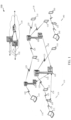
- FIG. 1 illustrates an example of a wireless communication system 100, in accordance with various aspects of the disclosure.
- the wireless communication system 100 may include base stations 105, UEs 115, and a core network 130.
- the core network 130 may provide user authentication, access authorization, tracking, Internet Protocol (IP) connectivity, and other access, routing, or mobility functions.
- IP Internet Protocol
- the base stations 105 may interface with the core network 130 through backhaul links 132 (e.g., S1, etc.) and may perform radio configuration and scheduling for communication with the UEs 115, or may operate under the control of a base station controller (not shown).
- the base stations 105 may communicate, either directly or indirectly (e.g ., through core network 130), with each other over backhaul links 134 (e.g., X1, etc.), which may be wired or wireless communication links.
- backhaul links 134 e.g., X1, etc.
- the base stations 105 may wirelessly communicate with the UEs 115 via one or more base station antennas. Each of the base station 105 sites may provide communication coverage for a respective geographic coverage area 110.
- a base station 105 may be referred to as a base transceiver station, a radio base station, an access point, a radio transceiver, a NodeB, an eNodeB (eNB), a Home NodeB, a Home eNodeB, or some other suitable terminology.
- the geographic coverage area 110 for a base station 105 may be divided into sectors making up a portion of the coverage area (not shown).
- the wireless communication system 100 may include base stations 105 of different types (e.g., macro or small cell base stations). There may be overlapping geographic coverage areas 110 for different technologies.
- the wireless communication system 100 may include an LTE/LTE-A network.
- LTE/LTE-A networks the term evolved Node B (eNB) may be used to describe the base stations 105, while the term UE may be used to describe the UEs 115.
- the wireless communication system 100 may be a Heterogeneous LTE/LTE-A network in which different types of eNBs provide coverage for various geographical regions. For example, each eNB or base station 105 may provide communication coverage for a macro cell, a small cell, or other types of cell.
- cell is a 3GPP term that can be used to describe a base station, a carrier or component carrier associated with a base station, or a coverage area (e.g., sector, etc.) of a carrier or base station, depending on context.
- a macro cell may cover a relatively large geographic area (e.g. , several kilometers in radius) and may allow unrestricted access by UEs with service subscriptions with the network provider.
- a small cell may be a lower-powered base station, as compared with a macro cell that may operate in the same or different (e.g., dedicated, shared, etc.) radio frequency spectrum bands as macro cells.
- Small cells may include pico cells, femto cells, and micro cells according to various examples.
- a pico cell may cover a relatively smaller geographic area and may allow unrestricted access by UEs with service subscriptions with the network provider.
- a femto cell also may cover a relatively small geographic area (e.g., a home) and may provide restricted access by UEs having an association with the femto cell (e.g., UEs in a closed subscriber group (CSG), UEs for users in the home, and the like).
- An eNB for a macro cell may be referred to as a macro eNB.
- An eNB for a small cell may be referred to as a small cell eNB, a pico eNB, a femto eNB or a home eNB.
- An eNB may support one or multiple (e.g., two, three, four, and the like) cells (e.g., component carriers).
- the wireless communication system 100 may support synchronous or asynchronous operation.
- the base stations may have similar frame timing, and transmissions from different base stations may be approximately aligned in time.
- the base stations may have different frame timing, and transmissions from different base stations may not be aligned in time.
- the techniques described herein may be used for either synchronous or asynchronous operations.
- the communication networks may be packet-based networks that operate according to a layered protocol stack.
- PDCP Packet Data Convergence Protocol
- a Radio Link Control (RLC) layer may perform packet segmentation and reassembly to communicate over logical channels.
- RLC Radio Link Control
- a Medium Access Control (MAC) layer may perform priority handling and multiplexing of logical channels into transport channels.
- the MAC layer may also use Hybrid ARQ (HARQ) to provide retransmission at the MAC layer to improve link efficiency.
- HARQ Hybrid ARQ
- the Radio Resource Control (RRC) protocol layer may provide establishment, configuration, and maintenance of an RRC connection between a UE 115 and the base stations 105 or core network 130 supporting radio bearers for the user plane data.
- RRC Radio Resource Control
- the transport channels may be mapped to physical channels.
- the UEs 115 may be dispersed throughout the wireless communication system 100, and each UE 115 may be stationary or mobile.
- a UE 115 may also include or be referred to by those skilled in the art as a mobile station, a subscriber station, a mobile unit, a subscriber unit, a wireless unit, a remote unit, a mobile device, a wireless device, a wireless communications device, a remote device, a mobile subscriber station, an access terminal, a mobile terminal, a wireless terminal, a remote terminal, a handset, a user agent, a mobile client, a client, or some other suitable terminology.
- a UE 115 may be a cellular phone, a personal digital assistant (PDA), a wireless modem, a wireless communication device, a handheld device, a tablet computer, a laptop computer, a cordless phone, a wireless local loop (WLL) station, or the like.
- PDA personal digital assistant
- a UE may be able to communicate with various types of base stations and network equipment, including macro eNBs, small cell eNBs, relay base stations, and the like.
- the communication links 125 shown in wireless communication system 100 may include downlink (DL) transmissions, from a base station 105 to a UE 115, or uplink (UL) transmissions, from a UE 115 to a base station 105.
- the downlink transmissions may also be called forward link transmissions, while the uplink transmissions may also be called reverse link transmissions.
- each communication link 125 may include one or more carriers, where each carrier may be a signal made up of multiple sub-carriers (e.g ., waveform signals of different frequencies) modulated according to the various radio technologies described above. Each modulated signal may be sent on a different sub-carrier and may carry control information (e.g., reference signals, control channels, etc.), overhead information, user data, etc.
- the communication links 125 may transmit bidirectional communications using a frequency domain duplexing (FDD) operation (e.g ., using paired spectrum resources) or a time domain duplexing (TDD) operation (e.g ., using unpaired spectrum resources).
- FDD frequency domain duplexing
- TDD time domain duplexing
- base stations 105 or UEs 115 may include multiple antennas for employing antenna diversity schemes to improve communication quality and reliability between base stations 105 and UEs 115. Additionally or alternatively, base stations 105 or UEs 115 may employ multiple-input, multiple-output (MIMO) techniques that may take advantage of multi-path environments to transmit multiple spatial layers carrying the same or different coded data.
- MIMO multiple-input, multiple-output
- the wireless communication system 100 may support operation on multiple cells or carriers, a feature which may be referred to as carrier aggregation (CA) or dual-connectivity operation.
- a carrier may also be referred to as a component carrier (CC), a layer, a channel, etc.
- CC component carrier
- the terms “carrier,” “component carrier,” “cell,” and “channel” may be used interchangeably herein.
- a UE 115 may be configured with multiple downlink CCs and one or more uplink CCs for carrier aggregation. Carrier aggregation may be used with both FDD and TDD component carriers.
- the wireless communication system 100 may support operation over a dedicated radio frequency spectrum (e.g ., a radio frequency spectrum band for which transmitting apparatuses may not contend for access because the radio frequency spectrum band is licensed to particular users for particular uses, such as a licensed radio frequency spectrum band usable for LTE/LTE-A communications) or a shared radio frequency spectrum band (e.g., a radio frequency spectrum band for which transmitting apparatuses may need to contend for access (e.g., a radio frequency spectrum band that is available for unlicensed use, such as Wi-Fi use, or a radio frequency spectrum band that is available for use by multiple operators in an equally shared or prioritized manner)).
- a dedicated radio frequency spectrum e.g ., a radio frequency spectrum band for which transmitting apparatuses may not contend for access because the radio frequency spectrum band is licensed to particular users for particular uses, such as a licensed radio frequency spectrum band usable for LTE/LTE-A communications
- a shared radio frequency spectrum band e.g., a radio frequency spectrum band for which transmit
- the shared radio frequency spectrum band may be shared with nodes communicating in accordance with a different RAT, such as Wi-Fi nodes communicating in accordance with a Wi-Fi RAT.
- FIG. 1 illustrates a Wi-Fi network 140 including a Wi-Fi access point 135 and a number of Wi-Fi stations 145.
- the Wi-Fi access point 135 and Wi-Fi stations 145 may communicate with one another in the vicinity of the base stations 105 and UEs 115, and under some scenarios, communications between the Wi-Fi access point 135 and Wi-Fi stations 145 may interfere with, or be interfered with, communications between the base stations 105 and UEs 115.
- FIG. 2 shows a wireless communication system 200 in which LTE/LTE-A may be deployed under different scenarios using a shared radio frequency spectrum band, in accordance with various aspects of the present disclosure. More specifically, FIG. 2 illustrates examples of a supplemental downlink mode (also referred to as a licensed assisted access mode), a carrier aggregation mode, and a standalone mode in which LTE/LTE-A is deployed using a shared radio frequency spectrum band.
- the wireless communication system 200 may be an example of portions of the wireless communication system 100 described with reference to FIG. 1 .
- a first base station 205 and a second base station 205-a may be examples of aspects of one or more of the base stations 105 described with reference to FIG.
- a first UE 215, a second UE 215-a, a third UE 215-b, and a fourth UE 215-c may be examples of aspects of one or more of the UEs 115 described with reference to FIG. 1 .
- the first base station 205 may transmit OFDMA waveforms to the first UE 215 using a downlink channel 220.
- the downlink channel 220 may be associated with a frequency F1 in a shared radio frequency spectrum band.
- the first base station 205 may transmit OFDMA waveforms to the first UE 215 using a first bidirectional link 225 and may receive SC-FDMA waveforms from the first UE 215 using the first bidirectional link 225.
- the first bidirectional link 225 may be associated with a frequency F4 in a dedicated radio frequency spectrum band.
- the downlink channel 220 in the shared radio frequency spectrum band and the first bidirectional link 225 in the dedicated radio frequency spectrum band may operate contemporaneously.
- the downlink channel 220 may provide a downlink capacity offload for the first base station 205.
- the downlink channel 220 may be used for unicast services (e.g ., addressed to one UE) or for multicast services (e.g ., addressed to several UEs). This scenario may occur with any service provider (e.g., a mobile network operator (MNO)) that uses a dedicated radio frequency spectrum band and needs to relieve some of the traffic or signaling congestion.
- MNO mobile network operator
- the first base station 205 may transmit OFDMA waveforms to the second UE 215-a using a second bidirectional link 230 and may receive OFDMA waveforms, SC-FDMA waveforms, or resource block interleaved FDMA waveforms from the second UE 215-a using the second bidirectional link 230.
- the second bidirectional link 230 may be associated with the frequency F1 in the shared radio frequency spectrum band.
- the first base station 205 may also transmit OFDMA waveforms to the second UE 215-a using a third bidirectional link 235 and may receive SC-FDMA waveforms from the second UE 215-a using the third bidirectional link 235.
- the third bidirectional link 235 may be associated with a frequency F2 in a dedicated radio frequency spectrum band.
- the second bidirectional link 230 may provide a downlink and uplink capacity offload for the first base station 205.
- this scenario may occur with any service provider (e.g ., MNO) that uses a dedicated radio frequency spectrum band and needs to relieve some of the traffic or signaling congestion.
- the first base station 205 may transmit OFDMA waveforms to the third UE 215-b using a fourth bidirectional link 240 and may receive OFDMA waveforms, SC-FDMA waveforms, or resource block interleaved waveforms from the third UE 215-b using the fourth bidirectional link 240.
- the fourth bidirectional link 240 may be associated with a frequency F3 in the shared radio frequency spectrum band.
- the first base station 205 may also transmit OFDMA waveforms to the third UE 215-b using a fifth bidirectional link 245 and may receive SC-FDMA waveforms from the third UE 215-b using the fifth bidirectional link 245.
- the fifth bidirectional link 245 may be associated with the frequency F2 in the dedicated radio frequency spectrum band.
- the fourth bidirectional link 240 may provide a downlink and uplink capacity offload for the first base station 205.
- This example and those provided above are presented for illustrative purposes and there may be other similar modes of operation or deployment scenarios that combine LTE/LTE-A in a dedicated radio frequency spectrum band and use a shared radio frequency spectrum band for capacity offload.
- an operational example may include a bootstrapped mode (e.g., supplemental downlink (e.g., licensed assisted access), carrier aggregation) that uses the LTE/LTE-A primary component carrier (PCC) on the dedicated radio frequency spectrum band and at least one secondary component carrier (SCC) on the shared radio frequency spectrum band.
- a bootstrapped mode e.g., supplemental downlink (e.g., licensed assisted access), carrier aggregation
- PCC primary component carrier
- SCC secondary component carrier
- data and control may, for example, be communicated in the dedicated radio frequency spectrum band (e.g ., via first bidirectional link 225, third bidirectional link 235, and fifth bidirectional link 245) while data may, for example, be communicated in the shared radio frequency spectrum band (e.g ., via second bidirectional link 230 and fourth bidirectional link 240).
- the carrier aggregation mechanisms supported when using a shared radio frequency spectrum band may fall under a hybrid frequency division duplexing-time division duplexing (FDD-TDD) carrier aggregation or a TDD-TDD carrier aggregation with different symmetry across component carriers.
- FDD-TDD hybrid frequency division duplexing-time division duplexing
- the second base station 205-a may transmit OFDMA waveforms to the fourth UE 215-c using a bidirectional link 250 and may receive OFDMA waveforms, SC-FDMA waveforms, or resource block interleaved FDMA waveforms from the fourth UE 215-c using the bidirectional link 250.
- the bidirectional link 250 may be associated with the frequency F3 in the shared radio frequency spectrum band.
- the standalone mode may be used in non-traditional wireless access scenarios, such as in-stadium access ( e.g ., unicast, multicast).
- An example of a type of service provider for this mode of operation may be a stadium owner, cable company, event host, hotel, enterprise, or large corporation that does not have access to a dedicated radio frequency spectrum band.
- a transmitting apparatus such as one of the base stations 105, 205, or 205-a described with reference to FIG. 1 or 2 , or one of the UEs 115, 215, 215-a, 215-b, or 215-c described with reference to FIG. 1 or 2 , may use a gating interval to gain access to a channel of a shared radio frequency spectrum band (e.g., to a physical channel of the shared radio frequency spectrum band).
- the gating interval may be periodic.
- the periodic gating interval may be synchronized with at least one boundary of an LTE/LTE-A radio interval.
- the gating interval may define the application of a contention-based protocol, such as an LBT protocol based on the LBT protocol specified in European Telecommunications Standards Institute (ETSI) (EN 301 893).
- ETSI European Telecommunications Standards Institute
- the gating interval may indicate when a transmitting apparatus needs to perform a contention procedure (e.g ., an LBT procedure) such as a clear channel assessment (CCA) procedure.
- CCA clear channel assessment
- the outcome of the CCA procedure may indicate to the transmitting apparatus whether a channel of a shared radio frequency spectrum band is available or in use for the gating interval (also referred to as an LBT radio frame).
- the transmitting apparatus may reserve or use the channel of the shared radio frequency spectrum band during part or all of the LBT radio frame.
- the transmitting apparatus may be prevented from using the channel during the LBT radio frame.
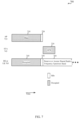
- FIG. 3 shows an example 300 of a wireless communication 310 over a shared radio frequency spectrum band, in accordance with various aspects of the present disclosure.
- the wireless communication 310 may include one or more component carriers, which component carrier(s) may be transmitted, for example, as part of a transmission made according to the supplemental downlink mode (e.g., the licensed assisted access mode), the carrier aggregation mode, or the standalone mode described with reference to FIG. 2 .
- the supplemental downlink mode e.g., the licensed assisted access mode
- the carrier aggregation mode e.g., the standalone mode described with reference to FIG. 2 .
- an LBT radio frame 315 of the wireless communication 310 may have a duration of ten milliseconds and include a number of downlink (D) subframes 320, a number of uplink (U) subframes 325, and two types of special subframes, an S subframe 330 and an S' subframe 335.
- the S subframe 330 may provide a transition between downlink subframes 320 and uplink subframes 325
- the S' subframe 335 may provide a transition between uplink subframes 325 and downlink subframes 320 and, in some examples, a transition between LBT radio frames.
- a downlink clear channel assessment (DCCA) procedure 345 may be performed by one or more base stations, such as one or more of the base stations 105, 205, or 205-a described with reference to FIG. 1 or 2 , to reserve, for a period of time, a channel of the shared radio frequency spectrum band over which the wireless communication 310 occurs.
- the base station may transmit a channel usage beacon signal (CUBS) (e.g., a downlink CUBS (D-CUBS 350)) to provide an indication to other base stations or apparatuses (e.g., UEs, Wi-Fi access points, etc.) that the base station has reserved the channel.
- CUBS channel usage beacon signal
- a D-CUBS 350 may be transmitted using a plurality of interleaved resource blocks. Transmitting a D-CUBS 350 in this manner may enable the D-CUBS 350 to occupy at least some percentage of the available frequency bandwidth of the shared radio frequency spectrum band and satisfy one or more regulatory requirements (e.g ., a requirement that transmissions over the shared radio frequency spectrum band occupy at least 80% of the available frequency bandwidth).
- the D-CUBS 350 may in some examples take a form similar to that of an LTE/LTE-A cell-specific reference signal (CRS) or a channel state information reference signal (CSI-RS). When the DCCA procedure 345 fails, the D-CUBS 350 may not be transmitted.
- the S' subframe 335 may include a plurality of OFDM symbol periods (e.g., 14 OFDM symbol periods). A first portion of the S' subframe 335 may be used by a number of UEs as a shortened uplink (U) period. A second portion of the S' subframe 335 may be used for the DCCA procedure 345. A third portion of the S' subframe 335 may be used by one or more base stations that successfully contend for access to the channel of the shared radio frequency spectrum band as a downlink pilot time slot (DwPTS) or to transmit the D-CUBS 350.
- DwPTS downlink pilot time slot
- an uplink CCA (UCCA) procedure 365 may be performed by one or more UEs, such as one or more of the UEs 115, 215, 215-a, 215-b, or 215-c described above with reference to FIG. 1 or 2 , to reserve, for a period of time, the channel over which the wireless communication 310 occurs.
- the UE may transmit an uplink CUBS (U-CUBS 370) to provide an indication to other UEs or apparatuses (e.g., base stations, Wi-Fi access points, etc.) that the UE has reserved the channel.
- U-CUBS 370 uplink CUBS
- a U-CUBS 370 may be transmitted using a plurality of interleaved resource blocks. Transmitting a U-CUBS 370 in this manner may enable the U-CUBS 370 to occupy at least a certain percentage of the available frequency bandwidth of the shared radio frequency spectrum band and satisfy one or more regulatory requirements (e.g ., the requirement that transmissions over the shared radio frequency spectrum band occupy at least 80% of the available frequency bandwidth).
- the U-CUBS 370 may in some examples take a form similar to that of an LTE/LTE-A CRS or CSI-RS. When the UCCA procedure 365 fails, the U-CUBS 370 may not be transmitted.
- the S subframe 330 may include a plurality of OFDM symbol periods (e.g. , 14 OFDM symbol periods).
- a first portion of the S subframe 330 may be used by a number of base stations as a shortened downlink (D) period 355.
- a second portion of the S subframe 330 may be used as a guard period (GP) 360.
- a third portion of the S subframe 330 may be used for the UCCA procedure 365.
- a fourth portion of the S subframe 330 may be used by one or more UEs that successfully contend for access to the channel of the shared radio frequency spectrum band as an uplink pilot time slot (UpPTS) or to transmit the U-CUBS 370.
- UpPTS uplink pilot time slot
- the DCCA procedure 345 or the UCCA procedure 365 may include the performance of a CCA procedure during a single CCA slot. In other examples, the DCCA procedure 345 or the UCCA procedure 365 may include the performance of an extended CCA (ECCA) procedure. The ECCA procedure may be performed over a plurality of CCA slots. The terms DCCA procedure and UCCA procedure are therefore intended to be broad enough to cover the performance of either a CCA procedure or an ECCA procedure. The selection of a CCA procedure or an ECCA procedure, for performance by a base station or a UE during an LBT radio frame, may be based on LBT rules. In some cases, the term CCA procedure may be used in this disclosure, in a general sense, to refer to either a CCA procedure or an ECCA procedure.
- the LBT radio frame 315 has a DDDDDDSUUS' TDD frame structure.
- an LBT radio frame may have a different TDD frame structure.
- an LBT radio frame may have one of the TDD frame structures used in enhanced interference mitigation and traffic adaptation (eIMTA).
- eIMTA enhanced interference mitigation and traffic adaptation
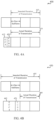
- FIG. 4A shows an example 400 of a CCA procedure 415 performed by a transmitting apparatus when contending for access to a shared radio frequency spectrum band, in accordance with various aspects of the present disclosure.
- the CCA procedure 415 may be an example of the DCCA procedure 345 or UCCA procedure 365 described with reference to FIG. 3 .
- the CCA procedure 415 may be performed over a single CCA slot and have a fixed duration.
- the CCA procedure 415 may be performed in accordance with an LBT-frame based equipment (LBT-FBE) protocol (e.g., the LBT-FBE protocol described by EN 301 893).
- LBT-FBE LBT-frame based equipment
- a CUBS 420 may be transmitted, followed by a data transmission (e.g ., an uplink transmission or a downlink transmission).
- a data transmission e.g ., an uplink transmission or a downlink transmission.
- the data transmission may have an intended duration 405 of three subframes and an actual duration 410 of three subframes.
- FIG. 4B shows an example 450 of an ECCA procedure 465 performed by a transmitting apparatus when contending for access to an unlicensed radio frequency spectrum band, in accordance with various aspects of the present disclosure.
- the ECCA procedure 465 may be an example of the DCCA procedure 345 or UCCA procedure 365 described with reference to FIG. 3 .
- the ECCA procedure 465 may be performed over a plurality of q CCA slots, and in some examples may require that the shared radio frequency spectrum band be available during a random number, N, of the q CCA slots before the transmitting apparatus may win contention for access to the shared radio frequency spectrum band.
- the ECCA procedure 465 may be performed after the performance of a CCA procedure 415 (as described with reference to FIG.
- the ECCA procedure 465 may be performed in accordance with an LBT-load based equipment (LBT-LBE) protocol (e.g., the LBT-LBE protocol described by EN 301 893).
- LBT-LBE LBT-load based equipment
- the ECCA procedure 465 may provide a greater likelihood of winning contention to access the unlicensed radio frequency spectrum band, but at a potential cost of a shorter data transmission.
- a CUBS 470 may be transmitted, followed by a data transmission.
- the data transmission may have an intended duration 455 of three subframes and an actual duration 460 of two subframes.
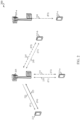
- FIG. 5 illustrates communications between a Wi-Fi access point 535 and a Wi-Fi station 545, in the vicinity of a base station 505, in accordance with various aspects of the present disclosure.
- the Wi-Fi access point 535 and Wi-Fi station 545 may be respective examples of aspects of the Wi-Fi access point 135 and Wi-Fi station 145 described with reference to FIG. 1 .
- the base station 505 may be an example of aspects of one or more of the base stations 105, 205, or 205-a described with reference to FIG. 1 or 2 .
- the base station 505 may have an energy detection range 510.
- the base station 505 may perform an LBT procedure (e.g ., a CCA procedure or an ECCA procedure) to contend for access to the shared radio frequency spectrum band.
- the base station 505 may perform the LBT procedure when the Wi-Fi access point 535 is communicating with the Wi-Fi station 545, and the base station 505 may detect an energy of the Wi-Fi access point's transmissions over the shard radio frequency spectrum band and determine that the shared radio frequency spectrum band is unavailable.
- the base station 505 may perform an LBT procedure when the Wi-Fi station 545 is communicating with the Wi-Fi access point 535, and the base station 505 may not detect an energy of the Wi-Fi station's transmissions over the shared radio frequency spectrum band (e.g. , because the Wi-Fi station 545 is outside the energy detection range 510 of the base station 505).
- the base station 505 may determine that the shared radio frequency spectrum band is available and begin a transmission that interferes with the "in process" communications between the Wi-Fi access point 535 and Wi-Fi station 545.
- the base station's transmission may also trigger an exponential backoff mode of the Wi-Fi access point 535 or Wi-Fi station 545, which may make it relatively more difficult for the Wi-Fi access point 535 or Wi-Fi station 545 to regain access to the shared radio frequency spectrum band. This may be unfair to the Wi-Fi nodes (e.g., the Wi-Fi access point 535 or the Wi-Fi station 545), and under some conditions may be undesirable.
- FIG. 6 shows various Wi-Fi transmission formats involving a Wi-Fi access point (AP) and a Wi-Fi station (STA), in accordance with various aspects of the present disclosure.
- a Wi-Fi access point transmits data (“Data") that is acknowledged by a Wi-Fi station (via an "ACK").
- a Wi-Fi access point transmits a request to send (RTS) signal that is acknowledged by a Wi-Fi station (e.g ., via a clear to send (CTS) signal).
- RTS request to send
- CTS clear to send
- a Wi-Fi access point transmits a null data packet (NDP) announcement packet followed by a NDP packet.
- NDP null data packet
- Each of a first Wi-Fi station (STA_1), a second Wi-Fi station (STA_2), and a third Wi-Fi station (STA_3) may then sequentially transmit a respective compressed beamforming packet ("Data") which is followed by a beamforming poll packet ("Poll”) transmitted by the Wi-Fi access point.
- Data compressed beamforming packet
- Policy beamforming poll packet
- a Wi-Fi access point may transmit a DL trigger to a plurality of Wi-Fi stations (e.g ., STA_1, STA_2, and STA_3), and each of the Wi-Fi stations may respond with a data transmission ("Data") as part of a UL MU-MIMO transmission.
- Data data transmission
- changes in the direction of communications between the Wi-Fi access point and Wi-Fi station(s) may be separated by a short interframe spacing (SIFS).
- SIFS short interframe spacing
- a base station or UE contending for access to a shared radio frequency spectrum band over which the Wi-Fi communications are carried may interpret the SIFS as an indication that the shared radio frequency spectrum band is available ( e.g ., idle).
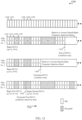
- the number of consecutive CCA slots may include at least one of: a last number of CCA slots in which the extended CCA procedure is performed, or a number of CCA slots in which the extended CCA procedure is performed in combination with at least one CCA slot following a last CCA slot in which the extended CCA procedure is performed (e.g ., the first CCA slot 875 and the second CCA slot 880 could be CCA slots in which the extended CCA procedure is performed, and because the ECCA procedure concludes before the shared radio frequency spectrum band has been determined available in the identified number of consecutive slots, the ECCA procedure may be continued, or one or more additional CCA procedures may be performed, in the third CCA slot 885 and the fourth CCA slot 890.
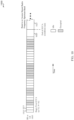
- FIG. 9 shows an exemplary timeline 900 of communications over a shared radio frequency spectrum band, between a Wi-Fi access point (AP) 935 and a Wi-Fi station (STA) 945, as an apparatus 905 (e.g., a base station (BS) or UE) contends for access to the shared radio frequency spectrum band, in accordance with various aspects of the present disclosure.
- the Wi-Fi access point 935 or the Wi-Fi station 945 may be an example of aspects of one or more of the Wi-Fi access points 135, 535, 735, or 835 or Wi-Fi stations 145, 545, 745, or 845, respectively, as described with reference to FIG. 1 , 5 , 7 , or 8 .
- the communications between the Wi-Fi access point 935 and the Wi-Fi station 945 may assume, for example, any of the Wi-Fi transmission formats shown in FIG. 6 , and may switch between uplink transmissions and downlink transmissions one or more times.
- the communications between the Wi-Fi access point 935 and the Wi-Fi station 945 are shown to assume the first Wi-Fi transmission format 600 shown in FIG. 6 , in which data is transmitted from the Wi-Fi access point 935 to the Wi-Fi station 945 during a period 910, and then an ACK is transmitted from the Wi-Fi station 945 to the Wi-Fi access point 935 during a period 930 following a SIFS 920.
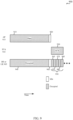
- One way to decrease the chance that the apparatus 1005 will successfully complete an ECCA procedure, during a perceived gap in transmissions between a Wi-Fi access point and one or more Wi-Fi stations, is to increase a duration of a last CCA slot 1020 in which an extended CCA procedure is performed in the CCA slots (e.g., from 20 microseconds to 40, 50, or 60 microseconds).
- the apparatus 1005 may win contention for access to the shared radio frequency spectrum band during a period 1025 following the last CCA slot 1020. If one or the other condition is not met, the apparatus 1005 may be configured to refrain from accessing the shared radio frequency spectrum band during the period 1025. In some examples, winning contention for access to the shared radio frequency spectrum band may require successfully performing an ECCA procedure in the last CCA slot 1020 and one or more consecutive CCA slots, as described with reference to FIG. 8 . In some examples, the duration of the last CCA slot 1020 may be increased and its CCA energy detection threshold may set to a second CCA energy detection threshold as described with reference to FIG. 9 . Such a modification (or modifications) to an ECCA procedure may be made per cell or per UE, and may be made by a base station (for one or more UEs) or a UE.
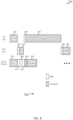
- FIG. 11 shows exemplary timelines (e.g ., a first timeline 1100, and a second timeline 1150) of CCA slots (e.g., a first CCA slot 1110, a second CCA slot 1115, etc.) in which a first ECCA procedure and a second ECCA procedure may be performed by an apparatus 1105 (e.g., a base station (BS) or UE) contending for access to a shared radio frequency spectrum band, in accordance with various aspects of the present disclosure.
- an apparatus 1105 e.g., a base station (BS) or UE
- the apparatus 1105 may be an example of aspects of one or more of the base stations 105, 205, 205-a, or 505, or one or more of the UEs 115, 215, 215-a, 215-b, or 215-c, described with reference to FIG. 1 , 2 , or 5 .
- the apparatus 1105 may also or alternatively be an example of aspects of one or more of the apparatuses 705, 805, 905, or 1005 described with reference to FIG. 7 , 8 , 9 , or 10 .
- the plurality of ECCA procedures may include a first ECCA procedure followed by a second ECCA procedure.
- the first ECCA procedure may be performed over a first number of CCA slots and the second ECCA procedure may be performed over a second number of CCA slots.
- the second number of CCA slots may be less than the first number of CCA slots.
- the first ECCA procedure and the second ECCA procedure may be performed consecutively, or the first number of CCA slots may be contiguous to the second number of CCA slots.
- successful performance of the first ECCA procedure may be configured to determine the shared radio frequency spectrum band is available for a first random number of CCA slots (e.g., N1 CCA slots), and successful performance of the second ECCA procedure may be configured to determine the shared radio frequency spectrum band is available for a second random number of CCA slots (e.g., N2 CCA slots).
- a first random number of CCA slots e.g., N1 CCA slots
- successful performance of the second ECCA procedure may be configured to determine the shared radio frequency spectrum band is available for a second random number of CCA slots (e.g., N2 CCA slots).
- the first random number of CCA slots may be selected from a first range of numbers having a first lower bound ( q1 min ) and a first upper bound ( q1 max ), such that N1 ⁇ [ q1 min , q1 max ]
- the second random number of CCA slots may be selected from a second range of numbers having a second lower bound ( q2 min ) and a second upper bound ( q2 max ), such that N2 ⁇ [ q2 min , q2 max ].
- the first random number and the second random number may be selected such that N1 ⁇ [6, 32] and N2 ⁇ [1, 5].
- the first timeline 1100 shows an example in which the first ECCA procedure is not successful, but the second ECCA procedure is successful.
- the second timeline 1150 shows an example in which the first ECCA procedure is not successful, and the second ECCA procedure is not successful.
- the second ECCA procedure may be configured as described with reference to FIG. 8 , 9 , or 10 , with a second CCA energy detection threshold, a last CCA slot of longer duration, etc.
- FIG. 12 shows an exemplary timeline 1200 of communications over a shared radio frequency spectrum band, between a Wi-Fi access point (AP) 1235 and a Wi-Fi station (STA) 1245, as an apparatus 1205 (e.g., a base station (BS) or UE) contends for access to the shared radio frequency spectrum band, in accordance with various aspects of the present disclosure.
- the Wi-Fi access point 1235 or the Wi-Fi station 1245 may be an example of aspects of one or more of the Wi-Fi access points 135, 535, 735, 835, or 935 or Wi-Fi stations 145, 545, 745, 845, or 945, respectively, as described with reference to FIG. 1 , 5 , 7 , 8 , or 9 .
- the apparatus 1205 may be an example of aspects of one or more of the base stations 105, 205, 205-a, or 505, or one or more of the UEs 115, 215, 215-a, 215-b, or 215-c, described with reference to FIG. 1 , 2 , or 5 .
- the apparatus 1205 may also or alternatively be an example of aspects of one or more of the apparatuses 705, 805, 905, 1005, or 1105 described with reference to FIG. 7 , 8 , 9 , 10 , or 11 .
- the communications between the Wi-Fi access point 1235 and the Wi-Fi station 1245 may assume, for example, any of the Wi-Fi transmission formats shown in FIG. 6 , and may switch between uplink transmissions and downlink transmissions one or more times.
- the communications between the Wi-Fi access point 1235 and the Wi-Fi station 1245 are shown to assume the first Wi-Fi transmission format shown in FIG. 6 , in which data is transmitted from the Wi-Fi access point 1235 to the Wi-Fi station 1245 during a period 1210, and then an ACK is transmitted from the Wi-Fi station 1245 to the Wi-Fi access point 1235 during a period 1230 following a SIFS 1220.
- FIG. 12 assumes that the Wi-Fi station 1245 is a hidden node with respect to the apparatus 1205, and thus, the apparatus 1205 may detect the data transmission during period 1210 and determine that the shared radio frequency spectrum band is occupied during a period 1240, but may not detect the ACK transmission during period 1230. As a result, if the apparatus 1205 successfully completes an ECCA procedure during the period 1250, the apparatus 1205 may determine that the shared radio frequency spectrum band is available and begin transmitting data that interferes with reception of the ACK transmission by the Wi-Fi access point 1235. The Wi-Fi access point's failure to receive or properly decode the ACK transmission may trigger the start or continuation of an exponential backoff by the Wi-Fi access point 1235.
- the deferment period 1255 may be a period for which the apparatus 1205 waits before performing an additional number of CCA procedures (which additional number of CCA procedures may include one or more CCA procedures, or which additional number of CCA procedures may include an additional number of one or more ECCA procedures).
- additional number of CCA procedures may include one or more CCA procedures, or which additional number of CCA procedures may include an additional number of one or more ECCA procedures.
- the apparatus 1205 may win contention for access to the shared radio frequency spectrum band.
- Wi-Fi nodes may use one of two mechanisms to reduce collisions over a Wi-Fi network (e.g ., over a shared radio frequency spectrum band).
- the first mechanism is exponential backoff on a per packet basis
- the second mechanism is an adaptation of the contention window minimum length (CW_min) over a period of time.
- CW_min contention window minimum length
- adaptation of the maximum number of CCA slots over which an ECCA procedure is performed e.g., the value "q"
- the value of q used by one or more apparatuses may be configured in response to an identified potential for interference, which potential for interference may be identified, for example, based at least in part on one or more of: a number of transmitters (e.g ., a number of Wi-Fi transmitters) detected within an energy detection range of the apparatus; a failure rate of transmissions (e.g., subframes) for which feedback is reported (e.g., by a UE); an erasure rate for transmissions (e.g., subframes) for which an error is not reported (e.g., because of bursty interference blanking ACKs/NAKs transmitted by a UE); or a variance between a supported modulation and coding scheme (MCS; e.g., an MCS based on a determined reference signal received power (RSRP)) and an MCS actually used (e.g., an MCS based on outer loop HARQ processing).
- MCS modulation and coding scheme
- the value of q used by one or more apparatuses may be configured by linearly increasing q or linearly decreasing q over time. In some examples, the value of q used by one or more apparatuses may be configured by multiplicatively increasing q or linearly decreasing q over time. In some examples, the value of q used by one or more apparatuses may be configured by multiplicatively increasing q or multiplicatively decreasing q over time.
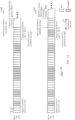
- FIG. 13 shows an exemplary timeline 1300 of CCA slots (e.g., a first CCA slot 1310, a second CCA slot 1315, a third CCA slot 1320, a fourth CCA slot 1325, etc.) in which an ECCA procedure may be performed by an apparatus 1305 (e.g., a base station or UE) contending for access to a shared radio frequency spectrum band, in accordance with various aspects of the present disclosure.
- the apparatus 1305 may be an example of aspects of one or more of the base stations 105, 205, 205-a, or 505, or one or more of the UEs 115, 215, 215-a, 215-b, 215-c, or 515, described with reference to FIG.
- the apparatus 1305 may also or alternatively be an example of aspects of one or more of the apparatuses 705, 805, 905, 1005, 1105, or 1205 described with reference to FIG. 7 , 8 , 9 , 10 , 11 , or 12 .
- the observation periods over which the ECCA procedures are performed may be divided into a plurality of consecutive, nominal time periods (e.g., consecutive time periods of 20 microseconds, including a first time period 1330, a second time period 1335, etc.).
- An idle CCA slot may correspond to a preconfigured period of time for which the shared radio frequency spectrum band is determined to be available (e.g., one of the consecutive, nominal time periods).
- An occupied CCA sot may correspond to an entirety of a contiguous period for which the shared radio frequency spectrum band is determined to be unavailable ( e.g ., the three consecutive nominal time periods 1340, 1345, and 1350).
- 13 idle CCA slots and 3 occupied CCA slots may be identified during the performance of the ECCA procedure.
- the apparatus 1305 may win contention for access to the shared radio frequency spectrum band at time 1355 and thereafter reserve or access the shared radio frequency spectrum band.
- the apparatus 1305 may begin a second ECCA procedure.
- the second ECCA procedure may begin immediately after the first ECCA procedure terminates, or after a deferment period, or at a next occasion for contending for access to the shared radio frequency spectrum band.
- the apparatus 1305 may implement an exponential backoff mechanism, such that the second ECCA procedure is performed in the context of a larger value of q or N.
- the value of q may be doubled for each successive ECCA procedure performed.
- the value of q may be incremented in a linear or multiplicative manner.
- the ECCA procedure(s) described with reference to the second and third examples shown in FIG. 13 may reduce the chance that different apparatuses contending for the shared radio frequency spectrum band will synchronize with each other and collide in accessing the shared radio frequency spectrum band.
- the second and third examples shown in FIG. 13 may also reduce the time to access the shared radio frequency spectrum band - especially when q values are relatively large and N values are relatively small.
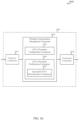
- FIG. 14 shows a block diagram 1400 of an apparatus 1405 for use in wireless communication, in accordance with various aspects of the present disclosure.
- the apparatus 1405 may be an example of aspects of one or more of the base stations 105, 205, 205-a, or 505, or one or more aspects of the UEs 115, 215, 215-a, 215-b, or 215-c described with reference to FIG. 1 , 2 , or 5 .
- the apparatus 1405 may also or alternatively be an example of aspects of one or more of the apparatuses 705, 805, 905, 1005, 1105, 1205, or 1305 described with reference to FIG. 7 , 8 , 9 , 10 , 11 , 12 , or 13 .
- the apparatus 1405 may also be or include a processor.
- the apparatus 1405 may include a receiver component 1410, a wireless communication management component 1420, or a transmitter component 1430. Each of these components may be in communication with each other.
- the components of the apparatus 1405 may, individually or collectively, be implemented using one or more application-specific integrated circuits (ASICs) adapted to perform some or all of the applicable functions in hardware. Alternatively, the functions may be performed by one or more other processing units (or cores), on one or more integrated circuits. In other examples, other types of integrated circuits may be used (e.g., Structured/Platform ASICs, Field Programmable Gate Arrays (FPGAs), a System on Chip (SoC), or other types of Semi-Custom ICs), which may be programmed in any manner known in the art.
- the functions of each component may also be implemented, in whole or in part, with instructions embodied in a memory, formatted to be executed by one or more general or application-specific processors.
- the receiver component 1410 may include at least one radio frequency (RF) receiver, such as at least one RF receiver operable to receive transmissions over a dedicated radio frequency spectrum band or a shared radio frequency spectrum band.
- the dedicated radio frequency spectrum band may include a radio frequency spectrum band for which transmitting apparatuses may not contend for access (e.g., a radio frequency spectrum band licensed to particular users for particular uses, such as a licensed radio frequency spectrum band usable for LTE/LTE-A communications).
- the shared radio frequency spectrum band may include a radio frequency spectrum band for which transmitting apparatuses may need to contend for access (e.g., a radio frequency spectrum band that is available for unlicensed use, such as Wi-Fi use, or a radio frequency spectrum band that is available for use by multiple operators in an equally shared or prioritized manner).
- the dedicated radio frequency spectrum band or the shared radio frequency spectrum band may be used for LTE/LTE-A communications, as described, for example, with reference to FIG. 1 or 2 .
- the receiver component 1410 may be used to receive various types of data or control signals (i.e., transmissions) over one or more communication links of a wireless communication system, such as one or more communication links of the wireless communication system 100 or 200 described with reference to FIG. 1 or 2 .
- the communication links may be established over the dedicated radio frequency spectrum band or the shared radio frequency spectrum band.
- the transmitter component 1430 may include at least one RF transmitter, such as at least one RF transmitter operable to transmit over the dedicated radio frequency spectrum band or the shared radio frequency spectrum band.
- the transmitter component 1430 may be used to transmit various types of data or control signals (i.e., transmissions) over one or more communication links of a wireless communication system, such as one or more communication links of the wireless communication system 100 or 200 described with reference to FIG. 1 or 2 .
- the communication links may be established over the dedicated radio frequency spectrum band or the shared radio frequency spectrum band.
- the wireless communication management component 1420 may be used to manage one or more aspects of wireless communication for the apparatus 1405.
- the wireless communication management component 1420 may include a first RAT communications sensing component 1435 or a second RAT parameter configuration component 1440.
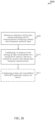
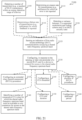
- the first RAT communications sensing component 1435 may be used to sense an indication of first RAT (e.g. , Wi-Fi RAT) communications occupying a shared radio frequency spectrum band.
- the first RAT communications may or may not be a cause of interfere with transmissions to or from the apparatus 1405 or one or more other apparatuses.
- the second RAT parameter configuration component 1440 may be used to configure, in response to the sensing, at least one parameter of a second RAT (e.g., a cellular RAT) used by a device to contend for access to the shared radio frequency spectrum band.
- the device may be the apparatus 1405 or another apparatus.
- the apparatus 1405 when the apparatus 1405 is a base station, the device for which the at least one parameter of the second RAT is configured may be the apparatus 1405, a single UE, or a plurality of UEs (e.g., all of the UEs of a cell in which the apparatus 1405 operates).
- the apparatus 1405 is a UE, the device for which the at least one parameter of the second RAT is configured may be the apparatus 1405.
- the components of the apparatus 1505 may, individually or collectively, be implemented using one or more ASICs adapted to perform some or all of the applicable functions in hardware. Alternatively, the functions may be performed by one or more other processing units (or cores), on one or more integrated circuits. In other examples, other types of integrated circuits may be used (e.g ., Structured/Platform ASICs, FPGAs, a SoC, or other types of Semi-Custom ICs), which may be programmed in any manner known in the art.
- the functions of each component may also be implemented, in whole or in part, with instructions embodied in a memory, formatted to be executed by one or more general or application-specific processors.
- a CDMA system may implement a radio technology such as CDMA2000, Universal Terrestrial Radio Access (UTRA), etc.
- CDMA2000 covers IS-2000, IS-95, and IS-856 standards.
- IS-2000 Releases 0 and A are commonly referred to as CDMA2000 1X, 1X, etc.
- IS-856 (TIA-856) is commonly referred to as CDMA2000 1xEV-DO, High Rate Packet Data (HRPD), etc.
- UTRA includes Wideband CDMA (WCDMA) and other variants of CDMA.
- a TDMA system may implement a radio technology such as Global System for Mobile Communications (GSM).
- GSM Global System for Mobile Communications
- An OFDMA system may implement a radio technology such as Ultra Mobile Broadband (UMB), Evolved UTRA (E-UTRA), IEEE 802.11 (Wi-Fi), IEEE 802.16 (WiMAX), IEEE 802.20, Flash-OFDM TM , etc.
- UMB Ultra Mobile Broadband
- E-UTRA Evolved UTRA
- Wi-Fi Wi-Fi
- WiMAX IEEE 802.16
- IEEE 802.20 Flash-OFDM TM
- UMB Ultra Mobile Broadband
- E-UTRA Evolved UTRA
- Wi-Fi Wi-Fi
- WiMAX IEEE 802.16
- IEEE 802.20 Flash-OFDM TM
- UTRA and E-UTRA are part of Universal Mobile Telecommunication System (UMTS).
- 3GPP Long Term Evolution (LTE) and LTE-Advanced (LTE-A) are new releases of
- CDMA2000 and UMB are described in documents from an organization named "3rd Generation Partnership Project 2" (3GPP2).
- 3GPP2 3rd Generation Partnership Project 2
- the techniques described herein may be used for the systems and radio technologies mentioned above as well as other systems and radio technologies, including cellular (e.g., LTE) communications over a shared radio frequency spectrum band.
- LTE Long Term Evolution
- LTE terminology is used in much of the description above, although the techniques are applicable beyond LTE/LTE-A applications.
- Information and signals may be represented using any of a variety of different technologies and techniques.
- data, instructions, commands, information, signals, bits, symbols, and chips that may be referenced throughout the above description may be represented by voltages, currents, electromagnetic waves, magnetic fields or particles, optical fields or particles, or any combination thereof.
- a general-purpose processor may be a microprocessor, but in the alternative, the processor may be any conventional processor, controller, microcontroller, or state machine.
- a processor may also be implemented as a combination of computing devices, e.g., a combination of a DSP and a microprocessor, multiple microprocessors, one or more microprocessors in conjunction with a DSP core, or any other such configuration.
- the term "or,” when used in a list of two or more items, means that any one of the listed items can be employed by itself, or any combination of two or more of the listed items can be employed. For example, if a composition is described as containing components A, B, or C, the composition can contain A alone; B alone; C alone; A and B in combination; A and C in combination; B and C in combination; or A, B, and C in combination.
- Computer-readable media includes both computer storage media and communication media including any medium that facilitates transfer of a computer program from one place to another.
- a storage medium may be any available medium that can be accessed by a general purpose or special purpose computer.
- computer-readable media can include RAM, ROM, EEPROM, flash memory, CD-ROM or other optical disk storage, magnetic disk storage or other magnetic storage devices, or any other medium that can be used to carry or store desired program code means in the form of instructions or data structures and that can be accessed by a general-purpose or special-purpose computer, or a general-purpose or special-purpose processor.
- any connection is properly termed a computer-readable medium.
Landscapes
- Engineering & Computer Science (AREA)
- Computer Networks & Wireless Communication (AREA)
- Signal Processing (AREA)
- Quality & Reliability (AREA)
- Mobile Radio Communication Systems (AREA)
Priority Applications (1)
| Application Number | Priority Date | Filing Date | Title |
|---|---|---|---|
| EP20212883.1A EP3809792B1 (en) | 2015-02-11 | 2016-02-10 | Techniques for managing a plurality of radio access technologies accessing a shared radio frequency spectrum band |
Applications Claiming Priority (4)
| Application Number | Priority Date | Filing Date | Title |
|---|---|---|---|
| US201562114912P | 2015-02-11 | 2015-02-11 | |
| US15/019,767 US9912438B2 (en) | 2015-02-11 | 2016-02-09 | Techniques for managing a plurality of radio access technologies accessing a shared radio frequency spectrum band |
| EP16706954.1A EP3257287B1 (en) | 2015-02-11 | 2016-02-10 | Method and apparatus for managing a plurality of radio access technologies accessing a shared radio frequency spectrum band |
| PCT/US2016/017359 WO2016130684A1 (en) | 2015-02-11 | 2016-02-10 | Techniques for managing a plurality of radio access technologies accessing a shared radio frequency spectrum band |
Related Parent Applications (2)
| Application Number | Title | Priority Date | Filing Date |
|---|---|---|---|
| EP16706954.1A Division-Into EP3257287B1 (en) | 2015-02-11 | 2016-02-10 | Method and apparatus for managing a plurality of radio access technologies accessing a shared radio frequency spectrum band |
| EP16706954.1A Division EP3257287B1 (en) | 2015-02-11 | 2016-02-10 | Method and apparatus for managing a plurality of radio access technologies accessing a shared radio frequency spectrum band |
Related Child Applications (2)
| Application Number | Title | Priority Date | Filing Date |
|---|---|---|---|
| EP20212883.1A Division EP3809792B1 (en) | 2015-02-11 | 2016-02-10 | Techniques for managing a plurality of radio access technologies accessing a shared radio frequency spectrum band |
| EP20212883.1A Division-Into EP3809792B1 (en) | 2015-02-11 | 2016-02-10 | Techniques for managing a plurality of radio access technologies accessing a shared radio frequency spectrum band |
Publications (2)
| Publication Number | Publication Date |
|---|---|
| EP3634075A1 EP3634075A1 (en) | 2020-04-08 |
| EP3634075B1 true EP3634075B1 (en) | 2025-03-19 |
Family
ID=56567268
Family Applications (3)
| Application Number | Title | Priority Date | Filing Date |
|---|---|---|---|
| EP19210927.0A Active EP3634075B1 (en) | 2015-02-11 | 2016-02-10 | Techniques for managing a plurality of radio access technologies accessing a shared radio frequency spectrum band |
| EP16706954.1A Active EP3257287B1 (en) | 2015-02-11 | 2016-02-10 | Method and apparatus for managing a plurality of radio access technologies accessing a shared radio frequency spectrum band |
| EP20212883.1A Active EP3809792B1 (en) | 2015-02-11 | 2016-02-10 | Techniques for managing a plurality of radio access technologies accessing a shared radio frequency spectrum band |
Family Applications After (2)
| Application Number | Title | Priority Date | Filing Date |
|---|---|---|---|
| EP16706954.1A Active EP3257287B1 (en) | 2015-02-11 | 2016-02-10 | Method and apparatus for managing a plurality of radio access technologies accessing a shared radio frequency spectrum band |
| EP20212883.1A Active EP3809792B1 (en) | 2015-02-11 | 2016-02-10 | Techniques for managing a plurality of radio access technologies accessing a shared radio frequency spectrum band |
Country Status (8)
| Country | Link |
|---|---|
| US (3) | US9912438B2 (OSRAM) |
| EP (3) | EP3634075B1 (OSRAM) |
| JP (3) | JP6612353B2 (OSRAM) |
| KR (2) | KR102458393B1 (OSRAM) |
| CN (2) | CN110493787B (OSRAM) |
| ES (1) | ES2787123T3 (OSRAM) |
| HU (1) | HUE048783T2 (OSRAM) |
| WO (1) | WO2016130684A1 (OSRAM) |
Families Citing this family (31)
| Publication number | Priority date | Publication date | Assignee | Title |
|---|---|---|---|---|
| CN104144420B (zh) * | 2014-02-26 | 2015-11-25 | 腾讯科技(深圳)有限公司 | 一种无线接入方法及相关设备、系统 |
| US9912438B2 (en) | 2015-02-11 | 2018-03-06 | Qualcomm Incorporated | Techniques for managing a plurality of radio access technologies accessing a shared radio frequency spectrum band |
| DK3272174T3 (da) | 2015-03-17 | 2020-03-23 | Ericsson Telefon Ab L M | Kommunikationsindretning og fremgangsmåde deri til bestemmelse af en konfliktvinduesstørrelse i et kommunikationsnetværk |
| US10104691B2 (en) * | 2015-04-15 | 2018-10-16 | Mediatek Inc. | Methods of listen-before-talk mechanism for opportunistic spectrum access |
| US10051662B2 (en) | 2015-04-15 | 2018-08-14 | Mediatek Inc. | Methods of listen-before-talk mechanism for opportunistic spectrum access |
| US10375729B2 (en) * | 2015-05-14 | 2019-08-06 | Samsung Electronics Co., Ltd. | Method for transmitting and receiving data in wireless communication system using shared band, and device therefor |
| US10588024B2 (en) * | 2015-08-11 | 2020-03-10 | Kyocera Corporation | Base station and radio terminal for stopping transmission of an interference signal by an interference source |
| US20170055293A1 (en) * | 2015-08-17 | 2017-02-23 | Mediatek Inc. | Methods of Distributed Control Achieving Fair Radio Resource Access |
| WO2017059184A1 (en) * | 2015-10-02 | 2017-04-06 | Spidercloud Wireless, Inc. | Long term evolution (lte) system operating in an unlicensed spectral band with best-effort listen-before-talk |
| US10257855B2 (en) * | 2016-02-04 | 2019-04-09 | Comcast Cable Communications, Llc | Multi-carrier detection in a wireless network |
| US10582458B2 (en) * | 2016-09-01 | 2020-03-03 | Qualcomm Incorporated | Listen before talk design for spectrum sharing in new radio (NR) |
| US10715301B2 (en) * | 2016-11-07 | 2020-07-14 | Qualcomm Incorporated | Radio-spectrum sharing (NR-SS) in frequency-division duplexing (FDD) spectrum |
| US10499427B2 (en) * | 2016-12-16 | 2019-12-03 | Qualcomm Incorporated | Band selection via coordinated clear channel assessment and switching signaling |
| US10764871B2 (en) * | 2017-01-16 | 2020-09-01 | Qualcomm Incorporated | Extension of data transmission from ULRB to ULCB |
| CN107071787A (zh) * | 2017-02-04 | 2017-08-18 | 北京佰才邦技术有限公司 | 一种信息交互的方法、设备和服务器以及系统 |
| KR102034529B1 (ko) * | 2017-02-28 | 2019-10-21 | 한국전자통신연구원 | 동기 무선 통신 시스템에서의 충돌 회피 방법 |
| US10959223B2 (en) * | 2017-05-25 | 2021-03-23 | Qualcomm Incorporated | Transmission time interval bundling for wireless communications systems |
| JP2019033373A (ja) * | 2017-08-08 | 2019-02-28 | シャープ株式会社 | 基地局装置および通信方法 |
| JP2019033375A (ja) * | 2017-08-08 | 2019-02-28 | シャープ株式会社 | 通信装置および通信方法 |
| US11509775B2 (en) * | 2017-12-18 | 2022-11-22 | Incnetworks, Inc. | System, network, device and stacked spectrum method for implementing spectrum sharing of multiple contiguous and non-contiguous spectrum bands utilizing universal wireless access gateways to enable dynamic security and bandwidth policy management |
| US11412542B2 (en) * | 2018-01-12 | 2022-08-09 | Telefonaktiebolaget Lm Ericsson (Publ) | Scheduled transmission |
| CN110099454B (zh) | 2018-01-29 | 2021-04-27 | 上海朗帛通信技术有限公司 | 一种被用于无线通信的用户设备、基站中的方法和装置 |
| US10873440B2 (en) * | 2018-07-12 | 2020-12-22 | Qualcomm Incorporated | Time division duplexing techniques in shared radio frequency spectrum |
| US11330604B2 (en) | 2019-01-09 | 2022-05-10 | Qualcomm Incorporated | Half-duplex operation in dual connectivity |
| CN113597798B (zh) | 2019-02-27 | 2025-10-10 | 索尼集团公司 | 通信装置和通信方法 |
| DE102020122491A1 (de) * | 2019-08-30 | 2021-03-04 | Silicon Works Co., Ltd. | Drahtloses batterie-verwaltungssystem, verwaltungsknoten für dasselbe und verfahren zum betreiben eines kanals |
| US11405888B2 (en) * | 2019-10-09 | 2022-08-02 | Qualcomm Incorporated | Reporting enhancements for positioning |
| WO2021165567A1 (en) * | 2020-02-21 | 2021-08-26 | Nokia Technologies Oy | Co-existence of wireless local area networks and cellular networks |
| US11722907B2 (en) | 2020-05-18 | 2023-08-08 | Electronics And Telecommunications Research Institute | Method and apparatus for determining operating conditions for frequency coexistence |
| WO2022008120A1 (en) | 2020-07-10 | 2022-01-13 | Nokia Technologies Oy | Channel access procedure |
| WO2022046518A1 (en) * | 2020-08-27 | 2022-03-03 | Qualcomm Incorporated | Radio frequency shared path information |
Family Cites Families (22)
| Publication number | Priority date | Publication date | Assignee | Title |
|---|---|---|---|---|
| US7526255B2 (en) * | 2005-04-05 | 2009-04-28 | Cisco Technology, Inc. | Method and system for coordinating radio resources in unlicensed frequency bands |
| CN101370282B (zh) * | 2007-08-16 | 2011-10-05 | 华为技术有限公司 | 认知系统感知信道的方法及装置 |
| US7990944B2 (en) * | 2007-09-06 | 2011-08-02 | Wi-Lan, Inc. | Contention-based communication |
| US20100124184A1 (en) | 2008-11-14 | 2010-05-20 | Qualcomm Incorporated | Methods and systems with frame structure for improved adjacent channel co-existence |
| KR20170061198A (ko) * | 2010-01-06 | 2017-06-02 | 인터디지탈 패튼 홀딩스, 인크 | 지원/조정된 홈 내 통신을 위한 방법 및 장치 |
| US9479488B2 (en) * | 2012-01-26 | 2016-10-25 | Facebook, Inc. | Network access based on social-networking information |
| TW201345278A (zh) * | 2012-01-26 | 2013-11-01 | Interdigital Patent Holdings | Lte共存動態參數調整 |
| GB2498988B (en) * | 2012-02-02 | 2014-08-06 | Broadcom Corp | Communications apparatus and methods |
| US9603124B2 (en) * | 2012-04-24 | 2017-03-21 | Apple Inc. | Methods and apparatus for opportunistic radio resource allocation in multi-carrier communication systems |
| WO2014064322A1 (en) * | 2012-10-22 | 2014-05-01 | Nokia Corporation | Interference avoidance and power savings for coexistence among different radio access technologies |
| CN104956744B (zh) * | 2013-01-27 | 2019-02-12 | Lg 电子株式会社 | 在无线通信系统中注册接入点的方法和设备 |
| CN103281734B (zh) * | 2013-04-25 | 2017-02-22 | 西安电子科技大学 | 一种分布式认知无线网络中主动频谱切换的方法 |
| US9713035B2 (en) * | 2013-05-20 | 2017-07-18 | Qualcomm Incorporated | Beacon transmission over unlicensed spectrum |
| US20140349584A1 (en) * | 2013-05-24 | 2014-11-27 | Thorsten Clevorn | Communication device and method for performing radio communication |
| US9537688B2 (en) | 2013-07-05 | 2017-01-03 | Qualcomm Incorporated | Methods and apparatus for clear channel assessment |
| US9674825B2 (en) * | 2013-07-17 | 2017-06-06 | Qualcomm Incorporated | LTE channel access over unlicensed bands |
| US9907085B2 (en) * | 2014-09-26 | 2018-02-27 | Avago Technologies General Ip (Singapore) Pte. Ltd. | WIFI-coordinated LAA-LTE |
| US10637619B2 (en) * | 2014-11-03 | 2020-04-28 | Samsung Electronics Co., Ltd. | Method and apparatus for channel access for LTE on unlicensed spectrum |
| US9942901B2 (en) * | 2014-11-07 | 2018-04-10 | Cisco Technology, Inc. | Minimizing interference in wireless communication |
| US10271325B2 (en) * | 2014-11-17 | 2019-04-23 | Telefonaktiebolaget Lm Ericsson (Publ) | Channel access in listen before talk systems |
| US20160212767A1 (en) * | 2015-01-16 | 2016-07-21 | Sharp Laboratories Of America, Inc. | Systems and methods for contention access in license assisted access |
| US9912438B2 (en) * | 2015-02-11 | 2018-03-06 | Qualcomm Incorporated | Techniques for managing a plurality of radio access technologies accessing a shared radio frequency spectrum band |
-
2016
- 2016-02-09 US US15/019,767 patent/US9912438B2/en active Active
- 2016-02-10 EP EP19210927.0A patent/EP3634075B1/en active Active
- 2016-02-10 JP JP2017541915A patent/JP6612353B2/ja active Active
- 2016-02-10 WO PCT/US2016/017359 patent/WO2016130684A1/en not_active Ceased
- 2016-02-10 KR KR1020177022100A patent/KR102458393B1/ko active Active
- 2016-02-10 ES ES16706954T patent/ES2787123T3/es active Active
- 2016-02-10 CN CN201910898415.8A patent/CN110493787B/zh active Active
- 2016-02-10 EP EP16706954.1A patent/EP3257287B1/en active Active
- 2016-02-10 CN CN201680009778.6A patent/CN107251463B/zh active Active
- 2016-02-10 EP EP20212883.1A patent/EP3809792B1/en active Active
- 2016-02-10 KR KR1020227036471A patent/KR102593067B1/ko active Active
- 2016-02-10 HU HUE16706954A patent/HUE048783T2/hu unknown
-
2018
- 2018-03-06 US US15/913,739 patent/US10419157B2/en active Active
-
2019
- 2019-07-19 US US16/517,399 patent/US10812214B2/en active Active
- 2019-10-30 JP JP2019197543A patent/JP7041657B2/ja active Active
-
2021
- 2021-12-16 JP JP2021204106A patent/JP7335939B2/ja active Active
Also Published As
| Publication number | Publication date |
|---|---|
| JP6612353B2 (ja) | 2019-11-27 |
| ES2787123T3 (es) | 2020-10-14 |
| US20160234835A1 (en) | 2016-08-11 |
| KR20170117058A (ko) | 2017-10-20 |
| CN110493787A (zh) | 2019-11-22 |
| JP2018509076A (ja) | 2018-03-29 |
| CN110493787B (zh) | 2023-05-23 |
| EP3257287A1 (en) | 2017-12-20 |
| CN107251463A (zh) | 2017-10-13 |
| WO2016130684A1 (en) | 2016-08-18 |
| EP3809792C0 (en) | 2023-08-23 |
| HUE048783T2 (hu) | 2020-08-28 |
| US20190342029A1 (en) | 2019-11-07 |
| EP3809792B1 (en) | 2023-08-23 |
| KR102593067B1 (ko) | 2023-10-23 |
| JP7335939B2 (ja) | 2023-08-30 |
| US20180198556A1 (en) | 2018-07-12 |
| BR112017017278A2 (pt) | 2018-04-17 |
| KR102458393B1 (ko) | 2022-10-24 |
| EP3257287B1 (en) | 2020-01-29 |
| US10419157B2 (en) | 2019-09-17 |
| JP2020036348A (ja) | 2020-03-05 |
| JP2022046567A (ja) | 2022-03-23 |
| KR20220148930A (ko) | 2022-11-07 |
| US9912438B2 (en) | 2018-03-06 |
| US10812214B2 (en) | 2020-10-20 |
| CN107251463B (zh) | 2020-10-02 |
| JP7041657B2 (ja) | 2022-03-24 |
| EP3809792A1 (en) | 2021-04-21 |
| EP3634075A1 (en) | 2020-04-08 |
Similar Documents
| Publication | Publication Date | Title |
|---|---|---|
| US10812214B2 (en) | Techniques for managing a plurality of radio access technologies accessing a shared radio frequency spectrum band | |
| US10555220B2 (en) | Techniques for reserving a channel of a radio frequency spectrum | |
| US10123301B2 (en) | Techniques for transmitting and receiving paging messages over an unlicensed radio frequency spectrum band | |
| US10771222B2 (en) | Techniques for transmitting preambles over an unlicensed radio frequency spectrum band | |
| US10201016B2 (en) | Techniques for cell access using an unlicensed radio frequency spectrum band | |
| EP3606194B1 (en) | Techniques for transmitting and receiving synchronization signals over an unlicensed radio frequency spectrum band | |
| US20170280475A1 (en) | Techniques for assisting performance of listen before talk procedures and uplink traffic multiplexing at user equipment | |
| EP3219037B1 (en) | Techniques for handling bursty interference in a shared radio frequency spectrum band |
Legal Events
| Date | Code | Title | Description |
|---|---|---|---|
| PUAI | Public reference made under article 153(3) epc to a published international application that has entered the european phase |
Free format text: ORIGINAL CODE: 0009012 |
|
| STAA | Information on the status of an ep patent application or granted ep patent |
Free format text: STATUS: THE APPLICATION HAS BEEN PUBLISHED |
|
| AC | Divisional application: reference to earlier application |
Ref document number: 3257287 Country of ref document: EP Kind code of ref document: P |
|
| AK | Designated contracting states |
Kind code of ref document: A1 Designated state(s): AL AT BE BG CH CY CZ DE DK EE ES FI FR GB GR HR HU IE IS IT LI LT LU LV MC MK MT NL NO PL PT RO RS SE SI SK SM TR |
|
| STAA | Information on the status of an ep patent application or granted ep patent |
Free format text: STATUS: REQUEST FOR EXAMINATION WAS MADE |
|
| 17P | Request for examination filed |
Effective date: 20200917 |
|
| RBV | Designated contracting states (corrected) |
Designated state(s): AL AT BE BG CH CY CZ DE DK EE ES FI FR GB GR HR HU IE IS IT LI LT LU LV MC MK MT NL NO PL PT RO RS SE SI SK SM TR |
|
| STAA | Information on the status of an ep patent application or granted ep patent |
Free format text: STATUS: EXAMINATION IS IN PROGRESS |
|
| 17Q | First examination report despatched |
Effective date: 20210303 |
|
| REG | Reference to a national code |
Ref country code: DE Ref legal event code: R079 Ref document number: 602016091642 Country of ref document: DE Free format text: PREVIOUS MAIN CLASS: H04W0074080000 Ipc: H04W0074080800 Ref country code: DE Ref legal event code: R079 Free format text: PREVIOUS MAIN CLASS: H04W0074080000 Ipc: H04W0074080800 |
|
| GRAP | Despatch of communication of intention to grant a patent |
Free format text: ORIGINAL CODE: EPIDOSNIGR1 |
|
| STAA | Information on the status of an ep patent application or granted ep patent |
Free format text: STATUS: GRANT OF PATENT IS INTENDED |
|
| RIC1 | Information provided on ipc code assigned before grant |
Ipc: H04L 1/1812 20230101ALN20241003BHEP Ipc: H04W 88/06 20090101ALN20241003BHEP Ipc: H04W 72/12 20090101ALN20241003BHEP Ipc: H04W 16/14 20090101ALI20241003BHEP Ipc: H04W 74/0808 20240101AFI20241003BHEP |
|
| INTG | Intention to grant announced |
Effective date: 20241010 |
|
| GRAS | Grant fee paid |
Free format text: ORIGINAL CODE: EPIDOSNIGR3 |
|
| GRAA | (expected) grant |
Free format text: ORIGINAL CODE: 0009210 |
|
| STAA | Information on the status of an ep patent application or granted ep patent |
Free format text: STATUS: THE PATENT HAS BEEN GRANTED |
|
| AC | Divisional application: reference to earlier application |
Ref document number: 3257287 Country of ref document: EP Kind code of ref document: P |
|
| AK | Designated contracting states |
Kind code of ref document: B1 Designated state(s): AL AT BE BG CH CY CZ DE DK EE ES FI FR GB GR HR HU IE IS IT LI LT LU LV MC MK MT NL NO PL PT RO RS SE SI SK SM TR |
|
| REG | Reference to a national code |
Ref country code: GB Ref legal event code: FG4D |
|
| REG | Reference to a national code |
Ref country code: CH Ref legal event code: EP |
|
| REG | Reference to a national code |
Ref country code: IE Ref legal event code: FG4D |
|
| REG | Reference to a national code |
Ref country code: DE Ref legal event code: R096 Ref document number: 602016091642 Country of ref document: DE |
|
| PG25 | Lapsed in a contracting state [announced via postgrant information from national office to epo] |
Ref country code: RS Free format text: LAPSE BECAUSE OF FAILURE TO SUBMIT A TRANSLATION OF THE DESCRIPTION OR TO PAY THE FEE WITHIN THE PRESCRIBED TIME-LIMIT Effective date: 20250619 |
|
| PG25 | Lapsed in a contracting state [announced via postgrant information from national office to epo] |
Ref country code: FI Free format text: LAPSE BECAUSE OF FAILURE TO SUBMIT A TRANSLATION OF THE DESCRIPTION OR TO PAY THE FEE WITHIN THE PRESCRIBED TIME-LIMIT Effective date: 20250319 |
|
| REG | Reference to a national code |
Ref country code: LT Ref legal event code: MG9D |
|
| PG25 | Lapsed in a contracting state [announced via postgrant information from national office to epo] |
Ref country code: NO Free format text: LAPSE BECAUSE OF FAILURE TO SUBMIT A TRANSLATION OF THE DESCRIPTION OR TO PAY THE FEE WITHIN THE PRESCRIBED TIME-LIMIT Effective date: 20250619 |
|
| PG25 | Lapsed in a contracting state [announced via postgrant information from national office to epo] |
Ref country code: HR Free format text: LAPSE BECAUSE OF FAILURE TO SUBMIT A TRANSLATION OF THE DESCRIPTION OR TO PAY THE FEE WITHIN THE PRESCRIBED TIME-LIMIT Effective date: 20250319 |
|
| PG25 | Lapsed in a contracting state [announced via postgrant information from national office to epo] |
Ref country code: LV Free format text: LAPSE BECAUSE OF FAILURE TO SUBMIT A TRANSLATION OF THE DESCRIPTION OR TO PAY THE FEE WITHIN THE PRESCRIBED TIME-LIMIT Effective date: 20250319 |
|
| PG25 | Lapsed in a contracting state [announced via postgrant information from national office to epo] |
Ref country code: GR Free format text: LAPSE BECAUSE OF FAILURE TO SUBMIT A TRANSLATION OF THE DESCRIPTION OR TO PAY THE FEE WITHIN THE PRESCRIBED TIME-LIMIT Effective date: 20250620 Ref country code: BG Free format text: LAPSE BECAUSE OF FAILURE TO SUBMIT A TRANSLATION OF THE DESCRIPTION OR TO PAY THE FEE WITHIN THE PRESCRIBED TIME-LIMIT Effective date: 20250319 |
|
| REG | Reference to a national code |
Ref country code: NL Ref legal event code: MP Effective date: 20250319 |
|
| REG | Reference to a national code |
Ref country code: AT Ref legal event code: MK05 Ref document number: 1778042 Country of ref document: AT Kind code of ref document: T Effective date: 20250319 |
|
| PG25 | Lapsed in a contracting state [announced via postgrant information from national office to epo] |
Ref country code: NL Free format text: LAPSE BECAUSE OF FAILURE TO SUBMIT A TRANSLATION OF THE DESCRIPTION OR TO PAY THE FEE WITHIN THE PRESCRIBED TIME-LIMIT Effective date: 20250319 |
|
| PG25 | Lapsed in a contracting state [announced via postgrant information from national office to epo] |
Ref country code: SE Free format text: LAPSE BECAUSE OF FAILURE TO SUBMIT A TRANSLATION OF THE DESCRIPTION OR TO PAY THE FEE WITHIN THE PRESCRIBED TIME-LIMIT Effective date: 20250319 |
|
| PG25 | Lapsed in a contracting state [announced via postgrant information from national office to epo] |
Ref country code: SM Free format text: LAPSE BECAUSE OF FAILURE TO SUBMIT A TRANSLATION OF THE DESCRIPTION OR TO PAY THE FEE WITHIN THE PRESCRIBED TIME-LIMIT Effective date: 20250319 |
|
| PG25 | Lapsed in a contracting state [announced via postgrant information from national office to epo] |
Ref country code: ES Free format text: LAPSE BECAUSE OF FAILURE TO SUBMIT A TRANSLATION OF THE DESCRIPTION OR TO PAY THE FEE WITHIN THE PRESCRIBED TIME-LIMIT Effective date: 20250319 Ref country code: PT Free format text: LAPSE BECAUSE OF FAILURE TO SUBMIT A TRANSLATION OF THE DESCRIPTION OR TO PAY THE FEE WITHIN THE PRESCRIBED TIME-LIMIT Effective date: 20250721 |
|
| PG25 | Lapsed in a contracting state [announced via postgrant information from national office to epo] |
Ref country code: PL Free format text: LAPSE BECAUSE OF FAILURE TO SUBMIT A TRANSLATION OF THE DESCRIPTION OR TO PAY THE FEE WITHIN THE PRESCRIBED TIME-LIMIT Effective date: 20250319 Ref country code: IT Free format text: LAPSE BECAUSE OF FAILURE TO SUBMIT A TRANSLATION OF THE DESCRIPTION OR TO PAY THE FEE WITHIN THE PRESCRIBED TIME-LIMIT Effective date: 20250319 |
|
| PG25 | Lapsed in a contracting state [announced via postgrant information from national office to epo] |
Ref country code: AT Free format text: LAPSE BECAUSE OF FAILURE TO SUBMIT A TRANSLATION OF THE DESCRIPTION OR TO PAY THE FEE WITHIN THE PRESCRIBED TIME-LIMIT Effective date: 20250319 |
|
| PG25 | Lapsed in a contracting state [announced via postgrant information from national office to epo] |
Ref country code: CZ Free format text: LAPSE BECAUSE OF FAILURE TO SUBMIT A TRANSLATION OF THE DESCRIPTION OR TO PAY THE FEE WITHIN THE PRESCRIBED TIME-LIMIT Effective date: 20250319 Ref country code: EE Free format text: LAPSE BECAUSE OF FAILURE TO SUBMIT A TRANSLATION OF THE DESCRIPTION OR TO PAY THE FEE WITHIN THE PRESCRIBED TIME-LIMIT Effective date: 20250319 |
|
| PG25 | Lapsed in a contracting state [announced via postgrant information from national office to epo] |
Ref country code: RO Free format text: LAPSE BECAUSE OF FAILURE TO SUBMIT A TRANSLATION OF THE DESCRIPTION OR TO PAY THE FEE WITHIN THE PRESCRIBED TIME-LIMIT Effective date: 20250319 |
|
| PG25 | Lapsed in a contracting state [announced via postgrant information from national office to epo] |
Ref country code: SK Free format text: LAPSE BECAUSE OF FAILURE TO SUBMIT A TRANSLATION OF THE DESCRIPTION OR TO PAY THE FEE WITHIN THE PRESCRIBED TIME-LIMIT Effective date: 20250319 |
|
| PG25 | Lapsed in a contracting state [announced via postgrant information from national office to epo] |
Ref country code: IS Free format text: LAPSE BECAUSE OF FAILURE TO SUBMIT A TRANSLATION OF THE DESCRIPTION OR TO PAY THE FEE WITHIN THE PRESCRIBED TIME-LIMIT Effective date: 20250719 |