EP3633933B1 - System und verfahren zur adaptiven verkehrswegverwaltung - Google Patents
System und verfahren zur adaptiven verkehrswegverwaltung Download PDFInfo
- Publication number
- EP3633933B1 EP3633933B1 EP19198803.9A EP19198803A EP3633933B1 EP 3633933 B1 EP3633933 B1 EP 3633933B1 EP 19198803 A EP19198803 A EP 19198803A EP 3633933 B1 EP3633933 B1 EP 3633933B1
- Authority
- EP
- European Patent Office
- Prior art keywords
- packet
- nat
- traffic flow
- path
- traffic
- Prior art date
- Legal status (The legal status is an assumption and is not a legal conclusion. Google has not performed a legal analysis and makes no representation as to the accuracy of the status listed.)
- Active
Links
Images




Classifications
-
- H—ELECTRICITY
- H04—ELECTRIC COMMUNICATION TECHNIQUE
- H04L—TRANSMISSION OF DIGITAL INFORMATION, e.g. TELEGRAPHIC COMMUNICATION
- H04L61/00—Network arrangements, protocols or services for addressing or naming
- H04L61/09—Mapping addresses
- H04L61/25—Mapping addresses of the same type
- H04L61/2503—Translation of Internet protocol [IP] addresses
-
- H—ELECTRICITY
- H04—ELECTRIC COMMUNICATION TECHNIQUE
- H04L—TRANSMISSION OF DIGITAL INFORMATION, e.g. TELEGRAPHIC COMMUNICATION
- H04L45/00—Routing or path finding of packets in data switching networks
- H04L45/34—Source routing
-
- H—ELECTRICITY
- H04—ELECTRIC COMMUNICATION TECHNIQUE
- H04L—TRANSMISSION OF DIGITAL INFORMATION, e.g. TELEGRAPHIC COMMUNICATION
- H04L43/00—Arrangements for monitoring or testing data switching networks
- H04L43/02—Capturing of monitoring data
- H04L43/028—Capturing of monitoring data by filtering
-
- H—ELECTRICITY
- H04—ELECTRIC COMMUNICATION TECHNIQUE
- H04L—TRANSMISSION OF DIGITAL INFORMATION, e.g. TELEGRAPHIC COMMUNICATION
- H04L45/00—Routing or path finding of packets in data switching networks
- H04L45/302—Route determination based on requested QoS
- H04L45/306—Route determination based on the nature of the carried application
-
- H—ELECTRICITY
- H04—ELECTRIC COMMUNICATION TECHNIQUE
- H04L—TRANSMISSION OF DIGITAL INFORMATION, e.g. TELEGRAPHIC COMMUNICATION
- H04L45/00—Routing or path finding of packets in data switching networks
- H04L45/302—Route determination based on requested QoS
- H04L45/308—Route determination based on user's profile, e.g. premium users
-
- H—ELECTRICITY
- H04—ELECTRIC COMMUNICATION TECHNIQUE
- H04L—TRANSMISSION OF DIGITAL INFORMATION, e.g. TELEGRAPHIC COMMUNICATION
- H04L47/00—Traffic control in data switching networks
- H04L47/10—Flow control; Congestion control
- H04L47/24—Traffic characterised by specific attributes, e.g. priority or QoS
- H04L47/2475—Traffic characterised by specific attributes, e.g. priority or QoS for supporting traffic characterised by the type of applications
-
- H—ELECTRICITY
- H04—ELECTRIC COMMUNICATION TECHNIQUE
- H04L—TRANSMISSION OF DIGITAL INFORMATION, e.g. TELEGRAPHIC COMMUNICATION
- H04L47/00—Traffic control in data switching networks
- H04L47/10—Flow control; Congestion control
- H04L47/24—Traffic characterised by specific attributes, e.g. priority or QoS
- H04L47/2483—Traffic characterised by specific attributes, e.g. priority or QoS involving identification of individual flows
-
- H—ELECTRICITY
- H04—ELECTRIC COMMUNICATION TECHNIQUE
- H04L—TRANSMISSION OF DIGITAL INFORMATION, e.g. TELEGRAPHIC COMMUNICATION
- H04L61/00—Network arrangements, protocols or services for addressing or naming
- H04L61/09—Mapping addresses
- H04L61/25—Mapping addresses of the same type
- H04L61/2503—Translation of Internet protocol [IP] addresses
- H04L61/2521—Translation architectures other than single NAT servers
- H04L61/2528—Translation at a proxy
-
- H—ELECTRICITY
- H04—ELECTRIC COMMUNICATION TECHNIQUE
- H04L—TRANSMISSION OF DIGITAL INFORMATION, e.g. TELEGRAPHIC COMMUNICATION
- H04L61/00—Network arrangements, protocols or services for addressing or naming
- H04L61/09—Mapping addresses
- H04L61/25—Mapping addresses of the same type
- H04L61/2503—Translation of Internet protocol [IP] addresses
- H04L61/2557—Translation policies or rules
-
- H—ELECTRICITY
- H04—ELECTRIC COMMUNICATION TECHNIQUE
- H04L—TRANSMISSION OF DIGITAL INFORMATION, e.g. TELEGRAPHIC COMMUNICATION
- H04L61/00—Network arrangements, protocols or services for addressing or naming
- H04L61/09—Mapping addresses
- H04L61/25—Mapping addresses of the same type
- H04L61/2503—Translation of Internet protocol [IP] addresses
- H04L61/256—NAT traversal
Definitions
- the present disclosure relates generally to computer network traffic. More particularly, the present disclosure relates to a system and method for adaptive traffic path management and manipulation, sometimes also referred to as adaptive route management and manipulation.
- ISPs Internet Service Providers
- QoE subscriber quality of experience
- ISPs are attempting to balance higher bandwidth demands with limited operating budgets while also improving subscriber quality of experience (QoE).
- QoE subscriber quality of experience
- ISPs are frequently required to balance various demands to ensure subscribers' needs are being met. Balancing the demands may result in higher costs to the ISPs or lower quality of content to users.
- the traffic path taken by a particular traffic flow may affect not only the quality of the flow but also the cost of the flow for the ISP.
- BGP Border Gateway Protocol
- US2004/004968 discloses a policy which enables a subscriber to connect to multiple service providers simultaneously using a network address translation technique that translates an address identifying the subscriber and associated with a first service provider into an address identifying the subscriber and associated with a second service provider for a particular application.
- the subscriber registers with a single home service provider and connects to that single home service provider for a packet session.
- the NAT rule is downloaded from the home service provider to a router at the border between the subscriber and the access network of the home service provider.
- Each IP packet received at the router to or from the subscriber is filtered to determine the subscriber's address and an application identifier.
- the router Based on the combination of both the subscriber's address and the application identifier, the router translates the subscriber's address into a new address, using the NAT rule.
- the new address is used to connect the subscriber to an additional service provider for a particular application during the packet session with the home service provider.
- EP2665335 discloses various techniques for performing inline NAT functions in a forwarding element of a mobile gateway router or other device in which subscriber sessions of a mobile access network are distributed across a plurality of session management cards.
- the session management cards pre-allocate a public network address and port range for subscribers at the time a network connection is established in response to connection request prior to receiving any data traffic associated with the subscriber.
- NAT profiles are programmed into hardware forwarding elements of the mobile gateway router for inline NAT when routing subscriber traffic for the mobile access network.
- US2002/145981 discloses a method and system for maintaining a traffic service level for data communicated by a computer network having a source.
- the computer network is connected to at least one of many networks, where each of the many networks includes a number of paths for transporting the data communicated to a destination.
- the traffic service level associated with one of the paths between the source and the destination is monitored. Then, it is determined whether the traffic service level associated with that path meets one or more performance metrics. If a flow of data communicated over the monitored path fails to meet at least one of the performance metrics, then a service level violation is indicated. Upon such an indication, an alternate path is selected to resolve the service level violation.
- a method for adaptive traffic path management including: receiving at least one packet associated with a traffic flow; determining application parameters for an application associated with the at least one packet; determining attributes associated with the traffic flow associated with the at least one packet , wherein the attributes comprise attributes related to a subscriber associated with the traffic flow or related to a path of the traffic flow ; analyzing the application parameters and attributes to determine a Network Address Translation (NAT) pool for the traffic flow and a choosing Border Gateway Protocol (BGP) path, wherein the BGP path is chosen based on Key Performance Indicators associated with the traffic quality and cost for an operator ; determining if a change to a NAT of the at least one packet is needed based on a traffic flow protocol that is advertised on the BGP path and whether the NAT currently associated with the at least one packet is within the determined NAT pool; if a change to the NAT is needed, modifying the NAT for the at least one packet associated with the traffic flow to a NAT associated with a different BGP path;
- NAT Network Address Translation
- modifying the NAT may include manipulating a source IP address of the at least one packet.
- the source IP of the at least one packet may be manipulated from a roaming IP address to a home IP address.
- modifying the NAT include manipulating a source port of the at least one packet
- determining application parameters may include performing deep packet inspection on the at least one packet.
- determining attributes associated with the traffic flow may include determining attribute associated to a cost to an operator of the traffic flow path.
- determining associated attributes associated with the traffic flow may include determining whether there are any link failures in the traffic flow path.
- the method may further include: storing the modified NAT associated with the at least one packet of the traffic flow; receiving at least one other packet associated with the traffic flow; retrieving the stored modified NAT; and modifying the at least one other packet associated with the traffic flow based on the retrieved modified NAT.
- determining application parameters associated with the traffic flow may include: decapsulating a header of the at least one packet, wherein the header comprises a source IP or source port of a subscriber; and modifying the NAT for the at least one packet may include: modifying the source IP or source port of the subscriber.
- a system for adaptive traffic path management including: a traffic forwarding module configured to receive at least one packet associated with a traffic flow; an application recognition module configured to determine application parameters for the application associated with the at least one packet; an attribute enrichment module configured to determine attributes associated with the traffic flow associated with the at least one packet wherein the attributes comprise attributes related to a subscriber associated with the traffic flow or related to a path of the traffic flow ; a decisioning module configured to analyze the application parameters and attributes to determine a Network Address Translation (NAT) pool for the traffic flow and choosing a Border Gateway Protocol, BGP, path for the traffic flow, wherein the BGP path is chosen based on Key Performance Indicators associated with the traffic quality and cost for an operator, and if a change to a NAT of at least one packet is needed based on a traffic flow protocol that is advertised on the BGP path and whether the NAT currently associated with the at least one packet is within the determined NAT pool; and a NAT module configured to modify the NAT to a NAT associated with
- the NAT module may be configured to manipulated a source IP address of the at least one packet.
- the source IP of the packet may be manipulated from a roaming IP address to a home IP address.
- the NAT module may be configured to manipulate a source port of the at least one packet.
- the attribute enrichment module is further configured to determine attributes associated with a subscriber associated with the traffic flow.
- the application recognition module is configured to perform deep packet inspection on the at least one packet.
- the attribute enrichment module is further configured to determine a cost to an operator of the traffic flow path.
- the attribute enrichment module is further configured to determine whether there are any link failures in the traffic flow path.
- system may be further configured to include: a memory component configured to store the modified NAT associated with the at least one packet of the traffic flow; a learning module configured to retrieve the stored NAT, and wherein the traffic forwarding module is configured to receive at least one other packet associated with the traffic flow; and the NAT module is further configured to modify the at least one other packet associated with the traffic flow based on the retrieved NAT.
- the application recognition module is further configured to decapsulate a header of the at least one packet, wherein the header comprises a source IP or source port of a subscriber; and the NAT module modify is further configured to modify the source IP or source port of a subscriber.
- the present disclosure provides a method and system for adaptive traffic path management/manipulation including: determining path attributes; determining operator intent; determining characteristics of a traffic flow from at least one packet; manipulate a path of the at least one packet and/or traffic flow based on the path attributes; the operator intent and the traffic characteristics.
- BGP Internet Border Gateway Protocol
- QoE subscriber Quality of Experience
- ISPs are unable to enforce over which of their international uplinks specific downlink traffic should traverse on a flow by flow basis. As a result the ISP typically lack any ability to do so on a protocol by protocol basis.
- ISPs are limited to controlling downlink traffic only on a subscriber IP subnet level, due to the fact that BGP advertisements are done on a subnet level and BGP is not a flow aware protocol.
- Subnets are advertised to provide for different subsets of nodes for a packet to travel from one location to another. It will be understood that as nodes may appear in a plurality of subsets, and there are various paths for a packet to travel in order to reach the correct content or location.
- human intervention is often needed to react to uplink failures or uplink congestion scenarios to re-engineer the BGP advertisements on an IP subnet level based on link utilization.
- intervention may require manual reconfiguration of the BGP subnet advertisements on the Internet Gateway Routers to shift traffic from entire subnets from the congested links to less congested links.
- This typical scenario leads to higher operation expense in terms of human resources and uplink costs, as well as lower subscriber QoE.
- Embodiments of the system and method described herein are intended to allow ISPs to perform real-time dynamic flow-level return path decisions based on traffic flow criteria, for example, application protocol, path quality (latency & drops), path cost, subscriber profile, path congestion, and the like.
- the system can change paths dynamically in real-time, whenever the path decision criteria changes, network environment changes, or other conditions change, without the need to change any BGP advertisement modifications and without the need for human intervention.
- Embodiments of the system and method described herein may also be used in situations of high mobile roaming GPRS Roaming Exchange (GRX) costs and associated low QoE experienced by roaming subscribers.
- GRX GPRS Roaming Exchange
- Mobile Operators do not have a way to break out high throughput, latency sensitive, or locally served applications for visiting roaming subscribers locally and have to send all the traffic back to the home operator to reach content on the Internet.
- Local Breakout in mobile data roaming scenarios may allow the visited operator not to send the roaming subscriber's traffic to the home operator and serving it locally, which will improve QoE and reduce cost for both providers since the traffic will not have to traverse the expensive links between the two mobile operators.
- Conventional solutions have generally been limited to either breakout all the traffic and serve it locally using the local GGSN bypassing the home network completely, or not break out at all.
- Embodiments of the method and system described herein are intended to steer applications over BGP links that provide higher QoE and lower latency to the subscribers.
- traffic flows may be more evenly distributed across BGP peers and will automatically react to BGP peer failures to provide redistribution amongst the remaining peers by steering new connections away from failed or congested paths.
- a Traffic Quality Measuring Module may be constantly tracking the BGP path quality per protocol based on it measuring the traffic flowing through the system.
- the Traffic Quality Measuring Module may further provide the Key Performance Indicators (KPIs) to a Decisioning Module as input for it to choose which BGP path may be best for which protocol.
- KPIs Key Performance Indicators
- the Traffic Quality Measuring may further provide a Network Address Translation (NAT) pool decision to the NATing Module in order to choose the NAT pool per protocol flow that is only advertised on that chosen BGP link.
- the NATing Module may then NAT the packet/flow to that NAT pool and send the packet/flow to the Traffic Forwarding Module to send it out to the next hop in the network, which may be, for example an Internet Gateway Router.
- a Traffic Forwarding Module may send the packet to a Reverse NAT Module, which looks up or otherwise determines the NAT decision that was taken on the outgoing flow from the NATing Module.
- the Reverse NAT Module is intended to reverse the NAT to the original subscriber IP and sends the packet/flow to the Traffic Forwarding Module to go to the next hop towards the Subscriber, which may be, for example, an Aggregation Router.
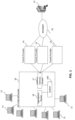
- FIG 1 shows a diagram of a computer network architecture 10. Subscribers, using User Equipment 12, access content providers 15 over the Internet 20 via services provided by an ISP's core network 16.
- the ISP direct traffic to and receive traffic from a core network 16, which may then be directed to a transit provider 14 and the Internet 20.
- An ISP may connect to the core network 16, which may include a system for adaptive traffic path management 100.
- the system may be operatively connected to an Aggregation Router 18 and an Internet Gateway Router 17.
- Transit providers are other ISPs that could be connected to other ISPs which may be connected to the requested content.
- the Internet being a large interconnected web, leads to the existence of multiple paths towards the content through multiple ISPs (referred to as Transit Providers).
- Transit Providers may provide a better connection to the content than others in that the connection may be more cost effective or provide for higher quality content. Determining a path through the appropriate Transit Providers is intended to aid an ISP in obtaining their goals of cost and subscriber QoE.
- Embodiments of the system and method described herein are intended to manipulate the traffic path on a per flow level with for example, Deep Packet Inspection (DPI) application awareness, subscriber attribute awareness, path quality awareness, path cost awareness, and the like, to make a decision on which route or path to take.
- the route or path may be manipulated by amending, for example, the source IP of the flow, which in turn modifies the path the flow will take based on existing predefined network route definitions per IP subnet.
- the system is intended to use a combination of DPI and Network Address Translation (NAT) to manipulate the flow path as described herein.
- NAT Network Address Translation
- the system may further make use of GPRS Tunneling Protocol User Plane (GTP-U) decapsulation.
- GTP-U GPRS Tunneling Protocol User Plane
- the system may allow for the first few packets to flow through without any NAT amendments until the application is recognized.
- the system may then replay the initial flow packets towards the Internet with the NAT amended IP address while resetting the original flow towards the server.
- the system may apply a NAT to the flows immediately on the first packet.
- Embodiments herein can be used to fulfill multiple use cases, for example, managing the traffic return path and breaking out roaming traffic.
- Managing the traffic path may be done based on policy, application or protocol, network conditions, network events or the like.
- the manipulation of the traffic path may be based on capacity reasons, cost reason, quality reasons, or the like.
- dynamically breaking out roaming traffic, on a per flow basis may be based on, the same or different traffic flow criteria, for example;
- Other use cases may use similar or other traffic flow criteria in determining the traffic path for the flow. It is intended that the system determines, which flows to manipulate and what the best path is for that flow depending on, for example, the traffic flow criteria and the network operator's goal/intent.
- the network operator may wish to achieve, for example, lower end-to-end latency, higher QoE for high value traffic, reducing costs by using cheaper paths for low value traffic, reducing OPEX by automating the reaction or path changes due to link failures, breaking out roaming traffic to reduce transit costs, upselling subscribers with dedicated high value links and the like.
- the network operator may wish to achieve a combination of various goals.
- the system may be preconfigured with the operator's goal or intent as part of the configuration parameters of the system.
- the system may make a NAT selection that would send the packet or traffic flow over a link with the lowest latency if lower latency was the operator's goal.
- an adaptive application aware traffic path manipulation system or method is intended to allow communication service providers to dynamically choose traffic paths (sometimes referred to as traffic routes) based on, and not limited to, application, subscriber, profile, path condition (application quality, path quality, path outage), path cost and the like.
- the traffic path may be selected by a method of selective Network Address and Port Translation (NAPT) on a flow by flow basis. Once a flow starts and meets the traffic flow criteria for taking a particular path (as previously determined), the flow will have NAT applied to it from the NAT pool associated with that path. If the flow does not match any criteria for any specific path, the flow may have NAT applied to it from the default NAT pool, or the flow may be allowed through without undergoing any NAT if the original source IP is a routable IP.
- NAPT Network Address and Port Translation
- the system may be deployed near the Internet Gateway (IGW) routers of the ISP for International traffic return path manipulation or have a GTP based deployment on the Gp/S8 interface for local roaming breakout traffic path manipulation.
- IGW Internet Gateway
- the system may further be implemented in other deployment forms/locations, for example, where flow based route manipulation is required in the form of maintaining multiple different NAT IP mappings for each internal IP on a flow level.
- NAT solutions are designed with a purpose of preserving public address space, be it in simple NAT solutions, or intelligent NAT solutions, which dynamically select between NAT modes (NAT vs. NATP).
- These traditional solutions work with the concept of having a single public IP per private IP, where a public IP can have more than one private IP assigned to it in case of NATP.
- the proposed solution as detailed herein is intended to be geared towards intelligently assigning a single client to multiple NATP pools at the same time on a flow by flow level for the purpose of changing each flow's route to the best path for that flow based on the business requirements. This overcomes the limitation of having a single NATP association per private IP, which allows per flow public IP selection, and in return allowing per flow and per protocol routing manipulation leveraging existing pre-configured routing in the rest of the network.
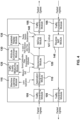
- FIG. 2 illustrates an embodiment of the system 100 described herein.
- the system 100 can be considered an in-line traffic system made up of the following logical components, or modules:
- the solution further includes at least one memory component 155, configured to store data associated with the system.
- the system may further include a processing module 150, which may be distributed across various networking devices or may be a central processing unit for a single networking device.
- the modules may be included in various modules which may be grouped together or may be in a distributed model. Each of the modules is generally in communication with the processor, memory and with appropriate other modules in order to perform their function.
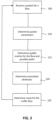
- FIG. 3 illustrates an embodiment of a method 200 for adaptive traffic path management.
- the system 100 receives a packet from the traffic flow, at 205. Once the packet enters the system, the system is configured to determine traffic flow parameters associated with the packet and the traffic flow, at 210. Traffic flow parameters may be determined by the Application Recognition Module 110 with support from the Machine Learning Module 115 which is intended to provide flow and protocol related details and the Attribute Enrichment Module 130 which is intended to provide subscriber subscription information and identifying attributes. The subscriber information and identifying attributes may be, for example, behavior, VIP status, device used, and the like. The system further determines quality metrics for the flow and possible paths available to the traffic flow, at 215, via the Traffic Quality Measuring Module 125.
- the system analyzes the various paths in association with the network operator's predetermined goals and the traffic flow criteria, at 220.
- the Decisioning Module 120 concludes its decision based on the inputs determined by the other modules.
- the system then manipulates the traffic flow parameters to vary the path for the traffic flow to a more suitable path according to the traffic path criteria and the network operator's goals, at 225.
- the Decisioning Module 120 provides a decision to the NATing Module 140 with a chosen NAT pool and optionally triggers the Flow Establishment Replay Module 135 if the flow that will be NATed has already been established without NATing.
- the packet is then forwarded to the Traffic Forwarding Module 105 to send the traffic out of the system and into the network.
- FIG. 4 illustrates the interaction between the modules of the system 100 in further detail.
- the Application Recognition module 110 may include a Deep Packet Inspection (DPI) engine, configured to perform deep packet inspection on each packet of the traffic flow.
- the Decision module 120 may include policy code that translates the network operator's business logic into decisions.
- the application may be WhatsApp calling, the system may determine to always send this type of traffic flow on the BGP peer that provides the lowest latency. Then the system will continuously monitor the latency for WhatsApp calls on all BGP paths and selects to NAT the WhatsApp call flows to the NAT pool that is advertised over the BGP path with the least latency
- the operator's business logic may be configured upon the system's deployment. In other cases, this logic may be updated from time to time, manually or automatically.
- the Traffic Quality Measurement module 125 is intended to measure the traffic quality while the Attribute Enrichment module 130 may link the knowledge of the subscriber to the logic and decision process, as described in further detail herein.
- Traffic quality is measured by the system, using open Key Performance Indicators (KPls) such as latency, packet drops, and the like, and/or proprietary KPIs such as Application and Video QoE, and the like.
- KPls Key Performance Indicators
- proprietary KPIs would include custom formulas and unique DPI insights that allow the measurement of the end user experience when consume content.
- Video QoE for example, can be measured by monitoring Video Resolution changes in the video feed while the user is consuming, monitoring the number of buffer stalls where the video stalls waiting for new content from the server, and how long the video stalls, and the like. These metrics are then combined into an experience score using a proprietary formula and that score can be used as a criteria for choosing the BGP path that provides the highest score (for example, the best user experience for the end subscriber)
- Subscriber attributes such as subscriber information and identity, determined or retrieved by the Attribute Enrichment module 130 can help define the subscriber's profile, in order to prioritize the subscriber's traffic flow.
- the operator's business logic is to send 'Gold' subscribers facebook traffic over a specific link, the system may rely on subscriber's profile to determine which subscriber is part of the 'Gold' group to determine which path to select.
- the Traffic Forwarding Module 105 is responsible for receiving incoming packets and forwarding the packets back into the network.
- this module may be a transparent bridging module such that the system will appear invisible to the network.
- this module may be routing based, becoming a hop in the traffic path of the packet.
- a transparent box may bridge traffic from one port to the adjacent port. In the virtual world, it may be easier to be addressable in order to get the traffic through the cloud into the system for processing and then back out
- the Application Recognition Module 110 is configured to perform protocol recognition based on, for example, Deep Packet Inspection capabilities.
- the Application Recognition Module 110 may also inform the Learning Module 115 of the outcome of the protocol recognition and the traffic flow criteria of the recognized flow for faster future application inference from the first packet to avoid having to re-establish connections via, for example, the Flow Establishment Replay Module 135 for NATing purposes by the NAT Module.
- the system is intended to recognize various Internet protocols. Based on the operator's business logic, specific applications, determined based on the traffic flow criteria, may be of interest to the system and may have the traffic flow path amended to provide the traffic a better quality path.
- the Learning Module 115 is configured to apply application inference for future flows.
- the Learning Module 115 may provide for application inference on the first packet instead of waiting for signature and pattern matching over multiple packets.
- the Learning Module 115 may maintain a short term dynamically updated recognition cache, which stores the destination IP/Port and Recognized Application from the Application Recognition Module 110 so that future flows during that short term cache can be recognized from the first packet (for path selection purposes).
- the time the information is stored may be predetermined by the system. In other cases, the information may be stored until the Application Recognition Module 110 detects a different application and updates the cache.
- the Learning Module 115 may store instantaneous DNS query results which is intended to allow for the upcoming flow with the DNS query parameters (for example destination IP, Port etc.) would be recognized on the first packet of the application flow, which commences after the DNS query.
- the memory component of the system may store this data. It is intended that the Application Recognition Module 110 continues to perform recognition and update that cache as destination server IPs/Ports change in real-time. The system is intended to update the cache of the Learning Module 115 and recognize various protocols and applications.
- the Traffic Quality Measurement Module 125 is configured to measure the Quality of Experience (QoE) of each flow and then grouping these quality metrics per unique grouping, for example by Application, BGP Path, Access Network, Subscriber, Plan, Home Operator, CDN, and the like. This grouping may be performed in order to maintain an up-to-date end-to-end view of the different network paths quality in order to feed this information into the Decisioning Module 120 or aid in determining whether a path change may be appropriate and take action.
- Quality metrics may include latency, packet loss, retransmissions, throughput, jitter, video buffer stalls, video buffer stall durations, video resolution upshifts, video resolution downshifts, and the like.
- New traffic flows may switch to new or different paths based on various results determined by the system. The system is intended to map paths in real-time to allow the Traffic Quality Measurement Module 125 to have quality metrics of all paths.
- the Attribute Enrichment Module 130 may store attributes related to the traffic flow and packets within the traffic flow. The attributes may be related to subscriber profiles, traffic flow criteria, and the like. The Attribute Enrichment Module 130 may provide the to the decision module 120 for the decision process and logic implemented in the route selection. The Attribute Enrichment Module 130 may also include interfaces to external data sources that can act as data points in the decision process. The external data sources that may be queried by or interface with the Attribute Enrichment Module 130 may include, for example, Operator's IT Provisioning system, Operator's charging system, Operator's PCRF system, Operator's AAA server, and the like. These external data sources may provide attributes related to the subscriber, such as, subscriber entitlement, subscriber balance, subscriber policies, subscriber profiles and the like.
- the Decision (Logic) Module 120 is configured to make a decision based on the packet attributes, for example, application, path quality, path cost, business rules, and the like.
- the Decision Module may determine which NAT pool the flow should be assigned to on a flow by flow basis. This decision is sent to the NAT Module to implement.
- the Flow Establishment Replay Module (FERM) 135 may be triggered to replay the flow establishment packets to the NAT Module 140.
- the system is intended to make a path determination almost instantaneously with the first packet of the traffic flow in order to direct the packet flow. In some cases, this is done by changing the source IP of the packet via the NATing process. The changed IP will be from a specific IP pool that is only advertised on one BGP path, the packet and/or the traffic flow will take that path back from the Internet instead of choosing another available path that may not be as appropriate given the operator's goals.
- the system By dynamically changing the source IP of the packet to be from an IP pool that is only advertised on the BGP path selected for the traffic flow, the system is intended to be able to manipulate the traffic path.
- the application or protocol of the traffic flow may not be known with the first packet and may be determined after a few packets have been reviewed by the system. In this case, once the protocol or application is recognized, the system may terminate the original flow and re-establish the flow transparently via the NAT to a more appropriate path given the operator's intended goals.
- a source port may be manipulated as well of or instead of the source IP address.
- the FERM 135 is configured to be called upon when NAT decisions occur a bit later in the lifetime of the flow and where the NAT criteria is protocol based and the Learning Module is not being used. In such a scenario, the FERM is intended to replay the initial flow packets towards the Internet server through the NAT process to re-establish the same connection via the new translated NAT IP transparently to the end user while terminating the previous flow.
- the FERM 135 may help create a new flow using a NAT'ed IP while transparently hooking it up to the existing subscriber side connection. This is intended to allow for NAT decisions to be made later in the flow's life, as a flow source IP may not be changed mid-flow as it may cause the connection to break.
- the NAT Module 140 is where the flow network address translation happens and the NAT tables are maintained.
- the NAT tables are intended to hold information such as private IP/Port and public IP/Port mapping.
- the Reverse NAT Module 145 is configured to review incoming packets from the Internet.
- the Reverse NAT Module 145 may verify with the NAT Module if a previous existing connection entry exists in the NAT tables in order to restore the destination IP of the packet from the public IP back to the private IP.
- the system may to sit inline before the ISP's Internet Gateway (IGW) Routers 17. This may be used in the case of the BGP Path Manipulation use case as shown in figures 5 .
- IGW Internet Gateway
- the system may have predetermined NAT pools defined equal to the number of uplink next-hops available to the operator deploying the solution.
- An ISP would provide public IP subnets that are to be advertised towards each BGP next-hop seperately in order to have pools to be configured on the system.
- Each NAT pool may be advertised only to one uplink next-hop externally, while the standard subscriber assigned subnet would be advertised over all next-hops, as various BGP peer groups 305.
- the IGW 17 would be configured with all the subscriber pools (standard and NAT) towards the core router internally as the next-hop, or in the case where the system is IP addressable (for example, a virtual environment) then the IGW would be configured with the system's IP address as the next-hop internally.
- the advertisement of each BGP peer group is fixed, the path may be considered predetermined for a traffic flow with a specific IP address, for example, a packet with a specific source IP may have a predetermined path through a peer group.
- the path is manipulated, by for example, changing the source IP address to belong to a separate peer group, the packet may travel though an alternative BGP peer group.
- the manipulation is intended to be based on the application used by the subscriber to allow the traffic flow to be manipulated to a path with better Quality of Experience (QoE).
- QoE Quality of Experience
- the system is intended to select based on the outcome of the Logic Module 120 which NAT pool to use to provide a NAT to a new flow, thus manipulating the path the download traffic will take for this flow.
- the system is intended to enable the operator to choose the path for each flow based on, for example, the application, the link quality, the cost of the link, the profile of the subscriber, the current utilization on the links, any existing cable cuts, or the like, enabling the operator to have an international traffic distribution that is configured to meet the operator intent or requirements. In some cases, this may be done during system deployment where the system is configured based on the operator's choices.
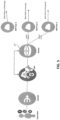
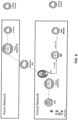
- a user 300 is roaming to a visited network 36
- the traffic flows of the user 30 is received by a Serving Gateway (SGW) 35.
- SGW 35 determines that the traffic is roaming and returns the traffic to a home network 14 of the user 30 in order to be reviewed by a Packet Data Network Gateway (PGW).
- PGW Packet Data Network Gateway
- the path may include a NAT to a local source IP and then be sent to the Internet Gateway Router of the visited network 36 in order to avoid extra across seas flow.
- the system may decide whether to include a NAT to a local source IP on a flow by flow basis, and may select to do this action only on flows that may benefit from such a path change, for example, on high volume applications, latency sensitive applications, locally serviced application, or the like.
- the system may manipulate a source port of the flow instead of the IP address.
- Embodiments of the method described herein are intended to provide the ability to change the source IP of the subscriber packet based on the Downlink Path selected.
- the source IP change may be achieved using Network Address Translation (NAT).
- NAT Network Address Translation
- Figure 8 illustrates the system 100 in line between a core router and the IGW router.
- the NAT module is configured to change the source IP of the subscriber packet to be from one of the subnets defined based on the path selection decision.
- the Internet Gateway Routers of the operator would be advertising each NAT subnet separately to each BGP peer to which they are operatively connected.
- an ISP with only 2 BGP peers will have 2 NAT subnets defined, and will advertise only one subnet to each peer.
- the system based on the decision determined based on the method described herein, makes per traffic flow, change the subscriber source IP of that flow to be from one of those 2 NAT pools depending on which path the system has determined for the traffic flow.
- the system may decapsulate the GTP-U traffic (without requiring the decapsulation of the GTP-C) and changing the decapsulated source IP of the subscriber packet and the next-hop for that packet based on the Downlink Path selected.
- the path may be selected based at least in part on the QoE associated with the packet and the path as well as the application type of the packet and traffic flow.
- the system is configured to decapsulate GTP-U and then NATing the internal IP in the GTP-U tunnel in some cases, as opposed to the outer IP of the packet.
- This decapsulation may be used in a Mobile Roaming use case as detailed herein where the system may be deployed on the Gp/S8 interfaces between the visited SGW and home PGW, and this Gp/S8 interface is encapsulated in GTP-U.
- Figure 9 illustrates a packet flow through the system 100 for adaptive traffic path management. It is intended that a packet is received by the traffic forwarding module 105.
- the system is intended to be transparent to the network, and does not make changes to the packet with respect to layer 2 information and upwards.
- the application signature module 110 performs deep packet inspection to determine the packet parameters, including, for example, application type, destination, source, and the like.
- the attribute enrichment module is configured to obtain subscriber, flow and environmental attributes associated with the packet and traffic flow. These environmental attributes may be simple attributes, for example, time of day, or other attributes which are visible to the system but not directly related to the traffic flow or subscriber. In other cases, the environmental attributes may be more complicated, and may be determined via interaction with, for example, RADIUS, LDAP, SOAP, REST, Diameter Gx, Diameter Gy, and the like.
- the learning module 115 may infer the application from the packet parameters of the first packet on the flow based on previous flows and the information stored in cache. DPI is intended to be performed on the packets in addition to any inferred data that can be determined from the packet. If the system is able to infer sufficient data prior to DPI, the NAT decision may be determined prior to the Application Recognition module 110 recognizing the protocol via the protocol signature from the traffic flow. If the Application Recognition module 110 recognizes a different application or protocol than the one that was inferred from the cache in the learning module, it will update the cache and future flows will consider the new application parameters for the path selection and NAT decision
- the traffic quality measurement module is configured to measure and track the QoE per application, traffic path, BGP peer, GTP Tunnel Endpoint and the like. It will be understood that this tracking and measuring may be done in parallel with the other operations of the system.
- the Decisioning module 120 is configured to select a NAT pool based on the packet parameters, the inferred application parameters, the QoE measurements, the external attributes and the like. In some cases, the Decisioning module 120 may further receive and analyze the path cost and include this further information in the NAT pool selection.
- the path cost is intended to represent how much the cost of that traffic path is to the operator and may be based on input received from the operator. Generally, the cost is determined as a cost in terms of volume consumed on the link, or peak bitrate that the link achieves during peak hours.
- the existing connection may be reset with the server and a new connection may be re-established via the NATing module 140 on behalf of the subscriber and stitched to the existing connection from the subscriber side.
- the NATing module 140 is configured to determine a source IP selection per traffic flow from the NAT pool received from the Decisioning module 120.
- the embodiments of the system provide the ability to change the source IP address of subscribers per Flow using NAT. If Application Recognition is performed using Deep Packet Inspection capabilities initially and may then be learned over time and inferred by keeping a sliding window of memory of all Applications recognized per Internet IP/Port and Protocol to allow for immediate NATing to be performed for future flows.
- This sliding window duration is intended to be configurable and may be in the range of 60 seconds.
- the sliding window may be fined tuned to suit the operator's network environment.
- the system may be updated frequently by the Application Recognition Module 110 and the duration of the sliding window is intended to be sufficient in that the cache will not become stale or time out. It is intended that the sliding window will prevent unnecessarily storing parameters in memory when there is no traffic present for that application or protocol.
- Embodiments of the system and method described herein are intended to provide for NAT post flow establishment (for example, after the protocol is recognized).
- the system and method may terminate the server side of the connection and replaying the connection establishment using the NAT pool transparently to the end subscriber.
- the system may be configured to routinely NAT sample flows from all applications to other NAT pools than the ones they are configured to be NAT'ed to. This allows the system to collect QoE samples for paths that would otherwise have not been utilized by these applications. This also allows the system to detect if other paths have become more favorable for a specific applications and allow it to change its NAT Decisioning based on the updated QoE metrics for that application on that path. In some cases, this may allow the system to further determine if there are any paths, which include link failures or links that are overly congested. The system may manipulate the path of a traffic flow in order to reduce or eliminate any next-hop or path, which includes a link failure or an over congested link.
- the QOE may include aspects such as throughput, latency, jitter and loss associated with the traffic path or traffic flow
- Flow QoE metrics may be grouped together on a per path, per application, or the like.
- the QoE measurements may further include measuring Page Load Time, Buffer Stalls, Buffer Stall Durations, Video Resolution Upshift, Video Resolution Downshift.
- Embodiments of the method and system described herein are generally intended to provide path selection on a flow by flow basis.
- Embodiments or elements therein can be represented as a computer program product stored in a machine-readable medium (also referred to as a computer-readable medium, a processor-readable medium, or a computer usable medium having a computer-readable program code embodied therein).
- the machine-readable medium can be any suitable tangible, non-transitory medium, including magnetic, optical, or electrical storage medium including a diskette, compact disk read only memory (CD-ROM), memory device (volatile or non-volatile), or similar storage mechanism.
- the machine-readable medium can contain various sets of instructions, code sequences, configuration information, or other data, which, when executed, cause a processor to perform steps in a method according to an embodiment of the disclosure.
Landscapes
- Engineering & Computer Science (AREA)
- Computer Networks & Wireless Communication (AREA)
- Signal Processing (AREA)
- Data Exchanges In Wide-Area Networks (AREA)
Claims (14)
- Verfahren (200) für adaptive Verkehrspfadverwaltung, umfassend:Empfangen (205) von mindestens einem Paket, das einem Verkehrsfluss zugeordnet ist;Bestimmen (210) von Anwendungsparametern für eine Anwendung, die dem mindestens einen Paket zugeordnet ist;Bestimmen (215) von Attributen, die dem Verkehrsfluss zugeordnet sind, der dem mindestens einen Paket zugeordnet ist, wobei die Attribute Attribute umfassen, die sich auf einen Teilnehmer, der dem Verkehrsfluss zugeordnet ist, beziehen oder auf einen Pfad des Verkehrsflusses beziehen;Analysieren (220) der Anwendungsparameter und -attribute, um einen Network-Address-Translation-Pool (NAT-Pool) für den Verkehrsfluss zu bestimmen und einen Border-Gateway-Protocol-Pfad (BGP-Pfad) auszuwählen, wobei der BGP-Pfad basierend auf wichtigen Leistungskennzahlen, die der Verkehrsqualität und dem Kostenaufwand für einen Betreiber zugeordnet sind, ausgewählt wird;Bestimmen (225), ob eine Änderung an einer NAT des mindestens einen Pakets erforderlich ist, basierend auf einem Verkehrsflussprotokoll, das auf dem BGP-Pfad angekündigt wird, und ob die NAT, die dem mindestens einen Paket aktuell zugeordnet ist, innerhalb des bestimmten NAT-Pools liegt;falls eine Änderung an der NAT erforderlich ist, Modifizieren der NAT für das mindestens eine Paket, das dem Verkehrsfluss zugeordnet ist, auf eine NAT, die einem unterschiedlichen BGP-Pfad zugeordnet ist; undSenden des mindestens einen Pakets und jedes weiteren Pakets des Verkehrsflusses, der dem mindestens einen Paket zugeordnet ist, an den unterschiedlichen BGP-Pfad, der der modifizierten NAT zugeordnet ist.
- Verfahren nach Anspruch 1, wobei das Modifizieren der NAT ein Manipulieren einer Quell-IP-Adresse des mindestens einen Pakets umfasst.
- Verfahren nach Anspruch 2, wobei die Quell-IP des mindestens einen Pakets von einer Roaming-IP-Adresse zu einer Heim-IP-Adresse manipuliert wird.
- Verfahren nach Anspruch 1, wobei das Modifizieren der NAT das Manipulieren eines Quellports des mindestens einen Pakets umfasst.
- Verfahren nach einem der Ansprüche 1 bis 4, wobei das Bestimmen von Anwendungsparametern ein Durchführen einer Deep Packet Inspection auf mindestens einem Paket umfasst.
- Verfahren nach einem der Ansprüche 1 bis 5, wobei das Bestimmen von Attributen, die dem Verkehrsfluss zugeordnet sind, das Bestimmen eines Attributs, das einem Kostenaufwand für einen Betreiber eines Verkehrsflusspfads zugeordnet ist, umfasst.
- Verfahren nach einem der Ansprüche 1 bis 6, wobei das Bestimmen von Attributen, die dem Verkehrsfluss zugeordnet sind, das Bestimmen, ob irgendwelche Verbindungsfehler in dem Verkehrsflusspfad vorhanden sind, umfasst.
- Verfahren nach einem der Ansprüche 1 bis 7, ferner umfassend:Speichern der modifizierten NAT, die dem mindestens einen Paket zugeordnet ist;Empfangen mindestens eines anderen Pakets, das dem Verkehrsfluss zugeordnet ist;Abrufen der gespeicherten modifizierten NAT; undModifizieren des mindestens einen anderen Pakets, das dem Verkehrsfluss zugeordnet ist, basierend auf der abgerufenen modifizierten NAT.
- Verfahren nach einem der Ansprüche 1 bis 8, wobei:
das Bestimmen von Anwendungsparametern, die dem Verkehrsfluss zugeordnet sind, umfasst:Entkapseln eines Kopfs des mindestens einen Pakets, wobei der Kopf eine Quell-IP oder einen Quellport eines Teilnehmers umfasst; unddas Modifizieren der NAT für das mindestens eine Paket umfasst:Modifizieren der Quell-IP oder des Quellports des Teilnehmers. - System (100) für adaptive Verkehrspfadverwaltung, umfassend:ein Verkehrsweiterleitungsmodul (105), das konfiguriert ist, um mindestens ein Paket, das einem Verkehrsfluss zugeordnet ist, zu empfangen;ein Anwendungserkennungsmodul (110), das konfiguriert ist, um Anwendungsparameter für die Anwendung, die dem mindestens einen Paket zugeordnet sind, zu bestimmen;ein Attributanreicherungsmodul (130), das konfiguriert ist, um Attribute zu bestimmen, die dem Verkehrsfluss zugeordnet sind, der dem mindestens einen Paket zugeordnet ist, wobei die Attribute Attribute umfassen, die sich auf einen Teilnehmer, der dem Verkehrsfluss zugeordnet ist, beziehen oder auf einen Pfad des Verkehrsflusses beziehen;ein Entscheidungsmodul (120), das konfiguriert ist, um die Anwendungsparameter und -attribute zu analysieren, um einen Network-Address-Translation-Pool (NAT-Pool) für den Verkehrsfluss zu bestimmen und einen Border-Gateway-Protocol-Pfad (BGP-Pfad) für den Verkehrsfluss auszuwählen, wobei der BGP-Pfad basierend auf wichtigen Leistungskennzahlen, die der Verkehrsqualität und dem Kostenaufwand für einen Betreiber zugeordnet sind, ausgewählt wird, und zu bestimmen, ob eine Änderung an einer NAT von mindestens einem Paket erforderlich ist, basierend auf einem Verkehrsflussprotokoll, das auf dem BGP-Pfad angekündigt wird, und ob die NAT, die dem mindestens einen Paket aktuell zugeordnet ist, innerhalb des bestimmten NAT-Pools liegt;
undein NAT-Modul (140), das konfiguriert ist, um die NAT auf eine NAT zu modifizieren, die einem unterschiedlichen BGP-Pfad für das mindestens eine Paket zugeordnet ist, das dem Verkehrsfluss zugeordnet ist, falls eine modifizierte NAT erforderlich ist, unddas Verkehrsweiterleitungsmodul (105) ferner konfiguriert ist, um das mindestens eine Paket und jedes weitere Paket des Verkehrsflusses, das dem mindestens einen Paket zugeordnet ist, an den unterschiedlichen BGP-Pfad, der der modifizierten NAT zugeordnet ist, zu senden. - System nach Anspruch 10, wobei das NAT-Modul (140) konfiguriert ist, um eine Quell-IP-Adresse des mindestens einen Pakets zu manipulieren.
- System nach Anspruch 10, wobei das NAT-Modul (140) konfiguriert ist, um einen Quellport des mindestens einen Pakets zu manipulieren.
- System nach einem der Ansprüche 11 bis 12, wobei das Attributanreicherungsmodul (130) ferner konfiguriert ist, um einen Kostenaufwand für einen Betreiber eines Verkehrsflusspfads zu bestimmen.
- System nach einem der Ansprüche 11 bis 13, ferner umfassend:eine Speicherkomponente (155), die konfiguriert ist, um die modifizierte NAT, die dem mindestens einen Paket des Verkehrsflusses zugeordnet ist, zu speichern;ein Lernmodul (115), das konfiguriert ist, um die gespeicherte NAT abzurufen, undwobei das Verkehrsweiterleitungsmodul (105) konfiguriert ist, um mindestens ein anderes Paket, das dem Verkehrsfluss zugeordnet ist, zu empfangen; unddas NAT-Modul (140) ferner konfiguriert ist, um das mindestens eine andere Paket, das dem Verkehrsfluss zugeordnet ist, basierend auf der abgerufenen NAT zu modifizieren.
Applications Claiming Priority (2)
| Application Number | Priority Date | Filing Date | Title |
|---|---|---|---|
| US201862741789P | 2018-10-05 | 2018-10-05 | |
| US16/575,580 US11153203B2 (en) | 2018-10-05 | 2019-09-19 | System and method for adaptive traffic path management |
Publications (3)
| Publication Number | Publication Date |
|---|---|
| EP3633933A1 EP3633933A1 (de) | 2020-04-08 |
| EP3633933B1 true EP3633933B1 (de) | 2025-04-09 |
| EP3633933C0 EP3633933C0 (de) | 2025-04-09 |
Family
ID=68051638
Family Applications (1)
| Application Number | Title | Priority Date | Filing Date |
|---|---|---|---|
| EP19198803.9A Active EP3633933B1 (de) | 2018-10-05 | 2019-09-20 | System und verfahren zur adaptiven verkehrswegverwaltung |
Country Status (2)
| Country | Link |
|---|---|
| US (2) | US11153203B2 (de) |
| EP (1) | EP3633933B1 (de) |
Families Citing this family (22)
| Publication number | Priority date | Publication date | Assignee | Title |
|---|---|---|---|---|
| US10942788B2 (en) | 2018-06-15 | 2021-03-09 | Vmware, Inc. | Policy constraint framework for an sddc |
| US10812337B2 (en) | 2018-06-15 | 2020-10-20 | Vmware, Inc. | Hierarchical API for a SDDC |
| US11086700B2 (en) | 2018-08-24 | 2021-08-10 | Vmware, Inc. | Template driven approach to deploy a multi-segmented application in an SDDC |
| EP3840325A1 (de) * | 2019-12-16 | 2021-06-23 | Sandvine Corporation | System und verfahren zur autorisierung von verkehrsströmen |
| EP4489381A3 (de) | 2020-04-01 | 2025-01-15 | VMware LLC | Selbsteinsetzende netzwerkelemente für heterogene rechenelemente |
| US11803408B2 (en) | 2020-07-29 | 2023-10-31 | Vmware, Inc. | Distributed network plugin agents for container networking |
| US11863352B2 (en) | 2020-07-30 | 2024-01-02 | Vmware, Inc. | Hierarchical networking for nested container clusters |
| US11463915B2 (en) * | 2020-11-30 | 2022-10-04 | Verizon Patent And Licensing Inc. | Systems and methods for exposing custom per flow descriptor attributes |
| US12155621B2 (en) * | 2020-12-21 | 2024-11-26 | Oracle International Corporation | Network address translation between networks |
| WO2022146507A1 (en) | 2020-12-30 | 2022-07-07 | Arris Enterprises Llc | System to dynamically detect and enhance classifiers for low latency traffic |
| US11558668B2 (en) * | 2021-06-03 | 2023-01-17 | Microsoft Technology Licensing, Llc | Measuring video quality of experience based on decoded frame rate |
| US11606254B2 (en) | 2021-06-11 | 2023-03-14 | Vmware, Inc. | Automatic configuring of VLAN and overlay logical switches for container secondary interfaces |
| US11658904B1 (en) * | 2021-11-22 | 2023-05-23 | Cisco Technology, Inc. | Application-aware routing based on path KPI dynamics |
| US11902245B2 (en) | 2022-01-14 | 2024-02-13 | VMware LLC | Per-namespace IP address management method for container networks |
| EP4494314A1 (de) | 2022-03-18 | 2025-01-22 | VMware LLC | Zuordnung eines vlan eines containernetzwerks zu einem logischen netzwerk in einem hypervisor zur unterstützung von flexiblem ipam und routing von containerverkehr |
| US12177124B2 (en) | 2022-10-04 | 2024-12-24 | VMware LLC | Using CRDs to create externally routable addresses and route records for pods |
| US11848910B1 (en) | 2022-11-11 | 2023-12-19 | Vmware, Inc. | Assigning stateful pods fixed IP addresses depending on unique pod identity |
| US12199833B2 (en) | 2022-11-29 | 2025-01-14 | VMware LLC | Network controller as a service (NCaaS) to define network policies for third-party container clusters |
| US12267212B2 (en) | 2022-11-29 | 2025-04-01 | VMware LLC | Implementing defined service policies in a third-party container cluster |
| US11831511B1 (en) | 2023-01-17 | 2023-11-28 | Vmware, Inc. | Enforcing network policies in heterogeneous systems |
| US12401541B2 (en) * | 2023-03-17 | 2025-08-26 | Arris Enterprises Llc | Classifier reduction for low latency DOCSIS |
| WO2024254734A1 (en) | 2023-06-12 | 2024-12-19 | Vmware Information Technology (China) Co., Ltd. | Layer 7 network security for container workloads |
Family Cites Families (9)
| Publication number | Priority date | Publication date | Assignee | Title |
|---|---|---|---|---|
| US7269157B2 (en) | 2001-04-10 | 2007-09-11 | Internap Network Services Corporation | System and method to assure network service levels with intelligent routing |
| US6801528B2 (en) | 2002-07-03 | 2004-10-05 | Ericsson Inc. | System and method for dynamic simultaneous connection to multiple service providers |
| US7752334B2 (en) | 2002-10-15 | 2010-07-06 | Nomadix, Inc. | Intelligent network address translator and methods for network address translation |
| US8341289B2 (en) * | 2005-05-17 | 2012-12-25 | Rajant Corporation | System and method for communication in a wireless mobile ad-hoc network |
| JP4623177B2 (ja) * | 2008-09-17 | 2011-02-02 | 富士ゼロックス株式会社 | 情報処理システム |
| US9083587B2 (en) * | 2009-08-21 | 2015-07-14 | Cisco Technology, Inc. | Port chunk allocation in network address translation |
| US8787303B2 (en) * | 2010-10-05 | 2014-07-22 | Cisco Technology, Inc. | Methods and apparatus for data traffic offloading at a router |
| US8891540B2 (en) | 2012-05-14 | 2014-11-18 | Juniper Networks, Inc. | Inline network address translation within a mobile gateway router |
| US9350668B2 (en) * | 2014-06-03 | 2016-05-24 | The Viki Group, Inc. | Systems and methods for IP sharing across wide area networks |
-
2019
- 2019-09-19 US US16/575,580 patent/US11153203B2/en active Active
- 2019-09-20 EP EP19198803.9A patent/EP3633933B1/de active Active
-
2021
- 2021-10-04 US US17/493,043 patent/US11750506B2/en active Active
Also Published As
| Publication number | Publication date |
|---|---|
| US11153203B2 (en) | 2021-10-19 |
| EP3633933A1 (de) | 2020-04-08 |
| US20220029910A1 (en) | 2022-01-27 |
| US11750506B2 (en) | 2023-09-05 |
| EP3633933C0 (de) | 2025-04-09 |
| US20200112504A1 (en) | 2020-04-09 |
Similar Documents
| Publication | Publication Date | Title |
|---|---|---|
| US11750506B2 (en) | System and method for adaptive traffic path management | |
| US11929977B2 (en) | System, apparatus and method to support data server selection | |
| US8625420B2 (en) | System and method for increasing granularity of prefix control in a computer network | |
| US8423630B2 (en) | Responding to quality of service events in a multi-layered communication system | |
| US11652739B2 (en) | Service related routing method and apparatus | |
| US20150124622A1 (en) | Multi-Interface, Multi-Layer State-full Load Balancer For RAN-Analytics Deployments In Multi-Chassis, Cloud And Virtual Server Environments | |
| US10153964B2 (en) | Network routing using dynamic virtual paths in an overlay network | |
| CN111771359B (zh) | 用于连接通信网络的方法和系统 | |
| US11240140B2 (en) | Method and system for interfacing communication networks | |
| CA2991664A1 (en) | Dynamic packet routing | |
| EP4165904B1 (de) | Zugangsverkehrsverwaltung | |
| US11622293B2 (en) | Methods, systems, and computer readable media for establishing message priority in network slices based on quality of service parameters | |
| CN110213161A (zh) | 一种路由调度方法及相关设备 | |
| JP2005057487A (ja) | 複数経路を選択する経路制御装置、経路選択方法およびそのプログラムと記録媒体 | |
| US12457524B2 (en) | Apparatus and method for providing N6-LAN using service function chaining in wireless communication system | |
| RU2675212C1 (ru) | Адаптивная балансировка нагрузки при обработке пакетов | |
| US12425472B2 (en) | Method to prioritize and offload mobile edge cloud traffic in 5G | |
| US12413501B2 (en) | Systems and methods for constructing application-aware virtual topologies in wide area networks | |
| US12003401B2 (en) | Systems and methods for constructing application-aware virtual topologies in wide area networks | |
| WO2022087239A1 (en) | Network protocol extension for 5g edge computing services | |
| Samdanis et al. | Service Boost: Towards on-demand QoS enhancements for OTT apps in LTE | |
| EP1575215A1 (de) | Bandbreitesteuerungseinheit, Netzwerk und Verfahren zur Verwaltung von einem IP-Unternetzwerk | |
| EP4546748A1 (de) | Virtuelle internet protokoll adresse assoziiert mit einer teilnehmergruppe | |
| EP4595404A1 (de) | Verfahren zur verwaltung von datenverkehr zwischen einer quell- und empfängereinheit sowie entsprechende einheit und computerprogramm |
Legal Events
| Date | Code | Title | Description |
|---|---|---|---|
| PUAI | Public reference made under article 153(3) epc to a published international application that has entered the european phase |
Free format text: ORIGINAL CODE: 0009012 |
|
| STAA | Information on the status of an ep patent application or granted ep patent |
Free format text: STATUS: THE APPLICATION HAS BEEN PUBLISHED |
|
| AK | Designated contracting states |
Kind code of ref document: A1 Designated state(s): AL AT BE BG CH CY CZ DE DK EE ES FI FR GB GR HR HU IE IS IT LI LT LU LV MC MK MT NL NO PL PT RO RS SE SI SK SM TR |
|
| AX | Request for extension of the european patent |
Extension state: BA ME |
|
| STAA | Information on the status of an ep patent application or granted ep patent |
Free format text: STATUS: REQUEST FOR EXAMINATION WAS MADE |
|
| 17P | Request for examination filed |
Effective date: 20201005 |
|
| RBV | Designated contracting states (corrected) |
Designated state(s): AL AT BE BG CH CY CZ DE DK EE ES FI FR GB GR HR HU IE IS IT LI LT LU LV MC MK MT NL NO PL PT RO RS SE SI SK SM TR |
|
| STAA | Information on the status of an ep patent application or granted ep patent |
Free format text: STATUS: EXAMINATION IS IN PROGRESS |
|
| 17Q | First examination report despatched |
Effective date: 20210209 |
|
| REG | Reference to a national code |
Ref country code: DE Ref legal event code: R079 Free format text: PREVIOUS MAIN CLASS: H04L0012725000 Ipc: H04L0045302000 Ref country code: DE Ref legal event code: R079 Ref document number: 602019068345 Country of ref document: DE Free format text: PREVIOUS MAIN CLASS: H04L0012725000 Ipc: H04L0045302000 |
|
| GRAP | Despatch of communication of intention to grant a patent |
Free format text: ORIGINAL CODE: EPIDOSNIGR1 |
|
| STAA | Information on the status of an ep patent application or granted ep patent |
Free format text: STATUS: GRANT OF PATENT IS INTENDED |
|
| RIC1 | Information provided on ipc code assigned before grant |
Ipc: H04L 61/2557 20220101ALI20241101BHEP Ipc: H04L 61/2521 20220101ALI20241101BHEP Ipc: H04L 61/2503 20220101ALI20241101BHEP Ipc: H04L 47/2483 20220101ALI20241101BHEP Ipc: H04L 47/2475 20220101ALI20241101BHEP Ipc: H04L 45/302 20220101AFI20241101BHEP |
|
| INTG | Intention to grant announced |
Effective date: 20241126 |
|
| GRAS | Grant fee paid |
Free format text: ORIGINAL CODE: EPIDOSNIGR3 |
|
| GRAA | (expected) grant |
Free format text: ORIGINAL CODE: 0009210 |
|
| STAA | Information on the status of an ep patent application or granted ep patent |
Free format text: STATUS: THE PATENT HAS BEEN GRANTED |
|
| AK | Designated contracting states |
Kind code of ref document: B1 Designated state(s): AL AT BE BG CH CY CZ DE DK EE ES FI FR GB GR HR HU IE IS IT LI LT LU LV MC MK MT NL NO PL PT RO RS SE SI SK SM TR |
|
| REG | Reference to a national code |
Ref country code: GB Ref legal event code: FG4D |
|
| REG | Reference to a national code |
Ref country code: CH Ref legal event code: EP |
|
| REG | Reference to a national code |
Ref country code: DE Ref legal event code: R096 Ref document number: 602019068345 Country of ref document: DE |
|
| REG | Reference to a national code |
Ref country code: IE Ref legal event code: FG4D |
|
| U01 | Request for unitary effect filed |
Effective date: 20250429 |
|
| U07 | Unitary effect registered |
Designated state(s): AT BE BG DE DK EE FI FR IT LT LU LV MT NL PT RO SE SI Effective date: 20250507 |
|
| PG25 | Lapsed in a contracting state [announced via postgrant information from national office to epo] |
Ref country code: ES Free format text: LAPSE BECAUSE OF FAILURE TO SUBMIT A TRANSLATION OF THE DESCRIPTION OR TO PAY THE FEE WITHIN THE PRESCRIBED TIME-LIMIT Effective date: 20250409 |
|
| PG25 | Lapsed in a contracting state [announced via postgrant information from national office to epo] |
Ref country code: GR Free format text: LAPSE BECAUSE OF FAILURE TO SUBMIT A TRANSLATION OF THE DESCRIPTION OR TO PAY THE FEE WITHIN THE PRESCRIBED TIME-LIMIT Effective date: 20250710 Ref country code: NO Free format text: LAPSE BECAUSE OF FAILURE TO SUBMIT A TRANSLATION OF THE DESCRIPTION OR TO PAY THE FEE WITHIN THE PRESCRIBED TIME-LIMIT Effective date: 20250709 |
|
| PG25 | Lapsed in a contracting state [announced via postgrant information from national office to epo] |
Ref country code: PL Free format text: LAPSE BECAUSE OF FAILURE TO SUBMIT A TRANSLATION OF THE DESCRIPTION OR TO PAY THE FEE WITHIN THE PRESCRIBED TIME-LIMIT Effective date: 20250409 |
|
| PGFP | Annual fee paid to national office [announced via postgrant information from national office to epo] |
Ref country code: GB Payment date: 20250929 Year of fee payment: 7 |
|
| PG25 | Lapsed in a contracting state [announced via postgrant information from national office to epo] |
Ref country code: HR Free format text: LAPSE BECAUSE OF FAILURE TO SUBMIT A TRANSLATION OF THE DESCRIPTION OR TO PAY THE FEE WITHIN THE PRESCRIBED TIME-LIMIT Effective date: 20250409 |
|
| PG25 | Lapsed in a contracting state [announced via postgrant information from national office to epo] |
Ref country code: RS Free format text: LAPSE BECAUSE OF FAILURE TO SUBMIT A TRANSLATION OF THE DESCRIPTION OR TO PAY THE FEE WITHIN THE PRESCRIBED TIME-LIMIT Effective date: 20250709 |
|
| PG25 | Lapsed in a contracting state [announced via postgrant information from national office to epo] |
Ref country code: IS Free format text: LAPSE BECAUSE OF FAILURE TO SUBMIT A TRANSLATION OF THE DESCRIPTION OR TO PAY THE FEE WITHIN THE PRESCRIBED TIME-LIMIT Effective date: 20250809 |
|
| U20 | Renewal fee for the european patent with unitary effect paid |
Year of fee payment: 7 Effective date: 20250929 |