EP3633344A1 - Nanomechanical-sensor receptor made of low-hygroscopicity material and nanomechanical sensor employing same as receptor - Google Patents
Nanomechanical-sensor receptor made of low-hygroscopicity material and nanomechanical sensor employing same as receptor Download PDFInfo
- Publication number
- EP3633344A1 EP3633344A1 EP18810328.7A EP18810328A EP3633344A1 EP 3633344 A1 EP3633344 A1 EP 3633344A1 EP 18810328 A EP18810328 A EP 18810328A EP 3633344 A1 EP3633344 A1 EP 3633344A1
- Authority
- EP
- European Patent Office
- Prior art keywords
- sensor
- receptor
- nanomechanical
- low
- hygroscopic
- Prior art date
- Legal status (The legal status is an assumption and is not a legal conclusion. Google has not performed a legal analysis and makes no representation as to the accuracy of the status listed.)
- Withdrawn
Links
- 239000000463 material Substances 0.000 title claims abstract description 41
- -1 poly(vinylidene fluoride) Polymers 0.000 claims abstract description 44
- 229920000314 poly p-methyl styrene Polymers 0.000 claims abstract description 11
- 229920002492 poly(sulfone) Polymers 0.000 claims abstract description 11
- 229920001610 polycaprolactone Polymers 0.000 claims abstract description 11
- 239000004632 polycaprolactone Substances 0.000 claims abstract description 11
- 229920002981 polyvinylidene fluoride Polymers 0.000 claims abstract description 11
- 239000012528 membrane Substances 0.000 claims description 14
- 150000001875 compounds Chemical class 0.000 claims description 10
- 239000011230 binding agent Substances 0.000 claims description 4
- KRHYYFGTRYWZRS-UHFFFAOYSA-M Fluoride anion Chemical compound [F-] KRHYYFGTRYWZRS-UHFFFAOYSA-M 0.000 claims description 3
- 150000001491 aromatic compounds Chemical class 0.000 claims description 3
- 239000003575 carbonaceous material Substances 0.000 claims description 3
- 125000001183 hydrocarbyl group Chemical group 0.000 claims 1
- XLYOFNOQVPJJNP-UHFFFAOYSA-N water Substances O XLYOFNOQVPJJNP-UHFFFAOYSA-N 0.000 abstract description 41
- 238000005259 measurement Methods 0.000 abstract description 26
- 230000000873 masking effect Effects 0.000 abstract description 3
- 102000005962 receptors Human genes 0.000 description 75
- OKKJLVBELUTLKV-UHFFFAOYSA-N Methanol Chemical compound OC OKKJLVBELUTLKV-UHFFFAOYSA-N 0.000 description 27
- CSCPPACGZOOCGX-UHFFFAOYSA-N Acetone Chemical compound CC(C)=O CSCPPACGZOOCGX-UHFFFAOYSA-N 0.000 description 24
- VLKZOEOYAKHREP-UHFFFAOYSA-N n-Hexane Chemical compound CCCCCC VLKZOEOYAKHREP-UHFFFAOYSA-N 0.000 description 23
- 238000000576 coating method Methods 0.000 description 20
- 239000011248 coating agent Substances 0.000 description 19
- 239000007789 gas Substances 0.000 description 13
- 239000000126 substance Substances 0.000 description 13
- 238000001514 detection method Methods 0.000 description 12
- 229920002134 Carboxymethyl cellulose Polymers 0.000 description 9
- 239000001768 carboxy methyl cellulose Substances 0.000 description 9
- 235000010948 carboxy methyl cellulose Nutrition 0.000 description 9
- 239000008112 carboxymethyl-cellulose Substances 0.000 description 9
- 239000012491 analyte Substances 0.000 description 7
- 230000000052 comparative effect Effects 0.000 description 7
- 229920000642 polymer Polymers 0.000 description 6
- 229920006395 saturated elastomer Polymers 0.000 description 6
- 238000004458 analytical method Methods 0.000 description 5
- 238000000034 method Methods 0.000 description 5
- 238000000879 optical micrograph Methods 0.000 description 5
- ZMXDDKWLCZADIW-UHFFFAOYSA-N N,N-Dimethylformamide Chemical compound CN(C)C=O ZMXDDKWLCZADIW-UHFFFAOYSA-N 0.000 description 3
- 239000013626 chemical specie Substances 0.000 description 3
- 230000000694 effects Effects 0.000 description 3
- 239000007788 liquid Substances 0.000 description 3
- 238000003380 quartz crystal microbalance Methods 0.000 description 3
- 230000035945 sensitivity Effects 0.000 description 3
- 238000001179 sorption measurement Methods 0.000 description 3
- IJGRMHOSHXDMSA-UHFFFAOYSA-N Atomic nitrogen Chemical compound N#N IJGRMHOSHXDMSA-UHFFFAOYSA-N 0.000 description 2
- 241001465754 Metazoa Species 0.000 description 2
- 238000010521 absorption reaction Methods 0.000 description 2
- 238000004140 cleaning Methods 0.000 description 2
- 239000004020 conductor Substances 0.000 description 2
- 230000003247 decreasing effect Effects 0.000 description 2
- 238000003745 diagnosis Methods 0.000 description 2
- 230000005669 field effect Effects 0.000 description 2
- 150000002430 hydrocarbons Chemical group 0.000 description 2
- 238000010801 machine learning Methods 0.000 description 2
- 238000001000 micrograph Methods 0.000 description 2
- 239000000203 mixture Substances 0.000 description 2
- 238000011160 research Methods 0.000 description 2
- 239000002904 solvent Substances 0.000 description 2
- 238000004528 spin coating Methods 0.000 description 2
- 239000000758 substrate Substances 0.000 description 2
- 238000002198 surface plasmon resonance spectroscopy Methods 0.000 description 2
- 241000196324 Embryophyta Species 0.000 description 1
- 102000016979 Other receptors Human genes 0.000 description 1
- XUIMIQQOPSSXEZ-UHFFFAOYSA-N Silicon Chemical compound [Si] XUIMIQQOPSSXEZ-UHFFFAOYSA-N 0.000 description 1
- 238000013473 artificial intelligence Methods 0.000 description 1
- 239000008280 blood Substances 0.000 description 1
- 210000004369 blood Anatomy 0.000 description 1
- 210000001124 body fluid Anatomy 0.000 description 1
- 239000010839 body fluid Substances 0.000 description 1
- 239000006229 carbon black Substances 0.000 description 1
- 239000012159 carrier gas Substances 0.000 description 1
- 238000006243 chemical reaction Methods 0.000 description 1
- 238000012790 confirmation Methods 0.000 description 1
- 238000007418 data mining Methods 0.000 description 1
- 238000003795 desorption Methods 0.000 description 1
- 238000010586 diagram Methods 0.000 description 1
- 238000003618 dip coating Methods 0.000 description 1
- 201000010099 disease Diseases 0.000 description 1
- 208000037265 diseases, disorders, signs and symptoms Diseases 0.000 description 1
- 238000001035 drying Methods 0.000 description 1
- 238000001704 evaporation Methods 0.000 description 1
- 230000008020 evaporation Effects 0.000 description 1
- 230000029142 excretion Effects 0.000 description 1
- 239000012535 impurity Substances 0.000 description 1
- 230000003993 interaction Effects 0.000 description 1
- 239000002082 metal nanoparticle Substances 0.000 description 1
- 229910052757 nitrogen Inorganic materials 0.000 description 1
- QJGQUHMNIGDVPM-UHFFFAOYSA-N nitrogen group Chemical group [N] QJGQUHMNIGDVPM-UHFFFAOYSA-N 0.000 description 1
- 238000005457 optimization Methods 0.000 description 1
- 238000002360 preparation method Methods 0.000 description 1
- 238000000513 principal component analysis Methods 0.000 description 1
- 238000012545 processing Methods 0.000 description 1
- 230000001105 regulatory effect Effects 0.000 description 1
- 230000029058 respiratory gaseous exchange Effects 0.000 description 1
- 230000004044 response Effects 0.000 description 1
- 229910052710 silicon Inorganic materials 0.000 description 1
- 239000010703 silicon Substances 0.000 description 1
- 239000007787 solid Substances 0.000 description 1
- 235000013599 spices Nutrition 0.000 description 1
- 238000005507 spraying Methods 0.000 description 1
- 230000035900 sweating Effects 0.000 description 1
- 239000013076 target substance Substances 0.000 description 1
- 229910021642 ultra pure water Inorganic materials 0.000 description 1
- 239000012498 ultrapure water Substances 0.000 description 1
Images




Classifications
-
- G—PHYSICS
- G01—MEASURING; TESTING
- G01N—INVESTIGATING OR ANALYSING MATERIALS BY DETERMINING THEIR CHEMICAL OR PHYSICAL PROPERTIES
- G01N29/00—Investigating or analysing materials by the use of ultrasonic, sonic or infrasonic waves; Visualisation of the interior of objects by transmitting ultrasonic or sonic waves through the object
- G01N29/02—Analysing fluids
- G01N29/022—Fluid sensors based on microsensors, e.g. quartz crystal-microbalance [QCM], surface acoustic wave [SAW] devices, tuning forks, cantilevers, flexural plate wave [FPW] devices
-
- G—PHYSICS
- G01—MEASURING; TESTING
- G01N—INVESTIGATING OR ANALYSING MATERIALS BY DETERMINING THEIR CHEMICAL OR PHYSICAL PROPERTIES
- G01N29/00—Investigating or analysing materials by the use of ultrasonic, sonic or infrasonic waves; Visualisation of the interior of objects by transmitting ultrasonic or sonic waves through the object
- G01N29/02—Analysing fluids
- G01N29/036—Analysing fluids by measuring frequency or resonance of acoustic waves
-
- G—PHYSICS
- G01—MEASURING; TESTING
- G01N—INVESTIGATING OR ANALYSING MATERIALS BY DETERMINING THEIR CHEMICAL OR PHYSICAL PROPERTIES
- G01N5/00—Analysing materials by weighing, e.g. weighing small particles separated from a gas or liquid
- G01N5/02—Analysing materials by weighing, e.g. weighing small particles separated from a gas or liquid by absorbing or adsorbing components of a material and determining change of weight of the adsorbent, e.g. determining moisture content
-
- G—PHYSICS
- G01—MEASURING; TESTING
- G01N—INVESTIGATING OR ANALYSING MATERIALS BY DETERMINING THEIR CHEMICAL OR PHYSICAL PROPERTIES
- G01N2291/00—Indexing codes associated with group G01N29/00
- G01N2291/02—Indexing codes associated with the analysed material
- G01N2291/021—Gases
- G01N2291/0215—Mixtures of three or more gases, e.g. air
-
- G—PHYSICS
- G01—MEASURING; TESTING
- G01N—INVESTIGATING OR ANALYSING MATERIALS BY DETERMINING THEIR CHEMICAL OR PHYSICAL PROPERTIES
- G01N2291/00—Indexing codes associated with group G01N29/00
- G01N2291/02—Indexing codes associated with the analysed material
- G01N2291/024—Mixtures
- G01N2291/02466—Biological material, e.g. blood
-
- G—PHYSICS
- G01—MEASURING; TESTING
- G01N—INVESTIGATING OR ANALYSING MATERIALS BY DETERMINING THEIR CHEMICAL OR PHYSICAL PROPERTIES
- G01N2291/00—Indexing codes associated with group G01N29/00
- G01N2291/02—Indexing codes associated with the analysed material
- G01N2291/025—Change of phase or condition
- G01N2291/0256—Adsorption, desorption, surface mass change, e.g. on biosensors
-
- G—PHYSICS
- G01—MEASURING; TESTING
- G01N—INVESTIGATING OR ANALYSING MATERIALS BY DETERMINING THEIR CHEMICAL OR PHYSICAL PROPERTIES
- G01N2291/00—Indexing codes associated with group G01N29/00
- G01N2291/02—Indexing codes associated with the analysed material
- G01N2291/025—Change of phase or condition
- G01N2291/0256—Adsorption, desorption, surface mass change, e.g. on biosensors
- G01N2291/0257—Adsorption, desorption, surface mass change, e.g. on biosensors with a layer containing at least one organic compound
Definitions
- the present invention relates to a nanomechanical sensor, and particularly to a nanomechanical sensor receptor made of a low-hygroscopic material and a nanomechanical sensor using the same as a receptor.
- a nanomechanical sensor In recent years, with advancement of a nanomechanical sensor detecting a minute change in any physical quantities on a surface of a sensor main body or the vicinity thereof, trace components in a sample to be provided can be easily detected.
- a nanomechanical sensor refers to a sensor that detects a surface stress produced due to adsorption or absorption of a detection target to a so-called receptor layer coated on a sensor surface, or mechanical deformation (deflection) caused as a result of the surface stress.
- various principles and structures have been proposed.
- a membrane-type surface stress sensor which has been invented and publicly disclosed by the inventors of the present application, has characteristics, such as high sensitivity and operational stability, which are easily used in various applications (Patent Literature 1 and Non Patent Literature 1).
- the chemical substance to be detected is also referred to as an analyte
- the minute change in physical quantity described above occurs by an interaction with the analyte.
- a material, in which a desired analyte is incorporated as many as possible by adsorption, reaction, or the like, and thereby a change in physical quantity is produced as much as possible, is selected, and the material is fixed to the surface of the sensor main body in any form of coating or the like.
- a substance, which causes a change in physical quantity that can be detected by the sensor main body by the substance being fixed to the surface of the sensor main body in this manner, and a membrane made by the substance are respectively referred to as a receptor and a receptor layer (depending on cases, also referred to as a sensitive material and a sensitive membrane).
- the nanomechanical sensor Although not particularly limited, there is mentioned analysis of a sample released from a living body to the outside of the body by breathing, sweating, excretion, and the like or a sample taken out of the inside of the living body such as blood or other various body fluids (confirmation of existence of a target substance, quantitative determination thereof, or determination whether or not the amount thereof exceeds a threshold).
- determination of health conditions of humans or animals such as domestic animals (depending on cases, also including plants), diagnosis of diseases, and the like can be performed.
- various applications using detection of a component which is contained in this kind of sample or is diffused from the sample by evaporation are considered.
- a phenomenon to be called a kind of masking which affects a change in physical quantity by other trace components, may occur, for example, due to causes that a change in physical quantity such as surface stress of the receptor is saturated, or even if being not saturated, other trace components are inhibited from being adsorbed to the receptor, or a change in physical quantity by water and a change in physical quantity by other components are not necessarily linearly superimposed. That is, the majority of a detection signal based on a stress change becomes a water-derived component, a signal component by trace components is in a state of being shielded by the water-derived component, and thus it has been found that detection becomes difficult in some cases.
- An object of the present invention is to reduce a negative influence of water contained in a sample on measurement using a nanomechanical sensor.
- another object of the present invention is to improve measurement capability by combining nanomechanical sensors, for example, to improve identification capability of an analyte by combining such a nanomechanical sensor and another nanomechanical sensor.
- a nanomechanical sensor receptor made of a low-hygroscopic material is provided.
- the low-hygroscopic material may be selected from the group consisting of a carbon material, a fluoride, an aromatic compound, and a compound having a hydrocarbon chain.
- the low-hygroscopic material may be selected from the group consisting of polysulfone, polycaprolactone, poly(vinylidene fluoride), and poly(4-methylstyrene).
- the receptor may further contain a binder.
- a nanomechanical sensor having a low-hygroscopic receptor layer formed by any of the receptors described above on a surface of a sensor main body is provided.
- the nanomechanical sensor may further have an additional membrane between the low-hygroscopic receptor layer and the sensor main body.
- the additional membrane may be a self-assembled membrane.
- a nanomechanical sensor having a plurality of any of the sensor main bodies described above is provided.
- At least one of the plurality of the sensor main bodies may have the low-hygroscopic receptor layer.
- the sensor main body may be a membrane-type surface stress sensor.
- a material having a low hygroscopicity as a material for the receptor, it is possible, for example, to significantly reduce a negative influence of water contained in a sample on an output of a nanomechanical sensor, so that a measurement by a nanomechanical sensor can be more widely applied.
- the research of the inventors of the present invention has resulted in a finding that, by using a material having low hygroscopicity as a receptor of a nanomechanical sensor, sensitivity of the nanomechanical sensor with respect to water can be suppressed to a low value, and the above-described objects of the present invention are accomplished on the basis of this finding.
- the present invention even when a sample containing a large amount of water is subjected to measurement, it is possible to reduce negative influences caused by a large content of water, for example, negative influences that an output of the nanomechanical sensor is saturated by water or even if not saturated, a large output derived from water affects a value of a detection signal of other trace component, or a detection signal of trace component is masked.
- a low-hygroscopic receptor material includes, but is not limited to, a low-hygroscopic polymer. More specifically, the following polymers described in the following Examples are exemplified: polysulfone, polycaprolactone, poly(vinylidene fluoride), and poly(4-methylstyrene)
- a carbon material, a fluoride, an aromatic compound, a compound having a hydrocarbon chain, and the like, which are commonly used as a low-hygroscopic receptor material, can be used; however, it is not limited thereto.
- carboxymethyl cellulose is exemplified as an example of a high-hygroscopic receptor material.
- R H or CH 2 CO 2 H
- binders improving adhesiveness to a sensor main body and other components may be added.
- a self-assembled membrane may be coated on the surface of a sensor to enhance the affinity with a low-hygroscopic receptor material, that is, adhesiveness between such a receptor material and the surface of the sensor main body can be enhanced via the self-assembled membrane.
- components such as binders to be mixed with the receptor material or the membrane itself interposed between the sensor surface and the receptor layer is hygroscopic.
- a receptor layer used in each nanomechanical sensor is prepared by using receptor materials different from each other, but it is not essential that all of receptor layers to be used is low-hygroscopic.
- Non Patent Literature 2 and Non Patent Literature 3 there are many cases depending on a receptor material to be actually used, kinds and amounts of components contained in a sample, and other various factors, and in some cases, by using a low-hygroscopic material only in some receptors of the nanomechanical sensors, analysis can be performed with required accuracy.
- a low-hygroscopic receptor is preferably used in as many channels as possible in a multichannel nanomechanical sensor (individual nanomechanical sensor).
- Such a multichannel nanomechanical sensor may have a constitution in which a plurality of nanomechanical sensors are formed on a single substrate.
- a plurality of MSSs are formed on a single silicon substrate.
- a high-hygroscopic receptor specifically responding to water is used as a one-channel receptor layer in a multichannel nanomechanical sensor
- measurement of water vapor content (humidity) in the sample can be simultaneously performed at substantially the same position as that of other component in a flow channel of the sample under the same measurement condition as that of other component. That is, a humidity sensor can be equipped in the multichannel nanomechanical sensor.
- a high-hygroscopic receptor includes, but not limited to, for example, carboxymethyl cellulose as described above.
- the nanomechanical sensor detects a change in physical parameter, which is caused by the receptor layer adsorbing any analyte molecule, by the sensor main body. Therefore, the structure, operation, and the like of the sensor main body usable in the present invention are not particularly limited as long as it senses a change caused in the receptor layer by the receptor layer coated on the surface thereof adsorbing an analyte. For example, in the case of using a surface stress sensor, by the receptor layer coating the surface thereof adsorbing an analyte, a change in stress produced in the receptor layer is detected and then the surface stress sensor outputs a signal.
- Examples of the sensor main body coated with the receptor layer include various types of surface stress sensors as described in Patent Literature 1, for example.
- a shape, a material, a size, or the like of the sensor main body is not specifically limited, and any object can be used.
- Preferred examples include, for example, a slice-like member which is supported at one or multiple portions.
- a members of various form, such as a slice-like object supported at two or more portions, for example, a double-supported beam, membrane, and the like can be adopted.
- an oscillator such as a quartz crystal microbalance (Quartz Crystal Microbalance, QCM) or a cantilever, a sensor utilizing surface plasmon resonance (Surface Plasmon Resonance, SPR), sensors measuring electrical conductivity of samples added with a conductive material such as metal nanoparticles or a conductive material such as carbon black, a field-effect transistor or other sensors applying the principle of the field-effect transistor, in addition to a surface stress sensor, can be coated with a low-hygroscopic material and can achieve a similar effect as described above.
- a quartz crystal microbalance QCM
- SPR Surface Plasmon Resonance
- an MSS is mainly used as the sensor main body, but it should be noted that a sensor main body usable in the present invention is not intended to be limited to an MSS.
- Methods for coating a surface of a sensor main body with a receptor material include, but are not specifically limited to, ink jet spotting, dip coating, spray coating, spin coating, casting, and a coating using a doctor blade.
- a coating via a self-assembled membrane or a mixture with other polymers and the like can also be used as the receptor layer.
- Example 1 Measurements of four kinds of compounds by polysulfone-coated, polycaprolactone-coated, poly(vinylidene fluoride)-coated, and poly(4-methylstyrene)-coated surface stress sensors
- the sensor chip was heated to 80°C in order to accelerate drying of the deposited liquid.
- a four-channel MSS was used, and the amount of the polymer to be applied to each channel is controlled by changing the amount of the liquid droplet. Specifically, 100 droplets were deposited onto the upper left channel, 200 droplets were deposited to the upper right channel, 300 droplets were deposited to the lower left channel, and 400 droplets were deposited to the lower right channel.
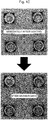
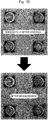
- Micrographs of the sensors after coating are shown in Figs. 1A to 1D , respectively.
- a piezoresistive surface stress sensor having a membrane type structure (MSS) was used as the sensor. Since the structure, the operation, and other characteristics of the MSS are well known by those skilled in the art, no further explanation is described. If needed, refer to Patent Literature 1, Non Patent Literature 1 or the like.
- carboxymethyl cellulose available from Sigma-Aldrich Japan, Product No. C5678-500G
- MSS MSS by the same method as described above.
- pure water was used as a solvent of carboxymethyl cellulose.
- Micrographs of the sensor after coating are shown in Fig. 1E .
- the sample chemical species were dispensed in vials, and nitrogen was flowed to the vials as a carrier gas at a flow rate of 100 mL/min regulated by a mass flow controller (MFC1).
- MFC1 mass flow controller
- the gas containing a certain amount of sample vapor collected in the headspace of the vial was introduced in a tightly-closed chamber in which the sensor was located.
- the sample vapor was obtained at room temperature.
- Another mass flow controller (MFC2) was used and operated under the same conditions.
- MFC2 was connected with an empty vial, and then connected to the sensor chamber to introduce nitrogen containing no sample vapor. Accordingly, desorption of samples adsorbed on the receptor layer was accelerated to clean the receptor layer.
- the above-described cycle of sample introduction and cleaning was repeated four times at intervals of 30 seconds. More specifically, a cycle including the sample introduction for 30 seconds and cleaning for 30 seconds was repeated four times (240 seconds in total).
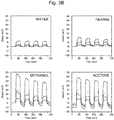
- results of the measurements obtained by using the polysulfone-coated MSS, polycaprolactone-coated MSS, poly(vinylidene fluoride)-coated MSS, and poly(4-methylstyrene)-coated MSS are shown in Figs. 3A to 3D , respectively. Further, results of the measurements obtained by using the carboxymethyl cellulose-coated MSS of a comparative example are shown in Fig. 3E . It is noted that the thicknesses of coating (receptor layer) of the MSS shown in Figs. 1A to 1E increase in order of the upper left, the upper right, the lower left, and the lower right. In graphs shown in Figs.
- output signals with respect to other three kinds of vapor that is, hexane, methanol, and acetone considerably differ depending on receptor materials.
- output signals with respect to methanol it is found that even in the case of a water-miscible solvent, an output signal in the case of using a receptor layer formed by a low-hygroscopic material is not always decreased.
- Fig. 3E is a graph of output signals from an MSS having a receptor layer formed by carboxymethyl cellulose, as a result of measurement as a comparative example, an output signal with respect to water is considerably large, but output signals with respect to other three kinds of vapor are considerably small.
- the receptor layer absorbs a large amount of water and greatly swells so that an output signal of the MSS is saturated. Therefore, the detection of the substance is impossible or difficult.
- Such characteristics from an opposite perspective, can be said to exclude an influence of impurity components as much as possible so that humidity can be measured with high purity.
- the present invention even in a case where water is contained in a sample in a large ratio, for example, the detection of trace components becomes easier, so that there is a possibility that the present invention is extensively used industrially.
- Patent Literature 1 WO 2011/148774 A
Landscapes
- Physics & Mathematics (AREA)
- Health & Medical Sciences (AREA)
- Life Sciences & Earth Sciences (AREA)
- Chemical & Material Sciences (AREA)
- Analytical Chemistry (AREA)
- Biochemistry (AREA)
- General Health & Medical Sciences (AREA)
- General Physics & Mathematics (AREA)
- Immunology (AREA)
- Pathology (AREA)
- Acoustics & Sound (AREA)
- Investigating Or Analyzing Materials By The Use Of Fluid Adsorption Or Reactions (AREA)
Abstract
Description
- The present invention relates to a nanomechanical sensor, and particularly to a nanomechanical sensor receptor made of a low-hygroscopic material and a nanomechanical sensor using the same as a receptor.
- In recent years, with advancement of a nanomechanical sensor detecting a minute change in any physical quantities on a surface of a sensor main body or the vicinity thereof, trace components in a sample to be provided can be easily detected. Here, in the present application, a nanomechanical sensor refers to a sensor that detects a surface stress produced due to adsorption or absorption of a detection target to a so-called receptor layer coated on a sensor surface, or mechanical deformation (deflection) caused as a result of the surface stress. As the nanomechanical sensor, various principles and structures have been proposed. Especially, a membrane-type surface stress sensor (MSS), which has been invented and publicly disclosed by the inventors of the present application, has characteristics, such as high sensitivity and operational stability, which are easily used in various applications (
Patent Literature 1 and Non Patent Literature 1). - When a chemical substance (hereinafter, the chemical substance to be detected is also referred to as an analyte) is provided to a nanomechanical sensor, the minute change in physical quantity described above occurs by an interaction with the analyte. However, since most of analytes are not adsorbed or absorbed in a large amount to a surface itself of a nanomechanical sensor main body, only a change in physical quantity which cannot be almost detected occurs. Therefore, in many cases, a material, in which a desired analyte is incorporated as many as possible by adsorption, reaction, or the like, and thereby a change in physical quantity is produced as much as possible, is selected, and the material is fixed to the surface of the sensor main body in any form of coating or the like. A substance, which causes a change in physical quantity that can be detected by the sensor main body by the substance being fixed to the surface of the sensor main body in this manner, and a membrane made by the substance are respectively referred to as a receptor and a receptor layer (depending on cases, also referred to as a sensitive material and a sensitive membrane).
- In many materials, since a change in physical quantity is more or less produced in response to a plurality of kinds of analytes, in order to increase detection accuracy, identification of kinds of analytes or measurement of an amount thereof are performed based on outputs of a plurality of nanomechanical sensors provided with a plurality of kinds of receptor layers.
- In addition, there are extremely many kinds of analytes which may be a detection target, and thus extremely various kinds of substances are also required to be utilized as a substance which may be a material for a receptor layer.
- As a promising application field of the nanomechanical sensor, although not particularly limited, there is mentioned analysis of a sample released from a living body to the outside of the body by breathing, sweating, excretion, and the like or a sample taken out of the inside of the living body such as blood or other various body fluids (confirmation of existence of a target substance, quantitative determination thereof, or determination whether or not the amount thereof exceeds a threshold). By such analysis, determination of health conditions of humans or animals such as domestic animals (depending on cases, also including plants), diagnosis of diseases, and the like can be performed. Further, other than such determination or diagnosis, various applications using detection of a component which is contained in this kind of sample or is diffused from the sample by evaporation are considered.
- However, a large amount of water is contained in a sample obtained from the living body. A large amount of water exists in the natural world although not limited to the sample obtained from the living body, and water is used in many activities of daily life or industrials. Therefore, water is contained in a large ratio in the sample in extremely many aspects. In a case where such a sample is analyzed by a nanomechanical sensor, a receptor absorbs water contained in a large ratio in the sample, and thus the majority of a change in physical quantity such as surface stress produced in the receptor layer is based on water absorbed to the receptor layer. As a result of researches of the inventors of the present application, in a case where a large amount of water is absorbed to the receptor, it is found that a phenomenon to be called a kind of masking, which affects a change in physical quantity by other trace components, may occur, for example, due to causes that a change in physical quantity such as surface stress of the receptor is saturated, or even if being not saturated, other trace components are inhibited from being adsorbed to the receptor, or a change in physical quantity by water and a change in physical quantity by other components are not necessarily linearly superimposed. That is, the majority of a detection signal based on a stress change becomes a water-derived component, a signal component by trace components is in a state of being shielded by the water-derived component, and thus it has been found that detection becomes difficult in some cases.
- An object of the present invention is to reduce a negative influence of water contained in a sample on measurement using a nanomechanical sensor. In addition, another object of the present invention is to improve measurement capability by combining nanomechanical sensors, for example, to improve identification capability of an analyte by combining such a nanomechanical sensor and another nanomechanical sensor.
- According to an aspect of the present invention, a nanomechanical sensor receptor made of a low-hygroscopic material is provided.
- Here, the low-hygroscopic material may be selected from the group consisting of a carbon material, a fluoride, an aromatic compound, and a compound having a hydrocarbon chain.
- Further, the low-hygroscopic material may be selected from the group consisting of polysulfone, polycaprolactone, poly(vinylidene fluoride), and poly(4-methylstyrene).
- The receptor may further contain a binder.
- According to another aspect of the present invention, a nanomechanical sensor having a low-hygroscopic receptor layer formed by any of the receptors described above on a surface of a sensor main body is provided.
- Here, the nanomechanical sensor may further have an additional membrane between the low-hygroscopic receptor layer and the sensor main body.
- The additional membrane may be a self-assembled membrane.
- According to still another aspect of the present invention, a nanomechanical sensor having a plurality of any of the sensor main bodies described above is provided.
- Here, at least one of the plurality of the sensor main bodies may have the low-hygroscopic receptor layer.
- Further, the sensor main body may be a membrane-type surface stress sensor.
- According to the present invention, by using a material having a low hygroscopicity as a material for the receptor, it is possible, for example, to significantly reduce a negative influence of water contained in a sample on an output of a nanomechanical sensor, so that a measurement by a nanomechanical sensor can be more widely applied.
-
-
Fig. 1A shows optical micrographs of a polysulfone-coated MSS. Four photographs at the upper side show states immediately after coating, and four photographs at the lower side show states after measurement is performed by sequentially providing water, hexane, methanol, and acetone as sample gases. In the respective four photographs, the thickness of the coating is increased in order of the upper left, the upper right, the lower left, and the lower right. -
Fig. 1B shows optical micrographs of a polycaprolactone-coated MSS. Four photographs at the upper side show states immediately after coating (solution application), and four photographs at the lower side show states after measurement is performed by sequentially providing water, hexane, methanol, and acetone as sample gases. In the respective four photographs, the thickness of the coating is increased in order of the upper left, the upper right, the lower left, and the lower right. -
Fig. 1C shows optical micrographs of a poly(vinylidene fluoride)-coated MSS. Four photographs at the upper side show states immediately after coating (solution application), and four photographs at the lower side show states after measurement is performed by sequentially providing water, hexane, methanol, and acetone as sample gases. In the respective four photographs, the thickness of the coating is increased in order of the upper left, the upper right, the lower left, and the lower right. -
Fig. 1D shows optical micrographs of a poly(4-methylstyrene)-coated MSS. Four photographs at the upper side show states immediately after coating (solution application), and four photographs at the lower side show states after measurement is performed by sequentially providing water, hexane, methanol, and acetone as sample gases. In the respective four photographs, the thickness of the coating is increased in order of the upper left, the upper right, the lower left, and the lower right. -
Fig. 1E shows optical micrographs of a carboxymethyl cellulose-coated MSS that is a comparative example. Four photographs at the upper side show states immediately after coating (solution application), and four photographs at the lower side show states after measurement is performed by sequentially providing water, hexane, methanol, and acetone as sample gases. In the respective four photographs, the thickness of the coating is increased in order of the upper left, the upper right, the lower left, and the lower right. -
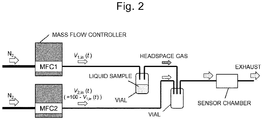
Fig. 2 is a conceptual diagram of the configuration of an experimental apparatus in which four kinds of compounds are measured by MSSs respectively coated with a polymer in Examples. -
Fig. 3A shows results of measurements of four kinds of compounds by a polysulfone-coated MSS. -
Fig. 3B shows results of measurements of four kinds of compounds by a polycaprolactone-coated MSS. -
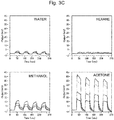
Fig. 3C shows results of measurements of four kinds of compounds by a poly(vinylidene fluoride)-coated MSS. -
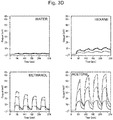
Fig. 3D shows results of measurements of four kinds of compounds by a poly(4-methylstyrene)-coated MSS. -
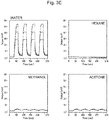
Fig. 3E shows results of measurements of four kinds of compounds by a carboxymethyl cellulose-coated MSS that is a comparative example. - The research of the inventors of the present invention has resulted in a finding that, by using a material having low hygroscopicity as a receptor of a nanomechanical sensor, sensitivity of the nanomechanical sensor with respect to water can be suppressed to a low value, and the above-described objects of the present invention are accomplished on the basis of this finding. According to the present invention, even when a sample containing a large amount of water is subjected to measurement, it is possible to reduce negative influences caused by a large content of water, for example, negative influences that an output of the nanomechanical sensor is saturated by water or even if not saturated, a large output derived from water affects a value of a detection signal of other trace component, or a detection signal of trace component is masked.
- A low-hygroscopic receptor material includes, but is not limited to, a low-hygroscopic polymer. More specifically, the following polymers described in the following Examples are exemplified: polysulfone,



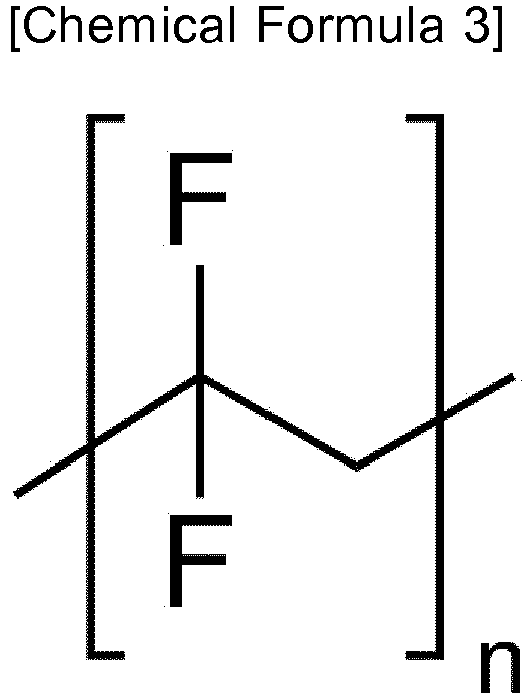

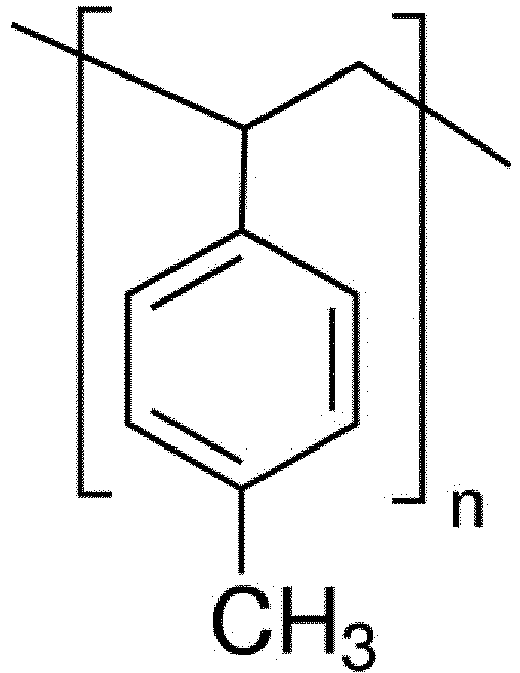
- Further, a carbon material, a fluoride, an aromatic compound, a compound having a hydrocarbon chain, and the like, which are commonly used as a low-hygroscopic receptor material, can be used; however, it is not limited thereto.
- Contrary to the low-hygroscopic receptor material described above, carboxymethyl cellulose is exemplified as an example of a high-hygroscopic receptor material.

- This material is described as a comparative example in the description of the following Examples.
- In addition to the receptor materials as described above, binders improving adhesiveness to a sensor main body and other components may be added. Further, a self-assembled membrane may be coated on the surface of a sensor to enhance the affinity with a low-hygroscopic receptor material, that is, adhesiveness between such a receptor material and the surface of the sensor main body can be enhanced via the self-assembled membrane. For such a purpose, it is preferable that components such as binders to be mixed with the receptor material or the membrane itself interposed between the sensor surface and the receptor layer is hygroscopic.
- Further, it is possible to not only perform measurement using a single nanomechanical sensor but also provide a sample to a plurality of nanomechanical sensors and perform analysis on the basis of outputs obtained in parallel from these nanomechanical sensors. In a case where measurement is performed using such a multichannel nanomechanical sensor, in general, a receptor layer used in each nanomechanical sensor is prepared by using receptor materials different from each other, but it is not essential that all of receptor layers to be used is low-hygroscopic. That is, in a case where identification of a sample, quantitative determination of components, and the like are performed from outputs from the plurality of nanomechanical sensors, it has been proposed that a large number of outputs from these sensors are analyzed, for example, using principal component analysis, data processing such as machine learning, or other methods (
Non Patent Literature 2 and Non Patent Literature 3). In such methods, there are many cases depending on a receptor material to be actually used, kinds and amounts of components contained in a sample, and other various factors, and in some cases, by using a low-hygroscopic material only in some receptors of the nanomechanical sensors, analysis can be performed with required accuracy. - For example, in a case where a gas in which moisture to be contained is close to a saturation state such as exhaled breath is measured, it is generally considered that a low-hygroscopic receptor is preferably used in as many channels as possible in a multichannel nanomechanical sensor (individual nanomechanical sensor). However, even in such a case, setting aside a case where the receptor is completely saturated by moisture in a gas to be measured or an output obtained by a component, which is desired to be detected, cannot be almost detected by masking caused by absorbed water, in a case where a high-hygroscopic receptor is used, but only a relatively mild negative influence is received, for example, linearity of an output by a component, which is desired to be detected, is lost by moisture in a gas to be measured or sensitivity is decreased to some extent, measurement by combining a channel using a low-hygroscopic receptor and a channel using a high-hygroscopic receptor may be performed. According to this, diversity of combinations of receptors which can be used in a target to be measured can be increased. Such a multichannel nanomechanical sensor may have a constitution in which a plurality of nanomechanical sensors are formed on a single substrate. For example, in
Patent Literature 1 and the like, it is described that a plurality of MSSs are formed on a single silicon substrate. - Further, when a high-hygroscopic receptor specifically responding to water is used as a one-channel receptor layer in a multichannel nanomechanical sensor, measurement of water vapor content (humidity) in the sample can be simultaneously performed at substantially the same position as that of other component in a flow channel of the sample under the same measurement condition as that of other component. That is, a humidity sensor can be equipped in the multichannel nanomechanical sensor. Such a high-hygroscopic receptor includes, but not limited to, for example, carboxymethyl cellulose as described above. In such a case, it is difficult to select, as a high-hygroscopic receptor, a substance not responding to components other than water at all, but even if an influence of other components appears in an output of a channel having the high-hygroscopic receptor layer, this type of influence can be compensated by diverting an output from one or a plurality of channels having other receptor layer (high-hygroscopic receptor layer, low-hygroscopic receptor layer, or a combination thereof) and using machine learning or other methods for the purpose of ordinary use in detection of other component.
- The nanomechanical sensor detects a change in physical parameter, which is caused by the receptor layer adsorbing any analyte molecule, by the sensor main body. Therefore, the structure, operation, and the like of the sensor main body usable in the present invention are not particularly limited as long as it senses a change caused in the receptor layer by the receptor layer coated on the surface thereof adsorbing an analyte. For example, in the case of using a surface stress sensor, by the receptor layer coating the surface thereof adsorbing an analyte, a change in stress produced in the receptor layer is detected and then the surface stress sensor outputs a signal.
- Examples of the sensor main body coated with the receptor layer include various types of surface stress sensors as described in
Patent Literature 1, for example. However, a shape, a material, a size, or the like of the sensor main body is not specifically limited, and any object can be used. Preferred examples include, for example, a slice-like member which is supported at one or multiple portions. In addition, a members of various form, such as a slice-like object supported at two or more portions, for example, a double-supported beam, membrane, and the like can be adopted. - Further, for example, an oscillator such as a quartz crystal microbalance (Quartz Crystal Microbalance, QCM) or a cantilever, a sensor utilizing surface plasmon resonance (Surface Plasmon Resonance, SPR), sensors measuring electrical conductivity of samples added with a conductive material such as metal nanoparticles or a conductive material such as carbon black, a field-effect transistor or other sensors applying the principle of the field-effect transistor, in addition to a surface stress sensor, can be coated with a low-hygroscopic material and can achieve a similar effect as described above.
- In the following Examples, an MSS is mainly used as the sensor main body, but it should be noted that a sensor main body usable in the present invention is not intended to be limited to an MSS.
- Methods for coating a surface of a sensor main body with a receptor material include, but are not specifically limited to, ink jet spotting, dip coating, spray coating, spin coating, casting, and a coating using a doctor blade. In the following Examples, an example in which the receptor material is coated directly on the surface of the sensor main body is described, but other adoptable embodiments are not intended to be excluded. As examples of other nonlimiting embodiments which can be applied to the present invention, a coating via a self-assembled membrane or a mixture with other polymers and the like can also be used as the receptor layer.
- The present invention is described below in detail with reference to examples. It should be construed that the following examples are of course provided only to facilitate understanding of the present invention, and are not intended to limit the scope of the present invention to the examples in any way.
- Hereinafter, an example of preparation of receptor layers using the four kinds of polymers and measurements by using the receptor layers are described. Polysulfone (Product No. 428302-100G), polycaprolactone (Product No. 440752-250G), poly(vinylidene fluoride) (Product No. 427152-100G), and poly(4-methylstyrene) (Product No. 182273-10G) available from Sigma-Aldrich Japan were respectively dissolved in N,N-dimethylformamide to obtain 1 g/L of a solution, and then the solution was deposited onto a sensor main body (in this Example, an MSS main body, that is, a sensor chip) by ink jet. During the coating, the sensor chip was heated to 80°C in order to accelerate drying of the deposited liquid. In this Example, a four-channel MSS was used, and the amount of the polymer to be applied to each channel is controlled by changing the amount of the liquid droplet. Specifically, 100 droplets were deposited onto the upper left channel, 200 droplets were deposited to the upper right channel, 300 droplets were deposited to the lower left channel, and 400 droplets were deposited to the lower right channel. Micrographs of the sensors after coating are shown in
Figs. 1A to 1D , respectively. In this Example, a piezoresistive surface stress sensor having a membrane type structure (MSS) was used as the sensor. Since the structure, the operation, and other characteristics of the MSS are well known by those skilled in the art, no further explanation is described. If needed, refer toPatent Literature 1,Non Patent Literature 1 or the like. - As a comparative example, carboxymethyl cellulose (available from Sigma-Aldrich Japan, Product No. C5678-500G) that is one of high-hygroscopic substances was applied to the MSS by the same method as described above. However, in this case, pure water was used as a solvent of carboxymethyl cellulose. Micrographs of the sensor after coating are shown in
Fig. 1E . - Subsequently, four kinds of chemical species described below were measured by the apparatus having a configuration illustrated in
Fig. 2 , in which polysulfone-coated MSS, polycaprolactone-coated MSS, poly(vinylidene fluoride)-coated MSS, or poly(4-methylstyrene)-coated MSS, or the carboxymethyl cellulose-coated MSS that is a comparative example was used. Specifically, water (ultrapure water), hexane, methanol, and acetone were used as the four kinds of chemical species. InFig. 2 , these four kinds of substances are collectively described as "liquid sample." - The sample chemical species were dispensed in vials, and nitrogen was flowed to the vials as a carrier gas at a flow rate of 100 mL/min regulated by a mass flow controller (MFC1). Thus, the gas containing a certain amount of sample vapor collected in the headspace of the vial was introduced in a tightly-closed chamber in which the sensor was located. Here, the sample vapor was obtained at room temperature. Another mass flow controller (MFC2) was used and operated under the same conditions. However, MFC2 was connected with an empty vial, and then connected to the sensor chamber to introduce nitrogen containing no sample vapor. Accordingly, desorption of samples adsorbed on the receptor layer was accelerated to clean the receptor layer. The above-described cycle of sample introduction and cleaning was repeated four times at intervals of 30 seconds. More specifically, a cycle including the sample introduction for 30 seconds and cleaning for 30 seconds was repeated four times (240 seconds in total).
- Results of the measurements obtained by using the polysulfone-coated MSS, polycaprolactone-coated MSS, poly(vinylidene fluoride)-coated MSS, and poly(4-methylstyrene)-coated MSS are shown in
Figs. 3A to 3D , respectively. Further, results of the measurements obtained by using the carboxymethyl cellulose-coated MSS of a comparative example are shown inFig. 3E . It is noted that the thicknesses of coating (receptor layer) of the MSS shown inFigs. 1A to 1E increase in order of the upper left, the upper right, the lower left, and the lower right. In graphs shown inFigs. 3A to 3E , outputs from the MSS including the coatings having these four kinds of thicknesses were displayed in an overlapping manner. It was confirmed that, even in the case of using any receptor, as the thickness of the receptor layer increases, the output also increases. It has been analytically confirmed that, when the thickness of the receptor layer increases, a stress obtained as a whole also increases, and therefore, an increase in output as a result is obtained (Non Patent Literature 4). - From output signals with respect to water, n-hexane, methanol, and acetone vapor of the polysulfone-coated MSS, polycaprolactone-coated MSS, poly(vinylidene fluoride)-coated MSS, and poly(4-methylstyrene)-coated MSS that are Examples of the present invention (shown in graphs of
Figs. 3A to 3D , respectively), it is found that the output signals with respect to water are significantly small in any cases. Therefore, in the receptor layer formed by the low-hygroscopic material, absorption of water is very small, and thus, even in the case of applying a high-humidity sample gas, it is also, of course, possible to prevent or suppress that a large amount of water is absorbed to saturate a change in physical quantity that causes a change in output signal of the MSS or adsorption of components other than water is avoided. In addition, it is also reduced that a minute output signal from the MSS derived from other trace components is buried in a large output signal from the MSS and masked due to water. - Furthermore, as seen from
Figs. 3A to 3D , output signals with respect to other three kinds of vapor, that is, hexane, methanol, and acetone considerably differ depending on receptor materials. In addition, from output signals with respect to methanol, it is found that even in the case of a water-miscible solvent, an output signal in the case of using a receptor layer formed by a low-hygroscopic material is not always decreased. Therefore, even when an MSS having a receptor layer formed by a low-hygroscopic material is used or a multichannel sensor including only an MSS using a receptor layer formed by a low-hygroscopic material is used, a wide range of substances can be detected or a gas containing a mixture of a plurality of kinds of gases (for example, malodor occurring in a specific situation, or the like) can be detected. As a matter of fact, according to the circumstances, by using a combination with an MSS using a receptor layer formed by a high-hygroscopic material, a wider variety of detection can also be realized. - On the other hand, from
Fig. 3E that is a graph of output signals from an MSS having a receptor layer formed by carboxymethyl cellulose, as a result of measurement as a comparative example, an output signal with respect to water is considerably large, but output signals with respect to other three kinds of vapor are considerably small. In the MSS using a receptor layer formed by such a material, even in the case of a substance outputting a significantly large signal other than water, in a case where a high-humidity gas is applied, the receptor layer absorbs a large amount of water and greatly swells so that an output signal of the MSS is saturated. Therefore, the detection of the substance is impossible or difficult. Such characteristics, from an opposite perspective, can be said to exclude an influence of impurity components as much as possible so that humidity can be measured with high purity. - As described above, according to the present invention, even in a case where water is contained in a sample in a large ratio, for example, the detection of trace components becomes easier, so that there is a possibility that the present invention is extensively used industrially.
- Patent Literature 1:
WO 2011/148774 A -
- Non Patent Literature 1: G. Yoshikawa, T. Akiyama, S. Gautsch, P. Vettiger, and H. Rohrer, "Nanomechanical Membrane-type Surface Stress Sensor" Nano Letters 11, 1044-1048 (2011).
- Non Patent Literature 2: Imamura, G., Shiba, K. & Yoshikawa, G. Smell identification of spices using nanomechanical membrane-type surface stress sensors. Japanese Journal of Applied Physics 55, 1102B1103 (2016).
- Non Patent Literature 3: Riki Eto, Genki Yoshikawa, Gaku Imamura, "Smell Data Mining on the Cutting-edge loT Olfactory Sensor," The Japanese Society for Artificial Intelligence, 31st National Convention Preliminary Report 2B2-1 (2017).
- Non Patent Literature 4: Yoshikawa, G., "Mechanical analysis and optimization of a microcantilever sensor coated with a solid receptor film" Applied Physics Letters 98, 173502 (2011).
Claims (10)
- A nanomechanical sensor receptor made of a low-hygroscopic material.
- The nanomechanical sensor receptor according to claim 1, wherein the low-hygroscopic material is selected from the group consisting of a carbon material, a fluoride, an aromatic compound, and a compound having a hydrocarbon chain.
- The nanomechanical sensor receptor according to claim 1 or 2, wherein the low-hygroscopic material is selected from the group consisting of polysulfone, polycaprolactone, poly(vinylidene fluoride), and poly(4-methylstyrene).
- The nanomechanical sensor receptor according to any one of claims 1 to 3, further comprising a binder.
- A nanomechanical sensor comprising a low-hygroscopic receptor layer formed by the receptor according to any one of claims 1 to 4 on a surface of a sensor main body.
- The nanomechanical sensor according to claim 5, further comprising an additional membrane between the low-hygroscopic receptor layer and the sensor main body.
- The nanomechanical sensor according to claim 6, wherein the additional membrane is a self-assembled membrane.
- The nanomechanical sensor according to any one of claims 5 to 7, wherein the nanomechanical sensor has a plurality of the sensor main bodies.
- The nanomechanical sensor according to claim 8, wherein at least one of the plurality of the sensor main bodies has the low-hygroscopic receptor layer.
- The nanomechanical sensor according to any one of claims 5 to 9, wherein the sensor main body is a membrane-type surface stress sensor.
Applications Claiming Priority (2)
| Application Number | Priority Date | Filing Date | Title |
|---|---|---|---|
| JP2017107398 | 2017-05-31 | ||
| PCT/JP2018/019431 WO2018221283A1 (en) | 2017-05-31 | 2018-05-21 | Nanomechanical-sensor receptor made of low-hygroscopicity material and nanomechanical sensor employing same as receptor |
Publications (2)
| Publication Number | Publication Date |
|---|---|
| EP3633344A1 true EP3633344A1 (en) | 2020-04-08 |
| EP3633344A4 EP3633344A4 (en) | 2021-03-03 |
Family
ID=64455707
Family Applications (1)
| Application Number | Title | Priority Date | Filing Date |
|---|---|---|---|
| EP18810328.7A Withdrawn EP3633344A4 (en) | 2017-05-31 | 2018-05-21 | NANOMECHANICAL SENSOR RECEIVER CONSISTING OF LOW HYGROSCOPICITY MATERIAL AND NANOMECHANICAL SENSOR USING THIS AS A RECEIVER |
Country Status (5)
| Country | Link |
|---|---|
| US (1) | US11215585B2 (en) |
| EP (1) | EP3633344A4 (en) |
| JP (1) | JP6961252B2 (en) |
| CN (1) | CN110691962A (en) |
| WO (1) | WO2018221283A1 (en) |
Families Citing this family (6)
| Publication number | Priority date | Publication date | Assignee | Title |
|---|---|---|---|---|
| WO2019059326A1 (en) * | 2017-09-20 | 2019-03-28 | 旭化成株式会社 | Surface stress sensor, hollow structural element, and method for manufacturing same |
| US12517036B2 (en) * | 2019-04-26 | 2026-01-06 | National Institute For Materials Science | Sensitive film for nanomechanical sensor using poly(2,6-diphenyl-p-phenylene oxide), nanomechanical sensor having said sensitive film, method for coating said sensitive film on nanomechanical sensor, and method for restoring sensitive film of said nanomechanical sensor |
| EP3988913B1 (en) | 2019-06-18 | 2024-10-09 | National Institute for Materials Science | Humidification-type high-sensitivity/high-selectivity ammonia detection method using nanomechanical sensor, and detection device thereof |
| EP4006526B1 (en) * | 2019-07-25 | 2025-01-15 | National Institute for Materials Science | Gas-sensor-based measurement method and measurement device |
| WO2021192915A1 (en) * | 2020-03-23 | 2021-09-30 | 国立研究開発法人物質・材料研究機構 | Primary odor selection method, method for expressing, presenting, or synthesizing odor from combination of primary odors, and device for same |
| WO2025204219A1 (en) * | 2024-03-28 | 2025-10-02 | 三洋化成工業株式会社 | Resin composition for forming odorous substance receiving layer, sensor element using same, odor sensor, and odor measuring device |
Family Cites Families (29)
| Publication number | Priority date | Publication date | Assignee | Title |
|---|---|---|---|---|
| JPH0573560A (en) | 1991-09-11 | 1993-03-26 | Hokuriku Nippon Denki Software Kk | Printing system for line in specified range |
| JP2557961Y2 (en) * | 1992-03-09 | 1997-12-17 | 日本電信電話株式会社 | Portable odor sensor |
| EP1117991A4 (en) * | 1998-10-02 | 2005-04-27 | California Inst Of Techn | ORGANIC CONDUCTIVE SENSORS, SENSOR MATRIX AND METHOD FOR THEIR USE |
| TW571093B (en) * | 1998-12-28 | 2004-01-11 | Tdk Corp | Moisture sensor |
| US7122152B2 (en) * | 1999-05-10 | 2006-10-17 | University Of Florida | Spatiotemporal and geometric optimization of sensor arrays for detecting analytes fluids |
| US6534319B1 (en) * | 1999-10-06 | 2003-03-18 | Fisher Controls International, Inc. | Chemical sensor and coating for same |
| US6432362B1 (en) * | 1999-10-06 | 2002-08-13 | Iowa State University Research Foundation, Inc. | Chemical sensor and coating for same |
| JP2001242057A (en) | 2000-02-28 | 2001-09-07 | Natl Inst Of Advanced Industrial Science & Technology Meti | Simple small gas or airborne particulate detector |
| KR100379792B1 (en) * | 2000-06-12 | 2003-04-11 | 주식회사 아이센스 | Microchip-based carbon dioxide gas sensor |
| KR100352270B1 (en) * | 2000-10-19 | 2002-09-12 | 주식회사 아이센스 | Microchip-type oxygen gas sensor based on differential potentiometry |
| JP2002243689A (en) * | 2001-02-15 | 2002-08-28 | Denso Corp | Capacity-type humidity sensor and method for manufacturing the same |
| EP1496363A4 (en) * | 2002-04-03 | 2005-05-18 | Japan Science & Tech Agency | SENSOR SIDE FOR BIOPUCE CARRIER OF NANOPARTICLES OF POLYETHYLENE GLYCOLATE |
| AU2003239961A1 (en) * | 2002-06-03 | 2003-12-19 | Arizona Board Of Regents | Embedded piezoelectric microcantilever sensors |
| JP2005528629A (en) * | 2002-06-03 | 2005-09-22 | アリゾナ ボード オブ リージェンツ | Hybrid microcantilever sensor |
| JP3884680B2 (en) * | 2002-08-09 | 2007-02-21 | 三菱電機株式会社 | Chemical sensor and manufacturing method thereof |
| WO2009009186A2 (en) * | 2007-04-13 | 2009-01-15 | The Regents Of The University Of California | Receptors useful for gas phase chemical sensing |
| US20110085759A1 (en) * | 2008-03-28 | 2011-04-14 | Kitakyushu Found.For The Adv.Of Ind., Sci. & Tech. | Composite thin film, and atmosphere sensor and optical waveguide sensor each including the same |
| JP5151846B2 (en) * | 2008-09-17 | 2013-02-27 | セイコーエプソン株式会社 | QCM device and manufacturing method thereof |
| CN101713763A (en) * | 2008-10-07 | 2010-05-26 | 中国科学院大连化学物理研究所 | Method for determining benzene series substances in atmosphere |
| JP5736593B2 (en) * | 2009-10-13 | 2015-06-17 | 国立大学法人信州大学 | Sensor element, sensor |
| TWI506121B (en) * | 2010-03-31 | 2015-11-01 | Semiconductor Energy Lab | Light-emitting element, light-emitting device, electronic device, and lighting device |
| WO2011148774A1 (en) | 2010-05-24 | 2011-12-01 | 独立行政法人物質・材料研究機構 | Surface stress sensor |
| FR2972261B1 (en) * | 2011-03-03 | 2013-04-12 | Commissariat Energie Atomique | HUMIDITY SENSOR COMPRISING AS A ABSORBENT MOISTURE LAYER A POLYMERIC LAYER COMPRISING A MIXTURE OF POLYAMIDES |
| US20140100436A1 (en) * | 2011-06-07 | 2014-04-10 | Swisstom Ag | Electrode sensor kit, electrode assembly, and topical preparation for establishing electrical contact with skin, use thereof, and method of electro-impedance tomography (eit) imaging using these |
| EP2889612A1 (en) * | 2013-12-24 | 2015-07-01 | Honeywell International Inc. | CO2 sensor based on a diamond field effect transistor |
| CN111398529B (en) | 2014-08-29 | 2022-06-03 | 株式会社而摩比特 | Olfactory system, smell recognition device and smell recognition method |
| WO2016121155A1 (en) | 2015-01-27 | 2016-08-04 | 国立研究開発法人物質・材料研究機構 | Sensor having porous material or particulate material as receptor layer |
| US10194856B2 (en) * | 2015-12-22 | 2019-02-05 | Sharp Laboratories Of America, Inc. | Matrix multi-sensor array |
| CN109923397A (en) * | 2016-11-29 | 2019-06-21 | 国立研究开发法人物质·材料研究机构 | Infer the method and apparatus for inferring object value corresponding with sample |
-
2018
- 2018-05-21 JP JP2019522122A patent/JP6961252B2/en active Active
- 2018-05-21 WO PCT/JP2018/019431 patent/WO2018221283A1/en not_active Ceased
- 2018-05-21 US US16/613,161 patent/US11215585B2/en active Active
- 2018-05-21 EP EP18810328.7A patent/EP3633344A4/en not_active Withdrawn
- 2018-05-21 CN CN201880035764.0A patent/CN110691962A/en active Pending
Also Published As
| Publication number | Publication date |
|---|---|
| US11215585B2 (en) | 2022-01-04 |
| CN110691962A (en) | 2020-01-14 |
| WO2018221283A1 (en) | 2018-12-06 |
| US20200249201A1 (en) | 2020-08-06 |
| EP3633344A4 (en) | 2021-03-03 |
| JP6961252B2 (en) | 2021-11-05 |
| JPWO2018221283A1 (en) | 2020-03-19 |
Similar Documents
| Publication | Publication Date | Title |
|---|---|---|
| US11215585B2 (en) | Nanomechanical sensor receptor made of low-hygroscopic material and nanomechanical sensor using the same as receptor | |
| Brown et al. | A direct and selective electrochemical hydrogen sulfide sensor | |
| Dhayanithi et al. | Development of amine-based transition metal MOFs as efficient electrochemical sensors for the detection of chloramphenicol in food and pharmaceutical samples | |
| Tolentino et al. | Piezoelectric sensor for ethylene based on silver (I)/polymer composite | |
| Zhang et al. | An integrated nitric oxide sensor based on carbon fiber coated with selective membranes | |
| Siontorou et al. | A biosensor platform for soil management: the case of nitrites | |
| Prathap et al. | A novel non-enzymatic lindane sensor based on CuO–MnO 2 hierarchical nano-microstructures for enhanced sensitivity | |
| Karuwan et al. | Flow injection based microfluidic device with carbon nanotube electrode for rapid salbutamol detection | |
| US20080261322A1 (en) | Nitric Oxide Detection | |
| Banga et al. | AuNP@ ZeNose (ZIF-based electrochemical nose) for detection of flu biomarker in breath | |
| Gokila et al. | Electrochemical impedimetric enzyme-less detection of non-electroactive organophosphate pesticides using zirconium metal organic framework | |
| Esmaeelzadeh et al. | Bimetallic yttrium-copper-metal-organic framework-based voltammetric sensor for detection of dopamine in the presence of uric acid | |
| JP4553181B2 (en) | Pesticide residue analysis method | |
| Zougagh et al. | Direct determination of total carbonate salts in soil samples by continuous-flow piezoelectric detection | |
| Phokharatkul et al. | AAO–CNTs electrode on microfluidic flow injection system for rapid iodide sensing | |
| Hashemipour et al. | Ammonia detection and measurement | |
| Rahman et al. | Fabrication of quartz crystal microbalance with pegylated lipopolymer for detection of non-invasive lung cancer biomarker | |
| Thiranagama et al. | Modern agriculture and nanosensors | |
| WO2020255580A1 (en) | Humidification-type high-sensitivity/high-selectivity ammonia detection method using nanomechanical sensor, and detection device thereof | |
| RU2614022C1 (en) | Method for quantitative determination of triazavirin by voltammetry (versions) | |
| US11143613B2 (en) | Chemiresistive sensors based on carbon nanotubes and transition metal complexes | |
| Huang et al. | Microcantilevers modified by specific peptide for selective detection of trimethylamine | |
| US12345680B1 (en) | Modular chemiresistive sensor for real-time ethylene monitoring | |
| Huang et al. | Flow injection measurements of S-nitrosothiols species in biological samples using amperometric nitric oxide sensor and soluble organoselenium catalyst reagent | |
| Ishihara et al. | Amperometric detection of sub-ppm formaldehyde using SWCNTs and hydroxylamines: a referenced chemiresistive system |
Legal Events
| Date | Code | Title | Description |
|---|---|---|---|
| STAA | Information on the status of an ep patent application or granted ep patent |
Free format text: STATUS: THE INTERNATIONAL PUBLICATION HAS BEEN MADE |
|
| PUAI | Public reference made under article 153(3) epc to a published international application that has entered the european phase |
Free format text: ORIGINAL CODE: 0009012 |
|
| STAA | Information on the status of an ep patent application or granted ep patent |
Free format text: STATUS: REQUEST FOR EXAMINATION WAS MADE |
|
| 17P | Request for examination filed |
Effective date: 20191114 |
|
| AK | Designated contracting states |
Kind code of ref document: A1 Designated state(s): AL AT BE BG CH CY CZ DE DK EE ES FI FR GB GR HR HU IE IS IT LI LT LU LV MC MK MT NL NO PL PT RO RS SE SI SK SM TR |
|
| AX | Request for extension of the european patent |
Extension state: BA ME |
|
| DAV | Request for validation of the european patent (deleted) | ||
| DAX | Request for extension of the european patent (deleted) | ||
| A4 | Supplementary search report drawn up and despatched |
Effective date: 20210203 |
|
| RIC1 | Information provided on ipc code assigned before grant |
Ipc: G01N 29/036 20060101ALI20210128BHEP Ipc: G01N 29/02 20060101ALI20210128BHEP Ipc: G01N 5/02 20060101AFI20210128BHEP |
|
| STAA | Information on the status of an ep patent application or granted ep patent |
Free format text: STATUS: THE APPLICATION IS DEEMED TO BE WITHDRAWN |
|
| 18D | Application deemed to be withdrawn |
Effective date: 20210907 |