EP3633046A1 - Primertechnologie - Google Patents
Primertechnologie Download PDFInfo
- Publication number
- EP3633046A1 EP3633046A1 EP19170382.6A EP19170382A EP3633046A1 EP 3633046 A1 EP3633046 A1 EP 3633046A1 EP 19170382 A EP19170382 A EP 19170382A EP 3633046 A1 EP3633046 A1 EP 3633046A1
- Authority
- EP
- European Patent Office
- Prior art keywords
- primer
- nucleic acid
- region
- double stranded
- strand
- Prior art date
- Legal status (The legal status is an assumption and is not a legal conclusion. Google has not performed a legal analysis and makes no representation as to the accuracy of the status listed.)
- Withdrawn
Links
Images





























Classifications
-
- C—CHEMISTRY; METALLURGY
- C12—BIOCHEMISTRY; BEER; SPIRITS; WINE; VINEGAR; MICROBIOLOGY; ENZYMOLOGY; MUTATION OR GENETIC ENGINEERING
- C12Q—MEASURING OR TESTING PROCESSES INVOLVING ENZYMES, NUCLEIC ACIDS OR MICROORGANISMS; COMPOSITIONS OR TEST PAPERS THEREFOR; PROCESSES OF PREPARING SUCH COMPOSITIONS; CONDITION-RESPONSIVE CONTROL IN MICROBIOLOGICAL OR ENZYMOLOGICAL PROCESSES
- C12Q1/00—Measuring or testing processes involving enzymes, nucleic acids or microorganisms; Compositions therefor; Processes of preparing such compositions
- C12Q1/68—Measuring or testing processes involving enzymes, nucleic acids or microorganisms; Compositions therefor; Processes of preparing such compositions involving nucleic acids
- C12Q1/6844—Nucleic acid amplification reactions
- C12Q1/6853—Nucleic acid amplification reactions using modified primers or templates
-
- C—CHEMISTRY; METALLURGY
- C12—BIOCHEMISTRY; BEER; SPIRITS; WINE; VINEGAR; MICROBIOLOGY; ENZYMOLOGY; MUTATION OR GENETIC ENGINEERING
- C12N—MICROORGANISMS OR ENZYMES; COMPOSITIONS THEREOF; PROPAGATING, PRESERVING, OR MAINTAINING MICROORGANISMS; MUTATION OR GENETIC ENGINEERING; CULTURE MEDIA
- C12N15/00—Mutation or genetic engineering; DNA or RNA concerning genetic engineering, vectors, e.g. plasmids, or their isolation, preparation or purification; Use of hosts therefor
- C12N15/09—Recombinant DNA-technology
- C12N15/10—Processes for the isolation, preparation or purification of DNA or RNA
-
- C—CHEMISTRY; METALLURGY
- C12—BIOCHEMISTRY; BEER; SPIRITS; WINE; VINEGAR; MICROBIOLOGY; ENZYMOLOGY; MUTATION OR GENETIC ENGINEERING
- C12N—MICROORGANISMS OR ENZYMES; COMPOSITIONS THEREOF; PROPAGATING, PRESERVING, OR MAINTAINING MICROORGANISMS; MUTATION OR GENETIC ENGINEERING; CULTURE MEDIA
- C12N15/00—Mutation or genetic engineering; DNA or RNA concerning genetic engineering, vectors, e.g. plasmids, or their isolation, preparation or purification; Use of hosts therefor
- C12N15/09—Recombinant DNA-technology
- C12N15/10—Processes for the isolation, preparation or purification of DNA or RNA
- C12N15/1034—Isolating an individual clone by screening libraries
- C12N15/1048—SELEX
-
- C—CHEMISTRY; METALLURGY
- C12—BIOCHEMISTRY; BEER; SPIRITS; WINE; VINEGAR; MICROBIOLOGY; ENZYMOLOGY; MUTATION OR GENETIC ENGINEERING
- C12N—MICROORGANISMS OR ENZYMES; COMPOSITIONS THEREOF; PROPAGATING, PRESERVING, OR MAINTAINING MICROORGANISMS; MUTATION OR GENETIC ENGINEERING; CULTURE MEDIA
- C12N15/00—Mutation or genetic engineering; DNA or RNA concerning genetic engineering, vectors, e.g. plasmids, or their isolation, preparation or purification; Use of hosts therefor
- C12N15/09—Recombinant DNA-technology
- C12N15/10—Processes for the isolation, preparation or purification of DNA or RNA
- C12N15/1096—Processes for the isolation, preparation or purification of DNA or RNA cDNA Synthesis; Subtracted cDNA library construction, e.g. RT, RT-PCR
-
- C—CHEMISTRY; METALLURGY
- C12—BIOCHEMISTRY; BEER; SPIRITS; WINE; VINEGAR; MICROBIOLOGY; ENZYMOLOGY; MUTATION OR GENETIC ENGINEERING
- C12P—FERMENTATION OR ENZYME-USING PROCESSES TO SYNTHESISE A DESIRED CHEMICAL COMPOUND OR COMPOSITION OR TO SEPARATE OPTICAL ISOMERS FROM A RACEMIC MIXTURE
- C12P19/00—Preparation of compounds containing saccharide radicals
- C12P19/26—Preparation of nitrogen-containing carbohydrates
- C12P19/28—N-glycosides
- C12P19/30—Nucleotides
- C12P19/34—Polynucleotides, e.g. nucleic acids, oligoribonucleotides
-
- C—CHEMISTRY; METALLURGY
- C12—BIOCHEMISTRY; BEER; SPIRITS; WINE; VINEGAR; MICROBIOLOGY; ENZYMOLOGY; MUTATION OR GENETIC ENGINEERING
- C12Q—MEASURING OR TESTING PROCESSES INVOLVING ENZYMES, NUCLEIC ACIDS OR MICROORGANISMS; COMPOSITIONS OR TEST PAPERS THEREFOR; PROCESSES OF PREPARING SUCH COMPOSITIONS; CONDITION-RESPONSIVE CONTROL IN MICROBIOLOGICAL OR ENZYMOLOGICAL PROCESSES
- C12Q1/00—Measuring or testing processes involving enzymes, nucleic acids or microorganisms; Compositions therefor; Processes of preparing such compositions
- C12Q1/68—Measuring or testing processes involving enzymes, nucleic acids or microorganisms; Compositions therefor; Processes of preparing such compositions involving nucleic acids
- C12Q1/6806—Preparing nucleic acids for analysis, e.g. for polymerase chain reaction [PCR] assay
-
- C—CHEMISTRY; METALLURGY
- C12—BIOCHEMISTRY; BEER; SPIRITS; WINE; VINEGAR; MICROBIOLOGY; ENZYMOLOGY; MUTATION OR GENETIC ENGINEERING
- C12Q—MEASURING OR TESTING PROCESSES INVOLVING ENZYMES, NUCLEIC ACIDS OR MICROORGANISMS; COMPOSITIONS OR TEST PAPERS THEREFOR; PROCESSES OF PREPARING SUCH COMPOSITIONS; CONDITION-RESPONSIVE CONTROL IN MICROBIOLOGICAL OR ENZYMOLOGICAL PROCESSES
- C12Q1/00—Measuring or testing processes involving enzymes, nucleic acids or microorganisms; Compositions therefor; Processes of preparing such compositions
- C12Q1/68—Measuring or testing processes involving enzymes, nucleic acids or microorganisms; Compositions therefor; Processes of preparing such compositions involving nucleic acids
- C12Q1/6844—Nucleic acid amplification reactions
Definitions
- This invention relates to improved methods of nucleic acid manipulation.
- a preferred use of such methods is in methods of nucleic acid amplification.
- the methods of the invention can also be used for other types of nucleic acid manipulation, for example to label nucleic acids or to join nucleic acid fragments together or to incorporate specific nucleic acid sequences into a template.
- the invention further relates to improved methods for Systematic Evolution of Ligands by Exponential Enrichment (SELEX).
- nucleic acid manipulation, amplification or SELEX involve the use of standard or modified amplification methods, for example standard or modified PCR methods which involve the use of conventional (or other) single stranded primers (see for example US 8,071,311 , US 8,143,001 , US 8,034,568 , US 7,939,258 of NuGEN Technologies, Inc) or adaptors (see for example US 8,192,941 of Life Technologies Corporation). See also “ Principles and Technical Aspects of PCR Amplification", 2008, van Pelt-Verkuil et al., published by Springer .
- the methods of the present invention use a double-stranded primer with a particular structure which can target the 3' ends of single stranded nucleic acid molecules and which results in many advantages over various prior art methods.
- Such advantages include for example eliminating the need to have any sequence information of the nucleic acid template before amplification (although the methods are equally applicable for pre-known sequences if desired); amplifying the template by totally preserving the original sequence; eliminating the need for incubation periods for any 5'- and 3'-end modification and ligation reactions (e.g.
- nucleic acid manipulation and amplification methods use ligation steps in order to ligate nucleic acid molecules (often termed as adaptor sequences) to the 5' end, and in particular the 3' end, of nucleic acid templates to enable manipulation and amplification (in particular polymerization), see for example US 8,192,941 of Life Technologies Corporation.
- an important advantage of the methods of the present invention is that no ligation reaction is required, thereby also avoiding the need for 5' and/or 3' end modifications, resulting in advantages in terms of time and also in terms of costs as fewer reagents are necessary.
- ligation can result in the linkage of undesired nucleic acid fragments to each other leading to undesired by-products.
- avoiding the use of ligation in the present methods can reduce the need for further separation/purification steps.
- a relatively high yield and specificity are maintained because of the absence of non-specific random priming reactions.
- the double-stranded primers and/or the amplification methods of the invention can also advantageously be used in Systematic Evolution of Ligands by Exponential Enrichment (SELEX) protocols, which allow the selection of single stranded nucleic acid molecules (e.g. DNA or RNA) which specifically bind to a particular target ligand or ligands (e.g. a protein or small organic compound).
- SELEX Systematic Evolution of Ligands by Exponential Enrichment
- Such single stranded nucleic acid molecules are also referred to as aptamers.
- Standard SELEX protocols begin with the synthesis of a large oligonucleotide library which generally comprises randomly generated sequences of fixed length (e.g. a fixed length of the order of 20-60 nucleotides) flanked by constant (fixed sequence) 5' and 3' ends which serve as primers.
- the sequences in the library are then exposed to the target ligand and those that do not bind the target are removed, e.g. by affinity chromatography.
- the bound sequences are then eluted from the ligand and amplified by PCR using the constant primer regions, after which they are then subjected to subsequent rounds of selection.
- Use of the double-stranded primers and/or the amplification methods of the invention provides an improved SELEX discovery platform for identification of single-stranded (or double-stranded) DNA/RNA oligonucleotides that can specifically bind to any specific target ligand (or ligands).
- the methods of the present invention can provide significant advantages over existing techniques (see for example US 6,855,496 of Gilead Science, Inc) such as generating length variations besides sequence diversity, always being able to select the shortest possible oligonucleotides if desired, eliminating the need for post-selection modifications after selection and elucidating conserved structural motifs with a single SELEX setup.
- SELEX methods described herein are the preservation of the native selected sequence, suitability for automation, adaptability to every selection method, providing maximum selection library diversity, adaptability for multiplex strategies and suitability for both DNA and RNA oligonucleotide selection. Further advantageous features of the SELEX methods described herein are that they can directly select aptamer molecules lacking constant primer regions or only having 5'- primer regions. Selection of aptamer molecules from single-base truncated SELEX pools generated by the chain termination of a desired SELEX library (or pre-discovered aptamer molecules) is also possible, enabling the elucidation of conserved structural motifs of selected DNA/RNA aptamer molecules via parallel NGS sequencing after any round of the selection process.
- Adaptor sequences of any desired NGS device can also be incorporated in selected aptamer molecules during the enrichment process, after any desired selection round, via dsPrimer reagents and amplification methods - no additional sequencing/NGS library preparation steps are required.
- Aptamer molecules can be selected from within SELEX pools that contain single-base decreasing length variations of the starting SELEX library, enabling the generation of aptamers with different sequence lengths via parallel NGS sequencing.
- the SELEX methods described herein include a novel method enabling the creation of a reusable backup of every SELEX cycle that can be used, for example, at a library enrichment step, via the use of nanoparticle-conjugated dsPrimers (as illustrated in Design NP2 or NP3).
- dsPrimer double stranded primer
- the double stranded primers of the invention have the ability to target the 3' ends of the nucleic acid templates. As will be evident from the numerous manipulation, amplification, SELEX and other methods described herein, this targeting can be exploited in a novel and previously undescribed manner to give rise to a wide range of convenient, time and cost saving protocols and their products. This targeting is important as the primers are then in the optimum position to allow primer extension and amplification (or other manipulation) of the full length of the template molecule. If a primer hybridises in the middle of the template molecule or away from the ends of the template molecule, as often happens in nucleic acid amplification (or other manipulation) then this means that shorter and less desirable primer extension (or polymerisation) products are produced. The ability of the double stranded primers of the invention to target the 3' ends of the template molecules or to precisely bind at the 3' terminus of the template molecules is thus an important advantage.
- the present invention provides a method of nucleic acid manipulation, e.g. DNA manipulation, comprising:
- a preferred embodiment of the invention provides a method of nucleic acid amplification comprising:
- the present invention further provides a method of nucleic acid manipulation comprising:
- the present invention further provides a method of nucleic acid amplification comprising:
- double stranded primer refers to a nucleic acid molecule which comprises a double stranded region (or part) and a single stranded region (or part), in other words the primer is partially double stranded.
- the single stranded region is a 3' overhang region which enables the hybridization of the primer to the 3' end of a single stranded nucleic acid template and, once hybridized, provides a 3' end which can be used as a starting point for nucleic acid synthesis (i.e. can be used as a primer).
- a DNA polymerase or any polypeptide or enzyme with 5' to 3' polymerization activity acts at said 3' end to initiate a primer extension reaction to synthesise nucleotides in a template dependent manner.
- the general structure of the dsPrimer of the invention is shown in Figure 1 (such dsPrimers, with one 3' overhang region, are also referred to herein as basic or simple dsPrimers).
- the nucleic acid strand which comprises the 3' single stranded overhang region is also referred to herein as the "upper strand”, “upper part”, “upper portion”, “sense strand”, “sense part”, “sense portion”, or “overhang strand”.
- the other nucleic acid strand of the dsPrimer i.e. the strand without the single stranded 3' overhang region
- the lower strand or “lower part” or “lower portion” or “complementary strand” or “complementary part” or “complementary portion” or “non-overhang strand or portion or part”.
- the double stranded primer of the invention is made up of two separate strands (which are complementary strands that are hybridized together), in other words, the two strands are not linked by the same sugar-phosphate backbone and any linkage between them in double stranded regions is between the bases of the primer strands.
- any secondary structure motifs of nucleic acids for example hair-pin type structures (or stem-loop type structures) where a single strand of nucleotides loops back on itself to form a double stranded region are not contemplated.
- it is important to the methods of the invention that the double stranded nature of the primer is retained during the hybridization step (i) and, if necessary, reaction conditions need to take this into account.
- the two strands of the dsPrimer can be made of any type of nucleic acid.
- both strands can be DNA
- both of the strands can be RNA
- one strand can be RNA and one strand can be DNA.
- one or both strands can contain a mixture of nucleic acid types (e.g. a mixture of RNA and DNA regions in the form of a chimeric nucleic acid molecule).
- nucleotides making up the dsPrimer can be any type of natural nucleic acids or non-natural nucleic acids such as locked nucleic acids (LNAs), functionalized LNAs, nucleobase functionalized LNAs or other types of modified nucleic acid molecules, etc, in both strands or either strand and as mixtures of RNA, DNA and/or non-natural nucleotides or nucleic acids.
- LNAs locked nucleic acids
- functionalized LNAs nucleobase functionalized LNAs or other types of modified nucleic acid molecules, etc, in both strands or either strand and as mixtures of RNA, DNA and/or non-natural nucleotides or nucleic acids.
- the structure of the dsPrimer is such that the dsPrimer can specifically or strictly target and hybridize to the 3' end of a single stranded nucleic acid template molecule or bind or hybridize exactly to the 3' terminus of a single stranded nucleic acid template molecule.
- the dsPrimers of the invention target only the 3' ends of the nucleic acid template and show no or no significant binding within (i.e. not at the end of) said template molecule.
- the 3' single stranded overhang region of the dsPrimer enables the hybridization to the 3' end/terminus and the double stranded region of the dsPrimer structure blocks the hybridization of the 3' overhang region elsewhere in the nucleic acid template molecule.
- the 3' single stranded overhang sequence is covalently bound to the upper, sense strand of the double stranded region with a phosphodiester bond.
- An overhang nucleic acid sequence needs to have appropriate alignment and binding conditions in order to hybridize to its complementary sequence.
- the double-stranded region prevents the 3' overhang region from orientating in an appropriate alignment with a sequence within (i.e.
- nucleic acid template molecule not at the end of (i.e., not at the end of) a nucleic acid template molecule because of the bending limitations of the above mentioned phosphodiester bond between the single stranded region and the double stranded region of the dsPrimer.
- the hybridization of the single stranded 3' overhang region is aided if the overhang portion has the appropriate alignment to the complementary base pairs (if this does not occur then it is difficult for proper hydrogen bonds to form), e.g. is linear and not self-hybridized, then, in addition, the size of the double stranded region of the dsPrimer sterically prevents such an appropriate alignment with a sequence within (i.e.
- the dsPrimers of the invention can be used in an unmodified form (e.g. without any modifications being made to the 5' or 3' ends of the two strands). Indeed, such dsPrimers are preferred. However, in some embodiments the use of a modified dsPrimer is appropriate. For example, in embodiments where ligation of the dsPrimer is desired, then the 5' end of the lower strand/non-overhang strand (or a 5' end of the double stranded region which is at a complementary position to a 3' single stranded overhang region) of the dsPrimer would be modified to incorporate a 5' phosphate group. Of course in embodiments where ligation is not required then such phosphate groups need to not be present.
- a yet further aspect of the invention provides a double stranded primer comprising a double stranded region and a single stranded region, wherein the single stranded region is a 3' overhang region comprising a degenerate sequence or a sequence comprising universal bases, wherein when only one of the strands has a 3' overhang region then the strand which does not contain the 3' overhang region does not have a 5'- PO 3 group, and wherein when both of the strands have a 3' overhang region then one or both of the strands does not have a 5'- PO 3 group.
- dsPrimers can be used in all aspects of the invention and are sometimes preferred.
- the present invention also provides the dsPrimers of the invention for use in nucleic acid manipulation or amplification, for example in sequencing applications, nucleic acid labelling, joining nucleic acid fragments together, or for incorporation of primer sites, terminator sites and/or restriction sites.
- the present invention provides such dsPrimers for use in nucleic acid manipulation or amplification, for example in sequencing applications, nucleic acid labelling, joining nucleic acid fragments together, or for incorporation of primer sites, terminator sites and/or restriction sites, wherein the strand which lacks the 5'- PO 3 group is not incorporated into the nucleic acid template with a covalent bond, or is not incorporated into a product containing the other strand.
- modifications include those that increase the stability of dsPrimers or allow them to resist nuclease degradation (e.g. the inclusion of phosphorothioate bonds) or the inclusion of labelling moieties as also described elsewhere herein, e.g. flurophores or dyes, at appropriate ends (e.g. appropriate 5' ends such as the 5' end of the upper strand) of the dsPrimer.
- Other modifications include those necessary for allowing the dsPrimer to be immobilized to a solid phase. Such embodiments are described in more detail elsewhere herein but generally involve attachment via a modification of the 5' end of the upper strand or 3' end of the lower strand of the dsPrimer.
- the double stranded region of the dsPrimer can be of any length and any sequence providing that the ability to hybridize to the 3' end of a single stranded nucleic acid template molecule is retained.
- a typical length could, for example, be between 10 to 100 base pairs or up to 200 base pairs, e.g. 20 to 70 or 80, or 25 to 40 or 50 or 60 base pairs.
- the length of the double stranded region can be increased, for example it can be up to several 100 or several 1000 base pairs in length.
- a typical length could range from a few base pairs, e.g. 10, to hundreds of base pairs, e.g. 200 or 500, or to thousands of base pairs, e.g. 3000 or 5000.
- the sequence of the double stranded region of the dsPrimer can be engineered to contain any sequence of interest or use, or combinations thereof, or multiple copies (two or more) thereof, which may be the same or different.
- the double stranded region can be designed to contain a sequence which acts as a genetic control sequence, for example primer binding site, i.e. which forms a site to which a primer can bind and can be used to initiate a primer extension reaction (i.e. can be used as a starting point for nucleic acid synthesis).
- the double stranded region can be engineered to contain any other site of interest, for example a double stranded promoter region (a dsPrimer with a double stranded promoter region is also referred to herein as a "dsPromoter”), or a double stranded terminator region (a dsPrimer with a double stranded terminator region is also referred to herein as a "dsTerminator").
- dsPromoters or dsTerminators of the invention are more specialised forms of the dsPrimers of the invention and are useful in certain embodiments.
- the double stranded region of the double stranded primer can be engineered to contain any other useful sequence, or combinations thereof, etc., for example a control region (for example a promoter, operator, terminator, repressor, enhancer, silencer, insulator or other response element) or any appropriate sequencing adaptor region or other element permitting or facilitating sequencing for example, such that sequencing adaptor regions/sequences are added to the ends of the nucleic acid molecule templates which are then compatable with appropriate sequencing applications, e.g. NGS sequencing.
- control region for example a promoter, operator, terminator, repressor, enhancer, silencer, insulator or other response element
- any appropriate sequencing adaptor region or other element permitting or facilitating sequencing for example, such that sequencing adaptor regions/sequences are added to the ends of the nucleic acid molecule templates which are then compatable with appropriate sequencing applications, e.g. NGS sequencing.
- sequencing adaptor regions/sequences are added to the ends of the nu
- Such a label can take any appropriate form for inclusion within (endogenous) or attaching to (exogenous) a nucleic acid sequence
- endogenous labels could take the form of a nucleic acid code which is present within the dsPrimer sequence or could for example be 2-aminopurine (which is fluorescent) or phenylazide- or psoralen- based functional groups, etc., or it could for example be an exogenous label such as for example a fluorescent label or a radio-active label, etc.
- the double stranded region may contain a nucleic acid sequence or fragment of interest which is desired to be joined to the nucleic acid template molecule.
- the double stranded region of the dsPrimer can be synthesised by any appropriate technology which would be well known to a person skilled in the art.
- a factor when selecting an appropriate technique to be used would for example be the length of the double stranded region required once the upper and lower strands are hybridized. For example, the current limit of most oligo synthesizers is almost 200 base pairs. Thus, the use of such synthesizers would be a convenient way to prepare any double stranded region of less than 200 bps.
- Longer double stranded regions could be prepared by any appropriate methods, for example by restriction digestion using restriction enzymes in order to prepare the double stranded region of the dsPrimer for example from a longer double stranded molecule.
- a convenient way of preparing the dsPrimers of the invention is to synthesise the upper strand and lower strand separately (i.e. to synthesise both strands separately) and form dsPrimers by hybridizing these two strands.
- the ligation of a single stranded overhang region to a double stranded region could also be used.
- the single stranded 3' overhang region of the dsPrimer of the invention can also be of any length providing that the length is sufficient and appropriate to enable the hybridization of said primer to the 3' end of a single stranded nucleic acid template, as in the methods of the present invention only the overhang region is hybridized to the nucleic acid template; the double stranded region, or part thereof, for example does not hybridize to the template.
- the length should also be appropriate and sufficient, for example, sufficiently short, so as to prevent its self-annealing and any resulting interference with the hybridization with the template.
- the length of the single stranded overhang region will generally be in the range of 3 to 25 or 3 to 20 base pairs, for example 3 to 12, or 3 to 15 base pairs or 4 to 12, or 4 to 15, or 5 to 10, or 10 to 15 base pairs, although longer lengths of e.g. 45 to 50 base pairs, for example lengths of up to 15 or 20 base pairs can also be made and used (even for a degenerate or universal overhang region).
- Preferred lengths are 3, 4, 5, 6, 7, 8, 9 or 10 base pairs, more preferred are 3, 4, 5, 6, 8, 10 or 12 base pairs, especially 6 base pairs.
- the 3' overhang region is a known defined sequence which is designed on the basis of a known sequence at the 3' end of the nucleic acid template molecule. Again such longer lengths need to be sufficient and appropriate to enable the hybridization of said primer to the 3' end of a single stranded nucleic acid template.
- lengths up to 30, 40, 50 or 60 base pairs could be used, for example 1 to 55 or 60, 1 to 40, 1 to 30, 3, 4, 5, 6, or 8 to 55 or 60, 3, 4, 5, 6 or 8 to 40 or 3, 4, 5, 6 or 8 to 30 base pairs.
- the lengths of the 3' overhang region can vary, generally, within a single method or experiment or embodiment, they generally have the same length.
- the 3' overhang region is conveniently depicted as N residues in Figure 1 .
- This sequence can be a known/specific defined sequence (for example if the sequence of the 3' end of the nucleic acid template is known).
- the single stranded 3' overhang region can be formed of or can comprise or consist of a degenerate (random) sequence of bases or nucleotides, conveniently A, T, U, C or G, or of inosine bases (or indeed can comprise or consist of universal bases other than or in addition to inosine such as 2-amino purine, diaminopurine, 5-nitroindole, 5-methyl isodeoxycytosine, iso deoxyguanine, xanthine, oxanine, etc., or mixtures thereof, including mixtures with A, T, U, C and/or G).
- a sequence comprising universal bases or a mixture comprising universal bases or a mixture
- modified nucleotides such as locked nucleic acid (LNA) nucleotides, functionalized LNAs, nucleobase-functionalized LNAs, functionalized nucleic acids or nucleobase-functionalized nucleic acids etc.
- LNA locked nucleic acid
- Modified nucleotides can be used in all, a portion, just several or individual bases of the primer sequence (single or double stranded portion or both) for example purines, pyrimidines and/or only some of the selected bases of a desired sequence for incorporation in the primer can be replaced with such modified nucleotides (or unnatural nucleotides).
- Modified nucleotides can also be included in a random or degenerate portion of the dsPrimers of the invention.
- degenerate sequences can be designed and prepared by methods which are well known and standard in the art. Indeed, commercial oligonucleotide suppliers can synthesise and mass-produce both degenerate (random) and inosine sequences of a chosen length. In addition, methods of making random hexamers (and random oligos of other lengths) are described in the art and could be used.
- degenerate sequences or inosine or other universal or modified or unnatural nucleotide base (or combinations thereof) sequences in the 3' overhang region can place a practical construction limitation on the length of the 3' overhang region.
- dsPrimer molecules which is generally important to ensure that the dsPrimers can hybridize with any possible sequence which may be present at the 3' end of any nucleic acid template molecule
- 4 X different overhang sequences need to be generated (where x is the length of the 3' overhang). This means that if the overhang region were 25 base pairs, 4 25 different dsPrimers would need to be constructed.
- a population (or a library) of dsPrimers of the invention with the features as described herein e.g. a population of dsPrimer molecules with different 3' overhang regions as described above, e.g. with 4 X different overhang sequences, present in one or more copies, e.g. up to 5 or 6 copies or > 5 or 6 copies, e.g. up to 10 copies of each dsPrimer, e.g. degenerate, inosine, universal or unnatural/modified nucleotide overhang regions
- kits comprising such molecules form a yet further aspect of the invention.
- a population or library comprises more than one member, but the size of the library or population for use in the methods or products of the invention can readily be determined by the skilled person depending on the desired application (e.g. an appropriate size of population or library is chosen in order for the method or application to function successfully).
- the dsPrimers and associated methods and kits of the invention described herein have applications in a wide range of sequencing and NGS methods for example, massively parallel signature sequencing (MPSS), polony sequencing, 454 pyrosequencing, Illumina (Solexa) sequencing, SOLiD sequencing, Ion TorrentTM (Life Technologies, Inc) semiconductor sequencing, DNA nanoball sequencing, heliscope single molecule sequencing, single molecule real time (SMRT) sequencing, nanopore DNA sequencing (including GridIONTM and MinIONTM systems), tunnelling currents DNA sequencing, sequencing by hybridization, sequencing with mass spectrometry, microfluidic Sanger sequencing, microscopy-based techniques, RNAP sequencing, in vitro virus high-throughput sequencing and other methods as known in the art.).
- MPSS massively parallel signature sequencing
- polony sequencing 454 pyrosequencing
- Illumina (Solexa) sequencing sequencing
- SOLiD sequencing Ion TorrentTM (Life Technologies, Inc) semiconductor sequencing
- DNA nanoball sequencing heliscope single molecule sequencing
- compositions comprising the dsPrimers of the invention.
- Preferred compositions comprise a polypeptide or enzyme with DNA polymerase activity, deoxynucleotides, and at least one double stranded primer (for example a population of said double stranded primers) which is capable of hybridizing to a single stranded nucleic acid template, wherein said primer comprises a double stranded region and a single stranded region, wherein the single stranded region is a 3' overhang region and wherein the 3' overhang region enables the hybridization of said primer to the 3' end of the nucleic acid template.
- Said compositions may further comprise a target nucleic acid or a population thereof, and optionally in said compositions the 3' end of the single stranded region of said double stranded primer has been extended by the addition of nucleotides.
- kits comprise a DNA polymerase, or a polypeptide or enzyme having DNA polymerase activity, and at least one dsPrimer of the invention (for example a population of dsPrimers).
- kits further comprise deoxynucleotides.
- Kits containing dsPrimers of the invention can be produced for and have use in many applications including: PCR amplification, Diagnostic PCR, Real-time PCR (or quantitative PCR), Diagnostic Real-time PCR (or quantitative PCR), Nanoparticle-based nucleic acid separation and purification, Massively Parallel Sequencing (MPS), a.k.a. Next Generation Sequencing (NGS) library preparation and construction, Third Generation Sequencing library preparation and construction, in-vitro translation and cloning.
- MPS Massively Parallel Sequencing
- NGS Next Generation Sequencing
- dsPrimers of the invention and kits containing them can be also be produced for adding adaptors to single stranded or double stranded nucleic acids solely via the hybridization of dsPrimers without any ligation or polymerisation reaction, for example by performing transcription without polymerization in methods known in the art in a manner similar to standard transcription but at reduced temperatures, for example 25°C, 20°C, 16°C or 4°C using an RNA polymerase, or polypeptide or enzyme with RNA polymerase activity, and its appropriate promoter in the dsPrimer.
- Suitable enzymes and kits for such transcription include, but are not limited to, T7 RNA polymerase, SP6 RNA Polymerase, T3 RNA polymerase etc., TranscriptAid T7 High Yield Transcription Kit, (Thermo Scientific) T7 High Yield RNA Synthesis Kit (NEB), etc., MEGAscript® T7 Transcription Kit, MAXIscript® SP6 Transcription Kit, MAXIscript® T3 Transcription Kit (all Invitrogen).
- T7 RNA polymerase SP6 RNA Polymerase
- T3 RNA polymerase etc.
- TranscriptAid T7 High Yield Transcription Kit (Thermo Scientific) T7 High Yield RNA Synthesis Kit (NEB), etc.
- MEGAscript® T7 Transcription Kit MAXIscript® SP6 Transcription Kit
- MAXIscript® T3 Transcription Kit all Invitrogen.
- One possible application of such methods is in the preparation of sequencing libraries for nanopore sequencing, or other sequencing
- the dsPrimers of the invention provide various advantages in their application to next generation sequencing (NGS) and high-throughput genomics workflow improvement, in particular an increase the efficiency of library construction and target enrichment processes after fragmentation of DNA samples. Further advantages in such applications include, but are not limited to: (i) no incorrectly positioned adapters are generated - the dsPrimers and methods of the present invention operate in such a way that each and every one of the 5' and 3' adapters will be attached to the correct ends of the fragmented dsDNA; (ii) no DNA fragments will have double copies of the same adapter at both their 5' and 3' ends; (iii) no self-conjugated adapters are created/present, (iv) a reusable backup template of the whole adapter-containing NGS library can be created without any dilution, via the use of nanoparticle-based dsPrimers (as illustrated in Design NP2); (v) such back up templates of the adapted NGS library can be amplified and/or sequenced
- compositions comprise one or more single stranded nucleic acid molecules selected for binding to a ligand of interest, a dsPrimer of the invention (for example a population of dsPrimers) and a DNA polymerase or a polypeptide or enzyme having DNA polymerase activity.
- dsPrimer as described herein can be included in such compositions or kits, and preferred such dsPrimers are also described herein, e.g. a kit or composition with a combinaton of dsPromoter molecules and dsTerminator molecules as described herein is preferred, as they will in particular find utility as RNA (for example, mRNA, sRNA, siRNA, snRNA, miRNA, snoRNA, exRNA, piRNA and long ncRNA etc.) amplification and diagnostic kits; in-vitro translation kits; or cloning kits.
- RNA for example, mRNA, sRNA, siRNA, snRNA, miRNA, snoRNA, exRNA, piRNA and long ncRNA etc.
- kits or composition comprising:
- compositions or kits preferably a population of dsPrimers are used. Preferably multiple copies of said dsPrimers are present.
- compositions or kits are for use in the methods of the invention.
- such kits preferably also include instructions for performing the methods of the invention.
- the double stranded region of the dsPrimer can contain useful motifs such as a promoter region.
- the general structure of such a dsPromoter is shown in Figure 2 .
- the sequences can be made of DNA or RNA or can be hybrid DNA/RNA molecules for example where one strand of the double stranded region is DNA and the other strand is RNA.
- Such dsPromoters are thus alternative and sometimes preferred examples of the dsPrimers of the invention.
- Other exemplary features of the structure of these dsPromoters are as described above for the dsPrimers.
- promoters are only functional when they are in the form of double stranded DNA.
- examples of such promoters are DNA dependent RNA polymerase promoters, such as the T7 promoter, which result in the synthesis of RNA from a double stranded DNA promoter.
- Other examples are the SP6 or T3 promoter.
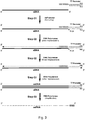
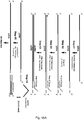
- Such properties can be harnessed in the methods of the invention, for example as shown in Design 1.
- a hybrid (DNA/RNA) dsT7Promoter is used in which the upper strand is DNA and the lower strand is RNA, meaning that the promoter is inactive or activity of promoter extremely decreased ( McGinness and Joyce., J. Biol. Chem., 277:2987-2991, 2002 ; Arnaud-Barbe et al., Nucleic Acids Research, 26:3550-3554, 1998 ).
- This dsPromoter hybridizes with a single stranded nucleic acid template molecule in accordance with the invention and, after the first round of polymerization, i.e.
- both the strands of the double stranded region of the original dsPromoter are now DNA molecules (the upper strand was always DNA and the lower DNA strand has been synthesised by a DNA polymerase using the upper strand of the dsPrimer/Promoter as a template (see Design 1).
- T7 promoter region is now functional meaning that the double stranded molecule obtained as a result of these steps can act as an amplification template in which an appropriate RNA polymerase (T7 polymerase) can now bind to the functional T7 promoter site and produce multiple copies of an RNA molecule in a template dependant amplification reaction. Multiple copies of the RNA molecule can be synthesised.
- T7 polymerase RNA polymerase
- This step of starting with an inactive dsPromoter and designing the methods so that the promoter later becomes active is a useful tool in many of the design protocols described herein.
- this allows a degree of control to be exerted on the method in that amplification can only take place once the promoter has become functionally active.
- the T7 promoter is only given as one particular example of a promoter which might be used in the methods of the invention and any other DNA dependent RNA polymerase promoter could be used in a similar way, e.g. the SP6 promoter.
- Other promoters with different functional properties could also be utilised.
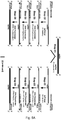
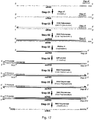
- the use of the phi6 promoter (also referred to as a phi6 initiation sequence) which is an RNA dependent RNA polymerase initiation sequence, is elegantly demonstrated in Designs 12-13.
- the phi6 initiation sequence is active when in the form of a double stranded or a single stranded RNA molecule, and is particularly active when in a single stranded RNA form.
- a phi6 RNA Replicase (which is an example of an RNA dependent RNA polymerase) can bind to the phi6 promoter and transcribe an RNA strand in a template dependent manner. Multiple copies of such RNA strands can be produced by the replicase. Any other RNA dependent RNA polymerase initiation sequence or RNA dependent RNA polymerase could equally be used.
- the active phi6 promoter is provided in the form of a single stranded RNA molecule (see step 07) and the phi6 replicase then transcribes the other strand of the RNA in a template dependent manner, initiating from the 3' end of the single stranded RNA molecule, to form double stranded RNA.
- protocols can be designed where the original dsPrimer/Promoter molecule incorporates a phi6 promoter sequence which is inactive as it is present in a double stranded DNA format or double stranded DNA/RNA format, but through the course of the method this phi6 promoter is incorporated into the template and eventually provided as an active single stranded (or double stranded) RNA phi6 promoter, which can then bind phi6 replicase and cause multiple copies of RNA (e.g. multiple copies of double stranded RNA molecules) to be produced in a template dependent manner from multiple copies of RNA molecules which contain the phi6 promoter sequence at the 3' end.
- the dsPrimer can be designed to contain a terminator region.
- a dsTerminator is an alternative and sometimes preferred form of a dsPrimer of the invention.
- other exemplary features of the structure of the dsTerminators are as described above for the dsPrimers.
- the dsTerminators of the invention can be particularly useful in combination with a dsPromoter of the invention. As will become clear from discussion elsewhere herein, methods can be designed in which a dsPromoter can be incorporated (inserted) at one end of the nucleic acid template and a dsTerminator can be incorporated at the other end of the template.
- RNA polymerase when the amplification step is carried out, appropriate polymerases can start at the promoter region and transcription will terminate at the incorporated terminator region at the other end of the template molecule.
- This design option is preferred in embodiments in which it is desired to obtain amplified copies of an RNA molecule in a native form (i.e. in a form which mimics that which would be generated in a natural reaction, e.g. in which an RNA polymerase would start transcription at a promoter site and stop at a terminator site).
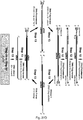
- Design 5 gives an illustrative example of how such dsPromoters and dsTerminators of the invention can be used.
- a particularly preferred dsPrimer of the invention is referred to herein as a chimeric primer (chPrimer).
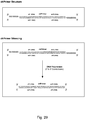
- the general structure and features of the chPrimers of the invention are shown schematically in the Design Ch1 and Figure 29 .
- the chPrimers of the invention have two single stranded regions, i.e. two single stranded 3' overhang regions, which are present on the 3' end of each strand of the dsPrimer (see Design Ch1).
- the single stranded 3' overhang regions function in the same way as in the simple dsPrimers described above, in that they still enable the hybridization of the chPrimer to the 3' end of a single stranded nucleic acid template.
- preferred features of the 3' single stranded overhang region of the chPrimers are as discussed above (e.g. they can comprise known defined sequences, degenerate (random) sequences or inosine (universal) sequences, and optionally the two single stranded regions could be of different types, e.g. one could be a known defined sequence and one could be a degenerate sequence or an inosine sequence, etc).
- chPrimers form a further preferred embodiment of the invention and the present invention thus provides a double stranded primer which comprises a double stranded region and two single stranded regions, wherein the single stranded regions are 3' overhang regions which are present on the 3' end of each strand of the double stranded primer, and wherein the double stranded primer is made up of two separate strands.
- said single stranded 3' overhang regions comprise a degenerate sequence or a sequence comprising universal bases as described elsewhere herein.
- Kits and compositions comprising such chPrimers of the invention form preferred aspects.
- the same chPrimer can hybridize to two nucleic acid template molecules at the same time.
- the same chPrimer is able to hybridize to both the sense and the anti-sense strands at the same time (see Design Ch1).
- the schematic designs show the binding of a sense template molecule to one of the 3' overhang regions of the chPrimer and the anti-sense molecule to the other 3' overhang region, it should be noted that the degenerate or inosine nature of the 3' overhang regions (when these are used) will mean that there is no restriction or preference as to whether the sense or anti-sense molecules bind (the chPrimer may bind to sense/sense, antisense/antisense or sense/antisense pairs of molecules). However, once the first round of polymerization has been completed, sense/antisense pairs will hybridize to each other after each step of denaturation and annealing. Thus, at the end of the amplification, it is the sense/antisense paired molecules which are amplified.
- the double stranded region of the chPrimer generally comprises two different primer sequences/sites (also referred to herein as P1 and P2) which are adjacent to each other and give rise to the name "chimeric primer".
- the two primer sites (P1 and P2) can either be directly adjacent to each other or separated by one or more base pairs.
- the chPrimers can comprise one primer site or two or more primer binding sites, which can be the same or different.
- the double stranded region of the chPrimers can for example comprise one or more primer binding sites, promoter regions, terminator regions, nucleic acid fragments to be joined to said nucleic acid templates, restriction sites or labels, and other useful sequences described herein etc., which may be the same or different, or combinations thereof.
- the chPrimers of the invention can be viewed conceptually as two of the simple dsPrimers as described above and depicted schematically in Figure 1 joined together (the chPrimer structure is shown in Figure 29 ).
- the chPrimer structure is shown in Figure 29 .
- other exemplary features of the structure of the chPrimers are as described above for the simple dsPrimers.
- the existence of two (or more) same or different primer sites (or other types of region as described above) and the ability of an individual chPrimer molecule to hybridize to two template strands allows for further variation and complexity in the subsequent steps of the methods. For this reason the chPrimers are sometimes referred to herein as complex dsPrimers.
- such chPrimers can usefully be used to generate amplification products which have a different primer site at each end.
- the schematic shown in Design Ch2 it is possible to incorporate both of the different primer sites at each end of the amplified product, which allows even more flexibility, for example with downstream steps (e.g. this allows the selection of the length and the primer site content of each end of the double stranded DNA (dsDNA) by using different sets of PCR primers).
- the use of the chPrimers of the invention readily allows the formation of different primer sites at each end of the amplified nucleic acid product (amplification product).
- This feature can be particularly useful when the starting population is dsDNA, the desired amplified nucleic acid product is double stranded (ds) DNA and both the sense and antisense strands are used in the methods of the invention (after strand separation to form single strand nucleic acid template molecules).
- ds double stranded
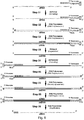
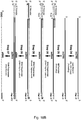
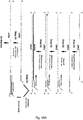
- a single simple dsPrimer is used in such a method then identical primer sites will be formed at each end of the dsDNA amplification product (see for example Design 2 and 3).
- chPrimers are particularly useful for any applications which particularly need different primer sequences (e.g. different adaptor sequences) at each end of the amplified dsDNA.
- An exemplary application would be Next-Generation Sequencing but others will be readily apparent to a skilled person in the field.
- the use of the chPrimers of the invention allows the insertion of different orientations of the same primer sequences into the template molecules/amplification products. (The use of a single simple dsPrimer will insert the same orientations of the same sequence into the template molecules/ amplification products).
- the chPrimers can comprise DNA, RNA or a mixture of types of nucleic acid.
- a portion of the chPrimer is an RNA sequence and the rest is DNA, which can be used to advantageous effect, e.g. to form RNA/DNA hybrid double-stranded structures in which the RNA part can be degraded by any polypeptide with RNase H like-activity.
- one of the anti-sense primer portions is RNA, and this is preferred.
- methods where one of the sense primer portions is RNA are also envisaged.
- the nucleic acid templates of the invention are single stranded nucleic acid molecules.
- the single stranded nature of the template is important in order to enable the single stranded 3' overhang region of the dsPrimer to hybridize to the 3' end (3' terminus) of the nucleic acid template.
- This does not mean however that the present methods are not suitable for manipulation or amplification of double stranded nucleic acid molecules (e.g. genomic DNA), as appropriate single stranded nucleic acid template molecules for manipulation or amplification using the methods of the invention can readily be derived or obtained from double stranded nucleic acid molecules by any appropriate means, for example by denaturation, e.g.
- any other appropriate treatment such as the use of organic solvents (e.g. DMSO or formamide) or high pH (e.g. an alkaline pH, e.g. a pH greater than 11.3) to break the hydrogen bonding between the DNA strands, the use of low salt concentration, urea (e.g. 8M urea), formaldehyde (e.g. 70% formaldehyde).
- a DNA helicase enzyme could also be used or a DNA polymerase with helicase-like unwinding activity, e.g. phi29 polymerase. As the use of a DNA helicase would involve unwinding the dsDNA enzymatically, the heat denaturation and any subsequent PCR thermocycling steps could be omitted.
- a DNA helicase or another molecule with DNA helicase-like activity would be particularly useful for embodiments where the methods are desired to be carried out under isothermal conditions.
- the nucleic acid template can be formed from any type of nucleic acid, for example any type of natural nucleic acid or non-natural nucleic acids (such as locked nucleic acids (LNAs), functionalized LNAs, nucleobase functionalized LNAs, or other types of artificial or modified nucleic acid molecules, etc) or mixtures thereof.
- the nucleic acid template molecules may be DNA or RNA molecules, a mixture of DNA and RNA molecules, chimeric molecules or even modified or non-natural nucleic acids (such as locked nucleic acids (LNAs), functionalized LNAs, nucleobase-functionalized LNAs or other types of modified nucleic acid molecules, etc).
- the SELEX methods described herein can be applied to templates containing a mixture of natural, unnatural or modified bases, including templates that are partially or wholly constructed of locked nucleic acid.
- Some particular applications of targeting LNA containing templates include (i) the creation of LNA containing aptamers developed by the SELEX methods of the invention via chain terminators; (ii) the creation of advanced LNA aptamers containing functionalized LNAs or nucleobase-functionalized LNAs developed by the SELEX methods of the invention via chain terminators.
- the use of the primers and methods of the invention ensures that there is no need for post-selection modifications to remove fixed (or constant) primer regions or to increase the stability against enzymatic degradation of discovered aptamer molecules and can also increase the affinity and stability of secondary structure originated ligand binding properties of LNA aptamers for the development of novel diagnostic and therapeutic applications.
- nucleic acid templates may have modified ends or they may have been derived from modified nucleotides or nucleobases. Equally they may be derived from (denatured from) double stranded molecules with sheared ends or blunt ends (for example they can take the form of 5'end phosphorylated DNA e.g. 5' phosphorylated genomic DNA, see for example Designs 9 and 10, for example as typically prepared for use in a sequencing device, which can then be denatured into single stranded molecules).
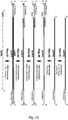
- nucleic acid molecules with a poly-A tail for example can be mRNA molecules, or DNA molecules with an engineered poly-A tail at the 3' end (see for example Designs 14 - 17).
- the methods of the invention can also be conducted on hybrid template molecules (i.e. template molecules with both single stranded and double stranded regions) where single stranded regions of such hybrid templates can be targeted. Such embodiments can be particularly useful for applications such as cloning or targeting of RNA interface pathways.
- both of the strands of the original double stranded molecules can be included in the methods of the invention.
- both of the strands of the original double stranded molecules i.e. both the sense and the anti-sense strands
- hybridizing step (i) then separate dsPrimer molecules can hybridize to the 3' ends of both of the single strands and the subsequent steps of polymerization and amplification can be carried out on both strands simultaneously.
- An example of such an embodiment is shown in Design 2.
- chPrimers can also be used with a starting population of double stranded nucleic acid molecules. Indeed a preferred use of chPrimers is with a starting population of dsDNA molecules.
- the methods of the invention can be used to manipulate or amplify any type of nucleic acid molecule and can be used with a starting population of either double stranded or single stranded nucleic acid molecules.
- both of the strands can remain in the reaction mixture and the dsPrimers of the invention can hybridize to the 3' ends of each of the strands.
- hybridizing means the step in which the dsPrimers of the invention are brought into contact with the appropriate nucleic acid template molecules and then attach to or bind with the 3' ends of the nucleic acid templates by virtue of the (noncovalent, H bond mediated) interaction of base pairs in the 3' single stranded overhang region(s) of the dsPrimer with appropriate complementary base pairs at the 3' end of the single stranded nucleic acid template molecules.
- steps are also referred to herein as “annealing” and these terms should be regarded as interchangeable.
- nucleic acid manipulation or amplification it is well within the normal capability of a person skilled in the art to provide the appropriate reagents and conditions (e.g. temperature) to carry out the hybridization step.
- appropriate reagents and conditions e.g. temperature
- a skilled person could readily determine the number of dsPrimer molecules of the invention which should be brought into contact with the nucleic acid template molecules to obtain sufficient hybridization to carry out the methods of the invention.
- exact complementarity is not always required for stable hybridization/annealing. However, exact complementarity will generally occur in embodiments where the sequence of the 3' end of the nucleic template is known and the sequence of the 3' single stranded overhang is designed to match it, or in embodiments where degenerate 3' overhang sequences are used (where in most cases, as discussed above, the population of dsPrimers which are used in the methods, will have been generated to have all possible sequence variations of a defined 3' overhang length, which means that an exact complementary sequence should be present to enable hybridization/annealing).
- inosine or other universal bases are used as the 3' overhang region, then as some of these universal bases cannot always pair with each of adenine, thymine, cytosine or guanine bases, then exact complementarity will not always occur. However, in general sufficient complementarity will be present in order for stable hybridization to take place with the 3' end of the template.
- the nucleic acid manipulation methods of the invention thus comprise the steps of:
- the nucleic acid amplification methods of the invention comprise the steps of:
- an important advantage of the method of the present invention is that the hybridizing step (i) does not involve and does not require the formation of a phosphodiester bond (or indeed any other type of covalent bond) between the 3' end of the nucleic acid template and the double stranded region of the dsPrimer used in step (i), more specifically such a bond is not required to be formed (or is not formed) between the 3' end of the nucleic acid template and the 5' end of the lower strand/non-overhang strand of the dsPrimer (or equivalent strand of a chPrimer) used in step (i).
- a phosphodiester bond indeed any other type of covalent bond
- Such a step in which a phosphodiester (covalent) bond is formed between the 3' end of a nucleic acid molecule and another nucleic acid molecule is often termed a ligation step or reaction.
- ligation reactions for example in the form of the ligation of an -OH group at the 3' end of a nucleic acid template to the 5' phosphate (-PO 3 ) group of an adaptor molecule, are used in many prior art techniques of nucleic acid manipulation and it is highly advantageous that the methods of the present invention can take place without the formation of such phosphodiester (covalent) bonds.
- the absence of the need for a ligation reaction as part of or immediately subsequent to the hybridization of step (i) is advantageous in terms of time and also in terms of costs as fewer reagents are necessary.
- ligation can lead to undesired by-products.
- the formation of such covalent bonds also depends on the 5' end of the nucleic acid molecule that is being ligated to the 3' end of the nucleic acid template being modified, usually to include a 5' phosphate group.
- the fact that the methods of the invention can be carried out without requiring additional modification of the molecules to be used in the reaction provides a yet further advantage in terms of time and cost.
- bonds are not formed either because there is no appropriate phosphate group at the 5' end of the dsPrimer which has been hybridized to the nucleic acid template and/or beacuse no ligase enzyme is provided to ligate the -OH group at the 3' end of the nucleic acid template to a 5' phosphate (-PO 3 ) group at the 5' end of the dsPrimer (if the dsPrimer has been modified to include such a group).
- the dsPrimers used in step (i) of the methods, and optionally in subsequent steps do not contain a 5' phosphate group on the lower strand/non-overhang strand of the dsPrimer (or equivalent strand when the dsPrimer is a chPrimer).
- step (i) The lack of a requirement for a ligation step in connection with the hybridization of the dsPrimers of the invention to the 3' end of the nucleic acid template in order for the methods of the present invention to work has the effect that both the hybridizing step (i) and at least the first primer extension reaction to synthesise nucleotides in a template dependent manner from the 3' end of the single stranded region of said hybridized dsPrimer in step (ii) can take place without the formation of a phosphodiester (covalent) bond between the 3' end of the nucleic acid template and the double stranded region of the double stranded primer of step (i), more specifically such a bond is not formed between the 3' end of the nucleic acid template and the 5' end of the lower strand/non-overhang strand of the dsPrimer (or equivalent strand when the dsPrimer is a chPrimer) used in step (i). Indeed, such embodiments are preferred.
- the steps up to and including the first primer extension reaction from the 3' end of the single stranded region of said hybridized dsPrimer in step (ii) can take place without the formation of a phosphodiester (covalent) bond between the 3' end of the nucleic acid template and the double stranded primer of step (i). Indeed, such embodiments are preferred.
- ligation reactions or the formation of phosphodiester (or other covalent) bonds can be used in steps subsequent to the first primer extension reaction. Equally however all of the steps of the methods of the invention can take place without the formation of such covalent bonds (e.g. without any ligation reactions or steps). Indeed, such embodiments are preferred.
- the methods of the invention for example said amplification or manipulation of nucleic acid or said formation of an amplified nucleic acid product, does not involve the use of a ligase activity or does not involve a ligation reaction or the use of a ligase enzyme or a ligation step.
- the methods of the present invention do not require the ligation or hybridization of a molecule (e.g. an adaptor molecule) to the 5' end of the initial nucleic acid template (e.g. the nucleic acid template as present in step (i) of the methods described herein), or do not require the use of a double stranded molecule with a 5' overhang region.
- a molecule e.g. an adaptor molecule
- the use of said steps or molecules are excluded.
- dsPrimer is targeted and hybridized to the 3' (or 5') end of a single stranded nucleic acid template
- dsPrimer can be used to attach any desirable sequence or molecule contained in the dsPrimer to the end of the nucleic acid template, e.g. the dsPrimer can be used to attach a label (tag) molecule, or an adaptor, e.g. for end modification purposes.
- a yet further aspect of the invention provides a method of nucleic acid manipulation comprising a hybridizing step wherein a double stranded primer is hybridized to the 3' end of a single stranded nucleic acid template, wherein said primer comprises a double stranded region and a single stranded region, wherein the single stranded region is a 3' overhang region and wherein the 3' overhang region enables the double stranded primer to target and hybridize to the 3' end of the nucleic acid template, wherein said single stranded 3' overhang region preferably comprises a degenerate sequence or a sequence comprising universal bases, and wherein the double stranded primer is made up of two separate strands; wherein said hybridizing step takes place without the formation of a phosphodiester bond between the 3' end of the nucleic acid template and the double stranded primer of the hybridizing step.
- a yet further aspect of the invention provides a method of nucleic acid manipulation comprising a hybridizing step wherein a double stranded primer is hybridised to the 5' end of a single stranded nucleic acid template, wherein said primer comprises a double stranded region and a single stranded region, wherein the single stranded region is a 5' overhang region and wherein the 5' overhang region enables the double stranded primer to target and hybridize to the 5' end of the nucleic acid template, wherein preferably said single stranded 5' overhang region comprises a degenerate sequence or a sequence comprising universal bases, and wherein the double stranded primer is made up of two separate strands; wherein said hybridizing step takes place without the formation of a phosphodiester bond between the 5' end of the nucleic acid template and the double stranded primer of the
- dsPrimer structure to the 5' end of a single stranded nucleic acid template, can also be used e.g. for ligation, or tagging, or end modification purposes. These structures will not initiate conventional primer extension or amplification as they will not provide a substrate for DNA polymerase, though currently contemplated artificial polypeptides or as yet undiscovered natural enzymes with a reverse 5'-3' DNA polymerase activity (see for example, A design proposal of the reverse DNA polymerase (3'-5' direction), Penghui Shi , http://arxiv.org/abs/1310.4073 ) may permit primer extension or amplification using such primers in the future.
- Step (ii) of the methods of the invention involves at least one round of polymerization using a DNA polymerase in order to form an amplification template, wherein at least the first round of polymerization comprises using a DNA polymerase with 5' to 3' polymerization activity to carry out a primer extension reaction to synthesise nucleotides in a template dependent manner from the 3' end of the single stranded region of the dsPrimer after it has hybridized to the 3' end of the nucleic acid template.
- the reference to the single stranded region of the double stranded primer (dsPrimer) in step (ii) of the described methods refers to the part of the dsPrimer which was single stranded before hybridization, i.e. the single stranded region or 3' overhang region, but has become double stranded by virtue of the dsPrimer having hybridised to the 3' end of the nucleic acid template molecule.
- step (ii) of the method involves at least one round of polymerization using a DNA polymerase in order to form an amplification template, wherein at least the first round of polymerization comprises using a DNA polymerase with 5' to 3' polymerization activity to synthesise nucleotides in a template dependent manner from suitable 3' ends of nucleic acid strands which are present in the reaction mixture.
- DNA polymerase refers to a polypeptide or enzyme comprising DNA polymerase/DNA polymerization activity, e.g. DNA-dependent DNA polymerase and/or RNA-dependent DNA polymerase activity (5' to 3' polymerization activity).
- DNA polymerase polypeptides as used herein may have various properties, for example as well as having 5' to 3' polymerization activity in order to be able to for example carry out primer extension reactions, the DNA polymerase polypeptides may have strand displacement activity or nick translation activity or reverse transcriptase activity or other useful activities.
- the DNA polymerase polypeptides can optionally have multiple properties such as for example more than one of the properties discussed above.
- DNA polymerase with strand displacement activity
- a convenient choice of DNA polymerase would be DNA polymerase I, Klenow Fragment (such a DNA polymerase also has 5' to 3' polymerization activity) or Phi29 or variants known in the art for example as described in de Vega, Miguel, et al. "Improvement of ⁇ 29 DNA polymerase amplification performance by fusion of DNA binding motifs.” PNAS 107.38 (2010): 16506-16511 , (which has a strong strand displacement ability and is active at a moderate temperature, around 20-37 °C).
- DNA polymerase with nick translation activity a convenient choice of DNA polymerase would be Bst DNA polymerase, Full length (such a DNA polymerase also has 5' to 3' polymerization activity and a good strand displacement activity, and is active at elevated temperatures, around 65 °C), or E. coli DNA polymerase I.
- T4 and T7 DNA polymerases lack strand displacement activity and 5' to 3' exonuclease activity but have 5' to 3' polymerization activity and a 3' to 5' exonuclease activity which is significantly better than the Klenow fragment. Such polymerases are also active at moderate temperatures (around 20-37 °C).
- Thermostable DNA polymerases e.g. Taq
- thermostable DNA polymerase enzymes with one or more of strand displacement activity, nick translation activity or reverse transcriptase activity can also be highly useful in the methods of the invention.
- modifed versions of Taq polymerase described which have strand displacement activity.
- VentR, Deep VentR and their exo-variants are thermostable and have strand displacement activity.
- Additional DNA polymerases that may be selected for use with the dsPrimers, methods and kits of the invention include uracil tolerant DNA polymerases such as the Phusion U Hot Start DNA Polymerase from Thermo Fisher Scientific Inc, the EpiMark® Hot Start Taq DNA Polymerase from New England Biolabs, Inc, the moderately thermostable (active upto 65C) reverse transcriptase "Maxima Reverse Transcriptase” from Thermo Fisher Scientific Inc and the KOD DNA polymerase of Toyobo Co. Ltd and its variants, particularly useful for their ability to function with modified nucleotides.
- uracil tolerant DNA polymerases such as the Phusion U Hot Start DNA Polymerase from Thermo Fisher Scientific Inc, the EpiMark® Hot Start Taq DNA Polymerase from New England Biolabs, Inc, the moderately thermostable (active upto 65C) reverse transcriptase "Maxima Reverse Transcriptase” from Thermo Fisher Scientific Inc and the KOD DNA poly
- Some methods of the invention can be carried out using only one round of polymerization using a DNA polymerase. However, as will be described elsewhere herein, other methods of the invention will involve more than one round of polymerization using a DNA polymerase, for example may involve two or three rounds of polymerization and possibly more. In the methods of the present invention, one, two or three rounds of polymerization are generally preferred.
- a common step to all the methods of the invention is that at least the first round of polymerization comprises using a DNA polymerase with 5' to 3' polymerization activity to carry out a primer extension reaction to synthesise nucleotides in a template dependent manner from the 3' end of the single stranded region of the dsPrimer which has become hybridized to the nucleic acid template.
- step (i)(a) involves the use of a DNA polymerase with 5' to 3' polymerization activity to synthesise nucleotides in a template dependent manner from the 3' end of the single stranded region of the dsPrimer of the invention.
- this first primer extension reaction involves the filling in of nucleotides next to the 3' single stranded overhang region of the dsPrimer (e.g. next to the degenerate or inosine or defined sequences) which has hybridized to the 3' end of the nucleic acid template.
- the DNA polymerase used to carry out this primer extension reaction can be selected to have additional activities to the required 5' to 3' polymerization activity.
- the DNA polymerase can be selected to also have strand displacement activity (see for example Design 1 and Design 3), and/or reverse transcriptase activity (see for example Design 8 and Designs Ch5 and Ch6) and/or nick-translation activity.
- step (ii) of the amplification and manipulation methods of the invention will generally involve a further step which involves the production or synthesis of the lower strand (complementary strand, non-overhang strand) of the dsPrimer in order to fill in or complete the 3' end of the second strand of the template, e.g. to polymerise the 3' end of the template.
- a step is referred to herein as the production of (or replacing) the complementary strand (complementary part) or non-overhang strand (non-overhang part) of the dsPrimer or the step of production of or replacing the lower part (lower strand) of the dsPrimer.
- step (ii)(b) Such a step is also referred to herein as step (ii)(b).
- step (ii)(b) the strand of the dsPrimer which does not contain the 3' overhang region is produced or synthesised or replaced.
- Such a step generally takes place after the first primer extension step (i.e. after step (ii) (a)) and, in the amplification methods, takes place before the amplification step (iii).
- such a step involves or has the effect of incorporating the lower strand of the dsPrimer, i.e. the strand which is not directly attached to the single stranded 3' overhang region/the strand which does not contain the 3' overhang region (the non-overhang strand), or the equivalent strand in a chPrimer of the invention, into the nucleic acid template, for example, by joining the lower strand of the double stranded primer onto the 3' end of the nucleic acid template or by in effect incorporating said lower strand of the double stranded primer onto the 3' end of the nucleic acid template by synthesis using the upper strand of the dsPrimer as a template (in other words "replacing the lower strand/part of the dsPrimer").
- Any appropriate technique can be used to carry out this lower strand replacement, many of which are illustrated schematically in the various designs of the invention shown herein.
- strand displacement This technique involves the use of a DNA polymerase to synthesise the lower strand of the dsPrimer using the upper strand of the dsPrimer as a template. During this step, the original lower strand of the dsPrimer is displaced away from the nucleic acid template (and more specifically from the original upper strand of the dsPrimer), hence the terminology “strand displacement” which describes the ability to displace downstream DNA encountered during synthesis.
- strand displacement which describes the ability to displace downstream DNA encountered during synthesis.
- the way in which strand displacement is carried out can be varied appropriately depending on the molecular entities involved and various examples are depicted herein.
- the upper strand of the dsPrimer being used as a template is DNA
- a DNA polymerase with strand displacement activity can be used (see for example Design 1).
- the upper strand of the dsPrimer can be in the form of an RNA molecule and in this case, a DNA polymerase with strand displacement activity and reverse transcriptase activity is required (see for example Design 8).
- the DNA polymerase acts on the 3' end of the original nucleic acid template molecule (see also Designs 3 and 5).
- Strand displacement is a preferred and convenient technique to carry out the step of replacement of the lower strand of the dsPrimer.
- nick translation step An example of an alternative technique to that of strand displacement is that of a nick translation step.
- a single stranded ("nick") site is formed (see the design schematics included herewith).
- a DNA polymerase (which has the appropriate nick translation ability) can then be used to replace the single stranded "nick" sites by elongating the 3'OH terminus of the original nucleic acid template molecule while removing nucleotides by 5' to 3' exonuclease activity (which involves degrading the encountered downstream strand via the 5' to 3' exonuclease activity) and replacing them with new nucleotides in order to replace the lower strand of the dsPrimer.
- a step of denaturation could be used to replace the lower strand of the dsPrimer.
- denaturation is used to remove the lower part of the dsPrimer (which is not covalently attached to the nucleic acid template molecule as shown by the presence of a single stranded "nick"), after which a DNA polymerase with 5' to 3' polymerase activity can be used to produce the complementary strand/lower strand by extension from the 3' end of the nucleic acid template using the upper strand of the dsPrimer as a template.
- Such a step can conveniently be carried out by heat denaturation in which a temperature is selected so as to enable the denaturation of the short lower part of the dsPrimer while the long template strand and its complementary strand can still maintain their double stranded structure.
- a temperature will vary depending on the length of the double stranded region of the dsPrimer and the length of the template molecule but can readily be determined by a person skilled in the art.
- thermostable DNA polymerase with strand displacement activity can be used in the methods or kits of the invention.
- a final specific example of a method/technique of replacing the lower strand of the dsPrimer would be to form a covalent bond between the 3' end of the nucleic acid template and the dsPrimer, more specifically between the 3' end of the nucleic acid template and the 5' end of the lower strand of the dsPrimer (or an equivalent strand when the dsPrimer is a chPrimer), i.e. in effect repairing the single stranded "nick".
- a convenient way to carry out such a step would be to use a ligase enzyme and a ligase reaction in which case the 5' end of the lower strand of the dsPrimer would need to be modified to incorporate a 5' phosphate group in order that the ligase enzyme could act.
- This is therefore a less preferred embodiment as an additional processing step will need to be carried out on the dsPrimer and an additional ligation step will need to be carried out which will lengthen the procedure.
- the process will be more expensive in terms of reagents.
- Steps (ii)(a) and (ii)(b), i.e. the step of primer extension and the step of replacing the lower part of the dsPrimer can, if desired, be carried out at the same time in a single step or can be carried out in separate steps. If these two steps are carried out at the same time, then a single type of DNA polymerase can be used, which is selected to have any necessary additional activity (e.g. strand displacement activity, nick displacement activity, etc) to the 5' to 3' polymerase activity. Equally, different types of DNA polymerases to supply all the necessary activities can be added to the reaction mixture at the same time. It can be seen that carrying out steps (ii)(a) and (ii)(b) at the same time and with a single polymerase can result in a time and cost advantage. Thus, in some aspects of the invention the use of such methods is preferred.
- Design 1 and Design 8 Exemplary methods of the invention which involve only one round of polymerization in order to form an amplification template are shown in Design 1 and Design 8.
- the Design Ch1 is a further example, although here it is optional as to whether or not one or two rounds of polymerization are carried out.
- the first round of polymerization involves the steps of primer extension and optionally the production of the complementary strand/replacement of the lower strand of the dsPrimer.
- the techniques of hybridization/annealing, primer extension, strand displacement, nick translation, denaturation, ligation and production of the complementary strand/lower strand of the dsPrimer (or equivalent strand of a chPrimer), as described above and elsewhere herein, can equally be used in the further rounds of polymerization (and indeed in the amplification step (iii)).
- Second and further rounds of polymerization if they are carried out, will generally each involve a cycle of the steps of the preparation of single stranded molecules, hybridization and polymerization.
- these steps can take various forms depending on the design of the protocol and examples are described below.
- the first step in the cycle is thus the treatment of the molecules present in order to obtain single stranded molecules.
- a step could take the form of a denaturation step, for example a heat denaturation step or an alternative denaturation method as described elsewhere herein such as the use of dimethyl sulfoxide, formamide, high pH or DNA helicase, etc.
- the molecules resulting from the first round of polymerization comprised strands which were RNA molecules (for example had one strand which was DNA and one strand which was RNA, for example by using a DNA polymerase with reverse transcriptase activity as described elsewhere herein), then the formation of single strands could be carried out by adding an RNase H enzyme (or indeed any other enzyme which has the effect of degrading RNA).
- RNase H enzyme or indeed any other enzyme which has the effect of degrading RNA.
- the second step in the cycle is a further hybridization/annealing step, i.e. a hybridization/annealing step which is distinct from step (i) of the methods described herein.
- a further hybridization step still takes the form of a conventional hybridization step involving the interaction of nucleic acid molecules by virtue of the formation of hydrogen bonds between complementary (or sufficiently complementary) nucleic acid sequences as described above.
- a further hybridization step may involve the use of additional dsPrimers of the invention, the addition of conventional single stranded primers, or may, in the most simple methods, comprise further hybridization of the molecules already present in the reaction mixture without requiring the addition of further primers.
- Designs 4 and 5 give exemplary protocols in which the second round of polymerization and the further hybridization step involves the use of an additional dsPrimer of the invention. Designs 4 and 5 happen to use a second dsPrimer which is different to the dsPrimer used in the hybridization step (i). However this is not compulsory and it would equally be possible to add an additional dsPrimer in this second round of polymerization which was the same as that used in the first round of polymerization.
- the dsPrimers used can be dsPromoters and/or dsTerminators, which represents a highly useful embodiment of the invention (see for example Design 5).
- Design 3 gives an exemplary protocol in which the second round of polymerization and the further hybridization step involves the use of conventional primers (here conventional sense and anti-sense primers) which are added in the second round of polymerization.
- primers here conventional sense and anti-sense primers
- These single stranded primers are designed to bind to appropriate ends of the nucleic acid molecules which are present in the reaction mixture and in which one of the strands of the dsPrimer has been incorporated.
- Appropriate single stranded primers are readily designed given that the sequences of the strands of the dsPrimer are known. In some embodiments (e.g.
- these single stranded primers are designed to bind to the 3' ends of the nucleic acid molecules which are present in the reaction mixture and in which the lower strand of the dsPrimer has been incorporated.
- Appropriate single stranded primers are readily designed given that the sequence of the lower strand of the dsPrimer is known.
- a further advantage with protocols such as those shown in Design 3 is that a single single stranded primer can be used as the sequences are the same.
- kits and compositions with only a single type of dsPrimer and optionally a single type of single stranded primer are preferred.
- a "single type" of dsPrimer as used herein is generally a reference to the same double stranded region being present.
- single type of dsPrimer as used herein with embodiments comprising degenerate or universal 3' overhang regions, generally means that the double stranded region of the primer is the same in all the dsPrimers but the single stranded 3' overhang region may vary in sequence, e.g. to provide a full set of combinations of the degenerate bases as described elsewhere herein.
- Design 2 (and Design Ch3, Ch4, Ch5 and Ch6) give exemplary protocols where no additional primers are required in the second round of polymerization and the further hybridization step.
- the further hybridization step involves the hybridization of molecules which are already present in the reaction mixture as a result of the first round of polymerization, and, for example, appropriate conditions, e.g. annealing temperatures, can be selected to ensure that the correct molecules (or parts thereof) hybridize to each other.
- this second step in the cycle may or may not involve the addition of further primers. If it does involve the addition of further primers, then these may be conventional single stranded primers designed to bind to a strand of the dsPrimers of the invention which have been incorporated into the ends of the nucleic acid molecules of the reaction mixture by virtue of the first round of polymerization, or may involve the addition of further dsPrimers of the invention.
- the third step in the cycle which forms the second (or subsequent) round of polymerization involves the use of a DNA polymerase enzyme with 5' to 3' polymerase activity which then acts on any appropriate 3' ends of nucleic acid molecules present in the reaction mixture and as a result fills in any gaps which are present.
- this use of a DNA polymerase enzyme to fill in gaps which are present can take several forms depending on the design of the method. Depending on the molecules which are present in the reaction mixture, then more that one of these forms may be involved in any particular method.
- this DNA polymerase step can take the form of the completion of 3' ends of various strands, for example by production of the sequence corresponding to the lower strand of the dsPrimer using the upper strand sequence as a template (see for example Design 2, step 05, and some of the reactions of Design 3, see for example step 05 shown on the left hand side of the schematic). See also designs Ch3 to Ch6 using chPrimers of the invention in which in the second round of polymerization a DNA polymerase is used to complete the second strand from the 3' end of the nucleic acid molecules present using the other strand as a template (see step 06).
- the DNA polymerase is used to carry out a primer extension reaction from newly added conventional single stranded primers (for example Design 3, step 05) or from a newly added dsPrimer of the invention (see for example Designs 4, 5 and 7).
- dsPrimer of the invention In methods where another dsPrimer of the invention is used, then such methods generally involve the additional step of producing the complementary strand of the dsPrimer, i.e. replacing the lower strand of the dsPrimer, as described above.
- a preferred technique of carrying out this step will be to use a DNA polymerase with strand displacement activity (as depicted in Designs 4, 5 and 7) or nick translation activity, although equally the other techniques as described above could be used.
- this activity may be provided by way of an additional DNA polymerase or by way of a single type of DNA polymerase which has both 5' to 3' polymerase activity and strand displacement or nick translation activity, as appropriate.
- Design 2 and Designs 4 to 7 are examples where two rounds of polymerization are used in order to form an amplification template.
- Design 3 is an example where three rounds of polymerization are used to arrive at the amplification template.
- the dsPrimers can act before the amplification step and add primer regions for amplification primers to target.
- the method steps (i) and (ii) can be used to form double stranded template molecules for amplification via another (amplification) primer by the addition of appropriate primer binding sites to the ends of the template molecules.
- amplification step is then carried out on the amplification template in order to generate an amplified nucleic acid product (also referred to herein as an amplification product).
- an amplified nucleic acid product also referred to herein as an amplification product.
- steps (ii) and (iii) can be performed in a single process, for example in embodiments where the same primers are used for both steps (see e.g. Design Ch1).
- the amplification step may also be referred to herein as an amplification reaction.
- the number of amplification steps to be carried out can be readily determined by a person skilled in the art and will depend on the amount of nucleic acid product it is desired to generate. It is also well within the normal skill of such a person skilled in the art to provide the necessary reagents and conditions in order to carry out the amplification steps. Indeed, some exemplary reagents and conditions are described in the experimental Examples section.
- the amplification step(s) performed on the amplification template to form an amplified nucleic acid product can take any appropriate form depending on the nature of the amplification template which has been produced.
- the amplification step can take the form of conventional or standard PCR using forward and reverse single stranded primers which are designed to bind to the sequences (primer sites), originally present in the strands of the dsPrimers used in the methods and now incorporated at the ends of the nucleic acid strands present (see for example and illustration Designs 2 to 4 and Designs 9 and 10 where sequences originally present in the lower strand of the dsPrimers have been incorporated at the 3' ends of both the nucleic acid strands present).
- PCR amplification is carried out in accordance with standard protocols as will be well known to a person skilled in the art, any of which should be appropriate for use. Such protocols generally involve the steps of denaturation, hybridization/annealing and polymerization, said steps being repeated as many times as is necessary to achieve the desired level of amplification.
- any variant PCR method can be used, for example Hot start PCR, Touchdown PCR or Step-down PCR. Indeed, methods involving both these types of PCR are described in the experimental Examples section.
- extension primers for example, it would be possible to use two extension primers instead of using a single primer in the standard PCR step of Design 2 and Design 3.
- the use of two different extension primers e.g. termed E1 and E2 would give rise to 3 different amplification products (i.e. the template with E1 at both ends, the template with E2 at both ends and the template with E1 at one end and E2 at the other end), which could then, if desired, be separated by size separation based on the difference in length between E1 and E2.
- the same single stranded primer can be used for both forward and reverse reactions (i.e. the method only requires a single primer, see for example Designs 2, 3, 9 and 10). Equally however the primer sites can be designed to be different, in which case two different primers are used (see for example Design 4).
- chPrimers which as described elsewhere herein have two adjacent but different primer sites (P1 and P2)
- appropriate combinations of single stranded primers can be chosen for the PCR amplification step in order to generate an amplification product which for example has a different primer site at each end (see for example Design Ch1 in which the amplification product shown at the bottom of the figure has P1 at one end and P2 at the other) or both different primer sequences at each end (see for example Design Ch2 in which the amplification product shown at the bottom of the figure has P1 and P2 at each end).
- the amplification step is generally carried out using an RNA polymerase.
- the RNA polymerase needs to bind to a specific (conserved) sequence (called a "promoter" sequence) in the amplification template and be able to synthesise an RNA molecule.
- amplified nucleic acid products can be generated continuously as new RNA polymerase molecules can bind to the appropriate sequences in the amplification template and synthesise nucleic acid products one after the other providing that sufficient reagents and the appropriate conditions are provided.
- RNA polymerase enzyme can be used in the methods of the present invention providing the appropriate binding site (promoter site) has been incorporated in the dsPrimers of the invention which are used.
- the dsPrimer is a dsPromoter which an appropriate RNA polymerase (DNA dependent RNA polymerase) can bind or recognise and thereby initiate RNA synthesis.
- the T7 promoter is particularly preferred and in such embodiments a double stranded DNA dependent RNA polymerase (T7 RNA polymerase) binds to the T7 promoter region and RNA is transcribed.
- T7 RNA polymerase starts transcription at the final G in the promoter sequence (5'-taatacgactcactataG-3'). The polymerase then transcribes using the opposite strand as a template for 5' to 3' transcription. The first base in the transcript will therefore be a G.
- T7 RNA Polymerase is one of a group of very active phage polymerases, that use a short double-stranded promoter sequence to initiate transcription at a specific base in the template, and then transcribe single or double-stranded DNA with good fidelity until the end of the DNA bottom strand is reached. T7 polymerase strongly prefers to start with a G (GG is better still), but otherwise will transcribe virtually any sequence.
- 3 G residues are added as GGG to the end of the minimal promoter sequence (taatacgactcactataGGG) in which case a GGG sequence will be added to the 5' end of the amplified product (see for example Design 1 and Design 5).
- Any appropriate DNA dependent RNA polymerases can be used providing the appropriate promoter sequence is present in the dsPrimers of the invention.
- Another specific example is the SP6 RNA polymerase.
- a dsTerminator sequence can be incorporated at the opposite end of the amplification template from the dsPrimer sequence or the dsPromoter sequence. If both a dsTerminator and a dsPromoter are used then in preferred embodiment the terminator sequence is selected to match the promoter sequence, i.e. they are selected to both be recognised by the same enzyme (e.g. a polymerase enzyme).
- a T7 terminator sequence can be incorporated at the opposite end of the amplification template from a T7 promoter sequence, in which case the appropriate RNA polymerase will recognise and initiate transcription at the T7 promoter sequence and terminate the transcription at the T7 terminator sequence thereby meaning that molecules will be produced which resemble native transcripts (see for example Design 5 and Design 7).
- Other appropriate promoter/terminator pairs can equally be used, e.g. the SP6 promoter and terminator sequences which are recognized by the SP6 RNA polymerase.
- a dsPrimer sequence can be incorporated at the opposite end from the dsPromoter (e.g. the T7 promoter) in which case more elongated amplification products are produced as the transcription is not terminated before the end of the amplification template (see for example Design 6).
- the 3' end elongated amplification products such as the type of molecules produced in Design 6, can be particularly useful for any application that requires modified (or elongated) 3' ends.
- elongated 3' ends can be designed to incorporate or insert adaptor sequences and/or nucleic acid labels or tags, for example in the form of a barcode or other identifier sequence.
- 3' end elongated amplification products can then be used for example in next generation sequencing reactions, third generation sequencing, etc.
- 3' end elongated amplification products can also conveniently be immobilized to any surface (such as nanoparticles, microarrays, etc), for example via hybridization of the inserted sequence with a pre-immobilized complementary sequence.
- amplification reactions of the invention can involve the use of a single stranded RNA primer which can hybridize to a sequence corresponding to one of the strands of the primer site present in the original dsPrimer of the invention which has become incorporated into the 3' end of one of the strands of the amplification template.
- amplification reactions involve the use of a single stranded RNA primer which can hybridise to the sequence corresponding to the lower strand of the original dsPrimer, which has become incorporated into the 3' end of one of the strands of the amplification template.
- Such methods involving the single stranded RNA primer for amplification can be used for continuous amplification.
- Such methods require the dsPrimer of the invention to be a hybrid molecule with the upper strand composed of RNA and the lower strand composed of DNA (or in the case of a chPrimer of the invention then one of the primer sites, P1 or P2, is a hybrid primer site with one strand of said site composed of RNA and the other strand of DNA).
- hybrid double stranded primers are then incorporated into the amplification templates by way of steps (i) and (ii) of the methods of the invention.
- this RNA primer After hybridization, this RNA primer has a free 3' end on which a DNA polymerase comprising both 5' to 3' polymerization activity and strand displacement activity can act in order to extend the sequence of the RNA primer to form another copy (of the amplification template whilst at the same time displacing the strand which was previously joined to the RNA part of the dsPrimer away from the newly forming amplification template.
- This step thus has the effect of generating an amplified nucleic acid product (these are the displaced molecules) and regenerating the amplification template to be subjected to a further round of amplification using RNA degradation and the hybridization of a single stranded RNA primer, i.e. these steps can form a continuous cycle. Exemplary designs in which such an amplification step is used are shown in Design 8 (see steps 3) and also in Design Ch5 and Ch6 (see steps 7).
- Such methods involving amplification using an RNA primer and strand displacement can readily be adapted to amplify sense or antisense DNAfrom sense or antisense DNA or RNA templates.
- the methods of the invention can be varied to be used on different types of template and to produce different types of amplification product.
- the methods can be used to amplify antisense DNA from sense DNA templates, or sense or antisense DNA from RNA templates.
- the amplification products may for example be DNA or RNA and may be single or double stranded.
- the amplification products may be used in any appropriate subsequent methods in which an amplified product is desirable or advantageous. Some uses are described elsewhere herein. An exemplary use where a double stranded PCR product is used as a template for in vitro transcription (and hence, if desired, subjected to a further round of amplification) is described in the experimental Examples section.
- dsPrimer silencing refers to a process to stop the dsPrimer activity, i.e. to remove the ability of the dsPrimer to act as a primer, by removing the 3' single stranded overhang region. Any appropriate method of removing the 3' single stranded overhang region can be used, however, conveniently, this is done by using a DNA polymerase with both a DNA dependent 5' to 3' DNA polymerase activity and a 3' to 5' exonuclease activity.
- dsPrimer silencing The principal of dsPrimer silencing is shown in Figure 1 and the step can be used to prevent undesired hybridization of dsPrimer molecules, as once the 3' single stranded overhang region is removed then no hybridization can occur.
- steps of dsPrimer silencing can be used after step (i) of hybridization, e.g. after hybridization step (i) or after the first primer extension reaction of step (ii) or after the replacement of the lower strand of the dsPrimer in step (ii) or after the first round of polymerization in step (ii).
- Equally said silencing step can be used at similar points after any other subsequent step of hybridization of the dsPrimers of the invention.
- this step has the effect of inactivating any primers which have not hybridized to the relevant nucleic acid molecules.
- the step of silencing can be used to stop the activity of unhybridized dsPrimers.
- the step of dsPrimer silencing can be used with all types of dsPrimer (including chPrimers, see Figure 29 ) regardless of whether they are comprised of DNA or RNA strands or both.
- dsTerminator silencing An equivalent silencing procedure can be used with the dsTerminators of the invention and is termed "dsTerminator silencing".
- dsPromoter silencing works on the same principle as the dsPrimer silencing described above. However, this step is carried out on dsPromoters of the invention, i.e. in embodiments where the dsPrimer is a dsPromoter.
- the dsPromoter silencing is also carried out by removing the 3' single stranded overhang region and is again conveniently carried out with a DNA polymerase which additionally has 3' to 5' exonuclease activity.
- the principal of dsPrimer silencing is shown in Figure 2 . Again this step can be used to remove the hybridization activity of the dsPromoter structures which can help prevent undesired hybridization of the dsPromoter molecules.
- dsPromoter silencing can be used with all types of dsPromoter regardless of whether they are comprised of DNA or RNA strands or both in terms of stopping the hybridization activity.
- promoters are only active when in a double stranded DNA form
- such promoters are used in a form which has a disturbed structure, e.g. has an RNA strand or part, e.g. is a DNA/RNA hybrid or is in an RNA/RNA form, and is therefore inactive.
- the protocols are designed to convert this inactive form to a DNA/DNA form when RNA polymerase activity is desired.
- RNA RNA/RNA hybrid molecule
- an enzyme which degrades RNA e.g. an RNase H enzyme (a polypeptide comprising RNase H activity)
- RNase H enzyme a polypeptide comprising RNase H activity
- steps are exemplified in Design 4 and Design 7, wherein the original nucleic acid template molecule is RNA and the dsPrimer used has a lower strand which is RNA.
- the step of RNase H degradation is used after the hybridizing step (i) and the first primer extension reaction in order to remove the RNA strand and give rise to a preparation of single stranded DNA molecules.
- the initial dsPrimer which is hybridized is a T7 terminator sequence whereas in Design 4 a basic dsPrimer is used, which shows how this step of RNA degradation is versatile and can be used with many designs of the invention.
- the methods comprise a step in which a lock primer is used.
- lock primer is used herein to describe a single stranded or double stranded nucleic acid molecule (e.g. a DNA or RNA or DNA/RNA chimeric single or double stranded primer) which is incapable of being subjected to primer extension because it cannot be used as a substrate by a DNA polymerase, e.g. because the 3' end of the DNA/RNA molecule/primer has been modified so that it does not have a 3' OH group and chain elongation is thereby inhibited.
- chain terminators such as ddNTP or 3'dNTP residues provides a convenient way of making such DNA or RNA or DNA/RNA molecules with 3' modified ends.
- lock primers bind to nucleic acid molecules in the reaction mixture (e.g. bind to the sense or the antisense strands in the reaction mixture), as they cannot be subjected to chain elongation, they block the reaction, i.e. they block the further amplification of the molecule to which they bind.
- Lock primers when used in the methods of the present invention are generally designed to hybridize to the 3' ends of nucleic acid molecules or unbound dsPrimers or chPrimers the amplification of which is not desired. In other words lock primers are used to block unwanted polymerization reactions.
- Such lock primers are conveniently designed to bind to a sequence (e.g. to be complementary to a sequence or to be complementary to only a region) corresponding to the lower strands of the dsPrimer (or equivalent strand of a chPrimer) of the invention which have been incorporated at the 3' end of a proportion of the nucleic acid molecules which are present in a reaction mixture (see for example Design 5, 6 and Design 13).
- a lock primer can be designed which binds to and "locks" the 3' end of the sense strands (see Design 5 and 13 where the sense strand is DNA and Design 6 where the sense strand is RNA). After the lock primer has bound then only the anti-sense molecule is available to be amplified. Equally such lock primers can be used to block amplification of the antisense strand.
- lock primers can be designed so that the lock primer binds to and locks the 3' end of the antisense strands instead, by following the same design parameters and used to block amplification of the antisense strand or unbound dsPrimer and chPrimers.
- designing lock primers for blocking sense or antisense amplification is the same as designing forward or reverse primers for a a standard PCR amplification.
- Such lock primers can either be in a single stranded (see for example Designs 5, 6 and 13) or in a double stranded form (see for example Designs 14, 16 and 17).
- the lock primers can conveniently use the same structure as the dsPrimers of the invention in which the single stranded 3' overhang region is designed to hybridize to the sequence at the 3' end of the strand it is desired to block and, of course, the 3' end of the single stranded overhang region is modified so that it does not have a 3'OH group.
- Design 5 illustrates the use of a single stranded lock primer
- a double stranded dsLockPrimer may also be used (providing the 3' single stranded overhang region of said primer is designed to contain a sequence which was complementary to the sequence of the terminal, e.g. Terminator sequence present at the 3' end of the sense DNA strand).
- a particularly preferred form of the above described dsLockPrimer and its use is, for example, the Lock Primer T as shown in Designs 14, 16 and 17.
- Such lock primers are specifically designed to target and block the amplification of nucleic acid molecules which have a poly(A) tail at the 3' end and thus, in such lock primers, the single stranded 3' overhang region is composed of a series of (multiple) T residues (e.g. 6 T residues) and (as for the dsPrimers described herein) this single stranded region is attached to a double stranded nucleic acid (DNA and/or RNA) region.
- These primers function as lock primers since the last T base of the 3' overhang region does not have a 3'OH group and thus chain elongation cannot occur.
- lock primer concept is to inhibit the hybridization of dsPrimers to the 3'-end of nucleic acid molecules.
- hybridization of a Lock Primer in either a single stranded or a double stranded form as described above
- dsPrimers or other primers
- Lock Primers are added first to the reaction mixture and then for example appropriate secondary, alternative, dsPrimers are added to the solution.
- two or more different dsPrimers of the invention are used in separate rounds of polymerization, for example in order to incorporate two different primers at each end of the nucleic acid molecules. In this way two different regions (with different sequences) are added to the 3' and 5' ends of the initial nucleic acid template. Illustrative and exemplary protocols showing this technique are shown schematically in Designs 4, 5 and 7. "Different" dsPrimers is thus generally used to mean dsPrimers with different sequences or regions in the double stranded region of said primers.
- dsPrimer to use, in addition to the sequences and structures of said dsPrimers can readily be selected by a skilled person. For example, at its most simple, two different dsPrimers (for example with a different primer sequence contained within the double stranded region of each of the two different dsPrimers) can be used in such embodiments (see for example dsPrimer 01 and dsPrimer 02 as shown in Design 4).
- a dsPrimer can be combined with a dsPromoter or dsTerminator as described elsewhere herein. Alternatively, a dsPromoter can be combined with a dsTerminator.
- the two different dsPrimers of the invention are added in the appropriate order depending on the type of amplified nucleic acid product being produced and the type of molecule which is being used as the nucleic acid template in step (i) of the methods.
- Design 4 involves the use of two different dsPrimers of the invention in separate rounds of polymerization in order to incorporate different primers at each end of the amplification template molecule which can then be used for standard PCR amplification.
- one of the dsPrimers is a dsTerminator (illustrated in Design 5 as a T7 terminator, however any appropriate terminator site for an RNA polymerase could be used), and the second dsPrimer used in the second round of polymerization is a dsPromoter (in design 5 this is illustrated as a T7 promoter, however this could be any other DNA dependant RNA polymerase promoter).
- sense DNA is the original nucleic acid template molecule and sense RNA is the desired amplified product.
- the dsTerminator is added in the first round of polymerization and the dsPromoter is added in the second round.
- a dsPrimer of the invention can be combined with a ds (e.g. T7) promoter of the invention, for example as illustrated in Design 6.
- a ds e.g. T7 promoter of the invention
- amplified products now contain a primer sequence (or some kind of other useful sequence which was present in the double stranded region of the dsPrimer used) at the 3' end which can be useful for further manipulation, for example for use like an adaptor in for example next generation sequencing.
- the 3' end elongated amplification products can be particularly useful for any application that requires modified (or elongated) 3' ends.
- elongated 3' ends can be designed to incorporate or insert adaptor sequences, RNA or DNA affinity sequences/tags (which for example allow the isolation of RNA or DNA molecules, respectively, by affinity purification), and/or nucleic acid labels or tags, for example in the form of a barcode sequence.
- Such elongated 3' ends can then be used for example in next generation sequencing reactions, third generation sequencing, affinity purification, etc.
- 3' end elongated amplification products can also conveniently be immobilized to any surface (such as nanoparticles, microarrays, etc), for example via hybridization of the inserted sequence with a pre-immobilized complementary sequence.
- Design 5 and Design 6 also illustrate that such embodiments where two different dsPrimers of the invention are used, can, if desirable and appropriate, be combined with the use of a lock primer (e.g. a single or double stranded lock primer as described above).
- a lock primer e.g. a single or double stranded lock primer as described above.
- Design 7 shows a yet further way in which two different dsPrimers of the invention (again a dsTerminator and a dsPromoter) can be used in separate rounds of polymerization in order to produce amplified RNA molecules with natural ends.
- Design 7 will be discussed in more detail below as it also involves the use of a hybrid RNA/DNA dsPrimer which is another preferred embodiment of the invention.
- more than two different dsPrimers of the invention are used, depending on the method concerned. For example, for standard amplification techniques three different dsPrimers could readily be used.
- the dsPrimers are used to incorporate nucleic acid labels or tags (e.g. in the form of barcode sequences) then the number of different types of dsPrimers required would depend on the number of different types of tags to be used. For example, for DNA barcoding applications for next generation sequencing systems, up to 64 different dsPrimers would conveniently be used.
- yet further embodiments of the invention involve the use of hybrid RNA/DNA dsPrimers.
- the upper strand of the double stranded region of the dsPrimer is DNA and the lower strand is RNA.
- dsPrimers are hybridized to nucleic acid molecules in the reaction mixture, if these molecules are RNA strands then this will open up the possibility of using an RNA degradation step to remove the RNA strand and end up with a preparation of single stranded molecules. This is indeed shown in Design 7 (see the RNase H step 3).
- a dsT7 terminator sequence is used in the first round of polymerization and a dsT7 promoter (which is also a hybrid molecule in which the lower strand is RNA and the upper strand is DNA) is used in the second round of polymerization.
- a dsT7 promoter which is also a hybrid molecule in which the lower strand is RNA and the upper strand is DNA
- the dsT7 terminator used in the first round of polymerization as the original nucleic acid template molecule is RNA (in this case sense RNA), once hybridization step (i) of the method and the first primer extension reaction has taken place, this has the effect that the whole of one of the strands of the double stranded molecule produced is RNA.
- an RNA degradation enzyme such as RNase H in order to remove this whole strand and give rise to a single stranded DNA template to be used in the second round of polymerization.
- a hybrid dsT7 Promoter is used in the second round of polymerization and, as described above, this makes use of the property of the T7 promoter that it is only active/functional when it is in double stranded DNA form.
- the T7 RNA polymerase cannot bind to the T7 promoter and produce any RNA molecules (e.g. random or undesired RNA molecules) while the double strand structure of the T7 promoter contains at least one RNA strand.
- the lower strand of the dsPromoter is RNA
- an RNA polymerase can only bind to the ds T7Promoter once hybridization and replacement of the lower stand of the dsPromoter have been carried out.
- RNA part of the dsPromoter is replaced with DNA in the polymerization step after the hybridization of the dsPromoter to the template has taken place in the second round of polymerization.
- an active double stranded DNA dsPromoter is formed such that T7 RNA polymerase can bind and initiate RNA production. In this way, no amplification will occur until the lower part of the dsPrimer (the dsT7Promoter) is replaced by DNA.
- Design 8 illustrates another useful embodiment of the invention using a hybrid dsPrimer.
- the upper strand (of the double stranded region) is RNA and the lower strand is DNA.
- dsPrimers are used in the methods of the invention, because the upper strand is RNA, a DNA polymerase with reverse transcriptase activity and strand displacement activity will need to be used to replace the lower strand of the dsPrimer once it has hybridized in step (i).
- This upper RNA strand of the original dsPrimer can then be selectively digested away with an enzyme which degrades RNA (for example RNase H), thereby leaving a gap in the amplification template to which a single stranded RNA primer can bind and a DNA polymerase used to carry out primer extension from said RNA single stranded primer as described elsewhere herein, which will result in a further copy of the amplification template being produced (with the same RNA segment at the 5' end of the upper strand), whilst at the same time displacing the amplification product nucleic acid.
- This reaction or amplification step (iii) can be cycled for as long as required, i.e. in a continuous cycle to obtain the desired amount of the amplification product.
- a further highly advantageous feature of some of the methods of the invention is that they can be designed to be carried out in an isothermal manner (under isothermal conditions), e.g. are amplification reactions which can take place at a constant temperature rather than for example cycling through thermal denaturation and annealing/extension steps as carried out in conventional PCR amplification.
- the ability to carry out isothermal reactions is highly advantageous.
- Design 8 is a illustration of such a method in which no thermal denaturation is involved and all the steps of the method are enzymatic.
- Design Ch5 and Ch6 are further examples.
- Isothermal amplification is highly advantageous in that it does not require a thermal cycler, which greatly simplifies and enhances techniques in which it is used, for example point-of-care diagnosis. In most cases, it is cost effective, easy-to-use and more tolerant to inhibitory components from a crude sample compared with standard PCR (involving thermocycling), showing equivalent or higher sensitivity and reliability, for example in clinical diagnosis.
- RNA and proteins can be used as input signals.
- RNA and proteins biomolecules
- mRNAs in a few homogeneous cells were successfully amplified with an isothermal method after converting into complementary DNA. Proteins have also been successfully assayed with immuno-detection followed by isothermal signal amplification.
- WGA Whole Genome Amplification
- amplifiable genomic segments >10 Kb
- Bacillus subtilis bacteriophage phi29 DNA polymerase This enzyme has extremely high processivity (up to 70 Kb within 20 min), strong proofreading, strand-displacement activity and long a half-life.
- micrograms of amplified genomic segments can be obtained from nanograms of initial genomic DNA within several hours.
- the methods of the invention do not require either the nucleic acid template molecules or the dsPrimers of the invention to have any end modifications (i.e. can be used in an unmodified form), it should be noted that the use of such end modifications is not incompatible with the methods of the invention. Thus, if desirable, in certain embodiments of the invention such end modifications can be used. An example of this would be if it was desired to use a ligation reaction, for example in order to replace the lower stand of the dsPrimer (or the equivalent strand in a chPrimer) in the first (or subsequent) round of polymerization as described elsewhere herein.
- the 5' end of the lower strand/non-overhang strand of the dsPrimer (or the equivalent parts of the chPrimers of the invention), in other words a 5' end of the double stranded region of the dsPrimer/chPrimer which is at a complementary position to a 3' single stranded overhang region, would be phosphorylated as described above and a ligase enzyme could be used to fill the gap/nick between the 3' end of the template and the 5' phosphate on the dsPrimer (or chPrimer). In other specific embodiments no 5' phosphate is present at those positions in the dsPrimer or chPrimer.
- FIG. 9 Another example is illustrated in Designs 9 and 10 in which the template nucleic acid molecules have been phosphorylated at the 5' ends.
- the 5' end of the lower strand of the dsPrimer (or the equivalent parts of the chPrimers of the invention), in other words a 5' end of the double stranded region of the dsPrimer/chPrimer which is at a complementary position to a 3' single stranded overhang region, can also be phosphorylated.
- a population of template molecules such as those shown in Designs 9 and 10 can take the form of a template which has been sheared, blunt ended and 5' end phosphorylated double stranded genomic DNA, which is an appropriate template for use in DNA sequencing devices.
- the methods of the invention can be used to produce double stranded RNA as an amplified product, see for example the steps shown in Design 11 in which a hybrid dsT7Promoter of the invention is used with a double stranded DNA template (once it has been subjected to denaturation to form single stranded template molecules) in order to produce a double stranded RNA as an amplification product.
- Designs 12 and 13 illustrate yet further ways in which the methods of the invention can be used to produce a double stranded RNA molecule as an amplified product. These methods involve the use of a phi6 promoter (or any other RNA-dependent RNA polymerase initiation sequence) in order to produce multiple copies of a dsRNA molecule from amplified single stranded RNA molecules.
- RNA replicase (the phi6 Replicase, which is for example commercially available from Thermo Scientific - Finnzyme) can bind to the phi6 promoter (when in single stranded (or in double stranded, not shown) RNA form) and synthesise an RNA strand from the 3' end of the template.
- the phi6 replicase can be used to create a double stranded RNA molecule.
- the phi6 promoters/initiators of the invention are preferably used in protocols in which a second dsPrimer of the invention is used, for example protocols in which a dsPromoter is used as a second dsPrimer of the invention (see for example the use of the dsT7Promoter as a second dsPrimer in Design 12).
- the ds phi6Promoters of the invention can be hybrid molecules, for example in which the lower strand is RNA, thereby allowing a step of RNA degradation (preferably RNase H degradation) to take place in order to remove one of the strands.
- the methods of the invention can also be carried out using mRNA molecules as template nucleic acid molecules, for example the original nucleic acid template molecules can be mRNA molecules with a poly-A tail, which can for example be a naturally occurring poly-A tail or can be enzymatically added to a nucleic acid molecule using for example a terminal transferase enzyme or a poly(A) polymerase (or equally can be DNA molecules with an engineered poly-A tail at the 3' end for example a poly A tail added using a terminal transferase enzyme). Examples of such embodiments are illustrated in Designs 14-17.
- an oligo-dT primer can conveniently be used with a DNA polymerase to produce a second (complementary) strand which contains the oligo-dT at the 5' end.
- dsPrimers of the invention can be used to generate an amplified RNA molecule with a poly-A stretch at the 3' end of the RNA.
- Preferred oligo-dT primers are shown in Designs 14 to 17 and contain multiple thymine bases (e.g. 6 bases), together with at least one "not thymine" base (e.g. A, C or G) at the 3' end (e.g. VTTTTTT).
- said oligo-dT primer also contains a primer region at the 5' end, which, if present, will also be present in the amplified product (see Design 14 and Design 17).
- these oligo-dT methods can be combined with other embodiments and preferred steps of the invention.
- a preferred use is with a dsPromoter of the invention (for example the dsT7Promoter), see Designs 14 to 17.
- such methods are also compatible and useful in combination with the use of lock primers, in particular the double stranded Lock Primer T as discussed above (see for example Designs 14, 16 and 17).
- the method of creating the oligo-dT strand with the oligo-dT at the 5' end means that there are nucleic acid molecules with poly-A resides on the 3' ends which are not desired to be amplified, then it can be advantageous to use a lock primer which comprises T residues.
- the dsPrimers of the invention can be attached or immobilized or conjugated to a solid phase or solid support.
- Such dsPrimers immobilized to a solid phase can be used in any of the methods of the invention, e.g. in any methods employing PCR or other nucleic acid amplification and manipulation techniques (e.g. in-vitro translation, isothermal amplification, reverse transcription reactions, in-vitro diagnostics, sequencing applications, nucleic acid molecule or library construction for sequencing, SELEX etc).
- dsPrimers of the invention for example amine (-NH2), thiol (-SH2), aldehyde (-COOH) coupling chemistries or avidin-biotin interactions.
- immobilization is covalent.
- the attachment or immobilization might take place at any convenient time point during the methods of the invention but conveniently takes place before the hybridization step (i).
- any appropriate solid phase may be used for such attachment, for example beads or other particles, plates, filters, columns, column matrices, membranes, or wires.
- Particularly preferred solid supports are particles, in particular nanoparticles.
- Such solid phases and in particular the particles or nanoparticles are preferably magnetic or paramagnetic, although any type of particle or nanoparticle may be used (e.g. semi conducting particles or nanoparticles, or beads or particles tagged with affinity molecules such as streptavidin or biotin).
- Magnetic or paramagnetic nanoparticles are a class of nanoparticles which can be manipulated using a magnetic field. Such particles commonly consist of magnetic elements such as iron, nickel, cobalt and their chemical compounds.
- Nanoparticle-conjugated dsPrimers can conveniently be constructed by immobilization of appropriately modified 5' ends of upper strand or appropriately modified 3' ends of lower strand of dsPrimer structures to the reactive surface of magnetic nanoparticles by using any suitable immobilization techniques such as amine (-NH2), thiol (-SH2), aldehyde (-COOH) coupling chemistries or avidin-biotin interactions (see Design NP1).
- the dsPrimers of the invention are generally attached to the solid support through either the 5' end of the upper strand or the 3' end of the lower strand. Appropriate modifications of the 5' or 3' ends may be required.
- the double stranded region of said dsPrimer can include any useful sequence as detailed elsewhere herein. However, preferably a primer binding site, adaptor sequence restriction site, promoter or terminator region, transcription initiation site, restriction site or 5'-end or 3'-end labels for non-immobilized strands etc will be present.
- the dsPrimers of the invention can conveniently be immobilized in double stranded form via the 5' end of the upper strand or the 3' end of the lower strand (as shown schematically in Design NP1A, where the dsPrimers are immobilized through the 3' end of the lower strand).
- the 5' end of the upper strand or the 3' end of the lower strand of a dsPrimer in single stranded form can be immobilized alone in a first step (see for example Design NP1B) after which the complementary strand can be hybridized to the immobilized strand in order to form the dsPrimer of the invention (in other words the dsPrimer can be formed in situ on the solid support by hybridization).
- dsPrimers can be immobilized to the reactive surface of the magnetic nanoparticle in double-structured form via the modified 5' end of the upper strand or the modified 3' end of the lower strand (see Design NP1A).
- the single-stranded 5' end of the upper strand or the single-stranded 3' end of the lower strand of a dsPrimer structure can be immobilized in a standalone manner to the reactive surface of the magnetic nanoparticle and the complementary strand hybridized after this immobilization step (see Design NP1B).
- dsPrimer molecules of the invention are generally immobilized to an appropriate solid phase.
- multiple copies of the dsPrimers are immobilized.
- a population of dsPrimers comprising a full set of degenerate sequences should be immobilized to the solid phase in order to ensure that the dsPrimers can hybridize with any 3' end present in a nucleic acid template sequence.
- Multiple copies of each type of degenerate sequence will preferably be used as described elsewhere herein.
- the full set of degenerate sequences should be represented on the total population of the nanoparticles not on the individual nanoparticle.
- libraries e.g. for sequencing (e.g. NGS, Nanopore or Sanger sequencing) can be generated.
- reusable backup libraries can also be generated.
- Such libraries form a yet further aspect of the invention, as do dsPrimers of the invention immobilized to solid phases.
- a further aspect of the invention provides a solid phase comprising immobilized double stranded primers, wherein said double stranded primers comprise a double stranded region and a single stranded region, wherein the single stranded region is a 3' overhang region, wherein said single stranded 3' overhang region preferably comprises a degenerate sequence or a sequence comprising universal bases, and wherein the double stranded primer is made up of two separate strands.
- the single stranded 3' overhang region enables the double stranded primer to target and hybridize to the 3' end of a single stranded nucleic acid template.
- libraries can be prepared using dsPrimers of the invention attached to a solid phase via the 3' end of the lower (non-overhang) strand or the 5' end of the upper (overhang containing) strand.
- appropriate single stranded nucleic acid templates are hybridized to said immobilized dsPrimers in accordance with step (i) of the methods of the invention, after which a polymerization step is carried out in accordance with step (ii) of the methods of the invention, i.e.
- the non-attached (non-immobilized) strands are then removed, e.g. by heat denaturation, to provide a library of single stranded molecules, which can then optionally be subjected to further manipulation such as amplification or sequencing (e.g. NGS).
- the immobilized single stranded molecules are preferably retained and stored as a backup library in order to be able to create the same library in the future or to increase the size of the library by amplification or replication.
- nick between the hybridized single stranded nucleic acid molecules and the 5' end of the lower (non-overhang) strand of the dsPrimer is repaired.
- This can for example be carried out using a ligase reaction or other reactions as described elsewhere herein.
- a ligase reaction can also optionally be used to ligate for example a conventional double stranded adaptor, for example with a structure such as that outlined below in Design NP2, to the end of the double stranded polymerised product (which comprises the dsPrimer and the polymerization product) which is not in contact with the solid phase (the free end).
- a conventional double stranded adaptor for example with a structure such as that outlined below in Design NP2
- the end of the double stranded polymerised product which comprises the dsPrimer and the polymerization product
- the free end the end of the double stranded polymerised product (which comprises the dsPrimer and the polymerization product) which is not in contact with the solid phase (the free end).
- Such adaptor sequences can for example be used in conjunction with the sequences contained in the double stranded region of the dsPrimer (e.g. primer binding sites or adaptor sequences) in order to aid any further manipulation steps (
- dsPrimers which are free and non-immobilized to any solid support
- dsPrimers can be used instead of double stranded adaptors as detailed elsewhere herein.
- Any appropriate type of single stranded nucleic acid template molecules as described herein can be used to generate such libraries and immobilized backup libraries.
- such methods can be used with any DNA or RNA template molecules as described elsewhere herein, including with SELEX aptamers or SELEX LNA aptamers.
- Design NP2 illustrates how such techniques might be used with genomic DNA.
- libraries can be prepared using dsPrimers of the invention attached or immobilized to a solid phase via the 5' end of the upper (overhang containing) strand.
- dsPrimers of the invention attached or immobilized to a solid phase via the 5' end of the upper (overhang containing) strand.
- Such methods are particularly useful for application on SELEX to discover aptamers, for example in order to produce a library of selected candidate aptamers for further investigation or manipulation (such as amplification and sequencing), and optionally producing a backup library.
- Such methods could readily be used after step (b) of any of the SELEX methods described herein in which the aptamers which bind to the target ligand are selected.
- the methods are particularly useful for truncated aptamers, e.g.
- aptamers selected from single base truncated libraries of improved SELEX methods constructed by using chain terminators which are truncated nucleic acid molecules in which the 3' ends of said nucleic acid molecules do not have a 3'OH group.
- the methods are also particularly useful for aptamers which have a known or fixed primer site, i.e. a specific known sequence, at the 5' end of each of the candidate aptamer molecules.
- a version of the NP3 methods where the 3' end of the lower (non-overhang) strand is immobilized may be used in classical SELEX applications in a manner similar to Design NP2 with a ligase enzyme.
- appropriate single stranded nucleic acid templates for example selected or candidate SELEX Aptamers, with a known primer site at the 5' end, e.g. selected or candidate truncated aptamers, are hybridized to said immobilized dsPrimers in accordance with step (i) of the methods of the invention, after which a polymerization step is carried out in accordance with step (ii) of the methods of the invention, i.e. using an enzyme with 5' to 3' DNA polymerization activity to carry out a primer extension reaction to synthesize nucleotides in a template dependent manner from the 3' end of the single stranded region of the dsPrimer.
- the non-attached (non-immobilized) strands (in this case the original nucleic acid template molecules, e.g. the candidate SELEX aptamers) are then removed, e.g. by heat denaturation, so that the immobilized polymerized single strands remain attached to the solid support.
- These strands contain the upper (overhang) strand of the dsPrimer which is immobilized to the solid phase but also contain the polymerized product which corresponds to the complementary sequence of the original nucleic acid template molecule (e.g. the complementary sequence of the candidate aptamer molecule), together with a fixed region at the 3' end corresponding to the complementary sequence of the fixed primer region present in the original nucleic acid template molecules.
- a single stranded primer is then added, which hybridizes to the fixed region at the 3' end of the polymerized strand, after which an enzyme with 5' to 3' DNA polymerization activity is used to carry out a primer extension reaction to synthesize nucleotides in a template dependent manner from the 3' end of said single stranded primer, in this way resynthesizing the nucleic acid template molecules, e.g. the candidate SELEX aptamers, now with fixed sequences at the 5' and 3' ends.
- the non-attached (non-immobilized) strands are then removed, e.g. by heat denaturation, so that the immobilized polymerized single strands remain attached to the solid support.
- the removed library of single stranded molecules with fixed sequences at the 5' and 3' ends e.g. the candidate SELEX aptamers
- the removed library of single stranded molecules with fixed sequences at the 5' and 3' ends e.g.
- the candidate SELEX aptamers can be subjected to a further round of screening using the above method steps, e.g. a further round of SELEX.
- the immobilized single stranded molecules are preferably retained and stored as a reusable backup library in order to be able to create the same SELEX cycle pool or library in the future or to increase the size of the SELEX cycle pool or library by amplification or replication.
- Design NP3 illustrates how such techniques might be used with truncated SELEX aptamers with fixed regions at the 5' end.
- a highly advantageous feature of magnetic nanoparticle-conjugated dsPrimers is that they can be magnetically separated or extracted from the reaction mixture after hybridization, or polymerization steps to remove excess dsPrimers, which can decrease the overall amplification efficiency by hybridizing to PCR or other amplification/extension primers (see Design NP2 and Design NP3).
- NGS Next Generation Sequencing
- Double stranded genomic DNAfrom target organisms, tissues or cells is extracted via desired methods.
- Shorter DNA fragments can be prepared by enzymatic digestion or sonication, to be separated by size separation of fragments between 200-300 bp lengths. Fragmentation creates fragments with ends that are missing hydroxyl and phosphate groups.
- Enzymes such as Klenow fragment or T4 polymerase, or commercial end-repair kits, can be used to repair the ends of the fragments to generate 3' -OH and 5' -PO 4 groups.
- Heat denaturation is used to obtain single stranded molecules from the fragmented double stranded molecules.
- Magnetic nanoparticle-conjugated dsPrimers can be employed in a manner to immobilize dsPrimers such that the lower (non-overhang) strand of the primer is attached to the bead through its 3' end, while the 5' end of the upper (overhang) strand is not attached to the bead.
- the fragmented single stranded genomic DNA molecules can hybridize to the random nucleotide regions of the dsPrimers that are attached to the magnetic nanoparticles.
- a ligase enzyme and a ligase reaction can conveniently be used.
- one round of polymerization using a DNA polymerase for example a mesophilic DNA polymerase, such as Klenow Fragment, can be carried out to synthesize nucleotides in a template dependent manner from the 3' end of the single stranded region of the magnetic nanoparticle-conjugated dsPrimers.
- dsAdaptors Conventional double stranded adaptors, (herein referred to as dsAdaptors), comprise an upper strand that contains a hydroxyl group on its 3' end, and lower strand that contains a phosphate group on its 5' end.
- the 5' end of the upper strand and the 3' end of the lower strand lack phosphate and hydroxyl groups, respectively, which provides specificity.
- DNA ligase in the solution can also be used to add dsAdaptor regions to the free ends of the polymerized double stranded structures on the nanoparticles which comprise the dsPrimer and polymerized genomic DNA fragments.
- a further advantage of the magnetic nanoparticle-conjugated dsPrimers is that separated magnetic nanoparticle-conjugated dsPrimers can be used as a reusable and stable backup of the sequencing library, for example an NGS library.
- Magnetic separation of nanoparticles allows the selection of nucleic acid molecules which bind to the dsPrimers on nanoparticles and removal of nucleic acid molecules which do not bind to the dsPrimers on nanoparticles. After selection, heat denaturation can be used to obtain the complementary strand of the primer binding strand of the double stranded structure that is not attached to the nanoparticles, namely 5' end antisense asPrimer and 3' end sense Adaptor (sAdaptor) i.e.
- sAdaptor 3' end sense Adaptor
- the primer binding strand of the double stranded adaptor containing single stranded fragments ready for subsequent steps, such as emulsion PCR or other NGS steps.
- the nanoparticles comprising the still immobilized single stranded fragments, namely fragments capped with sPrimer and antisense Adaptor (asAdaptor), i.e. complementary strand of the primer binding strand of the double stranded adaptor can be stored as a backup library to create the same library, e.g. NGS library, in the future or increase the size of the library via amplification, or replication, with respective adaptor primers.
- Storage of the backup library can be done for example at 2-8°C, in solutions such as nuclease free water or in a buffer solution appropriate for the type of nucleic acid on the nanoparticle, such as 10mM Tris-HCI 1 mMEDTA pH 8.0 for DNA or 1 mM Sodium Citrate, pH 6.4. for RNA. Under such conditions, backup libraries are expected to be stable for at least 12 months.
- Such conditions could be used for storing any of the backup libraries described herein.
- magnetic nanoparticle-conjugated dsPrimers can also be used to amplify selected aptamers from single base truncated SELEX pools in which 3' ends of the nucleic acid molecules do not have a 3' -OH group and 5' ends have a fixed primer sequence and to construct NGS libraries of selected aptamer amplicons.
- a single base truncated SELEX pool in which the 3' ends of the nucleic acid molecules do not have a 3' OH group, can be produced by using an RNA or DNA polymerase in the presence of chain terminators (e.g. ddNTP or 3'-dNTPs).
- the single base truncated RNA or DNA SELEX pool may comprise oligonucleotides that have a proprietary, identification, target, control or functional sequence at their 5' ends, referred to herein as asPrimer 01.
- Magnetic nanoparticle-conjugated dsPrimers may comprise dsPrimers immobilized such that the upper (overhang) strand of the primer is attached to the bead through its 5' end, while the 3' end of the lower (non-overhang) strand is not attached to the bead.
- the magnetic nanoparticle-conjugated dsPrimers for example contain a specific sequence within their double stranded region that can be used as a primer binding site, adaptor sequence restriction site, promoter or terminator region or other useful sequence as described herein.
- a single stranded primer site defined as "asPrimer02" is located in the upper strand of the dsPrimer (which also contains the 3' overhang region), and sequences complementary to the asPrimer 02 in the lower strand are hereupon referred as sPrimer 02.
- the selected single stranded truncated aptamer molecules can hybridize from their 3' ends to the random nucleotide regions of the upper strands of dsPrimers on the magnetic beads.
- a DNA polymerase for example a mesophilic DNA polymerase, such as Klenow Fragment, or reverse transcriptase, as appropriate, can be carried out to synthesise nucleotides in a template dependent manner from the 3' end of the single stranded upper strand region of the magnetic nanoparticle-conjugated dsPrimers.
- Heat denaturation can be used to separate the lower strand sPrimer 02 and hybridized aptamers from the nanoparticles, and to obtain the extended upper strand attached to the nanoparticles.
- Magnetic separation of nanoparticles allows the selection of nanoparticle attached single stranded structures in the form of 5' end asPrimer 02 and 3' end sPrimer containing complementary sequences of selected aptamer candidates.
- an asPrimer 01 can be added into the solution such that it hybridizes to the 3' end of the sPrimer 01 region of the nanoparticle bound nucleic acid molecules.
- a DNA polymerase for example mesophilic DNA polymerase, such as Klenow Fragment, can be carried out to synthesise nucleotides in a template dependent manner from the 3' end of the hybridized asPrimer 01.
- Magnetic separation of nanoparticles allows the selection of double stranded nucleic acid molecules that are bound to the nanoparticles through the 5' end of the asPrimer 02 region. After selection, heat denaturation can be used to obtain the complementary strand of the double stranded structure that is not attached to the nanoparticles, namely the 5' asPrimer 01 and the 3' sPrimer 02 bound single stranded fragments, making them ready for subsequent steps such as PCR amplification, NGS, Nanopore or Sanger sequencing or another SELEX cycle round.
- magnétique nanoparticle-conjugated dsPrimers Another advantage of the magnetic nanoparticle-conjugated dsPrimers, is that magnetically separated nanoparticles comprising single stranded fragments capped with 5' asPrimer 02 and 3' sPrimer 01 can be stored as a reusable backup SELEX cycle pool or library to create the same SELEX cycle for future purposes or increase the size of the library via amplification, or replication, with respective primers.
- the dsPrimers of the invention find utility in many other methods of nucleic acid manipulation.
- the dsPrimers and methods of the invention can find utility in the field of personalised medicine such as in companion diagnostics, e.g. for targeted therapies, and in applications relating to DNA based data storage, e.g.
- dsPrimers, methods and kits of the invention include, but are not limited to: linear or circular plasmid (or vector) construction; construction of synthetic DNA or RNA molecules; construction of synthetic DNA or RNA circuits; oligonucleotide synthesis; insertion of functional RNA or DNA domains, such as RNA localization elements or protein binding domains to nucleic acid templates via dsPrimers; amplification of nucleic acid templates containing modified (or unnatural) nucleotides by using dsPrimers as polymerization initiation regions; miRNA sequencing; miRNA-based diagnostics; sequencing-based (sanger, NGS, Third generation devices etc.) diagnostics; identification and sequencing of Circulating DNAs; identification and sequencing of noncoding RNAs; gene therapy methods; RNA silencing (or RNA interference) methods; constructing molecular recognition units of
- double stranded region of the double stranded primer can be engineered to contain any useful sequence.
- this region can be engineered to contain some kind of label, thereby resulting in methods of nucleic acid labelling.
- a label can take any appropriate form for inclusion within (endogenous) or attaching to (exogenous) a nucleic acid sequence, for example it could take the form of a nucleic acid code which is present within the dsPrimer sequence or it could for example be an exogenous label such as for example a fluorescent label or a radio-active label, etc. If an exogenous label is used then this can conveniently be attached to the 5' end of the upper strand of the dsPrimer (or the equivalent site in a chPrimer).
- such labels can be attached to the 5' end of the strand in the dsPrimer/chPrimer which also comprises the 3' single stranded overhang region.
- Techniques to attach exogenous labels or to incorporate endogenous labels into a nucleic acid sequence would be well known to a skilled person.
- Such labelled dsPrimers can then be used in the hybridization step (i) of the methods of nucleic acid manipulation described herein. Then, after the polymerization step (ii) as described herein (which will generally involve primer extension and the replacement of the lower strand of the dsPrimer (or chPrimer equivalent strand)) the label will have become incorporated at the end of the nucleic acid molecules produced.
- the dsPrimers of the invention can be used in the construction of nucleic acid molecules, for example by being used to join nucleic acid fragments together.
- the double stranded region of the dsPrimer can be engineered to contain a first nucleic acid sequence or fragment which it is desired to join to a second nucleic acid sequence or fragment which is contained within the nucleic acid template molecule.
- Such fragment containing dsPrimers can then be used in the hybridization step (i) of the methods of nucleic acid manipulation described herein. Then, after the polymerization step (ii) as described herein (which will generally involve primer extension and the replacement of the lower strand of the dsPrimer (or chPrimer equivalent strand)) the fragment contained in the dsPrimer will have become incorporated into the nucleic acid molecules produced and thereby joined to the fragment which was contained in the nucleic acid template molecule.
- Such methods can thus be used to add any nucleic acid sequence (contained in the double stranded region of the dsPrimer) to a nucleic acid template and conveniently such methods do not require the use of a ligation reaction. Furthermore, large fragments, e.g. fragments of over 1000 bps contained in the dsPrimer can be added in such embodiments.
- a schematic illustrating such an embodiment is shown in Figure 30 .
- Such methods can readily be adapted to incorporate any useful sequence by designing the dsPrimer to include such sequences.
- a preferred example would be to design the dsPrimer to include a restriction site, which, after hybridization and polymerization as discussed above would be incorporated at the end of the nucleic acid molecules produced.
- the dsPrimers and/or the amplification methods of the invention can also advantageously be used in Systematic Evolution of Ligands by Exponential Enrichment (SELEX) protocols.
- SELEX protocols allow the selection of single stranded nucleic acid molecules (e.g. DNA or RNA) which specifically bind to a particular target ligand or ligands (e.g. a protein or small organic compound).
- a particular target ligand or ligands e.g. a protein or small organic compound.
- Such single stranded nucleic acid molecules are also referred to as aptamers.
- Standard SELEX protocols begin with the synthesis of a large oligonucleotide library which generally comprises randomly generated sequences of fixed length (e.g. a fixed length of the order of 20-60 nucleotides, although sometimes libraries of molecules with lengths of over 100 base pairs can be used) flanked by constant (fixed sequence) 5' and 3' ends which serve as primers.
- the sequences in the library are then exposed to the target ligand and those that do not bind the target are removed, e.g. by affinity chromatography.
- the bound sequences are then eluted from the ligand and amplified by PCR using the constant primer regions, after which they are then subjected to subsequent rounds of selection in which for example the stringency of the elution conditions can be increased in order to identity the highest affinity binders.
- a further advantage of the use of the methods of the present invention in SELEX methods is that aptamers of varying length can be screened in the same SELEX procedure, thereby allowing the smallest possible nucleic acid molecules (aptamers) which bind to the ligand to be selected.
- amplification products can be produced which have no constant primer (oligonucleotide) regions present and thus no step in which fixed regions have to be physically removed from the amplified nucleic acid products, e.g. by cleavage or digestion, has to take place in order to obtain the selected aptamer.
- a yet further aspect of the present invention provides a SELEX method in which a dsPrimer of the invention is used in order to amplify the aptamers which bind to the target ligand.
- the present invention provides a SELEX method in which the dsPrimer and/or amplification methods of the invention are used to amplify the aptamers which bind to the target ligand.
- Such SELEX methods comprise the steps of:
- aptamer single stranded nucleic acid molecule
- SELEX methods can thus be used to identify or select a single stranded nucleic acid molecule (aptamer) which can specifically bind to a target ligand, which can then, if desired, be modified, e.g. by restriction digestion or any other desirable technique.
- aptamers have many potential applications, including therapeutic applications, and thus, once identified by the methods of the invention, such aptamers can optionally be manufactured and/or formulated into pharmaceutical compositions by methods well known in the art.
- the single stranded 3' overhang region comprises degenerate or inosine (universal) sequences.
- any appropriate amplification method of the invention as described elsewhere herein can be selected for use in the SELEX methods, depending on the intention of the skilled person carrying out the SELEX protocols and on the format of the aptamers it is desired to obtain. For example, as will be described below, in some embodiments it is desirable to obtain an aptamer which has an extended 3' end beyond the aptamer sequence, which extended end can add an additional utility to the ability of the aptamer to specifically bind to the target ligand.
- aptamer sequences are produced with no additional structural or functional motifs present (e.g. no fixed structural or functional motifs such as primer sequences or other structural or functional oligonucleotides, i.e. the aptamer sequence alone is produced).
- the methods do not comprise a step in which constant oligonucleotide regions have to be physically removed from the amplified nucleic acid products, e.g. the amplified products produced at the end of step (c).
- the amplified nucleic acid products (aptamers) do not contain additional constant oligonucleotide regions at the 5' or 3' end of the molecule.
- the library of single stranded nucleic acid molecules (aptamers) and amplification products (aptamers) can be produced which have constant or fixed primer (oligonucleotide) regions present at the 5' and/or the 3' end (see for example Design S3, Figure 28 ), in which case a step in which such fixed regions are physically removed from the amplified nucleic acid products, e.g. by cleavage or digestion, can take place in order to obtain the selected aptamer.
- certain steps of the amplification methods take place without the formation of a phosphodiester bond between the 3' end of the nucleic acid molecule (aptamer) and the dsPrimer, more specifically in such embodiments such a bond is not required to be formed between the 3' end of the nucleic acid molecule (aptamer) and the 5' end of the lower strand/non-overhang strand of the dsPrimer (or equivalent strand when the dsPrimer is a chPrimer) as described above.
- the dsPrimers used do not contain a 5' phosphate group on the lower strand/non-overhang strand of the dsPrimer (or equivalent strand when the dsPrimer is a chPrimer).
- any appropriate library of single stranded nucleic acid molecules can be used in step (a).
- standard nucleic acid libraries obtained from any source can be used in such methods.
- lengths of the single stranded aptamers to be used a skilled person will be well aware of lengths which are appropriate for SELEX protocols.
- standard SELEX protocols use oligonucleotide libraries with lengths of the order of 20-60 nucleotides, although sometimes libraries of molecules with lengths of over 100 base pairs can be used, and such libraries of oligonucleotides generally comprise randomly generated sequences. Such libraries and lengths of molecule are also appropriate for use in the present methods.
- the nucleic acid molecules which are screened do not require the presence of constant or fixed primer regions.
- the nucleic acid molecules of step (a) do not contain constant or fixed primer regions (although, as described above, and as shown in Design S3, Figure 28 , where a library in which a constant primer region has been incorporated at the 5' end is shown, the use of such constant or fixed primer regions at the 5' and/or 3' end of the aptamers is not incompatible with the methods of the invention and screening of such aptamers is envisaged and indeed is preferred in some embodiments, particularly aptamers with constant or fixed regions at the 5' end).
- nucleic acid molecules of step (a) do not contain constant primer regions advantageously allows the nucleic acid molecules which are screened to comprise only nucleotides which can potentially contribute to ligand binding, e.g. comprise short oligonucleotide sequences.
- the library used in step (a) is a truncated nucleic acid library in which the 3' ends of the nucleic acid molecules do not have a 3' OH group.
- Such libraries can conveniently be produced using an RNA or DNA polymerase in the presence of ddNTPs or 3'-dNTPs to act as chain terminators (or other chain terminators known in the art) to generate single base truncated DNA or RNA pools for SELEX applications.
- the use of such truncated libraries has the advantage that it is possible to generate truncated random nucleic acid libraries for SELEX screening that not only contain all possible randomly generated sequences of a predetermined fixed length, but also contain randomly generated sequences with decreasing length variations.
- aptamers of minimum size is advantageous both in terms of stability and production cost of the selected aptamers.
- one of the fundamental purposes of aptamer research is to identify the shortest binding motifs (or domains) of aptamers to increase the stability of the molecules.
- the SELEX methods as described herein which use a truncated library enables the selection of minimal motifs within a single experimental set up because of the size and length variation of the nucleic acid library, which is highly advantageous.
- such methods can be used to engineer synthetic molecules (synthetic genes) by combining these shortest binding motifs (or domains).
- the cost efficiency is another important advantage as the production and modification costs of nucleic acid molecules increase with the length of the molecules. Therefore only the shortest forms of the selected nucleic acids are suitable for mass production. It can thus be seen that the suitability of this method to screen a library of aptamers which have different lengths is highly advantageous.
- the methods of the present invention enable such truncated molecules (aptamers) to be used in SELEX methods as they allow truncated nucleic acid molecules, i.e. nucleic acid molecules with no 3' OH groups, to be amplified using the dsPrimers of the invention and then optionally be used for another round of selection.
- nucleic acid libraries for use in step (a) can be generated by any appropriate methods well known and described in the art, or pre-existing libraries can be obtained and screened. As is demonstrated in the attached SELEX design protocols (Design S1 and S2), dsPrimers of the invention can conveniently be used in the preparation of the nucleic acid libraries for use in step (a) and indeed this is advantageous in some embodiments, but is by no means compulsory (see for example Design S3).
- the SELEX methods of the invention can be carried out on any single stranded nucleic acid library, e.g. RNA molecules, DNA molecules, PNA molecules, etc.
- RNA molecules e.g. DNA molecules, PNA molecules, etc.
- DNA molecules e.g. DNA molecules, PNA molecules, etc.
- the exemplary use of an RNA and a DNA library are shown in the Designs S1 and S2, S3, respectively. In such methods the preferred embodiment of a truncated (no 3'OH) library is shown.
- the libraries can have unmodified 5' ends as shown in Design S2 or 5' ends with native or non-native modifications such as for example shown in Design S1 (native modification), where the library has been prepared using an RNA polymerase acting on a T7 promoter region meaning that the characteristic and native motif (start point) generated by a T7 RNA polymerase is present at the 5' ends (as described elsewhere herein the particular promoter shown in the Designs results in the generation of the residues GGG at the 5' ends).
- RNA polymerase acting on a T7 promoter region meaning that the characteristic and native motif (start point) generated by a T7 RNA polymerase is present at the 5' ends (as described elsewhere herein the particular promoter shown in the Designs results in the generation of the residues GGG at the 5' ends).
- start point the characteristic and native motif generated by a T7 RNA polymerase is present at the 5' ends
- Design S3 shows the use of a library in which a constant primer region has been incorporated at the 5'
- a library with a phosphorylated 5' end so that for example lambda exonuclease digestion can be used in the amplification step (c) (see Design S2). Methods of amplification using lambda exonuclease are described elsewhere herein.
- the step of selecting for nucleic acids which bind to the selected ligand of interest can conveniently be carried out by removing those sequences which do not bind to the target ligand after the library has been exposed to the target ligand.
- the selection step (b) is carried out in conventional SELEX methods and thus appropriate methods are well known and described in the art.
- any conventional selection and/or separation methods can be used, for example membrane (nitrocellulose etc.) filtration, affinity beads, capillary electrophoresis, flow cytometry, gel mobility shift, affinity column matrices, centrifugation, surface plasmon resonance, high-throughput automated selections, nanoparticles (magnetic beads), or microarray systems.
- the target ligand is then eluted from the nucleic acid molecules (from the aptamer-target molecule complexes).
- elution methods are carried out in conventional SELEX methods and thus appropriate elution methodology is well known and described in the art (e.g. the aptamers are separated from the target ligands by denaturation methods such as increasing pH or temperature, etc).
- the nucleic acid molecules (aptamers) are then usually purified from the reaction mixture and subjected to amplification.
- dsPrimers of the invention are used to amplify the selected nucleic acid molecules. Any method of amplification as described herein (involving the described steps of hybridization, polymerization and amplification) may be used and can readily be selected depending on the type of nucleic acid template molecule (aptamer) to be amplified (e.g. DNA or RNA) and the particular format of template nucleic acid molecule (aptamer), e.g. 3' truncated, 5' phosphorylated, etc.
- aptamer nucleic acid template molecule
- aptamer e.g. 3' truncated, 5' phosphorylated, etc.
- some preferred amplification methods are selected so as to produce an amplification product without any 3' or 5' insertions or additions, i.e. the amplification product is the aptamer molecule itself without any additional regions, e.g. does not contain any fixed or constant oligonucleotide regions or primer regions, or at least does not contain unnatural (non-native, non-natural) 5' and 3' end modifications, although they may optionally contain natural/native 5' and/or 3' end modifications such as those introduced by the action of an RNA polymerase on a promoter and/or terminator region (see for example the methods such as those shown in Designs 1, 5, 7 and 8, S1, S2).
- Such methods have the advantage that they do not involve or require a step in which constant oligonucleotide sequences or regions are removed after amplification, for example by subjecting the amplified molecules (aptamers) to physical removal methods such cleavage or digestion.
- an additional 3' end insert e.g. an additional 3' end oligonucleotide region
- an additional 3' end insert e.g. an additional 3' end oligonucleotide region
- 3' end elongated amplification products are produced are useful for this.
- they allow the aptamer to be immobilized for example for nanoparticle or microarray-based selection processes.
- this additional 3' end sequence should not interfere with the binding of the actual aptamer sequence.
- the 3' elongation ends can be designed so that they can be removed after selection, e.g. by digestion, which again should ensure that they do not interfere with the interaction between the aptamer and the target ligand.
- the additional 3' end inserts can be blocked from interacting with the target ligand by hybridization to a complementary oligonucleotide.
- an additional 5' end insert e.g. an additional 5' end oligonucleotide region
- an additional 5' end insert e.g. an additional 5' end oligonucleotide region
- Preferred amplification methods involve the use of DNA dependent RNA polymerase promoters and terminators which result in amplification products with native ends (such as the T7 promoter and terminator, see for example Design 5 and Design 7, Design S1) or involve other methods which result in the amplification of only the aptamer (nucleic acid template) molecule itself, e.g. methods involving amplification using an RNA primer such as those shown in Design 8, Design S2.
- Other preferred methods involve the use of DNA dependent RNA polymerase promoters (e.g.
- T7 promoter which result in amplification products with native 5' ends (see for example Design 1) and optionally with modified or extended/elongated 3' ends, for example elongated with an oligonucleotide sequence or phi6 or polyA tails, see for example Design 6, Design 12, Design 13, Designs 14 to 17.
- RNA amplification involve the use of a dsTerminator, for example dsT7Terminator (see Design S1) in one round of polymerization and a dsRNA polymerase promoter such as a dsT7Promoter in another round of polymerization (see Design S1), after which amplification of an aptamer molecule with native ends can occur using an RNA polymerase (see Design S1).
- a dsTerminator for example dsT7Terminator (see Design S1) in one round of polymerization and a dsRNA polymerase promoter such as a dsT7Promoter in another round of polymerization (see Design S1), after which amplification of an aptamer molecule with native ends can occur using an RNA polymerase (see Design S1).
- Design S2 shows an exemplary DNA amplification using two different dsPrimers of the invention for amplification (called dsPrimer 02 and dsPrimer 03).
- dsPrimer 02 and dsPrimer 03 the use of lock primers is illustrated demonstrating that such steps can be used where appropriate.
- a hybrid RNA/DNA dsPrimer is used for the amplification step, the RNA portion of which is degraded away by for example RNase H after which single stranded RNA primers and displacement of amplified product via strand displacement are used to produce the selected aptamer (with no additions to the 5' or 3' ends) in a continuous amplification reaction as described elsewhere herein.
- truncated (no 3'OH) aptamers are used then during the polymerization rounds the step of producing the complementary strand (replacement of the lower strand) cannot be carried out by a strand displacement protocol as described elsewhere herein as there is no 3' end to act as a substrate for a DNA polymerase with strand displacement activity.
- Alternative methods therefore have to be used which do not require a 3' OH group in order to produce the lower strand.
- a convenient method would be the use of the enzyme RNase H to remove the undesired strand, for example as shown in Design S1, or to use a 5' phosphate label in order to allow degradation of the undesired strand by lambda exonuclease activity as described elsewhere herein.
- a preferred second dsPrimer to be used in step (c) is a dsPromoter.
- the dsPromoter is selected to match up with the dsTerminator.
- a preferred second dsPrimer of the invention to be used in the second round of polymerisation would be a ds T7 Promoter.
- a library of single stranded nucleic acid molecules is a further optional component.
- said aptamers take the form of a library of single stranded nucleic acid molecules (optionally of varying lengths) in which the 3' ends are truncated (i.e. do not have a 3'OH group).
- a SELEX kit or composition comprising:
- amplification can be carried out in accordance with step (iii) of the methods of the invention as described elsewhere herein.
- the appropriate amplification methods will depend on the nature of the amplified product and the nature of the amplification template. In examples such as those shown in Design S1 where a promoter and terminator that are recognised by an RNA polymerase are used, then the amplification step is carried out using an RNA polymerase as described elsewhere herein.
- step (c) of the method is an enriched library comprising amplified copies of nucleic acid molecules which bind to the target ligand.
- an optional and preferable step is to repeat the SELEX cycle one or more times by contacting said amplified (and enriched) molecules again with target ligand.
- ds means double stranded
- ss means single stranded
- sDNA means sense DNA
- asDNA means antisense DNA
- sRNA means sense RNA
- asRNA means antisense RNA
- asPrimer means antisense primer, which is a primer which is designed to hybridize or anneal to the sense strand of the RNA or DNA which is present
- sPrimer means sense primer, which is a primer which is designed to hybridize or anneal to the antisense strand of the RNA or DNA which is present.
- the molecular structure of the magnetic nanoparticle-conjugated dsPrimers comprises a single stranded primer region (called “asPrimer”) located in the upper strand of the dsPrimer (which also contains a degenerate 3' overhang region, e.g. hexamer) and complementary sequences in the lower strand (called “sPrimer”).
- dsPrimers are immobilized to the surface of magnetic nanoparticle through their 3' end lower (non-overhang) strand, while the upper (3' overhang containing) strand is not attached to the bead.
- the molecular structure of the magnetic nanoparticle-conjugated dsPrimers may contain a single stranded primer region (called “asPrimer”) located in the upper strand of the dsPrimer (which also contains a degenerate 3' overhang region, e.g. hexamer) and complementary sequences in the lower strand (called “sPrimer”) dsPrimers may be immobilized to the surface of magnetic nanoparticle through their 3' end lower (non-overhang) strand, while the upper (overhang containing) strand is not attached to the bead.
- asPrimer single stranded primer region located in the upper strand of the dsPrimer (which also contains a degenerate 3' overhang region, e.g. hexamer) and complementary sequences in the lower strand (called “sPrimer”) dsPrimers may be immobilized to the surface of magnetic nanoparticle through their 3' end lower (non-overhang) strand,
- the molecular structure of the dsAdaptor which takes the form of a conventional double stranded Adaptor molecule, contains a DNA primer site as an upper strand that contains a hydroxyl group on its 3' end, and complementary lower strand that contains a phosphate group on its 5' end.
- the 5' end of the upper strand and the 3' end of the lower strand lack phosphate and hydroxyl groups, respectively, which provides specificity.
- the procedure begins after end-repaired fragmented DNA is obtained.
- the molecular structure of the magnetic nanoparticle-conjugated dsPrimers contain a single stranded primer region (called “asPrimer”) located in the upper strand of the dsPrimer (which also contains a degenerate 3' overhang region, e.g. hexamer) and complementary sequences in the lower strand (called “sPrimer”).
- the dsPrimers are immobilized to the surface of the magnetic nanoparticle through the 5' end of the upper (3' overhang containing) strand, while the lower strand is not attached to the bead.
- Human genomic DNA was fragmented using NEBNext dsDNA Fragmentase (New England Biolabs), run on 1% agarose after purification. 25 ⁇ l of the same sample were loaded into each well. Approximately 250bp genomic DNA fragments were extracted from gel afterwards.
- dsPrimer dsPromoter, dsTerminator etc.
- Brick 19 - Degradation of phosphate group contained fragment of double-stranded DNA (dsDNA) molecules by Lambda exonuclease to obtain single-stranded DNA (ssDNA) fragments
- DNA Fragment 02 was primed with dsPrimer and amplification primers were inserted into the fragment with the following procedure:
- the obtained dsPrimer inserted dsDNA fragment was amplified with the following Hot-Start Touch-Down protocol (with 2mM MgCl 2 and 2.4 ⁇ M primer reaction lane 5)
- dsDNA fragment 02 was amplified using the protocol given in Example 1: dsDNA to dsDNA with dsPrimer (Optimization) dsDNA fragment 02 was also amplified using the DNA Fragment 02 Primers with the following Hot-Start PCR protocol:
- dsDNA fragment 02 was amplified using the protocol given in Example 2: dsDNA to dsDNA with dsPrimer, the resulting PCR product was used as the template for the following transcription protocol:
- Sheared gDNA of several different size ranges was amplified using the protocol given in gDNA to gDNA with chPrimer (Example 5).
- Genomic DNA gDNA
- chPrimer Single stranded Primer Sequences (for use with chPrimer) are as shown in Example 5.
- Sheared gDNA of 300-400bp and 400-500bp was primed with chPrimer and amplification primers were inserted into the sheared gDNA using the following procedure:
- the obtained chPrimer inserted sheared gDNA was amplified with the following Hot-Start Touch-Down protocol, using sP1 and sP2 primers for single primer sites, asP1 and asP2 primers for multiple primer sites:
- gDNA Genomic DNA
- Sheared gDNA of 100-200bp was primed with dsPrimer and amplification primers were inserted into the sheared gDNA using the following procedure:
- the obtained dsPrimer inserted sheared gDNA was amplified with the following Hot-Start Touch-Down protocol (with 2mM MgCl 2 ):
- Sheared gDNA of 200-300bp size range was amplified using the protocol given in Example 4: gDNA to gDNA with chPrimer.
- the obtained product was used as template for the following transcription reaction:
- the transcription product was diluted by 50%, 1/5, and 1/10 and 5 ⁇ l of the transcription product was run with RNA ladder (200-6000 bp) on 1% agarose gel at 5V/cm for 45 minutes (results shown in Figure 39 ).
- RNA ladder 200-6000 bp
- This figure shows the successful binding of chPrimer to the gDNA since the products were transcribed into RNA through the promoter included in the chPrimer.
- Sequences and details of Genomic DNA (gDNA), chPrimer and Single stranded Primer Sequences are as shown in Example 5.
- dsPrimer was integrated to the 200bp ssDNA fragment 01 and a transcription reaction was performed using the following procedure:
- the transcription product was diluted by 50%, and 5 ⁇ l of the transcription product was run with RNA ladder (200-6000) on 1% agarose gel at 5V/cm for 45 minutes (results shown in Figure 40 ).
- RNA ladder 200-6000
- 1% agarose gel at 5V/cm for 45 minutes.
- This figure shows that dsPrimers with T7 promoter bound to the DNA fragment and were successfully transcribed into RNA. This is shown by the fact that the size has increased by 3 bps due to the 3 G's added during transcription by RNA Polymerase.
- dsDNA fragment 02 was amplified using the protocol given in Example 2: dsDNA to dsDNA with dsPrimer, the resulting PCR product was used as the template for the Sanger sequencing reactions to prove that dsPrimers targeted the ends, the amplified DNA Fragment 02 was sequenced with various primers. Sequencing of the dsDNA fragment 02 was done with three different primers that target the inside of the template (sequencing primer 1, sequencing primer 2, sequencing primer 3) in order to obtain and verify the full sequence.
- the fragment was also sequenced by the single stranded primer of dsPrimer - since both ends had the same sequence of the dsPrimer, single primer sequencing targeted both ends, giving matching data for both 3'- and 5'- ends (last 60 nucleotides) of DNA Fragment 02 amplicons that are amplified by using dsPrimer method (results shown in Figure 41 ).
- sequence data of the amplicon amplified by dsPrimer shows a high accuracy rate.
- the obtained dsPrimer inserted dsDNA fragment was amplified with the following Hot-Start protocol:
- gDNA Genomic DNA
Landscapes
- Chemical & Material Sciences (AREA)
- Life Sciences & Earth Sciences (AREA)
- Health & Medical Sciences (AREA)
- Engineering & Computer Science (AREA)
- Organic Chemistry (AREA)
- Genetics & Genomics (AREA)
- Zoology (AREA)
- Wood Science & Technology (AREA)
- Bioinformatics & Cheminformatics (AREA)
- Biotechnology (AREA)
- General Engineering & Computer Science (AREA)
- Molecular Biology (AREA)
- Biomedical Technology (AREA)
- Biochemistry (AREA)
- General Health & Medical Sciences (AREA)
- Microbiology (AREA)
- Biophysics (AREA)
- Physics & Mathematics (AREA)
- Proteomics, Peptides & Aminoacids (AREA)
- Crystallography & Structural Chemistry (AREA)
- Plant Pathology (AREA)
- Chemical Kinetics & Catalysis (AREA)
- Analytical Chemistry (AREA)
- Immunology (AREA)
- Bioinformatics & Computational Biology (AREA)
- General Chemical & Material Sciences (AREA)
- Measuring Or Testing Involving Enzymes Or Micro-Organisms (AREA)
Applications Claiming Priority (3)
| Application Number | Priority Date | Filing Date | Title |
|---|---|---|---|
| GB201301857A GB201301857D0 (en) | 2013-02-01 | 2013-02-01 | Method |
| EP14703318.7A EP2951316A2 (de) | 2013-02-01 | 2014-02-03 | Primertechnologie |
| PCT/EP2014/052072 WO2014118377A2 (en) | 2013-02-01 | 2014-02-03 | Primer technology |
Related Parent Applications (1)
| Application Number | Title | Priority Date | Filing Date |
|---|---|---|---|
| EP14703318.7A Division EP2951316A2 (de) | 2013-02-01 | 2014-02-03 | Primertechnologie |
Publications (1)
| Publication Number | Publication Date |
|---|---|
| EP3633046A1 true EP3633046A1 (de) | 2020-04-08 |
Family
ID=47988597
Family Applications (2)
| Application Number | Title | Priority Date | Filing Date |
|---|---|---|---|
| EP19170382.6A Withdrawn EP3633046A1 (de) | 2013-02-01 | 2014-02-03 | Primertechnologie |
| EP14703318.7A Ceased EP2951316A2 (de) | 2013-02-01 | 2014-02-03 | Primertechnologie |
Family Applications After (1)
| Application Number | Title | Priority Date | Filing Date |
|---|---|---|---|
| EP14703318.7A Ceased EP2951316A2 (de) | 2013-02-01 | 2014-02-03 | Primertechnologie |
Country Status (7)
| Country | Link |
|---|---|
| US (2) | US20150368703A1 (de) |
| EP (2) | EP3633046A1 (de) |
| AU (1) | AU2014211346A1 (de) |
| CA (1) | CA2936708A1 (de) |
| GB (1) | GB201301857D0 (de) |
| SG (1) | SG11201506911QA (de) |
| WO (1) | WO2014118377A2 (de) |
Families Citing this family (7)
| Publication number | Priority date | Publication date | Assignee | Title |
|---|---|---|---|---|
| EP3235905A1 (de) * | 2016-04-20 | 2017-10-25 | QIAGEN GmbH | Verfahren zur erzeugung einer strang-rna-bibliothek |
| GB201615486D0 (en) * | 2016-09-13 | 2016-10-26 | Inivata Ltd | Methods for labelling nucleic acids |
| CN107904666A (zh) * | 2017-12-15 | 2018-04-13 | 中源协和基因科技有限公司 | 一种应用于肿瘤驱动基因检测的文库构建及定量方法 |
| CN112805373B (zh) * | 2018-08-08 | 2023-05-12 | 加利福尼亚大学董事会 | 用于跨非连续模板的有序和连续的互补DNA(cDNA)合成的组合物和方法 |
| CA3107376A1 (en) | 2018-08-08 | 2020-02-13 | Inivata Ltd. | Method of sequencing using variable replicate multiplex pcr |
| US10876148B2 (en) | 2018-11-14 | 2020-12-29 | Element Biosciences, Inc. | De novo surface preparation and uses thereof |
| US10704094B1 (en) * | 2018-11-14 | 2020-07-07 | Element Biosciences, Inc. | Multipart reagents having increased avidity for polymerase binding |
Citations (7)
| Publication number | Priority date | Publication date | Assignee | Title |
|---|---|---|---|---|
| WO1993004199A2 (en) * | 1991-08-20 | 1993-03-04 | Scientific Generics Limited | Methods of detecting or quantitating nucleic acids and of producing labelled immobilised nucleic acids |
| US5866336A (en) * | 1996-07-16 | 1999-02-02 | Oncor, Inc. | Nucleic acid amplification oligonucleotides with molecular energy transfer labels and methods based thereon |
| WO1999039001A2 (en) * | 1998-02-02 | 1999-08-05 | Amersham Pharmacia Biotech Ab | Nucleic acid analysis method |
| WO2001036680A2 (en) * | 1999-11-16 | 2001-05-25 | Eastman Eric M | METHODS OF PREPARING cRNA |
| WO2001079549A2 (en) * | 2000-04-14 | 2001-10-25 | Incyte Pharmaceuticals, Inc. | CONSTRUCTION OF UNI-DIRECTIONALLY CLONED cDNA LIBRARIES FROM MESSENGER RNA FOR IMPROVED 3'END DNA SEQUENCING |
| WO2007103018A2 (en) * | 2006-03-01 | 2007-09-13 | Albert Einstein College Of Medicine Of Yeshiva University | Restoration of nucleic acid from degraded or formalin-fixed and paraffin-embedded tissue and uses thereof |
| WO2009055732A1 (en) * | 2007-10-26 | 2009-04-30 | Rosetta Inpharmatics Llc | Cdna synthesis using non-random primers |
-
2013
- 2013-02-01 GB GB201301857A patent/GB201301857D0/en not_active Ceased
-
2014
- 2014-02-03 EP EP19170382.6A patent/EP3633046A1/de not_active Withdrawn
- 2014-02-03 CA CA2936708A patent/CA2936708A1/en not_active Abandoned
- 2014-02-03 US US14/764,629 patent/US20150368703A1/en not_active Abandoned
- 2014-02-03 WO PCT/EP2014/052072 patent/WO2014118377A2/en not_active Ceased
- 2014-02-03 EP EP14703318.7A patent/EP2951316A2/de not_active Ceased
- 2014-02-03 SG SG11201506911QA patent/SG11201506911QA/en unknown
- 2014-02-03 AU AU2014211346A patent/AU2014211346A1/en not_active Abandoned
-
2019
- 2019-03-05 US US16/292,571 patent/US20190271034A1/en not_active Abandoned
Patent Citations (7)
| Publication number | Priority date | Publication date | Assignee | Title |
|---|---|---|---|---|
| WO1993004199A2 (en) * | 1991-08-20 | 1993-03-04 | Scientific Generics Limited | Methods of detecting or quantitating nucleic acids and of producing labelled immobilised nucleic acids |
| US5866336A (en) * | 1996-07-16 | 1999-02-02 | Oncor, Inc. | Nucleic acid amplification oligonucleotides with molecular energy transfer labels and methods based thereon |
| WO1999039001A2 (en) * | 1998-02-02 | 1999-08-05 | Amersham Pharmacia Biotech Ab | Nucleic acid analysis method |
| WO2001036680A2 (en) * | 1999-11-16 | 2001-05-25 | Eastman Eric M | METHODS OF PREPARING cRNA |
| WO2001079549A2 (en) * | 2000-04-14 | 2001-10-25 | Incyte Pharmaceuticals, Inc. | CONSTRUCTION OF UNI-DIRECTIONALLY CLONED cDNA LIBRARIES FROM MESSENGER RNA FOR IMPROVED 3'END DNA SEQUENCING |
| WO2007103018A2 (en) * | 2006-03-01 | 2007-09-13 | Albert Einstein College Of Medicine Of Yeshiva University | Restoration of nucleic acid from degraded or formalin-fixed and paraffin-embedded tissue and uses thereof |
| WO2009055732A1 (en) * | 2007-10-26 | 2009-04-30 | Rosetta Inpharmatics Llc | Cdna synthesis using non-random primers |
Also Published As
| Publication number | Publication date |
|---|---|
| CA2936708A1 (en) | 2014-08-07 |
| US20150368703A1 (en) | 2015-12-24 |
| SG11201506911QA (en) | 2015-09-29 |
| EP2951316A2 (de) | 2015-12-09 |
| AU2014211346A1 (en) | 2015-09-24 |
| WO2014118377A2 (en) | 2014-08-07 |
| GB201301857D0 (en) | 2013-03-20 |
| US20190271034A1 (en) | 2019-09-05 |
| WO2014118377A3 (en) | 2014-12-04 |
Similar Documents
| Publication | Publication Date | Title |
|---|---|---|
| US20190271034A1 (en) | Primer technology | |
| US11072819B2 (en) | Methods of constructing small RNA libraries and their use for expression profiling of target RNAs | |
| EP3058104B1 (de) | Verfahren zum hinzufügen von adaptern zu nukleinsäuren und zusammensetzungen zur durchführung des verfahrens | |
| EP2464755B1 (de) | Verfahren und kits zur 3'-enden-markierung von rna | |
| CN110678547B (zh) | 分子条码化 | |
| JP6219944B2 (ja) | 5’保護に依存した増幅 | |
| US20050069938A1 (en) | Amplification of polynucleotides by rolling circle amplification | |
| EP2475777A1 (de) | Zusammensetzungen und verfahren für vollständige transkriptomanalyse | |
| KR102811825B1 (ko) | 차세대 시퀀싱 라이브러리를 제조하기 위한 핵산 표지화에 유용한 올리고뉴클레오티드-테더된 트리포스페이트 뉴클레오티드 | |
| EP3494214B1 (de) | Verfahren zur herstellung von cdna bibliotheken | |
| CN113557298B (zh) | 核酸的生成和扩增 | |
| EP3382034A1 (de) | Genexpressionsanalyse durch generierung einer zirkularisierten cdna einzelstrangbibliothek | |
| US20200385791A1 (en) | Multiple Beads Per Droplet Resolution | |
| CN114341353A (zh) | 扩增mRNA和制备全长mRNA文库的方法 | |
| CN113811610A (zh) | 用于改进cDNA合成的组合物和方法 | |
| US8846350B2 (en) | MicroRNA affinity assay and uses thereof | |
| US20240271171A1 (en) | Enzymatic synthesis of oligonucleotides | |
| EP4623103B1 (de) | Verfahren zur korrekten gewinnung von nukleinsäuren | |
| WO2023194331A1 (en) | CONSTRUCTION OF SEQUENCING LIBRARIES FROM A RIBONUCLEIC ACID (RNA) USING TAILING AND LIGATION OF cDNA (TLC) | |
| KR20230080464A (ko) | 전사된 핵산을 생성하는 방법 및 수단 |
Legal Events
| Date | Code | Title | Description |
|---|---|---|---|
| PUAI | Public reference made under article 153(3) epc to a published international application that has entered the european phase |
Free format text: ORIGINAL CODE: 0009012 |
|
| AC | Divisional application: reference to earlier application |
Ref document number: 2951316 Country of ref document: EP Kind code of ref document: P |
|
| AK | Designated contracting states |
Kind code of ref document: A1 Designated state(s): AL AT BE BG CH CY CZ DE DK EE ES FI FR GB GR HR HU IE IS IT LI LT LU LV MC MK MT NL NO PL PT RO RS SE SI SK SM TR |
|
| STAA | Information on the status of an ep patent application or granted ep patent |
Free format text: STATUS: REQUEST FOR EXAMINATION WAS MADE |
|
| 17P | Request for examination filed |
Effective date: 20201008 |
|
| RBV | Designated contracting states (corrected) |
Designated state(s): AL AT BE BG CH CY CZ DE DK EE ES FI FR GB GR HR HU IE IS IT LI LT LU LV MC MK MT NL NO PL PT RO RS SE SI SK SM TR |
|
| 18D | Application deemed to be withdrawn |
Effective date: 20201009 |