EP3632701A1 - Bicycle wheel and method of manufacturing the same - Google Patents
Bicycle wheel and method of manufacturing the same Download PDFInfo
- Publication number
- EP3632701A1 EP3632701A1 EP18198536.7A EP18198536A EP3632701A1 EP 3632701 A1 EP3632701 A1 EP 3632701A1 EP 18198536 A EP18198536 A EP 18198536A EP 3632701 A1 EP3632701 A1 EP 3632701A1
- Authority
- EP
- European Patent Office
- Prior art keywords
- wheel
- bicycle wheel
- bicycle
- fiber
- bars
- Prior art date
- Legal status (The legal status is an assumption and is not a legal conclusion. Google has not performed a legal analysis and makes no representation as to the accuracy of the status listed.)
- Granted
Links
Images




Classifications
-
- B—PERFORMING OPERATIONS; TRANSPORTING
- B60—VEHICLES IN GENERAL
- B60B—VEHICLE WHEELS; CASTORS; AXLES FOR WHEELS OR CASTORS; INCREASING WHEEL ADHESION
- B60B25/00—Rims built-up of several main parts ; Locking means for the rim parts
- B60B25/002—Rims split in circumferential direction
-
- B—PERFORMING OPERATIONS; TRANSPORTING
- B60—VEHICLES IN GENERAL
- B60B—VEHICLE WHEELS; CASTORS; AXLES FOR WHEELS OR CASTORS; INCREASING WHEEL ADHESION
- B60B25/00—Rims built-up of several main parts ; Locking means for the rim parts
- B60B25/02—Segmented rims, e.g. with segments arranged in sections; Connecting equipment, e.g. hinges; Insertable flange rings therefor
-
- B—PERFORMING OPERATIONS; TRANSPORTING
- B60—VEHICLES IN GENERAL
- B60B—VEHICLE WHEELS; CASTORS; AXLES FOR WHEELS OR CASTORS; INCREASING WHEEL ADHESION
- B60B2310/00—Manufacturing methods
- B60B2310/50—Thermal treatment
- B60B2310/52—Curing
-
- B—PERFORMING OPERATIONS; TRANSPORTING
- B60—VEHICLES IN GENERAL
- B60B—VEHICLE WHEELS; CASTORS; AXLES FOR WHEELS OR CASTORS; INCREASING WHEEL ADHESION
- B60B2360/00—Materials; Physical forms thereof
- B60B2360/30—Synthetic materials
- B60B2360/34—Reinforced plastics
Definitions
- the present invention relates to a bicycle wheel, and more particularly relates to a bicycle wheel and a method of manufacturing the bicycle wheel that may achieve effects of lightweight and structural strength.
- bicycles are one of the most popular leisure activities at present.
- manufacturers will develop and improve bicycles through various structural designs, material compositions, or transmission methods.
- composite materials are one of the choices.
- fiber reinforced polymer composite materials are the most widely used.
- the basic composition of polymer composite materials is fiber and polymer resin base material. Fiber is the main factor that determines the mechanical properties of composite materials, and is used to withstand the main load, improve the rigidity and fatigue resistance of the material, and deformation properties.
- thermoplastics such as polycarbonate (PC) and polyamide (PA), etc.
- fibers have different materials and forms. Commonly used materials of fibers in the industry include glass fibers, carbon fibers, and Kevlar fibers.
- the forms of fibers include spun fiber, continuous fiber, woven fiber, and chopped fiber.
- the continuous fiber is the main choice of reinforcing fibers.
- the rim is an important medium for the entire bicycle to convert energy into speed, and the quality of the rim affects the riding speed, the pedaling force, and the breaking of the wind.
- the inertia, the smoothness, and the rigidity and low wind resistance are also among the important considerations. Therefore, how to achieve a balance between lightweight and structural strength is strongly sought in the existing industries to improve the quality of the bicycle rims.
- the present invention provides a bicycle wheel and its adapter to mitigate or obviate the aforementioned problems.
- the main objective of the present invention is to provide a bicycle wheel and a method of manufacturing the bicycle wheel that may achieve effects of lightweight and structural strength.
- the bicycle wheel in accordance with the present invention has a wheel frame.
- the wheel frame is a hollow and annular frame and is composited by multiple equally sized wheel bars.
- Each one of the wheel bars has two halves connected to each other to form the wheel bar, each one of the two halves being made by laminating, heating and forming a thermoplastic prepreg.
- the equally sized wheel bars are connected to each other to form the bicycle wheel.
- Figs. 1 and 7 show a first embodiment and a second embodiment of a bicycle wheel 10 in accordance with the present invention, respectively.
- the bicycle wheel 10 has a wheel frame 20
- the bicycle wheel 10 has a wheel frame 20 and multiple ribs 30.
- the wheel frame 20 is a hollow and annular frame and is composited by multiple wheel bars 21.
- the wheel frame 20 is composed of two equal parts of wheel bars 21, four equal parts of wheel bars 21 or six equal parts of wheel bars 21, and all of the wheel bars 21 are of an equal size.
- the wheel frame 20 also can be composed of three equal parts of wheel bars 21 or five equal parts of wheel bars 21, etc.
- the wheel frame 20 is composed by 2 to 10 equally sized wheel bars 21. Each one of the wheel bars 21 has two halves.
- each wheel bar 21 has an upper half 211 and a lower half 212.
- the upper half 211 may be an outer frame segment of the wheel frame 20.
- the lower half 212 is connected to the upper half 211 to form the wheel bar 21 and may be an inner frame segment of the wheel frame 20.
- each wheel bar 21 has a left half 213 and a right half 214.
- the right half 214 is connected to the upper half 211 to form the wheel bar 21.
- Each half 211, 212, 213, 214 of the wheel bar 21 is made by laminating, heating and forming a thermoplastic prepreg 40, and the two corresponding halves 211, 212, 213, 214 are combined to form a wheel bar 21.
- the multiple wheel bars 21 are connected to each other to form the wheel frame 20. Additionally, two corresponding halves 211, 212, 213, 214 of each wheel bar 21 or multiple wheel bars 21 are connected to each other by the bonding ability of the material itself or by combining an additional additive between the two corresponding halves 211, 212, 213, 214 of each wheel bar 21 or multiple wheel bars 21. Then, the wheel frame 20 is formed by the halves 211, 212, 213, 214 and the wheel bars 21.
- the ribs 30 are radially spaced apart from the wheel frame 20, and each one of the ribs 30 has an inner end and an outer end. The inner ends of the ribs 30 are connected to each other. The outer ends of the ribs 30 are connected to an inner side of the wheel frame 20. Then, the bicycle wheel 10 is formed by the wheel frame 20 and the multiple ribs 30.
- each rib 30 has an upper half 31 and a lower half 32. The lower half 32 is connected to the upper half 31 to form the rib 30.
- each rib 30 may have a left half 33 and a right half 34. The right half 34 is connected to the left half 33 to form the rib 30.
- Each half 31, 32, 33, 34 of the rib 30 is made by laminating, heating and forming a thermoplastic prepreg 40, and the two corresponding halves 31, 32, 33, 34 are combined to form a rib 30.
- the multiple ribs 30 are connected to each other and connected to the wheel frame 20 to form the bicycle wheel 10. Additionally, with reference to Fig. 14 , two corresponding halves 213, 214, 33, 34 of each rib 30, or multiple ribs 30 and the wheel frame 20 are connected to each other by the bonding ability of the material itself or through a combination of additives.
- a method of manufacturing a bicycle wheel 10 in accordance with the present invention has a preparing step, a module-lamination step, a forming step, and a subsequent processing step.
- the preparing step comprises preparing a thermoplastic prepreg 40, multiple modular molds 70, a cutting device, a heating device, a molding device, and at least one processing machine.
- the thermoplastic prepreg 40 is formed by impregnating a continuous fiber with a resin, a fiber woven cloth or a chopped fiber.
- the continuous fiber, the fiber woven cloth and the chopped fiber may be a carbon fiber, a glass fiber or a reinforced fiber.
- the bicycle wheel 10 is disassembled into several parts (wheel frame 20 and ribs 30) according to the shape and size of each part.
- the modular molds 70 have outer dimensions and structures corresponding to the parts of the bicycle wheel 10.
- the thermoplastic prepreg 40 is precut by the cutting machine according to the outer dimensions of each one of the parts of the wheel frame 20 and the ribs 30.
- the multiple thermoplastic prepreg 40 are stacked with each other and are heated by the heating device to from a thermoplastic composite material 50.
- the at least one processing machine is used in the subsequent processing step after the forming step.
- the module-lamination step comprises disassembling the bicycle wheel 10 into two parts of the wheel frame 20 and the ribs 30, and disassembling each one of the parts of the wheel frame 20 and the ribs 30 into multiple halves 211, 212, 213, 214, 31, 32, 33, 34.
- the number of laminated layers of the thermoplastic prepreg 40 and the orientation of the fiber angles of each layer of the thermoplastic prepreg 40 will be determined, wherein the fiber angle is between -180 and 180 degrees.
- the thermoplastic prepreg 40 is pre-cut by the cutting device and is disposed on the heating device.
- the heating temperature of the heating device must be greater than the glass transition temperature (Tg, 150 to 190° C.) of the thermoplastic prepreg 40, and is between 250° C and 300° C.
- Tg glass transition temperature
- the viscosity characteristic of the resin of each layer of the thermoplastic prepreg 40 allows the stacked prepreg 40 to be pre-bonded to form the thermoplastic composite material 50.
- the forming step comprises forming the parts of the bicycle wheel 10 by the modular molds 70 or the molding device at the temperature of 180 to 300°C under the pressure of 1 to 15 Mpa and for the time of 5 to 15 minutes and under other parameter conditions.
- the parts are connected to each other by the bonding ability of the thermoplastic composite material 50 or an additive to complete the overall structure of the bicycle wheel 10.
- the thermoplastic composite material 50 is processed by a rolling machine 60, and the rolling machine 60 has a rotating roller 61, a heating source 62, and at least one pressing roller 63. Then, the thermoplastic composite material 50 is heat pressed, rolled, processed by pultrusion, etc.
- the thermoplastic composite material 50 is put into the modular mold 70, and the modular mold 70 has a lower mold 71 and an upper mold 72. Each mold 71, 72 has a cavity 711, 712.
- the thermoplastic composite material 50 is put between the two cavities 711, 712 of the molds 71, 72, and is formed by the above-mentioned temperature, pressure, and time.
- the purpose of the high temperature is to allow the resin to flow, using its viscosity characteristics to allow inter-laminar resin diffusion and bonding, while the pressure can closely arrange the fibers between the layers, and when the temperature drops below Tg, the mold 70 is de-molded to obtain a finished product.
- the subsequent processing step comprises subsequent processing the finished product by the at least one processing machine such as stamping or CNC. Furthermore, if the finished product in the forming step is formed by the modular mold 70, the material in the non-finished area can be cut and separated after the finished product is molded, and the finished product of the bicycle wheel 10 can be obtained.
- the at least one processing machine such as stamping or CNC.
- the bicycle wheel 10 of the present invention mainly uses the thermoplastic composite material 50 with laminated design, time, temperature, pressure and other parameter conditions, the bicycle wheel 10 is disassembled by a modular concept, and then the parts can be processed based on the product mechanical properties, size, thickness requirements, in association with design of the modular molds 70. Then, the cutting size of the thermoplastic prepreg 40, the number of the stacked thermoplastic prepreg(s) 40, and the orientation of the fibers in each layer can be determined to achieve the required rigidity of the bicycle wheel 10, and the overall weight of the bicycle wheel 10 can be reduced.
- the bicycle wheel 10 is manufactured.
- materials such as glue
- the polymers in the resin are bonded to each other to provide an excellent bonding strength.
- the bicycle wheel 10 that is made by the method of the present invention can achieve the effects of lightweight and structural strength, and the practicality of the bicycle wheel 10 can be increased and the quality of the bicycle wheel 10 can be significantly improved.
Landscapes
- Engineering & Computer Science (AREA)
- Mechanical Engineering (AREA)
- Moulding By Coating Moulds (AREA)
Abstract
Description
- The present invention relates to a bicycle wheel, and more particularly relates to a bicycle wheel and a method of manufacturing the bicycle wheel that may achieve effects of lightweight and structural strength.
- In general, bicycles are one of the most popular leisure activities at present. In order to provide users with more convenient and easier riding effects, most manufacturers will develop and improve bicycles through various structural designs, material compositions, or transmission methods. For example, for a frame or rim of a bicycle, the manufacturers will prefer to choose lighter materials, and composite materials are one of the choices. Among a wide variety of composite materials, fiber reinforced polymer composite materials are the most widely used. The basic composition of polymer composite materials is fiber and polymer resin base material. Fiber is the main factor that determines the mechanical properties of composite materials, and is used to withstand the main load, improve the rigidity and fatigue resistance of the material, and deformation properties. There are many types of thermoplastics, such as polycarbonate (PC) and polyamide (PA), etc. Furthermore, fibers have different materials and forms. Commonly used materials of fibers in the industry include glass fibers, carbon fibers, and Kevlar fibers. The forms of fibers include spun fiber, continuous fiber, woven fiber, and chopped fiber. In addition, in the application of structure, due to higher material strength requirements, the continuous fiber is the main choice of reinforcing fibers.
- Further, the rim is an important medium for the entire bicycle to convert energy into speed, and the quality of the rim affects the riding speed, the pedaling force, and the breaking of the wind. In addition to the lightweight, the inertia, the smoothness, and the rigidity and low wind resistance are also among the important considerations. Therefore, how to achieve a balance between lightweight and structural strength is strongly sought in the existing industries to improve the quality of the bicycle rims.
- To overcome the shortcomings, the present invention provides a bicycle wheel and its adapter to mitigate or obviate the aforementioned problems.
- The main objective of the present invention is to provide a bicycle wheel and a method of manufacturing the bicycle wheel that may achieve effects of lightweight and structural strength.
- The bicycle wheel in accordance with the present invention has a wheel frame. The wheel frame is a hollow and annular frame and is composited by multiple equally sized wheel bars. Each one of the wheel bars has two halves connected to each other to form the wheel bar, each one of the two halves being made by laminating, heating and forming a thermoplastic prepreg. The equally sized wheel bars are connected to each other to form the bicycle wheel.
- Other objects, advantages and novel features of the invention will become more apparent from the following detailed description when taken in conjunction with the accompanying drawings.
-
-
Fig. 1 is a perspective side view of a first embodiment of a bicycle wheel in accordance with the present invention; -
Fig. 2 is an operational perspective side view of a wheel frame of the bicycle wheel inFig. 1 , dismantled into two equal parts; -
Fig. 3 is an operational perspective side view of the wheel frame of the bicycle wheel inFig. 1 , dismantled into four equal parts; -
Fig. 4 is an operational perspective side view of the wheel frame of the bicycle wheel inFig. 1 , dismantled into six equal parts; -
Fig. 5 is an operational and cross sectional side view of a wheel bar of the wheel frame inFig. 1 , dismantled into two equal parts; -
Fig. 6 is another operational and cross sectional side view of the wheel bar of the wheel frame inFig. 1 , dismantled into two equal parts; -
Fig. 7 is a perspective side view of a second embodiment of a bicycle wheel in accordance with the present invention; -
Fig. 8 is an operational perspective view of a rib of the bicycle wheel inFig. 7 , dismantled into two equal parts; -
Fig. 9 is another operational perspective view of the rib of the bicycle wheel inFig. 7 , dismantled into two equal parts; -
Fig. 10 is a block flow diagram of a method of manufacturing a bicycle wheel in accordance with the present invention; -
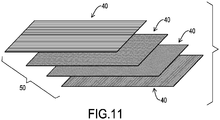
Fig. 11 is an operational perspective view of stacking multiple thermoplastic prepreg with each other; -
Fig. 12 is an operational perspective view of forming the bicycle wheel in the present invention; -
Fig. 13 is another operational perspective view of forming the bicycle wheel in the present invention; and -
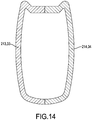
Fig. 14 is an operational perspective view of connecting parts of the bicycle wheel in the present invention. -
Figs. 1 and7 show a first embodiment and a second embodiment of abicycle wheel 10 in accordance with the present invention, respectively. In the first embodiment of thebicycle wheel 10, thebicycle wheel 10 has awheel frame 20, and in the second embodiment of thebicycle wheel 10, thebicycle wheel 10 has awheel frame 20 andmultiple ribs 30. - The
wheel frame 20 is a hollow and annular frame and is composited bymultiple wheel bars 21. With reference toFigs. 2 ,3 , and4 , thewheel frame 20 is composed of two equal parts ofwheel bars 21, four equal parts ofwheel bars 21 or six equal parts ofwheel bars 21, and all of thewheel bars 21 are of an equal size. Furthermore, thewheel frame 20 also can be composed of three equal parts ofwheel bars 21 or five equal parts ofwheel bars 21, etc. Additionally, thewheel frame 20 is composed by 2 to 10 equally sizedwheel bars 21. Each one of thewheel bars 21 has two halves. - With reference to
Fig. 5 , eachwheel bar 21 has anupper half 211 and alower half 212. Theupper half 211 may be an outer frame segment of thewheel frame 20. Thelower half 212 is connected to theupper half 211 to form thewheel bar 21 and may be an inner frame segment of thewheel frame 20. With reference toFig. 6 , eachwheel bar 21 has aleft half 213 and aright half 214. Theright half 214 is connected to theupper half 211 to form thewheel bar 21. Eachhalf wheel bar 21 is made by laminating, heating and forming athermoplastic prepreg 40, and the twocorresponding halves wheel bar 21. Themultiple wheel bars 21 are connected to each other to form thewheel frame 20. Additionally, twocorresponding halves wheel bar 21 ormultiple wheel bars 21 are connected to each other by the bonding ability of the material itself or by combining an additional additive between the twocorresponding halves wheel bar 21 ormultiple wheel bars 21. Then, thewheel frame 20 is formed by thehalves wheel bars 21. - With reference to
Fig. 7 , in the second embodiment of the bicycle wheel in accordance with the present invention, theribs 30 are radially spaced apart from thewheel frame 20, and each one of theribs 30 has an inner end and an outer end. The inner ends of theribs 30 are connected to each other. The outer ends of theribs 30 are connected to an inner side of thewheel frame 20. Then, thebicycle wheel 10 is formed by thewheel frame 20 and themultiple ribs 30. With reference toFig. 8 , eachrib 30 has anupper half 31 and alower half 32. Thelower half 32 is connected to theupper half 31 to form therib 30. Furthermore, with reference toFig. 9 , eachrib 30 may have aleft half 33 and aright half 34. Theright half 34 is connected to theleft half 33 to form therib 30. - Each
half rib 30 is made by laminating, heating and forming athermoplastic prepreg 40, and the two correspondinghalves rib 30. Themultiple ribs 30 are connected to each other and connected to thewheel frame 20 to form thebicycle wheel 10. Additionally, with reference toFig. 14 , two correspondinghalves rib 30, ormultiple ribs 30 and thewheel frame 20 are connected to each other by the bonding ability of the material itself or through a combination of additives. - With reference to
Fig. 10 , a method of manufacturing abicycle wheel 10 in accordance with the present invention has a preparing step, a module-lamination step, a forming step, and a subsequent processing step. - With reference to
Figs. 10 to 13 , the preparing step comprises preparing athermoplastic prepreg 40, multiplemodular molds 70, a cutting device, a heating device, a molding device, and at least one processing machine. Thethermoplastic prepreg 40 is formed by impregnating a continuous fiber with a resin, a fiber woven cloth or a chopped fiber. In addition, the continuous fiber, the fiber woven cloth and the chopped fiber may be a carbon fiber, a glass fiber or a reinforced fiber. With reference toFigs. 2 to 6 ,8 , and9 , thebicycle wheel 10 is disassembled into several parts (wheel frame 20 and ribs 30) according to the shape and size of each part. Themodular molds 70 have outer dimensions and structures corresponding to the parts of thebicycle wheel 10. After forming thethermoplastic prepreg 40, thethermoplastic prepreg 40 is precut by the cutting machine according to the outer dimensions of each one of the parts of thewheel frame 20 and theribs 30. After pre-cutting thethermoplastic prepreg 40, the multiplethermoplastic prepreg 40 are stacked with each other and are heated by the heating device to from a thermoplasticcomposite material 50. The at least one processing machine is used in the subsequent processing step after the forming step. - With reference to
Figs. 2 ,8 , and9 , the module-lamination step comprises disassembling thebicycle wheel 10 into two parts of thewheel frame 20 and theribs 30, and disassembling each one of the parts of thewheel frame 20 and theribs 30 intomultiple halves Fig. 11 , according to the mechanical properties, dimensions and thickness requirements of various parts, and the design of themodular molds 70, the number of laminated layers of thethermoplastic prepreg 40 and the orientation of the fiber angles of each layer of thethermoplastic prepreg 40 will be determined, wherein the fiber angle is between -180 and 180 degrees. Thethermoplastic prepreg 40 is pre-cut by the cutting device and is disposed on the heating device. The heating temperature of the heating device must be greater than the glass transition temperature (Tg, 150 to 190° C.) of thethermoplastic prepreg 40, and is between 250° C and 300° C. The viscosity characteristic of the resin of each layer of thethermoplastic prepreg 40 allows the stackedprepreg 40 to be pre-bonded to form the thermoplasticcomposite material 50. - The forming step comprises forming the parts of the
bicycle wheel 10 by themodular molds 70 or the molding device at the temperature of 180 to 300°C under the pressure of 1 to 15 Mpa and for the time of 5 to 15 minutes and under other parameter conditions. After forming the parts of thebicycle wheel 10, the parts are connected to each other by the bonding ability of the thermoplasticcomposite material 50 or an additive to complete the overall structure of thebicycle wheel 10. With reference toFig. 12 , the thermoplasticcomposite material 50 is processed by a rollingmachine 60, and the rollingmachine 60 has arotating roller 61, aheating source 62, and at least one pressingroller 63. Then, the thermoplasticcomposite material 50 is heat pressed, rolled, processed by pultrusion, etc. - Additionally, with reference to
Fig. 13 , the thermoplasticcomposite material 50 is put into themodular mold 70, and themodular mold 70 has alower mold 71 and anupper mold 72. Eachmold cavity 711, 712. The thermoplasticcomposite material 50 is put between the twocavities 711, 712 of themolds mold 70 is de-molded to obtain a finished product. - The subsequent processing step comprises subsequent processing the finished product by the at least one processing machine such as stamping or CNC. Furthermore, if the finished product in the forming step is formed by the
modular mold 70, the material in the non-finished area can be cut and separated after the finished product is molded, and the finished product of thebicycle wheel 10 can be obtained. - According to the above-mentioned features and structural relationships, the
bicycle wheel 10 of the present invention mainly uses the thermoplasticcomposite material 50 with laminated design, time, temperature, pressure and other parameter conditions, thebicycle wheel 10 is disassembled by a modular concept, and then the parts can be processed based on the product mechanical properties, size, thickness requirements, in association with design of themodular molds 70. Then, the cutting size of thethermoplastic prepreg 40, the number of the stacked thermoplastic prepreg(s) 40, and the orientation of the fibers in each layer can be determined to achieve the required rigidity of thebicycle wheel 10, and the overall weight of thebicycle wheel 10 can be reduced. Furthermore, by various different forming methods such as heat pressing, rolling, pultrusion, vacuum heating or mold forming, thebicycle wheel 10 is manufactured. By joining or adding materials (such as glue) that can be bonded to the polymer, the polymers in the resin are bonded to each other to provide an excellent bonding strength. Then, thebicycle wheel 10 that is made by the method of the present invention can achieve the effects of lightweight and structural strength, and the practicality of thebicycle wheel 10 can be increased and the quality of thebicycle wheel 10 can be significantly improved.
Claims (11)
- A bicycle wheel (10) having:a wheel frame (20) being a hollow and annular frame and havingmultiple equally sized wheel bars (21), and each one of the equally sized wheel bars (21) havingtwo halves connected to each other to form the wheel bar (21), and each one of the two halves being made by laminating, heating and forming a thermoplastic prepreg;wherein the equally sized wheel bars (21) are connected to each other to form the bicycle wheel (10).
- The bicycle wheel as claimed in claim 1, wherein
the bicycle wheel (10) has multiple ribs (30) radially spaced apart from the wheel frame (20), and each one of the ribs (30) hasan inner end, and the inner ends of the ribs (30) connected to each other; andan outer end, and the outer ends of the ribs (30) connected to an inner side of the wheel frame (20);each rib (30) has two halves connected to each other to form the rib (30), and each one of the two halves is made by laminating, heating and forming a thermoplastic prepreg; and
the multiple ribs (30) are connected to the wheel frame (20) to form the bicycle wheel (10). - The bicycle wheel as claimed in claim 1 or 2, wherein the wheel frame (20) has 2 to 10 said equally sized wheel bars (21).
- The bicycle wheel as claimed in claim 3, wherein the two halves of each wheel bar (21) or the multiple wheel bars (21) are connected to each other by the bonding ability of the material itself to form the wheel frame (20).
- The bicycle wheel as claimed in claim 3, wherein the two halves of each wheel bar (21) or the multiple wheel bars (21) are connected to each other through a combination of additives to form the wheel frame (20).
- The bicycle wheel as claimed in claim 1 or 2, wherein the two halves of each wheel bar (21) or the multiple wheel bars (21) are connected to each other by the bonding ability of the material itself to form the wheel frame (20).
- The bicycle wheel as claimed in claim 1 or 2, wherein the two halves of each wheel bar (21) or the multiple wheel bars (21) are connected to each other through a combination of additives to form the wheel frame (20).
- A method of manufacturing a bicycle wheel comprising:a preparing step comprisingpreparing a thermoplastic prepreg (40), multiple modular molds (70), a cutting device, a heating device, a molding device, and at least one processing machine;disassembling the bicycle wheel (10) into several parts according to shape and size of each part; andforming the modular molds (70) to having outer dimensions and structures corresponding to the parts of the bicycle wheel (10);a module-lamination step comprisingdetermining the number of laminated layers of the thermoplastic prepreg (40) and the orientation of fiber angles of each layer of the thermoplastic prepreg (40) according to the mechanical properties, dimensions and thickness requirements of the parts of the bicycle wheel (10) and the design of the modular molds (70);pre-cutting the thermoplastic prepreg (40) by the cutting device and stacking the thermoplastic prepreg (40) on the heating device;heating the stacked thermoplastic prepreg (40) by the heating device and adjusting a heating temperature of the heating device to be greater than a glass transition temperature (Tg) of the thermoplastic prepreg (40) to form a thermoplastic composite material (50);a forming step comprisingforming the parts of the bicycle wheel (10) by the modular molds (70) or the molding device; andconnecting the parts with each other to form a finished product of the bicycle wheel (10); anda subsequent processing step comprising subsequent processing the finished product by the at least one processing machine to form the bicycle wheel (10).
- The method of manufacturing a bicycle wheel as claimed in claim 8, wherein in the preparing step, the thermoplastic prepreg (40) is formed by impregnating a continuous fiber with a resin, a fiber woven cloth or a chopped fiber, and the continuous fiber, the fiber woven cloth and the chopped fiber may be a carbon fiber, a glass fiber or a reinforced fiber.
- The method of manufacturing a bicycle wheel as claimed in claim 8 or 9, wherein
in the module-lamination step, the fiber angle is between -180 and 180 degrees, and the heating temperature of the heating device is between 250° C and 300° C; and
in the forming step, the parts of the bicycle wheel (10) are formed at the temperature of 180 to 300°C under the pressure of 1 to 15 Mpa and for the time of 5 to 15 minutes. - The method of manufacturing a bicycle wheel as claimed in claim 10, wherein in the subsequent processing step, the finished product in the forming step is formed by the modular mold (70), the material in the non-finished area can be cut and separated after the finished product is molded, and the finished product of the bicycle wheel (10) can be obtained.
Priority Applications (1)
| Application Number | Priority Date | Filing Date | Title |
|---|---|---|---|
| EP18198536.7A EP3632701B1 (en) | 2018-10-04 | 2018-10-04 | Bicycle wheel and method of manufacturing the same |
Applications Claiming Priority (1)
| Application Number | Priority Date | Filing Date | Title |
|---|---|---|---|
| EP18198536.7A EP3632701B1 (en) | 2018-10-04 | 2018-10-04 | Bicycle wheel and method of manufacturing the same |
Publications (2)
| Publication Number | Publication Date |
|---|---|
| EP3632701A1 true EP3632701A1 (en) | 2020-04-08 |
| EP3632701B1 EP3632701B1 (en) | 2020-09-09 |
Family
ID=63762334
Family Applications (1)
| Application Number | Title | Priority Date | Filing Date |
|---|---|---|---|
| EP18198536.7A Active EP3632701B1 (en) | 2018-10-04 | 2018-10-04 | Bicycle wheel and method of manufacturing the same |
Country Status (1)
| Country | Link |
|---|---|
| EP (1) | EP3632701B1 (en) |
Citations (4)
| Publication number | Priority date | Publication date | Assignee | Title |
|---|---|---|---|---|
| EP0026514A1 (en) * | 1979-09-27 | 1981-04-08 | Société de Recherche et de Promotion d'Activités Nouvelles ACNO | Moulded rim of thermoplastics material for spoked wheels |
| DE102006010445A1 (en) * | 2006-03-03 | 2007-09-06 | Denk Engineering Gmbh | rim |
| CN201136410Y (en) * | 2007-11-27 | 2008-10-22 | 吴会良 | Simple disassembling rim |
| US20100301663A1 (en) * | 2009-05-26 | 2010-12-02 | Mad Fibers, Llc | Composite fiber bicycle wheels |
-
2018
- 2018-10-04 EP EP18198536.7A patent/EP3632701B1/en active Active
Patent Citations (4)
| Publication number | Priority date | Publication date | Assignee | Title |
|---|---|---|---|---|
| EP0026514A1 (en) * | 1979-09-27 | 1981-04-08 | Société de Recherche et de Promotion d'Activités Nouvelles ACNO | Moulded rim of thermoplastics material for spoked wheels |
| DE102006010445A1 (en) * | 2006-03-03 | 2007-09-06 | Denk Engineering Gmbh | rim |
| CN201136410Y (en) * | 2007-11-27 | 2008-10-22 | 吴会良 | Simple disassembling rim |
| US20100301663A1 (en) * | 2009-05-26 | 2010-12-02 | Mad Fibers, Llc | Composite fiber bicycle wheels |
Also Published As
| Publication number | Publication date |
|---|---|
| EP3632701B1 (en) | 2020-09-09 |
Similar Documents
| Publication | Publication Date | Title |
|---|---|---|
| US4933131A (en) | Method of fabricating composite structures | |
| US7758313B2 (en) | Carbon-glass-hybrid spar for wind turbine rotorblades | |
| EP2295235B1 (en) | Fiber reinforced plastic-structure and a method to produce the fiber reinforced plastic-structure | |
| US10987879B2 (en) | Methods of manufacturing rotor blade components for a wind turbine | |
| CN107053703B (en) | The method and vehicle component and vehicle of manufacture vehicle component | |
| JPS58118401A (en) | Production method of rim made of continuous fiber reinforced plastic | |
| JPH06219392A (en) | Thermoplastic composite material made vane for duct-equipped rear rotary wing of helicopter and method of injection molding of said vane | |
| JP2009286817A (en) | Laminated substrate, fiber-reinforced plastic, and methods for producing them | |
| JP2012125948A (en) | Fiber-reinforced thermoplastic resin molding and method for producing the same | |
| JPH01297238A (en) | Fiber-reinforced thermoplastic resin composite body formed from flexible thin-layer laminating type prepreg | |
| CN106671538B (en) | Thermoplastic composite material with semi-closed honeycomb sandwich structure and preparation method thereof | |
| CN111890704B (en) | Bicycle rim and manufacturing method thereof | |
| EP3632701B1 (en) | Bicycle wheel and method of manufacturing the same | |
| US11427028B2 (en) | Bicycle wheel and method of manufacturing the same | |
| KR102040595B1 (en) | Aircraft rotor blade and relative forming method | |
| CN205890037U (en) | Carbon -fibre composite sheet metal housing | |
| TWI674979B (en) | Bicycle wheel and manufacturing method thereof | |
| Lester et al. | Composite materials: advantages and cost factors | |
| JP6770563B2 (en) | Bicycle wheel | |
| KR20170052617A (en) | Method for producing multi-shell composite-material components having an intergrated reinforcement structure and multi-shell composite-material components obtained therefrom | |
| EP3016800A1 (en) | Coloured carbon-fibre composite materials | |
| KR100402973B1 (en) | Fiber reinforced composites pipe and method for manufacturing the same | |
| TWI527693B (en) | Multi - layer composite material and its manufacturing method | |
| WO2019212554A1 (en) | Methods of manufacturing rotor blade components for a wind turbine | |
| US20230182439A1 (en) | Molded article and method of producing same |
Legal Events
| Date | Code | Title | Description |
|---|---|---|---|
| PUAI | Public reference made under article 153(3) epc to a published international application that has entered the european phase |
Free format text: ORIGINAL CODE: 0009012 |
|
| STAA | Information on the status of an ep patent application or granted ep patent |
Free format text: STATUS: REQUEST FOR EXAMINATION WAS MADE |
|
| 17P | Request for examination filed |
Effective date: 20191029 |
|
| AK | Designated contracting states |
Kind code of ref document: A1 Designated state(s): AL AT BE BG CH CY CZ DE DK EE ES FI FR GB GR HR HU IE IS IT LI LT LU LV MC MK MT NL NO PL PT RO RS SE SI SK SM TR |
|
| AX | Request for extension of the european patent |
Extension state: BA ME |
|
| GRAP | Despatch of communication of intention to grant a patent |
Free format text: ORIGINAL CODE: EPIDOSNIGR1 |
|
| STAA | Information on the status of an ep patent application or granted ep patent |
Free format text: STATUS: GRANT OF PATENT IS INTENDED |
|
| INTG | Intention to grant announced |
Effective date: 20200424 |
|
| GRAS | Grant fee paid |
Free format text: ORIGINAL CODE: EPIDOSNIGR3 |
|
| GRAA | (expected) grant |
Free format text: ORIGINAL CODE: 0009210 |
|
| STAA | Information on the status of an ep patent application or granted ep patent |
Free format text: STATUS: THE PATENT HAS BEEN GRANTED |
|
| AK | Designated contracting states |
Kind code of ref document: B1 Designated state(s): AL AT BE BG CH CY CZ DE DK EE ES FI FR GB GR HR HU IE IS IT LI LT LU LV MC MK MT NL NO PL PT RO RS SE SI SK SM TR |
|
| REG | Reference to a national code |
Ref country code: GB Ref legal event code: FG4D |
|
| REG | Reference to a national code |
Ref country code: AT Ref legal event code: REF Ref document number: 1311120 Country of ref document: AT Kind code of ref document: T Effective date: 20200915 Ref country code: CH Ref legal event code: EP |
|
| REG | Reference to a national code |
Ref country code: DE Ref legal event code: R096 Ref document number: 602018007587 Country of ref document: DE |
|
| REG | Reference to a national code |
Ref country code: IE Ref legal event code: FG4D |
|
| REG | Reference to a national code |
Ref country code: NL Ref legal event code: FP |
|
| REG | Reference to a national code |
Ref country code: LT Ref legal event code: MG4D |
|
| PG25 | Lapsed in a contracting state [announced via postgrant information from national office to epo] |
Ref country code: BG Free format text: LAPSE BECAUSE OF FAILURE TO SUBMIT A TRANSLATION OF THE DESCRIPTION OR TO PAY THE FEE WITHIN THE PRESCRIBED TIME-LIMIT Effective date: 20201209 Ref country code: GR Free format text: LAPSE BECAUSE OF FAILURE TO SUBMIT A TRANSLATION OF THE DESCRIPTION OR TO PAY THE FEE WITHIN THE PRESCRIBED TIME-LIMIT Effective date: 20201210 Ref country code: LT Free format text: LAPSE BECAUSE OF FAILURE TO SUBMIT A TRANSLATION OF THE DESCRIPTION OR TO PAY THE FEE WITHIN THE PRESCRIBED TIME-LIMIT Effective date: 20200909 Ref country code: HR Free format text: LAPSE BECAUSE OF FAILURE TO SUBMIT A TRANSLATION OF THE DESCRIPTION OR TO PAY THE FEE WITHIN THE PRESCRIBED TIME-LIMIT Effective date: 20200909 Ref country code: NO Free format text: LAPSE BECAUSE OF FAILURE TO SUBMIT A TRANSLATION OF THE DESCRIPTION OR TO PAY THE FEE WITHIN THE PRESCRIBED TIME-LIMIT Effective date: 20201209 Ref country code: SE Free format text: LAPSE BECAUSE OF FAILURE TO SUBMIT A TRANSLATION OF THE DESCRIPTION OR TO PAY THE FEE WITHIN THE PRESCRIBED TIME-LIMIT Effective date: 20200909 Ref country code: FI Free format text: LAPSE BECAUSE OF FAILURE TO SUBMIT A TRANSLATION OF THE DESCRIPTION OR TO PAY THE FEE WITHIN THE PRESCRIBED TIME-LIMIT Effective date: 20200909 |
|
| REG | Reference to a national code |
Ref country code: AT Ref legal event code: MK05 Ref document number: 1311120 Country of ref document: AT Kind code of ref document: T Effective date: 20200909 |
|
| PG25 | Lapsed in a contracting state [announced via postgrant information from national office to epo] |
Ref country code: RS Free format text: LAPSE BECAUSE OF FAILURE TO SUBMIT A TRANSLATION OF THE DESCRIPTION OR TO PAY THE FEE WITHIN THE PRESCRIBED TIME-LIMIT Effective date: 20200909 Ref country code: PL Free format text: LAPSE BECAUSE OF FAILURE TO SUBMIT A TRANSLATION OF THE DESCRIPTION OR TO PAY THE FEE WITHIN THE PRESCRIBED TIME-LIMIT Effective date: 20200909 Ref country code: LV Free format text: LAPSE BECAUSE OF FAILURE TO SUBMIT A TRANSLATION OF THE DESCRIPTION OR TO PAY THE FEE WITHIN THE PRESCRIBED TIME-LIMIT Effective date: 20200909 |
|
| PG25 | Lapsed in a contracting state [announced via postgrant information from national office to epo] |
Ref country code: SM Free format text: LAPSE BECAUSE OF FAILURE TO SUBMIT A TRANSLATION OF THE DESCRIPTION OR TO PAY THE FEE WITHIN THE PRESCRIBED TIME-LIMIT Effective date: 20200909 Ref country code: EE Free format text: LAPSE BECAUSE OF FAILURE TO SUBMIT A TRANSLATION OF THE DESCRIPTION OR TO PAY THE FEE WITHIN THE PRESCRIBED TIME-LIMIT Effective date: 20200909 Ref country code: CZ Free format text: LAPSE BECAUSE OF FAILURE TO SUBMIT A TRANSLATION OF THE DESCRIPTION OR TO PAY THE FEE WITHIN THE PRESCRIBED TIME-LIMIT Effective date: 20200909 Ref country code: RO Free format text: LAPSE BECAUSE OF FAILURE TO SUBMIT A TRANSLATION OF THE DESCRIPTION OR TO PAY THE FEE WITHIN THE PRESCRIBED TIME-LIMIT Effective date: 20200909 Ref country code: PT Free format text: LAPSE BECAUSE OF FAILURE TO SUBMIT A TRANSLATION OF THE DESCRIPTION OR TO PAY THE FEE WITHIN THE PRESCRIBED TIME-LIMIT Effective date: 20210111 |
|
| PG25 | Lapsed in a contracting state [announced via postgrant information from national office to epo] |
Ref country code: AT Free format text: LAPSE BECAUSE OF FAILURE TO SUBMIT A TRANSLATION OF THE DESCRIPTION OR TO PAY THE FEE WITHIN THE PRESCRIBED TIME-LIMIT Effective date: 20200909 Ref country code: AL Free format text: LAPSE BECAUSE OF FAILURE TO SUBMIT A TRANSLATION OF THE DESCRIPTION OR TO PAY THE FEE WITHIN THE PRESCRIBED TIME-LIMIT Effective date: 20200909 Ref country code: ES Free format text: LAPSE BECAUSE OF FAILURE TO SUBMIT A TRANSLATION OF THE DESCRIPTION OR TO PAY THE FEE WITHIN THE PRESCRIBED TIME-LIMIT Effective date: 20200909 Ref country code: IS Free format text: LAPSE BECAUSE OF FAILURE TO SUBMIT A TRANSLATION OF THE DESCRIPTION OR TO PAY THE FEE WITHIN THE PRESCRIBED TIME-LIMIT Effective date: 20210109 |
|
| REG | Reference to a national code |
Ref country code: DE Ref legal event code: R097 Ref document number: 602018007587 Country of ref document: DE |
|
| PG25 | Lapsed in a contracting state [announced via postgrant information from national office to epo] |
Ref country code: SK Free format text: LAPSE BECAUSE OF FAILURE TO SUBMIT A TRANSLATION OF THE DESCRIPTION OR TO PAY THE FEE WITHIN THE PRESCRIBED TIME-LIMIT Effective date: 20200909 Ref country code: LU Free format text: LAPSE BECAUSE OF NON-PAYMENT OF DUE FEES Effective date: 20201004 Ref country code: MC Free format text: LAPSE BECAUSE OF FAILURE TO SUBMIT A TRANSLATION OF THE DESCRIPTION OR TO PAY THE FEE WITHIN THE PRESCRIBED TIME-LIMIT Effective date: 20200909 |
|
| REG | Reference to a national code |
Ref country code: BE Ref legal event code: MM Effective date: 20201031 |
|
| PLBE | No opposition filed within time limit |
Free format text: ORIGINAL CODE: 0009261 |
|
| STAA | Information on the status of an ep patent application or granted ep patent |
Free format text: STATUS: NO OPPOSITION FILED WITHIN TIME LIMIT |
|
| 26N | No opposition filed |
Effective date: 20210610 |
|
| PG25 | Lapsed in a contracting state [announced via postgrant information from national office to epo] |
Ref country code: DK Free format text: LAPSE BECAUSE OF FAILURE TO SUBMIT A TRANSLATION OF THE DESCRIPTION OR TO PAY THE FEE WITHIN THE PRESCRIBED TIME-LIMIT Effective date: 20200909 Ref country code: BE Free format text: LAPSE BECAUSE OF NON-PAYMENT OF DUE FEES Effective date: 20201031 |
|
| PG25 | Lapsed in a contracting state [announced via postgrant information from national office to epo] |
Ref country code: IE Free format text: LAPSE BECAUSE OF NON-PAYMENT OF DUE FEES Effective date: 20201004 |
|
| REG | Reference to a national code |
Ref country code: CH Ref legal event code: PL |
|
| PG25 | Lapsed in a contracting state [announced via postgrant information from national office to epo] |
Ref country code: TR Free format text: LAPSE BECAUSE OF FAILURE TO SUBMIT A TRANSLATION OF THE DESCRIPTION OR TO PAY THE FEE WITHIN THE PRESCRIBED TIME-LIMIT Effective date: 20200909 Ref country code: MT Free format text: LAPSE BECAUSE OF FAILURE TO SUBMIT A TRANSLATION OF THE DESCRIPTION OR TO PAY THE FEE WITHIN THE PRESCRIBED TIME-LIMIT Effective date: 20200909 Ref country code: CY Free format text: LAPSE BECAUSE OF FAILURE TO SUBMIT A TRANSLATION OF THE DESCRIPTION OR TO PAY THE FEE WITHIN THE PRESCRIBED TIME-LIMIT Effective date: 20200909 |
|
| PG25 | Lapsed in a contracting state [announced via postgrant information from national office to epo] |
Ref country code: MK Free format text: LAPSE BECAUSE OF FAILURE TO SUBMIT A TRANSLATION OF THE DESCRIPTION OR TO PAY THE FEE WITHIN THE PRESCRIBED TIME-LIMIT Effective date: 20200909 |
|
| PG25 | Lapsed in a contracting state [announced via postgrant information from national office to epo] |
Ref country code: LI Free format text: LAPSE BECAUSE OF NON-PAYMENT OF DUE FEES Effective date: 20211031 Ref country code: CH Free format text: LAPSE BECAUSE OF NON-PAYMENT OF DUE FEES Effective date: 20211031 |
|
| PG25 | Lapsed in a contracting state [announced via postgrant information from national office to epo] |
Ref country code: SI Free format text: LAPSE BECAUSE OF FAILURE TO SUBMIT A TRANSLATION OF THE DESCRIPTION OR TO PAY THE FEE WITHIN THE PRESCRIBED TIME-LIMIT Effective date: 20200909 |
|
| PGFP | Annual fee paid to national office [announced via postgrant information from national office to epo] |
Ref country code: IT Payment date: 20250826 Year of fee payment: 8 |
|
| PGFP | Annual fee paid to national office [announced via postgrant information from national office to epo] |
Ref country code: GB Payment date: 20250806 Year of fee payment: 8 |
|
| PGFP | Annual fee paid to national office [announced via postgrant information from national office to epo] |
Ref country code: FR Payment date: 20250808 Year of fee payment: 8 |
|
| PGFP | Annual fee paid to national office [announced via postgrant information from national office to epo] |
Ref country code: NL Payment date: 20251021 Year of fee payment: 8 |
|
| PGFP | Annual fee paid to national office [announced via postgrant information from national office to epo] |
Ref country code: DE Payment date: 20250813 Year of fee payment: 8 |