EP3632578A2 - Multi-layer coating for a flow surface of an aircraft component - Google Patents
Multi-layer coating for a flow surface of an aircraft component Download PDFInfo
- Publication number
- EP3632578A2 EP3632578A2 EP19197220.7A EP19197220A EP3632578A2 EP 3632578 A2 EP3632578 A2 EP 3632578A2 EP 19197220 A EP19197220 A EP 19197220A EP 3632578 A2 EP3632578 A2 EP 3632578A2
- Authority
- EP
- European Patent Office
- Prior art keywords
- component
- layer
- barrier layer
- laminar flow
- aircraft
- Prior art date
- Legal status (The legal status is an assumption and is not a legal conclusion. Google has not performed a legal analysis and makes no representation as to the accuracy of the status listed.)
- Pending
Links
Images
Classifications
-
- C—CHEMISTRY; METALLURGY
- C09—DYES; PAINTS; POLISHES; NATURAL RESINS; ADHESIVES; COMPOSITIONS NOT OTHERWISE PROVIDED FOR; APPLICATIONS OF MATERIALS NOT OTHERWISE PROVIDED FOR
- C09D—COATING COMPOSITIONS, e.g. PAINTS, VARNISHES OR LACQUERS; FILLING PASTES; CHEMICAL PAINT OR INK REMOVERS; INKS; CORRECTING FLUIDS; WOODSTAINS; PASTES OR SOLIDS FOR COLOURING OR PRINTING; USE OF MATERIALS THEREFOR
- C09D5/00—Coating compositions, e.g. paints, varnishes or lacquers, characterised by their physical nature or the effects produced; Filling pastes
- C09D5/08—Anti-corrosive paints
- C09D5/082—Anti-corrosive paints characterised by the anti-corrosive pigment
- C09D5/084—Inorganic compounds
-
- B—PERFORMING OPERATIONS; TRANSPORTING
- B64—AIRCRAFT; AVIATION; COSMONAUTICS
- B64C—AEROPLANES; HELICOPTERS
- B64C23/00—Influencing air flow over aircraft surfaces, not otherwise provided for
-
- C—CHEMISTRY; METALLURGY
- C08—ORGANIC MACROMOLECULAR COMPOUNDS; THEIR PREPARATION OR CHEMICAL WORKING-UP; COMPOSITIONS BASED THEREON
- C08G—MACROMOLECULAR COMPOUNDS OBTAINED OTHERWISE THAN BY REACTIONS ONLY INVOLVING UNSATURATED CARBON-TO-CARBON BONDS
- C08G77/00—Macromolecular compounds obtained by reactions forming a linkage containing silicon with or without sulfur, nitrogen, oxygen or carbon in the main chain of the macromolecule
- C08G77/04—Polysiloxanes
- C08G77/06—Preparatory processes
-
- C—CHEMISTRY; METALLURGY
- C08—ORGANIC MACROMOLECULAR COMPOUNDS; THEIR PREPARATION OR CHEMICAL WORKING-UP; COMPOSITIONS BASED THEREON
- C08G—MACROMOLECULAR COMPOUNDS OBTAINED OTHERWISE THAN BY REACTIONS ONLY INVOLVING UNSATURATED CARBON-TO-CARBON BONDS
- C08G77/00—Macromolecular compounds obtained by reactions forming a linkage containing silicon with or without sulfur, nitrogen, oxygen or carbon in the main chain of the macromolecule
- C08G77/04—Polysiloxanes
- C08G77/14—Polysiloxanes containing silicon bound to oxygen-containing groups
-
- C—CHEMISTRY; METALLURGY
- C08—ORGANIC MACROMOLECULAR COMPOUNDS; THEIR PREPARATION OR CHEMICAL WORKING-UP; COMPOSITIONS BASED THEREON
- C08G—MACROMOLECULAR COMPOUNDS OBTAINED OTHERWISE THAN BY REACTIONS ONLY INVOLVING UNSATURATED CARBON-TO-CARBON BONDS
- C08G77/00—Macromolecular compounds obtained by reactions forming a linkage containing silicon with or without sulfur, nitrogen, oxygen or carbon in the main chain of the macromolecule
- C08G77/04—Polysiloxanes
- C08G77/22—Polysiloxanes containing silicon bound to organic groups containing atoms other than carbon, hydrogen and oxygen
- C08G77/26—Polysiloxanes containing silicon bound to organic groups containing atoms other than carbon, hydrogen and oxygen nitrogen-containing groups
-
- C—CHEMISTRY; METALLURGY
- C08—ORGANIC MACROMOLECULAR COMPOUNDS; THEIR PREPARATION OR CHEMICAL WORKING-UP; COMPOSITIONS BASED THEREON
- C08K—Use of inorganic or non-macromolecular organic substances as compounding ingredients
- C08K3/00—Use of inorganic substances as compounding ingredients
- C08K3/02—Elements
- C08K3/04—Carbon
-
- C—CHEMISTRY; METALLURGY
- C08—ORGANIC MACROMOLECULAR COMPOUNDS; THEIR PREPARATION OR CHEMICAL WORKING-UP; COMPOSITIONS BASED THEREON
- C08K—Use of inorganic or non-macromolecular organic substances as compounding ingredients
- C08K3/00—Use of inorganic substances as compounding ingredients
- C08K3/18—Oxygen-containing compounds, e.g. metal carbonyls
- C08K3/20—Oxides; Hydroxides
- C08K3/22—Oxides; Hydroxides of metals
-
- C—CHEMISTRY; METALLURGY
- C08—ORGANIC MACROMOLECULAR COMPOUNDS; THEIR PREPARATION OR CHEMICAL WORKING-UP; COMPOSITIONS BASED THEREON
- C08K—Use of inorganic or non-macromolecular organic substances as compounding ingredients
- C08K3/00—Use of inorganic substances as compounding ingredients
- C08K3/18—Oxygen-containing compounds, e.g. metal carbonyls
- C08K3/24—Acids; Salts thereof
-
- C—CHEMISTRY; METALLURGY
- C08—ORGANIC MACROMOLECULAR COMPOUNDS; THEIR PREPARATION OR CHEMICAL WORKING-UP; COMPOSITIONS BASED THEREON
- C08K—Use of inorganic or non-macromolecular organic substances as compounding ingredients
- C08K3/00—Use of inorganic substances as compounding ingredients
- C08K3/32—Phosphorus-containing compounds
-
- C—CHEMISTRY; METALLURGY
- C08—ORGANIC MACROMOLECULAR COMPOUNDS; THEIR PREPARATION OR CHEMICAL WORKING-UP; COMPOSITIONS BASED THEREON
- C08K—Use of inorganic or non-macromolecular organic substances as compounding ingredients
- C08K7/00—Use of ingredients characterised by shape
- C08K7/02—Fibres or whiskers
- C08K7/04—Fibres or whiskers inorganic
- C08K7/06—Elements
-
- C—CHEMISTRY; METALLURGY
- C09—DYES; PAINTS; POLISHES; NATURAL RESINS; ADHESIVES; COMPOSITIONS NOT OTHERWISE PROVIDED FOR; APPLICATIONS OF MATERIALS NOT OTHERWISE PROVIDED FOR
- C09D—COATING COMPOSITIONS, e.g. PAINTS, VARNISHES OR LACQUERS; FILLING PASTES; CHEMICAL PAINT OR INK REMOVERS; INKS; CORRECTING FLUIDS; WOODSTAINS; PASTES OR SOLIDS FOR COLOURING OR PRINTING; USE OF MATERIALS THEREFOR
- C09D171/00—Coating compositions based on polyethers obtained by reactions forming an ether link in the main chain; Coating compositions based on derivatives of such polymers
-
- C—CHEMISTRY; METALLURGY
- C09—DYES; PAINTS; POLISHES; NATURAL RESINS; ADHESIVES; COMPOSITIONS NOT OTHERWISE PROVIDED FOR; APPLICATIONS OF MATERIALS NOT OTHERWISE PROVIDED FOR
- C09D—COATING COMPOSITIONS, e.g. PAINTS, VARNISHES OR LACQUERS; FILLING PASTES; CHEMICAL PAINT OR INK REMOVERS; INKS; CORRECTING FLUIDS; WOODSTAINS; PASTES OR SOLIDS FOR COLOURING OR PRINTING; USE OF MATERIALS THEREFOR
- C09D175/00—Coating compositions based on polyureas or polyurethanes; Coating compositions based on derivatives of such polymers
- C09D175/04—Polyurethanes
-
- C—CHEMISTRY; METALLURGY
- C09—DYES; PAINTS; POLISHES; NATURAL RESINS; ADHESIVES; COMPOSITIONS NOT OTHERWISE PROVIDED FOR; APPLICATIONS OF MATERIALS NOT OTHERWISE PROVIDED FOR
- C09D—COATING COMPOSITIONS, e.g. PAINTS, VARNISHES OR LACQUERS; FILLING PASTES; CHEMICAL PAINT OR INK REMOVERS; INKS; CORRECTING FLUIDS; WOODSTAINS; PASTES OR SOLIDS FOR COLOURING OR PRINTING; USE OF MATERIALS THEREFOR
- C09D183/00—Coating compositions based on macromolecular compounds obtained by reactions forming in the main chain of the macromolecule a linkage containing silicon, with or without sulfur, nitrogen, oxygen, or carbon only; Coating compositions based on derivatives of such polymers
- C09D183/04—Polysiloxanes
-
- C—CHEMISTRY; METALLURGY
- C09—DYES; PAINTS; POLISHES; NATURAL RESINS; ADHESIVES; COMPOSITIONS NOT OTHERWISE PROVIDED FOR; APPLICATIONS OF MATERIALS NOT OTHERWISE PROVIDED FOR
- C09D—COATING COMPOSITIONS, e.g. PAINTS, VARNISHES OR LACQUERS; FILLING PASTES; CHEMICAL PAINT OR INK REMOVERS; INKS; CORRECTING FLUIDS; WOODSTAINS; PASTES OR SOLIDS FOR COLOURING OR PRINTING; USE OF MATERIALS THEREFOR
- C09D7/00—Features of coating compositions, not provided for in group C09D5/00; Processes for incorporating ingredients in coating compositions
- C09D7/40—Additives
- C09D7/60—Additives non-macromolecular
- C09D7/61—Additives non-macromolecular inorganic
-
- C—CHEMISTRY; METALLURGY
- C23—COATING METALLIC MATERIAL; COATING MATERIAL WITH METALLIC MATERIAL; CHEMICAL SURFACE TREATMENT; DIFFUSION TREATMENT OF METALLIC MATERIAL; COATING BY VACUUM EVAPORATION, BY SPUTTERING, BY ION IMPLANTATION OR BY CHEMICAL VAPOUR DEPOSITION, IN GENERAL; INHIBITING CORROSION OF METALLIC MATERIAL OR INCRUSTATION IN GENERAL
- C23C—COATING METALLIC MATERIAL; COATING MATERIAL WITH METALLIC MATERIAL; SURFACE TREATMENT OF METALLIC MATERIAL BY DIFFUSION INTO THE SURFACE, BY CHEMICAL CONVERSION OR SUBSTITUTION; COATING BY VACUUM EVAPORATION, BY SPUTTERING, BY ION IMPLANTATION OR BY CHEMICAL VAPOUR DEPOSITION, IN GENERAL
- C23C18/00—Chemical coating by decomposition of either liquid compounds or solutions of the coating forming compounds, without leaving reaction products of surface material in the coating; Contact plating
- C23C18/02—Chemical coating by decomposition of either liquid compounds or solutions of the coating forming compounds, without leaving reaction products of surface material in the coating; Contact plating by thermal decomposition
- C23C18/12—Chemical coating by decomposition of either liquid compounds or solutions of the coating forming compounds, without leaving reaction products of surface material in the coating; Contact plating by thermal decomposition characterised by the deposition of inorganic material other than metallic material
- C23C18/1204—Chemical coating by decomposition of either liquid compounds or solutions of the coating forming compounds, without leaving reaction products of surface material in the coating; Contact plating by thermal decomposition characterised by the deposition of inorganic material other than metallic material inorganic material, e.g. non-oxide and non-metallic such as sulfides, nitrides based compounds
-
- C—CHEMISTRY; METALLURGY
- C23—COATING METALLIC MATERIAL; COATING MATERIAL WITH METALLIC MATERIAL; CHEMICAL SURFACE TREATMENT; DIFFUSION TREATMENT OF METALLIC MATERIAL; COATING BY VACUUM EVAPORATION, BY SPUTTERING, BY ION IMPLANTATION OR BY CHEMICAL VAPOUR DEPOSITION, IN GENERAL; INHIBITING CORROSION OF METALLIC MATERIAL OR INCRUSTATION IN GENERAL
- C23C—COATING METALLIC MATERIAL; COATING MATERIAL WITH METALLIC MATERIAL; SURFACE TREATMENT OF METALLIC MATERIAL BY DIFFUSION INTO THE SURFACE, BY CHEMICAL CONVERSION OR SUBSTITUTION; COATING BY VACUUM EVAPORATION, BY SPUTTERING, BY ION IMPLANTATION OR BY CHEMICAL VAPOUR DEPOSITION, IN GENERAL
- C23C18/00—Chemical coating by decomposition of either liquid compounds or solutions of the coating forming compounds, without leaving reaction products of surface material in the coating; Contact plating
- C23C18/02—Chemical coating by decomposition of either liquid compounds or solutions of the coating forming compounds, without leaving reaction products of surface material in the coating; Contact plating by thermal decomposition
- C23C18/12—Chemical coating by decomposition of either liquid compounds or solutions of the coating forming compounds, without leaving reaction products of surface material in the coating; Contact plating by thermal decomposition characterised by the deposition of inorganic material other than metallic material
- C23C18/1204—Chemical coating by decomposition of either liquid compounds or solutions of the coating forming compounds, without leaving reaction products of surface material in the coating; Contact plating by thermal decomposition characterised by the deposition of inorganic material other than metallic material inorganic material, e.g. non-oxide and non-metallic such as sulfides, nitrides based compounds
- C23C18/1208—Oxides, e.g. ceramics
- C23C18/1216—Metal oxides
-
- C—CHEMISTRY; METALLURGY
- C23—COATING METALLIC MATERIAL; COATING MATERIAL WITH METALLIC MATERIAL; CHEMICAL SURFACE TREATMENT; DIFFUSION TREATMENT OF METALLIC MATERIAL; COATING BY VACUUM EVAPORATION, BY SPUTTERING, BY ION IMPLANTATION OR BY CHEMICAL VAPOUR DEPOSITION, IN GENERAL; INHIBITING CORROSION OF METALLIC MATERIAL OR INCRUSTATION IN GENERAL
- C23C—COATING METALLIC MATERIAL; COATING MATERIAL WITH METALLIC MATERIAL; SURFACE TREATMENT OF METALLIC MATERIAL BY DIFFUSION INTO THE SURFACE, BY CHEMICAL CONVERSION OR SUBSTITUTION; COATING BY VACUUM EVAPORATION, BY SPUTTERING, BY ION IMPLANTATION OR BY CHEMICAL VAPOUR DEPOSITION, IN GENERAL
- C23C18/00—Chemical coating by decomposition of either liquid compounds or solutions of the coating forming compounds, without leaving reaction products of surface material in the coating; Contact plating
- C23C18/02—Chemical coating by decomposition of either liquid compounds or solutions of the coating forming compounds, without leaving reaction products of surface material in the coating; Contact plating by thermal decomposition
- C23C18/12—Chemical coating by decomposition of either liquid compounds or solutions of the coating forming compounds, without leaving reaction products of surface material in the coating; Contact plating by thermal decomposition characterised by the deposition of inorganic material other than metallic material
- C23C18/1204—Chemical coating by decomposition of either liquid compounds or solutions of the coating forming compounds, without leaving reaction products of surface material in the coating; Contact plating by thermal decomposition characterised by the deposition of inorganic material other than metallic material inorganic material, e.g. non-oxide and non-metallic such as sulfides, nitrides based compounds
- C23C18/122—Inorganic polymers, e.g. silanes, polysilazanes, polysiloxanes
-
- C—CHEMISTRY; METALLURGY
- C23—COATING METALLIC MATERIAL; COATING MATERIAL WITH METALLIC MATERIAL; CHEMICAL SURFACE TREATMENT; DIFFUSION TREATMENT OF METALLIC MATERIAL; COATING BY VACUUM EVAPORATION, BY SPUTTERING, BY ION IMPLANTATION OR BY CHEMICAL VAPOUR DEPOSITION, IN GENERAL; INHIBITING CORROSION OF METALLIC MATERIAL OR INCRUSTATION IN GENERAL
- C23C—COATING METALLIC MATERIAL; COATING MATERIAL WITH METALLIC MATERIAL; SURFACE TREATMENT OF METALLIC MATERIAL BY DIFFUSION INTO THE SURFACE, BY CHEMICAL CONVERSION OR SUBSTITUTION; COATING BY VACUUM EVAPORATION, BY SPUTTERING, BY ION IMPLANTATION OR BY CHEMICAL VAPOUR DEPOSITION, IN GENERAL
- C23C18/00—Chemical coating by decomposition of either liquid compounds or solutions of the coating forming compounds, without leaving reaction products of surface material in the coating; Contact plating
- C23C18/02—Chemical coating by decomposition of either liquid compounds or solutions of the coating forming compounds, without leaving reaction products of surface material in the coating; Contact plating by thermal decomposition
- C23C18/12—Chemical coating by decomposition of either liquid compounds or solutions of the coating forming compounds, without leaving reaction products of surface material in the coating; Contact plating by thermal decomposition characterised by the deposition of inorganic material other than metallic material
- C23C18/125—Process of deposition of the inorganic material
- C23C18/1254—Sol or sol-gel processing
-
- F—MECHANICAL ENGINEERING; LIGHTING; HEATING; WEAPONS; BLASTING
- F02—COMBUSTION ENGINES; HOT-GAS OR COMBUSTION-PRODUCT ENGINE PLANTS
- F02C—GAS-TURBINE PLANTS; AIR INTAKES FOR JET-PROPULSION PLANTS; CONTROLLING FUEL SUPPLY IN AIR-BREATHING JET-PROPULSION PLANTS
- F02C7/00—Features, components parts, details or accessories, not provided for in, or of interest apart form groups F02C1/00 - F02C6/00; Air intakes for jet-propulsion plants
- F02C7/04—Air intakes for gas-turbine plants or jet-propulsion plants
-
- B—PERFORMING OPERATIONS; TRANSPORTING
- B05—SPRAYING OR ATOMISING IN GENERAL; APPLYING FLUENT MATERIALS TO SURFACES, IN GENERAL
- B05D—PROCESSES FOR APPLYING FLUENT MATERIALS TO SURFACES, IN GENERAL
- B05D2202/00—Metallic substrate
-
- B—PERFORMING OPERATIONS; TRANSPORTING
- B64—AIRCRAFT; AVIATION; COSMONAUTICS
- B64D—EQUIPMENT FOR FITTING IN OR TO AIRCRAFT; FLIGHT SUITS; PARACHUTES; ARRANGEMENT OR MOUNTING OF POWER PLANTS OR PROPULSION TRANSMISSIONS IN AIRCRAFT
- B64D45/00—Aircraft indicators or protectors not otherwise provided for
- B64D2045/009—Fire detection or protection; Erosion protection, e.g. from airborne particles
-
- C—CHEMISTRY; METALLURGY
- C08—ORGANIC MACROMOLECULAR COMPOUNDS; THEIR PREPARATION OR CHEMICAL WORKING-UP; COMPOSITIONS BASED THEREON
- C08K—Use of inorganic or non-macromolecular organic substances as compounding ingredients
- C08K3/00—Use of inorganic substances as compounding ingredients
- C08K3/18—Oxygen-containing compounds, e.g. metal carbonyls
- C08K3/20—Oxides; Hydroxides
- C08K3/22—Oxides; Hydroxides of metals
- C08K2003/221—Oxides; Hydroxides of metals of rare earth metal
-
- C—CHEMISTRY; METALLURGY
- C08—ORGANIC MACROMOLECULAR COMPOUNDS; THEIR PREPARATION OR CHEMICAL WORKING-UP; COMPOSITIONS BASED THEREON
- C08K—Use of inorganic or non-macromolecular organic substances as compounding ingredients
- C08K3/00—Use of inorganic substances as compounding ingredients
- C08K3/30—Sulfur-, selenium- or tellurium-containing compounds
- C08K2003/3045—Sulfates
-
- C—CHEMISTRY; METALLURGY
- C08—ORGANIC MACROMOLECULAR COMPOUNDS; THEIR PREPARATION OR CHEMICAL WORKING-UP; COMPOSITIONS BASED THEREON
- C08K—Use of inorganic or non-macromolecular organic substances as compounding ingredients
- C08K3/00—Use of inorganic substances as compounding ingredients
- C08K3/32—Phosphorus-containing compounds
- C08K2003/321—Phosphates
-
- F—MECHANICAL ENGINEERING; LIGHTING; HEATING; WEAPONS; BLASTING
- F05—INDEXING SCHEMES RELATING TO ENGINES OR PUMPS IN VARIOUS SUBCLASSES OF CLASSES F01-F04
- F05D—INDEXING SCHEME FOR ASPECTS RELATING TO NON-POSITIVE-DISPLACEMENT MACHINES OR ENGINES, GAS-TURBINES OR JET-PROPULSION PLANTS
- F05D2220/00—Application
- F05D2220/30—Application in turbines
- F05D2220/32—Application in turbines in gas turbines
- F05D2220/323—Application in turbines in gas turbines for aircraft propulsion, e.g. jet engines
-
- F—MECHANICAL ENGINEERING; LIGHTING; HEATING; WEAPONS; BLASTING
- F05—INDEXING SCHEMES RELATING TO ENGINES OR PUMPS IN VARIOUS SUBCLASSES OF CLASSES F01-F04
- F05D—INDEXING SCHEME FOR ASPECTS RELATING TO NON-POSITIVE-DISPLACEMENT MACHINES OR ENGINES, GAS-TURBINES OR JET-PROPULSION PLANTS
- F05D2240/00—Components
- F05D2240/10—Stators
-
- F—MECHANICAL ENGINEERING; LIGHTING; HEATING; WEAPONS; BLASTING
- F05—INDEXING SCHEMES RELATING TO ENGINES OR PUMPS IN VARIOUS SUBCLASSES OF CLASSES F01-F04
- F05D—INDEXING SCHEME FOR ASPECTS RELATING TO NON-POSITIVE-DISPLACEMENT MACHINES OR ENGINES, GAS-TURBINES OR JET-PROPULSION PLANTS
- F05D2260/00—Function
- F05D2260/97—Reducing windage losses
-
- F—MECHANICAL ENGINEERING; LIGHTING; HEATING; WEAPONS; BLASTING
- F05—INDEXING SCHEMES RELATING TO ENGINES OR PUMPS IN VARIOUS SUBCLASSES OF CLASSES F01-F04
- F05D—INDEXING SCHEME FOR ASPECTS RELATING TO NON-POSITIVE-DISPLACEMENT MACHINES OR ENGINES, GAS-TURBINES OR JET-PROPULSION PLANTS
- F05D2300/00—Materials; Properties thereof
- F05D2300/20—Oxide or non-oxide ceramics
- F05D2300/21—Oxide ceramics
-
- F—MECHANICAL ENGINEERING; LIGHTING; HEATING; WEAPONS; BLASTING
- F05—INDEXING SCHEMES RELATING TO ENGINES OR PUMPS IN VARIOUS SUBCLASSES OF CLASSES F01-F04
- F05D—INDEXING SCHEME FOR ASPECTS RELATING TO NON-POSITIVE-DISPLACEMENT MACHINES OR ENGINES, GAS-TURBINES OR JET-PROPULSION PLANTS
- F05D2300/00—Materials; Properties thereof
- F05D2300/40—Organic materials
- F05D2300/43—Synthetic polymers, e.g. plastics; Rubber
-
- F—MECHANICAL ENGINEERING; LIGHTING; HEATING; WEAPONS; BLASTING
- F05—INDEXING SCHEMES RELATING TO ENGINES OR PUMPS IN VARIOUS SUBCLASSES OF CLASSES F01-F04
- F05D—INDEXING SCHEME FOR ASPECTS RELATING TO NON-POSITIVE-DISPLACEMENT MACHINES OR ENGINES, GAS-TURBINES OR JET-PROPULSION PLANTS
- F05D2300/00—Materials; Properties thereof
- F05D2300/60—Properties or characteristics given to material by treatment or manufacturing
- F05D2300/611—Coating
Definitions
- This disclosure relates generally to coatings and, more particularly, to a multi-layer coating for an aircraft component.
- a component for an aircraft includes an object and a multi-layer coating.
- the object includes an object surface.
- the multi-layer coating includes a barrier layer and a laminar flow layer.
- the barrier layer covers at least a portion of the object surface.
- the barrier layer includes a fluoropolyether, a silicon rubber and/or a polyurethane.
- the laminar flow layer covers the barrier layer and forms an exterior surface of the component.
- the laminar flow layer includes a sol-gel siloxane, a rare-earth oxide and/or a phosphate.
- an apparatus includes a metal object and a multi-layer coating that consists of (only includes) a barrier layer and a flow layer.
- the metal object includes an object surface.
- the barrier layer covers at least a portion of the object surface.
- the barrier layer includes a fluoropolyether, a silicon rubber and/or a polyurethane.
- the flow layer covers the barrier layer and forms an exterior surface of the component.
- the laminar flow layer includes a sol-gel siloxane, a rare-earth oxide and/or a phosphate.
- the apparatus is configured as a component of an aircraft.
- another apparatus includes a metal object and a multi-layer coating that consists of (only includes) a barrier layer, a flow layer and a primer between the barrier layer and the flow layer.
- the barrier layer covers at least a portion of the object surface.
- the barrier layer includes a fluoropolyether, a silicon rubber and/or a polyurethane.
- the flow layer covers the barrier layer and forms an exterior surface of the component.
- the flow layer includes a sol-gel siloxane, a rare-earth oxide and/or a phosphate.
- the apparatus is configured as a component of an aircraft.
- the object may be a metal object.
- the object surface of the metal object may be anodized and/or sealed.
- the object may be configured as a nacelle noselip skin.
- the object may be configured as a flight control skin.
- the barrier layer may be configured from or otherwise include the fluoropolyether.
- the barrier layer may be configured from or otherwise include the silicon rubber.
- the barrier layer may be configured from or otherwise include the polyurethane.
- the barrier layer may be doped with at least one inhibitor.
- the inhibitor may include ZnMoO4, Pr2O3, Ce-citrate, magnesium silicate, graphene nanoplatelets, alkali earth sulfate, zinc oxide and/or yttrium oxide.
- the inhibitor may include (a) barium sulfate or calcium sulfate and (b) Pr(OH)3.
- the laminar flow layer may be configured from or otherwise include the sol-gel siloxane.
- the laminar flow layer may be configured from or otherwise include the rare-earth oxide.
- the rare-earth oxide may be configured from or otherwise include CeO2 and/or LaPO4.
- the laminar flow layer may be configured from or otherwise include phosphate.
- the barrier layer may be applied directly onto the object surface.
- the laminar flow layer may be applied directly onto the barrier layer.
- the multi-layer coating may also include a primer between the barrier layer and the laminar flow layer.
- the primer may be configured from or otherwise include a functionalized alkoxysilane including a hydrolysable unit, (3-glycidoxypropy)trimethoxysilane and/or an aminoethylaminopropytrimethoxysilane.
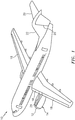
- FIG. 1 is a perspective illustration of an aircraft 10 such as a passenger airliner.
- This aircraft 10 includes various exterior components with aerodynamic exterior flow surfaces. Examples of such exterior components include, but are not limited to, a noselip 12 of a nacelle 14 for a propulsion system, an aircraft flight control component as well as other aircraft components with leading edges. Examples of a flight control component include, but are not limited to, a wing leading edge flap 16 and a wing leading edge slat 18. Examples of other aircraft components with leading edges include, but are not limited to, a stabilizer wing 20, a tail wing 22 and an engine pylon 24.
- the present disclosure is not limited to the foregoing exemplary aircraft components.
- the present disclosure is also not limited to the foregoing exemplary aircraft configuration.
- the aircraft 10 may alternatively be configured as a business-type jet, a cargo plane, a propeller plane, a helicopter or any other type of aircraft.
- An aircraft component with an aerodynamic exterior flow surface such as the components described above, may be contaminated and/or damaged during aircraft operation with / by debris.
- debris include, but are not limited to, insects, dirt and ice. Accumulation of debris on the flow surface and/or damage (e.g., pitting, wear, etc.) to the flow surface caused by debris may negatively affect natural laminar flow over the flow surface of the component. A reduction in laminar flow may in turn reduce aircraft efficiency; e.g., reduce propulsion system fuel efficiency. Therefore, to prevent or reduce likelihood of debris related contamination and/or damage to the flow surface of the aircraft component, the aircraft component may include a multi-layer coating as described herein.
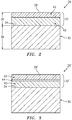
- FIG. 2 is a sectional illustration of a portion of an exterior component 26 with an aerodynamic exterior flow surface 28 for an aircraft such as the aircraft 10.
- This component 26 may be configured as one of the exemplary exterior components described above, or any other component of an aircraft which forms an aerodynamic exterior flow surface of the aircraft.
- the component 26 of FIG. 2 includes an object 30 (e.g., a substrate) and a multi-layer coating 32.
- the object 30 may be configured as a support and/or base structure of the component 26. More particularly, the object 30 may be configured to provide the component 26 with its structural integrity and characteristics (e.g., stiffness, etc.). The object 30 is also configured to provide the component 26 with its geometry and general size. For example, where the multi-layer coating 32 is applied substantially evenly over a surface 34 of the object 30 (object surface), the multi-layer coating 32 may not substantially (or at all) alter the underlying geometry of the object 30. Rather, the multi-layer coating 32 may merely add to the size of the object 30.
- the object 30 may be configured as or otherwise include an aerodynamic exterior flow skin.
- the object 30, for example, may be configured as or otherwise include a nacelle noselip skin (e.g., a skin of noselip 12 of FIG. 1 ) or a flight control skin (e.g., a skin of component 16, 18, 20, 22 or 24 of FIG. 1 ).
- a nacelle noselip skin e.g., a skin of noselip 12 of FIG. 1
- a flight control skin e.g., a skin of component 16, 18, 20, 22 or 24 of FIG. 1 .
- the object 30 may be formed from or otherwise include metal such as, but not limited to, aluminum (Al), titanium (Ti) or an alloy thereof. However, in other embodiments, the object 30 may alternatively be formed from or otherwise include non-metal such as, but not limited to, fiber-reinforced composite material.
- metal such as, but not limited to, aluminum (Al), titanium (Ti) or an alloy thereof.
- non-metal such as, but not limited to, fiber-reinforced composite material.
- present disclosure is not limited to the foregoing exemplary object materials.
- the multi-layer coating 32 is applied (directly or indirectly) to and covers at least a portion (e.g., an entirety or a leading edge portion) of the object surface 34.
- the coating 32 may have a thickness 36 that is less than a thickness 38 of the object 30.
- the object thickness 38 may be between about (e.g., +/- 2%) 13,000 to 250 times (e.g., between 500 and 800 times) greater than the coating thickness 36.
- the object thickness 38 may be less than 250 times greater than the coating thickness 36, or greater than 13,000 times greater than the coating thickness 36.
- the object thickness may be as small as about 0.020 inches (0.508 mm) and the thickness 36 may be as large as about 0.005 inches (0.127 mm) such that the object thickness 38 is about four times (4x) greater than the coating thickness 36.
- the present disclosure is not limited to the foregoing exemplary dimensions or dimensional relationships.
- the multi-layer coating 32 of FIG. 2 at least includes (or may only include) a barrier layer 40 and a laminar flow layer 42.
- a barrier layer 40 and a laminar flow layer 42 may provide and/or promote various characteristics such as, but not limited to, decreased insect adhesion, increased durability and corrosion protection as discussed below in further detail.
- the layers 40 and 42 may provide and/or promote various additional characteristics such as, but not limited to, transparency, relatively high temperature resistance and relatively high solvent resistance.
- the barrier layer 40 is applied (directly or indirectly) to and covers at least a portion (e.g., an entirety or a leading edge portion) of the object surface 34.
- This barrier layer 40 may account for about (e.g., +/- 2%) 93 to 98 percent of the coating thickness 36.
- the present disclosure is not limited to the foregoing exemplary dimensions.
- the barrier layer 40 may account for less than 97 percent of the coating thickness 36, or more than 95 percent of the coating thickness 36.
- the barrier layer 40 may be configured to provide passive and/or active corrosion protection for the underlying object material.
- the barrier layer 40 may at least include (or may only include) a fluoropolymer, a silicon rubber and/or a polyurethane.
- a fluoropolymer containing material is, but is not limited to, the fluoropolymer containing material disclosed in U.S. Patent No. 9,567,468 .
- the barrier layer 40 may at least include (or may only include) at least one of the above-described barrier layer materials in combination with one or more inhibitors. More particularly, the barrier layer material may be doped with the one or more inhibitors.
- an inhibitor include, but are not limited to, ZnMoO4, Pr2O3, Ce-citrate, magnesium silicate, graphene nanoplatelets, alkali earth sulfate, zinc oxide and/or yttrium oxide.
- an additive such as Pr(OH)3 may also be included in the barrier layer material.
- barrier layer material examples include those inhibitors disclosed in U.S. Publication No. 2017/0350020 .
- present disclosure is not limited to the exemplary fluoropolymer, silicon rubber, polyurethane or inhibitor materials described above.
- the barrier layer material may also include one or more additives not described above.
- the laminar flow layer 42 of FIG. 2 is applied directly to and covers at least a portion (e.g., an entirety or a leading edge portion) of the underlying barrier layer 40.
- This laminar flow layer 42 may account for about (e.g., +/- 2%) 7 to 2 percent of the coating thickness 36.
- the present disclosure is not limited to the foregoing exemplary dimensions.
- the laminar flow layer 42 may account for less than 5 percent of the coating thickness 36, or more than 3 percent of the coating thickness 36.
- the laminar flow layer 42 may form at least a portion (e.g., an entirety or a leading edge portion) of the flow surface 28 of the component 26.
- the laminar flow layer 42 may be directly exposed to air flowing along the component 26 during aircraft operation.
- the laminar flow layer 42 may also be directly exposed to debris carried by the air. Therefore, the laminar flow layer 42 is configured to promote laminar flow of the air over the component 26. More particularly, the laminar flow layer 42 is configured to increase durability of the component 26 as well as reduce debris (e.g., insect, direct and/or ice) adhesion to the flow surface 28.
- debris e.g., insect, direct and/or ice
- the laminar flow layer 42 may at least include (or may only include) a sol-gel siloxane, a rare-earth oxide and a phosphate.
- the sol-gel siloxane containing material may also include a chlorosilane and/or a cross-linker.
- Such sol-gel siloxane containing material can provide nanostructuring, which can help to decrease surface energy; e.g., has relatively high hydrophobicity.
- Another example of a sol-gel siloxane containing material is disclosed in U.S. Publication No. 2005/0282953 .
- rare-earth oxide examples include, but are not limited to, CeO2 and LaPO4, where the Ce and La may be replaced with any other rare-earth element such as, but not limited to, Pr, Sm, Eu, Gd, Tb, Dy, Ho, Er, and Yb.
- Such rare earth oxides are durable, high temperature resistant ceramics.
- the present disclosure is not limited to the exemplary sol-gel siloxane, rare-earth oxide or phosphate materials described above.
- the laminar flow layer material may also include one or more additives not described above.
- FIG. 3 is a sectional illustration of a portion of another exterior component 26' with an aerodynamic exterior flow surface 28' for an aircraft such as the aircraft 10. Similar to the component 26 of FIG. 2 , the component 26' of FIG. 3 may be configured as one of the exemplary exterior components described above, or any other component of an aircraft which forms an aerodynamic exterior flow surface of the aircraft.
- the component of FIG. 3 includes the object 30 and the layers 40 and 42 of the multi-layer coating 32 described above with reference to FIG. 2 . However, in contrast to the component 26 of FIG. 2 , a multi-layer coating 32' of FIG. 3 also includes a primer 44 disposed between the barrier layer 40 and the laminar flow layer 42. Thus, the laminar flow layer 42 is applied indirectly to the barrier layer 40 through the primer 44.
- the primer 44 is applied (directly or indirectly) to and covers at least a portion (e.g., an entirety or a leading edge portion) of the underlying barrier layer 40.
- the primer 44 is configured to promote adhesion between the barrier layer 40 and the laminar flow layer 42, which layer 42 is applied (directly or indirectly) to and covers at least a portion (e.g., an entirety or a leading edge portion) of the underlying laminar flow layer 42.
- the primer 44 may at least include (or may only include) a functionalized alkoxysilane that includes a hydrolysable ligand such as, but not limited to, a halide, an alkoxide, or an amine.
- the primer 44 may at least include (or may only include) (3-glycidoxypropy)trimethoxysilane and/or an aminoethylaminopropytrimethoxysilane (diaminofunctional silane).
- An example of a functionalized alkoxysilane is (3-aminopropyl)triethoxysilane.
- the silane may include 1 to 3 hydrolyzable units (alkoxy (e.g., ethoxy, methoxy, etc.) for bonding to a surface of the barrier layer 40 following hydrolysis and subsequent condensation.
- the terminal functional group may include amino, amide, carboxy, epoxide, etc. for bonding to the laminar flow layer 42.
- the halide may include Cl, Br or I for bonding to a surface of the barrier layer 40.
- a mixture of hydrolysable units e.g., mixture of alkoxy and halide
- the present disclosure is not limited to the exemplary primer materials described above.
- the object 30 and its surface 34 may be conditioned prior to application of the multi-layer coating 32, 32'. This conditioning may promote enhanced adhesion between the object 30 and the barrier layer 40. The conditioning may also or alternatively provide enhanced corrosion protection of the object material.
- the object 30 is formed from metal (e.g., aluminum and aluminum alloy)
- the object surface 34 may be anodized and/or sealed.
Landscapes
- Chemical & Material Sciences (AREA)
- Engineering & Computer Science (AREA)
- Organic Chemistry (AREA)
- Chemical Kinetics & Catalysis (AREA)
- Materials Engineering (AREA)
- Wood Science & Technology (AREA)
- Life Sciences & Earth Sciences (AREA)
- Polymers & Plastics (AREA)
- Medicinal Chemistry (AREA)
- Health & Medical Sciences (AREA)
- Inorganic Chemistry (AREA)
- Mechanical Engineering (AREA)
- Combustion & Propulsion (AREA)
- General Chemical & Material Sciences (AREA)
- Physics & Mathematics (AREA)
- Thermal Sciences (AREA)
- Metallurgy (AREA)
- General Engineering & Computer Science (AREA)
- Aviation & Aerospace Engineering (AREA)
- Dispersion Chemistry (AREA)
- Ceramic Engineering (AREA)
- Laminated Bodies (AREA)
Abstract
Description
- This disclosure relates generally to coatings and, more particularly, to a multi-layer coating for an aircraft component.
- Various coatings are known in the art for use with aircraft components. While these known coatings have various advantages, there is still room in the art for improvement.
- According to an aspect of the present disclosure, a component for an aircraft is provided. This aircraft component includes an object and a multi-layer coating. The object includes an object surface. The multi-layer coating includes a barrier layer and a laminar flow layer. The barrier layer covers at least a portion of the object surface. The barrier layer includes a fluoropolyether, a silicon rubber and/or a polyurethane. The laminar flow layer covers the barrier layer and forms an exterior surface of the component. The laminar flow layer includes a sol-gel siloxane, a rare-earth oxide and/or a phosphate.
- According to another aspect of the present disclosure, an apparatus is provided that includes a metal object and a multi-layer coating that consists of (only includes) a barrier layer and a flow layer. The metal object includes an object surface. The barrier layer covers at least a portion of the object surface. The barrier layer includes a fluoropolyether, a silicon rubber and/or a polyurethane. The flow layer covers the barrier layer and forms an exterior surface of the component. The laminar flow layer includes a sol-gel siloxane, a rare-earth oxide and/or a phosphate. The apparatus is configured as a component of an aircraft.
- According to still another aspect of the present disclosure, another apparatus is provided that includes a metal object and a multi-layer coating that consists of (only includes) a barrier layer, a flow layer and a primer between the barrier layer and the flow layer. The barrier layer covers at least a portion of the object surface. The barrier layer includes a fluoropolyether, a silicon rubber and/or a polyurethane. The flow layer covers the barrier layer and forms an exterior surface of the component. The flow layer includes a sol-gel siloxane, a rare-earth oxide and/or a phosphate. The apparatus is configured as a component of an aircraft.
- The following features may be applied to any of the above aspects of the present disclosure.
- The object may be a metal object.
- The object surface of the metal object may be anodized and/or sealed.
- The object may be configured as a nacelle noselip skin.
- The object may be configured as a flight control skin.
- The barrier layer may be configured from or otherwise include the fluoropolyether.
- The barrier layer may be configured from or otherwise include the silicon rubber.
- The barrier layer may be configured from or otherwise include the polyurethane.
- The barrier layer may be doped with at least one inhibitor.
- The inhibitor may include ZnMoO4, Pr2O3, Ce-citrate, magnesium silicate, graphene nanoplatelets, alkali earth sulfate, zinc oxide and/or yttrium oxide.
- The inhibitor may include (a) barium sulfate or calcium sulfate and (b) Pr(OH)3.
- The laminar flow layer may be configured from or otherwise include the sol-gel siloxane.
- The laminar flow layer may be configured from or otherwise include the rare-earth oxide.
- The rare-earth oxide may be configured from or otherwise include CeO2 and/or LaPO4.
- The laminar flow layer may be configured from or otherwise include phosphate.
- The barrier layer may be applied directly onto the object surface.
- The laminar flow layer may be applied directly onto the barrier layer.
- The multi-layer coating may also include a primer between the barrier layer and the laminar flow layer.
- The primer may be configured from or otherwise include a functionalized alkoxysilane including a hydrolysable unit, (3-glycidoxypropy)trimethoxysilane and/or an aminoethylaminopropytrimethoxysilane.
- The foregoing features and the operation of the invention will become more apparent in light of the following description and the accompanying drawings.
-
-
FIG. 1 is a perspective illustration of an aircraft, in accordance with various embodiments; -
FIG. 2 is a sectional illustration of a portion of an exterior component with an aerodynamic exterior flow surface for an aircraft, in accordance with various embodiments; and -
FIG. 3 is a sectional illustration of a portion of another exterior component with an aerodynamic exterior flow surface for an aircraft, in accordance with various embodiments. -
FIG. 1 is a perspective illustration of anaircraft 10 such as a passenger airliner. Thisaircraft 10 includes various exterior components with aerodynamic exterior flow surfaces. Examples of such exterior components include, but are not limited to, anoselip 12 of anacelle 14 for a propulsion system, an aircraft flight control component as well as other aircraft components with leading edges. Examples of a flight control component include, but are not limited to, a wing leadingedge flap 16 and a wing leadingedge slat 18. Examples of other aircraft components with leading edges include, but are not limited to, astabilizer wing 20, atail wing 22 and anengine pylon 24. The present disclosure, of course, is not limited to the foregoing exemplary aircraft components. The present disclosure is also not limited to the foregoing exemplary aircraft configuration. For example, in other embodiments, theaircraft 10 may alternatively be configured as a business-type jet, a cargo plane, a propeller plane, a helicopter or any other type of aircraft. - An aircraft component with an aerodynamic exterior flow surface, such as the components described above, may be contaminated and/or damaged during aircraft operation with / by debris. Examples of debris include, but are not limited to, insects, dirt and ice. Accumulation of debris on the flow surface and/or damage (e.g., pitting, wear, etc.) to the flow surface caused by debris may negatively affect natural laminar flow over the flow surface of the component. A reduction in laminar flow may in turn reduce aircraft efficiency; e.g., reduce propulsion system fuel efficiency. Therefore, to prevent or reduce likelihood of debris related contamination and/or damage to the flow surface of the aircraft component, the aircraft component may include a multi-layer coating as described herein.
-
FIG. 2 is a sectional illustration of a portion of anexterior component 26 with an aerodynamicexterior flow surface 28 for an aircraft such as theaircraft 10. Thiscomponent 26 may be configured as one of the exemplary exterior components described above, or any other component of an aircraft which forms an aerodynamic exterior flow surface of the aircraft. Thecomponent 26 ofFIG. 2 includes an object 30 (e.g., a substrate) and amulti-layer coating 32. - The
object 30 may be configured as a support and/or base structure of thecomponent 26. More particularly, theobject 30 may be configured to provide thecomponent 26 with its structural integrity and characteristics (e.g., stiffness, etc.). Theobject 30 is also configured to provide thecomponent 26 with its geometry and general size. For example, where themulti-layer coating 32 is applied substantially evenly over asurface 34 of the object 30 (object surface), themulti-layer coating 32 may not substantially (or at all) alter the underlying geometry of theobject 30. Rather, themulti-layer coating 32 may merely add to the size of theobject 30. - In some embodiments, the
object 30 may be configured as or otherwise include an aerodynamic exterior flow skin. Theobject 30, for example, may be configured as or otherwise include a nacelle noselip skin (e.g., a skin ofnoselip 12 ofFIG. 1 ) or a flight control skin (e.g., a skin ofcomponent FIG. 1 ). The present disclosure, of course, is not limited to the foregoing exemplary embodiments. - The
object 30 may be formed from or otherwise include metal such as, but not limited to, aluminum (Al), titanium (Ti) or an alloy thereof. However, in other embodiments, theobject 30 may alternatively be formed from or otherwise include non-metal such as, but not limited to, fiber-reinforced composite material. The present disclosure, of course, is not limited to the foregoing exemplary object materials. - The
multi-layer coating 32 is applied (directly or indirectly) to and covers at least a portion (e.g., an entirety or a leading edge portion) of theobject surface 34. Thecoating 32 may have athickness 36 that is less than athickness 38 of theobject 30. For example, theobject thickness 38 may be between about (e.g., +/- 2%) 13,000 to 250 times (e.g., between 500 and 800 times) greater than thecoating thickness 36. However, in other embodiments, theobject thickness 38 may be less than 250 times greater than thecoating thickness 36, or greater than 13,000 times greater than thecoating thickness 36. For example, the object thickness may be as small as about 0.020 inches (0.508 mm) and thethickness 36 may be as large as about 0.005 inches (0.127 mm) such that theobject thickness 38 is about four times (4x) greater than thecoating thickness 36. The present disclosure, of course, is not limited to the foregoing exemplary dimensions or dimensional relationships. - The
multi-layer coating 32 ofFIG. 2 at least includes (or may only include) abarrier layer 40 and alaminar flow layer 42. Each of theselayers layers - The
barrier layer 40 is applied (directly or indirectly) to and covers at least a portion (e.g., an entirety or a leading edge portion) of theobject surface 34. Thisbarrier layer 40 may account for about (e.g., +/- 2%) 93 to 98 percent of thecoating thickness 36. The present disclosure, of course, is not limited to the foregoing exemplary dimensions. For example, in other embodiments, thebarrier layer 40 may account for less than 97 percent of thecoating thickness 36, or more than 95 percent of thecoating thickness 36. - The
barrier layer 40 may be configured to provide passive and/or active corrosion protection for the underlying object material. For example, for passive corrosion protection, thebarrier layer 40 may at least include (or may only include) a fluoropolymer, a silicon rubber and/or a polyurethane. An example of a fluoropolymer containing material is, but is not limited to, the fluoropolymer containing material disclosed inU.S. Patent No. 9,567,468 - For active corrosion protection, the
barrier layer 40 may at least include (or may only include) at least one of the above-described barrier layer materials in combination with one or more inhibitors. More particularly, the barrier layer material may be doped with the one or more inhibitors. Examples of an inhibitor include, but are not limited to, ZnMoO4, Pr2O3, Ce-citrate, magnesium silicate, graphene nanoplatelets, alkali earth sulfate, zinc oxide and/or yttrium oxide. Where the inhibitor is an alkali earth sulfate such as, but not limited to, barium/calcium sulfate, an additive such as Pr(OH)3 may also be included in the barrier layer material. Examples of other inhibitors which may also or alternatively be included in the barrier layer material include those inhibitors disclosed inU.S. Publication No. 2017/0350020 . The present disclosure, of course, is not limited to the exemplary fluoropolymer, silicon rubber, polyurethane or inhibitor materials described above. Furthermore, in some embodiments, the barrier layer material may also include one or more additives not described above. - The
laminar flow layer 42 ofFIG. 2 is applied directly to and covers at least a portion (e.g., an entirety or a leading edge portion) of theunderlying barrier layer 40. Thislaminar flow layer 42 may account for about (e.g., +/- 2%) 7 to 2 percent of thecoating thickness 36. The present disclosure, of course, is not limited to the foregoing exemplary dimensions. For example, in other embodiments, thelaminar flow layer 42 may account for less than 5 percent of thecoating thickness 36, or more than 3 percent of thecoating thickness 36. - The
laminar flow layer 42 may form at least a portion (e.g., an entirety or a leading edge portion) of theflow surface 28 of thecomponent 26. Thus, thelaminar flow layer 42 may be directly exposed to air flowing along thecomponent 26 during aircraft operation. As a result, thelaminar flow layer 42 may also be directly exposed to debris carried by the air. Therefore, thelaminar flow layer 42 is configured to promote laminar flow of the air over thecomponent 26. More particularly, thelaminar flow layer 42 is configured to increase durability of thecomponent 26 as well as reduce debris (e.g., insect, direct and/or ice) adhesion to theflow surface 28. For example, thelaminar flow layer 42 may at least include (or may only include) a sol-gel siloxane, a rare-earth oxide and a phosphate. The sol-gel siloxane containing material may also include a chlorosilane and/or a cross-linker. Such sol-gel siloxane containing material can provide nanostructuring, which can help to decrease surface energy; e.g., has relatively high hydrophobicity. Another example of a sol-gel siloxane containing material is disclosed inU.S. Publication No. 2005/0282953 . Examples of a rare-earth oxide include, but are not limited to, CeO2 and LaPO4, where the Ce and La may be replaced with any other rare-earth element such as, but not limited to, Pr, Sm, Eu, Gd, Tb, Dy, Ho, Er, and Yb. Such rare earth oxides are durable, high temperature resistant ceramics. The present disclosure, of course, is not limited to the exemplary sol-gel siloxane, rare-earth oxide or phosphate materials described above. Furthermore, in some embodiments, the laminar flow layer material may also include one or more additives not described above. -
FIG. 3 is a sectional illustration of a portion of another exterior component 26' with an aerodynamic exterior flow surface 28' for an aircraft such as theaircraft 10. Similar to thecomponent 26 ofFIG. 2 , the component 26' ofFIG. 3 may be configured as one of the exemplary exterior components described above, or any other component of an aircraft which forms an aerodynamic exterior flow surface of the aircraft. The component ofFIG. 3 includes theobject 30 and thelayers multi-layer coating 32 described above with reference toFIG. 2 . However, in contrast to thecomponent 26 ofFIG. 2 , a multi-layer coating 32' ofFIG. 3 also includes aprimer 44 disposed between thebarrier layer 40 and thelaminar flow layer 42. Thus, thelaminar flow layer 42 is applied indirectly to thebarrier layer 40 through theprimer 44. - The
primer 44 is applied (directly or indirectly) to and covers at least a portion (e.g., an entirety or a leading edge portion) of theunderlying barrier layer 40. Theprimer 44 is configured to promote adhesion between thebarrier layer 40 and thelaminar flow layer 42, whichlayer 42 is applied (directly or indirectly) to and covers at least a portion (e.g., an entirety or a leading edge portion) of the underlyinglaminar flow layer 42. - The
primer 44 may at least include (or may only include) a functionalized alkoxysilane that includes a hydrolysable ligand such as, but not limited to, a halide, an alkoxide, or an amine. Theprimer 44 may at least include (or may only include) (3-glycidoxypropy)trimethoxysilane and/or an aminoethylaminopropytrimethoxysilane (diaminofunctional silane). An example of a functionalized alkoxysilane is (3-aminopropyl)triethoxysilane. The silane may include 1 to 3 hydrolyzable units (alkoxy (e.g., ethoxy, methoxy, etc.) for bonding to a surface of thebarrier layer 40 following hydrolysis and subsequent condensation. The terminal functional group may include amino, amide, carboxy, epoxide, etc. for bonding to thelaminar flow layer 42. The halide may include Cl, Br or I for bonding to a surface of thebarrier layer 40. In some embodiments, a mixture of hydrolysable units (e.g., mixture of alkoxy and halide) may also be considered. The present disclosure, of course, is not limited to the exemplary primer materials described above. - In some embodiments, the
object 30 and itssurface 34 may be conditioned prior to application of themulti-layer coating 32, 32'. This conditioning may promote enhanced adhesion between theobject 30 and thebarrier layer 40. The conditioning may also or alternatively provide enhanced corrosion protection of the object material. For example, where theobject 30 is formed from metal (e.g., aluminum and aluminum alloy), theobject surface 34 may be anodized and/or sealed. - While various embodiments of the present invention have been disclosed, it will be apparent to those of ordinary skill in the art that many more embodiments and implementations are possible within the scope of the invention. For example, the present invention as described herein includes several aspects and embodiments that include particular features. Although these features may be described individually, it is within the scope of the present invention that some or all of these features may be combined with any one of the aspects and remain within the scope of the invention. Accordingly, the present invention is not to be restricted except in light of the attached claims.
Claims (15)
- A component for an aircraft, comprising:an object (30) including an object surface (34); anda multi-layer coating (32) comprising:a barrier layer (40) covering at least a portion of the object surface (34), the barrier layer (40) comprising at least one of a fluoropolyether, a silicon rubber or a polyurethane; anda laminar flow layer (42) covering the barrier layer (40) and forming an exterior surface (28) of the component, the laminar flow layer (42) comprising at least one of a sol-gel siloxane, a rare-earth oxide or a phosphate.
- The component of claim 1, wherein the object (30) is a metal object.
- The component of claim 1 or 2, wherein the object surface (34) is at least one of anodized or sealed.
- The component of claim 1, 2 or 3, wherein the object (30) is configured as a nacelle noselip skin or a flight control surface.
- The component of any preceding claim, wherein:the barrier layer (40) comprises the fluoropolyether; and/orthe barrier layer (40) comprises the silicon rubber; and/orthe barrier layer (40) comprises the polyurethane.
- The component of any preceding claim, wherein the barrier layer (40) is doped with at least one inhibitor.
- The component of claim 6, wherein the inhibitor comprises at least one of ZnMoO4, Pr2O3, Ce-citrate, magnesium silicate, graphene nanoplatelets, alkali earth sulfate, zinc oxide or yttrium oxide.
- The component of claim 6, wherein the inhibitor comprises:barium sulfate or calcium sulfate; andPr(OH)3.
- The component of any preceding claim, wherein the laminar flow layer (42) comprises the sol-gel siloxane.
- The component of any preceding claim, wherein the laminar flow layer (42) comprises the rare-earth oxide and the rare-earth oxide optionally comprises at least one of CeO2 or LaPO4.
- The component of any preceding claim, wherein the laminar flow layer (42) comprises the phosphate.
- The component of any preceding claim, wherein the barrier layer (40) is applied directly onto the object surface (34).
- The component of any preceding claim, wherein the laminar flow layer (42) is applied directly onto the barrier layer (40).
- The component of any of claims 1-12, wherein the multi-layer coating (32) further comprises a primer (44) between the barrier layer (40) and the laminar flow layer (42).
- The component of claim 14, wherein the primer (44) comprises one of a functionalized alkoxysilane including a hydrolysable unit, (3-glycidoxypropy)trimethoxysilane and an aminoethylaminopropytrimethoxysilane.
Applications Claiming Priority (1)
| Application Number | Priority Date | Filing Date | Title |
|---|---|---|---|
| US16/131,367 US11001719B2 (en) | 2018-09-14 | 2018-09-14 | Multi-layer coating for a flow surface of an aircraft component |
Publications (2)
| Publication Number | Publication Date |
|---|---|
| EP3632578A2 true EP3632578A2 (en) | 2020-04-08 |
| EP3632578A3 EP3632578A3 (en) | 2020-07-22 |
Family
ID=67956525
Family Applications (1)
| Application Number | Title | Priority Date | Filing Date |
|---|---|---|---|
| EP19197220.7A Pending EP3632578A3 (en) | 2018-09-14 | 2019-09-13 | Multi-layer coating for a flow surface of an aircraft component |
Country Status (2)
| Country | Link |
|---|---|
| US (1) | US11001719B2 (en) |
| EP (1) | EP3632578A3 (en) |
Families Citing this family (1)
| Publication number | Priority date | Publication date | Assignee | Title |
|---|---|---|---|---|
| CN112694642A (en) * | 2020-11-23 | 2021-04-23 | 浙江南都电源动力股份有限公司 | Preparation method of modified magnesium hydroxide with flame-retardant and heat-conducting functions and application of modified magnesium hydroxide to nylon material |
Citations (5)
| Publication number | Priority date | Publication date | Assignee | Title |
|---|---|---|---|---|
| US20050282953A1 (en) | 2004-06-17 | 2005-12-22 | Microphase Coatings, Inc. | Hydrophobic coating composition |
| EP1820578A1 (en) * | 2006-02-16 | 2007-08-22 | Rohr, Inc. | Stretch forming method for a sheet metal skin segment having compound curvatures |
| WO2012064989A1 (en) * | 2010-11-10 | 2012-05-18 | Dow Corning Corporation | Surface treatment composition, method of producing the surface treatment composition, and surface-treated article |
| US9567468B1 (en) | 2012-12-24 | 2017-02-14 | Nei Corporation | Durable hydrophobic coating composition for metallic surfaces and method for the preparation of the composition |
| US20170350020A1 (en) | 2016-06-06 | 2017-12-07 | United Technologies Corporation | Corrosion inhibiting additive |
Family Cites Families (16)
| Publication number | Priority date | Publication date | Assignee | Title |
|---|---|---|---|---|
| US5213617A (en) * | 1991-06-13 | 1993-05-25 | Dow Corning Corporation | Primer for silicone substrates |
| US5736249A (en) * | 1994-08-16 | 1998-04-07 | Decora, Incorporated | Non-stick polymer-coated articles of manufacture |
| US6171704B1 (en) | 1995-12-29 | 2001-01-09 | Sermatech International, Inc. | Coating for aerospace aluminum parts |
| US5973068A (en) * | 1996-11-07 | 1999-10-26 | Shin-Etsu Chemical Co., Ltd. | Silicone resin-containing emulsion composition, method for making same, and article having a cured film of same |
| US5968240A (en) | 1997-08-19 | 1999-10-19 | Sermatech International Inc. | Phosphate bonding composition |
| US7202321B2 (en) | 2002-06-07 | 2007-04-10 | The Boeing Company | Method and composition for sealing components and components sealed thereby |
| ES2389274T3 (en) | 2008-07-17 | 2012-10-24 | W.L. Gore & Associates Gmbh | Polymer coating containing a complex of an ionic fluoropolyether and a counterionic agent |
| DE102010007147A1 (en) * | 2010-02-05 | 2011-08-11 | Eckart GmbH, 91235 | SiO2-coated metallic effect pigments, process for producing these metallic effect pigments and use |
| US9067381B2 (en) | 2010-02-19 | 2015-06-30 | Fujifilm Corporation | Manufacturing method of functional film and functional film |
| JP5234057B2 (en) * | 2010-06-28 | 2013-07-10 | 信越化学工業株式会社 | Perfluoropolyether group-containing polyether-modified polysiloxane and method for producing the same |
| US9028969B2 (en) | 2010-07-27 | 2015-05-12 | United Technologies Corporation | Composite article having protective coating |
| JP5709696B2 (en) | 2011-08-31 | 2015-04-30 | 富士フイルム株式会社 | Method for producing functional film and functional film |
| JP2013111874A (en) | 2011-11-29 | 2013-06-10 | Sony Corp | Gas barrier base material and gas barrier laminate |
| JP5770122B2 (en) | 2012-02-15 | 2015-08-26 | 富士フイルム株式会社 | Method for producing functional film |
| JP6375946B2 (en) * | 2013-01-09 | 2018-08-22 | 東レ株式会社 | Laminated film |
| JP6728818B2 (en) | 2016-03-17 | 2020-07-22 | 日本製鉄株式会社 | Multi-layer polyurethane coated steel |
-
2018
- 2018-09-14 US US16/131,367 patent/US11001719B2/en active Active
-
2019
- 2019-09-13 EP EP19197220.7A patent/EP3632578A3/en active Pending
Patent Citations (5)
| Publication number | Priority date | Publication date | Assignee | Title |
|---|---|---|---|---|
| US20050282953A1 (en) | 2004-06-17 | 2005-12-22 | Microphase Coatings, Inc. | Hydrophobic coating composition |
| EP1820578A1 (en) * | 2006-02-16 | 2007-08-22 | Rohr, Inc. | Stretch forming method for a sheet metal skin segment having compound curvatures |
| WO2012064989A1 (en) * | 2010-11-10 | 2012-05-18 | Dow Corning Corporation | Surface treatment composition, method of producing the surface treatment composition, and surface-treated article |
| US9567468B1 (en) | 2012-12-24 | 2017-02-14 | Nei Corporation | Durable hydrophobic coating composition for metallic surfaces and method for the preparation of the composition |
| US20170350020A1 (en) | 2016-06-06 | 2017-12-07 | United Technologies Corporation | Corrosion inhibiting additive |
Also Published As
| Publication number | Publication date |
|---|---|
| US11001719B2 (en) | 2021-05-11 |
| EP3632578A3 (en) | 2020-07-22 |
| US20200087522A1 (en) | 2020-03-19 |
Similar Documents
| Publication | Publication Date | Title |
|---|---|---|
| EP2333025B1 (en) | Articles comprising a weather resistant silicone coating | |
| US10266247B2 (en) | Protective mat for leading edges of airfoil elements | |
| JP5460952B2 (en) | Air inlet apparatus used in connection with a high speed levitating movable platform and used on a jet aircraft fuselage, aircraft, and method for forming an inlet on an outer surface of a jet aircraft fuselage | |
| EP1757566B1 (en) | Interlayer film for glass laminate and glass laminate | |
| US20020195526A1 (en) | Method and apparatus for boundary layer reattachment using piezoelectric synthetic jet actuators | |
| US10611478B2 (en) | Structural panels for exposed surfaces | |
| EP3632578A2 (en) | Multi-layer coating for a flow surface of an aircraft component | |
| CN104129496B (en) | Protective overcoat for wingtip devices | |
| CN101678650B (en) | Acoustic glazing element | |
| EP3213991B1 (en) | Aircraft wing roughness strip | |
| WO2008072707A1 (en) | Articles having water-repellent surfaces | |
| EP2794966A2 (en) | Self-cleaning and superhydrophobic surfaces based on tio2 nanotubes | |
| US11459097B2 (en) | Erosion protection coating with screen | |
| US11123962B2 (en) | Multifunctional adhesive film for the surface protection of workpieces | |
| US10336435B2 (en) | Erosion resistant blade and blade coating | |
| JP2005343723A (en) | Thermal barrier particle dispersion, interlayer film for laminated glass and laminated glass | |
| US20100282908A1 (en) | Methods for Reducing Laminar Flow Disturbances on Aerodynamic Surfaces and Articles having Self-Cleaning Aerodynamic Surfaces | |
| EP3361020B1 (en) | Aqueous protective coating agent for a flame-retardant chemical floor; and flame-retardant chemical floor | |
| CN112778808A (en) | Anti-icing super-hydrophobic coating for rotor wing of unmanned aerial vehicle | |
| US4905935A (en) | Aircraft windshield transparency | |
| CN116323821A (en) | Self-cleaning outer layer including self-cleaning aerodynamic surface and vehicle including the same | |
| US11975815B2 (en) | Structural panels for exposed surfaces | |
| US5685506A (en) | Insect abatement system | |
| US11358734B2 (en) | Electrostatic discharge noise suppression by the early discharge of a stepped metal element | |
| JP2009161579A (en) | Coating composition |
Legal Events
| Date | Code | Title | Description |
|---|---|---|---|
| PUAI | Public reference made under article 153(3) epc to a published international application that has entered the european phase |
Free format text: ORIGINAL CODE: 0009012 |
|
| STAA | Information on the status of an ep patent application or granted ep patent |
Free format text: STATUS: THE APPLICATION HAS BEEN PUBLISHED |
|
| AK | Designated contracting states |
Kind code of ref document: A2 Designated state(s): AL AT BE BG CH CY CZ DE DK EE ES FI FR GB GR HR HU IE IS IT LI LT LU LV MC MK MT NL NO PL PT RO RS SE SI SK SM TR |
|
| AX | Request for extension of the european patent |
Extension state: BA ME |
|
| PUAL | Search report despatched |
Free format text: ORIGINAL CODE: 0009013 |
|
| AK | Designated contracting states |
Kind code of ref document: A3 Designated state(s): AL AT BE BG CH CY CZ DE DK EE ES FI FR GB GR HR HU IE IS IT LI LT LU LV MC MK MT NL NO PL PT RO RS SE SI SK SM TR |
|
| AX | Request for extension of the european patent |
Extension state: BA ME |
|
| RIC1 | Information provided on ipc code assigned before grant |
Ipc: B05D 7/14 20060101AFI20200618BHEP Ipc: C09D 5/08 20060101ALI20200618BHEP Ipc: B32B 15/20 20060101ALI20200618BHEP Ipc: B32B 15/095 20060101ALI20200618BHEP |
|
| STAA | Information on the status of an ep patent application or granted ep patent |
Free format text: STATUS: REQUEST FOR EXAMINATION WAS MADE |
|
| 17P | Request for examination filed |
Effective date: 20210122 |
|
| RBV | Designated contracting states (corrected) |
Designated state(s): AL AT BE BG CH CY CZ DE DK EE ES FI FR GB GR HR HU IE IS IT LI LT LU LV MC MK MT NL NO PL PT RO RS SE SI SK SM TR |
|
| STAA | Information on the status of an ep patent application or granted ep patent |
Free format text: STATUS: EXAMINATION IS IN PROGRESS |
|
| 17Q | First examination report despatched |
Effective date: 20210922 |