EP3632099B1 - Intelligenter halter - Google Patents
Intelligenter halter Download PDFInfo
- Publication number
- EP3632099B1 EP3632099B1 EP18805771.5A EP18805771A EP3632099B1 EP 3632099 B1 EP3632099 B1 EP 3632099B1 EP 18805771 A EP18805771 A EP 18805771A EP 3632099 B1 EP3632099 B1 EP 3632099B1
- Authority
- EP
- European Patent Office
- Prior art keywords
- mobile device
- processor unit
- storage medium
- support structure
- interior
- Prior art date
- Legal status (The legal status is an assumption and is not a legal conclusion. Google has not performed a legal analysis and makes no representation as to the accuracy of the status listed.)
- Active
Links
Images
Classifications
-
- B—PERFORMING OPERATIONS; TRANSPORTING
- B60—VEHICLES IN GENERAL
- B60R—VEHICLES, VEHICLE FITTINGS, OR VEHICLE PARTS, NOT OTHERWISE PROVIDED FOR
- B60R11/00—Arrangements for holding or mounting articles, not otherwise provided for
- B60R11/02—Arrangements for holding or mounting articles, not otherwise provided for for radio sets, television sets, telephones, or the like; Arrangement of controls thereof
-
- B—PERFORMING OPERATIONS; TRANSPORTING
- B60—VEHICLES IN GENERAL
- B60R—VEHICLES, VEHICLE FITTINGS, OR VEHICLE PARTS, NOT OTHERWISE PROVIDED FOR
- B60R11/00—Arrangements for holding or mounting articles, not otherwise provided for
- B60R11/04—Mounting of cameras operative during drive; Arrangement of controls thereof relative to the vehicle
-
- B—PERFORMING OPERATIONS; TRANSPORTING
- B60—VEHICLES IN GENERAL
- B60R—VEHICLES, VEHICLE FITTINGS, OR VEHICLE PARTS, NOT OTHERWISE PROVIDED FOR
- B60R16/00—Electric or fluid circuits specially adapted for vehicles and not otherwise provided for; Arrangement of elements of electric or fluid circuits specially adapted for vehicles and not otherwise provided for
- B60R16/02—Electric or fluid circuits specially adapted for vehicles and not otherwise provided for; Arrangement of elements of electric or fluid circuits specially adapted for vehicles and not otherwise provided for electric constitutive elements
- B60R16/023—Electric or fluid circuits specially adapted for vehicles and not otherwise provided for; Arrangement of elements of electric or fluid circuits specially adapted for vehicles and not otherwise provided for electric constitutive elements for transmission of signals between vehicle parts or subsystems
-
- G—PHYSICS
- G06—COMPUTING OR CALCULATING; COUNTING
- G06F—ELECTRIC DIGITAL DATA PROCESSING
- G06F1/00—Details not covered by groups G06F3/00 - G06F13/00 and G06F21/00
- G06F1/16—Constructional details or arrangements
- G06F1/1613—Constructional details or arrangements for portable computers
- G06F1/1632—External expansion units, e.g. docking stations
-
- G—PHYSICS
- G06—COMPUTING OR CALCULATING; COUNTING
- G06F—ELECTRIC DIGITAL DATA PROCESSING
- G06F1/00—Details not covered by groups G06F3/00 - G06F13/00 and G06F21/00
- G06F1/16—Constructional details or arrangements
- G06F1/1613—Constructional details or arrangements for portable computers
- G06F1/1633—Constructional details or arrangements of portable computers not specific to the type of enclosures covered by groups G06F1/1615 - G06F1/1626
- G06F1/1635—Details related to the integration of battery packs and other power supplies such as fuel cells or integrated AC adapter
-
- G—PHYSICS
- G06—COMPUTING OR CALCULATING; COUNTING
- G06F—ELECTRIC DIGITAL DATA PROCESSING
- G06F1/00—Details not covered by groups G06F3/00 - G06F13/00 and G06F21/00
- G06F1/16—Constructional details or arrangements
- G06F1/1613—Constructional details or arrangements for portable computers
- G06F1/1633—Constructional details or arrangements of portable computers not specific to the type of enclosures covered by groups G06F1/1615 - G06F1/1626
- G06F1/1684—Constructional details or arrangements related to integrated I/O peripherals not covered by groups G06F1/1635 - G06F1/1675
- G06F1/1686—Constructional details or arrangements related to integrated I/O peripherals not covered by groups G06F1/1635 - G06F1/1675 the I/O peripheral being an integrated camera
-
- G—PHYSICS
- G06—COMPUTING OR CALCULATING; COUNTING
- G06F—ELECTRIC DIGITAL DATA PROCESSING
- G06F1/00—Details not covered by groups G06F3/00 - G06F13/00 and G06F21/00
- G06F1/16—Constructional details or arrangements
- G06F1/1613—Constructional details or arrangements for portable computers
- G06F1/1633—Constructional details or arrangements of portable computers not specific to the type of enclosures covered by groups G06F1/1615 - G06F1/1626
- G06F1/1684—Constructional details or arrangements related to integrated I/O peripherals not covered by groups G06F1/1635 - G06F1/1675
- G06F1/1688—Constructional details or arrangements related to integrated I/O peripherals not covered by groups G06F1/1635 - G06F1/1675 the I/O peripheral being integrated loudspeakers
-
- G—PHYSICS
- G06—COMPUTING OR CALCULATING; COUNTING
- G06F—ELECTRIC DIGITAL DATA PROCESSING
- G06F1/00—Details not covered by groups G06F3/00 - G06F13/00 and G06F21/00
- G06F1/16—Constructional details or arrangements
- G06F1/1613—Constructional details or arrangements for portable computers
- G06F1/1633—Constructional details or arrangements of portable computers not specific to the type of enclosures covered by groups G06F1/1615 - G06F1/1626
- G06F1/1684—Constructional details or arrangements related to integrated I/O peripherals not covered by groups G06F1/1635 - G06F1/1675
- G06F1/1698—Constructional details or arrangements related to integrated I/O peripherals not covered by groups G06F1/1635 - G06F1/1675 the I/O peripheral being a sending/receiving arrangement to establish a cordless communication link, e.g. radio or infrared link, integrated cellular phone
-
- H—ELECTRICITY
- H04—ELECTRIC COMMUNICATION TECHNIQUE
- H04R—LOUDSPEAKERS, MICROPHONES, GRAMOPHONE PICK-UPS OR LIKE ACOUSTIC ELECTROMECHANICAL TRANSDUCERS; DEAF-AID SETS; PUBLIC ADDRESS SYSTEMS
- H04R1/00—Details of transducers, loudspeakers or microphones
- H04R1/02—Casings; Cabinets ; Supports therefor; Mountings therein
-
- H—ELECTRICITY
- H04—ELECTRIC COMMUNICATION TECHNIQUE
- H04R—LOUDSPEAKERS, MICROPHONES, GRAMOPHONE PICK-UPS OR LIKE ACOUSTIC ELECTROMECHANICAL TRANSDUCERS; DEAF-AID SETS; PUBLIC ADDRESS SYSTEMS
- H04R3/00—Circuits for transducers, loudspeakers or microphones
-
- B—PERFORMING OPERATIONS; TRANSPORTING
- B60—VEHICLES IN GENERAL
- B60R—VEHICLES, VEHICLE FITTINGS, OR VEHICLE PARTS, NOT OTHERWISE PROVIDED FOR
- B60R11/00—Arrangements for holding or mounting articles, not otherwise provided for
- B60R2011/0001—Arrangements for holding or mounting articles, not otherwise provided for characterised by position
- B60R2011/0003—Arrangements for holding or mounting articles, not otherwise provided for characterised by position inside the vehicle
- B60R2011/0026—Windows, e.g. windscreen
-
- B—PERFORMING OPERATIONS; TRANSPORTING
- B60—VEHICLES IN GENERAL
- B60R—VEHICLES, VEHICLE FITTINGS, OR VEHICLE PARTS, NOT OTHERWISE PROVIDED FOR
- B60R11/00—Arrangements for holding or mounting articles, not otherwise provided for
- B60R2011/0042—Arrangements for holding or mounting articles, not otherwise provided for characterised by mounting means
- B60R2011/0049—Arrangements for holding or mounting articles, not otherwise provided for characterised by mounting means for non integrated articles
- B60R2011/005—Connection with the vehicle part
- B60R2011/0056—Connection with the vehicle part using suction cups
-
- B—PERFORMING OPERATIONS; TRANSPORTING
- B60—VEHICLES IN GENERAL
- B60R—VEHICLES, VEHICLE FITTINGS, OR VEHICLE PARTS, NOT OTHERWISE PROVIDED FOR
- B60R11/00—Arrangements for holding or mounting articles, not otherwise provided for
- B60R2011/0042—Arrangements for holding or mounting articles, not otherwise provided for characterised by mounting means
- B60R2011/0049—Arrangements for holding or mounting articles, not otherwise provided for characterised by mounting means for non integrated articles
- B60R2011/0064—Connection with the article
- B60R2011/0071—Connection with the article using latches, clips, clamps, straps or the like
-
- B—PERFORMING OPERATIONS; TRANSPORTING
- B60—VEHICLES IN GENERAL
- B60R—VEHICLES, VEHICLE FITTINGS, OR VEHICLE PARTS, NOT OTHERWISE PROVIDED FOR
- B60R11/00—Arrangements for holding or mounting articles, not otherwise provided for
- B60R2011/0042—Arrangements for holding or mounting articles, not otherwise provided for characterised by mounting means
- B60R2011/008—Adjustable or movable supports
- B60R2011/0085—Adjustable or movable supports with adjustment by rotation in their operational position
- B60R2011/0089—Adjustable or movable supports with adjustment by rotation in their operational position around three axes, i.e. universally mounted
Definitions
- the present invention relates to a holder for a mobile communications device and, more particularly, to a holder for use in a vehicle where the holder has integrated computing functionality.
- “Hands-free” system allow drivers to communicate using their cellphones, but without the distraction of dealing with the cellphone itself, while driving.
- Cellphone holders add no electronic functionality and are merely mechanical props and stands to give a driver a useful place to put the cellphone while driving.
- WO2016127204 A1 discloses an apparatus for a mobile device according to the preamble of claim 1.
- the present invention provides a cellphone holder which is "smart", that is to say that the holder, besides for having mechanical functionality also has electronic functionality, such as, in a simple exemplary embodiment, "hands-free” communications functionality.
- the single device obviates the need for two separate devices: a holder and a hands-free system.
- the present invention relates to an apparatus for a mobile device as defined in claim 1.
- Preferable embodiments are set out in the appended dependent claims.
- One of the unique qualities of the smart holder/apparatus of the immediate invention is the ease in which the apparatus can be installed in a vehicle (or elsewhere). While the preferred embodiments closely resemble--at least in part--known hands-free mobile device holders used in cars, it is made clear that the scope of the invention is not limited to implementation within a vehicle. Rather, any surface upon which the apparatus can be mounted, installed or permanently or temporarily fixed in place is included within the scope of the invention. One non-limiting example is temporary installation of the apparatus on a desktop in an office.
- the device can serve as a surveillance apparatus and/or a recording apparatus (e.g. for use in an interrogation room).
- the term includes both permanent fixture and well as temporary fixture.
- Permanent fixture is distinguished from temporary fixture not necessarily by actual duration in which the object is fixed in the same place, but rather the means for installing the object.
- Such a distinction is intuitively understood, but some examples are provided in an attempt to clarify the distinction. For example an object fixed in place with adhesive that undergoes a hardening or curing process, screws, nails and the like (whether puncturing the surface or merely passing through prepared apertures) would be considered, at least within the scope of the present invention, as being permanently fixed in place.
- a suction-based arrangement such as a cup vacuum-adhered to a surface, a magnetic coupling, a pressure fixture (e.g. a vice), a non-hardening adhesive material, reusable putty-like pressure-sensitive adhesive (also non-hardening) (e.g. Blu-Tack.TM.) and other bonding methods and materials that, in general, do not need tools or excessive force to remove, and are usually reusable, are defined herein as being temporary with regards to installation/fixing in place.
- the ease of installation is one of the unique features of the present invention.
- the present innovative apparatus is not installed or connected to the onboard wiring of the vehicle. No specialized installation is required.
- Another unique feature is that the peripherally integrated components are not peripherally dispersed within the vehicle (or other internal space) but rather integrated into a single apparatus.
- Yet another unique feature of the innovative apparatus is that the device is self-contained. All the components are part of the apparatus not the vehicle (or other space). E.g. the hands-free feature does not use the car's stereo system, but rather an integrated speaker.
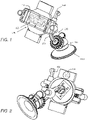
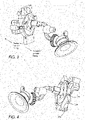
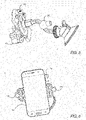
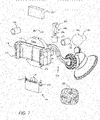
- FIGS. 1 to 7 illustrate various views of a most preferred embodiment of a smart holder of the present invention.
- the depicted embodiment of the present invention is only one preferred embodiment, and it is clarified that one or more of the depicted components may be missing in other embodiments of the invention.
- FIG. 1 is a front isometric view of one preferred embodiment of the mobile device holder/apparatus 100.
- FIG. 2 is a back isometric view of the mobile device holder/apparatus 100.
- FIG. 3 is a rear, side view of the apparatus.
- FIG. 4 is a bottom rear view of apparatus.
- FIG. 5 is a top rear view of apparatus 100.
- FIG. 6 is a front view of apparatus 100 with an exemplary mobile device (smartphone 200) in place in the apparatus.
- FIG. 7 is an exploded view of the innovative apparatus 100.
- the present invention is a multipurpose mobile device holder 100 which has both mechanical components and electronic components that give multipurpose holder 100 added functionality beyond both known holders and hands-free devices.
- the multipurpose holder 100 consists of a support structure 110 and a control unit 120.
- the exemplary embodiment depicted in FIGS. 1-7 includes a plurality of components, most of which are depicted as peripherals. It is made clear that this is a mere design choice and only one exemplarily configuration.
- FIG. 6 includes an exemplary mobile device 200 held in apparatus 100.
- the term "mobile device” as used herein refers to any device configured to communicate with a wireless network, including, but not limited to a smartphone, tablet, mobile station, user equipment (UE), personal digital assistant, laptop, public safety Land Mobile Radio (LMR) terminals, e-Readers, dedicated terminals and any other device that enables mobile data communication.
- UE user equipment
- LMR Land Mobile Radio
- Support structure 110 includes all the mechanical aspects of the mobile device holder/apparatus 100.
- the exemplarily support structure depicted in FIGS. 1-7 includes a holding bracket 112, a resiliently adjustable arm 114 and a base 116 for fixing the holder in place.
- a control unit housing 118 is affixed at the proximal end of the adjustable arm and the holding bracket is mounted on the housing 118.
- support structure is not limited to the depicted adjustable arm, holding bracket and base but rather refers to any type of structure that adapted to hold a mobile device in a desired location or position within the interior space of a vehicle.
- Some commonly found support structures include, but are not limited to: dash-mounted stands, windshield mounted arms, air conditioner fin attachments, magnetic bases that mate with a metal plate fixed on the mobile device (or device jacket), holders with hanging arrangements that are hung from a rearview mirror and more.
- Holding bracket 112 is merely one exemplary embodiment of a “coupling mechanism” of the innovative apparatus.
- a “coupling mechanism” is any mechanical (including electromechanical) arrangement that is adapted to hold the mobile device to, in or on the apparatus.
- Some alternative examples of mechanical arrangements that are included in, but not limited to, the scope of the component are: a magnetic arrangement whereby a magnet on the apparatus mates with a metal piece fixed to the back of the mobile device, a stand, a shelf, a suction cup, a receptacle, a plastic/elastic apparatus with movable arms for securing the mobile device to the apparatus, an adjustable holding bracket, a duel or multi-position holding bracket etc.
- Many other variations are known in the art and new designs and devices are constantly being produced and marketed. All of these devices are included within the scope of the term "coupling mechanism”.
- Adjustable arm 114 is merely one exemplary embodiment of an "adjustable and/or support component" that is generally interposed between the coupling mechanism that actually holds the mobile device and the base of the support structure which secures the apparatus in place.
- Some support structures do not include an adjustable support.
- the support component is not adjustable.
- the adjustable support component is only an adjustable component.
- the term adjustable is intended to mean movable, adapted to be repositioned, in some cases malleable, flexible, lending itself to manual manipulation to change a set state or configuration, rotatable about one, two or three axes.
- the suction cup base depicted in the Figures is merely an exemplary embodiment of the "affixing base” or “mounting base” or simply “base” of the support structure.
- the base includes a mounting surface 1161 depicted herein as a suction cup arrangement for mounting the support structure on a flat surface such as a dashboard or windshield.
- Other types of bases include, but are not limited to: air conditioner fin attachments, hanging arrangements that are hung from a rearview mirror, metal brackets/arms mounted or fixed to or on a dashboard or the like.
- Control unit housing 118 usually serves a dual function. One function is to serve as a mechanical feature such as a backing for the holder and/or a central housing component to which, or in which, some or all of the peripherally integrated components/devices are operationally coupled or housed. The second function is to house the electronic components which control the functioning of the apparatus and electronically tie or couple all the components and elements together. One or more printed circuit boards, wiring, circuitry, power conduits, and the like are generally housed in the control unit housing 118.
- Control unit 120 is housed in housing 118.
- the control unit is depicted as embedded/embodied on a printed circuit board (PCB).
- Control unit 120 includes a processor unit, controllers, circuitry, and other internal components such as wireless communication antennas and transceivers, internal memory and all other components necessary for the function of the multipurpose holder, as will be further detailed below and with regards to FIG. 8 .
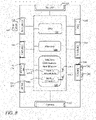
- FIG. 8 illustrates a schematic block diagram of control unit 120.
- the exemplary control unit depicted in FIG. 8 includes a plurality of components, all of which are included in at least one preferred embodiment of the invention. However, it is made clear that several embodiments of the invention include only a portion of the depicted components. As such, depiction of the plurality of components is not intended to be limiting in any way, but rather serves to provide a single figure including components from many different embodiments. In discussions below, various embodiments pick and choose components from the numerous elements depicted in the Figure. One skilled in the art will appreciate that other variations, modifications, combinations and configurations are included within the scope of the invention, but are not detailed or listed specifically as configurations are too numerous to mention explicitly.
- control unit 120 includes a processing unit 122 and a wireless communications module 124.
- processing unit 122 includes a processing unit 122 and a wireless communications module 124.
- wireless communications module 124 includes a wireless communications module 124.
- the multipurpose apparatus/mobile device holder 100 functions as both a mechanical holder for a mobile device as well as being capable of wirelessly communicating with a proximal mobile device.
- the mobile device held in the holder is also the device which is in wireless communication with the holder.
- processor unit 122 may include one or more integrated circuits, microchips, microcontrollers, microprocessors, all or part of a central processing unit (CPU), graphics processing unit (GPU), digital signal processor (DSP), field-programmable gate array (FPGA) or other circuits suitable for executing instructions or performing logic operations.
- processor unit 122 may be configured to communicate with the mobile device and other electronic components (e.g., a transceiver) within the apparatus and to control at least one of the components of the apparatus.
- the instructions executed by processor unit 122 may be pre-loaded into a memory unit integrated with embedded into processor unit 122, or stored in a separate memory unit (335) having an erasable and non-erasable memory banks, such as a RAM, a ROM, or a hard disk.
- the instructions executed by processor unit 122 may be received from mobile device 200, i.e., mobile device 200 or an application pre-installed on the mobile device can control the operation of the processor unit 122 by sending processor unit 122 instructions via a wireless transceiver or via electrical connector.
- Some of the logic operations processor unit 122 may be configured to preform are: local circuitry management, handshake with mobile device 200 over the wired and/or wireless links, a user authentication, data encryption/decryption, virtual SIMs implementation, battery charging control, battery status report (e.g. via an LED indicator [not shown]), power management, processing of connectivity detection. While, for ease of illustration, FIG. 8 illustrates a single processor, it should be understood that, consistent with embodiments of the invention, functionality may occur in a single processor or may be split among multiple processors.
- Wireless communications module 124 includes are all the necessary and/or preferred components for receiving and transmitting wireless communication signals.
- Wireless communications module 124 includes at least one antenna 124.1 (e.g. a wireless communications antenna) and a wireless transceiver 124.2, operationally coupled to the wireless communications antenna 124.2.
- antenna 124.1 e.g. a wireless communications antenna
- wireless transceiver 124.2 operationally coupled to the wireless communications antenna 124.2.
- antenna means any radiating element (or multiplicity of radiating elements) that is capable of receiving electromagnetic radiation and generating an electrical signal therefrom.
- the term “antenna” includes an RF antenna, a multiple-input and multiple-output (MIMO) antenna, an antenna set, an antenna array, a beam forming antenna, a multi-frequency antenna, a multi-band antenna, or any RF device.
- the term “antenna” includes also at least one processing unit that supports the RF connectivity or physical layer connectivity required to establish wireless communication, e.g., cellular, satellite, WiFi, bluetooth etc.
- Mobile device 200 can communicate with multipurpose holder/apparatus 100 with any commercial standard wireless protocol, for example: Wireless Ethernet, WiFi, Bluetooth, Zigbee, WiGig, Wireless Personal Area Network, NFC.
- the mobile device communicates with apparatus 100 with a wired protocol over a commercial standard connector, for example: USB, HDMI, mobile devices docking connectors, Apple Lightning connector, Apple External Accessory connector protocols such as MFi, Samsung Galaxi Tab connector.
- a commercial standard connector for example: USB, HDMI, mobile devices docking connectors, Apple Lightning connector, Apple External Accessory connector protocols such as MFi, Samsung Galaxi Tab connector.
- mobile device 200 can communicate with apparatus 100 using a commercial standard wireless protocol even when they are physically connected.
- Hands free devices/systems allow a user to communicate using the mobile device without having to hold the device in hand.
- the mobile device is electronically coupled to the multipurpose holder 100 via the wireless communications module 124.
- the holder includes a speaker 130 (either peripheral to the support structure or integrated therein) for amplifying the received audio signal. For example, when the mobile device is paired and connected with the holder, the audio signal from an incoming call is wirelessly transmitted to the holder and automatically broadcast over the speaker.
- Bluetooth.TM The most common form of wireless coupling and communication between handheld/mobile devices and [wireless] hands-free devices is over Bluetooth.TM.
- a digitized audio signal is transmitted from the Bluetooth transceiver in the mobile device to a corresponding Bluetooth module on the hands-free device.
- the Bluetooth wireless protocol is used for wireless communications between the mobile device 200 and holder 100.
- any applicable radio frequency (RF) protocol is used in place of, or in addition to, the Bluetooth protocol.
- apparatus 100 further includes a microphone that is operationally coupled to the processor unit.
- the microphone may be an embedded microphone such as microphone 135 (visible in FIGS. 3 , 5 and 7 ).
- the micro phone is a highly sensitive microphone.
- an additional or alternative microphone (not shown) is electronically coupled to the apparatus.
- the microphone may be coupled in a wired or wireless manner.
- a wireless microphone may be clipped onto a sun visor or placed in another position proximal to the user's mouth.
- the microphone may be paired with apparatus 100 in any manner known in the art.
- One example of a wired coupling may be a microphone on a retractable cord.
- the microphone can exemplarily be housed in a receptacle (not shown) on the apparatus and when removed, the cord unreels from a spring-loaded spool.
- the microphone can be positioned on the user or is some other convenient location, as above.
- a microphone 164 of earpiece 160 (which is discussed below in further detail) can be activated and used without activating the ear bud component 162.
- apparatus 100 (support structure, control unit (processing unit, wireless transceiver etc.) and speaker), further includes an embedded microphone 135 and a memory 126 (e.g. internal storage medium 126).
- the predefined threshold is defined by the microphone's level of sensitivity.
- the recorded matter is stored on storage medium 126.
- the stored audio matter is wireless transmitted to a second location/storage medium, at predefined intervals.
- the microphone is activated when a mobile device (e.g. smartphone 200) is electronically connected to apparatus 100.
- recorded audio matter is wirelessly transmitted from storage medium 126 to the connected mobile device (e.g. smartphone 200) at the aforementioned predefined intervals.
- audio matter sensed by microphone 135 is streamed to the mobile device and recorded there.
- apparatus 100 includes at least one digital media slot 172 adapted to receive a removable memory card 173.
- the control unit 120 may or may not include internal storage medium 126.
- the recorded audio data may be stored may be stored on the removable storage medium and transferred to the mobile device at the aforementioned intervals.
- the intervals may be longer between each transmission.
- the data may be stored on the removable storage medium until physically removed from the slot.
- the microphone is autonomic and automatically activates whenever sound/noise above the aforementioned volume threshold is detected.
- the audio recording function provides an audio record of conversations, words, sounds and noise in and near the vehicle in which the apparatus is installed (or wherever the apparatus is permanently or temporarily installed).
- the microphone works within needing to be connected to the mobile device, it is necessary to store the data on a sufficiently large capacity storage medium.
- the internal memory has sufficient capacity for storing all audio data until the mobile device is connected, at which point audio data is transmitted to the mobile device.
- a removable storage medium may replace or augment the storage capabilities of the internal memory.
- the data is wirelessly transmitted to the mobile device.
- a software application on the mobile device.
- Software developers skilled in the art of producing mobile apps would be capable producing an app configured to communicate and cooperate with apparatus 100 to facilitate the data communication, as well as providing a competent graphic user interface for sending the necessary computer readable instructions to the processing unit of the apparatus, so as to effect each of the described functions detailed herein.
- details of the computer-readable instructions necessary for both the functioning of the app as well as instructing the processing unit of the apparatus are not discussed in detail here.
- the mobile app includes functionality for transmitting the stored audio data over a wireless network to a remote computing device for storage.
- the remote computing device may be a single server, a plurality of storage device such as a server farm, a cloud-based storage network and the like.
- the microphone is sound or voice activated, regardless of whether a mobile device is in close proximity or not.
- Methods for compensating for the lack of mobile device storage facility and/or the wireless network connectivity are discussed above.
- the aforementioned challenge is obviated by further including a wireless network transceiver (sometimes referred to as a long-range transceiver) in the control unit.
- the network transceiver facilitates the wireless transmission of data from the apparatus, over a wireless network (e.g. cellular network, satellite network etc.) to a remote storage location. Alternatively, the data may be transmitted to a monitoring facility and/or a processing facility.
- detected sounds may be transmitted to a monitoring station.
- the sounds may be run through noise filters or processed by audio processors to determine if a detected noise is indicative of the vehicle being broken into and/or stolen.
- the monitoring station may be alerted to the suspicious noise and a security or law enforcement entity may be alerted. Numerous other applications of the described technology are envisioned but not listed for the sake of brevity.
- wireless network transceiver or “network transceiver” as used herein refers to any device capable of transmitting and/or receiving signals in a wireless network.
- a network transceiver can communicate with a cellular network, mobile telephony network, IP network, and even with mesh devices or peer-to-peer devices.
- embodiments of the invention may employ a network transceiver that uses one or more of the following exemplary communication standards: GSM, GPRS, HSPA, Edge, LTE, LTE Advanced, HSPA, CDMA, CDMA Rev A, CDMA Rev B, WiMAX, COFDM, Wibro, Satellite BGAN, and satellite VSAT.
- a wireless transceiver employing WiFi or Bluetooth communication standards can transfer or transmit the stored data to router electronically coupled to a LAN (e.g. over an Ethernet connection).
- embodiments of the invention may involve transceivers that use other known or future wireless protocols.
- a separate wireless network antenna 124.3 is included in the wireless communications module 124.
- Network antenna 124.3 is electronically coupled to a wireless network transceiver 124.4.
- the wireless network transceiver is operationally coupled to the processor unit (e.g. CPU 122).
- Processor unit 122 is configured to connect the [long-range] wireless network transceiver to a Subscriber Identity Module (SIM) or a mini-SIM card inserted in a SIM slot (e.g. slot 176) or a mini-SIM slot (e.g. slot 178) in order to in order to provide identification credentials read from the SIM in order to access the network.
- SIM Subscriber Identity Module
- mini-SIM card inserted in a SIM slot
- mini-SIM slot e.g. slot 178
- the network transceiver can effect wireless transmission of the audio data a cellular network or a satellite network.
- the multipurpose apparatus 100 further includes a camera (e.g. forward-facing camera 180).
- the camera is oriented so as to have a field of view (FOV) in a direction similar to the direction in which a user is facing.
- FOV field of view
- the side of the apparatus that receives the mobile device is referred to as the front of the apparatus.
- the coupling mechanism for holding the mobile device to the apparatus is generally located on the front of the multipurpose apparatus.
- the back of the apparatus faces away from the user. In the vehicle implementation, the back surface of the apparatus 100 faces the windscreen of the vehicle.
- the front facing camera (also termed “exterior facing”, “dashboard cam”, “windshield facing”) is affixed to the back side of the support structure (e.g. between the control unit housing and the windscreen) on an adjustable coupling mount 181.
- the forward facing camera may be mounted on any part of the structure and angled to face in the direction so as to have a FOV similar to that of the user.
- the camera is configured to activate, in one embodiment, when the mobile device is connected to the apparatus.
- the camera may be any camera known in the art.
- the camera includes a built in memory.
- the camera is operationally coupled to internal storage medium 126 as discussed above in relation to the microphone.
- the visual data captured by the forward looking camera may be stored on the internal storage medium 126.
- the visual data may be stored on the built in memory.
- the visual data may be stored on the removable storage medium.
- the visual data may be a plurality of still images, video, short video clips, high resolution images/video, low resolution images/video or any other visual/video format known in the art.
- the visual/video data is periodically transmitted to the mobile device.
- the visual data may be raw data, compressed data, encoded data, encrypted data and/or any other format or arrangement of data.
- the data is wirelessly transmitted to the mobile device.
- the data is transmitted over the same wireless means and/or channel as that which couples the mobile device with the apparatus 100.
- the data is transmitted over the same wireless means but a different channel.
- the data is transferred over a different wireless means.
- the mobile device is coupled to the multipurpose apparatus 100 over Bluetooth.
- the data may be transmitted over the Bluetooth connection.
- the data is transmitted over the same Bluetooth channels and in other embodiments, the data is transmitted over different channels.
- the data is transmitted over a wireless means different to Bluetooth, referred to herein also as a "secondary wireless means".
- a secondary wireless means is NFC.
- WiFi Wireless Fidelity
- the secondary wireless means may simply be the employment of a different wireless protocol over the same antenna (e.g. hybrid Wi-Fi/Bluetooth chips use a single antenna with the chip making sure that neither one is on at the same time) or even a different transceiver and/or a different antenna.
- the apparatus further includes GPS/satellite technology.
- the apparatus additionally or alternatively includes at least one backwards-looking/interior facing camera 182.
- the apparatus 100 further includes a second backwards-/interior-facing camera 184. Whether one or two cameras are included, either the individual camera or the two cameras together have a FOV of at least the interior space of the vehicle (or a comparable area, when placed in a different setting such as an office or interrogation room). In some embodiments, some of the surrounding environment is also captured by one or both of the cameras.
- the camera 182 or cameras 182, 184 are activated when the mobile device (e.g. smartphone 200) is connected to the apparatus 100.
- the cameras may be programmed (e.g. via the mobile app or as a default factory setting) to continuously capture video or periodically capture still images, or capture video at predetermined intervals for predetermined amounts of time.
- the versatility of the video capture feature is determined by the hardware, firmware and software (e.g. the mobile app software) based on the needs or desires of the manufacturers or users.
- a video package of the system includes software capable of recognizing that an individual is still in the car (e.g. a sleeping infant) while the mobile device is getting further and further away from the apparatus. It is an unfortunate fact that many young children have mistakenly been left in cars unattended. These mistakes are sometimes fatal.
- the present feature is able to detect that the mobile device is moving away from the apparatus (e.g. based on Received Signal Strength Indicator (RSSI) levels of the wireless signal between the mobile device and the apparatus) while the interior-facing camera is capturing footage of the sleeping infant left in the car.
- RSSI Received Signal Strength Indicator
- an image processor identifies the person-like figure in the car, the processor unit determines that the mobile device is moving away from the car and the processor unit sends an emergency notification or message to the mobile device that a child is still in the car. If the apparatus is equipped with cellular communication capabilities then the message can be sent over the cellular network to predefined numbers (e.g. a second parent, police, fire and rescue services etc.). If the apparatus is equipped with GPS capabilities, then an exact location of the vehicle can be sent to rescue services. Otherwise, the approximate location of the vehicle can be calculated using cellular triangulation.
- the massage may be a text message or an audio message that informs the parent/rescue services of the situation.
- the camera/s is/are activated upon detection of motion within the FOV of the camera/s.
- the cameras have two modes, exemplarily referred to as a passive mode and an active mode.
- the first mode termed herein as the "passive mode"
- Motion detection demands relatively low power consumption relative to active capture of images/video.
- the camera switches to the active mode, for at least a predetermined amount of time (e.g. 15 seconds) or until movement is no longer detected (even during active capture mode, the control unit of the apparatus is able to determine whether there is motion within the captured FOV).
- the apparatus includes either a large capacity storage medium or a wireless network transmission means (e.g. cellular antenna/transceiver, SIM card etc.) or both.
- either motion detection or mobile connectivity active video capture Preferably, in all configurations discussed above where visual data is captured and stored, the visual data that is stored on the storage medium/media is periodically transmitted to the mobile device as discussed above. Alternatively or additionally, the visual data may be uploaded to the cloud/storage server from either the mobile device or the apparatus 100 itself, where applicable.
- apparatus 100 includes a wireless earpiece that is battery operated, communicates with apparatus 100 or directly with mobile device 200 over a radio frequency (RF) protocol.
- the earpiece 160 includes an ear bud 162 and a microphone 164 for two-way communication.
- the battery is a rechargeable battery and is housed in a cradle 166 that include a charging/docking port (not seen) for recharging the battery when not in use.
- a user not wanting to broadcast the incoming audio transmission over speaker 130 can activate earpiece 160 by either simply removing it from cradle 166 or by pressing an optional button 168 (see FIG. 2 ) to connect the device to the apparatus or mobile device as preconfigured or selected on the mobile app installed in the mobile device.
- the apparatus includes a power source.
- the power source is a battery 190.
- the power source is a power port with a wired connector with an adaptor for a cigarette lighter (or a plug for a power outlet), channeling power from the vehicle or electricity grid to the apparatus 100.
- the battery is a rechargeable battery that is configured to provide power both when plugged in to a power source (e.g. cigarette lighter in a vehicle and power outlet in a room) and/or when holding a charge.
- the battery has power intake port (e.g. DC IN, micro USB port) 192 (see FIG. 4 ).
- the battery includes a power outlet port (e.g. DC OUT, USB port) 194.
- outlet port 194 can be used to power mobile device 200 or any other type of mobile device capable of drawing power over a wired connection such as a USB cable.
- the intake and/or outlet ports can be used as data ports for facilitating a wired connection, e.g. between mobile device 200 and multipurpose apparatus 100.
- battery 190 is detachable, e.g. by releasing latches 196.
- datable battery conducts energy to the apparatus via contacts 198 (e.g. gold plated contacts).
- the detachable battery can either be charged via a cord connected to the cigarette lighter or detached and charge in the house, using a regular phone charger. The latter option is very useful as a cigarette lighter only draws power (in most vehicles, that is) when the vehicle is on. With a detachable battery, the battery can be charged overnight to ensure full strength and long use without needing to plug the device into the cigarette lighter.
- the support structure could be a dashboard-mounted stand with a rectangular housing rotatably coupled to the stand (not shown).
- the coupling mechanism may be a magnet that mates with a metal piece fixed to the back of the mobile device.
- the housing may be wider than the standard width of a mobile device (e.g. iPhone.TM., Galaxy S3.TM. etc.).
- Interior-facing cameras may be button-hole cameras integrated into the rectangular housing.
- the exterior-facing camera may be a fish-eye camera integrated into the exterior facing side of the housing.
- a microphone and speaker may be integrally housed in the housing.
- the housing may have an indentation or opening for holding a removable earpiece.
- the battery, ports, media slots may all be formed integrally within the rectangular housing.
- Another possible configuration includes a support structure, a processing unit, a wireless communications module, a storage medium and a forward looking camera. All the components function as detailed above.
- the stored data is temporarily stored on the storage medium and periodically transmitted to the mobile device.
- the stored data is transmitted over a wireless network to a remote storage device.
- Yet another configuration includes a support structure, a processing unit, a wireless communications module, a storage medium and at least one interior-looking camera.
- the first interior-looking camera is operationally coupled to the support structure and electronically coupled to the processor unit.
- the first interior-looking camera adapted to be positioned so as to have a field of view of at least a portion of an interior space of a vehicle or other space such as a room, when fixed in place in that interior space.
- First interior-looking camera is operationally coupled to the storage medium and processor unit and is configured to record and store visual input sensed by the first interior-looking camera on the storage medium.
- the apparatus includes a support structure, a processor unit, a storage medium and at least one media sensor (microphone or camera) capable of sensing noise, movement or both.
- the media sensor is to capable of capturing audio, visual or audiovisual matter and storing that matter as data on the storage device(s).
- the media sensor is configured to activate upon sensing motion within the field of view of the device or sensing noise above a predefined volume threshold. Activation (i.e. in an active state) includes capturing data, storing data and wireless transmitting the data (either to the mobile device or over a wireless communications network).
Landscapes
- Engineering & Computer Science (AREA)
- Computer Hardware Design (AREA)
- Theoretical Computer Science (AREA)
- Physics & Mathematics (AREA)
- General Engineering & Computer Science (AREA)
- General Physics & Mathematics (AREA)
- Human Computer Interaction (AREA)
- Mechanical Engineering (AREA)
- Acoustics & Sound (AREA)
- Signal Processing (AREA)
- Power Engineering (AREA)
- Fittings On The Vehicle Exterior For Carrying Loads, And Devices For Holding Or Mounting Articles (AREA)
- Telephone Set Structure (AREA)
- Telephone Function (AREA)
- Studio Devices (AREA)
Claims (15)
- Vorrichtung für ein mobiles Gerät, wobei die Vorrichtung Folgendes umfasst:eine Tragstruktur (110), einschließlich einer Basis (116), die geeignet ist, die Vorrichtung in einem Innenraum an Ort und Stelle zu befestigen, einen Verbindungsmechanismus (112), der geeignet ist, das mobile Gerät mit der genannten Tragstruktur (110) zu verbinden, und wobei die genannte Tragstruktur (110) außerdem ein Steuergerätgehäuse (118) einschließt;eine Prozessoreinheit, die in dem genannten Gehäuse untergebracht ist;einen drahtlosen Sendeempfänger, der operativ mit der genannten Prozessoreinheit verbunden und darauf ausgelegt ist, mit dem mobilen Gerät zu kommunizieren;ein Speichermedium (126);mindestens einen SIM-Karten-Steckplatz (SIM) (176), einen Mini-SIM-Steckplatz (178) oder einen Steckplatz für digitale Medien (172);eine erste nach innen gerichtete Kamera (182), die in die genannte Tragstruktur (110) integriert und elektronisch mit der genannten Prozessoreinheit (122) und dem genannten Speichermedium (126) verbunden ist; undmindestens einen in die genannte Tragstruktur (110) integrierten und elektronisch mit der genannten Prozessoreinheit (122) und dem genannten Speichermedium (126) verbundenen Mediensensor;
wobei die genannte Vorrichtung durch Folgendes gekennzeichnet ist:eine nach vorn gerichtete Kamera (180), wobei die genannte nach vorn gerichtete Kamera (180) in die genannte Tragstruktur (110) integriert und fest an dieser montiert und elektronisch mit der genannten Prozessoreinheit (122) und dem genannten Speichermedium (126) verbunden ist,wobei die genannte nach vorn gerichtete Kamera (180) an einer an einem verstellbaren Arm (114) positionierten verstellbaren Verbindungshalterung (181) befestigt ist, wobei der verstellbare Arm beweglich an der genannten Basis (116) montiert ist, undwobei die genannte nach vorn gerichtete Kamera (180) geeignet ist, so positioniert zu werden, dass ihr Sichtfeld durch eine Windschutzscheibe eines Fahrzeugs verläuft. - Vorrichtung nach Anspruch 1, bei der der genannte mindestens eine Mediensensor einen aktiven Modus und einen energiearmen passiven Modus aufweist und darauf ausgelegt ist, aus dem genannten passiven Modus beim Erfassen einer Bewegung in einem Sichtfeld des genannten Mediensensors oder bei einem Geräusch über einer vordefinierten Lautstärkeschwelle des genannten mindestens einen Mediensensors aktiviert zu werden.
- Vorrichtung nach Anspruch 2, bei der der genannte Mediensensor ein operativ mit der genannten Prozessoreinheit (122) verbundenes Mikrofon einschließt; und das genannte Speichermedium (126) und bei der die genannte Erfassung das genannte Geräusch betrifft.
- Vorrichtung nach Anspruch 1, bei der die genannte nach innen gerichtete Kamera (182) geeignet ist, so positioniert zu werden, dass sie ein Sichtfeld auf einen Teil des genannten Innenraums des genannten Fahrzeugs hat, wenn die genannte Basis (116) in dem genannten Innenraum an Ort und Stelle befestigt ist; undbei der die genannte Prozessoreinheit (122) darauf ausgelegt ist, von der genannten nach innen gerichteten Kamera (122) erfasstes visuelles Input auf dem genannten Speichermedium aufzuzeichnen und zu speichern; undbei der die genannte Erfassung die genannte Bewegung betrifft.
- Vorrichtung nach Anspruch 1, die außerdem eine zweite nach innen gerichtete Kamera (184) umfasst, die operativ mit der genannten Tragstruktur (110) verbunden und elektronisch mit der Prozessoreinheit (122) und dem genannten Speichermedium (126) verbunden ist; bei der die genannte zweite nach innen gerichtete Kamera geeignet ist, so positioniert zu werden, dass sie ein Sichtfeld auf einen zweiten Teil des Innenraums des Fahrzeugs hat, wenn sie in dem Innenraum an Ort und Stelle befestigt ist; und bei der der Prozessor darauf ausgelegt ist, von der zweiten nach innen gerichteten Kamera erfasstes Input auf dem Speichermedium aufzuzeichnen und zu speichern.
- Vorrichtung nach Anspruch 1, die außerdem Folgendes umfasst:einen Kopfhörer (160); undeine Kopfhörerbuchse (166), die operativ mit der genannten Tragstruktur (110) verbunden und darauf ausgelegt ist, den genannten Kopfhörer (160) zu halten.
- Vorrichtung nach Anspruch 6, bei der der genannte Kopfhörer (160) mit der Vorrichtung operativ über einen verdrahteten elektrischen Verbinder verbunden ist.
- Vorrichtung nach Anspruch 1, die außerdem Folgendes umfasst:
eine aufladbare Batterie, die operativ mit der genannten Prozessoreinheit (122) verbunden ist, wobei die genannte aufladbare Batterie einen Stromversorgungsport einschließt, um die genannte aufladbare Batterie operativ mit einer Stromquelle zu verbinden. - Vorrichtung nach Anspruch 8, bei der die genannte aufladbare Batterie außerdem einen Stromausgangsport umfasst.
- Vorrichtung nach Anspruch 8, bei der die genannte aufladbare Batterie lösbar mit der Vorrichtung verbunden ist.
- Vorrichtung nach Anspruch 2, die außerdem Folgendes umfasst:einen drahtlosen Netzwerksendeempfänger, der operativ mit der genannten Prozessoreinheit (122) verbunden ist, wobei die genannte Prozessoreinheit (122) darauf ausgelegt ist, den genannten drahtlosen Netzwerksendeempfänger an eine entfernbare Speicherkarte (173) anzuschließen, die in den SIM-Steckplatz (176), den Mini-SIM-Steckplatz (178) oder den Steckplatz der digitalen Medien (172) eingesteckt ist, um eine drahtlose Übertragung von Audio-, visuellen oder audio-visuellen Daten über ein Mobilfunknetz oder ein Satellitennetzwerk vorzunehmen; undwobei der genannte Sendeempfänger und die genannte Prozessoreinheit (122) darauf ausgelegt sind, über das genannte Mobilfunknetz oder das genannte Satellitennetzwerk ein Signal als Antwort an eine Überwachungsstation zu übertragen, wenn die genannte Erfassung eintritt, während das genannte mobile Gerät nicht an den genannten Verbindungsmechanismus angeschlossen ist.
- Vorrichtung nach Anspruch 10, bei der die genannte Prozessoreinheit (122) darauf ausgelegt ist, die drahtlose Übertragung von Audio-, visuellen oder audio-visuellen Daten von dem genannten Speichermedium an das mobile Gerät vorzunehmen.
- Vorrichtung nach Anspruch 2, bei der der genannte mindestens eine Mediensensor eine oder mehrere Sensoren einschließt, die aus der Folgendes einschließenden Gruppe gewählt wurden: einen bildgebenden Detektor, ein Mikrofon, einen kombinierten audio-visuellen Sensor.
- Vorrichtung nach Anspruch 4, die außerdem einen bildgebenden Prozessor umfasst, der darauf ausgelegt ist, zu erkennen, dass eine Person sich immer noch in dem Innenraum aufhält und bei der der genannte bildgebende Prozessor darauf programmiert ist, zu erkennen, wenn das genannte mobile Gerät sich von der Vorrichtung wegbewegt, und darauf, eine Benachrichtigung zu versenden, wenn die Person sich immer noch im Inneren befindet und das mobile Gerät sich von der Vorrichtung wegbewegt.
- Vorrichtung nach Anspruch 14, bei der der genannte Sendeempfänger und die genannte Prozessoreinheit (122) darauf ausgelegt sind, das genannte Versenden der genannten Benachrichtigung über das genannte Mobilfunknetz oder ein Satellitennetzwerk vorzunehmen.
Applications Claiming Priority (3)
| Application Number | Priority Date | Filing Date | Title |
|---|---|---|---|
| IL252404A IL252404A0 (en) | 2017-05-21 | 2017-05-21 | smart holder |
| US15/600,810 US9961306B1 (en) | 2017-05-22 | 2017-05-22 | Smart holder |
| PCT/IL2018/050543 WO2018216004A1 (en) | 2017-05-21 | 2018-05-17 | Smart holder |
Publications (3)
| Publication Number | Publication Date |
|---|---|
| EP3632099A1 EP3632099A1 (de) | 2020-04-08 |
| EP3632099A4 EP3632099A4 (de) | 2020-05-06 |
| EP3632099B1 true EP3632099B1 (de) | 2022-05-04 |
Family
ID=64395440
Family Applications (1)
| Application Number | Title | Priority Date | Filing Date |
|---|---|---|---|
| EP18805771.5A Active EP3632099B1 (de) | 2017-05-21 | 2018-05-17 | Intelligenter halter |
Country Status (6)
| Country | Link |
|---|---|
| EP (1) | EP3632099B1 (de) |
| JP (1) | JP7112485B2 (de) |
| KR (1) | KR102364006B1 (de) |
| CN (1) | CN110679144B (de) |
| RU (1) | RU2759201C2 (de) |
| WO (1) | WO2018216004A1 (de) |
Families Citing this family (15)
| Publication number | Priority date | Publication date | Assignee | Title |
|---|---|---|---|---|
| US10705566B2 (en) | 2016-09-09 | 2020-07-07 | Targus International Llc | Systems, methods and devices for native and virtualized video in a hybrid docking station |
| US11231448B2 (en) | 2017-07-20 | 2022-01-25 | Targus International Llc | Systems, methods and devices for remote power management and discovery |
| SG11202106020TA (en) * | 2018-12-19 | 2021-07-29 | Targus International Llc | Display and docking apparatus for a portable electronic device |
| US11360534B2 (en) | 2019-01-04 | 2022-06-14 | Targus Internatonal Llc | Smart workspace management system |
| KR102047407B1 (ko) * | 2019-02-13 | 2019-11-21 | 김예슬 | 휴대 단말기용 거치 장치 |
| CN114270812A (zh) | 2019-08-22 | 2022-04-01 | 泰格斯国际有限责任公司 | 用于参与者控制的视频会议的系统和方法 |
| CA3153964A1 (en) | 2019-09-09 | 2021-03-18 | Targus International Llc | Systems and methods for docking stations removably attachable to display apparatuses and docking stand assemblies |
| CN110891113A (zh) * | 2019-12-18 | 2020-03-17 | 陈洪杰 | 一种直播散热手机夹 |
| TWI770586B (zh) * | 2020-08-20 | 2022-07-11 | 馬思正 | 手機外掛多媒體背夾組合結構 |
| CN114125085B (zh) * | 2020-08-27 | 2024-02-02 | 马思正 | 手机外挂多媒体背夹组合结构 |
| WO2022252228A1 (zh) * | 2021-06-04 | 2022-12-08 | 苏州臻迪智能科技有限公司 | 充电装置及云台装置 |
| KR102405645B1 (ko) * | 2021-09-07 | 2022-06-03 | 남궁진성 | 블랙박스 겸용 이륜 이동수단용 스마트기기 거치대 |
| US12073205B2 (en) | 2021-09-14 | 2024-08-27 | Targus International Llc | Independently upgradeable docking stations |
| KR102606136B1 (ko) * | 2022-09-26 | 2023-11-23 | 주식회사 랩큐 | 인공지능 비대면 정신건강 케어 시스템 |
| CN117818487A (zh) * | 2022-12-07 | 2024-04-05 | 武文杰 | 一种共享电车用自动定位导航设备 |
Family Cites Families (33)
| Publication number | Priority date | Publication date | Assignee | Title |
|---|---|---|---|---|
| US6138041A (en) * | 1998-09-23 | 2000-10-24 | Ccm Cellular Connection Of Miami, Inc. | Device for safe use of a portable cellular telephone while driving |
| US20020000357A1 (en) * | 1999-03-16 | 2002-01-03 | J. Kirston Henderson | Guide rollers for vehicle ramp |
| MXPA02004999A (es) * | 1999-11-19 | 2003-01-28 | Gentex Corp | Microfono auxiliar para vehiculo. |
| US6687513B1 (en) * | 2002-10-30 | 2004-02-03 | Hsiu-Chu Hsu Li | Device for attaching portable phones to vehicle |
| CA2524041C (en) * | 2003-05-19 | 2011-07-19 | Gentex Corporation | Rearview mirror assemblies incorporating hands-free telephone components |
| US8295770B2 (en) * | 2005-10-11 | 2012-10-23 | Belkin International, Inc. | Electrical accessory and method of providing same |
| CN2938633Y (zh) * | 2006-08-23 | 2007-08-22 | 益美科研有限公司 | 便携式装置的遥控系统 |
| US9918039B2 (en) * | 2006-10-13 | 2018-03-13 | Koninklijke Philips N.V. | Interface systems for portable digital media storage and playback devices |
| US20090294617A1 (en) * | 2008-05-30 | 2009-12-03 | Acco Brands Usa Llc | Gripping mechanism for gripping portable object |
| DE102009023640B4 (de) * | 2009-05-29 | 2011-06-16 | Bury Sp.Z.O.O | Freisprecheinrichtung in einem Fahrzeug |
| KR20110016077A (ko) * | 2009-08-11 | 2011-02-17 | 박준수 | 차량용 멀티미디어 기기의 거치대 |
| US20110099507A1 (en) * | 2009-10-28 | 2011-04-28 | Google Inc. | Displaying a collection of interactive elements that trigger actions directed to an item |
| JP2011098627A (ja) * | 2009-11-05 | 2011-05-19 | Tokai Rika Co Ltd | 盗難警報システム |
| KR101239002B1 (ko) * | 2010-12-14 | 2013-03-04 | 장애인표준사업장비클시스템 주식회사 | 차량용 멀티미디어 단말기 거치장치 |
| WO2013184776A1 (en) * | 2012-06-08 | 2013-12-12 | 3M Innovative Properties Company | Modular communication device and system |
| JP2015181321A (ja) * | 2012-08-02 | 2015-10-15 | パナソニック株式会社 | 無接点充電器と、それを用いた自動車 |
| CN102756695A (zh) * | 2012-08-03 | 2012-10-31 | 王�义 | 固定在车内后视镜上具有充电扩音功能的手机支架装置 |
| CN202798850U (zh) * | 2012-09-29 | 2013-03-13 | 匡楠 | 一种智能手机车载控制器 |
| JP6162941B2 (ja) * | 2012-10-30 | 2017-07-12 | 富士通テン株式会社 | 保持装置、及び、保持方法 |
| JP6078802B2 (ja) * | 2012-12-17 | 2017-02-15 | 株式会社ユピテル | 車載機器 |
| US9980171B2 (en) * | 2013-03-14 | 2018-05-22 | Liveu Ltd. | Apparatus for cooperating with a mobile device |
| CN203193768U (zh) * | 2013-04-27 | 2013-09-11 | 董科 | 手机摄像设备 |
| ITTO20130453A1 (it) * | 2013-06-03 | 2014-12-04 | Fiat Group Automobiles Spa | Gruppo di supporto e trattenimento per un dispositivo elettronico portatile, e plancia di veicolo provvista di tale gruppo di supporto e trattenimento |
| CN104933824A (zh) * | 2014-03-19 | 2015-09-23 | 王雄 | 机动车内人员保护系统 |
| CN105491198A (zh) * | 2014-10-07 | 2016-04-13 | 陈银松 | 手机接听器 |
| KR101663508B1 (ko) * | 2014-11-10 | 2016-10-07 | 엘지전자 주식회사 | 차량의 집약형 오버헤드 콘솔 조립체 |
| WO2016127204A1 (en) * | 2015-02-12 | 2016-08-18 | Seeing Machines Limited | Automotive phone docking station for enhanced driving safety |
| CN204695414U (zh) * | 2015-06-15 | 2015-10-07 | 深圳市永盛杰科技有限公司 | 一种具有面部识别功能的行车记录仪 |
| CN204870851U (zh) * | 2015-08-10 | 2015-12-16 | 山东艾顿环保科技有限公司 | 车内儿童安全感应系统 |
| CN105809887A (zh) * | 2016-03-02 | 2016-07-27 | 上海航盛实业有限公司 | 一种车载远程报警装置及方法 |
| CN205498816U (zh) * | 2016-04-22 | 2016-08-24 | 安徽声讯信息技术有限公司 | 具有连接手机的行车记录仪和语音导航装置 |
| CN106364442A (zh) * | 2016-11-29 | 2017-02-01 | 李森 | 一种车内遗留人员检测报警装置和方法 |
| CN106671777A (zh) * | 2016-12-12 | 2017-05-17 | 芜湖市吉安汽车电子销售有限公司 | 无线车载多媒体处理系统 |
-
2018
- 2018-05-17 WO PCT/IL2018/050543 patent/WO2018216004A1/en not_active Ceased
- 2018-05-17 EP EP18805771.5A patent/EP3632099B1/de active Active
- 2018-05-17 CN CN201880033712.XA patent/CN110679144B/zh active Active
- 2018-05-17 RU RU2019136450A patent/RU2759201C2/ru active
- 2018-05-17 KR KR1020197036815A patent/KR102364006B1/ko active Active
- 2018-05-17 JP JP2020514794A patent/JP7112485B2/ja active Active
Also Published As
| Publication number | Publication date |
|---|---|
| RU2019136450A3 (de) | 2021-09-03 |
| EP3632099A4 (de) | 2020-05-06 |
| JP7112485B2 (ja) | 2022-08-03 |
| WO2018216004A1 (en) | 2018-11-29 |
| KR20200007901A (ko) | 2020-01-22 |
| CN110679144B (zh) | 2023-06-02 |
| RU2759201C2 (ru) | 2021-11-10 |
| KR102364006B1 (ko) | 2022-02-17 |
| CN110679144A (zh) | 2020-01-10 |
| RU2019136450A (ru) | 2021-06-23 |
| EP3632099A1 (de) | 2020-04-08 |
| JP2020522209A (ja) | 2020-07-27 |
Similar Documents
| Publication | Publication Date | Title |
|---|---|---|
| US9961306B1 (en) | Smart holder | |
| EP3632099B1 (de) | Intelligenter halter | |
| US10893351B1 (en) | Headphone charging case | |
| US10261543B2 (en) | Mobile device cradle with improved functionality | |
| US9338650B2 (en) | Apparatus for cooperating with a mobile device | |
| US8467770B1 (en) | System for securing a mobile terminal | |
| CN112040461A (zh) | 一种靠近发现的方法及设备 | |
| US20140273845A1 (en) | Method and Apparatus to Facilitate Pairing Between Wireless Devices | |
| US20150249494A1 (en) | Communication system for reducing the effects of radiation emitted from cellular phone antennas | |
| US20190327774A1 (en) | Method and device for automatic pairing | |
| CN104506687A (zh) | 一种分离式智能手机 | |
| US20140106822A1 (en) | Multi-Screen Personal Communication Device | |
| US20180198900A1 (en) | Mobile device cradle with improved functionality | |
| US10070225B1 (en) | Vehicle entertainment system | |
| CN111385777A (zh) | Tws耳机低电量提醒方法及电子设备 | |
| WO2008085880A1 (en) | Method and apparatus for wireless dialing | |
| KR20160144156A (ko) | 안테나 장치 | |
| CN204046221U (zh) | 无线充电汽车遮阳板 | |
| WO2008085882A1 (en) | System and method for wireless communication | |
| HK40017304B (en) | Smart holder | |
| HK40017304A (en) | Smart holder | |
| KR20130142974A (ko) | 스마트폰용 기능확장 인터페이스 장치 | |
| CN203278827U (zh) | 智能蓝牙免提组件 | |
| JP2016213626A (ja) | 機能拡張装置 | |
| US7657280B2 (en) | Wireless signal receiving apparatus with clamping device and speaker device |
Legal Events
| Date | Code | Title | Description |
|---|---|---|---|
| STAA | Information on the status of an ep patent application or granted ep patent |
Free format text: STATUS: THE INTERNATIONAL PUBLICATION HAS BEEN MADE |
|
| PUAI | Public reference made under article 153(3) epc to a published international application that has entered the european phase |
Free format text: ORIGINAL CODE: 0009012 |
|
| STAA | Information on the status of an ep patent application or granted ep patent |
Free format text: STATUS: REQUEST FOR EXAMINATION WAS MADE |
|
| 17P | Request for examination filed |
Effective date: 20191219 |
|
| AK | Designated contracting states |
Kind code of ref document: A1 Designated state(s): AL AT BE BG CH CY CZ DE DK EE ES FI FR GB GR HR HU IE IS IT LI LT LU LV MC MK MT NL NO PL PT RO RS SE SI SK SM TR |
|
| AX | Request for extension of the european patent |
Extension state: BA ME |
|
| A4 | Supplementary search report drawn up and despatched |
Effective date: 20200403 |
|
| RIC1 | Information provided on ipc code assigned before grant |
Ipc: B60R 11/02 20060101ALI20200330BHEP Ipc: B60R 11/00 20060101ALI20200330BHEP Ipc: H04N 7/18 20060101AFI20200330BHEP Ipc: H04R 3/00 20060101ALI20200330BHEP Ipc: H04R 1/02 20060101ALI20200330BHEP Ipc: G06F 1/16 20060101ALI20200330BHEP |
|
| DAV | Request for validation of the european patent (deleted) | ||
| DAX | Request for extension of the european patent (deleted) | ||
| STAA | Information on the status of an ep patent application or granted ep patent |
Free format text: STATUS: EXAMINATION IS IN PROGRESS |
|
| 17Q | First examination report despatched |
Effective date: 20201111 |
|
| GRAP | Despatch of communication of intention to grant a patent |
Free format text: ORIGINAL CODE: EPIDOSNIGR1 |
|
| STAA | Information on the status of an ep patent application or granted ep patent |
Free format text: STATUS: GRANT OF PATENT IS INTENDED |
|
| INTG | Intention to grant announced |
Effective date: 20211125 |
|
| GRAS | Grant fee paid |
Free format text: ORIGINAL CODE: EPIDOSNIGR3 |
|
| GRAA | (expected) grant |
Free format text: ORIGINAL CODE: 0009210 |
|
| STAA | Information on the status of an ep patent application or granted ep patent |
Free format text: STATUS: THE PATENT HAS BEEN GRANTED |
|
| AK | Designated contracting states |
Kind code of ref document: B1 Designated state(s): AL AT BE BG CH CY CZ DE DK EE ES FI FR GB GR HR HU IE IS IT LI LT LU LV MC MK MT NL NO PL PT RO RS SE SI SK SM TR |
|
| REG | Reference to a national code |
Ref country code: GB Ref legal event code: FG4D |
|
| REG | Reference to a national code |
Ref country code: CH Ref legal event code: EP |
|
| REG | Reference to a national code |
Ref country code: AT Ref legal event code: REF Ref document number: 1490408 Country of ref document: AT Kind code of ref document: T Effective date: 20220515 |
|
| REG | Reference to a national code |
Ref country code: DE Ref legal event code: R096 Ref document number: 602018035092 Country of ref document: DE |
|
| REG | Reference to a national code |
Ref country code: IE Ref legal event code: FG4D |
|
| REG | Reference to a national code |
Ref country code: LT Ref legal event code: MG9D |
|
| REG | Reference to a national code |
Ref country code: NL Ref legal event code: MP Effective date: 20220504 |
|
| REG | Reference to a national code |
Ref country code: AT Ref legal event code: MK05 Ref document number: 1490408 Country of ref document: AT Kind code of ref document: T Effective date: 20220504 |
|
| PG25 | Lapsed in a contracting state [announced via postgrant information from national office to epo] |
Ref country code: SE Free format text: LAPSE BECAUSE OF FAILURE TO SUBMIT A TRANSLATION OF THE DESCRIPTION OR TO PAY THE FEE WITHIN THE PRESCRIBED TIME-LIMIT Effective date: 20220504 Ref country code: PT Free format text: LAPSE BECAUSE OF FAILURE TO SUBMIT A TRANSLATION OF THE DESCRIPTION OR TO PAY THE FEE WITHIN THE PRESCRIBED TIME-LIMIT Effective date: 20220905 Ref country code: NO Free format text: LAPSE BECAUSE OF FAILURE TO SUBMIT A TRANSLATION OF THE DESCRIPTION OR TO PAY THE FEE WITHIN THE PRESCRIBED TIME-LIMIT Effective date: 20220804 Ref country code: NL Free format text: LAPSE BECAUSE OF FAILURE TO SUBMIT A TRANSLATION OF THE DESCRIPTION OR TO PAY THE FEE WITHIN THE PRESCRIBED TIME-LIMIT Effective date: 20220504 Ref country code: LT Free format text: LAPSE BECAUSE OF FAILURE TO SUBMIT A TRANSLATION OF THE DESCRIPTION OR TO PAY THE FEE WITHIN THE PRESCRIBED TIME-LIMIT Effective date: 20220504 Ref country code: HR Free format text: LAPSE BECAUSE OF FAILURE TO SUBMIT A TRANSLATION OF THE DESCRIPTION OR TO PAY THE FEE WITHIN THE PRESCRIBED TIME-LIMIT Effective date: 20220504 Ref country code: GR Free format text: LAPSE BECAUSE OF FAILURE TO SUBMIT A TRANSLATION OF THE DESCRIPTION OR TO PAY THE FEE WITHIN THE PRESCRIBED TIME-LIMIT Effective date: 20220805 Ref country code: FI Free format text: LAPSE BECAUSE OF FAILURE TO SUBMIT A TRANSLATION OF THE DESCRIPTION OR TO PAY THE FEE WITHIN THE PRESCRIBED TIME-LIMIT Effective date: 20220504 Ref country code: ES Free format text: LAPSE BECAUSE OF FAILURE TO SUBMIT A TRANSLATION OF THE DESCRIPTION OR TO PAY THE FEE WITHIN THE PRESCRIBED TIME-LIMIT Effective date: 20220504 Ref country code: BG Free format text: LAPSE BECAUSE OF FAILURE TO SUBMIT A TRANSLATION OF THE DESCRIPTION OR TO PAY THE FEE WITHIN THE PRESCRIBED TIME-LIMIT Effective date: 20220804 Ref country code: AT Free format text: LAPSE BECAUSE OF FAILURE TO SUBMIT A TRANSLATION OF THE DESCRIPTION OR TO PAY THE FEE WITHIN THE PRESCRIBED TIME-LIMIT Effective date: 20220504 |
|
| PG25 | Lapsed in a contracting state [announced via postgrant information from national office to epo] |
Ref country code: RS Free format text: LAPSE BECAUSE OF FAILURE TO SUBMIT A TRANSLATION OF THE DESCRIPTION OR TO PAY THE FEE WITHIN THE PRESCRIBED TIME-LIMIT Effective date: 20220504 Ref country code: PL Free format text: LAPSE BECAUSE OF FAILURE TO SUBMIT A TRANSLATION OF THE DESCRIPTION OR TO PAY THE FEE WITHIN THE PRESCRIBED TIME-LIMIT Effective date: 20220504 Ref country code: LV Free format text: LAPSE BECAUSE OF FAILURE TO SUBMIT A TRANSLATION OF THE DESCRIPTION OR TO PAY THE FEE WITHIN THE PRESCRIBED TIME-LIMIT Effective date: 20220504 Ref country code: IS Free format text: LAPSE BECAUSE OF FAILURE TO SUBMIT A TRANSLATION OF THE DESCRIPTION OR TO PAY THE FEE WITHIN THE PRESCRIBED TIME-LIMIT Effective date: 20220904 |
|
| REG | Reference to a national code |
Ref country code: CH Ref legal event code: PL |
|
| REG | Reference to a national code |
Ref country code: BE Ref legal event code: MM Effective date: 20220531 |
|
| PG25 | Lapsed in a contracting state [announced via postgrant information from national office to epo] |
Ref country code: SM Free format text: LAPSE BECAUSE OF FAILURE TO SUBMIT A TRANSLATION OF THE DESCRIPTION OR TO PAY THE FEE WITHIN THE PRESCRIBED TIME-LIMIT Effective date: 20220504 Ref country code: SK Free format text: LAPSE BECAUSE OF FAILURE TO SUBMIT A TRANSLATION OF THE DESCRIPTION OR TO PAY THE FEE WITHIN THE PRESCRIBED TIME-LIMIT Effective date: 20220504 Ref country code: RO Free format text: LAPSE BECAUSE OF FAILURE TO SUBMIT A TRANSLATION OF THE DESCRIPTION OR TO PAY THE FEE WITHIN THE PRESCRIBED TIME-LIMIT Effective date: 20220504 Ref country code: LU Free format text: LAPSE BECAUSE OF NON-PAYMENT OF DUE FEES Effective date: 20220517 Ref country code: LI Free format text: LAPSE BECAUSE OF NON-PAYMENT OF DUE FEES Effective date: 20220531 Ref country code: EE Free format text: LAPSE BECAUSE OF FAILURE TO SUBMIT A TRANSLATION OF THE DESCRIPTION OR TO PAY THE FEE WITHIN THE PRESCRIBED TIME-LIMIT Effective date: 20220504 Ref country code: DK Free format text: LAPSE BECAUSE OF FAILURE TO SUBMIT A TRANSLATION OF THE DESCRIPTION OR TO PAY THE FEE WITHIN THE PRESCRIBED TIME-LIMIT Effective date: 20220504 Ref country code: CZ Free format text: LAPSE BECAUSE OF FAILURE TO SUBMIT A TRANSLATION OF THE DESCRIPTION OR TO PAY THE FEE WITHIN THE PRESCRIBED TIME-LIMIT Effective date: 20220504 Ref country code: CH Free format text: LAPSE BECAUSE OF NON-PAYMENT OF DUE FEES Effective date: 20220531 |
|
| REG | Reference to a national code |
Ref country code: DE Ref legal event code: R097 Ref document number: 602018035092 Country of ref document: DE |
|
| PG25 | Lapsed in a contracting state [announced via postgrant information from national office to epo] |
Ref country code: MC Free format text: LAPSE BECAUSE OF FAILURE TO SUBMIT A TRANSLATION OF THE DESCRIPTION OR TO PAY THE FEE WITHIN THE PRESCRIBED TIME-LIMIT Effective date: 20220504 |
|
| PLBE | No opposition filed within time limit |
Free format text: ORIGINAL CODE: 0009261 |
|
| STAA | Information on the status of an ep patent application or granted ep patent |
Free format text: STATUS: NO OPPOSITION FILED WITHIN TIME LIMIT |
|
| PG25 | Lapsed in a contracting state [announced via postgrant information from national office to epo] |
Ref country code: AL Free format text: LAPSE BECAUSE OF FAILURE TO SUBMIT A TRANSLATION OF THE DESCRIPTION OR TO PAY THE FEE WITHIN THE PRESCRIBED TIME-LIMIT Effective date: 20220504 |
|
| 26N | No opposition filed |
Effective date: 20230207 |
|
| PG25 | Lapsed in a contracting state [announced via postgrant information from national office to epo] |
Ref country code: IE Free format text: LAPSE BECAUSE OF NON-PAYMENT OF DUE FEES Effective date: 20220517 |
|
| PG25 | Lapsed in a contracting state [announced via postgrant information from national office to epo] |
Ref country code: SI Free format text: LAPSE BECAUSE OF FAILURE TO SUBMIT A TRANSLATION OF THE DESCRIPTION OR TO PAY THE FEE WITHIN THE PRESCRIBED TIME-LIMIT Effective date: 20220504 Ref country code: BE Free format text: LAPSE BECAUSE OF NON-PAYMENT OF DUE FEES Effective date: 20220531 |
|
| PG25 | Lapsed in a contracting state [announced via postgrant information from national office to epo] |
Ref country code: IT Free format text: LAPSE BECAUSE OF FAILURE TO SUBMIT A TRANSLATION OF THE DESCRIPTION OR TO PAY THE FEE WITHIN THE PRESCRIBED TIME-LIMIT Effective date: 20220504 |
|
| PG25 | Lapsed in a contracting state [announced via postgrant information from national office to epo] |
Ref country code: MK Free format text: LAPSE BECAUSE OF FAILURE TO SUBMIT A TRANSLATION OF THE DESCRIPTION OR TO PAY THE FEE WITHIN THE PRESCRIBED TIME-LIMIT Effective date: 20220504 Ref country code: CY Free format text: LAPSE BECAUSE OF FAILURE TO SUBMIT A TRANSLATION OF THE DESCRIPTION OR TO PAY THE FEE WITHIN THE PRESCRIBED TIME-LIMIT Effective date: 20220504 |
|
| PG25 | Lapsed in a contracting state [announced via postgrant information from national office to epo] |
Ref country code: HU Free format text: LAPSE BECAUSE OF FAILURE TO SUBMIT A TRANSLATION OF THE DESCRIPTION OR TO PAY THE FEE WITHIN THE PRESCRIBED TIME-LIMIT; INVALID AB INITIO Effective date: 20180517 |
|
| PG25 | Lapsed in a contracting state [announced via postgrant information from national office to epo] |
Ref country code: MT Free format text: LAPSE BECAUSE OF FAILURE TO SUBMIT A TRANSLATION OF THE DESCRIPTION OR TO PAY THE FEE WITHIN THE PRESCRIBED TIME-LIMIT Effective date: 20220504 |
|
| PG25 | Lapsed in a contracting state [announced via postgrant information from national office to epo] |
Ref country code: BG Free format text: LAPSE BECAUSE OF FAILURE TO SUBMIT A TRANSLATION OF THE DESCRIPTION OR TO PAY THE FEE WITHIN THE PRESCRIBED TIME-LIMIT Effective date: 20220504 |
|
| PG25 | Lapsed in a contracting state [announced via postgrant information from national office to epo] |
Ref country code: BG Free format text: LAPSE BECAUSE OF FAILURE TO SUBMIT A TRANSLATION OF THE DESCRIPTION OR TO PAY THE FEE WITHIN THE PRESCRIBED TIME-LIMIT Effective date: 20220504 |
|
| PGFP | Annual fee paid to national office [announced via postgrant information from national office to epo] |
Ref country code: DE Payment date: 20250521 Year of fee payment: 8 |
|
| PGFP | Annual fee paid to national office [announced via postgrant information from national office to epo] |
Ref country code: GB Payment date: 20250527 Year of fee payment: 8 |
|
| PGFP | Annual fee paid to national office [announced via postgrant information from national office to epo] |
Ref country code: FR Payment date: 20250528 Year of fee payment: 8 |
|
| PGFP | Annual fee paid to national office [announced via postgrant information from national office to epo] |
Ref country code: TR Payment date: 20250512 Year of fee payment: 8 |