EP3632057B1 - Verteiltes ipsec-gateway - Google Patents
Verteiltes ipsec-gateway Download PDFInfo
- Publication number
- EP3632057B1 EP3632057B1 EP18727098.8A EP18727098A EP3632057B1 EP 3632057 B1 EP3632057 B1 EP 3632057B1 EP 18727098 A EP18727098 A EP 18727098A EP 3632057 B1 EP3632057 B1 EP 3632057B1
- Authority
- EP
- European Patent Office
- Prior art keywords
- traffic
- gateway
- ipsec
- outgoing
- node
- Prior art date
- Legal status (The legal status is an assumption and is not a legal conclusion. Google has not performed a legal analysis and makes no representation as to the accuracy of the status listed.)
- Active
Links
Images




Classifications
-
- H—ELECTRICITY
- H04—ELECTRIC COMMUNICATION TECHNIQUE
- H04L—TRANSMISSION OF DIGITAL INFORMATION, e.g. TELEGRAPHIC COMMUNICATION
- H04L12/00—Data switching networks
- H04L12/66—Arrangements for connecting between networks having differing types of switching systems, e.g. gateways
-
- H—ELECTRICITY
- H04—ELECTRIC COMMUNICATION TECHNIQUE
- H04L—TRANSMISSION OF DIGITAL INFORMATION, e.g. TELEGRAPHIC COMMUNICATION
- H04L63/00—Network architectures or network communication protocols for network security
- H04L63/04—Network architectures or network communication protocols for network security for providing a confidential data exchange among entities communicating through data packet networks
- H04L63/0428—Network architectures or network communication protocols for network security for providing a confidential data exchange among entities communicating through data packet networks wherein the data content is protected, e.g. by encrypting or encapsulating the payload
- H04L63/0485—Networking architectures for enhanced packet encryption processing, e.g. offloading of IPsec packet processing or efficient security association look-up
-
- H—ELECTRICITY
- H04—ELECTRIC COMMUNICATION TECHNIQUE
- H04L—TRANSMISSION OF DIGITAL INFORMATION, e.g. TELEGRAPHIC COMMUNICATION
- H04L12/00—Data switching networks
- H04L12/28—Data switching networks characterised by path configuration, e.g. LAN [Local Area Networks] or WAN [Wide Area Networks]
- H04L12/46—Interconnection of networks
- H04L12/4641—Virtual LANs, VLANs, e.g. virtual private networks [VPN]
-
- G—PHYSICS
- G06—COMPUTING OR CALCULATING; COUNTING
- G06F—ELECTRIC DIGITAL DATA PROCESSING
- G06F9/00—Arrangements for program control, e.g. control units
- G06F9/06—Arrangements for program control, e.g. control units using stored programs, i.e. using an internal store of processing equipment to receive or retain programs
- G06F9/44—Arrangements for executing specific programs
- G06F9/455—Emulation; Interpretation; Software simulation, e.g. virtualisation or emulation of application or operating system execution engines
- G06F9/45533—Hypervisors; Virtual machine monitors
- G06F9/45558—Hypervisor-specific management and integration aspects
-
- G—PHYSICS
- G06—COMPUTING OR CALCULATING; COUNTING
- G06F—ELECTRIC DIGITAL DATA PROCESSING
- G06F9/00—Arrangements for program control, e.g. control units
- G06F9/06—Arrangements for program control, e.g. control units using stored programs, i.e. using an internal store of processing equipment to receive or retain programs
- G06F9/46—Multiprogramming arrangements
- G06F9/50—Allocation of resources, e.g. of the central processing unit [CPU]
- G06F9/5061—Partitioning or combining of resources
- G06F9/5077—Logical partitioning of resources; Management or configuration of virtualized resources
-
- H—ELECTRICITY
- H04—ELECTRIC COMMUNICATION TECHNIQUE
- H04L—TRANSMISSION OF DIGITAL INFORMATION, e.g. TELEGRAPHIC COMMUNICATION
- H04L12/00—Data switching networks
- H04L12/28—Data switching networks characterised by path configuration, e.g. LAN [Local Area Networks] or WAN [Wide Area Networks]
- H04L12/46—Interconnection of networks
- H04L12/4633—Interconnection of networks using encapsulation techniques, e.g. tunneling
-
- H—ELECTRICITY
- H04—ELECTRIC COMMUNICATION TECHNIQUE
- H04L—TRANSMISSION OF DIGITAL INFORMATION, e.g. TELEGRAPHIC COMMUNICATION
- H04L41/00—Arrangements for maintenance, administration or management of data switching networks, e.g. of packet switching networks
- H04L41/08—Configuration management of networks or network elements
-
- H—ELECTRICITY
- H04—ELECTRIC COMMUNICATION TECHNIQUE
- H04L—TRANSMISSION OF DIGITAL INFORMATION, e.g. TELEGRAPHIC COMMUNICATION
- H04L47/00—Traffic control in data switching networks
- H04L47/70—Admission control; Resource allocation
- H04L47/78—Architectures of resource allocation
- H04L47/783—Distributed allocation of resources, e.g. bandwidth brokers
-
- H—ELECTRICITY
- H04—ELECTRIC COMMUNICATION TECHNIQUE
- H04L—TRANSMISSION OF DIGITAL INFORMATION, e.g. TELEGRAPHIC COMMUNICATION
- H04L63/00—Network architectures or network communication protocols for network security
- H04L63/02—Network architectures or network communication protocols for network security for separating internal from external traffic, e.g. firewalls
- H04L63/0272—Virtual private networks
-
- H—ELECTRICITY
- H04—ELECTRIC COMMUNICATION TECHNIQUE
- H04L—TRANSMISSION OF DIGITAL INFORMATION, e.g. TELEGRAPHIC COMMUNICATION
- H04L63/00—Network architectures or network communication protocols for network security
- H04L63/02—Network architectures or network communication protocols for network security for separating internal from external traffic, e.g. firewalls
- H04L63/029—Firewall traversal, e.g. tunnelling or, creating pinholes
-
- H—ELECTRICITY
- H04—ELECTRIC COMMUNICATION TECHNIQUE
- H04L—TRANSMISSION OF DIGITAL INFORMATION, e.g. TELEGRAPHIC COMMUNICATION
- H04L63/00—Network architectures or network communication protocols for network security
- H04L63/16—Implementing security features at a particular protocol layer
- H04L63/164—Implementing security features at a particular protocol layer at the network layer
-
- G—PHYSICS
- G06—COMPUTING OR CALCULATING; COUNTING
- G06F—ELECTRIC DIGITAL DATA PROCESSING
- G06F9/00—Arrangements for program control, e.g. control units
- G06F9/06—Arrangements for program control, e.g. control units using stored programs, i.e. using an internal store of processing equipment to receive or retain programs
- G06F9/44—Arrangements for executing specific programs
- G06F9/455—Emulation; Interpretation; Software simulation, e.g. virtualisation or emulation of application or operating system execution engines
- G06F9/45533—Hypervisors; Virtual machine monitors
- G06F9/45558—Hypervisor-specific management and integration aspects
- G06F2009/4557—Distribution of virtual machine instances; Migration and load balancing
-
- G—PHYSICS
- G06—COMPUTING OR CALCULATING; COUNTING
- G06F—ELECTRIC DIGITAL DATA PROCESSING
- G06F9/00—Arrangements for program control, e.g. control units
- G06F9/06—Arrangements for program control, e.g. control units using stored programs, i.e. using an internal store of processing equipment to receive or retain programs
- G06F9/44—Arrangements for executing specific programs
- G06F9/455—Emulation; Interpretation; Software simulation, e.g. virtualisation or emulation of application or operating system execution engines
- G06F9/45533—Hypervisors; Virtual machine monitors
- G06F9/45558—Hypervisor-specific management and integration aspects
- G06F2009/45595—Network integration; Enabling network access in virtual machine instances
-
- G—PHYSICS
- G06—COMPUTING OR CALCULATING; COUNTING
- G06F—ELECTRIC DIGITAL DATA PROCESSING
- G06F2209/00—Indexing scheme relating to G06F9/00
- G06F2209/50—Indexing scheme relating to G06F9/50
- G06F2209/5011—Pool
Definitions
- Virtual cloud network service may offer cloud users their own private networks (hereafter referred as virtual private cloud network) on a public cloud (a cloud network of a cloud provider).
- IPsec Internet Protocol Security
- VPN Virtual Private Network
- US 2012/096269 A1 describes a Virtual Elastic Gateway Appliance (VEGA) that implements all the capability of a security gateway in a set of virtual appliances for operation in a virtualized, cloud environment.
- US 2012/226792 A1 describes a server hosting system and method of connecting to managed servers using IPsec.
- the server hosting system includes a plurality of managed servers, and first and second secure communication appliances.
- US 9 660 905 B2 describes forwarding data traffic based on a service chain policy for distributed gateway located within a network virtualization edge (NVE).
- NVE network virtualization edge
- US 2017/086111 A1 describes systems and methods for establishing one or more Distributed Gateways located close to a location of a UE to facilitate faster packet delivery to said UE during transitions.
- a technical solution related to distributed IPSec gateway is disclosed.
- a control plane and a data plane of the IPSec gateway are divided, a plurality of gateway processing nodes are run in the data plane to process data packets of incoming ESP (Encapsulating Security Payload)/AH (Authentication Header) traffic and/or data packets of outgoing IP traffic.
- IKE Internet Key Exchange
- IKE Internet Key Exchange
- technique may refer to, for example, system(s), method(s), computer-readable instructions, module(s), algorithm, hardware logic (e.g., Field-Programmable Gate Array (FPGA)), Application Specific Integrated Circuit (ASIC), Application Specific Standard Parts (ASSP), System on Chip (SOC), Complex Programmable Logic Device (CPLD), and/or other technique allowable in the above context and the present disclosure.
- FPGA Field-Programmable Gate Array
- ASIC Application Specific Integrated Circuit
- ASSP Application Specific Standard Parts
- SOC System on Chip
- CPLD Complex Programmable Logic Device
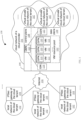
- Fig. 1 shows a block diagram 100 of a cloud network system of distributed IPSec gateway of embodiments of the present disclosure.
- a cloud network 101 of a cloud provider and local networks 102 of a plurality of cloud tenants are included.
- virtual private cloud networks 107 of cloud tenants rent by a plurality of cloud tenants are included.
- the local networks 102 of the cloud tenant may access Internet 105 via an IPSec gateway 104 of the cloud tenant, and then may access the virtual private cloud network 107 of the cloud tenant via an distributed IPSec gateway 106 of the cloud provider, so that an IPSec tunnel may be established between the local network 102 of the cloud tenant and the virtual private cloud network 107 of the cloud tenant for VPN connection between the local network 102 of the cloud tenant and the virtual private cloud network 107 of the cloud tenant.
- the IPSec gateway of the cloud provider is an distributed IPSec gateway, which uses a structure in which a control plane 108 and a data plane 109 are separated.
- a plurality of GPNs Gateway Processing Node
- each GPN may be run by a VM (Virtual Machine) 111 to process data packets of incoming ESP/AH traffic and/or data packets of outgoing IP traffic of at least one IPSec tunnel.
- the data plane 109 may be provided with VM resource pool 112, in which VMs 111 may be used to run the GPNs 110 as described above.
- a GMN (Gateway Management Node) 113 may be provided to perform message exchanges with IPSec gateways 104 of a plurality of tenants to generate IPSec SAs of a plurality of IPSec tunnels and send the same to the GPN 110 for processing data packets of respective IPSec tunnel. Furthermore, the GMN 113 may steer traffic on each GPN 110 in the data plane 109 to adjust loads of data packets of IPSec tunnels being processed by each GPN so as to maximize the utilization of VM resource.
- the GMN 113 may perform traffic steering on the traffic of IPSec tunnel of data plane 109 by generating traffic steering rules, and the generated traffic steering rules may be sent to GIN (Gateway Ingress Node) 114 and GEN (Gateway Egress Node) 115 of the data plane 109 and the GIN 114 and GEN 115 may perform the traffic steering according to the traffic steering rules.
- GIN Gateway Ingress Node
- GEN Gateway Egress Node
- Fig. 2 shows a schematic diagram 200 showing IPSec tunnels.
- the IPSec tunnel 201 may be established between the IPSec gateway 104 of the cloud tenant and the distributed IPSec gateway 106 of the cloud provider.
- IKE traffic 202 and ESP/AH traffic may be transferred in the IPSec tunnel 201.
- the ESP/AH traffic may be divided into incoming ESP/AH traffic 203 and outgoing ESP/AH traffic 204 in figures, since the ESP/AH traffic is encrypted and decrypted by unidirection IPSec SAs (including incoming IPSec SAs and outgoing IPSec SAs).
- IPSec protocol is a kind of standard for site-to-site VPN connection.
- the IPSec protocol may ensure secure communication between peer IPSec gateways by authenticating and encrypting IP packets.
- an IPSec gateway may encrypt IP packets, and transfer the encrypted IP packets between two peers IPSec gateways, so as to form an IPSec tunnel.
- the IPSec protocol primarily consists of two protocols: IKE and ESP/AH, which would be explained in the following.
- the main purpose of IKE protocol is to make authentication between two peer IPSec gateways and setup the shared attributes between the two peer IPSec gateways for secure communication.
- a set of those shared attributes may be called a security association (SA), which may be generated by negotiation between the IPSec gateways.
- SA may include a cipher suite and a symmetric key.
- IKE SA Two kinds of SAs, IKE SA and ESP/AH SA, may be generated by message exchanges between the IPSec gateways.
- the IKE SA may be generated by initial message exchanges between the IPSec gateways, and may be used to encrypt and decrypt bidirectional IKE traffic 202.
- the message exchanges between the IPSec gateways may be encrypted by IKE SA and the message exchanges encrypted by the IKE SA may be called IKE message exchanges.
- An IPSec SA also referred as CHILD SA
- CHILD SA may be further generated by further IKE message exchanges.
- the IPSec SA may be used to encrypt and decrypt the ESP/AH traffic and include incoming IPSec SA for decrypting data packets of incoming ESP/AH traffic and outgoing IPSec SA for encrypting data packets of outgoing IP traffic.
- the ESP/AH protocol may be used to encrypt and decrypt data packets transferred between IPSec gateways by using the IPSec SA so as to ensure confidentiality, integrity and data origin authenticity.
- the outgoing IPSec SA may be used to encrypt the data packets of outgoing IP traffic from a virtual private cloud network 107 of a cloud tenant to generate data packets of outgoing ESP/AH traffic 204 and transfer the same to an IPSec gateway 104 of the cloud tenant through an IPSec tunnel.
- the data packets of incoming ESP/AH traffic from the IPSec gateway 104 of the cloud tenant may be decrypted by using the incoming IPSec SA to generate data packets of incoming IP traffic and transfer the same to the virtual private cloud network 107 of the cloud tenant.
- the general structure of the IPSec tunnel has been described above and description would be made on the control plane 108 and data plane 109 of the distributed IPSec gateway 106 of embodiments of the present disclosure.
- the cloud provider may provide each cloud tenant with an IPSec gateway, which may be run by a VM.
- the VM allocated to each cloud tenant to run the IPSec gateway may be isolated from another and cannot be shared, and should meet the requirement of peak VPN traffic promised in the agreement with the cloud tenant.
- cloud tenants may have different usages of their own virtual private cloud networks. Even for the same cloud tenant, in different time periods, the usages of virtual private cloud network are different. Therefore, the VM resources allocated to each cloud tenant may be not fully used and even result in significant resource waste.
- an IPSec gateway provided on the cloud network 101 of the cloud provider of the embodiments of the present disclosure achieves a distributed IPSec gateway 106 by separating the control plane 108 and the data plane 109. More particularly, the IPSec tunnels of a plurality of cloud tenants may be grouped to one distributed IPSec gateway 106 for processing so that the traffics of each IPSec tunnel may be processed in a distributed way by a plurality of VMs 111 of the data plane 109 and reasonable control may be performed by the control plane 108 so as to maximize the usage of VM resources.
- the distributed IPSec gateway 106 of the embodiments of the present disclosure is generally divided into control plane 108 and data plane 109.
- the control plane 108 includes a GMN
- the data plane 109 may include a gateway input node 114 and a gateway output node 115 and a plurality of GPNs 110.
- the GPNs 110 may be run by the VMs 111 in a VM resource pool 112.
- the GPNs 110 and the VMs 111 for running the GPNs 110 in the data plane 109 would not belong to tenants any longer, but be allocated by the GMN 113 according to the number of the IPSec tunnels and data packets in the IPSec tunnels. In the following, explanation would be made on the control plane 108 and the data plane 109 of the distributed IPSec gateway 106.
- the control plane 108 of the distributed IPSec gateway 106 includes a GMN 113 and the functions of the GMN 113 may include the following:
- the GMN 113 may firstly perform message exchanges with the IPSec gateway 104 of the cloud tenant to generate an IKE SA of the IPSec tunnel corresponding to the IPSec gateway 104 of the cloud tenant, and perform further IKE message exchanges with the IPSec gateway 104 of the cloud tenant by using the IKE SA of the IPSec tunnel to generate IPSec SA of the IPSec tunnel. Then, the IPSec SA may be sent to the GPN 110 for processing the traffic of the IPSec tunnel.
- keys would be updated periodically.
- the above message exchanges with the IPSec gateway 104 of the cloud tenant may be also performed to generate new IKE SA and IPSec SA and send the new IPSec SA to the GPN 110 of the data plane 109.
- the IKE SA and the IPSec SA may use different key updating periods. More particularly, the updating period for the IPSec SA may be shorter than that for the IKE SA.
- the establishing for the IPSec tunnel may be performed again, so that the above procedures in which message exchanges with the IPSec gateway 104 of the cloud tenant are performed to generate the IKE SA and IPSec SA and send the IPSec SA to the GPN 110 of the data plane 109 would happen.
- traffic steering is made on a plurality of GPNs 110 of the data plane 109.
- the traffic steering may be performed in a way that: the GMN 113 may generate traffic steering rules and send the rules to the gateway input node 114 and/or gateway output node 115 of the data plane 109, so as to achieve the traffic steering. More particularly, the traffic steering rules may include incoming ESP/AH traffic steering rules and/or outgoing IP traffic steering rules.
- the GMN 113 may send the incoming ESP/AH traffic steering rules, which may be used to determine by which GPN 110 the incoming ESP/AH traffic of each IPSec tunnel should be processed, to a gateway input node 114, and the gateway input node 114 may forward data packets of the incoming ESP/AH traffic of some IPSec tunnel to the GPN 110 for processing the incoming ESP/AH traffic of that IPSec tunnel according to the incoming ESP/AH traffic steering rules upon receiving the data packets of the incoming ESP/AH traffic.
- the incoming ESP/AH traffic steering rules may include a matching relationship between SPI (Security Parameter Index) and IP addresses of GPNs 110.
- SPI Security Parameter Index
- IP addresses of GPNs 110 may be generated during negotiation of IPSec SA and may be used to identify the key used by the data packets of this ESP/AH traffic.
- the SPI may be contained in the data packets of the incoming ESP/AH traffic.
- the GMN 113 may send the outgoing IP traffic steering rules, which may be used to determine the outgoing IP traffic from each virtual private cloud network 107 should be transferred through which IPSec tunnel, i.e., to which GPN 110 the outgoing IP traffic should be steered for processing, to the gateway outgoing node 115.
- the gateway outgoing node 115 may forward the data packets of the outgoing IP traffic from some virtual private cloud network 107 to a GPN 110 for processing the outgoing IP traffic of corresponding IPSec tunnel upon receiving the data packets of that outgoing IP traffic.
- the outgoing IP traffic steering rules may include matching relationship between network information of Traffic Selectors and IP addresses of GPNs 110. More particularly, the network information of the Traffic Selectors may include some basic information which may identify network stream, and such information may be also used to determine the outgoing IP traffic may be transferred through which IPSec tunnel, and may include, for example, quintuple information of data packet: source IP address, destination IP address, source port, destination port, and protocol type.
- the GMN 113 may generate the traffic steering rules and send the same upon establishment of the IPSec tunnel or migrating of the IPSec tunnel. Furthermore, with respect to the incoming ESP/AH traffic steering rules, the SPI may be updated upon updating of the keys, and thus the GMN 113 may also generate new incoming ESP/AH traffic rules and send them to the gateway input node 114 after updating of keys. (3) balancing on loads of the GPNs 110 of the data plane 109.
- the GMN 113 may monitor loads of VMs 111 running respective GPNs 110. Based on the monitoring on loads of each VM 111, the GMN 113 may perform the following operations: Upon establishing a new IPSec tunnel, the GMN 113 may select the GPN 110 run by a VM 111 having load redundancy in the data plane 109 to process the traffic of the newly established IPSec tunnel, and send the generated IPSec SA to this GPN 110. Furthermore, the GMN 113 may further update the traffic steering rules and send the new traffic steering rules to the gateway input node 114 and/or the gateway output node 115, so that the traffic of the new IPSec tunnel may be steered to corresponding GPN 110.
- the GPN 110 may determine whether or not it is necessary to perform migrating of IPSec tunnel according to the loads of VM 111. If the loads of some VM 111 running GPN 110 are beyond a preset load threshold, the migrating control of IPSec tunnel may be launched to migrate the IPSec tunnel to the GPN 110 of the VM 111 having loads redundancy.
- the GMN 113 may request new VM resources to the cloud provider to run a new GPN 110 to process the traffic of the IPSec tunnel. (4) adjusting the allocating of the VM resources of the VM resource pool 112.
- the data plane 109 may include a VM resource pool 112 for running GPNs 110 and each GPN 110 may be run by one VM 111 in the VM resource pool 112.
- the number of the VMs 111 in the VM resource pool 112 may be configured to be larger than the number of GPNs 110.
- the VM resource pool 112 may include VMs 111 in the following states: active VMs, which are booted and being used for running GPN 110; inactive VMs, which are booted and ready for running GPN 110; and shutdown VMs.
- the inactive VM 111 is a VM in a standby state and reserved for scaling out the service capacity of the VM resource pool 112.
- Such VMs 111 have been booted and thus can instantly run new GPN 110 without the procedure of booting the VMs.
- the GPN 110 may perform switching among the states of one or more VMs 111 according to the incoming ESP/AH traffic and/or outgoing IP traffic of established each IPSec tunnel and loading capability of VMs 111.
- the states switching of VMs 111 may include at least the following cases: Case 1: There may be volatility in the data transfer between local network 102 of a cloud tenant and the virtual private cloud network 107 (depending on the usage of virtual private cloud network 107 by the cloud tenant), and therefore, there may be volatility in the incoming ESP/AH traffic and/or outgoing IP traffic of the IPSec tunnel.
- one or more active VMs 111 has relatively large loads redundancy in loads capability
- adjustment may be made on IPSec tunnels by means of IPSec tunnel migrating mechanism, so that the number of IPSec tunnel being processed by the one or more active VMs 111 is zero, and the one or more active VMs 111 may be switched to inactive VMs 111.
- the active VM 111 may be switched to inactive VM 111.
- Case 2 in the case that it is necessary to establish a new IPSec tunnel, when the loads redundancy of active VMs 111 cannot meet the requirements for processing the traffic of the new IPSec tunnel, or in the case that it is necessary to migrate the IPSec tunnel, when the loads redundancy of active VMs 111 cannot meet the requirements for processing the traffic of the IPSec tunnel being migrated, the GPN 110 may select an inactive VM 111 to run the new GPN 110, so as to switch the inactive VM 111 into active VM 111, to increase the processing capability for processing the traffic of the IPSec tunnel. Upon the new GPN 110 is running, it can be used to process the incoming ESP/AH traffic and/or outgoing IP traffic of the new IPSec tunnel or the migrated IPSec tunnel.
- the traffic of each IPSec tunnel may be processed by one GPN 110, and one GPN 110 may process the traffics of a plurality of IPSec tunnels.
- the processing capability of each GPN 110 may depend on the loads capability of the VM 111 running that GPN 110.
- the resource amount of the VM mentioned in the table reflects the resources configured for the VM 111 by the cloud provider, and may include, for example, performance index of processor of VM, memory capacity of VM, and so on.
- the resource amount referred herein is to facilitate the evaluation the processing capability of the VM and make quantization on the resource configuration of VM. The specific ways for the quantization may depend on actual needs without being limited herein.
- the resource amount may determine the loads capability of the VM.
- each VM 111 in the VM resource pool 112 may have the same loads capability, and the loads capability of the VM 111 running each GPN 110 may be normalization to 1.
- Maximum resource amount ⁇ of VM available for each IPSec tunnel There is limitation on the maximum resource amount of VM 111 available for each IPSec tunnel.
- the limitation on the traffic of IPSec tunnels may be defined in the service agreement agreed between the cloud provider and the cloud tenant.
- the maximum resource amount of VM 111 available for that IPSec tunnel may be determined.
- the maximum resource amount of VM 111 available for IPSec tunnel may be expressed with ⁇ .
- the number of the IPSec tunnels processed by the GPN 110 is m, for one IPSec tunnel i (i is a positive integer and 1 ⁇ i ⁇ m), the maximum resource amount of VM 111available for it may be expressed with ⁇ i , and because the loads capability of the VM 111 running each GPN 110 may be normalization to 1, the range of the ⁇ i may be 0 ⁇ ⁇ i ⁇ 1
- the resource amount of VMs currently used by each IPSec tunnel may be calculated periodically.
- probability distribution U i of the resource amount of VM 111 used by IPSec tunnel i may be introduced.
- the U i is the probability density function of the ⁇ i , and can be expressed as U i ( x ) (0 ⁇ x ⁇ ⁇ i ) so as to identify the resource amount of the VM 111 probably used by one IPSec tunnel i at a certain time.
- the cloud provider may make a promise about the throughput of the IPSec tunnel, and the probability for failing to offer the throughput promised in the service agreement acceptable to the cloud tenant, i.e., the throughput guarantee violation tolerance ⁇ .
- ⁇ 0.01 means that the distributed IPSec gateway 106 should have 99% of effective time for guaranteeing the performance of the IPSec gateway, i.e., the distributed IPSec gateway 106 should guarantee the promised throughput in 99% of the effective time.
- the distributed IPSec gateway 106 should guarantee the sum of all such periods should account for less than ⁇ of the total available time.
- U(k) is the probability distribution of resource amount used by the k th IPSec tunnel
- n is the number of all IPSec tunnels in the IPSec gateway
- z is the variety of the convolution Y.
- the probability distribution Y of aggregated resource amount of VMs 111 used by all IPSec tunnels may be obtained by summing up the n IPsec tunnels recursively according to the above formula (3).
- the minimum number of resource amount of VMs 111 which should be configured in the VM resource pool 112 may be calculated according to the following formula: Pr Y > C ⁇ ⁇
- C is the total resource amount of VMs 111 in the VM resource pool 112.
- C may be the number of the VMs 111 configured in the VM resource pool 112.
- ⁇ is a preset number (predetermined in the service agreement)
- Y may be calculated according to the formula (2) or (3). Therefore, the number C of VMs 111 necessary to be configured may be calculated.
- the C calculated according to the above formula (4) is the minimum value for guaranteeing that the probability for throughput guarantee violation is less than the tolerance ⁇ .
- the number of actually configured VMs 111 may be larger than C so as to make the probability for throughput guarantee violation less than tolerance ⁇ , so that the requirement on the throughput of the IPSec tunnels from the cloud tenant may be met.
- the above VM resource pool 112 may include active VMs 111, inactive VMs 111, and shutdown VMs 111. Since it may need some time to active the shutdown VMs 111, in some example, to better guarantee the throughput promise, C may be defined as the total number of the active VMs 111 and inactive VMs 111 configured in the VM resource pool 112. Therefore, in embodiments, the total number of active VMs 111 and inactive VMs 111 is larger than C by dynamically adjusting the status of VMs 111, so that the requirement on the throughput of the IPSec tunnels from the cloud tenant may be met better.
- the loads threshold T H for VM 111 ( T H is less than 1, e.g., set as 90%) may be further considered, and the total number of active VMs 111 and inactive VMs 111 which should be configured in the VM resource pool 112 should be larger than C T H , so as to better guarantee the requirements on the throughput of IPSec tunnel from the cloud tenant.
- the GMN 113 may monitor the loads of VMs 111. When it is found that the total traffic of the IPSec tunnels processed by the GPN 110 run in the VM 111 is beyond the loads threshold T H for that VM 111, the control on the migration of the IPSec tunnel may be launched and one or more IPSec tunnels of the plurality of IPSec tunnels processed by that GPN 110 may be migrated to the GPN 110 run by the VM 111 having load redundancy, so as to balance the loads of VMs 111.
- the loads threshold T H may be set as being larger than the largest ⁇ i in all IPSec tunnels of IPSec gateway, so as to guarantee the GPN 110 run by that VM 111 to have good running efficiency.
- the GPN 110j may be regarded as a GPN 110 which needs the IPSec tunnel migration (hereafter referred as hotspot GPN 110).
- hotspot GPN 110 one or more IPSec tunnels of the hotspot GPN 110 may be migrated to the GPN 110 run by VM 111 having loads redundancy (hereafter referred as relatively free GPN 110), so that ⁇ j is less than T H .
- the IPSec tunnels in the hotspot gateway GPN 110 may be sorted in decreasing order of ⁇ i , and the largest K (K is positive integer, 1 ⁇ K ⁇ m ), which meets the following formula (5), IPSec tunnels may be chosen and migrated in that order.
- K is positive integer, 1 ⁇ K ⁇ m
- IPSec tunnels may be chosen and migrated in that order.
- inactive VM 111 may be selected to run new GPN 110, and the IPSec tunnel, which needs to be migrated, may be migrated to the new GPN 110. Therefore, the inactive VM 111 may be switched to active VM 111.
- the migration of IPSec tunnels may include the updating and sending of IPSec SAs, and updating and sending of traffic steering rules.
- the GMN 113 may perform the migration of IPSec tunnels by means of IKE key updating.
- Fig. 3 it shows a schematic diagram 300 showing migrating of an IPSec tunnel of an embodiment of the present disclosure.
- the migrating of IPSec tunnels may include:
- the gateway output node 115 steers outgoing IP traffic corresponding to the migrated IPSec tunnel to the target GPN according to the new outgoing IP traffic steering rule.
- the target GPN encrypts the outgoing IP traffic by using the new outgoing IPSec SA, generates outgoing ESP/AH traffic, and transfers it to the IPSec gateway 104 of the cloud tenant.
- the gateway input node 114 steers incoming ESP/AH traffic corresponding the migrated IPSec tunnel to the target GPN according to the new incoming ESP/AH traffic steering rule.
- the target GPN decrypts the incoming ESP/AH traffic by using the new incoming IPSec SA, and sends it to a virtual private cloud network 107 of corresponding cloud tenant.
- the seamless migrating of the IPSec tunnel may be achieved without degrading the transfer performance of the IPSec tunnel.
- the data plane 109 of the distributed gateway 106 may include a gateway input node 114, a gateway output node 115 and a plurality of GPNs 110.
- Each GPN 110 may be run by one VM 111 in the VM resource pool 112.
- description would be made on basic functions and structure of each component of the data plane 109 of distributed IPSec gateway 106.
- the VMs 111 in the VM resource pool 112 may be configured as being more than GPNs 110, so as to adapt the volatility of the traffic of the IPSec tunnels and the volatility of the number of the IPSec tunnels.
- the VM resource pool 112 may include active VMs 111, inactive VMs 111 and shutdown VMs 111.
- the active VM 111 is a VM 111 currently using GPN 110 and used for processing traffic of current IPSec tunnels.
- the inactive VM 111 is a VM 111 in a standby state, which is already booted, but not running GPN 110 yet.
- the inactive VM 111 may be controlled by the service thread of the distributed IPSec gateway 106, and is the VM 111 which is ready for running GPN 110 anytime. Since the inactive VM 111 is already booted, when the inactive VM 111 is used to run a new GPN 110, it is unnecessary to perform the booting of the VM 111, and thus it may be instantly run the new GPN 110 to perform the traffic processing of the IPSec tunnel. The shutdown VM 111 has not been booted, and not occupied by any service thread, and thus the shutdown VM 111 actually occupies no VM resources of the cloud provider.
- the VM actually occupying the VM resources of the cloud provider is the inactive VMs 111 and active VMs 111.
- the VM resource pool 112 may only include the inactive VMs 111 and active VMs 111, but not include the shutdown VMs 111.
- a request may be made to the OS (operation system) of a cloud server for VM resource, and the VM 111 which has been initialized to be inactive VM may be added into the VM resource pool 112.
- the GMN 113 may monitor the running status of each GPN 110, and particularly monitor the incoming ESP/AH traffic and/or outgoing IP traffic of each IPSec tunnel being processed by GPNs 110, and determine whether or not the sum of incoming ESP/AH traffic and/or outgoing IP traffic of all IPSec tunnels being processed by the GPNs 110 is over the loads capability threshold of VM 111 running that GPN 110. If the sum is over the threshold, the tunnel migrating control may be launched. More particularly, the GMN 113 may obtain related data on the running status of each GPN 110 from the GPNs 110.
- Each GPN 110 may initiatively report the related data on the running status to the GMN 113 so as to achieve the monitoring on running status of each GPN 110 by GMN 113.
- Description on the loads monitoring of GPN 110 and migrating of IPSec tunnel has been made in the description on the control plane 108, and repeated description would be omitted.
- the GPN 110 may initiatively monitor incoming ESP/AH traffic and/or outgoing IP traffic of IPSec tunnels being processed by itself, and determine whether or not the sum of incoming ESP/AH traffic and/or outgoing IP traffic of its all IPSec tunnels is over the loads capability threshold of VM 111 where it is located. If the sum is over the threshold, the request for tunnel migrating may be sent to GMN 113 so as to launch the migrating control of IPSec tunnel by GMN 113.
- GPN 110 shows a structural diagram 400 showing gateway processing nodes 110 of embodiments of the present disclosure.
- the main processing of GPN 110 includes encryption and encapsulation and/or decryption and decapsulation on packets. More particularly, on one hand, GPN 110 may decrypt and decapsulate the data packets of the incoming ESP/AH traffic of the IPSec tunnel to generate the data packets of the incoming IP traffic, and send the data packets of the incoming IP traffic to the virtual private cloud network 107 of the cloud tenant; on the other hand, GPN 110 may encrypt and encapsulate the data packets of the outgoing IP traffic to generate the data packets of the outgoing ESP/AH traffic, and send the data packets of the outgoing ESP/AH traffic to the local network 102 of the cloud tenant via internet. Each GPN 110 may process the traffic of one or more IPSec tunnels. The specific number of the IPSec tunnels to be processed may depend on the data amount transferred through the IPSec tunnels and the
- GPN 110 may include one or more RSS (receive side scaling) units 401, dispatcher 402, one or more workers 403, and one or more senders 404.
- RSS receive side scaling
- the gateway input node 114 and the gateway output node 115 may send traffic steering rules to GMN 113, amend destination IP address of the received data packet to the IP address of corresponding GPN 110, and send it to corresponding GPN 110 via a network card.
- the RSS unit 401 may obtain the data packet sent by the gateway input node 114 and gateway output node 115 from the network card (NIC), and store it in the shared storage space between the user space and kernel of OS of the cloud server.
- the shared storage space may be a shared storage space allocated to GPN 110 by the OS. To be distinguished from the shared storage space allocated to the gateway input node 114 and gateway output node 115 described in the following, the shared storage space allocated to GPN 110 may be referred as a first shared storage space 405.
- GPN 110 and kernel thread may both access the first shared storage space 405, so as to avoid the redundant copy of the data packet between the working thread of the GPN 110 and the kernel thread.
- GPN 110 may be further provided with a Filter Driver, which may be provided with circular queues containing pointers pointing to data packets stored in the first shared storage space 405.
- the dispatcher may be used to generate data packet processing tasks and send them to all workers 403.
- the data packet processing tasks may include encrypting and encapsulating on the data packets, decrypting and decapsulating on the data packets.
- the workers 403 may be used to perform corresponding data packet processing tasks and may be independent from each other so as to work in parallel.
- the sender 404 may be used to send the data packets processed by the workers 403 to outside of the IPSec gateway.
- the dispatcher may keep dequeueing packet pointers from the queues exposed by the Filter Driver in a round-robin fashion so as to generate the data packet processing tasks.
- the dispatcher 402 may determine the ESP/AH sequence number. More particularly, the dispatcher 402 may assign an appropriate ESP/AH sequence number to a data packet based on the 5-tuple of the data packet (source IP address, destination IP address, source port, destination port, protocol type). Since the dispatcher is the only thread manipulates the data packet counters, the uniqueness of the data packet of the IPSec tunnel can be guarantee.
- the dispatcher 403 may further keep a buffer array 406 used to buffer the encrypted and encapsulated, decrypted and decapsulated data packets to be sent to outside of the distributed IPSec gateway 106.
- the dispatcher 402 wraps a packet pointer, sequence number, and index of buffer array 406 using Task Structure to generate data packet processing tasks. More particularly, the index of the buffer array 406 may point to the specific buffer in the buffer array 406 for storing the data packets processed by the worker 403. Since the processing performance of all workers 403 are almost homogeneous, the dispatcher 402 may put the data packet processing tasks to the data packet queue 407 of the worker 403 in a round-robin fashion.
- the worker 403 may sequentially process the tasks in its data packet processing tasks queue 407.
- the data packet to be processed may be obtained according to the pointer of the data packets in the data packet processing tasks.
- the processed data packets may be put to the specified position in the buffer array 406 according to the index of the buffer array 406 in the data packet processing tasks.
- the dispatcher 402 When the buffer array 406 is filled up (or loaded to a preset proportion) or a timeout occurs, the dispatcher 402 enqueues a data packet sending request to a data packet sending queue 408 of the sender 404.
- the sender 404 may sequentially process the data packet sending request in its data packet sending queue 408, and send the data packets, which have been processed by the worker 403 and stored in the buffer array 406, to the outside of the IPSec gateway.
- the dispatcher 402, the worker 403, and the sender 404 may be all in a form of worker threads, and the dispatcher 402, the functions of the worker 403 and the sender 404 may exchange according to cases. For example, when all workers 403 are filled up with the data packet processing tasks, the dispatcher 402 may enqueue the data packet processing tasks into its own task queue, and then may dequeue data packet processing tasks from the queues sequentially and do the tasks. For another example, except the dedicated sender 404, the worker 403 itself may have the function of sender 404. More particularly, the worker 403 may be provided with two task queues of a data packet processing tasks queue 407 and a data packet sending tasks queue 408.
- the worker 403 may only process the data packet processing tasks in the data packet processing tasks queue 407, while there is no tasks in the data packet sending tasks queue 408.
- the sender 402 may send the data packets of the worker 403 to a request for enqueuing data packets into tasks queue 408, so that the worker 403 may be switched to sender 404 to perform the data packets sending tasks.
- Gateway input node and gateway output node are Gateway input node and gateway output node
- the gateway input node 114 and the gateway output node 115 may be used to steer the traffic of the IPSec tunnels.
- the gateway input node 114 may send received data packets of incoming ESP/AH traffic to corresponding GPN 110 according to the incoming ESP/AH traffic steering rules sent by the GMN 113, and the gateway output node 115 may send received data packets of outgoing IP traffic to corresponding GPN 110 according to the outgoing IP traffic steering rules sent by GMN 113.
- the traffic steering rules sent by GMN 113 may include matching relationship between IPSec tunnels and GPN 110, so as to implement the steering for the data packets of incoming ESP/AH traffic and the data packets of outgoing IP traffic to the specific GPN 110.
- the data packets received by the gateway input node 114 and the gateway output node 115 may be stored in the shared storage space between the user space and kernel of OS of the cloud server.
- the shared storage space is a shared storage space assigned to the gateway input node 114 and gateway output node 115 by the OS.
- the shared storage space assigned to the gateway input node 114 and gateway output node 115 may be referred to the second shared storage space, which may avoid the redundant copy of the data packets between the working threads of the gateway input node 114 and the gateway output node 115 and kernel threads.
- the gateway input node 114 and the gateway output node 115 may extract data packets from the second shared storage space, and rewrite the destination IP address of the data packets to the IP address of GPN 110 responsible for processing the data packets, and forward the data packets to corresponding GPN 110.
- the gateway input node 114 may need to identify different ESP/AH traffic of different IPSec tunnels, so as to assign the data packet of ESP/AH traffic of different IPSec tunnels to corresponding GPN 110 for processing.
- the steering rules of incoming EP/AH traffic sent to gateway input node 114 by GMN 113 may include matching relationship between SPI and IP address of GPN 110.
- the gateway input node 114 may perform search in the steering rules for the incoming ESP/AH traffic according to the SPI carried by the data packets so as to obtain the IP address of GPN 110 corresponding to the SPI, and amend the destination IP address of the data packet of ESP/AH traffic to the IP address of GPN 110, and then send the data packet of the ESP/AH traffic to corresponding GPN 110.
- the gateway output node 115 may determine to which GPN 110 the outgoing IP traffic should be steered for processing according to the network information (5-tuple of a packet) of the traffic selector carried in the data packet of outgoing IP traffic.
- the steering rules of outgoing IP traffic sent to gateway output node 115 by GMN 113 may include matching relationship between traffic selector and IP address of GPN 110.
- the gateway output node 115 may perform search in the steering rules for the outgoing IP traffic according to the traffic selector carried by the data packets so as to obtain the IP address of GPN 110 corresponding to the traffic selector, and amend the destination IP address of the data packet of outgoing IP traffic to the IP address of GPN 110, and then send the data packet of the outgoing IP traffic to corresponding GPN 110.
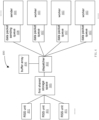
- FIG. 5 it shows a systemic structural diagram 500 showing a distributed IPSec gateway of an embodiment of the present disclosure.
- a GMN 113 and a plurality of GPNs 110 are included.
- the GMN 113 is configured to generate IPsec SAs of a plurality of IPSec tunnels, and send them to the GPN 110 for processing data packets of incoming ESP/AH traffic and/or data packets of outgoing IP traffic of corresponding IPSec tunnel, and steer the incoming ESP/AH traffic and/or outgoing IP traffic between the plurality of GPNs 110.
- Each GPN 110 is configured to: process received data packets of incoming ESP/AH traffic by using the IPSec SAs sent by GMN 113 to generate data packets of incoming IP traffic, and/or /or process received data packets of outgoing IP traffic to generate data packets of outgoing ESP/AH traffic.
- diagram 500 may further include gateway input node 114 and/or gate output node 115.
- the steering on the incoming ESP/AH traffic and/or outgoing IP traffic between the plurality of GPNs 110 may include: generating incoming ESP/AH traffic steering rules for steering the incoming ESP/AH traffic between the plurality of GPNs 110, and sending the incoming ESP/AH traffic steering rules to the gateway input node 114, and/or generating outgoing IP traffic steering rules for steering outgoing IP traffic between the plurality of GPNs 110, and sending the outgoing IP traffic rules to the gateway output node 115.
- the gateway input node 114 may be configured to receive data packets of incoming ESP/AH traffic and send the received data packets of incoming ESP/AH traffic to corresponding GPN 110.
- the gateway output node 115 may be configured to receive data packets of outgoing IP traffic and send the received data packets of outgoing IP traffic to corresponding GPN 110.
- the specific structure of the above GPN 110 may be the structure as shown in Fig. 4 . Furthermore, detailed description has been made on the specific implementation on each part of the diagram 500, and may be applied to each part in diagram 500.
- the system structure as shown in Fig. 5 may be implemented in a way of distributed architecture with a plurality of servers.
- GMN 113, GPN 110, gateway input node 114 and gateway output node 115 may be implemented with independent servers, respectively, and network communication may be established among the servers so as to implement the functions of the distributed gateway of embodiments of the present disclosure.
- each component or module related in the above Fig. 1 , Fig. 2 , Fig. 4 , and Fig. 5 may be implemented by software, hardware, or in combination of software and hardware.
- the above component or module and one or more steps may be implemented in system on chip (SoC).
- Soc may include: integrated circuit chip, including one or more of processing unit (such as center processing unit (CPU), micro controller, micro processing unit, digital signal processing unit (DSP) or the like), memory, one or more communication interface, and/or other circuit for performing its function and alternative embedded firmware.
- the computer apparatus 600 may include: a memory 601 and a processor 602.
- the memory 601 may be configured to store programs. In addition to the above programs, the memory 601 may be configured to store other data to support operations on the computer apparatus 600.
- the examples of these data may include instructions of any applications or methods operated on the computer apparatus 600, contact data, phone book data, messages, pictures, videos, and the like.
- the memory 601 may be implemented by any kind of volatile or nonvolatile storage device or their combinations, such as static random access memory (SRAM), electronically erasable programmable read-only memory (EEPROM), erasable programmable read-only memory (EPROM), programmable read-only memory (PROM), read-only memory (ROM), magnetic memory, flash memory, disk memory, or optical disk.
- SRAM static random access memory
- EEPROM electronically erasable programmable read-only memory
- EPROM erasable programmable read-only memory
- PROM programmable read-only memory
- ROM read-only memory
- magnetic memory magnetic memory
- flash memory disk memory
- disk memory or optical disk.
- the memory 601 may be coupled to the processor 602 and contain instructions stored thereon.
- the instructions may cause the computer apparatus to perform operations upon being executed by the processor 602, the operations may include: configuring GMN 113 to generate IPsec SAs of a plurality of IPSec tunnels, and send them to the GPN 110 for processing data packets of incoming ESP/AH traffic and/or data packets of outgoing IP traffic of corresponding IPSec tunnel, and steer the incoming ESP/AH traffic and/or outgoing IP traffic between the plurality of GPNs 110; and configure a plurality of GPNs 110 to: process received data packets of incoming ESP/AH traffic by using the IPSec SA sent by GMN 113 to generate data packets of incoming IP traffic, and/or process received data packets of outgoing IP traffic to generate data packets of outgoing ESP/AH traffic.
- the above operations may further include: configuring gateway input node 114 and/or gateway output node 115, and in GMN 113, the steering s the incoming ESP/AH traffic and/or outgoing IP traffic between the plurality of GPNs 110 may include: generating incoming ESP/AH traffic steering rules for steering the incoming ESP/AH traffic between the plurality of GPNs 110, and sending the incoming ESP/AH traffic steering rules to the gateway input node 114, and/or generating outgoing IP traffic steering rules for steering outgoing IP traffic between the plurality of GPNs 110, and sending the outgoing IP traffic rules to the gateway output node 115.
- the gateway input node 114 may be configured to receive data packets of incoming ESP/AH traffic and send the received data packets of incoming ESP/AH traffic to corresponding GPN 110.
- the gateway output node 115 may be configured to receive data packets of outgoing IP traffic and send the received data packets of outgoing IP traffic to corresponding GPN 110.
- GMN 113 may be further configured to maintain a VM resource pool 112 for running GPNs 110 and allocate the VM resource of VM resource pool 112. More particularly, each GPN 110 may be run by one VM 111 in VM resource pool 112.
- the VM resource pool 112 may include VMs 111 in the following states: active VMs, which are booted and being used for running GPN 110; inactive VMs, which are booted and ready for running GPN 110.
- Adjusting on the allocating of the VM resources of the VM resource pool 112 may include: upon a new IPSec tunnel is being established or it is necessary to perform migrating of IPSec tunnels, if the GMN 113 fails to find a VM 111 having loads redundancy, the GMN 113 may select VM 111 from inactive VMs 111 to run a new GPN 110 to process the traffic of new IPSec tunnel or the traffic of the migrated IPSec tunnel.
- the adjusting on the allocating of the VM resources of the VM resource pool 112 may include: adjust the allocating of the VM resources of the VM resource pool 112 based on the performance requirements promised to the cloud tenant by the cloud provider corresponding to established IPSec tunnels and loads capability of VMs 111, so that the resource allocation in the VM resource pool 112 may satisfy the sum of performance requirements of established IPSec tunnels.
- GMN 113 may be further configured to control the migration of the IPSec tunnels from source GPNs 110 to target GPNs 110, the control on the migration of the IPSec tunnels may include: GMN 113 may generate a new IPSec SA of migrated tunnel, and send the new IPSec SA to the target GPN 110; generate a new steering rule of incoming ESP/AH traffic and/or a new steering rule of outgoing IP traffic, and send the new steering rule of incoming ESP/AH traffic to the gateway input node 114 and/or send the new steering rule of outgoing IP traffic to the gateway output node 115.
- the source GPN 110 may use the old IPSec SA to process the data packets of incoming ESP/AH traffic and/or data packets of outgoing IP traffic of the migrated tunnels.
- the above migration control on the IPSec tunnels may be performed during the updating of the IKE keys.
- GMN 113 may be further configured to monitor the incoming ESP/AH traffic and/or outgoing IP traffic of IPSec tunnels processed by GPNs 110, and determine whether or not the sum of the incoming ESP/AH traffic and/or outgoing IP traffic of all IPSec tunnels processed by the GPNs 110 is over the loads capability threshold of VM 111 running the GPN 110.
- the control of tunnel migration may be performed.
- GMN 113 may be further configured to calculate the difference between loads capability thresholds of VM 111 and incoming ESP/AH traffic and/or outgoing IP traffic of IPSec tunnels processed by GPNs 110, and sort the plurality of IPSec tunnels processed by GPNs 110 based on that difference, and select the IPSec tunnel which needs to be migrated in a descending order based on that difference, till the sum of incoming ESP/AH traffic and/or outgoing IP traffic of all IPSec tunnels processed by that GPN 110 is less than the loads capability threshold.
- the computer apparatus 600 may further include: a communication unit 603, a power supply unit 604, an audio unit 605, a display unit 606, chipset 607, and other units. Only part units are exemplarily shown in Fig. 6 and it is obvious to one skilled in the art that the computer apparatus 600 only includes the units shown in Fig. 6 .
- the communication unit 603 may be configured to facilitate wireless or wired communication between the computer apparatus 600 and other apparatuses.
- the computer apparatus may be connected to wireless network based on communication standard, such as WiFi, 2G, 3G, or their combination.
- the communication unit 603 may receive radio signal or radio related information from external radio management system via radio channel.
- the communication unit 603 may further include near field communication (NFC) module for facilitating short-range communication.
- NFC near field communication
- the NFC module may be implemented with radio frequency identification (RFID) technology, Infrared data association (IrDA) technology, ultra wideband (UWB) technology, Bluetooth (BT) technology and other technologies.
- RFID radio frequency identification
- IrDA Infrared data association
- UWB ultra wideband
- Bluetooth Bluetooth
- the power supply unit 604 may be configured to supply power to various units of the computer apparatus.
- the power supply unit 604 may include a power supply management system, one or more power supplies, and other units related to power generation, management, and allocation.
- the audio unit 605 may be configured to output and/or input audio signals.
- the audio unit 605 may include a microphone (MIC).
- the MIC When the computer apparatus in an operation mode, such as calling mode, recording mode, and voice recognition mode, the MIC may be configured to receive external audio signals.
- the received audio signals may be further stored in the memory 601 or sent via the communication unit 603.
- the audio unit 605 may further include a speaker configured to output audio signals.
- the display unit 606 may include a screen, which may include liquid crystal display (LCD) and touch panel (TP). If the screen includes a touch panel, the screen may be implemented as touch screen so as to receive input signal from users.
- the touch panel may include a plurality of touch sensors to sense touching, sliding, and gestures on the touch panel. The touch sensor may not only sense edges of touching or sliding actions, but also sense period and pressure related to the touching or sliding operations.
- the above memory 601, processor 602, communication unit 603, power supply unit 604, audio unit 605 and display unit 606 may be connected with the chipset 607.
- the chipset 607 may provide interface between the processor 602 and other units of the computer apparatus 600. Furthermore, the chipset 607 may provide interface for each unit of the computer apparatus 600 to access the memory 601 and communication interface for accessing among units.
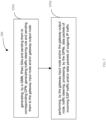
- Fig. 7 it shows a flowchart 700 showing processing of the distributed IPSec gateway of embodiments of the present disclosure.
- the operations shown in Fig. 7 may be based on the IPSec gateway including GMN 113, a plurality of GPNs 110, and may include: S701: GMN 113 generates IPsec SAs of a plurality of IPSec tunnels, and send them to the GPN 110 for processing data packets of incoming ESP/AH traffic and/or data packets of outgoing IP traffic of corresponding IPSec tunnel, and steer the incoming ESP/AH traffic and/or outgoing IP traffic between the plurality of GPNs 110. More particularly, in some examples, the steering on incoming ESP/AH traffic and/or outgoing IP traffic may be performed in a way of traffic steering rule.
- the IPSec gateway may further include gateway input node 114 and/or gateway output node 115.
- GMN 113 may generate incoming ESP/AH traffic steering rules for steering the incoming ESP/AH traffic between the plurality of GPNs 110, and send the incoming ESP/AH traffic steering rules to the gateway input node 114, and/or generate outgoing IP traffic steering rules for steering outgoing IP traffic between the plurality of GPNs 110, and send the outgoing IP traffic rules to the gateway output node 115.
- the gateway input node 114 and/or gateway output node 115 may perform the steering on incoming ESP/AH traffic and/or outgoing IP traffic according to corresponding traffic steering rules.
- GPNs 110 process received data packets of incoming ESP/AH traffic by using the IPSec SAs sent by GMN 113 to generate data packets of incoming IP traffic, and/or process received data packets of outgoing IP traffic to generate data packets of outgoing IP traffic.
- GMN 113 maintains a VM resource pool 112 for running GPNs 110 and allocates the VM resource of VM resource pool 112. More particularly, each GPN 110 may be run by one VM 111 in VM resource pool 112.
- the VM resource pool 112 may include VMs 111 in the following states: active VMs, which are booted and being used for running GPN 110; inactive VMs, which are booted and ready for running GPN 110.
- Adjusting on the allocating of the VM resources of the VM resource pool 112 may include: upon a new IPSec tunnel is being established or it is necessary to perform migrating of IPSec tunnel, if the GMN 113 fails to find a VM 111 having loads redundancy, the GMN 113 may select VM 111 from inactive VMs 111 to run a new GPN 110 to process the traffic of new IPSec tunnel or the traffic of the migrated IPSec tunnel.
- the adjusting on the allocating of the VM resources of the VM resource pool 112 may include: adjust the allocating of the VM resources of the VM resource pool 112 based on the performance requirements promised to the cloud tenant by the cloud provider corresponding to established IPSec tunnels and loads capability of VMs 111, so that the resource allocation in the VM resource pool 112 may satisfy the sum of performance requirements of established IPSec tunnels.
- GMN 113 may be further configured to control the migration of the IPSec tunnels from source GPNs 110 to target GPNs 110, the control on the migration of the IPSec tunnels may include: GMN 113 may generate a new IPSec SA of migrated tunnel, and send the new IPSec SA to the target GPN 110; generate a new steering rule of incoming ESP/AH traffic and/or a new steering rule of outgoing IP traffic, and send the new steering rule of incoming ESP/AH traffic to the gateway input node 114 and/or send the new steering rule of outgoing IP traffic to the gateway output node 115.
- the source GPN 110 may use the old IPSec SA to process the data packets of incoming ESP/AH traffic and/or data packets of outgoing IP traffic of the migrated tunnels.
- the above migration control on the IPSec tunnels may be performed during the updating of the IKE keys.
- GMN 113 may be further configured to monitor the incoming ESP/ AH traffic and/or outgoing IP traffic of IPSec tunnels processed by GPNs 110, and determine whether or not the sum of the incoming ESP/ AH traffic and/or outgoing IP traffic of all IPSec tunnels processed by the GPNs 110 is over the loads capability threshold of VM 111 running the GPN 110.
- the control of tunnel migration may be performed.
- GMN 113 may be further configured to calculate the difference between loads capability thresholds of VM 111 and incoming ESP/ AH traffic and/or outgoing IP traffic of each IPSec tunnel processed by GPN 110, and sort the plurality of IPSec tunnels processed by GPN 110 based on that difference, and select the IPSec tunnel which needs to be migrated in a descending order based on that difference, till the sum of incoming ESP/ AH traffic and/or outgoing IP traffic of all IPSec tunnels processed by that GPN 110 is less than the loads capability threshold.
Landscapes
- Engineering & Computer Science (AREA)
- Computer Security & Cryptography (AREA)
- Computer Networks & Wireless Communication (AREA)
- Signal Processing (AREA)
- General Engineering & Computer Science (AREA)
- Computing Systems (AREA)
- Computer Hardware Design (AREA)
- Software Systems (AREA)
- Theoretical Computer Science (AREA)
- Physics & Mathematics (AREA)
- General Physics & Mathematics (AREA)
- Data Exchanges In Wide-Area Networks (AREA)
Claims (13)
- Cloud-Netzwerksystem (100), umfassend ein verteiltes IPSec-Gateway (106), das in eine Steuerebene (108) und eine Datenebene (109) unterteilt ist, wobei die Steuerebene und die Datenebene getrennt sind und wobei das verteilte IPSec-Gateway Folgendes umfasst:einen Gateway-Verwaltungsknoten (113) in der Steuerebene (108);eine Vielzahl von Gateway-Verarbeitungsknoten (110) in der Datenebene (109);wobei der Gateway-Verwaltungsknoten (113) so konfiguriert ist, dass er IPsec SAs einer Vielzahl von IPSec-Tunneln (201) erzeugt und sie an Gateway-Verarbeitungsknoten (110) sendet, um Datenpakete des eingehenden ESP/AH-Verkehrs (203) und/oder Datenpakete des ausgehenden IP-Verkehrs des entsprechenden IPSec-Tunnels zu verarbeiten und den eingehenden ESP/AH-Verkehr (203) und/oder ausgehenden IP-Verkehr zwischen der Vielzahl von Gateway-Verarbeitungsknoten (110) zu lenken; undwobei die Gateway-Verarbeitungsknoten (110) so konfiguriert sind, dass sie empfangene Datenpakete des eingehenden ESP/AH-Verkehrs (203) unter Verwendung der vom Gateway-Verwaltungsknoten (113) gesendeten IPSec SAs entschlüsseln und entkapseln, um Datenpakete des eingehenden IP-Verkehrs zu erzeugen, und/oder empfangene Datenpakete des ausgehenden IP-Verkehrs verschlüsseln und einkapseln, um Datenpakete des ausgehenden ESP/AH-Verkehrs (204) zu erzeugen.
- Cloud-Netzwerksystem (100) nach Anspruch 1, wobei das verteilte IPSec-Gateway (106) weiter einen Gateway-Eingangsknoten (114) und/oder einen Gateway-Ausgangsknoten (115) in der Datenebene (109) umfasst,der Gateway-Verwaltungsknoten (113) weiter so konfiguriert ist, dass er Lenkungsregeln für eingehenden ESP/AH-Verkehr zum Lenken des eingehenden ESP/AH-Verkehrs (203) zwischen (203) der Vielzahl von Gateway-Verarbeitungsknoten (110) erzeugt und die Lenkungsregeln für eingehenden ESP/AH-Verkehr an den Gateway-Eingangsknoten (114) sendet und/oder Lenkungsregeln für ausgehenden IP-Verkehr zum Lenken von ausgehendem IP-Verkehr zwischen der Vielzahl von Gateway-Verarbeitungsknoten (110) erzeugt und die Regeln für ausgehenden IP-Verkehr an den Gateway-Ausgangsknoten (115) sendet; undder Gateway-Eingangsknoten (114) so konfiguriert ist, dass er Datenpakete des eingehenden ESP/AH-Verkehrs (203) empfängt und empfangene Datenpakete des eingehenden ESP/AH-Verkehrs (203) gemäß den Lenkungsregeln für den eingehenden ESP/AH-Verkehr an den entsprechenden Gateway-Verarbeitungsknoten sendet; undder Gateway-Ausgangsknoten (115) so konfiguriert ist, dass er Datenpakete des ausgehenden IP-Verkehrs empfängt und empfangene Datenpakete des ausgehenden IP-Verkehrs gemäß den Lenkungsregeln für den ausgehenden IP-Verkehr an den entsprechenden Gateway-Verarbeitungsknoten sendet.
- Cloud-Netzwerksystem (100) nach Anspruch 1, wobei der Gateway-Verwaltungsknoten (113) weiter so konfiguriert ist, dass er einen Ressourcenpool für virtuelle Maschinen zum Betrieb der Gateway-Verarbeitungsknoten (110) pflegt und die Zuweisung von Ressourcen für virtuelle Maschinen des Ressourcenpools für virtuelle Maschinen anpasst, wobei jeder Gateway-Verarbeitungsknoten von einer virtuellen Maschine in dem Ressourcenpool für virtuelle Maschinen betrieben wird.
- Cloud-Netzwerksystem (100) nach Anspruch 3, wobei der Ressourcenpool für virtuelle Maschinen virtuelle Maschinen in den folgenden Zuständen umfasst: aktive virtuelle Maschinen, die gebootet sind und für aktuell betriebene Gateway-Verarbeitungsknoten (110) verwendet werden; inaktive virtuelle Maschinen, die gebootet sind und für betriebene Gateway-Verarbeitungsknoten (110) bereit sind,
wobei die Anpassung der Zuweisung von Ressourcen für virtuelle Maschinen des Ressourcenpools für virtuelle Maschinen Folgendes umfasst:
bei der Einrichtung eines neuen IPSec-Tunnels oder wenn es notwendig ist, Migrieren eines IPSec-Tunnels durchzuführen, wenn ein Gateway-Verwaltungsknoten (113) keine virtuelle Maschine mit Lastredundanz findet, ist der Gateway-Verwaltungsknoten (113) so konfiguriert, dass er eine virtuelle Maschine aus den inaktiven virtuellen Maschinen auswählt, um einen neuen Gateway-Verarbeitungsknoten zu betreiben, der den Verkehr des neuen IPSec-Tunnels oder den Verkehr des migrierten IPSec-Tunnels verarbeitet. - Cloud-Netzwerksystem (100) nach Anspruch 2, wobei der Gateway-Verwaltungsknoten (113) weiter so konfiguriert ist, dass er die Migration der IPSec-Tunnel (201) von einem Quell-Gateway-Verarbeitungsknoten zu einem Ziel-Gateway-Verarbeitungsknoten steuert,der Gateway-Verwaltungsknoten (113) so konfiguriert ist, dass er die Migration der IPSec-Tunnel (201) steuert, indem er eine neue IPSec SA eines migrierten Tunnels erzeugt und die neue IPSec SA an einen Ziel-Gateway-Verarbeitungsknoten sendet; eine neue Lenkungsregel für eingehenden ESP/AH-Verkehr (203) und/oder eine neue Lenkungsregel für ausgehenden IP-Verkehr erzeugt und die neue Lenkungsregel für eingehenden ESP/AH-Verkehr (203) an den Gateway-Eingangsknoten (114) sendet und/oder die neue Lenkungsregel für ausgehenden IP-Verkehr an den Gateway-Ausgangsknoten (115) sendet,wobei während der Migration der IPSec-Tunnel (201) ein Quell-Gateway-Verarbeitungsknoten eine alte IPSec SA verwendet, um Datenpakete von eingehendem ESP/AH-Verkehr (203) und/oder Datenpakete von ausgehendem IP-Verkehr der migrierten Tunnel zu verarbeiten.
- Cloud-Netzwerksystem (100) nach Anspruch 1, wobei der Gateway-Verwaltungsknoten (113) weiter so konfiguriert ist, dass er den eingehenden ESP/AH-Verkehr (203) und/oder den ausgehenden IP-Verkehr von IPSec-Tunneln (201), die von Gateway-Verarbeitungsknoten (110) verarbeitet werden, überwacht und feststellt, ob die Summe des eingehenden ESP/AH-Verkehrs (203) und/oder des ausgehenden IP-Verkehrs aller IPSec-Tunnel (201), die von dem Gateway-Verarbeitungsknoten verarbeitet werden, über einer Lastfähigkeitsschwelle einer virtuellen Maschine liegt, mit der der Gateway-Verarbeitungsknoten betrieben wird,
wenn die Summe des eingehenden ESP/AH-Verkehrs (203) und/oder des ausgehenden IP-Verkehrs über der Lastfähigkeitsschwelle der virtuellen Maschine liegt, mit der der Gateway-Verarbeitungsknoten betrieben wird, die Steuerung der Migration durchgeführt wird. - Cloud-Netzwerksystem (100) nach Anspruch 6, wobei der Gateway-Verwaltungsknoten (113) weiter so konfiguriert ist, dass er eine Differenz zwischen Lastfähigkeitsschwellen von virtuellen Maschinen und eingehendem ESP/AH-Verkehr (203) und/oder ausgehendem IP-Verkehr von IPSec-Tunneln (201), die von Gateway-Verarbeitungsknoten (110) verarbeitet werden, berechnet und eine Vielzahl von IPSec-Tunneln (201), die von Gateway-Verarbeitungsknoten (110) verarbeitet werden, auf der Grundlage der Differenz sortiert, und IPSec-Tunnel (201), die migriert werden müssen, in absteigender Reihenfolge auf der Grundlage der Differenz auswählt, bis die Summe des eingehenden ESP/AH-Verkehrs (203) und/oder des ausgehenden IP-Verkehrs aller IPSec-Tunnel (201), die von den Gateway-Verarbeitungsknoten (110) verarbeitet werden, unter der Lastfähigkeitsschwelle liegt.
- Verfahren, das in einem verteilten IPSec-Gateway eines Cloud-Netzwerksystems angewendet wird, wobei das verteilte IPSec-Gateway in eine Steuerebene und eine Datenebene unterteilt ist und einen Gateway-Verwaltungsknoten in der Steuerebene und eine Vielzahl von Gateway-Verarbeitungsknoten in der Datenebene umfasst, wobei die Steuerebene und die Datenebene getrennt sind, wobei das Verfahren die folgenden Schritte umfasst:Erzeugen (S701) von IPsec SAs einer Vielzahl von IPSec-Tunneln durch den Gateway-Verwaltungsknoten und Senden dieser an einen Gateway-Verarbeitungsknoten zum Verarbeiten von Datenpaketen des eingehenden ESP/AH-Verkehrs und/oder von Datenpaketen des ausgehenden IP-Verkehrs des entsprechenden IPSec-Tunnels und Lenken des eingehenden ESP/AH-Verkehrs und/oder ausgehenden IP-Verkehrs zwischen einer Vielzahl von Gateway-Verarbeitungsknoten; undEntschlüsselung und Entkapselung (S702) empfangener Datenpakete des eingehenden ESP/AH-Verkehrs durch Gateway-Verarbeitungsknoten unter Verwendung der vom Gateway-Verwaltungsknoten gesendeten IPSec SA, um Datenpakete des eingehenden IP-Verkehrs zu erzeugen, und/oder Verschlüsselung und Einkapselung empfangener Datenpakete des ausgehenden IP-Verkehrs, um Datenpakete des ausgehenden ESP/AH-Verkehrs zu erzeugen.
- Verfahren nach Anspruch 8, wobei das verteilte IPSec-Gateway weiter einen Gateway-Eingangsknoten und/oder einen Gateway-Ausgangsknoten in der Datenebene umfasst, und wobeider Schritt des Lenkens des eingehenden ESP/AH-Verkehrs und/oder des ausgehenden IP-Verkehrs zwischen einer Vielzahl von Gateway-Verarbeitungsknoten durch den Gateway-Verwaltungsknoten die folgenden Schritte umfasst: Erzeugen von Lenkungsregeln für eingehenden ESP/AH-Verkehr zum Lenken des eingehenden ESP/AH-Verkehrs zwischen der Vielzahl von Gateway-Verarbeitungsknoten und Senden der Lenkungsregeln für eingehenden ESP/AH-Verkehr an den Gateway-Eingangsknoten und/oder Erzeugen von Lenkungsregeln für ausgehenden IP-Verkehr zum Lenken von ausgehendem IP-Verkehr zwischen der Vielzahl von Gateway-Verarbeitungsknoten und Senden der Regeln für ausgehenden IP-Verkehr an den Gateway-Ausgangsknoten;Empfangen von Datenpaketen des eingehenden ESP/AH-Verkehrs durch den Gateway-Eingangsknoten und Senden der empfangenen Datenpakete des eingehenden ESP/AH-Verkehrs an den entsprechenden Gateway-Verarbeitungsknoten gemäß den Lenkungsregeln für eingehenden ESP/AH-Verkehr; undEmpfangen von Datenpaketen des ausgehenden IP-Verkehrs durch den Gateway-Ausgangsknoten und Senden der empfangenen Datenpakete des ausgehenden IP-Verkehrs an den entsprechenden Gateway-Verarbeitungsknoten gemäß den Lenkungsregeln für ausgehenden IP-Verkehr.
- Verfahren nach Anspruch 8, weiter umfassend die folgenden Schritte: Pflegen eines Ressourcenpools für virtuelle Maschinen durch den Gateway-Verwaltungsknoten zum Betreiben des Gateway-Verarbeitungsknotens und Anpassen der Zuweisung von Ressourcen für virtuelle Maschinen des Ressourcenpools für virtuelle Maschinen, wobei jeder Gateway-Verarbeitungsknoten von einer virtuellen Maschine in dem Ressourcenpool für virtuelle Maschinen betrieben wird.
- Verfahren nach Anspruch 10, wobei der Ressourcenpool für virtuelle Maschinen virtuelle Maschinen in den folgenden Zuständen umfasst: aktive virtuelle Maschinen, die gebootet sind und für aktuell laufende Gateway-Verarbeitungsknoten verwendet werden; inaktive virtuelle Maschinen, die gebootet sind und für laufende Gateway-Verarbeitungsknoten bereit sind, und wobei
der Schritt der Anpassung der Zuweisung von Ressourcen für virtuelle Maschinen des Ressourcenpools für virtuelle Maschinen Folgendes umfasst:
bei der Einrichtung eines neuen IPSec-Tunnels oder wenn es notwendig ist, Migrieren eines IPSec-Tunnels durchzuführen, wenn ein Gateway-Verwaltungsknoten keine virtuelle Maschine mit Lastredundanz findet, Auswahl einer virtuellen Maschine aus den inaktiven virtuellen Maschinen durch den Gateway-Verwaltungsknoten, um einen neuen Gateway-Verarbeitungsknoten zu betreiben, der den Verkehr des neuen IPSec-Tunnels oder den Verkehr des migrierten IPSec-Tunnels verarbeitet. - Verfahren nach Anspruch 10, wobei der Schritt der Anpassung der Zuweisung von Ressourcen für virtuelle Maschinen des Ressourcenpools für virtuelle Maschinen den folgenden Schritt umfasst:
Anpassen der Zuweisung von Ressourcen für virtuelle Maschinen des Ressourcenpools für virtuelle Maschinen auf der Grundlage von Leistungsanforderungen, die einem Cloud-Mieter von einem Cloud-Anbieter zugesagt wurden und die den eingerichteten IPSec-Tunneln und der Lastfähigkeit der virtuellen Maschinen entsprechen, sodass die zugewiesenen Ressourcen in dem Ressourcenpool für virtuelle Maschinen die Summe der Leistungsanforderungen der eingerichteten IPSec-Tunnel erfüllen. - Verfahren nach Anspruch 9, wobei der Gateway-Verwaltungsknoten weiter so konfiguriert ist, dass er die Migration der IPSec-Tunnel von einem Quell-Gateway-Verarbeitungsknoten zu einem Ziel-Gateway-Verarbeitungsknoten steuert, und wobei der Schritt der Steuerung der Migration der IPSec-Tunnel die folgenden Schritte umfasst:Erzeugen einer neuen IPSec SA eines migrierten Tunnels durch den Gateway-Verwaltungsknoten und Senden der neuen IPSec SA an einen Ziel-Gateway-Verarbeitungsknoten;Erzeugen einer neuen Lenkungsregel für eingehenden ESP/AH-Verkehr und/oder einer neuen Lenkungsregel für ausgehenden IP-Verkehr durch den Gateway-Verwaltungsknoten, und Senden der neuen Lenkungsregel für eingehenden ESP/AH-Verkehr an den Gateway-Eingangsknoten und/oder Senden der neuen Lenkungsregel für ausgehenden IP-Verkehr an den Gateway-Ausgangsknoten,wobei während der Migration der IPSec-Tunnel ein Quell-Gateway-Verarbeitungsknoten eine alte IPSec SA verwendet, um Datenpakete des eingehenden ESP/AH-Verkehrs und/oder Datenpakete des ausgehenden IP-Verkehrs der migrierten Tunnel zu verarbeiten.
Applications Claiming Priority (2)
| Application Number | Priority Date | Filing Date | Title |
|---|---|---|---|
| CN201710401488.2A CN108989194B (zh) | 2017-05-31 | 2017-05-31 | 分布式IPSec网关 |
| PCT/US2018/030333 WO2018222323A1 (en) | 2017-05-31 | 2018-05-01 | Distributed ipsec gateway |
Publications (2)
| Publication Number | Publication Date |
|---|---|
| EP3632057A1 EP3632057A1 (de) | 2020-04-08 |
| EP3632057B1 true EP3632057B1 (de) | 2023-09-20 |
Family
ID=62244551
Family Applications (1)
| Application Number | Title | Priority Date | Filing Date |
|---|---|---|---|
| EP18727098.8A Active EP3632057B1 (de) | 2017-05-31 | 2018-05-01 | Verteiltes ipsec-gateway |
Country Status (4)
| Country | Link |
|---|---|
| US (2) | US11503004B2 (de) |
| EP (1) | EP3632057B1 (de) |
| CN (1) | CN108989194B (de) |
| WO (1) | WO2018222323A1 (de) |
Families Citing this family (45)
| Publication number | Priority date | Publication date | Assignee | Title |
|---|---|---|---|---|
| US20230254292A1 (en) * | 2011-09-09 | 2023-08-10 | Primes Lab Inc. | Private and Secure Chat Connection Mechanism for Use in a Private Communication Architecture |
| US12323272B2 (en) | 2011-09-09 | 2025-06-03 | Primes Lab Inc. | Private matter gateway connection mechanism for use in a private communication architecture |
| US10484302B2 (en) | 2016-08-27 | 2019-11-19 | Nicira, Inc. | Managed forwarding element executing in public cloud data compute node with different internal and external network addresses |
| CN108989194B (zh) | 2017-05-31 | 2021-07-09 | 微软技术许可有限责任公司 | 分布式IPSec网关 |
| WO2019046071A1 (en) | 2017-08-27 | 2019-03-07 | Nicira, Inc. | EXECUTING AN ONLINE SERVICE IN A PUBLIC CLOUD |
| US11095617B2 (en) | 2017-12-04 | 2021-08-17 | Nicira, Inc. | Scaling gateway to gateway traffic using flow hash |
| US11347561B1 (en) | 2018-04-30 | 2022-05-31 | Vmware, Inc. | Core to resource mapping and resource to core mapping |
| US11343229B2 (en) | 2018-06-28 | 2022-05-24 | Vmware, Inc. | Managed forwarding element detecting invalid packet addresses |
| US10999253B2 (en) * | 2018-07-26 | 2021-05-04 | Juniper Networks, Inc. | Maintaining internet protocol security tunnels |
| US11374794B2 (en) | 2018-08-24 | 2022-06-28 | Vmware, Inc. | Transitive routing in public cloud |
| US11196591B2 (en) | 2018-08-24 | 2021-12-07 | Vmware, Inc. | Centralized overlay gateway in public cloud |
| JP7014130B2 (ja) * | 2018-11-02 | 2022-02-01 | 日本電信電話株式会社 | 負荷平準化装置、負荷平準化方法および負荷平準化プログラム |
| CN111385259B (zh) * | 2018-12-28 | 2023-09-01 | 中兴通讯股份有限公司 | 一种数据传输方法、装置、相关设备及存储介质 |
| US11196726B2 (en) | 2019-03-01 | 2021-12-07 | Cisco Technology, Inc. | Scalable IPSec services |
| CN110011892B (zh) * | 2019-03-15 | 2022-04-05 | 平安科技(深圳)有限公司 | 一种虚拟专用网络的通信方法及相关装置 |
| US11368298B2 (en) * | 2019-05-16 | 2022-06-21 | Cisco Technology, Inc. | Decentralized internet protocol security key negotiation |
| KR102743726B1 (ko) * | 2019-05-20 | 2024-12-17 | 삼성전자주식회사 | 클라우드 시스템에서 자원을 조정하기 위한 장치 및 방법 |
| US11277343B2 (en) | 2019-07-17 | 2022-03-15 | Vmware, Inc. | Using VTI teaming to achieve load balance and redundancy |
| US12519754B2 (en) | 2019-09-24 | 2026-01-06 | Pribit Technology, Inc. | System for controlling network access of node on basis of tunnel and data flow, and method therefor |
| EP4037277B1 (de) | 2019-09-24 | 2025-05-07 | PRIBIT Technology, Inc. | System zur authentisierung und steuerung des netzzugriffs eines endgerätes und verfahren dafür |
| US12166759B2 (en) | 2019-09-24 | 2024-12-10 | Pribit Technology, Inc. | System for remote execution code-based node control flow management, and method therefor |
| US12348494B2 (en) * | 2019-09-24 | 2025-07-01 | Pribit Technology, Inc. | Network access control system and method therefor |
| US12381890B2 (en) | 2019-09-24 | 2025-08-05 | Pribit Technology, Inc. | System and method for secure network access of terminal |
| US11336629B2 (en) * | 2019-11-05 | 2022-05-17 | Vmware, Inc. | Deterministic load balancing of IPSec packet processing |
| CN119300111A (zh) * | 2019-11-08 | 2025-01-10 | 华为技术有限公司 | 一种业务流的路由方法、装置及系统 |
| US11509638B2 (en) | 2019-12-16 | 2022-11-22 | Vmware, Inc. | Receive-side processing for encapsulated encrypted packets |
| US12363073B1 (en) * | 2020-02-27 | 2025-07-15 | Aviatrix Systems, Inc. | System and method for establishing cryptographically secure tunnels |
| CN111585800B (zh) * | 2020-04-29 | 2022-06-28 | 平安科技(深圳)有限公司 | 基于虚拟私有云的网关节点的配置方法、装置和介质 |
| US20210392121A1 (en) * | 2020-06-11 | 2021-12-16 | Microsoft Technology Licensing, Llc | Ike and ipsec state migration |
| US11902264B2 (en) | 2020-06-22 | 2024-02-13 | Vmware, Inc. | Path selection for data packets encrypted based on an IPSEC protocol |
| CN113852590B (zh) * | 2020-06-28 | 2025-09-16 | 中兴通讯股份有限公司 | 一种大容量设备支持tcp动态迁移的方法、装置、设备和存储介质 |
| CN111800436B (zh) * | 2020-07-29 | 2022-04-08 | 郑州信大捷安信息技术股份有限公司 | IPSec隔离网卡设备及安全通信方法 |
| US12095736B2 (en) * | 2021-01-21 | 2024-09-17 | VMware LLC | Security association bundling for an interface |
| CN113194097B (zh) * | 2021-04-30 | 2022-02-11 | 北京数盾信息科技有限公司 | 一种安全网关的数据处理方法、装置及安全网关 |
| US12107834B2 (en) | 2021-06-07 | 2024-10-01 | VMware LLC | Multi-uplink path quality aware IPsec |
| US12113773B2 (en) | 2021-06-07 | 2024-10-08 | VMware LLC | Dynamic path selection of VPN endpoint |
| US20230029064A1 (en) * | 2021-07-23 | 2023-01-26 | Parallel Wireless, Inc. | Methodology for Achieving Highly Scalable and Distributed Secured Connectivity per IPSEC Tunnel |
| KR102349038B1 (ko) * | 2021-09-02 | 2022-01-11 | 프라이빗테크놀로지 주식회사 | 분산 게이트웨이 환경에 최적화된 터널링 및 게이트웨이 접속 시스템 및 그에 관한 방법 |
| GB2612355B (en) * | 2021-10-29 | 2024-09-04 | Vodafone Group Services Ltd | System and methods for routing internet protocol, IP, traffic |
| US11863514B2 (en) | 2022-01-14 | 2024-01-02 | Vmware, Inc. | Performance improvement of IPsec traffic using SA-groups and mixed-mode SAs |
| CN114679412B (zh) * | 2022-04-19 | 2024-05-14 | 浪潮卓数大数据产业发展有限公司 | 一种流量向业务节点的转发方法、装置、设备及介质 |
| US11956213B2 (en) | 2022-05-18 | 2024-04-09 | VMware LLC | Using firewall policies to map data messages to secure tunnels |
| US20240147297A1 (en) * | 2022-10-28 | 2024-05-02 | Vmware, Inc. | Methods for resilient multi cloud gateway interconnects |
| CN117201232A (zh) * | 2023-09-06 | 2023-12-08 | 中安云科科技发展(山东)有限公司 | 一种高性能IPSec VPN方法 |
| CN119030796B (zh) * | 2024-10-28 | 2024-12-17 | 山东华翼微电子技术股份有限公司 | 一种基于SOC和FPGA的万兆IPsec设备及其方法 |
Family Cites Families (30)
| Publication number | Priority date | Publication date | Assignee | Title |
|---|---|---|---|---|
| US20020083344A1 (en) * | 2000-12-21 | 2002-06-27 | Vairavan Kannan P. | Integrated intelligent inter/intra networking device |
| US7571463B1 (en) | 2003-01-24 | 2009-08-04 | Nortel Networks Limited | Method an apparatus for providing a scalable and secure network without point to point associations |
| US8364948B2 (en) * | 2004-07-02 | 2013-01-29 | Hewlett-Packard Development Company, L.P. | System and method for supporting secured communication by an aliased cluster |
| US9176765B2 (en) * | 2006-09-25 | 2015-11-03 | Lenovo (Beijing) Limited | Virtual machine system and a method for sharing a graphics card amongst virtual machines |
| CN101155183B (zh) * | 2006-09-29 | 2012-02-08 | 松下电器产业株式会社 | 处理巢状网际网络安全协议信道的方法及网络装置 |
| US7643488B2 (en) | 2006-09-29 | 2010-01-05 | Nortel Networks Limited | Method and apparatus for supporting multiple customer provisioned IPSec VPNs |
| US7844719B2 (en) | 2007-02-13 | 2010-11-30 | Cisco Technology, Inc. | Tunnel availability detection with reduced control plane overhead |
| CN102223353A (zh) * | 2010-04-14 | 2011-10-19 | 华为技术有限公司 | 主机标识协议安全通道复用方法及装置 |
| US8375436B2 (en) | 2010-04-22 | 2013-02-12 | Palo Alto Research Center Incorporated | Session migration over content-centric networks |
| US20120096269A1 (en) * | 2010-10-14 | 2012-04-19 | Certes Networks, Inc. | Dynamically scalable virtual gateway appliance |
| US8972555B2 (en) * | 2011-03-04 | 2015-03-03 | Unisys Corporation | IPsec connection to private networks |
| US8464335B1 (en) | 2011-03-18 | 2013-06-11 | Zscaler, Inc. | Distributed, multi-tenant virtual private network cloud systems and methods for mobile security and policy enforcement |
| US9203784B2 (en) | 2012-04-24 | 2015-12-01 | Cisco Technology, Inc. | Distributed virtual switch architecture for a hybrid cloud |
| US9137205B2 (en) * | 2012-10-22 | 2015-09-15 | Centripetal Networks, Inc. | Methods and systems for protecting a secured network |
| US9072041B2 (en) * | 2012-12-13 | 2015-06-30 | Alcatel Lucent | Architecture for cellular networks |
| US20140233569A1 (en) * | 2013-02-15 | 2014-08-21 | Futurewei Technologies, Inc. | Distributed Gateway in Virtual Overlay Networks |
| WO2014169251A1 (en) * | 2013-04-12 | 2014-10-16 | Huawei Technologies Co., Ltd. | Service chain policy for distributed gateways in virtual overlay networks |
| US9391801B2 (en) | 2013-08-13 | 2016-07-12 | Vmware, Inc. | Virtual private networks distributed across multiple cloud-computing facilities |
| US9503371B2 (en) | 2013-09-04 | 2016-11-22 | Nicira, Inc. | High availability L3 gateways for logical networks |
| US9686237B2 (en) | 2014-08-19 | 2017-06-20 | International Business Machines Corporation | Secure communication channel using a blade server |
| EP3224712B1 (de) * | 2014-11-24 | 2020-12-02 | Intel Corporation | Unterstützung von anwendungstransparenter, hochverfügbarer gpu-datenverarbeitung mit virtual machine (vm)-checkpointing |
| CN106161289A (zh) * | 2015-03-23 | 2016-11-23 | 中兴通讯股份有限公司 | 一种基于sdn的网关中控制报文的处理方法及系统 |
| CN106161174A (zh) * | 2015-04-22 | 2016-11-23 | 中兴通讯股份有限公司 | 一种网关虚拟化方法及系统 |
| US9930587B2 (en) * | 2015-09-18 | 2018-03-27 | Huawei Technologies Co., Ltd. | Distributed virtual gateways |
| EP3151599A1 (de) * | 2015-09-30 | 2017-04-05 | Apple Inc. | Authentifizierungsfehlerhandhabung für den zugang zum zellulären netzwerk durch wlan |
| CN105828315B (zh) * | 2016-03-11 | 2019-06-04 | 武汉虹信通信技术有限责任公司 | 服务网关选择方法及系统 |
| US10868803B2 (en) * | 2017-01-13 | 2020-12-15 | Parallel Wireless, Inc. | Multi-stage secure network element certificate provisioning in a distributed mobile access network |
| US10506082B2 (en) * | 2017-03-09 | 2019-12-10 | Fortinet, Inc. | High availability (HA) internet protocol security (IPSEC) virtual private network (VPN) client |
| CN108989194B (zh) | 2017-05-31 | 2021-07-09 | 微软技术许可有限责任公司 | 分布式IPSec网关 |
| US11520611B2 (en) * | 2018-08-20 | 2022-12-06 | Intel Corporation | Secure public cloud using extended paging and memory integrity |
-
2017
- 2017-05-31 CN CN201710401488.2A patent/CN108989194B/zh active Active
-
2018
- 2018-05-01 EP EP18727098.8A patent/EP3632057B1/de active Active
- 2018-05-01 WO PCT/US2018/030333 patent/WO2018222323A1/en not_active Ceased
- 2018-05-01 US US16/605,685 patent/US11503004B2/en active Active
-
2022
- 2022-11-14 US US17/986,510 patent/US12513126B2/en active Active
Also Published As
| Publication number | Publication date |
|---|---|
| US20200351254A1 (en) | 2020-11-05 |
| WO2018222323A1 (en) | 2018-12-06 |
| CN108989194A (zh) | 2018-12-11 |
| US12513126B2 (en) | 2025-12-30 |
| US20230079033A1 (en) | 2023-03-16 |
| EP3632057A1 (de) | 2020-04-08 |
| US11503004B2 (en) | 2022-11-15 |
| CN108989194B (zh) | 2021-07-09 |
Similar Documents
| Publication | Publication Date | Title |
|---|---|---|
| US12513126B2 (en) | Distributed IPsec gateway | |
| US12519755B2 (en) | Secure data routing and randomization in windows | |
| US11196727B2 (en) | Scaling IPsec processing on a virtual machine | |
| US20210136049A1 (en) | Deterministic load balancing of ipsec packet processing | |
| US10701107B2 (en) | Deterministic load balancing of IPSec processing | |
| CN114500176B (zh) | 用于vpn的多流负载均衡方法、装置、系统及存储介质 | |
| EP3309993A1 (de) | Verfahren, vorrichtung und system zur verarbeitung eines vxlan-pakets | |
| US11689447B2 (en) | Enhanced dynamic encryption packet segmentation | |
| US11516663B2 (en) | Systems and methods for secure endpoint connection and communication | |
| KR20170129255A (ko) | 불필요한 기능의 비활성화를 통한 가상화 애플리케이션 성능 개선 | |
| US11146385B2 (en) | Security communication method in NFV environment and system thereof | |
| US11102100B2 (en) | Optimized and scalable method of detecting dead internet key exchange (IKE) peers | |
| CN113849835B (zh) | 一种密钥处理方法、装置、设备及存储介质 | |
| CN113542431B (zh) | 信息处理方法、装置、电子设备及存储介质 | |
| US12572310B2 (en) | Data storage method and data processing device | |
| US9219712B2 (en) | WAN optimization without required user configuration for WAN secured VDI traffic | |
| EP3571822B1 (de) | Systeme und verfahren zur zuweisung von spi-werten | |
| CN117254976B (zh) | 基于VPP的国标IPsec VPN实现方法、装置、系统及电子设备 | |
| CN118316658A (zh) | 报文封装方法、装置、设备及存储介质 | |
| US12452057B2 (en) | Methods and systems of a packet orchestration to provide data encryption at the IP layer, utilizing a data link layer encryption scheme | |
| US20260122042A1 (en) | Secure data routing and randomization in windows | |
| HK1240422A (en) | Method, apparatus and system for constructing virtual private network | |
| HK1240422A1 (en) | Method, apparatus and system for constructing virtual private network |
Legal Events
| Date | Code | Title | Description |
|---|---|---|---|
| STAA | Information on the status of an ep patent application or granted ep patent |
Free format text: STATUS: UNKNOWN |
|
| STAA | Information on the status of an ep patent application or granted ep patent |
Free format text: STATUS: THE INTERNATIONAL PUBLICATION HAS BEEN MADE |
|
| PUAI | Public reference made under article 153(3) epc to a published international application that has entered the european phase |
Free format text: ORIGINAL CODE: 0009012 |
|
| STAA | Information on the status of an ep patent application or granted ep patent |
Free format text: STATUS: REQUEST FOR EXAMINATION WAS MADE |
|
| 17P | Request for examination filed |
Effective date: 20191022 |
|
| AK | Designated contracting states |
Kind code of ref document: A1 Designated state(s): AL AT BE BG CH CY CZ DE DK EE ES FI FR GB GR HR HU IE IS IT LI LT LU LV MC MK MT NL NO PL PT RO RS SE SI SK SM TR |
|
| AX | Request for extension of the european patent |
Extension state: BA ME |
|
| DAV | Request for validation of the european patent (deleted) | ||
| DAX | Request for extension of the european patent (deleted) | ||
| RAP1 | Party data changed (applicant data changed or rights of an application transferred) |
Owner name: MICROSOFT TECHNOLOGY LICENSING, LLC |
|
| STAA | Information on the status of an ep patent application or granted ep patent |
Free format text: STATUS: EXAMINATION IS IN PROGRESS |
|
| 17Q | First examination report despatched |
Effective date: 20211004 |
|
| RAP3 | Party data changed (applicant data changed or rights of an application transferred) |
Owner name: MICROSOFT TECHNOLOGY LICENSING, LLC |
|
| REG | Reference to a national code |
Ref country code: DE Ipc: H04L0009400000 Ref legal event code: R079 Ref document number: 602018057885 Country of ref document: DE Free format text: PREVIOUS MAIN CLASS: H04L0012460000 |
|
| GRAP | Despatch of communication of intention to grant a patent |
Free format text: ORIGINAL CODE: EPIDOSNIGR1 |
|
| STAA | Information on the status of an ep patent application or granted ep patent |
Free format text: STATUS: GRANT OF PATENT IS INTENDED |
|
| RIC1 | Information provided on ipc code assigned before grant |
Ipc: H04L 12/46 20060101ALI20221205BHEP Ipc: H04L 9/40 20220101AFI20221205BHEP |
|
| INTG | Intention to grant announced |
Effective date: 20230103 |
|
| GRAJ | Information related to disapproval of communication of intention to grant by the applicant or resumption of examination proceedings by the epo deleted |
Free format text: ORIGINAL CODE: EPIDOSDIGR1 |
|
| STAA | Information on the status of an ep patent application or granted ep patent |
Free format text: STATUS: EXAMINATION IS IN PROGRESS |
|
| GRAP | Despatch of communication of intention to grant a patent |
Free format text: ORIGINAL CODE: EPIDOSNIGR1 |
|
| STAA | Information on the status of an ep patent application or granted ep patent |
Free format text: STATUS: GRANT OF PATENT IS INTENDED |
|
| INTC | Intention to grant announced (deleted) | ||
| INTG | Intention to grant announced |
Effective date: 20230420 |
|
| P01 | Opt-out of the competence of the unified patent court (upc) registered |
Effective date: 20230502 |
|
| GRAS | Grant fee paid |
Free format text: ORIGINAL CODE: EPIDOSNIGR3 |
|
| GRAA | (expected) grant |
Free format text: ORIGINAL CODE: 0009210 |
|
| STAA | Information on the status of an ep patent application or granted ep patent |
Free format text: STATUS: THE PATENT HAS BEEN GRANTED |
|
| AK | Designated contracting states |
Kind code of ref document: B1 Designated state(s): AL AT BE BG CH CY CZ DE DK EE ES FI FR GB GR HR HU IE IS IT LI LT LU LV MC MK MT NL NO PL PT RO RS SE SI SK SM TR |
|
| REG | Reference to a national code |
Ref country code: GB Ref legal event code: FG4D |
|
| REG | Reference to a national code |
Ref country code: CH Ref legal event code: EP |
|
| REG | Reference to a national code |
Ref country code: DE Ref legal event code: R096 Ref document number: 602018057885 Country of ref document: DE |
|
| REG | Reference to a national code |
Ref country code: IE Ref legal event code: FG4D |
|
| REG | Reference to a national code |
Ref country code: NL Ref legal event code: FP |
|
| REG | Reference to a national code |
Ref country code: LT Ref legal event code: MG9D |
|
| PG25 | Lapsed in a contracting state [announced via postgrant information from national office to epo] |
Ref country code: GR Free format text: LAPSE BECAUSE OF FAILURE TO SUBMIT A TRANSLATION OF THE DESCRIPTION OR TO PAY THE FEE WITHIN THE PRESCRIBED TIME-LIMIT Effective date: 20231221 |
|
| PG25 | Lapsed in a contracting state [announced via postgrant information from national office to epo] |
Ref country code: SE Free format text: LAPSE BECAUSE OF FAILURE TO SUBMIT A TRANSLATION OF THE DESCRIPTION OR TO PAY THE FEE WITHIN THE PRESCRIBED TIME-LIMIT Effective date: 20230920 Ref country code: RS Free format text: LAPSE BECAUSE OF FAILURE TO SUBMIT A TRANSLATION OF THE DESCRIPTION OR TO PAY THE FEE WITHIN THE PRESCRIBED TIME-LIMIT Effective date: 20230920 Ref country code: NO Free format text: LAPSE BECAUSE OF FAILURE TO SUBMIT A TRANSLATION OF THE DESCRIPTION OR TO PAY THE FEE WITHIN THE PRESCRIBED TIME-LIMIT Effective date: 20231220 Ref country code: LV Free format text: LAPSE BECAUSE OF FAILURE TO SUBMIT A TRANSLATION OF THE DESCRIPTION OR TO PAY THE FEE WITHIN THE PRESCRIBED TIME-LIMIT Effective date: 20230920 Ref country code: LT Free format text: LAPSE BECAUSE OF FAILURE TO SUBMIT A TRANSLATION OF THE DESCRIPTION OR TO PAY THE FEE WITHIN THE PRESCRIBED TIME-LIMIT Effective date: 20230920 Ref country code: HR Free format text: LAPSE BECAUSE OF FAILURE TO SUBMIT A TRANSLATION OF THE DESCRIPTION OR TO PAY THE FEE WITHIN THE PRESCRIBED TIME-LIMIT Effective date: 20230920 Ref country code: GR Free format text: LAPSE BECAUSE OF FAILURE TO SUBMIT A TRANSLATION OF THE DESCRIPTION OR TO PAY THE FEE WITHIN THE PRESCRIBED TIME-LIMIT Effective date: 20231221 Ref country code: FI Free format text: LAPSE BECAUSE OF FAILURE TO SUBMIT A TRANSLATION OF THE DESCRIPTION OR TO PAY THE FEE WITHIN THE PRESCRIBED TIME-LIMIT Effective date: 20230920 |
|
| REG | Reference to a national code |
Ref country code: AT Ref legal event code: MK05 Ref document number: 1614269 Country of ref document: AT Kind code of ref document: T Effective date: 20230920 |
|
| PG25 | Lapsed in a contracting state [announced via postgrant information from national office to epo] |
Ref country code: IS Free format text: LAPSE BECAUSE OF FAILURE TO SUBMIT A TRANSLATION OF THE DESCRIPTION OR TO PAY THE FEE WITHIN THE PRESCRIBED TIME-LIMIT Effective date: 20240120 |
|
| PG25 | Lapsed in a contracting state [announced via postgrant information from national office to epo] |
Ref country code: AT Free format text: LAPSE BECAUSE OF FAILURE TO SUBMIT A TRANSLATION OF THE DESCRIPTION OR TO PAY THE FEE WITHIN THE PRESCRIBED TIME-LIMIT Effective date: 20230920 |
|
| PG25 | Lapsed in a contracting state [announced via postgrant information from national office to epo] |
Ref country code: ES Free format text: LAPSE BECAUSE OF FAILURE TO SUBMIT A TRANSLATION OF THE DESCRIPTION OR TO PAY THE FEE WITHIN THE PRESCRIBED TIME-LIMIT Effective date: 20230920 |
|
| PG25 | Lapsed in a contracting state [announced via postgrant information from national office to epo] |
Ref country code: SM Free format text: LAPSE BECAUSE OF FAILURE TO SUBMIT A TRANSLATION OF THE DESCRIPTION OR TO PAY THE FEE WITHIN THE PRESCRIBED TIME-LIMIT Effective date: 20230920 Ref country code: RO Free format text: LAPSE BECAUSE OF FAILURE TO SUBMIT A TRANSLATION OF THE DESCRIPTION OR TO PAY THE FEE WITHIN THE PRESCRIBED TIME-LIMIT Effective date: 20230920 Ref country code: IS Free format text: LAPSE BECAUSE OF FAILURE TO SUBMIT A TRANSLATION OF THE DESCRIPTION OR TO PAY THE FEE WITHIN THE PRESCRIBED TIME-LIMIT Effective date: 20240120 Ref country code: ES Free format text: LAPSE BECAUSE OF FAILURE TO SUBMIT A TRANSLATION OF THE DESCRIPTION OR TO PAY THE FEE WITHIN THE PRESCRIBED TIME-LIMIT Effective date: 20230920 Ref country code: EE Free format text: LAPSE BECAUSE OF FAILURE TO SUBMIT A TRANSLATION OF THE DESCRIPTION OR TO PAY THE FEE WITHIN THE PRESCRIBED TIME-LIMIT Effective date: 20230920 Ref country code: CZ Free format text: LAPSE BECAUSE OF FAILURE TO SUBMIT A TRANSLATION OF THE DESCRIPTION OR TO PAY THE FEE WITHIN THE PRESCRIBED TIME-LIMIT Effective date: 20230920 Ref country code: AT Free format text: LAPSE BECAUSE OF FAILURE TO SUBMIT A TRANSLATION OF THE DESCRIPTION OR TO PAY THE FEE WITHIN THE PRESCRIBED TIME-LIMIT Effective date: 20230920 Ref country code: SK Free format text: LAPSE BECAUSE OF FAILURE TO SUBMIT A TRANSLATION OF THE DESCRIPTION OR TO PAY THE FEE WITHIN THE PRESCRIBED TIME-LIMIT Effective date: 20230920 Ref country code: PT Free format text: LAPSE BECAUSE OF FAILURE TO SUBMIT A TRANSLATION OF THE DESCRIPTION OR TO PAY THE FEE WITHIN THE PRESCRIBED TIME-LIMIT Effective date: 20240122 |
|
| PGFP | Annual fee paid to national office [announced via postgrant information from national office to epo] |
Ref country code: NL Payment date: 20240418 Year of fee payment: 7 |
|
| PG25 | Lapsed in a contracting state [announced via postgrant information from national office to epo] |
Ref country code: PL Free format text: LAPSE BECAUSE OF FAILURE TO SUBMIT A TRANSLATION OF THE DESCRIPTION OR TO PAY THE FEE WITHIN THE PRESCRIBED TIME-LIMIT Effective date: 20230920 Ref country code: IT Free format text: LAPSE BECAUSE OF FAILURE TO SUBMIT A TRANSLATION OF THE DESCRIPTION OR TO PAY THE FEE WITHIN THE PRESCRIBED TIME-LIMIT Effective date: 20230920 |
|
| REG | Reference to a national code |
Ref country code: DE Ref legal event code: R097 Ref document number: 602018057885 Country of ref document: DE |
|
| PG25 | Lapsed in a contracting state [announced via postgrant information from national office to epo] |
Ref country code: DK Free format text: LAPSE BECAUSE OF FAILURE TO SUBMIT A TRANSLATION OF THE DESCRIPTION OR TO PAY THE FEE WITHIN THE PRESCRIBED TIME-LIMIT Effective date: 20230920 |
|
| PLBE | No opposition filed within time limit |
Free format text: ORIGINAL CODE: 0009261 |
|
| STAA | Information on the status of an ep patent application or granted ep patent |
Free format text: STATUS: NO OPPOSITION FILED WITHIN TIME LIMIT |
|
| PG25 | Lapsed in a contracting state [announced via postgrant information from national office to epo] |
Ref country code: DK Free format text: LAPSE BECAUSE OF FAILURE TO SUBMIT A TRANSLATION OF THE DESCRIPTION OR TO PAY THE FEE WITHIN THE PRESCRIBED TIME-LIMIT Effective date: 20230920 |
|
| PGFP | Annual fee paid to national office [announced via postgrant information from national office to epo] |
Ref country code: FR Payment date: 20240418 Year of fee payment: 7 |
|
| 26N | No opposition filed |
Effective date: 20240621 |
|
| PG25 | Lapsed in a contracting state [announced via postgrant information from national office to epo] |
Ref country code: SI Free format text: LAPSE BECAUSE OF FAILURE TO SUBMIT A TRANSLATION OF THE DESCRIPTION OR TO PAY THE FEE WITHIN THE PRESCRIBED TIME-LIMIT Effective date: 20230920 |
|
| PG25 | Lapsed in a contracting state [announced via postgrant information from national office to epo] |
Ref country code: SI Free format text: LAPSE BECAUSE OF FAILURE TO SUBMIT A TRANSLATION OF THE DESCRIPTION OR TO PAY THE FEE WITHIN THE PRESCRIBED TIME-LIMIT Effective date: 20230920 |
|
| PG25 | Lapsed in a contracting state [announced via postgrant information from national office to epo] |
Ref country code: BG Free format text: LAPSE BECAUSE OF FAILURE TO SUBMIT A TRANSLATION OF THE DESCRIPTION OR TO PAY THE FEE WITHIN THE PRESCRIBED TIME-LIMIT Effective date: 20230920 |
|
| PG25 | Lapsed in a contracting state [announced via postgrant information from national office to epo] |
Ref country code: BG Free format text: LAPSE BECAUSE OF FAILURE TO SUBMIT A TRANSLATION OF THE DESCRIPTION OR TO PAY THE FEE WITHIN THE PRESCRIBED TIME-LIMIT Effective date: 20230920 |
|
| REG | Reference to a national code |
Ref country code: CH Ref legal event code: PL |
|
| PG25 | Lapsed in a contracting state [announced via postgrant information from national office to epo] |
Ref country code: MC Free format text: LAPSE BECAUSE OF FAILURE TO SUBMIT A TRANSLATION OF THE DESCRIPTION OR TO PAY THE FEE WITHIN THE PRESCRIBED TIME-LIMIT Effective date: 20230920 |
|
| PG25 | Lapsed in a contracting state [announced via postgrant information from national office to epo] |
Ref country code: LU Free format text: LAPSE BECAUSE OF NON-PAYMENT OF DUE FEES Effective date: 20240501 |
|
| PG25 | Lapsed in a contracting state [announced via postgrant information from national office to epo] |
Ref country code: MC Free format text: LAPSE BECAUSE OF FAILURE TO SUBMIT A TRANSLATION OF THE DESCRIPTION OR TO PAY THE FEE WITHIN THE PRESCRIBED TIME-LIMIT Effective date: 20230920 Ref country code: LU Free format text: LAPSE BECAUSE OF NON-PAYMENT OF DUE FEES Effective date: 20240501 Ref country code: CH Free format text: LAPSE BECAUSE OF NON-PAYMENT OF DUE FEES Effective date: 20240531 |
|
| REG | Reference to a national code |
Ref country code: BE Ref legal event code: MM Effective date: 20240531 |
|
| PG25 | Lapsed in a contracting state [announced via postgrant information from national office to epo] |
Ref country code: IE Free format text: LAPSE BECAUSE OF NON-PAYMENT OF DUE FEES Effective date: 20240501 |
|
| PG25 | Lapsed in a contracting state [announced via postgrant information from national office to epo] |
Ref country code: BE Free format text: LAPSE BECAUSE OF NON-PAYMENT OF DUE FEES Effective date: 20240531 |
|
| PGFP | Annual fee paid to national office [announced via postgrant information from national office to epo] |
Ref country code: DE Payment date: 20250423 Year of fee payment: 8 |
|
| PGFP | Annual fee paid to national office [announced via postgrant information from national office to epo] |
Ref country code: GB Payment date: 20250423 Year of fee payment: 8 |
|
| PG25 | Lapsed in a contracting state [announced via postgrant information from national office to epo] |
Ref country code: CY Free format text: LAPSE BECAUSE OF FAILURE TO SUBMIT A TRANSLATION OF THE DESCRIPTION OR TO PAY THE FEE WITHIN THE PRESCRIBED TIME-LIMIT; INVALID AB INITIO Effective date: 20180501 |
|
| PG25 | Lapsed in a contracting state [announced via postgrant information from national office to epo] |
Ref country code: HU Free format text: LAPSE BECAUSE OF FAILURE TO SUBMIT A TRANSLATION OF THE DESCRIPTION OR TO PAY THE FEE WITHIN THE PRESCRIBED TIME-LIMIT; INVALID AB INITIO Effective date: 20180501 |
|
| REG | Reference to a national code |
Ref country code: NL Ref legal event code: MM Effective date: 20250601 |
|
| PG25 | Lapsed in a contracting state [announced via postgrant information from national office to epo] |
Ref country code: NL Free format text: LAPSE BECAUSE OF NON-PAYMENT OF DUE FEES Effective date: 20250601 |
|
| PG25 | Lapsed in a contracting state [announced via postgrant information from national office to epo] |
Ref country code: FR Free format text: LAPSE BECAUSE OF NON-PAYMENT OF DUE FEES Effective date: 20250531 |