EP3626715A1 - Crystal of benzofuran derivative free base and preparation method - Google Patents
Crystal of benzofuran derivative free base and preparation method Download PDFInfo
- Publication number
- EP3626715A1 EP3626715A1 EP18802467.3A EP18802467A EP3626715A1 EP 3626715 A1 EP3626715 A1 EP 3626715A1 EP 18802467 A EP18802467 A EP 18802467A EP 3626715 A1 EP3626715 A1 EP 3626715A1
- Authority
- EP
- European Patent Office
- Prior art keywords
- solvent
- crystal form
- crystallization
- group
- crystal
- Prior art date
- Legal status (The legal status is an assumption and is not a legal conclusion. Google has not performed a legal analysis and makes no representation as to the accuracy of the status listed.)
- Withdrawn
Links
- YLZVNQZYAYVUCW-UHFFFAOYSA-N CCc(c(C(NCC1=C(C)C=C(C)NC1=O)=O)c(cc(CN1CCCCC1)[o]1)c1c1)c1N(CC)C1CCOCC1 Chemical compound CCc(c(C(NCC1=C(C)C=C(C)NC1=O)=O)c(cc(CN1CCCCC1)[o]1)c1c1)c1N(CC)C1CCOCC1 YLZVNQZYAYVUCW-UHFFFAOYSA-N 0.000 description 1
Images








Classifications
-
- A—HUMAN NECESSITIES
- A61—MEDICAL OR VETERINARY SCIENCE; HYGIENE
- A61K—PREPARATIONS FOR MEDICAL, DENTAL OR TOILETRY PURPOSES
- A61K31/00—Medicinal preparations containing organic active ingredients
- A61K31/33—Heterocyclic compounds
- A61K31/395—Heterocyclic compounds having nitrogen as a ring hetero atom, e.g. guanethidine or rifamycins
- A61K31/435—Heterocyclic compounds having nitrogen as a ring hetero atom, e.g. guanethidine or rifamycins having six-membered rings with one nitrogen as the only ring hetero atom
- A61K31/44—Non condensed pyridines; Hydrogenated derivatives thereof
- A61K31/445—Non condensed piperidines, e.g. piperocaine
- A61K31/4523—Non condensed piperidines, e.g. piperocaine containing further heterocyclic ring systems
- A61K31/4545—Non condensed piperidines, e.g. piperocaine containing further heterocyclic ring systems containing a six-membered ring with nitrogen as a ring hetero atom, e.g. pipamperone, anabasine
-
- A—HUMAN NECESSITIES
- A61—MEDICAL OR VETERINARY SCIENCE; HYGIENE
- A61P—SPECIFIC THERAPEUTIC ACTIVITY OF CHEMICAL COMPOUNDS OR MEDICINAL PREPARATIONS
- A61P35/00—Antineoplastic agents
-
- C—CHEMISTRY; METALLURGY
- C07—ORGANIC CHEMISTRY
- C07D—HETEROCYCLIC COMPOUNDS
- C07D405/00—Heterocyclic compounds containing both one or more hetero rings having oxygen atoms as the only ring hetero atoms, and one or more rings having nitrogen as the only ring hetero atom
- C07D405/14—Heterocyclic compounds containing both one or more hetero rings having oxygen atoms as the only ring hetero atoms, and one or more rings having nitrogen as the only ring hetero atom containing three or more hetero rings
-
- C—CHEMISTRY; METALLURGY
- C07—ORGANIC CHEMISTRY
- C07B—GENERAL METHODS OF ORGANIC CHEMISTRY; APPARATUS THEREFOR
- C07B2200/00—Indexing scheme relating to specific properties of organic compounds
- C07B2200/13—Crystalline forms, e.g. polymorphs
Definitions
- the present invention relates to crystal forms A, B, C and D of N -((4,6-dimethyl-2-oxo-1,2-dihydropyridin-3-yl)methyl)-5-ethyl-6-(ethyl(tetrahydro-2 H -pyran-4-yl)amino)-2-(piperidin-1-ylmethyl)benzofuran-4-carboxamide, as well as preparation methods thereof.
- Lymphoma is a malignant tumor originating from the lymphoid hematopoietic system. It is classified into non-Hodgkin lymphoma (NHL) and Hodgkin lymphoma (HL) according to the tumor cells. In Asia, 90% of lymphoma patients are NHL patients having lymphocytes, histiocytes or reticular cells with different degrees of differentiation in pathology. According to the natural course of NHL, NHL can be classified into three major clinical types, namely highly invasive, invasive and indolent lymphoma. According to the different lymphocyte origins, it can be classified into B cells, T cells and natural killer (NK) cells lymphoma. The main function of B cells is to secrete various antibodies to protect the body against various external invasions.
- NHL non-Hodgkin lymphoma
- HL Hodgkin lymphoma
- the histone methyltransferase encoded by the EZH2 gene is the catalytic component of polycomb repressive complex 2 (PRC2).
- PRC2 polycomb repressive complex 2
- EZH2 levels are abnormally elevated in cancer tissues compared to normal tissues, and EZH2 is most highly expressed in advanced cancers or poor prognosis. In some types of cancers, EZH2 overexpression occurs simultaneously with amplification of the EZH2 gene.
- a number of si/shRNA experimental studies show that reduction of EZH2 expression in tumor cell lines can inhibit tumor cell proliferation, migration and invasion, or angiogenesis, and lead to apoptosis.
- WO2017084494 PCT/CN2016/104318, filing date of 2 November 2016 ) discloses an EZH2 inhibitor having the follwing structure:
- Patent application that discloses selective EZH2 inhibitor includes WO2012005805 , WO2012050532 , WO2012118812 , WO2012142513 , WO2012142504 , WO2013049770 , WO2013039988 , WO2013067300 , WO2015141616 , WO2011140325 and the like.
- the crystal structure of a pharmaceutically active ingredient often affects the chemical stability of the drug. Different crystallization conditions and storage conditions may lead to changes in the crystal structure of the compound, and sometimes accompanying production of other crystal forms.
- an amorphous drug product does not have a regular crystal structure, and often has other defects such as poor product stability, excessively fine crystal, difficult filtration, easy agglomeration, and poor liquidity.
- the polymorphic forms of a drug have different requirements on storage, production and amplification. Therefore, it is necessary to investigate the crystal form of the compound of formula (I) and the preparation method thereof so as to improve the various properties of the compound of formula (I).
- the technical problem to be solved by the present invention is to provide crystal forms A, B, C and D of N -((4,6-dimethyl-2-oxo-1,2-dihydropyridin-3-yl)methyl)-5-ethyl-6-(ethyl(tetrahydro-2 H -pyran-4-yl)amino)-2-(piperidin-1-ylmethyl)benzofuran-4-carboxamide, as well as preparation methods thereof.
- the crystal forms prepared by the present invention have a good stability.
- the technical solution of the present invention is as follows:
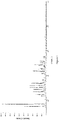
- the present invention provides crystal form A of a compound of formula (I), characterized in that: the crystal form A has an X-ray powder diffraction spectrum, which is obtained by using Cu-Ka radiation and represented by diffraction angle 2 ⁇ angle, in which there are characteristic peaks at diffraction angle 2 ⁇ angles of 7.60, 8.51, 11.80, 12.38, 13.52, 13.73, 14.48, 15.23, 15.99, 16.10, 16.82, 16.99, 17.35, 18.24, 20.82, 21.57, 21.91, 22.57, 22.76, 22.88, 24.29, 24.47, 25.24, 25.90, 27.23 and 27.74, wherein the error range of 2 ⁇ angle of each characteristic peak is ⁇ 0.2,
- the present invention also provides a method for preparing the crystal form A, characterized in that the method is selected from the group consisting of:
- the present invention also provides a method for preparing the single crystal of crystal form A, characterized in that the method consists in the following steps of: dissolving the compound of formula (I) in a solvent to crystallize, filtering and drying the resulting crystal to obtain the desired single crystal of crystal form A, wherein the solvent is a mixed solvent of a halohydrocarbon and a nitrile, the halohydrocarbon solvent is dichloromethane, and the nitrile solvent is acetonitrile; the ratio of the halohydrocarbon to the nitrile is 20:1-1:20, and preferably 1:10, the crystallization method is selected from the group consisting of room temperature crystallization, cooling crystallization, solvent volatilization crystallization and crystallization induced by addition of a seed crystal.
- the solvent is a mixed solvent of a halohydrocarbon and a nitrile
- the halohydrocarbon solvent is dichloromethane
- the nitrile solvent is
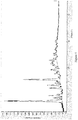
- the present invention also provides crystal form B of the compound of formula (I), characterized in that: the crystal form B has an X-ray powder diffraction spectrum, which is obtained by using Cu-Ka radiation and represented by diffraction angle 2 ⁇ angle, in which there are characteristic peaks at diffraction angle 2 ⁇ angles of 6.31, 7.24, 10.99, 12.07, 14.56, 17.94, 19.13, 19.71, 21.48, 24.15, 27.10 and 28.83, wherein the error range of 2 ⁇ angle of each characteristic peak is ⁇ 0.2.
- the present invention also provides a method for preparing the crystal form B, characterized in that the method is selected from the group consisting of:
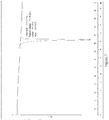
- the present invention further provides crystal form C of the compound of formula (I), characterized in that: the crystal form C has an X-ray powder diffraction spectrum, which is obtained by using Cu-Ka radiation and represented by diffraction angle 2 ⁇ angle, in which there are characteristic peaks at diffraction angle 2 ⁇ angles of 7.40, 8.62, 9.49, 12.32, 13.39, 15.52, 19.15, 19.17, 21.42 and 22.78, wherein the error range of 2 ⁇ angle of each characteristic peak is ⁇ 0.2.
- the present invention also provides a method for preparing the crystal form C, characterized in that the method compries the following steps of: dissolving the compound of formula (I) in a good solvent, adding an anti-solvent to crystallize, filtering and drying the resulting crystal to obtain the desired crystal form C, wherein the good solvent is an ether solvent, the ether solvent is 1,4-dioxane, the anti-solvent is selected from the group consisting of an aliphatic hydrocarbon solvent and an alicyclic hydrocarbon solvent, the aliphatic hydrocarbon solvent is n -heptane, and the alicyclic hydrocarbon solvent is cyclohexane, and the crystallization method is selected from the group consisting of room temperature crystallization, cooling crystallization, solvent volatilization crystallization and crystallization induced by addition of a seed crystal.
- the good solvent is an ether solvent
- the ether solvent is 1,4-dioxane
- the anti-solvent is selected from the group consisting of an
- the present invention also provides crystal form D of the compound of formula (I), characterized in that: the crystal form D has an X-ray powder diffraction spectrum, which is obtained by using Cu-Ka radiation and represented by diffraction angle 2 ⁇ angle, in which there are characteristic peaks at diffraction angle 2 ⁇ angles of 8.41, 8.85, 11.38, 12.18, 13.45, 15.15, 16.73, 17.59, 17.68, 20.45, 21.51, 22.72, 24.53, 24.91 and 27.11, wherein the error range of 2 ⁇ angle of each characteristic peak is ⁇ 0.2.
- the present invention also provides a method for preparing the crystal form D, characterized in that the method is selected from the group consisting of:
- the present invention also provides a method for preparing the single crystal of crystal form D, characterized in that the method compries the following steps of: dissolving the compound of formula (I) in a solvent to crystallize, filtering and drying the resulting crystal to obtain the desired single crystal of crystal form D, wherein the solvent is a mixed solvent of an alcohol and water, the alcohol solvent is selected from the group consisting of methanol and ethanol; the ratio of the alcohol to water is 20:1-1:20, and preferably 6:1, and the crystallization method is selected from the group consisting of room temperature crystallization, cooling crystallization, solvent volatilization crystallization and crystallization induced by addition of a seed crystal.
- the solvent is a mixed solvent of an alcohol and water
- the alcohol solvent is selected from the group consisting of methanol and ethanol
- the ratio of the alcohol to water is 20:1-1:20, and preferably 6:1
- the crystallization method is selected from the group consisting of room temperature crystallization, cooling crystallization, solvent
- the present invention also relates to a pharmaceutical composition of the crystal form A, B, C or D, characterized by further comprising one or more pharmaceutically acceptable carriers, diluents or excipients.
- the present invention also relates to a use of the crystal form A, B, C or D, or the pharmaceutical composition in the preparation of a medicament for treating a disease associated with EZH2 inhibitor.
- the disease associated with EZH2 inhibitor is selected from the group consisting of lymphoma, leukemia, breast cancer, lung cancer, prostate cancer, ovarian cancer, liver cancer, melanoma, rhabdoid tumor, synovial sarcoma, mesothelioma, cervical cancer, colon cancer, rectal cancer, stomach cancer, pancreatic cancer, brain cancer, skin cancer, oral cancer, bone cancer, kidney cancer, bladder cancer, fallopian tube tumor, ovarian tumor, peritoneal tumor, glioma, glioblastoma, head and neck tumor and myeloma; preferably lymphoma, leukemia, breast cancer, lung cancer, prostate cancer, ovarian cancer, liver cancer, melanoma, rhabdoid tumor, synovial sarcoma and mesothelioma; the leukemia is preferably chronic myeloid leukemia, acute myeloid leukemia or mixed lineage leukemia; and the lympho
- the resulting crystal forms of the compound of formula (I) are determined by X-ray powder diffraction spectrum (XRPD) and differential scanning calorimetry (DSC).
- the recrystallization method for the crystal form is not particularly limited, and can be carried out by a conventional recrystallization process.
- the material i.e., the compound of formula (I)
- the material can be dissolved in an organic solvent followed by adding an anti-solvent to crystallize. After the completion of crystallization, the desired crystal can be obtained via filtering and drying.
- the crystallization method of the present invention includes room temperature crystallization, cooling crystallization, solvent volatilization crystallization, crystallization induced by addition of a seed crystal and the like; and the cooling temperature is below 40°C, preferably from -10°C to 40°C.
- the starting material used in the method for preparing the crystal form of the present invention can be the compound of formula (I) in any form, and the specific forms include, but are not limited to, amorphous form, arbitrary crystal forms and the like.
- C 1-6 alkyl used in the present invention refers to a linear or branched alkyl containing 1 to 6 carbon atoms. Its specific examples include, but are not limited to: methyl, ethyl, n -propyl, isopropyl, n -butyl, isobutyl, sec -butyl, tert -butyl, n -pentyl, isopentyl, 2-methylbutyl, neo -pentyl, 1-ethylpropyl, n -hexyl, isohexyl, 3-methylpentyl, 2-methylpentyl, 1-methylpentyl, 3,3-dimethylbutyl, 2,2-dimethylbutyl, 1,1-dimethylbutyl, 1,2-dimethylbutyl, 1,3-dimethylbutyl, 2,3-dimethylbutyl, 2-ethylbutyl, 1,2-dimethylpropyl, 1,
- ether solvent used in the present invention refers to a chain compound or a cyclic compound having an ether bond -O- and having 1 to 10 carbon atoms. Its specific examples include, but are not limited to: tetrahydrofuran, diethyl ether, propylene glycol methyl ether, methyl tert- butyl ether and 1,4-dioxane.
- alcohol solvent used in the present invention refers to a group derived from the substitution of one or more hydrogen atoms on the "C 1-6 alkyl” by one or more "hydroxy", wherein the "hydroxy" and "C 1-6 alkyl” are as defined above. Its specific examples include, but are not limited to: methanol, ethanol, isopropanol, n-propanol, isopentanol and trifluoroethanol.
- ester solvent used in the present invention refers to a combination of a lower organic acid having 1 to 4 carbon atoms and a lower alcohol having 1 to 6 carbon atoms. Its specific examples include, but are not limited to: ethyl acetate, isopropyl acetate or butyl acetate.
- ketone solvent used in the present invention refers to a compound in which a carbonyl group (-C(O)-) is bonded to two hydrocarbon groups. Ketones can be classified into aliphatic ketones, alicyclic ketones, aromatic ketones, saturated ketones, and unsaturated ketones, depending on the hydrocarbon group in the molecule. Its specific examples include, but are not limited to: acetone, acetophenone, methyl isobutyl ketone or methyl pyrrolidone.
- nitrile solvent used in the present invention refers to a group derived from the substitution of one or more hydrogen atoms on the "C 1-6 alkyl” by one or more "cyano", wherein the "cyano” and “C 1-6 alkyl” are as defined above. Its specific examples include, but are not limited to: acetonitrile or propionitrile.
- aliphatic hydrocarbon solvent used in the present invention refers to a hydrocarbon compound having the basic properties of an aliphatic compound and having 1 to 10 carbon atoms, wherein the carbon atoms in the molecule are linked to a chain-like carbon skeleton in which the two ends are opened and do not form a ring, for example saturated aliphatic hydrocarbon, including alkane solvent. Its specific examples include, but are not limited to: n -butane, n -pentane, n -hexane or n -heptane.
- alicyclic hydrocarbon solvent used in the present invention refers to a hydrocarbon compound having similar properties to aliphatic hydrocarbon and having a cyclic carbon skeleton with 1 to 8 ring atoms. Its specific examples include, but are not limited to: cyclopentane and cyclohexane.
- amide solvent used in the present invention refers to a compound having a carbonylamino (-C(O)N-) and having 1 to 10 carbon atoms. Its specific examples include, but are not limited to: N,N -dimethylformamide and N,N -dimethylacetamide.
- arene solvent used in the present invention refers to a general term for a carbon ring compound and a derivative thereof, wherein the molecule has a conjugated system of a closed ring, and the number of ⁇ electrons conforms to the Huckel rule. Its specific examples include, but are not limited to: isopropylbenzene and xylene.
- halohydrocarbon solvent used in the present invention refers to a group derived from “C 1-6 alkyl” on which one or more hydrogen atoms are substitued by one or more "halogen atom”, wherein the "halogen atom” and “C 1-6 alkyl” are as defined above. Its specific examples include, but are not limited to: methyl chloride, dichloromethane, chloroform and carbon tetrachloride.
- nitroalkane solvent used in the present invention refers to a group derived from “C 1-6 alkyl” on which one or more hydrogen atoms are substitued by one or more "nitro”, wherein the "C 1-6 alkyl” are as defined above. Its specific examples include, but are not limited to: nitromethane.
- the term "mixed solvent” used in the present invention refers to a solvent obtained by mixing one or more different kinds of organic solvents in a certain ratio, or a solvent obtained by mixing an organic solvent and water in a certain ratio.
- the mixed solvent is preferably a mixed solvent of one or more alcohols, a mixed solvent of an alcohol and an ether, a mixed solvent of an alcohol and an aliphatic hydrocarbon, a mixed solvent of an ether and an aliphatic hydrocarbon, a mixed solvent of an alcohol and water, a mixed solvent of a halohydrocarbon and a nitrile, a mixed solvent of an amide and water, or a mixed solvent of an ether and water, wherein the alcohol, ether, aliphatic hydrocarbon, halohydrocarbon, amide and nitrile are as defined above.
- DSC differential scanning calorimetry
- 2 ⁇ or "2 ⁇ angle” used in the present invention refers to the diffraction angle, ⁇ is the Bragg angle, and the unit of which is ° or degree.
- the error range of 2 ⁇ is from ⁇ 0.1 to ⁇ 0.5, preferably from ⁇ 0.1 to ⁇ 0.3, and more preferably ⁇ 0.2.
- interplanar spacing or "interplanar distance (d value)" used in the present invention means that the space lattice selects three unparallel unit vectors a, b, c, wherein each of them connects two adjacent lattice dots, and the three vectors divide the lattice into juxtaposed parallel juxtagonal units, called the interplanar spacing.
- the space lattice is divided according to the determined parallelepiped unit lines to obtain a set of linear grids, which is called a space lattice or a lattice.
- the lattice reflects the periodicity of the crystal structure with geometric points and lines. Different crystal planes have different interplanar spacings ( i.e., distance between two adjacent parallel crystal planes); the unit is ⁇ or angstrom.
- the present invention also relates to a pharmaceutical composition
- a pharmaceutical composition comprising the crystal form A, B, C or D of the compound of formula (I) and optionally one or more pharmaceutically acceptable carriers and/or diluents.
- the pharmaceutical composition can be formulated into any one of pharmaceutically acceptable dosage forms.
- the crystal form A, B, C or D of the compound of formula (I) or the pharmaceutical formulation of the present invention can be formulated into a tablet, capsule, pill, granule, solution, suspension, syrup, injection (including injection solution, sterile powder for injection, and concentrated solution for injection), suppository, inhalant or spray.
- the pharmaceutical composition of the present invention can also be administrated to a patient or subject in need of such treatment by any suitable administration mode, such as oral, parenteral, rectal, intrapulmonary or topical administration.
- the pharmaceutical composition can be formulated into an oral formulation, for example, an oral solid formulation such as a tablet, capsule, pill, granule and the like; or an oral liquid formulation such as an oral solution, oral suspension, syrup and the like.
- the pharmaceutical composition can further comprise a suitable filler, binder, disintegrator, lubricant and the like.
- parenteral administration the pharmaceutical composition can be formulated into an injection formulation including an injection solution, sterile powder for injection and concentrated solution for injection.
- the pharmaceutical composition When formulated into an injection formulation, the pharmaceutical composition can be produced by a conventional method in current pharmaceutical industry. When an injection formulation is formulated, an additional agent may not be added to the pharmaceutical formulation, or a suitable additional agent may be added depending on the nature of the medicament.
- the pharmaceutical composition For rectal administration, the pharmaceutical composition can be formulated into a suppository and the like.
- the pharmaceutical composition For intrapulmonary administration, can be formulated into an inhalant or spray and the like.
- the crystal form A, B, C or D of the compound of formula (I) of the present invention is present in the pharmaceutical composition or medicament in a therapeutically and/or prophylactically effective amount. In certain preferred embodiments, the crystal form A, B, C or D of the compound of formula (I) of the present invention is present in the pharmaceutical composition or medicament in unit dose.
- the crystal form A, B, C or D of the compound of formula (I) of the present invention can be used to prepare a medicament for treating a disease associated with EZH2 inhibitor. Therefore, the present application also relates to a use of the crystal form A, B, C or D of the compound of formula (I) of the present invention in the preparation of a medicament for treating a disease associated with EZH2 inhibitor. Moreover, the present application also relates to a method for inhibiting a disease associated with EZH2 inhibitor, comprising administering a therapeutically and/or prophylactically effective amount of the crystal form A, B, C or D of the compound of formula (I) of the present invention or the pharmaceutical composition of the present invention to a subject in need thereof.
- the disease is a disease associated with EZH2 inhibitor selected from pain.
- the technical solution of the present invention has the following advantages: Studies have shown that the crystal forms A, B, C and D of the compound of formula (I) prepared according to present invention have a good stability and high purity. The single crystals of crystal forms A and D are obtained.
- the crystal forms A, B, C and D of the compound of formula (I) prepared by the technical solution of the present invention can meet the production, transportation and storage requirements of drug products. Its preparation process is stable, repeatable and controllable, and can be adapted to industrial production.
- 2-Ethylbenzoic acid 1a (20.0 g, 133 mmol, prepared according to the method disclosed in " Journal of the American Chemical Society, 1991, 113(13), 4931-6 ") was added to 150 mL of sulfuric acid, then sodium nitrate (11.3 g, 133 mmol) was added in batches in an ice bath. The reaction solution was stirred for 3 hours, then N -bromosuccinimide (2.6 g, 14.5 mmol) was added in batches. The reaction system was stirred for 1 hour at 60°C. After the reaction was completed, the reaction solution was poured to ice water, stirred well and filtered.
- the crude methyl 3-bromo-2-ethyl-5-nitrobenzoate lc (35.0 g, 121 mmol) was added to 250 mL of ethanol and 150 mL of water.
- the reaction solution was heated to 70°C, added with ammonium chloride (52.8 g, 969 mmol), then added with iron powder (34 g, 606 mmol) in batches.
- the reaction system was stirred for 2 hours at 70°C. After the reaction was completed, the reaction solution was filtered through celite while hot. The filter cake was washed with hot ethanol, then the filtrate was combined and concentrated under reduced pressure. Ethyl acetate and saturated sodium bicarbonate solution were added.
- Methyl 5-amino-3-bromo-2-ethylbenzoate Id (15.0 g, 58 mmol) was dissolved in 10 mL of acetonitrile, then 200 mL of 10% sulfuric acid was added. The reaction solution was stirred well and cooled to 3°C in an ice-salt bath, then added dropwise with 10 mL of a pre-prepared solution of sodium nitrite (4.4 g, 64 mmol). The reaction solution was stirred for 4 hours at the above temperature, added dropwise with 200 mL of 50% sulfuric acid, then stirred for 1 hour at 90°C. After the reaction was completed, the reaction solution was extracted three times with ethyl acetate.
- Methyl 3-bromo-2-ethyl-5-hydroxybenzoate le (35 g, 135 mmol) was dissolved in 200 mL of N,N -dimethylformamide, then 2-bromo-1,1-diethoxyethane (40 g, 202 mmol) and potassium carbonate (37 g, 269 mmol) were added.
- the reaction system was stirred at 120°C for 12 hours. After the reaction was completed, the reaction solution was concentrated under reduced pressure to remove N,N -dimethylformamide.
- the reaction solution was added with water, and extracted three times with ethyl acetate. The organic phases were combined, washed with saturated sodium chloride solution, dried over anhydrous sodium sulfate, and filtered.
- Polyphosphoric acid (30 g) was added to 400 mL of toluene.
- the reaction solution was heated to 100°C, and added with 50 mL of a pre-prepared solution of methyl 3-bromo-5-(2,2-diethoxyethoxy)-2-ethylbenzoate If (40 g, 107 mmol) in toluene under stirring.
- the reaction solution was stirred for 16 hours at 100°C. After the reaction was completed, the supernatant was decanted. The residue was added with water and ethyl acetate. Two phases were separated, and the aqueous phase was extracted with ethyl acetate.
- reaction solution was filtered through celite, and the filter cake was washed with ethyl acetate.
- the organic phases were combined, dried over anhydrous sodium sulfate, and filtered.
- the filtrate was concentrated under reduced pressure, and the resulting residue was purified by silica gel column chromatography with n -hexane and ethyl acetate as the eluent to obtain the title product methyl 5-ethyl-6-((tetrahydro-2 H -pyran-4-yl)amino)benzofuran-4-carboxylate 1h (10.0 g, yield 85%) as a yellow solid.
- Methyl 5-ethyl-6-((tetrahydro-2 H -pyran-4-yl)amino)benzofuran-4-carboxylate 1h (10.0 g, 0.033 mmol) was dissolved in 150 mL of 1,2-dichloroethane, then acetaldehyde (7.2 g, 0.165 mmol) and acetic acid (9.9 g, 0.165 mmol) were added. The reaction solution was stirred for 1 hour, and added with sodium triacetoxyborohydride (20.8 g, 0.1 mmol). The reaction solution was stirred for 12 hours at room temperature.
- reaction solution was stirred for 1 hour, then added with 3-(aminomethyl)-4,6-dimethylpyridin-2(1 H )-one hydrochloride 2a (593 mg, 3.0 mmol, prepared according to the method disclosed in the patent application " WO2014097041 ").
- Peak 1 7.60 11.62 Peak 2 8.51 10.38 Peak 3 10.37 8.53 Peak 4 11.16 7.92 Peak 5 11.80 7.5 Peak 6 12.38 7.14 Peak 7 12.89 6.86 Peak 8 13.52 6.55 Peak 9 13.73 6.44 Peak 10 14.03 6.31 Peak 11 14.48 6.11 Peak 12 15.23 5.81 Peak 13 15.99 5.54 Peak 14 16.10 5.5 Peak 15 16.43 5.39 Peak 16 16.82 5.27 Peak 17 16.99 5.21 Peak 18 17.35 5.11 Peak 19 18.24 4.86 Peak 20 18.92 4.69 Peak 21 19.17 4.63 Peak 22 20.68 4.29 Peak 23 20.82 4.26 Peak 24 21.57 4.12 Peak 25 21.91 4.05 Peak 26 22.57 3.94 Peak 27 22.76 3.90 Peak 28 22.88 3.88 Peak 29 23.53 3.78 Peak 30 23.68 3.75 Peak 31 24.00 3.71 Peak 32 24.29 3.66 Peak 33 24.47 3.64 Peak 34 24.91 3.57 Peak 35 25.24 3.53 Peak 36 25.72 3.46 Peak 37 25.90 3.44 Peak 38 27.23 3.27 Peak
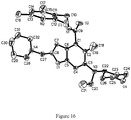
- the single molecular stereostructure of the crystal sample is shown in Figure 15 by single crystal X-ray diffraction (XRD), and the unit cell parameters are shown in the following table: Table 2.
- Unit cell parameters of single crystal of crystal form A Parameters Values Crystal system Orthorhombic crystal system Space group P bca Unit cell parameters a ( ⁇ ) 17.051(3) b ( ⁇ ) 15.840(3) c ( ⁇ ) 23.2549(5) ⁇ (°) 90.0 ⁇ (°) 90.0 ⁇ (°) 90.0 Unit cell volume V ( ⁇ 3 ) 6279(2) Z (Asymmetric unit number in unit cell) 8 Calculated density (g/cm 3 ) 1.161
- the XRPD spectrum of the crystal sample is shown in Figure 2 .
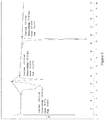
- the DSC spectrum is shown in Figure 3 , in which there are one endothermic peak and one exothermic during the temperature-rise period, the onset of the exothermic peak is at about 123.69°C, and the onset melting temperature is about 206.31°C.
- the crystal form was defined as crystal form B, and the characteristic peak positions are shown in the following table: Table 3. Characteristic peaks of crystal form B Peak No.
- Peak 1 6.31 13.99 Peak 2 7.24 12.19 Peak 3 8.92 9.90 Peak 4 10.38 8.52 Peak 5 10.99 8.04 Peak 6 12.07 7.33 Peak 7 14.56 6.08 Peak 8 15.10 5.86 Peak 9 16.36 5.42 Peak 10 17.29 5.12 Peak 11 17.94 4.94 Peak 12 19.13 4.64 Peak 13 19.71 4.50 Peak 14 21.12 4.20 Peak 15 21.48 4.13 Peak 16 22.59 3.93 Peak 17 24.15 3.68 Peak 18 25.45 3.50 Peak 19 26.28 3.39 Peak 20 26.52 3.36 Peak 21 27.10 3.29 Peak 22 28.83 3.09 Peak 23 30.07 2.97 Peak 24 31.37 2.85 Peak 25 32.56 2.75 Peak 26 33.65 2.66 Peak 27 34.64 2.59 Peak 28 36.09 2.49 Peak 29 37.13 2.42 Peak 30 40.04 2.25
- the XRPD spectrum of the crystal sample is shown in Figure 4 .
- the DSC spectrum is shown in Figure 5 , in which there are multiple endothermic peaks.
- the crystal form was defined as crystal form C, and the characteristic peak positions are shown in the following table: Table 4. Characteristic peaks of crystal form C Peak No.
- Peak 1 7.40 11.93 Peak 2 8.62 10.25 Peak 3 9.49 9.32 Peak 4 9.96 8.88 Peak 5 11.12 7.95 Peak 6 12.32 7.18 Peak 7 13.39 6.61 Peak 8 14.21 6.23 Peak 9 14.85 5.96 Peak 10 15.52 5.71 Peak 11 16.50 5.37 Peak 12 17.67 5.01 Peak 13 18.28 4.85 Peak 14 19.15 4.63 Peak 15 19.17 4.63 Peak 16 20.06 4.42 Peak 17 20.80 4.27 Peak 18 21.42 4.15 Peak 19 21.89 4.06 Peak 20 22.20 4.00 Peak 21 22.78 3.90 Peak 22 23.41 3.80 Peak 23 24.74 3.60 Peak 24 25.34 3.51 Peak 25 26.70 3.34 Peak 26 27.38 3.25 Peak 27 28.64 3.11 Peak 28 29.63 3.01 Peak 29 30.20 2.96 Peak 30 31.15 2.87
- the DSC spectrum is shown in Figure 7 , in which the onset melting temperature is about 205.45°C.
- the crystal form was defined as crystal form D. It can be seen from the DVS diagrams of Figures 8 and 9 that the crystal form D has no obvious hygroscopicity.
- the characteristic peak positions are shown in the following table: Table 5. Characteristic peaks of crystal form D Peak No.
- Peak 1 8.41 10.50 Peak 2 8.85 9.98 Peak 3 10.15 8.71 Peak 4 11.38 7.77 Peak 5 12.18 7.26 Peak 6 13.45 6.58 Peak 7 14.40 6.14 Peak 8 15.15 5.84 Peak 9 16.73 5.29 Peak 10 17.59 5.04 Peak 11 17.68 5.01 Peak 12 18.42 4.81 Peak 13 18.91 4.69 Peak 14 19.22 4.61 Peak 15 20.45 4.34 Peak 16 21.15 4.20 Peak 17 21.51 4.13 Peak 18 22.11 4.02 Peak 19 22.72 3.91 Peak 20 24.03 3.70 Peak 21 24.53 3.63 Peak 22 24.91 3.57 Peak 23 25.54 3.49 Peak 24 26.54 3.36 Peak 25 27.11 3.29 Peak 26 27.61 3.23 Peak 27 29.04 3.07 Peak 28 30.49 2.93 Peak 29 31.31 2.85 Peak 30 33.00 2.71 Peak 31 33.88 2.64 Peak 32 35.52 2.53 Peak 33 37.53 2.39 Peak 34 40.46 2.23 Peak 35 41.36 2.18 Peak 36 42.40 2.13 Peak 37 44.02 2.06
- the single molecular stereostructure of the crystal sample is shown in Figure 16 by single crystal X-ray diffraction (XRD), and the unit cell parameters are shown in the following table: Table 6.
- Unit cell parameters of single crystal of crystal form D Parameters Values Crystal system Orthorhombic crystal system Space group P bca Unit cell parameters a ( ⁇ ) 17.4737(6) b ( ⁇ ) 17.5933(5) c ( ⁇ ) 19.9907(7) ⁇ (°) 90.0 ⁇ (°) 90.0 ⁇ (°) 90.0 Unit cell volume V ( ⁇ 3 ) 6145.5(3) Z (Asymmetric unit number in unit cell) 8 Calculated density (g/cm 3 ) 1.186
- the sample of crystal form B was spread flat in the air to test sample stability under conditions of 25°C-65% relative humidity (RH), and the sampling time was Day 20.
- the sample of crystal form D was spread flat in the air to test sample stability under conditions of 40°C-75% RH and 25°C-65% RH, and the sampling time was Day 20.
- Figure 10 shows the XRPD spectrum of crystal form B on Day 0.
- Figure 11 shows the XRPD spectrum of crystal form B after 20 days under the conditions of 25°C, RH 65% for 20 days.
- Figure 12 shows the XRPD spectrum of crystal form D on Day 0.
- Figure 13 shows the XRPD spectrum of crystal form D after 20 days under the conditions of 40°C, RH 75% for 20 days.
- Figure 14 shows the XRPD spectrum of crystal form D after 20 days under the conditions of 25°C, RH 65% for 20 days.
Landscapes
- Chemical & Material Sciences (AREA)
- Organic Chemistry (AREA)
- Health & Medical Sciences (AREA)
- Veterinary Medicine (AREA)
- Medicinal Chemistry (AREA)
- Pharmacology & Pharmacy (AREA)
- Life Sciences & Earth Sciences (AREA)
- Animal Behavior & Ethology (AREA)
- General Health & Medical Sciences (AREA)
- Public Health (AREA)
- Epidemiology (AREA)
- General Chemical & Material Sciences (AREA)
- Nuclear Medicine, Radiotherapy & Molecular Imaging (AREA)
- Chemical Kinetics & Catalysis (AREA)
- Pharmaceuticals Containing Other Organic And Inorganic Compounds (AREA)
- Plural Heterocyclic Compounds (AREA)
Abstract
Description
- The present invention relates to crystal forms A, B, C and D of N-((4,6-dimethyl-2-oxo-1,2-dihydropyridin-3-yl)methyl)-5-ethyl-6-(ethyl(tetrahydro-2 H-pyran-4-yl)amino)-2-(piperidin-1-ylmethyl)benzofuran-4-carboxamide, as well as preparation methods thereof.
- Lymphoma is a malignant tumor originating from the lymphoid hematopoietic system. It is classified into non-Hodgkin lymphoma (NHL) and Hodgkin lymphoma (HL) according to the tumor cells. In Asia, 90% of lymphoma patients are NHL patients having lymphocytes, histiocytes or reticular cells with different degrees of differentiation in pathology. According to the natural course of NHL, NHL can be classified into three major clinical types, namely highly invasive, invasive and indolent lymphoma. According to the different lymphocyte origins, it can be classified into B cells, T cells and natural killer (NK) cells lymphoma. The main function of B cells is to secrete various antibodies to protect the body against various external invasions.
- The histone methyltransferase encoded by the EZH2 gene is the catalytic component of polycomb repressive complex 2 (PRC2). EZH2 levels are abnormally elevated in cancer tissues compared to normal tissues, and EZH2 is most highly expressed in advanced cancers or poor prognosis. In some types of cancers, EZH2 overexpression occurs simultaneously with amplification of the EZH2 gene. A number of si/shRNA experimental studies show that reduction of EZH2 expression in tumor cell lines can inhibit tumor cell proliferation, migration and invasion, or angiogenesis, and lead to apoptosis.
WO2017084494 (PCT/CN2016/104318, filing date of 2 November 2016 
- Patent application that discloses selective EZH2 inhibitor includes
WO2012005805 ,WO2012050532 ,WO2012118812 ,WO2012142513 ,WO2012142504 ,WO2013049770 ,WO2013039988 ,WO2013067300 ,WO2015141616 ,WO2011140325 and the like. - The crystal structure of a pharmaceutically active ingredient often affects the chemical stability of the drug. Different crystallization conditions and storage conditions may lead to changes in the crystal structure of the compound, and sometimes accompanying production of other crystal forms. In general, an amorphous drug product does not have a regular crystal structure, and often has other defects such as poor product stability, excessively fine crystal, difficult filtration, easy agglomeration, and poor liquidity. The polymorphic forms of a drug have different requirements on storage, production and amplification. Therefore, it is necessary to investigate the crystal form of the compound of formula (I) and the preparation method thereof so as to improve the various properties of the compound of formula (I).
- The technical problem to be solved by the present invention is to provide crystal forms A, B, C and D of N-((4,6-dimethyl-2-oxo-1,2-dihydropyridin-3-yl)methyl)-5-ethyl-6-(ethyl(tetrahydro-2 H-pyran-4-yl)amino)-2-(piperidin-1-ylmethyl)benzofuran-4-carboxamide, as well as preparation methods thereof. The crystal forms prepared by the present invention have a good stability.
- The technical solution of the present invention is as follows:
The present invention provides crystal form A of a compound of formula (I), characterized in that: the crystal form A has an X-ray powder diffraction spectrum, which is obtained by using Cu-Ka radiation and represented by diffraction angle 2θ angle, in which there are characteristic peaks at diffraction angle 2θ angles of 7.60, 8.51, 11.80, 12.38, 13.52, 13.73, 14.48, 15.23, 15.99, 16.10, 16.82, 16.99, 17.35, 18.24, 20.82, 21.57, 21.91, 22.57, 22.76, 22.88, 24.29, 24.47, 25.24, 25.90, 27.23 and 27.74, wherein the error range of 2θ angle of each characteristic peak is ±0.2,
- Preferably, there are characteristic peaks at diffraction angle 2θ angles of 7.60, 8.51, 10.37, 11.16, 11.80, 12.38, 12.89, 13.52, 13.73, 14.03, 14.48, 15.23, 15.99, 16.10, 16.43, 16.82, 16.99, 17.35, 18.24, 18.92, 19.17, 20.68, 20.82, 21.57, 21.91, 22.57, 22.76, 22.88, 23.53, 23.68, 24.00, 24.29, 24.47, 24.91, 25.24, 25.72, 25.90, 27.23, 27.74 and 35.63, wherein the error range of 2θ angle of each characteristic peak is ±0.2.
- The present invention also provides the single crystal data of crystal form A, characterized in that the crystal form A is an orthorhombic crystal system; the space group is Pbca; the unit cell parameters are a=17.051(3)Å, b=15.840(3)Å, c=23.249(5)Å, α=β=γ=90.0°; and the unit cell volume is 6279(2) Å3.
- The present invention also provides a method for preparing the crystal form A, characterized in that the method is selected from the group consisting of:
- method I, dissolving the compound of formula (I) in a solvent to crystallize, filtering, washing and drying the resulting crystal to obtain the desired crystal form A, wherein the solvent is selected from the group consisting of an amide solvent, a mixed solvent of an amide solvent and water, and a mixed solvent of a halohydrocarbon and a nitrile, the amide solvent is selected from the group consisting of N,N-dimethylformamide and N,N-dimethylacetamide, the halohydrocarbon solvent is dichloromethane, and the nitrile solvent is acetonitrile, and the crystallization method is selected from the group consisting of room temperature crystallization, cooling crystallization, solvent volatilization crystallization and crystallization induced by addition of a seed crystal;
- method II, dissolving the compound of formula (I) in a good solvent, adding an anti-solvent to crystallize, filtering and drying the resulting crystal to obtain the desired crystal form A, wherein the good solvent is an alcohol solvent, the alcohol solvent is selected from the group consisting of methanol, ethanol and isopropanol, and the anti-solvent is water, and the crystallization method is selected from the group consisting of room temperature crystallization, cooling crystallization, solvent volatilization crystallization and crystallization induced by addition of a seed crystal; and
- method III, adding the compound of formula (I) to a solvent, pulping the mixture, filtering and drying the resulting crystal to obtain the desired crystal form A, wherein the solvent is selected from the group consisting of a mixed solvent of an amide solvent and water, and a mixed solvent of a halohydrocarbon and a nitrile, the amide solvent is selected from the group consisting of N,N-dimethylformamide and N,N-dimethylacetamide, the halohydrocarbon solvent is dichloromethane, and the nitrile solvent is acetonitrile.
- The present invention also provides a method for preparing the single crystal of crystal form A, characterized in that the method consists in the following steps of:
dissolving the compound of formula (I) in a solvent to crystallize, filtering and drying the resulting crystal to obtain the desired single crystal of crystal form A, wherein the solvent is a mixed solvent of a halohydrocarbon and a nitrile, the halohydrocarbon solvent is dichloromethane, and the nitrile solvent is acetonitrile; the ratio of the halohydrocarbon to the nitrile is 20:1-1:20, and preferably 1:10, the crystallization method is selected from the group consisting of room temperature crystallization, cooling crystallization, solvent volatilization crystallization and crystallization induced by addition of a seed crystal. - The present invention also provides crystal form B of the compound of formula (I), characterized in that: the crystal form B has an X-ray powder diffraction spectrum, which is obtained by using Cu-Ka radiation and represented by diffraction angle 2θ angle, in which there are characteristic peaks at diffraction angle 2θ angles of 6.31, 7.24, 10.99, 12.07, 14.56, 17.94, 19.13, 19.71, 21.48, 24.15, 27.10 and 28.83, wherein the error range of 2θ angle of each characteristic peak is ±0.2.
- Preferably, there are characteristic peaks at diffraction angle 2θ angles of 6.31, 7.24, 8.92, 10.38, 10.99, 12.07, 14.56, 15.10, 16.36, 17.29, 17.94, 19.13, 19.71, 21.12, 21.48, 22.59, 24.15, 25.45, 26.28, 26.52, 27.10, 28.83, 30.07, 31.37, 32.56, 33.65, 34.64, 36.09, 37.13 and 40.04, wherein the error range of 2θ angle of each characteristic peak is ±0.2.
- The present invention also provides a method for preparing the crystal form B, characterized in that the method is selected from the group consisting of:
- method I, dissolving the compound of formula (I) in a solvent to crystallize, filtering and drying the resulting crystal to obtain the desired crystal form B, wherein the solvent is ethanol, and the crystallization method is selected from the group consisting of room temperature crystallization, cooling crystallization, solvent volatilization crystallization and crystallization induced by addition of a seed crystal; and
- method II, dissolving the compound of formula (I) in a good solvent, adding an anti-solvent to crystallize, filtering and drying the resulting crystal to obtain the desired crystal form B, wherein the good solvent is ethanol, and the anti-solvent is water, the crystallization method is selected from the group consisting of room temperature crystallization, cooling crystallization, solvent volatilization crystallization and crystallization induced by addition of a seed crystal.
- The present invention further provides crystal form C of the compound of formula (I), characterized in that: the crystal form C has an X-ray powder diffraction spectrum, which is obtained by using Cu-Ka radiation and represented by diffraction angle 2θ angle, in which there are characteristic peaks at diffraction angle 2θ angles of 7.40, 8.62, 9.49, 12.32, 13.39, 15.52, 19.15, 19.17, 21.42 and 22.78, wherein the error range of 2θ angle of each characteristic peak is ±0.2.
- Preferably, there are characteristic peaks at diffraction angle 2θ angles of 7.40, 8.62, 9.49, 9.96, 11.12, 12.32, 13.39, 14.21, 14.85, 15.52, 16.50, 17.67, 18.28, 19.15, 19.17, 20.06, 20.80, 21.42, 21.89, 22.20, 22.78, 23.41, 24.74, 25.34, 26.70, 27.38, 28.64, 29.63, 30.20 and 31.15, wherein the error range of 2θ angle of each characteristic peak is ±0.2.
- The present invention also provides a method for preparing the crystal form C, characterized in that the method compries the following steps of:
dissolving the compound of formula (I) in a good solvent, adding an anti-solvent to crystallize, filtering and drying the resulting crystal to obtain the desired crystal form C, wherein the good solvent is an ether solvent, the ether solvent is 1,4-dioxane, the anti-solvent is selected from the group consisting of an aliphatic hydrocarbon solvent and an alicyclic hydrocarbon solvent, the aliphatic hydrocarbon solvent is n-heptane, and the alicyclic hydrocarbon solvent is cyclohexane, and the crystallization method is selected from the group consisting of room temperature crystallization, cooling crystallization, solvent volatilization crystallization and crystallization induced by addition of a seed crystal. - The present invention also provides crystal form D of the compound of formula (I), characterized in that: the crystal form D has an X-ray powder diffraction spectrum, which is obtained by using Cu-Ka radiation and represented by diffraction angle 2θ angle, in which there are characteristic peaks at diffraction angle 2θ angles of 8.41, 8.85, 11.38, 12.18, 13.45, 15.15, 16.73, 17.59, 17.68, 20.45, 21.51, 22.72, 24.53, 24.91 and 27.11, wherein the error range of 2θ angle of each characteristic peak is ±0.2.
- Preferably, there are characteristic peaks at diffraction angle 2θ angles of 8.41, 8.85, 10.15, 11.38, 12.18, 13.45, 14.40, 15.15, 16.73, 17.59, 17.68, 18.42, 18.91, 19.22, 20.45, 21.15, 21.51, 22.11, 22.72, 24.03, 24.53, 24.91, 25.54, 26.54, 27.11, 27.61, 29.04, 30.49, 31.31, 33.00, 33.88, 35.52, 37.53, 40.46, 41.36, 42.40 and 44.02, wherein the error range of 2θ angle of each characteristic peak is ±0.2.
- The present invention also provides the single crystal data of crystal form D, characterized in that the crystal form D is an orthorhombic crystal system; the space group is Pbca; the unit cell parameters are a=17.4737(6)Å, b=17.5933(5)Å, c=19.9907(7)Å, α=β=γ=90.0°; and the unit cell volume is 6145.5 (3)Å3.
- The present invention also provides a method for preparing the crystal form D, characterized in that the method is selected from the group consisting of:
- method I, dissolving the compound of formula (I) in a solvent to crystallize, filtering and drying the resulting crystal to obtain the desired crystal form D, wherein the solvent is selected from the group consisting of an alcohol solvent, an ether solvent, a mixed solvent of an alcohol and water, a mixed solvent of an ether and water, a mixed solvent of an alcohol and an aliphatic hydrocarbon, and a mixed solvent of an ether and an aliphatic hydrocarbon, the alcohol solvent is selected from the group consisting of methanol, ethanol and isopropanol, the ether solvent is selected from the group consisting of tetrahydrofuran and 1,4-dioxane, and the aliphatic hydrocarbon solvent is n-heptane, and the crystallization method is selected from the group consisting of room temperature crystallization, cooling crystallization, solvent volatilization crystallization and crystallization induced by addition of a seed crystal;
- method II, dissolving the compound of formula (I) in a good solvent, adding an anti-solvent to crystallize, filtering and drying the resulting crystal to obtain the desired crystal form D, wherein the good solvent is selected from the group consisting of an alcohol solvent and an ether solvent, the alcohol solvent is selected from the group consisting of methanol and isopropanol, the ether solvent is tetrahydrofuran, and the anti-solvent is water; or the good solvent is an ether, the ether solvent is tetrahydrofuran, the anti-solvent is selected from the group consisting of an aliphatic hydrocarbon solvent and an alicyclic hydrocarbon solvent, the aliphatic hydrocarbon solvent is n-heptane, and the alicyclic hydrocarbon solvent is cyclohexane, and the crystallization method is selected from the group consisting of room temperature crystallization, cooling crystallization, solvent volatilization crystallization and crystallization induced by addition of a seed crystal;
- method III, adding the compound of formula (I) to a solvent, pulping the mixture, filtering and drying the resulting crystal to obtain the desired crystal form D, wherein the solvent is selected from the group consisting of water, an ester, an ether, an aliphatic hydrocarbon, an alicyclic hydrocarbon, a nitroalkane sovent, an arene, an alcohol, a nitrile, a halohydrocarbon, a ketone, a sulfoxide, an amide, a mixed solvent of an alcohol and an ether, a mixed solvent of an alcohol and water, and a mixed solvent of one or more alcohol, the ester solvent is selected from the group consisting of ethyl acetate, isopropyl acetate and butyl acetate, the ether solvent is selected from the group consisting of tetrahydrofuran, 1,4-dioxane, propylene glycol methyl ether and methyl tert-butyl ether, the aliphatic hydrocarbon is n-heptane, the alicyclic hydrocarbon is cyclohexane, the nitroalkane solvent is nitromethane, the arene solvent is selected from the group consisting of xylene and cumene, the alcohol solvent is selected from the group consisting of methanol, ethanol and isopropanol, the nitrile solvent is acetonitrile, the halohydrocarbon solvent is dichloromethane, the ketone solvent is acetone, the sulfoxide is dimethyl sulfoxide, the mixed solvent of one or more alcohol is selected from the group consisting of a mixed solvent of methanol and ethanol, a mixed solvent of methanol and isopropanol, and a mixed solvent of ethanol and isopropanol.
- The present invention also provides a method for preparing the single crystal of crystal form D, characterized in that the method compries the following steps of:
dissolving the compound of formula (I) in a solvent to crystallize, filtering and drying the resulting crystal to obtain the desired single crystal of crystal form D, wherein the solvent is a mixed solvent of an alcohol and water, the alcohol solvent is selected from the group consisting of methanol and ethanol; the ratio of the alcohol to water is 20:1-1:20, and preferably 6:1, and the crystallization method is selected from the group consisting of room temperature crystallization, cooling crystallization, solvent volatilization crystallization and crystallization induced by addition of a seed crystal. - The present invention also relates to a pharmaceutical composition of the crystal form A, B, C or D, characterized by further comprising one or more pharmaceutically acceptable carriers, diluents or excipients.
- The present invention also relates to a use of the crystal form A, B, C or D, or the pharmaceutical composition in the preparation of a medicament for treating a disease associated with EZH2 inhibitor.
- According to the use of the present invention, the disease associated with EZH2 inhibitor is selected from the group consisting of lymphoma, leukemia, breast cancer, lung cancer, prostate cancer, ovarian cancer, liver cancer, melanoma, rhabdoid tumor, synovial sarcoma, mesothelioma, cervical cancer, colon cancer, rectal cancer, stomach cancer, pancreatic cancer, brain cancer, skin cancer, oral cancer, bone cancer, kidney cancer, bladder cancer, fallopian tube tumor, ovarian tumor, peritoneal tumor, glioma, glioblastoma, head and neck tumor and myeloma; preferably lymphoma, leukemia, breast cancer, lung cancer, prostate cancer, ovarian cancer, liver cancer, melanoma, rhabdoid tumor, synovial sarcoma and mesothelioma; the leukemia is preferably chronic myeloid leukemia, acute myeloid leukemia or mixed lineage leukemia; and the lymphoma is preferably non-Hodgkin lymphoma, diffuse large B-cell lymphoma or follicular lymphoma.
- The resulting crystal forms of the compound of formula (I) are determined by X-ray powder diffraction spectrum (XRPD) and differential scanning calorimetry (DSC).
- The recrystallization method for the crystal form is not particularly limited, and can be carried out by a conventional recrystallization process. For example, the material, i.e., the compound of formula (I), can be dissolved in an organic solvent followed by adding an anti-solvent to crystallize. After the completion of crystallization, the desired crystal can be obtained via filtering and drying.
- The crystallization method of the present invention includes room temperature crystallization, cooling crystallization, solvent volatilization crystallization, crystallization induced by addition of a seed crystal and the like; and the cooling temperature is below 40°C, preferably from -10°C to 40°C.
- The starting material used in the method for preparing the crystal form of the present invention can be the compound of formula (I) in any form, and the specific forms include, but are not limited to, amorphous form, arbitrary crystal forms and the like.
- In the specification and claims of the present application, unless otherwise indicated, the scientific and technical terms used herein have the meanings generally understood by a person skilled in the art. However, in order to understand the present invention better, definitions and explanations of some related terms are provided. In addition, when the definitions and explanations of the terms provided in the present application are inconsistent with the meanings generally understood by a person skilled in the art, the definitions and explanations of the terms provided in the present application shall prevail.
- The term "C1-6 alkyl" used in the present invention refers to a linear or branched alkyl containing 1 to 6 carbon atoms. Its specific examples include, but are not limited to: methyl, ethyl, n-propyl, isopropyl, n-butyl, isobutyl, sec-butyl, tert-butyl, n-pentyl, isopentyl, 2-methylbutyl, neo-pentyl, 1-ethylpropyl, n-hexyl, isohexyl, 3-methylpentyl, 2-methylpentyl, 1-methylpentyl, 3,3-dimethylbutyl, 2,2-dimethylbutyl, 1,1-dimethylbutyl, 1,2-dimethylbutyl, 1,3-dimethylbutyl, 2,3-dimethylbutyl, 2-ethylbutyl, 1,2-dimethylpropyl and the like.
- The term "ether solvent" used in the present invention refers to a chain compound or a cyclic compound having an ether bond -O- and having 1 to 10 carbon atoms. Its specific examples include, but are not limited to: tetrahydrofuran, diethyl ether, propylene glycol methyl ether, methyl tert-butyl ether and 1,4-dioxane.
- The term "alcohol solvent" used in the present invention refers to a group derived from the substitution of one or more hydrogen atoms on the "C1-6 alkyl" by one or more "hydroxy", wherein the "hydroxy" and "C1-6 alkyl" are as defined above. Its specific examples include, but are not limited to: methanol, ethanol, isopropanol, n-propanol, isopentanol and trifluoroethanol.
- The term "ester solvent" used in the present invention refers to a combination of a lower organic acid having 1 to 4 carbon atoms and a lower alcohol having 1 to 6 carbon atoms. Its specific examples include, but are not limited to: ethyl acetate, isopropyl acetate or butyl acetate.
- The term "ketone solvent" used in the present invention refers to a compound in which a carbonyl group (-C(O)-) is bonded to two hydrocarbon groups. Ketones can be classified into aliphatic ketones, alicyclic ketones, aromatic ketones, saturated ketones, and unsaturated ketones, depending on the hydrocarbon group in the molecule. Its specific examples include, but are not limited to: acetone, acetophenone, methyl isobutyl ketone or methyl pyrrolidone.
- The term "nitrile solvent" used in the present invention refers to a group derived from the substitution of one or more hydrogen atoms on the "C1-6 alkyl" by one or more "cyano", wherein the "cyano" and "C1-6 alkyl" are as defined above. Its specific examples include, but are not limited to: acetonitrile or propionitrile.
- The term "aliphatic hydrocarbon solvent" used in the present invention refers to a hydrocarbon compound having the basic properties of an aliphatic compound and having 1 to 10 carbon atoms, wherein the carbon atoms in the molecule are linked to a chain-like carbon skeleton in which the two ends are opened and do not form a ring, for example saturated aliphatic hydrocarbon, including alkane solvent. Its specific examples include, but are not limited to: n-butane, n-pentane, n-hexane or n-heptane.
- The term" alicyclic hydrocarbon solvent" used in the present invention refers to a hydrocarbon compound having similar properties to aliphatic hydrocarbon and having a cyclic carbon skeleton with 1 to 8 ring atoms. Its specific examples include, but are not limited to: cyclopentane and cyclohexane.
- The term "amide solvent" used in the present invention refers to a compound having a carbonylamino (-C(O)N-) and having 1 to 10 carbon atoms. Its specific examples include, but are not limited to: N,N-dimethylformamide and N,N-dimethylacetamide.
- The term "arene solvent" used in the present invention refers to a general term for a carbon ring compound and a derivative thereof, wherein the molecule has a conjugated system of a closed ring, and the number of π electrons conforms to the Huckel rule. Its specific examples include, but are not limited to: isopropylbenzene and xylene.
- The term "halohydrocarbon solvent" used in the present invention refers to a group derived from "C1-6 alkyl" on which one or more hydrogen atoms are substitued by one or more "halogen atom", wherein the "halogen atom" and "C1-6 alkyl" are as defined above. Its specific examples include, but are not limited to: methyl chloride, dichloromethane, chloroform and carbon tetrachloride.
- The term "nitroalkane solvent" used in the present invention refers to a group derived from "C1-6 alkyl" on which one or more hydrogen atoms are substitued by one or more "nitro", wherein the "C1-6 alkyl" are as defined above. Its specific examples include, but are not limited to: nitromethane.
- The term "mixed solvent" used in the present invention refers to a solvent obtained by mixing one or more different kinds of organic solvents in a certain ratio, or a solvent obtained by mixing an organic solvent and water in a certain ratio. The mixed solvent is preferably a mixed solvent of one or more alcohols, a mixed solvent of an alcohol and an ether, a mixed solvent of an alcohol and an aliphatic hydrocarbon, a mixed solvent of an ether and an aliphatic hydrocarbon, a mixed solvent of an alcohol and water, a mixed solvent of a halohydrocarbon and a nitrile, a mixed solvent of an amide and water, or a mixed solvent of an ether and water, wherein the alcohol, ether, aliphatic hydrocarbon, halohydrocarbon, amide and nitrile are as defined above.
- The term "X-ray powder diffraction spectrum" or "XRPD" used in the present invention refers to an X-ray powder diffraction spectrum that is obtained according to the Bragg formula 2d sin θ = nλ (where λ is the wavelength of the X-ray, λ=1.54056Å, the order of diffraction n is any positive integer, generally taking the first-order diffraction peak, n=1), when the X-ray is incident on a certain atomic plane of a crystal or a partial crystal sample having a d-lattice plane spacing at a glancing angle θ (the complementary angle of incidence angle, also called the Bragg angle), the Bragg equation can be satisfied.
- The term "differential scanning calorimetry" or "DSC" used in the present invention means to measure the temperature difference and heat flow difference between the sample and the reference during the heating or constant temperature process of the sample, to characterize all physical and chemical changes associated with the thermal effect, and to obtain phase change information of the sample.
- The term "2θ" or "2θ angle" used in the present invention refers to the diffraction angle, θ is the Bragg angle, and the unit of which is ° or degree. The error range of 2θ is from ±0.1 to ±0.5, preferably from ±0.1 to ±0.3, and more preferably ±0.2.
- The term "interplanar spacing" or "interplanar distance (d value)" used in the present invention means that the space lattice selects three unparallel unit vectors a, b, c, wherein each of them connects two adjacent lattice dots, and the three vectors divide the lattice into juxtaposed parallel juxtagonal units, called the interplanar spacing. The space lattice is divided according to the determined parallelepiped unit lines to obtain a set of linear grids, which is called a space lattice or a lattice. The lattice reflects the periodicity of the crystal structure with geometric points and lines. Different crystal planes have different interplanar spacings (i.e., distance between two adjacent parallel crystal planes); the unit is Å or angstrom.
- The present invention also relates to a pharmaceutical composition comprising the crystal form A, B, C or D of the compound of formula (I) and optionally one or more pharmaceutically acceptable carriers and/or diluents. The pharmaceutical composition can be formulated into any one of pharmaceutically acceptable dosage forms. For example, the crystal form A, B, C or D of the compound of formula (I) or the pharmaceutical formulation of the present invention can be formulated into a tablet, capsule, pill, granule, solution, suspension, syrup, injection (including injection solution, sterile powder for injection, and concentrated solution for injection), suppository, inhalant or spray.
- In addition, the pharmaceutical composition of the present invention can also be administrated to a patient or subject in need of such treatment by any suitable administration mode, such as oral, parenteral, rectal, intrapulmonary or topical administration. For oral administration, the pharmaceutical composition can be formulated into an oral formulation, for example, an oral solid formulation such as a tablet, capsule, pill, granule and the like; or an oral liquid formulation such as an oral solution, oral suspension, syrup and the like. When formulated into an oral formulation, the pharmaceutical composition can further comprise a suitable filler, binder, disintegrator, lubricant and the like. For parenteral administration, the pharmaceutical composition can be formulated into an injection formulation including an injection solution, sterile powder for injection and concentrated solution for injection. When formulated into an injection formulation, the pharmaceutical composition can be produced by a conventional method in current pharmaceutical industry. When an injection formulation is formulated, an additional agent may not be added to the pharmaceutical formulation, or a suitable additional agent may be added depending on the nature of the medicament. For rectal administration, the pharmaceutical composition can be formulated into a suppository and the like. For intrapulmonary administration, the pharmaceutical composition can be formulated into an inhalant or spray and the like. In certain preferred embodiments, the crystal form A, B, C or D of the compound of formula (I) of the present invention is present in the pharmaceutical composition or medicament in a therapeutically and/or prophylactically effective amount. In certain preferred embodiments, the crystal form A, B, C or D of the compound of formula (I) of the present invention is present in the pharmaceutical composition or medicament in unit dose.
- The crystal form A, B, C or D of the compound of formula (I) of the present invention can be used to prepare a medicament for treating a disease associated with EZH2 inhibitor. Therefore, the present application also relates to a use of the crystal form A, B, C or D of the compound of formula (I) of the present invention in the preparation of a medicament for treating a disease associated with EZH2 inhibitor. Moreover, the present application also relates to a method for inhibiting a disease associated with EZH2 inhibitor, comprising administering a therapeutically and/or prophylactically effective amount of the crystal form A, B, C or D of the compound of formula (I) of the present invention or the pharmaceutical composition of the present invention to a subject in need thereof.
- In certain preferred embodiments, the disease is a disease associated with EZH2 inhibitor selected from pain.
- Compared with the prior art, the technical solution of the present invention has the following advantages:
Studies have shown that the crystal forms A, B, C and D of the compound of formula (I) prepared according to present invention have a good stability and high purity. The single crystals of crystal forms A and D are obtained. The crystal forms A, B, C and D of the compound of formula (I) prepared by the technical solution of the present invention can meet the production, transportation and storage requirements of drug products. Its preparation process is stable, repeatable and controllable, and can be adapted to industrial production. -
-
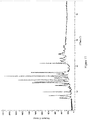
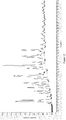
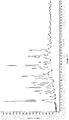
Figure 1 shows the XRPD spectrum of crystal form A of the compound of formula (I). -
Figure 2 shows the XRPD spectrum of crystal form B of the compound of formula (I). -
Figure 3 shows the DSC spectrum of crystal form B of the compound of formula (I). -
Figure 4 shows the XRPD spectrum of crystal form C of the compound of formula (I). -
Figure 5 shows the DSC spectrum of crystal form C of the compound of formula (I). -
Figure 6 shows the XRPD spectrum of crystal form D of the compound of formula (I). -
Figure 7 shows the DSC spectrum of crystal form D of the compound of formula (I). -
Figure 8 shows theDVS circulation 1 diagram of crystal form D of the compound of formula (I). -
Figure 9 shows theDVS circulation 2 diagram of crystal form D of the compound of formula (I). -
Figure 10 shows the XRPD spectrum of crystal form B of the compound of formula (I) onDay 0. -
Figure 11 shows the XRPD spectrum of crystal form B of the compound of formula (I) after 20 days under the conditions of 25°C, RH 65%. -
Figure 12 shows the XRPD spectrum of crystal form D of the compound of formula (I) onDay 0. -
Figure 13 shows the XRPD spectrum of crystal form D of the compound of formula (I) after 20 days under the conditions of 40°C, RH 75%. -
Figure 14 shows the XRPD spectrum of crystal form D of the compound of formula (I) after 20 days under the conditions of 25°C, RH 65%. -
Figure 15 shows the X-ray single crystal diffraction molecular stereostructure diagram of crystal form A of the compound of formula (I). -
Figure 16 shows the X-ray single crystal diffraction molecular stereostructure diagram of crystal form D of the compound of formula (I). -
Figure 17 shows the XRPD spectrum of amorphous form of the compound of formula (I). - The present invention will be illustrated by the following examples in detail. The examples of the present invention are merely intended to describe the technical solution of the present invention, and should not be considered as limiting the spirit and scope of the present invention.
- Test conditions for the instruments used in the experiments:
- 1. Differential Scanning Calorimeter, DSC
Instrument type: Mettler Toledo DSC3+ STARe System
Purging gas: Nitrogen (50 mL/min)
Heating rate: 10.0°C/min
Temperature range: 20-250°C - 2. X-ray Powder Diffraction, XRPD
Instrument type: BRUKER D8 Discover A25 X-ray powder diffractometer
Ray: monochromatic Cu-Ka ray (λ=1.5406 Å)
Scanning mode: θ/2θ, Scanning range: 10-48°
Voltage: 40 kV, Electric current: 40 mA - 3. Dynamic Vapour Sorption, DVS
Instrument type: DVS advantage
Temperature: 25°C
Solvent: water
Humidity change: 0-95-0-95-0% RH, dm/dt=0.002 -

- 2-Ethylbenzoic acid 1a (20.0 g, 133 mmol, prepared according to the method disclosed in "Journal of the American Chemical Society, 1991, 113(13), 4931-6") was added to 150 mL of sulfuric acid, then sodium nitrate (11.3 g, 133 mmol) was added in batches in an ice bath. The reaction solution was stirred for 3 hours, then N-bromosuccinimide (2.6 g, 14.5 mmol) was added in batches. The reaction system was stirred for 1 hour at 60°C. After the reaction was completed, the reaction solution was poured to ice water, stirred well and filtered. The filtrate was washed with water, and concentrated under reduced pressure to obtain the crude title product 3-bromo-2-ethyl-5-nitrobenzoic acid lb (35 g) as a white solid, which was directly used in the next step without purification.
- The crude 3-bromo-2-ethyl-5-nitrobenzoic acid lb (35 g, 128 mmol) was dissolved in 200 mL of N,N-dimethylformamide, then iodomethane (21.8 g, 153 mmol) and potassium carbonate (35.3 g, 255 mmol) were added. The reaction system was stirred for 2 hours at room temperature. After the reaction was completed, the reaction solution was concentrated under reduced pressure. The reaction solution was added with excess water, and extracted with ethyl acetate. The organic phases were combined, washed with water and saturated sodium chloride solution, dried over anhydrous sodium sulfate, and filtered. The filtrate was concentrated under reduced pressure to obtain the crude title product methyl 3-bromo-2-ethyl-5-nitrobenzoate lc (36 g) as a yellow oil, which was directly used in the next step without purification.
- The crude methyl 3-bromo-2-ethyl-5-nitrobenzoate lc (35.0 g, 121 mmol) was added to 250 mL of ethanol and 150 mL of water. The reaction solution was heated to 70°C, added with ammonium chloride (52.8 g, 969 mmol), then added with iron powder (34 g, 606 mmol) in batches. The reaction system was stirred for 2 hours at 70°C. After the reaction was completed, the reaction solution was filtered through celite while hot. The filter cake was washed with hot ethanol, then the filtrate was combined and concentrated under reduced pressure. Ethyl acetate and saturated sodium bicarbonate solution were added. Two phases were separated, and the aqueous phase was extracted with ethyl acetate. The organic phases were combined, washed with saturated sodium chloride solution, dried over anhydrous sodium sulfate, and filtered. The filtrate was concentrated under reduced pressure, and the resulting residue was purified by silica gel column chromatography with n-hexane and ethyl acetate as the eluent to obtain the title product methyl 5-amino-3-bromo-2-ethylbenzoate Id (22.0 g, yield 70%) as a yellow solid.
- Methyl 5-amino-3-bromo-2-ethylbenzoate Id (15.0 g, 58 mmol) was dissolved in 10 mL of acetonitrile, then 200 mL of 10% sulfuric acid was added. The reaction solution was stirred well and cooled to 3°C in an ice-salt bath, then added dropwise with 10 mL of a pre-prepared solution of sodium nitrite (4.4 g, 64 mmol). The reaction solution was stirred for 4 hours at the above temperature, added dropwise with 200 mL of 50% sulfuric acid, then stirred for 1 hour at 90°C. After the reaction was completed, the reaction solution was extracted three times with ethyl acetate. The organic phases were combined, washed with saturated sodium chloride solution, dried over anhydrous sodium sulfate, and filtered. The filtrate was concentrated under reduced pressure, and the resulting residue was purified by silica gel column chromatography with n-hexane and ethyl acetate as the eluent to obtain the title product methyl 3-bromo-2-ethyl-5-hydroxybenzoate le (5.5 g, yield 37%) as a brown solid.
- Methyl 3-bromo-2-ethyl-5-hydroxybenzoate le (35 g, 135 mmol) was dissolved in 200 mL of N,N-dimethylformamide, then 2-bromo-1,1-diethoxyethane (40 g, 202 mmol) and potassium carbonate (37 g, 269 mmol) were added. The reaction system was stirred at 120°C for 12 hours. After the reaction was completed, the reaction solution was concentrated under reduced pressure to remove N,N-dimethylformamide. The reaction solution was added with water, and extracted three times with ethyl acetate. The organic phases were combined, washed with saturated sodium chloride solution, dried over anhydrous sodium sulfate, and filtered. The filtrate was concentrated under reduced pressure, and the resulting residue was purified by silica gel column chromatography with n-hexane and ethyl acetate as the eluent to obtain the title product methyl 3-bromo-5-(2,2-diethoxyethoxy)-2-ethylbenzoate If (40 g, yield 80%) as a light yellow oil.
- Polyphosphoric acid (30 g) was added to 400 mL of toluene. The reaction solution was heated to 100°C, and added with 50 mL of a pre-prepared solution of methyl 3-bromo-5-(2,2-diethoxyethoxy)-2-ethylbenzoate If (40 g, 107 mmol) in toluene under stirring. The reaction solution was stirred for 16 hours at 100°C. After the reaction was completed, the supernatant was decanted. The residue was added with water and ethyl acetate. Two phases were separated, and the aqueous phase was extracted with ethyl acetate. The organic phases were combined, washed with saturated sodium carbonate solution and saturated sodium chloride solution, dried over anhydrous sodium sulfate, and filtered. The filtrate was concentrated under reduced pressure, and the resulting residue was purified by silica gel column chromatography with n-hexane and ethyl acetate as the eluent to obtain the title product methyl 6-bromo-5-ethylbenzofuran-4-carboxylate lg (11.8 g, yield 39%) as a yellow solid.
- Methyl 6-bromo-5-ethylbenzofuran-4-carboxylate lg (11.0 g, 39 mmol), tetrahydro-2H-pyran-4-amine (5.89 g, 58 mmol), tris(dibenzylideneacetone)dipalladium (3.6 g, 3.9 mmol), (.9 mmol) bis(diphenylphosphino)-1,1'-binaphthalene (4.86 g, 7.8 mmol) and cesium carbonate (38 g, 117 mmol) were dissolved in 100 mL of toluene. The reaction solution was stirred for 12 hours at 100°C. After the reaction was completed, the reaction solution was filtered through celite, and the filter cake was washed with ethyl acetate. The organic phases were combined, dried over anhydrous sodium sulfate, and filtered. The filtrate was concentrated under reduced pressure, and the resulting residue was purified by silica gel column chromatography with n-hexane and ethyl acetate as the eluent to obtain the title product methyl 5-ethyl-6-((tetrahydro-2H-pyran-4-yl)amino)benzofuran-4-carboxylate 1h (10.0 g, yield 85%) as a yellow solid.
- Methyl 5-ethyl-6-((tetrahydro-2H-pyran-4-yl)amino)benzofuran-4-carboxylate 1h (10.0 g, 0.033 mmol) was dissolved in 150 mL of 1,2-dichloroethane, then acetaldehyde (7.2 g, 0.165 mmol) and acetic acid (9.9 g, 0.165 mmol) were added. The reaction solution was stirred for 1 hour, and added with sodium triacetoxyborohydride (20.8 g, 0.1 mmol). The reaction solution was stirred for 12 hours at room temperature. After the reaction was completed, the reaction solution was concentrated under reduced pressure, neutralized with saturated sodium bicarbonate solution, and extracted with ethyl acetate. The organic phases were combined, washed with saturated sodium chloride solution, dried over anhydrous sodium sulfate, and filtered. The filtrate was concentrated under reduced pressure, and the resulting residue was purified by silica gel column chromatography with n-hexane and ethyl acetate as the eluent to obtain the title product methyl 5-ethyl-6-(ethyl(tetrahydro-2H-pyran-4-yl)amino)benzofuran-4-carboxylate 1i (7.8 g, yield 71%) as a white solid.
MS m/z (LC-MS): 332.4 [M+1] - Methyl 5-ethyl-6-(ethyl(tetrahydro-2H-pyran-4-yl)amino)benzofuran-4-carboxylate 1i (1.6 g, 4.8 mmol) was dissolved in 25 mL of tetrahydrofuran. The reaction solution was cooled to -70°C, and added dropwise with 2.0 M lithium diisopropylamide (3.6 mL, 7.3 mmol) under an argon atmosphere. The reaction solution was stirred for 90 minutes, and added with N,N-dimethylformamide (536 mg, 7.3 mmol). The reaction solution was stirred for 2 hours, then slowly warmed up to room temperature. The reaction solution was added with excess ammonium chloride, stirred well and extracted three times with ethyl acetate. The organic phases were combined, washed with saturated sodium chloride solution, dried over anhydrous sodium sulfate, and filtered. The filtrate was concentrated under reduced pressure, and the resulting residue was purified by silica gel column chromatography with n-hexane and ethyl acetate as the eluent to obtain the title product methyl 5-ethyl-6-(ethyl(tetrahydro-2H-pyran-4-yl)amino)-2-formylbenzofuran-4-carboxylate 1j (1.3 g, yield 75%) as a yellow oil.
MS m/z (ESI):360.2 [M+1] - Methyl 5-ethyl-6-(ethyl(tetrahydro-2H-pyran-4-yl)amino)-2-formylbenzofuran-4-carboxylate 1j (1.4 g, 3.9 mmol) was dissolved in 5 mL of tetrahydrofuran and 10 mL of methanol, then sodium borohydride (222 mg, 5.8 mmol) was added. The reaction solution was stirred for 30 minutes at room temperature. After the reaction was completed, the reaction solution was concentrated under reduced pressure, added with water and saturated sodium bicarbonate solution, and extracted three times with ethyl acetate. The organic phases were combined, washed with saturated sodium chloride solution, dried over anhydrous sodium sulfate, and filtered. The filtrate was concentrated under reduced pressure, and the resulting residue was purified by silica gel column chromatography with n-hexane and ethyl acetate as the eluent to obtain the title product methyl 5-ethyl-6-(ethyl(tetrahydro-2H-pyran-4-yl)amino)-2-(hydroxymethyl)benzofuran-4-carb oxylate 1k (1.4 g, yield 99%) as a yellow oil.
- Methyl 5-ethyl-6-(ethyl(tetrahydro-2H-pyran-4-yl)amino)-2-(hydroxymethyl) benzofuran-4-carboxylate 1k (1.0 g, 2.8 mmol) was dissolved in 30 mL of tetrahydrofuran, then phosphorus tribromide (1.12 g, 4.2 mmol) was added dropwise. The reaction solution was stirred for 12 hours at room temperature. After the reaction was completed, the reaction solution was neutralized with saturated sodium bicarbonate solution, and extracted with ethyl acetate three times. The organic phases were combined, washed with saturated sodium chloride solution, dried over anhydrous sodium sulfate, and filtered. The filtrate was concentrated under reduced pressure to obtain the crude title product methyl 2-(bromomethyl)-5-ethyl-6-(ethyl(tetrahydro-2H-pyran-4-yl)amino)benzofuran-4-carbo xylate 11 (1.15 g) as a yellow oil, which was directly used in the next step without purification.
- The crude methyl 2-(bromomethyl)-5-ethyl-6-(ethyl(tetrahydro-2H-pyran-4-yl)amino)benzofuran-4-carbo xylate 11 (1.15 g, 2.7 mmol) was dissolved in 15 mL of acetonitrile, then 10 mL of a pre-prepared solution of piperidine (362 mg, 4.3 mmol) in acetonitrile were added dropwise. The reaction solution was stirred for 30 minutes at room temperature. After the reaction was completed, the reaction solution was concentrated under reduced pressure, and added with ethyl acetate and saturated sodium bicarbonate solution. Two phases were separated, and the aqueous phase was extracted with ethyl acetate. The organic phases were combined, washed with saturated sodium chloride solution, dried over anhydrous sodium sulfate, and filtered. The filtrate was concentrated under reduced pressure, and the resulting residue was purified by silica gel column chromatography with dichloromethane and methanol as the eluent to obtain the title product methyl 5-ethyl-6-(ethyl(tetrahydro-2H-pyran-4-yl)amino)-2-(piperidin-1-ylmethyl)benzofuran-4-carboxylate 1m (1.2 g, yield 99%) as a yellow oil.
MS m/z (LC-MS): 429.2[M+1] - Methyl 5-ethyl-6-(ethyl(tetrahydro-2H-pyran-4-yl)amino)-2-(piperidin-1-ylmethyl) benzofuran-4-carboxylate 1m (1.2 g, 2.7 mmol) was dissolved in 5 mL of tetrahydrofuran and 20 mL of methanol, then 5 mL of 4 M sodium hydroxide solution were added. The reaction solution was stirred for 12 hours at 60°C. After the reaction was completed, concentrated hydrochloric acid was added to adjust the pH of the reaction solution to 4. The mixture was concentrated under reduced pressure, and the residue was dissolved in a mixed solvent of dichloromethane and methanol (V:V=5:1) and filtered. The filter cake was washed with a mixed solvent of dichoromethane and methanol (V:V=5:1). The filtrates were combined, and concentrated under reduced pressure to obtain the crude title product 5-ethyl-6-(ethyl(tetrahydro-2H-pyran-4-yl)amino)-2-(piperidin-1-ylmethyl)benzofuran-4-carboxylic acid 1n (1.1 g) as a yellow solid, which was directly used in the next step without purification.
MS m/z (LC-MS): 415.2[M+1] - 5-Ethyl-6-(ethyl(tetrahydro-2H-pyran-4-yl)amino)-2-(piperidin-1-ylmethyl)benzof uran-4-carboxylic acid 1n (1.0 g, 2.4 mmol) was dissolved in 30 mL of N,N-dimethylformamide, then 1-ethyl-3-(3-dimethylaminopropyl)carbodiimide (696 mg, 3.6 mmol), 1-hydroxybenzotriazole (490 mg, 3.6 mmol) and N,N-diisopropylethylamine (1.56 g, 12.1 mmol) were added. The reaction solution was stirred for 1 hour, then added with 3-(aminomethyl)-4,6-dimethylpyridin-2(1H)-one hydrochloride 2a (593 mg, 3.0 mmol, prepared according to the method disclosed in the patent application "
WO2014097041 "). The reaction solution was stirred for 12 hours at room temperature. After the reaction was completed, the reaction solution was added with excess water, and extracted with a mixed solvent of dichloromethane and methanol (V:V=8:1). The organic phases were combined, washed with water and saturated sodium chloride solution, dried over anhydrous sodium sulfate, and filtered. The filtrate was concentrated under reduced pressure, and the resulting residue was purified by silica gel column chromatography with dichloromethane and methanol as the eluent to obtain the title product N-((4,6-dimethyl-2-oxo-1,2-dihydropyridin-3-yl)methyl)-5-ethyl-6-(ethyl(tetrahydro-2 H-pyran-4-yl)amino)-2-(piperidin-1-ylmethyl)benzofuran-4-carboxamide (I) (750 mg, yield 57%) as a white solid.
MS m/z (ESI): 549.7 [M+1]
The white solid product was identified as amorphous form by XRPD spectrum. The XRPD spectrum of the amorphous form is shown inFigure 17 . - The crude product N-((4,6-dimethyl-2-oxo-1,2-dihydropyridin-3-yl)methyl)-5-ethyl-6-(ethyl(tetrahydro-2 H-pyran-4-yl)amino)-2-(piperidin-1-ylmethyl)benzofuran-4-carboxamide (20 mg, 0.036 mmol) obtained in Comparative example 1 was added to a reaction flask, and a mixed solvent of dichloromethane-acetonitrile (v:v, 1:10, 500 µL) was added. The reaction solution was stirred at 25°C for one hour, and filtrated. The filtrate was placed in a clean flask, and slowly volatilized until the solvent was completely dried to obtain a white to pale yellow solid. The XRPD spectrum of the solid sample is shown in
Figure 1 , and the characteristic peak positions are shown in the following table:Table 1. Characteristic peaks of crystal form A Peak No. 2θ[°] d[Å] Peak 17.60 11.62 Peak 2 8.51 10.38 Peak 3 10.37 8.53 Peak 4 11.16 7.92 Peak 5 11.80 7.5 Peak 6 12.38 7.14 Peak 7 12.89 6.86 Peak 8 13.52 6.55 Peak 9 13.73 6.44 Peak 1014.03 6.31 Peak 1114.48 6.11 Peak 1215.23 5.81 Peak 1315.99 5.54 Peak 1416.10 5.5 Peak 1516.43 5.39 Peak 1616.82 5.27 Peak 1716.99 5.21 Peak 1817.35 5.11 Peak 19 18.24 4.86 Peak 2018.92 4.69 Peak 21 19.17 4.63 Peak 2220.68 4.29 Peak 2320.82 4.26 Peak 2421.57 4.12 Peak 2521.91 4.05 Peak 2622.57 3.94 Peak 2722.76 3.90 Peak 2822.88 3.88 Peak 2923.53 3.78 Peak 3023.68 3.75 Peak 3124.00 3.71 Peak 3224.29 3.66 Peak 3324.47 3.64 Peak 3424.91 3.57 Peak 3525.24 3.53 Peak 36 25.72 3.46 Peak 3725.90 3.44 Peak 38 27.23 3.27 Peak 39 27.74 3.21 Peak 4035.63 2.52 - The crude product N-((4,6-dimethyl-2-oxo-1,2-dihydropyridin-3-yl)methyl)-5-ethyl-6-(ethyl(tetrahydro-2 H-pyran-4-yl)amino)-2-(piperidin-1-ylmethyl)benzofuran-4-carboxamide (30 mg, 0.055 mmol) obtained in Comparative example 1 was added to a reaction flask, and dissolved in a mixed solvent of acetonitrile and dichloromethane (v/v, 10:1, 1 mL). The mouth of the flask was sealed by a sealing film which was punctured two to three small holes. The solvent was volatilized to obtain a single crystal. The single molecular stereostructure of the crystal sample is shown in
Figure 15 by single crystal X-ray diffraction (XRD), and the unit cell parameters are shown in the following table:Table 2. Unit cell parameters of single crystal of crystal form A Parameters Values Crystal system Orthorhombic crystal system Space group P bca Unit cell parameters a (Å) 17.051(3) b (Å) 15.840(3) c (Å) 23.2549(5) α (°) 90.0 β (°) 90.0 γ (°) 90.0 Unit cell volume V (Å3) 6279(2) Z (Asymmetric unit number in unit cell) 8 Calculated density (g/cm3) 1.161 - The crude product N-((4,6-dimethyl-2-oxo-1,2-dihydropyridin-3-yl)methyl)-5-ethyl-6-(ethyl(tetrahydro-2 H-pyran-4-yl)amino)-2-(piperidin-1-ylmethyl)benzofuran-4-carboxamide (30 mg, 0.055 mmol) obtained in Comparative example 1 was added to a reaction flask, and dissolved in ethanol (300 µL). The mouth of the flask was sealed by a sealing film which was punctured two to three small holes. The solution was placed still at room temperature until the solvent volatilized to dryness to obtain a white to pale yellow solid. The XRPD spectrum of the crystal sample is shown in
Figure 2 . The DSC spectrum is shown inFigure 3 , in which there are one endothermic peak and one exothermic during the temperature-rise period, the onset of the exothermic peak is at about 123.69°C, and the onset melting temperature is about 206.31°C. The crystal form was defined as crystal form B, and the characteristic peak positions are shown in the following table:Table 3. Characteristic peaks of crystal form B Peak No. 2θ[°] d[Å] Peak 16.31 13.99 Peak 2 7.24 12.19 Peak 3 8.92 9.90 Peak 4 10.38 8.52 Peak 5 10.99 8.04 Peak 6 12.07 7.33 Peak 7 14.56 6.08 Peak 8 15.10 5.86 Peak 9 16.36 5.42 Peak 1017.29 5.12 Peak 1117.94 4.94 Peak 1219.13 4.64 Peak 1319.71 4.50 Peak 1421.12 4.20 Peak 1521.48 4.13 Peak 1622.59 3.93 Peak 1724.15 3.68 Peak 1825.45 3.50 Peak 19 26.28 3.39 Peak 2026.52 3.36 Peak 21 27.10 3.29 Peak 2228.83 3.09 Peak 2330.07 2.97 Peak 2431.37 2.85 Peak 2532.56 2.75 Peak 2633.65 2.66 Peak 2734.64 2.59 Peak 2836.09 2.49 Peak 2937.13 2.42 Peak 3040.04 2.25 - The crude product N-((4,6-dimethyl-2-oxo-1,2-dihydropyridin-3-yl)methyl)-5-ethyl-6-(ethyl(tetrahydro-2 H-pyran-4-yl)amino)-2-(piperidin-1-ylmethyl)benzofuran-4-carboxamide (30 mg, 0.055 mmol) obtained in Comparative example 1 was added to a reaction flask, and dissolved in ethanol (300 µL). The solution was added with water (900 µL) as an anti-solvent to precipitate a crystal. The mixture was filtered and dried to obtain a pale yellow solid. The crystal sample was identified as crystal form B by XRPD.
- The crude product N-((4,6-dimethyl-2-oxo-1,2-dihydropyridin-3-yl)methyl)-5-ethyl-6-(ethyl(tetrahydro-2 H-pyran-4-yl)amino)-2-(piperidin-1-ylmethyl)benzofuran-4-carboxamide (30 mg, 0.055 mmol) obtained in Comparative example 1 was added to a reaction flask, and dissolved in 1,4-dioxane (1 mL). The solution was added with n-heptane (2 mL) to precipitate a crystal. The mixture was filtered and dried to obtain a white to pale yellow powder. The XRPD spectrum of the crystal sample is shown in
Figure 4 . The DSC spectrum is shown inFigure 5 , in which there are multiple endothermic peaks. The crystal form was defined as crystal form C, and the characteristic peak positions are shown in the following table:Table 4. Characteristic peaks of crystal form C Peak No. 2θ[°] d[Å] Peak 17.40 11.93 Peak 2 8.62 10.25 Peak 3 9.49 9.32 Peak 4 9.96 8.88 Peak 5 11.12 7.95 Peak 6 12.32 7.18 Peak 7 13.39 6.61 Peak 8 14.21 6.23 Peak 9 14.85 5.96 Peak 1015.52 5.71 Peak 1116.50 5.37 Peak 1217.67 5.01 Peak 1318.28 4.85 Peak 1419.15 4.63 Peak 1519.17 4.63 Peak 1620.06 4.42 Peak 1720.80 4.27 Peak 1821.42 4.15 Peak 19 21.89 4.06 Peak 2022.20 4.00 Peak 21 22.78 3.90 Peak 2223.41 3.80 Peak 2324.74 3.60 Peak 2425.34 3.51 Peak 2526.70 3.34 Peak 2627.38 3.25 Peak 2728.64 3.11 Peak 2829.63 3.01 Peak 2930.20 2.96 Peak 3031.15 2.87 - The crude product N-((4,6-dimethyl-2-oxo-1,2-dihydropyridin-3-yl)methyl)-5-ethyl-6-(ethyl(tetrahydro-2 H-pyran-4-yl)amino)-2-(piperidin-1-ylmethyl)benzofuran-4-carboxamide (50 mg, 0.091 mmol) obtained in Comparative example 1 was added to a reaction flask, and methanol (100 µL) was added. The solution was stirred at 25°C for five days, filtrated and dried under vacuum to obtain a white to pale yellow powder. The XRPD spectrum of the crystal sample is shown in
Figure 6 . The DSC spectrum is shown inFigure 7 , in which the onset melting temperature is about 205.45°C. The crystal form was defined as crystal form D. It can be seen from the DVS diagrams ofFigures 8 and9 that the crystal form D has no obvious hygroscopicity. The characteristic peak positions are shown in the following table:Table 5. Characteristic peaks of crystal form D Peak No. 2θ[°] d[Å] Peak 18.41 10.50 Peak 2 8.85 9.98 Peak 3 10.15 8.71 Peak 4 11.38 7.77 Peak 5 12.18 7.26 Peak 6 13.45 6.58 Peak 7 14.40 6.14 Peak 8 15.15 5.84 Peak 9 16.73 5.29 Peak 1017.59 5.04 Peak 1117.68 5.01 Peak 1218.42 4.81 Peak 1318.91 4.69 Peak 1419.22 4.61 Peak 1520.45 4.34 Peak 1621.15 4.20 Peak 1721.51 4.13 Peak 1822.11 4.02 Peak 19 22.72 3.91 Peak 2024.03 3.70 Peak 21 24.53 3.63 Peak 2224.91 3.57 Peak 2325.54 3.49 Peak 2426.54 3.36 Peak 2527.11 3.29 Peak 2627.61 3.23 Peak 2729.04 3.07 Peak 2830.49 2.93 Peak 2931.31 2.85 Peak 3033.00 2.71 Peak 3133.88 2.64 Peak 3235.52 2.53 Peak 3337.53 2.39 Peak 3440.46 2.23 Peak 3541.36 2.18 Peak 36 42.40 2.13 Peak 3744.02 2.06 - The crude product N-((4,6-dimethyl-2-oxo-1,2-dihydropyridin-3-yl)methyl)-5-ethyl-6-(ethyl(tetrahydro-2 H-pyran-4-yl)amino)-2-(piperidin-1-ylmethyl)benzofuran-4-carboxamide (30 mg, 0.055 mmol) obtained in Comparative example 1 was added to a reaction flask, and dissolved in a mixed solvent of methanol and pure water (v/v, 6:1, 1 mL). The mouth of the flask was sealed by a sealing film which was punctured two to three small holes. The solvent was volatilized to obtain a single crystal. The single molecular stereostructure of the crystal sample is shown in
Figure 16 by single crystal X-ray diffraction (XRD), and the unit cell parameters are shown in the following table:Table 6. Unit cell parameters of single crystal of crystal form D Parameters Values Crystal system Orthorhombic crystal system Space group P bca Unit cell parameters a (Å) 17.4737(6) b (Å) 17.5933(5) c (Å) 19.9907(7) α (°) 90.0 β (°) 90.0 γ (°) 90.0 Unit cell volume V (Å3) 6145.5(3) Z (Asymmetric unit number in unit cell) 8 Calculated density (g/cm3) 1.186 - The crude product N-((4,6-dimethyl-2-oxo-1,2-dihydropyridin-3-yl)methyl)-5-ethyl-6-(ethyl(tetrahydro-2 H-pyran-4-yl)amino)-2-(piperidin-1-ylmethyl)benzofuran-4-carboxamide (30 mg, 0.055 mmol) obtained in Comparative example 1 was added to a reaction flask, and dissolved in a mixed solvent of ethanol and pure water (v/v, 6:1, 1 mL). The mouth of the flask was sealed by a sealing film which was punctured two to three small holes. The solvent was volatilized to obtain a crystal which was identified as the single crystal of crystal form D by single crystal X-ray diffraction (XRD).
- The crude product N-((4,6-dimethyl-2-oxo-1,2-dihydropyridin-3-yl)methyl)-5-ethyl-6-(ethyl(tetrahydro-2 H-pyran-4-yl)amino)-2-(piperidin-1-ylmethyl)benzofuran-4-carboxamide (30 mg, 0.055 mmol) obtained in Comparative example 1 was added to a reaction flask, and ethyl acetate (300 µL) was added. The mixture was pulped at room temperature for two hours, filtrated and dried to obtain a pale yellow solid, which was identified as crystal form D by XRPD.
- The crude product N-((4,6-dimethyl-2-oxo-1,2-dihydropyridin-3-yl)methyl)-5-ethyl-6-(ethyl(tetrahydro-2 H-pyran-4-yl)amino)-2-(piperidin-1-ylmethyl)benzofuran-4-carboxamide (30 mg, 0.055 mmol) obtained in Comparative example 1 was added to a reaction flask, and propylene glycol methyl ether (300 µL) was added. The mixture was pulped at room temperature for two hours, filtrated and dried to obtain a pale yellow solid, which was identified as crystal form D by XRPD.
- The crude product N-((4,6-dimethyl-2-oxo-1,2-dihydropyridin-3-yl)methyl)-5-ethyl-6-(ethyl(tetrahydro-2 H-pyran-4-yl)amino)-2-(piperidin-1-ylmethyl)benzofuran-4-carboxamide (30 mg, 0.055 mmol) obtained in Comparative example 1 was added to a reaction flask, and cyclohexane (300 µL) was added. The mixture was pulped at 25°C for two hours, filtrated and dried to obtain a pale yellow solid, which was identified as crystal form D by XRPD.
- The crude product N-((4,6-dimethyl-2-oxo-1,2-dihydropyridin-3-yl)methyl)-5-ethyl-6-(ethyl(tetrahydro-2 H-pyran-4-yl)amino)-2-(piperidin-1-ylmethyl)benzofuran-4-carboxamide (30 mg, 0.055 mmol) obtained in Comparative example 1 was added to a reaction flask, and xylene (300 µL) was added. The mixture was pulped at 25°C for two hours, filtrated and dried to obtain a pale yellow solid, which was identified as crystal form D by XRPD.
- The crude product N-((4,6-dimethyl-2-oxo-1,2-dihydropyridin-3-yl)methyl)-5-ethyl-6-(ethyl(tetrahydro-2 H-pyran-4-yl)amino)-2-(piperidin-1-ylmethyl)benzofuran-4-carboxamide (30 mg, 0.055 mmol) obtained in Comparative example 1 was added to a reaction flask, and acetonitrile (300 µL) was added. The mixture was pulped at 50°C for two hours, filtrated and dried to obtain a pale yellow solid, which was identified as crystal form D by XRPD.
- The crude product N-((4,6-dimethyl-2-oxo-1,2-dihydropyridin-3-yl)methyl)-5-ethyl-6-(ethyl(tetrahydro-2 H-pyran-4-yl)amino)-2-(piperidin-1-ylmethyl)benzofuran-4-carboxamide (30 mg, 0.055 mmol) obtained in Comparative example 1 was added to a reaction flask, and acetone (300 µL) was added. The mixture was pulped at 50°C for two hours, filtrated and dried to obtain a pale yellow solid, which was identified as crystal form D by XRPD.
- The crude product N-((4,6-dimethyl-2-oxo-1,2-dihydropyridin-3-yl)methyl)-5-ethyl-6-(ethyl(tetrahydro-2 H-pyran-4-yl)amino)-2-(piperidin-1-ylmethyl)benzofuran-4-carboxamide (30 mg, 0.055 mmol) obtained in Comparative example 1 was added to a reaction flask, and nitromethane (300 µL) was added. The mixture was pulped at 50°C for two hours, filtrated and dried to obtain a pale yellow solid, which was identified as crystal form D by XRPD.
- The crude product N-((4,6-dimethyl-2-oxo-1,2-dihydropyridin-3-yl)methyl)-5-ethyl-6-(ethyl(tetrahydro-2 H-pyran-4-yl)amino)-2-(piperidin-1-ylmethyl)benzofuran-4-carboxamide (30 mg, 0.055 mmol) obtained in Comparative example 1 was added to a reaction flask, and dimethylformamide (300 µL) was added. The mixture was pulped for two hours, filtrated at 50°C and dried to obtain a pale yellow solid, which was identified as crystal form D by XRPD.
- The crude product N-((4,6-dimethyl-2-oxo-1,2-dihydropyridin-3-yl)methyl)-5-ethyl-6-(ethyl(tetrahydro-2 H-pyran-4-yl)amino)-2-(piperidin-1-ylmethyl)benzofuran-4-carboxamide (30 mg, 0.055 mmol) obtained in Comparative example 1 was added to a reaction flask, and dissolved in isopropanol (1 mL). The solvent was volatilized, and the resulting solid was then dried to obtain a pale yellow solid, which was identified as crystal form D by XRPD.
- The crude product N-((4,6-dimethyl-2-oxo-1,2-dihydropyridin-3-yl)methyl)-5-ethyl-6-(ethyl(tetrahydro-2 H-pyran-4-yl)amino)-2-(piperidin-1-ylmethyl)benzofuran-4-carboxamide (30 mg, 0.055 mmol) obtained in Comparative example 1 was added to a reaction flask, and dissolved in a mixed solvent of methanol and water (v/v, 19:1, 300 µL). The solvent was volatilized, and the resulting solid was then filtrated and dried to obtain a pale yellow solid, which was identified as crystal form D by XRPD.
- The crude product N-((4,6-dimethyl-2-oxo-1,2-dihydropyridin-3-yl)methyl)-5-ethyl-6-(ethyl(tetrahydro-2 H-pyran-4-yl)amino)-2-(piperidin-1-ylmethyl)benzofuran-4-carboxamide (30 mg, 0.055 mmol) obtained in Comparative example 1 was added to a reaction flask, and dissolved in dioxane (1 mL). The solvent was volatilized, and the resulting solid was then dried to obtain a pale yellow solid, which was identified as crystal form D by XRPD.
- The crude product N-((4,6-dimethyl-2-oxo-1,2-dihydropyridin-3-yl)methyl)-5-ethyl-6-(ethyl(tetrahydro-2 H-pyran-4-yl)amino)-2-(piperidin-1-ylmethyl)benzofuran-4-carboxamide (30 mg, 0.055 mmol) obtained in Comparative example 1 was added to a reaction flask, and dissolved in tetrahydrofuran (300 µL). The solution was added with water (900 µL) as an anti-solvent, and the resulting solid was then filtrated and dried to obtain a pale yellow solid, which was identified as crystal form D by XRPD.
- The crude product N-((4,6-dimethyl-2-oxo-1,2-dihydropyridin-3-yl)methyl)-5-ethyl-6-(ethyl(tetrahydro-2 H-pyran-4-yl)amino)-2-(piperidin-1-ylmethyl)benzofuran-4-carboxamide (30 mg, 0.055 mmol) obtained in Comparative example 1 was added to a reaction flask, and dimethyl sulfoxide (100 µL) was added. The mixture was pulped at 50°C, filtrated and dried to obtain a pale yellow solid, which was identified as crystal form D by XRPD.
- The crude product N-((4,6-dimethyl-2-oxo-1,2-dihydropyridin-3-yl)methyl)-5-ethyl-6-(ethyl(tetrahydro-2 H-pyran-4-yl)amino)-2-(piperidin-1-ylmethyl)benzofuran-4-carboxamide (30 mg, 0.055 mmol) obtained in Comparative example 1 was added to a reaction flask, and dichloromethane (100 µL) was added. The mixture was pulped at 25°C, filtrated and dried to obtain a pale yellow solid, which was identified as crystal form D by XRPD.
- The crude product N-((4,6-dimethyl-2-oxo-1,2-dihydropyridin-3-yl)methyl)-5-ethyl-6-(ethyl(tetrahydro-2 H-pyran-4-yl)amino)-2-(piperidin-1-ylmethyl)benzofuran-4-carboxamide (30 mg, 0.055 mmol) obtained in Comparative example 1 was added to a reaction flask, and methanol (100 µL) was added. The mixture was pulped at 50°C, filtrated and dried to obtain a pale yellow solid, which was identified as crystal form D by XRPD.
- The sample of crystal form B was spread flat in the air to test sample stability under conditions of 25°C-65% relative humidity (RH), and the sampling time was
Day 20. The sample of crystal form D was spread flat in the air to test sample stability under conditions of 40°C-75% RH and 25°C-65% RH, and the sampling time wasDay 20. -
Figure 10 shows the XRPD spectrum of crystal form B onDay 0. -
Figure 11 shows the XRPD spectrum of crystal form B after 20 days under the conditions of 25°C, RH 65% for 20 days. -
Figure 12 shows the XRPD spectrum of crystal form D onDay 0. -
Figure 13 shows the XRPD spectrum of crystal form D after 20 days under the conditions of 40°C, RH 75% for 20 days. -
Figure 14 shows the XRPD spectrum of crystal form D after 20 days under the conditions of 25°C, RH 65% for 20 days. - The results of the stability study shown in
Figures 12 ,13 and14 indicates that the XRPD peaks of the crystal form D of the compound of formula (I) has not changed substantially under the placement conditions of 40°C-75% RH, and the crystal form is stable. The results shown inFigures 10 and11 indicates that the XRPD peaks of the crystal form B of the compound of formula (I) has changed significantly under the placement conditions of 25°C-65% RH. It can be seen that the physical stability of crystal form D is better than that of crystal form B under the placement conditions of 25°C-65%RH.
Claims (15)
- Crystal form A of a compound of formula (I), characterized in that: the crystal form A has an X-ray powder diffraction spectrum, which is obtained by using Cu-Ka radiation and represented by diffraction angle 2θ angle, in which there are characteristic peaks at diffraction angle 2θ angles of 7.60, 8.51, 11.80, 12.38, 13.52, 13.73, 14.48, 15.23, 15.99, 16.10, 16.82, 16.99, 17.35, 18.24, 20.82, 21.57, 21.91, 22.57, 22.76, 22.88, 24.29, 24.47, 25.24, 25.90, 27.23 and 27.74, wherein the error range of 2θ angle of each characteristic peak is ±0.2,

- The crystal form A according to claim 1, characterized in that there are characteristic peaks at diffraction angle 2θ angles of 7.60, 8.51, 10.37, 11.16, 11.80, 12.38, 12.89, 13.52, 13.73, 14.03, 14.48, 15.23, 15.99, 16.10, 16.43, 16.82, 16.99, 17.35, 18.24, 18.92, 19.17, 20.68, 20.82, 21.57, 21.91, 22.57, 22.76, 22.88, 23.53, 23.68, 24.00, 24.29, 24.47, 24.91, 25.24, 25.72, 25.90, 27.23, 27.74 and 35.63, wherein the error range of 2θ angle of each characteristic peak is ±0.2.
- A method for preparing the crystal form A according to any one of claims 1 and 2, characterized in that the method is selected from the group consisting of:method I, dissolving the compound of formula (I) in a solvent to crystallize, filtering and drying the resulting crystal to obtain the desired crystal form A, wherein the solvent is selected from the group consisting of an amide solvent, a mixed solvent of an amide solvent and water, and a mixed solvent of a halohydrocarbon and a nitrile, the amide solvent is selected from the group consisting of N,N-dimethylformamide and N,N-dimethylacetamide, the halohydrocarbon solvent is dichloromethane, and the nitrile solvent is acetonitrile, and the crystallization method is selected from the group consisting of room temperature crystallization, cooling crystallization, solvent volatilization crystallization and crystallization induced by addition of a seed crystal;method II, dissolving the compound of formula (I) in a good solvent, adding an anti-solvent to crystallize, filtering and drying the resulting crystal to obtain the desired crystal form A, wherein the good solvent is an alcohol solvent, the alcohol solvent is selected from the group consisting of methanol and isopropanol, and the anti-solvent is water, and the crystallization method is selected from the group consisting of room temperature crystallization, cooling crystallization, solvent volatilization crystallization and crystallization induced by addition of a seed crystal; andmethod III, adding the compound of formula (I) to a solvent, pulping the mixture, filtering and drying the resulting crystal to obtain the desired crystal form A, wherein the solvent is selected from the group consisting of a mixed solvent of an amide solvent and water, and a mixed solvent of a halohydrocarbon and a nitrile, the amide solvent is selected from the group consisting of N,N-dimethylformamide and N,N-dimethylacetamide, the halohydrocarbon solvent is dichloromethane, and the nitrile solvent is acetonitrile.
- Crystal form B of the compound of formula (I) as defined in claim 1, characterized in that: the crystal form B has an X-ray powder diffraction spectrum, which is obtained by using Cu-Ka radiation and represented by diffraction angle 2θ angle, in which there are characteristic peaks at diffraction angle 2θ angles of 6.31, 7.24, 10.99, 12.07, 14.56, 17.94, 19.13, 19.71, 21.48, 24.15, 27.10 and 28.83, wherein the error range of 2θ angle of each characteristic peak is ±0.2.
- The crystal form B according to claim 4, characterized in that there are characteristic peaks at diffraction angle 2θ angles of 6.31, 7.24, 8.92, 10.38, 10.99, 12.07, 14.56, 15.10, 16.36, 17.29, 17.94, 19.13, 19.71, 21.12, 21.48, 22.59, 24.15, 25.45, 26.28, 26.52, 27.10, 28.83, 30.07, 31.37, 32.56, 33.65, 34.64, 36.09, 37.13 and 40.04, wherein the error range of 2θ angle of each characteristic peak is ±0.2.
- A method for preparing the crystal form B according to any one of claims 4 and 5, characterized in that the method is selected from the group consisting of:method I, dissolving the compound of formula (I) in a solvent to crystallize, filtering and drying the resulting crystal to obtain the desired crystal form B, wherein the solvent is ethanol, and the crystallization method is selected from the group consisting of room temperature crystallization, cooling crystallization, solvent volatilization crystallization and crystallization induced by addition of a seed crystal; andmethod II, dissolving the compound of formula (I) in a good solvent, adding an anti-solvent to crystallize, filtering and drying the resulting crystal to obtain the desired crystal form B, wherein the good solvent is ethanol, and the anti-solvent is water, the crystallization method is selected from the group consisting of room temperature crystallization, cooling crystallization, solvent volatilization crystallization and crystallization induced by addition of a seed crystal.
- Crystal form C of the compound of formula (I) as defined in claim 1, characterized in that: the crystal form C has an X-ray powder diffraction spectrum, which is obtained by using Cu-Ka radiation and represented by diffraction angle 2θ angle, in which there are characteristic peaks at diffraction angle 2θ angles of 7.40, 8.62, 9.49, 12.32, 13.39, 15.52, 19.15, 19.17, 21.42 and 22.78, wherein the error range of 2θ angle of each characteristic peak is ±0.2.
- The crystal form C according to claim 7, characterized in that there are characteristic peaks at diffraction angle 2θ angles of 7.40, 8.62, 9.49, 9.96, 11.12, 12.32, 13.39, 14.21, 14.85, 15.52, 16.50, 17.67, 18.28, 19.15, 19.17, 20.06, 20.80, 21.42, 21.89, 22.20, 22.78, 23.41, 24.74, 25.34, 26.70, 27.38, 28.64, 29.63, 30.20 and 31.15, wherein the error range of 2θ angle of each characteristic peak is ±0.2.
- A method for preparing the crystal form C according to any one of claims 7 and 8, characterized in that the method compries the following steps of:
dissolving the compound of formula (I) in a good solvent, adding an anti-solvent to crystallize, filtering and drying the resulting crystal to obtain the desired crystal form C, wherein the good solvent is an ether solvent, the ether solvent is 1,4-dioxane, the anti-solvent is selected from the group consisting of an aliphatic hydrocarbon solvent and an alicyclic hydrocarbon solvent, the aliphatic hydrocarbon solvent is n-heptane, and the alicyclic hydrocarbon solvent is cyclohexane, and the crystallization method is selected from the group consisting of room temperature crystallization, cooling crystallization, solvent volatilization crystallization and crystallization induced by addition of a seed crystal. - Crystal form D of the compound of formula (I) as defined in claim 1, characterized in that: the crystal form D has an X-ray powder diffraction spectrum, which is obtained by using Cu-Kα radiation and represented by diffraction angle 2θ angle, in which there are characteristic peaks at diffraction angle 2θ angles of 8.41, 8.85, 11.38, 12.18, 13.45, 15.15, 16.73, 17.59, 17.68, 20.45, 21.51, 22.72, 24.53, 24.91 and 27.11, wherein the error range of 2θ angle of each characteristic peak is ±0.2.
- The crystal form D according to claim 10, characterized in that there are characteristic peaks at diffraction angle 2θ angles of 8.41, 8.85, 10.15, 11.38, 12.18, 13.45, 14.40, 15.15, 16.73, 17.59, 17.68, 18.42, 18.91, 19.22, 20.45, 21.15, 21.51, 22.11, 22.72, 24.03, 24.53, 24.91, 25.54, 26.54, 27.11, 27.61, 29.04, 30.49, 31.31, 33.00, 33.88, 35.52, 37.53, 40.46, 41.36, 42.40 and 44.02, wherein the error range of 2θ angle of each characteristic peak is ±0.2.
- A method for preparing the crystal form D according to any one of claims 10 and 11, characterized in that the method is selected from the group consisting of:method I, dissolving the compound of formula (I) in a solvent to crystallize, filtering and drying the resulting crystal to obtain the desired crystal form D, wherein the solvent is selected from the group consisting of an alcohol solvent, an ether solvent, a mixed solvent of an alcohol and water, a mixed solvent of an ether and water, a mixed solvent of an alcohol and an aliphatic hydrocarbon, and a mixed solvent of an ether and an aliphatic hydrocarbon, the alcohol solvent is selected from the group consisting of methanol, ethanol and isopropanol, the ether solvent is selected from the group consisting of tetrahydrofuran and 1,4-dioxane, and the aliphatic hydrocarbon solvent is n-heptane, and the crystallization method is selected from the group consisting of room temperature crystallization, cooling crystallization, solvent volatilization crystallization and crystallization induced by addition of a seed crystal;method II, dissolving the compound of formula (I) in a good solvent, adding an anti-solvent to crystallize, filtering and drying the resulting crystal to obtain the desired crystal form D, wherein the good solvent is selected from the group consisting of an alcohol solvent and an ether solvent, the alcohol solvent is selected from the group consisting of methanol and isopropanol, the ether solvent is tetrahydrofuran, and the anti-solvent is water; or the good solvent is an ether solvent, the ether solvent is tetrahydrofuran, the anti-solvent is selected from the group consisting of an aliphatic hydrocarbon solvent and an alicyclic hydrocarbon solvent, the aliphatic hydrocarbon solvent is n-heptane, and the alicyclic hydrocarbon solvent is cyclohexane, and the crystallization method is selected from the group consisting of room temperature crystallization, cooling crystallization, solvent volatilization crystallization and crystallization induced by addition of a seed crystal;method III, adding the compound of formula (I) to a solvent, pulping the mixture, filtering and drying the resulting crystal to obtain the desired crystal form D, wherein the solvent is selected from the group consisting of water, an ester, an ether, an aliphatic hydrocarbon, an alicyclic hydrocarbon, a nitroalkane solvent, an arene, an alcohol, a nitrile, a halohydrocarbon, a ketone, a sulfoxide, an amide, a mixed solvent of an alcohol and an ether, a mixed solvent of an alcohol and water, and a mixed solvent of one or more alcohol, the ester solvent is selected from the group consisting of ethyl acetate, isopropyl acetate and butyl acetate, the ether solvent is selected from the group consisting of tetrahydrofuran, 1,4-dioxane, propylene glycol methyl ether and methyl tert-butyl ether, the aliphatic hydrocarbon is n-heptane, the alicyclic hydrocarbon is cyclohexane, the nitroalkane solvent is nitromethane, the arene solvent is selected from the group consisting of xylene and cumene, the alcohol solvent is selected from the group consisting of methanol, ethanol and isopropanol, the nitrile solvent is acetonitrile, the halohydrocarbon solvent is dichloromethane, the ketone solvent is acetone, the sulfoxide is dimethyl sulfoxide, the amide solvent is selected from the group consisting of N,N-dimethylformamide and N,N-dimethylacetamide, the mixed solvent of one or more alcohol is selected from the group consisting of a mixed solvent of methanol and ethanol, a mixed solvent of methanol and isopropanol, and a mixed solvent of ethanol and isopropanol.
- A pharmaceutical composition comprising the crystal form A according to any one of claims 1 and 2, the crystal form B according to any one of claims 4 and 5, the crystal form C according to any one of claims 7 and 8, or the crystal form D according to any one of claims 10 and 11, characterized by further comprising one or more pharmaceutically acceptable carriers, diluents or excipients.
- Use of the crystal form A according to any one of claims 1 and 2, the crystal form B according to any one of claims 4 and 5, the crystal form C according to any one of claims 7 and 8, the crystal form D according to any one of claims 10 and 11, or the pharmaceutical composition according to claim 13 in the preparation of a medicament for treating a disease associated with EZH2 inhibitor.
- The use according to claim 14, wherein the disease associated with EZH2 inhibitor is selected from the group consisting of lymphoma, leukemia, breast cancer, lung cancer, prostate cancer, ovarian cancer, liver cancer, melanoma, rhabdoid tumor, synovial sarcoma, mesothelioma, cervical cancer, colon cancer, rectal cancer, stomach cancer, pancreatic cancer, brain cancer, skin cancer, oral cancer, bone cancer, kidney cancer, bladder cancer, fallopian tube tumor, ovarian tumor, peritoneal tumor, glioma, glioblastoma, head and neck tumor and myeloma; preferably lymphoma, leukemia, breast cancer, lung cancer, prostate cancer, ovarian cancer, liver cancer, melanoma, rhabdoid tumor, synovial sarcoma and mesothelioma; the leukemia is preferably chronic myeloid leukemia, acute myeloid leukemia or mixed lineage leukemia; and the lymphoma is preferably non-Hodgkin lymphoma, diffuse large B-cell lymphoma or follicular lymphoma.
Applications Claiming Priority (2)
| Application Number | Priority Date | Filing Date | Title |
|---|---|---|---|
| CN201710350574 | 2017-05-18 | ||
| PCT/CN2018/087272 WO2018210302A1 (en) | 2017-05-18 | 2018-05-17 | Crystal of benzofuran derivative free base and preparation method |
Publications (2)
| Publication Number | Publication Date |
|---|---|
| EP3626715A1 true EP3626715A1 (en) | 2020-03-25 |
| EP3626715A4 EP3626715A4 (en) | 2021-03-24 |
Family
ID=64273357
Family Applications (1)
| Application Number | Title | Priority Date | Filing Date |
|---|---|---|---|
| EP18802467.3A Withdrawn EP3626715A4 (en) | 2017-05-18 | 2018-05-17 | Crystal of benzofuran derivative free base and preparation method |
Country Status (11)
| Country | Link |
|---|---|
| US (1) | US11155537B2 (en) |
| EP (1) | EP3626715A4 (en) |
| JP (1) | JP7257328B2 (en) |
| KR (1) | KR102612379B1 (en) |
| CN (1) | CN109937200B (en) |
| AU (1) | AU2018269268B2 (en) |
| CA (1) | CA3058496A1 (en) |
| MX (1) | MX386586B (en) |
| MY (1) | MY198008A (en) |
| TW (1) | TWI772424B (en) |
| WO (1) | WO2018210302A1 (en) |
Cited By (1)
| Publication number | Priority date | Publication date | Assignee | Title |
|---|---|---|---|---|
| EP4393490A4 (en) * | 2021-08-30 | 2025-08-27 | Jiangsu Hengrui Pharmaceuticals Co Ltd | Use of an EZH2 inhibition in the manufacture of a medicinal product for the treatment of T-cell lymphoma |
Families Citing this family (5)
| Publication number | Priority date | Publication date | Assignee | Title |
|---|---|---|---|---|
| WO2020228591A1 (en) * | 2019-05-10 | 2020-11-19 | 江苏恒瑞医药股份有限公司 | Preparation method for 6-substituted aminobenzofuran compound |
| CA3234851A1 (en) * | 2021-10-15 | 2023-04-20 | Ya CHEN | Method for preparing benzofuran derivative |
| EP4536649A1 (en) | 2022-06-13 | 2025-04-16 | Treeline Biosciences, Inc. | Quinolone bcl6 bifunctional degraders |
| KR20250023481A (en) | 2022-06-13 | 2025-02-18 | 트리라인 바이오사이언시스, 인크. | 1,8-naphthyridin-2-one heterobifunctional BCL6 degrader |
| CN121399084A (en) * | 2023-06-19 | 2026-01-23 | 江苏恒瑞医药股份有限公司 | Preparation method of benzofuran derivative and intermediate thereof |
Family Cites Families (12)
| Publication number | Priority date | Publication date | Assignee | Title |
|---|---|---|---|---|
| WO2012005805A1 (en) | 2010-05-07 | 2012-01-12 | Glaxosmithkline Llc | Azaindazoles |
| JP5864546B2 (en) | 2010-05-07 | 2016-02-17 | グラクソスミスクライン・リミテッド・ライアビリティ・カンパニーGlaxoSmithKline LLC | Indazole |
| SG180031A1 (en) | 2010-10-15 | 2012-05-30 | Agency Science Tech & Res | Combination treatment of cancer |
| WO2012118812A2 (en) * | 2011-02-28 | 2012-09-07 | Epizyme, Inc. | Substituted 6,5-fused bicyclic heteroaryl compounds |
| TW201733984A (en) | 2011-04-13 | 2017-10-01 | 雅酶股份有限公司 | Substituted benzene compounds |
| JO3363B1 (en) | 2011-04-13 | 2019-03-13 | Epizyme Inc | Heterocyclic benzene compounds with aryl or aryl |
| EP2755962B1 (en) | 2011-09-13 | 2017-03-01 | Glaxosmithkline LLC | Azaindazoles |
| CA2850570A1 (en) | 2011-09-30 | 2013-04-04 | Glaxosmithkline Llc | Methods of treating cancer |
| WO2013067300A1 (en) | 2011-11-04 | 2013-05-10 | Glaxosmithkline Intellectual Property (No. 2) Limited | Method of treatment |
| UA111305C2 (en) | 2012-12-21 | 2016-04-11 | Пфайзер Інк. | Condensed with lactams of aryl and heteroaryl |
| LT3121175T (en) | 2014-03-17 | 2020-03-10 | Daiichi Sankyo Company, Limited | 1,3-BENZODOXAZOLE DERIVATIVES AS INHIBITORS OF EZH1 AND / OR EZH2 |
| RS59763B1 (en) * | 2015-11-19 | 2020-02-28 | Jiangsu Hengrui Medicine Co | Benzofuran derivative, preparation method thereof and use thereof in medicine |
-
2018
- 2018-05-17 EP EP18802467.3A patent/EP3626715A4/en not_active Withdrawn
- 2018-05-17 WO PCT/CN2018/087272 patent/WO2018210302A1/en not_active Ceased
- 2018-05-17 CN CN201880004345.0A patent/CN109937200B/en active Active
- 2018-05-17 MY MYPI2019006338A patent/MY198008A/en unknown
- 2018-05-17 CA CA3058496A patent/CA3058496A1/en active Pending
- 2018-05-17 MX MX2019012967A patent/MX386586B/en unknown
- 2018-05-17 JP JP2019557445A patent/JP7257328B2/en active Active
- 2018-05-17 TW TW107116783A patent/TWI772424B/en active
- 2018-05-17 KR KR1020197035449A patent/KR102612379B1/en active Active
- 2018-05-17 AU AU2018269268A patent/AU2018269268B2/en active Active
- 2018-05-17 US US16/612,168 patent/US11155537B2/en active Active
Cited By (1)
| Publication number | Priority date | Publication date | Assignee | Title |
|---|---|---|---|---|
| EP4393490A4 (en) * | 2021-08-30 | 2025-08-27 | Jiangsu Hengrui Pharmaceuticals Co Ltd | Use of an EZH2 inhibition in the manufacture of a medicinal product for the treatment of T-cell lymphoma |
Also Published As
| Publication number | Publication date |
|---|---|
| CN109937200A (en) | 2019-06-25 |
| MX2019012967A (en) | 2020-01-20 |
| CN109937200B (en) | 2020-09-11 |
| WO2018210302A1 (en) | 2018-11-22 |
| MX386586B (en) | 2025-03-19 |
| US20210130333A1 (en) | 2021-05-06 |
| TWI772424B (en) | 2022-08-01 |
| AU2018269268A1 (en) | 2019-11-07 |
| JP7257328B2 (en) | 2023-04-13 |
| MY198008A (en) | 2023-07-25 |
| AU2018269268B2 (en) | 2022-01-06 |
| CA3058496A1 (en) | 2018-11-22 |
| US11155537B2 (en) | 2021-10-26 |
| RU2019136363A3 (en) | 2021-12-29 |
| KR102612379B1 (en) | 2023-12-12 |
| TW201900639A (en) | 2019-01-01 |
| RU2019136363A (en) | 2021-06-18 |
| BR112019021023A2 (en) | 2020-05-05 |
| KR20200006551A (en) | 2020-01-20 |
| EP3626715A4 (en) | 2021-03-24 |
| JP2020519569A (en) | 2020-07-02 |
Similar Documents
| Publication | Publication Date | Title |
|---|---|---|
| EP3626715A1 (en) | Crystal of benzofuran derivative free base and preparation method | |
| EP4058151B1 (en) | Novel salt of terphenyl compound | |
| RU2728827C2 (en) | Crystalline form of a bruton's tyrosine kinase inhibitor and a method for production thereof | |
| EP3610875B1 (en) | Opioid receptor (mor) agonist salt, fumarate salt i crystal form thereof and preparation method thereof | |
| CN115785068A (en) | KIF18A inhibitors | |
| WO2016011195A1 (en) | Th-302 solid forms and methods related thereto | |
| KR102886764B1 (en) | Polymorphisms of CDK9 inhibitors and their preparation methods and uses | |
| CN108884099B (en) | A kind of crystalline form of free base of imidazoisoindole derivatives and preparation method thereof | |
| TW201904954A (en) | Salt of benzopiperidin derivative, crystal form and salt thereof, and preparation method of crystal form thereof | |
| CN113880804A (en) | Novel benzimidazole compounds | |
| AU2016318700B2 (en) | Crystalline form of androgen receptor inhibitor and preparation method thereof | |
| RU2791189C2 (en) | Crystal forms of free base of benzofuran derivative and production method | |
| JP2021500315A (en) | Crystal form of alkynylpyridine prolyl hydroxylase inhibitor and its production method | |
| EP3941472B1 (en) | Crystalline and amorphous forms of-(5-((4-ethylpiperazin-1-yl)methyl)pyridine-2-yl)-5-fluoro-4-(3-isopropyl-2-methyl-2 <ns1:i>h</ns1:i>?-indazol-5-yl)pyrimidin-2-amine and its salts, and preparation methods and therapeutic uses thereof | |
| TWI717859B (en) | Crystalline form of opioid receptor agonist and manufacturing method thereof | |
| BR112019021023B1 (en) | BENZOFURAN DERIVATIVE FREEBASE CRYSTAL AND METHOD OF PREPARATION | |
| HK40009119A (en) | Crystal of benzofuran derivative free base and preparation method | |
| HK40009119B (en) | Crystal of benzofuran derivative free base and preparation method | |
| JP2025503063A (en) | Crystals of sulfur-containing isoindoline derivatives | |
| WO2017047791A1 (en) | New crystal of piperazine compound | |
| TW201904972A (en) | Crystal form of imidazoisoindole derivative free base and preparation method thereof | |
| HK40011956B (en) | Opioid receptor (mor) agonist salt, fumarate salt i crystal form thereof and preparation method thereof | |
| HK40011956A (en) | Opioid receptor (mor) agonist salt, fumarate salt i crystal form thereof and preparation method thereof | |
| KR20070112797A (en) | Crystalline and amorphous 4-cyano-N-((2R) -2- [4- (2,3-dihydro-benzo [1,4] dioxin-5-yl) -piperazin-1-yl]- Propyl) -N-pyridin-2-yl-benzamide hydrochloride |
Legal Events
| Date | Code | Title | Description |
|---|---|---|---|
| STAA | Information on the status of an ep patent application or granted ep patent |
Free format text: STATUS: THE INTERNATIONAL PUBLICATION HAS BEEN MADE |
|
| PUAI | Public reference made under article 153(3) epc to a published international application that has entered the european phase |
Free format text: ORIGINAL CODE: 0009012 |
|
| STAA | Information on the status of an ep patent application or granted ep patent |
Free format text: STATUS: REQUEST FOR EXAMINATION WAS MADE |
|
| 17P | Request for examination filed |
Effective date: 20191209 |
|
| AK | Designated contracting states |
Kind code of ref document: A1 Designated state(s): AL AT BE BG CH CY CZ DE DK EE ES FI FR GB GR HR HU IE IS IT LI LT LU LV MC MK MT NL NO PL PT RO RS SE SI SK SM TR |
|
| AX | Request for extension of the european patent |
Extension state: BA ME |
|
| DAV | Request for validation of the european patent (deleted) | ||
| DAX | Request for extension of the european patent (deleted) | ||
| A4 | Supplementary search report drawn up and despatched |
Effective date: 20210222 |
|
| RIC1 | Information provided on ipc code assigned before grant |
Ipc: C07D 405/14 20060101AFI20210216BHEP Ipc: A61P 35/00 20060101ALI20210216BHEP Ipc: A61K 31/4545 20060101ALI20210216BHEP |
|
| GRAP | Despatch of communication of intention to grant a patent |
Free format text: ORIGINAL CODE: EPIDOSNIGR1 |
|
| STAA | Information on the status of an ep patent application or granted ep patent |
Free format text: STATUS: GRANT OF PATENT IS INTENDED |
|
| INTG | Intention to grant announced |
Effective date: 20210817 |
|
| STAA | Information on the status of an ep patent application or granted ep patent |
Free format text: STATUS: THE APPLICATION IS DEEMED TO BE WITHDRAWN |
|
| 18D | Application deemed to be withdrawn |
Effective date: 20220104 |