EP3625975B1 - Inkohärente idempotente ambisonics-darstellung - Google Patents
Inkohärente idempotente ambisonics-darstellung Download PDFInfo
- Publication number
- EP3625975B1 EP3625975B1 EP18745766.8A EP18745766A EP3625975B1 EP 3625975 B1 EP3625975 B1 EP 3625975B1 EP 18745766 A EP18745766 A EP 18745766A EP 3625975 B1 EP3625975 B1 EP 3625975B1
- Authority
- EP
- European Patent Office
- Prior art keywords
- loudspeaker
- linear operator
- sound
- loudspeakers
- weights
- Prior art date
- Legal status (The legal status is an assumption and is not a legal conclusion. Google has not performed a legal analysis and makes no representation as to the accuracy of the status listed.)
- Active
Links
Images


Classifications
-
- H—ELECTRICITY
- H04—ELECTRIC COMMUNICATION TECHNIQUE
- H04S—STEREOPHONIC SYSTEMS
- H04S3/00—Systems employing more than two channels, e.g. quadraphonic
- H04S3/02—Systems employing more than two channels, e.g. quadraphonic of the matrix type, i.e. in which input signals are combined algebraically, e.g. after having been phase shifted with respect to each other
-
- H—ELECTRICITY
- H04—ELECTRIC COMMUNICATION TECHNIQUE
- H04S—STEREOPHONIC SYSTEMS
- H04S7/00—Indicating arrangements; Control arrangements, e.g. balance control
- H04S7/30—Control circuits for electronic adaptation of the sound field
- H04S7/302—Electronic adaptation of stereophonic sound system to listener position or orientation
- H04S7/303—Tracking of listener position or orientation
-
- H—ELECTRICITY
- H04—ELECTRIC COMMUNICATION TECHNIQUE
- H04S—STEREOPHONIC SYSTEMS
- H04S2400/00—Details of stereophonic systems covered by H04S but not provided for in its groups
- H04S2400/01—Multi-channel, i.e. more than two input channels, sound reproduction with two speakers wherein the multi-channel information is substantially preserved
-
- H—ELECTRICITY
- H04—ELECTRIC COMMUNICATION TECHNIQUE
- H04S—STEREOPHONIC SYSTEMS
- H04S2400/00—Details of stereophonic systems covered by H04S but not provided for in its groups
- H04S2400/11—Positioning of individual sound objects, e.g. moving airplane, within a sound field
-
- H—ELECTRICITY
- H04—ELECTRIC COMMUNICATION TECHNIQUE
- H04S—STEREOPHONIC SYSTEMS
- H04S2420/00—Techniques used stereophonic systems covered by H04S but not provided for in its groups
- H04S2420/11—Application of ambisonics in stereophonic audio systems
-
- H—ELECTRICITY
- H04—ELECTRIC COMMUNICATION TECHNIQUE
- H04S—STEREOPHONIC SYSTEMS
- H04S3/00—Systems employing more than two channels, e.g. quadraphonic
- H04S3/008—Systems employing more than two channels, e.g. quadraphonic in which the audio signals are in digital form, i.e. employing more than two discrete digital channels
Definitions
- This description relates to rendering of sound fields in virtual reality (VR) and similar environments.
- Ambisonics is a full-sphere surround sound technique: in addition to the horizontal plane, it covers sound sources above and below the listener. Unlike other multichannel surround formats, its transmission channels do not carry speaker signals. Instead, they contain a speaker-independent representation of a sound field called B-format, which is then decoded to the listener's speaker setup. This extra step allows the producer to think in terms of source directions rather than loudspeaker positions, and offers the listener a considerable degree of flexibility as to the layout and number of speakers used for playback.
- an array of virtual loudspeakers surrounding a listener generates a sound field by decoding a sound file encoded in a scheme known as B- format from a sound source that is isotropically recorded.
- the sound field generated at the array of virtual loudspeakers can reproduce the effect of the sound source from any vantage point relative to the listener.
- Such decoding can be used in the delivery of audio through headphone speakers in Virtual Reality (VR) systems via a set of head- related transfer functions (HRTFs).
- HRTFs head- related transfer functions
- Binaurally rendered high-order ambisonics (HO A) refers to the creation of many virtual loudspeakers which combine to provide a pair of signals to left and right headphone speakers.
- Boehm at. Al. in "Decoding for 3-D", AES Convention 130; May 2011, AES, 60 East 42] Street, Room 2520, New York 10165-2520, USA, 13 May 2011 describe panning functions that are created by Vector Based Amplitude Panning or Least-Squares methods as patterns and are modelled by Spherical Harmonics.
- decoders for irregular setups require higher HOA orders compared to decoders for regular setups using the same number of speakers
- the disclosure of the present application includes a method includes receiving, by controlling circuitry of a sound rendering computer configured to render directional sound fields for a listener, sound data resulting from a sound field in a geometrical environment, the sound data being represented as an expansion in a plurality of orthogonal angular mode functions based on the geometrical environment.
- the method also includes generating, by the controlling circuitry, a linear operator, the linear operator resulting from a mode-matching operation on the sound data and an expansion of a weighted sum of a plurality of amplitudes of loudspeakers represented as an expansion in the plurality of orthogonal angular mode functions.
- the method further includes performing, by the controlling circuitry, an inverse operation on the linear operator and the sound data to produce a first plurality of loudspeaker weights.
- the method further includes performing, by the controlling circuitry, a projection operation on a nullspace of the linear operator to produce a second plurality of loudspeaker weights.
- the method further includes generating, by the controlling circuitry, a sum of the first plurality of loudspeaker weights and the second plurality of loudspeaker weights to produce a third plurality of loudspeaker weights, the third plurality of loudspeaker weights providing a reproduction of the sound field for the listener.
- the method of the present disclosure involves improved techniques as described in more detail herein which allows to provide a more natural sound field for the listener.
- Other advantages provided by the improved techniques described therein are an improved performance and an improved spectral fidelity to the sound field.
- Some rendering of HOA sound fields involves summing a weighted sequence of components from each HOA channel and amplitudes from each source direction to produce a net sound field at a microphone.
- each component of the sound field has a temporal, angular, and radial factor as determined by the wave equation in spherical coordinates.
- the angular factor is a spherical harmonic, while the radial factor is proportional to a spherical Bessel function.
- the amplitude of the contribution from each source direction is unknown. Rather, what is known is the net sound field at a microphone. As noted above, such a sound field may be expanded into a series of spherical harmonic modes. In addition, the contribution from each source direction, when modeled as a point source, may also be expanded into a series of spherical harmonic modes. Because the spherical harmonic modes are an orthogonal set, the amplitudes may be determined by matching the spherical harmonic modes.
- Truncation of the sequence of components leads to an accurate description of the sound field within a certain radius (region of sufficient fidelity, or RSF) and below a certain frequency.
- the RSF should be about the size of a human head.
- the size of the RSF is inversely proportional to the frequency, for a given truncation length to N spherical harmonic orders, low frequencies will have a greater reach and therefore the signal timbre generally changes as one moves away from the origin.
- An objective in rendering ambisonics then is to determine the set of Q source driving signals s that produce the T components b of the measured sound field in the RSF.
- the linear transformation A results from the inhomogeneous Helmholtz equation and boundary conditions.
- A is a T ⁇ Q matrix, in which Q > T, i.e., there are more sources than components, so that the resulting linear system is underdetermined and there are multiple sets of source driving signals s that produce the same sound field in the RSF.
- the linear system may impose a constraint on the linear system in order to uniquely determine the amplitudes of the source driving signals that best reproduce the sound field outside the RSF.
- the resulting source distribution ⁇ is the Moore-Penrose (MP) pseudoinverse of the matrix times the weight vector, e.g., A H (AA H ) -1 ⁇ b, where A H is the Hermitian conjugate of A.
- the MP pseudoinverse forms the basis of a linear, time-invariant operator which, for some choices of source arrangements, is equal to A H .
- a natural sound field generated by primary sound sources and their reflections, sound waves from different directions tend not to add coherently at any location.
- the timbre generally does not vary rapidly over space.
- sound waves from large number of real or virtual loudspeakers are configured to act together.
- this acting together commonly leads to sound fields that have rapid variations in the timbre across space.
- An example of an unnatural sound field is the sound field that is created by loudspeaker weight calculation with the Moore-Penrose pseudoinverse.
- the sound field amplitude decreases rapidly outside the RSF and as the RSF has a radius that is frequency dependent, the timbre of the sound field varies rapidly in space.
- L 1 norm i.e., sum of the absolute values of the components of s
- max- r E technique i.e., maximizing the energy localization vector
- the L 1 norm does not result in a linear time-invariant operator while the max- r E technique is not idempotent (i.e., if the sound field in the RSF is estimated, the original HOA description should be recoverable).
- a more complex technique such as a minimization of the L 12 norm, while being linear time-invariant, can be quite resource-intensive and therefore costly to use in a real-time setting such as a virtual reality game.
- the first term is equivalent to a Moore-Penrose pseudoinverse, e.g., A H ( AA H ) -1 ⁇ b.
- the specified vector that is projected onto the nullspace of A is defined to reduce the coherence of the net sound field.
- the resulting operator is both linear time-invariant and idempotent so that the sound field may be faithfully reproduce both inside the RSF and at a sufficient range outside the RSF to cover a human head. Further, the computations are simple enough to be performed in a real-time environment.
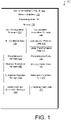
- FIG. 1 is a diagram that illustrates an example electronic environment 100 in which the above-described improved techniques may be implemented. As shown, in FIG. 1 , the example electronic environment 100 includes a sound rendering computer 120.
- the sound rendering computer 120 is configured to render sound fields for a listener.
- the sound rendering computer 120 includes a network interface 122, one or more processing units 124, and memory 126.
- the network interface 122 includes, for example, Ethernet adaptors, Token Ring adaptors, and the like, for converting electronic and/or optical signals received from the network 170 to electronic form for use by the sound rendering computer 120.
- the set of processing units 124 include one or more processing chips and/or assemblies.
- the memory 126 includes both volatile memory (e.g., RAM) and non-volatile memory, such as one or more ROMs, disk drives, solid state drives, and the like.
- the set of processing units 124 and the memory 126 together form control circuitry, which is configured and arranged to carry out various methods and functions as described herein.
- one or more of the components of the sound rendering computer 120 can be, or can include processors (e.g., processing units 124) configured to process instructions stored in the memory 126. Examples of such instructions as depicted in FIG. 1 include a sound acquisition manager 130, a loudspeaker acquisition manager 140, a pseudoinverse manager 150, a strategy generation manager 160, a nullspace projection manager 170, and a directional field generation manager 180. Further, as illustrated in FIG. 1 , the memory 126 is configured to store various data, which is described with respect to the respective managers that use such data.
- the sound acquisition manager 130 is configured to acquire sound data 132 via a recording or software-generated audio. For example, the sound acquisition manager 130 may obtain the sound data 132 from an optical drive or over the network interface 122. Once it acquires the sound data 132, the sound acquisition manager is also configured to store the sound data 132 in memory 126. In some implementations, the sound acquisition manager 130 streams the sound data 132 over the network interface 122.
- orthogonal angular mode functions it is usually convenient to represent the sound data as an expansion in a plurality of orthogonal angular mode functions.
- Such an expansion into orthogonal angular mode functions depends on a geometrical environment in which the microphone is placed.
- the orthogonal angular mode functions are spherical harmonics.
- the geometrical environment is cylindrical and the orthogonal angular mode functions are trigonometric functions.
- the orthogonal angular mode functions are spherical harmonics.
- the sound data 132 is encoded in B-format, or first-order ambisonics with four components, or ambisonic channels.
- the sound data 132 is encoded in higher-order ambisonics, e.g., to order N.
- T ( N + 1) 2 ambisonic channels, each channel corresponding to a term in a spherical harmonic (SH) expansion of a sound field emanating from a set of loudspeakers.
- SH spherical harmonic
- the components of the coefficient vector b incorporates the spherical Bessel function part of the above spherical harmonic expansion.
- a spherical geometry is not required.
- a spherical geometry one may replace the spherical Bessel functions j n with cylindrical Bessel functions J n .
- the source acquisition manager 140 is configured to acquire the directions x ⁇ q of each of Q loudspeakers with amplitudes s.
- Each of the loudspeakers is considered to be a secondary source. Accordingly, each of the directions x ⁇ q are assumed to either be given or to have been deduced by some algorithm.
- each loudspeaker (i.e., corresponding to a respective component of the loudspeaker amplitude vector s ) can be modeled as a point source in three dimensions.
- the loudspeakers having amplitude s are considered to be at the same distance from a microphone used to record the sound data 132.
- the directions x ⁇ q are then stored as loudspeaker data 142.
- the loudspeakers having amplitude s are also considered to be at the same distance from a microphone used to record the sound data 132 and the directions x ⁇ q (either deduced separately or given) are then stored as loudspeaker data 142.
- Q > T and the linear system is underdetermined. Accordingly, in such cases, there are many possible solutions to the linear mode-matching equation. Further details concerning the arrangement of the loudspeakers are described with regard to FIG. 2 .
- This solution is the first term of the sound field according to the improved techniques disclosed herein.
- a solution to the linear mode-matching equation may be expressed in terms of the pseudoinverse Moore-Penrose pseudoinverse of the linear operator A.
- This pseudoinverse is produced in the sound rendering computer 120 as pseudoinverse data 152.
- the pseudoinverse manager 150 is configured to multiply the matrix produced in the pseudoinverse data 152 by the coefficients produced in the spherical harmonics data 132.
- the strategy vector ⁇ corresponds to a sound rendering technique that has desirable behavior outside of the RSF.
- the strategy generation manager 160 defines the strategy vector ⁇ according to an optimal continuous monopole density across the sphere used for rendering the sound field.
- the nullspace projection manager 170 is configured to produce as nullspace projection data 172 a projection s ⁇ of the strategy vector ⁇ onto the nullspace N A of the linear operator A.
- the memory 126 can be any type of memory such as a random-access memory, a disk drive memory, flash memory, and/or so forth. In some implementations, the memory 126 can be implemented as more than one memory component (e.g., more than one RAM component or disk drive memory) associated with the components of the sound rendering computer 120. In some implementations, the memory 126 can be a database memory. In some implementations, the memory 126 can be, or can include, a non-local memory. For example, the memory 126 can be, or can include, a memory shared by multiple devices (not shown). In some implementations, the memory 126 can be associated with a server device (not shown) within a network and configured to serve the components of the sound rendering computer 120.
- a server device not shown
- the components (e.g., managers, processing units 124) of the sound rendering computer 120 can be configured to operate based on one or more platforms (e.g., one or more similar or different platforms) that can include one or more types of hardware, software, firmware, operating systems, runtime libraries, and/or so forth.
- platforms e.g., one or more similar or different platforms
- the components of the sound rendering computer 120 can be, or can include, any type of hardware and/or software configured to process attributes.
- one or more portions of the components shown in the components of the sound rendering computer 120 in FIG. 1 can be, or can include, a hardware-based module (e.g., a digital signal processor (DSP), a field programmable gate array (FPGA), a memory), a firmware module, and/or a software-based module (e.g., a module of computer code, a set of computer-readable instructions that can be executed at a computer).
- DSP digital signal processor
- FPGA field programmable gate array
- a memory e.g., a firmware module, and/or a software-based module (e.g., a module of computer code, a set of computer-readable instructions that can be executed at a computer).
- a software-based module e.g., a module of computer code, a set of computer-readable instructions that can be executed at a computer.
- the components of the sound rendering computer 120 can be configured to operate within a network.
- the components of the sound rendering computer 120 can be configured to function within various types of network environments that can include one or more devices and/or one or more server devices.
- the network can be, or can include, a local area network (LAN), a wide area network (WAN), and/or so forth.
- the network can be, or can include, a wireless network and/or wireless network implemented using, for example, gateway devices, bridges, switches, and/or so forth.
- the network can include one or more segments and/or can have portions based on various protocols such as Internet Protocol (IP) and/or a proprietary protocol.
- IP Internet Protocol
- the network can include at least a portion of the Internet.
- one or more of the components of the sound rendering computer 120 can be, or can include, processors configured to process instructions stored in a memory.
- the sound acquisition manager 130 (and/or a portion thereof), the loudspeaker acquisition manager 140 (and/or a portion thereof), the pseudoinverse manager 150 (and/or a portion thereof), the strategy generation manager 160 (and/or a portion thereof), the nullspace projection manager (and/or a potion thereof), and the directional field generation manager 180 (and/or a portion thereof) can include a combination of a memory storing instructions related to a process to implement one or more functions and a configured to execute the instructions.
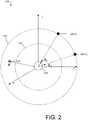
- FIG. 2 illustrates an example sound field environment 200 according to the improved techniques.
- an origin 210 open disk
- loudspeaker 240(1),..., 240(Q) filled disks
- Each loudspeaker, e.g., loudspeaker 240(1), is located along the direction x ⁇ 1 , and so on.
- the sound rendering computer 120 is configured to faithfully reproduce the sound field that would exist at an observation point 220 (gray disk) based on sound field data 132 recorded at the origin 210. In doing this, the sound rendering computer 120 is configured to provide a directionality of the sound field at the observation point 220 by determining the amplitudes of the sound field at each of the set of loudspeakers 240(1),..., 240(Q) as discussed above.
- the directionality of the sound field is a property that allows a listener to discern from which direction a particular sound appears to originate.
- a first sample of the sound field over a first window of time (e.g., one second) would result in first weights for the set of loudspeakers 240(1),..., 240(Q), a second sample of the sound field over a second window of time would result in a second weights, and so on.
- the coefficients of the sound field over frequency as expressed in Eq. (1) are Fourier transforms of the coefficients of the spherical harmonic expansion of the sound field in time.
- the position x' of the observation point 220 is outside of a region of sufficient fidelity (RSF) 250 but inside a region 230 defined by the set of loudspeakers 240(1),..., 240(Q).
- such a coherent sound field does not provide sufficient fidelity to the actual sound field that includes multiple frequencies heard at the observation point 220 outside of the RSF. Rather, it has been found that the projection of a strategy vector onto a nullspace of the linear operator A as in Eq.
- FIG. 3 is a flow chart that illustrates an example method 300 of performing binaural rendering of sound.
- the method 300 may be performed by software constructs described in connection with FIG. 1 , which reside in memory 126 of the sound rendering computer 120 and are run by the set of processing units 124.
- controlling circuitry of a sound rendering computer configured to render directional sound fields for a listener receives sound data resulting from a sound field in a geometrical environment, the sound data being represented as an expansion in a plurality of orthogonal angular mode functions based on the geometrical environment.
- the sound acquisition manager 130 receives, as input from a disk or over a network (the latter in environments such as a virtual reality environment that processes directional sound fields in real time), data representing a sound field at a real or virtual microphone. This sound field may then be decomposed into a spherical harmonic expansion as in Eq. (1), resulting in the coefficient vector b stored as spherical harmonic data 132.
- the controlling circuitry generates a linear operator, the linear operator resulting from a mode-matching operation on the sound data and an expansion of a weighted sum of a plurality of amplitudes of loudspeakers represented as an expansion in the plurality of orthogonal angular mode functions.
- the loudspeaker acquisition manager 140 obtains loudspeaker directions (e.g., from a separate procedure or specification) x ⁇ q of each of Q loudspeakers as loudspeaker position data 142. Given these directions, the loudspeaker acquisition manager 140 may then generate the linear operator A as linear transformation data 144 by mode-matching the spherical harmonic expansion in Eq. (6) for each loudspeaker with the spherical harmonic expansion in Eq. (1).
- the controlling circuitry performs a pseudoinverse operation (also referred to as inverse operation) on the linear operator and the sound data to produce a first plurality of loudspeaker weights, the first plurality of loudspeaker weights providing a reproduction of the sound field for the listener at frequencies less than a frequency threshold.
- the controlling circuitry performs a projection operation on a nullspace of the linear operator to produce a second plurality of loudspeaker weights.
- the strategy generation manager 160 produces, as each of the Q components of the strategy vector data 162, a component value according to Eq. (9) using the expression for the monopole density in Eq. (5) and Eq. (8).
- the strategy generation manager 160 tunes the parameter ⁇ for optimal directional strength.
- the controlling circuitry may then perform a projection operation on the second sound field term ⁇ to produce a projection of the second sound field term ⁇ onto a nullspace of the specified T ⁇ Q matrix A.
- the nullspace projection manager 170 uses the linear transformation data 144 and, in some implementations, the pseudoinverse data 152, to generate the projection onto the columns of the Hermitian conjugate A H and then multiply a difference between the identity matrix and this projection by the strategy vector ⁇ according to Eq. (11) to produce the nullspace projection data 172.
- the controlling circuitry generates a sum of the first plurality of loudspeaker weights and the second plurality of loudspeaker weights to produce a third plurality of loudspeaker weights, the third plurality of loudspeaker weights providing a reproduction of the sound field for the listener at frequencies less than and greater than the frequency threshold.
- this directional field data 182 that is used by the sound rendering computer 120 to provide directional sound to a listener at the microphone position 210 ( FIG. 2 ), or any other position in an environment (well within the convex hull defined by the positions of the plurality of loudspeakers) such as a virtual reality environment in which the listener desires to know from which direction a sound appears to originate.
- FIG. 4 shows an example of a generic computer device 400 and a generic mobile computer device 450, which may be used with the techniques described here.
- Computing device 400 is intended to represent various forms of digital computers, such as laptops, desktops, tablets, workstations, personal digital assistants, televisions, servers, blade servers, mainframes, and other appropriate computing devices.
- Computing device 450 is intended to represent various forms of mobile devices, such as personal digital assistants, cellular telephones, smart phones, and other similar computing devices.
- the components shown here, their connections and relationships, and their functions, are meant to be exemplary only, and are not meant to limit implementations of the inventions described and/or claimed in this document.
- Computing device 400 includes a processor 402, memory 404, a storage device 406, a high-speed interface 408 connecting to memory 404 and high-speed expansion ports 410, and a low speed interface 412 connecting to low speed bus 414 and storage device 406.
- the processor 402 can be a semiconductor-based processor.
- the memory 404 can be a semiconductor-based memory.
- Each of the components 402, 404, 406, 408, 410, and 412, are interconnected using various busses, and may be mounted on a common motherboard or in other manners as appropriate.
- the processor 402 can process instructions for execution within the computing device 400, including instructions stored in the memory 404 or on the storage device 406 to display graphical information for a GUI on an external input/output device, such as display 416 coupled to high speed interface 408.
- multiple processors and/or multiple buses may be used, as appropriate, along with multiple memories and types of memory.
- multiple computing devices 400 may be connected, with each device providing portions of the necessary operations (e.g., as a server bank, a group of blade servers, or a multiprocessor system).
- the memory 404 stores information within the computing device 400.
- the memory 404 is a volatile memory unit or units.
- the memory 404 is a non-volatile memory unit or units.
- the memory 404 may also be another form of computer-readable medium, such as a magnetic or optical disk.
- the storage device 406 is capable of providing mass storage for the computing device 400.
- the storage device 406 may be or contain a computer-readable medium, such as a floppy disk device, a hard disk device, an optical disk device, or a tape device, a flash memory or other similar solid state memory device, or an array of devices, including devices in a storage area network or other configurations.
- a computer program product can be tangibly embodied in an information carrier.
- the computer program product may also contain instructions that, when executed, perform one or more methods, such as those described above.
- the information carrier is a computer- or machine-readable medium, such as the memory 404, the storage device 406, or memory on processor 402.
- the high speed controller 408 manages bandwidth-intensive operations for the computing device 400, while the low speed controller 412 manages lower bandwidth-intensive operations.
- the high-speed controller 408 is coupled to memory 404, display 416 (e.g., through a graphics processor or accelerator), and to high-speed expansion ports 410, which may accept various expansion cards (not shown).
- low-speed controller 412 is coupled to storage device 406 and low-speed expansion port 414.
- the low-speed expansion port which may include various communication ports (e.g., USB, Bluetooth, Ethernet, wireless Ethernet) may be coupled to one or more input/output devices, such as a keyboard, a pointing device, a scanner, or a networking device such as a switch or router, e.g., through a network adapter.
- input/output devices such as a keyboard, a pointing device, a scanner, or a networking device such as a switch or router, e.g., through a network adapter.
- the computing device 400 may be implemented in a number of different forms, as shown in the figure. For example, it may be implemented as a standard server 420, or multiple times in a group of such servers. It may also be implemented as part of a rack server system 424. In addition, it may be implemented in a personal computer such as a laptop computer 422. Alternatively, components from computing device 400 may be combined with other components in a mobile device (not shown), such as device 450. Each of such devices may contain one or more of computing device 400, 450, and an entire system may be made up of multiple computing devices 400, 450 communicating with each other.
- Computing device 450 includes a processor 452, memory 464, an input/output device such as a display 454, a communication interface 466, and a transceiver 468, among other components.
- the device 450 may also be provided with a storage device, such as a microdrive or other device, to provide additional storage.
- a storage device such as a microdrive or other device, to provide additional storage.
- Each of the components 450, 452, 464, 454, 466, and 468 are interconnected using various buses, and several of the components may be mounted on a common motherboard or in other manners as appropriate.
- the processor 452 can execute instructions within the computing device 450, including instructions stored in the memory 464.
- the processor may be implemented as a chipset of chips that include separate and multiple analog and digital processors.
- the processor may provide, for example, for coordination of the other components of the device 450, such as control of user interfaces, applications run by device 450, and wireless communication by device 450.
- Processor 452 may communicate with a user through control interface 458 and display interface 456 coupled to a display 454.
- the display 454 may be, for example, a TFT LCD (Thin-Film-Transistor Liquid Crystal Display) or an OLED (Organic Light Emitting Diode) display, or other appropriate display technology.
- the display interface 456 may comprise appropriate circuitry for driving the display 454 to present graphical and other information to a user.
- the control interface 458 may receive commands from a user and convert them for submission to the processor 452.
- an external interface 462 may be provided in communication with processor 452, so as to enable near area communication of device 450 with other devices.
- External interface 462 may provide, for example, for wired communication in some implementations, or for wireless communication in other implementations, and multiple interfaces may also be used.
- the memory 464 stores information within the computing device 450.
- the memory 464 can be implemented as one or more of a computer-readable medium or media, a volatile memory unit or units, or a non-volatile memory unit or units.
- Expansion memory 474 may also be provided and connected to device 450 through expansion interface 472, which may include, for example, a SIMM (Single In Line Memory Module) card interface.
- SIMM Single In Line Memory Module
- expansion memory 474 may provide extra storage space for device 450, or may also store applications or other information for device 450.
- expansion memory 474 may include instructions to carry out or supplement the processes described above, and may include secure information also.
- expansion memory 474 may be provide as a security module for device 450, and may be programmed with instructions that permit secure use of device 450.
- secure applications may be provided via the SIMM cards, along with additional information, such as placing identifying information on the SIMM card in a non-hackable manner.
- the memory may include, for example, flash memory and/or NVRAM memory, as discussed below.
- a computer program product is tangibly embodied in an information carrier.
- the computer program product contains instructions that, when executed, perform one or more methods, such as those described above.
- the information carrier is a computer- or machine-readable medium, such as the memory 464, expansion memory 474, or memory on processor 452 that may be received, for example, over transceiver 468 or external interface 462.
- Device 450 may communicate wirelessly through communication interface 466, which may include digital signal processing circuitry where necessary. Communication interface 466 may provide for communications under various modes or protocols, such as GSM voice calls, SMS, EMS, or MMS messaging, CDMA, TDMA, PDC, WCDMA, CDMA2000, or GPRS, among others. Such communication may occur, for example, through radio-frequency transceiver 468. In addition, short-range communication may occur, such as using a Bluetooth, Wi-Fi, or other such transceiver (not shown). In addition, GPS (Global Positioning System) receiver module 470 may provide additional navigation- and location-related wireless data to device 450, which may be used as appropriate by applications running on device 450.
- GPS Global Positioning System
- Device 450 may also communicate audibly using audio codec 460, which may receive spoken information from a user and convert it to usable digital information. Audio codec 460 may likewise generate audible sound for a user, such as through a speaker, e.g., in a handset of device 450. Such sound may include sound from voice telephone calls, may include recorded sound (e.g., voice messages, music files, etc.) and may also include sound generated by applications operating on device 450.
- Audio codec 460 may receive spoken information from a user and convert it to usable digital information. Audio codec 460 may likewise generate audible sound for a user, such as through a speaker, e.g., in a handset of device 450. Such sound may include sound from voice telephone calls, may include recorded sound (e.g., voice messages, music files, etc.) and may also include sound generated by applications operating on device 450.
- the computing device 450 may be implemented in a number of different forms, as shown in the figure. For example, it may be implemented as a cellular telephone 480. It may also be implemented as part of a smart phone 482, personal digital assistant, or other similar mobile device.
- implementations of the systems and techniques described here can be realized in digital electronic circuitry, integrated circuitry, specially designed ASICs (application specific integrated circuits), computer hardware, firmware, software, and/or combinations thereof.
- ASICs application specific integrated circuits
- These various implementations can include implementation in one or more computer programs that are executable and/or interpretable on a programmable system including at least one programmable processor, which may be special or general purpose, coupled to receive data and instructions from, and to transmit data and instructions to, a storage system, at least one input device, and at least one output device.
- the systems and techniques described here can be implemented on a computer having a display device (e.g., a CRT (cathode ray tube) or LCD (liquid crystal display) monitor) for displaying information to the user and a keyboard and a pointing device (e.g., a mouse or a trackball) by which the user can provide input to the computer.
- a display device e.g., a CRT (cathode ray tube) or LCD (liquid crystal display) monitor
- a keyboard and a pointing device e.g., a mouse or a trackball
- Other kinds of devices can be used to provide for interaction with a user as well; for example, feedback provided to the user can be any form of sensory feedback (e.g., visual feedback, auditory feedback, or tactile feedback); and input from the user can be received in any form, including acoustic, speech, or tactile input.
- the systems and techniques described here can be implemented in a computing system that includes a back end component (e.g., as a data server), or that includes a middleware component (e.g., an application server), or that includes a front end component (e.g., a client computer having a graphical user interface or a Web browser through which a user can interact with an implementation of the systems and techniques described here), or any combination of such back end, middleware, or front end components.
- the components of the system can be interconnected by any form or medium of digital data communication (e.g., a communication network). Examples of communication networks include a local area network ("LAN”), a wide area network (“WAN”), and the Internet.
- LAN local area network
- WAN wide area network
- the Internet the global information network
- the computing system can include clients and servers.
- a client and server are generally remote from each other and typically interact through a communication network.
- the relationship of client and server arises by virtue of computer programs running on the respective computers and having a client-server relationship to each other.
Landscapes
- Engineering & Computer Science (AREA)
- Physics & Mathematics (AREA)
- Acoustics & Sound (AREA)
- Signal Processing (AREA)
- General Physics & Mathematics (AREA)
- Mathematical Optimization (AREA)
- Mathematical Physics (AREA)
- Pure & Applied Mathematics (AREA)
- Theoretical Computer Science (AREA)
- Mathematical Analysis (AREA)
- Algebra (AREA)
- Stereophonic System (AREA)
- Multimedia (AREA)
Claims (15)
- Verfahren, umfassend:Empfangen (302) von Schalldaten, die aus einem Schallfeld in einer geometrischen Umgebung resultieren, durch eine Steuerungsschaltung eines Schallwiedergabecomputers, der dafür konfiguriert ist, gerichtete Schallfelder für einen Hörer wiederzugeben, wobei die Schalldaten als eine Expansion in einer Vielzahl von orthogonalen Winkelmodenfunktionen, die auf der geometrischen Umgebung beruhen, dargestellt werden;Erzeugen (304) eines linearen Operators durch die Steuerungsschaltung, wobei der lineare Operator aus einer Modenanpassungsoperation auf den Schalldaten und einer Expansion einer gewichteten Summe von Amplituden einer Vielzahl von Lautsprechern, die als eine Expansion in der Vielzahl von orthogonalen Winkelmodenfunktionen dargestellt wird, resultiert;Durchführen (306) einer inversen Operation auf dem linearen Operator durch die Steuerungsschaltung, um eine erste Vielzahl von Lautsprecher-Wichtungsfaktoren zu erzeugen, wobei die erste Vielzahl von Lautsprecher-Wichtungsfaktoren durch Anwenden einer Inversen des linearen Operators auf die Schalldaten erzeugt wird;Durchführen (308) einer Projektionsoperation eines Strategievektors auf einen Nullraum des linearen Operators durch die Steuerungsschaltung, um eine zweite Vielzahl von Lautsprecher-Wichtungsfaktoren zu erzeugen; undErzeugen (310) einer Summe der ersten Vielzahl von Lautsprecher-Wichtungsfaktoren und der zweiten Vielzahl von Lautsprecher-Wichtungsfaktoren durch die Steuerungsschaltung, um eine dritte Vielzahl von Lautsprecher-Wichtungsfaktoren zu erzeugen, wobei die dritte Vielzahl von Lautsprecher-Wichtungsfaktoren eine Reproduktion des Schallfelds für den Hörer bereitstellt.
- Verfahren nach Anspruch 1, worin das Durchführen der inversen Operation auf dem linearen Operator einschließt: Erzeugen einer Moore-Penrose-Pseudoinversen des linearen Operators.
- Verfahren nach Anspruch 1, worin die geometrische Umgebung sphärisch ist und die Vielzahl von orthogonalen Winkelmodenfunktionen sphärische Harmonische einschließt oder worin die Anzahl der Lautsprecher in der Vielzahl von Lautsprechern größer als die Anzahl von orthogonalen Winkelmodenfunktionen in der Vielzahl von orthogonalen Winkelmodenfunktionen ist.
- Verfahren nach Anspruch 1, worin das Durchführen der Projektionsoperation auf den Nullraum des linearen Operators einschließt:Erzeugen des Strategievektors, wobei jede Komponente des Strategievektors einem jeweiligen Lautsprecher der Vielzahl von Lautsprechern entspricht;Erzeugen einer Differenz zwischen einer Identitätsmatrix und einer Projektion auf Spalten eines Nullraums einer Hermiteschen Konjugierten des linearen Operators, um eine Projektionsmatrix zu erzeugen, undErzeugen eines Produkts aus der Projektionsmatrix und dem Strategievektor als die zweite Vielzahl von Lautsprecher-Wichtungsfaktoren, undoptional, worin das Erzeugen des Strategievektors einschließt: für jeden aus der Vielzahl von Lautsprechern erfolgendesDefinieren einer kontinuierlichen Monopoldichtefunktion, die an einer jeweiligen Winkelkoordinate dieses Lautsprechers innerhalb der geometrischen Umgebung ausgewertet wird; undErzeugen einer Potenz eines Betrags der kontinuierlichen Monopoldichtefunktion, die an der jeweiligen Winkelkoordinate dieses Lautsprechers innerhalb der geometrischen Umgebung ausgewertet wird, als den Strategievektor, wobei die Potenz größer als eins ist.
- Verfahren nach Anspruch 4, worin das Definieren der kontinuierlichen Monopoldichtefunktion, die an einer jeweiligen Winkelkoordinate von jedem aus der Vielzahl von Lautsprechern innerhalb der geometrischen Umgebung ausgewertet wird, einschließt:
Erzeugen einer Expansion der kontinuierlichen Monopoldichtefunktion in der Vielzahl von orthogonalen Winkelmodenfunktionen als die kontinuierliche Monopoldichtefunktion, die an der Winkelkoordinate dieses Lautsprechers innerhalb der geometrischen Umgebung ausgewertet wird, wobei Koeffizienten der Expansion als ein Ergebnis einer Modenanpassungsoperation mit einer Greenschen Funktionsdarstellung der kontinuierlichen Monopoldichtefunktion erzeugt werden. - Computerprogrammprodukt, umfassend ein nichtflüchtiges Speichermedium, wobei das Computerprogrammprodukt Code einschließt, der, wenn er durch eine Verarbeitungsschaltung eines Schallwiedergabecomputers ausgeführt wird, der dafür konfiguriert ist, gerichtete Schallfelder für einen Hörer wiederzugeben, die Verarbeitungsschaltung veranlasst, ein Verfahren durchzuführen, wobei das Verfahren umfasst:Empfangen von Schalldaten, die aus einem Schallfeld in einer geometrischen Umgebung resultieren, wobei die Schalldaten als eine Expansion in einer Vielzahl von orthogonalen Winkelmodenfunktionen, die auf der geometrischen Umgebung beruhen, dargestellt werden;Erzeugen eines linearen Operators, wobei der lineare Operator aus einer Modenanpassungsoperation auf den Schalldaten und einer Expansion einer gewichteten Summe von Amplituden einer Vielzahl von Lautsprechern, die als eine Expansion in der Vielzahl von orthogonalen Winkelmodenfunktionen dargestellt wird, resultiert;Durchführen einer inversen Operation auf dem linearen Operator, um eine erste Vielzahl von Lautsprecher-Wichtungsfaktoren zu erzeugen, wobei die erste Vielzahl von Lautsprecher-Wichtungsfaktoren durch Anwenden einer Inversen des linearen Operators auf die Schalldaten erzeugt wird;Durchführen einer Projektionsoperation eines Strategievektors auf einen Nullraum des linearen Operators, um eine zweite Vielzahl von Lautsprecher-Wichtungsfaktoren zu erzeugen; undErzeugen einer Summe der ersten Vielzahl von Lautsprecher-Wichtungsfaktoren und der zweiten Vielzahl von Lautsprecher-Wichtungsfaktoren, um eine dritte Vielzahl von Lautsprecher-Wichtungsfaktoren zu erzeugen, wobei die dritte Vielzahl von Lautsprecher-Wichtungsfaktoren eine Reproduktion des Schallfelds für den Hörer bereitstellt.
- Computerprogrammprodukt nach Anspruch 6, worin das Durchführen der inversen Operation auf dem linearen Operator einschließt: Erzeugen einer Moore-Penrose-Pseudoinversen des linearen Operators.
- Computerprogrammprodukt nach Anspruch 6, worin die geometrische Umgebung sphärisch ist und die Vielzahl von orthogonalen Winkelmodenfunktionen sphärische Harmonische einschließt oder worin die Anzahl von Lautsprechern in der Vielzahl von Lautsprechern größer ist als die Anzahl von orthogonalen Winkelmodenfunktionen in der Vielzahl von orthogonalen Winkelmodenfunktionen.
- Computerprogrammprodukt nach Anspruch 6, worin das Durchführen der Projektionsoperation auf den Nullraum des linearen Operators einschließt:Erzeugen des Strategievektors, wobei jede Komponente des Strategievektors einem jeweiligen Lautsprecher der Vielzahl von Lautsprechern entspricht;Erzeugen einer Differenz zwischen einer Identitätsmatrix und einer Projektion auf Spalten eines Nullraums einer Hermiteschen Konjugierten des linearen Operators, um eine Projektionsmatrix zu erzeugen, undErzeugen eines Produkts aus der Projektionsmatrix und dem Strategievektor als die zweite Vielzahl von Lautsprecher-Wichtungsfaktoren, und optional, worin das Erzeugen des Strategievektors einschließt: für jeden aus der Vielzahl von Lautsprechern erfolgendesDefinieren einer kontinuierlichen Monopoldichtefunktion, die an einer jeweiligen Winkelkoordinate dieses Lautsprechers innerhalb der geometrischen Umgebung ausgewertet wird; undErzeugen einer Potenz eines Betrags der kontinuierlichen Monopoldichtefunktion, die an der jeweiligen Winkelkoordinate dieses Lautsprechers innerhalb der geometrischen Umgebung ausgewertet wird, als den Strategievektor, wobei die Potenz größer als eins ist.
- Computerprogrammprodukt nach Anspruch 9, worin das Definieren der kontinuierlichen Monopoldichtefunktion, die an einer jeweiligen Winkelkoordinate von jedem aus der Vielzahl von Lautsprechern innerhalb der geometrischen Umgebung ausgewertet wird, einschließt:
Erzeugen einer Expansion der kontinuierlichen Monopoldichtefunktion in der Vielzahl von orthogonalen Winkelmodenfunktionen als die kontinuierliche Monopoldichtefunktion, die an der Winkelkoordinate dieses Lautsprechers innerhalb der geometrischen Umgebung ausgewertet wird, wobei Koeffizienten der Expansion als ein Ergebnis einer Modenanpassungsoperation mit einer Greenschen Funktionsdarstellung der kontinuierlichen Monopoldichtefunktion erzeugt werden. - Elektronische Vorrichtung, die dafür konfiguriert ist, gerichtete Schallfelder für einen Hörer wiederzugeben, wobei die elektronische Vorrichtung folgendes umfasst:einen Speicher; undeine mit dem Speicher gekoppelte Steuerungsschaltung, wobei die Steuerungsschaltung dafür konfiguriert ist:Schalldaten zu empfangen, die aus einem Schallfeld in einer geometrischen Umgebung resultieren, wobei die Schalldaten als eine Expansion in einer Vielzahl von orthogonalen Winkelmodenfunktionen, die auf der geometrischen Umgebung beruhen, dargestellt werden;einen linearen Operator zu erzeugen, wobei der lineare Operator aus einer Modenanpassungsoperation auf den Schalldaten und einer Expansion einer gewichteten Summe von Amplituden einer Vielzahl von Lautsprechern, die als eine Expansion in der Vielzahl von orthogonalen Winkelmodenfunktionen dargestellt wird, resultiert;eine inverse Operation auf dem linearen Operator durchzuführen, um eine erste Vielzahl von Lautsprecher-Wichtungsfaktoren zu erzeugen, wobei die erste Vielzahl von Lautsprecher-Wichtungsfaktoren durch Anwenden einer Inversen des linearen Operators auf die Schalldaten erzeugt wird;eine Projektionsoperation eines Strategievektors auf einen Nullraum des linearen Operators durchzuführen, um eine zweite Vielzahl von Lautsprecher-Wichtungsfaktoren zu erzeugen; undeine Summe der ersten Vielzahl von Lautsprecher-Wichtungsfaktoren und der zweiten Vielzahl von Lautsprecher-Wichtungsfaktoren zu erzeugen, um eine dritte Vielzahl von Lautsprecher-Wichtungsfaktoren zu erzeugen, wobei die dritte Vielzahl von Lautsprecher-Wichtungsfaktoren eine Reproduktion des Schallfelds für den Hörer bereitstellt.
- Elektronische Vorrichtung nach Anspruch 11, worin das Durchführen der Pseudoinversionsoperation auf dem linearen Operator einschließt: Erzeugen einer Moore-Penrose-Pseudoinverse des linearen Operators.
- Elektronische Vorrichtung nach Anspruch 11, worin die geometrische Umgebung sphärisch ist und die Vielzahl von orthogonalen Winkelmodenfunktionen sphärische Harmonische einschließt oder worin die Anzahl der Lautsprecher in der Vielzahl von Lautsprechern größer als die Anzahl von orthogonalen Winkelmodenfunktionen in der Vielzahl von orthogonalen Winkelmodenfunktionen ist.
- Elektronische Vorrichtung nach Anspruch 11, worin das Durchführen der Projektionsoperation auf den Nullraum des linearen Operators einschließt:Erzeugen des Strategievektors, wobei jede Komponente des Strategievektors einem jeweiligen Lautsprecher der Vielzahl von Lautsprechern entspricht;Erzeugen einer Differenz zwischen einer Identitätsmatrix und einer Projektion auf Spalten eines Nullraums einer Hermiteschen Konjugierten des linearen Operators, um eine Projektionsmatrix zu erzeugen, undErzeugen eines Produkts aus der Projektionsmatrix und dem Strategievektor als die zweite Vielzahl von Lautsprecher-Wichtungsfaktoren.
- Elektronische Vorrichtung nach Anspruch 14, worin das Erzeugen des Strategievektors einschließt: für jeden aus der Vielzahl von Lautsprechern erfolgendesDefinieren einer kontinuierlichen Monopoldichtefunktion, die an einer jeweiligen Winkelkoordinate des Lautsprechers innerhalb der geometrischen Umgebung ausgewertet wird; undErzeugen einer Potenz eines Betrags der kontinuierlichen Monopoldichtefunktion, die an der jeweiligen Winkelkoordinate dieses Lautsprechers innerhalb der geometrischen Umgebung ausgewertet wird, als den Strategievektor, wobei die Potenz größer als eins ist.
Applications Claiming Priority (2)
| Application Number | Priority Date | Filing Date | Title |
|---|---|---|---|
| US15/666,220 US10015618B1 (en) | 2017-08-01 | 2017-08-01 | Incoherent idempotent ambisonics rendering |
| PCT/US2018/040720 WO2019027613A1 (en) | 2017-08-01 | 2018-07-03 | AMPEMOPHONE RENDER IDEMPOTENT INCOHERE |
Publications (2)
| Publication Number | Publication Date |
|---|---|
| EP3625975A1 EP3625975A1 (de) | 2020-03-25 |
| EP3625975B1 true EP3625975B1 (de) | 2022-12-14 |
Family
ID=62683709
Family Applications (1)
| Application Number | Title | Priority Date | Filing Date |
|---|---|---|---|
| EP18745766.8A Active EP3625975B1 (de) | 2017-08-01 | 2018-07-03 | Inkohärente idempotente ambisonics-darstellung |
Country Status (6)
| Country | Link |
|---|---|
| US (1) | US10015618B1 (de) |
| EP (1) | EP3625975B1 (de) |
| JP (1) | JP6985425B2 (de) |
| KR (1) | KR102284811B1 (de) |
| CN (1) | CN110583030B (de) |
| WO (1) | WO2019027613A1 (de) |
Families Citing this family (2)
| Publication number | Priority date | Publication date | Assignee | Title |
|---|---|---|---|---|
| CN112530445A (zh) * | 2020-11-23 | 2021-03-19 | 雷欧尼斯(北京)信息技术有限公司 | 高阶Ambisonic音频的编解码方法及芯片 |
| CN117395591A (zh) * | 2021-03-05 | 2024-01-12 | 华为技术有限公司 | Hoa系数的获取方法和装置 |
Family Cites Families (15)
| Publication number | Priority date | Publication date | Assignee | Title |
|---|---|---|---|---|
| US7876917B2 (en) * | 2006-08-28 | 2011-01-25 | Youngtack Shim | Generic electromagnetically-countered systems and methods |
| TWI559786B (zh) * | 2008-09-03 | 2016-11-21 | 杜比實驗室特許公司 | 增進多聲道之再生 |
| KR20240108571A (ko) * | 2012-07-16 | 2024-07-09 | 돌비 인터네셔널 에이비 | 오디오 재생을 위한 오디오 음장 표현을 렌더링하는 방법 및 장치 |
| US9913064B2 (en) * | 2013-02-07 | 2018-03-06 | Qualcomm Incorporated | Mapping virtual speakers to physical speakers |
| EP2782094A1 (de) * | 2013-03-22 | 2014-09-24 | Thomson Licensing | Verfahren und Vorrichtung zur Erhöhung der Richtwirkung eines Ambisonics-Signals erster Ordnung |
| BR112015028409B1 (pt) * | 2013-05-16 | 2022-05-31 | Koninklijke Philips N.V. | Aparelho de áudio e método de processamento de áudio |
| EP2866475A1 (de) * | 2013-10-23 | 2015-04-29 | Thomson Licensing | Verfahren und Vorrichtung zur Decodierung einer Audioschallfelddarstellung für Audiowiedergabe mittels 2D-Einstellungen |
| ES2696930T3 (es) * | 2014-05-30 | 2019-01-18 | Qualcomm Inc | Obtención de información de simetría para renderizadores de audio ambisónicos de orden superior |
| US10624612B2 (en) * | 2014-06-05 | 2020-04-21 | Chikayoshi Sumi | Beamforming method, measurement and imaging instruments, and communication instruments |
| CN117612540A (zh) * | 2014-06-27 | 2024-02-27 | 杜比国际公司 | 用于解码声音或声场的高阶高保真度立体声响复制(hoa)表示的方法 |
| WO2016077317A1 (en) * | 2014-11-11 | 2016-05-19 | Google Inc. | Virtual sound systems and methods |
| US9749747B1 (en) * | 2015-01-20 | 2017-08-29 | Apple Inc. | Efficient system and method for generating an audio beacon |
| CN107430861B (zh) * | 2015-03-03 | 2020-10-16 | 杜比实验室特许公司 | 用于对音频信号进行处理的方法、装置和设备 |
| US9752879B2 (en) * | 2015-04-14 | 2017-09-05 | Invensense, Inc. | System and method for estimating heading misalignment |
| CN108141687B (zh) * | 2015-08-21 | 2021-06-29 | Dts(英属维尔京群岛)有限公司 | 用于泄漏消除的多扬声器方法和装置 |
-
2017
- 2017-08-01 US US15/666,220 patent/US10015618B1/en active Active
-
2018
- 2018-07-03 CN CN201880029462.2A patent/CN110583030B/zh active Active
- 2018-07-03 WO PCT/US2018/040720 patent/WO2019027613A1/en not_active Ceased
- 2018-07-03 EP EP18745766.8A patent/EP3625975B1/de active Active
- 2018-07-03 KR KR1020197035068A patent/KR102284811B1/ko active Active
- 2018-07-03 JP JP2019566090A patent/JP6985425B2/ja active Active
Also Published As
| Publication number | Publication date |
|---|---|
| US10015618B1 (en) | 2018-07-03 |
| CN110583030A (zh) | 2019-12-17 |
| KR102284811B1 (ko) | 2021-07-30 |
| EP3625975A1 (de) | 2020-03-25 |
| JP6985425B2 (ja) | 2021-12-22 |
| KR20200003051A (ko) | 2020-01-08 |
| WO2019027613A1 (en) | 2019-02-07 |
| JP2020522189A (ja) | 2020-07-27 |
| CN110583030B (zh) | 2021-06-08 |
Similar Documents
| Publication | Publication Date | Title |
|---|---|---|
| US20240304195A1 (en) | Method and device for decoding an audio soundfield representation | |
| US9992602B1 (en) | Decoupled binaural rendering | |
| TWI897339B (zh) | 用於將保真立體音響格式聲訊訊號描繪至二維度(2d)揚聲器設置之方法和裝置以及電腦可讀式儲存媒體 | |
| US10492018B1 (en) | Symmetric binaural rendering for high-order ambisonics | |
| GB2556093A (en) | Analysis of spatial metadata from multi-microphones having asymmetric geometry in devices | |
| EP3523801B1 (de) | Kodierung einer audioschallfelddarstellung | |
| US10009704B1 (en) | Symmetric spherical harmonic HRTF rendering | |
| WO2020073563A1 (zh) | 用于处理音频信号的方法和装置 | |
| EP3625975B1 (de) | Inkohärente idempotente ambisonics-darstellung | |
| JP2025512686A (ja) | 空間オーディオのレンダリングを可能にするための装置、方法およびコンピュータプログラム | |
| EP3777242B1 (de) | Räumliche schallwiedergabe | |
| Winter | Local sound field synthesis | |
| CN111684822B (zh) | 环境立体声的定向增强 | |
| Kleijn et al. | Incoherent idempotent ambisonics rendering | |
| AU2018201133B2 (en) | Method and device for decoding an audio soundfield representation for audio playback | |
| KR20230152139A (ko) | Hoa 계수를 획득하기 위한 방법 및 장치 |
Legal Events
| Date | Code | Title | Description |
|---|---|---|---|
| STAA | Information on the status of an ep patent application or granted ep patent |
Free format text: STATUS: UNKNOWN |
|
| STAA | Information on the status of an ep patent application or granted ep patent |
Free format text: STATUS: THE INTERNATIONAL PUBLICATION HAS BEEN MADE |
|
| PUAI | Public reference made under article 153(3) epc to a published international application that has entered the european phase |
Free format text: ORIGINAL CODE: 0009012 |
|
| STAA | Information on the status of an ep patent application or granted ep patent |
Free format text: STATUS: REQUEST FOR EXAMINATION WAS MADE |
|
| 17P | Request for examination filed |
Effective date: 20191217 |
|
| AK | Designated contracting states |
Kind code of ref document: A1 Designated state(s): AL AT BE BG CH CY CZ DE DK EE ES FI FR GB GR HR HU IE IS IT LI LT LU LV MC MK MT NL NO PL PT RO RS SE SI SK SM TR |
|
| AX | Request for extension of the european patent |
Extension state: BA ME |
|
| DAV | Request for validation of the european patent (deleted) | ||
| DAX | Request for extension of the european patent (deleted) | ||
| STAA | Information on the status of an ep patent application or granted ep patent |
Free format text: STATUS: EXAMINATION IS IN PROGRESS |
|
| 17Q | First examination report despatched |
Effective date: 20210317 |
|
| GRAP | Despatch of communication of intention to grant a patent |
Free format text: ORIGINAL CODE: EPIDOSNIGR1 |
|
| RIC1 | Information provided on ipc code assigned before grant |
Ipc: G10L 19/008 20130101ALI20220523BHEP Ipc: H04S 3/00 20060101ALI20220523BHEP Ipc: H04S 3/02 20060101AFI20220523BHEP |
|
| STAA | Information on the status of an ep patent application or granted ep patent |
Free format text: STATUS: GRANT OF PATENT IS INTENDED |
|
| INTG | Intention to grant announced |
Effective date: 20220630 |
|
| GRAS | Grant fee paid |
Free format text: ORIGINAL CODE: EPIDOSNIGR3 |
|
| GRAA | (expected) grant |
Free format text: ORIGINAL CODE: 0009210 |
|
| STAA | Information on the status of an ep patent application or granted ep patent |
Free format text: STATUS: THE PATENT HAS BEEN GRANTED |
|
| AK | Designated contracting states |
Kind code of ref document: B1 Designated state(s): AL AT BE BG CH CY CZ DE DK EE ES FI FR GB GR HR HU IE IS IT LI LT LU LV MC MK MT NL NO PL PT RO RS SE SI SK SM TR |
|
| REG | Reference to a national code |
Ref country code: GB Ref legal event code: FG4D |
|
| REG | Reference to a national code |
Ref country code: CH Ref legal event code: EP |
|
| REG | Reference to a national code |
Ref country code: DE Ref legal event code: R096 Ref document number: 602018044254 Country of ref document: DE |
|
| REG | Reference to a national code |
Ref country code: IE Ref legal event code: FG4D |
|
| REG | Reference to a national code |
Ref country code: AT Ref legal event code: REF Ref document number: 1538389 Country of ref document: AT Kind code of ref document: T Effective date: 20230115 |
|
| REG | Reference to a national code |
Ref country code: NL Ref legal event code: FP |
|
| REG | Reference to a national code |
Ref country code: LT Ref legal event code: MG9D |
|
| PG25 | Lapsed in a contracting state [announced via postgrant information from national office to epo] |
Ref country code: SE Free format text: LAPSE BECAUSE OF FAILURE TO SUBMIT A TRANSLATION OF THE DESCRIPTION OR TO PAY THE FEE WITHIN THE PRESCRIBED TIME-LIMIT Effective date: 20221214 Ref country code: NO Free format text: LAPSE BECAUSE OF FAILURE TO SUBMIT A TRANSLATION OF THE DESCRIPTION OR TO PAY THE FEE WITHIN THE PRESCRIBED TIME-LIMIT Effective date: 20230314 Ref country code: LT Free format text: LAPSE BECAUSE OF FAILURE TO SUBMIT A TRANSLATION OF THE DESCRIPTION OR TO PAY THE FEE WITHIN THE PRESCRIBED TIME-LIMIT Effective date: 20221214 Ref country code: FI Free format text: LAPSE BECAUSE OF FAILURE TO SUBMIT A TRANSLATION OF THE DESCRIPTION OR TO PAY THE FEE WITHIN THE PRESCRIBED TIME-LIMIT Effective date: 20221214 |
|
| REG | Reference to a national code |
Ref country code: AT Ref legal event code: MK05 Ref document number: 1538389 Country of ref document: AT Kind code of ref document: T Effective date: 20221214 |
|
| PG25 | Lapsed in a contracting state [announced via postgrant information from national office to epo] |
Ref country code: RS Free format text: LAPSE BECAUSE OF FAILURE TO SUBMIT A TRANSLATION OF THE DESCRIPTION OR TO PAY THE FEE WITHIN THE PRESCRIBED TIME-LIMIT Effective date: 20221214 Ref country code: LV Free format text: LAPSE BECAUSE OF FAILURE TO SUBMIT A TRANSLATION OF THE DESCRIPTION OR TO PAY THE FEE WITHIN THE PRESCRIBED TIME-LIMIT Effective date: 20221214 Ref country code: HR Free format text: LAPSE BECAUSE OF FAILURE TO SUBMIT A TRANSLATION OF THE DESCRIPTION OR TO PAY THE FEE WITHIN THE PRESCRIBED TIME-LIMIT Effective date: 20221214 Ref country code: GR Free format text: LAPSE BECAUSE OF FAILURE TO SUBMIT A TRANSLATION OF THE DESCRIPTION OR TO PAY THE FEE WITHIN THE PRESCRIBED TIME-LIMIT Effective date: 20230315 |
|
| P01 | Opt-out of the competence of the unified patent court (upc) registered |
Effective date: 20230505 |
|
| PG25 | Lapsed in a contracting state [announced via postgrant information from national office to epo] |
Ref country code: SM Free format text: LAPSE BECAUSE OF FAILURE TO SUBMIT A TRANSLATION OF THE DESCRIPTION OR TO PAY THE FEE WITHIN THE PRESCRIBED TIME-LIMIT Effective date: 20221214 Ref country code: RO Free format text: LAPSE BECAUSE OF FAILURE TO SUBMIT A TRANSLATION OF THE DESCRIPTION OR TO PAY THE FEE WITHIN THE PRESCRIBED TIME-LIMIT Effective date: 20221214 Ref country code: PT Free format text: LAPSE BECAUSE OF FAILURE TO SUBMIT A TRANSLATION OF THE DESCRIPTION OR TO PAY THE FEE WITHIN THE PRESCRIBED TIME-LIMIT Effective date: 20230414 Ref country code: ES Free format text: LAPSE BECAUSE OF FAILURE TO SUBMIT A TRANSLATION OF THE DESCRIPTION OR TO PAY THE FEE WITHIN THE PRESCRIBED TIME-LIMIT Effective date: 20221214 Ref country code: EE Free format text: LAPSE BECAUSE OF FAILURE TO SUBMIT A TRANSLATION OF THE DESCRIPTION OR TO PAY THE FEE WITHIN THE PRESCRIBED TIME-LIMIT Effective date: 20221214 Ref country code: CZ Free format text: LAPSE BECAUSE OF FAILURE TO SUBMIT A TRANSLATION OF THE DESCRIPTION OR TO PAY THE FEE WITHIN THE PRESCRIBED TIME-LIMIT Effective date: 20221214 Ref country code: AT Free format text: LAPSE BECAUSE OF FAILURE TO SUBMIT A TRANSLATION OF THE DESCRIPTION OR TO PAY THE FEE WITHIN THE PRESCRIBED TIME-LIMIT Effective date: 20221214 |
|
| PG25 | Lapsed in a contracting state [announced via postgrant information from national office to epo] |
Ref country code: SK Free format text: LAPSE BECAUSE OF FAILURE TO SUBMIT A TRANSLATION OF THE DESCRIPTION OR TO PAY THE FEE WITHIN THE PRESCRIBED TIME-LIMIT Effective date: 20221214 Ref country code: PL Free format text: LAPSE BECAUSE OF FAILURE TO SUBMIT A TRANSLATION OF THE DESCRIPTION OR TO PAY THE FEE WITHIN THE PRESCRIBED TIME-LIMIT Effective date: 20221214 Ref country code: IS Free format text: LAPSE BECAUSE OF FAILURE TO SUBMIT A TRANSLATION OF THE DESCRIPTION OR TO PAY THE FEE WITHIN THE PRESCRIBED TIME-LIMIT Effective date: 20230414 Ref country code: AL Free format text: LAPSE BECAUSE OF FAILURE TO SUBMIT A TRANSLATION OF THE DESCRIPTION OR TO PAY THE FEE WITHIN THE PRESCRIBED TIME-LIMIT Effective date: 20221214 |
|
| REG | Reference to a national code |
Ref country code: DE Ref legal event code: R097 Ref document number: 602018044254 Country of ref document: DE |
|
| PLBE | No opposition filed within time limit |
Free format text: ORIGINAL CODE: 0009261 |
|
| STAA | Information on the status of an ep patent application or granted ep patent |
Free format text: STATUS: NO OPPOSITION FILED WITHIN TIME LIMIT |
|
| PG25 | Lapsed in a contracting state [announced via postgrant information from national office to epo] |
Ref country code: DK Free format text: LAPSE BECAUSE OF FAILURE TO SUBMIT A TRANSLATION OF THE DESCRIPTION OR TO PAY THE FEE WITHIN THE PRESCRIBED TIME-LIMIT Effective date: 20221214 |
|
| 26N | No opposition filed |
Effective date: 20230915 |
|
| PG25 | Lapsed in a contracting state [announced via postgrant information from national office to epo] |
Ref country code: SI Free format text: LAPSE BECAUSE OF FAILURE TO SUBMIT A TRANSLATION OF THE DESCRIPTION OR TO PAY THE FEE WITHIN THE PRESCRIBED TIME-LIMIT Effective date: 20221214 |
|
| PG25 | Lapsed in a contracting state [announced via postgrant information from national office to epo] |
Ref country code: MC Free format text: LAPSE BECAUSE OF FAILURE TO SUBMIT A TRANSLATION OF THE DESCRIPTION OR TO PAY THE FEE WITHIN THE PRESCRIBED TIME-LIMIT Effective date: 20221214 |
|
| PG25 | Lapsed in a contracting state [announced via postgrant information from national office to epo] |
Ref country code: MC Free format text: LAPSE BECAUSE OF FAILURE TO SUBMIT A TRANSLATION OF THE DESCRIPTION OR TO PAY THE FEE WITHIN THE PRESCRIBED TIME-LIMIT Effective date: 20221214 |
|
| REG | Reference to a national code |
Ref country code: CH Ref legal event code: PL |
|
| REG | Reference to a national code |
Ref country code: BE Ref legal event code: MM Effective date: 20230731 |
|
| PG25 | Lapsed in a contracting state [announced via postgrant information from national office to epo] |
Ref country code: LU Free format text: LAPSE BECAUSE OF NON-PAYMENT OF DUE FEES Effective date: 20230703 |
|
| PG25 | Lapsed in a contracting state [announced via postgrant information from national office to epo] |
Ref country code: LU Free format text: LAPSE BECAUSE OF NON-PAYMENT OF DUE FEES Effective date: 20230703 |
|
| REG | Reference to a national code |
Ref country code: IE Ref legal event code: MM4A |
|
| PG25 | Lapsed in a contracting state [announced via postgrant information from national office to epo] |
Ref country code: CH Free format text: LAPSE BECAUSE OF NON-PAYMENT OF DUE FEES Effective date: 20230731 |
|
| PG25 | Lapsed in a contracting state [announced via postgrant information from national office to epo] |
Ref country code: IT Free format text: LAPSE BECAUSE OF FAILURE TO SUBMIT A TRANSLATION OF THE DESCRIPTION OR TO PAY THE FEE WITHIN THE PRESCRIBED TIME-LIMIT Effective date: 20221214 Ref country code: BE Free format text: LAPSE BECAUSE OF NON-PAYMENT OF DUE FEES Effective date: 20230731 |
|
| PG25 | Lapsed in a contracting state [announced via postgrant information from national office to epo] |
Ref country code: IE Free format text: LAPSE BECAUSE OF NON-PAYMENT OF DUE FEES Effective date: 20230703 |
|
| PG25 | Lapsed in a contracting state [announced via postgrant information from national office to epo] |
Ref country code: IE Free format text: LAPSE BECAUSE OF NON-PAYMENT OF DUE FEES Effective date: 20230703 |
|
| PG25 | Lapsed in a contracting state [announced via postgrant information from national office to epo] |
Ref country code: BG Free format text: LAPSE BECAUSE OF FAILURE TO SUBMIT A TRANSLATION OF THE DESCRIPTION OR TO PAY THE FEE WITHIN THE PRESCRIBED TIME-LIMIT Effective date: 20221214 |
|
| PG25 | Lapsed in a contracting state [announced via postgrant information from national office to epo] |
Ref country code: BG Free format text: LAPSE BECAUSE OF FAILURE TO SUBMIT A TRANSLATION OF THE DESCRIPTION OR TO PAY THE FEE WITHIN THE PRESCRIBED TIME-LIMIT Effective date: 20221214 |
|
| PG25 | Lapsed in a contracting state [announced via postgrant information from national office to epo] |
Ref country code: CY Free format text: LAPSE BECAUSE OF FAILURE TO SUBMIT A TRANSLATION OF THE DESCRIPTION OR TO PAY THE FEE WITHIN THE PRESCRIBED TIME-LIMIT; INVALID AB INITIO Effective date: 20180703 |
|
| PG25 | Lapsed in a contracting state [announced via postgrant information from national office to epo] |
Ref country code: HU Free format text: LAPSE BECAUSE OF FAILURE TO SUBMIT A TRANSLATION OF THE DESCRIPTION OR TO PAY THE FEE WITHIN THE PRESCRIBED TIME-LIMIT; INVALID AB INITIO Effective date: 20180703 |
|
| PGFP | Annual fee paid to national office [announced via postgrant information from national office to epo] |
Ref country code: NL Payment date: 20250726 Year of fee payment: 8 |
|
| PGFP | Annual fee paid to national office [announced via postgrant information from national office to epo] |
Ref country code: DE Payment date: 20250729 Year of fee payment: 8 |
|
| PGFP | Annual fee paid to national office [announced via postgrant information from national office to epo] |
Ref country code: GB Payment date: 20250728 Year of fee payment: 8 |
|
| PGFP | Annual fee paid to national office [announced via postgrant information from national office to epo] |
Ref country code: FR Payment date: 20250725 Year of fee payment: 8 |
|
| PG25 | Lapsed in a contracting state [announced via postgrant information from national office to epo] |
Ref country code: TR Free format text: LAPSE BECAUSE OF FAILURE TO SUBMIT A TRANSLATION OF THE DESCRIPTION OR TO PAY THE FEE WITHIN THE PRESCRIBED TIME-LIMIT Effective date: 20221214 |