EP3620115A2 - Specimen retrieval device - Google Patents
Specimen retrieval device Download PDFInfo
- Publication number
- EP3620115A2 EP3620115A2 EP19191319.3A EP19191319A EP3620115A2 EP 3620115 A2 EP3620115 A2 EP 3620115A2 EP 19191319 A EP19191319 A EP 19191319A EP 3620115 A2 EP3620115 A2 EP 3620115A2
- Authority
- EP
- European Patent Office
- Prior art keywords
- specimen
- pattern
- specimen bag
- retrieval device
- tubular body
- Prior art date
- Legal status (The legal status is an assumption and is not a legal conclusion. Google has not performed a legal analysis and makes no representation as to the accuracy of the status listed.)
- Withdrawn
Links
- 239000000463 material Substances 0.000 claims abstract description 33
- 238000000034 method Methods 0.000 claims description 23
- 230000002787 reinforcement Effects 0.000 claims description 16
- -1 siloxanes Chemical class 0.000 claims description 13
- KPUWHANPEXNPJT-UHFFFAOYSA-N disiloxane Chemical class [SiH3]O[SiH3] KPUWHANPEXNPJT-UHFFFAOYSA-N 0.000 claims description 10
- 239000004744 fabric Substances 0.000 claims description 10
- 239000004417 polycarbonate Substances 0.000 claims description 10
- 229920000515 polycarbonate Polymers 0.000 claims description 10
- 235000013870 dimethyl polysiloxane Nutrition 0.000 claims description 4
- UQEAIHBTYFGYIE-UHFFFAOYSA-N hexamethyldisiloxane Chemical class C[Si](C)(C)O[Si](C)(C)C UQEAIHBTYFGYIE-UHFFFAOYSA-N 0.000 claims description 4
- 229920001477 hydrophilic polymer Polymers 0.000 claims description 4
- 229920000435 poly(dimethylsiloxane) Polymers 0.000 claims description 4
- 229920000052 poly(p-xylylene) Polymers 0.000 claims description 4
- 229920001296 polysiloxane Polymers 0.000 claims description 4
- 125000003944 tolyl group Polymers 0.000 claims description 4
- 150000003673 urethanes Chemical class 0.000 claims description 4
- 229920001778 nylon Polymers 0.000 description 10
- 239000004677 Nylon Substances 0.000 description 9
- 238000012978 minimally invasive surgical procedure Methods 0.000 description 5
- 238000003466 welding Methods 0.000 description 5
- RYECOJGRJDOGPP-UHFFFAOYSA-N Ethylurea Chemical compound CCNC(N)=O RYECOJGRJDOGPP-UHFFFAOYSA-N 0.000 description 4
- 206010028980 Neoplasm Diseases 0.000 description 4
- 238000002324 minimally invasive surgery Methods 0.000 description 4
- 238000010168 coupling process Methods 0.000 description 3
- 238000002674 endoscopic surgery Methods 0.000 description 3
- 239000000853 adhesive Substances 0.000 description 2
- 230000001070 adhesive effect Effects 0.000 description 2
- 239000000560 biocompatible material Substances 0.000 description 2
- 238000003780 insertion Methods 0.000 description 2
- 230000037431 insertion Effects 0.000 description 2
- 230000014759 maintenance of location Effects 0.000 description 2
- 238000012986 modification Methods 0.000 description 2
- 230000004048 modification Effects 0.000 description 2
- 229920002635 polyurethane Polymers 0.000 description 2
- 239000004814 polyurethane Substances 0.000 description 2
- 238000001356 surgical procedure Methods 0.000 description 2
- 0 C*(*)C1C(*)CC**1 Chemical compound C*(*)C1C(*)CC**1 0.000 description 1
- 241001631457 Cannula Species 0.000 description 1
- JOYRKODLDBILNP-UHFFFAOYSA-N Ethyl urethane Chemical compound CCOC(N)=O JOYRKODLDBILNP-UHFFFAOYSA-N 0.000 description 1
- 239000004433 Thermoplastic polyurethane Substances 0.000 description 1
- 210000003815 abdominal wall Anatomy 0.000 description 1
- 238000007486 appendectomy Methods 0.000 description 1
- 210000001124 body fluid Anatomy 0.000 description 1
- 239000010839 body fluid Substances 0.000 description 1
- 238000002192 cholecystectomy Methods 0.000 description 1
- 238000012321 colectomy Methods 0.000 description 1
- 230000008878 coupling Effects 0.000 description 1
- 238000005859 coupling reaction Methods 0.000 description 1
- 238000002405 diagnostic procedure Methods 0.000 description 1
- 238000012976 endoscopic surgical procedure Methods 0.000 description 1
- 230000002708 enhancing effect Effects 0.000 description 1
- 238000000605 extraction Methods 0.000 description 1
- 210000000232 gallbladder Anatomy 0.000 description 1
- 210000003734 kidney Anatomy 0.000 description 1
- 238000002357 laparoscopic surgery Methods 0.000 description 1
- 239000004816 latex Substances 0.000 description 1
- 229920000126 latex Polymers 0.000 description 1
- 239000012528 membrane Substances 0.000 description 1
- 239000000203 mixture Substances 0.000 description 1
- 238000000465 moulding Methods 0.000 description 1
- 238000013059 nephrectomy Methods 0.000 description 1
- 231100000252 nontoxic Toxicity 0.000 description 1
- 230000003000 nontoxic effect Effects 0.000 description 1
- 210000001672 ovary Anatomy 0.000 description 1
- 238000010911 splenectomy Methods 0.000 description 1
- 238000002560 therapeutic procedure Methods 0.000 description 1
- 229920002803 thermoplastic polyurethane Polymers 0.000 description 1
- 210000004291 uterus Anatomy 0.000 description 1
- 238000011179 visual inspection Methods 0.000 description 1
Images



Classifications
-
- A—HUMAN NECESSITIES
- A61—MEDICAL OR VETERINARY SCIENCE; HYGIENE
- A61B—DIAGNOSIS; SURGERY; IDENTIFICATION
- A61B17/00—Surgical instruments, devices or methods
- A61B17/00234—Surgical instruments, devices or methods for minimally invasive surgery
-
- A—HUMAN NECESSITIES
- A61—MEDICAL OR VETERINARY SCIENCE; HYGIENE
- A61B—DIAGNOSIS; SURGERY; IDENTIFICATION
- A61B17/00—Surgical instruments, devices or methods
- A61B17/00234—Surgical instruments, devices or methods for minimally invasive surgery
- A61B2017/00287—Bags for minimally invasive surgery
-
- A—HUMAN NECESSITIES
- A61—MEDICAL OR VETERINARY SCIENCE; HYGIENE
- A61B—DIAGNOSIS; SURGERY; IDENTIFICATION
- A61B17/00—Surgical instruments, devices or methods
- A61B2017/00367—Details of actuation of instruments, e.g. relations between pushing buttons, or the like, and activation of the tool, working tip, or the like
-
- A—HUMAN NECESSITIES
- A61—MEDICAL OR VETERINARY SCIENCE; HYGIENE
- A61B—DIAGNOSIS; SURGERY; IDENTIFICATION
- A61B17/00—Surgical instruments, devices or methods
- A61B2017/00526—Methods of manufacturing
-
- A—HUMAN NECESSITIES
- A61—MEDICAL OR VETERINARY SCIENCE; HYGIENE
- A61B—DIAGNOSIS; SURGERY; IDENTIFICATION
- A61B17/00—Surgical instruments, devices or methods
- A61B2017/00831—Material properties
- A61B2017/0084—Material properties low friction
- A61B2017/00845—Material properties low friction of moving parts with respect to each other
-
- A—HUMAN NECESSITIES
- A61—MEDICAL OR VETERINARY SCIENCE; HYGIENE
- A61B—DIAGNOSIS; SURGERY; IDENTIFICATION
- A61B17/00—Surgical instruments, devices or methods
- A61B2017/00831—Material properties
- A61B2017/00942—Material properties hydrophilic
Definitions
- the present disclosure relates generally to surgical apparatuses for use in minimally invasive surgical procedures, such as endoscopic and/or laparoscopic procedures, and more particularly, the present disclosure relates to a surgical apparatus including a specimen retrieval device for collecting body tissue(s) and/or body fluid(s) during these procedures.
- Minimally invasive surgery reduces the invasiveness of surgical procedures.
- Endoscopic surgery involves surgery through body walls, for example, viewing and/or operating on the ovaries, uterus, gall bladder, bowels, kidneys, appendix, etc.
- endoscopic surgical procedures including arthroscopy, laparoscopy, gastroentroscopy and laryngobronchoscopy, just to name a few.
- trocars are utilized for creating incisions through which the endoscopic surgery is performed.
- Trocar tubes or cannula devices are extended into and left in place in the abdominal wall to provide access for endoscopic surgical tools.
- a camera or endoscope is inserted through a trocar tube to permit the visual inspection and magnification of a body cavity.
- the surgeon can then perform diagnostic and/or therapeutic procedures at the surgical site with the aid of specialized instrumentation, such as forceps, graspers, cutters, applicators, and the like, which are designed to fit through additional cannulas.
- tumor tissue When removing certain tissues from the body cavity, for example tumor tissue, it is important that the tumor tissue does not come into contact with healthy or uninvolved tissue. If tumor tissue or tissue parts have to be removed, they may be introduced into an "extraction bag,” also referred to herein as a “specimen bag,” at the site where the tumor or diseased tissue has been detached from the surrounding tissue, after which the specimen bag is withdrawn from the body, thereby minimizing contact of the diseased tissue with healthy tissue.
- extraction bag also referred to herein as a "specimen bag”
- the present disclosure is directed to surgical apparatuses and methods for their use in minimally invasive surgery.
- the present disclosure provides a specimen retrieval device including a tubular body defining a longitudinal bore, the tubular body having a proximal portion, a distal portion, and a hand grip supported on the proximal portion of the tubular body.
- the specimen retrieval device also includes an inner shaft having a proximal portion, a distal portion, an actuation handle supported on the proximal portion of the inner shaft, and a support member extending from a distal portion of the inner shaft.
- the specimen retrieval device also includes a specimen bag supported on the support member at the distal portion of the inner shaft, the specimen bag including an open end, a body, and a tail portion having a longitudinal bore through which the inner shaft passes.
- the inner shaft is movable in relation to the tubular body from a non-actuated position in which the specimen bag is positioned in a non-deployed state within the longitudinal bore of the tubular body, to an actuated position in which the specimen bag is positioned in a deployed state externally of the distal portion of the tubular body.
- a proximal portion of the tail portion of the specimen bag has a hole
- the actuation handle includes a post which passes through the hole at the proximal portion of the tail portion of the specimen bag.
- the post is chamfered.
- the support member includes a pair of resilient fingers which support the specimen bag and open the open end of the specimen bag in the deployed state.
- the resilient fingers are positioned adjacent the open end of the specimen bag to open the specimen bag when the specimen retrieval device is in the deployed state.
- the tubular body is formed of a lubricious material.
- the tubular body is formed of a polymeric material combined with a lubricious material.
- the lubricious material includes hydrophilic polymers, siloxanes, polycarbonates, urethanes, parylenes, or combinations thereof.
- the lubricious material includes a siloxane selected from polydimethylsiloxanes, hexamethyldisiloxanes, polyester-modified methylphenyl polysiloxanes, or combinations thereof.
- the tubular body is formed of a combination of a siloxane and a polycarbonate.
- the tail of the specimen bag includes a reinforcement tab.
- Methods of the present disclosure also include methods for forming the specimen bag.
- the method includes cutting a fabric to form a pattern having a body portion and flaps that may be folded and attached to the body portion of the pattern to form a specimen bag.
- the method also includes cutting holes along the periphery of the pattern; placing the pattern on a radiofrequency welder and locating the pattern in the proper position with the holes along the periphery of the pattern; folding at least some of the flaps of the pattern and attaching them to the body portion of the pattern with the radiofrequency welder to form a channel at a mouth of the specimen bag; placing a reinforcement tab at a proximal portion of the pattern; and folding a flap at the proximal portion of the pattern and attaching it to the body portion of the pattern with the radiofrequency welder to form a tail section of the specimen bag.
- the tail section thus includes the reinforcement tab sandwiched between the flap and the body portion of the pattern.
- the method also includes folding a last flap at a distal portion of the pattern and attaching it to the body portion of the pattern with the radiofrequency welder to form a body of the specimen bag.
- the method further includes placing a suture within the channel at the mouth of the specimen bag.
- minimally invasive surgical procedures encompass laparoscopic procedures, arthroscopic procedures, and endoscopic procedures, and refer to procedures utilizing scopes or similar devices having relatively narrow operating portions capable of insertion through a small incision in the skin.
- minimally invasive procedures include, for example, cholecystectomies, appendectomies, nephrectomies, colectomies, splenectomies, and the like.
- proximal is used generally to refer to that portion of the device that is closer to a clinician
- distal is used generally to refer to that portion of the device that is farther from the clinician.
- clinical is used generally to refer to medical personnel including doctors, surgeons, nurses, and support personnel.
- the specimen retrieval device 10 of the present disclosure includes a tubular body 12 having a proximal portion 16 and a distal portion 18, and defining a longitudinal bore 14 that extends between the proximal portion 16 and the distal portion 18.
- the proximal portion of the tubular body 12 supports a hand grip 15.
- the specimen retrieval device 10 also includes an inner shaft assembly 20 ( FIG. 6 ) including an inner shaft 22 slidably positioned within the longitudinal bore 14 of the tubular body 12, an actuation handle 25 secured to a proximal portion 24 of the inner shaft 22, and a specimen bag 40 ( FIG. 1 ) supported on a distal portion 26 of the inner shaft 22.
- the hand grip 15 on the tubular body 12 may be formed as a unitary component or, as depicted in FIG. 6 , as two separate half components 15a, 15b, that are coupled to one another about the tubular body 12 by one or more suitable coupling methods (e.g., one or more suitable adhesives).
- suitable coupling methods e.g., one or more suitable adhesives.
- an indent/detent configuration (not shown) may be utilized to facilitate coupling the two separate half components 15a, 15b to one another.
- the actuation handle 25 on the inner shaft 22 may likewise be formed as a unitary component or, in embodiments, as depicted in FIG. 6 , as two separate half components 25a, 25b that are coupled to one another by one or more suitable coupling methods (e.g., one or more suitable adhesives).
- the specimen bag 40 includes a body 44 having a generally tubular or elongated configuration that is defined by an openable and closable portion (or mouth) 42 and a closed portion 46 ( FIG. 1 ).
- the closable portion 42 defines an opening 45.
- the specimen bag 40 includes a tail 48 ( FIG. 2 ) having a neck region 47.
- other specimen bag configurations are envisioned.
- the body 44 of the specimen bag 40 may be made from any suitable biocompatible material (e.g., nylon, urethane, ripstop nylon or latex) capable of forming a flexible collapsible member, or membrane.
- the material from which the specimen bag is made is resilient, antistatic, pyrogen-free, non-toxic, and sterilizable.
- the specimen bag 40 may be opaque or clear.
- the body 44 of the specimen bag 40 is formed of a nylon material, or combinations of nylon materials. As described in greater detail below, in some embodiments portions of the specimen bag 40 are made of two different nylons that are secured together to form areas of the specimen bag 40 having high strength.
- the first nylon material is a 30 denier ("30D") polyurethane coated rip-stop nylon; and the second nylon material is a 1000 denier ("1000D”) polyurethane coated nylon.
- the specimen bag 40 ( FIG. 1 ) is made using a radio-frequency (“RF") welding process that does not require additional reinforcement at the seams (e.g., sutures, interface materials, etc.).
- RF radio-frequency
- the fabric used to form the specimen bag 40 of the present disclosure is cut to form a pattern 50, with holes 57 along a periphery of the pattern 50. Any means within the purview of those skilled in the art may be used to cut the fabric to form the pattern 50.
- the holes 57 assist in placement of the pattern 50 on an RF welder (not shown) used to form the specimen bag 40.
- the pattern 50 is placed onto the radiofrequency (RF) welder and located using the holes 57 running along the periphery of the pattern 50 (not shown).
- RF radiofrequency
- the pattern 50 After forming the pattern 50 used to form the specimen bag 40, the pattern 50 has various portions that may be folded to form the specimen bag 40, including flaps 51, 52, 53, 54, 55, and 56 ( FIG. 3 ).
- the flaps 51, 52, 53 and 54 are folded over along lines "B" and “C” ( FIG. 3 ) and welded to the fabric ( FIG. 4 ), to form a channel 43 at the mouth 42 of the specimen bag 40 ( FIG. 1 ).
- the channel 43 may include a suture therein (not shown), which may be used to close the mouth 42 of the specimen bag 40.
- the flap 55 may then be folded along line "C" ( FIGS. 3 and 4 ) at the proximal portion 59 of the pattern 50 to form a tail section 49 of the specimen bag 40 ( FIG. 4 ).
- a reinforcement tab 58 may be placed at the proximal portion 59 of the pattern 50 and flap 55 is folded along line "C" so that the reinforcement tab 58 is sandwiched between the fabric as the flap 50 is folded over and attached to the body 61 of the pattern 50.
- the reinforcement tab 58 is formed of 1000D nylon sandwiched between the 30D fabric used to form the pattern 50.
- the reinforcement tab 58 adds strength to the 30D material and also acts as a retention feature to prevent the specimen bag 40 from cinching during initial retraction; aids in placement of the specimen bag 40 on the inner shaft 22 and removal of the specimen bag 40 from the body and/or the inner shaft 22 of the specimen retrieval device 10; prevents the tail 48 from ripping without the need for additional suture reinforcement during retraction; and acts as an indicator of the overall device orientation (with respect to location of mouth 42 of the specimen bag 40) for ease of insertion of a tissue specimen into the specimen bag 40 (not shown).
- flaps 51, 52, 53, 54 and 55 are secured by RF welding.
- the flap 56 is then folded along line "D" and welded with the RF welder to form the body 44 of the specimen bag 40 ( FIG. 5 ).
- the pattern 50 includes a through-hole 60 on flap 55 that allows the RF welder to secure multiple layers of fabric together (not shown), including welding the flap 56 to the pattern 50 through the through-hole 60 on flap 55 at the neck region 47 of the tail 48. This reinforces the neck region 47, which will experience loads during specimen removal.
- the radio-frequency (RF) welding process does not necessitate additional reinforcement via suturing and/or interface materials to bolster the bag seams (found in commercially available products). This combination of the RF welding process and the selection of materials used to form the specimen bag 40 creates a strong, leak proof bag for specimen containment and removal.
- the specimen bag 40 has a body 44 and a tail 48 that the inner shaft 22 passes through.
- the actuation handle 25 at the proximal portion 24 of the inner shaft 22 has a post 27 for attaching specimen bag 40 to the actuation handle 25 (instead of carabiner types of attachments that are used by other commercially available devices), by placing the post 27 on actuation handle 25 through a hole 62 at a proximal portion 49 of the tail 48 of the specimen bag 40 ( FIG. 7 ).
- the use of the post and hole configuration for attaching the tail 48 of the specimen bag 40 to the actuation handle 25 allows for easy and simple removal of the specimen bag 40 from the actuation handle 25.
- the design permits a more ergonomic shape for the actuation handle 25, enhancing the deployment and retraction of the specimen bag 40 from the actuation handle 25.
- the post 27 is chamfered, which allows the hole 62 at the tail 48 of the specimen bag 40 to flex over and stay secured to the post 27 until it is ready to be removed.
- the distal portion 26 of the inner shaft 22 is coupled to a support member 28 that is configured to support the mouth 42 of the specimen bag 40.
- the support member 28 includes a pair of resilient fingers 30, 32 that extend distally from the distal portion 26 of the inner shaft 22.
- the resilient fingers 30, 32 can be integrally formed with the distal portion 26 of the inner shaft 22 such as by molding.
- a retention pin (not shown) may be used to attach the resilient fingers 30, 32 to the distal portion 26 of the inner shaft 22.
- the resilient fingers 30, 32 are movable from a spaced non-deformed state (not shown) to a deformed state ( FIG. 1 ) to facilitate placement of the specimen bag 40 into the tubular body 12.
- the resilient fingers 30, 32 return to the non-deformed state when the specimen bag 40 is deployed from the tubular body 12 to open the opening 42 of the specimen bag 40, as described below.
- the hand grip 15 and the actuation handle 25 can be manipulated to facilitate manipulation of the specimen retrieval device 10 and the sliding of the inner shaft 22 within the tubular body 12. More specifically, the hand grip 15 can be grasped by the clinician with one hand and the actuation handle 25 can be grasped by the clinician with the other hand to move the inner shaft 22 within the tubular body 12.
- the tubular body 12 and/or the inner shaft assembly 22 of the present disclosure are made of biocompatible materials within the purview of those skilled in the art, in embodiments, polymeric materials.
- the tubular body 12 and/or the inner shaft assembly 22 may be made of polycarbonates or thermoplastic polyurethanes sold under the name PELLETHANE®, which offer flexibility and a wide range of hardness.
- the tubular body 12 and/or the inner shaft assembly 22, for example, may be fabricated from PELLETHANE® 2363-80A, PELLETHANE® 2363-90A, PELLETHANE® 2363-55D, any combination thereof, or any alternatives within the purview of those skilled in the art.
- the tubular body 12 is made of a polymeric material combined with a lubricious material.
- suitable lubricious material include hydrophilic polymers, siloxanes, polycarbonates, urethanes, and/or parylenes, among other lubricious materials within the purview of those skilled in the art.
- a siloxane may be used as the lubricious material.
- Suitable siloxanes include, but are not limited to, polydimethylsiloxanes, hexamethyldisiloxanes, polyester-modified methylphenyl polysiloxanes, combinations thereof, and the like.
- a combination of a siloxane and a polycarbonate may be used to form the tubular body 12.
- the tubular body is made of a blend of a polycarbonate with a siloxane, which is extruded into the form of the tubular body.
- the siloxane improves lubricity for the passage of the inner shaft assembly and the specimen bag through the outer tube to deploy the specimen bag in the patient's body.
- tubular body 12 and the inner shaft assembly 22 are formed of the same material. In other embodiments, the tubular body 12 and the inner shaft assembly 22 are formed of different materials.
- the mouth 42 of the specimen bag 40 has a pull string 70 attached thereto ( FIG. 11 ), as well as resilient fingers 30, 32 attached thereto.
- the resilient fingers 30, 32 and the pull string 70 may be received in the cuff 43 formed at the mouth 42 of the specimen bag 40.
- the tubular body 12 of the specimen retrieval device 10 can be inserted through an incision (not shown) with the specimen bag 40 furled about the inner shaft 22 and positioned within the tubular body 12 to position the specimen bag 40 in a body cavity adjacent a surgical site.
- the clinician can grip the hand grip 15.
- the clinician then pushes the actuation handle 25 on the proximal portion 24 of the inner shaft 22 distally in relation to the hand grip 15 and the tubular body 12 (not shown), so the distal portion 26 of the inner shaft 22, including the specimen bag 40, exits the distal portion 18 of the tubular body 12 ( FIG. 1 ).
- the resilient fingers 30, 32 return to their non-deformed state, thereby opening the mouth 42 of the specimen bag 40 to ensure the specimen bag 40 is deployed ( FIG. 11 ).
- the pull string 70 is pulled proximally (indicated by arrows "A” in FIG. 12 ) to pull the pull string 70 proximally, thus cinching the mouth 42 of the specimen bag 40 closing the opening 42, and withdrawing a portion of the specimen bag 40 into the inner shaft 12 (indicated by arrow "B" in FIG. 12 ).
- the proximal portion 72 of the pull string 70 may be in the form of a loop 74 that may assist in pulling the pull string 70.
- Kits of the present disclosure may include both the specimen retrieval device described above, as well as trocars, graspers, vacuum sources (tubes), combinations thereof, and the like.
- these additional devices such as graspers and/or vacuum sources, may be used to break up the tissue specimen in the specimen bag prior to removing the specimen retrieval device from the body cavity.
- any tissue specimen may be removed from the specimen bag 40 for further examination and the specimen bag 40 may be discarded.
Landscapes
- Health & Medical Sciences (AREA)
- Life Sciences & Earth Sciences (AREA)
- Surgery (AREA)
- Molecular Biology (AREA)
- Engineering & Computer Science (AREA)
- Biomedical Technology (AREA)
- Heart & Thoracic Surgery (AREA)
- Medical Informatics (AREA)
- Nuclear Medicine, Radiotherapy & Molecular Imaging (AREA)
- Animal Behavior & Ethology (AREA)
- General Health & Medical Sciences (AREA)
- Public Health (AREA)
- Veterinary Medicine (AREA)
- Surgical Instruments (AREA)
- Sampling And Sample Adjustment (AREA)
- Instructional Devices (AREA)
Abstract
Description
- This application claims the benefit of and priority to
U.S. Provisional Patent Application No. 62/717,938 filed August 13, 2018 - The present disclosure relates generally to surgical apparatuses for use in minimally invasive surgical procedures, such as endoscopic and/or laparoscopic procedures, and more particularly, the present disclosure relates to a surgical apparatus including a specimen retrieval device for collecting body tissue(s) and/or body fluid(s) during these procedures.
- Minimally invasive surgery, such as endoscopic surgery, reduces the invasiveness of surgical procedures. Endoscopic surgery involves surgery through body walls, for example, viewing and/or operating on the ovaries, uterus, gall bladder, bowels, kidneys, appendix, etc. There are many common endoscopic surgical procedures, including arthroscopy, laparoscopy, gastroentroscopy and laryngobronchoscopy, just to name a few. In these procedures, trocars are utilized for creating incisions through which the endoscopic surgery is performed. Trocar tubes or cannula devices are extended into and left in place in the abdominal wall to provide access for endoscopic surgical tools. A camera or endoscope is inserted through a trocar tube to permit the visual inspection and magnification of a body cavity. The surgeon can then perform diagnostic and/or therapeutic procedures at the surgical site with the aid of specialized instrumentation, such as forceps, graspers, cutters, applicators, and the like, which are designed to fit through additional cannulas.
- When removing certain tissues from the body cavity, for example tumor tissue, it is important that the tumor tissue does not come into contact with healthy or uninvolved tissue. If tumor tissue or tissue parts have to be removed, they may be introduced into an "extraction bag," also referred to herein as a "specimen bag," at the site where the tumor or diseased tissue has been detached from the surrounding tissue, after which the specimen bag is withdrawn from the body, thereby minimizing contact of the diseased tissue with healthy tissue.
- Improved specimen bags for use in minimally invasive surgical procedures remain desirable.
- The present disclosure is directed to surgical apparatuses and methods for their use in minimally invasive surgery. In embodiments, the present disclosure provides a specimen retrieval device including a tubular body defining a longitudinal bore, the tubular body having a proximal portion, a distal portion, and a hand grip supported on the proximal portion of the tubular body. The specimen retrieval device also includes an inner shaft having a proximal portion, a distal portion, an actuation handle supported on the proximal portion of the inner shaft, and a support member extending from a distal portion of the inner shaft. The specimen retrieval device also includes a specimen bag supported on the support member at the distal portion of the inner shaft, the specimen bag including an open end, a body, and a tail portion having a longitudinal bore through which the inner shaft passes. The inner shaft is movable in relation to the tubular body from a non-actuated position in which the specimen bag is positioned in a non-deployed state within the longitudinal bore of the tubular body, to an actuated position in which the specimen bag is positioned in a deployed state externally of the distal portion of the tubular body.
- In embodiments, a proximal portion of the tail portion of the specimen bag has a hole, and the actuation handle includes a post which passes through the hole at the proximal portion of the tail portion of the specimen bag.
- In some embodiments the post is chamfered.
- In other embodiments, the support member includes a pair of resilient fingers which support the specimen bag and open the open end of the specimen bag in the deployed state.
- In some embodiments, the resilient fingers are positioned adjacent the open end of the specimen bag to open the specimen bag when the specimen retrieval device is in the deployed state.
- In embodiments, the tubular body is formed of a lubricious material.
- In some embodiments the tubular body is formed of a polymeric material combined with a lubricious material.
- In other embodiments, the lubricious material includes hydrophilic polymers, siloxanes, polycarbonates, urethanes, parylenes, or combinations thereof.
- In some embodiments, the lubricious material includes a siloxane selected from polydimethylsiloxanes, hexamethyldisiloxanes, polyester-modified methylphenyl polysiloxanes, or combinations thereof.
- In other embodiments, the tubular body is formed of a combination of a siloxane and a polycarbonate.
- In embodiments, the tail of the specimen bag includes a reinforcement tab.
- Methods of the present disclosure also include methods for forming the specimen bag. In embodiments, the method includes cutting a fabric to form a pattern having a body portion and flaps that may be folded and attached to the body portion of the pattern to form a specimen bag. The method also includes cutting holes along the periphery of the pattern; placing the pattern on a radiofrequency welder and locating the pattern in the proper position with the holes along the periphery of the pattern; folding at least some of the flaps of the pattern and attaching them to the body portion of the pattern with the radiofrequency welder to form a channel at a mouth of the specimen bag; placing a reinforcement tab at a proximal portion of the pattern; and folding a flap at the proximal portion of the pattern and attaching it to the body portion of the pattern with the radiofrequency welder to form a tail section of the specimen bag. The tail section thus includes the reinforcement tab sandwiched between the flap and the body portion of the pattern. The method also includes folding a last flap at a distal portion of the pattern and attaching it to the body portion of the pattern with the radiofrequency welder to form a body of the specimen bag.
- In some embodiments, the method further includes placing a suture within the channel at the mouth of the specimen bag.
- Various embodiments of the presently disclosed specimen retrieval device are described herein below with reference to the drawings, wherein:
-
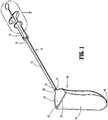
FIG. 1 is a side perspective view of an exemplary embodiment of the presently disclosed specimen retrieval device in a deployed state; -
FIG. 2 is an exploded view of the specimen retrieval device shown inFIG. 1 ; -
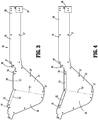
FIG. 3 is a side view of a pattern suitable for forming a specimen bag of the specimen retrieval device of the present disclosure; -
FIG. 4 is a side view of the pattern for forming a specimen bag shown inFIG. 2 , showing folding of portions of the pattern to produce features of the specimen bag; -
FIG. 5 is a side view of the pattern for forming a specimen bag shown inFIG. 3 , showing folding of additional portions of the pattern to produce additional features of the specimen bag; -
FIG. 6 is a side view of the pattern for forming a specimen bag shown inFIG. 4 , showing folding of additional portions of the pattern to produce additional features of the specimen bag; -
FIG. 7 is an enlarged view of the indicated area of detail shown inFIG. 1 ; -
FIG. 8 is an enlarged perspective view of a proximal portion of the specimen retrieval device shown inFIG. 1 with an actuation handle in an advanced position; -
FIG. 9 is a distal view of the actuation handle of the specimen retrieval device shown inFIG. 8 ; -
FIG. 10 is a top view of the actuation handle and a hand grip of the specimen retrieval device shown inFIG. 1 ; -
FIG. 11 is a top view of the specimen retrieval device shown inFIG. 1 ; and -
FIG. 12 is a top view of the specimen retrieval device shown inFIG. 11 , depicting the withdrawal of the specimen bag into the tubular body of the specimen retrieval device. - The present disclosure provides a specimen retrieval device for use in minimally invasive surgical procedures. As used herein with reference to the present disclosure, minimally invasive surgical procedures encompass laparoscopic procedures, arthroscopic procedures, and endoscopic procedures, and refer to procedures utilizing scopes or similar devices having relatively narrow operating portions capable of insertion through a small incision in the skin.
- The aspects of the present disclosure may be modified for use with various methods for retrieving tissue specimens during minimally invasive surgical procedures, sometimes referred to herein as minimally invasive procedures. Examples of minimally invasive procedures include, for example, cholecystectomies, appendectomies, nephrectomies, colectomies, splenectomies, and the like.
- The presently disclosed specimen retrieval device will now be described in detail with reference to the drawings in which like reference numerals designate identical or corresponding elements in each of the several views. In this description, the term "proximal" is used generally to refer to that portion of the device that is closer to a clinician, while the term "distal" is used generally to refer to that portion of the device that is farther from the clinician. The term "clinician" is used generally to refer to medical personnel including doctors, surgeons, nurses, and support personnel.
- Referring to
FIGS. 1-12 , and initially with reference toFIGS. 1 and2 , thespecimen retrieval device 10 of the present disclosure includes atubular body 12 having aproximal portion 16 and adistal portion 18, and defining alongitudinal bore 14 that extends between theproximal portion 16 and thedistal portion 18. The proximal portion of thetubular body 12 supports ahand grip 15. Thespecimen retrieval device 10 also includes an inner shaft assembly 20 (FIG. 6 ) including aninner shaft 22 slidably positioned within thelongitudinal bore 14 of thetubular body 12, anactuation handle 25 secured to aproximal portion 24 of theinner shaft 22, and a specimen bag 40 (FIG. 1 ) supported on adistal portion 26 of theinner shaft 22. - The
hand grip 15 on thetubular body 12 may be formed as a unitary component or, as depicted inFIG. 6 , as twoseparate half components tubular body 12 by one or more suitable coupling methods (e.g., one or more suitable adhesives). In the latter instance, an indent/detent configuration (not shown) may be utilized to facilitate coupling the twoseparate half components - The actuation handle 25 on the
inner shaft 22 may likewise be formed as a unitary component or, in embodiments, as depicted inFIG. 6 , as twoseparate half components - The
specimen bag 40 includes abody 44 having a generally tubular or elongated configuration that is defined by an openable and closable portion (or mouth) 42 and a closed portion 46 (FIG. 1 ). Theclosable portion 42 defines anopening 45. In some embodiments, thespecimen bag 40 includes a tail 48 (FIG. 2 ) having aneck region 47. Alternatively, other specimen bag configurations are envisioned. - The
body 44 of thespecimen bag 40 may be made from any suitable biocompatible material (e.g., nylon, urethane, ripstop nylon or latex) capable of forming a flexible collapsible member, or membrane. In embodiments, the material from which the specimen bag is made is resilient, antistatic, pyrogen-free, non-toxic, and sterilizable. Thespecimen bag 40 may be opaque or clear. In some embodiments, thebody 44 of thespecimen bag 40 is formed of a nylon material, or combinations of nylon materials. As described in greater detail below, in some embodiments portions of thespecimen bag 40 are made of two different nylons that are secured together to form areas of thespecimen bag 40 having high strength. In some embodiments, the first nylon material is a 30 denier ("30D") polyurethane coated rip-stop nylon; and the second nylon material is a 1000 denier ("1000D") polyurethane coated nylon. - Turning to
FIGS. 3-6 , methods for forming the specimen bag of the present disclosure will be described. In embodiments, the specimen bag 40 (FIG. 1 ) is made using a radio-frequency ("RF") welding process that does not require additional reinforcement at the seams (e.g., sutures, interface materials, etc.). As depicted inFIGS. 3-6 , the fabric used to form thespecimen bag 40 of the present disclosure is cut to form apattern 50, withholes 57 along a periphery of thepattern 50. Any means within the purview of those skilled in the art may be used to cut the fabric to form thepattern 50. Theholes 57 assist in placement of thepattern 50 on an RF welder (not shown) used to form thespecimen bag 40. - Once the
pattern 50 has been cut from the fabric, thepattern 50 is placed onto the radiofrequency (RF) welder and located using theholes 57 running along the periphery of the pattern 50 (not shown). - After forming the
pattern 50 used to form thespecimen bag 40, thepattern 50 has various portions that may be folded to form thespecimen bag 40, includingflaps FIG. 3 ). - Once positioned on the RF welder, the
flaps FIG. 3 ) and welded to the fabric (FIG. 4 ), to form achannel 43 at themouth 42 of the specimen bag 40 (FIG. 1 ). Thechannel 43 may include a suture therein (not shown), which may be used to close themouth 42 of thespecimen bag 40. Theflap 55 may then be folded along line "C" (FIGS. 3 and 4 ) at theproximal portion 59 of thepattern 50 to form atail section 49 of the specimen bag 40 (FIG. 4 ). - As shown in
FIG. 2 , areinforcement tab 58 may be placed at theproximal portion 59 of thepattern 50 andflap 55 is folded along line "C" so that thereinforcement tab 58 is sandwiched between the fabric as theflap 50 is folded over and attached to thebody 61 of thepattern 50. In embodiments, thereinforcement tab 58 is formed of 1000D nylon sandwiched between the 30D fabric used to form thepattern 50. The reinforcement tab 58: adds strength to the 30D material and also acts as a retention feature to prevent thespecimen bag 40 from cinching during initial retraction; aids in placement of thespecimen bag 40 on theinner shaft 22 and removal of thespecimen bag 40 from the body and/or theinner shaft 22 of thespecimen retrieval device 10; prevents thetail 48 from ripping without the need for additional suture reinforcement during retraction; and acts as an indicator of the overall device orientation (with respect to location ofmouth 42 of the specimen bag 40) for ease of insertion of a tissue specimen into the specimen bag 40 (not shown). - Once folded, flaps 51, 52, 53, 54 and 55 are secured by RF welding. The
flap 56 is then folded along line "D" and welded with the RF welder to form thebody 44 of the specimen bag 40 (FIG. 5 ). - The
pattern 50 includes a through-hole 60 onflap 55 that allows the RF welder to secure multiple layers of fabric together (not shown), including welding theflap 56 to thepattern 50 through the through-hole 60 onflap 55 at theneck region 47 of thetail 48. This reinforces theneck region 47, which will experience loads during specimen removal. - The radio-frequency (RF) welding process does not necessitate additional reinforcement via suturing and/or interface materials to bolster the bag seams (found in commercially available products). This combination of the RF welding process and the selection of materials used to form the
specimen bag 40 creates a strong, leak proof bag for specimen containment and removal. - As shown in
FIG. 6 , thespecimen bag 40 has abody 44 and atail 48 that theinner shaft 22 passes through. - As depicted in
FIGS. 7-10 , in embodiments, the actuation handle 25 at theproximal portion 24 of theinner shaft 22 has apost 27 for attachingspecimen bag 40 to the actuation handle 25 (instead of carabiner types of attachments that are used by other commercially available devices), by placing thepost 27 onactuation handle 25 through ahole 62 at aproximal portion 49 of thetail 48 of the specimen bag 40 (FIG. 7 ). The use of the post and hole configuration for attaching thetail 48 of thespecimen bag 40 to theactuation handle 25 allows for easy and simple removal of thespecimen bag 40 from theactuation handle 25. In addition, the design permits a more ergonomic shape for theactuation handle 25, enhancing the deployment and retraction of thespecimen bag 40 from theactuation handle 25. - In embodiments, as depicted in
FIGS. 7-10 , thepost 27 is chamfered, which allows thehole 62 at thetail 48 of thespecimen bag 40 to flex over and stay secured to thepost 27 until it is ready to be removed. - Referring to
FIG. 6 , thedistal portion 26 of theinner shaft 22 is coupled to asupport member 28 that is configured to support themouth 42 of thespecimen bag 40. In embodiments, thesupport member 28 includes a pair ofresilient fingers distal portion 26 of theinner shaft 22. In embodiments, theresilient fingers distal portion 26 of theinner shaft 22 such as by molding. Alternatively, a retention pin (not shown) may be used to attach theresilient fingers distal portion 26 of theinner shaft 22. Theresilient fingers FIG. 1 ) to facilitate placement of thespecimen bag 40 into thetubular body 12. - The
resilient fingers specimen bag 40 is deployed from thetubular body 12 to open theopening 42 of thespecimen bag 40, as described below. - In an assembled configuration, the
hand grip 15 and the actuation handle 25 can be manipulated to facilitate manipulation of thespecimen retrieval device 10 and the sliding of theinner shaft 22 within thetubular body 12. More specifically, thehand grip 15 can be grasped by the clinician with one hand and the actuation handle 25 can be grasped by the clinician with the other hand to move theinner shaft 22 within thetubular body 12. - The
tubular body 12 and/or theinner shaft assembly 22 of the present disclosure are made of biocompatible materials within the purview of those skilled in the art, in embodiments, polymeric materials. For example, thetubular body 12 and/or theinner shaft assembly 22 may be made of polycarbonates or thermoplastic polyurethanes sold under the name PELLETHANE®, which offer flexibility and a wide range of hardness. Thetubular body 12 and/or theinner shaft assembly 22, for example, may be fabricated from PELLETHANE® 2363-80A, PELLETHANE® 2363-90A, PELLETHANE® 2363-55D, any combination thereof, or any alternatives within the purview of those skilled in the art. - In embodiments, the
tubular body 12 is made of a polymeric material combined with a lubricious material. Examples of suitable lubricious material include hydrophilic polymers, siloxanes, polycarbonates, urethanes, and/or parylenes, among other lubricious materials within the purview of those skilled in the art. In embodiments, a siloxane may be used as the lubricious material. Suitable siloxanes include, but are not limited to, polydimethylsiloxanes, hexamethyldisiloxanes, polyester-modified methylphenyl polysiloxanes, combinations thereof, and the like. In other embodiments, a combination of a siloxane and a polycarbonate may be used to form thetubular body 12. - For example, in some embodiments, the tubular body is made of a blend of a polycarbonate with a siloxane, which is extruded into the form of the tubular body. The siloxane improves lubricity for the passage of the inner shaft assembly and the specimen bag through the outer tube to deploy the specimen bag in the patient's body.
- In some embodiments, the
tubular body 12 and theinner shaft assembly 22 are formed of the same material. In other embodiments, thetubular body 12 and theinner shaft assembly 22 are formed of different materials. - In embodiments, the
mouth 42 of thespecimen bag 40 has apull string 70 attached thereto (FIG. 11 ), as well asresilient fingers resilient fingers pull string 70 may be received in thecuff 43 formed at themouth 42 of thespecimen bag 40. - In use, the
tubular body 12 of thespecimen retrieval device 10 can be inserted through an incision (not shown) with thespecimen bag 40 furled about theinner shaft 22 and positioned within thetubular body 12 to position thespecimen bag 40 in a body cavity adjacent a surgical site. When thetubular body 12 is properly positioned, the clinician can grip thehand grip 15. - The clinician then pushes the actuation handle 25 on the
proximal portion 24 of theinner shaft 22 distally in relation to thehand grip 15 and the tubular body 12 (not shown), so thedistal portion 26 of theinner shaft 22, including thespecimen bag 40, exits thedistal portion 18 of the tubular body 12 (FIG. 1 ). Once thespecimen bag 40 has exited thetubular body 12, theresilient fingers 30, 32 (FIG. 4 ) return to their non-deformed state, thereby opening themouth 42 of thespecimen bag 40 to ensure thespecimen bag 40 is deployed (FIG. 11 ). - As depicted in
FIG. 12 , after a tissue specimen (not shown) has been placed in thespecimen bag 40, thepull string 70 is pulled proximally (indicated by arrows "A" inFIG. 12 ) to pull thepull string 70 proximally, thus cinching themouth 42 of thespecimen bag 40 closing theopening 42, and withdrawing a portion of thespecimen bag 40 into the inner shaft 12 (indicated by arrow "B" inFIG. 12 ). As depicted inFIG. 12 , theproximal portion 72 of thepull string 70 may be in the form of aloop 74 that may assist in pulling thepull string 70. - Kits of the present disclosure may include both the specimen retrieval device described above, as well as trocars, graspers, vacuum sources (tubes), combinations thereof, and the like. In some embodiments, these additional devices, such as graspers and/or vacuum sources, may be used to break up the tissue specimen in the specimen bag prior to removing the specimen retrieval device from the body cavity.
- Once the specimen retrieval device of the present disclosure has been removed from the patient's body, any tissue specimen may be removed from the
specimen bag 40 for further examination and thespecimen bag 40 may be discarded. - While several embodiments of the disclosure have been shown in the drawings, it is not intended that the disclosure be limited thereto, as it is intended that the disclosure be as broad in scope as the art will allow and that the specification be read likewise. Therefore, the above description should not be construed as limiting, but merely as exemplifications of particular embodiments. Those skilled in the art will envision other modifications within the scope and spirit of the claims appended hereto. Additionally, it is envisioned that the elements and features illustrated or described in connection with one exemplary embodiment may be combined with the elements and features of another without departing from the scope of the present disclosure, and that such modifications and variations are also intended to be included within the scope of the present disclosure. Accordingly, the invention is not to be limited by what has been particularly shown and described, except as indicated by the appended claims.
- The invention may be described by reference to the following numbered paragraphs:-
- 1. A specimen retrieval device comprising:
- a tubular body defining a longitudinal bore, the tubular body having a proximal portion, a distal portion, and a hand grip supported on the proximal portion of the tubular body;
- an inner shaft having a proximal portion, a distal portion, an actuation handle supported on the proximal portion of the inner shaft, and a support member extending from a distal portion of the inner shaft; and
- a specimen bag supported on the support member at the distal portion of the inner shaft, the specimen bag including an open end, a body, and a tail portion having a longitudinal bore through which the inner shaft passes,
- wherein the inner shaft is movable in relation to the tubular body from a non-actuated position in which the specimen bag is positioned in a non-deployed state within the longitudinal bore of the tubular body to an actuated position in which the specimen bag is positioned in a deployed state externally of the distal portion of the tubular body.
- 2. The specimen retrieval device of paragraph 1, wherein a proximal portion of the tail portion of the specimen bag has a hole, and the actuation handle includes a post which passes through the hole at the proximal portion of the tail portion of the specimen bag.
- 3. The specimen retrieval device of paragraph 2, wherein the post is chamfered.
- 4. The specimen retrieval device of paragraph 1, wherein the support member includes a pair of resilient fingers which support the specimen bag and open the open end of the specimen bag in the deployed state.
- 5. The specimen retrieval device of paragraph 4, wherein the resilient fingers are positioned adjacent the open end of the specimen bag to open the specimen bag when the specimen retrieval device is in the deployed state.
- 6. The specimen retrieval device of paragraph 1, wherein the tubular body is formed of a lubricious material.
- 7. The specimen retrieval device of paragraph 6, wherein the tubular body includes a polymeric material combined with a lubricious material.
- 8. The specimen retrieval device of
paragraph 7, wherein the lubricious material includes hydrophilic polymers, siloxanes, polycarbonates, urethanes, parylenes, or combinations thereof. - 9. The specimen retrieval device of
paragraph 7, wherein the lubricious material includes a siloxane selected from polydimethylsiloxanes, hexamethyldisiloxanes, polyester-modified methylphenyl polysiloxanes, or combinations thereof. - 10. The specimen retrieval device of
paragraph 7, wherein the tubular body is formed of a combination of a siloxane and a polycarbonate. - 11. The specimen retrieval device of paragraph 1, wherein the tail of the specimen bag includes a reinforcement tab.
- 12. A method comprising:
- cutting a fabric to form a pattern having a body portion and flaps that may be folded and attached to the body portion of the pattern to form a specimen bag;
- cutting holes along the periphery of the pattern;
- placing the pattern on a radiofrequency welder and locating the pattern in the proper position with the holes along the periphery of the pattern;
- folding at least some of the flaps of the pattern and attaching them to the body portion of the pattern with the radiofrequency welder to form a channel at a mouth of the specimen bag;
- placing a reinforcement tab at a proximal portion of the pattern;
- folding a flap at the proximal portion of the pattern and attaching it to the body portion of the pattern with the radiofrequency welder to form a tail section of the specimen bag, the tail section including the reinforcement tab sandwiched between the flap and the body portion of the pattern; and
- folding a last flap at a distal portion of the pattern and attaching it to the body portion of the pattern with the radiofrequency welder to form a body of the specimen bag.
- 13. The method of
paragraph 12, further including placing a suture within the channel at the mouth of the specimen bag.
Claims (13)
- A specimen retrieval device comprising:a tubular body defining a longitudinal bore, the tubular body having a proximal portion, a distal portion, and a hand grip supported on the proximal portion of the tubular body;an inner shaft having a proximal portion, a distal portion, an actuation handle supported on the proximal portion of the inner shaft, and a support member extending from a distal portion of the inner shaft; anda specimen bag supported on the support member at the distal portion of the inner shaft, the specimen bag including an open end, a body, and a tail portion having a longitudinal bore through which the inner shaft passes,wherein the inner shaft is movable in relation to the tubular body from a non-actuated position in which the specimen bag is positioned in a non-deployed state within the longitudinal bore of the tubular body to an actuated position in which the specimen bag is positioned in a deployed state externally of the distal portion of the tubular body.
- The specimen retrieval device of claim 1, wherein a proximal portion of the tail portion of the specimen bag has a hole, and the actuation handle includes a post which passes through the hole at the proximal portion of the tail portion of the specimen bag.
- The specimen retrieval device of claim 2, wherein the post is chamfered.
- The specimen retrieval device of any preceding claim, wherein the support member includes a pair of resilient fingers which support the specimen bag and open the open end of the specimen bag in the deployed state.
- The specimen retrieval device of claim 4, wherein the resilient fingers are positioned adjacent the open end of the specimen bag to open the specimen bag when the specimen retrieval device is in the deployed state.
- The specimen retrieval device of any preceding claim, wherein the tubular body is formed of a lubricious material.
- The specimen retrieval device of claim 6, wherein the tubular body includes a polymeric material combined with a lubricious material.
- The specimen retrieval device of claim 7, wherein the lubricious material includes hydrophilic polymers, siloxanes, polycarbonates, urethanes, parylenes, or combinations thereof.
- The specimen retrieval device of claim 7, wherein the lubricious material includes a siloxane selected from polydimethylsiloxanes, hexamethyldisiloxanes, polyester-modified methylphenyl polysiloxanes, or combinations thereof.
- The specimen retrieval device of claim 7, wherein the tubular body is formed of a combination of a siloxane and a polycarbonate.
- The specimen retrieval device of any preceding claim, wherein the tail of the specimen bag includes a reinforcement tab.
- A method comprising:cutting a fabric to form a pattern having a body portion and flaps that may be folded and attached to the body portion of the pattern to form a specimen bag;cutting holes along the periphery of the pattern;placing the pattern on a radiofrequency welder and locating the pattern in the proper position with the holes along the periphery of the pattern;folding at least some of the flaps of the pattern and attaching them to the body portion of the pattern with the radiofrequency welder to form a channel at a mouth of the specimen bag;placing a reinforcement tab at a proximal portion of the pattern;folding a flap at the proximal portion of the pattern and attaching it to the body portion of the pattern with the radiofrequency welder to form a tail section of the specimen bag, the tail section including the reinforcement tab sandwiched between the flap and the body portion of the pattern; andfolding a last flap at a distal portion of the pattern and attaching it to the body portion of the pattern with the radiofrequency welder to form a body of the specimen bag.
- The method of claim 12, further including placing a suture within the channel at the mouth of the specimen bag.
Applications Claiming Priority (2)
| Application Number | Priority Date | Filing Date | Title |
|---|---|---|---|
| US201862717938P | 2018-08-13 | 2018-08-13 | |
| US16/432,960 US11134932B2 (en) | 2018-08-13 | 2019-06-06 | Specimen retrieval device |
Publications (2)
| Publication Number | Publication Date |
|---|---|
| EP3620115A2 true EP3620115A2 (en) | 2020-03-11 |
| EP3620115A3 EP3620115A3 (en) | 2020-07-22 |
Family
ID=67614516
Family Applications (1)
| Application Number | Title | Priority Date | Filing Date |
|---|---|---|---|
| EP19191319.3A Withdrawn EP3620115A3 (en) | 2018-08-13 | 2019-08-12 | Specimen retrieval device |
Country Status (3)
| Country | Link |
|---|---|
| US (2) | US11134932B2 (en) |
| EP (1) | EP3620115A3 (en) |
| CN (1) | CN110811705A (en) |
Families Citing this family (5)
| Publication number | Priority date | Publication date | Assignee | Title |
|---|---|---|---|---|
| US11134932B2 (en) * | 2018-08-13 | 2021-10-05 | Covidien Lp | Specimen retrieval device |
| CN111685810B (en) * | 2020-07-03 | 2021-08-06 | 中南大学湘雅二医院 | A customized disposable medical specimen bag |
| CN113331884A (en) * | 2020-07-03 | 2021-09-03 | 重庆橙壹科技有限公司 | Medical article bag of getting suitable for customization production of laparoscopic surgery |
| WO2023034360A2 (en) * | 2021-09-01 | 2023-03-09 | The Regents Of The University Of Michigan | Specimen retrieval device |
| US12446867B1 (en) | 2024-09-20 | 2025-10-21 | Kobex LLC | Specimen retrieval apparatus and methods |
Family Cites Families (250)
| Publication number | Priority date | Publication date | Assignee | Title |
|---|---|---|---|---|
| US156477A (en) | 1874-11-03 | Improvement in litholycites | ||
| US30471A (en) | 1860-10-23 | Apparatus foe | ||
| US35164A (en) | 1862-05-06 | Improvement in terra-cotta roofing | ||
| GB246009A (en) | 1925-05-29 | 1926-01-21 | Louis Evendale Fillmore | An improved micrometer movement device for use with variable electrical apparatus |
| US1609014A (en) | 1925-09-25 | 1926-11-30 | Dowd James Edward | Tonsil remover |
| DE1095457B (en) | 1959-11-04 | 1960-12-22 | Dr Med Kurt Kreie | Ureteral catheter with spreader basket for removing kidney stones |
| US3800781A (en) | 1972-05-30 | 1974-04-02 | K Zalucki | Specimen-taking device |
| US4557255A (en) | 1983-08-22 | 1985-12-10 | Goodman Tobias M | Ureteroscope |
| US4611594A (en) | 1984-04-11 | 1986-09-16 | Northwestern University | Medical instrument for containment and removal of calculi |
| DE8435489U1 (en) | 1984-12-04 | 1986-08-28 | Richard Wolf Gmbh, 7134 Knittlingen | Nephroscope |
| DE3542667A1 (en) | 1984-12-04 | 1986-06-05 | Richard Wolf Gmbh, 7134 Knittlingen | Device for the removal of body stones |
| US4790812A (en) | 1985-11-15 | 1988-12-13 | Hawkins Jr Irvin F | Apparatus and method for removing a target object from a body passsageway |
| US4744363A (en) | 1986-07-07 | 1988-05-17 | Hasson Harrith M | Intra-abdominal organ stabilizer, retractor and tissue manipulator |
| US4852586A (en) | 1988-02-26 | 1989-08-01 | Haines Bernard M | Sensory transmitting membrane device |
| US5556376A (en) | 1988-07-22 | 1996-09-17 | Yoon; Inbae | Multifunctional devices having loop configured portions and collection systems for endoscopic surgical procedures and methods thereof |
| US5451204A (en) | 1988-07-22 | 1995-09-19 | Yoon; Inbae | Multifunctional devices for endoscopic surgical procedures |
| US5829440A (en) | 1989-01-23 | 1998-11-03 | Broad, Jr.; Robert L. | Contracepive device and methods and apparatus for assembling the same |
| US4991593A (en) | 1989-06-13 | 1991-02-12 | Minnesota Scientific, Inc. | Flexible bag for storing body organs |
| US6004330A (en) | 1989-08-16 | 1999-12-21 | Medtronic, Inc. | Device or apparatus for manipulating matter |
| US5904690A (en) | 1989-08-16 | 1999-05-18 | Medtronic, Inc. | Device or apparatus for manipulating matter |
| US4977903A (en) | 1989-09-19 | 1990-12-18 | Jerome F. Schweich | Sensory transmitting membrane device |
| US4997435A (en) | 1989-09-25 | 1991-03-05 | Methodist Hospital Of Indiana Inc. | Percutaneous catheter with encapsulating receptacle |
| US4927427A (en) | 1989-09-29 | 1990-05-22 | Northgate Research, Inc. | Lithotriptor device for trapping and destroying concretions |
| US5084054A (en) | 1990-03-05 | 1992-01-28 | C.R. Bard, Inc. | Surgical gripping instrument |
| US5074867A (en) | 1990-05-18 | 1991-12-24 | Wilk Peter J | Surgical instrument assembly and related surgical method |
| US5037379A (en) | 1990-06-22 | 1991-08-06 | Vance Products Incorporated | Surgical tissue bag and method for percutaneously debulking tissue |
| DE69133618D1 (en) | 1990-10-09 | 2009-07-30 | Medtronic Inc | Surgical device for the manipulation of tissue |
| US5312416A (en) | 1991-10-18 | 1994-05-17 | Endomedix Corporation | Method and system for enclosing, manipulating, debulking and removing tissue through minimal access incisions |
| EP0566694A1 (en) | 1991-01-09 | 1993-10-27 | EndoMedix Corporation | Method and device for intracorporeal liquidization of tissue and/or intracorporeal fragmentation of calculi during endoscopic surgical procedures |
| US5354303A (en) | 1991-01-09 | 1994-10-11 | Endomedix Corporation | Devices for enclosing, manipulating, debulking and removing tissue through minimal incisions |
| US5224930A (en) | 1991-01-09 | 1993-07-06 | Endomedix Corporation | Trocar system for facilitating passage of instruments into a body cavity through a minimal access incision |
| US5370647A (en) | 1991-01-23 | 1994-12-06 | Surgical Innovations, Inc. | Tissue and organ extractor |
| US5190561A (en) | 1991-01-23 | 1993-03-02 | Surgical Innovations, Inc. | Tissue and organ extractor |
| DE4204210A1 (en) | 1991-02-14 | 1992-08-27 | Sterimed Gmbh | Tissue etc., extraction instrument from stomach cavity |
| DE69131050T2 (en) | 1991-03-25 | 1999-11-18 | Espiner Medical Products, Bristol | SURGICAL RECORDING DEVICE |
| US5143082A (en) | 1991-04-03 | 1992-09-01 | Ethicon, Inc. | Surgical device for enclosing an internal organ |
| US5176687A (en) | 1991-05-10 | 1993-01-05 | Hasson Harrith M | Disposable pouch container for isolation and retrieval of tissues removed at laparoscopy |
| US5147371A (en) | 1991-06-28 | 1992-09-15 | Washington Charles N | Apparatus for removing gallstones and tissue during surgery |
| US5192286A (en) | 1991-07-26 | 1993-03-09 | Regents Of The University Of California | Method and device for retrieving materials from body lumens |
| JP3199401B2 (en) | 1991-08-23 | 2001-08-20 | オリンパス光学工業株式会社 | Ultrasound surgery device |
| US5741271A (en) | 1991-11-05 | 1998-04-21 | Nakao; Naomi L. | Surgical retrieval assembly and associated method |
| US5759187A (en) | 1991-11-05 | 1998-06-02 | Wilk & Nakao Medical Technology, Incorporated | Surgical retrieval assembly and associated method |
| US5201740A (en) | 1991-11-05 | 1993-04-13 | Nakao Naomi L | Surgical retrieval assembly and related method |
| US5190542A (en) | 1991-11-05 | 1993-03-02 | Nakao Naomi L | Surgical retrieval assembly and related method |
| US5336227A (en) | 1991-11-05 | 1994-08-09 | Wilk & Nakao Medical Technology Incorporated | Surgical cauterization snare with polyp capturing web net |
| US5997547A (en) | 1991-11-05 | 1999-12-07 | Nakao; Naomi L. | Surgical retrieval assembly and associated method |
| US5486182A (en) | 1991-11-05 | 1996-01-23 | Wilk & Nakao Medical Technology Inc. | Polyp retrieval assembly with separable web member |
| US5308327A (en) | 1991-11-25 | 1994-05-03 | Advanced Surgical Inc. | Self-deployed inflatable retractor |
| US5524633A (en) | 1991-11-25 | 1996-06-11 | Advanced Surgical, Inc. | Self-deploying isolation bag |
| US5215521A (en) | 1991-11-26 | 1993-06-01 | Cochran James C | Laparoscopy organ retrieval apparatus and procedure |
| DE4140156C2 (en) | 1991-12-05 | 1995-07-06 | Guenter Dr Med Schaller | Aid for laparoscopic operations |
| US5190555A (en) | 1991-12-13 | 1993-03-02 | Unisurge, Inc. | Device for collection and removal of body parts during laparoscopic surgery |
| US5643283A (en) | 1992-01-03 | 1997-07-01 | Younker; Marlin E. | Surgical pouch |
| US5192284A (en) | 1992-01-10 | 1993-03-09 | Pleatman Mark A | Surgical collector and extractor |
| US5352184A (en) | 1992-03-12 | 1994-10-04 | Uresil Corporation | Reservoir for enclosing and retrieving body specimens |
| CA2098896C (en) | 1992-06-30 | 2005-03-29 | H. Jonathan Tovey | Specimen retrieval pouch and method for use |
| US5234439A (en) | 1992-08-06 | 1993-08-10 | Wilk Peter J | Method and instrument assembly for removing organ |
| US5279539A (en) | 1992-08-17 | 1994-01-18 | Ethicon, Inc. | Drawstring surgical pouch and method of use for preventing ovarian adhesions |
| US5330483A (en) | 1992-12-18 | 1994-07-19 | Advanced Surgical Inc. | Specimen reduction device |
| US5341815A (en) | 1993-03-25 | 1994-08-30 | Ethicon, Inc. | Endoscopic surgical pouch |
| US5368597A (en) | 1993-05-24 | 1994-11-29 | Pagedas; Anthony | Reclosable pouch for laparoscopic use |
| US5480404A (en) | 1993-06-16 | 1996-01-02 | Ethicon, Inc. | Surgical tissue retrieval instrument |
| US5785677A (en) | 1993-06-22 | 1998-07-28 | Auweiler; Udo | Laparoscopy bag |
| US5630822A (en) | 1993-07-02 | 1997-05-20 | General Surgical Innovations, Inc | Laparoscopic tissue removal device |
| US5469863A (en) | 1993-08-11 | 1995-11-28 | Polygenex International, Inc. | Polyurethane condom of welded polyurethane film |
| US5443472A (en) | 1993-10-08 | 1995-08-22 | Li Medical Technologies, Inc. | Morcellator system |
| US5645083A (en) | 1994-02-10 | 1997-07-08 | Essig; Mitchell N. | Peritoneal surgical method |
| US5643282A (en) | 1994-08-22 | 1997-07-01 | Kieturakis; Maciej J. | Surgical instrument and method for removing tissue from an endoscopic workspace |
| US5535759A (en) | 1994-11-02 | 1996-07-16 | Wilk; Peter J. | Endoscopic method of cleaning and operating on a site within a patient |
| US5658296A (en) | 1994-11-21 | 1997-08-19 | Boston Scientific Corporation | Method for making surgical retrieval baskets |
| US5611803A (en) | 1994-12-22 | 1997-03-18 | Urohealth Systems, Inc. | Tissue segmentation device |
| WO1996023446A1 (en) | 1995-02-02 | 1996-08-08 | Boston Scientific Corporation | Surgical wire basket extractor |
| US6348056B1 (en) | 1999-08-06 | 2002-02-19 | Scimed Life Systems, Inc. | Medical retrieval device with releasable retrieval basket |
| US6350266B1 (en) | 1995-02-02 | 2002-02-26 | Scimed Life Systems, Inc. | Hybrid stone retrieval device |
| US5814044A (en) | 1995-02-10 | 1998-09-29 | Enable Medical Corporation | Apparatus and method for morselating and removing tissue from a patient |
| US5642282A (en) | 1995-03-10 | 1997-06-24 | Isuzu Motors Ltd. | Apparatus for controlling attitude of a road vehicle cab |
| DE19515280C2 (en) | 1995-04-26 | 1997-06-12 | Siegfried Riek | Device for removing tissue or the like from the abdominal cavity |
| US5618296A (en) | 1995-07-24 | 1997-04-08 | Endomedix Corporation/Box 330 | Tissue morcellator system and method |
| US6264663B1 (en) | 1995-10-06 | 2001-07-24 | Metamorphic Surgical Devices, Llc | Device for removing solid objects from body canals, cavities and organs including an invertable basket |
| US5853374A (en) | 1995-10-11 | 1998-12-29 | Applied Medical Resources Corporation | Tissue collection and retrieval bag |
| SE508742C2 (en) | 1996-03-25 | 1998-11-02 | Safe Conduct Ab | Device for use in endoscopic operations, to fix, enclose, divide and dispense a preparation |
| US5906621A (en) | 1996-05-14 | 1999-05-25 | United States Endoscopy Group, Inc. | Endoscopic surgical device |
| DE19624826C2 (en) | 1996-06-21 | 1999-07-01 | Ruesch Willy Ag | Tissue extraction device |
| US5735289A (en) | 1996-08-08 | 1998-04-07 | Pfeffer; Herbert G. | Method and apparatus for organic specimen retrieval |
| US5769794A (en) | 1996-09-04 | 1998-06-23 | Smith & Nephew Endoscopy, Inc | Tissue retrieval bag and method for removing cancerous tissue |
| US5702343A (en) | 1996-10-02 | 1997-12-30 | Acorn Medical, Inc. | Cardiac reinforcement device |
| US5782840A (en) | 1997-02-14 | 1998-07-21 | Wilk & Nakao Medical Technology, Inc. | Snare cauterization surgical instrument assembly and method of manufacture |
| US5908429A (en) | 1997-05-01 | 1999-06-01 | Yoon; Inbae | Methods of anatomical tissue ligation |
| AU8507398A (en) | 1997-07-24 | 1999-02-16 | James F. Mcguckin Jr. | Breast surgery method and apparatus |
| AU1187899A (en) | 1997-10-09 | 1999-05-03 | Camran Nezhat | Methods and systems for organ resection |
| US6547310B2 (en) | 1997-10-31 | 2003-04-15 | Eugene A. Myers | Truck bed cover |
| US6019770A (en) | 1997-12-04 | 2000-02-01 | Christoudias; George C. | Versatile endoscopic retrieval bag |
| US6344026B1 (en) | 1998-04-08 | 2002-02-05 | Senorx, Inc. | Tissue specimen encapsulation device and method thereof |
| US5971995A (en) | 1998-03-30 | 1999-10-26 | Ethicon, Inc. | Surgical pouch instrument |
| US6383195B1 (en) | 1998-04-13 | 2002-05-07 | Endoline, Inc. | Laparoscopic specimen removal apparatus |
| US6007557A (en) | 1998-04-29 | 1999-12-28 | Embol-X, Inc. | Adjustable blood filtration system |
| US5980544A (en) | 1998-05-18 | 1999-11-09 | Ethicon Endo-Surgery, Inc. | Ballistic specimen bag for use with ultrasonic devices |
| US6162235A (en) | 1998-05-18 | 2000-12-19 | Ethicon Endo-Surgery, Inc. | Method of tissue morcellation using an ultrasonic surgical instrument with a ballistic specimen bag |
| JP2000037388A (en) | 1998-05-20 | 2000-02-08 | Osamu Yoshida | Organ storage bag and organ storage bag insert |
| US6206889B1 (en) | 1998-06-26 | 2001-03-27 | Roberto Bennardo | Device for removing anatomical parts by laparoscopy |
| US6527748B1 (en) | 1998-08-17 | 2003-03-04 | Yutaka Suzuki | Method of gastrostomy, and an infection preventive cover, kit or catheter kit, and a gastrostomy catheter kit |
| IL125965A (en) | 1998-08-27 | 2003-03-12 | Hendler Shoshan | Apparatus and method for acquisition and retrieval of resected biological specimens |
| US6007546A (en) | 1998-10-26 | 1999-12-28 | Boston Scientific Ltd. | Injection snare |
| US6016448A (en) | 1998-10-27 | 2000-01-18 | Medtronic, Inc. | Multilevel ERI for implantable medical devices |
| US6258102B1 (en) | 1998-11-20 | 2001-07-10 | Ancel Surgical R&D, Inc. | Reusable laproscopic retrieval mechanism |
| US6059793A (en) | 1998-11-20 | 2000-05-09 | Pagedas; Anthony C. | Reusable laproscopic retrieval mechanism and method for use |
| US6387102B2 (en) | 1998-11-20 | 2002-05-14 | Ancel Surgical R&D, Inc. | Reusable laparoscopic retrieval mechanism |
| US6156055A (en) | 1999-03-23 | 2000-12-05 | Nitinol Medical Technologies Inc. | Gripping device for implanting, repositioning or extracting an object within a body vessel |
| US6537273B1 (en) | 1999-07-02 | 2003-03-25 | Alexander K. D. Sosiak | Device and method for removing large tissue masses |
| US6544279B1 (en) | 2000-08-09 | 2003-04-08 | Incept, Llc | Vascular device for emboli, thrombus and foreign body removal and methods of use |
| US6419639B2 (en) | 1999-08-05 | 2002-07-16 | National Institute Of Health | Laparoscopic SAC holder assembly |
| US6368328B1 (en) | 1999-09-16 | 2002-04-09 | Scimed Life Systems, Inc. | Laser-resistant medical retrieval device |
| US6228095B1 (en) | 1999-10-14 | 2001-05-08 | Core Dynamics, Inc. | Specimen retrieval device |
| US6471659B2 (en) | 1999-12-27 | 2002-10-29 | Neothermia Corporation | Minimally invasive intact recovery of tissue |
| SE9904223D0 (en) | 1999-11-19 | 1999-11-19 | Safe Conduct Ab | Working Device |
| US6277083B1 (en) | 1999-12-27 | 2001-08-21 | Neothermia Corporation | Minimally invasive intact recovery of tissue |
| US6755779B2 (en) | 2000-12-01 | 2004-06-29 | Acorn Cardiovascular, Inc. | Apparatus and method for delivery of cardiac constraint jacket |
| US7086403B2 (en) | 2000-12-05 | 2006-08-08 | Church & Dwight Co., Inc. | Condom with male genital desensitizer lubricant |
| US6350267B1 (en) | 2000-12-21 | 2002-02-26 | Ethicon Endo-Surgery, Inc. | Method of use of an improved specimen retrieval bag |
| US6406440B1 (en) | 2000-12-21 | 2002-06-18 | Ethicon Endo-Surgery, Inc. | Specimen retrieval bag |
| WO2002054942A2 (en) | 2001-01-12 | 2002-07-18 | Granit Medical Innovation, Inc. | Medical cauterization snare assembly and associated methodology |
| US7041055B2 (en) | 2002-10-07 | 2006-05-09 | Mark LoGuidice | Instruments and methods for use in laparoscopic surgery |
| US6958069B2 (en) | 2001-01-17 | 2005-10-25 | Mark LoGuidice | Instruments and methods for use in laparoscopic surgery |
| US6383197B1 (en) | 2001-06-29 | 2002-05-07 | Ethicon Endo-Surgery, Inc. | Self disengaging anti-backup mechanism for specimen retrieval bag deployment |
| US6409733B1 (en) | 2001-06-29 | 2002-06-25 | Ethicon Endo-Surgery, Inc. | Specimen retrieval bag |
| JP3875059B2 (en) | 2001-10-17 | 2007-01-31 | ユニ・チャーム株式会社 | Individual package for body fluid absorption products |
| US7052454B2 (en) | 2001-10-20 | 2006-05-30 | Applied Medical Resources Corporation | Sealed surgical access device |
| US8016771B2 (en) | 2002-03-27 | 2011-09-13 | Tyco Healthcare Group | Minimally invasive removal device with breakaway sheath |
| US7226461B2 (en) | 2002-04-19 | 2007-06-05 | Pelikan Technologies, Inc. | Method and apparatus for a multi-use body fluid sampling device with sterility barrier release |
| US6887255B2 (en) | 2002-04-19 | 2005-05-03 | Peter Shimm | Laparoscopic specimen extraction port |
| US6805699B2 (en) | 2002-04-19 | 2004-10-19 | Peter Shimm | Laparoscopic specimen retrieval shoehorn |
| US6840948B2 (en) | 2002-06-06 | 2005-01-11 | Ethicon-Endo Surgery, Inc. | Device for removal of tissue lesions |
| ES2378149T3 (en) | 2002-06-18 | 2012-04-09 | Tyco Healthcare Group Lp | Tissue removal device |
| DE10229137A1 (en) | 2002-06-28 | 2004-01-29 | Ethicon Gmbh | Surgical instrument |
| JP3926237B2 (en) | 2002-08-08 | 2007-06-06 | 株式会社モリタ製作所 | Organectomy bag for laparoscopic surgery |
| JP3686947B2 (en) | 2002-12-09 | 2005-08-24 | 国立大学法人 東京大学 | High-rigid forceps tip structure for active forceps and active forceps including the same |
| US20040138587A1 (en) | 2003-01-15 | 2004-07-15 | Lyons William Lawrence | Specimen collection instrument with inflatable bag |
| CA2519445C (en) | 2003-03-17 | 2012-06-12 | Tyco Healthcare Group, Lp | Endoscopic tissue removal apparatus and method |
| US20050116673A1 (en) | 2003-04-18 | 2005-06-02 | Rensselaer Polytechnic Institute | Methods and systems for controlling the operation of a tool |
| CA2547298C (en) | 2003-04-23 | 2007-03-27 | Ame M. Amer | Method of using condom |
| US7090637B2 (en) | 2003-05-23 | 2006-08-15 | Novare Surgical Systems, Inc. | Articulating mechanism for remote manipulation of a surgical or diagnostic tool |
| US20050043750A1 (en) | 2003-06-13 | 2005-02-24 | Scott George L. | Laparoscopic stone safety device and method |
| US7892242B2 (en) | 2003-09-02 | 2011-02-22 | University Of South Florida | Tool for removing intraocular foreign bodies |
| US8388630B2 (en) | 2003-09-18 | 2013-03-05 | Boston Scientific Scimed, Inc. | Medical retrieval devices and methods |
| JP4358589B2 (en) | 2003-10-08 | 2009-11-04 | オリンパス株式会社 | Medical treatment tool |
| US7270663B2 (en) | 2003-10-16 | 2007-09-18 | Granit Medical Innovations, Llc | Medical snare loop with indentations for changing effective size of loop and associated method |
| CN1247159C (en) | 2003-10-17 | 2006-03-29 | 李艳芳 | Recycled biological sample bag |
| US7118564B2 (en) | 2003-11-26 | 2006-10-10 | Ethicon Endo-Surgery, Inc. | Medical treatment system with energy delivery device for limiting reuse |
| US8343031B2 (en) | 2004-03-23 | 2013-01-01 | Michael Gertner | Obesity treatment systems |
| US20050256425A1 (en) | 2004-05-11 | 2005-11-17 | Inpro Biotechnology, Inc. | Device, system and method for extracting and preparing brain tissue |
| US20050267492A1 (en) | 2004-05-12 | 2005-12-01 | Philippe Poncet | Surgical instrument for specimen retrieval |
| US9339259B2 (en) | 2004-07-07 | 2016-05-17 | Colonix Limited | Colorectal cell sampling device |
| US20060200169A1 (en) | 2005-03-07 | 2006-09-07 | Kevin Sniffin | Specimen retrieval apparatus and method of use |
| US20060200170A1 (en) | 2005-03-07 | 2006-09-07 | Ernest Aranyi | Specimen retrieval apparatus and method of use |
| US7670346B2 (en) | 2005-03-29 | 2010-03-02 | Tyco Healthcare Group Lp | Specimen retrieval apparatus |
| US7547310B2 (en) | 2005-03-29 | 2009-06-16 | Tyco Healthcare Group Lp | Specimen retrieval apparatus |
| US7837612B2 (en) | 2005-04-08 | 2010-11-23 | Ethicon Endo-Surgery, Inc. | Tissue suspension device |
| US7785251B2 (en) | 2005-04-22 | 2010-08-31 | Wilk Patent, Llc | Port extraction method for trans-organ surgery |
| KR101397210B1 (en) | 2005-06-28 | 2014-05-21 | 스트리커 코포레이션 | Control assembly for a motorized surgical tool that contains a sensor that monitors the state of the motor rotor |
| US8206401B2 (en) | 2005-07-15 | 2012-06-26 | Granit Medical Innovation Llc | Endoscope cutting and retrieving snare instrument |
| US7618437B2 (en) | 2005-07-15 | 2009-11-17 | Granit Medical Innovation, Llc | Endoscope retrieval instrument assembly |
| US7554343B2 (en) | 2005-07-25 | 2009-06-30 | Piezoinnovations | Ultrasonic transducer control method and system |
| AU2006304894B2 (en) | 2005-10-14 | 2012-10-04 | Applied Medical Resources Corporation | Tissue retrieval apparatus |
| US8652147B2 (en) | 2005-10-14 | 2014-02-18 | Applied Medical Resources Corporation | Device for isolating and removing tissue from a body cavity |
| US7733224B2 (en) | 2006-06-30 | 2010-06-08 | Bao Tran | Mesh network personal emergency response appliance |
| US20070135780A1 (en) | 2005-12-09 | 2007-06-14 | Pagedas Anthony C | Surgical bag and morcellator system and method of use |
| WO2007081601A2 (en) | 2006-01-10 | 2007-07-19 | Southern Illinois University | Material retrieval device and method of using |
| US20070186935A1 (en) | 2006-02-14 | 2007-08-16 | Francis Wang | Coition activated inflatable reservoir condom |
| DE102006000382A1 (en) | 2006-08-01 | 2008-02-07 | Novineon Healthcare Technology Partners Gmbh | Medical instrument |
| US8057485B2 (en) | 2007-03-06 | 2011-11-15 | The Hollis Group | Specimen retrieval device |
| US20080221587A1 (en) | 2007-03-09 | 2008-09-11 | Jeremy Schwartz | Two-stage snare-basket medical device |
| US8075567B2 (en) | 2007-03-22 | 2011-12-13 | Anchor Products Company | Surgical tissue retrieval instrument |
| US8308746B2 (en) | 2007-04-12 | 2012-11-13 | Applied Medical Resources Corporation | Method and apparatus for tissue morcellation |
| US8591521B2 (en) | 2007-06-08 | 2013-11-26 | United States Endoscopy Group, Inc. | Retrieval device |
| US8348827B2 (en) | 2007-06-12 | 2013-01-08 | Ethicon Endo-Surgery, Inc. | Specimen removal pouch |
| US7588176B2 (en) | 2007-06-18 | 2009-09-15 | Ethicon Endo-Surgery, Inc. | Surgical cutting instrument with improved closure system |
| KR100898829B1 (en) | 2007-08-06 | 2009-05-22 | 문화숙 | Endoscopic Endo Bags |
| US8097001B2 (en) | 2007-09-24 | 2012-01-17 | Granit Medical Innovations Llc | Medical instrument with stop motion override and associated method |
| WO2009055791A2 (en) | 2007-10-25 | 2009-04-30 | Cornell University | Tissue retrieval bags |
| EP2078497B8 (en) | 2008-01-10 | 2012-03-28 | A.M.I. Agency for Medical Innovations GmbH | Medical instrument |
| US8435237B2 (en) | 2008-01-29 | 2013-05-07 | Covidien Lp | Polyp encapsulation system and method |
| US8758391B2 (en) | 2008-02-14 | 2014-06-24 | Ethicon Endo-Surgery, Inc. | Interchangeable tools for surgical instruments |
| US20090240238A1 (en) | 2008-03-24 | 2009-09-24 | Medtronic Vascular, Inc. | Clot Retrieval Mechanism |
| US8906035B2 (en) | 2008-06-04 | 2014-12-09 | Ethicon Endo-Surgery, Inc. | Endoscopic drop off bag |
| US8795278B2 (en) | 2008-06-23 | 2014-08-05 | Microfabrica Inc. | Selective tissue removal tool for use in medical applications and methods for making and using |
| US8152820B2 (en) | 2008-06-26 | 2012-04-10 | Dai-Z, Llc | Medical device and method for human tissue and foreign body extraction |
| US20100000471A1 (en) | 2008-07-07 | 2010-01-07 | Darrell Hibbard | Retrieval device for creatures |
| US9370341B2 (en) | 2008-10-23 | 2016-06-21 | Covidien Lp | Surgical retrieval apparatus |
| US8172772B2 (en) | 2008-12-11 | 2012-05-08 | Ethicon Endo-Surgery, Inc. | Specimen retrieval device |
| US8430826B2 (en) | 2009-03-04 | 2013-04-30 | Covidien Lp | Specimen retrieval apparatus |
| WO2010111404A2 (en) | 2009-03-25 | 2010-09-30 | Surgical Principals, Inc. | Specimen collection bag |
| US9877893B2 (en) | 2009-06-10 | 2018-01-30 | Conmed Corporation | Tissue specimen retrieval bag, method for retrieving tissue |
| US8827968B2 (en) | 2009-06-10 | 2014-09-09 | Anchor Products Company | Tissue specimen retrieval bag, method for retrieving tissue |
| US8696683B2 (en) | 2009-09-24 | 2014-04-15 | Francis Edward Levert | Apparatus for removing an object from a lumen |
| EP2485652B1 (en) | 2009-10-09 | 2019-08-21 | Applied Medical Resources Corporation | Single incision laparoscopic tissue retrieval system |
| WO2011049918A1 (en) | 2009-10-19 | 2011-04-28 | Ww7 L.L.C. | Single port surgical tissue containment and extraction device |
| US20110137334A1 (en) * | 2009-12-04 | 2011-06-09 | Boston Scientific Scimed, Inc. | Electroactively Deployed Filter Device |
| US8409217B2 (en) | 2010-01-25 | 2013-04-02 | Ethicon Endo-Surgery, Inc. | Tissue retrieval device with bladders |
| US20110184311A1 (en) | 2010-01-25 | 2011-07-28 | Parihar Shailendra K | Tissue Retrieval Device with Resilient Member |
| US8409216B2 (en) | 2010-01-25 | 2013-04-02 | Ethicon Endo-Surgery, Inc. | Tissue retrieval device with buckling arms |
| US8444655B2 (en) | 2010-01-25 | 2013-05-21 | Ethicon Endo-Surgery, Inc. | Tissue retrieval device with modular pouch cartridge |
| US8419749B2 (en) | 2010-01-26 | 2013-04-16 | Ethicon Endo-Surgery, Inc. | Tissue retrieval device with reinforced pouch and variable volume |
| US8425533B2 (en) | 2010-01-26 | 2013-04-23 | Ethicon Endo-Surgery, Inc. | Tissue retrieval device with pouch stretching arm |
| US8986321B2 (en) | 2010-01-26 | 2015-03-24 | Ethicon Endo-Surgery, Inc. | Method of fitting pouch in tissue retrieval device |
| US8414596B2 (en) | 2010-01-26 | 2013-04-09 | Ethicon Endo-Surgery, Inc. | Tissue retrieval device with gusseted pouch |
| US9113848B2 (en) | 2010-02-03 | 2015-08-25 | Covidien Lp | Surgical retrieval apparatus |
| US8585712B2 (en) | 2010-02-03 | 2013-11-19 | Covidien Lp | Surgical retrieval apparatus |
| US20110190779A1 (en) | 2010-02-03 | 2011-08-04 | Jennifer Rachel Gell | Surgical retrieval apparatus |
| US20110190781A1 (en) | 2010-02-03 | 2011-08-04 | Nicholas John Collier | Surgical retrieval apparatus |
| GB201006404D0 (en) | 2010-04-16 | 2010-06-02 | Trw Ltd | Motor control with voltage harmonic shaping |
| US20110264091A1 (en) | 2010-04-26 | 2011-10-27 | Rachel Suzanne Koppleman | Apparatus and method for sealing specimen for retrieval |
| NL2005359C2 (en) | 2010-08-22 | 2012-02-27 | Anton Jansen | DEVICE FOR REMOVING TISSUE. |
| EP2621347B1 (en) | 2010-10-01 | 2018-01-24 | Applied Medical Resources Corporation | Laparoscopic tissue retrieval system |
| US20120083795A1 (en) | 2010-10-04 | 2012-04-05 | Alistair Ian Fleming | Specimen retrieval device |
| US9005215B2 (en) | 2010-10-04 | 2015-04-14 | Covidien Lp | Specimen retrieval apparatus |
| US8777961B2 (en) | 2010-10-04 | 2014-07-15 | Covidien Lp | Surgical retrieval apparatus |
| JP5734631B2 (en) | 2010-12-02 | 2015-06-17 | オリンパス株式会社 | Surgery support system |
| US8579914B2 (en) | 2010-12-17 | 2013-11-12 | Covidien Lp | Specimen retrieval device |
| US8734464B2 (en) | 2011-01-06 | 2014-05-27 | Covidien Lp | Surgical retrieval apparatus for thoracic procedures |
| US8795291B2 (en) | 2011-04-29 | 2014-08-05 | Covidien Lp | Specimen retrieval device |
| US9101342B2 (en) | 2011-07-22 | 2015-08-11 | Rafic Saleh | Surgical retrieval apparatus and method with semi-rigidly extendable and collapsible basket |
| US8821377B2 (en) | 2011-09-07 | 2014-09-02 | Justin Collins | Laparoscopic surgery |
| US8968329B2 (en) | 2011-10-19 | 2015-03-03 | Covidien Lp | Surgical retrieval apparatus for thoracic procedures |
| US9017340B2 (en) | 2011-10-24 | 2015-04-28 | Covidien Lp | Detachable ratcheting shaft for specimen retrieval bag |
| US9993229B2 (en) | 2011-11-08 | 2018-06-12 | Covidien Lp | Specimen retrieval device |
| US20140330285A1 (en) | 2011-11-18 | 2014-11-06 | Rosenblatt Associates, Llc | Tissue retreival bag for removal of tissue |
| US8906036B2 (en) | 2011-11-21 | 2014-12-09 | Covidien Lp | Surgical retrieval apparatus |
| JP2015503957A (en) | 2011-12-23 | 2015-02-05 | アトロポス・リミテッド | Puffy device |
| US9549747B2 (en) | 2012-01-23 | 2017-01-24 | Covidien Lp | Reusable surgical retrieval apparatus with disposable cartridge assembly |
| US20130325025A1 (en) | 2012-06-01 | 2013-12-05 | Covidien Lp | Specimen retrieval device |
| US9265585B2 (en) | 2012-10-23 | 2016-02-23 | Covidien Lp | Surgical instrument with rapid post event detection |
| US9308008B2 (en) | 2012-12-21 | 2016-04-12 | Cook Medical Technologies Llc | Surgical bag device and remote operating mechanism |
| US10154833B2 (en) * | 2013-03-01 | 2018-12-18 | Covidien Lp | Specimen retrieval device with pouch stop |
| WO2014164847A1 (en) | 2013-03-12 | 2014-10-09 | Boston Scientific Scimed, Inc. | Retrieval device and related methods of use |
| US9232956B2 (en) | 2013-04-16 | 2016-01-12 | Calcula Technologies, Inc. | Device for removing kidney stones |
| US9987031B2 (en) | 2013-06-14 | 2018-06-05 | Covidien Lp | Specimen retrieval device including an integrated sliding grasper |
| US9592067B2 (en) | 2013-06-14 | 2017-03-14 | Covidien Lp | Specimen retrieval device including a reusable shaft with interchangeable pouch |
| US9913653B2 (en) | 2013-07-11 | 2018-03-13 | Covidien Lp | Devices, systems, and methods for tissue morcellation |
| WO2015134888A1 (en) | 2014-03-07 | 2015-09-11 | Beacon Surgical, Inc. | Single incision specimen retrieval assembly, method of use, and kit |
| US20150297204A1 (en) * | 2014-04-16 | 2015-10-22 | Covidien Lp | Specimen Retrieval Pouch Having a Lubricious Coating |
| WO2016028789A2 (en) | 2014-08-18 | 2016-02-25 | Applied Medical Resources Corporation | Systems and methods for tissue containment and retrieval |
| WO2016058086A1 (en) | 2014-10-17 | 2016-04-21 | Tulandi & Wassef Medical Inc. | A morcellation device, a kit and a method for preventing leakage of tissue in a patient's body |
| WO2016168865A1 (en) * | 2015-03-06 | 2016-10-20 | Beacon Surgial, Llc | Surgical instrument including side-activation mechanism, layered specimen retrieval gag, method of use and kit |
| WO2017011648A1 (en) * | 2015-07-14 | 2017-01-19 | The University Of Florida Research Foundation, Inc. | Laparoscopic tissue removal system |
| ES3023515T3 (en) | 2016-01-22 | 2025-06-02 | Applied Med Resources | Systems for tissue removal |
| WO2017189442A1 (en) | 2016-04-25 | 2017-11-02 | Claria Medical, Inc. | Systems and methods for tissue capture and removal |
| US10420571B2 (en) * | 2016-05-02 | 2019-09-24 | Deroyal Industries, Inc. | Specimen retrieval system |
| US20170325798A1 (en) | 2016-05-13 | 2017-11-16 | Covidien Lp | Wound retractor specimen bag |
| US10653400B2 (en) * | 2017-08-07 | 2020-05-19 | Covidien Lp | Specimen retrieval device |
| US11134932B2 (en) * | 2018-08-13 | 2021-10-05 | Covidien Lp | Specimen retrieval device |
-
2019
- 2019-06-06 US US16/432,960 patent/US11134932B2/en active Active
- 2019-07-25 CN CN201910677145.8A patent/CN110811705A/en active Pending
- 2019-08-12 EP EP19191319.3A patent/EP3620115A3/en not_active Withdrawn
-
2021
- 2021-09-14 US US17/474,309 patent/US11805999B2/en active Active
Also Published As
| Publication number | Publication date |
|---|---|
| US20210401421A1 (en) | 2021-12-30 |
| US11805999B2 (en) | 2023-11-07 |
| CN110811705A (en) | 2020-02-21 |
| US20200046333A1 (en) | 2020-02-13 |
| EP3620115A3 (en) | 2020-07-22 |
| US11134932B2 (en) | 2021-10-05 |
Similar Documents
| Publication | Publication Date | Title |
|---|---|---|
| EP3560429B1 (en) | Specimen retrieval device | |
| US11805999B2 (en) | Specimen retrieval device | |
| CA2569878C (en) | Surgical closure instrument and methods | |
| US20100056862A1 (en) | Access needle for natural orifice translumenal endoscopic surgery | |
| EP2098186A1 (en) | Transluminal tissue markers | |
| JP2015000341A (en) | Specimen retrieval device including reusable shaft with interchangeable pouch | |
| EP2359752B1 (en) | Expandable surgical access port | |
| EP3626178B1 (en) | Specimen retrieval device | |
| EP3714807B1 (en) | Specimen capture stapler | |
| EP3488789A1 (en) | Specimen retrieval device | |
| US11045176B2 (en) | Specimen retrieval device | |
| US11730459B2 (en) | Specimen retrieval devices and methods | |
| US20190254647A1 (en) | Specimen retrieval device | |
| US11065051B2 (en) | Specimen retrieval device | |
| JPH1176246A (en) | Tool for ensuring cavity for surgical operation | |
| US20210038253A1 (en) | Specimen retrieval device | |
| US20230085002A1 (en) | A device for the stitching of laparoscopic incisions and methods thereof | |
| US20230270421A1 (en) | Specimen retrieval device | |
| US20230181174A1 (en) | Specimen retrieval device | |
| US12232768B2 (en) | Cannula for preventing tumor seeding |
Legal Events
| Date | Code | Title | Description |
|---|---|---|---|
| PUAI | Public reference made under article 153(3) epc to a published international application that has entered the european phase |
Free format text: ORIGINAL CODE: 0009012 |
|
| STAA | Information on the status of an ep patent application or granted ep patent |
Free format text: STATUS: THE APPLICATION HAS BEEN PUBLISHED |
|
| AK | Designated contracting states |
Kind code of ref document: A2 Designated state(s): AL AT BE BG CH CY CZ DE DK EE ES FI FR GB GR HR HU IE IS IT LI LT LU LV MC MK MT NL NO PL PT RO RS SE SI SK SM TR |
|
| AX | Request for extension of the european patent |
Extension state: BA ME |
|
| PUAL | Search report despatched |
Free format text: ORIGINAL CODE: 0009013 |
|
| AK | Designated contracting states |
Kind code of ref document: A3 Designated state(s): AL AT BE BG CH CY CZ DE DK EE ES FI FR GB GR HR HU IE IS IT LI LT LU LV MC MK MT NL NO PL PT RO RS SE SI SK SM TR |
|
| AX | Request for extension of the european patent |
Extension state: BA ME |
|
| RIC1 | Information provided on ipc code assigned before grant |
Ipc: A61B 17/00 20060101AFI20200617BHEP |
|
| STAA | Information on the status of an ep patent application or granted ep patent |
Free format text: STATUS: REQUEST FOR EXAMINATION WAS MADE |
|
| 17P | Request for examination filed |
Effective date: 20210114 |
|
| RBV | Designated contracting states (corrected) |
Designated state(s): AL AT BE BG CH CY CZ DE DK EE ES FI FR GB GR HR HU IE IS IT LI LT LU LV MC MK MT NL NO PL PT RO RS SE SI SK SM TR |
|
| STAA | Information on the status of an ep patent application or granted ep patent |
Free format text: STATUS: EXAMINATION IS IN PROGRESS |
|
| 17Q | First examination report despatched |
Effective date: 20230707 |
|
| STAA | Information on the status of an ep patent application or granted ep patent |
Free format text: STATUS: THE APPLICATION IS DEEMED TO BE WITHDRAWN |
|
| 18D | Application deemed to be withdrawn |
Effective date: 20231118 |