EP3618559A1 - Network access method and apparatus and storage medium - Google Patents
Network access method and apparatus and storage medium Download PDFInfo
- Publication number
- EP3618559A1 EP3618559A1 EP18791309.0A EP18791309A EP3618559A1 EP 3618559 A1 EP3618559 A1 EP 3618559A1 EP 18791309 A EP18791309 A EP 18791309A EP 3618559 A1 EP3618559 A1 EP 3618559A1
- Authority
- EP
- European Patent Office
- Prior art keywords
- access
- random
- station
- identity
- radio frame
- Prior art date
- Legal status (The legal status is an assumption and is not a legal conclusion. Google has not performed a legal analysis and makes no representation as to the accuracy of the status listed.)
- Granted
Links
Images

Classifications
-
- H—ELECTRICITY
- H04—ELECTRIC COMMUNICATION TECHNIQUE
- H04W—WIRELESS COMMUNICATION NETWORKS
- H04W74/00—Wireless channel access
- H04W74/002—Transmission of channel access control information
- H04W74/006—Transmission of channel access control information in the downlink, i.e. towards the terminal
-
- H—ELECTRICITY
- H04—ELECTRIC COMMUNICATION TECHNIQUE
- H04W—WIRELESS COMMUNICATION NETWORKS
- H04W74/00—Wireless channel access
- H04W74/002—Transmission of channel access control information
-
- H—ELECTRICITY
- H04—ELECTRIC COMMUNICATION TECHNIQUE
- H04W—WIRELESS COMMUNICATION NETWORKS
- H04W74/00—Wireless channel access
- H04W74/08—Non-scheduled access, e.g. ALOHA
- H04W74/0833—Random access procedures, e.g. with 4-step access
-
- H—ELECTRICITY
- H04—ELECTRIC COMMUNICATION TECHNIQUE
- H04W—WIRELESS COMMUNICATION NETWORKS
- H04W84/00—Network topologies
- H04W84/02—Hierarchically pre-organised networks, e.g. paging networks, cellular networks, WLAN [Wireless Local Area Network] or WLL [Wireless Local Loop]
- H04W84/10—Small scale networks; Flat hierarchical networks
- H04W84/12—WLAN [Wireless Local Area Networks]
Definitions
- the embodiments of the present application relate to, but are not limited to, the field of the communication technologies and, in particular, to a network access method and apparatus and a storage medium.
- WLAN wireless local area networks
- the multiple-user transmission technology can significantly improve the efficiency of the WLAN.
- the technology includes the uplink and downlink orthogonal frequency division multiple access (OFDMA) technology, the uplink and downlink multiple-user multiple-input and multiple-output (MIMO) technology, or a combination thereof.
- OFDMA orthogonal frequency division multiple access
- MIMO multiple-input and multiple-output
- an access point may send a Trigger frame to schedule one or more resource units (RU) for the random access of an associated station or an unassociated station (STA).
- One or more resource units for the random access are indicated for the associated station or the unassociated station by using a particular indication in the Trigger frame.
- the STA performs the transmission before the association by using the resource units for the random access of the associated station or the unassociated station indicated in the Trigger frame sent by the AP.
- the associated station or the unassociated station needs to determine whether to perform transmission according to the backoff mechanism and carrier sense (CS) of the resource units for the random access of the associated station indicated in the
- an AP and a plurality of non-AP STAs, with which the AP intends to associate form a basic service set (BSS).
- BSS basic service set
- one AP starts one BSS, and the identity of the BSS (BSSID) is the media access control (MAC) address of the AP.
- BSSID the identity of the BSS
- MAC media access control
- One AP is allowed to virtualize (or configure) a plurality of BSSs in the WLAN.
- the plurality of BSSs actually correspond to one entity AP.
- the AP explicitly or implicitly broadcasts parameters of these BSSs in a beacon frame, where BSSIDs, SSIDs, etc. are retained. These BSSs form a set of basic service sets.
- the AP triggers the stations under its own BSS set to perform uplink multiple-user transmission.
- the Trigger frame is an urgent problem to be solved.
- a network access method and apparatus are provided to reduce the network collision and improve the transmission efficiency.
- the network access method includes the steps described below.
- a station receives the first radio frame from the first access point.
- the first radio frame indicates a resource unit for a random-access operation.
- the station When the sending address of the first radio frame is a public identity or a private identity, the station performs the random-access operation.
- the method further includes the step described below.
- the second radio frame sent by the first access point is received.
- the second radio frame carries a random-access parameter supported by the first access point and/or information about a set of basic service sets supported by the first access point.
- the information about the set of basic service sets includes the public identity and the private identity.
- the method further includes the steps described below.
- a contention-window parameter is set according to the random-access parameter carried by the second radio frame, and a frequency division multiple access backoff (OBO) counter is initialized.
- OFB frequency division multiple access backoff
- the private identity is the identity of a basic service set, with which the station is to communicate, in the set of basic service sets.
- the public identity is the identity of a basic service set, with which all stations are able to communicate, in the set of basic service sets.
- the public identity includes: a transmitted basic-service-set identity of the set of basic service sets, or a media access control address of the first access point, or a value calculated from the media access control address of the first access point.
- the private identity is the identity of a basic service set, with which the station is associated, in the set of basic service sets.
- the public identity is the identity of a basic service set, with which all stations are able to communicate, in the set of basic service sets.
- the step in which the station performs the random access operation with the first access point includes the steps described below.
- the station decrements the frequency division multiple access backoff (OBO) counter according to the number of resource units carried by the first radio frame.
- OBO frequency division multiple access backoff
- the station when the station is an unassociated station, the station performs the random-access operation only with the first access point in the process of performing the random-access operation, until the random-access operation is completed.
- the process in which the station performs the random access operation with the first access point includes the steps described below.
- the station receives the third radio frame from the second access point, resets the contention-window parameter according to the random-access parameter notified by the second access point, reinitializes the frequency division multiple access backoff (OBO) counter, and performs the random-access operation according to the parameter carried by the third radio frame.
- OBO frequency division multiple access backoff
- a network access apparatus includes a reception module and an access module.
- the reception module is configured to receive the first radio frame from the first access point.
- the first radio frame indicates a resource unit for a random-access operation.
- the access module is configured to perform the random-access operation when the sending address of the first radio frame is a public identity or a private identity.
- the reception module is further configured to receive the second radio frame sent by the first access point.
- the second radio frame carries a random-access parameter and/or information about a set of basic service sets supported by the first access point.
- the information about the set of basic service sets includes the public identity and the private identity.
- the apparatus further includes an initialization module.
- the initialization module is configured to set a contention-window parameter according to the random-access parameter carried by the second radio frame, and initialize a frequency division multiple access backoff (OBO) counter.
- OBO frequency division multiple access backoff
- the private identity is the identity of a basic service set, with which the apparatus is to communicate, in the set of basic service sets; or when the apparatus is an unassociated station, the public identity is the identity of a basic service set, with which all stations are able to communicate, in the set of basic service sets.
- the public identity includes: a transmitted basic-service-set identity of the set of basic service sets, or the media access control address of the first access point, or a value calculated from the media access control address of the first access point.
- the private identity is the identity of a basic service set, with which the station is associated, in the set of basic service sets; or the public identity is an identity of a basic service set, with which all stations are able to communicate, in the set of basic service sets.
- the access module is configured to perform the random-access operation with the first access point by decrementing the frequency division multiple access backoff (OBO) counter according to the number of resource units carried by the first radio frame; and when the OBO counter is decremented to 0 and a detection condition is met, selecting one resource unit, from the resource units carried by the first radio frame, to send data.
- OBO frequency division multiple access backoff
- the access module is configured to perform the random-access operation only with the first access point in the process of performing the random-access operation, until the random-access operation is completed.
- the apparatus further includes an initialization module.
- the initialization module is configured to receive the third radio frame from the second access point, resets the contention-window parameter according to the random-access parameter notified by the second access point, and reinitializes the frequency division multiple access backoff (OBO) counter.
- OBO frequency division multiple access backoff
- the access module is further configured to perform the random-access operation according to a parameter carried by the third radio frame.
- a network access apparatus includes a memory and a processor.
- the memory stores the following instructions: receiving the first radio frame from the first access point, where the first radio frame indicates a resource unit for a random-access operation; and when the sending address of the first radio frame is a public identity or a private identity, performing the random-access operation.
- the processor is configured to execute the instructions stored in the memory.
- a storage medium stores computer-executable instructions. When the computer-executable instructions are executed, the network access method of any one of the foregoing solutions is performed.
- the present application provides a network access method and apparatus, which can reduce the network collision and improve the transmission efficiency.
- FIG. 1 is a flowchart of a network access method according to an embodiment of the present application. As shown in FIG. 1 , the method includes the steps described below.
- a station receives a first radio frame from a first access point, where the first radio frame indicates a resource unit for a random-access operation.
- step 12 when the sending address of the first radio frame is a public identity or a private identity, the station performs the random-access operation.
- the operation modes of the associated station and the unassociated station in the case of Multiple BSSID are specified, so that the stations can reasonably the use the resource unit to perform random-access operations, the problem of collision aggravation when unassociated stations perform random-access operations is solved, and the network performance is improved.
- the method before the step in which the station receives the first radio frame, the method further includes the steps described below.
- the second radio frame sent by the first access point is received.
- the second radio frame carries information about the set of basic service sets supported by the access point and/or a random-access parameter supported by the first access point.
- the information about the set of basic service sets includes the public identity and the private identity.
- the public identity is the identity of a basic service set, with which all stations are able to communicate, in the set of basic service sets; and the private identity is the identity of a basic service set, with which the station is associated, in the set of basic service sets.
- the public identity includes: the transmitted basic-service-set identity of the set of basic service sets, the media access control address of the first access point, or a value calculated through the media access control address of the first access point.
- the method further includes the steps described below.
- a contention-window parameter is set according to the random-access parameter carried by the second radio frame, and an orthogonal frequency division multiple access backoff (OBO) counter is initialized.
- OFB orthogonal frequency division multiple access backoff
- the public identity is the identity of a basic service set, with which all stations are able to communicate, in the set of basic service sets.
- the private identity is the identity of a basic service set, with which the station is to communicate, in the set of basic service sets.
- the station When the station is an unassociated station, the station performs the random-access operation only with the first access point in the process of performing the random-access operation, until the random-access operation is completed.
- the step in which the station performs the random-access operation includes the steps described below.
- the station decrements the orthogonal frequency division multiple access backoff (OBO) counter according to the number of resource units carried by the first radio frame.
- OBO orthogonal frequency division multiple access backoff
- the process in which the station performs the random-access operation includes the steps described below.
- the station receives the third radio frame from the second access point; resets the contention-window parameter according to the random-access parameter notified by the second access point; reinitializes the orthogonal frequency division multiple access backoff (OBO) counter; and performs the random-access operation according to parameter carried by the third radio frame.
- OBO orthogonal frequency division multiple access backoff
- An AP broadcasts that it has capabilities to support Multiple BSSID in a beacon frame or probe response frame, and a set of the parameters of the supported BSSIDs is carried in the beacon frame or the probe response frame.
- the AP uses three of the BSSIDs to establish three BSSs (BSS 1, BSS 2, BSS 3), respectively.
- the three BSSs form a set of basic service sets.
- the AP is to broadcast information, such as BSSIDs and SSIDs corresponding to the three BSSs, in the beacon frame or the probe response frame, and also notifies the foregoing value of n.
- the BSSID indicated by the sending address in the beacon frame or probe response frame carrying the foregoing information is called a transmitted BSSID, that is, the identity of the transmitted basic service set in this set of basic service sets.
- Other BSSIDs are called non-transmitted BSSIDs.
- the station associated with the AP After receiving the beacon frame or the probe response frame, the station associated with the AP acquires the parameter of the Multiple BSSID set supported by the AP.
- the parameter includes a public identity and a private identity.
- These frames further include random-access parameters.
- the station sets a contention window according to these parameters, and then initializes an orthogonal frequency division multiple access (OFDMA) backoff (OBO) counter.
- OFDMA orthogonal frequency division multiple access
- OBO orthogonal frequency division multiple access
- the AP sends a Trigger frame.
- the Trigger frame indicates one or more resource units for the random access of the associated station.
- the associated stations which the AP intends to trigger are in BSS 1 (corresponding to BSSID 1), BSS 2 (corresponding to BSSID 2) and BSS 3 (corresponding to BSSID 3), respectively.
- the sending address of the Trigger frame is set as the public identity.
- the public identity here is BSSID 1.
- each of the foregoing stations After receiving the Trigger frame, each of the foregoing stations determines that this frame is the Trigger frame, and the sending address is the public identity of the AP, that is, the transmitted BSSID, where the AP is associated with the each of the foregoing stations. Then these stations perform the random-access process according to the resource units scheduled by the Trigger frame and used for the associated station.
- the AP sends a Trigger frame.
- One or more resource units used for the random access of the associated station are indicated in the Trigger frame.
- the associated station which the AP intends to trigger is in BSS 2.
- the sending address is set as BSSID 2 corresponding to BSS 2.
- the stations associated with BSS 1 and BSS 3 determine that this frame is the Trigger frame, and the BSSID carried by the sending address of the Trigger frame is not the BSSID (private identity) associated with the stations, or the BSSID carried by the sending address of the Trigger is not the public identity of the AP associated with themselves. Then these stations cannot perform the random access according to the one or more resource units indicated in the Trigger frame.
- the stations associated with BSS 2 determines that this frame is the Trigger frame, and the BSSID carried by the sending address of the Trigger frame is the BSSID (private identity) associated with the station associated with the BSS 2. Then the stations can perform the random access according to the one or more resource units indicated in the Trigger frame.
- STA 1 is associated with BSS 1
- STA 2 and STA 3 are associated with BSS 2
- STA 4 is associated with BSS 3.
- the AP sends a Trigger frame, the sending address carries the public identity, and 5 resource units are scheduled for the random access.
- STA 1 After receiving the Trigger frame, STA 1 determines that the address carried by the Trigger frame is the public identity of the associated AP, and STA 1 can perform random-access operation.
- the current OBO-counter value is 3, which is less than the number of resource units for the random access scheduled by the Trigger frame, and then the OBO counter of STA 1 is decremented to 0. In this case, STA 1 randomly selects one resource unit from the currently scheduled 5 random-access resource units to send data if other conditions are met.
- STA 2 and STA 3 After receiving the Trigger frame, STA 2 and STA 3 determine that the address carried by the Trigger frame is the public identity of the associated AP, and STA 2 and STA 3 can perform random-access operation.
- the current OBO-counter values are 7 and 6, respectively, which are greater than the number of resource units for the random access scheduled by the Trigger frame, and then the OBO-counter values of STA 2 and STA 3 are decremented to 2 and 1, respectively. Since the OBO-counter values are not decremented to 0, STA 2 and STA 3 cannot perform the random access by using the resource units scheduled by the Trigger frame.
- STA 4 After receiving the Trigger frame, STA 4 determines that the address carried by the Trigger frame is the public identity of the associated AP, and STA 4 can perform random-access operation.
- the current OBO-counter value is 5, which is equal to the number of resource units for the random access scheduled by the Trigger frame, and then the OBO counter of STA 4 is decremented to 0. In this case, STA 4 randomly selects, from the 5 random-access resource units scheduled currently, one resource unit to send data if other conditions are met.
- the AP sends a Trigger frame, the sending address carries BSSID 2, and 4 resource units are scheduled for the random access.
- STA 1 and STA 4 receive the Trigger frame, and determine that the address carried by the Trigger frame is neither the public identity of the associated AP nor any one of the identity of the BSS associated with STA 1 and the identity of the BSS associated with STA 4, and these stations cannot perform the random access by using the resource units scheduled by the Trigger frame.
- STA 2 and STA 3 receive the Trigger frame, and determine that the address carried by the Trigger frame is the address of the BSS associated with STA 2 and STA 3 (that is, private identity), and STA 2 and STA 3 can perform the random-access operation.
- the current OBO-counter values of STA 2 and STA 3 are 2 and 1, respectively, which are lower than the number of resource units for the random access scheduled by the Trigger frame. Then the OBO-counter values of STA 2 and STA 3 are decremented to 0. In this case, STA 2 and STA 3 each randomly selects, from the 4 random-access currently scheduled resource units, one resource unit to send data if other conditions are met.
- STA 1, STA 2, STA 3 and STA 4 receive Trigger frames from other APs.
- Each of the Trigger frame includes the random-access resource unit for the associated station, however, STA 1 cannot perform the random-access operation because the address carried by the sending address in the Trigger frame is neither the public identity of the associated AP nor the private identity of the BSS with which STA 1 associates.
- An AP has the capabilities to support Multiple BSSID.
- the AP uses three of the BSSIDs to establish three BSSs (BSS 1, BSS 2 and BSS 3), respectively.
- the three BSSs form a basic service set.
- the AP is to broadcast information, such as BSSIDs and SSIDs corresponding to the three BSSs, in the beacon frame or the probe response frame, and also notifies the foregoing value of n.
- the BSSID indicated by the sending address in the beacon frame or probe response frame carrying the foregoing information is called a transmitted BSSID.
- Other BSSIDs are called non-transmitted BSSIDs.
- the public identity is the transmitted BSSID.
- the AP sends a Trigger frame.
- the Trigger frame indicates one or more resource units for the random access of the unassociated station.
- the sending address of the Trigger frame is set as the public identity of the AP (the public identity here is the transmitted BSSID) to trigger the random access of the stations that intends to associate with BSS 1, BSS 2 and BSS 3, respectively.
- STA 1 finds, through active scanning (receiving the probe request frame) or passive scanning (receiving the beacon frame), that the BSS corresponding to BSSID 2 of the AP is the BSS with which STA1 intends to associate. STA 1 also finds that the AP has the capabilities to support Multiple BSSID, the public identity of the AP is BSSID 1, and the BSSID 2 of BSS 2 with which the AP intends to associate is a private identity.
- STA 1 After receiving the Trigger frame sent by the AP, STA 1 determines, according to the sending address of the Trigger frame, that the address carried by the sending address is BSSID 1. Then STA 1 determines that the BSSID is the same as the public identity of the AP with which STA 1 intends to associate; and then STA 1 can perform the random access according to the one or more resource units indicated in the Trigger frame and used for the unassociated station.
- the AP sends a Trigger frame.
- the Trigger frame indicates one or more resource units for the random access of unassociated station.
- the sending address of the Trigger frame is set as the BSSID of BSS 2 (that is, BSSID 2) to trigger the random access of the station that intends to associate with BSS 2.
- STA 1 After receiving the Trigger frame sent by the AP, STA 1 determines, according to the sending address of the Trigger frame, that the address carried by the sending address is BSSID 2; and then STA 1 determines that the BSSID is the same as the BSSID (private identity) of the BSS with which STA 1 intends to associate. In this case, STA 1 can perform the random access according to the one or more resource units indicated in the Trigger frame and used for the unassociated station.
- the AP sends a Trigger frame.
- the Trigger frame indicates one or more resource units for the random access of the unassociated station.
- the sending address of the Trigger frame is set as the BSSID of BSS 3 (that is, BSSID 3) to trigger the random access of the station that intends to associate with BSS 3.
- STA 1 After receiving the Trigger frame sent by the AP, STA 1 determines, according to the sending address of the Trigger frame, that the address carried by the sending address is BSSID 3; and then STA 1 determines that the BSSID is different from the public identity of the AP with which STA 1 intends to associate, and the BSSID (private identity) of the BSS with which STA 1 intends to associate. In this case, STA 1 cannot perform the random access according to the one or more resource units indicated in the Trigger frame and used for the unassociated station.
- STA 1 learns about, through active scanning or passive scanning, the random access parameter supported by the AP, sets the orthogonal frequency division multiple access (OFDMA) contention window according to the random-access parameter supported by the AP, and initializes the OBO counter.
- OFDMA orthogonal frequency division multiple access
- STA 1 sets the orthogonal frequency division multiple access contention window according to the random access parameter of the foregoing AP, and initializes the OBO counter to 5.
- the AP sends a Trigger frame, sets the sending address of the Trigger frame as the public identity (the public identity here is the transmitted BSSID), and indicates, in the Trigger frame, 3 resource units for the random access of the unassociated station.
- the public identity here is the transmitted BSSID
- STA1 After receiving the Trigger frame, STA1 finds that the sending address of the Trigger frame is set as the public identity of the AP with which STA1 intends to associate, or the sending address of the Trigger frame is the same as one of the public identity and the private identity of the AP with which STA1 intends to associate; and then STA1 performs the random-access operation according to the resource units indicated by the Trigger frame and used for the random access of the unassociated station.
- the STA1 finds that 3 resource units are carried in the Trigger frame, and then the OBO counter of STA1 is set to 2 (the current value 5 minus the number 3 of resource units for the random access of the unassociated station).
- the OBO counter may be decremented by 1 as each resource unit for the random access of the unassociated station is found; or after the total number of resource units for the random access of the unassociated station is found, the OBO counter may be decremented by the total number at once. Which specific operation is to be adopted not limited.
- the AP sends a Trigger frame, sets the sending address of the Trigger frame to BBSID 3, and indicates, in the Trigger frame, 3 resource units for the random access of the unassociated station.
- STA 1 After receiving the Trigger frame, STA 1 finds that the address carried by the sending address of the Trigger frame is different from the public identity and private identity of the AP with which STA 1 intends to associate; and then STA 1 cannot perform the random-access operation.
- the AP sends a Trigger frame, sets the sending address of the Trigger frame as BBSID 2, and indicates, in the Trigger frame, 4 resource units for the random-access operation of the unassociated station.
- STA 1 After receiving the Trigger frame, STA 1 finds that the address carried by the sending address of the Trigger frame is the same as the private identity of the AP with which STA 1 intends to associate; and then STA 1 performs the random-access operation.
- STA 1 finds that four resource units are carried in the Trigger frame; and since the number of the resource units carried in the Trigger frame are greater than the OBO-counter value, and then the OBO counter of STA 1 is set to 0. In this case, STA 1 randomly selects one resource unit from the 4 random-access resource units scheduled currently to send radio frames if other conditions are met.
- STA 1 may receive Trigger frames from other APs. Each Trigger frame includes the indication about resource units for the random operation of the unassociated station. STA 1 cannot perform the random-access operation with any one of these APs unless setting the contention window according to the random-access parameter of the corresponding AP, and reinitializing the OBO counter, in which case, STA 1 can perform the random-access operation with the corresponding AP.
- FIG. 4 is a schematic diagram illustrating the case of two access points (AP 1 and AP 2) existing around an unassociated station according to an embodiment of the present application.
- STA 1 intends to communicate with the two access points before association to, for example, learn about services (print, video download, etc.) supported by each access point, STA 1 positioning, association, etc.
- both the two APs do not support Multiple BSSID.
- STA 1 finds from a beacon frame or a probe response frame sent by AP 1 or AP 2 that AP 1 and AP 2 do not support Multiple BSSID. At this time, the public identities of both APs are null, and the proprietary identities are the MAC address of the AP.
- AP 1 sends a Trigger frame, sets the sending address of the Trigger frame to the MAC address of AP 1, and indicates, in the Trigger frame, several resource units for the random access of the unassociated station.
- STA1 After receiving the Trigger frame, STA1 finds that the address carried by the sending address of the Trigger frame is the same as the MAC address (private identity) of the AP with which STA 1 intends to associate; and then STA 1 performs the random-access operation according to the resource units indicated by the Trigger frame and used for the random access of the unassociated station.
- AP 2 sends a Trigger frame, sets the sending address of the Trigger frame to the MAC address of AP 2, and indicates, in the Trigger frame, several resource units for the random access of the unassociated station.
- STA1 After receiving the Trigger frame, STA1 finds that the address carried by the sending address of the Trigger frame is the different from the MAC address (private identity) of the AP with which STA 1 is communicating; and then STA 1 cannot perform the random-access operation according to the resource units indicated by the Trigger frame and used for the random access of the unassociated stations. At this time, since the public identity is null, it is not feasible to perform the random-access operation no matter any other public identity is received.
- STA 1 needs to complete the communication with AP 1, or needs to terminate the random-access operation based on AP 1, reset the contention-window parameter according to AP 2, and initialize the OBO-counter value.
- STA 1 Before performing the foregoing operations, STA 1 needs to know the random-access parameter of AP 1 and the random-access parameter of AP 2.
- the AP sends a Trigger frame, sets the sending address of the Trigger frame to the MAC address of AP 1, and indicates, in the Trigger frame, 3 resource units for the random access of the unassociated station.
- STA 1 After receiving the Trigger frame, STA 1 finds that the address carried by the sending address of the Trigger frame is the same as the MAC address of the AP with which STA 1 intends to communicate; and then STA 1 sets the OFDMA contention window according to the parameter of AP 1, and initializes the OBO counter to an initial value of 6.
- the operation in which STA 1 sets the contention window and initializes the OBO-counter value may be after the action of receiving the Trigger frame from AP 1 or before the action of receiving the Trigger frame from AP 1.
- STA1 After receiving the Trigger frame from AP 1, STA1 finds that 3 resource units are carried in the Trigger frame; and then the OBO counter of STA1 is set to 3 (the current value 6 minus the number 3 of resource units for the random access of the unassociated station).
- the OBO counter may be decremented by 1 as each resource unit for the random access of the unassociated stations is found; or after the total number of resource units for the random access of the unassociated stations is found, the OBO counter may be decremented by the total number at once. Which specific operation is to be adopted is not limited.
- AP 2 sends a Trigger frame, sets the sending address of the Trigger frame to the MAC address of AP 2, and indicates, in the Trigger frame, 5 resource units for the random access of the unassociated station.
- STA1 After receiving the Trigger frame from AP 2, STA1 finds that the address carried by the sending address of the Trigger frame is the different from the MAC address of the AP with which STA 1 intends to associate; and then STA 1 cannot perform the random-access operation according to the resource units indicated by the Trigger frame and used for the unassociated station.
- AP 1 sends a Trigger frame, sets the sending address of the Trigger frame to the MAC address of AP 1, and indicates, in the Trigger frame, several resource units for the random access of the unassociated station.
- STA 1 After receiving the Trigger frame, STA 1 finds that the address carried by the sending address of the Trigger frame is the same as the MAC address of the AP with which STA 1 intends to communicate; and then the OBO counter of STA 1 is set to 0 (the current OBO-counter value is 3, which is less than the number 4 of resource units for the random-access operation of the unassociated station in the Trigger frame). In this case, STA 1 randomly selects one resource unit, from the 4 random-access resource units scheduled currently, to send data if other conditions are met.
- STA 1 may terminate the random-access operation based on AP 1. Then STA1 sets the orthogonal frequency division multiple access (OFDMA) contention window according to the random-access parameter of AP 2, initializes the OBO counter, and performs the random-access operation based on AP 2.
- OFDMA orthogonal frequency division multiple access
- the random-access operation with AP 1 and the random-access operation with AP 2 may be performed simultaneously, but in this case, the random-access operations with different APs correspond to different contention windows and different OBO counters.
- the OBO counter corresponding to the certain AP is decremented.
- a corresponding radio frame is transmitted to the AP whose corresponding OBO counter is decremented to 0.
- FIG. 4 is a schematic diagram illustrating the case of two access points (AP 1 and AP 2) existing around an unassociated station according to an embodiment of the present application.
- STA 1 intends to communicate with the two access points before association to, for example, learn about services (print, video download, etc.) supported by each access point, STA 1 positioning, association, etc.
- AP 1 has the capabilities to support Multiple BSSID, while AP 2 does not have the capabilities to support Multiple BSSID. AP 1 has the capabilities to support Multiple BSSID.
- the AP uses two of the BSSIDs to establish two BSSs (BSS 1 and BSS 2), respectively.
- the AP is to broadcast information, such as BSSIDs and SSIDs corresponding to the two BSSs, in the beacon frame or the probe response frame, and also notifies the foregoing value of n.
- the BSSID indicated by the sending address in the beacon frame or probe response frame carrying the foregoing information is called a transmitted BSSID.
- Other BSSIDs are called non-transmitted BSSIDs.
- AP 1 sets BSSID 1 as the transmit BSSID, that is, the public identity.
- STA 1 finds, according to the beacon frame or the probe response frame sent by AP 1 or AP 2, that the public identity of AP 1 is BSSID 1 and the private identity of AP 1 is BSSID 2 (the BSSID of the BSS with which STA 1 intends to associate).
- AP 2 does not support Multiple BSSID.
- the public identity of AP 2 is null, and the private identity of AP 2 is the MAC address of the AP.
- AP 1 sends a Trigger frame, sets the sending address of the Trigger frame as BSSID 1, and indicates, in the Trigger frame, several resource units for the random access of the unassociated station.
- STA1 After receiving the Trigger frame, STA1 finds that the address carried by the sending address of the Trigger frame is the same as the public identity of the AP with which STA 1 intends to associate; and then STA 1 performs the random-access operation according to the resource units indicated by the Trigger frame and used for the random access of the unassociated station.
- the AP sends a Trigger frame, sets the sending address of the Trigger frame to the MAC address of AP 2, and indicates, in the Trigger frame, several resource units for the random access of the unassociated station.
- STA1 After receiving the Trigger frame, STA1 finds that the address carried by the sending address of the Trigger frame is the different from the MAC address of the AP with which STA 1 is communicating; and then STA 1 cannot perform the random-access operation according to the resource units indicated by the Trigger frame and used for the random access of the unassociated station.
- STA 1 needs complete the communication with AP 1, or needs to terminate the random-access operation based on AP 1, reset the contention-window parameter according to AP 2, and initialize the OBO-counter value.
- STA 1 Before performing the foregoing operations, STA 1 needs to know the random-access parameter of AP 1 and the random-access parameter of AP 2.
- the AP sends a Trigger frame, sets the sending address of the Trigger frame as the public identity of AP 1, and indicates, in the Trigger frame, 3 resource units for the random access of the unassociated station.
- STA 1 After receiving the Trigger frame, STA 1 finds that the address carried by the sending address of the Trigger frame is the same as the public identity of the AP with which STA 1 intends to communicate; and then STA 1 sets the orthogonal frequency division multiple access (OFDMA) contention window according to the parameter of AP 1, and initializes the OBO counter with an initial value of 6.
- OFDMA orthogonal frequency division multiple access
- the operation in which STA 1 sets the contention window and initializes the OBO-counter value may be after the action of receiving the Trigger frame from AP 1 or before the action of receiving the Trigger frame from AP 1.
- STA1 After receiving the Trigger frame from AP 1, STA1 finds that 3 resource units are carried in the Trigger frame; and then the OBO counter of STA1 is set to 3 (the current value 6 minus the number 3 of resource units for the random access of the unassociated station).
- the OBO counter may be decremented by 1 as each resource unit for the random access of the unassociated stations is found; or after the total number of resource units for the random access of the unassociated stations is found, the OBO counter may be decremented by the total number at once. Which specific operation is to be adopted is not limited.
- the AP sends a Trigger frame, sets the sending address of the Trigger frame to the MAC address of AP 2, and indicates, in the Trigger frame, 5 resource units for the random access of the unassociated station.
- STA1 After receiving the Trigger frame from AP 2, STA1 finds that the address carried by the sending address of the Trigger frame is the different from the MAC address of the AP with which STA 1 intends to associate; and then STA 1 cannot perform the random-access operation according to the resource units indicated by the Trigger frame used for the unassociated stations.
- AP 1 sends a Trigger frame, sets the sending address of the Trigger frame as BSSID 2 (private identity), and indicates, in the Trigger frame, 4 resource units for the random access of the unassociated station.
- BSSID 2 private identity
- STA 1 After receiving the Trigger frame, STA 1 finds that the address carried by the sending address of the Trigger frame is the same as the private identity with which STA 1 intends to communicate; and then the OBO counter of SAT 1 is set to 0 (the current OBO-counter value is 3, which is less than the number 4 of resource units for the random-access operation of the unassociated station in the Trigger frame). In this case, STA 1 randomly selects one resource unit from the 4 random-access resource units scheduled currently to send data if other conditions are met.
- STA 1 may terminate the random-access operation based on AP 1. Then STA1 sets the orthogonal frequency division multiple access (OFDMA) contention window according to the random-access parameter of AP 2, initializes the orthogonal frequency division multiple access backoff counter, and performs the random-access operation based on AP 2.
- OFDMA orthogonal frequency division multiple access
- FIG. 7 is a schematic diagram of a network access apparatus according to an embodiment of the present application. As shown in FIG. 7 , the apparatus includes a reception module and an access module.
- the reception module is configured to receive the first radio frame from the first access point.
- the first radio frame indicates a resource unit for a random-access operation.
- the access module is configured to perform the random-access operation when the sending address of the first radio frame is a public identity or a private identity.
- the reception module is further configured to receive the second radio frame sent by the first access point.
- the second radio frame carries information about a set of basic service sets supported by the first access point and/or a random-access parameter.
- the information about the set of basic service sets includes the public identity and the private identity.
- the apparatus further includes an initialization module.
- the initialization module is configured to set a contention-window parameter according to the random-access parameter carried by the second radio frame, and initialize an orthogonal frequency division multiple access backoff (OBO) counter.
- OFB orthogonal frequency division multiple access backoff
- the private identity is the identity of a basic service set, with which the station is to communicate, in the set of basic service sets; or when the station is an unassociated station, the public identity is the identity of a basic service set, with which all stations can communicate, in the set of basic service sets.
- the station When the station is the unassociated station, the station performs the random-access operation only with the first access point in the process of performing the random-access operation, until the random access is completed.
- the public identity includes: the transmitted basic-service-set identity of the set of basic service sets, the media access control address of the first access point, or a value calculated through the media access control address of the first access point.
- the private identity is the identity of a basic service set, associated with the apparatus, in the set of basic service sets; or the public identity is the identity of a basic service set, with which all stations can communicate, in the set of basic service sets.
- the process in which the access module performs the random-access operation includes that: the orthogonal frequency division multiple access backoff (OBO) counter is decremented according to the number of resource units carried by the first radio frame; and when the OBO counter is decremented to 0 and the detection condition is met, one resource unit is selected, from the resource units carried by the first radio frame, for sending data.
- OFB orthogonal frequency division multiple access backoff
- the apparatus further includes the process described below.
- the initialization module receives the third radio frame from the second access point, resets the contention-window parameter according to the random-access parameter notified by the second access point, and reinitializes the orthogonal frequency division multiple access backoff (OBO) counter.
- OBO orthogonal frequency division multiple access backoff
- An embodiment of the present application further provides a network access apparatus including a memory and a processor.
- the memory stores the following instructions: receiving the first radio frame from the first access point, where the first radio frame indicates a resource unit for a random-access operation; and when the sending address of the first radio frame is a public identity or a private identity, performing the random-access operation.
- the processor is configured to execute the instructions stored in the memory.
- An embodiment of the present application further provides a computer-readable storage medium storing computer-executable instructions.
- the network access method is performed.
- a station receives the first radio frame from the first access point, where the first radio frame indicates a resource unit for a random-access operation; and when the sending address of the first radio frame is a public identity or a private identity, the station performs the random-access operation.
- the network collision can be reduced, and the transmission efficiency can be improved.
Landscapes
- Engineering & Computer Science (AREA)
- Computer Networks & Wireless Communication (AREA)
- Signal Processing (AREA)
- Mobile Radio Communication Systems (AREA)
- Small-Scale Networks (AREA)
Abstract
Description
- This application is based on and claims priority to a Chinese patent application No.
201710296171.7 filed on April 28, 2017 - The embodiments of the present application relate to, but are not limited to, the field of the communication technologies and, in particular, to a network access method and apparatus and a storage medium.
- With the explosive application of wireless local area networks (WLAN), the deployment of WLAN is becoming more intensive, the network load is becoming heavier, and the overlapping of network coverage is becoming more serious with the increase of the number of networks. The efficiency of the WLAN tends to decrease significantly, and it is feasible to solve the problem simply through the increase of the air interface rate.
- The multiple-user transmission technology can significantly improve the efficiency of the WLAN. The technology includes the uplink and downlink orthogonal frequency division multiple access (OFDMA) technology, the uplink and downlink multiple-user multiple-input and multiple-output (MIMO) technology, or a combination thereof. In the uplink OFDMA technology, an access point (AP) may send a Trigger frame to schedule one or more resource units (RU) for the random access of an associated station or an unassociated station (STA). One or more resource units for the random access are indicated for the associated station or the unassociated station by using a particular indication in the Trigger frame. The STA performs the transmission before the association by using the resource units for the random access of the associated station or the unassociated station indicated in the Trigger frame sent by the AP. The associated station or the unassociated station needs to determine whether to perform transmission according to the backoff mechanism and carrier sense (CS) of the resource units for the random access of the associated station indicated in the Trigger frame.
- In the WLAN, an AP and a plurality of non-AP STAs, with which the AP intends to associate, form a basic service set (BSS). Generally, one AP starts one BSS, and the identity of the BSS (BSSID) is the media access control (MAC) address of the AP. One AP is allowed to virtualize (or configure) a plurality of BSSs in the WLAN. The plurality of BSSs actually correspond to one entity AP. The AP explicitly or implicitly broadcasts parameters of these BSSs in a beacon frame, where BSSIDs, SSIDs, etc. are retained. These BSSs form a set of basic service sets.
- In a scenario of multiple-user parallel transmission, the AP triggers the stations under its own BSS set to perform uplink multiple-user transmission. However, in this case, how to use the Trigger frame to trigger the random-access process is an urgent problem to be solved.
- A network access method and apparatus are provided to reduce the network collision and improve the transmission efficiency.
- The network access method includes the steps described below.
- A station receives the first radio frame from the first access point. The first radio frame indicates a resource unit for a random-access operation.
- When the sending address of the first radio frame is a public identity or a private identity, the station performs the random-access operation.
- Optionally, before the step in which the station receives the first radio frame, the method further includes the step described below.
- The second radio frame sent by the first access point is received. The second radio frame carries a random-access parameter supported by the first access point and/or information about a set of basic service sets supported by the first access point. The information about the set of basic service sets includes the public identity and the private identity.
- Optionally, after the step in which the station receives the second radio frame sent by the first access point, the method further includes the steps described below.
- A contention-window parameter is set according to the random-access parameter carried by the second radio frame, and a frequency division multiple access backoff (OBO) counter is initialized.
- Optionally, when the station is an unassociated station, the private identity is the identity of a basic service set, with which the station is to communicate, in the set of basic service sets.
- When the station is an unassociated station, the public identity is the identity of a basic service set, with which all stations are able to communicate, in the set of basic service sets.
- Optionally, the public identity includes: a transmitted basic-service-set identity of the set of basic service sets, or a media access control address of the first access point, or a value calculated from the media access control address of the first access point.
- Optionally, the private identity is the identity of a basic service set, with which the station is associated, in the set of basic service sets.
- The public identity is the identity of a basic service set, with which all stations are able to communicate, in the set of basic service sets.
- Optionally, the step in which the station performs the random access operation with the first access point includes the steps described below.
- The station decrements the frequency division multiple access backoff (OBO) counter according to the number of resource units carried by the first radio frame. When the OBO counter is decremented to 0 and the detection condition is met, the station selects, from the resource units carried by the first radio frame, one resource unit to send data.
- Optionally, when the station is an unassociated station, the station performs the random-access operation only with the first access point in the process of performing the random-access operation, until the random-access operation is completed.
- Optionally, the process in which the station performs the random access operation with the first access point includes the steps described below.
- The station receives the third radio frame from the second access point, resets the contention-window parameter according to the random-access parameter notified by the second access point, reinitializes the frequency division multiple access backoff (OBO) counter, and performs the random-access operation according to the parameter carried by the third radio frame.
- A network access apparatus includes a reception module and an access module.
- The reception module is configured to receive the first radio frame from the first access point. The first radio frame indicates a resource unit for a random-access operation.
- The access module is configured to perform the random-access operation when the sending address of the first radio frame is a public identity or a private identity.
- Optionally, the reception module is further configured to receive the second radio frame sent by the first access point. The second radio frame carries a random-access parameter and/or information about a set of basic service sets supported by the first access point. The information about the set of basic service sets includes the public identity and the private identity.
- Optionally, the apparatus further includes an initialization module.
- The initialization module is configured to set a contention-window parameter according to the random-access parameter carried by the second radio frame, and initialize a frequency division multiple access backoff (OBO) counter.
- Optionally, when the apparatus is an unassociated station, the private identity is the identity of a basic service set, with which the apparatus is to communicate, in the set of basic service sets; or when the apparatus is an unassociated station, the public identity is the identity of a basic service set, with which all stations are able to communicate, in the set of basic service sets.
- Optionally, the public identity includes: a transmitted basic-service-set identity of the set of basic service sets, or the media access control address of the first access point, or a value calculated from the media access control address of the first access point.
- Optionally, the private identity is the identity of a basic service set, with which the station is associated, in the set of basic service sets; or the public identity is an identity of a basic service set, with which all stations are able to communicate, in the set of basic service sets.
- Optionally, the access module is configured to perform the random-access operation with the first access point by decrementing the frequency division multiple access backoff (OBO) counter according to the number of resource units carried by the first radio frame; and when the OBO counter is decremented to 0 and a detection condition is met, selecting one resource unit, from the resource units carried by the first radio frame, to send data.
- Optionally, when the apparatus is an unassociated station, the access module is configured to perform the random-access operation only with the first access point in the process of performing the random-access operation, until the random-access operation is completed.
- Optionally, the apparatus further includes an initialization module.
- The initialization module is configured to receive the third radio frame from the second access point, resets the contention-window parameter according to the random-access parameter notified by the second access point, and reinitializes the frequency division multiple access backoff (OBO) counter.
- The access module is further configured to perform the random-access operation according to a parameter carried by the third radio frame.
- A network access apparatus includes a memory and a processor.
- The memory stores the following instructions: receiving the first radio frame from the first access point, where the first radio frame indicates a resource unit for a random-access operation; and when the sending address of the first radio frame is a public identity or a private identity, performing the random-access operation.
- The processor is configured to execute the instructions stored in the memory.
- A storage medium stores computer-executable instructions. When the computer-executable instructions are executed, the network access method of any one of the foregoing solutions is performed.
- In summary, the present application provides a network access method and apparatus, which can reduce the network collision and improve the transmission efficiency.
-
-
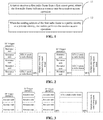
FIG. 1 is a flowchart of a network access method according to an embodiment of the present application; -
FIG. 2 is a schematic diagram of a random-access operation of an associated station in the case of Multiple BSSID according to an embodiment of the present application; -
FIG. 3 is a schematic diagram of a random-access operation of an unassociated station in the case of Multiple BSSID according to an embodiment of the present application; -
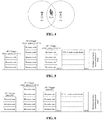
FIG. 4 is a schematic diagram illustrating the case of two access points existing around an unassociated station according to an embodiment of the present application; -
FIG. 5 is a schematic diagram of a random-access operation in the case where two access points that do not support Multiple BSSID exist around an unassociated station according to an embodiment of the present application; -
FIG. 6 is a schematic diagram of a random-access operation in the case where two access points exist around an unassociated station and one of the two access points supports Multiple BSSID according to an embodiment of the present application; and -
FIG. 7 is a schematic diagram of a network access apparatus according to an embodiment of the present application. - The object, technical solution and advantages of the present application will be clearer from a detailed description of embodiments of the present application in conjunction with the drawings. It is to be noted that if not in collision, the embodiments and features therein in the present application may be combined with each other.
-
FIG. 1 is a flowchart of a network access method according to an embodiment of the present application. As shown inFIG. 1 , the method includes the steps described below. - In
step 11, a station receives a first radio frame from a first access point, where the first radio frame indicates a resource unit for a random-access operation. - In
step 12, when the sending address of the first radio frame is a public identity or a private identity, the station performs the random-access operation. - According to the method in the embodiment of the present application, the operation modes of the associated station and the unassociated station in the case of Multiple BSSID are specified, so that the stations can reasonably the use the resource unit to perform random-access operations, the problem of collision aggravation when unassociated stations perform random-access operations is solved, and the network performance is improved.
- In an embodiment, before the step in which the station receives the first radio frame, the method further includes the steps described below.
- The second radio frame sent by the first access point is received. The second radio frame carries information about the set of basic service sets supported by the access point and/or a random-access parameter supported by the first access point. The information about the set of basic service sets includes the public identity and the private identity.
- In an embodiment, the public identity is the identity of a basic service set, with which all stations are able to communicate, in the set of basic service sets; and the private identity is the identity of a basic service set, with which the station is associated, in the set of basic service sets.
- In an embodiment, the public identity includes: the transmitted basic-service-set identity of the set of basic service sets, the media access control address of the first access point, or a value calculated through the media access control address of the first access point.
- In an embodiment, after the step in which the station receives the second radio frame sent by the first access point, the method further includes the steps described below.
- A contention-window parameter is set according to the random-access parameter carried by the second radio frame, and an orthogonal frequency division multiple access backoff (OBO) counter is initialized.
- In an embodiment, when the station is an unassociated station, the public identity is the identity of a basic service set, with which all stations are able to communicate, in the set of basic service sets.
- When the station is an unassociated station, the private identity is the identity of a basic service set, with which the station is to communicate, in the set of basic service sets.
- When the station is an unassociated station, the station performs the random-access operation only with the first access point in the process of performing the random-access operation, until the random-access operation is completed.
- In an embodiment, the step in which the station performs the random-access operation includes the steps described below.
- The station decrements the orthogonal frequency division multiple access backoff (OBO) counter according to the number of resource units carried by the first radio frame. When the OBO counter is decremented to 0 and a detection condition is met, the station selects, from the resource units carried by the first radio frame, one resource unit to send data.
- In an embodiment, the process in which the station performs the random-access operation includes the steps described below.
- The station receives the third radio frame from the second access point; resets the contention-window parameter according to the random-access parameter notified by the second access point; reinitializes the orthogonal frequency division multiple access backoff (OBO) counter; and performs the random-access operation according to parameter carried by the third radio frame.
- The technical solution according to the present application will be described in detail below with specific examples.
- An AP broadcasts that it has capabilities to support Multiple BSSID in a beacon frame or probe response frame, and a set of the parameters of the supported BSSIDs is carried in the beacon frame or the probe response frame.
- The number of BSSIDs supported by the AP is at most 2n, and n is a positive integer greater than or equal to 0. In this embodiment, the case where n = 3 is taken as an example, and the AP can support at most 8 BSSIDs. Actually, the AP uses three of the BSSIDs to establish three BSSs (
BSS 1,BSS 2, BSS 3), respectively. The three BSSs form a set of basic service sets. The AP is to broadcast information, such as BSSIDs and SSIDs corresponding to the three BSSs, in the beacon frame or the probe response frame, and also notifies the foregoing value of n. The BSSID indicated by the sending address in the beacon frame or probe response frame carrying the foregoing information is called a transmitted BSSID, that is, the identity of the transmitted basic service set in this set of basic service sets. Other BSSIDs are called non-transmitted BSSIDs. - After receiving the beacon frame or the probe response frame, the station associated with the AP acquires the parameter of the Multiple BSSID set supported by the AP. The parameter includes a public identity and a private identity. These frames further include random-access parameters. The station sets a contention window according to these parameters, and then initializes an orthogonal frequency division multiple access (OFDMA) backoff (OBO) counter. The initialization operation is to assign a random integer from 0 to the contention-window value to the OBO counter.
- The AP sends a Trigger frame. The Trigger frame indicates one or more resource units for the random access of the associated station. The associated stations which the AP intends to trigger are in BSS 1 (corresponding to BSSID 1), BSS 2 (corresponding to BSSID 2) and BSS 3 (corresponding to BSSID 3), respectively. The sending address of the Trigger frame is set as the public identity. The public identity here is
BSSID 1. - After receiving the Trigger frame, each of the foregoing stations determines that this frame is the Trigger frame, and the sending address is the public identity of the AP, that is, the transmitted BSSID, where the AP is associated with the each of the foregoing stations. Then these stations perform the random-access process according to the resource units scheduled by the Trigger frame and used for the associated station.
- The AP sends a Trigger frame. One or more resource units used for the random access of the associated station are indicated in the Trigger frame. The associated station which the AP intends to trigger is in
BSS 2. Then the sending address is set asBSSID 2 corresponding toBSS 2. After receiving the Trigger frame, the stations associated withBSS 1 andBSS 3 determine that this frame is the Trigger frame, and the BSSID carried by the sending address of the Trigger frame is not the BSSID (private identity) associated with the stations, or the BSSID carried by the sending address of the Trigger is not the public identity of the AP associated with themselves. Then these stations cannot perform the random access according to the one or more resource units indicated in the Trigger frame. - After receiving the Trigger frame, the stations associated with
BSS 2 determines that this frame is the Trigger frame, and the BSSID carried by the sending address of the Trigger frame is the BSSID (private identity) associated with the station associated with theBSS 2. Then the stations can perform the random access according to the one or more resource units indicated in the Trigger frame. -
STA 1 is associated withBSS 1,STA 2 andSTA 3 are associated withBSS 2, andSTA 4 is associated withBSS 3. As shown inFIG. 2 , the AP sends a Trigger frame, the sending address carries the public identity, and 5 resource units are scheduled for the random access. - After receiving the Trigger frame,
STA 1 determines that the address carried by the Trigger frame is the public identity of the associated AP, andSTA 1 can perform random-access operation. The current OBO-counter value is 3, which is less than the number of resource units for the random access scheduled by the Trigger frame, and then the OBO counter ofSTA 1 is decremented to 0. In this case,STA 1 randomly selects one resource unit from the currently scheduled 5 random-access resource units to send data if other conditions are met. - After receiving the Trigger frame,
STA 2 andSTA 3 determine that the address carried by the Trigger frame is the public identity of the associated AP, andSTA 2 andSTA 3 can perform random-access operation. The current OBO-counter values are 7 and 6, respectively, which are greater than the number of resource units for the random access scheduled by the Trigger frame, and then the OBO-counter values ofSTA 2 andSTA 3 are decremented to 2 and 1, respectively. Since the OBO-counter values are not decremented to 0,STA 2 andSTA 3 cannot perform the random access by using the resource units scheduled by the Trigger frame. - After receiving the Trigger frame,
STA 4 determines that the address carried by the Trigger frame is the public identity of the associated AP, andSTA 4 can perform random-access operation. The current OBO-counter value is 5, which is equal to the number of resource units for the random access scheduled by the Trigger frame, and then the OBO counter ofSTA 4 is decremented to 0. In this case,STA 4 randomly selects, from the 5 random-access resource units scheduled currently, one resource unit to send data if other conditions are met. - The AP sends a Trigger frame, the sending address carries
BSSID -
STA 1 andSTA 4 receive the Trigger frame, and determine that the address carried by the Trigger frame is neither the public identity of the associated AP nor any one of the identity of the BSS associated withSTA 1 and the identity of the BSS associated withSTA 4, and these stations cannot perform the random access by using the resource units scheduled by the Trigger frame. -
STA 2 andSTA 3 receive the Trigger frame, and determine that the address carried by the Trigger frame is the address of the BSS associated withSTA 2 and STA 3 (that is, private identity), andSTA 2 andSTA 3 can perform the random-access operation. The current OBO-counter values ofSTA 2 andSTA 3 are 2 and 1, respectively, which are lower than the number of resource units for the random access scheduled by the Trigger frame. Then the OBO-counter values ofSTA 2 andSTA 3 are decremented to 0. In this case,STA 2 andSTA 3 each randomly selects, from the 4 random-access currently scheduled resource units, one resource unit to send data if other conditions are met. -
STA 1,STA 2,STA 3 andSTA 4 receive Trigger frames from other APs. Each of the Trigger frame includes the random-access resource unit for the associated station, however,STA 1 cannot perform the random-access operation because the address carried by the sending address in the Trigger frame is neither the public identity of the associated AP nor the private identity of the BSS with whichSTA 1 associates. - An AP has the capabilities to support Multiple BSSID. The number of BSSIDs supported by the AP is at most 2n, and n is a positive integer greater than or equal to 0. In this embodiment, the case where n = 3 is taken as an example, and the AP can support at most 8 BSSIDs. Actually, the AP uses three of the BSSIDs to establish three BSSs (
BSS 1,BSS 2 and BSS 3), respectively. The three BSSs form a basic service set. The AP is to broadcast information, such as BSSIDs and SSIDs corresponding to the three BSSs, in the beacon frame or the probe response frame, and also notifies the foregoing value of n. The BSSID indicated by the sending address in the beacon frame or probe response frame carrying the foregoing information is called a transmitted BSSID. Other BSSIDs are called non-transmitted BSSIDs. Herein, the public identity is the transmitted BSSID. - The AP sends a Trigger frame. The Trigger frame indicates one or more resource units for the random access of the unassociated station. In the Trigger frame from the AP, the sending address of the Trigger frame is set as the public identity of the AP (the public identity here is the transmitted BSSID) to trigger the random access of the stations that intends to associate with
BSS 1,BSS 2 andBSS 3, respectively. - Within the coverage area of the AP,
STA 1 finds, through active scanning (receiving the probe request frame) or passive scanning (receiving the beacon frame), that the BSS corresponding toBSSID 2 of the AP is the BSS with which STA1 intends to associate.STA 1 also finds that the AP has the capabilities to support Multiple BSSID, the public identity of the AP isBSSID 1, and theBSSID 2 ofBSS 2 with which the AP intends to associate is a private identity. - After receiving the Trigger frame sent by the AP,
STA 1 determines, according to the sending address of the Trigger frame, that the address carried by the sending address isBSSID 1. ThenSTA 1 determines that the BSSID is the same as the public identity of the AP with whichSTA 1 intends to associate; and thenSTA 1 can perform the random access according to the one or more resource units indicated in the Trigger frame and used for the unassociated station. - The AP sends a Trigger frame. The Trigger frame indicates one or more resource units for the random access of unassociated station. In the Trigger frame from the AP, the sending address of the Trigger frame is set as the BSSID of BSS 2 (that is, BSSID 2) to trigger the random access of the station that intends to associate with
BSS 2. - After receiving the Trigger frame sent by the AP,
STA 1 determines, according to the sending address of the Trigger frame, that the address carried by the sending address isBSSID 2; and thenSTA 1 determines that the BSSID is the same as the BSSID (private identity) of the BSS with whichSTA 1 intends to associate. In this case,STA 1 can perform the random access according to the one or more resource units indicated in the Trigger frame and used for the unassociated station. - The AP sends a Trigger frame. The Trigger frame indicates one or more resource units for the random access of the unassociated station. In the Trigger frame from the AP, the sending address of the Trigger frame is set as the BSSID of BSS 3 (that is, BSSID 3) to trigger the random access of the station that intends to associate with
BSS 3. - After receiving the Trigger frame sent by the AP,
STA 1 determines, according to the sending address of the Trigger frame, that the address carried by the sending address isBSSID 3; and thenSTA 1 determines that the BSSID is different from the public identity of the AP with whichSTA 1 intends to associate, and the BSSID (private identity) of the BSS with whichSTA 1 intends to associate. In this case,STA 1 cannot perform the random access according to the one or more resource units indicated in the Trigger frame and used for the unassociated station. - Before performing the foregoing operations,
STA 1 learns about, through active scanning or passive scanning, the random access parameter supported by the AP, sets the orthogonal frequency division multiple access (OFDMA) contention window according to the random-access parameter supported by the AP, and initializes the OBO counter. - For example,
STA 1 sets the orthogonal frequency division multiple access contention window according to the random access parameter of the foregoing AP, and initializes the OBO counter to 5. - As shown in
FIG. 3 , the AP sends a Trigger frame, sets the sending address of the Trigger frame as the public identity (the public identity here is the transmitted BSSID), and indicates, in the Trigger frame, 3 resource units for the random access of the unassociated station. - After receiving the Trigger frame, STA1 finds that the sending address of the Trigger frame is set as the public identity of the AP with which STA1 intends to associate, or the sending address of the Trigger frame is the same as one of the public identity and the private identity of the AP with which STA1 intends to associate; and then STA1 performs the random-access operation according to the resource units indicated by the Trigger frame and used for the random access of the unassociated station.
- STA1 finds that 3 resource units are carried in the Trigger frame, and then the OBO counter of STA1 is set to 2 (the current value 5 minus the
number 3 of resource units for the random access of the unassociated station). The OBO counter may be decremented by 1 as each resource unit for the random access of the unassociated station is found; or after the total number of resource units for the random access of the unassociated station is found, the OBO counter may be decremented by the total number at once. Which specific operation is to be adopted not limited. - The AP sends a Trigger frame, sets the sending address of the Trigger frame to
BBSID 3, and indicates, in the Trigger frame, 3 resource units for the random access of the unassociated station. - After receiving the Trigger frame,
STA 1 finds that the address carried by the sending address of the Trigger frame is different from the public identity and private identity of the AP with whichSTA 1 intends to associate; and thenSTA 1 cannot perform the random-access operation. - The AP sends a Trigger frame, sets the sending address of the Trigger frame as
BBSID 2, and indicates, in the Trigger frame, 4 resource units for the random-access operation of the unassociated station. - After receiving the Trigger frame,
STA 1 finds that the address carried by the sending address of the Trigger frame is the same as the private identity of the AP with whichSTA 1 intends to associate; and thenSTA 1 performs the random-access operation. -
STA 1 finds that four resource units are carried in the Trigger frame; and since the number of the resource units carried in the Trigger frame are greater than the OBO-counter value, and then the OBO counter ofSTA 1 is set to 0. In this case,STA 1 randomly selects one resource unit from the 4 random-access resource units scheduled currently to send radio frames if other conditions are met. - In the process of performing the random-access operation with the AP,
STA 1 may receive Trigger frames from other APs. Each Trigger frame includes the indication about resource units for the random operation of the unassociated station.STA 1 cannot perform the random-access operation with any one of these APs unless setting the contention window according to the random-access parameter of the corresponding AP, and reinitializing the OBO counter, in which case,STA 1 can perform the random-access operation with the corresponding AP. -
FIG. 4 is a schematic diagram illustrating the case of two access points (AP 1 and AP 2) existing around an unassociated station according to an embodiment of the present application.STA 1 intends to communicate with the two access points before association to, for example, learn about services (print, video download, etc.) supported by each access point,STA 1 positioning, association, etc. Herein, both the two APs do not support Multiple BSSID. -
STA 1 finds from a beacon frame or a probe response frame sent byAP 1 orAP 2 thatAP 1 andAP 2 do not support Multiple BSSID. At this time, the public identities of both APs are null, and the proprietary identities are the MAC address of the AP. -
AP 1 sends a Trigger frame, sets the sending address of the Trigger frame to the MAC address ofAP 1, and indicates, in the Trigger frame, several resource units for the random access of the unassociated station. - After receiving the Trigger frame, STA1 finds that the address carried by the sending address of the Trigger frame is the same as the MAC address (private identity) of the AP with which
STA 1 intends to associate; and thenSTA 1 performs the random-access operation according to the resource units indicated by the Trigger frame and used for the random access of the unassociated station. -
AP 2 sends a Trigger frame, sets the sending address of the Trigger frame to the MAC address ofAP 2, and indicates, in the Trigger frame, several resource units for the random access of the unassociated station. - After receiving the Trigger frame, STA1 finds that the address carried by the sending address of the Trigger frame is the different from the MAC address (private identity) of the AP with which
STA 1 is communicating; and thenSTA 1 cannot perform the random-access operation according to the resource units indicated by the Trigger frame and used for the random access of the unassociated stations. At this time, since the public identity is null, it is not feasible to perform the random-access operation no matter any other public identity is received. - If intending to communicate with
AP 2 before association,STA 1 needs to complete the communication withAP 1, or needs to terminate the random-access operation based onAP 1, reset the contention-window parameter according toAP 2, and initialize the OBO-counter value. - Before performing the foregoing operations,
STA 1 needs to know the random-access parameter ofAP 1 and the random-access parameter ofAP 2. - As shown in
FIG. 5 , the AP sends a Trigger frame, sets the sending address of the Trigger frame to the MAC address ofAP 1, and indicates, in the Trigger frame, 3 resource units for the random access of the unassociated station. - After receiving the Trigger frame,
STA 1 finds that the address carried by the sending address of the Trigger frame is the same as the MAC address of the AP with whichSTA 1 intends to communicate; and thenSTA 1 sets the OFDMA contention window according to the parameter ofAP 1, and initializes the OBO counter to an initial value of 6. Herein, the operation in whichSTA 1 sets the contention window and initializes the OBO-counter value may be after the action of receiving the Trigger frame fromAP 1 or before the action of receiving the Trigger frame fromAP 1. - After receiving the Trigger frame from
AP 1, STA1 finds that 3 resource units are carried in the Trigger frame; and then the OBO counter of STA1 is set to 3 (the current value 6 minus thenumber 3 of resource units for the random access of the unassociated station). The OBO counter may be decremented by 1 as each resource unit for the random access of the unassociated stations is found; or after the total number of resource units for the random access of the unassociated stations is found, the OBO counter may be decremented by the total number at once. Which specific operation is to be adopted is not limited. -
AP 2 sends a Trigger frame, sets the sending address of the Trigger frame to the MAC address ofAP 2, and indicates, in the Trigger frame, 5 resource units for the random access of the unassociated station. - After receiving the Trigger frame from
AP 2, STA1 finds that the address carried by the sending address of the Trigger frame is the different from the MAC address of the AP with whichSTA 1 intends to associate; and thenSTA 1 cannot perform the random-access operation according to the resource units indicated by the Trigger frame and used for the unassociated station. -
AP 1 sends a Trigger frame, sets the sending address of the Trigger frame to the MAC address ofAP 1, and indicates, in the Trigger frame, several resource units for the random access of the unassociated station. - After receiving the Trigger frame,
STA 1 finds that the address carried by the sending address of the Trigger frame is the same as the MAC address of the AP with whichSTA 1 intends to communicate; and then the OBO counter ofSTA 1 is set to 0 (the current OBO-counter value is 3, which is less than thenumber 4 of resource units for the random-access operation of the unassociated station in the Trigger frame). In this case,STA 1 randomly selects one resource unit, from the 4 random-access resource units scheduled currently, to send data if other conditions are met. - In the foregoing operations, after receiving the Trigger frame from
AP 2,STA 1 may terminate the random-access operation based onAP 1. Then STA1 sets the orthogonal frequency division multiple access (OFDMA) contention window according to the random-access parameter ofAP 2, initializes the OBO counter, and performs the random-access operation based onAP 2. - In the foregoing operations, the random-access operation with
AP 1 and the random-access operation withAP 2 may be performed simultaneously, but in this case, the random-access operations with different APs correspond to different contention windows and different OBO counters. After the random-access resource unit from a certain AP is received, the OBO counter corresponding to the certain AP is decremented. A corresponding radio frame is transmitted to the AP whose corresponding OBO counter is decremented to 0. -
FIG. 4 is a schematic diagram illustrating the case of two access points (AP 1 and AP 2) existing around an unassociated station according to an embodiment of the present application.STA 1 intends to communicate with the two access points before association to, for example, learn about services (print, video download, etc.) supported by each access point,STA 1 positioning, association, etc. - Here,
AP 1 has the capabilities to support Multiple BSSID, whileAP 2 does not have the capabilities to support Multiple BSSID.AP 1 has the capabilities to support Multiple BSSID. - The number of BSSIDs supported by the AP is at most 2n, and n is a positive integer greater than or equal to 0. In this embodiment, the case where n = 3 is taken as an example, and the AP can support at most 8 BSSIDs. Actually, the AP uses two of the BSSIDs to establish two BSSs (
BSS 1 and BSS 2), respectively. The AP is to broadcast information, such as BSSIDs and SSIDs corresponding to the two BSSs, in the beacon frame or the probe response frame, and also notifies the foregoing value of n. The BSSID indicated by the sending address in the beacon frame or probe response frame carrying the foregoing information is called a transmitted BSSID. Other BSSIDs are called non-transmitted BSSIDs.AP 1sets BSSID 1 as the transmit BSSID, that is, the public identity. -
STA 1 finds, according to the beacon frame or the probe response frame sent byAP 1 orAP 2, that the public identity ofAP 1 isBSSID 1 and the private identity ofAP 1 is BSSID 2 (the BSSID of the BSS with whichSTA 1 intends to associate).AP 2 does not support Multiple BSSID. At this time, the public identity ofAP 2 is null, and the private identity ofAP 2 is the MAC address of the AP. -
AP 1 sends a Trigger frame, sets the sending address of the Trigger frame asBSSID 1, and indicates, in the Trigger frame, several resource units for the random access of the unassociated station. - After receiving the Trigger frame, STA1 finds that the address carried by the sending address of the Trigger frame is the same as the public identity of the AP with which
STA 1 intends to associate; and thenSTA 1 performs the random-access operation according to the resource units indicated by the Trigger frame and used for the random access of the unassociated station. - The AP sends a Trigger frame, sets the sending address of the Trigger frame to the MAC address of
AP 2, and indicates, in the Trigger frame, several resource units for the random access of the unassociated station. - After receiving the Trigger frame, STA1 finds that the address carried by the sending address of the Trigger frame is the different from the MAC address of the AP with which
STA 1 is communicating; and thenSTA 1 cannot perform the random-access operation according to the resource units indicated by the Trigger frame and used for the random access of the unassociated station. - If intending to communicate with
AP 2 before association,STA 1 needs complete the communication withAP 1, or needs to terminate the random-access operation based onAP 1, reset the contention-window parameter according toAP 2, and initialize the OBO-counter value. - Before performing the foregoing operations,
STA 1 needs to know the random-access parameter ofAP 1 and the random-access parameter ofAP 2. - As shown in
FIG. 6 , the AP sends a Trigger frame, sets the sending address of the Trigger frame as the public identity ofAP 1, and indicates, in the Trigger frame, 3 resource units for the random access of the unassociated station. - After receiving the Trigger frame,
STA 1 finds that the address carried by the sending address of the Trigger frame is the same as the public identity of the AP with whichSTA 1 intends to communicate; and thenSTA 1 sets the orthogonal frequency division multiple access (OFDMA) contention window according to the parameter ofAP 1, and initializes the OBO counter with an initial value of 6. Herein, the operation in whichSTA 1 sets the contention window and initializes the OBO-counter value may be after the action of receiving the Trigger frame fromAP 1 or before the action of receiving the Trigger frame fromAP 1. - After receiving the Trigger frame from
AP 1, STA1 finds that 3 resource units are carried in the Trigger frame; and then the OBO counter of STA1 is set to 3 (the current value 6 minus thenumber 3 of resource units for the random access of the unassociated station). The OBO counter may be decremented by 1 as each resource unit for the random access of the unassociated stations is found; or after the total number of resource units for the random access of the unassociated stations is found, the OBO counter may be decremented by the total number at once. Which specific operation is to be adopted is not limited. - The AP sends a Trigger frame, sets the sending address of the Trigger frame to the MAC address of
AP 2, and indicates, in the Trigger frame, 5 resource units for the random access of the unassociated station. - After receiving the Trigger frame from
AP 2, STA1 finds that the address carried by the sending address of the Trigger frame is the different from the MAC address of the AP with whichSTA 1 intends to associate; and thenSTA 1 cannot perform the random-access operation according to the resource units indicated by the Trigger frame used for the unassociated stations. -
AP 1 sends a Trigger frame, sets the sending address of the Trigger frame as BSSID 2 (private identity), and indicates, in the Trigger frame, 4 resource units for the random access of the unassociated station. - After receiving the Trigger frame,
STA 1 finds that the address carried by the sending address of the Trigger frame is the same as the private identity with whichSTA 1 intends to communicate; and then the OBO counter ofSAT 1 is set to 0 (the current OBO-counter value is 3, which is less than thenumber 4 of resource units for the random-access operation of the unassociated station in the Trigger frame). In this case,STA 1 randomly selects one resource unit from the 4 random-access resource units scheduled currently to send data if other conditions are met. - In the foregoing operations, after receiving the Trigger frame from
AP 2,STA 1 may terminate the random-access operation based onAP 1. Then STA1 sets the orthogonal frequency division multiple access (OFDMA) contention window according to the random-access parameter ofAP 2, initializes the orthogonal frequency division multiple access backoff counter, and performs the random-access operation based onAP 2. -
FIG. 7 is a schematic diagram of a network access apparatus according to an embodiment of the present application. As shown inFIG. 7 , the apparatus includes a reception module and an access module. - The reception module is configured to receive the first radio frame from the first access point.
- The first radio frame indicates a resource unit for a random-access operation.
- The access module is configured to perform the random-access operation when the sending address of the first radio frame is a public identity or a private identity.
- In an embodiment, the reception module is further configured to receive the second radio frame sent by the first access point. The second radio frame carries information about a set of basic service sets supported by the first access point and/or a random-access parameter. The information about the set of basic service sets includes the public identity and the private identity.
- In an embodiment, the apparatus further includes an initialization module.
- The initialization module is configured to set a contention-window parameter according to the random-access parameter carried by the second radio frame, and initialize an orthogonal frequency division multiple access backoff (OBO) counter.
- In an embodiment, when the apparatus is an unassociated station, the private identity is the identity of a basic service set, with which the station is to communicate, in the set of basic service sets; or when the station is an unassociated station, the public identity is the identity of a basic service set, with which all stations can communicate, in the set of basic service sets.
- When the station is the unassociated station, the station performs the random-access operation only with the first access point in the process of performing the random-access operation, until the random access is completed.
- In an embodiment, the public identity includes: the transmitted basic-service-set identity of the set of basic service sets, the media access control address of the first access point, or a value calculated through the media access control address of the first access point.
- In an embodiment, the private identity is the identity of a basic service set, associated with the apparatus, in the set of basic service sets; or the public identity is the identity of a basic service set, with which all stations can communicate, in the set of basic service sets.
- In an embodiment, the process in which the access module performs the random-access operation includes that: the orthogonal frequency division multiple access backoff (OBO) counter is decremented according to the number of resource units carried by the first radio frame; and when the OBO counter is decremented to 0 and the detection condition is met, one resource unit is selected, from the resource units carried by the first radio frame, for sending data.
- In an embodiment, the apparatus further includes the process described below.
- The initialization module receives the third radio frame from the second access point, resets the contention-window parameter according to the random-access parameter notified by the second access point, and reinitializes the orthogonal frequency division multiple access backoff (OBO) counter.
- An embodiment of the present application further provides a network access apparatus including a memory and a processor.
- The memory stores the following instructions: receiving the first radio frame from the first access point, where the first radio frame indicates a resource unit for a random-access operation; and when the sending address of the first radio frame is a public identity or a private identity, performing the random-access operation.
- The processor is configured to execute the instructions stored in the memory.
- An embodiment of the present application further provides a computer-readable storage medium storing computer-executable instructions. When the computer-executable instructions are executed, the network access method is performed.
- It will be understood by those of ordinary skill in the art that all or part of the steps in the method described above may be implemented by related hardware instructed by one or more programs, and these programs may be stored in a computer-readable storage medium such as a ROM, a magnetic disk, an optical disk or the like. Optionally, all or some steps in the embodiments described above may also be implemented by using one or more integrated circuits. Each module/unit in the foregoing embodiments may be implemented by hardware or a software function module. The present application is not limited to any specific combination of hardware and software.
- The above are only optional embodiments of the present application. The present application may have other various embodiments. Corresponding modifications and variations may be made by those skilled in the art according to the present application without departing from the spirit and essence of the present application. However, these corresponding modifications and variations fall within the scope of the claims in the present application.
- According to the embodiments of the present application, a station receives the first radio frame from the first access point, where the first radio frame indicates a resource unit for a random-access operation; and when the sending address of the first radio frame is a public identity or a private identity, the station performs the random-access operation. In this way, the network collision can be reduced, and the transmission efficiency can be improved.
Claims (20)
- A network access method, comprising:receiving, by a station, a first radio frame from a first access point, wherein the first radio frame indicates a resource unit for a random-access operation; andon condition that a sending address of the first radio frame is a public identity or a private identity, performing, by the station, the random-access operation.
- The method of claim 1, wherein before receiving, by the station, the first radio frame, the method further comprises:
receiving a second radio frame sent by the first access point, wherein the second radio frame carries a random-access parameter and/or information about a set of basic service sets supported by the first access point, wherein the information about the set of basic service sets comprises the public identity and the private identity. - The method of claim 2, wherein after receiving, by the station, the second radio frame sent by the first access point, the method further comprises:setting a contention-window parameter according to the random-access parameter carried by the second radio frame, andinitializing a frequency division multiple access back-off, OBO, counter.
- The method of claim 2, whereinon condition that the station is an unassociated station, the private identity is an identity of a basic service set, with which the station is to communicate, in the set of basic service sets; or
on condition that the station is an unassociated station, the public identity is an identity of a basic service set, with which all stations are able to communicate, in the set of basic service sets. - The method of claim 2, wherein the public identity comprises:
a transmitted basic-service-set identity of the set of basic service sets, a media access control address of the first access point, or a value calculated from the media access control address of the first access point. - The method of claim 2, wherein
the private identity is an identity of a basic service set, with which the station is associated, in the set of basic service sets; or
the public identity is an identity of a basic service set, with which all stations are able to communicate, in the set of basic service sets. - The method of any one of claims 1 to 6, wherein performing, by the station, the random-access operation with the first access point comprises:decrementing, by the station, the frequency division multiple access back-off, OBO, counter according to a number of resource units carried by the first radio frame; andin response to determining that the OBO counter is decremented to 0 and a detection condition is met, selecting, by the station from the resource units carried by the first radio frame, one resource unit to send data.
- The method of any one of claims 1 to 5, wherein
on condition that the station is an unassociated station, performing, by the station, the random-access operation only with the first access point in the process of performing the random-access operation until the random-access operation is completed. - The method of any one of claims 1 to 5, wherein a process of performing, by the station, the random-access operation with the first access point further comprises:receiving, by the station, a third radio frame from a second access point; resetting a contention-window parameter according to a random-access parameter notified by the second access point;reinitializing, by the station, the frequency division multiple access back-off, OBO, counter; andperforming, by the station, the random-access operation according to a parameter carried by the third radio frame.
- A network access apparatus, comprising:a reception module, which is configured to receive a first radio frame from a first access point, wherein the first radio frame indicates a resource unit for a random-access operation; andan access module, which is configured to perform the random-access operation on condition that a sending address of the first radio frame is a public identity or a private identity.
- The apparatus of claim 10, wherein
the reception module is further configured to receive a second radio frame sent by the first access point, wherein the second radio frame carries a random-access parameter and/or information about a set of basic service sets supported by the first access point, wherein the information about the set of basic service sets comprises the public identity and the private identity. - The apparatus of claim 11, wherein the apparatus further comprises:
an initialization module, which is configured to set a contention-window parameter according to the random-access parameter carried by the second radio frame, and initialize a frequency division multiple access backoff, OBO, counter. - The apparatus of claim 11, wherein
on condition that the apparatus is an unassociated station, the private identity is an identity of a basic service set, with which the apparatus is to communicate, in the set of basic service sets; or
on condition that the apparatus is an unassociated station, the public identity is an identity of a basic service set, with which all stations are able to communicate, in the set of basic service sets. - The apparatus of claim 11, wherein the public identity comprises:
a transmitted basic-service-set identity of the set of basic service sets, a media access control address of the first access point, or a value calculated from the media access control address of the first access point. - The apparatus of claim 11, wherein
the private identity is an identity of a basic service set, with which the station is associated, in the set of basic service sets; or
the public identity is an identity of a basic service set, with which all stations are able to communicate, in the set of basic service sets. - The apparatus of any one of claims 10 to 15, wherein the access module is configured to perform the random-access operation with the first access point by:decrementing the frequency division multiple access backoff, OBO, counter according to a number of resource units carried by the first radio frame; andon condition that the OBO counter is decremented to 0 and a detection condition is met, selecting, from the resource units carried by the first radio frame, one resource unit to send data.
- The apparatus of any one of claims 10 to 14, wherein
on condition that the apparatus is an unassociated station, the access module is configured to perform the random-access operation only with the first access point in the process of performing the random-access operation until the random-access operation is completed. - The apparatus of any one of claims 10 to 14, wherein the apparatus further comprises the following:the initialization module is configured to receives a third radio frame from a second access point, resets a contention-window parameter according to a random-access parameter notified by the second access point, and reinitializes the frequency division multiple access backoff, OBO, counter; andthe access module is further configured to perform the random-access operation according to a parameter carried by the third radio frame.
- A network access apparatus, comprising a memory and a processor, wherein
the memory stores the following instructions: receiving a first radio frame from a first access point, wherein the first radio frame indicates a resource unit for a random-access operation; and on condition that a sending address of the first radio frame is a public identity or a private identity, performing the random-access operation; and
the processor is configured to execute the instructions stored in the memory. - A storage medium, storing computer-executable instructions, wherein when the computer-executable instructions are executed, the network access method of any one of claims 1 to 9 is performed.
Applications Claiming Priority (2)
| Application Number | Priority Date | Filing Date | Title |
|---|---|---|---|
| CN201710296171.7A CN108811169B (en) | 2017-04-28 | 2017-04-28 | Network access method and device |
| PCT/CN2018/080735 WO2018196535A1 (en) | 2017-04-28 | 2018-03-27 | Network access method and apparatus and storage medium |
Publications (3)
| Publication Number | Publication Date |
|---|---|
| EP3618559A1 true EP3618559A1 (en) | 2020-03-04 |
| EP3618559A4 EP3618559A4 (en) | 2020-12-23 |
| EP3618559B1 EP3618559B1 (en) | 2026-01-21 |
Family
ID=63918007
Family Applications (1)
| Application Number | Title | Priority Date | Filing Date |
|---|---|---|---|
| EP18791309.0A Active EP3618559B1 (en) | 2017-04-28 | 2018-03-27 | Network access method and apparatus and storage medium |
Country Status (6)
| Country | Link |
|---|---|
| US (3) | US11109419B2 (en) |
| EP (1) | EP3618559B1 (en) |
| JP (3) | JP6998398B2 (en) |
| CN (2) | CN116546653A (en) |
| ES (1) | ES3060529T3 (en) |
| WO (1) | WO2018196535A1 (en) |
Families Citing this family (8)
| Publication number | Priority date | Publication date | Assignee | Title |
|---|---|---|---|---|
| US11083021B2 (en) * | 2016-04-14 | 2021-08-03 | Qualcomm Incorporated | Random access resource unit allocation for a multiple BSSID network |
| SG10201810672RA (en) * | 2018-11-28 | 2020-06-29 | Panasonic Ip Corp America | Communication Apparatus And Communication Method For Multi-Band Random Access |
| CN112469136B (en) | 2019-09-06 | 2024-12-03 | 华为技术有限公司 | A method and device for uplink orthogonal frequency division multiple access random access |
| CN110730515A (en) * | 2019-10-24 | 2020-01-24 | 普联技术有限公司 | Access method, device, station and storage medium |
| CN117242811A (en) * | 2021-07-08 | 2023-12-15 | Oppo广东移动通信有限公司 | Wireless communication methods, site equipment and access point equipment |
| CN116261906B (en) * | 2021-10-09 | 2026-07-10 | 北京小米移动软件有限公司 | Communication methods and devices, electronic devices and storage media |
| US12532339B2 (en) | 2022-12-31 | 2026-01-20 | Fortinet, Inc. | Allocation of multi resource units to Wi-Fi stations |
| US12376136B2 (en) * | 2022-12-31 | 2025-07-29 | Fortinet, Inc. | Bandwidth selection in Wi-Fi 7 access points |
Family Cites Families (30)
| Publication number | Priority date | Publication date | Assignee | Title |
|---|---|---|---|---|
| US20070047583A1 (en) | 2005-08-29 | 2007-03-01 | Siemens Aktiengesellschaft | Method for using a short address in a packet header |
| US20080112373A1 (en) * | 2006-11-14 | 2008-05-15 | Extricom Ltd. | Dynamic BSS allocation |
| US8750265B2 (en) * | 2009-07-20 | 2014-06-10 | Wefi, Inc. | System and method of automatically connecting a mobile communication device to a network using a communications resource database |
| US9668283B2 (en) * | 2010-05-05 | 2017-05-30 | Qualcomm Incorporated | Collision detection and backoff window adaptation for multiuser MIMO transmission |
| CN103260214B (en) * | 2012-02-17 | 2017-02-15 | 华为终端有限公司 | Equipment access method, equipment access point and equipment access device |
| FR2992803A1 (en) * | 2012-06-29 | 2014-01-03 | France Telecom | Method for transmitting data between station of wireless local area network and access point, involves simultaneously maintaining station in states associated with access points during agreement to association of one of access points |
| US10440751B2 (en) * | 2014-08-10 | 2019-10-08 | Lg Electronics Inc. | Method and device for enabling station to receive signal in wireless communication system |
| CN105517118A (en) * | 2014-09-24 | 2016-04-20 | 中兴通讯股份有限公司 | Downlink multi-user data transmission method and system in wireless local area network, and access point |
| US9991995B2 (en) * | 2014-10-06 | 2018-06-05 | Newracom, Inc. | Multiuser signaling and access request mechanisms |
| CN106465040B (en) * | 2014-12-12 | 2020-03-31 | 华为技术有限公司 | Method, access point and site for resource allocation |
| US9930695B2 (en) * | 2015-02-03 | 2018-03-27 | Intel IP Corporation | Orthogonal frequency-division multiple access distributed channel access |
| US10028142B2 (en) * | 2015-04-21 | 2018-07-17 | Newracom, Inc. | Apparatus and methods for channel access in WLAN |
| US9750052B2 (en) * | 2015-06-25 | 2017-08-29 | Intel IP Corporation | Random access to wireless network |
| GB2540450B (en) * | 2015-07-08 | 2018-03-28 | Canon Kk | Improved contention mechanism for access to random resource units in an 802.11 channel |
| CN106341898B (en) * | 2015-07-09 | 2020-07-07 | 中兴通讯股份有限公司 | Multi-site transmission indication, triggering and execution method and device |
| EP3322250B1 (en) * | 2015-07-09 | 2021-09-01 | LG Electronics Inc. | Random access of station operating in wireless lan system |
| CN106455110B (en) * | 2015-08-07 | 2019-09-17 | 电信科学技术研究院 | A kind of channel access method and device |
| EP3332490B1 (en) * | 2015-08-07 | 2025-04-16 | Atlas Global Technologies LLC | Control information for multi-user transmissions in wlan systems |
| US9998263B2 (en) * | 2015-08-10 | 2018-06-12 | Intel IP Corporation | Scheduling resources for orthogonal frequency division multiple access uplink transmissions |
| CN106550479B (en) * | 2015-09-17 | 2021-11-05 | 中兴通讯股份有限公司 | A channel access method, access point and site |
| GB2548155B (en) * | 2016-03-11 | 2020-06-17 | Canon Kk | Improved access to random resource units by a plurality of BSSs |
| US10091778B2 (en) * | 2016-04-14 | 2018-10-02 | Qualcomm Incorporated | Random access resource unit allocation for a multiple BSSID network |
| US10200936B2 (en) * | 2016-11-30 | 2019-02-05 | At&T Intellectual Property I, L.P. | Public/private indicator based access point connection permission |
| US10681677B2 (en) * | 2016-12-27 | 2020-06-09 | Intel Corporation | Coordinated transmissions among virtual access points (VAPS) |
| EP4044751A1 (en) * | 2016-12-27 | 2022-08-17 | Wilus Institute of Standards and Technology Inc. | Wireless communication method using ofdma random access and wireless communication terminal using same |
| GB2558621B (en) * | 2017-01-10 | 2020-01-15 | Canon Kk | Improved access management to multi-user uplink random resource units by a plurality of BSSs |
| GB2560562B (en) * | 2017-03-15 | 2019-11-06 | Canon Kk | Improved access management to multi-user uplink random resource units by a plurality of BSSs |
| US10849159B2 (en) * | 2017-04-17 | 2020-11-24 | Qualcomm Incorporated | Trigger-based random access in a multiple BSSID network |
| EP3613250A1 (en) * | 2017-04-21 | 2020-02-26 | Canon Kabushiki Kaisha | Resource units for unassociated stations and grouped multi-user transmissions in 802.11ax networks |
| GB2562076B (en) * | 2017-05-03 | 2019-05-15 | Canon Kk | Multi-user communication in a multi-bss environment of an 802.11ax network |
-
2017
- 2017-04-28 CN CN202310533022.3A patent/CN116546653A/en active Pending
- 2017-04-28 CN CN201710296171.7A patent/CN108811169B/en active Active
-
2018
- 2018-03-27 US US16/609,083 patent/US11109419B2/en active Active
- 2018-03-27 EP EP18791309.0A patent/EP3618559B1/en active Active
- 2018-03-27 WO PCT/CN2018/080735 patent/WO2018196535A1/en not_active Ceased
- 2018-03-27 ES ES18791309T patent/ES3060529T3/en active Active
- 2018-03-27 JP JP2019558593A patent/JP6998398B2/en active Active
-
2021
- 2021-08-27 US US17/459,759 patent/US11706818B2/en active Active
- 2021-12-20 JP JP2021205890A patent/JP7248771B2/en active Active
-
2023
- 2023-03-16 JP JP2023041818A patent/JP7675757B2/en active Active
- 2023-03-28 US US18/127,640 patent/US11974329B2/en active Active
Also Published As
| Publication number | Publication date |
|---|---|
| CN108811169B (en) | 2023-05-23 |
| EP3618559B1 (en) | 2026-01-21 |
| JP7675757B2 (en) | 2025-05-13 |
| ES3060529T3 (en) | 2026-03-26 |
| JP6998398B2 (en) | 2022-02-04 |
| EP3618559A4 (en) | 2020-12-23 |
| CN108811169A (en) | 2018-11-13 |
| US20220110162A1 (en) | 2022-04-07 |
| JP2020518204A (en) | 2020-06-18 |
| US11974329B2 (en) | 2024-04-30 |
| US11109419B2 (en) | 2021-08-31 |
| JP7248771B2 (en) | 2023-03-29 |
| JP2023073308A (en) | 2023-05-25 |
| US20200154483A1 (en) | 2020-05-14 |
| CN116546653A (en) | 2023-08-04 |
| JP2022037157A (en) | 2022-03-08 |
| WO2018196535A1 (en) | 2018-11-01 |
| US20230269781A1 (en) | 2023-08-24 |
| US11706818B2 (en) | 2023-07-18 |
Similar Documents
| Publication | Publication Date | Title |
|---|---|---|
| US11974329B2 (en) | Network access method and apparatus and storage medium | |
| CN108419301B (en) | High efficiency WI-fi (hew) stations and Access Points (APs) and methods for random access contention | |
| KR102544344B1 (en) | Orthogonal Frequency Division Multiple Access Distributed Channel Access | |
| US12016007B2 (en) | Data scheduling method and apparatus | |
| EP3065495B1 (en) | Method for controlling base station in multi-rat environment and transmitting/receiving data according to control of base station, and apparatus for performing same | |
| CA2943828C (en) | Retransmission method at time of sharing transmission opportunity in wireless lan system, and device therefor | |
| EP3054736A1 (en) | Operation method and apparatus using sectorized transmission opportunity in wireless lan system | |
| EP3337269B1 (en) | Data transmission method, access point and station | |
| US20180014316A1 (en) | Method for sending uplink multi-user transmission trigger frame, access point, and station | |
| KR20180091772A (en) | Basic bandwidth device on secondary channel | |
| US20120182963A1 (en) | Reserving transmission resources | |
| EP3357181B1 (en) | Multiplexed messaging in wireless network | |
| JP2019536328A (en) | Method and apparatus for supporting controlled transmission and reception of messages | |
| US20220132560A1 (en) | Random access method and device, and storage medium | |
| EP3065470B1 (en) | Procedure for selecting network discovery method | |
| WO2020225474A1 (en) | Sharing transmission opportunity with beamforming | |
| US10321457B2 (en) | Wireless communication method and terminal for multi-user uplink transmission | |
| US20250142498A1 (en) | Access Point Assisted Channel Synchronization | |
| US10880828B2 (en) | Wireless communication method for enhancing transmission efficiency through separating transmission interval in wireless local area network (WLAN) system | |
| EP3863361B1 (en) | Eht ap configured for multi-ap operations using coordinated announcement (coa) frame | |
| US11399387B2 (en) | System and method for scheduling for redundant layer 2 control messages | |
| WO2017153630A1 (en) | Protecting transmissions in wireless network |
Legal Events
| Date | Code | Title | Description |
|---|---|---|---|
| STAA | Information on the status of an ep patent application or granted ep patent |
Free format text: STATUS: THE INTERNATIONAL PUBLICATION HAS BEEN MADE |
|
| PUAI | Public reference made under article 153(3) epc to a published international application that has entered the european phase |
Free format text: ORIGINAL CODE: 0009012 |
|
| STAA | Information on the status of an ep patent application or granted ep patent |
Free format text: STATUS: REQUEST FOR EXAMINATION WAS MADE |
|
| 17P | Request for examination filed |
Effective date: 20191127 |
|
| AK | Designated contracting states |
Kind code of ref document: A1 Designated state(s): AL AT BE BG CH CY CZ DE DK EE ES FI FR GB GR HR HU IE IS IT LI LT LU LV MC MK MT NL NO PL PT RO RS SE SI SK SM TR |
|
| AX | Request for extension of the european patent |
Extension state: BA ME |
|
| DAV | Request for validation of the european patent (deleted) | ||
| DAX | Request for extension of the european patent (deleted) | ||
| A4 | Supplementary search report drawn up and despatched |
Effective date: 20201120 |
|
| RIC1 | Information provided on ipc code assigned before grant |
Ipc: H04W 74/08 20090101ALN20201116BHEP Ipc: H04W 84/12 20090101ALN20201116BHEP Ipc: H04W 74/00 20090101AFI20201116BHEP |
|
| STAA | Information on the status of an ep patent application or granted ep patent |
Free format text: STATUS: EXAMINATION IS IN PROGRESS |
|
| 17Q | First examination report despatched |
Effective date: 20220503 |
|
| REG | Reference to a national code |
Ref legal event code: R079 Ipc: H04W0074000000 Ref country code: DE Ref legal event code: R079 Ref document number: 602018088715 Country of ref document: DE Free format text: PREVIOUS MAIN CLASS: H04W0074080000 Ipc: H04W0074000000 |
|
| GRAP | Despatch of communication of intention to grant a patent |
Free format text: ORIGINAL CODE: EPIDOSNIGR1 |
|
| STAA | Information on the status of an ep patent application or granted ep patent |
Free format text: STATUS: GRANT OF PATENT IS INTENDED |
|
| INTG | Intention to grant announced |
Effective date: 20251008 |
|
| RIC1 | Information provided on ipc code assigned before grant |
Ipc: H04W 74/00 20090101AFI20250930BHEP Ipc: H04W 84/12 20090101ALN20250930BHEP Ipc: H04W 74/0833 20240101ALN20250930BHEP |
|
| GRAS | Grant fee paid |
Free format text: ORIGINAL CODE: EPIDOSNIGR3 |
|
| GRAA | (expected) grant |
Free format text: ORIGINAL CODE: 0009210 |
|
| STAA | Information on the status of an ep patent application or granted ep patent |
Free format text: STATUS: THE PATENT HAS BEEN GRANTED |
|
| AK | Designated contracting states |
Kind code of ref document: B1 Designated state(s): AL AT BE BG CH CY CZ DE DK EE ES FI FR GB GR HR HU IE IS IT LI LT LU LV MC MK MT NL NO PL PT RO RS SE SI SK SM TR |
|
| REG | Reference to a national code |
Ref country code: CH Ref legal event code: F10 Free format text: ST27 STATUS EVENT CODE: U-0-0-F10-F00 (AS PROVIDED BY THE NATIONAL OFFICE) Effective date: 20260121 |
|
| REG | Reference to a national code |
Ref country code: DE Ref legal event code: R096 Ref document number: 602018088715 Country of ref document: DE |
|
| REG | Reference to a national code |
Ref country code: IE Ref legal event code: FG4D |
|
| REG | Reference to a national code |
Ref country code: NL Ref legal event code: FP |
|
| PGFP | Annual fee paid to national office [announced via postgrant information from national office to epo] |
Ref country code: NL Payment date: 20260213 Year of fee payment: 9 |
|
| REG | Reference to a national code |
Ref country code: ES Ref legal event code: FG2A Ref document number: 3060529 Country of ref document: ES Kind code of ref document: T3 Effective date: 20260326 |
|
| PGFP | Annual fee paid to national office [announced via postgrant information from national office to epo] |
Ref country code: GB Payment date: 20260209 Year of fee payment: 9 |
|
| PGFP | Annual fee paid to national office [announced via postgrant information from national office to epo] |
Ref country code: DE Payment date: 20260204 Year of fee payment: 9 |
|
| PGFP | Annual fee paid to national office [announced via postgrant information from national office to epo] |
Ref country code: RO Payment date: 20260213 Year of fee payment: 9 Ref country code: IT Payment date: 20260312 Year of fee payment: 9 |
|
| PGFP | Annual fee paid to national office [announced via postgrant information from national office to epo] |
Ref country code: FR Payment date: 20260209 Year of fee payment: 9 |
|
| PGFP | Annual fee paid to national office [announced via postgrant information from national office to epo] |
Ref country code: TR Payment date: 20260326 Year of fee payment: 9 |
|
| REG | Reference to a national code |
Ref country code: AT Ref legal event code: MK05 Ref document number: 1879748 Country of ref document: AT Kind code of ref document: T Effective date: 20260121 |
|
| PG25 | Lapsed in a contracting state [announced via postgrant information from national office to epo] |
Ref country code: RS Free format text: LAPSE BECAUSE OF FAILURE TO SUBMIT A TRANSLATION OF THE DESCRIPTION OR TO PAY THE FEE WITHIN THE PRESCRIBED TIME-LIMIT Effective date: 20260421 |
|
| PGFP | Annual fee paid to national office [announced via postgrant information from national office to epo] |
Ref country code: ES Payment date: 20260406 Year of fee payment: 9 |
|
| PG25 | Lapsed in a contracting state [announced via postgrant information from national office to epo] |
Ref country code: PL Free format text: LAPSE BECAUSE OF FAILURE TO SUBMIT A TRANSLATION OF THE DESCRIPTION OR TO PAY THE FEE WITHIN THE PRESCRIBED TIME-LIMIT Effective date: 20260121 |
|
| PG25 | Lapsed in a contracting state [announced via postgrant information from national office to epo] |
Ref country code: GR Free format text: LAPSE BECAUSE OF FAILURE TO SUBMIT A TRANSLATION OF THE DESCRIPTION OR TO PAY THE FEE WITHIN THE PRESCRIBED TIME-LIMIT Effective date: 20260422 |
|
| REG | Reference to a national code |
Ref country code: LT Ref legal event code: MG9D |
|
| PG25 | Lapsed in a contracting state [announced via postgrant information from national office to epo] |
Ref country code: LT Free format text: LAPSE BECAUSE OF FAILURE TO SUBMIT A TRANSLATION OF THE DESCRIPTION OR TO PAY THE FEE WITHIN THE PRESCRIBED TIME-LIMIT Effective date: 20260121 |
|
| PG25 | Lapsed in a contracting state [announced via postgrant information from national office to epo] |
Ref country code: NO Free format text: LAPSE BECAUSE OF FAILURE TO SUBMIT A TRANSLATION OF THE DESCRIPTION OR TO PAY THE FEE WITHIN THE PRESCRIBED TIME-LIMIT Effective date: 20260421 |
|
| PG25 | Lapsed in a contracting state [announced via postgrant information from national office to epo] |
Ref country code: SE Free format text: LAPSE BECAUSE OF FAILURE TO SUBMIT A TRANSLATION OF THE DESCRIPTION OR TO PAY THE FEE WITHIN THE PRESCRIBED TIME-LIMIT Effective date: 20260121 Ref country code: AT Free format text: LAPSE BECAUSE OF FAILURE TO SUBMIT A TRANSLATION OF THE DESCRIPTION OR TO PAY THE FEE WITHIN THE PRESCRIBED TIME-LIMIT Effective date: 20260121 Ref country code: FI Free format text: LAPSE BECAUSE OF FAILURE TO SUBMIT A TRANSLATION OF THE DESCRIPTION OR TO PAY THE FEE WITHIN THE PRESCRIBED TIME-LIMIT Effective date: 20260121 |
|
| PG25 | Lapsed in a contracting state [announced via postgrant information from national office to epo] |
Ref country code: HR Free format text: LAPSE BECAUSE OF FAILURE TO SUBMIT A TRANSLATION OF THE DESCRIPTION OR TO PAY THE FEE WITHIN THE PRESCRIBED TIME-LIMIT Effective date: 20260121 |
|
| PG25 | Lapsed in a contracting state [announced via postgrant information from national office to epo] |
Ref country code: IS Free format text: LAPSE BECAUSE OF FAILURE TO SUBMIT A TRANSLATION OF THE DESCRIPTION OR TO PAY THE FEE WITHIN THE PRESCRIBED TIME-LIMIT Effective date: 20260521 Ref country code: PT Free format text: LAPSE BECAUSE OF FAILURE TO SUBMIT A TRANSLATION OF THE DESCRIPTION OR TO PAY THE FEE WITHIN THE PRESCRIBED TIME-LIMIT Effective date: 20260521 |
|
| PG25 | Lapsed in a contracting state [announced via postgrant information from national office to epo] |
Ref country code: LV Free format text: LAPSE BECAUSE OF FAILURE TO SUBMIT A TRANSLATION OF THE DESCRIPTION OR TO PAY THE FEE WITHIN THE PRESCRIBED TIME-LIMIT Effective date: 20260121 |
|
| PG25 | Lapsed in a contracting state [announced via postgrant information from national office to epo] |
Ref country code: BG Free format text: LAPSE BECAUSE OF FAILURE TO SUBMIT A TRANSLATION OF THE DESCRIPTION OR TO PAY THE FEE WITHIN THE PRESCRIBED TIME-LIMIT Effective date: 20260121 |