EP3610285B1 - Positionierungssystem zur bestimmung des standorts eines objekts - Google Patents
Positionierungssystem zur bestimmung des standorts eines objekts Download PDFInfo
- Publication number
- EP3610285B1 EP3610285B1 EP18714296.3A EP18714296A EP3610285B1 EP 3610285 B1 EP3610285 B1 EP 3610285B1 EP 18714296 A EP18714296 A EP 18714296A EP 3610285 B1 EP3610285 B1 EP 3610285B1
- Authority
- EP
- European Patent Office
- Prior art keywords
- location
- user
- microphones
- sound input
- positioning system
- Prior art date
- Legal status (The legal status is an assumption and is not a legal conclusion. Google has not performed a legal analysis and makes no representation as to the accuracy of the status listed.)
- Active
Links
Images

Classifications
-
- G—PHYSICS
- G01—MEASURING; TESTING
- G01S—RADIO DIRECTION-FINDING; RADIO NAVIGATION; DETERMINING DISTANCE OR VELOCITY BY USE OF RADIO WAVES; LOCATING OR PRESENCE-DETECTING BY USE OF THE REFLECTION OR RERADIATION OF RADIO WAVES; ANALOGOUS ARRANGEMENTS USING OTHER WAVES
- G01S5/00—Position-fixing by co-ordinating two or more direction or position line determinations; Position-fixing by co-ordinating two or more distance determinations
- G01S5/18—Position-fixing by co-ordinating two or more direction or position line determinations; Position-fixing by co-ordinating two or more distance determinations using ultrasonic, sonic, or infrasonic waves
- G01S5/22—Position of source determined by co-ordinating a plurality of position lines defined by path-difference measurements
-
- G—PHYSICS
- G01—MEASURING; TESTING
- G01S—RADIO DIRECTION-FINDING; RADIO NAVIGATION; DETERMINING DISTANCE OR VELOCITY BY USE OF RADIO WAVES; LOCATING OR PRESENCE-DETECTING BY USE OF THE REFLECTION OR RERADIATION OF RADIO WAVES; ANALOGOUS ARRANGEMENTS USING OTHER WAVES
- G01S5/00—Position-fixing by co-ordinating two or more direction or position line determinations; Position-fixing by co-ordinating two or more distance determinations
- G01S5/18—Position-fixing by co-ordinating two or more direction or position line determinations; Position-fixing by co-ordinating two or more distance determinations using ultrasonic, sonic, or infrasonic waves
-
- G—PHYSICS
- G10—MUSICAL INSTRUMENTS; ACOUSTICS
- G10L—SPEECH ANALYSIS TECHNIQUES OR SPEECH SYNTHESIS; SPEECH RECOGNITION; SPEECH OR VOICE PROCESSING TECHNIQUES; SPEECH OR AUDIO CODING OR DECODING
- G10L15/00—Speech recognition
- G10L15/22—Procedures used during a speech recognition process, e.g. man-machine dialogue
-
- G—PHYSICS
- G10—MUSICAL INSTRUMENTS; ACOUSTICS
- G10L—SPEECH ANALYSIS TECHNIQUES OR SPEECH SYNTHESIS; SPEECH RECOGNITION; SPEECH OR VOICE PROCESSING TECHNIQUES; SPEECH OR AUDIO CODING OR DECODING
- G10L25/00—Speech or voice analysis techniques not restricted to a single one of groups G10L15/00 - G10L21/00
- G10L25/48—Speech or voice analysis techniques not restricted to a single one of groups G10L15/00 - G10L21/00 specially adapted for particular use
- G10L25/51—Speech or voice analysis techniques not restricted to a single one of groups G10L15/00 - G10L21/00 specially adapted for particular use for comparison or discrimination
-
- H—ELECTRICITY
- H04—ELECTRIC COMMUNICATION TECHNIQUE
- H04R—LOUDSPEAKERS, MICROPHONES, GRAMOPHONE PICK-UPS OR LIKE ACOUSTIC ELECTROMECHANICAL TRANSDUCERS; DEAF-AID SETS; PUBLIC ADDRESS SYSTEMS
- H04R1/00—Details of transducers, loudspeakers or microphones
- H04R1/08—Mouthpieces; Microphones; Attachments therefor
-
- G—PHYSICS
- G01—MEASURING; TESTING
- G01S—RADIO DIRECTION-FINDING; RADIO NAVIGATION; DETERMINING DISTANCE OR VELOCITY BY USE OF RADIO WAVES; LOCATING OR PRESENCE-DETECTING BY USE OF THE REFLECTION OR RERADIATION OF RADIO WAVES; ANALOGOUS ARRANGEMENTS USING OTHER WAVES
- G01S2205/00—Position-fixing by co-ordinating two or more direction or position line determinations; Position-fixing by co-ordinating two or more distance determinations
- G01S2205/01—Position-fixing by co-ordinating two or more direction or position line determinations; Position-fixing by co-ordinating two or more distance determinations specially adapted for specific applications
-
- G—PHYSICS
- G10—MUSICAL INSTRUMENTS; ACOUSTICS
- G10L—SPEECH ANALYSIS TECHNIQUES OR SPEECH SYNTHESIS; SPEECH RECOGNITION; SPEECH OR VOICE PROCESSING TECHNIQUES; SPEECH OR AUDIO CODING OR DECODING
- G10L15/00—Speech recognition
- G10L15/22—Procedures used during a speech recognition process, e.g. man-machine dialogue
- G10L2015/223—Execution procedure of a spoken command
Definitions
- the invention relates to a positioning system for determining a location of an object.
- the invention further relates to a method for determining a location of an object and to a computer program for executing the method.
- Network-connected devices such as TVs, lamps, thermostats, (kitchen) appliances, etc. become more prominent in home environments. These devices can be controlled by control devices such as smartphones, remote control devices but also by other connected-devices.
- control devices such as smartphones, remote control devices but also by other connected-devices.
- Such connected systems also referred to as 'the internet of things', often require information about the relative locations of the connected devices in the space. If locations of connected devices are known, they can be controlled according to their location. This may, for example, be relevant when multiple lighting devices are controlled to generate a spatial light effect, when multiple loudspeakers are controlled for surround sound, etc.
- RF beacons distributed throughout the space that may transmit RF signals to connected devices, which enable detection of the device's position relative to the beacons by using triangulation or trilateration based on for example the time-of-flight (TOF) of the RF signals received from the beacons, or based on the received signal strength of the RF signals received from the beacons.
- connected devices may comprise light sensors for detecting coded light signals emitted by a light source of a luminaire. These coded light signals may comprise location information about the luminaire, thereby enabling detection of the device's position.
- WO2011/029672 A2 DE2009005690 U1 and WO2010/011471 A1 relate to localising mobile objects or persons in a building by acoustic means. Thus, there is a need in the art to determine positions of devices and objects that do not comprise positioning means.
- the object is achieved by a positioning system for determining a location of an object, the positioning system comprising:
- the positioning system enables a user to provide input to set the location of the object.
- the user may move towards the object and provide the voice input, whereupon the localization module determines the location of the user, and whereupon the processor stores the location of the object (which has been set equal to the location of the user).
- the location of the object is then stored in the memory, which enables the positioning system to provide the location of the object to further devices (e.g. connected devices in a connected home system). This enables determining and storing positions of objects (e.g. devices, furniture, etc.) that do not comprise positioning means.
- the sound input may comprise the identifier of the object, and the processor may be configured to retrieve the identifier from the sound input.
- the sound input may, for example, be a voice input comprising information about the object (for example, the voice input may comprise "this is the location of the [name of object]", wherein the [name of object] may be the identifier).
- the positioning system may comprise a receiver configured to receive the identifier from the object.
- the object may be a device configured to transmit its identifier to the positioning system. This may be beneficial, because it does not require the user to provide the identifier. This may further be beneficial if the positions of multiple objects/devices of the same type (e.g.
- the receiver may be configured to receive the identifier from a further device, for example a smartphone, which may be operated by the user.
- the user may instruct the further device to start transmitting the identifier of a specific object, and the user may provide a sound input, which enables the processor to determine that that sound input (and therewith the location of that sound input) corresponds to that specific object.
- the object may be located in a space
- the localization module may be further configured to access information about positions of the plurality of microphones relative to the space, and configured to determine the user location relative to the space based on differences between the sound input received at different microphones of the plurality of microphones. If the plurality of microphones have a position relative to the space, the processor is enabled to determine the position of the user (and therewith the position of the object) relative to the space wherein it is located.
- the positioning system may be comprised in a portable device (e.g. a smart speaker comprising the plurality of microphones), and the positioning system may comprise an orientation and/or a location sensor.
- the localization module may be configured to determine the user location relative to the space further based on an orientation signal received from the orientation sensor and/or a location signal received from the location sensor.
- the processor takes these movements/rotations into account, such that the localization module is able to determine the location of objects relative to the space correctly. This is beneficial, because it enables the user to reposition the portable device.
- the processor may be configured to generate a map of the space, and determine a position of the object on the map based on the location of the object. This is beneficial, because other devices may use this map for control purposes. Additionally, the map may be communicated to a user, for example via a user interface, which may enable the user to edit/correct the mapping of the object(s) in the space and thus fine-tune the mapping.
- the localization module may be configured to determine the user location based on differences in signal strength of the sound input received at different microphones of the plurality of microphones.
- the localization module may compare the differences in signal strength (e.g. by comparing spectrograms and/or dB levels of different microphones) to determine, for example by triangulation or trilateration, the user location of the user.
- the localization module may be configured to determine the location of the user based on differences in time between receiving the sound input at different microphones of the plurality of microphones. By detecting differences in time of arrival of the sound input at different microphones, the localization module is able to determine the user location of the user by applying triangulation or trilateration.
- the localization module may be configured to determine the user location of the user relative to microphones further based on the directions of the plurality of microphones.
- their directionality may be of influence on how strong a received sound input is (or be of influence of the time of arrival of the sound input). Therefore, it is beneficial if the localization module takes the directions of the microphones into account when determining the user location of the user relative to the controller.
- the sound input further may comprise a control command
- the processor may be further configured to retrieve the control command from the sound input, and to control the object based on the control command. This beneficial, because it enables the user to, for example, set the object (e.g. a device) to a certain mode of operation, configure the settings of the object, etc. by providing a voice command.
- the plurality of microphones may be configured to receive a subsequent sound input, which subsequent sound input comprises a control command
- the localization module may be configured to determine which one or more objects are located at the user location by accessing the memory storing locations of the one or more objects, and to control the one or more objects based on the control command. This beneficial, because it enables the user to, for example, set the object (e.g. a device) to a certain mode of operation, configure the settings of the object, etc. by providing a voice command after the location of the object has been determined.
- the processor may be configured to identify the user based on the sound input, and to control the one or more objects further based on a user profile associated with the identified user.
- the processor may use voice recognition to identify the user, and/or the user may provide a voice command providing a user identifier (e.g. "this is [name of user]").
- the processor may be configured to access a database storing the user profile.
- the user profile may comprise user preferences (e.g. favorite light settings, favorite object settings), and the processor may determine how to control the object (e.g. a lighting device) based on these preferences. This is beneficial, because the light output of the object is controlled based on the preference of the user who provides the sound input.
- the object may be a lighting device.
- lighting systems comprise multiple lighting devices.
- Such lighting systems are often able to control the lighting devices according to a light scene (a predefined light setting comprising lighting control commands for a plurality of lighting devices, or a light setting for a plurality of lighting devices that changes over time).
- a light scene a predefined light setting comprising lighting control commands for a plurality of lighting devices, or a light setting for a plurality of lighting devices that changes over time.
- a light scene a predefined light setting comprising lighting control commands for a plurality of lighting devices, or a light setting for a plurality of lighting devices that changes over time.
- a light scene e.g. a predefined light setting comprising lighting control commands for a plurality of lighting devices, or a light setting for a plurality of lighting devices that changes over time.
- For many of such light scenes e.g. a sunrise light scene, a romantic light scene, a concentrate light scene, etc.
- the locations of lighting devices are
- a user may be working at his desk and may request a concentration light setting (e.g. by providing a voice command, a user input, etc.), whereupon the lighting device near/at the desk may provide the requested light setting, whereas light settings of other lighting devices in the room may be unchanged.
- a concentration light setting e.g. by providing a voice command, a user input, etc.
- the sound input may be a voice input.
- the sound input may be any other sound input provided by the user (e.g. a clapping sound, a whistling sound, a ticking sound, a sound provided by a (portable) device upon receiving a user input at that device, etc.).
- the object is achieved by a method for determining a location of an object, the method comprising:
- the object is achieved by a computer program product for a computing device, the computer program product comprising computer program code to perform any one of the above-mentioned methods when the computer program product is run on a processing unit of the computing device connected to a plurality of microphones.
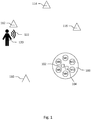
- Figs. 1 and 2 show schematically embodiments of positioning systems 100, 200 for determining a location of an object.
- the systems 100, 200 comprise a plurality of microphones M1-M6, N1-N9 configured to receive a sound input 122, 222 from a user 120, 220.
- the systems 100, 200 further comprise a localization module 102, 202 configured to determine a user location of the user 120, 220 relative to the plurality of microphones M1-M6, N1-N9 based on differences between the sound input 122, 222 received at different microphones of the plurality of microphones M1-M6, N1-N9.
- the systems 100, 200 further comprise a processor 104, 204 configured to receive an identifier of the object, identify the object based on the identifier, determine the location of the object by setting the location of the object equal to the user location, and store the location of the object in a memory.
- a processor 104, 204 configured to receive an identifier of the object, identify the object based on the identifier, determine the location of the object by setting the location of the object equal to the user location, and store the location of the object in a memory.
- the plurality of microphones M1-M6, N1-N9 are configured to receive a sound input 122, 222 from a user 120, 220 when the user is located/positioned at the object.
- the sound input 122, 222 is generated by the user (e.g. speech, clapping, whistling, finger snapping, etc.) or may be generated as an option not forming part of the invention by a user device (e.g. a smartphone, a smartwatch, a tablet pc).
- the sound input may be generated by the user device, for example, upon receiving a user input at the user device.
- the user may, for example, select an object via a user interface of the user device when the user device is located at the object, whereupon the user device may generate the sound input.
- the processor 204 may be communicatively coupled to the plurality of microphones M1-M6.
- the localization module 202 and the processor 204 may be comprised in further device 206, for example in a central control device (e.g. a building automation system, a smart home system, etc.).
- the further device may further comprise a receiver 208 configured to communicate with the plurality of microphones N1-N9 via a (wireless) network.
- the receiver 208 may comprise hardware for receiving the sound input 222 via any wired or wireless communication protocol.
- Various wired and wireless communication protocols may be used, for example Ethernet, DMX, DALI, USB, Bluetooth, Wi-Fi, Li-Fi, 3G, 4G or ZigBee.
- the localization module 102, 202 may be a separate processor such as a microcontroller. Alternatively, the localization module 102, 202 may be a software program running on the processor 104, 204.
- the localization module 102, 202 is configured to determine a user location (e.g. user coordinates) of the user 120, 220 relative to the plurality of microphones M1-M6, N1-N9 based on differences between the sound input 122, 222 received at different microphones of the plurality of microphones M1-M6, N1-N9.
- the localization module 102, 202 may have access to a memory storing the locations of the plurality of microphones (e.g.
- the localization module 102, 202 may be configured to determine the user location based on differences in signal strength of the sound input 122, 222 received at different microphones of the plurality of microphones M1-M6, N1-N9.
- the localization module 102, 202 may compare the differences in signal strength (e.g. by comparing spectrograms and/or dB levels of different microphones) to determine, for example by triangulation or trilateration, the user location of the user 120, 220.
- the localization module 102, 202 may be configured to determine the location of the user 120, 220 based on differences in time between receiving the sound input 122, 222 at different microphones of the plurality of microphones. By comparing differences in time of arrival of the sound input 122, 222 at different microphones, the localization module 102, 202 may determine, for example by triangulation or trilateration, the user location of the user 120, 220.
- the localization module 102, 202 may be further configured to access information about positions of the plurality of microphones M1-M6, N1-N9 relative to the space, and configured to determine the user location relative to the space based on differences between the sound input 122, 222 received at different microphones of the plurality of microphones M1-M6, N1-N9.
- Fig. 1 shows schematically an embodiment of a top view of a system 100 for determining a location of an object 110, 112, 114, 116, wherein a plurality of microphones M1-M6 are comprised in a single device 100.
- the localization module 102 may determine that the user 120 is located somewhere in the direction of microphone M6 because the sound input 122 will arrive at M6 first, and, for example, subsequently at M1, M5, M2, M4 and M3.
- the processor 104 may receive the identifier of an object (object 112 in this example) and determine the location of object 112 by setting the location of the object 112 equal to the user location.
- the localization module 102 may be further arranged for accessing a memory storing a location of the device 100 relative to the environment.
- the localization module 102 may determine the user location relative to the environment.
- the localization module 102 may be further configured to determine a distance between the positioning device 100 and the sound input 122 (and therewith the user 120) based on an intensity of the sound input 122. This enables the localization module 102 to determine the user location based on the distance and the direction. Additionally or alternatively, the localization module 102 may compare differences between the sound input 122 received at different microphones of the plurality of microphones M1-M6 and use triangulation/trilateration positioning techniques to pinpoint the location of the sound input 122 (and therewith the user location of the user 120). The user may subsequently move to another object, for example object 110, object 112 or object 114 and provide the sound input (and the identifier) at that object such that the location of that object can be determined and stored in the memory.
- another object for example object 110, object 112 or object 114 and provide the sound input (and the identifier) at that object such that the location of that object can be determined and stored in
- the positioning system 100 may further comprise an orientation sensor (e.g. a gyroscope and/or an accelerometer) for providing an orientation signal indicative of an orientation of the device 100. If a user would rotate the device 100, it is desirable that the localization module 102 still 'knows' the orientation of the device 100 relative to the space. Therefore, the localization module 102 may be further configured to determine the location of the user relative to the positioning system 100 based on the orientation signal.
- the positioning system 100 may further comprise a location detection means for detecting a location of the device 100.
- the location detection means may comprise a receiver configured to receive a location signal from a further device (e.g.
- the localization module 102 may be further configured to determine the location of the user relative to the positioning system 100 based on the location signal.
- Fig. 2 shows schematically an embodiment of a top view of a system 200 for determining a location of an object 210, 212, 214, 216, wherein the plurality of microphones N1-N9 are distributed throughout the space.
- the localization module 202 and the processor 204 may be comprised in further device 206, for example in a central control device (e.g. a building automation system, a smart home system, etc.).
- the further device 206 may further comprise a communication unit 208 configured to communicate with the plurality of microphones N1-N9 via a (wireless) network and to receive the sound input received at the different microphones N1-N9.
- the localization module 202 may determine that the user 220 is located close to microphones N1 and N4, because the time of arrival of the sound input 222 at microphones N1 and N4 occurs earlier than the time of arrival of the sound input 104 at microphones N2, N3 and N5-N9.
- the localization module 202 may be further arranged for accessing a memory storing locations of the plurality of microphones N1-N9 relative to the environment. Based on this information, the localization module 202 may determine the user location relative to the environment.
- the localization module 202 may be further configured to determine a distance between each of the plurality of microphones N1-N9 and the sound input 222 (and therewith the user 220) based on an intensity of the sound input 222 received at each of the plurality of microphones N1-N9. This enables the localization module 202 to determine the user location based on the distance.
- the localization module 202 may, for example, determine that the intensity of the sound input received at microphones M1 and N4 is stronger than the intensity at other microphones, and thereby determine that the user 220 is located in between these microphones.
- the localization module 202 may compare differences between the sound input 222 received at different microphones of the plurality of microphones N1-N9 and use triangulation/trilateration positioning techniques to pinpoint the location of the sound input 222 (and therewith the user location of the user 220).
- the processor 104, 204 (e.g. a microcontroller, circuitry, a microchip) is configured to receive an identifier of the object and identify the object based on the identifier.
- the object may for example be a device (e.g. furniture such as a couch, a chair or a table, an electronic device such as a TV, a lighting device, a (kitchen) appliance, or any other type of object.
- the (unique) identifier may comprise information about the object (e.g. the object type, a current setting of the object, etc.).
- the sound input 122, 222 may comprise the identifier of the object, and the processor 104, 204 may be configured to retrieve the identifier from the sound input 122, 222.
- the sound input may 122, 222, for example, be a voice input comprising information about the object (for example, the voice input may comprise "this is the location of the [name of object]", wherein the [name of object] may be the identifier).
- the processor 104, 204 may use voice recognition for retrieving the identifier from the sound input 122, 222. This enables a user to commission the objects by providing an object description at the location of the object. Object descriptions may already be stored in a memory (e.g.
- the localization module 102, 202 may determine the user location based on differences between the sound input received at different microphones of the plurality of microphones M1-M6, N1-N9.
- the localization module 102, 202 may determine the location of the object based on the user location.
- the processor 104, 204 may then store the object location (equal to the user location) of the object (“kitchen lamp 1") in a memory.
- the positioning system 100, 200 may further comprise a receiver configured to receive the identifier from the object.
- the object may be a device (e.g. a lighting device, an appliance, etc.) configured to transmit its identifier to the positioning system 100, 200.
- the (unique) identifier may comprise information about the object (e.g. the object type, a current setting of the object, etc.).
- the receiver may comprise hardware for receiving the identifier via any wired or wireless communication protocol. Various wired and wireless communication protocols may be used, for example Ethernet, DMX, DALI, USB, Bluetooth, Wi-Fi, Li-Fi, 3G, 4G or ZigBee.
- the receiver may be configured to receive the identifier from a further device, for example a smartphone, which may be operated by the user 120, 220.
- the user 120, 220 may instruct the further device to start transmitting the identifier of a specific object, and the user 120, 220 may provide a sound input, which enables the processor 104, 204 to determine that that sound input 122, 222 (and therewith the location of that sound input) corresponds to that specific object.
- the identifier may be a (QR) barcode or an (NFC) tag which may be detected by a detector.
- the detector may be comprised in the positioning system 100, 200, or the detector may be comprised in the further device (e.g.
- the receiver may comprise hardware for receiving the identifier via any wired or wireless communication protocol.
- Various wired and wireless communication protocols may be used, for example Ethernet, DMX, DALI, USB, Bluetooth, Wi-Fi, Li-Fi, 3G, 4G or ZigBee.
- the processor 104, 204 is further configured to determine the location of the object by setting the location of the object equal to the user location, and to store the location of the object in a memory.
- the positioning system 100, 200 may be communicatively coupled to or comprise a memory configured to store associations (e.g. a look-up table) between objects and their locations.
- the memory may be comprised in a (remote) server, for example accessible via the internet.
- a user 120, 220 can simply walk/move to an object of which the location needs to be stored in the memory (or of which the location needs to be updated, for example after a repositioning of the object), and provide the sound input 122, 222.
- the positioning system 100, 200 may further comprise a communication unit configured to communicate the location(s) of the object(s) to another device.
- the processor 104, 204 may be configured to generate a map of the space and determine a position of the object on the map based on the location of the object.
- the location of the object may, for example, be a set of 2D or 3D coordinates in a space (e.g. a room), and the processor 104, 204 may map these coordinates on a map of that space.
- the positioning system 100, 200 may further comprise a communication unit configured to communicate the created map to another device.
- the positioning system 100, 200 may, for example, transmit the map to a user interface device, or the positioning system 100, 200 may comprise a user interface.
- the map may be presented via the user interface (e.g. a display).
- the user interface may further comprise a user input means (e.g. a touchscreen, a pointing device, a gesture detector, etc.) configured to receive user input indicative of a selection of the object on the map.
- the selection of the object may for example be used for controlling the object (e.g. changing the light output of a lighting device) or for repositioning of the object on the map (a user may for example drag the object from a first location to a second location on the map).
- the latter may be beneficial if the positioning of the object on the map is incorrect, or when the object has been moved to a new location.
- the sound input 122, 222 may further comprise a control command, the control command being a control command for controlling/configuring the object.
- the processor 104, 204 may be further configured to retrieve the control command from the sound input, and to control the object based on the control command.
- the processor 104, 204 may use speech recognition algorithms to retrieve the control command from the sound input 122, 222 and control the object according to the control command by communicating the lighting control command to the object.
- the processor 104, 204 may (first) determine the location of the identified object based on the sound input and based on the sound input 122, 222 and (second) control the identified object based on the sound input 122, 222.
- the localization module 102, 202 may determine the user location based on the differences of the sound input received by the microphones, and the processor 104, 204 may identify the object as "living room lamp 1" based on the voice input and set the location of "living room lamp 1" equal to the user location and store the location of the "living room lamp 1" in a memory.
- the processor 104, 204 may further control "living room lamp 1" by generating a lighting control command comprising instructions for "living room lamp 1" to turn on and transmitting the lighting control command to "living room lamp 1".
- the plurality of microphones M1-M6, N1-N9 may be configured to receive a subsequent sound input, which subsequent sound input comprises a control command, the control command being a control command for controlling/configuring the object.
- the processor 104, 204 may use speech recognition algorithms to retrieve the control command from the sound input 122, 222 and control the object according to the control command by communicating the lighting control command to the object.
- the localization module 102, 202 may be configured to determine which one or more objects are located at the user location by accessing the memory storing locations of the one or more objects, and to control the one or more objects based on the control command.
- the localization module 102, 202 may, for example, be configured to receive object coordinates indicative of the locations of a plurality of objects, and compare user coordinates of the user location to the received object coordinates in order to determine which of the plurality of objects are located within a predetermined proximity of the user location. For example, when a user provides a voice command "dim the lights" in a system wherein the objects are light sources, the localization module 102, 104 may determine the location of the user, and determine which object(s) (light source(s)) are within a predetermined proximity of the user by accessing a memory that stores the locations of the objects. The processor 104, 204 may generate and transmit a control command to dim the light source(s) that are located within the predetermined proximity.
- the location module may be configured to determine the distance between the user location and the objects, and the processor may control the objects based on their distance from the user location. For example, light sources located nearby the user may be dimmed down with 50% and light sources farther away down with 25% and light sources even farther away down with 5%).
- the positioning system 100, 200 may comprise hardware for transmitting the control command(s) via any wired or wireless communication protocol to the object(s).
- Various wired and wireless communication protocols may be used, for example Ethernet, DMX, DALI, USB, Bluetooth, Wi-Fi, Li-Fi, 3G, 4G or ZigBee.
- the processor 104, 204 may be further configured to activate and deactivate a learning mode of the positioning system 100, 200.
- the positioning system 100, 200 may be configured to determine the location of the object.
- the positioning system 100, 200 may be configured to receive control commands from users.
- the learning mode may, for example, be activated when the controller is powered up for the first time, when a user input has been received on a user device (e.g. a smartphone) connected to the positioning system 100, 200, when a new object has been added to the positioning system 100, 200, etc.
- the processor 104, 204 may be further configured to identify the user 120, 220 based on the sound input 122, 222, and to control one or more objects further based on a user profile associated with the identified user.
- the processor 104, 204 may use voice recognition algorithms to identify the user, and/or the user may provide a voice command providing a user identifier (e.g. "this is [user name]").
- the processor 104, 204 may be configured to access a database storing the user profile.
- the user profile may comprise user preferences (e.g. favorite light settings), and the processor may determine how to control the one or more objects based on these preferences.
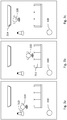
- Figs. 3a-3c illustrate how a user 320 may subsequently provide sound inputs to enable a positioning system 300 to determine the locations of a plurality of objects 310, 312, 314.
- the user 320 may move to lamp 310 and provide a first sound input.
- a plurality of microphones (not shown) of the positioning system 300 may receive the first sound input and a localization module (not shown) of the positioning system 300 may determine a first user location based on the first sound input.
- a processor (not shown) of the positioning system 300 may identify the lamp 310 (e.g.
- the user 320 may move to couch 312 and provide a second sound input.
- the plurality of microphones of the positioning system 300 may receive the second sound input and the localization module may determine a second user location based on the second sound input.
- the processor of the positioning system 300 may identify the couch 312 (e.g.
- the user 320 may move to TV 314 and provide a third sound input.
- the plurality of microphones of the positioning system 300 may receive the third sound input and the localization module may determine a third user location based on the third sound input.
- the processor of the positioning system 300 may identify the TV 314 (e.g. based on the third sound input, or based on a signal received from the TV 314 or from a user device), set the location of the TV 314 equal to the third user location and store the location of the TV 314 in the memory.
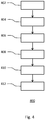
- Fig. 4 shows schematically a method for determining a location of an object.
- the method comprises: receiving 402, by a plurality of microphones M1-M6, N1-N9, a sound input 122, 222 from a user 120, 220, determining 404 a user location of the user 120, 220 relative to the plurality of microphones M1-M6, N1-N9 based on differences between the sound input 122, 222 received at different microphones of the plurality of microphones M1-M6, N1-N9, receiving 406 an identifier of the object, identifying 408 the object based on the identifier, determining 410 the location of the object by setting the location of the object equal to the user location, and storing 412 the location of the object in a memory.
- the method 400 may be executed by computer program code of a computer program product when the computer program product is run on a processing unit of a computing device, such as the processor 104, 204 of the positioning system 100, 200, connected to a plurality of microphones.
- any reference signs placed between parentheses shall not be construed as limiting the claim.
- Use of the verb "comprise” and its conjugations does not exclude the presence of elements or steps other than those stated in a claim.
- the article “a” or “an” preceding an element does not exclude the presence of a plurality of such elements.
- the invention may be implemented by means of hardware comprising several distinct elements, and by means of a suitably programmed computer or processing unit. In the device claim enumerating several means, several of these means may be embodied by one and the same item of hardware. The mere fact that certain measures are recited in mutually different dependent claims does not indicate that a combination of these measures cannot be used to advantage.
- aspects of the invention may be implemented in a computer program product, which may be a collection of computer program instructions stored on a computer readable storage device which may be executed by a computer.
- the instructions of the present invention may be in any interpretable or executable code mechanism, including but not limited to scripts, interpretable programs, dynamic link libraries (DLLs) or Java classes.
- the instructions can be provided as complete executable programs, partial executable programs, as modifications to existing programs (e.g. updates) or extensions for existing programs (e.g. plugins).
- parts of the processing of the present invention may be distributed over multiple computers or processors.
- Storage media suitable for storing computer program instructions include all forms of nonvolatile memory, including but not limited to EPROM, EEPROM and flash memory devices, magnetic disks such as the internal and external hard disk drives, removable disks and CD-ROM disks.
- the computer program product may be distributed on such a storage medium, or may be offered for download through HTTP, FTP, email or through a server connected to a network such as the Internet.
Landscapes
- Engineering & Computer Science (AREA)
- Physics & Mathematics (AREA)
- Acoustics & Sound (AREA)
- Audiology, Speech & Language Pathology (AREA)
- Human Computer Interaction (AREA)
- Health & Medical Sciences (AREA)
- Computational Linguistics (AREA)
- Multimedia (AREA)
- Signal Processing (AREA)
- General Physics & Mathematics (AREA)
- Radar, Positioning & Navigation (AREA)
- Remote Sensing (AREA)
- Measurement Of Velocity Or Position Using Acoustic Or Ultrasonic Waves (AREA)
- User Interface Of Digital Computer (AREA)
Claims (13)
- Positionierungssystem (100, 200) zum Bestimmen eines Standorts eines Objekts, wobei das Positionierungssystem (100, 200) Folgendes umfasst:- eine Vielzahl von Mikrofonen, die dazu ausgebildet sind, einen Toneingang (122, 222) zu empfangen, der von einem Anwender (120, 220) erzeugt wird,- ein Lokalisierungsmodul (102, 202), das dazu ausgebildet ist, einen Anwender- (120, 220) -standort des Anwenders (120, 220) relativ zu der Vielzahl von Mikrofonen basierend auf Unterschieden zwischen dem Toneingang (122, 222), der bei unterschiedlichen Mikrofonen der Vielzahl von Mikrofonen empfangen wird, zu bestimmen, und- einen Prozessor (104, 204), der dazu ausgebildet ist, eine Kennung des Objekts zu empfangen, das Objekt basierend auf der Kennung zu identifizieren, den Standort des Objekts durch Gleichsetzen des Standorts des Objekts mit dem Anwenderstandort zu bestimmen und den Standort des Objekts in einem Speicher zu speichern, dadurch gekennzeichnet, dass der Toneingang ein Spracheingang ist, der von dem Anwender erzeugt wird.
- Positionierungssystem (100, 200) nach einem der vorstehenden Ansprüche, wobei der Toneingang (122, 222) die Kennung des Objekts umfasst, und wobei der Prozessor (104, 204) dazu ausgebildet ist, die Kennung von dem Toneingang (122, 222) zu beziehen.
- Positionierungssystem (100, 200) nach einem der vorstehenden Ansprüche, wobei das Positionierungssystem (100, 200) einen Empfänger umfasst, der dazu ausgebildet ist, die Kennung von dem Objekt oder von einer weiteren Vorrichtung zu empfangen.
- Positionierungssystem (100, 200) nach einem der vorstehenden Ansprüche, wobei das Objekt in einem Raum liegt und wobei das Lokalisierungsmodul (102, 202) weiter dazu ausgebildet ist, auf Informationen über Positionen der Vielzahl von Mikrofonen relativ zu dem Raum zuzugreifen, und dazu ausgebildet ist, den Anwenderstandort relativ zu dem Raum basierend auf Unterschieden zwischen dem Toneingang (122, 222), der bei unterschiedlichen Mikrofonen der Vielzahl von Mikrofonen empfangen wird, zu bestimmen.
- Positionierungssystem (100, 200) nach Anspruch 4, wobei das Positionierungssystem (100, 200) in einer tragbaren Vorrichtung umfasst ist und wobei das Positionierungssystem (100, 200) einen Ausrichtungs- und/oder einen Standortsensor umfasst, und wobei das Lokalisierungsmodul (102, 202) dazu ausgebildet ist, den Anwenderstandort relativ zu dem Raum weiter basierend auf einem Ausrichtungssignal, das von dem Ausrichtungssensor empfangen wird, und/oder einem Standortsignal, das von dem Standortsensor empfangen wird, zu bestimmen.
- Positionierungssystem (100, 200) nach Anspruch 4 oder 5, wobei der Prozessor (104, 204) dazu ausgebildet ist, eine Karte des Raums zu erzeugen und eine Position des Objekts auf der Karte basierend auf dem Standort des Objekts zu bestimmen.
- Positionierungssystem (100, 200) nach einem der vorstehenden Ansprüche, wobei das Lokalisierungsmodul (102, 202) dazu ausgebildet ist, den Standort des Anwenders (120, 220) basierend auf Unterschieden zwischen Signalstärke des Toneingangs (122, 222), der bei unterschiedlichen Mikrofonen der Vielzahl von Mikrofonen empfangen wird, und/oder basierend auf zeitlichen Unterschieden zwischen Empfangen des Toneingangs (122, 222) bei unterschiedlichen Mikrofonen der Vielzahl von Mikrofonen zu bestimmen.
- Positionierungssystem (100, 200) nach einem der Ansprüche 1-7, wobei der Toneingang (122, 222) weiter einen Steuerbefehl umfasst und wobei der Prozessor (104, 204) weiter dazu ausgebildet ist, den Steuerbefehl von dem Toneingang (122, 222) zu beziehen und das Objekt basierend auf dem Steuerbefehl zu steuern.
- Positionierungssystem (100, 200) nach einem der Ansprüche 1-7, wobei die Vielzahl von Mikrofonen dazu ausgebildet ist, einen nachfolgenden Toneingang (122, 222) zu empfangen, welcher nachfolgende Toneingang (122, 222) einen Steuerbefehl umfasst, und wobei das Lokalisierungsmodul (102, 202) dazu ausgebildet ist, zu bestimmen, welches eine oder welche mehreren Objekte bei dem Anwenderstandort liegen, indem es auf den Speicher zugreift, der Standorte des einen oder der mehreren Objekte speichert, und das eine oder die mehreren Objekte basierend auf dem Steuerbefehl zu steuern.
- Positionierungssystem (100, 200) nach Anspruch 8 oder 9, wobei der Prozessor (104, 204) dazu ausgebildet ist, den Anwender (120, 220) basierend auf dem Toneingang (122, 222) zu identifizieren und das eine oder die mehreren Objekte weiter basierend auf einem Anwender- (120, 220) -profil zu steuern, das mit dem identifizierten Anwender (120, 220) verknüpft ist.
- Positionierungssystem (100, 200) nach einem der vorstehenden Ansprüche, wobei das Objekt eine Beleuchtungsvorrichtung ist.
- Verfahren (400) zum Bestimmen eines Standorts eines Objekts, wobei das Verfahren (400) Folgendes umfasst:- Empfangen (402), durch eine Vielzahl von Mikrofonen, eines Toneingangs (122, 222), der von einem Anwender (120, 220) erzeugt wird,- Bestimmen (404) eines Anwenderstandorts des Anwenders (120, 220) relativ zu der Vielzahl von Mikrofonen, basierend auf Unterschieden zwischen dem Toneingang (122, 222), der bei unterschiedlichen Mikrofonen der Vielzahl von Mikrofonen empfangen wird,- Empfangen (406) einer Kennung des Objekts,- Identifizieren (408) des Objekts basierend auf der Kennung,- Bestimmen (410) des Standorts des Objekts, indem der Standort des Objekts dem Anwenderstandort gleichgesetzt wird, und- Speichern (412) des Standorts des Objekts in einem Speicher, dadurch gekennzeichnet, dass der Toneingang ein Spracheingang ist, der von dem Anwender erzeugt wird.
- Computerprogrammprodukt für eine Rechenvorrichtung, wobei das Computerprogrammprodukt Computerprogrammcode umfasst, um das Verfahren (400) nach Anspruch 12 durchzuführen, wenn das Computerprogrammprodukt auf einer Verarbeitungseinheit der Rechenvorrichtung läuft, die mit einer Vielzahl von Mikrofonen verbunden ist.
Priority Applications (1)
| Application Number | Priority Date | Filing Date | Title |
|---|---|---|---|
| EP21167663.0A EP3879297A1 (de) | 2017-04-14 | 2018-04-05 | Positionierungssystem zur bestimmung des standorts eines objekts |
Applications Claiming Priority (2)
| Application Number | Priority Date | Filing Date | Title |
|---|---|---|---|
| EP17166687 | 2017-04-14 | ||
| PCT/EP2018/058757 WO2018189031A1 (en) | 2017-04-14 | 2018-04-05 | A positioning system for determining a location of an object |
Related Child Applications (2)
| Application Number | Title | Priority Date | Filing Date |
|---|---|---|---|
| EP21167663.0A Division-Into EP3879297A1 (de) | 2017-04-14 | 2018-04-05 | Positionierungssystem zur bestimmung des standorts eines objekts |
| EP21167663.0A Division EP3879297A1 (de) | 2017-04-14 | 2018-04-05 | Positionierungssystem zur bestimmung des standorts eines objekts |
Publications (2)
| Publication Number | Publication Date |
|---|---|
| EP3610285A1 EP3610285A1 (de) | 2020-02-19 |
| EP3610285B1 true EP3610285B1 (de) | 2021-12-15 |
Family
ID=58669597
Family Applications (2)
| Application Number | Title | Priority Date | Filing Date |
|---|---|---|---|
| EP21167663.0A Ceased EP3879297A1 (de) | 2017-04-14 | 2018-04-05 | Positionierungssystem zur bestimmung des standorts eines objekts |
| EP18714296.3A Active EP3610285B1 (de) | 2017-04-14 | 2018-04-05 | Positionierungssystem zur bestimmung des standorts eines objekts |
Family Applications Before (1)
| Application Number | Title | Priority Date | Filing Date |
|---|---|---|---|
| EP21167663.0A Ceased EP3879297A1 (de) | 2017-04-14 | 2018-04-05 | Positionierungssystem zur bestimmung des standorts eines objekts |
Country Status (5)
| Country | Link |
|---|---|
| US (1) | US11143739B2 (de) |
| EP (2) | EP3879297A1 (de) |
| JP (1) | JP7184798B2 (de) |
| CN (1) | CN110537101B (de) |
| WO (1) | WO2018189031A1 (de) |
Families Citing this family (30)
| Publication number | Priority date | Publication date | Assignee | Title |
|---|---|---|---|---|
| US9084058B2 (en) | 2011-12-29 | 2015-07-14 | Sonos, Inc. | Sound field calibration using listener localization |
| US9106192B2 (en) | 2012-06-28 | 2015-08-11 | Sonos, Inc. | System and method for device playback calibration |
| US9219460B2 (en) | 2014-03-17 | 2015-12-22 | Sonos, Inc. | Audio settings based on environment |
| US9264839B2 (en) | 2014-03-17 | 2016-02-16 | Sonos, Inc. | Playback device configuration based on proximity detection |
| US9952825B2 (en) | 2014-09-09 | 2018-04-24 | Sonos, Inc. | Audio processing algorithms |
| WO2017049169A1 (en) | 2015-09-17 | 2017-03-23 | Sonos, Inc. | Facilitating calibration of an audio playback device |
| US9693165B2 (en) | 2015-09-17 | 2017-06-27 | Sonos, Inc. | Validation of audio calibration using multi-dimensional motion check |
| US9743207B1 (en) | 2016-01-18 | 2017-08-22 | Sonos, Inc. | Calibration using multiple recording devices |
| US10003899B2 (en) | 2016-01-25 | 2018-06-19 | Sonos, Inc. | Calibration with particular locations |
| US9860662B2 (en) | 2016-04-01 | 2018-01-02 | Sonos, Inc. | Updating playback device configuration information based on calibration data |
| US9864574B2 (en) | 2016-04-01 | 2018-01-09 | Sonos, Inc. | Playback device calibration based on representation spectral characteristics |
| US9763018B1 (en) | 2016-04-12 | 2017-09-12 | Sonos, Inc. | Calibration of audio playback devices |
| US9794710B1 (en) | 2016-07-15 | 2017-10-17 | Sonos, Inc. | Spatial audio correction |
| US10372406B2 (en) | 2016-07-22 | 2019-08-06 | Sonos, Inc. | Calibration interface |
| US10459684B2 (en) | 2016-08-05 | 2019-10-29 | Sonos, Inc. | Calibration of a playback device based on an estimated frequency response |
| CN111213365A (zh) * | 2018-08-17 | 2020-05-29 | 深圳市大疆创新科技有限公司 | 拍摄控制方法及控制器 |
| US11206484B2 (en) | 2018-08-28 | 2021-12-21 | Sonos, Inc. | Passive speaker authentication |
| US10299061B1 (en) | 2018-08-28 | 2019-05-21 | Sonos, Inc. | Playback device calibration |
| US10277981B1 (en) * | 2018-10-02 | 2019-04-30 | Sonos, Inc. | Systems and methods of user localization |
| US10734965B1 (en) | 2019-08-12 | 2020-08-04 | Sonos, Inc. | Audio calibration of a portable playback device |
| KR102281602B1 (ko) | 2019-08-21 | 2021-07-29 | 엘지전자 주식회사 | 사용자의 발화 음성을 인식하는 인공 지능 장치 및 그 방법 |
| US11482329B2 (en) * | 2020-03-03 | 2022-10-25 | Government Of The United States As Represented By The Secretary Of The Air Force | Medical audio alarm distributed detection and alert system |
| CN111783628B (zh) * | 2020-06-29 | 2024-07-12 | 珠海格力电器股份有限公司 | 一种位置跟踪方法、装置、电子设备及存储介质 |
| US11122364B1 (en) | 2020-08-31 | 2021-09-14 | Nanning Fugui Precision Industrial Co., Ltd. | Footsteps tracking method and system thereof |
| TWI757856B (zh) * | 2020-08-31 | 2022-03-11 | 新加坡商鴻運科股份有限公司 | 行跡追蹤方法及其系統 |
| US11425502B2 (en) * | 2020-09-18 | 2022-08-23 | Cisco Technology, Inc. | Detection of microphone orientation and location for directional audio pickup |
| CN114307126A (zh) * | 2020-09-29 | 2022-04-12 | 宝能汽车集团有限公司 | 车辆、车载游戏装置和方法及存储介质 |
| CN114566171B (zh) * | 2020-11-27 | 2025-07-29 | 华为技术有限公司 | 一种语音唤醒方法及电子设备 |
| EP4409571B1 (de) | 2021-09-30 | 2025-03-26 | Sonos Inc. | Konfliktverwaltung für wake-word-detektionsverfahren |
| WO2025151886A2 (en) * | 2024-01-12 | 2025-07-17 | Livv Llc | Determination of location and orientation of an entity in an area |
Family Cites Families (21)
| Publication number | Priority date | Publication date | Assignee | Title |
|---|---|---|---|---|
| US6219645B1 (en) * | 1999-12-02 | 2001-04-17 | Lucent Technologies, Inc. | Enhanced automatic speech recognition using multiple directional microphones |
| US6331817B1 (en) * | 2000-05-31 | 2001-12-18 | Motorola, Inc. | Object tracking apparatus and method |
| US7908083B2 (en) * | 2006-02-08 | 2011-03-15 | Leupold & Stevens, Inc. | System and method for recording a note with location information derived from rangefinding and/or observer position |
| KR101395722B1 (ko) | 2007-10-31 | 2014-05-15 | 삼성전자주식회사 | 마이크로폰을 이용한 음원 위치 추정 방법 및 장치 |
| DE202009005690U1 (de) | 2008-04-17 | 2010-09-23 | Aizo Ag Deutschland | Ortungssystem für Gegenstände, insbesondere für Einrichtungsgegenstände in einem Gebäude |
| US8315366B2 (en) | 2008-07-22 | 2012-11-20 | Shoretel, Inc. | Speaker identification and representation for a phone |
| US8994295B2 (en) * | 2009-09-05 | 2015-03-31 | Enlighted, Inc. | Commission of distributed light fixtures of a lighting system |
| DE102009041171A1 (de) | 2009-09-11 | 2011-04-07 | Siemens Aktiengesellschaft | System und Verfahren zur Lokalisierung mobiler Objekte |
| CN103947296B (zh) | 2011-11-30 | 2017-03-08 | 皇家飞利浦有限公司 | 用于使用声音调试照明的系统和方法 |
| US9408011B2 (en) * | 2011-12-19 | 2016-08-02 | Qualcomm Incorporated | Automated user/sensor location recognition to customize audio performance in a distributed multi-sensor environment |
| US9571930B2 (en) * | 2013-12-24 | 2017-02-14 | Intel Corporation | Audio data detection with a computing device |
| CN204390737U (zh) * | 2014-07-29 | 2015-06-10 | 科大讯飞股份有限公司 | 一种家庭语音处理系统 |
| US9875322B2 (en) * | 2014-07-31 | 2018-01-23 | Google Llc | Saving and retrieving locations of objects |
| JP6467736B2 (ja) | 2014-09-01 | 2019-02-13 | 株式会社国際電気通信基礎技術研究所 | 音源位置推定装置、音源位置推定方法および音源位置推定プログラム |
| KR102344045B1 (ko) * | 2015-04-21 | 2021-12-28 | 삼성전자주식회사 | 화면을 표시하는 전자 장치 및 그 제어 방법 |
| US10655951B1 (en) * | 2015-06-25 | 2020-05-19 | Amazon Technologies, Inc. | Determining relative positions of user devices |
| US11188835B2 (en) * | 2016-12-30 | 2021-11-30 | Intel Corporation | Object identification for improved ux using IoT network |
| WO2018137872A1 (en) * | 2017-01-30 | 2018-08-02 | Philips Lighting Holding B.V. | A controller for controlling a plurality of light sources. |
| US10520580B2 (en) * | 2017-04-25 | 2019-12-31 | Haystack Magic Inc. | Method and system of determining an estimated position of a target electronically tagged object |
| US10158728B1 (en) * | 2017-08-30 | 2018-12-18 | Lenovo (Singapore) Pte. Ltd. | Method and device to track objects |
| US10976432B2 (en) * | 2019-06-28 | 2021-04-13 | Synaptics Incorporated | Acoustic locationing for smart environments |
-
2018
- 2018-04-05 CN CN201880024632.8A patent/CN110537101B/zh active Active
- 2018-04-05 EP EP21167663.0A patent/EP3879297A1/de not_active Ceased
- 2018-04-05 WO PCT/EP2018/058757 patent/WO2018189031A1/en not_active Ceased
- 2018-04-05 US US16/605,103 patent/US11143739B2/en active Active
- 2018-04-05 EP EP18714296.3A patent/EP3610285B1/de active Active
- 2018-04-05 JP JP2019555866A patent/JP7184798B2/ja active Active
Non-Patent Citations (1)
| Title |
|---|
| None * |
Also Published As
| Publication number | Publication date |
|---|---|
| CN110537101A (zh) | 2019-12-03 |
| EP3879297A1 (de) | 2021-09-15 |
| CN110537101B (zh) | 2023-12-05 |
| US20210141050A1 (en) | 2021-05-13 |
| WO2018189031A1 (en) | 2018-10-18 |
| JP7184798B2 (ja) | 2022-12-06 |
| US11143739B2 (en) | 2021-10-12 |
| EP3610285A1 (de) | 2020-02-19 |
| JP2020520444A (ja) | 2020-07-09 |
Similar Documents
| Publication | Publication Date | Title |
|---|---|---|
| EP3610285B1 (de) | Positionierungssystem zur bestimmung des standorts eines objekts | |
| EP3574399B1 (de) | Steuergerät zur steuerung einer vielzahl von lichtquellen | |
| CN106063376B (zh) | 基于邻近度的照明控制 | |
| US11224111B2 (en) | Method and system for controlling a lighting device based on a location and an orientation of a user input device relative to the lighting device | |
| RU2721748C2 (ru) | Осветительное устройство с контекстно-ориентированным световым выходом | |
| WO2017186532A1 (en) | Method and system for controlling a lighting device. | |
| US20180069720A1 (en) | Context-related commissioning of lighting devices | |
| EP3735804B1 (de) | Steuergerät zur steuerung einer beleuchtungsvorrichtung und verfahren dafür | |
| EP3658947B1 (de) | System zur übertragung des vorhandenseins einer vorrichtung über eine lichtquelle | |
| EP3782439A1 (de) | Verfahren zur auswahl einer kontrollierbaren beleuchtungsvorrichtung aus einer vielzahl von beleuchtungsvorrichtungen |
Legal Events
| Date | Code | Title | Description |
|---|---|---|---|
| STAA | Information on the status of an ep patent application or granted ep patent |
Free format text: STATUS: UNKNOWN |
|
| STAA | Information on the status of an ep patent application or granted ep patent |
Free format text: STATUS: THE INTERNATIONAL PUBLICATION HAS BEEN MADE |
|
| PUAI | Public reference made under article 153(3) epc to a published international application that has entered the european phase |
Free format text: ORIGINAL CODE: 0009012 |
|
| STAA | Information on the status of an ep patent application or granted ep patent |
Free format text: STATUS: REQUEST FOR EXAMINATION WAS MADE |
|
| 17P | Request for examination filed |
Effective date: 20191114 |
|
| AK | Designated contracting states |
Kind code of ref document: A1 Designated state(s): AL AT BE BG CH CY CZ DE DK EE ES FI FR GB GR HR HU IE IS IT LI LT LU LV MC MK MT NL NO PL PT RO RS SE SI SK SM TR |
|
| AX | Request for extension of the european patent |
Extension state: BA ME |
|
| STAA | Information on the status of an ep patent application or granted ep patent |
Free format text: STATUS: EXAMINATION IS IN PROGRESS |
|
| 17Q | First examination report despatched |
Effective date: 20200305 |
|
| DAV | Request for validation of the european patent (deleted) | ||
| DAX | Request for extension of the european patent (deleted) | ||
| GRAP | Despatch of communication of intention to grant a patent |
Free format text: ORIGINAL CODE: EPIDOSNIGR1 |
|
| STAA | Information on the status of an ep patent application or granted ep patent |
Free format text: STATUS: GRANT OF PATENT IS INTENDED |
|
| INTG | Intention to grant announced |
Effective date: 20210304 |
|
| RIN1 | Information on inventor provided before grant (corrected) |
Inventor name: JANSSEN, NIEK Inventor name: POLMAN, ROBERTUS JOHANNES |
|
| GRAJ | Information related to disapproval of communication of intention to grant by the applicant or resumption of examination proceedings by the epo deleted |
Free format text: ORIGINAL CODE: EPIDOSDIGR1 |
|
| STAA | Information on the status of an ep patent application or granted ep patent |
Free format text: STATUS: EXAMINATION IS IN PROGRESS |
|
| INTC | Intention to grant announced (deleted) | ||
| GRAP | Despatch of communication of intention to grant a patent |
Free format text: ORIGINAL CODE: EPIDOSNIGR1 |
|
| STAA | Information on the status of an ep patent application or granted ep patent |
Free format text: STATUS: GRANT OF PATENT IS INTENDED |
|
| INTG | Intention to grant announced |
Effective date: 20210706 |
|
| GRAS | Grant fee paid |
Free format text: ORIGINAL CODE: EPIDOSNIGR3 |
|
| GRAA | (expected) grant |
Free format text: ORIGINAL CODE: 0009210 |
|
| STAA | Information on the status of an ep patent application or granted ep patent |
Free format text: STATUS: THE PATENT HAS BEEN GRANTED |
|
| AK | Designated contracting states |
Kind code of ref document: B1 Designated state(s): AL AT BE BG CH CY CZ DE DK EE ES FI FR GB GR HR HU IE IS IT LI LT LU LV MC MK MT NL NO PL PT RO RS SE SI SK SM TR |
|
| REG | Reference to a national code |
Ref country code: GB Ref legal event code: FG4D Ref country code: CH Ref legal event code: EP |
|
| REG | Reference to a national code |
Ref country code: IE Ref legal event code: FG4D Ref country code: DE Ref legal event code: R096 Ref document number: 602018028174 Country of ref document: DE |
|
| REG | Reference to a national code |
Ref country code: AT Ref legal event code: REF Ref document number: 1455895 Country of ref document: AT Kind code of ref document: T Effective date: 20220115 |
|
| REG | Reference to a national code |
Ref country code: NL Ref legal event code: FP |
|
| REG | Reference to a national code |
Ref country code: SE Ref legal event code: TRGR |
|
| REG | Reference to a national code |
Ref country code: LT Ref legal event code: MG9D |
|
| PG25 | Lapsed in a contracting state [announced via postgrant information from national office to epo] |
Ref country code: RS Free format text: LAPSE BECAUSE OF FAILURE TO SUBMIT A TRANSLATION OF THE DESCRIPTION OR TO PAY THE FEE WITHIN THE PRESCRIBED TIME-LIMIT Effective date: 20211215 Ref country code: LT Free format text: LAPSE BECAUSE OF FAILURE TO SUBMIT A TRANSLATION OF THE DESCRIPTION OR TO PAY THE FEE WITHIN THE PRESCRIBED TIME-LIMIT Effective date: 20211215 Ref country code: FI Free format text: LAPSE BECAUSE OF FAILURE TO SUBMIT A TRANSLATION OF THE DESCRIPTION OR TO PAY THE FEE WITHIN THE PRESCRIBED TIME-LIMIT Effective date: 20211215 Ref country code: BG Free format text: LAPSE BECAUSE OF FAILURE TO SUBMIT A TRANSLATION OF THE DESCRIPTION OR TO PAY THE FEE WITHIN THE PRESCRIBED TIME-LIMIT Effective date: 20220315 |
|
| REG | Reference to a national code |
Ref country code: AT Ref legal event code: MK05 Ref document number: 1455895 Country of ref document: AT Kind code of ref document: T Effective date: 20211215 |
|
| PG25 | Lapsed in a contracting state [announced via postgrant information from national office to epo] |
Ref country code: NO Free format text: LAPSE BECAUSE OF FAILURE TO SUBMIT A TRANSLATION OF THE DESCRIPTION OR TO PAY THE FEE WITHIN THE PRESCRIBED TIME-LIMIT Effective date: 20220315 Ref country code: LV Free format text: LAPSE BECAUSE OF FAILURE TO SUBMIT A TRANSLATION OF THE DESCRIPTION OR TO PAY THE FEE WITHIN THE PRESCRIBED TIME-LIMIT Effective date: 20211215 Ref country code: HR Free format text: LAPSE BECAUSE OF FAILURE TO SUBMIT A TRANSLATION OF THE DESCRIPTION OR TO PAY THE FEE WITHIN THE PRESCRIBED TIME-LIMIT Effective date: 20211215 Ref country code: GR Free format text: LAPSE BECAUSE OF FAILURE TO SUBMIT A TRANSLATION OF THE DESCRIPTION OR TO PAY THE FEE WITHIN THE PRESCRIBED TIME-LIMIT Effective date: 20220316 |
|
| PG25 | Lapsed in a contracting state [announced via postgrant information from national office to epo] |
Ref country code: SM Free format text: LAPSE BECAUSE OF FAILURE TO SUBMIT A TRANSLATION OF THE DESCRIPTION OR TO PAY THE FEE WITHIN THE PRESCRIBED TIME-LIMIT Effective date: 20211215 Ref country code: SK Free format text: LAPSE BECAUSE OF FAILURE TO SUBMIT A TRANSLATION OF THE DESCRIPTION OR TO PAY THE FEE WITHIN THE PRESCRIBED TIME-LIMIT Effective date: 20211215 Ref country code: RO Free format text: LAPSE BECAUSE OF FAILURE TO SUBMIT A TRANSLATION OF THE DESCRIPTION OR TO PAY THE FEE WITHIN THE PRESCRIBED TIME-LIMIT Effective date: 20211215 Ref country code: PT Free format text: LAPSE BECAUSE OF FAILURE TO SUBMIT A TRANSLATION OF THE DESCRIPTION OR TO PAY THE FEE WITHIN THE PRESCRIBED TIME-LIMIT Effective date: 20220418 Ref country code: ES Free format text: LAPSE BECAUSE OF FAILURE TO SUBMIT A TRANSLATION OF THE DESCRIPTION OR TO PAY THE FEE WITHIN THE PRESCRIBED TIME-LIMIT Effective date: 20211215 Ref country code: EE Free format text: LAPSE BECAUSE OF FAILURE TO SUBMIT A TRANSLATION OF THE DESCRIPTION OR TO PAY THE FEE WITHIN THE PRESCRIBED TIME-LIMIT Effective date: 20211215 Ref country code: CZ Free format text: LAPSE BECAUSE OF FAILURE TO SUBMIT A TRANSLATION OF THE DESCRIPTION OR TO PAY THE FEE WITHIN THE PRESCRIBED TIME-LIMIT Effective date: 20211215 |
|
| PG25 | Lapsed in a contracting state [announced via postgrant information from national office to epo] |
Ref country code: PL Free format text: LAPSE BECAUSE OF FAILURE TO SUBMIT A TRANSLATION OF THE DESCRIPTION OR TO PAY THE FEE WITHIN THE PRESCRIBED TIME-LIMIT Effective date: 20211215 Ref country code: AT Free format text: LAPSE BECAUSE OF FAILURE TO SUBMIT A TRANSLATION OF THE DESCRIPTION OR TO PAY THE FEE WITHIN THE PRESCRIBED TIME-LIMIT Effective date: 20211215 |
|
| REG | Reference to a national code |
Ref country code: DE Ref legal event code: R097 Ref document number: 602018028174 Country of ref document: DE |
|
| PG25 | Lapsed in a contracting state [announced via postgrant information from national office to epo] |
Ref country code: IS Free format text: LAPSE BECAUSE OF FAILURE TO SUBMIT A TRANSLATION OF THE DESCRIPTION OR TO PAY THE FEE WITHIN THE PRESCRIBED TIME-LIMIT Effective date: 20220415 |
|
| PLBE | No opposition filed within time limit |
Free format text: ORIGINAL CODE: 0009261 |
|
| STAA | Information on the status of an ep patent application or granted ep patent |
Free format text: STATUS: NO OPPOSITION FILED WITHIN TIME LIMIT |
|
| PG25 | Lapsed in a contracting state [announced via postgrant information from national office to epo] |
Ref country code: DK Free format text: LAPSE BECAUSE OF FAILURE TO SUBMIT A TRANSLATION OF THE DESCRIPTION OR TO PAY THE FEE WITHIN THE PRESCRIBED TIME-LIMIT Effective date: 20211215 Ref country code: AL Free format text: LAPSE BECAUSE OF FAILURE TO SUBMIT A TRANSLATION OF THE DESCRIPTION OR TO PAY THE FEE WITHIN THE PRESCRIBED TIME-LIMIT Effective date: 20211215 |
|
| 26N | No opposition filed |
Effective date: 20220916 |
|
| PG25 | Lapsed in a contracting state [announced via postgrant information from national office to epo] |
Ref country code: SI Free format text: LAPSE BECAUSE OF FAILURE TO SUBMIT A TRANSLATION OF THE DESCRIPTION OR TO PAY THE FEE WITHIN THE PRESCRIBED TIME-LIMIT Effective date: 20211215 |
|
| REG | Reference to a national code |
Ref country code: CH Ref legal event code: PL |
|
| REG | Reference to a national code |
Ref country code: BE Ref legal event code: MM Effective date: 20220430 |
|
| PG25 | Lapsed in a contracting state [announced via postgrant information from national office to epo] |
Ref country code: MC Free format text: LAPSE BECAUSE OF FAILURE TO SUBMIT A TRANSLATION OF THE DESCRIPTION OR TO PAY THE FEE WITHIN THE PRESCRIBED TIME-LIMIT Effective date: 20211215 Ref country code: LU Free format text: LAPSE BECAUSE OF NON-PAYMENT OF DUE FEES Effective date: 20220405 Ref country code: LI Free format text: LAPSE BECAUSE OF NON-PAYMENT OF DUE FEES Effective date: 20220430 Ref country code: CH Free format text: LAPSE BECAUSE OF NON-PAYMENT OF DUE FEES Effective date: 20220430 |
|
| PG25 | Lapsed in a contracting state [announced via postgrant information from national office to epo] |
Ref country code: BE Free format text: LAPSE BECAUSE OF NON-PAYMENT OF DUE FEES Effective date: 20220430 |
|
| PG25 | Lapsed in a contracting state [announced via postgrant information from national office to epo] |
Ref country code: IE Free format text: LAPSE BECAUSE OF NON-PAYMENT OF DUE FEES Effective date: 20220405 |
|
| P01 | Opt-out of the competence of the unified patent court (upc) registered |
Effective date: 20230425 |
|
| PG25 | Lapsed in a contracting state [announced via postgrant information from national office to epo] |
Ref country code: MK Free format text: LAPSE BECAUSE OF FAILURE TO SUBMIT A TRANSLATION OF THE DESCRIPTION OR TO PAY THE FEE WITHIN THE PRESCRIBED TIME-LIMIT Effective date: 20211215 Ref country code: CY Free format text: LAPSE BECAUSE OF FAILURE TO SUBMIT A TRANSLATION OF THE DESCRIPTION OR TO PAY THE FEE WITHIN THE PRESCRIBED TIME-LIMIT Effective date: 20211215 |
|
| PG25 | Lapsed in a contracting state [announced via postgrant information from national office to epo] |
Ref country code: HU Free format text: LAPSE BECAUSE OF FAILURE TO SUBMIT A TRANSLATION OF THE DESCRIPTION OR TO PAY THE FEE WITHIN THE PRESCRIBED TIME-LIMIT; INVALID AB INITIO Effective date: 20180405 |
|
| PG25 | Lapsed in a contracting state [announced via postgrant information from national office to epo] |
Ref country code: TR Free format text: LAPSE BECAUSE OF FAILURE TO SUBMIT A TRANSLATION OF THE DESCRIPTION OR TO PAY THE FEE WITHIN THE PRESCRIBED TIME-LIMIT Effective date: 20211215 |
|
| PG25 | Lapsed in a contracting state [announced via postgrant information from national office to epo] |
Ref country code: MT Free format text: LAPSE BECAUSE OF FAILURE TO SUBMIT A TRANSLATION OF THE DESCRIPTION OR TO PAY THE FEE WITHIN THE PRESCRIBED TIME-LIMIT Effective date: 20211215 |
|
| PGFP | Annual fee paid to national office [announced via postgrant information from national office to epo] |
Ref country code: NL Payment date: 20250424 Year of fee payment: 8 |
|
| PGFP | Annual fee paid to national office [announced via postgrant information from national office to epo] |
Ref country code: DE Payment date: 20250626 Year of fee payment: 8 |
|
| PGFP | Annual fee paid to national office [announced via postgrant information from national office to epo] |
Ref country code: GB Payment date: 20250422 Year of fee payment: 8 |
|
| PGFP | Annual fee paid to national office [announced via postgrant information from national office to epo] |
Ref country code: IT Payment date: 20250422 Year of fee payment: 8 |
|
| PGFP | Annual fee paid to national office [announced via postgrant information from national office to epo] |
Ref country code: FR Payment date: 20250424 Year of fee payment: 8 |
|
| PGFP | Annual fee paid to national office [announced via postgrant information from national office to epo] |
Ref country code: SE Payment date: 20250424 Year of fee payment: 8 |