EP3609575B1 - Fotobiomodulationstherapiegerät zur verringerung der wirkungen von fibromyalgie - Google Patents
Fotobiomodulationstherapiegerät zur verringerung der wirkungen von fibromyalgie Download PDFInfo
- Publication number
- EP3609575B1 EP3609575B1 EP18784680.3A EP18784680A EP3609575B1 EP 3609575 B1 EP3609575 B1 EP 3609575B1 EP 18784680 A EP18784680 A EP 18784680A EP 3609575 B1 EP3609575 B1 EP 3609575B1
- Authority
- EP
- European Patent Office
- Prior art keywords
- light source
- light
- source device
- subject
- tender
- Prior art date
- Legal status (The legal status is an assumption and is not a legal conclusion. Google has not performed a legal analysis and makes no representation as to the accuracy of the status listed.)
- Active
Links
Images



Classifications
-
- A—HUMAN NECESSITIES
- A61—MEDICAL OR VETERINARY SCIENCE; HYGIENE
- A61N—ELECTROTHERAPY; MAGNETOTHERAPY; RADIATION THERAPY; ULTRASOUND THERAPY
- A61N5/00—Radiation therapy
- A61N5/06—Radiation therapy using light
- A61N5/0613—Apparatus adapted for a specific treatment
-
- A—HUMAN NECESSITIES
- A61—MEDICAL OR VETERINARY SCIENCE; HYGIENE
- A61N—ELECTROTHERAPY; MAGNETOTHERAPY; RADIATION THERAPY; ULTRASOUND THERAPY
- A61N2/00—Magnetotherapy
- A61N2/004—Magnetotherapy specially adapted for a specific therapy
- A61N2/008—Magnetotherapy specially adapted for a specific therapy for pain treatment or analgesia
-
- A—HUMAN NECESSITIES
- A61—MEDICAL OR VETERINARY SCIENCE; HYGIENE
- A61N—ELECTROTHERAPY; MAGNETOTHERAPY; RADIATION THERAPY; ULTRASOUND THERAPY
- A61N2/00—Magnetotherapy
- A61N2/002—Magnetotherapy in combination with another treatment
-
- A—HUMAN NECESSITIES
- A61—MEDICAL OR VETERINARY SCIENCE; HYGIENE
- A61N—ELECTROTHERAPY; MAGNETOTHERAPY; RADIATION THERAPY; ULTRASOUND THERAPY
- A61N2/00—Magnetotherapy
- A61N2/06—Magnetotherapy using magnetic fields produced by permanent magnets
-
- A—HUMAN NECESSITIES
- A61—MEDICAL OR VETERINARY SCIENCE; HYGIENE
- A61N—ELECTROTHERAPY; MAGNETOTHERAPY; RADIATION THERAPY; ULTRASOUND THERAPY
- A61N5/00—Radiation therapy
- A61N5/06—Radiation therapy using light
- A61N5/0613—Apparatus adapted for a specific treatment
- A61N5/0618—Psychological treatment
-
- A—HUMAN NECESSITIES
- A61—MEDICAL OR VETERINARY SCIENCE; HYGIENE
- A61N—ELECTROTHERAPY; MAGNETOTHERAPY; RADIATION THERAPY; ULTRASOUND THERAPY
- A61N5/00—Radiation therapy
- A61N5/06—Radiation therapy using light
- A61N5/0613—Apparatus adapted for a specific treatment
- A61N5/0622—Optical stimulation for exciting neural tissue
-
- A—HUMAN NECESSITIES
- A61—MEDICAL OR VETERINARY SCIENCE; HYGIENE
- A61N—ELECTROTHERAPY; MAGNETOTHERAPY; RADIATION THERAPY; ULTRASOUND THERAPY
- A61N5/00—Radiation therapy
- A61N5/06—Radiation therapy using light
- A61N2005/0632—Constructional aspects of the apparatus
-
- A—HUMAN NECESSITIES
- A61—MEDICAL OR VETERINARY SCIENCE; HYGIENE
- A61N—ELECTROTHERAPY; MAGNETOTHERAPY; RADIATION THERAPY; ULTRASOUND THERAPY
- A61N5/00—Radiation therapy
- A61N5/06—Radiation therapy using light
- A61N2005/0635—Radiation therapy using light characterised by the body area to be irradiated
- A61N2005/0643—Applicators, probes irradiating specific body areas in close proximity
- A61N2005/0644—Handheld applicators
-
- A—HUMAN NECESSITIES
- A61—MEDICAL OR VETERINARY SCIENCE; HYGIENE
- A61N—ELECTROTHERAPY; MAGNETOTHERAPY; RADIATION THERAPY; ULTRASOUND THERAPY
- A61N5/00—Radiation therapy
- A61N5/06—Radiation therapy using light
- A61N2005/0635—Radiation therapy using light characterised by the body area to be irradiated
- A61N2005/0643—Applicators, probes irradiating specific body areas in close proximity
- A61N2005/0645—Applicators worn by the patient
-
- A—HUMAN NECESSITIES
- A61—MEDICAL OR VETERINARY SCIENCE; HYGIENE
- A61N—ELECTROTHERAPY; MAGNETOTHERAPY; RADIATION THERAPY; ULTRASOUND THERAPY
- A61N5/00—Radiation therapy
- A61N5/06—Radiation therapy using light
- A61N2005/0658—Radiation therapy using light characterised by the wavelength of light used
- A61N2005/0659—Radiation therapy using light characterised by the wavelength of light used infrared
-
- A—HUMAN NECESSITIES
- A61—MEDICAL OR VETERINARY SCIENCE; HYGIENE
- A61N—ELECTROTHERAPY; MAGNETOTHERAPY; RADIATION THERAPY; ULTRASOUND THERAPY
- A61N5/00—Radiation therapy
- A61N5/06—Radiation therapy using light
- A61N2005/0658—Radiation therapy using light characterised by the wavelength of light used
- A61N2005/0662—Visible light
- A61N2005/0663—Coloured light
-
- A—HUMAN NECESSITIES
- A61—MEDICAL OR VETERINARY SCIENCE; HYGIENE
- A61N—ELECTROTHERAPY; MAGNETOTHERAPY; RADIATION THERAPY; ULTRASOUND THERAPY
- A61N5/00—Radiation therapy
- A61N5/06—Radiation therapy using light
- A61N5/067—Radiation therapy using light using laser light
Definitions
- the present disclosure relates generally to photobiomodulation therapy (PBMT) and, more specifically, to systems and methods that apply PBMT to a tender area on a subject's body to treat fibromyalgia (FM).
- PBMT photobiomodulation therapy
- FM fibromyalgia
- Fibromyalgia is a non-inflammatory syndrome characterized by chronic musculoskeletal pain.
- the brain and spinal cord process pain sensations abnormally by lowering the threshold at which stimuli cause pain or discomfort.
- stimuli which normally would not cause pain, would be amplified in a patient suffering from FM and cause debilitating pain.
- FM can be accompanied by fatigue, sleep, also have tension headaches, migraines, temporomandibular joint (TMJ) disorder, irritable bowel syndrome, interstitial cystitis or painful bladder syndrome, anxiety, and/or depression. These symptoms can be reduced to some degree through medications.
- TMJ temporomandibular joint
- the present disclosure relates generally to photobiomodulation therapy (PBMT) and, more specifically, to systems and methods that apply PBMT to a tender area on a subject's body to treat fibromyalgia (FM).
- PBMT provides a non-pharmacological treatment for fibromyalgia that can be used alone or in combination with medications and/or alternative therapies, like stress management or exercise.
- the present disclosure can include a method for applying PBMT to a patient diagnosed with FM to treat FM.
- a light source device can be contacted to a subject's skin proximal to a tender area on the subject's body.
- a light signal can be applied in at least one of a pulsed operating mode, a continuous operating mode, and a super-pulsed operating mode through the light source device to the tender area. The light signal is applied for a time sufficient to stimulate a phototherapeutic response in the tender area.
- the present disclosure can include a light source device to applying PBMT to a patient diagnosed with FM to treat FM.
- the light source device can be configured to contact a subject's skin proximal to a tender area on the subject's body and includes a cluster of light delivery sources, a permanent magnet, a processing unit, and a power source.
- the cluster of light delivery sources can include: a first light source configured to generate a first portion of a light signal with a wavelength from 890-910 nm in a super-pulsed operating mode; a second light source configured to generate a second portion of the light signal with a wavelength from 600-700 nm in a pulsed operating mode or a continuous operating mode; and a third light source configured to generate a third portion of the light signal with a wavelength from 810-880 in the pulsed operating mode or the continuous operating mode.
- the permanent magnet can provide a constant magnetic field from 5 mT to 1 T.
- the processing unit can be preprogrammed with a time for application of the light signal to the tender area.
- photobiomodulation refers to the application of a light signal to a portion of a subject's body to induce a phototherapeutic response in cells within the portion of the subject's body.
- PBMT photobiomodulation therapy
- a light signal is applied to a certain region of a subject's body to treat a certain medical condition (e.g., pain, injury, disorder, disease, or the like) via a phototherapeutic response.
- a certain medical condition e.g., pain, injury, disorder, disease, or the like
- PBMT can be used alone to induce a phototherapeutic response, but in other instances, PBMT can be used in combination with medications and/or alternative therapies, like stress management or exercise, to achieve a more favorable treatment outcome.
- the term "light source device” refers to a mechanical implement that can deliver a light signal of PMBT to a portion of the subject's body.
- Examples of the light source device include a probe, a flexible array device, or the like.
- the term "light source” refers to a component of a light source device that delivers one or more lights of different wavelengths.
- the light source can be a low-level laser source (e.g., a laser light emitting diode (LED)) that generates coherent light.
- the low-level laser source can operate in a super pulsed mode that generates ultrashort pulses with a high peak power and minimal heat.
- the light source can be an incoherent light source, such as a traditional LED or light bulb.
- the incoherent light source can operate in a pulsed mode and/or a continuous mode.
- the term "phototherapeutic response” refers to a biological response to application of PBMT to a portion of the subject's body.
- the biological response can be the creation of a neural blockade to block one or more nocioreceptive pathways to improve a subject's sensitivity to pain.
- the term "tender area” refers to a portion of a subject's body that experiences pain or discomfort when touched.
- the tender area can include one or more "tender points”, which refers to an extremely sensitive spot on the body, not on a joint itself, which elicits pain in response to application of pressure.
- Tender points can occur on both the left and right side of the subject's body and can be located in a low cervical region of the subject's body, a second rib of the subject's body, an occiput region of the subject's body, a trapezius muscle of the subject's body, a supraspinatus region of the subject's body, a lateral epicondyle region of the subject's body, a gluteal region of the subject's body, a greater trochanter region of the subject's body, and knee region of the subject's body.
- treatment refers to medical care given to a subject to heal or cure a medical condition, like fibromyalgia.
- treatment and therapy can be used interchangeably herein.
- proximal refers to a location that is near a target.
- a device that is located proximal a tender area can be located over the tender area, but need not be directly over the center of the tender area.
- the term "sufficient” refers to an amount adequate enough to satisfy a condition.
- a time sufficient to stimulate a phototherapeutic response in a tender area can refer to a light signal being applied to the tender area for a time adequate enough to stimulate the phototherapeutic response.
- the term “direct” refers to the absence of intervening elements.
- a device that directly contacts a skin surface has no intervening elements between the device and the skin surface.
- contact means “direct contact” unless otherwise stated.
- the terms "subject” and “patient” can be used interchangeably and refer to any warm-blooded organism including, but not limited to, a human being, a pig, a rat, a mouse, a dog, a cat, a goat, a sheep, a horse, a monkey, an ape, a rabbit, a cow, etc.
- the present disclosure relates generally to photobiomodulation therapy (PBMT) and, more specifically, to systems and methods that apply PBMT to a tender area on a subject's body to treat fibromyalgia (FM).
- PBMT provides a non-pharmacological therapy to patients suffering from FM.
- the PBMT can be used alone or in combination with a pharmaceutical treatment and/or an alternative treatment (like stress management or exercise) to manage the symptoms of FM.
- FM more often afflicting women, is characterized by chronic, widespread musculoskeletal pain.
- the pain can be accompanied by fatigue, sleep, memory, cognitive difficulties, and/or mood issues.
- PBMT can be applied to a tender area in a transcutaneous and non-invasive manner.
- Tender areas can occur on both the left and right side of the subject's body and can include tender points, which can be located in a low cervical region of the subject's body, a second rib of the subject's body, an occiput region of the subject's body, a trapezius muscle of the subject's body, a supraspinatus region of the subject's body, a lateral epicondyle region of the subject's body, a gluteal region of the subject's body, a greater trochanter region of the subject's body, and knee region of the subject's body.
- tender points can be located in a low cervical region of the subject's body, a second rib of the subject's body, an occiput region of the subject's body, a trapezius muscle of the subject's body, a supraspinatus region of the subject's body, a lateral epicondyle region of the subject's body, a gluteal region of the subject's body, a greater
- a biological response can be triggered, leading to the creation of a neural blockade to block nocioreceptive pathways.
- a neural blockade improves a subject's sensitivity to pain, leading to an improvement in a subject's overall quality of life.
- PBMT provides a non-pharmacological therapy that can be administered to a patient in a non-invasive manner to stimulate a phototherapeutic response.
- a light signal is applied through the skin of a patient suffering from fibromyalgia (FM), to a tender area, to stimulate a phototherapeutic response.
- the phototherapeutic response can include a biological response leading to the creation of a neural blockade to block nocioreceptive pathways to improve a subject's sensitivity to pain, thereby treating FM.
- the neural blockade for example, can be due to the modulation of gene and/or protein expression associated with pain perception and sensitivity.
- the gene and/or protein expression can be associated with the metabolism of neurotransmitters (e.g., catecholamines, serotonin, and the like).
- a gene associated with the metabolism of catecholamines is catechol-O-methyltransferase (COMT)
- a gene associated with the metabolism of serotonin is the serotonin transporter gene (5-HTT).
- the neural blockade can be aided by increased endorphin production, which act as ligands to downstream opioid-receptors to provide an inhibitory response.
- the neural blockade can be provided by a decrease in prostaglandin, which can provide pain regression.
- the neural blockade can also be due to an increase in blood flow dependent on an increase in nitric oxide to assist healing.
- the biological response can cause a reduction in the symptoms of fibromyalgia.
- PBMT cytochrome c-oxidase
- CCO cytochrome c-oxidase
- PBMT has attempted to modulate CCO activity using a single wavelength in the visible and near infrared region of the spectrum.
- the use of such single wavelengths cannot effectively modulate CCO activity since the single wavelength is limited by its specific absorption spectrum.
- the light signal used herein has a combination of wavelengths, which are used concurrently, providing an overlapping effect of peak activation, which accelerates CCO activity.
- the time of CCO activation is prolonged across the entire therapeutic window by delivering much smaller doses across many wavelengths, rather than a single wavelength of a greater power.
- the multiple wavelengths enhance adenosine triphosphate (ATP) production, requiring less energy, and provides continual photodissociation of nitric oxide (NO), not only from CCO, but also from intracellular stores like nitrosylated forms of hemoglobin and myoglobin.
- NO is a potent vasodilator and PBMT can increase the vasodilation due to NO and increases the availability of oxygen to treated cells, and allows for greater traffic of immune cells into tissue, which counteracts inflammatory and immune responses and treats fibromyalgia.
- the light signal of the present disclosure includes a combination of individual light waves.
- the combination enhances each individual wavelength's ability to penetrate the skin, to allow for a greater portion of the available light energy to reach biological targets beneath the surface.
- the light signal can be configured so that individual light waves (from chosen light sources, with a selected wavelength, with a given power, and the like) within the light signal work constructively to create a synergistic effect.
- the light signal can be delivered by a light source device that includes a combination of one or more super pulsed lasers (which deliver a desired peak power from an ultrashort pulse with a minimized level of heat accumulated in the patient's tissue), one or more infrared emitting diodes, and one or more light emitting diodes.
- the light source device can include groups of a super pulsed laser, an infrared emitting diode, and a light emitting diode. In other instances, the light source device can include groups of a super pulsed laser, at least three infrared emitting diodes, and at least three light source devices. The use of a super pulsed source can minimize the photo-thermal effect accumulating within the skin surface and target tissue. Additionally, the light source device can include a permanent magnet to provide a static (or constant) magnetic field.
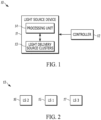
- One aspect of the present disclosure can include a system 10 ( FIG. 1 ) that applies photobiomodulation therapy (PBMT) to a tender area in a subject who has been diagnosed with fibromyalgia (FM).
- PBMT photobiomodulation therapy
- the tender area can undergo a phototherapeutic response, which can treat FM.
- a subject can be diagnosed with FM, which is characterized by chronic, widespread musculoskeletal pain and can be accompanied by fatigue, sleep, memory, cognitive difficulties, mood issues, tension headaches, migraines, temporomandibular joint (TMJ) disorder, irritable bowel syndrome, interstitial cystitis or painful bladder syndrome, anxiety, and/or depression.
- FM photobiomodulation therapy
- TMJ temporomandibular joint
- the phototherapeutic response can lead to the creation of a neural blockade to block nocioreceptive pathways (in peripheral nerves within the tender area and/or within the brain or spinal cord), which can improve the subject's sensitivity to pain.
- the PBMT of the system 10 can counteract the characteristic widespread pain of FM and, in turn, reduce the other negative symptoms associated with FM, improving the subject's overall quality of life.
- PBMT is a non-pharmacological therapy that can be used alone to treat fibromyalgia
- PBMT can also be used in combination with a pharmaceutical treatment and/or an alternative treatment (like stress management or exercise) to treat FM.
- the system 10 can include at least a light source device 11 that delivers the PBMT to the dystrophic muscle or muscle group and a controller 12 to deliver inputs to the light source device 11 related to the delivery of the PBMT via a wired connection and/or a wireless connection.
- the PBMT can be applied to the tender area by a light signal that is generated by a light source device 11.
- the light source device 11 can be shaped so that at least a portion makes contact with the subject's skin proximal to the tender area.
- the light source device 11 can be configured in any shape that facilitates contacting a portion of the skin and/or the delivery of the light signal.
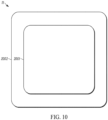
- the electronics housing 2001 can include processing unit 14 and the power source and other electronics required for operation of the light source device 11.
- the device housing 2002 can surround the electronics housing and stabilize the electronics housing 2001.
- the device housing 2002 can embody a securing mechanism to removeably secure the light source device 11 to an area of the subject's skin.
- the securing mechanism can be able to be disconnected to facilitate movement of the light source device 11.
- the light source device 11 can be portable with at least a portion being able to be moved to different areas of the subject's body.
- Light delivery source clusters 13 can be within the electronics housing 2001 and/or within the device housing 2002.
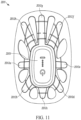
- the light source device 11 can be embodied as an insert 2011 (shown in FIG. 11 ).
- the insert can include the electronics housing 2001 and a number of flanges 2012a-h extending from the device housing. Any number of flanges 2012a-h may exist, from 0 to N, where N is an integer limited only by the size of the insert.
- the electronics housing 2001 and/or the flanges can be made of a hard material (e.g., plastic) and/or a flexible material (e.g., silicone, rubber, neoprene, or the like) and configured with a shape or flexible into a shape that conforms to the target tender area.
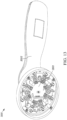
- the insert can be inserted into a device housing 2002 as shown in FIG. 12 .
- the device housing 2002 can be made of a flexible material (e.g., silicone, rubber, neoprene, or the like) and secured around an area of the subject's body that includes the tender area.
- the light source device 11 can be embodied as a probe device 3011 ( FIG. 13 ).
- the probe device 3011 can include a device housing 22 that is made of a hard material (e.g., a plastic) and include a portion configured to contact the subject's skin proximal to the tender area at a 90-degree angle to deliver the light signal.
- the electronics housing 2001 can be housed within the device housing 2002 with at least the light delivery source clusters 13 being included in an area that contacts the skin.
- Another example, although not illustrated, can include a flexible array device with a portion shaped to contact the skin at a 180-degree angle to deliver the light signal.
- the light source device 11 can include at least one light delivery source to generate the light signal at a certain wavelength, with a certain power, in an operating mode.
- the operating mode can be at least one of a pulsed operating mode, a continuous operating mode, and a super-pulsed operating mode.
- the light source device 11 can also include a processing unit 14 programmed (e.g., preprogrammed, programmed in response to an input from the controller 12 (which may be in response to an input), or the like) with a time for application of the light signal to the tender area (e.g., the time can be sufficient to stimulate the phototherapeutic response in the tender area).
- the processing unit 14 can also be programmed with the certain wavelength, the certain power, and/or the operating mode.
- the light source device 11 can also include a permanent magnet to provide a static (or constant) magnetic field, which can be used to secure the light source device 11 to the area of the subject's skin and/or to affect the light signal.
- the constant magnetic field can be from 5 mT to 1 T.
- the light source device 11 can also include a power source.
- the power source in some instances, can be an internal battery. In other instances, the power source can receive and/or store power from an external source. In some instances, the external source can be associated with the controller 12.
- the light signal can include a light wave at a single wavelength of light delivered in a certain operating mode.
- the light signal can include a combination of a plurality of individual light waves with different wavelengths of light delivered in two or more different operating modes.
- the combination of individual light waves is advantageous because the individual light waves can work constructively to create a synergistic effect, enhancing each individual wavelength's ability to penetrate the skin, allowing for a greater portion of the available light energy to reach biological targets beneath the surface of the skin.
- the plurality of individual light waves can be generated by a plurality of light delivery sources.
- the light source device 11 can include a plurality of light delivery sources, each configured to deliver light of a certain wavelength, with a given power, in a pulsed operating mode, a continuous operating mode, or a super-pulsed operating mode.
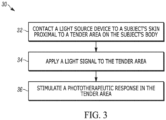
- One organization of the plurality of light delivery sources is in one or more light delivery source clusters 13 (an example of an individual cluster is shown in FIG. 2 ).
- the light source device can have any number of light delivery source clusters 13, limited only by the size of the area of the light source device 11 designated for delivery of the light signal.
- each light delivery source cluster 13 includes three types of light sources (LS1 15, LS2 16, LS3 17). However, the light delivery source clusters 13 may include a greater or fewer number of light sources. Three light sources are shown for simplicity of illustration and explanation.
- the light sources (LS1 15, LS2 16, LS3 17) each generate light waves with wavelengths within a wavelength range of 600-1100 nm (red to infrared).
- LS1 15 can be configured to generate a first portion of the light signal with a wavelength from 890-910 nm (infrared); LS2 16 can be configured to generate a second portion of the light signal with a wavelength from 600-700 nm (red); and LS3 17 can be configured to generate a third portion of the light signal with a wavelength from 810-880 nm.
- LS1 15, which is in the middle of each light delivery source cluster 13 can operate in the super-pulsed operating mode, while LS2 16 and LS3 17, which surround LS1, can each operate in the continuous operating mode or the pulsed operating mode.
- LS1 can be a super pulsed laser that creates an impulse of high intensity that emits for a billionth of a second in synchrony with LS2 (a red source, like a red LED or a red light) and/or LS3 (an infrared source, like an infrared LED or an infrared light).
- LS2 a red source, like a red LED or a red light
- LS3 an infrared source, like an infrared LED or an infrared light.
- the use of the super-pulsed laser (LS1) allows a desired peak power to be delivered for an ultrashort pulse with a minimized level of heat accumulated in the subject's skin and tender point (in other words, minimizes the photothermal effect).
- each light delivery source cluster 13 is possible. Two examples of possible configurations are set forth, but countless other possibilities exist (including with other light sources), as long as there are one or more L1, one or more L2, one or more L3.
- One possible configuration of each light delivery source cluster 13 is a 1:1:1 configuration, with L1 (the super-pulsed laser) between L2 (the red source) and L3 (the infrared source).
- Another possible configuration of each light delivery source cluster 13 is a 1:3:3 configuration with L1 surrounded by three (or more) L2 and three (or more) L3.
- L2 and L3 can alternate as they are arranged around L1 (e.g., L2 L3 L2 L3 L2 L3 surrounding L1).
- L2 and L3 can be grouped together around L1 (e.g., L2 L2 L2 L3 L3 L3).
- L1 e.g., L2 L2 L2 L3 L3 L3 L3
- other example configurations are possible in the 1:3:3 light delivery source cluster 13.
- the light delivery source clusters 13 within the same light source device 11 can be configured identically, but need not have identical configurations.
- a light source device 11 can have three light delivery source clusters, with one a 1:1:1 configuration and the other two 1:3:3 configurations.
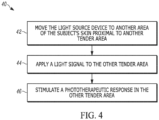
- FIGS. 3 and 4 Another aspect of the present disclosure can include methods 30, 40 ( FIGS. 3 and 4 ) for applying photobiomodulation therapy (PBMT) to a tender point in a subject who has been diagnosed with fibromyalgia.
- the methods 30, 40 can be executed by hardware - for example, at least a portion of the system 10 shown in FIG. 1 and described above.
- PBMT provides a non-pharmacological therapy to patients suffering from fibromyalgia, which can be used alone or in combination with a pharmaceutical treatment or an alternative treatment (like stress management techniques or exercise) to treat fibromyalgia.
- the methods 30 and 40 are illustrated as process flow diagrams with flowchart illustrations. For purposes of simplicity, the methods 30 and 40 shown and described as being executed serially; however, it is to be understood and appreciated that the present disclosure is not limited by the illustrated order as some steps could occur in different orders and/or concurrently with other steps shown and described herein. Moreover, not all illustrated aspects may be required to implement the methods 30 and 40. Additionally, one or more elements that implement the methods 30 and 40, such as light source device 11 and/or controller 12 of FIG. 1 , may include a non-transitory memory and one or more processors that can facilitate the configuration and generation of the light signal.
- a light source device e.g. light source device 11
- a subject's skin proximal to e.g., directly adjacent or over
- the subject can be any patient who has been diagnosed with FM.
- a light signal can be applied to the tender point.
- the light signal can be generated in at least one of a pulsed operating mode, a continuous operating mode, and a super-pulsed operating mode.
- the light signal can include one wave of a single wavelength.
- the light signal can include a plurality of individual waves with multiple wavelengths. The combination of the plurality of individual waves can work constructively to create a synergistic effect, enhancing each individual wavelength's ability to penetrate the skin, allowing for a greater portion of the available light energy to reach biological targets beneath the surface of the skin.
- the light signal is applied for a time sufficient to stimulate a phototherapeutic response in the tender point.
- a phototherapeutic response can be stimulated in the tender points.
- the phototherapeutic response can trigger a biological response leading to the creation of a neural blockade to block nocioreceptive pathways to improve a subject's sensitivity to pain, leading to an improvement in a subject's overall quality of life
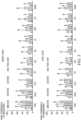
- the method 30 continues in FIG. 4 , which shows a method 40 that occurs after moving the light source device.
- the light source e.g. light source device 11
- the light source can be moved to another area of the subject's skin proximal to another tender area.
- a light signal can be applied to the other tender area.
- a phototherapeutic response can be stimulated in the other tender area.
- PBMT photobiomodulation therapy
- FM fibromyalgia
- EXT exercise training
- the volunteers were patients from the three rheumatological centers with a FM diagnosis for an average of 5 ⁇ 9 years and evaluated for medical history, physical examination, and rheumatologic screening.
- the demographics of the volunteers are shown in Table 1.
- Table 2 - Parameters for PBMT Set 1 Set 2 Age (years) 35 ⁇ 3 40 ⁇ 2 Height (m) 1.58 ⁇ 1 1.59 ⁇ 1 IMC (kg / m 2 ) 26 ⁇ 5 27 ⁇ 4 Race Other or Biracial 48 41 White 32 39 Education Elementary School 14 9 High School 66 71 Employment Employed 52 50 Unemployed 28 20 Income (R$) ⁇ 10,000 9 4 10,000 - 30,000 67 75 30,000 - 50,000 4 2
- the inclusion criteria were women ⁇ 35 years old, 5 years from FM diagnosis, optimized drug management, functionally and cognitive independence, full availability for study protocol, and no contraindication to exercise or/and phototherapy.
- the exclusion criteria were patients with contraindication to exercise or/and phototherapy, missing more than three treatment sessions, psychiatric disorders, missing teeth or use of dentures, history of face trauma or currently undergoing orthodontic intervention, and presence of any disorder that was confused with FM. Patients were followed through their regular health checkups and drug therapy was continued until the end of the study. The eligible participants were instructed not to change their lifestyles or pharmacological therapies during the study.
- the follow-up intervention was 10 weeks, when patients underwent two treatment sessions for phototherapy, exercise, phototherapy/exercise, and placebo procedure per week, respectively (experimental Set 2).
- Phototherapy was applied 30 min prior to each exercise session or placebo procedure, and treatment sessions were carried out on Tuesdays and Thursdays.
- the outcome parameters were evaluated at baseline (prior group randomization) and 48 h after the last day of intervention. Similar intervention route was implemented to Set 1 design; however, only a phototherapy and/or an exercise session was conducted to analyze the impact on pain. These patients were evaluated at baseline and after 24 h.
- the multiple light sources Pain Away/PainCure TM nine-diode cluster device (Multi Radiance Medical ® , Solon, OH, USA) was applied to 10 tender points, which were reported for pain in all patients (occipital, cervical (near the C7), trapezius, supraspinatus, second costochondral joint, lateral epicondyle, gluteal/sacrum, greater trochanter, and medial knee border).
- the temporomandibular joint (TMJ, bilaterally) was also irradiated. Each point was irradiated for 300 s, and a 39.3-J total energy was delivered. Phototherapy device properties are shown in Table 2.
- the EXT consisted of stretching and aerobic exercise, twice a week, over 10 weeks. Active static stretching was carried out to induce mild discomfort in the following muscle groups: biceps, trapezius, latissimus dorsi, pectoralis, paraspinal, hamstrings, and quadriceps. Each stretching exercise was performed for three times of 30 s with a 30 s rest between each stretching, which shows to be a common rest interval for stretching exercises. Aerobic training was performed 30 min per session on motor drive movement (model LX-150) without inclination. The load exercise was 75% of age-predicted maximum heart rate (220-age (years)). Aerobic training was carried out on the bases of findings of improving the general symptoms, pain, and quality of life in women with fibromyalgia. Each aerobic exercise session was started immediately after the TMJ exercises.
- General parameters are age, body weight, body mass index, race, educational level, employment, in-come, marital status, and tender point count.
- FIQ was a self-administered instrument to measure anxiety, depression, stiffness, and fatigue.
- RDC was carried out to determine sleeping disturbance, night awakenings, trouble sleeping, and mouth opening pattern.
- the pain threshold was analyzed with a digital algometer Instrutherm (DD-200 model).
- the rubber tip of the device (measuring 1 cm 2 ) was placed in contact with the skin on specific FM tender points and TMA joints. A gradual pressure was applied until the patient reported feeling pain, and the displayed values were then recorded. The processes were executed only once to each point and a 30-s interval was given among the readings.
- visual analog scale (VAS) consisting of a 10-cm rule was applied.
- FIG. 5 The experimental results for Set 1 are shown in FIG. 5 .
- the pain threshold level was improved in the PHO group, with a mean difference ( ⁇ %) in all tender points compared to CON group.
- FIG. 6 also illustrates that there was no acute overlap effect of phototherapy and exercise on pain threshold.
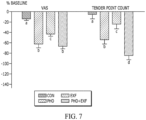
- VAS was used to determine the pain perception in patients undergoing different interventions in Set 2 ( FIG. 8 ).
- a large effect of phototherapy and exercise was observed, considering the post-treatment pain threshold change.
- Both PHO and PHO + EXT groups showed significantly greater pain reduction compared to CON and EXT groups, respectively.
- Another finding in FIG. 8 refers to the importance of the combined therapy to reduce the number of tender points.
- both PHO and EXT groups differed significantly from the CON group, a situation that was intensified in the combined therapy group.
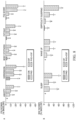
- FIG. 9 summarizes overall clinical outcomes that were analyzed in Set 2.
- the combined therapies proved to be more effective, in which all the FIQ scores were significantly improved in the group PHO + EXT at the end of follow-up. Except for the "stiffness" variable in the EXT group, all values of ⁇ % were significantly higher in groups PHO, EXT, and PHO + EXT when compared to the CON group.
- the beneficial role of combined therapy ( ⁇ %) for anxiety, depression, and fatigue was significantly different in the PHO + EXT group compared to the other groups.
- no significant differences were observed after pharmacological treatment on sleep quality markers and range of mouth opening (TMJ dysfunction marker associated to FM) in the CON group.
Landscapes
- Health & Medical Sciences (AREA)
- Engineering & Computer Science (AREA)
- Biomedical Technology (AREA)
- Life Sciences & Earth Sciences (AREA)
- Public Health (AREA)
- Veterinary Medicine (AREA)
- Nuclear Medicine, Radiotherapy & Molecular Imaging (AREA)
- Radiology & Medical Imaging (AREA)
- Animal Behavior & Ethology (AREA)
- General Health & Medical Sciences (AREA)
- Pathology (AREA)
- Hospice & Palliative Care (AREA)
- Neurosurgery (AREA)
- Biophysics (AREA)
- Child & Adolescent Psychology (AREA)
- Developmental Disabilities (AREA)
- Psychiatry (AREA)
- Psychology (AREA)
- Social Psychology (AREA)
- Chemical & Material Sciences (AREA)
- Medicinal Chemistry (AREA)
- Pain & Pain Management (AREA)
- Radiation-Therapy Devices (AREA)
Claims (7)
- Lichtquellengerät (11), das zum Berühren der Haut eines Subjekts oberhalb eines empfindlichen Bereichs im Körper des Subjekts konfiguriert ist, das Folgendes umfasst:
eine Vielzahl von Clustern (13) von Lichtzuführungsquellen, die in einem Ring angeordnet sind, wobei jedes der Cluster von Lichtzufiihrungsquellen Folgendes umfasst:einen supergepulsten Infrarotlaser (15), der zum Erzeugen eines ersten Teils eines Lichtsignals mit einer Wellenlänge von 890 bis 910 nm konfiguriert ist;eine Vielzahl von roten Leuchtdioden (LED) (16), die zum Erzeugen eines zweiten Teils eines Lichtsignals mit einer Wellenlänge von 600 bis 700 nm in einem gepulsten Betriebsmodus oder einem kontinuierlichen Betriebsmodus konfiguriert sind; undeine Vielzahl von Infrarot-LED (17), die zum Erzeugen eines dritten Teils eines Lichtsignals mit einer Wellenlänge von 810 bis 880 nm in einem gepulsten Betriebsmodus oder einem kontinuierlichen Betriebsmodus konfiguriert sind,wobei der supergepulste Infrarot-Laser von der Vielzahl von roten LED und der Vielzahl von Infrarot-LED umgeben ist; undeinen Permanentmagneten, der ein konstantes Magnetfeld von 5 mT bis 1 T bereitstellt;eine Verarbeitungseinheit (14), die mit einer Zeit für die Applikation des Lichtsignals auf den empfindlichen Punkt vorprogrammiert ist; undeine Batterie. - Lichtquellengerät nach Anspruch 1, wobei der supergepulste Laser einen supergepulsten Laser umfasst, der einen Impuls von hoher Intensität erzeugt, der für eine Milliardstel Sekunde synchron mit der Vielzahl von anderen LED emittiert.
- Lichtquellengerät nach Anspruch 1, die ferner einen Befestigungsmechanismus zum abnehmbaren Befestigen der Sonde an dem Bereich der Haut des Subjekts umfasst.
- Lichtquellengerät nach Anspruch 1, wobei der Permanentmagnet ein konstantes Magnetfeld bereitstellt.
- Lichtquellengerät nach Anspruch 1, wobei jeder der Vielzahl von Clustern einen Permanentmagneten umfasst, der ein konstantes Magnetfeld bereitstellt.
- Lichtquellengerät nach Anspruch 5, wobei jeder der Dauermagnete das konstante Magnetfeld von 5 mT bis 1 T bereitstellt.
- Lichtquellengerät nach Anspruch 5, wobei das Gerät zum Berühren der Haut eines Subjekts oberhalb eines empfindlichen Bereichs im Körper des Subjekts konfiguriert ist, um Licht in einem Ring um den empfindlichen Bereich herum zuzuführen.
Priority Applications (3)
| Application Number | Priority Date | Filing Date | Title |
|---|---|---|---|
| SM20240393T SMT202400393T1 (it) | 2017-04-13 | 2018-04-13 | Dispositivo con sorgenti luminose per terapia di fotobiomodulazione per ridurre gli effetti della fibromialgia |
| RS20241092A RS66021B1 (sr) | 2017-04-13 | 2018-04-13 | Uređaj izvora svetlosti za fotobiomodulacionu terapiju za smanjenje efekata fibromijalgije |
| HRP20241356TT HRP20241356T1 (hr) | 2017-04-13 | 2018-04-13 | Uređaj izvora svjetlosti za fotobiomodulacijsku terapiju za smanjenje efekata fibromialgije |
Applications Claiming Priority (2)
| Application Number | Priority Date | Filing Date | Title |
|---|---|---|---|
| US201762485107P | 2017-04-13 | 2017-04-13 | |
| PCT/US2018/027523 WO2018191640A1 (en) | 2017-04-13 | 2018-04-13 | Photobiomodulation therapy to reduce the effects of fibromyalgia |
Publications (4)
| Publication Number | Publication Date |
|---|---|
| EP3609575A1 EP3609575A1 (de) | 2020-02-19 |
| EP3609575A4 EP3609575A4 (de) | 2020-08-19 |
| EP3609575B1 true EP3609575B1 (de) | 2024-07-31 |
| EP3609575C0 EP3609575C0 (de) | 2024-07-31 |
Family
ID=63792855
Family Applications (1)
| Application Number | Title | Priority Date | Filing Date |
|---|---|---|---|
| EP18784680.3A Active EP3609575B1 (de) | 2017-04-13 | 2018-04-13 | Fotobiomodulationstherapiegerät zur verringerung der wirkungen von fibromyalgie |
Country Status (12)
| Country | Link |
|---|---|
| US (2) | US10744337B2 (de) |
| EP (1) | EP3609575B1 (de) |
| AU (1) | AU2018251907B2 (de) |
| BR (1) | BR112019021502B1 (de) |
| CA (1) | CA3059989C (de) |
| ES (1) | ES2984842T3 (de) |
| HR (1) | HRP20241356T1 (de) |
| HU (1) | HUE069084T2 (de) |
| PL (1) | PL3609575T3 (de) |
| RS (1) | RS66021B1 (de) |
| SM (1) | SMT202400393T1 (de) |
| WO (1) | WO2018191640A1 (de) |
Families Citing this family (20)
| Publication number | Priority date | Publication date | Assignee | Title |
|---|---|---|---|---|
| US20180001107A1 (en) | 2016-07-01 | 2018-01-04 | Btl Holdings Limited | Aesthetic method of biological structure treatment by magnetic field |
| US11247039B2 (en) | 2016-05-03 | 2022-02-15 | Btl Healthcare Technologies A.S. | Device including RF source of energy and vacuum system |
| US11534619B2 (en) | 2016-05-10 | 2022-12-27 | Btl Medical Solutions A.S. | Aesthetic method of biological structure treatment by magnetic field |
| US10583287B2 (en) | 2016-05-23 | 2020-03-10 | Btl Medical Technologies S.R.O. | Systems and methods for tissue treatment |
| US10556122B1 (en) | 2016-07-01 | 2020-02-11 | Btl Medical Technologies S.R.O. | Aesthetic method of biological structure treatment by magnetic field |
| US11141219B1 (en) | 2016-08-16 | 2021-10-12 | BTL Healthcare Technologies, a.s. | Self-operating belt |
| WO2018191637A1 (en) * | 2017-04-13 | 2018-10-18 | Multi Radiance Medical | Photobiomodulation therapy to delay dystrophy progression |
| WO2020106439A1 (en) * | 2018-11-21 | 2020-05-28 | Multi Radiance Medical | Photobiomodulation therapy to improve functional mobility of stroke survivors |
| AU2020270557C1 (en) | 2019-04-11 | 2022-01-20 | Btl Medical Solutions A.S. | Methods and devices for aesthetic treatment of biological structures by radiofrequency and magnetic energy |
| US12156689B2 (en) | 2019-04-11 | 2024-12-03 | Btl Medical Solutions A.S. | Methods and devices for aesthetic treatment of biological structures by radiofrequency and magnetic energy |
| WO2021163558A1 (en) * | 2020-02-13 | 2021-08-19 | Multi Radiance Medical | System and method for decreasing effects of lack of muscle use |
| US11077314B1 (en) * | 2020-04-29 | 2021-08-03 | Multi Radiance Medical | System and method for treating patients requiring mechanical ventilation |
| WO2021224678A1 (en) | 2020-05-04 | 2021-11-11 | Btl Medical Technologies S.R.O. | Device and method for unattended treatment of a patient |
| US11878167B2 (en) | 2020-05-04 | 2024-01-23 | Btl Healthcare Technologies A.S. | Device and method for unattended treatment of a patient |
| CN116133722A (zh) * | 2020-07-21 | 2023-05-16 | 帝人制药株式会社 | 光线照射装置 |
| US20220176143A1 (en) * | 2020-12-08 | 2022-06-09 | Remedee Labs | Module and device for treating symptoms of fibromyalgia using emitting electromagnetic waves |
| CN113144431A (zh) * | 2021-04-13 | 2021-07-23 | 中山旦邦光电科技有限公司 | 一种颈部光疗设备 |
| WO2023062563A1 (en) | 2021-10-13 | 2023-04-20 | Btl Medical Solutions A.S. | Devices for aesthetic treatment of biological structures by radiofrequency and magnetic energy |
| US11896816B2 (en) | 2021-11-03 | 2024-02-13 | Btl Healthcare Technologies A.S. | Device and method for unattended treatment of a patient |
| WO2025160383A1 (en) * | 2024-01-25 | 2025-07-31 | Case Western Reserve University | Treating pain with photobiomodulation applied transcutaneously |
Family Cites Families (35)
| Publication number | Priority date | Publication date | Assignee | Title |
|---|---|---|---|---|
| US4646743A (en) * | 1984-05-09 | 1987-03-03 | Parris Danny M | Therapy radiation apparatus for veterinary medicine |
| US7494488B2 (en) | 1998-05-28 | 2009-02-24 | Pearl Technology Holdings, Llc | Facial tissue strengthening and tightening device and methods |
| US6096066A (en) * | 1998-09-11 | 2000-08-01 | Light Sciences Limited Partnership | Conformal patch for administering light therapy to subcutaneous tumors |
| US6602275B1 (en) * | 2000-09-18 | 2003-08-05 | Jana Sullivan | Device and method for therapeutic treatment of living organisms |
| WO2002026194A2 (en) | 2000-09-28 | 2002-04-04 | Non-Invasive Monitoring Systems, Inc. | External addition of pulses to fluid channels of body to release or suppress endothelial mediators and to determine effectiveness of such intervention |
| US20040158300A1 (en) * | 2001-06-26 | 2004-08-12 | Allan Gardiner | Multiple wavelength illuminator having multiple clocked sources |
| US7081128B2 (en) * | 2002-03-04 | 2006-07-25 | Hart Barry M | Phototherapy device and method of use |
| US20050177093A1 (en) * | 2002-03-04 | 2005-08-11 | Barry Hart M. | Joint / tissue inflammation therapy and monitoring device |
| AU2003245573A1 (en) * | 2002-06-19 | 2004-01-06 | Palomar Medical Technologies, Inc. | Method and apparatus for treatment of cutaneous and subcutaneous conditions |
| US7001413B2 (en) * | 2002-07-03 | 2006-02-21 | Life Support Technologies, Inc. | Methods and apparatus for light therapy |
| US8118032B2 (en) | 2003-02-14 | 2012-02-21 | American Environmental Systems, Inc. | Rapid cryo-heating devices and their applications |
| US7125416B2 (en) * | 2004-02-17 | 2006-10-24 | Sylmark Holdings Limited | Light therapy device |
| US20050278003A1 (en) * | 2004-05-12 | 2005-12-15 | Harold Feldman | Electroluminescent light therapy devices |
| WO2006020602A1 (en) * | 2004-08-09 | 2006-02-23 | Lumiport, Llc | Skin treatment phototherapy device |
| US7374569B2 (en) * | 2004-09-02 | 2008-05-20 | Dynatronics, Corporation | Dynamically distributing power of a light beam for use in light therapy |
| EP1827570A2 (de) * | 2004-11-30 | 2007-09-05 | Pain Medication Technologies, Inc. | Verfahren und gerät für die therapeutische behandlung von entzündung und schmerzen mit statischen niederflussdichte-elektromagnetischen feldern |
| US20060206171A1 (en) * | 2005-03-14 | 2006-09-14 | Michael Gertner | Devices, methods and kits for radiation treatment via a target body surface |
| US20060247741A1 (en) * | 2005-04-28 | 2006-11-02 | Fu-Yu Hsu | Phototherapy apparatus with the function of change-over to different wavelength |
| US20060287696A1 (en) * | 2005-06-21 | 2006-12-21 | Wright David W | Heat and light therapy treatment device and method |
| US7559945B2 (en) * | 2006-01-13 | 2009-07-14 | Clarimedix Inc. | Multi-spectral photon therapy device and methods of use |
| US20070208396A1 (en) * | 2006-03-03 | 2007-09-06 | Gary Whatcott | Systems and methods for providing a dynamic light pad |
| GB0620436D0 (en) * | 2006-10-14 | 2006-11-22 | Cyden Ltd | Apparatus and method for stimulation of cartilage |
| US20080140164A1 (en) * | 2006-12-06 | 2008-06-12 | Clrs Technology Corporation | Light emitting therapeutic devices and methods |
| IL184218A0 (en) * | 2007-06-26 | 2007-10-31 | Zidkiyahu Simenhaus | Photo-magnetic radiation device |
| MX2010009762A (es) * | 2008-03-07 | 2010-09-28 | Koninkl Philips Electronics Nv | Dispositivo de foto-depilacion. |
| WO2009113986A1 (en) * | 2008-03-11 | 2009-09-17 | Shaser, Inc. | Enhancing optical radiation systems used in dermatologic treatments |
| US20090254155A1 (en) * | 2008-04-04 | 2009-10-08 | Medical Quant Usa, Inc. Dba Multi Radiance Medical | Therapeutic emitter retaining device |
| KR20110118646A (ko) * | 2009-01-05 | 2011-10-31 | 플렉스트로닉스, 인크 | 유기 발광 다이오드 광선치료 조명 시스템 |
| GB2470455B (en) * | 2009-04-13 | 2013-07-17 | 1072 Technology Ltd | Phototherapy apparatus |
| US20130344454A1 (en) * | 2010-11-10 | 2013-12-26 | Günther Nath | Optical Irradiation Appliance for Dermatology and Beauty Care |
| US20160192988A1 (en) * | 2012-05-14 | 2016-07-07 | K-Laser, Llc | Multiple Laser Source System for Portable Laser Therapy Apparatus |
| US20160296764A1 (en) * | 2014-07-01 | 2016-10-13 | Gary John Bellinger | Non-invasive and non-ablative soft tissue laser therapy |
| CA2907416A1 (en) * | 2013-03-15 | 2014-09-18 | Gary W. Jones | Multispectral light source |
| US20150134032A1 (en) * | 2013-11-14 | 2015-05-14 | Mary T. Chicchi | Method and Device for Application of Photobiomodulation Treatment |
| US20160235983A1 (en) * | 2015-02-06 | 2016-08-18 | NooThera Technologies LLC | Systems and methods for directed energy cranial therapeutics |
-
2018
- 2018-04-13 RS RS20241092A patent/RS66021B1/sr unknown
- 2018-04-13 EP EP18784680.3A patent/EP3609575B1/de active Active
- 2018-04-13 AU AU2018251907A patent/AU2018251907B2/en active Active
- 2018-04-13 ES ES18784680T patent/ES2984842T3/es active Active
- 2018-04-13 HR HRP20241356TT patent/HRP20241356T1/hr unknown
- 2018-04-13 SM SM20240393T patent/SMT202400393T1/it unknown
- 2018-04-13 BR BR112019021502-6A patent/BR112019021502B1/pt active IP Right Grant
- 2018-04-13 PL PL18784680.3T patent/PL3609575T3/pl unknown
- 2018-04-13 HU HUE18784680A patent/HUE069084T2/hu unknown
- 2018-04-13 WO PCT/US2018/027523 patent/WO2018191640A1/en not_active Ceased
- 2018-04-13 CA CA3059989A patent/CA3059989C/en active Active
- 2018-04-13 US US16/325,825 patent/US10744337B2/en active Active
-
2020
- 2020-08-13 US US16/993,117 patent/US11590355B2/en active Active
Also Published As
| Publication number | Publication date |
|---|---|
| SMT202400393T1 (it) | 2024-11-15 |
| HUE069084T2 (hu) | 2025-02-28 |
| PL3609575T3 (pl) | 2024-11-18 |
| CA3059989A1 (en) | 2018-10-18 |
| AU2018251907A1 (en) | 2019-11-07 |
| ES2984842T3 (es) | 2024-10-31 |
| WO2018191640A1 (en) | 2018-10-18 |
| US11590355B2 (en) | 2023-02-28 |
| EP3609575A4 (de) | 2020-08-19 |
| US20200406051A1 (en) | 2020-12-31 |
| US10744337B2 (en) | 2020-08-18 |
| BR112019021502A2 (pt) | 2020-05-12 |
| EP3609575A1 (de) | 2020-02-19 |
| CA3059989C (en) | 2023-10-17 |
| EP3609575C0 (de) | 2024-07-31 |
| RS66021B1 (sr) | 2024-11-29 |
| AU2018251907B2 (en) | 2020-05-14 |
| BR112019021502B1 (pt) | 2022-12-20 |
| HRP20241356T1 (hr) | 2024-12-20 |
| US20200086134A1 (en) | 2020-03-19 |
Similar Documents
| Publication | Publication Date | Title |
|---|---|---|
| US11590355B2 (en) | Photobiomodulation therapy to reduce the effects of fibromyalgia | |
| Auvichayapat et al. | Migraine prophylaxis by anodal transcranial direct current stimulation, a randomized, placebo-controlled trial | |
| Coskun Benlidayi | The effectiveness and safety of electrotherapy in the management of fibromyalgia | |
| Jay et al. | The effectiveness of physical therapy in the treatment of chronic daily headaches | |
| Lee et al. | Peripheral nerve stimulation for the treatment of primary headache | |
| Biagioni et al. | Non-invasive neuromodulation therapies for Parkinson’s disease | |
| Palizgir et al. | Comparison of therapeutic effects of 940 nm diode laser acupuncture with transcutaneous electrical nerve stimulation in the myofascial pain dysfunction syndrome: a comparative randomized clinical trial | |
| Wu et al. | Effect of Low‐Level Laser Stimulation on EEG | |
| US20180169434A1 (en) | Treatment of Neurodegenerative Diseases Using Light Therapy | |
| Kim et al. | Effects of repetitive peripheral magnetic stimulation on pain, disability, and quality of life in chronic low back pain patients | |
| RU2139110C1 (ru) | Способ комплексного лечения генерализованных болевых синдромов неорганического генеза | |
| CA3081264C (en) | Photobiomodulation therapy to ameliorate multiple sclerosis | |
| Benlidayi | Physical Modalities for the Treatment of Pain in Patients with Fibromyalgia | |
| TWI826150B (zh) | 可編程rTMS裝置、rTMS裝置和可編程系統、電刺激裝置 | |
| Elberson et al. | Significant pain reduction in refractory post-mastectomy pain syndrome with closed-loop spinal cord stimulation: illustrative cases | |
| Marcelino et al. | Long-term clinical efficacy of segmented and non-segmented leads for subthalamic deep brain stimulation in Parkinson’s disease: the Berlin experience | |
| Nguyen et al. | Transcranial direct current stimulation in spinal cordinjured patients with neuropathic pain. | |
| Mortensen | BIOADAPTIVE IMPULSE THERAPY | |
| Shivappa et al. | From light to healing: photobiomodulation therapy in medical disciplines | |
| Bahrami et al. | The effect of photobiomodulation therapy on neurosensory recovery of infra-alveolar nerve following iatrogenic trauma: A literature review | |
| Matthews et al. | Bioelectronic therapies for chronic pain | |
| Cunningham et al. | The influence of sham repetitive transcranial magnetic stimulation on commonly collected TMS metrics in patients with chronic stroke | |
| Migdadi et al. | Non-Invasive Neuromodulation Therapies for | |
| Keller-Kaplan | Vagus nerve stimulation in the treatment of treatment resistant depression | |
| Kaur et al. | Effect of Iontophoresis with Dexamethasone in Pain |
Legal Events
| Date | Code | Title | Description |
|---|---|---|---|
| REG | Reference to a national code |
Ref country code: HR Ref legal event code: TUEP Ref document number: P20241356T Country of ref document: HR |
|
| STAA | Information on the status of an ep patent application or granted ep patent |
Free format text: STATUS: THE INTERNATIONAL PUBLICATION HAS BEEN MADE |
|
| PUAI | Public reference made under article 153(3) epc to a published international application that has entered the european phase |
Free format text: ORIGINAL CODE: 0009012 |
|
| STAA | Information on the status of an ep patent application or granted ep patent |
Free format text: STATUS: REQUEST FOR EXAMINATION WAS MADE |
|
| 17P | Request for examination filed |
Effective date: 20191112 |
|
| AK | Designated contracting states |
Kind code of ref document: A1 Designated state(s): AL AT BE BG CH CY CZ DE DK EE ES FI FR GB GR HR HU IE IS IT LI LT LU LV MC MK MT NL NO PL PT RO RS SE SI SK SM TR |
|
| AX | Request for extension of the european patent |
Extension state: BA ME |
|
| DAV | Request for validation of the european patent (deleted) | ||
| DAX | Request for extension of the european patent (deleted) | ||
| A4 | Supplementary search report drawn up and despatched |
Effective date: 20200717 |
|
| RIC1 | Information provided on ipc code assigned before grant |
Ipc: A61N 5/067 20060101AFI20200713BHEP Ipc: A61N 5/06 20060101ALI20200713BHEP |
|
| P01 | Opt-out of the competence of the unified patent court (upc) registered |
Effective date: 20230531 |
|
| GRAP | Despatch of communication of intention to grant a patent |
Free format text: ORIGINAL CODE: EPIDOSNIGR1 |
|
| STAA | Information on the status of an ep patent application or granted ep patent |
Free format text: STATUS: GRANT OF PATENT IS INTENDED |
|
| INTG | Intention to grant announced |
Effective date: 20240226 |
|
| GRAS | Grant fee paid |
Free format text: ORIGINAL CODE: EPIDOSNIGR3 |
|
| GRAA | (expected) grant |
Free format text: ORIGINAL CODE: 0009210 |
|
| STAA | Information on the status of an ep patent application or granted ep patent |
Free format text: STATUS: THE PATENT HAS BEEN GRANTED |
|
| AK | Designated contracting states |
Kind code of ref document: B1 Designated state(s): AL AT BE BG CH CY CZ DE DK EE ES FI FR GB GR HR HU IE IS IT LI LT LU LV MC MK MT NL NO PL PT RO RS SE SI SK SM TR |
|
| REG | Reference to a national code |
Ref country code: CH Ref legal event code: EP Ref country code: GB Ref legal event code: FG4D |
|
| REG | Reference to a national code |
Ref country code: DE Ref legal event code: R096 Ref document number: 602018072461 Country of ref document: DE |
|
| REG | Reference to a national code |
Ref country code: IE Ref legal event code: FG4D |
|
| U01 | Request for unitary effect filed |
Effective date: 20240902 |
|
| P04 | Withdrawal of opt-out of the competence of the unified patent court (upc) registered |
Free format text: CASE NUMBER: APP_51060/2024 Effective date: 20240909 |
|
| U07 | Unitary effect registered |
Designated state(s): AT BE BG DE DK EE FI FR IT LT LU LV MT NL PT RO SE SI Effective date: 20240912 |
|
| REG | Reference to a national code |
Ref country code: SK Ref legal event code: T3 Ref document number: E 44847 Country of ref document: SK |
|
| REG | Reference to a national code |
Ref country code: ES Ref legal event code: FG2A Ref document number: 2984842 Country of ref document: ES Kind code of ref document: T3 Effective date: 20241031 |
|
| REG | Reference to a national code |
Ref country code: GR Ref legal event code: EP Ref document number: 20240402309 Country of ref document: GR Effective date: 20241111 |
|
| REG | Reference to a national code |
Ref country code: HR Ref legal event code: T1PR Ref document number: P20241356 Country of ref document: HR |
|
| P05 | Withdrawal of opt-out of the competence of the unified patent court (upc) changed |
Free format text: CASE NUMBER: APP_51060/2024 Effective date: 20240912 |
|
| REG | Reference to a national code |
Ref country code: HU Ref legal event code: AG4A Ref document number: E069084 Country of ref document: HU |
|
| PGFP | Annual fee paid to national office [announced via postgrant information from national office to epo] |
Ref country code: MC Payment date: 20250320 Year of fee payment: 8 |
|
| PGFP | Annual fee paid to national office [announced via postgrant information from national office to epo] |
Ref country code: HR Payment date: 20250319 Year of fee payment: 8 |
|
| PGFP | Annual fee paid to national office [announced via postgrant information from national office to epo] |
Ref country code: SM Payment date: 20250324 Year of fee payment: 8 |
|
| PGFP | Annual fee paid to national office [announced via postgrant information from national office to epo] |
Ref country code: PL Payment date: 20250321 Year of fee payment: 8 Ref country code: CZ Payment date: 20250324 Year of fee payment: 8 |
|
| REG | Reference to a national code |
Ref country code: HR Ref legal event code: ODRP Ref document number: P20241356 Country of ref document: HR Payment date: 20250319 Year of fee payment: 8 |
|
| PGFP | Annual fee paid to national office [announced via postgrant information from national office to epo] |
Ref country code: SK Payment date: 20250318 Year of fee payment: 8 |
|
| PGFP | Annual fee paid to national office [announced via postgrant information from national office to epo] |
Ref country code: RS Payment date: 20250319 Year of fee payment: 8 |
|
| PGFP | Annual fee paid to national office [announced via postgrant information from national office to epo] |
Ref country code: TR Payment date: 20250327 Year of fee payment: 8 |
|
| U20 | Renewal fee for the european patent with unitary effect paid |
Year of fee payment: 8 Effective date: 20250428 |
|
| PLBE | No opposition filed within time limit |
Free format text: ORIGINAL CODE: 0009261 |
|
| STAA | Information on the status of an ep patent application or granted ep patent |
Free format text: STATUS: NO OPPOSITION FILED WITHIN TIME LIMIT |
|
| 26N | No opposition filed |
Effective date: 20250501 |
|
| PGFP | Annual fee paid to national office [announced via postgrant information from national office to epo] |
Ref country code: ES Payment date: 20250505 Year of fee payment: 8 Ref country code: GB Payment date: 20250428 Year of fee payment: 8 |
|
| PGFP | Annual fee paid to national office [announced via postgrant information from national office to epo] |
Ref country code: IS Payment date: 20250414 Year of fee payment: 8 Ref country code: HU Payment date: 20250326 Year of fee payment: 8 Ref country code: NO Payment date: 20250429 Year of fee payment: 8 |
|
| PGFP | Annual fee paid to national office [announced via postgrant information from national office to epo] |
Ref country code: AL Payment date: 20250408 Year of fee payment: 8 |
|
| PGFP | Annual fee paid to national office [announced via postgrant information from national office to epo] |
Ref country code: GR Payment date: 20250430 Year of fee payment: 8 |
|
| PGFP | Annual fee paid to national office [announced via postgrant information from national office to epo] |
Ref country code: CH Payment date: 20250501 Year of fee payment: 8 |
|
| PGFP | Annual fee paid to national office [announced via postgrant information from national office to epo] |
Ref country code: IE Payment date: 20250428 Year of fee payment: 8 |
|
| PGFP | Annual fee paid to national office [announced via postgrant information from national office to epo] |
Ref country code: MK Payment date: 20250319 Year of fee payment: 8 |