EP3608847B1 - Vorrichtung und verfahren zur klassifizierung mehrerer klassen durch automatisches lernen - Google Patents
Vorrichtung und verfahren zur klassifizierung mehrerer klassen durch automatisches lernen Download PDFInfo
- Publication number
- EP3608847B1 EP3608847B1 EP19190273.3A EP19190273A EP3608847B1 EP 3608847 B1 EP3608847 B1 EP 3608847B1 EP 19190273 A EP19190273 A EP 19190273A EP 3608847 B1 EP3608847 B1 EP 3608847B1
- Authority
- EP
- European Patent Office
- Prior art keywords
- samples
- classes
- sequence
- sequences
- class
- Prior art date
- Legal status (The legal status is an assumption and is not a legal conclusion. Google has not performed a legal analysis and makes no representation as to the accuracy of the status listed.)
- Active
Links
Images




Classifications
-
- G—PHYSICS
- G06—COMPUTING OR CALCULATING; COUNTING
- G06N—COMPUTING ARRANGEMENTS BASED ON SPECIFIC COMPUTATIONAL MODELS
- G06N20/00—Machine learning
- G06N20/20—Ensemble learning
-
- G—PHYSICS
- G06—COMPUTING OR CALCULATING; COUNTING
- G06F—ELECTRIC DIGITAL DATA PROCESSING
- G06F17/00—Digital computing or data processing equipment or methods, specially adapted for specific functions
- G06F17/10—Complex mathematical operations
- G06F17/16—Matrix or vector computation, e.g. matrix-matrix or matrix-vector multiplication, matrix factorization
-
- G—PHYSICS
- G06—COMPUTING OR CALCULATING; COUNTING
- G06F—ELECTRIC DIGITAL DATA PROCESSING
- G06F18/00—Pattern recognition
- G06F18/20—Analysing
- G06F18/24—Classification techniques
-
- G—PHYSICS
- G06—COMPUTING OR CALCULATING; COUNTING
- G06N—COMPUTING ARRANGEMENTS BASED ON SPECIFIC COMPUTATIONAL MODELS
- G06N20/00—Machine learning
-
- G—PHYSICS
- G06—COMPUTING OR CALCULATING; COUNTING
- G06N—COMPUTING ARRANGEMENTS BASED ON SPECIFIC COMPUTATIONAL MODELS
- G06N5/00—Computing arrangements using knowledge-based models
- G06N5/01—Dynamic search techniques; Heuristics; Dynamic trees; Branch-and-bound
Definitions
- the present invention relates to the field of machine learning and, more particularly, to multi-class classification.
- Machine learning is an algorithmic tool that allows, among other things, the construction of a classifier from a database. For machine learning classification to work correctly and for the classifier to perform well, particularly for minority classes to be correctly learned, it is beneficial for the database to be as balanced as possible.
- rebalancing techniques are implemented by oversampling or, more commonly, by undersampling the data.
- the object of the present invention is to propose a method and a device for multi-class classification of an application by machine learning remedying the aforementioned drawbacks, in particular by providing a device suitable for implementing a data balancing technique by sub-sampling without loss of information or deletion of potentially relevant data while minimizing the calculation steps and the data storage space.
- the device according to the invention thus implements a sub-sampling technique making it possible to standardize the number of samples per class by applying it to distinctive sequences and not to all the samples. This makes it possible to simplify the sub-sampling technique without loss of information or deletion of potentially relevant data while minimizing the calculation steps and the storage of the data and consequently, makes it possible to construct a very efficient multi-class classifier of the application.
- the predetermined fraction of samples includes samples at the boundaries of the sequence as well as certain intermediate samples.
- the intermediate samples are regularly spaced in said sequence by selecting one sample from a predetermined number of samples.
- sequences are associated with a subset of majority classes among said set of predetermined classes.
- a majority class is a class whose number of samples is greater than the average value of samples of the different classes.
- This provides a first criterion that is simple to implement to define a majority class according to the present invention.
- a majority class is a class whose cumulative number of samples represents a predetermined percentage of the total number of samples of the different classes.
- the microprocessor is further configured to select the sequences to be subsampled from said set of sequences according to the predetermined selection criteria.
- This embodiment allows to refine the selection of sequences to be sampled in order to further improve the accuracy of the classifier.
- the predetermined selection criteria comprise the selection of sequences having a similarity measure greater than a predetermined threshold.
- the similarity measure of a sequence corresponds to the average of the similarity measures determined on each of the predictors of the sequence.
- the predetermined selection criteria comprise selecting sequences having a duration greater than a predetermined time period.
- This other embodiment allows for a fairly good selection of sequences to be sampled while further simplifying the calculation steps.
- the microprocessor is configured to determine the user's carbon footprint based on said classification of the mode of transport.
- the predictive analysis device is a mobile phone.
- the invention also relates to a computer program comprising code instructions for implementing the method according to the above method when executed by a microprocessor.
- the concept behind the invention is to locally apply a subsampling technique to specific sequences of data.
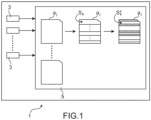
- FIG. 1 schematically illustrates a multi-class classification device for an application by machine learning, according to one embodiment of the invention.
- An example of an unclaimed application relates to the automatic classification of different operating modes of a machine or engine according to a set of classes.
- this may relate to the testing and classification of different operating modes of a new piece of equipment (for example, a new engine on a test bench) by subjecting it to operating conditions that may be very variable, unpredictable, and may include extreme conditions.
- the application may consist of identifying anomalies according to the different classes of operating modes of the machine.
- the present invention relates to the classification of a mode of transport of the user of a multi-class classification device being integrated into a mobile phone type device.
- Yet another example of an unclaimed application concerns the classification of a user's state, for example, stress status, based on a person's activity.
- the predictive analysis device can be integrated into a wristband or smartwatch worn by the user.
- the multi-class classification device 1 is suitable for acquiring signals, balancing the data from these signals and constructing a classifier from this balanced data by machine learning.
- the multi-class classification device 1 comprises sensors 3 and a microprocessor 5.
- the sensors 3 are configured to measure at successive times physical quantities (for example, acceleration, speed, etc.) specific to the application.
- the sensors 3 may comprise accelerometers, temperature probes, pressure probes, barometers, electrical conductivity sensors, heart rate and electrodermal activity probes of the user, etc.
- the microprocessor 5 is configured to acquire from the sensors 3 the successive measurements of the physical quantities and to calculate from these physical quantities a determined number of characteristics or statistical indicators (mean, variance, etc.) called “predictors” thus forming, at each acquisition instant, a vector comprising a determined number of predictors.
- each time vector is called a “sample” or simply a point.
- microprocessor 5 is configured to construct continuous sequences a j of samples (i.e. sequences of vectors) where each sequence a j of samples is associated with a continuous period of time.
- the microprocessor 5 is configured to decompose each sequence a j of samples into a set of sub-sequences called "sequences" S k each corresponding to a specific class among a set of predetermined classes.
- the set of classes obviously depends on the application considered. This set can correspond to the different modes of transport or to the different operating modes of a piece of equipment or to the different stress states of a user, etc.
- the microprocessor 5 is adapted to rebalance this distribution before applying machine learning.
- the microprocessor 5 is configured to sub-sample sequences associated with classes from among the set of predetermined classes by retaining for each selected sequence a predetermined fraction of samples representative of the sequence thus forming balanced sequences. S k ⁇ . Note that it is advantageous to subsample only sequences associated with majority classes. However, one can also subsample all sequences systematically. Subsampling sequences allows one to form classes associated with balanced data.
- microprocessor 5 is configured to implement a machine learning algorithm to construct a classifier F from the balanced samples.
- Machine learning is an algorithmic method known to those skilled in the art, which makes it possible to automate the construction of a prediction classifier F from a training data set formed by balanced data.
- the sensors 3 may include an accelerometer, a magnetometer, inertial sensors, a GPS, a speedometer, a barometer, etc. measuring for example the acceleration, speed and position of the user.
- predictors P u are constructed by applying, for example, statistical criteria of position (mean, median, etc.) or dispersion (variance, standard deviation, etc.) to the raw data (for example, acceleration, speed, altitude, etc.) from the sensors.
- the different predictors P u resulting from the measurements correspond to indicators and each set of p predictors P u acquired at a given time t i forms a time sample x i .
- a sample x i is a vector of size p associated with a time t i .
- each acquisition a j corresponds to a recording over a continuous time period ⁇ T j corresponding to the period between t 1 and t m I .
- Each acquisition a j is thus a sequence of samples associated with a corresponding continuous time period ⁇ T j .
- each subpart D jk is a sequence S k forming a matrix of dimension l ( k ) ⁇ p corresponding to the data of the acquisition a j for which the class is constant and is worth C k .
- the principle of the invention consists in applying the sub-sampling to each sequence S k and not globally on all the acquisitions a j . This makes it possible to ensure that after the sub-sampling step, the database D contains samples of each sub-part D jk corresponding to each sequence S k thus avoiding losing any relevant information.
- no hypothesis on the nature of the problem is necessary allowing any type of classification: binary or multi-class.
- the sub-sampling according to the method of the invention is independent of the type of classifier which is subsequently constructed.
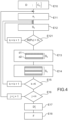
- FIG. 2 is a flowchart schematically illustrating a method for multi-class classification of an application by machine learning, according to a first embodiment of the invention.
- Step E0 is an initialization step which consists of defining the database D (i.e. matrix M ⁇ p ) and the classes C k on which the subsampling is applied.
- the subsampling is applied to the set of predetermined classes C associated with the application.
- the subsampling is applied to a subset of classes and more particularly to sequences associated with a subset of majority classes among the set of predetermined classes.
- a majority class can be automatically identified according to different ways or criteria.
- a majority class C k is a class whose number l ( k ) of samples is greater than the average value M of samples from the set of predetermined C classes.
- a majority class C k is a class whose cumulative number of samples represents a predetermined percentage (e.g., 50%) of the total number of samples.
- step E1 we have a current acquisition a j and at step E2, we have a current sequence S k associated with a current majority class C k identified according to one of the examples above.
- steps E3 and E4 a predetermined fraction of samples x i belonging to each current sequence S k is kept.
- the predetermined fraction of samples comprises elements at the limits of the sequence as well as certain intermediate elements.
- step E3 for a current sequence S k of total duration d k , the samples are kept at the beginning and at the end of this sequence, over a predetermined period d 1 typically less than 60 seconds (0 ⁇ d 1 ⁇ 60).
- step E4 intermediate samples are kept on the remaining part of the current sequence S k of duration d k - 2 d 1 .
- Step E5 is a test to check whether all the sequences S k associated with the majority classes of the current acquisition a j have not yet been analyzed. If so, we select the next sequence and loop on step E2 and otherwise, we move on to the next step E6.
- Step E6 is a second test to check whether all acquisitions a j have not yet been considered. If so, we select the next sequence and loop on step E1 and otherwise, we go to step E7.
- step E7 we obtain a sub-sampled D * database with more homogeneous classes.
- a classifier F is constructed from the balanced data of the database D * obtained in the previous step.
- the construction is carried out in a known manner by machine learning.
- the construction of the classifier F consists of adding an additional column to the database matrix. This last column makes it possible to correctly predict or classify the output class which in this example corresponds to the class of the mode of transport.
- FIG. 3 is a graphical representation of an example of classification of a mode of transport, according to an embodiment of the invention.
- This application includes seven transport mode classes M1-M7: bicycle M1; plane M2; train M3; road (car, bus, etc.) M4; running M5; immobility M6; and walking M7.
- the database of this application comes from the sensors of a mobile phone.
- the initial database D contains 149491 samples distributed between the different modes of transport M1-M7 according to the graph G1.
- the latter is a bar chart where each mode of transport (i.e. each class) is represented by a rectangle whose height represents the corresponding number of samples.
- the M3 train and M4 road transport modes are the majority classes whose cumulative number of samples is greater than 50% of the total number of samples.
- a measure of imbalance I as the ratio between the standard deviation and the mean of the vector consulted by the number of instances (i.e. samples) of each class, then we note a strong reduction in this imbalance I , going from 0.71 to 0.49.
- the microprocessor 5 is further configured to determine the user's carbon footprint based on the classification of the mode of transport. Indeed, by having a classifier that correctly predicts the mode of transport, it is possible to estimate a person's carbon footprint with great accuracy.
- Figs. 4-8 illustrate other embodiments in which the selection of the sequences to be subsampled is carried out according to predetermined criteria.
- Fig. 4 is a flowchart schematically illustrating a method for multi-class classification of an application by machine learning, according to a second embodiment of the invention.
- the organizational chart of the Fig. 4 is identical to that of the Fig. 2 except that when processing a current sequence, the subsampling is applied according to a similarity measure.
- the principle of this second embodiment is the fact that it is preferable to do the subsampling on sequences whose data are similar to each other so as not to lose relevant information.
- the similarity measure of a sequence corresponds to the average of the similarity measures on each of the predictors of the sequence.
- M ( P u ) be a similarity measure of a given predictor P u of size l ( k ) where the predictor P u is a (column) vector belonging to a given sequence S k of dimension l ( k ) ⁇ p .
- Subsampling is performed only on sequences whose similarity measure M ( S k ) is greater than a certain threshold s 1 .
- the value of the threshold s 1 can be chosen according to the type of application and can be a number greater than or equal to 0.1.
- step E10 concerns the definition of the database D of dimension M ⁇ p and of the classes C k on which the subsampling is applied.
- Subsampling is considered to be applied to sequences associated with majority classes.
- step E11 we have a current acquisition a j and at step E12, we have a current sequence S k associated with a current majority class C k .
- steps E13 and E14 a predetermined fraction of samples x i belonging to the current sequence S k selected in the previous step is kept.
- step E13 the samples at the beginning and end of the selected sequence are kept, over a predetermined period d 1 .
- step E14 intermediate samples are kept on the remaining part of the selected current sequence S k . For example, 1 sample out of 2 or 1 sample out of 3 is kept and the other samples of the sequence are deleted.
- Step E15 is a second test to check whether all the sequences S k associated with the majority classes of the current acquisition a j have not yet been analyzed. If so, we select the next sequence and loop to step E12 and otherwise, we go to step E16.
- Step E16 is a third test to check whether all acquisitions a j have not yet been considered. If so, the next sequence is selected and step E11 is looped, and if not, step E17 is moved on.
- step E17 we obtain a new database D 1 ⁇ sub-sampled and comprising more homogeneous classes.
- step E18 a classifier F is constructed from the balanced data of the database D 1 ⁇ obtained in the previous step.
- Fig. 5 is a graphical representation of a classification of a mode of transport, according to the mode of implementation of the Fig. 4 .
- the graph G1 still represents an initial database D comprising 149491 samples distributed between the different modes of transport M1-M7.
- the classes are more balanced and the reduction in the number of instances is approximately 19%.
- the imbalance measure I goes from 0.71 to 0.53.
- FIG. 6 is a flowchart schematically illustrating a method for multi-class classification of an application by machine learning, according to a third embodiment of the invention.
- the organizational chart of the Fig. 6 is identical to that of the Fig. 4 except that when processing a current sequence, the subsampling is based this time on the duration of the sequence and no longer on the similarity measure.
- the principle of this third embodiment is the existence in most cases of an increasing relationship between the similarity and the duration of a sequence.
- Fig. 7 is a graph representing the similarity of sequences as a function of their durations, according to the example of the Fig. 5 .
- the data from the example of the Fig. 5 are used to represent the relationship between the similarity measure of sequences and their durations in the form of a scatter plot.
- the similarity measure is represented on the y-axis while the duration of each sequence is represented on the x-axis. This representation clearly highlights the increasing correlation between the similarity measure and the number of samples. This means that the longer a sequence is, the more likely it is that the similarity measure of this sequence is higher.
- Stage E20 of the Fig. 6 concerns the definition of the database D of dimension M ⁇ p and of the classes C k on which the subsampling is applied.
- Subsampling is considered to be applied to sequences associated with majority classes.
- the flowchart has three nested loops except that the third loop is a test to check the duration of each sequence.
- step E21 we have a current acquisition a j and at step E22, we have a current sequence S k associated with a current majority class C k .
- steps E23 and E24 a predetermined fraction of samples x i belonging to the current sequence S k selected in the previous step is kept like steps E13 and E14 of the Fig. 4 .
- Step E25 is a second test to check whether all the sequences S k associated with the majority classes of the current acquisition a j have been analyzed. If so, we move on to step E26 and if not, we select the next sequence and loop on step E22.
- Step E26 is a third test to check whether all acquisitions a j have been considered. If so, we move on to step E27 and if not, we select the next sequence and loop to step E21.
- step E27 we obtain a new database D 2 ⁇ sub-sampled and comprising more homogeneous classes.
- step E28 a classifier is built from the balanced data in the database D 2 ⁇ obtained in the previous step.
- Fig. 8 is a graphical representation of a classification of a mode of transport, according to the mode of implementation of the Fig. 6 .
- the graph G1 still represents an initial database D comprising 149491 samples distributed between the different modes of transport M1-M7.
- the classes are more balanced and the reduction in the number of instances is approximately 26%.
- the imbalance measure I goes from 0.71 to 0.49.
Landscapes
- Engineering & Computer Science (AREA)
- Theoretical Computer Science (AREA)
- Physics & Mathematics (AREA)
- General Physics & Mathematics (AREA)
- Data Mining & Analysis (AREA)
- Software Systems (AREA)
- Mathematical Physics (AREA)
- General Engineering & Computer Science (AREA)
- Computing Systems (AREA)
- Evolutionary Computation (AREA)
- Computer Vision & Pattern Recognition (AREA)
- Artificial Intelligence (AREA)
- Medical Informatics (AREA)
- Mathematical Analysis (AREA)
- Computational Mathematics (AREA)
- Mathematical Optimization (AREA)
- Pure & Applied Mathematics (AREA)
- Algebra (AREA)
- Databases & Information Systems (AREA)
- Life Sciences & Earth Sciences (AREA)
- Bioinformatics & Cheminformatics (AREA)
- Bioinformatics & Computational Biology (AREA)
- Evolutionary Biology (AREA)
- Information Retrieval, Db Structures And Fs Structures Therefor (AREA)
- Testing Or Calibration Of Command Recording Devices (AREA)
Claims (13)
- Mehrklassen-Klassifizierungsvorrichtung, vom Typ Mobiltelefon, einer Anwendung zur Klassifizierung eines Transportmittels durch maschinelles Lernen, dadurch gekennzeichnet, dass sie Folgendes umfasst:- Sensoren (3), die so eingerichtet sind, dass sie zu aufeinanderfolgenden Zeitpunkten physikalische Größen messen, die für diese Anwendung spezifisch sind,- einen Mikroprozessor (5), der zu Folgendem konfiguriert ist:- Erfassen der besagten aufeinanderfolgenden Messungen von den Sensoren (3), um Prognosefaktoren aus physikalischen Größen der Messungen zu berechnen, wobei die Prognosefaktoren auf eine Position oder einen Mobilitätszustand hinweisen,- Aufbau kontinuierlicher Folgen (aj) von Proben, wobei jede Probe ein Vektor ist, der aus einer vorbestimmten Anzahl von Prädiktoren besteht,- Zerlegen jeder Folge (aj) von Proben in eine Gruppe von Sequenzen (Sk), die jeweils einer spezifischen Klasse aus einer Gruppe von vorbestimmten Klassen entsprechen, wobei die vorbestimmte Gruppe von Klassen verschiedenen Transportmitteln entspricht,- Unterstichprobennahme der mit Klassen verbundenen Sequenzen aus der vorbestimmten Gruppe von Klassen, wobei für jede ausgewählte Sequenz ein vorbestimmter Anteil von Proben der Sequenz beibehalten wird, wodurch Klassen gebildet werden, die mit ausgeglichenen Proben verbunden sind, und- Aufbau eines Klassifikators (F), der die Klassifizierung des Transportmittels anhand der durch maschinelles Lernen ausgeglichenen Stichproben definiert.
- Vorrichtung nach Anspruch 1, dadurch gekennzeichnet, dass der vorbestimmte Probenanteil Proben an den Endpunkten der Sequenz sowie bestimmte Zwischenproben umfasst.
- Vorrichtung nach Anspruch 1 oder 2, dadurch gekennzeichnet, dass die Zwischenproben in dieser Sequenz durch Auswahl einer Probe aus einer vorbestimmten Anzahl von Proben in regelmäßigen Abständen angeordnet sind.
- Vorrichtung nach einem der vorhergehenden Ansprüche, dadurch gekennzeichnet, dass es sich bei den unterstichprobenartigen Sequenzen um Sequenzen handelt, die einer Untergruppe von Mehrheitsklassen aus der vorbestimmten Gruppe von Klassen zugeordnet sind.
- Vorrichtung nach Anspruch 4, dadurch gekennzeichnet, dass eine Mehrheitsklasse eine Klasse ist, deren Anzahl von Stichproben größer ist als der Stichprobenmittelwert der verschiedenen Klassen.
- Vorrichtung nach Anspruch 4, dadurch gekennzeichnet, dass eine Mehrheitsklasse eine Klasse ist, deren kumulative Anzahl von Proben einen vorbestimmten Prozentsatz der gesamten Anzahl von Proben der verschiedenen Klassen darstellt.
- Vorrichtung nach einem der vorhergehenden Ansprüche, dadurch gekennzeichnet, dass der Mikroprozessor (5) ferner so eingerichtet ist, dass er die zu unterprobenden Sequenzen aus der Gruppe von Sequenzen in Abhängigkeit von den vorbestimmten Auswahlkriterien auswählt.
- Vorrichtung nach Anspruch 7, dadurch gekennzeichnet, dass die vorbestimmten Auswahlkriterien die Auswahl der Sequenzen umfassen, die eine Ähnlichkeitsmessung aufweisen, die über einem vorbestimmten Schwellenwert liegt, wobei jede Ähnlichkeitsmessung eines Prädiktors einer Sequenz auf der Berechnung einer Autokovarianz des Prädiktors basiert.
- Vorrichtung nach Anspruch 8, dadurch gekennzeichnet, dass die Ähnlichkeitsmessung einer Sequenz dem Mittelwert der Ähnlichkeitsmessungen entspricht, die an jedem der Prognosefaktoren der Sequenz bestimmt wurden.
- Vorrichtung nach Anspruch 7, dadurch gekennzeichnet, dass die vorbestimmten Auswahlkriterien die Auswahl der Sequenzen umfassen, die eine längere Dauer als eine vorbestimmte Zeitdauer aufweisen.
- Vorrichtung nach einem der vorhergehenden Ansprüche, dadurch gekennzeichnet, dass der Mikroprozessor so eingerichtet ist, dass er den Kohlenstoff-Fußabdruck eines Benutzers der Vorrichtung in Abhängigkeit von der Klassifizierung des Transportmittels bestimmt.
- Mehrklassen-Klassifizierungsverfahren, das von einer Vorrichtung des Typs Mobiltelefon einer Anwendung bezüglich einer Klassifizierung eines Transportmittels durch maschinelles Lernen umgesetzt wird, dadurch gekennzeichnet, dass es folgende Schritte umfasst:- Erfassen durch Sensoren (3) der genannten Vorrichtung von aufeinanderfolgenden zeitlichen Messungen von physikalischen Größen, die für die genannte Anwendung spezifisch sind,- Berechnen von Prädiktoren aus diesen physikalischen Größen, wobei die Prädiktoren eine Position oder einen Mobilitätszustand angeben und dass die folgenden Schritte von einem Mikroprozessor der Vorrichtung ausführbar sind:- Aufbau aus diesen aufeinanderfolgenden Messungen von Folgen von Proben, wobei jede Probe ein Zeitvektor ist, der aus einer vorbestimmten Anzahl von Prädiktoren gebildet wird,- Zerlegen jeder Folge von Proben in eine Gruppe von Sequenzen, die jeweils einer spezifischen Klasse aus einer Gruppe von vorbestimmten Klassen entsprechen, wobei die vorbestimmte Gruppe von Klassen verschiedenen Transportmitteln entspricht,- Unterstichprobennahme der mit Klassen verbundenen Sequenzen aus der vorbestimmten Gruppe von Klassen, wobei für jede ausgewählte Sequenz ein vorbestimmter Anteil von Proben der Sequenz beibehalten wird, wodurch Klassen gebildet werden, die mit ausgeglichenen Proben verbunden sind, und- Aufbau eines Klassifikators, der die Klassifizierung des Transportmittels aus diesen ausgewogenen Proben durch maschinelles Lernen definiert.
- Computerprogramm mit Codeanweisungen für die Durchführung des Verfahrens nach Anspruch 12, wenn es von einem Mikroprozessor einer Vorrichtung des Typs Mobiltelefon ausgeführt wird.
Applications Claiming Priority (1)
| Application Number | Priority Date | Filing Date | Title |
|---|---|---|---|
| FR1857347A FR3084957B1 (fr) | 2018-08-07 | 2018-08-07 | Dispositif et procede de classification multi-classes par apprentissage automatique |
Publications (2)
| Publication Number | Publication Date |
|---|---|
| EP3608847A1 EP3608847A1 (de) | 2020-02-12 |
| EP3608847B1 true EP3608847B1 (de) | 2025-04-23 |
Family
ID=63579494
Family Applications (1)
| Application Number | Title | Priority Date | Filing Date |
|---|---|---|---|
| EP19190273.3A Active EP3608847B1 (de) | 2018-08-07 | 2019-08-06 | Vorrichtung und verfahren zur klassifizierung mehrerer klassen durch automatisches lernen |
Country Status (3)
| Country | Link |
|---|---|
| US (1) | US11763206B2 (de) |
| EP (1) | EP3608847B1 (de) |
| FR (1) | FR3084957B1 (de) |
Families Citing this family (7)
| Publication number | Priority date | Publication date | Assignee | Title |
|---|---|---|---|---|
| WO2020244771A1 (en) | 2019-06-06 | 2020-12-10 | NEC Laboratories Europe GmbH | Diversity-aware weighted majority vote classifier for imbalanced datasets |
| US11969266B2 (en) * | 2020-02-14 | 2024-04-30 | Northeastern University | Embedded networked deep learning for implanted medical devices |
| CN111539451B (zh) * | 2020-03-26 | 2023-08-15 | 平安科技(深圳)有限公司 | 样本数据优化方法、装置、设备及存储介质 |
| US11789983B2 (en) * | 2020-09-14 | 2023-10-17 | Accenture Global Solutions Limited | Enhanced data driven intelligent cloud advisor system |
| US11797516B2 (en) | 2021-05-12 | 2023-10-24 | International Business Machines Corporation | Dataset balancing via quality-controlled sample generation |
| CN114613514A (zh) * | 2022-03-14 | 2022-06-10 | 哈尔滨理工大学 | 一种基于svm和混合采样算法的乳腺癌生存预测系统 |
| CN118347516B (zh) * | 2024-06-17 | 2024-08-27 | 浙江口碑网络技术有限公司 | 一种运动状态识别方法、装置、存储介质及电子设备 |
Family Cites Families (8)
| Publication number | Priority date | Publication date | Assignee | Title |
|---|---|---|---|---|
| US10072932B2 (en) * | 2015-05-07 | 2018-09-11 | Truemotion, Inc. | Motion detection system for transportation mode analysis |
| US11210939B2 (en) * | 2016-12-02 | 2021-12-28 | Verizon Connect Development Limited | System and method for determining a vehicle classification from GPS tracks |
| EP3352432A1 (de) * | 2017-01-20 | 2018-07-25 | Sentiance NV | Verfahren und system zur klassifizierung einer aktivität eines benutzers |
| US11418915B2 (en) * | 2017-02-17 | 2022-08-16 | DataSpark, PTE. LTD. | Trajectory analysis with mode of transportation analysis |
| US9900747B1 (en) * | 2017-05-16 | 2018-02-20 | Cambridge Mobile Telematics, Inc. | Using telematics data to identify a type of a trip |
| CN107659717B (zh) * | 2017-09-19 | 2020-11-10 | 北京小米移动软件有限公司 | 状态检测方法、装置和存储介质 |
| US20190095787A1 (en) * | 2017-09-27 | 2019-03-28 | Hsiang Tsung Kung | Sparse coding based classification |
| US20200133254A1 (en) * | 2018-05-07 | 2020-04-30 | Strong Force Iot Portfolio 2016, Llc | Methods and systems for data collection, learning, and streaming of machine signals for part identification and operating characteristics determination using the industrial internet of things |
-
2018
- 2018-08-07 FR FR1857347A patent/FR3084957B1/fr active Active
-
2019
- 2019-08-06 EP EP19190273.3A patent/EP3608847B1/de active Active
- 2019-08-06 US US16/533,002 patent/US11763206B2/en active Active
Also Published As
| Publication number | Publication date |
|---|---|
| US20200050964A1 (en) | 2020-02-13 |
| FR3084957B1 (fr) | 2021-12-03 |
| FR3084957A1 (fr) | 2020-02-14 |
| EP3608847A1 (de) | 2020-02-12 |
| US11763206B2 (en) | 2023-09-19 |
Similar Documents
| Publication | Publication Date | Title |
|---|---|---|
| EP3608847B1 (de) | Vorrichtung und verfahren zur klassifizierung mehrerer klassen durch automatisches lernen | |
| EP3039497B1 (de) | Überwachung eines flugzeugmotors zur vorausplanung von wartungsoperationen | |
| CA2746537C (fr) | Standardisation de donnees utilisees pour la surveillance d'un moteur d'aeronef | |
| EP2997343B1 (de) | Verfahren und system zur vibrationsanalyse eines motors | |
| EP3089888B1 (de) | Verfahren, vorrichtung und system zur messung des integritätszustandes einer batterie in einem elektro- oder hybridfahrzeug während des betriebs und verfahren zur erstellung eines modells für solch eine messung | |
| EP2368161B1 (de) | Detektion von anomalien in einem flugzeugtriebwerk | |
| EP3846087A1 (de) | Verfahren und system zur auswahl eines lernmodells innerhalb einer vielzahl von lernmodellen | |
| FR2935498A1 (fr) | Procede d'identification d'un objet dans une archive video. | |
| Hirahara et al. | Cloud-free sea-surface-temperature image reconstruction from anomaly inpainting network | |
| WO2023247127A1 (fr) | Methode de validation des predictions d'un modele supervise d'analyse quantitative multivariee de donnees spectrales | |
| Uroz et al. | Using deep learning for glacier thickness estimation at a regional scale | |
| WO2020048770A1 (fr) | Prédiction d'un paramètre de recalage cartographique par apprentissage profond | |
| WO2023135379A1 (fr) | Detection d'anomalies de mesure par filtre de kalman appliquee a la navigation | |
| EP3655724B1 (de) | Verfahren zur schätzung der bewegung eines sich in einem magnetfeld bewegenden objekts | |
| EP3754353A1 (de) | Verfahren zur bestimmung eines robusten schätzers der kapazität einer elektrischen batterie | |
| EP3773161A1 (de) | Rechnervorrichtung zur erfassung von herzrhythmusstörungen | |
| EP1341094B1 (de) | Verfahren zur Ermittlung eines räumlichen Qualitätsindexes für Regionaldaten | |
| EP1788536A1 (de) | Verfahren zur Bewertung des Aufmerksamkeitszustands eines Fahrzeugfahrers | |
| FR2876470A1 (fr) | Procede de controle d'affichage utilisant un equipement portable a capteur d'images | |
| EP4082122B1 (de) | Verfahren und vorrichtungen zur detektierung von einem interferenzsignal | |
| Bowman | Abnormal orbital event detection, characterization, and prediction | |
| FR2949157A1 (fr) | Procede d'approximation de variables meteorologiques | |
| FR3112407A1 (fr) | Procédé statistique non supervisé de détection multivariée de courbes atypiques | |
| Ghosh et al. | Temporal Causal Discovery and Generative Prediction of Vehicular CO $ _2 $ emission | |
| EP3340065A1 (de) | Verfahren zur bestimmung des zustands eines systems, verfahren zur bestimmung eines optimalen projektionsverfahrens und vorrichtung zur umsetzung dieser verfahren |
Legal Events
| Date | Code | Title | Description |
|---|---|---|---|
| PUAI | Public reference made under article 153(3) epc to a published international application that has entered the european phase |
Free format text: ORIGINAL CODE: 0009012 |
|
| STAA | Information on the status of an ep patent application or granted ep patent |
Free format text: STATUS: REQUEST FOR EXAMINATION WAS MADE |
|
| 17P | Request for examination filed |
Effective date: 20190806 |
|
| AK | Designated contracting states |
Kind code of ref document: A1 Designated state(s): AL AT BE BG CH CY CZ DE DK EE ES FI FR GB GR HR HU IE IS IT LI LT LU LV MC MK MT NL NO PL PT RO RS SE SI SK SM TR |
|
| AX | Request for extension of the european patent |
Extension state: BA ME |
|
| STAA | Information on the status of an ep patent application or granted ep patent |
Free format text: STATUS: EXAMINATION IS IN PROGRESS |
|
| 17Q | First examination report despatched |
Effective date: 20210708 |
|
| RAP3 | Party data changed (applicant data changed or rights of an application transferred) |
Owner name: COMMISSARIAT A L'ENERGIE ATOMIQUE ET AUX ENERGIESALTERNATIVES |
|
| GRAP | Despatch of communication of intention to grant a patent |
Free format text: ORIGINAL CODE: EPIDOSNIGR1 |
|
| STAA | Information on the status of an ep patent application or granted ep patent |
Free format text: STATUS: GRANT OF PATENT IS INTENDED |
|
| RIC1 | Information provided on ipc code assigned before grant |
Ipc: G06N 5/00 20060101ALN20241106BHEP Ipc: G06N 20/20 20190101AFI20241106BHEP |
|
| INTG | Intention to grant announced |
Effective date: 20241115 |
|
| GRAS | Grant fee paid |
Free format text: ORIGINAL CODE: EPIDOSNIGR3 |
|
| GRAA | (expected) grant |
Free format text: ORIGINAL CODE: 0009210 |
|
| STAA | Information on the status of an ep patent application or granted ep patent |
Free format text: STATUS: THE PATENT HAS BEEN GRANTED |
|
| AK | Designated contracting states |
Kind code of ref document: B1 Designated state(s): AL AT BE BG CH CY CZ DE DK EE ES FI FR GB GR HR HU IE IS IT LI LT LU LV MC MK MT NL NO PL PT RO RS SE SI SK SM TR |
|
| REG | Reference to a national code |
Ref country code: GB Ref legal event code: FG4D Free format text: NOT ENGLISH |
|
| REG | Reference to a national code |
Ref country code: CH Ref legal event code: EP |
|
| REG | Reference to a national code |
Ref country code: DE Ref legal event code: R096 Ref document number: 602019068929 Country of ref document: DE |
|
| REG | Reference to a national code |
Ref country code: IE Ref legal event code: FG4D Free format text: LANGUAGE OF EP DOCUMENT: FRENCH |
|
| REG | Reference to a national code |
Ref country code: NL Ref legal event code: MP Effective date: 20250423 |
|
| PG25 | Lapsed in a contracting state [announced via postgrant information from national office to epo] |
Ref country code: NL Free format text: LAPSE BECAUSE OF FAILURE TO SUBMIT A TRANSLATION OF THE DESCRIPTION OR TO PAY THE FEE WITHIN THE PRESCRIBED TIME-LIMIT Effective date: 20250423 |
|
| REG | Reference to a national code |
Ref country code: AT Ref legal event code: MK05 Ref document number: 1788502 Country of ref document: AT Kind code of ref document: T Effective date: 20250423 |
|
| PG25 | Lapsed in a contracting state [announced via postgrant information from national office to epo] |
Ref country code: PT Free format text: LAPSE BECAUSE OF FAILURE TO SUBMIT A TRANSLATION OF THE DESCRIPTION OR TO PAY THE FEE WITHIN THE PRESCRIBED TIME-LIMIT Effective date: 20250825 Ref country code: FI Free format text: LAPSE BECAUSE OF FAILURE TO SUBMIT A TRANSLATION OF THE DESCRIPTION OR TO PAY THE FEE WITHIN THE PRESCRIBED TIME-LIMIT Effective date: 20250423 Ref country code: ES Free format text: LAPSE BECAUSE OF FAILURE TO SUBMIT A TRANSLATION OF THE DESCRIPTION OR TO PAY THE FEE WITHIN THE PRESCRIBED TIME-LIMIT Effective date: 20250423 |
|
| REG | Reference to a national code |
Ref country code: LT Ref legal event code: MG9D |
|
| PG25 | Lapsed in a contracting state [announced via postgrant information from national office to epo] |
Ref country code: GR Free format text: LAPSE BECAUSE OF FAILURE TO SUBMIT A TRANSLATION OF THE DESCRIPTION OR TO PAY THE FEE WITHIN THE PRESCRIBED TIME-LIMIT Effective date: 20250724 Ref country code: NO Free format text: LAPSE BECAUSE OF FAILURE TO SUBMIT A TRANSLATION OF THE DESCRIPTION OR TO PAY THE FEE WITHIN THE PRESCRIBED TIME-LIMIT Effective date: 20250723 |
|
| PG25 | Lapsed in a contracting state [announced via postgrant information from national office to epo] |
Ref country code: PL Free format text: LAPSE BECAUSE OF FAILURE TO SUBMIT A TRANSLATION OF THE DESCRIPTION OR TO PAY THE FEE WITHIN THE PRESCRIBED TIME-LIMIT Effective date: 20250423 |
|
| PG25 | Lapsed in a contracting state [announced via postgrant information from national office to epo] |
Ref country code: BG Free format text: LAPSE BECAUSE OF FAILURE TO SUBMIT A TRANSLATION OF THE DESCRIPTION OR TO PAY THE FEE WITHIN THE PRESCRIBED TIME-LIMIT Effective date: 20250423 |
|
| PG25 | Lapsed in a contracting state [announced via postgrant information from national office to epo] |
Ref country code: HR Free format text: LAPSE BECAUSE OF FAILURE TO SUBMIT A TRANSLATION OF THE DESCRIPTION OR TO PAY THE FEE WITHIN THE PRESCRIBED TIME-LIMIT Effective date: 20250423 |
|
| PG25 | Lapsed in a contracting state [announced via postgrant information from national office to epo] |
Ref country code: AT Free format text: LAPSE BECAUSE OF FAILURE TO SUBMIT A TRANSLATION OF THE DESCRIPTION OR TO PAY THE FEE WITHIN THE PRESCRIBED TIME-LIMIT Effective date: 20250423 |
|
| PGFP | Annual fee paid to national office [announced via postgrant information from national office to epo] |
Ref country code: FR Payment date: 20250827 Year of fee payment: 7 |
|
| PG25 | Lapsed in a contracting state [announced via postgrant information from national office to epo] |
Ref country code: RS Free format text: LAPSE BECAUSE OF FAILURE TO SUBMIT A TRANSLATION OF THE DESCRIPTION OR TO PAY THE FEE WITHIN THE PRESCRIBED TIME-LIMIT Effective date: 20250723 |
|
| PG25 | Lapsed in a contracting state [announced via postgrant information from national office to epo] |
Ref country code: IS Free format text: LAPSE BECAUSE OF FAILURE TO SUBMIT A TRANSLATION OF THE DESCRIPTION OR TO PAY THE FEE WITHIN THE PRESCRIBED TIME-LIMIT Effective date: 20250823 |
|
| PG25 | Lapsed in a contracting state [announced via postgrant information from national office to epo] |
Ref country code: LV Free format text: LAPSE BECAUSE OF FAILURE TO SUBMIT A TRANSLATION OF THE DESCRIPTION OR TO PAY THE FEE WITHIN THE PRESCRIBED TIME-LIMIT Effective date: 20250423 |
|
| PG25 | Lapsed in a contracting state [announced via postgrant information from national office to epo] |
Ref country code: DK Free format text: LAPSE BECAUSE OF FAILURE TO SUBMIT A TRANSLATION OF THE DESCRIPTION OR TO PAY THE FEE WITHIN THE PRESCRIBED TIME-LIMIT Effective date: 20250423 Ref country code: SM Free format text: LAPSE BECAUSE OF FAILURE TO SUBMIT A TRANSLATION OF THE DESCRIPTION OR TO PAY THE FEE WITHIN THE PRESCRIBED TIME-LIMIT Effective date: 20250423 |
|
| PG25 | Lapsed in a contracting state [announced via postgrant information from national office to epo] |
Ref country code: CZ Free format text: LAPSE BECAUSE OF FAILURE TO SUBMIT A TRANSLATION OF THE DESCRIPTION OR TO PAY THE FEE WITHIN THE PRESCRIBED TIME-LIMIT Effective date: 20250423 |
|
| PG25 | Lapsed in a contracting state [announced via postgrant information from national office to epo] |
Ref country code: EE Free format text: LAPSE BECAUSE OF FAILURE TO SUBMIT A TRANSLATION OF THE DESCRIPTION OR TO PAY THE FEE WITHIN THE PRESCRIBED TIME-LIMIT Effective date: 20250423 |
|
| REG | Reference to a national code |
Ref country code: DE Ref legal event code: R097 Ref document number: 602019068929 Country of ref document: DE |
|
| PG25 | Lapsed in a contracting state [announced via postgrant information from national office to epo] |
Ref country code: RO Free format text: LAPSE BECAUSE OF FAILURE TO SUBMIT A TRANSLATION OF THE DESCRIPTION OR TO PAY THE FEE WITHIN THE PRESCRIBED TIME-LIMIT Effective date: 20250423 Ref country code: SK Free format text: LAPSE BECAUSE OF FAILURE TO SUBMIT A TRANSLATION OF THE DESCRIPTION OR TO PAY THE FEE WITHIN THE PRESCRIBED TIME-LIMIT Effective date: 20250423 |
|
| PG25 | Lapsed in a contracting state [announced via postgrant information from national office to epo] |
Ref country code: IT Free format text: LAPSE BECAUSE OF FAILURE TO SUBMIT A TRANSLATION OF THE DESCRIPTION OR TO PAY THE FEE WITHIN THE PRESCRIBED TIME-LIMIT Effective date: 20250423 |
|
| PLBE | No opposition filed within time limit |
Free format text: ORIGINAL CODE: 0009261 |
|
| STAA | Information on the status of an ep patent application or granted ep patent |
Free format text: STATUS: NO OPPOSITION FILED WITHIN TIME LIMIT |
|
| REG | Reference to a national code |
Ref country code: DE Ref legal event code: R119 Ref document number: 602019068929 Country of ref document: DE |
|
| REG | Reference to a national code |
Ref country code: CH Ref legal event code: L10 Free format text: ST27 STATUS EVENT CODE: U-0-0-L10-L00 (AS PROVIDED BY THE NATIONAL OFFICE) Effective date: 20260304 |
|
| REG | Reference to a national code |
Ref country code: CH Ref legal event code: H13 Free format text: ST27 STATUS EVENT CODE: U-0-0-H10-H13 (AS PROVIDED BY THE NATIONAL OFFICE) Effective date: 20260324 |
|
| PG25 | Lapsed in a contracting state [announced via postgrant information from national office to epo] |
Ref country code: MC Free format text: LAPSE BECAUSE OF FAILURE TO SUBMIT A TRANSLATION OF THE DESCRIPTION OR TO PAY THE FEE WITHIN THE PRESCRIBED TIME-LIMIT Effective date: 20250423 |
|
| 26N | No opposition filed |
Effective date: 20260126 |
|
| PG25 | Lapsed in a contracting state [announced via postgrant information from national office to epo] |
Ref country code: LU Free format text: LAPSE BECAUSE OF NON-PAYMENT OF DUE FEES Effective date: 20250806 |
|
| PG25 | Lapsed in a contracting state [announced via postgrant information from national office to epo] |
Ref country code: CH Free format text: LAPSE BECAUSE OF NON-PAYMENT OF DUE FEES Effective date: 20250831 |