EP3607792B1 - Datenpaketübertragungsverfahren für logischen kanal und benutzergerät - Google Patents
Datenpaketübertragungsverfahren für logischen kanal und benutzergerät Download PDFInfo
- Publication number
- EP3607792B1 EP3607792B1 EP18780460.4A EP18780460A EP3607792B1 EP 3607792 B1 EP3607792 B1 EP 3607792B1 EP 18780460 A EP18780460 A EP 18780460A EP 3607792 B1 EP3607792 B1 EP 3607792B1
- Authority
- EP
- European Patent Office
- Prior art keywords
- rlc
- entity
- logical channel
- pdu
- mac
- Prior art date
- Legal status (The legal status is an assumption and is not a legal conclusion. Google has not performed a legal analysis and makes no representation as to the accuracy of the status listed.)
- Active
Links
Images


Classifications
-
- H—ELECTRICITY
- H04—ELECTRIC COMMUNICATION TECHNIQUE
- H04W—WIRELESS COMMUNICATION NETWORKS
- H04W24/00—Supervisory, monitoring or testing arrangements
- H04W24/02—Arrangements for optimising operational condition
-
- H—ELECTRICITY
- H04—ELECTRIC COMMUNICATION TECHNIQUE
- H04L—TRANSMISSION OF DIGITAL INFORMATION, e.g. TELEGRAPHIC COMMUNICATION
- H04L67/00—Network arrangements or protocols for supporting network services or applications
- H04L67/50—Network services
- H04L67/60—Scheduling or organising the servicing of application requests, e.g. requests for application data transmissions using the analysis and optimisation of the required network resources
- H04L67/61—Scheduling or organising the servicing of application requests, e.g. requests for application data transmissions using the analysis and optimisation of the required network resources taking into account QoS or priority requirements
-
- H—ELECTRICITY
- H04—ELECTRIC COMMUNICATION TECHNIQUE
- H04L—TRANSMISSION OF DIGITAL INFORMATION, e.g. TELEGRAPHIC COMMUNICATION
- H04L5/00—Arrangements affording multiple use of the transmission path
- H04L5/003—Arrangements for allocating sub-channels of the transmission path
- H04L5/0044—Allocation of payload; Allocation of data channels, e.g. PDSCH or PUSCH
- H04L5/0046—Determination of the number of bits transmitted on different sub-channels
-
- H—ELECTRICITY
- H04—ELECTRIC COMMUNICATION TECHNIQUE
- H04L—TRANSMISSION OF DIGITAL INFORMATION, e.g. TELEGRAPHIC COMMUNICATION
- H04L69/00—Network arrangements, protocols or services independent of the application payload and not provided for in the other groups of this subclass
- H04L69/22—Parsing or analysis of headers
Definitions
- the present disclosure generally relates to logical channel data transmission method and wireless communication system.
- 4G wireless communication systems e.g., long term evolution (LTE), evolved LTE (eLTE), or LTE-Advanced (LTE-A)
- data transmission between a user equipment (UE) and a base station is carried via radio access bearers.
- the UE may perform several applications simultaneously, with each application generating data for transmission with different Quality of Service (QoS) requirements, the UE can establish multiple radio access bearers with the base station for transmitting data with different QoS requirements.
- QoS Quality of Service
- 5G wireless communication networks sometimes also referred to as New Radio (NR)
- NR New Radio
- a logical channel may be mapped to different numerologies (e.g., multiple Transmission Time Intervals (TTIs) and/or sub-carrier spacings).
- numerologies e.g., multiple Transmission Time Intervals (TTIs) and/or sub-carrier spacings
- eMBB enhanced mobile broadband
- mMTC massive machine type communications
- URLLC ultra-reliable low latency communications
- the physical layer of a UE in the NR wireless networks needs to provide more flexibility to support multiple numerologies.
- URLLC with ultra low latency requirements may benefit from transmitting data with short TTIs
- eMBB communications may focus on achieving high throughputs and not so stringent on short TTI requirements.
- MAC medium access control
- WO 2018/171734 A1 describes a UE receiving a radio bearer configuration and configuring, based on the received radio bearer configuration, a radio bearer including a first logical channel on a first carrier and a second logical channel on a second carrier. The UE further determines whether to activate the radio bearer to perform duplication. In response to a determination to activate the radio bearer to perform duplication, the UE communicates a first packet on the first logical channel and communicates a duplicated first packet on the second logical channel.
- OPPO "MAC operation on the duplicated data from PDCP layer", 3GPP TSG RAN WG2 #97bis, Spokane, USA, 3 to 7 April 2017, 3GPP Draft R2-1702546 , discusses MAC layer operations of duplicated transmission for CA using PDCP duplication to more than one logical channel so that duplicated PDCP PDUs are sent over different carriers.
- UE user equipment
- data packet transmission method as defined in the independent claims, respectively.
- Preferred embodiments are set forth in the dependent claims.
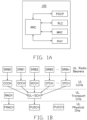
- FIG. 1A is a schematic diagram of a protocol stack (e.g., user-plane protocol stack having Layer 2 sublayers) of a UE.
- protocol stack 100 includes a packet data convergence protocol (PDCP) layer, a radio link control (RLC) layer, a medium access control (MAC) layer, a physical (PHY) layer, and a resource control (RRC) layer, where the RRC layer may control each of the PDCP layer, the RLC layer, the MAC layer and the PHY layer.
- PDCP packet data convergence protocol
- RLC radio link control
- MAC medium access control
- PHY physical
- RRC resource control
- the MAC layer is responsible for mapping between logical channels and transport channels, prioritization of the logical channels, and multiplexing of MAC service data units (SDUs) from one or more logical channels onto transport blocks to be delivered to the physical layer on transport channels.
- SDUs MAC service data units
- FIG. 1B is a schematic diagram of associated channels of the layers shown in Figure 1A .
- each radio bearer maps onto a separate logical channel (i.e., on a one-on-one basis).
- Signaling Radio Bearers (SRBs) carry control-plane signaling messages and Data Radio Bearers (DRBs) carry data-plane data messages.
- SRB0 corresponds with a Common Control Channel (CCCH), which is used only when the UE does not have a regular connection with a Dedicated Control Channel (DCCH).
- CCCH Common Control Channel
- DCCH Dedicated Control Channel
- SRB1 and SRB2 map onto two respective DCCHs.
- SRB1 may be used to carry control-plane messages originating from the RRC layer
- SRB2 may be used to carry control-plane messages originating from a Non-Access Stratum (NAS) layer.
- Data Radio Bearers e.g., DRBO through DRBn
- DTCH Dedicated Traffic Channel
- the uplink logical channels (UL LCHs) map to an Uplink Shared Channel (UL-SCH) at the UL Transport Channel Level, which in turn maps to a Physical Uplink Shared Channel (PUSCH) at the UL Physical Channel Level.
- UL LCHs Uplink Shared Channel
- PUSCH Physical Uplink Shared Channel
- a Random Access Channel (RACH) transport channel maps to a Physical Random Access Channel (PRACH) physical channel for performing random accesses, and a Physical Uplink Control Channel (PUCCH) carries physical layer signaling to a base station, such as an evolved Node B (eNB).
- RACH Random Access Channel
- PRACH Physical Random Access Channel
- PUCCH Physical Uplink Control Channel
- eNB evolved Node B
- uplink carrier aggregation there may be a separate PUSCH for each individual uplink carrier, although only one PUSCH is shown in Figure 1B .
- FIG. 2 is a schematic diagram of a protocol stack 200 of a UE according to an exemplary implementation of the present disclosure.
- a UE duplicates the data packet in the PDCP entity with split RLC bearers, and transmit the duplicated data packets via different carriers and/or different base stations.
- the UE may duplicate a data packet and place them in different SDUs for transmission.
- the protocol stack 200 includes a PDCP entity 210, two RLC entities 220 and 230, a MAC entity 240, a PHY entity (not shown), and the RRC entity (not shown).
- the UE includes a processor configured to perform the following instructions.
- a PDCP packet data unit (PDU) is duplicated into split RLC bearers in the PDCP entity 210.
- the first RLC bearer is configured with RLC entity 220, associated logical channel LCH1 and association to the PDCP entity
- the second RLC bearer is configured with RLC entity 230, associated logical channel LCH2 and association to the PDCP entity.
- the PDCP PDU When the duplication function is activated, the PDCP PDU are duplicated to generate PDCP PDUs 212 and 214, and these duplicated data packets are processed with two different logical channels (e.g., LCH1 and LCH2).
- PDCP PDU 212 is transmitted to RLC entity 220 via the first RLC bearer
- PDCP PDU 214 is transmitted to RLC entity 230 via the second RLC bearer.
- RLC PDU 222 is generated in response to PDCP PDU 212 in RLC entity 220.
- RLC PDU 232 is generated in response to PDCP PDU 214 in RLC entity 230.
- RLC PDUs 222 and 232 are received in MAC entity 240 via the LCH1 and LCH2 respectively.
- the duplicated data packets are identified, so that the MAC entity does not pack the two or more duplicated data packets into a single MAC PDU, for example, to ensure reliability.
- the duplicated data packets are identified according to a logical channel ID and a duplication indicator in the MAC entity.
- the duplication indicator indicates whether the duplication function is activated or not, which may be pre-configured or received from a base station.
- the duplication indicator is a duplication function on/off indication.
- the duplication indicator is a flag bit in a MAC header.
- the logical channel ID may be configured by a base station.
- the PDCP PDU When the duplication indicator indicating that the duplication function is activated, the PDCP PDU is duplicated in the PDCP entity and transmitted to split RLC bearers for generating the two RLC data packets (e.g., RLC PDUs 222 and 232). After the two RLC data packets are received from the two RLC bearers associated with their logical channel IDs, the duplicated data packets (e.g., RLC PDUs 222 and 232) may be identified in the MAC entity 240.
- the duplicated data packets e.g., RLC PDUs 222 and 232
- LCP Logical Channel Prioritization
- the RRC layer controls the scheduling of uplink data by signaling LCP related parameters for each logical channel.
- the LCP related parameters include, but are not limited to, a prioritized bit rate (PBR), a bucket size duration (BSD), and a logical channel priority.
- PBR prioritized bit rate
- BSD bucket size duration
- logical channel priority a logical channel priority
- a base station may assign only a single set of LCP related parameters (e.g., LCH priority, PBR, BSD, TTI) for the two logical channels.
- LCP related parameters e.g., LCH priority, PBR, BSD, TTI
- the UE maintains only one token bucket (e.g., a shared token bucket) for the split RLC bearers in response to the set of LCP parameters and processes the LCP for these two logical channels (e.g., LCH1 and LCH2) accordingly.
- the UE manage the usage of tokens from the single token bucket for the duplicated data packets.
- the PDCP entity marks the PDCP PDUs so that the duplicated data packets are identified in the MAC entity.
- the MAC layer can avoid packing the duplicated data packets into a single MAC PDU. Otherwise, the duplicated data packets would be delivered in the same MAC PDU through the same carrier, which is undesirable for URLLC.
- the duplicated data packets are identified according to their logical channel IDs and the duplication indicator.
- the duplication indicator includes a PDCP PDU duplication function on/off indication from upper layer or base station, and/or a flag bit in the MAC header.
- a base station may assign only a single set of LCP related parameters (e.g., LCH priority, PBR, BSD, TTI) for the two logical channels (e.g., LCH1 and LCH2), while the UE maintains two or more token buckets for each of the split RLC bearers in response to the set of LCP parameters and processes the LCP for these two logical channels (e.g., LCH1 and LCH2) in response to the respective token buckets accordingly.
- LCP related parameters e.g., LCH priority, PBR, BSD, TTI
- the base station may assign two independent sets of LCP related parameters (e.g., LCH priority, PBR, BSD, TTI) for the two logical channels (e.g., LCH1 and LCH2), where the LCP parameters are mapped to their respective split RLC bearers.
- LCP related parameters e.g., LCH priority, PBR, BSD, TTI
- the UE maintains two token buckets for the respective split RLC bearers in response to the two sets of LCP parameters and processes the LCP for these two logical channels (e.g., LCH1 and LCH2) in response to the respective token buckets accordingly.
- a master base station e.g., a Master gNB (MgNB)
- MgNB Master gNB
- SgNB secondary gNB
- LCP parameters e.g., LCH priority, PBR, BSD, TTI
- LCP operation 300 may include token filling 310, token usage 320, and SDU packing 330.
- the MAC layer may prioritize and allocate resources to the logical channels in the steps shown in Figure 3 .
- token filling 310 tokens are filled in a token bucket (not explicitly shown). The total number of tokens in the token bucket may increase or decrease for each transmission time interval depending on the token filling rate and the rate at which the tokens are consumed by the logical channel, for example, for UL transmission.
- SDU packing 330 includes packing MAC SDUs into a MAC PDU.
- the UE determines whether the PBR of the logical channel j is satisfied. If the PBR of the logical channel is not satisfied, the LCP operation 300 goes back to the MAC layer SDU buffer and pack additional SDUs as long as there are tokens available in the token bucket until the PBR is satisfied (e.g., the total size of the packed MAC SDU matches the PBR).
- the MAC layer starts to perform resource allocation procedure for the next logical channel with a lower priority than the current logical channel.
- the operations of token filling and token usage in the LCP is designed based on a single TTI with a constant duration. It means that, in LTE, the LCP related parameters are assigned based on a per UE and per LCH basis, and only a single TTI duration is configured for each physical uplink shared channel (PUSCH).
- PUSCH physical uplink shared channel
- LCP mechanisms related to multiple numerologies are supported, where a logical channel (LCH) is configured with multiple numerologies (e.g., TTIs).
- LCH logical channel
- numerologies e.g., TTIs
- Various LCP mechanisms in token filling, token usage and SDU packing for supporting multiple numerologies are discussed in detail below.
- a logical channel may be configured with two numerologies (e.g., TTIs)
- implementations of the present application are not limited to two numerologies per logical channel. All of the LCP mechanisms discussed below can be logically extended to a logical channel having more than two numerologies.
- the TTIs may be configured by their corresponding base stations (e.g., the next generation Node Bs (gNBs) and/or evolved Node Bs (eNBs)), and can be dynamically adjusted.
- the TTI duration in each numerology may be different.
- each numerology may result in different TTI, and the token filling speed associated with each numerology is different due to the difference in the TTI length.
- the PBR for each numerology may be configured independently of one another.
- the token filling operation may be discussed in two sub-categories, namely, token filling with a shared token bucket and token filling with isolated token buckets.
- FIG 4 is a schematic diagram of an LCP operation utilizing token filling with a shared token bucket, according to an implementation of the present application.
- LCP operation 400 may include token filling 410, token usage 420, and SDU packing 430.
- the MAC layer may prioritize and allocate resources to the logical channels in the steps shown in Figure 4 . It should be understood that, although LCP operation 400 only shows the various steps performed in a logical channel (e.g., logical channel j), LCP operation 400 in the MAC layer may include multiple logical channels with different priorities. The steps of these other logical channels are substantially similar to the steps shown in Figure 4 , thus omitted from Figure 4 for conceptual clarity.
- Token filling 410 may include step 412 and 414.
- a UE maintains a shared token bucket for each logical channel in response to the LCP parameters assigned by the base station. For example, the UE maintains a bucket size of a logical channel.
- the bucket size of a logical channel may be equal to PBR ⁇ BSD.
- a base station e.g., gNB or eNB
- assigns two or more TTIs e.g., TTI 1 and TTI 2
- two or more corresponding PBRs e.g., PBR 1 and PBR 2
- the UE may apply PBR 1 for TTI 1 and PBR 2 for TTI 2 accordingly, and use a shared token bucket for the two TTIs.
- the TTIs and their respective PBR may be different, and thus the token filling rate for each logical channel may be different.
- the two TTIs perform their own token filling operations independently by increasing PBR n ⁇ TTI n tokens into the shared token bucket at their respective TTI n , where n is the numerology numbering.
- the MAC layer maintains a variable B j (t), which is the total number of tokens of logical channel j.
- the value of variable B j (t) may be initialized to zero when the related logical channel is established, and may vary with time (t).
- B j(t) shall be capped at the maximum bucket size (e.g., PBR ⁇ BSD).
- PBR ⁇ BSD maximum bucket size
- a high PBR may lead to more data being packed.
- the base station may set the PBR high, so that the data can be packed faster.
- Figure 4 only shows token filling operation of one logical channel, it should be understood that the UE may have multiple logical channels performing substantially similar functions as logical channel j.
- PBR 1 and TTI 1 , and PBR 2 and TTI 2 are configured by the base station. Having a shared token bucket may reduce the complexity in the architecture of the MAC layer and the computation overhead of the UE.
- each logical channel may have different combination of PBR n and TTI n .
- Token usage 420 may include step 422 and 424.
- the UE determines whether the total number of tokens in the token bucket of the logical channel j (B j(t) ) is greater than zero.
- the LCP operation performs step 424.
- the token is used. It means that the token bucket of the logical channel j consumes corresponding amount of tokens T SDU .
- the total number of tokens B j(t) is decreased in the MAC entity by the total size of MAC SDUs served to logical channel j in step 412.
- all the logical channels with B j(t) > 0 are allocated resources in a decreasing priority order. If the PBR of a logical channel is set to infinity ( ⁇ ), the MAC layer allocates resources for all the data available for transmission on the logical channel before meeting the PBR of the lower priority logical channel(s). In step 436, token T SDU of the corresponding SDU are packed into a MAC PDU.
- step 432 when the total number of tokens in the token bucket of the logical channel j is less than or equal to zero, the LCP operation performs steps 432 and 434.
- step 432 when the total number of tokens in the token bucket of the logical channel j is not greater than zero, no token will be used, and the SDU from this logical channel will not be packed into the MAC PDU in this round.
- step 434 the MAC layer starts a resource allocation procedure for another logical channel that has a priority lower than that of the logical channel j.
- step 438 the UE determines whether the PBR of the logical channel j is satisfied. If the PBR of the logical channel j is not satisfied, LCP operation 400 proceeds to SDU packing 430 to pack additional SDUs following the same rules until the PBR is satisfied (e.g., the total size of the packed MAC SDUs in step 422 matches the PBR in step 438).
- step 440 the MAC entity starts a resource allocation procedure for the next logical channel with a lower priority than logical channel j.
- FIGS 5 and 6 are schematic diagrams of token filling with isolated token buckets, according to implementations of the present application.
- a base station e.g., gNB or eNB
- assigns two or more TTIs e.g., TTI 1 and TTI 2
- the UE may apply two PBRs (e.g., PBR 1 and PBR 2 ) assigned by base station for the two TTIs accordingly, and use an isolated token bucket for each TTI, where each isolated token bucket has its own bucket size BSD n , where n is the numerology numbering, j is the logical channel numbering.
- the isolated token buckets are differentiated by TTI.
- the isolated token buckets are differentiated by other numerologies.
- the two TTIs perform their own token filling operations independently by increasing PBR n ⁇ TTI n tokens into their respective isolated token buckets at their respective TTI n , where n is the numerology numbering.
- token filling with isolated token buckets can be further categorized into two sub-categories, namely, a single PBR configuration for both token buckets (e.g., Figure 5 ) and an isolated/independent PBR configuration for each isolated token bucket (e.g., Figure 6 ).
- the base station may signal two or more BSD n corresponding to the two or more TTI n for each of the isolated token buckets during configuration.
- the base station may signal a single BSD for all isolated token buckets, and the UE may apply two or more scaling factors with respect to each of the different numerologies.
- the bucket size of a logical channel may be equal to PBRxBSD. For example, when the subcarrier spacing is 15kHz, TTI is 1ms.
- FIG. 5 is a schematic diagram of isolated token filling with a single PBR configuration, according to an implementation of the present application.
- a base station assigns two TTIs (e.g., TTI 1 and TTI 2 ) to a UE, but only configures a single PBR for the two TTIs.
- the UE Upon receiving the TTIs and the single PBR, the UE makes a PBR division.
- the determination of ⁇ and ⁇ can based on the logical channel's corresponding application traffic type, and the specific portion of MAC SDUs' needs on their respective latency requirements.
- the two isolated token buckets with their respective TTIs perform their own token filling operations independently by increasing ( ⁇ or ⁇ ) ⁇ PBR ⁇ TTI n tokens into their respective isolated token buckets at their respective TTI n , where n is the numerology numbering.
- isolated token buckets 1 and 2 have their respective BSD 1 and BSD 2 .
- TTI 1 , TTI 2 , PBR, BSDi, and BSD 2 are configured by the base station.
- Figure 5 only shows token filling operation of one logical channel, it should be understood that the UE may have multiple logical channels performing substantially similar functions as logical channel j.
- the base station may configure a common BSD (e.g. BSD com ) for the two isolated token buckets and restrict the total number of tokens the UE can hold for the two TTIs, where the sum of the total numbers of tokens in the isolated token buckets 1 and 2 cannot exceed BSD com .
- BSD e.g. BSD com
- the division ratio ⁇ and ⁇ may be different for each logical channel.
- FIG. 6 is a schematic diagram of isolated token filling with two PBR configuration, according to an implementation of the present application.
- a base station assigns two TTIs (e.g., TTI 1 and TTI 2 ) to a UE, and configures two corresponding PBRs (e.g., PBR 1 and PBR 2 ) for the two TTIs.
- the two TTIs perform their own token filling operations independently by increasing PBR n ⁇ TTI n tokens into their respective isolated token buckets at their respective TTI n , where n is the numerology numbering.
- isolated token buckets 1 and 2 have their respective BSD 1 and BSD 2 .
- TTI 1 , TTI 2 , PBR 1 , PBR 2 , BSD 1 , and BSD 2 are configured by the base station.
- Figure 6 only shows token filling operation of one logical channel, it should be understood that the UE may have multiple logical channels performing substantially similar functions as logical channel j.
- the base station may configure a common BSD (e.g., BSD com ) for the two isolated token buckets and restrict the total number of tokens the UE can hold for the two TTIs, where the sum of the total numbers of tokens in the isolated token buckets 1 and 2 cannot exceed BSD com .
- BSD com a common BSD
- the PBR n may be different for each logical channel.
- Figure 5 and 6 only show the token filling mechanisms of the LCP operation.
- the token usage and SDU packing portions of the LCP operation will be discussed below with reference to Figures 7 and 8 , respectively.
- implementations of the present application provide three token usage operations, namely, priority token usage, dynamic token usage and specific token usage. Since the tokens for each numerology (e.g., TTI) are collected in isolated token buckets, the token usage from each token bucket for token usage can be managed independently.
- TTI time division duplex
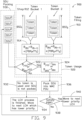
- FIG 7 is a diagram showing an LCP operation with priority token usage according to one implementation of the present application.
- LCP operation 700A includes token filling 710, token usage 720, and SDU packing 730.
- token filling 710 may substantially correspond to token filling 510 in Figure 5 .
- the token usage for each isolated token bucket has a priority.
- the priority can be configured by the base station (e.g., gNB) explicitly, or decided by the UE itself implicitly.
- the UE may decide the priority for each isolated token bucket based on numerology and running applications.
- the UE may use tokens based on the priority assignments (e.g., from the token bucket with the highest priority to the token bucket with the lowest priority).
- the tokens in isolated token bucket 1 has priority over isolated token bucket 2, thus will be used prior to token bucket 2. That is, the UE will use the tokens in isolated token bucket 2 only when it runs out all of the tokens from isolated token bucket 1.
- the priority assignments may be respective for different logical channels, bearers, network slicing, core network slicing and radio access network slicing.
- the base station e.g., gNB or eNB
- CE MAC Control Element
- steps 722, 724, 732, 734, 736, 738 and 740 are substantially similar to steps described 422, 424, 432, 434, 436, 438 and 440 in Figure 4 .
- the tokens in isolated token bucket 1 has priority over isolated token bucket 2, thus will be used prior to token bucket 2. That is, LCP operation 700 may perform steps 722, 724, 736, and 738 as long as there are tokens in isolated token bucket 1, and perform steps 722', 724', 736', and 738' only when isolated token bucket 1 runs out all of the tokens.
- FIG 8 is a diagram showing an LCP operation with dynamic token usage according to one implementation of the present application.
- the dynamic token usage of tokens in each isolated token bucket does not have priority.
- the UE can dynamically use the tokens in each of the isolated token buckets based on its needs and expectations.
- the decision of which token from the corresponding token bucket e.g., isolated token bucket 1 or 2) will be used is made by the UE itself. For example, the decision can base on the latency requirement for MAC SDUs and the MAC SDU buffer queuing status.
- steps 822, 824, 832, 834, 836, 838, and 840 are substantially similar to steps described 422, 424, 432, 434, 436, 438 and 440 in Figure 4 . It is noted that depending on the decision of which isolated token bucket is to be used, step 822 and 824 may check the corresponding token bucket's bucket size to check if it is greater than 0 (e.g., B j1(t) >0 or B j2(t) >0), and then keep track of the token usage for the corresponding token bucket (e.g., B j1(t) -T SDU or B j2(t) -T SDU ).
- 0 e.g., B j1(t) >0 or B j2(t) >0
- the base station assigns two TTIs and two PBRs to the UE.
- the base station assigns a single PBR to the UE, then the LCP operation 800 uses the single PBR in step 838.
- FIG 9 is a diagram showing an LCP operation with specific token usage according to one implementation of the present application. Similar to the priority token usage, the specific token usage of tokens in each isolated token bucket does not have priority. In this embodiment, the UE do not make decisions on which token of the corresponding token bucket (e.g., isolated token bucket 1 or 2) will be used. Instead, the UE follows an indicator from each SDU. The indicator indicates which token(s) or the token(s) from which token bucket (e.g., isolated token bucket 1 or 2) will be used in the SDU packing. For example, SDU 1 indicates that the tokens of the token bucket 1 will be used, and SDU 2 indicates that the tokens of the token bucket 2 will be used.
- the indicator can be an PDCP PDU header, RLC PDU header, logical channel ID, and can be assigned by RRC, NAS or an upper layer.
- steps 922, 924, 932, 834, 936, 938, and 940 are substantially similar to steps 422, 424, 432, 434, 436, 438 and 440 described in Figure 4 . It is noted that depending on the decision of which isolated token bucket is to be used, step 922 and 924 may check the corresponding token bucket's bucket size to check if it is greater than 0 (e.g., B j1(t) >0 or B j2(t) >0), and then keep track of the token usage for the corresponding token bucket (e.g., B j1(t) -T SDU or B j2(t) -T SDU ).
- 0 e.g., B j1(t) >0 or B j2(t) >0
- the base station assigns two TTIs and two PBRs to the UE.
- the LCP operation 900 uses the single PBR in step 938.
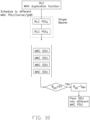
- FIG 10 is a schematic diagram SDU packing with duplication of data packets in RLC layer according to one embodiment of the present disclosure.
- a UE may duplicate the data packet either in the RLC layer, and transmit the duplicated data packets via different carriers and/or to different base stations. For example, to provide URLLC service, the UE may duplicate a data packet and place them in different SDUs for transmission.
- the SDU packing mechanisms are described below with respect to data duplication in the RLC layer with a single bearer.
- the RLC layer duplicates RLC PDUs into a single bearer, which implies that the LCP function may process these duplicated data packets from a single logical channel.
- the UE processes the LCP for these duplicated data packets by itself. It means that the UE can manage the usage of tokens from the single token bucket for the duplicated data packets.
- the RLC layer mark the RLC PDUs (e.g., PDCP PDU 1 s) to help the MAC layer to identify the RLC PDUs with duplicated data packets.
- the MAC layer can avoid packing these duplicated data packets into a single MAC PDU by using the identities provided by the RLC. Otherwise, the duplicated data packets would be delivered in the same MAC PDU through the same carrier, which is undesirable for URLLC.
- MAC layer also can distinguish these duplicated PDCP PDUs by their logical channel IDs and/or RLC PDU duplication function on/off indication from upper layer or base station.
- a master base station e.g., a Master gNB (MgNB)
- MgNB Master gNB
- SgNB secondary gNB
- LCP parameters e.g., LCH priority, PBR, BSD, TTI, and etc.
- token filling operations described with respect to Figures 4-6 may be configured into any suitable combination to perform the LCP, according to implementations of the present application.
Landscapes
- Engineering & Computer Science (AREA)
- Signal Processing (AREA)
- Computer Networks & Wireless Communication (AREA)
- Computer Security & Cryptography (AREA)
- Mobile Radio Communication Systems (AREA)
Claims (8)
- Benutzergerät (UE), aufweisend:
einen Prozessor, der konfiguriert ist, Anweisungen auszuführen zum:Empfangen einer Vielzahl von Parametern zur logischen Kanalpriorisierung, LCP, die einem ersten Träger zur Funkverbindungssteuerung, RLC, und einem zweiten RLC-Träger entsprechen,wobei die LCP-Parameter eine priorisierte Bitrate, eine Bucket-Größen-Dauer, eine logische Kanalpriorität und ein Übertragungszeitintervall umfassen,wobei ein erster Teil der LCP-Parameter, der einem ersten logischen Kanal entspricht, dem ersten RLC-Träger zugeordnet ist, undwobei ein zweiter Teil der LCP-Parameter, der einem zweiten logischen Kanal entspricht, dem zweiten RLC-Träger zugeordnet ist;Duplizieren einer Paketdateneinheit, PDU, eines Paketdatensteuerprotokolls (PDCP), um eine erste PDCP-PDU (212) und eine zweite PDCP-PDU (214) in einer PDCP-Entität (210) des UE zu erzeugen, wenn ein Duplizierungsindikator angibt, dass die Duplizierungsfunktion aktiviert ist;Senden, durch die PDCP-Entität (210), der ersten PDCP-PDU (212) an eine erste RLC-Entität (220), die der PDCP-Entität (210) zugeordnet ist, und der zweiten PDCP-PDU (214) an eine zweite RLC-Entität (230), die der PDCP-Entität (210) zugeordnet ist;Erzeugen einer ersten RLC-PDU (222) durch die erste RLC-Entität (220) als Reaktion auf die erste PDCP-PDU (212);Erzeugen einer zweiten RLC-PDU (232) durch die zweite RLC-Entität (230) als Reaktion auf die zweite PDCP-PDU (214);Empfangen, durch eine Entität zur Medienzugriffssteuerung, MAC (240), des UE, der ersten RLC-PDU (222) auf dem ersten logischen Kanal, wobei der erste logische Kanal der ersten RLC-Entität (220) durch die MAC-Entität (240) angeboten wird;Empfangen, durch die MAC-Entität (240), der zweiten RLC-PDU (232) auf dem zweiten logischen Kanal, wobei der zweite logische Kanal der zweiten RLC-Entität (230) durch die MAC-Entität (240) angeboten wird;Identifizieren, durch die MAC-Entität (240), von zwei oder mehr duplizierten RLC-PDUs (222, 232) gemäß einer logischen Kanal-ID und dem Duplizierungsindikator in der MAC-Entität (240); undbei Identifizieren der zwei oder mehr duplizierten RLC-PDUs (222, 232), Zusammenfassen, durch die MAC-Entität (240), der zwei oder mehr duplizierten RLC-PDUs in unterschiedliche MAC-PDUs basierend auf dem ersten Teil bzw. dem zweiten Teil der LCP-Parameter. - UE nach Anspruch 1, wobei der Duplizierungsindikator von einer Basisstation empfangen wird.
- UE nach Anspruch 1, wobei der Duplizierungsindikator eine Angabe für das Ein-/Ausschalten der Duplizierungsfunktion umfasst.
- UE nach Anspruch 1, wobei der Duplizierungsindikator ein Flag-Bit in einem MAC-Header umfasst.
- Datenpaketübertragungsverfahren, das durch ein Benutzergerät, UE, erfolgt, umfassend:Empfangen einer Vielzahl von Parametern zur logischen Kanalpriorisierung, LCP, die einem ersten Träger zur Funkverbindungssteuerung, RLC, und einem zweiten RLC-Träger entsprechen,wobei die LCP-Parameter eine priorisierte Bitrate, eine Bucket-Größen-Dauer, eine logische Kanalpriorität und ein Übertragungszeitintervall umfassen,wobei ein erster Teil der LCP-Parameter, der einem ersten logischen Kanal entspricht, dem ersten RLC-Träger zugeordnet ist, undwobei ein zweiter Teil der LCP-Parameter, der einem zweiten logischen Kanal entspricht, dem zweiten RLC-Träger zugeordnet ist;Duplizieren einer Paketdateneinheit, PDU (210), eines Paketdatensteuerprotokolls, PDCP, des UE, um eine erste PDCP-PDU (212) und eine zweite PDCP-PDU (214) zu erzeugen; undSenden, durch die PDCP-Entität (210), der ersten PDCP-PDU (212) an eine erste RLC-Entität (220), die der PDCP-Entität (210) zugeordnet ist, und der zweiten PDCP-PDU (214) an eine zweite RLC-Entität (230), die der PDCP-Entität (210) zugeordnet ist;Erzeugen einer ersten RLC-PDU (222) durch die erste RLC-Entität (220) als Reaktion auf die erste PDCP-PDU (212);Erzeugen einer zweiten RLC-PDU (232) durch die zweite RLC-Entität (230) als Reaktion auf die zweite PDCP-PDU (214);Empfangen, durch eine Entität zur Medienzugriffssteuerung, MAC (240), des UE, einer ersten RLC-PDU (222) auf dem ersten logischen Kanal, wobei der erste logische Kanal der ersten RLC-Entität (220) durch die MAC-Entität (240) angeboten wird;Empfangen, durch die MAC-Entität (240), einer zweiten RLC-PDU auf dem zweiten logischen Kanal, wobei der zweite logische Kanal der zweiten RLC-Entität (230) durch die MAC-Entität (240) angeboten wird;Identifizieren, durch die MAC-Entität (240), von zwei oder mehr duplizierten RLC-PDUs (222, 232) gemäß einer logischen Kanal-ID und dem Duplizierungsindikator in der MAC-Entität (240),wobei der Duplizierungsindikator angibt, ob die Duplizierungsfunktion aktiviert ist oder nicht, undbei Identifizieren der zwei oder mehr duplizierten RLC-PDUs (222, 232), Zusammenfassen, durch die MAC-Entität (240), der zwei oder mehr duplizierten RLC-PDUs in unterschiedliche MAC-PDUs basierend auf dem ersten Teil bzw. dem zweiten Teil der LCP-Parameter.
- Datenpaketübertragungsverfahren nach Anspruch 5, wobei der Duplizierungsindikator von einer Basisstation empfangen wird.
- Datenpaketübertragungsverfahren nach Anspruch 5, wobei der Duplizierungsindikator eine Angabe für das Ein-/Ausschalten der Duplizierungsfunktion umfasst.
- Datenpaketübertragungsverfahren nach Anspruch 5, wobei der Duplizierungsindikator ein Flag-Bit in einem MAC-Header umfasst.
Applications Claiming Priority (2)
| Application Number | Priority Date | Filing Date | Title |
|---|---|---|---|
| US201762480515P | 2017-04-02 | 2017-04-02 | |
| PCT/CN2018/081306 WO2018184503A1 (en) | 2017-04-02 | 2018-03-30 | Logical channel data packet transmission method and wireless communication system |
Publications (3)
| Publication Number | Publication Date |
|---|---|
| EP3607792A1 EP3607792A1 (de) | 2020-02-12 |
| EP3607792A4 EP3607792A4 (de) | 2020-09-16 |
| EP3607792B1 true EP3607792B1 (de) | 2023-10-04 |
Family
ID=63670151
Family Applications (1)
| Application Number | Title | Priority Date | Filing Date |
|---|---|---|---|
| EP18780460.4A Active EP3607792B1 (de) | 2017-04-02 | 2018-03-30 | Datenpaketübertragungsverfahren für logischen kanal und benutzergerät |
Country Status (5)
| Country | Link |
|---|---|
| US (1) | US11665556B2 (de) |
| EP (1) | EP3607792B1 (de) |
| CN (1) | CN110832927B (de) |
| MX (1) | MX2019011641A (de) |
| WO (1) | WO2018184503A1 (de) |
Families Citing this family (18)
| Publication number | Priority date | Publication date | Assignee | Title |
|---|---|---|---|---|
| US10750410B2 (en) | 2016-09-30 | 2020-08-18 | Huawei Technologies Co., Ltd. | Ultra reliable low latency connection support in radio access networks |
| JP6984659B2 (ja) * | 2016-12-16 | 2021-12-22 | 富士通株式会社 | データ多重化装置、方法及び通信システム |
| US11071009B2 (en) * | 2017-03-03 | 2021-07-20 | Guangdong Oppo Mobile Telecommunications Corp., Ltd. | Data transmission method and device |
| US11516796B2 (en) * | 2017-04-14 | 2022-11-29 | Asustek Computer Inc. | Method and apparatus of requesting semi-persistent scheduling resource for transmission of data duplication in a wireless communication system |
| US10405231B2 (en) * | 2017-04-24 | 2019-09-03 | Motorola Mobility Llc | Switching between packet duplication operating modes |
| WO2018203688A1 (en) * | 2017-05-04 | 2018-11-08 | Lg Electronics Inc. | Apparatus and method for generating a buffer status report |
| CN109150748B (zh) * | 2017-06-13 | 2021-11-23 | 维沃移动通信有限公司 | 一种数据优先级的处理方法、网络设备和用户终端 |
| CN109644492B (zh) | 2017-06-15 | 2021-08-10 | Oppo广东移动通信有限公司 | 一种逻辑信道的资源调度方法和装置 |
| US20180367288A1 (en) * | 2017-06-16 | 2018-12-20 | Huawei Technologies Co., Ltd. | Dynamic activation and deactivation of packet duplication |
| US20190200273A1 (en) * | 2017-12-22 | 2019-06-27 | Nokia Technologies Oy | Flushing PDCP Packets To Reduce Network Load In Multi-Connectivity Scenarios |
| EP3858086B1 (de) * | 2018-09-28 | 2023-07-12 | Telefonaktiebolaget Lm Ericsson (Publ) | Verfahren und vorrichtungen zur handhabung von dualer konnektivität in der redundanzübertragung |
| WO2020093230A1 (en) * | 2018-11-06 | 2020-05-14 | Qualcomm Incorporated | Delivering out-of-order packet data convergence protocol (pdcp) protocol data units (pdus) to pdcp |
| CN111294936B (zh) * | 2018-12-06 | 2023-04-14 | 大唐移动通信设备有限公司 | 一种传输方法及终端 |
| WO2021102968A1 (zh) | 2019-11-29 | 2021-06-03 | Oppo广东移动通信有限公司 | 无线通信的方法、终端设备和网络设备 |
| WO2022055293A1 (en) * | 2020-09-11 | 2022-03-17 | Samsung Electronics Co., Ltd. | Method and network entity for logical channel management in a wireless communication network |
| US11956151B2 (en) | 2021-12-22 | 2024-04-09 | Industrial Technology Research Institute | Transmission control protocol flow control method and device for performing the method |
| CN116528395A (zh) * | 2022-01-20 | 2023-08-01 | 中国移动通信有限公司研究院 | 数据传输方法、装置及协议子层功能实体 |
| CN118264726A (zh) * | 2022-12-28 | 2024-06-28 | 华为技术有限公司 | 数据传输方法和装置 |
Family Cites Families (30)
| Publication number | Priority date | Publication date | Assignee | Title |
|---|---|---|---|---|
| EP3030040B1 (de) * | 2012-10-19 | 2017-08-30 | Fujitsu Limited | Drahtloskommunikation in einem multi-rat-system |
| EP2830352A1 (de) * | 2013-07-24 | 2015-01-28 | Panasonic Intellectual Property Corporation of America | Effizienter Verwerfungsmechanismus in kleinzelligem Einsatz |
| EP2854444A1 (de) * | 2013-09-27 | 2015-04-01 | Panasonic Intellectual Property Corporation of America | Effizienter Uplink-Planungsmechanismus für duale Konnektivität |
| US10764870B2 (en) * | 2013-10-21 | 2020-09-01 | Lg Electronics Inc. | Method for transmitting uplink data in a dual connectivity and a device therefor |
| KR102157798B1 (ko) * | 2013-10-29 | 2020-09-18 | 삼성전자 주식회사 | 이동 통신 시스템에서 복수의 캐리어를 이용하는 데이터 송수신 방법 및 장치 |
| US10039086B2 (en) * | 2013-11-11 | 2018-07-31 | Electronics And Telecommunications Research Institute | Communication method and apparatus in network environment where terminal may have dual connectivity to multiple base stations |
| US10034186B2 (en) * | 2014-02-09 | 2018-07-24 | Lg Electronics Inc. | Method for calculating and submitting an amount of data available for transmission and a device therefor |
| WO2015133767A1 (en) * | 2014-03-02 | 2015-09-11 | Lg Electronics Inc. | Method for reordering a packet data convergence protocol packet data unit at a user equipment in a dual connectivity system and device therefor |
| EP3343860A4 (de) * | 2015-09-25 | 2018-09-12 | Huawei Technologies Co., Ltd. | Datensendeverfahren, datenempfangsverfahren und zugehörige vorrichtung |
| KR20180035638A (ko) * | 2016-09-29 | 2018-04-06 | 삼성전자주식회사 | RRC Inactive 및 active 상태에서 data 전송 결정 및 방법 및 장치 |
| US10750410B2 (en) * | 2016-09-30 | 2020-08-18 | Huawei Technologies Co., Ltd. | Ultra reliable low latency connection support in radio access networks |
| KR102808928B1 (ko) * | 2016-11-04 | 2025-05-16 | 삼성전자 주식회사 | 무선통신시스템에서 고신뢰 저지연 통신을 위한 데이터 송수신 방법 및 장치 |
| CN116709529A (zh) * | 2016-11-17 | 2023-09-05 | 三星电子株式会社 | 无线通信系统中的方法和装置 |
| MX2019008381A (es) * | 2017-01-13 | 2019-09-09 | Samsung Electronics Co Ltd | Metodo y dispositivo para transmitir un paquete de datos en un sistema de comunicacion inalambrica. |
| US11202279B2 (en) * | 2017-01-16 | 2021-12-14 | Samsung Electronics Co., Ltd | Method and apparatus for processing data in wireless communication system |
| US11071009B2 (en) * | 2017-03-03 | 2021-07-20 | Guangdong Oppo Mobile Telecommunications Corp., Ltd. | Data transmission method and device |
| US10986530B2 (en) * | 2017-03-10 | 2021-04-20 | Kt Corporation | Buffer state report transmission method and device therefor |
| US10439766B2 (en) * | 2017-03-15 | 2019-10-08 | Htc Corporation | Method and apparatus for transmitting duplication data using multiple carriers |
| EP3379863B1 (de) * | 2017-03-21 | 2020-02-26 | HTC Corporation | Vorrichtung und verfahren zur handhabung einer pufferstatusmeldung zur paketduplikation |
| US10448423B2 (en) * | 2017-03-22 | 2019-10-15 | Ofinno, Llc | Data multiplexing in a wireless device and wireless network |
| KR102357594B1 (ko) * | 2017-03-23 | 2022-02-04 | 삼성전자 주식회사 | 패킷 중복을 위한 데이터 처리 방법 및 장치 |
| US10716094B2 (en) * | 2017-03-23 | 2020-07-14 | Ofinno, Llc | Packet duplication in a wireless device and wireless network |
| CN108924871B (zh) * | 2017-03-23 | 2022-09-20 | 夏普株式会社 | 无线配置方法、用户设备和基站 |
| US10237784B2 (en) * | 2017-03-24 | 2019-03-19 | Motorola Mobility Llc | Split bearer packet data converge protocol protocol data unit routing |
| WO2018170891A1 (en) * | 2017-03-24 | 2018-09-27 | Nokia Technologies Oy | Handling of pdcp duplication and data recovery in new radio access technology |
| KR102367840B1 (ko) * | 2017-03-24 | 2022-02-25 | 삼성전자 주식회사 | 이동통신 시스템에서 페이징을 수행하는 방법 및 장치 |
| US10536878B2 (en) | 2017-03-24 | 2020-01-14 | Mediatek Inc. | User equipment and methods for PDCP duplication in 5G RAN |
| KR102318015B1 (ko) * | 2017-04-28 | 2021-10-27 | 삼성전자 주식회사 | 무선통신시스템에서 데이터 종류에 따른 길이를 지시하는 방법 및 장치 |
| CN111132351B (zh) * | 2018-10-31 | 2023-04-07 | 大唐移动通信设备有限公司 | 一种资源分配方法、终端及节点设备 |
| CN113766571B (zh) * | 2019-01-16 | 2023-03-14 | Oppo广东移动通信有限公司 | 数据传输的方法和通信设备 |
-
2018
- 2018-03-30 EP EP18780460.4A patent/EP3607792B1/de active Active
- 2018-03-30 MX MX2019011641A patent/MX2019011641A/es unknown
- 2018-03-30 CN CN201880021281.5A patent/CN110832927B/zh active Active
- 2018-03-30 WO PCT/CN2018/081306 patent/WO2018184503A1/en not_active Ceased
- 2018-04-01 US US15/942,552 patent/US11665556B2/en active Active
Also Published As
| Publication number | Publication date |
|---|---|
| US20180288631A1 (en) | 2018-10-04 |
| WO2018184503A1 (en) | 2018-10-11 |
| EP3607792A1 (de) | 2020-02-12 |
| MX2019011641A (es) | 2019-12-05 |
| CN110832927A (zh) | 2020-02-21 |
| EP3607792A4 (de) | 2020-09-16 |
| CN110832927B (zh) | 2023-04-04 |
| US11665556B2 (en) | 2023-05-30 |
Similar Documents
| Publication | Publication Date | Title |
|---|---|---|
| US11665556B2 (en) | Logical channel data packet transmission method and wireless communication system | |
| CN110583071B (zh) | 无线通信系统中接收下行链路信号的方法和使用其的终端 | |
| CN110945817B (zh) | 无线通信系统中的资源分配相关信令方法和使用该方法的设备 | |
| CN110832931B (zh) | 在无线通信系统中分配资源的方法和使用该方法的设备 | |
| US20210337557A1 (en) | Method and apparatus for processing priority in d2d communication system | |
| US20220022086A1 (en) | Method for calculating an amount of data available for transmission and a device therefor | |
| EP3206452B1 (de) | Prioritätsoptimierte lte prose sidelink-datenübertragung im fall von autonomer ressourcenzuweisung | |
| US8638815B2 (en) | Method and apparatus for logical channel prioritization for uplink carrier aggregation | |
| CN102474874B (zh) | 在无线通信系统中针对逻辑信道分配资源的装置和方法 | |
| CN111711982B (zh) | 用于设备到设备通信的通信装置及方法 | |
| EP2343945A2 (de) | Verfahren und Vorrichtung zur logischen Kanalpriorisierung zur Aufwärtsverbindungsbündelung | |
| CN111264080A (zh) | 在无线通信系统中触发发送载波选择的方法和设备 | |
| JP2020504476A (ja) | リソース割り当て方法、端末、装置、及びシステム | |
| KR20220049002A (ko) | 논리 채널 우선순위를 처리하는 방법 및 장치, 저장 매체 및 단말 | |
| CN110710313A (zh) | 选择载波的方法和设备 | |
| CN103533657B (zh) | 在基于机器类通信的通信网中为用户设备配置带宽的方法 | |
| CN110999382A (zh) | 用于控制分组复制的方法及设备 | |
| HK1159409A (en) | Method and apparatus for logical channel prioritization for uplink carrier aggregation | |
| HK1160329A (en) | Method and apparatus for logical channel prioritization for uplink carrier aggregation |
Legal Events
| Date | Code | Title | Description |
|---|---|---|---|
| STAA | Information on the status of an ep patent application or granted ep patent |
Free format text: STATUS: THE INTERNATIONAL PUBLICATION HAS BEEN MADE |
|
| PUAI | Public reference made under article 153(3) epc to a published international application that has entered the european phase |
Free format text: ORIGINAL CODE: 0009012 |
|
| STAA | Information on the status of an ep patent application or granted ep patent |
Free format text: STATUS: REQUEST FOR EXAMINATION WAS MADE |
|
| 17P | Request for examination filed |
Effective date: 20191031 |
|
| AK | Designated contracting states |
Kind code of ref document: A1 Designated state(s): AL AT BE BG CH CY CZ DE DK EE ES FI FR GB GR HR HU IE IS IT LI LT LU LV MC MK MT NL NO PL PT RO RS SE SI SK SM TR |
|
| AX | Request for extension of the european patent |
Extension state: BA ME |
|
| DAV | Request for validation of the european patent (deleted) | ||
| DAX | Request for extension of the european patent (deleted) | ||
| A4 | Supplementary search report drawn up and despatched |
Effective date: 20200819 |
|
| RIC1 | Information provided on ipc code assigned before grant |
Ipc: H04L 29/08 20060101ALI20200813BHEP Ipc: H04W 72/04 20090101AFI20200813BHEP |
|
| STAA | Information on the status of an ep patent application or granted ep patent |
Free format text: STATUS: EXAMINATION IS IN PROGRESS |
|
| 17Q | First examination report despatched |
Effective date: 20210428 |
|
| GRAP | Despatch of communication of intention to grant a patent |
Free format text: ORIGINAL CODE: EPIDOSNIGR1 |
|
| STAA | Information on the status of an ep patent application or granted ep patent |
Free format text: STATUS: GRANT OF PATENT IS INTENDED |
|
| RIC1 | Information provided on ipc code assigned before grant |
Ipc: H04L 67/61 20220101ALI20230614BHEP Ipc: H04W 72/04 20090101AFI20230614BHEP |
|
| INTG | Intention to grant announced |
Effective date: 20230714 |
|
| GRAS | Grant fee paid |
Free format text: ORIGINAL CODE: EPIDOSNIGR3 |
|
| GRAA | (expected) grant |
Free format text: ORIGINAL CODE: 0009210 |
|
| STAA | Information on the status of an ep patent application or granted ep patent |
Free format text: STATUS: THE PATENT HAS BEEN GRANTED |
|
| AK | Designated contracting states |
Kind code of ref document: B1 Designated state(s): AL AT BE BG CH CY CZ DE DK EE ES FI FR GB GR HR HU IE IS IT LI LT LU LV MC MK MT NL NO PL PT RO RS SE SI SK SM TR |
|
| REG | Reference to a national code |
Ref country code: GB Ref legal event code: FG4D |
|
| REG | Reference to a national code |
Ref country code: CH Ref legal event code: EP |
|
| REG | Reference to a national code |
Ref country code: IE Ref legal event code: FG4D |
|
| REG | Reference to a national code |
Ref country code: DE Ref legal event code: R096 Ref document number: 602018058738 Country of ref document: DE |
|
| REG | Reference to a national code |
Ref country code: LT Ref legal event code: MG9D |
|
| REG | Reference to a national code |
Ref country code: NL Ref legal event code: MP Effective date: 20231004 |
|
| REG | Reference to a national code |
Ref country code: AT Ref legal event code: MK05 Ref document number: 1619163 Country of ref document: AT Kind code of ref document: T Effective date: 20231004 |
|
| PG25 | Lapsed in a contracting state [announced via postgrant information from national office to epo] |
Ref country code: NL Free format text: LAPSE BECAUSE OF FAILURE TO SUBMIT A TRANSLATION OF THE DESCRIPTION OR TO PAY THE FEE WITHIN THE PRESCRIBED TIME-LIMIT Effective date: 20231004 |
|
| PG25 | Lapsed in a contracting state [announced via postgrant information from national office to epo] |
Ref country code: GR Free format text: LAPSE BECAUSE OF FAILURE TO SUBMIT A TRANSLATION OF THE DESCRIPTION OR TO PAY THE FEE WITHIN THE PRESCRIBED TIME-LIMIT Effective date: 20240105 |
|
| PG25 | Lapsed in a contracting state [announced via postgrant information from national office to epo] |
Ref country code: IS Free format text: LAPSE BECAUSE OF FAILURE TO SUBMIT A TRANSLATION OF THE DESCRIPTION OR TO PAY THE FEE WITHIN THE PRESCRIBED TIME-LIMIT Effective date: 20240204 |
|
| PG25 | Lapsed in a contracting state [announced via postgrant information from national office to epo] |
Ref country code: LT Free format text: LAPSE BECAUSE OF FAILURE TO SUBMIT A TRANSLATION OF THE DESCRIPTION OR TO PAY THE FEE WITHIN THE PRESCRIBED TIME-LIMIT Effective date: 20231004 |
|
| PG25 | Lapsed in a contracting state [announced via postgrant information from national office to epo] |
Ref country code: AT Free format text: LAPSE BECAUSE OF FAILURE TO SUBMIT A TRANSLATION OF THE DESCRIPTION OR TO PAY THE FEE WITHIN THE PRESCRIBED TIME-LIMIT Effective date: 20231004 |
|
| PG25 | Lapsed in a contracting state [announced via postgrant information from national office to epo] |
Ref country code: ES Free format text: LAPSE BECAUSE OF FAILURE TO SUBMIT A TRANSLATION OF THE DESCRIPTION OR TO PAY THE FEE WITHIN THE PRESCRIBED TIME-LIMIT Effective date: 20231004 |
|
| PG25 | Lapsed in a contracting state [announced via postgrant information from national office to epo] |
Ref country code: LT Free format text: LAPSE BECAUSE OF FAILURE TO SUBMIT A TRANSLATION OF THE DESCRIPTION OR TO PAY THE FEE WITHIN THE PRESCRIBED TIME-LIMIT Effective date: 20231004 Ref country code: IS Free format text: LAPSE BECAUSE OF FAILURE TO SUBMIT A TRANSLATION OF THE DESCRIPTION OR TO PAY THE FEE WITHIN THE PRESCRIBED TIME-LIMIT Effective date: 20240204 Ref country code: GR Free format text: LAPSE BECAUSE OF FAILURE TO SUBMIT A TRANSLATION OF THE DESCRIPTION OR TO PAY THE FEE WITHIN THE PRESCRIBED TIME-LIMIT Effective date: 20240105 Ref country code: ES Free format text: LAPSE BECAUSE OF FAILURE TO SUBMIT A TRANSLATION OF THE DESCRIPTION OR TO PAY THE FEE WITHIN THE PRESCRIBED TIME-LIMIT Effective date: 20231004 Ref country code: BG Free format text: LAPSE BECAUSE OF FAILURE TO SUBMIT A TRANSLATION OF THE DESCRIPTION OR TO PAY THE FEE WITHIN THE PRESCRIBED TIME-LIMIT Effective date: 20240104 Ref country code: AT Free format text: LAPSE BECAUSE OF FAILURE TO SUBMIT A TRANSLATION OF THE DESCRIPTION OR TO PAY THE FEE WITHIN THE PRESCRIBED TIME-LIMIT Effective date: 20231004 Ref country code: PT Free format text: LAPSE BECAUSE OF FAILURE TO SUBMIT A TRANSLATION OF THE DESCRIPTION OR TO PAY THE FEE WITHIN THE PRESCRIBED TIME-LIMIT Effective date: 20240205 |
|
| PG25 | Lapsed in a contracting state [announced via postgrant information from national office to epo] |
Ref country code: SE Free format text: LAPSE BECAUSE OF FAILURE TO SUBMIT A TRANSLATION OF THE DESCRIPTION OR TO PAY THE FEE WITHIN THE PRESCRIBED TIME-LIMIT Effective date: 20231004 Ref country code: RS Free format text: LAPSE BECAUSE OF FAILURE TO SUBMIT A TRANSLATION OF THE DESCRIPTION OR TO PAY THE FEE WITHIN THE PRESCRIBED TIME-LIMIT Effective date: 20231004 Ref country code: PL Free format text: LAPSE BECAUSE OF FAILURE TO SUBMIT A TRANSLATION OF THE DESCRIPTION OR TO PAY THE FEE WITHIN THE PRESCRIBED TIME-LIMIT Effective date: 20231004 Ref country code: NO Free format text: LAPSE BECAUSE OF FAILURE TO SUBMIT A TRANSLATION OF THE DESCRIPTION OR TO PAY THE FEE WITHIN THE PRESCRIBED TIME-LIMIT Effective date: 20240104 Ref country code: LV Free format text: LAPSE BECAUSE OF FAILURE TO SUBMIT A TRANSLATION OF THE DESCRIPTION OR TO PAY THE FEE WITHIN THE PRESCRIBED TIME-LIMIT Effective date: 20231004 Ref country code: HR Free format text: LAPSE BECAUSE OF FAILURE TO SUBMIT A TRANSLATION OF THE DESCRIPTION OR TO PAY THE FEE WITHIN THE PRESCRIBED TIME-LIMIT Effective date: 20231004 |
|
| REG | Reference to a national code |
Ref country code: DE Ref legal event code: R097 Ref document number: 602018058738 Country of ref document: DE |
|
| PG25 | Lapsed in a contracting state [announced via postgrant information from national office to epo] |
Ref country code: DK Free format text: LAPSE BECAUSE OF FAILURE TO SUBMIT A TRANSLATION OF THE DESCRIPTION OR TO PAY THE FEE WITHIN THE PRESCRIBED TIME-LIMIT Effective date: 20231004 |
|
| PG25 | Lapsed in a contracting state [announced via postgrant information from national office to epo] |
Ref country code: CZ Free format text: LAPSE BECAUSE OF FAILURE TO SUBMIT A TRANSLATION OF THE DESCRIPTION OR TO PAY THE FEE WITHIN THE PRESCRIBED TIME-LIMIT Effective date: 20231004 |
|
| PG25 | Lapsed in a contracting state [announced via postgrant information from national office to epo] |
Ref country code: SK Free format text: LAPSE BECAUSE OF FAILURE TO SUBMIT A TRANSLATION OF THE DESCRIPTION OR TO PAY THE FEE WITHIN THE PRESCRIBED TIME-LIMIT Effective date: 20231004 |
|
| PG25 | Lapsed in a contracting state [announced via postgrant information from national office to epo] |
Ref country code: SM Free format text: LAPSE BECAUSE OF FAILURE TO SUBMIT A TRANSLATION OF THE DESCRIPTION OR TO PAY THE FEE WITHIN THE PRESCRIBED TIME-LIMIT Effective date: 20231004 Ref country code: SK Free format text: LAPSE BECAUSE OF FAILURE TO SUBMIT A TRANSLATION OF THE DESCRIPTION OR TO PAY THE FEE WITHIN THE PRESCRIBED TIME-LIMIT Effective date: 20231004 Ref country code: RO Free format text: LAPSE BECAUSE OF FAILURE TO SUBMIT A TRANSLATION OF THE DESCRIPTION OR TO PAY THE FEE WITHIN THE PRESCRIBED TIME-LIMIT Effective date: 20231004 Ref country code: IT Free format text: LAPSE BECAUSE OF FAILURE TO SUBMIT A TRANSLATION OF THE DESCRIPTION OR TO PAY THE FEE WITHIN THE PRESCRIBED TIME-LIMIT Effective date: 20231004 Ref country code: EE Free format text: LAPSE BECAUSE OF FAILURE TO SUBMIT A TRANSLATION OF THE DESCRIPTION OR TO PAY THE FEE WITHIN THE PRESCRIBED TIME-LIMIT Effective date: 20231004 Ref country code: DK Free format text: LAPSE BECAUSE OF FAILURE TO SUBMIT A TRANSLATION OF THE DESCRIPTION OR TO PAY THE FEE WITHIN THE PRESCRIBED TIME-LIMIT Effective date: 20231004 Ref country code: CZ Free format text: LAPSE BECAUSE OF FAILURE TO SUBMIT A TRANSLATION OF THE DESCRIPTION OR TO PAY THE FEE WITHIN THE PRESCRIBED TIME-LIMIT Effective date: 20231004 |
|
| PLBE | No opposition filed within time limit |
Free format text: ORIGINAL CODE: 0009261 |
|
| STAA | Information on the status of an ep patent application or granted ep patent |
Free format text: STATUS: NO OPPOSITION FILED WITHIN TIME LIMIT |
|
| 26N | No opposition filed |
Effective date: 20240705 |
|
| PG25 | Lapsed in a contracting state [announced via postgrant information from national office to epo] |
Ref country code: SI Free format text: LAPSE BECAUSE OF FAILURE TO SUBMIT A TRANSLATION OF THE DESCRIPTION OR TO PAY THE FEE WITHIN THE PRESCRIBED TIME-LIMIT Effective date: 20231004 |
|
| PG25 | Lapsed in a contracting state [announced via postgrant information from national office to epo] |
Ref country code: SI Free format text: LAPSE BECAUSE OF FAILURE TO SUBMIT A TRANSLATION OF THE DESCRIPTION OR TO PAY THE FEE WITHIN THE PRESCRIBED TIME-LIMIT Effective date: 20231004 |
|
| REG | Reference to a national code |
Ref country code: CH Ref legal event code: PL |
|
| PG25 | Lapsed in a contracting state [announced via postgrant information from national office to epo] |
Ref country code: LU Free format text: LAPSE BECAUSE OF NON-PAYMENT OF DUE FEES Effective date: 20240330 |
|
| PG25 | Lapsed in a contracting state [announced via postgrant information from national office to epo] |
Ref country code: MC Free format text: LAPSE BECAUSE OF FAILURE TO SUBMIT A TRANSLATION OF THE DESCRIPTION OR TO PAY THE FEE WITHIN THE PRESCRIBED TIME-LIMIT Effective date: 20231004 |
|
| PG25 | Lapsed in a contracting state [announced via postgrant information from national office to epo] |
Ref country code: MC Free format text: LAPSE BECAUSE OF FAILURE TO SUBMIT A TRANSLATION OF THE DESCRIPTION OR TO PAY THE FEE WITHIN THE PRESCRIBED TIME-LIMIT Effective date: 20231004 Ref country code: LU Free format text: LAPSE BECAUSE OF NON-PAYMENT OF DUE FEES Effective date: 20240330 |
|
| REG | Reference to a national code |
Ref country code: BE Ref legal event code: MM Effective date: 20240331 |
|
| PG25 | Lapsed in a contracting state [announced via postgrant information from national office to epo] |
Ref country code: BE Free format text: LAPSE BECAUSE OF NON-PAYMENT OF DUE FEES Effective date: 20240331 |
|
| PG25 | Lapsed in a contracting state [announced via postgrant information from national office to epo] |
Ref country code: IE Free format text: LAPSE BECAUSE OF NON-PAYMENT OF DUE FEES Effective date: 20240330 |
|
| PG25 | Lapsed in a contracting state [announced via postgrant information from national office to epo] |
Ref country code: IE Free format text: LAPSE BECAUSE OF NON-PAYMENT OF DUE FEES Effective date: 20240330 Ref country code: BE Free format text: LAPSE BECAUSE OF NON-PAYMENT OF DUE FEES Effective date: 20240331 Ref country code: CH Free format text: LAPSE BECAUSE OF NON-PAYMENT OF DUE FEES Effective date: 20240331 |
|
| REG | Reference to a national code |
Ref country code: GB Ref legal event code: 732E Free format text: REGISTERED BETWEEN 20250306 AND 20250312 |
|
| REG | Reference to a national code |
Ref country code: DE Ref legal event code: R081 Ref document number: 602018058738 Country of ref document: DE Owner name: SHARP KABUSHIKI KAISHA, SAKAI CITY, JP Free format text: FORMER OWNER: FG INNOVATION COMPANY LIMITED, HONG KONG, HK |
|
| PG25 | Lapsed in a contracting state [announced via postgrant information from national office to epo] |
Ref country code: CY Free format text: LAPSE BECAUSE OF FAILURE TO SUBMIT A TRANSLATION OF THE DESCRIPTION OR TO PAY THE FEE WITHIN THE PRESCRIBED TIME-LIMIT; INVALID AB INITIO Effective date: 20180330 |
|
| PG25 | Lapsed in a contracting state [announced via postgrant information from national office to epo] |
Ref country code: HU Free format text: LAPSE BECAUSE OF FAILURE TO SUBMIT A TRANSLATION OF THE DESCRIPTION OR TO PAY THE FEE WITHIN THE PRESCRIBED TIME-LIMIT; INVALID AB INITIO Effective date: 20180330 |
|
| PG25 | Lapsed in a contracting state [announced via postgrant information from national office to epo] |
Ref country code: FI Free format text: LAPSE BECAUSE OF FAILURE TO SUBMIT A TRANSLATION OF THE DESCRIPTION OR TO PAY THE FEE WITHIN THE PRESCRIBED TIME-LIMIT Effective date: 20231004 |
|
| PG25 | Lapsed in a contracting state [announced via postgrant information from national office to epo] |
Ref country code: TR Free format text: LAPSE BECAUSE OF FAILURE TO SUBMIT A TRANSLATION OF THE DESCRIPTION OR TO PAY THE FEE WITHIN THE PRESCRIBED TIME-LIMIT Effective date: 20231004 |
|
| PGFP | Annual fee paid to national office [announced via postgrant information from national office to epo] |
Ref country code: GB Payment date: 20260324 Year of fee payment: 9 |
|
| PGFP | Annual fee paid to national office [announced via postgrant information from national office to epo] |
Ref country code: DE Payment date: 20260319 Year of fee payment: 9 |
|
| PGFP | Annual fee paid to national office [announced via postgrant information from national office to epo] |
Ref country code: FR Payment date: 20260320 Year of fee payment: 9 |